2741 Korean & World Recipes

2741+ Korean recipes, clean and organized. Ingredients to instructions, all at a glance.

Recipes with shrimp

86 recipes. Page 2 of 4

Buy shrimp
Banh Xeo (Vietnamese Sizzling Turmeric Rice Crepe with Shrimp)
Asian Medium

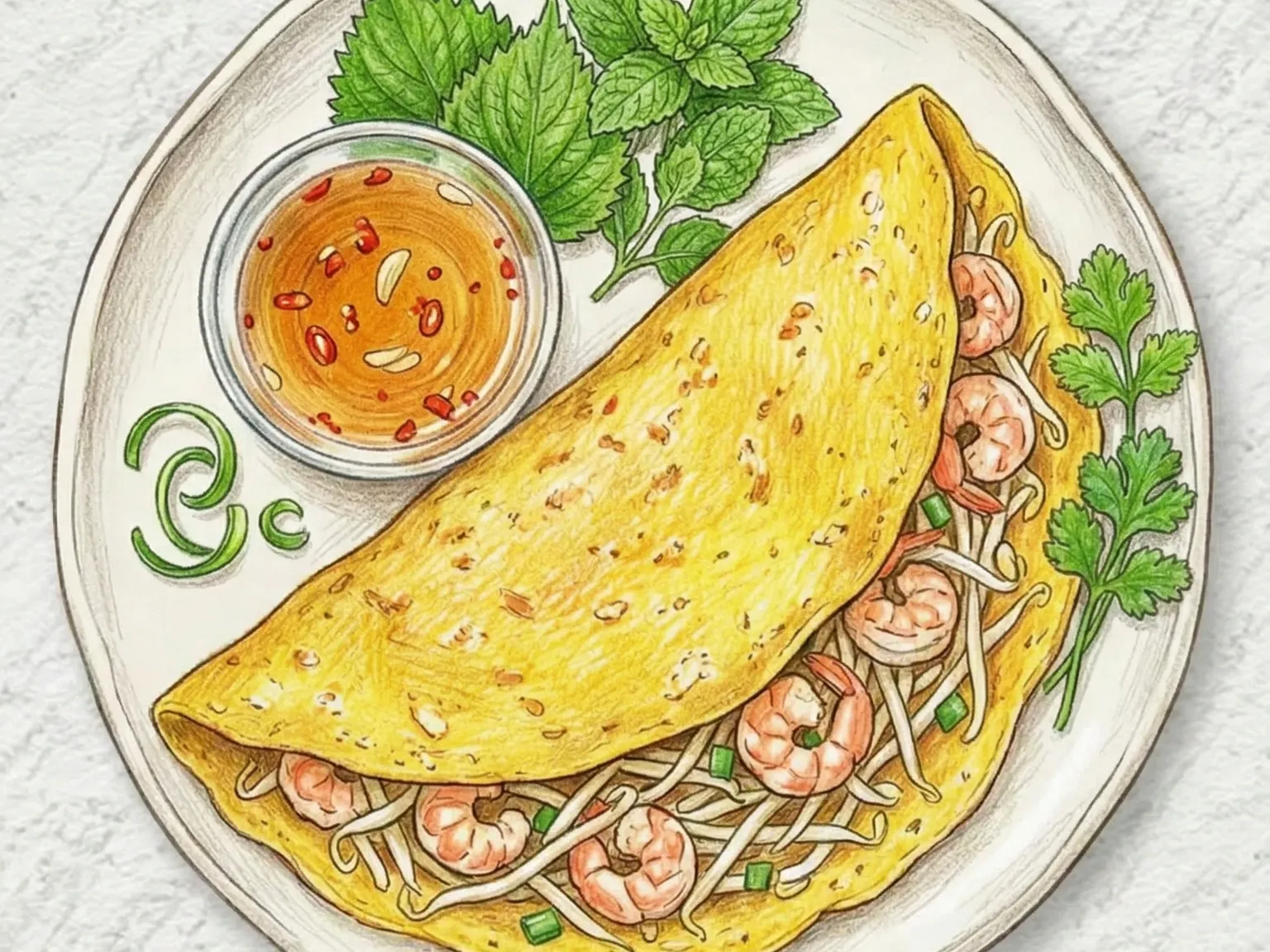
Banh Xeo (Vietnamese Sizzling Turmeric Rice Crepe with Shrimp)

Banh xeo takes its name from the sizzling sound the batter makes when it hits a hot, oiled pan. A thin pour of rice flour, coconut milk, and turmeric crisps into a lacy, golden shell with a shatteringly crisp edge. Shrimp, sliced pork, and bean sprouts fill one half before the crepe folds over. In southern Vietnam, banh xeo are plate-sized and served with a tall pile of lettuce, fresh herbs, and pickled carrots. How you eat matters as much as how it is cooked: tear off a piece, wrap it in a lettuce leaf with mint and perilla, dip in nuoc cham, and eat in one bite. The contrast between the hot, oily crunch of the crepe and the cool, raw freshness of the herbs is what makes this dish worth eating. Northern versions are smaller and more compact, but the principle remains the same.

🎉 Special Occasion
Prep 20min Cook 18min 2 servings
Korean Seafood Rice Bowl (Shrimp Squid Clam Starchy Sauce Bowl)
Rice Easy

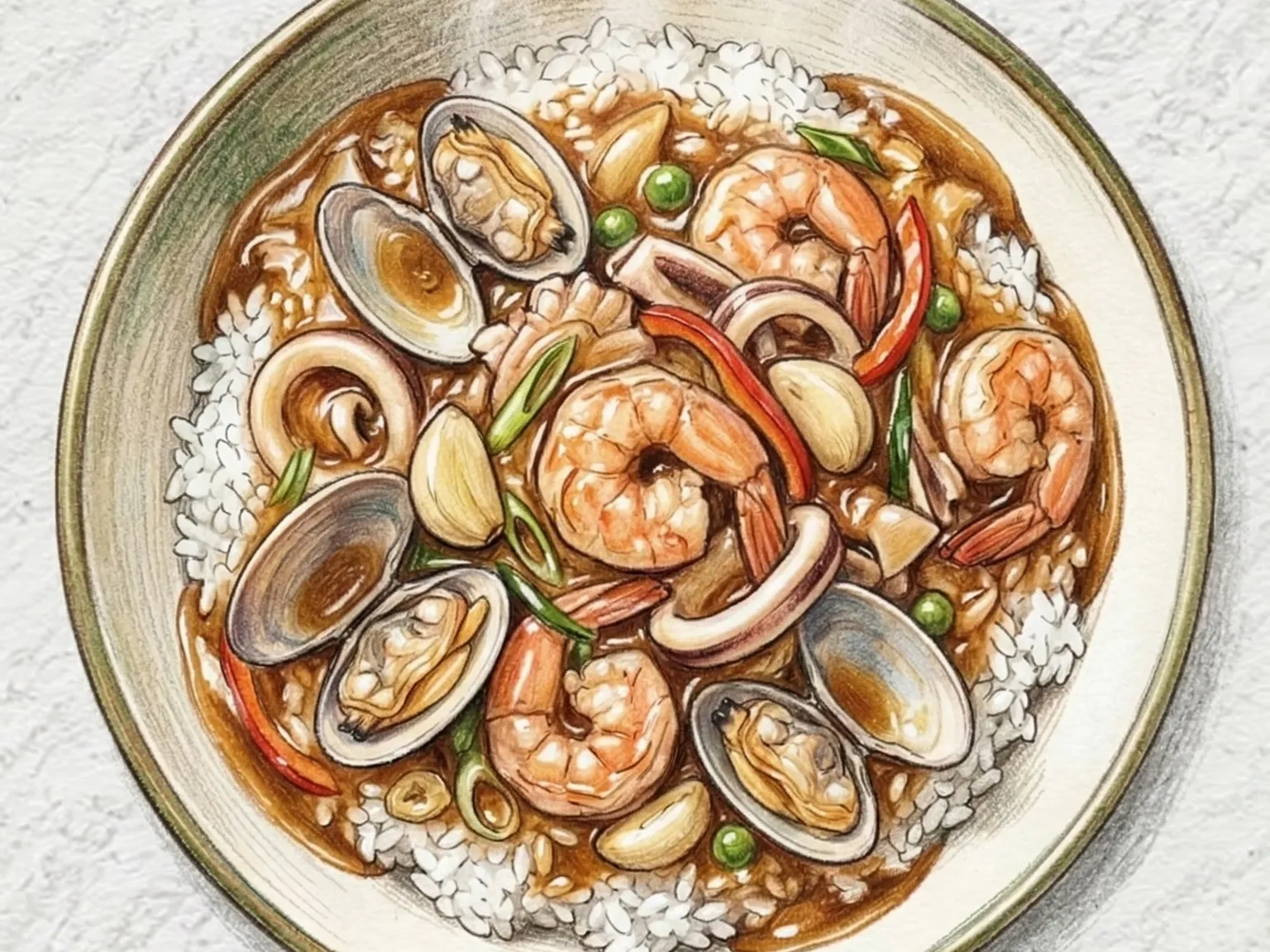
Korean Seafood Rice Bowl (Shrimp Squid Clam Starchy Sauce Bowl)

Haemul deopbap is a Korean seafood rice bowl built on a thick, glossy sauce that starts with garlic stir-fried over high heat before shrimp, squid, and clams are added and tossed together. Oyster sauce and soy sauce form the seasoning base - the oyster sauce brings a rounded, caramel-like sweetness and body, while the soy adds depth and color. A cornstarch slurry stirred in at the end transforms the thin pan juices into a glossy, clingy sauce that coats every piece of seafood and, when ladled over rice, seeps downward slowly rather than running off. The key to keeping the seafood tender is to add it last and remove the pan from heat before it overcooks - squid turns rubbery within seconds of going past done, and shrimp loses its snap if left even a moment too long. Clams contribute their natural briny-sweet liquor to the sauce, adding a layer of umami that oyster sauce alone cannot replicate. Browning the garlic first in oil before anything else goes into the pan reduces any raw edge in the flavor and lays a savory, aromatic foundation for the entire dish. The whole process takes about 25 minutes from start to finish, making this one of the more practical weeknight meals in the Korean home kitchen.

🏠 Everyday
Prep 15min Cook 10min 2 servings
Korean Seafood Japchae (Glass Noodles with Shrimp, Squid and Vegetables)
Stir-fry Medium

Korean Seafood Japchae (Glass Noodles with Shrimp, Squid and Vegetables)

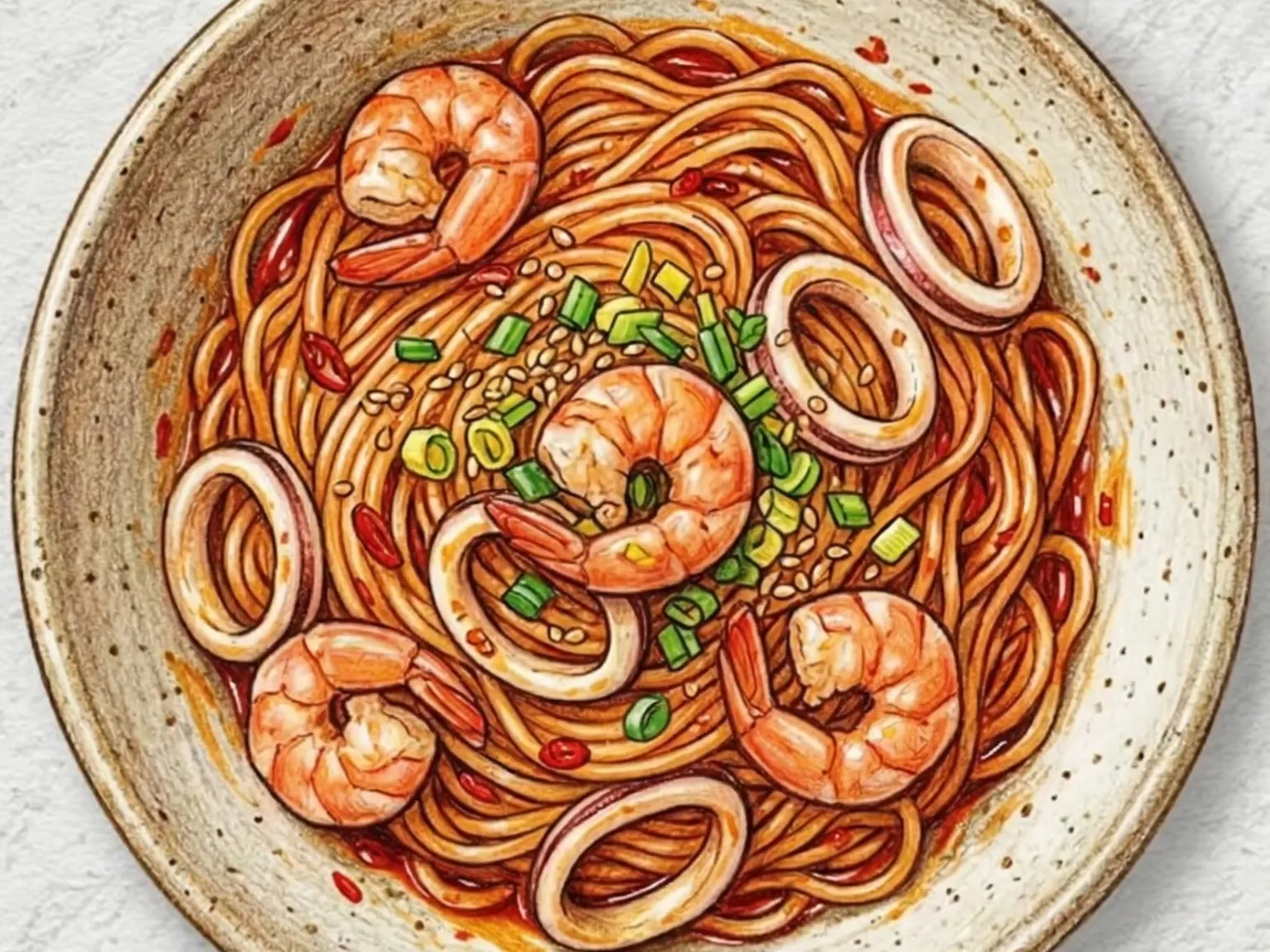
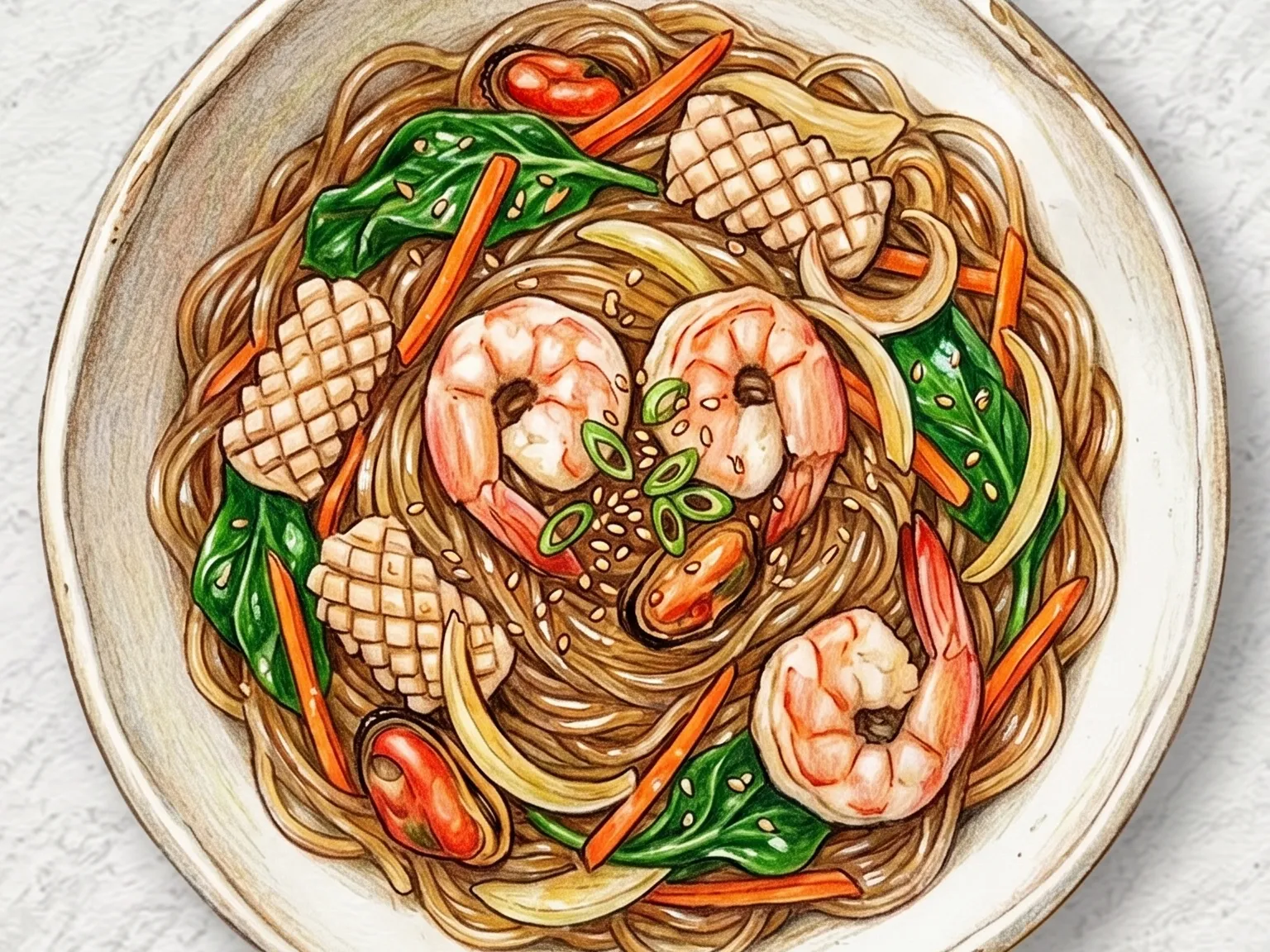
Haemul-japchae is a seafood version of the Korean glass noodle stir-fry, featuring shrimp, squid, spinach, carrots, and onions tossed together in soy sauce and sesame oil. Replacing meat with seafood allows the briny, mineral depth of the ocean to soak into the chewy sweet potato noodles, while the vegetables' natural sweetness keeps the overall flavor light and balanced. The noodles absorb the seasoning and take on a springy, glossy character, and the shrimp and squid contribute two distinct textures: a firm, bouncy snap from the shrimp and a satisfying chew from the squid. Scoring the squid before cooking causes it to curl and develop a pattern on the surface as it hits the heat, improving both texture and presentation. Seafood must be cooked over high heat and quickly to stay tender rather than rubbery, and the noodles should be soaked thoroughly beforehand so they absorb the seasoning evenly during the stir-fry. The dish often replaces beef japchae on holiday and celebration tables, and adding mussels or scallops deepens the broth-like quality of the finished dish.

🏠 Everyday
Prep 20min Cook 20min 4 servings
Mixed Korean Tempura
Street food Medium

Mixed Korean Tempura

Modeum twigim is an assorted Korean tempura platter featuring sweet potato, squid, shrimp, onion, and carrot dipped in a light batter of frying powder mixed with cold water, then deep-fried at 170 degrees Celsius until crisp. Keeping the water cold and mixing minimally prevents gluten development, yielding a thin, shattering crust rather than a heavy coating. Each ingredient brings its own character: sweet potato offers starchy sweetness, squid and shrimp contribute oceanic umami, and onion and carrot release their natural moisture and fragrance as they fry. Because each ingredient has a different density and water content, maintaining a steady oil temperature is essential so every piece cooks through at the center while staying crisp at the surface. Served with a small bowl of soy sauce, the platter lets the clean frying flavor and the individual taste of each ingredient come through without any additional seasoning.

🍺 Bar Snacks 🧒 Kid-Friendly
Prep 20min Cook 15min 4 servings
Korean Mixed Grilled Seafood
Grilled Easy

Korean Mixed Grilled Seafood

Haemul-gui modeum is a Korean mixed grilled seafood platter where shrimp, squid, Manila clams, and scallops are lightly dressed in olive oil, salt, and black pepper, then grilled at different intervals to account for each ingredient's cook time. Shrimp and scallops need only two to three minutes, squid takes three to four, and clams stay on the grill just until their shells pop open-staggering the timing ensures everything finishes together at peak texture. Overcooking any element by even a minute turns it rubbery, so close attention is the most important ingredient in this dish. A squeeze of fresh lemon juice over the entire platter at the table brightens the natural sweetness of each shellfish and ties the assortment into a cohesive, clean-tasting spread.

🍺 Bar Snacks
Prep 15min Cook 15min 2 servings
Korean Seafood Hot Pot Soup
Soups Medium

Korean Seafood Hot Pot Soup

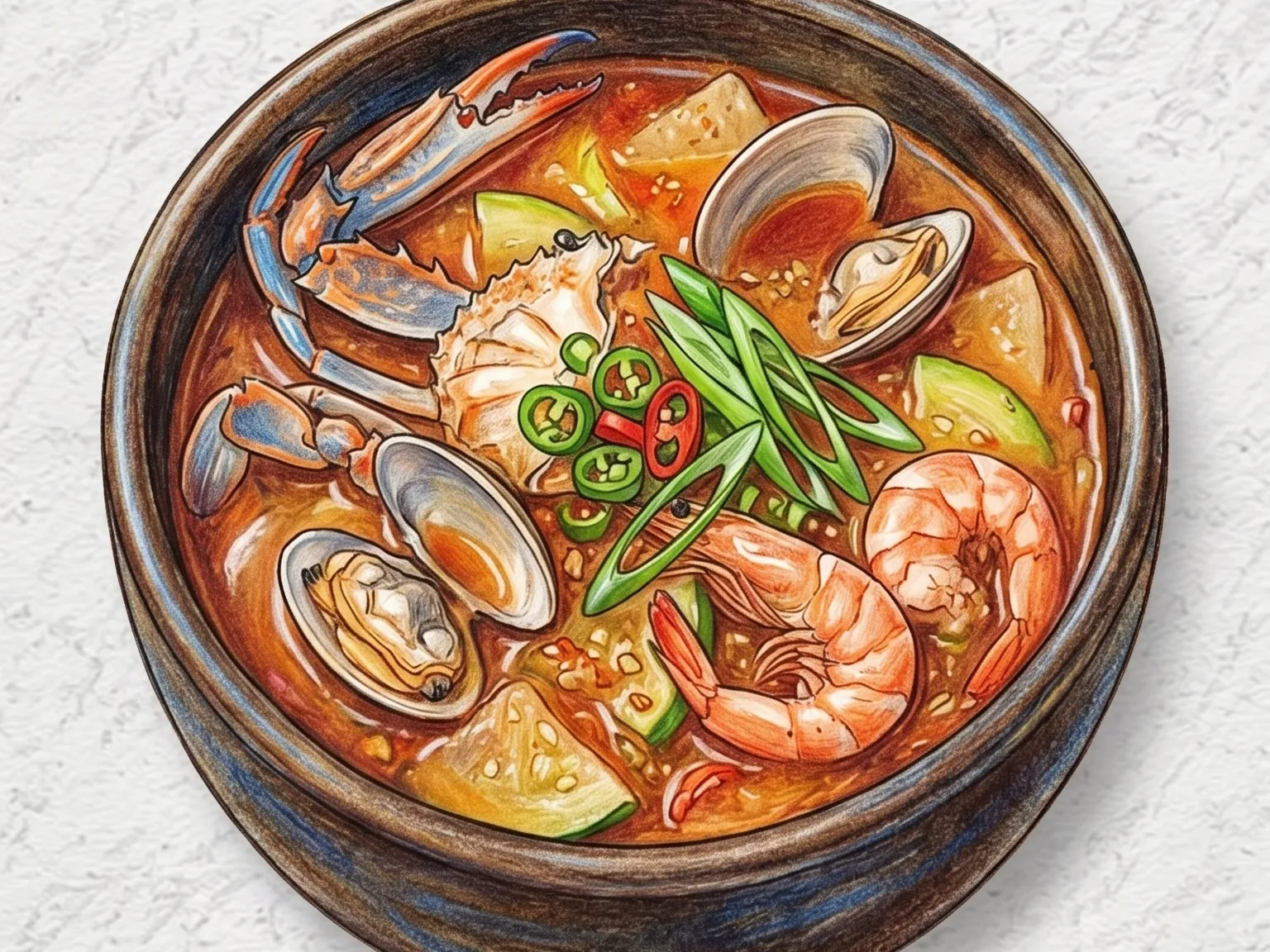
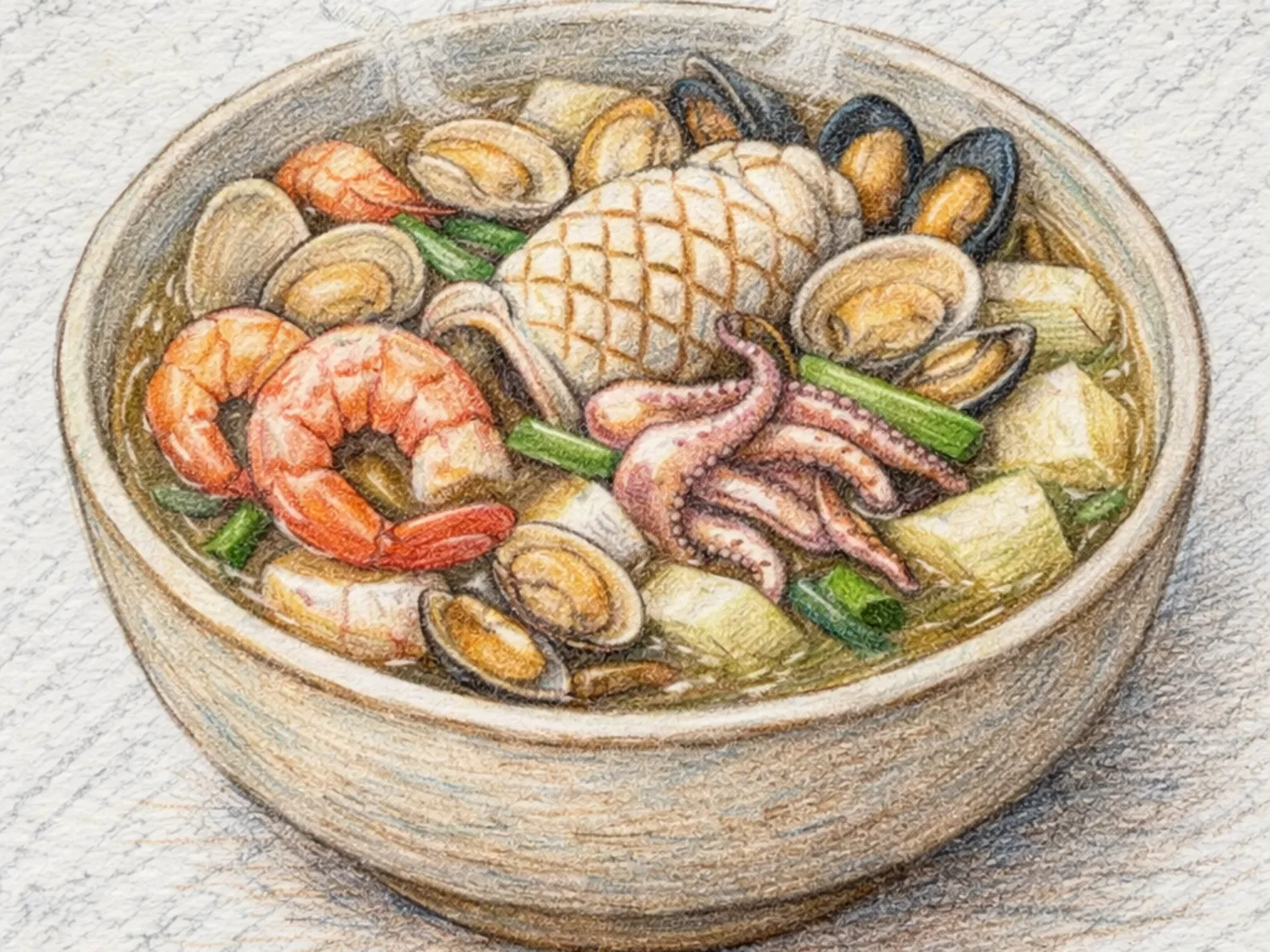
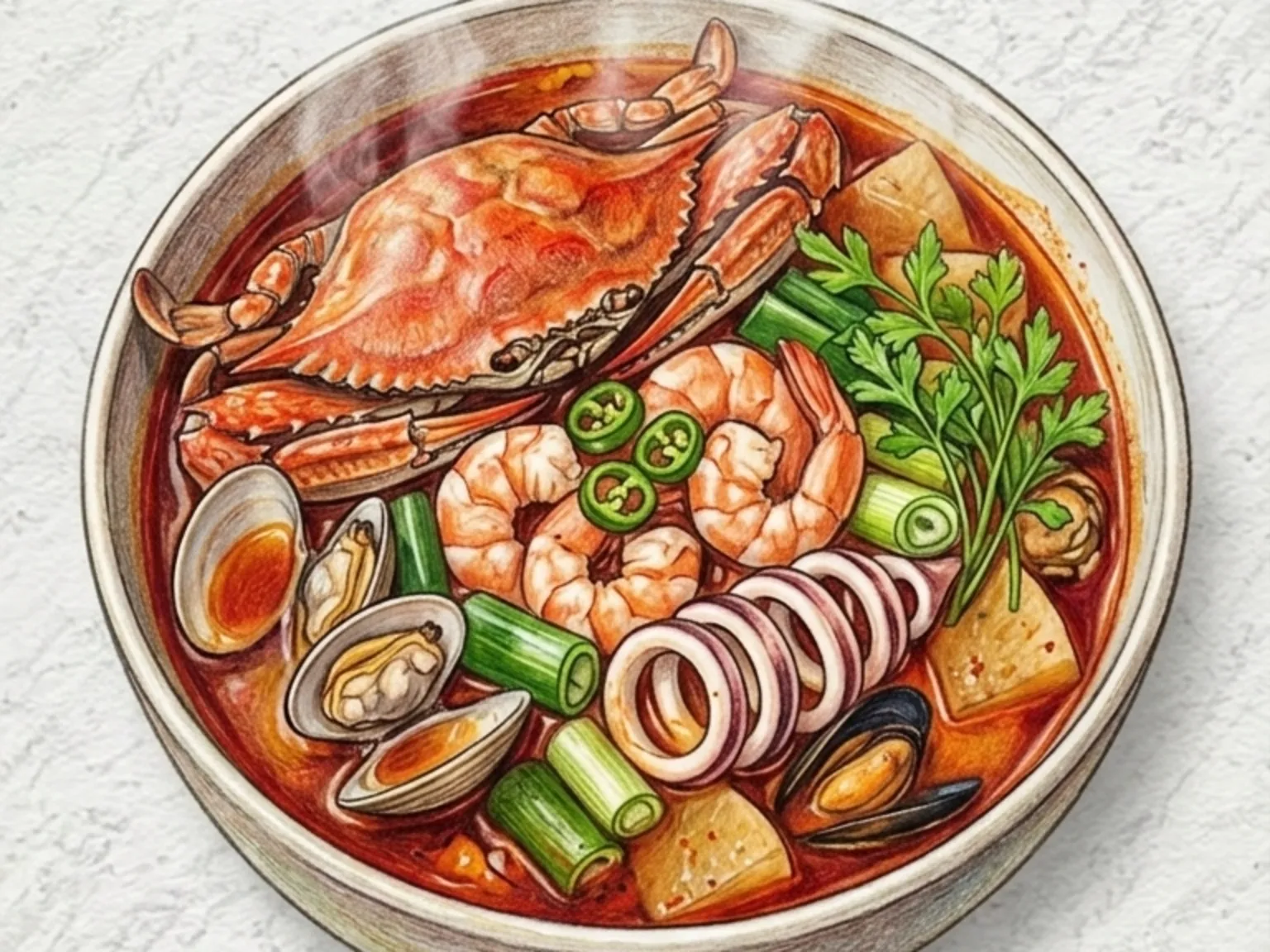
Haemul-tang is a Korean seafood hot pot that throws together crab, shrimp, clams, and squid in a fiery, brick-red broth. The liquid starts with gochugaru and plenty of garlic, building a spicy base that the seafood then amplifies with its own briny juices. Radish chunks soften as the pot bubbles, thickening the broth slightly and adding a cool sweetness behind the heat. Green onions and cheongyang peppers go in toward the end for a sharp, vegetal bite. The magic of haemul-tang lies in the convergence of flavors: crab shells release a sweet, crustacean stock; clams open to spill their liquor; shrimp and squid contribute distinct textures from snappy to chewy. The pot is brought to the table still at a rolling boil, and diners pick through the shells and tentacles while the broth continues to concentrate.

🏠 Everyday 🎉 Special Occasion
Prep 25min Cook 30min 4 servings
Korean Spicy Blue Crab Seafood Stew
Stews Medium

Korean Spicy Blue Crab Seafood Stew

Kkotge haemul jjigae is a Korean seafood stew that combines blue crab, Manila clams, and shrimp in 1.2 liters of anchovy-kelp stock to build the most layered possible ocean flavor. Each shellfish contributes a distinct profile to the broth: blue crab adds a sweet, nutty richness from the body and roe, clams release a clean briny depth, and shrimp fold in their characteristic sweetness and concentrated umami. Together they create a broth with complexity that no single ingredient could produce on its own. Radish and zucchini absorb the seafood-infused liquid as they cook, becoming tender and carrying the flavor deep into their flesh. Doenjang and gochugaru form the seasoning backbone, layering fermented savoriness and spice into what would otherwise be a straightforward clear broth. Cheongyang chili and sliced green onion go on last, brightening the surface and extending the clean, cool finish that is the hallmark of well-made Korean seafood stew. Adding the crab first and letting it simmer before introducing the other shellfish is the key step -- it gives the stock time to take on the crab's full flavor before everything else goes in.

🎉 Special Occasion
Prep 25min Cook 30min 4 servings
Korean Steamed Shrimp
Steamed Easy

Korean Steamed Shrimp

Saeu jjim is a traditional Korean method for preparing steamed shrimp by utilizing a specific layering technique within a steamer. The process begins by creating a foundation of sliced onions, green onions, and garlic cloves across the steamer basket. Whole shrimp are then carefully arranged directly on top of this bed of aromatic vegetables. As the water boils below, the rising steam carries the volatile oils and scents of the onion and garlic upward, allowing these fragrances to penetrate the shrimp through their shells. A small amount of rice wine is applied to the shrimp before the lid is closed to neutralize any strong briny odors that may be present. Leaving the shells intact during the steaming process is a deliberate step to minimize the loss of internal moisture. This protective layer ensures the meat remains firm and juicy while preserving the natural sugars found in the seafood. Precision regarding the cooking duration is a critical factor for success. The shrimp typically require only eight to nine minutes of exposure to the steam once the water has reached a steady boil. If the cooking time exceeds this window, the proteins in the flesh will contract and cause the texture to become noticeably tough and dry. When the time is up and the lid is lifted, it should be tilted to the side rather than pulled straight up. This prevents the heavy condensation collected on the underside of the lid from dripping back down onto the shrimp, which would otherwise dilute the seasoning on the surface of the shells. Just before the dish is served, a light squeeze of fresh lemon juice is applied to provide a bright acidity that complements the inherent sweetness of the shrimp. While the dish is sufficiently flavorful to be eaten without any dipping sauce, it is often accompanied by cho-ganjang, which is a mixture of soy sauce and vinegar. Alternatively, a sweet chili sauce can be provided as a condiment for individuals who prefer an additional flavor profile alongside the seafood.

🥗 Light & Healthy
Prep 15min Cook 12min 2 servings
Singaporean Spicy Noodle Soup
Noodles Medium

Singaporean Spicy Noodle Soup

Laksa is a spicy coconut curry noodle soup from Singapore and Malaysia, assembled from a laksa paste of lemongrass, galangal, dried shrimp paste, and chili that is stir-fried in oil until deeply fragrant and the raw aroma of the shrimp paste cooks off. Coconut milk and shrimp stock are added to build the thick, aromatic broth that defines the dish, and fish sauce seasons it to a savory depth. Shrimp and fried tofu puffs simmer briefly in the completed broth, long enough to heat through but not so long that the shrimp toughens. Rice vermicelli, softened in hot water until pliable, goes into each bowl, and the broth is ladled over generously. Bean sprouts, halved soft-boiled eggs, and a wedge of lime are arranged on top - the lime is squeezed in at the table to cut the coconut richness with bright acidity. Store-bought laksa paste is a practical shortcut that produces a solid result, but homemade paste, with its layers of fresh lemongrass, galangal, fried shallots, and fermented shrimp, delivers a noticeably more complex and fragrant broth. Full-fat coconut milk is essential - reduced-fat versions thin out the broth and undercut the characteristic creaminess that sets laksa apart. A well-reduced shrimp stock intensifies the umami of the base considerably.

🎉 Special Occasion
Prep 20min Cook 25min 2 servings
Yam Woon Sen (Thai Glass Noodle Salad with Shrimp)
Salads Medium

Yam Woon Sen (Thai Glass Noodle Salad with Shrimp)

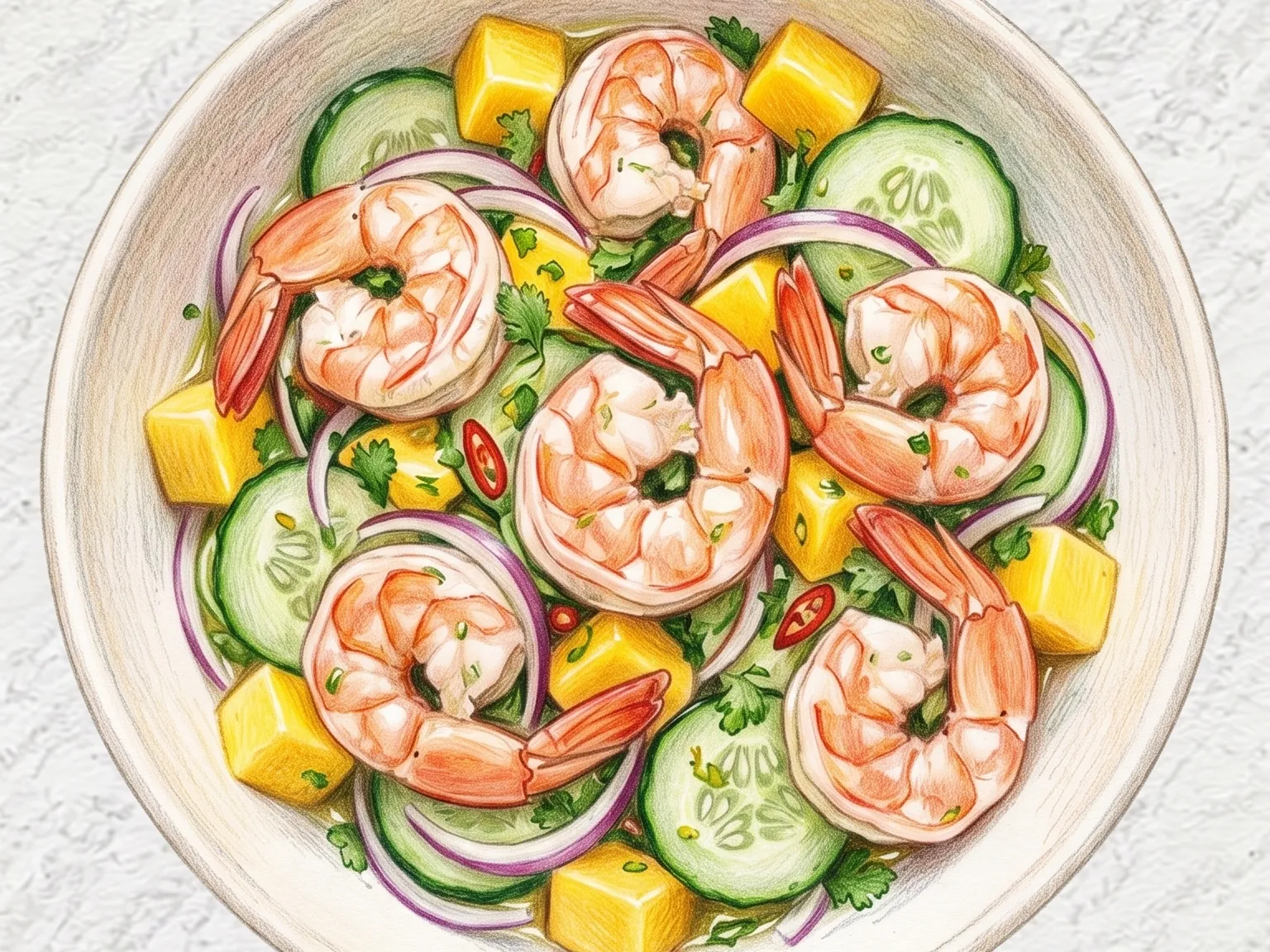
Yam woon sen is a Thai glass noodle salad where soaked and briefly boiled mung bean noodles are tossed with blanched shrimp, sliced red onion, diagonally cut celery, and chopped cilantro in a dressing of lime juice, fish sauce, and palm sugar. The noodles are soaked in warm water for ten minutes, then boiled for just two minutes to maintain their chewy, springy texture - rinsing in cold water immediately after removes surface starch and prevents clumping. The shrimp need only a two-minute blanch to reach a firm, bouncy doneness; any longer and they turn rubbery. The dressing builds three layers simultaneously - fish sauce for salty depth, lime juice for bright acidity, and palm sugar for a caramel sweetness - creating the complex balance characteristic of Thai cuisine. Cilantro provides a fresh, herbal finish.

🥗 Light & Healthy
Prep 18min Cook 8min 2 servings
Gambas al Ajillo (Garlic Shrimp)
Western Easy

Gambas al Ajillo (Garlic Shrimp)

Gambas al ajillo cooks peeled shrimp in a generous pool of olive oil infused with thinly sliced garlic and dried red chili over low heat, a method that turns the oil itself into the flavor foundation of the dish. The garlic must be coaxed slowly to release its sweetness into the oil without crossing into bitterness - the moment it turns golden, the shrimp go in and cook for two to three minutes until pink and just cooked through. A seasoning of salt, black pepper, and a scatter of chopped parsley finishes the pan. The dried chili adds a gentle warmth that sharpens both the garlic-scented oil and the natural sweetness of the shrimp, while the olive oil absorbs and carries all these flavors together. Sliced baguette served alongside is not optional - it exists to soak up the deeply flavored oil, and mopping the pan completely clean is the traditional way to end the dish. Keeping the heat consistently low throughout is the one non-negotiable rule: high heat burns the garlic in seconds and toughens the shrimp.

🍺 Bar Snacks ⚡ Quick
Prep 10min Cook 10min 2 servings
Char Kway Teow (Penang Wok-Fried Flat Rice Noodles with Prawns)
Asian Medium

Char Kway Teow (Penang Wok-Fried Flat Rice Noodles with Prawns)

Char kway teow originated in Penang as a meal for Chinese laborers who needed something filling and cheap, cooked fast over high heat with whatever was affordable. Wide flat rice noodles go into a scorching wok with prawns, cockles, egg, bean sprouts, Chinese chives, and sliced lap cheong sausage. Dark soy sauce and oyster sauce stain the noodles a deep, smoky brown as they caramelize against the iron of the wok. The defining quality of the dish is wok hei, the charred, slightly acrid breath of the wok that comes only from cooking at extreme temperatures with the noodles thrown directly through open flame. Achieving wok hei requires both a wok that has reached its full temperature and enough physical space inside it for the noodles to make sustained contact with the hot surface rather than steaming in their own moisture. Traditionally cooked in pork lard, the rendered fat coats every noodle strand with a richness no vegetable oil can match. Penang hawker stalls cook one plate at a time because crowding the wok traps moisture and kills the sear. The result carries a charred, faintly bitter edge beneath the sweet-salty sauce that has made it one of the most recognized street foods in Southeast Asia.

🏠 Everyday 🌙 Late Night
Prep 15min Cook 12min 2 servings
Korean Radish Greens Shrimp Porridge
Rice Easy

Korean Radish Greens Shrimp Porridge

Mucheong-saeu-juk is a Korean porridge built on blanched, chopped radish greens and minced shrimp sauteed together in perilla oil before soaked rice and water are added and the whole pot is simmered down to a smooth, savory consistency. Blanching the radish greens before anything else is essential for two reasons. The coarse, fibrous texture that would otherwise remain tough and unpleasant in a smooth porridge softens significantly after a brief immersion in boiling water, and a portion of the greens' natural bitterness is drawn out at the same time. Chopping them finely after blanching allows them to integrate seamlessly throughout the porridge so that no identifiable clumps disrupt the texture. Shrimp handled differently than simple mincing produces a better result: crushing each piece lightly with the flat of a knife releases umami into the cooking liquid more evenly than finely minced shrimp, while avoiding the concentrated fishiness that over-processed seafood can carry. Perilla oil differs meaningfully from sesame oil in its flavor profile. Alongside a shared nuttiness it carries a distinctly herbal quality that pairs particularly well with vegetable-forward preparations. Using soup soy sauce rather than plain salt keeps sodium in check while still contributing the subtle, fermented depth that flat salt lacks. Radish greens supply vitamin C and dietary fiber, and shrimp provides lean, complete protein with minimal fat, making this a nutritionally well-rounded bowl in a small volume. Because the porridge is easy to digest and gentle on the stomach, it works equally well as a light morning meal, a recovery dish during illness, a post-surgery restorative, or simply a warming option on days when anything heavier feels like too much. Frozen shrimp can substitute for fresh; it should be fully thawed and thoroughly dried before going into the pan so that excess water does not dilute the finished porridge. Leftovers thicken considerably as they cool; a small addition of water and gentle reheating over low heat restores the original consistency.

🏠 Everyday
Prep 18min Cook 28min 2 servings
Korean Zucchini Shrimp Stir-fry
Stir-fry Easy

Korean Zucchini Shrimp Stir-fry

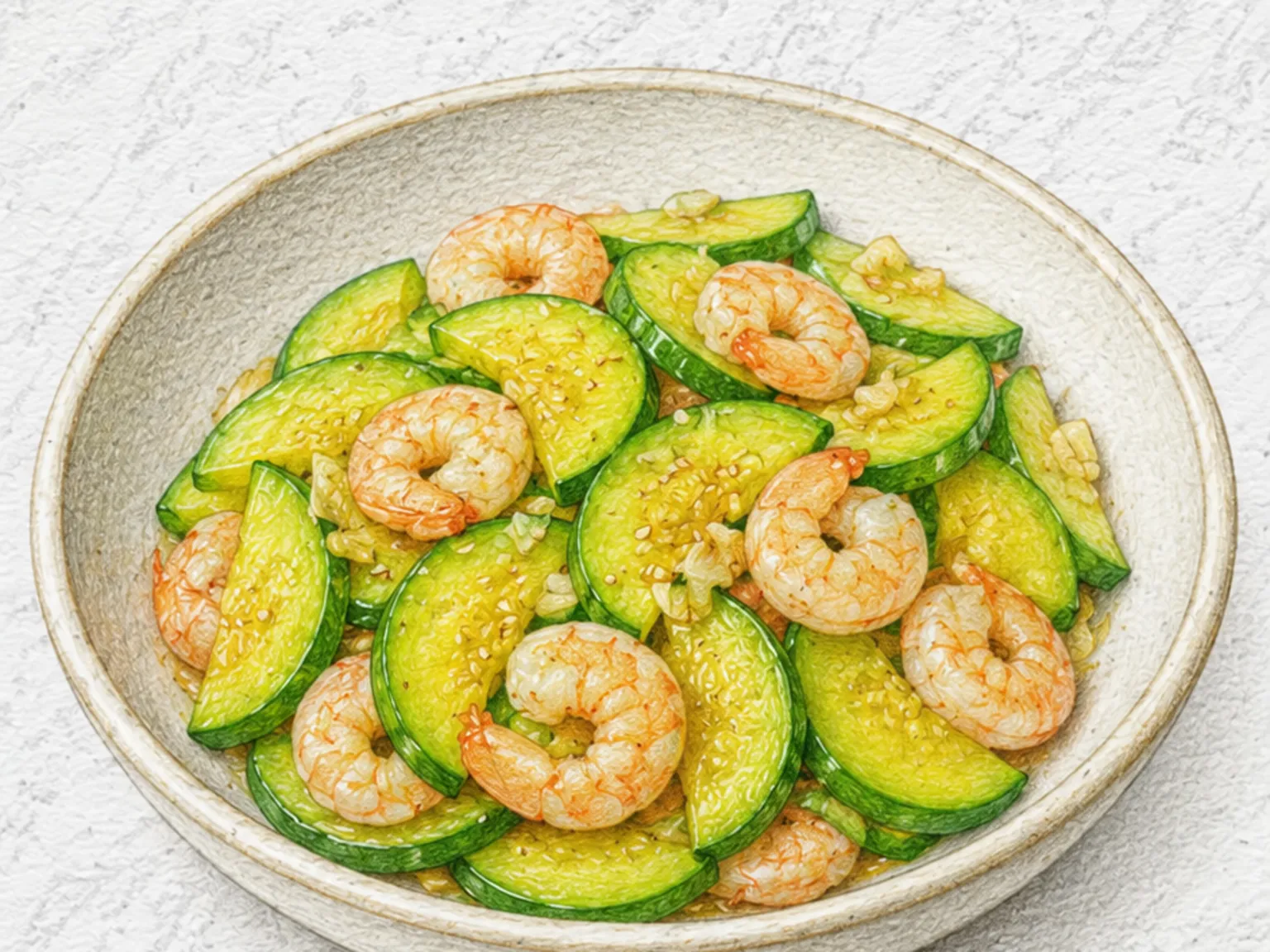
Hobak-saeu-bokkeum is a light Korean stir-fry of thinly sliced zucchini and shrimp seasoned with soy sauce, cooking wine, and garlic. The dish relies on the inherent flavors of its ingredients rather than heavy seasoning, keeping the final result mild, clean, and free of excess grease. Zucchini softens as it cooks and releases its natural sweetness, but the heat must be managed carefully. Overcooking draws out too much moisture and turns the slices limp and watery, eliminating the slight crispness at the center that defines the ideal texture. A well-preheated pan and high heat are needed to sear the surface quickly before the interior softens all the way through. Shrimp are cooked only until they turn pink and curl into a gentle arc. At that moment the proteins have set just enough to give a plump, springy bite; cooking beyond that point tightens the muscle fibers further and makes them rubbery. Using soup soy sauce rather than dark soy sauce keeps the color light and the seasoning clean. A sliced green chili adds a sharp kick without changing the fundamental character of the dish. The entire stir-fry comes together in around ten minutes, making it one of the more practical banchan options when time is limited. It holds its flavor and texture at room temperature without deteriorating, which makes it a reliable choice for a packed lunchbox as well as a fresh dinner side. Lightly salting the shrimp and splashing on a small amount of cooking wine before cooking helps draw out any residual fishiness. Yellow squash or zucchini varieties can substitute freely for the Korean hobak, and adding squid alongside the shrimp introduces an additional layer of oceanic character to the finished dish.

🥗 Light & Healthy 🏠 Everyday
Prep 12min Cook 8min 2 servings
Korean Seafood Scallion Pancake
Grilled Easy

Korean Seafood Scallion Pancake

Haemul-pajeon is a Korean seafood scallion pancake built by laying scallion segments cut to six or seven centimeters in an oiled pan, topping them with sliced squid and peeled shrimp, then pouring a thin batter of Korean pancake mix and cold water over everything and cooking on medium heat. Cold water inhibits gluten development, which is the secret to shatteringly crisp edges, and the scallions pressed directly against the hot oil caramelize underneath the batter, releasing a sweet, aromatic fragrance unique to pajeon. Shaking the pan before flipping confirms the bottom has released cleanly-forcing a stuck pancake tears the delicate structure-and adding a drizzle of oil around the edges for the second side crisps the perimeter into a golden, almost fried ring. Thinly sliced red chili on top adds color and a gentle heat, completing the dish that is Korea's most iconic pairing with makgeolli rice wine.

🍺 Bar Snacks
Prep 20min Cook 15min 2 servings
Korean Seafood & Chicken Herbal Soup
Soups Hard

Korean Seafood & Chicken Herbal Soup

Haesintang is a premium Korean restorative soup that combines a whole chicken with abalone, octopus, and shrimp, simmered together in a single large pot for an extended period. The chicken goes in first and cooks for well over an hour, building a cloudy, collagen-rich stock with a naturally silky body. The seafood is added later in the process to avoid overcooking: abalone stays chewy, octopus retains its characteristic bounce, and shrimp turn just pink and stop there. The interaction between the poultry fat and the marine umami produces a broth with a depth that neither chicken alone nor seafood alone could achieve. Seasoning is deliberately restrained, typically garlic, green onion, and salt, so the flavors of the ingredients themselves define the soup rather than any added sauce or spice. In Korea, haesintang is categorized as a stamina food, most commonly eaten on the hottest days of summer in the traditional belief that rich nourishment combats heat fatigue. Its combination of two high-end protein sources places it firmly in the celebratory register of Korean home and restaurant cooking.

🏠 Everyday 🎉 Special Occasion
Prep 35min Cook 70min 4 servings
Korean Scorched Rice Seafood Stew
Stews Medium

Korean Scorched Rice Seafood Stew

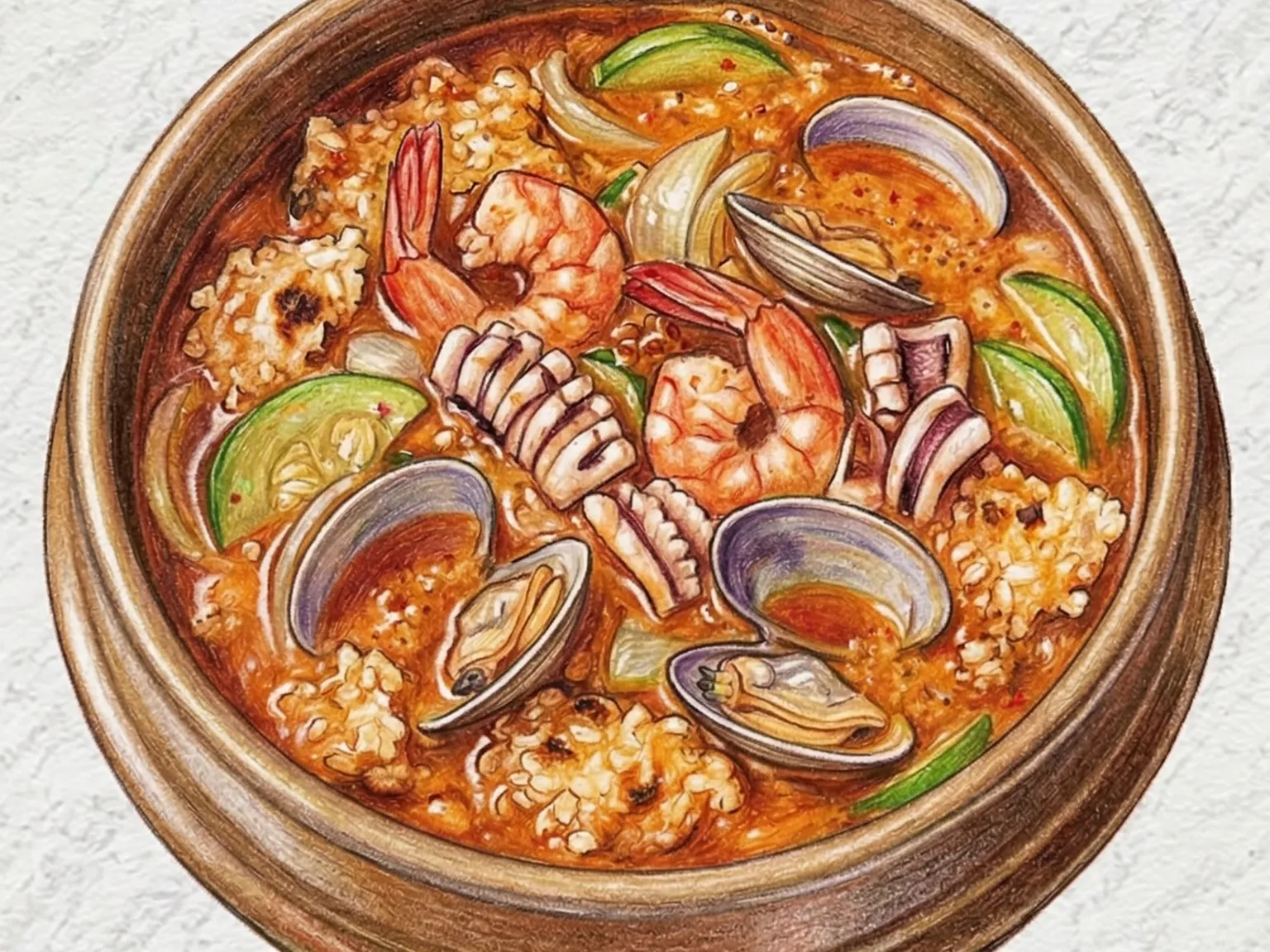
Nurungji haemul jjigae is a seafood stew built around scorched rice, anchovy-kelp stock, squid, shrimp, and clams. The nurungji starts out as a hard, dried slab and enters the broth intact. As the stew heats and the seafood begins to release its juices, the scorched rice gradually softens and expands, thickening the broth and contributing a toasty, nutty quality that plain rice or noodles cannot replicate. Squid holds its springy texture best when not overcooked, so it goes in later. Shrimp turns opaque and firm in a matter of minutes. Clams are added while still closed and are done when the shells open and the meat loosens from its hinge. The combined liquid from all three seafood forms a broth that is briny, sweet, and clean in the way that multiple shellfish together often produce. Zucchini and onion add mild sweetness and soften the overall character of the stew. Gochugaru brings moderate heat and the red color typical of many Korean jjigae. The stew reaches its best texture when the nurungji has fully softened at the edges but still retains some chew at the center. At that point the broth is thick and the flavors are fully integrated. Served in a single bowl with the nurungji, seafood, and vegetables together, it functions as a complete meal without needing additional rice.

🏠 Everyday 🎉 Special Occasion
Prep 18min Cook 20min 4 servings
Chinese Lo Mein
Noodles Easy

Chinese Lo Mein

Lo mein is a Chinese noodle dish where boiled noodles are tossed gently with vegetables, protein, and a soy-based sauce, resulting in a soft, glossy finish that sets it apart from the crisper chow mein. The sauce - soy sauce, oyster sauce, and a small amount of sugar - is premixed so it coats evenly during the brief time in the pan. Shrimp is seared first until half-cooked, then broccoli and carrot are stir-fried just until they lose their raw crunch. The warm, drained noodles go in last, and everything is tossed together until the sauce is absorbed and the noodles gleam. The key is restraint: lo mein should stay moist and supple, not charred or dry. The protein can be swapped freely - chicken, beef, or tofu all work with the same sauce and technique.

🏠 Everyday 🌙 Late Night
Prep 15min Cook 10min 2 servings
Jambalaya
Western Medium

Jambalaya

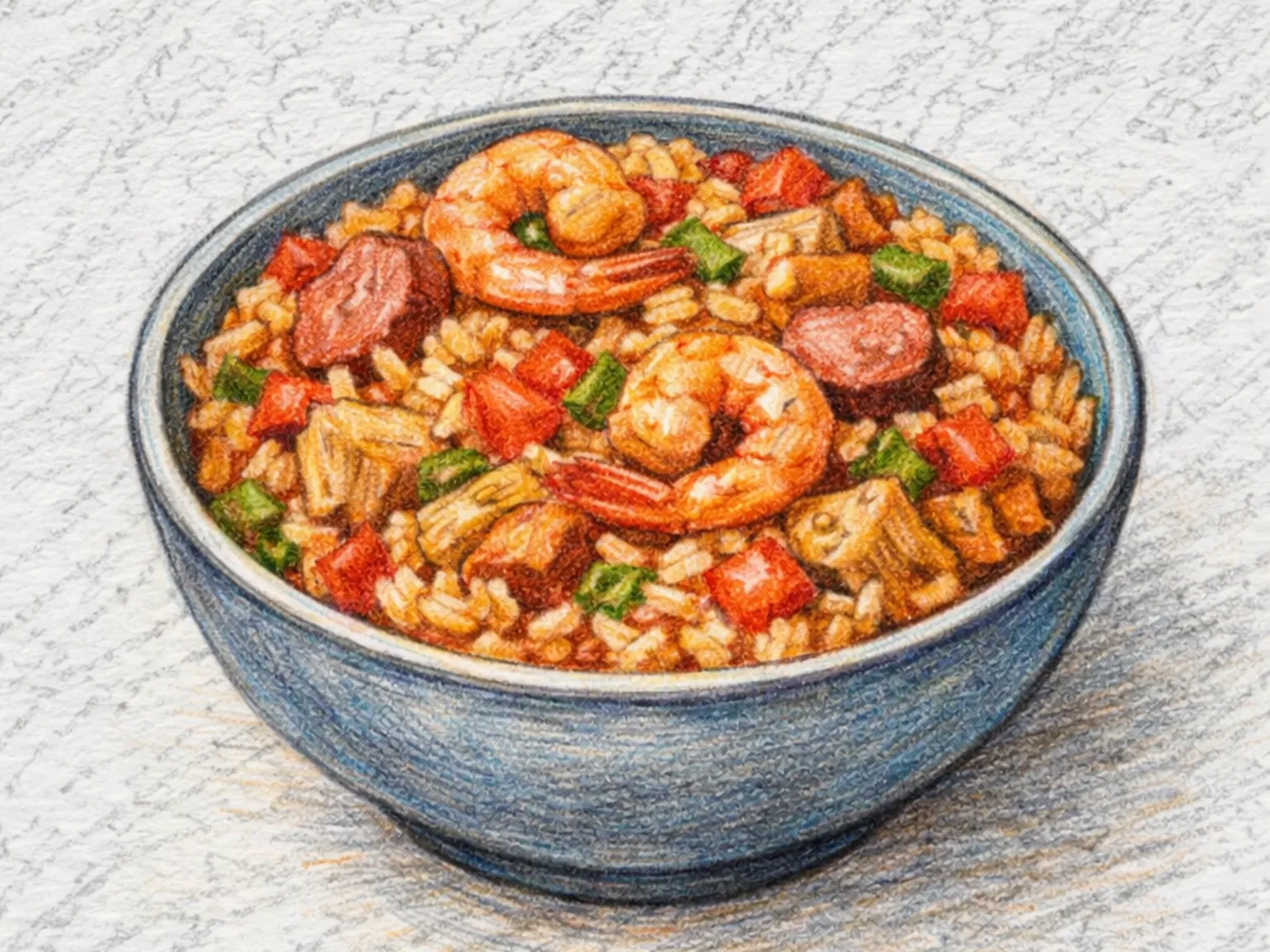
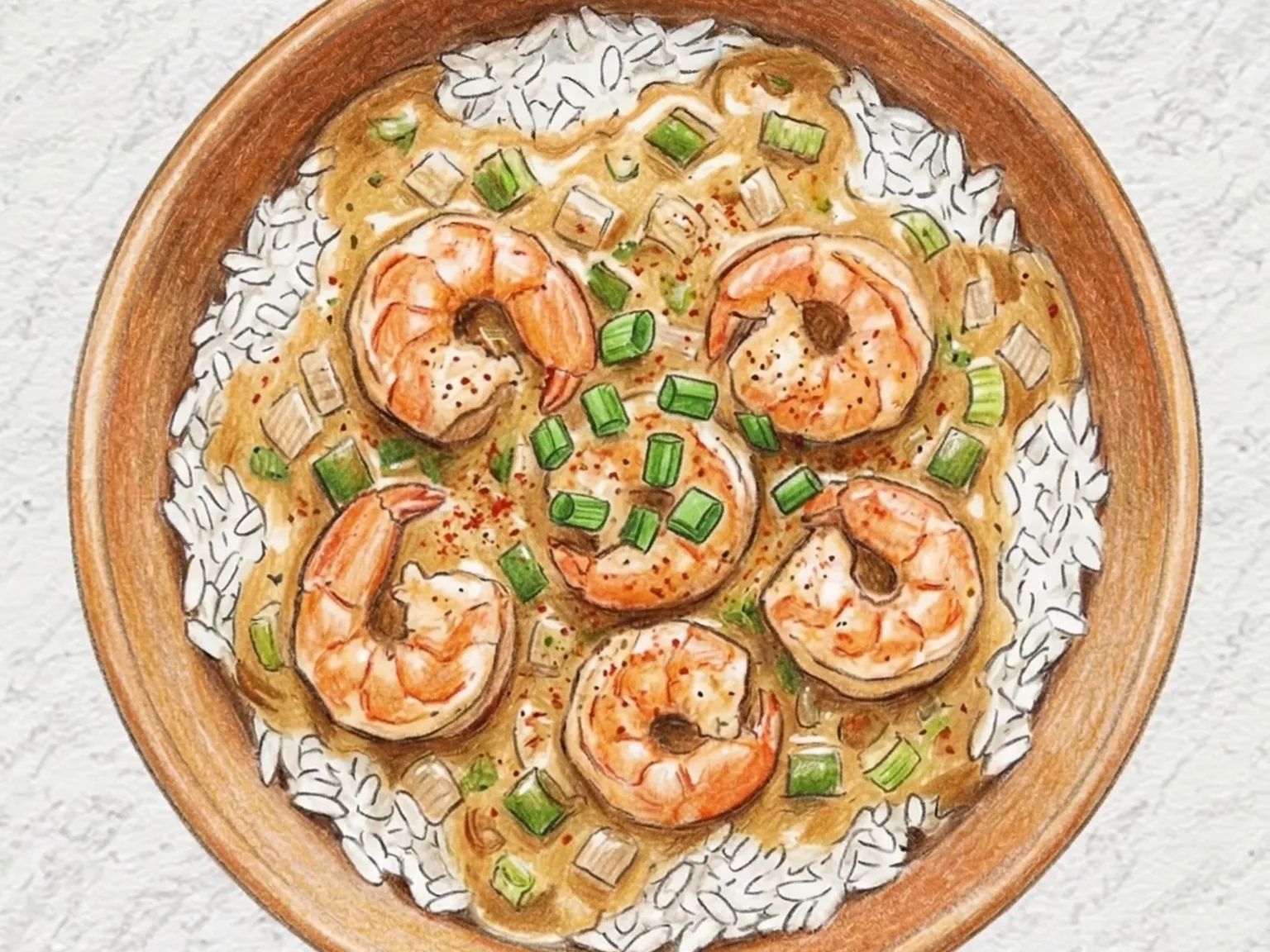
Jambalaya is a Louisiana Creole one-pot dish where chicken, andouille sausage, and shrimp cook together with rice in a spiced tomato broth. Browning the sausage and chicken first renders fat and develops deep flavor, then the Cajun holy trinity of onion, celery, and bell pepper is sauteed in the drippings until softened. Tomatoes, Cajun seasoning, rice, and chicken stock are added and brought to a boil, then covered and simmered on low heat so the rice absorbs the seasoned liquid as it cooks. The shrimp go in only during the final two to three minutes - adding them earlier causes them to toughen and lose their firm, bouncy texture. Each grain of rice carries the smoky, spicy character of the broth, making the dish a complete meal from a single pot.

🎉 Special Occasion
Prep 15min Cook 35min 4 servings
Cheung Fun (Cantonese Steamed Rice Noodle Rolls with Shrimp)
Asian Hard

Cheung Fun (Cantonese Steamed Rice Noodle Rolls with Shrimp)

Cheung fun -- rice noodle rolls -- are a cornerstone of Cantonese dim sum, present on every yum cha table from Hong Kong's tea houses to Guangzhou's morning restaurants. A thin batter of rice flour and tapioca starch is poured onto an oiled steel plate, steamed for under a minute, then peeled off as a translucent, trembling sheet. The sheet is rolled around fillings such as shrimp, char siu, or beef, or served plain, its own silky texture being the point. The ratio of rice flour to starch determines everything: too much rice flour and the sheet is stiff; too much starch and it becomes gummy. A lightly sweetened soy sauce is poured over the rolls at the table, pooling in the plate and coating each piece as it is lifted with chopsticks. Street vendors in Hong Kong steam cheung fun on pushcarts, peeling each sheet from a metal drawer with a flat scraper in a motion that draws onlookers. For many dim sum regulars, it is the first dish ordered and the benchmark by which a restaurant is judged.

🎉 Special Occasion
Prep 25min Cook 15min 2 servings
Korean Scallion Shrimp Fried Rice
Rice Easy

Korean Scallion Shrimp Fried Rice

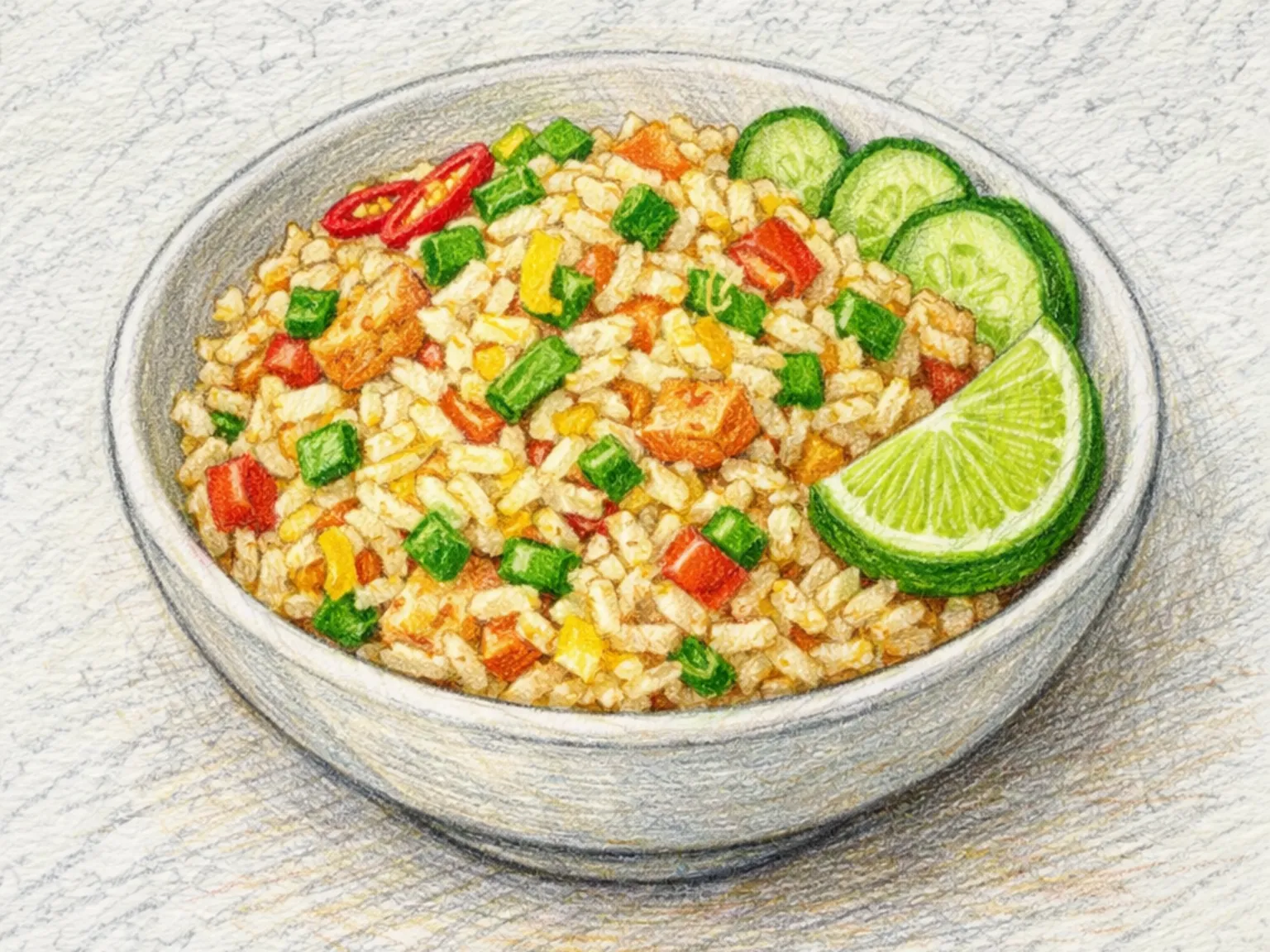
This scallion shrimp fried rice stir-fries plump shrimp and generous amounts of green onion over high heat for a clean, aromatic bowl. The shrimp go into the wok first, searing until the edges turn golden and leave behind a savory fond. Chopped scallions follow, releasing a sharp, oniony fragrance that cuts through the richness. Day-old rice is added and tossed rapidly with soy sauce and oyster sauce, breaking up clumps until every grain is individually coated. Beaten egg stirred in at the end wraps the rice in a soft, silky layer. Despite the short ingredient list, the combination of briny shrimp and pungent scallion delivers a depth of flavor that keeps this dish in regular weeknight rotation.

🏠 Everyday
Prep 12min Cook 10min 2 servings
Eight Treasure Seafood Stir-fry
Stir-fry Hard

Eight Treasure Seafood Stir-fry

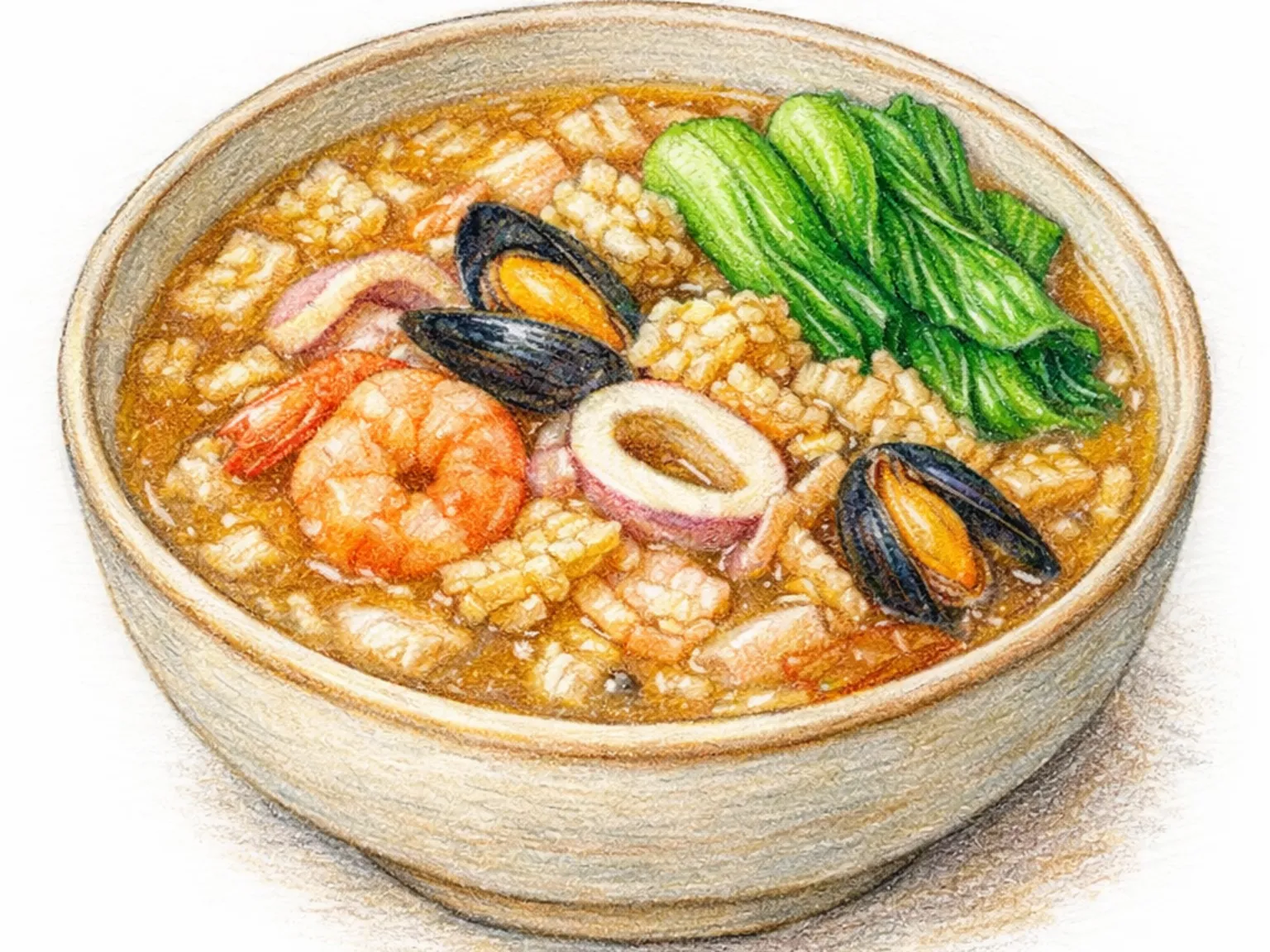
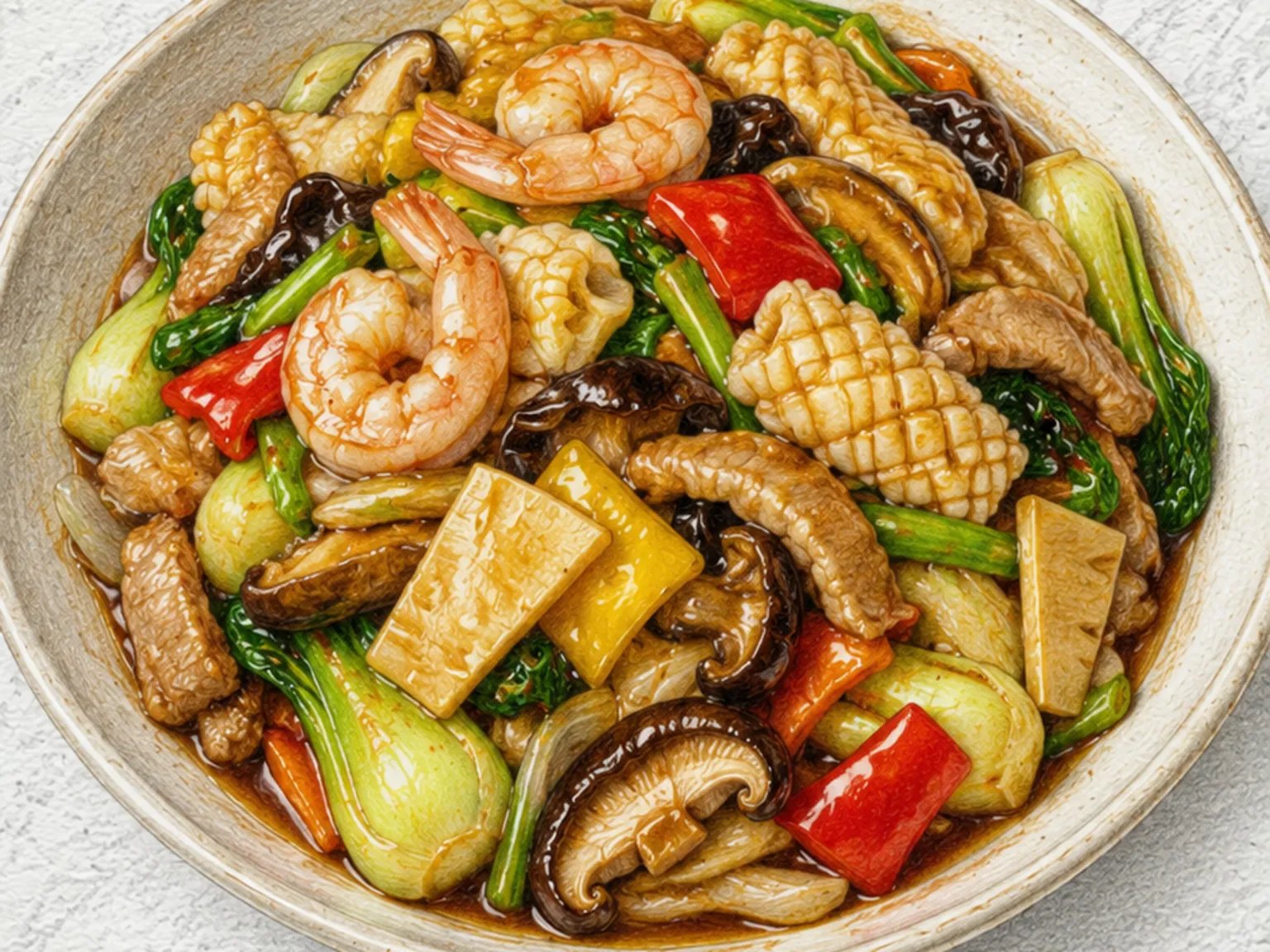
Palbochae is a Korean-Chinese banquet stir-fry that brings together shrimp, squid, pork, bamboo shoots, shiitake mushrooms, and bok choy in a single wok. Each ingredient is added in sequence according to its cooking time, then finished in an oyster-sauce glaze thickened with a light cornstarch slurry. The high-heat technique imparts a pronounced wok char, while the variety of proteins and vegetables creates contrasting textures in every bite. It is a dish traditionally reserved for special occasions, built on the interplay of seafood brine, pork fat, and crisp greens.

🏠 Everyday 🎉 Special Occasion
Prep 25min Cook 18min 4 servings
Hobeop-guk (Korean Zucchini Shrimp Soup)
Soups Easy

Hobeop-guk (Korean Zucchini Shrimp Soup)

Hobak-guk is a mild, clear Korean soup built around thinly sliced half-moon zucchini. Small shrimp go in with the zucchini, infusing the broth with a gentle seafood sweetness that supports rather than overpowers the vegetable's own delicate flavor. The seasoning is deliberately restrained - soup soy sauce and minced garlic only - so the zucchini's natural softness and subtle sweetness define the bowl. As the slices simmer, they turn translucent and tender while still holding their shape on a spoon. The entire soup comes together in about fifteen minutes, making it one of the fastest and most low-effort side soups in the Korean home kitchen. A handful of sliced green onion stirred in at the end brings a bright herbal finish to an otherwise quiet, comforting bowl.

🏠 Everyday
Prep 10min Cook 15min 4 servings
Korean Silken Tofu Seafood Stew
Stews Easy

Korean Silken Tofu Seafood Stew

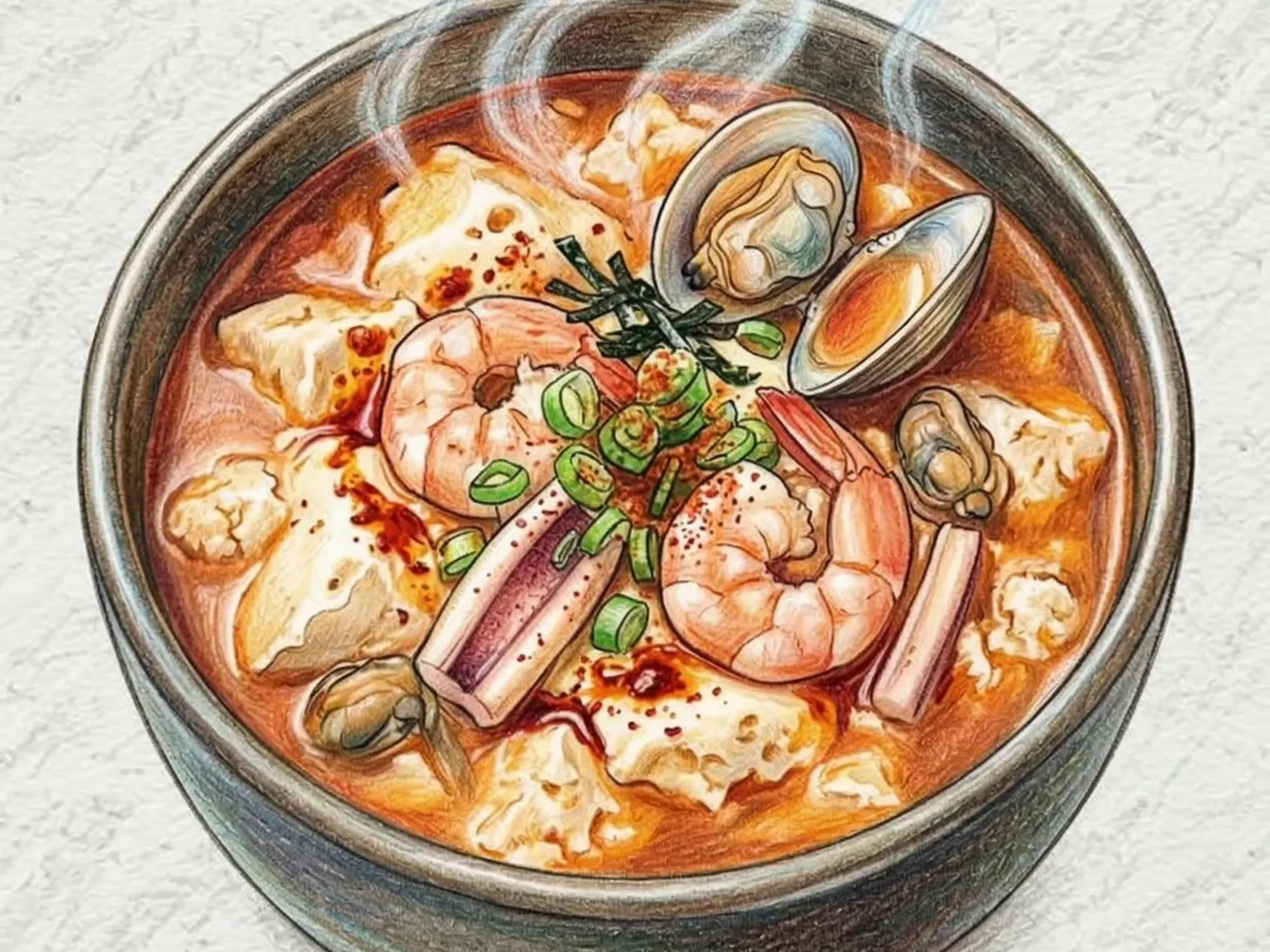
Sundubu haemul jjigae is a seafood soft tofu stew that combines silken tofu with shrimp and Manila clams in an anchovy stock seasoned with gochujang and Korean chili flakes. The aromatics are stir-fried in sesame oil first to build a deeper base before the stock is added. As the shrimp and clams cook through, they release their own briny juices into the spicy broth and push the umami noticeably higher. An egg cracked in at the end binds gently with the silken tofu, adding richness and a slight body to the broth. Deveining the shrimp and removing the back intestine keeps the flavor clean, and soaking the clams in lightly salted water beforehand purges any sand that would otherwise cloud the stock.

🏠 Everyday
Prep 15min Cook 15min 2 servings