Salisbury Steak
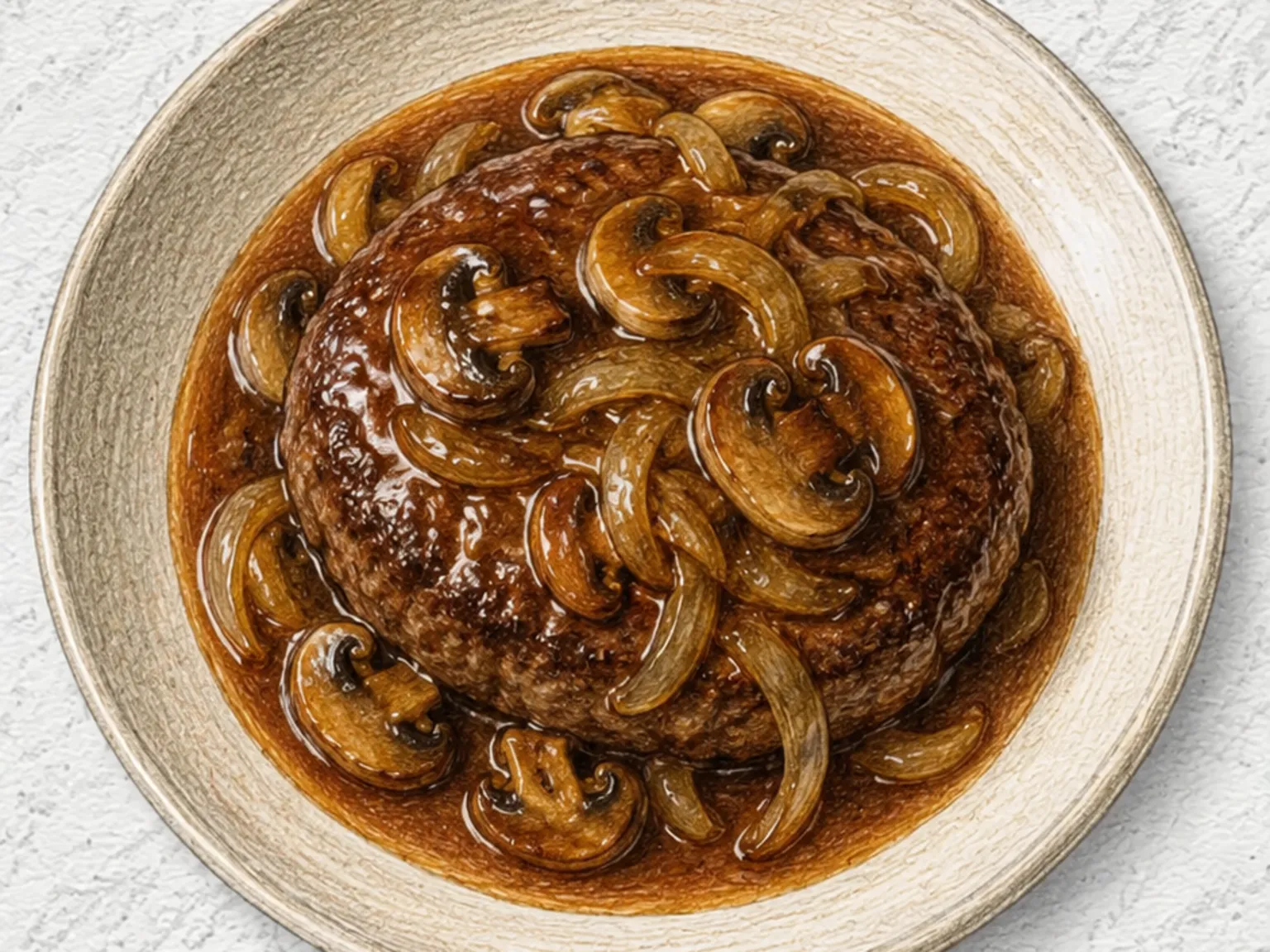
Salisbury steak is an American comfort dish made by shaping ground beef mixed with milk-soaked breadcrumbs and egg into oval patties, pan-searing them, and then simmering in a mushroom-onion gravy. The breadcrumbs absorb milk and form moisture pockets within the meat, keeping the patties juicy even after cooking through. Pressing a shallow indent into the center of each patty prevents it from puffing up during searing, ensuring even thickness. Building the gravy in the same pan - sauteing onion and mushrooms, stirring in flour, then deglazing with beef stock and Worcestershire sauce - dissolves the browned fond into the sauce for deeper flavor. Returning the patties to simmer in the gravy for eight minutes finishes the interior and coats them in a rich, savory glaze.
Adjust Servings
Instructions
- 1
Soak breadcrumbs in milk for 2 minutes, then mix with beef, egg, salt, and pepper.
- 2
Divide into 4 portions and shape into oval patties.
- 3
Brown patties in butter, about 3 minutes per side, then set aside.
- 4
Saute onion and mushrooms in the same pan until moisture reduces.
- 5
Stir in flour for 1 minute, then add stock and Worcestershire to form gravy.
- 6
Return patties and simmer 8 minutes on low until cooked through.
As an Amazon Associate, we may earn from qualifying purchases.
Tips
Nutrition (per serving)
More Recipes

Chicken Pot Pie
Chicken pot pie fills a butter pie crust with chicken, carrots, potatoes, and peas bound in a creamy roux-based sauce, then bakes until the top turns golden and the filling bubbles. The roux - butter cooked with flour - thickens into a rich sauce when chicken broth and heavy cream are whisked in, coating every piece of filling. Pre-boiling the carrots and potatoes ensures they cook through evenly within the oven time, while peas go in last to keep their color and slight crunch. Brushing the top crust with egg wash produces a glossy, deeply golden surface during baking. After 35 minutes at 200 degrees Celsius, the filling should be visibly bubbling at the edges, and breaking through the flaky crust reveals the thick cream sauce underneath.

Pork Chops with Apple Cider Pan Sauce
Apple Cider Pork Chops is an American one-pan dish where thick-cut pork loin chops are seared to a deep golden crust, then paired with a pan sauce built from the same skillet's fond. Bringing the chops to room temperature thirty minutes before cooking ensures even doneness from edge to center, and patting the surface completely dry is necessary for proper browning. After removing the pork, shallot and garlic are sauteed in the rendered fat, then apple cider is poured in to deglaze the browned bits clinging to the pan, reducing until the cider's natural sweetness and acidity concentrate. Dijon mustard stirs in a sharp, peppery complexity, and a knob of cold unsalted butter swirled in at the end gives the sauce a glossy sheen and rounded body. A whole sprig of fresh thyme simmered in the sauce threads an herbal note that bridges the apple and pork flavors.

Chicken a la King
Chicken a la king is an American home-style dish where bite-sized chicken breast, sliced mushrooms, and diced bell pepper are simmered in a butter-roux cream sauce. The roux - flour cooked briefly in melted butter - is thinned gradually with milk and chicken stock, producing a smooth sauce free of lumps. Cooking the chicken separately and returning it only at the end prevents the meat from toughening in the extended simmer. Onion dissolves into the sauce with a quiet sweetness, and the mushrooms contribute an earthy depth that rounds out the mild chicken. The finished sauce is typically spooned over toast, rice, or split biscuits, where it soaks into the starch and turns a simple base into a filling meal.

Keullaem Chaudeo (Clam Chowder)
Clam chowder is a thick American soup that combines clams, diced potatoes, onion, and celery in a milk-based broth thickened with a butter-and-flour roux. Sauteing the onion and celery in butter for three minutes draws out their natural sweetness before the flour goes in. Adding milk gradually while whisking prevents lumps and builds a smooth, creamy consistency. The potatoes simmer for twelve minutes until tender, and the clams are added only in the final three minutes to keep them from turning rubbery. Each spoonful delivers a balance of briny, oceanic depth from the clams and mild richness from the milk base.

Cheese Arepa (Venezuelan Griddled Cornmeal Cheese Pocket)
Arepas are a cornerstone of Venezuelan and Colombian daily eating, with roots stretching back to pre-Columbian indigenous cultures who ground maize on stone metates. The dough is nothing more than pre-cooked cornmeal (masarepa), water, and salt, shaped by hand into thick discs and cooked on a budare - a flat griddle - until a golden crust forms on both sides while the interior stays soft and slightly doughy. For cheese arepas, queso blanco or mozzarella is either mixed directly into the dough before grilling or stuffed inside after cooking, so the cheese melts into stretchy, salty pockets within the warm corn shell. The corn flavor is clean, toasty, and naturally sweet, with the cheese providing a counterpoint of fat and salt. Street vendors across Caracas and Bogota serve them from dawn through midnight, split open and filled with everything from black beans to shredded beef.

Angel Food Cake
Angel food cake emerged in the United States in the late 19th century, likely among communities that had an abundance of eggs and needed a use for leftover whites after making yolk-rich custards. The cake contains no butter, no oil, and no egg yolks - its structure comes entirely from whipped egg whites stabilized with cream of tartar, folded gently into a mixture of cake flour and sugar. The baking produces a tall, pillowy ring with a snow-white crumb and a slightly chewy, almost marshmallow-like texture at the top crust. After baking, the pan is inverted and cooled upside-down to prevent the delicate foam structure from collapsing under its own weight. The cake has a clean, vanilla-forward sweetness with none of the richness associated with butter cakes. Traditionally served unadorned or with fresh berries and whipped cream, it became a staple of American church socials and summer gatherings.