Asian Recipes
806 recipes. Page 15 of 34
The Asian category gathers popular dishes from Japan, China, Thailand, Vietnam, India, and beyond. Curry, stir-fried noodles, mapo tofu, pad Thai, and pho are among the Asian favorites commonly enjoyed in Korean households.
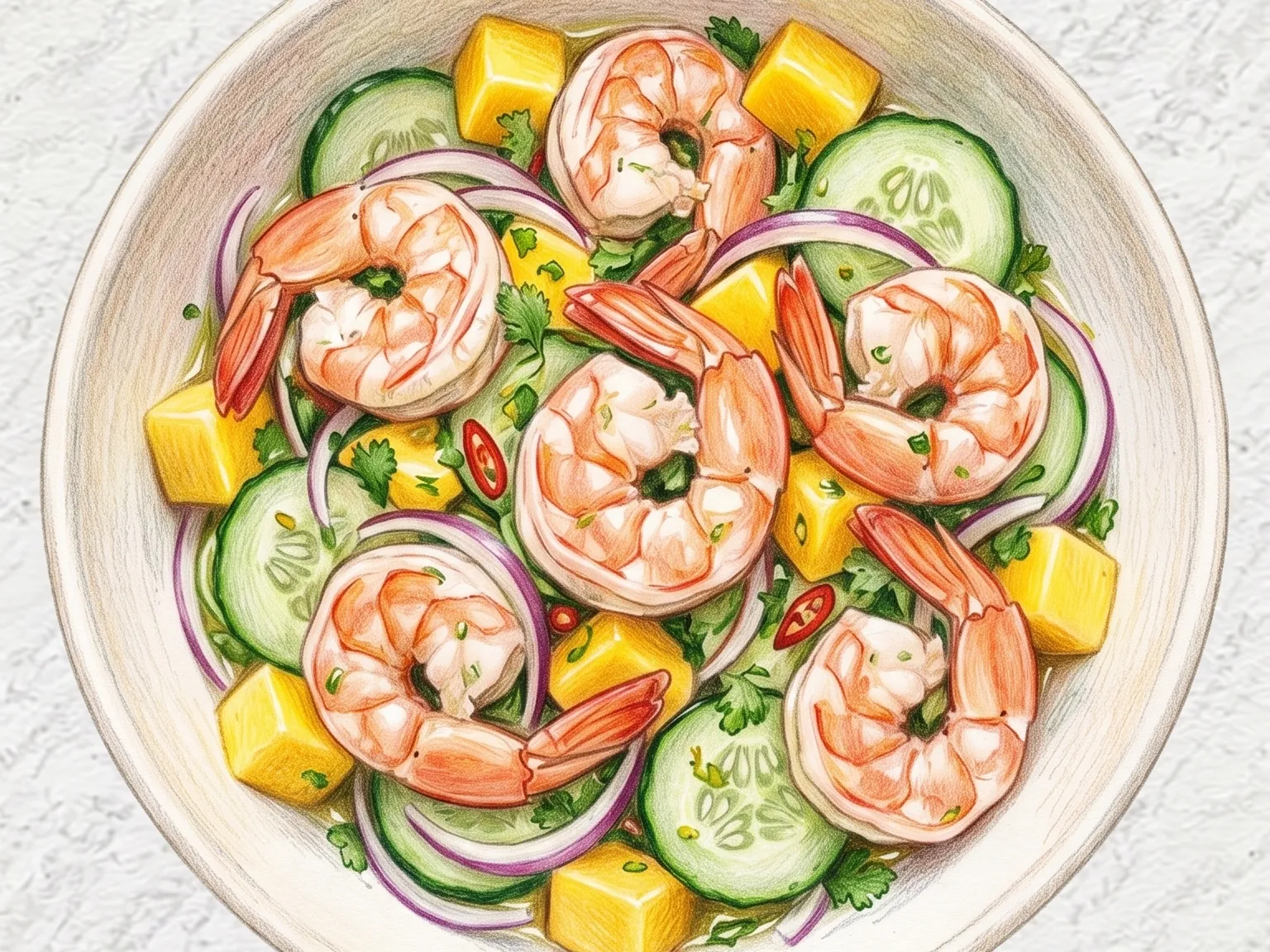
Shrimp Mango Lime Salad
Shrimp mango lime salad is a Thai-style dish that combines briefly poached shrimp with ripe mango, cucumber, red onion, and roughly chopped cilantro, dressed with lime juice, fish sauce, and olive oil. The shrimp go into boiling water for exactly two minutes, which is just long enough to cook them through while keeping their natural snap; any longer causes the proteins to contract and the texture turns from tender to rubbery. Fish sauce contributes a fermented, savory depth that amplifies the shrimp's briny character, while lime's sharp acidity slices through the mango's sweetness and brings the dressing into balance. Thinly sliced red onion adds a raw, peppery heat that creates tension between the sweet fruit and the savory seafood, and cilantro releases a distinctive herbal fragrance with each bite. Cucumber stirred into the mix lightens the overall texture and keeps the salad from feeling too dense. Served cold immediately after dressing, every element stays distinct and the contrast between the yielding fruit, the crisp vegetables, and the firm shrimp comes through clearly.
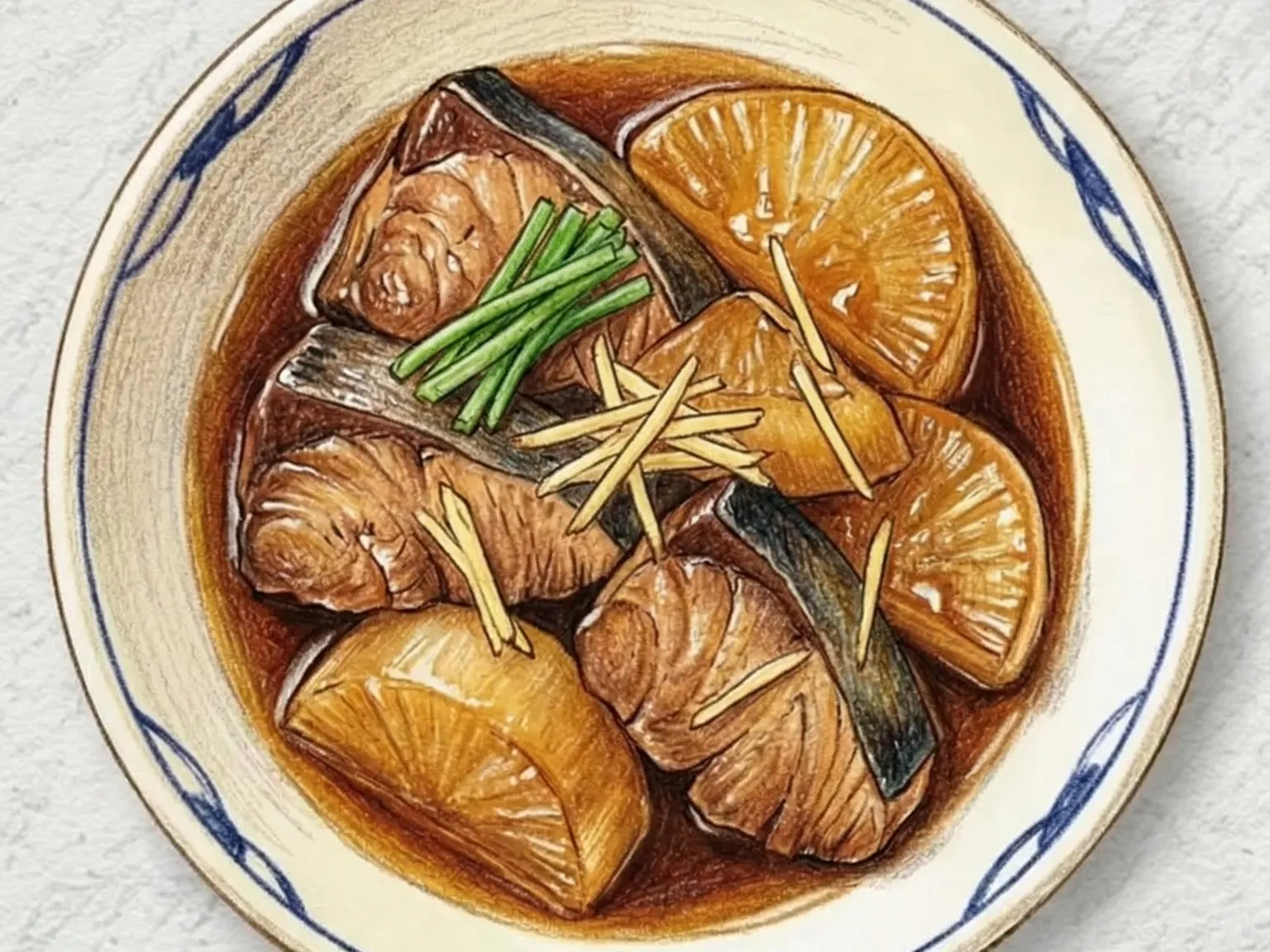
Japanese Simmered Yellowtail and Daikon
Buri daikon simmers yellowtail and daikon in dashi seasoned with soy sauce, mirin, sake, sugar, and ginger. Cut 500 g daikon into 2 cm rounds and parboil them for about 10 minutes. Drain when the edges turn translucent and the centers begin to soften. Place 700 g yellowtail in a sieve and pour hot water evenly over its surface. When the outside turns pale, pat the fish dry. Combine 500 ml dashi, 4 tablespoons soy sauce, 3 tablespoons mirin, 3 tablespoons sake, and 1 tablespoon sugar in a pot. Warm over medium heat until the sugar dissolves and the liquid reaches a steady simmer. Arrange the daikon on the bottom, set the yellowtail on top, and add 1 teaspoon ginger. When the liquid bubbles again, lower the heat and skim the foam. Cover and simmer gently for 20 to 25 minutes, spooning the braising liquid over the fish once or twice. Stop when the thickest fish piece reaches at least 63C at the center, a chopstick slides easily into the daikon, and the liquid has reduced by about half. Rest covered for 5 minutes, then transfer the fish and daikon carefully and spoon the reduced sauce over them.
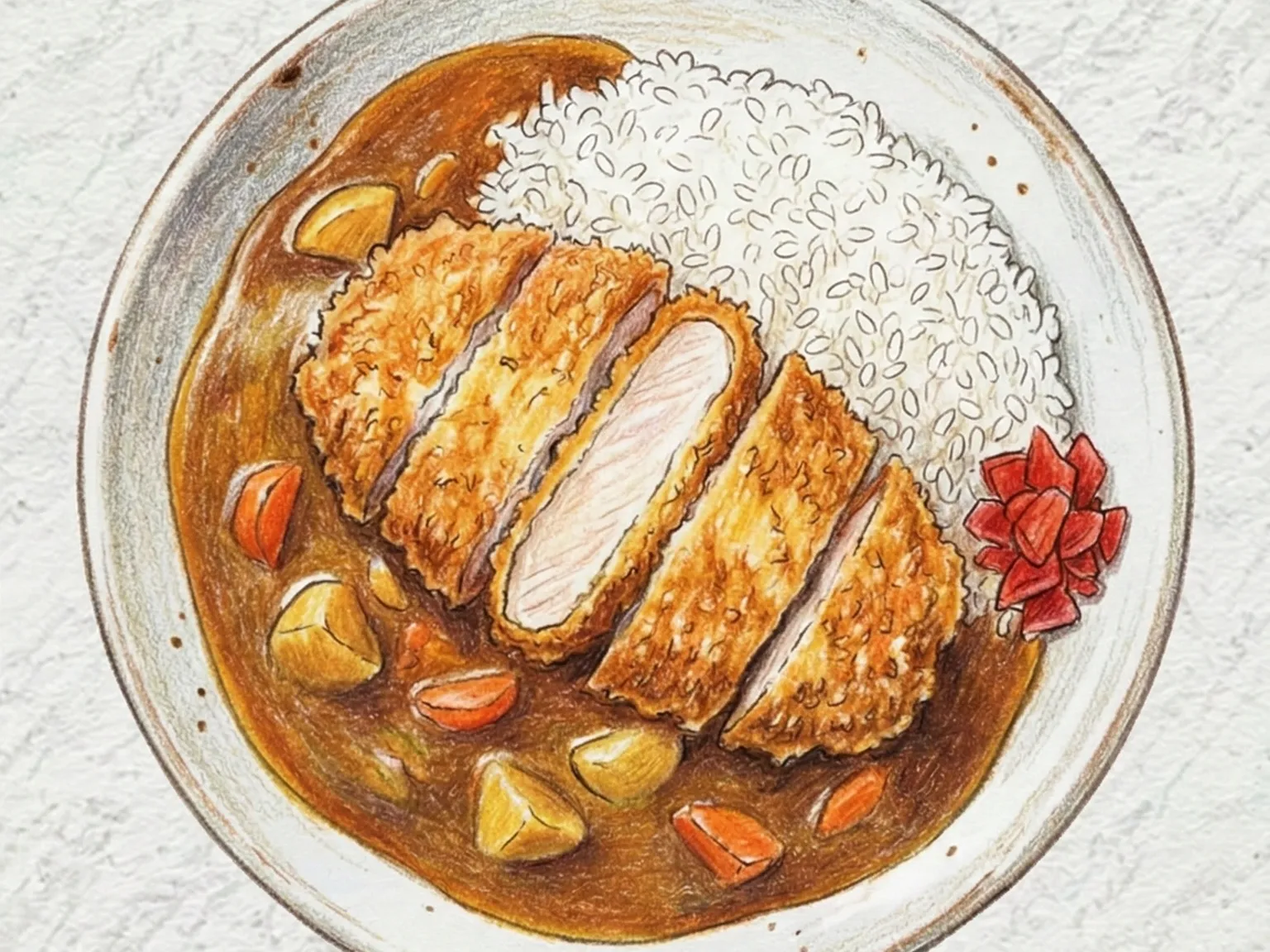
Katsu Curry
Katsu curry is a Japanese single-plate meal of crisp deep-fried pork cutlet served beside a thick, glossy curry sauce over steamed rice. The pork loin is pounded to an even thickness, seasoned with salt and pepper, then coated in three layers: flour, beaten egg, and panko. Panko breadcrumbs have a coarser, more jagged texture than standard breadcrumbs, which creates more air pockets in the crust and produces a crunch that stays crisp longer after frying. The breaded cutlet is lowered into oil heated to 170 degrees Celsius and fried for four to five minutes until deep golden brown, then lifted onto a wire rack to rest for two minutes. The resting period allows the residual heat to finish cooking the center while the juices redistribute and the crust firms up. The curry sauce is built separately: onion and carrot are sauteed until their natural sweetness develops fully, then water is added and everything simmers until the vegetables are tender. The curry roux blocks are added and dissolved over low heat until the sauce reaches a thick, velvety consistency. Resting the curry overnight deepens its flavor as the vegetables continue to release sugars and the spices meld together. At the table, the curry fills one side of the plate and the sliced katsu occupies the other so the crust stays dry until deliberately pushed into the sauce, preserving the contrast between the two textures.
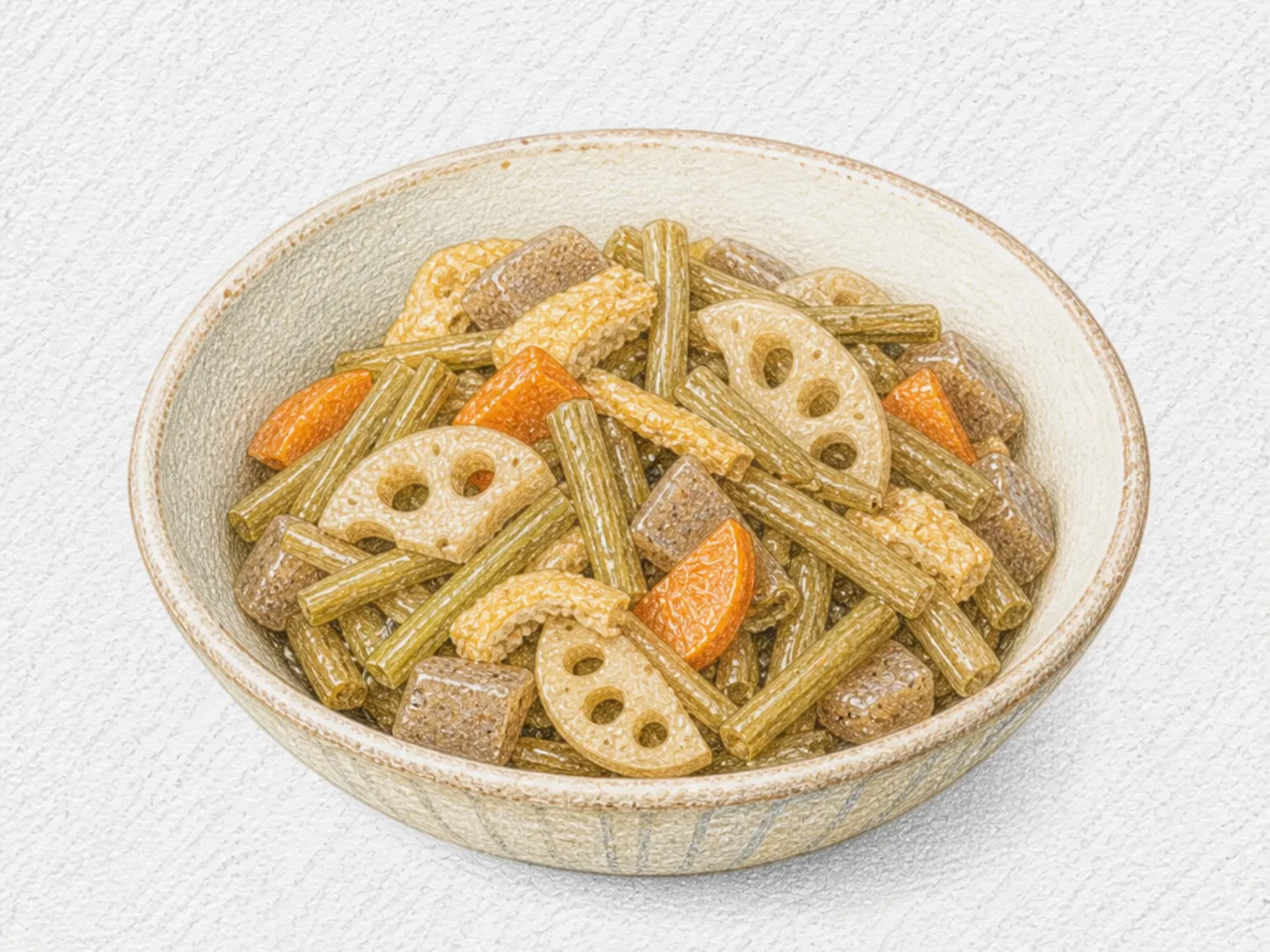
Imogara Stir-fry and Simmer
Dried taro stalk needs a full rehydration before this stir-fry and simmer begins. Rinse 50 g of the stalk, soak it in plenty of water for 30 minutes, then squeeze and cut it into bite-size lengths once it bends easily. Cut 120 g lotus root and 100 g carrot into 5 mm quarter rounds. Keep the lotus root in water after cutting and drain it immediately before cooking. Slice 1 fried tofu sheet and 1 piece of konjac into short strips, blanch both for 1 minute, and drain them. Heat 2 tablespoons cooking oil in a pot over medium heat. Add the taro stalk, lotus root, carrot, fried tofu, and konjac and stir-fry for 4 minutes, until oil coats all five ingredients. Pour in 150 ml water and dissolve 2 tablespoons sugar, 2.5 tablespoons soy sauce, 2 tablespoons sake, and 1 tablespoon mirin. Simmer uncovered over medium-low heat for about 15 minutes. The finish is not a pot full of broth: almost no liquid should remain on the bottom, while the lotus root still offers a crisp bite and the rehydrated stalk is soft enough to chew. If the center of the stalk is still stiff after its initial soak, extend that preparation before adding the seasoning rather than trying to soften it only in the reduced sauce.
Mame Shitogi (Green Soybean Rice Cake)
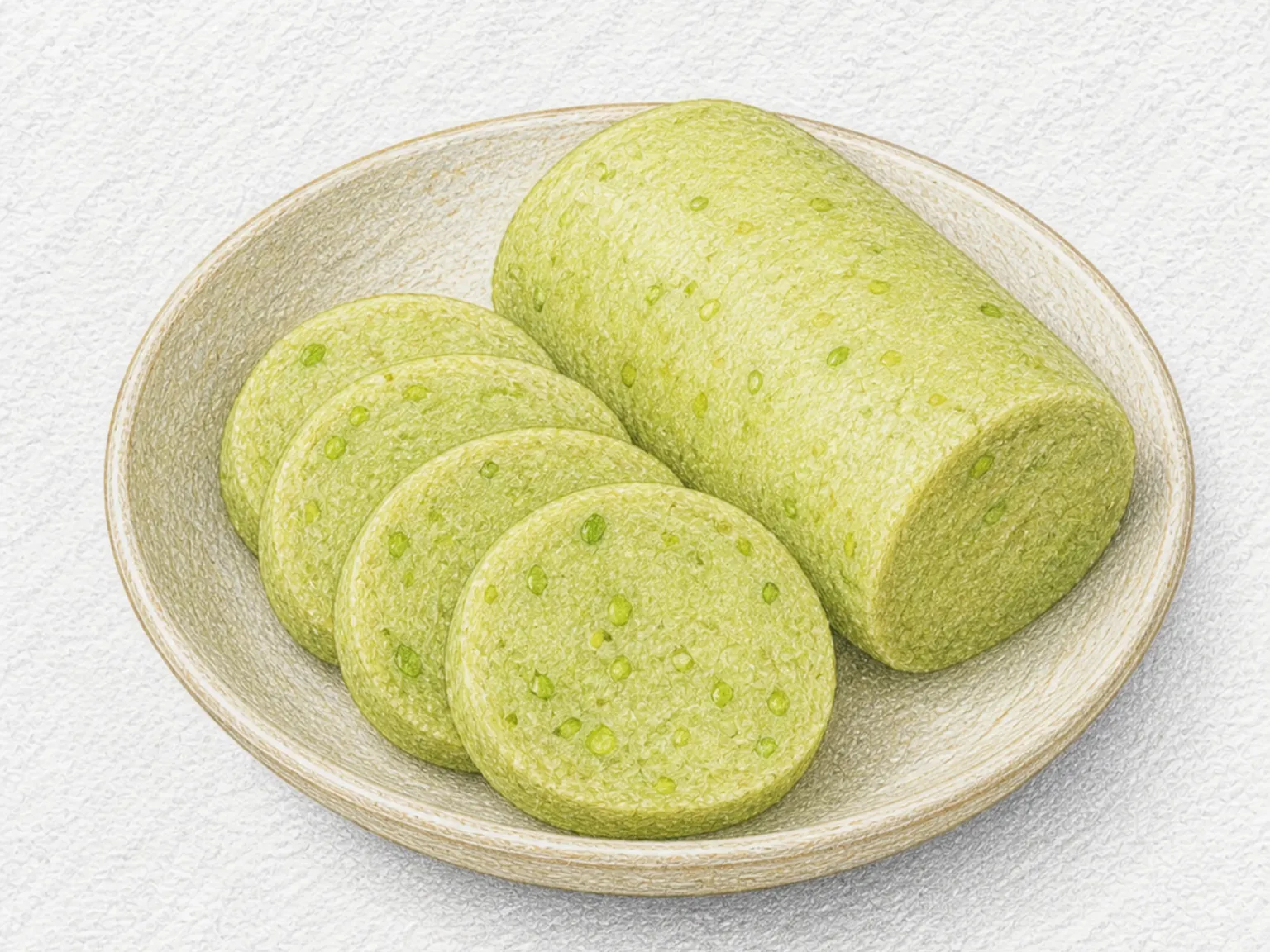
Mame shitogi is a fresh sweet from the Nanbu area of Aomori, made by kneading cooked and mashed green soybeans with equal parts non-glutinous and glutinous rice flour, sugar, salt, and warm water. Shitogi is regarded as an early form of mochi once offered at shrines, while soybeans helped stretch scarce rice after repeated cold-weather crop damage. The pale green dough is shaped like a kamaboko log and sliced 1 cm thick. It is crumbly and tender when fresh, or more fragrant, sweet, and slightly chewy after grilling. Use heat-treated, ready-to-eat rice flour for the fresh version.
Kenojiru (Tsugaru Root Vegetable and Soybean Soup)
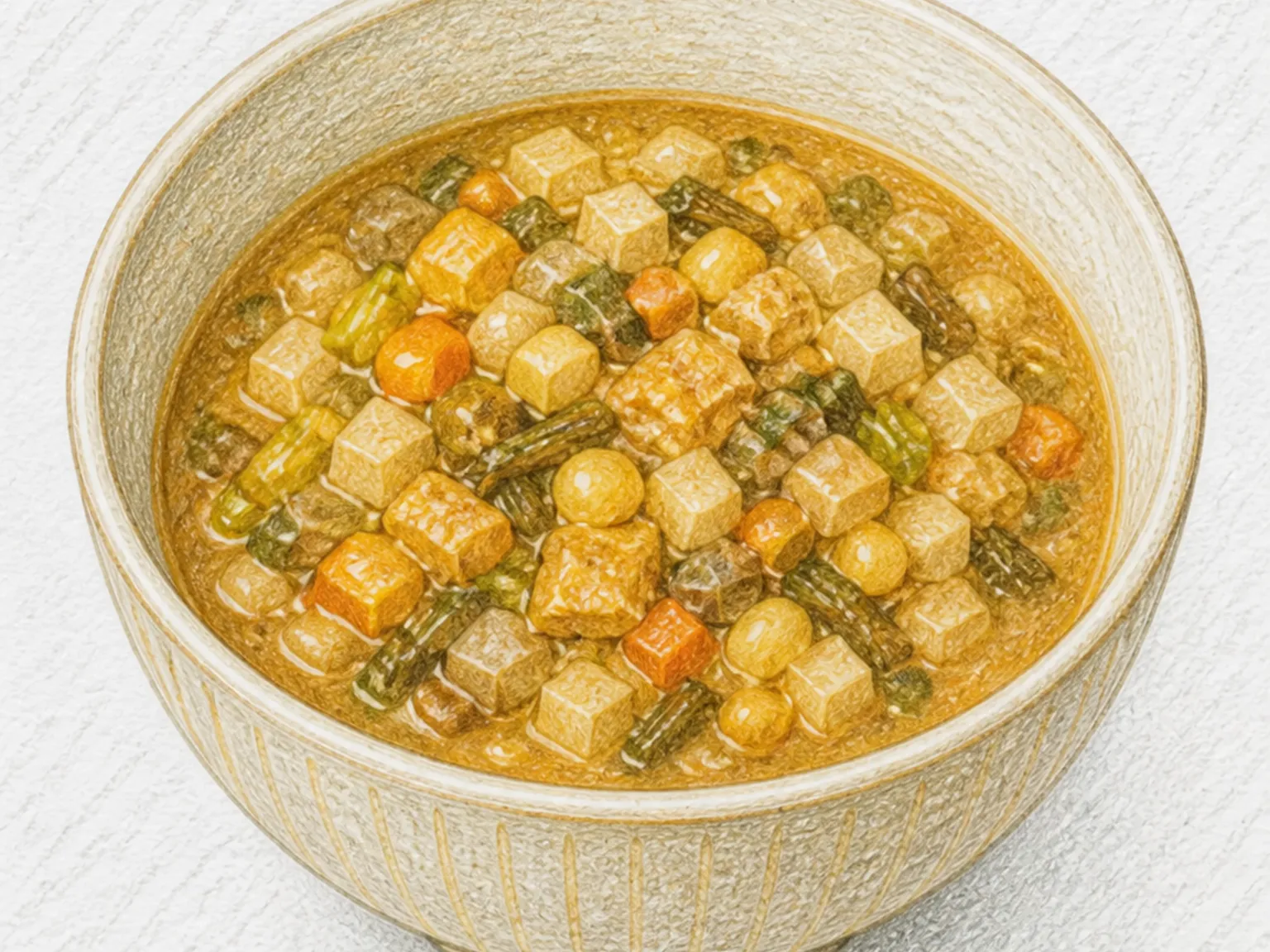
Kenojiru is a Little New Year soup from the Tsugaru area of Aomori. Daikon, carrot, burdock, prepared bracken and butterbur, aburaage, freeze-dried tofu, soybeans, and kombu are cut to about 5mm so several ingredients fit into every spoonful. For ten servings, soak 40g stock kombu in 7L water for 30 minutes and remove it just before the water boils. Add the firm roots first, including 2kg daikon, 600g carrot, and 350g burdock. Let them simmer for 25 minutes with the heat set to medium. Prepared greens, soaked soup kombu, oil-rinsed aburaage, pressed tofu, and whole soybeans then cook for another 20 minutes. Of the 600g cooked soybeans, leave 300g whole and coarsely mash the rest into zunda. Dissolve 400g red miso in 500ml hot broth before returning it to the pot, then add the zunda and cook on low for 10 minutes while stirring the bottom. Stop when all the small pieces are tender and the broth has slight body. Transfer leftovers to shallow containers and refrigerate within two hours. Use them within three days and boil each reheated portion throughout for at least one minute.
Suzuki (Red Taro Stems in Sweet Vinegar)
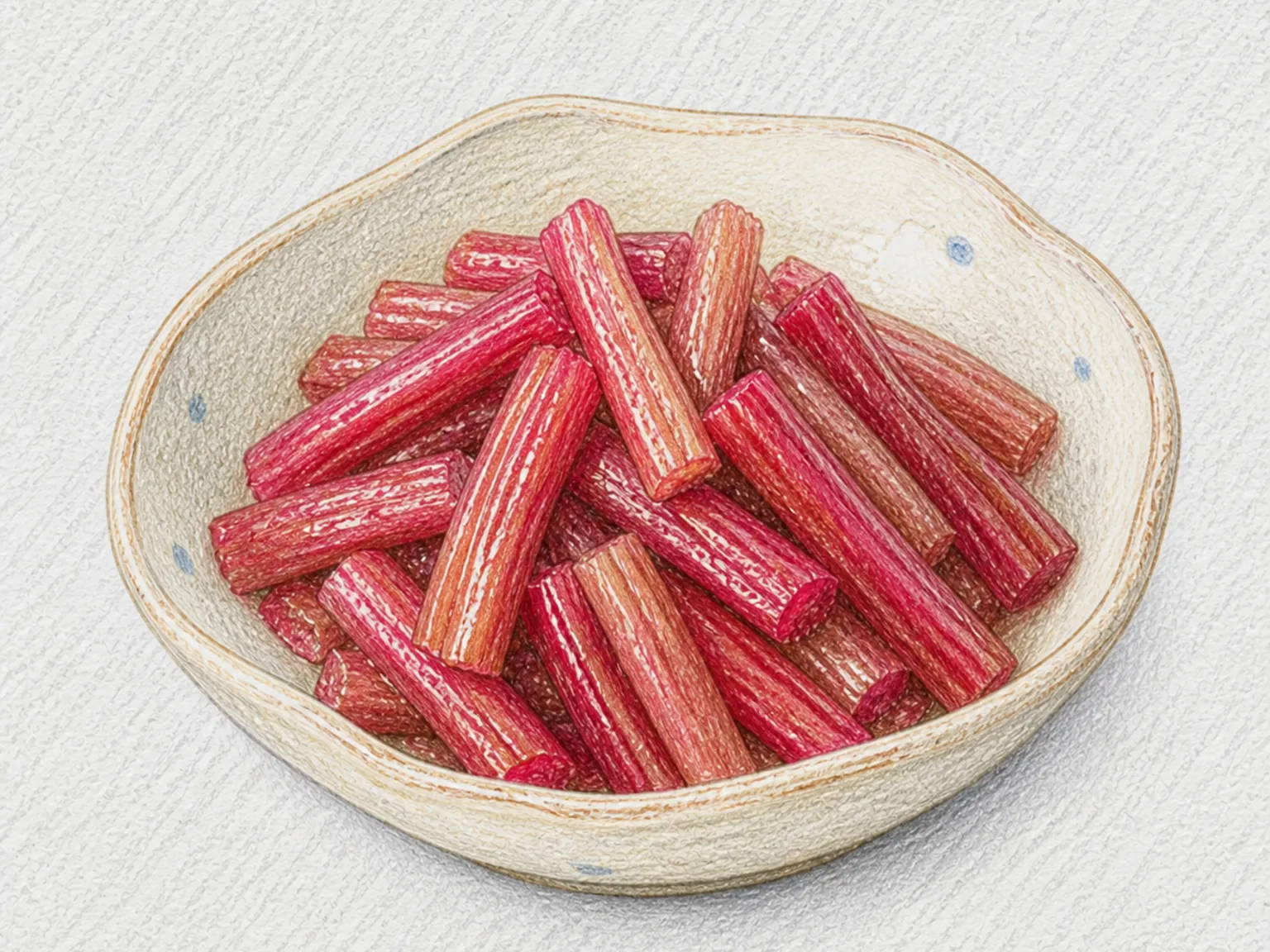
Suzuki is a summer side dish from Toyama made with the red leaf stalks of yatsugashira taro. The stalks are peeled, soaked to draw out harshness, dry-fried without oil, and splashed with vinegar to reveal a vivid red color before being dressed in sweetened vinegar and soy sauce. Cutting every piece to 4cm and splitting thick sections lengthwise helps them cook evenly and removes throat-irritating acridity. Once cool, the dressing settles during refrigeration, producing a bright dish served at home, Obon, and autumn festivals.
Hechima Jiru (Luffa Miso Somen Soup)
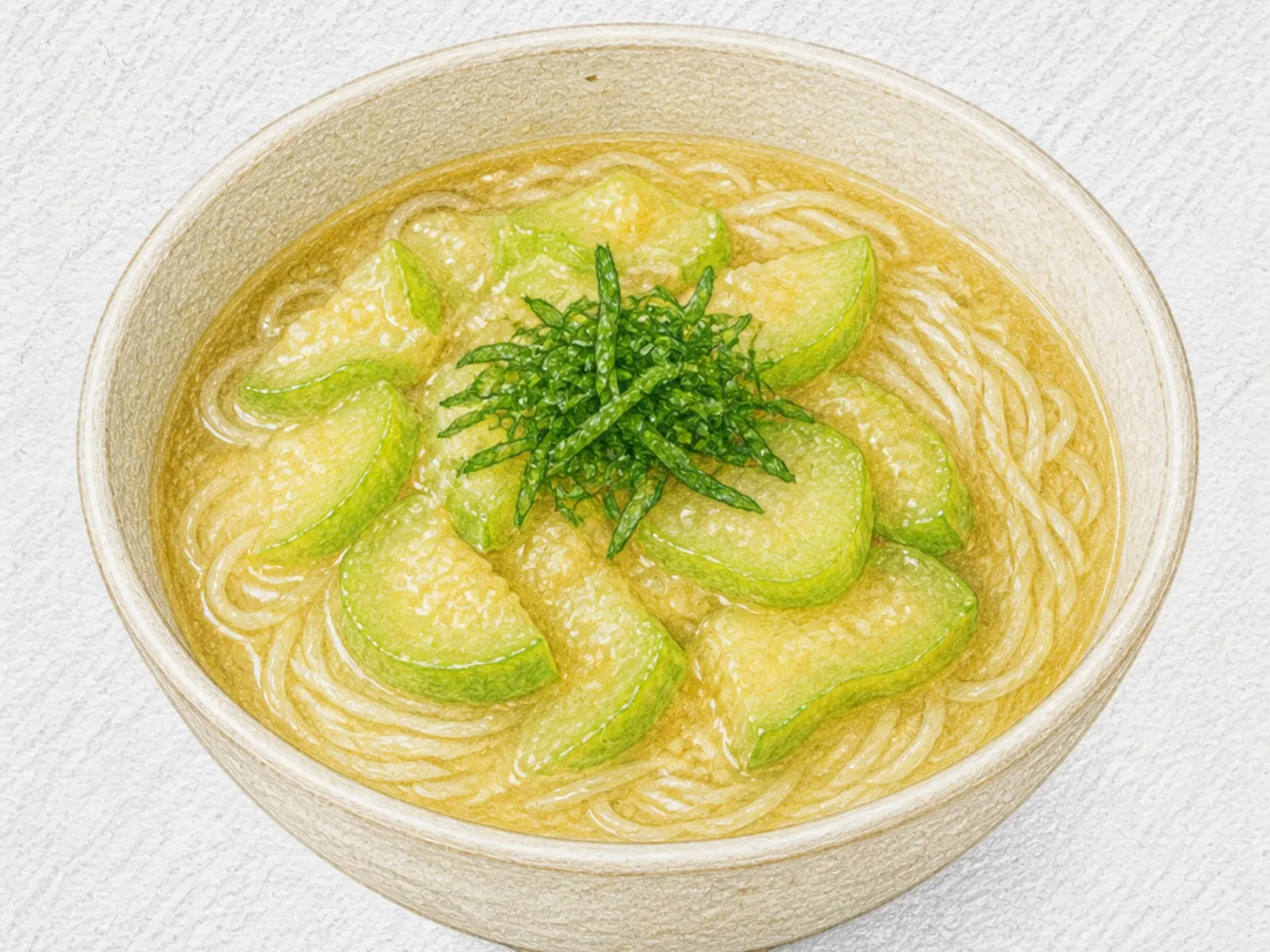
Hechima jiru is a Kagoshima summer dish in which barley miso soup with young edible luffa is poured over boiled somen noodles. Dried sardines soak in water for 30 minutes and boil briefly to make the broth before barley miso is dissolved into it. Peeled luffa is cut into generous bite-size pieces and simmered until the flesh turns translucent, tender, and slightly thick. The somen is cooked separately and placed in bowls, then covered with the hot luffa soup and topped with finely cut myoga. Kagoshima uses young fruits during their July to September season, and the soup has also been part of local Obon meals.
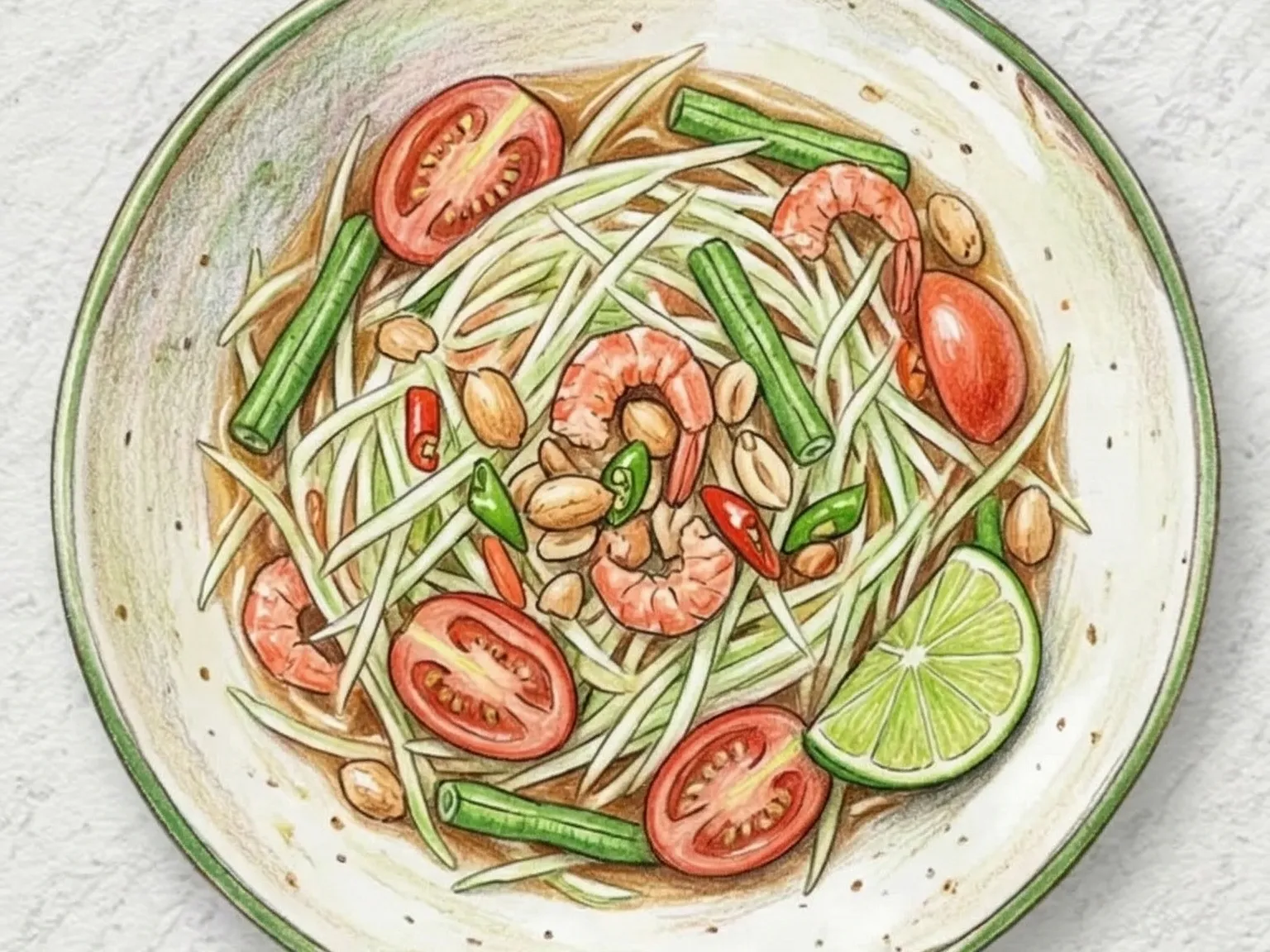
Som Tam (Thai Green Papaya Salad with Lime Fish Sauce Dressing)
Som tam is a Thai salad made by pounding shredded green papaya with a handful of bold seasonings in a clay mortar. The dressing comes together right in the mortar: bird's eye chilies and palm sugar are crushed first, then lime juice and fish sauce are added to create a sauce that is simultaneously sour, salty, sweet, and spicy. Cherry tomatoes are bruised just enough to release their juices into the mix, and roasted peanuts contribute a nutty crunch that contrasts with the crisp, watery strands of papaya. The pounding is deliberately gentle-too much force turns the papaya limp and loses the texture that defines the dish. Som tam is Thailand's most widely eaten salad, appearing everywhere from pushcart vendors to upscale restaurants, and it is often served alongside sticky rice and grilled chicken as a complete meal.
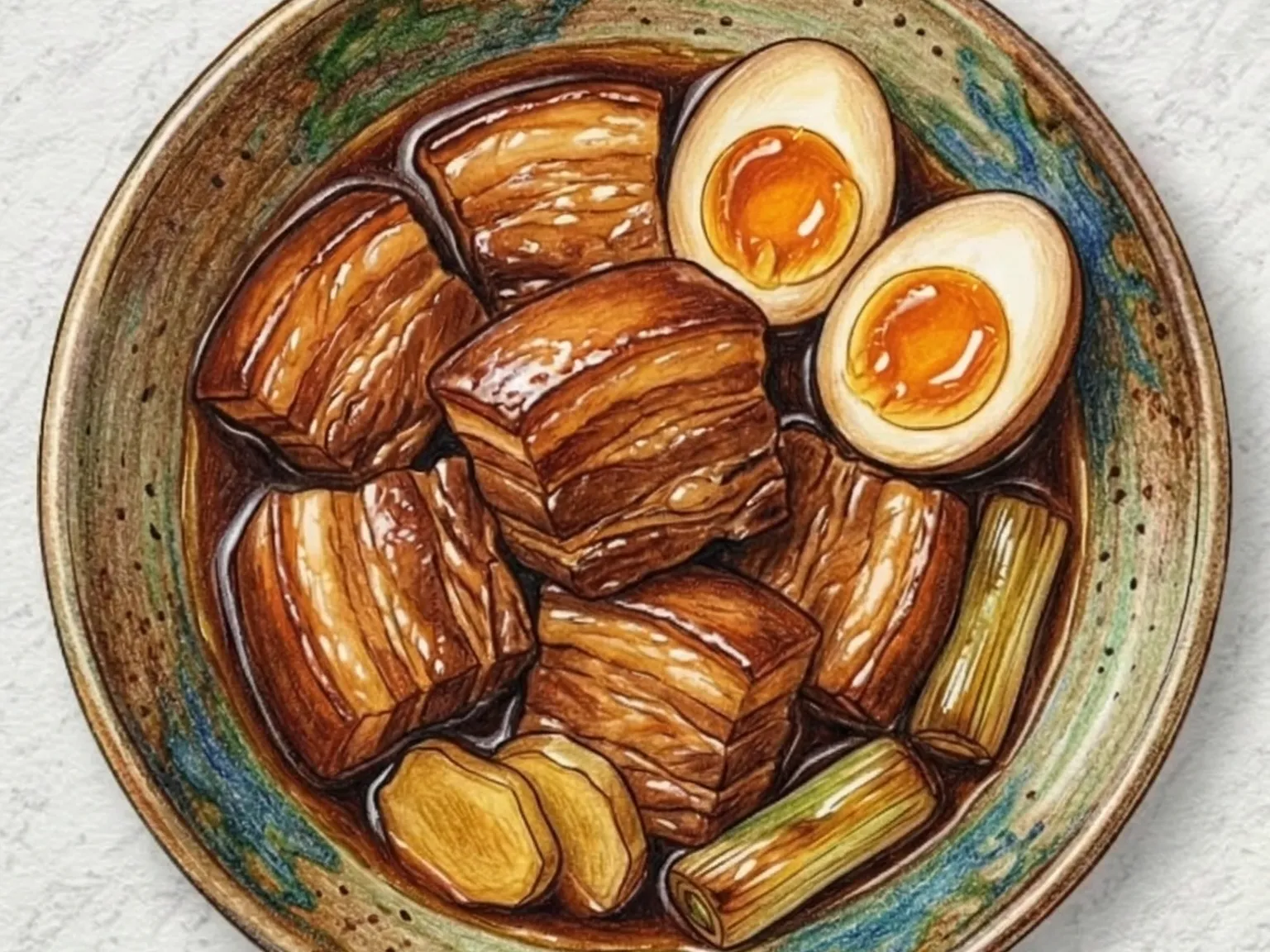
Japanese Braised Pork Belly
Thick cubes of pork belly are blanched for five minutes to remove impurities, then simmered in water with ginger and green onion for fifty minutes until the fat layers turn translucent and completely tender. The parboiled meat transfers to a fresh pot with soy sauce, mirin, and sugar, where it braises over medium-low heat for another thirty minutes as the liquid reduces by half and lacquers each piece in a dark, glossy coat. Mirin carries off residual off-odors along with its alcohol as it heats, while leaving a gentle sweetness behind in the meat. Ginger neutralizes the musky, funky quality that pork belly fat tends to develop during prolonged cooking. Boiled eggs added to the braising liquid absorb the soy-mirin mixture through their whites, turning amber and picking up savory flavor all the way through to the yolk. Cooling the finished dish completely and reheating it once deepens the texture further: the collagen that dissolved during cooking sets into a firm gel while cold, then melts again on reheating, thickening the sauce into something close to a demi-glace. Skimming the solidified fat from the chilled surface removes excess grease without stripping any of the flavor.
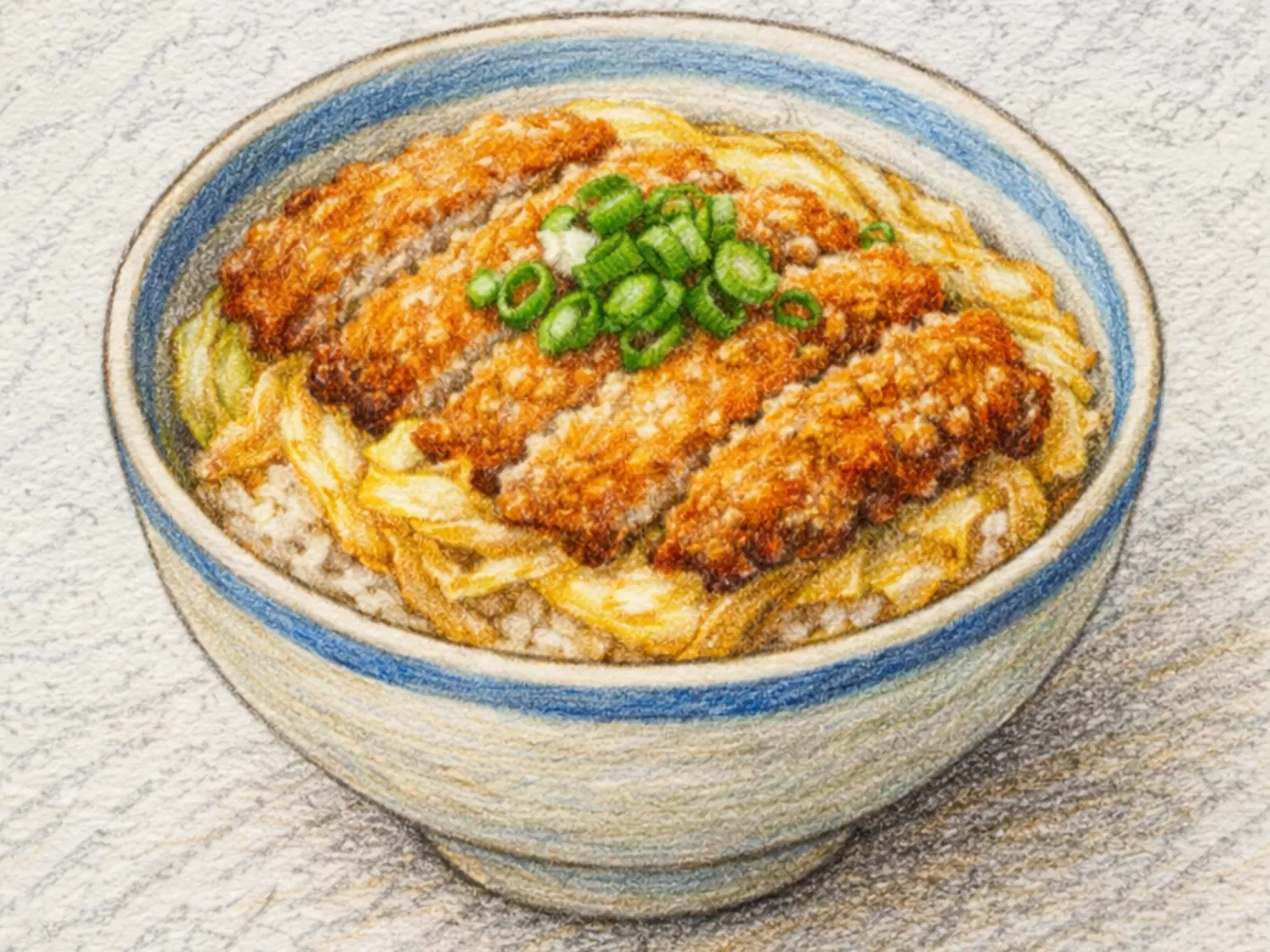
Classic Katsudon (Pork Cutlet Egg Rice Bowl)
Classic katsudon is a Japanese rice bowl that transforms a crispy pork cutlet into something altogether different by simmering it briefly with onion, egg, and seasoned dashi broth. Thinly sliced onion cooks first in a shallow pan of tsuyu -- a combination of soy sauce, mirin, and dashi -- until soft and sweet. The fried cutlet, sliced into strips, is laid into the onion broth, then lightly beaten egg is poured over the top and cooked just until it sets into a custard-like layer. This half-set egg clings to the panko crust, creating a contrast between the still-crunchy edges and the silky coating. The entire mixture is slid onto a bowl of steaming rice, where the savory broth soaks into the grains. In Japan, katsudon is traditionally eaten before exams or competitions as a good-luck ritual. Pulling the pan off the heat within thirty seconds of covering it keeps the egg in that soft, barely-set state -- overcooking turns the layer rubbery and loses the signature texture entirely.
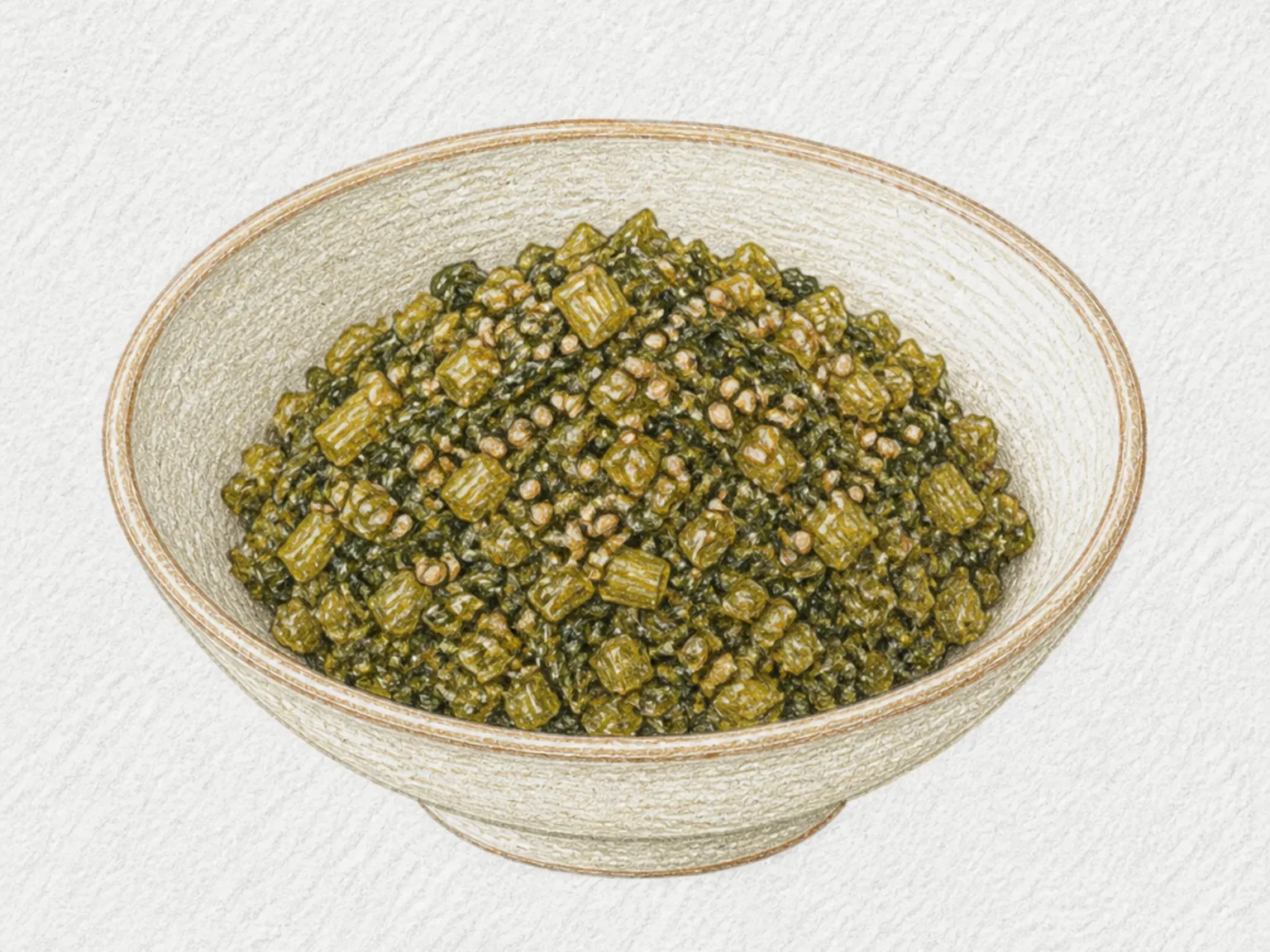
Okomoji no Aburaitame (Stir-Fried Aged Takana Pickle)
The salt level of 450 g aged takana pickle is corrected before this sesame-oil stir-fry reaches the pan. Rinse the pickle several times in cold water, soak it in plenty of fresh water for 8 hours, and change that water once. Squeeze it firmly, chop it to roughly 5 mm, and taste one piece. If it remains very salty, soak it for another 30 minutes and squeeze again. Heat 30 ml sesame oil over medium heat and add the chopped greens. Stir-fry for 6 to 8 minutes, separating clumps as surface moisture evaporates. Thorough draining matters here because wet pickle would steam and prevent the sesame oil from coating the small pieces evenly. Add 12 g sugar and stir until it dissolves. Begin with only half of the 18 ml soy sauce, cook for 2 minutes, and taste again before deciding how much of the remainder is needed. Mix in 9 g toasted sesame seeds and turn off the heat. At the stopping point, no water should collect on the pan bottom, the chopped leaves should remain loose rather than clumped, and their surfaces should carry a light sheen.
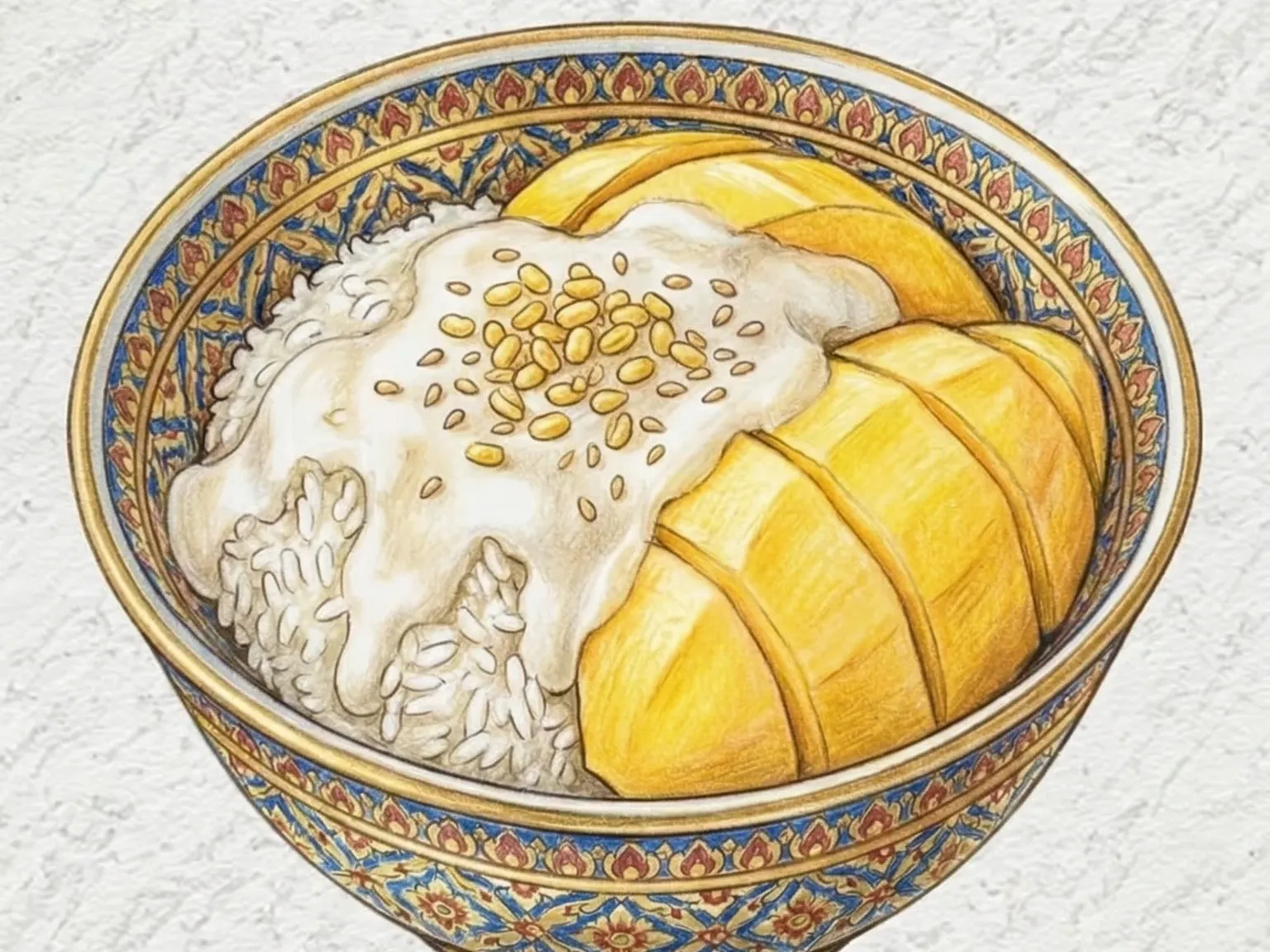
Mango Sticky Rice
Mango sticky rice is Thailand's most beloved dessert, built on nothing more than three ingredients - glutinous rice, coconut milk, and ripe mango - yet delivering a complexity that belies its simplicity. The rice is steamed, then soaked in warm coconut milk sweetened with sugar and tempered with a pinch of salt, which keeps the dish from being one-dimensionally sweet. Slices of ripe mango, ideally the fragrant Nam Dok Mai variety, are laid alongside the warm rice. A drizzle of thickened coconut cream on top ties everything together, and a scattering of toasted mung beans or sesame seeds adds a final nutty note. The dish is at its peak between April and June when mangoes are at their sweetest.
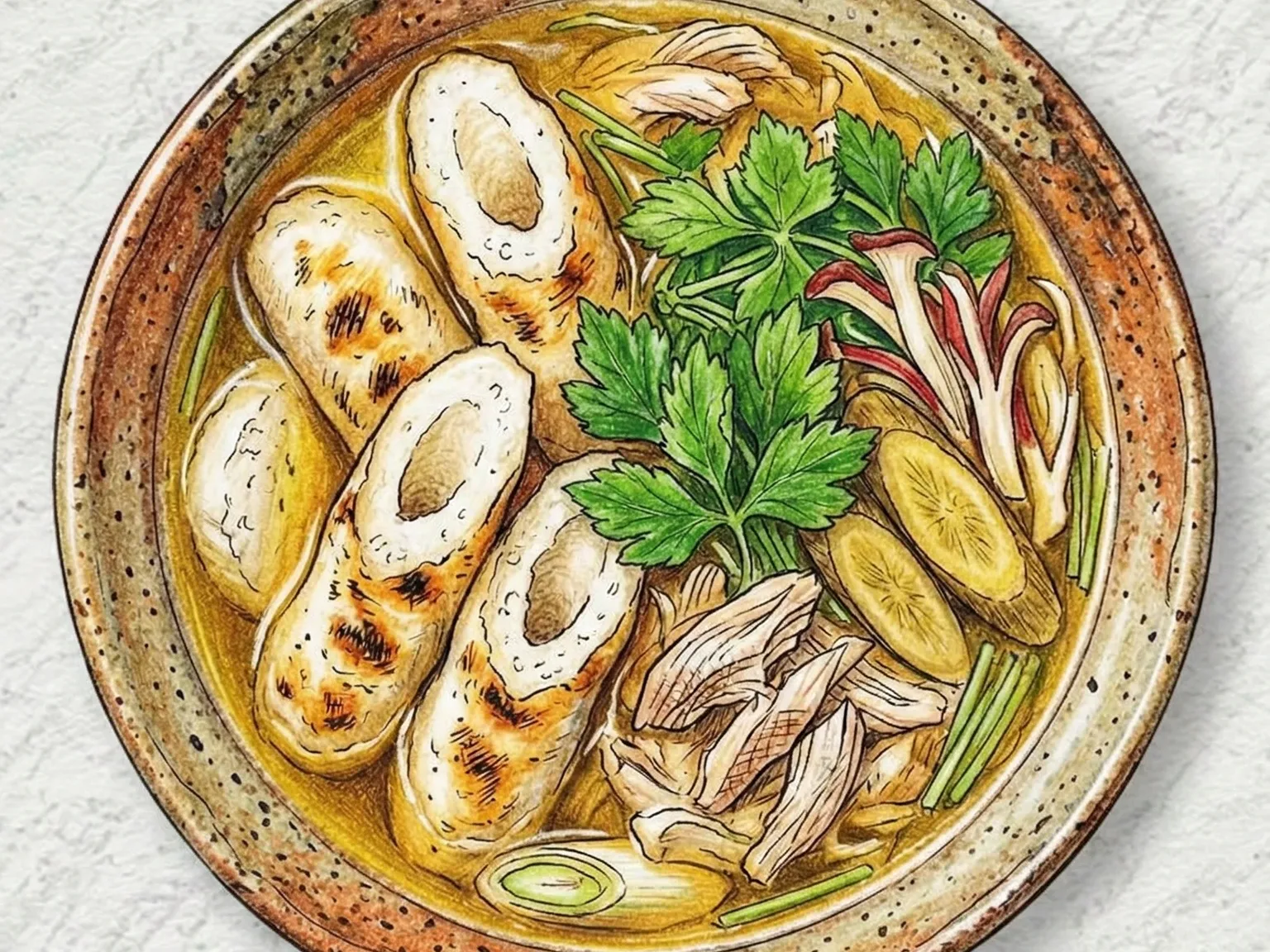
Kiritanpo Nabe (Akita-Style Grilled Rice Stick Hot Pot)
Kiritanpo nabe is a rustic hot pot from Akita Prefecture in northern Japan, built around grilled mashed-rice sticks simmered in chicken broth. Freshly cooked rice is pounded in a mortar until partially smooth and sticky, then wrapped around cedar skewers and toasted over charcoal until the surface develops a light char and a faint smokiness. The broth begins with bone-in chicken thighs cooked until the stock is rich and clear, seasoned simply with soy sauce and mirin, then loaded with burdock root, scallions, mushrooms, and Japanese parsley. The kiritanpo sticks are cut into segments and added to the simmering pot, where they absorb the rich broth and soften into a chewy, dumpling-like texture while still holding their cylindrical shape. Akita's harsh mountain winters gave this dish its purpose as a calorie-dense, warming meal built entirely from locally available ingredients. The faint smokiness from the charcoal grilling carries through into the finished broth, and this subtle background note is what distinguishes kiritanpo nabe from similar rice-cake hot pots made elsewhere in Japan.
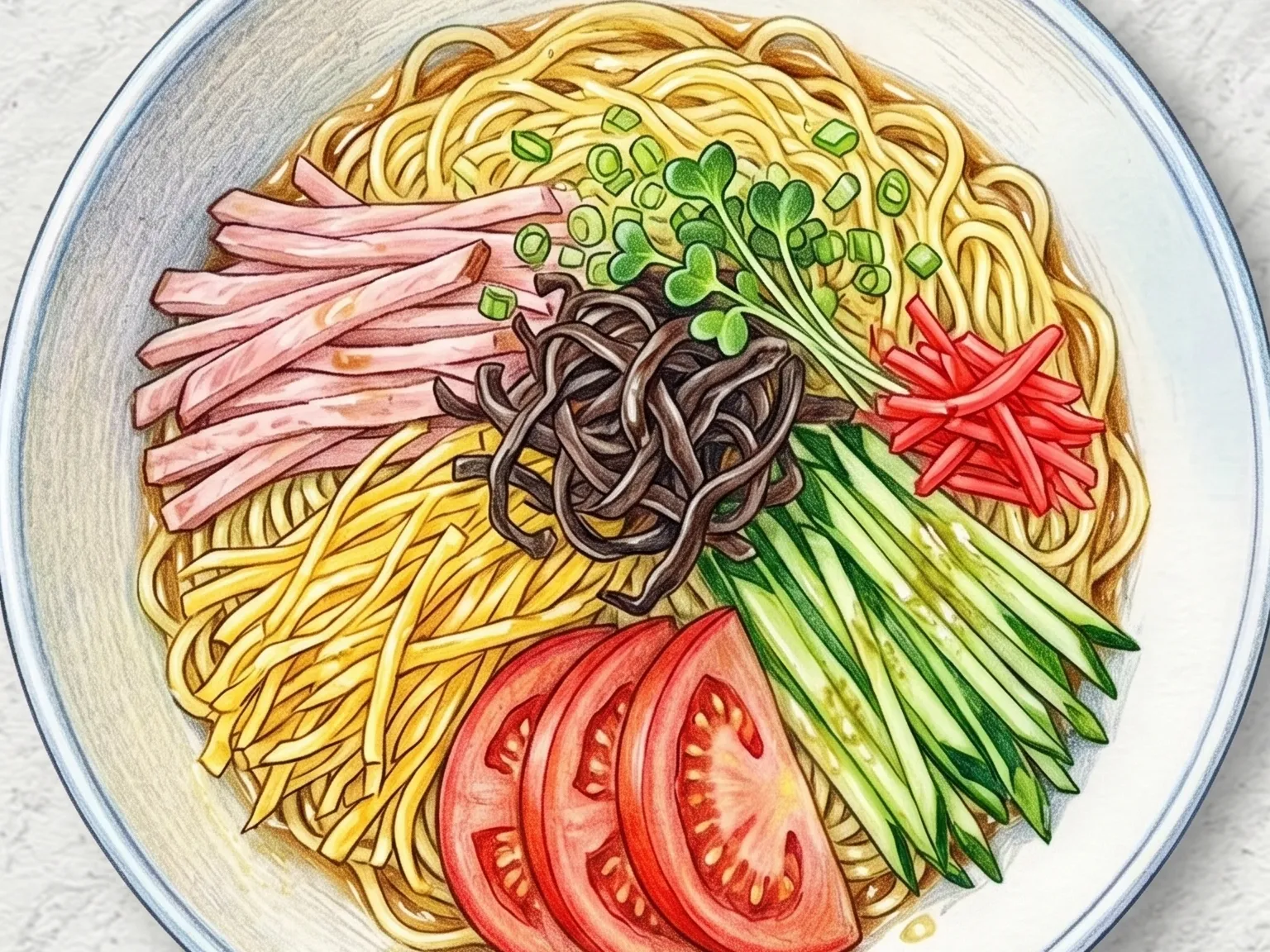
Cold Ramen Salad
Hiyashi chuka is a Japanese chilled noodle dish where ramen noodles cooked and thoroughly cooled in ice water are topped with colorful shredded garnishes and drizzled with a tangy soy-vinegar dressing. The dressing of soy sauce, rice vinegar, sugar, and sesame oil combines salt, sharpness, and sweetness; because it is poured over rather than used as a broth, the individual character of each topping stays distinct. The noodles must be chilled in ice water after boiling to achieve the firm, springy texture that holds up against the dressing without going limp, and tossing them lightly with sesame oil prevents clumping before plating. Thin strips of egg crepe, ham, cucumber, and tomato arranged by color create a visually striking presentation, and each chopstickful delivers several contrasting textures at once. In Japan this dish is a summer fixture, and at home it is a practical way to use leftover ingredients. A variation whisks mayonnaise into the dressing, which softens the acidity and adds a creamy body to the sauce.
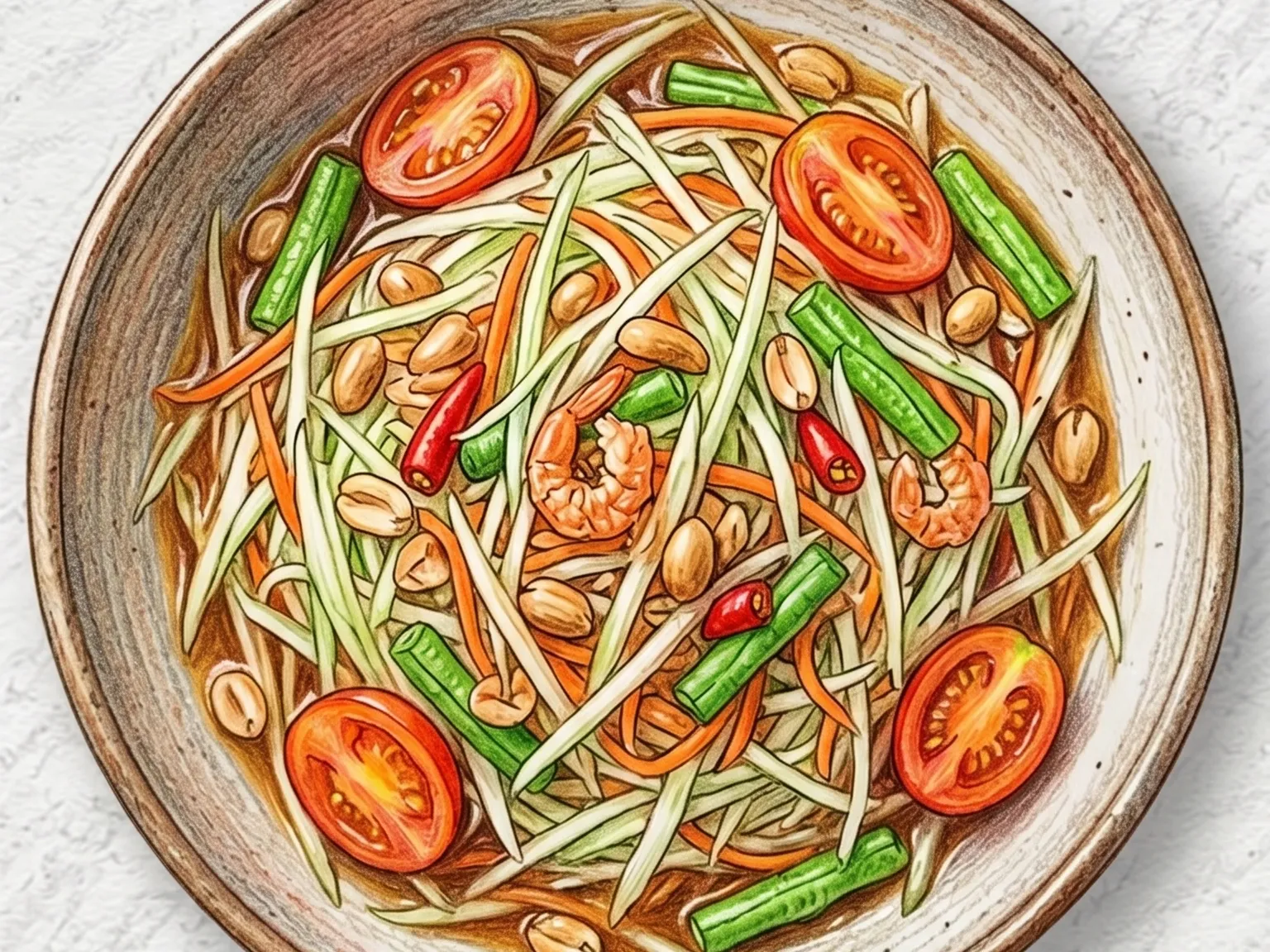
Som Tam Thai (Thai Green Papaya Salad)
Som tam Thai combines finely shredded green papaya, long beans, and cherry tomatoes with a dressing of Thai chili, palm sugar, lime juice, and fish sauce, using a mortar to bruise the ingredients lightly rather than crush them into a paste. Peel and finely shred 250g green papaya, soak it in cold water for 10 minutes, and drain it thoroughly so the measured dressing does not become diluted. Cut 70g long beans into 3cm pieces and halve 120g cherry tomatoes. Remove the seeds from the 2 Thai chilies when a milder result is preferred. Put the chilies and 1 tablespoon palm sugar in a mortar first and pound with a pressing motion until the sugar softens and becomes moist. Add 2 tablespoons lime juice and 1.5 tablespoons fish sauce, stirring until the palm sugar dissolves fully into the liquid. Add the long beans and tomatoes and pound gently for about 30 seconds. Stop when the tomatoes have released some juice but still hold their shape. Add the drained papaya and toss from bottom to top while pounding very lightly for about 1 minute, coating the strands without crushing them. Mix in 25g roasted peanuts at the end and serve immediately while the papaya remains crisp. If a mortar is unavailable, use a large bowl and a rolling pin with the same restrained pressing motion.
Butter Chicken
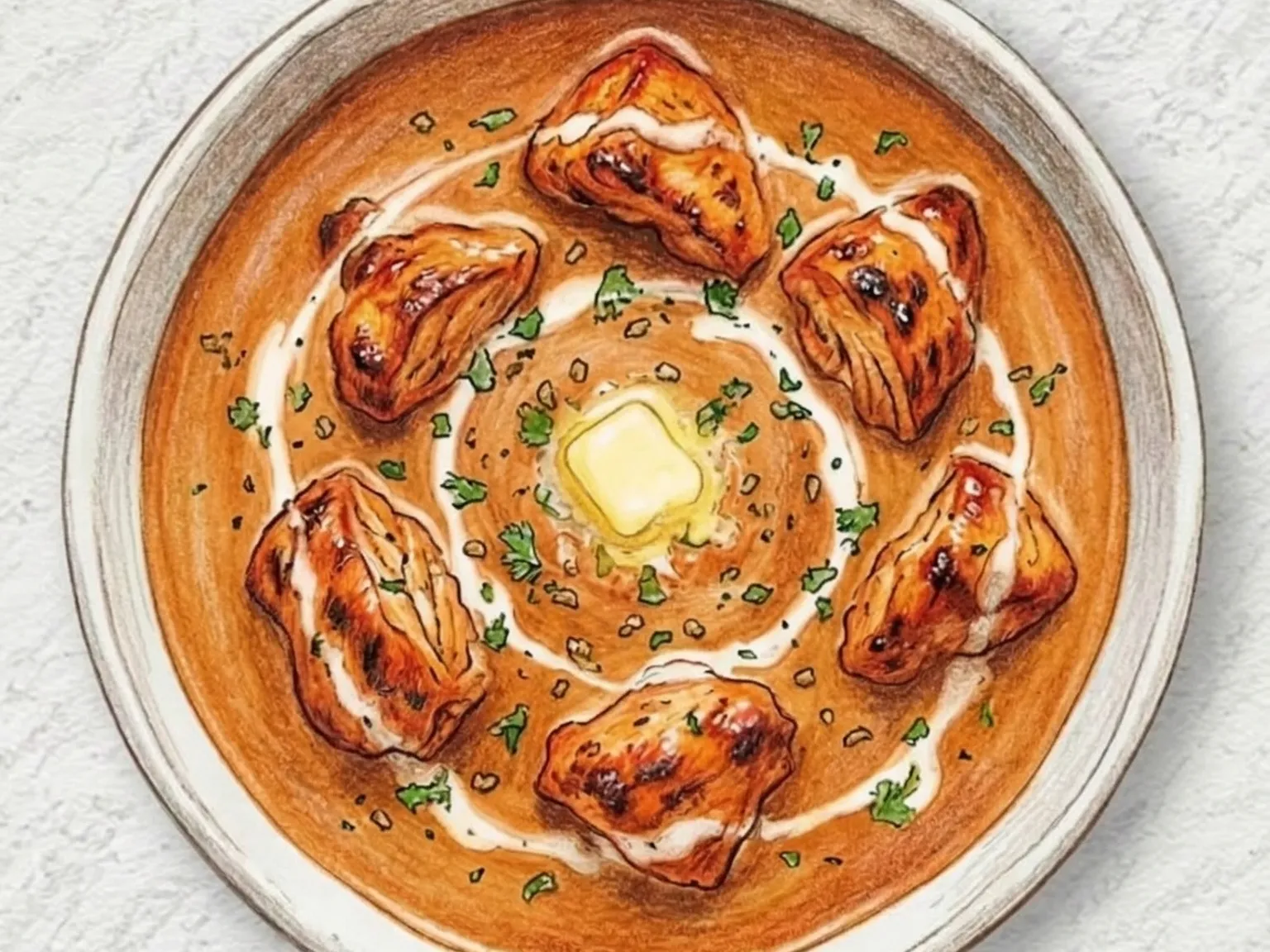
Butter chicken - murgh makhani - starts by marinating chicken thighs in yogurt, garam masala, and cumin, then roasting or grilling them at high heat to develop a slightly charred, smoky exterior. That surface char is a defining element; plain poaching cannot replicate it. The tomato sauce base requires long, patient reduction - the raw acidity must cook off and round into sweetness before any dairy is added. Butter and heavy cream then go in, wrapping the spice blend sharp heat in a velvety richness that carries through to the last bite. Cumin and garam masala provide the earthy, layered warmth that anchors this curry's identity, and together they produce the mild, creamy character that sets murgh makhani apart from hotter Indian preparations.
Khao Kha Moo (Thai Braised Pork Leg Rice Bowl)
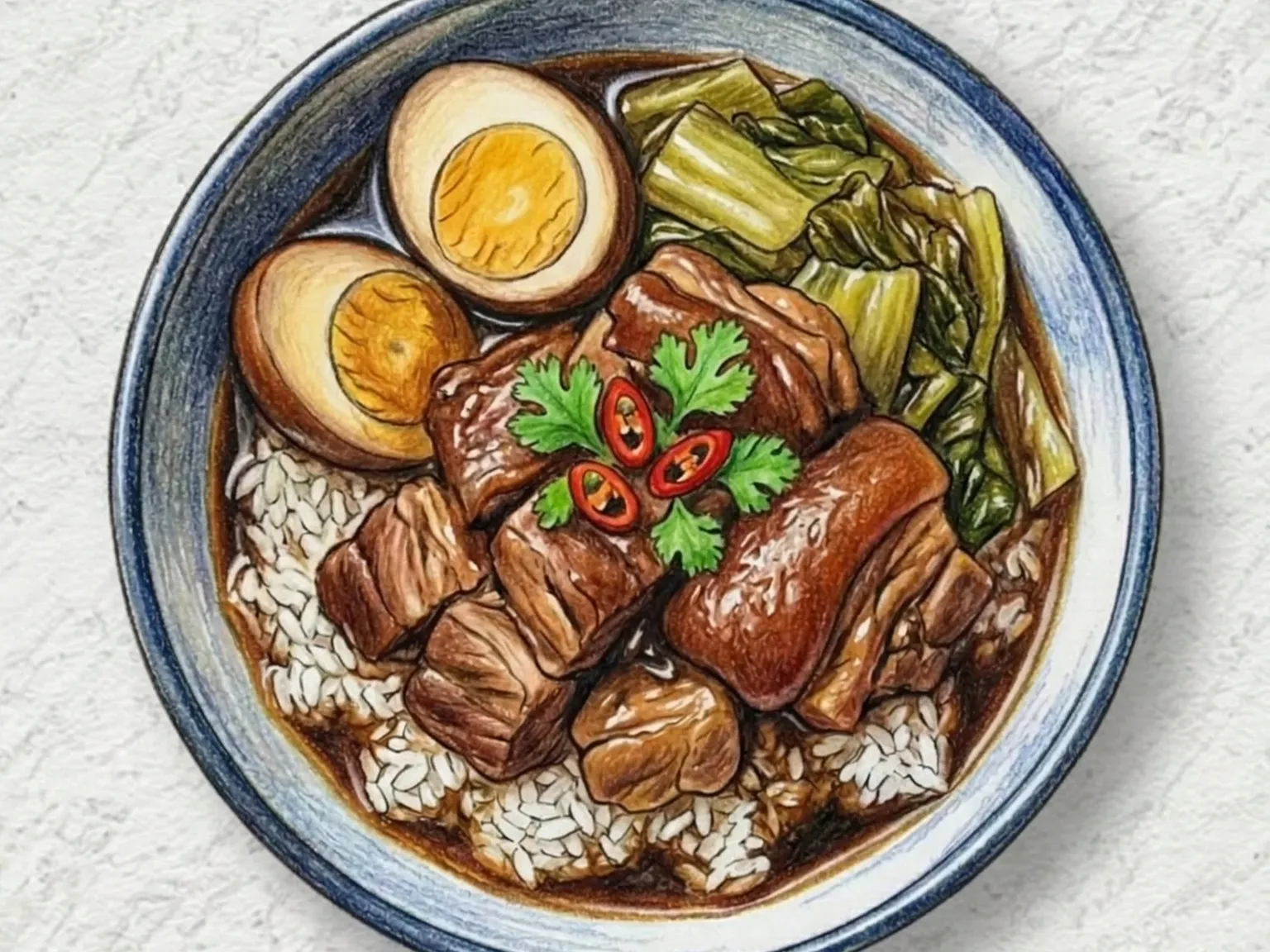
Khao kha moo is a Thai braised pork leg rice bowl built on a simple premise: the longer the pork simmers, the better it becomes. A whole pork hock or front leg is submerged in a soy-based braising liquid seasoned with palm sugar, dark soy sauce, star anise, cinnamon sticks, and whole garlic cloves, then cooked at a low, steady simmer for two hours or more. Sustained heat breaks down connective tissue and collagen until the meat yields at the slightest touch, pulling away from the bone in glossy, quivering strips. As the liquid reduces, palm sugar and soy caramelize into a thick, mahogany-tinted sauce that balances deeply savory and gently sweet notes in equal measure. Thick slices of the pork are arranged over fragrant jasmine rice, and several spoonfuls of the braising sauce are ladled over so the grains soak up the flavor. Traditional accompaniments include a hard-boiled egg steeped overnight in the braising liquid until it turns brown throughout, pickled mustard greens to cut through the richness with sharp brine, and a small cup of chili-vinegar sauce for those who want heat. The dish is among the most beloved items at night markets across Thailand and demonstrates how patience and a handful of pantry aromatics transform inexpensive pork into something extraordinary.
Korean Tomato Dalgyal Bokkeum (Tomato Egg Stir-fry)
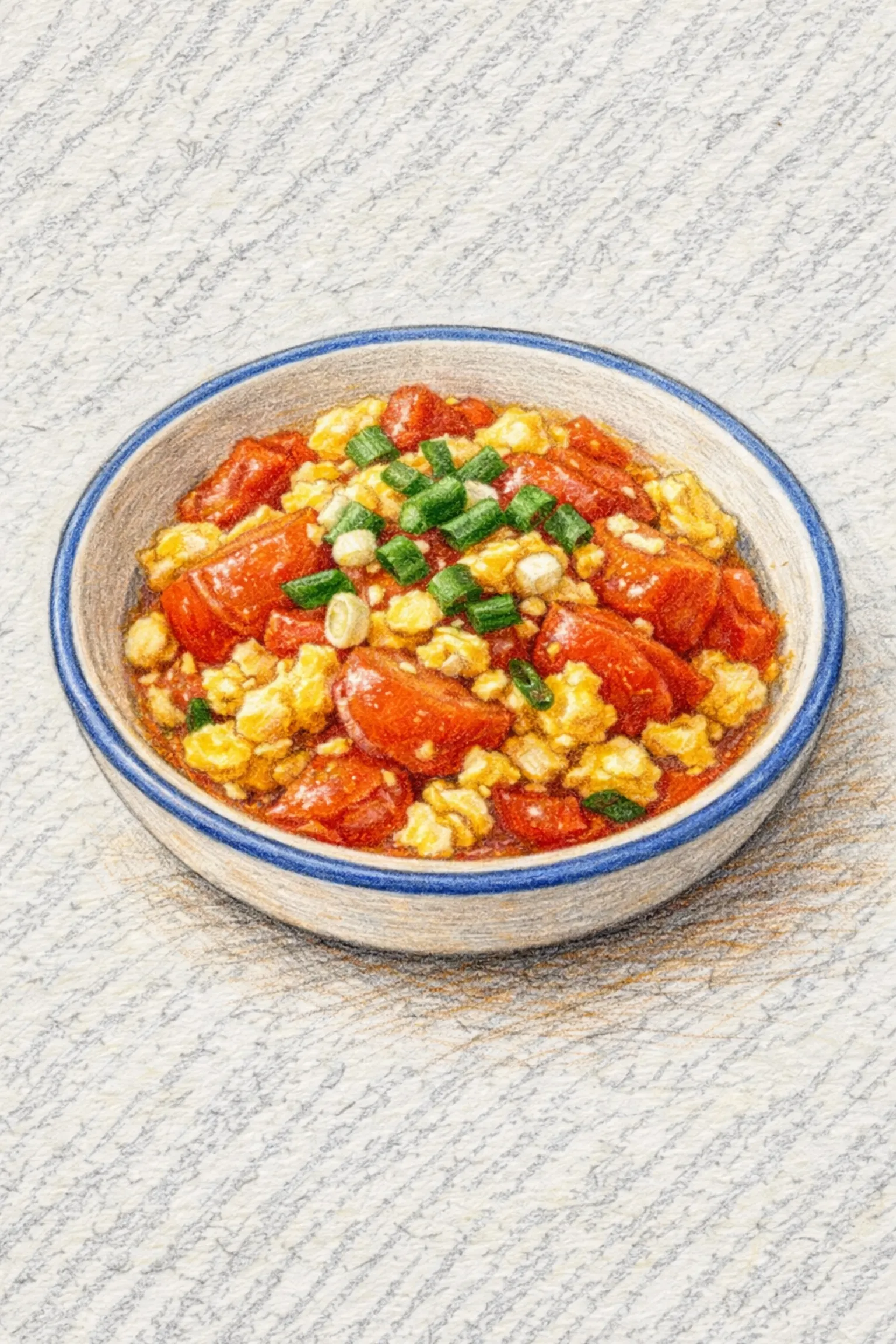
Tomato and egg cook in two separate stages here, preventing the eggs from remaining in the pan for the full time needed to soften the tomatoes. Cut 280 g of tomatoes into pieces slightly larger than bite size so they do not collapse immediately. Beat 4 eggs with a little salt until no streaks of white remain. Heat 1 tablespoon of cooking oil over medium heat, pour in the eggs, and wait for the edges to set. Fold them in broad strokes and remove them while the surfaces are still glossy and roughly 70 percent cooked. Add the remaining tablespoon of oil to the same pan with 30 g of green onion and 1 teaspoon of minced garlic. Stir for only about 20 seconds. Add the tomatoes and toss until their surfaces pick up the flavored oil, then mix in 1 teaspoon of sugar and 1 tablespoon of oyster sauce. After about 2 minutes, the tomato pieces should soften slightly and begin releasing juice. Return the eggs, lower the heat, and fold for 40 seconds. Turn off the heat as soon as no liquid egg remains and before the tomatoes lose their shape. Taste first and use the remaining salt only if needed.
Mitarashi Dango (Grilled Rice Dumplings in Sweet Soy Glaze)
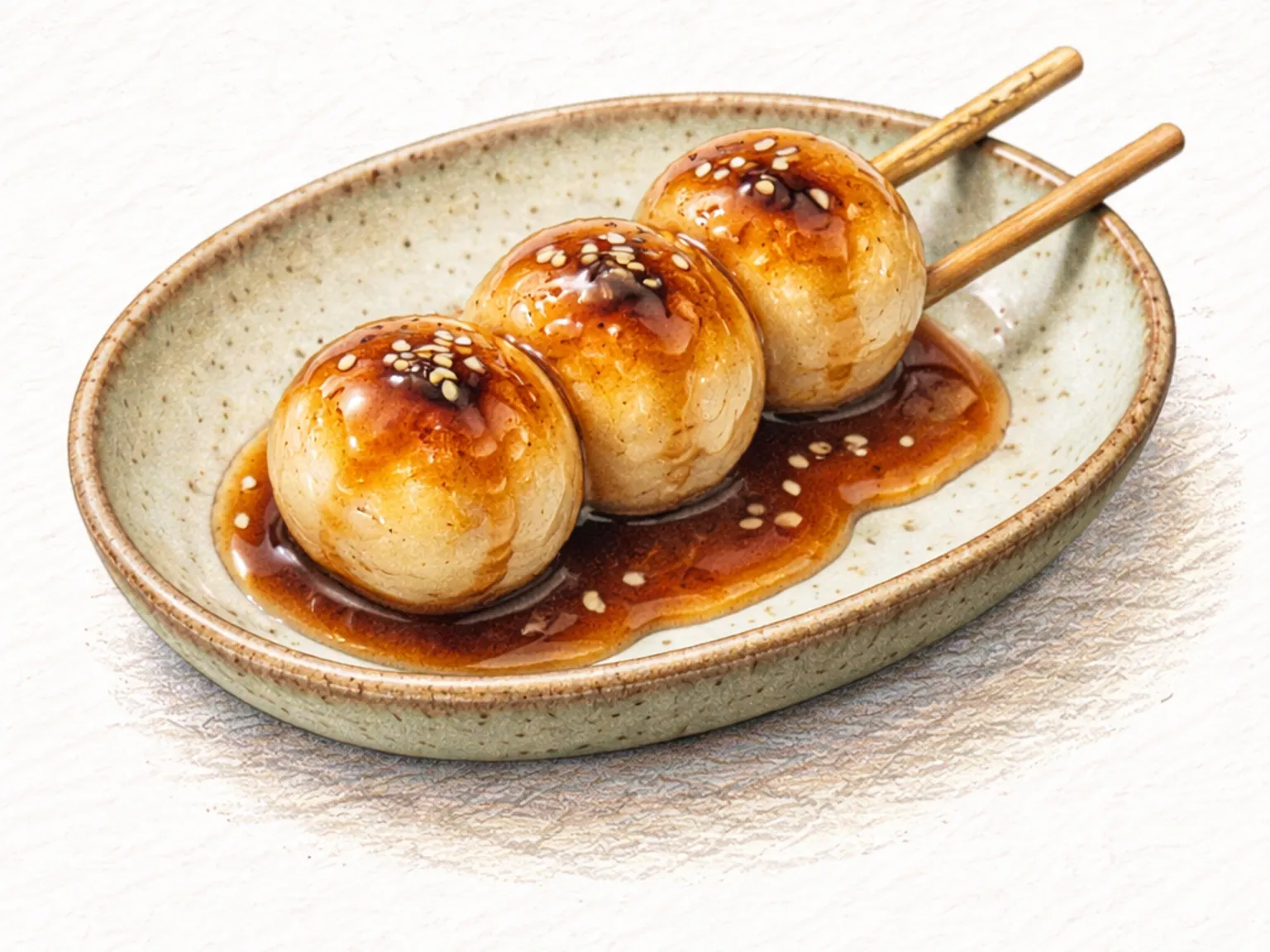
Glutinous rice flour is kneaded with water, shaped into small balls, boiled until they float, then skewered and grilled until the surface develops charred spots and a light crust. The contrast between the toasty exterior and the dense, springy interior is the defining texture of mitarashi dango. A thick glaze made from soy sauce, sugar, mirin, and starch is spooned over the hot skewers, coating each ball in a glossy, sweet-savory film. The sauce should be viscous enough to cling but fluid enough to drip slowly - too thin and the flavor washes off, too thick and it overwhelms the delicate chew of the rice. Eaten warm, the dango is at its most pliable and the glaze at its most aromatic, with the soy caramel scent rising visibly in the steam. Street vendors across Japan sell these at temple fairs and festivals, but they are simple enough to replicate at home in under thirty minutes.
Koikoku (Long-Simmered Carp Miso Soup)
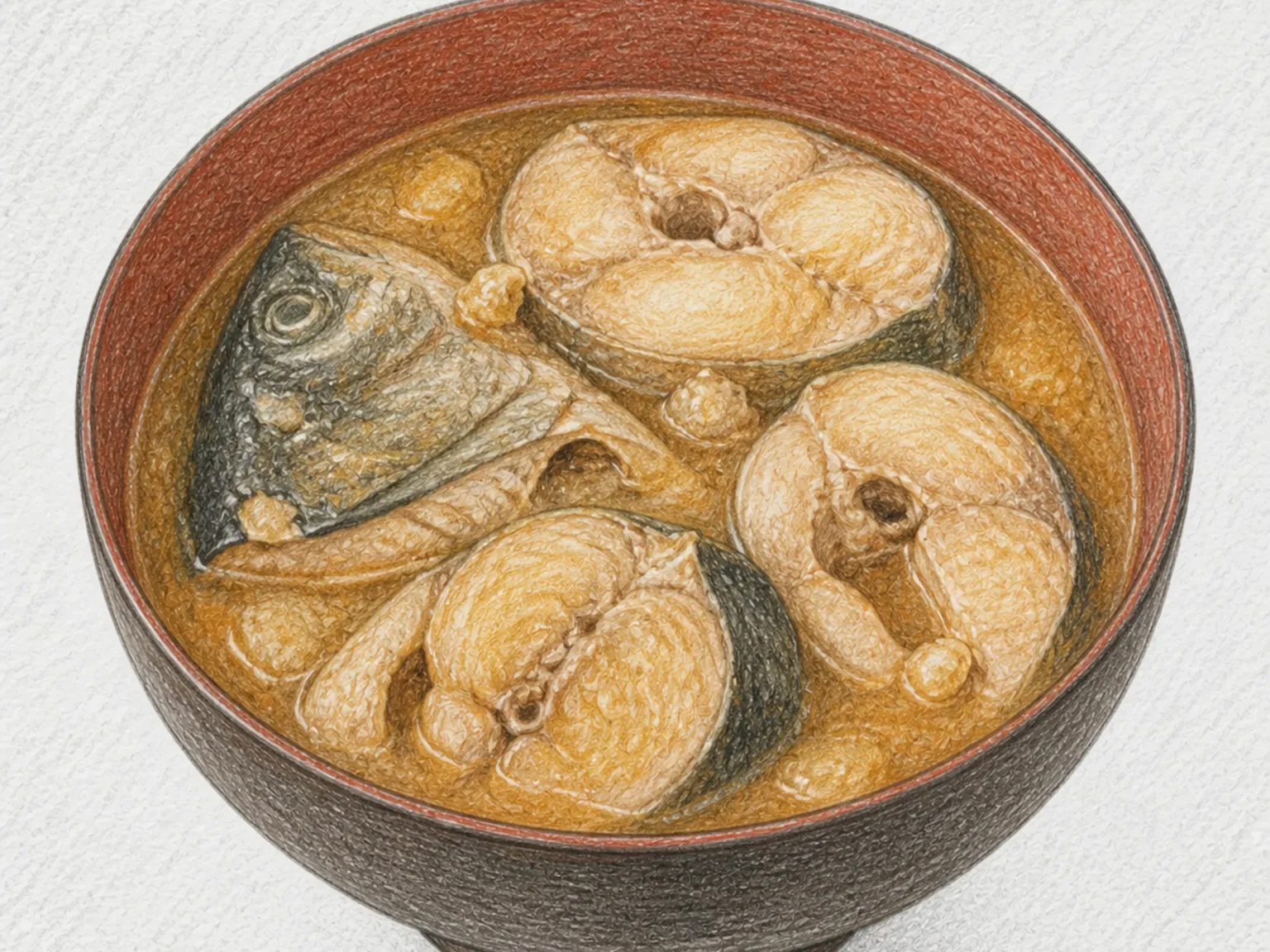
Koikoku is a soup from the Saku region of Nagano in which thick cross-cut carp pieces and the head simmer for about 3 hours before a substantial amount of miso is added in stages. The fish first sits in hot water for 4 to 5 minutes so white coagulated residue and loose impurities can be rinsed away. It then boils with sake and water while foam is skimmed carefully; the flavorful oil is left in the pot. Part of the miso enters early with a little sugar to season the fish. Another portion is ground with 20g cooked rice and stirred in to give the broth body, while the remainder is dissolved near the end to preserve its aroma. Long cooking softens the flesh and enriches the soup, but bones remain and each serving must be eaten slowly.
Hokkien Lor Mee (Braised Gravy Noodles)
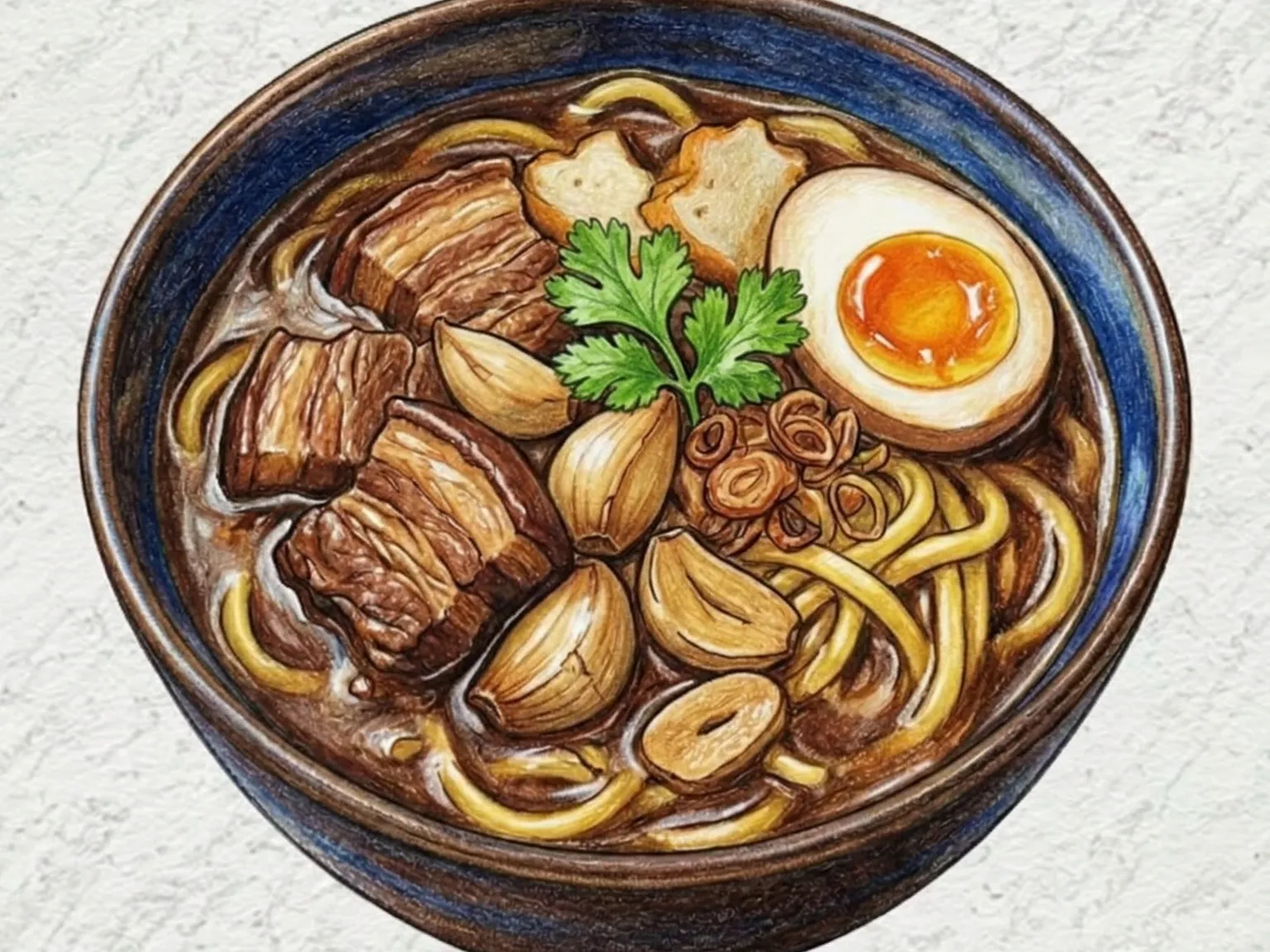
Hokkien lor mee is a thick-gravy noodle dish from the Chinese communities of Singapore and Malaysia, built on chicken stock seasoned with dark soy sauce and five-spice powder. The dark soy gives the broth its deep mahogany color and intense saltiness, while five-spice, with its blend of star anise and cinnamon, layers in aromatic complexity. A cornstarch slurry is added gradually to thicken the broth to a glossy, almost sauce-like consistency that coats the yellow noodles completely. Bean sprouts are blanched for just one minute to retain their crunch, and halved boiled eggs provide a creamy element. The traditional finishing touch is raw minced garlic and a splash of black vinegar, both of which cut through the heavy gravy and keep each spoonful from becoming monotonous.
Sunomono Cucumber Salad (Japanese Sweet Vinegar Cucumber Slices)
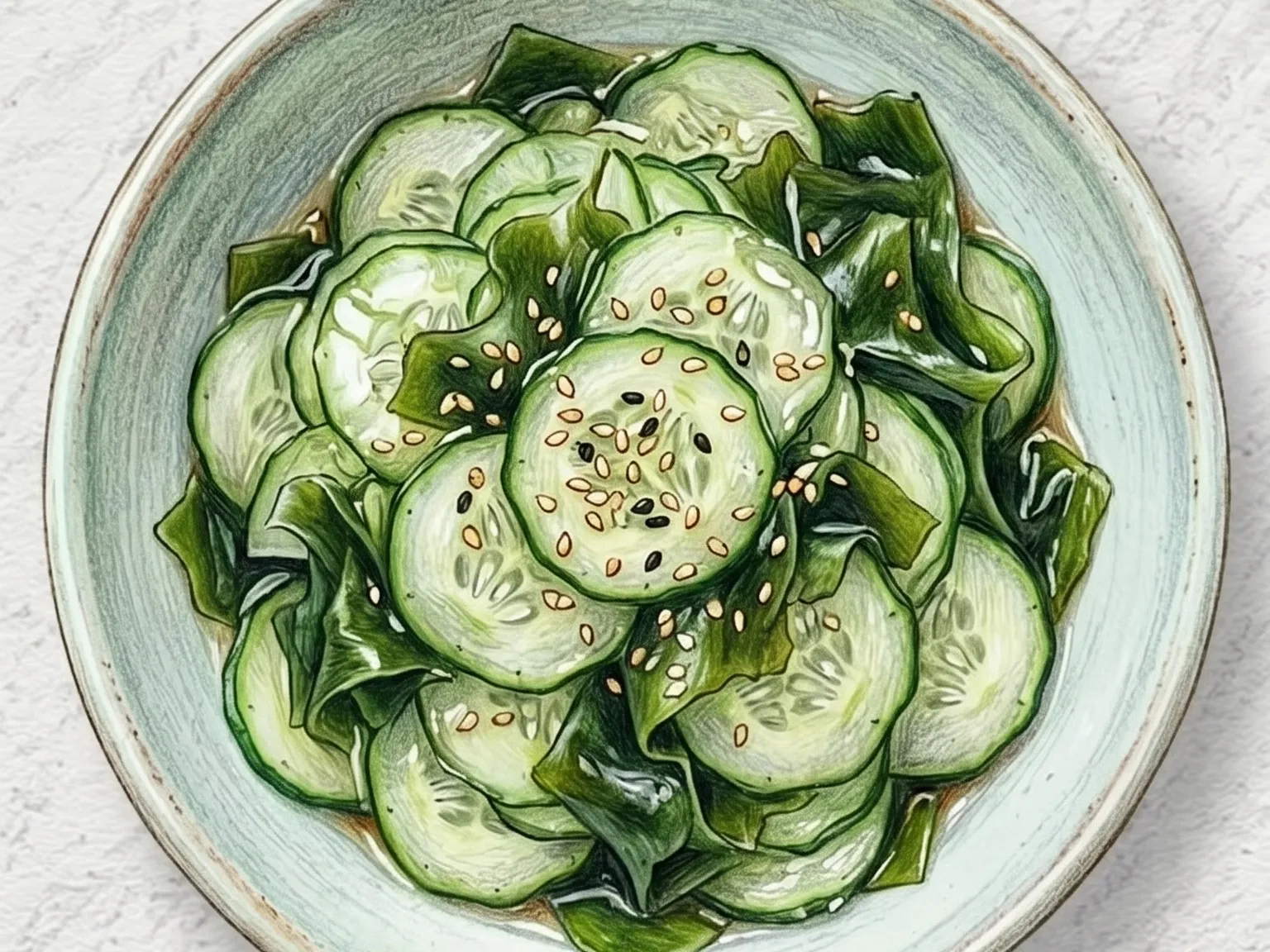
Sunomono cucumber salad salts thin cucumber slices, squeezes out their water, and combines them with blanched wakame in a rice vinegar dressing. Cut 220g cucumber into very thin, evenly sized rounds or half-moons. Sprinkle 0.5 teaspoon salt over the slices, toss gently, and leave them for 5 minutes. When moisture beads on the surface and the cucumber bends slightly without breaking, press it firmly by hand to remove as much liquid as possible. Rehydrate 8g wakame in water and blanch it briefly in boiling water. As soon as the color becomes vivid, transfer it to cold water, drain it thoroughly, and cut it into bite-sized pieces. Check the cucumber and wakame separately for leftover water, since either one can dilute the measured vinegar mixture. In a bowl, stir 2 tablespoons rice vinegar, 1 tablespoon sugar, and 0.5 teaspoon soy sauce until no sugar grains remain. Add the cucumber and wakame and mix gently with chopsticks, loosening any pieces that cling together. Sprinkle with 1 teaspoon sesame seeds, toss once more, and chill for 5 minutes. Serve after checking that no watery pool has formed on the bottom of the bowl. Even slicing, the 5-minute salting period, and thorough draining are the three controls that preserve the intended dressing ratio.
Cá Kho Tộ (Vietnamese Caramelized Braised Fish in Clay Pot)
Ca kho to is a southern Vietnamese home-style braised fish dish made with catfish or white fish simmered in a sauce of caramelized sugar, fish sauce, and coconut water. The process begins by cooking sugar until it reaches a deep amber caramel, which coats the fish in a rich, dark glaze and forms the flavor backbone of the whole dish. Fish sauce adds a sharp, concentrated saltiness and umami that defines the sauce's character. Shallots and garlic build the aromatic base, while black pepper leaves a warm, spicy finish that cuts through the richness of the caramel. Coconut water lightens and perfumes the braising liquid with a mild tropical sweetness distinct from plain sugar. Covering the pot and simmering over low heat allows the fish to absorb the seasoning deeply and the sauce to reduce to a glossy, lacquer-like coating. Unlike Korean braised fish, which often centers on chili heat, this dish balances caramel and black pepper as its primary flavors and is traditionally served over plain steamed rice.
About Asian
Each country brings its own signature spices and sauces, so even the same ingredients can produce completely different flavors. With a few key pantry items - coconut milk, fish sauce, curry powder, doubanjiang - you can recreate the tastes of Asia at home.