Asian

Asian Recipes

806 recipes. Page 17 of 34

The Asian category gathers popular dishes from Japan, China, Thailand, Vietnam, India, and beyond. Curry, stir-fried noodles, mapo tofu, pad Thai, and pho are among the Asian favorites commonly enjoyed in Korean households.

Asian
Red Lentil Soup
Soups Easy

Red Lentil Soup

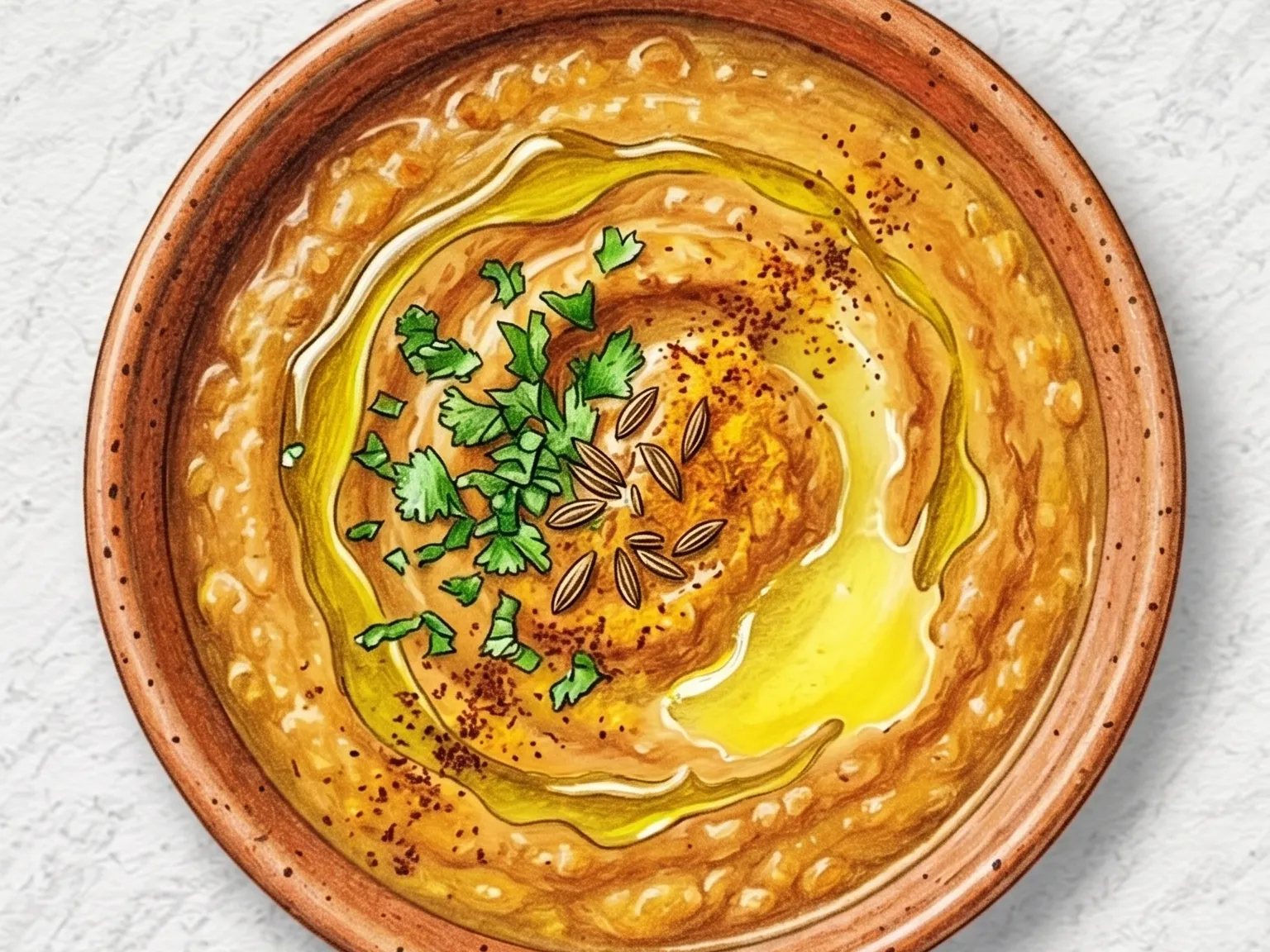
Red lentils split during about 20 minutes of gentle simmering, thickening this soup into a golden broth without a separate flour or starch mixture. Cumin and turmeric are briefly heated in the oil after the onion and garlic, while the lemon juice is held back until the pot is off the heat. For 4 servings, the recipe uses 300 g red lentils and 1000 ml vegetable stock. Rinse the lentils under running water until the water looks mostly clear, then drain them well. Finely chop 1 onion and 3 garlic cloves so they soften evenly throughout the soup. Of the 2 tablespoons olive oil, reserve a small portion for the finished bowls and put the rest in the pot. Cook the onion over medium heat for about 5 minutes, stirring often, until it becomes translucent without browning. Add the garlic and cook it for 1 minute, only until the raw smell fades. Stir in 1.5 teaspoons cumin and 0.5 teaspoon turmeric. Let the spices heat in the oil for 30 seconds to release their aroma, then move on before they scorch. Add the drained lentils, 1000 ml vegetable stock, and 1 teaspoon salt, and bring the pot to a boil. Reduce to gentle heat and simmer for about 20 minutes. Stir from time to time so the softening lentils do not stick to the bottom. The base is ready when the lentils have split and the soup has become thick and golden. If a smoother texture is wanted, use a hand blender on only half of the soup. Leaving the other half unblended preserves some body and avoids turning the entire pot into a gluey puree. Turn off the heat before stirring in 2 tablespoons lemon juice, then taste and adjust the salt if needed. Divide the soup among bowls and drizzle the olive oil reserved at the beginning over the surface. The final bowl combines the earthy cumin and turmeric with fresh acidity added after cooking, while the broken lentils supply the creamy texture.

🥗 Light & Healthy 🏠 Everyday
Prep 10min Cook 30min 4 servings
Hu Tieu Nam Vang (Vietnamese Pork & Shrimp Noodle Soup)
Noodles Medium

Hu Tieu Nam Vang (Vietnamese Pork & Shrimp Noodle Soup)

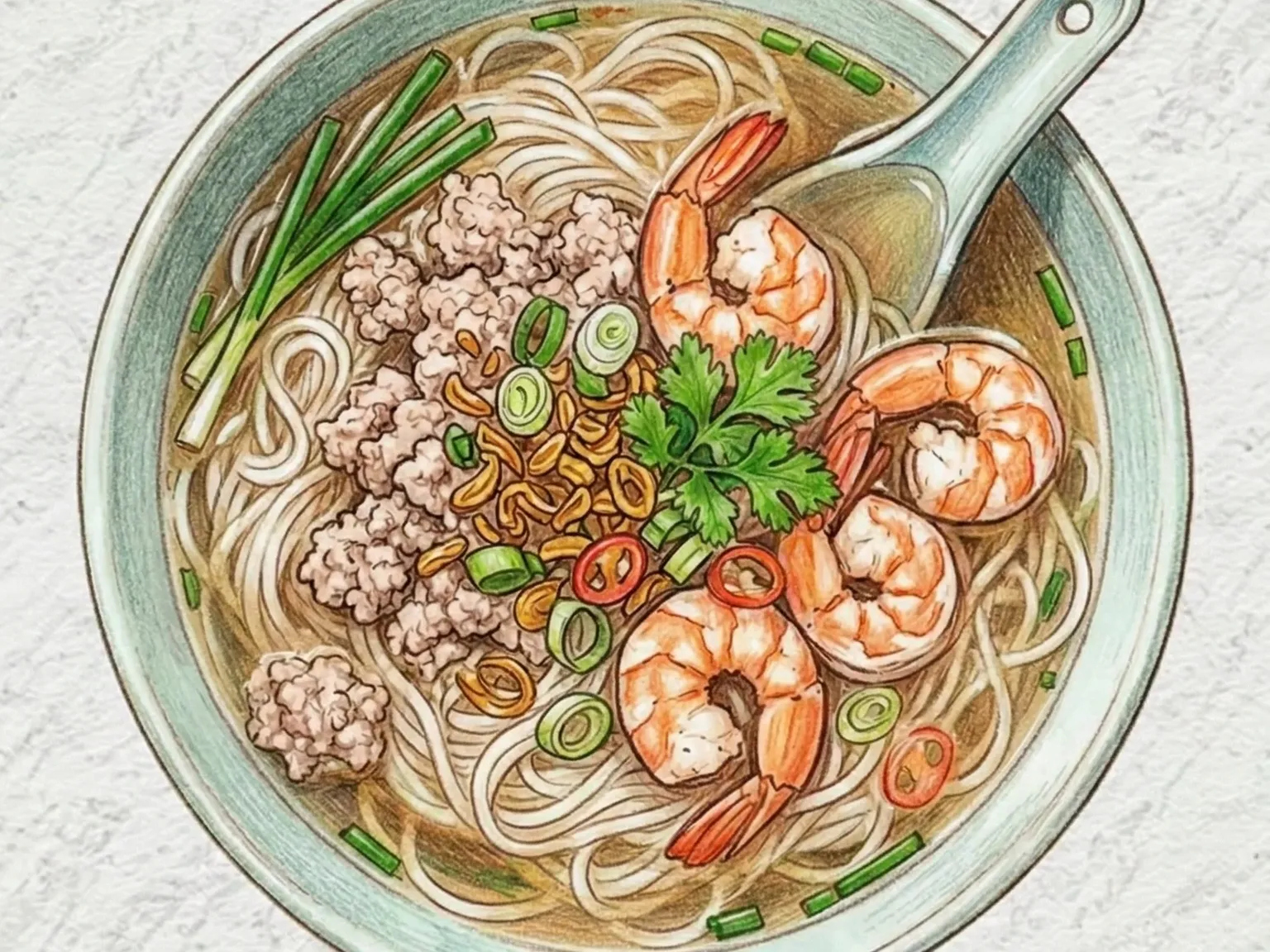
Hu tieu nam vang is a clear-broth rice noodle soup from southern Vietnam, originating in the Cambodian immigrant communities of Phnom Penh and now thoroughly embedded in Saigon street food culture. Pork bones are simmered at low heat for an extended time while the surface is skimmed repeatedly to keep the broth transparent and clean-tasting. Fish sauce and a measured amount of sugar season the broth with a savory-sweet balance that is distinctively southern Vietnamese. Ground pork is pan-fried with garlic until the moisture cooks off and the meat turns crumbly and lightly browned, creating a textured topping that contrasts with the silky broth. Whole shrimp are blanched for one minute only, enough to set the flesh without turning them rubbery. Rice noodles go into the bowl first, raw bean sprouts are piled on top, and boiling broth is ladled over, wilting the outer layers of the sprouts while leaving their cores crisp. A spoonful of garlic-infused oil floated on the surface releases fragrance with each sip and deepens the overall aroma. Green onion and black pepper finish the bowl simply, and the long-cooked broth does the work of pulling every element together. Lime wedges and fresh chilies on the side let each diner adjust acidity and heat to their own preference.

🎉 Special Occasion 🌙 Late Night
Prep 25min Cook 40min 2 servings
Ukogi no Horohoro (Chopped Ukogi, Daikon, and Walnuts)
Salads Easy

Ukogi no Horohoro (Chopped Ukogi, Daikon, and Walnuts)

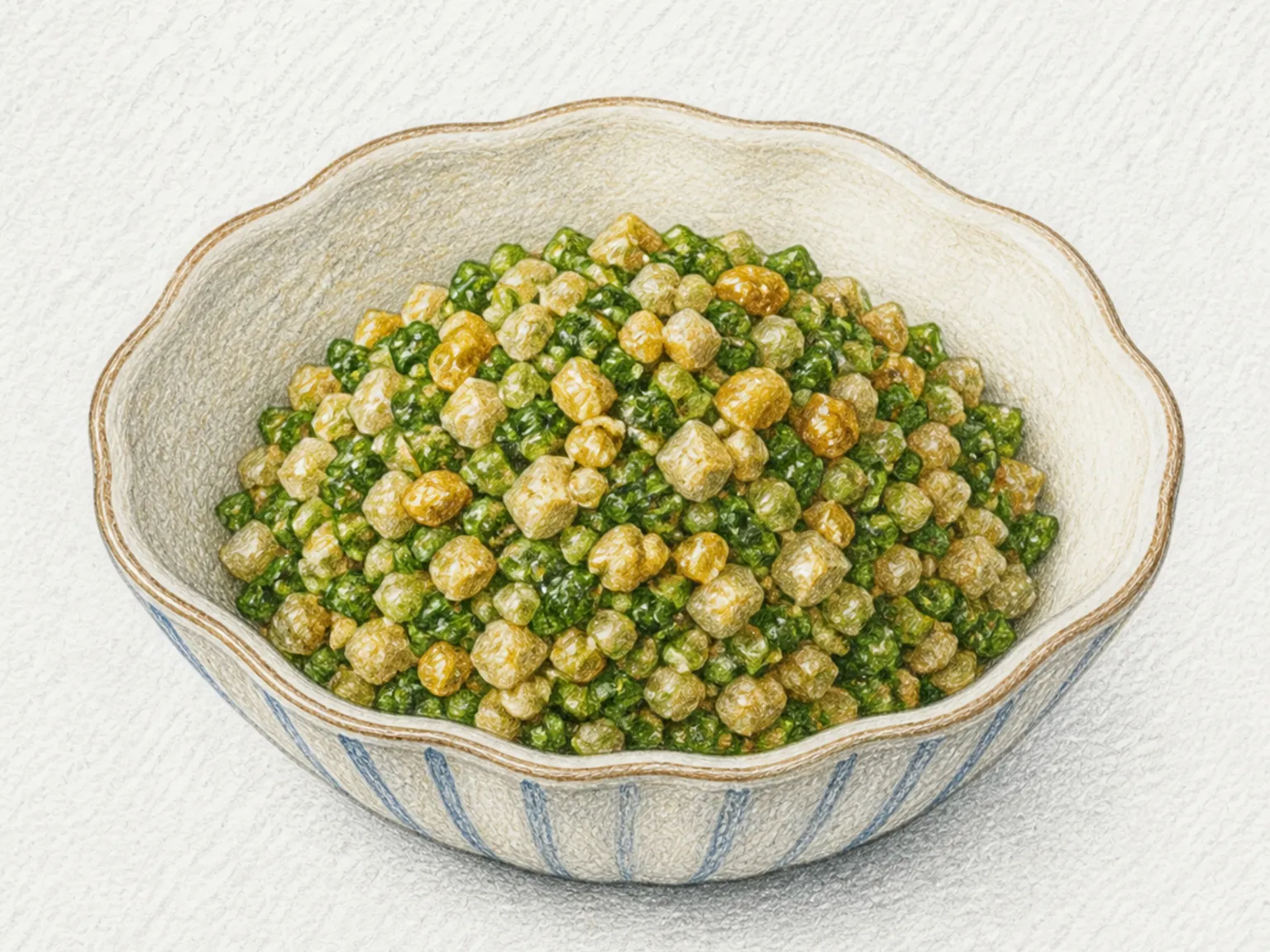
Ukogi horohoro blanches edible young ukogi shoots, minces them finely, and mixes them with miso-pickled radish and walnuts. Use only cultivated ukogi shoots sold for eating and remove thorns and tough stems. Swish through two changes of cold water and drain in a clean sieve. Boil 1L water with 5g additional blanching salt. Blanch 15g ukogi shoots for 30 seconds, transfer immediately to ice water, and squeeze firmly with both hands once cold. Finely chop the blanched ukogi, 10g miso-pickled daikon, and 20g walnuts separately to about 3mm, just coarser than rice grains. Cut the walnuts from two directions so no large pieces remain. Toss the three ingredients loosely with chopsticks. Taste the salt from the pickled daikon, then season gradually with up to 5ml soy sauce and 1g salt and divide into two bowls.

⚡ Quick 🏠 Everyday
Prep 20min Cook 5min 2 servings
Sake no Chanchan-Yaki (Miso-Butter Salmon and Vegetables)
Asian Easy

Sake no Chanchan-Yaki (Miso-Butter Salmon and Vegetables)

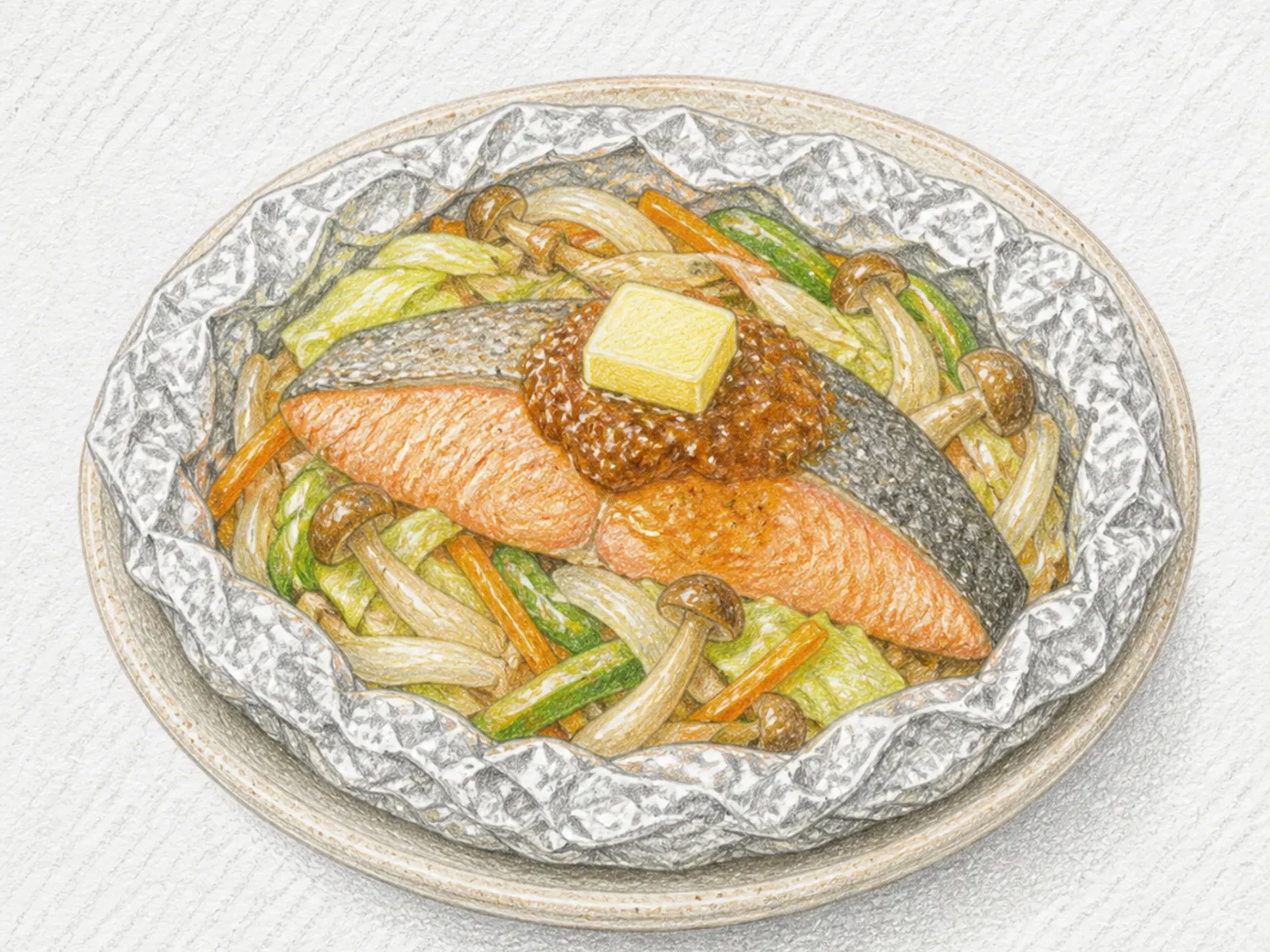
Sake no chanchan-yaki is a fisherman's dish from the Ishikari area of Hokkaido. Fresh salmon is set over cabbage, onion, shimeji, carrot, and green pepper, coated with a lightly sweet miso sauce, topped with butter, and steam-grilled inside foil. Salt and pepper season the fish first, while sugar, mirin, and sake loosen the miso into a spreadable sauce. Closing the packet and cooking it in a skillet with shallow water traps the vegetable moisture and salmon juices. Once associated mainly with the autumn and winter salmon season, it is now prepared throughout the year as a complete home meal.

🏠 Everyday ⚡ Quick
Prep 15min Cook 15min 1 servings
Pineapple Shrimp Khao Pad
Rice Easy

Pineapple Shrimp Khao Pad

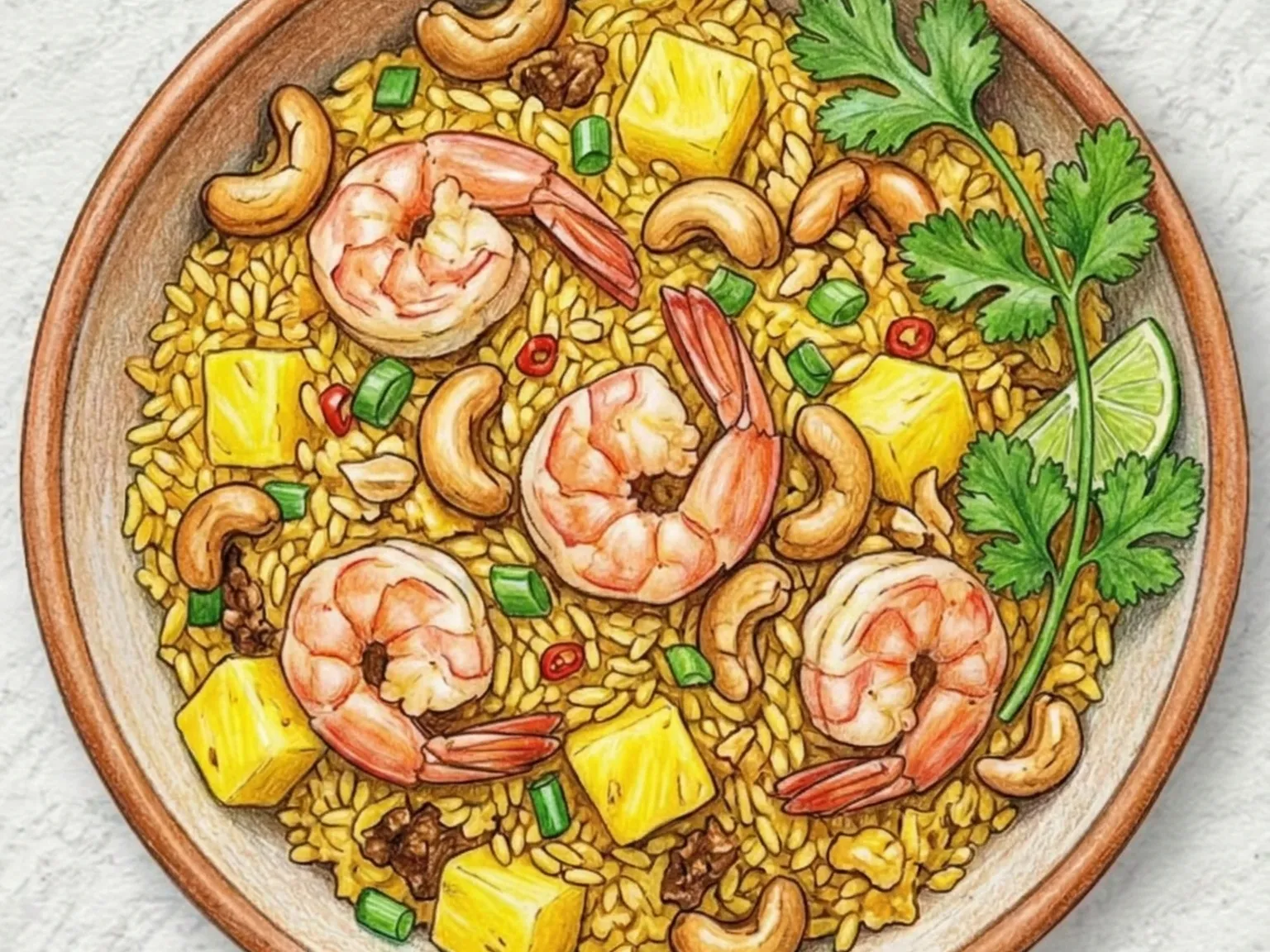
Pineapple shrimp khao pad is a Thai fried rice served inside a hollowed-out pineapple half, which functions both as a vessel and as a flavoring agent as residual juice from the fruit walls seeps gradually into the rice during service. Shrimp are cooked first in a very hot wok with minimal time, just long enough to firm up and curl before they are set aside, preventing the rubbery texture that results from overcooking in the subsequent stir-fry steps. Garlic goes into the oil next, quickly followed by day-old jasmine rice, which is broken up and tossed at high heat. Using rice that has dried out in the refrigerator overnight is important: fresh rice carries too much moisture and steams rather than fries, resulting in clumping. Egg is pushed through a cleared space in the center, scrambled lightly, then folded into the rice before it fully sets. Diced fresh pineapple is added at the very end and tossed only briefly so that it retains some structure while releasing enough juice to flavor the rice with its characteristic tart sweetness, which plays against the salty depth of fish sauce. Curry powder tints the grains a pale yellow and contributes a warm, earthy undertone that keeps the dish from reading as purely sweet. Roasted cashew nuts add crunch throughout, and scattered raisins provide small concentrated hits of sweetness. The assembled rice is mounded into the pineapple shell and brought to the table, often served with a wedge of lime on the side.

🎉 Special Occasion 🧒 Kid-Friendly
Prep 15min Cook 10min 2 servings
Yu Xiang Eggplant (Sichuan Spicy Garlic Pork Eggplant)
Stir-fry Medium

Yu Xiang Eggplant (Sichuan Spicy Garlic Pork Eggplant)

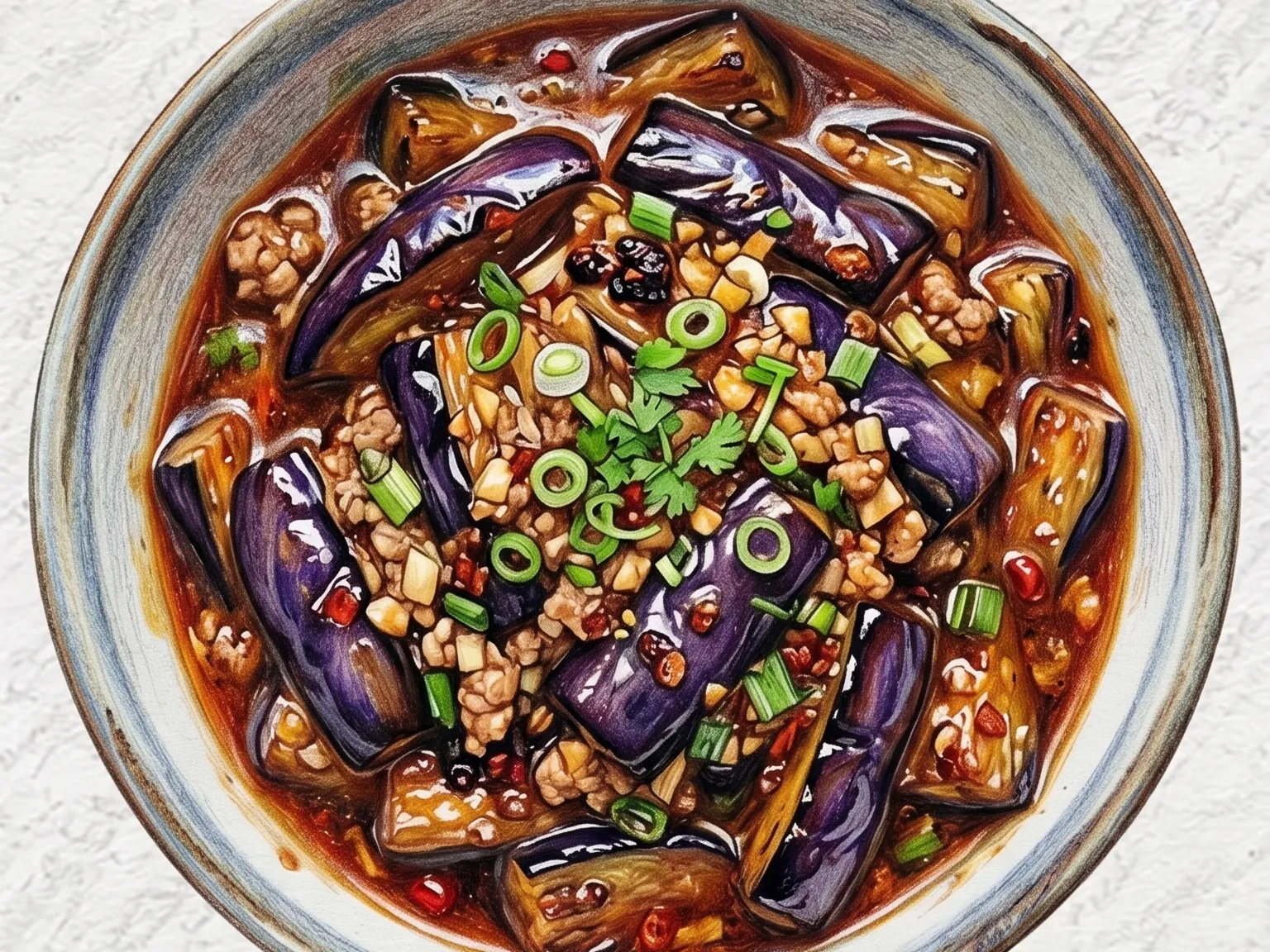
Yu Xiang Qiezi is a Sichuan-style eggplant stir-fry with ground pork, doubanjiang, black vinegar, and sugar. The eggplant is pre-fried to firm it up so it holds its shape in the sauce, while the pork and doubanjiang create a spicy, aromatic oil base. Soy sauce, vinegar, and sugar layer sweet and sour notes over the heat, producing the characteristic Yu Xiang flavor profile. Garlic and ginger add fragrance, and the eggplant absorbs the sauce deeply so every bite releases a concentrated burst of seasoning.

🏠 Everyday 🌙 Late Night
Prep 15min Cook 12min 2 servings
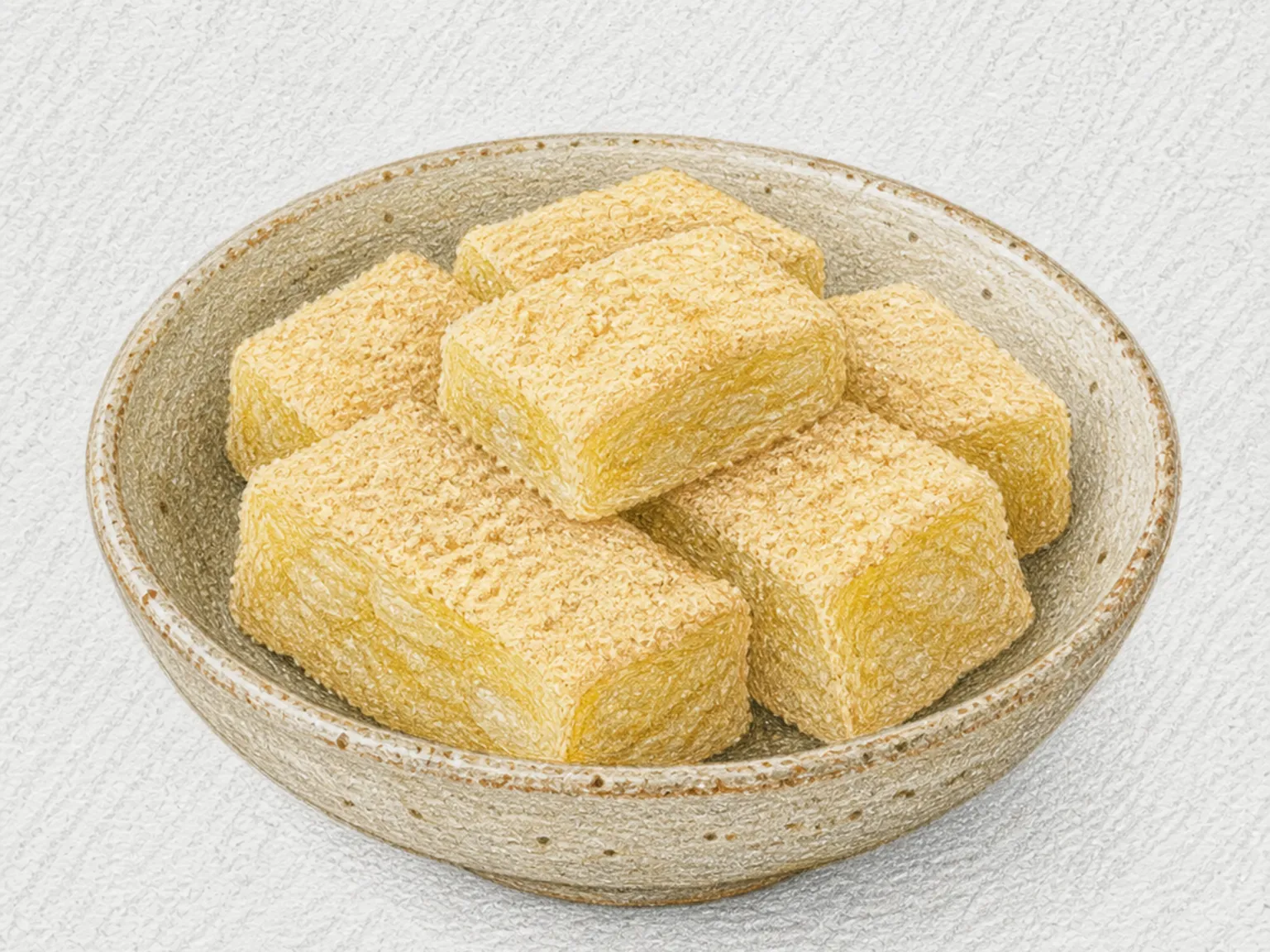
Ochirashi-ame (Roasted Barley Flour Candy)
Desserts Medium

Ochirashi-ame (Roasted Barley Flour Candy)

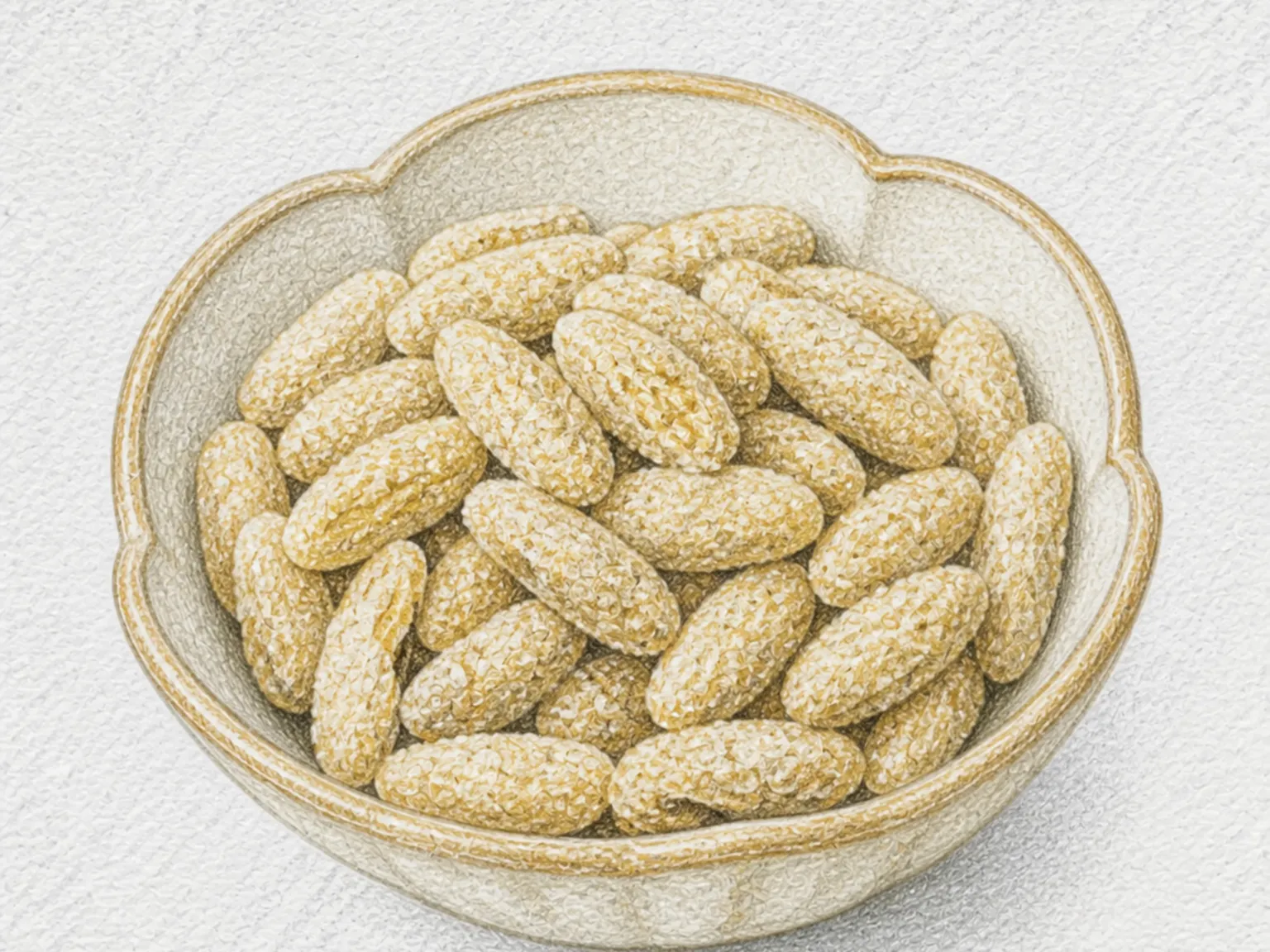
Ochirashi-ame is a Kagawa candy made from ochirashi, a roasted flour traditionally ground from barley and glutinous rice. Mizuame, white sugar, and water are dissolved quickly, the flour is kneaded into the syrup over low heat, and the hot dough is rolled into long rods and cut diagonally. Extra roasted flour coats the surface to prevent sticking and reinforce the grain aroma. The mixture thickens rapidly, so it must be stirred continuously and handled with heatproof tools rather than bare hands.

🧒 Kid-Friendly 🎉 Special Occasion
Prep 15min Cook 15min 24 servings
Lotus Root Surinagashi Miso Soup
Soups Medium

Lotus Root Surinagashi Miso Soup

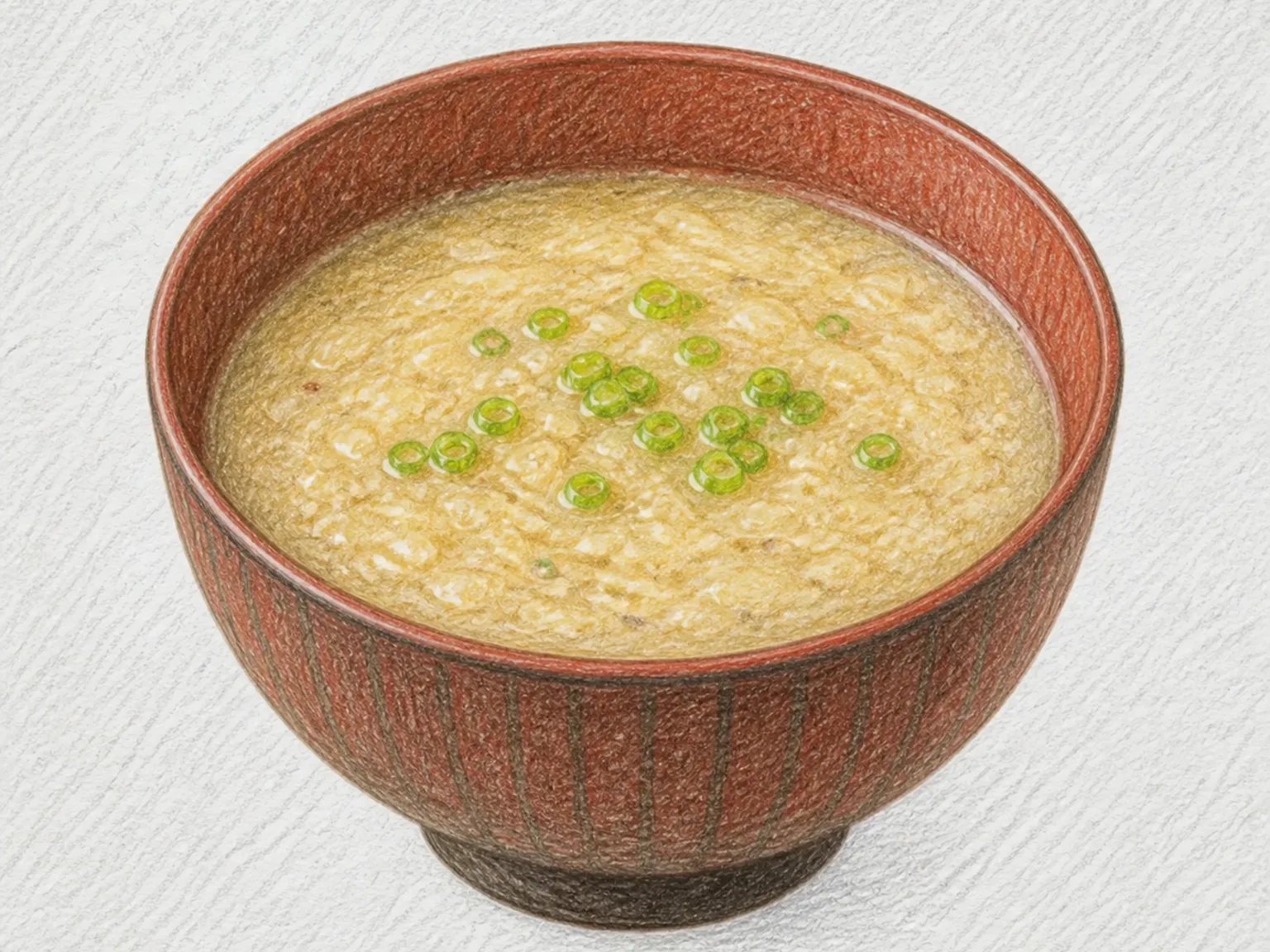
Lotus root surinagashi is a central Miyazaki miso soup made by coarsely grating unpeeled lotus root directly into gently heated dried-horse-mackerel stock. Its own starch and mucilage thicken the broth without added flour. Also called gorigori-jiru, it is a winter restorative dish associated with the stringy Suijin-sama lotus grown in the pond beside Mizunuma Shrine. Cultivation is said to have begun when the Takanabe domain encouraged planting a good Yamato variety to strengthen local finances. To preserve the lotus root's thread-forming viscosity, the surface is scrubbed clean but not peeled or soaked in vinegar water. Grating through a coarse oroshi over broth that is not boiling hard leaves both tiny pieces and a softly flowing body.

🏠 Everyday 🥗 Light & Healthy
Prep 480min Cook 20min 4 servings
Platter Jjajang Noodles
Noodles Easy

Platter Jjajang Noodles

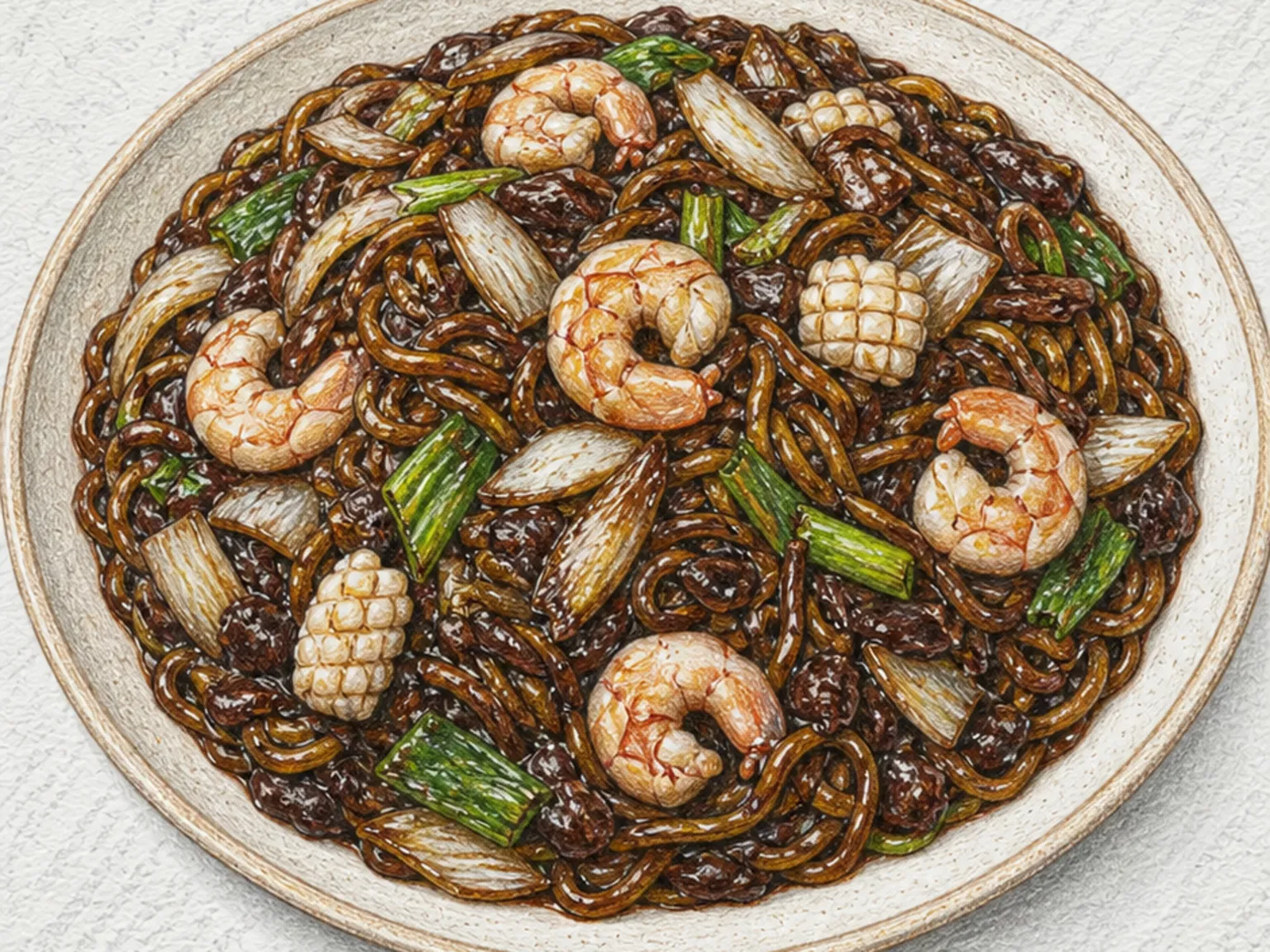
Jaengban jjajang stir-fries pork, squid, shrimp, and vegetables with chunjang, then tosses the cooked Chinese noodles directly in the same pan before serving them on a shared platter. Cut 100 g pork and 100 g squid into bite-size pieces. Cut 100 g onion and 100 g cabbage into similarly sized squares, and pat 80 g shrimp dry. Boil 300 g Chinese-style noodles, rinse them briefly in cold water to remove surface starch, and drain them thoroughly in a sieve. Heat 3 tablespoons vegetable oil in a wide pan and stir-fry the pork with 3 tablespoons chunjang. When no raw pink remains on the pork surface, add the squid and shrimp. Cook only until the squid turns opaque and the shrimp become pink and curved so the seafood does not toughen before the noodles are added. Add the onion and cabbage and stir-fry over high heat for 2 minutes. Broad, quick movements keep the vegetables exposed to the hot pan and limit the amount of water they release. Add the drained noodles and 1.5 tablespoons sugar. Toss continuously for 1 minute, lifting noodles from the bottom so the black-bean sauce reaches every strand and the solid ingredients remain evenly distributed. A pan that is too cool, or cooking that continues too long, allows vegetable liquid to thin the sauce and causes the noodles to swell. Once the sauce clings and no pale bundle of noodles remains, turn off the heat immediately. Spread the finished noodles across a wide platter rather than leaving them in the hot pan, and serve at once for sharing.

🏠 Everyday
Prep 15min Cook 15min 2 servings
Kakinamasu (Daikon and Dried Persimmon Namasu)
Salads Easy

Kakinamasu (Daikon and Dried Persimmon Namasu)

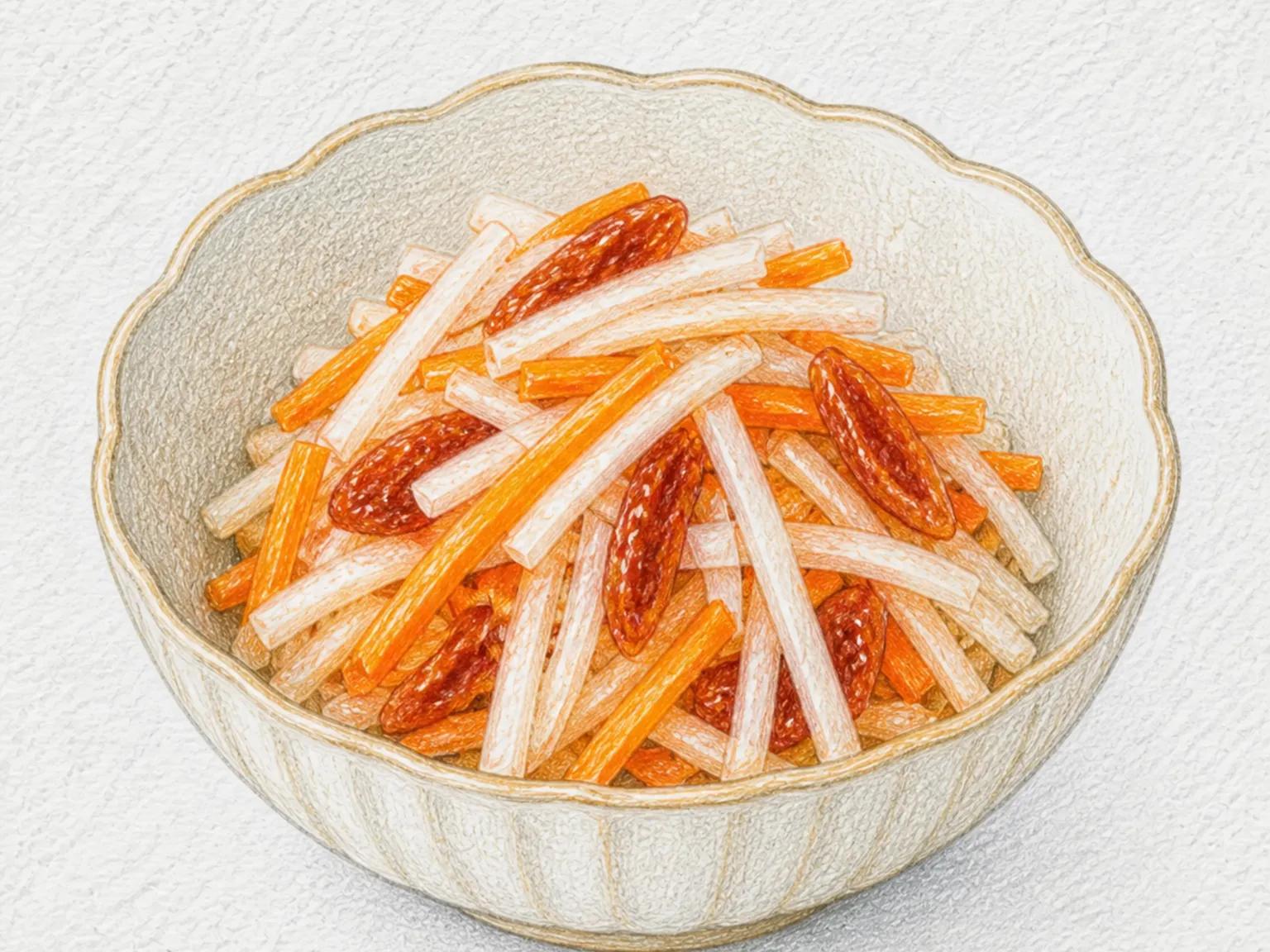
Kakinamasu is a Shimane vinegared salad that combines daikon and carrot softened in brine with strips of well-dried persimmon. Cutting the vegetables into thin 5 cm batons and soaking them in salt water relaxes their rigid texture while retaining a clean crunch. After they are squeezed very dry, seeded persimmon strips are added with vinegar, sugar, and a pinch of salt. A short refrigerated rest lets the concentrated fruit sweetness spread through the sharp dressing without making the vegetables watery. Saijo persimmons, representative of Shimane, begin as an astringent fruit and become still sweeter when dried. Their reddish color, together with carrot, contrasts with the white daikon. This red-and-white appearance is considered auspicious, so kakinamasu has long been served at celebratory banquets and as a standard New Year dish.

🎉 Special Occasion
Prep 20min 4 servings
Chana Masala (Punjabi Spiced Chickpea Tomato Curry)
Asian Easy

Chana Masala (Punjabi Spiced Chickpea Tomato Curry)

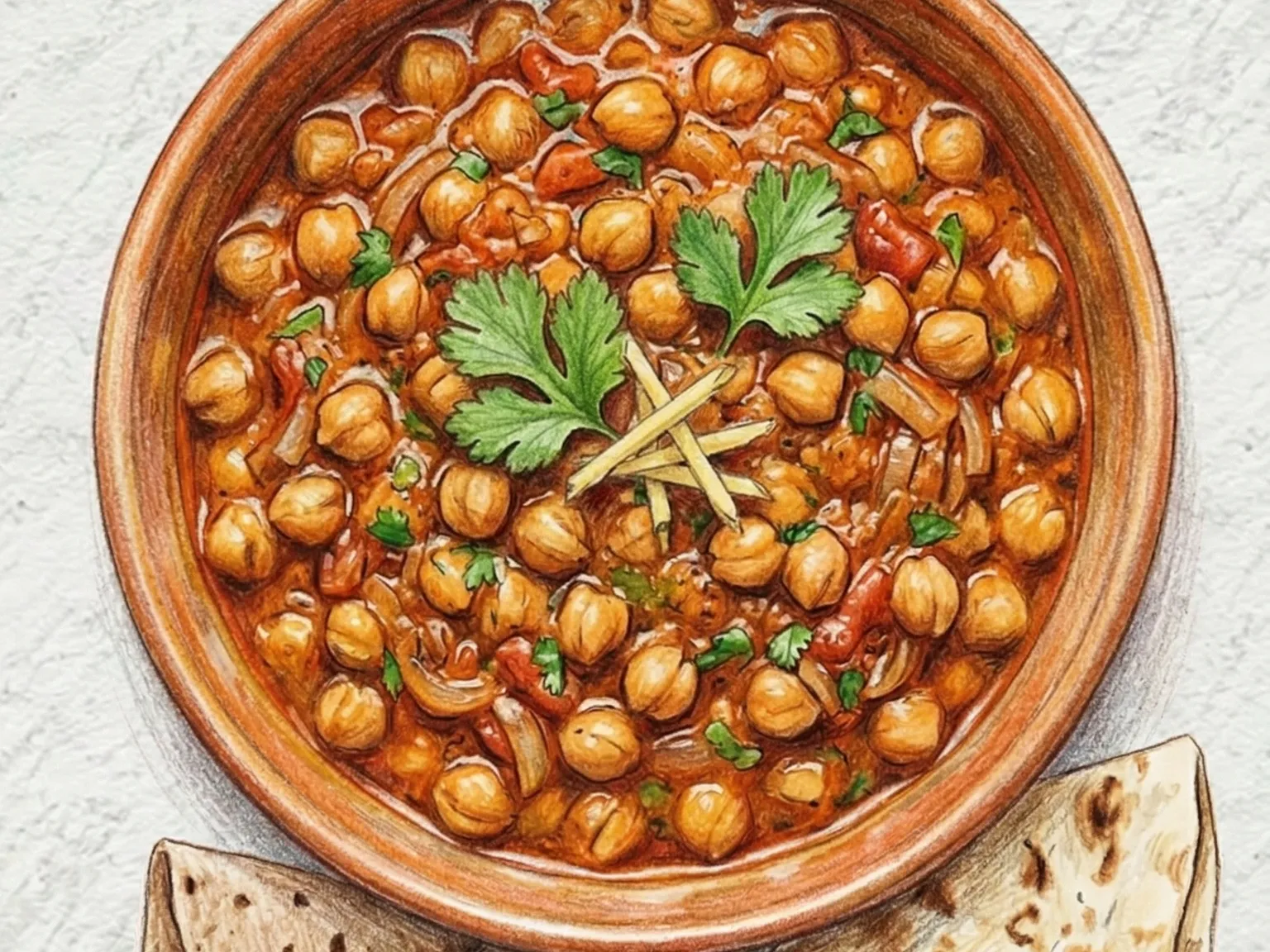
Chana masala is a staple of Punjabi home cooking and one of the most widely eaten vegetarian dishes across North India, found on the menus of dhabas, railway canteens, and five-star hotel restaurants alike. Dried chickpeas are soaked overnight and pressure-cooked until they hold their shape but yield when pressed -- the texture of the chickpea matters as much as the sauce around it. The sauce builds from finely diced onions fried until deeply browned, which provides natural sweetness and body without any cream. Tomatoes cook down with coriander, cumin, turmeric, garam masala, and amchur -- dried mango powder -- which contributes a tart, fruity acidity that sets this preparation apart from other chickpea curries and gives it a distinctive brightness no other spice replicates. The sauce should be thick and clingy, not soupy; each chickpea gets coated in a dark, spiced layer rather than sitting in loose liquid. Topped with sliced raw onion, green chili, and a squeeze of lemon, the dish pairs with bhatura -- fried bread -- as the iconic Punjabi street-food duo known as chole bhature. Scooped up with roti, the same preparation becomes an everyday weeknight meal that costs almost nothing to make.

🏠 Everyday 🎉 Special Occasion
Prep 15min Cook 30min 4 servings
Thai Crab Fried Rice (Khao Pad Pu)
Rice Easy

Thai Crab Fried Rice (Khao Pad Pu)

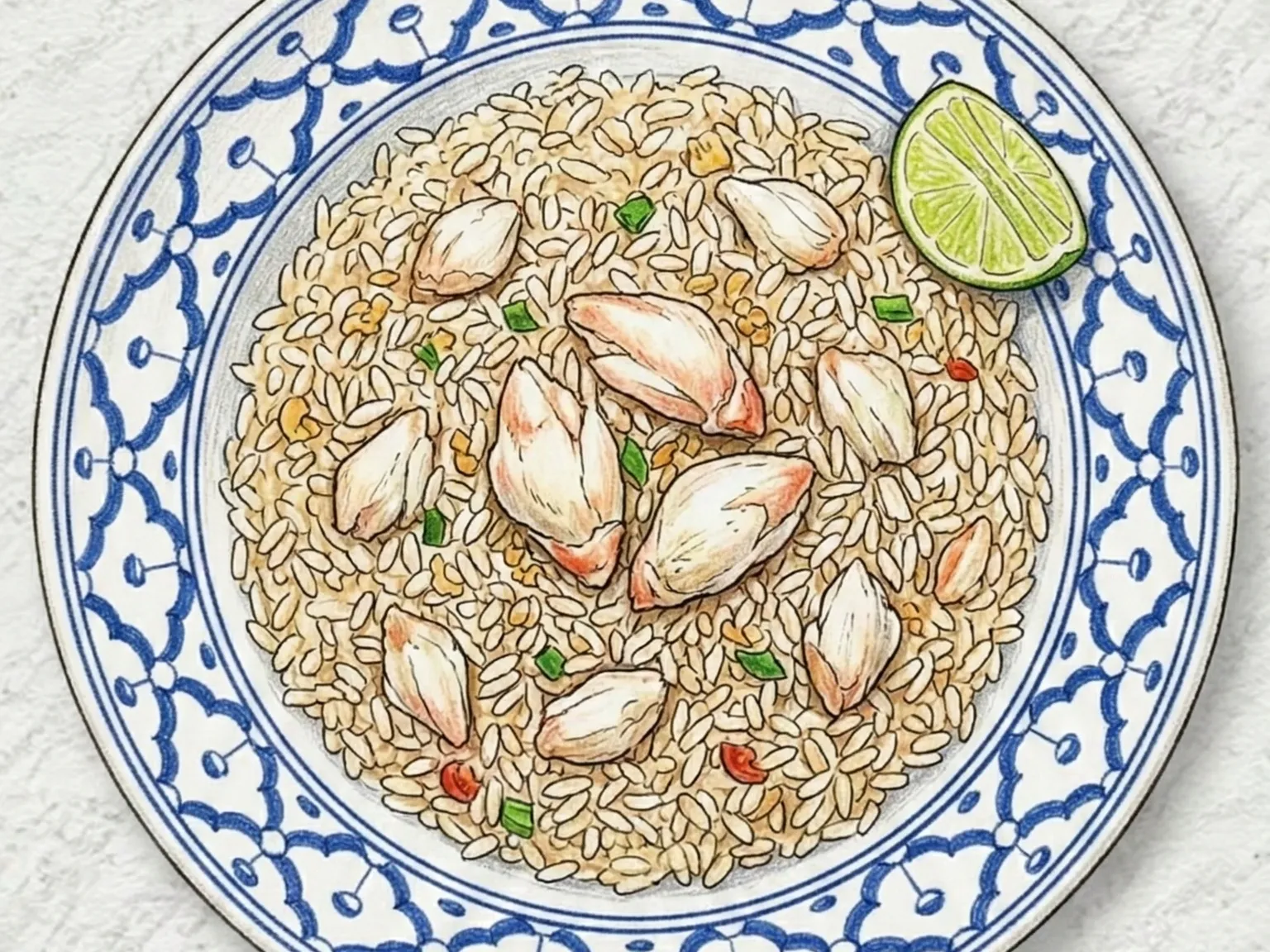
Khao pad pu is a Thai crab fried rice built on the premise that the sweetness of fresh crab meat carries the entire dish. The wok must reach smoking heat before minced garlic goes in and fries for ten seconds. Beaten egg follows and is scrambled into large, loose curds before cold jasmine rice is added and tossed rapidly to prevent sticking. Cold rice works here because its lower moisture content allows every grain to stay separate and pick up a direct scorch from the wok surface. Fish sauce and a small measure of soy sauce season the rice, and white pepper ground over the top adds a subtle, lingering heat. Lump crab meat goes in thirty seconds before the heat is cut and is stirred only gently, just enough to warm through without breaking the pieces down or toughening the texture. Prolonged heat would shrink the crab and strip out its sweetness entirely. The finished rice is plated and finished with a generous squeeze of lime, then garnished with spring onion, sliced cucumber, and fresh coriander. The salted umami of the fish sauce, the brightness of the lime, and the delicate sweetness of the crab come together cleanly on one plate.

🎉 Special Occasion ⚡ Quick
Prep 12min Cook 10min 2 servings
Zi Ran Yang Rou (Cumin Lamb Stir-Fry)
Stir-fry Medium

Zi Ran Yang Rou (Cumin Lamb Stir-Fry)

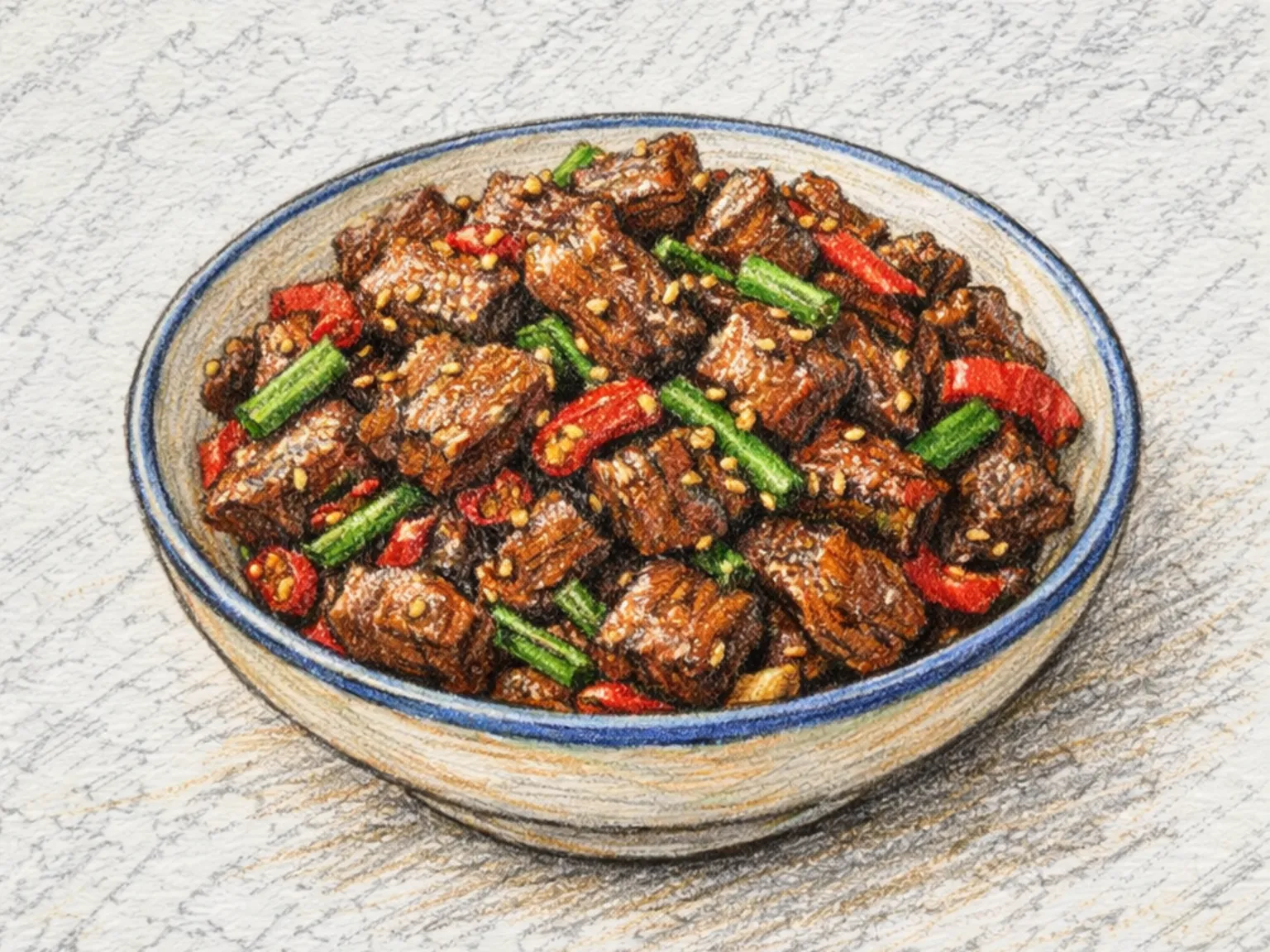
Zi ran yang rou sears 280 g thinly sliced lamb in one layer, then adds cumin and chili during the final minute rather than exposing the spices to the entire high-heat cook. Cut the lamb into bite-size pieces, coat it with 0.5 tablespoon soy sauce, and marinate for 10 minutes. Shake away excess surface liquid before cooking so the meat can sear instead of steam. Thinly slice 70 g onion, cut 25 g scallion into 4 cm lengths, and keep 1 tablespoon minced garlic ready. Heat a wok or heavy pan over high heat for at least 1 minute. Add 1.5 tablespoons cooking oil and stir the garlic for only 10 seconds once the oil shimmers. Spread the lamb without overlap and leave it undisturbed for the first 40 seconds. When the edges turn brown, flip and toss quickly until most of the exterior is cooked. Add the onion and cook it for 40 seconds, allowing only 20 additional seconds if it has not begun to turn translucent. Add 1.5 teaspoons ground cumin, 1 teaspoon chili flakes, and the remaining 0.5 tablespoon soy sauce. Stir-fry for 1 minute, fold in the scallions as soon as the cumin aroma becomes clear, and remove the pan from the heat. An uncrowded sear and late spice addition are the two defining controls in these steps.

🍺 Bar Snacks 🎉 Special Occasion
Prep 15min Cook 10min 2 servings
Ogura Renkon Lotus Root Stuffed with Sweet Azuki
Desserts Hard

Ogura Renkon Lotus Root Stuffed with Sweet Azuki

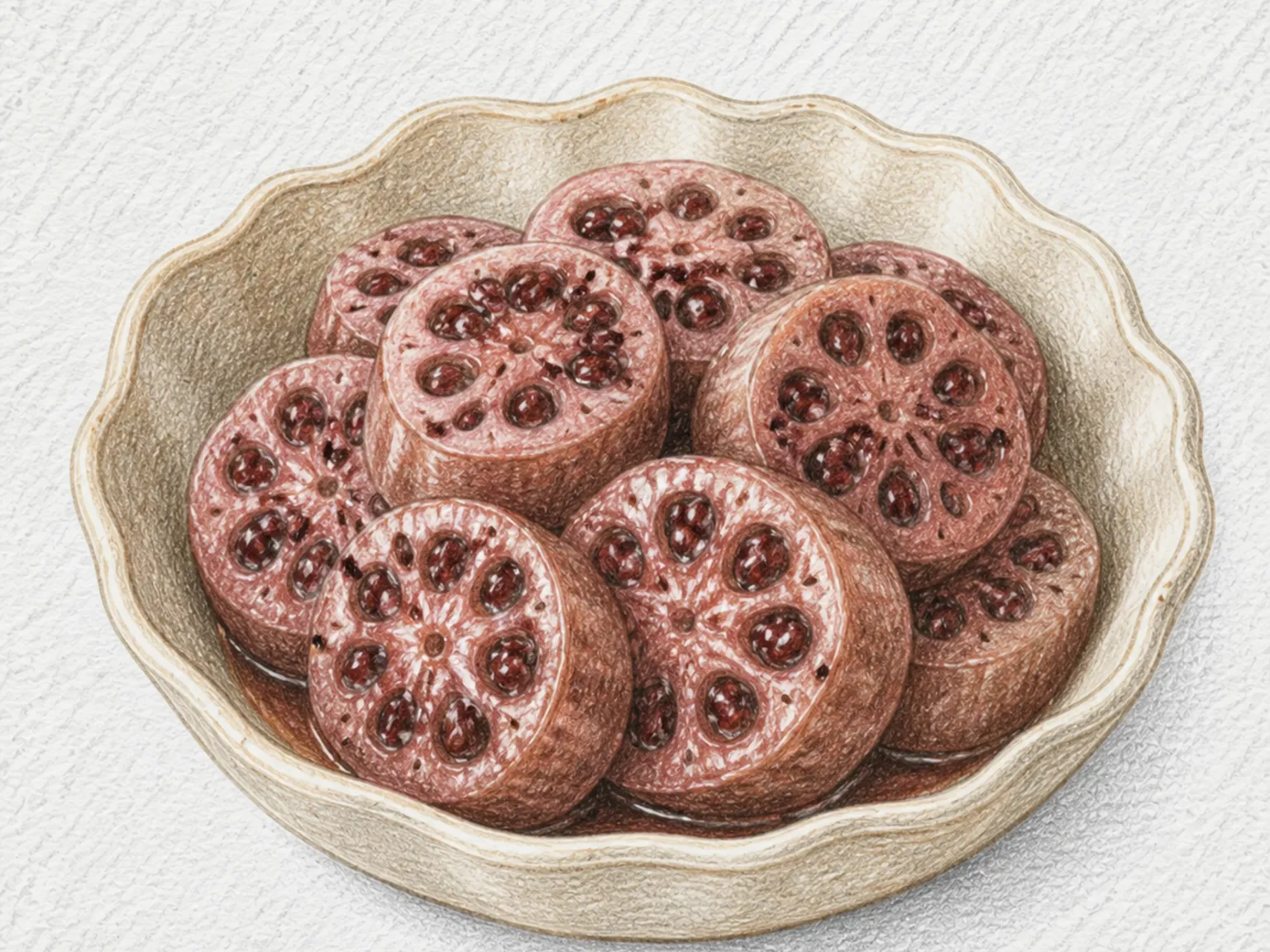
Ogura renkon is an Ibaraki specialty that stands thick lotus-root sections with their holes upward, fills those channels loosely with dry azuki beans, and simmers both together over low heat for two to three hours before sweetening with sugar and salt. The dish endured in homes because both lotus root from the Kasumigaura wetlands and azuki could be grown locally. As the beans cook, the lotus root takes on a purple-red cast compared to shiho color, named for Mount Tsukuba when its slopes redden in morning and evening light. Packing the holes solid would let the expanding beans split the root, so they are filled only halfway to two-thirds. The sections stand snugly in the pan so they cannot tumble and remain submerged under gently bubbling water. Sugar and salt enter only after root and beans are completely tender. Slow cooling lets the syrup penetrate before the logs are cut into one-centimeter rounds that display azuki set in every channel.

🎉 Special Occasion 🧒 Kid-Friendly
Prep 30min Cook 190min 4 servings
Mala Tang Hot Pot
Soups Medium

Mala Tang Hot Pot

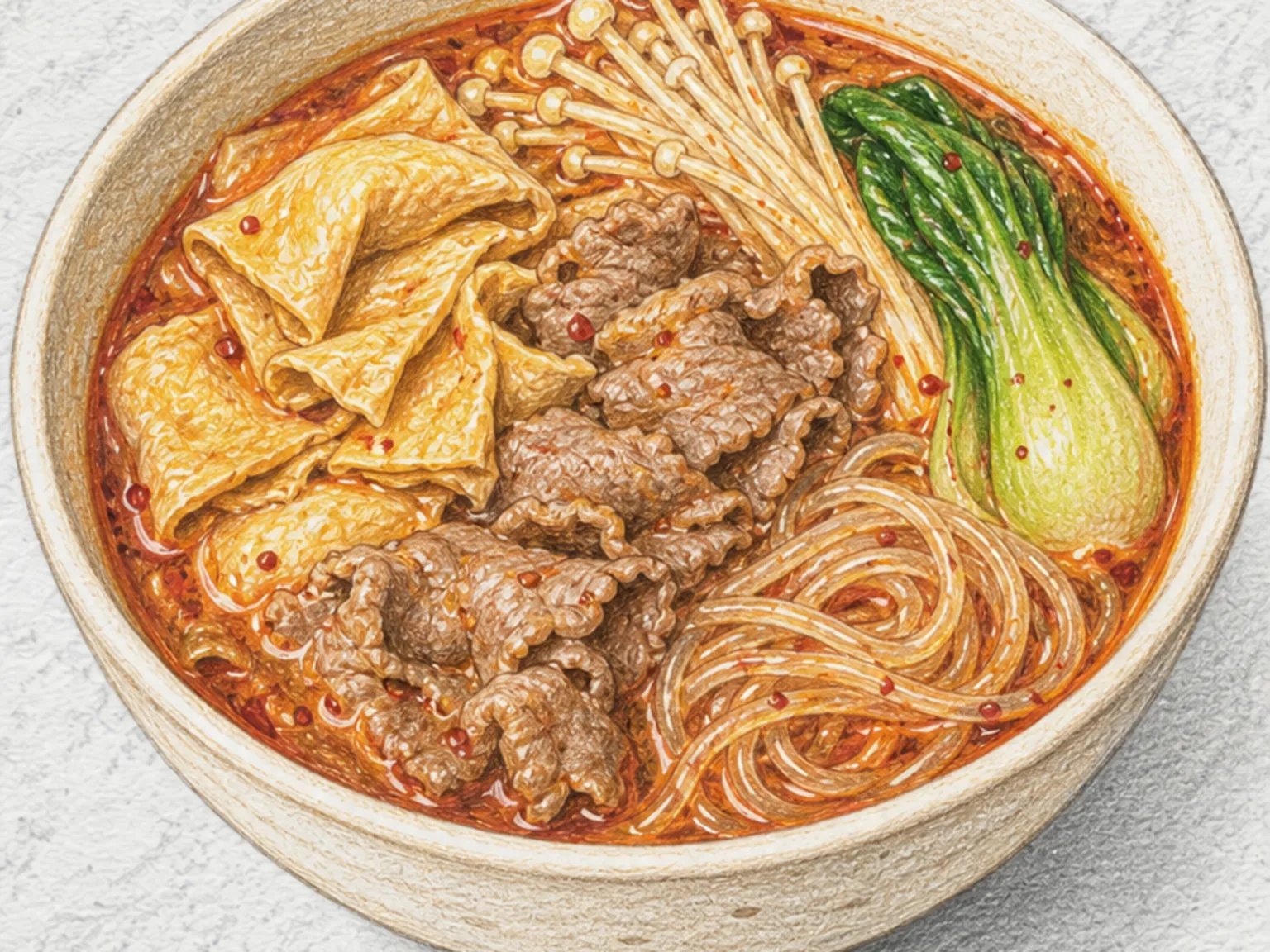
Mala tang is assembled by simmering Chinese flat glass noodles, bean-curd sheets, enoki mushrooms, thin beef brisket, and bok choy in beef-bone broth seasoned with mala paste. The flat noodles need a thorough soak in lukewarm water before cooking; otherwise the exterior can swell while the dense center remains hard. Bring the broth to a boil and dissolve the mala paste with a ladle until no concentrated clumps of spice or oil remain. Commercial pastes differ substantially in salt and fat, so taste the seasoned broth before adding more rather than assuming that a larger amount will improve it. Ingredients enter the pot according to their cooking time. Begin with the soaked noodles, bean curd, and enoki, which tolerate a longer simmer and need time to take on the broth. When the noodles are turning translucent, add the thinly sliced beef, bok choy, minced garlic, and green chili. Cook until no raw red areas remain in the beef, but stop before the bok choy loses all of its crispness. Skim the foam from the surface and transfer the soup to a large bowl while it is still very hot. The broad noodles carry the numbing, chili-rich broth; bean curd provides a chewy layer, enoki and bok choy add lighter textures, and the beef-bone base gives enough savory body to support the forceful mala seasoning. Serving the components together rather than overcooking them into one texture is what keeps the bowl interesting from the first bite to the last.

🏠 Everyday 🔥 Trending Now
Prep 145min Cook 15min 2 servings
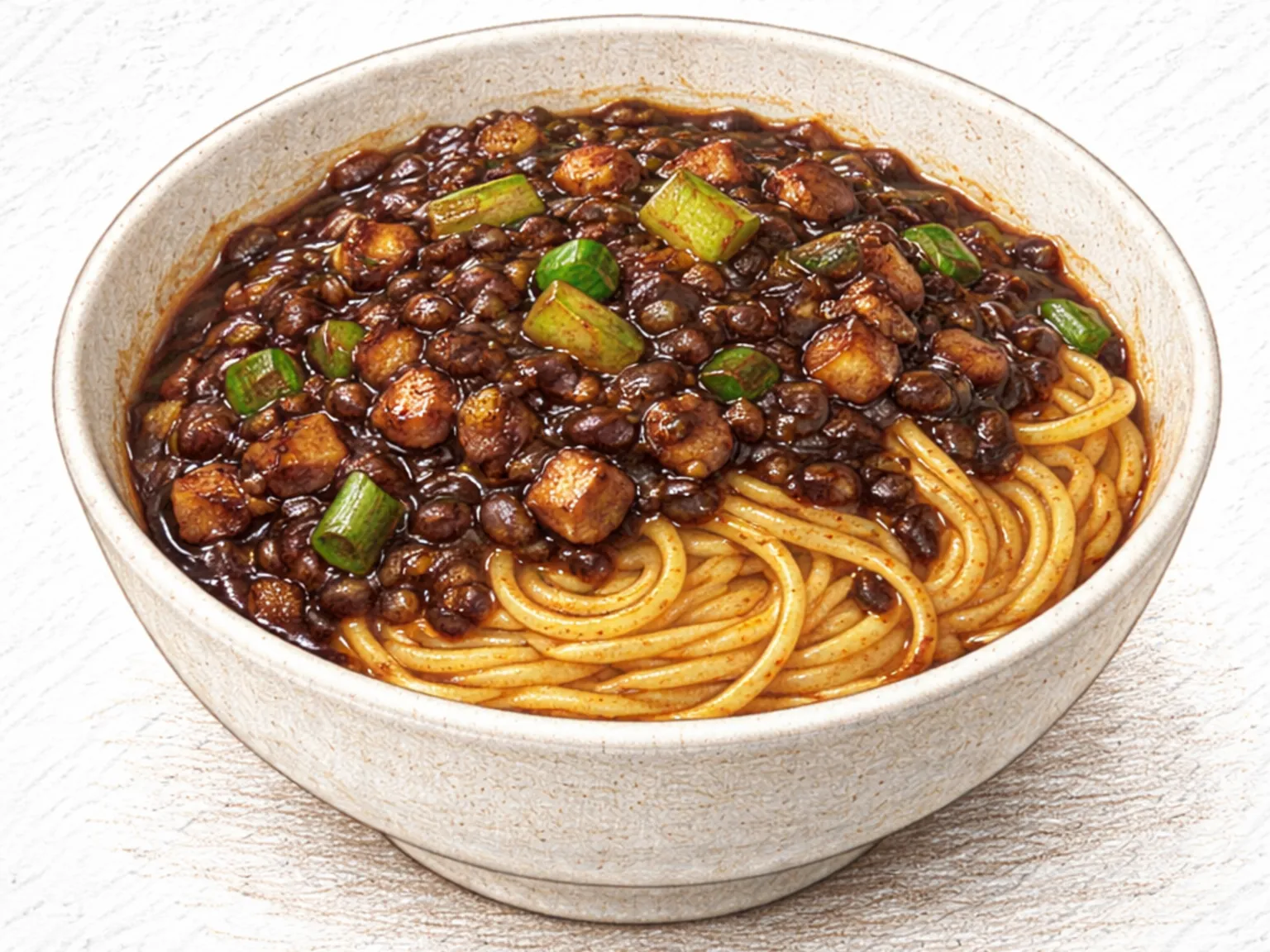
Korean Black Bean Noodles
Noodles Medium

Korean Black Bean Noodles

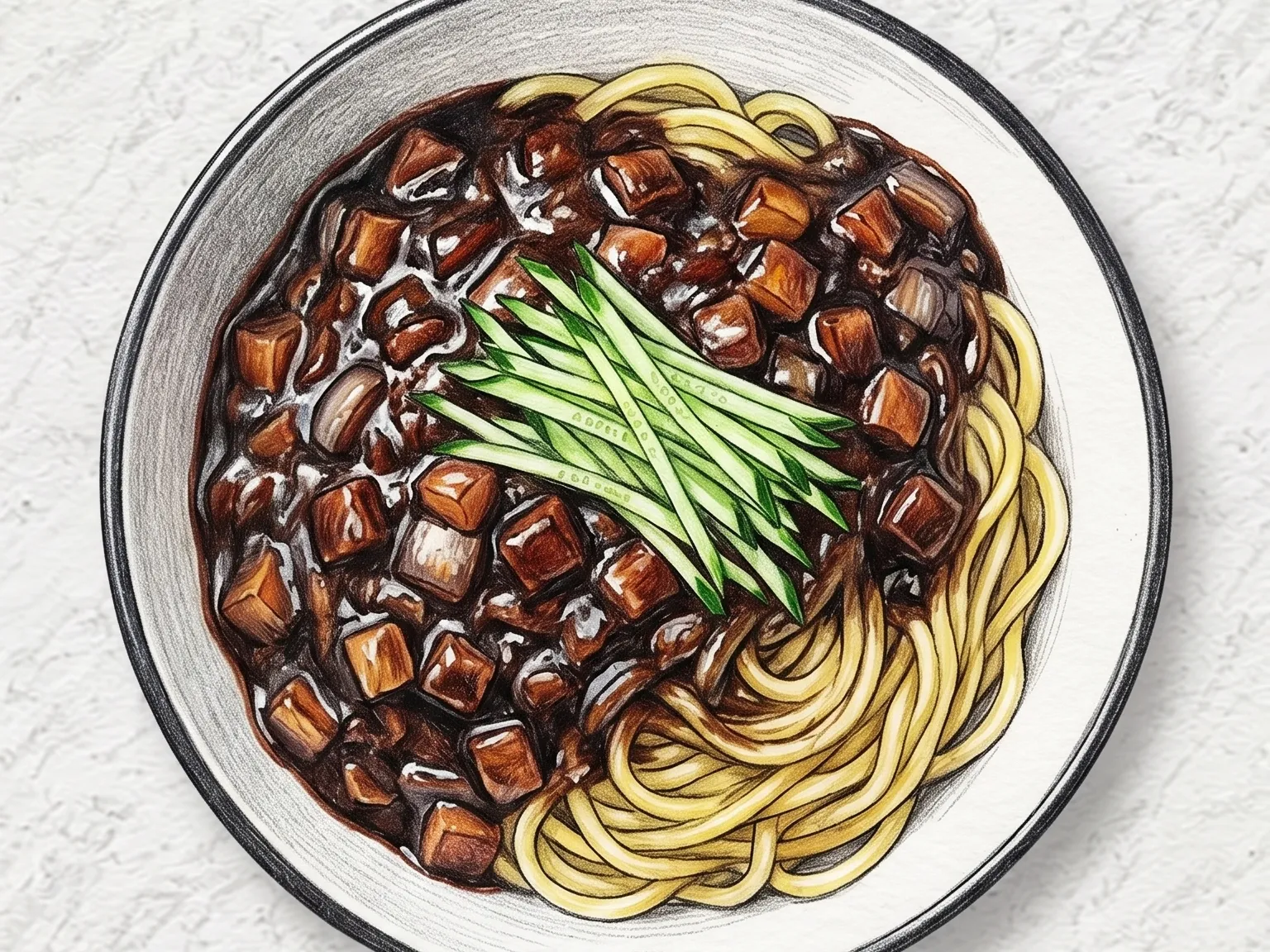
Jjajangmyeon is Korea's most iconic Chinese-Korean noodle dish, featuring thick, chewy wheat noodles buried under a glossy black sauce built from chunjang, a fermented black bean paste. Frying the paste in a generous amount of oil is the foundational step: the raw, slightly bitter edge of the chunjang burns off and transforms into a mellow, toasty sweetness that forms the soul of the dish. Diced pork belly, onion, potato, and zucchini are stirred into the oil-fried paste and cooked until soft, contributing natural sweetness and body to the sauce. A starch slurry thickens the sauce to a dense, velvety consistency that clings to every strand of noodle without pooling at the bottom of the bowl. Shredded raw cucumber piled on top offers a cool, crisp contrast to the warm, sticky sauce. In Korean daily life, jjajangmyeon carries cultural weight well beyond its ingredients: it is the instinctive order on moving day, graduation day, and military send-off gatherings.

🏠 Everyday 🌙 Late Night
Prep 15min Cook 15min 2 servings
Wafu Daikon Salad (Shredded Radish with Japanese Soy Dressing)
Salads Easy

Wafu Daikon Salad (Shredded Radish with Japanese Soy Dressing)

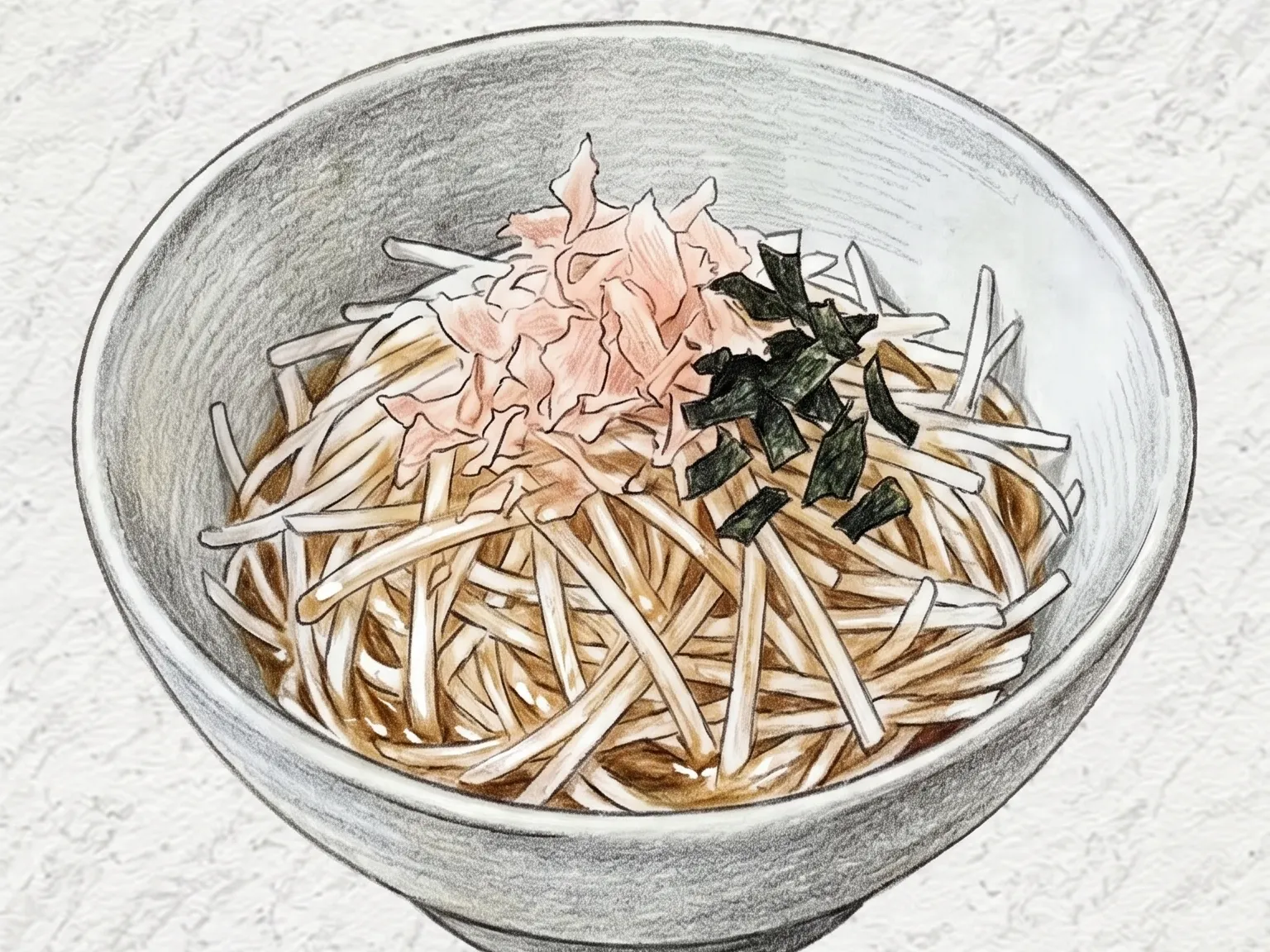
Wafu daikon salad combines finely julienned daikon and radish sprouts with soy sauce, rice vinegar, and sesame oil, then adds bonito flakes and nori. Trim the rough outer parts from 260 g daikon and cut it into very thin, even strips. Soak the shredded daikon in plenty of cold water for 5 minutes, gently separating any strands that cling together. Drain it in a sieve and press it with paper towels until the water between the strips has been removed. Make the dressing with 1.5 tbsp soy sauce, 1 tbsp rice vinegar, and 1 tsp sesame oil, stirring until the oil is distributed through the mixture. Immediately before serving, add the dry daikon and 30 g radish sprouts to the dressing. Lift and turn the vegetables briefly instead of pressing them, then transfer them to a plate. Add 4 g bonito flakes and tear 1 sheet of nori into small pieces over the top. The drying step matters because water carried from the cold soak would dilute the measured soy dressing. Have the bonito and nori ready before tossing the vegetables, since the dressed daikon and sprouts begin releasing water as they stand. Adding the nori last and serving immediately keeps it from sitting in the dressing.

🥗 Light & Healthy ⚡ Quick
Prep 15min 2 servings
Chashu Pork (Japanese Rolled Braised Pork Belly for Ramen)
Asian Medium

Chashu Pork (Japanese Rolled Braised Pork Belly for Ramen)

Chashu pork takes its name from Cantonese char siu but is an entirely distinct preparation that evolved within Japanese ramen culture. A thick slab of pork belly is rolled into a tight log, tied at intervals with kitchen twine to hold its shape, then braised low and slow in a mixture of soy sauce, mirin, sake, and sugar. Over one and a half to two hours the connective tissue dissolves into gelatin, transforming the meat from firm to yielding - a texture that barely resists the chopstick and melts against the palate. The braising liquid reduces during cooking and lacquers the exterior in a deep amber glaze that clings without being syrupy. Sliced thin, each piece reveals a cross-section of spiraling fat and lean that is as much a visual signature as a textural one. The fat layers have softened to the point of near-transparency while the lean holds just enough structure to stay in one piece. Although chashu is most associated with ramen, where a few slices crown the bowl, it is equally at home over steamed rice as chashu-don, or sliced cold and eaten alongside beer. The leftover braising liquid is never wasted - soft-boiled eggs soaked overnight in it become ajitamago, the marinated soy eggs that are chashu's natural companion.

🎉 Special Occasion 🍺 Bar Snacks
Prep 10min Cook 90min 4 servings
Konetsuke (Rice and Flour Griddle Cakes)
Rice Easy

Konetsuke (Rice and Flour Griddle Cakes)

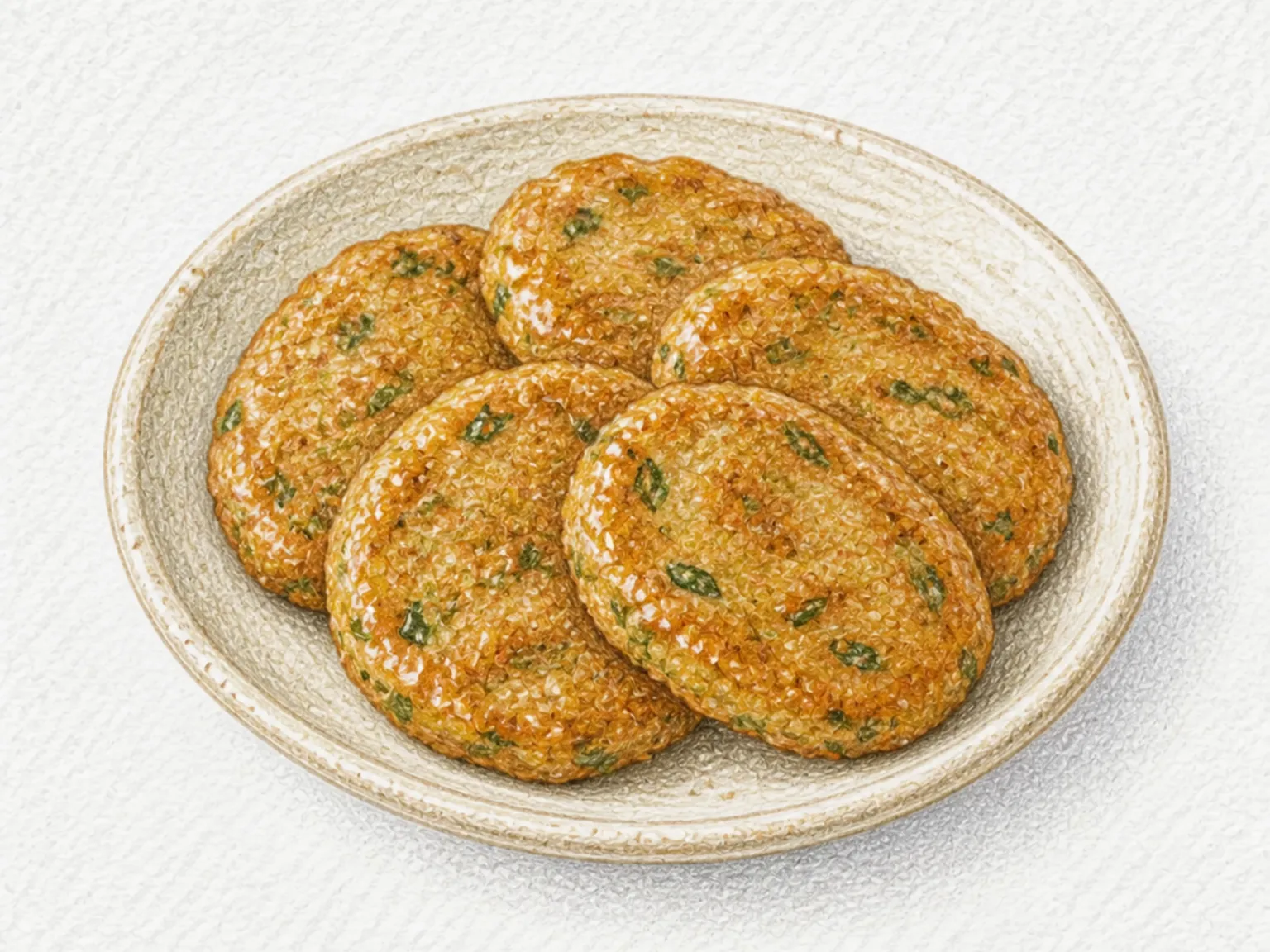
Konetsuke is a Nagano griddle cake from the Hokushin and Toshin areas, developed as a practical way to use leftover cooked rice. The rice is kneaded firmly with wheat flour and optional chopped green shiso, shaped into thick rounds or ovals, and browned on both sides in a lightly oiled pan. The cooked cakes are then coated in a simmering soy sauce and sugar glaze. Once used to stretch scarce rice and supplement a staple meal, konetsuke is now commonly eaten as a filling snack throughout the year.

🏠 Everyday 🧒 Kid-Friendly
Prep 15min Cook 15min 4 servings
Oni Manju Chunky Sweet Potato Steamed Cakes
Desserts Easy

Oni Manju Chunky Sweet Potato Steamed Cakes

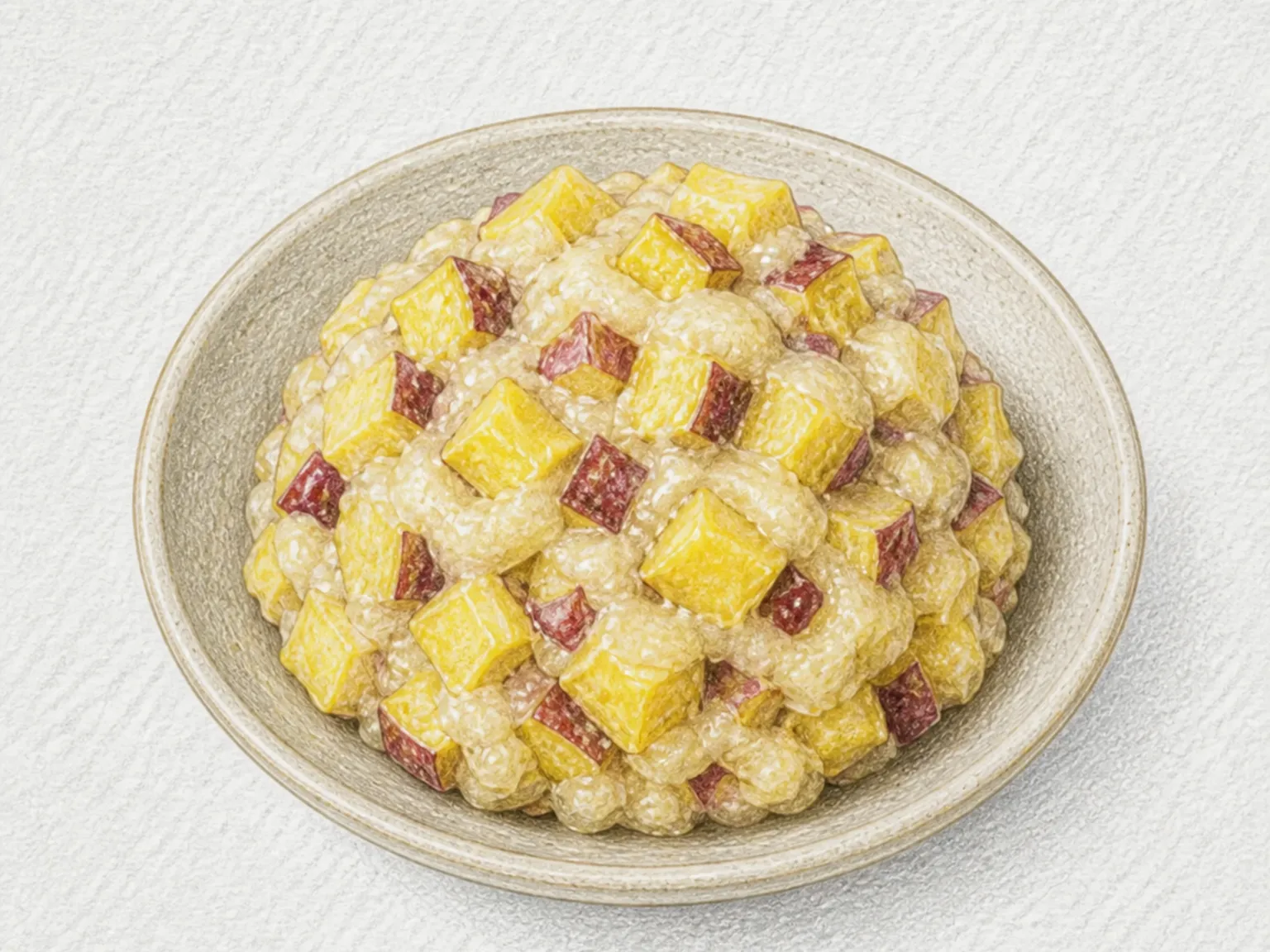
Oni manju is a rustic Aichi sweet that packs one-centimeter cubes of sweet potato into a thick wheat-and-rice-flour batter, mounds it on paper, and steams it. The rough potato corners protruding from each cake are said to resemble an ogre's horns or iron club, giving the confection its name. During wartime and the difficult years afterward, readily available sweet potatoes and flour made it a filling substitute for rice; it later settled into farm life as an inexpensive snack. The cut potato is soaked in cold water to remove surface starch, dried, and coated with sugar first so it releases enough moisture for the batter. Sifted cake flour and non-glutinous rice flour enter with only a little water, creating a mixture that barely binds the abundant cubes. Four generous mounds steam for fifteen minutes. With no bean paste, the appeal is the potato's own sweetness and the dense pleasantly chewy crumb between pieces.

🧒 Kid-Friendly 🏠 Everyday
Prep 25min Cook 20min 4 servings
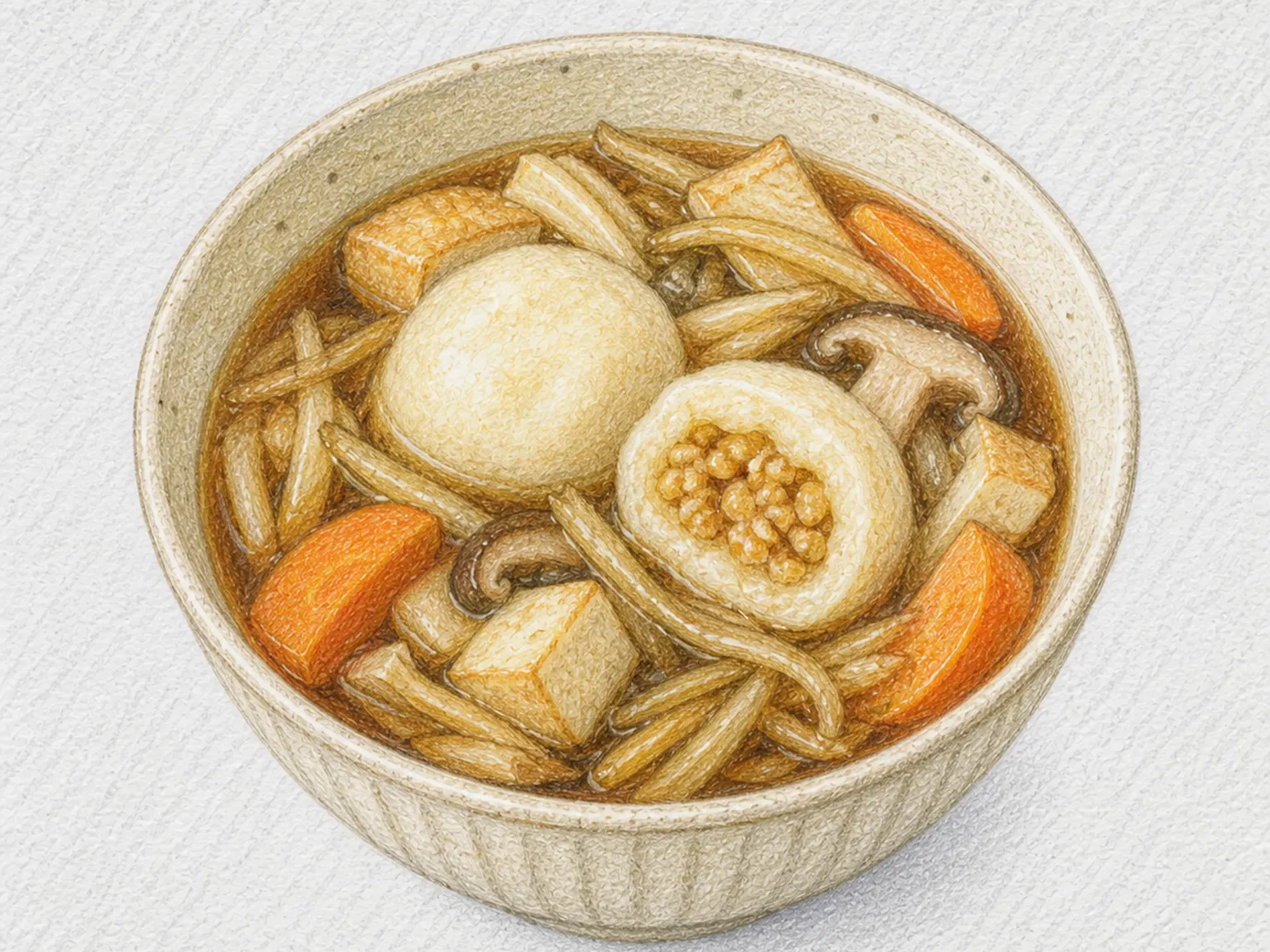
Mamebu-jiru (Walnut Dumpling Soup)
Soups Hard

Mamebu-jiru (Walnut Dumpling Soup)

Mamebu-jiru is a regional soup from Yamagata-cho in Kuji, Iwate, containing carrot, burdock, grilled tofu, kanpyo, mushrooms, and wheat dumplings filled with walnut. It is linked to flour dumplings that may have replaced celebratory noodles during poor Edo-period harvests, and it remains associated with New Year, ceremonial meals, and winter cooking. For four servings, soak one 15cm piece of kombu and six cleaned niboshi in 1400ml water for 20 minutes. Remove the kombu just before boiling, simmer the niboshi for 5 minutes, and remove them to leave a clear stock. Rehydrate 15g dried shimeji and 10g kanpyo separately for 20 minutes. Boil the kanpyo for 8 minutes, rinse it, and cut it to 1.5cm. For the mamebu, mix 200g flour with 1g salt, add 100ml water gradually, and knead for 7 minutes. Divide the dough into thumb-tip portions, enclose a small walnut piece in each one, pinch every seam fully closed, and dust the rounds lightly with potato starch. A small touch of water along a dry edge helps seal it so the walnut does not escape in the soup. Add 70g carrot, 80g burdock, the mushrooms, and kanpyo to the stock and cook for 12 minutes. Season with 45ml soy sauce and the remaining 2g salt, then add grilled tofu and blanched aburaage for 3 minutes. Keep the broth boiling as the dumplings go in one at a time so they do not stick together. After all of them float, cook for another 4 minutes. Split the largest one to confirm that no dry flour remains at the center and that its walnut is hot. Divide dumplings, roots, and tofu evenly among the bowls and serve hot. Move leftovers to shallow containers and refrigerate within two hours.

🎉 Special Occasion
Prep 40min Cook 35min 4 servings
Korean Black Bean Noodles
Noodles Medium

Korean Black Bean Noodles

Bunsik-style jjajangmyeon starts with frying chunjang in oil long enough to mellow its raw bitterness and remove any off notes before adding any other ingredients. Ground pork, onion, zucchini, and potato go in together and are stir-fried until fragrant, then water is added and the mixture simmers until the potato softens. A starch slurry is stirred in gradually to bring the sauce to the right consistency. The chunjang's deep salinity and the slowly cooked onion's natural sweetness form the backbone of the sauce, while the potato partially breaks down during simmering and lends body without any additional thickeners. The starch-finished sauce clings heavily to the chewy wheat noodles so every strand carries a dense, rounded hit of flavor. Rinsing the noodles briefly in cold water right after boiling tightens their texture and keeps them from going soft when mixed.

🧒 Kid-Friendly 🌙 Late Night
Prep 20min Cook 20min 2 servings
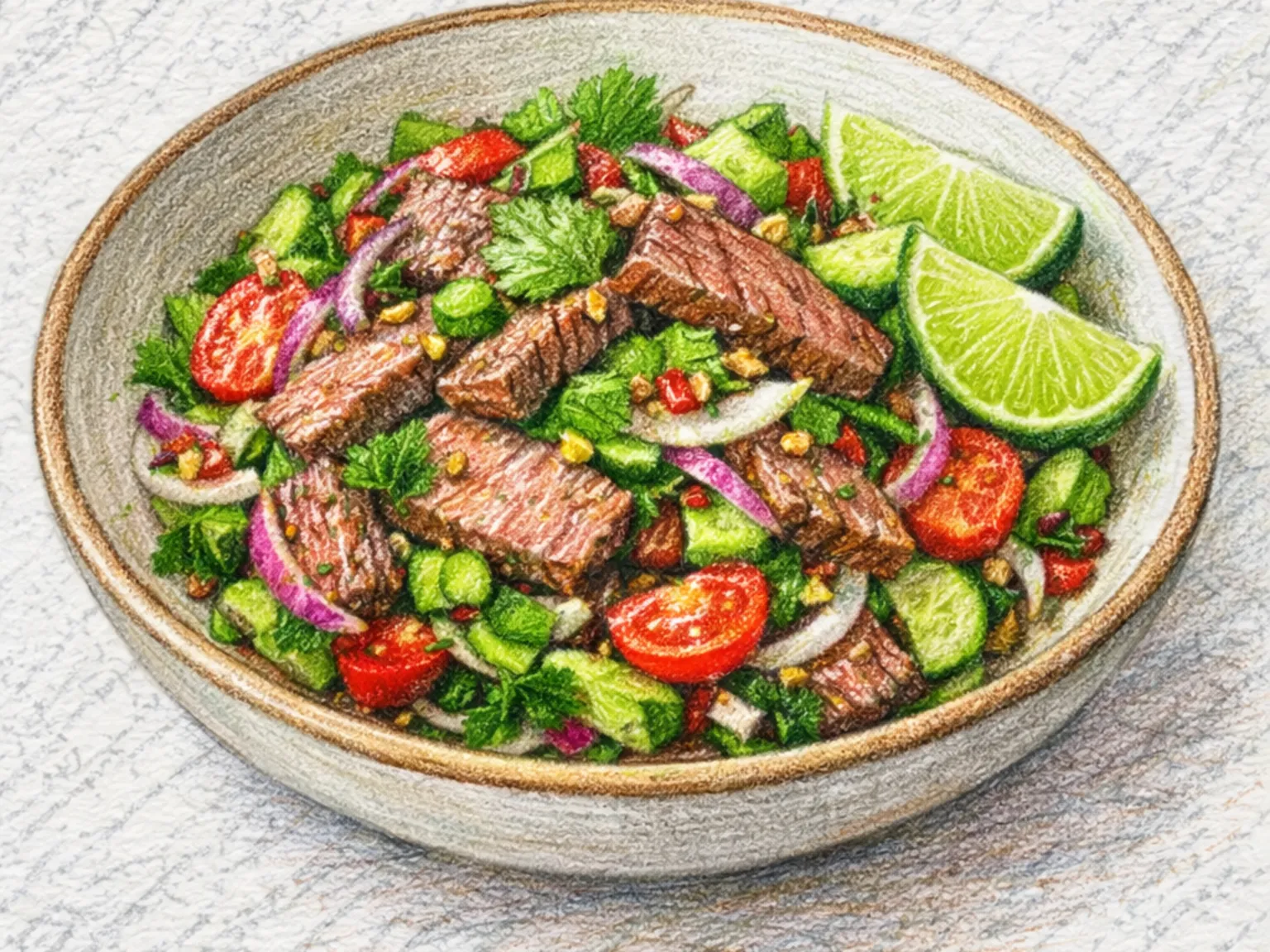
Thai Beef Salad (Charred Sirloin Tossed in Lime-Fish Sauce)
Salads Medium

Thai Beef Salad (Charred Sirloin Tossed in Lime-Fish Sauce)

Yam neua is a Thai beef salad that combines sliced seared sirloin with cucumber, tomato, red onion, and mint in a fish sauce and lime dressing. Let 260 g beef sirloin stand at room temperature for 10 minutes and pat the surface dry. Heat a pan thoroughly over high heat and sear the beef for 2 to 3 minutes per side as an initial timing guide. Do not use time or surface color alone to determine doneness. Check the thickest part with a food thermometer and continue cooking until it reaches at least 63C. Rest the cooked beef for 5 minutes. Meanwhile, thinly slice 60 g red onion. If its bite is strong, soak it in cold water for 5 minutes and drain it well. Cut 100 g cucumber and 120 g tomato into bite-size pieces. Mix 1.5 tbsp fish sauce, 2 tbsp lime juice, and 1 tsp chili flakes for the dressing. Slice the rested beef thinly and tear 12 g mint immediately before mixing. Toss the beef, cucumber, tomato, and red onion gently with the dressing, then add the mint and turn the salad once more. Serve before the beef becomes cold. The required pan time changes with the steak's thickness and the pan's heat, so the temperature reading governs rather than the suggested 2 to 3 minutes. This ingredient list has no separate salt; the measured fish sauce dressing provides the seasoning.

🥗 Light & Healthy 🏠 Everyday
Prep 20min Cook 10min 2 servings
Japanese Savory Steamed Egg Custard
Asian Medium

Japanese Savory Steamed Egg Custard

Eggs beaten with dashi stock, soy sauce, and mirin are steamed into a silky custard. A high dashi-to-egg ratio produces an exceptionally smooth texture that holds its shape yet barely resists the spoon. Shrimp, shiitake mushroom, and ginkgo nuts placed inside the cup before steaming offer distinct pockets of flavor and chew within each serving. Controlling the steam temperature is critical - too much heat causes bubbles that roughen the surface, so a cloth tucked under the lid and a low flame keep the environment gentle throughout. Found in both Japanese home kitchens and izakaya menus, chawanmushi is served warm in individual cups as a starter.

🎉 Special Occasion 🏠 Everyday
Prep 15min Cook 18min 2 servings

About Asian

Each country brings its own signature spices and sauces, so even the same ingredients can produce completely different flavors. With a few key pantry items - coconut milk, fish sauce, curry powder, doubanjiang - you can recreate the tastes of Asia at home.