Desserts Recipes
379 recipes. Page 10 of 16
Desserts are the sweet finish to a meal or a enjoyable snack any time of day. This collection spans Korean traditional sweets - yakgwa (honey cookies), hotteok (sweet pancakes), injeolmi (rice cakes) - as well as puddings, parfaits, and frozen treats.
Gateau au Chocolat (Rich Flourless Chocolate Cake)
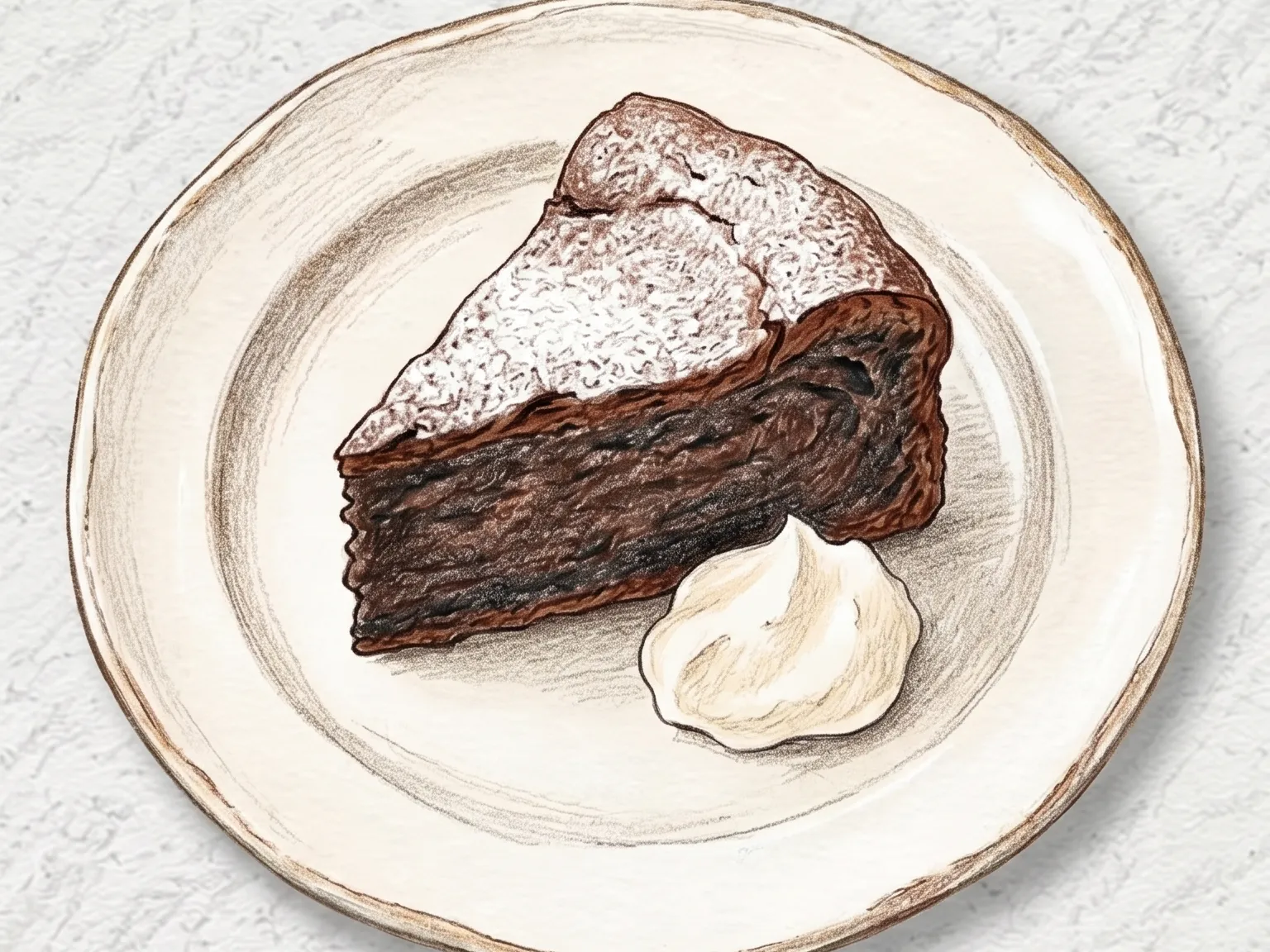
Gateau au chocolat is a French-style chocolate cake built on an unusually high ratio of dark chocolate and butter relative to flour. Many versions use only a trace of flour or none at all, so the structure depends almost entirely on eggs and melted chocolate rather than on gluten development. Whipping the egg whites separately into a glossy meringue and folding them into the batter introduces just enough trapped air to prevent the result from feeling dense and leaden; the finished cake is simultaneously rich and melt-on-the-tongue light. Straight from the oven the center appears underset, but as the cake cools fully on a rack the interior firms to a fudge-like consistency and a thin, crackly shell forms across the top. Sliced, it reveals an intensely dark cross-section that looks as concentrated as it tastes. A fine dusting of powdered sugar provides visual contrast against the dark surface, and a generous spoonful of lightly whipped, unsweetened cream tempers the bittersweet intensity. The cake actually improves if left overnight: moisture redistributes evenly through the crumb and the chocolate flavor deepens noticeably, making it an ideal candidate for baking a full day ahead of birthdays or dinner gatherings where a reliable, make-ahead dessert is needed.
Mochi Daifuku (Soft Rice Cake Stuffed with Red Bean Paste)
Glutinous rice flour is mixed with water and sugar, steamed or microwaved until it becomes a translucent, stretchy mass, then dusted with starch and wrapped around a ball of sweet red bean paste. The outer mochi shell is soft and pliable, yielding to the teeth with a slow, elastic pull before giving way to the dense sweetness of the filling inside. Because the dough begins to firm and lose its characteristic chew within hours, daifuku is best eaten the day it is made. Swapping the red bean for fresh strawberry or ice cream produces popular seasonal and modern variations. The starch coating - typically potato or cornstarch - serves a dual purpose: preventing the pieces from sticking to each other and adding a dry, powdery contrast to the otherwise tacky surface.
Getanha
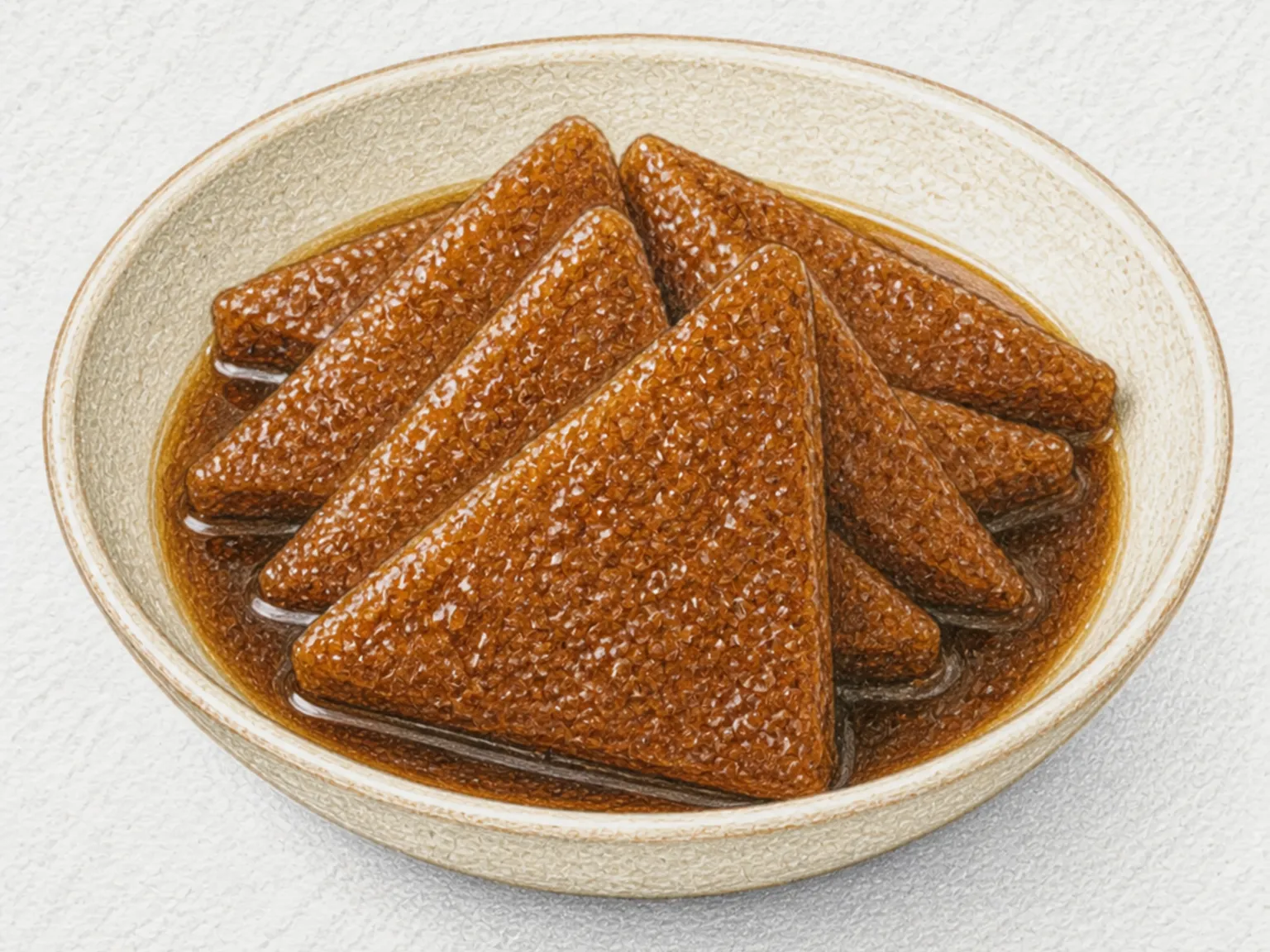
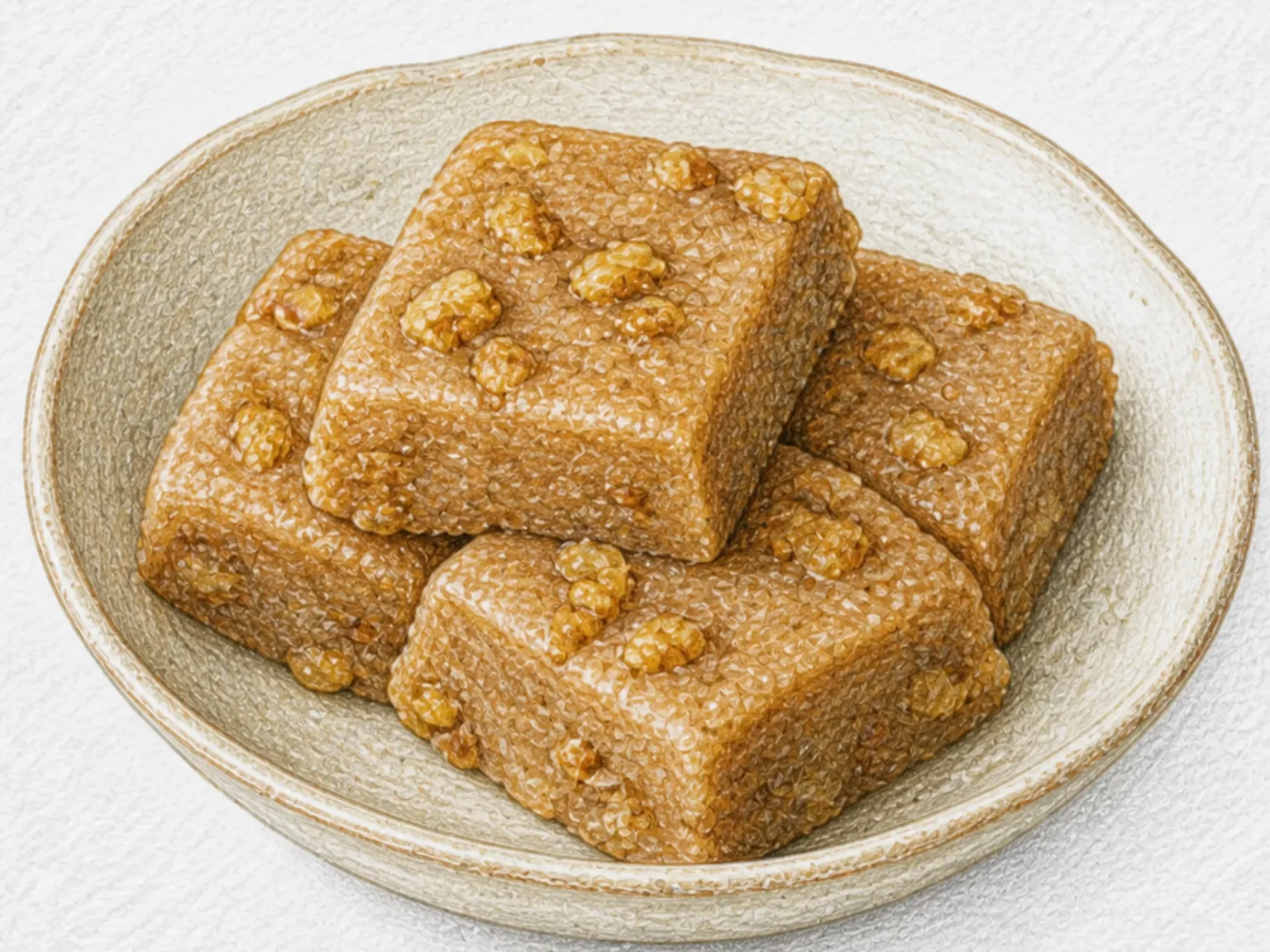
Getanha is made by baking a broad brown-sugar slab, cutting it into triangles, and coating every piece in warm brown-sugar syrup. Sift 500g cake flour with 2.5 teaspoons baking soda twice so the leavener is distributed evenly. Boil 200g brown sugar for the dough with 200ml water for 3 minutes, then cool the liquid for 20 minutes before it reaches the flour. Mix only until no dry patches remain. Transfer the dough to a parchment-lined baking sheet and use damp hands to spread it to an even 1.5cm thickness. Bake in an oven preheated to 190°C for 20 minutes. Insert a skewer in the center, remove the slab when no wet dough clings to it, and leave it in the pan for 15 minutes. For the coating, boil 300g brown sugar with 150ml water for 5 minutes until the syrup is smooth. Cut the baked slab into 20 isosceles triangles. While the syrup is warm, immerse each triangle for 10 seconds on each side, then place it on a rack. Rest the coated pieces for 30 minutes without drying the surface hard. This final rest lets the syrup remain moist on the outside while entering through the cut edges of the firm baked dough.
Nagasaki Milkshake
Nagasaki milkshake is an iced dessert from Nagasaki City, blended from milk, egg yolk, sugar, condensed milk, vanilla, and plenty of ice. Unlike a drinkable shake, it is thick enough to eat with a spoon and retains tiny ice crystals among its smooth custard flavor. It is said to have originated between the late Taisho and early Showa periods at Tsuruchan, regarded as Kyushu's first tearoom, as relief from Nagasaki's intense summer heat. Once limited to warm months, it became a year-round local specialty and an easy home dessert. The crucial technique is to stop blending while a little crushed ice remains, before friction melts it into a thin drink.
Gingerbread Men
Gingerbread men are spiced cookies shaped like small figures, made from a dough enriched with molasses, ground ginger, cinnamon, and cloves. The molasses contributes a deep amber color and a bitter undertone that distinguishes these cookies from simpler butter cookies, while the spice blend delivers a warmth that builds gently across the palate. Chilling the dough for at least one hour before rolling ensures it holds its shape through cutting and baking, so the finished cookies emerge with crisp, defined edges rather than rounded, puffy outlines. Once fully cooled, royal icing piped into eyes, mouths, and buttons turns each cookie into a small edible character. The ideal texture balances a snappy bite at the rim with a slightly chewy center that keeps the cookie from crumbling apart. Stored in a sealed container, the cookies improve over a day or two as the spice flavors meld and deepen. The recipe is simple enough for children to help with shaping and decorating, making it a fixture of winter holiday baking in many households.
Nerikuri (Sweet Potato Glutinous Rice Cake)
Nerikuri is a large-batch sweet potato mochi made by pounding steamed glutinous rice smooth, working in hot sweet potato, then absorbing sugar and salt into the combined dough before it sets between layers of kinako. Rinse 1.5kg glutinous rice three times, soak it in 3L water under refrigeration for 10 hours, and drain it for 30 minutes. Cut 3kg peeled sweet potato flesh into 4cm pieces, cover the pieces with cold water, hold them there for 10 minutes, and drain. Line both tiers of a steamer with damp cloth and keep the ingredients separate. Steam the rice for 35 minutes and the potato for 25 minutes over strong steam. Both should crush easily between the fingers. Pound the hot rice alone for 8 to 10 minutes, stopping only when individual grains are no longer visible. Add the hot sweet potato in three portions and pound for 3 minutes after each addition. Combine 1kg white sugar with 1 tablespoon salt and add this mixture in four portions. Work for 2 minutes after every addition so each one disappears before the next goes in. The yellow dough is ready when it contains no white sugar streaks, intact rice grains, or separate potato lumps. If either steamed component cools before mixing, return it to the steamer in its cloth for 3 minutes so both enter the pounding bowl hot. Spread 200g roasted soybean flour 5mm deep across the bottom of a large tray. Press the hot dough over it to an even 4cm thickness, cover the top with the remaining 100g kinako, and leave the tray at room temperature for 3 hours. Cut the set slab into 40 pieces. The flour above and below keeps the sticky surface manageable, while a clean interior confirms that the potato and rice were fully incorporated.
Gochujang Chocolate Crinkle Cookies
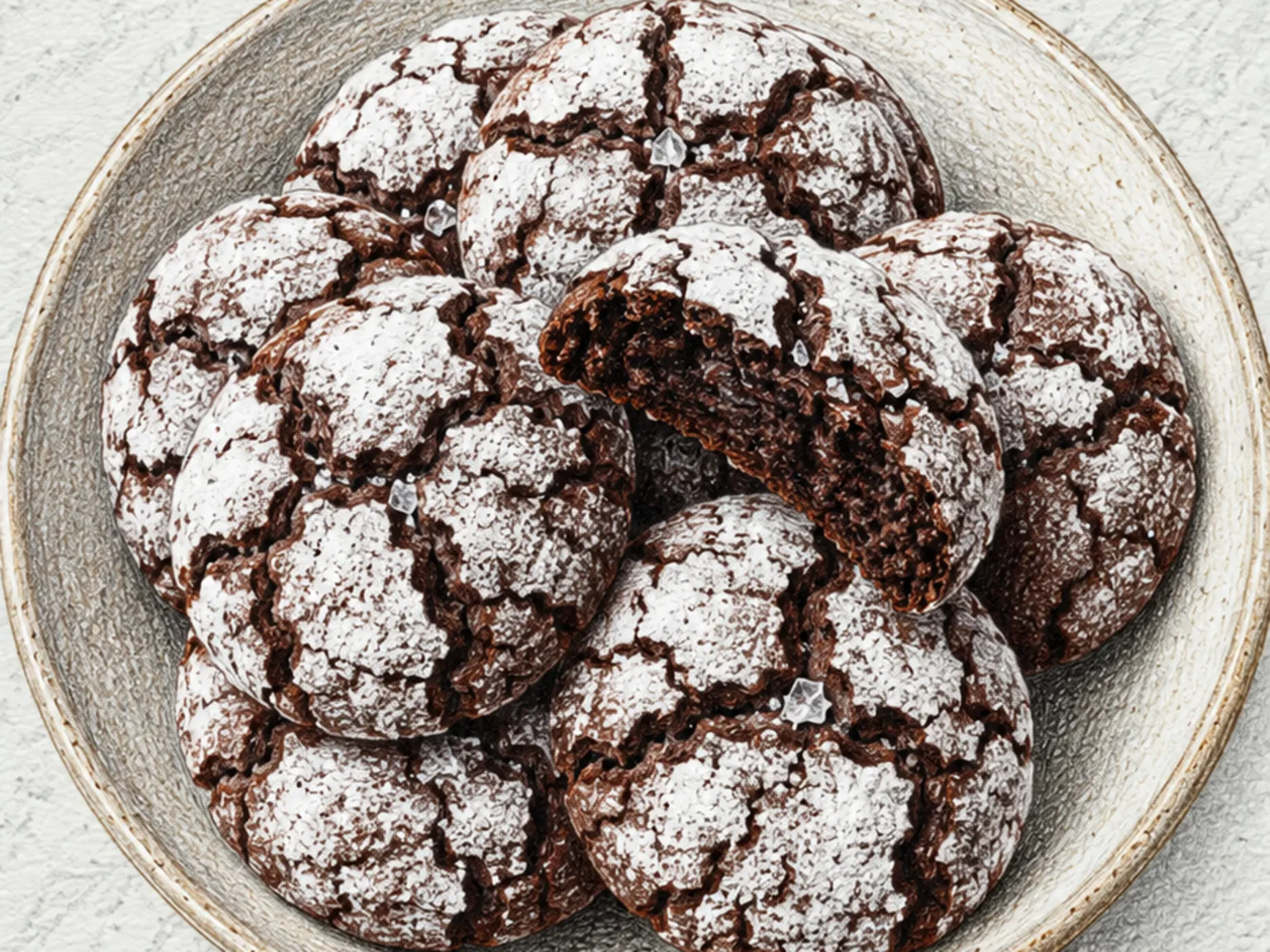
Gochujang chocolate crinkle cookies merge the fermented heat of gochujang with deep chocolate flavor in a single bite. The signature cracked surface forms when balls of dough rolled in powdered sugar expand in the oven, splitting the white coating to reveal the dark interior beneath. Gochujang, added in a modest amount, threads a low, lingering warmth and an umami undertone through the chocolate without overtly announcing itself. Most tasters sense something unexpected at the finish but cannot immediately identify the source. The exterior sets into a thin, lightly crisp shell while the inside stays dense and fudgy, occupying the territory between a brownie and a cookie. Using both cocoa powder and melted chocolate increases the chocolate intensity beyond what either ingredient achieves alone. A pinch of flaky sea salt on top before baking sharpens the contrast between sweet and spicy, making the flavor more defined. Chilling the dough for at least 30 minutes before rolling ensures the powdered sugar coating adheres evenly and produces the consistent cracking pattern that defines the cookie's appearance.
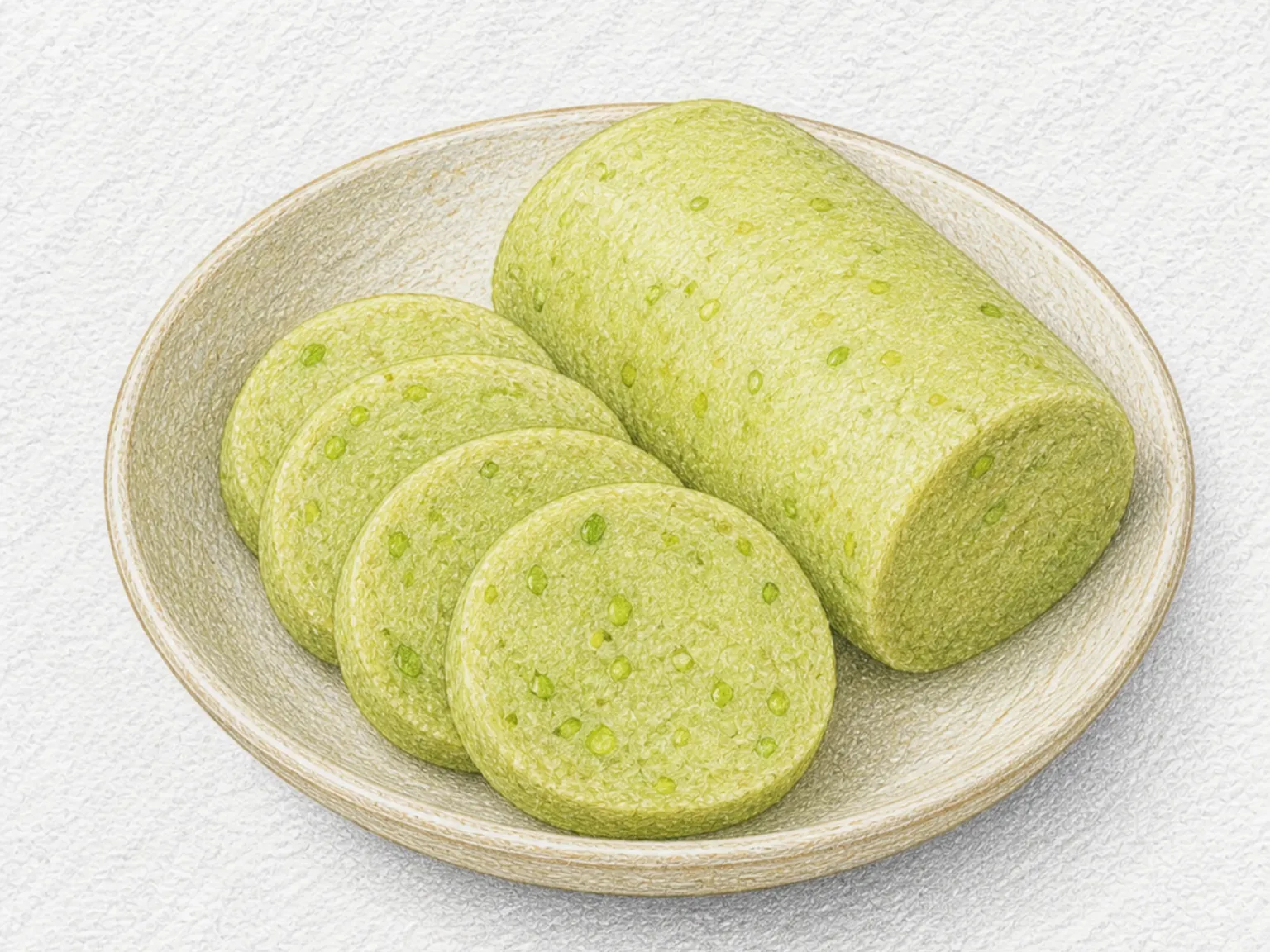
Green Tea Dasik Cookies (No-Bake Korean Matcha Pressed Cookies)
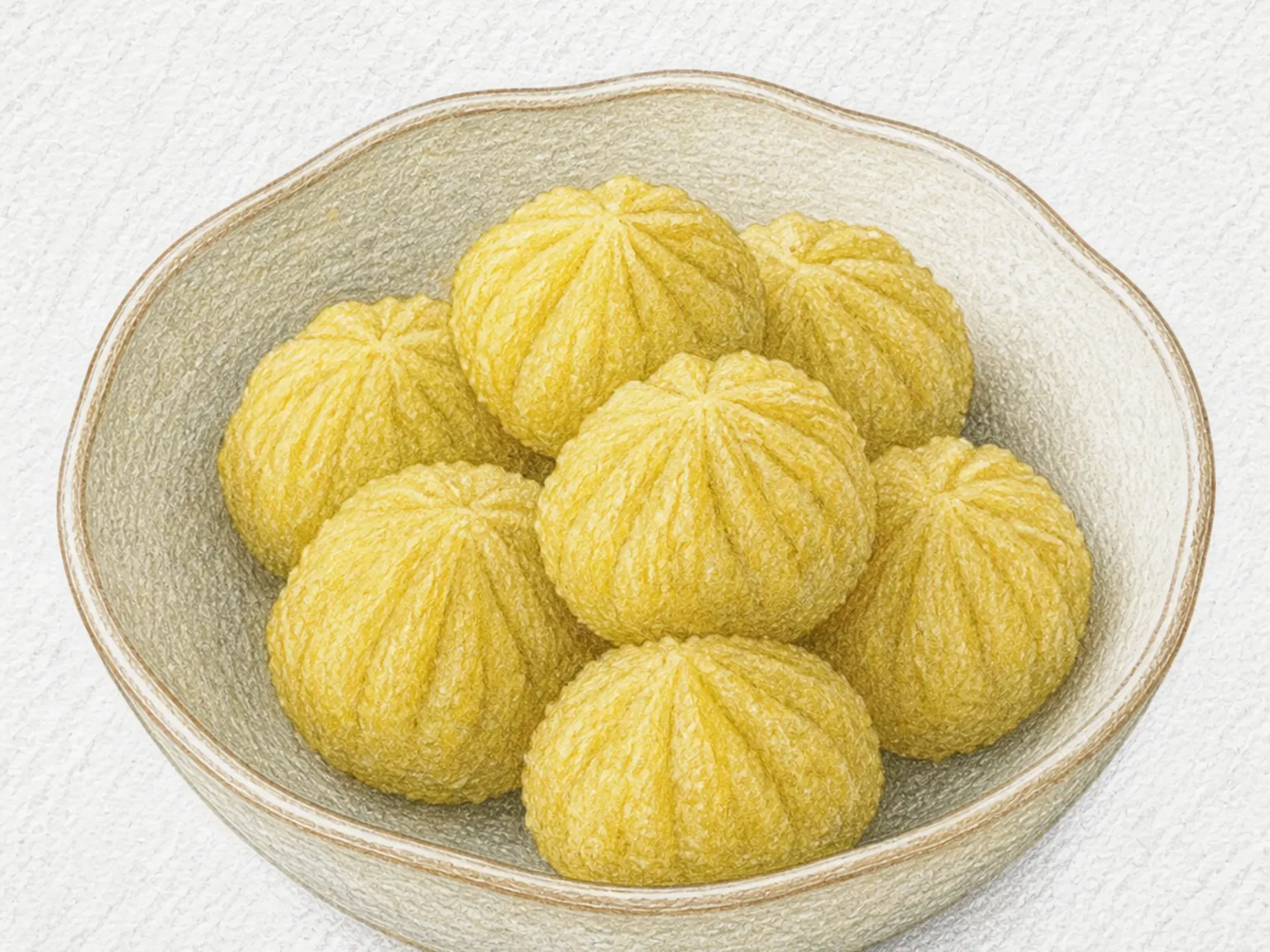
Nokcha dasik are Korean pressed tea cookies formed by binding roasted soybean powder and matcha with honey, rice syrup, and a touch of sesame oil, then stamping the mixture in a traditional wooden mold. No oven or heat is needed; the key is achieving a moisture ratio that lets the dough hold together under pressure without cracking. If the dough is too dry, the surface splits when unmolded; too wet, and the stamped pattern loses definition. Rice syrup quantity is the primary lever for adjusting consistency. On the tongue, the cookie dissolves gently, releasing the toasty depth of roasted soybean first, followed by the grassy bitterness of green tea that cleans the palate. The embossed pattern from the mold gives each piece a refined, ornamental appearance, and a brief air-dry at room temperature firms the surface enough for neat storage. Arranged two or three to a small plate beside a cup of tea, they make a composed and properly presented traditional tea-table spread.
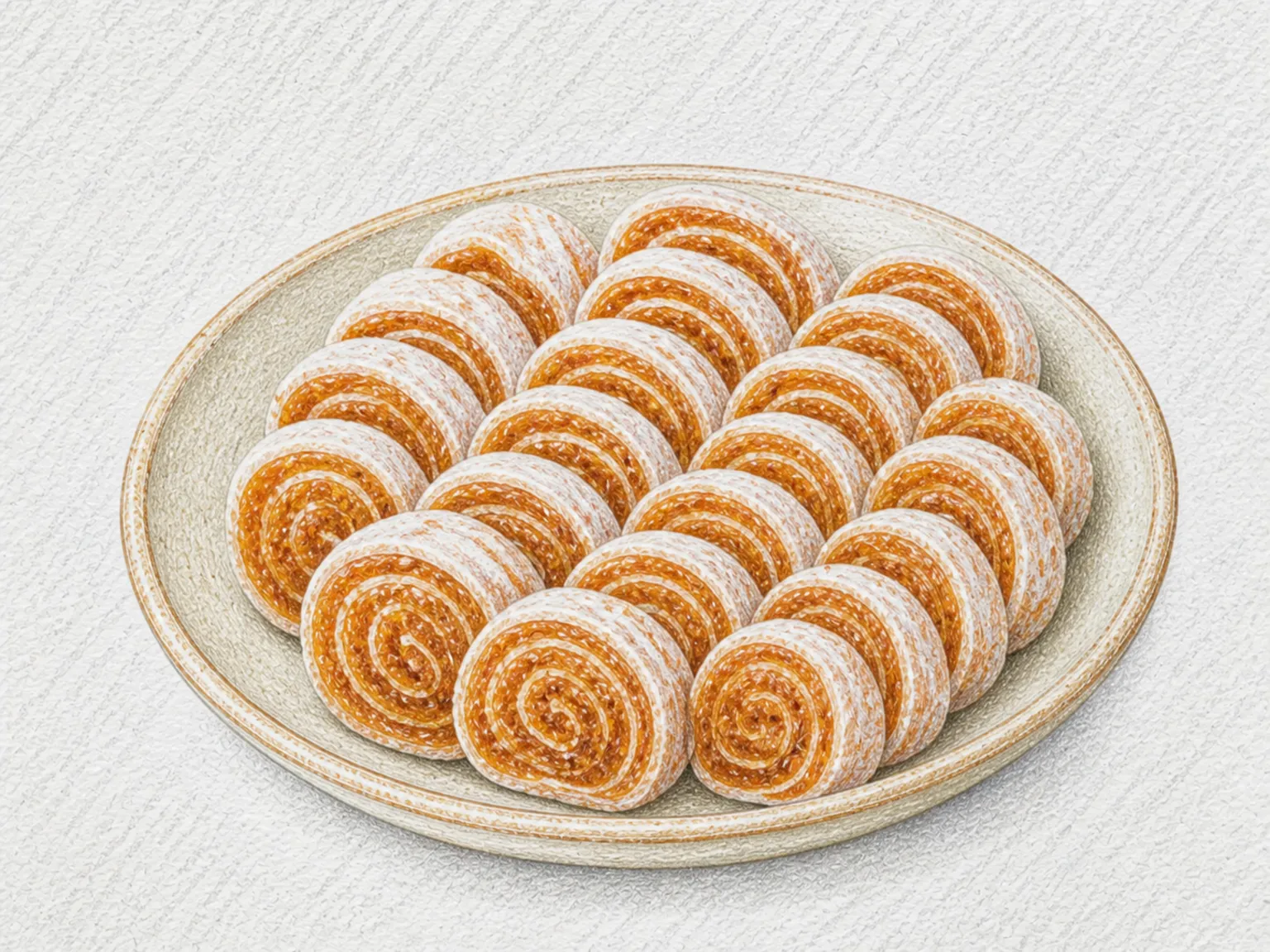
Dried Persimmon Cinnamon Rolls
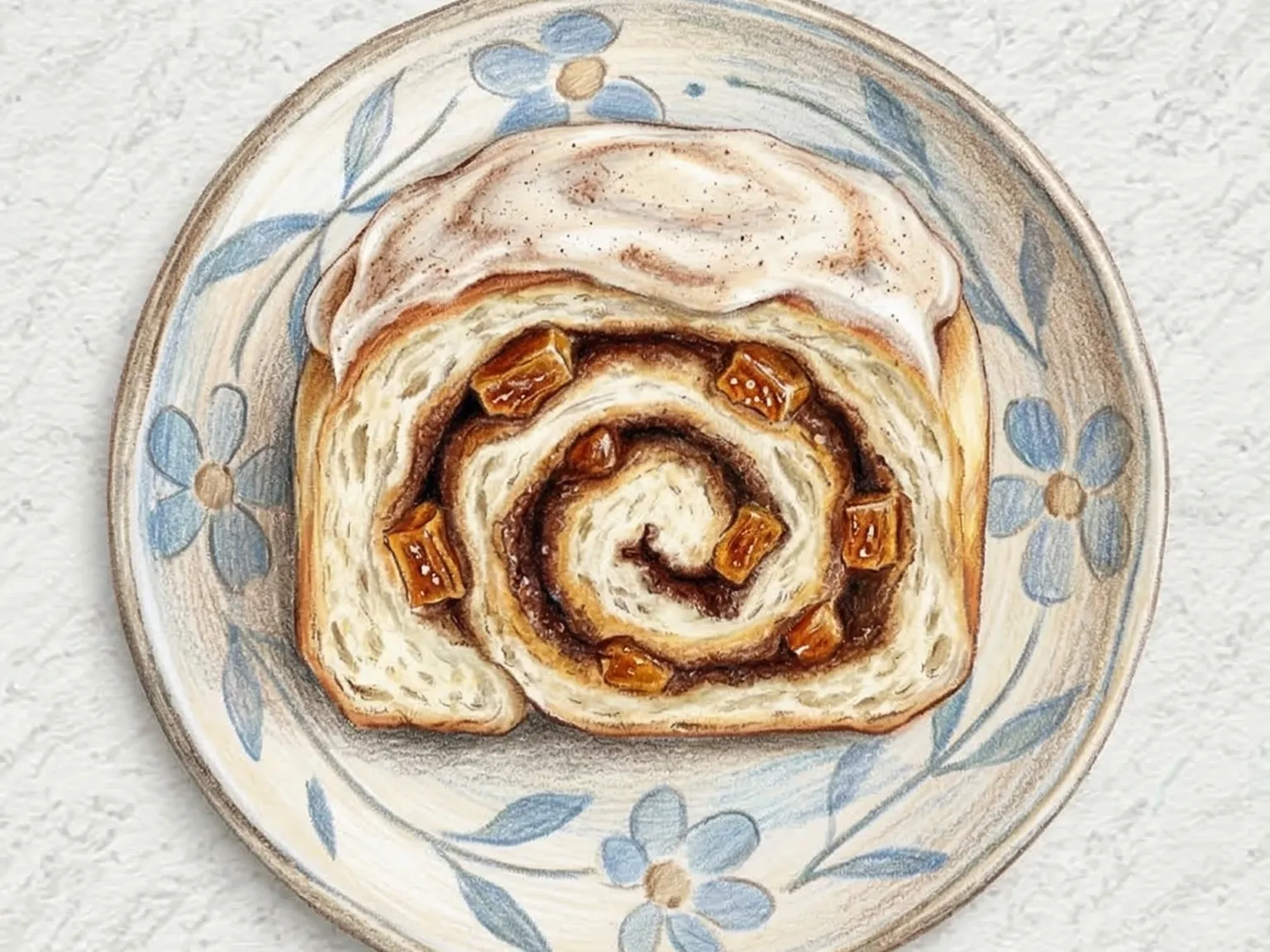
This cinnamon roll replaces the usual brown sugar and raisin filling with finely chopped gotgam, Korean sun-dried persimmon. The dough is enriched with butter to a level close to brioche, fermented until well risen, and rolled thin before an even layer of cinnamon sugar and diced persimmon is spread across the surface. The dough is then rolled tightly from one end, cut into portions of uniform thickness, and baked until golden. Gotgam develops its character through the drying process: moisture loss concentrates the sugars until the fruit carries a depth of sweetness that fresh persimmon does not, with an edge of caramelization that reads more like dried fig or date than fresh fruit. That concentrated sweetness placed against cinnamon's warm, assertive spice produces a flavor pairing that calls to mind sujeonggwa, the traditional Korean cinnamon-persimmon punch. Slicing a baked roll reveals the persimmon distributed in a spiral through the layers, and each torn strip delivers pockets of soft, dense fruit. Overbaking dries the persimmon out, so timing matters. A cream cheese glaze spread over the warm rolls introduces acidity that cuts through the sweetness cleanly. The buttery, yeasty fragrance of the fermented dough, the natural depth of the gotgam, and the spice of the cinnamon occupy distinct layers in each bite.
Ochirashi-ame (Roasted Barley Flour Candy)
Ochirashi-ame is a Kagawa candy made from ochirashi, a roasted flour traditionally ground from barley and glutinous rice. Mizuame, white sugar, and water are dissolved quickly, the flour is kneaded into the syrup over low heat, and the hot dough is rolled into long rods and cut diagonally. Extra roasted flour coats the surface to prevent sticking and reinforce the grain aroma. The mixture thickens rapidly, so it must be stirred continuously and handled with heatproof tools rather than bare hands.
Gyeongju-ppang
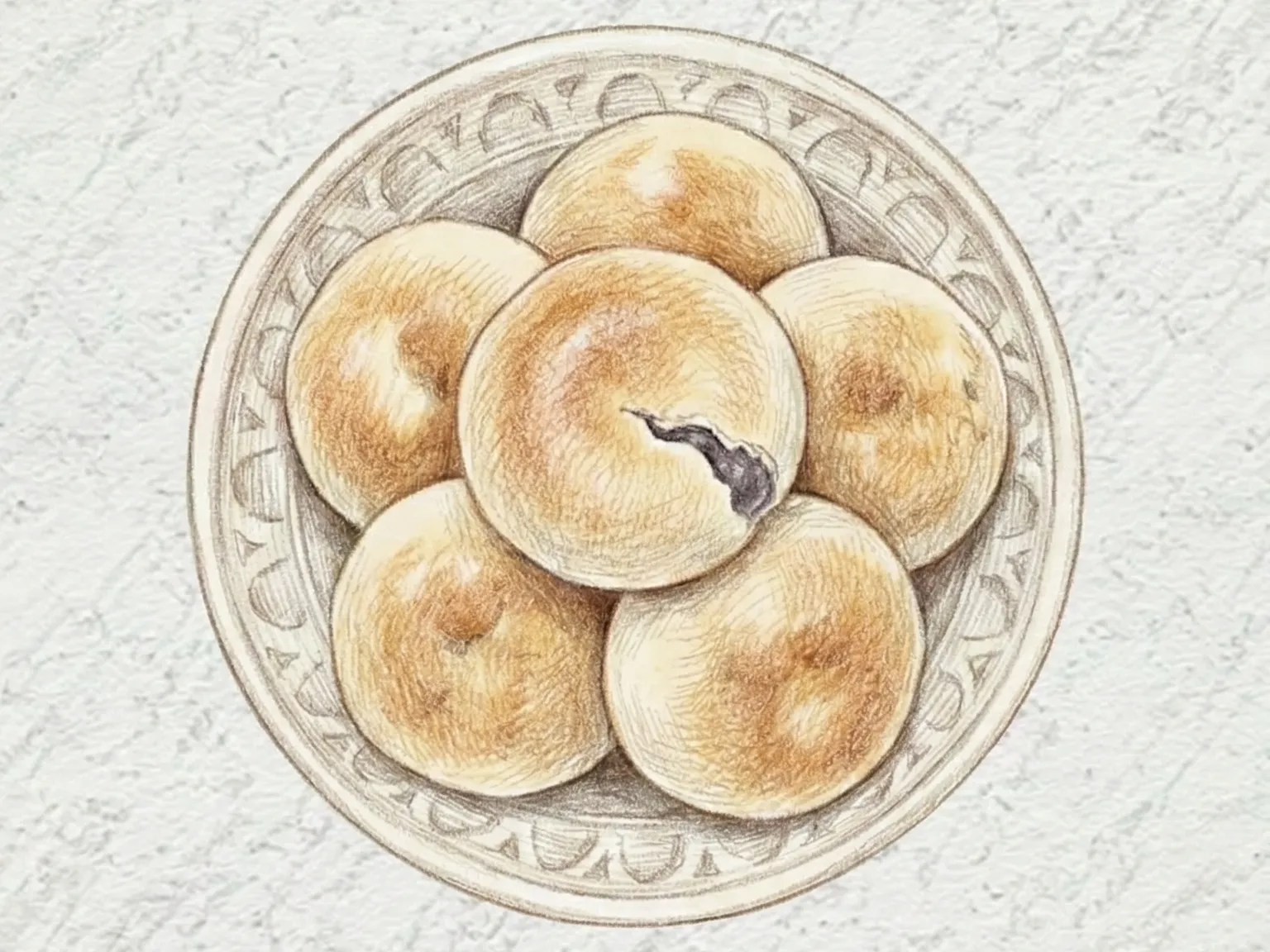
Gyeongju-ppang wraps sweet red bean paste in a milk-and-butter yeast dough and bakes each portion in a low, round shape. Warm 120ml milk to 38-40C, stir in 30g sugar and 4g instant yeast, and leave the mixture for 5 minutes. Combine 220g all-purpose flour with 3g salt, then add the yeast milk and 1 egg. Mix until no dry flour remains and the dough gathers into a rough mass. Add 25g unsalted butter and knead for about 8 minutes, continuing until the butter is absorbed, the surface is smooth, and the dough stretches slightly before tearing. Cover it and let it rise at 28-30C for about 40 minutes, using doubled volume as the cue to press out the largest gas pockets and divide it into 8 pieces. Divide 260g sweet red bean paste into 8 firm balls. Flatten each dough portion, enclose one filling ball, and pinch the seam completely closed. Set every pastry seam side down on the pan and press the top lightly to create the flat profile. Bake in an oven heated to 180C for 15-18 minutes. Remove the pastries when their tops are pale golden and let them cool. Firm paste and a fully closed seam keep the filling centered while the thin surrounding dough expands in the oven.
Five-Grain Crispy Bars (Korean Puffed Rice and Seed Honey Bars)
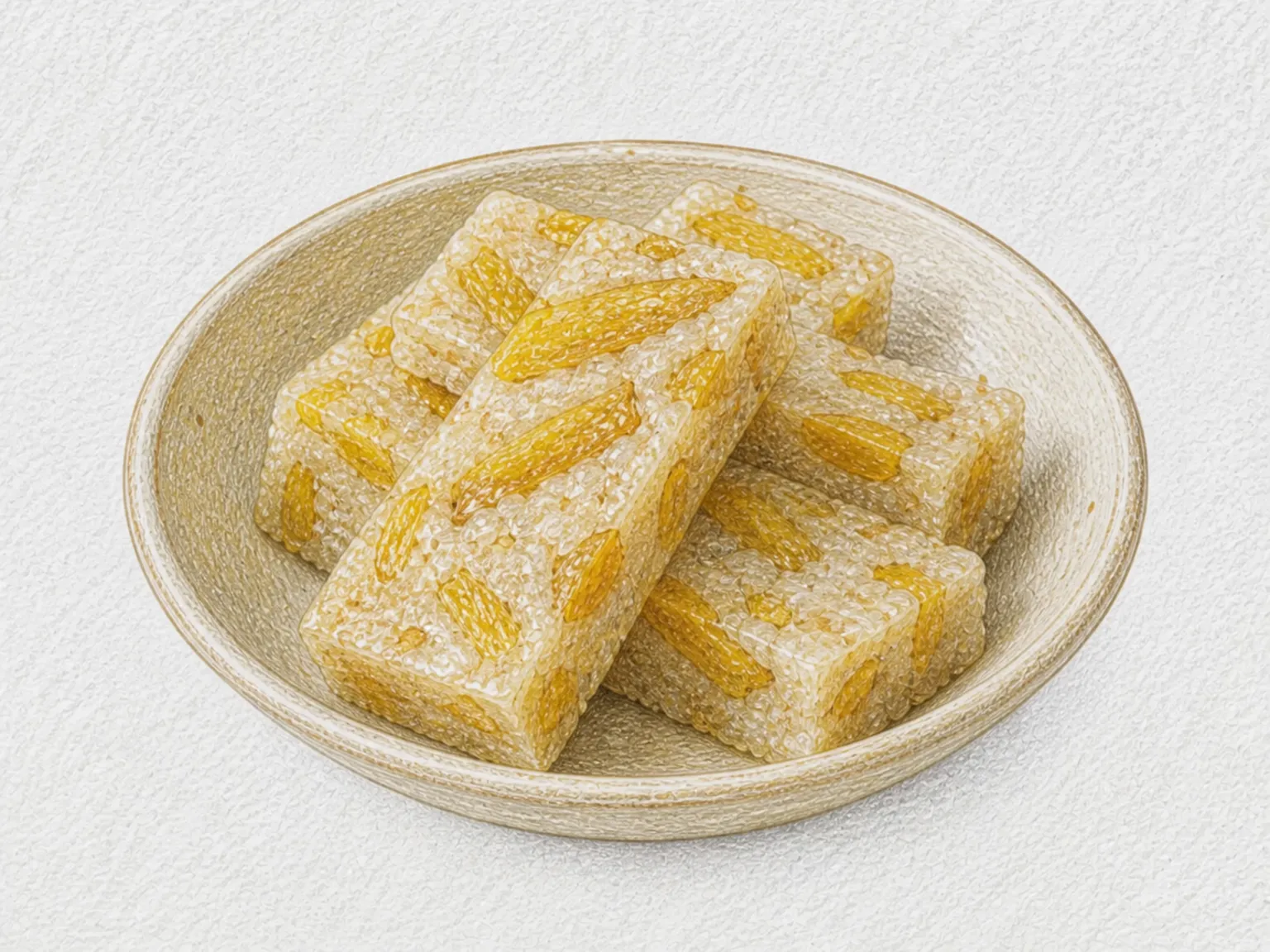
Ogok gangjeong is a traditional Korean grain bar that binds five ingredients - puffed rice, toasted brown rice, sunflower seeds, pumpkin seeds, and black sesame - with a syrup of rice syrup and honey. The syrup simmers over low heat for two to three minutes to build viscosity, then gets poured over the grain mixture and pressed into a lined pan within one minute before it sets. Each bite layers the airy crunch of puffed rice against the denser chew of brown rice, while sunflower and pumpkin seeds contribute a rich oiliness and black sesame delivers a roasted undertone throughout. Cutting with a lightly oiled knife after the bars cool completely produces clean edges, and airtight storage keeps them crisp for several days.
Hallabong Cheesecake Bars Recipe (Jeju Mandarin Cream Cheese Dessert)
Bright, floral Jeju hallabong citrus (a hybrid of mandarin and orange) lifts these cream cheese cheesecake bars with a honeyed aroma that lemon cannot match. Sour cream in the filling adds gentle acidity to balance the richness of the cheese, and the essential oils from the zest spread through the batter during baking so the fragrance stays consistent through the last bite. A buttered cracker crumb base provides crisp contrast to the creamy layer above. The flavor reads brightest when served cold, and chilling the dessert thoroughly yields clean rectangular slices for sharing. Fresh fruit from the winter to early spring peak season delivers the most aromatic results, and preparing the bars a day in advance lets the filling settle for cleaner cuts and deeper citrus perfume.
Ogura Renkon Lotus Root Stuffed with Sweet Azuki
Ogura renkon is an Ibaraki specialty that stands thick lotus-root sections with their holes upward, fills those channels loosely with dry azuki beans, and simmers both together over low heat for two to three hours before sweetening with sugar and salt. The dish endured in homes because both lotus root from the Kasumigaura wetlands and azuki could be grown locally. As the beans cook, the lotus root takes on a purple-red cast compared to shiho color, named for Mount Tsukuba when its slopes redden in morning and evening light. Packing the holes solid would let the expanding beans split the root, so they are filled only halfway to two-thirds. The sections stand snugly in the pan so they cannot tumble and remain submerged under gently bubbling water. Sugar and salt enter only after root and beans are completely tender. Slow cooling lets the syrup penetrate before the logs are cut into one-centimeter rounds that display azuki set in every channel.
Hallabong Lemon Bars (Jeju Citrus Curd on Shortbread)
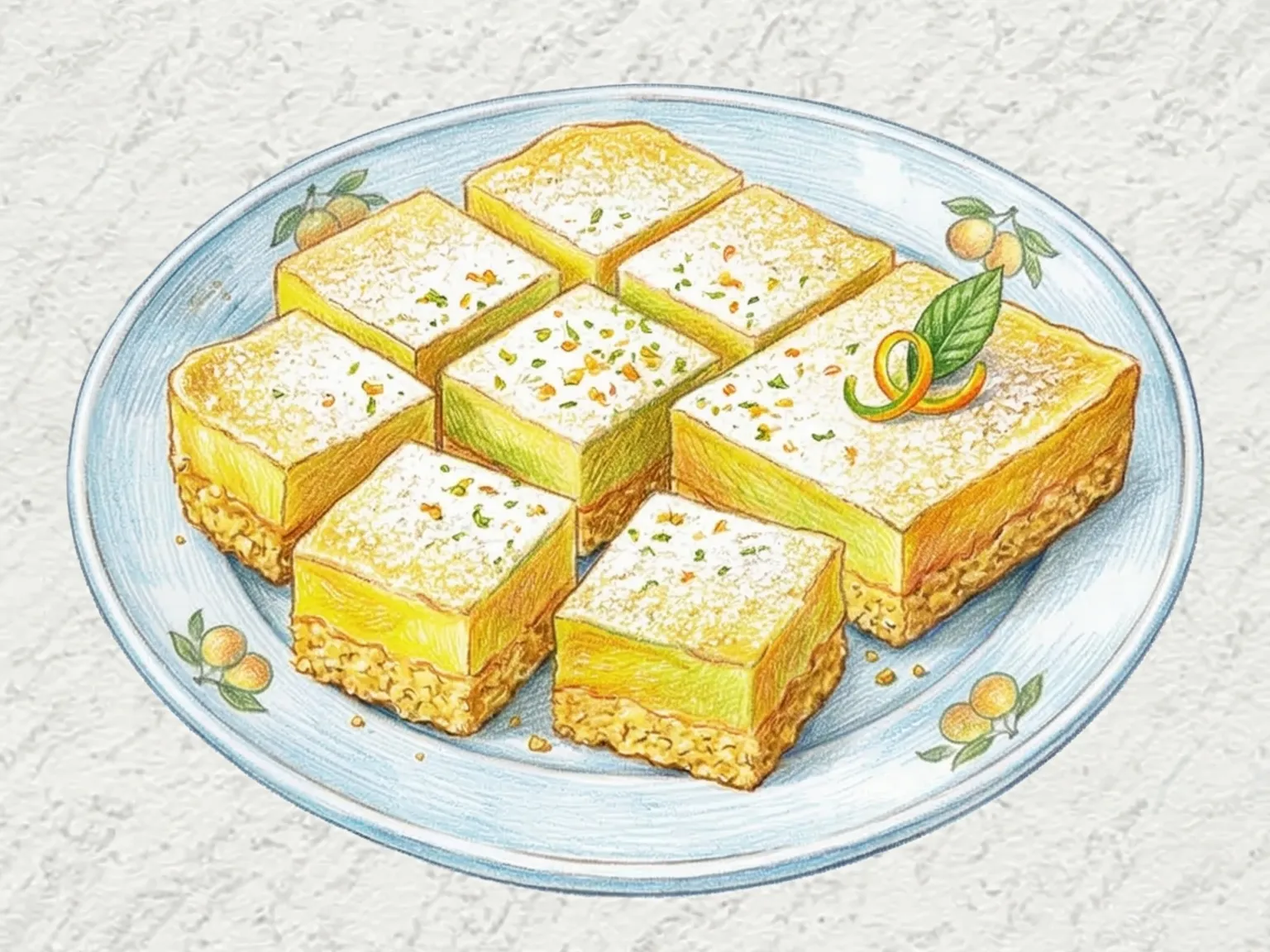
Hallabong lemon bars combine the sweet citrus flavor of Jeju hallabong juice with the sharp acidity of fresh lemon juice over a buttery shortbread base. The crust is made by rubbing cold unsalted butter into flour and powdered sugar, then pressing it into a pan to bake until pale golden. A smooth citrus curd, made by gently mixing eggs, sugar, hallabong juice, lemon juice, and cornstarch, is strained and poured over the warm pre-baked crust. Baking the curd just until the edges are set keeps the texture silky. Once baked, the bars are chilled to firm up the curd layer, which can then be sliced cleanly with a hot knife. A light dusting of powdered sugar is added before serving, creating a nice contrast between the soft topping and the buttery crust.
Omija Bead Ice Cream
This dessert features omija syrup shaped into small frozen spheres using a molecular gastronomy technique. The natural five-flavored profile of omija berries is concentrated into each tiny bead. The recipe uses two types of base mixtures: a clear pink omija juice and an opaque pink liquid made by blending the juice with milk and yogurt powder. These liquids are dropped from a pipette into a cup of cooking oil that has been chilled in the freezer for at least one hour. Upon contact with the cold oil, the droplets solidify into round spheres. The frozen beads are scooped out with a strainer, rinsed in cold water to remove the oil coating, and stored in the freezer. The clear red and milky pink beads are served mixed together, and they can also be added to sparkling water to make a beverage.
Hallabong Marmalade Madeleines
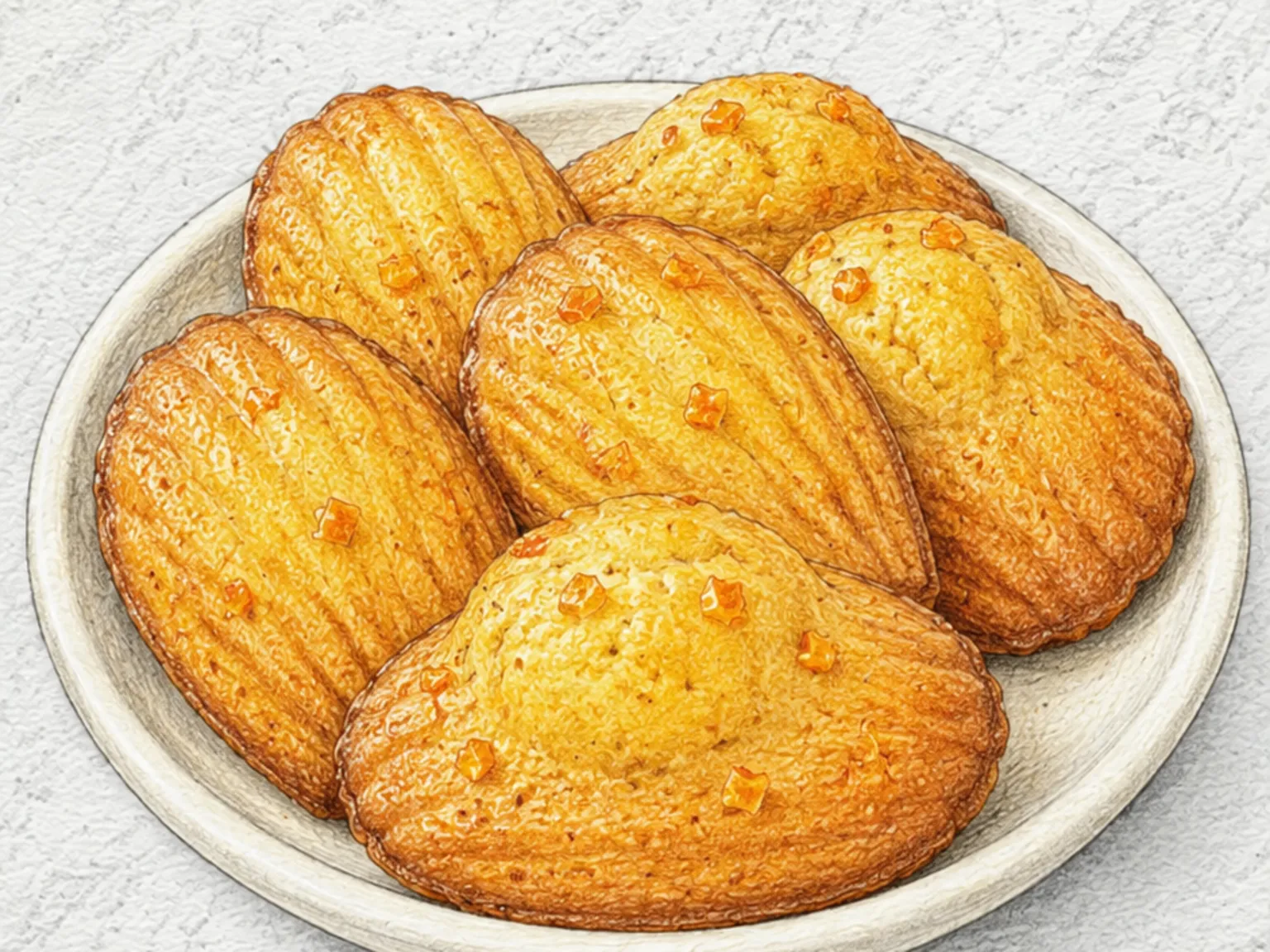
Hallabong marmalade madeleines are shell-shaped baked treats that combine melted butter with sweet citrus marmalade. The batter is prepared by whisking eggs and sugar, folding in sifted cake flour and baking powder, and incorporating milk, honey, and hallabong marmalade. Melted unsalted butter is added in portions until the batter is glossy. Resting the batter in the refrigerator for thirty minutes before baking is essential, as the cold batter helps form the characteristic hump on top. The cakes are baked at 200°C for four minutes, then at 180°C for eight minutes. This temperature shift ensures a proper rise. The finished madeleines feature a soft texture with chewiness from the bits of candied citrus rind. The contrast between the bitter rind and sweet pulp complements the rich butter aroma. These pastries pair well with black tea or Earl Grey.
Omija Panna Cotta (Italian Cream Set with Schisandra Berry Sauce)
Omija panna cotta tops a classic Italian gelatin-set cream dessert with a sauce made from Korean schisandra berry syrup. The cream and milk mixture is heated just until small bubbles form at the edges before the bloomed gelatin is stirred in, ensuring a smooth, even set. Three hours of refrigeration produces a custard that wobbles gently when lifted with a spoon. A sauce of omija syrup mixed with lemon juice adds a tart, berry-forward acidity that cuts through the richness of the cream and forms a vivid red layer on the surface. Mixed berries served alongside burst with juice, contrasting the silky body of the panna cotta beneath. Omija berries carry five distinct tastes, sour, sweet, bitter, salty, and pungent, making them a natural counterweight to the cream's sweetness rather than a simple topping.
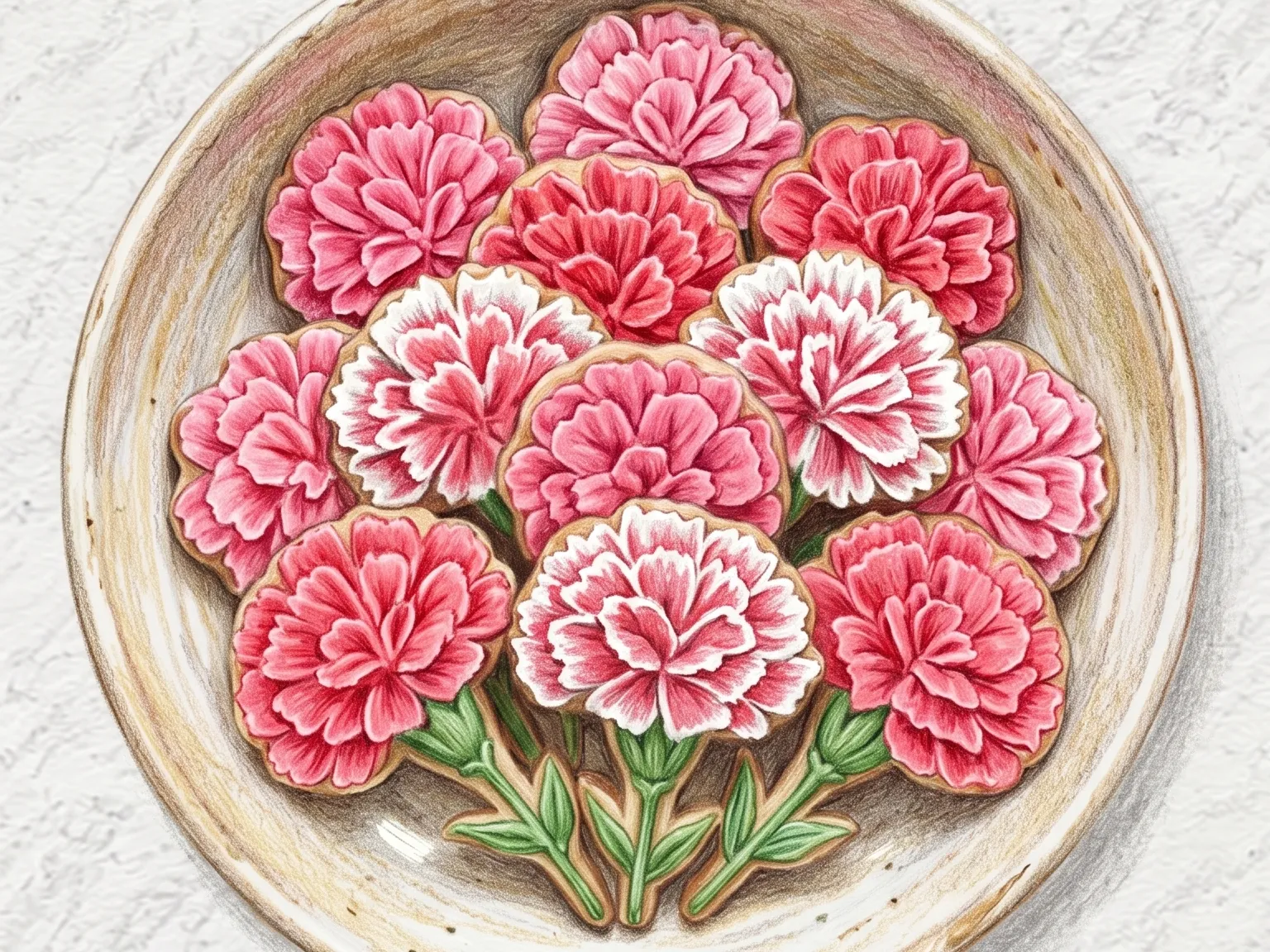
Handmade Piped Carnation Cookies
This baking recipe shows how to make handmade cookies shaped like carnations. The dough starts by creaming unsalted butter with powdered sugar and salt. Egg white is incorporated instead of egg yolk, which helps keep the red food coloring bright after baking. A sifted mixture of cake flour and almond flour is folded in, and the dough is divided into red and green portions in a four-to-one ratio. Using a piping bag fitted with a petal tip, the red dough is piped onto parchment paper in overlapping layers to form petals with defined edges. The green dough is piped around the base to form leaves. The cookies are baked at 160°C for fifteen minutes. They are rested on the baking sheet for five minutes to firm up before transfer, ensuring the delicate structures do not break.
Oni Manju Chunky Sweet Potato Steamed Cakes
Oni manju is a rustic Aichi sweet that packs one-centimeter cubes of sweet potato into a thick wheat-and-rice-flour batter, mounds it on paper, and steams it. The rough potato corners protruding from each cake are said to resemble an ogre's horns or iron club, giving the confection its name. During wartime and the difficult years afterward, readily available sweet potatoes and flour made it a filling substitute for rice; it later settled into farm life as an inexpensive snack. The cut potato is soaked in cold water to remove surface starch, dried, and coated with sugar first so it releases enough moisture for the batter. Sifted cake flour and non-glutinous rice flour enter with only a little water, creating a mixture that barely binds the abundant cubes. Four generous mounds steam for fifteen minutes. With no bean paste, the appeal is the potato's own sweetness and the dense pleasantly chewy crumb between pieces.
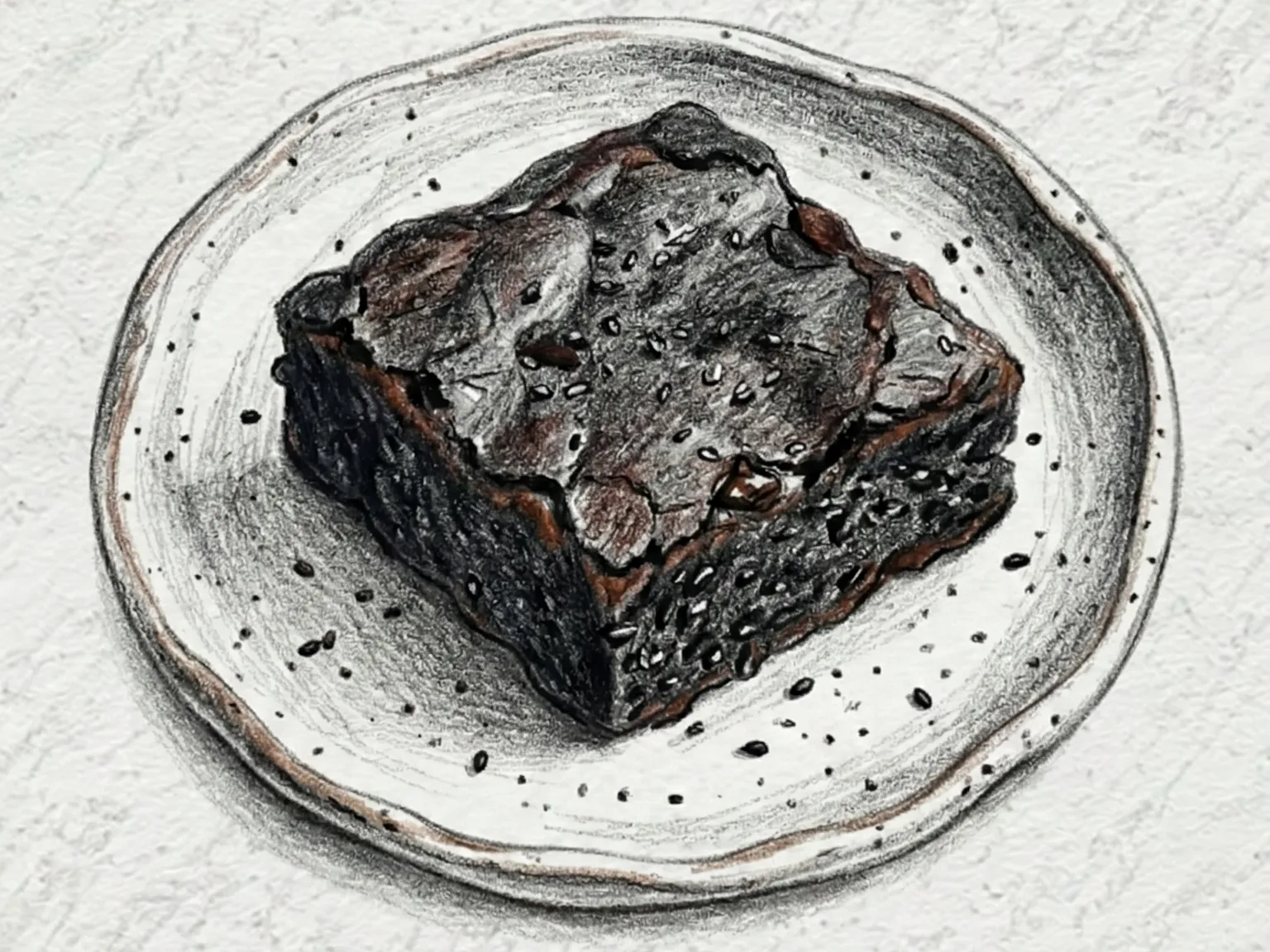
Black Sesame Brownies
Black sesame brownies are built on a base of dark chocolate and butter melted together over a double boiler, with roasted black sesame powder sifted in before folding. The bitter edge of the chocolate meets the toasted, grain-like aroma of the sesame, adding a nutty depth that standard brownies lack. The cake flour ratio is kept low to produce a fudgy, dense center that stays slightly underdone-looking even after the full bake at 175 degrees Celsius for twenty to twenty-five minutes. Because black sesame powder is naturally oily and prone to clumping, it must be sifted together with the flour and salt before going into the batter - skipping this step leaves uneven pockets of undistributed sesame. Pull them from the oven with a faint wobble at the center, and the residual heat finishes the interior as the pan cools. Wait until fully cool before cutting for clean edges.
Panna Cotta
Panna cotta develops its soft wobble through two controlled temperature stages: the cream mixture stops heating as soon as tiny bubbles reach the edge, and the filled cups chill for at least 4 hours. For 4 servings, use 400 ml heavy cream, 120 ml milk, 60 g sugar, 8 g gelatin, 1 teaspoon vanilla extract, and 120 g strawberries. Submerge the gelatin completely in cold water and leave it to bloom for 5 minutes. It is ready when it feels soft and bends easily; lift it out and drain away the excess water. Combine the cream, milk, and sugar in a saucepan. Stir over low heat until the sugar has dissolved. Watch the edge of the pan and turn off the heat as soon as the first tiny bubbles appear. Boiling can separate the fat and weaken the eventual gelatin set, so the mixture should not progress to a full simmer. Add the bloomed gelatin and vanilla extract after removing the pan from the heat. Stir in the residual heat for about 1 minute, continuing until no pieces of gelatin remain. Strain the mixture to remove any residue and skim bubbles from the surface. Let the visible steam subside, divide the liquid among serving cups, and refrigerate for at least 4 hours. Test the set by nudging the panna cotta gently with a spoon. It should wobble softly while still giving a clean scoop. Thinly slice the 120 g strawberries, arrange them over the chilled cups, and serve cold.
Danhobak Cream Cheese Swirl Muffin (Kabocha Cream Cheese Swirl Muffin)
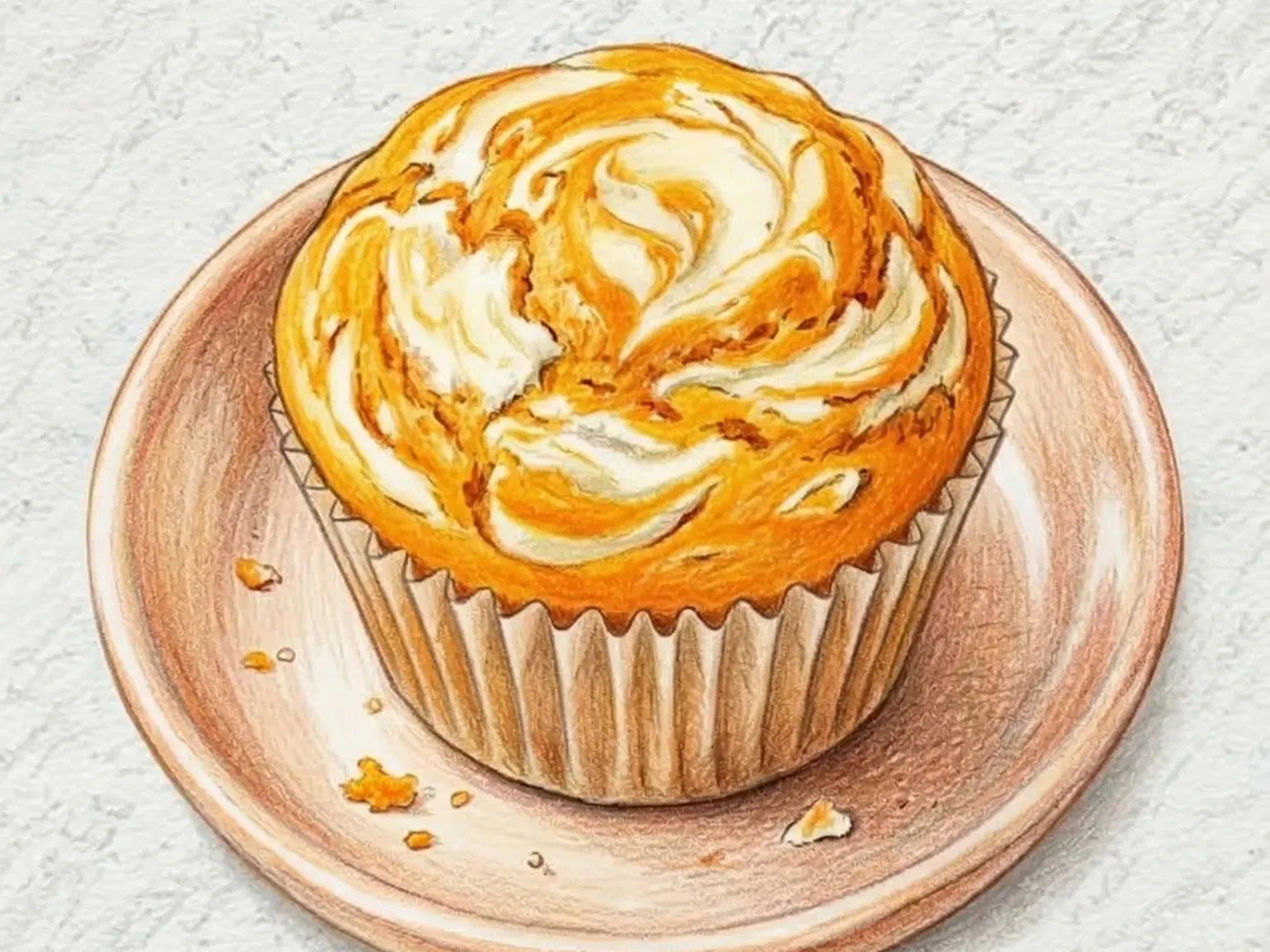
Kabocha squash swirl muffins are autumn bakes that use steamed and mashed kabocha puree in the batter and a lightly sweetened cream cheese filling swirled across the top before baking. The puree contributes natural moisture and sweetness that transform the crumb from the typically dry muffin texture into something denser and notably more tender, while the orange pigment of the squash tints the batter to a warm amber that signals the season. A small amount of cinnamon and nutmeg deepens the earthy sweetness of the squash and wraps each bite in the rounded, cozy warmth that autumn spices are known for. The cream cheese filling is kept at minimal sweetness so its tanginess remains assertive, and drawing swirls through the batter with a toothpick before baking creates marble-like veins across the surface and through the interior once cut. The muffins emerge from the oven with lightly cracked, golden tops, and splitting one open reveals bright orange crumb threaded with white cream cheese streaks. The interplay between the sharp, rich cream cheese and the spiced squash crumb produces a complexity that makes these more interesting than a single-note muffin, and they come together in under an hour from mixing bowl to cooling rack.
Vanilla Panna Cotta
Heavy cream and milk are gently heated with sugar and vanilla, then set with gelatin into a chilled Italian dessert that requires no oven at all. After four hours of refrigeration, the mixture firms to a silky consistency that trembles on the spoon and dissolves on the tongue. The vanilla fragrance is carried by the high fat content of the cream, releasing slowly with each bite rather than hitting all at once. Sweetness is kept moderate so the dairy richness speaks for itself, leaving a clean finish. To unmold, a brief dip of the cup in warm water loosens the edges. Berry coulis or salted caramel sauce over the top adds color and a contrasting flavor note. Gelatin must be dissolved off the heat to preserve its setting strength.
About Desserts
Sweet treats brighten the day and add a little joy to the routine. From no-oven quick desserts to traditional confections that take patience and care, find the right recipe for any occasion.