
Desserts

Desserts Recipes

379 recipes. Page 9 of 16

Desserts are the sweet finish to a meal or a enjoyable snack any time of day. This collection spans Korean traditional sweets - yakgwa (honey cookies), hotteok (sweet pancakes), injeolmi (rice cakes) - as well as puddings, parfaits, and frozen treats.

Desserts
Chocolate Eclairs
Baking Hard

Chocolate Eclairs

Eclairs are elongated French pastries built from choux dough, a cooked paste of water, butter, and flour into which eggs are incorporated one at a time until the mixture becomes smooth and glossy. When piped into finger-length strips and baked at high heat, the moisture locked in the dough converts to steam and expands, inflating each strip into a hollow shell with a crisp golden exterior. After cooling completely, vanilla custard cream is piped through a small hole in the base to fill the cavity. The top surface is dipped in a dark chocolate glaze that sets into a thin, shiny coating. Biting through delivers a layered experience: the slight bitterness of the chocolate, the crunch of the choux shell, and the cool smoothness of the custard in quick succession. Because the shell begins absorbing moisture from the cream as soon as it is filled, eclairs are best consumed within a few hours of assembly. Leaving them overnight compromises the texture significantly.

🎉 Special Occasion 🧒 Kid-Friendly
Prep 40min Cook 35min 12 servings
Kofuku Mame (Roasted Soybean Griddle Cakes)
Desserts Easy

Kofuku Mame (Roasted Soybean Griddle Cakes)

Kofuku mame, meaning happiness beans, is a rustic griddle snack from the Kohoku area of Shiga. Roasted soybeans are folded into a slowly flowing batter of wheat flour, sugar, salt, and water, then cooked as small discs until both sides are golden. The thin cake surrounds each nutty, firm bean; using rice flour instead gives a chewier result. Farming households once grew soybeans on paddy ridges and wheat as a second crop, turning their own staples into a filling break-time sweet when sugary treats were scarce. It remains an easy year-round family snack, especially popular with children. The soybeans need thorough roasting and the batter must cook through without raw flour at the center.

🧒 Kid-Friendly ⚡ Quick
Prep 15min Cook 25min 4 servings
Ensaymada Cheese Bread (Filipino Sweet Cheese Brioche)
Baking Hard

Ensaymada Cheese Bread (Filipino Sweet Cheese Brioche)

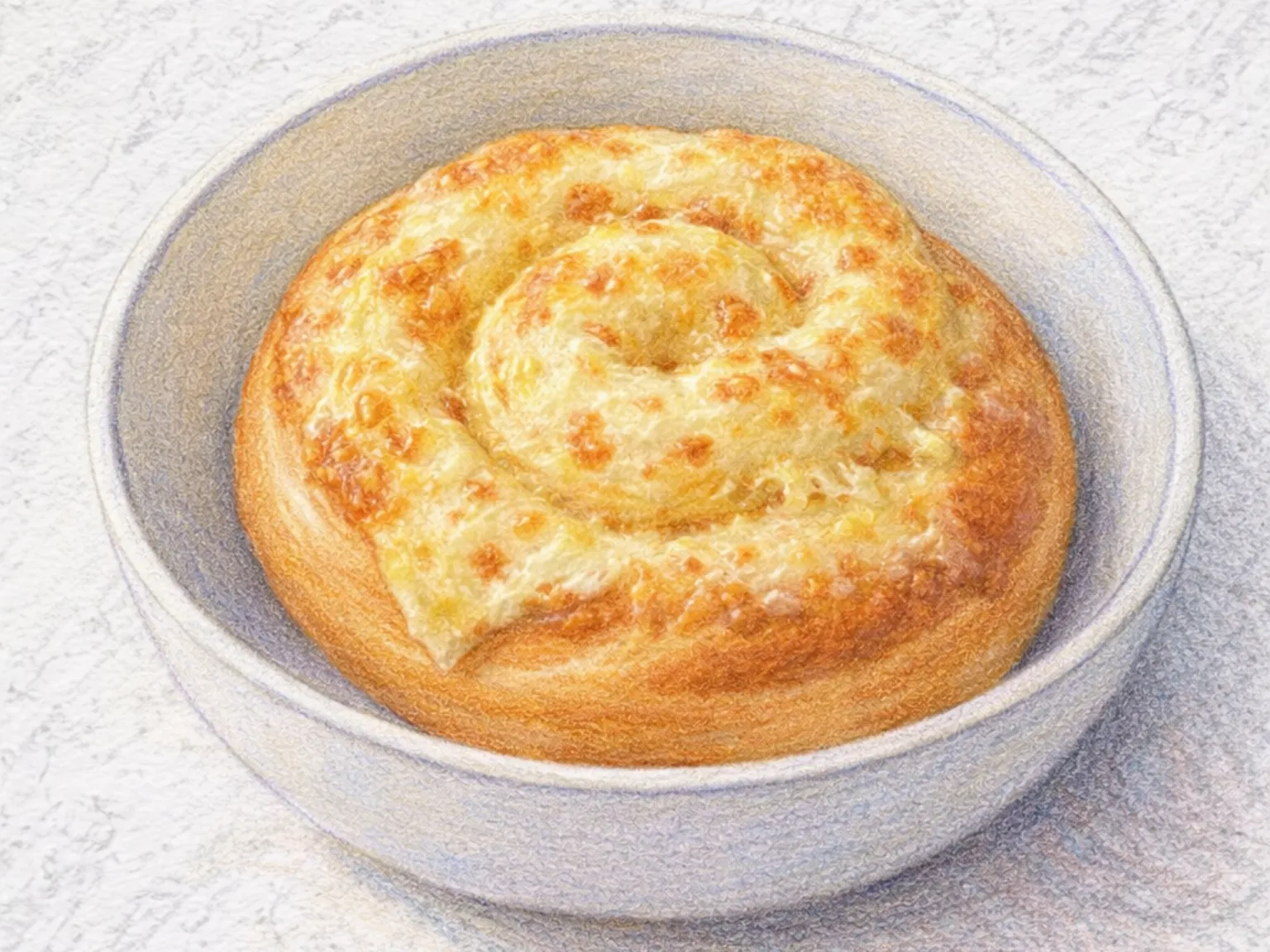
Ensaymada is a Filipino sweet brioche descended from the Spanish ensaimada of Mallorca, transformed over centuries into something entirely its own. The dough is enriched with a generous amount of eggs and butter, kneaded until it pulls away from the bowl in smooth, elastic sheets, then given a long rise that results in a pillowy interior with a cotton-like, pull-apart crumb. After baking, the buns are brushed with softened butter while still warm, rolled in granulated sugar, and blanketed in a thick layer of grated cheddar or Edam cheese. The contrast between the sweet, buttery bread and the salty aged cheese is not incidental but central to the character of ensaymada, reflecting a Filipino fondness for pairing sweet and savory within a single bite. Bakeries across the Philippines produce them in enormous quantities during the Christmas season, when they are given as gifts and served at holiday gatherings, though they appear on breakfast tables year-round alongside thick hot chocolate or coffee.

🎉 Special Occasion 🧒 Kid-Friendly
Prep 45min Cook 20min 4 servings
Koppa Mochi (Dried Sweet Potato Rice Cake)
Desserts Hard

Koppa Mochi (Dried Sweet Potato Rice Cake)

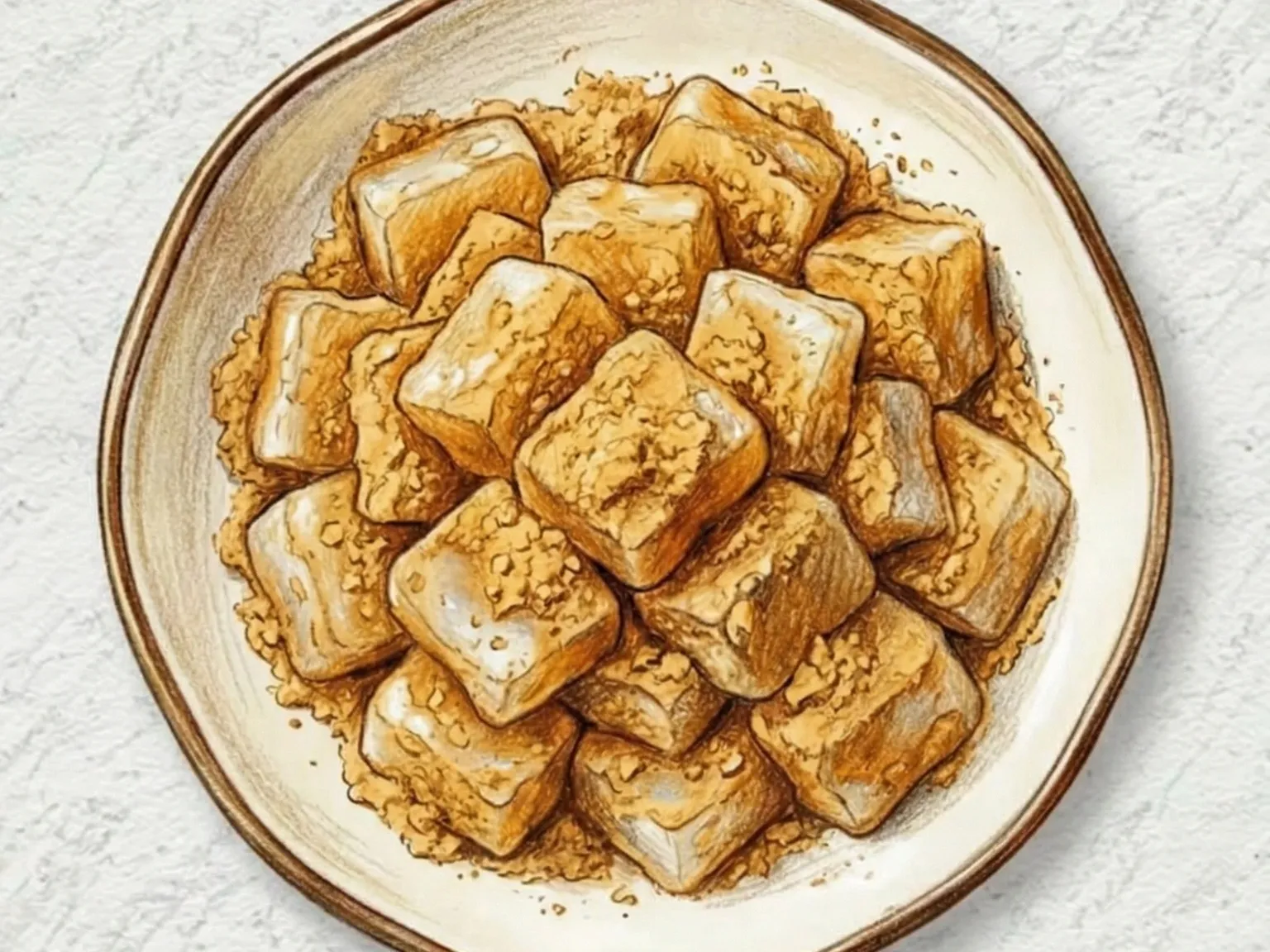
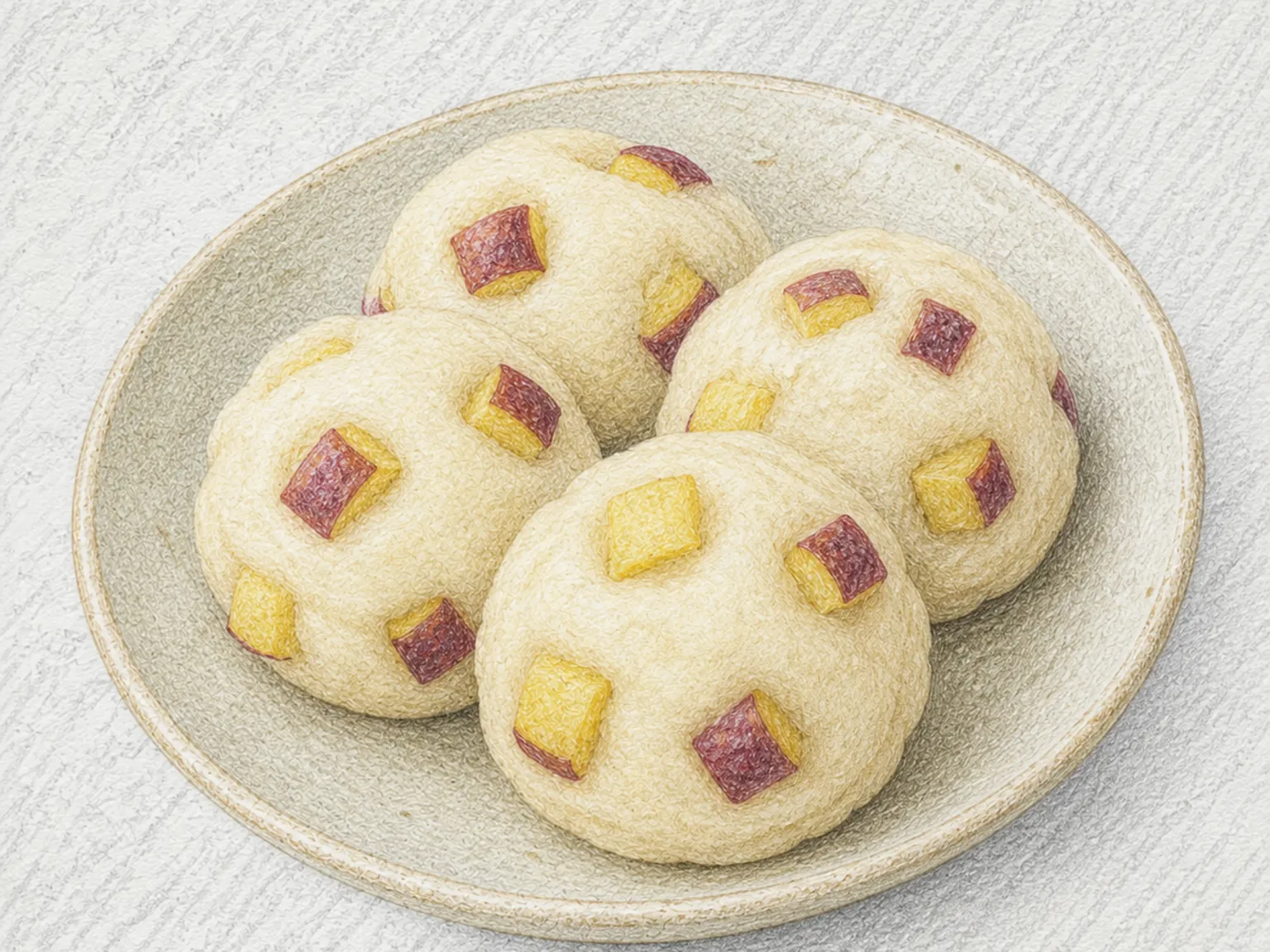
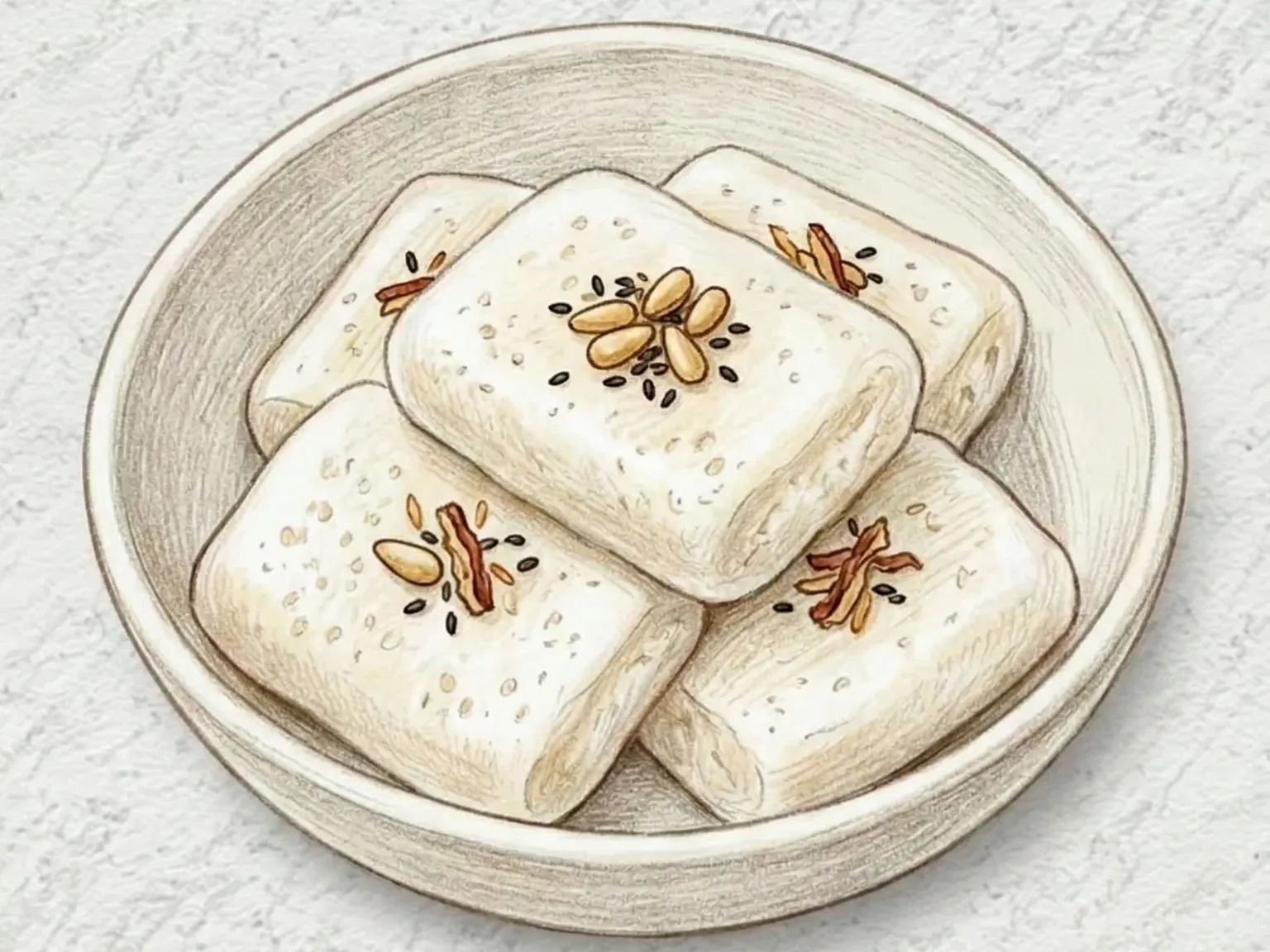
Koppa mochi is an Amakusa rice cake from Kumamoto made by steaming glutinous rice separately from koppa, sweet potato slices that were boiled and sun-dried for storage. Both are mashed and pounded together with brown sugar, white sugar, and salt, then pressed into a thick slab to firm. The food grew from island households preserving sweet potatoes for later use. It is sliced and eaten while soft, then grilled or reheated after it hardens. Chewy rice carries the concentrated sweetness and fibers of dried sweet potato, while two sugars keep the cake dense and moist.

🧒 Kid-Friendly 🎉 Special Occasion
Prep 30min Cook 50min 25 servings
Bibingka (Filipino Coconut Rice Cake)
Baking Easy

Bibingka (Filipino Coconut Rice Cake)

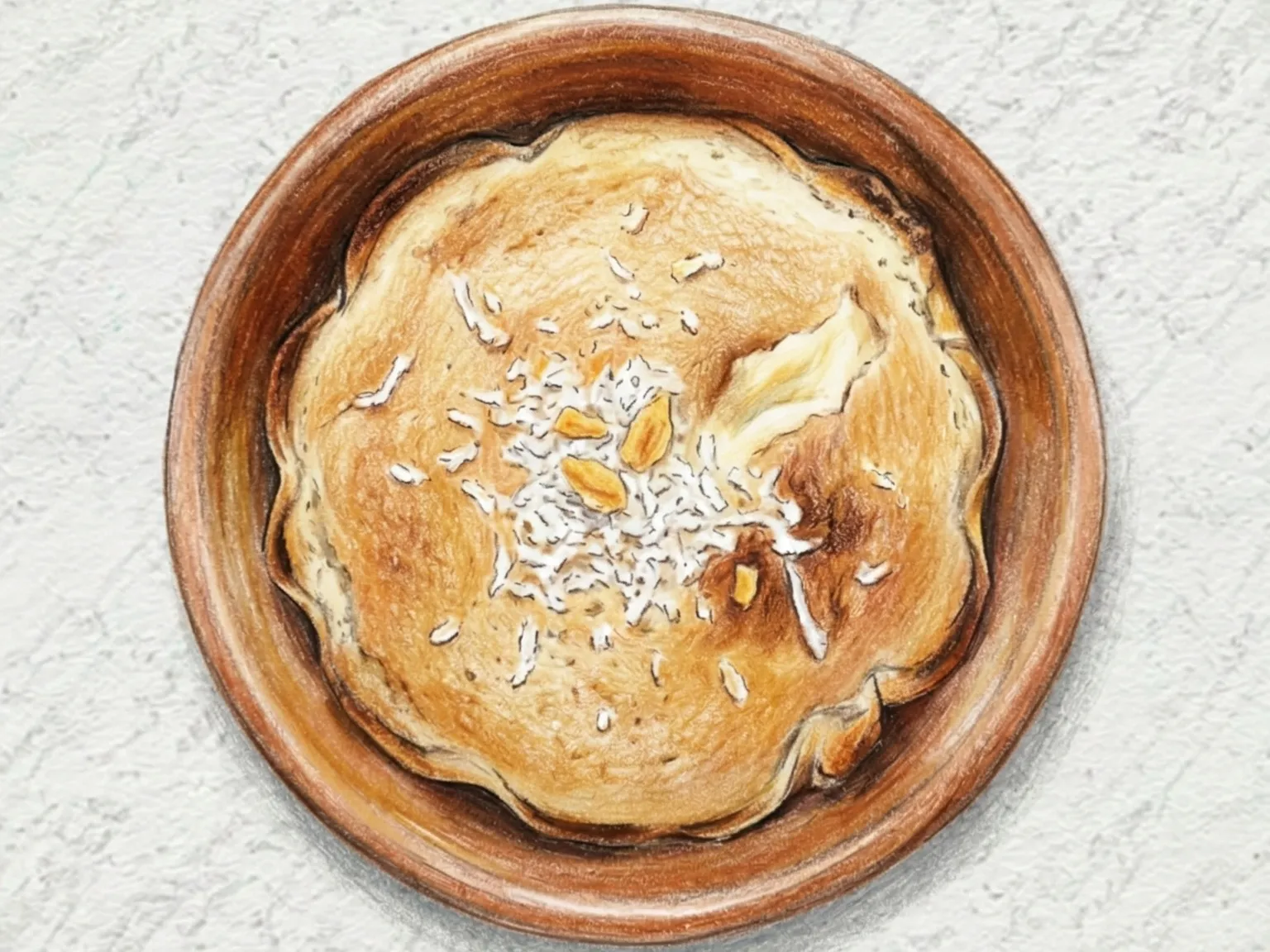
Bibingka is a Filipino baked rice cake that belongs almost entirely to the Christmas season, sold warm from clay-pot stalls outside churches after Simbang Gabi, the nine-day series of dawn masses leading up to Christmas Day. For Filipinos, the smell of bibingka cooking over charcoal at four in the morning is inseparable from the feeling of the holiday itself. The batter is made from ground rice flour mixed with coconut milk, eggs, and sugar, then poured into a clay pot lined with fresh banana leaves. The pot sits between two layers of live charcoal - one below and one held above on a metal lid - so both surfaces cook simultaneously. This top-and-bottom heat is what gives bibingka its characteristic crust: lightly charred and fragrant on the outside from the banana leaves, moist and tender within. As the batter cooks, the banana leaves release a vegetal green fragrance that infuses into the rice cake and leaves faint dark marks on the underside. Midway through cooking, slices of salted duck egg are pressed into the surface alongside fresh coconut shavings, then a brush of butter is applied and the cake returns to the heat. During this final pass the sugars in the butter and batter caramelize at the edges, producing a triple wave of banana leaf, coconut, and butter aromas. The finished texture sits somewhere between a glutinous rice cake and a sponge cake - slightly sticky and chewy yet airy and soft. The salted egg cuts through the sweetness and gives each bite a complexity that plain sweetness alone cannot provide. Bibingka vendors outside Philippine churches in December, tending glowing braziers in the pre-dawn darkness, are one of the country's most enduring Christmas images.

🎉 Special Occasion 🧒 Kid-Friendly
Prep 15min Cook 30min 4 servings
Kujira-mochi (Steamed Walnut Rice-Flour Cake)
Desserts Hard

Kujira-mochi (Steamed Walnut Rice-Flour Cake)

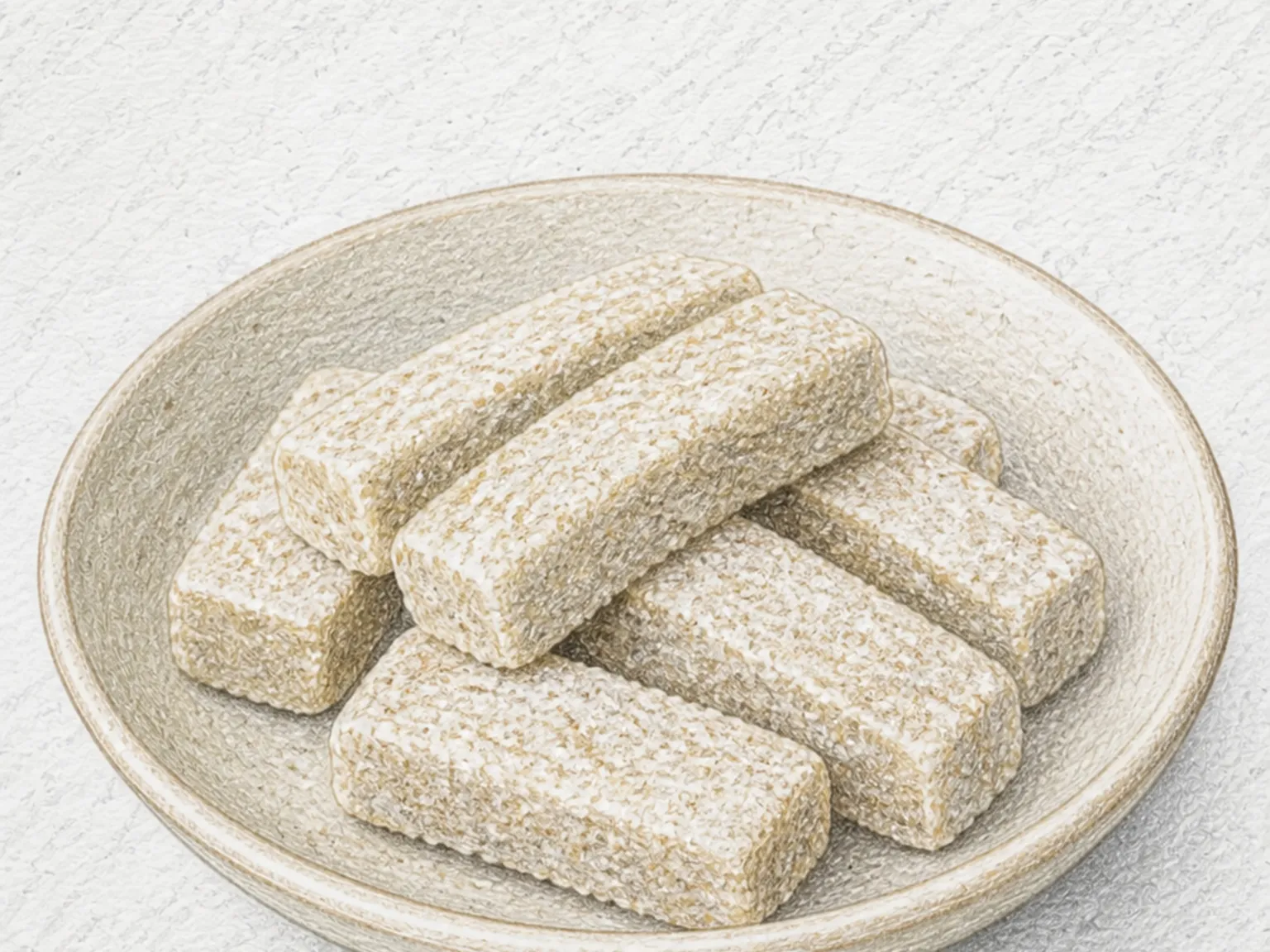
Kujira-mochi is a dense steamed rice-flour cake from the Mogami and Murayama areas of Yamagata. Glutinous and non-glutinous rice flours are mixed into cooled brown-sugar syrup, rested overnight, poured over walnuts in deep molds, and steamed until set. Despite the whale in its name, it contains no whale. Suggested origins include a phrase meaning a good cake that keeps for a long time, its formerly whale-like size, and a resemblance to salted whale fat. One account links it to provisions made for the Shinjo domain about three centuries ago. Families also offered it before Hina dolls on the lunar Peach Festival and ate it to welcome spring.

🎉 Special Occasion
Prep 45min Cook 65min 40 servings
Financier (Brown Butter Almond Mini Cake)
Baking Easy

Financier (Brown Butter Almond Mini Cake)

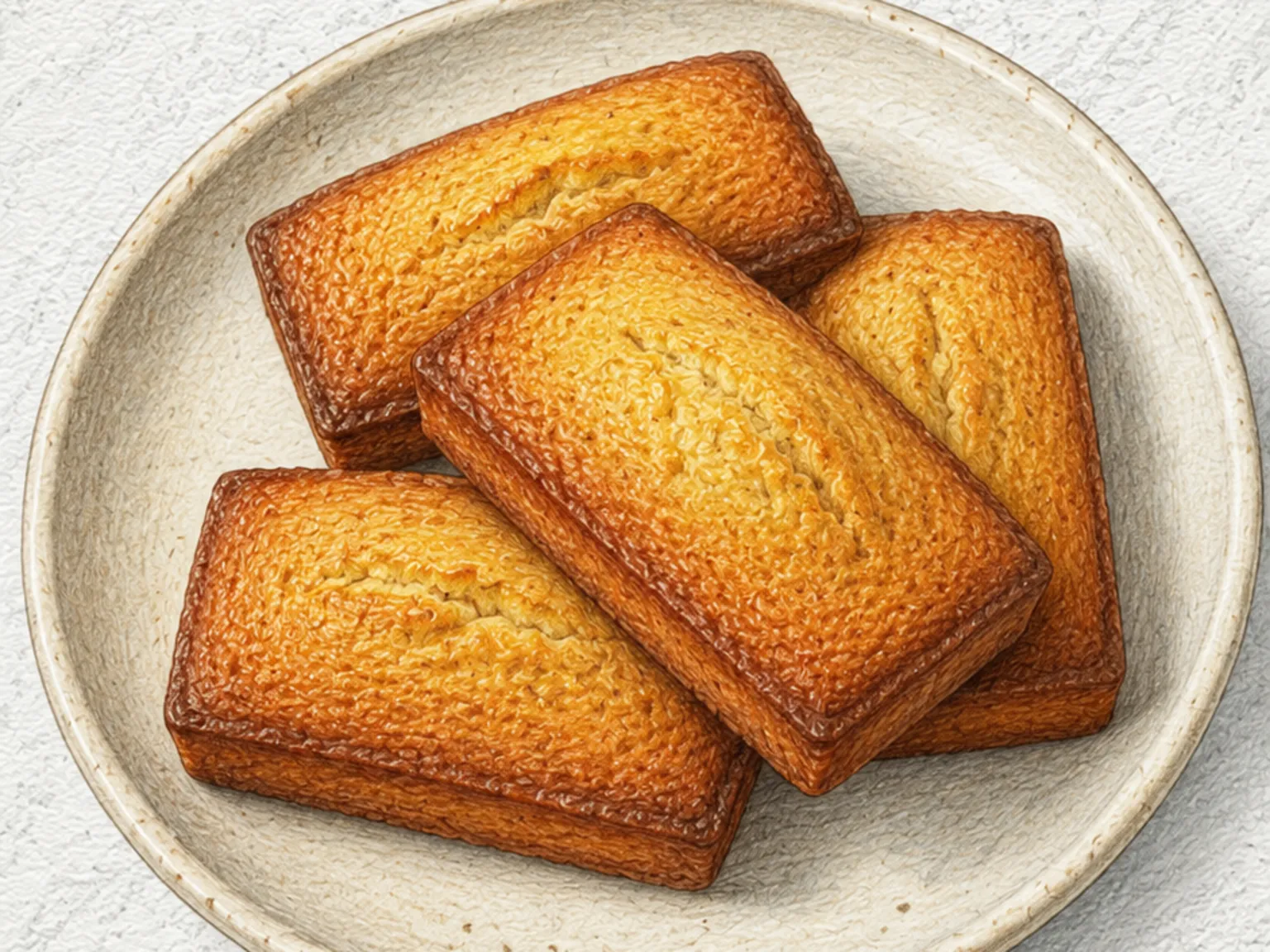
Financiers are small French cakes built on two key ingredients: browned butter and almond flour. The butter is cooked in a saucepan over medium heat, slowly at first, until the water evaporates and the milk solids settle and caramelize to a hazelnut-brown color, a stage called beurre noisette. This transformation produces a deep, toasty aroma layered with nutty complexity that plain melted butter cannot replicate. The browned butter is then combined with almond flour, powdered sugar, a small measure of cake flour, and egg whites to form a batter that is poured into rectangular molds and baked at around 190 degrees Celsius for 12 minutes. As the financiers bake, their edges deepen to a dark amber and the surface forms a thin, brittle crust, while the interior stays dense and moist because the almond oils and butter fat resist drying out. Their name derives from the gold-bar shape of the traditional mold, which connects them to the financial district of Paris, where they were reputedly created as a practical, suit-friendly snack that bankers could eat at a counter without making a mess. A smear of berry jam or lemon curd on the side sharpens the contrast against the nut-brown richness of the cake.

🧒 Kid-Friendly 🎉 Special Occasion
Prep 15min Cook 15min 12 servings
Kuri Kinton (Cloth-Shaped Chestnut Sweet)
Desserts Medium

Kuri Kinton (Cloth-Shaped Chestnut Sweet)

Kuri kinton from Nakatsugawa, Gifu is made by boiling fresh chestnuts until tender, scooping them while hot, removing sprouts and dark spots, then mixing with sugar and salt and kneading over low heat until a faint toasted aroma develops. Individual portions are twisted in a damp cloth into chestnut shapes. Unlike the New Year kuri kinton made with sweet potato and candied chestnuts, this wagashi is based on chestnut flesh itself, so its powdery texture and aroma remain direct. If reduced too far it cracks in the cloth; if too wet it loses shape. Stop when a squeezed portion holds together with smooth edges, and refrigerate the moist finished sweets.

🎉 Special Occasion 🧒 Kid-Friendly
Prep 45min Cook 65min 30 servings
Flan Parisien (Parisian Vanilla Custard Tart)
Baking Medium

Flan Parisien (Parisian Vanilla Custard Tart)

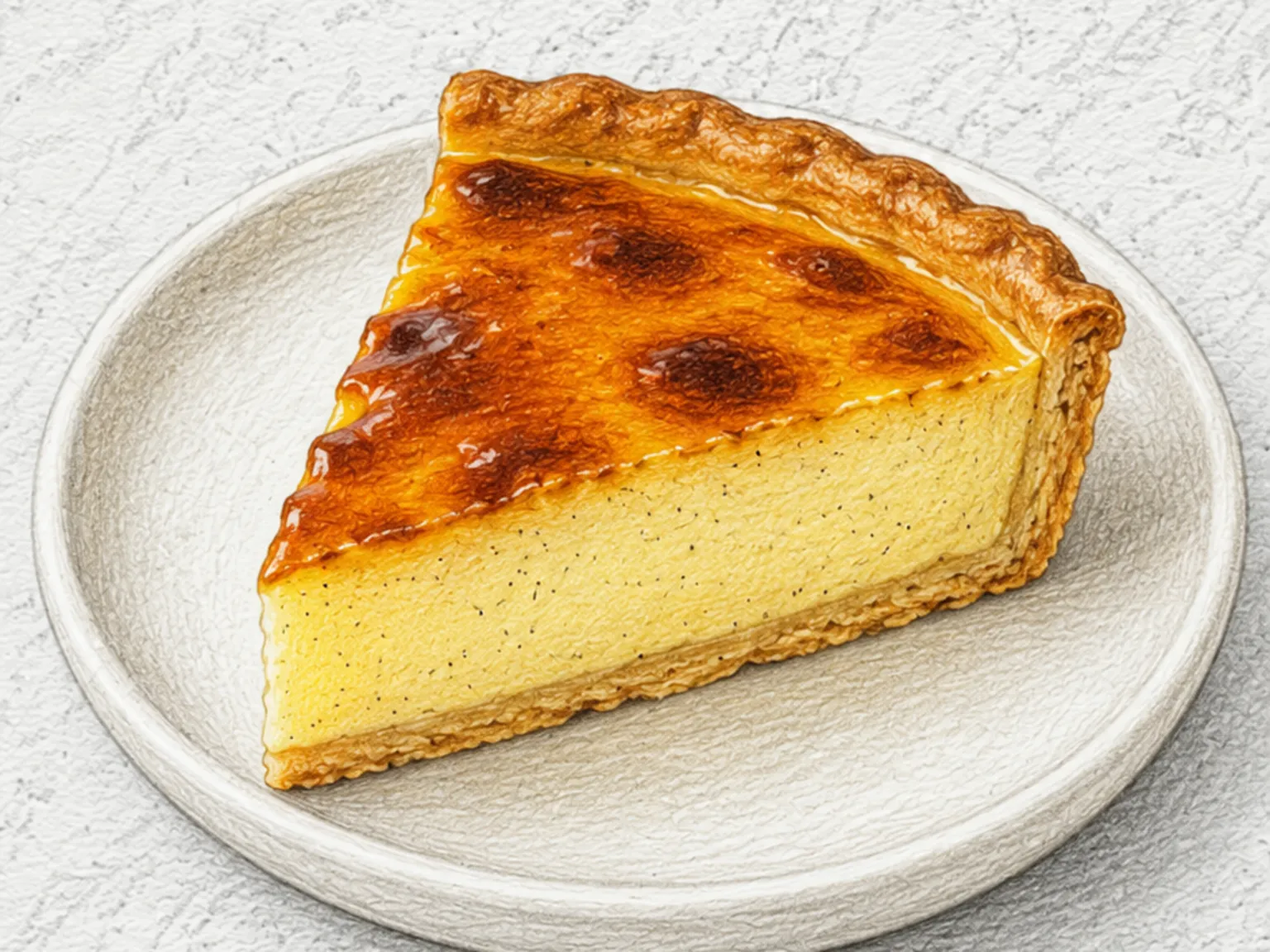
Flan Parisien is a Parisian bakery staple found in nearly every boulangerie in the city. A buttery shortcrust pastry shell holds a thick, firm vanilla custard that bakes slowly until the top develops caramelized brown spots. The custard is made from milk, eggs, sugar, and cornstarch, which gives it a denser, sliceable consistency that distinguishes it from softer baked custards like creme brulee. When properly cooled, the filling holds its shape when cut yet melts smoothly on the tongue with a clean vanilla flavor. Vanilla bean seeds speckled throughout the custard signal that the real ingredient was used rather than extract. The pastry shell must be blind-baked first to prevent sogginess, then filled and baked again until set. It is served cold, and the contrast between the crisp, buttery shell and the cool, trembling custard makes each bite satisfying. Allowing the flan to cool fully at room temperature before refrigerating prevents the custard from cracking or collapsing when sliced, which is the most common mistake when cutting too soon after baking.

🎉 Special Occasion 🧒 Kid-Friendly
Prep 30min Cook 45min 4 servings
Lauki Halwa (Indian Bottle Gourd Milk Pudding)
Desserts Medium

Lauki Halwa (Indian Bottle Gourd Milk Pudding)

Lauki halwa is a dessert made by sauteing finely grated bottle gourd in ghee, cooking it in milk, and reducing it with sugar and cardamom to a thick paste. Peel 300g bottle gourd, scoop out the soft seedy center, and finely grate only the firm white flesh. Melt 20g ghee in a wide pan and cook the grated gourd over medium heat for 7 to 8 minutes, until its visible moisture has reduced. Skipping this initial reduction makes the later milk stage take longer and the final consistency harder to judge. Pour in 400ml whole milk and lower the heat once it begins to boil. Cook for 15 minutes, stirring throughout, until the gourd is completely tender and the milk has thickened. Regular stirring is important as the mixture reduces and begins to catch more easily on the bottom. When most of the milk has cooked away, add 60g sugar and 2g cardamom powder. Continue cooking for 5 minutes, until the mixture becomes firm and paste-like and a spatula leaves a visible trail. In a separate pan, melt the remaining 10g ghee and fry 15g cashews with 15g raisins. Spoon them over the finished halwa and serve it warm. Treating the moisture reduction as three distinct stages, first the grated gourd, then the milk, and finally the sweetened mixture, makes the finishing point easier to control.

🏠 Everyday
Prep 15min Cook 30min 2 servings
Florentine Cookies (Caramel Almond Lace with Chocolate)
Baking Easy

Florentine Cookies (Caramel Almond Lace with Chocolate)

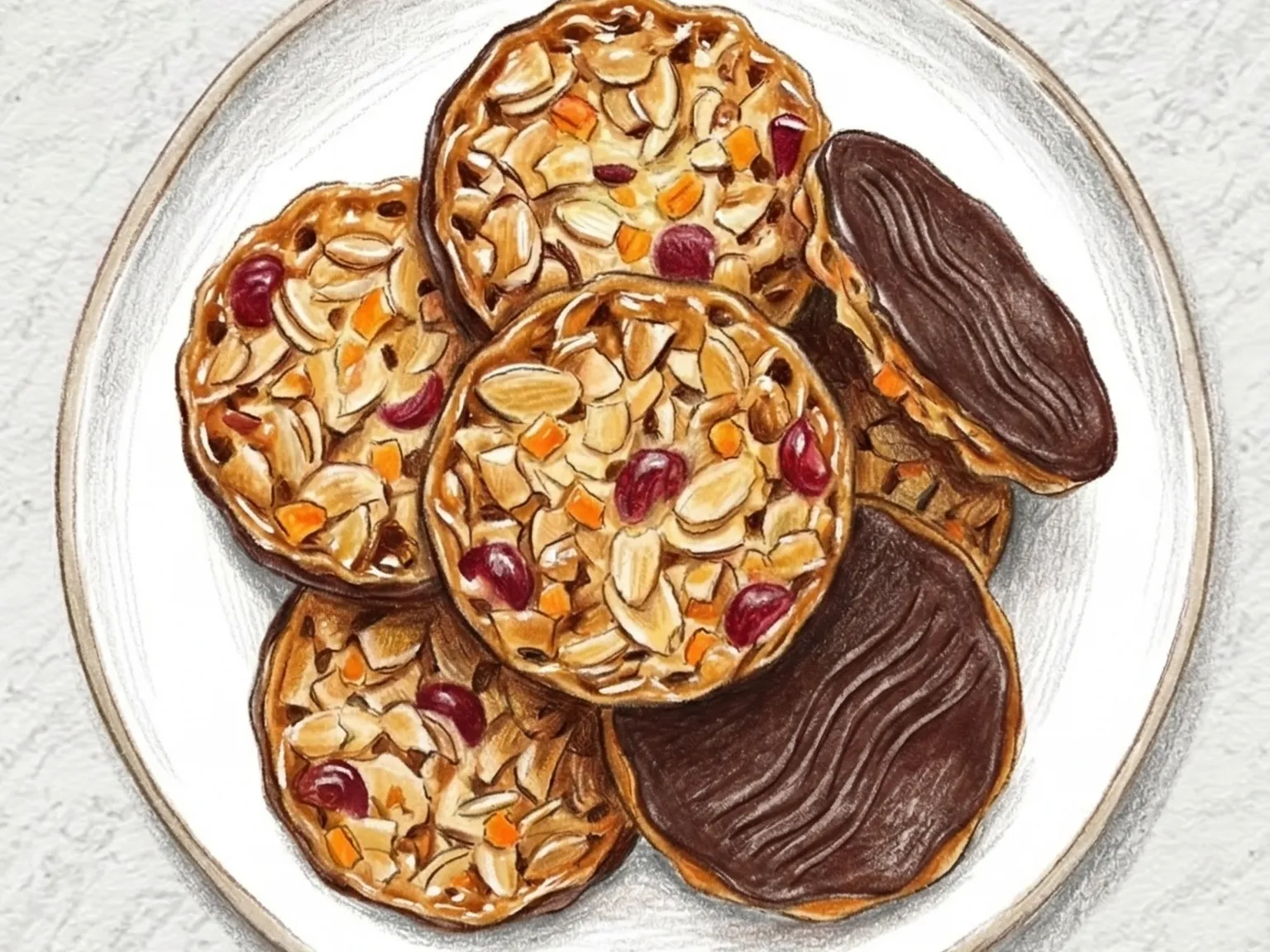
Florentine cookies are thin, lace-like biscuits made by stirring sliced almonds, candied orange peel, and dried cherries into a hot caramel of sugar, butter, and heavy cream, then spooning small pools of the mixture onto a lined baking sheet. In the oven, the caramel re-liquefies and spreads, binding the nuts and fruit into flat, crisp discs with a translucent amber surface. The baked rounds are fragile and catch the light like stained glass when held up. Once cooled, one side is coated with tempered dark chocolate, and a fork is dragged through the surface just before setting to create the classic wave pattern. The texture sequence is distinctive: the first bite shatters the caramel shell cleanly, then gives way to chewy pockets of dried fruit embedded in the caramel. Flavor-wise, toasted caramel sweetness opens first, followed by the bitter note of orange peel, the nuttiness of almonds, and finally the deep bitterness of dark chocolate. The combination is considerably more layered than the cookies' fragile appearance suggests. Stored in an airtight container, they hold their snap well for several days, making them a reliable choice for gift boxes or holiday platters.

🧒 Kid-Friendly
Prep 20min Cook 18min 4 servings
Honey Ginger Ribbon Cookies
Desserts Medium

Honey Ginger Ribbon Cookies

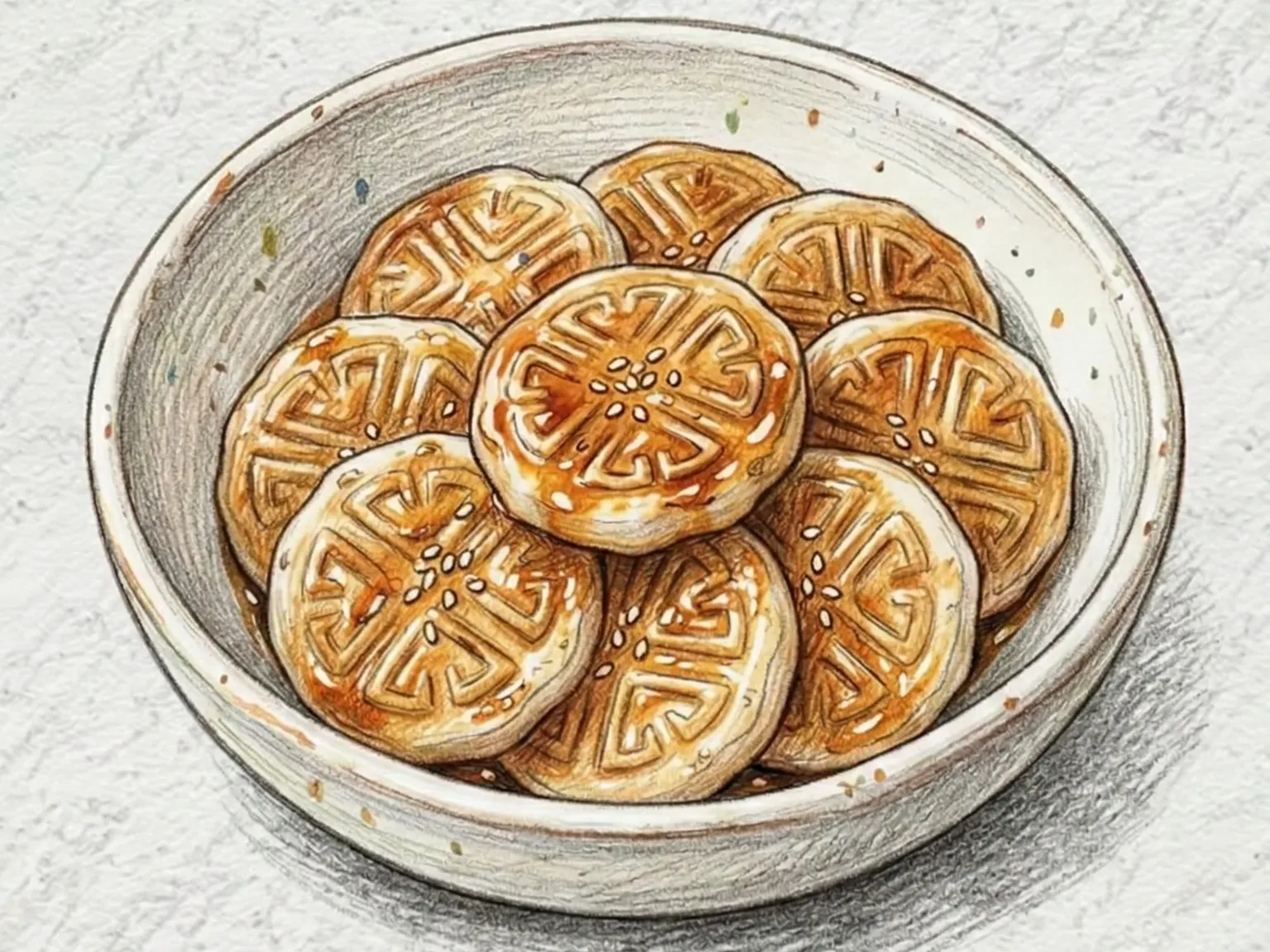
Maejakgwa are traditional Korean ribbon cookies made from a firm dough of wheat flour, sesame oil, and ginger juice, rolled to 2 mm thickness, slit lengthwise through the center, and twisted through the opening into a knot shape before frying. Slow-frying at 160 degrees Celsius turns them light golden and crisp all the way through without darkening the surface unevenly. A warm coating of honey blended with rice syrup is applied while the cookies are still hot, adding a glossy, sweet shell that sets as it cools. The ginger lends a subtle warm bite that sits behind the nuttiness of sesame oil rather than announcing itself upfront, and a final dusting of pine nut powder contributes a soft, buttery fragrance that completes the layering of flavor. Each piece shatters lightly when bitten, yet the syrup-soaked sections at the twisted edges carry a slight chewiness that gives the cookie a layered texture unusual for a fried dough confection. Maejakgwa appear regularly on ritual food tables at memorial ceremonies and are commonly prepared for Lunar New Year and Chuseok.

🎉 Special Occasion 🧒 Kid-Friendly
Prep 30min Cook 25min 4 servings
French Macarons
Baking Hard

French Macarons

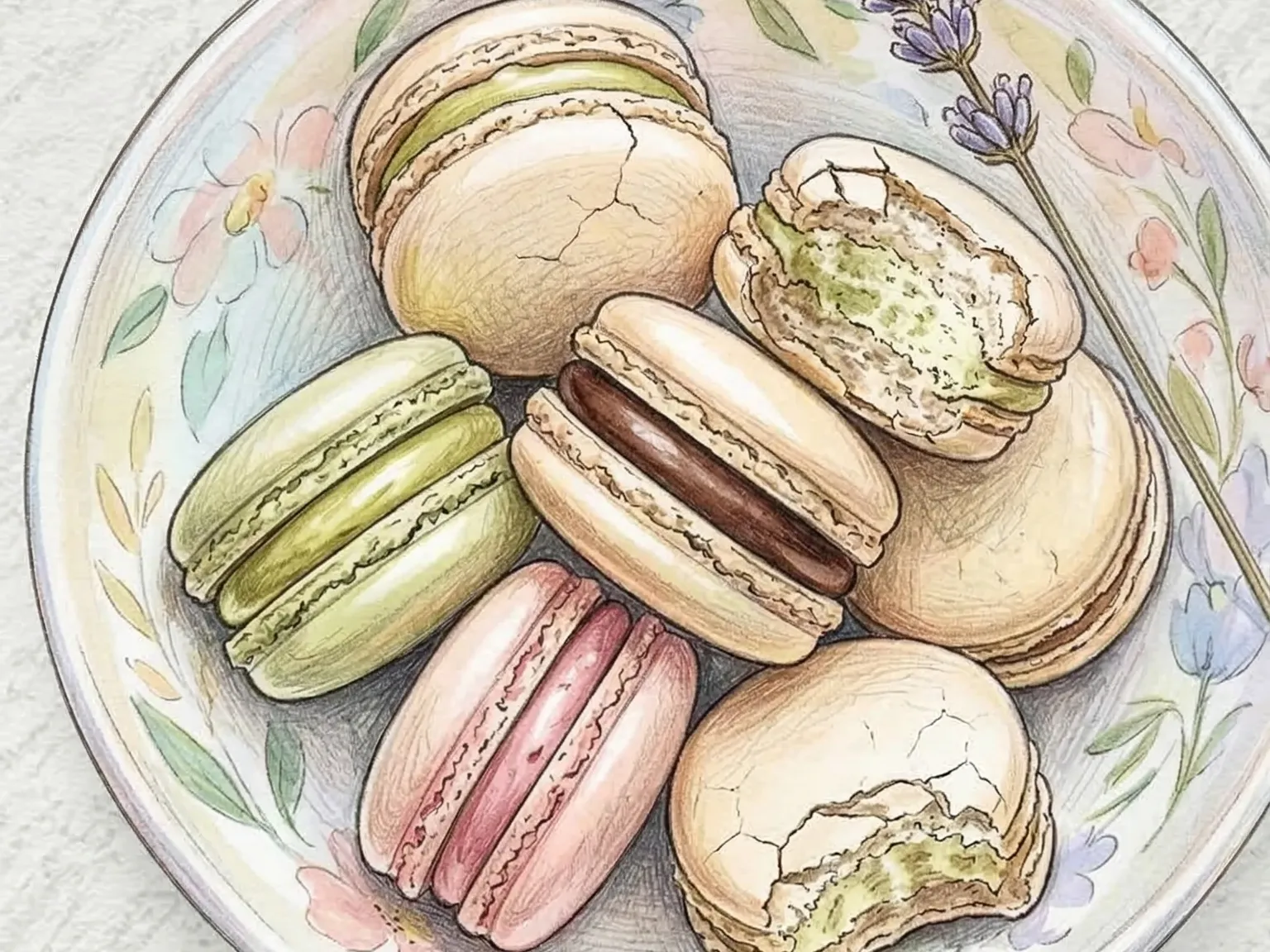
French macarons are small, round almond meringue sandwich cookies that demand precision at every single step of the process. The shells are made from finely ground almond flour, powdered sugar, and a meringue base, mixed using a technique called macaronage, which means folding the batter until it flows slowly off the spatula like lava and forms a smooth, glossy ribbon when piped. A properly baked macaron has a smooth domed top, a ruffled ring called the foot at its base, and a thin crisp shell that gives way to a chewy, lightly moist interior. The filling between the shells, whether buttercream, ganache, or fruit curd, carries the primary flavor of each variety. Classic options include vanilla and pistachio, while modern interpretations extend to raspberry, salted caramel, yuzu, and matcha. After assembly, macarons must rest in the refrigerator for at least twelve hours, during which moisture from the filling gradually softens the shells into a unified, melt-in-the-mouth texture that is impossible to achieve straight out of the oven. In Parisian patisseries, the quality of a single macaron shell is considered a reliable indicator of the entire shop's technical standard.

🎉 Special Occasion 🧒 Kid-Friendly
Prep 40min Cook 18min 4 servings
Maki-gaki (Pressed Dried Persimmon Roll)
Desserts Hard

Maki-gaki (Pressed Dried Persimmon Roll)

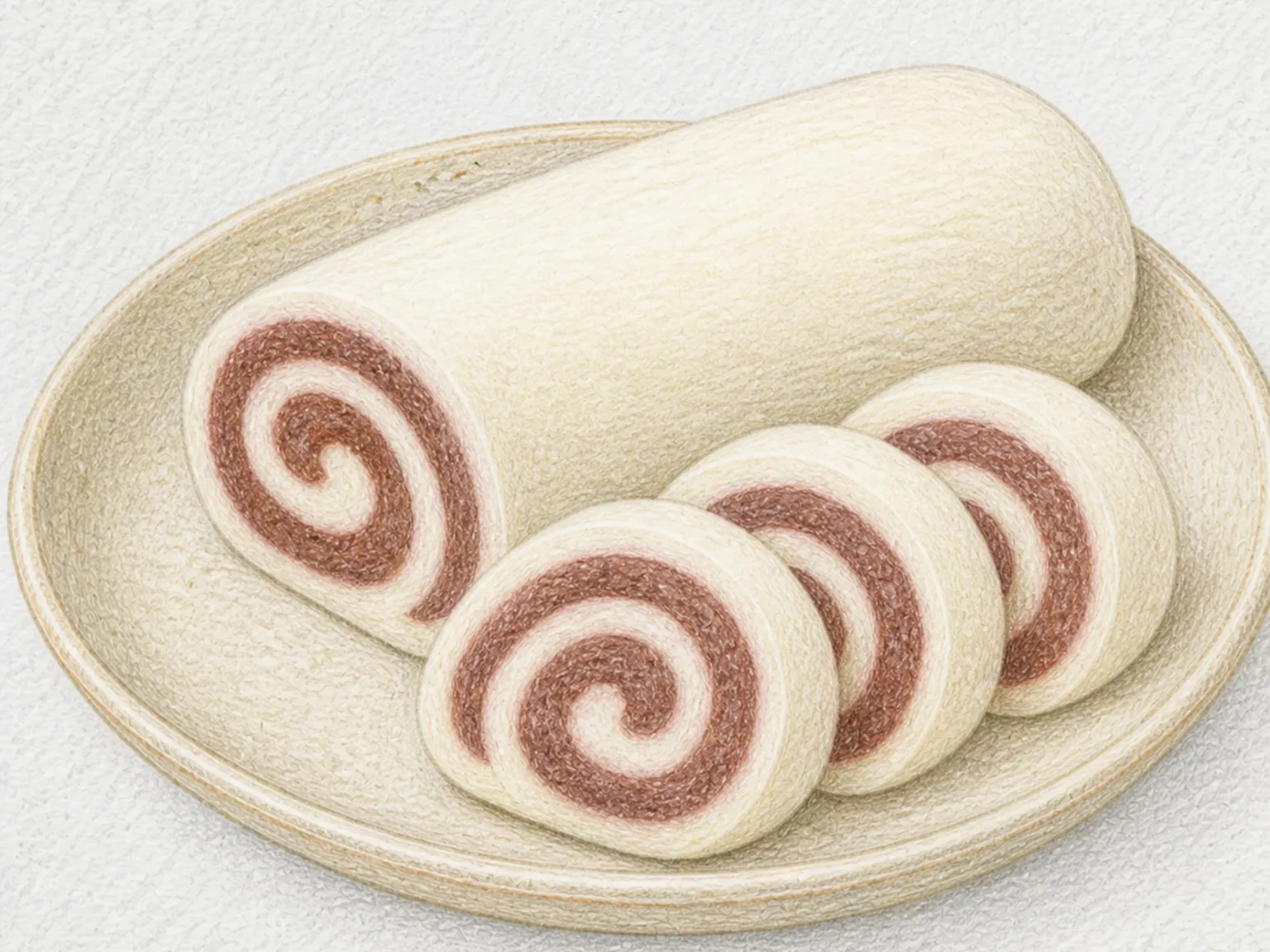
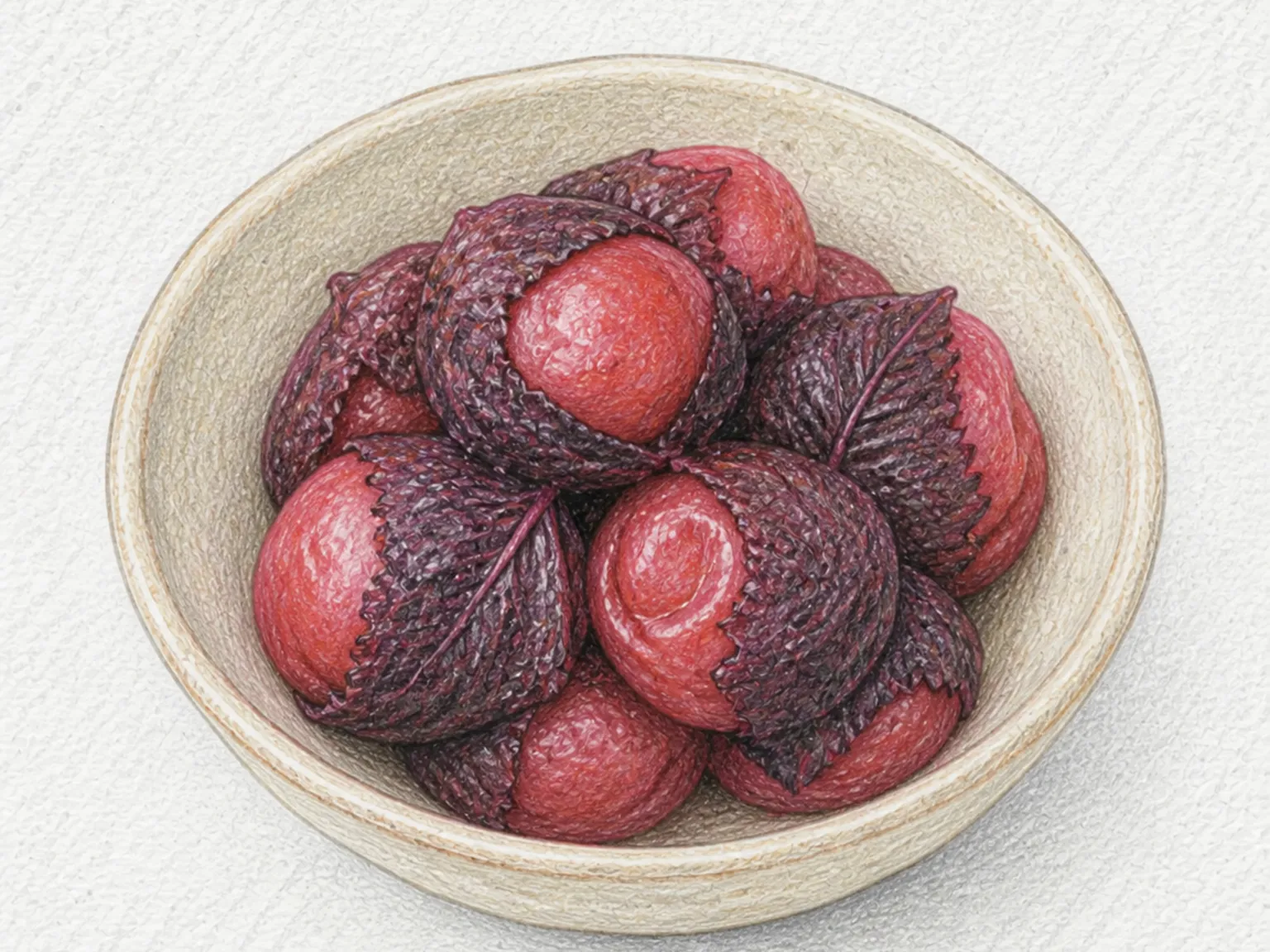
Maki-gaki is a traditional sweet from Uki and Yamato in Kumamoto. Premium dried persimmons dusted naturally with white fructose have their stem and tip removed, are slit open and seeded, overlapped by halves on a bamboo mat, and rolled into a dense cylinder. Food-safe cellophane, woven rice straw, and straw rope compress roughly twenty fruits without gaps. Thin crosswise slices reveal amber flesh and white sugar layers resembling a rose. The name carries the auspicious idea of gathering in good fortune, making the roll a year-end gift and New Year food. Its concentrated persimmon aroma and natural sweetness recall a fine wagashi. It is served thinly with tea, or paired with cream cheese or ham for drinks. Hand-massaged momi-gaki with an even shape produces the clearest pattern and tightest roll.

🎉 Special Occasion
Prep 75min 10 servings
Fruit Clafoutis
Baking Easy

Fruit Clafoutis

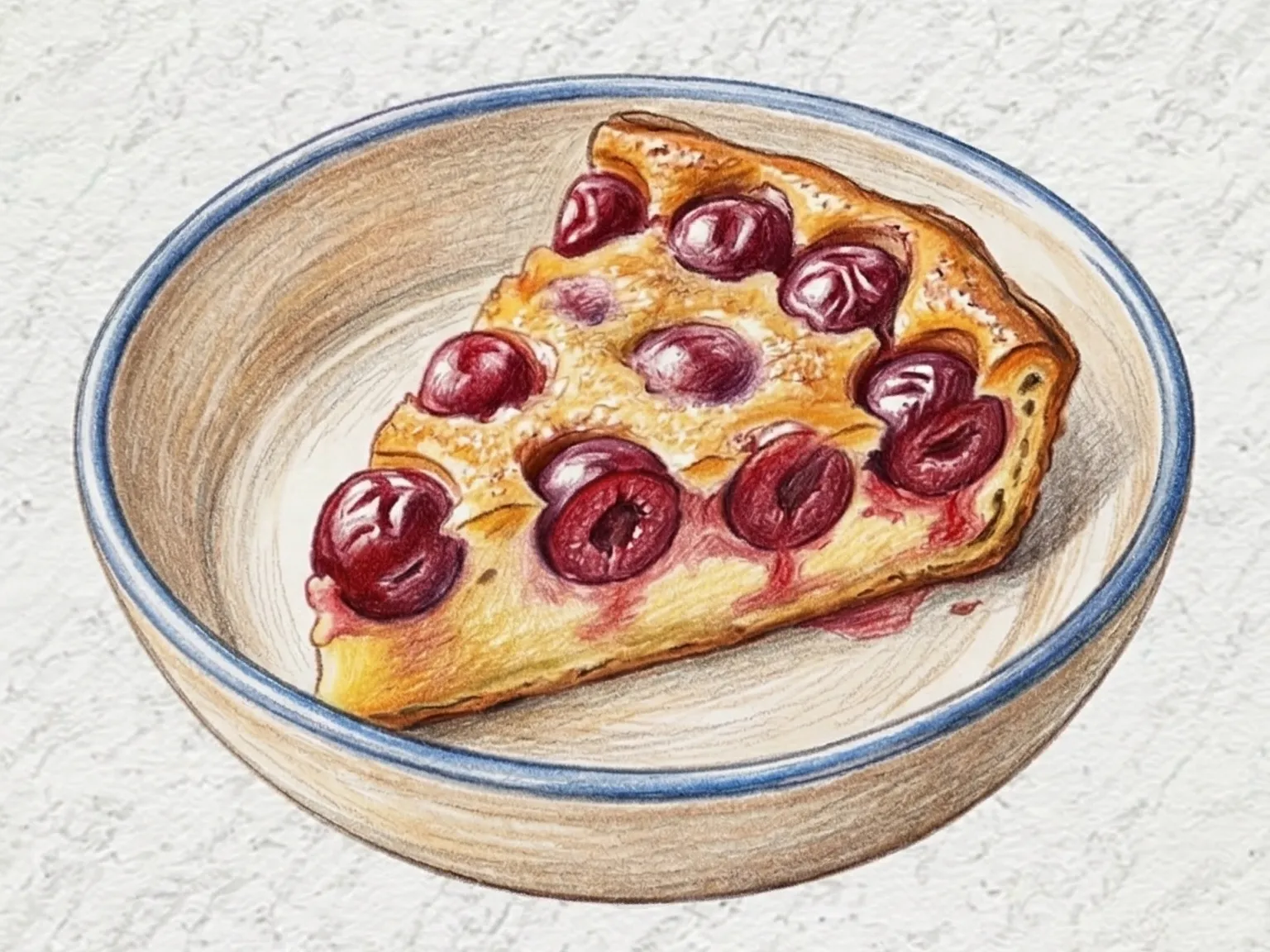
Fruit clafoutis bakes cherries or plums in a thin batter made with eggs, milk, flour, and sugar. Grease the dish evenly with butter, dry the fruit, and arrange it in one layer so excess moisture does not dilute the custard. Whisk the eggs and sugar only until the grains begin to dissolve and the mixture lightens slightly. Too much incorporated air can make the custard rise unevenly. Add the milk gradually, then sift in the flour and work outward from the center until no dry pockets remain. Pour the smooth batter over the fruit, leave a few pieces partly visible, and tap out large air bubbles before baking on the middle rack. The clafoutis is ready when the rim is puffed and golden but the center still has a gentle custard-like wobble. Begin checking near the stated time and remove it before the middle becomes firm or dry. A short rest allows the puffed edge to settle and the custard to stabilize. Served warm, each portion combines soft fruit, a tender center, and a lightly browned edge.

🧒 Kid-Friendly
Prep 15min Cook 35min 6 servings
Mame Shitogi (Green Soybean Rice Cake)
Desserts Medium

Mame Shitogi (Green Soybean Rice Cake)

Mame shitogi is a fresh sweet from the Nanbu area of Aomori, made by kneading cooked and mashed green soybeans with equal parts non-glutinous and glutinous rice flour, sugar, salt, and warm water. Shitogi is regarded as an early form of mochi once offered at shrines, while soybeans helped stretch scarce rice after repeated cold-weather crop damage. The pale green dough is shaped like a kamaboko log and sliced 1 cm thick. It is crumbly and tender when fresh, or more fragrant, sweet, and slightly chewy after grilling. Use heat-treated, ready-to-eat rice flour for the fresh version.

🧒 Kid-Friendly 🎉 Special Occasion
Prep 45min Cook 20min 50 servings
Fudgy Brownies
Baking Easy

Fudgy Brownies

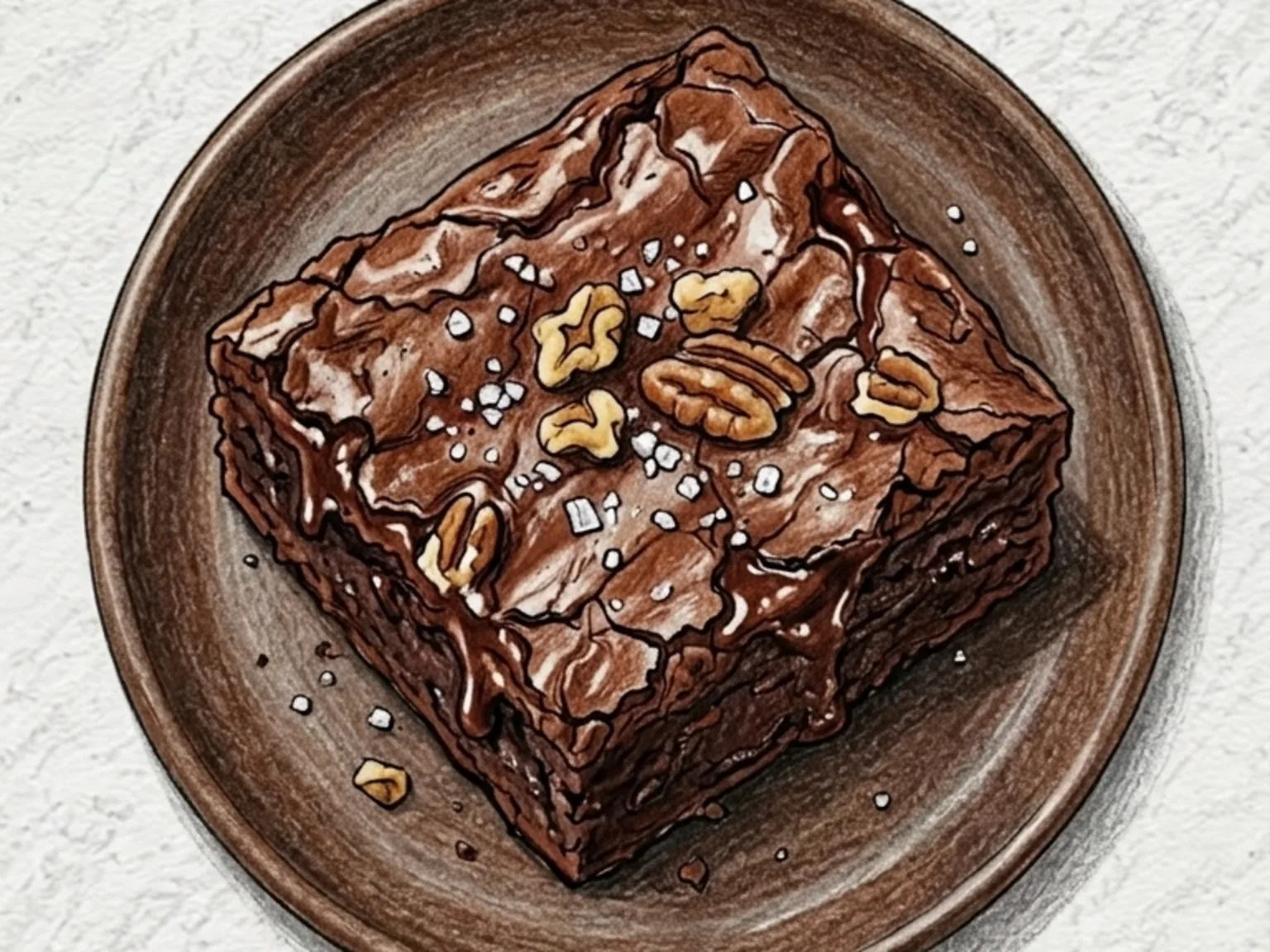
A fudgy brownie delivers dense, moist chocolate intensity in every bite, distinguishing itself from cake-style brownies through a higher ratio of butter and chocolate to flour. Melting chocolate and butter together before folding in sugar and eggs produces a glossy, pourable batter that bakes into a thin crust on top while the interior stays rich and slightly underdone. Pulling the pan from the oven just before the center fully sets is critical: as the brownie cools, that center sinks into a chewy, truffle-like layer. Using dark chocolate with a high cacao percentage shifts the flavor toward bittersweet depth rather than simple sweetness. A scattering of flaky sea salt on top before baking creates a sweet-salty contrast that amplifies the chocolate. Walnuts or pecans folded into the batter introduce crunch amid the dense crumb. Cutting clean squares requires patience, as the texture firms only after the brownie has cooled completely.

🧒 Kid-Friendly
Prep 15min Cook 28min 12 servings
Mango Sticky Rice
Desserts Medium

Mango Sticky Rice

Mango sticky rice is Thailand's most beloved dessert, built on nothing more than three ingredients - glutinous rice, coconut milk, and ripe mango - yet delivering a complexity that belies its simplicity. The rice is steamed, then soaked in warm coconut milk sweetened with sugar and tempered with a pinch of salt, which keeps the dish from being one-dimensionally sweet. Slices of ripe mango, ideally the fragrant Nam Dok Mai variety, are laid alongside the warm rice. A drizzle of thickened coconut cream on top ties everything together, and a scattering of toasted mung beans or sesame seeds adds a final nutty note. The dish is at its peak between April and June when mangoes are at their sweetest.

🎉 Special Occasion 🧒 Kid-Friendly
Prep 15min Cook 30min 4 servings
Greek Custard Phyllo Pie (Crispy Filo & Semolina Custard)
Baking Medium

Greek Custard Phyllo Pie (Crispy Filo & Semolina Custard)

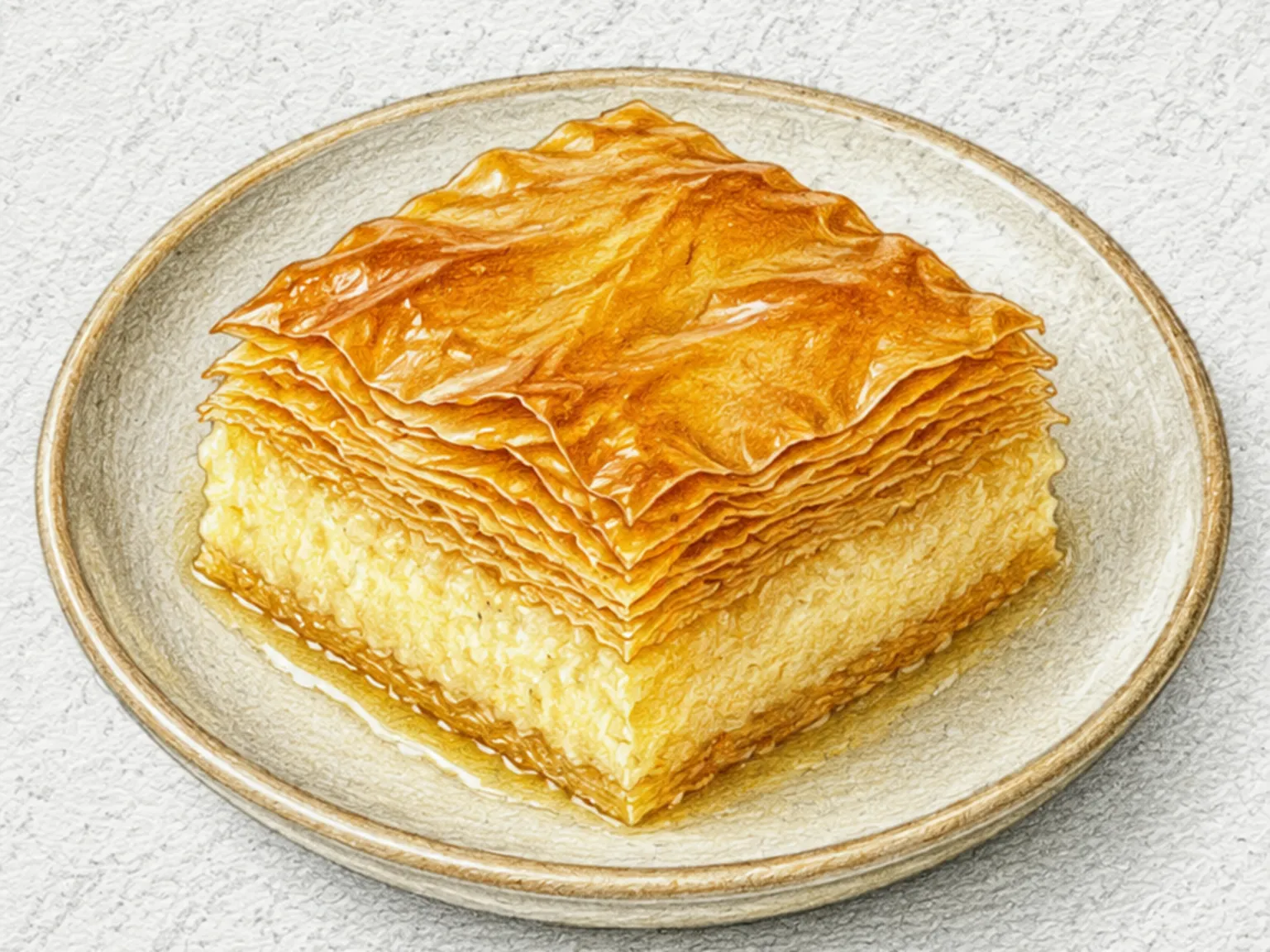
Galaktoboureko is a beloved Greek pastry in which sheets of butter-brushed phyllo dough are layered around a thick semolina custard, baked until golden, and then drenched in cold lemon syrup while still hot from the oven. Every sheet of phyllo must be brushed with melted butter before stacking, a labor-intensive process that creates dozens of paper-thin layers capable of shattering at the touch of a fork. The custard is cooked on the stovetop by whisking semolina into hot milk in a slow, steady stream until the mixture thickens into a smooth but faintly grainy cream. Unlike flour-based pastry creams, semolina custard retains a subtle granular texture that gives the filling a distinct character. Egg yolks and whole eggs are both incorporated, adding richness and a custardy softness, and vanilla deepens the flavor further. Pouring cold syrup over the pastry while it comes scorching from the oven causes rapid absorption: the liquid rushes between the phyllo layers and saturates the custard without turning the top surface soft and soggy. The temperature contrast between hot pastry and cold syrup is the exact mechanism that preserves the crisp exterior. Adding cinnamon or orange zest to the custard before filling introduces a fragrant complexity that offsets the sweetness of the syrup. The pastry tastes noticeably different eaten warm versus at room temperature, offering two distinct textural and aromatic experiences from the same preparation.

🎉 Special Occasion 🧒 Kid-Friendly
Prep 40min Cook 45min 4 servings
Misugaru Grain Ice Cream
Desserts Easy

Misugaru Grain Ice Cream

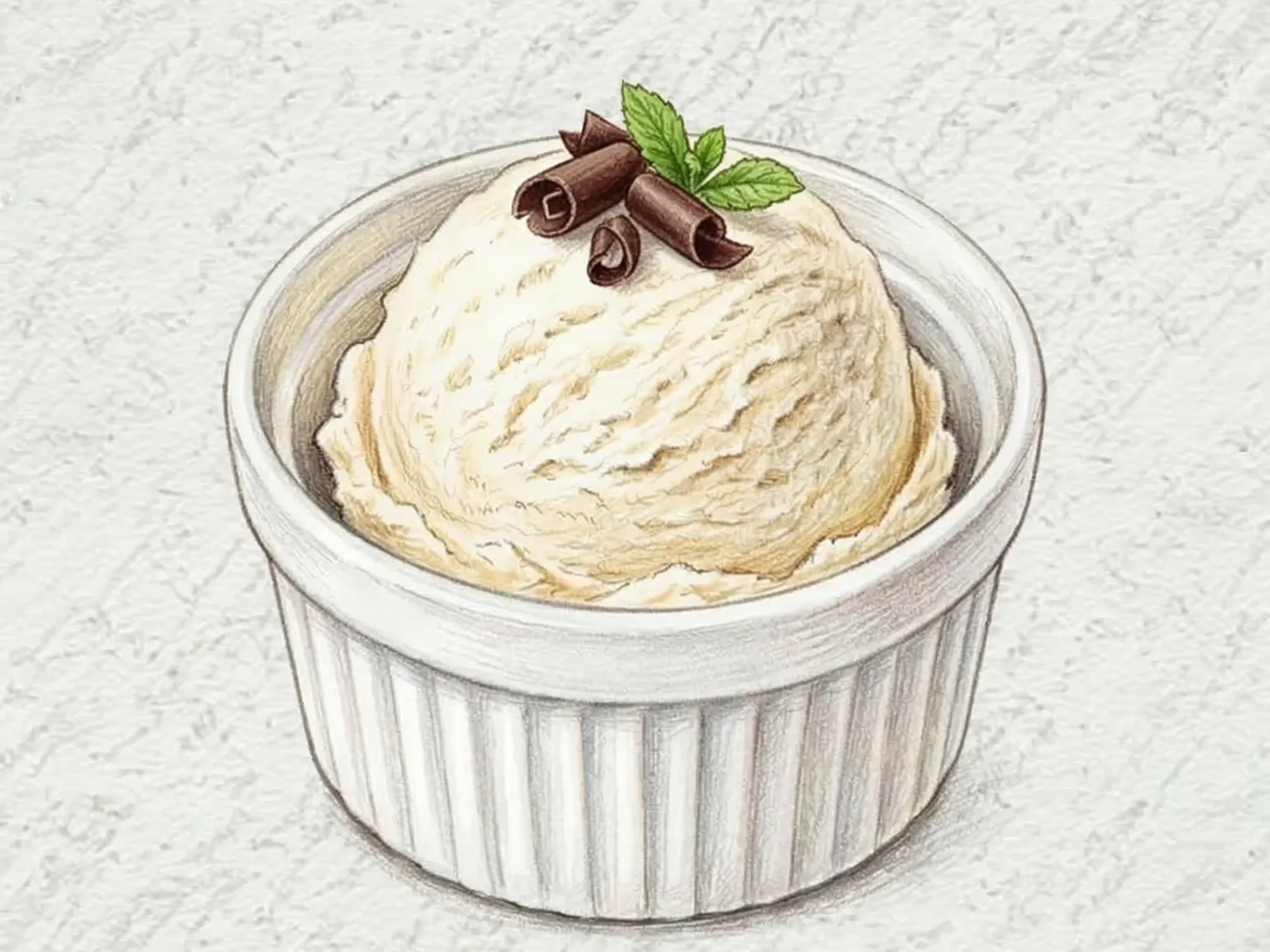
Misugaru Grain Ice Cream is a frozen dessert made by blending roasted multi-grain powder with milk and heavy cream. The misugaru is whisked into milk to dissolve any lumps before honey, condensed milk, and a pinch of salt are added to establish a sweet, nutty base. Separately, heavy cream is whipped to soft peaks and gently folded into the mixture using J-shaped strokes to maintain aeration. The mixture is placed in a shallow container to freeze. To achieve a smooth texture, the surface is scraped with a fork every hour for three hours, breaking up ice crystals. Using black bean grain powder provides a richer taste, and topping the ice cream with chopped nuts adds a crunchy contrast to the creamy texture.

🔥 Trending Now ⚡ Quick
Prep 15min 4 servings
Galette des Rois (Puff Pastry Almond Frangipane Pie)
Baking Medium

Galette des Rois (Puff Pastry Almond Frangipane Pie)

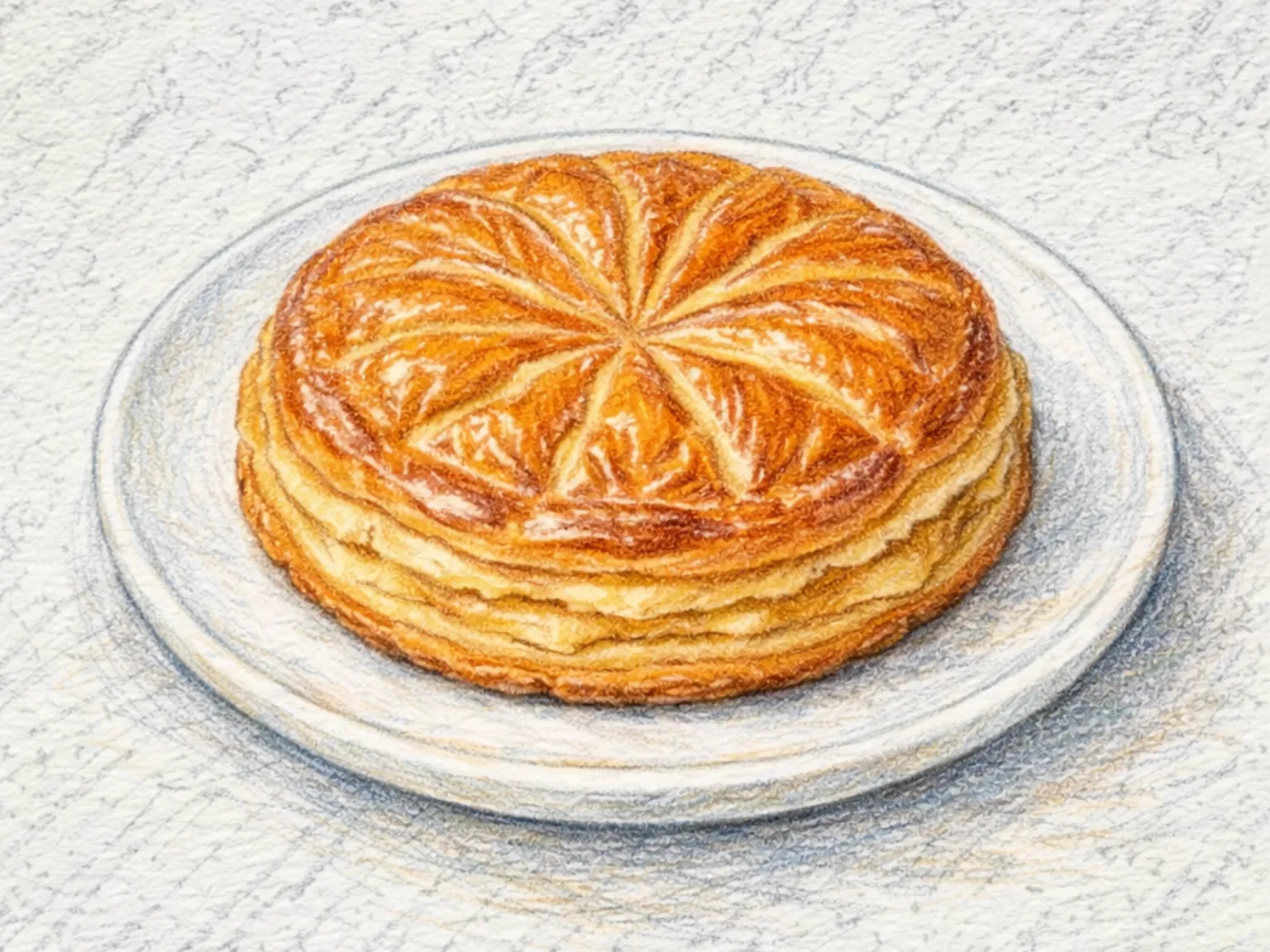
Galette des rois is the traditional French pie eaten during Epiphany in January, made from two rounds of puff pastry enclosing a filling of almond frangipane cream. Puff pastry is built from hundreds of alternating layers of dough and butter that have been folded and rolled repeatedly. In the oven, the moisture inside the butter converts to steam and forces the layers apart, causing the dough to expand dramatically and set into a structure of thin, translucent sheets stacked one on top of the other. When the baked galette is cut, those layers are visible in cross-section, and the pastry shatters into golden flakes with any pressure - the defining textural characteristic of well-made puff pastry. The frangipane filling is made from butter, eggs, sugar, and ground almonds whisked together into a smooth cream. It bakes into something dense and moist, with the almond flavor concentrated and deepened by the heat in a way that raw almond paste cannot replicate. Before baking, a small porcelain figurine called a feve is pressed into the frangipane and sealed inside. Whoever receives the slice containing the feve is crowned king or queen for the day with a paper crown that typically comes with the galette from the bakery. The top of the pastry is scored with a sharp knife in decorative patterns of leaves, spirals, or geometric designs, and brushed with an egg wash that caramelizes in the oven to produce a lacquered golden surface with the scored lines standing out in relief. In France, bakeries sell galette des rois throughout January, and sharing one with family or colleagues is a significant social ritual at the start of the new year.

🎉 Special Occasion 🧒 Kid-Friendly
Prep 25min Cook 35min 4 servings
Mitarashi Dango (Grilled Rice Dumplings in Sweet Soy Glaze)
Desserts Easy

Mitarashi Dango (Grilled Rice Dumplings in Sweet Soy Glaze)

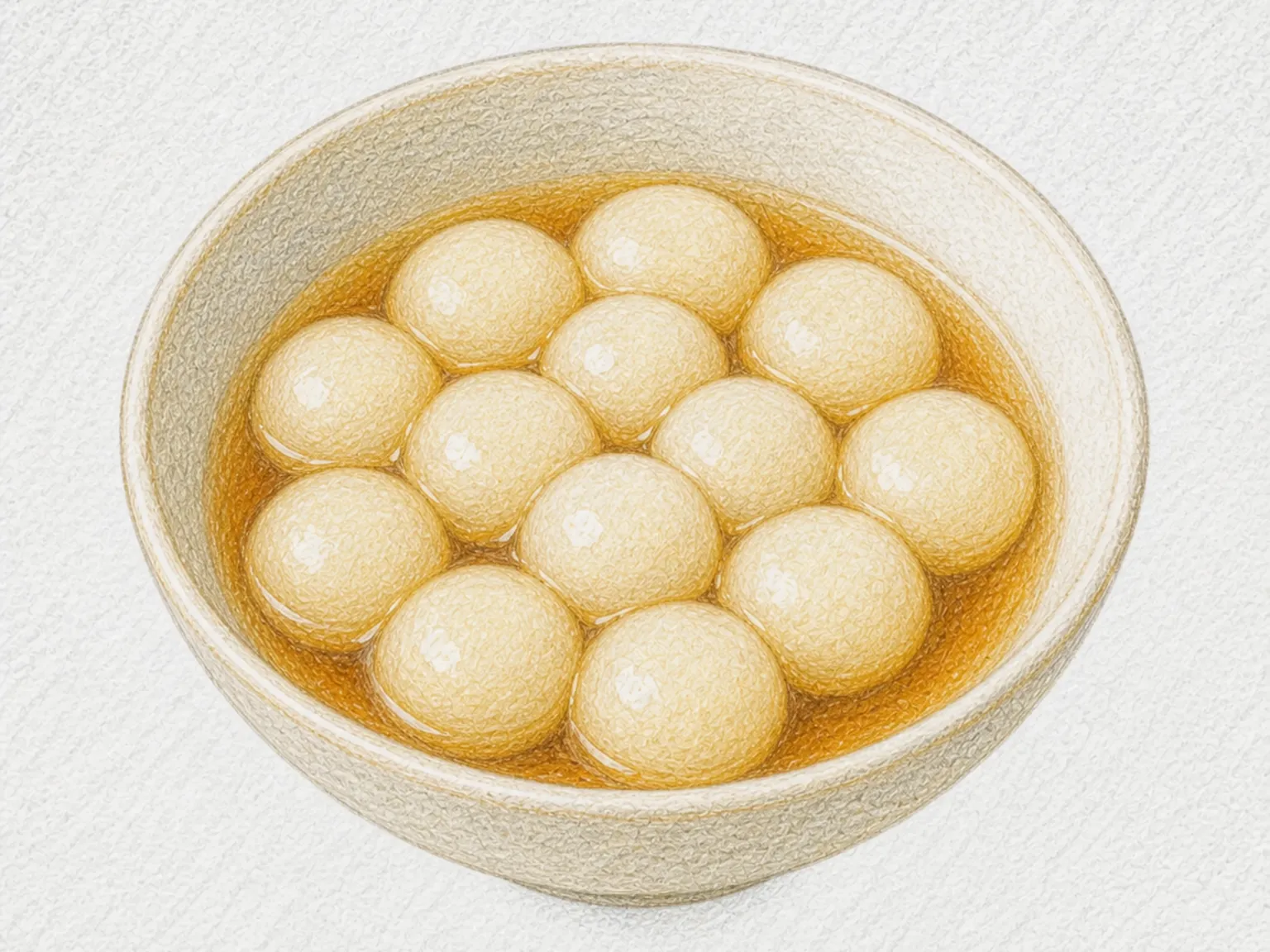
Glutinous rice flour is kneaded with water, shaped into small balls, boiled until they float, then skewered and grilled until the surface develops charred spots and a light crust. The contrast between the toasty exterior and the dense, springy interior is the defining texture of mitarashi dango. A thick glaze made from soy sauce, sugar, mirin, and starch is spooned over the hot skewers, coating each ball in a glossy, sweet-savory film. The sauce should be viscous enough to cling but fluid enough to drip slowly - too thin and the flavor washes off, too thick and it overwhelms the delicate chew of the rice. Eaten warm, the dango is at its most pliable and the glaze at its most aromatic, with the soy caramel scent rising visibly in the steam. Street vendors across Japan sell these at temple fairs and festivals, but they are simple enough to replicate at home in under thirty minutes.

🧒 Kid-Friendly
Prep 20min Cook 10min 4 servings
Gangjeong Crunch Cookies (Korean Rice Flour Nut Cookies)
Baking Medium

Gangjeong Crunch Cookies (Korean Rice Flour Nut Cookies)

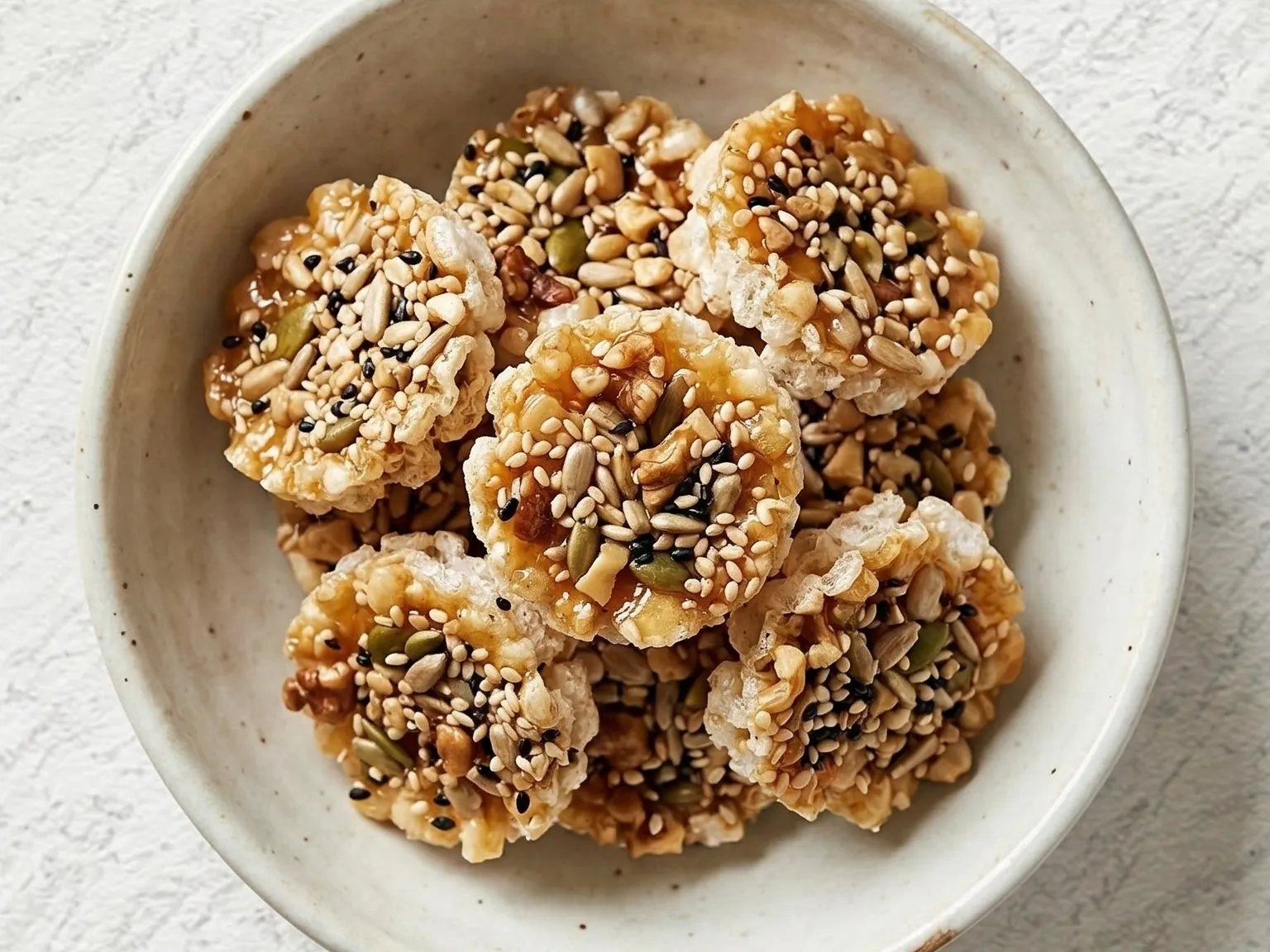
Gangjeong crunch cookies translate the airy, shattering texture of traditional Korean gangjeong into a baked cookie that can be made at home and carried anywhere. Blending glutinous rice flour into the dough changes the bake fundamentally: the cookies spread thinner than all-wheat versions and develop a brittle, cracker-like snap that sets them apart from soft or chewy alternatives. Rice syrup or honey serves as the sweetening binder in place of plain sugar, contributing a faint grain fragrance and enough tackiness to fix toppings of sesame seeds, sunflower seeds, or pumpkin seeds firmly to the surface before baking. The cookies look done before they are, so trusting the timer matters; pulling them too early results in a soft center that never fully crisps. Crunch solidifies completely only once the cookies have cooled for fifteen minutes outside the oven. Swapping butter for vegetable oil thins the spread further and amplifies the crunch. With every chew the toasted grain and nut flavors deepen gradually, making each bite more satisfying than the last. Stored in an airtight container after fully cooling, they hold their snap for three days or more, making them practical for gifting. The cookies carry the spirit of a Korean holiday confection in a lightweight, portable format.

🧒 Kid-Friendly
Prep 20min Cook 14min 4 servings
Mizu Manju Chilled Translucent Bean-Paste Dumplings
Desserts Medium

Mizu Manju Chilled Translucent Bean-Paste Dumplings

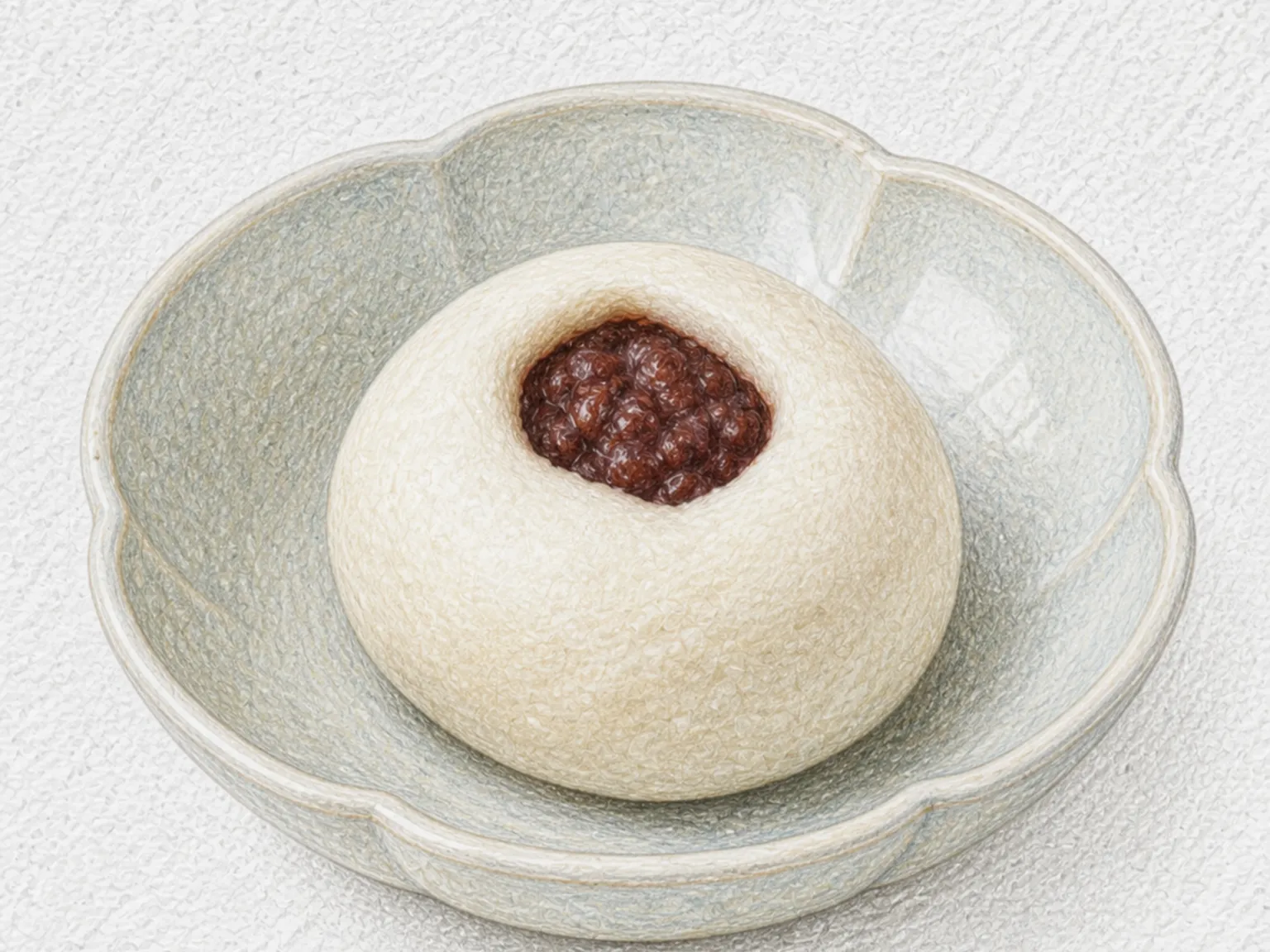
Mizu manju is an Ogaki summer confection from Gifu that encloses red bean paste in a translucent dough of kudzu and warabi starch, steams it in small sake-cup molds, and cools it in water. Ogaki, long called a city of water because households used abundant groundwater to chill produce, is said to have developed the sweet during the Meiji era as a cold summer treat. Kudzu starch alone can disperse in water and become hard when chilled, so warabi starch is blended in for water resistance and a tender chew. Both powders must dissolve completely in cold water before sugar is added and the mixture is cooked with constant scraping until it resembles translucent paste. Dough, bean filling, and more dough are layered in each mold, then steamed for ten minutes until clear. At home, potable ice water replaces an open well for rapid safe cooling. The chilled wrapper remains soft while revealing the bean paste within.

🧒 Kid-Friendly 🎉 Special Occasion
Prep 30min Cook 25min 15 servings

About Desserts

Sweet treats brighten the day and add a little joy to the routine. From no-oven quick desserts to traditional confections that take patience and care, find the right recipe for any occasion.