Recipes with korean radish

230 recipes. Page 10 of 10

Buy korean radish
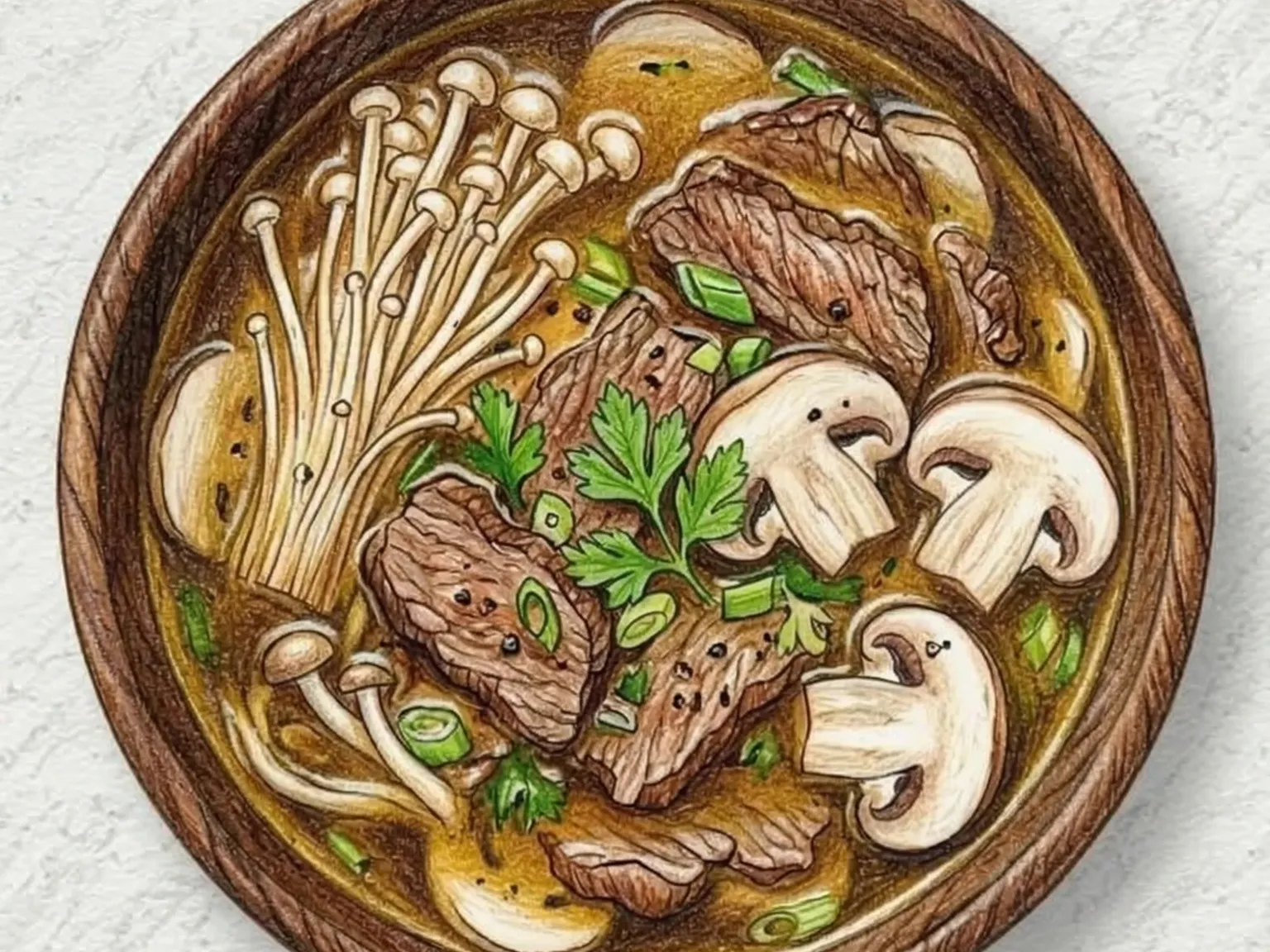
Korean Beef and Mushroom Soup
Soups Easy

Korean Beef and Mushroom Soup

Soegogi beoseot-guk pairs seared beef with a medley of mushrooms in a clear, deeply savory broth. The beef is first stir-fried in sesame oil to develop a caramelized base, then button mushrooms, cut thick so they hold their shape, join the pot along with water or stock. As the soup simmers, the mushrooms leach glutamate into the liquid, layering umami on top of the beef's own juices without any added MSG or bouillon. Enoki mushrooms go in during the final minutes, contributing slippery strands that contrast with the meatier button slices. Soup soy sauce and minced garlic season the broth, keeping it translucent with a faintly woodsy aroma that lingers after each sip. A finish of sliced scallion and cracked black pepper sharpens the bowl just enough to keep the palate engaged from first spoonful to last. It is an understated soup that proves depth of flavor does not require complexity of technique.

🏠 Everyday 🥗 Light & Healthy
Prep 18min Cook 35min 4 servings
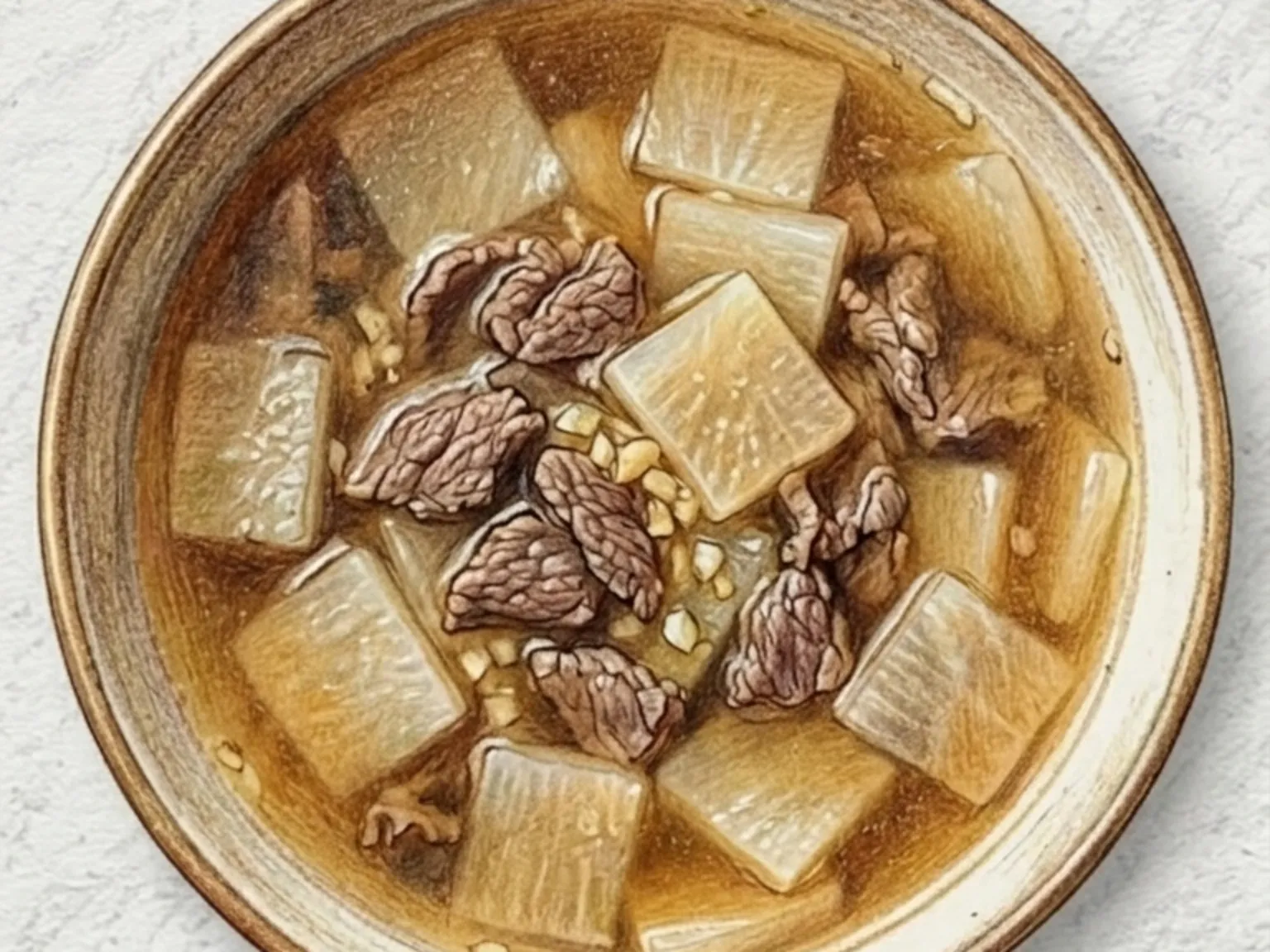
Korean Beef Radish Soup (Sesame Oil Braised Beef and Daikon)
Soups Easy

Korean Beef Radish Soup (Sesame Oil Braised Beef and Daikon)

Sogogi muguk is one of the most frequently cooked soups in Korean households, built from just two main ingredients: beef and daikon radish. Thin-cut beef is stir-fried in sesame oil until lightly browned, then thick radish slices go into the pot before water is added. As the soup comes to a boil and then settles into a steady simmer, the radish transforms: its initial sharpness mellows into a clean sweetness that balances the beef's depth, and its starch clouds the broth just enough to give it body. Soup soy sauce provides the seasoning, tinting the liquid a pale amber while pushing umami forward over saltiness. Minced garlic added near the end lends a quiet heat that sits behind the main flavors rather than competing with them. The radish, when properly cooked, should yield easily to a spoon yet still hold a hint of structure at its center. This soup also serves as the foundational broth for tteokguk on Lunar New Year, and Koreans reach for it instinctively when the weather turns cold or the body needs warming.

🏠 Everyday 🥗 Light & Healthy
Prep 15min Cook 40min 4 servings
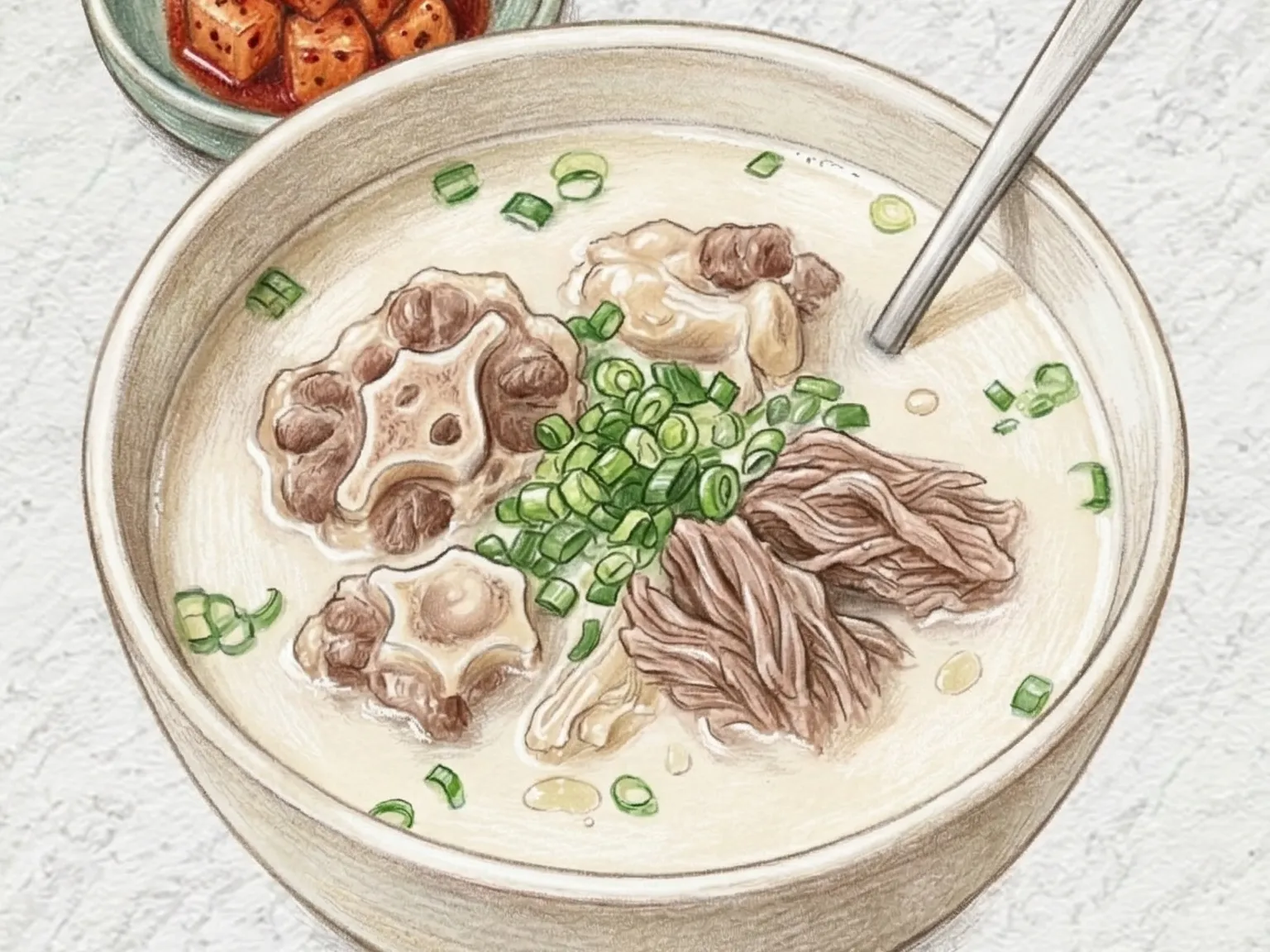
Korean Oxtail Soup
Soups Hard

Korean Oxtail Soup

Sokori-guk demands patience - oxtail pieces are soaked in cold water to draw out blood, then placed in a heavy pot with enough water to cover and simmered for at least three to four hours. During that long, slow cook, collagen buried in the joints and connective tissue dissolves into the liquid, producing a broth so rich in gelatin that it sets into a solid block when refrigerated. Skimming fat and foam at regular intervals keeps the final broth a clean, milky white with no greasy residue. The meat, once it slides easily off the bone, is torn along the grain into shreds that are impossibly soft, while the tendon segments offer a pleasantly bouncy chew. Seasoning is deliberately minimal - coarse salt, black pepper, and sliced scallion - because the bones themselves have already contributed all the depth the soup needs. Served with a bowl of steamed rice and a side of kkakdugi, the cubed radish kimchi's sharp tang provides the only counterpoint this quietly powerful broth requires.

🏠 Everyday 🎉 Special Occasion
Prep 25min Cook 210min 4 servings
Korean Beef Head Soup with Rice
Soups Hard

Korean Beef Head Soup with Rice

Somori-gukbap is a bowl of rice submerged in a milky, collagen-heavy broth extracted from a beef head that has been simmered for the better part of a day. The process begins by boiling the head in several changes of water to purge impurities, then committing it to a long, uninterrupted simmer until the connective tissue breaks down and enriches the liquid with natural gelatin. The finished broth is opaque white, clean-tasting despite its richness, and coats the mouth with a silky weight that plain beef stock cannot match. Sliced meat, pulled from the head after cooking, is lean yet intensely beefy, having surrendered its fat to the broth during the hours of simmering. Served in a stone pot with a mound of rice and a generous ladle of broth, the dish is typically accompanied by a saucer of seasoned soy sauce with chili flakes and a handful of chopped chives. Specialty restaurants start their pots before dawn and keep them rolling until the lunch rush, because in this dish, time is the irreplaceable ingredient.

🏠 Everyday 🎉 Special Occasion
Prep 20min Cook 180min 4 servings
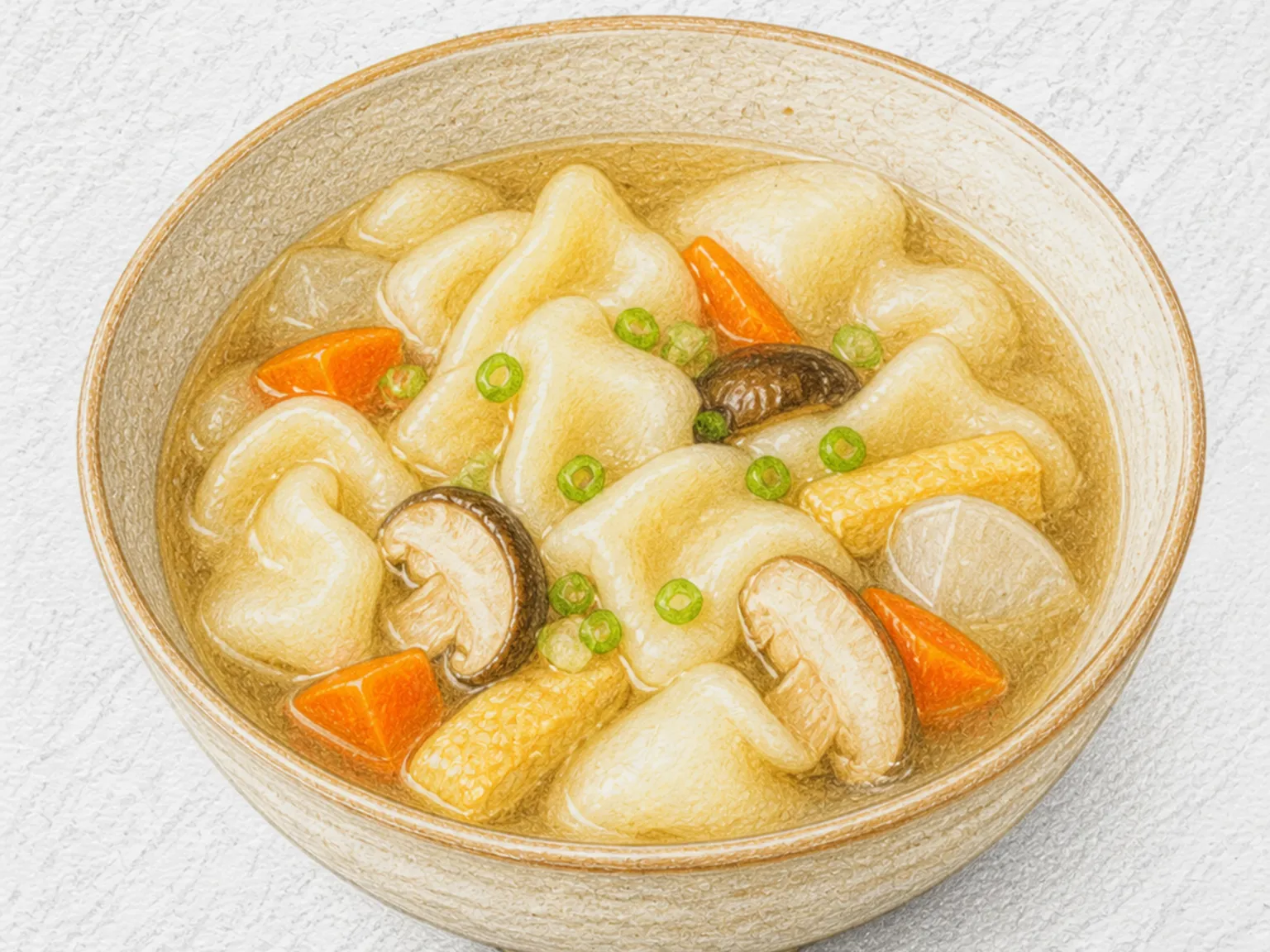
Gunma Suiton
Soups Easy

Gunma Suiton

Gunma suiton is a wheat dumpling soup made by stirring flour with water into a soft batter that can be dropped from a spoon directly into dashi containing daikon, carrot, taro, shiitake, scallion, and aburaage. Gunma's long history of double-cropping rice and wheat produced many flour dishes, and suiton became an everyday staple and rice substitute in times of shortage because its dough needs no rolling or cutting. Regional names include tocchanage-jiru, tsumerikko, otsuyu-dango, and nejikko. The spoonfuls are added only after the vegetables are mostly tender and then boiled until no raw flour remains at their centers.

🏠 Everyday 🧒 Kid-Friendly
Prep 20min Cook 30min 4 servings
Su no Shui (Warm Grated Daikon and Sardine Vinegar Soup)
Soups Easy

Su no Shui (Warm Grated Daikon and Sardine Vinegar Soup)

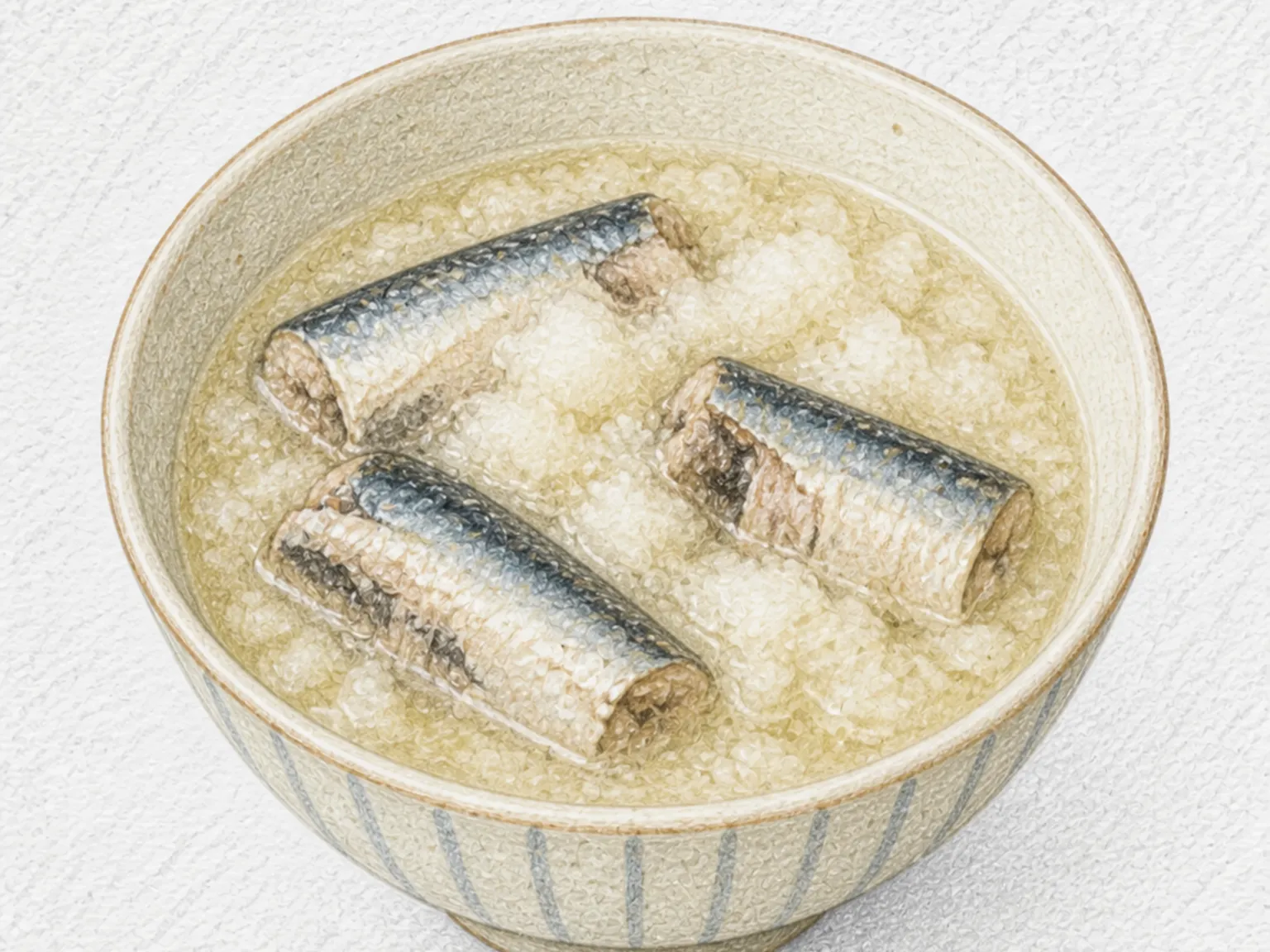
Su no shui is a warm Miyazaki soup of coarsely grated daikon and overnight-dried sardines seasoned with light soy sauce and vinegar. In the local name, shui means soup. Unlike a cold vinegared salad, this dish is served steaming and was often eaten with freshly pounded rice cakes. Grating the daikon on a coarse surface rather than turning it into a fine puree leaves small pieces that catch the fish broth. The sardines are cut into 4 or 5 sections and simmered so their flesh and bones flavor the water. Vinegar enters just before the heat is turned off, which softens its sharp edge without cooking away the bright acidity. The 12-serving pot is divided into small bowls with daikon and fish distributed evenly.

🏠 Everyday
Prep 20min Cook 20min 12 servings
Tara Jappa-jiru (Whole-Cod Miso Soup)
Soups Hard

Tara Jappa-jiru (Whole-Cod Miso Soup)

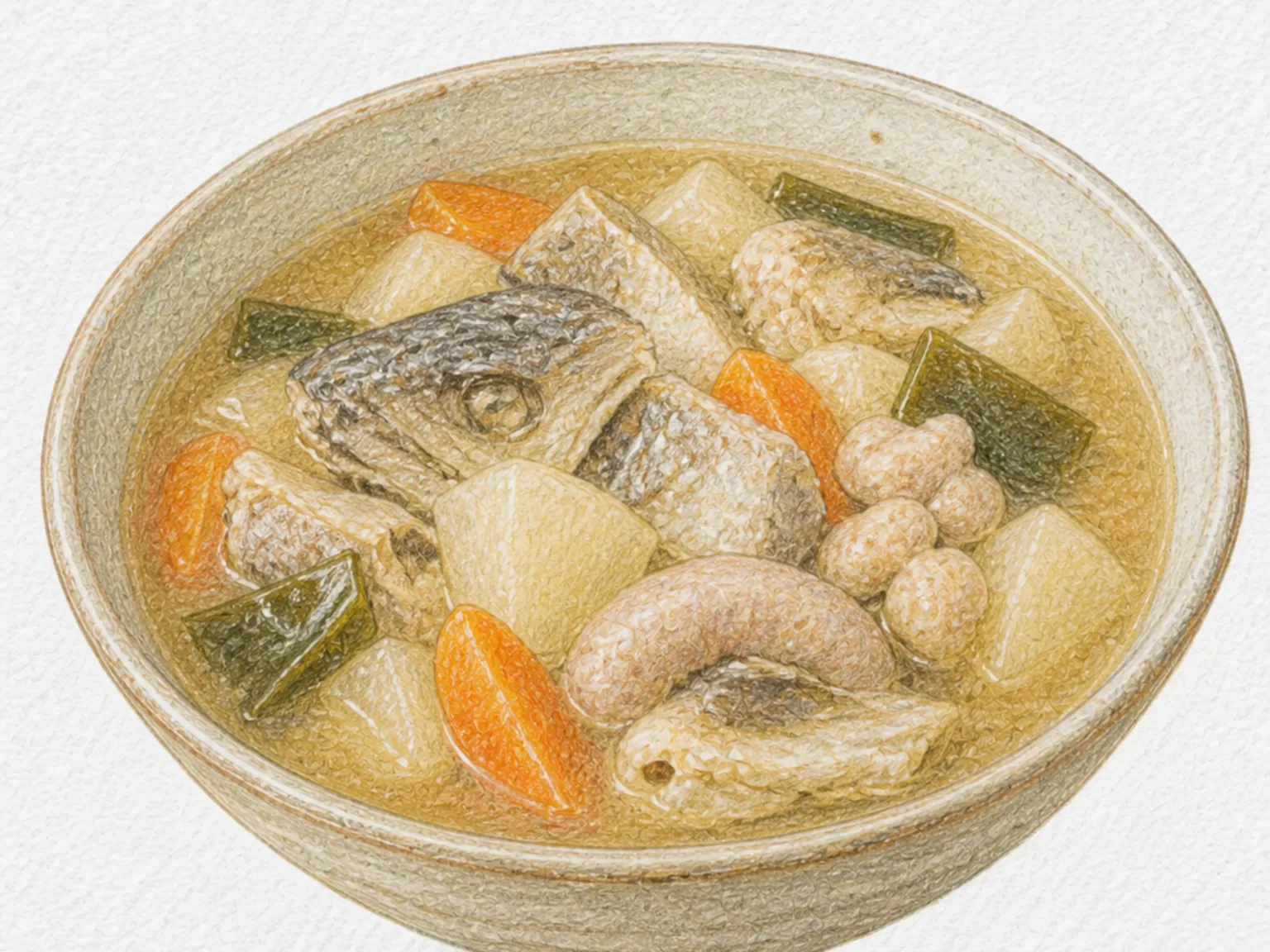
Tara jappa-jiru is a Tsugaru winter soup from Aomori that uses the head, backbone, skin, organs, roe, or milt left after filleting a whole cod. Carefully cleaned parts simmer in a large pot with kombu, daikon, carrot, sake, and water before miso seasons the broth. Jappa means parts usually discarded in the Tsugaru dialect, but the dish turns an entire cold-water cod into a deeply flavored meal without waste. Liver is mashed into the soup near the end for mellow richness, and exceptionally fresh milt is especially prized. Cod was the year-end fish of Tsugaru, so essential to New Year that the phrase tara shogatsu, cod New Year, emerged. Families once bought a whole large fish and dragged it home over snowy roads. A generous ten-serving pot warms a household in midwinter.

🎉 Special Occasion
Prep 45min Cook 45min 10 servings
Kagoshima Tonjiru (Pork and Vegetables in Barley Miso Soup)
Soups Easy

Kagoshima Tonjiru (Pork and Vegetables in Barley Miso Soup)

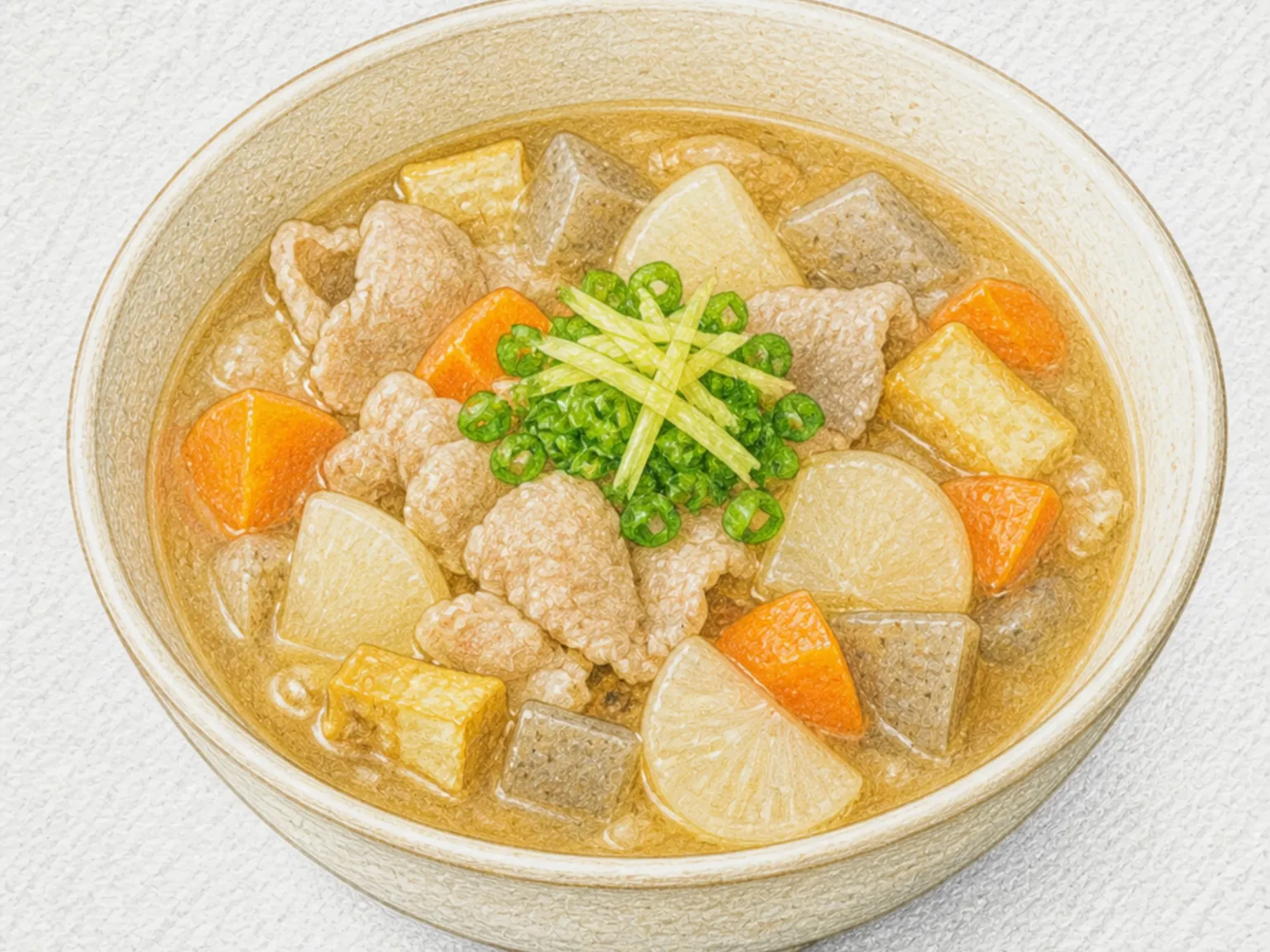
Kagoshima tonjiru is a substantial soup in which thin pork is browned first, then daikon, carrot, taro, konjac, and atsuage are tossed in the rendered fat before dried-sardine broth is added. Once everything is tender, sweet local barley miso seasons the pot. Among the many tonjiru styles eaten across Japan, this formula brings together two Kagoshima staples, pork and barley miso. Dissolve the miso separately in broth only after the pork and vegetables are fully cooked, and do not return it to a hard boil. Fine green onion and ginger strips added to each bowl keep a fresh, sharp aroma against the rich soup.

🏠 Everyday
Prep 20min Cook 30min 4 servings
Korean Burdock Root Soup (Earthy Burdock and Beef Clear Broth)
Soups Medium

Korean Burdock Root Soup (Earthy Burdock and Beef Clear Broth)

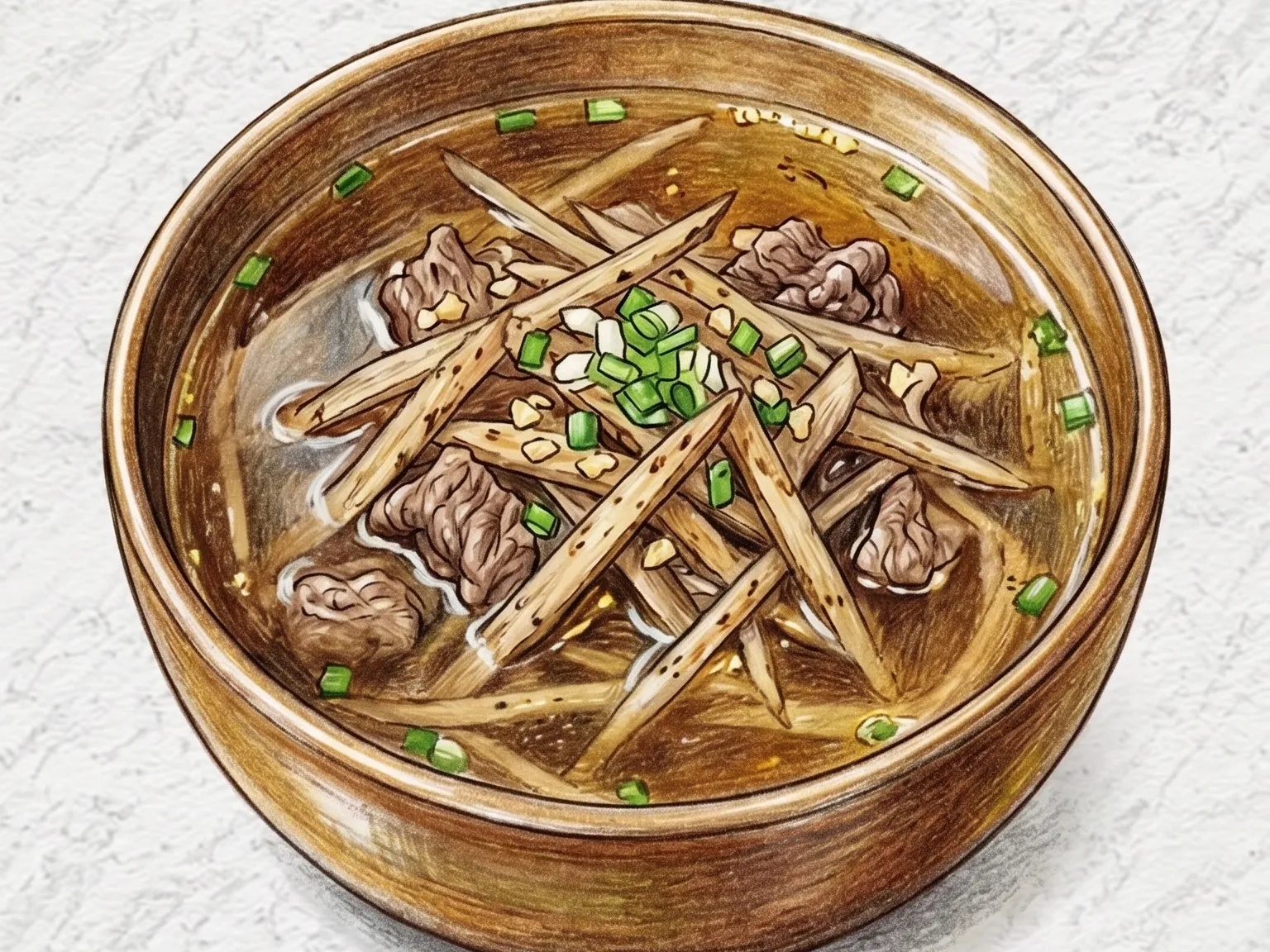
Ueong-guk is a clear Korean soup that highlights the earthy, almost nutty character of burdock root. Julienned burdock is first stir-fried in sesame oil with thinly sliced beef until the root's raw edge mellows and a toasted aroma rises from the pan. Water is then added and the pot brought to a simmer, during which the burdock's tough fibers gradually soften while maintaining enough structure to provide a pleasant chew. The broth takes on a light brown tint from the initial stir-fry, carrying the sesame and caramelized burdock flavors through to the last spoonful. Soup soy sauce seasons the liquid with umami rather than straight salt, and minced garlic stirred in near the end adds a quiet warmth. Burdock is naturally high in dietary fiber, giving this soup a reputation as a digestive-friendly choice. The root is at its best from autumn through winter, when its sugars concentrate underground, and the soup's understated flavor makes it an easy complement to a multi-dish Korean meal.

🏠 Everyday 🥗 Light & Healthy
Prep 20min Cook 35min 4 servings
Korean Rockfish Soup (Whole Rockfish in Spicy Radish Broth)
Soups Medium

Korean Rockfish Soup (Whole Rockfish in Spicy Radish Broth)

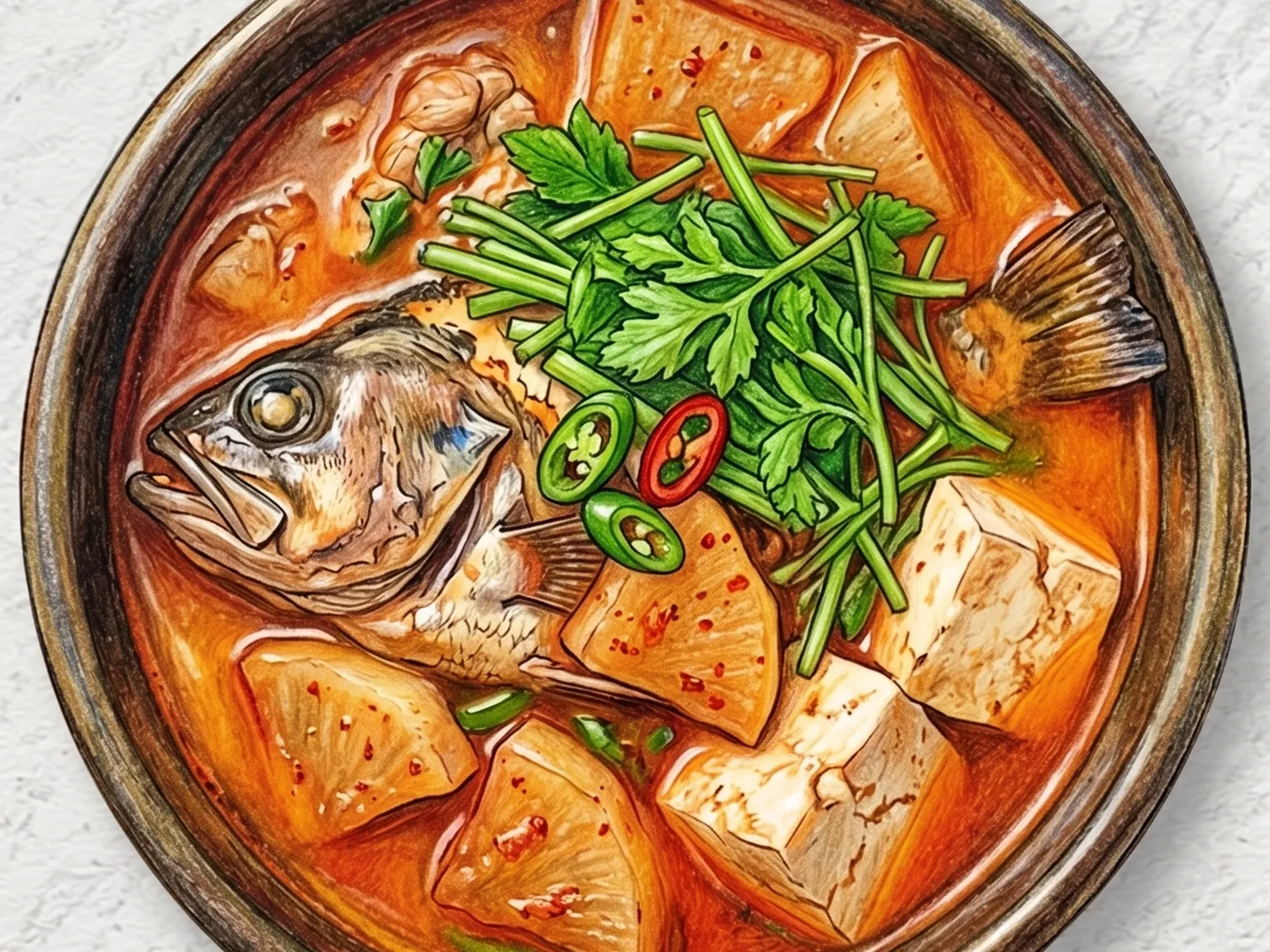
Starting with a base of boiled radish to sweeten the water, this rockfish soup relies on using the entire fish to build a complex broth. Red pepper flakes, garlic, and soup soy sauce provide the seasoning before the fish and tofu go into the pot for a fifteen-minute simmer. The collagen and juices released from the rockfish bones create a physical thickness in the liquid that cannot be replicated with fillets alone. Just before the heat is turned off, a handful of water parsley adds a fresh contrast to the spicy, ocean-heavy profile of the soup. While the small bones of the rockfish require slow and careful eating, they are exactly what gives this dish its characteristic intensity. A slice of ginger added early in the process works to neutralize fishy scents. For extra heat, some sliced cheongyang chilies can be added, or a spoonful of ground perilla seeds can be stirred in at the end to introduce a nutty, creamy layer to the texture. This soup pairs naturally with a bowl of steamed rice, where the process of picking meat from the bones becomes a central part of the eating experience.

🏠 Everyday 🥗 Light & Healthy
Prep 20min Cook 25min 4 servings
Yanagi Batto (Willow-Leaf Buckwheat Dumpling Soup)
Soups Medium

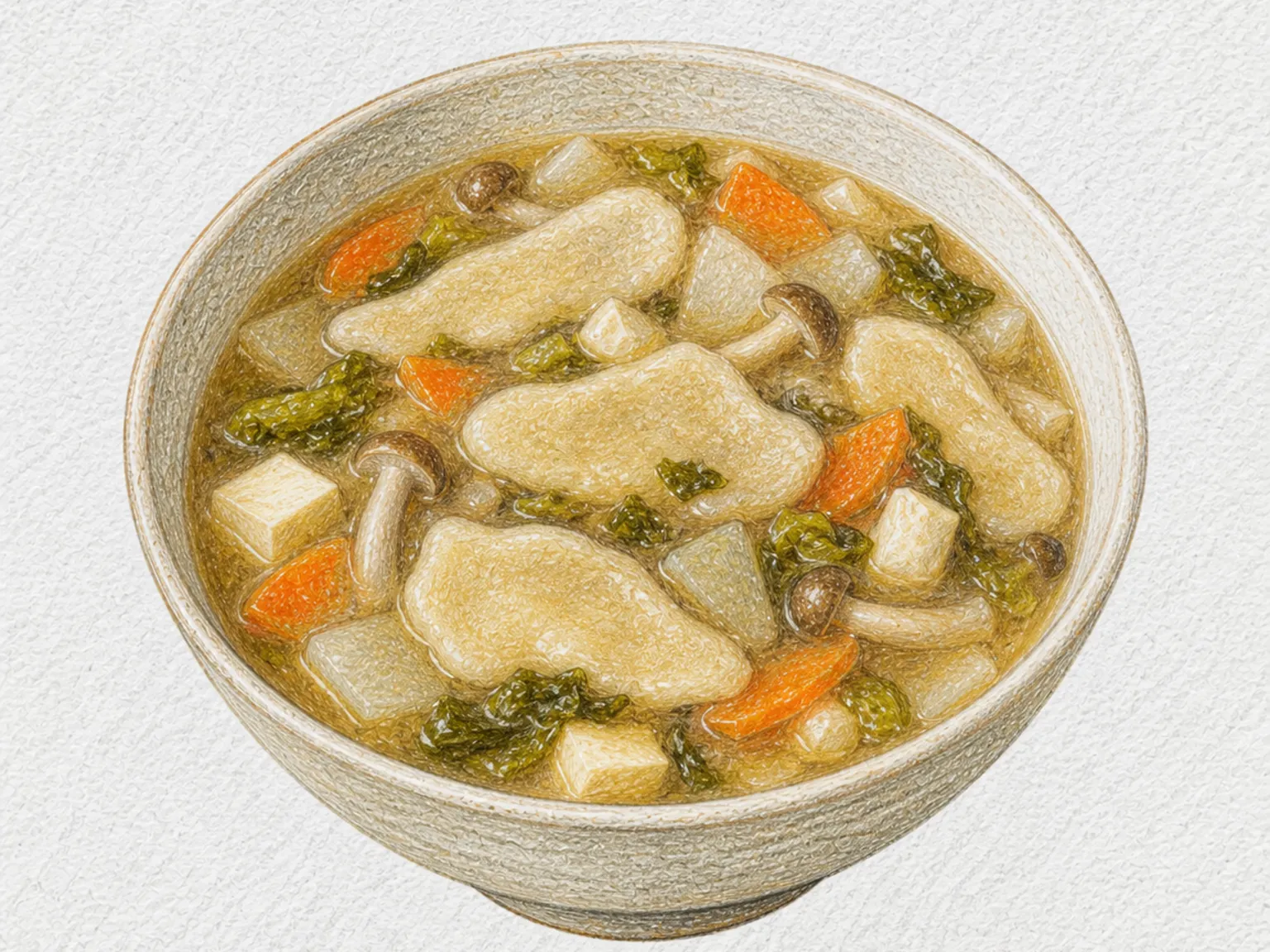
Yanagi Batto (Willow-Leaf Buckwheat Dumpling Soup)

Yanagi batto is a miso soup from northern Iwate. Buckwheat flour is kneaded with crumbled firm tofu and warm water, rolled into a 1cm rope, torn into 5cm lengths, and flattened into willow leaves with slightly plump centers. Daikon, carrot, burdock, and shimeji simmer in dried-sardine broth; half the miso seasons the vegetables before the dumplings cook directly in the soup, and the rest goes in with rehydrated frozen tofu and desalted takana pickle. It is simpler than cutting fine soba noodles but keeps a springy buckwheat bite. Press the center no thicker than 4mm and continue simmering after pieces float so no raw dough remains.

🏠 Everyday
Prep 35min Cook 35min 4 servings
Korean Young Radish Clam Soup
Soups Easy

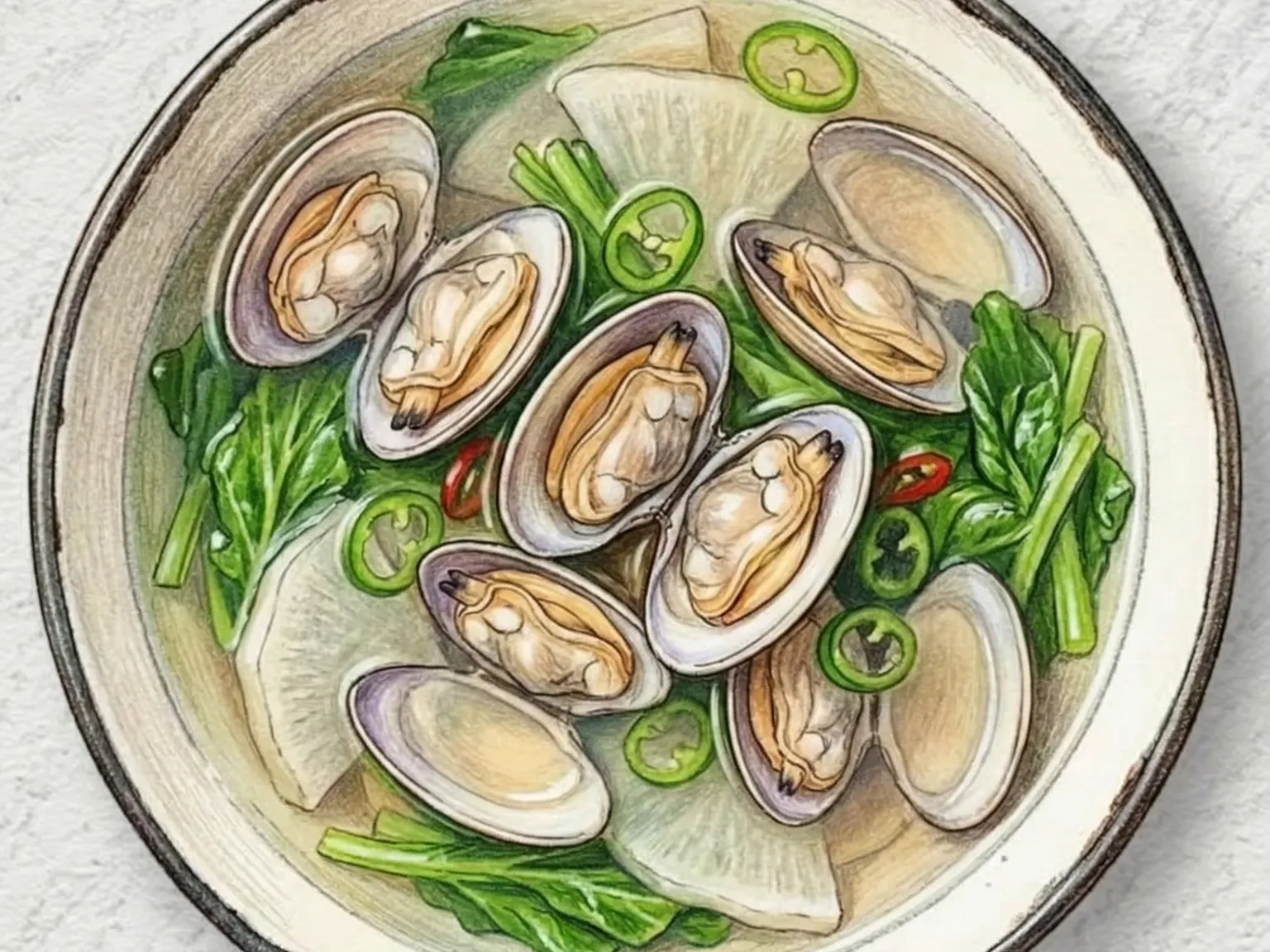
Korean Young Radish Clam Soup

Yeolmu-bajirak-guk is a clear soup that draws its flavor from manila clams purged in salt water and simmered with thinly sliced radish. As the clam shells open, they release a briny, mineral-rich liquid that forms the broth's backbone. Young radish greens and a cheongyang chili are added in the final three minutes to keep the greens fresh and slightly crunchy. Soup soy sauce and salt adjust the seasoning, though the clams provide enough natural salinity that only a light hand is needed. It can be served as a soup served with rice, with simple accompaniments chosen to match the sauce, broth, or topping.

🏠 Everyday 🥗 Light & Healthy
Prep 18min Cook 18min 4 servings
Korean Soft Tofu Shrimp Soup
Soups Easy

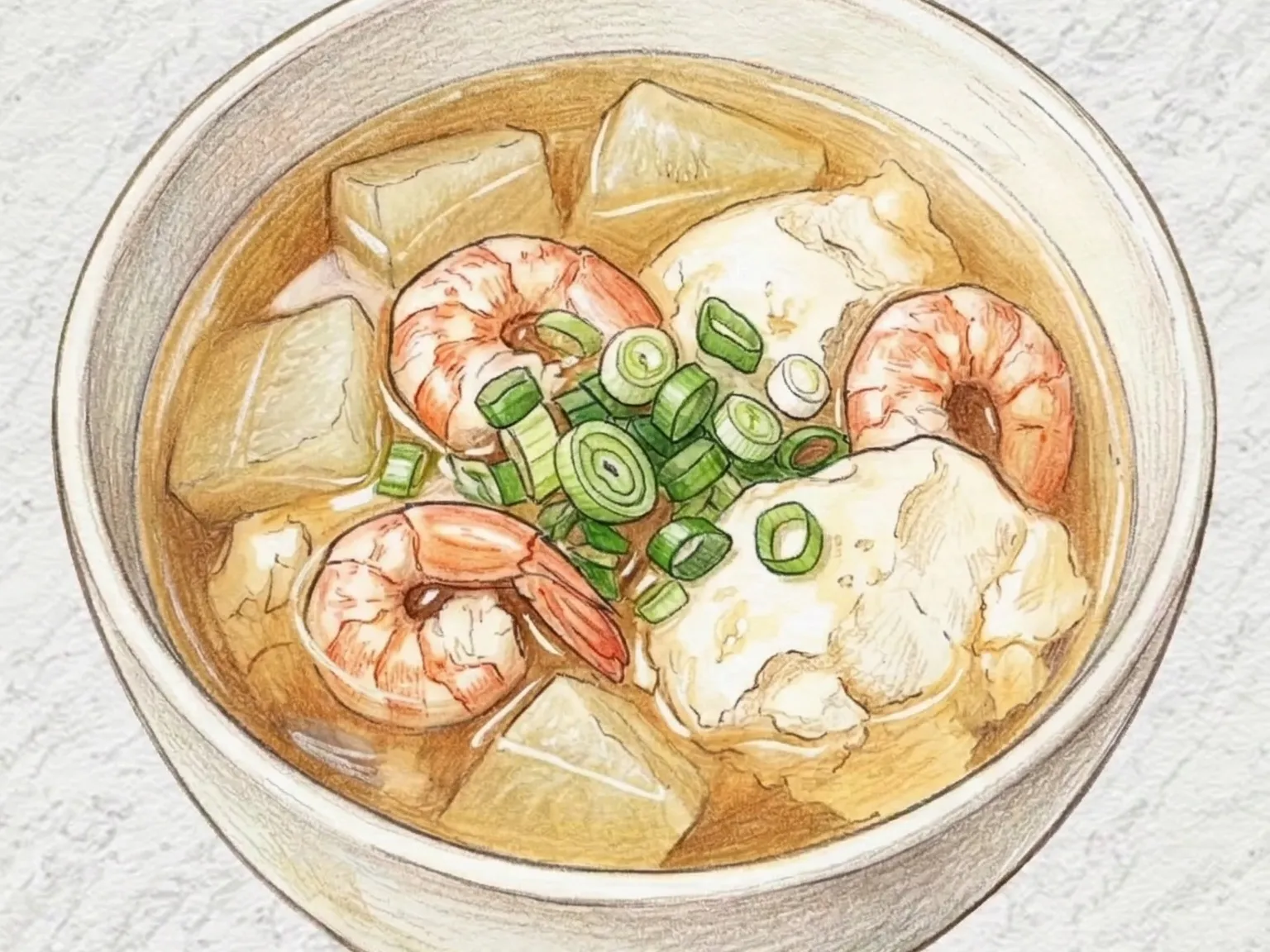
Korean Soft Tofu Shrimp Soup

Yeondubu-saeu-guk is a clear Korean soup where anchovy-kelp stock, radish, and shrimp provide the flavor, and soft tofu adds a creamy contrast. Radish simmers for eight minutes to release its natural sweetness, then peeled and deveined shrimp cook for three minutes, contributing a clean seafood taste without heaviness. Soft tofu is spooned in at the very end and heated for just two minutes so it stays intact and silky. Green onion and a touch of salt close out the seasoning, leaving a gentle, soothing bowl that works well as a light meal or alongside heavier dishes.

🏠 Everyday 🥗 Light & Healthy
Prep 15min Cook 20min 4 servings
Korean Octopus Clear Soup
Soups Medium

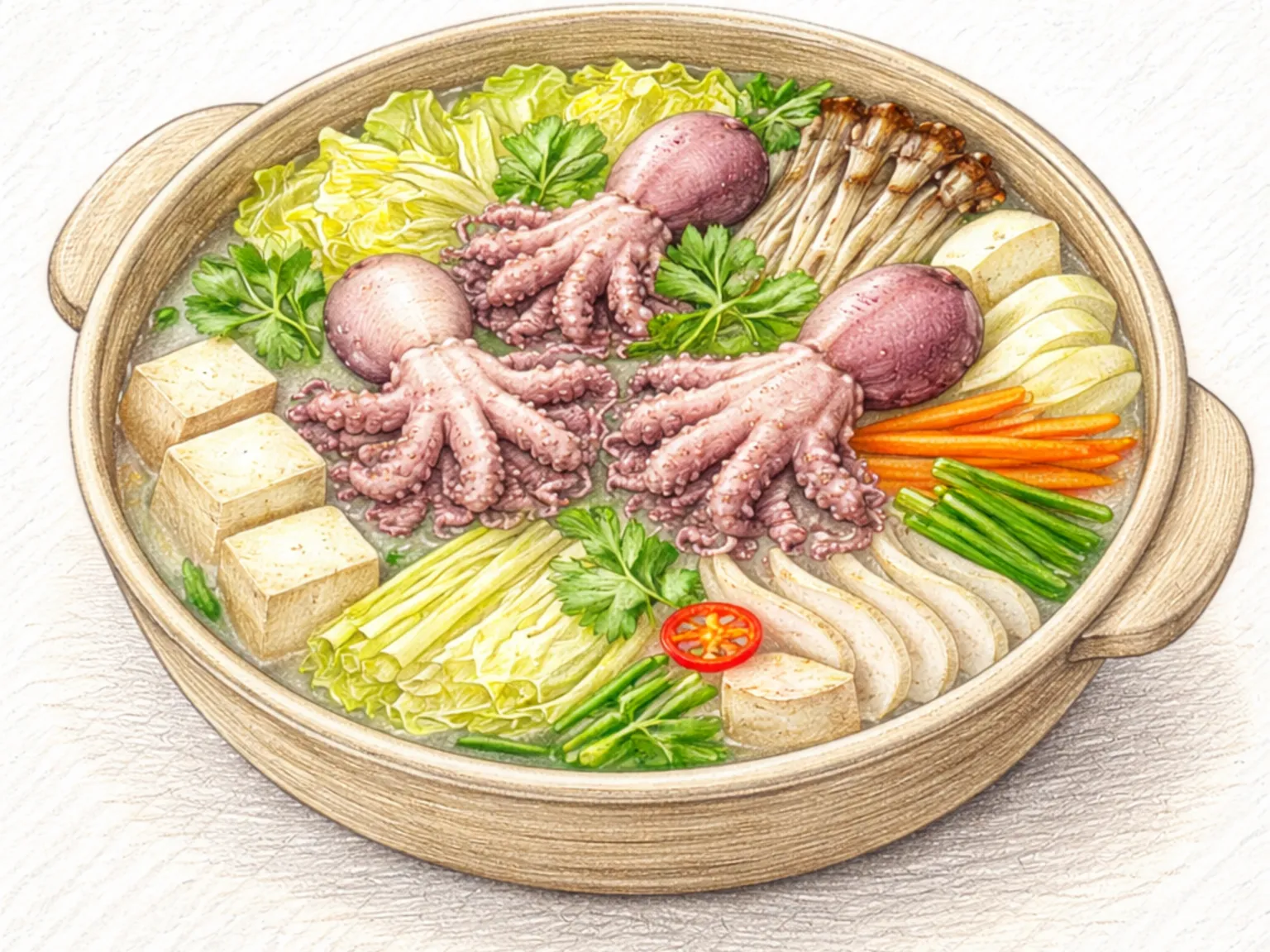
Korean Octopus Clear Soup

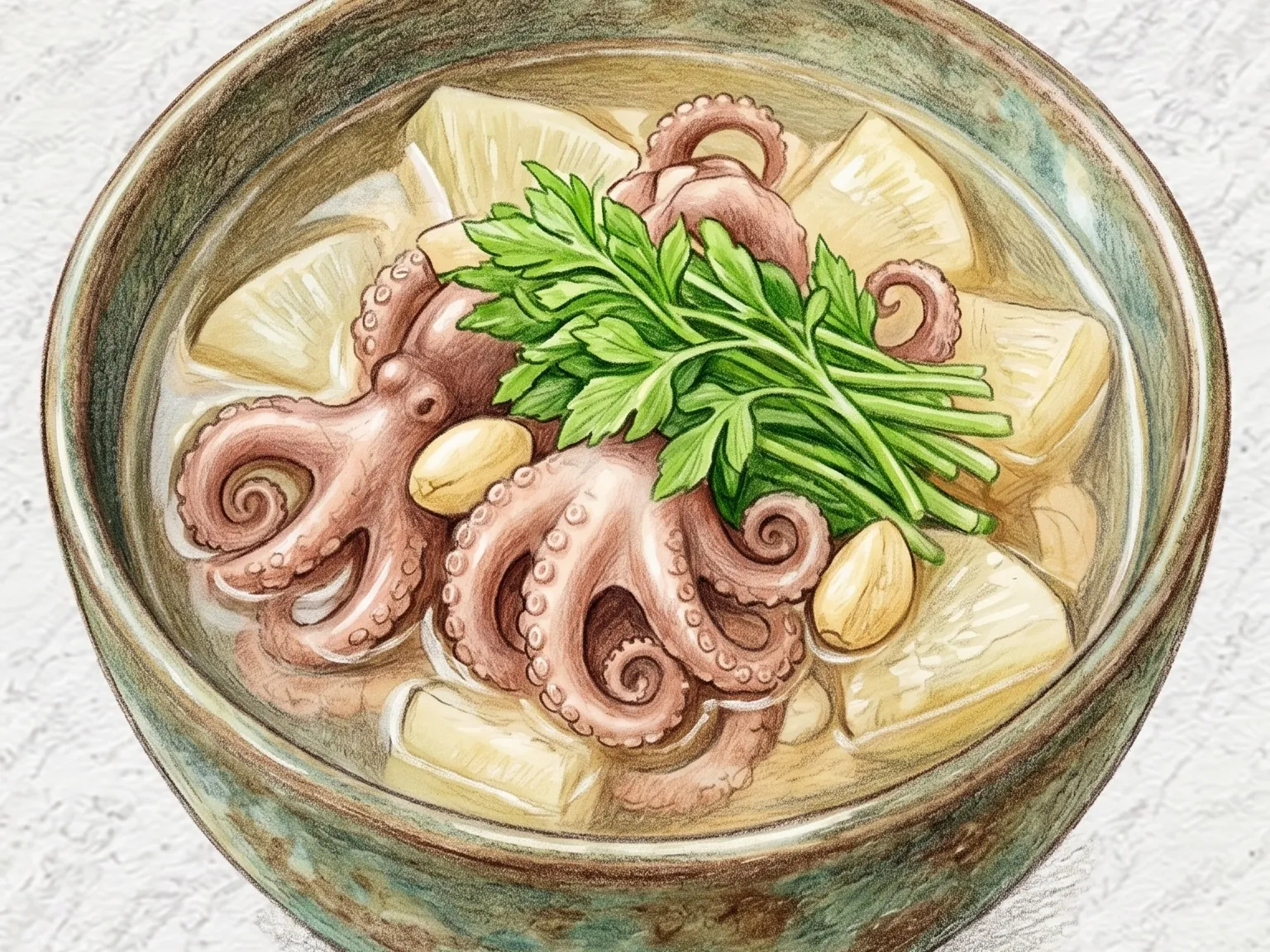
Yeonpo-tang is a Korean clear octopus soup cooked with minimal seasonings to highlight the natural qualities of its ingredients. The cooking process starts by simmering sliced Korean radish in anchovy stock for ten minutes to establish a clear and sweet vegetable base. Cleaned octopus pieces and minced garlic are then added to the boiling broth and cooked for only three minutes to prevent the seafood from turning rubbery. After adding green onions and skimming off any foam to keep the broth clear, the soup is seasoned with salt. Right before turning off the heat, water dropwort is added for twenty seconds to wilt. This introduces a fresh herbal aroma that complements the ocean flavor of the tender octopus.

🏠 Everyday 🥗 Light & Healthy
Prep 20min Cook 25min 2 servings