Recipes with korean radish

230 recipes. Page 9 of 10

Buy korean radish
Jangteo Gukbap (Korean Market-Style Spicy Beef Soup with Rice)
Soups Medium

Jangteo Gukbap (Korean Market-Style Spicy Beef Soup with Rice)

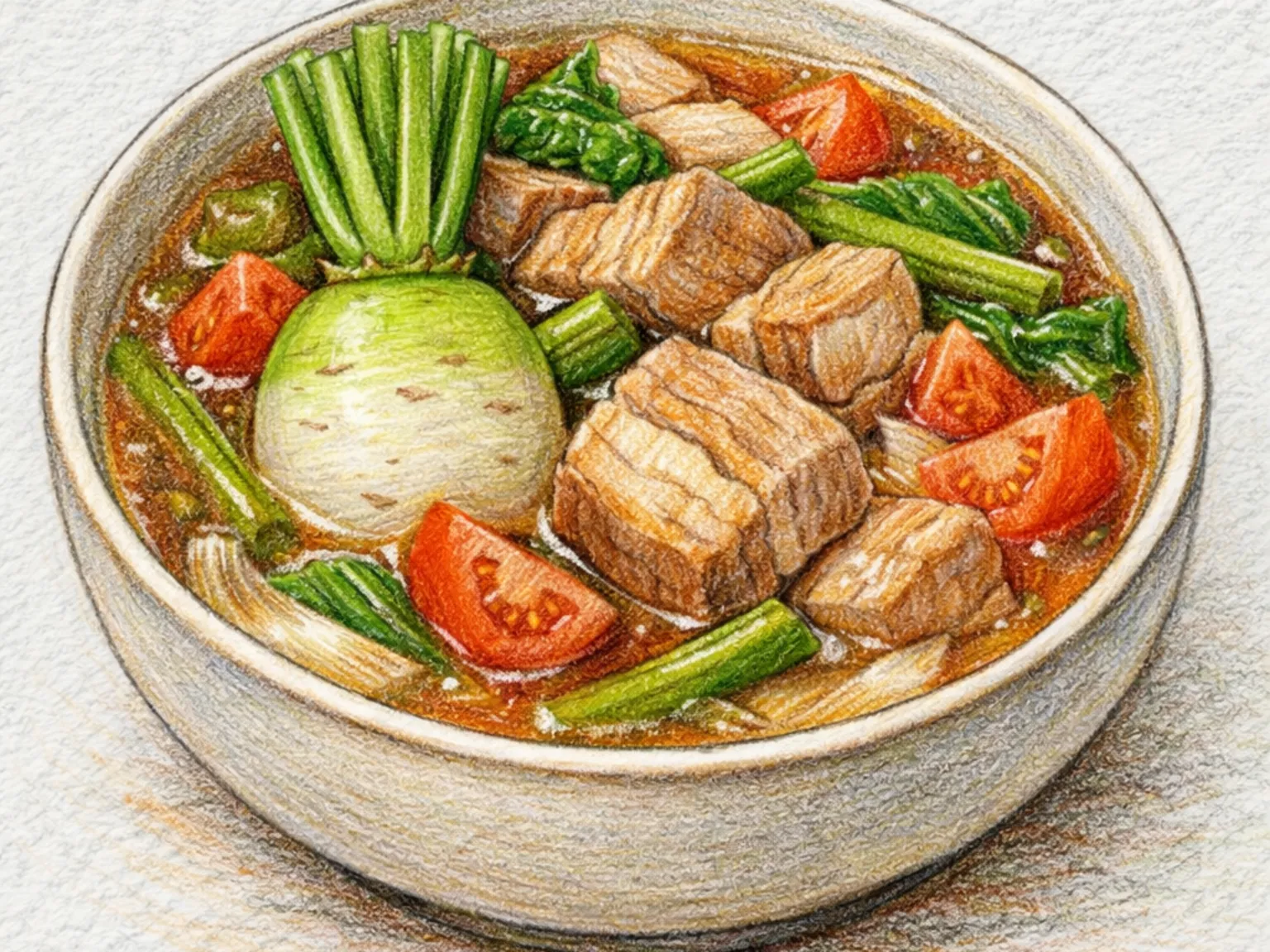
Market soup sautés beef and radish in sesame oil, briefly blooms chili without scorching, then adds water and slowly cooks greens and garlic until the scallion also becomes tender.

🏠 Everyday
Prep 20min Cook 50min 3 servings
Korean Abalone Radish Soup
Soups Medium

Korean Abalone Radish Soup

Jeonbok-muguk is a refined Korean clear soup that simmers sliced abalone and radish in kelp broth, delivering a depth of flavor far beyond the simplicity of its preparation. The cooking begins by sauteing the abalone together with its viscera in sesame oil before any liquid is added. The innards, dark green and intensely flavored, dissolve into the oil and tint the eventual broth with a faint jade color while releasing a concentrated marine umami that kelp broth alone cannot provide. Radish sliced into thin rounds cooks alongside, softening steadily until translucent and releasing a natural sweetness that counterbalances the abalone's inherent salinity. Soup soy sauce and garlic are the only additional seasonings, deliberately minimal so the abalone's character defines the soup rather than the condiments. Adding the abalone too early toughens the meat; the right moment is when the radish has turned translucent, leaving the abalone just enough time to cook through while retaining its firm, chewy bite. In Korea, abalone carries cultural weight as a gift for new mothers, the ill, and guests at formal celebrations, making this soup a gesture of care as much as a recipe. The broth that results from this combination tastes far more expensive than the effort involved.

🏠 Everyday 🥗 Light & Healthy
Prep 20min Cook 25min 2 servings
Jesa Tangguk (Ancestral Clear Beef Soup)
Soups Medium

Jesa Tangguk (Ancestral Clear Beef Soup)

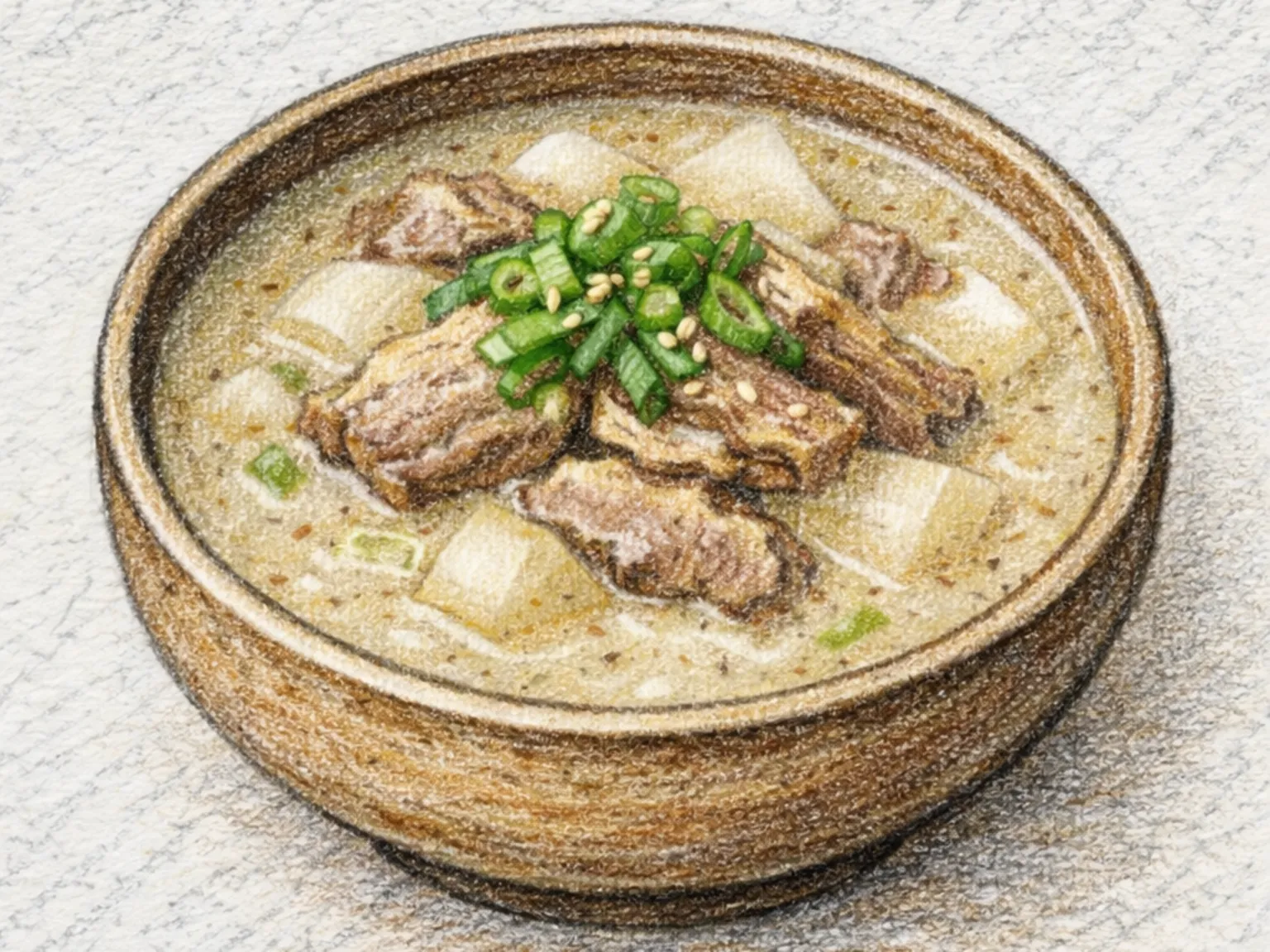
Jesa-tangguk is a traditional Korean clear soup prepared for ancestral rites and formal family gatherings. Beef brisket is first soaked in cold water for at least an hour to draw out the blood, then simmered over medium heat for an extended time to produce a clear, deeply flavored stock that forms the foundation of the entire bowl. Skimming the surface regularly during cooking keeps the broth transparent and clean-tasting. Radish cooks until nearly translucent, releasing a gentle natural sweetness into the stock, while blocks of tofu and sliced shiitake mushrooms add contrasting textures. Seasoning is limited to soup soy sauce and garlic, preserving the purity of the broth and allowing each ingredient's flavor to come through undisguised. Fat is skimmed away before serving, producing the spotless, refined finish expected of ritual food. The aesthetic matters as much as the flavor: ingredients are cut into tidy, uniform shapes and arranged with deliberate care, reflecting the reverence that is central to the jesa ritual. Beyond ceremonial occasions, jesa-tangguk is a comforting home-style soup enjoyed at holidays and family meals for its clean, balanced warmth.

🏠 Everyday 🎉 Special Occasion
Prep 20min Cook 30min 4 servings
Iwate Kenchin-jiru
Soups Hard

Iwate Kenchin-jiru

Iwate kenchin-jiru is a substantial soup in which firm cotton tofu is roughly crushed and fried in generous oil until most of its cloudy moisture cooks away. Daikon, carrot, burdock, konjac, preserved mountain vegetables, fried tofu, and bamboo shoot are then fried with it before a kombu, dried-sardine, and bonito broth is added. Unlike versions elsewhere, the northern Iwate style contains no meat and emphasizes tofu cooked into loose, crumbly pieces. It was prepared at the end of autumn farm work and for New Year, especially in large batches during the Little New Year period so women could rest and reheat it. An overnight rest lets the soy-seasoned broth penetrate the many vegetables more deeply.

🏠 Everyday 🎉 Special Occasion
Prep 45min Cook 70min 6 servings
Kenojiru (Tsugaru Root Vegetable and Soybean Soup)
Soups Hard

Kenojiru (Tsugaru Root Vegetable and Soybean Soup)

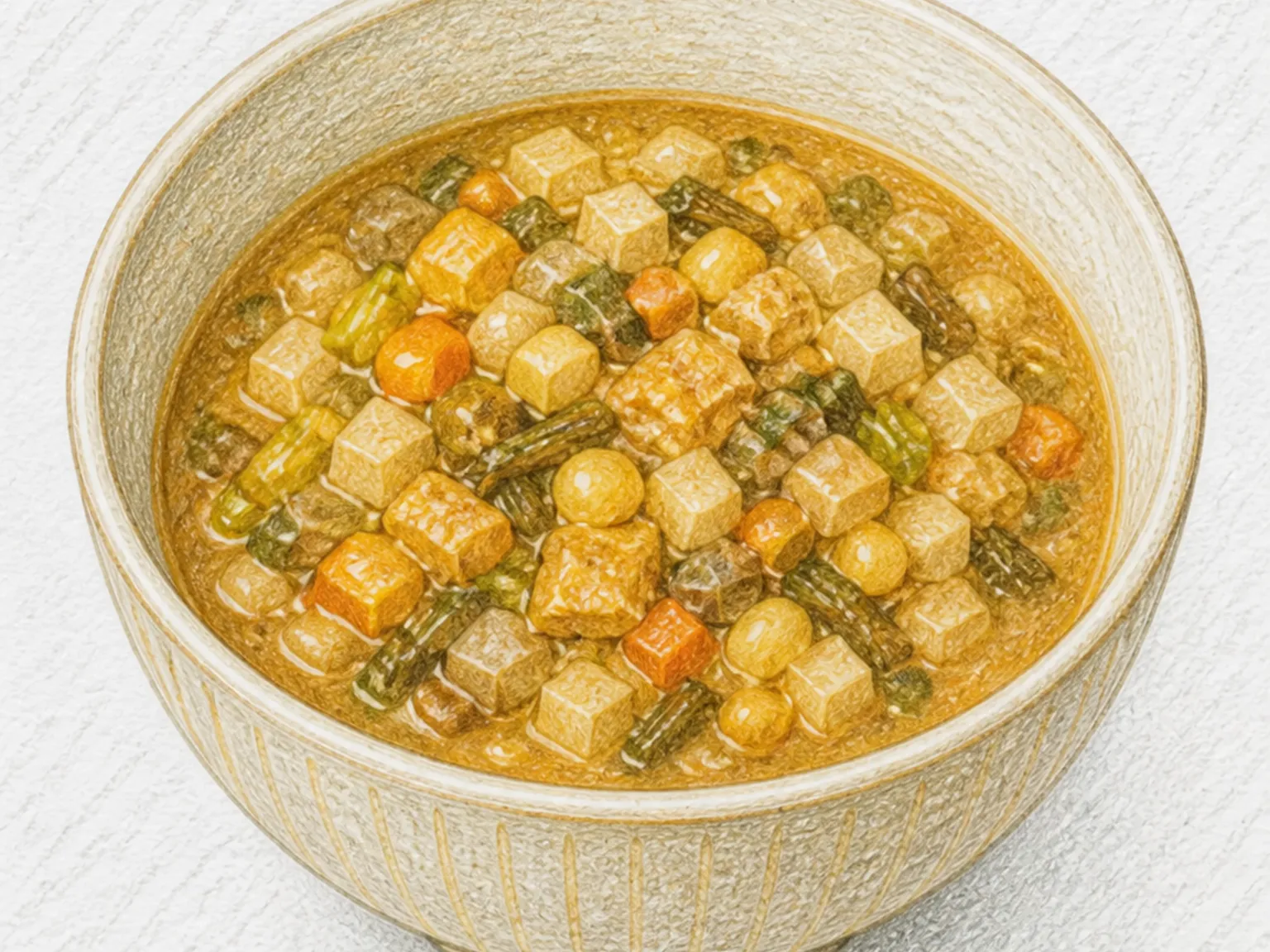
Kenojiru is a Tsugaru Little New Year soup from Aomori. Daikon, carrot, burdock, prepared bracken and butterbur, aburaage, freeze-dried tofu, soybeans, and kombu are diced to about 5mm so the pieces resemble grains of rice, then simmered with red miso. Part of the cooked soybeans is mashed into zunda, giving the broth gentle body. Cook firm roots first, cool the large batch promptly, and reheat only the portion being served.

🎉 Special Occasion
Prep 120min Cook 100min 10 servings
Korean Bean Sprout Dried Pollock Soup
Soups Easy

Korean Bean Sprout Dried Pollock Soup

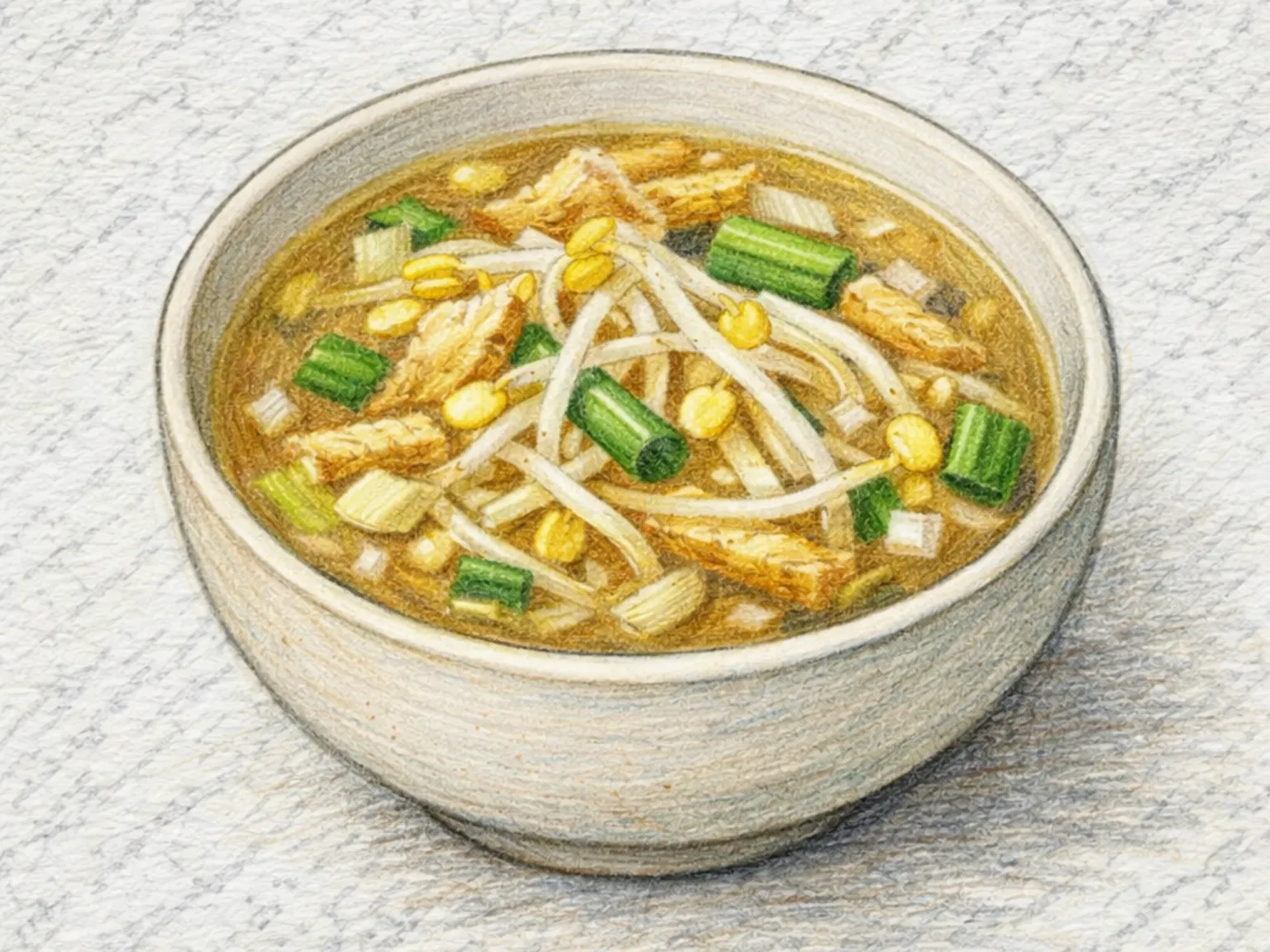
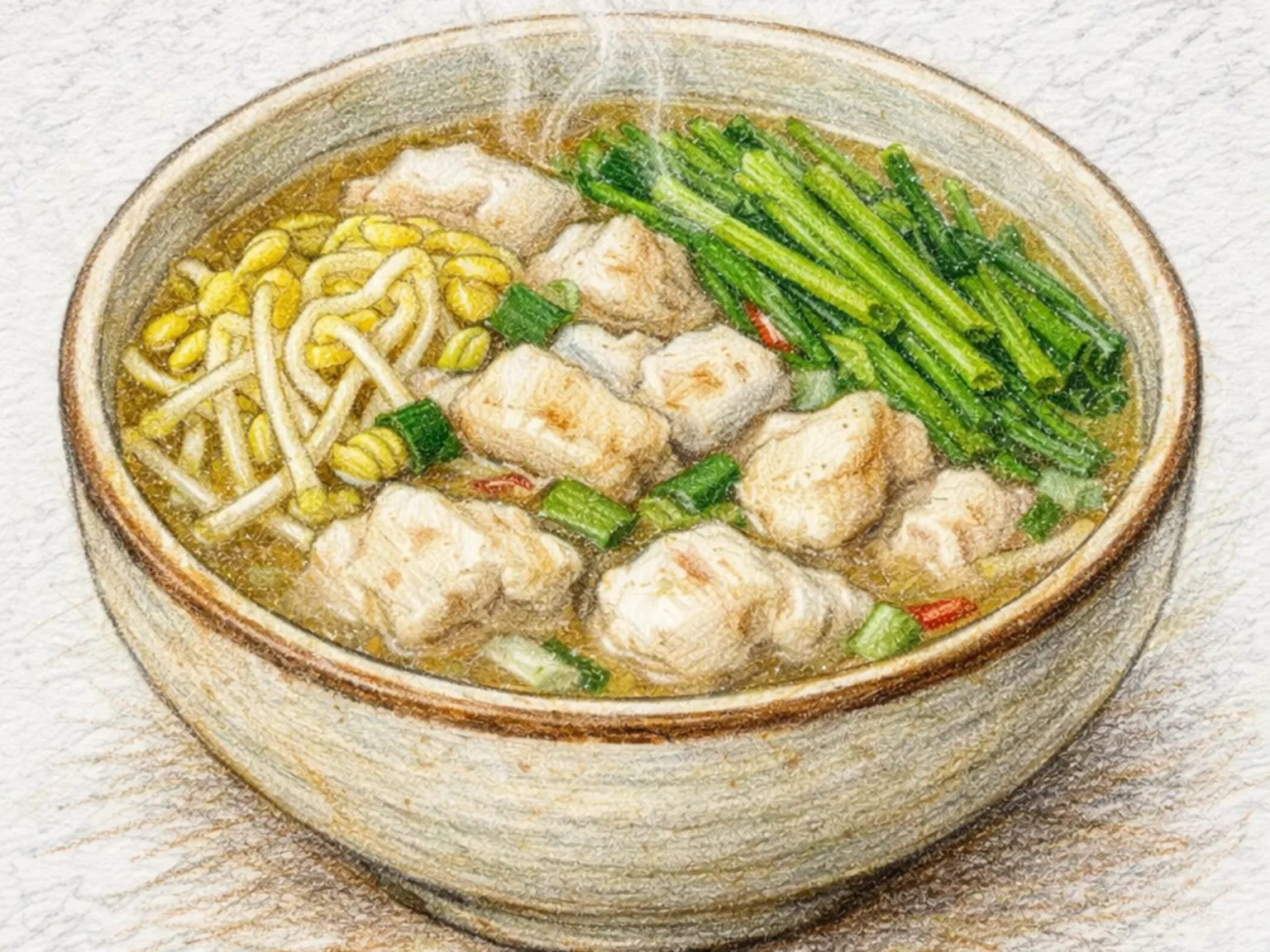
Kongnamul-hwangtae-guk pairs dried pollock strips with soybean sprouts in a clear broth that is widely eaten as a morning-after remedy. The pollock is toasted briefly in sesame oil to coax out a nutty, savory aroma before radish slices and water are added for ten minutes of simmering, which forms the foundational stock. Rinsing the pollock quickly in cold water rather than soaking it for a long time keeps the strands pleasantly chewy rather than soft and falling apart. Bean sprouts and minced garlic are added uncovered for five more minutes: leaving the lid off is essential, as the open steam carry away the raw beany smell while preserving the sprouts' characteristic crunch. Soup soy sauce and a pinch of salt finish the seasoning, and sliced green onion goes on just before serving. The broth turns a milky, pale white as the pollock proteins leach into the liquid, which is the visual marker of a properly cooked bowl.

🏠 Everyday 🥗 Light & Healthy
Prep 10min Cook 20min 2 servings
Kyanokko-jiru (Akita Vegetable and Bean Soup)
Soups Hard

Kyanokko-jiru (Akita Vegetable and Bean Soup)

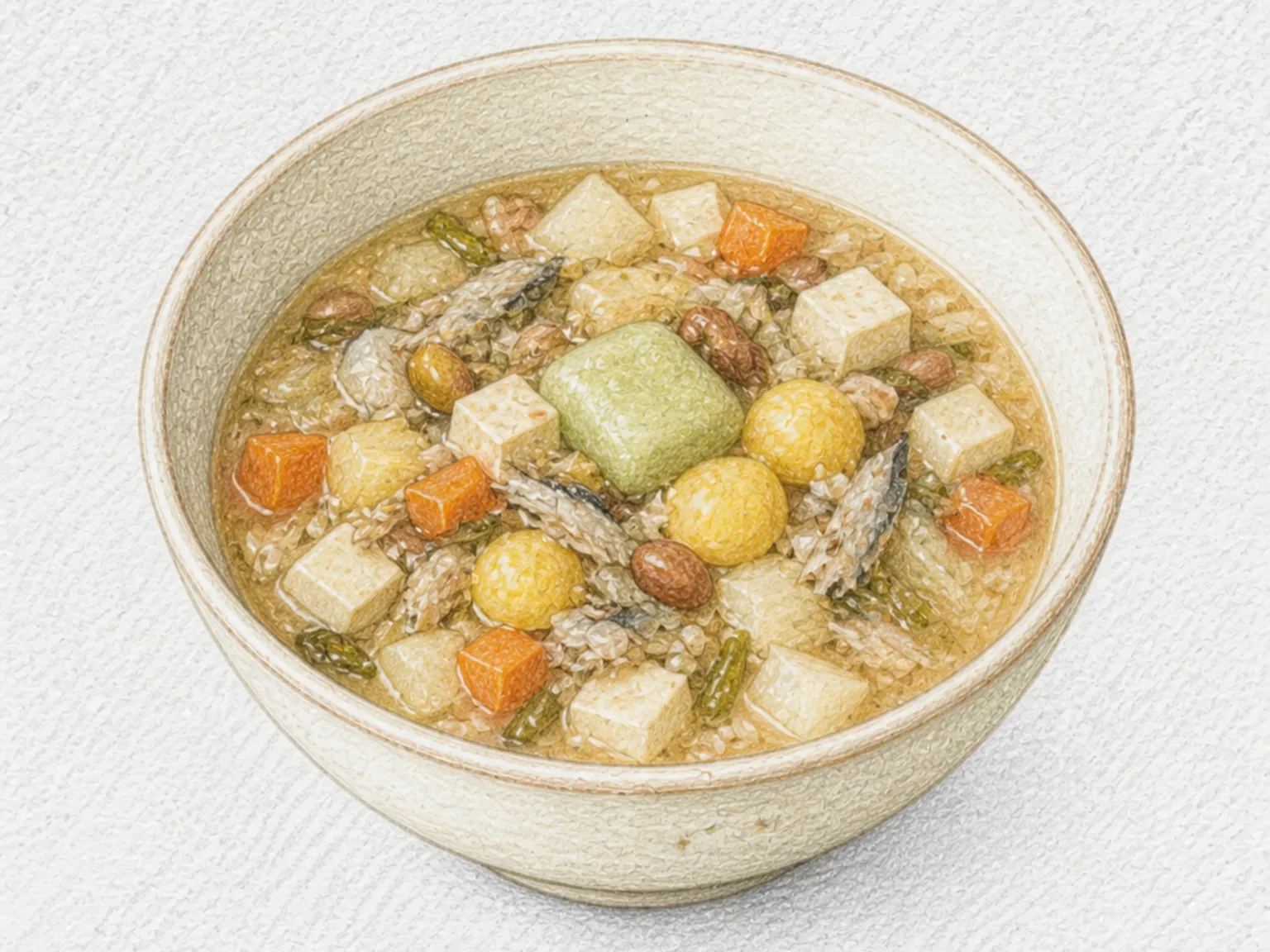
Kyanokko-jiru is an Akita Little New Year soup of finely diced daikon, carrot, potatoes, yam, prepared mountain vegetables, tofu, kidney beans, and chestnuts simmered in bonito, kombu, and dried sardine stock with miso. Akita's distinguishing addition is yaki-zunda, small grilled cakes kneaded from green soybean flour and glutinous rice flour. Add the many ingredients according to cooking time, then chill this large batch promptly and reheat only the portion being served.

🎉 Special Occasion
Prep 90min Cook 150min 20 servings
Korean Seaweed and Oyster Soup
Soups Easy

Korean Seaweed and Oyster Soup

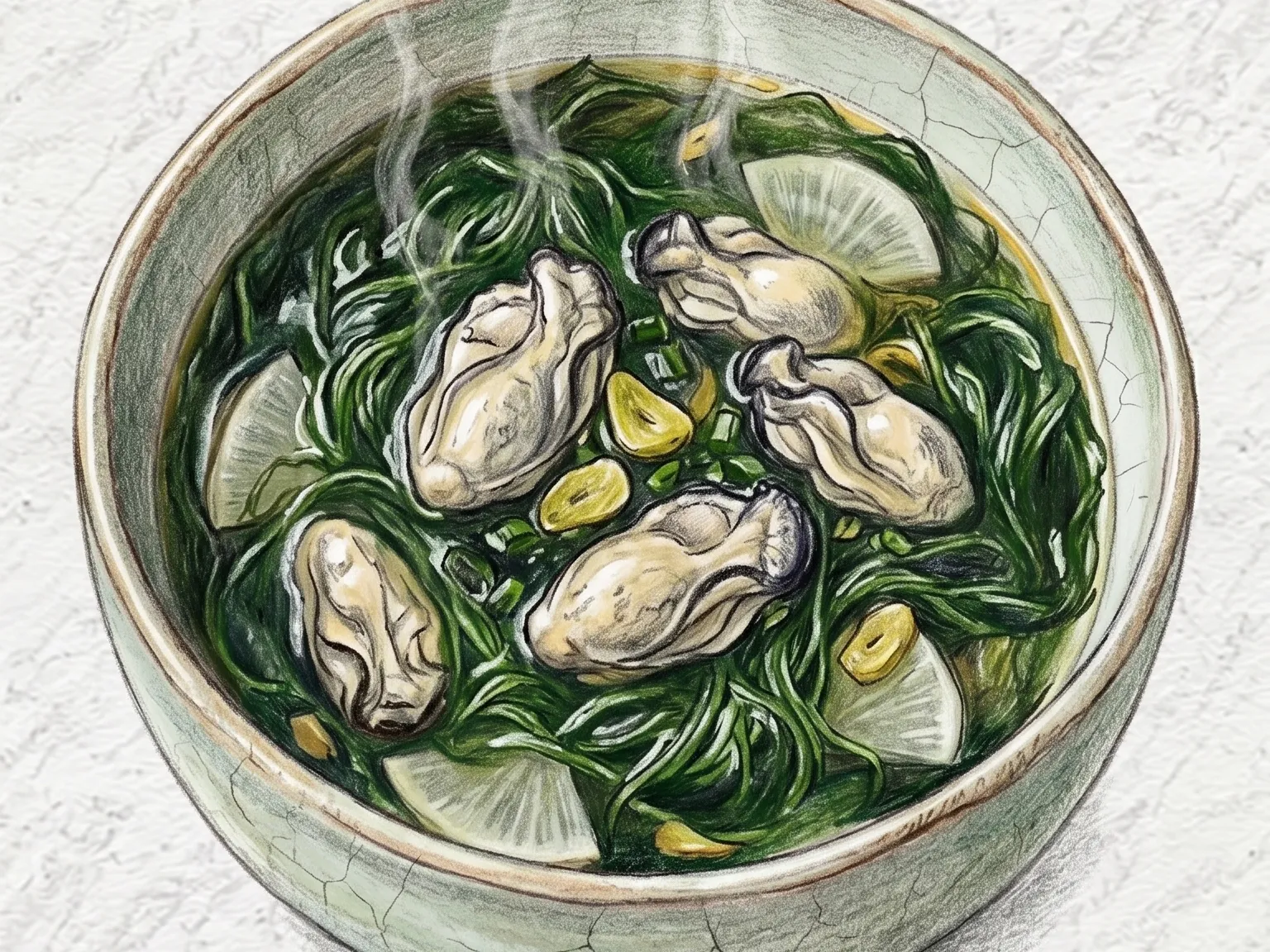
Maesaengi-gul-guk is a light winter soup pairing two peak-season ingredients, capsosiphon seaweed and fresh oysters, that together produce a broth with an intense marine character neither delivers alone. Julienned radish and garlic are sauteed in sesame oil first to coax out sweetness, then water is added and brought to a boil before the oysters go in for three minutes. The oysters release their brininess into the stock, building the flavor base without any additional seasoning beyond soup soy sauce and a pinch of salt. The seaweed is added last and simmered for only two minutes, just long enough for it to soften while retaining its silky texture and faint oceanic scent. Both ingredients are best from November through February, so the soup is at its peak during those winter months. Because the oysters contribute significant salt on their own, seasoning should be done gradually at the end to avoid oversalting. The soup is warming and easy to digest, making it a natural fit for recovery meals and winter breakfasts.

🏠 Everyday 🥗 Light & Healthy
Prep 15min Cook 12min 2 servings
Maeuntang (Spicy White Fish Radish Stew)
Soups Medium

Maeuntang (Spicy White Fish Radish Stew)

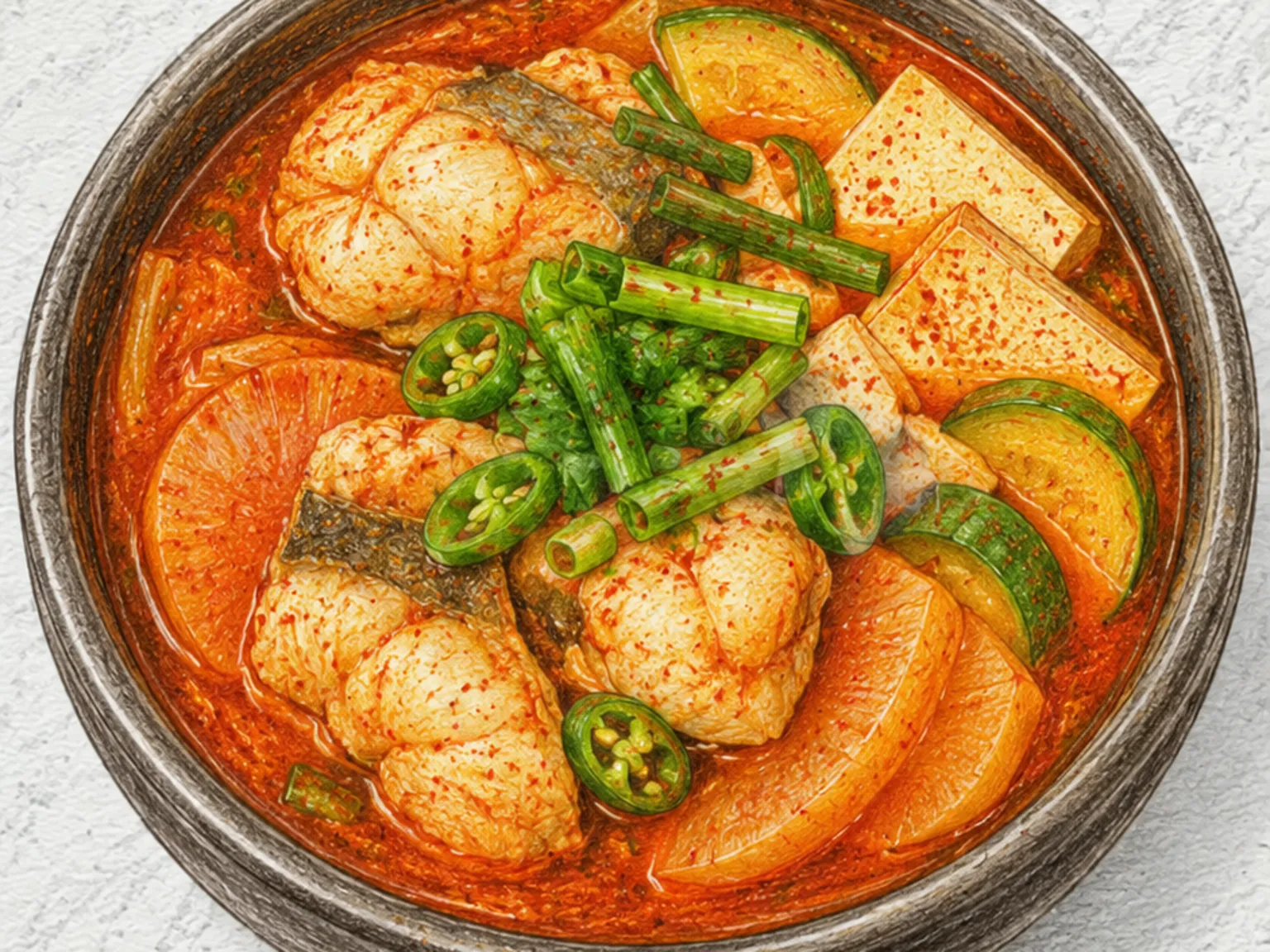
Maeuntang is a traditional Korean spicy fish stew centered on white-fleshed fish such as cod or frozen pollock. The fish is salted for ten minutes before cooking, which draws out excess moisture and the compounds responsible for fishiness, resulting in a cleaner-tasting broth. Radish goes into the pot first and simmers until its clean, mild sweetness dissolves into the water, forming the base. Gochujang, gochugaru, soup soy sauce, and minced garlic are then stirred in to build the spiced, savory broth. The fish and tofu are added together and cooked for ten minutes without being turned over. Instead, hot broth is repeatedly ladled over the top surface so the fish cooks evenly without the flesh breaking apart. Zucchini, green onion, and cheongyang chili are added in the final three minutes to preserve their color and slight crunch. A half tablespoon of doenjang stirred in at the end adds a secondary layer of umami that deepens and rounds out the broth considerably.

🏠 Everyday 🥗 Light & Healthy
Prep 15min Cook 25min 2 servings
Spicy Catfish Stew
Soups Medium

Spicy Catfish Stew

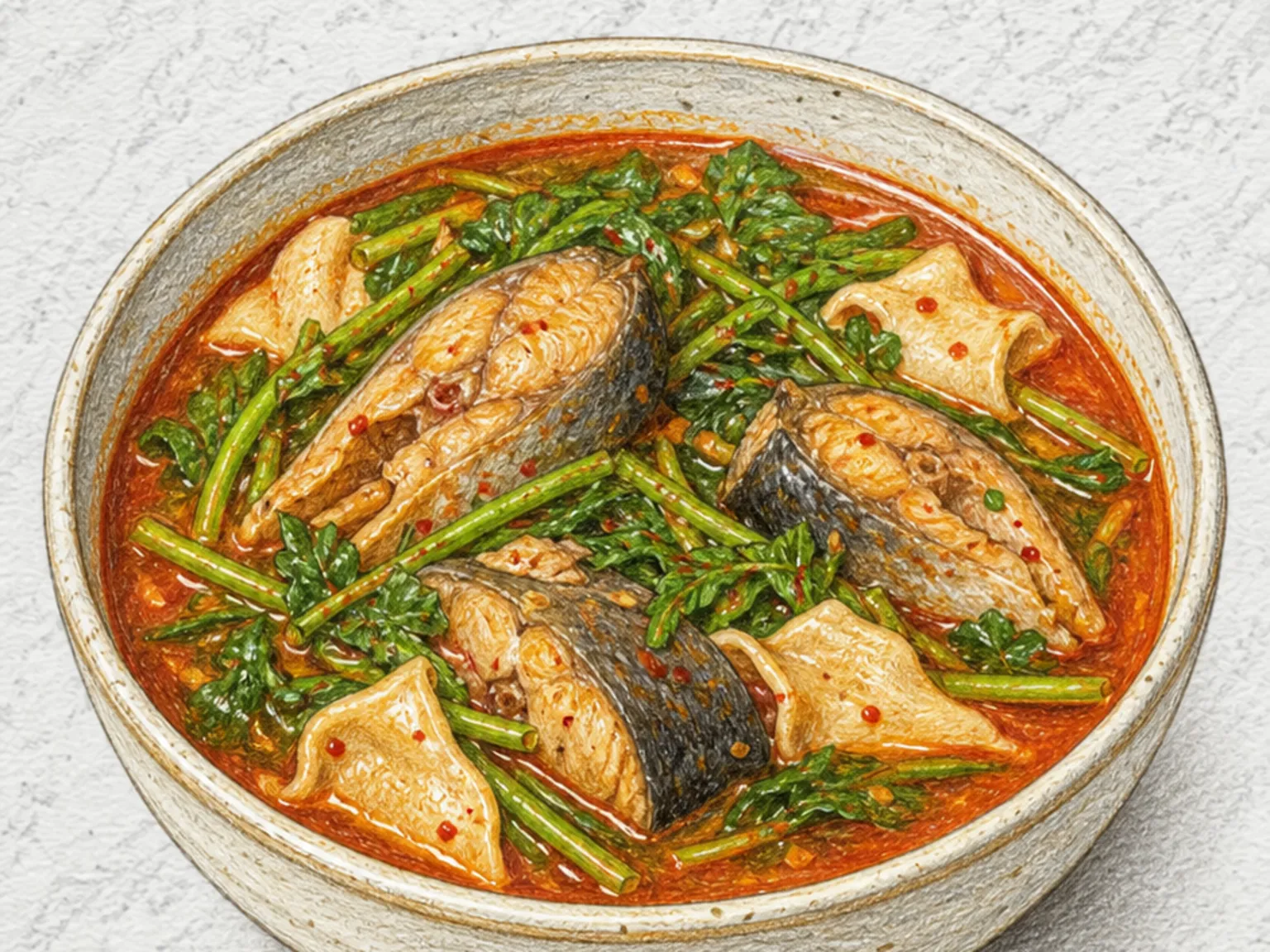
A spicy Korean freshwater fish stew made with tender catfish, fragrant water dropwort, hand-torn dough flakes, and a rich gochujang broth.

🍺 Bar Snacks
Prep 20min Cook 40min 4 servings
Korean Sea Squirt Soybean Paste Soup
Soups Medium

Korean Sea Squirt Soybean Paste Soup

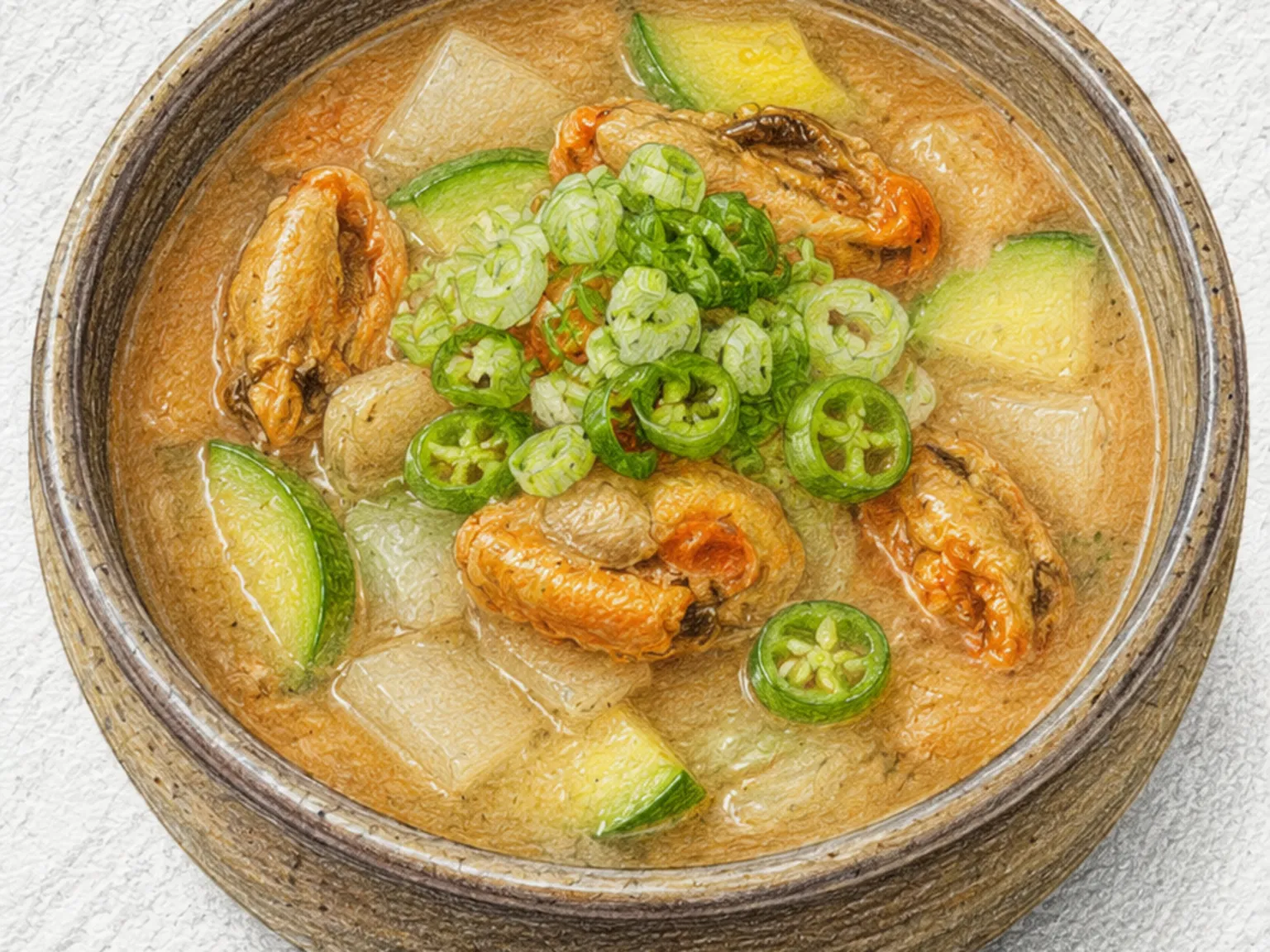
Mideodeok-doenjang-guk is a Korean soybean paste soup made with sea squirt, one of the more unusual and intensely flavored combinations in everyday Korean cooking. Sea squirt, called mideodeok in Korean, belongs to the same class of sea creatures as the better-known meongge. What sets it apart is the small pocket of brine inside its leathery outer skin. When bitten, the skin pops and releases a burst of concentrated ocean liquid that spreads through the surrounding broth. Combined with the fermented earthiness of doenjang, this creates a double layer of umami that lingers well past the last spoonful. The soup is built on anchovy-kelp stock, which reinforces the seafood character and keeps the base clean. Doenjang is stirred in once the stock is fully boiling so it dissolves evenly without losing its fermented depth. Radish and zucchini are added to balance the intensity: both vegetables absorb the strong flavors of the broth while contributing a quiet sweetness. One or two Cheongyang chili peppers provide a clean, building heat that cuts through any richness. Generous sliced green onion added just before serving keeps the finish bright and aromatic. Sea squirt should not be scored or cut before the soup is finished, as breaking the skin early causes the inner liquid to drain away into the pot rather than releasing inside the mouth. Along the southern coast of South Korea, particularly in Tongyeong and Geoje where mideodeok is harvested in large quantities, this soup is ordinary home cooking. Elsewhere it is a deliberate seasonal choice, best in late spring and early summer.

🏠 Everyday 🥗 Light & Healthy
Prep 12min Cook 18min 2 servings
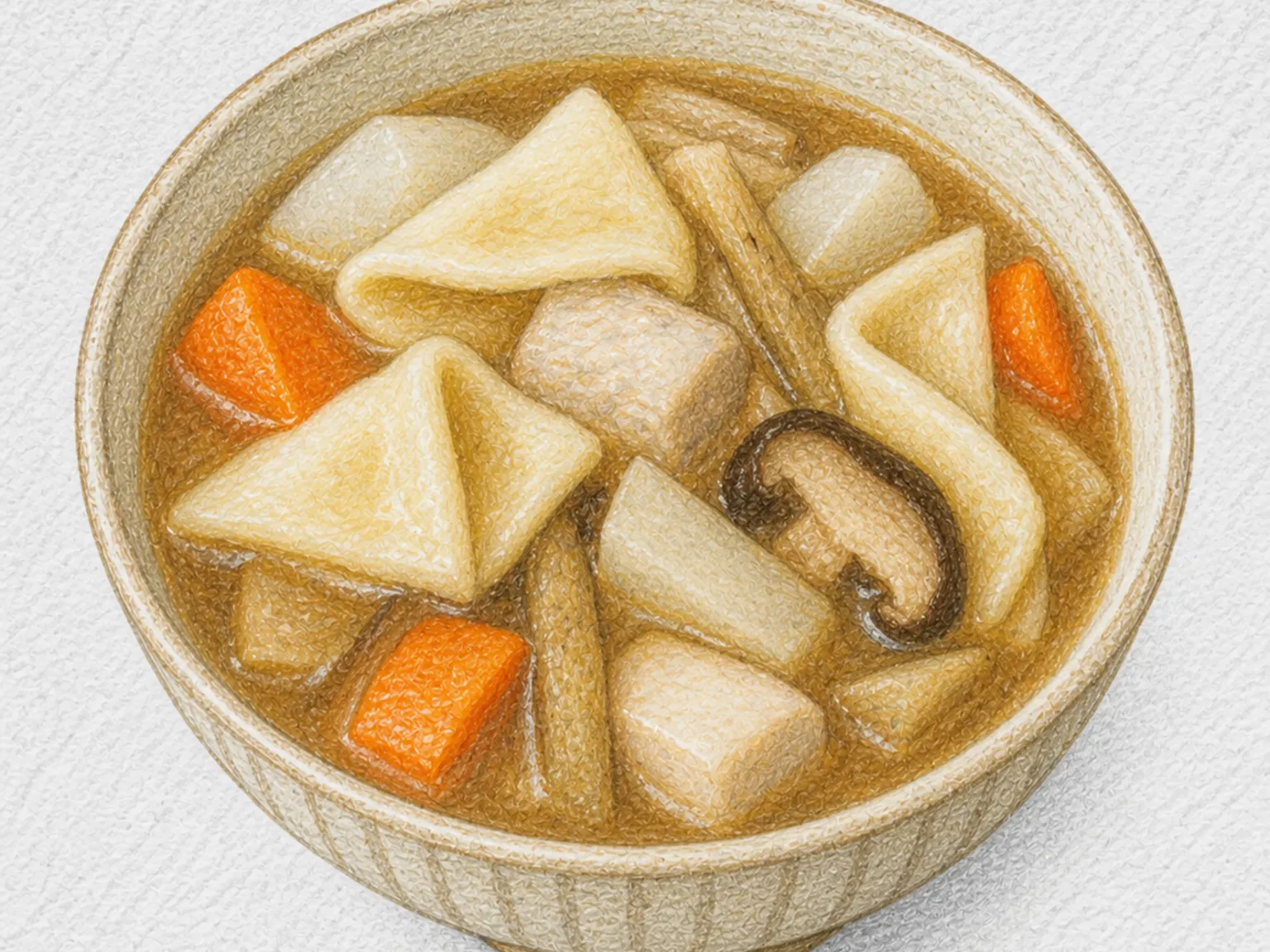
Mimi (Folded Wheat Dumplings in Miso Soup)
Soups Hard

Mimi (Folded Wheat Dumplings in Miso Soup)

Mimi is a regional soup from Jikkoku in Fujikawa, Yamanashi. Wheat dough is rolled thin, cut into 5cm squares, and joined at two corners on one side to form small scoops before being cooked directly in miso broth with daikon, carrot, taro, burdock, and shiitake. The scoop is associated with gathering good fortune, so the dish is offered on New Year's morning and at celebrations. The pasta is not boiled separately; its flour lightly thickens the soup, and the folded seam must cook completely through.

🎉 Special Occasion
Prep 45min Cook 35min 5 servings
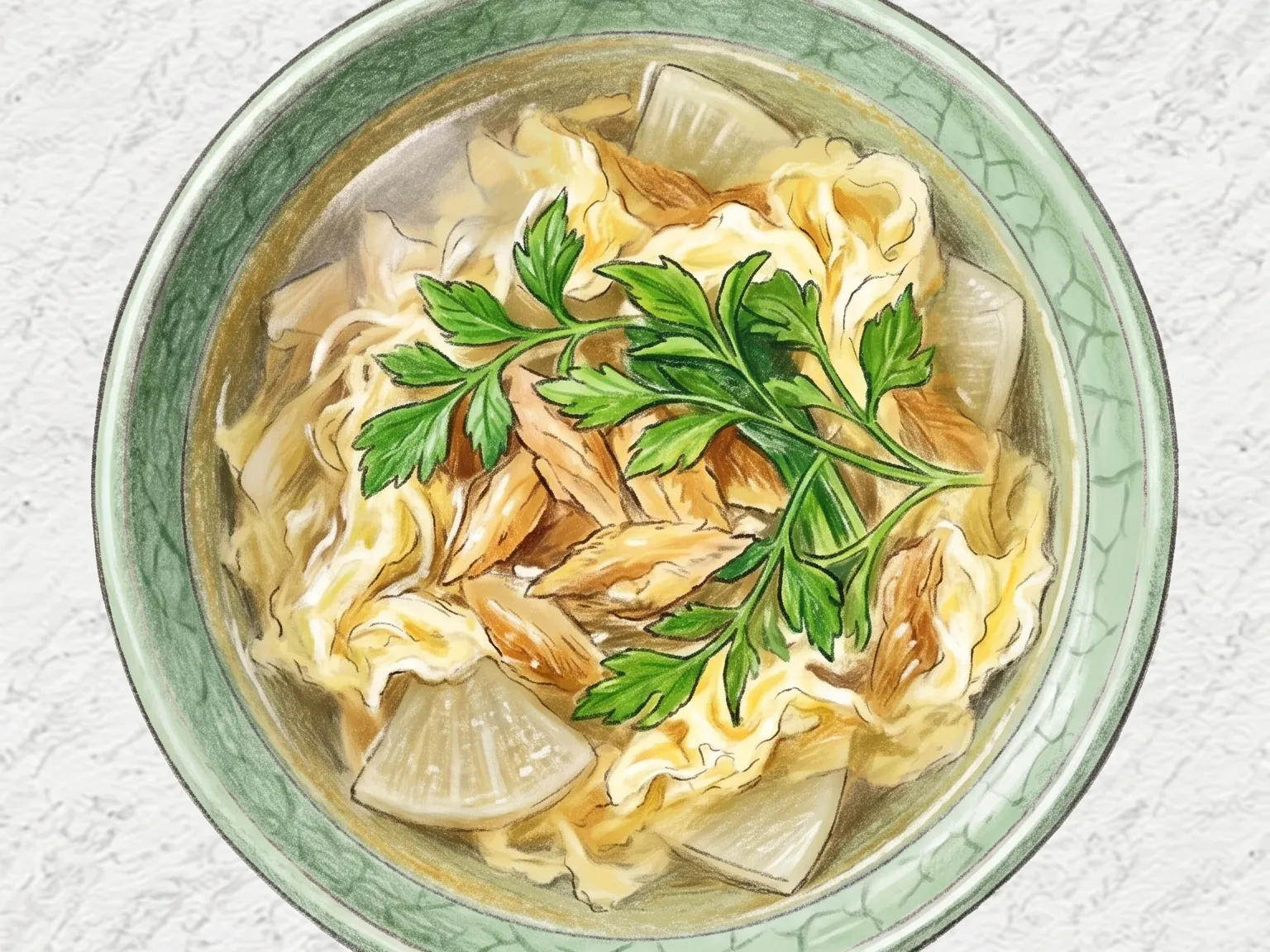
Korean Dried Pollock & Water Parsley Soup
Soups Easy

Korean Dried Pollock & Water Parsley Soup

This soup begins with dried pollock strips - stir-fried in sesame oil until golden and deeply fragrant - then simmered in water to draw out a clear, nutty broth that carries the unmistakable aroma of toasted sesame and cured fish. Water dropwort goes in at the very end, contributing a fresh green lift that counterbalances the richness of the pollock. A beaten egg is swirled into the simmering liquid, forming delicate ribbons that soften the broth's texture. Radish slices, added early, sweeten the stock gently in the background. The seasoning stays simple: soup soy sauce, garlic, and salt if needed, keeping the flavor profile clean and digestible. In Korea, this style of pollock soup is regarded as one of the best remedies for a hangover because the amino acids in dried pollock and the hydrating broth are believed to support liver recovery. Morning vendors near traditional markets sell bowls of it to customers who arrive before the sun is fully up. The addition of minari elevates what is already a restorative soup into something that smells and tastes distinctly of spring.

🥗 Light & Healthy 🏠 Everyday
Prep 15min Cook 25min 4 servings
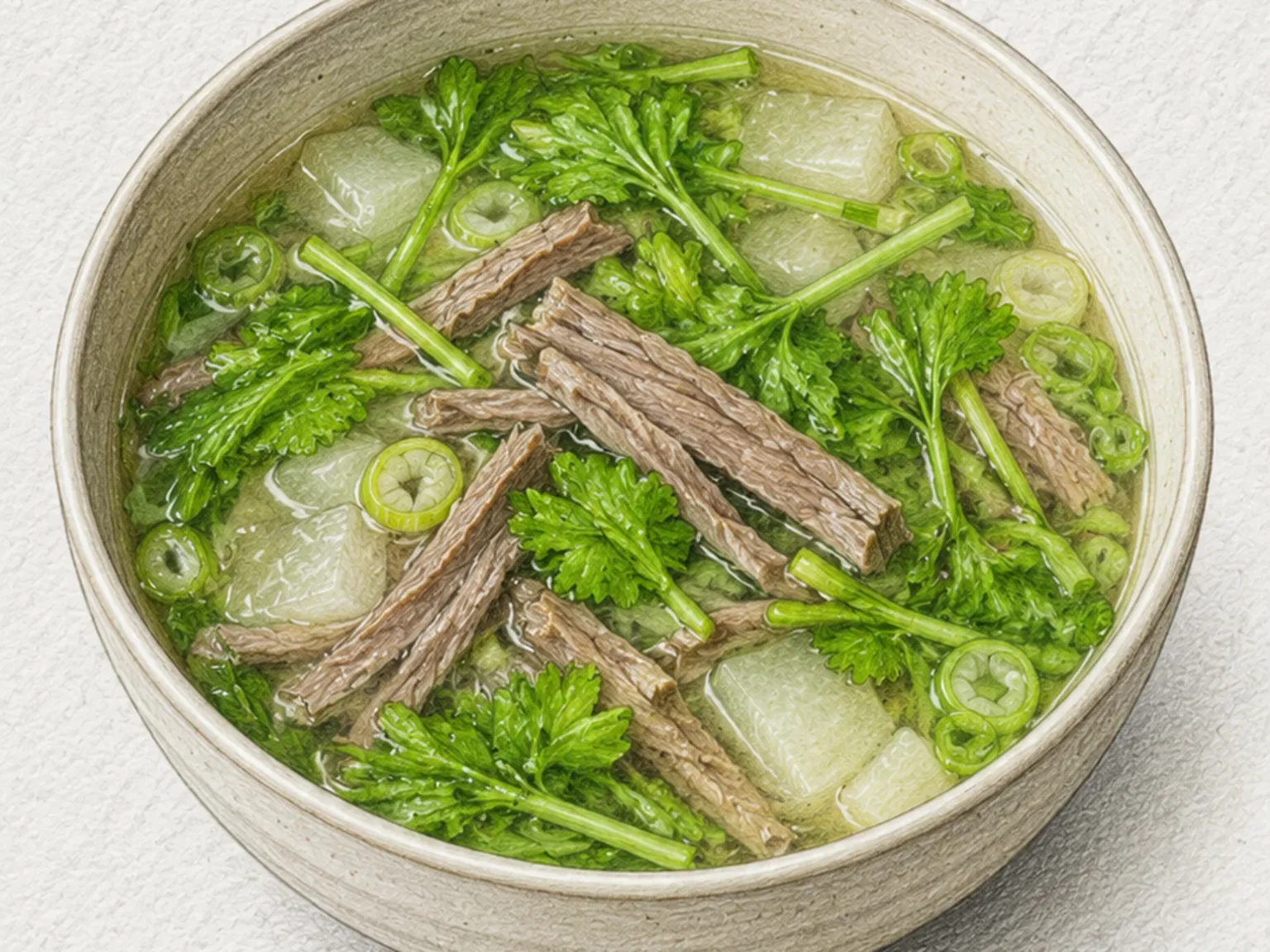
Korean Beef & Water Parsley Soup
Soups Easy

Korean Beef & Water Parsley Soup

Minari-soegogi-guk is a clear beef soup that relies on a slow-simmered brisket broth for depth and finishes with a handful of water dropwort for aromatic brightness. The brisket cooks low and long until the stock turns golden and rich with dissolved collagen and beef fat, creating a full-bodied foundation. Radish simmers alongside the meat, contributing a quiet sweetness that rounds out the beefy intensity. When the broth is ready, water dropwort - stems and leaves - is added just before serving so it wilts only slightly, keeping its signature fragrance alive. Green onion and garlic provide the aromatic backbone, while seasoning stays lean: salt or soup soy sauce, nothing more. The boiled brisket is typically sliced thin and returned to the bowl, or pulled aside and served with a soy-vinegar dipping sauce. During spring, when water dropwort is young and fragrant, this soup reaches its peak expression. It is a dish that demonstrates how Korean cooking often pairs a slow, patient stock with a single bright ingredient added at the last moment to transform the entire bowl.

🏠 Everyday
Prep 15min Cook 25min 2 servings
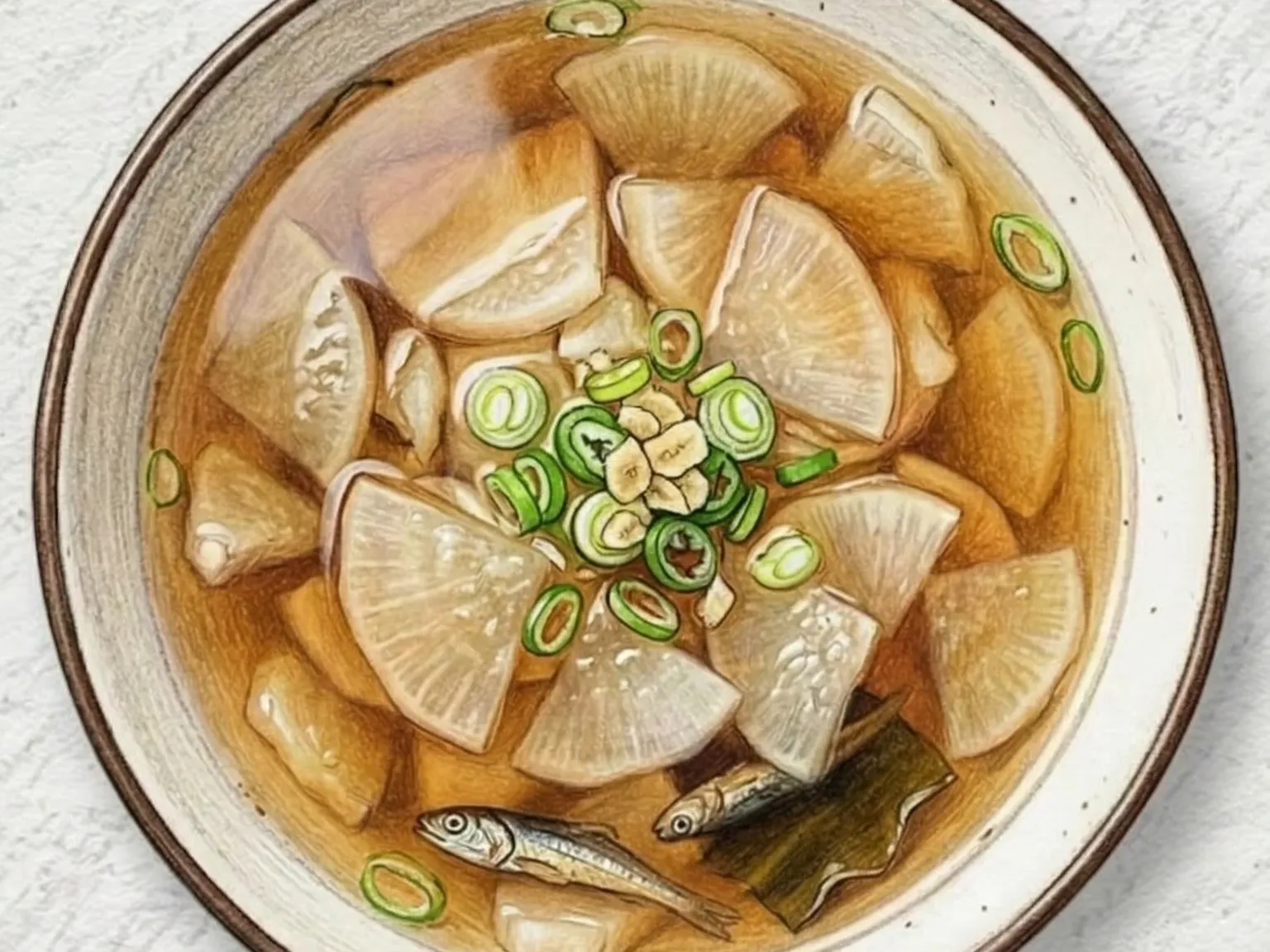
Muguk (Korean Radish Anchovy Broth Soup)
Soups Easy

Muguk (Korean Radish Anchovy Broth Soup)

Muguk is the most elemental expression of Korean soup: radish cut generously and simmered in anchovy-kelp stock until the broth runs clear, sweet, and gently savory. The simplicity of the ingredient list is deceptive. As the radish cooks, its starch and natural sugars dissolve into the water, building a broth that tastes mild on the surface but carries real depth underneath. Cutting the radish in thick cubes or wide slabs preserves its shape through the long simmer while allowing the interior to soften completely. Slicing too thin causes the radish to disintegrate and the broth to turn cloudy. Seasoned with nothing more than soup soy sauce, garlic, and sliced green onion, muguk is versatile enough to sit beside any banchan without competing. It serves equally well as a framework: add beef strips and it becomes sogogi-muguk, add dried pollock and it becomes hwangtae-muguk, swap the soup soy for salted shrimp and the character shifts toward briny and refreshing. All that is needed to start a pot are a single radish, a handful of dried anchovies, and a strip of dried kelp, which is why Korean households return to this soup more frequently than almost any other. Reheated the next day, the radish softens further and the broth deepens, making leftovers better than the original.

🏠 Everyday 🥗 Light & Healthy
Prep 10min Cook 25min 2 servings
Korean Pacific Codlet Soup
Soups Medium

Korean Pacific Codlet Soup

Mulmegi-tang is a winter-only Korean fish soup made with the Pacific sailfin sandfish, a gelatinous deep-water species caught along the East Sea coast from December through February. The fish has extraordinarily soft flesh that nearly dissolves into the broth during cooking, releasing natural gelatin that gives the liquid a silky, slightly sticky body unlike any other Korean soup. The broth cools into a jelly-like consistency at room temperature, which reflects just how much collagen the fish contributes to the pot. Bean sprouts add crunch and a clean vegetal note, while water dropwort neutralizes any fishiness and brings its signature herbal fragrance. The soup is made without fermented pastes of any kind - just salt, garlic, and green onion - so the pure, mild flavor of the fish remains at the center. Locals in Gangwon-do and the northern Gyeongsang coast regard this as the finest hangover remedy of the cold months, served boiling in earthenware pots at small harbourside restaurants. Mulmegi-tang is a dish Koreans travel specifically to eat during its short winter window, and the anticipation that comes with its limited availability is part of what makes it worth the trip.

🏠 Everyday 🥗 Light & Healthy
Prep 20min Cook 30min 2 servings
Naejang-tang (Spicy Mixed Beef Tripe Soup)
Soups Hard

Naejang-tang (Spicy Mixed Beef Tripe Soup)

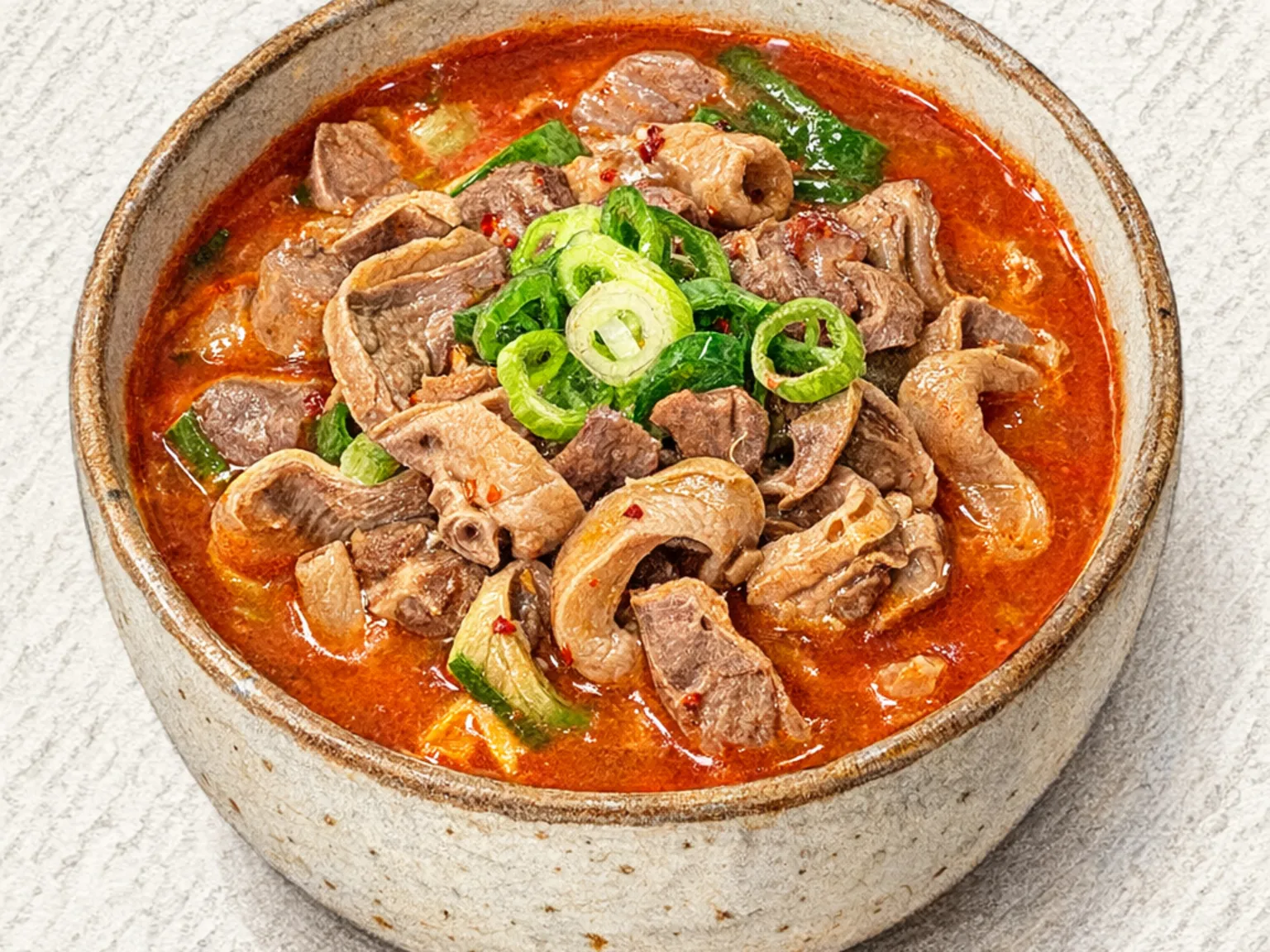
Naejang-tang is a Korean offal soup that simmers a combination of beef innards including large intestine, tripe, abomasum, and omasum together with gochugaru, gochujang or doenjang, generous amounts of garlic, and green onion into a thick, aggressively seasoned broth. Each organ contributes a distinct texture to the bowl: the small intestine is chewy and springy, the large intestine is fatty and yielding, and the stomach linings are firm with a near-crunchy resistance that gradually releases umami as it is chewed. Long cooking renders the intramuscular fat and collagen from the innards directly into the broth, producing a body and richness that cannot be replicated by shorter-cooked, leaner soups. Some versions incorporate seonji, coagulated ox blood, cooked alongside the other organs; it darkens the broth significantly and introduces a mineral, iron-forward depth that distinguishes the blood-enriched variant as a richer, more fortifying bowl. Abundant green onion and garlic form the aromatic backbone, and gochugaru raises the heat to a level that is meant to be felt as much as tasted. The soup is traditionally served in a stone pot or a heavy ceramic vessel that retains heat and keeps the broth at a bubbling simmer through the meal. In Korea, naejang-tang is closely tied to early-morning hangover recovery: restaurants specializing in the dish, often located near traditional markets or late-night drinking districts, begin service well before dawn to catch customers emerging from long nights. The combination of fat, protein, intense heat, and restorative minerals is widely understood to ease alcohol-related discomfort and replenish the body.

🏠 Everyday 🎉 Special Occasion
Prep 30min Cook 90min 2 servings
Nuppei-jiru or Hachihai-jiru (Tofu Soup with Grated Yam)
Soups Medium

Nuppei-jiru or Hachihai-jiru (Tofu Soup with Grated Yam)

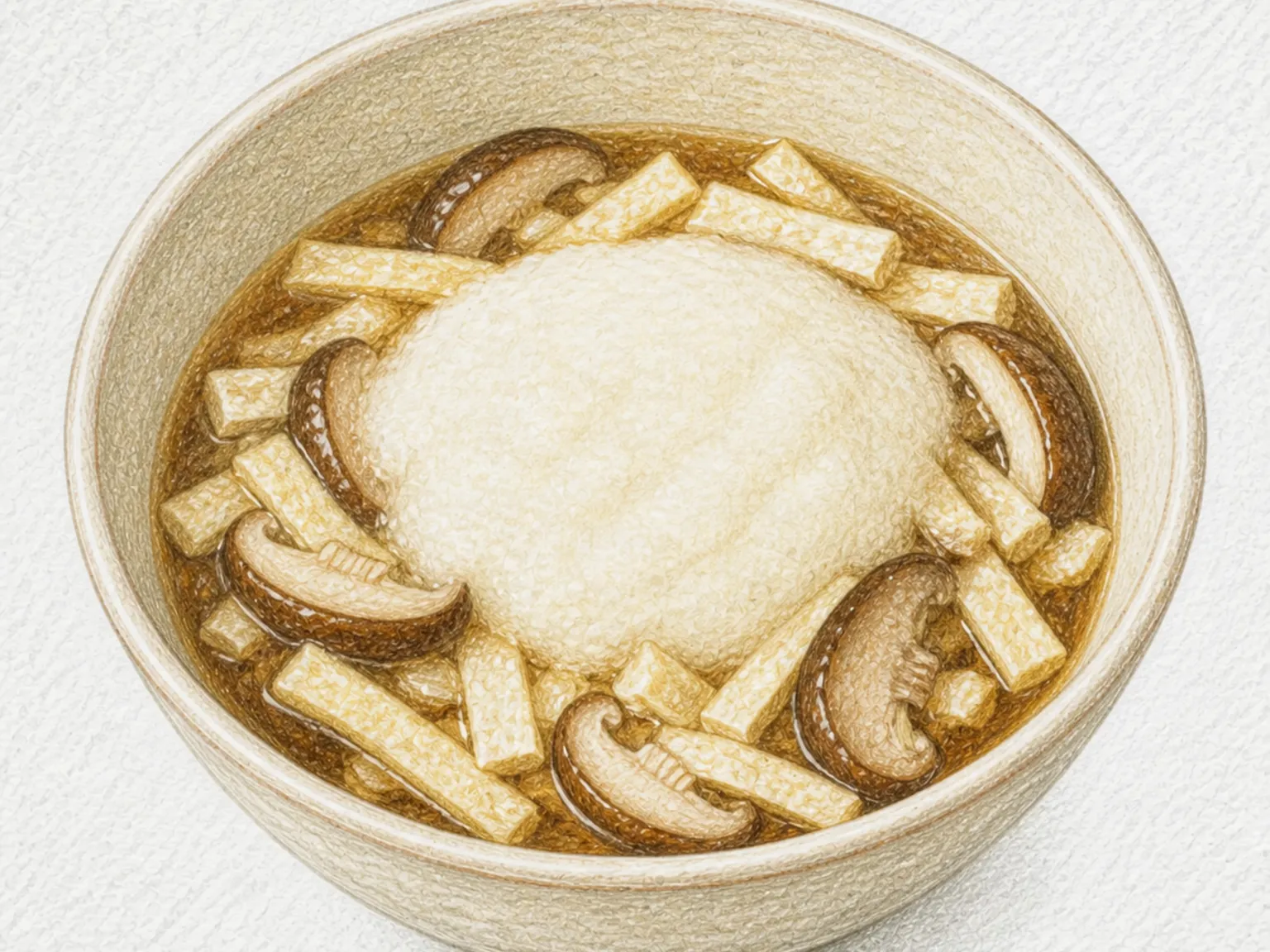
Nuppei-jiru, also called hachihai-jiru, is an Iwate Buddhist-style soup. Matchstick-cut tofu simmers in soy-seasoned broth made from kombu and dried shiitake, then each bowl receives a ladle of raw grated nagaimo mixed with daikon juice. This formal version is the nuppei style in which yam spreads softly over the hot soup, rather than the hachihai variation that thickens the whole pot with potato starch. The name hachihai is linked either to making eight bowls from one tofu block or to wanting many refills. Nagaimo can irritate skin when grated, so wear gloves and serve it immediately under piping-hot broth.

🏠 Everyday 🥗 Light & Healthy
Prep 35min Cook 20min 4 servings
Ojingeo-muguk (Korean Squid Radish Soup)
Soups Easy

Ojingeo-muguk (Korean Squid Radish Soup)

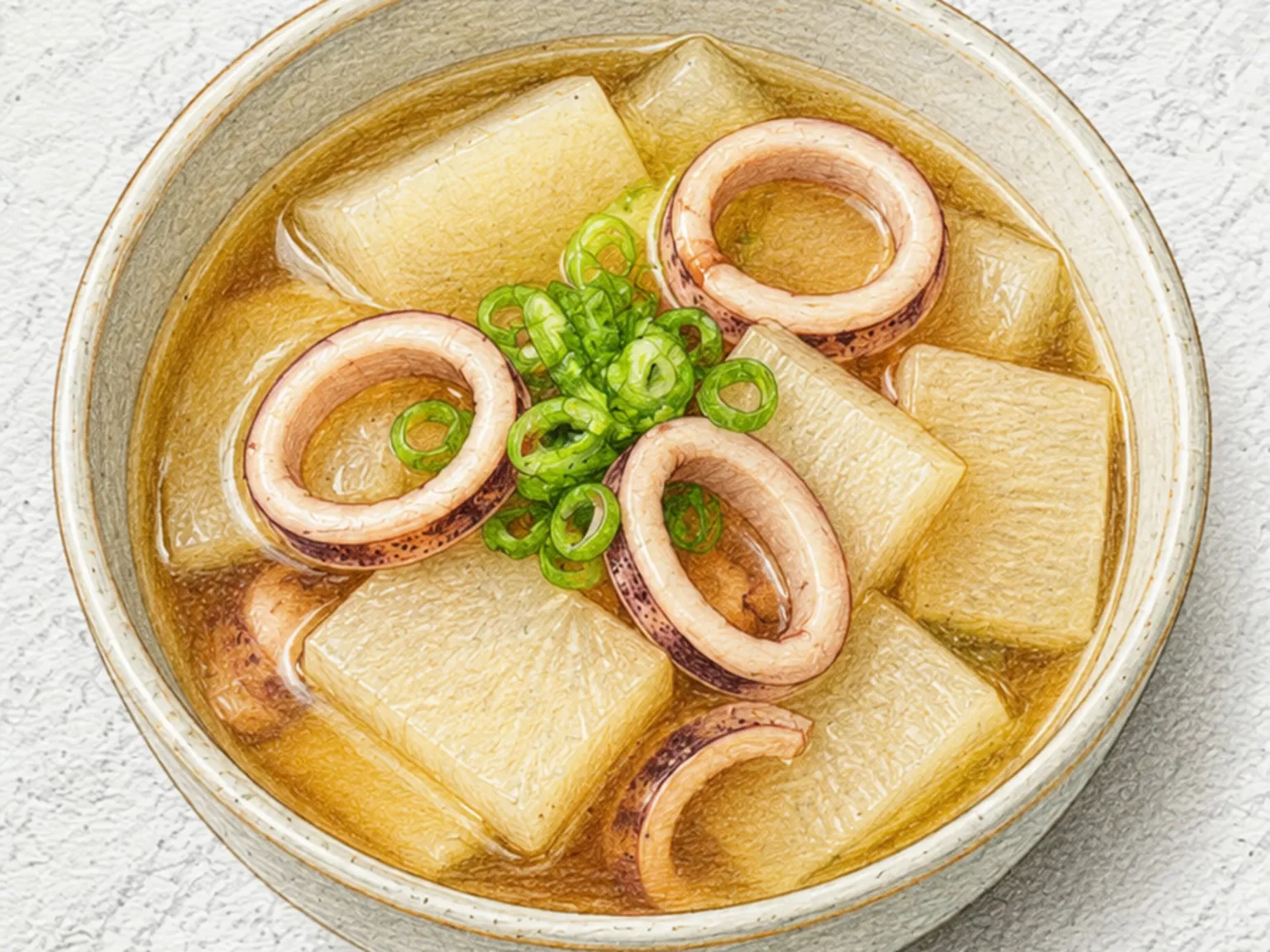
Ojingeo-muguk is a clear Korean soup that pairs squid and radish in a gently sweet, clean-tasting broth built without any chili or strong seasoning. Radish is added to cold water from the start and simmered for at least eight minutes, during which the vegetable slowly releases a natural sweetness that forms the flavor foundation of the soup. Squid is cleaned, sliced into rings, and added only after the radish has softened, and the timing here is critical: five minutes in the hot broth is enough for the flesh to turn fully opaque and pleasantly firm, but even a minute or two beyond that causes the proteins to tighten and the rings to turn rubbery and tough. Soup soy sauce seasons the broth without darkening it, and minced garlic provides depth without heat. Sliced green onion stirred in at the end neutralizes any residual seafood aroma and leaves the broth tasting bright and clean. The simplicity of the combination is the point: the radish's sweetness and the squid's umami reinforce each other in a broth that is light in body but surprisingly satisfying.

🏠 Everyday 🍺 Bar Snacks
Prep 15min Cook 20min 4 servings
Korean Duck Perilla Seed Soup
Soups Medium

Korean Duck Perilla Seed Soup

Ori-deulkkae-tang is a Korean duck soup thickened with ground perilla seeds, producing a broth that is rich, nutty, and deeply warming. Duck fat provides a substantial body that distinguishes this soup from lighter poultry broths, and the perilla powder transforms the cooking liquid into something creamy and opaque, with an aroma reminiscent of toasted sesame but distinctly earthier. Radish starts in cold water and simmers for ten minutes, laying a foundation of clean, faintly sweet flavor before the duck is added. The pot then cooks for at least twenty minutes, during which foam and excess rendered fat must be skimmed from the surface to keep the broth clear and free of off-flavors. Perilla powder is added in the final ten minutes only: introduced too early, it turns bitter and chalky; added at the right moment, it blooms into a smooth, nutty finish. Soup soy sauce and salt bring the seasoning into balance, and a scattering of sliced green onion with black pepper completes the bowl. The result is a soup that coats the palate with a layer of fat and grain richness, eaten as a stamina-building meal during the colder months or whenever the body needs warming.

🏠 Everyday
Prep 25min Cook 50min 4 servings
Korean Fish Soup (White Fish and Radish Clear Broth)
Soups Easy

Korean Fish Soup (White Fish and Radish Clear Broth)

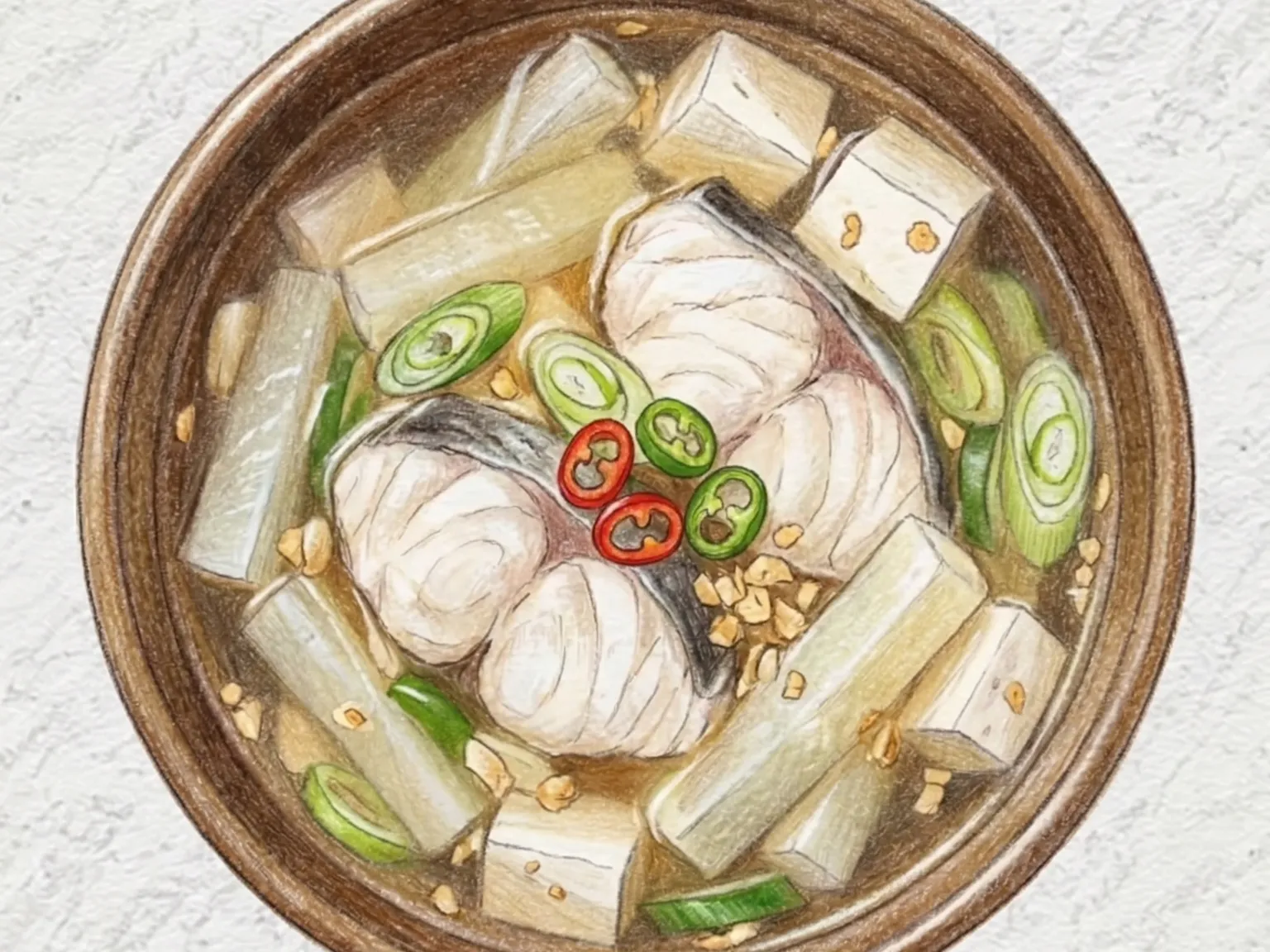
Saengseon-guk is a traditional Korean fish soup made with white-fleshed fish and radish in a clear broth. The radish simmers first, building a base of natural sweetness, before garlic and soup soy sauce are added for depth. The fish goes in once the radish is halfway cooked, and timing matters - it should cook only until the flesh turns opaque and begins to flake, as prolonged boiling would break it apart and cloud the broth. Tofu and sliced Korean chili peppers join near the end, adding soft texture and a mild kick. Green onion finishes the bowl with a fresh note. The result is a light, transparent soup where the fish's own clean, marine flavor does most of the work. It is the kind of straightforward home cooking that appears on Korean dinner tables throughout the year, requiring little more than fresh fish and basic pantry staples.

🏠 Everyday 🥗 Light & Healthy
Prep 15min Cook 20min 4 servings
Sanpei Jiru (Hokkaido Salted Salmon Soup)
Soups Medium

Sanpei Jiru (Hokkaido Salted Salmon Soup)

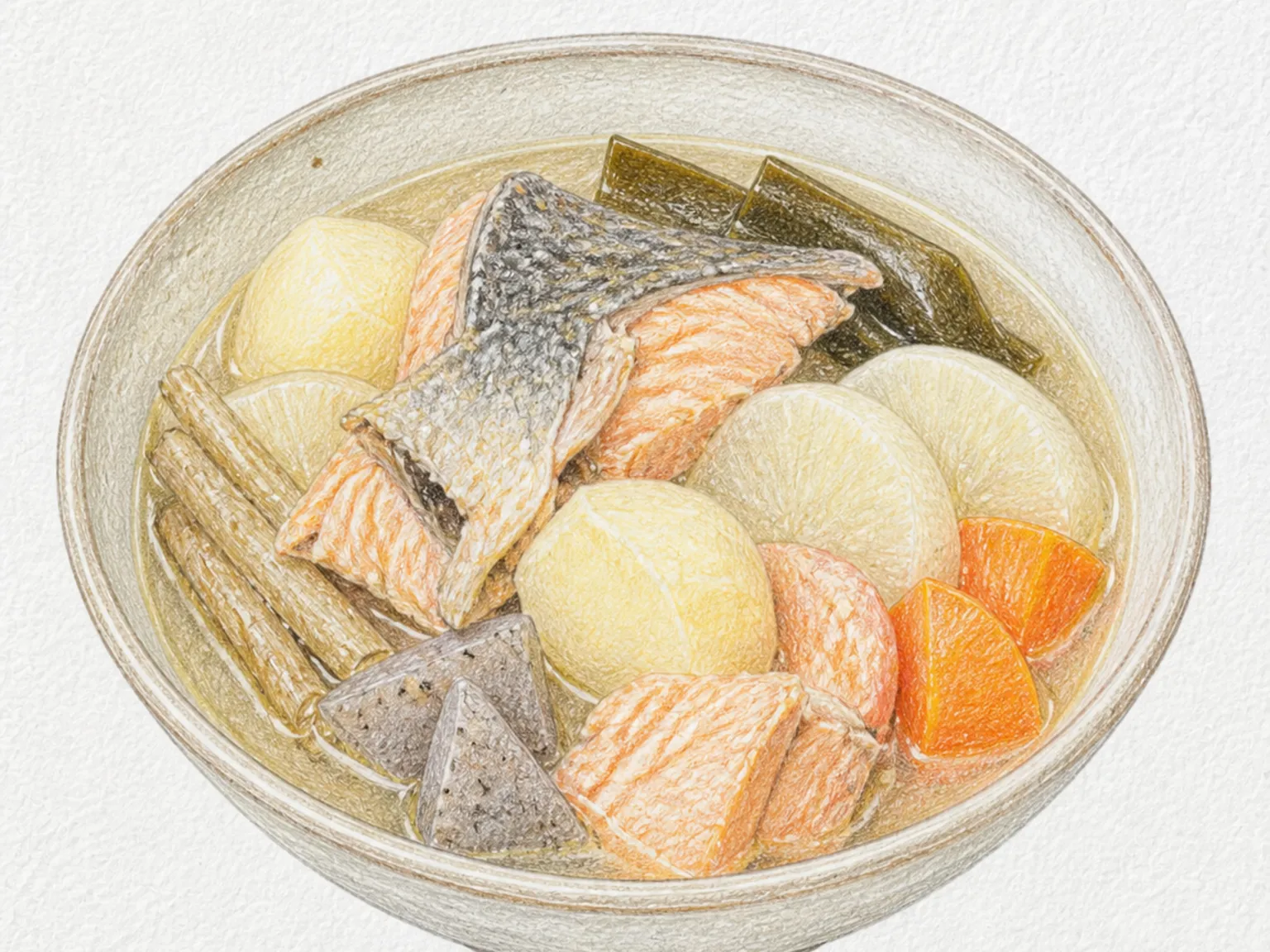
Sanpei jiru is a winter soup from Hokkaido that simmers salted fish with potatoes, daikon, carrots, and other vegetables in kombu stock. This version uses a salted salmon head and backbone with some flesh attached, allowing the bones and skin to enrich the broth. Unlike Ishikari nabe, which is commonly seasoned with miso and fresh salmon, the salt preserved in the fish provides the main seasoning here. Additional salt is added only after tasting the finished broth. Potatoes and daikon remain in generous pieces, while burdock and konnyaku receive separate preparation to keep the soup clean. Adding the salmon after the root vegetables have started softening prevents overcooked, dry flesh and excessive cloudiness.

🏠 Everyday
Prep 25min Cook 30min 4 servings
Senba-jiru (Salted Mackerel and Daikon Clear Soup)
Soups Hard

Senba-jiru (Salted Mackerel and Daikon Clear Soup)

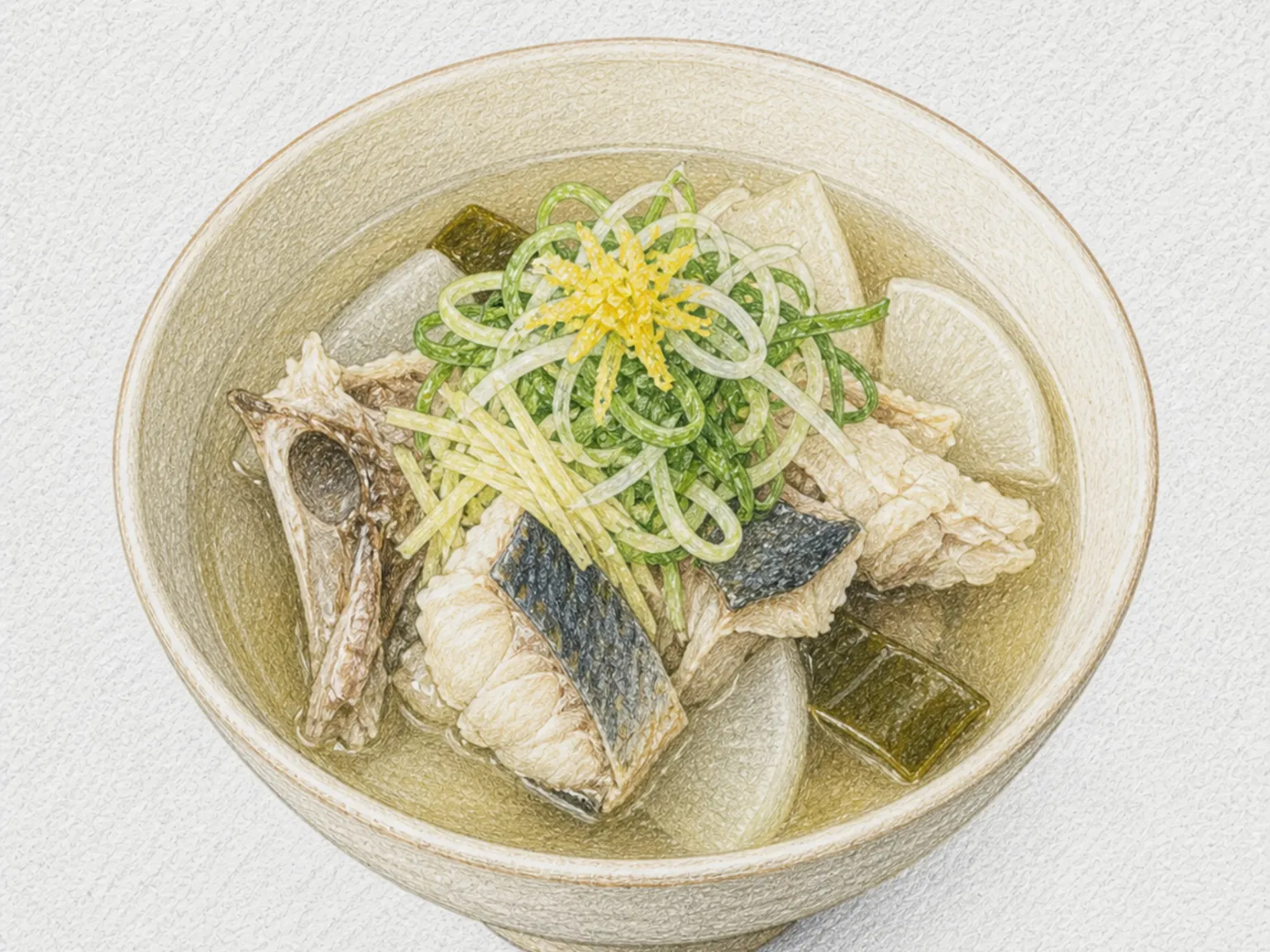
Senba-jiru is an Osaka clear soup from the Senba merchant district. Mackerel flesh, head, and bones are salted for an hour, rinsed with boiling water to remove odor, then the scraps simmer with kombu to make broth for daikon and the fish. It reflects the frugal merchant-house practice of using even the head and skeleton after serving the flesh. Sake, light soy sauce, and salt season the soup, while drops of ginger juice, two kinds of shredded onion, and yuzu peel finish each bowl. Because salt from the mackerel moves into the broth, add the final salt only after tasting and cook the flesh to at least 63C at its center.

🏠 Everyday
Prep 80min Cook 30min 4 servings
Korean Spinach Clam Soup (Light Shellfish and Greens Broth)
Soups Easy

Korean Spinach Clam Soup (Light Shellfish and Greens Broth)

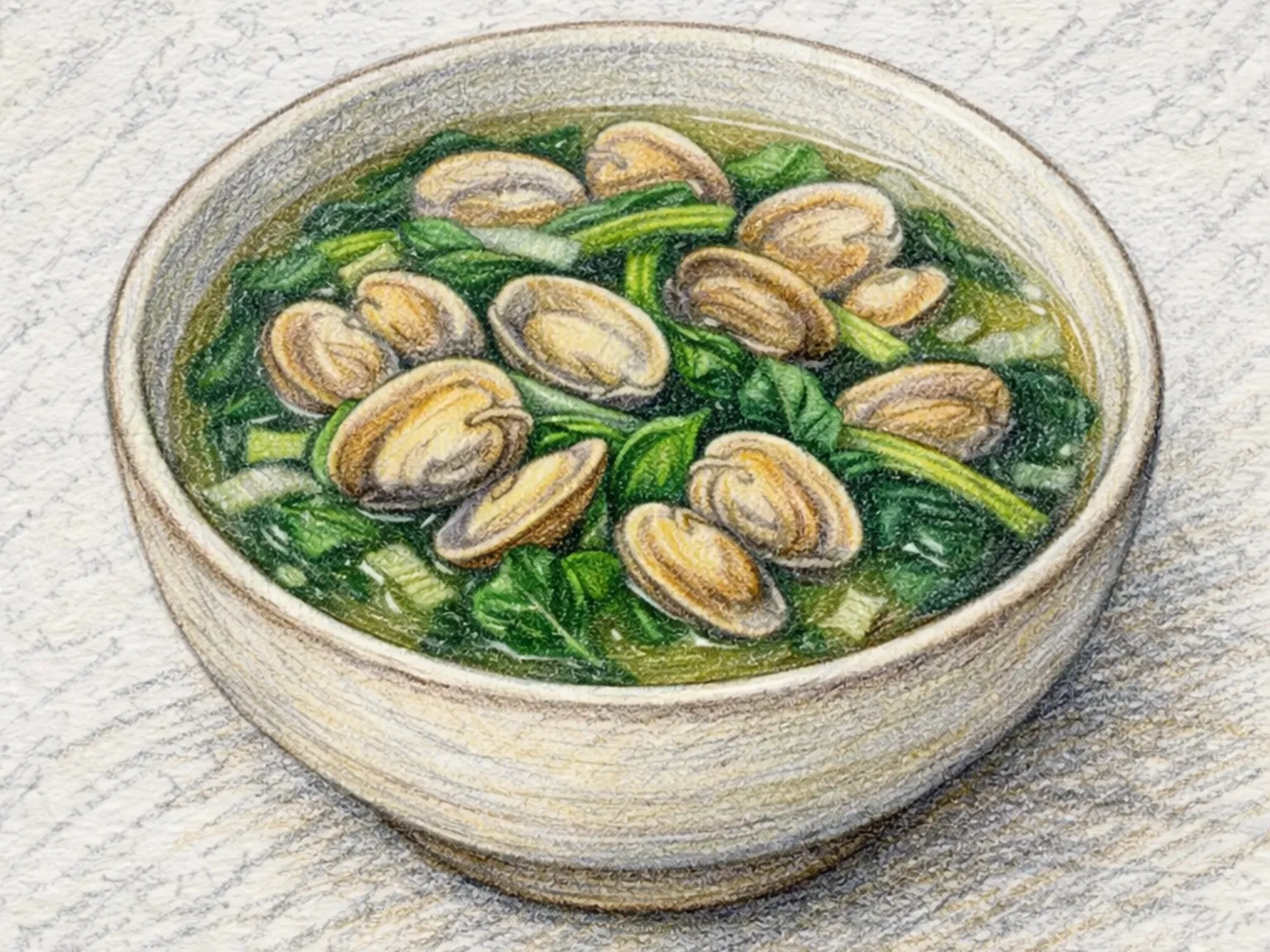
Sigeumchi-bajirak-guk pairs manila clams and spinach in a clean, transparent broth that lets both ingredients speak without interference from heavy seasoning or separately prepared stock. The clams are purged of sand and started in cold water, then brought slowly to a boil so each shell opens at its own pace, releasing a naturally briny, mineral-rich liquor that forms the entire foundation of the soup. No additional stock is needed, because the clam liquid is the stock. Spinach enters only in the final thirty to sixty seconds of cooking, which is the narrow window where the leaves soften just enough to be palatable while their vivid green color and delicate grassy flavor remain intact. Soup soy sauce and a small amount of garlic provide the only seasoning, and this restraint is deliberate: any stronger flavoring would bury the subtle sweetness of fresh clam broth. The grassy undertone in the spinach quietly neutralizes any sharp seafood edge, leaving the soup tasting clean and deeply refreshing. The nutritional logic behind this combination is frequently cited in Korean households: spinach is among the most iron-dense vegetables, and clams supply taurine and zinc in meaningful amounts, making the soup a regular recommendation for children in growth phases and for pregnant women. From first clam into the pot to finished bowl takes no more than fifteen minutes, which helps explain its steady presence on weeknight dinner tables throughout Korea.

🥗 Light & Healthy 🏠 Everyday
Prep 15min Cook 15min 2 servings