🥗 Light & Healthy Recipes
Light, healthy, low-calorie dishes
712 recipes. Page 15 of 30
These low-calorie recipes prove that healthy eating does not have to be boring. High-protein meals, vegetable-forward dishes, and low-carb options - all designed to support weight management and better eating habits.
Diet-friendly does not mean small portions or bland flavors. Chicken breast, tofu, konjac, and eggs provide lasting satiety, while smart seasoning and cooking methods keep the taste appealing. Build a sustainable, healthy routine with these recipes.

Siraegi Guk (Korean Perilla Radish Greens Soup)
Deulkkae siraegi guk is a rich, nutty Korean soup made by simmering dried radish greens that have been pre-seasoned with doenjang and soup soy sauce in an anchovy broth for at least twenty minutes. Siraegi, which refers to radish leaves that have been dried and then rehydrated before cooking, carries a concentrated earthiness and a fibrous, chewy texture that fresh greens cannot replicate. Massaging the greens with doenjang and garlic before they go into the pot allows the fermented seasoning to penetrate into the fibers over the extended cooking time rather than merely coating the surface. The anchovy broth beneath provides a clean, saline umami that supports the deeper, fermented notes of the doenjang without competing. Perilla powder added in two separate additions dissolves evenly through the broth without clumping, turning the liquid an opaque, milky white and thickening it to a consistency that clings to each spoonful and gives the soup its characteristic weight. Green onion added during the final three minutes of cooking contributes a fresh, sharp aroma that sits lightly on top of the perilla fragrance, completing the layered, hearty character of the soup.
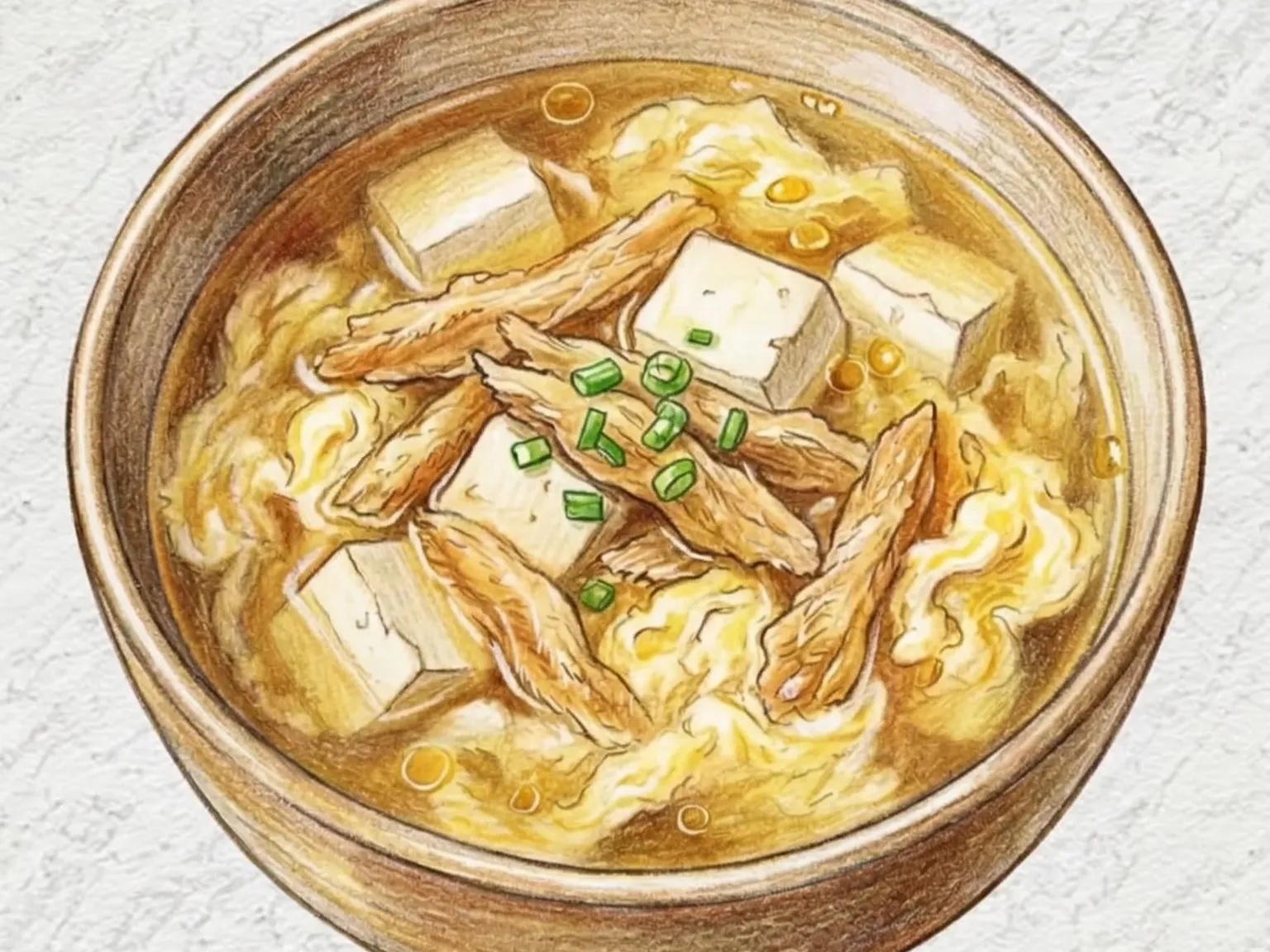
Korean Dried Pollack Stew
Hwangtae jjigae is a straightforward Korean stew built on dried pollack strips, tofu, and eggs, with a broth that tastes far deeper than its short ingredient list suggests. Sauteing the pollack strips in sesame oil before any liquid is added draws out a roasted, nutty aroma that becomes the flavor backbone of the entire pot. Water poured over the toasted fish produces a broth that is simultaneously clear and richly savory, a character specific to hwangtae that fresh fish cannot replicate. Soft tofu cut into cubes settles into the broth and contributes a delicate texture alongside its protein, while beaten eggs stirred in during the final minutes form silky, fine-grained ribbons throughout the liquid. The minimal ingredient list makes this stew genuinely practical when pantry and refrigerator supplies are running low.
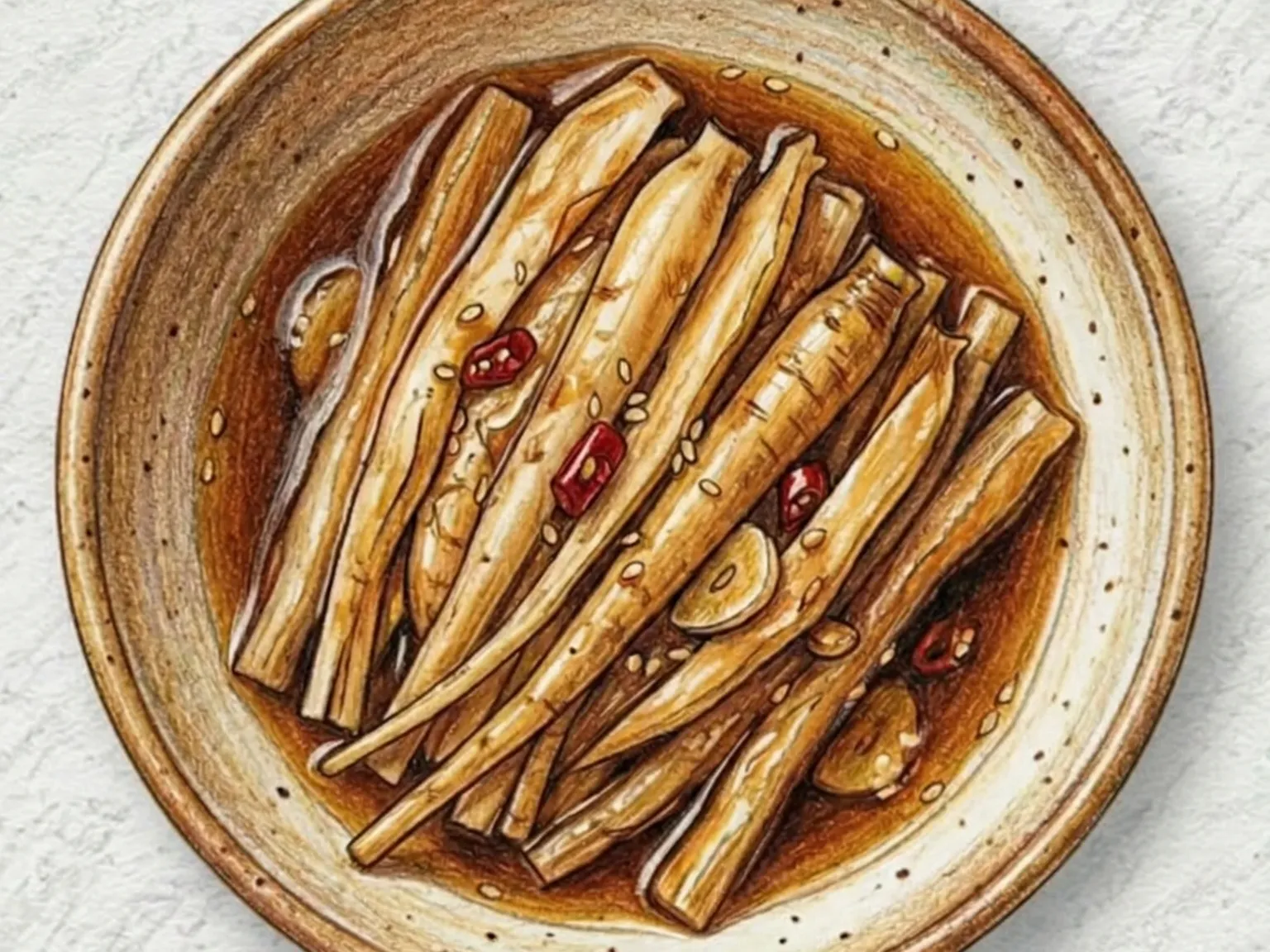
Korean Bellflower Root Pickles
Doraji jangajji is a traditional Korean pickle made from bellflower root - the roots are peeled, salted and massaged by hand to draw out bitterness, then submerged in a boiled brine of soy sauce, rice vinegar, and sugar. Bellflower root has a pronounced bitter-herbal character that is both its defining quality and its challenge; salt-kneading before pickling pulls out the harsh edge while leaving the fragrant, almost floral undertone intact. As the brine meets the acidity of vinegar, the remaining bitterness softens further, and a chewiness that builds with each bite reveals a clean, aromatic depth. Ginger included in the brine counteracts the earthy, soil-forward quality that root vegetables often carry, and as the hot liquid cools it draws seasoning slowly and evenly through the root's fibrous tissue. Two days of curing is the minimum to achieve a balanced sweet-sour-salty profile; longer curing deepens the flavor further. Kept refrigerated, the pickle holds well for weeks and makes a reliable side dish to pull from the refrigerator at any meal.
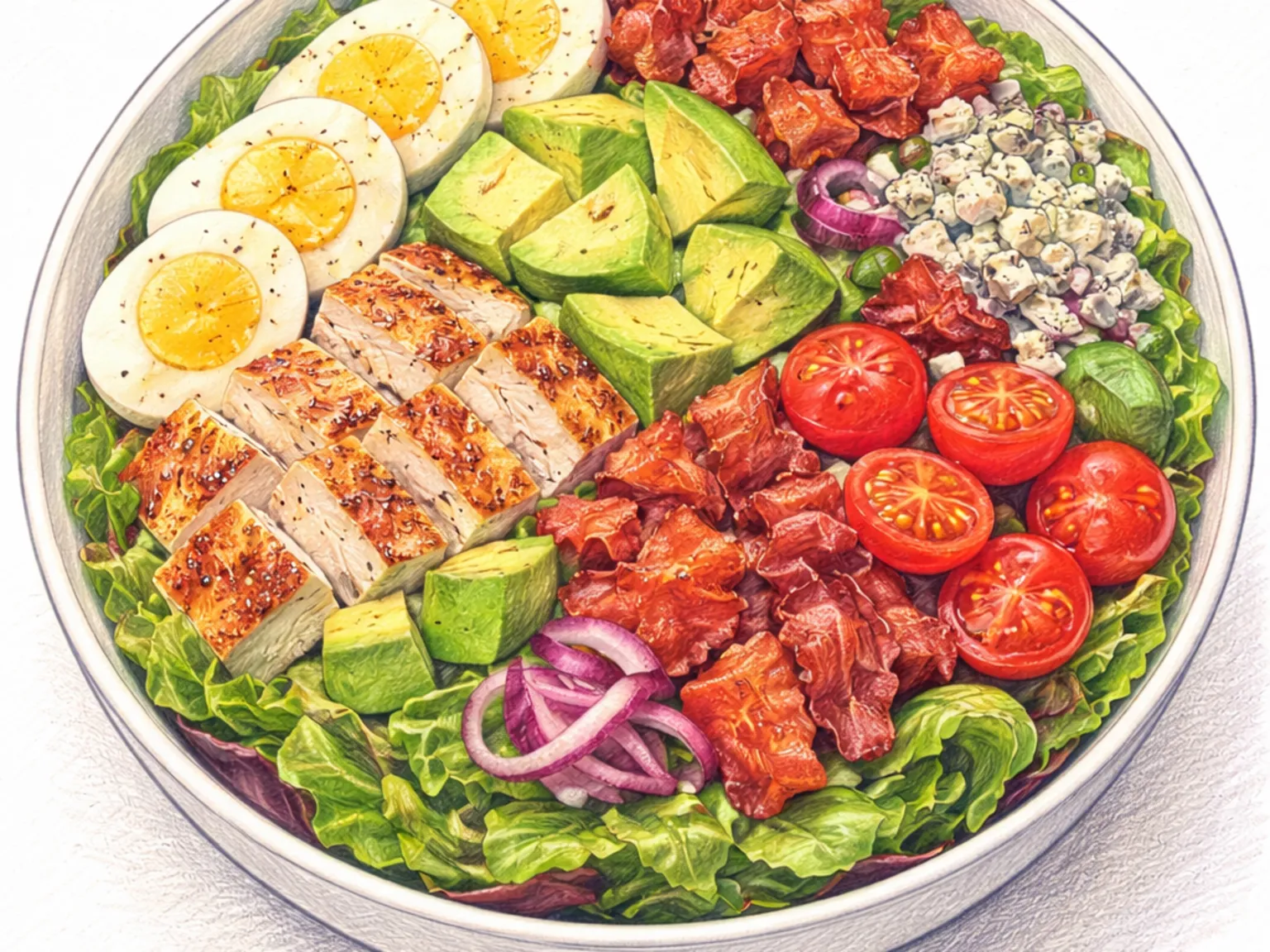
Cobb Salad
Cobb salad arranges grilled chicken breast, hard-boiled egg, avocado, crisp bacon, and cherry tomatoes in distinct, separate rows over chopped romaine. The traditional presentation keeps each ingredient untouched until the diner begins eating, allowing every forkful to be assembled to personal preference. Ranch dressing provides a creamy, tangy base that bridges the bacon's saltiness, the richness of avocado, and the lean protein of the chicken. Originating in 1930s Hollywood, the dish was conceived as a filling main-course salad and remains one of the most protein-dense salad formats in American cuisine.
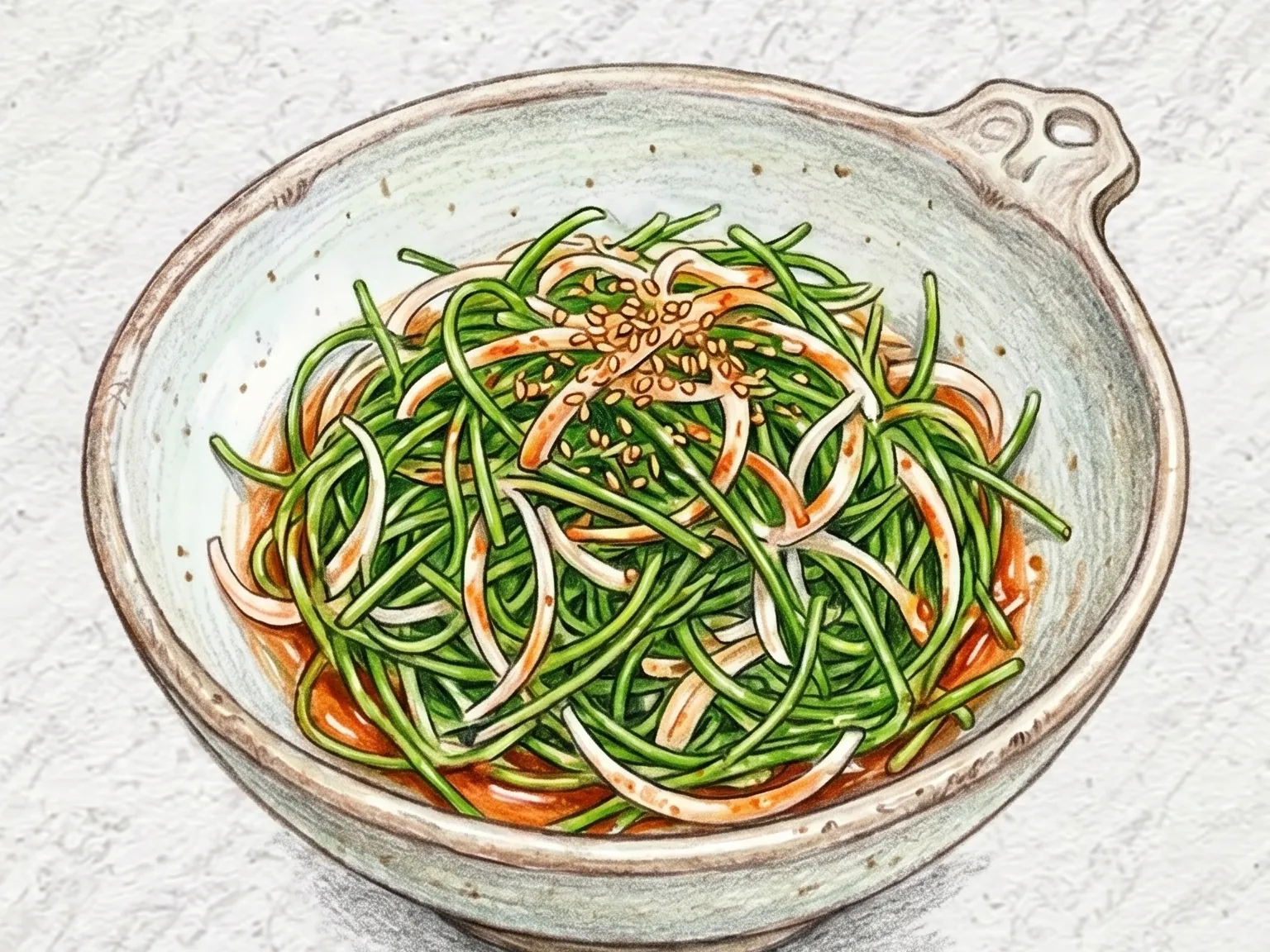
Korean Seasoned Glasswort Salad
Sebalnamul-muchim features 220 grams of glasswort, a succulent coastal plant that carries a natural salinity from the tidal flats where it grows. A 10-second blanch in boiling water is enough to barely soften the thin stems while preserving their distinctive pop when bitten. The dressing of gochugaru, vinegar, plum extract, and sesame oil coats the tender shoots without masking their inherent briny flavor. Thinly sliced onion adds a sweet crunch, and the plum extract mellows the vinegar's sharpness into a rounded tartness. Because no additional salt is needed, the final seasoning relies entirely on the balance between acid, sweetness, and the glasswort's own minerality.

Korean Goji Berry Tea (Herbal Jujube Ginger Brew)
Gugija-cha is a Korean herbal tea made by gently simmering dried goji berries, jujubes, and fresh ginger in water. The jujubes and ginger go in first and cook for fifteen minutes, slowly giving the liquid the jujube's quiet sweetness and the ginger's warming sharpness. The goji berries are then added for just five minutes over low heat so their red pigment and mild berry aroma steep into the tea without releasing the bitterness that comes from overcooking. Getting the timing right matters, because boiling the berries too long draws out an astringency that overpowers the rest of the flavors. Honey is stirred in after the heat is off to preserve its delicate fragrance, and a scattering of pine nuts floats on top to layer a soft, oily richness over the clean finish of the tea. The deep red color and gentle sweetness make this a tea that fits any season.
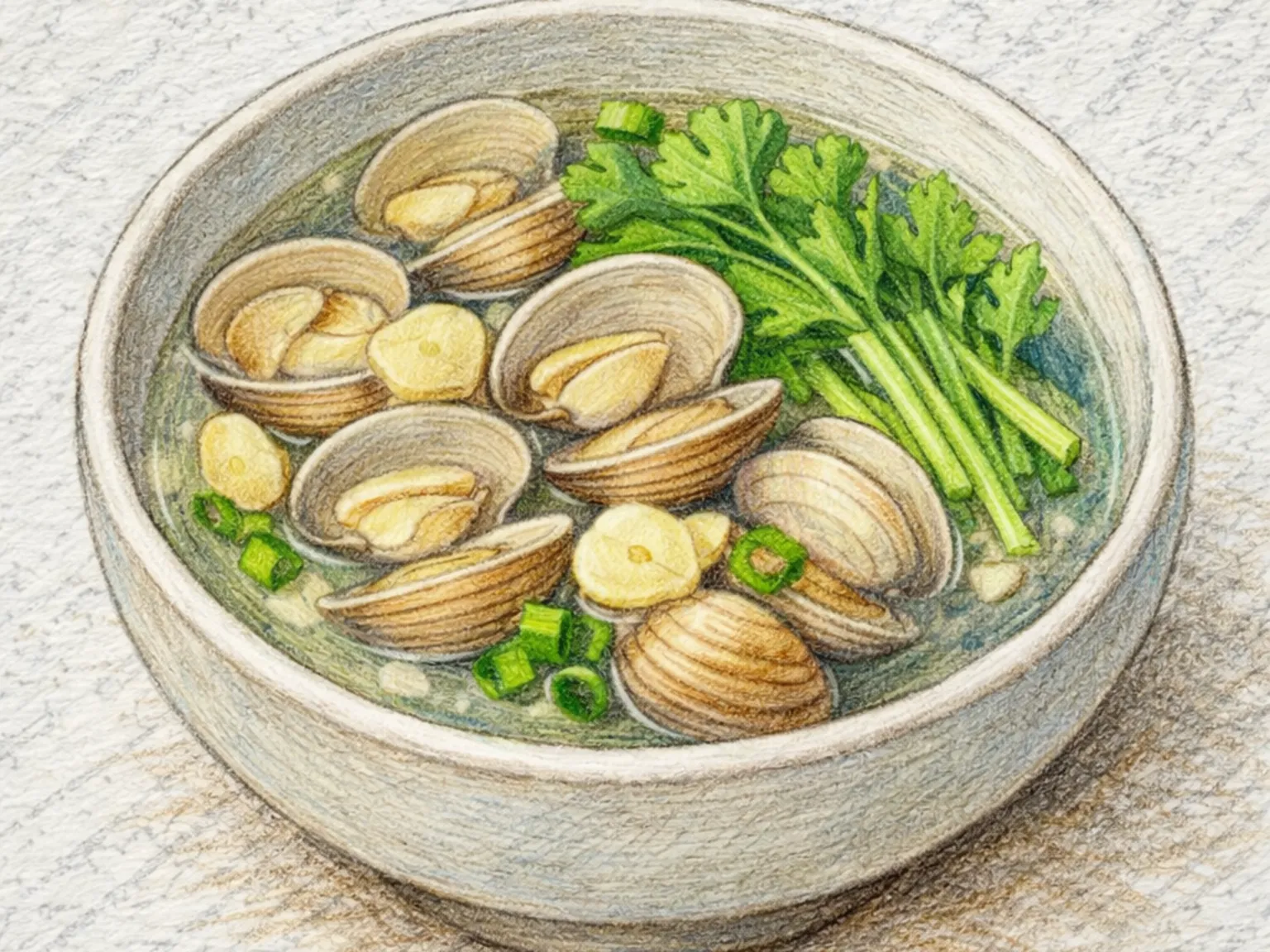
Dongjuk-tang (Korean Surf Clam Broth)
Dongjuk-tang is a Korean surf clam soup where purged clams simmer with radish in plain water to produce a briny, naturally sweet broth that needs almost no added seasoning. The radish goes in first and cooks for six minutes to build a sweet, mild base, then the clams are added for three to four minutes -- they are done the moment their shells open wide, and cooking any longer tightens and toughens the meat. Any clam that remains shut after cooking must be discarded without exception. Water dropwort stirred in at the end contributes a fresh, herbaceous fragrance that lifts the broth, and a single cheongyang chili pepper adds a mild, lingering heat that tempers the ocean flavor without masking it. The combination of clam brine, radish sweetness, and perilla creates a broth that tastes far more complex than its short ingredient list suggests.
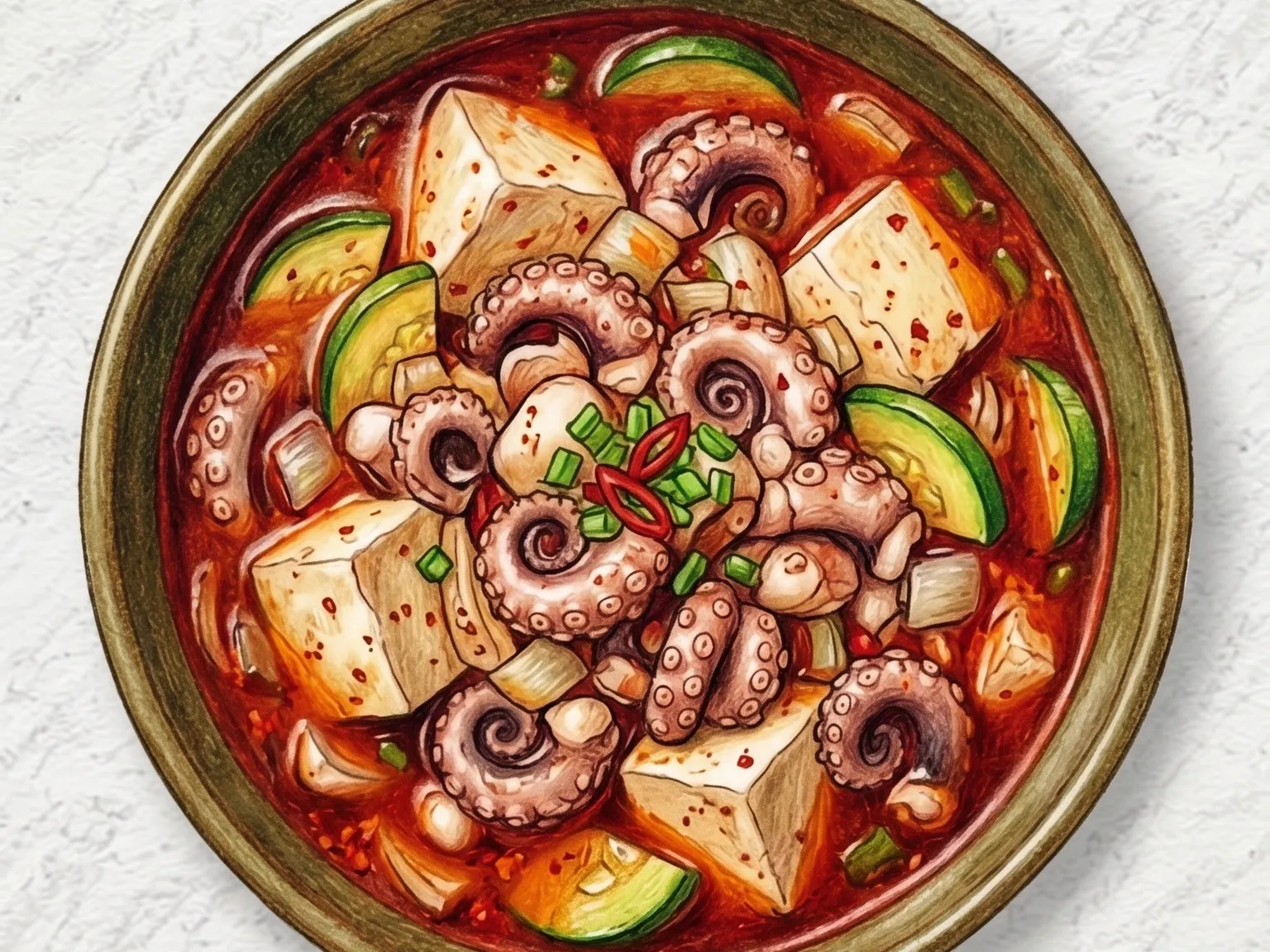
Korean Webfoot Octopus Tofu Stew
Jjukkumi dubu jjigae is a Korean stew of webfoot octopus and soft tofu cooked in a gochugaru-seasoned anchovy broth. A full 450 grams of jjukkumi goes into the pot, providing a bouncy, chewy texture in every spoonful. The tofu absorbs the spicy broth as it cooks, creating a soft counterpoint to the firm octopus, and the contrast between the two textures is a central part of the dish. Rice wine added early in the cooking process neutralizes any fishiness from the seafood, keeping the broth clean-tasting rather than pungent. Soup soy sauce deepens the umami base without darkening the broth too heavily, and gochugaru provides the heat. Zucchini and onion contribute natural sweetness that rounds out the broth and prevents the salt from the seafood from feeling sharp or one-dimensional. Jjukkumi becomes rubbery if overcooked, so removing the pot from heat three to four minutes after it comes back to a boil is the key step for keeping the octopus tender and springy rather than tough.
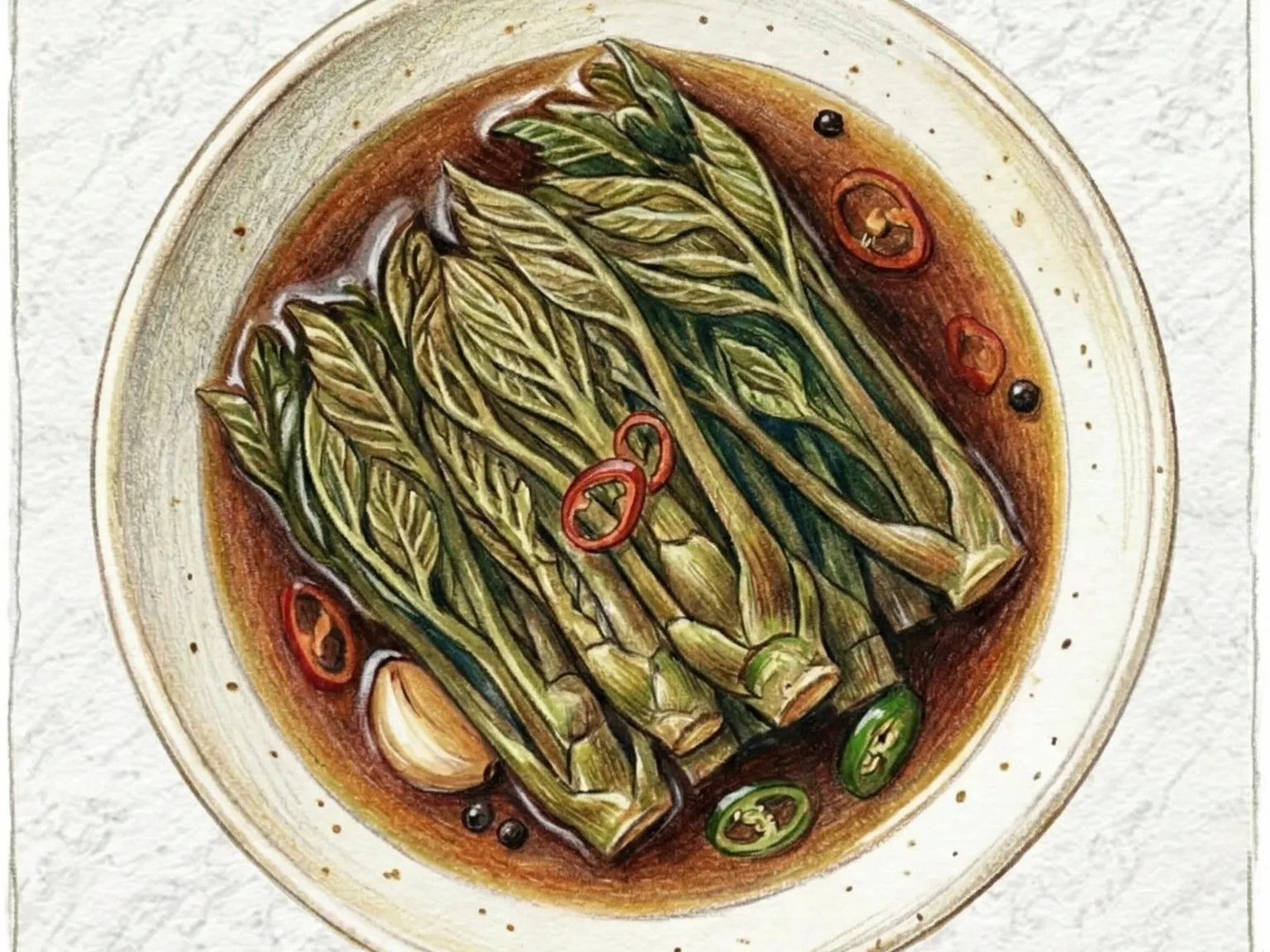
Korean Aralia Shoot Soy Pickle
Durup jangajji is a soy-pickled preparation that extends the brief spring season of aralia shoots into a long-lasting banchan. Fresh shoots go into the brine raw - without blanching - so the woody, bittersweet fragrance and the crisp snap of the stems survive the curing process intact. The brine is brought to a boil with soy sauce, vinegar, and sugar, then cooled completely before being poured over the shoots; hot liquid would soften them immediately. Brine ratios matter: too much vinegar buries the aralia's distinctive aroma under acid. Garlic and cheongyang chili go in with the shoots and slowly mellow into the liquid over the first few days, leaving a trailing heat at the finish. Refrigerated, the jangajji keeps well over two weeks, which means a single batch prepared at peak spring season carries through until early summer. Beyond rice pairings, a few strips work well tucked inside grilled-meat wraps, where the pickled bitterness cuts through fat.
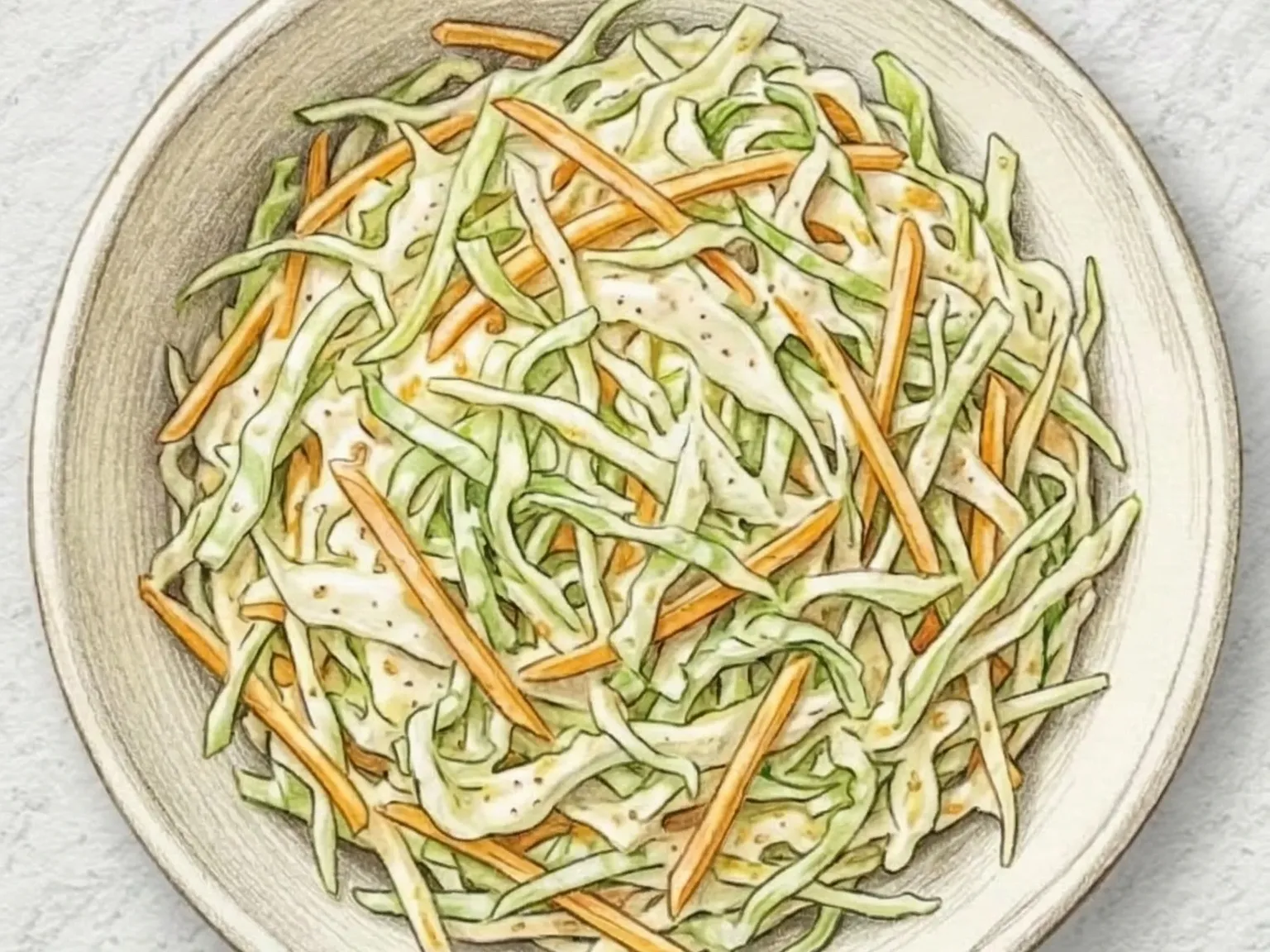
Coleslaw
Coleslaw is built from finely shredded cabbage and carrot tossed in a mayonnaise-based dressing sharpened with apple cider vinegar and Dijon mustard. A small amount of sugar keeps the acidity in check without making the salad noticeably sweet, and the mustard adds a subtle, savory bite that keeps the dressing from tasting flat. Resting the dressed slaw in the refrigerator for at least 30 minutes allows the vegetables to soften slightly and absorb the dressing more evenly, resulting in a more cohesive texture than eating it immediately after mixing. Coleslaw is one of the most common side dishes in American cooking, pairing naturally with barbecue, fried chicken, and pulled pork sandwiches. If the cabbage has high water content, a brief salt cure before dressing draws out excess moisture and prevents the sauce from becoming watery.
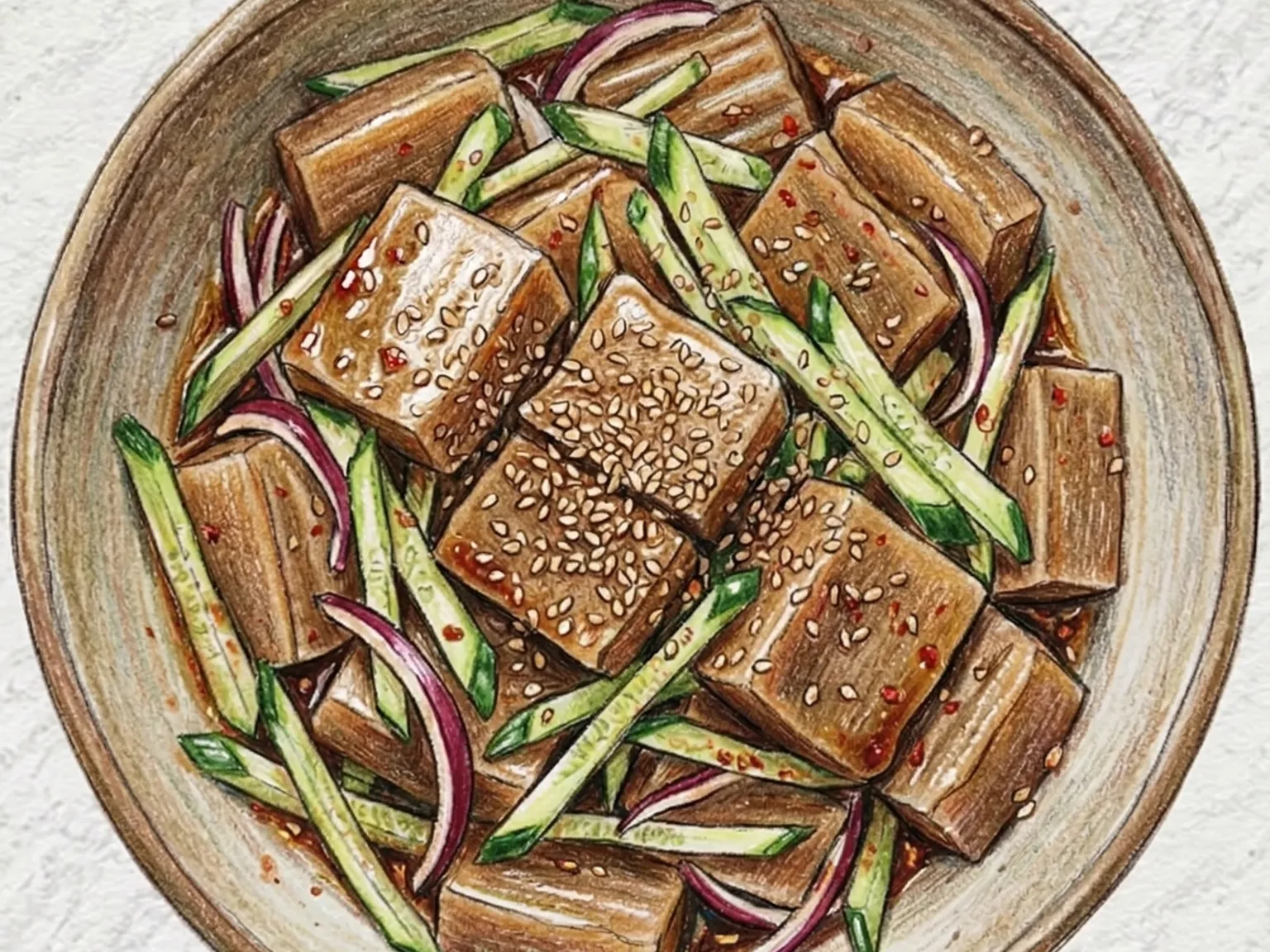
Korean Acorn Jelly Salad with Sesame Soy Sauce
Sesame-dotorimuk-muchim is an acorn jelly salad that begins by slicing 400 grams of dotorimuk into 1-centimeter-thick pieces and blanching them for 20 seconds to firm up the surface and make the jelly more resilient to tossing. Julienned cucumber and thinly sliced onion - soaked briefly in cold water to remove sharpness - join the jelly in a bowl. The dressing of soy sauce, vinegar, red pepper flakes, and sesame oil brings a sharp, tangy bite that contrasts with the neutral mildness of the acorn jelly. Generous sesame seeds are scattered on top, and the dish rests for five minutes before serving so the dressing can seep into the jelly's porous surface. The result is a light, refreshing banchan with a range of textures from springy to crisp.

Korean Daisy Tea (Delicate Floral Pear Honey Brew)
Gujeolcho-cha is a traditional Korean flower tea made by steeping dried gujeolcho blossoms -- a wild chrysanthemum native to Korea -- in water heated to around ninety degrees Celsius for five minutes over low heat. Boiling above one hundred degrees causes the volatile aromatic compounds in the petals to evaporate, weakening the delicate floral fragrance that makes the tea worth drinking, so a gentle infusion rather than a rolling boil is the non-negotiable foundation of the preparation. Thin julienned pear added to the cup brings a light, juicy sweetness that pairs naturally with the floral notes without competing against them. A single drop of lemon juice sharpens the overall flavor profile, giving the tea cleaner edges than it would have without the acidity. Honey balances and deepens the sweetness, and pine nuts floated on the surface contribute a subtle, rounded oiliness that grounds the otherwise light liquid. Gujeolcho blooms in the ninth lunar month and belongs to the chrysanthemum family; it has been consumed as a folk remedy for women's health for centuries in Korea, adding cultural weight to a tea that is otherwise valued simply for its fragrance and calm.
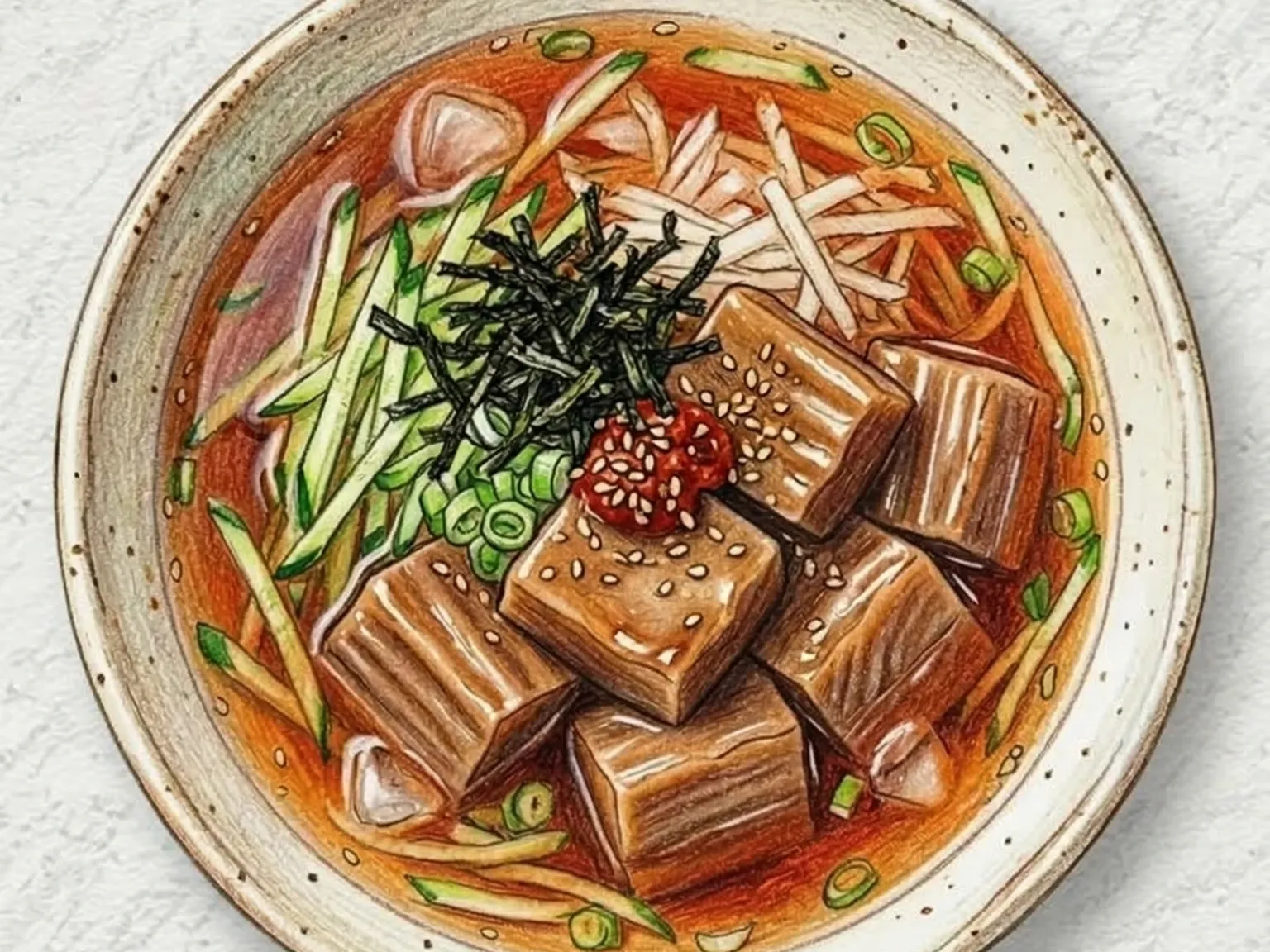
Korean Acorn Jelly Cold Broth Bowl
Dotori-muksabal is a chilled Korean acorn jelly broth bowl where thinly sliced acorn jelly sits in a cold, tangy-sweet seasoned broth. Acorn jelly carries a distinctly earthy, mildly astringent aftertaste and a firm, bouncy texture that becomes noticeably more pronounced once it has chilled thoroughly. The broth, a mixture of stock seasoned with soy sauce, vinegar, and sugar, must be cold before pouring over the jelly to keep that cool snap alive from the first bite to the last. Chopped kimchi adds fermented heat and a pungent sourness, while julienned cucumber contributes a clean crunch, and both ingredients cut through the jelly's neutral flavor with sharp contrasts that make the bowl far more lively than its simple appearance suggests. A spoonful of gochugaru-spiked seasoning ties the components together. The dish is notably low in calories and rich in dietary fiber, making it an appealing light meal on hot days.
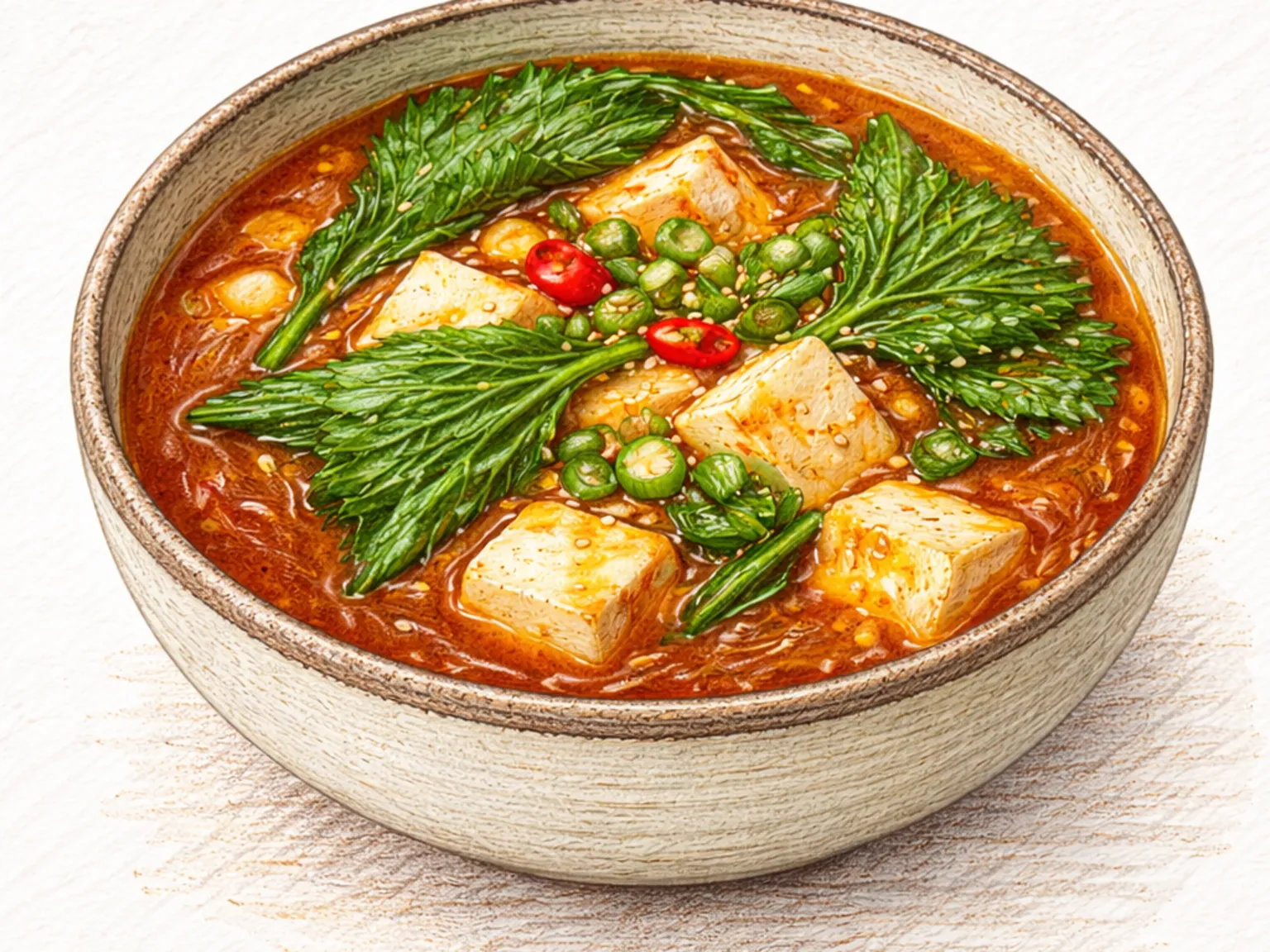
Korean Perilla Leaf Soft Tofu Stew
Kkaennip sundubu jjigae is a mild, gently seasoned stew of soft tofu and perilla leaves simmered in a light anchovy broth. The 350g of sundubu goes in as large, rustic pieces that hold their shape while cooking, then collapse into silky, cloud-like curds on the spoon. Twelve perilla leaves added stem-on release their aromatic oils gradually as the broth comes to a boil, giving the stew a distinctly herbal, faintly anise-like character that sets it apart from standard sundubu variations. Gochugaru and soup soy sauce provide just enough background seasoning to keep the perilla fragrance forward rather than overwhelmed by heat, and a drizzle of sesame oil at the finish adds a nutty warmth. Low in spice and gentle on the stomach, this is a practical choice on days when a soothing, unfussy bowl is what is needed.
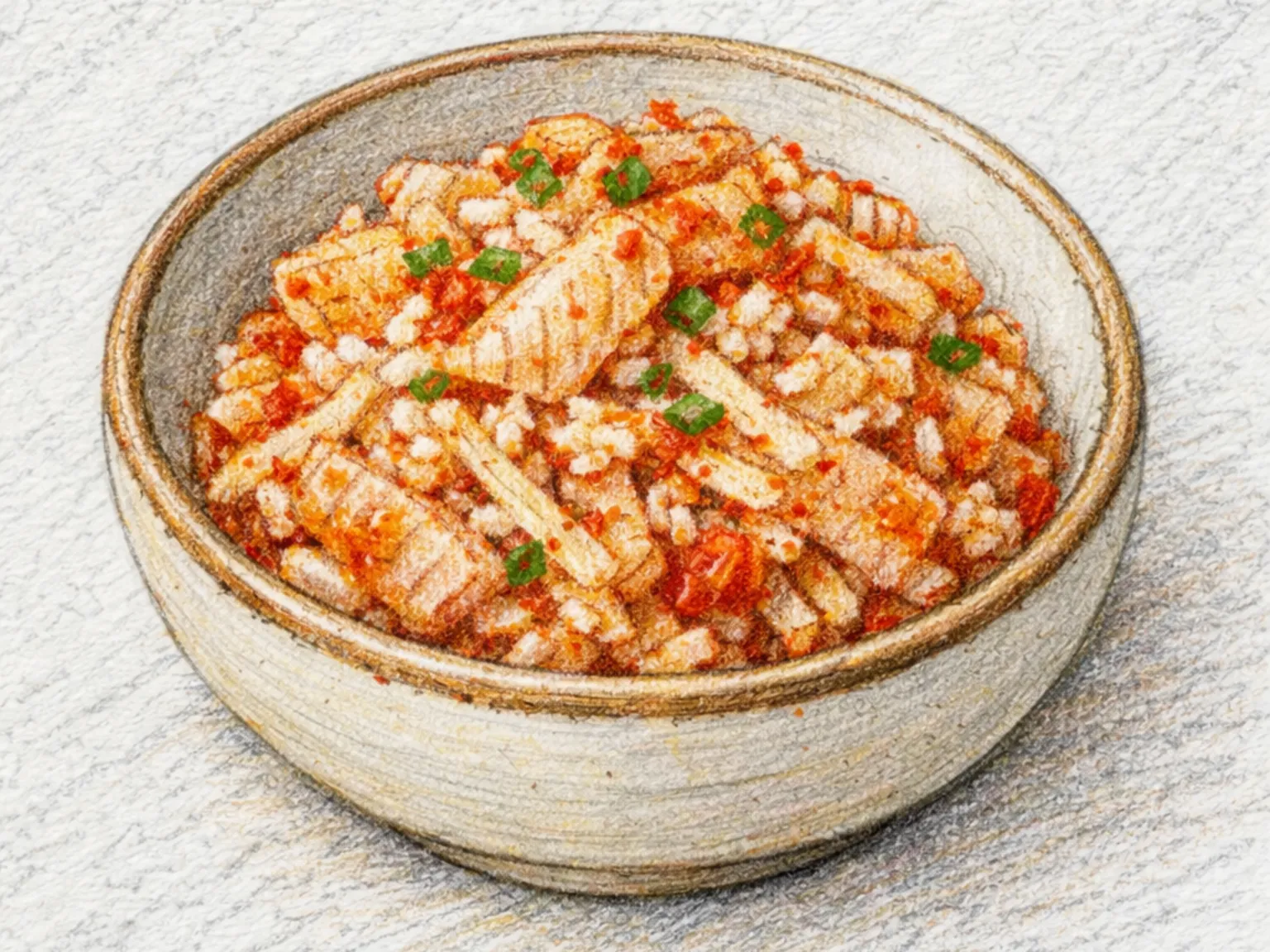
Korean Fermented Flounder Sikhae
Gajami sikhae is a traditional fermented flounder preparation from Korea's East Coast, made by combining salt-cured flounder fillets with julienned radish, cooked glutinous rice, gochugaru, and fish sauce, then sealing the mixture for fermentation at low temperature for a week or more. The glutinous rice starch feeds lactic acid bacteria, producing a mild, rounded acidity that reads quite differently from the sharp, concentrated saltiness of jeotgal. Radish adds moisture and textural contrast. As fermentation progresses, fish proteins break down into deep umami compounds. The resulting sikhae is far less salty than conventional fermented seafood and can be eaten directly over rice. A regional winter banchan associated with Gangwon and Hamgyeong provinces, it grows more sour the longer it ferments.
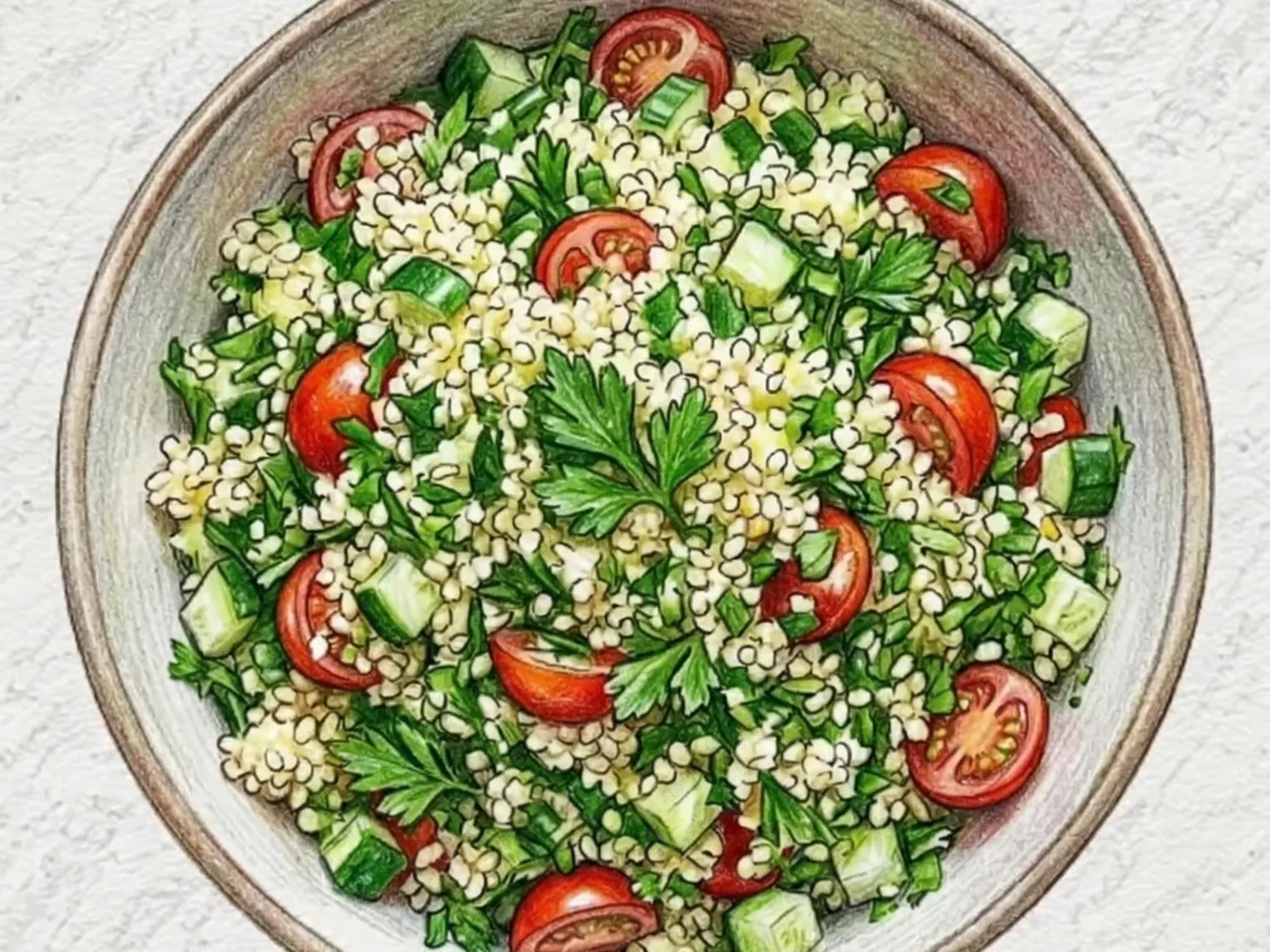
Couscous Herb Salad
Couscous is hydrated in hot water for five minutes until each grain separates and fluffs up, then mixed with a generous quantity of flat-leaf parsley, diced cucumber, and halved cherry tomatoes. The dressing is intentionally sparse - lemon juice, olive oil, salt, and pepper - letting the grain absorb the citrus brightness without competing flavors getting in the way. Because herbs make up a significant portion of the volume, this reads more like a tabbouleh than a heavy grain salad, with a clean freshness that makes it easy to eat in large portions. Couscous holds its texture at room temperature better than most grains, meaning the salad does not go soggy in a packed lunch container or on a picnic spread. Adding fresh mint, a handful of chopped cilantro, or a pinch of lemon zest shifts the flavor toward something sharper and more aromatic, while crumbled feta adds a salty, creamy contrast that transforms it into a more substantial dish.
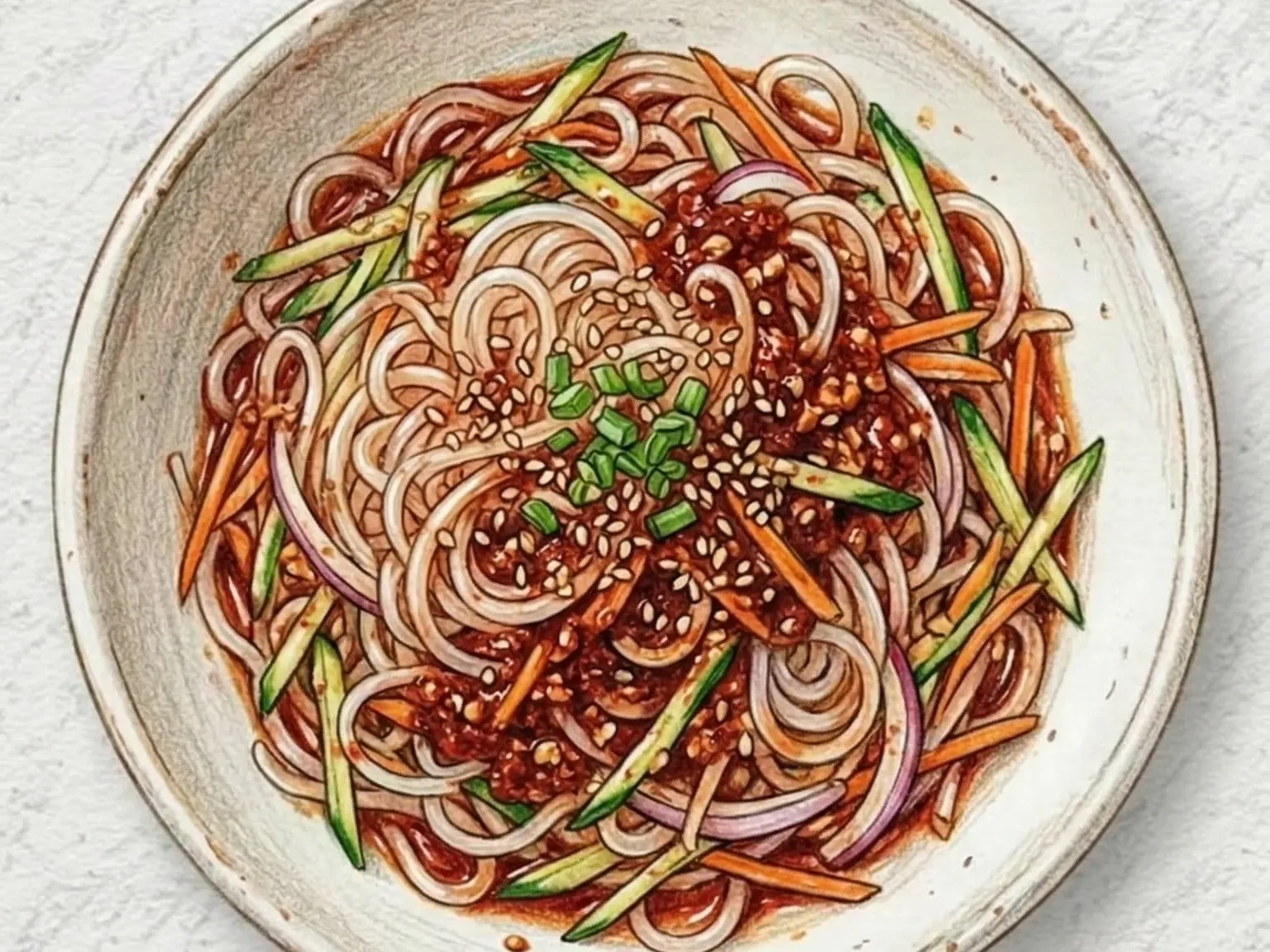
Korean Konjac Noodle Salad
Silgonyak-chae-muchim tosses 250 grams of blanched konjac noodles with julienned cucumber, carrot, and onion in a gochujang-based dressing spiked with vinegar, sugar, soy sauce, and garlic. Blanching the noodles for two minutes removes their faint alkaline smell and softens their rubbery chew to a pleasant springiness. The vegetables provide crisp contrast - cucumber adds a cool snap, carrot a mild sweetness, and onion a sharp bite. The dressing clings to the translucent noodles, turning them a vivid reddish hue. At only 95 calories per serving, this banchan relies on texture and bold seasoning rather than fat for its appeal. Chilling for 10 minutes before serving firms up the noodles and intensifies the tangy-spicy flavor profile.

Korean Chrysanthemum Tea (Floral Jujube Goji Berry Brew)
Gukhwa-cha is a traditional Korean flower tea brewed from dried chrysanthemum buds steeped in water at 80 to 85 degrees Celsius for three to four minutes. That temperature range draws out the gentle floral fragrance without releasing the bitter compounds that come out at a full boil. Jujubes and goji berries added to the pot contribute a mild natural sweetness from the jujubes and a faintly tart, herbal note from the goji berries, both of which round out the chrysanthemum's aroma and add visual warmth to the pale liquid. A spoonful of honey and a squeeze of lemon juice are stirred in at the end to brighten the finish without masking the floral base. The resulting tea is pale golden, lightly sweet, and carries a lingering scent that makes it a common after-meal drink in Korean households. Caffeine-free and mild, it is drunk in the evening without disruption to sleep, and in traditional Korean medicine the dried flower has long been associated with relieving headaches and eye fatigue.
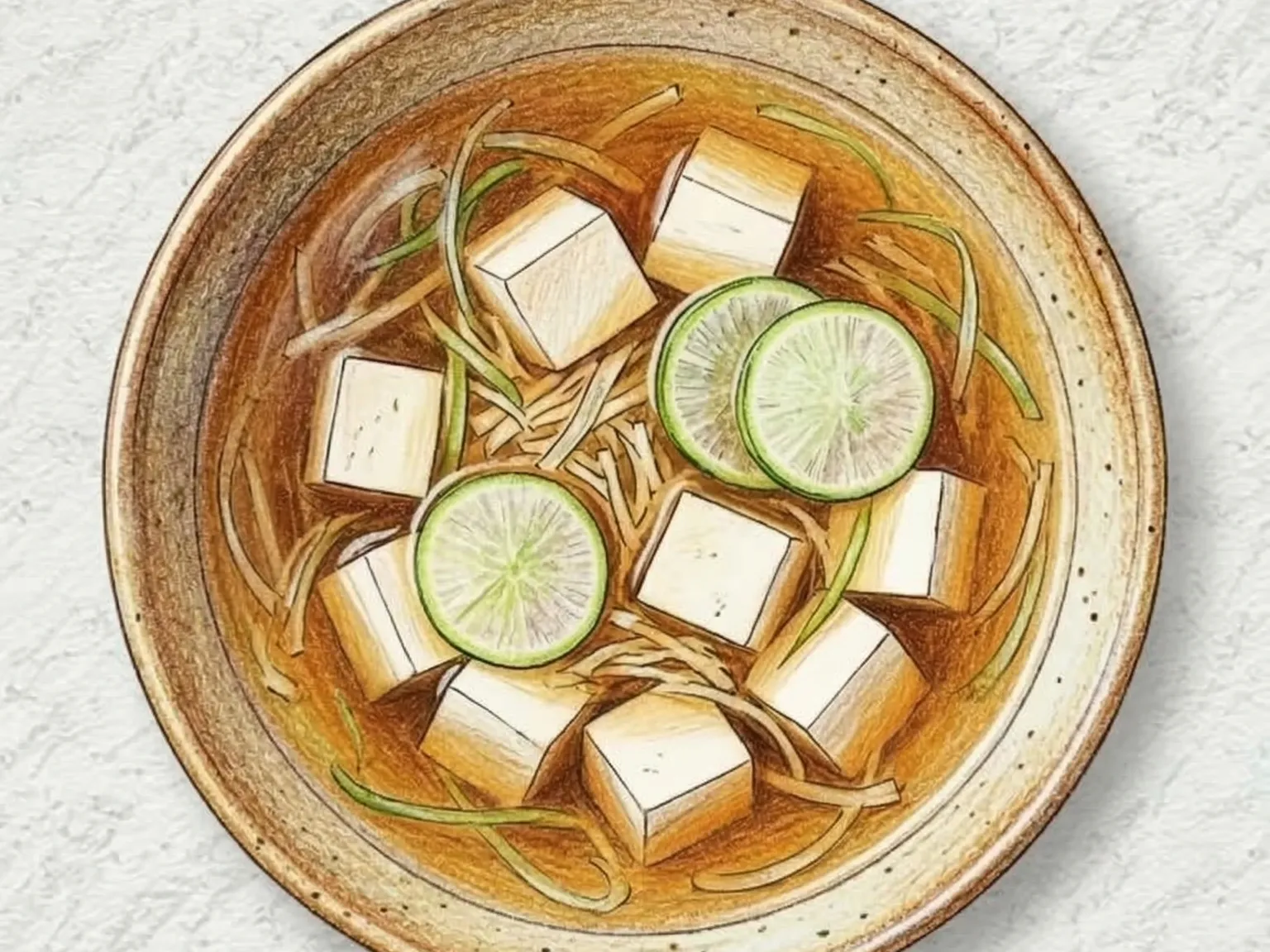
Dubu Guk (Korean Tofu Soup)
Dubu guk is a plain Korean tofu soup, also called dubu jangguk, made with tofu, radish, shiitake mushrooms, and soup soy sauce in a clear broth. It is different from spicy sundubu jjigae: this version stays light, clean, and soy-seasoned. Radish simmers first to sweeten the broth, then shiitake and garlic add enough umami for a simple home soup. Tofu goes in last so the cubes stay tender and clean-edged instead of breaking apart. Use this recipe when you want a mild Korean tofu soup with clear broth rather than a chili-heavy stew.
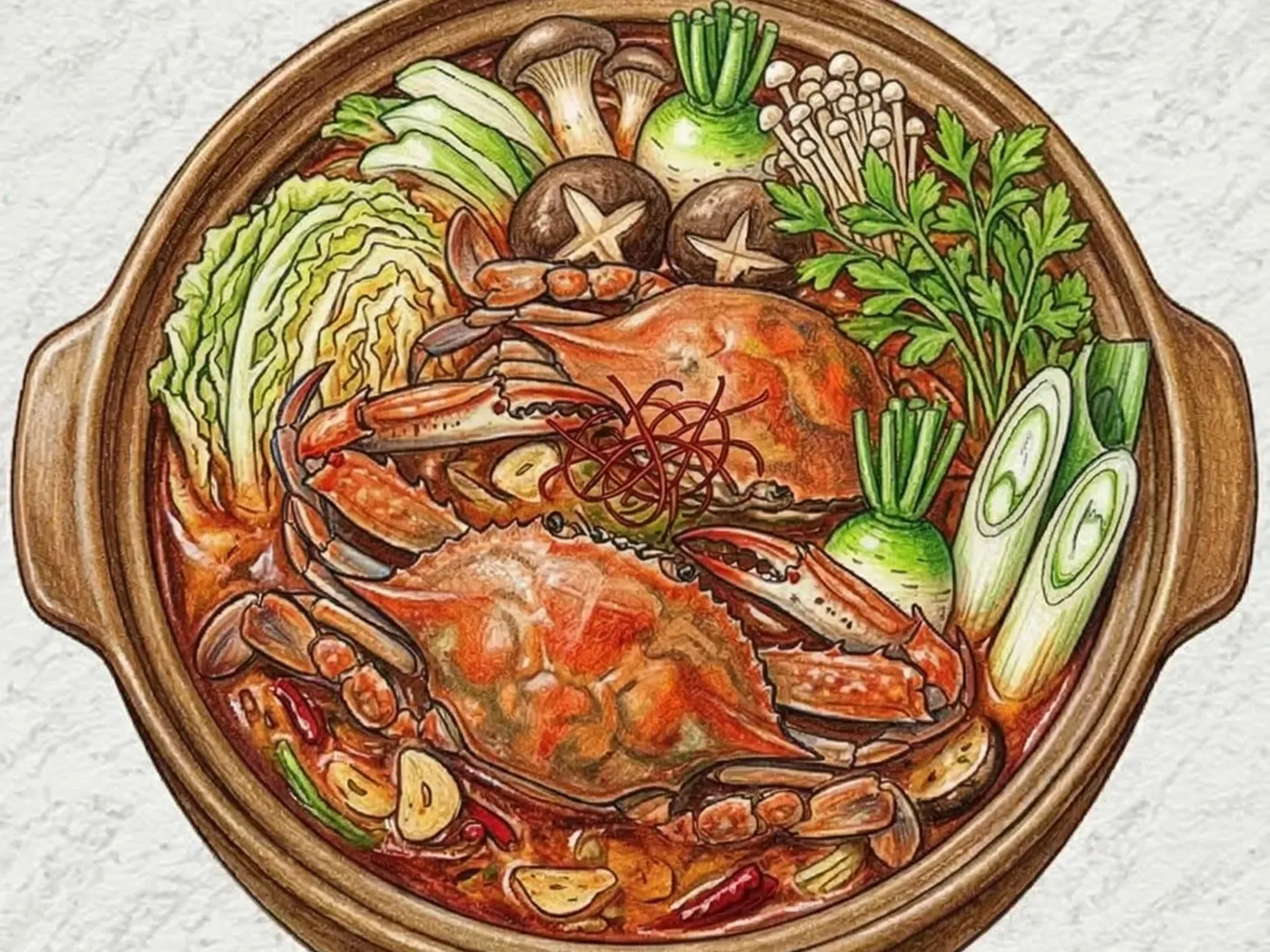
Korean Spicy Blue Crab Hot Pot
Maeun kkotge jeongol is a fiery blue crab hot pot made with two whole crabs broken down and simmered in a gochujang and gochugaru-laced broth. The crab shells and innards gradually release a deep, concentrated shellfish essence into the pot, which layers with the fermented chili paste to produce a broth that is bold and complex rather than simply hot. Daikon radish and tofu absorb the spicy liquid as they cook, becoming flavorful in their own right, while thick green onion stalks add fragrance near the end. This is a communal dish meant to be placed in the center of the table over a portable burner and shared as it simmers, with a little water added as the broth reduces to keep it going through the meal. Stirring the crab innards directly into the broth deepens the umami considerably.
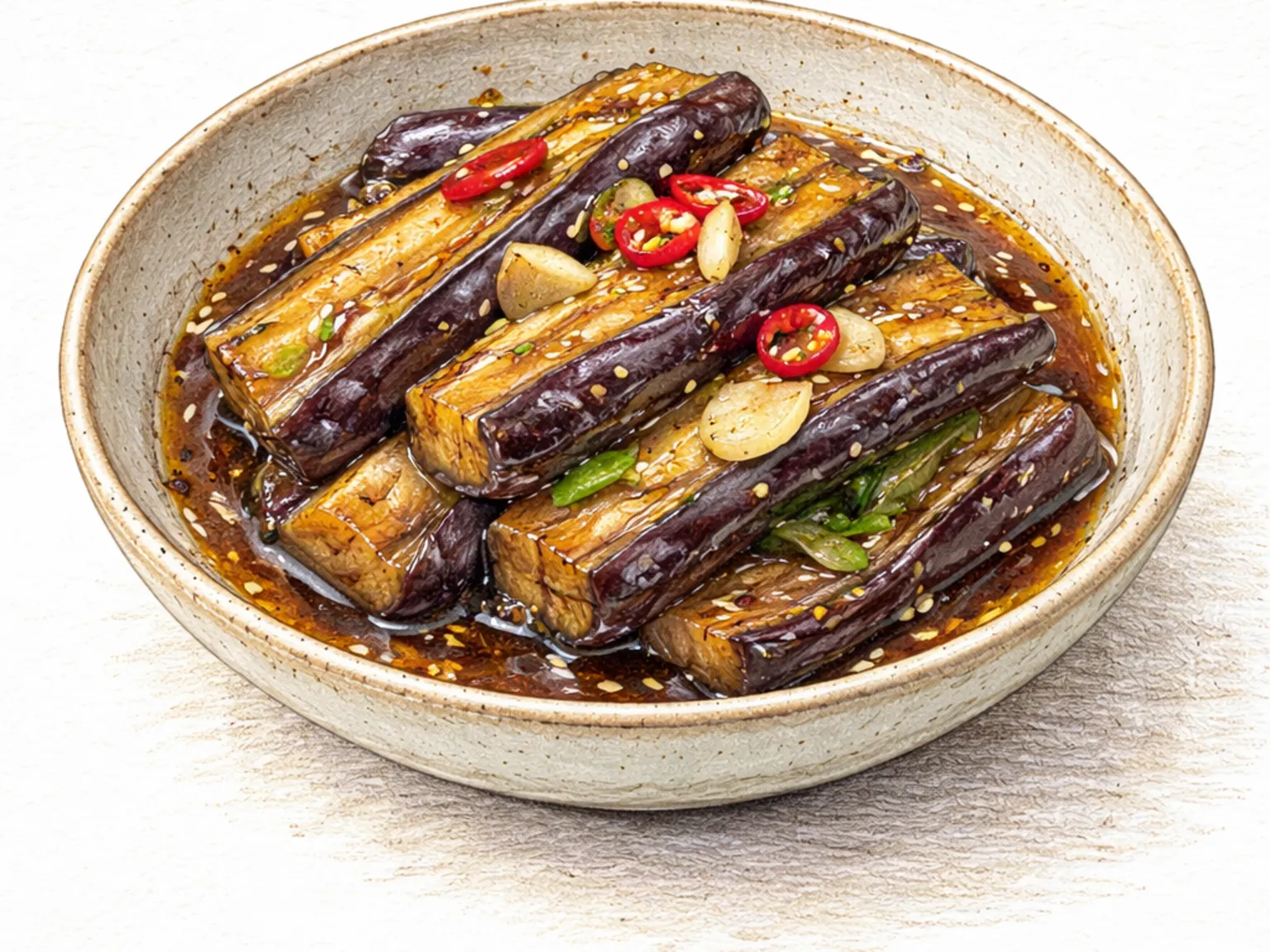
Korean Soy-Pickled Eggplant
Gaji jangajji is a Korean-style pickled eggplant that starts by blanching the eggplant in boiling water for just over a minute to soften only the outer surface, leaving the inside intact. The briefly cooked eggplant is submerged in a pickling brine of soy sauce, vinegar, and sugar that has been brought to a boil and then cooled. The eggplant absorbs the brine rapidly and deeply, like a sponge, while holding a soft, yielding texture at its core. Vinegar sharpens the eggplant's otherwise flat flavor, and garlic together with cheongyang chili pressed into the brine build a low heat and quiet complexity that goes beyond basic preservation. Ready to eat after a single day in the refrigerator, this jangajji holds its texture for more than ten days when kept cold, which makes it a practical banchan to prepare in advance and pull out over multiple meals.
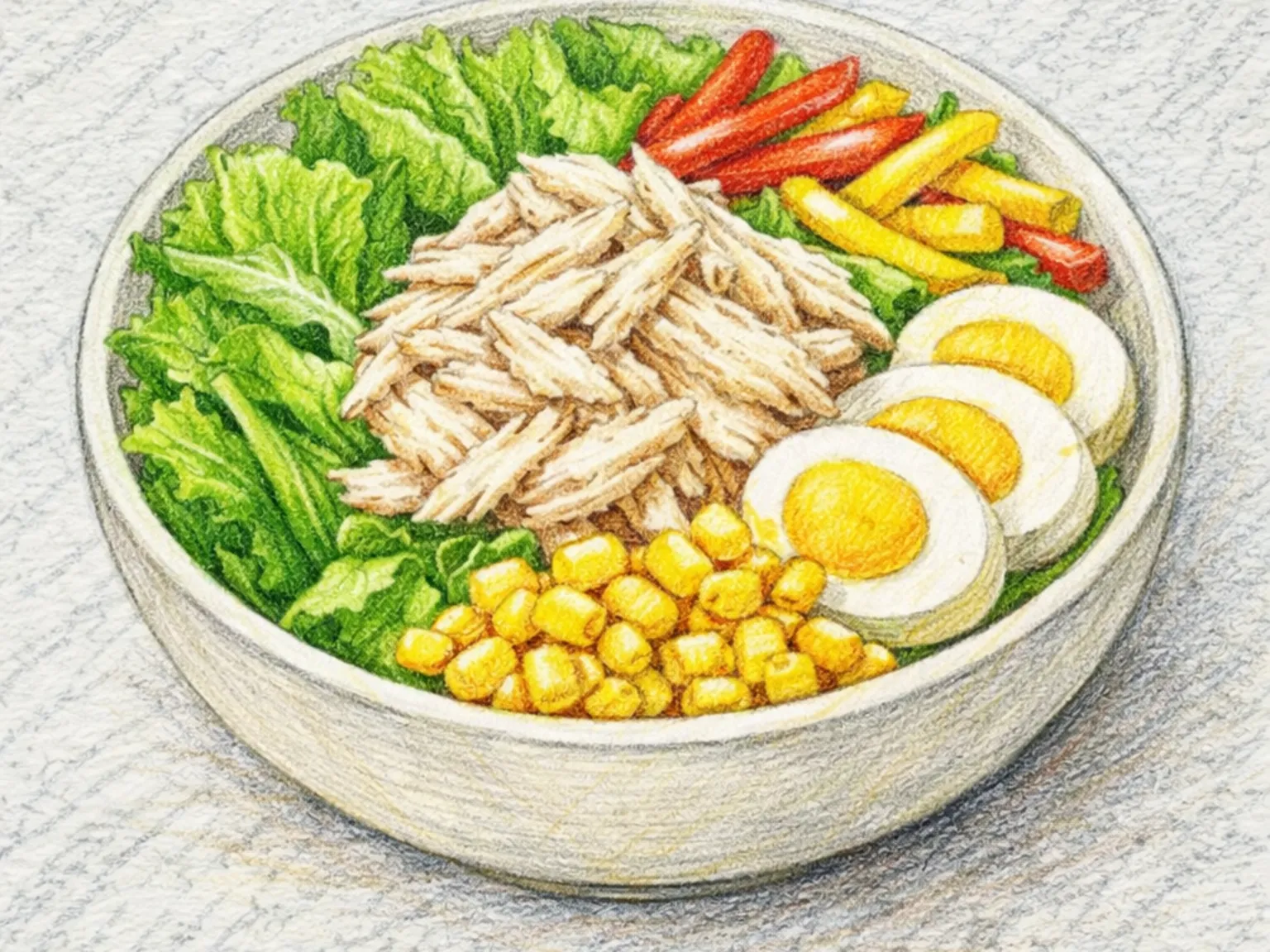
Chicken Breast Salad (Poached Chicken & Yogurt Dressing)
Chicken breast is poached slowly at low temperature until fully tender through the center, then pulled apart along the grain and layered over crisp romaine. Bell pepper brings mild sweetness and hard-boiled egg adds substantial richness to the bowl. The dressing combines plain yogurt, mustard, and honey into a coating that sits lightly on the lean chicken while contributing a steady tartness. Corn kernels scatter throughout, releasing a gentle sweetness with each bite and keeping the overall balance from tipping too sharp or too rich. A high-protein, clean-tasting salad that satisfies without heaviness.
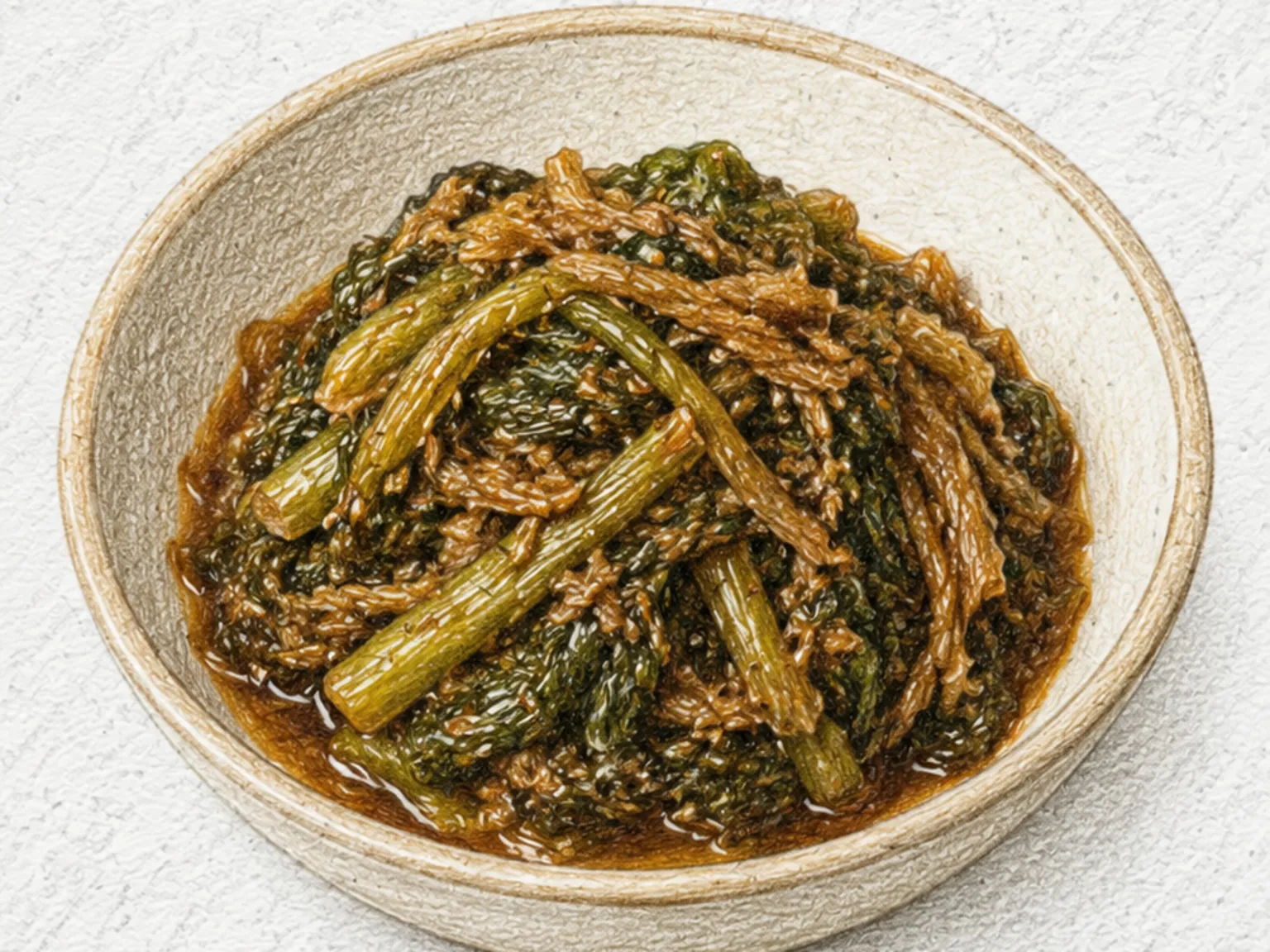
Korean Braised Dried Radish Greens with Doenjang
Dried radish greens, once rehydrated and boiled tender, are braised in a doenjang-based seasoning until the liquid reduces to a concentrated glaze. The fermented soybean paste melts into the coarse fibers of the greens, infusing each strand with deep, earthy umami. A splash of anchovy stock is added after the initial stir-fry in perilla oil, and the pan is covered so the greens can absorb the broth slowly over low heat. As the liquid evaporates, the seasoning thickens and clings to every piece, producing a chewy, salty-savory bite that releases its flavors gradually when chewed. Gochugaru contributes a mild, lingering warmth rather than sharp heat, while garlic softens into a mellow sweetness that rounds out the intensity of the doenjang. Patience during the final reduction is essential: only when the braising liquid has nearly disappeared does the dish reach the dense, flavorful consistency that makes it an ideal topping for steamed rice.
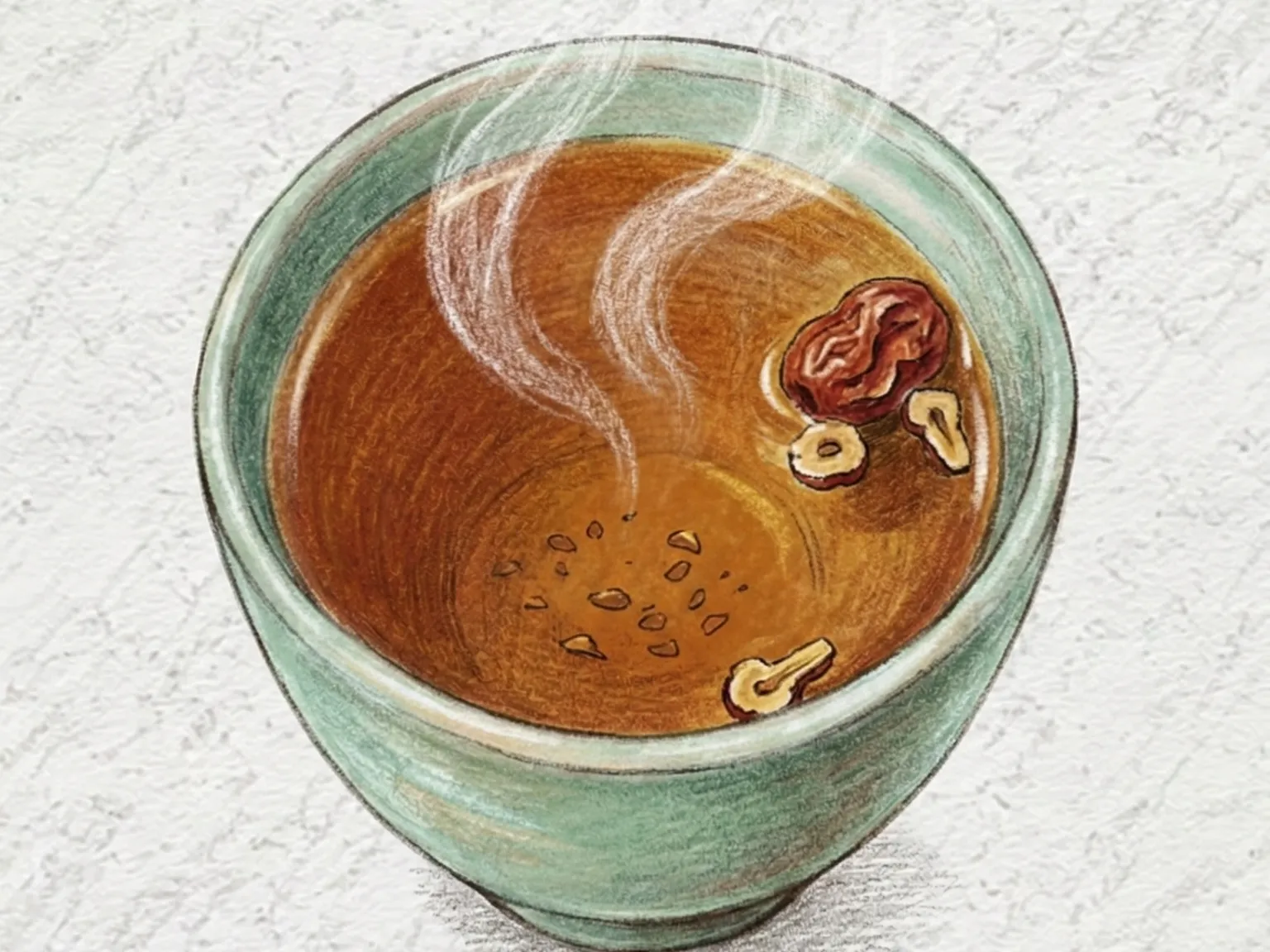
Korean Roasted Cassia Seed Tea
Gyeolmyeongja-cha is a Korean herbal tea brewed from cassia seeds that are first dry-roasted in a pan over medium-low heat until their surfaces turn a deep amber and release a toasty, distinctly nutty fragrance. The degree of roasting matters considerably: lighter roasting keeps the flavor mild and grassy, while a deeper roast brings forward a bold, grain-like quality similar to barley tea. Once roasted, the seeds are simmered in water for about twenty minutes, extracting a rich brown liquor with layers of earthy warmth. Sliced fresh ginger is often added during simmering, lending a peppery heat that adds body to the brew. Dried jujubes contribute their gentle fruit sweetness, rounding and mellowing the overall profile. Honey adjusts the final sweetness level, and thin lemon slices floated on top before serving add a clean citrus brightness that lifts the deep, roasted base.