Rice

Rice Recipes

334 recipes. Page 10 of 14

Rice is the foundation of Korean cuisine, appearing not only as steamed white rice but also as fried rice, bibimbap, clay-pot rice (sotbap), and gimbap rolls. Porridge (juk) - made by slow-cooking rice into a silky consistency - is comfort food for cold days or when you need something gentle on the stomach. Abalone porridge, pumpkin porridge, and chicken porridge are all classics.

Rice
Octopus Nigiri Sushi
Rice Medium

Octopus Nigiri Sushi

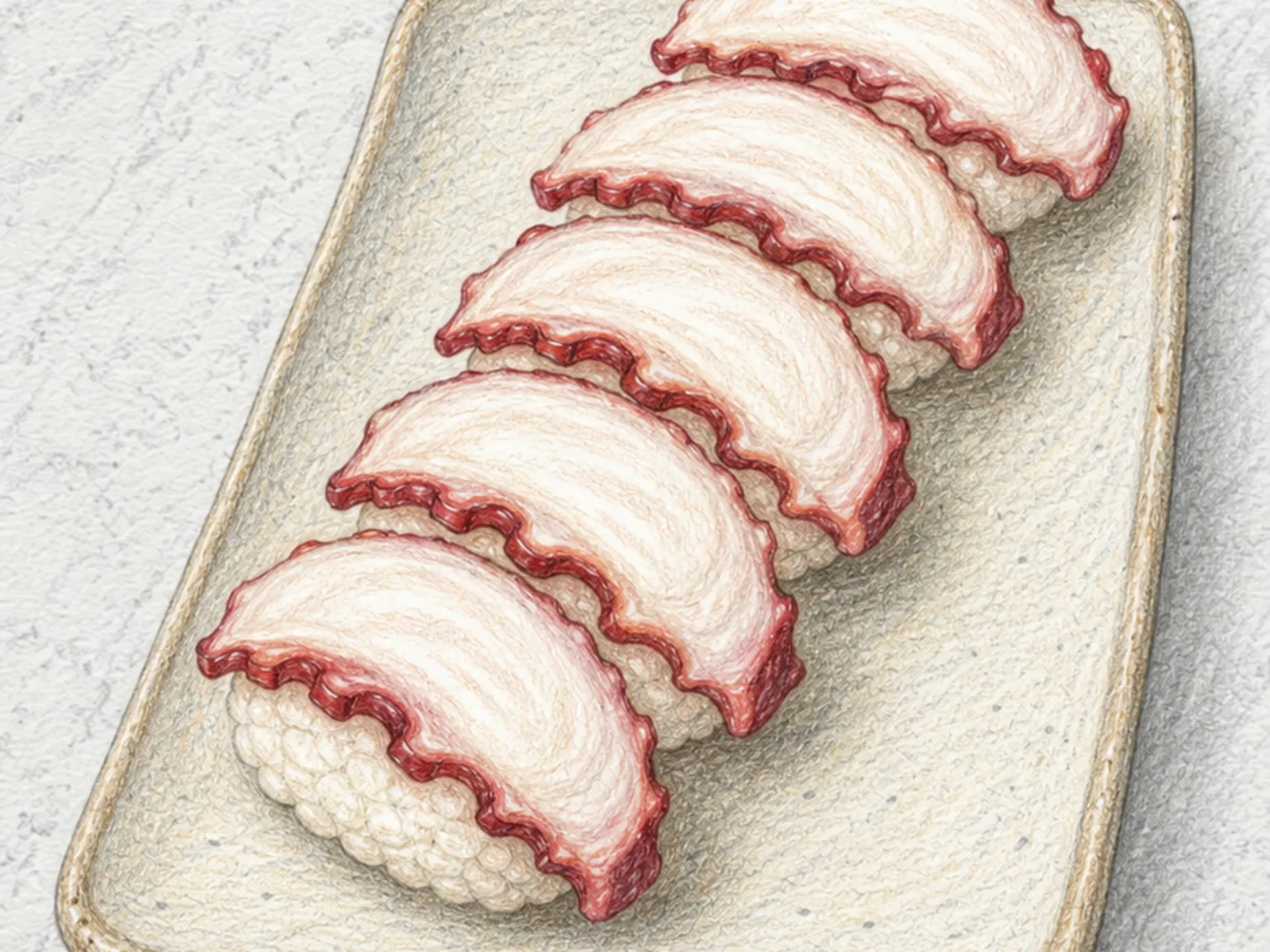
Octopus nigiri places a broad, thin slice of cooked octopus over lightly shaped rice seasoned with sushi vinegar. Combine 2 tablespoons vinegar, 1 tablespoon sugar, and 1/2 teaspoon salt in a small saucepan. Warm over low heat only until the sugar and salt dissolve, then remove it from the burner rather than boiling away the sharp vinegar aroma. Pour the mixture over 300 g freshly cooked hot rice. Hold a rice paddle vertically and fold with cutting motions so the seasoning spreads without mashing the grains, then let the rice release enough steam to be handled comfortably. Slice 150 g cooked octopus leg with the knife held at a low angle, producing pieces that are thin but broad enough to cover each rice portion. If the outer surface is firm, make several very shallow scores across it. The small cuts help soy sauce cling and make the octopus easier to bite through without pulling it off the rice. Moisten your hands lightly with water or a little of the vinegar mixture. Portion about 15 g rice at a time and shape it into a small oval, using only enough pressure to hold the grains together. Spread a small amount of the 1 teaspoon wasabi on top, lay over one octopus slice, and press gently with your fingers to join the topping and rice. The octopus should curve naturally around the sides while the rice remains distinct rather than compressed into a dense block. Arrange the finished nigiri with space between the pieces. Serve 1 tablespoon soy sauce on the side so the octopus surface can be dipped lightly without soaking and breaking apart the seasoned rice.

🏠 Everyday 🍱 Lunchbox
Prep 25min Cook 10min 2 servings
Octopus Rice Porridge
Rice Easy

Octopus Rice Porridge

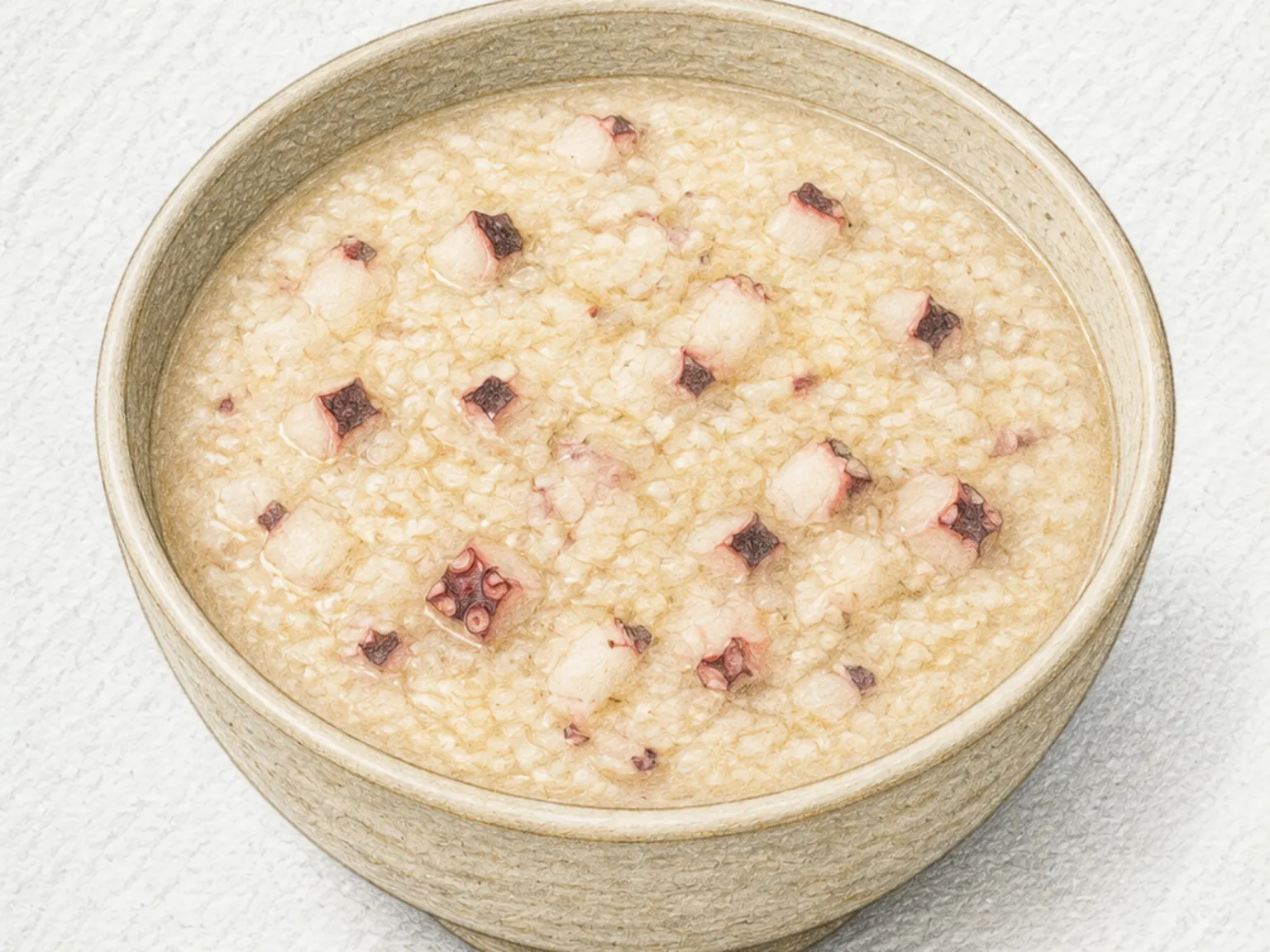
Octopus rice porridge starts with soaked rice sauteed in sesame oil, then simmers the grain with finely diced carrot and Korean zucchini until soft before cooked octopus is added near the end. Toasting the drained rice until the grains become slightly translucent gives the porridge a clear sesame aroma and keeps the grain flavor from disappearing into plain cooking water. Cut the carrot, zucchini, and cooked octopus into similarly small pieces so each spoonful carries an even distribution rather than isolated large chunks. Briefly saute the vegetables with the rice, pour in the water, and lower the heat once the pot boils. The mixture needs occasional stirring along the bottom with a wooden spoon, especially as the rice expands and the liquid thickens, because settled starch can scorch. Wait until the grains have opened and the broth has become cohesive before adding the chopped cooked octopus and soup soy sauce. Since the octopus is already cooked, it only needs enough time to heat through and share its savory flavor with the porridge. Long simmering from the beginning would drive out moisture and make the pieces firm and rubbery. Adjust the final seasoning with a small amount of salt, then serve immediately. The bowl should be soft and spoonable, with gentle sesame, octopus, carrot, and zucchini flavors still distinguishable. It will continue to thicken as it stands, so avoid reducing it to a stiff consistency in the pot.

🏠 Everyday 🥗 Light & Healthy
Prep 15min Cook 30min 2 servings
Korean Octopus Pot Rice (Chewy Octopus Ocean-Scented Grain Pot)
Rice Medium

Korean Octopus Pot Rice (Chewy Octopus Ocean-Scented Grain Pot)

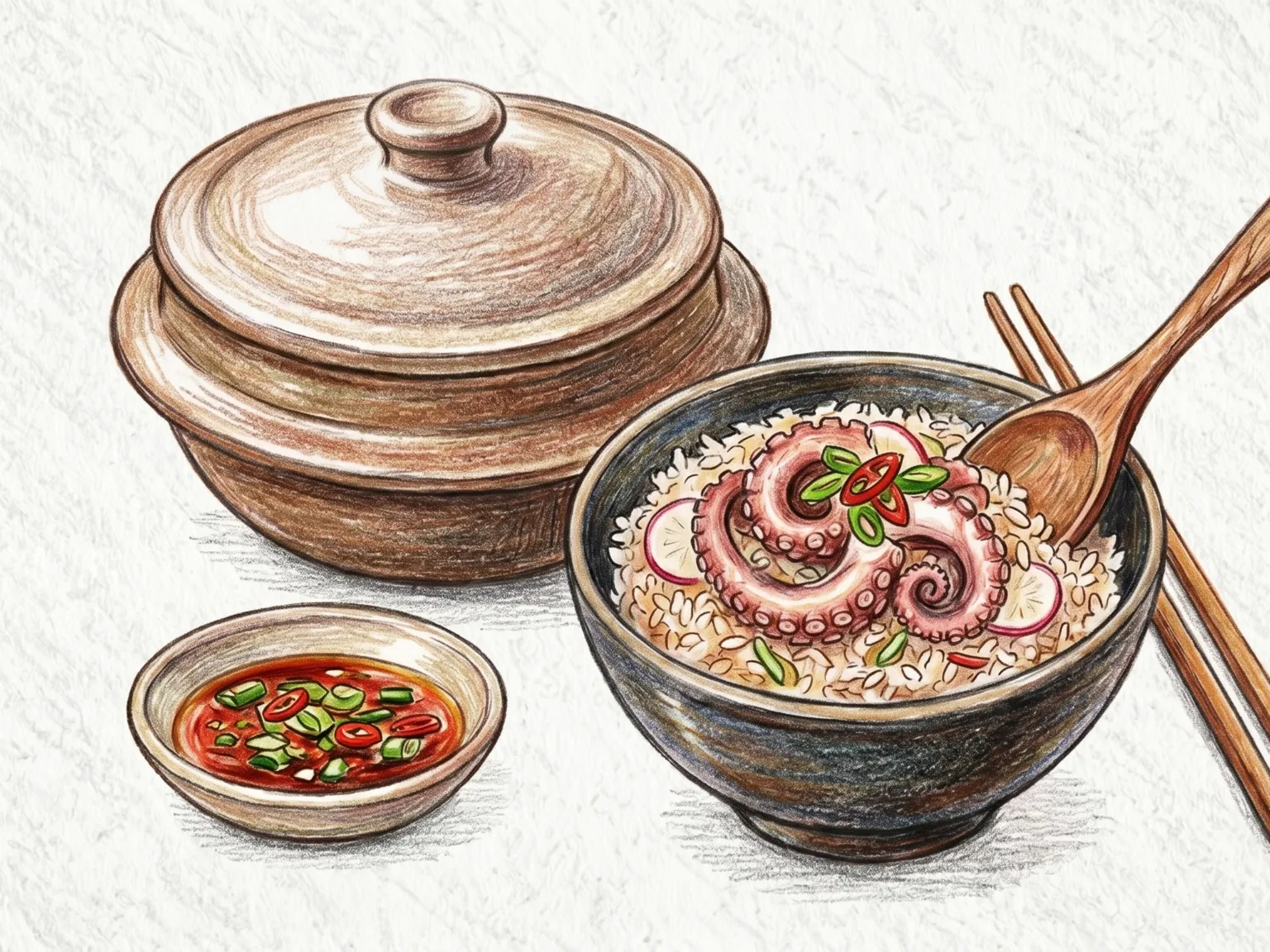
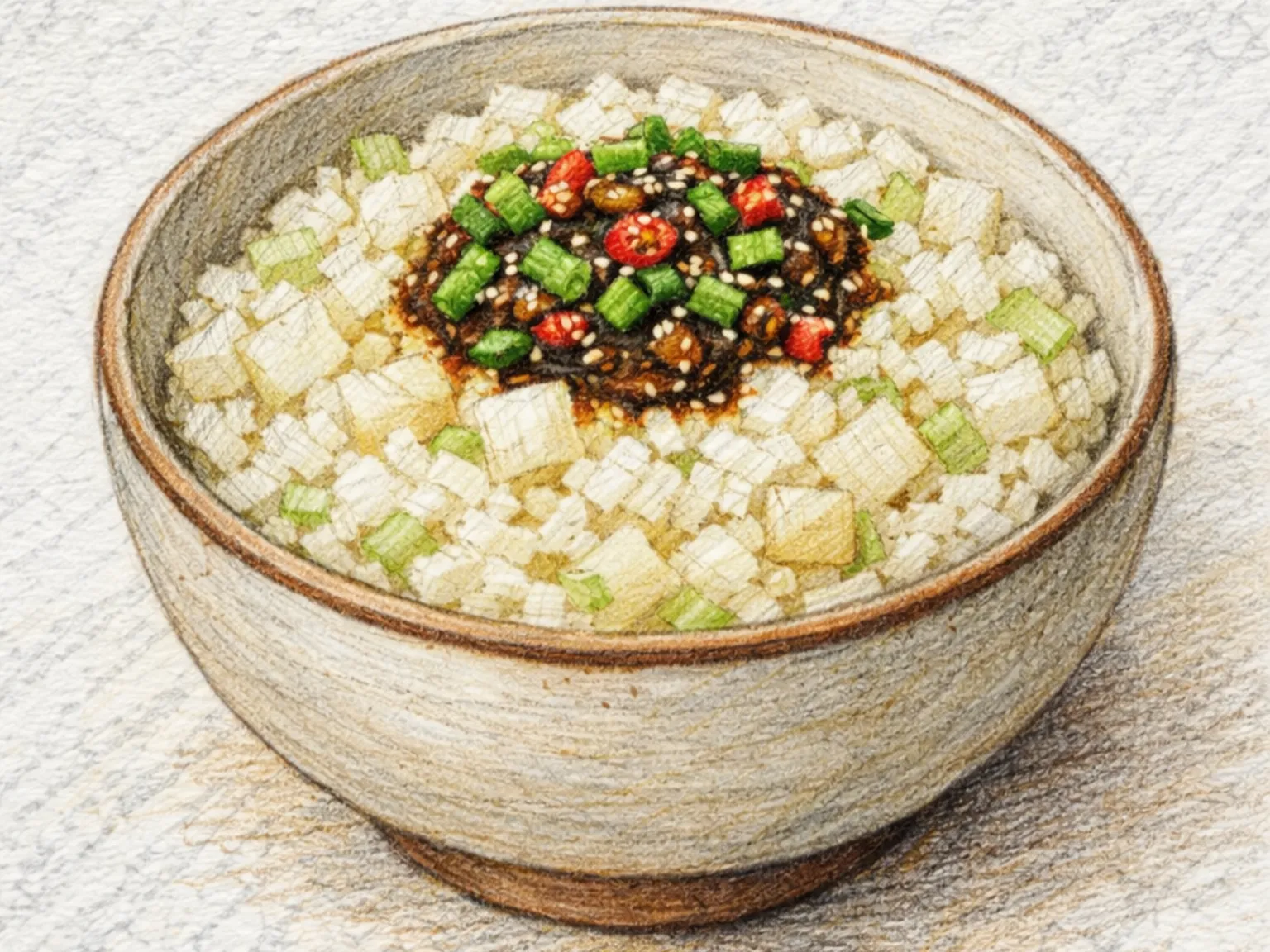
Muneo sotbap is a seafood pot rice dish in which chewy octopus tentacles are placed on top of uncooked rice and steamed together in a heavy pot so that the briny, oceanic aroma penetrates every grain as it cooks. Thin radish slices lining the bottom of the pot serve two purposes: they prevent the rice from sticking and transfer their natural sweetness into the grains during cooking. Simmering the octopus alongside radish also helps tenderize the meat. The pot starts over high heat to bring it to a boil, then the flame drops to low for a slow, gentle cook that keeps the octopus from turning rubbery. Resting the pot undisturbed after cooking allows the heat to distribute evenly throughout the rice. A dipping sauce of soy sauce, sesame oil, cheongyang chili, and sliced green onion is mixed in at the table, adding a spicy, clean finish. Scraping the crisp nurungji crust from the bottom of the pot is one of the distinct pleasures of this dish.

🎉 Special Occasion 🏠 Everyday
Prep 15min Cook 25min 2 servings
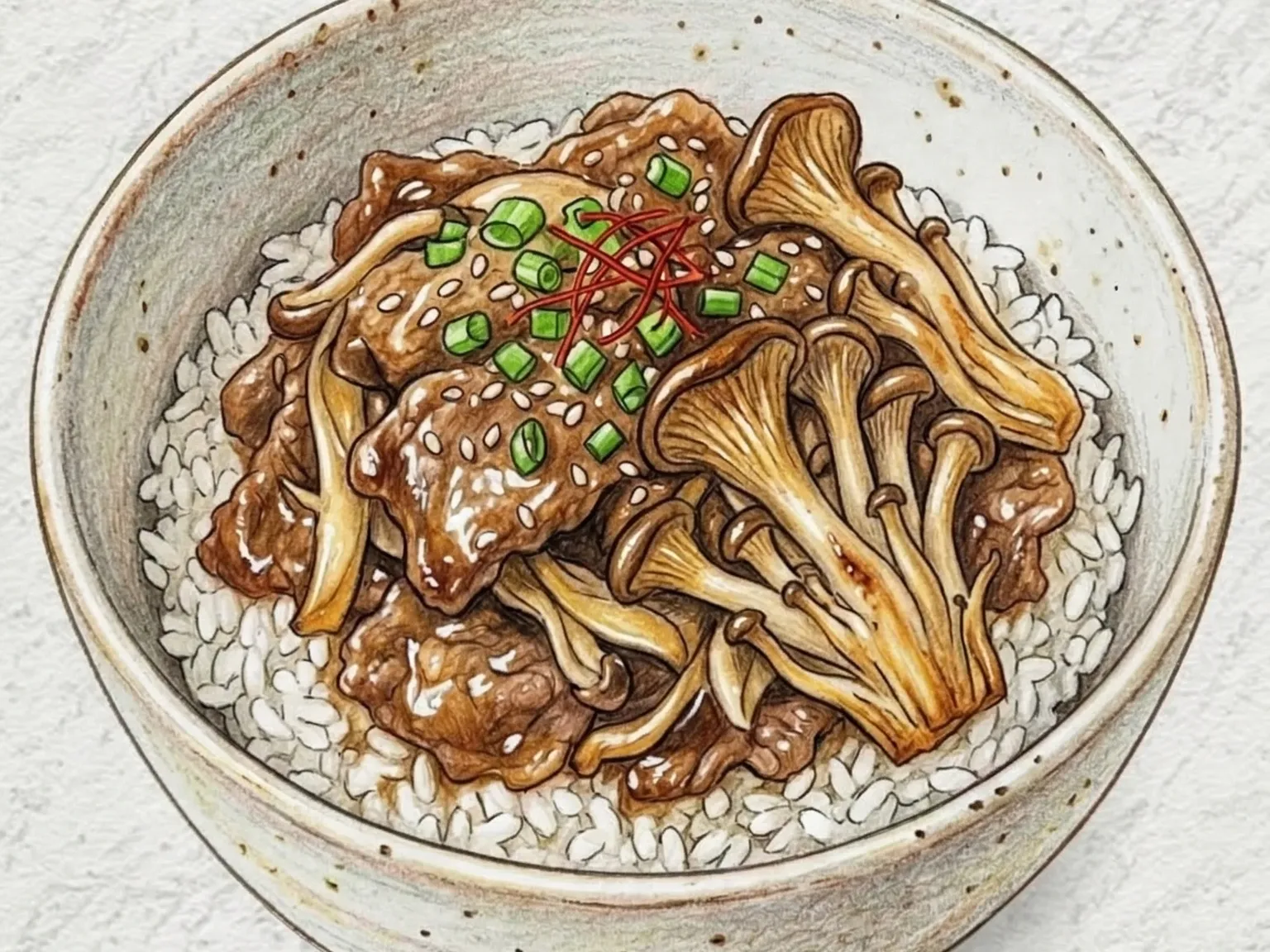
Korean Bulgogi Mushroom Rice Bowl
Rice Easy

Korean Bulgogi Mushroom Rice Bowl

Soy-and-pear-juice-marinated beef is stir-fried together with torn oyster mushrooms and served over rice for a deeply savory bowl. Cooking the mushrooms first in the hot pan allows their excess moisture to evaporate, keeping the sauce thick and glossy once the marinated beef goes in rather than pooling at the bottom. Pear juice contains natural tenderizing enzymes that soften the beef fibers noticeably even after a short marinating time, and its understated sweetness bridges the saltiness of the soy sauce without adding a fruity flavor. A drizzle of sesame oil at the end of stir-frying lays a toasted, nutty fragrance over the sweet-salty glaze that rounds out the whole bowl. When pear juice is not available, one teaspoon of sugar dissolved in one tablespoon of water provides a workable substitute that approximates the sweetness without the tenderizing effect.

🏠 Everyday 🍱 Lunchbox
Prep 15min Cook 12min 2 servings
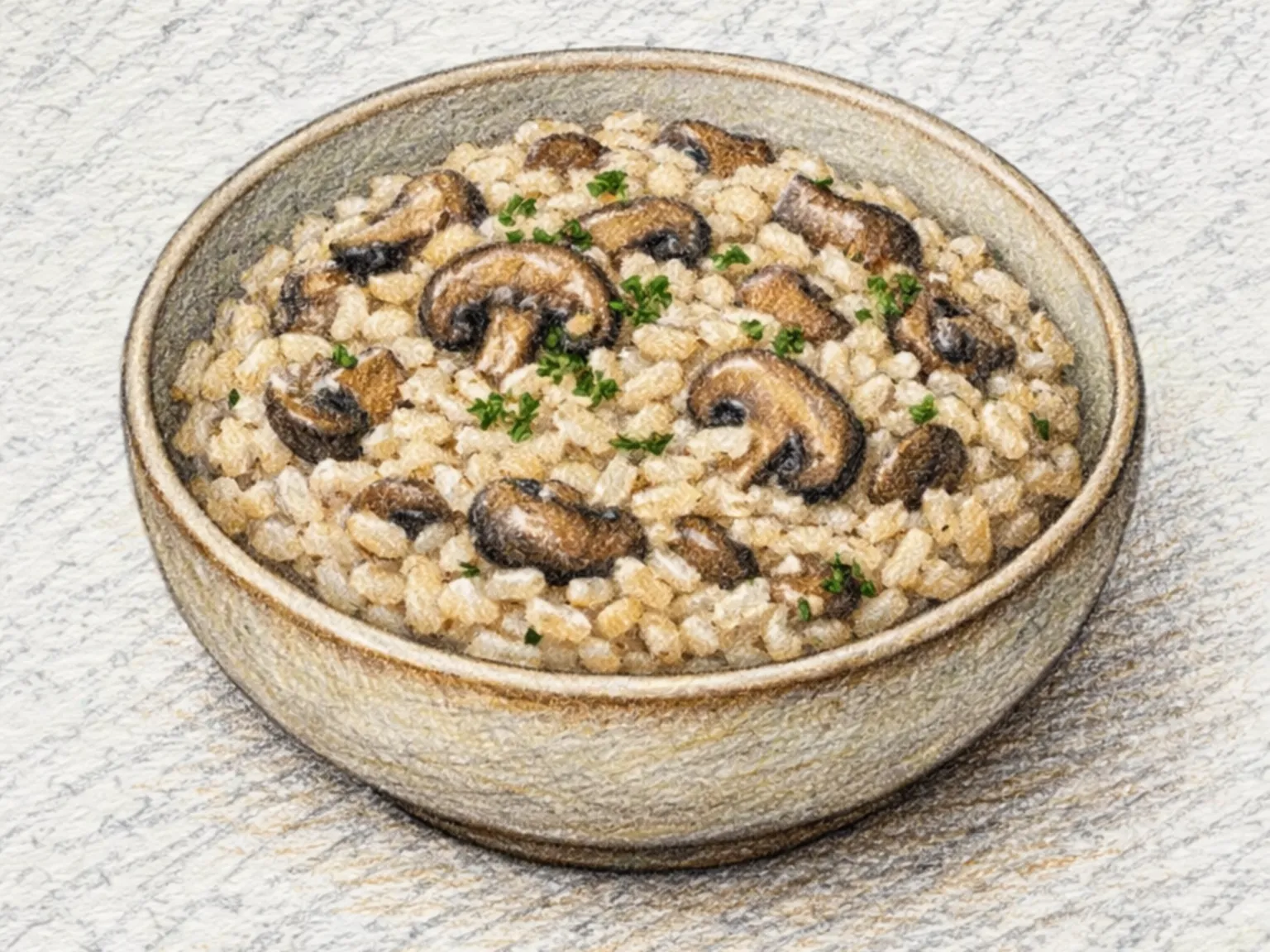
Mushroom Risotto
Rice Medium

Mushroom Risotto

Mushroom risotto develops its depth before the stock ever touches the rice: the mushrooms are browned over high heat until their released moisture has evaporated. Warm 500 ml chicken stock in a small pot until steaming and keep it over low heat throughout the cooking. Adding cold stock would repeatedly lower the pan temperature and make the grains cook unevenly. Thinly slice 150 g button mushrooms and finely chop half an onion with 2 garlic cloves. Do not wash 150 g arborio rice, since its surface starch is needed to thicken the risotto. Heat a wide pan over high heat, add 1 tablespoon olive oil and 1 tablespoon butter, and cook the mushrooms until their liquid disappears and the edges turn deep brown. Lower the heat to medium, add the onion and garlic, and cook for 2 minutes. Stir in the rice for 1 to 2 minutes, until the outer edge of each grain appears translucent. Pour in 50 ml white wine and scrape the bottom while stirring until the wine is almost absorbed. Add the warm stock one ladle at a time. Stir and wait for the rice to absorb each addition before adding the next, rather than flooding the pan. After 18 to 20 minutes, the rice should be al dente and the risotto should move slowly when the pan is tilted instead of standing stiffly. Turn off the heat and stir in the remaining 1 tablespoon butter and 30 g Parmesan, then adjust with salt and black pepper. Shiitake or oyster mushrooms can be mixed with the button mushrooms, but they should still be browned until their moisture has cooked away.

🎉 Special Occasion 🍺 Bar Snacks
Prep 10min Cook 30min 2 servings
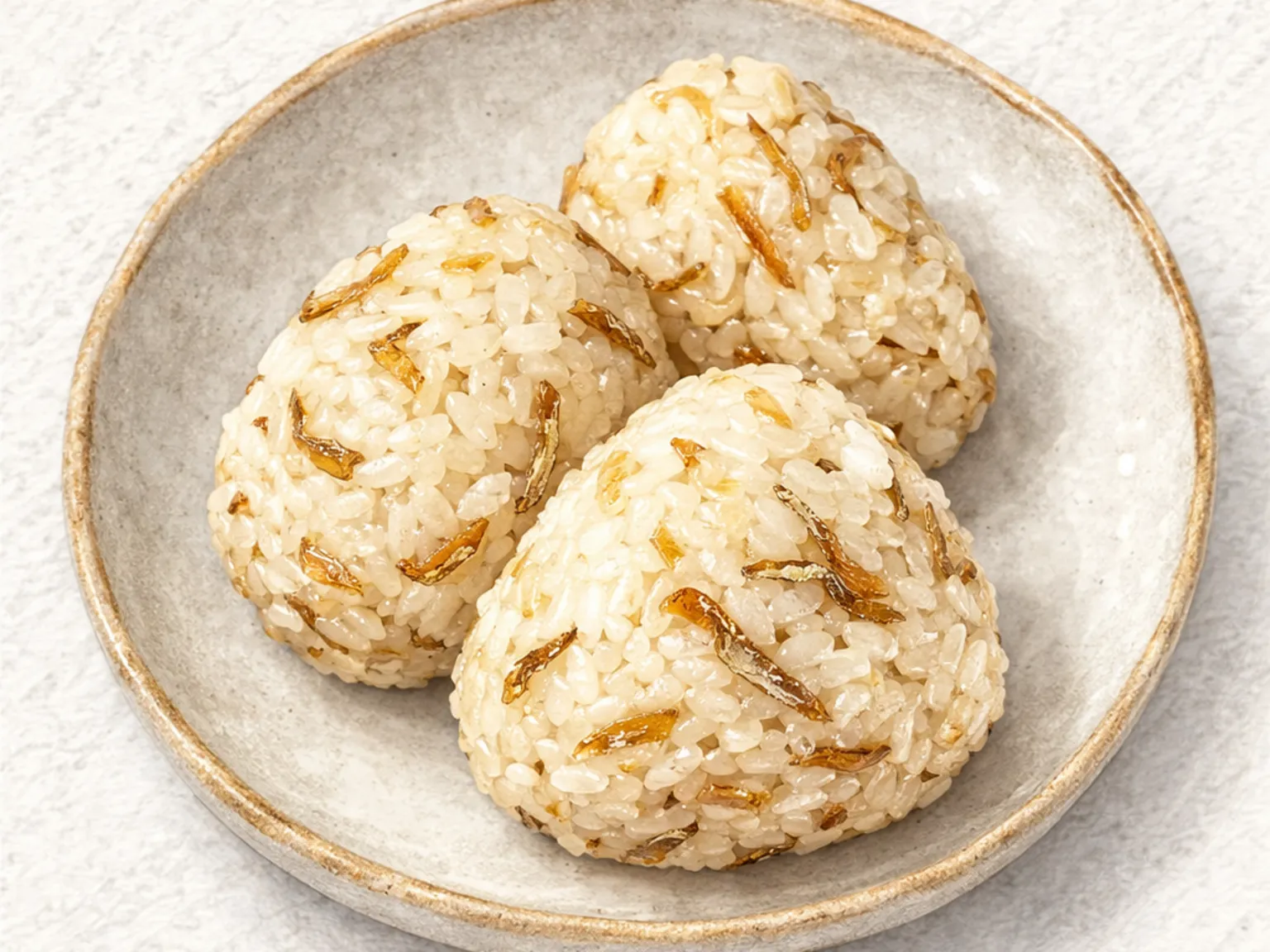
Korean Anchovy Rice Balls
Rice Easy

Korean Anchovy Rice Balls

Myeolchi jumeokbap is a rice ball made by mixing sweet-salty glazed dried anchovies into warm rice and shaping it by hand. The anchovies are dry-toasted first in a pan over medium heat to drive off moisture and reduce fishiness, then a small amount of oil is added along with soy sauce and oligosaccharide syrup and the mixture is stirred over heat until the anchovies are coated in a glossy, caramelized glaze. The syrup scorches quickly, so the heat must be managed carefully and the pan watched throughout. Once the glazed anchovies are folded into warm rice, sesame oil, roasted seaweed flakes, and sesame seeds are added before everything is mixed together. Hands dampened with water or brushed with sesame oil are used to compress the mixture into compact balls. Working while the rice is still warm is important: the starch is pliable at temperature and the balls hold their shape firmly, whereas cold rice does not compact well and the finished balls tend to fall apart. Anchovy saltiness varies considerably between brands and batches, so the amount of soy sauce should be adjusted accordingly to avoid over-seasoning. The finished rice balls hold their flavor well after cooling, which makes them a reliable choice for packed lunches and outdoor eating.

🍱 Lunchbox ⚡ Quick
Prep 15min Cook 10min 2 servings
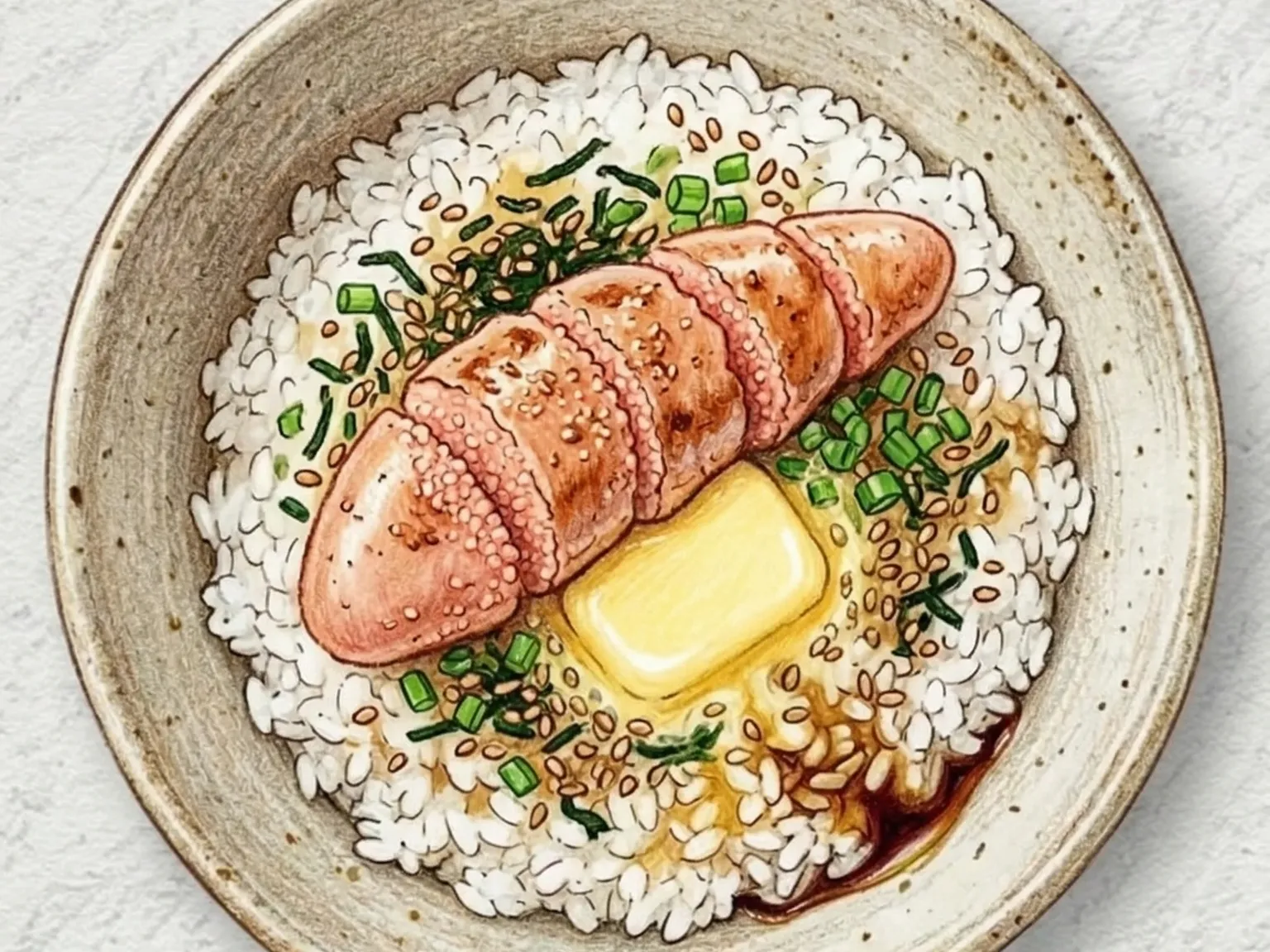
Korean Pollock Roe Butter Rice Bowl
Rice Easy

Korean Pollock Roe Butter Rice Bowl

Myeongran butter deopbap puts lightly seared pollock roe and a knob of butter on steaming white rice, then lets the diner mix everything together at the table. Each ingredient plays a clear role. The roe brings concentrated, briny umami. The butter melts into the hot rice and coats every grain with a rich, creamy backdrop. Soy sauce adds salty depth and deepens the color slightly. Cooking the roe in butter for only about a minute is critical: at that point the eggs still pop on the tongue as the roe breaks apart, but any longer and the texture turns dry and grainy. The moment the hot rice meets the butter and soy sauce and the whole thing is stirred together, the flavors merge into something more unified than the individual parts. Shredded dried seaweed, sliced chives, and sesame seeds scattered on top add fragrance, color, and a gentle crunch that keep the bowl from feeling too rich.

🏠 Everyday ⚡ Quick
Prep 10min Cook 10min 2 servings
Korean Pollock Roe Egg Porridge
Rice Easy

Korean Pollock Roe Egg Porridge

Rice is simmered in anchovy stock until the grains soften and the porridge thickens, then finished with pollock roe and beaten egg. The roe dissolves into the broth and spreads its briny, savory depth throughout the bowl, while the egg forms soft curds that add body to the texture. Because pollock roe already carries significant salt, soup soy sauce is added only in small amounts at the very end to fine-tune the seasoning rather than build the base flavor. Stirring the egg in gently over low heat produces delicate, smooth curds. Rushing the egg over high heat causes it to seize into rough clumps that interrupt the silky consistency of the porridge. A drizzle of sesame oil, a scattering of dried seaweed flakes, and sliced green onion finish the bowl with a nutty fragrance and a clean finish. This is a natural choice for days when appetite is low or the stomach feels unsettled, and the roe's depth of flavor means a small number of ingredients produces a genuinely satisfying result.

🏠 Everyday ⚡ Quick
Prep 10min Cook 18min 2 servings
Korean Shepherd's Purse Doenjang Pot Rice
Rice Medium

Korean Shepherd's Purse Doenjang Pot Rice

This spring pot rice infuses each grain with the deep, earthy flavor of doenjang dissolved in kelp stock. Naengi, or shepherd's purse, contributes a gentle herbal bitterness that offsets the fermented saltiness, while zucchini and onion bring natural sweetness for balance. Vegetables are first sauteed in perilla oil for fragrance, then doenjang and soaked rice join the pot for a slow cook. Naengi goes in after the pot starts boiling to protect its delicate aroma, and ground sesame seeds finish the dish with a final nutty layer.

🏠 Everyday
Prep 15min Cook 24min 2 servings
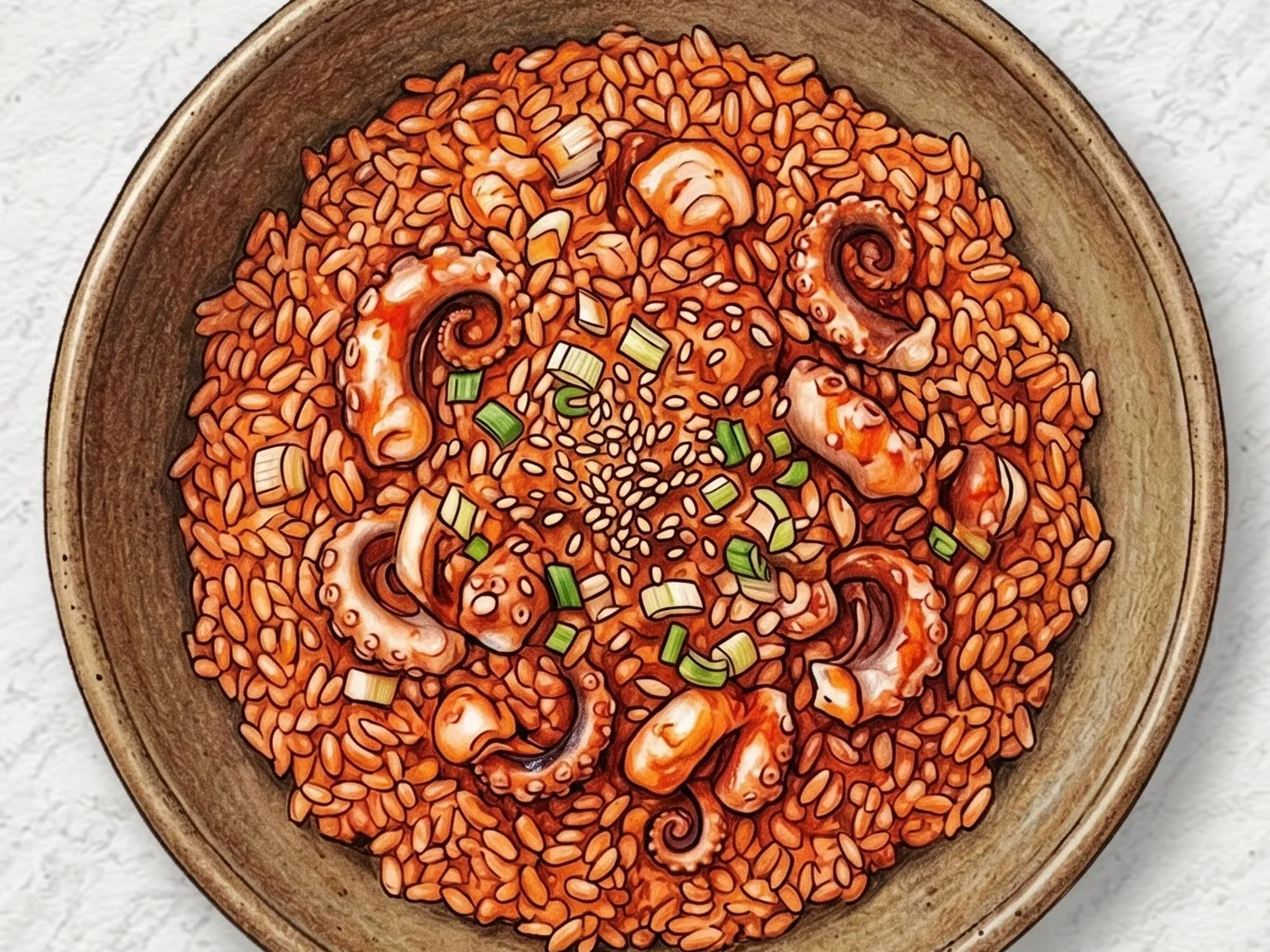
Korean Stir-Fried Octopus Fried Rice
Rice Medium

Korean Stir-Fried Octopus Fried Rice

This octopus fried rice combines 200 g octopus and 2 cups cooked rice in a gochujang sauce, with the cooking order designed to keep both the seafood and rice from becoming wet or tough. Rub the octopus with flour until the surface feels less sticky, rinse it thoroughly, drain it, and cut the thicker sections into bite-size pieces. Mix 1.5 tbsp gochujang with 1 tsp red pepper flakes, 1 tbsp soy sauce, and 1 tsp sugar until no lumps remain. Heat 1 tbsp vegetable oil in a pan over medium heat and cook 80 g onion for 2 minutes, stopping when the edges turn translucent. Raise the heat to high, add the octopus and prepared sauce, and stir-fry for only 2 minutes. As soon as the octopus begins to curl, add the rice and use a spatula to press and separate the grains while cooking for 3 minutes. Turn off the heat when the rice has an even red coating and no liquid remains on the bottom of the pan. Mix in 30 g green onion and 1 tsp sesame oil at the end, using the residual heat rather than continuing to cook the octopus.

🏠 Everyday 🍱 Lunchbox
Prep 15min Cook 10min 2 servings
Korean Spicy Stir-Fried Octopus Rice Bowl
Rice Medium

Korean Spicy Stir-Fried Octopus Rice Bowl

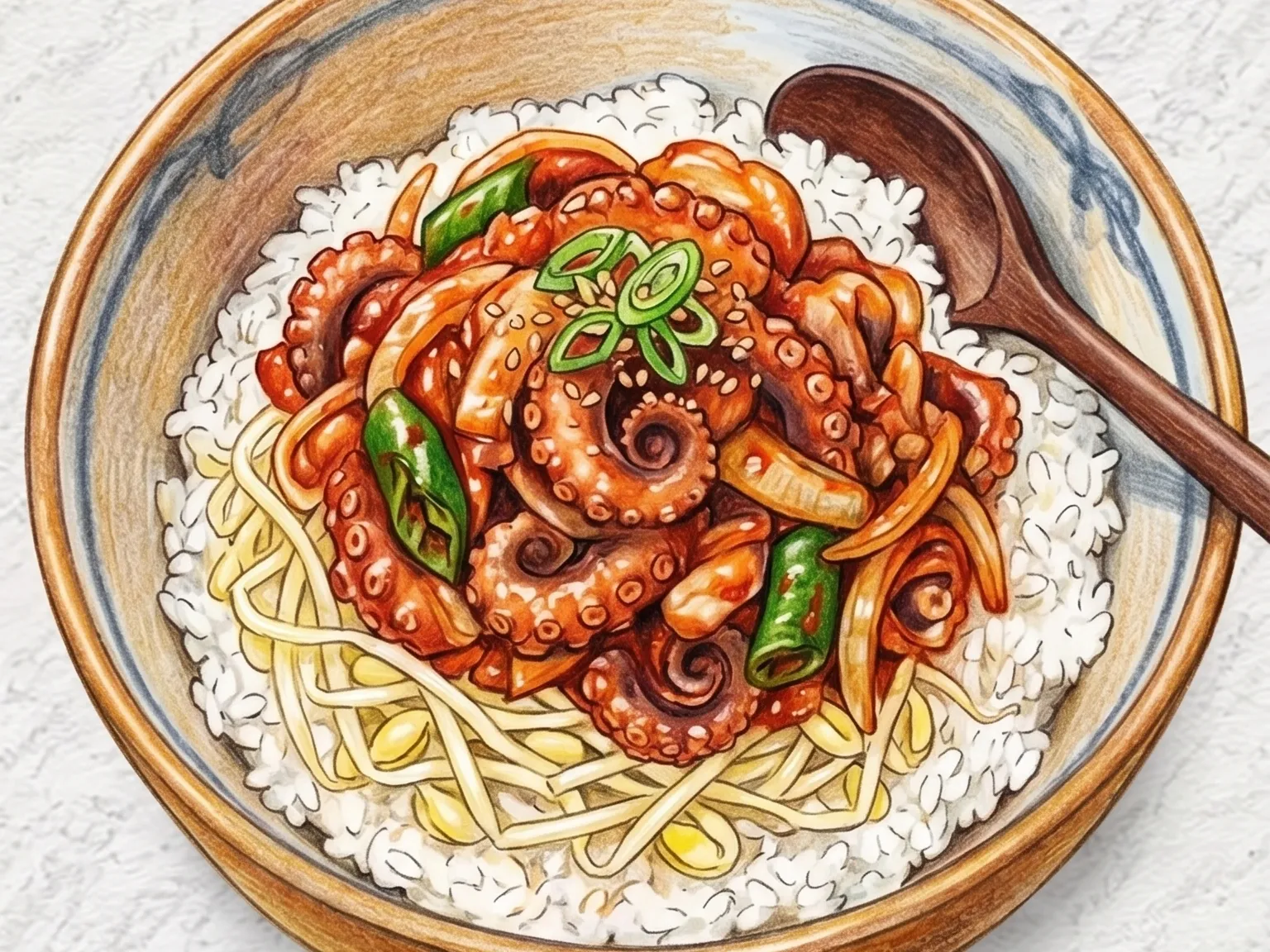
Spicy stir-fried baby octopus in a gochujang sauce is served over a bowl of steamed rice. The octopus delivers a satisfying chew, coated alongside onion and cheongyang chili in a well-seasoned glaze that makes each bite of rice deeply flavorful. Stir-frying on high heat for just a few minutes keeps the octopus springy rather than tough, and scrubbing it with flour before rinsing ensures a clean taste free of any sliminess. Adding a layer of bean sprouts under the stir-fry introduces a contrasting crunch.

🏠 Everyday 🍺 Bar Snacks
Prep 15min Cook 10min 2 servings
Korean Flying Fish Roe Gimbap
Rice Easy

Korean Flying Fish Roe Gimbap

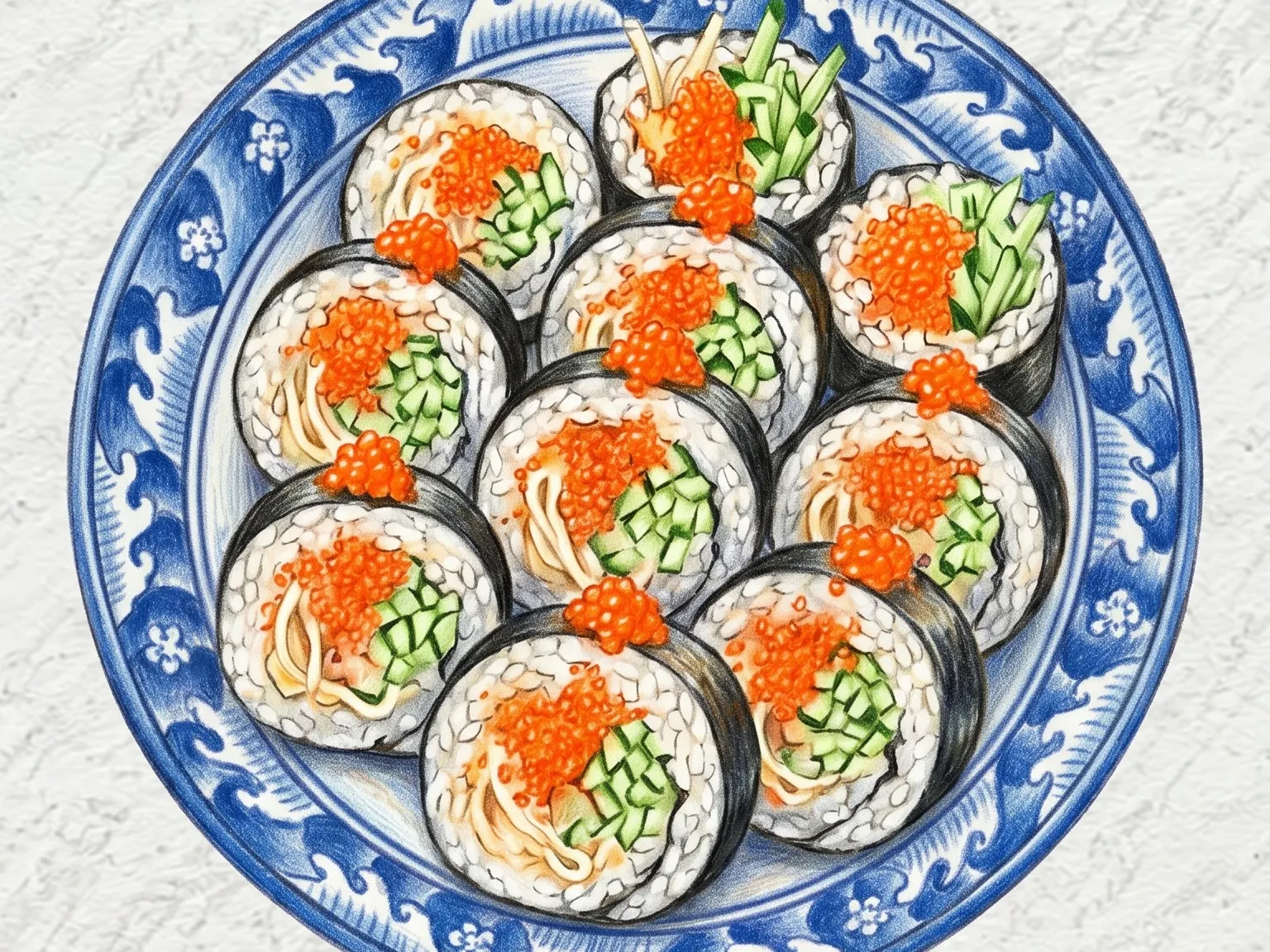
Nalchial gimbap is made by spreading sesame-oil-and-salt-seasoned rice across a sheet of nori, piping a thin line of mayonnaise down the center, then laying refrigerated flying fish roe and julienned cucumber in parallel before rolling everything tightly. The roe must come straight from the refrigerator at the moment of assembly - as the tiny eggs warm up, their skins soften and lose the signature pop that defines this roll. Biting through releases a simultaneous burst of briny, savory roe juice and creamy mayonnaise, while crisp cucumber strips cut through the richness with their cool crunch. Once sliced, a small spoonful of extra roe placed on each cut piece makes the rolls visually striking and amplifies the popping sensation per bite. Salmon roe or spicy pollack roe can substitute for flying fish roe using the exact same method.

🌙 Late Night ⚡ Quick
Prep 15min Cook 5min 2 servings
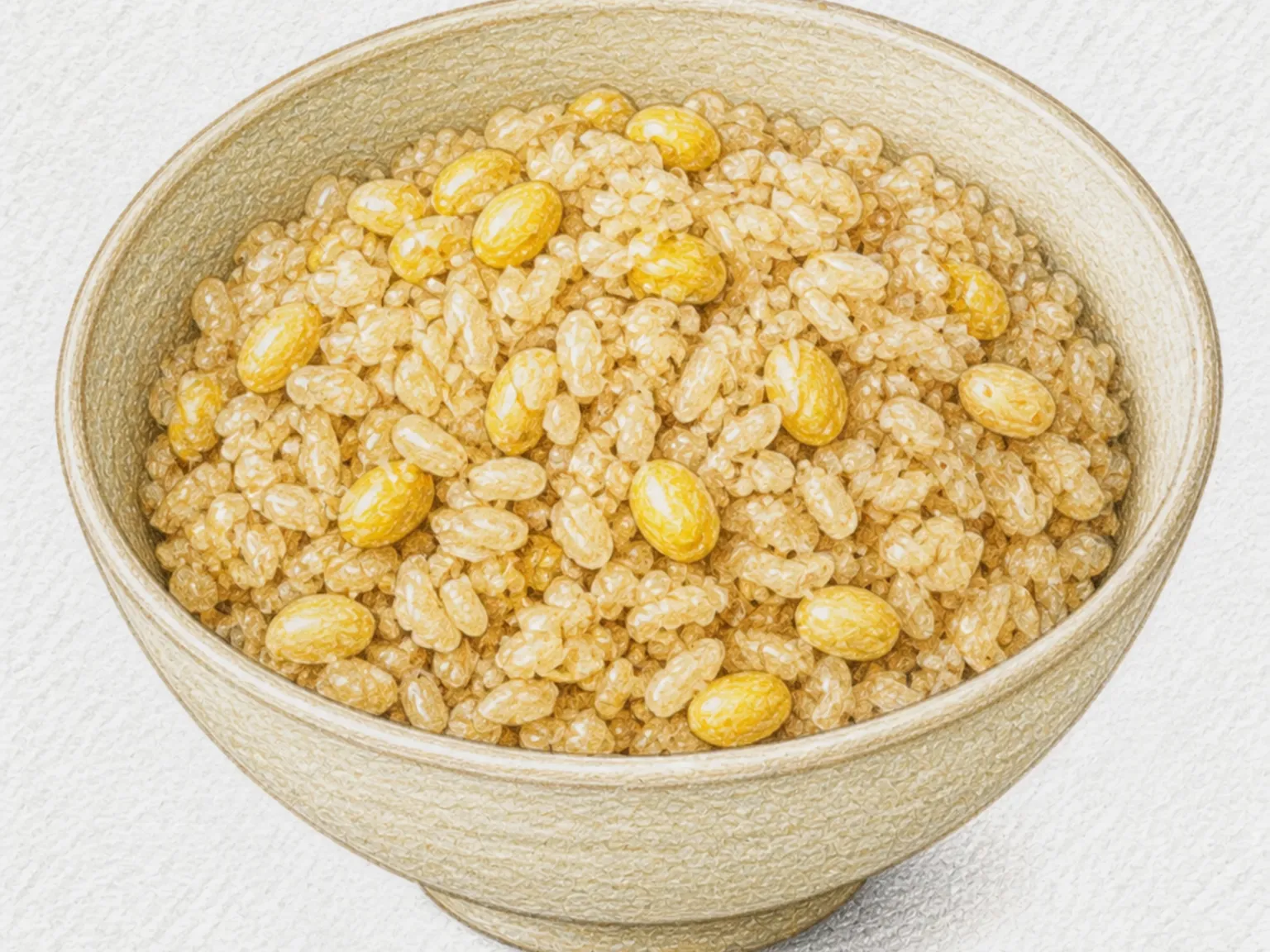
Nara Chameshi (Hojicha Rice with Soybeans)
Rice Easy

Nara Chameshi (Hojicha Rice with Soybeans)

Nara chameshi is a regional rice dish from Nara, cooked with dry-roasted soybeans and cooled hojicha instead of plain water. An early form called gecha appears beside tea porridge in the meals of monks taking part in Todaiji Temple's Omizutori, a March observance with more than twelve centuries of history. Travelers later carried tea rice from Nara to Edo, where shops near Sensoji helped make it widely recognized. Gently roasting the soybeans until their skins crack, soaking and rubbing them clean, and resting washed rice in the tea for 30 minutes produces tender grains with a quiet roasted aroma and nutty beans.

🏠 Everyday 🥗 Light & Healthy
Prep 50min Cook 50min 4 servings
Nezushi (Koji-Fermented Trout and Rice)
Rice Hard

Nezushi (Koji-Fermented Trout and Rice)

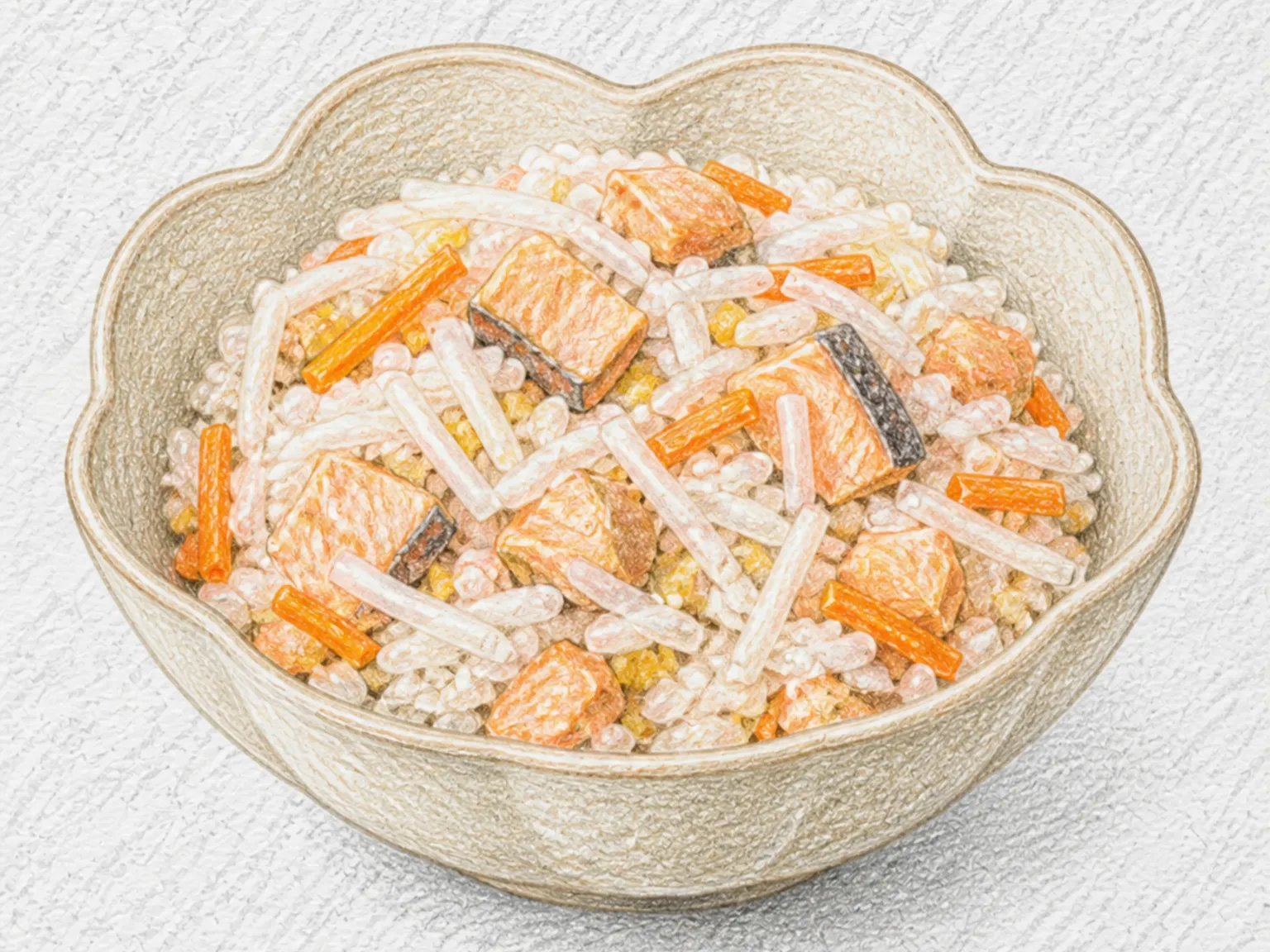
Nezushi is a type of fermented sushi prepared for New Year in the Hida and Chuno areas of Gifu, especially around Gero. Salted trout is deboned and cut into small pieces, while shredded daikon and carrot are rubbed with salt and squeezed. Freshly cooked rice is allowed to cool slightly before being mixed with rice koji, chopped ginger, fish, and vegetables. The mixture is packed closely into a container and left in the cold winter environment for about 14 to 20 days. During that rest, rice and koji develop a mild sweet-sour character that seasons the trout and vegetables, reflecting the preservation culture of Gifu's severe mountain winters.

🎉 Special Occasion
Prep 35min Cook 25min 4 servings
Nasi Goreng (Indonesian Sweet Soy Sauce Shrimp Fried Rice)
Rice Easy

Nasi Goreng (Indonesian Sweet Soy Sauce Shrimp Fried Rice)

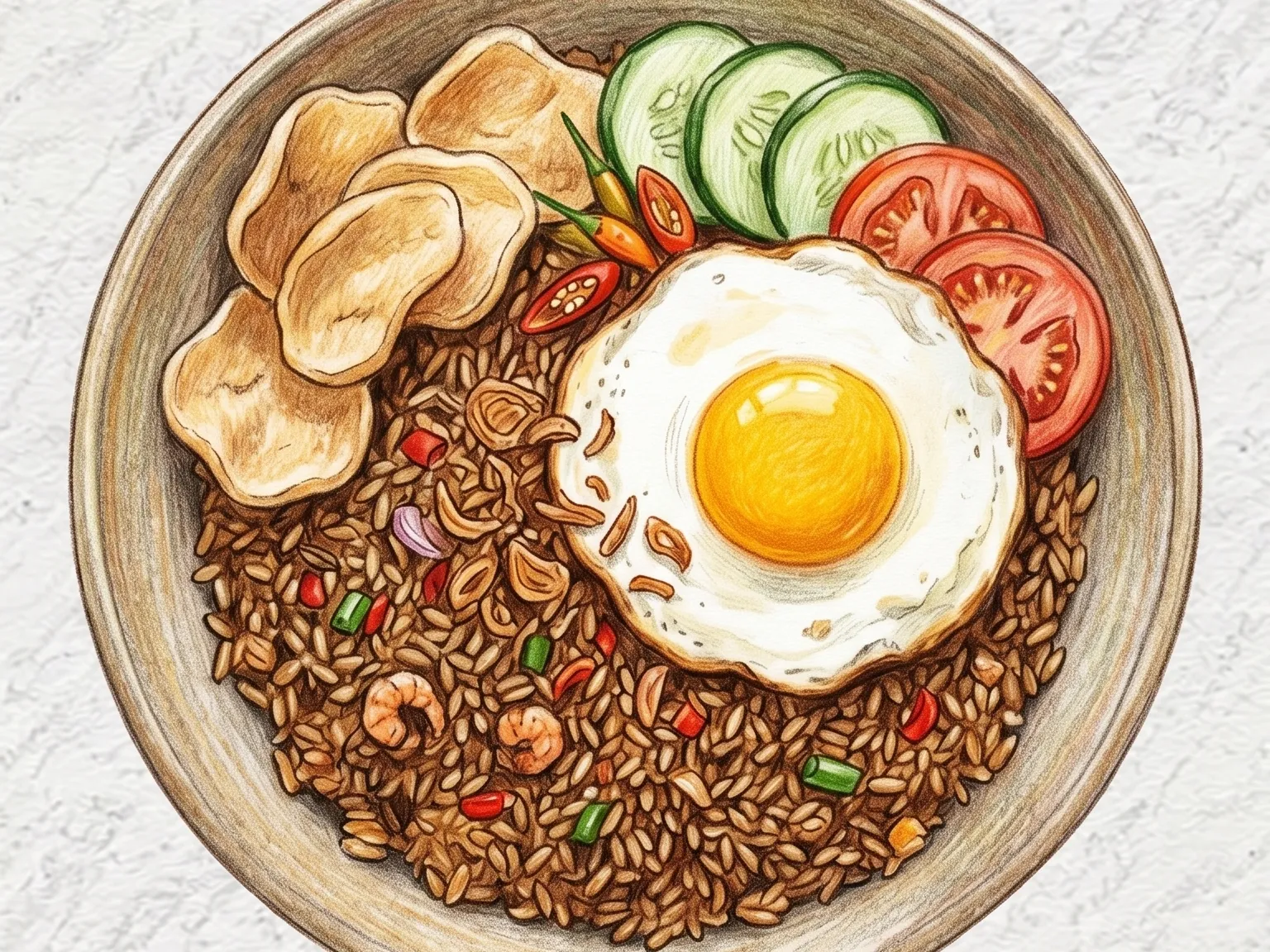
Nasi goreng turns cold cooked rice into a high-heat stir-fry seasoned with kecap manis, shrimp paste, and sambal, then finishes each serving with shrimp and a runny fried egg. Two bowls of cold rice are loosened completely by hand or with a spatula before the wok is heated, and 2 tablespoons kecap manis are measured so they can be added without pausing the cooking. Two tablespoons oil are heated over high heat, followed by three shallots and two garlic cloves for about 30 seconds. They should become aromatic without scorching. One teaspoon shrimp paste and 1 tablespoon sambal are then fried until the oil turns red and the raw marine aroma of the paste softens. One hundred grams of shrimp cooks for only about 1 minute, just until the outside turns pink; the rice goes in immediately so the seafood does not become tough. The loosened grains and kecap manis are tossed for about 2 minutes with a cutting motion that separates rather than mashes the rice. When every grain carries an even brown sheen, the seasoning is checked and only a small additional amount of kecap manis is used if needed. Two eggs are fried until their edges are crisp while the yolks remain soft, then placed over the rice. Breaking the yolk at the table spreads it through the sweet, savory, and spicy seasoning already coating the grains. If kecap manis is unavailable, the recipe's stated substitute is ordinary soy sauce mixed with sugar, while the short high-heat cooking sequence remains the same.

🏠 Everyday 🌙 Late Night
Prep 10min Cook 10min 2 servings
Nasi Kandar (Penang Indian-Muslim Rice with Mixed Curries)
Rice Medium

Nasi Kandar (Penang Indian-Muslim Rice with Mixed Curries)

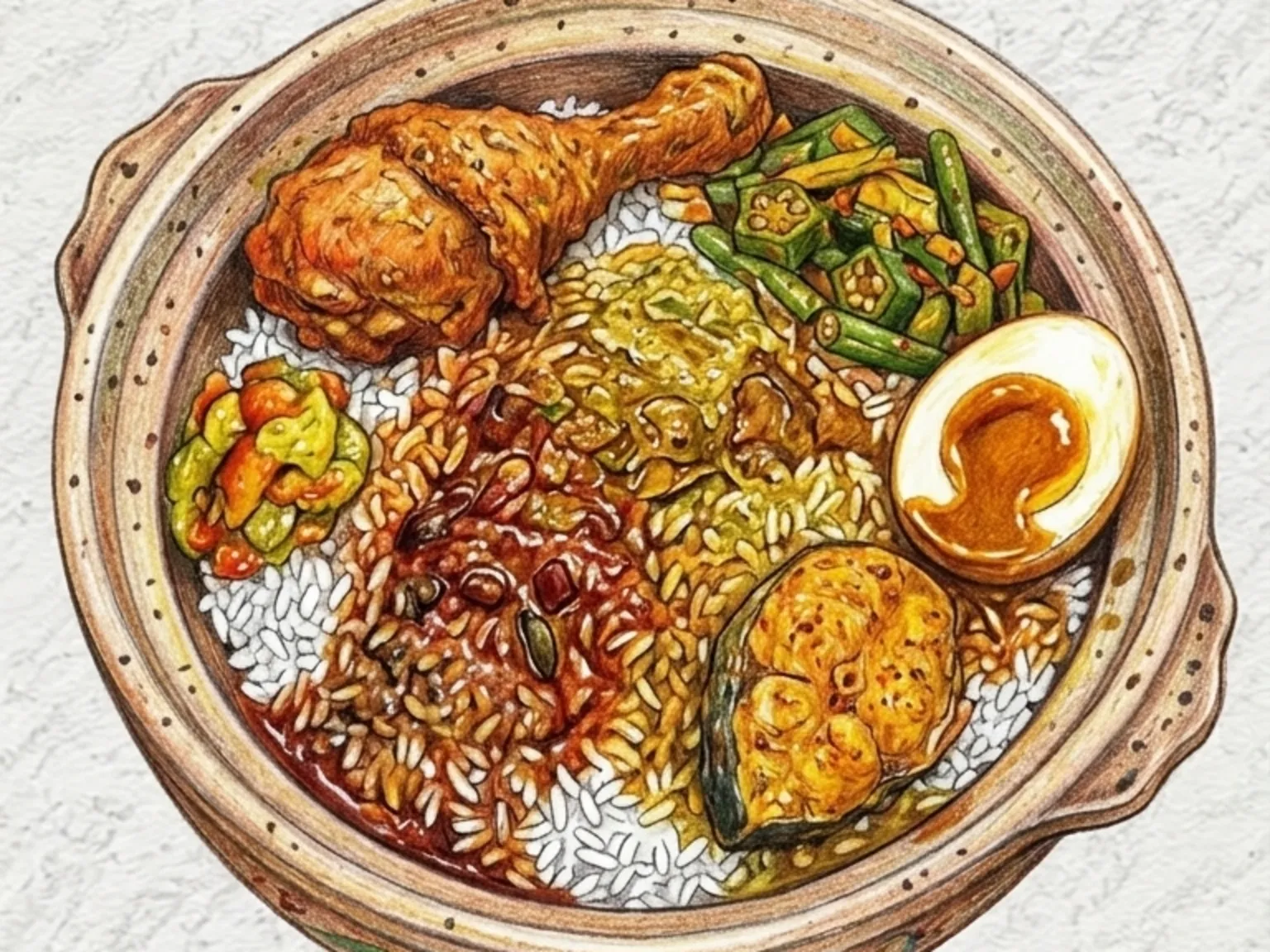
Nasi kandar is a Penang rice dish associated with ladling curry gravy over firm steamed rice. The broader serving style is known for kuah campur, in which different gravies meet on one plate, while this recipe prepares one loose coconut chicken curry and boiled eggs to accompany the rice. A 1.5-cup measure of rice is rinsed, cooked slightly firmer than usual, rested for 10 minutes, and fluffed gently so the grains can absorb sauce without collapsing. Three hundred grams of chicken thigh is cut into bite-size pieces, and one onion and one tomato are sliced thinly. After 7 to 8 minutes over medium heat, the onion edges should be brown and the aroma sweet. The chicken is then seared over high heat for about 2 minutes, cooking only the outside before 1.5 tablespoons curry powder and 1 teaspoon chili powder are stirred in for 1 minute. The tomato follows for 2 minutes, releasing juice into the spices. One hundred fifty milliliters coconut milk, a small amount of water, and 1 tablespoon fish sauce form the gravy. Keeping the burner at medium-low, simmer the gravy for 12 to 15 minutes. At that point, the chicken should be opaque through the center with no pink remaining, while the sauce stays fluid enough to run between the rice grains. The curry is spooned generously over the rice and served with two boiled eggs cut in half. This balance of firm rice and loose gravy preserves the defining soak of the dish without turning the plate into a thick, dry curry.

🎉 Special Occasion
Prep 20min Cook 35min 2 servings
Nasi Kerabu (Malaysian Coconut Rice with Mackerel)
Rice Medium

Nasi Kerabu (Malaysian Coconut Rice with Mackerel)

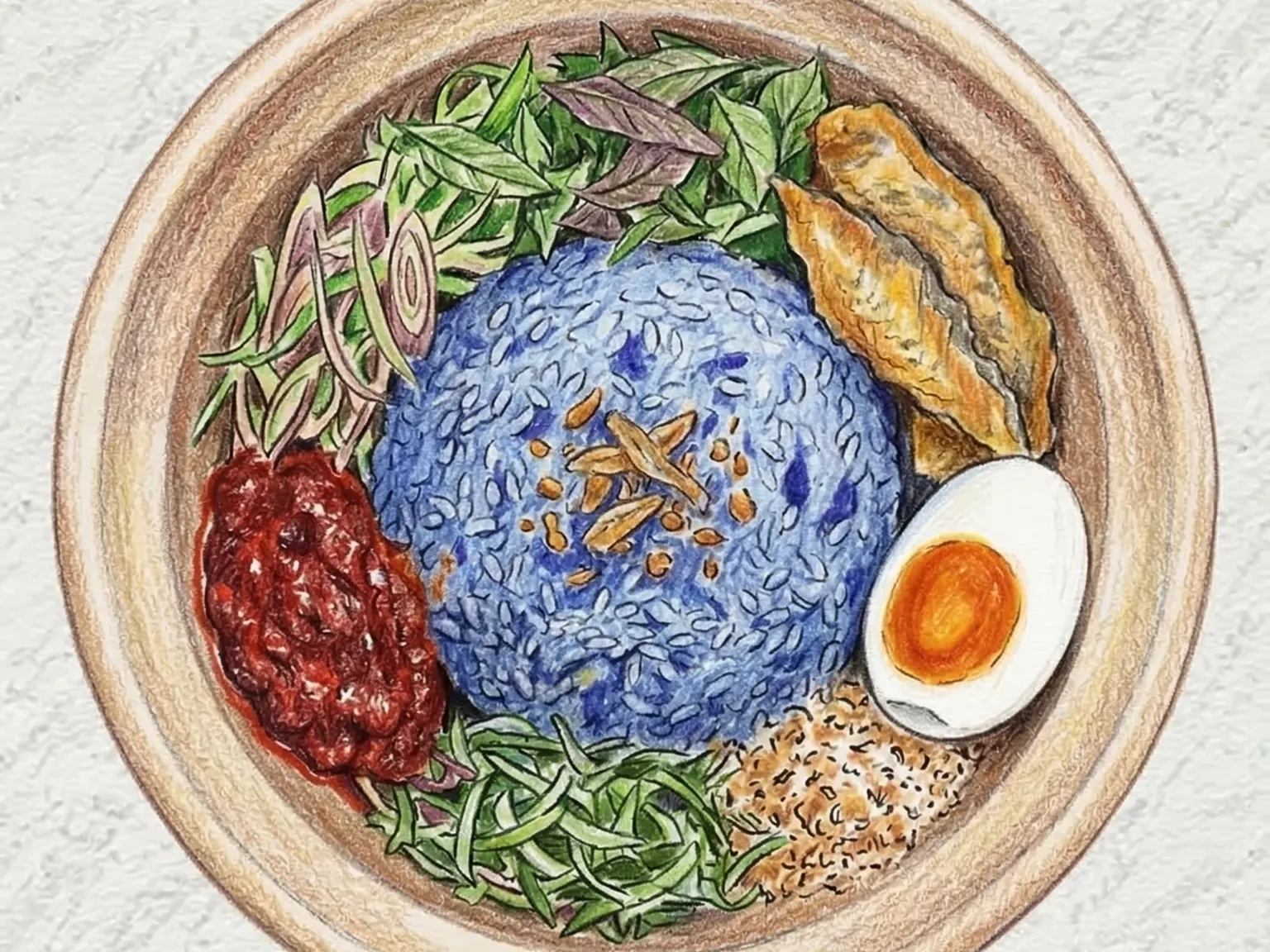
This nasi kerabu preparation serves coconut-lemongrass rice with grilled mackerel, cucumber, blanched bean sprouts, and sambal arranged separately for mixing just before eating. Three hundred grams of rice is rinsed until the water runs almost clear, soaked for about 15 minutes, and drained thoroughly. It then cooks with 120 ml coconut milk, 240 ml water, and one bruised lemongrass stalk laid over the grains. As soon as the pot reaches a boil over medium heat, the heat is reduced to low for about 12 minutes. A further 10-minute covered rest finishes the rice before the lemongrass is removed and the grains are fluffed gently. The vegetable components are handled for contrast rather than cooked together. One hundred twenty grams of cucumber is cut into 0.3 cm strips, while 100 g bean sprouts is blanched for 2 minutes, rinsed in cold water, and drained well. The 150 g grilled mackerel is checked while still warm, when small bones are easier to locate. Skin and bones are removed as needed, and the flesh is flaked into small pieces without crushing it into a paste. Rice is plated with the cucumber, sprouts, and mackerel around it and 2 tablespoons sambal on the side. Combining the components only at the moment of eating retains the vegetables' crispness while distributing the fish and chili paste through the coconut-scented rice.

🎉 Special Occasion
Prep 25min Cook 25min 2 servings
Nasi Lemak (Malaysian Coconut Pandan Rice with Anchovy Sambal)
Rice Medium

Nasi Lemak (Malaysian Coconut Pandan Rice with Anchovy Sambal)

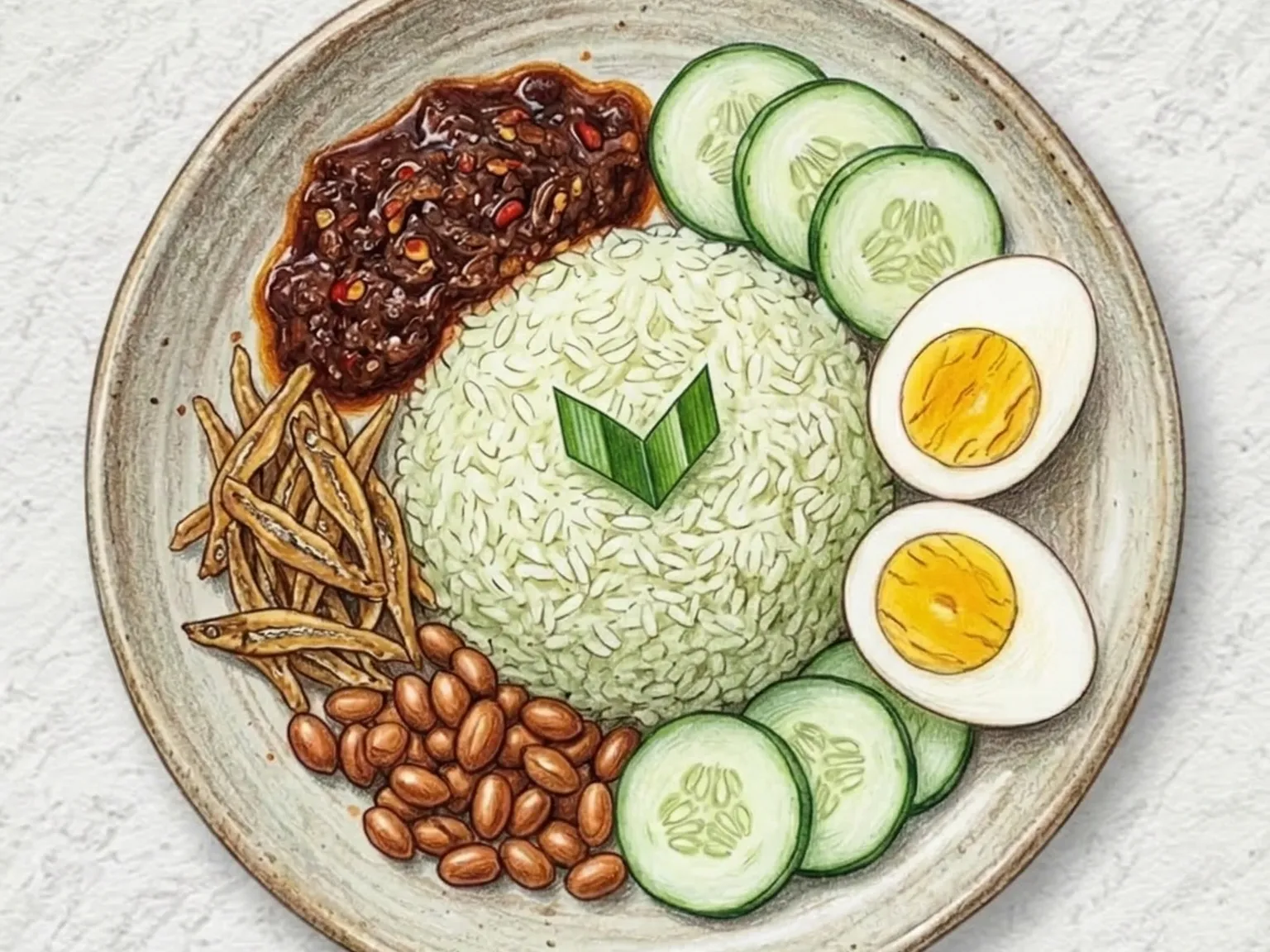
Nasi lemak centers coconut-pandan rice on a plate with toasted dried anchovies, peanuts, boiled eggs, cucumber, and prepared sambal arranged around it. A 2-cup measure of rice is rinsed until the water runs mostly clear and drained in a sieve for about 10 minutes, preventing extra surface water from weakening the coconut seasoning. The rice cooks in a measured mixture of coconut milk and water with two pandan leaves. Once the pot begins to boil over medium heat, the heat is reduced and the covered rice cooks gently for 12 to 15 minutes. When no liquid remains visible, the heat is turned off and the pot rests covered for another 10 minutes. The pandan is removed before the grains are fluffed carefully. The dried anchovies spend 3 to 4 minutes in a dry pan set over medium heat and come off before their color becomes too dark. Cooling after toasting is what completes their crisp texture without a bitter finish. Fifty grams of peanuts is stirred in another dry pan for about 8 minutes until the skins split and smell roasted. Four eggs are boiled for 8 minutes, cooled, peeled, and halved, while one cucumber is sliced thinly. The warm rice is mounded on the plate and served with 4 teaspoons sambal plus the anchovies, peanuts, cucumber, and eggs. Keeping the accompaniments separate until serving preserves the crunch of the toasted items and the cool texture of the cucumber against the soft coconut rice.

🎉 Special Occasion
Prep 20min Cook 30min 4 servings
Nasi Uduk (Jakartan Coconut Lemongrass Pandan Steamed Rice)
Rice Easy

Nasi Uduk (Jakartan Coconut Lemongrass Pandan Steamed Rice)

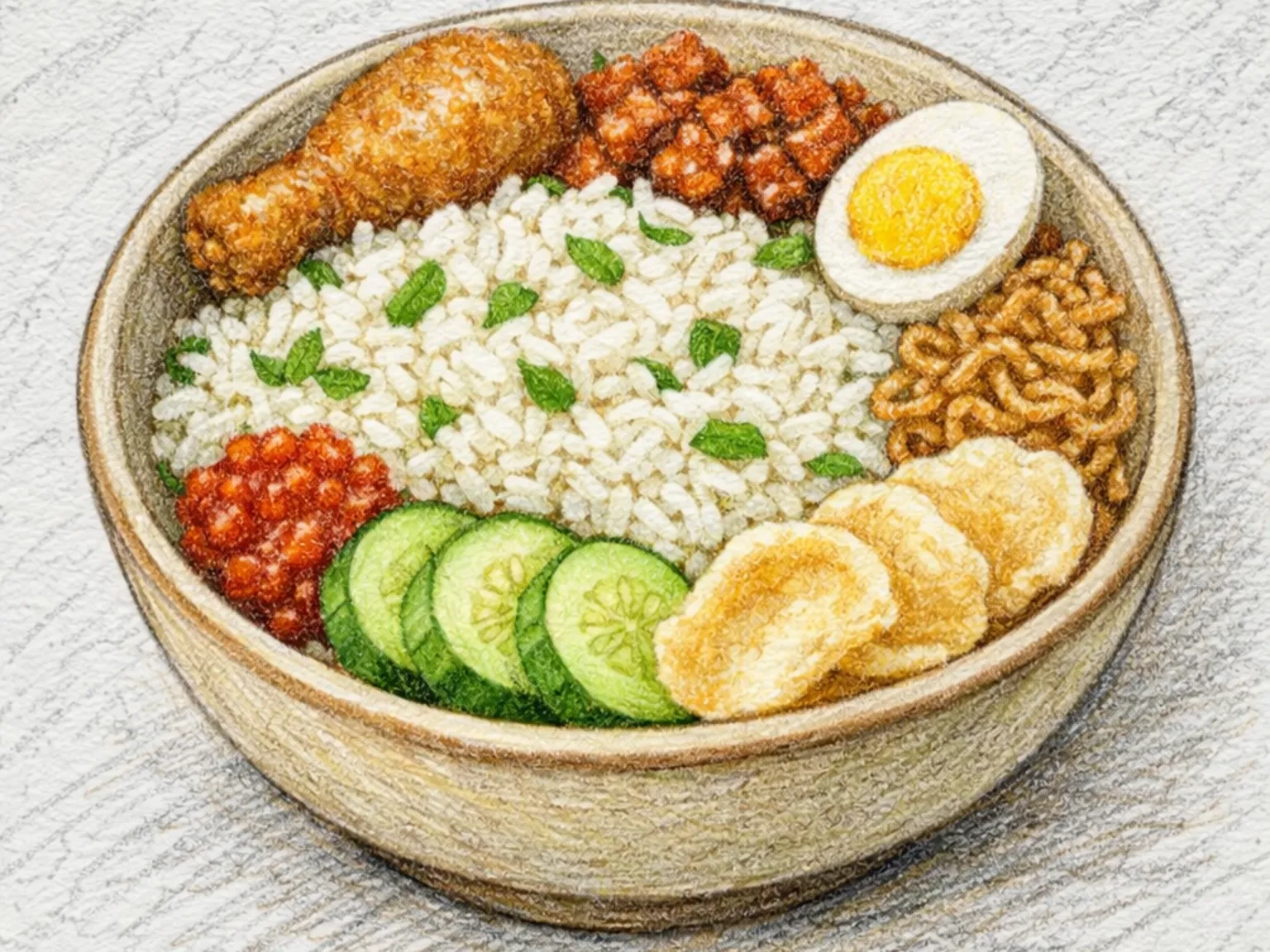
Nasi uduk is a steamed rice dish from Jakarta, Indonesia, cooked with coconut milk, lemongrass, and pandan leaves. The preparation begins by rinsing and soaking the rice to remove excess starch. It is then simmered in a mixture of coconut milk, water, and salt. Bruised lemongrass and knotted pandan leaves are added to the pot, infusing the rice grains with a gentle herbal aroma and a light coconut richness. Compared to Malaysian nasi lemak, this dish has a milder coconut profile. After cooking on low heat, the rice is left to steam with the heat off before the aromatics are removed. The dish is finished with a topping of crispy fried shallots, which add a nutty flavor and a crunchy texture. It is served alongside Indonesian sides such as fried tempeh, seasoned chicken, and omelette strips.

🏠 Everyday 🎉 Special Occasion
Prep 10min Cook 30min 4 servings
Oae Dango
Rice Medium

Oae Dango

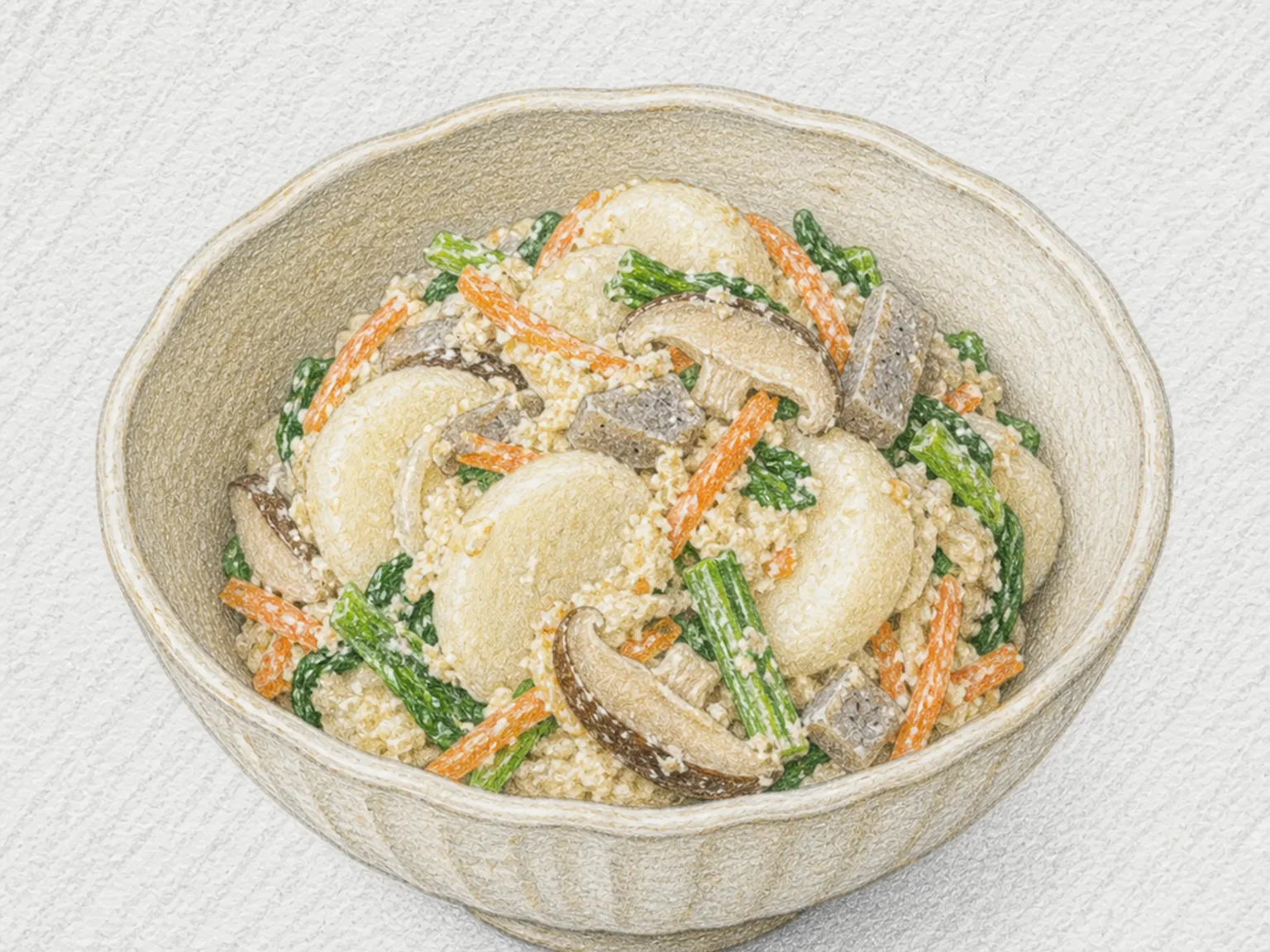
Oae dango is a local dish of the Moriyama and Yasu areas of Shiga. Flattened rice-flour dumplings are boiled, cooled, and coated in shira-ae made from pressed cotton tofu, toasted sesame, miso, and sugar, together with carrot, shiitake, konjac, and komatsuna. Because the dumplings make the dressed vegetables substantial, the dish can serve as both a side and something offered with tea. It has been prepared especially for Buddhist memorial gatherings, while also appearing in everyday meals. The sesame is ground before the seasonings and tofu are worked in, producing a smooth coating that clings best when every boiled component is thoroughly cooled and squeezed dry.

🎉 Special Occasion 🏠 Everyday
Prep 35min Cook 20min 4 servings
Obaku Soft Barley Rice with Beans and Root Vegetables
Rice Hard

Obaku Soft Barley Rice with Beans and Root Vegetables

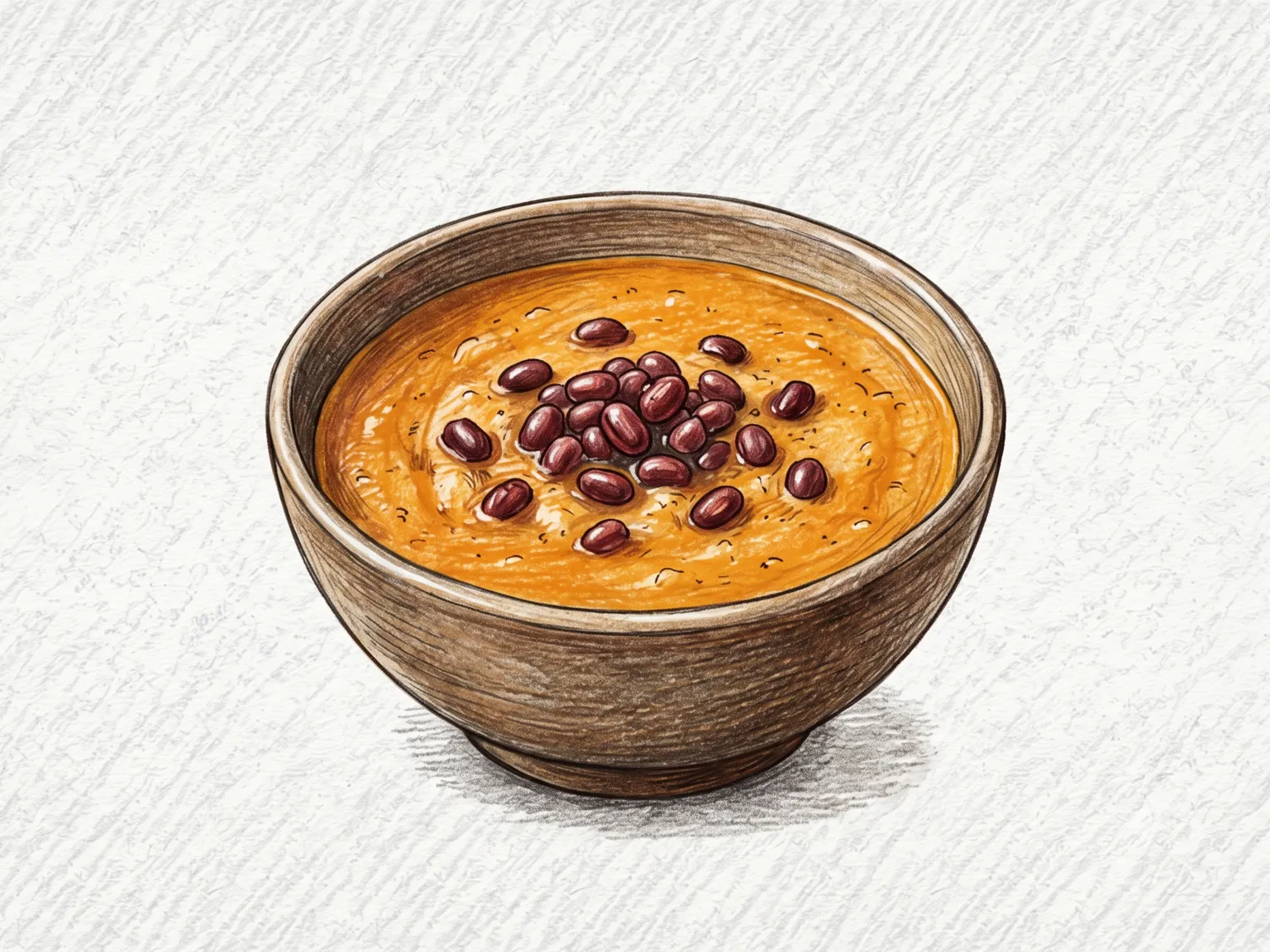
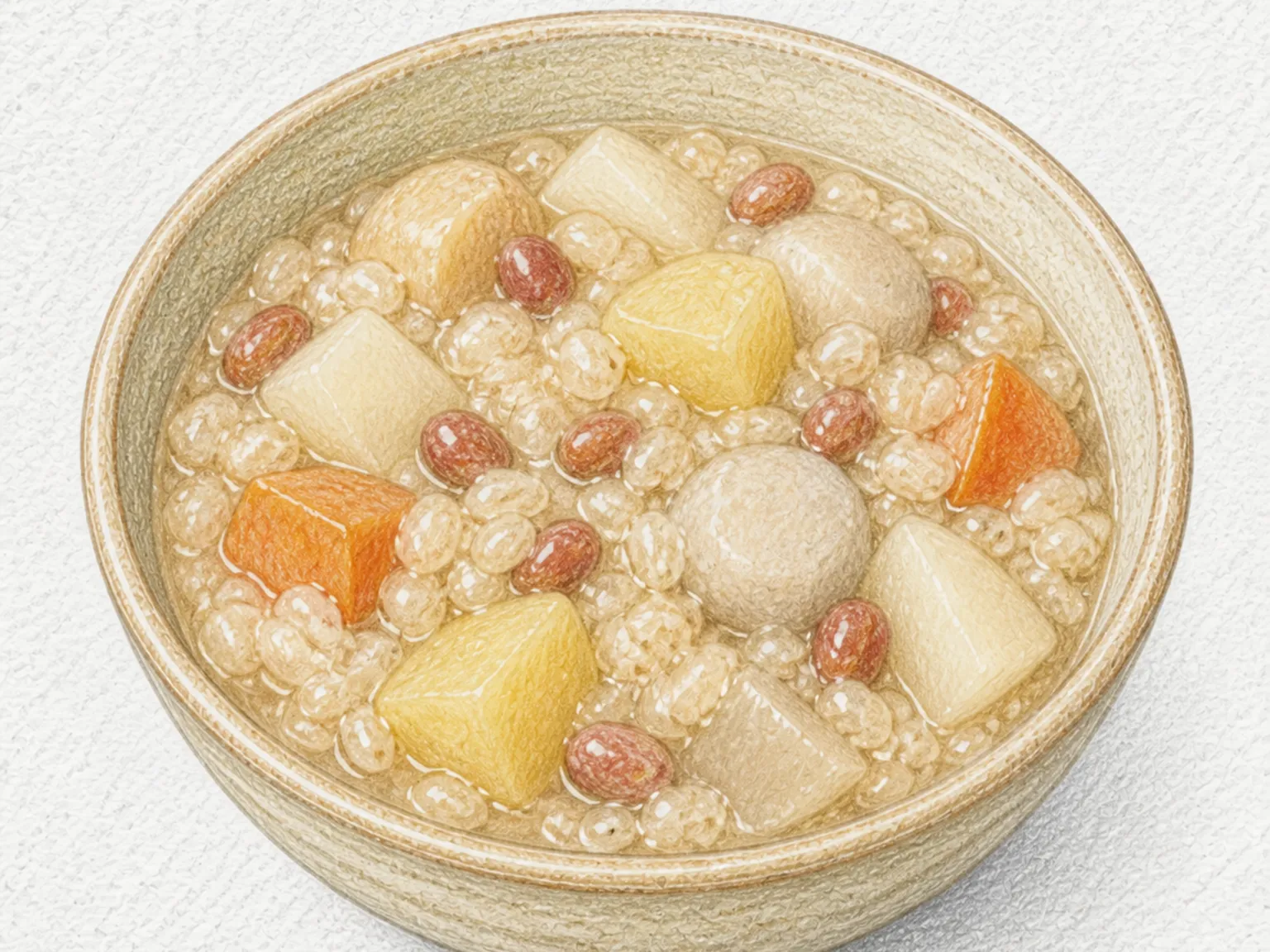
Obaku is a thick mountain staple from Yamanashi that cooks hulled whole barley, rice, and red kidney beans in abundant water, then folds in potato, sweet potato, taro, and daikon. In communities where wet-rice farming was difficult and rice was precious food for celebrations, barley supported ordinary meals. The appeal lies in whole grains that still pop gently within the soft roots and porridge-like rice. Barley is soaked for three to four hours and cooked separately the day before, while the beans soak overnight. In a large pot the beans cook first, followed by thin-cut daikon and the cooked barley. Once bean and radish begin to soften, soaked rice and all its water enter and the bottom must be stirred continuously. When the rice has bloomed and a spatula briefly exposes the pot floor, separately boiled potato, sweet potato, and taro are folded in. Obaku itself remains unseasoned; each diner adds negi miso mixed with scallion, bonito flakes, and a little sugar.

🏠 Everyday
Prep 480min Cook 150min 20 servings
Tea Rice Bowl (Japanese Green Tea Poured Rice with Salmon)
Rice Easy

Tea Rice Bowl (Japanese Green Tea Poured Rice with Salmon)

Ochazuke is a Japanese dish of cooked rice topped with grilled salmon flakes, dried seaweed, green onion, and wasabi, over which hot green tea is poured just before eating. The astringent bitterness of the green tea works against the fatty richness of the salmon, cutting through the oil and keeping the palate clean throughout the bowl. Wasabi adds a sharp, nasal heat that punctuates each spoonful differently depending on how much dissolves into the surrounding liquid. A light drizzle of soy sauce provides a salty baseline that ties the ingredients together without overpowering the tea. The seaweed flakes soften and dissolve into the hot liquid, gradually releasing a subtle oceanic aroma that spreads through the broth. As the meal progresses, the rice releases some starch into the tea, thickening the broth slightly and shifting the flavor toward the end. Using dashi stock made from kombu and bonito instead of green tea produces a richer, more umami-forward version. Variations with pickled plum or mentaiko in place of salmon are equally common.

🥗 Light & Healthy ⚡ Quick
Prep 10min Cook 10min 2 servings
Ohan to Kayaku (Gardenia Rice with Fish and Vegetable Stew)
Rice Hard

Ohan to Kayaku (Gardenia Rice with Fish and Vegetable Stew)

Ohan to kayaku is an Usuki ceremonial meal pairing rice colored yellow with gardenia fruit and a hearty stew of tofu, burdock, daikon, carrot, onion, and white-fleshed lizardfish. The gardenia infusion is strained and used promptly because prolonged soaking can dull the bright yellow or turn it greenish. For the kayaku, drained tofu is crumbled into oil, followed by minced fish and firm vegetables, then dashi and soy-based seasoning create a warm, substantial soup spooned directly over the rice. One story says the frugal Usuki domain developed yellow rice as an alternative to costly red bean rice. Another links its color to paella encountered through Nanban trade under the Christian lord Otomo Sorin. Merchants also cooked large pots of kayaku on New Year's Eve and reheated them through the first three days of the year.

🎉 Special Occasion
Prep 30min Cook 45min 5 servings
Korean Spicy Stir-Fried Squid Rice Bowl
Rice Medium

Korean Spicy Stir-Fried Squid Rice Bowl

Scored squid, onion, cabbage, and scallion are stir-fried together in a gochujang-based sauce over high heat and served on a bowl of steamed rice. Cutting a crosshatch pattern into the squid before cooking causes each piece to curl into a compact cylinder as it hits the heat, producing a thick, bouncy texture while giving the sauce more surface area to cling to. Because squid turns rubbery in a matter of minutes if left on the heat too long, the vegetables go into the pan first to drive off their moisture, and the squid is added only for the final three to four minutes over maximum heat. The sauce, built from gochujang, gochugaru, soy sauce, sugar, and sesame oil, caramelizes quickly against the hot pan and coats both the vegetables and the squid in a glossy, deep-red glaze. The natural sweetness of the onion and cabbage tempers the chili heat and keeps the dish balanced rather than one-dimensionally spicy. Leaving a small pool of sauce in the pan when plating allows it to soak into the rice, making the whole bowl worth mixing together before eating.

🏠 Everyday 🍺 Bar Snacks
Prep 15min Cook 12min 2 servings

About Rice

A bowl of freshly steamed rice with a drizzle of sesame oil and a fried egg makes a satisfying meal on its own. Leftover rice transforms into fried rice or crispy nurungji (scorched rice), both beloved staples.