Soups

Soups Recipes

434 recipes. Page 17 of 19

Soups and broths are the backbone of a Korean meal, served alongside rice at nearly every table. From clear seaweed soup (miyeokguk) to rich ox-bone broth (gomtang) and spicy beef soup (yukgaejang), the variety is enormous. Each season brings its own favorites - chilled soups in summer and piping-hot stews in winter.

Soups
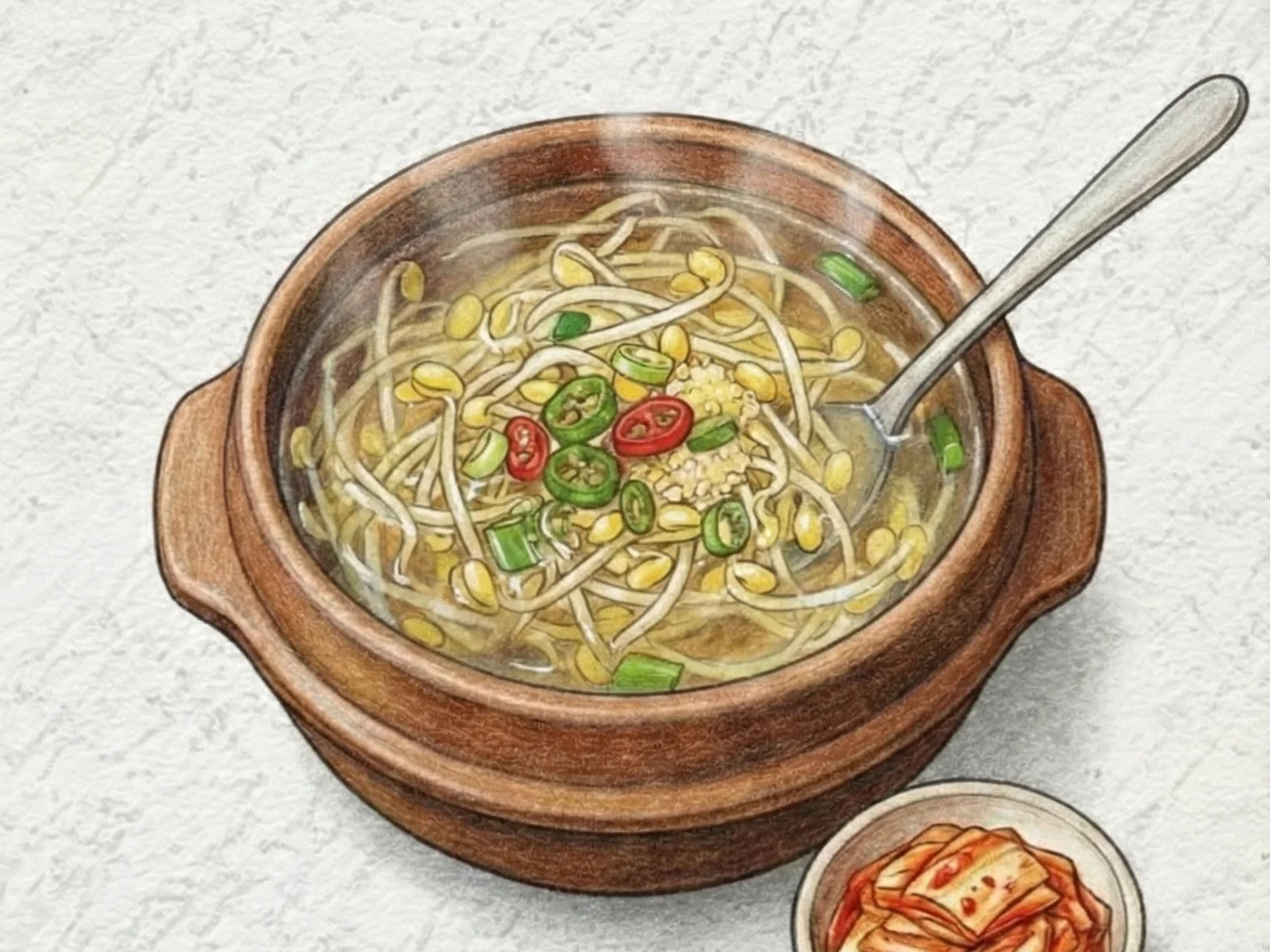
Korean Beef Bean Sprout Soup
Soups Medium

Korean Beef Bean Sprout Soup

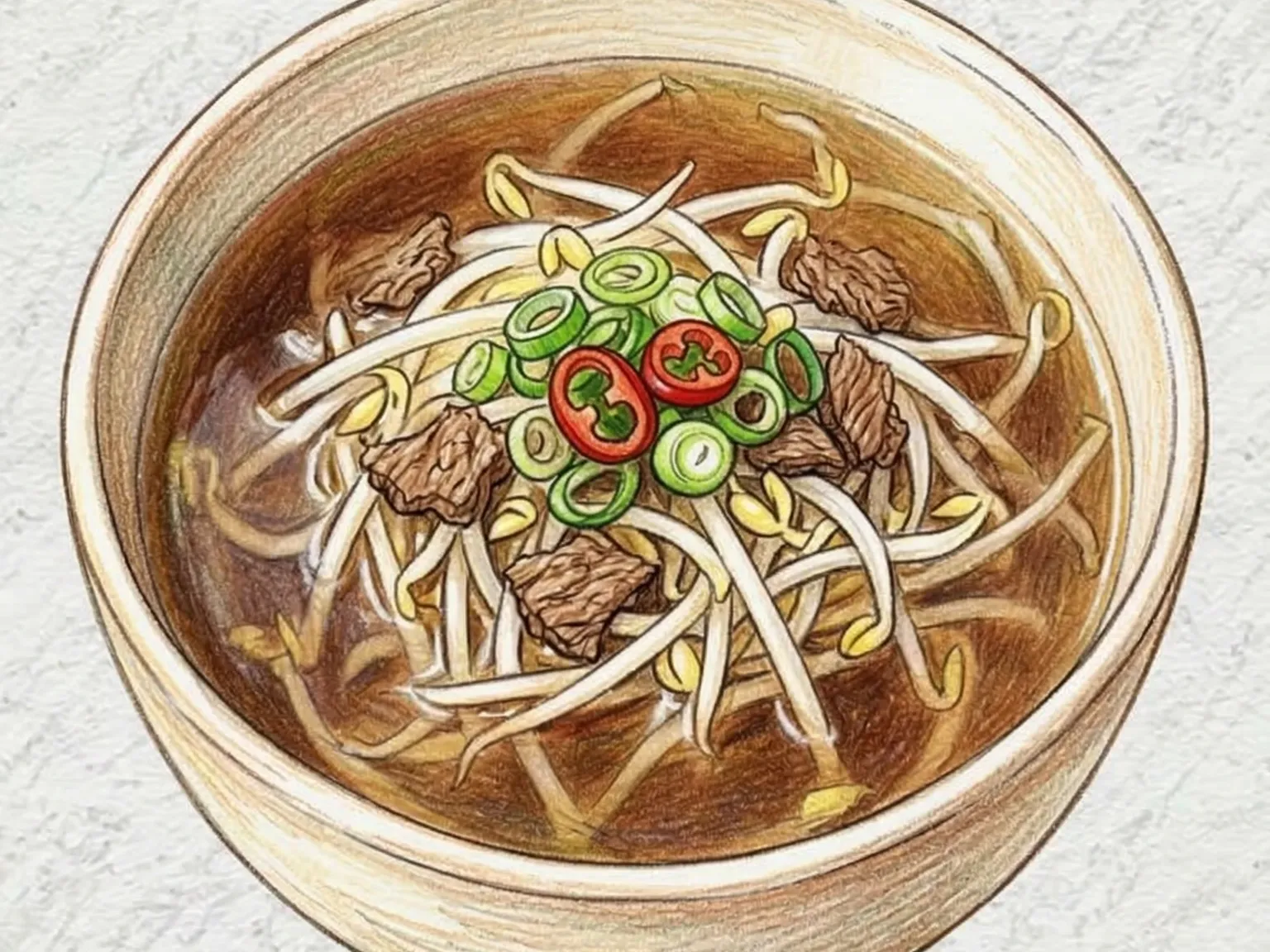
Sogogi sukju-guk is a quick Korean soup where seared beef and crisp mung bean sprouts come together in a clear, invigorating broth. The beef brisket is first stir-fried in sesame oil to render its fat and deepen its flavor, then water is added and brought to a rolling boil. Bean sprouts enter the pot only in the final minutes so they retain their signature crunch - the plump heads snap between the teeth while the slender tails wilt just enough to release moisture that lightens and clarifies the broth. The contrast between the beefy richness and the sprouts' clean, almost grassy freshness keeps the soup feeling bright rather than heavy. Soup soy sauce and a spoonful of minced garlic round out the seasoning without masking the main ingredients. Because bean sprouts lose their texture quickly once overcooked, the soup is best ladled into bowls the moment it is done. Koreans often spoon it over steamed rice for a fast, satisfying meal that feels both nourishing and easy on the stomach.

🏠 Everyday
Prep 15min Cook 30min 4 servings
Soki-jiru (Okinawan Clear Pork Rib Soup)
Soups Medium

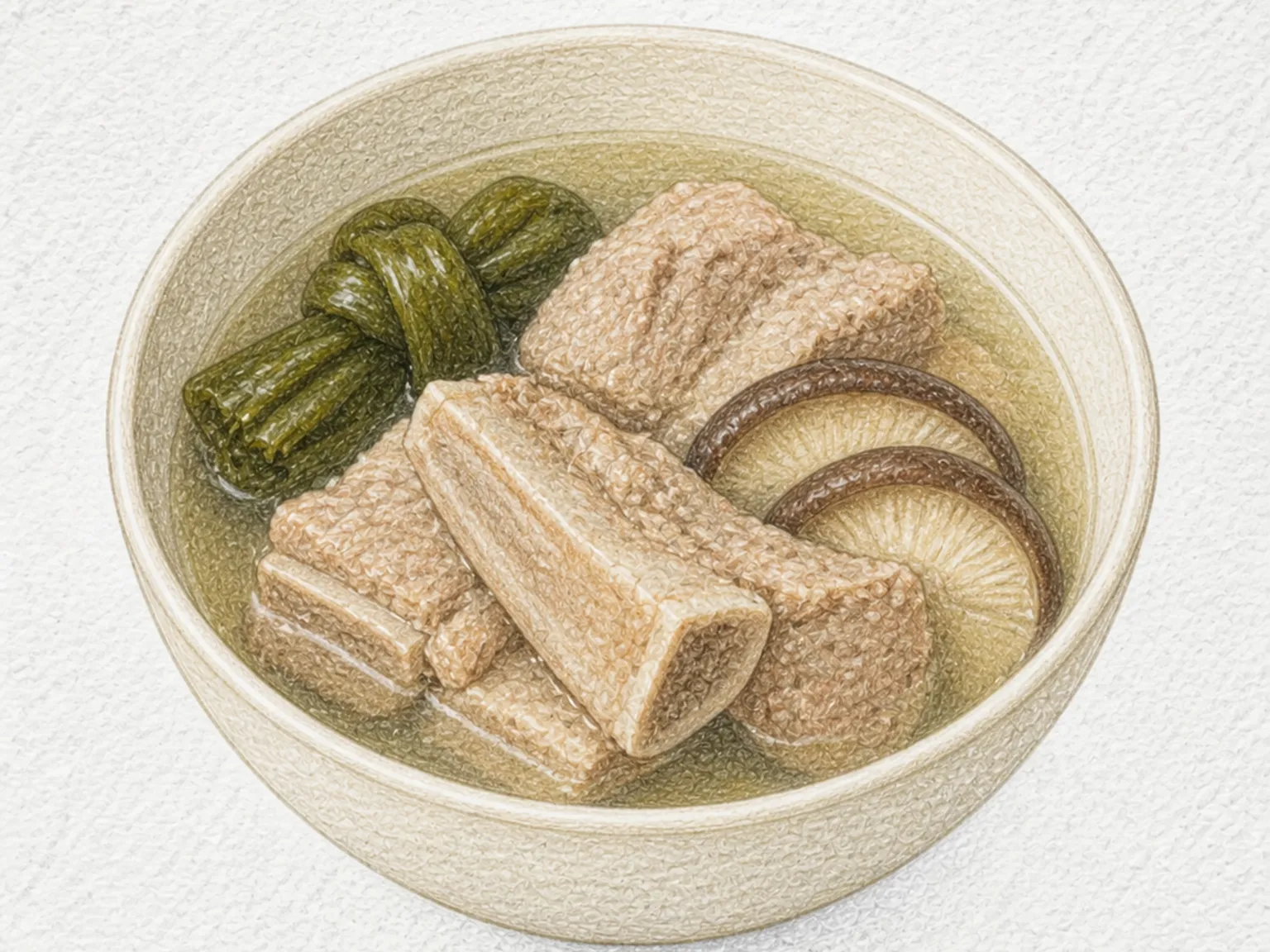
Soki-jiru (Okinawan Clear Pork Rib Soup)

Soki-jiru is an Okinawan clear soup made by washing bone-in pork ribs first in cold water and then with hot water before simmering them gently with knotted kombu and rehydrated shiitake for about 90 minutes. When the meat releases from the bone easily, the kombu and mushrooms are removed briefly, bonito stock is added to restore the finished broth to about four cups, and salt and soy sauce season it like a light clear soup. This recipe therefore follows the exact core combination of ribs, kombu, and shiitake. Soki-jiru reflects Okinawa's practice of using every part of a pig and remains an important New Year dish.

🎉 Special Occasion
Prep 20min Cook 110min 4 servings
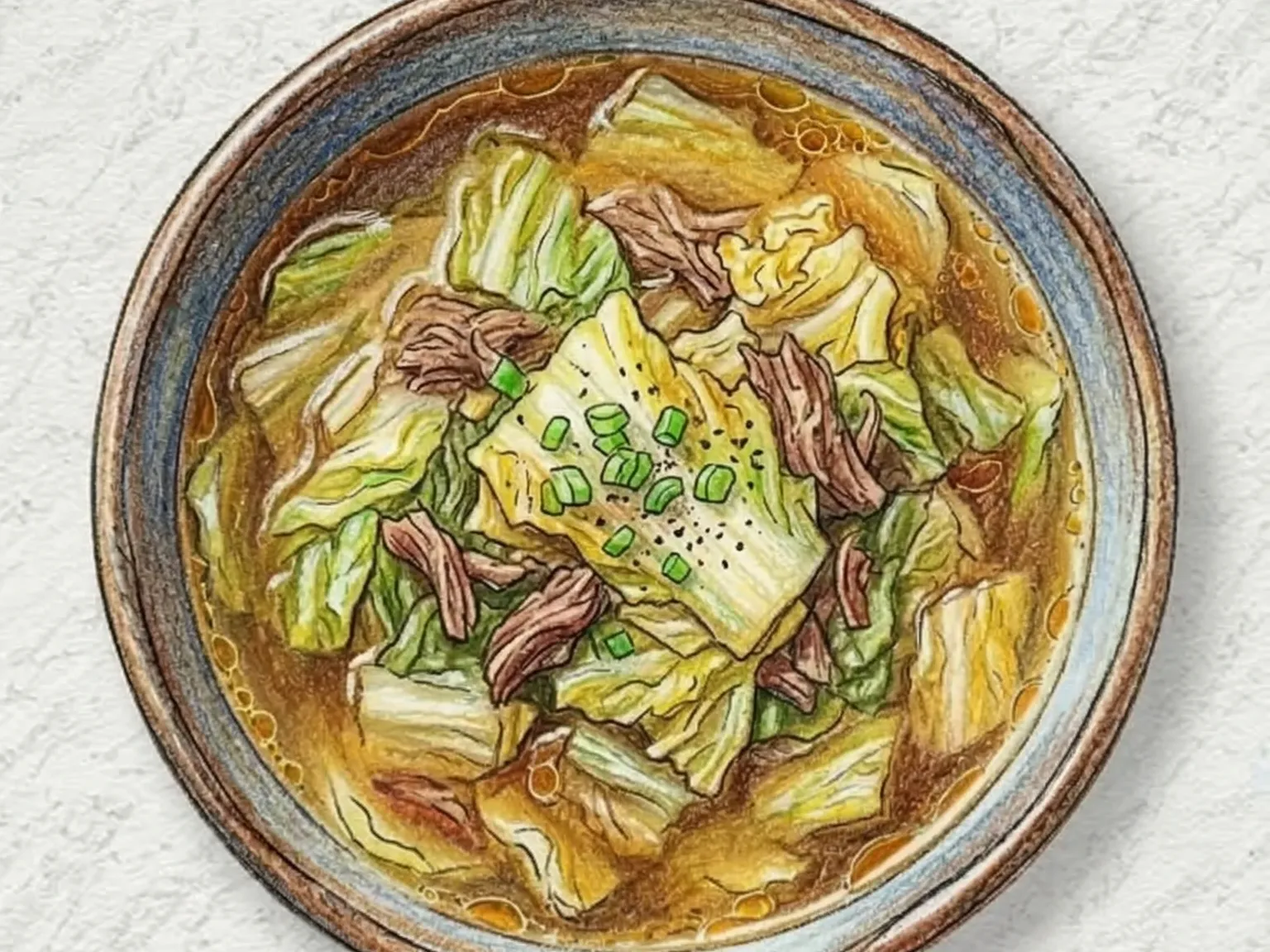
Korean Oxtail Soup
Soups Hard

Korean Oxtail Soup

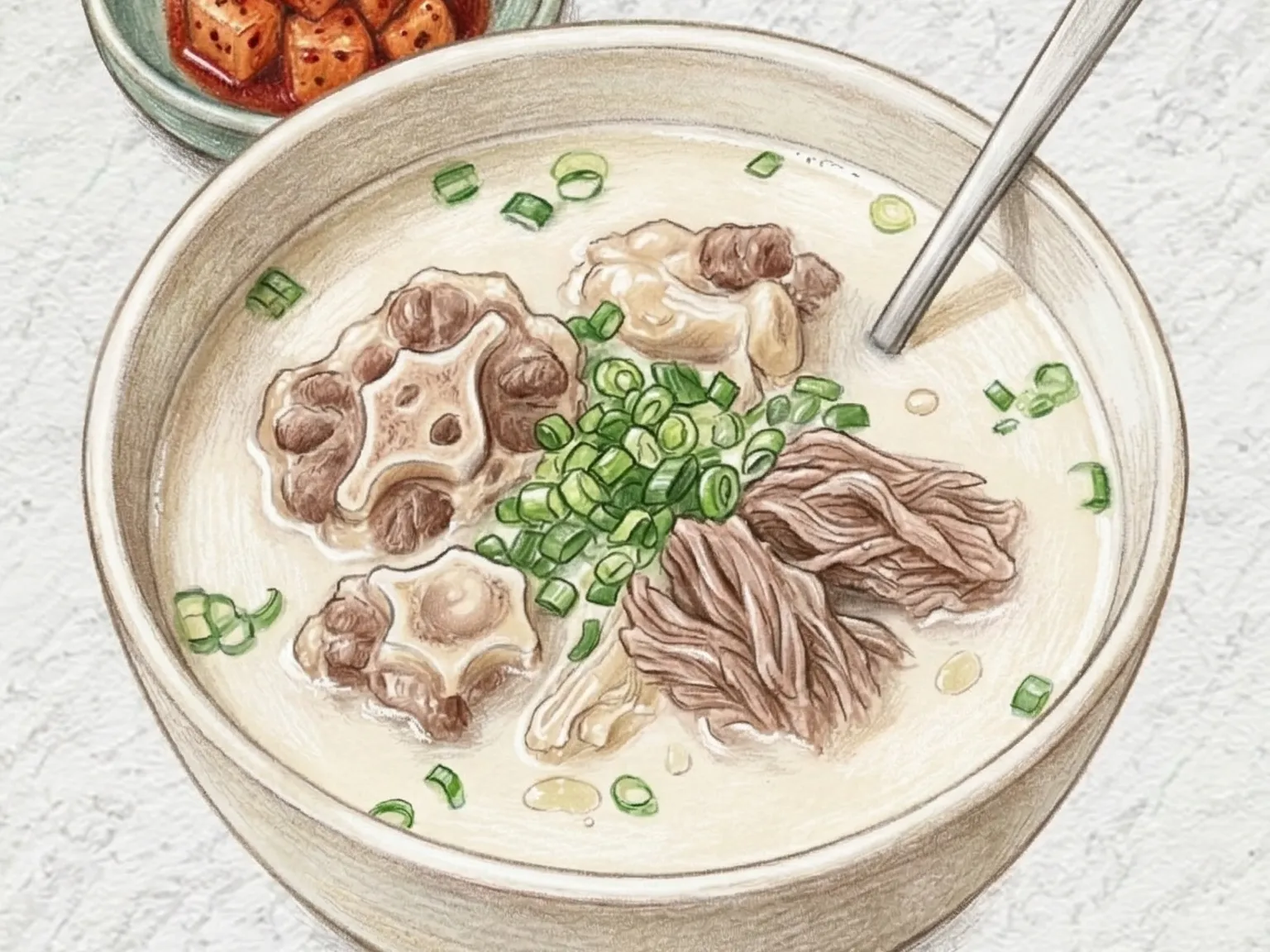
Sokori-guk demands patience - oxtail pieces are soaked in cold water to draw out blood, then placed in a heavy pot with enough water to cover and simmered for at least three to four hours. During that long, slow cook, collagen buried in the joints and connective tissue dissolves into the liquid, producing a broth so rich in gelatin that it sets into a solid block when refrigerated. Skimming fat and foam at regular intervals keeps the final broth a clean, milky white with no greasy residue. The meat, once it slides easily off the bone, is torn along the grain into shreds that are impossibly soft, while the tendon segments offer a pleasantly bouncy chew. Seasoning is deliberately minimal - coarse salt, black pepper, and sliced scallion - because the bones themselves have already contributed all the depth the soup needs. Served with a bowl of steamed rice and a side of kkakdugi, the cubed radish kimchi's sharp tang provides the only counterpoint this quietly powerful broth requires.

🏠 Everyday 🎉 Special Occasion
Prep 25min Cook 210min 4 servings
Sopa de Ajo (Spanish Roasted Garlic and Bread Soup)
Soups Easy

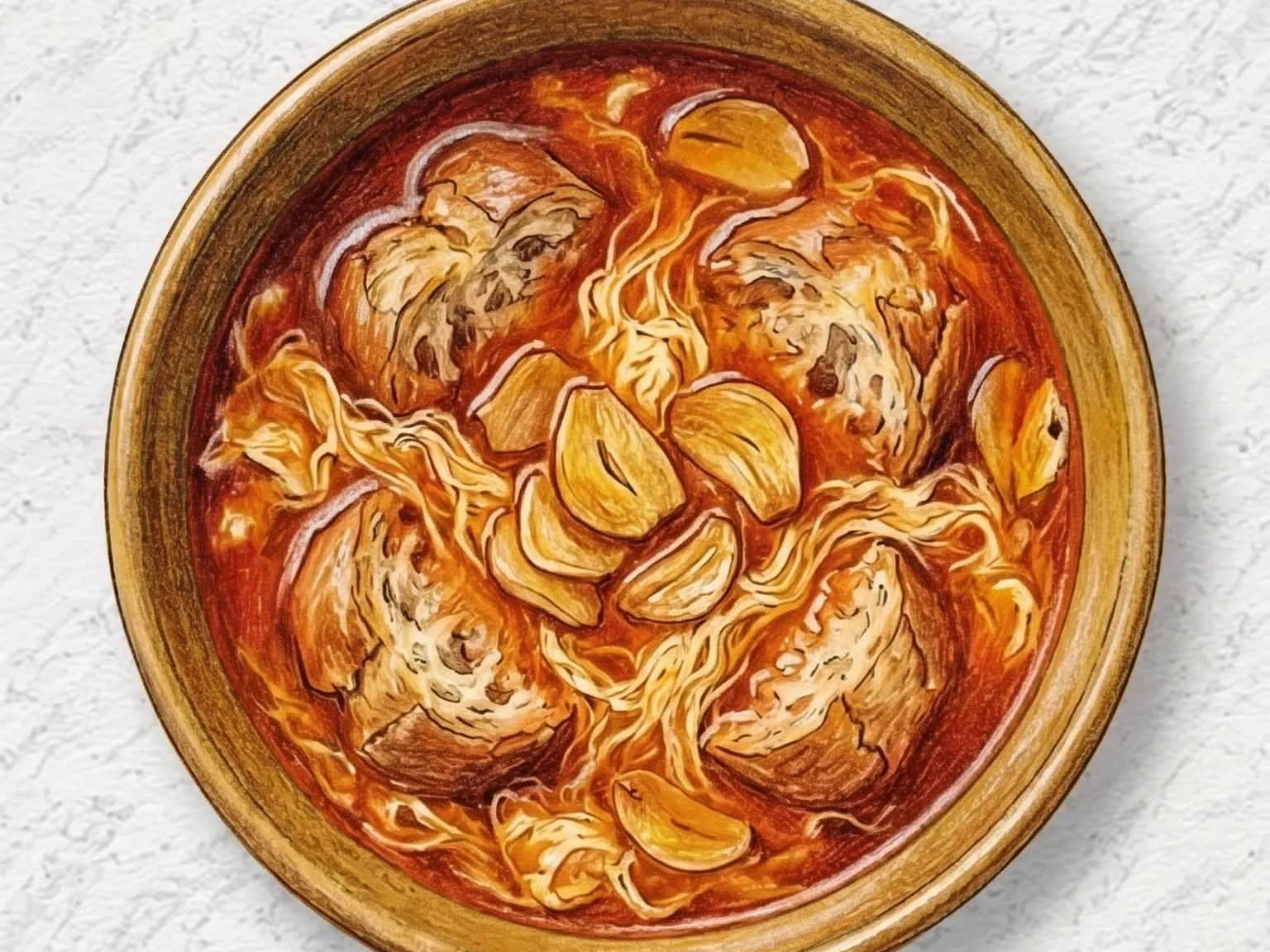
Sopa de Ajo (Spanish Roasted Garlic and Bread Soup)

Sopa de ajo is a traditional Spanish garlic soup that begins with the process of gently cooking thinly sliced garlic cloves in olive oil. This specific step requires a low heat setting to ensure the garlic becomes fragrant and reaches a pale gold color without being scorched. If the garlic pieces are allowed to burn, they will introduce a distinct bitterness that can negatively affect the final flavor of the broth. After the garlic has been properly cooked, torn pieces of baguette that are at least one day old are added to the pot along with smoked paprika. These ingredients are toasted briefly in the garlic-infused oil so the bread can absorb the fat and develop a light crust on its exterior surface. Chicken stock is then poured into the cooking vessel to create the liquid base for the dish. The mixture is left to simmer for approximately ten minutes. During this period of simmering, the bread pieces soften and partially dissolve into the liquid, which serves to thicken the soup while still allowing some of the original bread texture to remain. Once the soup is sufficiently hot, beaten eggs are poured into the pot in a thin and continuous ribbon. As the eggs come into contact with the hot liquid, they set into delicate strands that contribute both protein and additional physical body to the soup. The inclusion of smoked paprika provides the broth with a warm reddish color and a subtle charred flavor profile. This specific smoky note is intended to complement the mellow sweetness that develops from the slow-cooked garlic slices over the course of the preparation.

🏠 Everyday ⚡ Quick
Prep 10min Cook 20min 2 servings
Soto Betawi (Jakarta Creamy Coconut Milk Beef Soup)
Soups Hard

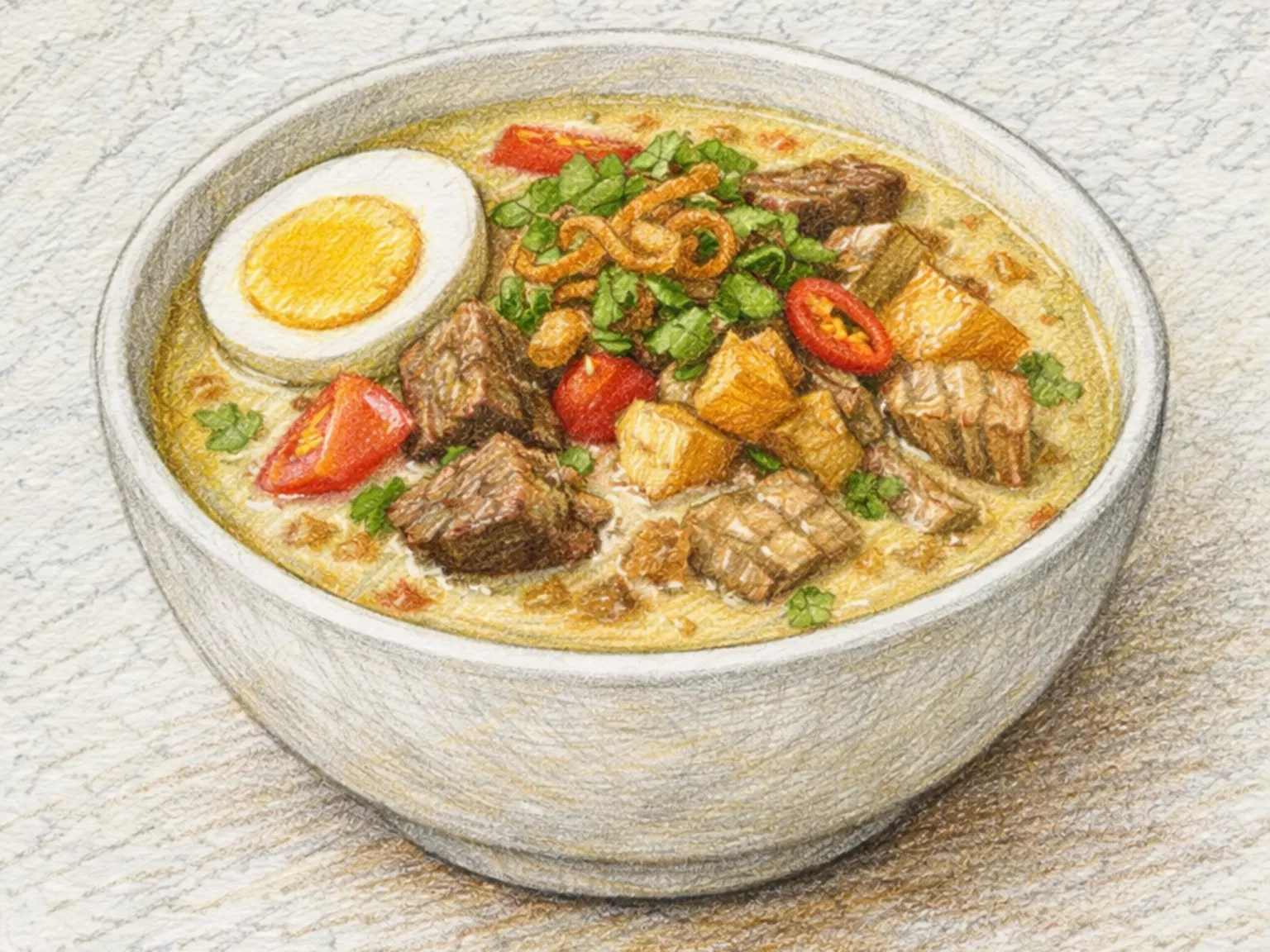
Soto Betawi (Jakarta Creamy Coconut Milk Beef Soup)

Soto Betawi is a Jakarta-born beef soup distinguished by its creamy, coconut-enriched broth and a layered spice profile. The aromatics begin with a paste of onion, garlic, and ginger, bloomed in oil alongside ground coriander and a cinnamon stick to build a warm, complex base. Beef brisket simmers in this fragrant liquid for forty minutes or more until it yields to the touch, its collagen enriching the stock. Coconut milk and fish sauce are stirred in toward the end, transforming the broth into something rich and velvety while rounding off the sharper spice edges. The finished soup is neither thin nor heavy-it sits in a satisfying middle ground, substantial enough to serve as a main course with steamed rice or crusty bread on the side. Soto Betawi is a point of pride for Jakarta's Betawi community and a fixture of the city's street-food landscape.

🎉 Special Occasion
Prep 20min Cook 55min 4 servings
Mizuika Mada-jiru (Squid Ink Miso Soup)
Soups Medium

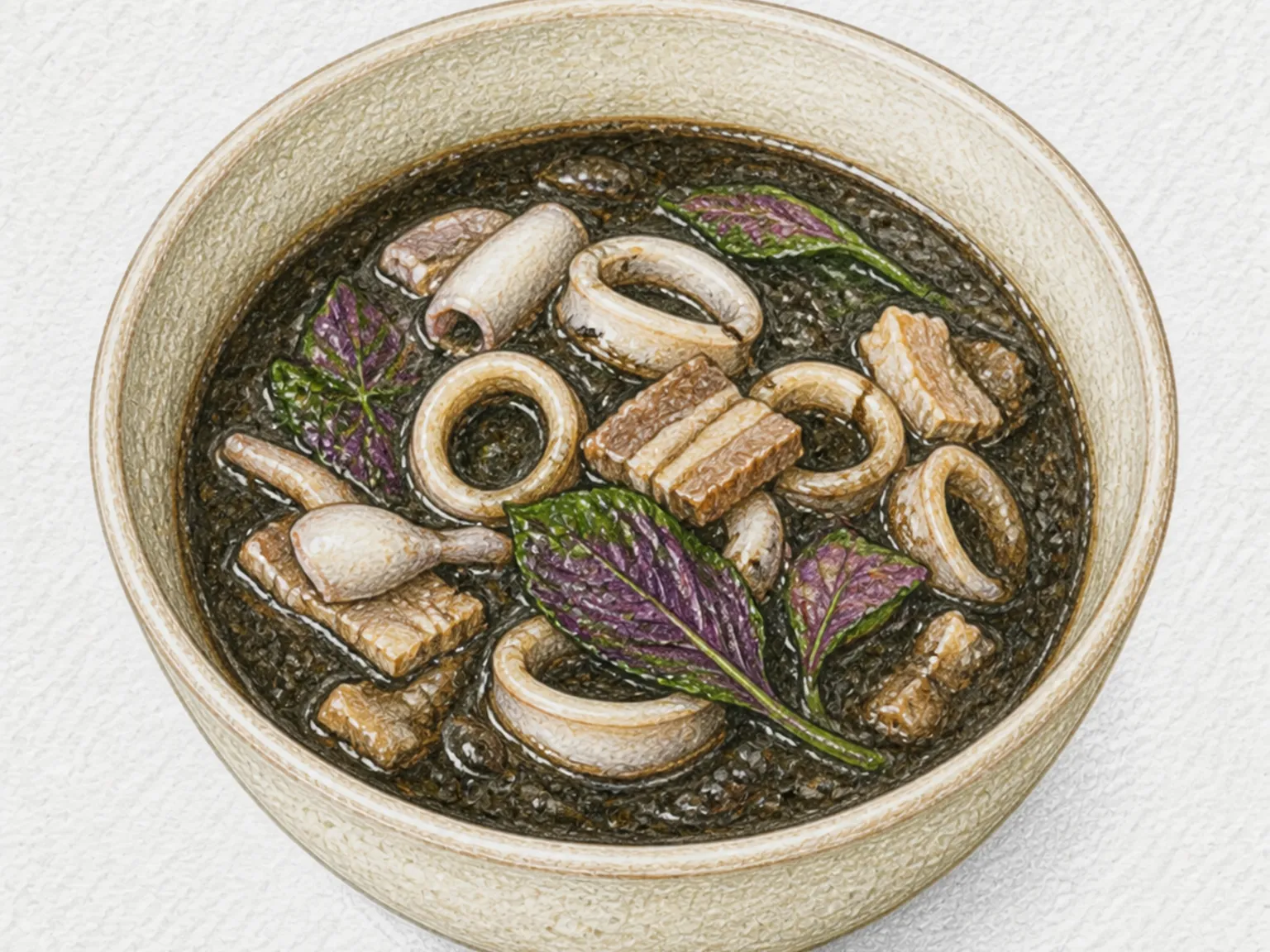
Mizuika Mada-jiru (Squid Ink Miso Soup)

Mizuika mada-jiru is a dark, rich soup from the Amami area of Kagoshima. Pork belly and miso flavor a bonito broth, then flesh from mizuika, the local name for bigfin reef squid, and mada, its ink sac, are added. Squid fishing has deep roots in Amami, where these large translucent squid are caught throughout the year. Ink rounds the saltiness of miso and the richness of pork with a marine savoriness, while purple handama leaves add fresh herbal notes and color. The squid is cooked gently only until its center is done so it stays tender, and the ink is loosened thoroughly in broth before it enters the pot.

🏠 Everyday
Prep 20min Cook 25min 4 servings
Korean Mugwort Soup (Spring Mugwort in Savory Doenjang Broth)
Soups Easy

Korean Mugwort Soup (Spring Mugwort in Savory Doenjang Broth)

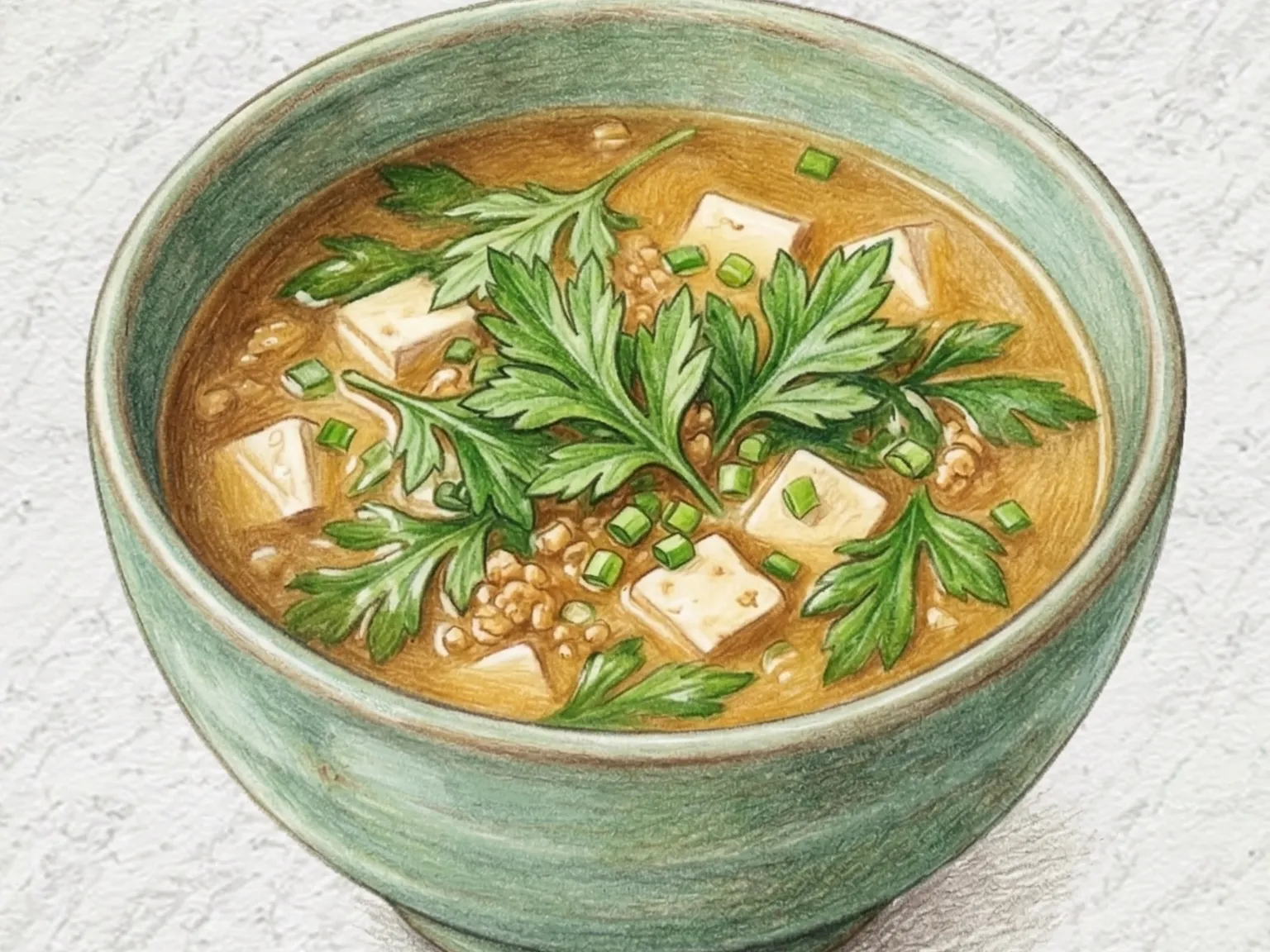
Ssuk-guk is a seasonal doenjang soup that appears on Korean tables during early spring, when young mugwort shoots are tender enough to eat. The base is an anchovy-kelp stock into which soybean paste is strained, creating a mellow, savory foundation. Fresh mugwort is added only at the very end of cooking - just long enough for the leaves to wilt - because extended heat dulls their vivid green color and drives off the fragrance that makes this soup worth making. When timed correctly, each spoonful delivers the herb's distinctive bittersweet aroma, somewhere between sage and chrysanthemum, layered over the fermented depth of the doenjang. Cubed tofu softens in the hot broth and provides a neutral, creamy texture that balances the herbal intensity. A scattering of sliced scallion on top adds a mild sharpness. The soup is deliberately simple, designed to let mugwort take center stage as a reminder that the long winter is finally over.

🏠 Everyday 🥗 Light & Healthy
Prep 10min Cook 15min 2 servings
Suan Cai Yu (Sichuan Pickled Mustard Greens Fish Stew)
Soups Medium

Suan Cai Yu (Sichuan Pickled Mustard Greens Fish Stew)

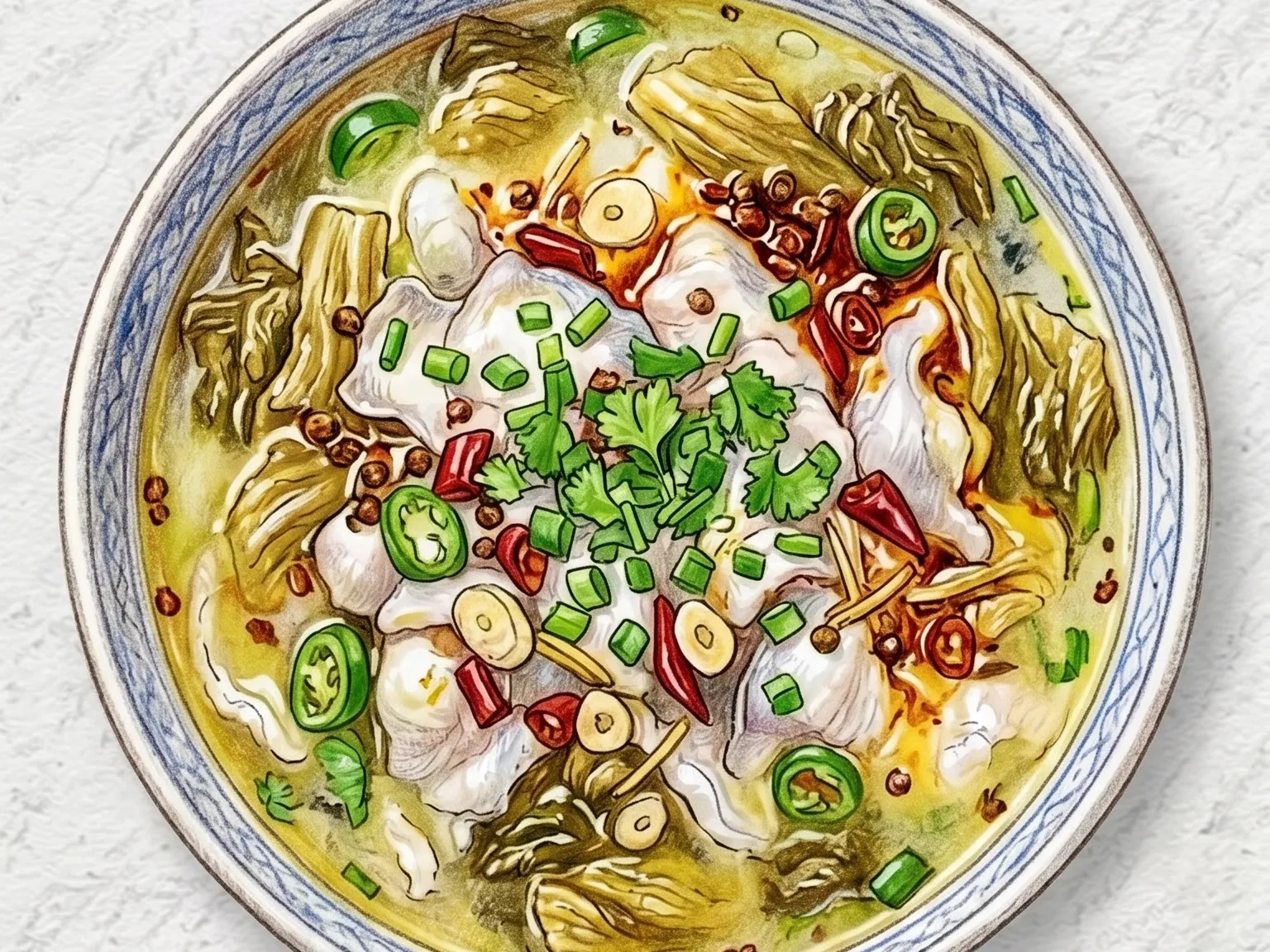
Suan cai yu is a Sichuan fish stew that draws its defining character from pickled mustard greens-fermented vegetables whose sharp acidity provides the tangy backbone of the dish. The cooking starts with chili oil, garlic, ginger, and dried chilies sizzled together to create a pungent, aromatic base. The rinsed pickled greens go in next, their sour bite mellowing slightly as they simmer in stock for ten minutes, releasing a complex fermented depth into the broth. Thin slices of white fish, lightly dusted with starch to protect their delicate texture, are added at the very end and cooked for only a few minutes so they remain silky and intact. The finished bowl is a study in contrasts: the broth is simultaneously sour from the pickled greens, spicy from the chili oil, and savory from the stock, while the fish offers a clean, mild counterpoint. It is a deeply satisfying dish that showcases Sichuan cuisine's mastery of bold, layered flavors.

🎉 Special Occasion
Prep 20min Cook 25min 4 servings
Gunma Suiton
Soups Easy

Gunma Suiton

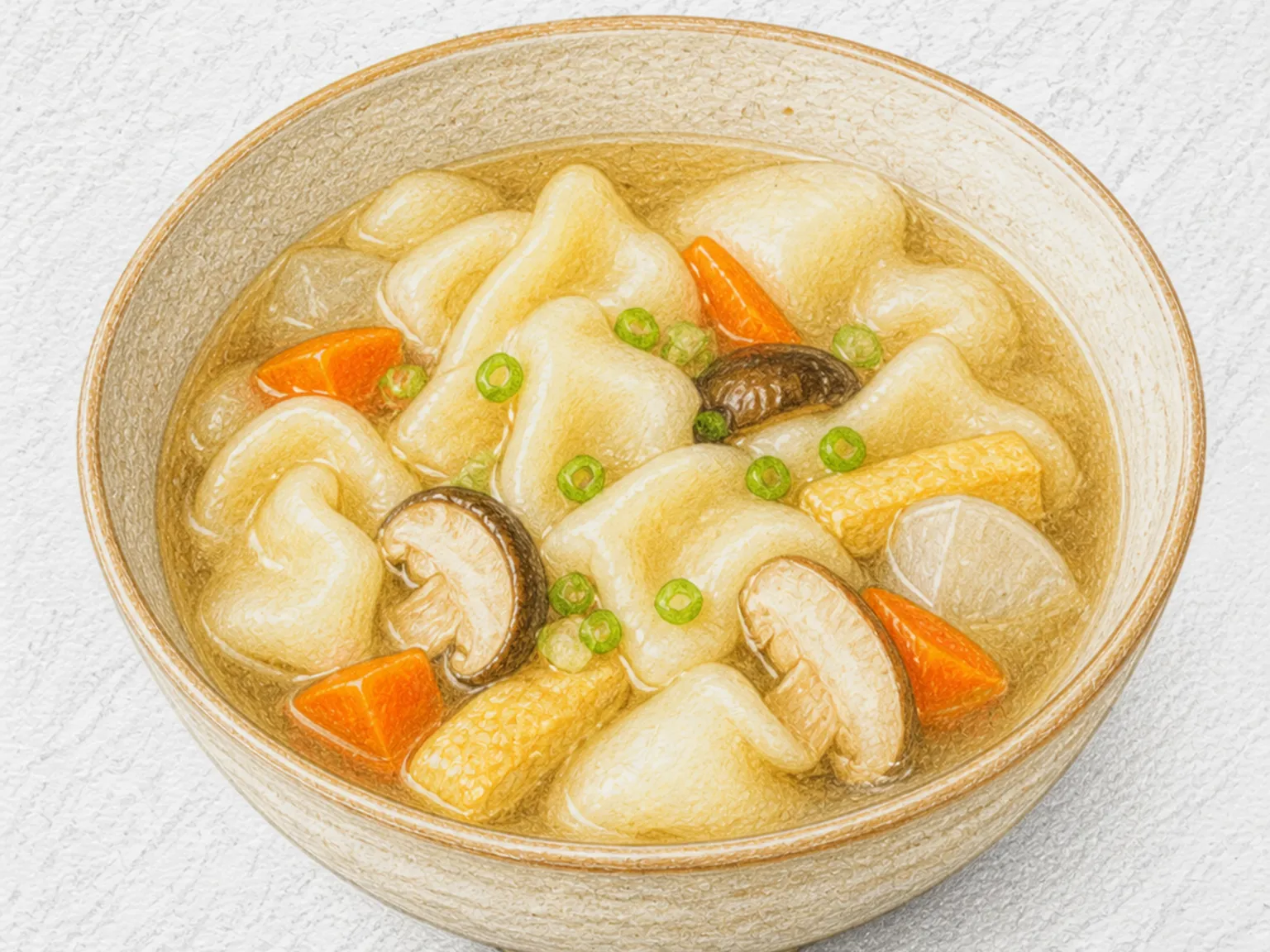
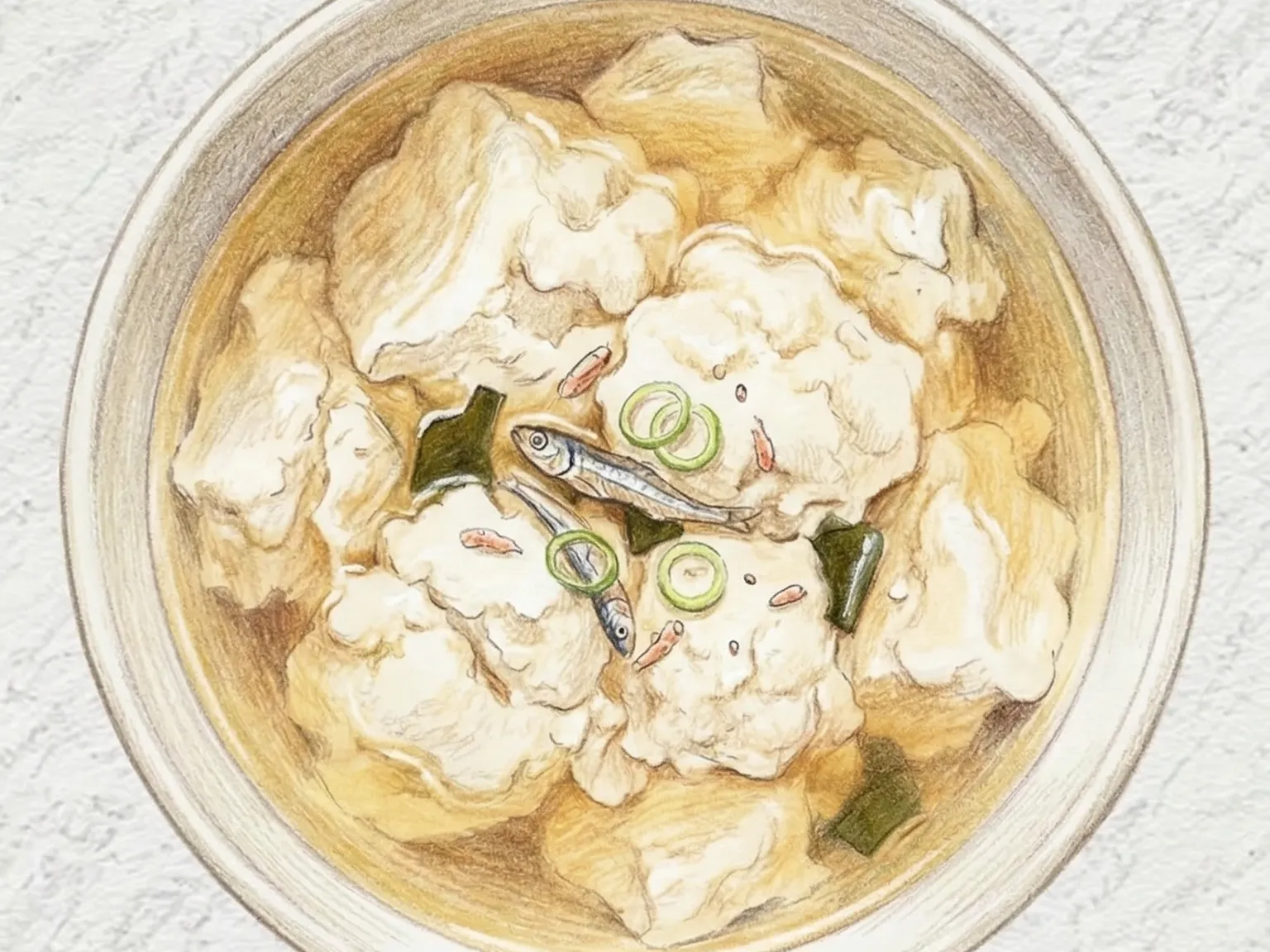
Gunma suiton is a wheat dumpling soup made by stirring flour with water into a soft batter that can be dropped from a spoon directly into dashi containing daikon, carrot, taro, shiitake, scallion, and aburaage. Gunma's long history of double-cropping rice and wheat produced many flour dishes, and suiton became an everyday staple and rice substitute in times of shortage because its dough needs no rolling or cutting. Regional names include tocchanage-jiru, tsumerikko, otsuyu-dango, and nejikko. The spoonfuls are added only after the vegetables are mostly tender and then boiled until no raw flour remains at their centers.

🏠 Everyday 🧒 Kid-Friendly
Prep 20min Cook 30min 4 servings
Korean Blood Sausage Soup
Soups Medium

Korean Blood Sausage Soup

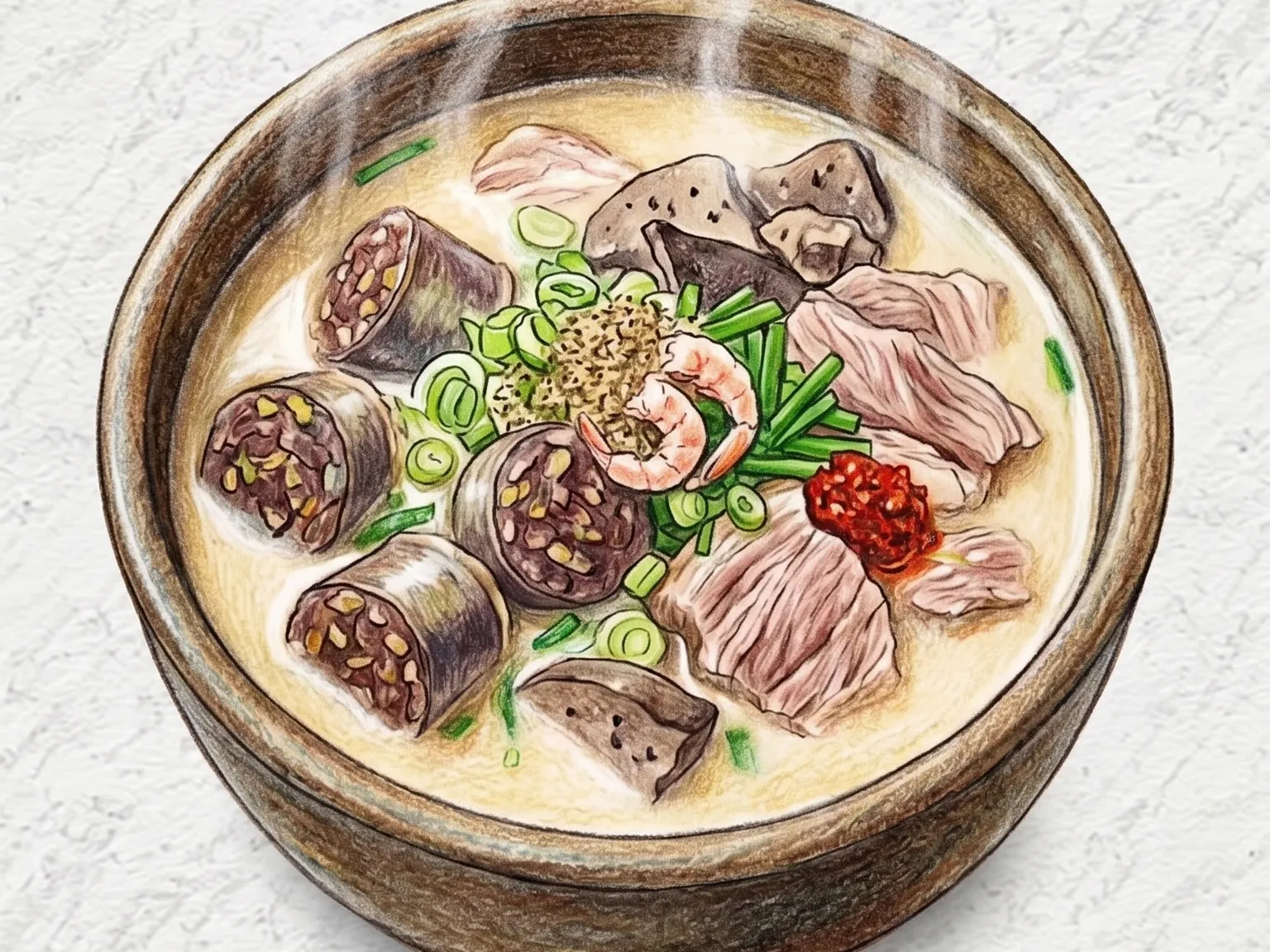
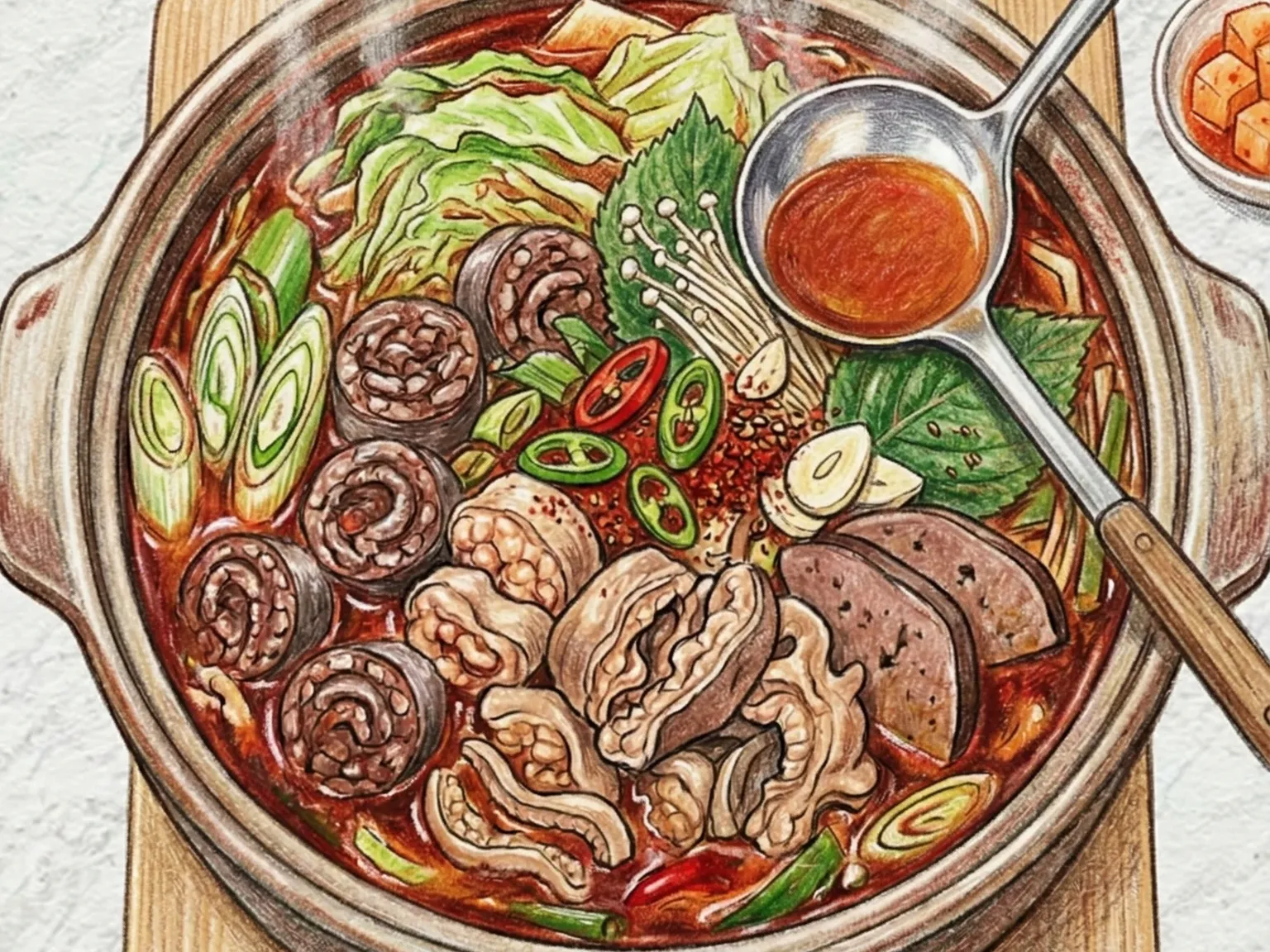
Sundae-guk is a hearty soup built on a long-simmered pork bone broth that turns milky white from hours of boiling. Thick slices of Korean blood sausage - pork intestine casing stuffed with glass noodles, barley, and pig's blood - sit in the center of the bowl, their chewy casing absorbing the hot broth while the dense filling inside stays warm and soft. Alongside the sundae, slices of boiled pork shoulder and, in more traditional versions, offal like liver or lung add variety in texture and a faint mineral note. The broth itself is rich yet surprisingly clean, seasoned at the table with either salted shrimp paste or coarse salt depending on the diner's preference. Stirring in a spoonful of dadaegi, a thick chili paste condiment, transforms the bowl entirely, cutting through the richness with a sharp heat. Some shops finish the soup with ground perilla seeds for added nuttiness. Rice is spooned directly into the bowl and eaten together with the broth, making sundae-guk one of the most satisfying cold-weather meals in the Korean street-food tradition.

🏠 Everyday
Prep 20min Cook 45min 4 servings
Korean Blood Sausage Hot Pot
Soups Medium

Korean Blood Sausage Hot Pot

Sundae-jeongol is a spicy Korean hot pot built around blood sausage, cooked together with cabbage, perilla leaves, and onion in a gochugaru-seasoned beef bone broth. The collagen-rich broth from ox bones forms the body of the soup, and combining gochugaru with a spoonful of doenjang transforms the base into something both fiery and deeply savory. The sundae heats through fully in the simmering broth, its filling of glass noodles and coagulated blood absorbing the liquid and becoming pleasantly dense and chewy. Doenjang softens the raw sharpness of the chili and adds fermented complexity that bare gochugaru cannot provide alone. Cabbage slowly releases its sweetness into the broth as it cooks down, while perilla leaves should be added just before serving to preserve their herbal aroma. The broth concentrates and deepens the longer the pot simmers, making it a dish that rewards eating slowly over time. A filling and convivial pot suited for cold-weather gatherings around a shared table.

🍺 Bar Snacks 🎉 Special Occasion
Prep 25min Cook 25min 4 servings
Korean Soft Tofu Soup (Mild Clear Broth with Silken Tofu)
Soups Easy

Korean Soft Tofu Soup (Mild Clear Broth with Silken Tofu)

Sundubu-guk is the gentler sibling of the more widely known sundubu-jjigae, trading the latter's fiery red broth for a clear, mild soup that puts silken tofu front and center. The base is a simple anchovy and kelp stock, seasoned with soup soy sauce and nothing more assertive, so the broth stays transparent and clean on the palate. Blocks of unpressed soft tofu are slipped into the simmering liquid and heated just until they are warmed through - overcooked sundubu loses the trembling, custard-like texture that defines the dish. Each spoonful collapses gently on the tongue, releasing a faint, sweet soybean flavor that pairs effortlessly with the umami-rich stock. A small addition of salted shrimp paste can be stirred in at the table to introduce a subtle marine depth without disrupting the soup's calm character. This is the soup Koreans turn to when appetite is low, digestion needs rest, or the body simply craves something warm and uncomplicated. It is equally suitable for young children and elderly diners, and its quiet simplicity is precisely its strength.

🏠 Everyday ⚡ Quick
Prep 5min Cook 15min 4 servings
Korean Turnip Soybean Paste Soup
Soups Easy

Korean Turnip Soybean Paste Soup

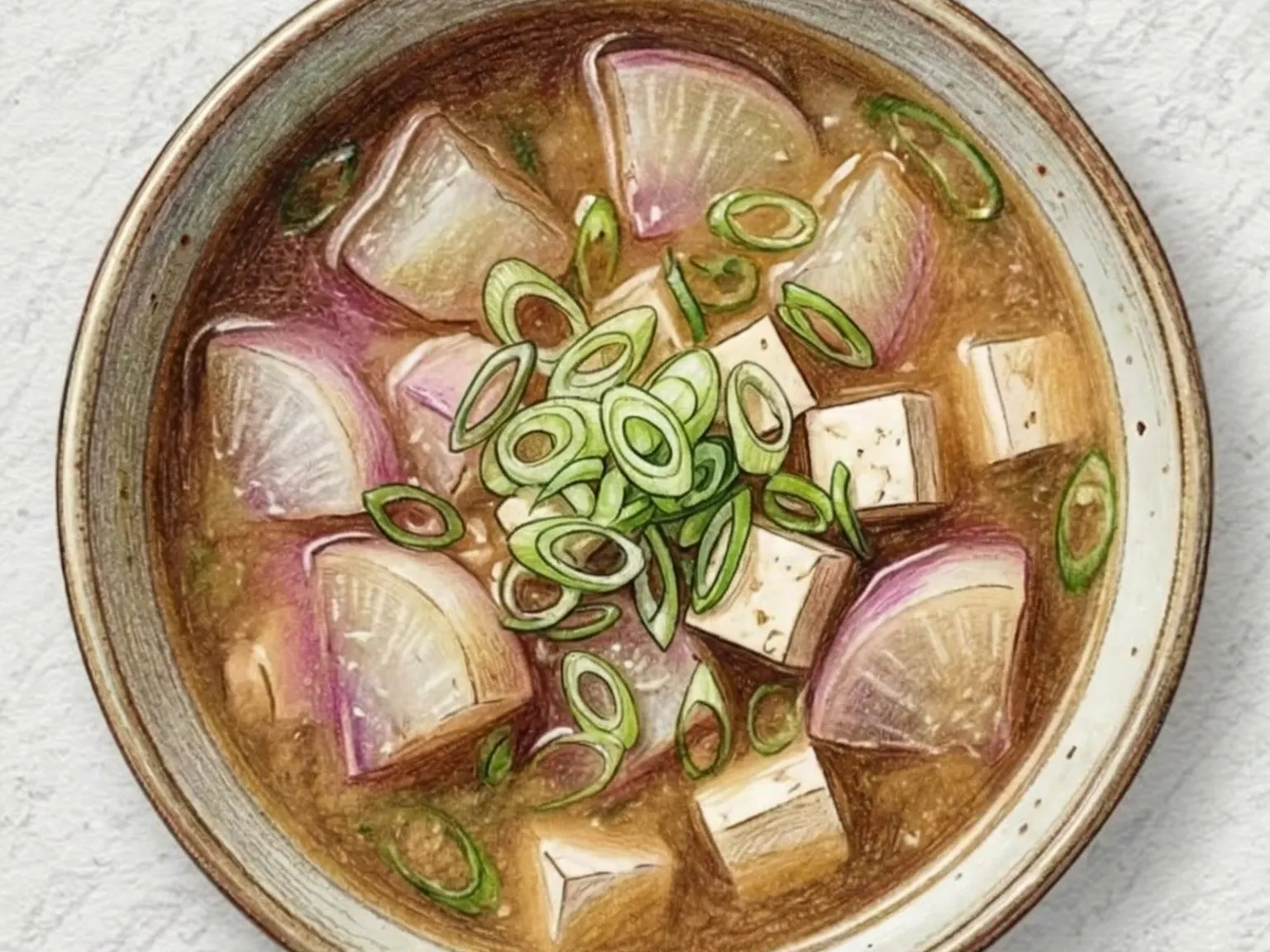
Sunmu doenjang-guk is a homestyle soybean paste soup that uses turnip as its starring vegetable and rice-rinsing water as its liquid base. The starchy water softens the doenjang's salinity, giving the broth a rounded, almost creamy quality that straight water cannot achieve. Turnips cook faster than daikon and yield a more delicate sweetness, along with a faint peppery edge that adds quiet complexity. As the turnip pieces simmer, a subtle purple blush from the skin tints the broth, making it a shade more elegant than an ordinary doenjang-guk. Cubed tofu is a natural companion, its neutral creaminess absorbing the fermented broth, while sliced scallion adds a final aromatic layer. The soup is at its best between autumn and early winter when turnips are in season, their sugars concentrated by cooler soil temperatures. Because the ingredient list is short, the quality of the doenjang matters more here than in busier soups - a well-aged paste with deep fermentation will carry the bowl, while a mediocre one will leave it flat.

🏠 Everyday 🥗 Light & Healthy
Prep 15min Cook 25min 4 servings
Su no Shui (Warm Grated Daikon and Sardine Vinegar Soup)
Soups Easy

Su no Shui (Warm Grated Daikon and Sardine Vinegar Soup)

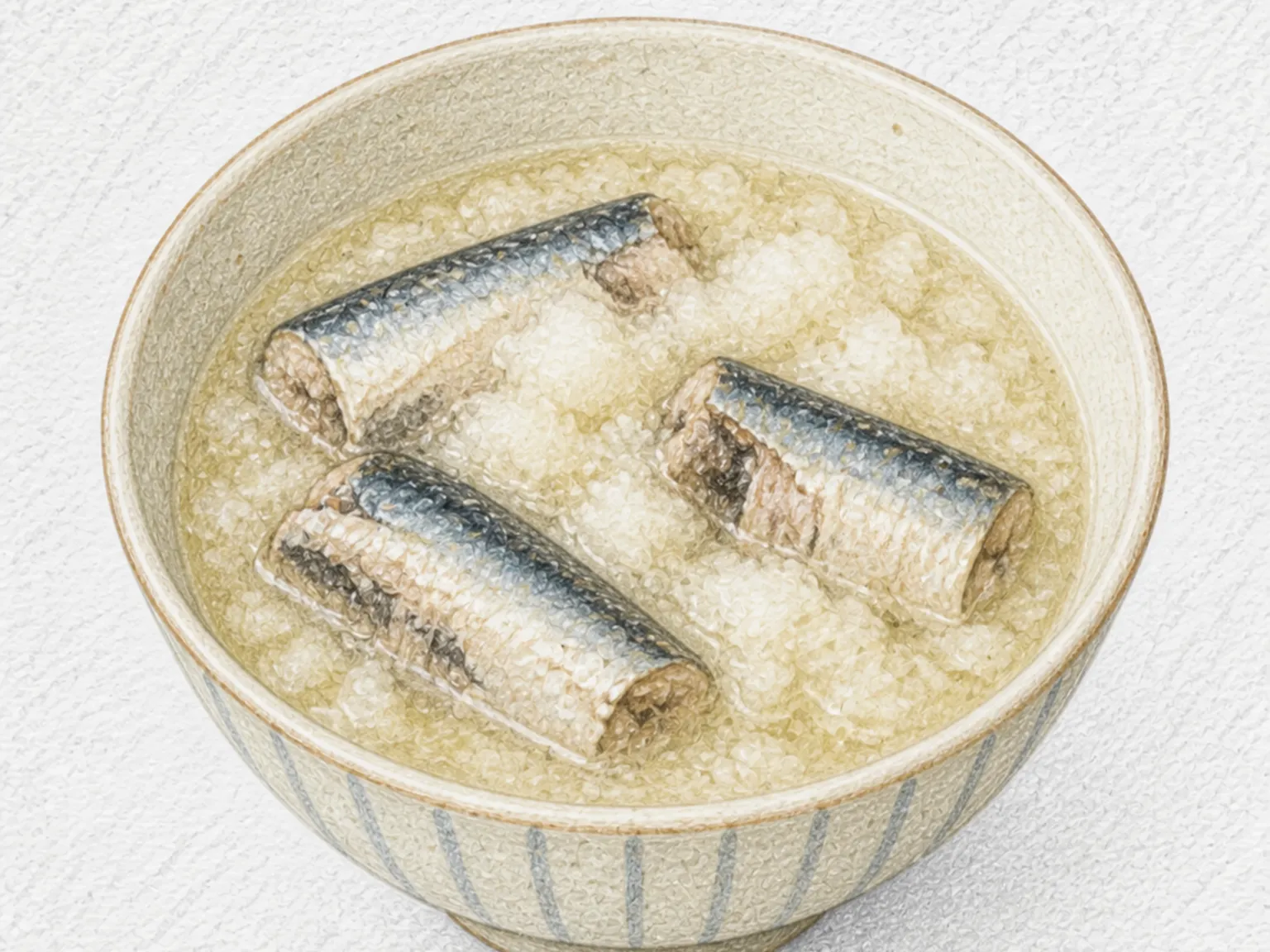
Su no shui is a warm Miyazaki soup of coarsely grated daikon and overnight-dried sardines seasoned with light soy sauce and vinegar. In the local name, shui means soup. Unlike a cold vinegared salad, this dish is served steaming and was often eaten with freshly pounded rice cakes. Grating the daikon on a coarse surface rather than turning it into a fine puree leaves small pieces that catch the fish broth. The sardines are cut into 4 or 5 sections and simmered so their flesh and bones flavor the water. Vinegar enters just before the heat is turned off, which softens its sharp edge without cooking away the bright acidity. The 12-serving pot is divided into small bowls with daikon and fish distributed evenly.

🏠 Everyday
Prep 20min Cook 20min 12 servings
Tamago Fuwafuwa (Fluffy Egg and Clear Dashi Soup)
Soups Medium

Tamago Fuwafuwa (Fluffy Egg and Clear Dashi Soup)

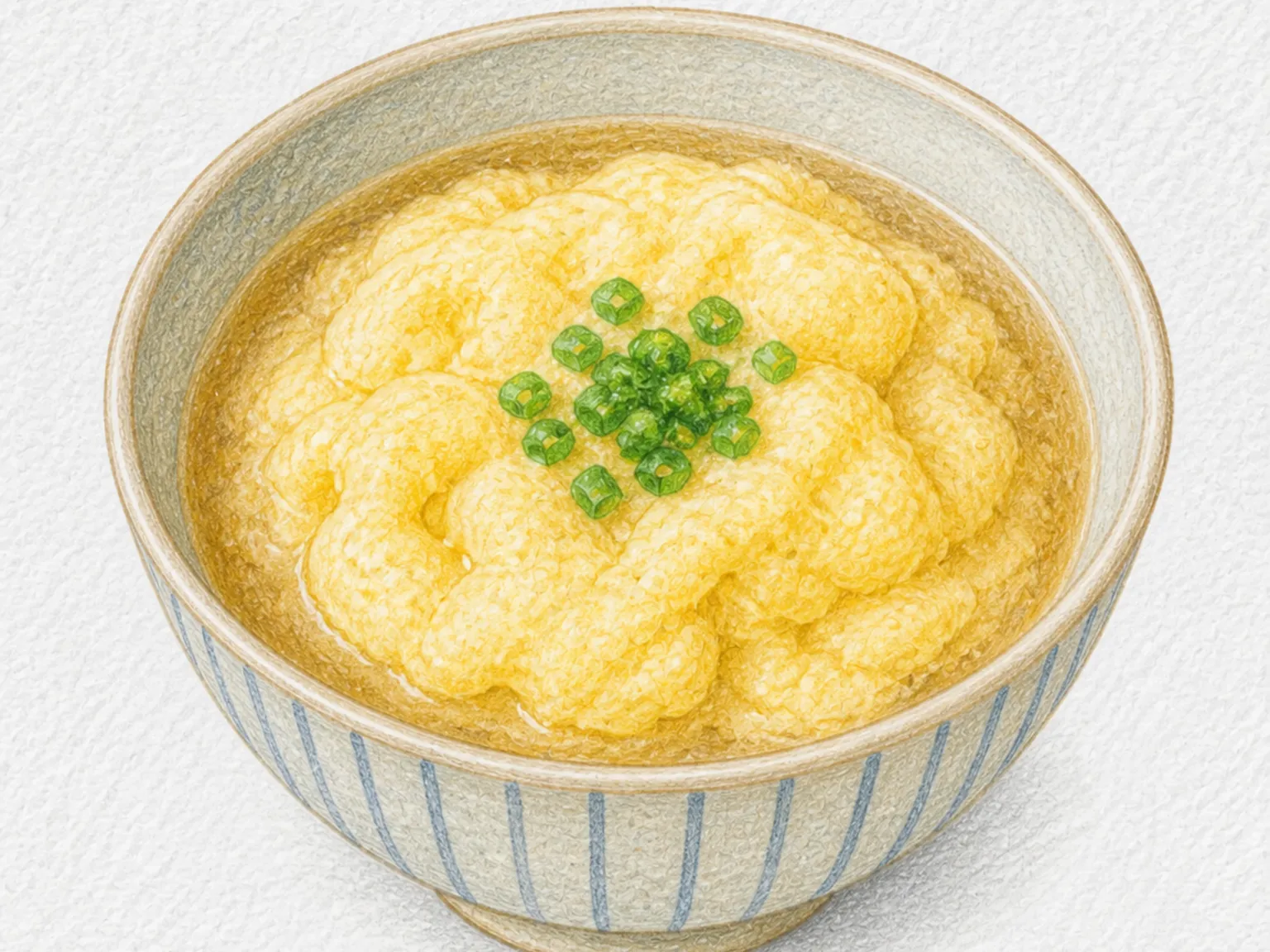
Tamago fuwafuwa is a Fukuroi dish made by whipping eggs with a small portion of seasoned bonito dashi for at least four to five minutes, then pouring the creamy foam into boiling clear soup and steaming it off the heat. Of the 400 ml broth, 360 ml heats in the covered pot while 40 ml is beaten with the eggs and mirin. Once the soup boils, the heat is turned off and the foam enters all at once around the edge. Two to three covered minutes let the retained heat expand and gently set the egg into a light, rounded cloud. An Edo-period travel record says it was served for breakfast to guests at the Ota side inn in the Fukuroi post town. The local tourism association later reconstructed the dish from historical sources and helped return it to restaurants and home kitchens.

🏠 Everyday ⚡ Quick
Prep 10min Cook 8min 2 servings
Tara Jappa-jiru (Whole-Cod Miso Soup)
Soups Hard

Tara Jappa-jiru (Whole-Cod Miso Soup)

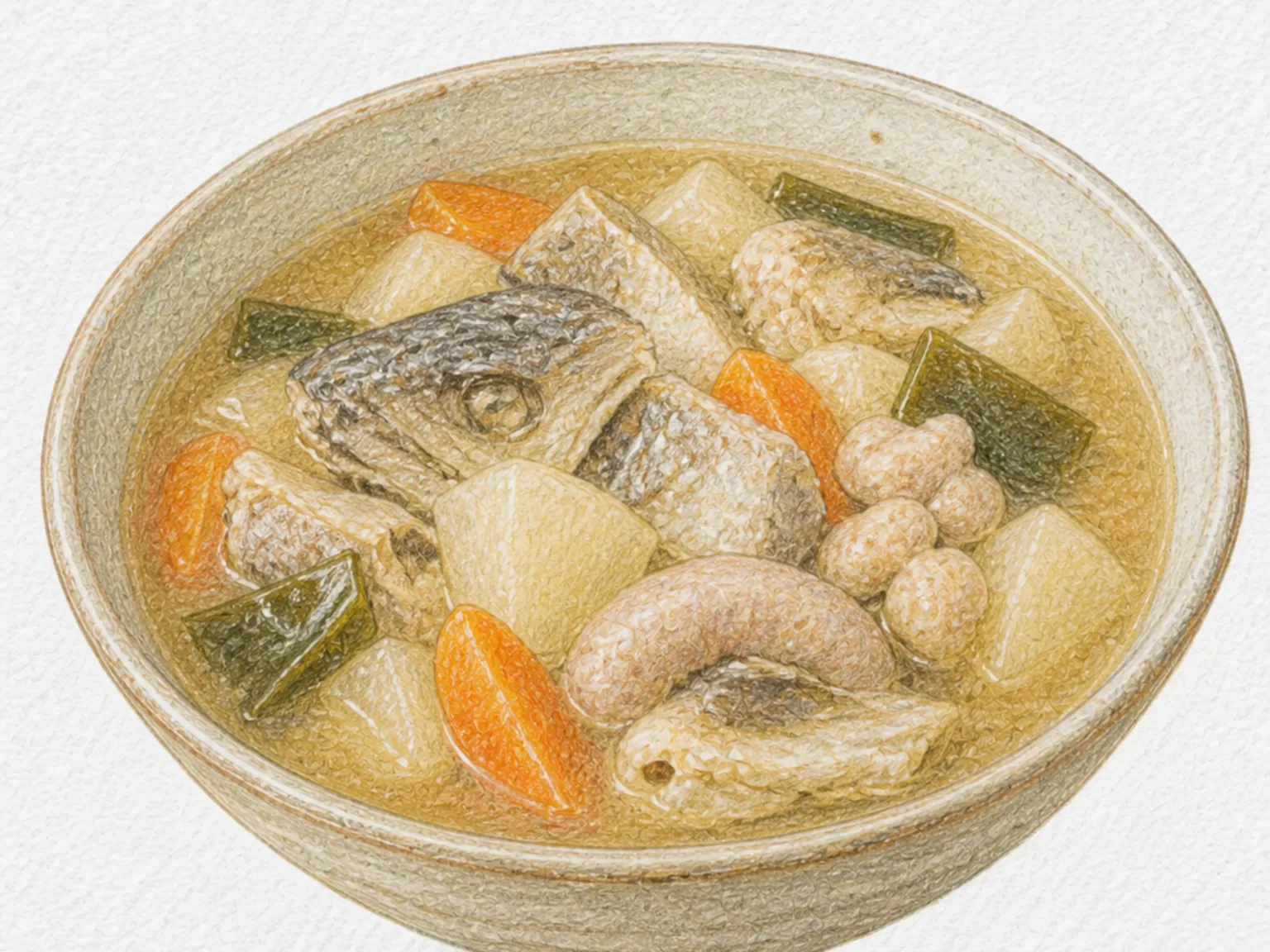
Tara jappa-jiru is a Tsugaru winter soup from Aomori that uses the head, backbone, skin, organs, roe, or milt left after filleting a whole cod. Carefully cleaned parts simmer in a large pot with kombu, daikon, carrot, sake, and water before miso seasons the broth. Jappa means parts usually discarded in the Tsugaru dialect, but the dish turns an entire cold-water cod into a deeply flavored meal without waste. Liver is mashed into the soup near the end for mellow richness, and exceptionally fresh milt is especially prized. Cod was the year-end fish of Tsugaru, so essential to New Year that the phrase tara shogatsu, cod New Year, emerged. Families once bought a whole large fish and dragged it home over snowy roads. A generous ten-serving pot warms a household in midwinter.

🎉 Special Occasion
Prep 45min Cook 45min 10 servings
Imoni (Yamagata Taro and Beef Hot Pot)
Soups Easy

Imoni (Yamagata Taro and Beef Hot Pot)

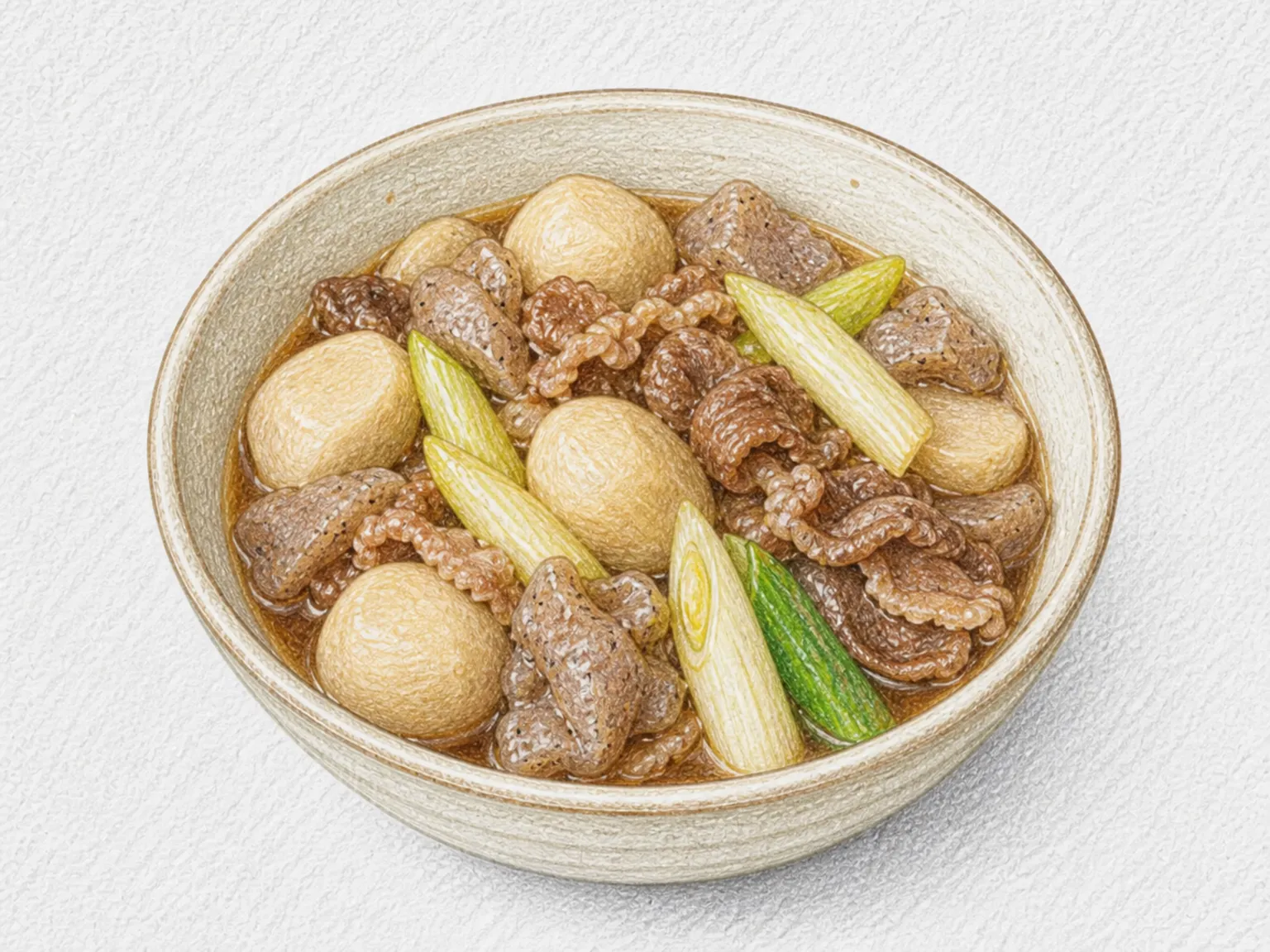
Imoni is an inland Yamagata hot pot that simmers autumn taro with beef, konjac, and long onion in a soy-seasoned broth. Taro and hand-torn konjac begin cooking in water with part of the soy sauce so the roots soften before the meat enters. Fatty beef is then added with the remaining soy sauce, sugar, and sake, and the foam is skimmed as the broth cooks. Thick diagonal pieces of onion simmer until very soft and sweet. In Yamagata, families and friends gather beside rivers for imoni parties in autumn and winter, sharing large outdoor pots, while the same basic combination is also a regular home dish.

🎉 Special Occasion 🏠 Everyday
Prep 25min Cook 35min 5 servings
Tinola (Filipino Ginger Chicken Soup with Green Papaya)
Soups Easy

Tinola (Filipino Ginger Chicken Soup with Green Papaya)

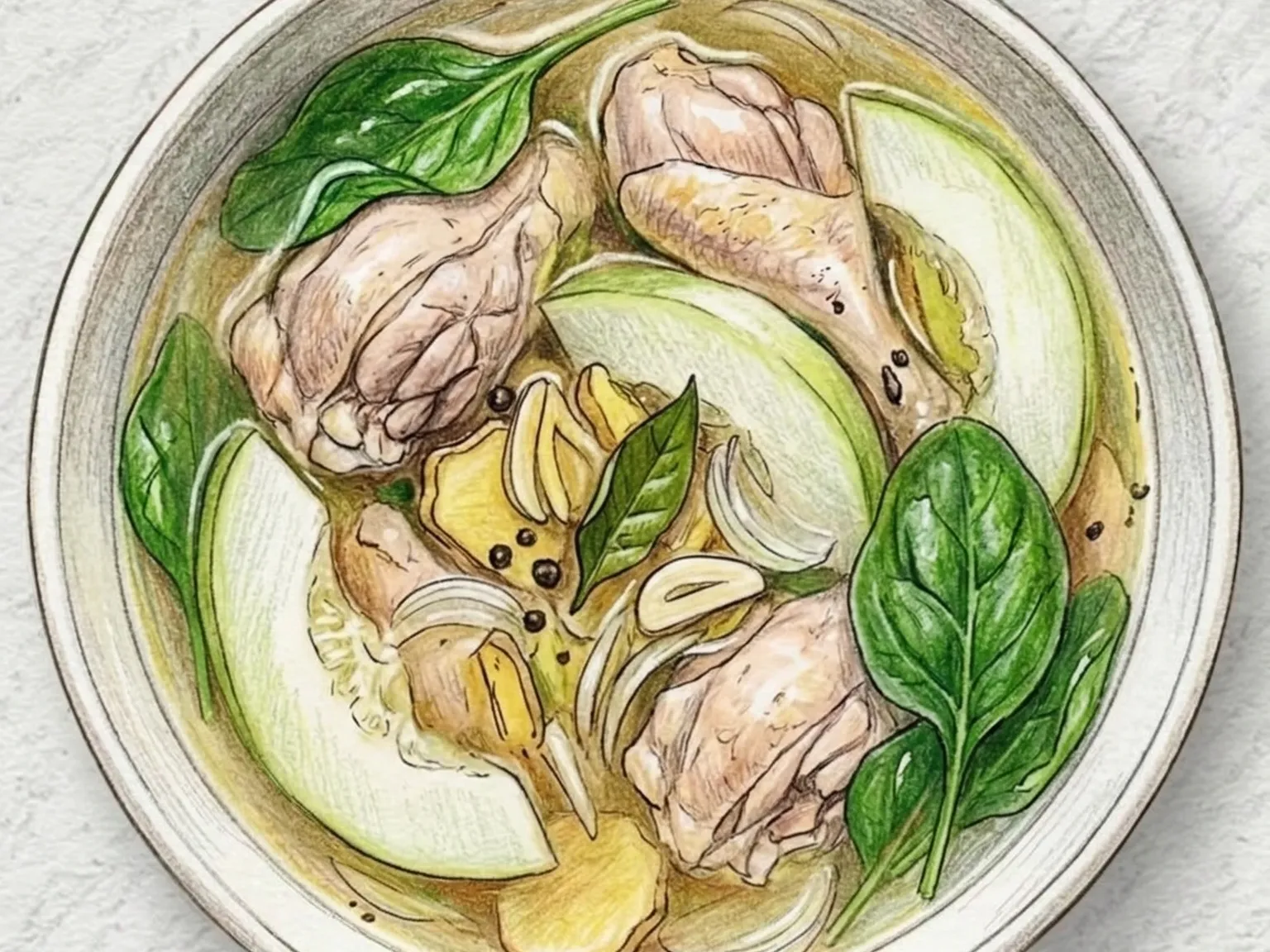
Tinola is a Filipino home-style chicken soup defined by its prominent ginger character and its clear, light broth. The aromatic base is built by sauteing julienned ginger, sliced garlic, and onion in a little oil until fragrant, then adding chicken pieces and cooking them until the surfaces turn opaque. Fish sauce goes in next, providing a salty depth that anchors the broth, followed by a generous pour of water. The chicken simmers until fully tender, at which point wedges of green papaya are added-their mild sweetness and yielding texture complementing the peppery warmth of the ginger. Spinach or other leafy greens are stirred in at the very end, wilting in the residual heat and adding a fresh, verdant note to the bowl. The finished soup is remarkably clean in flavor despite its depth, with the ginger threading through every spoonful as a persistent, warming presence. In Filipino households, tinola occupies the same comforting role that chicken noodle soup holds elsewhere-it is the first dish prepared when someone is unwell or in need of nourishment.

🏠 Everyday 🎉 Special Occasion
Prep 15min Cook 35min 4 servings
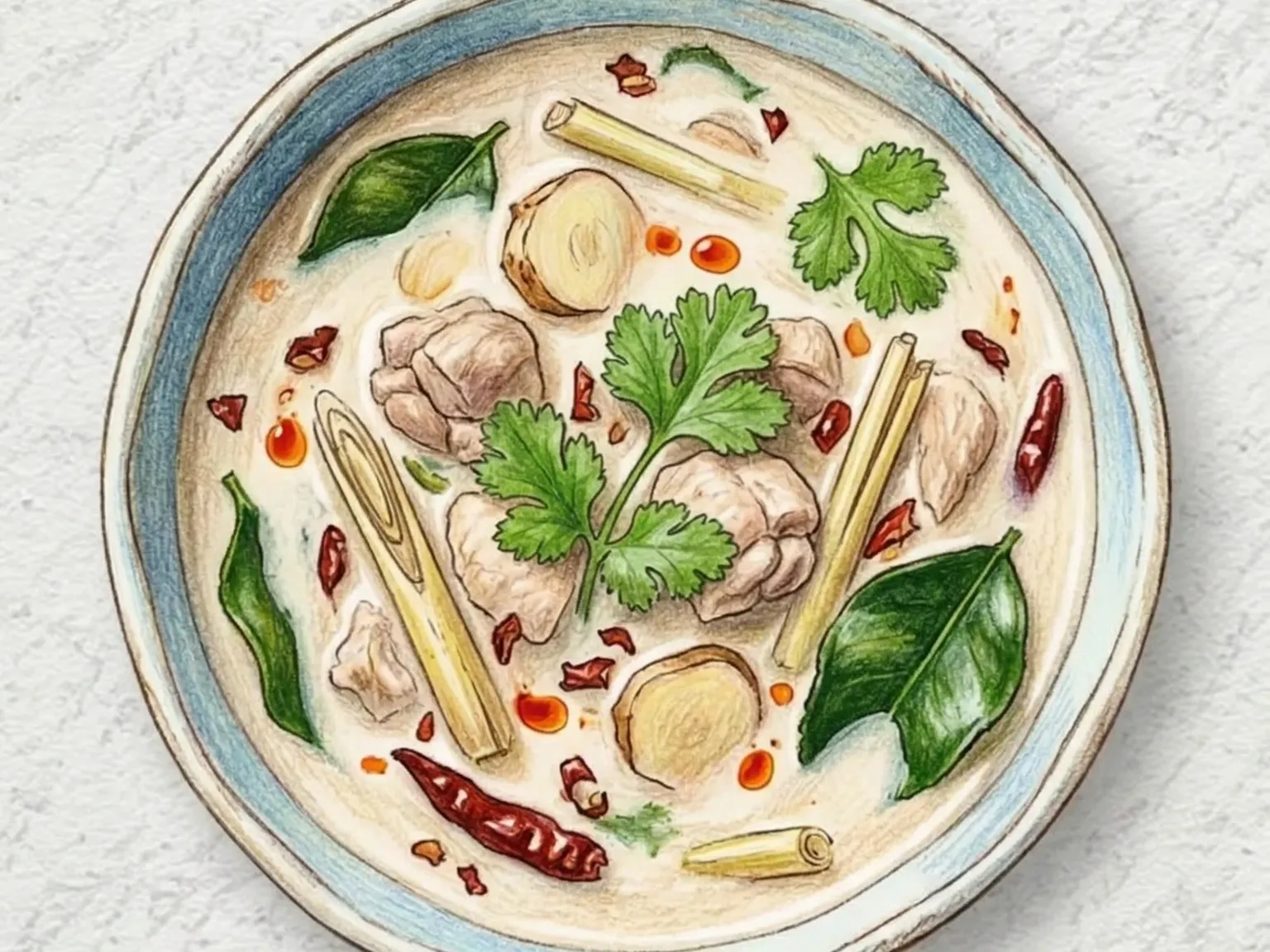
Tom Kha Gai (Thai Coconut Galangal Chicken Soup with Lime)
Soups Medium

Tom Kha Gai (Thai Coconut Galangal Chicken Soup with Lime)

Tom Kha Gai is a classic Thai chicken soup built on a rich coconut milk base infused with traditional herbs. The preparation starts by simmering three key aromatics: thinly sliced galangal, bruised lemongrass, and torn kaffir lime leaves. These steep slowly in the coconut milk over low heat to release their layered citrus and herbal fragrances without letting the milk separate. Bite-sized chicken pieces are gently poached in this herbal broth until tender and opaque. The seasoning relies on fish sauce for a salty umami depth. Once the pot is removed from the heat, fresh lime juice is stirred in to preserve its bright acidity and balance the creamy texture of the coconut broth. The result is a smooth, aromatic soup where the rich coconut milk softens any sharp heat while showcasing the depth of the herbs. It is served hot, optionally removing the tough pieces of galangal and lemongrass before eating.

🎉 Special Occasion
Prep 15min Cook 25min 3 servings
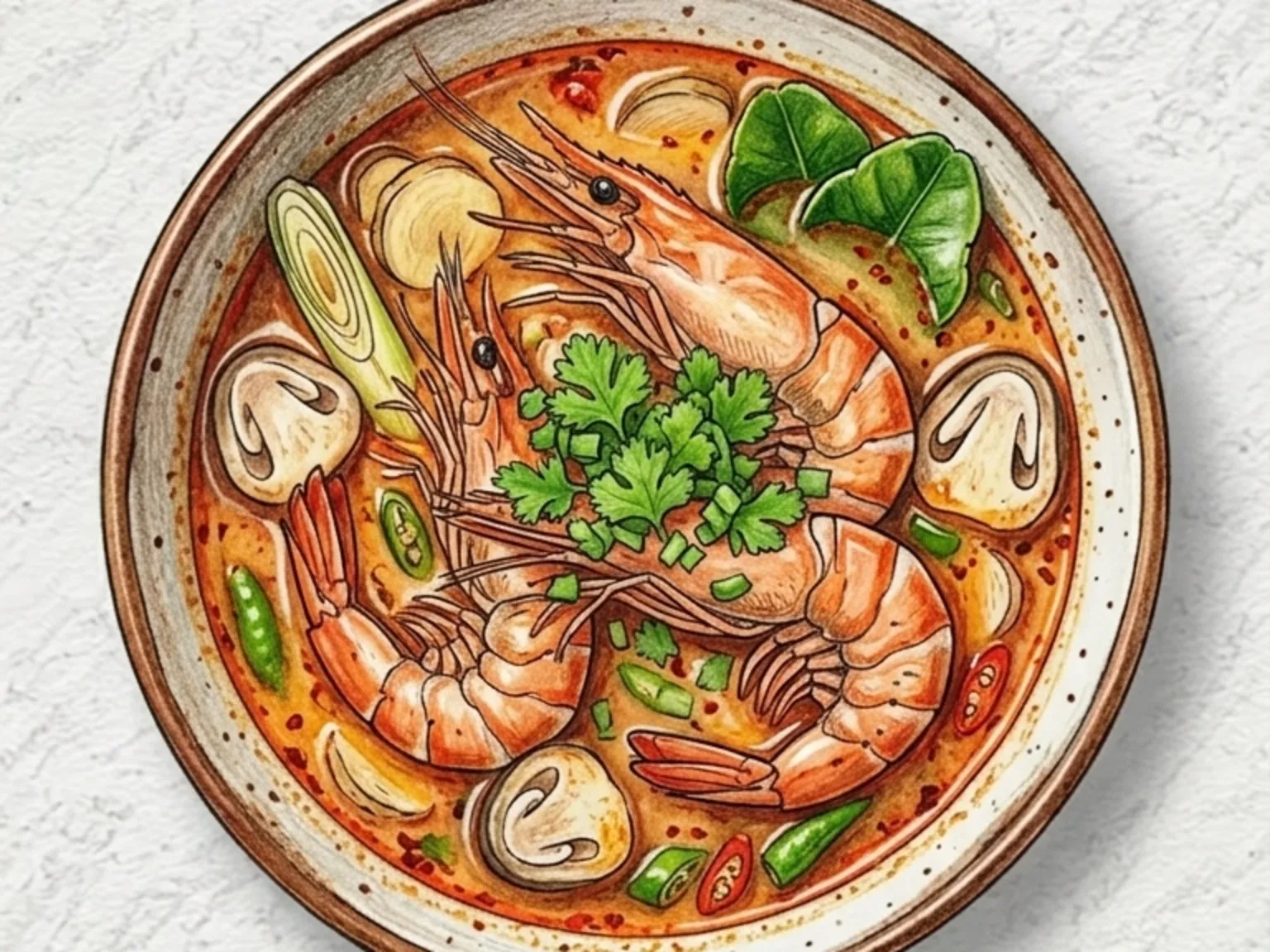
Thai Hot and Sour Shrimp Soup (Tom Yum Goong)
Soups Medium

Thai Hot and Sour Shrimp Soup (Tom Yum Goong)

Tom Yum Goong is a classic Thai soup featuring shrimp and mushrooms in a hot and sour broth infused with aromatic herbs. The base is prepared by boiling chicken stock with lemongrass, galangal, and kaffir lime leaves to release their citrus and herbal notes into the liquid. Mushrooms are simmered in this broth followed by shrimp, which are cooked briefly to maintain their tender, springy texture. A spoonful of Thai chili paste is dissolved into the stock to impart a deep red color and a lingering spicy heat, while fish sauce provides a savory base of umami. The cooking process finishes by turning off the heat before adding fresh lime juice. Adding the lime juice at the end ensures its bright, sour aroma does not dissipate, combining all the flavors into a balanced, clear soup.

🎉 Special Occasion
Prep 18min Cook 15min 2 servings
Tomato Basil Soup
Soups Easy

Tomato Basil Soup

Tomato basil soup sautés onion and garlic in olive oil, adds canned whole tomatoes crushed by hand, simmers with vegetable stock for 15 minutes, then blends until smooth and finishes with cream and fresh basil. Crushing and cooking the tomatoes for the first five minutes before adding stock concentrates their natural sugars and reduces raw acidity, building a sweeter, deeper base. The 15-minute simmer lets the flavors merge without overcooking, and blending produces a velvety texture that cream enhances without masking the tomato. Basil is heat-sensitive - its volatile oils dissipate within minutes of cooking - so it goes in only after the heat is off, releasing its fragrance through residual warmth alone. A tablespoon of tomato paste can be stirred in during the sauté stage for a more intense tomato flavor if desired.

🏠 Everyday 🧒 Kid-Friendly
Prep 10min Cook 30min 4 servings
Kagoshima Tonjiru (Pork and Vegetables in Barley Miso Soup)
Soups Easy

Kagoshima Tonjiru (Pork and Vegetables in Barley Miso Soup)

Kagoshima tonjiru is a substantial soup in which thin pork is browned first, then daikon, carrot, taro, konjac, and atsuage are tossed in the rendered fat before dried-sardine broth is added. Once everything is tender, sweet local barley miso seasons the pot. Among the many tonjiru styles eaten across Japan, this formula brings together two Kagoshima staples, pork and barley miso. Dissolve the miso separately in broth only after the pork and vegetables are fully cooked, and do not return it to a hard boil. Fine green onion and ginger strips added to each bowl keep a fresh, sharp aroma against the rich soup.

🏠 Everyday
Prep 20min Cook 30min 4 servings
Korean Taro Soup (Autumn Taro in Nutty Perilla Seed Broth)
Soups Medium

Korean Taro Soup (Autumn Taro in Nutty Perilla Seed Broth)

Toran-guk is an autumn soup centered on taro root, which is first parboiled to remove its slippery mucilage, then simmered in a broth thickened with ground perilla seeds. The taro pieces cook to a texture that falls somewhere between potato and chestnut - they crumble softly on the tongue yet retain a subtle stickiness that gives each bite a gentle cling. Ground perilla dissolves into the liquid and turns it opaque and creamy, layering a nutty richness over the taro's mild, earthy flavor. Beef is often added for depth, its rendered fat and juices rounding out the broth, while an anchovy-kelp base underneath sharpens the umami. The soup is closely associated with Chuseok, the Korean harvest festival, when taro is freshly dug and at its peak sweetness. Cooking the taro just long enough to soften without disintegrating is the key challenge - underdone pieces are chalky and irritate the throat, while overcooked ones dissolve into the broth and lose their identity. Served hot with steamed rice, toran-guk is one of those seasonal dishes that Koreans anticipate all year and miss the moment autumn ends.

🏠 Everyday 🥗 Light & Healthy
Prep 20min Cook 35min 2 servings
Korean Taro Stem Perilla Soup
Soups Medium

Korean Taro Stem Perilla Soup

Torandae deulkkae-tang is built around dried taro stems - the stalks of the taro plant, sun-dried for preservation and rehydrated before cooking. Once soaked, the stems become spongy enough to absorb broth while retaining a fibrous chew that provides the soup's defining texture. They are first stir-fried in perilla oil to tame any grassy rawness and coat the fibers with a toasty fragrance. Ground perilla seeds are then stirred into the simmering stock, turning the liquid an opaque cream color and filling it with a deep, nutty richness that carries every spoonful. Adding beef brisket to the pot contributes body and a meaty undertone, while a small amount of doenjang blended into the broth introduces a fermented complexity that deepens the perilla's already layered flavor. The soup is a staple of the colder months, when its warming richness is most welcome. Spooned over rice, the thick perilla broth clings to each grain, making this one of the most comforting bowls in the Korean autumn and winter table.

🏠 Everyday 🥗 Light & Healthy
Prep 20min Cook 35min 4 servings

About Soups

The secret to a great Korean soup lies in building a flavorful stock from anchovies, kelp, or beef bones. This collection covers classic and modern soup recipes you can recreate at home.