Soups Recipes
434 recipes. Page 9 of 19
Soups and broths are the backbone of a Korean meal, served alongside rice at nearly every table. From clear seaweed soup (miyeokguk) to rich ox-bone broth (gomtang) and spicy beef soup (yukgaejang), the variety is enormous. Each season brings its own favorites - chilled soups in summer and piping-hot stews in winter.
Soto Ayam (Indonesian Golden Turmeric Chicken Noodle Soup)
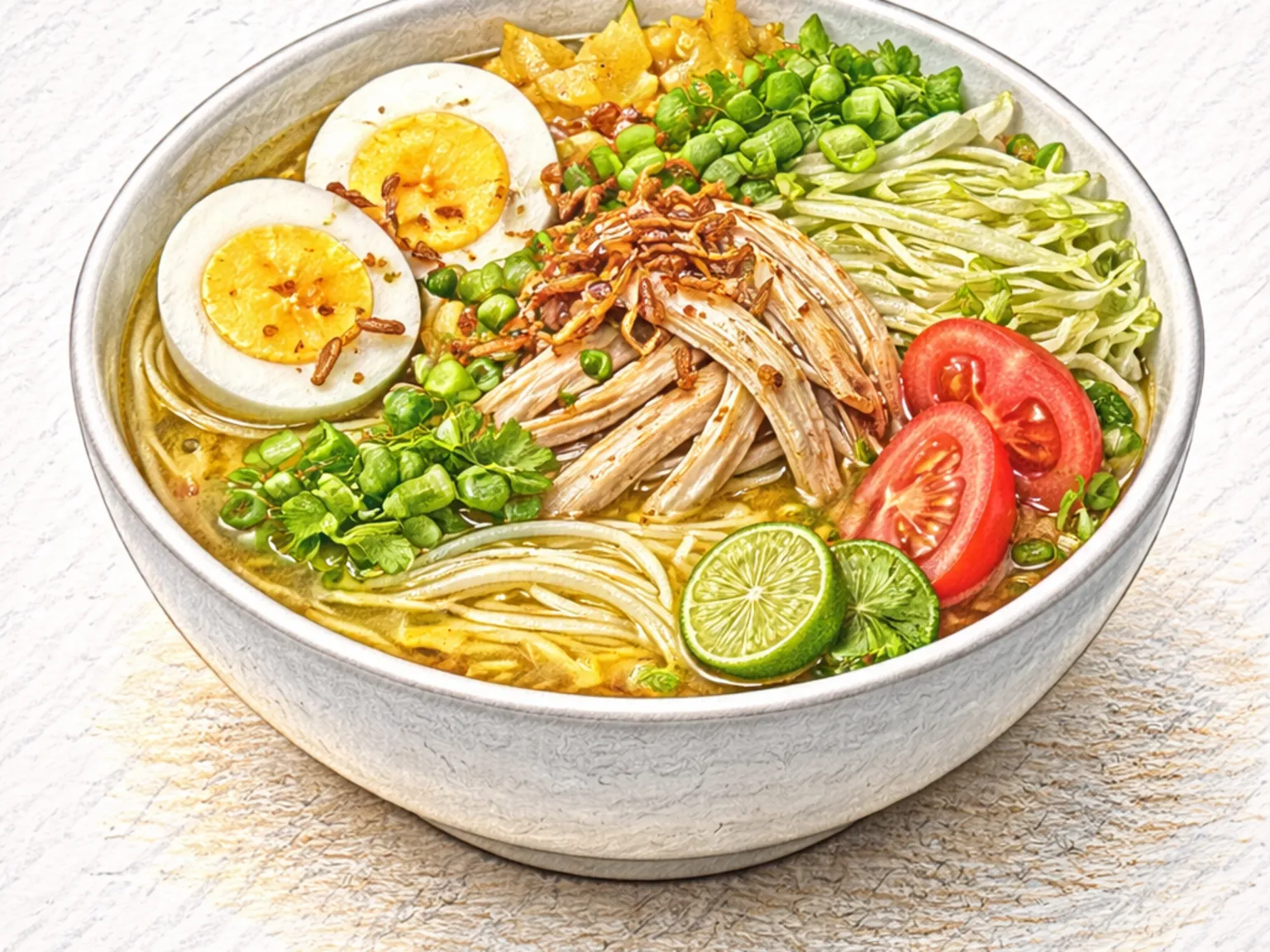
Soto ayam is Indonesia's beloved chicken soup, recognizable by its vivid golden broth colored with turmeric. The flavor base is a paste of garlic, turmeric, and galangal, fried until fragrant and then simmered with chicken pieces and lemongrass stalks for at least thirty minutes to build a deeply aromatic stock. The chicken is removed, shredded by hand, and returned to the bowl along with rice noodles, halved boiled eggs, and a handful of fresh bean sprouts. Each component adds its own texture-the silky noodles, the springy sprouts, the tender chicken-while the broth ties everything together with its warm, earthy spice profile. A squeeze of lime at the table brightens the bowl and lifts the heavier notes of galangal and turmeric. Soto ayam appears at breakfast stalls, family dinners, and celebrations across the Indonesian archipelago.
Korean Young Napa Soybean Paste Soup
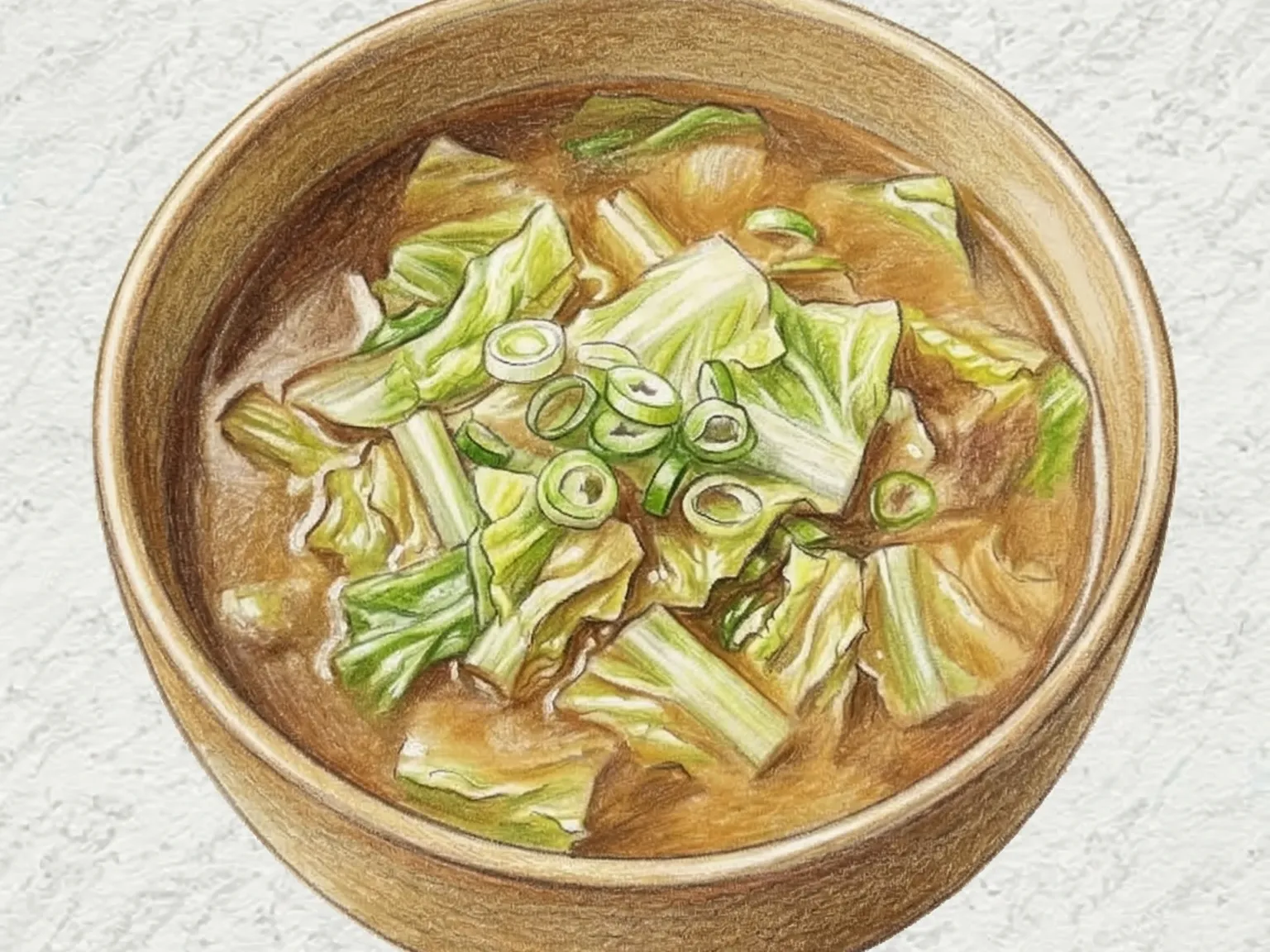
Eolgari-doenjang-guk is a traditional Korean soup made with young napa cabbage and fermented soybean paste. The recipe uses rice-rinse water as the soup base instead of plain water, which helps reduce the sharpness of the soybean paste and adds a mild, rounded starchiness. Straining the doenjang through a sieve before boiling is recommended to ensure a smooth, lump-free broth. Once the soup comes to a boil, anchovy powder and minced garlic are stirred in to establish a rich umami depth. The young napa cabbage is added next and cooked briefly so the leaves retain their fresh flavor and crisp bite. In the final stage, sliced green onions and cheongyang chilies are added, simmering for just two minutes to infuse the broth with a clean, spicy finish. This comforting soup pairs naturally with a hot bowl of steamed rice.
Suanlafen (Sichuan Hot-and-Sour Sweet Potato Noodle Soup)
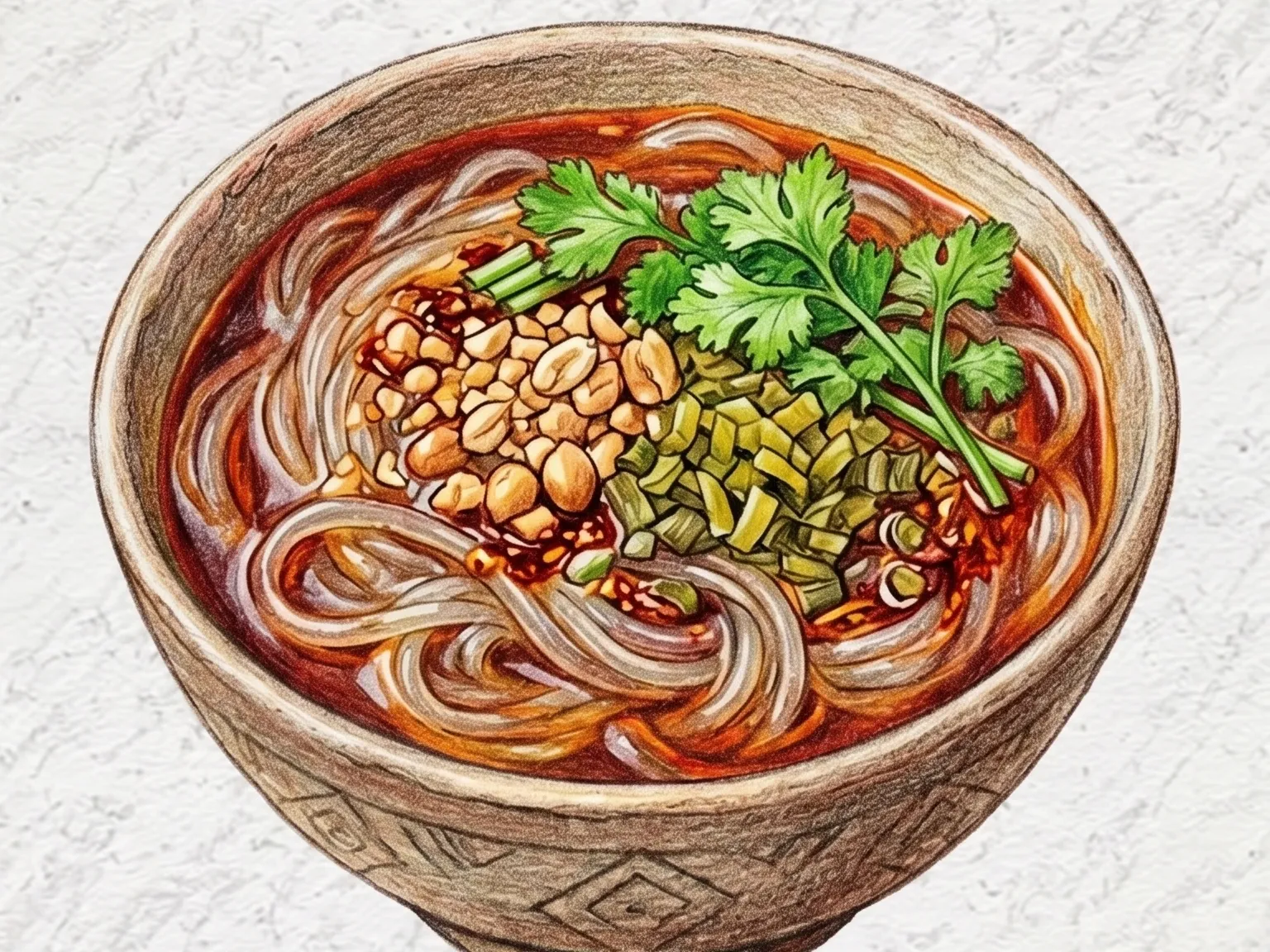
This hot-and-sour noodle soup serves two with 180 g sweet potato noodles, 800 ml chicken stock, black vinegar, chili oil, bok choy, and peanuts. Soak the noodles in lukewarm water for 10 minutes, loosen any stuck strands by hand, and drain them well. Separate 80 g bok choy into manageable leaves and stems, and coarsely crush 30 g peanuts, keeping them aside so they stay crisp. Bring the stock to a boil over medium-high heat, add 1 tablespoon soy sauce and 1 teaspoon minced garlic, and simmer for 2 minutes. Add the drained noodles and cook over medium heat for about 3 minutes, stirring from the bottom to prevent sticking. Once the strands turn translucent, add the bok choy and continue for 1 to 2 minutes, just until the stems soften slightly and the leaves remain bright. Lower the heat as soon as a noodle feels springy without a hard center. Divide the soup between bowls, add 2 tablespoons black vinegar in stages to control the sourness, drizzle with 2 tablespoons chili oil, and finish with the crushed peanuts.
Korean Young Napa Beef Soup
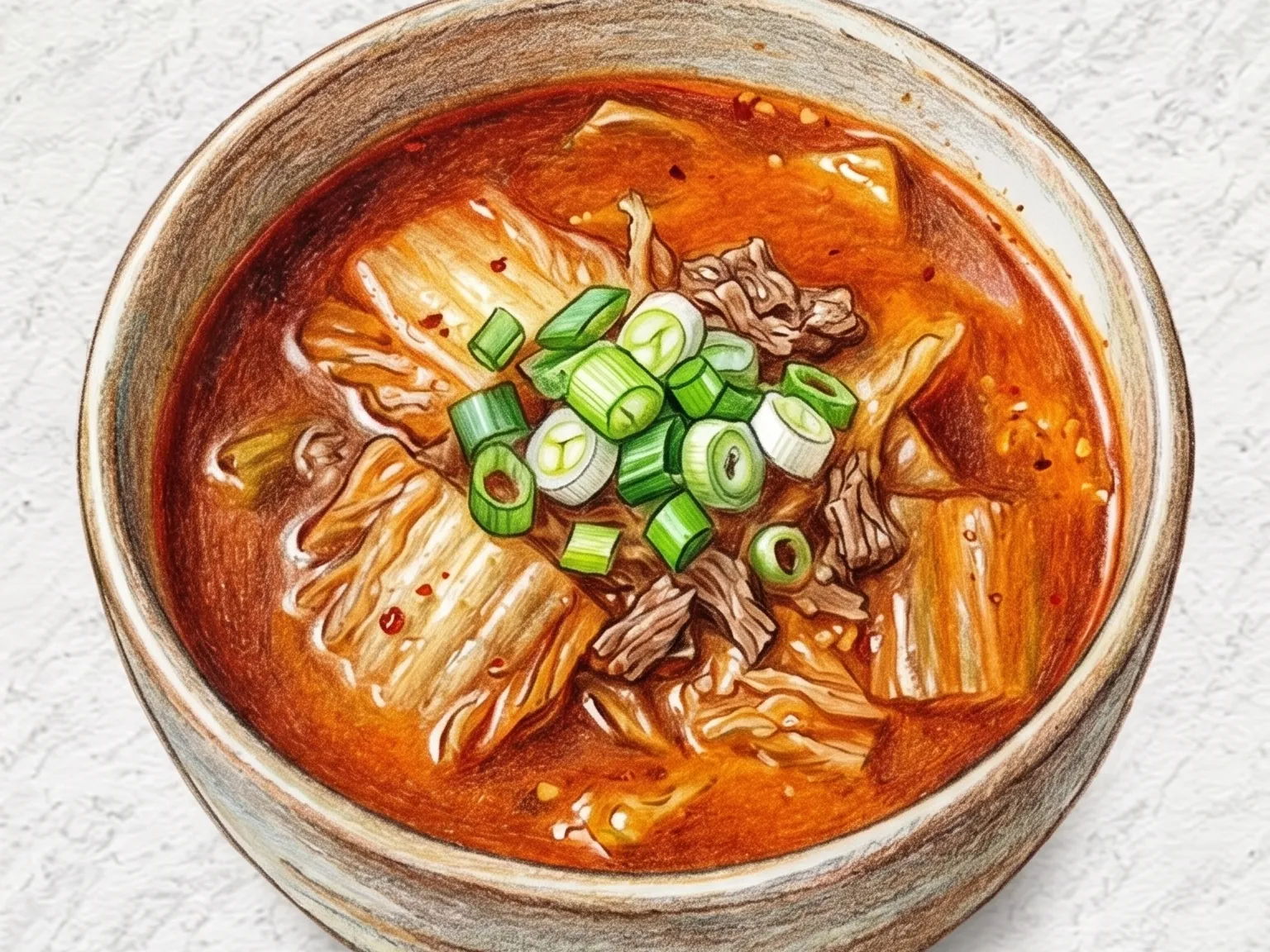
This Korean soup begins by blanching young napa cabbage leaves, then thoroughly tossing them with doenjang, gochujang, dried chili flakes, and minced garlic before any liquid is added. Pre-seasoning the greens is the foundational technique: the paste coats every surface of the cabbage and later dissolves into the broth, giving the soup a fermented, layered depth that simply adding the condiments to the pot cannot replicate. The beef component is handled separately - simmered in water from cold, skimmed clean of foam, and left to cook for fifteen minutes until a clear, savory stock develops. Once the stock is ready, the pre-seasoned greens are added and the pot returns to a gentle boil for twelve minutes, long enough for the beef umami to saturate the cabbage fibers. Soup soy sauce provides the final salt adjustment, and sliced green onion goes in last, contributing a sharp, fresh lift that cuts through the dense, earthy base of the broth.
Korean Soft Tofu Noodle Soup
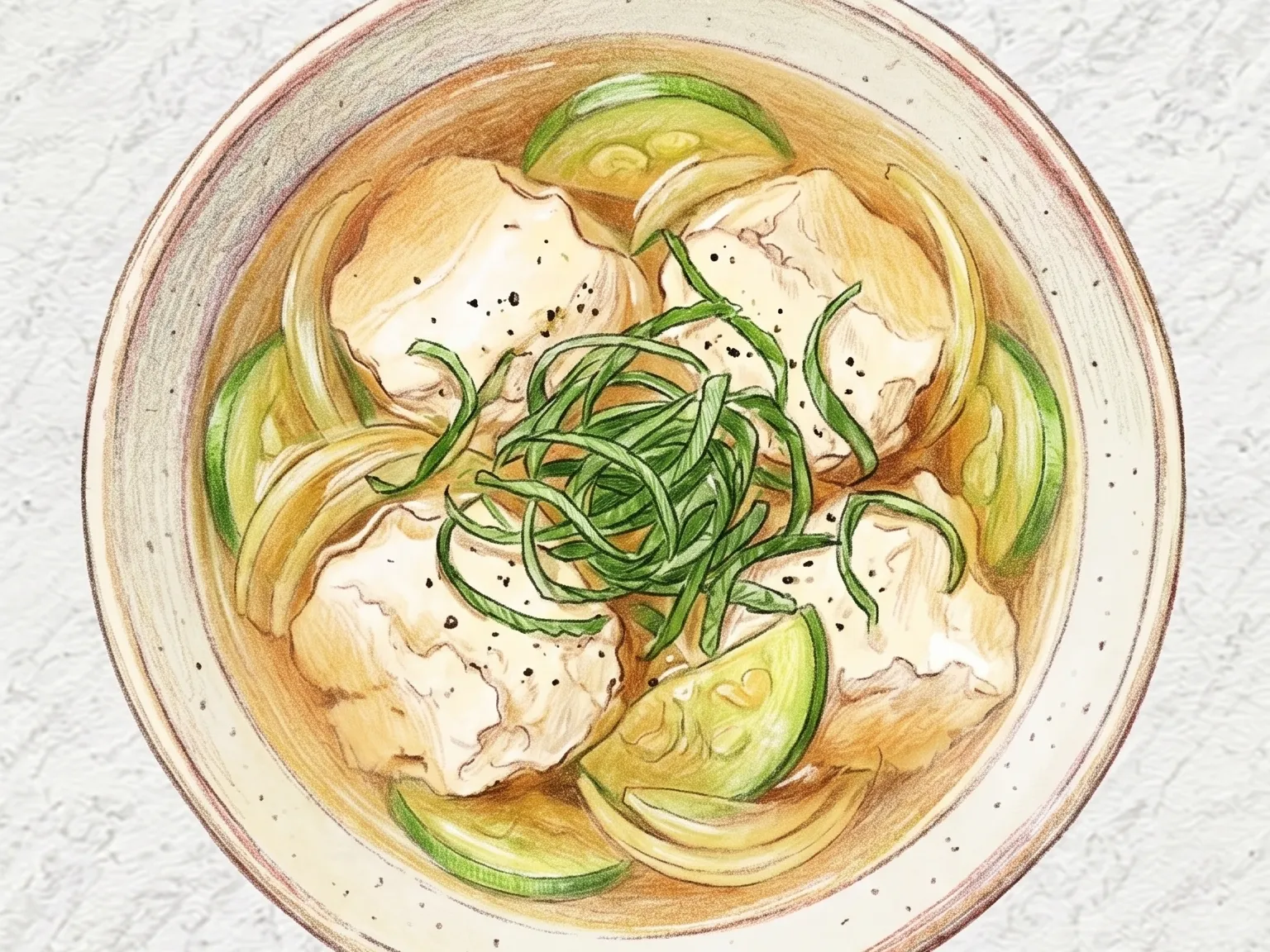
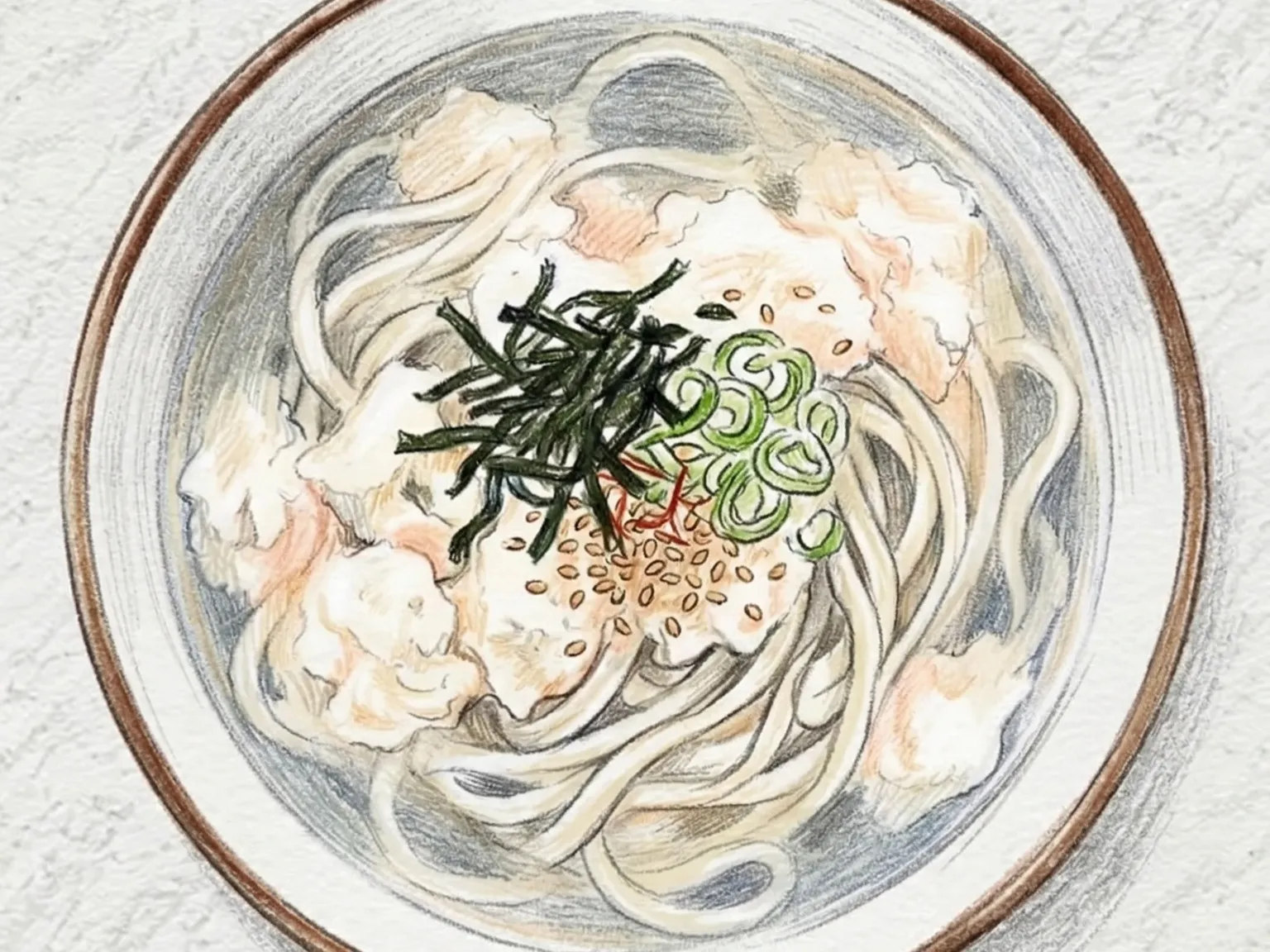
This mild noodle soup serves two with 180 g knife-cut wheat noodles and 200 g silken tofu in 900 ml anchovy stock. Bring the stock to a steady boil and season it with 1.5 tablespoons Korean soup soy sauce, 0.5 tablespoon minced garlic, and 0.5 teaspoon salt. Soften the raw garlic aroma with about 1 minute at medium heat. Add thin half-moons of zucchini and cook them for 2 minutes, moving on while their edges are just translucent and their green color remains clear. Scatter the loosened noodles into the pot rather than dropping them in as one mass. Stir during the first minute so they do not attach to the bottom. Keep the pot at medium-high heat and check the noodle centers after 5 minutes, finishing within 7 minutes as soon as they are tender. Spoon the silken tofu into the soup in large pieces only after the noodles are done and warm it over low heat for 1 minute. Minimal stirring keeps those pieces from breaking into small curds. Add green onion and 0.5 teaspoon sesame oil at the end, and serve as soon as their aroma rises from the broth.
Eomuk-guk (Fish Cake Radish Clear Soup)
Eomuk-guk is a straightforward Korean soup centered around fish cakes and a base liquid prepared by simmering sliced radish. The initial step involves boiling the radish in water for a sufficient duration so that it releases a mild, natural sweetness into the broth while the liquid itself takes on a slightly translucent appearance. Depending on individual preference, the radish can be taken out of the pot or left in as part of the final dish. Once the base is ready, pieces of fish cake are added to the boiling liquid along with soup soy sauce and minced garlic. The mixture then simmers for approximately six minutes, a period during which the fish cakes soften and absorb the saltiness of the soy sauce while simultaneously contributing their own flavor back into the soup base. To finish the preparation, thinly sliced green onions and a sprinkle of black pepper are stirred in. These final additions provide a sharp fragrance and a gentle heat that helps recreate the specific taste found at traditional Korean snack bars and street food carts. The entire cooking procedure is completed in about twenty minutes. Because the required ingredients are minimal and often staples, this recipe serves as a practical option for times when there are few groceries available in the kitchen. This makes the dish accessible even when the refrigerator is nearly empty and only basic pantry items remain.
Rokubei (Extruded Sweet Potato Noodles)
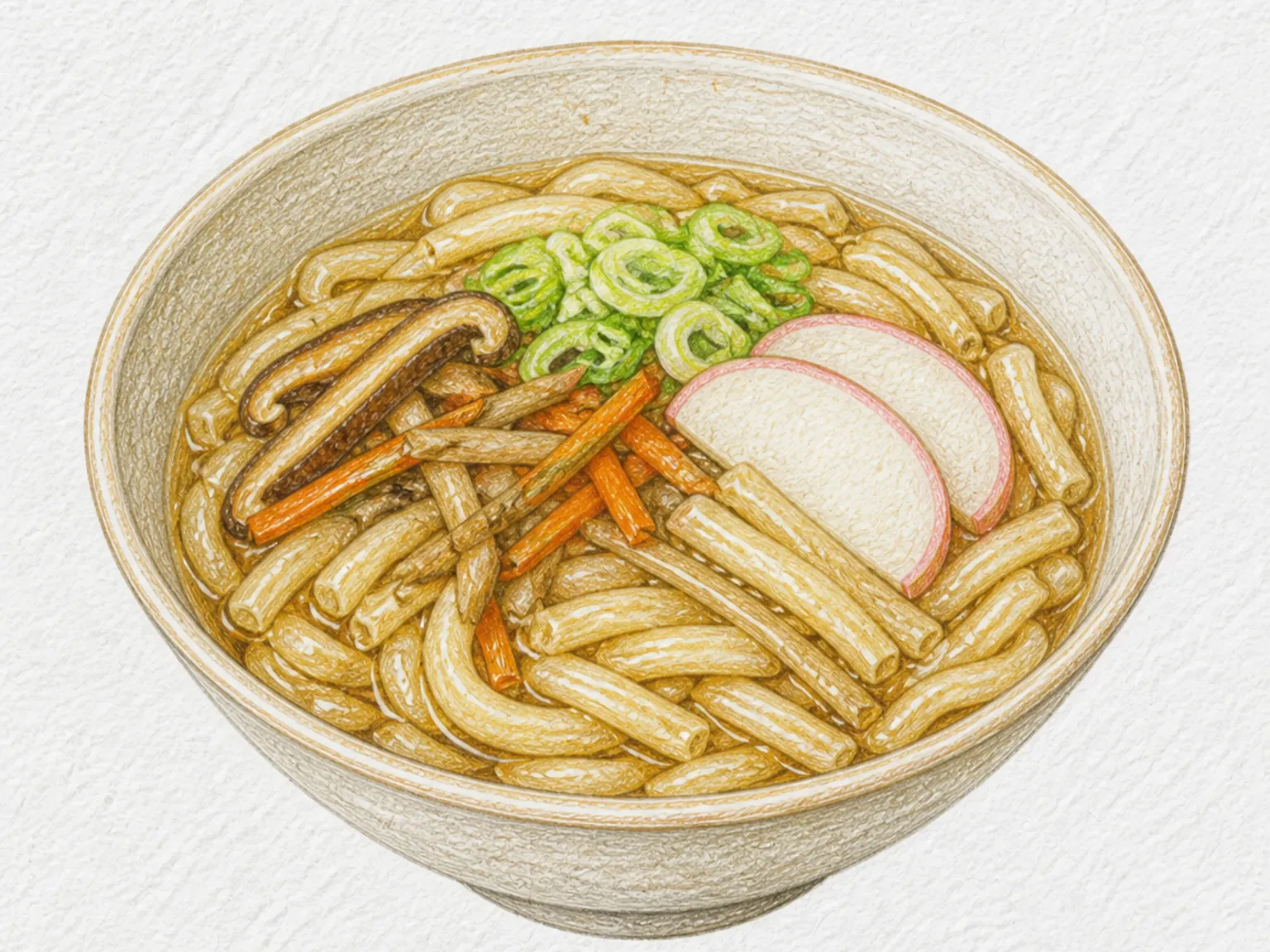
Rokubei is a sweet-potato noodle dish passed down since the Edo period in Shimabara and Tsushima, Nagasaki Prefecture. Sendango, made from the local preserved sweet-potato product called sen, is crumbled and kneaded with warm water. The smooth dough is formed into softball-size balls, briefly boiled, broken apart, and kneaded again. Small portions are pressed through the holes of a rokubei-segi directly into boiling water, producing short, thick strands rather than long wheat noodles. After the pot returns to a boil, the noodles cook for 2 to 3 minutes, then are cooled and rinsed to remove surface harshness. A clear soup is made with burdock, carrot, rehydrated shiitake, dashi, sake, light soy sauce, dark soy sauce, and salt. The drained noodles are served in the soup with sliced kamaboko and green onion, giving a smooth exterior, chewy center, and faint sweet-potato taste.
Korean Fish Cake Hot Pot (Skewered Fish Cakes in Clear Broth)
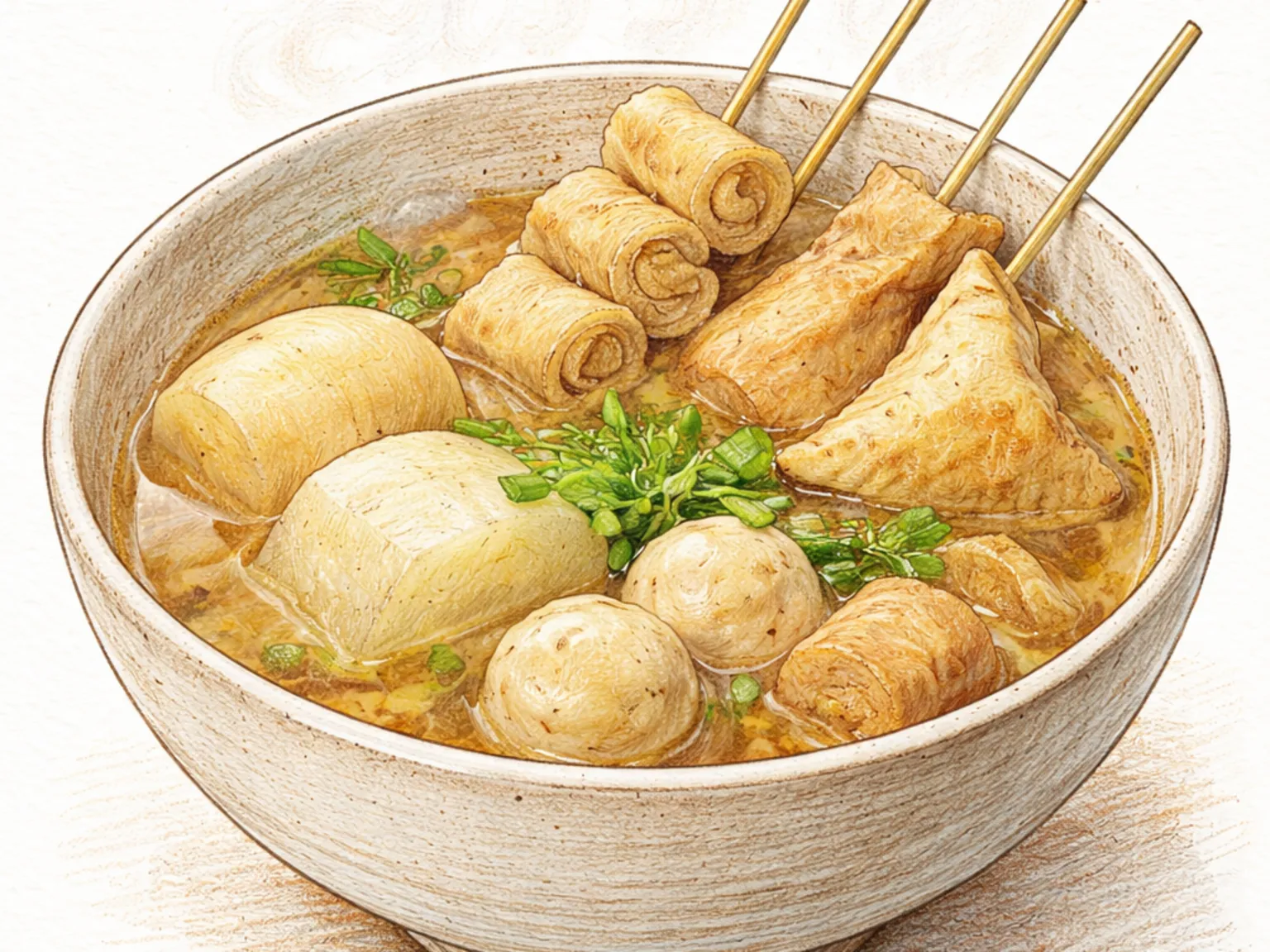
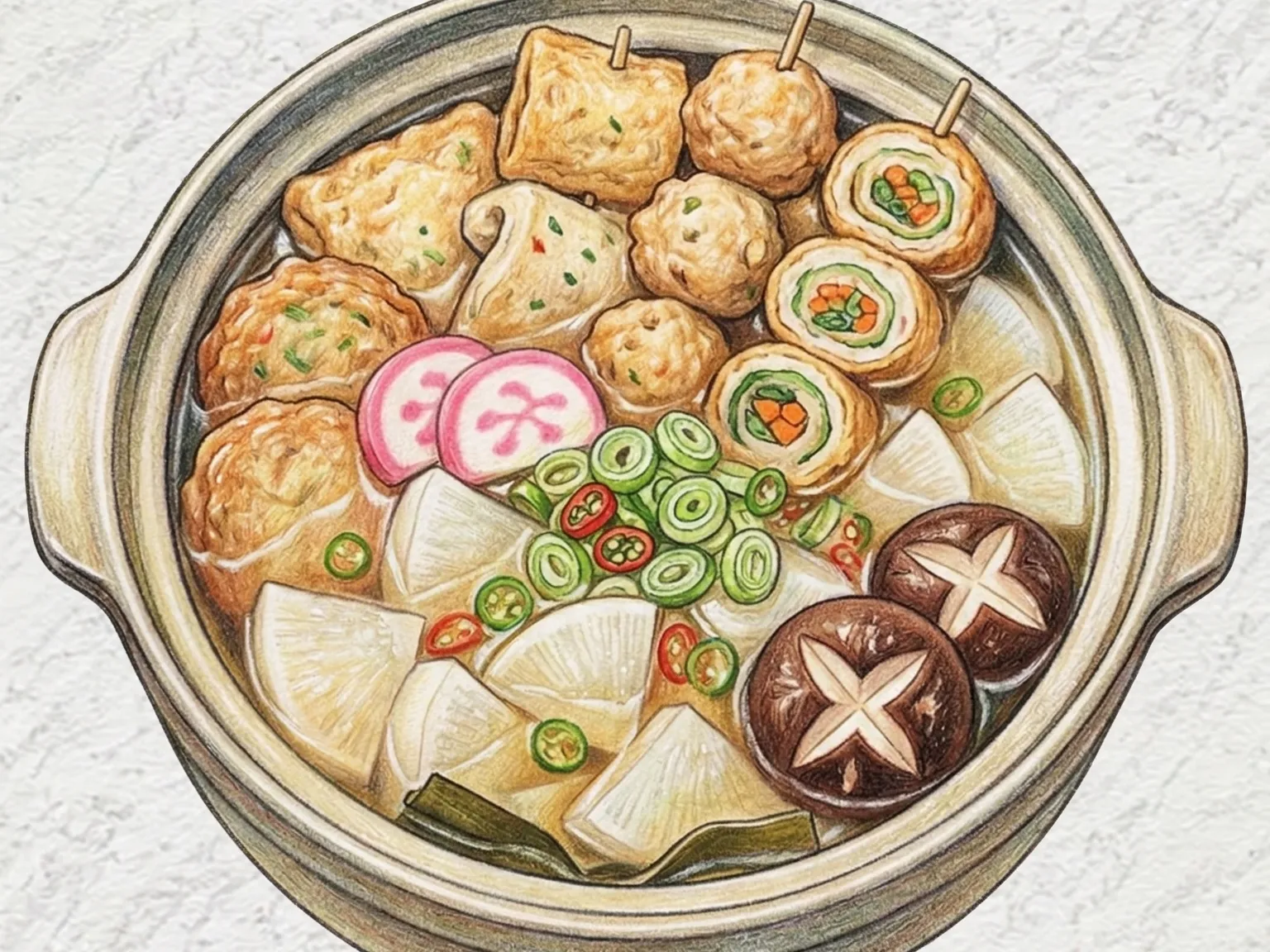
Eomuk jeongol is a Korean fish cake hot pot simmered in a clear broth built on dried kelp and anchovy stock. Large pieces of Korean radish cook alongside the fish cakes, releasing their natural sweetness into the liquid and keeping the broth light and refreshing as it reduces. Shiitake mushrooms add earthy umami depth, and using soup soy sauce alone for seasoning keeps the understated savory character of the fish cakes front and center. Cheongyang chili brings a sharp heat, and sliced green onion layers in a gentle sweetness as it softens in the bubbling pot. Fish cakes that spend more time in the broth turn silky and absorb the surrounding flavors, growing more flavorful with each passing minute. Using several shapes and thicknesses of fish cake side by side gives the pot different textures that makes eating it more interesting. The hot pot captures the warmth of street-stall eomuk-tang and brings it to the dinner table as a shared dish on cold days.
Taipiien (Kumamoto Glass Noodle Soup)
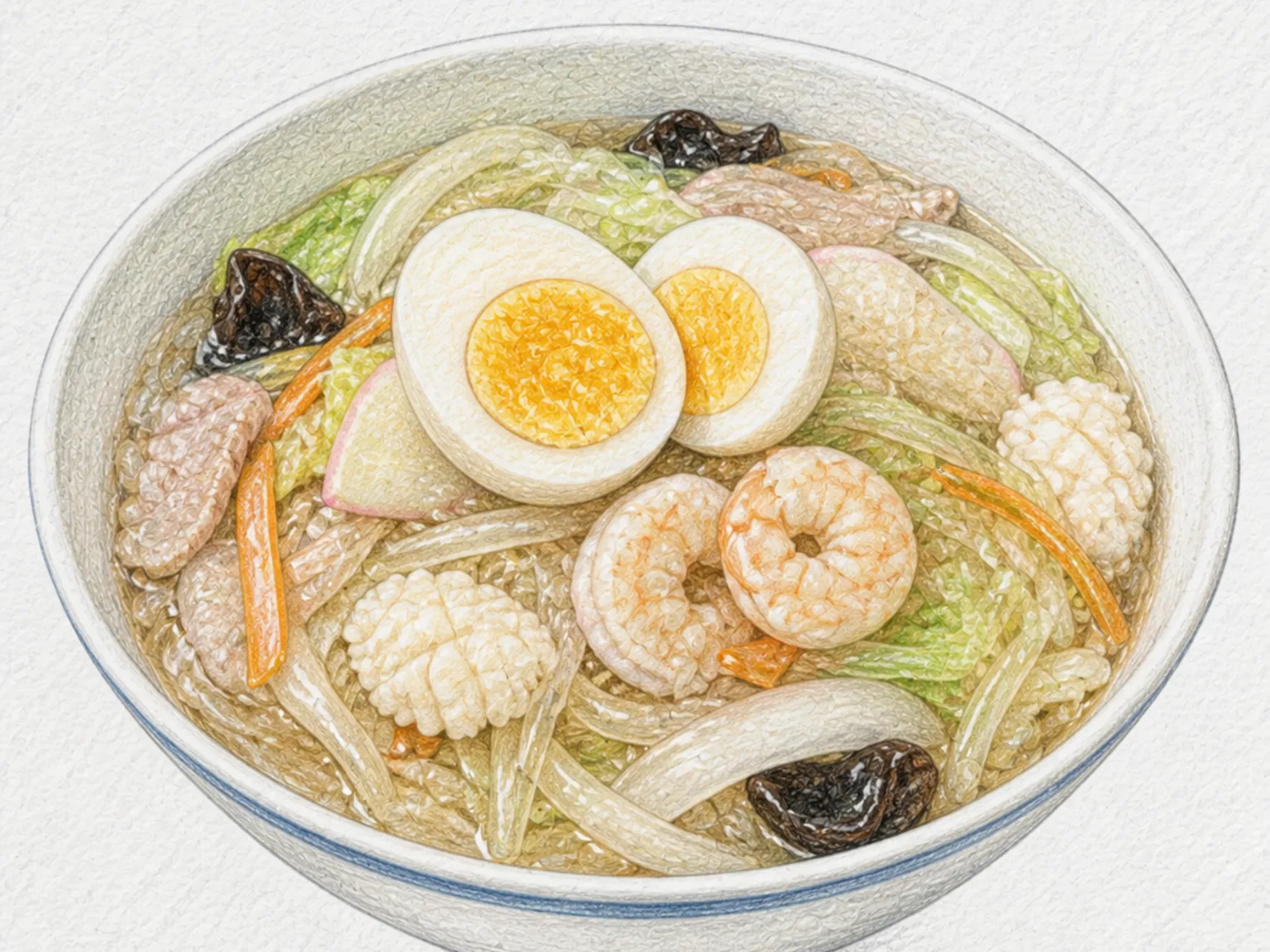
Taipiien is a substantial glass noodle soup served in Chinese restaurants and homes across central Kumamoto. Ginger, pork, onion, carrot, wood ear, and napa cabbage are stir-fried before shrimp, squid, and kamaboko join a clear chicken broth. Separately boiled glass noodles are cut to an easy length and warmed in the soup, which is finished with light soy sauce, green onion, and sesame oil. A firm hard-boiled egg cut in half tops each bowl. The dish traces its roots to celebratory soup from Fuzhou in China's Fujian Province, brought through Nagasaki to Kumamoto in the late Meiji period and adapted with local ingredients.
Korean Fish Cake Soup (Clear Anchovy Radish Broth)
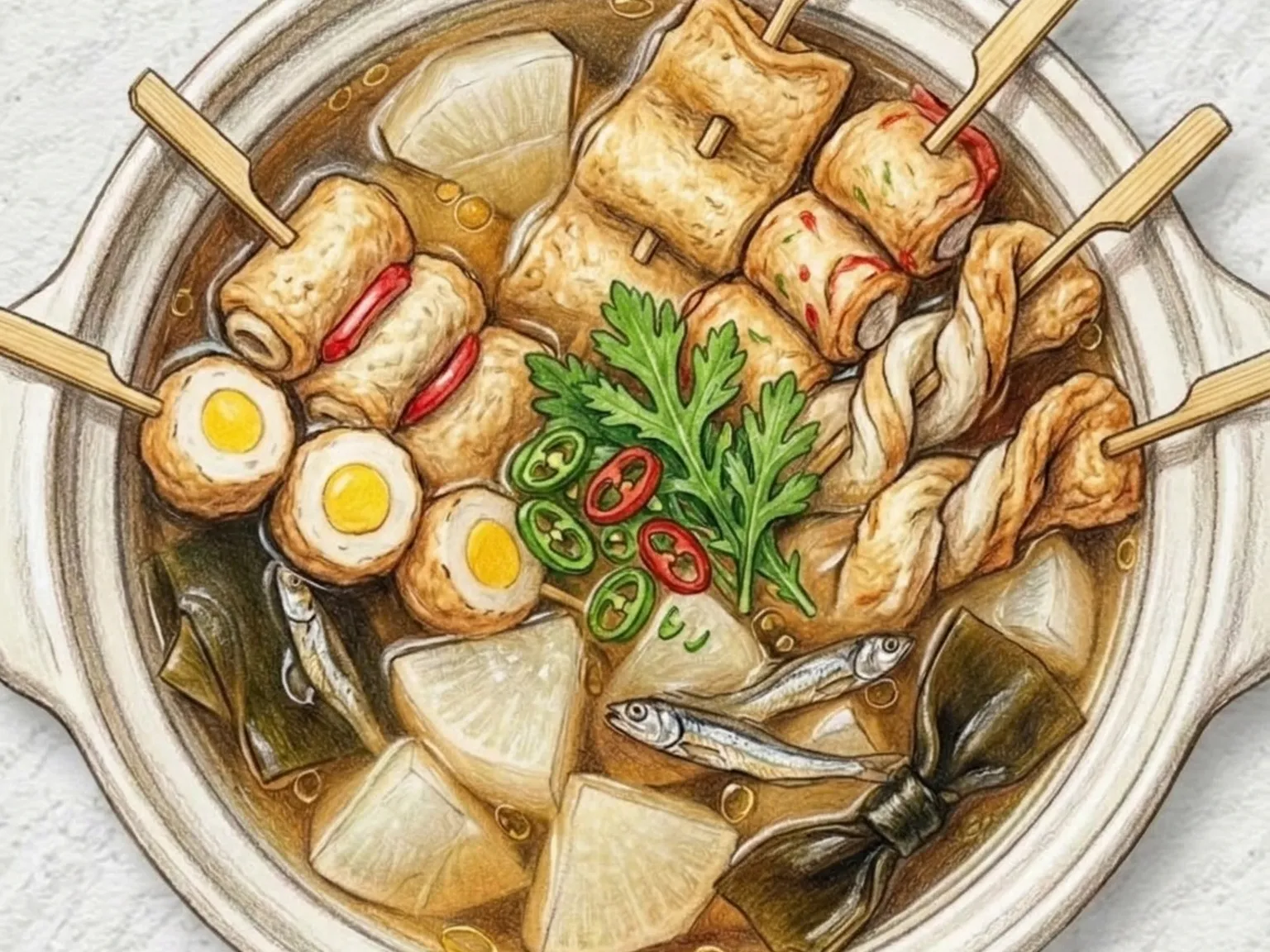
Eomuk-tang is a Korean fish cake soup in which skewered fish cakes and thick radish slices simmer in a clear broth built from dried anchovies and kelp. The kelp must be removed the moment the water begins to boil, otherwise it releases a slimy texture that clouds the broth. Cutting the radish thick allows it to slowly release natural sweetness over the long simmer. Rinsing the fish cakes in hot water before adding them washes away surface oil and keeps the broth clear and clean. Soup soy sauce adjusts the seasoning, and green onion and black pepper finish the pot. Adding the radish before the fish cakes ensures it has enough time to fully soften and sweeten the broth, since it takes longer than the eomuk to cook through.
Taiwanese Beef Noodle Soup
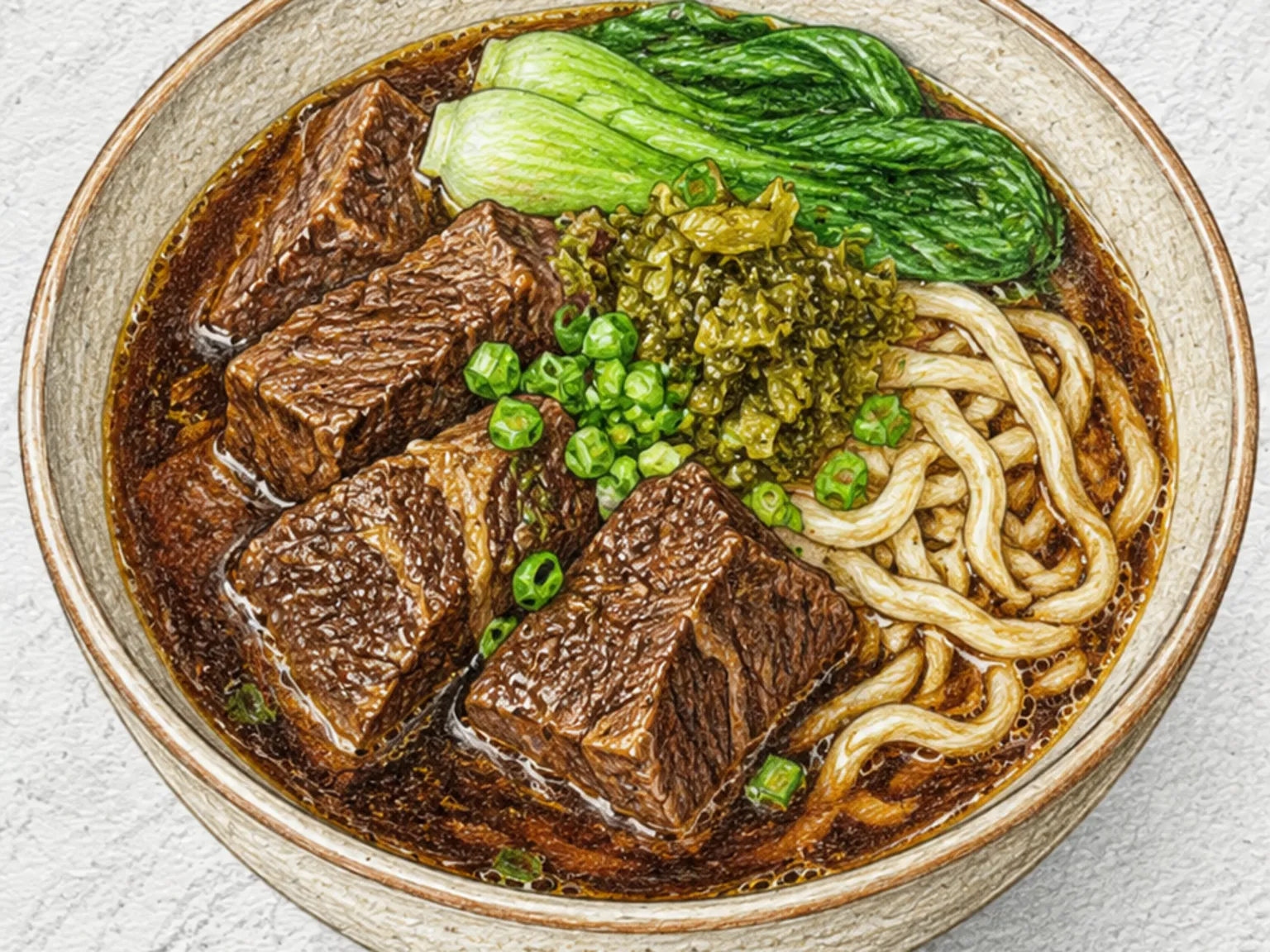
Taiwanese beef noodle soup slow-braises beef brisket in a soy-based broth seasoned with doubanjiang, star anise, cinnamon, and Sichuan peppercorns. The minimum 90-minute simmer renders the meat fork-tender while building a deeply layered broth. Thick wheat noodles are served in the finished broth, soaking up its concentrated flavor. Spice level is adjustable by varying the amount of doubanjiang. Common garnishes include pickled mustard greens and blanched bok choy, adding brightness to the rich bowl.
Korean Spicy Freshwater Fish Soup
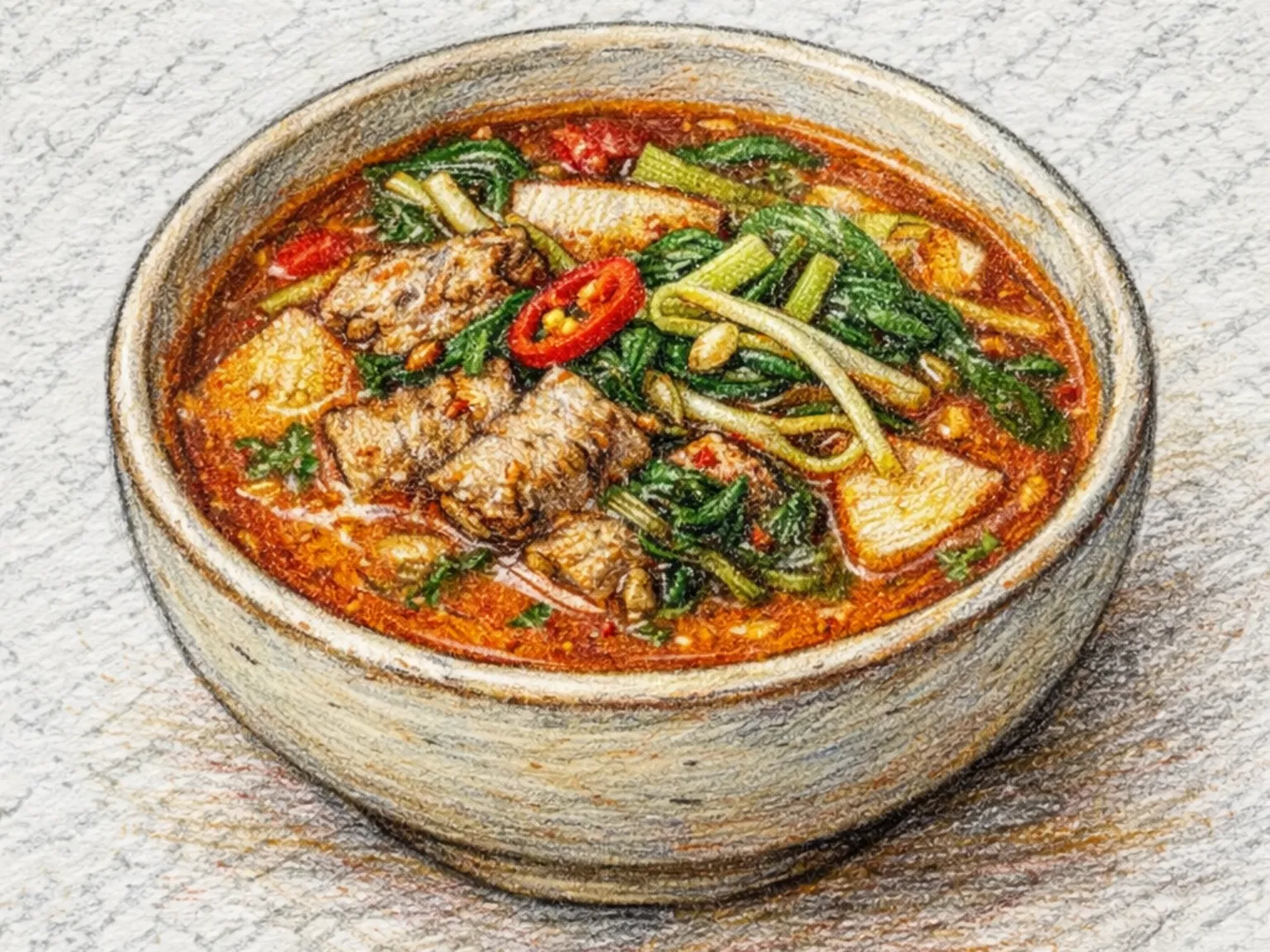
Eotang is a traditional Korean soup from the Chungcheong region, made by boiling whole freshwater fish for over forty minutes to coax a thick, deeply savory broth from both flesh and bone. The stock is strained twice through a fine sieve to remove every small bone, then returned to heat with radish, doenjang, and minced garlic for another twenty minutes of simmering. The earthy, nutty richness of freshwater fish blends with fermented soybean paste to build a broth of layered depth, and the radish softens fully over the long cook, helping the liquid take on a slightly silky body. Red chili flakes and thick-cut green onion stirred in at the end sharpen the heat and amplify the savory undercurrent of the broth. The preparation takes time and attention, but the dense, bone-drawn concentration of flavor the process produces is difficult to achieve any other way.
Japanese Dan Dan Ramen (Sesame Cream Broth with Spicy Pork)
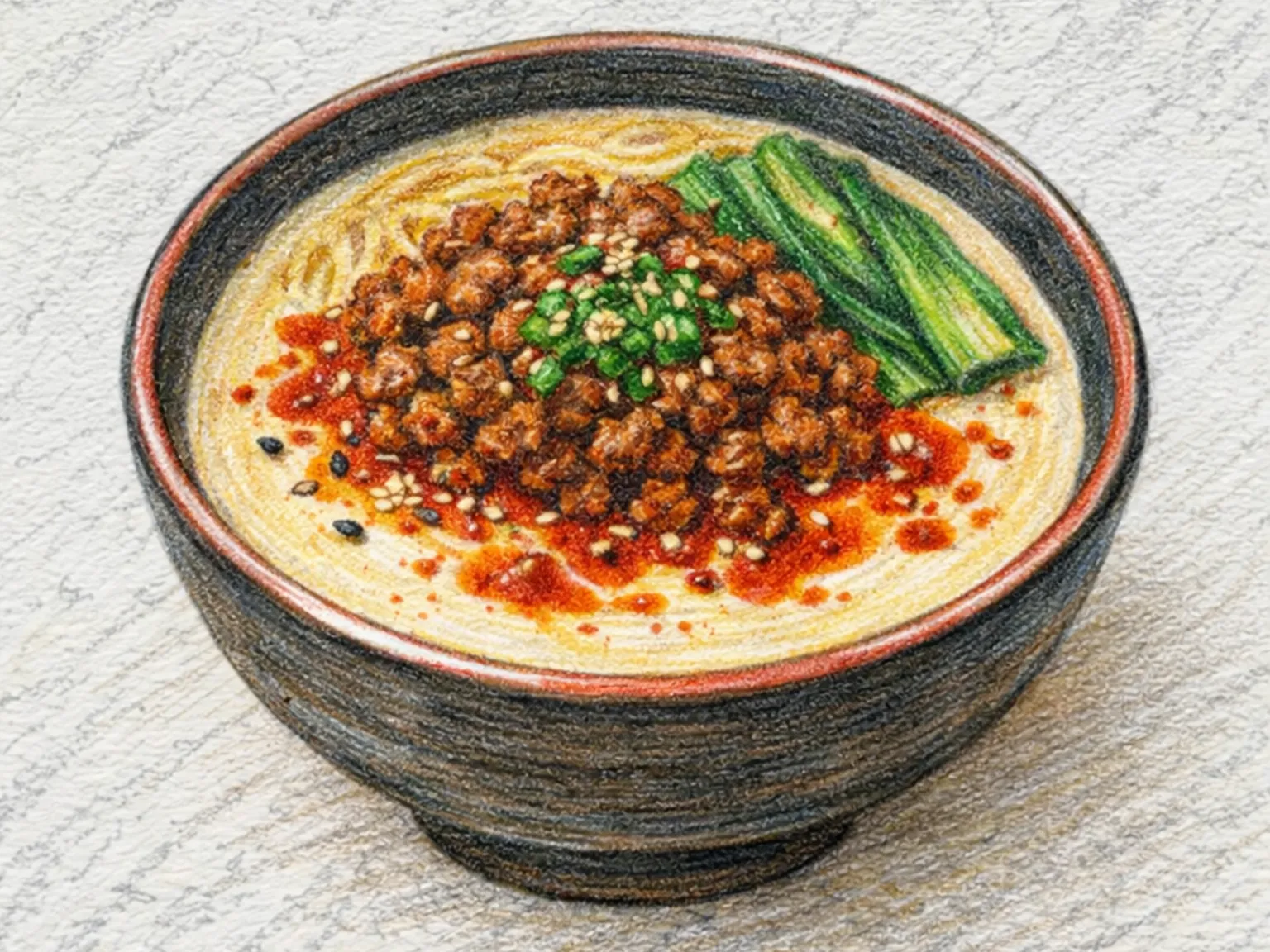
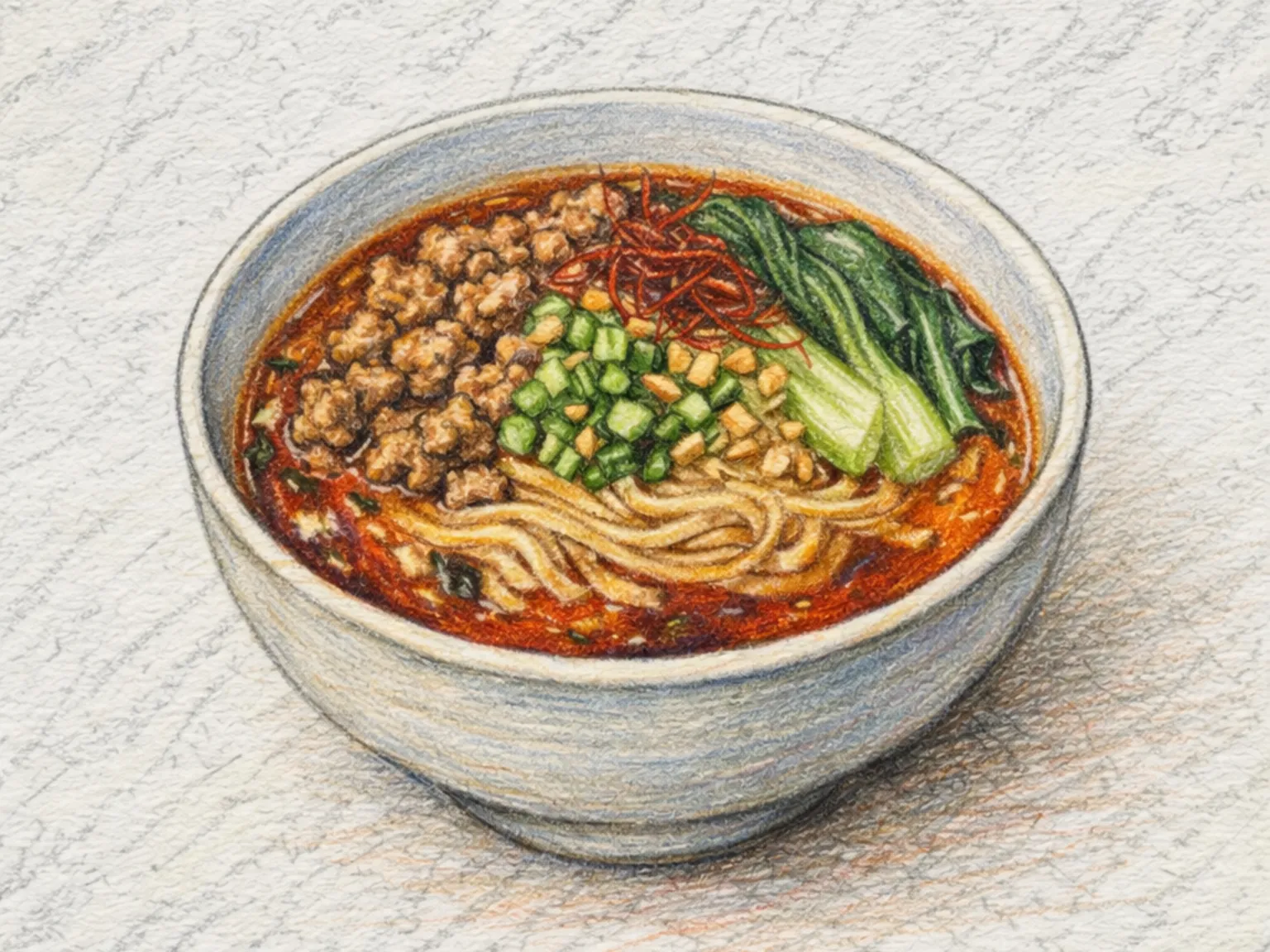
Tantanmen is the Japanese adaptation of Sichuan dan dan noodles, served as a ramen with a thick sesame-cream broth. Ground pork is stir-fried with doubanjiang and spooned over the bowl along with chili oil. The sesame base gives the soup a dense, nutty body, while the chili oil adds a slow-building heat. Standard ramen noodles are used, paired with bok choy or scallions. Preparation takes about 45 minutes, with most of the effort going into building the sesame broth and seasoning the pork topping.
Samma no Surimi Jiru (Pacific Saury Fish Ball Soup)
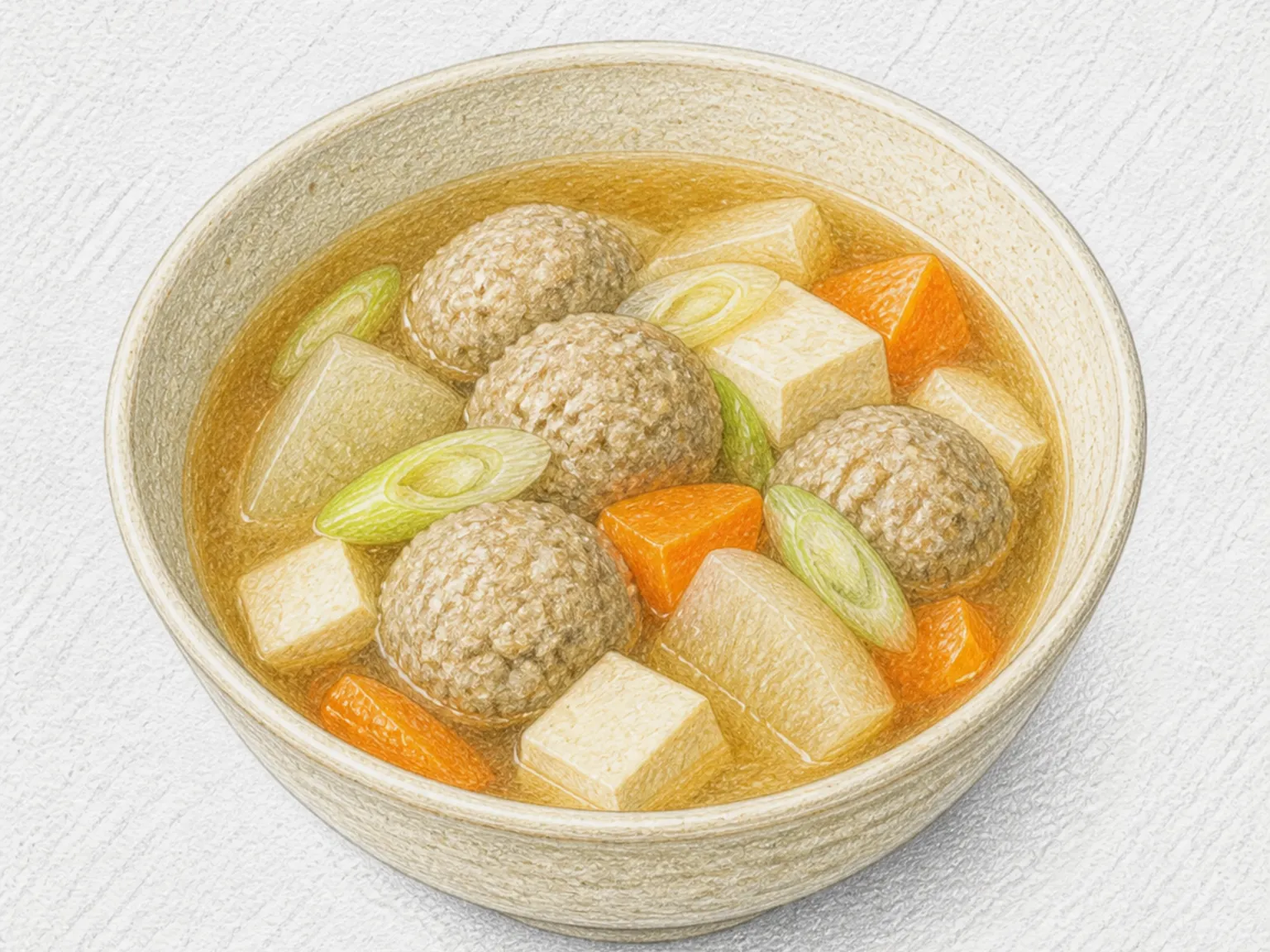
Samma no surimi jiru is a home-style soup from Iwate's Sanriku coast. Cleaned Pacific saury flesh is pounded in a mortar until sticky, seasoned with miso, egg, salt, soy sauce, and sake, and shaped into small fish balls. The dish became common after saury catches increased around sixty years ago and remains a seasonal household meal. Simmering the balls first releases their seasoning and fish flavor into the water, then daikon, carrot, tofu, and green onion complete the broth. Thorough grinding gives the fish balls a light texture, while equal 20 to 30g portions help every center cook safely.
Sesame Spicy Tantanmen (Chinese Creamy Sesame Chili Oil Noodle Soup)
Tantanmen is a noodle soup of Chinese origin that is defined by the combination of a creamy sesame-based broth and the sharp heat of chili oil. This pairing creates a bowl of noodles that features nutty, spicy, and savory characteristics all at once. The preparation of the broth starts with a base of chicken stock. To this base, sesame paste is added and whisked thoroughly until it has fully dissolved into the liquid. The result of this process is a thick, tan-colored soup base that emits a prominent fragrance of roasted nuts. The meat topping for the dish is prepared separately by frying ground pork with minced garlic and fresh ginger. During this cooking process, doubanjiang, which is a paste made from fermented chili beans, is stirred into the pork to add saltiness and depth. The meat is cooked until it is well-browned and has a crumbly consistency, after which it is spooned over the noodles to provide a rich component to the final assembly. To balance the density of the broth, bok choy is blanched and added to the bowl, offering a crisp and vegetal element that provides a contrast to the liquid. Just before serving, a final drizzle of chili oil is applied to the surface of the soup, where it gathers in small pools and releases its aroma with the heat. The noodles are generally cooked until they are just short of being fully done, which allows them to maintain a firm and chewy texture while they remain submerged in the hot liquid. Each individual ingredient, from the sesame and chili to the fermented beans and pork, contributes its own specific layer of flavor. As these different elements gradually merge together in the bowl, the taste of the soup continues to develop and change while the meal is consumed slowly.
Iwashi Dango Jiru (Sardine Dumpling Soup)
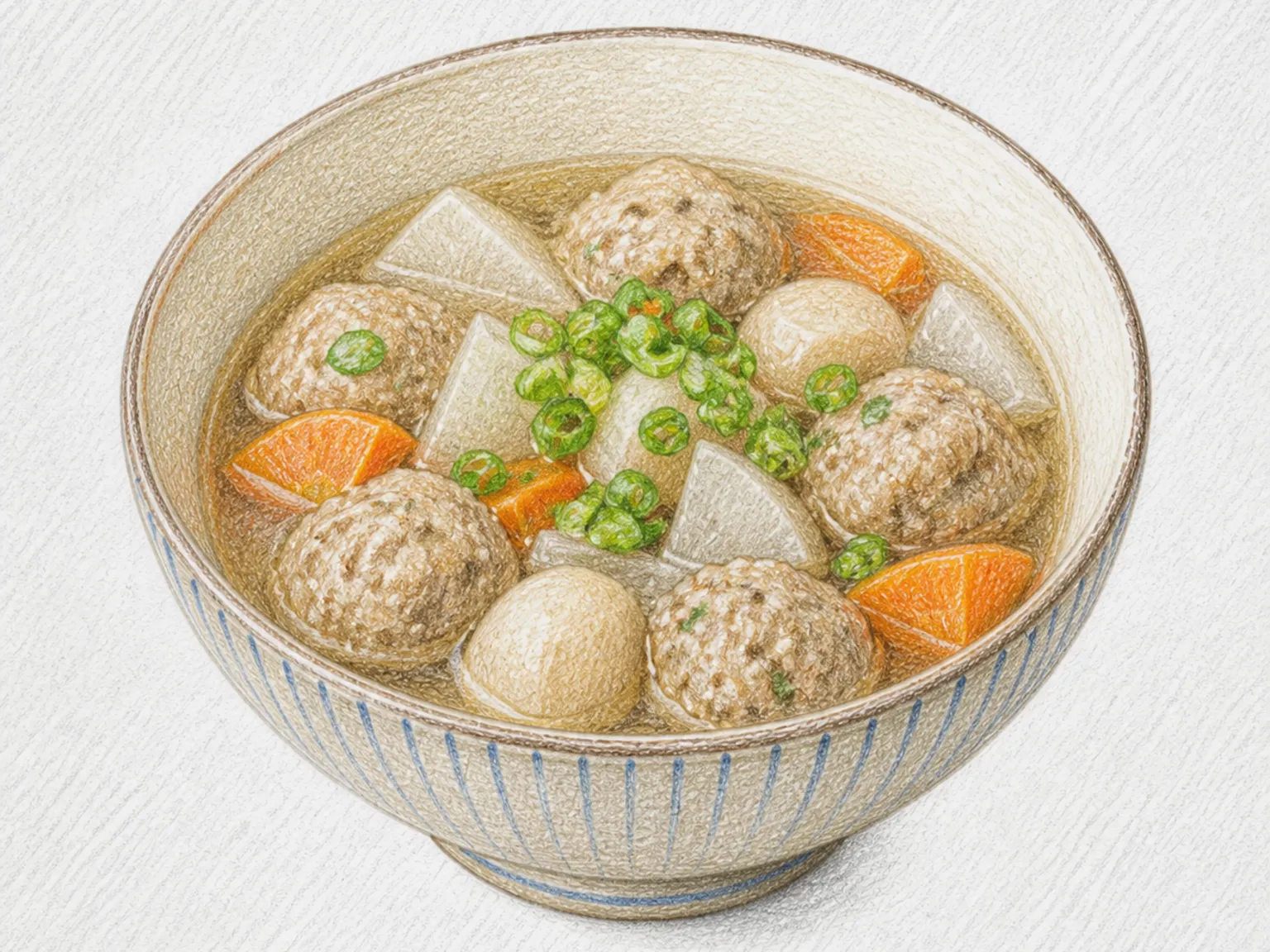
Iwashi dango jiru is a sardine dumpling and root vegetable soup from Chiba's Hokuso and Kujukuri areas. Sardine fillets are ground to a paste and bound with grated mountain yam, beaten egg, and miso, producing dumplings that stay tender without dispersing in the broth. Daikon and carrot begin cooking in water before taro is added, then the fish mixture is shaped between two spoons and dropped directly into the simmering pot. Soy sauce and sliced leek finish a warming soup often prepared with winter sardines caught from November through March.
Thai Boat Noodles (Intense Thai Canal Beef Noodle Soup)
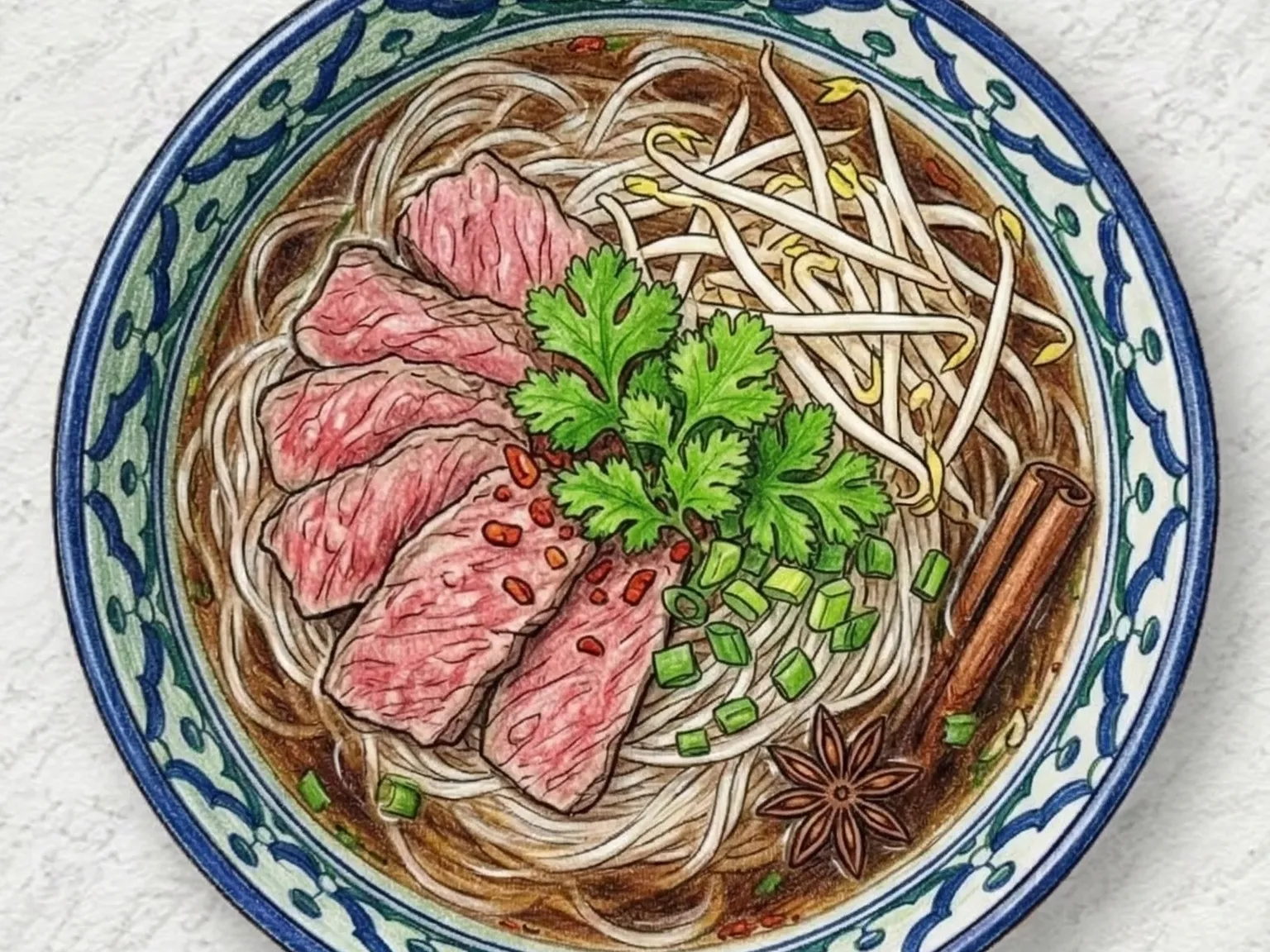
Thai boat noodles are an intensely flavored street noodle soup that originated on the small boats plying Bangkok's canals, where vendors would hand bowls across the water to customers on the banks. The broth is built by simmering beef stock with star anise and a cinnamon stick for fifteen minutes or more, extracting warm, aromatic notes that form the backbone of the dish. Fish sauce, dark soy sauce, and palm sugar are added to season the liquid into a deeply savory, slightly sweet, and mahogany-dark broth. Thinly sliced beef is poached in the simmering liquid for just a minute or two so it stays supple, then ladled over cooked rice noodles in a bowl. Fresh bean sprouts provide crunch and cilantro adds a bright herbaceous lift that counterbalances the concentrated broth. Boat noodle portions are traditionally small-designed to be eaten quickly and in multiples-so every spoonful delivers maximum impact.
Hittsumi (Hand-Torn Wheat Dumpling Soup)
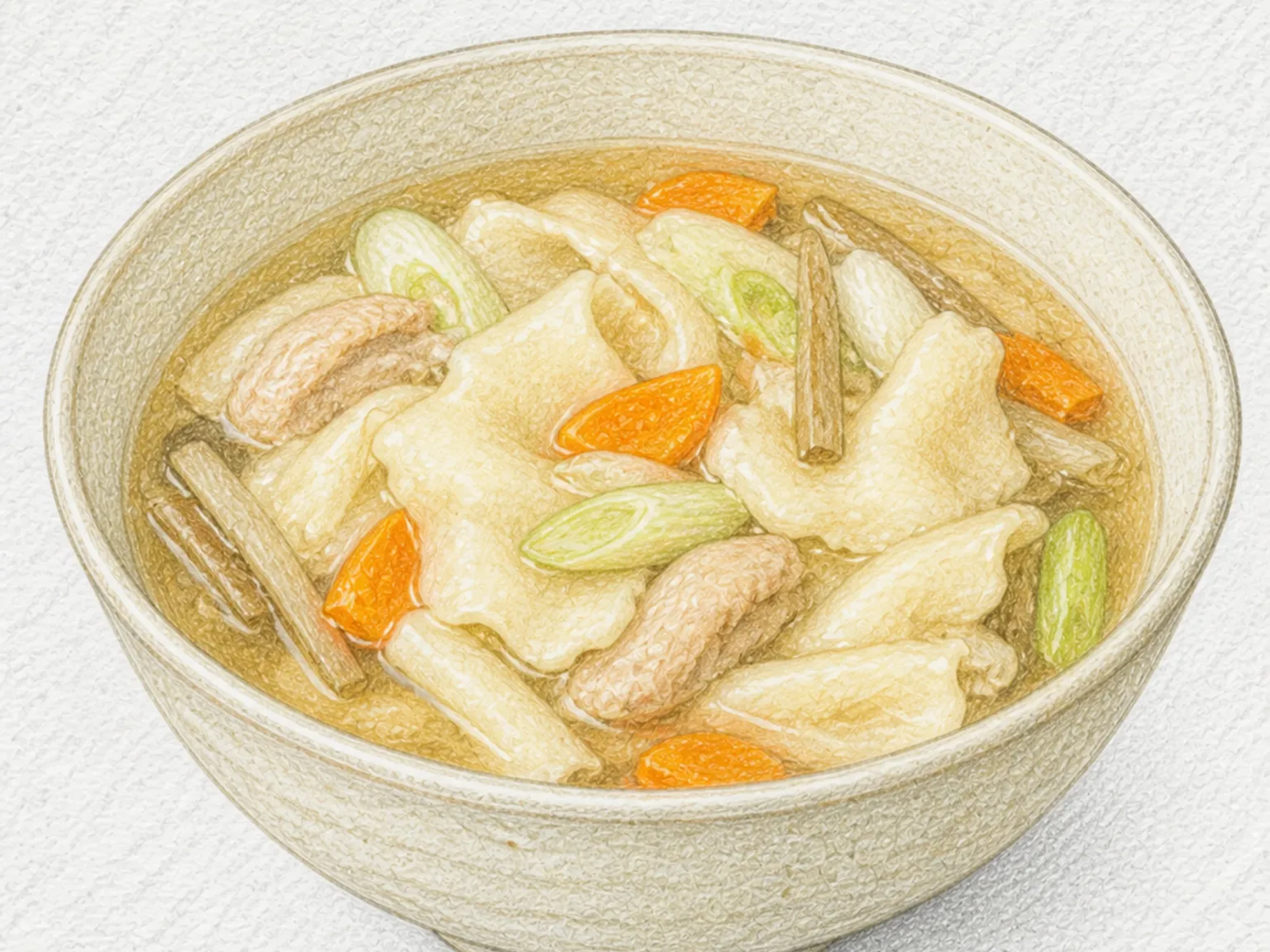
Hittsumi is a local soup from southern Aomori. A rested bread-flour dough is stretched thin with the fingers, torn directly into dashi simmering with chicken, burdock, carrot, and green onion, and cooked until springy. Its name is associated with the pulling and pinching motion rather than rolling and cutting noodles. Keeping the edge thin and the center slightly thicker gives both tender and chewy textures in one bowl. Cook the chicken through first, then continue simmering the floating dumplings until no raw flour remains before serving the soup piping hot.
Tomato Egg Lamian (Chinese Home-Style Tomato Scrambled Egg Noodle Soup)
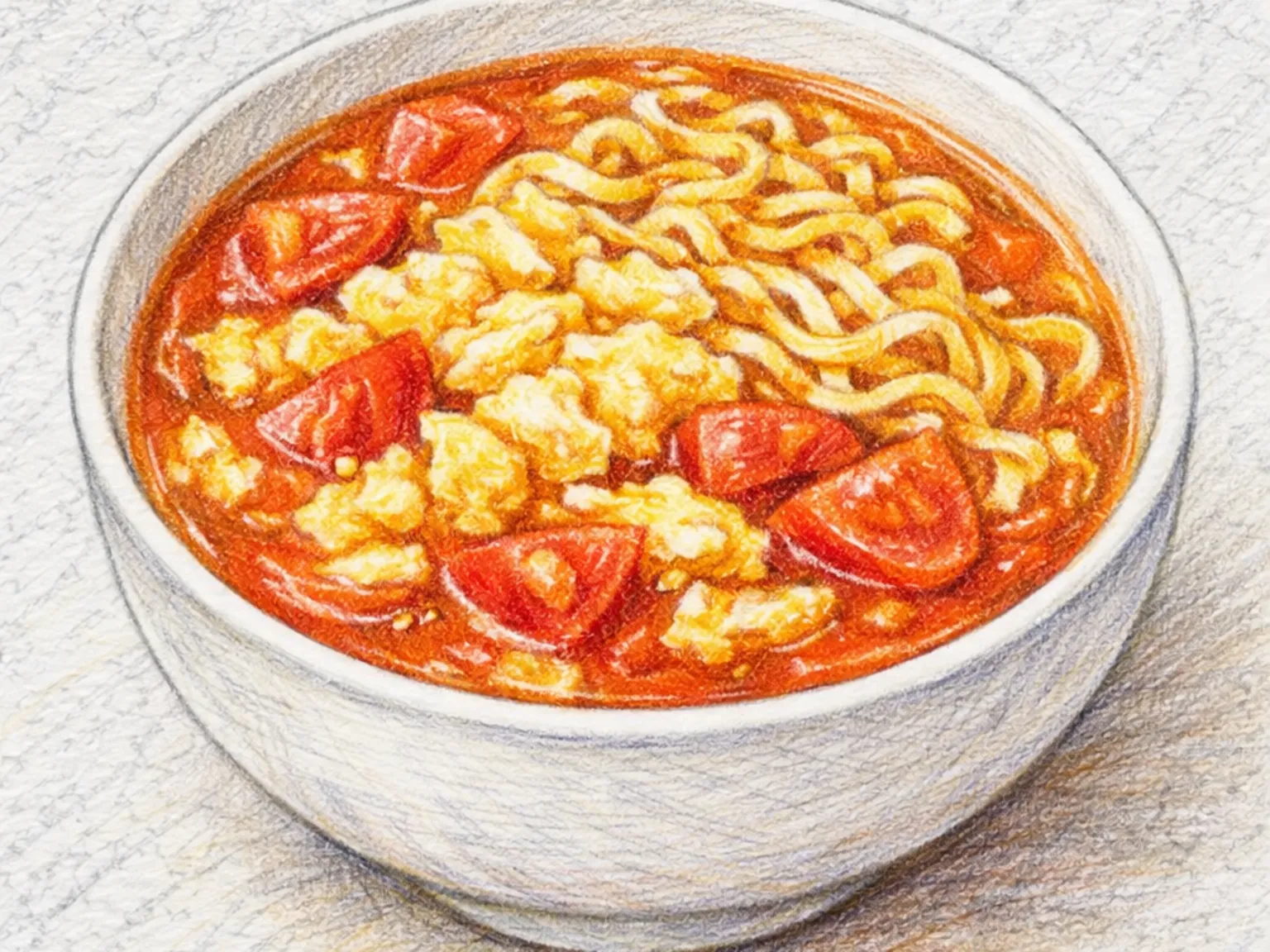
This two-serving noodle soup uses 240 g fresh wheat noodles, 300 g tomato, and 3 eggs. Cut the tomatoes into large pieces, finely slice 25 g green onion, and beat the eggs until the whites and yolks are evenly combined. Heat 1 tablespoon neutral oil over medium heat, pour in the eggs, and fold them broadly for about 30 seconds. Remove them while still slightly wet so they remain soft when returned to the broth. Lower the same pot to medium-low heat and cook some of the green onion with 1 teaspoon minced garlic for 40 seconds. Add the tomatoes and press them as they cook for 4 minutes, stopping when they have released plenty of red juice. Pour in 800 ml chicken stock, 1 tablespoon soy sauce, and 1 teaspoon sugar, then simmer for 5 minutes over medium heat. Add the fresh noodles and loosen them with chopsticks, cooking until their centers retain a little firmness. Reduce the heat, return the eggs for only 1 minute, and serve with the remaining green onion while the egg pieces are still soft and distinct.
French Onion Soup
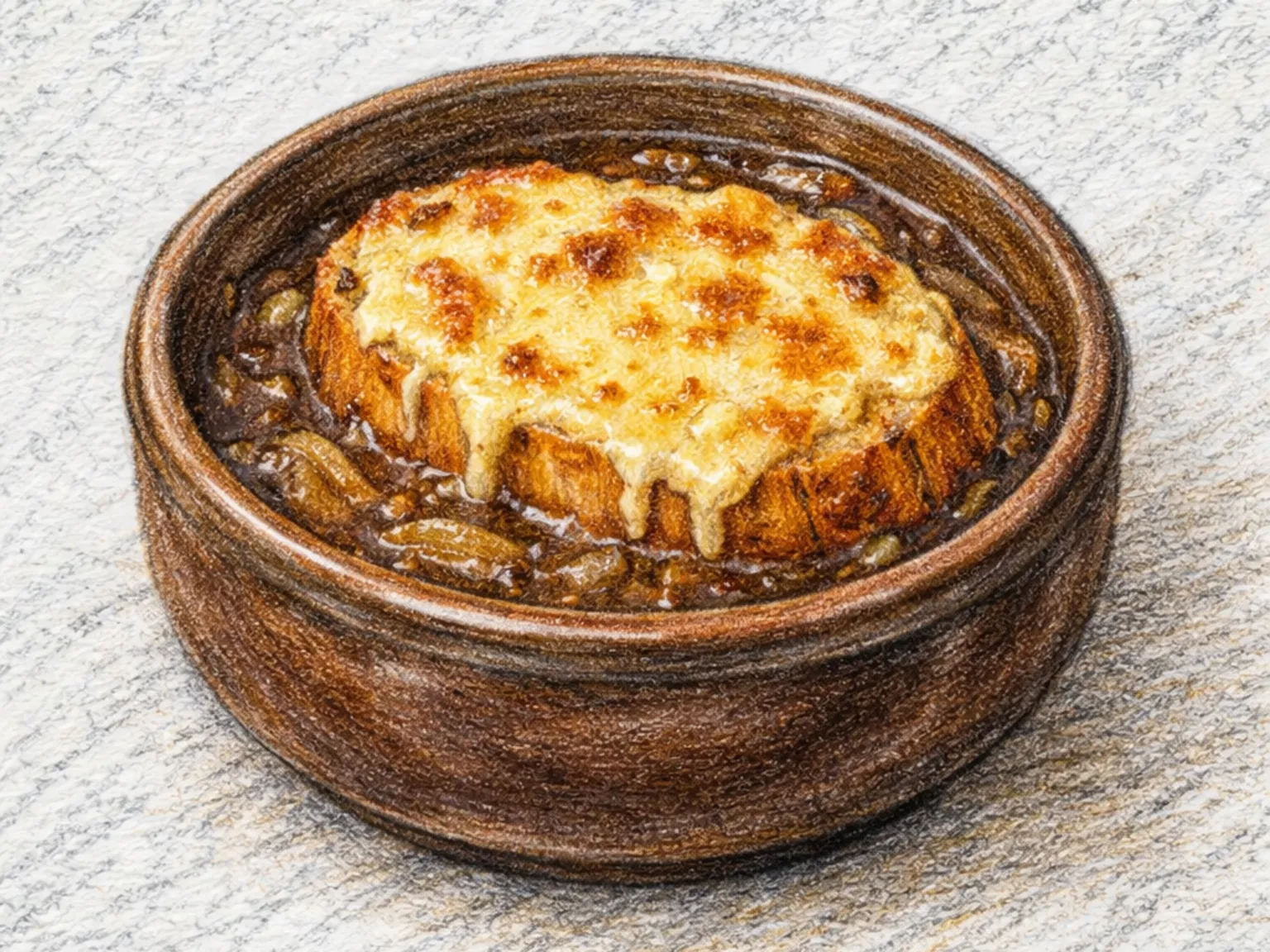
French onion soup is built entirely on patience and heat. Thinly sliced onions are cooked in butter over low heat for forty minutes or more, slowly shedding moisture as their natural sugars transform into a deep, golden-brown mass with an intensity of sweetness and umami that raw onions cannot approach. Rushing this step causes the onions to scorch and turn bitter, so controlled, unhurried heat is the most critical variable in the recipe. Dry white wine and beef stock are then added to the caramelized onions and simmered together until the broth absorbs every layer of the onion's concentrated flavor, building complexity through a long, slow reduction. The finished soup is ladled into oven-safe crocks, topped with thick slices of toasted baguette, and blanketed with a generous layer of grated Gruyere. Under the broiler, the cheese melts, bubbles, and browns into a golden crust with long, elastic strings that stretch when broken with a spoon. Beneath that crust lies the reward: a dark, concentrated broth steeped in caramelized onion depth, with bread softened into the soup and cheese draped across every spoonful. A bowl where simple ingredients, time, and heat produce something far greater than the sum of their parts.
Classic Tonkotsu Ramen (Pork Bone Milky Broth Noodles)
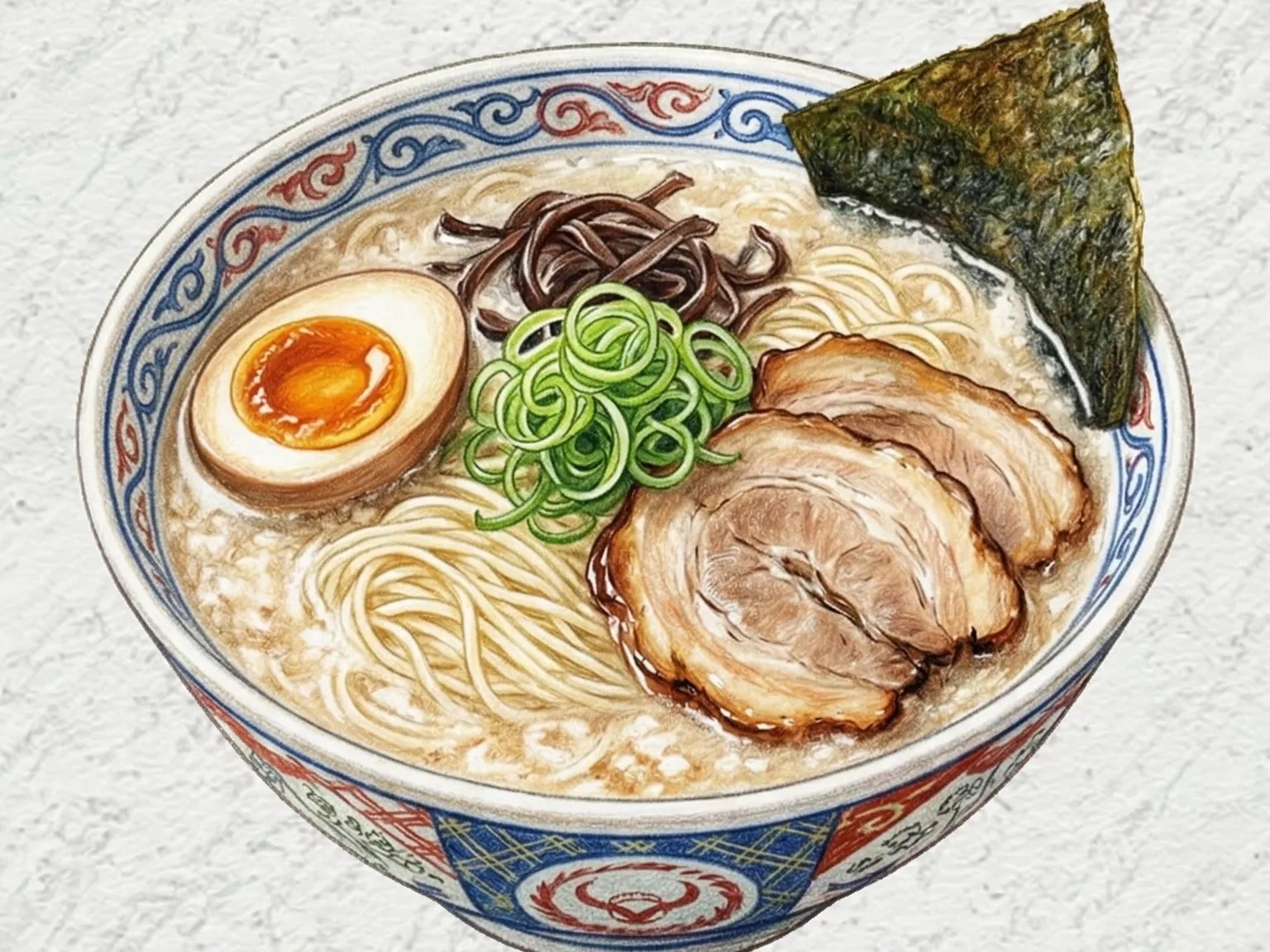
Classic Tonkotsu Ramen is a Japanese noodle dish defined by its deep, creamy pork bone broth. The foundation of this soup requires boiling pork back bones and pig trotters with garlic and ginger at a continuous, vigorous roll for seven to eight hours. This sustained high heat emulsifies the fat and breaks down the collagen, producing a milky, gelatinous broth that coats the palate. It is served with thin, firm noodles that retain a springy bite without becoming soggy in the heavy soup. Top the bowl with pork belly chashu braised in soy sauce and mirin, soft-boiled eggs marinated in the braising liquid, and sliced green onions. Maintaining a strong boil without reducing the heat is critical to achieving the characteristic white color and rich texture. Prepare the chashu a day in advance and chill it for easier thin slicing.
Gaeng Jued Tofu Soup (Thai Clear Tofu Soup)
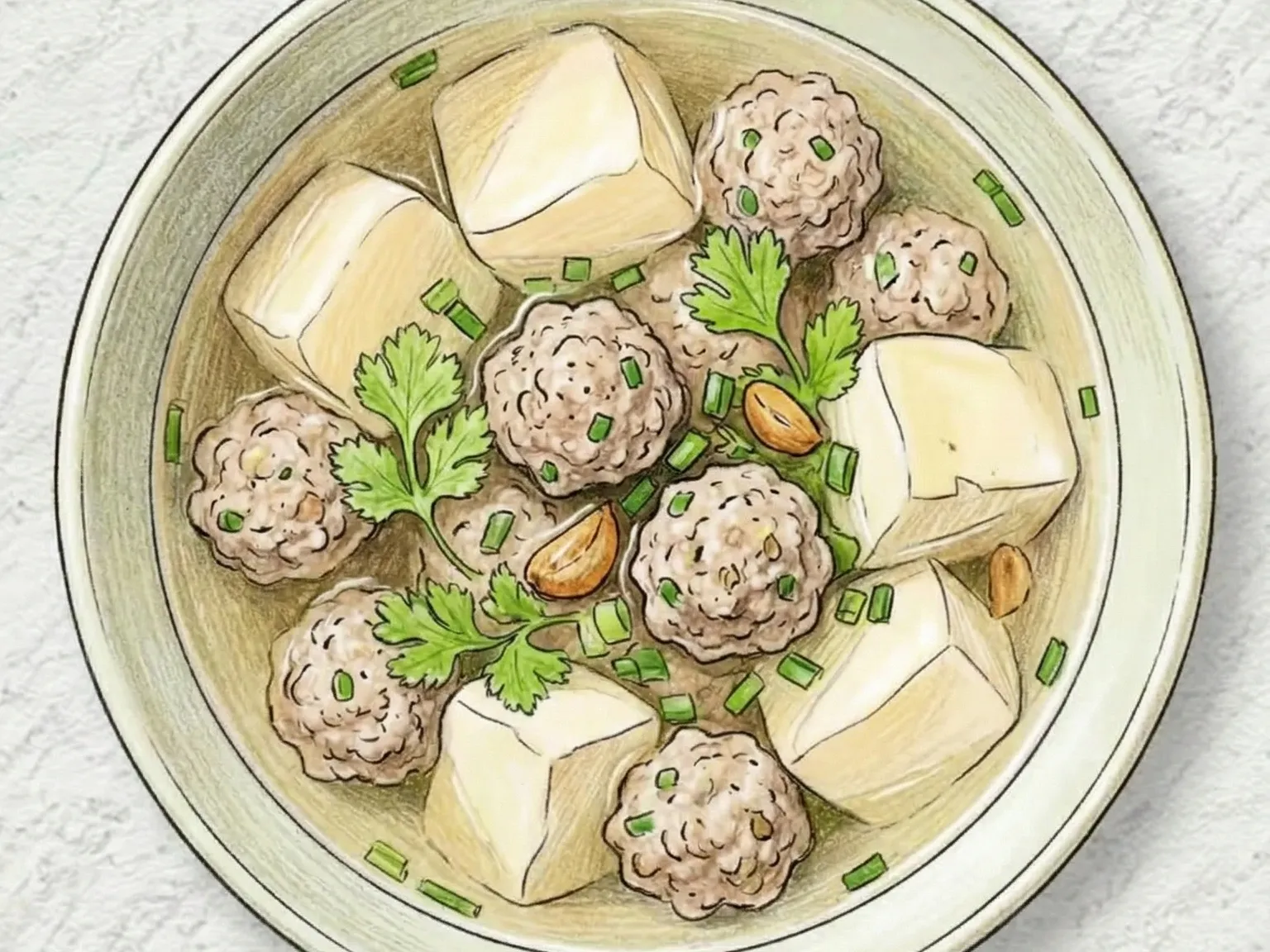
Gaeng jued - literally 'bland soup' in Thai - is not tasteless despite its name; it is the one Thai dish that deliberately seeks gentleness in a cuisine famous for intensity. A clear broth simmered from pork bones or chicken holds soft tofu, small pork meatballs, glass noodles or squash. The meatballs are seasoned with garlic, white pepper, and coriander root - the aromatic trinity of Thai cooking - which infuse the clear broth with a subtle depth that belies the soup's transparent appearance. Fresh cilantro leaves and fried garlic are scattered on top for aroma and crunch, but the overall tone stays soothing and stomach-settling. On a Thai family table, gaeng jued sits alongside fiery dishes like som tam and tom yum, serving as a palate cleanser between bites of heat. It is the soup Thai parents make for children and for anyone feeling unwell - comfort food in its most literal sense.
Korean Rice Cake Dumpling Noodle Soup
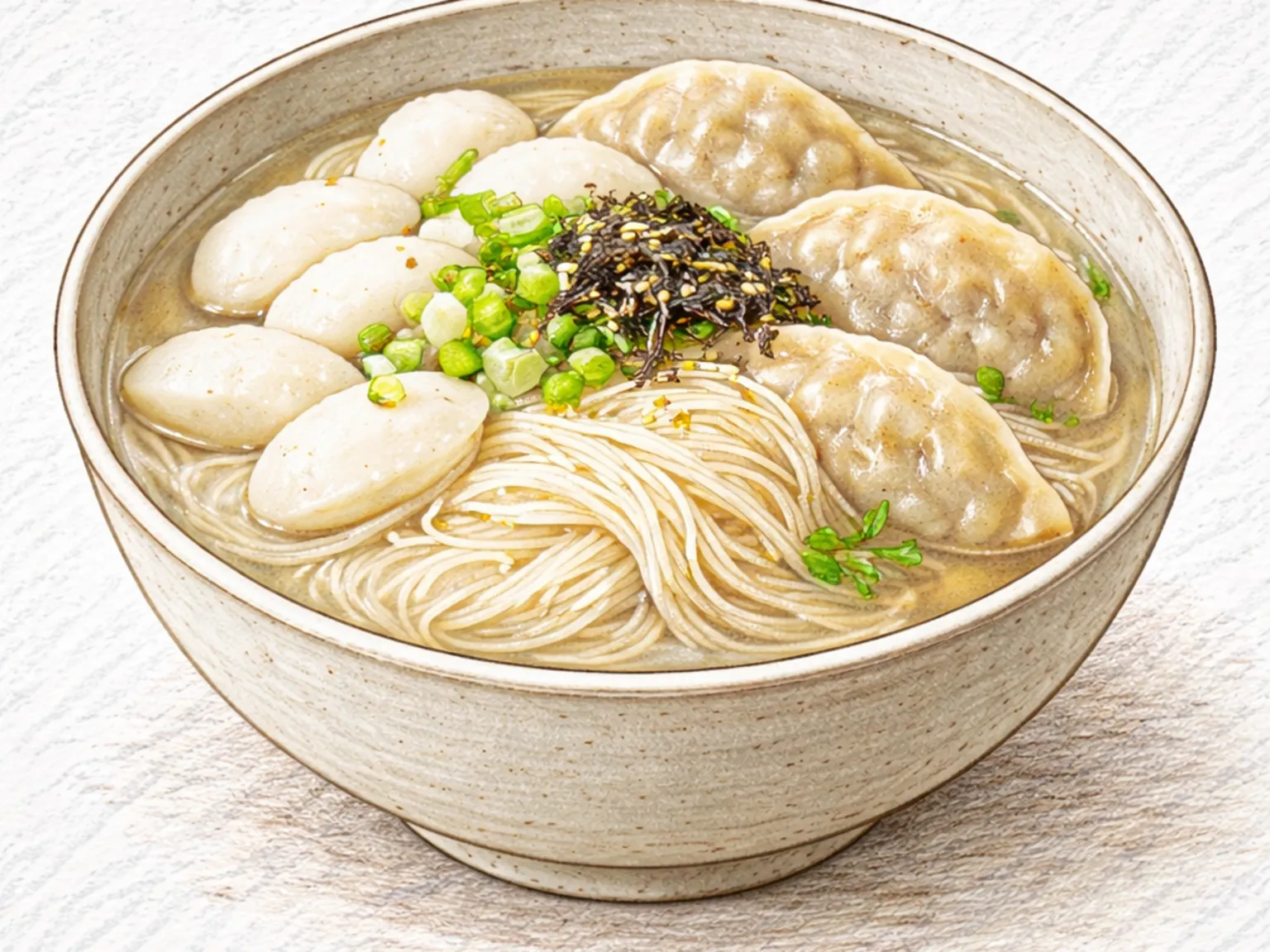
Tteok-mandu-guk-myeon combines sliced rice cakes, dumplings, and thin somyeon noodles in a rich beef bone broth. Each component contributes a different texture - chewy rice cakes, plump filled dumplings, and soft noodles - making the bowl substantial. The broth is typically garnished with egg strips, shredded seaweed, and scallions. This dish merges two traditional Korean soups (tteokguk and manduguk) into a single, filling meal. Using store-bought dumplings and pre-made broth, it can be ready in under 40 minutes.
Korean Flounder Seaweed Soup
Gajami miyeok-guk is a seaweed soup built around a whole flounder simmered directly in the pot. Rehydrated miyeok is stir-fried in sesame oil before the liquid is added, a step that transforms the raw seaweed fragrance into something richer and more rounded. Once the flounder is added and the pot comes to a simmer, the mild, subtly sweet flesh of the white fish slowly infuses the broth, while the collagen released from the bones gives the soup a quiet viscosity and depth that water alone cannot produce. Soy sauce and garlic are the only seasonings needed, allowing the natural flavor of the fish and seaweed to carry the soup without interference. Blanching the flounder briefly in boiling water before adding it to the pot draws out blood and removes any trace of fishiness, resulting in a cleaner, more delicate broth. Along the East Sea coast, gajami miyeok-guk has traditionally been served as postpartum recovery food in place of the more common beef seaweed soup, valued for its lightness, digestibility, and the clean nourishment provided by the fish broth.
About Soups
The secret to a great Korean soup lies in building a flavorful stock from anchovies, kelp, or beef bones. This collection covers classic and modern soup recipes you can recreate at home.