Soups Recipes
434 recipes. Page 8 of 19
Soups and broths are the backbone of a Korean meal, served alongside rice at nearly every table. From clear seaweed soup (miyeokguk) to rich ox-bone broth (gomtang) and spicy beef soup (yukgaejang), the variety is enormous. Each season brings its own favorites - chilled soups in summer and piping-hot stews in winter.
Vietnamese Beef Pho
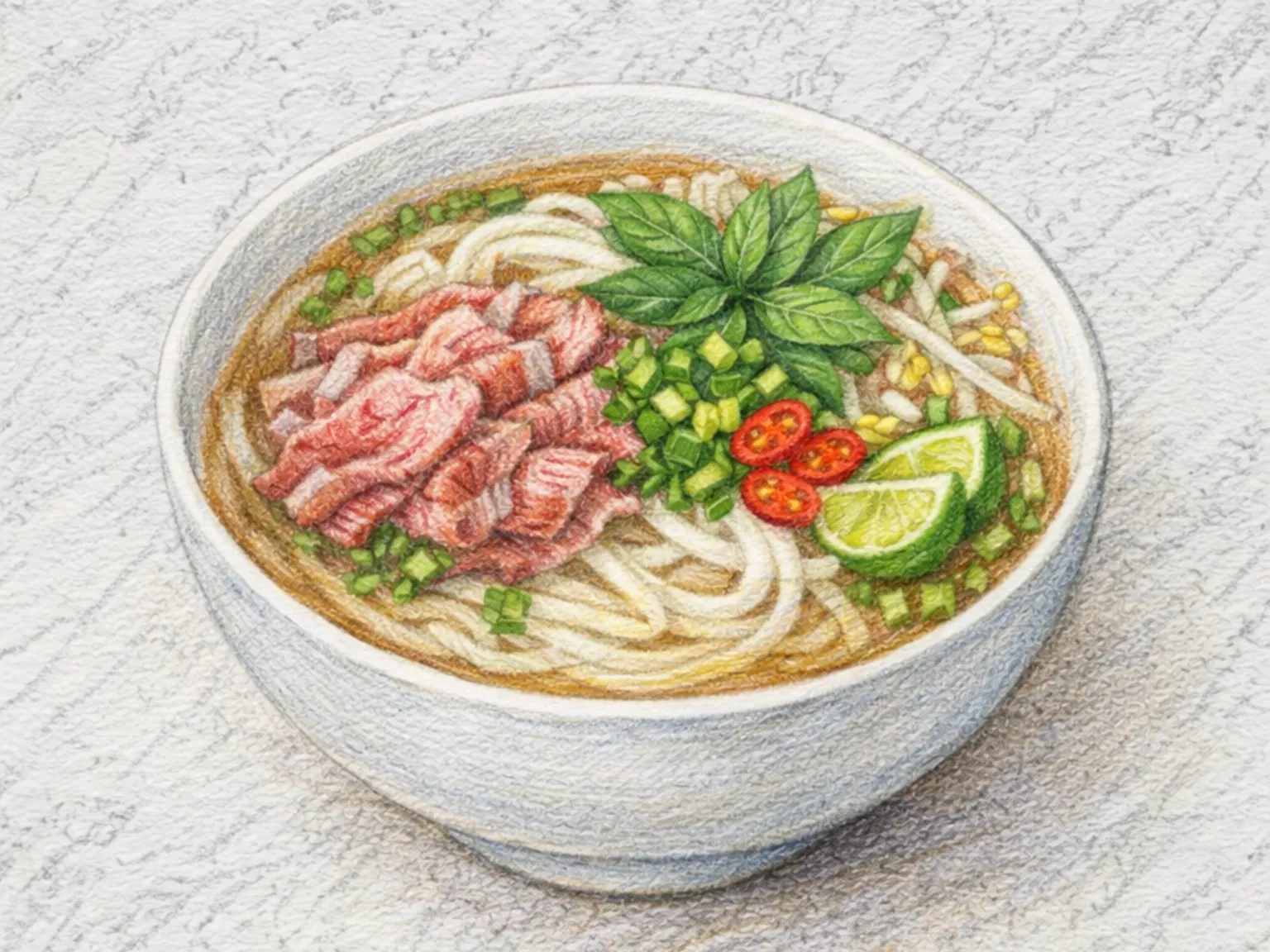
The clear, golden broth in Vietnamese beef pho begins with three separate preparations: cleaned beef bones, dry-toasted spices, and ginger and onion charred over a flame. For 4 servings, prepare 1500 g beef bones, 400 g rice noodles, 300 g thinly sliced beef, 4 star anise, 2 cinnamon sticks, 50 g ginger, 1 onion, 3 tablespoons fish sauce, 100 g bean sprouts, 2 limes, and 20 g basil. Soak the bones in cold water for 1 hour to draw out blood. Blanch them in boiling water, then scrub the surfaces under cold water to remove the residue that would cloud the broth. Toast the star anise and cinnamon in a dry pan for 1 to 2 minutes, stopping when their aroma becomes pronounced. Char the ginger and onion directly over a flame until the outsides darken, then brush away only the loose burnt flakes. Place the cleaned bones, charred aromatics, and toasted spices in a large pot with 3 L water. Keep the pot at a low simmer for 6 to 8 hours and skim foam from the surface as it rises. Strain out the bones and aromatics when the broth is clear and golden. Add the 3 tablespoons fish sauce in portions, tasting between additions so the seasoning does not overwhelm the long-cooked broth. Soak and cook the rice noodles, then divide them among four bowls. Lay the thin beef slices over the noodles and pour the boiling broth directly on top. The heat of the broth cooks the thin meat in the bowl. Serve with the bean sprouts, lime, and basil so each bowl can be adjusted with fresh crunch, acidity, and herbs at the table.
Korean Perilla Radish Soup
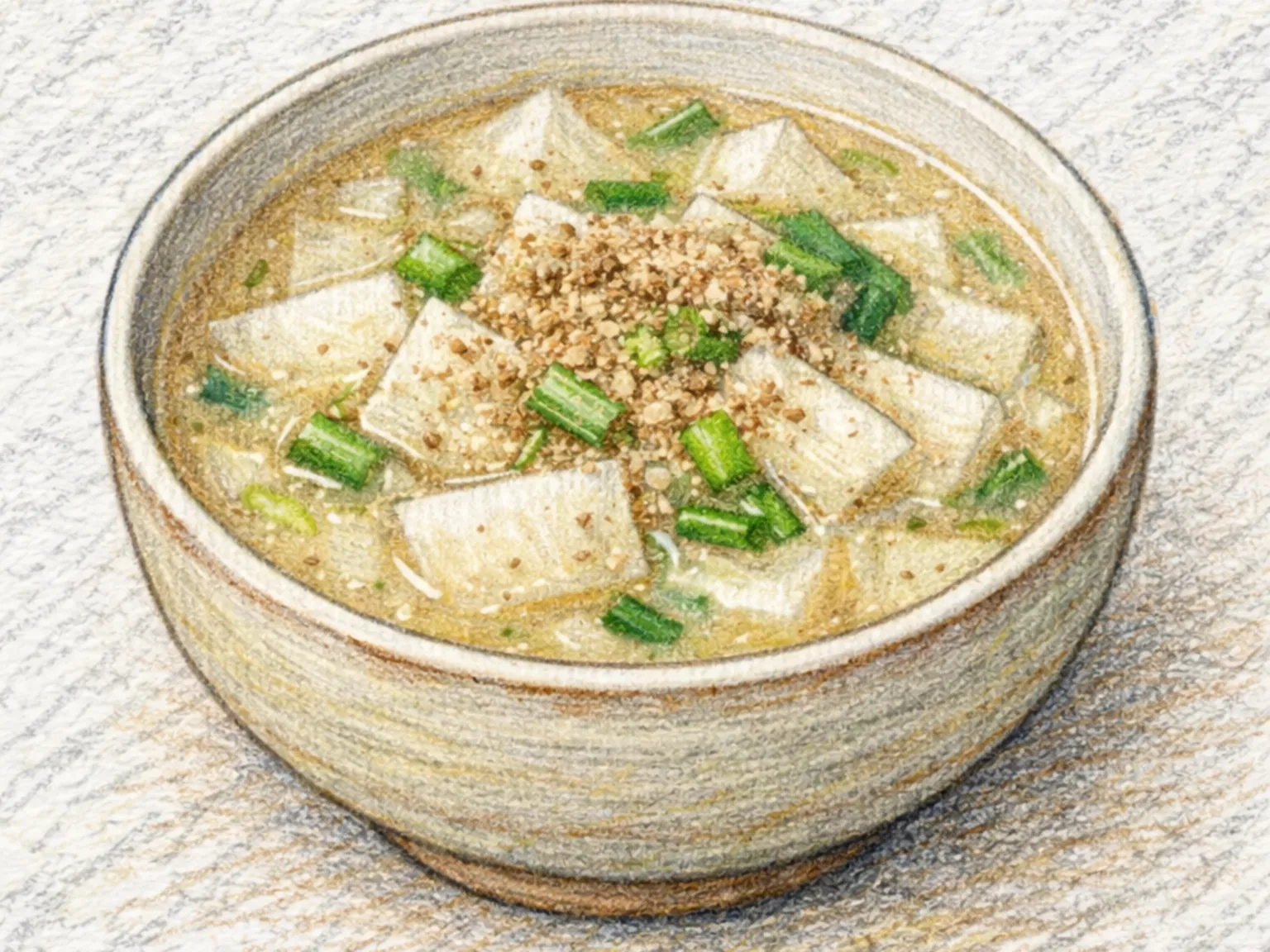
Deulkkae mu-guk is a Korean radish and perilla seed soup that belongs firmly to the cool-weather calendar. Sliced daikon simmers in anchovy stock for ten minutes first, releasing its clean sweetness into the broth before anything else goes in. Perilla seed powder, stirred in toward the end, thickens the liquid noticeably - its heavier, earthier fat behaves differently from sesame and coats the palate in a way plain radish broth cannot. Garlic simmers alongside the radish to build the underlying savory base. The powder must go in just before the heat is cut; leave it in too long and the toasted fragrance dissolves into the broth and disappears.
Hanoi-Style Pho Bo (Vietnamese Northern Clear Beef Noodle Soup)
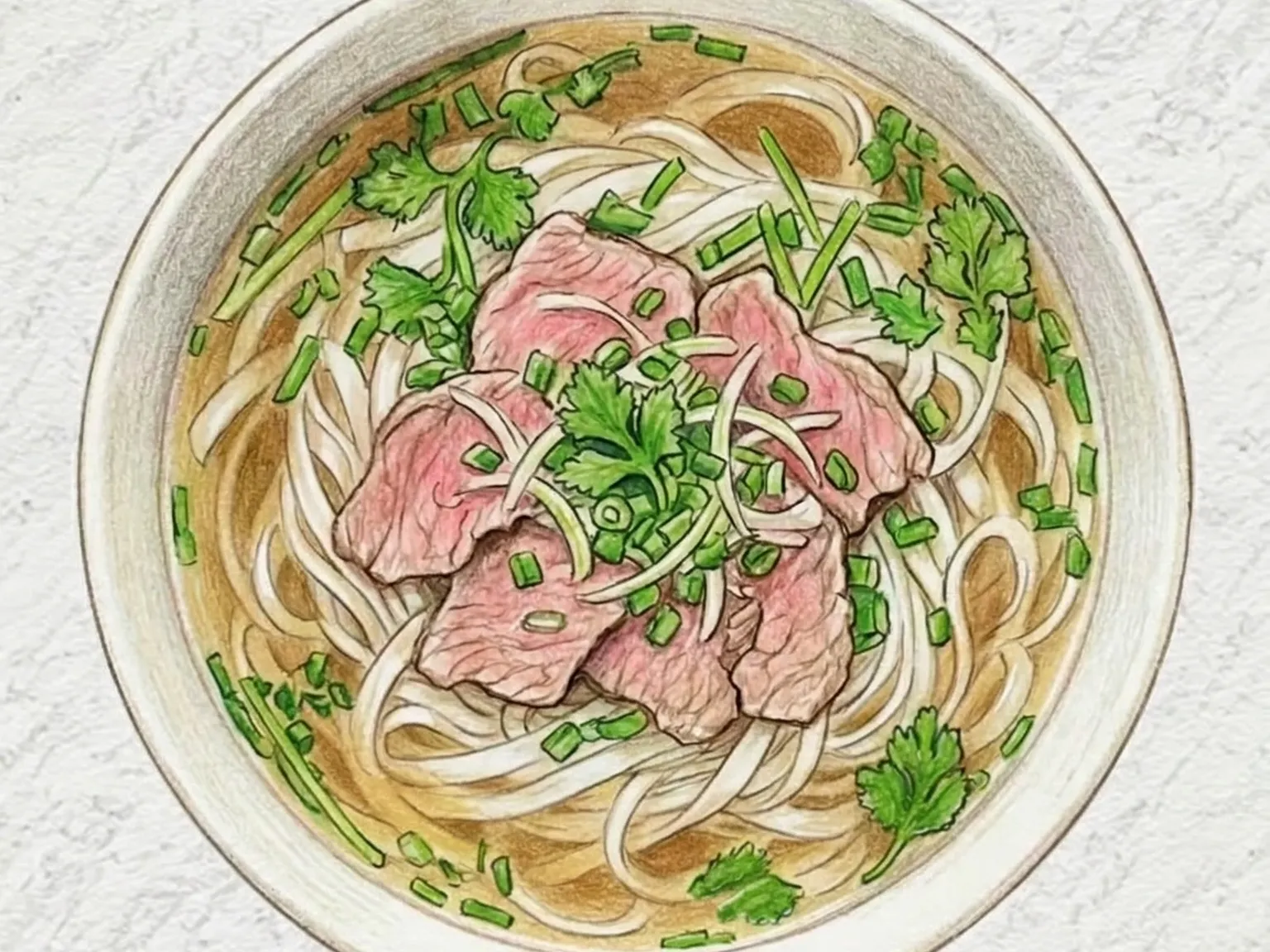
Hanoi-style pho bo is the original northern Vietnamese beef noodle soup, distinguished from its southern counterpart by a leaner, clearer broth and restrained garnishing. Beef bones and brisket simmer for hours with a modest hand of spices - star anise, cinnamon bark, and a few cloves - so the beef flavor leads rather than the aromatics. The broth is repeatedly skimmed until it runs nearly transparent, with no trace of grease on the surface. Paper-thin slices of raw beef placed in the bowl cook to a pale pink the moment the scalding broth is ladled over them. In Hanoi, the bowl arrives with only chopped scallion and cilantro; bean sprouts, hoisin sauce, and sriracha - common in southern and overseas versions - are absent by tradition.
Deulkkae Samgye-guk (Korean Perilla Chicken Soup)
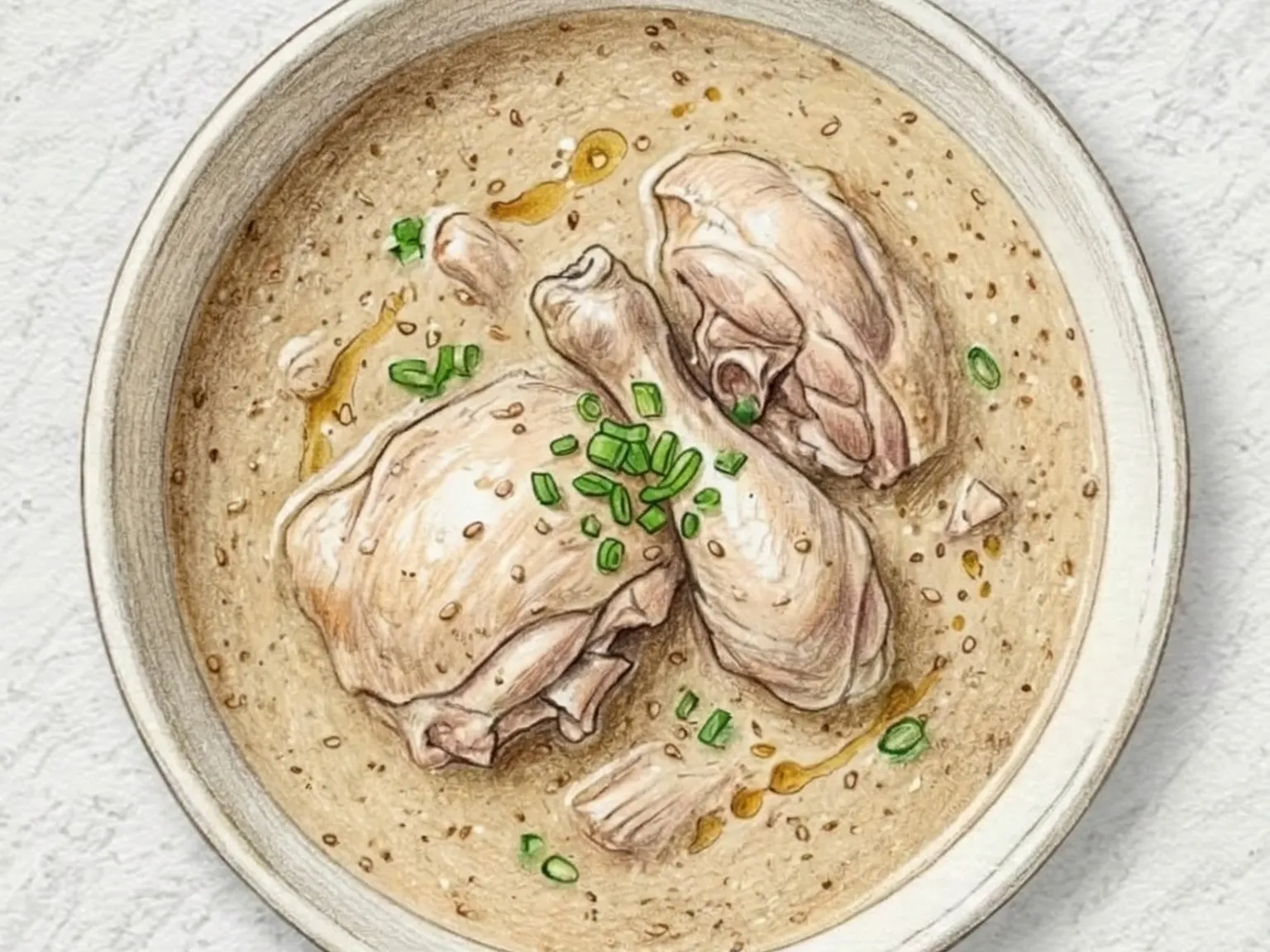
Deulkkae samgye-guk is a perilla-enriched Korean chicken soup also searched in Korean as 삼계국. It delivers the warming, restorative depth of samgyetang with a simpler preparation: no glutinous rice to stuff, no ginseng required, just chicken pieces and perilla seed powder. The chicken is cut into large pieces and placed in cold water from the start, then simmered for forty minutes so the collagen and flavor compounds dissolve gradually into the broth, turning it milky and full-bodied. Perilla powder must be pre-dissolved in a small cup of water before being stirred in because adding it dry causes it to clump. Ten more minutes of gentle simmering allows its oils to emulsify fully into the chicken stock, creating a broth with a smooth, nutty coating on every sip. Seasoning with only soup soy sauce and salt lets the natural savoriness of the chicken and the distinctive fragrance of perilla come through without distraction. Rich in the omega-3 fatty acids of perilla seed and the protein of chicken, this soup is eaten as a restorative meal during hot summers and whenever energy levels drop.
Hanoi-Style Chicken Pho (Pho Ga)
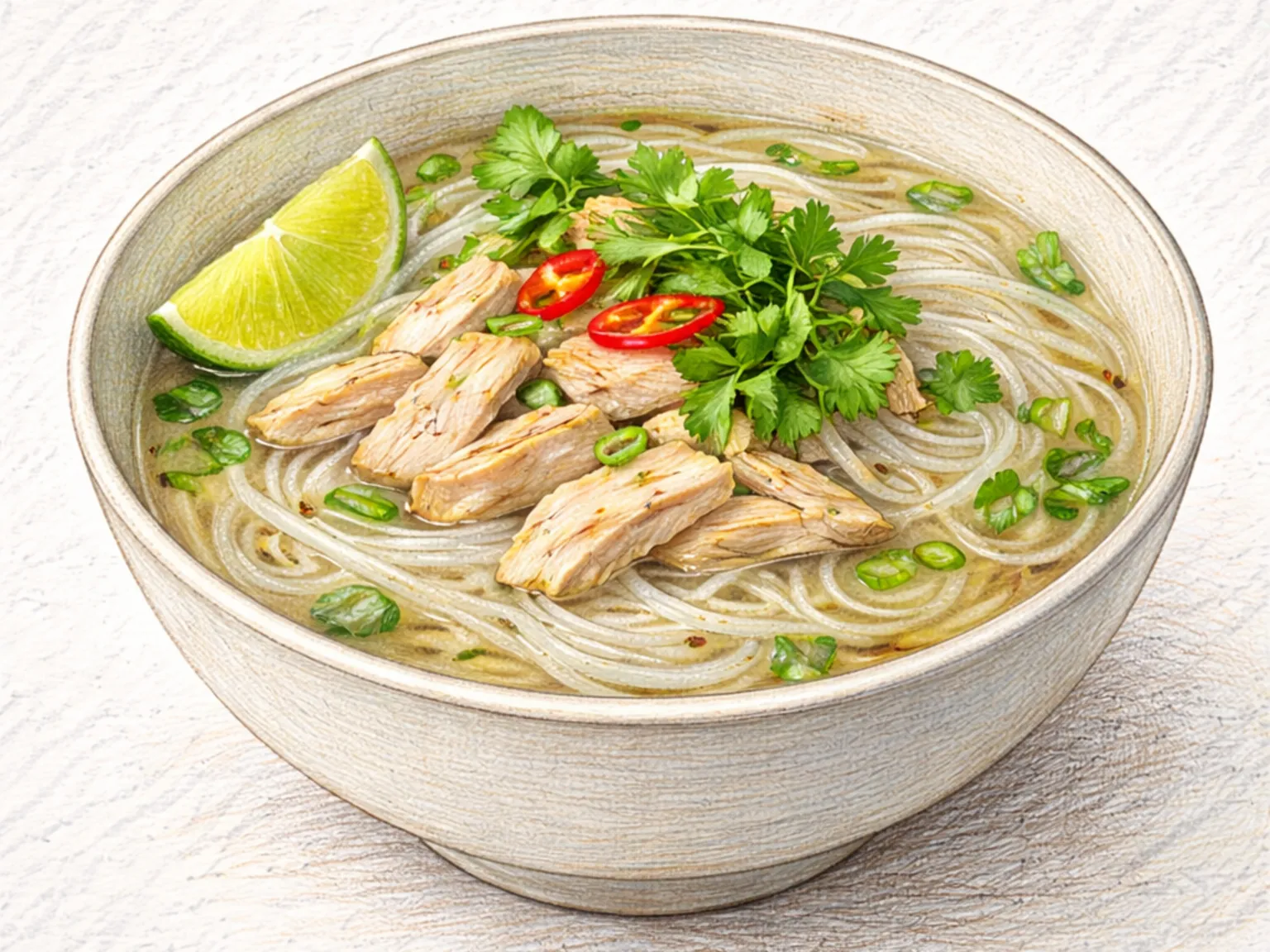
Hanoi-style pho ga is a chicken noodle soup that trades the beefy richness of pho bo for a lighter, cleaner bowl. Chicken bones and thighs simmer together until the broth turns golden and fragrant, then the meat is pulled into long shreds and piled over flat rice noodles. The spice profile is gentle - a knob of charred ginger and a single star anise - keeping the chicken flavor at the forefront. The broth has a silky quality from the natural gelatin in the bones, giving each spoonful a body that belies its clarity. Scallion, cilantro, and a squeeze of lime are the standard accompaniments. Some vendors add a torn fried dough stick for crunch. Pho ga is widely considered the everyday breakfast pho in Hanoi, less ceremonial than its beef counterpart but no less satisfying.
Siraegi Guk (Korean Perilla Radish Greens Soup)
Deulkkae siraegi guk is a rich, nutty Korean soup made by simmering dried radish greens that have been pre-seasoned with doenjang and soup soy sauce in an anchovy broth for at least twenty minutes. Siraegi, which refers to radish leaves that have been dried and then rehydrated before cooking, carries a concentrated earthiness and a fibrous, chewy texture that fresh greens cannot replicate. Massaging the greens with doenjang and garlic before they go into the pot allows the fermented seasoning to penetrate into the fibers over the extended cooking time rather than merely coating the surface. The anchovy broth beneath provides a clean, saline umami that supports the deeper, fermented notes of the doenjang without competing. Perilla powder added in two separate additions dissolves evenly through the broth without clumping, turning the liquid an opaque, milky white and thickening it to a consistency that clings to each spoonful and gives the soup its characteristic weight. Green onion added during the final three minutes of cooking contributes a fresh, sharp aroma that sits lightly on top of the perilla fragrance, completing the layered, hearty character of the soup.
Korean Street Stall Udon (Dashi Broth Fish Cake Noodle Soup)
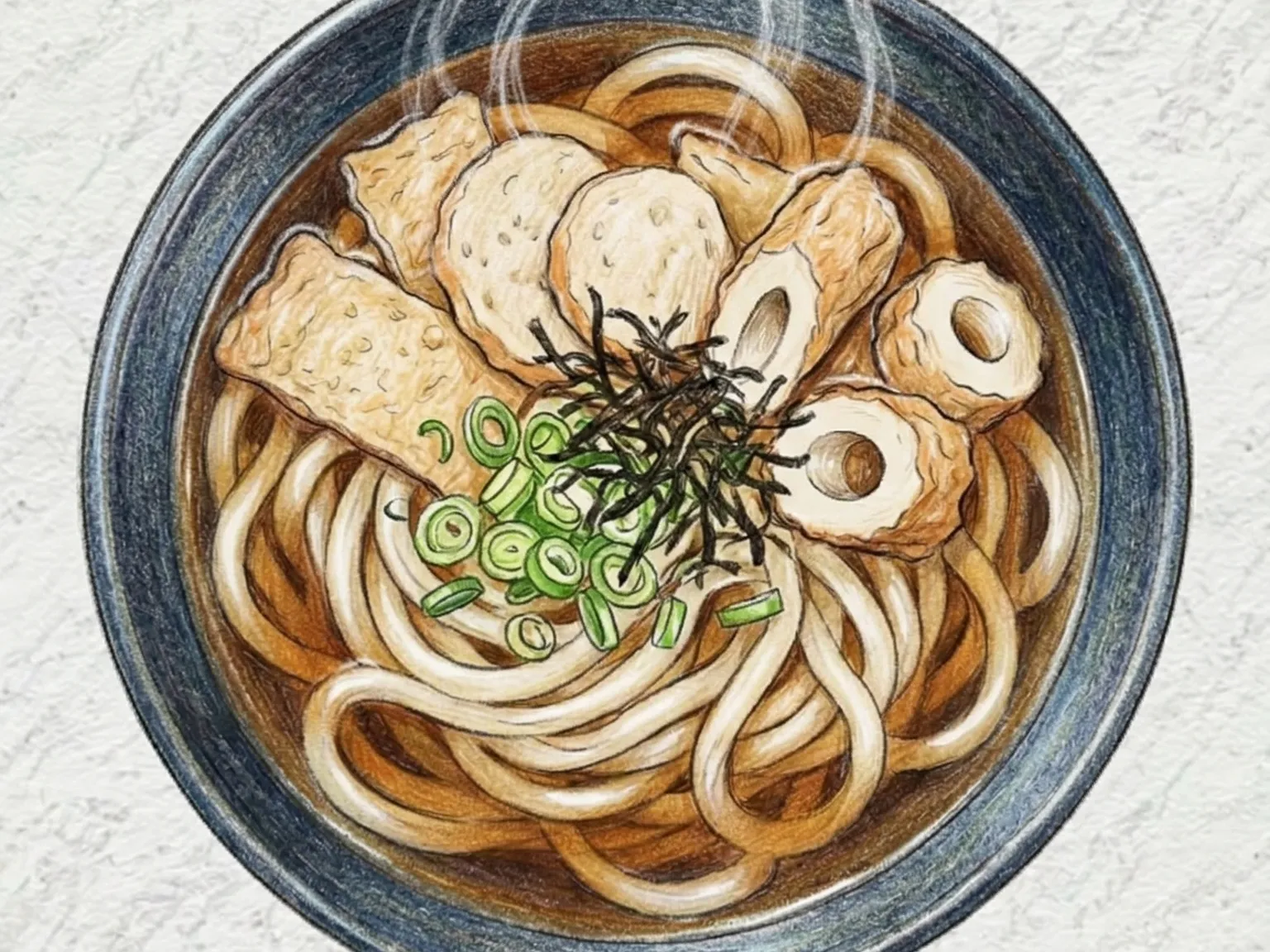
This street stall-style udon starts with kombu cold-steeped in water that is then brought to a gentle boil and simmered for eight minutes to extract its clean, mineral sweetness. The heat is turned off before bonito flakes are added, left to steep for two minutes until the broth turns golden and faintly smoky, then strained clear. Soup soy sauce and regular soy sauce are used together so the broth achieves both the right color and a balanced savory depth, and a small amount of sugar smooths the sharp edge of the soy without making the broth sweet. Fish cake slices are added directly to the hot broth and simmered for roughly five minutes, releasing their own mild umami into the liquid while absorbing the dashi flavor in return. Cooking them much longer causes the texture to deteriorate. Udon noodles are blanched separately in a second pot to wash off surface starch, then transferred to serving bowls while the broth is brought back to a rolling boil. Pouring the hot broth over the noodles at the last moment rather than simmering the noodles in the broth keeps them springy and prevents the soup from turning cloudy. Sliced scallion and dried seaweed flakes go on top as the final garnish.
Doganitang Recipe (Dogani Tang, Korean Ox Knee Soup)
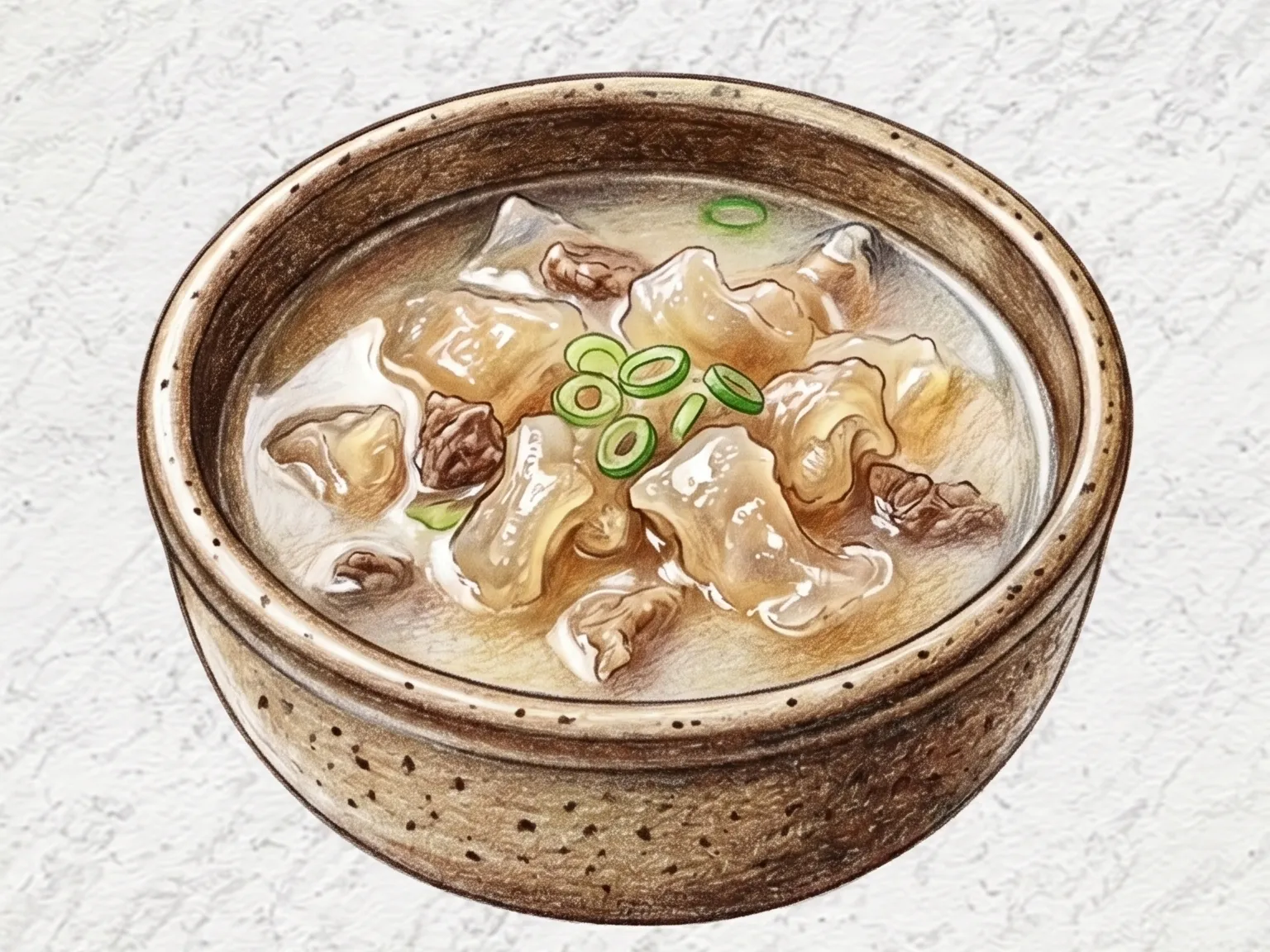
Doganitang, also written dogani tang or dogani-tang, is a Korean ox knee cartilage soup simmered for over two and a half hours on low heat. The long cook extracts collagen into a broth that appears clear but coats the lips with a rich gelatin film. Soaking the cartilage in cold water for an hour and blanching for ten minutes before the main cook are non-negotiable steps that draw out blood and impurities which would otherwise cloud the broth and leave an off-taste. The finished soup is seasoned simply with salt, pepper, and scallion so the clean beef flavor and chewy cartilage texture stay at the center.
Korean Instant Ramen (Spicy Chewy Noodles in Five Minutes)
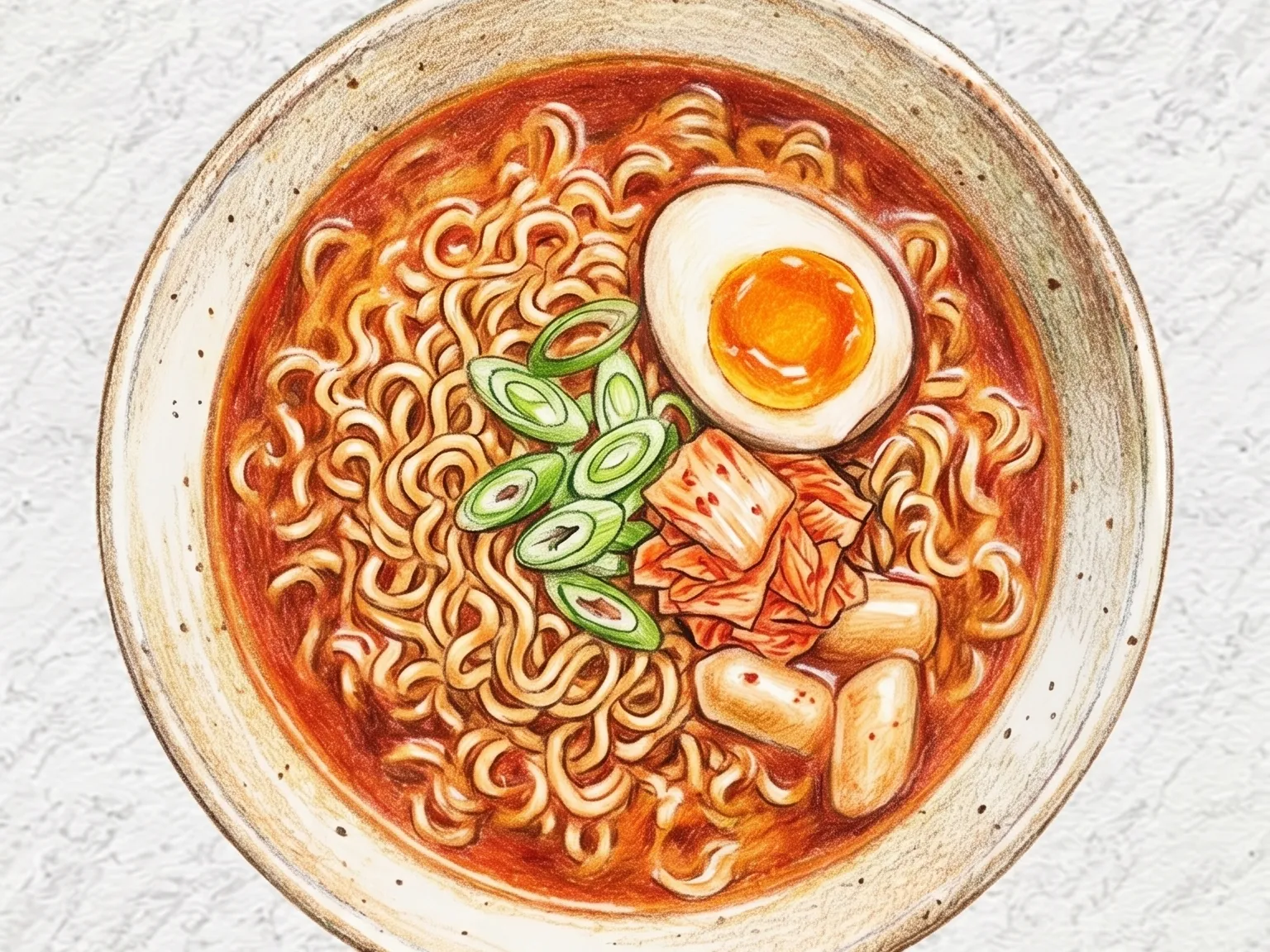
This two-serving ramyeon uses two instant noodle blocks with eggs, green onion, kimchi, rice cakes, and a slice of cheese. Bring all 1000 ml of water to a vigorous boil before adding the seasoning packets and 100 g rice cakes. Boiling the rice cakes for 1 minute first gives them time to soften before the noodles are ready. Add the noodle blocks and loosen them gently with chopsticks for 2 minutes, then stir in 100 g kimchi when the curls are about halfway separated. Lower the heat to medium, crack in two unbeaten eggs, and add the sliced green onion after 30 seconds. The cloudy egg whites show that the eggs have begun to set while the yolks remain soft. Turn off the heat about 1 minute before the package time, place the cheese on top, and transfer everything to bowls immediately. Residual heat finishes the noodle centers without leaving them swollen or mushy. The bowl is ready when the rice cakes are tender, the cheese has started to melt into the red broth, and the noodles still resist slightly when bitten.
Dongame-jiru (Eggplant and Sesame Miso Soup)
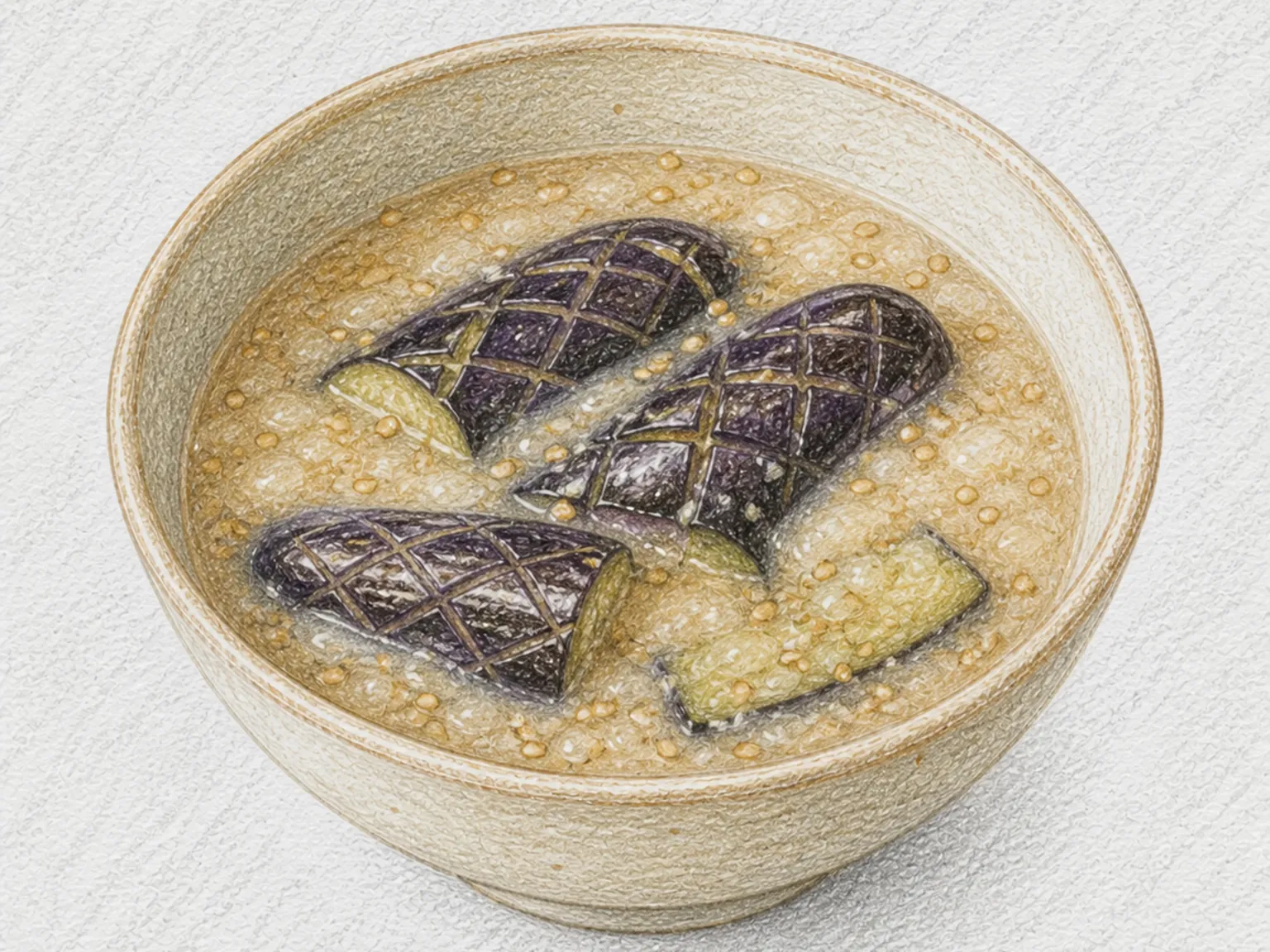
Dongame-jiru is a summer soup from the Koto region of Shiga. Eggplants are halved and crosshatched diagonally through the skin, soaked, then simmered in dashi with finely ground rice porridge until tender. Miso and a large amount of toasted ground sesame finish the soup. The scored purple skin resembles a turtle shell, while sesame dispersed through the broth looks like mud, giving the name mud turtle soup. Ground porridge gives slight body and slows the sesame from settling immediately. Add miso and sesame only after the eggplant is fully soft and do not return the soup to a hard boil, which dulls their aroma.
Korean Shrimp Head Ramyeon
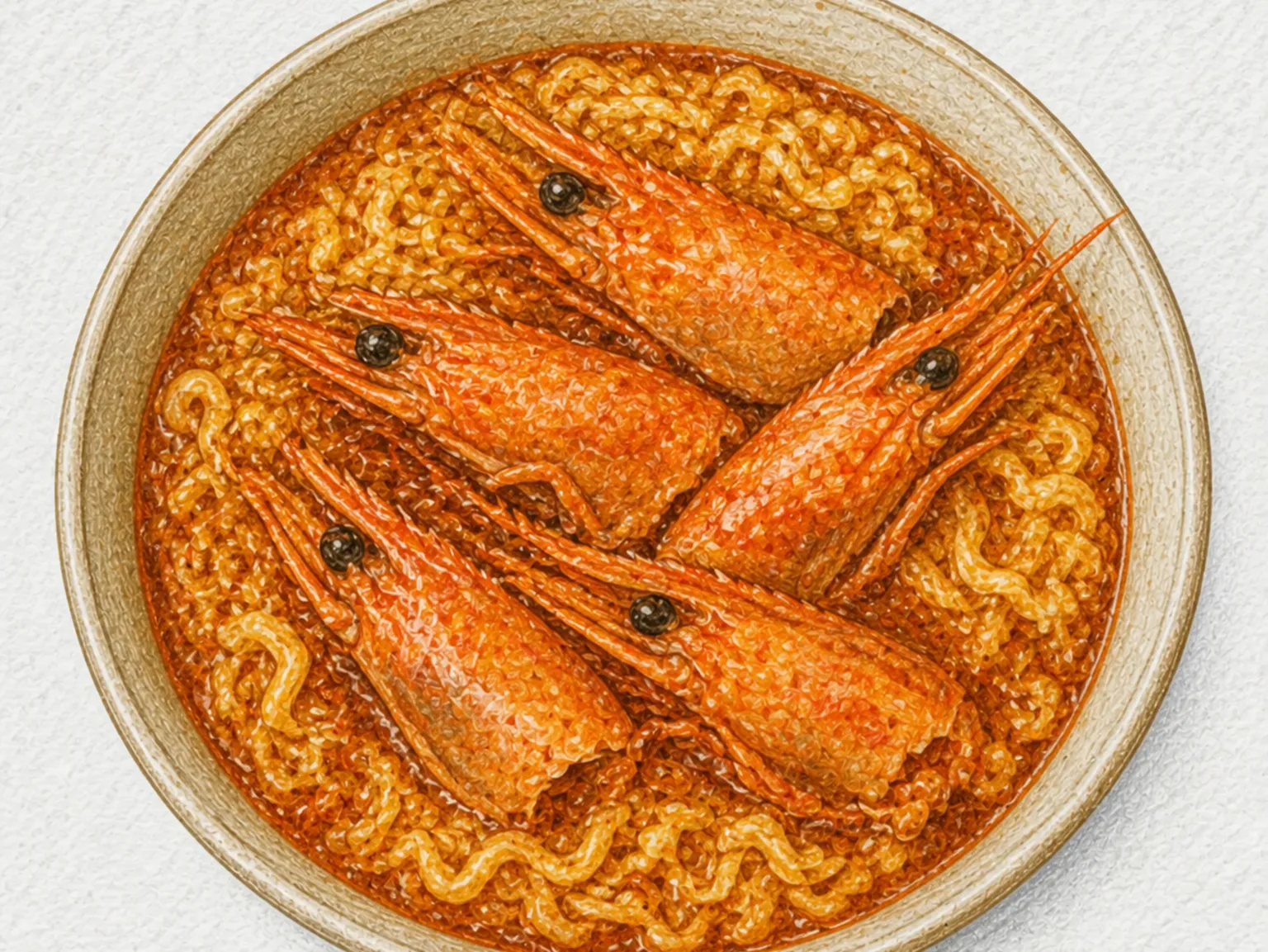
Korean shrimp head ramyeon cooks the raw heads saved from live shrimp sashimi in spicy instant noodles. As the shells change from gray to orange, the broth picks up the shrimp's sweetness and roasted shell aroma. Add the heads to boiling water first and cook them thoroughly before adding the powder seasoning and noodles. No egg or garnish is needed; the red broth, springy noodles, and orange shrimp heads remain clearly visible. It is a direct way to use the heads on the same day instead of discarding them after preparing the sashimi.
Dongjuk-tang (Korean Surf Clam Broth)
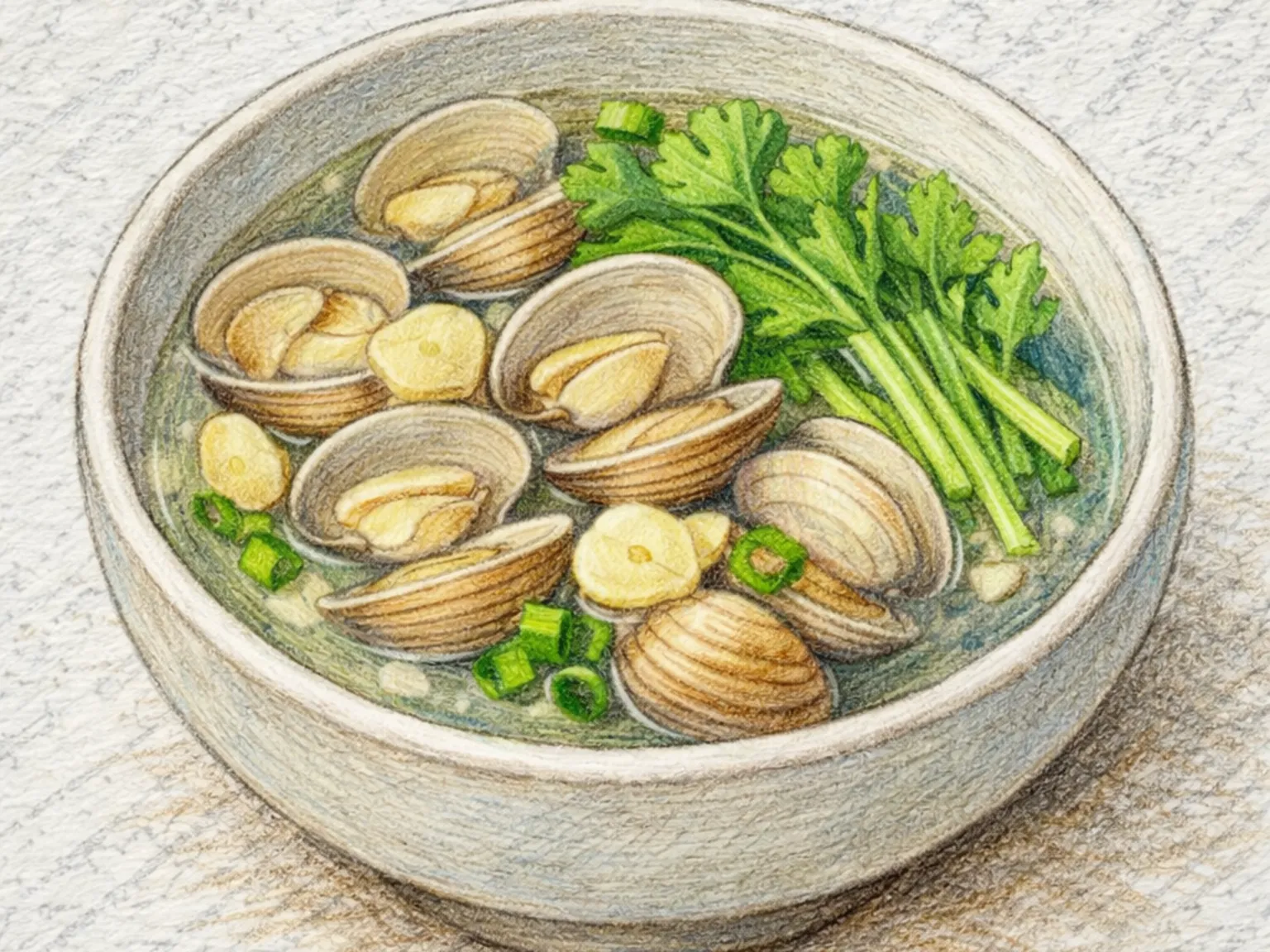
Dongjuk-tang is a Korean surf clam soup where purged clams simmer with radish in plain water to produce a briny, naturally sweet broth that needs almost no added seasoning. The radish goes in first and cooks for six minutes to build a sweet, mild base, then the clams are added for three to four minutes -- they are done the moment their shells open wide, and cooking any longer tightens and toughens the meat. Any clam that remains shut after cooking must be discarded without exception. Water dropwort stirred in at the end contributes a fresh, herbaceous fragrance that lifts the broth, and a single cheongyang chili pepper adds a mild, lingering heat that tempers the ocean flavor without masking it. The combination of clam brine, radish sweetness, and perilla creates a broth that tastes far more complex than its short ingredient list suggests.
Korean Shrimp Tomato Knife-Cut Noodles
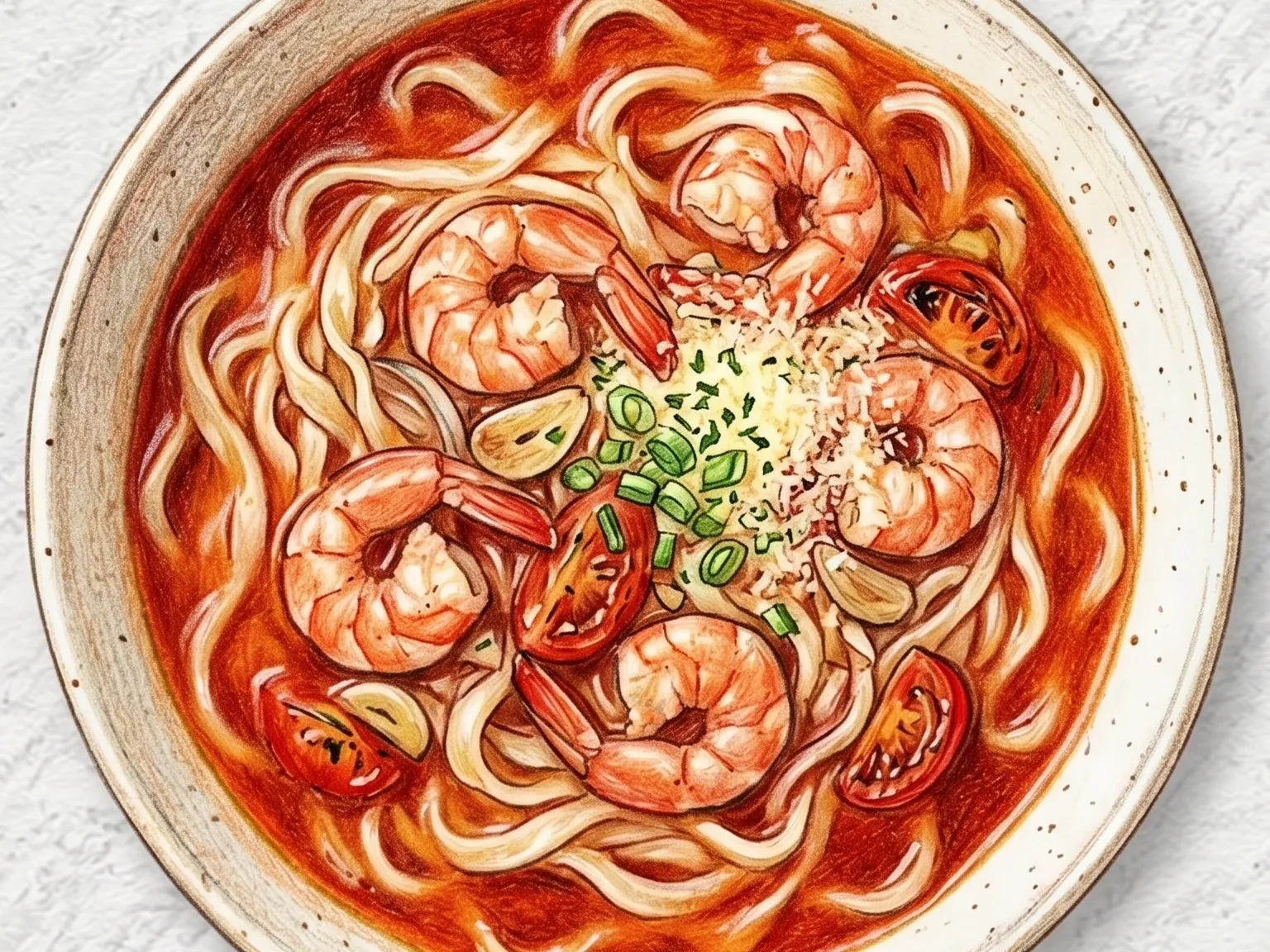
Shrimp tomato kalguksu is a two-serving noodle soup made by reducing tomatoes with garlic and onion before cooking fresh knife-cut noodles and shrimp in the same pot. Score 250g tomatoes with a shallow X, blanch them for about 20 seconds, peel them, and cut them into cubes. Devein 180g medium shrimp and season them with only a small pinch of salt. Heat 1 tablespoon olive oil in a pot and cook two minced garlic cloves with 90g onion for about 3 minutes at medium-low heat. Stop when the onion turns translucent and keep the garlic from browning. Add the tomatoes, raise the heat to medium, and stir for about 4 minutes while crushing the pieces lightly. Their juices should reduce and the mixture should become visibly thicker before water is added; this prevents the broth from tasting thin. Pour in 800ml water and scrape the base of the pot to release the tomato layer. Once it boils, add only part of the salt and black pepper. Shake loose flour from 250g fresh kalguksu noodles, add them to the broth, and cook for about 5 minutes at medium heat. Lift and loosen the strands once or twice so they do not form a clump. Add the shrimp only near the end and simmer for about 2 minutes. Turn off the heat as soon as they turn pink and feel springy, then adjust with the remaining salt and pepper. Divide the soup and finish with 15g Parmesan. Reducing the tomato base before adding water and limiting the shrimp to the final minutes keeps the broth concentrated without overcooking the seafood.
Korean Spicy Pollock Stew
Dongtae-tang is a Korean spicy fish stew made with frozen pollock (dongtae), radish, tofu, and green onion in a broth seasoned heavily with gochugaru. The first step is simmering radish on its own long enough to release its clean, slightly sweet character into the base -- this foundation determines the clarity and depth of the finished broth. Once the radish has cooked through, gochugaru, soup soy sauce, and minced garlic are added to transform the pale stock into a vivid red, peppery liquid. The pollock is cleaned of scales and fins after thawing, then cut into large pieces so the flesh stays intact through the cooking process. After the fish is added, the stew should not be cooked for more than ten minutes: beyond that point, compounds from the bones leach into the broth, producing a bitter, fishy aftertaste that is difficult to correct. Cheongyang chili peppers add a sharper, more piercing heat than gochugaru alone -- a thin-sliced variety provides brief, concentrated bursts of spice. Tofu goes in during the last five minutes, giving it enough time to absorb the spiced broth without breaking apart. The seasoning the tofu draws in softens and rounds out the intensity of the soup, providing a mild counterpoint to the fish and the heat. The stew carries a bracing, satisfying quality and is especially popular during winter months.
Shabu-shabu Kalguksu Hot Pot
Shabu-shabu kalguksu is a three-stage hot pot for two: thin beef and vegetables first, kalguksu noodles next, and rice cooked against the bottom of the same pot at the end. Cut 100 g water dropwort into 5 cm lengths and separate 100 g oyster mushrooms into strands. Bring 1 L anchovy broth to a boil after fully dissolving 2 tablespoons red chili paste, 1.5 tablespoons chili powder, 1 tablespoon minced garlic, and 1 tablespoon soup soy sauce in it. Add the water dropwort and mushrooms, cooking only until they soften. Slide 200 g thinly sliced beef into the bubbling broth one piece at a time so the slices do not form a clump. Once the broth returns to a boil and no raw red areas remain on the meat, remove it with the vegetables. Shake loose flour from 200 g kalguksu noodles just before they enter the pot, separate them immediately in the boiling liquid, and cook for 6 to 8 minutes according to the package timing. After the noodles are served, remove broth until about 100 ml remains. Add 200 g cooked rice, 5 g seaweed flakes, and 1 tablespoon sesame oil. Stir, spread the rice into a thin layer, and stop cooking when the bottom begins to develop a light crisp crust.
Donko-Jiru (Miyagi Miso Fish and Liver Soup)
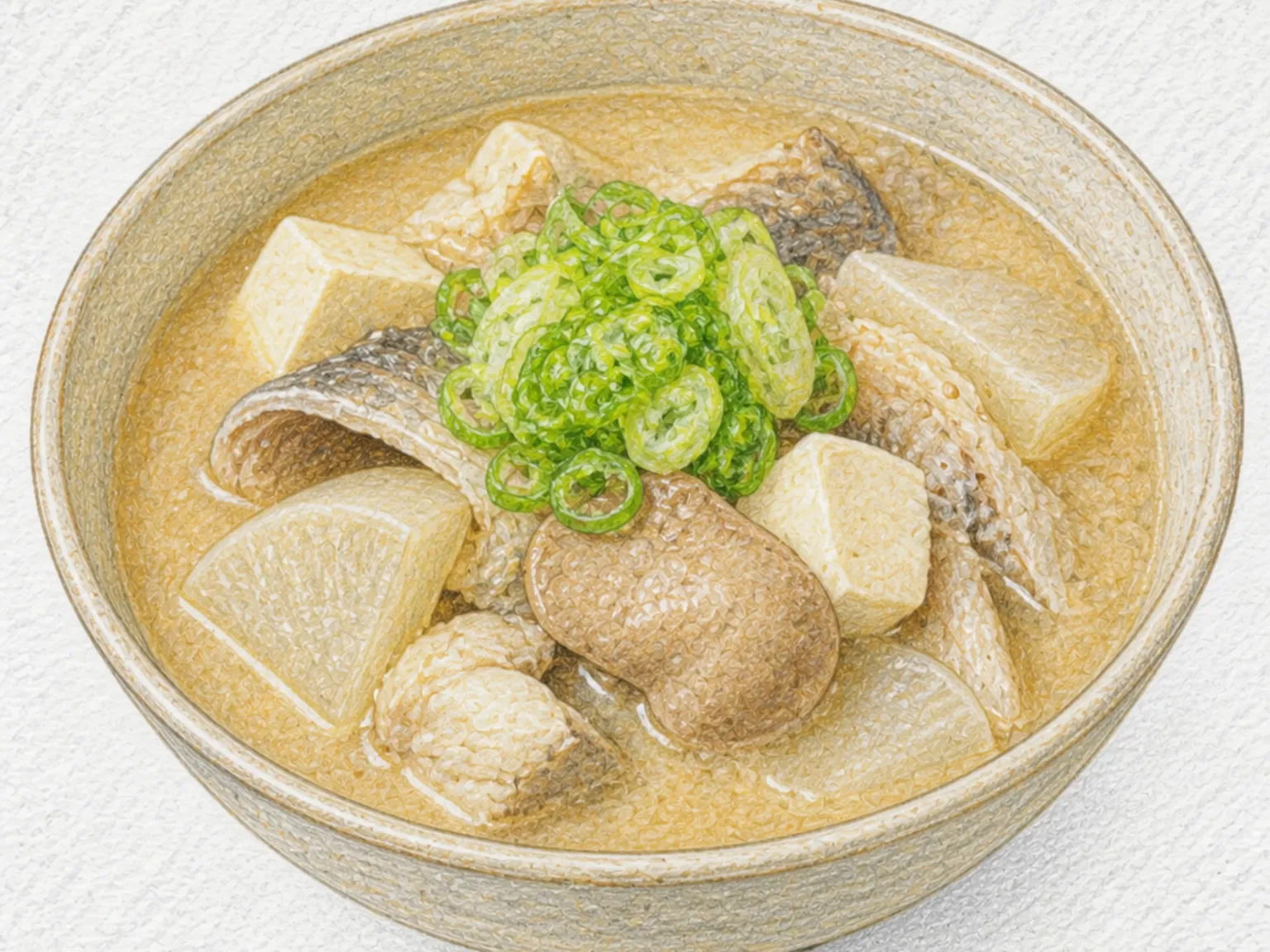
Donko-jiru is a Miyagi winter soup that uses one or two whole donko fish, including flesh, head, bones, and liver. The pieces simmer with daikon in water, are seasoned with Sendai miso, and finish with tofu and long onion. Donko is a regional name applied to ezo isoname and chigo cod, fish that become firm and develop especially rich livers from autumn into winter. As the liver cooks, its fat disperses through the broth while the head and bones contribute clean marine depth. The fish's large mouth and body tapering toward the tail inspired an auspicious interpretation: money enters easily but is difficult to lose. Around Kesennuma, families hung donko at the household altar for Ebisu observances, praying for abundant catches and prosperous business, then made it into soup. It is also served to winter guests.
Hakodate Shio Ramen (Hokkaido Clear Salt-Seasoned Chicken Ramen)
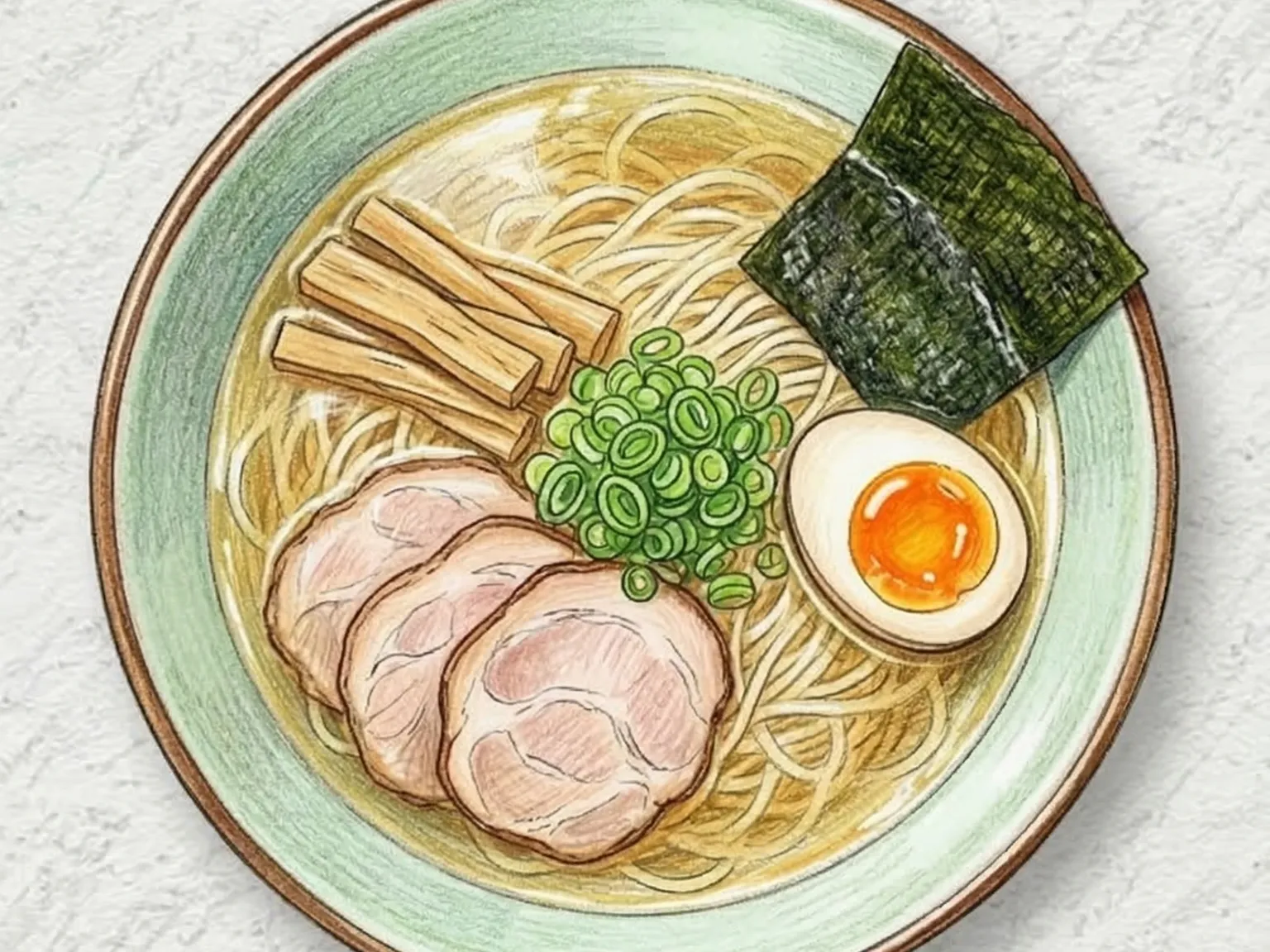
Hakodate shio ramen is the oldest style of ramen in Hokkaido, originating from the port city of Hakodate in the south of the island. The broth is built from chicken and pork bones simmered at a gentle, never rolling, boil so the liquid stays clear and golden rather than turning cloudy. Seasoning comes from salt alone - no miso, no soy sauce - which places the burden of flavor entirely on the quality of the stock. Medium-wavy noodles are the standard choice, their curls catching just enough broth in each bite. Toppings are kept minimal: a slice or two of chashu pork, strips of menma bamboo shoots, and chopped scallion. The appeal of shio ramen lies in its transparency, both visual and gustatory - there is nowhere for imperfections to hide, and every sip delivers a clean, uncluttered umami.
Korean Acorn Jelly Cold Broth Bowl
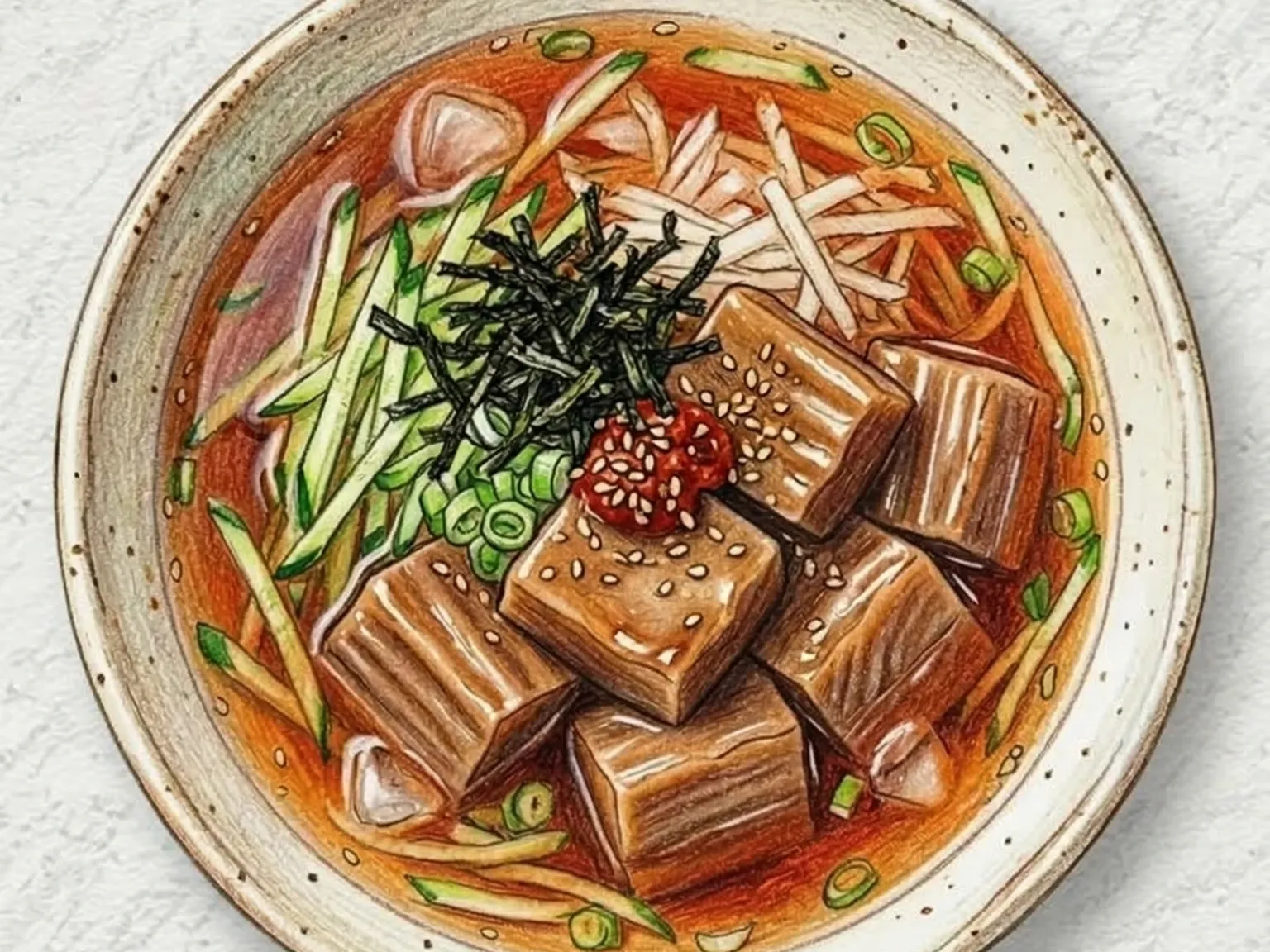
Dotori-muksabal is a chilled Korean acorn jelly broth bowl where thinly sliced acorn jelly sits in a cold, tangy-sweet seasoned broth. Acorn jelly carries a distinctly earthy, mildly astringent aftertaste and a firm, bouncy texture that becomes noticeably more pronounced once it has chilled thoroughly. The broth, a mixture of stock seasoned with soy sauce, vinegar, and sugar, must be cold before pouring over the jelly to keep that cool snap alive from the first bite to the last. Chopped kimchi adds fermented heat and a pungent sourness, while julienned cucumber contributes a clean crunch, and both ingredients cut through the jelly's neutral flavor with sharp contrasts that make the bowl far more lively than its simple appearance suggests. A spoonful of gochugaru-spiked seasoning ties the components together. The dish is notably low in calories and rich in dietary fiber, making it an appealing light meal on hot days.
Shoyu Butter Corn Ramen
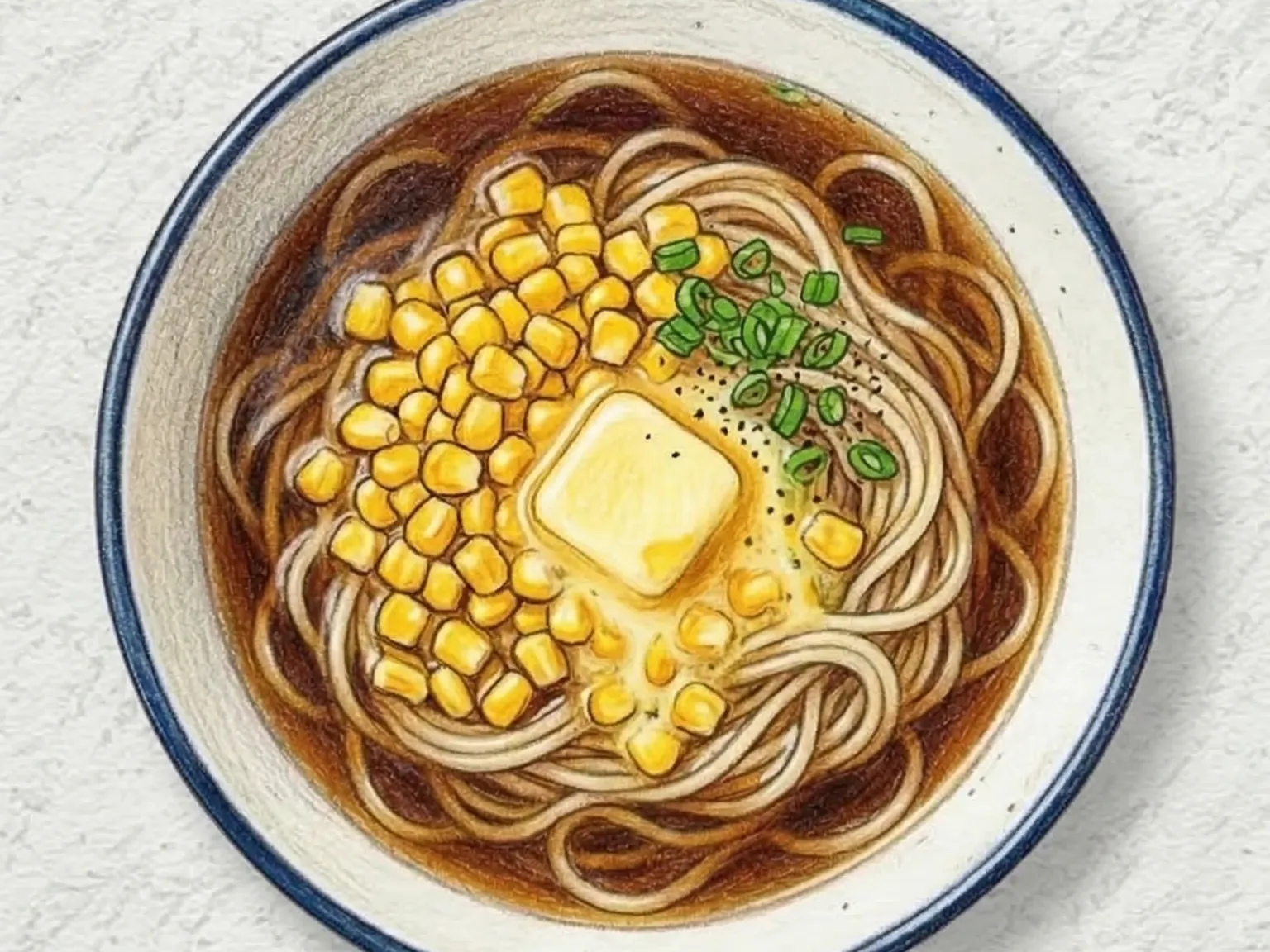
Shoyu butter corn ramen uses 900 ml chicken broth seasoned with 2 tbsp soy sauce and 1 tbsp mirin for two bowls. Prepare the toppings before heating the soup: thinly slice 20 g green onion, cut 2 nori sheets into manageable pieces, rinse and drain 80 g bean sprouts, and have 120 g sweet corn ready. Bring the broth, soy sauce, and mirin to a simmer over medium heat, then lower the heat to medium-low as soon as bubbles appear. Keep it at a gentle simmer for 10 minutes. A hard boil can reduce the liquid too far and make the broth taste overly salty. Meanwhile, boil plenty of water in a separate pot and cook 260 g fresh ramen noodles. Remove them when the strands have separated but still feel springy, then drain thoroughly so excess starch does not cloud the shoyu broth. Add the bean sprouts and corn to the hot broth for only 2 minutes. Turn off the heat when the sprouts look slightly translucent but retain a crisp bite. Divide the noodles between two bowls and ladle in the broth, corn, and sprouts. Top the bowls with 20 g butter, the sliced green onion, and nori. Serve as the butter begins to melt into the hot soup. Cooking the broth, noodles, and sprouts for their own required times before combining them preserves a clear soup, resilient noodles, and crisp sprouts.
Dubu Guk (Korean Tofu Soup)
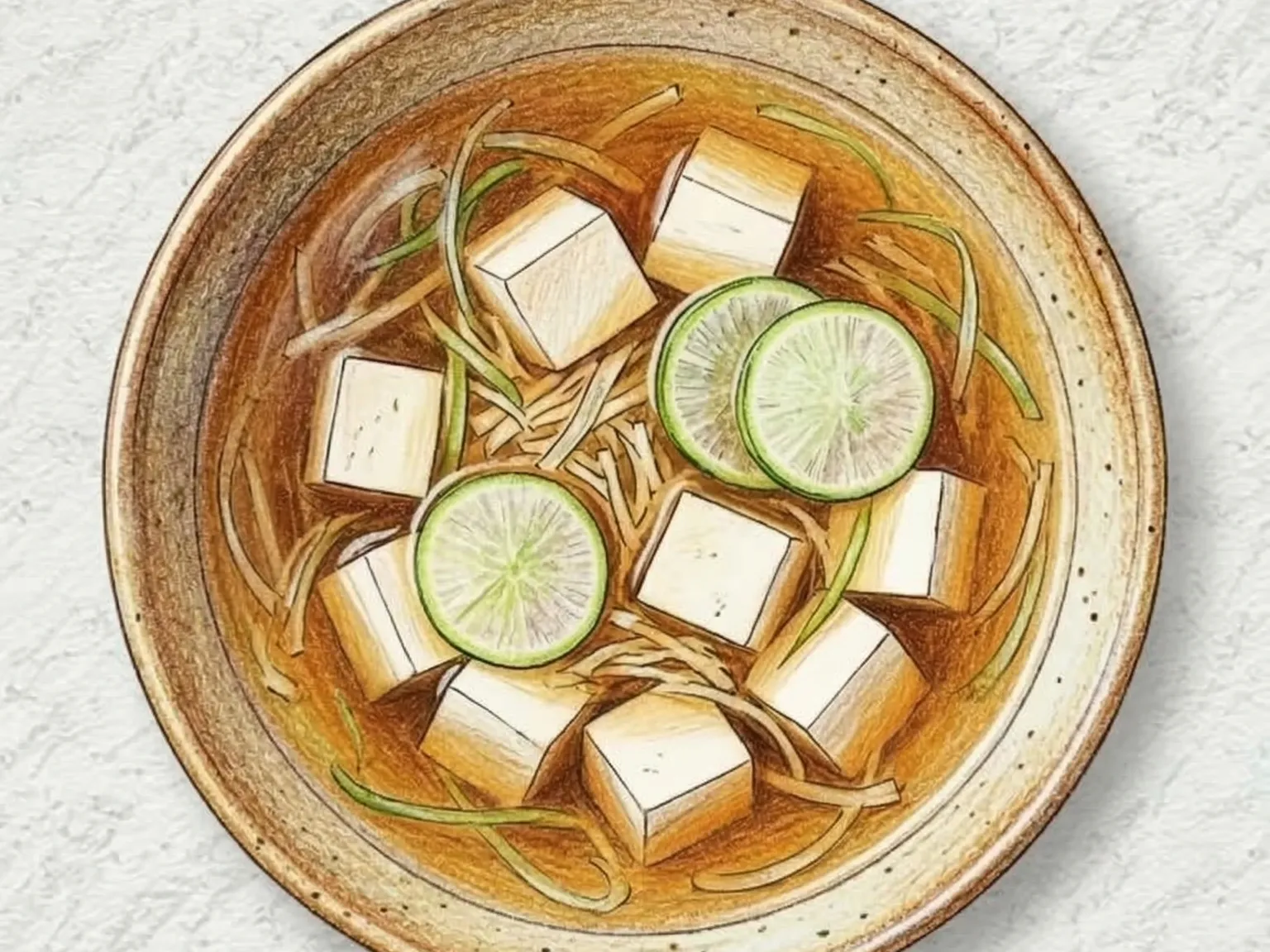
Dubu guk is a plain Korean tofu soup, also called dubu jangguk, made with tofu, radish, shiitake mushrooms, and soup soy sauce in a clear broth. It is different from spicy sundubu jjigae: this version stays light, clean, and soy-seasoned. Radish simmers first to sweeten the broth, then shiitake and garlic add enough umami for a simple home soup. Tofu goes in last so the cubes stay tender and clean-edged instead of breaking apart. Use this recipe when you want a mild Korean tofu soup with clear broth rather than a chili-heavy stew.
Tokyo-Style Shoyu Ramen (Classic Japanese Soy Sauce Chicken Broth Ramen)
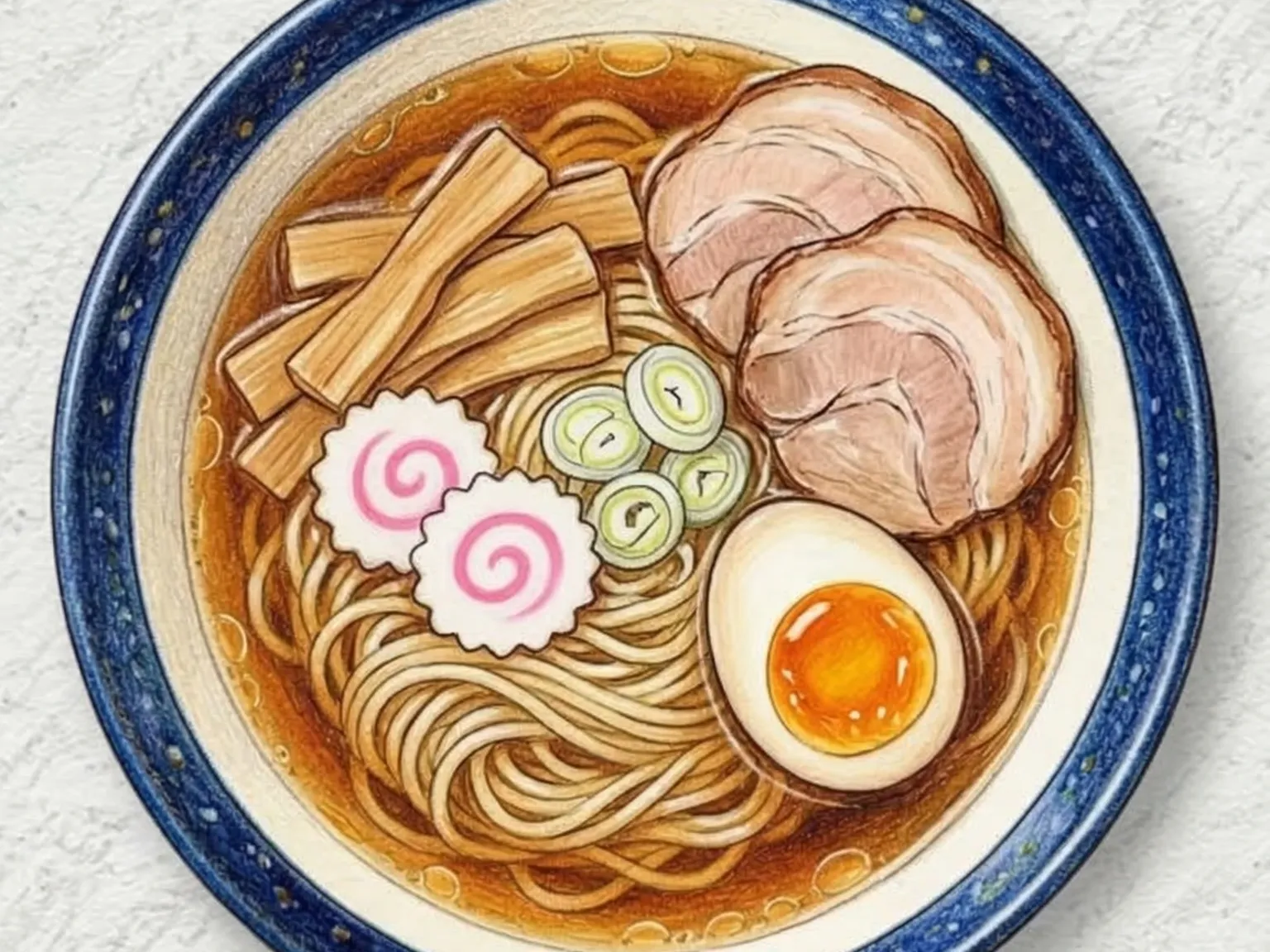
Tokyo-style shoyu ramen is considered the closest descendant of the original ramen that appeared in Japan over a century ago. The broth starts with chicken carcasses simmered until the liquid turns a warm amber, then seasoned with kaeshi - a concentrated blend of soy sauce, mirin, and sugar that has been cooked and rested. A thin film of chicken fat floats on the surface, trapping heat and delivering a gentle richness with each spoonful. The noodles are thin and straight, designed to be slurped quickly before they soften, and their wheat flavor stands distinct against the soy-tinged broth. Classic toppings include narutomaki fish cake with its pink spiral, strips of menma, a halved soft-boiled egg, and a sheet of nori. The bowl is intentionally restrained - no heavy pork fat, no thick miso - letting the clarity of the soy-chicken combination speak for itself.
Korean Tofu Hot Pot (Tofu & Beef Kelp Broth Pot)
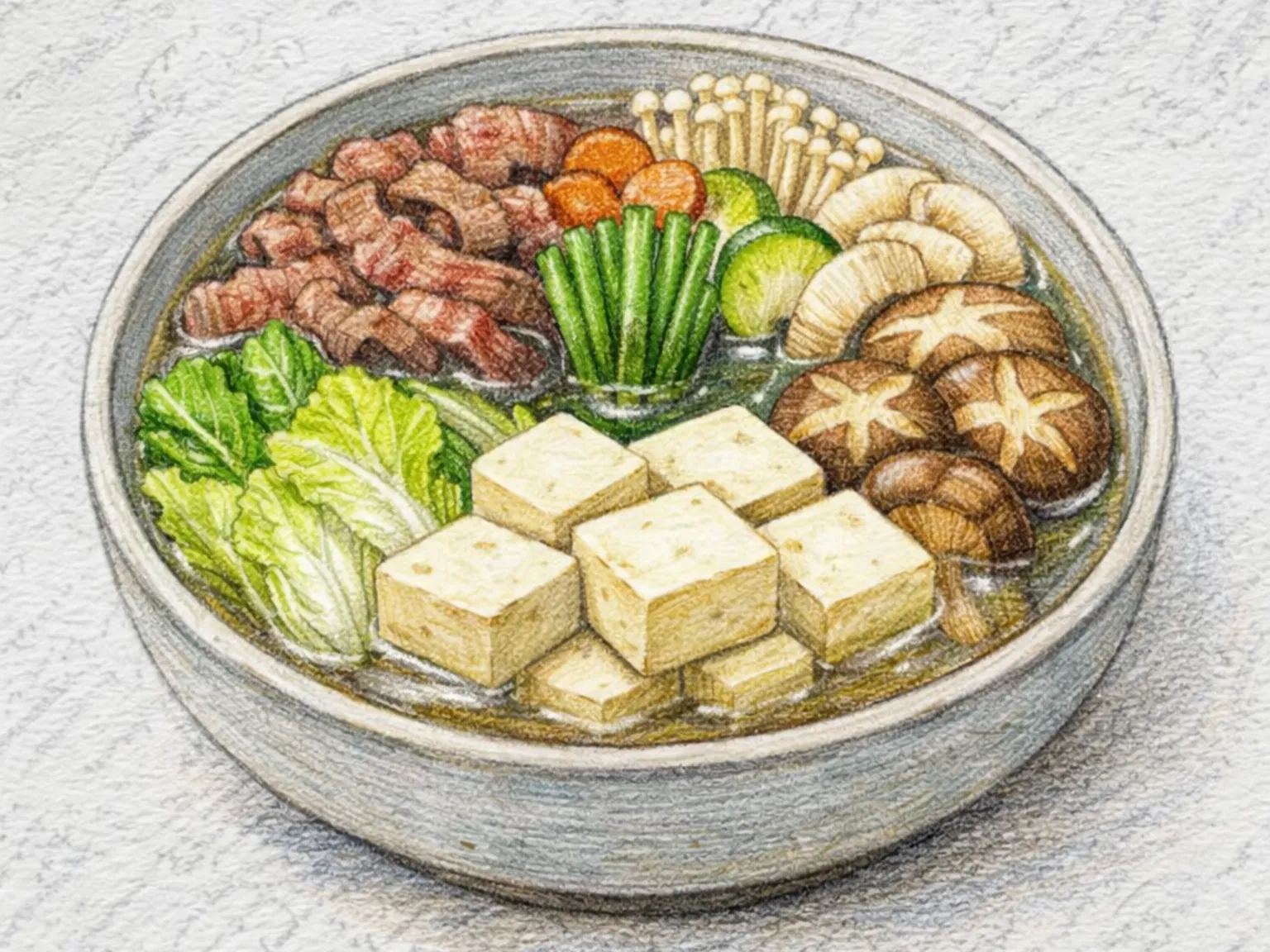
Dubu jeongol is a Korean hot pot centered on tofu and beef simmered in kelp broth at the table. Shiitake mushrooms contribute a deep savory note, while napa cabbage and green onion add freshness and textural variety. The broth is seasoned with soup soy sauce, keeping it light and clear enough to let each ingredient's flavor come through without becoming heavy. Thin-sliced or ground beef works equally well; marinating it briefly in soy sauce and minced garlic before adding it to the pot layers the broth with additional depth. Pan-frying the tofu slices lightly in oil before placing them in the jeongol prevents them from breaking apart during the long simmer and gives each piece a slightly firmer exterior. Traditionally served bubbling directly on the table, this is a communal dish meant to be eaten at a relaxed pace, with diners adding broth and pieces to their own bowls throughout the meal.
Korean Dried Radish Greens Doenjang Kalguksu
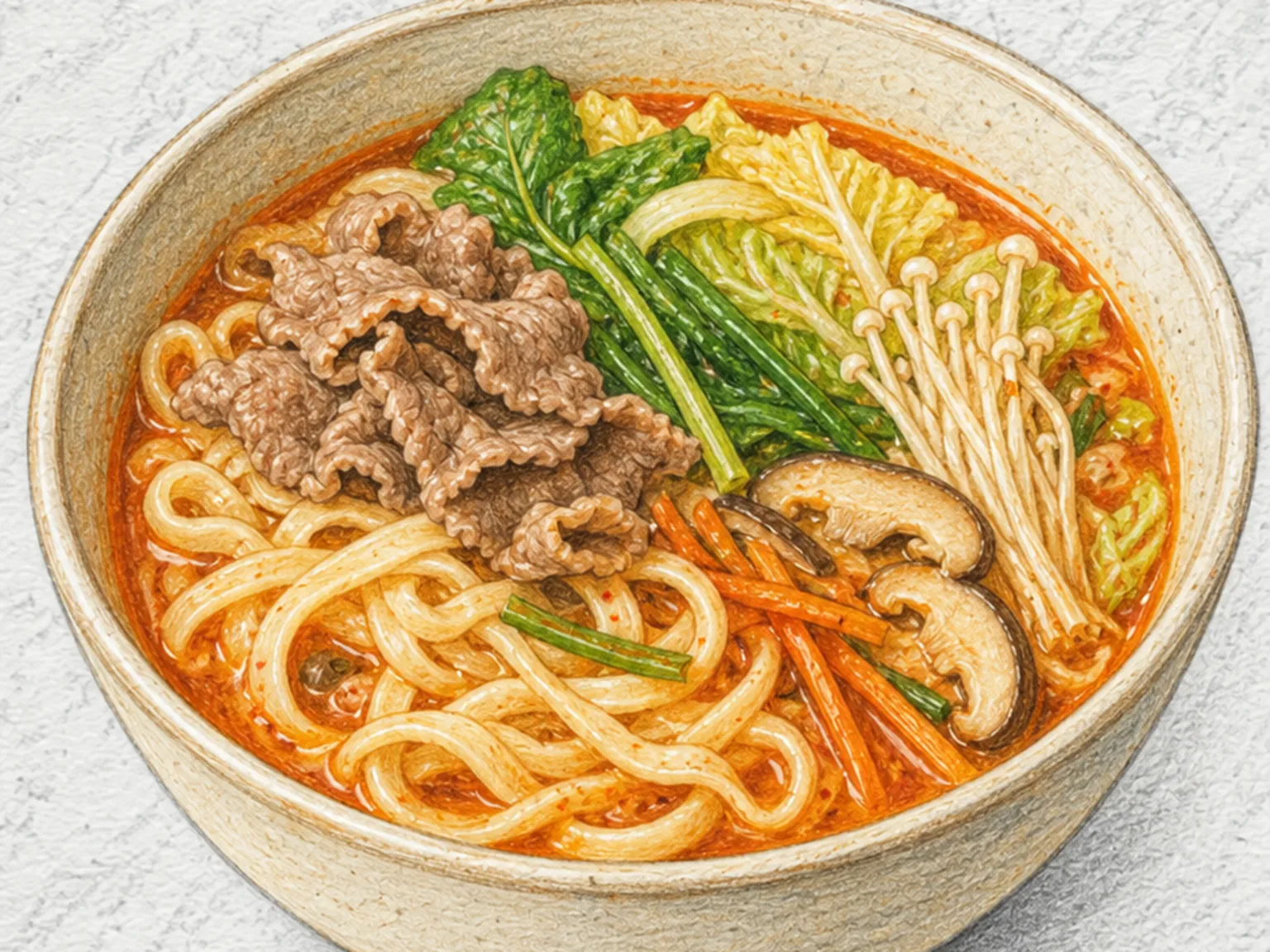
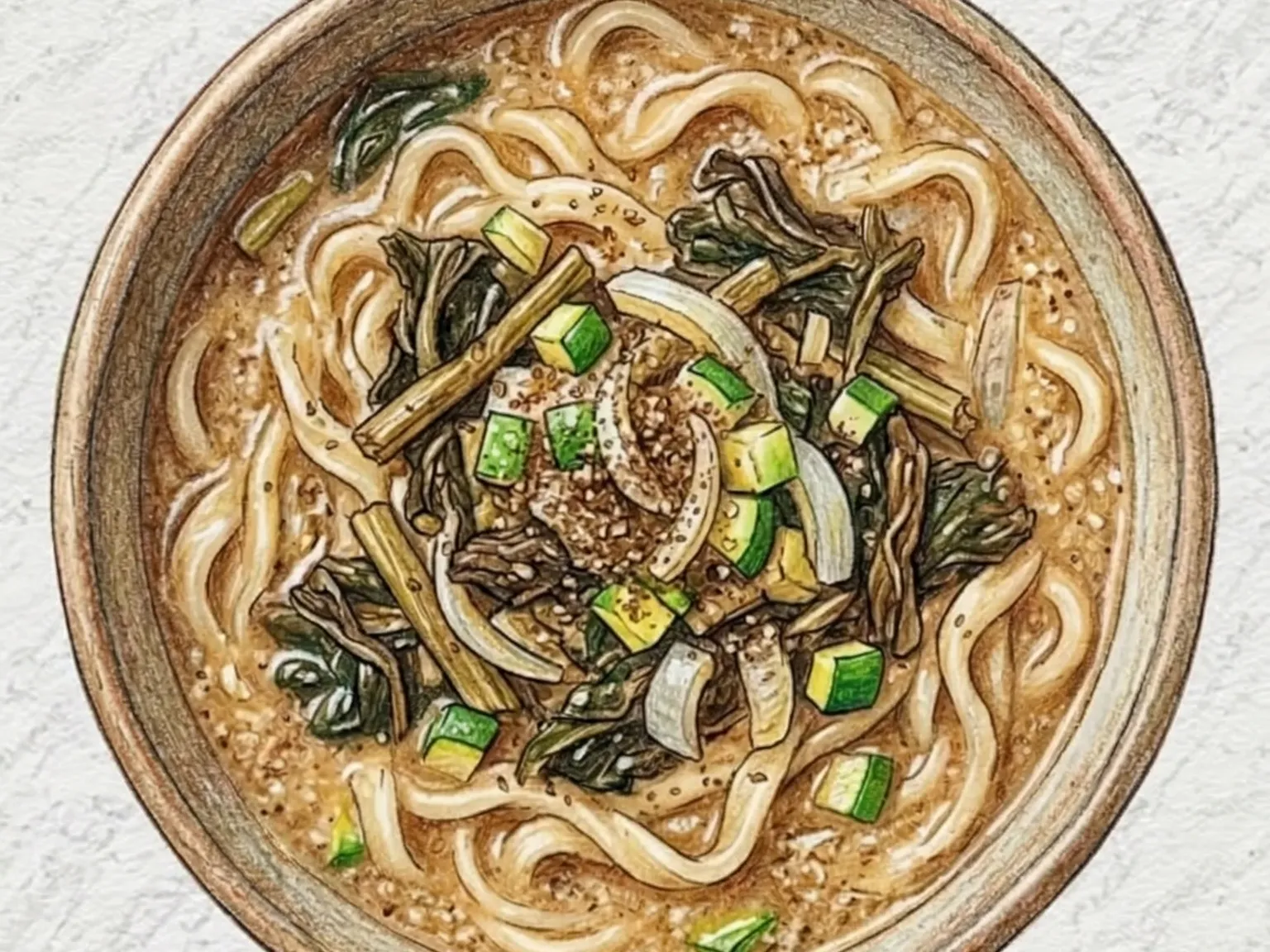
This noodle soup features dried radish greens and soybean paste in a base of anchovy and kelp stock. The fermented soybean paste provides a savory foundation while the radish greens add an earthy bitterness. Adding onion and zucchini during the simmering process introduces a natural sweetness that balances the saltiness of the paste. A spoonful of perilla seed powder at the end gives the broth a toasted, nutty finish. Fresh kalguksu noodles thicken the soup as they cook, taking on a chewy yet soft texture. To ensure a clean taste and better texture, the radish greens are boiled, rinsed in cold water, and squeezed before being added to the pot. Toasting the dried anchovies in the pot before adding water removes any fishy scents from the stock. Since different types of soybean paste vary in saltiness, it helps to add the paste in small increments while tasting. Mixing in a small amount of cheonggukjang provides a stronger fermented character to the finished soup.
Dubu Kkaennip-guk (Tofu Perilla Leaf Soup)
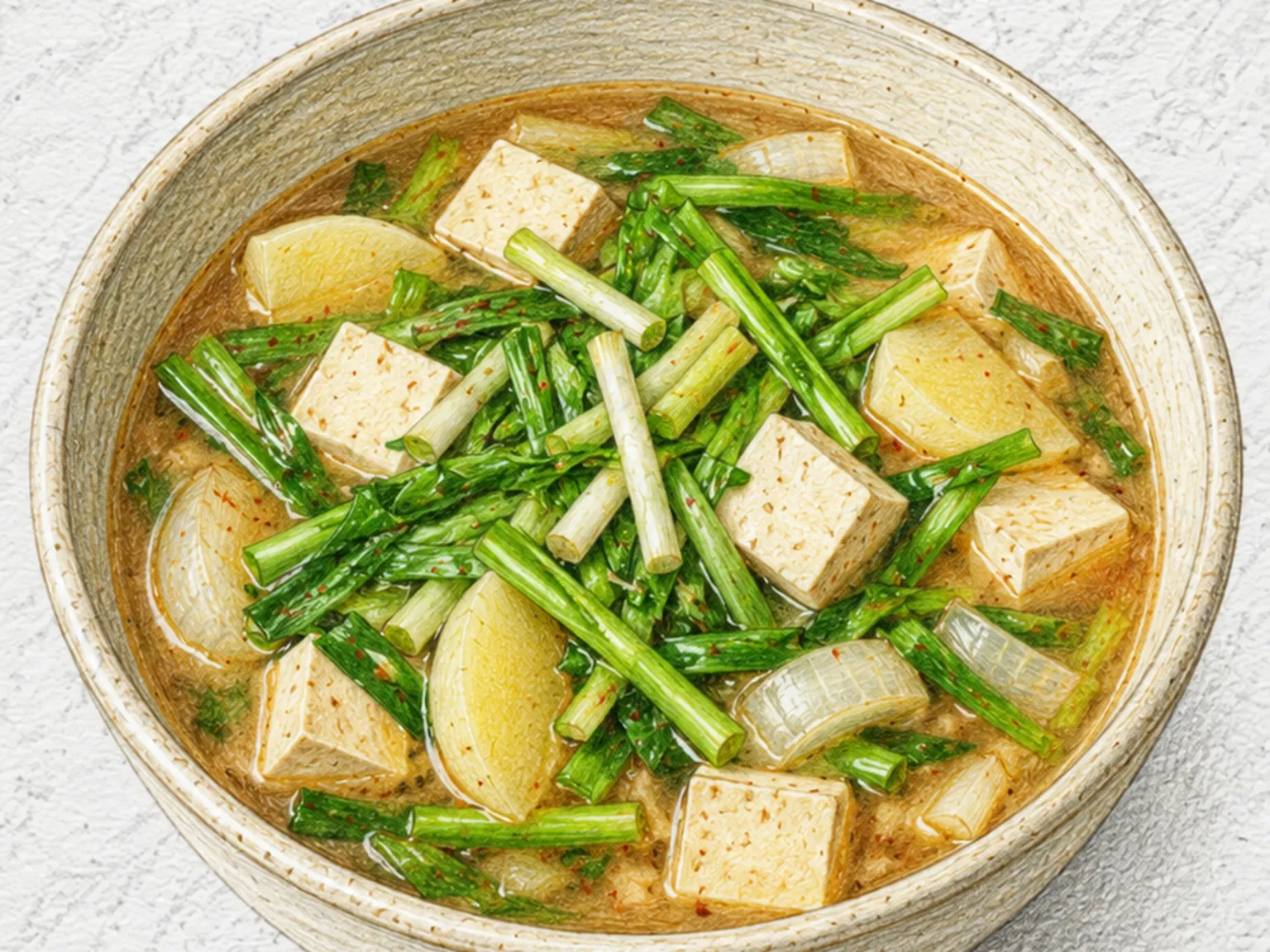
Dubu-kkaennip-guk is a Korean tofu and perilla leaf soup in anchovy broth, finished with chiffonaded perilla leaves that release a bright, minty-herbal fragrance into the clear liquid. Zucchini and onion simmer first to build a vegetable-sweetened base, releasing their natural sugars into the anchovy stock. Large scoops of soft tofu - spooned rather than knife-cut, so the rough surfaces trap more broth - warm through over medium heat for five minutes. The perilla leaves must go in during the last thirty seconds before serving: any longer and they turn dark and lose the sharp aromatic freshness that defines the dish. Soup soy sauce and a light dusting of black pepper complete the seasoning, letting the clean anchovy umami and the herbal lift of the kkaennip share the stage without one overpowering the other. Cooking the zucchini fully soft is important - its gentle sweetness needs time to dissolve into the broth, and when the tofu and vegetables together hold the liquid, each spoonful carries varied texture.
About Soups
The secret to a great Korean soup lies in building a flavorful stock from anchovies, kelp, or beef bones. This collection covers classic and modern soup recipes you can recreate at home.