Kimchi

Kimchi Recipes

163 recipes. Page 6 of 7

Kimchi is Korea's iconic fermented food, and there are dozens of varieties beyond the familiar napa cabbage version - cubed radish (kkakdugi), ponytail radish (chonggak), green onion (pa-kimchi), and young radish (yeolmu), to name a few. Jangajji (Korean pickles) are made by preserving vegetables in soy sauce, vinegar, or gochujang.

Kimchi
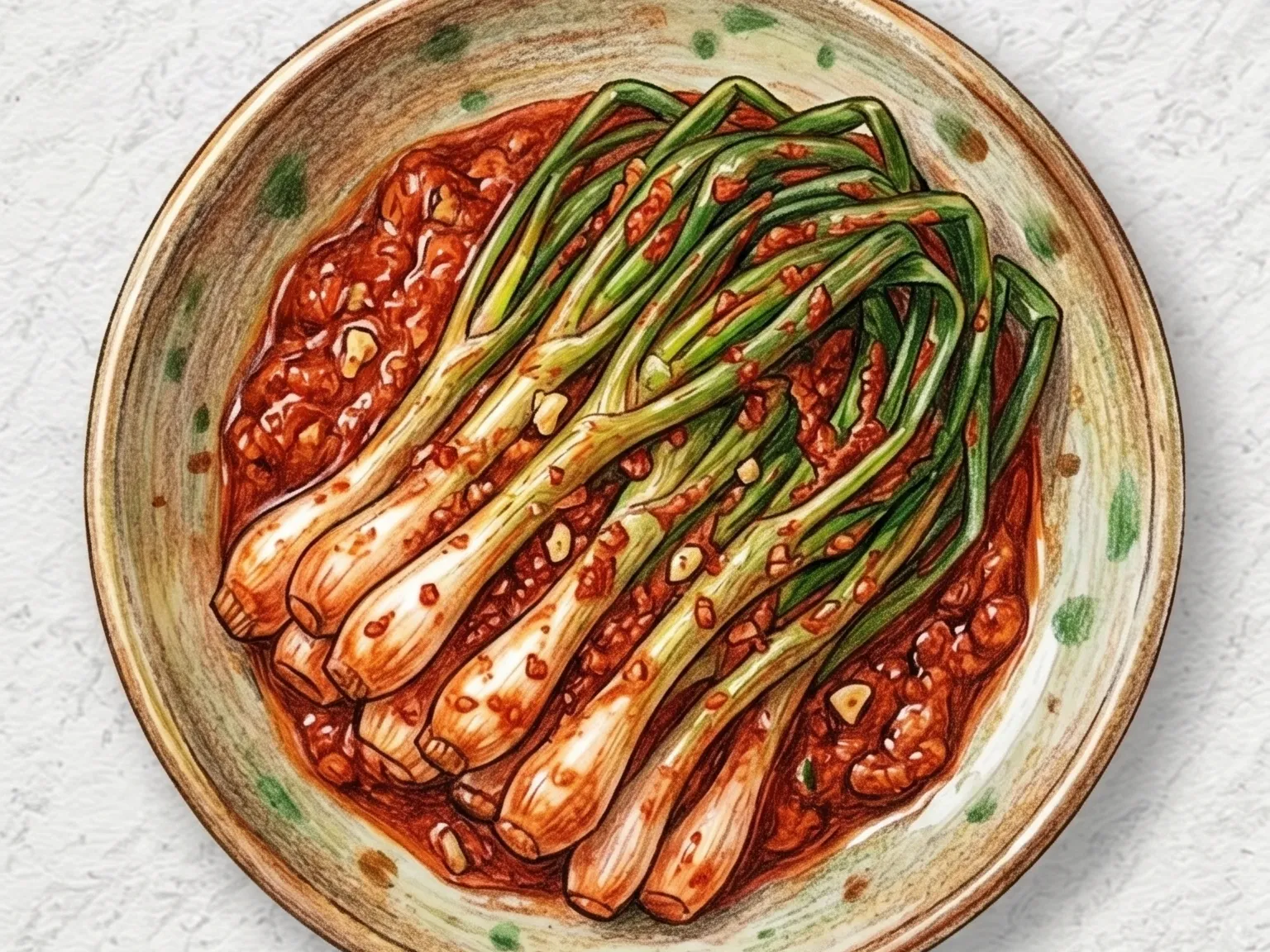
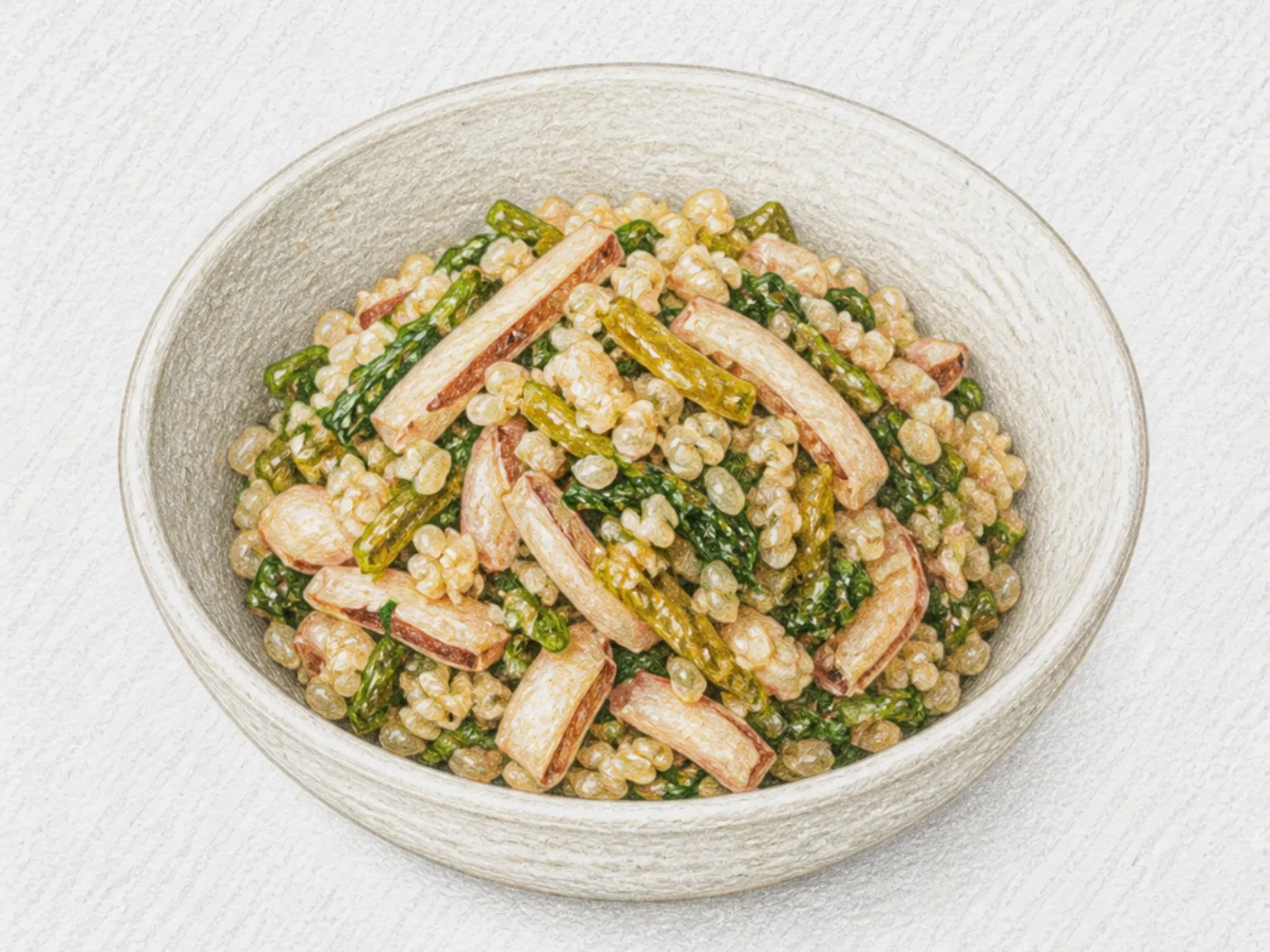
Korean Green Onion Kimchi
Kimchi Easy

Korean Green Onion Kimchi

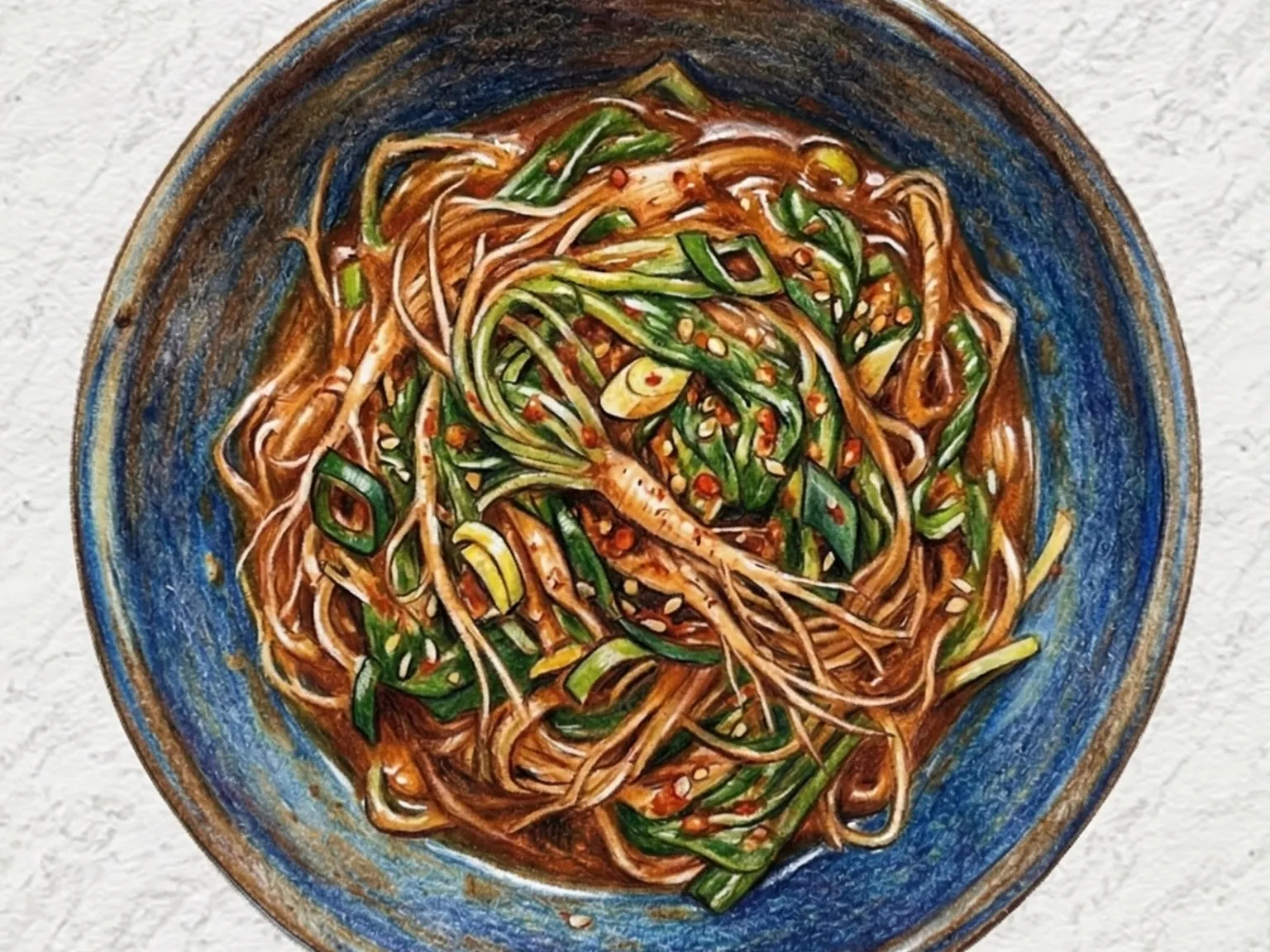
Pa-kimchi uses whole large green onions, salted for 30 minutes to soften their sharp bite and loosen the fibers so the seasoning can penetrate deeply. The paste - red pepper flakes, fish sauce, and minced garlic - coats each stalk in a layer of spicy, briny flavor. One day of room-temperature fermentation allows the lactic acid bacteria to develop, blending the onion pungency with the umami of the fish sauce into a more rounded profile. After transferring to the refrigerator, the kimchi continues to mature over two to three days, gaining a mild tanginess that intensifies with each passing day.

🏠 Everyday 🍱 Lunchbox
Prep 30min 4 servings
Korean Mustard Greens Pickle
Kimchi Easy

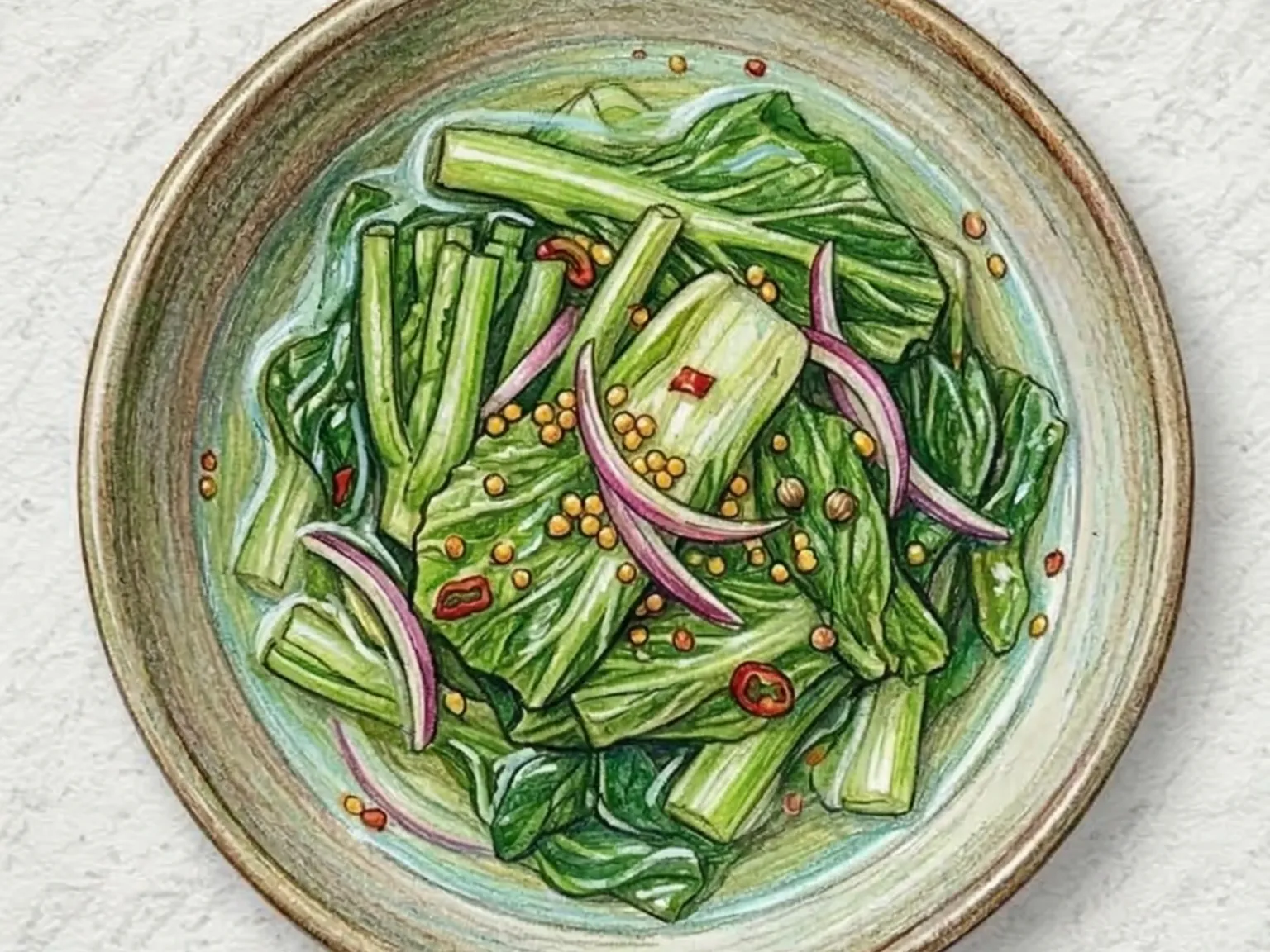
Korean Mustard Greens Pickle

Paeju mustard pickle is a quick vinegar preserve where mustard greens are cut into roughly four-centimeter pieces, packed into jars with sliced garlic, and submerged in a hot brine of vinegar, water, sugar, salt, and lemon juice. Mustard greens hold on to their peppery, nasal bite even after pickling, layering that natural heat against the sharp acidity of the brine. Lemon juice is added only after the heat is turned off, preserving the citrus aroma that would otherwise evaporate during boiling. Thicker stems absorb the brine more slowly than the leaves, so separating them and salting the stems first gives a more uniform texture throughout. The pickles are ready after twelve hours of refrigeration, but a full day of resting allows the brine to penetrate to the center of each piece and the flavors to settle into a rounder balance. Served alongside fatty meats, their peppery acidity cleans the palate effectively; tucked into a sandwich, they stand in for mustard with more complexity.

🍱 Lunchbox ⚡ Quick
Prep 12min Cook 6min 2 servings
Korean Bell Pepper Pickles
Kimchi Easy

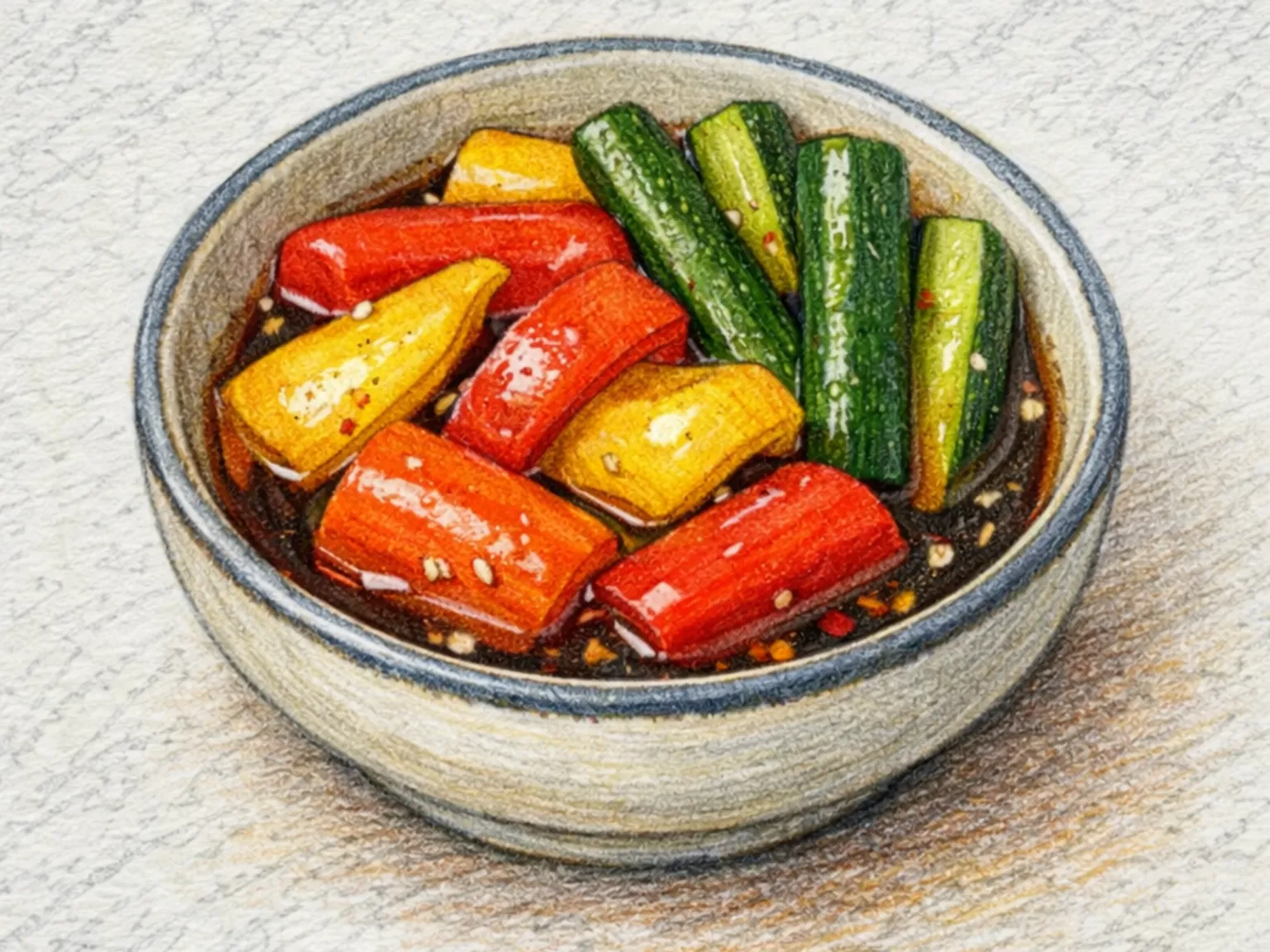
Korean Bell Pepper Pickles

Papeurika jangajji is a Korean soy-vinegar pickle made by cutting red and yellow bell peppers and cucumber into two-centimeter strips, layering them in a sterilized glass jar, and pouring over a hot brine of soy sauce, vinegar, water, sugar, and whole peppercorns. The peppers' thick flesh absorbs the brine gradually while holding a firm, satisfying crunch throughout, and their natural vegetable sweetness forms a precise three-way balance with the salty soy and tart vinegar. Whole peppercorns leave a faint, lingering spice at the finish that keeps each bite interesting, and the vivid red-and-yellow colors make these pickles a clear visual accent on the table. The pickles are edible from the next day, but the flavor is at its best after two to three days once the brine has fully penetrated to the center. Leaving out the cucumber reduces moisture release and extends refrigerator life to more than two weeks. Any leftover brine works well as a salad dressing, so nothing goes to waste.

🏠 Everyday 🍱 Lunchbox
Prep 15min Cook 10min 2 servings
Fresh Whole Cabbage Kimchi
Kimchi Medium

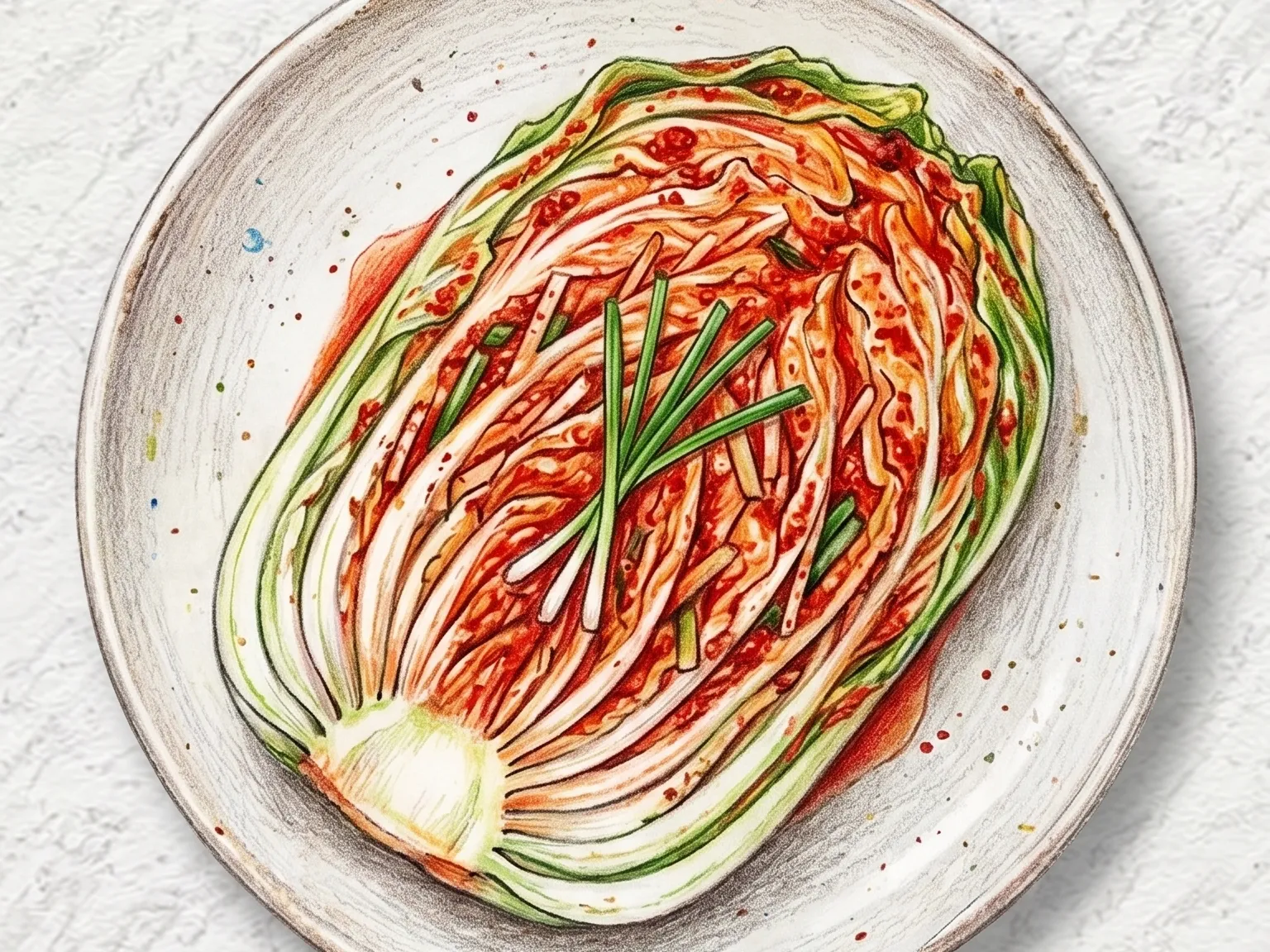
Fresh Whole Cabbage Kimchi

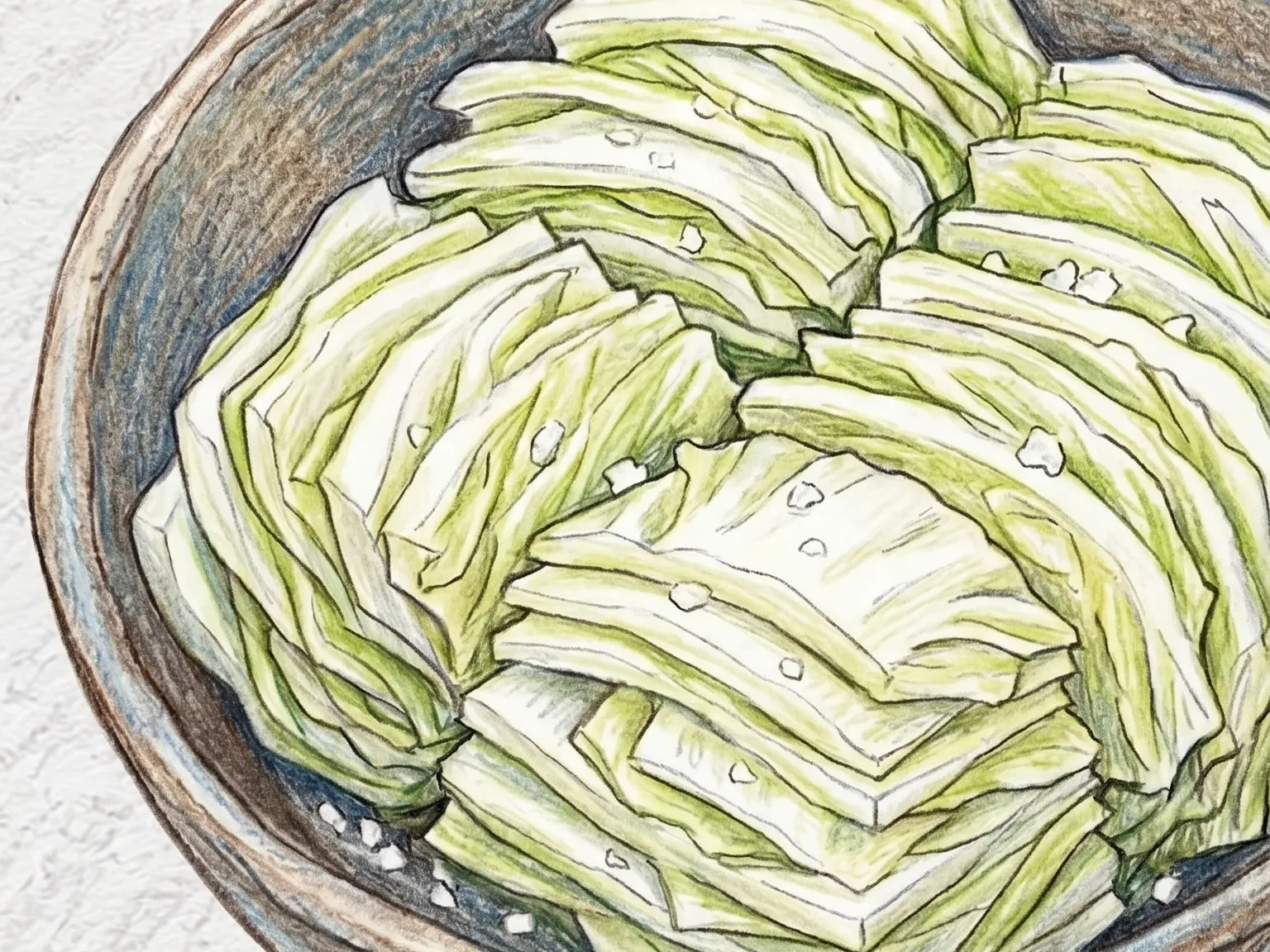
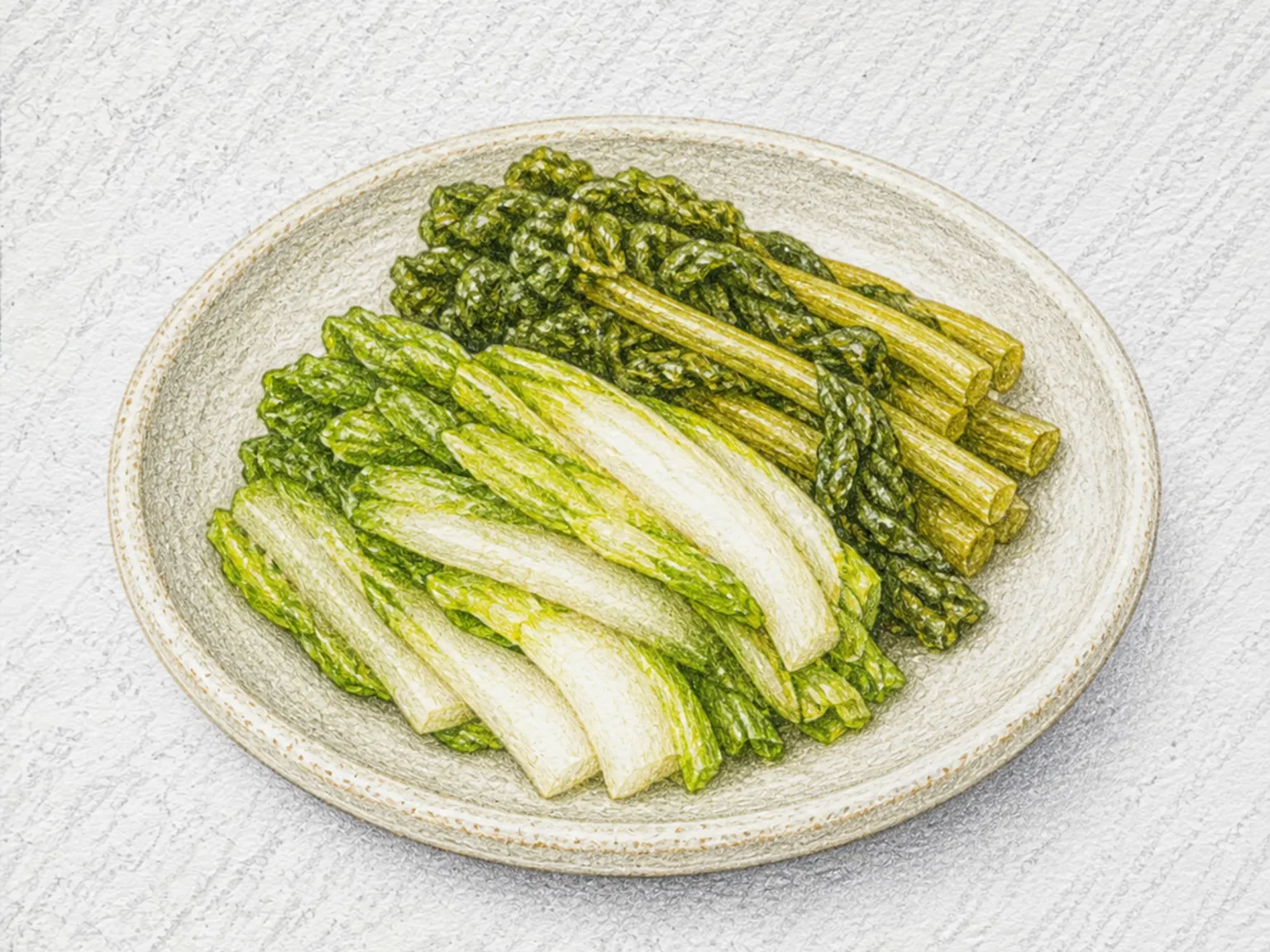
Fresh whole cabbage kimchi is a side dish prepared by mixing fresh, unsalted napa cabbage directly with spicy seasoning to deliver a sharper and crisper texture than fermented versions. Cleaned napa cabbage leaves are torn lengthwise and combined with a seasoning paste made of chili flakes, anchovy fish sauce, minced garlic, ginger, and plum extract. The addition of plum extract provides an enzymatic sweetness and deep flavor without requiring any fermentation time. Green onions cut into four to five centimeters and sesame seeds are folded in gently at the end. To enjoy the firm texture without the dish becoming watery, it should be consumed immediately after mixing when the cabbage cells are still intact. This salad-like kimchi offers a refreshing, spicy, and immediate taste.

🔥 Trending Now 🥗 Light & Healthy
Prep 40min Cook 15min 4 servings
Korean Pickled Ginger in Soy-Vinegar Brine
Kimchi Easy

Korean Pickled Ginger in Soy-Vinegar Brine

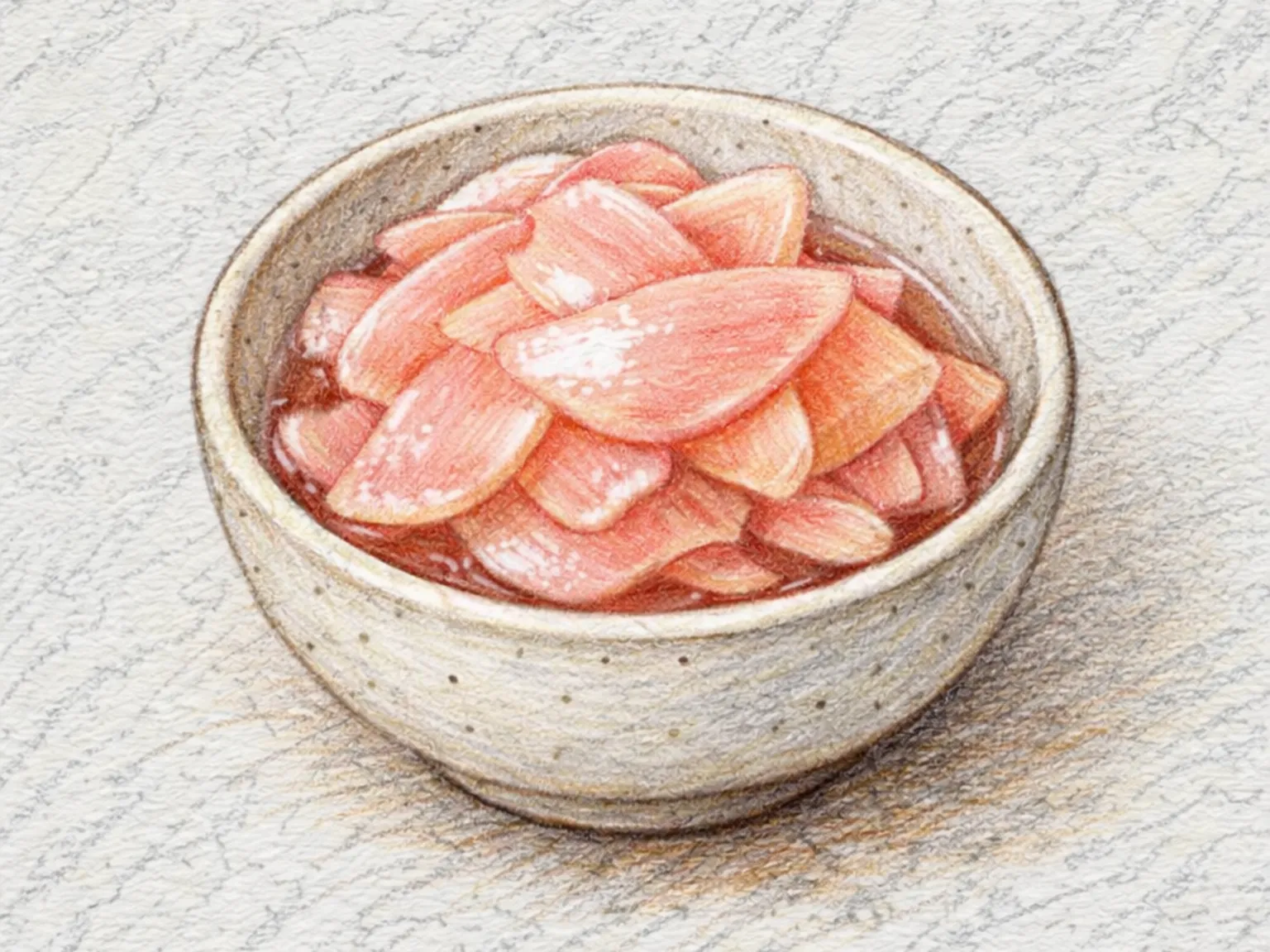
Saenggang jangajji is a traditional Korean soy-and-vinegar pickled ginger built on one precise technique: peeling fresh ginger, slicing it as thin as possible, blanching the slices for exactly thirty seconds to blunt their raw bite without stripping fragrance, then submerging them in a hot brine of soy sauce, vinegar, water, and sugar. The brief blanch relaxes the tough fibers enough for the brine to penetrate while keeping the aromatic compounds intact. After three days of cold fermentation the sweet, salty, and sour brine soaks through every thin slice, and the sharp initial heat softens into a mellow, rounded warmth. One slice eaten alongside rice cleanses the palate between mouthfuls, and placed next to fatty cuts like pork belly or boiled pork, the pickle's acidity cuts through the grease with clarity. Blanching beyond thirty seconds dissolves the essential oils that give ginger its fragrance, which is why the timing is non-negotiable. Cutting the ginger thinner accelerates brine penetration and shortens the required aging time, and adding a single cheongyang pepper to the brine layers a clean, bright heat over the ginger's natural warmth.

🍱 Lunchbox 🏠 Everyday
Prep 20min Cook 8min 4 servings
Korean Salt-Fermented Tiny Shrimp
Kimchi Medium

Korean Salt-Fermented Tiny Shrimp

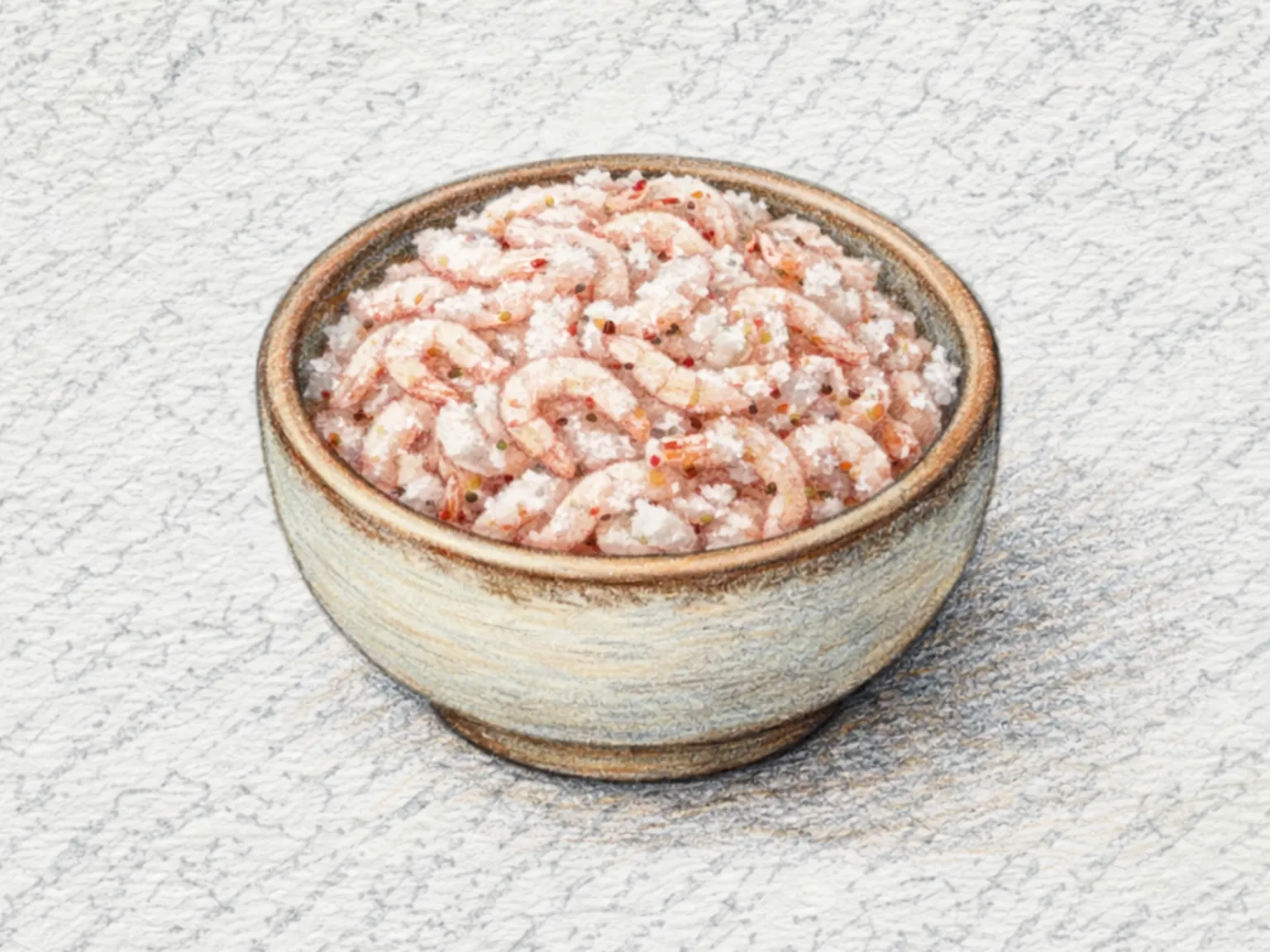
Saeujeot is a Korean salt-fermented tiny shrimp condiment made by mixing small shrimp evenly with sea salt, packing the mixture tightly into a sterilized jar, and fermenting under refrigeration for a minimum of two weeks. Salt draws moisture from the shrimp and initiates enzymatic breakdown of the proteins, gradually transforming the raw fishiness into concentrated amino acids and the deep, savory umami that forms the backbone of kimchi seasoning and Korean stew bases. Rice wine and ginger juice are added to suppress the off-flavors that develop during the early, volatile stages of fermentation before the lactic acid bacteria have established dominance. A small amount of chili flakes contributes a faint background warmth. The most critical step before salting is removing as much surface moisture as possible after rinsing the shrimp, since excess water dilutes the brine concentration and creates conditions for spoilage bacteria. The salt ratio should fall between 20 and 25 percent of the shrimp's weight: too high and the result is harsh and one-dimensional, too low and safety becomes a concern during the long cure. Only clean, dry utensils should ever touch the jar to prevent contamination that would undermine months of careful fermentation. Saeujeot fermented for six months or longer develops a rounded complexity absent in younger batches. In Korea, the harvest season determines the name and character of the product: ojot from May, yukjeot from June, and chujeot from autumn each carry a distinct flavor profile suited to different culinary uses.

🍱 Lunchbox ⚡ Quick
Prep 20min 4 servings
Korean Lettuce Kimchi (Quick Leaf Gochugaru Dressed)
Kimchi Easy

Korean Lettuce Kimchi (Quick Leaf Gochugaru Dressed)

Sangchu kimchi is a quick Korean lettuce kimchi that starts with leaf lettuce torn into bite-sized pieces, salted lightly for ten minutes to relax the leaves without fully collapsing them, then tossed in a seasoning of gochugaru, sand lance fish sauce, minced garlic, vinegar, and sugar. As the lettuce absorbs the dressing it softens, but eating it before it fully wilts keeps a faint crispness at the leaf edges along with the lettuce's characteristic mild bitterness. The fermented depth of the fish sauce adds weight to the lettuce's grassy, clean flavor, while vinegar contributes a bright, tangy finish that cuts through the richness. Sesame seeds scattered through the mix give a faintly toasted crunch with each bite. Drying the leaves thoroughly after salting is the step that most directly controls flavor: any residual water dilutes the seasoning rapidly and turns the kimchi watery and dull within an hour or two. This kimchi is best made moments before serving and eaten immediately while the textures are still distinct. A small amount of ssamjang folded in adds a deeper, earthy fermented note for variation.

🍱 Lunchbox ⚡ Quick
Prep 20min 2 servings
Sango-Hachi-Zuke (Rice Koji Vegetable Pickles)
Kimchi Medium

Sango-Hachi-Zuke (Rice Koji Vegetable Pickles)

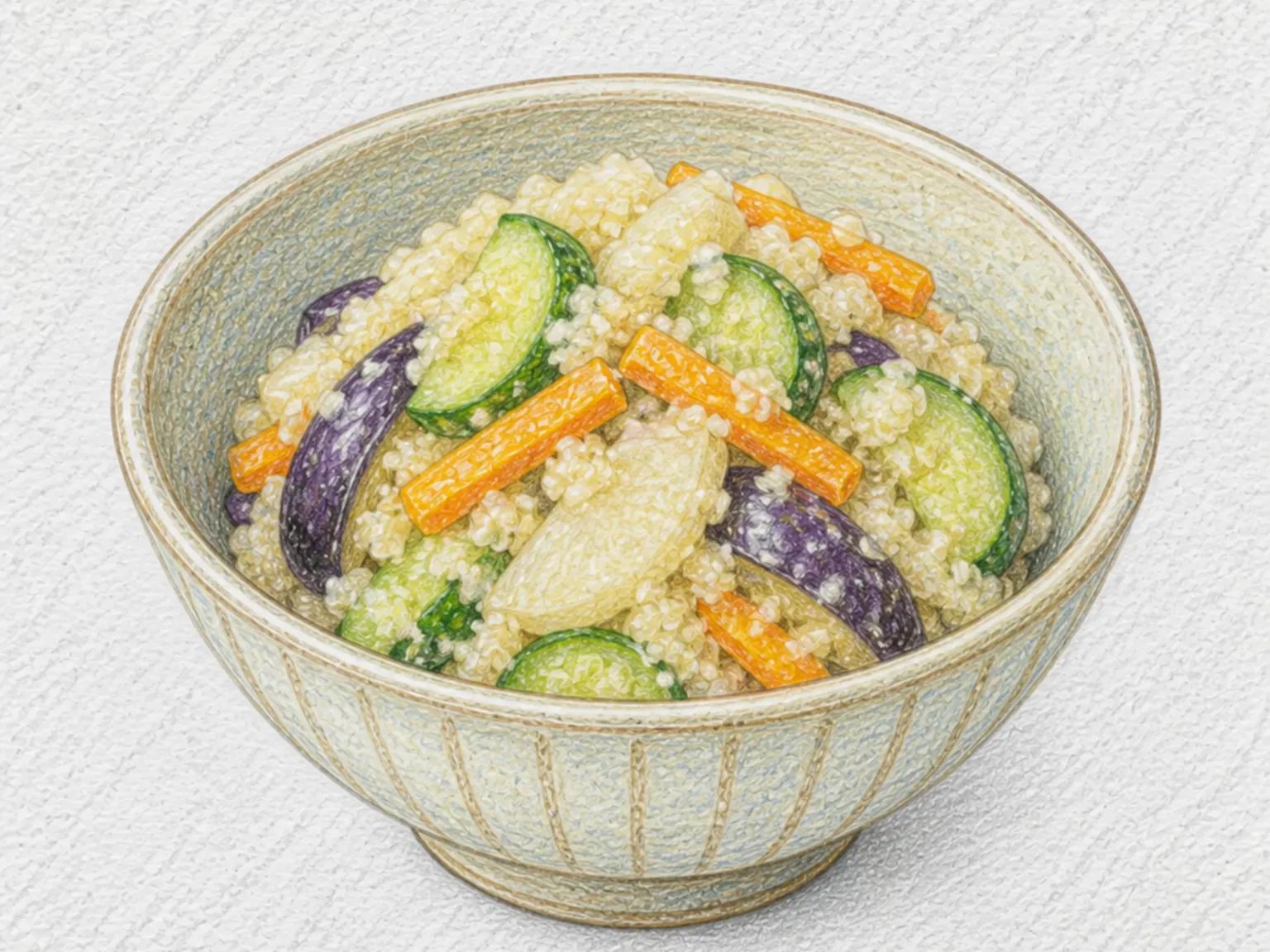
Sango-hachi-zuke is a rice-koji pickle from Nihonmatsu, Fukushima. Cooked rice is cooled to about body temperature, mixed with rice koji and salt, and matured for at least one month to make a reusable pickling bed. Cucumber, carrot, eggplant, turnip, or other vegetables are coated with that bed and left overnight. 5 cup salt rather than a literal scaled version of those numbers. Cooling the rice before adding koji and breaking up every clump makes the bed even. The pickles helped farming households preserve abundant vegetables and provided a ready side dish during the busy rice-planting season.

🏠 Everyday
Prep 30min Cook 40min 4 servings
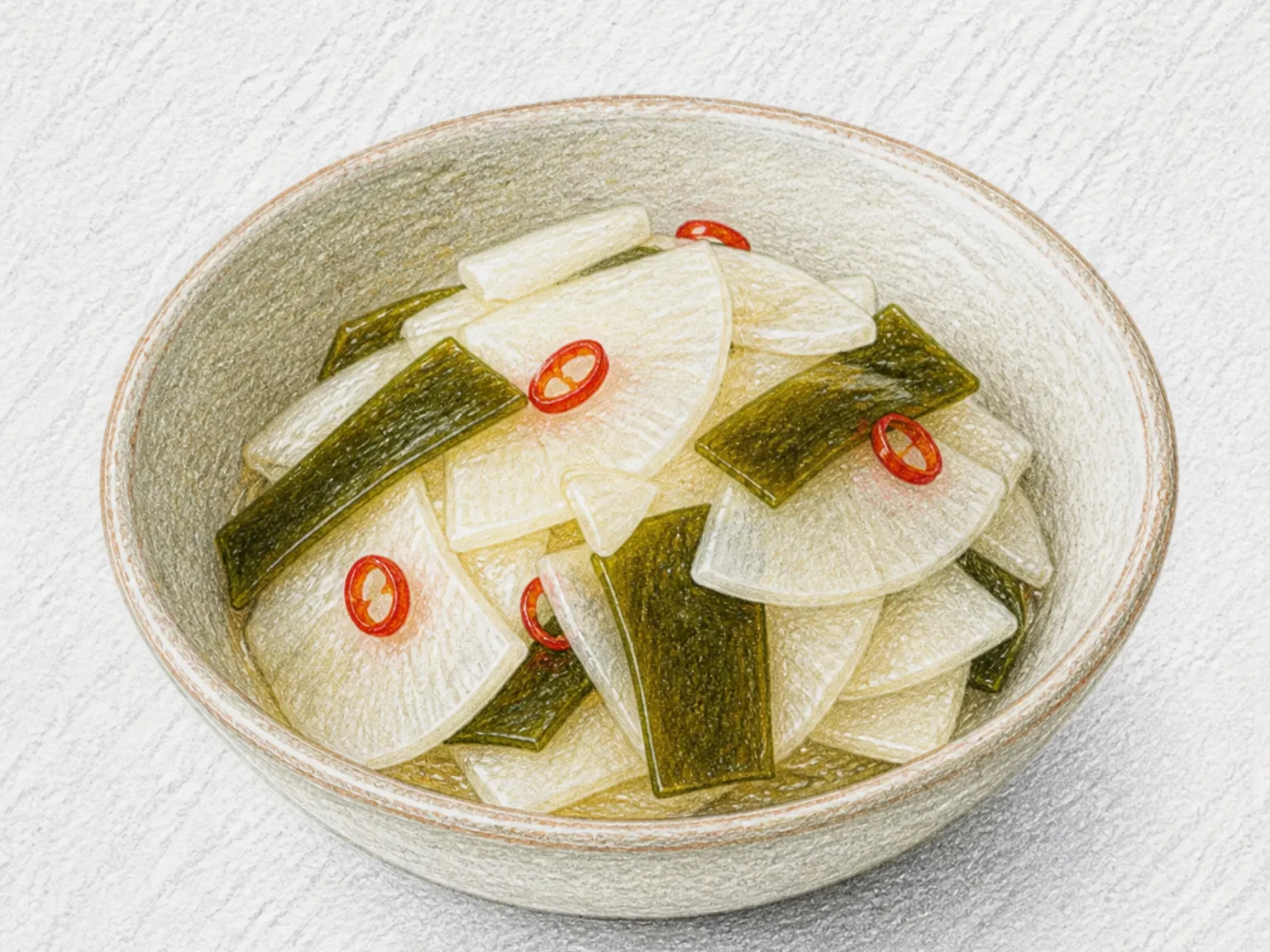
Senmaizuke (Thin Turnip and Kombu Pickle)
Kimchi Easy

Senmaizuke (Thin Turnip and Kombu Pickle)

Senmaizuke is a Kyoto pickle of large Shogoin turnip peeled deeply, sliced to 2mm, salted under weight for one day, then layered with kombu and chili in a cooled sweet vinegar of sugar and mirin for another day. Its name evokes the many paper-thin slices, literally a thousand sheets. Unlike long-keeping lactic pickles, this form is a short cure intended to preserve the turnip's fresh, tender crunch. Kombu gives the brine light viscosity and savory depth, while chili leaves a clean finish rather than strong heat.

🏠 Everyday 🥗 Light & Healthy
Prep 25min Cook 5min 4 servings
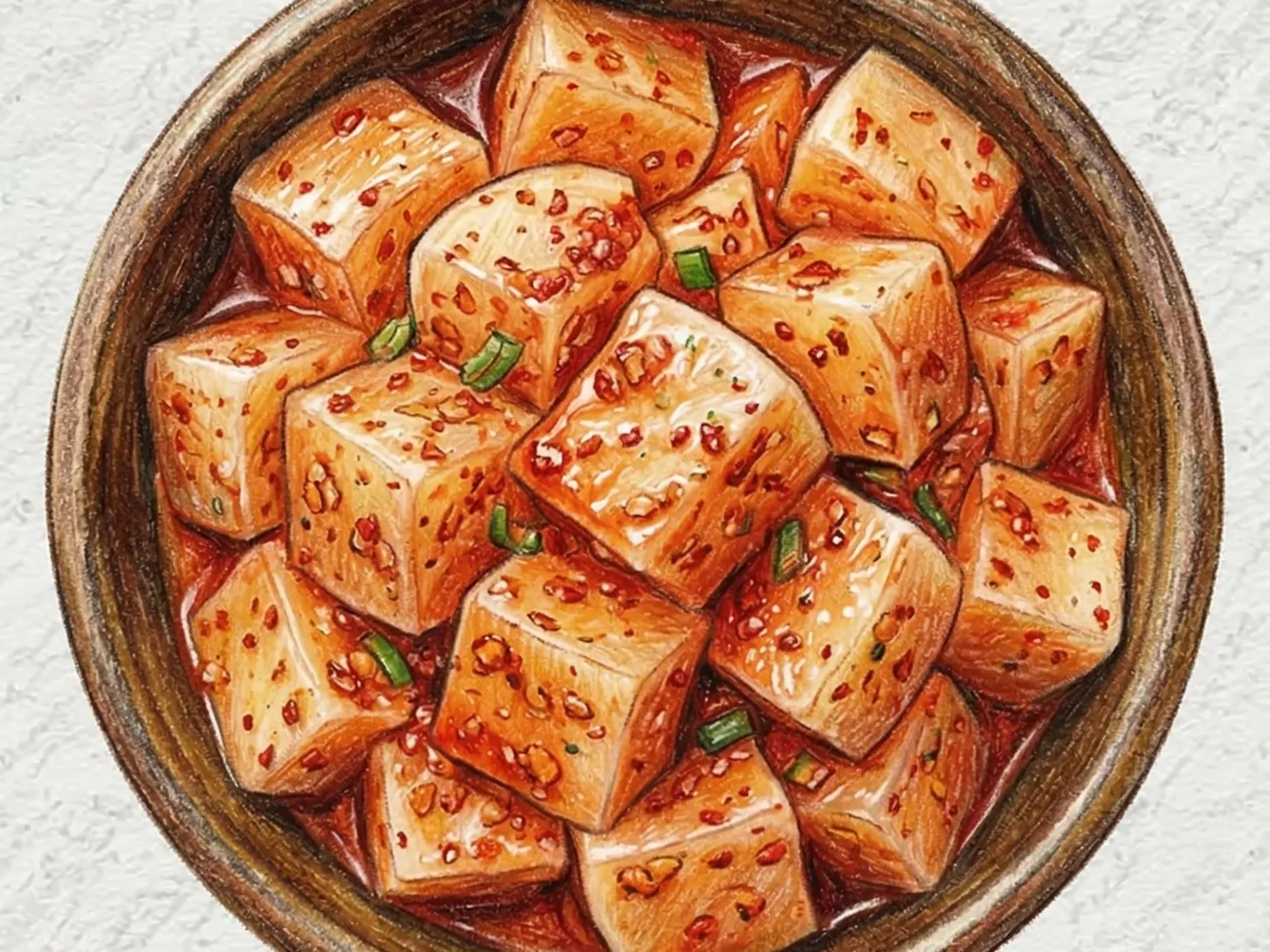
Korean Seokbakji Radish Kimchi
Kimchi Easy

Korean Seokbakji Radish Kimchi

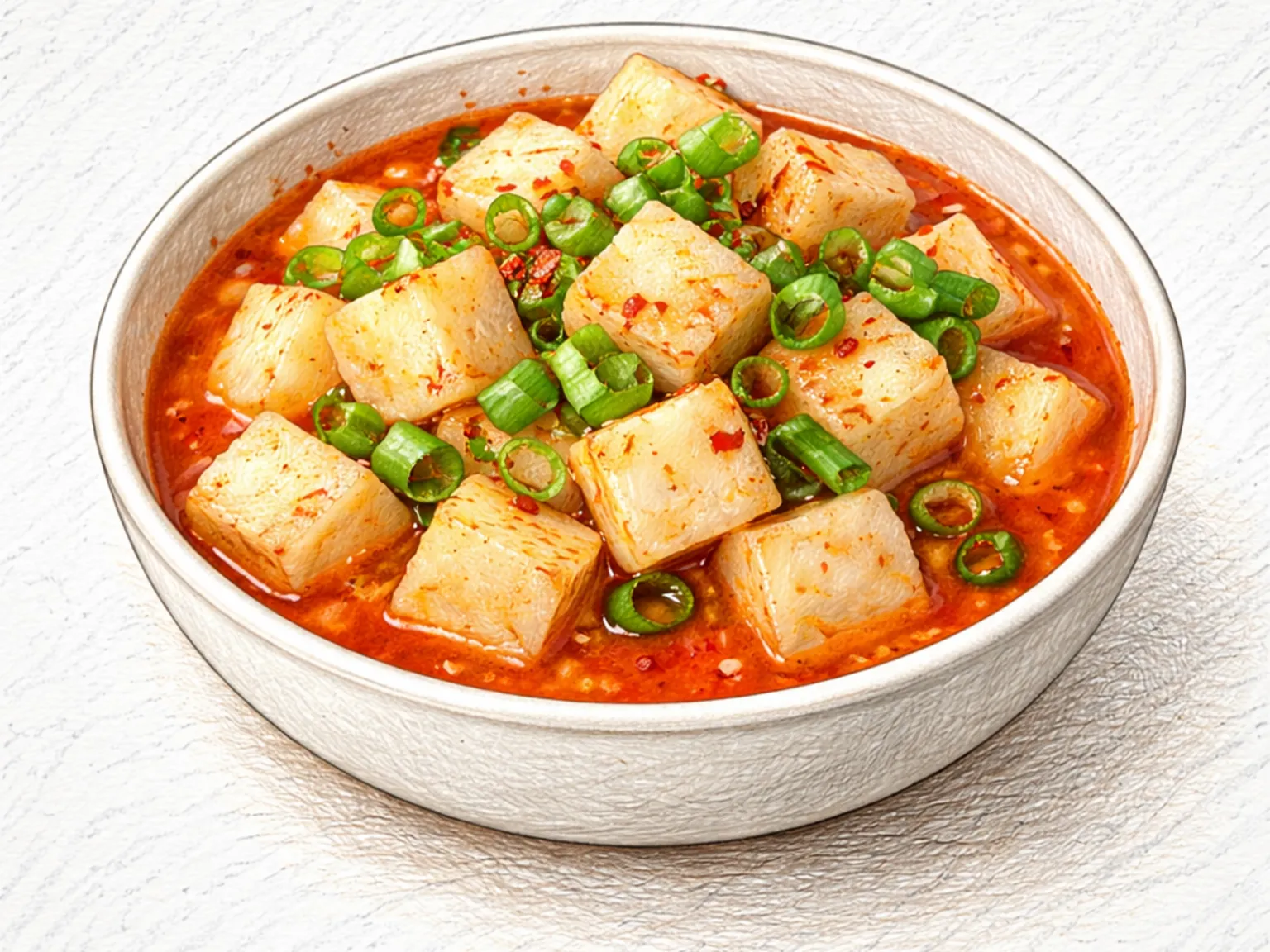
Seokbakji is a traditional Korean radish kimchi in which large-cut radish cubes are salted for one hour, drained, and tossed with a seasoning of gochugaru, salted shrimp, minced garlic, ginger, and scallion pieces before being set aside to ferment. The size of the radish pieces is the most important factor in this kimchi - smaller cuts turn mushy during fermentation as salt and acid break down the cell structure, while large cubes maintain their firm, satisfying crunch throughout the entire maturation period. Salted shrimp here does far more than add salt: its fermented depth provides an umami backbone that gochugaru alone cannot deliver. After one day of fermentation at room temperature, two more days in the refrigerator allow lactic acid bacteria to develop a clean, refreshing sourness. The liquid that the radish releases during this process becomes a flavorful brine - this brine is one of seokbakji's most prized characteristics. Placed alongside a bowl of seolleongtang or gukbap, the cold, crunchy kimchi and its tangy liquid cut directly through the richness of the bone broth, refreshing the palate between spoonfuls. Compared to kkakdugi, seokbakji pieces are larger and more liquid-forward.

🍱 Lunchbox 🏠 Everyday
Prep 35min Cook 10min 4 servings
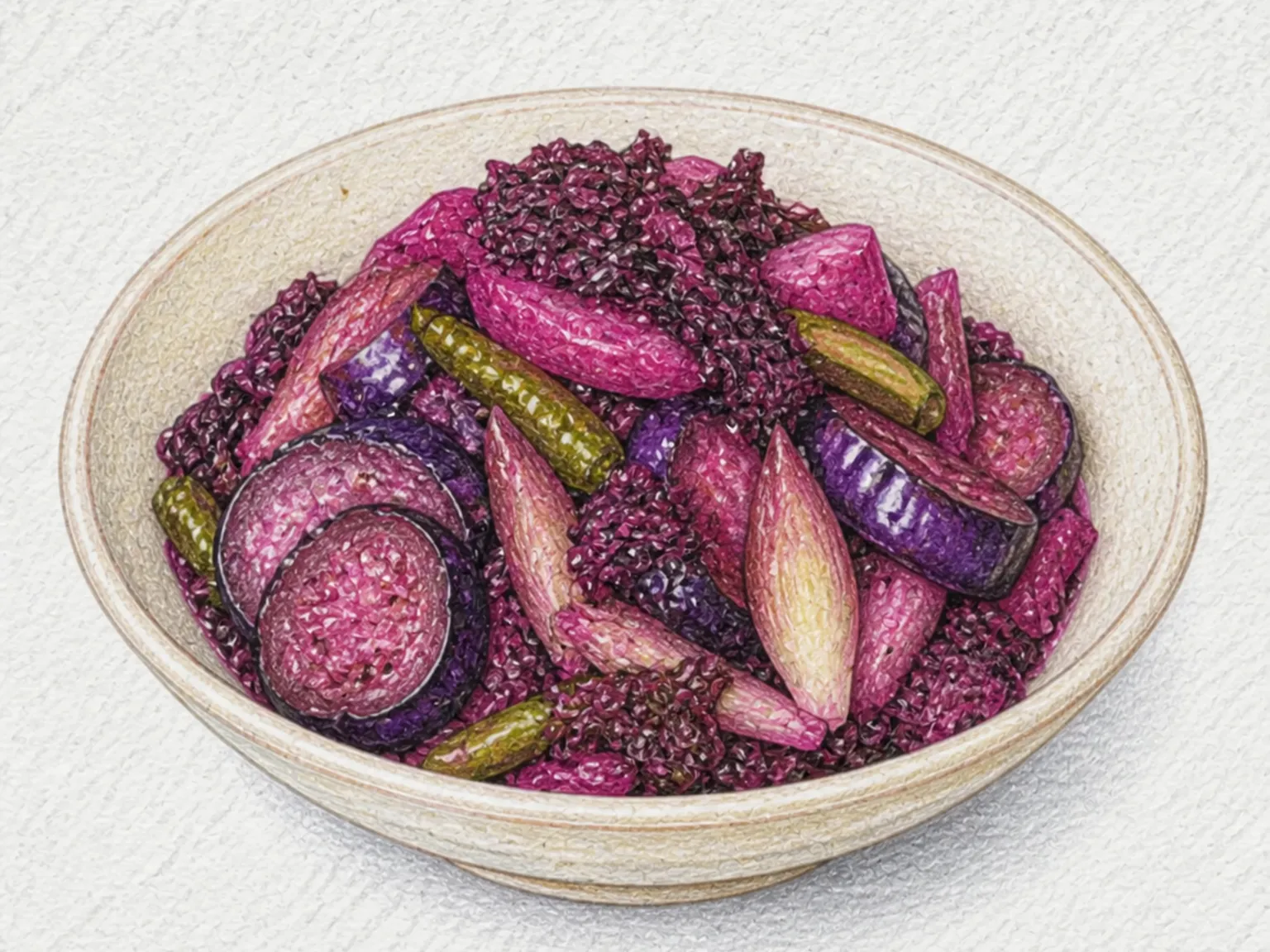
Shibazuke (Eggplant and Red Shiso Fermented Pickle)
Kimchi Hard

Shibazuke (Eggplant and Red Shiso Fermented Pickle)

Shibazuke is a representative Kyoto pickle made by salt-fermenting summer vegetables with red shiso from the Ohara area of Kyoto City. Ten kilograms of eggplant are cut 5 mm thick, while cucumber, green chili, and myoga are prepared separately. Red shiso sprigs are washed, the leaves are removed and roughly chopped, and they are mixed with the eggplant. About a 10 cm layer of that mixture is packed into a pickling container and salted, then the myoga, cucumber, and green chili are alternated through subsequent layers. A generous covering of shiso goes on top, followed by a weight equal to the total ingredient weight. After one full day and night, the first black liquid is poured away. The pickle is then kept pressed so clean liquid stands 3 to 4 cm above the drop lid while fermentation continues for several days. The resulting purple, sour vegetables are served with rice or sake.

🏠 Everyday 🍺 Bar Snacks
Prep 120min Cook 10min 100 servings
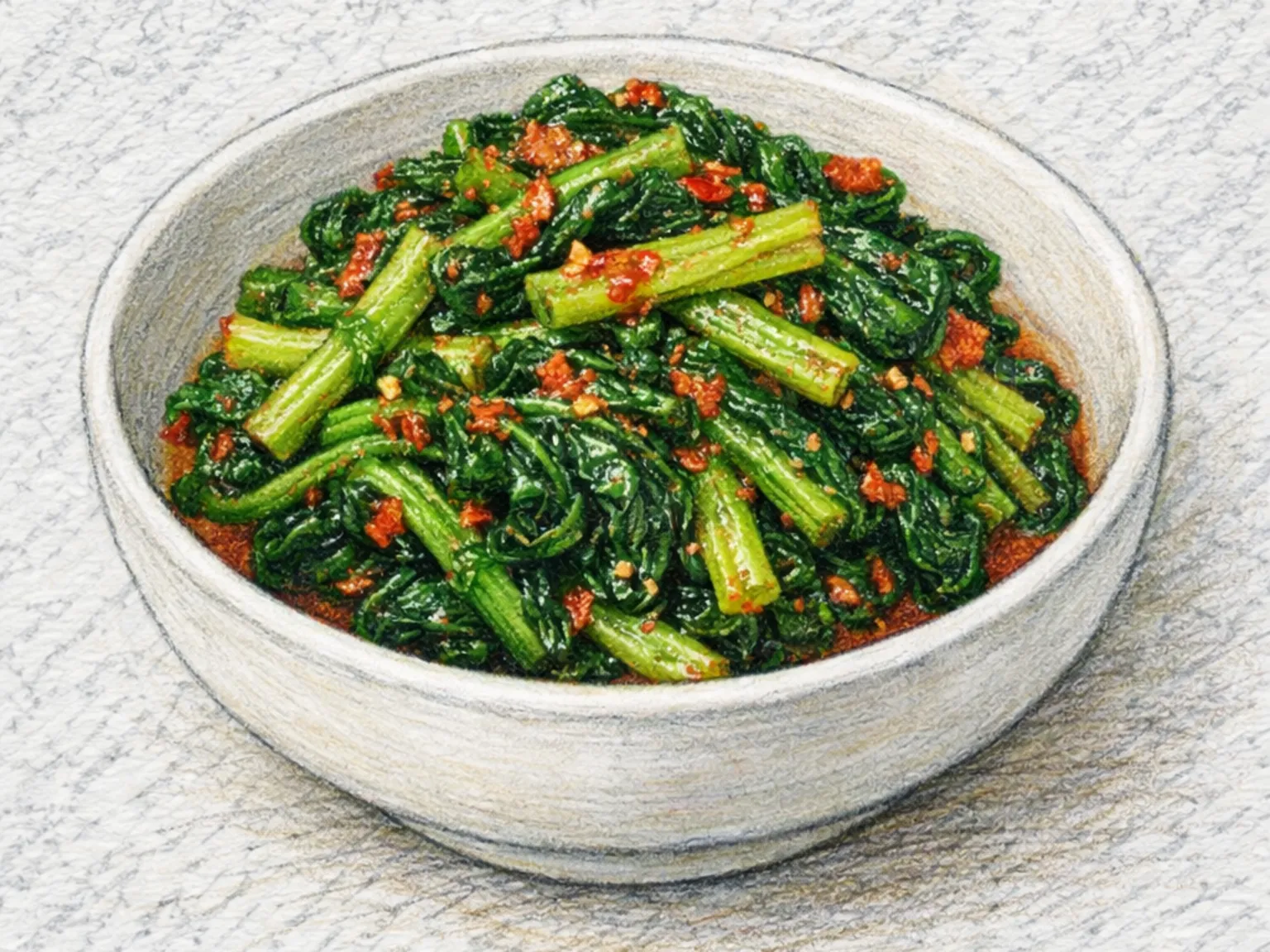
Korean Sigeumchi Kimchi (Spinach Kimchi)
Kimchi Easy

Korean Sigeumchi Kimchi (Spinach Kimchi)

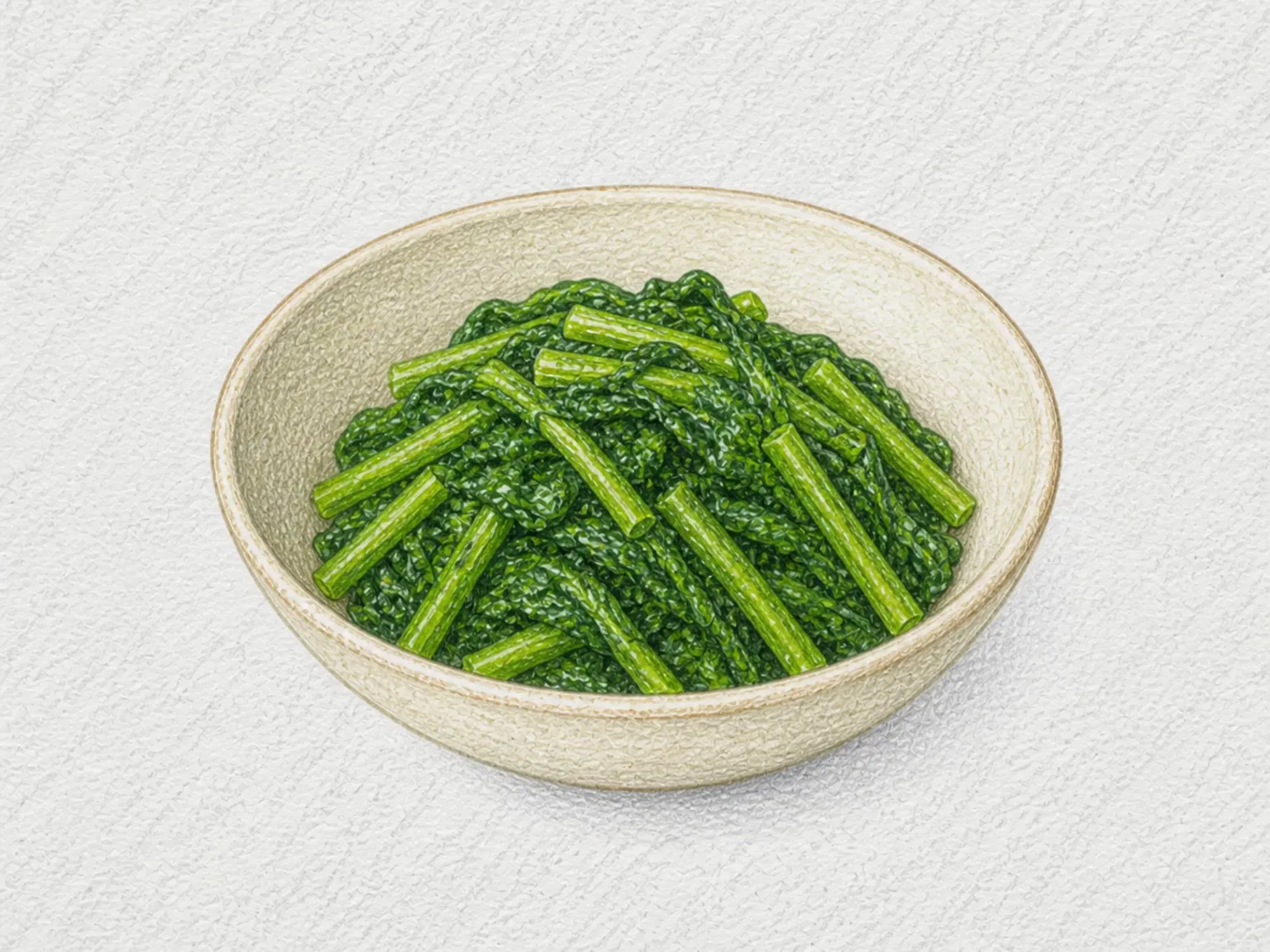
Sigeumchi kimchi is a Korean spinach kimchi made by salting the greens for exactly twelve minutes to wilt the leaves while keeping the stems crisp, rinsing in cold water, squeezing dry, then tossing with gochugaru, sand lance fish sauce, minced garlic, plum extract, and scallion pieces. Strict timing on the salt is what creates the dual texture - tender leaves and crunchy stems - that defines this kimchi; over-salting collapses everything into softness. The fish sauce's fermented depth layers onto the spinach's mild, grassy base, and plum extract rounds out the seasoning's sharp edges with a gentle sweetness. Six hours of refrigeration settles the flavors into a cohesive whole. The vivid green color makes this a visually appealing banchan on any Korean table.

🏠 Everyday 🍱 Lunchbox
Prep 20min Cook 5min 4 servings
Perfectly Salted Cabbage
Kimchi Medium

Perfectly Salted Cabbage

Perfectly Salted Cabbage is a foundational preparation step for making kimchi with a crisp texture. The process begins by boiling water with dried kelp and dried shiitake mushrooms to create an umami-rich broth, which is then cooled completely. Coarse sea salt is dissolved into the cooled broth to make the brining base, optionally sweetened with a small amount of sugar. Napa cabbage heads are split by hand, soaked in this brine, and then layered with additional coarse sea salt concentrated on the thick white stems. The cabbage is left to brine for six to eight hours, with the pieces flipped halfway through to ensure even salting. Finally, the cabbage is rinsed three times in running water and drained cut-side down for at least two hours to prevent the kimchi paste from washing away.

🔥 Trending Now 🥗 Light & Healthy
Prep 10min Cook 480min 4 servings
Korean Pickled Radish Wraps
Kimchi Easy

Korean Pickled Radish Wraps

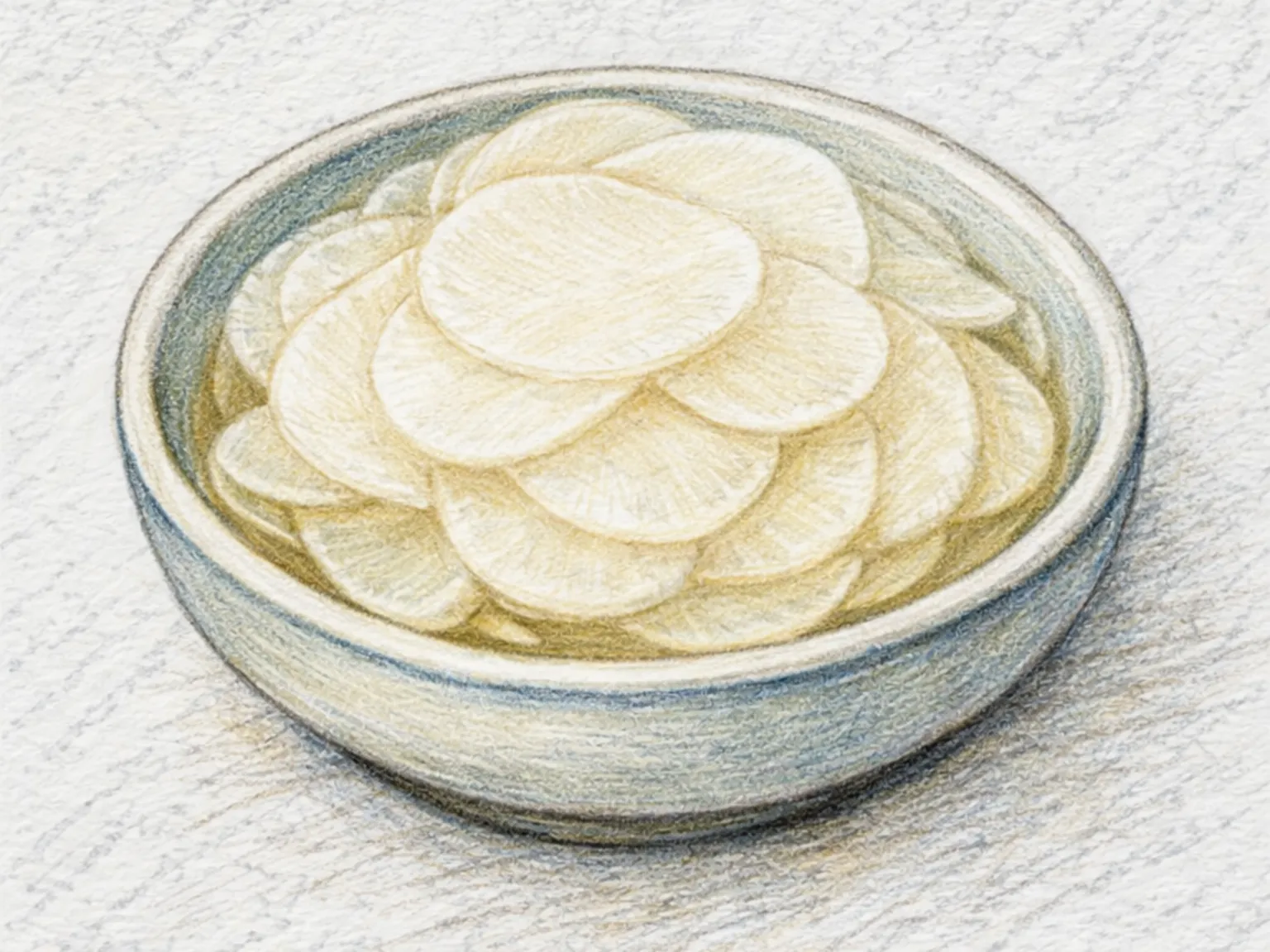
Ssam-mu is a Korean sweet-and-sour pickled radish made by slicing Korean radish into very thin two-millimeter rounds and submerging them in a warm brine of water, vinegar, sugar, salt, and bay leaves. The slices must be thin enough to wrap around grilled meat without tearing, and the brine is cooled to lukewarm before pouring - boiling hot liquid would cook the radish and destroy its crunch. Ready after one day of refrigeration, the pickle reaches its peak on day three when the vinegar tang and sugar sweetness have fully penetrated each slice. Adding a lemon slice to the jar introduces a fresh citrus note. Wrapped around a piece of grilled pork belly or fried chicken, the sweet-sour radish provides an immediate contrast that lifts the fatty richness of each bite.

🍱 Lunchbox ⚡ Quick
Prep 15min Cook 5min 4 servings
Korean Bitter Herb Kimchi
Kimchi Hard

Korean Bitter Herb Kimchi

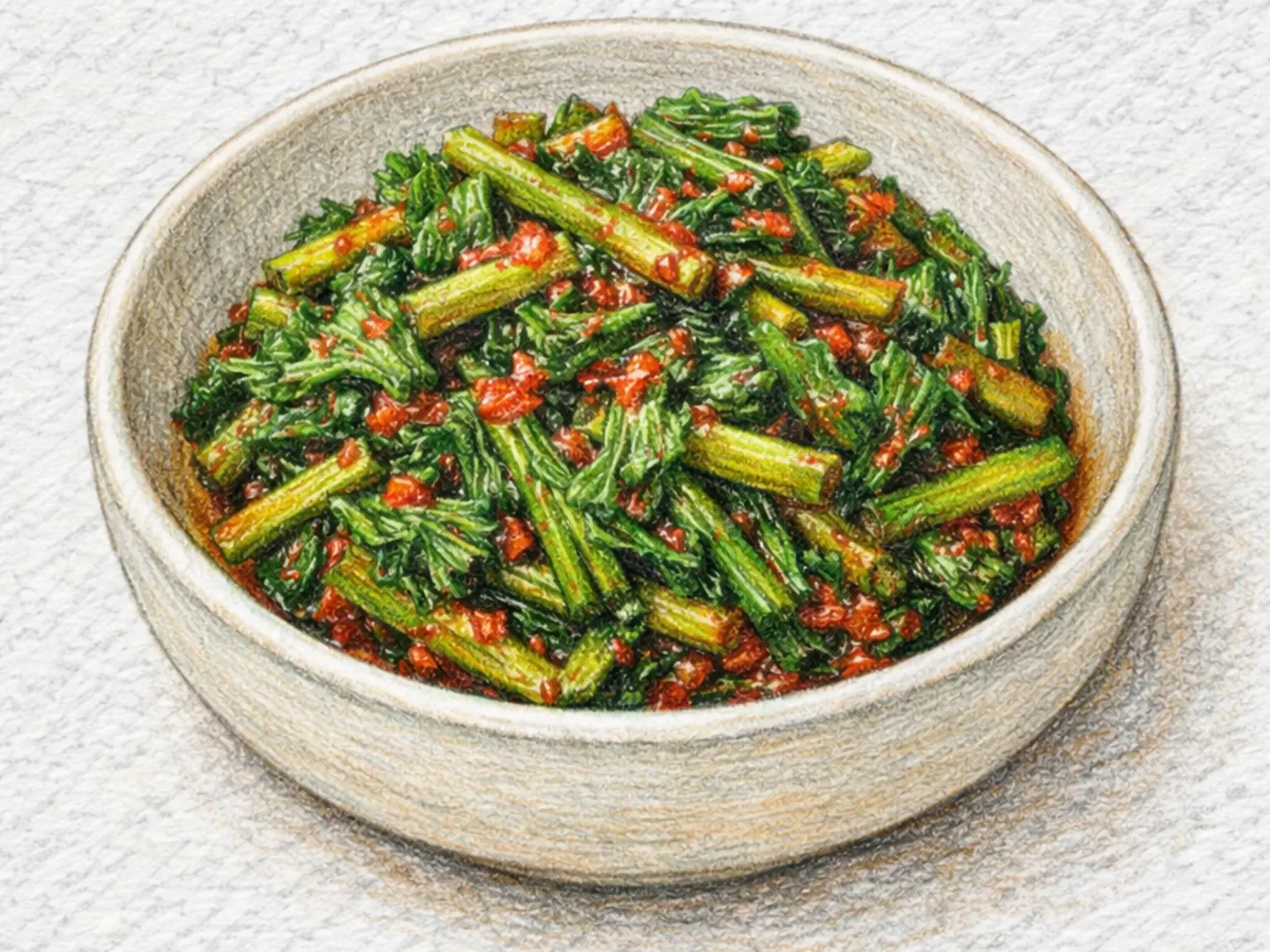
Sseumbagwi kimchi is a traditional spring fermented side dish made from sseumbagwi, a wild bitter herb that grows in Korea during early spring. The herb is soaked in cold water for at least twenty minutes to pull back its pronounced bitterness before being salted to soften the stalks. It is then dressed in a seasoning paste built from gochugaru, sand lance fish sauce, minced garlic, ginger, sweet rice paste, and plum syrup, mixed together with cut scallions. The rice paste adds body to the seasoning so it clings to the herb's thin stems and narrow leaves rather than sliding off. Plum syrup works on both the bitterness and the salt's edge at once, smoothing the overall profile without masking the herb's character. Sand lance fish sauce is preferred over anchovy sauce here because its gentler aroma does not compete with the plant's natural flavor. Five hours of room-temperature fermentation followed by refrigeration sets off lactic acid development, layering tangy depth over the bitter-green base. The flavor peaks around day three when bitterness, acidity, and umami reach the best balance. If the raw herb tastes too sharp, one additional soak in fresh cold water brings it within range before seasoning.

🎉 Special Occasion 🍱 Lunchbox
Prep 45min Cook 5min 4 servings
Korean Crown Daisy Soy Pickle
Kimchi Easy

Korean Crown Daisy Soy Pickle

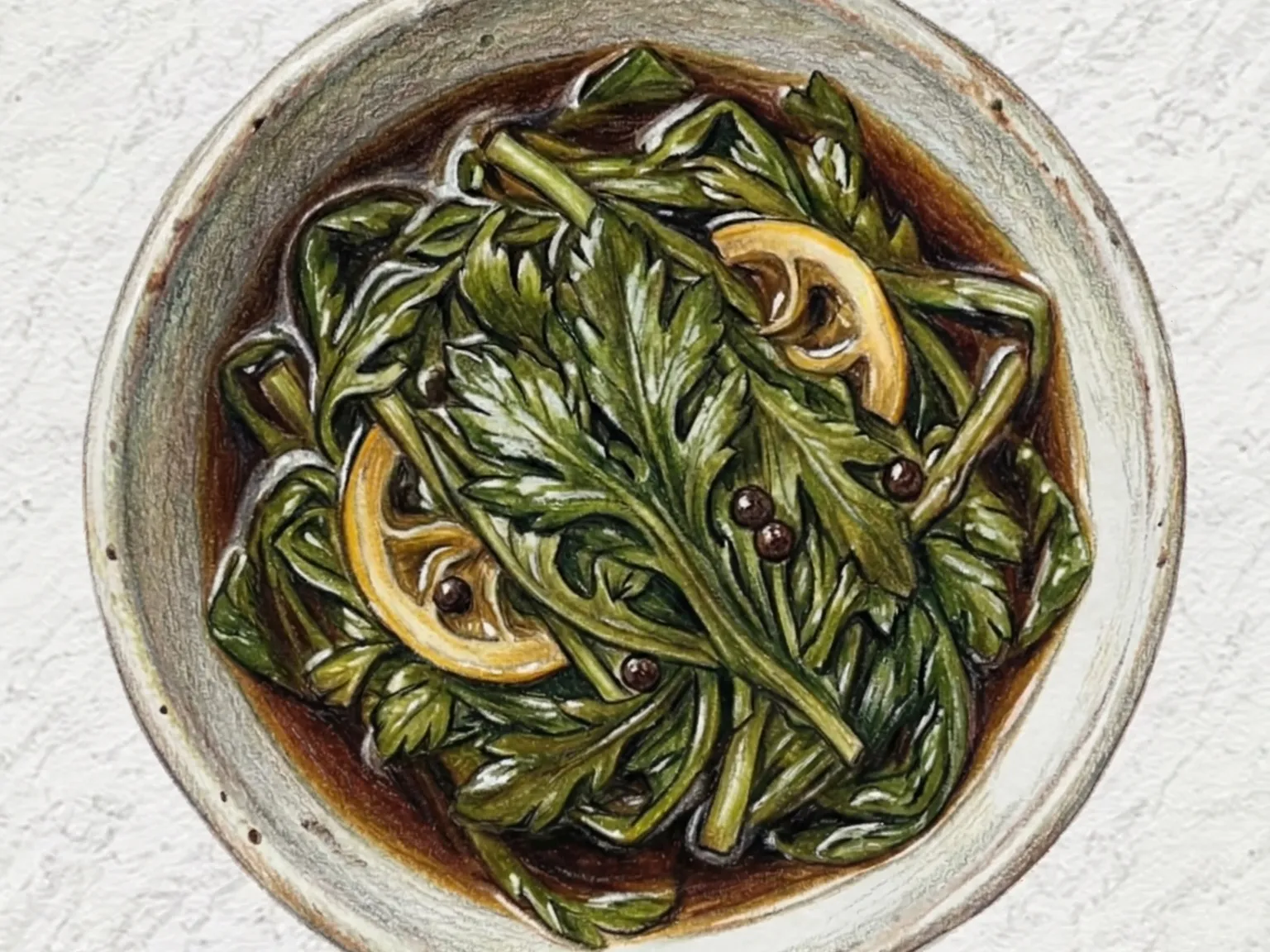
Ssukgat jangajji is a soy-brined pickle made with crown daisy greens, capturing the herb's distinctively bitter, aromatic character in a quick-cured form. A boiling mixture of soy sauce, vinegar, and sugar is poured directly over the trimmed greens, which wilts them just enough to expel raw grassiness while locking in the clean, herbal fragrance underneath. Thin slices of lemon layered between the greens as they steep introduce a citrus brightness that cuts through the saltiness of the soy and keeps the brine from tasting flat. Whole black peppercorns contribute a gentle background heat that tidies up the finish. The jar goes into the refrigerator once cooled, and the pickle is ready to eat after just twenty-four hours, making it one of the most practical options when a side dish is needed on short notice. The herbal fragrance is at its sharpest within the first week of refrigeration, after which the aroma gradually fades. It pairs well as a rice topping or served alongside grilled pork or beef.

🍱 Lunchbox 🏠 Everyday
Prep 15min Cook 10min 4 servings
Korean Crown Daisy Kimchi
Kimchi Easy

Korean Crown Daisy Kimchi

Ssukgat kimchi is a fragrant seasonal kimchi that highlights crown daisy's herbal bitterness alongside chili flakes and sand lance fish sauce. The greens are salted for only seven minutes to preserve their delicate, tender texture, then dressed with a paste enriched by sweet rice flour for better adhesion. Plum extract balances the bitterness with gentle sweetness and acidity during fermentation. After two hours at room temperature followed by overnight refrigeration, the kimchi reaches its aromatic peak within a single day. Because the leaves bruise easily, gentle tossing during seasoning is essential to maintain their shape.

🍱 Lunchbox 🏠 Everyday
Prep 20min Cook 5min 2 servings
Suguki-zuke Lactic-Fermented Turnip Pickles
Kimchi Hard

Suguki-zuke Lactic-Fermented Turnip Pickles

Suguki-zuke is a Kyoto City pickle made from whole suguki turnips, a traditional Kyoto vegetable. The roots and leaves are salted in preliminary and main pickling stages, held under a heavy stone, then moved into a dedicated warming chamber called a muro at about 40°C to promote lactic acid fermentation. Along with senmaizuke and shibazuke, it is counted among Kyoto's three prominent pickles. The salt-only method dates to the early Edo period around Kamigamo Shrine, and the modern warmed process develops its characteristic acidity in about two weeks. Suguki is harvested and pickled from mid-November to January, then the leaves and roots are cut separately for rice, ochazuke, or sake.

🏠 Everyday 🍺 Bar Snacks
Prep 60min Cook 20min 20 servings
Sunki-zuke (Salt-Free Fermented Turnip Greens)
Kimchi Hard

Sunki-zuke (Salt-Free Fermented Turnip Greens)

Sunki-zuke is a Nagano pickle from Kiso made by lactic fermentation of red turnip greens and stems without salt. Since salt provides no preservation barrier, the process requires an active authentic sunki starter, sanitized food-safe equipment, a thermometer, and a way to verify acidity. Cut 3kg greens into 1 to 2cm pieces and warm them in batches in 60C water for 1 to 2 minutes. Reserve that liquid and cool it to 45C. While the greens are still warm, alternate them with 700g active starter in the fermentation vessel, using sanitized tongs instead of bare hands. Pour in enough cooled blanching liquid to cover the greens, hold everything below the surface with a sanitized weight or a sealed food-safe bag filled with water, remove trapped air, and close the vessel. Keep it insulated in a warm place for 24 hours. The next day, use clean utensils to check the aroma and taste, and verify that the liquid has reached pH 4.6 or below. If a clean sourness has not developed or the acidity is insufficient, do not eat the batch and discard it. Once fermentation is confirmed, refrigerate immediately at 4C or colder. For stronger acidity, mature it in the refrigerator for another 2 to 3 days. Do not taste a batch showing mold, a putrid odor, or abnormal ropy slime; discard all of it. Yogurt and ordinary kimchi brine cannot replace active sunki starter.

🥗 Light & Healthy
Prep 50min Cook 10min 20 servings
Korean Turnip Kimchi (Diced Gochugaru Water Fermented)
Kimchi Easy

Korean Turnip Kimchi (Diced Gochugaru Water Fermented)

Sunmu kimchi is a brined kimchi made with diced turnips seasoned in chili flakes, fish sauce, garlic, and ginger juice, then submerged in water to ferment with its own liquid. Turnips have a naturally higher sweetness and denser flesh than Korean radish, so they stay firm and crunchy even after fermentation. Scallions woven through the batch add an aromatic layer that rounds out the spice. One day at room temperature followed by two days of refrigeration produces a cool, tangy brine that is refreshing to drink on its own. Adding turnip greens, if available, deepens both the color and the fragrance.

🏠 Everyday 🍱 Lunchbox
Prep 30min Cook 10min 4 servings
Dried Squid Koji Pickle
Kimchi Hard

Dried Squid Koji Pickle

Dried squid koji pickle is a preserved food from Tottori, made by curing finely cut squid and salt-pickled vegetables with rice koji. Families prepared it from autumn through winter as a rice accompaniment or drink snack, and each household developed its own flavor through salted shiso leaves and seeds, eggplant, cucumber, and myoga. Traditional crocks were weighted and aged for more than twenty days in cold weather. This conservative home version uses only commercial food-grade koji, ready-to-eat fully dried squid, and commercially salt-pickled vegetables. The seasoning is boiled and cooled before mixing, then the pickle is held at 4°C or colder for ten days rather than left at room temperature.

🍺 Bar Snacks 🏠 Everyday
Prep 90min Cook 10min 24 servings
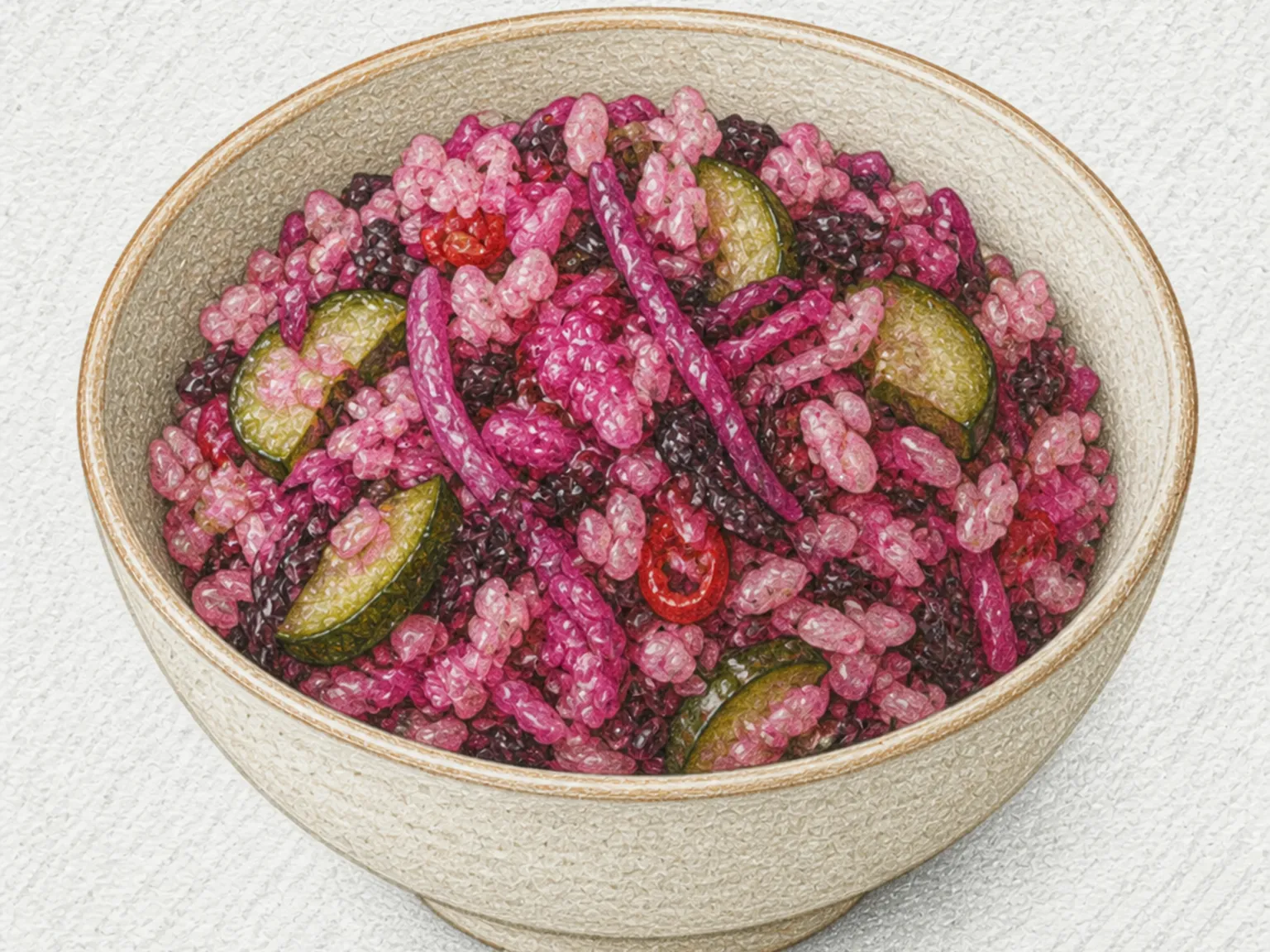
Sushiko (Lactic-Fermented Glutinous Rice and Vegetables)
Kimchi Hard

Sushiko (Lactic-Fermented Glutinous Rice and Vegetables)

Sushiko is a preserved food from the northwestern Tsugaru region of Aomori Prefecture, sometimes described as a pickle made from rice. Glutinous rice is steamed and cooled completely. Five kilograms of cucumber and purple cabbage are salt-rubbed to draw out moisture, while red shiso leaves are separately rubbed with salt to remove harshness. Red chili, concentrated five-fold vinegar, and a small amount of white sugar season the vegetables. The cooled rice and prepared vegetables are mixed and packed firmly in layers into a clean 18 L pickling barrel. A weight presses the batch while it rests in a cool place for several days. As lactic fermentation develops, the red color spreads through the rice, the mixture becomes increasingly gooey, and its sourness grows. It is eaten as a side dish with plain rice, with the fermentation time chosen according to the preferred acidity and texture.

🏠 Everyday
Prep 90min Cook 60min 60 servings
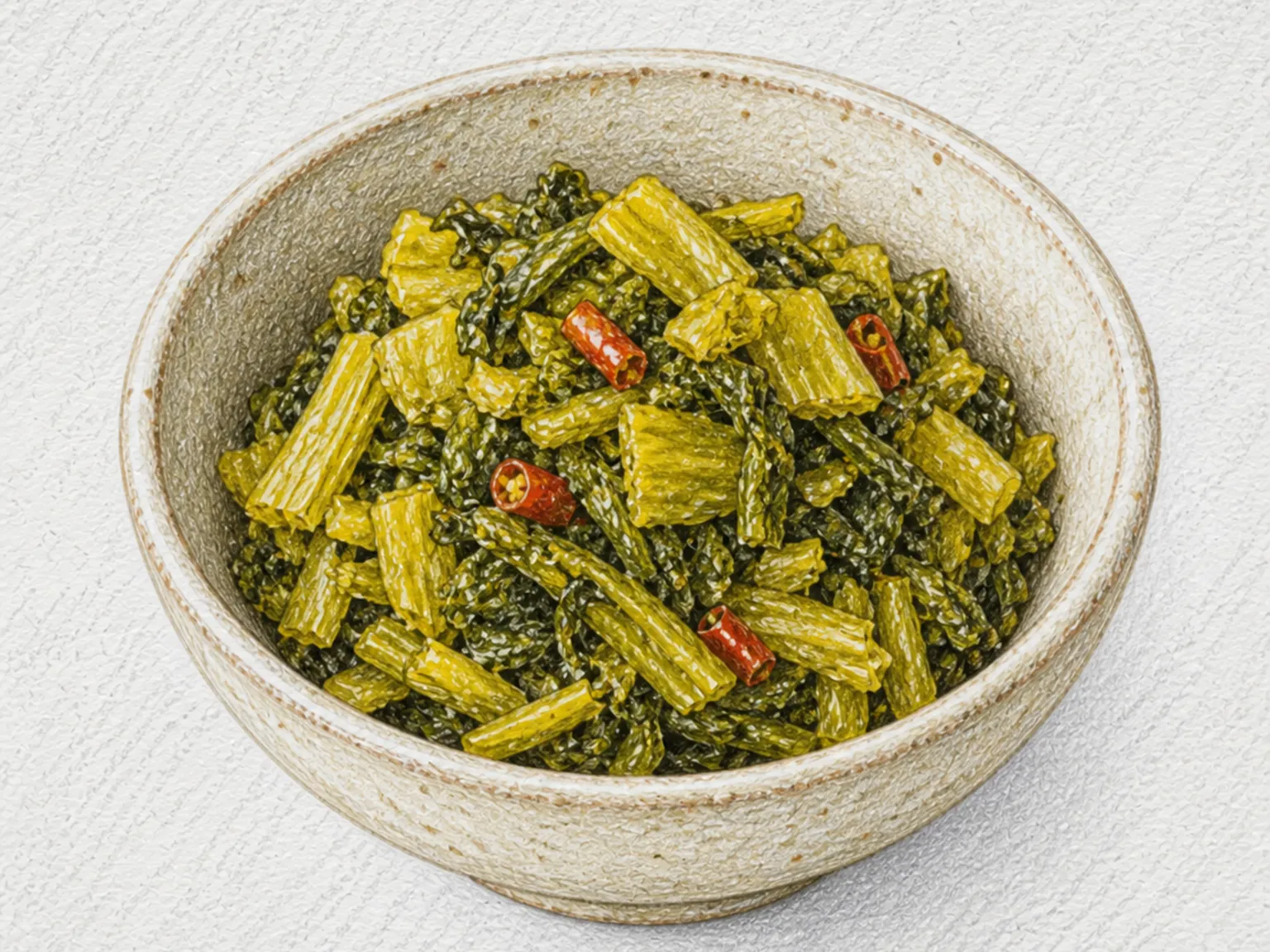
Takana-zuke (Fermented Mustard Greens)
Kimchi Hard

Takana-zuke (Fermented Mustard Greens)

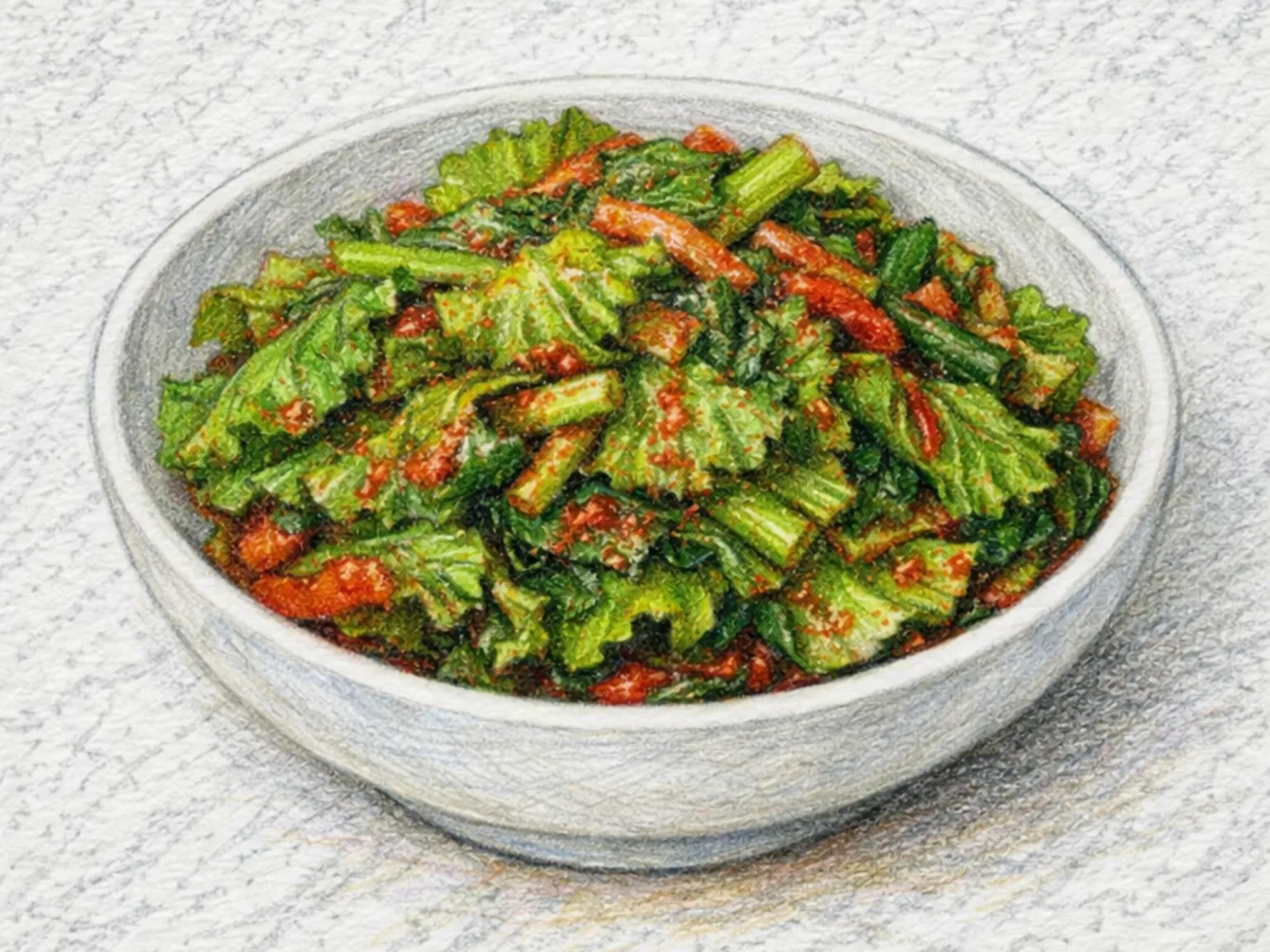
Takana-zuke is a long-fermented mustard-green pickle from Setaka in Fukuoka. Large, thick Miike takana leaves are washed, air-dried for one to two days, layered tightly with salt and chili powder, and pressed under a heavy weight. After about a week, the first liquid is drained, the weight is replaced, and the greens mature beneath their rising brine until the rainy season has passed. Turmeric and whole chilies are added for storage. Miike takana developed from a Sichuan green crossed with a local variety and is valued for crisp stems and pungent aroma. The finished pickle is chopped finely for rice, ramen, or stir-fries, and old pickles become more acidic and savory.

🏠 Everyday
Prep 90min 60 servings
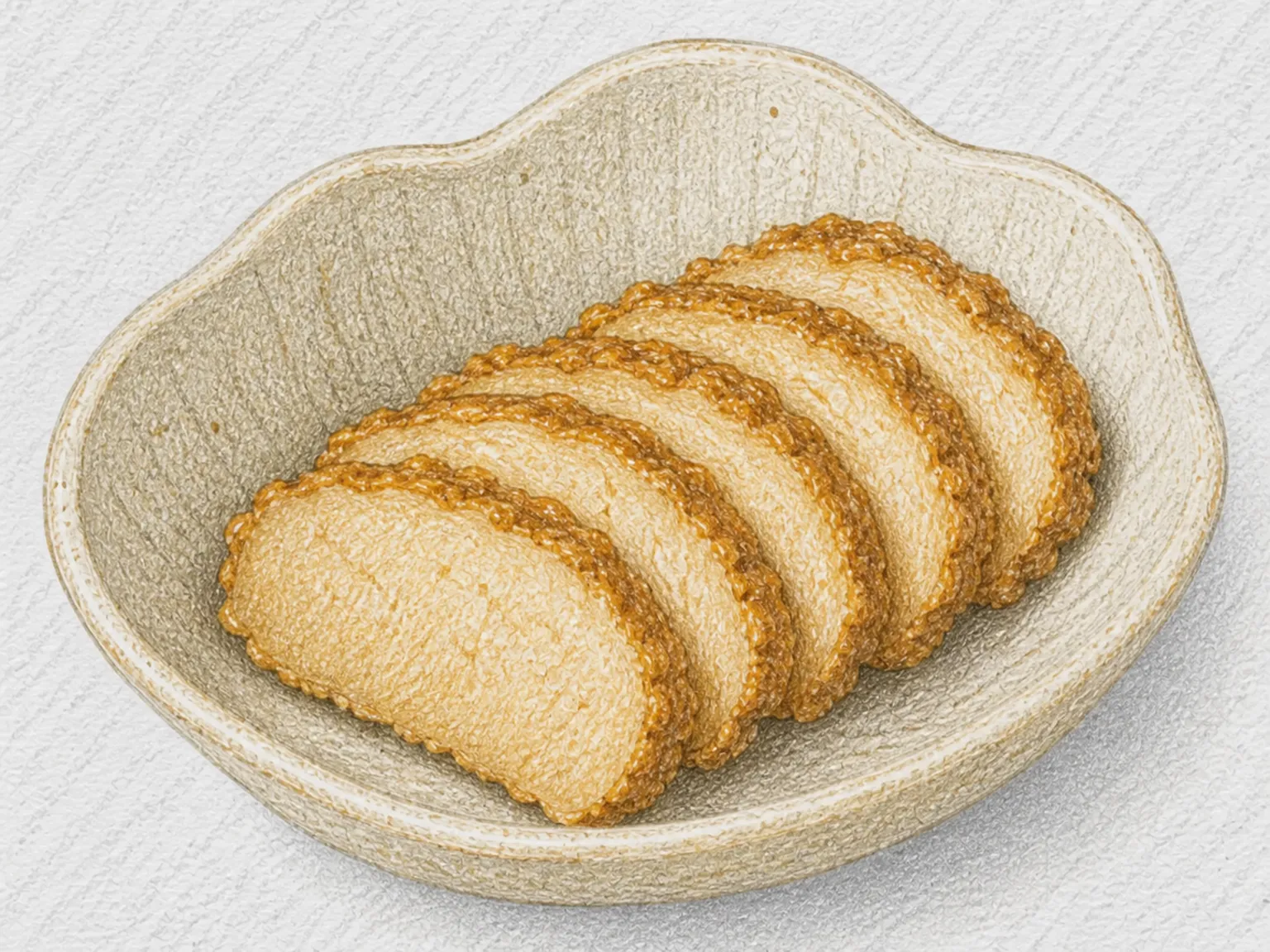
Tofu Misozuke (Miso-Aged Tofu)
Kimchi Medium

Tofu Misozuke (Miso-Aged Tofu)

Tofu misozuke is a preserved food from Kumamoto made by coating thoroughly drained firm tofu with sugar, wrapping it in gauze, burying it completely in miso, and aging it under refrigeration for about 40 days. After aging, the tofu is not rinsed. The gauze is removed carefully and the concentrated tofu is sliced thinly. Local accounts connect the dish with Heike fugitives roughly 800 years ago, and older versions could remain in miso for about half a year. Moisture loss and slow seasoning produce a dense, cheese-like texture and a strong salty-sweet flavor, so it is served in small portions as a side dish or accompaniment to drinks.

🍺 Bar Snacks 🎉 Special Occasion
Prep 30min 4 servings

About Kimchi

The fermentation process creates beneficial probiotics and a depth of umami unique to kimchi. Seasonal produce transformed into kimchi and pickles keeps for weeks, making them a constant presence in Korean refrigerators.