
Western Recipes
262 recipes. Page 2 of 11
This category brings Western-style dishes - pasta, steak, risotto, gratin, and more - into the home kitchen. In Korea, "Western food" (yangsik) includes not only authentic European recipes but also Korean-adapted classics like donkatsu (pork cutlet) and hambak steak (Hamburg steak).
Olive oil, butter, cream, and cheese create the rich flavors these dishes are known for. From special-occasion dinners to quick weeknight meals, these recipes make Western cooking approachable.
Slow-Simmered Meat Sauce Pasta
Beef ragu tagliatelle is an Italian braised meat sauce pasta built on slow cooking rather than speed. Ground beef and a soffritto of finely diced onion, carrot, and celery are cooked together in a heavy pot for ninety minutes or longer until the vegetables dissolve entirely into the sauce. Tomato paste is stirred in and caramelized during the early stages to deepen its sweetness and concentrate flavor, then red wine deglazes the pot, lifting the browned fond from the bottom into the liquid. The long, low simmer breaks the meat down into small, tender pieces suspended in a thick, glossy sauce. Wide tagliatelle ribbons are ideal here because their surface texture and broad folds trap the heavy ragu rather than letting it slide off, delivering concentrated beef flavor with every bite.
Beef Stroganoff
Beef stroganoff sears thin strips of sirloin over high heat just long enough to brown the surface while keeping the interior pink and tender, then folds them into a pan sauce built from sauteed mushrooms, onions, and sour cream. The mushrooms must cook until properly browned in the pan, not just softened, to lose their excess moisture and concentrate their savory depth alongside the beef. Sour cream is stirred into the hot pan drippings at the end, transforming them into a sauce that is simultaneously creamy and subtly tangy without curdling. A touch of mustard sharpens the finish without announcing itself. Spooned over egg noodles or mashed potatoes, the cream sauce soaks into the starch below, pulling every element of the plate together into a rich, cohesive meal that traces its origins to nineteenth-century Russian cuisine.
Ground Beef Tacos
Beef tacos season ground beef with chili powder, cumin, garlic powder, and smoked paprika, then cook it in a skillet until the moisture cooks off and every granule of meat is coated in a concentrated spice crust. Spooned into crispy taco shells, the filling creates an immediate textural contrast as the shell cracks and the seasoned meat gives a dense, juicy resistance underneath. Salsa adds tomato acidity and chili heat on top, while avocado slices provide a cooling, fatty layer that moderates the spice without neutralizing it. Sour cream contributes a mild dairy tang, and a squeeze of lime over everything sharpens all the other flavors at once. The handheld format makes it easy to eat a second and third shell, since each one delivers the full range of spicy, tangy, creamy, and savory in a few bites.
Beef Tartare
Beef tartare is a French preparation of premium tenderloin hand-chopped with a knife, never passed through a grinder, so that each small piece stays intact and delivers a clean, juicy bite rather than a pasty mouthfeel. The chopped meat is mixed with capers, anchovies, shallots, and cornichons, then bound with egg yolk and Dijon mustard. Capers and anchovies provide a salty, briny depth that makes raw beef compelling as a dish, while the Dijon adds a sharp, direct mustard heat that brings focus to every forkful. The egg yolk coats each morsel in a silky, rich film that holds the mixture together without masking the meat itself. Freshness is non-negotiable here - the quality of the tenderloin is the entire foundation of the dish, and there is no technique or seasoning that compensates for inferior beef.
Beef Wellington
Beef Wellington wraps a whole seared beef tenderloin in a layer of mushroom duxelles and prosciutto, then encases everything in puff pastry before baking. The initial sear builds a Maillard-crusted surface on the beef, and the duxelles acts as a moisture barrier between the meat and the pastry, absorbing rendered juices so the dough does not go soggy during baking. In the oven, the pastry puffs into hundreds of golden, flaky layers while the tenderloin inside cooks evenly to a pink medium-rare center. Slicing through the finished roll reveals a clean cross-section of bronze pastry, dark mushroom layer, and rosy beef - the visual reward for careful assembly. The tightly packed sequence of textures, from shatteringly crisp pastry to the soft mushroom filling to the tender beef, makes every cut through the roll deliver a different bite. A red wine reduction served alongside completes the dish for a formal occasion.
Biscuits and Gravy
Biscuits and gravy is a Southern American breakfast where flaky, butter-layered biscuits are split open and smothered in a thick white gravy made from pan-fried pork sausage. The sausage is crumbled and browned in a skillet to render its fat, flour is stirred into that fat to form a roux, and milk is whisked in until the mixture thickens into a creamy, pepper-forward sauce. Keeping pea-sized pieces of cold butter in the biscuit dough is the key to achieving the signature flaky layers -- the butter steams during baking and forces the dough apart into distinct, pull-apart sheets. The just-baked biscuits absorb the warm gravy like a sponge while their crusted tops stay crisp, creating a clear contrast in a single bite. Black pepper, used generously, defines the character of the gravy as much as the sausage itself does. A simple plate by any measure, yet the combination of richness, warmth, and starchy satisfaction has kept it central to Southern home cooking for generations.
Blackened Chicken Caesar Salad
Blackened chicken Caesar salad starts with chicken breast coated thickly in paprika, cayenne, garlic powder, onion powder, and dried herbs before hitting a very hot, dry pan. The spice coating undergoes rapid charring at high temperature, forming a dark, smoky crust that seals in moisture and concentrates the spice aromatics on the surface of the meat. The interior of the chicken stays juicy because the charred crust acts as an insulating barrier, provided the pan is hot enough from the start. Creamy Caesar dressing, made with anchovy paste, egg yolk, lemon, and Parmesan, wraps around the cold, crisp romaine and the sliced hot chicken alike, moderating the cayenne heat without erasing the spice character entirely. Shaved Parmesan adds sharp, salty depth throughout, while croutons introduce a crunchy textural break against the tender chicken and limp lettuce. Because blackening generates substantial smoke, proper ventilation or an outdoor cooking setup is strongly recommended. The dish functions as a full main course rather than a starter salad.
Blanquette de Veau (French Veal Stew in Creamy Egg-Lemon Sauce)
Blanquette de veau is a French white stew in which veal shoulder is first blanched in cold water to remove impurities and then gently simmered in fresh water with carrot, onion, and a bouquet garni for over an hour until the meat becomes completely tender. The name comes from blanc -- white -- and the defining rule of the dish is that the meat must never be browned at any stage; searing would change both the color and the delicate character of the final stew. The braising liquid is used to build the sauce: a butter-flour roux is whisked smooth, the warm broth is added gradually, and the finished veloute is enriched with a liaison of heavy cream and egg yolks to create a velvety coating. Once the yolks go in, the sauce must not boil -- even a brief simmer will cause the eggs to curdle, breaking the emulsion in a way that is difficult to repair. A small squeeze of lemon at the end brightens the richness of the cream, and button mushrooms sauteed separately in butter add an earthy note when folded in just before serving. The dish has been a staple of French bourgeois cooking since the 18th century, originally developed as a way to make the most of secondary cuts without the demanding technique required for braises like boeuf bourguignon.
French Onion Tart
The preparation of a French onion tart begins with slicing onions and cooking them in butter using a low heat setting for more than twenty minutes. During this extended cooking duration, the onions collapse into a dark amber mixture, ensuring that their natural sweetness is fully concentrated while the sharp bite associated with raw onions is completely eliminated. Once the onions have reached this state, they are spread in an even layer over a tart shell that has already undergone blind baking to maintain its texture. A custard liquid made from a combination of eggs, heavy cream, and thyme is poured over the onions. Grated Gruyere cheese is then scattered across the top surface before the tart is transferred to an oven preheated to 190 degrees Celsius. The baking process continues until the internal filling has set into a firm consistency and the cheese layer has transformed into a browned, salty crust. The flavor of the caramelized onions is the most prominent characteristic of the dish, providing a sweetness that builds on the palate with each bite. Thyme is used to contribute a distinct herbal note, which functions to offset the richness of the dairy components and prevent the tart from becoming cloying. The addition of Gruyere cheese brings a nutty and salty element that balances the sweet and savory aspects of the tart. This specific dish is known for holding its quality well when served at room temperature, which makes it a versatile choice for inclusion in brunch menus, sequences of wine pairings, or meals eaten outdoors.
Bouillabaisse (Provencal Saffron Seafood Stew)
Bouillabaisse is a Provencal seafood stew that originated with Marseille fishermen cooking whatever catch remained unsold, distinguished above all by saffron's golden color and subtle floral aroma carried through the broth. Fennel and tomatoes are sauteed in olive oil first to build a fragrant base, then saffron-steeped fish stock is added and brought to a simmer. Firm-fleshed fish such as monkfish or sea bass go in first, with shrimp and mussels added last to protect their texture - overcooked shellfish turns rubbery and loses all elasticity. The broth builds complexity from the successive contributions of each seafood type, with every variety releasing its own distinct character of ocean flavor into the pot. Prolonged simmering concentrates the broth intensely, so once the fish is added, maintaining high heat and finishing quickly is the key to a broth that is rich but still clear and clean. Traditionally, grilled baguette spread with garlicky rouille is dipped into the broth alongside the seafood.
Broccoli Cheddar Soup
Broccoli cheddar soup builds from a roux - butter and flour cooked together until the raw flour smell cooks out - which gives the soup its body and prevents the dairy from separating when added. Chicken stock and whole milk are whisked in gradually to keep lumps from forming, then broccoli florets go in and cook until fork-tender. The critical moment is adding the cheddar: heat must be reduced to low first, because the proteins in cheese seize and become grainy when exposed to high temperatures, rather than melting smoothly into the liquid. Sharp cheddar is the standard choice because its strong, salty punch holds up against the mild broccoli. Blending only half the soup while leaving florets intact creates a contrast between the velvety liquid and the chunks of green vegetable. A small addition of mustard or Worcestershire sauce deepens the savory complexity. Served inside a hollowed sourdough bread bowl, the crust absorbs the soup from the inside out, turning it into a satisfying complete meal rather than a starter.
Bruschetta
Bruschetta is an Italian appetizer built on baguette slices cut 1.5 cm thick, brushed with olive oil, and toasted until fully crisp in the oven or over a grill. While the bread is still hot, a cut garlic clove is rubbed across the surface so the steam and heat pull its sharp aroma directly into the bread. The topping starts with ripe tomatoes: seeds removed, diced small, then left to macerate in olive oil, salt, and balsamic vinegar for fifteen minutes. That resting time draws out excess liquid and concentrates the tomato's natural acidity and sweetness. The essential contrast of the dish is temperature and texture - hot, crunchy bread against cool, wet topping - and it only works if the topping goes on immediately before eating. Left assembled even five minutes, the juices soak in and the bread softens past recovery. Torn basil, not chiffonade, releases more fragrance. Ciabatta works as a substitute when baguette is unavailable.
Bubble and Squeak (Pan-Fried Mashed Potato and Cabbage Cake)
Bubble and squeak is a traditional British household dish made by combining mashed boiled potatoes with blanched, chopped cabbage, pressing the mixture flat in a well-oiled hot pan, and frying each side until a deep golden-brown crust forms across the entire surface. The name refers to the noise the dish makes during cooking - moisture from the cabbage hits the hot fat and sends up bubbles and a squeaking hiss. Frying diced onion in butter until soft and lightly caramelized before folding it into the potato-cabbage mixture adds a quiet sweetness that elevates the otherwise modest base ingredients considerably. Pressing the mixture firmly and evenly with a spatula throughout cooking is what creates the crust, and holding back the urge to move or flip it prematurely is the main technique. If the potatoes are particularly wet, a tablespoon or two of plain flour helps the mixture bind and hold its shape in the pan. The dish has been a fixture of British home cooking for generations, rooted in the tradition of using leftover Sunday roast vegetables the following day, and is commonly topped with a fried egg to make a complete one-plate meal.
Buffalo Wings
Buffalo wings coat chicken wings in baking powder and roast them at high heat for forty-five minutes, producing a crisp skin without deep-frying. The baking powder raises the skin's pH to accelerate the Maillard reaction and drives out moisture faster, yielding a crunch that rivals the fryer. Straight from the oven, the wings are tossed in a sauce of melted butter and hot sauce - the butter tempers the vinegar-based heat into something that coats the tongue rather than burning it, and a touch of white vinegar at the end sharpens the finish. Blue cheese dipping sauce and celery sticks served alongside provide a cooling, creamy contrast and a crisp palate cleanser between bites.
Burrito
A burrito layers seasoned ground beef, cooked rice, black beans, shredded cheese, and salsa inside a large flour tortilla that gets folded and rolled into a tight cylinder. Warming the tortilla briefly on a hot pan makes it pliable enough to wrap without tearing. The filling goes down the center in a long line, both ends fold inward first, then the whole thing rolls forward into a sealed package that holds together in the hand. Black beans add starchy substance and protein that make the burrito filling even without the meat at the center, and the tomato acidity in salsa cuts through the melted cheese and beef fat. A line of sour cream inside provides a cool, tangy buffer against the cumin-chili heat. For the cheese, Monterey Jack or cheddar melts evenly without clumping and binds the filling together well. Wrapping the finished burrito tightly in foil keeps the shape and makes it easier to eat on the go.
Butter Chicken
Butter chicken - murgh makhani - starts by marinating chicken thighs in yogurt, garam masala, and cumin, then roasting or grilling them at high heat to develop a slightly charred, smoky exterior. That surface char is a defining element; plain poaching cannot replicate it. The tomato sauce base requires long, patient reduction - the raw acidity must cook off and round into sweetness before any dairy is added. Butter and heavy cream then go in, wrapping the spice blend sharp heat in a velvety richness that carries through to the last bite. Cumin and garam masala provide the earthy, layered warmth that anchors this curry's identity, and together they produce the mild, creamy character that sets murgh makhani apart from hotter Indian preparations.
Caesar Salad
Caesar salad is built on romaine lettuce torn into rough, generous pieces and tossed in a dressing made from mayonnaise, lemon juice, garlic, and anchovy. The anchovy does not taste fishy in the finished dressing; it dissolves into the fat of the mayonnaise and functions as a deep umami foundation that keeps the salad interesting beyond its creamy surface. Lemon juice cuts through the richness of the mayo base, so the dressing coats the lettuce heavily without feeling cloying. Croutons are cubed bread toasted in olive oil until the outside turns crisp and golden but the inside stays slightly soft and chewy, giving them enough structure to absorb dressing without going immediately soggy. Wide, thin shavings of Parmesan add a dry, salty intensity that contrasts with the watery crunch of the romaine. With a short ingredient list, the quality of the dressing balance and the texture of the croutons determine the final outcome.
Cajun Shrimp Pasta
Cajun shrimp pasta belongs to the American culinary tradition and focuses on shrimp seasoned with a specific blend of spices known as Cajun seasoning. This seasoning mixture originates from the Louisiana Creole culinary heritage and typically includes a combination of paprika, cayenne pepper, dried oregano, thyme, garlic powder, and onion powder. This specific grouping of ingredients provides a distinct smoky quality and a moderate level of heat that separates it from the herb and spice traditions commonly found in Italian or Spanish cuisine. During the cooking process, the shrimp are first coated in the spice mix and then seared in butter for approximately one to two minutes on each side. It is necessary to remove the shrimp from the pan while they are still slightly underdone, as leaving them on the heat for too long results in a tough and rubbery texture. By taking them out of the pan early and only returning them at the final stage of preparation, the shrimp maintain their firm and snappy bite. Once the shrimp have been set aside, the butter and the spice-infused oil remaining in the pan serve as the primary flavor foundation for the sauce. A mixture of chopped onion, minced garlic, and bell peppers is sautéed in this residue until the vegetables soften and absorb the smoky heat left behind by the spices. The sauce is then constructed using both heavy cream and milk. The decision to use a combination of these two liquids, rather than heavy cream by itself, results in a lighter consistency that allows the sauce to coat the pasta strands more evenly without feeling excessively heavy during consumption. A small amount of the starchy water used to boil the pasta is added to the sauce before the noodles are introduced. This starch aids in the emulsification of the cream, which ensures that the sauce adheres to the pasta instead of separating or gathering at the bottom of the plate. The shrimp are added back into the pan at the very end, remaining on the heat only long enough to be warmed through. For individuals who would like a more intense level of spiciness, extra seasoning can be added to the finished dish at the table.
Caldo Verde (Portuguese Potato Soup with Kale and Sausage)
Caldo verde is Portugal's most emblematic soup, originating in the Minho region of the north and eaten across the country at festivals, family tables, and everyday meals. A base of potatoes and onion is simmered in water until the potatoes fall completely apart, then blended smooth so the natural starch thickens the soup without any added cream, flour, or roux. The result is a velvety texture built entirely from vegetables and water. Sliced smoked chourico or linguica is added next, and as the sausage heats through its rendered fat and smoky salt diffuse through the broth, adding depth and richness that a plain potato soup cannot offer. Collard greens or kale are cut into the thinnest possible ribbons and cooked for only the final eight minutes, which keeps the color vivid green and the texture slightly resistant to the bite. Overcooking dulls the color to olive and turns the leaves soft and stringy. A drizzle of olive oil over each bowl and thick slices of broa, a dense Portuguese cornbread, alongside the soup allow the broth to soak into the crumb and complete what is otherwise a simple but deeply satisfying meal.
Calzone
Calzone rolls pizza dough into a circle, fills one half with ricotta, mozzarella, diced ham, and fresh basil, then folds into a half-moon shape, seals the edges with a fork, and bakes until golden at 220 degrees Celsius. Leaving a two-centimeter border free of filling is critical -- overstuffing causes steam pressure to burst the seam during baking. Brushing a thin line of water along the edge before pressing firmly with a fork creates a tighter seal that holds through the full bake. Fifteen to twenty minutes in a well-preheated oven produces a crisp, burnished exterior while the interior heats the ricotta into a soft cream and melts the mozzarella into long, stretchy strings. Brushing olive oil on the surface before baking adds a richer color and a slight nuttiness to the crust. Tomato sauce served on the side for dipping provides an acidic counterpoint that cuts through the dense cheese filling and keeps each bite feeling balanced.
Caponata (Sicilian Sweet and Sour Eggplant Stew)
Caponata is a Sicilian sweet-and-sour vegetable dish centered on eggplant, with a flavor profile built around the concept of agrodolce - a deliberate balance of vinegar tartness and sugar sweetness that defines much of southern Italian cooking. Diced eggplant is fried in generous amounts of olive oil until the edges color and the interior becomes silky, having absorbed enough fat to create a soft, yielding texture. Celery, added later and cooked only briefly, stays crisp throughout, providing a textural contrast that keeps the dish from becoming uniformly soft. Tomatoes, capers, and green olives go in together, forming the braising base into which the fried eggplant is returned and simmered until the liquid thickens. Red wine vinegar and sugar are stirred in at the end and adjusted to taste - the vinegar should be assertive but not sharp, the sugar present but not sweet. The briny depth from the olives and capers layers over the tomato acidity, producing a complexity that would seem to require more ingredients than it actually does. Like most braises and marinades, caponata is considerably better after an overnight rest in the refrigerator, when the separate flavors meld into a unified whole. Serve at room temperature on toasted bread as an antipasto, or alongside grilled meat or fish as a condiment.
Spaghetti Carbonara
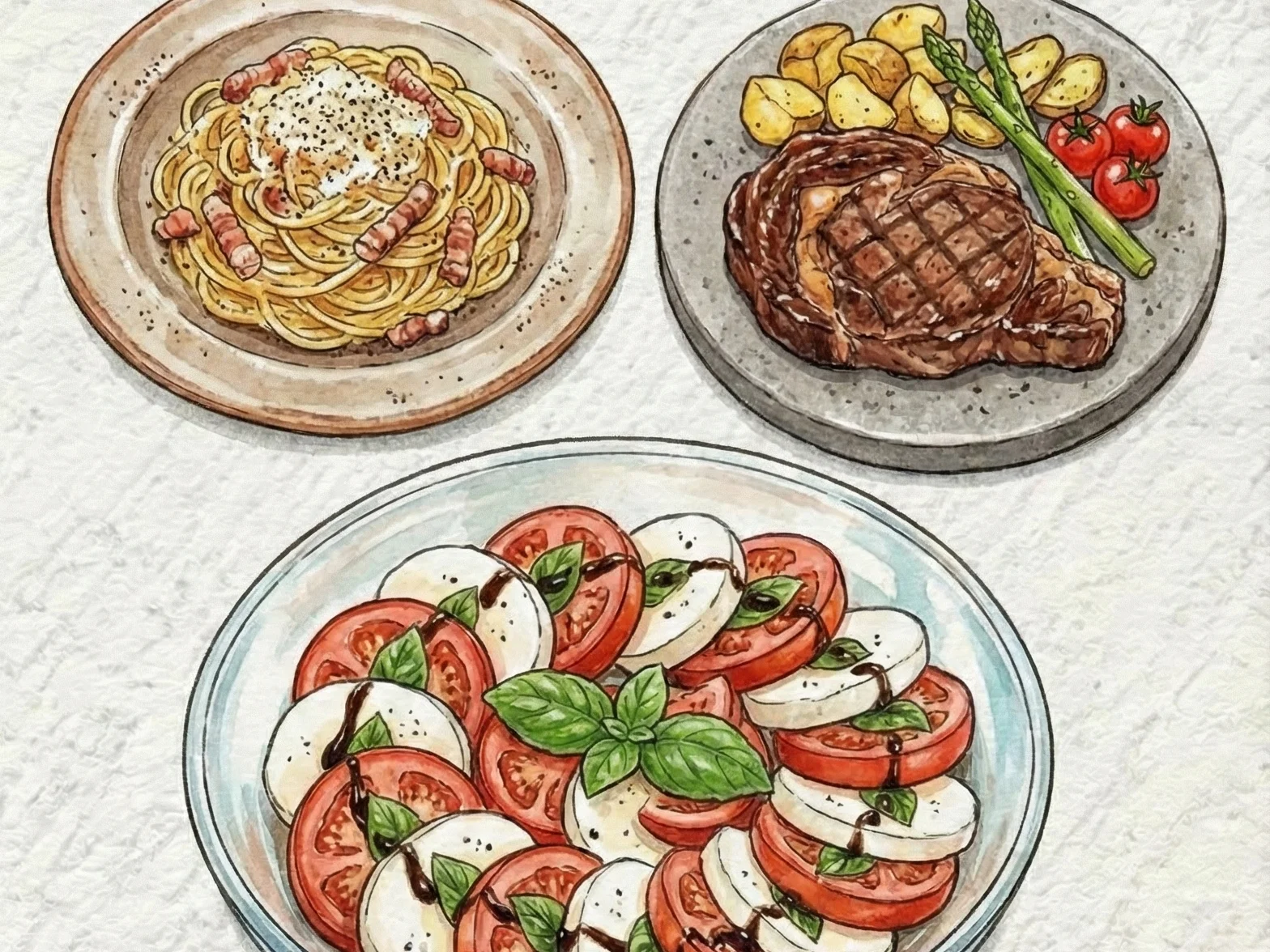
Carbonara is a Roman pasta whose sauce is built from egg yolks, Pecorino Romano or Parmesan, and coarsely ground black pepper emulsified with hot pasta water -- no cream is used at any stage. Guanciale or bacon is rendered slowly over low heat until its fat runs clear, and that rendered fat coats the drained spaghetti before anything else goes into the pan. With the heat fully off, the egg-cheese mixture is tossed in quickly; residual warmth from the pasta and the pan finishes cooking the eggs just enough to form a glossy, clinging sauce without scrambling. The starch dissolved in reserved pasta water acts as the emulsifier that binds the cheese protein and egg fat into a cohesive, velvety texture. Temperature control throughout is the defining technical challenge: too hot and the eggs seize, too cool and the emulsion breaks. Coarsely ground black pepper adds a sharp, aromatic counterpoint to the richness of the cheese and cured pork. Because the sauce continues to tighten as it cools, carbonara must be served immediately after plating. A properly made carbonara is one of the most technically demanding two-ingredient sauces in Italian cooking, rewarding precision with an extraordinarily silky result.
Cassoulet (French White Bean and Pork Stew)
Cassoulet is a slow-cooked stew from the Languedoc region of southwestern France, combining white beans, pork shoulder, and sausage in chicken stock over a minimum of two hours. As the beans absorb broth during the long simmer, they gradually release their starch into the liquid. This natural thickening is what produces the stew's characteristic dense, coating texture without any added roux or flour. Collagen from the pork shoulder breaks down completely over the extended cooking time and dissolves into the broth, adding body, while the fat from the sausages emulsifies into the stew rather than pooling on the surface. Thyme manages the richness of the meats, and tomato paste provides acidity and structural depth. Preparing cassoulet a day in advance and allowing it to rest overnight lets the beans and meat exchange flavors fully, producing a noticeably deeper result than the freshly made version. This is a dish that requires time as an ingredient. Served in cold weather with a thick slice of crusty bread, a single bowl constitutes a complete meal.
Cheese Fondue
Cheese fondue melts grated Gruyere and Emmental into warmed white wine to create a thick, glossy cheese dip served with cubed baguette. Rubbing the inside of the pot with a halved garlic clove lays down a gentle garlic base before the wine goes in. Tossing the grated cheese with cornstarch before adding it gradually to the warm wine is what prevents the proteins from clumping and keeps the texture smooth and flowing. A small amount of lemon juice cuts through the richness of the cheese, and the wine's acidity balances the salt from the aged cheeses. The heat must stay low throughout - high flame causes the fat to separate from the protein almost immediately, turning the fondue grainy and unappetizing. If the sauce thickens too much, a small addition of warm wine brings it back. Originating in the Alpine regions of Switzerland and France as a winter method for using hardened cheese, fondue has become a communal dish shared around the table and is now enjoyed worldwide.