🍱 Lunchbox Recipes
Dishes that taste great packed and cold
723 recipes. Page 21 of 31
The best lunchbox dishes hold up well at room temperature. This tag features make-ahead sides and full lunchbox recipes you can pack in the morning without stress - sausage stir-fry, rolled omelet, stir-fried anchovies, and soy-braised beef are all lunchbox staples.
The key to a great packed lunch is choosing dishes with low moisture content and arranging contrasting colors. A sprinkle of sesame seeds or furikake over the rice adds a finishing touch that looks as good as it tastes.
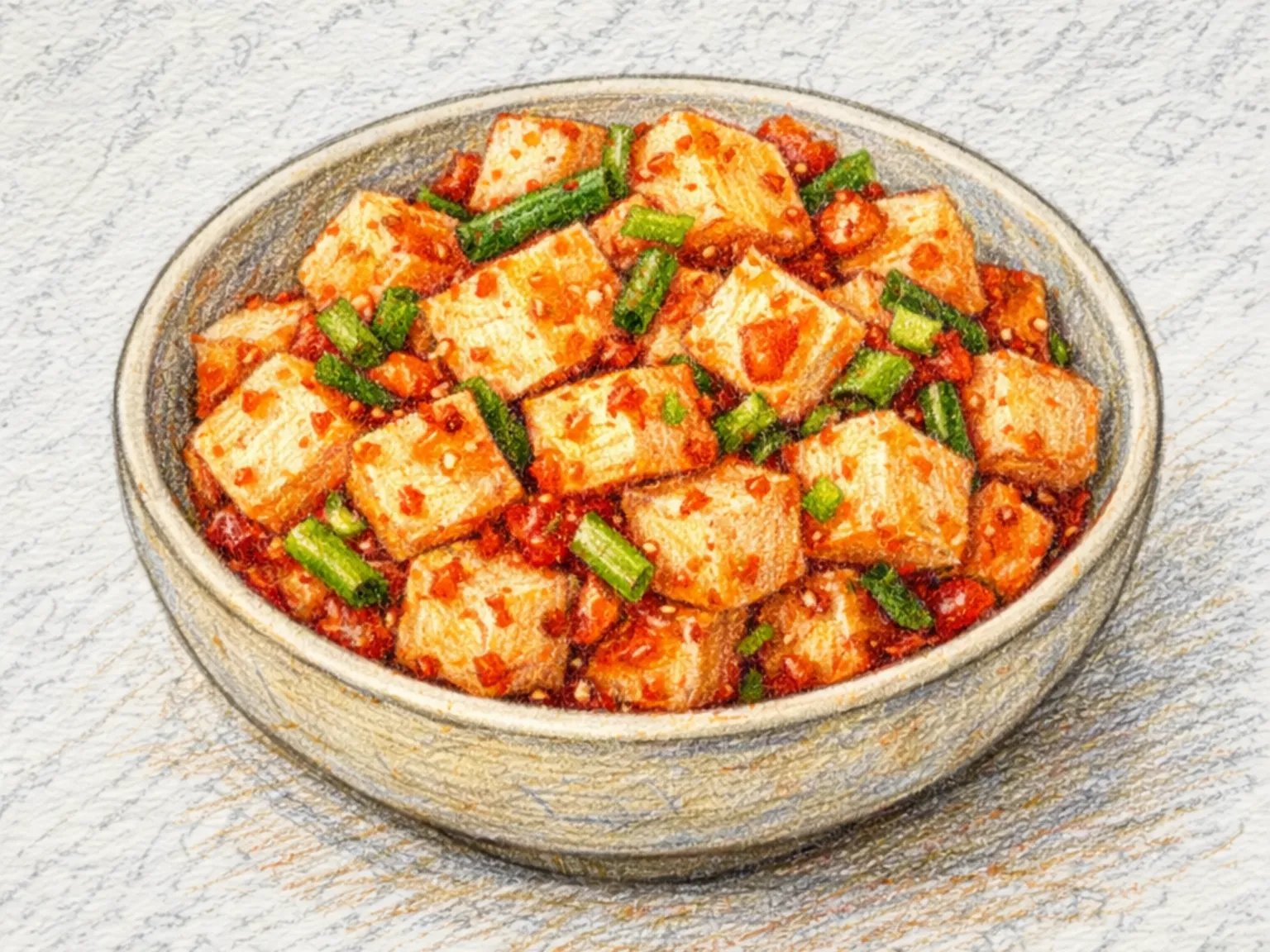
Korean Kohlrabi Kimchi (Cubed Gochugaru Fermented Crisp)
Kolrabi kimchi is made by cutting kohlrabi into 2 cm cubes, brining them in coarse salt, then mixing with gochugaru, fish sauce, minced garlic, and plum syrup before fermentation. Kohlrabi has lower moisture content and a denser cellular structure than Korean radish, which means its crunch holds up through days of fermentation without softening into mush. The brining step draws internal moisture out of the kohlrabi while driving salt evenly into the tissue, and this stage must be completed thoroughly so that seasoning can penetrate all the way through during fermentation. Kohlrabi's natural sweetness creates a clear contrast against the heat of gochugaru, adding textural depth to the flavor profile. Fish sauce builds the savory fermented foundation, while plum syrup contributes both acidity and sweetness to keep the overall seasoning in balance. Eaten immediately after mixing, the kimchi tastes fresh and light, similar to a dressed salad. After one to two days at room temperature or three to four days in the refrigerator, the umami deepens noticeably and the characteristic tang of fermentation emerges. It works well as a substitute for kkakdugi alongside rice and grilled meats.
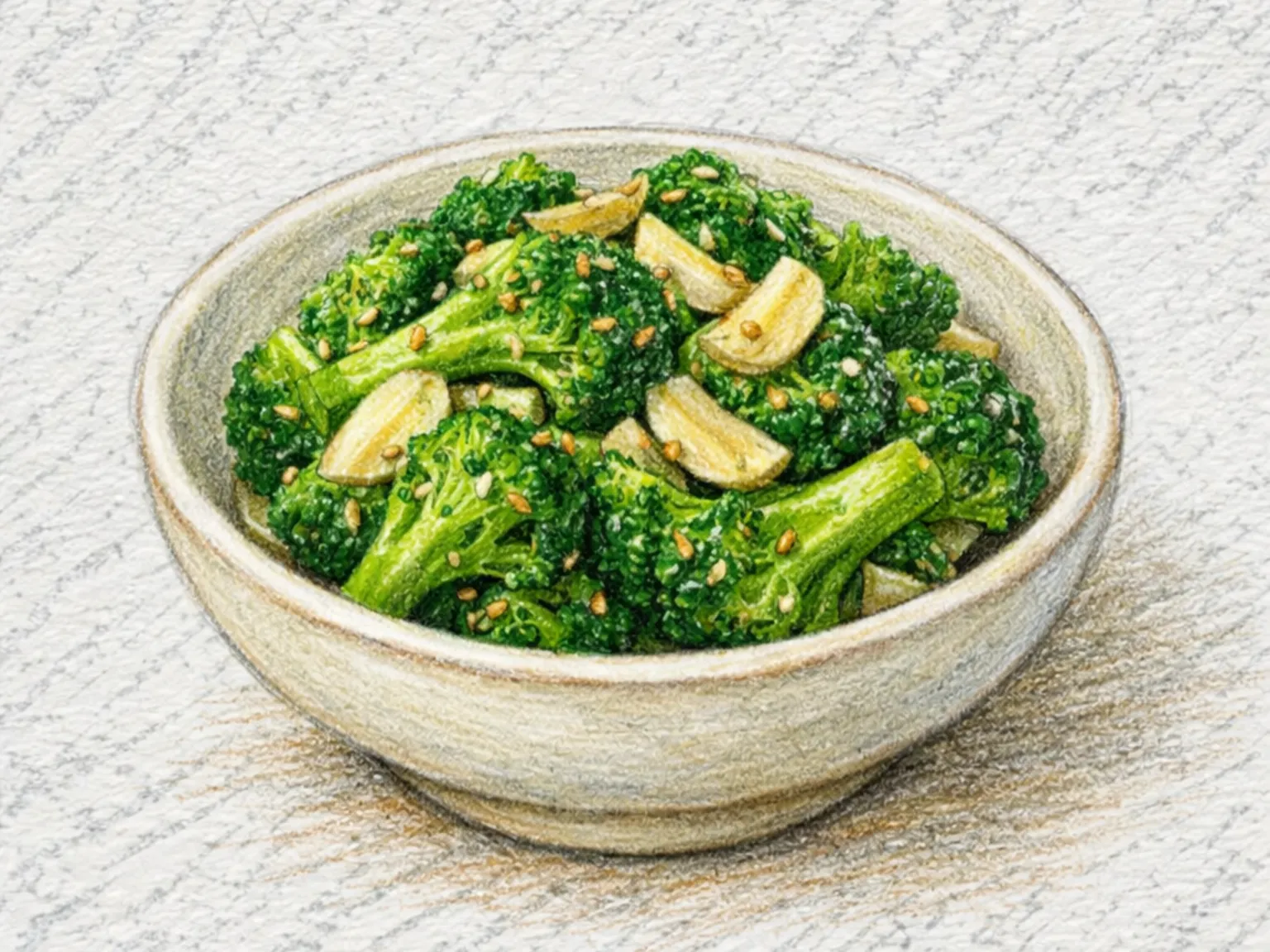
Korean Garlic Sesame Broccoli Muchim
Garlic broccoli muchim is a modern Korean namul that became a household staple as broccoli grew widely available in Korean supermarkets from the early 2000s. The technique is straightforward: blanch florets and peeled, thinly sliced stems in well-salted boiling water for ninety seconds, then immediately transfer them to ice water to stop the cooking. The cold shock locks in the vivid green color and preserves a firm, crisp bite that distinguishes a properly made namul from one that is soft and dull. Peeling the stems and cutting them thin ensures the entire head of broccoli is used rather than discarding the lower portion. The dressing is deliberately minimal: soup soy sauce, minced garlic, sesame oil, and toasted sesame seeds. Keeping the seasoning light allows the broccoli's mild, slightly bitter flavor to come through clearly, with the garlic adding an aromatic sharpness that sits on top rather than overwhelming the vegetable. A final toss brings everything together into a clean, satisfying side dish that is ready in five minutes and keeps well in the refrigerator for two days.
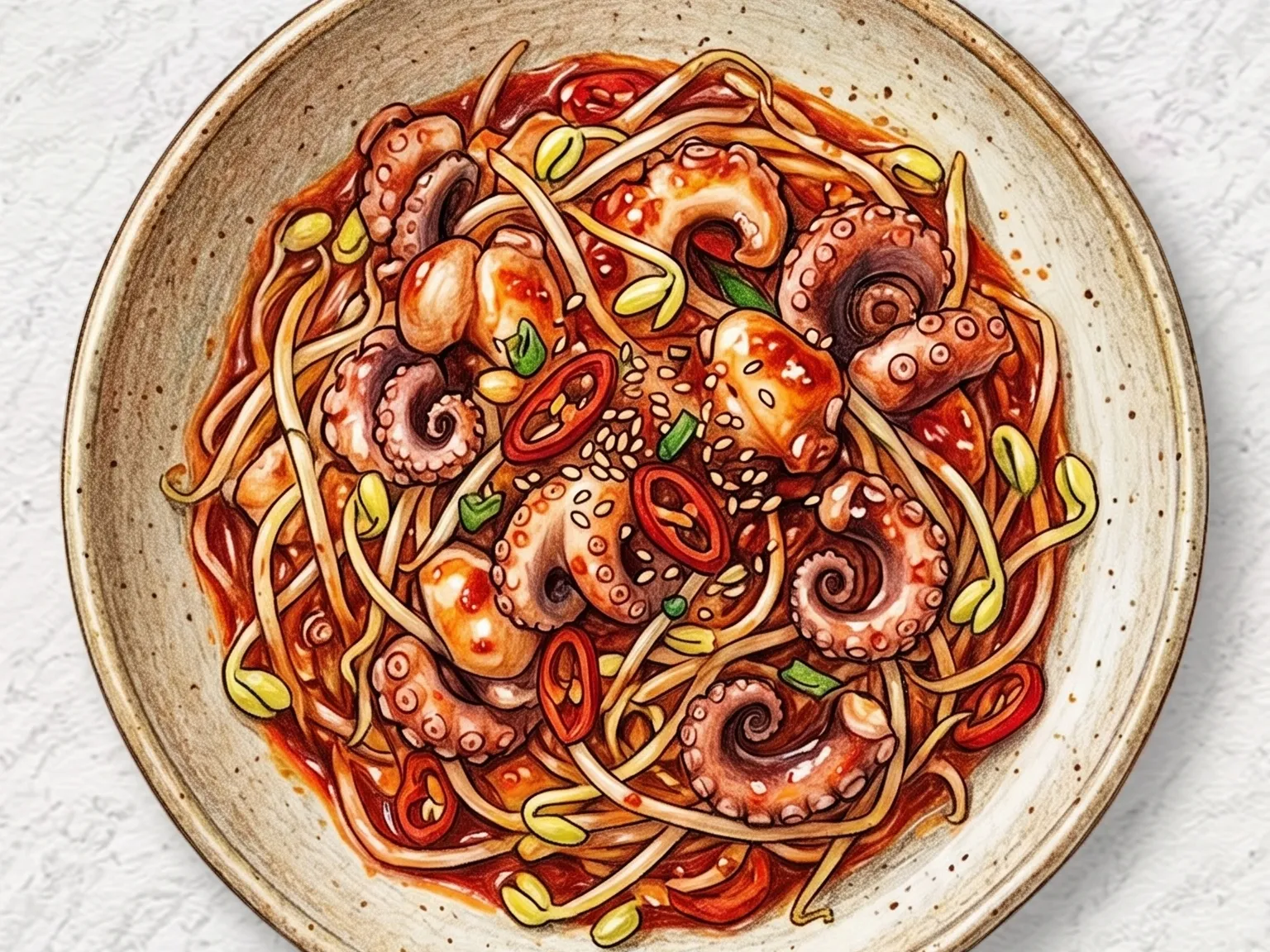
Spicy Live Webfoot Octopus with Bean Sprouts
This stir-fry combines live webfoot octopus with crunchy soybean sprouts in a spicy sauce. The octopus is blanched in boiling water for 20 seconds and rinsed in cold water. This step seals the octopus and prevents water from leaking during cooking, ensuring the sauce coats the ingredients without getting watered down. The seasoning combines red chili powder and red chili paste for a double layer of heat, which is balanced by sugar, soy sauce, and minced garlic. Onion and green onion are stir-fried first, followed by the sprouts. Once they soften, the octopus and sauce are added and cooked over high heat for two minutes. Sliced cheongyang chili peppers, sesame oil, and sesame seeds are added at the end, highlighting the contrast between the tender octopus heads, chewy suction cups, and crisp sprouts.
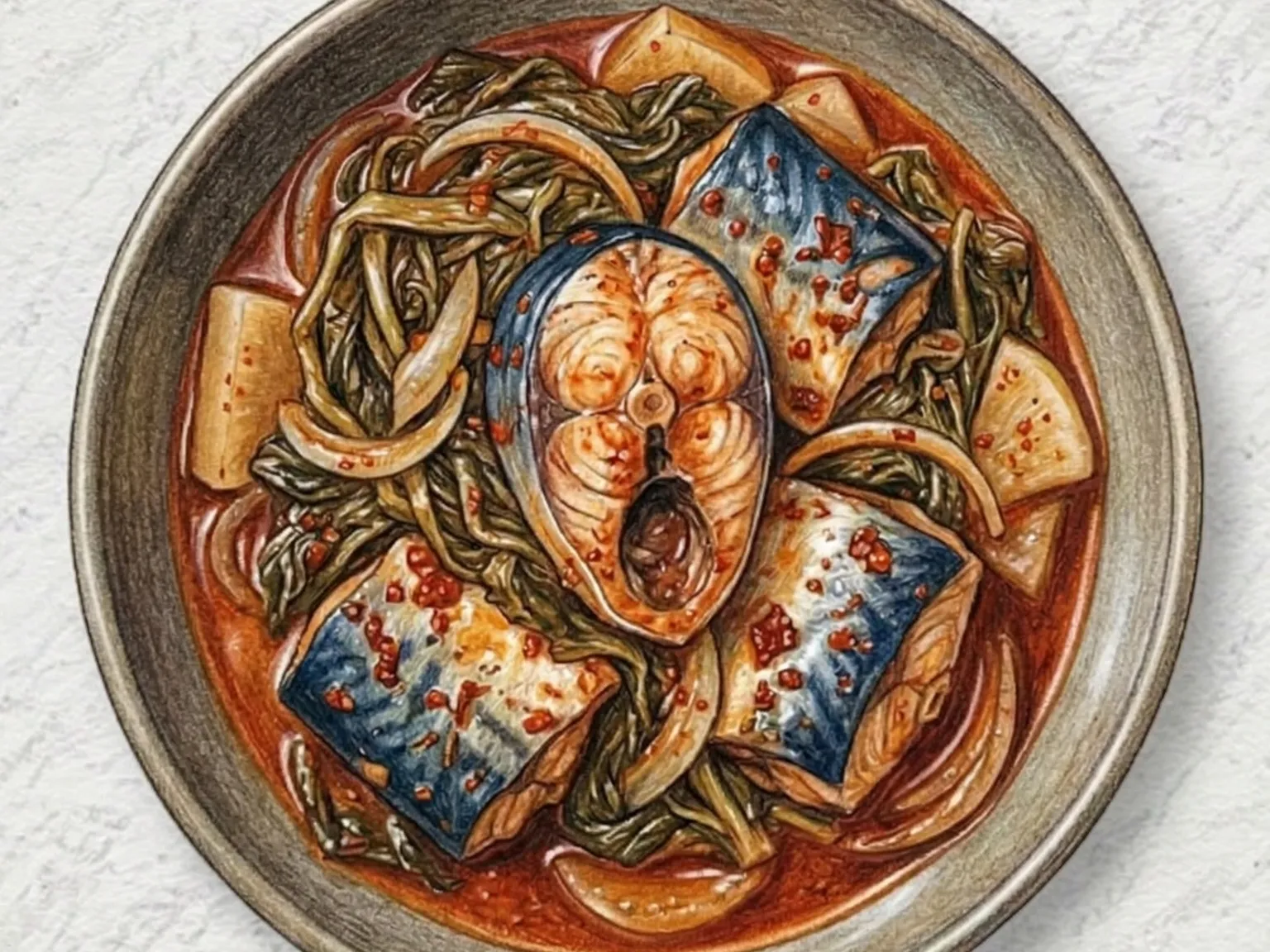
Korean Braised Mackerel with Dried Radish Greens
Siraegi godeungeo jorim is a Korean braised mackerel dish in which the fish and pre-boiled dried radish greens are cooked down with radish and onion in a chili-soy seasoning. The richness of mackerel fat and the earthy, fibrous character of dried radish greens share the same braising liquid, each amplifying what the other brings to the pot. The radish greens must be boiled thoroughly before braising to soften their tough fibers and leach out any residual bitterness, which is then washed away with a cold rinse. Mackerel seasoned lightly with cooking wine is placed over the greens and vegetables, and the pot braises over medium-low heat for more than twenty minutes so the seasoning penetrates the flesh all the way through. Spooning the braising liquid over the fish two or three times during cooking ensures an even coating on the upper surface. Radish becomes sweeter and more concentrated as it reduces, neutralizing any fishiness from the mackerel. The finished dish, spooned generously over steamed rice with its spicy braising sauce, delivers a layered depth of flavor that is unmistakably Korean.
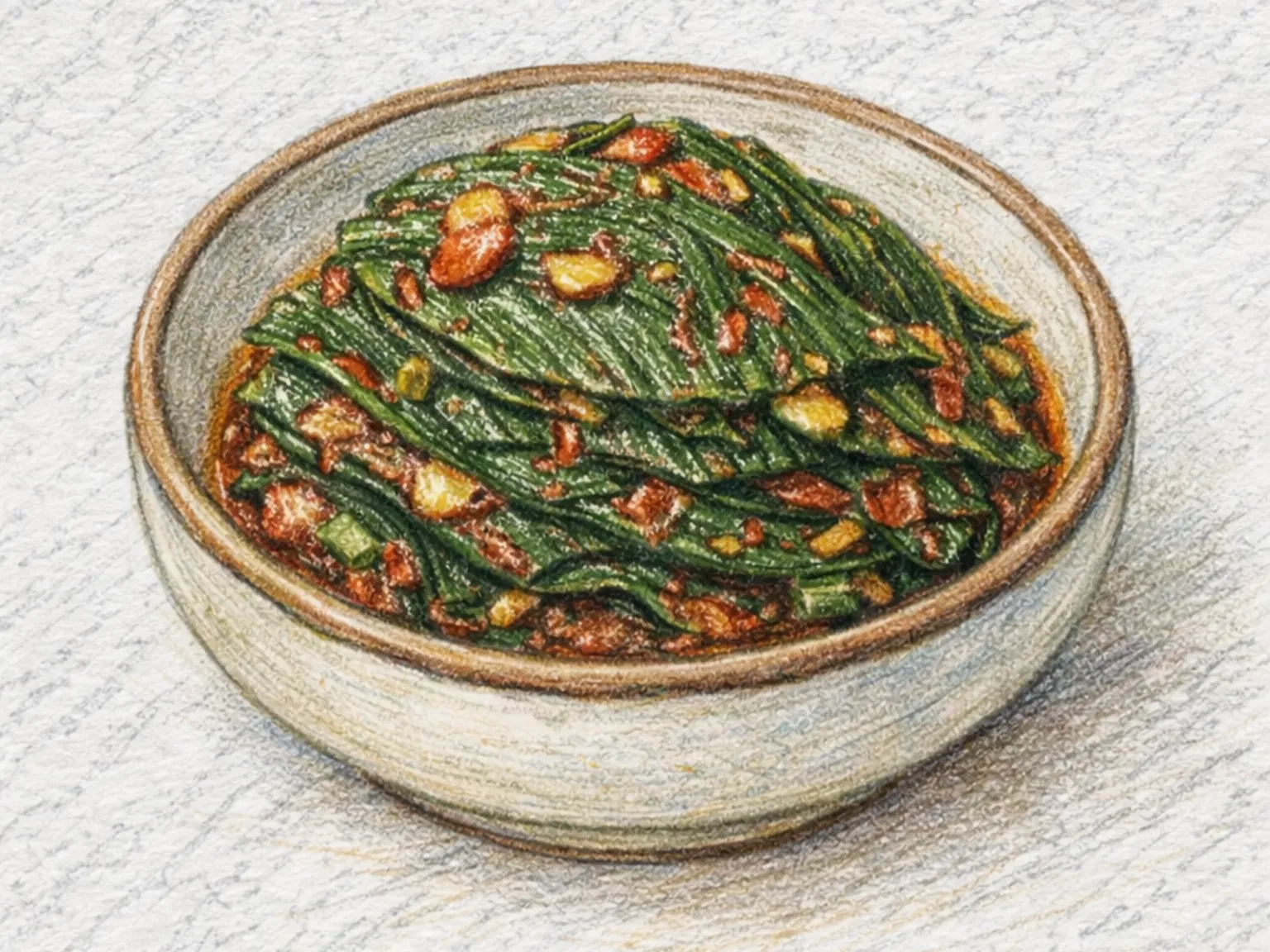
Korean Soybean Leaf Kimchi
Kongip kimchi is a Korean preserved kimchi made by coating individual soybean leaves, one by one, with a seasoning of gochugaru, dark soy sauce, anchovy fish sauce, and plum syrup, then stacking them in layers to ferment. The soybean leaf's earthy, vegetal fragrance is its defining quality in the fresh state, but it transforms into something considerably deeper and more savory once it meets the concentrated umami of soy and fermented fish sauce and begins to mature over several days. Onion and ginger are worked into the seasoning to suppress any raw edge and reinforce the overall aroma. Plum syrup tames the inherent sharpness of the salt and fish sauce with a gentle fruit acidity that rounds the flavor, ensuring that each leaf pulled from the jar tastes balanced rather than overwhelming. The traditional way to eat it is draped over a bowl of warm rice and folded around a mouthful, the salty-spicy leaf acting as both wrap and condiment. When the kimchi is particularly salty after a long fermentation, a brief toss in sesame oil softens the intensity and adds a warm, nutty note. Made in late autumn while the leaves are still young and tender before the first frost, this kimchi keeps for weeks in the refrigerator and deepens in flavor throughout the season.
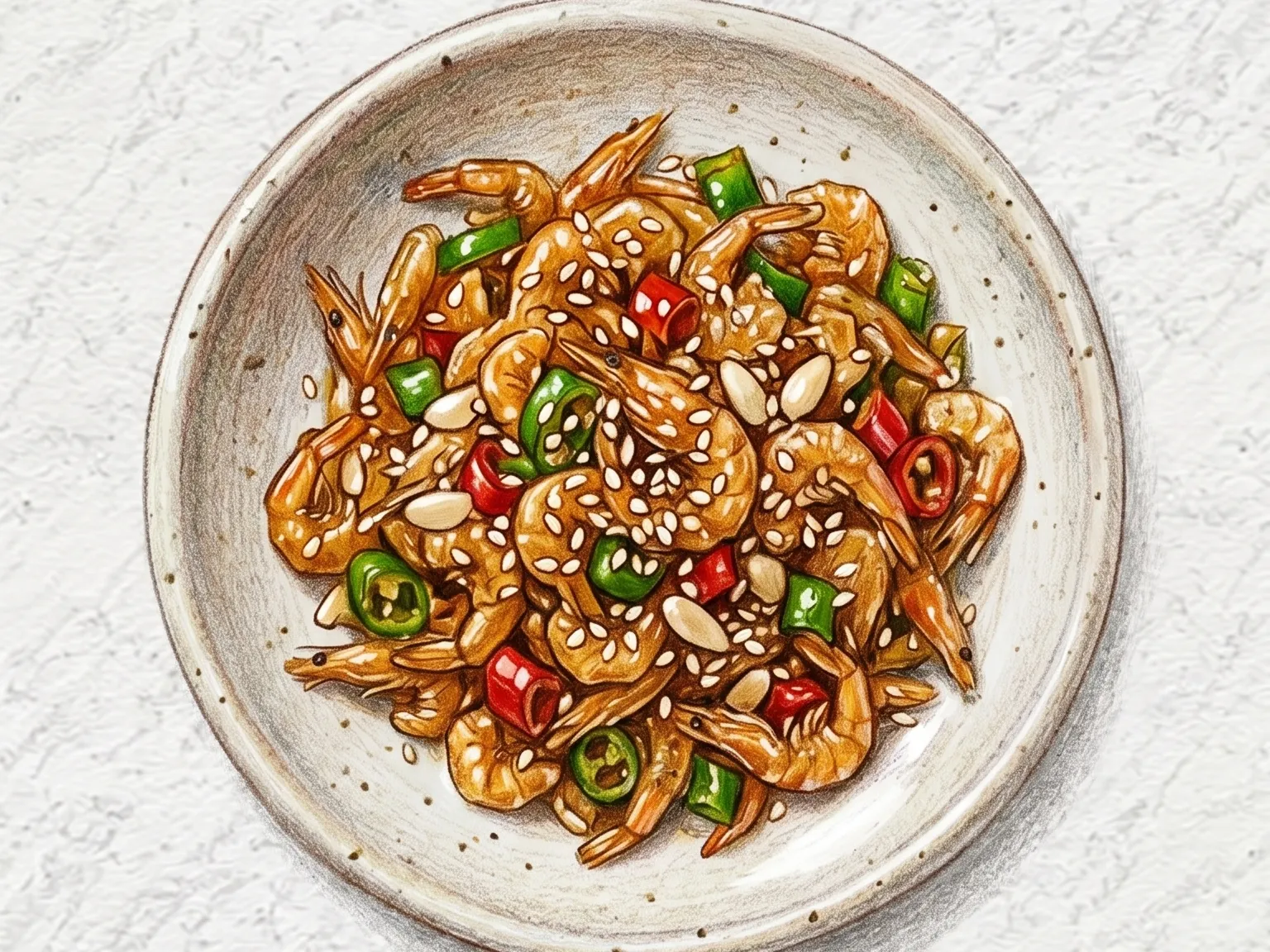
Korean Stir-fried Dried Shrimp
Geon-saeu-bokkeum transforms a handful of dried shrimp, a Korean pantry staple, into a quick, crunchy banchan that earns its reputation as a rice thief. The shrimp are dry-toasted in a pan first to drive off residual moisture, intensifying their briny aroma and building the foundation for a crisp final texture. Soy sauce, rice syrup or oligosaccharide, and garlic are added and reduced over low heat until the shrimp are wrapped in a thin, glossy sweet-salty glaze. The timing matters: the moment the syrup bubbles once, the heat must drop immediately, because leaving it even slightly too long hardens the coating into a tooth-testing shell rather than a pliable lacquer. A finish of sesame oil and whole sesame seeds adds a nutty warmth that rounds out this compact side dish. Finely sliced Cheongyang chili mixed in during the last minute produces a spicier variation, and a small handful of almonds or peanuts stirred in enriches the chew. The finished banchan keeps well in a sealed container at room temperature for several days, making it as practical as it is flavorful.
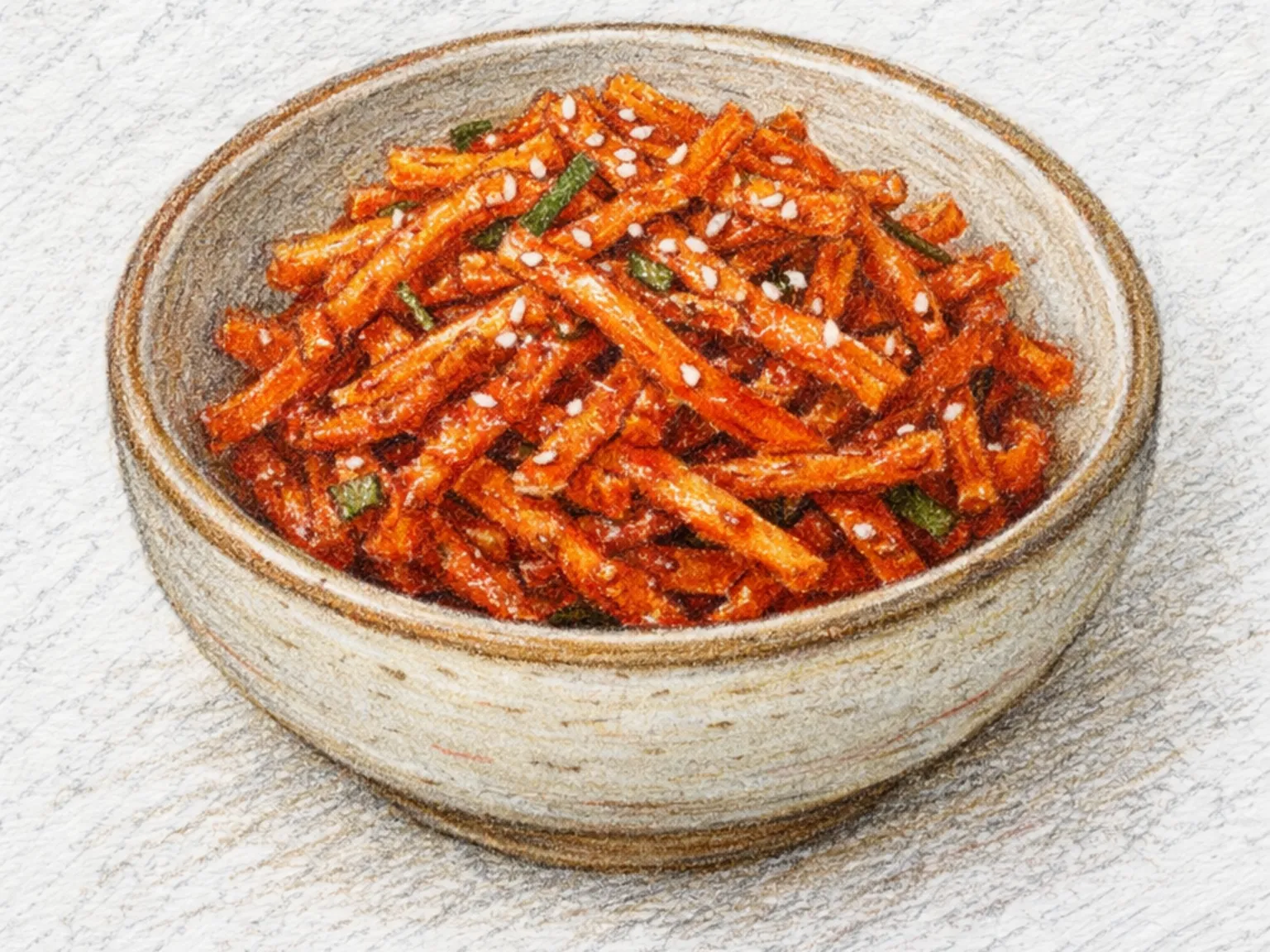
Korean Stir-fried Dried Pollock Strips
Hwangtae-chae-bokkeum is a Korean side dish of shredded dried pollock strips soaked until fully soft, then stir-fried in a gochujang, oligosaccharide syrup, and soy sauce glaze. Hwangtae is a specific type of dried pollock produced by repeated freeze-thaw cycles in cold mountain air over winter, which gives it a lighter, spongier texture than ordinary dried pollock -- that porosity is what allows it to absorb the seasoning so completely during cooking. Soaking the dried strips in cold water for at least twenty minutes is necessary to rehydrate the flesh fully; squeezing out the excess moisture before adding them to the pan helps the glaze cling evenly rather than diluting in the pan. As the pollock fries, it drinks in the seasoning and turns chewy and moist, with the gochujang's heat and the syrup's sweetness working together to neutralize any residual fishiness. A finishing drizzle of sesame oil and a scatter of sesame seeds rounds out the flavor. The dish keeps well in the refrigerator for four to five days, making it a practical banchan to prepare in advance for lunchboxes or as a casual snack alongside drinks.
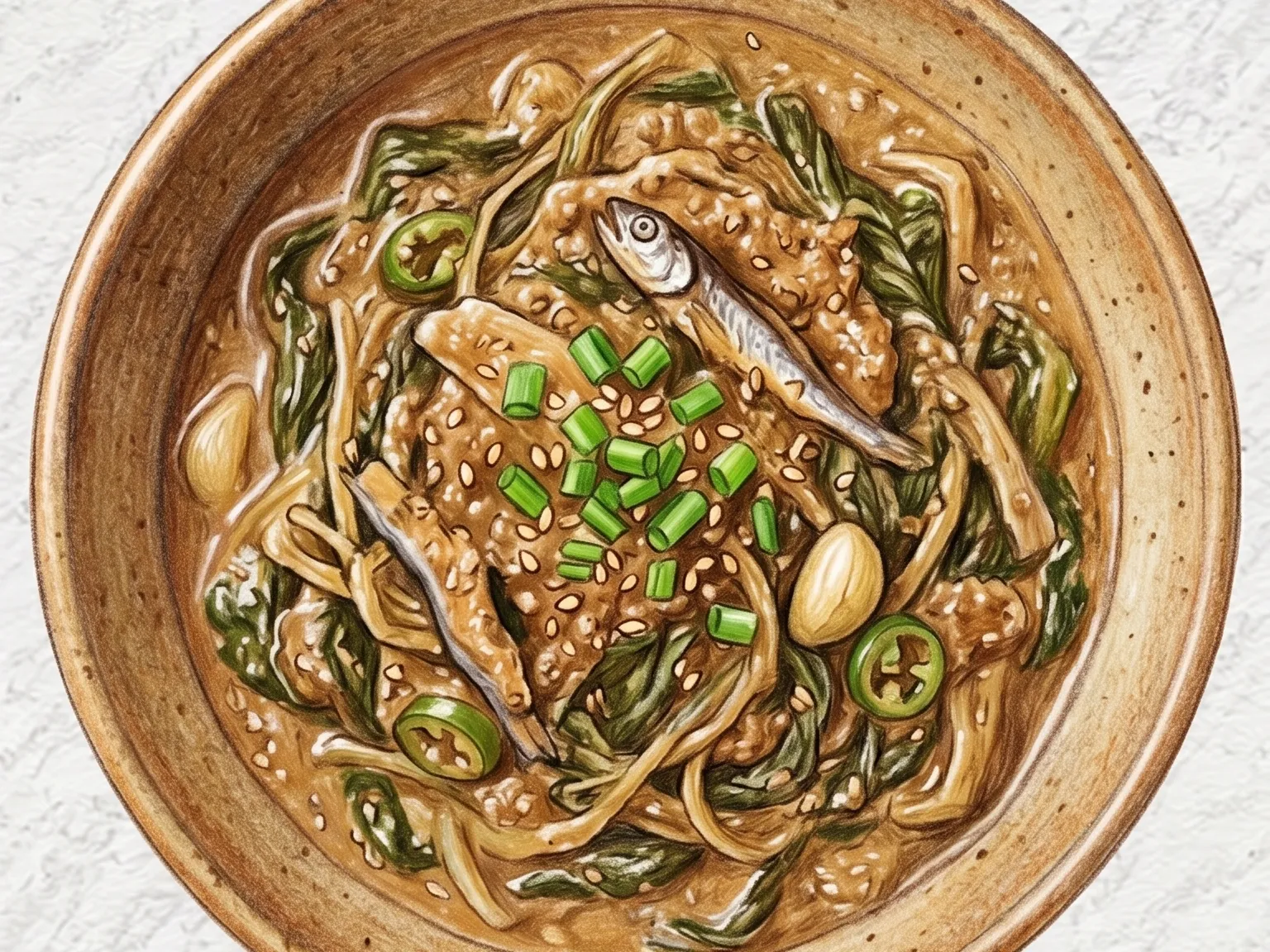
Korean Braised Radish Greens
Siraegi jjim is a traditional Korean side dish of blanched dried radish greens braised with soybean paste, ground perilla seeds, and soup soy sauce in anchovy stock. The greens are first seasoned by hand, then stir-fried in perilla oil to develop aroma before the stock is poured in. Simmering melds the salty depth of doenjang with the creamy nuttiness of perilla into every fiber of the greens. Adding the perilla powder in the final stage rather than at the start prevents a chalky, starchy texture and keeps its fragrance intact. Blanching the greens thoroughly first is important because the tough fibers need time to soften, and squeezing out the water after blanching allows the seasoning to penetrate evenly. Though made from humble ingredients, the combination of fermented paste and roasted seeds produces an earthy richness that suits any season.
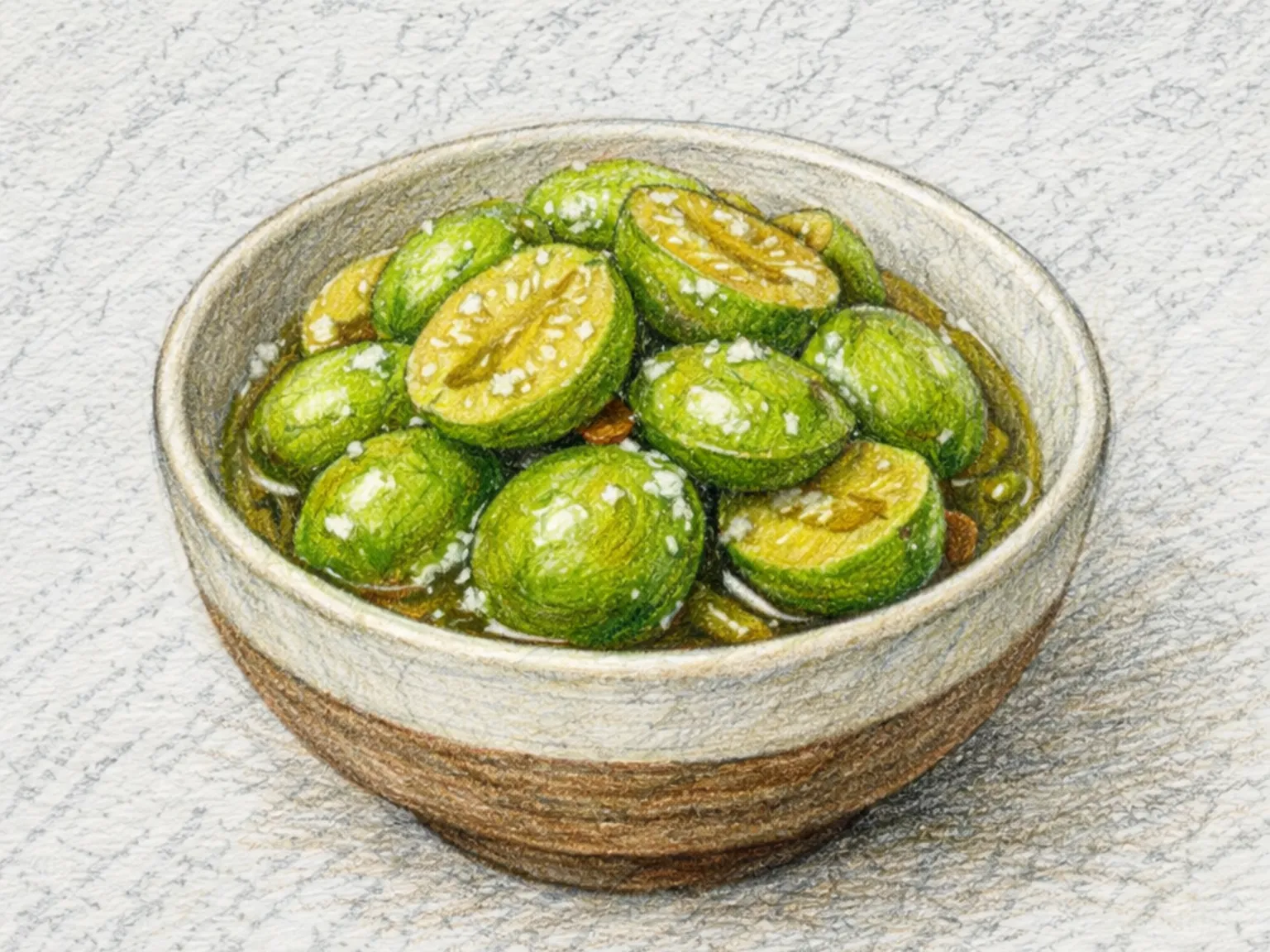
Korean Green Plum Pickles
Maesil jangajji is a traditional Korean green plum pickle made by salting unripe plums to draw out bitterness, layering them with sugar, and pouring in vinegar and rice wine for months of aging. Over the long curing process, the plum's sharp acidity gradually harmonizes with the sugar's sweetness, and the flesh condenses as moisture evaporates, concentrating its floral aroma. Vinegar stabilizes the fermentation while rice wine smooths any harsh notes, resulting in a pickle that is tart, sweet, and cleanly fragrant. A couple of pieces placed beside a bowl of rice stimulate the appetite with their bright acidity, making this a Korean summer preserve with a long tradition. The best time to prepare it is early June when young green plums come to market, and stored in glass jars in a cool spot the pickle keeps well for over a year.
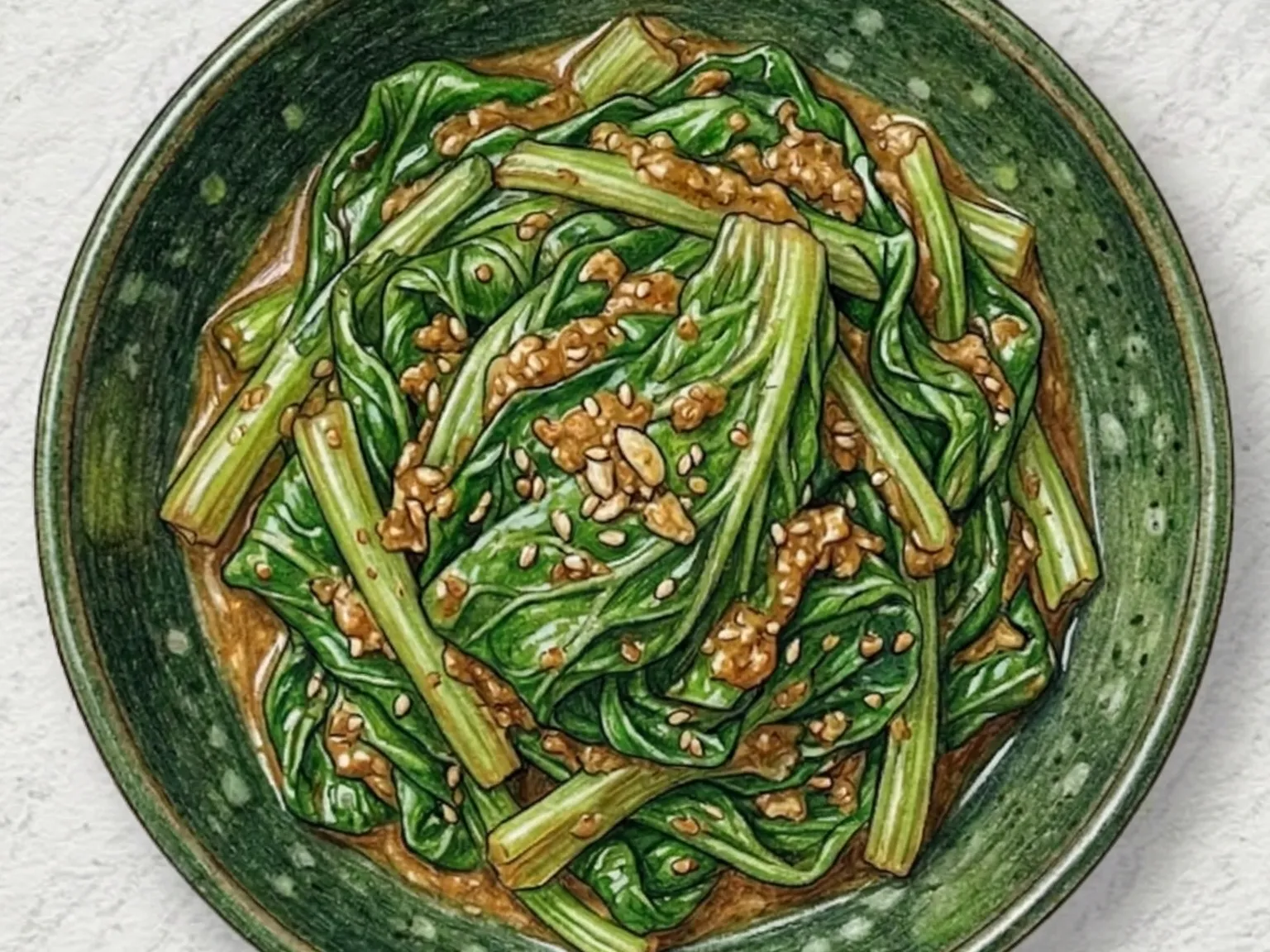
Korean Seasoned Swiss Chard Namul
Geundae namul muchim is a seasoned vegetable banchan made from Swiss chard, a leafy green that has been used in Korean doenjang soup and namul for generations. Because the stems are substantially thicker than the leaves, blanching them together results in overcooked leaves by the time the stems are ready, so they are handled separately: stems go into boiling water for thirty seconds first, then the leaves follow for another thirty. After blanching, squeezing the greens thoroughly by hand is important because excess moisture dilutes the seasoning and prevents it from clinging to the greens. The blanched chard is hand-dressed with doenjang, soup soy sauce, minced garlic, and perilla oil, working the paste into the greens so that the fermented paste's earthy, savory depth merges with chard's faintly bitter, mineral character in the way that defines traditional Korean namul. Perilla powder added last thickens the dressing into a coating that clings without adding liquid and contributes a layer of nutty, roasted fragrance. Chard's thicker, denser leaf structure holds up far better than spinach after dressing, which makes this namul a reliable make-ahead banchan that does not collapse or release water when left to sit.
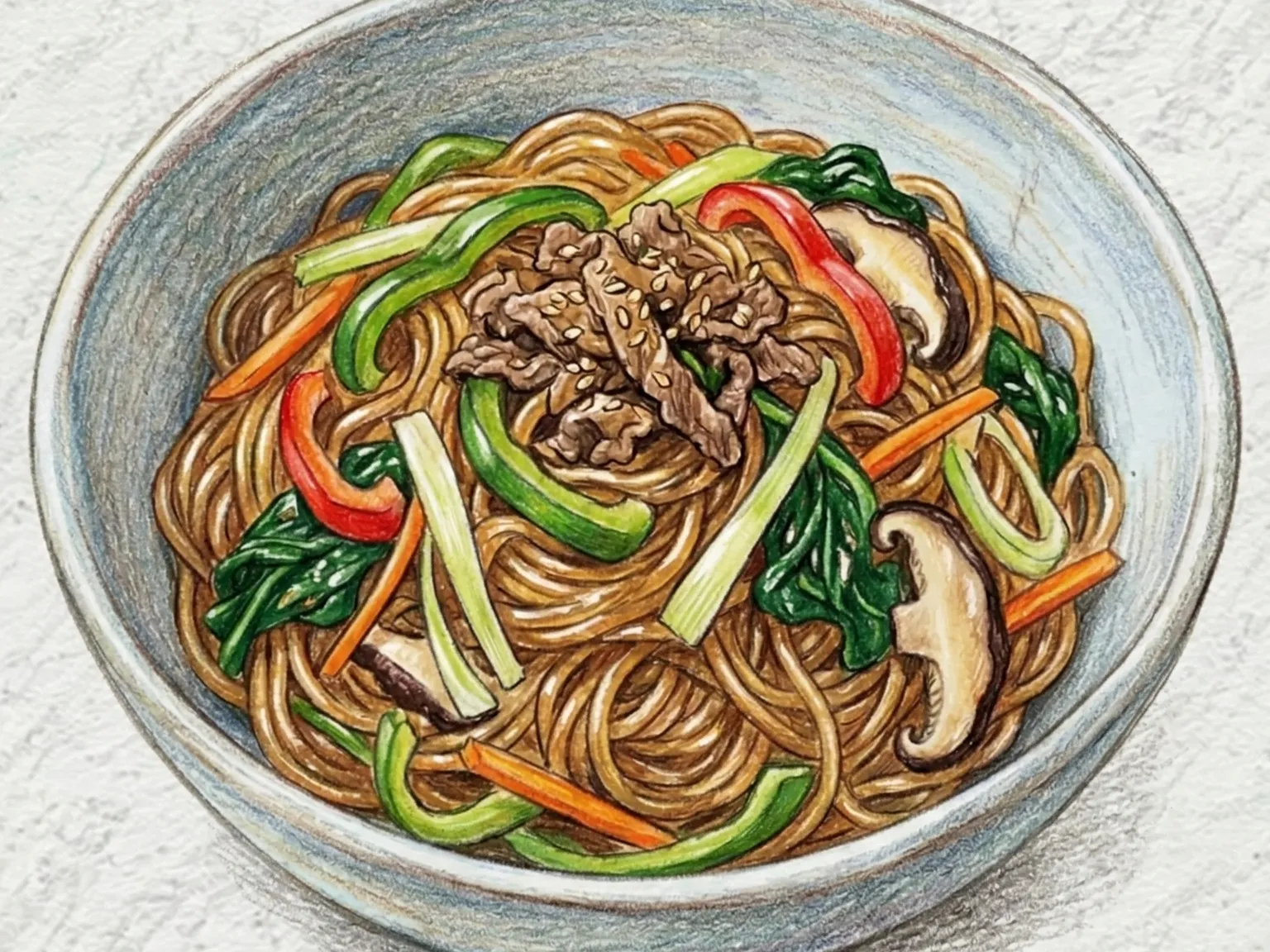
Korean Glass Noodle Stir-fry
Japchae is a signature Korean dish of glass noodles stir-fried with beef, spinach, carrots, onions, and shiitake mushrooms in soy sauce and sesame oil. The noodles are made from sweet potato starch and turn translucent as they cook, absorbing the seasoning to become glossy and springy rather than starchy or heavy. The defining technique is cooking each component separately before combining them at the end. Spinach softens quickly and needs only a brief wilt; carrots are stir-fried to keep a slight bite; shiitake mushrooms are cooked until pleasantly chewy; and beef is marinated in soy sauce, sesame oil, sugar, garlic, and pepper before being stir-fried so it stays tender without any gamey edge. Tossing the noodles in soy sauce and sesame oil right after boiling prevents them from clumping together. When everything is brought together at the end, each ingredient keeps its individual texture while the seasoning unifies the dish. Japchae appears at virtually every Korean celebration including Chuseok, Lunar New Year, birthdays, and wedding feasts, and a large batch keeps its quality well into the following day.
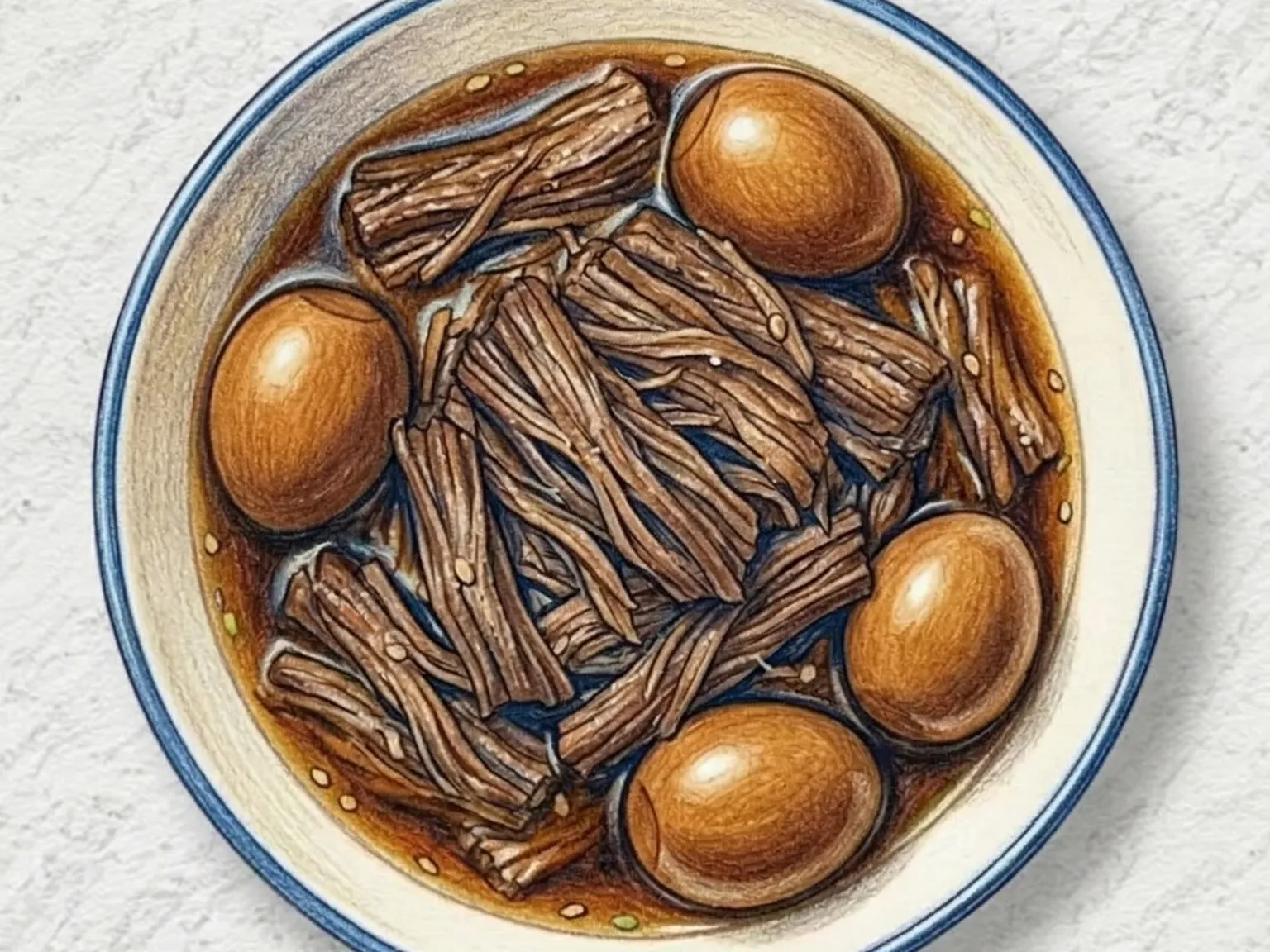
Korean Sogogi Jangjorim (Soy-Braised Beef)
Sogogi jangjorim is one of Korea's essential make-ahead side dishes, made by boiling lean beef round until thoroughly tender, shredding it cleanly along the grain, and braising the shreds with quail eggs in soy sauce, sugar, and garlic. Using the beef cooking broth as the braising base means every spoonful of the liquid carries concentrated, bone-deep meat flavor that plain water could not produce. The quail eggs take on a deep amber-brown color as they simmer, absorbing the soy seasoning all the way through to the yolk rather than just on the surface. Cooling the pot completely before refrigerating is not merely a storage step but a flavor step: both the meat and the eggs continue to draw in seasoning as the temperature drops, resulting in a more uniform taste throughout. Once fully chilled, the braising liquid partially solidifies into a savory coating around each piece of beef and every egg, helping the dish maintain its intensity for days. Refrigerated, this banchan keeps well over a week, making it a staple of Korean weekly meal preparation. The shredded beef tucks easily between grains of rice, and the firm bite of the quail eggs provides a satisfying textural contrast that makes it impossible to stop at just a few bites.
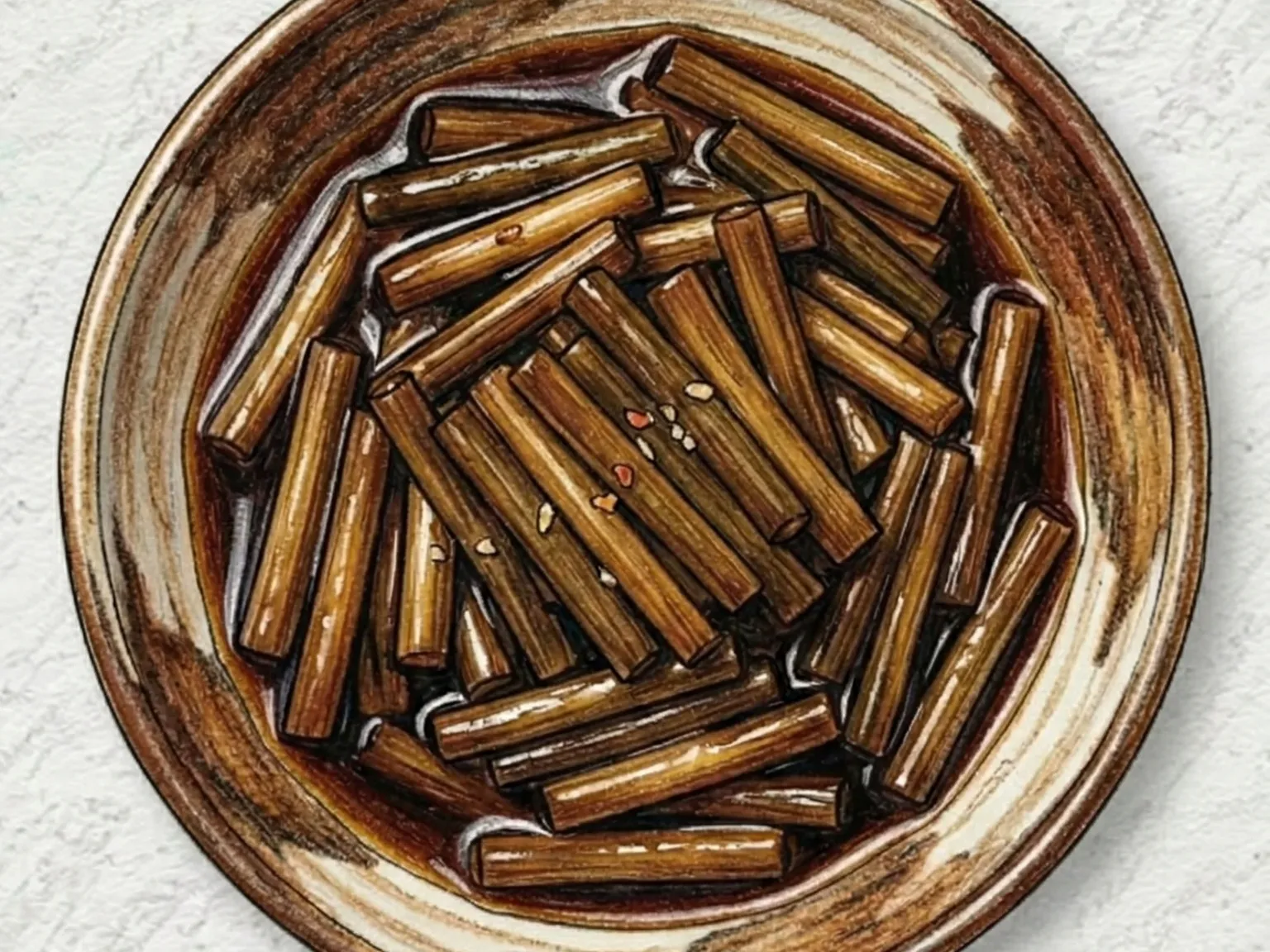
Korean Garlic Scape Soy Pickles
Maneul jong jangajji is a Korean garlic scape pickle made by cutting fresh scapes into 5 cm lengths, packing them into a sterilized jar along with cheongyang chili peppers, and pouring over a freshly boiled brine of soy sauce, vinegar, sugar, and dried kelp. The scapes' sharp garlic bite melds gradually with the soy's salty, savory depth to produce a flavor that builds with every chew, while the kelp dissolves a subtle seaweed umami into the brine over the course of steeping. The vinegar keeps the salt in check so the overall taste stays clean rather than heavy, and the cheongyang chili adds a slow, lingering warmth at the end of each bite that prevents the pickle from tasting one-dimensional. Reboiling the brine and pouring it back over the scapes after two days is an important step for both preservation and even pickling, and repeating this process once more ensures the scapes absorb flavor uniformly throughout. Handled this way, the finished banchan keeps reliably for over a month in the refrigerator.
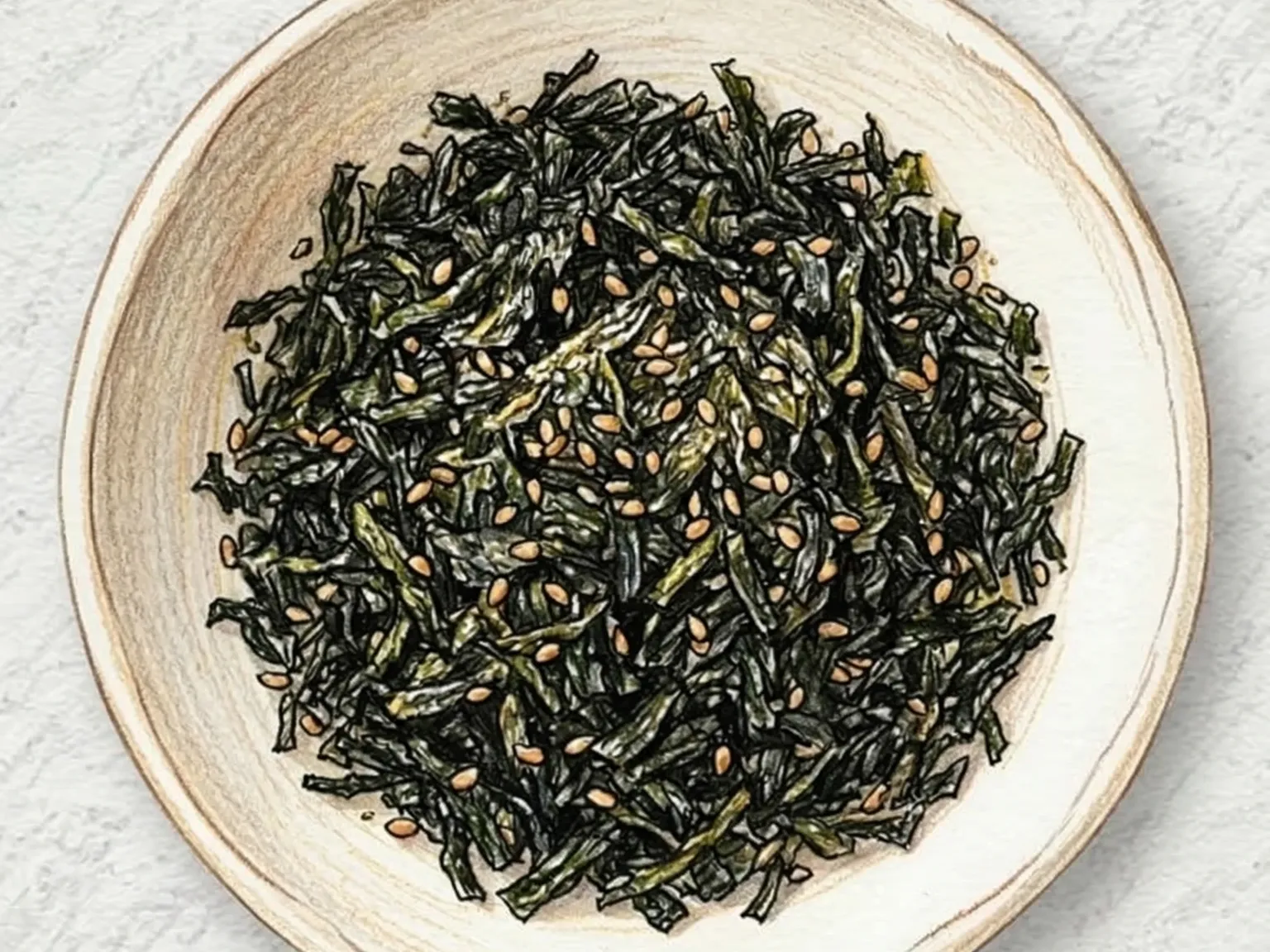
Korean Stir-Fried Dried Seaweed
Gim bokkeum is one of Korea's most beloved banchan - dried seaweed crumbled by hand and toasted slowly over low heat in sesame oil until every last trace of moisture cooks off. As the seaweed dries out, its inherent oceanic character concentrates into a deep, nutty savory flavor and the texture becomes satisfyingly crisp rather than papery. A very small amount of soy sauce and sugar is all the seasoning needed to add a gently sweet-salty edge, finished with a scatter of sesame seeds. The technique requires restraint above all: high heat scorches the seaweed instantly, and too much oil turns it greasy and limp. Done correctly, this is one of those banchan that makes plain steamed rice disappear faster than expected, earning it the Korean nickname bap-doduk - rice thief. It keeps well in the refrigerator for over a week and works equally well tucked inside hand-formed rice balls or used as a filling for triangle kimbap.
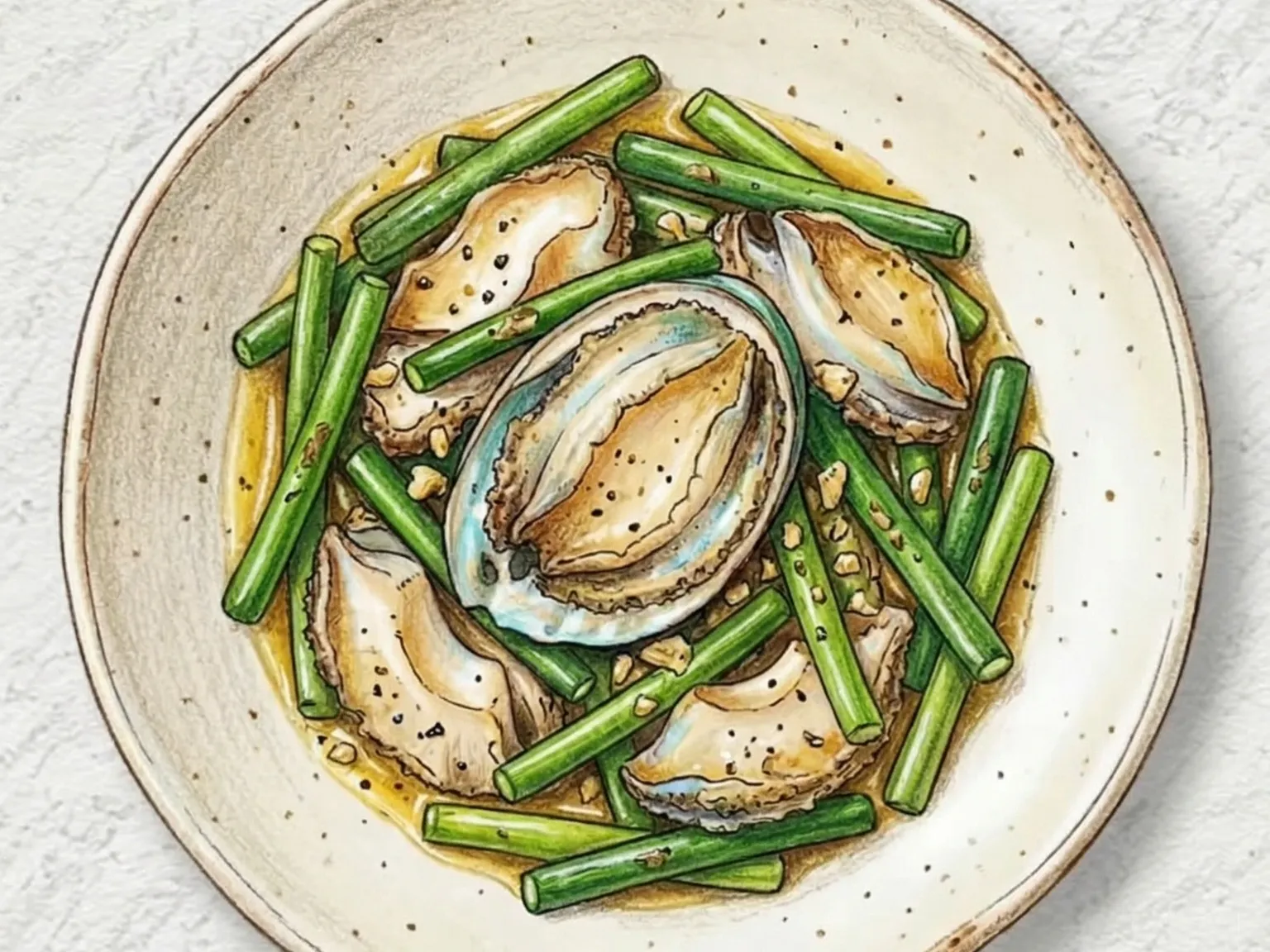
Korean Abalone & Garlic Stem Stir-fry
The preparation of Jeonbok-maneuljong-butter-bokkeum involves a high heat stir-fry technique using thinly sliced abalone and garlic scapes cooked in butter. The primary goal of using high heat is to release the aromatic properties of the butter and seafood while maintaining a specific texture. Before cooking, the abalone must be cleaned and the internal organs removed so that only the flesh is used. Slicing the abalone thinly is a requirement because the high temperature of the pan cooks the pieces almost instantly. This rapid cooking ensures the flesh remains springy rather than contracting into a tough or rubbery texture. Because the protein in the abalone begins to seize if cooked for longer than one minute, the speed of the stir-fry is the most critical variable in the process. Garlic scapes are used to provide a firm and snappy bite to the dish. These are cut into uniform lengths and placed in the pan before the abalone. This specific order gives the scapes a brief head start in the cooking process so that both the vegetables and the seafood finish at the same time. The ingredients should be added to the pan only after the butter has melted and started to foam. This foaming indicates the start of the Maillard reaction, which is responsible for browning the surface of the pieces and increasing the overall scent of the dish. A spoonful of soy sauce is then poured specifically along the heated edges of the pan. This technique allows the sauce to caramelize on contact with the hot surface, which adds a layer of savory and slightly sweet flavors to the mixture. The process concludes with the addition of ground black pepper, which provides a mild spice that supports the scent of the butter. Provided that the ingredients are prepped in advance, the entire stir-fry takes less than ten minutes to complete.
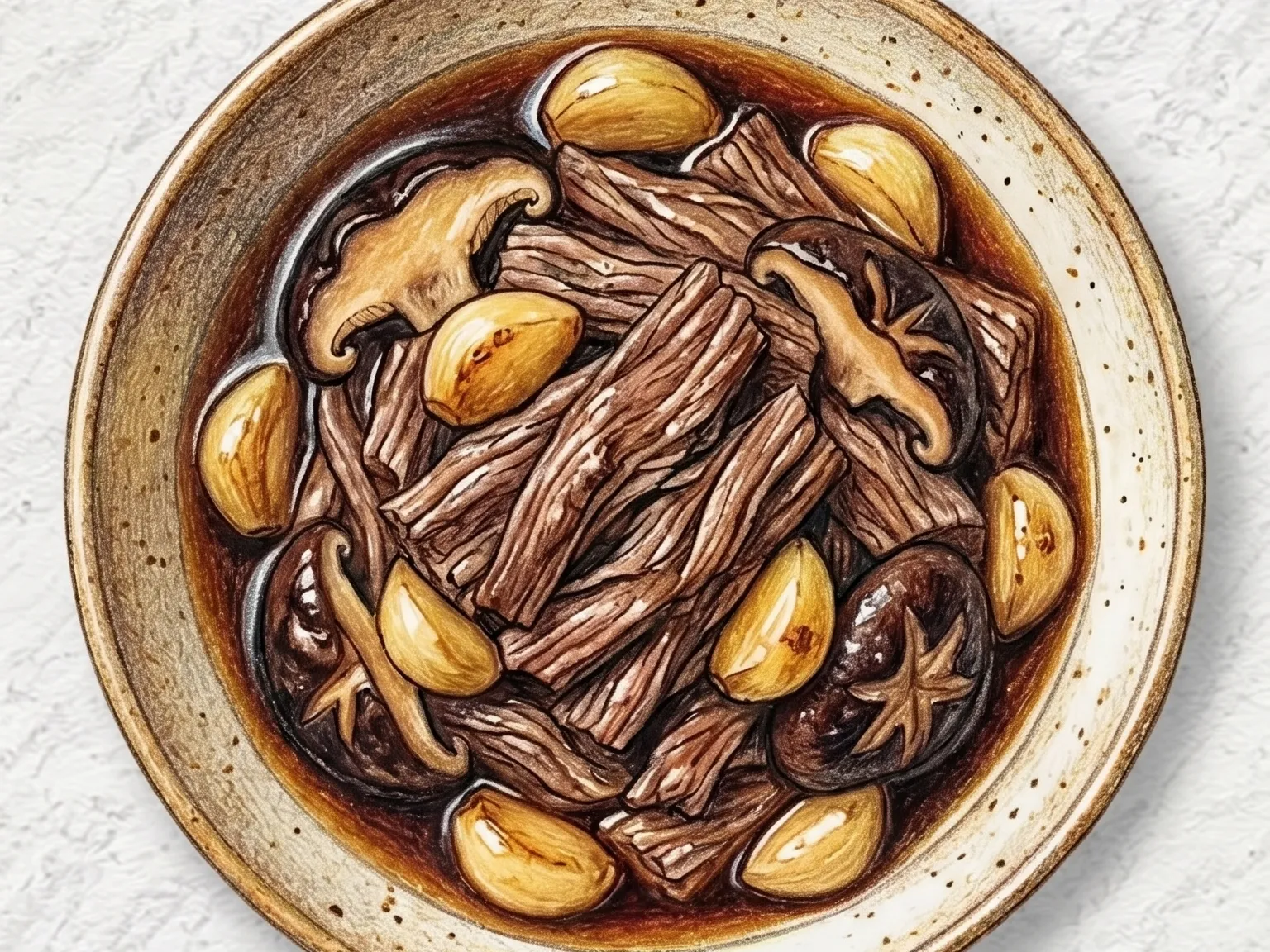
Korean Soy-Braised Beef with Mushrooms
Sogogi beoseot jangjorim is a Korean soy-braised banchan of beef eye round, shiitake mushrooms, and whole garlic cloves, simmered down in soy sauce and soup soy sauce. The beef is boiled first and the resulting clear stock becomes the braising liquid, so the soy sauce carries a deep meat flavor from the very beginning. Shiitake mushrooms contribute their own aromatic umami on top of that base, and whole garlic cloves lose their sharp bite during the long simmer, turning mellow and lightly sweet. Shredding the beef along the grain exposes more surface area to the sauce and makes it easier to portion out. An overnight rest in the refrigerator lets every component absorb the seasoning more fully, and the flavor is noticeably richer the next day. It keeps well for over a week refrigerated, making it a practical and reliable make-ahead banchan.
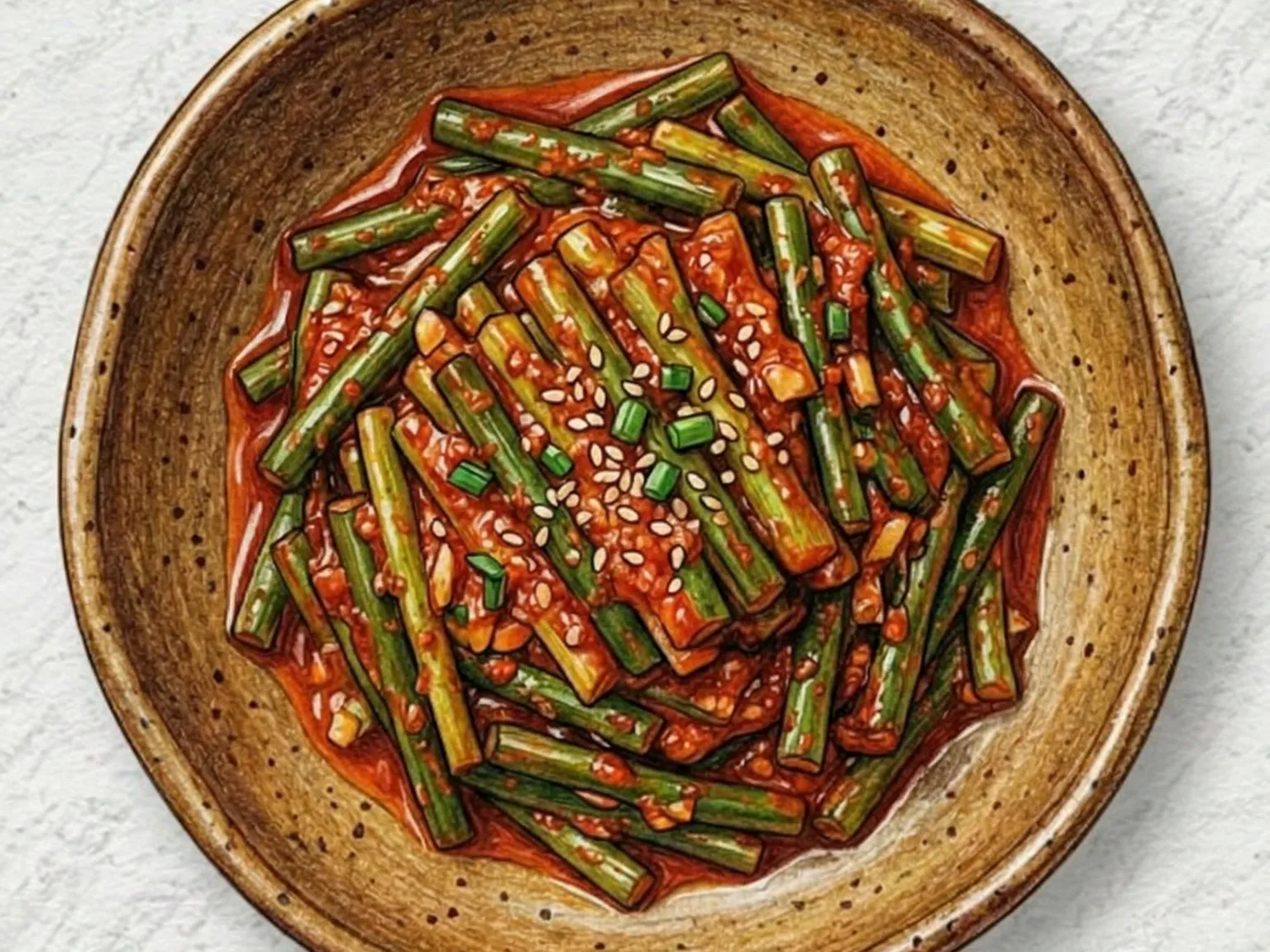
Korean Garlic Scape Kimchi
Maneul jong kimchi is a garlic scape kimchi made by lightly brining freshly harvested scapes, then dressing them in a seasoning paste of gochugaru, fish sauce, and plum syrup blended with pureed onion and pear. The scapes' sharp, piercing garlic aroma does not diminish through fermentation - it persists alongside the stems' crisp bite, delivering alternating pulses of heat and umami that build with each chew. Pear works into the base to introduce a fruit sweetness that blunts the chili intensity, while fish sauce provides the fermented backbone that grounds the entire kimchi. Trimming the fibrous bottoms before seasoning produces a more uniform snap throughout. Leaving the jar at room temperature for roughly two days allows the flavors to integrate and mellow into balance before refrigerating. This is a seasonal kimchi made only in spring when garlic scapes appear in the market, and its combination of raw green pungency and assertive garlic heat sets it apart from any other variety in the Korean kimchi repertoire.
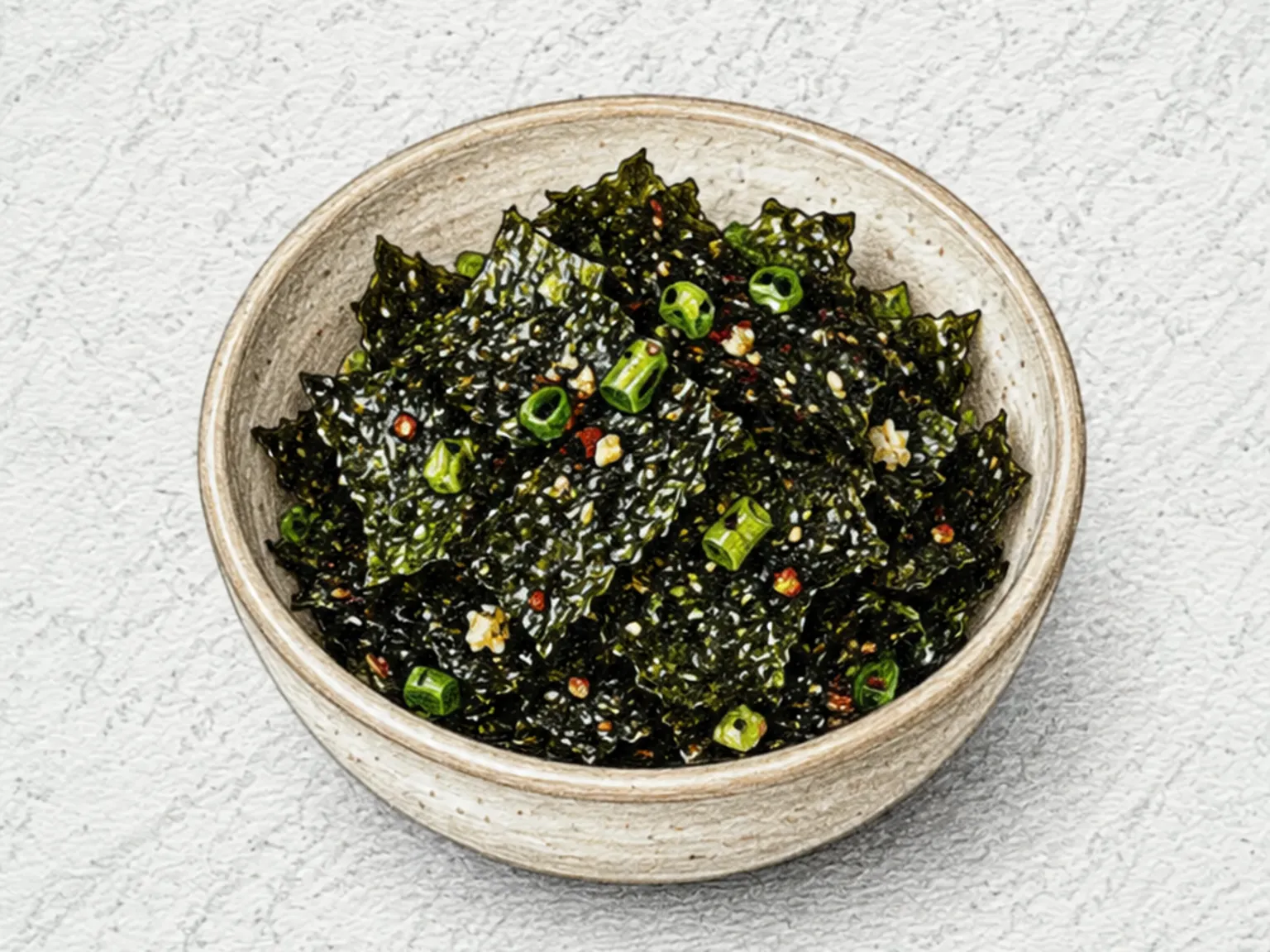
Korean Seasoned Seaweed Flakes
Gim-muchim uses the same ingredients as stir-fried gim but takes a different direction. Lightly toasted seaweed is torn by hand into larger pieces, then tossed with green onion, garlic, soy sauce, sesame oil, and gochugaru into a seasoned side dish. Toasting the seaweed over a flame first draws out its fragrance, and tearing it into large pieces ensures some areas stay crisp even after the sauce is added. The sharp bite of green onion and the gentle heat of gochugaru meet the seaweed's marine character for a fresher, lighter result than the stir-fried version. The dish must be eaten immediately after tossing - seaweed absorbs moisture from the sauce quickly and loses its texture - so only as much as will be consumed at once should be prepared. As a side with rice, it is simple but satisfying, carrying enough umami to complete a bowl even when other banchan are few. Using fish sauce in place of soy sauce shifts the umami profile, and extra sesame seeds deepen the nutty fragrance.
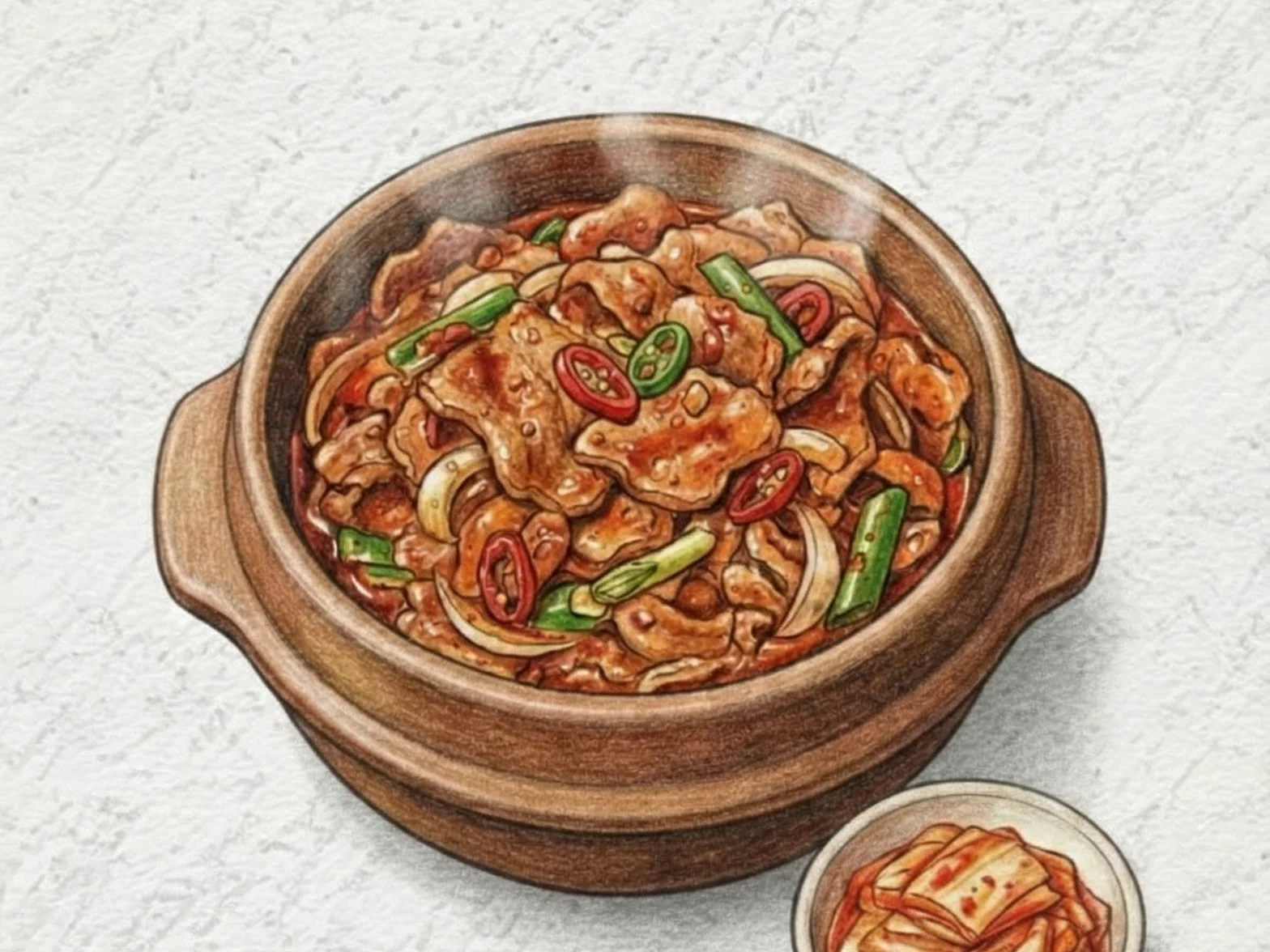
Korean Spicy Pork Stir-fry
Jeyuk-bokkeum is a Korean spicy pork stir-fry where sliced pork is marinated in gochujang, soy sauce, sugar, and garlic, then wok-tossed with vegetables over high heat. The marinade sinks into the meat, combining chili heat with caramelized sweetness, while onions and scallions release moisture that balances the bold seasoning. Quick cooking at high temperature lets the pork develop a lightly charred exterior that adds another layer of flavor. It is commonly served over rice as a donbap or wrapped in lettuce leaves.
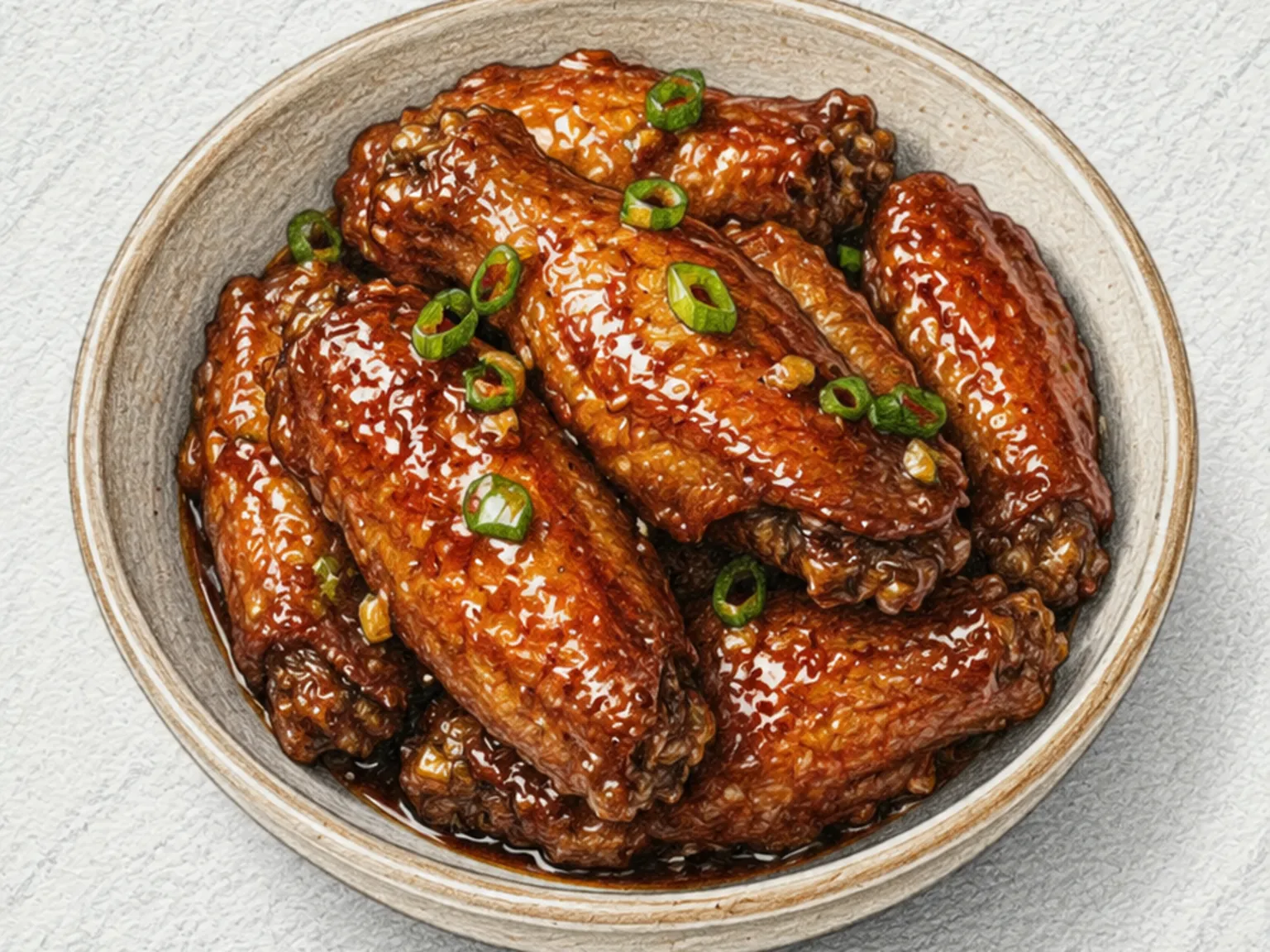
Korean Soy-Braised Chicken Wings
Korean soy-braised chicken wings are simmered in a glaze of soy sauce, sugar, garlic, and ginger until the sauce reduces to a thick, shiny coating. Scoring the wings beforehand allows the seasoning to reach the meat, and twenty minutes of covered braising followed by ten minutes of uncovered reduction concentrates the liquid into a sticky lacquer. Ginger keeps the flavor clean by neutralizing any gamey notes, and a finishing drizzle of sesame oil adds warmth. The wings come out so tender that the meat slides off the bone easily, making this a crowd-pleasing dish for children and adults alike.
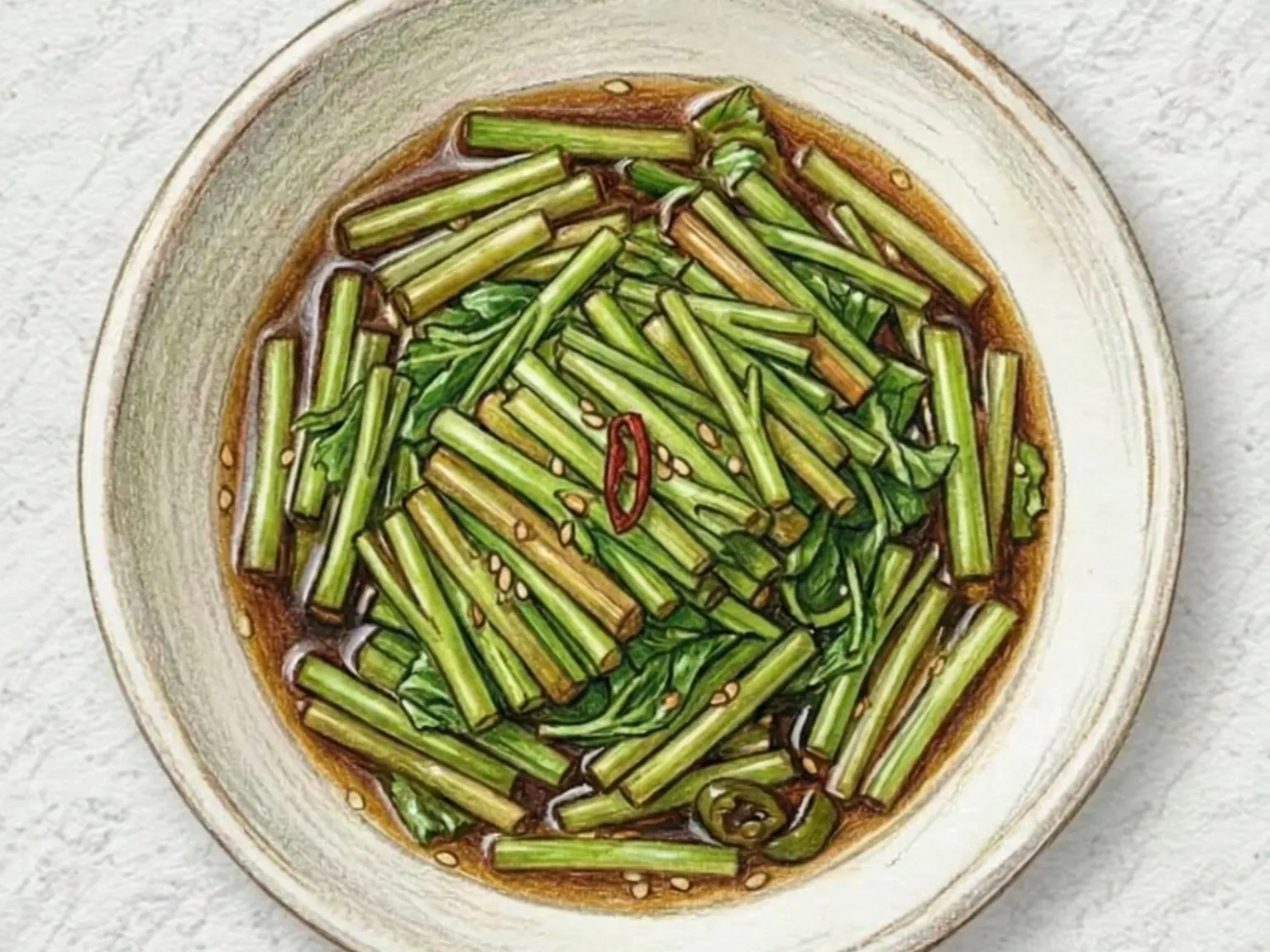
Korean Water Parsley Soy Pickle
Preparing this dish starts with cutting water parsley stems into 5-centimeter segments and ensuring they are thoroughly dried. The pickling process involves a mixture of soy sauce, rice vinegar, and sugar that is boiled and then completely cooled before being poured over the prepared stems, garlic, and cheongyang chili peppers. As the herbs submerge in the savory liquid, the fresh scent of the water parsley evolves into a complex aromatic profile that is absent in its raw state. Rice vinegar provides a crisp finish to the palate, while the sharp heat from the chili peppers prevents the flavor from becoming flat or one-dimensional. Garlic acts as a stabilizing element for the entire seasoning base. The pickle reaches its optimal state around the second or third day of refrigeration when the initial sharpness of the vinegar mellows out while the stems maintain their firm crunch. Since the texture tends to soften over time, making frequent small batches is a practical approach to enjoy this preserve. This side dish functions well alongside grilled pork belly or other main courses with high fat content by clearing the palate between bites. The remaining brine can be reused for subsequent batches of vegetables, often resulting in a more developed and layered taste than the first round. Adding a small amount of lemon or yuzu juice introduces a citrus scent that complements the natural herbal characteristics of the water parsley.
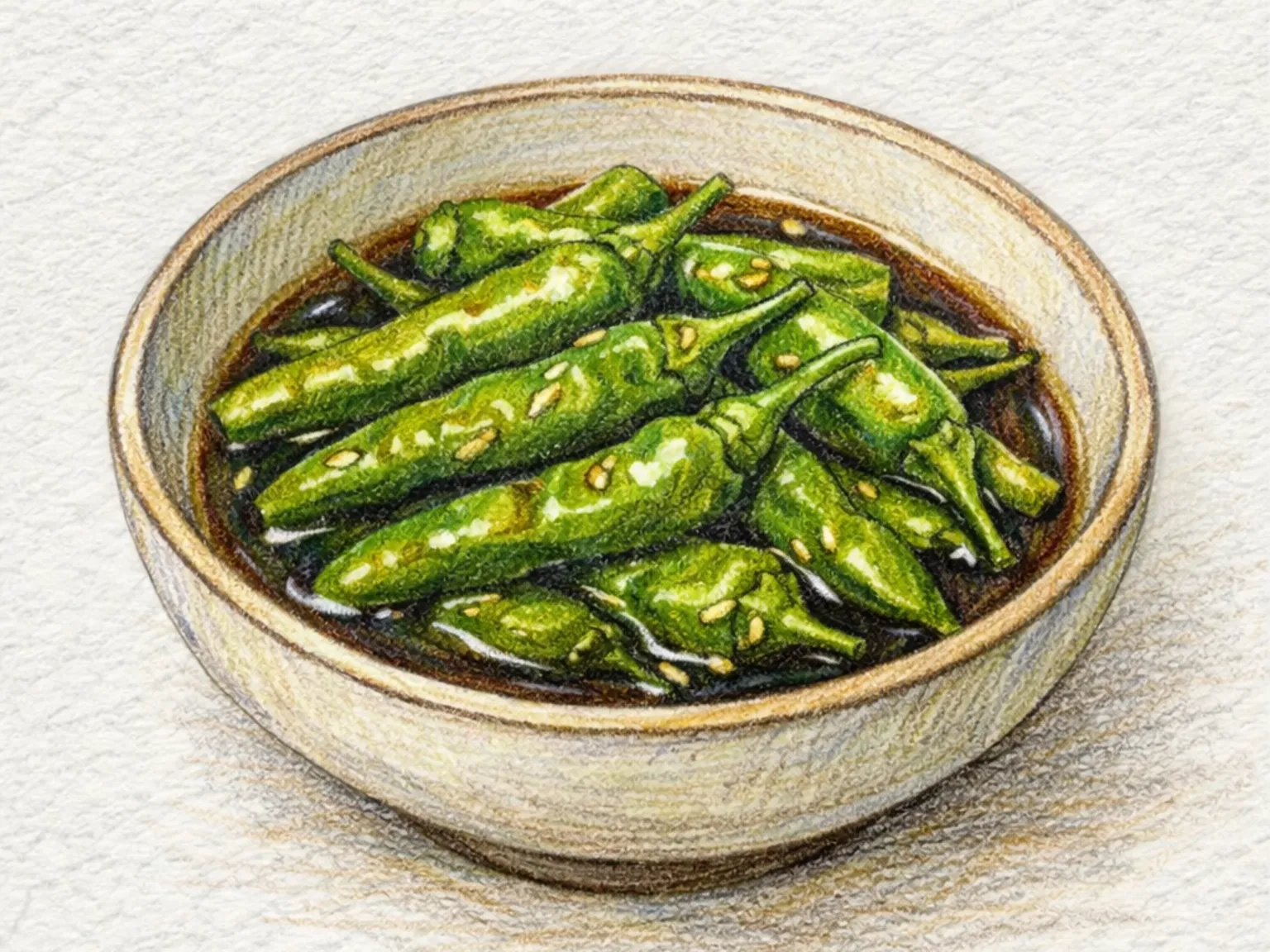
Korean Pickled Green Peppers
Gochu jangajji - soy-pickled green peppers - is a traditional Korean preservation method that traces back to the era before refrigeration, when summer's abundance of green peppers had to be kept edible through leaner months. Each pepper is stemmed and pierced several times with a toothpick so the brine can penetrate through the thick walls of the flesh and reach the seeds inside. A brine of soy sauce, vinegar, sugar, and water is brought to a full boil and poured directly over the peppers while still scalding hot; this flash of heat slightly blanches the exterior, brightening the green color, while the interior stays raw and crisp. Repeating this step the following day - draining the cooled brine, returning it to the pot, reboiling it, and pouring again - is what separates a well-made batch from a mediocre one. The second pour deepens the penetration of the seasoning, reinforces preservation, and allows the pickles to keep under refrigeration for over a month without losing crunch. Once fully pickled, the flavor is a layered combination of salty depth from the soy, gentle acidity from the vinegar, and the pepper's own lingering capsaicin heat, which mellows in brine but never entirely disappears. Placed on a bowl of plain rice, two or three pickled peppers are enough to make a full meal. Using cheongyang chili peppers instead of regular green peppers produces a sharper, hotter version, while kkwari peppers yield a milder and more tender result.
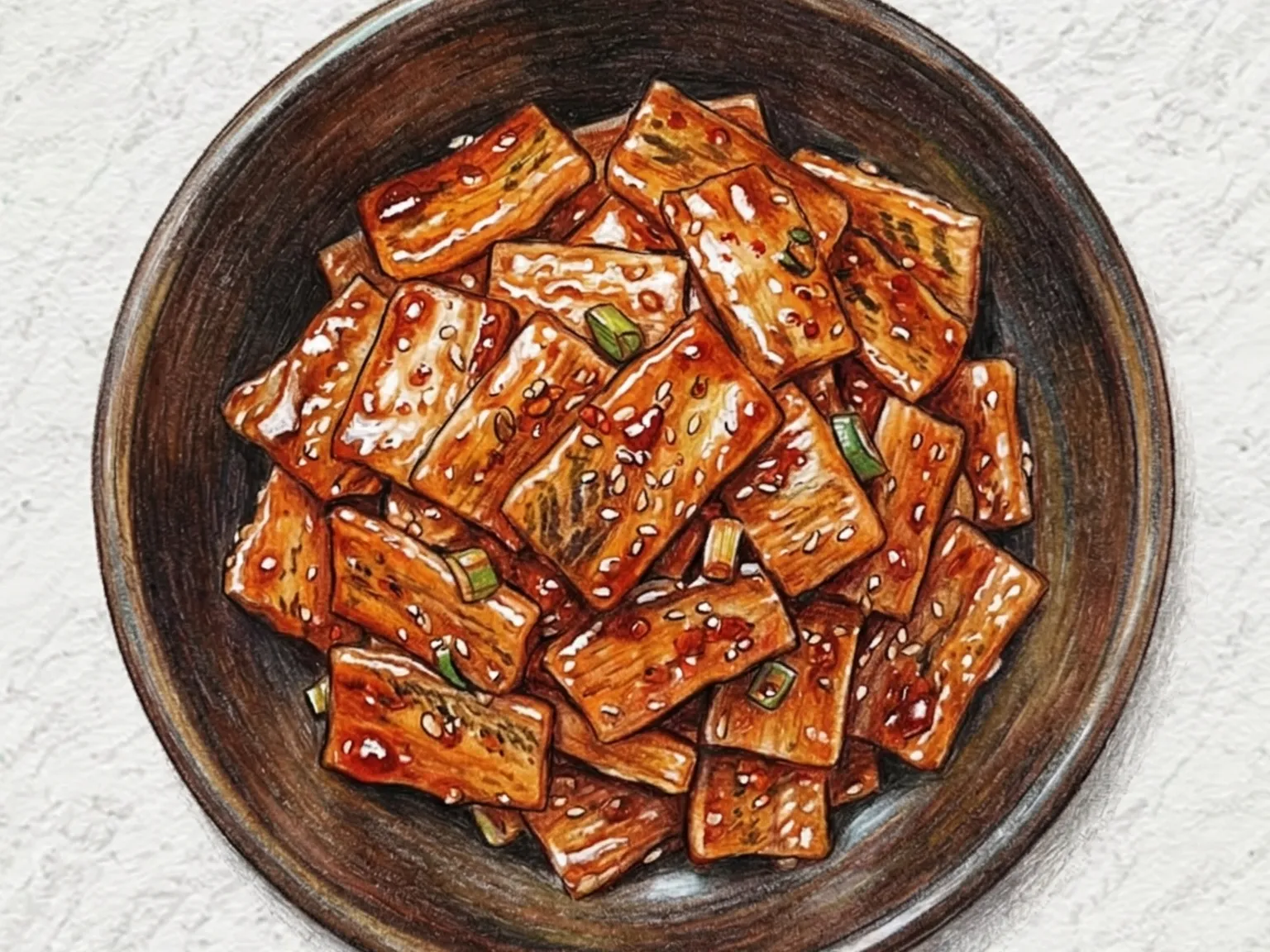
Korean Sweet Spicy Stir-fried Filefish Jerky
Jjipo-bokkeum is a Korean side dish made from flat dried filefish jerky tossed in a sweet and spicy glaze of gochujang, oligosaccharide syrup, soy sauce, garlic, and sesame oil. The jerky pieces are lightly pan-fried in a small amount of oil first to develop a toasty, nutty surface before the sauce goes in, which builds an initial layer of flavor and texture before the glaze coats the outside. The seasoning sauce is added over low heat and the pan is kept moving to prevent the sugar in the oligosaccharide syrup from burning, coating each piece evenly in a glossy, sticky layer. The syrup softens the otherwise tough chew of the dried fish so that each piece bends slightly rather than snapping, and every bite releases the filefish's concentrated, deeply savory umami that builds with each chew. Made ahead and stored refrigerated, jjipo-bokkeum keeps its flavor well for five to seven days, making it one of the more practical banchan to prepare in advance. It works equally well as a rice side, an afternoon snack eaten on its own, or served alongside drinks as an anju.
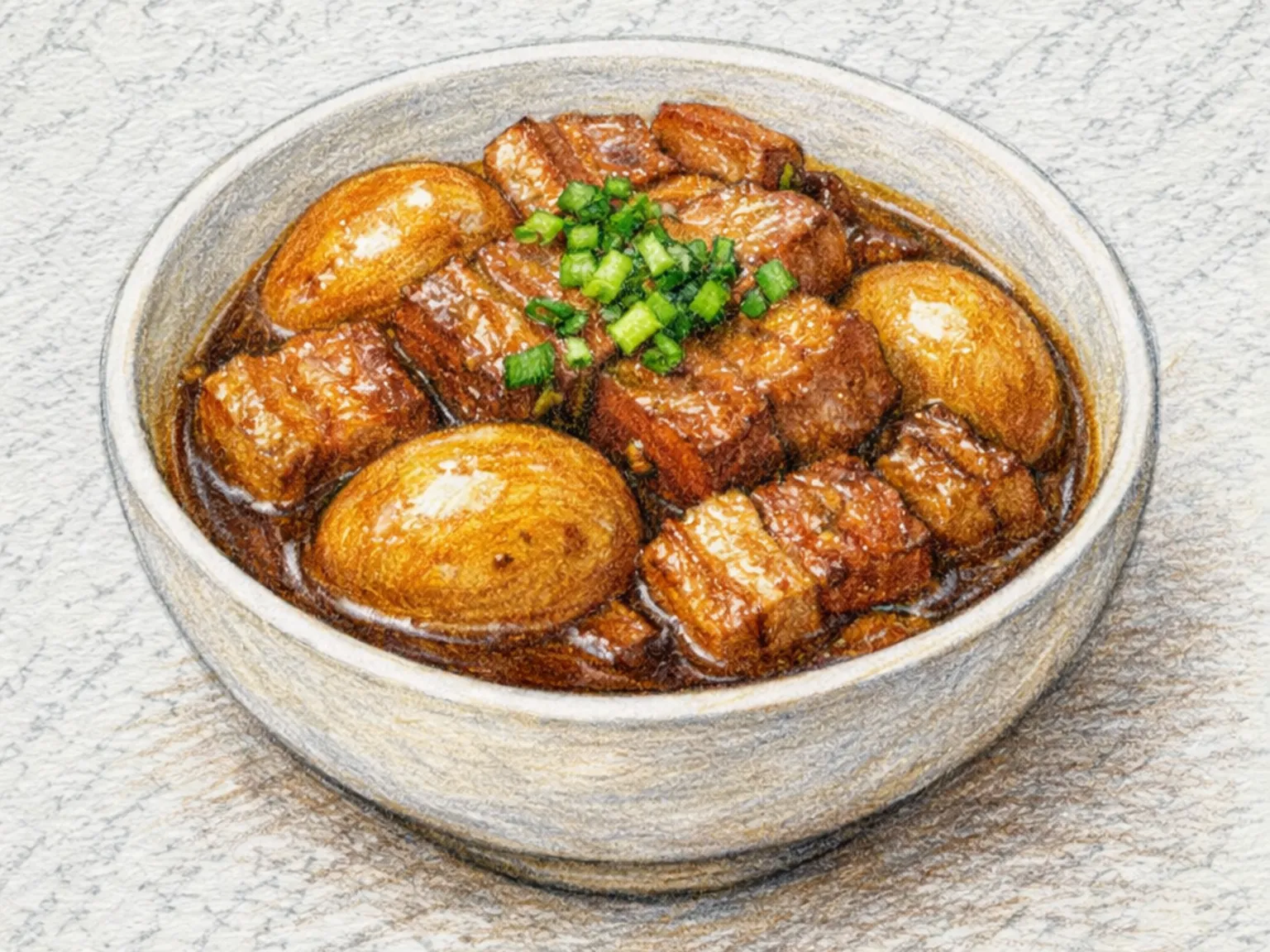
Vietnamese Braised Pork and Eggs
Thit kho trung is a Vietnamese home-style braise of pork and hard-boiled eggs simmered low and slow in coconut water, fish sauce, and a caramel base for nearly an hour. Sugar is cooked in the pot until it reaches a deep amber caramel before the pork is added, coating the meat in a dark, slightly bitter glaze that underpins the entire flavor of the dish. Coconut water contributes a gentle tropical sweetness and keeps the meat from drying out through the long simmer in a way that plain water cannot. The eggs, peeled and added from the start, absorb the braising liquid through the full cooking time and turn brown all the way to the yolk, taking on the complete range of salty-sweet seasoning. Spoon the sauce over steamed rice and the combination delivers the characteristic Vietnamese balance of fermented fish depth, caramel bitterness, and coconut softness all at once. Pork shoulder or pork belly with skin attached works best for this recipe because the collagen in the connective tissue melts into the braising liquid during the long cook, giving the sauce a glossy, slightly viscous body that clings to the rice.