🍱 Lunchbox Recipes
Dishes that taste great packed and cold
723 recipes. Page 22 of 31
The best lunchbox dishes hold up well at room temperature. This tag features make-ahead sides and full lunchbox recipes you can pack in the morning without stress - sausage stir-fry, rolled omelet, stir-fried anchovies, and soy-braised beef are all lunchbox staples.
The key to a great packed lunch is choosing dishes with low moisture content and arranging contrasting colors. A sprinkle of sesame seeds or furikake over the rice adds a finishing touch that looks as good as it tastes.
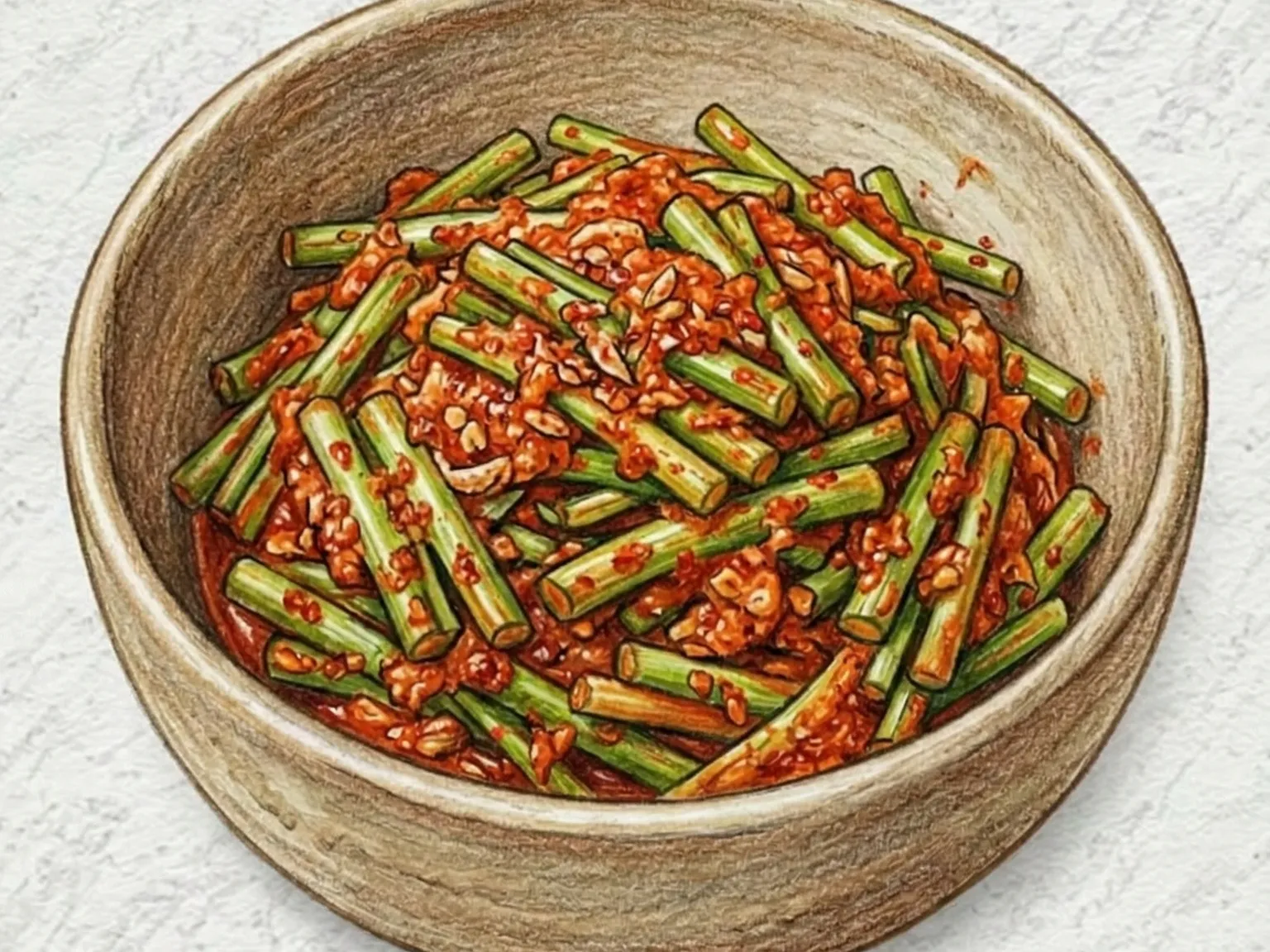
Korean Water Parsley Kimchi
Minari kimchi is a quick, no-fermentation Korean water parsley kimchi that is ready to eat the moment it is made. The stems are salted for just ten minutes to barely wilt them, preserving their characteristic crunch and cool, clean herbal fragrance. Blended onion is worked into the seasoning paste alongside gochugaru, anchovy fish sauce, and plum syrup, giving the dressing body and a gentle sweetness. Anchovy fish sauce lays a seafood umami foundation under the light vegetable, while plum syrup's fruit acidity softens the chili heat rather than letting it dominate, so the finish is bright and refreshing rather than sharp. Paired with samgyeopsal or boiled pork, the water parsley's aromatics cut directly through the fat, cleansing the palate between bites in a way that heavier banchan cannot. The kimchi is best eaten on the day it is made while the stems still have their full snap.
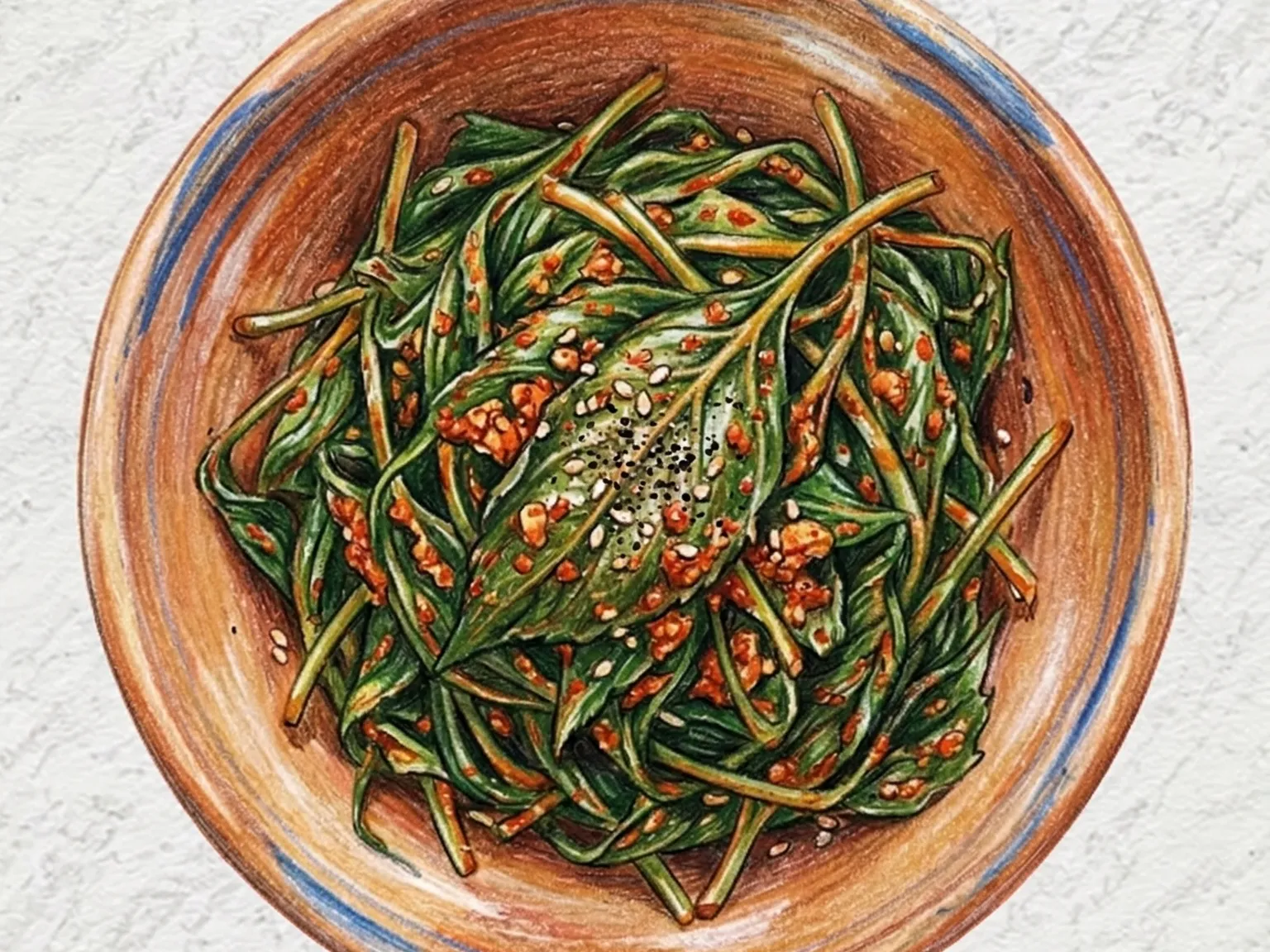
Korean Seasoned Chili Leaves
Gochuip-muchim is a seasoned namul made from chili pepper leaves harvested after the peppers themselves have been picked, rooted in the Korean rural practice of using every part of what the kitchen garden produces rather than discarding what is left behind after the main harvest. August and September mark the narrow window when the leaves are at their most tender and aromatic; after this period they become tougher and their fragrance fades. Blanched for one minute in boiling water to reduce bitterness, squeezed firmly dry, and then dressed with soy sauce, gochugaru, minced garlic, sesame oil, and sesame seeds, tossed until each leaf is evenly coated. The slightly bitter, herbaceous quality of the leaves does not cook out completely in blanching - it persists and intersects with the gochugaru's heat in a way that distinguishes this namul from any ordinary leafy green banchan. Because the thin leaves absorb seasoning almost immediately, the namul is fully flavored from the moment it is tossed and needs no resting period. Eaten alongside warm rice, the bitterness and spice settle against the neutral starch in a combination that is quiet but consistently satisfying.
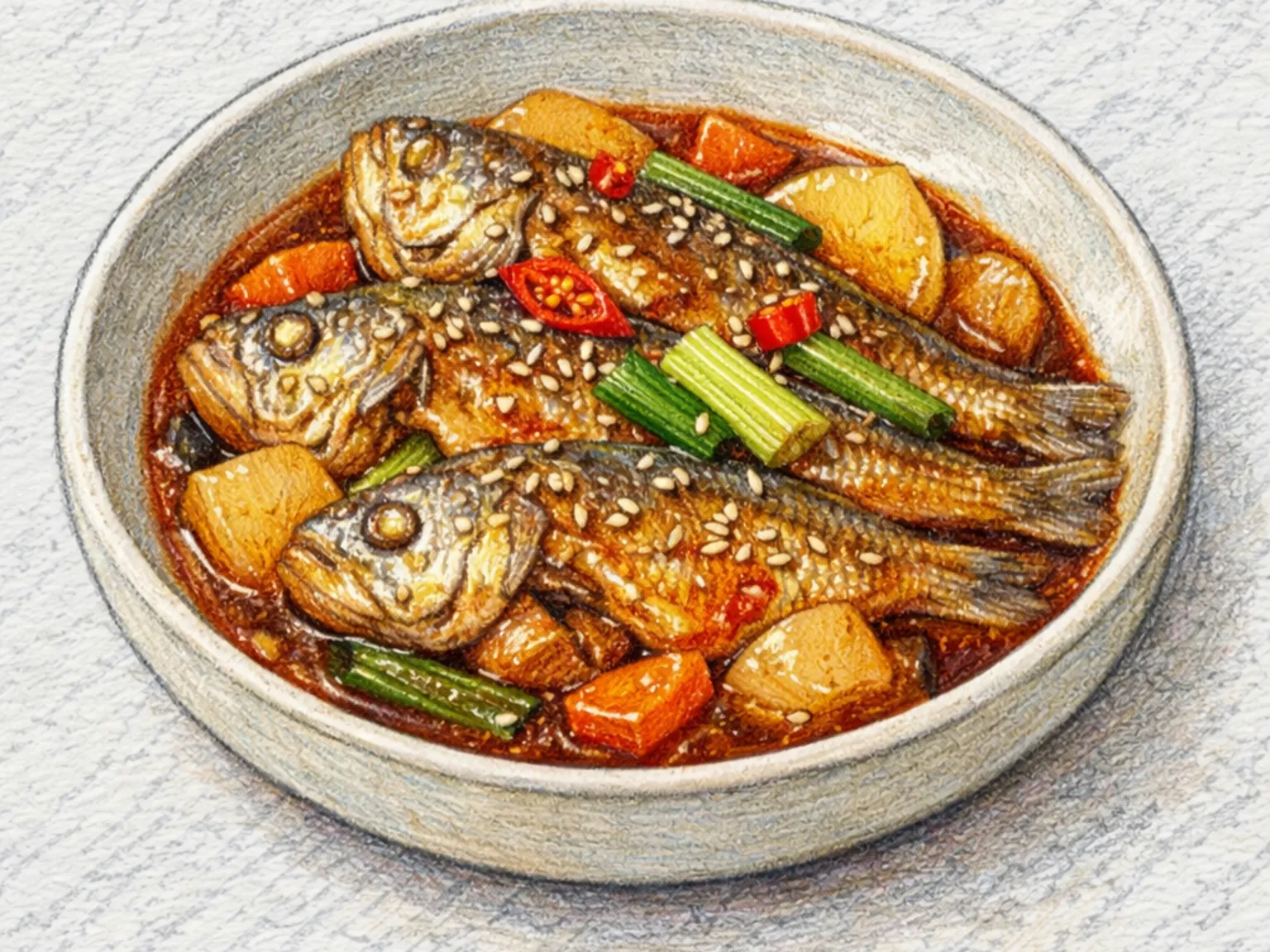
Korean Braised Yellow Croaker
Jogi-jorim is a Korean braised dish of yellow croaker simmered with radish and onion in a seasoning sauce of soy sauce, gochugaru, garlic, and a touch of sugar. Yellow croaker has white, tender flesh and a mild flavor with little fishiness, qualities that make it exceptionally well-suited for braising. The radish goes into the pot first, lining the bottom so the fish sits above the direct heat and does not stick or break apart during cooking. The seasoning sauce is poured over the fish and the pot comes to a boil before the heat is reduced to a steady simmer. Over time the sauce penetrates the flesh and the radish drinks in the braising liquid, turning sweet-savory and soft throughout. One or two Cheongyang chili peppers added to the pot provide a low, sustained heat that builds gradually rather than hitting all at once. The braise is finished when a moderate amount of glossy sauce remains in the pot. That concentrated sauce mixed into a bowl of plain rice is the reason Koreans reach for jogi-jorim as a go-to rice side dish. The dish also appears regularly on ancestral rite tables and holiday spreads, making it one of the more culturally familiar fish preparations in Korean cooking.
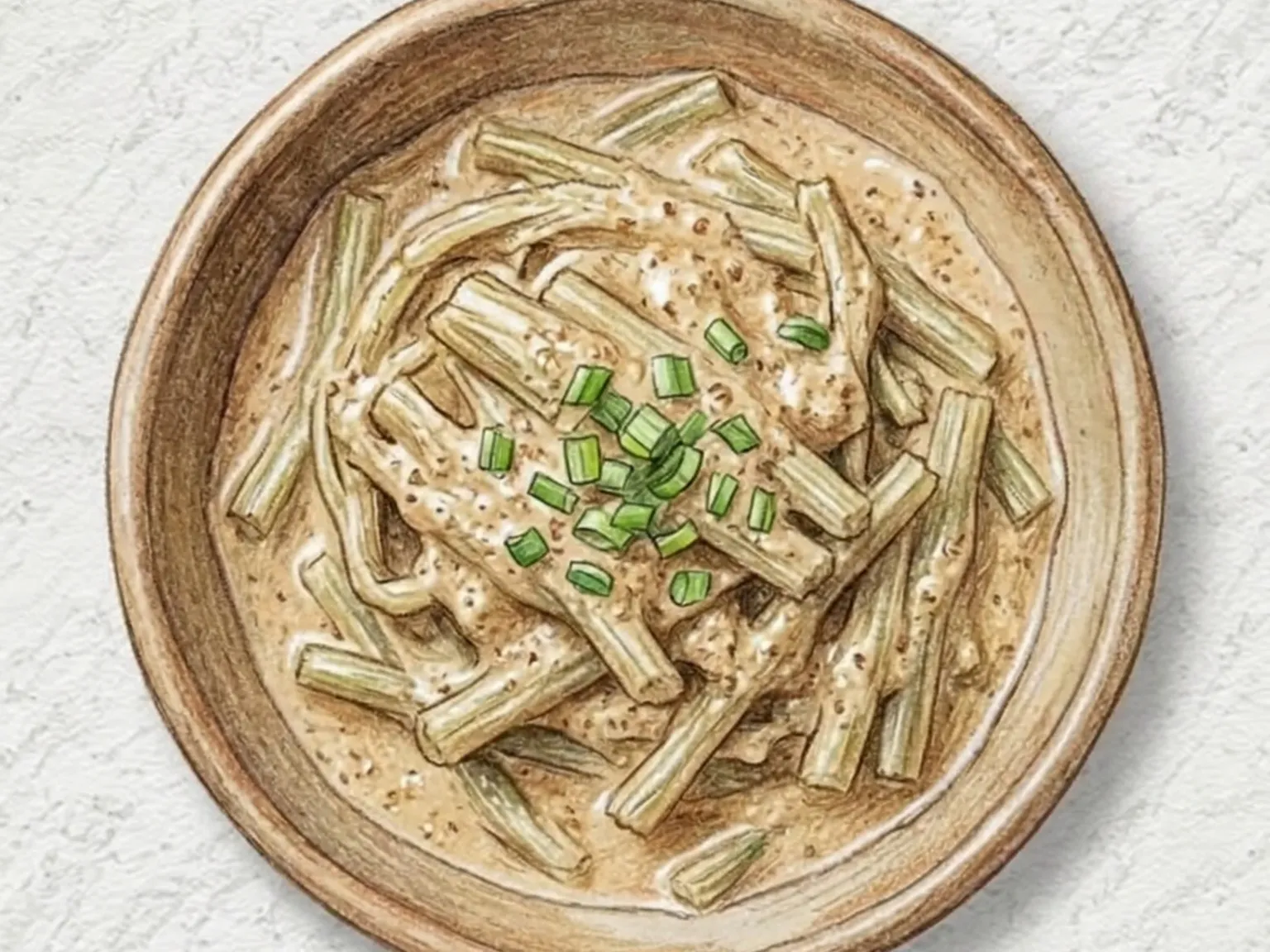
Korean Taro Stem Perilla Steam
Torandae deulkkae jjim is a rustic Korean dish of boiled taro stems braised with soup soy sauce and ground perilla seeds. The stems are first stir-fried in perilla oil to drive off any lingering sharpness, then simmered covered until their fibers soften and absorb the seasoning. Ground perilla added near the end thickens the liquid into a creamy consistency and fills the dish with a roasted, nutty aroma. Green onion provides a fresh finish. Though fully plant-based and made from simple pantry staples, the combination of perilla and soy produces an earthy depth that makes a satisfying accompaniment to a bowl of rice.
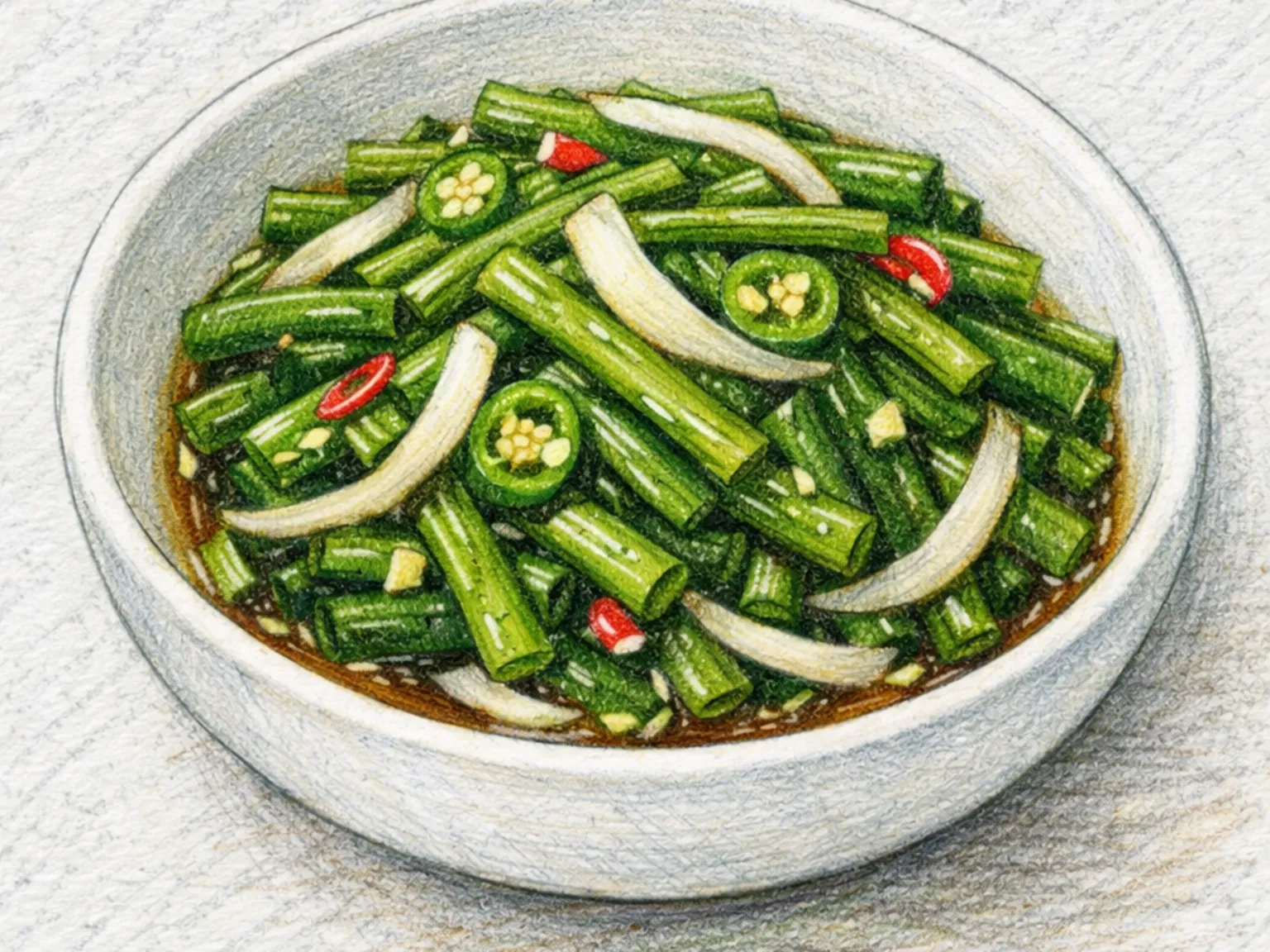
Korean Miyeok Julgi Jangajji (Seaweed Stem Pickles)
Miyeok julgi jangajji is a Korean seaweed stem pickle made by soaking salted seaweed stems long enough to remove the excess salt, blanching them briefly, and submerging them with sliced onion and cheongyang chili in a brine of dark soy sauce, vinegar, and sugar brought to a boil. The stems' characteristic crunchy-chewy bite holds up even as they absorb the brine, and a faint oceanic quality lingers beneath the soy sauce's savory depth and the sharp brightness of the vinegar. Onion adds natural sweetness to the pickling liquid, and the chili delivers a clean, piercing heat at the finish. Reboiling the brine, cooling it fully, and pouring it over a second time significantly extends shelf life, keeping the banchan in good condition in the refrigerator for three to four weeks or longer. After the first pour, allowing twenty-four hours before eating gives the stems enough time to fully absorb the brine and develop their proper flavor.
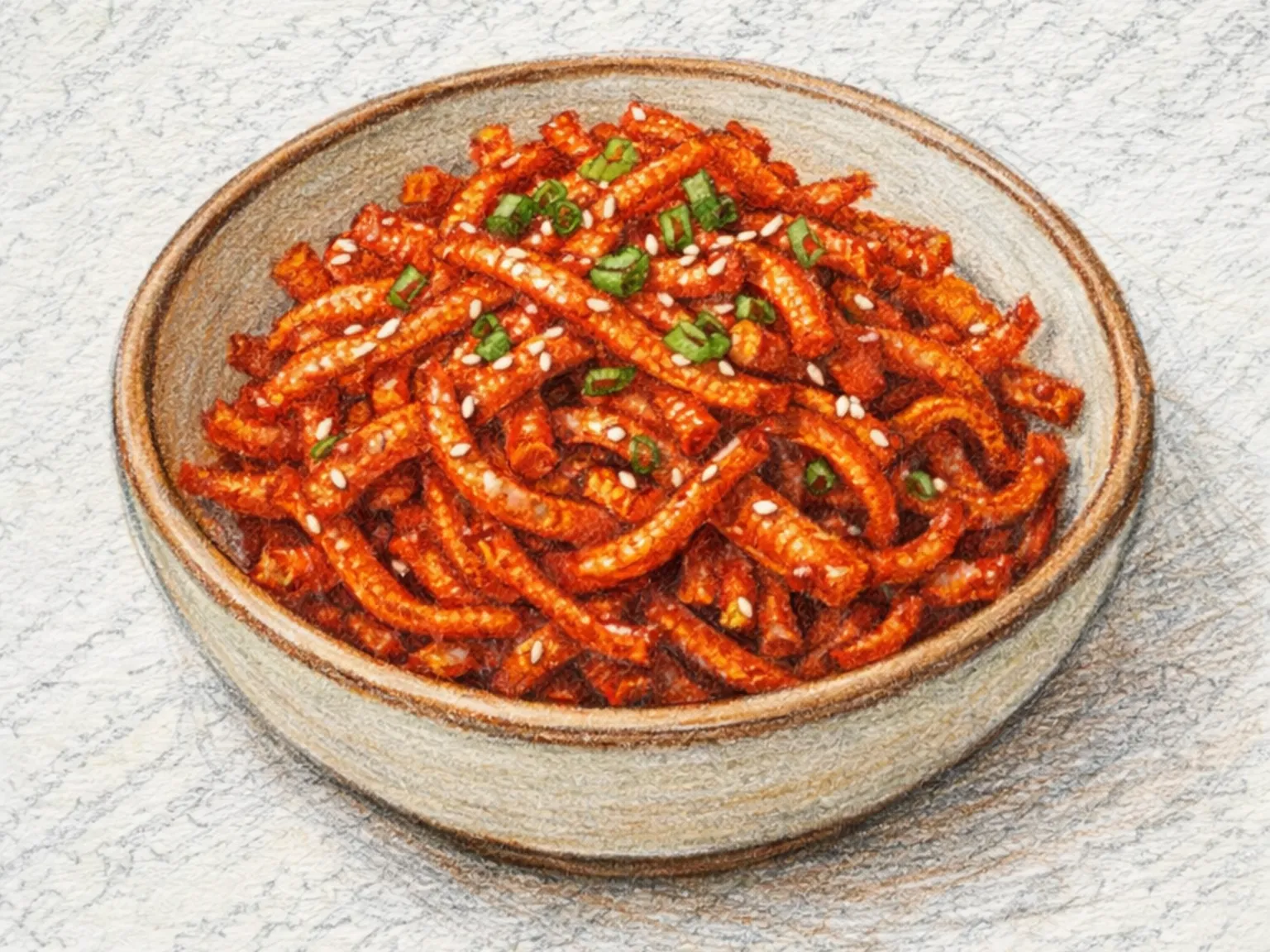
Korean Spicy Gochujang Dried Squid Stir-Fry
Jinmichae, shredded dried squid, is a Korean pantry staple valued for its chewy texture and the umami that builds and intensifies the longer you chew. This preparation coats the strands in a gochujang glaze, making it one of the most reliably present banchan in Korean households. Briefly soaking the dried squid in water before squeezing it dry softens the tough fibers and opens them to absorb the sauce more evenly. The sauce of gochujang, gochugaru, rice syrup, soy sauce, and garlic is stir-fried first over low heat to mellow the raw chili sharpness, then the squid is tossed through quickly over the same heat. Sesame oil and toasted sesame seeds are added off the heat, coating the strands in a sweet, spicy glaze that keeps well at room temperature for several days.
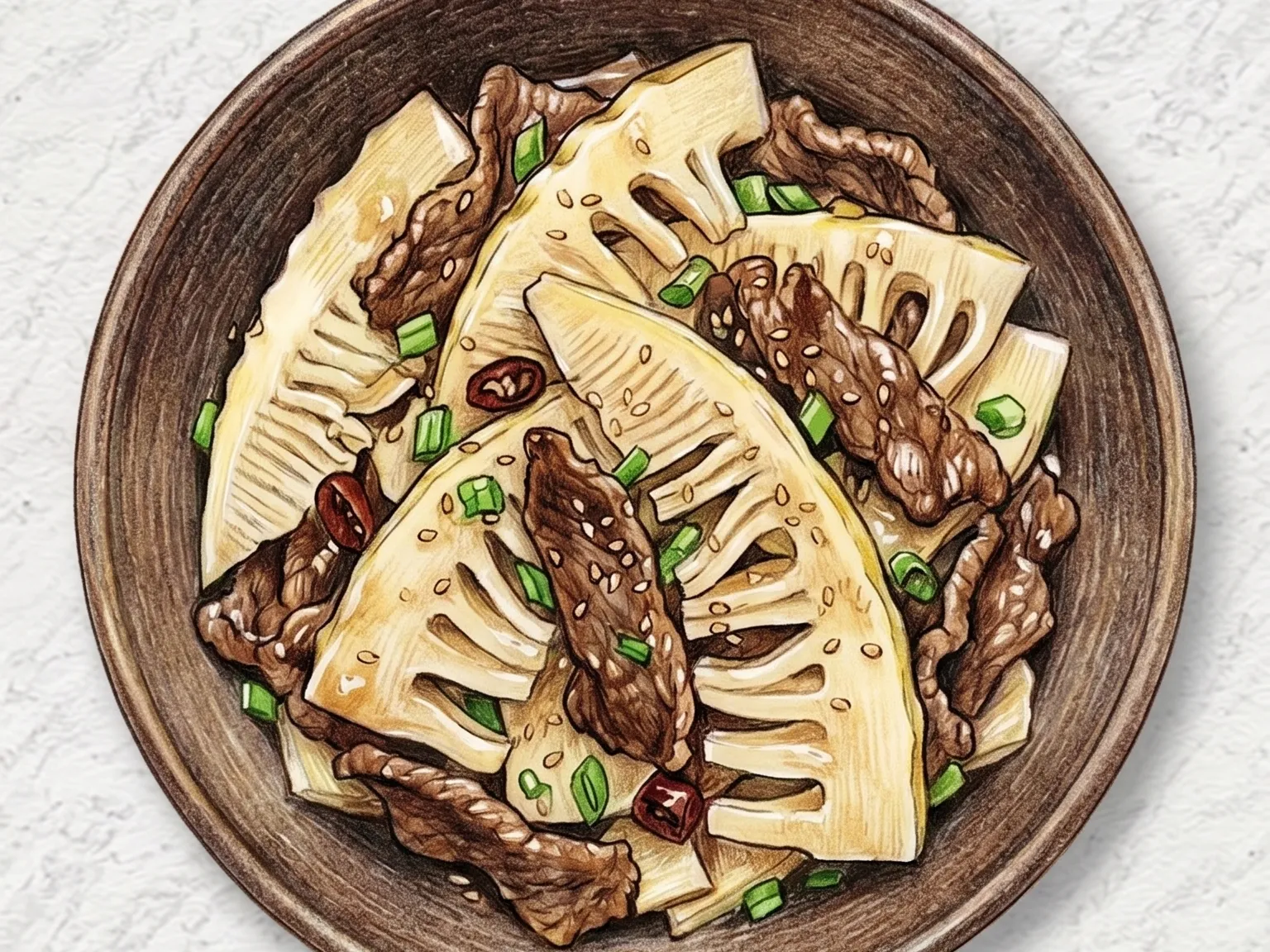
Korean Bamboo Shoot Beef Stir-fry
Juksun-sogogi-bokkeum is a Korean stir-fry of boiled bamboo shoots and thinly sliced beef seasoned with soy sauce, cooking wine, and sesame oil. The bamboo shoots bring a crisp, fibrous snap to each bite, while the beef, cut thin and cooked briefly over high heat, stays tender and juicy. The soy-based seasoning is kept deliberately restrained, allowing the mild natural sweetness of the bamboo shoots and the savory depth of the beef to remain the focus. Canned bamboo shoots are acceptable, but fresh spring bamboo shoots, available for a short window each year, deliver noticeably better crunch and a fragrant, grassy aroma that canned cannot replicate. Fresh shoots should be boiled in rice washing water first to remove the bitter, astringent taste before slicing and stir-frying. A finish of toasted sesame seeds and a drizzle of sesame oil added off the heat rounds out the dish with a nutty, aromatic note.
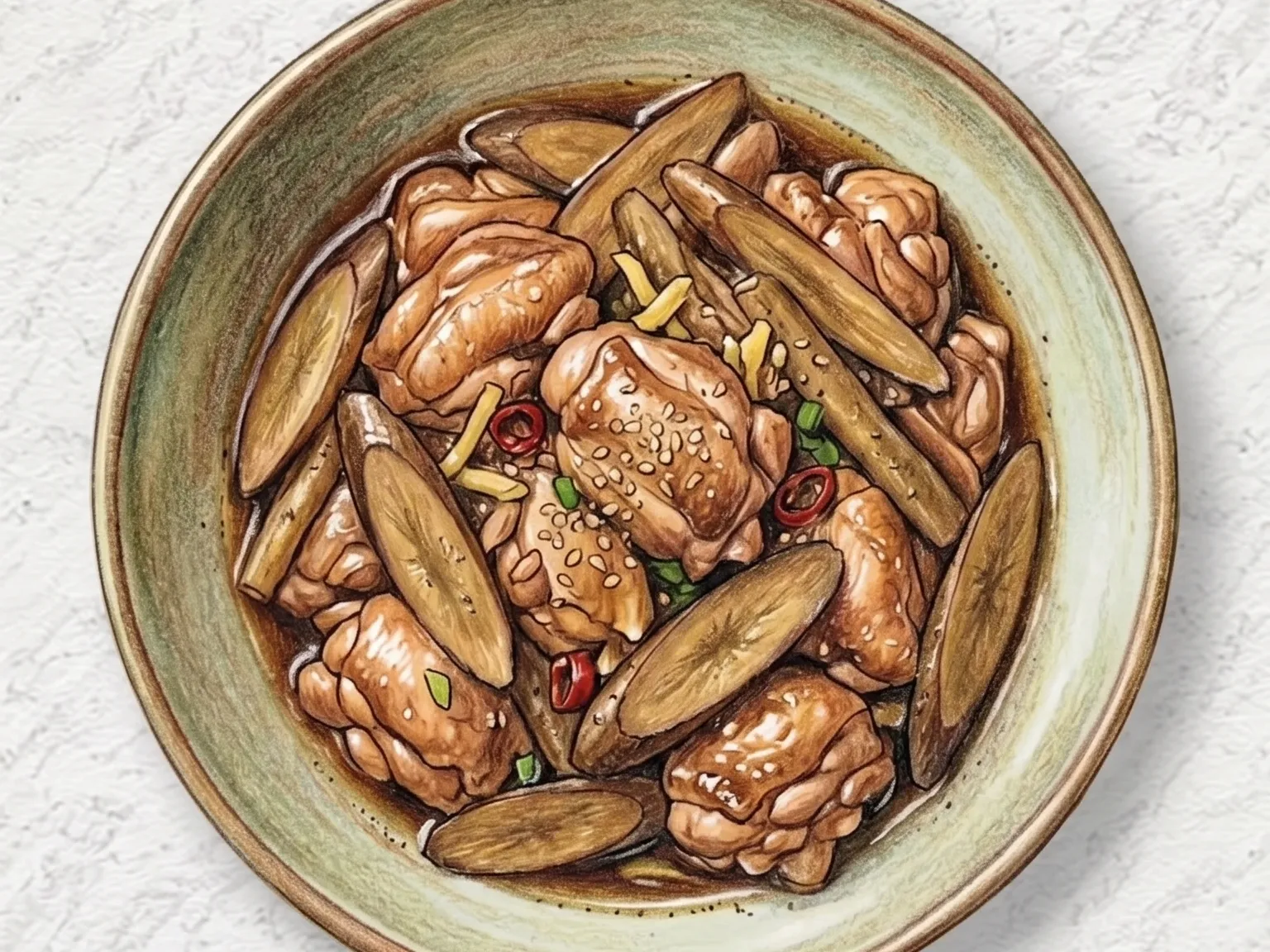
Korean Braised Chicken with Burdock
Ueong dak jorim is a Korean braised dish that simmers boneless chicken thigh and burdock root together in soy sauce, sugar, and ginger juice until the liquid reduces and the glaze thickens around each piece. Soaking the burdock in vinegar water draws out the astringent bitterness that raw burdock carries, and marinating the chicken in cooking wine and ginger beforehand removes any lingering gamey odor. Once both are added to the pot, low heat does the work over at least eighteen minutes, bringing the braising liquid down by half and building a glossy, clinging sauce. A final drizzle of sesame oil at the end ties the aroma together and rounds out the flavor. The finished dish sets the crisp yet slightly chewy texture of burdock against the moist tenderness of chicken thigh, with a sweet-savory profile that makes it a reliable companion to steamed rice.
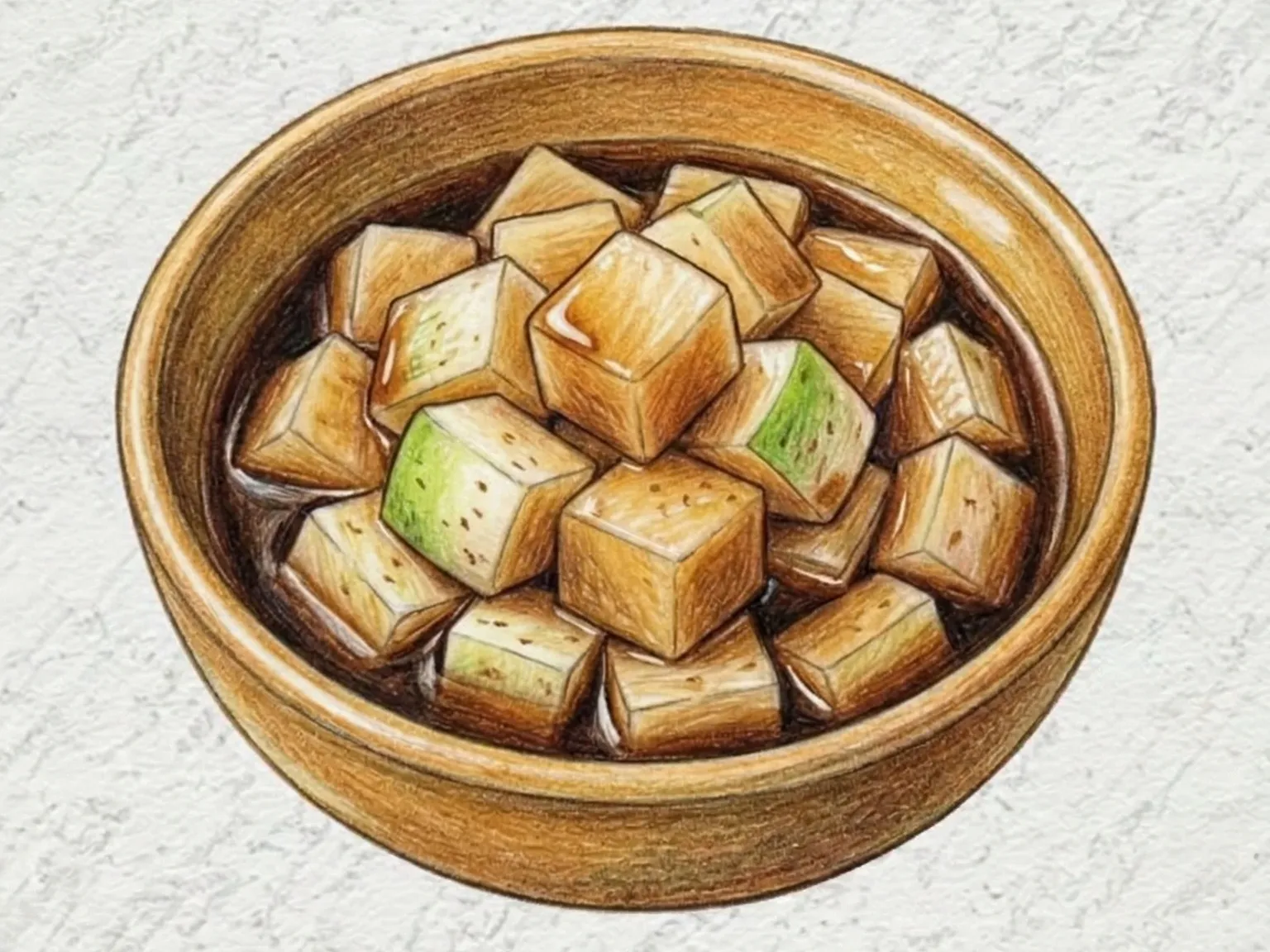
Korean Soy Pickled Radish Cubes
Mu jangajji is a fundamental Korean soy-pickled radish made by cutting radish into 1.5 cm cubes, packing them in a sterilized jar with dried chili, and pouring over a boiled brine of soy sauce, vinegar, and sugar. The radish's firm flesh absorbs the sweet-salty brine gradually while maintaining its crisp bite, and the dried chili adds a gentle warmth and aroma to the liquid. Pouring the brine while still hot is important because the heat briefly opens the cell walls of the radish, allowing the seasoning to penetrate more evenly throughout. Vinegar balances the soy's saltiness with a clean tang, and using dense winter radish yields the best texture. This is one of the most versatile Korean pickles, appearing alongside gimbap, bibimbap, and gukbap as a reliable everyday table companion.
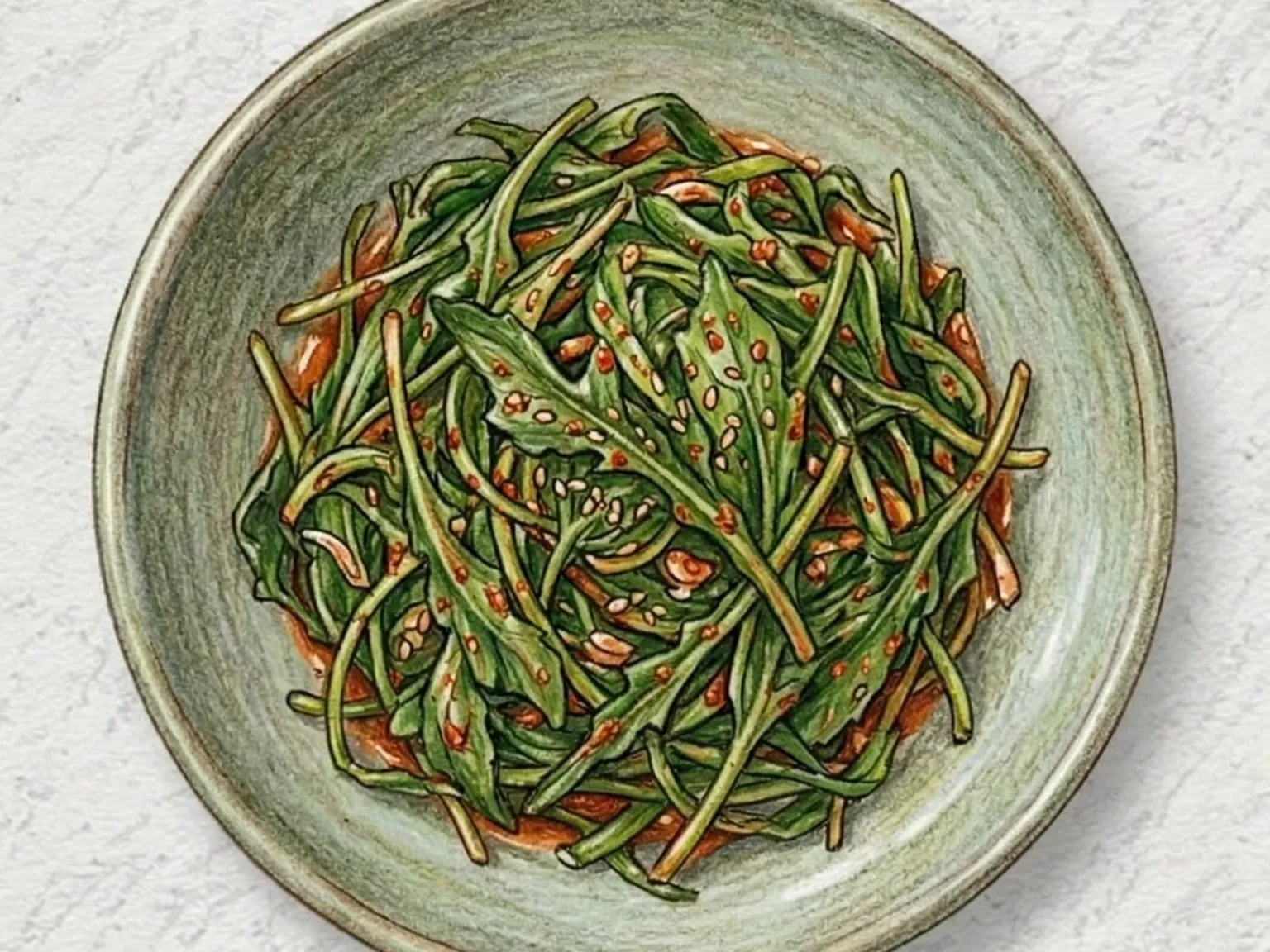
Seasoned Korean Wild Lettuce
Godeulppaegi muchim is a seasonal Korean side dish prepared with Ixeris dentata, a plant characterized by its thin, slender leaves. This botanical species belongs to the daisy family and has been traditionally foraged across the Korean peninsula for many generations. It serves as a versatile ingredient, often appearing on the dining table as a fermented kimchi or as a freshly seasoned vegetable dish known as banchan. The plant is recognized for a distinct and sharp bitter profile that is significantly more intense than the bitterness typically found in standard garden salad greens. Properly handling this inherent bitterness is the most important technical aspect of preparing the dish correctly. The leaves and stems undergo a brief blanching process in boiling water for a duration of approximately one to two minutes. Following this heat treatment, they are moved immediately to a cold water bath where they remain submerged for a minimum of thirty minutes. If the soaking duration is reduced or omitted entirely, the resulting dish will retain a level of bitterness that cannot be masked or balanced by any amount of additional seasoning. After the soaking period is complete, the greens are squeezed firmly by hand to remove excess moisture and then combined with a bold seasoning base. This dressing consists of a mixture of gochujang, gochugaru, vinegar, sugar, minced garlic, and toasted sesame oil. This specific combination provides a sharp acidity and spicy heat that coats the processed greens. The flavors are intended to complement the lingering bitterness of the plant instead of removing it, which creates a complex and layered taste profile that persists throughout the meal. This side dish is typically available from the beginning of spring through the early weeks of summer. During these months, the plant is a common sight in traditional rural markets located throughout South Gyeongsang and North Jeolla provinces. Individuals who value a strong and assertive flavor profile consider this preparation to be a highly valued seasonal specialty within Korean cuisine.
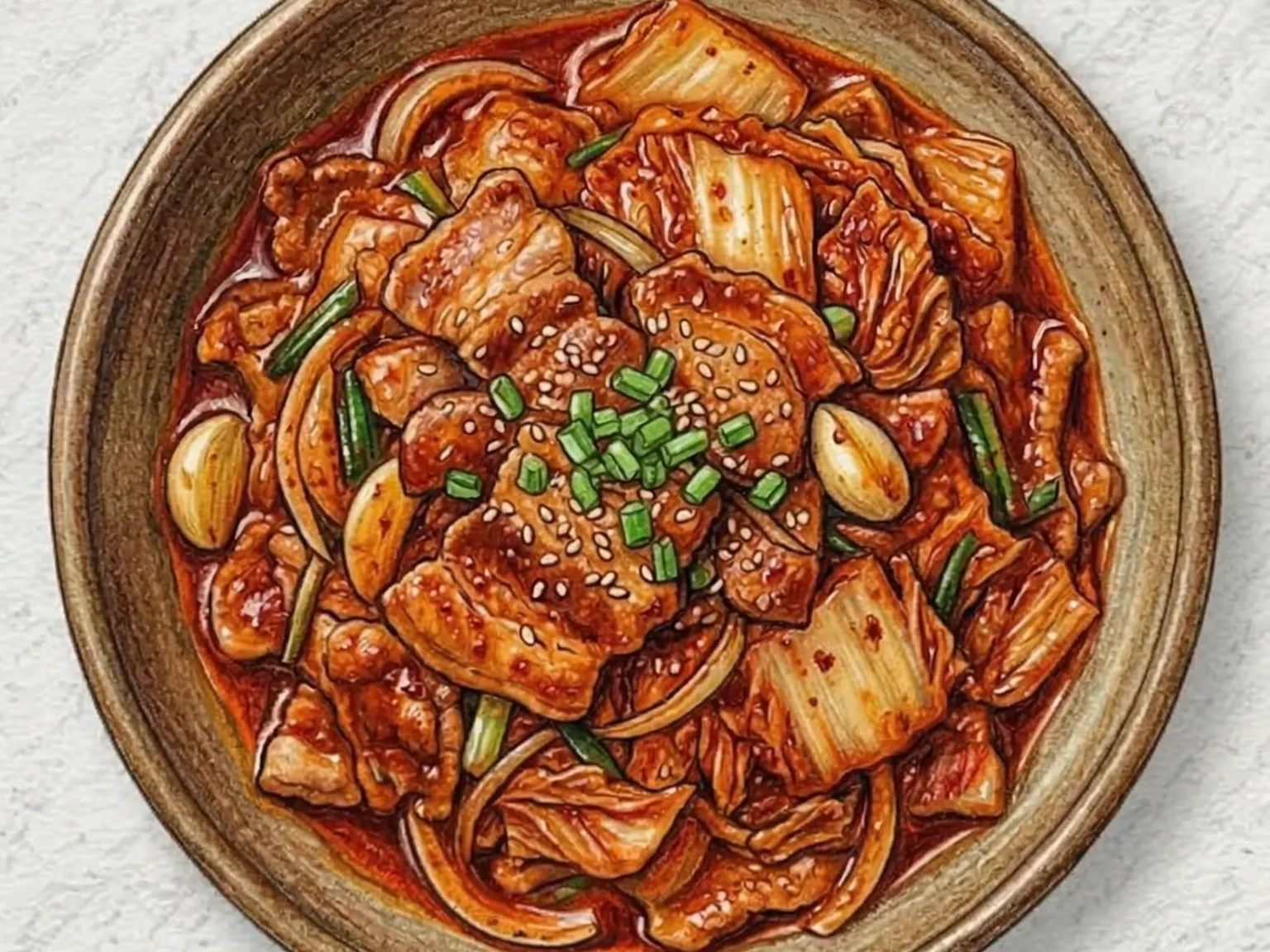
Korean Kimchi Pork Stir-fry
Kimchi jeyuk bokkeum is a Korean stir-fry of pork shoulder seasoned with gochujang, gochugaru, and soy sauce, then cooked over high heat together with well-fermented aged kimchi. The kimchi's deep sourness from lactic acid fermentation cuts through the pork fat and tempers its richness while simultaneously amplifying the chili heat of the paste, making the overall flavor more intense than either ingredient achieves alone. Searing the pork first against a dry hot pan builds caramelized edges that add depth to the final dish, and adding the kimchi and onion afterward lets the combined liquid reduce into a concentrated glaze that coats everything in the pan. The more aged the kimchi, the more it functions as both seasoning and acid, which means less soy sauce is needed without losing complexity. Scallion and sesame oil finish the dish cleanly, and wrapping portions in fresh lettuce leaves gives the heat somewhere to go, softening each bite considerably.
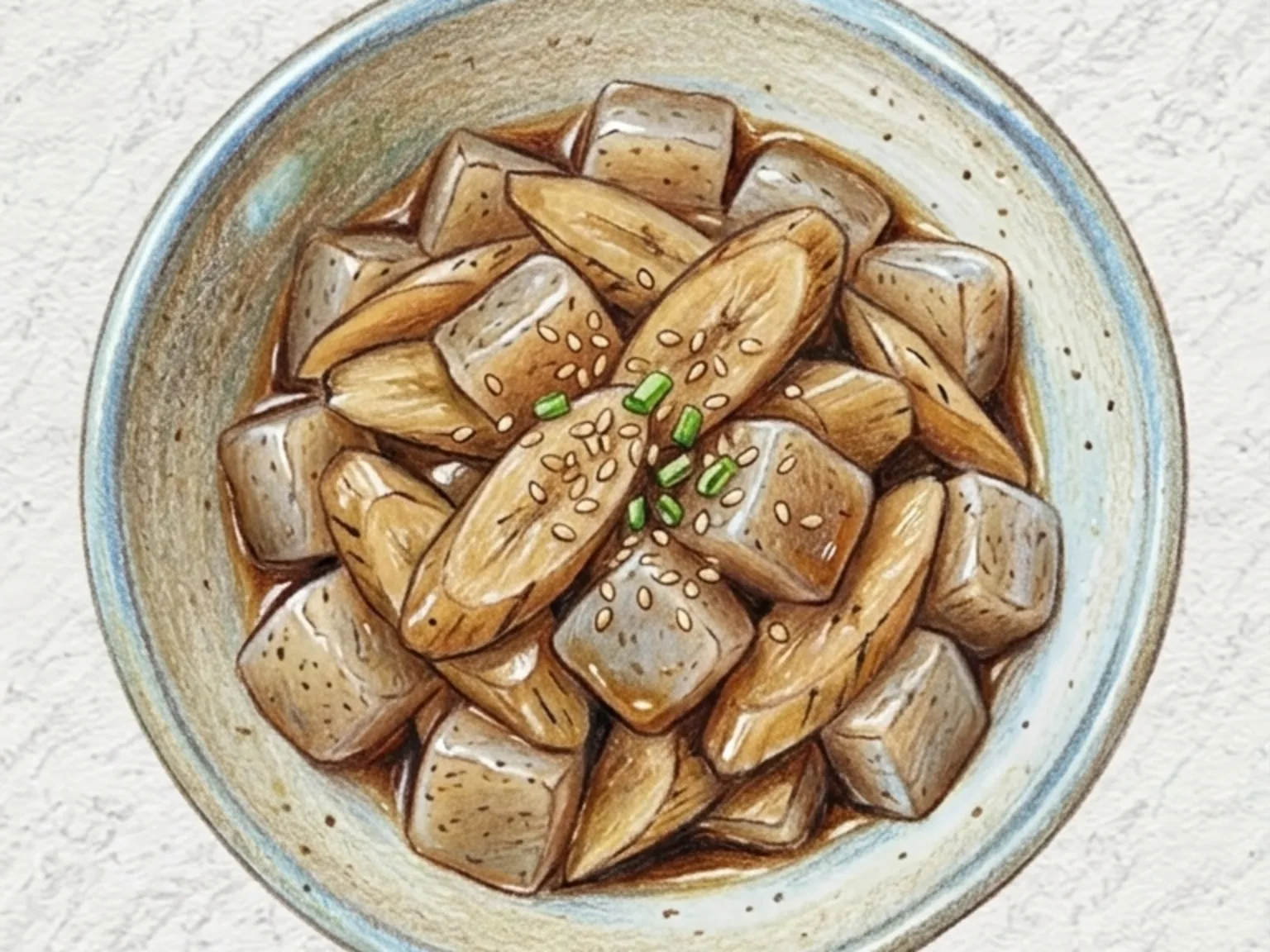
Korean Braised Burdock and Konjac
Ueong gonyak jorim is a low-calorie Korean braised side dish of diagonally sliced burdock root and bite-size konjac in soy sauce with oligosaccharide syrup. The burdock is soaked in vinegar water to remove astringency, and the konjac is blanched then dry-toasted briefly to minimize its neutral odor. Adding the syrup once the liquid has reduced by half creates a gentle gloss and softens the salt. Sesame oil and sesame seeds finish the dish with a toasted note. Despite using just a handful of inexpensive ingredients, the contrasting textures of crunchy burdock and bouncy konjac make this banchan more interesting than the short ingredient list suggests.
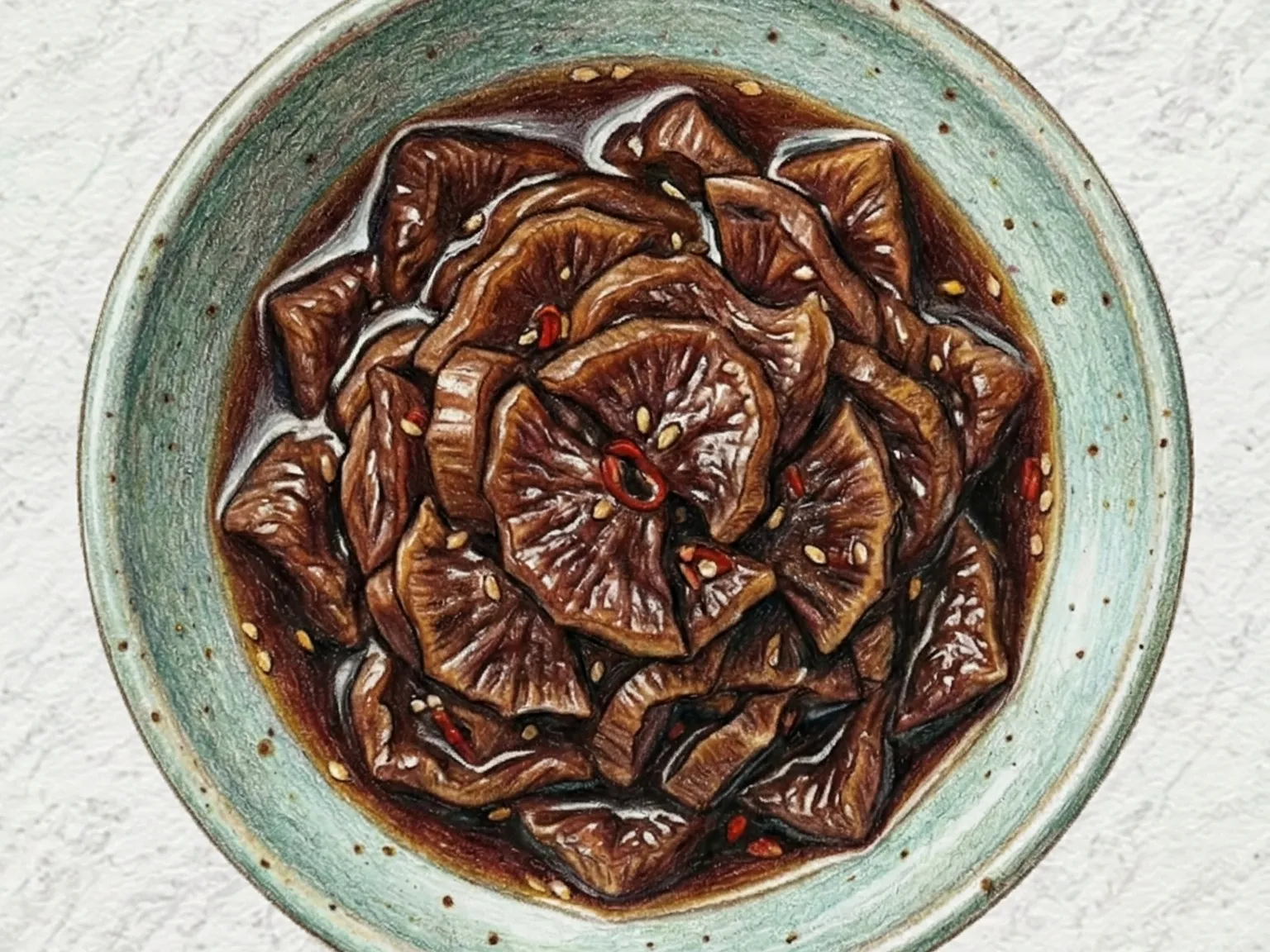
Korean Dried Radish Soy Pickles
Mu mallaengi jangajji is a Korean pickled dried radish that exploits the concentrating effect of dehydration to achieve a depth of sweetness and chew that fresh radish pickles cannot match. The dried radish strips are first soaked in lukewarm water to restore their flexibility, then coated with gochugaru before being submerged in a brine of soy sauce, vinegar, and sugar that has been briefly boiled and cooled. Drying collapses the radish cell walls and concentrates the natural sugars, so when the rehydrated strips absorb the brine, the sweetness hits in layers beneath the chili heat. The texture of the rehydrated strips is distinctly chewy rather than crisp, which makes each bite feel satisfying and substantial. Soy sauce provides a dense, savory floor while vinegar lifts the salt and keeps the palate clean, and a scatter of toasted sesame seeds adds a faintly nutty finish. After resting for a day the seasoning stabilizes and the flavors meld, producing a banchan assertive enough to carry a full bowl of plain rice on its own.
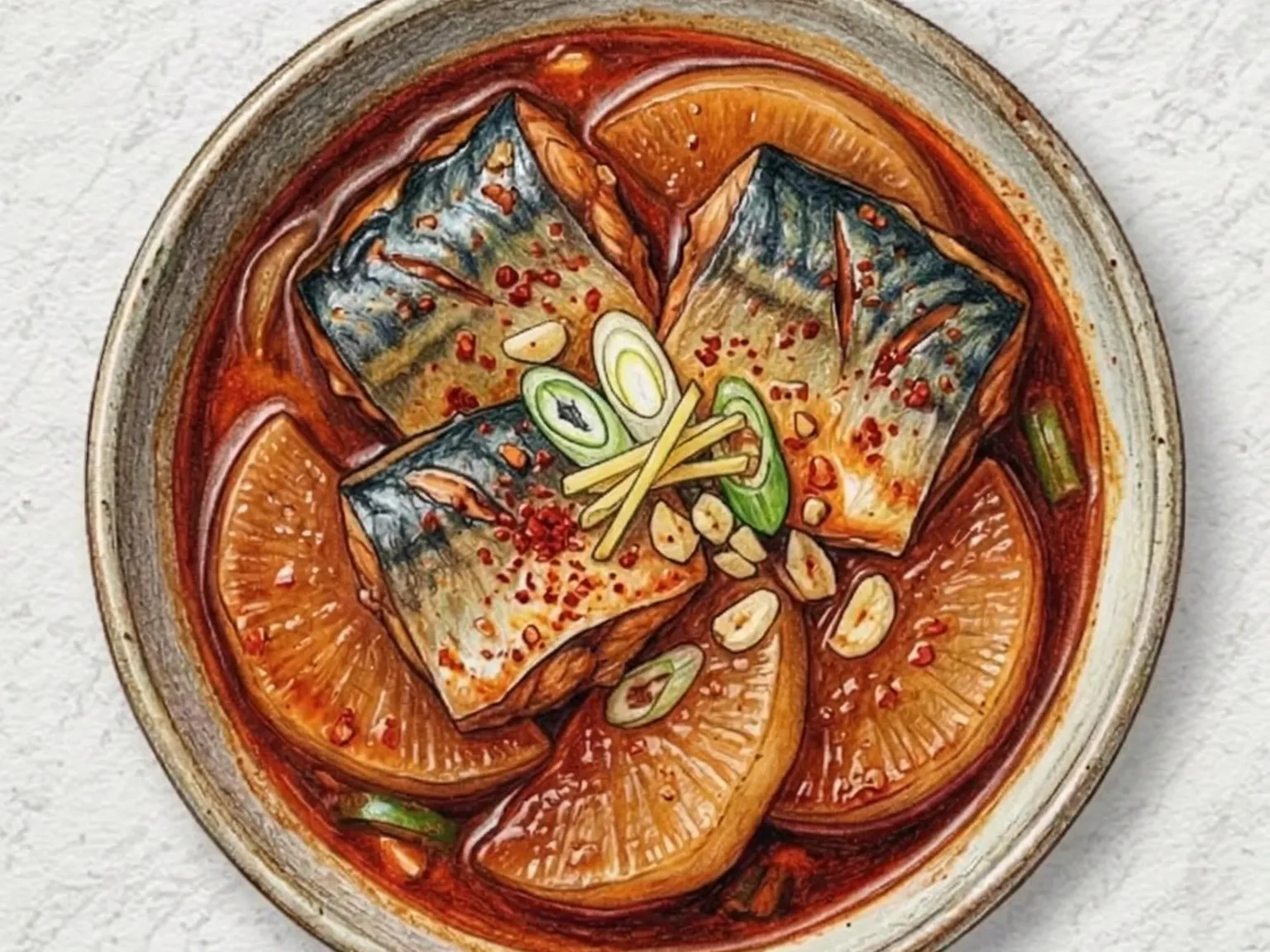
Korean Braised Mackerel in Spicy Sauce
Godeungeo-jorim is one of the most frequently cooked fish banchan in Korean homes, pairing mackerel's assertive flavor with a spicy braising sauce that demands steamed rice. Mackerel is cut into steaks and salted for ten minutes to draw out fishy odors, then arranged over thick radish slices that line the pot bottom. The radish serves dual duty: preventing the fish from sticking and releasing its natural sweetness into the braising liquid below. A sauce of gochugaru, gochujang, soy sauce, garlic, ginger, and sugar is spooned over, and the pot simmers covered for twenty minutes. During this time the seasoning penetrates the flesh while the radish absorbs enough sauce to rival the fish itself as the most satisfying component of the dish. Green onion added in the final minutes lifts the heavy spice with a fresh sharpness.
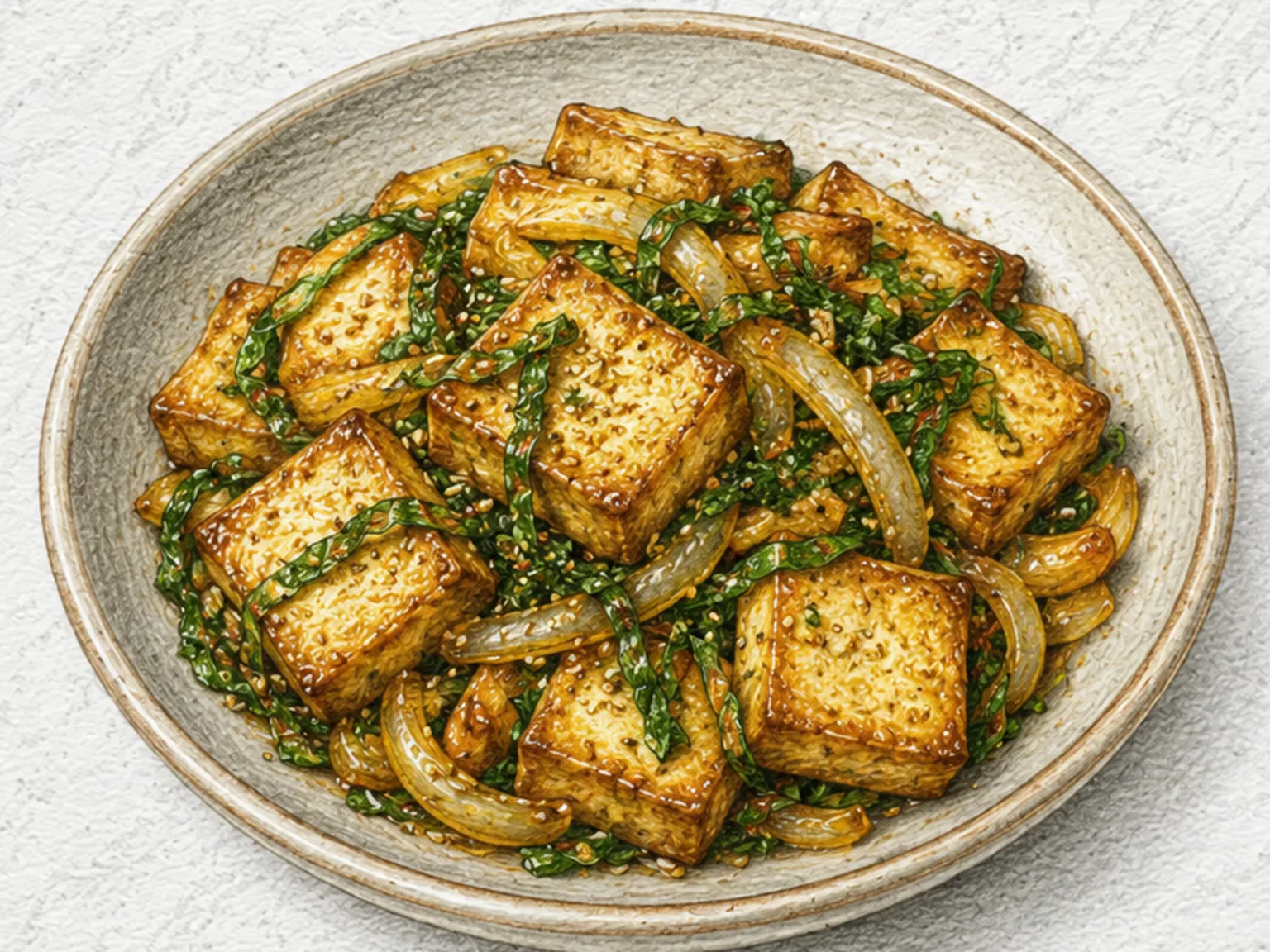
Korean Perilla Leaf Tofu Stir-fry
Kkaennip dubu bokkeum is a side dish of firm tofu cubes pan-fried until golden, then seasoned with soy sauce, onion, and garlic before being tossed with chiffonaded perilla leaves and ground perilla seeds at the end. The tofu develops a lightly crisp shell that absorbs the soy seasoning while the interior stays soft. Perilla leaves contribute a distinctive herbal fragrance, and the ground perilla seeds add a nutty depth that elevates the dish beyond a basic tofu stir-fry. A final touch of sesame oil brightens the aroma.
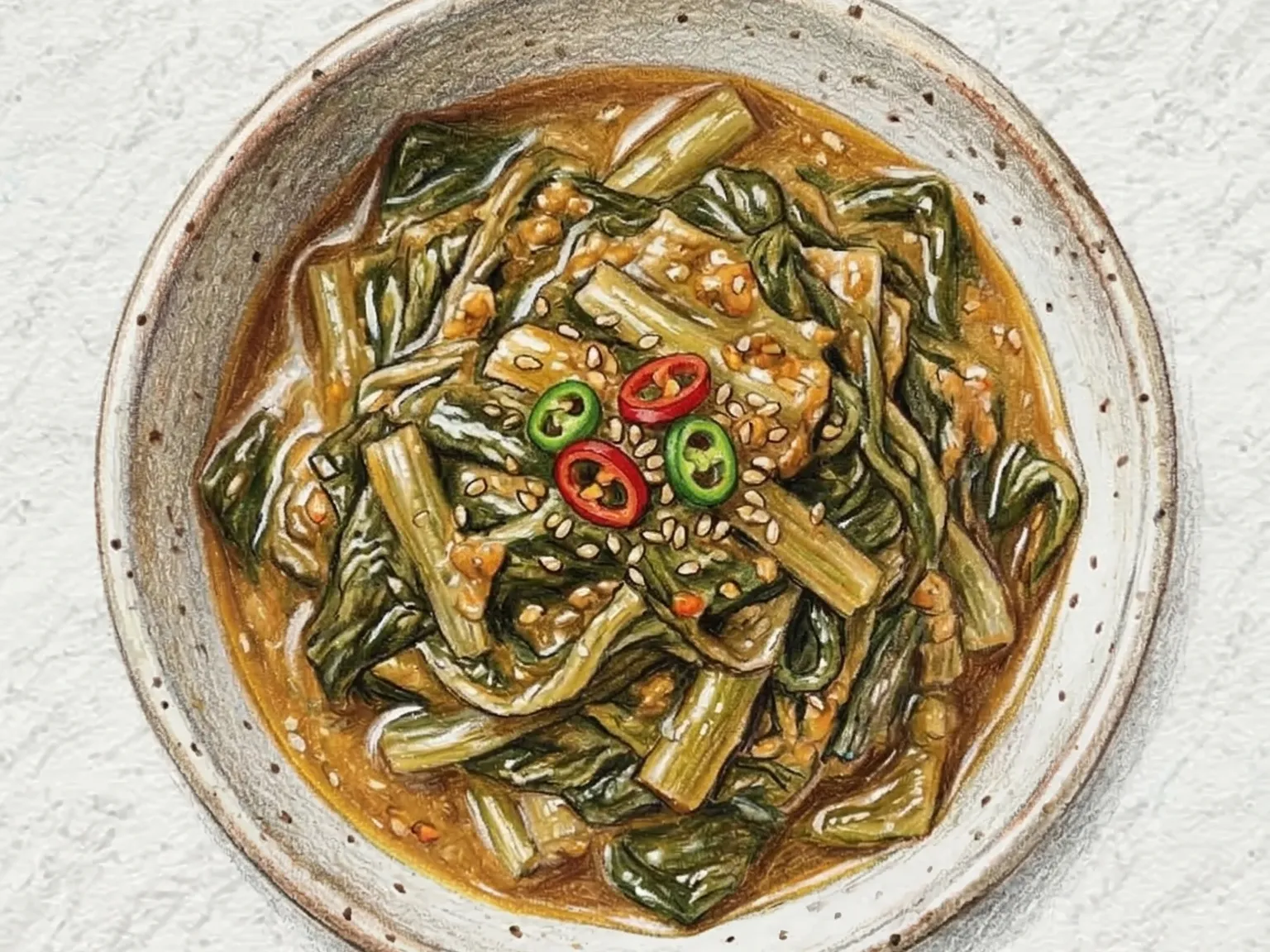
Korean Braised Napa Outer Leaves
Ugeoji-jjim is a Korean braised dish of blanched napa cabbage outer leaves cooked gently with doenjang, perilla oil, and garlic under a covered lid. The fibrous leaves absorb the fermented soybean paste deeply as they soften, while perilla oil lays a nutty base throughout the dish. Soup soy sauce adjusts the seasoning so the doenjang's saltiness and the natural sweetness of the greens find a clean balance. Mixed into a bowl of steamed rice, this humble banchan delivers a surprisingly deep, earthy flavor that belies its simplicity.
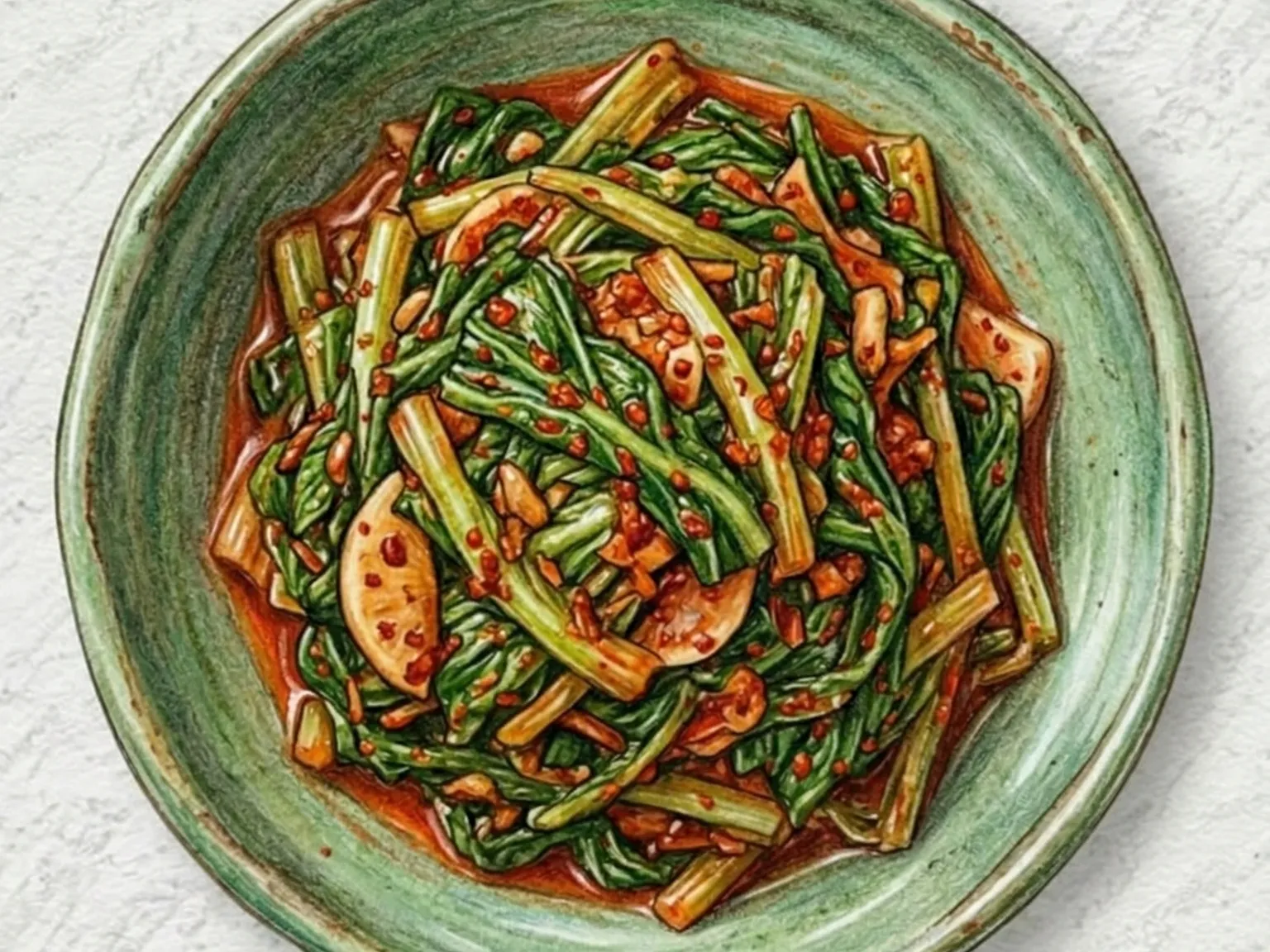
Korean Radish Greens Kimchi
Mucheong kimchi is made from the leafy greens and stems of Korean radish, cut into 5 cm lengths, salted in coarse brine, then coated in a paste of sweet rice flour, gochugaru, anchovy fish sauce, minced garlic, ginger, and onion. The thick, fibrous stems grip the seasoning and hold up through fermentation without turning mushy, keeping a firm chew even after weeks in the refrigerator. Sweet rice flour acts as a glue that prevents the coating from sliding off the stems as the kimchi ages. Anchovy fish sauce lays down a deep seafood umami as the base layer, while onion moderates the chili heat with natural sweetness. The greens are a practical use of the entire radish rather than just the root, and the finished kimchi works beyond the banchan role: torn into pieces and added to siraegi soup, it enriches the broth; stirred into doenjang jjigae, it deepens the fermented soybean flavor with another layer of fermented complexity.
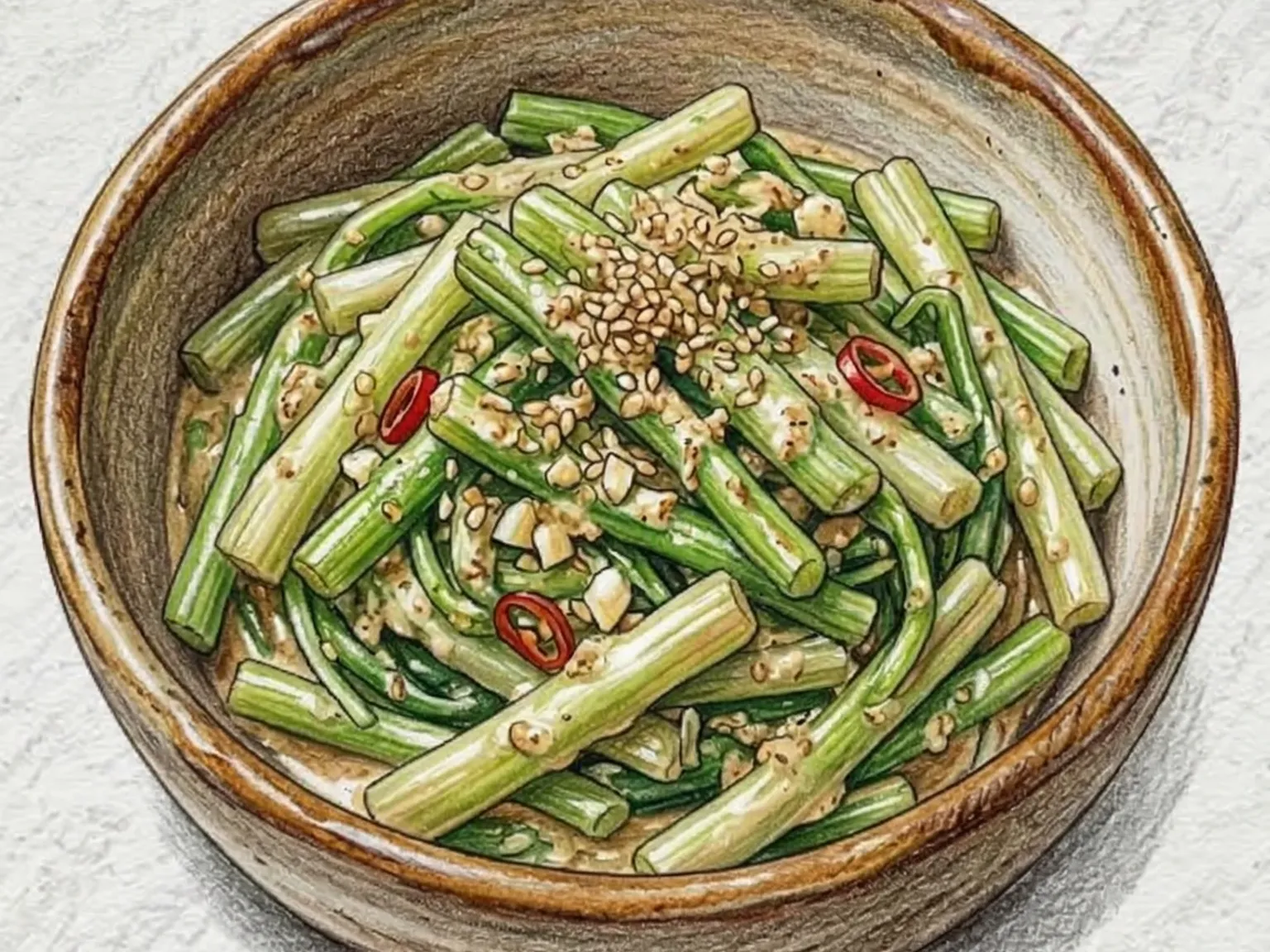
Korean Stir-Fried Sweet Potato Stems
Goguma julgi - sweet potato stems - are the above-ground vines of the sweet potato plant, a byproduct that Korean cooks transform into a summer namul rather than discarding. The most labor-intensive step is peeling each stem by hand, pinching the outer skin with a fingernail and pulling it away to reveal the tender core beneath. After blanching for two minutes and rinsing in cold water, the stems are stir-fried in perilla oil with garlic and seasoned with soup soy sauce. Perilla powder stirred in at the end thickens the remaining liquid into a nutty glaze. In season during summer, the stems are harvested from sweet potato fields before the tubers themselves are dug up.
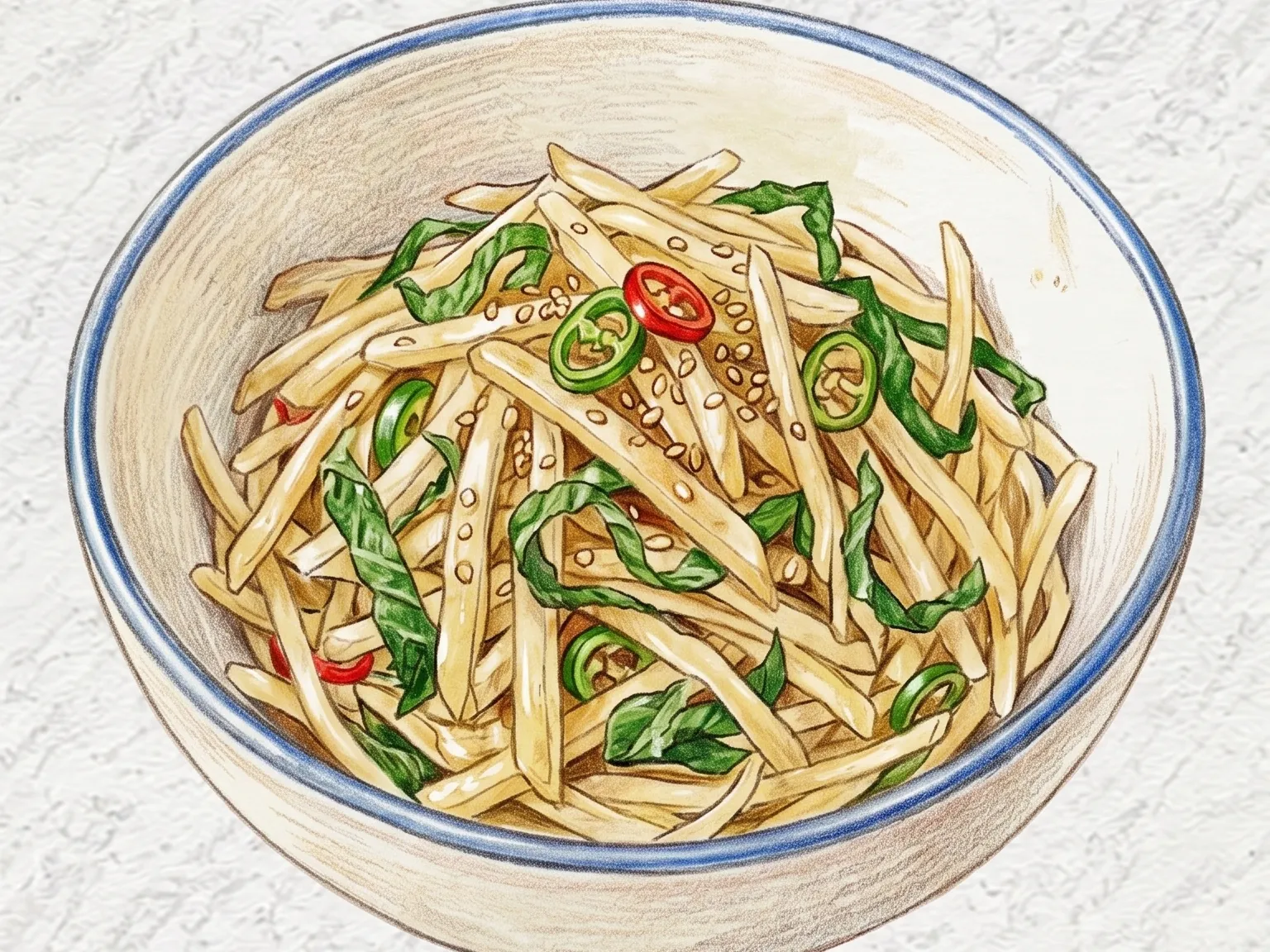
Korean Kkaennip Gamja Bokkeum (Perilla Potato Stir-fry)
High heat and a well-preheated pan are the keys to achieving the distinct texture of these stir-fried potato matchsticks. Before cooking, soaking the cut potatoes in cold water is a critical step to remove surface starch, ensuring the pieces stay separate and do not stick to the pan. Once thoroughly dried to prevent oil splattering, the potatoes are tossed quickly until the edges become translucent while the centers retain a subtle firmness. Overcooking results in a mushy consistency that lacks the intended character of the dish. Pouring the soy sauce around the perimeter of the pan allows it to caramelize against the hot surface before it is incorporated into the vegetables, adding a layer of savory complexity. Fresh perilla leaves should be tossed in just before the heat is turned off to preserve their bright green color and herbal fragrance. A final drizzle of perilla oil complements the leaves with its toasted scent, and a sprinkle of sesame seeds provides a light crunch. Sliced Cheongyang chilies can be included during the initial sautéing for a gentle heat. This combination pairs the carbohydrates of potatoes with the vitamin K and calcium found in perilla leaves, creating a nutritionally rounded side dish that tastes even better the next day after the flavors have settled.
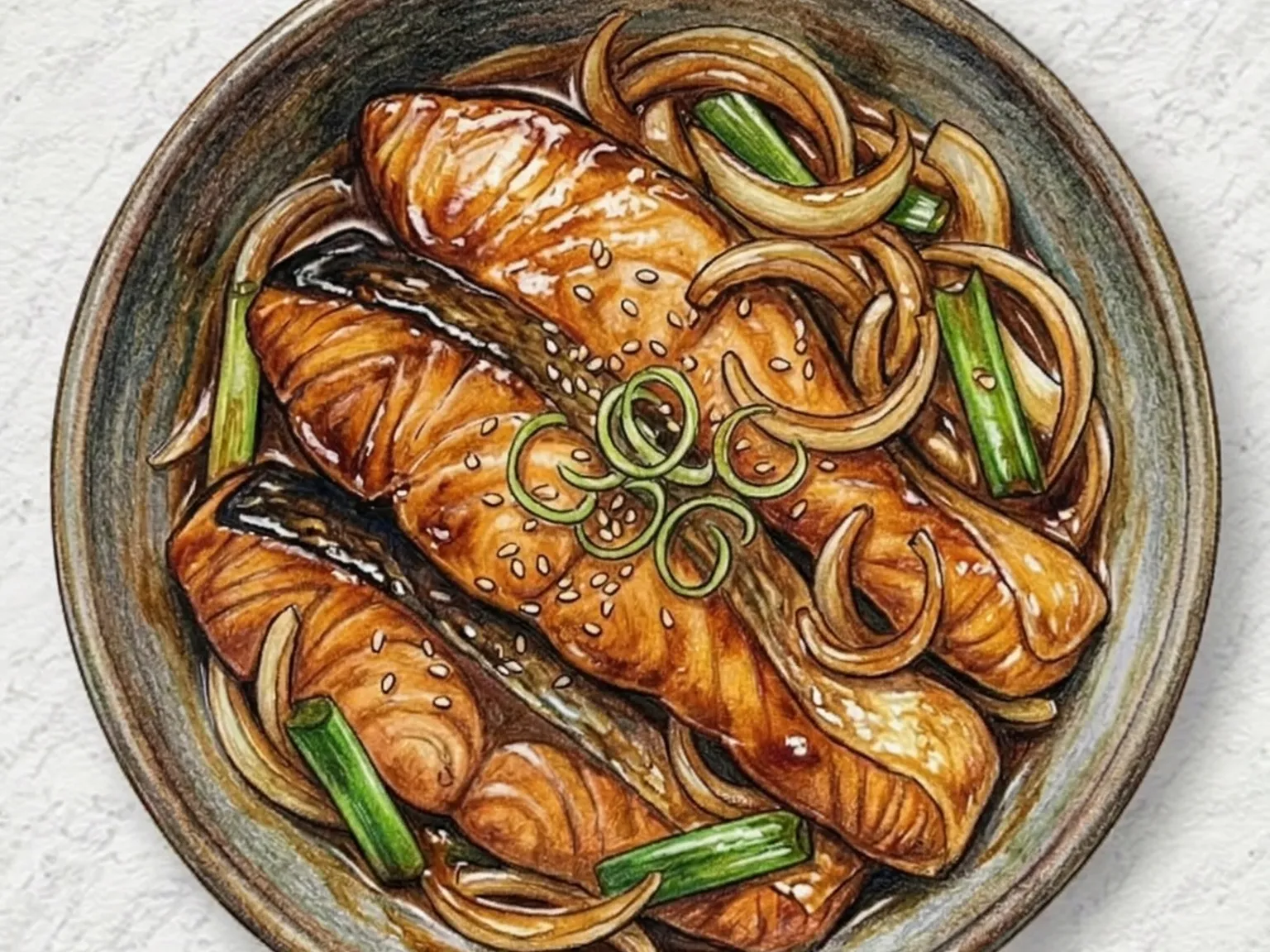
Korean Soy Braised Salmon
Yeon-eo ganjang jorim is Korean soy-braised salmon where fillets are seared first to firm the surface, then glazed in a sauce of soy sauce, cooking wine, and oligosaccharide syrup. Green onion and onion cook in the sauce, adding sweetness and neutralizing any fishiness. The syrup gives the glaze a smooth sheen that clings to each piece of salmon as the liquid reduces. With total cooking time under twenty minutes, this is a practical weeknight fish dish that delivers a polished, glossy presentation with minimal effort.
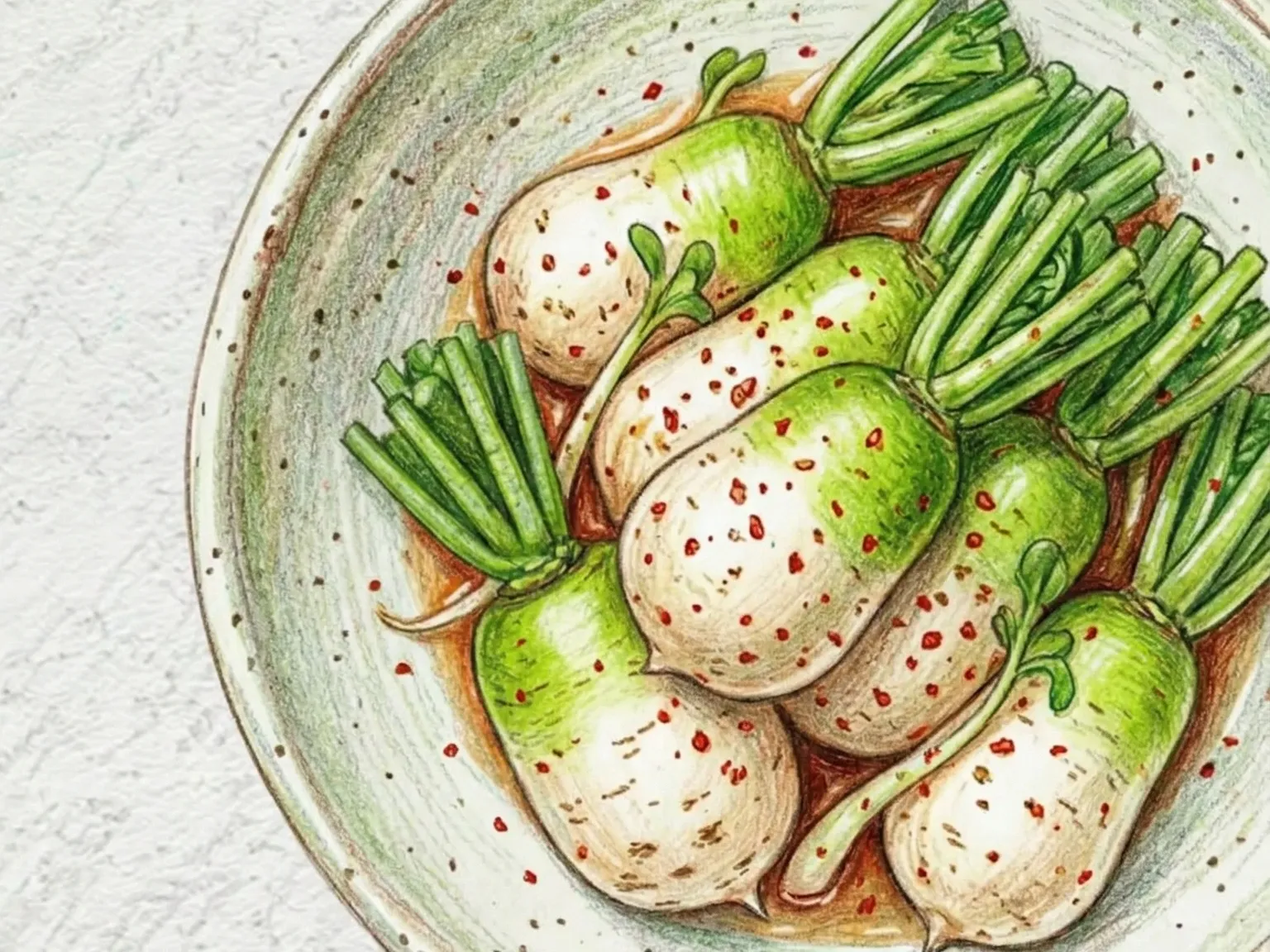
Korean Radish Sprout Kimchi
Musun kimchi is an instant Korean side dish made by tossing thin radish sprouts in a seasoning of gochugaru, sand lance fish sauce, minced garlic, and a splash of vinegar. The sprouts carry a sharp, peppery bite that stacks naturally with the chili heat and the fish sauce's fermented depth. Mixing must stay under thirty seconds - overworking the delicate stems releases a grassy off-note instead of the clean radish sharpness. Vinegar sharpens the finish with bright acidity, and a final drizzle of sesame oil ties the bowl together with a toasted richness. This kimchi is at its best eaten the same day, while the sprouts still hold their crisp snap.
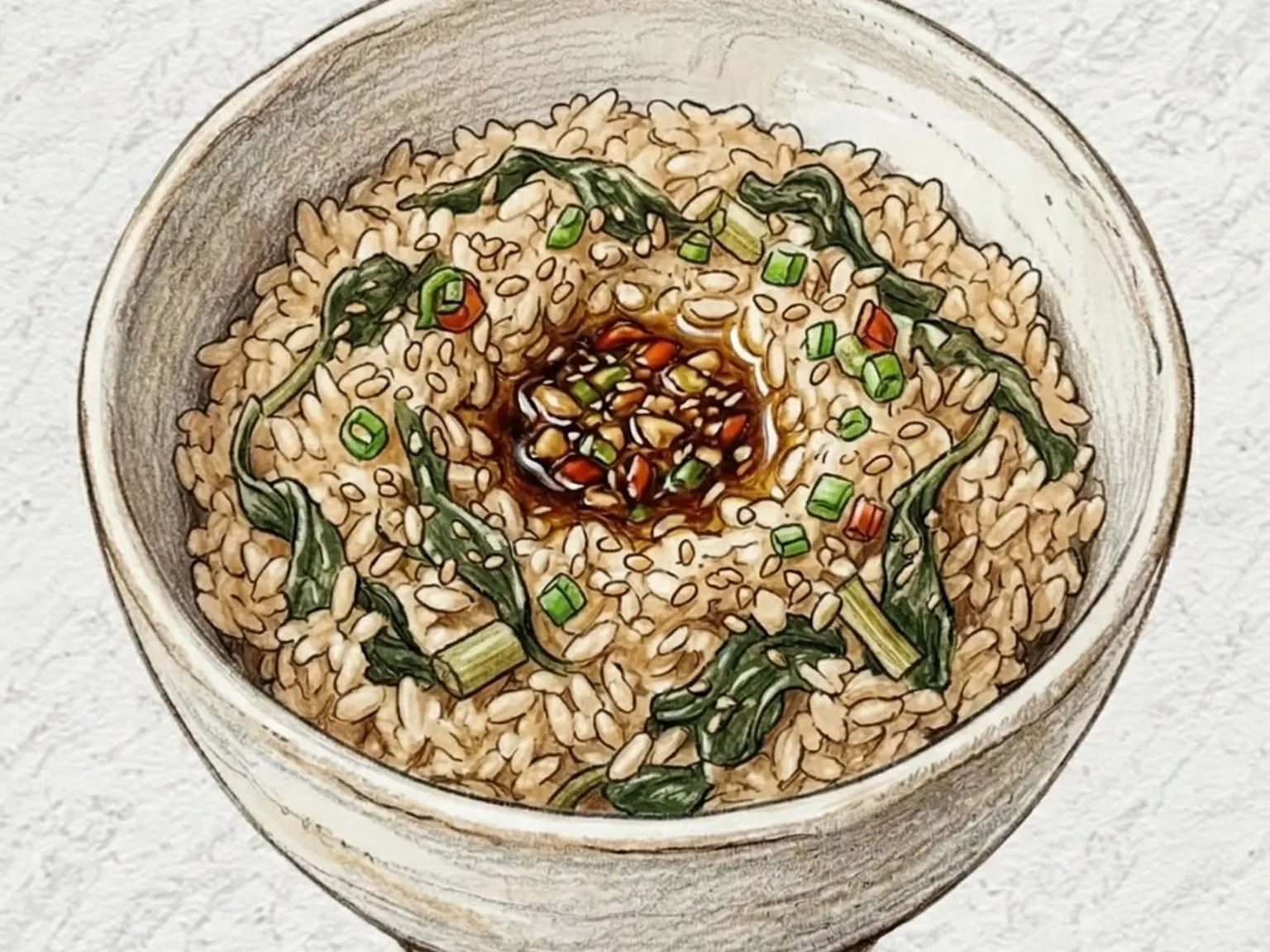
Korean Seasoned Thistle Greens
Gondeure is a wild thistle (Cirsium setidens) that grows in the alpine highlands around Jeongseon and Taebaek in Gangwon-do. In this mountainous region, where rice was historically scarce, gondeure was mixed into the cooking pot to stretch the grain and fill the table. Boiled gondeure dressed with soy sauce, garlic, and perilla oil carries a fragrance that blends mugwort-like herbal sharpness with a forest-floor earthiness rarely found in other vegetables. The stems are noticeably tougher than the leaves, so blanching them separately for longer, or chopping them finely, produces a more even texture throughout the dish. The namul is a capable side dish on its own, but gondeure is most famous when cooked directly into rice in a pot, a preparation called gondeure-bap. At the table, the cooked greens and rice are mixed with a dipping sauce of soy, perilla oil, and ground perilla seeds, drawing the herb's fragrance through every grain. The ratio of perilla oil to garlic varies from one Gangwon-do kitchen to the next, and dried gondeure is kept year-round so the dish is never limited to a single season.
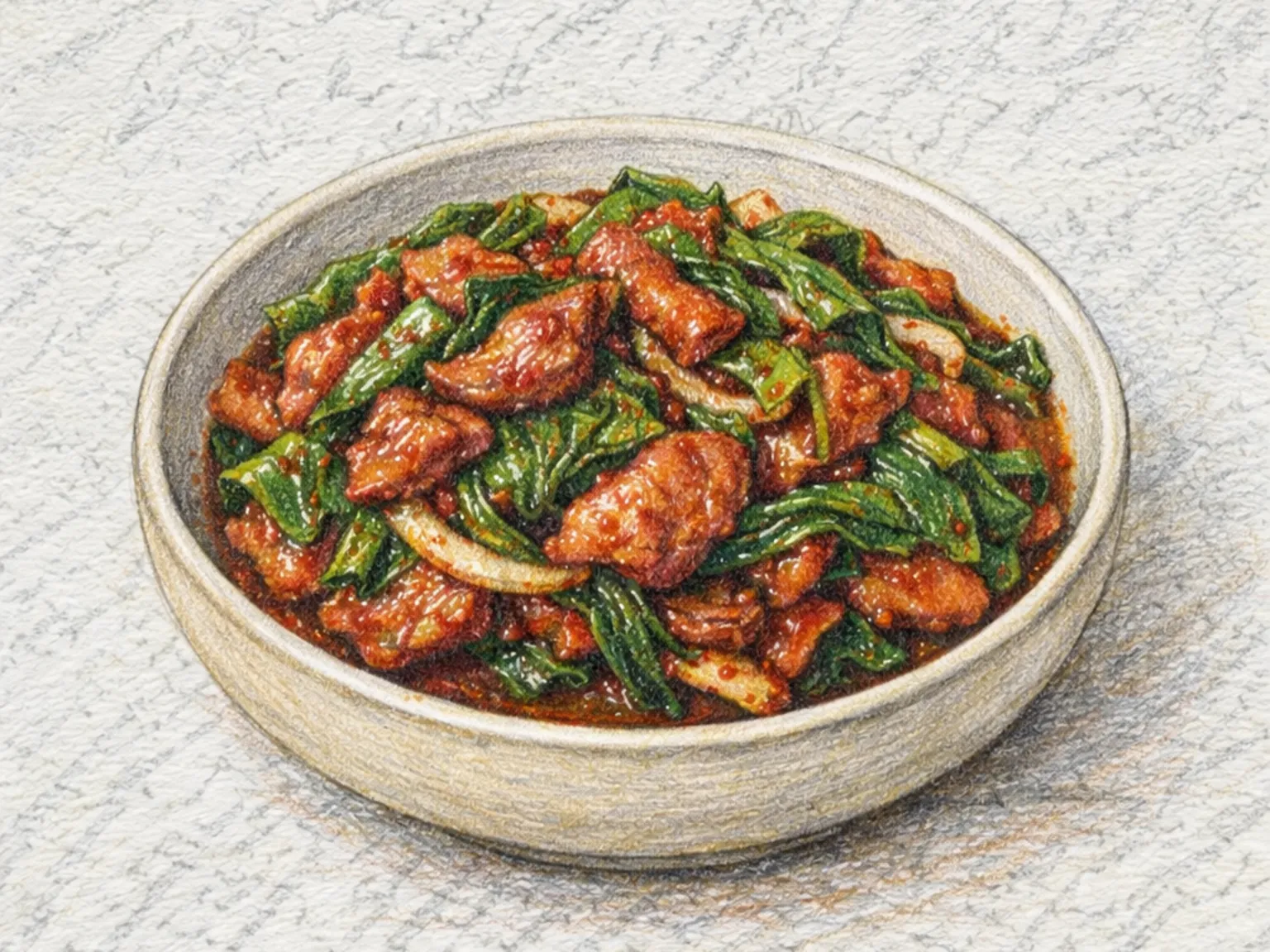
Korean Duck and Perilla Leaf Stir-fry
Kkaennip ori bokkeum is a stir-fry of smoked duck slices cooked with onion and Cheongyang chili in a sauce made from gochujang, soy sauce, and plum syrup, finished with shredded perilla leaves and perilla oil in the final seconds before serving. When the smoked duck hits the hot pan, its own fat renders out and forms the cooking base, infusing the sauce with a meaty, smoky depth that distinguishes this dish from stir-fries made with leaner proteins. Gochujang contributes heat and a fermented richness, soy sauce provides salty umami, and plum syrup adds a bright, fruity sweetness that keeps the sauce from feeling too heavy. The combination of all three wraps around the smokiness of the duck in a way that amplifies rather than obscures it. Perilla leaves must go in at the very last moment, just before the heat is cut, because prolonged cooking darkens their color and drives off the distinctive herbal fragrance that defines the dish. Perilla oil is added at the same stage, after the burner is off, so its nutty aroma remains intact in the finished plate. The sharp heat of Cheongyang chili interlocks with the smoked duck flavor to produce a more intense, stimulating character, and a pinch of black pepper at the end leaves a clean, lingering finish. The dish works equally well as a rice side and as drinking food alongside soju.
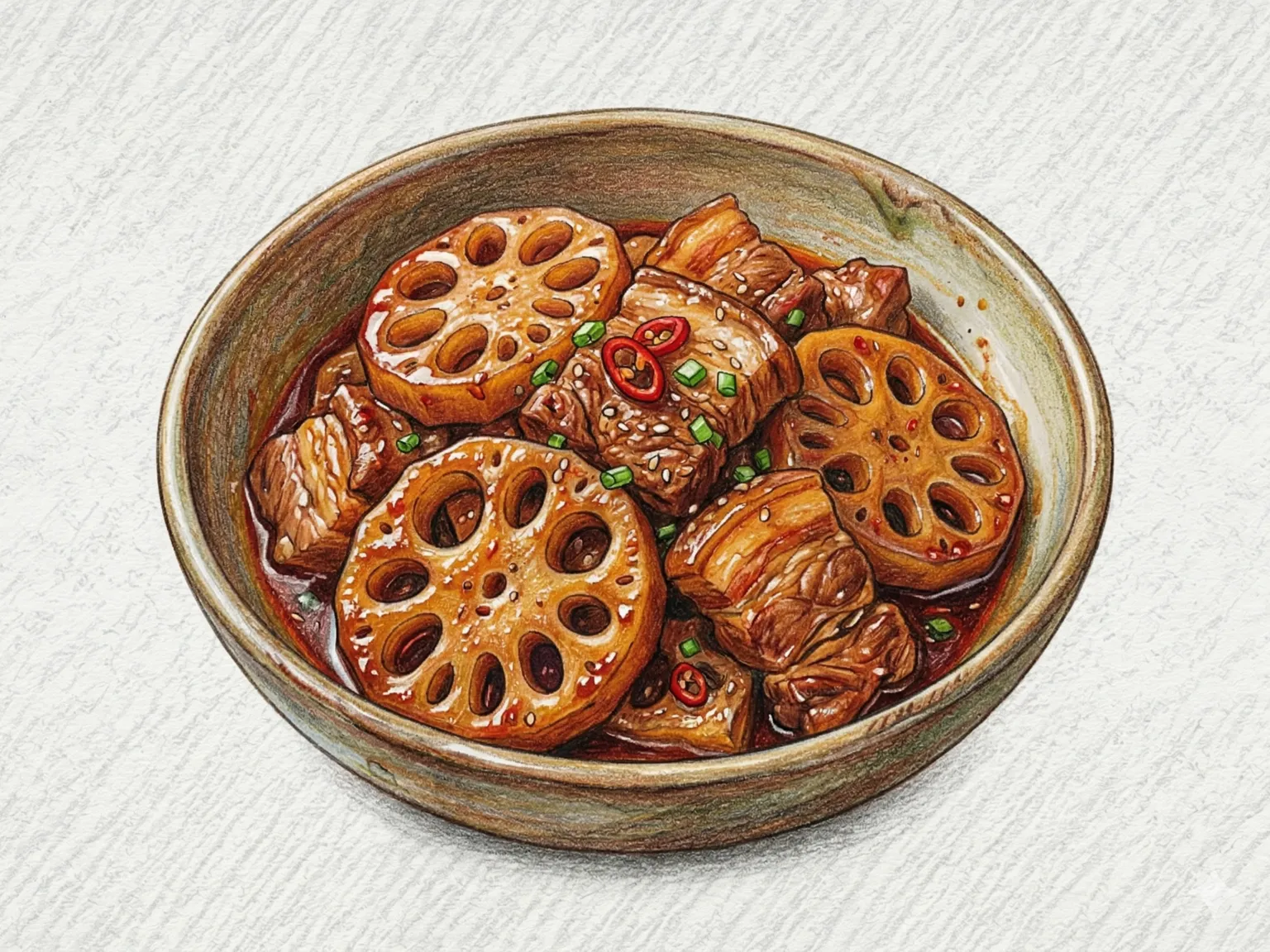
Korean Braised Lotus Root with Pork
Yeongeun dwaejigogi jorim is a Korean braise of lotus root and pork shoulder in a gochujang and soy sauce seasoning. The lotus root absorbs the spiced braising liquid while maintaining its signature crisp bite, and the pork shoulder softens as its fat renders into the sauce, building depth. Gochujang provides a steady warmth while soy sauce anchors the umami, and oligosaccharide syrup glazes everything in a glossy coat. The textures hold up well even after cooling, making this a practical banchan for lunchboxes and meal prep.