Charim

2686 Korean & World Recipes

2686+ Korean recipes, clean and organized. Ingredients to instructions, all at a glance.

Recipes with korean chili flakes

24 recipes

Buy korean chili flakes
Korean Webfoot Octopus Tofu Stew
StewsMedium

Korean Webfoot Octopus Tofu Stew

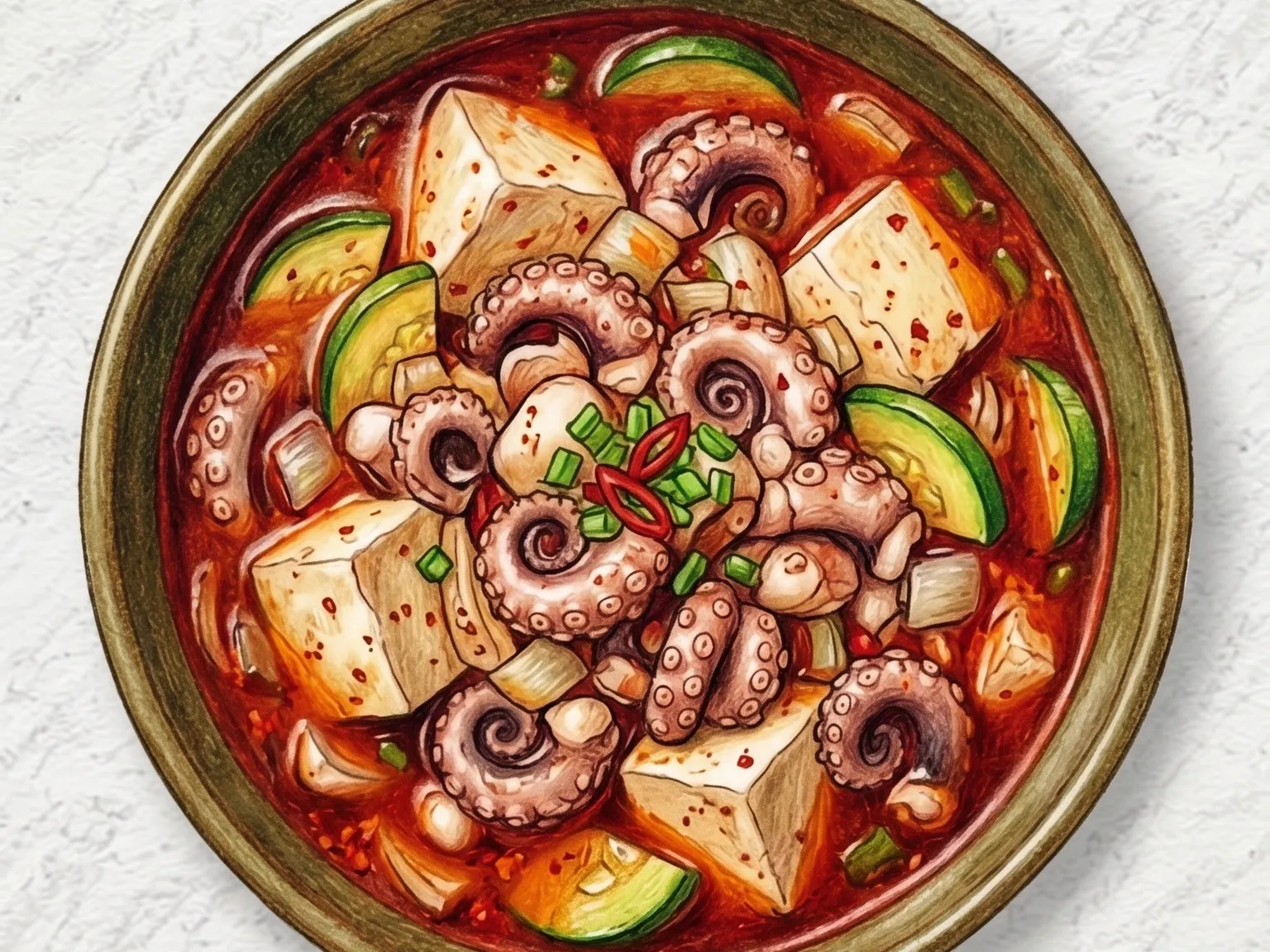
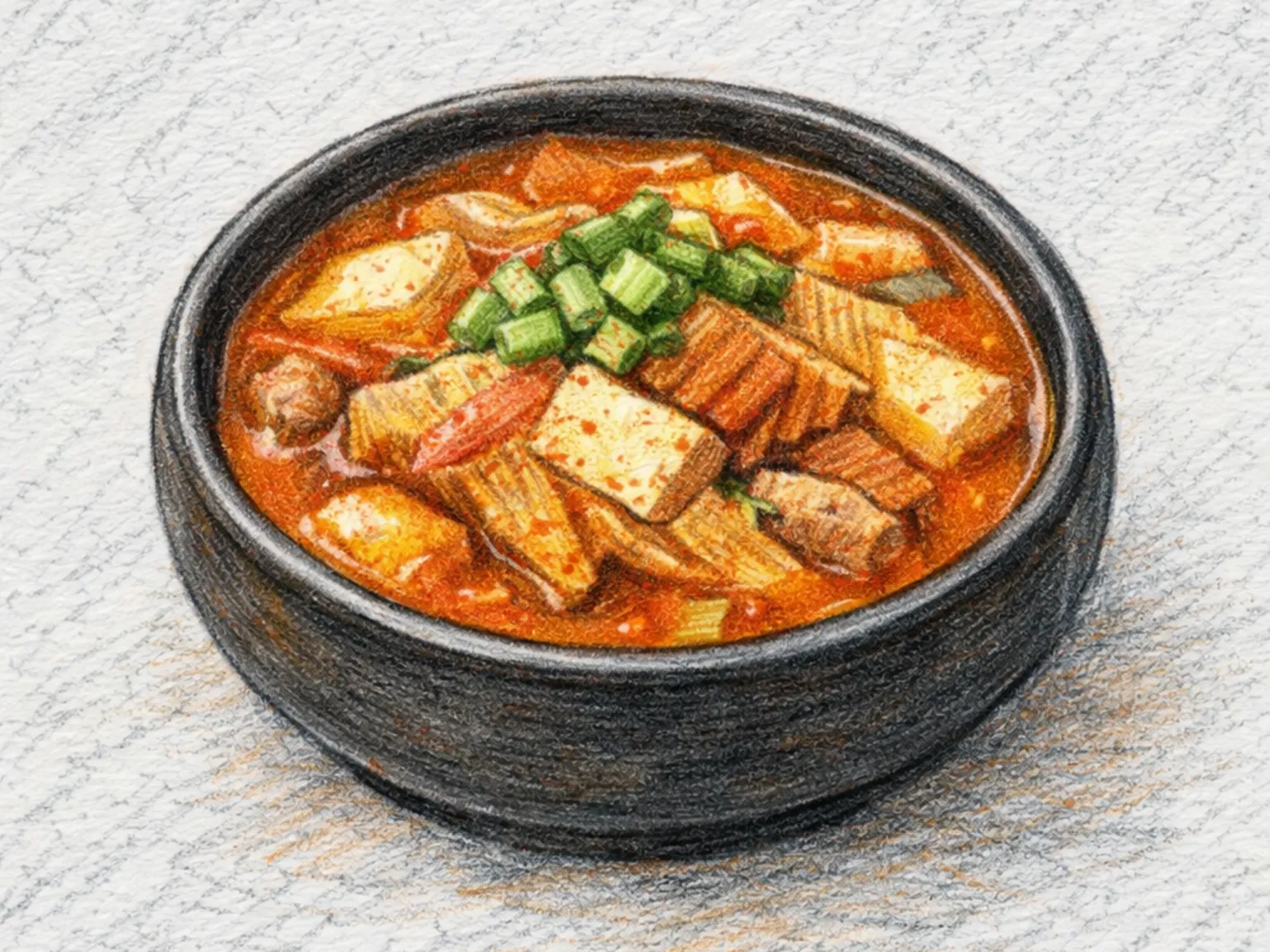
Jjukkumi dubu jjigae is a Korean stew of webfoot octopus and soft tofu cooked in a gochugaru-seasoned anchovy broth. A full 450 grams of jjukkumi goes into the pot, providing a bouncy, chewy texture in every spoonful. The tofu absorbs the spicy broth as it cooks, creating a soft counterpoint to the firm octopus, and the contrast between the two textures is a central part of the dish. Rice wine added early in the cooking process neutralizes any fishiness from the seafood, keeping the broth clean-tasting rather than pungent. Soup soy sauce deepens the umami base without darkening the broth too heavily, and gochugaru provides the heat. Zucchini and onion contribute natural sweetness that rounds out the broth and prevents the salt from the seafood from feeling sharp or one-dimensional. Jjukkumi becomes rubbery if overcooked, so removing the pot from heat three to four minutes after it comes back to a boil is the key step for keeping the octopus tender and springy rather than tough.

🏠 Everyday
Prep 18minCook 22min4 servings
Korean Braised Pork with Garlic Chives
SteamedEasy

Korean Braised Pork with Garlic Chives

Pork shoulder is steamed with garlic chives in a seasoning of soy sauce, gochugaru, and cooking wine. The shoulder cut has fat distributed evenly through the muscle, so it stays moist during steaming and pulls apart naturally along the grain rather than turning dry or stringy. Garlic chives are piled generously over the pork before the lid goes on; as they steam they release moisture and a sweet, garlicky aroma that seeps down into the meat. Soy sauce penetrates deeply through the slow steam, and gochugaru gives the finished dish its red color and moderate heat. A finish of sesame oil and black pepper adds nuttiness and a sharp edge. The combination of savory depth and mild spice makes it a natural partner for plain steamed rice.

🏠 Everyday
Prep 20minCook 35min2 servings
Korean Pork Rib Perilla Leaf Stew
StewsMedium

Korean Pork Rib Perilla Leaf Stew

Pork back ribs and perilla leaves come together in this full-flavored, chili-seasoned jjigae. The ribs are simmered first to render a rich, collagen-heavy broth, and then potatoes and onion are added to give the liquid body and natural sweetness. Gochugaru and soup soy sauce establish the spicy base. Fresh perilla leaves are added just before the heat is turned off so their herbal fragrance stays intact, since prolonged boiling drives the aroma away. A touch of ginger keeps the pork flavor clean while the collagen-rich broth from the ribs provides substantial body. Picking the meat off the bone at the table is part of the experience, making this a natural fit for late autumn meals or as a communal drinking accompaniment.

🍺 Bar Snacks
Prep 25minCook 50min4 servings
Korean Water Parsley Clam Stew
StewsMedium

Korean Water Parsley Clam Stew

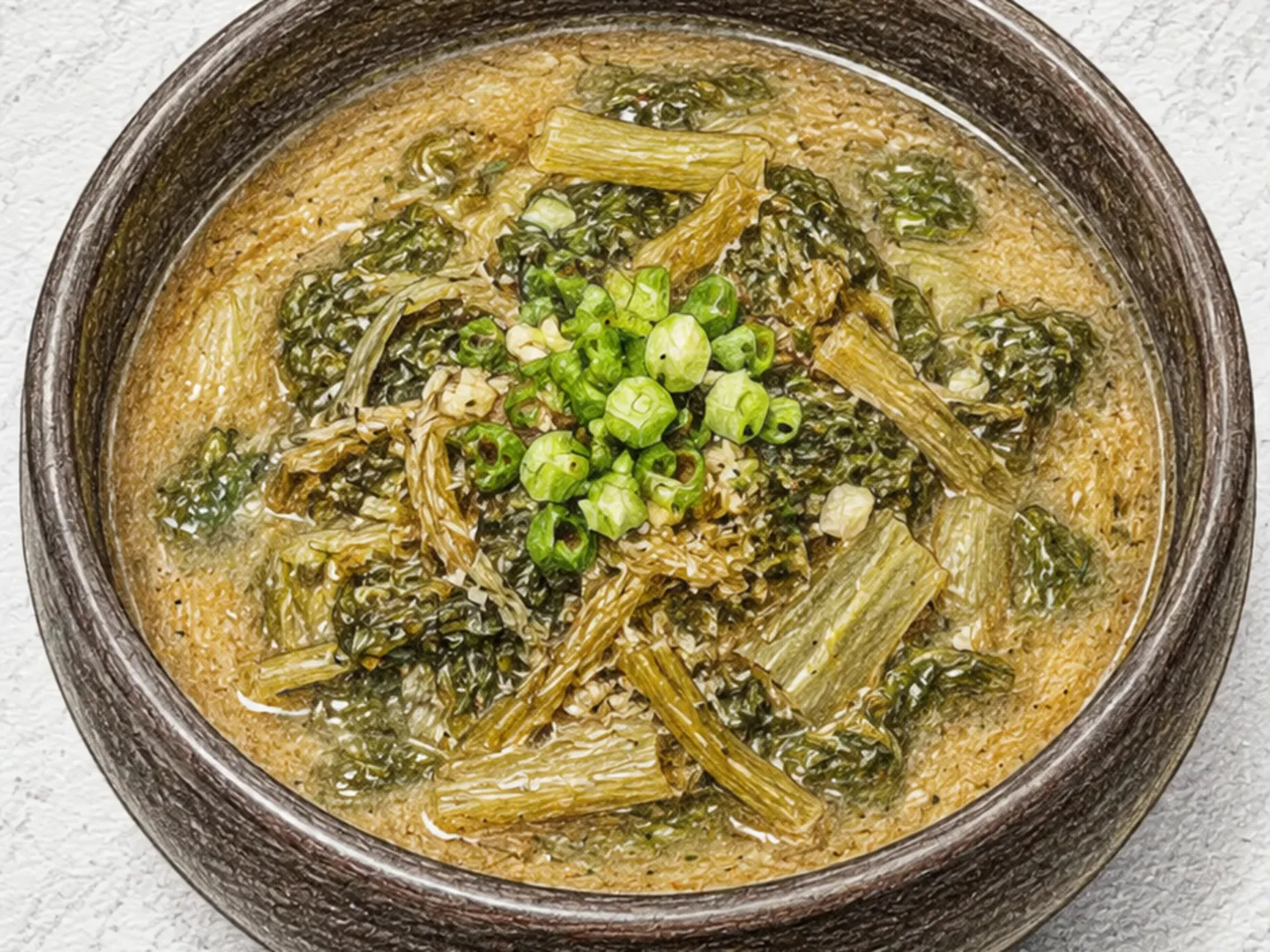
Minari-bajirak-jjigae pairs the clean, briny broth of littleneck clams with the sharp, herbal fragrance of Korean water parsley. Korean radish and zucchini simmer in the base and contribute a gentle natural sweetness, while a whole cheongyang chili and a small measure of gochugaru add a crisp heat that does not overpower the delicate shellfish. The restrained use of chili powder keeps the broth clear and allows the clams' distinct umami to come through without interference. Clams must be thoroughly purged of sand before cooking - any residual grit will ruin the broth. Once the shells open, the clams should be eaten promptly as continued heat toughens the meat. Minari goes in only at the very end, just before the heat is turned off, to preserve its bright green color and volatile fragrance. With prep time dominated by clam purging, the active cooking takes under ten minutes.

🏠 Everyday
Prep 20minCook 18min2 servings
Korean Seasoned Pollock Roe Banchan
Side dishesEasy

Korean Seasoned Pollock Roe Banchan

Myeongranjeot-muchim dresses raw salted pollock roe with a near-minimal seasoning - a paradoxical dish where less seasoning produces more flavor, because the roe's own brininess and umami are the point. Korean myeongranjeot differs from Japanese mentaiko in being less aggressively salted and not coated in chili marinade by default. The membrane is peeled away and the loose eggs are placed in a bowl with sesame oil, a pinch of gochugaru, and finely sliced scallion, then folded together gently - vigorous stirring crushes the individual eggs and destroys the pop-on-the-tongue texture that defines the dish. The gochugaru adds a whisper of warmth and color without masking the roe's marine depth. Spooned over hot rice and mixed through, this banchan is an intense rice-thief - a small portion can carry an entire bowl of steamed rice. Substituting perilla oil for sesame oil shifts the flavor profile toward a cleaner, more neutral nuttiness.

🏠 Everyday🍱 Lunchbox
Prep 7min2 servings
Korean Braised Tofu and Mushrooms
Stir-fryEasy

Korean Braised Tofu and Mushrooms

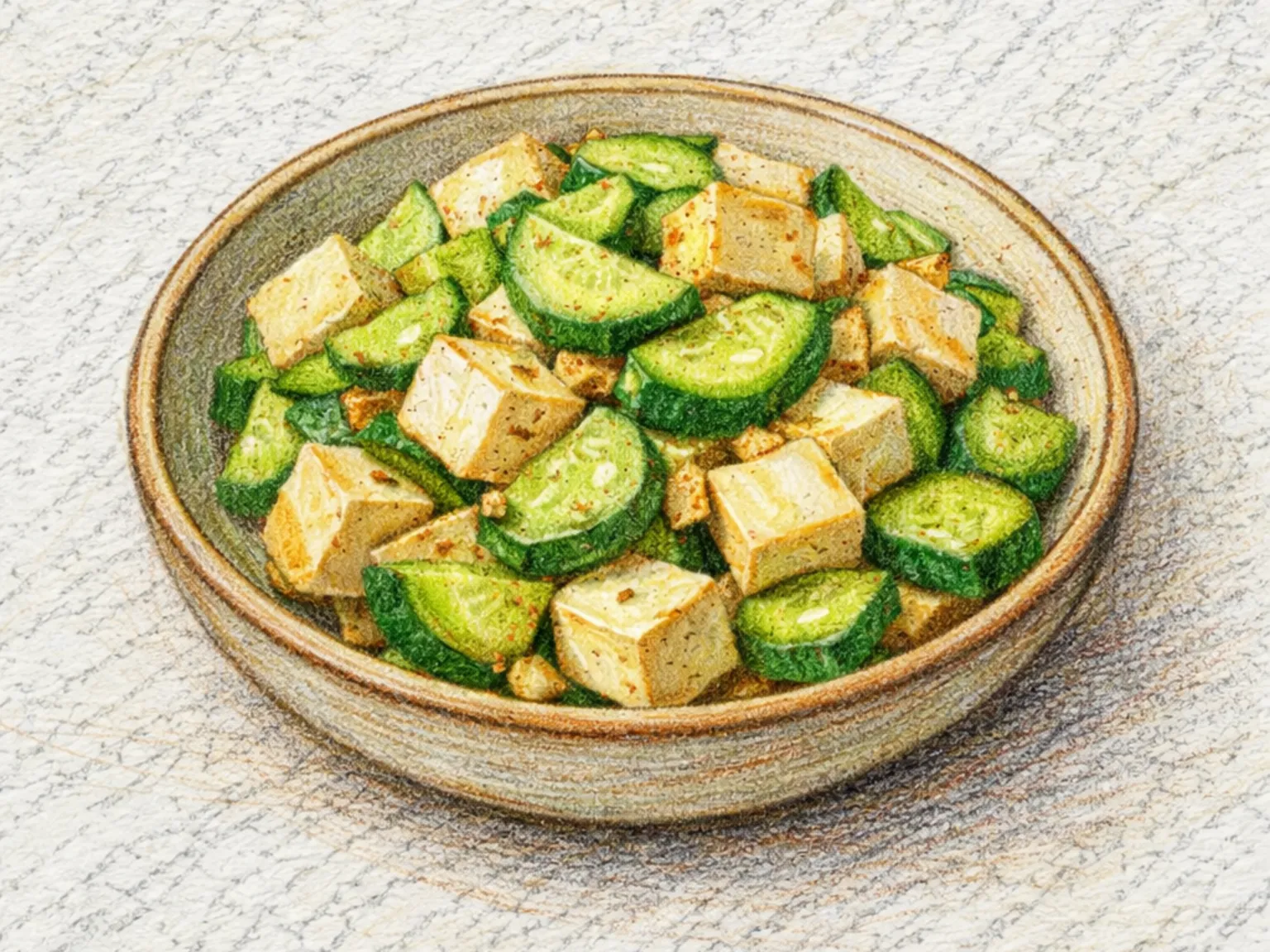
Dubu-beoseot-jorim is a Korean braised side dish of firm tofu and oyster mushrooms simmered in a soy-based sauce until the liquid reduces to a glossy, clinging coat. The tofu is pan-fried first in a lightly oiled skillet to form a firm outer crust before braising begins, which allows it to absorb the seasoned liquid without crumbling or losing its structure during cooking. The result is a cube with a slightly firmer exterior and a soft, custardy interior that holds together through each bite. Oyster mushrooms, torn along their natural grain rather than cut, contribute a pleasantly chewy texture and release their inherent umami into the braising liquid as they cook, adding depth without the need for separate stock. The sauce requires only soy sauce, water, garlic, gochugaru, and sesame oil, making this a straightforward braise that rewards careful heat management over elaborate preparation. When the sauce has reduced to just a small pool at the bottom of the pan, the dish is ready, well-seasoned enough to serve alongside plain rice or pack into a lunchbox.

🏠 Everyday🍱 Lunchbox
Prep 15minCook 18min3 servings
Korean Aged Kimchi Tuna Stir-fry
Stir-fryEasy

Korean Aged Kimchi Tuna Stir-fry

Mukeunji-chamchi-bokkeum stir-fries well-aged kimchi together with drained canned tuna, concentrating the kimchi's sharp tanginess against the tuna's protein-rich umami into a boldly flavored banchan. Onion and the white parts of scallion go into the pan first and cook until softened and sweet, building a flavor base before the aged kimchi is added and stir-fried for four to five minutes to drive off excess moisture and deepen the fermented sour notes. Gochugaru and sugar are added at this stage to calibrate the balance between acid and sweetness. The tuna goes in last and needs only three minutes of tossing to absorb the sauce without crumbling. If the aged kimchi is sharper than desired, an extra half-teaspoon of sugar rounds it out, and a few drops of soy sauce can reinforce the umami if the seasoning tastes flat. A finishing drizzle of sesame oil and a scatter of scallion greens add fragrance before the pan comes off the heat. Served over hot steamed rice and mixed together, it makes a quick and complete meal, and packed into a lunchbox the dry-ish seasoning stays in place without bleeding. Refrigerated in a sealed container, the flavor holds well for two to three days.

🏠 Everyday🍱 Lunchbox
Prep 12minCook 13min2 servings
Korean Jjageuli Pork Stew
StewsEasy

Korean Jjageuli Pork Stew

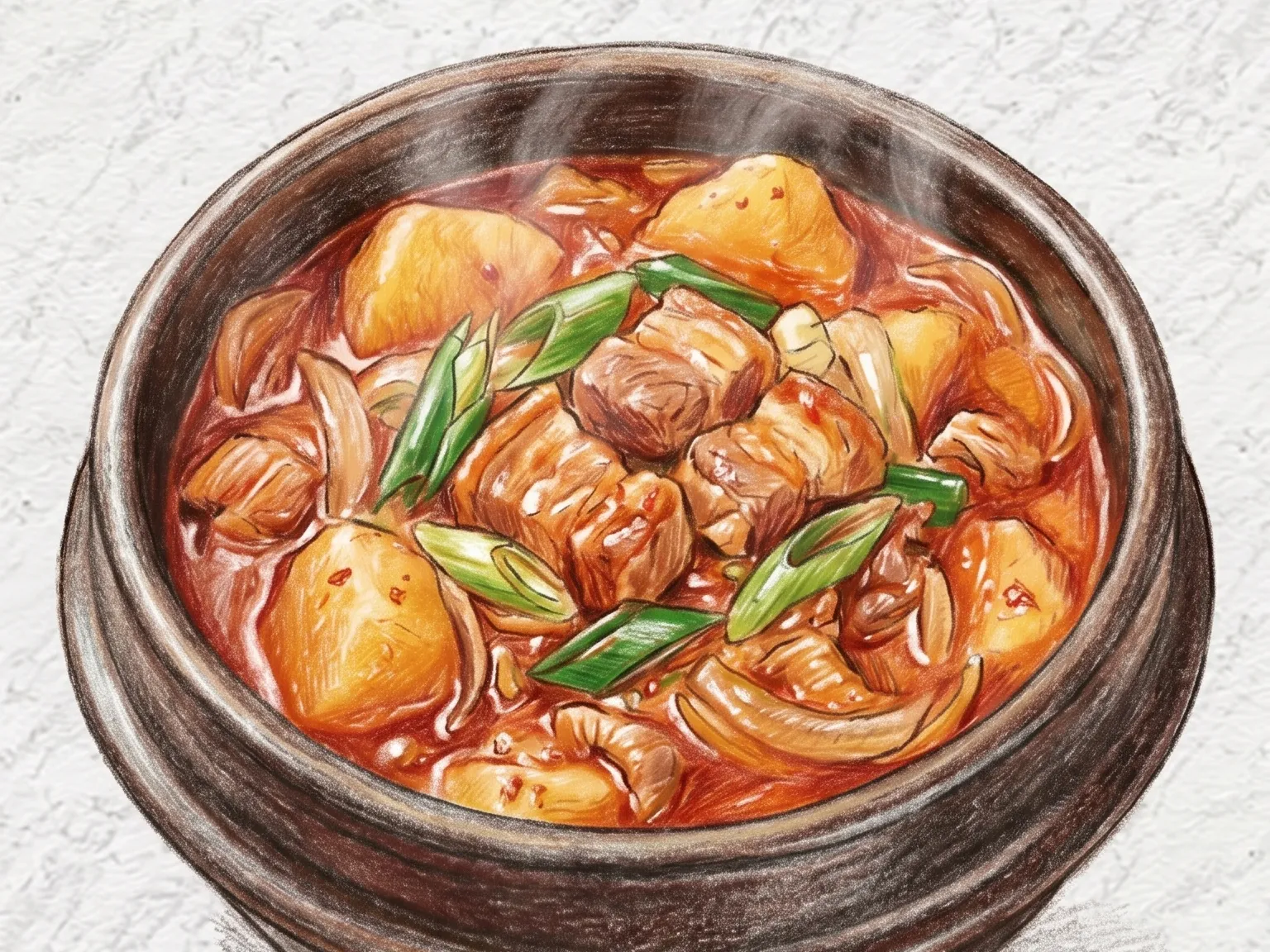
Jjageuli jjigae is a thick, reduced-broth stew of pork and potato simmered in a gochujang and gochugaru sauce. As the potato pieces break down, they naturally thicken the stew into a hearty, almost gravy-like consistency. The pork fat renders into the spicy-sweet seasoning, creating a deeply coating sauce meant to be spooned over rice. Onion and green onion add sweetness and fragrance, making this a satisfying one-pot meal that needs little else on the side.

🍺 Bar Snacks🏠 Everyday
Prep 15minCook 25min2 servings
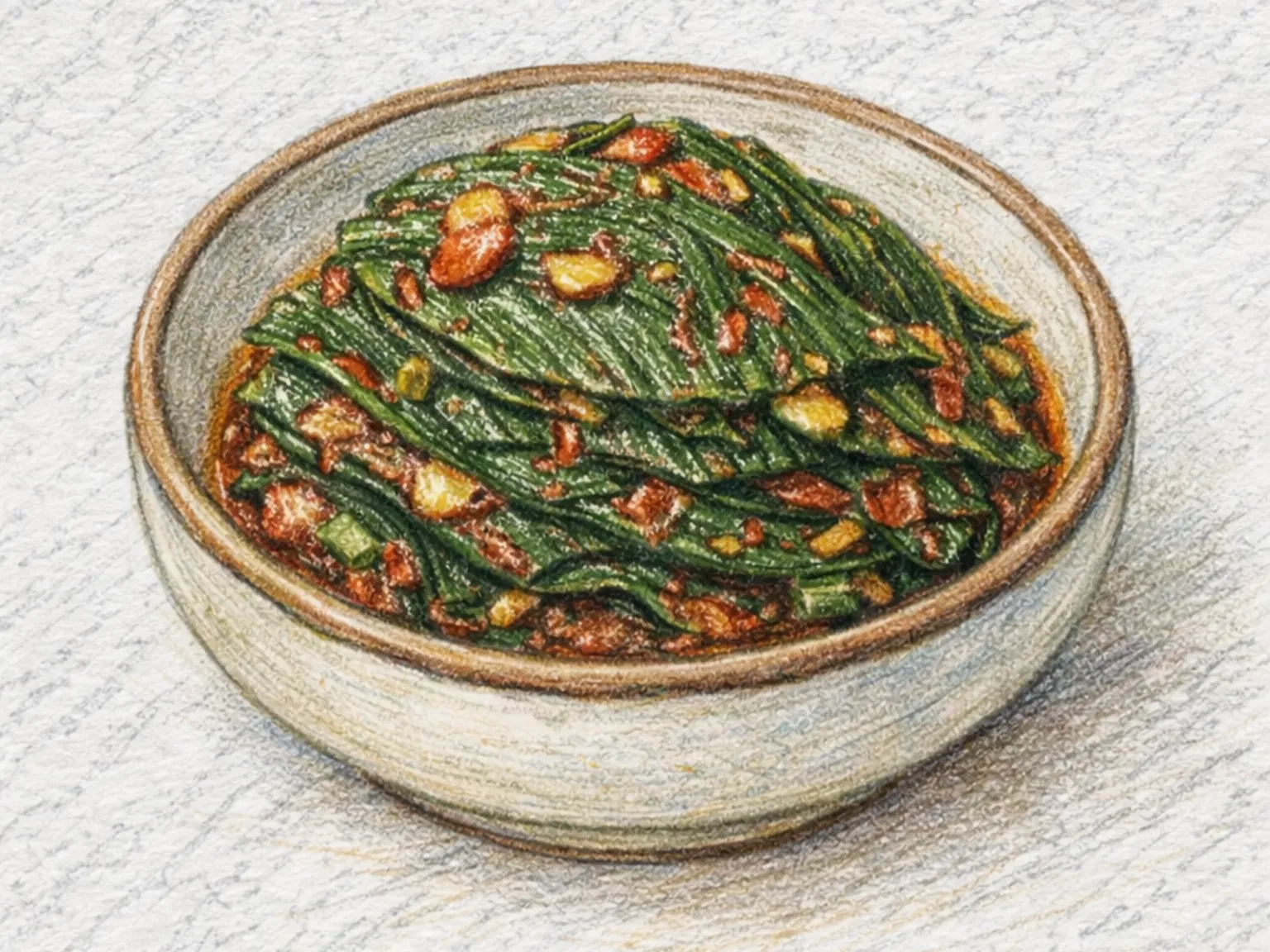
Korean Garlic Scape Salad
Side dishesEasy

Korean Garlic Scape Salad

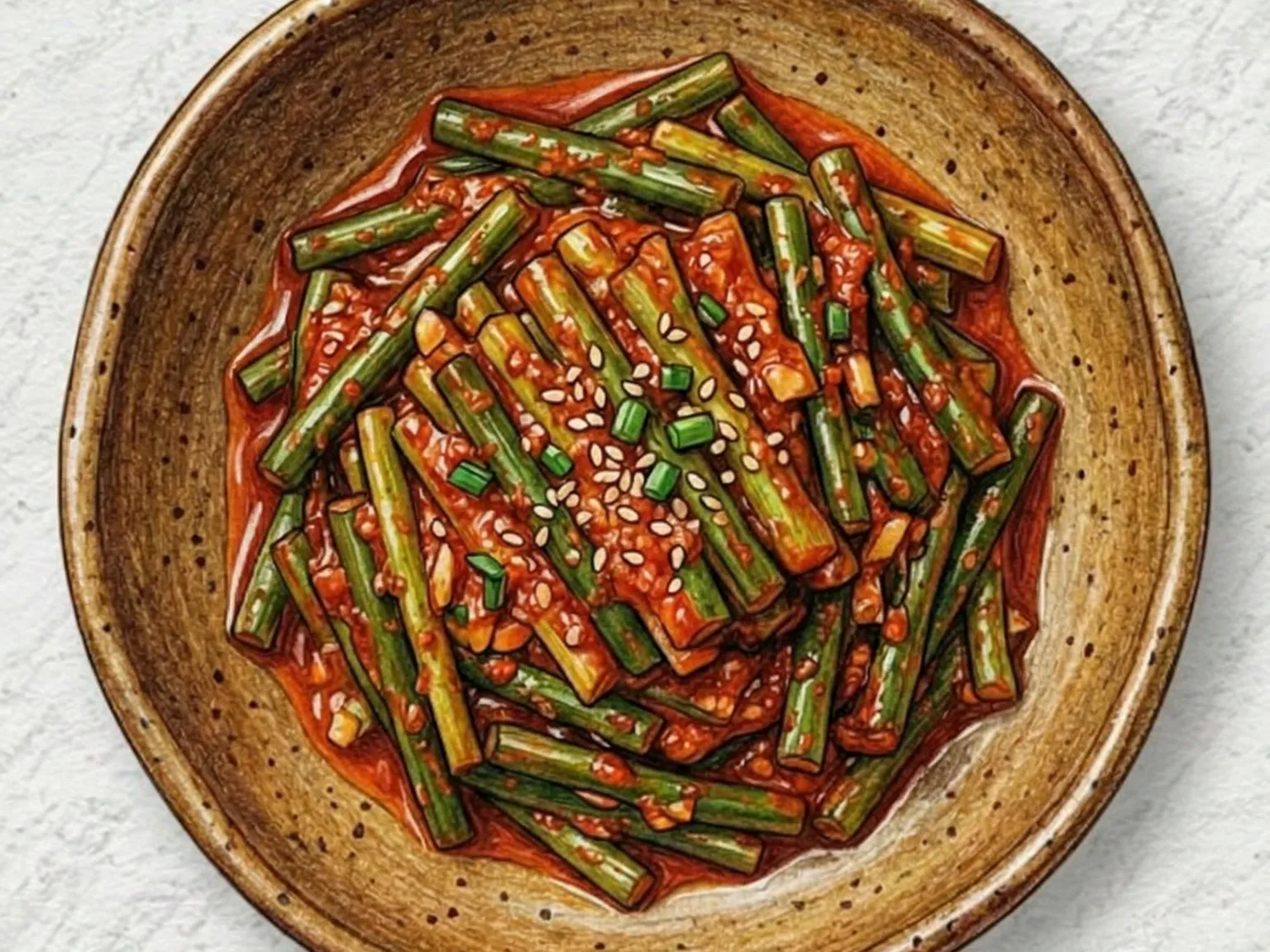
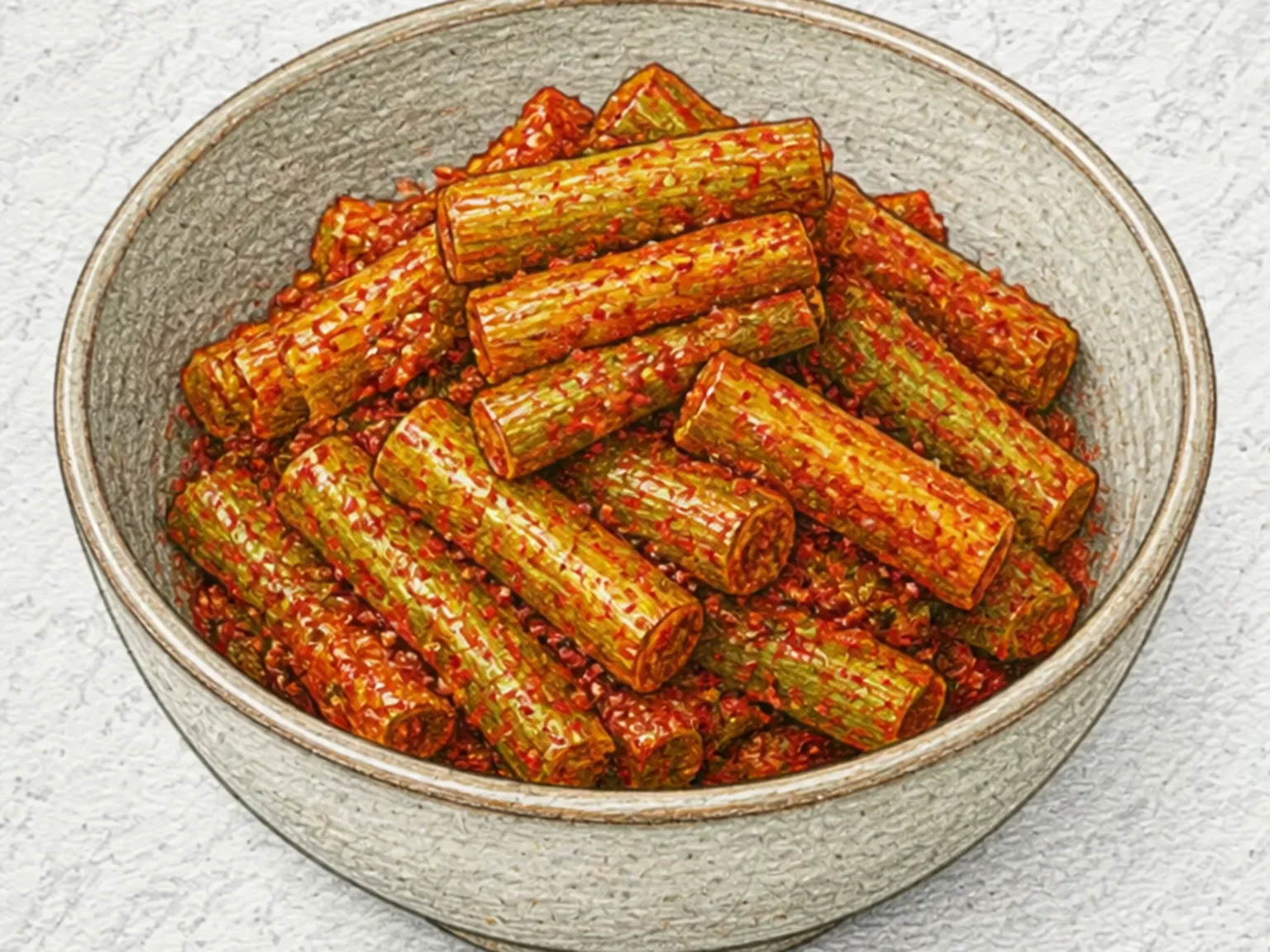
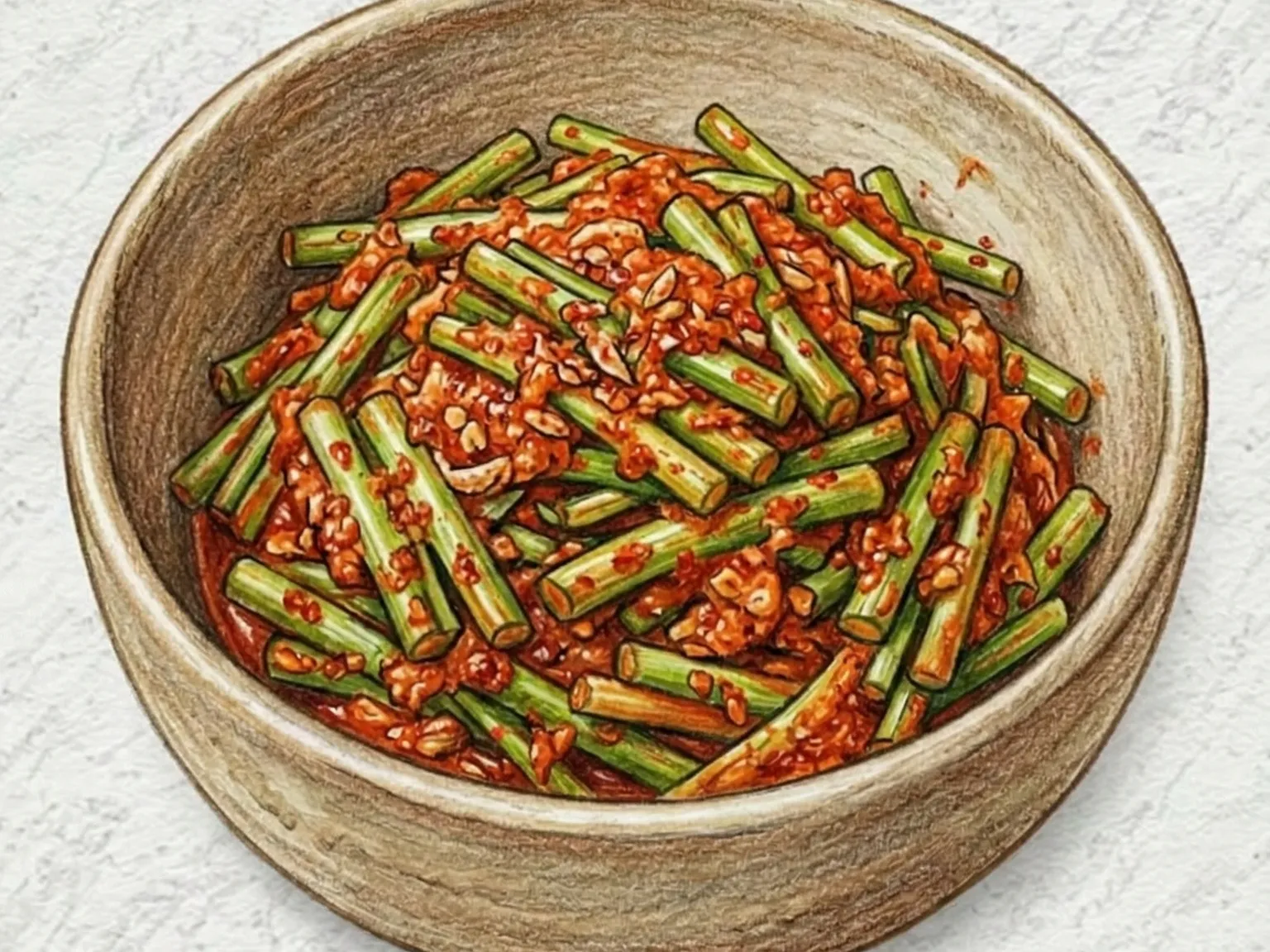
Maneuljong-muchim dresses briefly blanched garlic scapes in a cold gochujang and vinegar dressing, setting it apart from maneuljjong-bokkeum, which uses a soy-based sauce and relies on direct heat in a pan. The names maneuljong and maneuljjong describe the same part of the garlic plant, the slender flowering stalk that emerges in spring, but the two terms divide along regional dialect lines: speakers in Seoul and Gyeonggi province tend to say maneuljong while those in other parts of the country often use maneuljjong. Blanching must be kept well under thirty seconds to lock in the bright green color and crisp snap; beyond one minute the scapes soften and the color dulls noticeably. The gochujang dressing hits sweet, sour, and spicy in equal measure, and the vinegar component plays off the scapes' grassy, pungent aroma in a way that reads as distinctly springlike on the palate. Peak availability runs from April through May, when garlic plants push up their stalks before the heads are harvested, and vendors at traditional markets sell them bundled by the handful. Because no oil is involved and the sauce is relatively light, this preparation is considerably lower in calories than the stir-fried version, which is part of why it appears frequently in everyday Korean meal sets as a reliable, refreshing side.

🏠 Everyday🍱 Lunchbox
Prep 10minCook 3min4 servings
Korean Spicy Chicken Soup Noodles
NoodlesMedium

Korean Spicy Chicken Soup Noodles

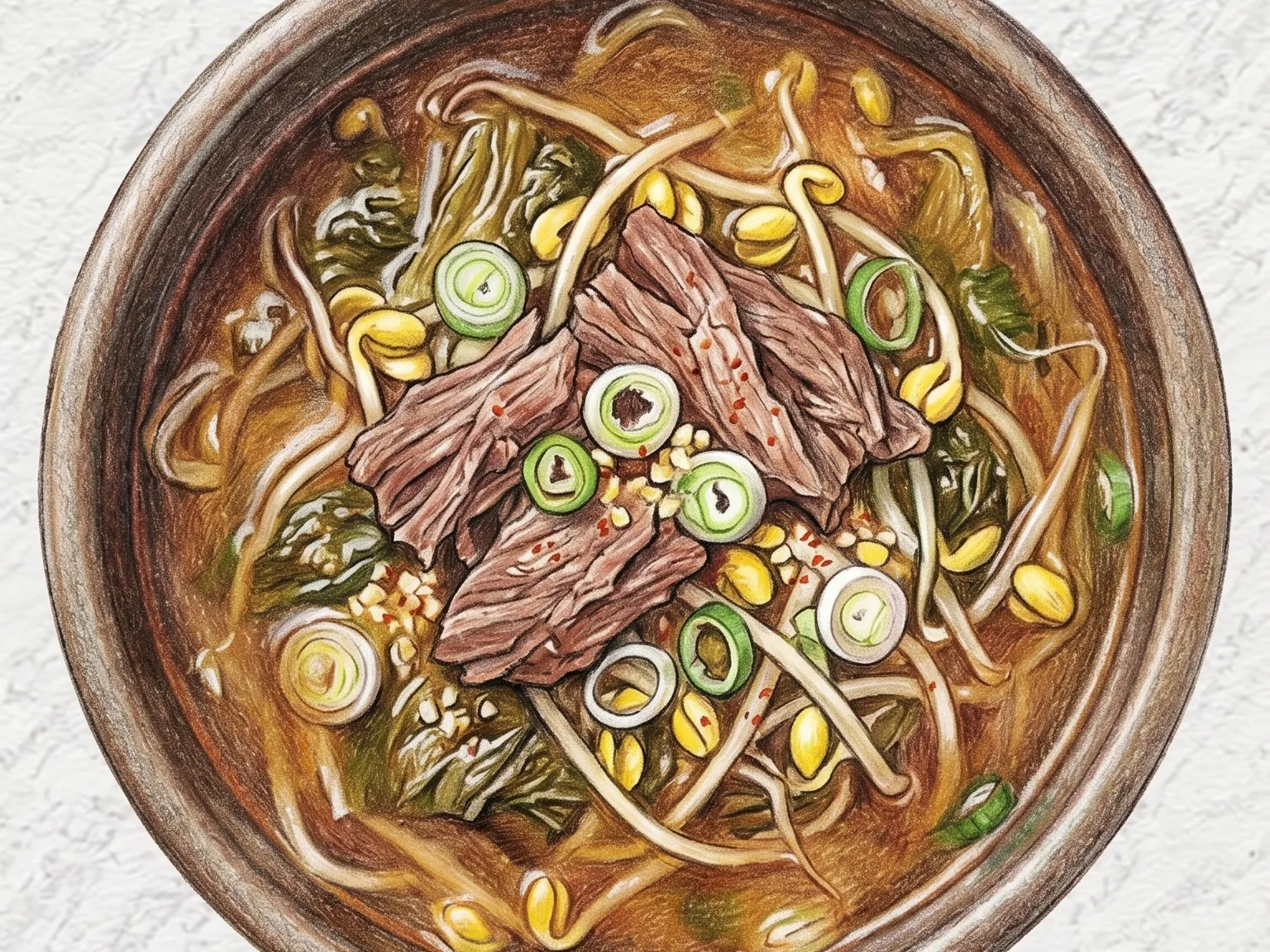
This spicy Korean noodle soup is built on dakgaejang, a chicken version of the classic beef yukgaejang. Whole chicken is poached until tender, the meat hand-shredded along the grain, then returned to the pot and simmered again with gochugaru, garlic, sesame oil, and sliced scallion. The resulting broth is vivid red and assertively spicy, yet the clean chicken stock underneath keeps the heat from turning harsh or muddy. Bean sprouts added just before serving retain their crunch and provide a cool, crisp contrast to the fiery liquid. Both thin somyeon and medium-thickness noodles work well, soaking up the spiced broth without dissolving too quickly. Swirling in a beaten egg softens the broth and adds a silkier body; adding cooked rice turns the bowl into a complete, filling meal. The combination of protein, capsaicin-driven warmth, and the mild diaphoretic effect of chili makes this a go-to remedy for hangovers and chills alike.

🎉 Special Occasion
Prep 20minCook 40min2 servings
Korean Spicy Webfoot Octopus & Pork Belly Stir-fry
Stir-fryMedium

Korean Spicy Webfoot Octopus & Pork Belly Stir-fry

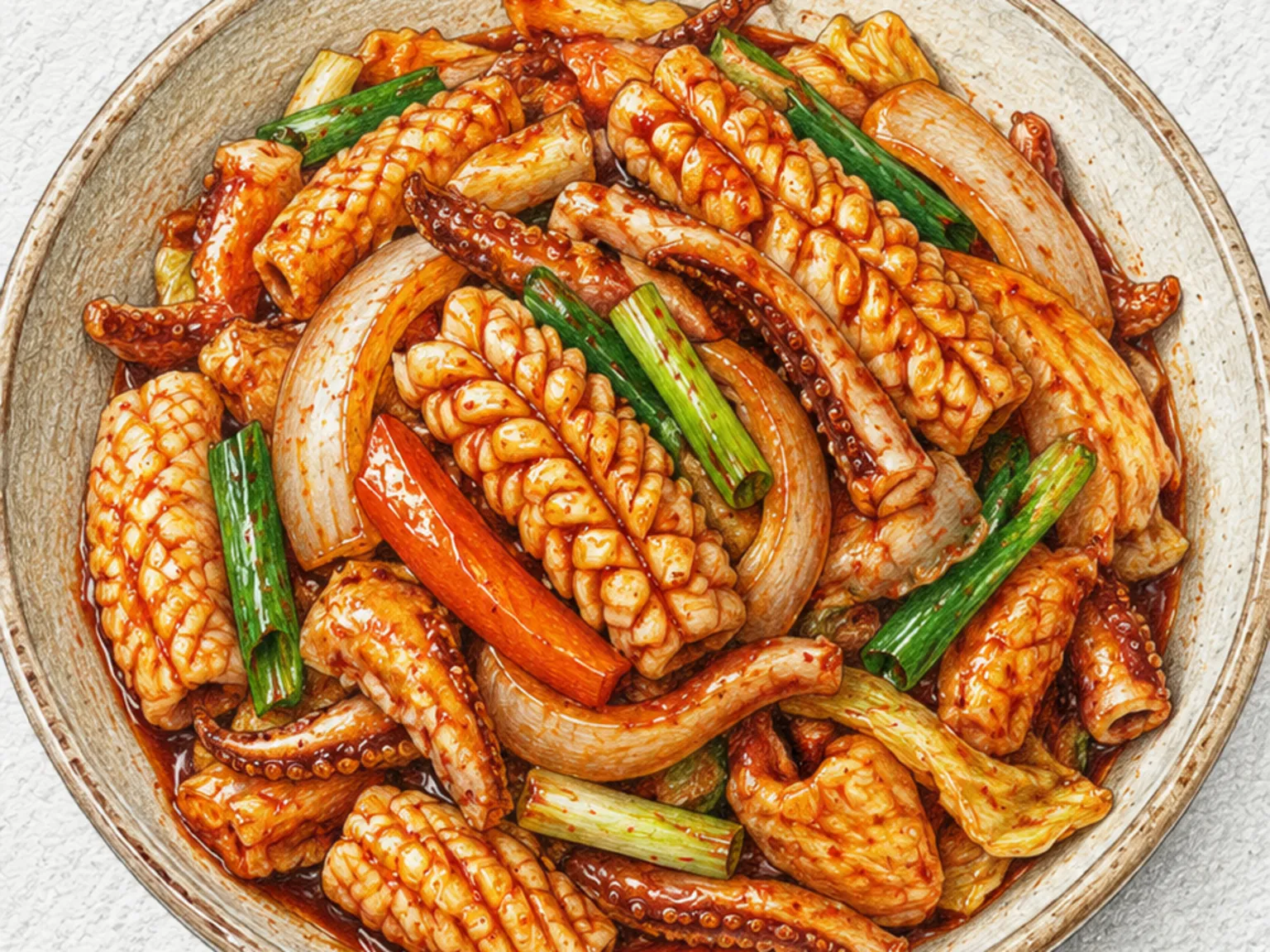
Jjukkumi-samgyeop-bokkeum combines chewy baby octopus and thick pork belly slices in a spicy stir-fry. The pork belly is first grilled until golden to render its fat, then the octopus and gochujang-based sauce are added for a fast, high-heat toss. Pork richness and the octopus's clean ocean flavor merge inside the chili seasoning, with onions and scallions adding sweetness. It is typically served sizzling on a hot plate, and diners often finish with fried rice made in the remaining sauce. Because baby octopus toughens rapidly with heat, adding it only after the pork is nearly cooked and pulling the pan off the heat within one to two minutes is the single most important step for keeping its signature chewy texture intact.

🍺 Bar Snacks🏠 Everyday
Prep 20minCook 10min2 servings
Korean Kohlrabi Fresh Salad (Saengchae)
Side dishesEasy

Korean Kohlrabi Fresh Salad (Saengchae)

Kolabi-saengchae is a fresh Korean salad made from julienned kohlrabi dressed in gochugaru, vinegar, and fish sauce. Though it resembles mu-saengchae made with radish, the two diverge clearly in texture and flavor. Kohlrabi is a brassica, but instead of leaves or roots, the rounded swollen stem base is the edible part. Its exterior is firm and waxy, while the flesh inside is juicy, light, and gently sweet in a way that resembles a crisp pear rather than the earthy sharpness of radish. The thick outer rind must be generously peeled to strip away the fibrous layer just beneath the skin, and the kohlrabi is then cut into matchstick strips about 4 to 5 centimeters long and a few millimeters wide. Cutting too thin causes the strips to wilt quickly as they draw moisture under the dressing. Fish sauce contributes marine umami to kohlrabi's quiet sweetness, while vinegar slows moisture loss and extends the window of crispness after seasoning. Gochugaru adds heat and the brick-red color associated with most saengchae. Served beside grilled fatty meats, the tangy, crunchy salad functions as a palate cleanser between bites. Kohlrabi is at its sweetest and most firm during peak seasons in spring and fall, which is when this banchan appears most frequently at Korean tables.

🏠 Everyday🍱 Lunchbox
Prep 15minCook 5min4 servings
Korean Saury Kimchi Rice Bowl
RiceEasy

Korean Saury Kimchi Rice Bowl

Canned mackerel pike (kkongchi) is stir-fried with aged kimchi and sliced onion, using a couple spoonfuls of the can liquid to deepen the sauce's umami. The kimchi cooks down for three minutes first to drive off excess moisture and tame its sourness, then the fish is broken into generous chunks - keeping them large preserves a pleasant flaky texture. Chili flakes, soy sauce, and sugar simmer together for four minutes into a thick, clinging glaze that soaks into the rice below. Topped with fresh scallion, this is a pantry-friendly rice bowl that transforms humble canned fish into something deeply flavorful.

🏠 Everyday
Prep 12minCook 18min2 servings
Korean Tuna Kimchi Soup (Spicy Fermented Kimchi and Canned Tuna Soup)
SoupsEasy

Korean Tuna Kimchi Soup (Spicy Fermented Kimchi and Canned Tuna Soup)

Kimchi goes into the pot first to be stir-fried until its sharp acidity mellows and its aroma deepens, then canned tuna, tofu, onion, and gochugaru are added with water and brought to a simmer. The oil from the tuna disperses through the broth, adding savory depth without any heaviness. Soup soy sauce provides the base seasoning, keeping the stock clean rather than muddy. Tofu is added only after the liquid reaches a full boil so the cubes hold their shape, and a pour of reserved kimchi brine at the end brings both salinity and a second hit of fermented tang that defines the finished broth.

🏠 Everyday
Prep 8minCook 20min4 servings
Korean Seasoned Dried Radish Strips
Side dishesEasy

Korean Seasoned Dried Radish Strips

Mumallaengi-muchim dresses rehydrated dried radish strips in a gochujang-based sauce - a Korean preservation banchan rooted in the pre-refrigeration practice of slicing winter radish and air-drying it in cold winds. Dehydration concentrates the radish's natural sugars and transforms its texture from crisp to chewy, creating a ingredient with more depth than the fresh root. Soaking time determines the outcome: twenty minutes in cold water softens the strips enough to be pleasant while retaining the springy chew that is the whole point of using dried radish. Over-soaking produces a limp, waterlogged result indistinguishable from fresh radish. The dressing blends gochujang, gochugaru, vinegar, sugar, garlic, and sesame oil into a sweet-sour-spicy balance, with vinegar playing a particularly important role - it adds brightness to the dried radish's concentrated, earthy flavor. After mixing, a ten-minute rest allows the sauce to permeate the porous fibers evenly. Because the finished banchan contains almost no free moisture, it travels exceptionally well in lunchboxes and keeps refrigerated for over a week.

🏠 Everyday🍱 Lunchbox
Prep 20min4 servings
Korean Stir-fried Squid and Bean Sprouts
Stir-fryEasy

Korean Stir-fried Squid and Bean Sprouts

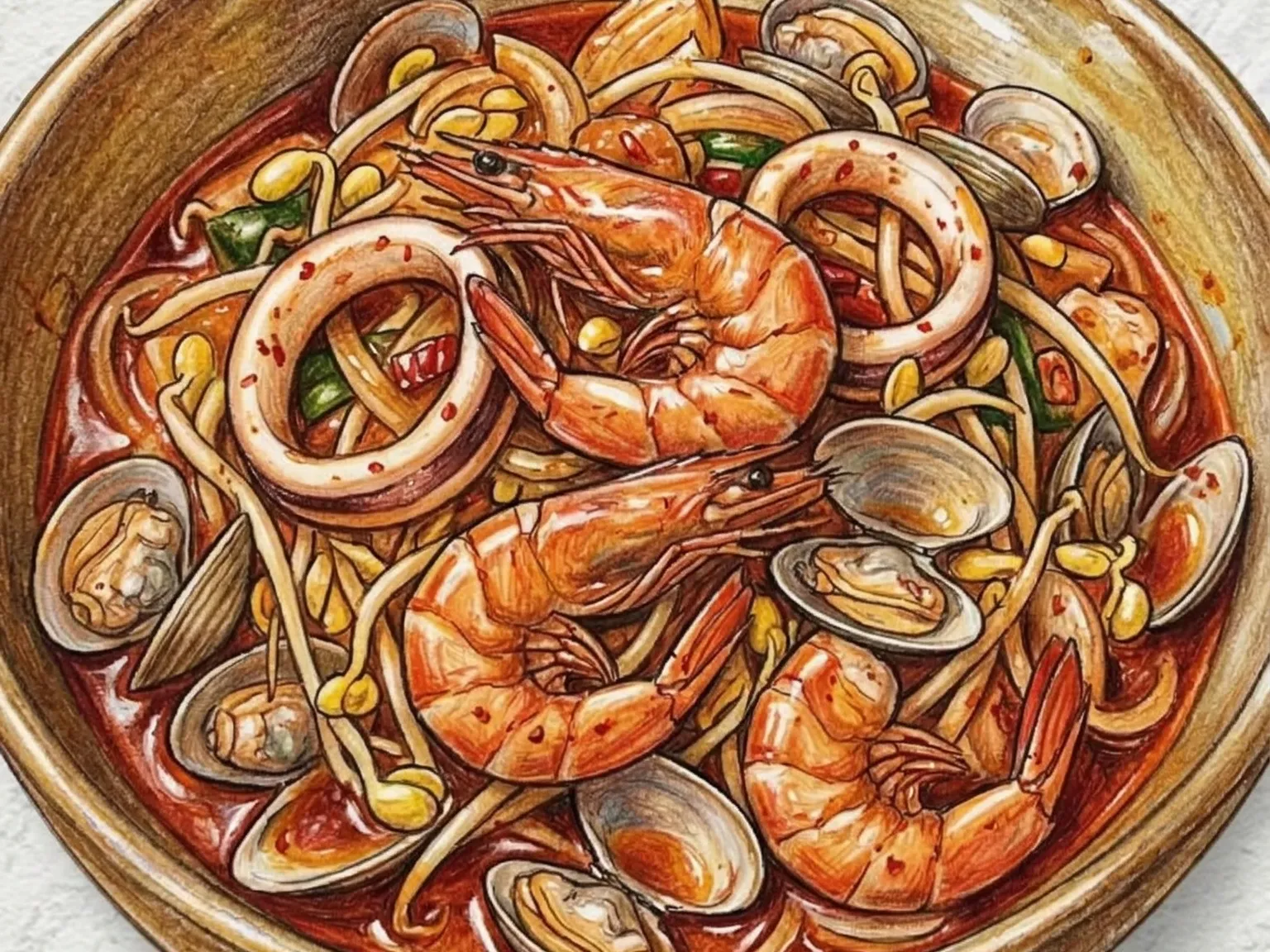
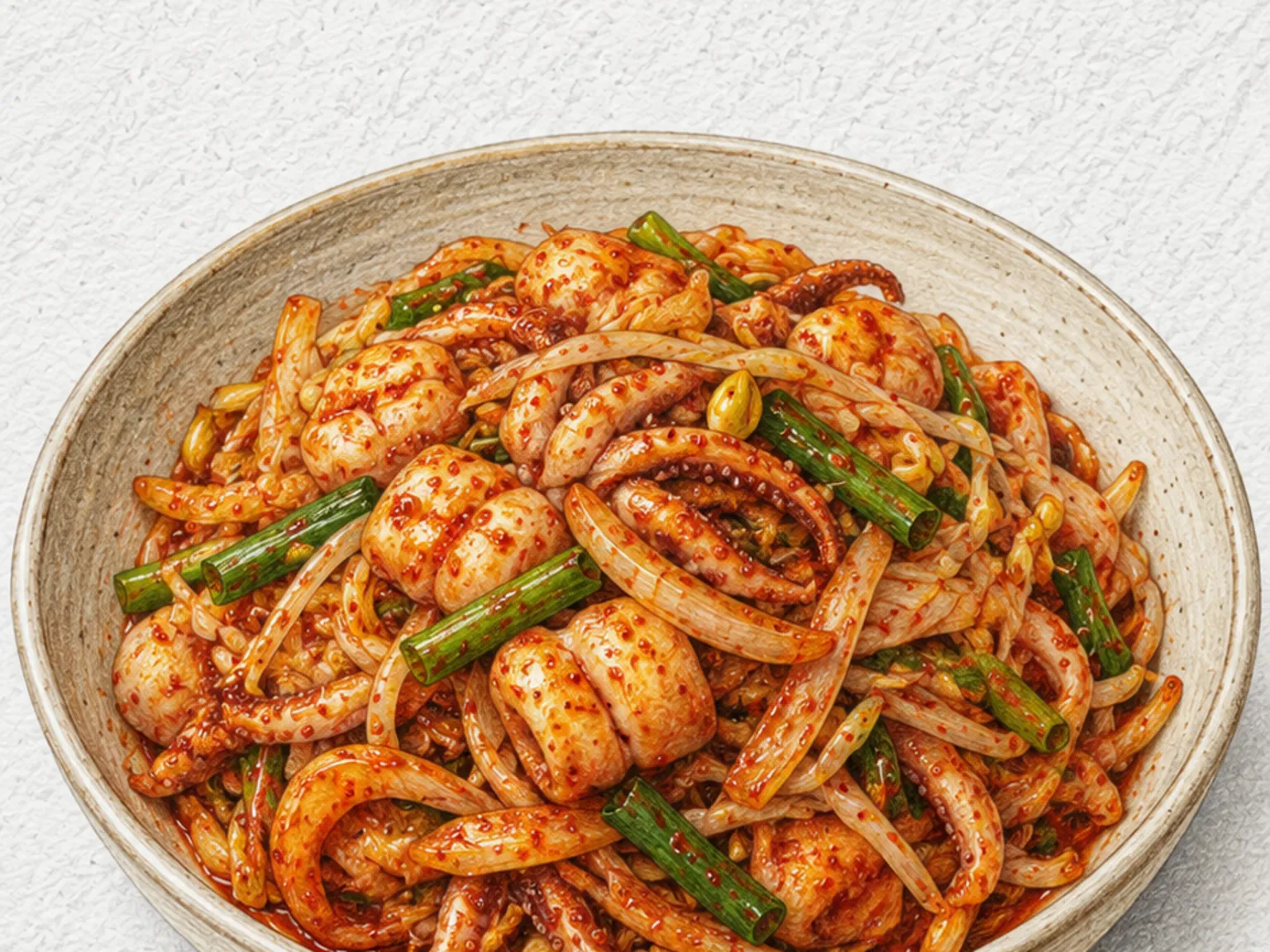
Ojingeo-sukju-bokkeum stir-fries bite-size squid pieces and bean sprouts in a gochujang-gochugaru sauce over very high heat, capturing smoky wok flavor. Garlic and the chili paste cook first to bloom their heat, then squid and onion go in for a fast sear. Bean sprouts are added only in the final minute or two, keeping them crisp and preventing the dish from becoming watery. Scallion joins at the same time for a sharp finish. The contrast between the squid's firm, chewy body and the sprouts' light crunch defines the texture, while the bold seasoning makes this a natural match for steamed rice.

🏠 Everyday🌙 Late Night
Prep 15minCook 10min2 servings
Korean Stir-Fried Octopus Fried Rice
RiceMedium

Korean Stir-Fried Octopus Fried Rice

Baby octopus is tossed with rice over high heat in a gochujang-and-red-pepper-flake sauce for a bold, spicy fried rice. The sauce coats each grain with a deep red glaze, and the octopus adds a springy, chewy bite throughout. Cleaning the octopus with flour before rinsing removes any sliminess, and a fast cook on high heat keeps the tentacles from toughening. Green onion and sesame oil go in at the very end for a fragrant finish.

🏠 Everyday🍱 Lunchbox
Prep 15minCook 10min2 servings
Korean Jeju-style Braised Hairtail
Stir-fryHard

Korean Jeju-style Braised Hairtail

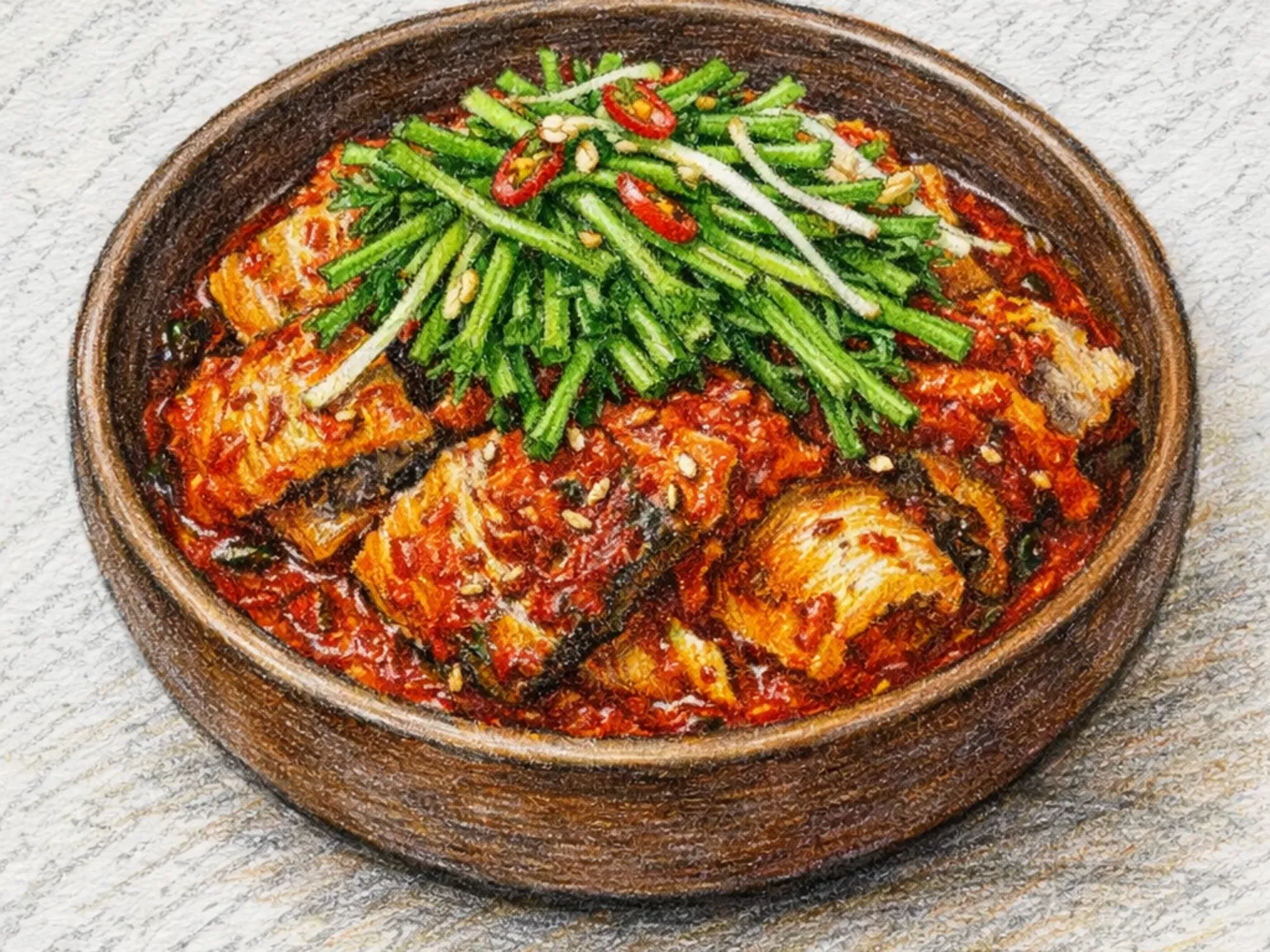
Galchi-jorim-jeju is a regional specialty of Jeju Island in which thick-cut hairtail is braised with radish and potato in a bold, deeply seasoned chili sauce. Unlike mainland versions, the Jeju style uses considerably more sauce and cooking liquid, producing a result that sits closer to a jjigae than to a dry braise, and it is common to eat the leftover sauce mixed into plain rice. Radish provides a cooling, clean sweetness that tempers the intensity of the chili and brings balance to the overall flavor, while potato absorbs the sauce and thickens the liquid naturally as it cooks. Jeju silver hairtail is prized for its thick, fatty flesh, which holds together without falling apart during the long braise and absorbs the pungent, layered sauce deeply into each piece. The result is a dish that is simultaneously fiery, savory, and faintly sweet.

🏠 Everyday🎉 Special Occasion
Prep 20minCook 30min4 servings
Korean Spicy Pork Bean Sprout Stir-fry (Kongbul)
Stir-fryEasy

Korean Spicy Pork Bean Sprout Stir-fry (Kongbul)

Kongbul is a fiery Korean stir-fry of pork shoulder tossed in a gochujang-gochugaru-soy sauce blend and cooked over high heat, with bean sprouts added at the very end to preserve their crunch. The gochujang's thick spiciness combines with rendered pork fat for an intense, mouth-coating savoriness, while the bean sprouts release just enough moisture to keep the sauce from scorching. The sprouts must be stir-fried only until barely wilted to maintain their snap. Chopped scallion goes in last, and mixing the whole thing into a bowl of rice stretches this into a full, hearty meal.

🏠 Everyday🍱 Lunchbox
Prep 15minCook 12min2 servings
Korean Spicy Grilled Gizzard Shad
GrilledMedium

Korean Spicy Grilled Gizzard Shad

Baendaengi yangnyeom gui is a Korean grilled fish dish in which scored gizzard shad are coated in a gochujang-based glaze and cooked over medium heat until caramelized. Scoring the fish achieves two things simultaneously: it lets the seasoning penetrate into the flesh rather than sitting only on the surface, and it severs the fine pin bones that run through the small fish so they become less noticeable when eating. The marinade combines gochujang, soy sauce, oligosaccharide syrup, gochugaru, and ginger juice. The ginger juice specifically targets the fishiness of the shad, neutralizing it while adding a warm, sharp note to the overall flavor. Sugar content in the glaze is high enough that high heat will char the coating before the fish cooks through, so medium heat is maintained throughout, with three to four minutes per side giving an even result. As the oligosaccharide heats, it caramelizes into a glossy amber coating that makes the finished fish look as good as it tastes. A scattering of toasted sesame seeds adds a nutty fragrance in the final step. Gizzard shad are small enough to be eaten whole, bones included, and the bold spicy-sweet glaze makes them as suitable alongside a bowl of rice as they are paired with soju at the table.

🍺 Bar Snacks🏠 Everyday
Prep 20minCook 12min2 servings
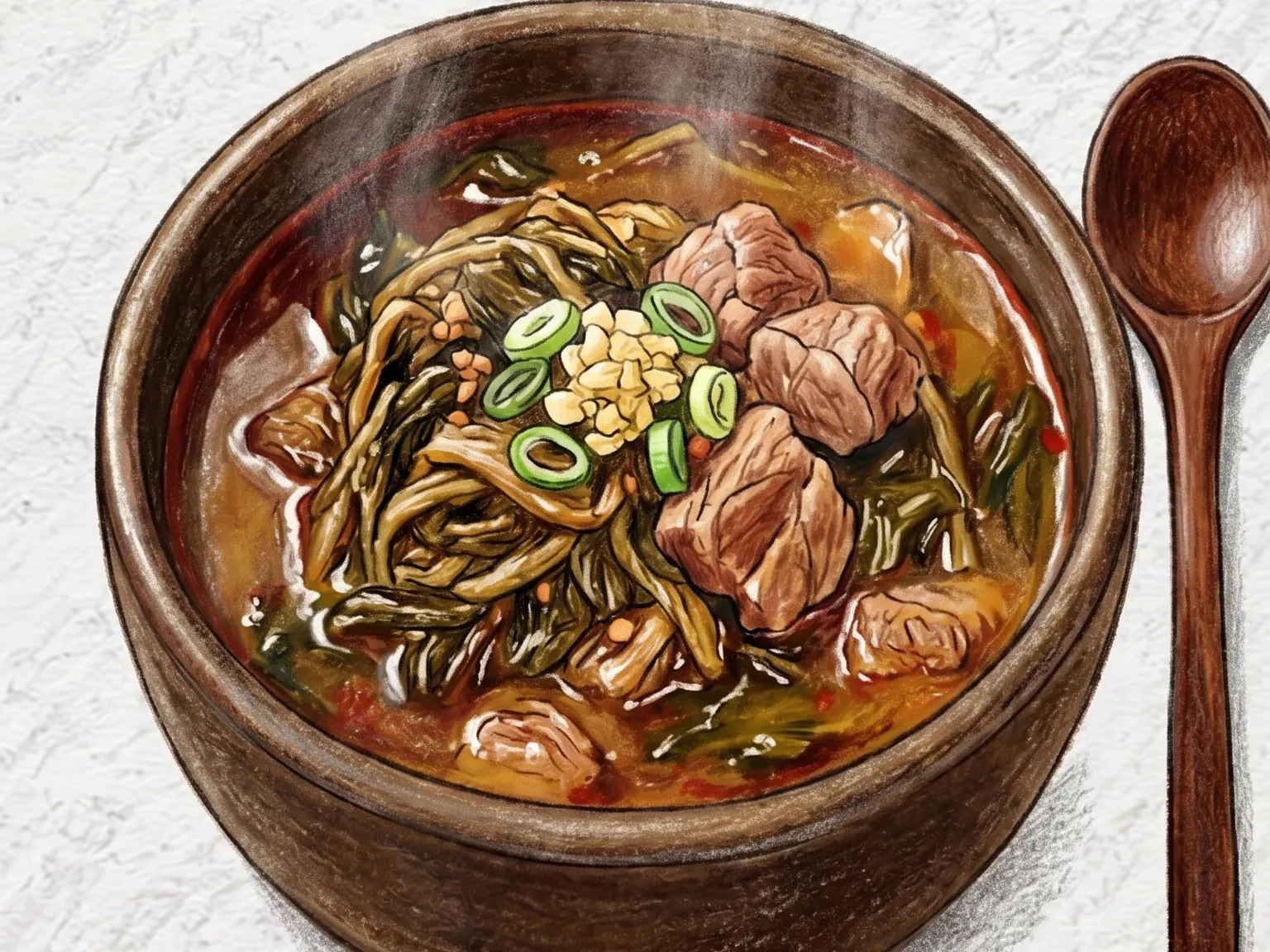
Korean Beef Brisket & Water Parsley Chili Stew
StewsMedium

Korean Beef Brisket & Water Parsley Chili Stew

This spicy stew simmers marbled beef brisket and water parsley in a gochujang-based broth built from beef stock, chili paste, and gochugaru. The brisket's fat renders into the broth as it cooks, adding body and a rich savoriness that rounds out the chili heat. Water parsley loses its fragrance quickly over high heat, so it should be added in the final thirty seconds or placed directly in the bowl before serving to preserve its herbal brightness. Potato chunks and firm tofu soak up the red broth and make the stew substantial, while generous minced garlic gives the spicy finish a clean, defined edge.

🍺 Bar Snacks🏠 Everyday
Prep 18minCook 25min4 servings
Korean Spicy Freshwater Fish Noodle Soup
NoodlesMedium

Korean Spicy Freshwater Fish Noodle Soup

Eotang guksu is a regional noodle soup from the Chungcheong inland provinces, built on a broth made by simmering freshwater fish for an extended time until the bones and flesh give up their concentrated, savory extract. Freshwater fish releases fishy oils as it cooks, so straining the broth two or three times through a fine sieve to remove bone fragments and surface oils is what separates a clean, drinkable broth from a murky one. Doenjang is stirred in to neutralize residual fishiness while contributing a fermented, savory roundness. Gochugaru adds heat and color to the otherwise clear, oil-free liquid, giving direction to what might otherwise be a flat broth. A beaten egg poured in at the end forms soft, wispy ribbons that float across the surface. Somyeon noodles are added last. This dish evolved in landlocked Chungcheong communities that turned to river fish in place of coastal seafood, and its character reflects that resourcefulness.

🎉 Special Occasion
Prep 20minCook 35min2 servings
Korean Braised Mackerel with Potatoes
SteamedEasy

Korean Braised Mackerel with Potatoes

Godeungeo gamja jorim is a Korean home-cooked side dish where mackerel and potato chunks are braised together in a soy sauce and gochugaru seasoning. The oily mackerel releases its fat into the braising liquid, building a rich, savory depth that plain soy sauce alone cannot achieve. Potato absorbs the spiced liquid as it simmers, cooking down to a fluffy, yielding texture that contrasts with the firmer fish. Onion and green onion contribute natural sweetness and aroma throughout the cooking process, and sugar rounds off the saltiness of the soy base to keep the seasoning balanced rather than sharp. Spooning the dark, glossy braising sauce generously over rice turns this side dish into a satisfying meal on its own. Using fresh mackerel rather than salted gives a softer, more delicate flesh that further enriches the cooking liquid.

🍱 Lunchbox
Prep 15minCook 30min2 servings
Korean Meatball Jeon Stew
StewsEasy

Korean Meatball Jeon Stew

Donggeurang-ttaeng-jjigae is a quick Korean stew that turns pan-fried meat-and-tofu patties and aged kimchi into a deeply flavored broth without requiring a separate stock. The patties are made from ground meat, tofu, and finely chopped vegetables, and as they simmer they steadily release their savory juices into the broth, building flavor from the inside out. Fully fermented kimchi contributes a tangy, sharp acidity that gives the broth a satisfying weight and complexity. Tofu added to the pot absorbs the spiced liquid while softening the overall heat level, and a tablespoon of gochugaru lets you dial the spiciness to preference. The stew is a practical, no-waste solution for leftover patties and comes together in under twenty minutes with minimal effort.

🏠 Everyday
Prep 15minCook 20min2 servings