Charim

2686 Korean & World Recipes

2686+ Korean recipes, clean and organized. Ingredients to instructions, all at a glance.

Recipes with korean chili flakes

24 recipes

Buy korean chili flakes
Korean Dried Radish Greens Pork Soup
SoupsMedium

Korean Dried Radish Greens Pork Soup

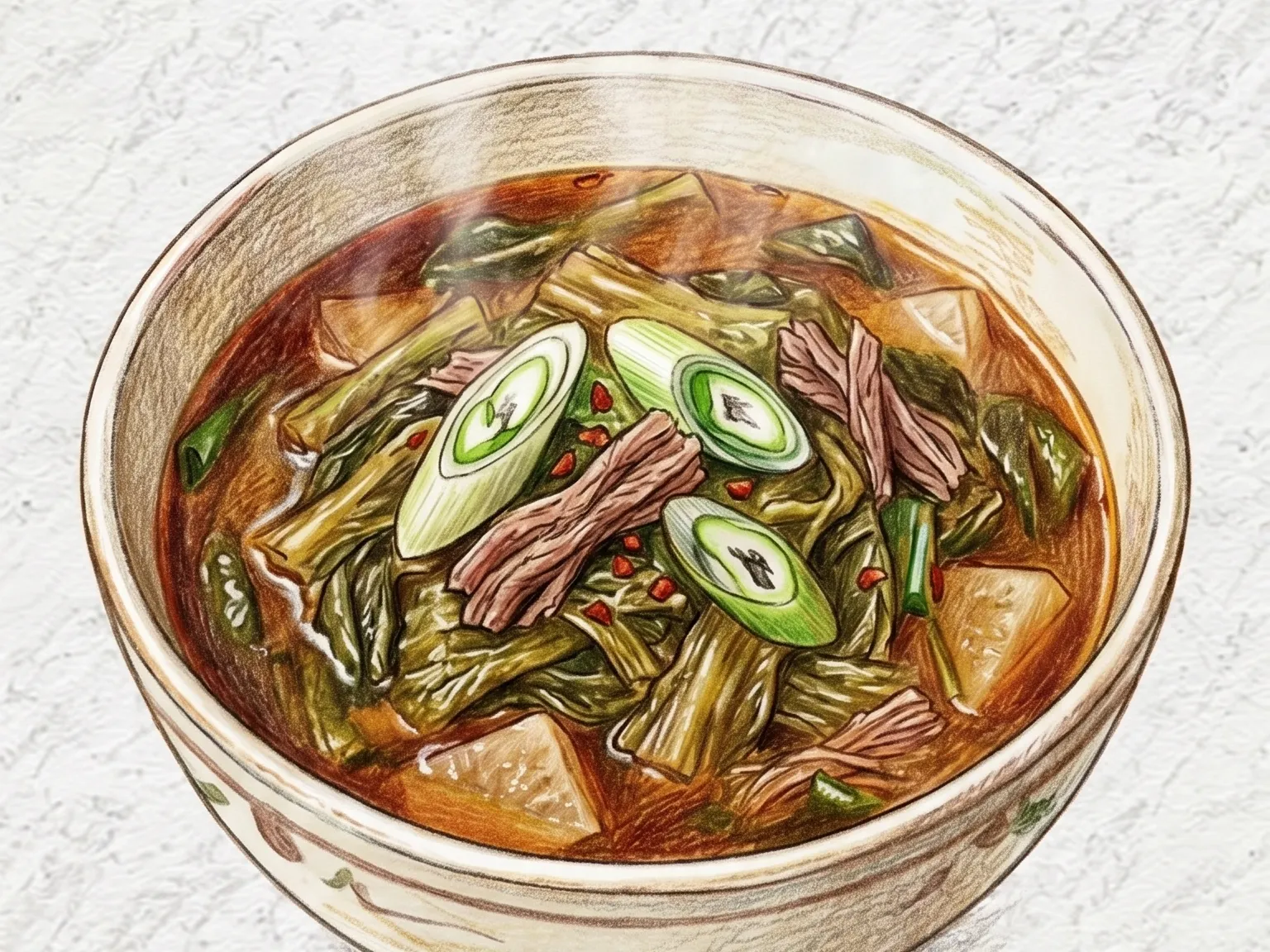
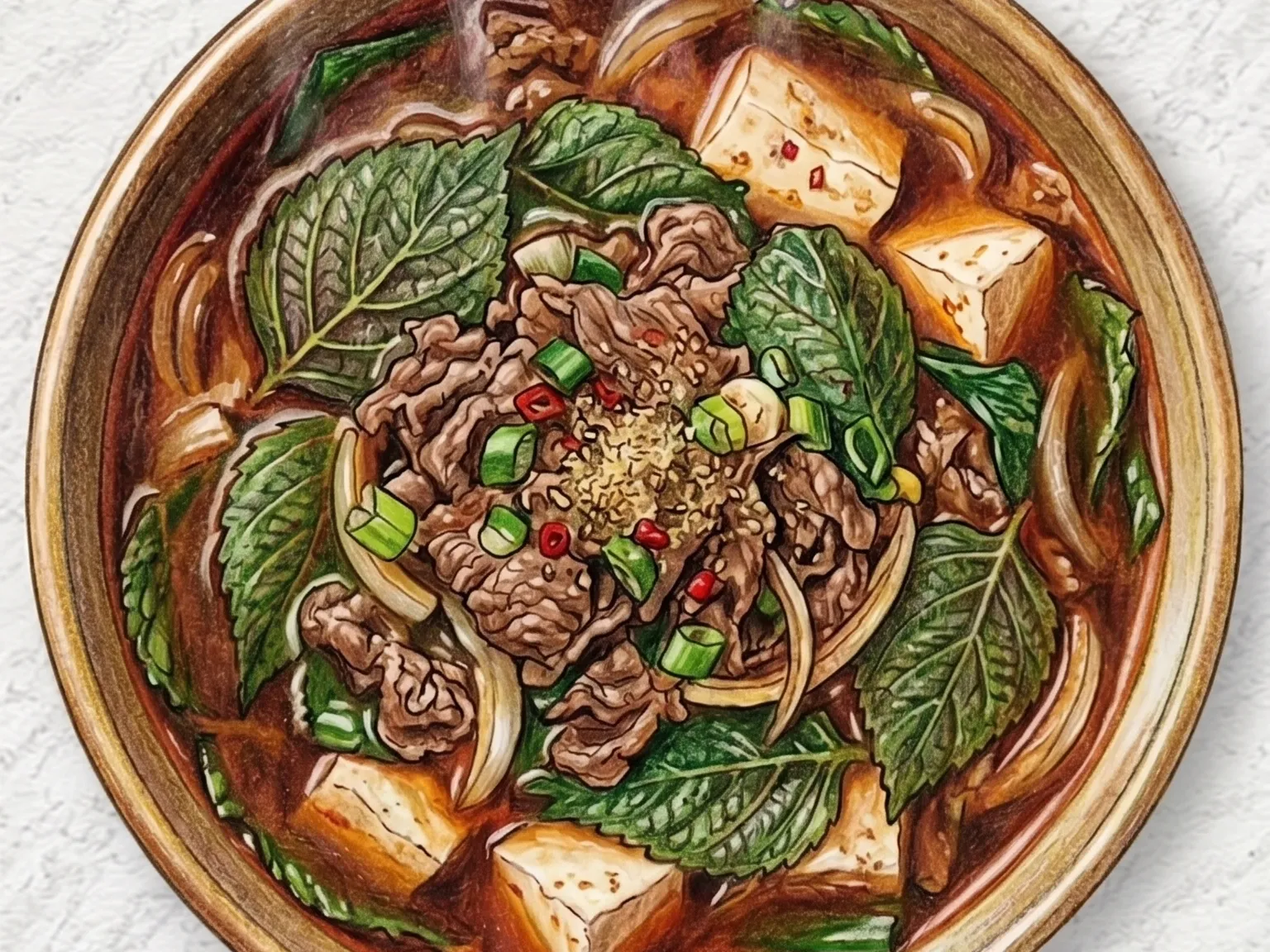
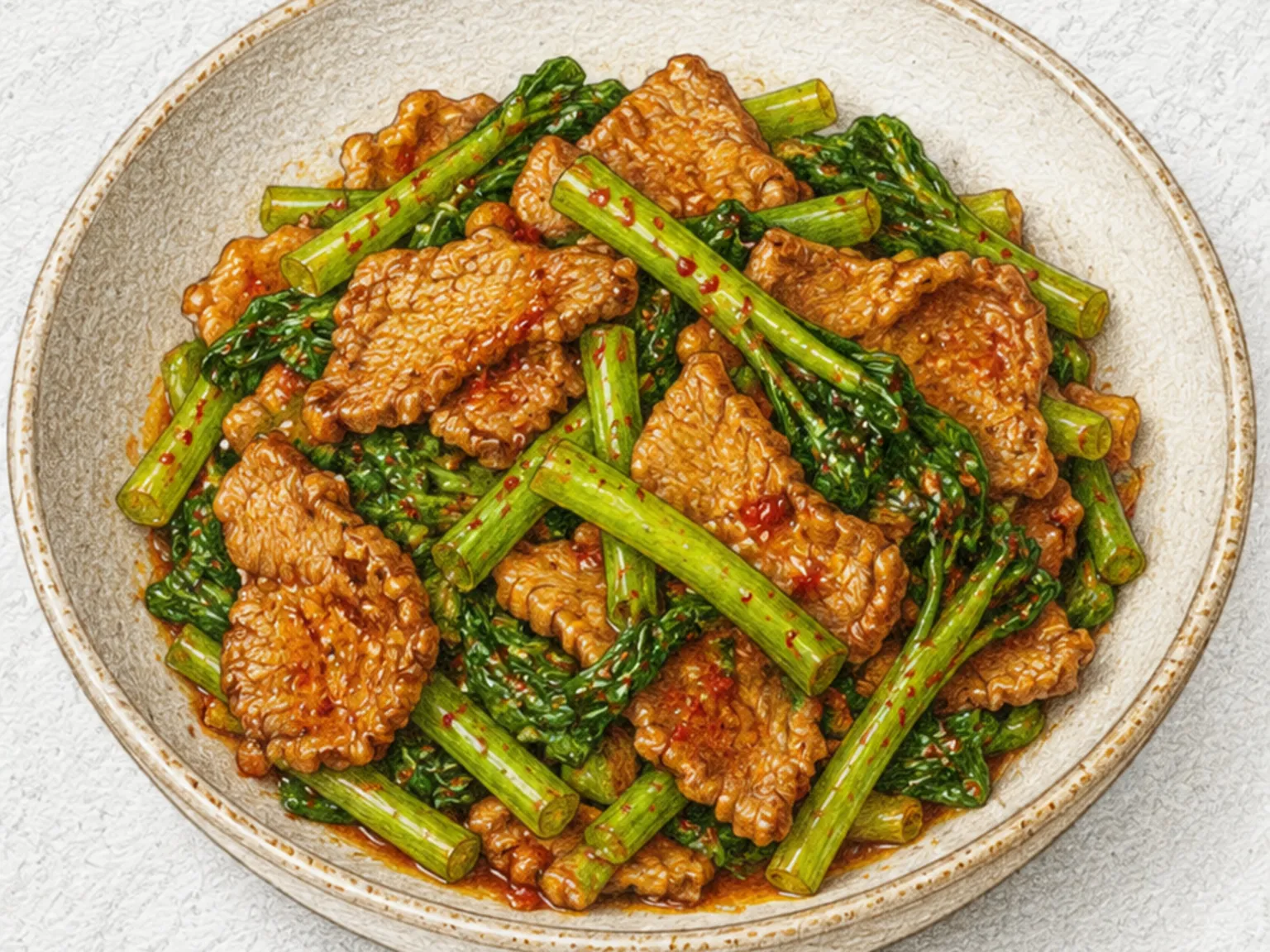
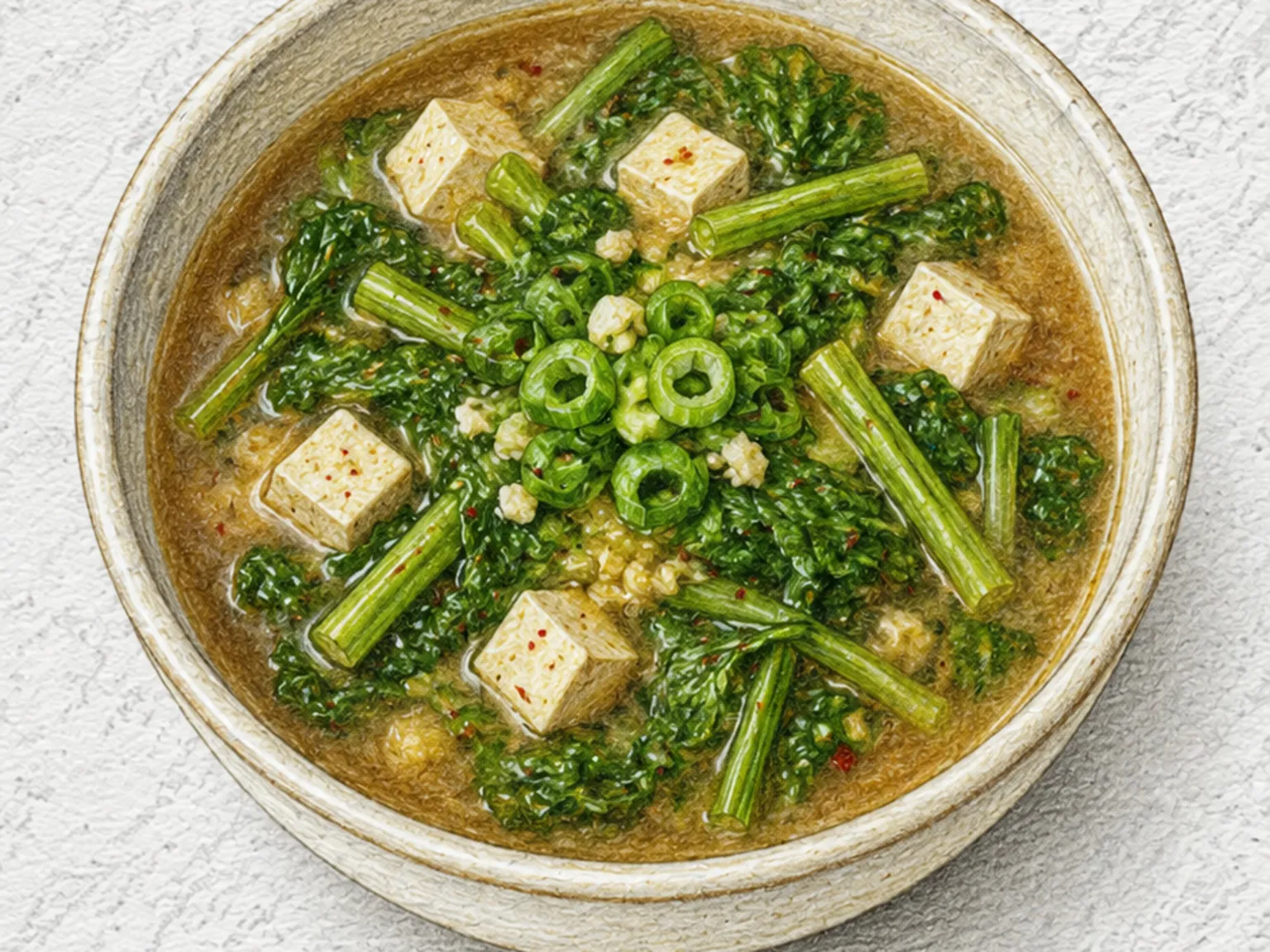
Siraegi-dwaejigogi-guk is a hearty Korean soup that marries dried radish greens with pork in a broth deepened by doenjang and warmed with a moderate dose of gochugaru. The dried greens are first boiled until pliable, then dressed with soybean paste so the fermented flavor works its way into every fiber. Pork shoulder or neck, cut into bite-sized pieces, simmers alongside, releasing rendered fat that enriches the broth and adds a full-bodied mouthfeel. The chili flakes turn the liquid a dark reddish-brown and introduce a gentle heat that prevents the pork fat from feeling heavy. Garlic and green onion build the aromatic base, and some cooks add a splash of perilla oil at the end for an extra layer of nuttiness. The greens keep a pleasant chew even after long cooking, providing textural contrast to the tender pork. Served over rice with plenty of broth ladled on top, each spoonful delivers doenjang, pork, and radish greens in a single, satisfying combination. This soup is at its best during winter, when dried radish greens from the autumn harvest are at peak flavor and the cold weather demands something hot and substantial.

🏠 Everyday
Prep 20minCook 45min4 servings
Korean Hairtail Braised with Dried Greens
SteamedMedium

Korean Hairtail Braised with Dried Greens

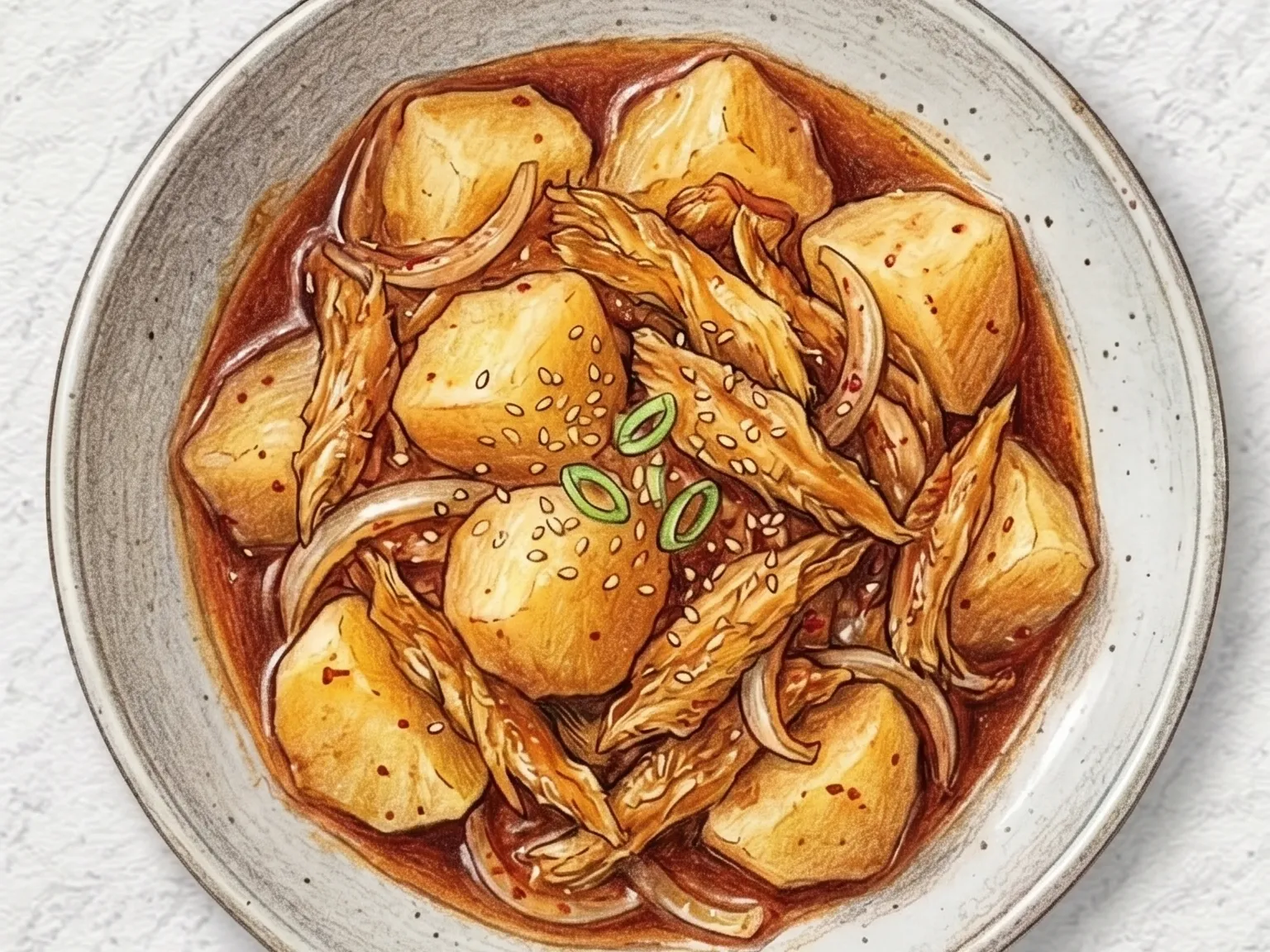
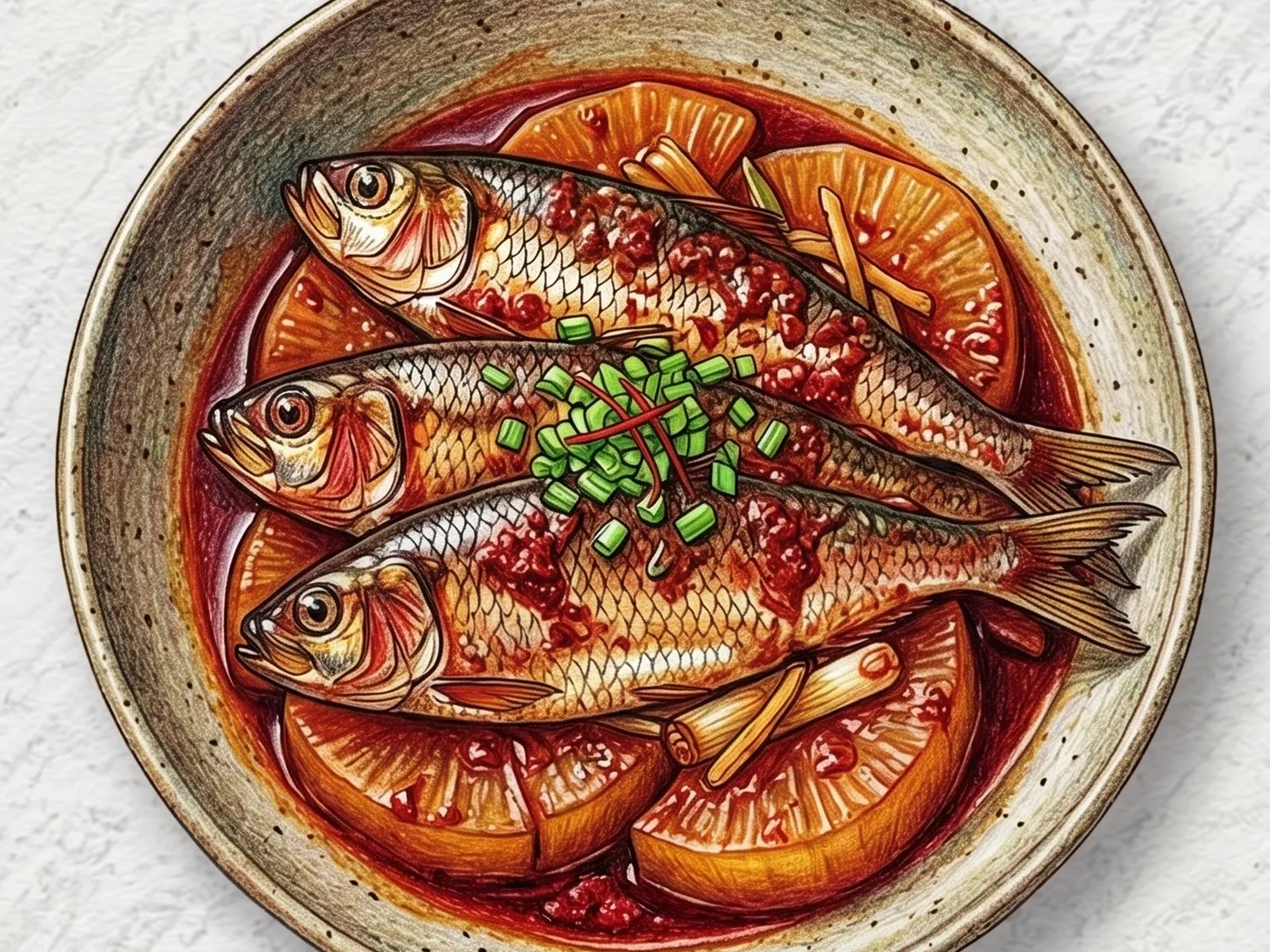
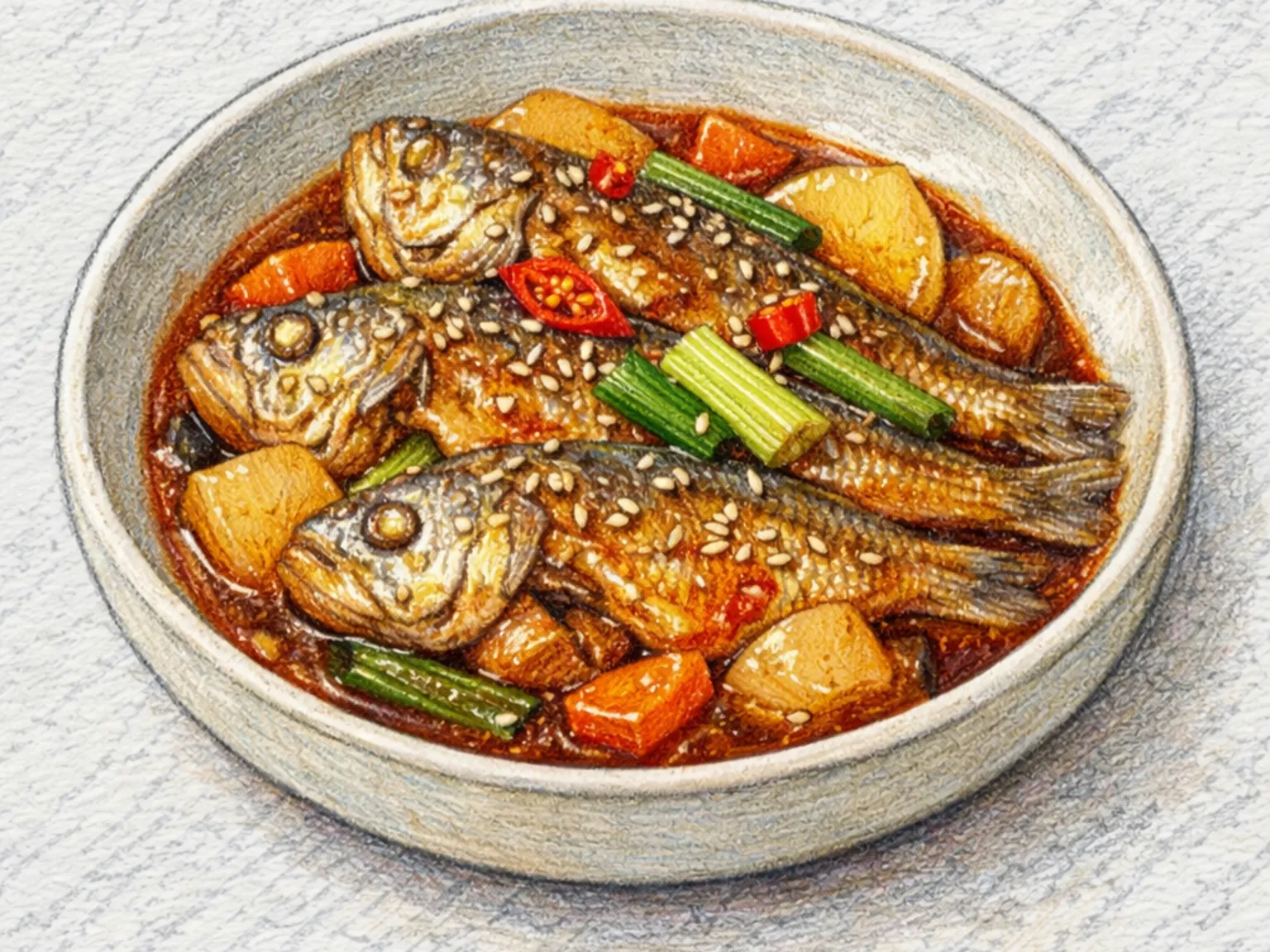
Siraegi galchi jorim is a Korean braised hairtail fish dish assembled by layering boiled dried radish greens, radish, and hairtail in a pot, then simmering everything together in a sauce built from gochugaru, soy sauce, and gochujang. Rubbing the dried radish greens with a teaspoon of doenjang before they go into the pot allows fermented earthiness to penetrate the greens during cooking, adding a layer of depth that the braising sauce alone cannot provide. The greens are firm and springy enough that long simmering does not cause them to fall apart, and their cellular structure soaks up the braising liquid so thoroughly that every bite releases a concentrated burst of the seasoned sauce. Radish absorbs the stock produced by the fish and the greens as it cooks, developing a clean, gentle sweetness that grounds the spice of the sauce. The hairtail is never turned during cooking; the braising liquid is spooned over it repeatedly instead, which preserves the delicate, layered texture of the flesh and prevents it from flaking and falling apart in the pot. Closing the lid and maintaining a steady medium-low heat while basting only between lid lifts gives the fish the best chance of arriving at the table intact. The finished dish is the kind of strongly seasoned, deeply savory Korean side that makes a full bowl of white rice disappear without effort.

🏠 Everyday🎉 Special Occasion
Prep 25minCook 35min4 servings
Korean Braised Saury Kimchi
SteamedEasy

Korean Braised Saury Kimchi

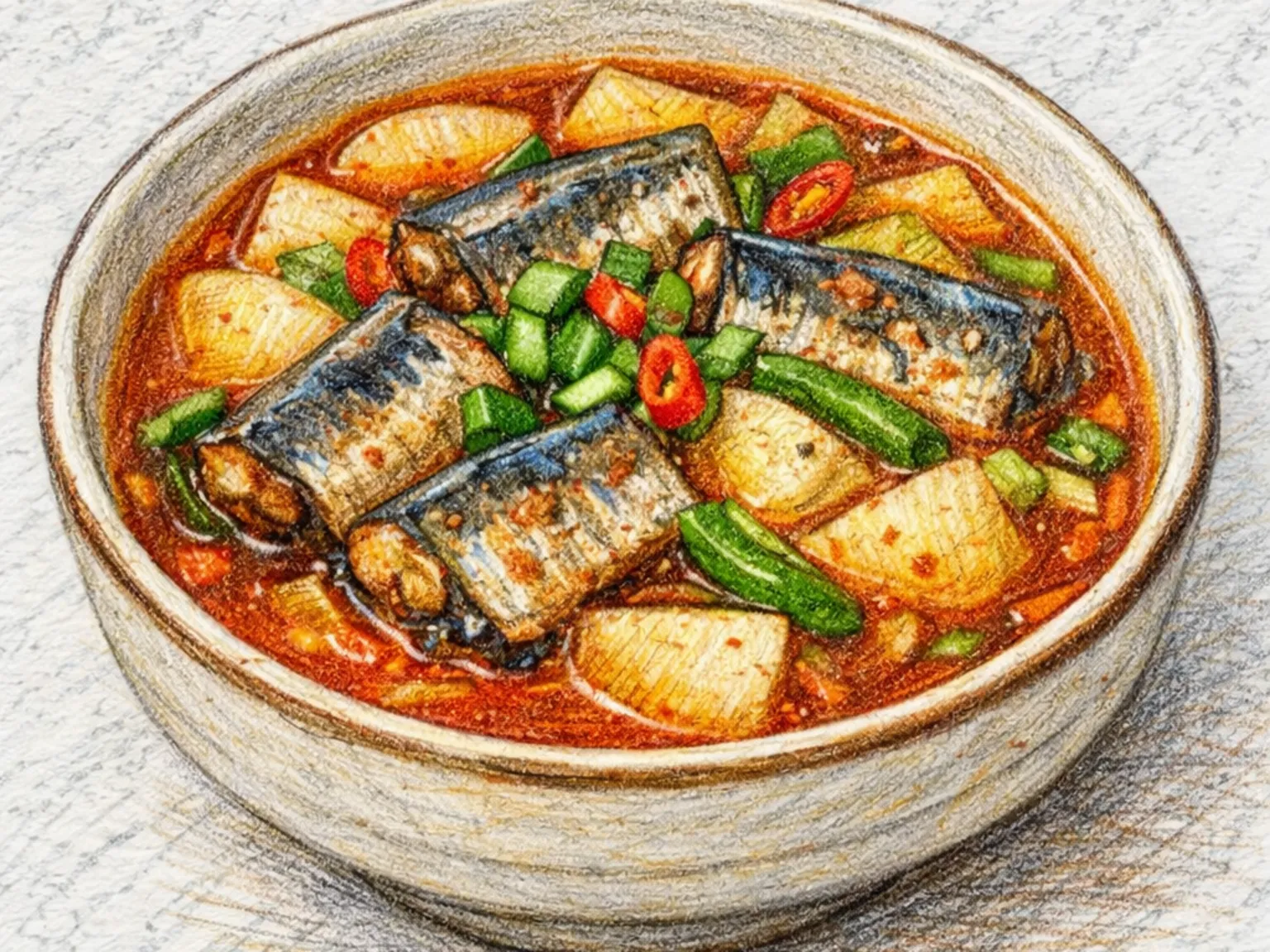
Kkongchi-kimchi-jjim braises canned Pacific saury with well-aged kimchi until the flavors meld into a concentrated, tangy sauce with no additional stock needed. The aged kimchi's deep acidity and fermented complexity dissolve into the saury's natural oils, building a rich, layered broth that tastes far more time-consuming than it is. Tofu added to the pot absorbs the spiced liquid and contributes a soft, yielding contrast to the fish. Green onion and cheongyang chili finish the dish with a sharp kick of heat that cuts through the richness. Using canned fish keeps preparation minimal, while the aged kimchi does the slow-cooking work, delivering a depth of flavor that is difficult to achieve in such little time.

🏠 Everyday🍱 Lunchbox
Prep 10minCook 35min3 servings
Korean Spicy Cucumber Salad
Side dishesEasy

Korean Spicy Cucumber Salad

Oi-muchim - Korean spicy cucumber salad - is one of the most frequently served vegetable banchan on summer Korean tables, tossing thinly sliced cucumber in gochugaru, garlic, vinegar, and sesame oil. Slicing the cucumber as thin as possible with a mandoline or knife is important - thin slices absorb the dressing rapidly and deliver a texture that is simultaneously crunchy and yielding. Salting for ten minutes and squeezing out the released water is the pivotal step; undrained cucumber turns the dressing into a diluted puddle. The seasoning mixes gochugaru, minced garlic, vinegar, sugar, sesame oil, and sesame seeds - vinegar amplifies the cucumber's natural freshness while gochugaru provides a gentle trailing heat. Assembling immediately before serving is essential, as osmotic action wilts the cucumber within thirty minutes. This banchan tops naengmyeon and bibimbap or stands alone alongside rice. When summer heat suppresses appetite, oi-muchim is often the first dish Korean diners reach for - its cool, sharp bite cuts through the lethargy.

🏠 Everyday🍱 Lunchbox
Prep 15min4 servings
Korean Blood Sausage Perilla Stew
StewsMedium

Korean Blood Sausage Perilla Stew

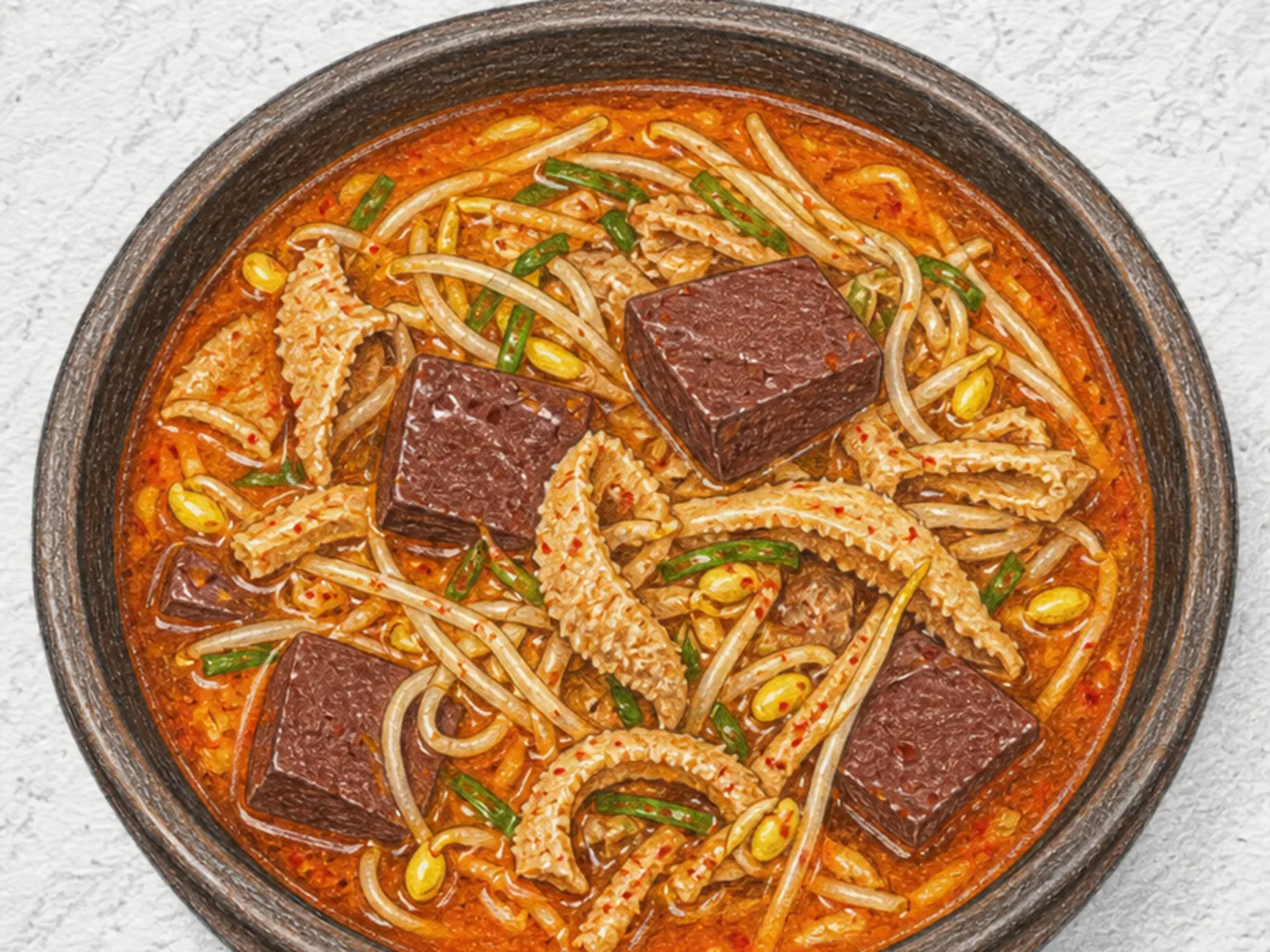
Perilla seed powder transforms beef bone broth into a thick, nutty liquid that serves as the foundation for this particular type of Korean stew. The main component, sundae, uses pork intestine as a casing to hold a mixture of glass noodles, glutinous rice, and vegetables, resulting in a chewy exterior and a multi-layered interior structure. This texture provides a different eating experience compared to stews that rely on standard cuts of meat. The oily characteristics of the ground seeds interact with the sausage filling to create a savory profile that stands apart from more common jjigae varieties. Pieces of cabbage maintain their firm texture throughout the simmering process, adding volume and a clean element that balances the heavy base. Just before the pot leaves the stove, fresh perilla leaves are added to introduce a grassy scent into the fatty broth, which helps manage the overall richness. A single spoonful of gochugaru provides enough heat to sharpen the nutty qualities of the perilla without overpowering the savory elements. Because the sausage casing can burst if boiled for too long, the pieces are only heated briefly at the very end of the cooking process. Serving the stew in a heavy stone pot ensures that the liquid remains at a boiling temperature for the duration of the meal.

🏠 Everyday
Prep 18minCook 22min4 servings
Korean Spicy Chicken Stir-fry
Stir-fryEasy

Korean Spicy Chicken Stir-fry

Dakgalbi is a Korean stir-fried chicken dish in which chicken thigh meat is marinated in a sauce of gochujang, chili flakes, soy sauce, sugar, minced garlic, and curry powder, then cooked with cabbage, sweet potato, sliced rice cakes, and green onion on a flat iron griddle or large pan. As the cabbage cooks it releases moisture that blends with the marinade, forming a natural sauce without any added liquid. Sweet potato softens gradually under heat, its natural sugars intensifying and acting as a counterweight to the sharp heat of the chili paste. Rice cakes cling to the sticky sauce on their surfaces, each piece absorbing the seasoning while staying chewy and dense inside. A small measure of curry powder is the defining addition -- it layers aromatic spice depth into the gochujang base, giving dakgalbi its slightly more complex fragrance compared to other Korean spicy stir-fries. The dish originates from Chuncheon in Gangwon Province, where it is served on large communal griddles. Finishing the meal by stir-frying rice in the leftover sauce at the bottom of the pan is a standard practice that turns the residual seasoning into a second course.

🏠 Everyday
Prep 20minCook 20min2 servings
Korean Mussel Rice (Winter Pot Rice in Mussel Broth)
RiceMedium

Korean Mussel Rice (Winter Pot Rice in Mussel Broth)

Cooking rice in a pot using the concentrated liquid from boiled mussels allows each grain to absorb the essence of the sea directly. Instead of simply serving seafood on top of plain white rice, this method uses the broth as the primary cooking medium to build a layered taste from the inside out. A thick layer of julienned radish lines the bottom of the pot, creating a physical barrier that prevents the rice from sticking while releasing a natural sweetness that balances the salty character of the shellfish. To maintain a tender texture, the mussel meat goes into the pot only after the heat is turned off, letting the remaining steam warm the protein without making it tough or rubbery. At the table, a mixture of soy sauce, sesame oil, and red chili flakes provides a sharp contrast to the savory base, allowing for personal adjustment of heat and saltiness. A handful of fresh water parsley added as a final touch introduces a bright, herbal quality that cleanses the palate. The resulting meal is satisfying enough to stand alone without additional soups, offering a high concentration of iron and omega 3 fatty acids in a single bowl.

🏠 Everyday
Prep 20minCook 25min2 servings
Korean Rockfish Soup (Whole Rockfish in Spicy Radish Broth)
SoupsMedium

Korean Rockfish Soup (Whole Rockfish in Spicy Radish Broth)

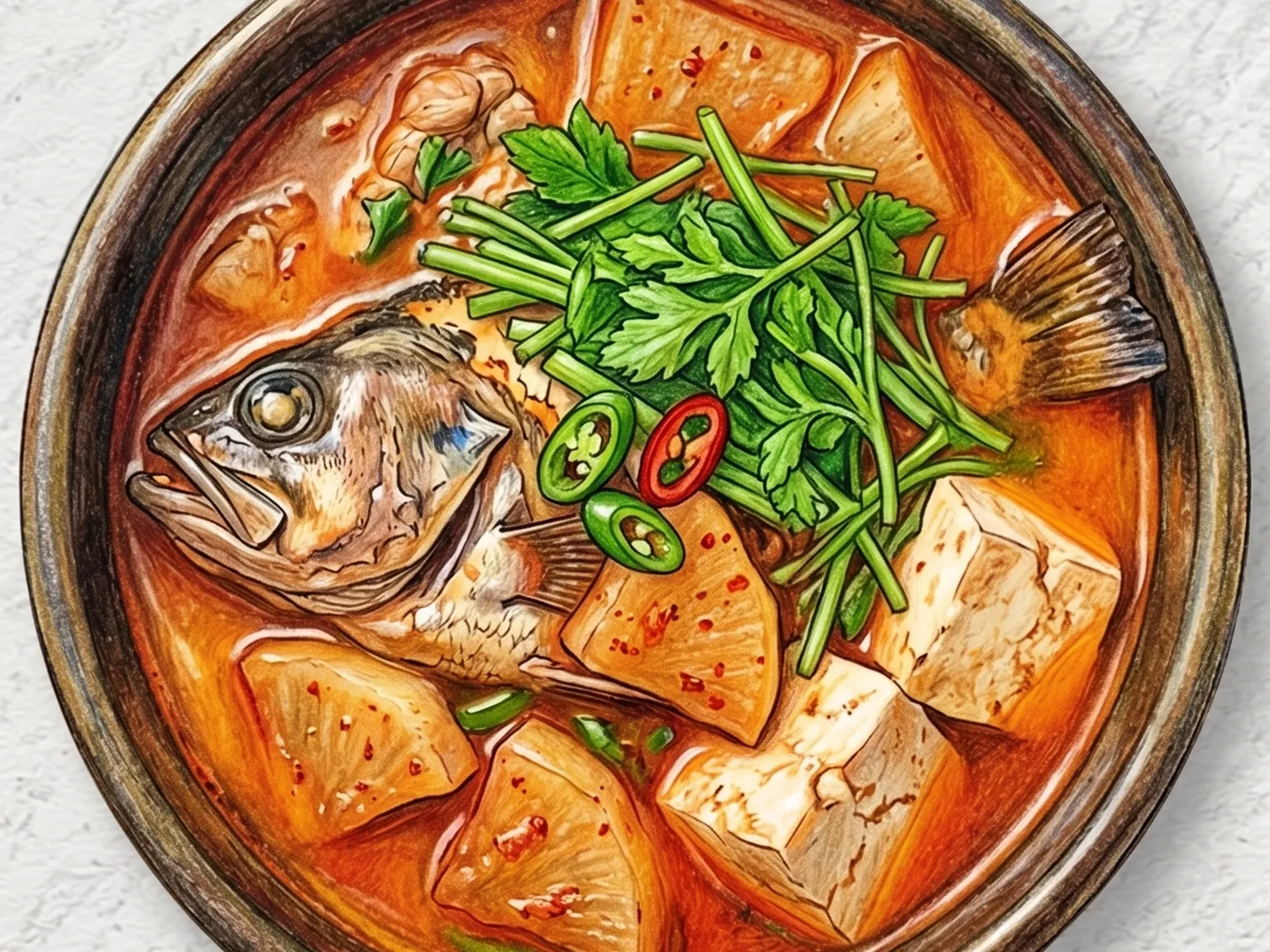
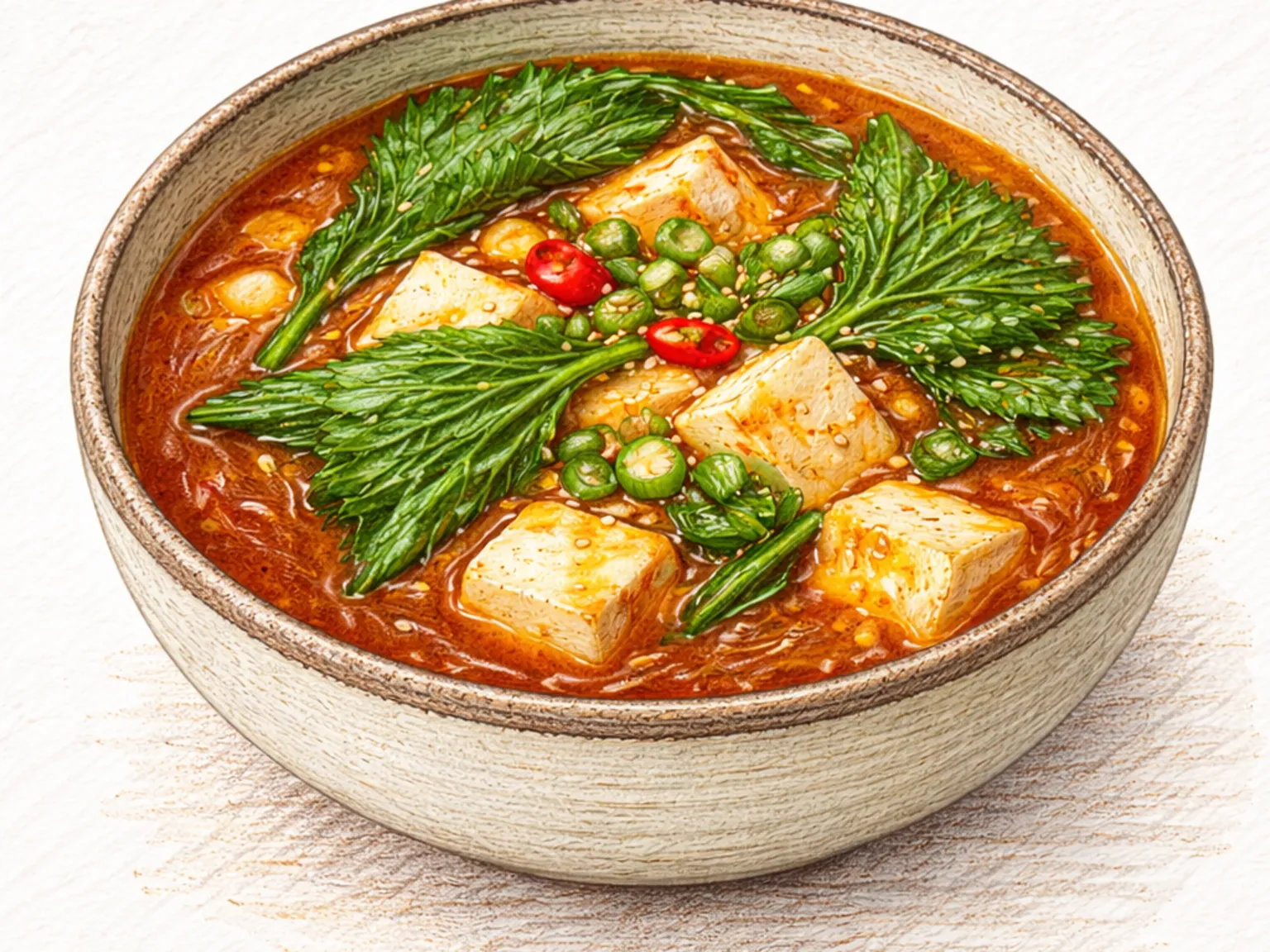
Starting with a base of boiled radish to sweeten the water, this rockfish soup relies on using the entire fish to build a complex broth. Red pepper flakes, garlic, and soup soy sauce provide the seasoning before the fish and tofu go into the pot for a fifteen-minute simmer. The collagen and juices released from the rockfish bones create a physical thickness in the liquid that cannot be replicated with fillets alone. Just before the heat is turned off, a handful of water parsley adds a fresh contrast to the spicy, ocean-heavy profile of the soup. While the small bones of the rockfish require slow and careful eating, they are exactly what gives this dish its characteristic intensity. A slice of ginger added early in the process works to neutralize fishy scents. For extra heat, some sliced cheongyang chilies can be added, or a spoonful of ground perilla seeds can be stirred in at the end to introduce a nutty, creamy layer to the texture. This soup pairs naturally with a bowl of steamed rice, where the process of picking meat from the bones becomes a central part of the eating experience.

🏠 Everyday
Prep 20minCook 25min4 servings
Korean Green Onion Kimchi
Side dishesEasy

Korean Green Onion Kimchi

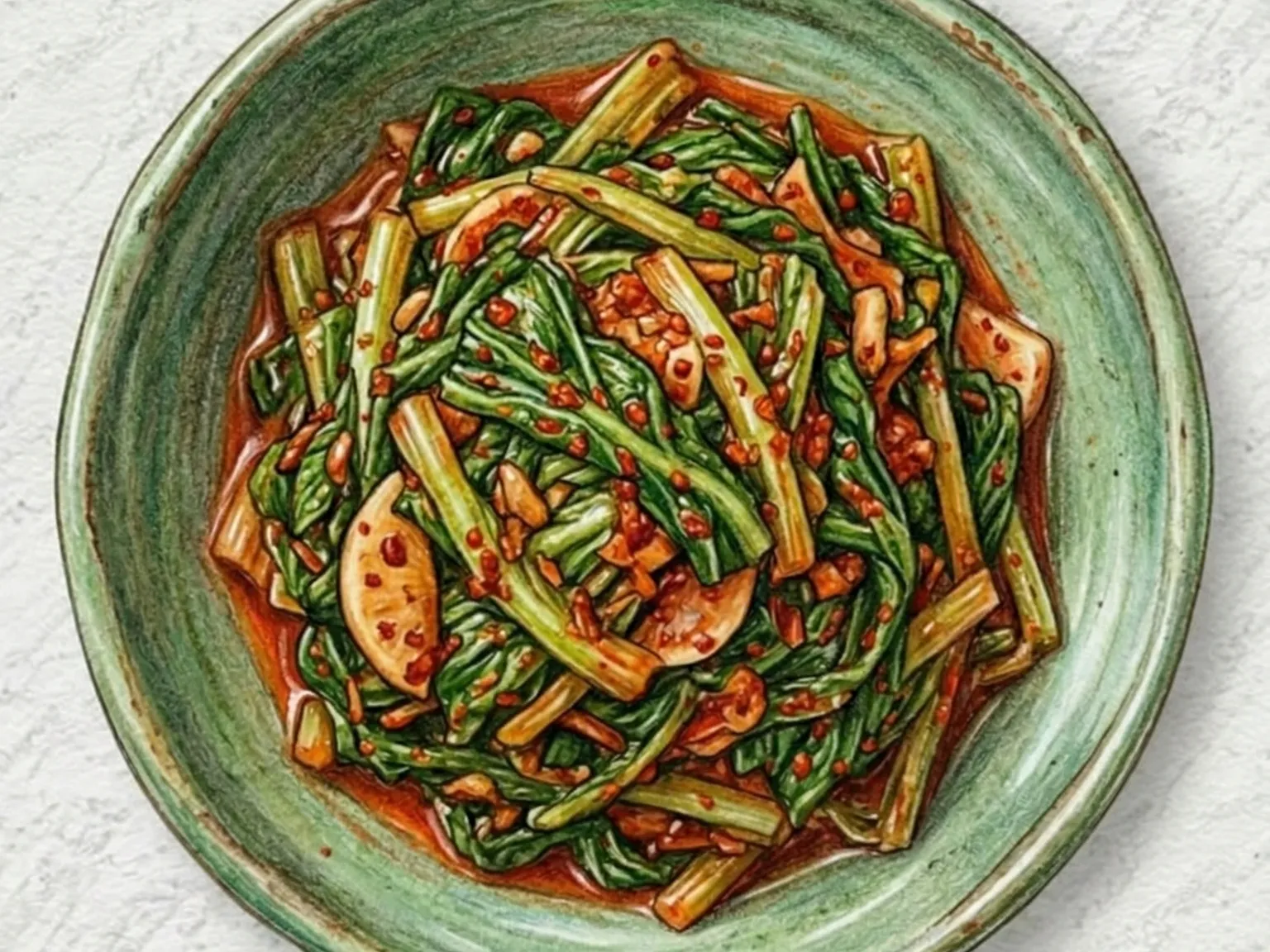
Pa-kimchi uses whole large green onions, salted for 30 minutes to soften their sharp bite and loosen the fibers so the seasoning can penetrate deeply. The paste - red pepper flakes, fish sauce, and minced garlic - coats each stalk in a layer of spicy, briny flavor. One day of room-temperature fermentation allows the lactic acid bacteria to develop, blending the onion pungency with the umami of the fish sauce into a more rounded profile. After transferring to the refrigerator, the kimchi continues to mature over two to three days, gaining a mild tanginess that intensifies with each passing day.

🏠 Everyday🍱 Lunchbox
Prep 30min4 servings
Korean Steamed Perilla Leaves
SteamedEasy

Korean Steamed Perilla Leaves

Kkaennip-jjim is a Korean banchan made by stacking perilla leaves one by one with a soy sauce, gochugaru, and garlic seasoning between each layer, then gently braising them covered over low heat. As the leaves wilt, they absorb the sauce and release their distinctive herbal aroma, which mingles with the soy's umami into a layered flavor. Sesame oil brushed between the leaves adds a nutty fragrance, while the chili flakes provide a slow-building warmth. Wrapping a spoonful of steamed rice in a single seasoned leaf makes for a complete bite, which is why this dish is considered one of Korea's most reliable everyday side dishes.

🍱 Lunchbox
Prep 15minCook 12min2 servings
Korean Spicy Stir-fried Squid
Stir-fryMedium

Korean Spicy Stir-fried Squid

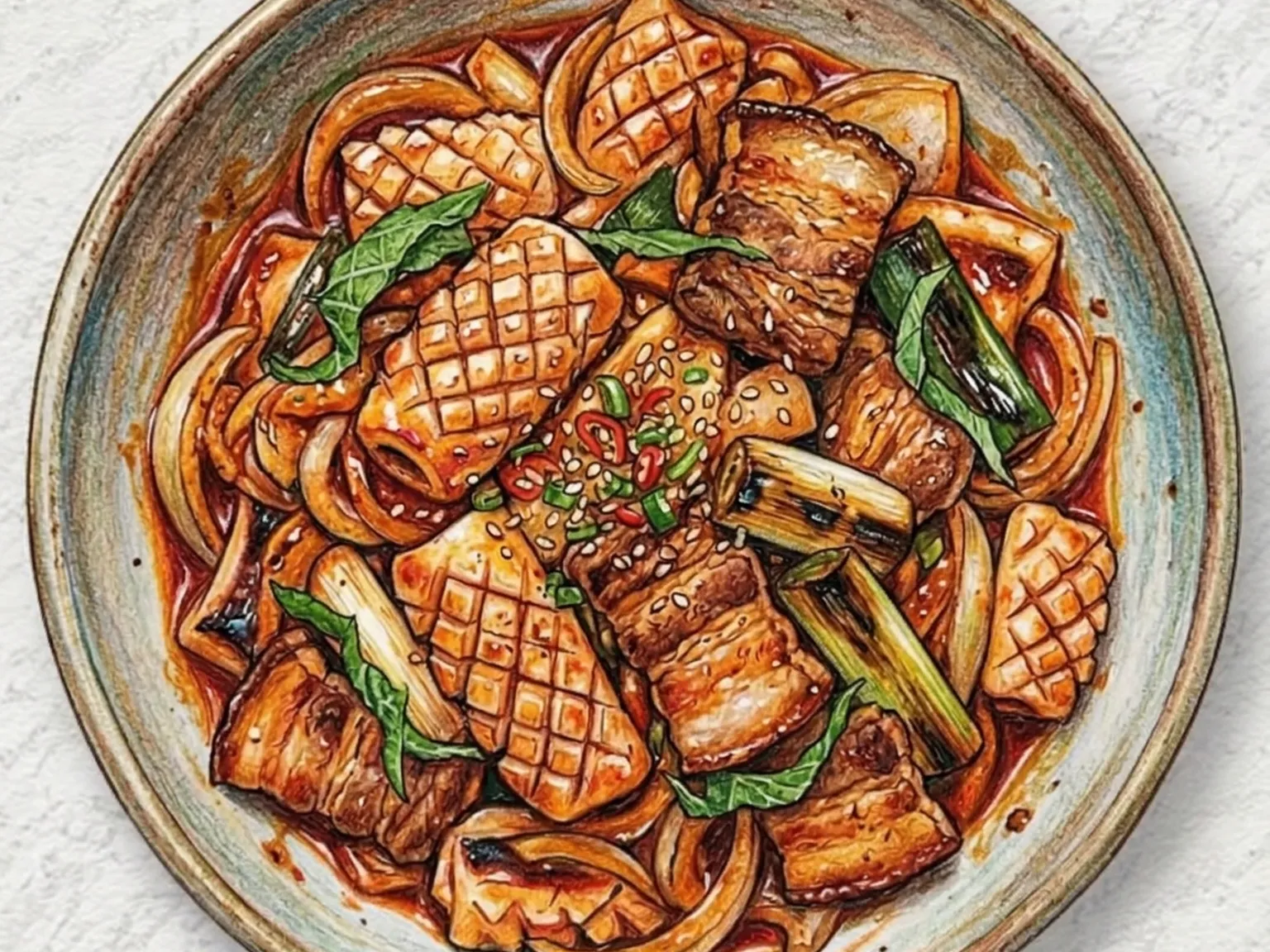
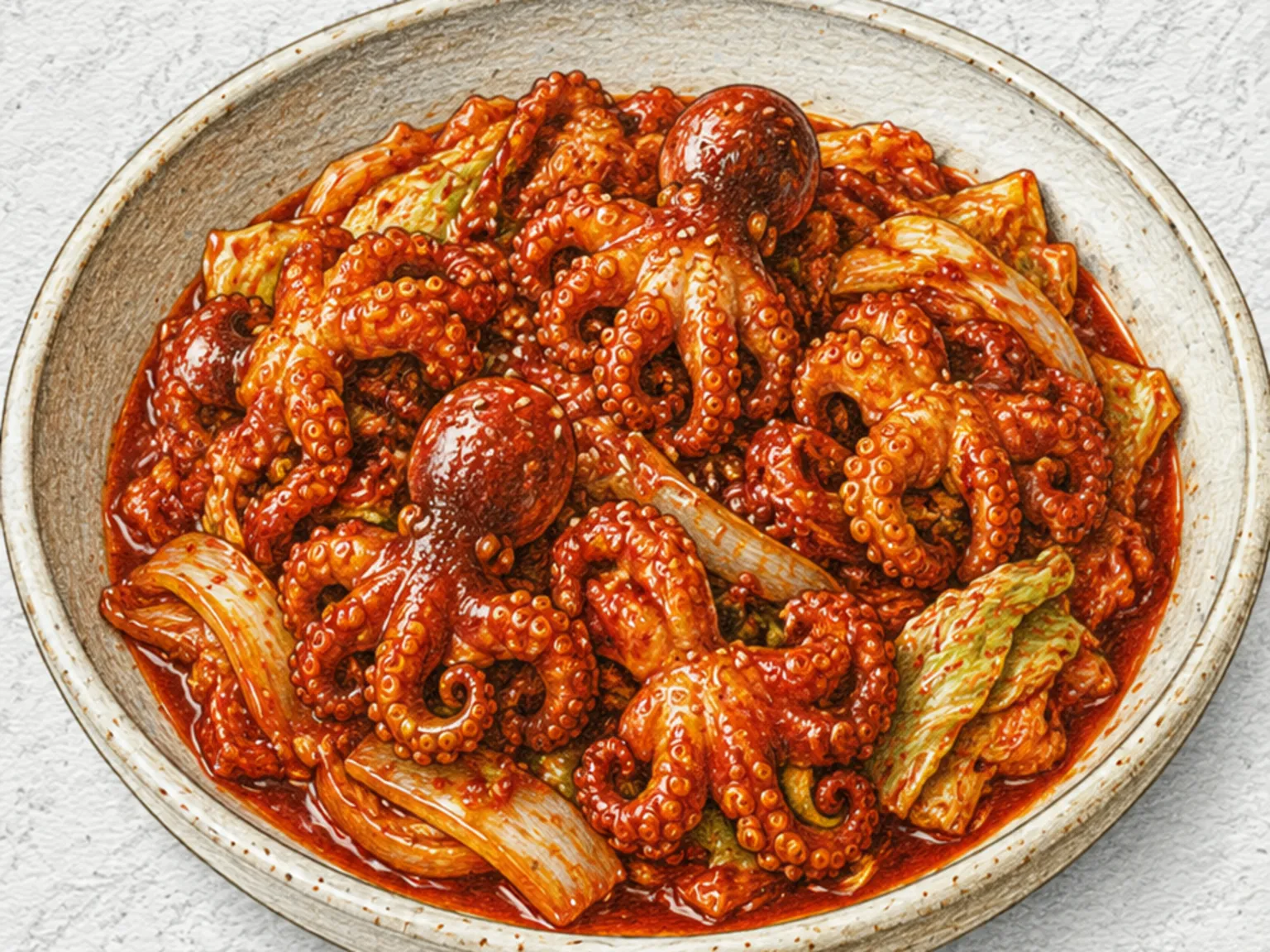
Ojingeo-bokkeum is one of Korea's most popular spicy stir-fries, featuring scored squid bodies and tentacles tossed over high heat with onion, carrot, cabbage, and scallion in a gochujang-gochugaru-soy-sugar sauce. Crosshatch scoring on the squid allows the thick, spicy sauce to penetrate deeply, ensuring consistent flavor in every bite. The entire stir-fry takes only a few minutes on maximum heat - essential for keeping the squid springy rather than rubbery. Cabbage and carrot go in near the end to retain their crunch, and a final sesame oil drizzle ties the smoky wok char to the bold red seasoning.

🏠 Everyday🍱 Lunchbox
Prep 15minCook 10min2 servings
Korean Ojingeo Ssamjang Bibim Myeon (Squid Ssamjang Mixed Noodles)
NoodlesMedium

Korean Ojingeo Ssamjang Bibim Myeon (Squid Ssamjang Mixed Noodles)

Ojingeo ssamjang bibim myeon is a Korean mixed noodle dish combining blanched squid rings with medium wheat noodles in a ssamjang-based sauce spiked with chili flakes, vinegar, and syrup. The squid is blanched for only forty seconds to keep it springy rather than chewy, and the noodles are rinsed under cold water while gently rubbing to remove surface starch. The dressing merges the fermented depth of ssamjang with the heat of gochugaru and the brightness of vinegar, creating a layered flavor that is salty, spicy, and tangy at once. Resting the sauce for about ten minutes before tossing softens the heavy note of ssamjang. Julienned perilla leaves on top add an herbal fragrance, and sesame seeds finish the dish with nuttiness. The recipe yields four generous servings.

🍺 Bar Snacks🌙 Late Night
Prep 20minCook 15min4 servings
Korean Spicy Stir-Fried Anchovies
Side dishesEasy

Korean Spicy Stir-Fried Anchovies

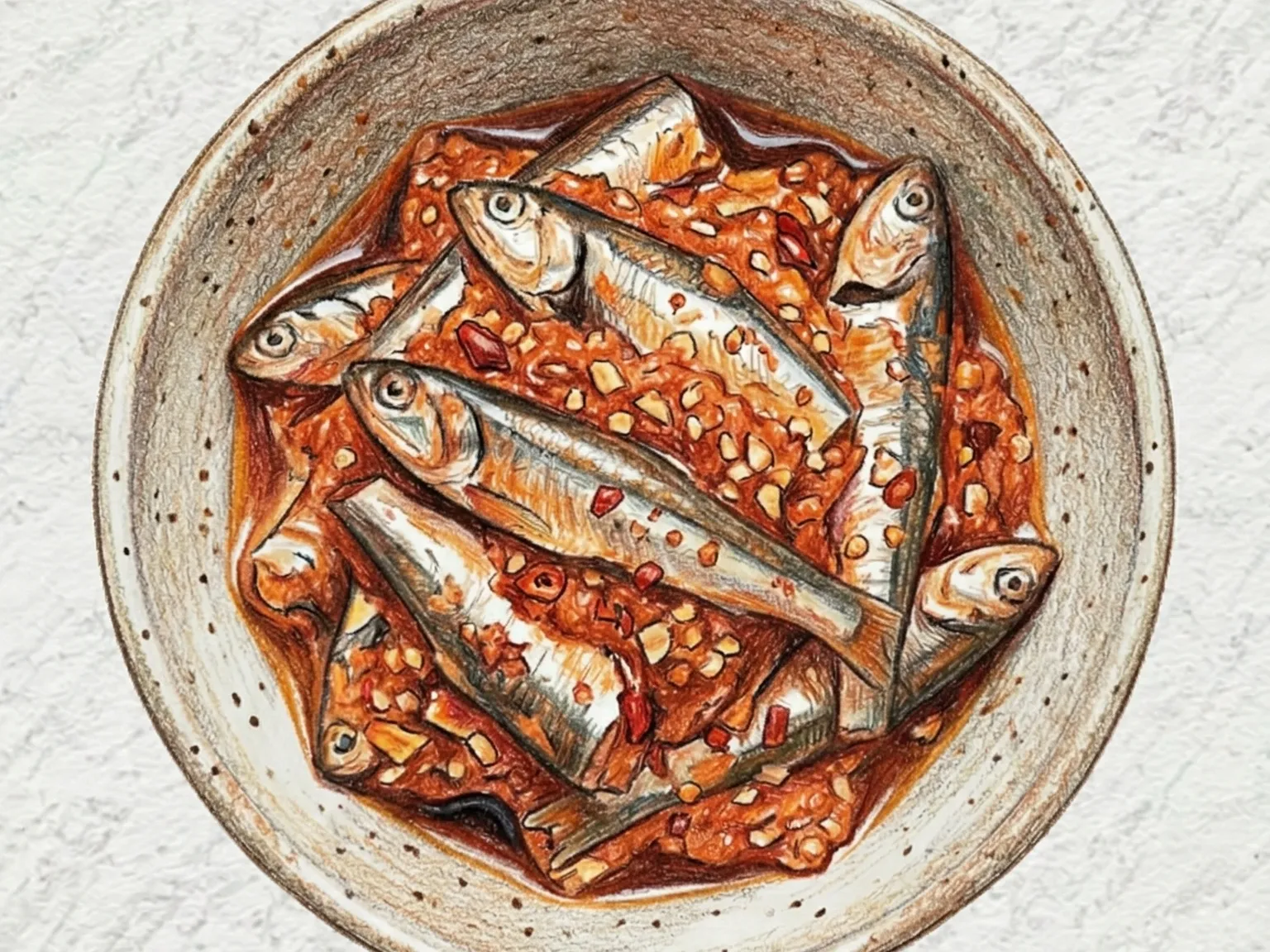
Spicy stir-fried anchovies (maeun myeolchi-bokkeum) toss medium-sized dried anchovies in a gochujang-gochugaru glaze, occupying the opposite end of the flavor spectrum from the sweet jiri-myeolchi version and targeting adult palates. Medium anchovies are larger and thicker than the tiny variety, requiring individual head-and-gut removal to eliminate bitterness - a tedious prep step that nonetheless determines the dish's clean finish. After dry-toasting to drive off moisture, the anchovies simmer in a sauce of gochujang, gochugaru, soy sauce, oligosaccharide, and minced garlic until each piece is coated in a rust-colored glaze. The gochujang's fermented heat combines with gochugaru's vivid red to create both flavor depth and visual appeal. The larger anchovy size delivers a satisfying crunch that lingers alongside a lasting savory umami. Heat intensity is adjustable via gochugaru quantity - adding chopped cheongyang chili ratchets it up another notch. This banchan doubles as a soju drinking snack, appearing as frequently on bar tables as on dinner tables.

🍺 Bar Snacks🏠 Everyday
Prep 5minCook 10min4 servings
Korean Ori Gochujang Gui (Gochujang Grilled Duck)
GrilledMedium

Korean Ori Gochujang Gui (Gochujang Grilled Duck)

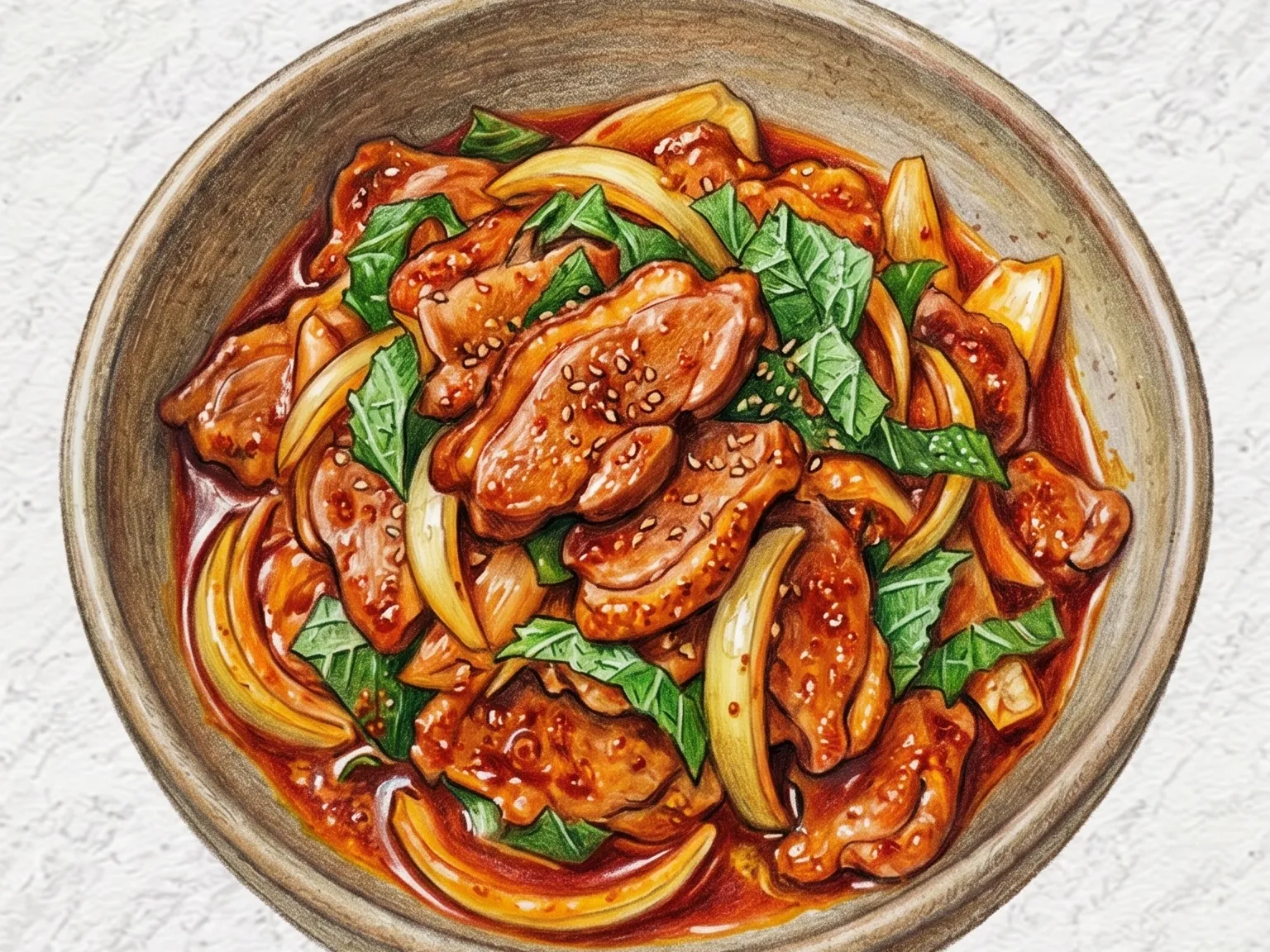
Ori-gochujang-gui is spicy gochujang-grilled duck, where sliced duck is marinated for fifteen minutes in a paste of gochujang, soy sauce, Korean chili flakes, minced garlic, pear juice, and sesame oil, then grilled alongside sliced onion over medium-high heat for ten to twelve minutes with frequent turning. Pear juice tempers the aggressive salt and heat of gochujang while acting as a natural tenderizer for the duck, and sesame oil forms a thin film that slows moisture loss during grilling. As duck fat renders out and combines with the chili paste, a concentrated sweet-spicy sauce pools in the pan-basting the meat continuously with this liquid builds a glossy, lacquered surface. Wrapping each piece in a perilla leaf before eating adds an herbal fragrance that softens the chili burn.

🍺 Bar Snacks
Prep 20minCook 15min4 servings
Korean Hairtail & Fernbrake Stew
StewsMedium

Korean Hairtail & Fernbrake Stew

Galchi gosari jjigae pairs hairtail fish with boiled fernbrake in a deeply spiced Korean stew. The broth begins with anchovy-kelp stock seasoned with gochugaru and soup soy sauce, building a clean, peppery heat without heaviness. Korean radish and onion go in early to dissolve their natural sugars into the broth, adding a cool sweetness that tempers the chili. As the hairtail simmers, its flesh breaks into tender pieces and releases the fish's inherent oils into the liquid, enriching every spoonful with a maritime depth. The fernbrake brings a resilient, slightly meaty chew that stands up well to the long simmer. Rooted in the fish stew traditions of Jeju Island and the southern coastal regions of Korea, this dish is a regional staple that pairs seamlessly with plain rice.

🏠 Everyday
Prep 20minCook 30min4 servings
Korean Spicy Fish Roe Braise
SteamedMedium

Korean Spicy Fish Roe Braise

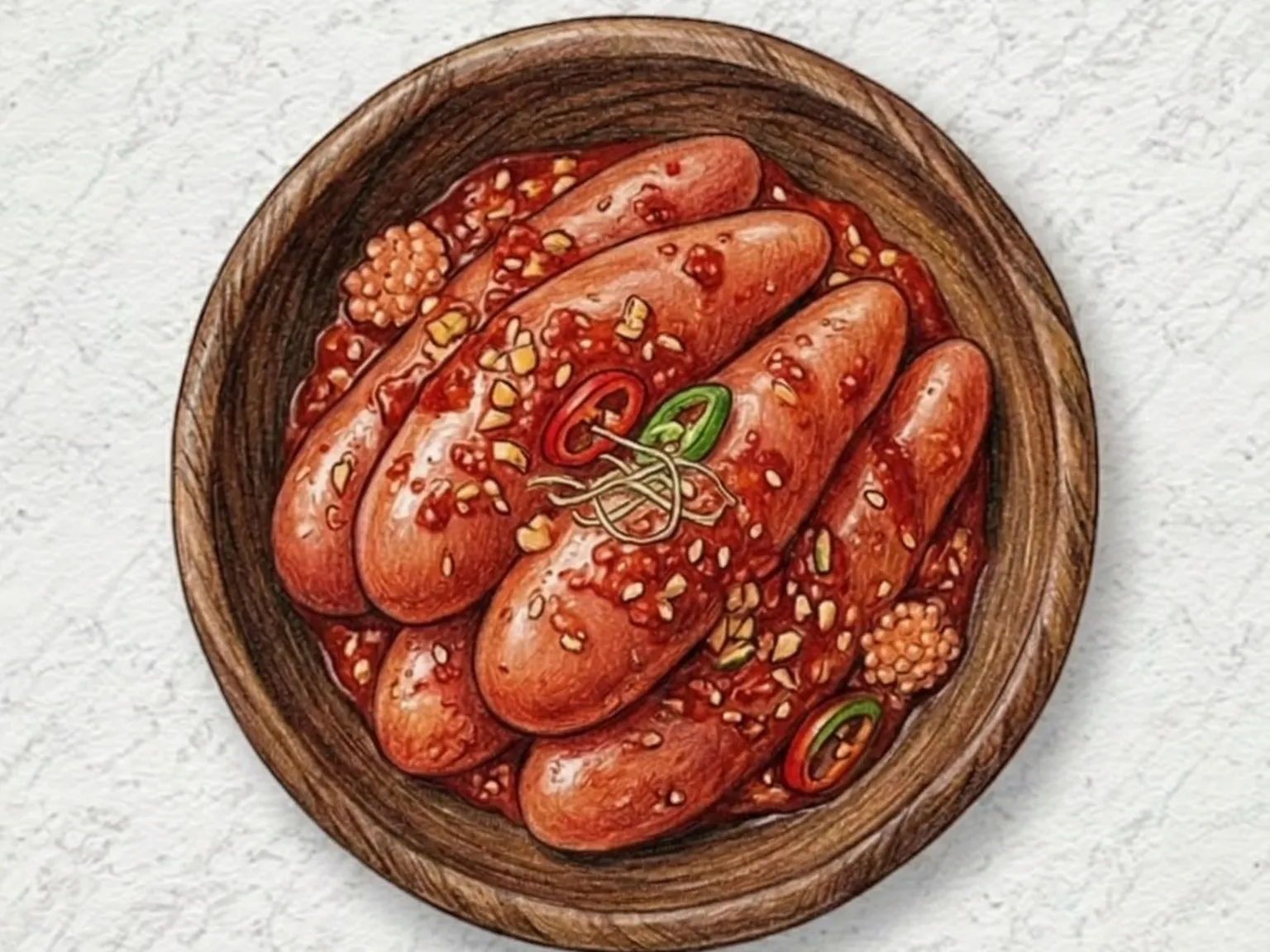
Al-jjim is a Korean braised dish built around pollock roe sacs and milt - the parts of the fish that most home cooks discard or that are sold separately at markets near fishing ports. The two components come from the same fish but behave completely differently when cooked. The roe sacs firm up into a dense, granular texture as they heat, each individual egg becoming distinct and slightly resistant to the bite. The milt, by contrast, softens to a custard-like consistency, breaking apart in soft curds that dissolve into the braising sauce. Radish slices line the pot bottom, providing a sweet buffer against the aggressive saltiness of the gochugaru-soy braising liquid and preventing the more delicate milt from burning. The dish cooks at low heat for about fifteen minutes, during which the roe and milt release their marine oils into the sauce, adding an oceanic richness to the spicy, salty base. Green onions or scallions added at the end contribute a fresh, sharp counterpoint that keeps the heavy sauce from becoming monotonous. Al-jjim is a winter specialty in Korea's east coast fishing ports - Pohang, Gangneung, Sokcho - where fresh pollock roe is available during the winter spawning season. Frozen roe can be substituted year-round, but it releases fewer marine oils into the sauce, producing a noticeably less rich broth than the fresh version.

🎉 Special Occasion
Prep 20minCook 25min4 servings
Aloo Samosa (Indian Crispy Potato-Filled Fried Pastry)
Street foodMedium

Aloo Samosa (Indian Crispy Potato-Filled Fried Pastry)

Samosa first appears in written form in a 10th-century Central Asian cookbook under the name sambosa, then follows trade routes westward into Persia and east into the Indian subcontinent, where it settled into street-food culture so thoroughly that chai stalls sell hundreds before noon each morning. The dough is stiff - flour, water, and oil kneaded until firm - and rolled thin. Too soft a dough absorbs oil during frying and turns greasy rather than crisp. The filling is boiled potato mixed with cumin, fresh green chili, and cilantro; the cumin's earthy fragrance permeates the potato during the mixing. The dough folds into a cone, filling goes in, air is pressed out carefully before sealing - trapped air expands in the hot oil and splits the crust. Fried at the correct temperature, the layered shell blisters outward, turns golden brown, and shatters audibly on first bite. Inside is a warm, lightly spiced potato that has absorbed all that cumin. Mint chutney and tamarind sauce are served alongside, their sourness and sweetness doing what the filling alone cannot.

🧒 Kid-Friendly
Prep 35minCook 20min4 servings
Korean Bean Sprout Kimchi Soup
SoupsEasy

Korean Bean Sprout Kimchi Soup

The preparation of this traditional Korean soup follows a two-part process designed to build layers of flavor by stacking different ingredients over time. The foundation begins with aged kimchi and a substantial amount of the fermented liquid from the kimchi jar. These ingredients are combined with anchovy stock and allowed to simmer together for a duration of eight minutes. This initial cooking period is essential for the broth to fully absorb the acidic depth of the fermented vegetables. As the mixture simmers, the liquid transforms into a deep shade of brick red, signaling that the base has reached the correct concentration for the next set of ingredients. After the initial simmering period is complete, bean sprouts are introduced to the pot along with gochugaru, minced garlic, and soup soy sauce. It is important to leave the lid off the pot for the remaining five minutes of the cooking process. Leaving the soup uncovered during this specific stage facilitates the removal of the raw scent that can sometimes be associated with fresh bean sprouts. Furthermore, this method prevents the liquid from being diluted by trapped steam, which allows the various flavors to concentrate and sharpen rather than becoming softened. In the final minute of preparation, sliced green onion is incorporated into the broth. This addition provides a fresh herbal element that lifts the profile of the soup and balances the heavier fermented notes of the kimchi base. If the kimchi used in the recipe is not sufficiently fermented, the resulting broth may lack the necessary sharpness. In such cases, adding half a teaspoon of vinegar can enhance the acidity to the desired level without changing the fundamental character of the broth. The combination of the deep flavors from the kimchi and the natural crispness of the bean sprouts results in a liquid that is both warming and restoring. Because of these properties, this dish has a long history as a reliable remedy for hangovers in Korea, and it remains a common staple for families to consume during the cold weather seasons.

🏠 Everyday
Prep 10minCook 20min2 servings
Korean Spicy Whelk Stir-fry
Stir-fryEasy

Korean Spicy Whelk Stir-fry

Golbaengi bokkeum is a spicy Korean whelk stir-fry that uses canned whelk with a sauce built from gochujang, gochugaru, vinegar, sugar, and sesame oil. The firm, chewy texture of the whelk is the defining quality of the dish, which means cooking time must stay within two to three minutes to prevent the meat from toughening further. Vinegar adds a tangy brightness that lifts and balances the heat from the chili components. A splash of the canning liquid stirred in during cooking enhances the whelk's natural brininess and keeps the sauce from drying out. Julienned cucumber, sliced onion, and scallion are added off the heat so they stay crisp and retain their raw freshness rather than wilting into the sauce. As a banchan, it pairs directly with rice, but served alongside thin wheat noodles or glass noodles it transforms into one of Korea's most beloved drinking snacks, a staple of old-school pojangmacha stalls where the combination of cold beer and spicy, chewy whelk has been a fixture for decades.

🍺 Bar Snacks🏠 Everyday
Prep 15minCook 8min2 servings
Korean Crispy Flat Mandu (Daegu-Style Thin Pan-Fried Dumplings)
Street foodMedium

Korean Crispy Flat Mandu (Daegu-Style Thin Pan-Fried Dumplings)

Boiled sweet potato noodles, minced chives, and chopped cabbage are spread thinly inside dumpling wrappers, folded in half, and pan-fried flat until both sides are evenly crisp, in the style of Daegu street food. Using minimal filling is key to achieving the characteristic thin, flat shape that defines this dumpling, and a properly preheated pan ensures uniform crispness on both sides. The standard accompaniment is a tangy-spicy dipping sauce of soy sauce, vinegar, red pepper flakes, and sesame oil. Simple in construction but sharp in flavor balance, this is the dumpling that put Daegu's street food culture on the map.

🧒 Kid-Friendly🌙 Late Night
Prep 25minCook 15min4 servings
Korean Seasoned Cucumber Pickle Salad
Side dishesEasy

Korean Seasoned Cucumber Pickle Salad

Oiji-muchim takes oiji - cucumber that has been salt-brined for a month or longer - rinses out the excess salinity, and dresses it in a sweet-sour-spicy sauce. Oiji is a traditional Korean preserved food: summer cucumbers are submerged in a concentrated salt brine and aged until their moisture migrates out, transforming the texture from fresh and crisp into something firm, almost crunchy-chewy - a chew fundamentally different from raw cucumber. If the pickle is too salty, soaking in cold water for thirty minutes to an hour draws the brine down to a palatable level. After thorough squeezing, the cucumber pieces are tossed with gochugaru, vinegar, sugar, sesame oil, minced garlic, and scallion. Vinegar and sugar layer a bright sweet-sour dimension over the pickle's inherent saltiness, balancing it for pairing with rice. Julienned oiji absorbs more dressing and delivers a different eating experience than diagonal-cut slices - each approach has its advocates. Made during the summer cucumber glut, oiji keeps refrigerated for over a month.

🏠 Everyday🍱 Lunchbox
Prep 15min4 servings
Korean Braised Gizzard Shad
SteamedMedium

Korean Braised Gizzard Shad

Jeoneo-jjim is a braised gizzard shad dish in which the fish and Korean radish are slowly cooked together in a soy sauce and gochugaru seasoning, making it a dish best suited to autumn when the fish carries its peak fat. Radish slices line the bottom of the pot and serve a dual purpose: they act as a natural buffer that absorbs fishiness rising from the heat, and they soak up the braising liquid as they soften, turning sweet and deeply flavored by the end of cooking. The gizzard shad's characteristic fatty richness pairs well with the bold chili and garlic seasoning, and ginger threads through the entire preparation to neutralize any remaining off-notes and leave the flavor clean. Autumn-caught fish are fattier and remain moist even after extended braising, which makes them far preferable to fish taken at other times of year. Green onion is scattered on top at the finish for fragrance, and the intensified, reduced braising sauce left in the pot is traditionally ladled over steamed rice as a condiment in its own right.

🎉 Special Occasion🍱 Lunchbox
Prep 20minCook 25min4 servings
Korean Pork Gochujang Jjigae
StewsEasy

Korean Pork Gochujang Jjigae

This pork gochujang stew simmers pork shoulder in a sauce of gochujang and doenjang, two fermented pastes that together build a more layered flavor than either would alone. Using gochujang on its own produces a heat that comes across as sharp and one-dimensional, but adding half a tablespoon of doenjang rounds out the fermented soybean depth and gives the broth a fuller, earthier backbone. A full tablespoon of gochugaru deepens the red color and adds texture to the spice rather than just boosting intensity. The 180 grams of pork shoulder render their juices into the 700 milliliters of broth as the stew cooks, gradually enriching the base. Potato, zucchini, onion, and tofu go into the same pot and contribute a range of textures that keep each spoonful varied. The combination of both fermented pastes means this version has noticeably more complexity than a standard gochujang stew, and the finished broth is the kind that makes it difficult to stop eating before the bowl is empty.

🏠 Everyday
Prep 15minCook 20min2 servings
Korean Seasoned Wild Chive
Side dishesEasy

Korean Seasoned Wild Chive

Dallae-muchim is a raw spring side dish made from Korean wild chives dressed in soy sauce, gochugaru, vinegar, sugar, and sesame oil -- one of the clearest markers that spring has arrived. Dallae emerges from hillsides in March, finer in stem than cultivated chives and carrying an intensely sharp, garlic-like aroma that vanishes almost immediately when cooked, which is why the herb is always used raw. The small bulbs and slender leaves are washed root-and-all, cut to three or four centimeters, and tossed in the seasoning just before serving. The result is a pungent, nose-clearing mouthful that contrasts directly with the deep, fermented warmth of doenjang-jjigae when the two are eaten together. The season for dallae is brief -- a few weeks in early spring -- making this banchan one of the more fleeting pleasures of the Korean table.

🏠 Everyday🍱 Lunchbox
Prep 10min4 servings