🧒 Kid-Friendly Recipes
Sweet and fun snacks kids will love
516 recipes. Page 11 of 22
Kid-friendly snacks should be tasty and nutritionally balanced. This tag includes sweet treats children love alongside healthier options with hidden vegetables - potato cheese balls, sweet potato sticks, fruit skewers, and more.
Making snacks at home means full control over ingredients, with no additives or preservatives. Cooking together can also be a fun activity for the family. Browse these simple recipes designed to please young palates.
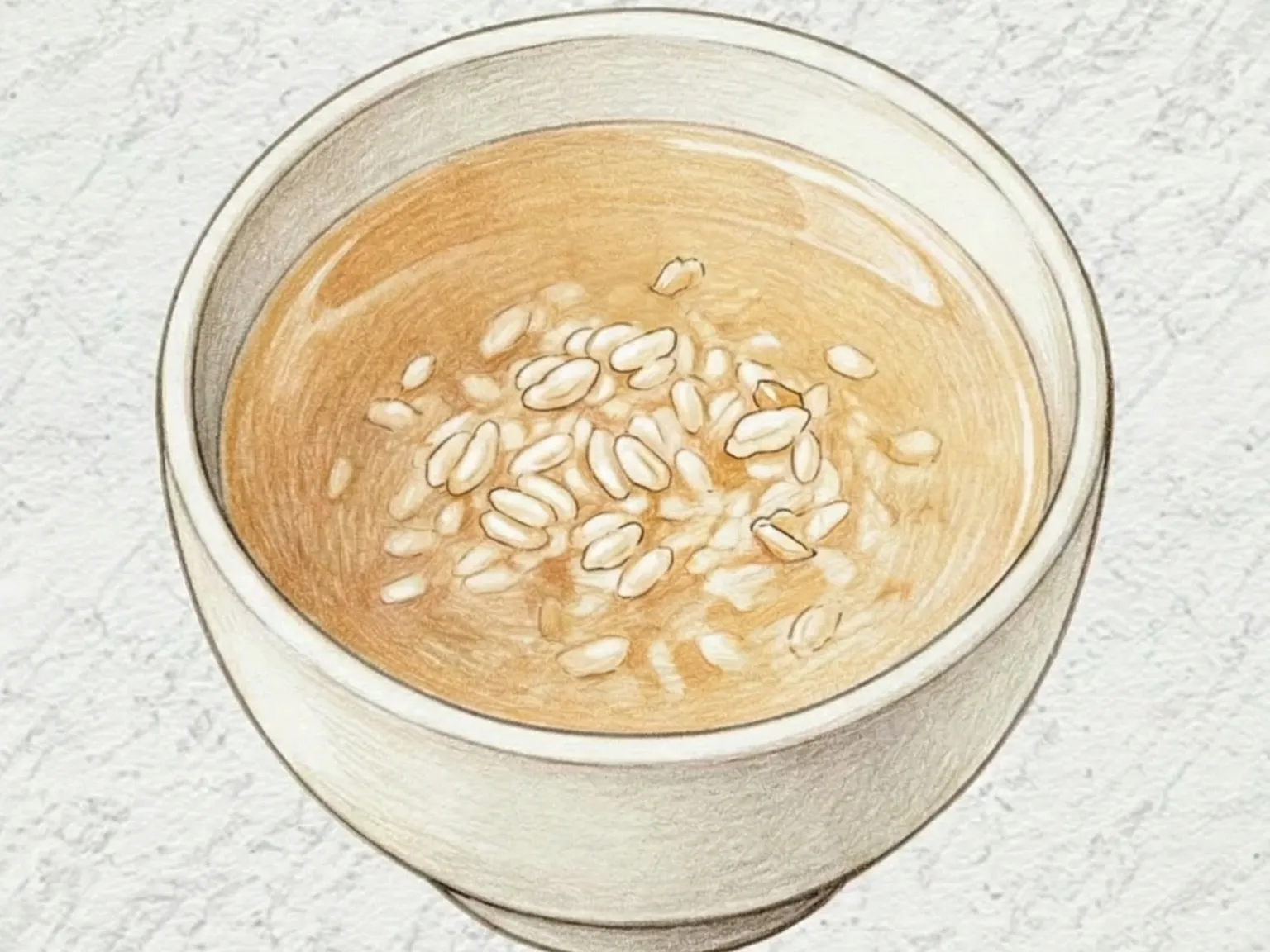
Sweet Rice Punch (Traditional Korean Malted Barley Grain Drink)
Sikhye is a traditional Korean sweet rice punch made by steeping malted barley powder in lukewarm water, straining the liquid, adding cooked rice, and holding the mixture at around 60 degrees Celsius for one hour until the rice grains float to the surface. The amylase enzymes in the malt break down the rice starch, producing a distinctly malty, clear sweetness with grain depth that no sugar alone can replicate. Only the clear top liquid is used after settling -- discarding the sediment keeps the punch from turning cloudy. Simmering with sugar and sliced ginger for 20 minutes rounds the sweetness and adds a gentle, spiced warmth to the finish. Served well chilled with the reserved floating rice grains and pine nuts on top, the cold temperature sharpens the malty aroma and makes each sip crisp. Temperature control during the steeping stage is critical: if the mixture exceeds 70 degrees Celsius, the amylase denatures and the grains will not float, so keeping a steady 60-degree hold determines whether the preparation succeeds.
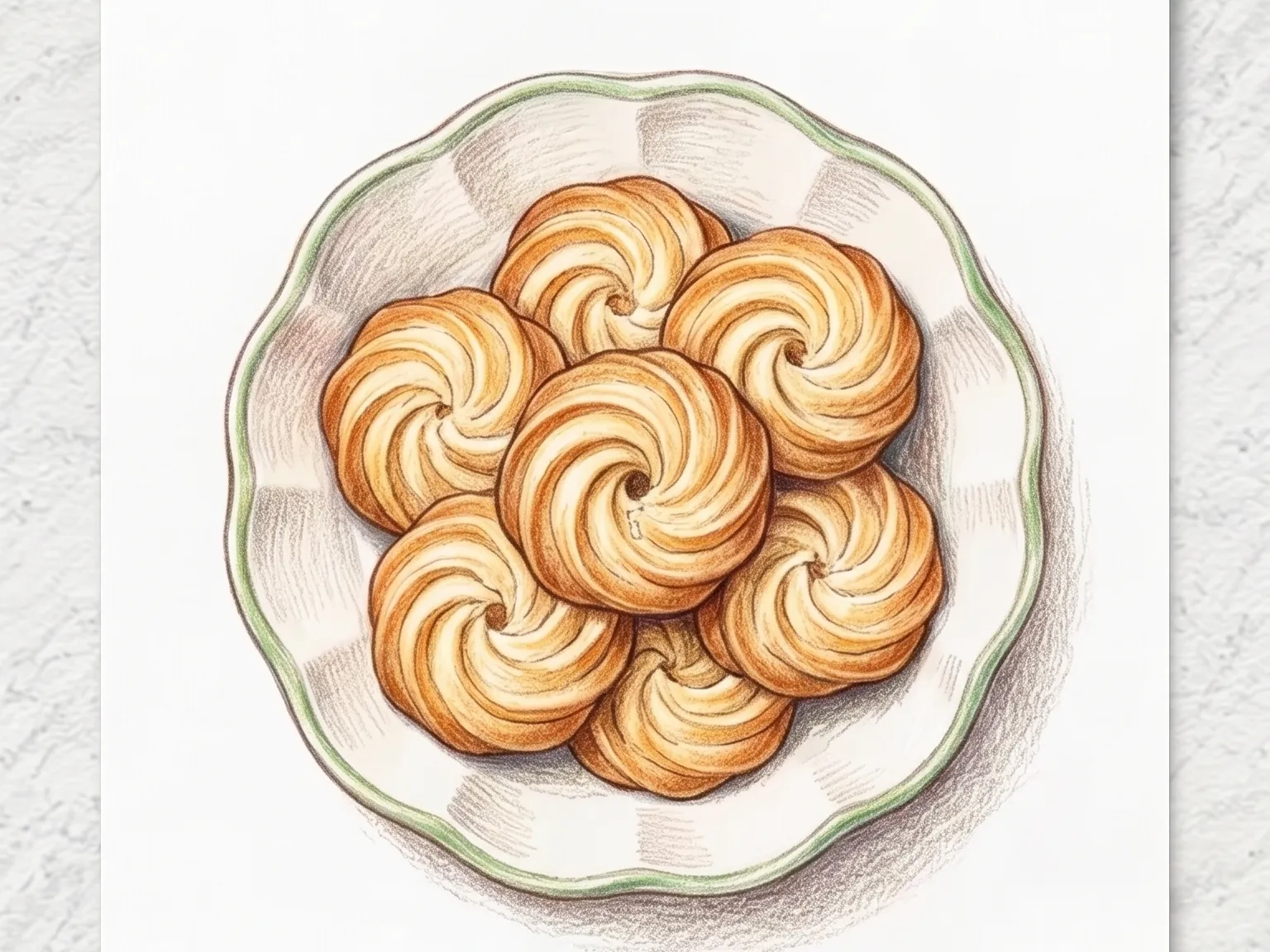
Butter Cookies
Butter cookies are a classic pastry built around the flavor of high-quality butter, aiming for a melt-in-the-mouth texture and a clean, rich aroma. Unsalted butter is creamed thoroughly with powdered sugar to incorporate air, creating the foundation for a crumbly, delicate crumb. Egg yolk and cake flour are mixed in just enough to form a smooth dough, and vanilla essence adds a sweet depth that complements the butter without distracting from it. Piped into flower or ring shapes, the cookies bake until the thin edges turn crisp and golden while the thicker centers remain tender and soft. Resting the piped shapes in the refrigerator for fifteen to twenty minutes before baking helps them hold their definition rather than spreading in the oven. The sweetness is deliberately restrained so the butter's own flavor comes through clearly. Stored in an airtight tin, the cookies maintain their snap and fragrance for over a week.
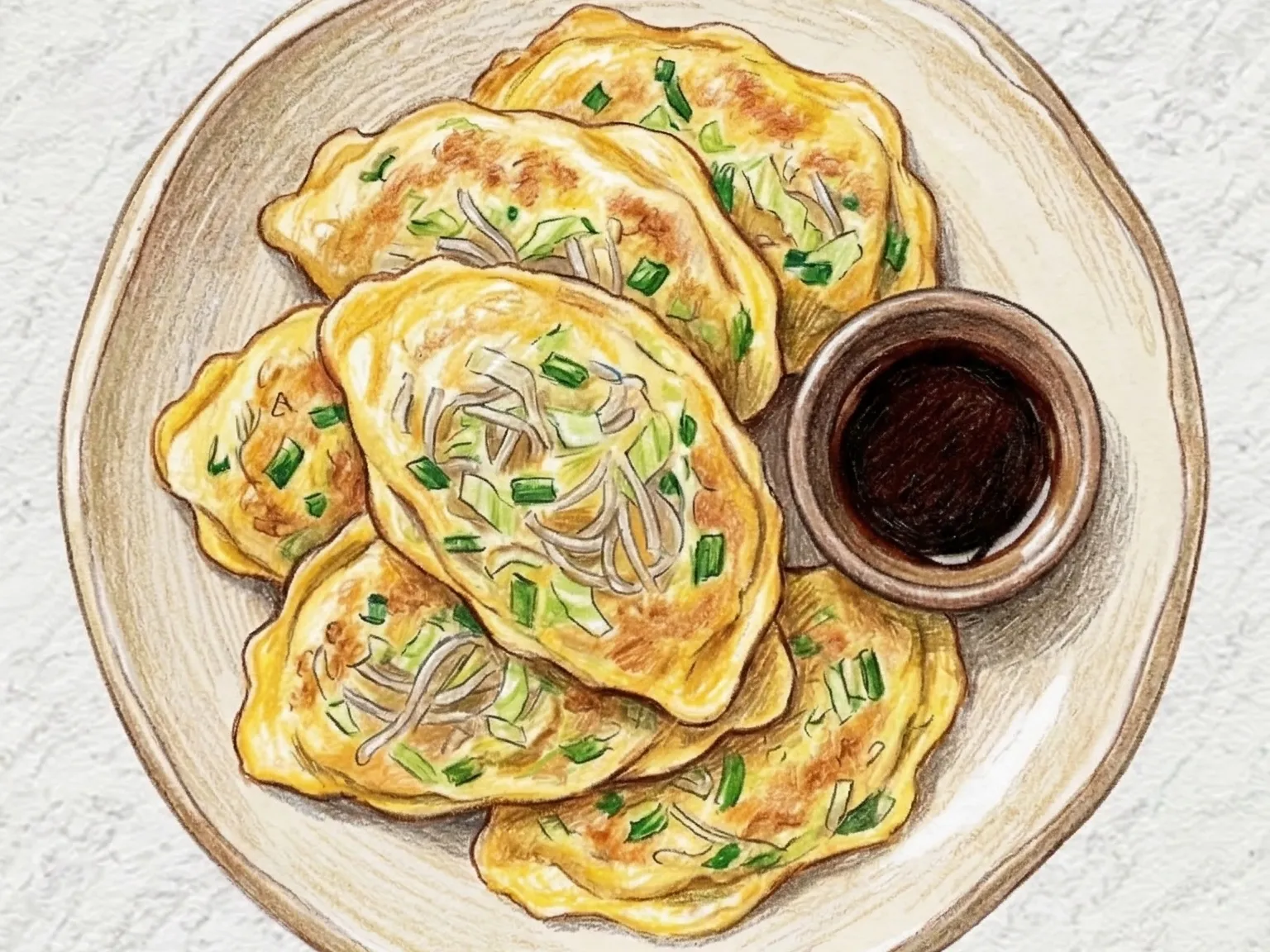
Korean Egg Dumpling Pancakes
Gyeran-mandu is a Korean market-style egg dumpling pancake made by mixing finely chopped cabbage, scallion, and soaked glass noodles into beaten egg, then pan-frying the mixture into flat, palm-sized rounds. Rather than using a traditional flour wrapper, the egg itself forms the outer shell that binds and seals the filling. The patties cook slowly over medium-low heat, giving the surface time to turn lightly golden while the interior stays moist and tender. Squeezing the excess moisture from the vegetables before mixing is the most critical step - too much water and the patties spread and lose their shape before the egg can set. Glass noodles must be cut into short lengths so the rounds hold together and flip without falling apart. A thin layer of oil in the pan and a lid placed on top help the egg cook evenly without burning. Dipping the finished patties into a sauce of soy sauce, vinegar, and a pinch of gochugaru brings a salty-tangy contrast that complements the mild richness of the egg.
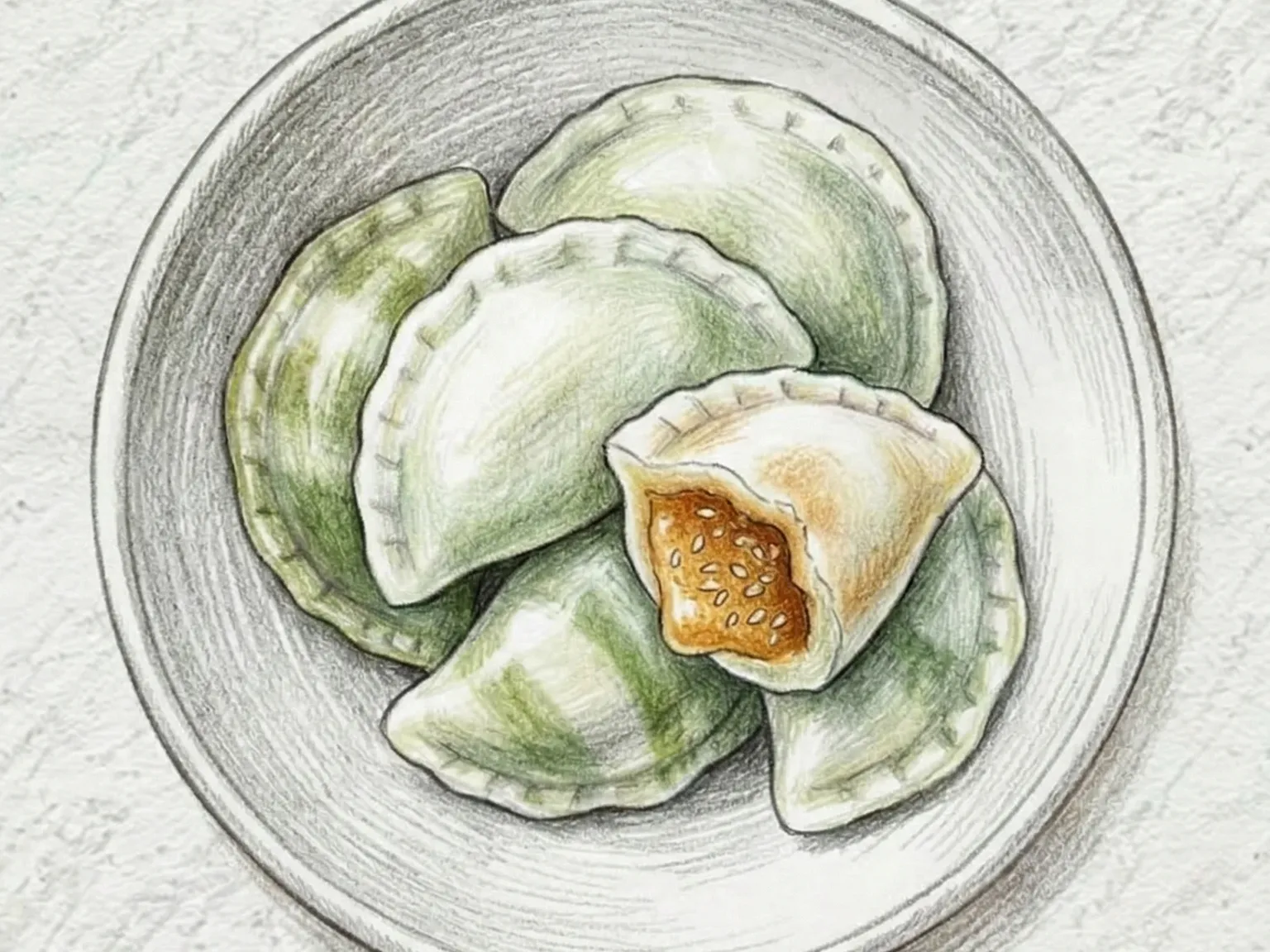
Half-moon Rice Cake (Sesame Honey Filled Steamed Rice Cake)
Kkul songpyeon are traditional half-moon rice cakes shaped by hand from rice flour dough and filled with a paste of finely ground toasted sesame seeds, honey, and dark brown sugar, then steamed over a bed of fresh pine needles. Grinding the sesame seeds fine enough to form a cohesive mixture with honey and sugar is important -- the oil-rich nuttiness and dense sweetness bind together into a smooth filling that turns moist and paste-like as steam penetrates the rice dough during cooking. Arranging pine needles at the bottom of the steamer imparts a faint resinous, woody fragrance to the surface of each rice cake after 15 minutes of steaming, layering over the natural grain aroma of the rice flour dough. After steaming, a quick rinse in cold water stops carry-over cooking, and a thin brush of sesame oil gives each songpyeon a glossy sheen while preventing them from sticking together. Shaping songpyeon together as a family at Chuseok is one of the most recognizable autumn traditions in Korea, and the saying that beautifully shaped songpyeon foretells a beautiful daughter remains widely repeated today.
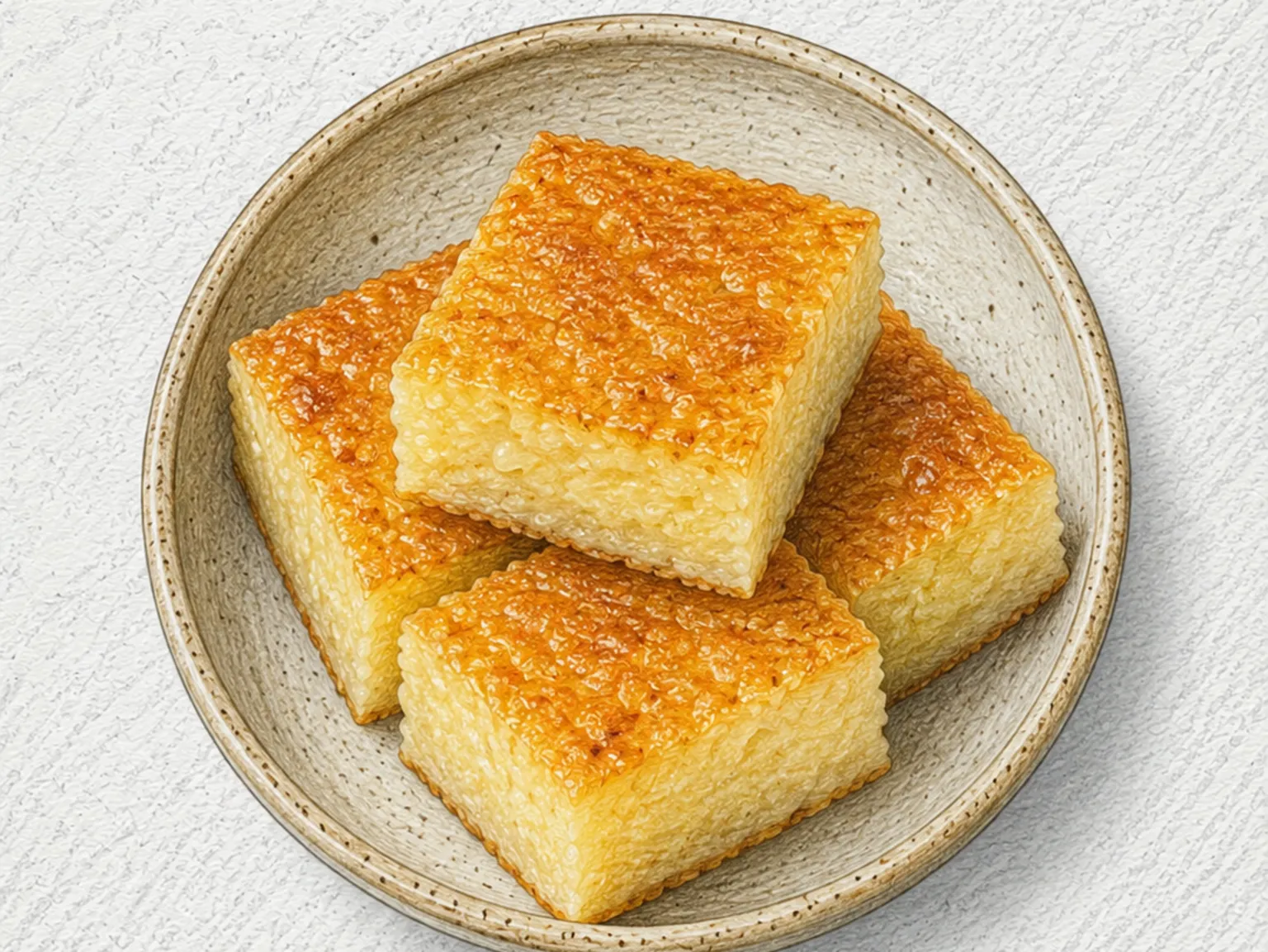
Butter Mochi Cake (Hawaiian Glutinous Rice Coconut Cake)
Butter mochi cake is a Hawaiian baked dessert that uses sweet glutinous rice flour as its structural foundation, resulting in a single slice that contains both the dense chewiness of a mochi rice cake and the golden, lightly crisp crust of a conventional baked good. The batter is thin and pourable - sweet rice flour combined with sugar, eggs, melted butter, whole milk, and coconut milk - and it is baked low and slow in a rectangular pan until fully set. During the long bake, the bottom of the cake densifies and becomes chewy in the way mochi does, trapping moisture within the glutinous starch structure. The top surface, meanwhile, dries out and the sugars caramelize into a thin hazelnut-brown crust with a faint crunch. Coconut milk threads a subtle tropical aroma throughout every bite without dominating. The butter dissolves into the starch matrix during baking, replacing the neutral, slightly sticky character that plain mochi can have with a warm, dairy-rich depth. At room temperature, the chewiness is most pronounced. Gently rewarmed in an oven or toaster, the crust crisps back up and the textural contrast between the two layers becomes more vivid.
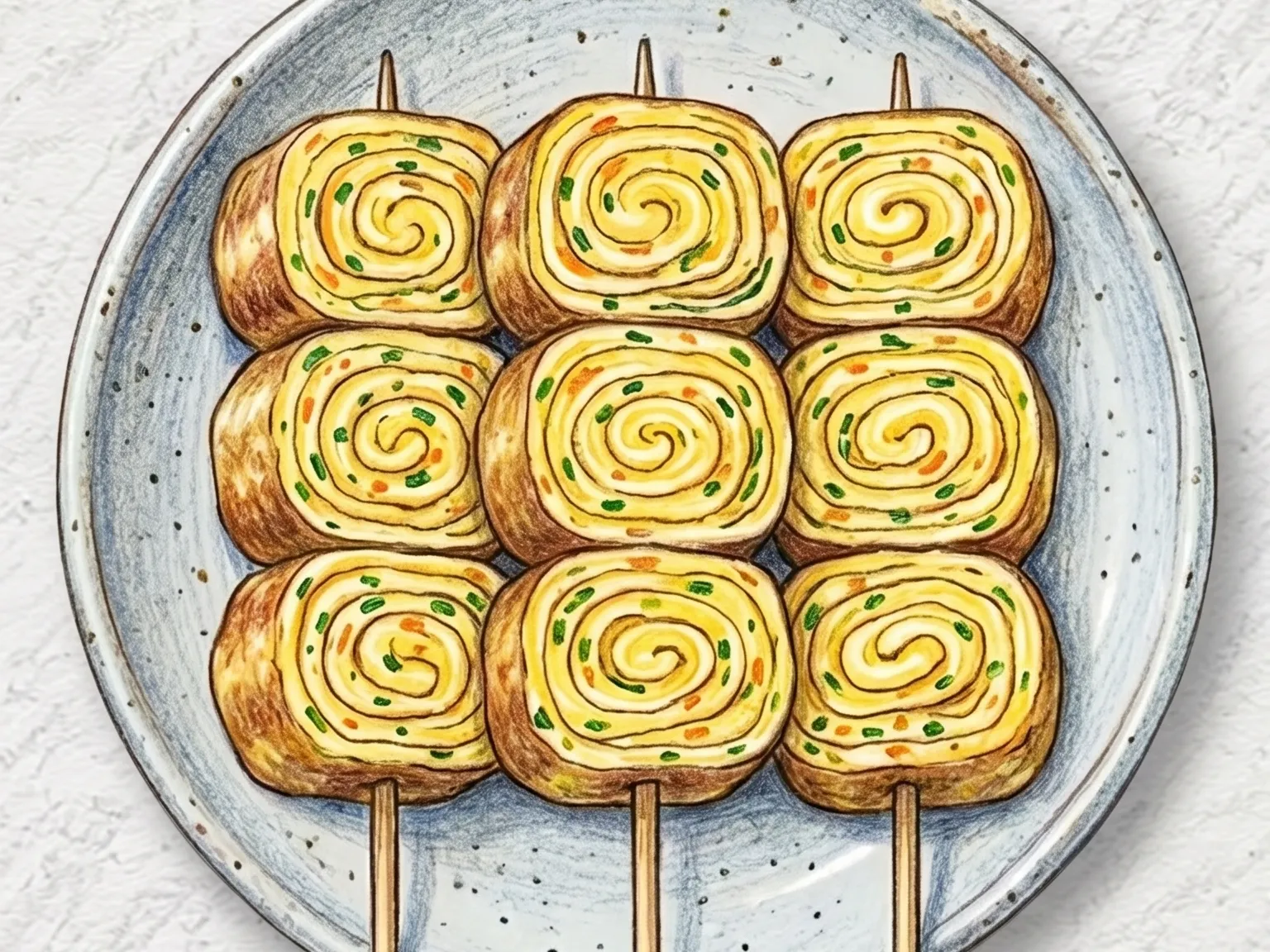
Korean Egg Roll Skewers (Layered Vegetable Egg Roll on Skewers)
Gyeran-mari kkochi is a Korean egg roll skewer made by folding finely diced carrot, garlic chives, and onion into beaten egg, then rolling the mixture in stages in a rectangular pan to create a tightly layered spiral. The beaten egg is poured into the pan in three separate additions, each addition rolled over and wrapped around the previous layer before the next is poured in - a technique that builds the internal spiral visible when the roll is sliced. Low heat from start to finish is not a preference but a requirement: if the heat climbs too high, the egg sets too quickly and tears during rolling rather than yielding to the spatula. Adding milk at roughly ten percent of the total egg volume relaxes the protein structure so the finished roll stays soft and moist even after cooling, rather than tightening into a rubbery cylinder. The natural sweetness of the chives and carrot folded inside complements the savory egg without requiring heavy seasoning - salt and a small amount of soy sauce are sufficient. Once the roll is formed, cooled briefly, and sliced into three-centimeter pieces, each piece is threaded onto a bamboo skewer and rolled once more in the pan to develop a light golden surface and lock the skewer in place.
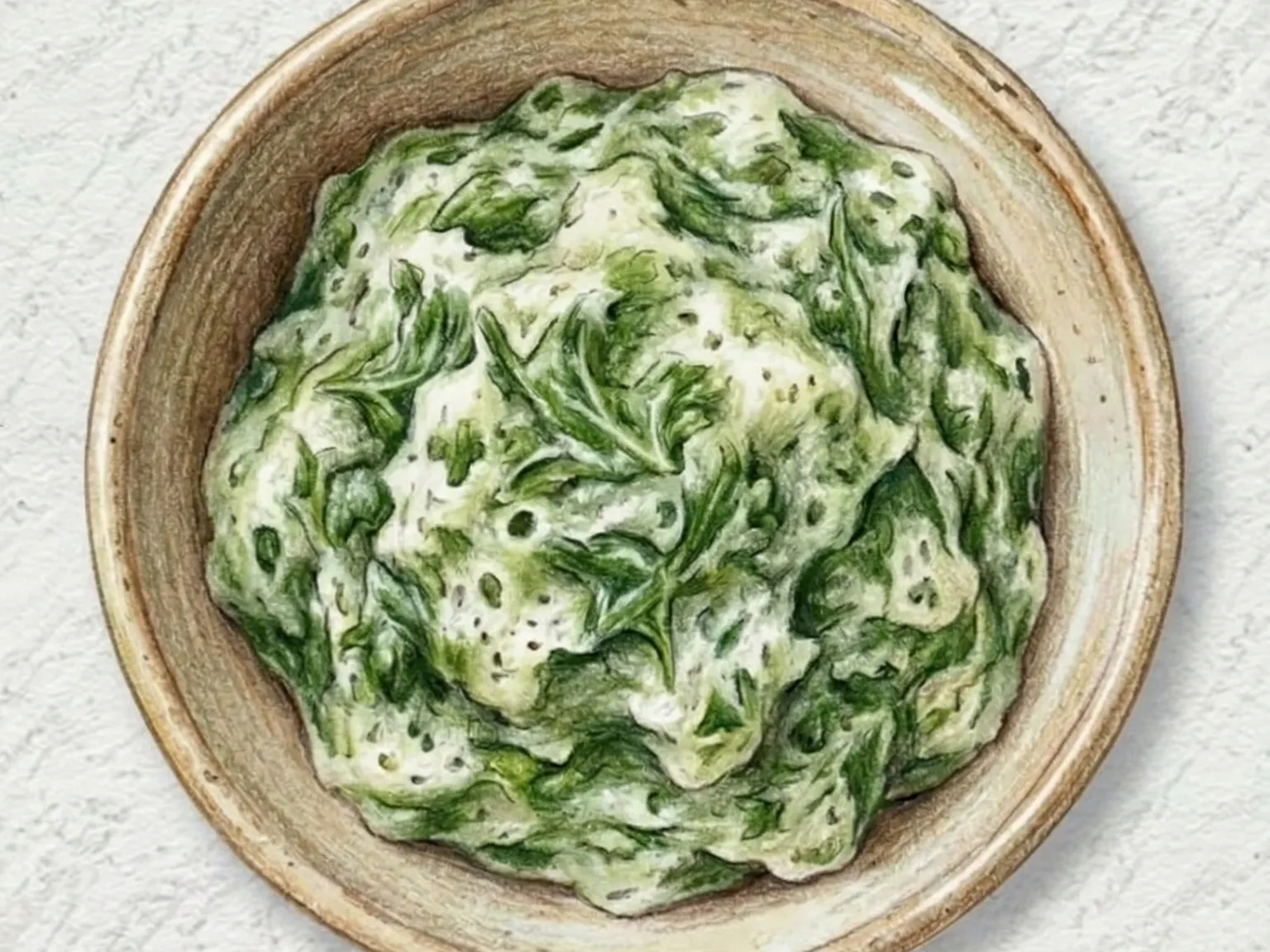
Mugwort Crumble Rice Cake
Ssuk beomuri is a traditional Korean spring rice cake made by tossing chopped fresh mugwort into a dry blend of rice flour, glutinous rice flour, and sugar, then steaming the loose mixture in a cloth-lined steamer. Water is worked in gradually by hand rather than poured all at once, a step that produces a texture that crumbles apart lightly while remaining moist inside rather than turning dense or gummy. Glutinous rice flour accounts for about a quarter of the blend and provides enough stickiness to hold the pieces together without making them chewy throughout. Using raw mugwort without blanching preserves the volatile aromatic compounds that would otherwise be lost in hot water, resulting in a deep, grassy fragrance that defines the cake. Steaming at full heat for fifteen minutes followed by a three-minute resting period with the lid on ensures the center cooks through evenly without the surface drying out. A generous topping of sweetened red bean crumble adds a thick, earthy sweetness that complements the clean herbal notes of mugwort. Young spring mugwort harvested between late March and April carries the most concentrated aroma, making that window the ideal season for this cake.
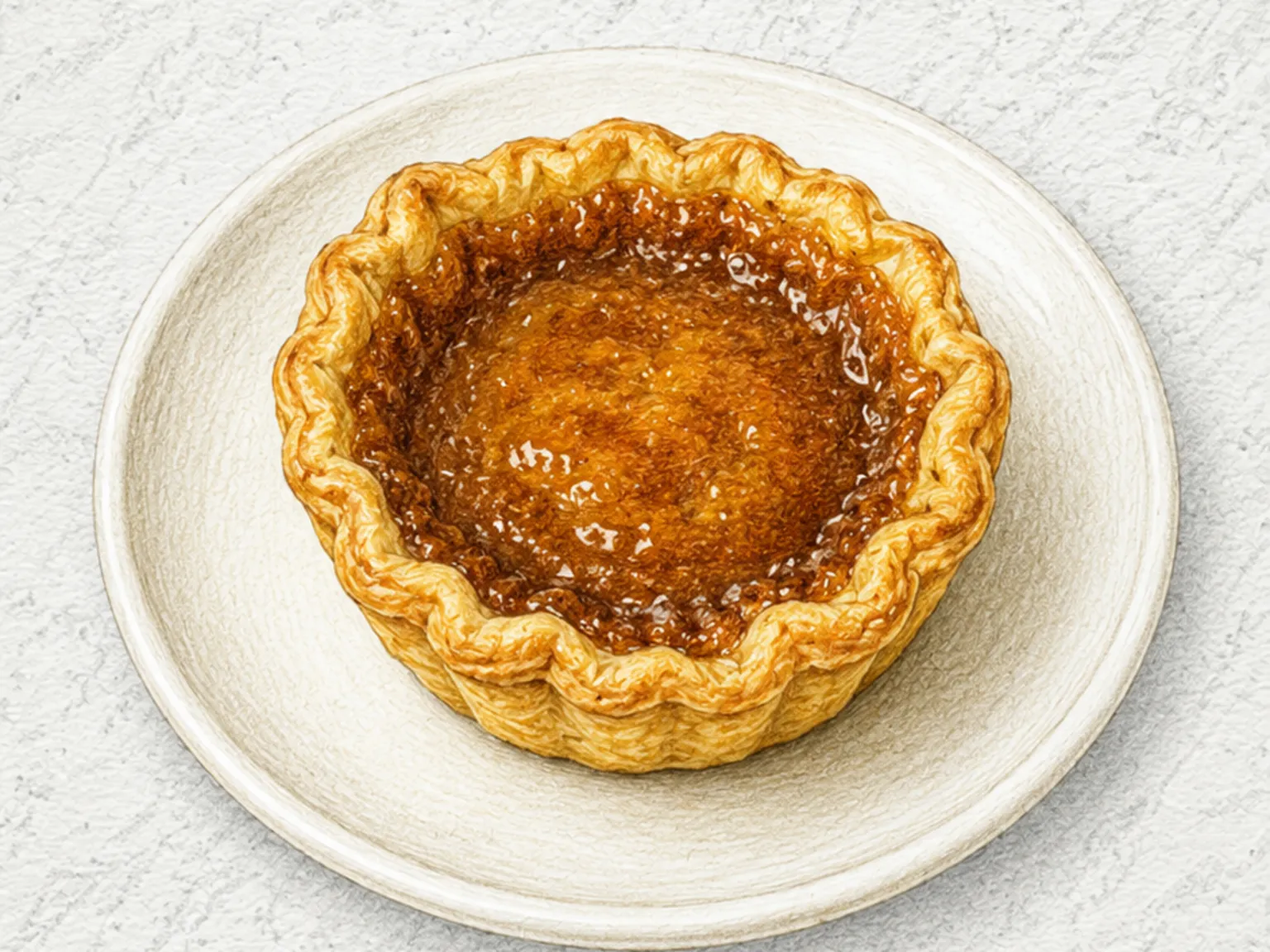
Butter Tart (Canadian Gooey Brown Sugar Tart)
Butter tarts are a Canadian institution -- small pastry shells filled with a mixture of butter, brown sugar, eggs, and corn syrup or maple syrup, baked until the edges set while the center remains gloriously gooey and molten. The brown sugar creates a toffee-like depth that goes well beyond ordinary sweetness, and the egg binds the filling into something suspended between liquid caramel and soft custard. The pastry shell must be baked firm enough to hold the sticky interior without softening, delivering a shatteringly crisp, flaky contrast with every bite. Getting that balance right between a set edge and a still-flowing center is the defining technical challenge of the recipe -- a few minutes too long in the oven and the filling turns grainy and tight. Some versions fold in plump raisins, chopped walnuts, or pecans for texture and flavor, though committed purists argue the unadulterated butter filling needs no embellishment. Served slightly warm, the caramel fragrance intensifies and the center flows freely; cooled to room temperature, the filling firms to a pleasant, chewy consistency that holds its shape when cut. Either way, the ratio of buttery, molten center to a shatteringly crisp pastry defines a properly made butter tart, and the debate between runny-center and firm-center devotees is one Canada has never quite settled.
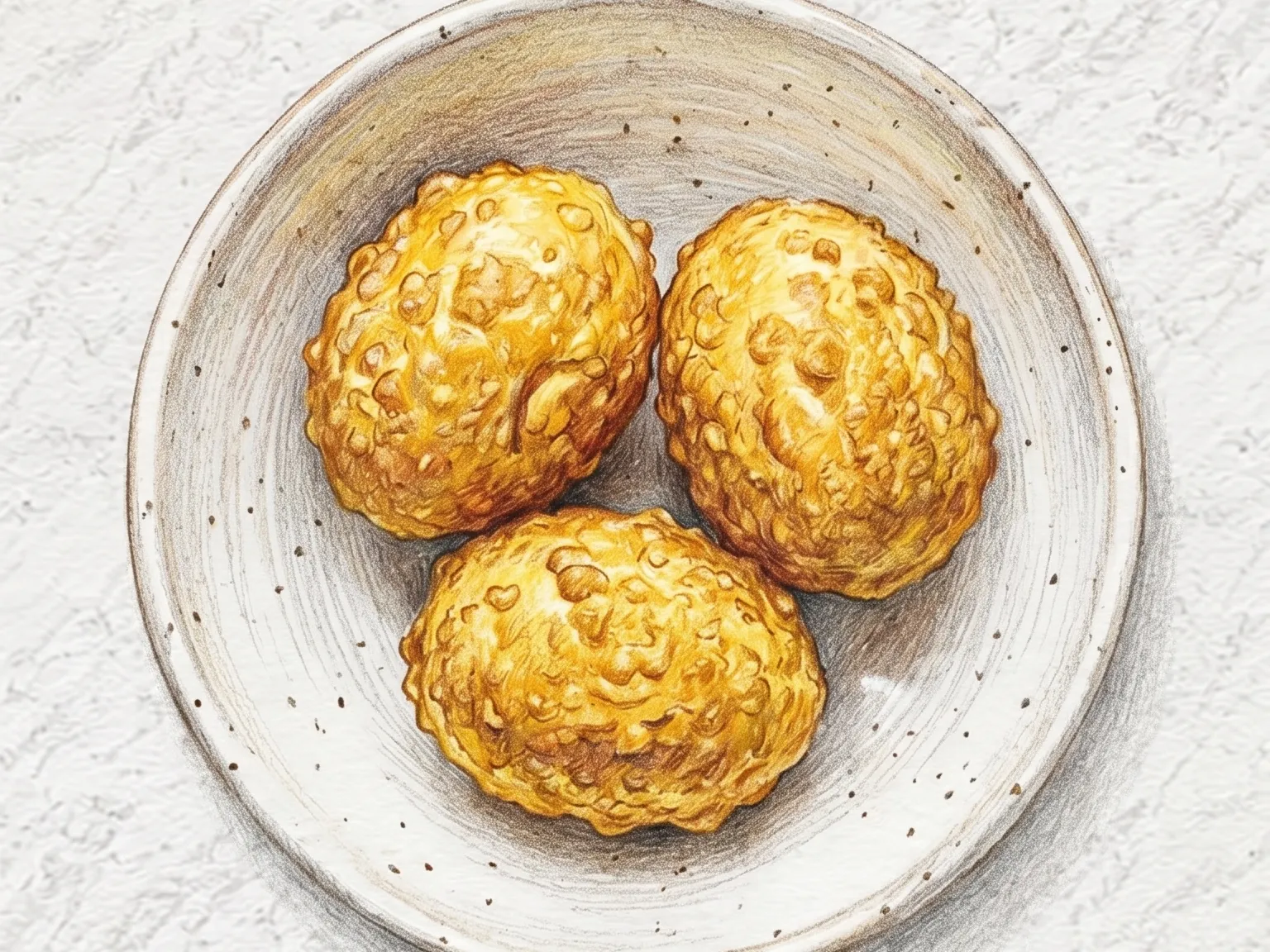
Korean Deep-Fried Egg (Battered Boiled Egg with Crispy Golden Shell)
Gyeran-twigim is a Korean street snack of peeled boiled egg coated in a thin cold-water batter and fried at 170 degrees Celsius until the shell turns golden and crisp. The batter is mixed minimally, just enough to combine the frying powder and cold water without lumps, because a thinner coat lets the egg's own flavor carry through while a heavy coat buries it. When the egg is soft-boiled, the yolk stays semi-liquid inside the crunchy shell, creating a dramatic contrast the moment the outer crust breaks. Hard-boiling produces a crumbly, dry yolk with a dense, satisfying texture instead. A pinch of coarse salt is the only seasoning needed to bring out the egg's natural richness. Dipping the fried egg into the spicy-sweet broth from a bowl of tteokbokki transforms it entirely, as the porous batter absorbs the sauce and takes on the deep, savory-sweet heat of the stew.
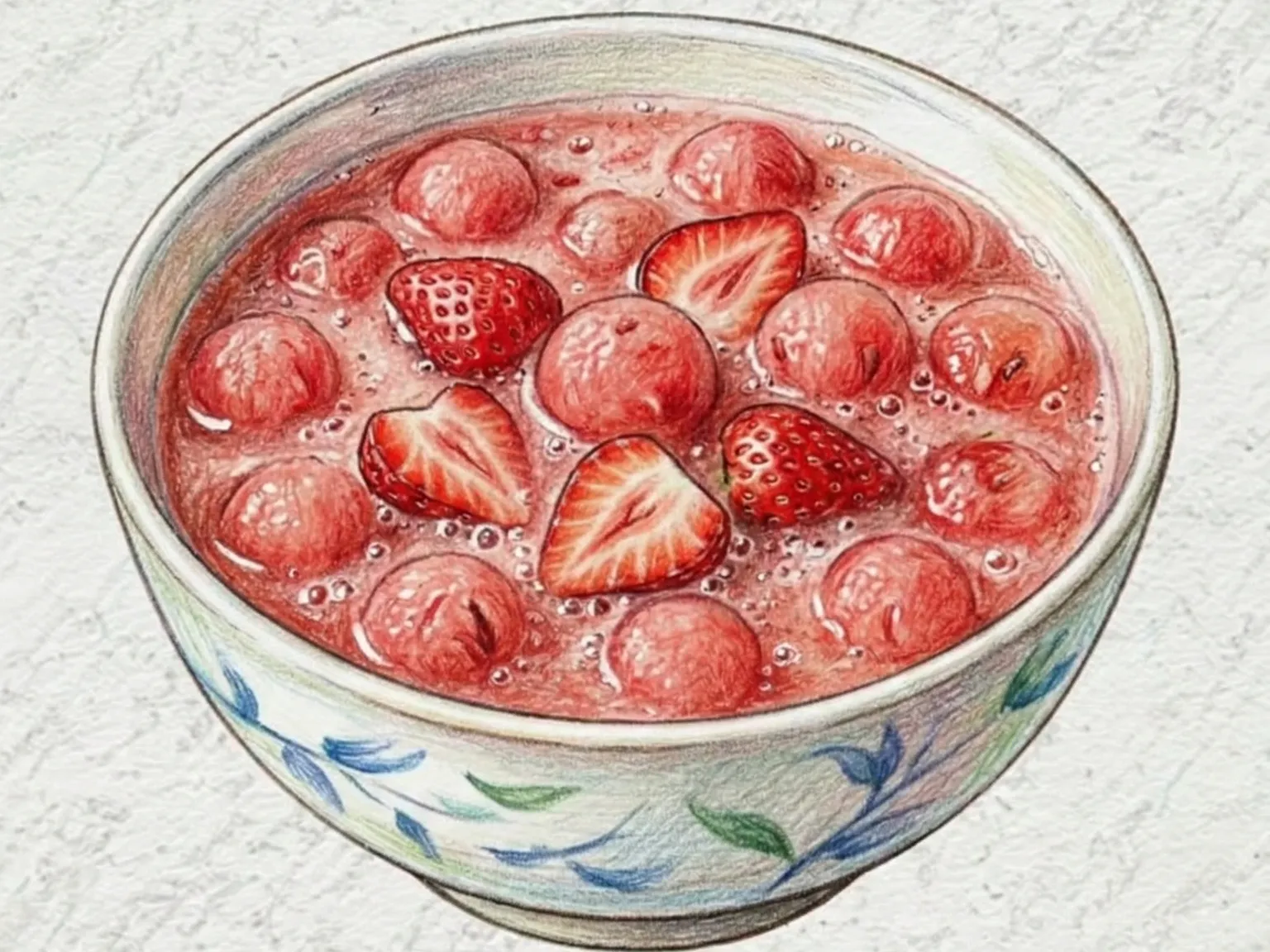
Watermelon Punch
Subak hwachae is a Korean summer punch that uses half its watermelon blended and strained into a smooth juice base, with the other half scooped into balls as garnish. Mixing the watermelon juice with milk creates a pink, creamy foundation, and lemon-lime soda is stirred in just before serving to preserve its fizz. Adding strawberries and blueberries introduces an acidic brightness and color contrast that watermelon alone lacks, and generous ice keeps the drink cold enough for the fruit aromas to stay sharp. Chilling the watermelon juice thoroughly before combining it with milk is essential to prevent the two liquids from separating. The layered colors of red watermelon, deep blueberries, and vivid strawberries in a single bowl make it as visually striking as it is refreshing, turning a straightforward summer drink into something worth presenting at the table.
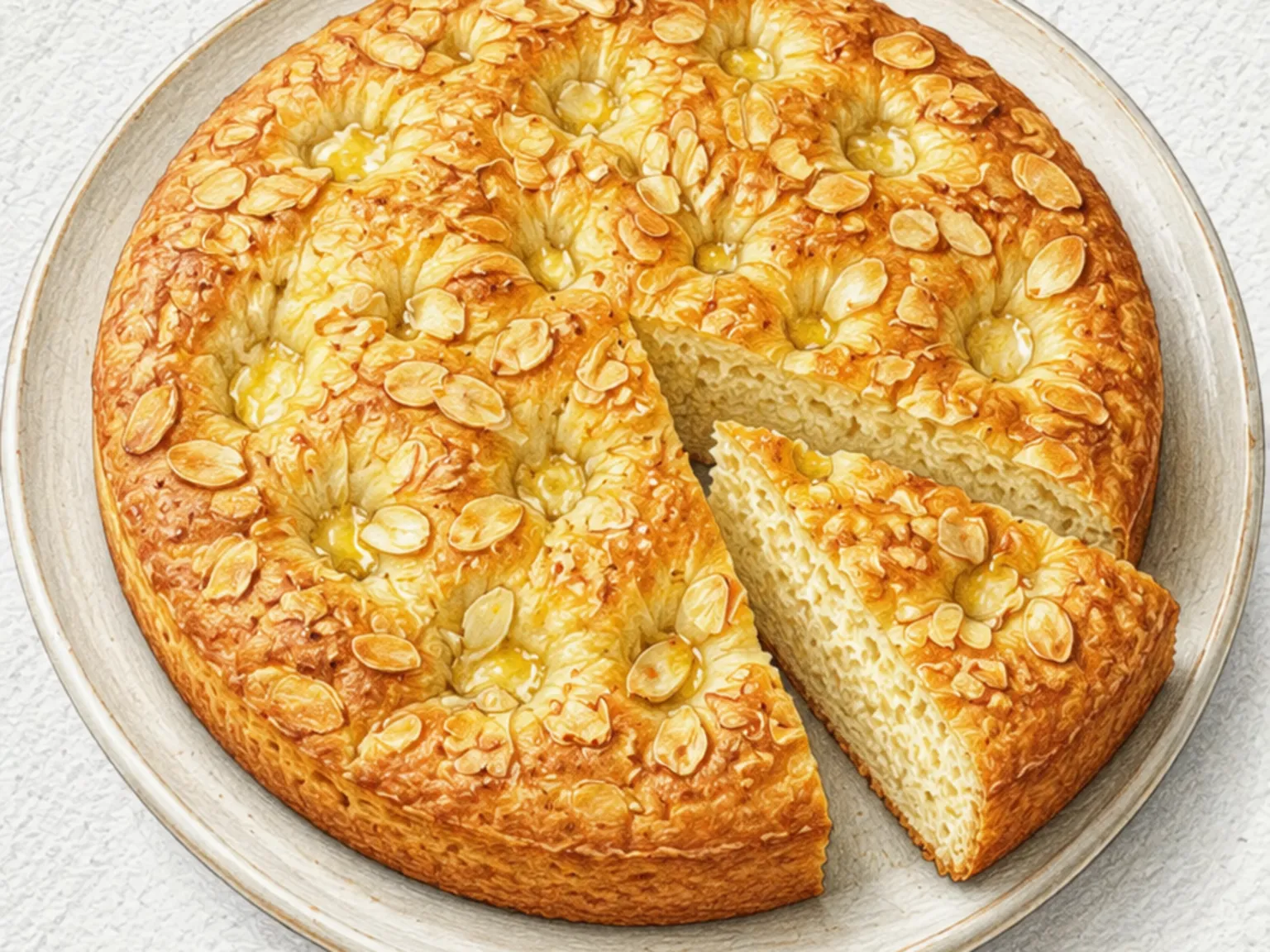
German Butter Cake (Yeasted Sheet Cake with Almond Topping)
Butterkuchen is a traditional German yeasted cake that relies on generous amounts of butter for its character. The dough is a soft, enriched bread base similar to brioche that rises into a pillowy sheet before baking. The surface is dimpled with fingertips and small pieces of cold butter are pressed into each hollow, so that as the cake bakes, the butter melts into caramelized pools that create pockets of salty-sweet richness across the top. Sliced almonds scattered over the surface toast to a golden crunch, adding textural contrast to the soft, open-crumbed interior. The finished cake is tender and buttery without being heavy - each square holds together cleanly when sliced, the almonds staying anchored by the caramelized glaze rather than scattering. The recipe has remained largely unchanged in northern German bakeries and family kitchens for generations, where simplicity of ingredients is the point rather than the limitation. A cup of strong filter coffee alongside a warm slice is the standard pairing, and the combination holds up without improvement.
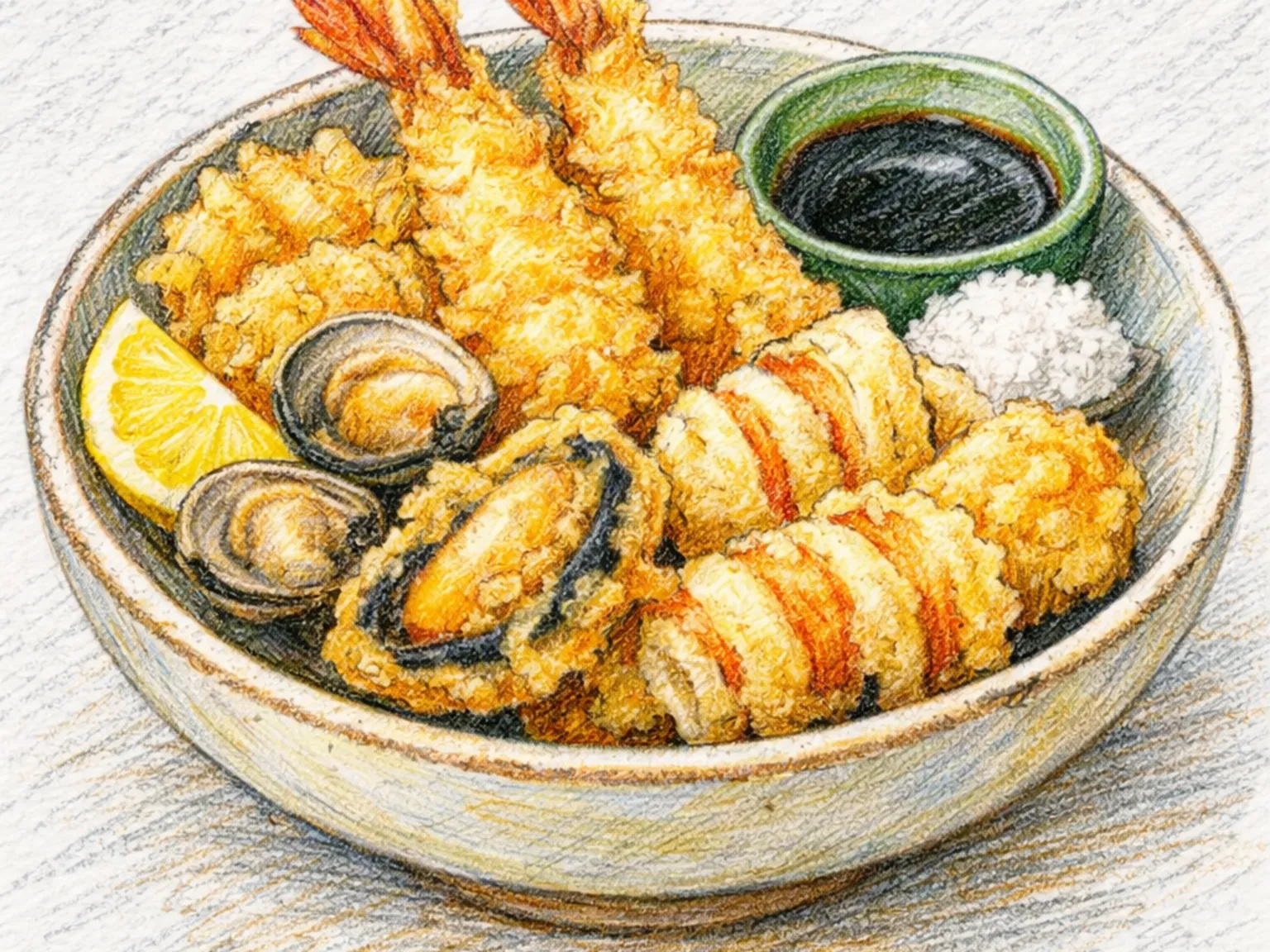
Korean Seafood Tempura (Korean Deep-Fried Seafood)
Haemul-twigim is a Korean assorted seafood platter of shrimp, squid, and clams coated in a light cold-water batter and deep-fried until crisp. Each type of seafood requires different prep: shrimp get their back tendons snipped to prevent curling, and squid are scored to stop them from shrinking in hot oil. The cold-water batter produces a thin, delicate coating that highlights the seafood's own flavors rather than burying them. Frying briefly at 170 degrees keeps the interiors from turning rubbery, and the platter is typically served with soy dipping sauce or salt alongside tteokbokki and fish cake soup as part of a bunsik spread. Substituting beer or sparkling water for plain cold water in the batter creates an even lighter, crispier coating, and draining the pieces thoroughly on a rack immediately after frying is what keeps them from going soggy before they reach the table.
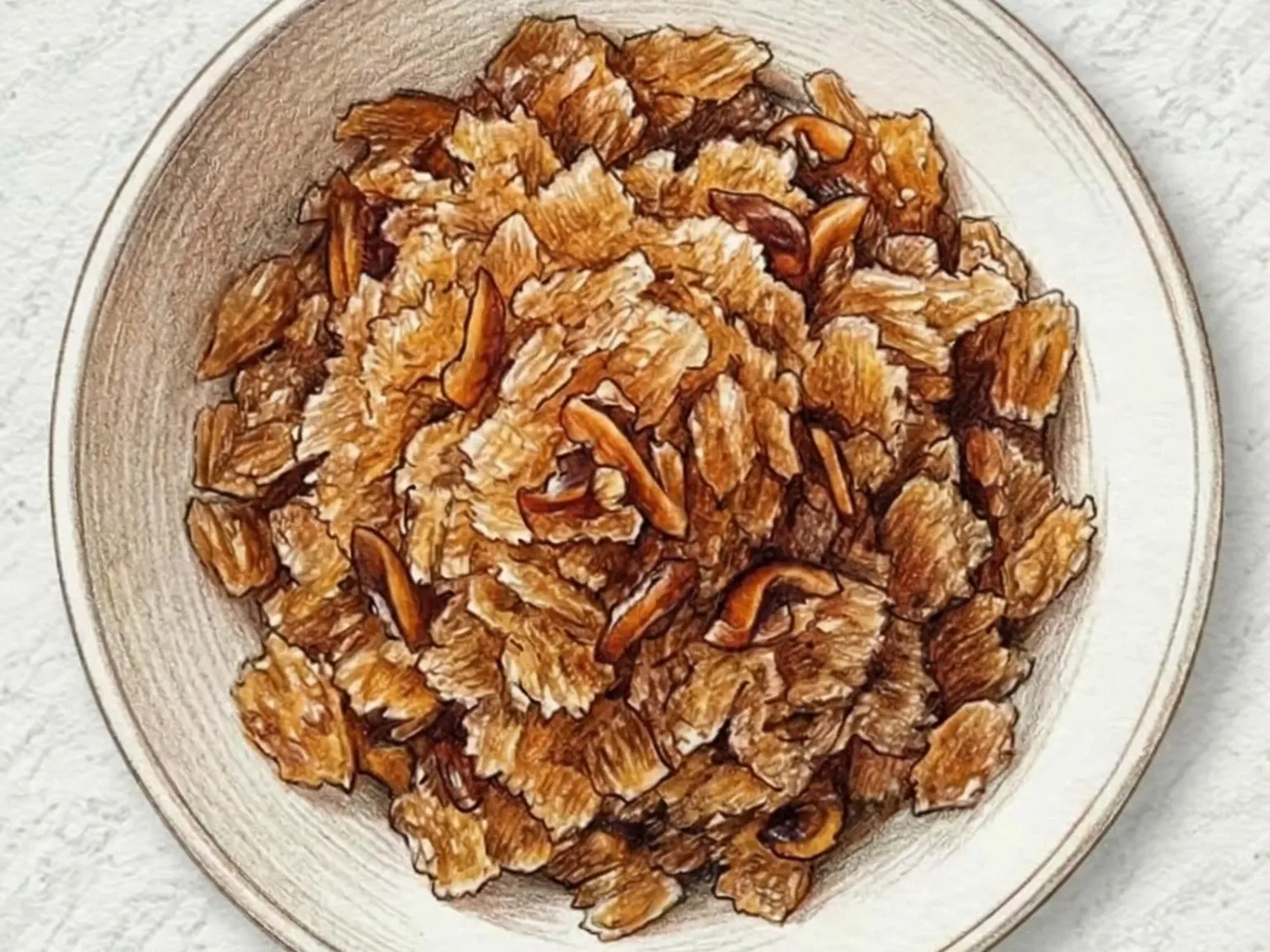
Cinnamon Persimmon Ice (Korean Spiced Punch Scraped Ice Dessert)
Sujeonggwa granita converts the traditional Korean cinnamon-ginger punch into a flaky frozen dessert by sweetening the steeped liquid with dark brown sugar and then breaking it into coarse crystals through repeated scraping. Cinnamon sticks and fresh ginger are simmered in water for at least twenty minutes to draw out the full depth of both spices before being strained. The sweetened liquid is poured into a shallow metal tray, which chills more quickly and freezes more evenly than deep containers. Every hour for three to four rounds a fork is dragged through the solidifying surface, breaking up any sheets of ice and encouraging the formation of separate, granular crystals. Scraping more frequently and starting promptly after the first hour produces a finer, more uniform texture, while leaving it too long between sessions allows solid blocks to form that are harder to break up. The spice compounds concentrate into each ice shard as the water freezes around them, so the granita delivers a cold but intensely flavored mouthful at every bite. Thin strips of dried persimmon and pine nuts placed on top before serving add the same garnishes used in traditional sujeonggwa: the persimmon brings a sticky chewiness and concentrated sweetness, while the pine nuts contribute a mild, buttery richness that contrasts with the crunchy, crystalline ice beneath.
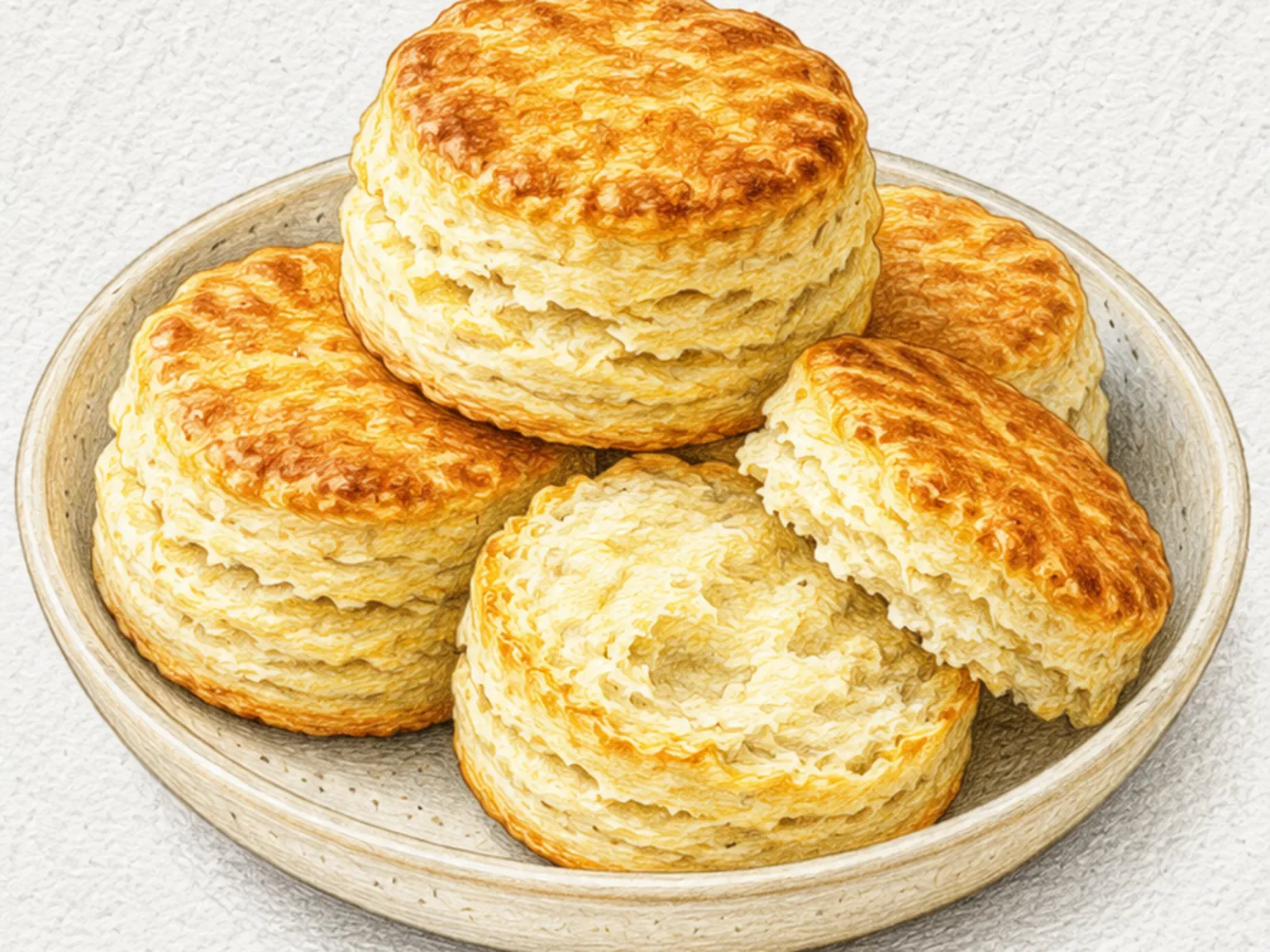
Flaky Oven Biscuits
Buttermilk biscuits are built on the tension between cold butter and high oven heat. Cubes of chilled butter are cut into flour until pea-sized pieces remain, and the dough is brought together quickly with buttermilk - just enough mixing to bind, no more. In the oven, the butter melts and releases steam, forcing the dough apart into flaky, irregular layers. The exterior bakes to a golden, slightly crisp shell while the interior stays soft and crumbly. Buttermilk provides a faint tanginess that sharpens the overall flavor and reacts with baking soda to give the biscuits additional lift. Overworking the dough is the most common mistake, as it develops gluten and produces a tough, bread-like result instead of the tender, pull-apart texture that defines a good biscuit. Split while still warm and spread with butter and jam, they are a cornerstone of American Southern breakfast. Lower-protein flour produces a more tender crumb, and keeping the butter frozen until just before use helps maintain the distinct layers throughout baking.
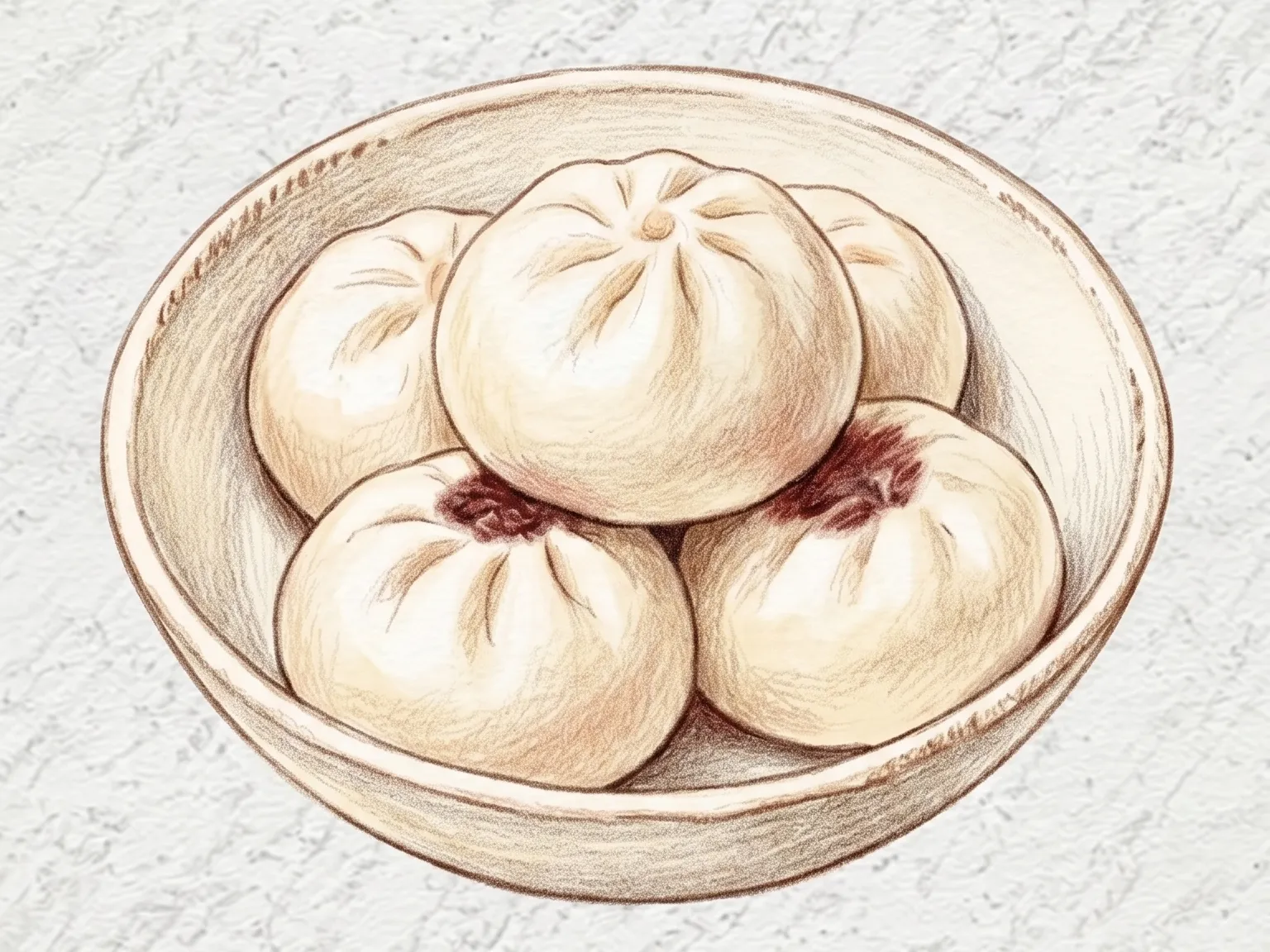
Korean Steamed Buns (Fluffy Yeast-Leavened Buns with Sweet Red Bean)
Hoppang is a Korean steamed bun made from yeast-leavened bread flour dough enriched with milk, filled with sweet red bean paste and cooked in a steamer. The dough rises during proofing to become pillowy and elastic, turning moist and springy once steamed. The dense sweetness of the red bean filling seeps into the surrounding bread layer, and placing the sealed side down during steaming prevents splitting. A small addition of salt to the dough sharpens the sweetness and creates a subtle contrast that keeps the flavor from becoming flat. Adequate proofing time is equally important: the longer the dough ferments within reason, the more evenly distributed the gas bubbles, which means a consistently light, open crumb after steaming. It is a classic Korean winter street snack, traditionally sold piping hot from steam carts at outdoor stalls and convenience stores throughout the cold season.
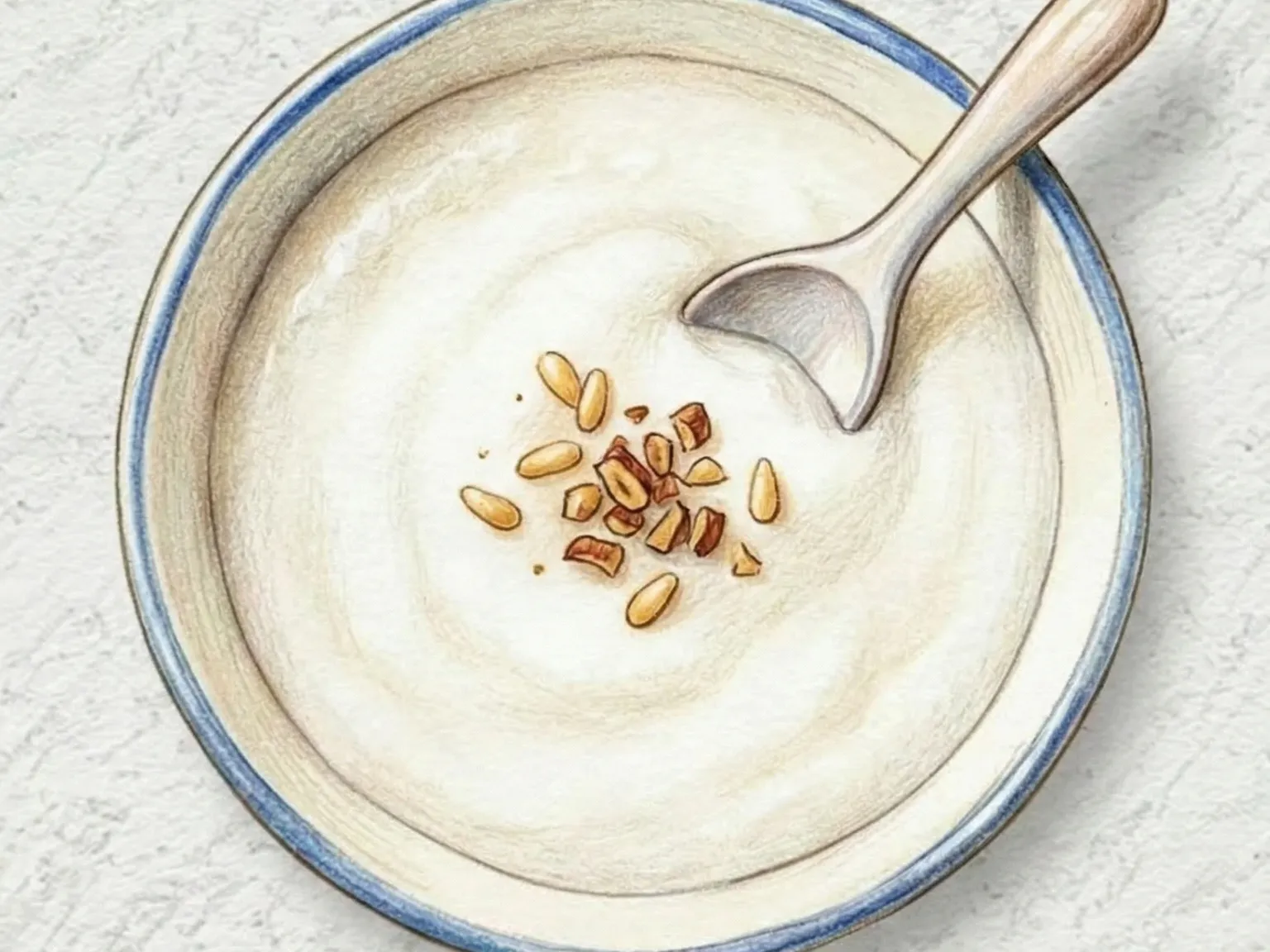
Korean Milk Rice Porridge
Tarakjuk is a traditional Korean milk rice porridge made by coarsely grinding soaked rice, simmering it in water first to initiate gelatinization, then gradually incorporating milk over sustained stirring. Grinding the rice coarsely rather than to a fine paste preserves some texture in the finished porridge, preventing it from becoming uniformly smooth. Once the rice has been simmered in plain water and the starch begins to thicken the base, milk is added in two or three separate additions over ten minutes of constant stirring. Pouring all the milk in at once risks splitting due to the temperature differential between the cold dairy and the hot starch base. Each addition is stirred in fully before the next portion goes in, allowing the proteins and fats in the milk to incorporate evenly without curdling. A small pinch of salt and a measured amount of sugar are added to tie together the toasty, nutty character of the grain and the mild sweetness of the dairy -- neither should dominate. A final three minutes of simmering brings the porridge to a consistency that flows slowly off the back of a spoon. Pine nuts on top contribute a richly oily nuttiness, and a pinch of ground cinnamon adds a warm, aromatic finish. Historical records from the Joseon period note tarakjuk as a medicinal restorative prepared in the royal court.
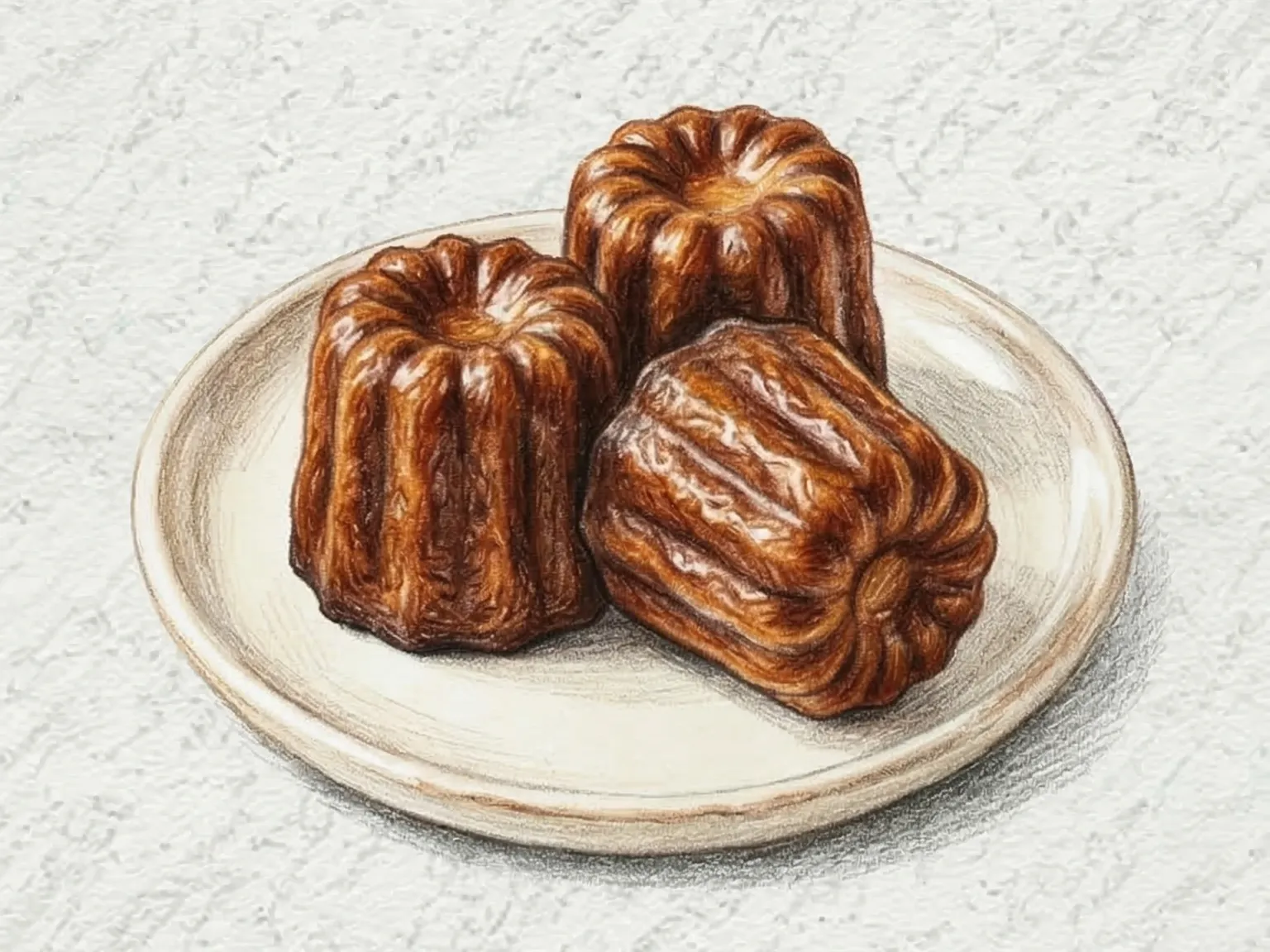
Canelé (Bordeaux Caramelized Rum Vanilla Custard Cake)
Canele is a small French pastry from Bordeaux with a caramelized, deeply browned exterior and a soft, custardy interior perfumed with vanilla and rum. The batter combines milk, eggs, flour, sugar, vanilla bean, and dark rum into a simple mixture, but the technique demands patience. The batter must rest overnight in the refrigerator to relax the gluten and allow the flavors to integrate fully. Traditional copper molds are coated with beeswax before each bake, and this coating is what produces the distinctive lacquered, almost brittle crust during high-temperature baking. When you bite through the shell, it splinters and crackles to reveal the yielding, moist custard beneath, and this dramatic contrast in texture is what makes the pastry remarkable. The vanilla and rum deepen as the surface caramelizes over the long bake, producing a complexity of flavor that far exceeds the simplicity of the ingredient list. Caneles are best eaten within one to two hours of leaving the oven, after which moisture migrating outward from the center gradually softens the crust.

Korean Corn Dog
Korean corn dogs are a street food built around two fillings: a sausage, mozzarella cheese, or both together, skewered on a stick and coated in a thick batter made from pancake mix before being rolled in panko breadcrumbs and fried at 170 degrees Celsius. The panko creates a coarse, jagged exterior that shatters on the first bite, while the inner batter layer stays dense and chewy, producing a layered texture that is central to the appeal. Inside, the mozzarella stretches in long pulls as the heat melts it, mixing with the salty sausage in a way that makes each bite unpredictable. Immediately after frying, the hot dog is rolled in granulated sugar, which clings to the crisp surface and creates the signature sweet-and-salty contrast that sets the Korean version apart from American corn dogs. Ketchup and mustard are standard condiments. Variations are common: some stalls use only cheese, others stack rice cake, potato cubes, or shrimp alongside the sausage for extra texture. Korean corn dogs are sold at street stalls, night markets, and bunsik shops.
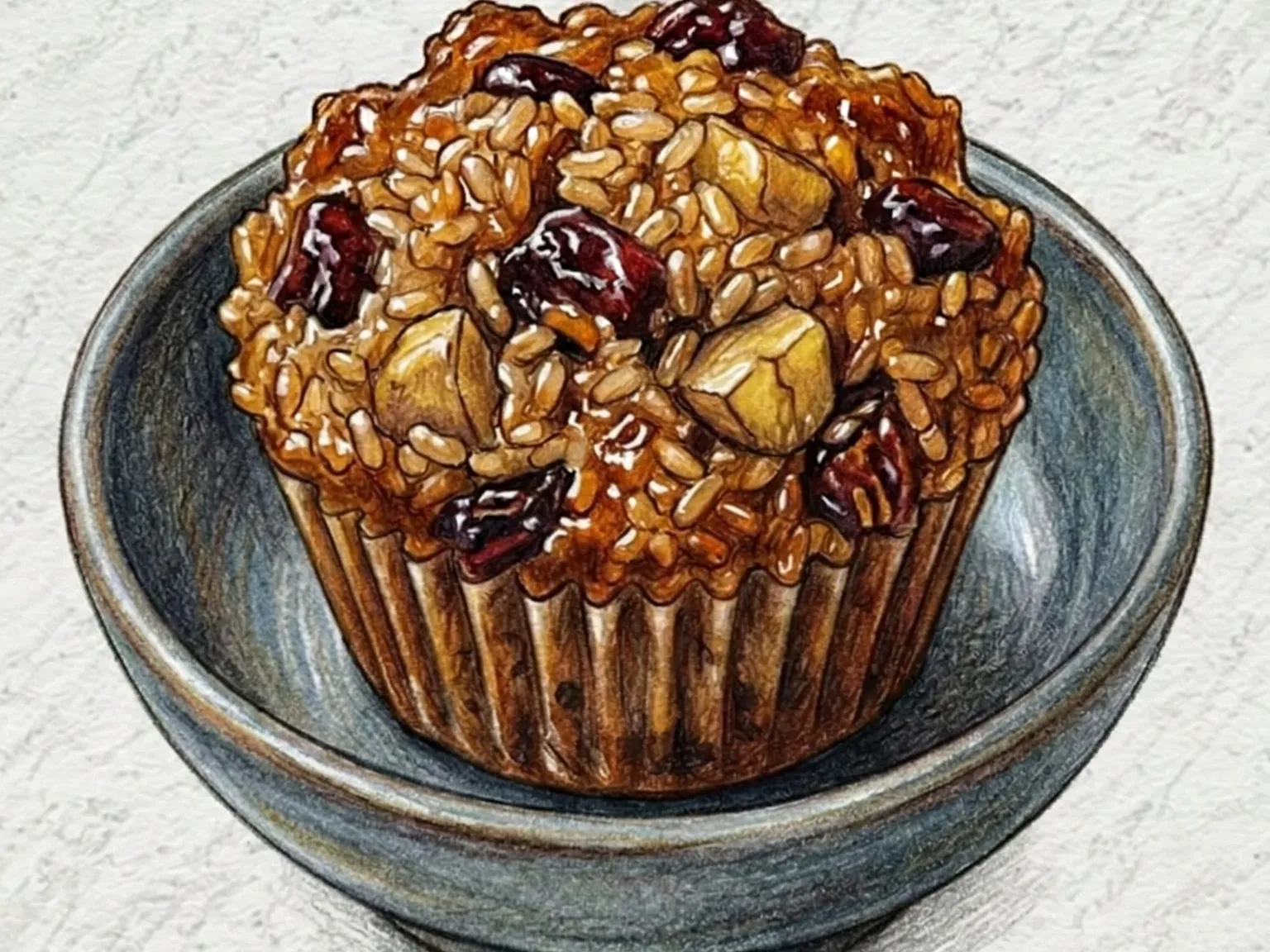
Sweet Rice Honey Muffins
Yakbap muffins bake soaked glutinous rice that has been marinated for 20 minutes in a seasoning of soy sauce, dark brown sugar, honey, and sesame oil, then portioned into muffin cups with sliced jujubes and diced chestnuts before going into a 180-degree oven. The soy sauce provides a savory depth that folds into the brown sugar and honey to produce the dark, caramel-like sweetness that distinguishes traditional yakbap, while sesame oil amplifies the grain aroma throughout. Jujubes are sliced thin so their juices seep between the rice grains during baking, and the chestnut cubes provide a starchy, crumbly resistance against the sticky glutinous rice. Pine nuts placed on top release their oils as they roast, filling the oven with a nutty fragrance that deepens as the muffins brown. A 10-minute rest after removing them from the oven allows the residual heat to distribute evenly, so the glutinous rice firms into a clean shape that separates easily from the mold. The recipe reinterprets traditional yakshik as individual servings suited to a modern table.
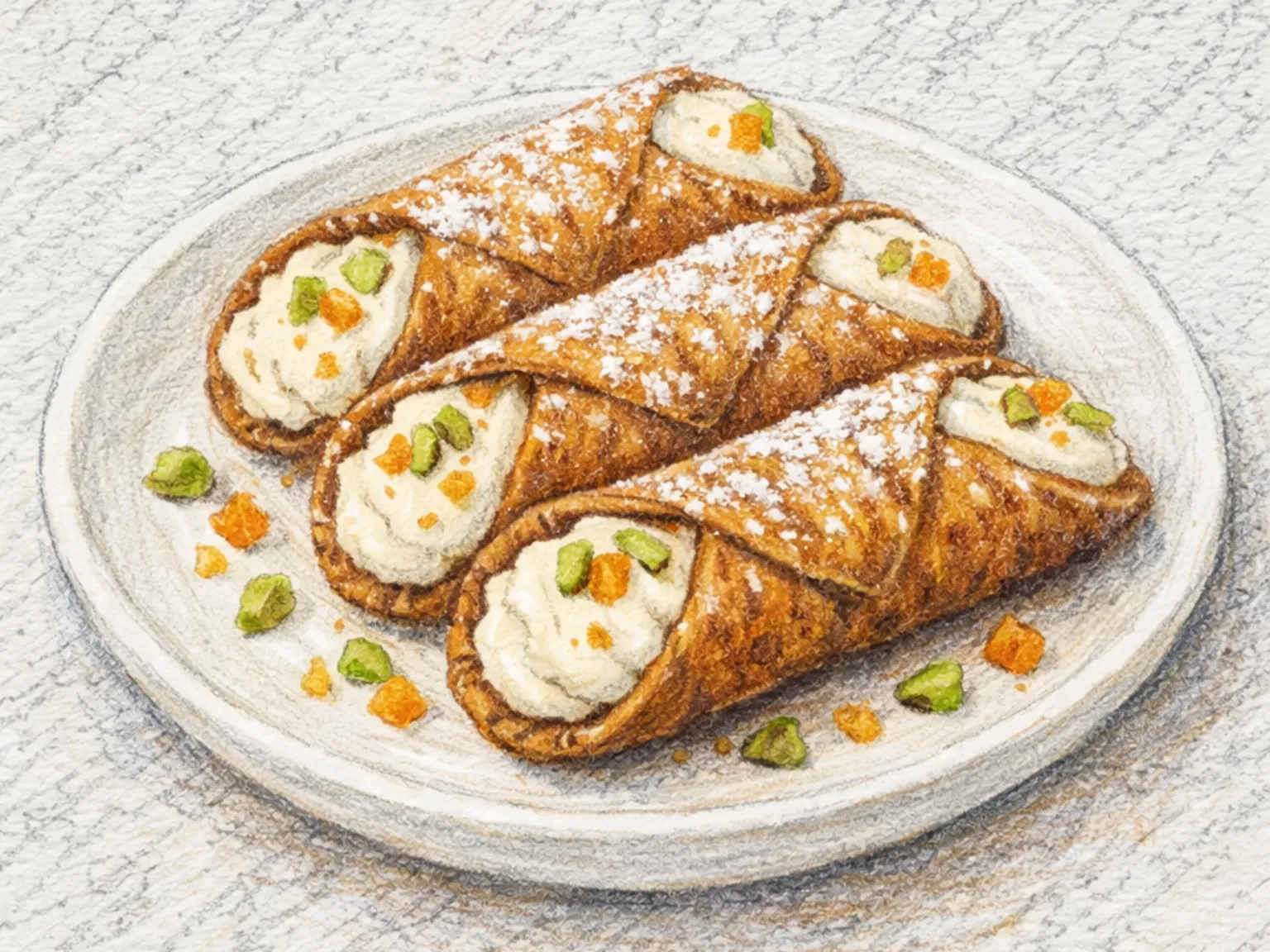
Cannoli
Cannoli are Sicilian pastries built around a crisp, tube-shaped shell and a sweetened ricotta filling. The shell dough is enriched with lard, rolled very thin, and wrapped tightly around narrow metal tubes before being lowered into hot oil, where the fat in the dough creates multiple flaky layers that shatter with a clear snap on first bite. The ricotta filling is sweetened but left slightly grainy rather than smooth, a deliberate texture that gives the pastry a lighter, less dense quality than a conventional cream filling. Chopped pistachios, candied orange peel, or chocolate chips are pressed into the exposed ends to provide color and a contrasting flavor note. Filling the shells more than a few minutes before serving is a mistake, because moisture migrates from the ricotta into the fried dough and turns the crisp shell soft. In Sicily, cannoli were historically associated with Carnival celebrations, though today they appear year-round in pasticcerie across the island and throughout the Sicilian diaspora.
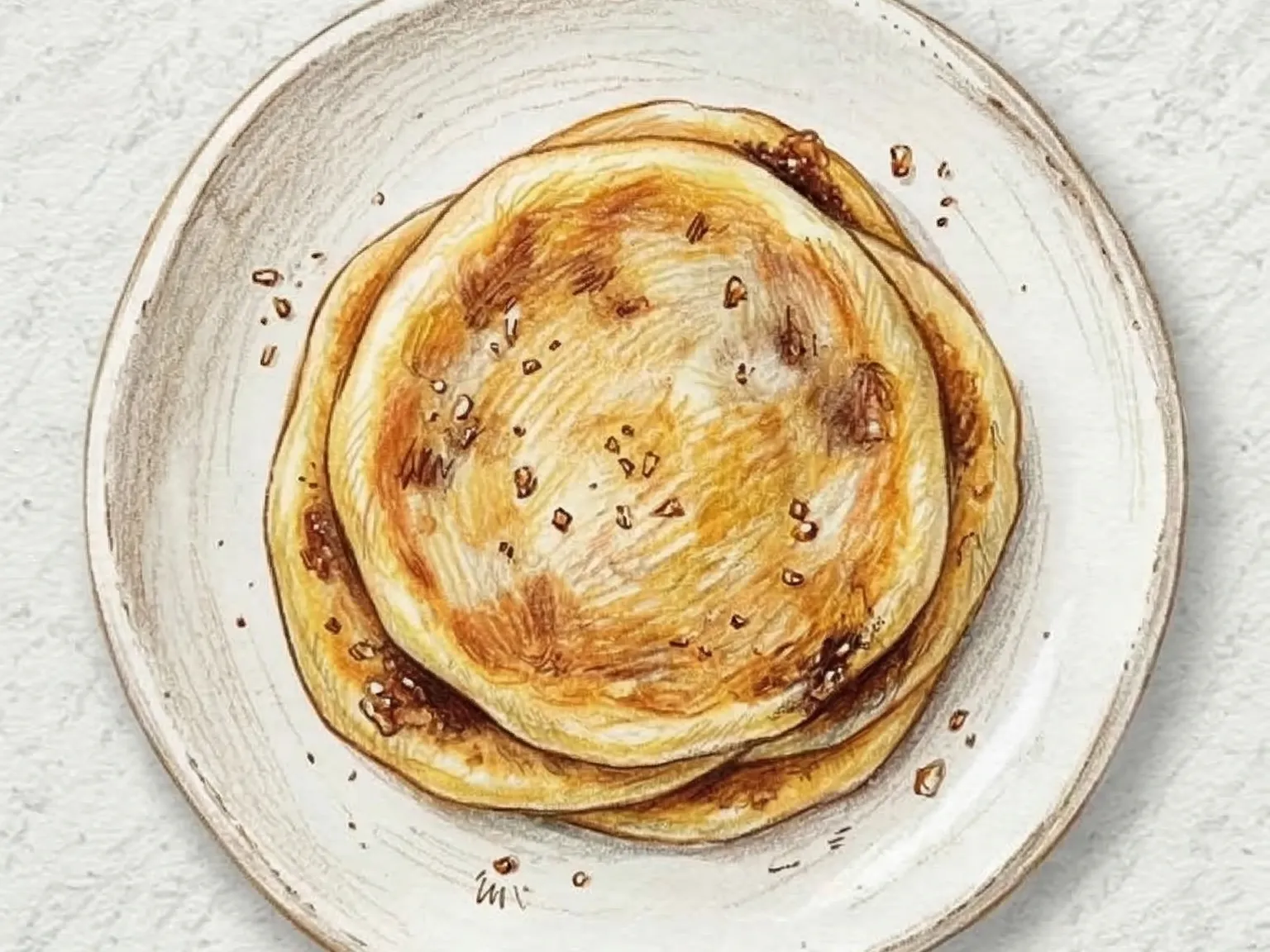
Korean Sweet Pancake (Chewy Yeast Dough with Brown Sugar Cinnamon Filling)
Hotteok is a pan-fried Korean street snack made from yeast-risen dough blended with wheat flour and glutinous rice flour, stuffed with a filling of brown sugar, cinnamon powder, and chopped peanuts. The glutinous rice flour gives the dough a distinctly chewier bite than plain wheat dough, and the brown sugar filling melts into hot syrup during cooking as the dough presses flat against the pan. Flattening the ball with a spatula caramelizes the outer surface to a golden crust while the cinnamon-scented liquid pools inside. A variation called ssiat hotteok incorporates sunflower seeds and mixed grains into the filling, adding a nutty crunch alongside the sweet syrup. Proper fermentation of the dough is critical for a tender, elastic skin; pressing too thin risks the filling leaking onto the pan and burning. Street vendors serve hotteok straight off the griddle in a small paper cup, and the challenge is eating it before the syrup drips out.
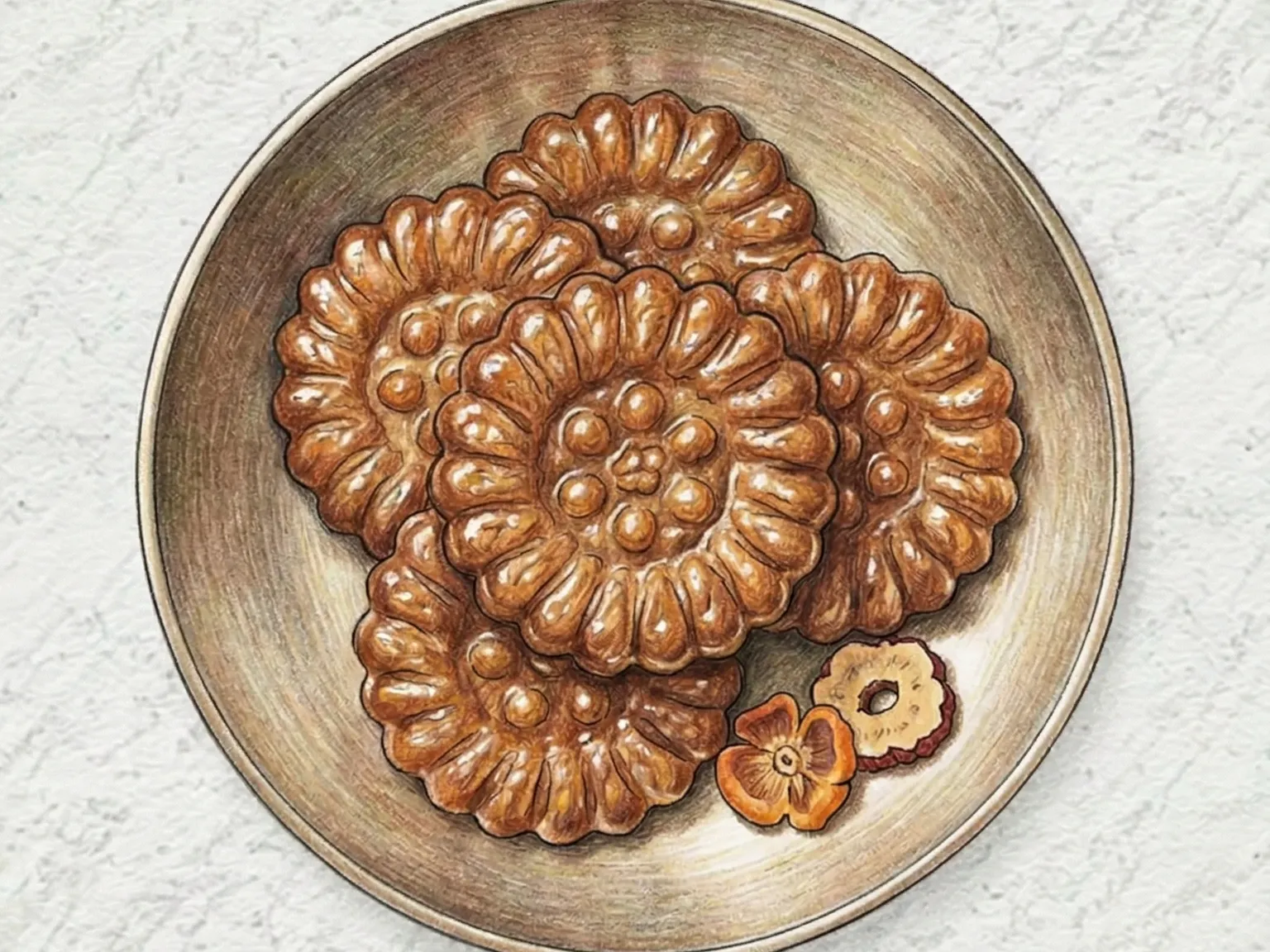
Honey Ginger Pastry (Korean Deep-Fried Layered Wheat Honey Cookie)
Yakgwa is a traditional Korean honey pastry made from wheat flour rubbed with sesame oil, then mixed with rice wine, ginger juice, and rice syrup, folded and rolled repeatedly to build up laminated layers before frying. A two-stage frying method is essential to the texture: first at 140 degrees Celsius to cook the dough through slowly without coloring, then briefly at 170 degrees to develop a golden, crisp exterior over a layered, flaking interior. Soaking the fried pastries in a warm syrup of honey, water, and ground cinnamon for at least two hours allows the sweetness to penetrate deep between the laminated layers, saturating each piece with moist, fragrant honey flavor from edge to center. Ginger juice surfaces gently in the finish, providing just enough warmth to temper the concentrated sweetness and keep the flavor from feeling cloying. The sesame oil rubbed into the dough from the start adds a persistent nutty backbone that ties together the honey, spice, and wheat flavors into the complex, layered profile that defines well-made yakgwa. Pine nuts or jujubes placed as garnish add visual elegance, and the pastry pairs particularly well with Korean teas, where its sweetness finds proper balance.
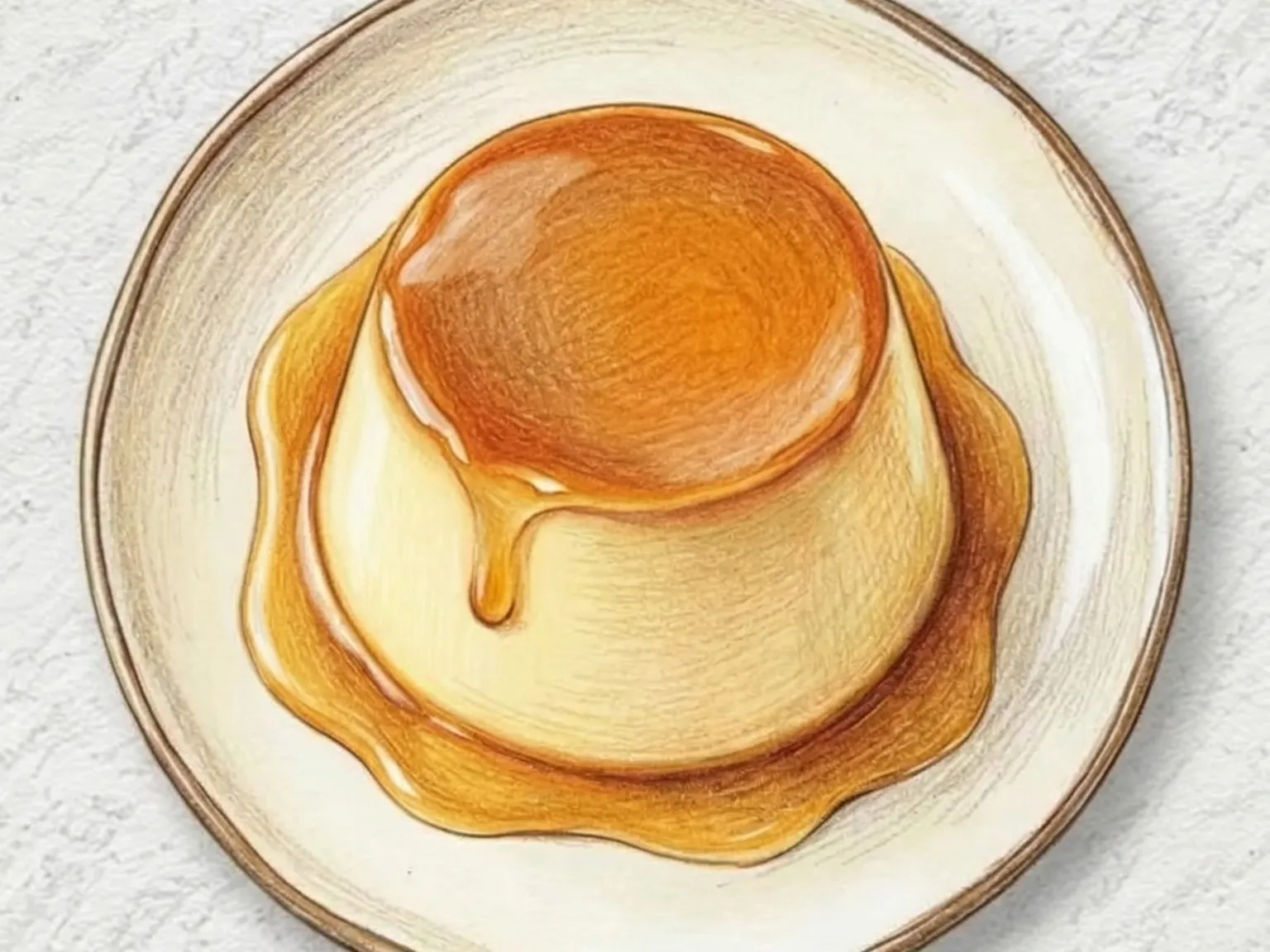
Caramel Flan
Caramel flan is a Spanish and Latin American custard dessert built entirely on the contrast between two preparations of sugar. The first is a dry caramel cooked in a pan until it reaches a deep amber color, at which point it is poured into the bottom of a mold and left to harden into a glossy layer. The second is a liquid custard of eggs, milk, sugar, and vanilla that is poured on top of the caramel and baked in a water bath. The water bath is critical: it moderates the oven temperature around the mold and prevents the proteins in the egg from contracting too quickly, which would produce a grainy or bubbly texture rather than the smooth, even set that characterizes a well-made flan. Once the custard is baked and fully chilled, the mold is inverted onto a serving plate -- the hardened caramel layer, having been in contact with the custard throughout the baking and cooling time, has liquefied back into a flowing sauce that spills over the pale custard in amber streaks. The flavor follows the visual contrast: the custard is mild, milky, and gently sweet, while the caramel adds a roasted, slightly bitter depth that prevents the dessert from being simply sweet. It is always served cold, and the smooth trembling surface of a properly set flan is considered a mark of careful technique.
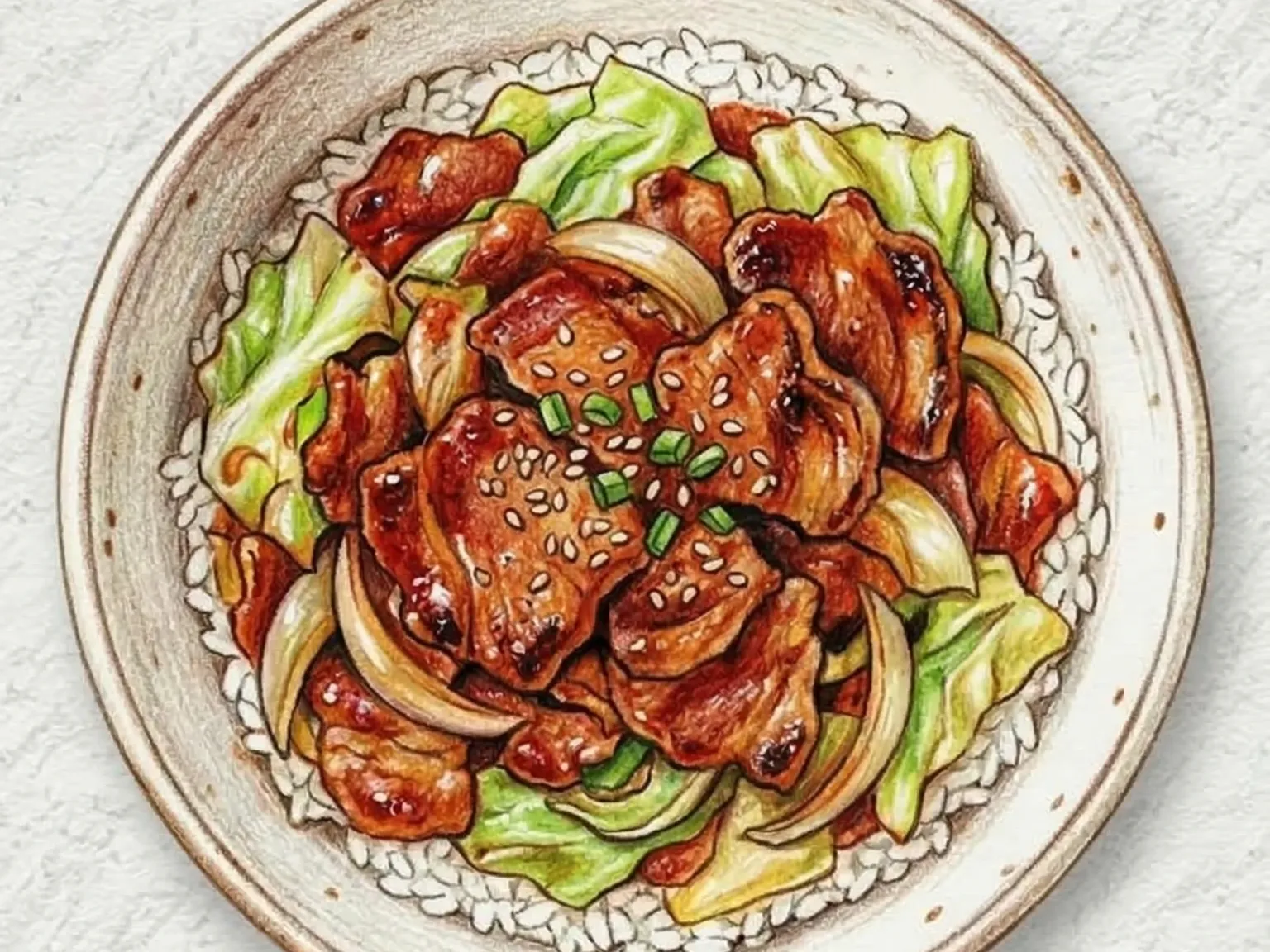
Korean Spicy Pork Rice Cup
Jeyuk cupbap is a Korean street-style rice cup topped with pork shoulder stir-fried in gochujang, soy sauce, sugar, and garlic, layered over steamed rice with onion and cabbage. The gochujang-sugar combination forms a spicy-sweet glaze on the pork that caramelizes quickly under high heat, sealing in the meat's juices and creating a lacquered surface. Cabbage goes in last to keep its snap, and the slow-cooked onion contributes a gentle sweetness that tempers the chili heat. Slightly cooled rice keeps the cup from turning soggy, and the tight, portable format makes this a defining item of Korean street-food culture, equally at home in a pojangmacha stall and a school cafeteria. A soft-boiled egg or a slice of processed cheese on top adds a rich, creamy note.