🧒 Kid-Friendly Recipes
Sweet and fun snacks kids will love
516 recipes. Page 15 of 22
Kid-friendly snacks should be tasty and nutritionally balanced. This tag includes sweet treats children love alongside healthier options with hidden vegetables - potato cheese balls, sweet potato sticks, fruit skewers, and more.
Making snacks at home means full control over ingredients, with no additives or preservatives. Cooking together can also be a fun activity for the family. Browse these simple recipes designed to please young palates.
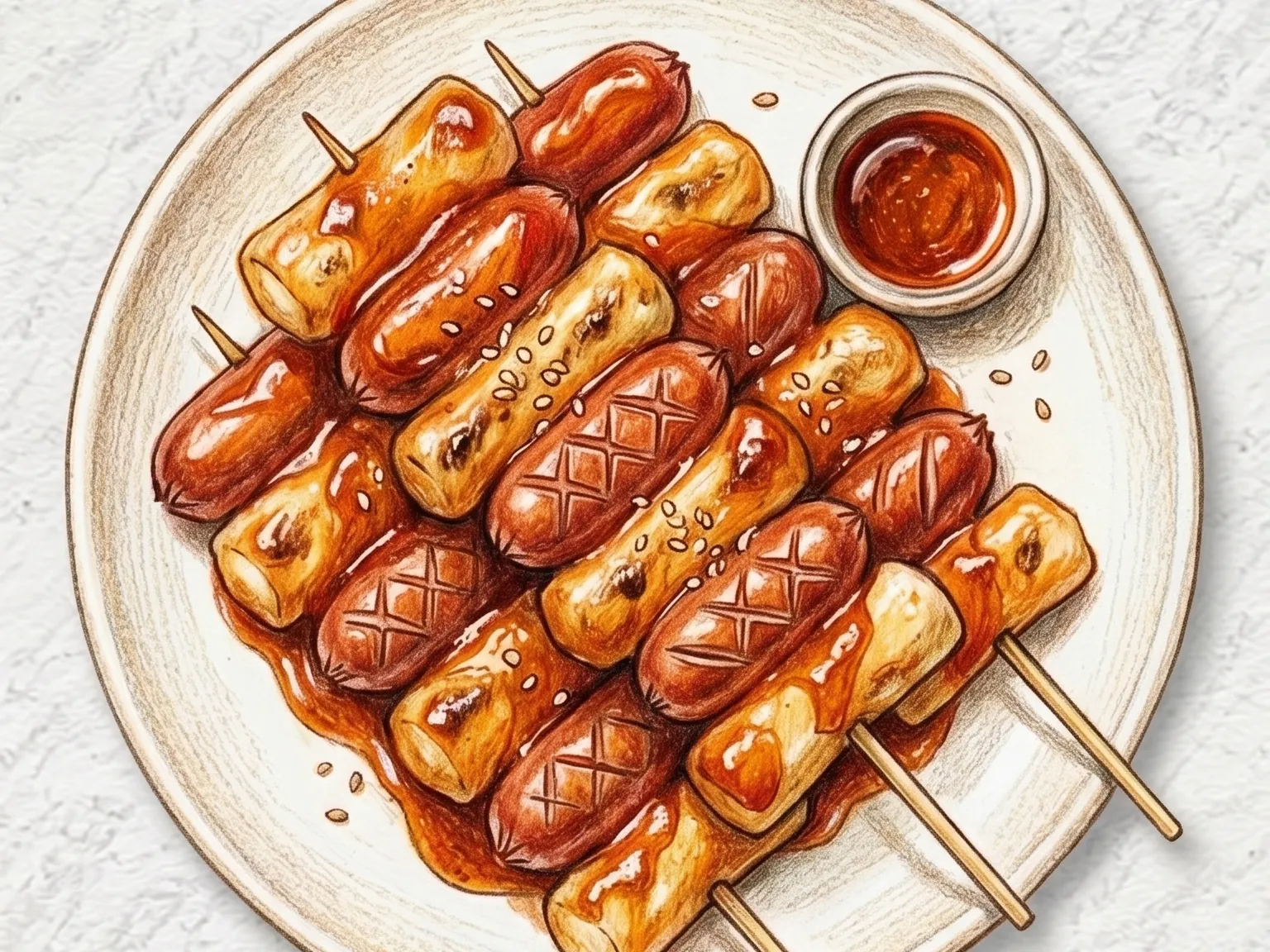
Korean Sotteok Sotteok Skewers
Sotteok-sotteok is a Korean street snack of alternating mini sausages and cylinder rice cakes on a skewer, pan-grilled and coated in a sweet-spicy glaze of gochujang, ketchup, and oligosaccharide syrup. The rice cakes are soaked in warm water beforehand to soften them, ensuring they cook through on the pan and achieve maximum chewiness. Sausages are lightly scored to prevent splitting, and the skewers are rolled over medium heat until evenly browned. The glaze is tossed on quickly over low heat so it clings in a glossy layer, and the sauce gradually seeps into the rice cakes with each bite.
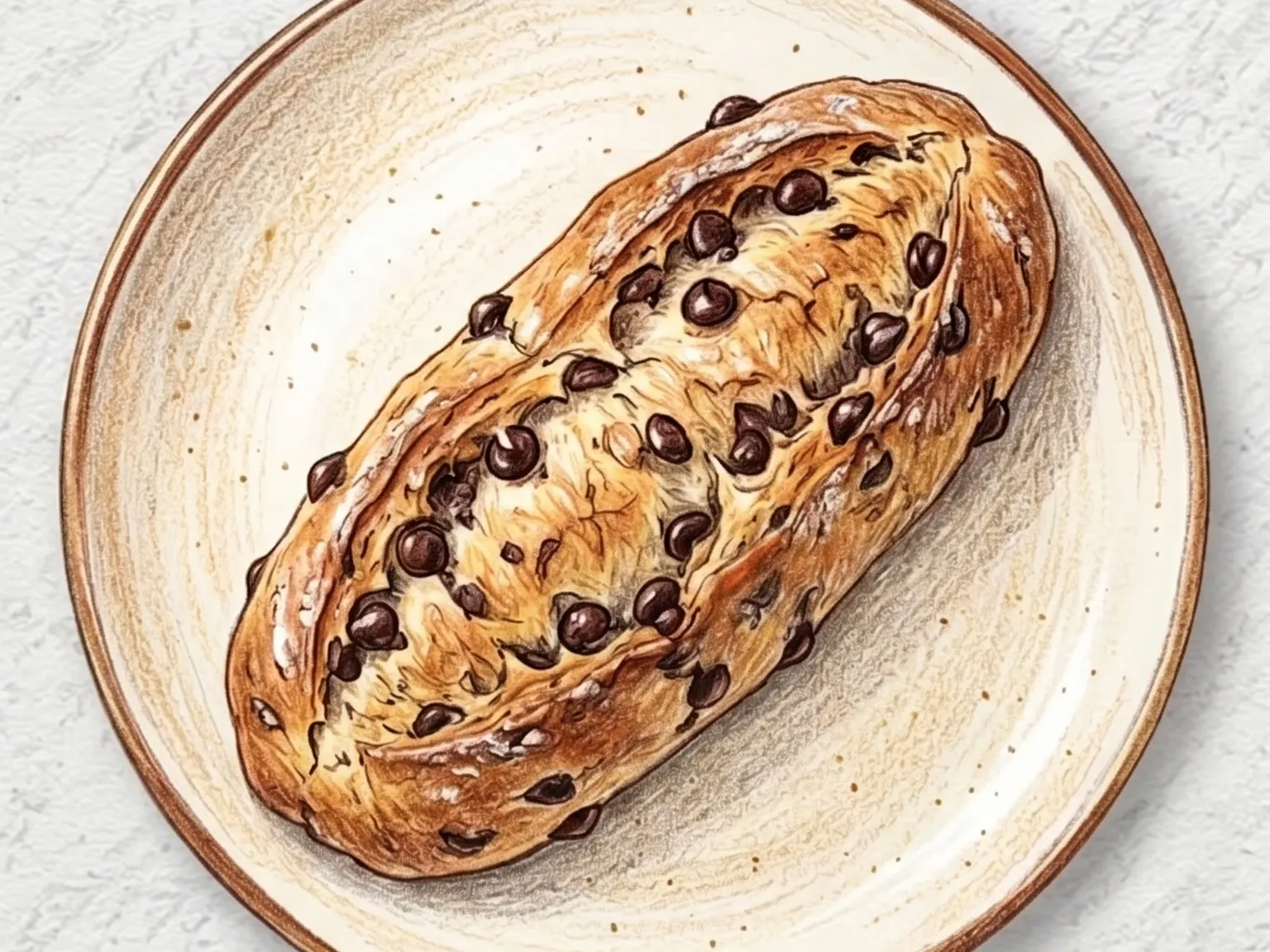
Crunchy Chocolate Chip Baguette
This baking recipe explains how to make a chocolate baguette featuring a crispy crust and a bittersweet crumb. The dough combines bread flour, cocoa powder, sugar, salt, and instant dry yeast, which is kneaded with lukewarm water until smooth and elastic. Chocolate chips are folded into the dough at the end of kneading to distribute them evenly without melting. After a one-hour first fermentation, the dough is divided and shaped into long ovals, then left to rise again for thirty minutes. Before baking, the loaves are scored to expose the chocolate chips during the oven spring and sprayed with water. Baking at 220°C with steam creates a firm, crispy crust while keeping the inside soft. The finished baguette offers a rich cocoa aroma and sweet pockets of melted chocolate chips in every bite.
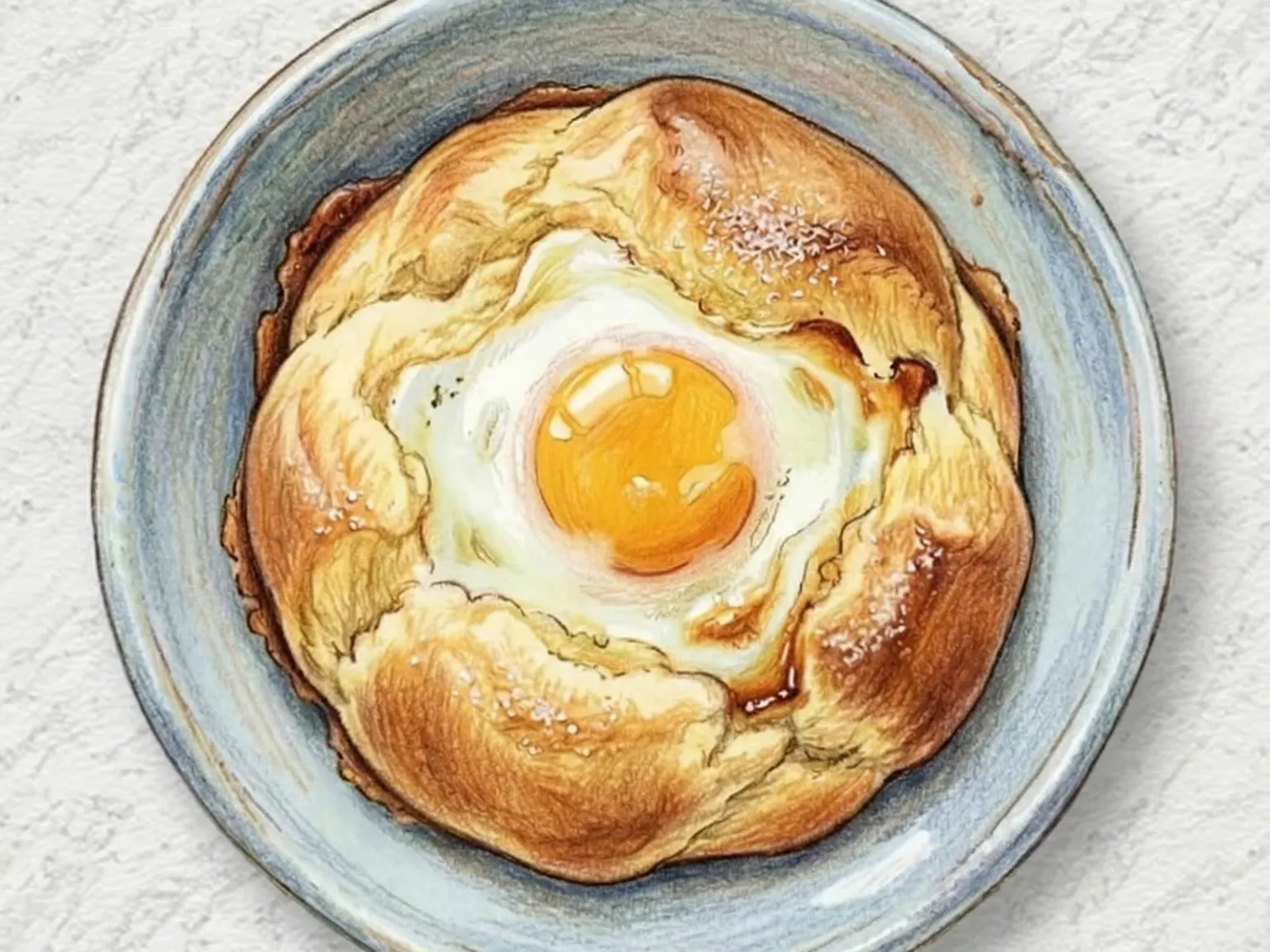
Korean Street-Style Egg Bread
Preparing gyeran ppang involves pouring a sweet batter made from flour, milk, egg, and butter into individual molds and cracking a whole egg directly on top. The inclusion of baking powder helps the batter rise into a soft, airy bread structure during the baking process at 180 degrees Celsius. Within fifteen to eighteen minutes, the egg white sets firmly while the yolk reaches a state between soft and fully cooked, creating a moist center. The light sweetness of the buttered batter balances the naturally mild and savory profile of the egg, making the snack complete without any additional sauces. Where the batter makes contact with the mold, it develops a lightly crisped, golden exterior that provides a textural contrast to the pillowy interior. This snack reaches its peak quality immediately after removal from the mold while still warm, as cooling causes the bread to contract and lose its characteristic fluffiness. Its compact shape makes it easy to hold and eat while walking, which contributed to its status as a staple of Korean winter street food culture. Some versions include a light sprinkle of salt or dried herbs over the egg to introduce an aromatic element to the sweet and savory base.
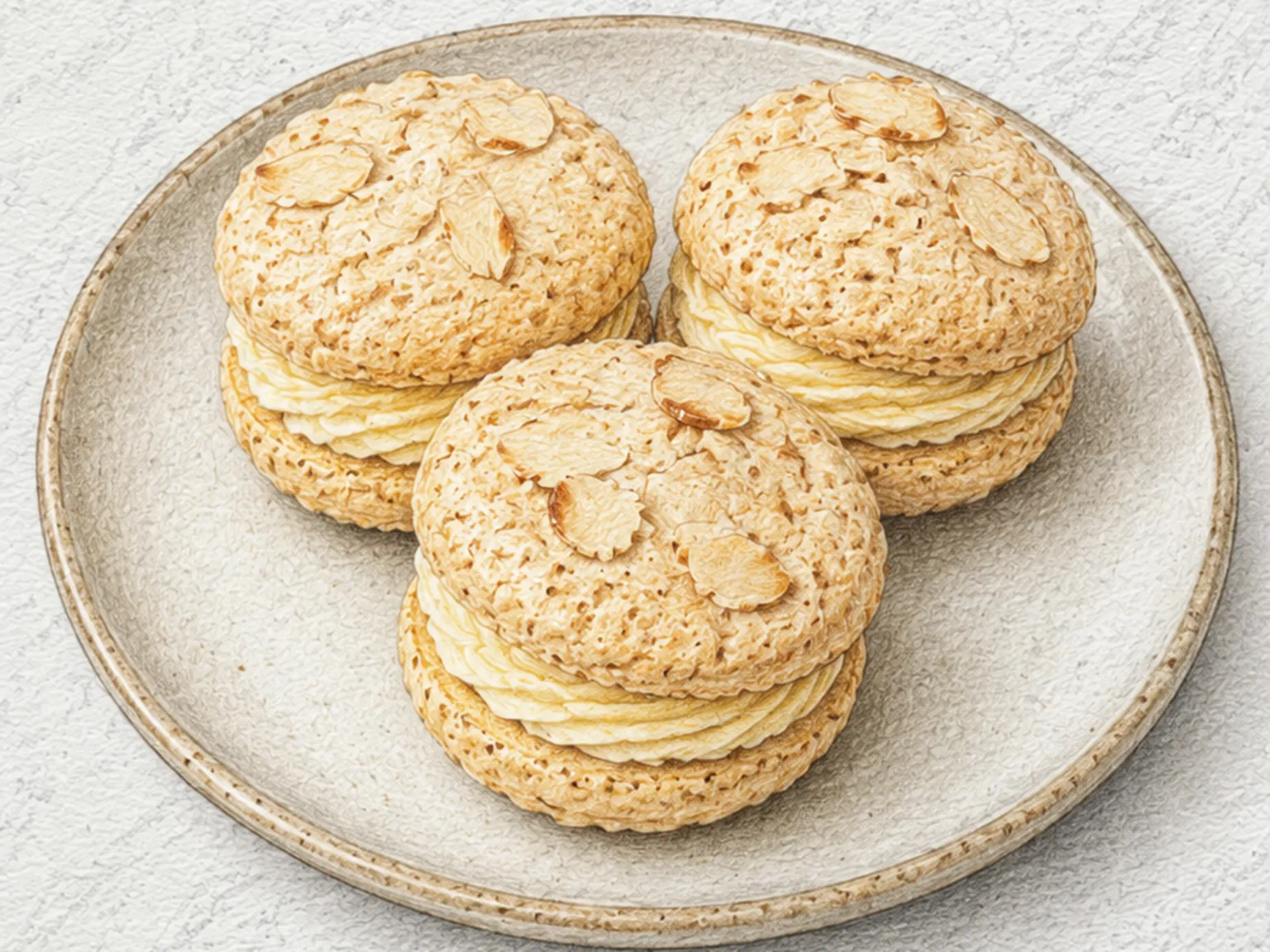
Dacquoise (Almond Meringue Disc with Butter Cream Filling)
Dacquoise is a French confection originating in the town of Dax in the southwest, made by folding almond flour into stiff beaten egg whites, piping the batter into flat discs, and baking until the surface forms a thin, dry shell. That outer layer cracks cleanly underfoot, while the almond oils inside keep the meringue moist and chewy, so two distinct textures inhabit the same bite. Two discs are sandwiched around a layer of buttercream, which provides richness and holds the halves together; the filling varies widely, vanilla, matcha, pistachio, or fruit curd depending on the baker. In Korean cafes, dacquoise has been scaled down to single-portion bite-sized pieces and individually wrapped for takeaway, a format that has made them one of the most popular items alongside afternoon coffee. The key to the right texture is folding the almond flour into the meringue without deflating it, preserving the open crumb that gives each piece its characteristic chew.
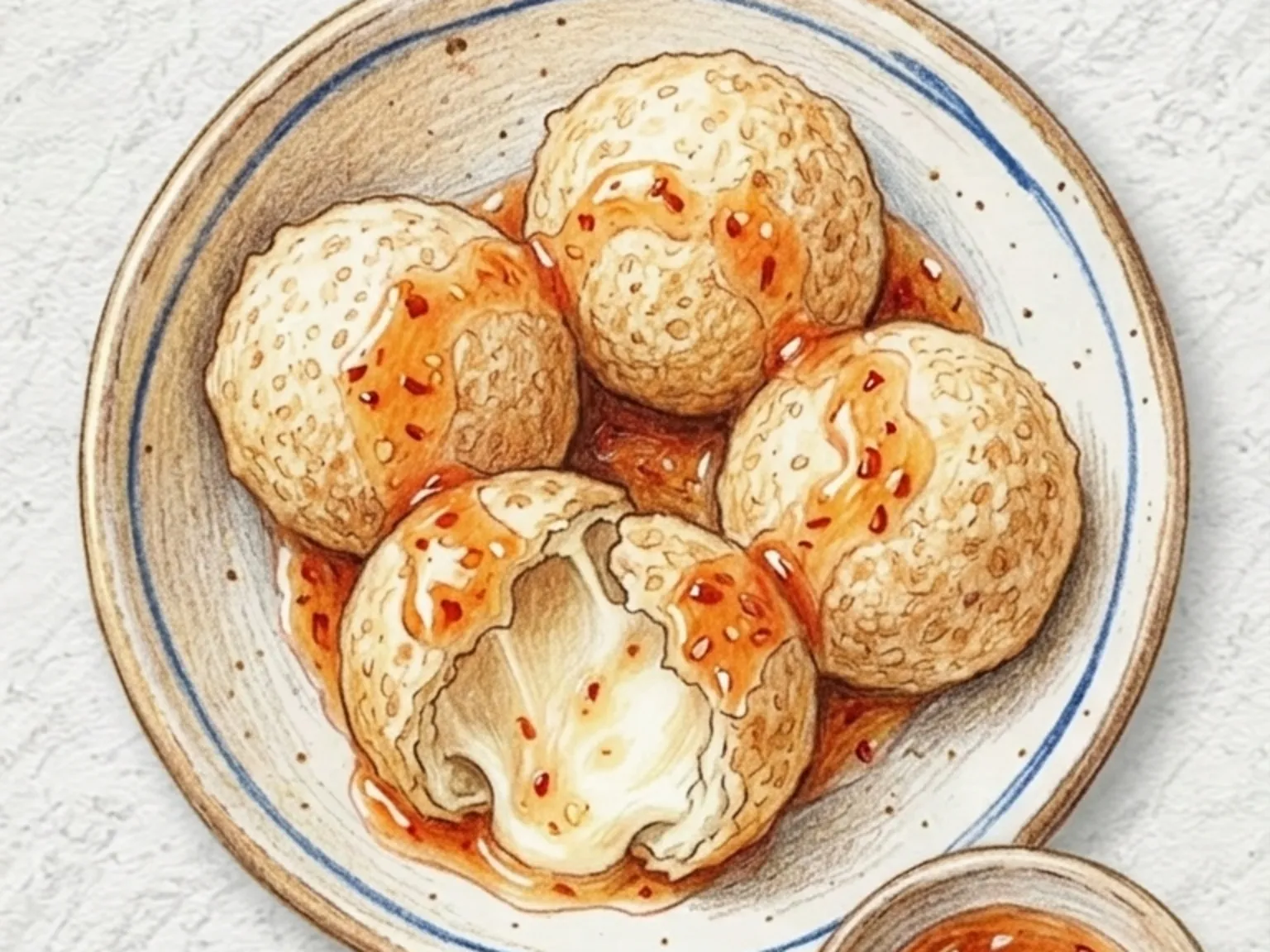
Korean Sweet Chili Cheese Balls
Sweet chili cheese balls are a fried snack made from glutinous rice flour dough mixed with milk, wrapped around mozzarella cubes, shaped into spheres, and deep-fried at 160 degrees Celsius. Adding a small amount of baking powder to the dough causes it to puff evenly during frying, creating a thin, crisp crust on the outside while the mozzarella inside melts into a soft, stretchy core. Keeping the oil at a moderate 160 degrees is the critical step, because a higher temperature browns and sets the shell before the cheese inside has had enough time to melt fully. Dipping in sweet chili sauce brings a layer of fruity sweetness and gentle heat over the creamy mozzarella, and the sauce's slight tanginess cuts the fried richness to leave the palate feeling clean. Sealing the seam of each ball tightly when wrapping is important, as any gap will let the melting cheese escape into the oil during frying.
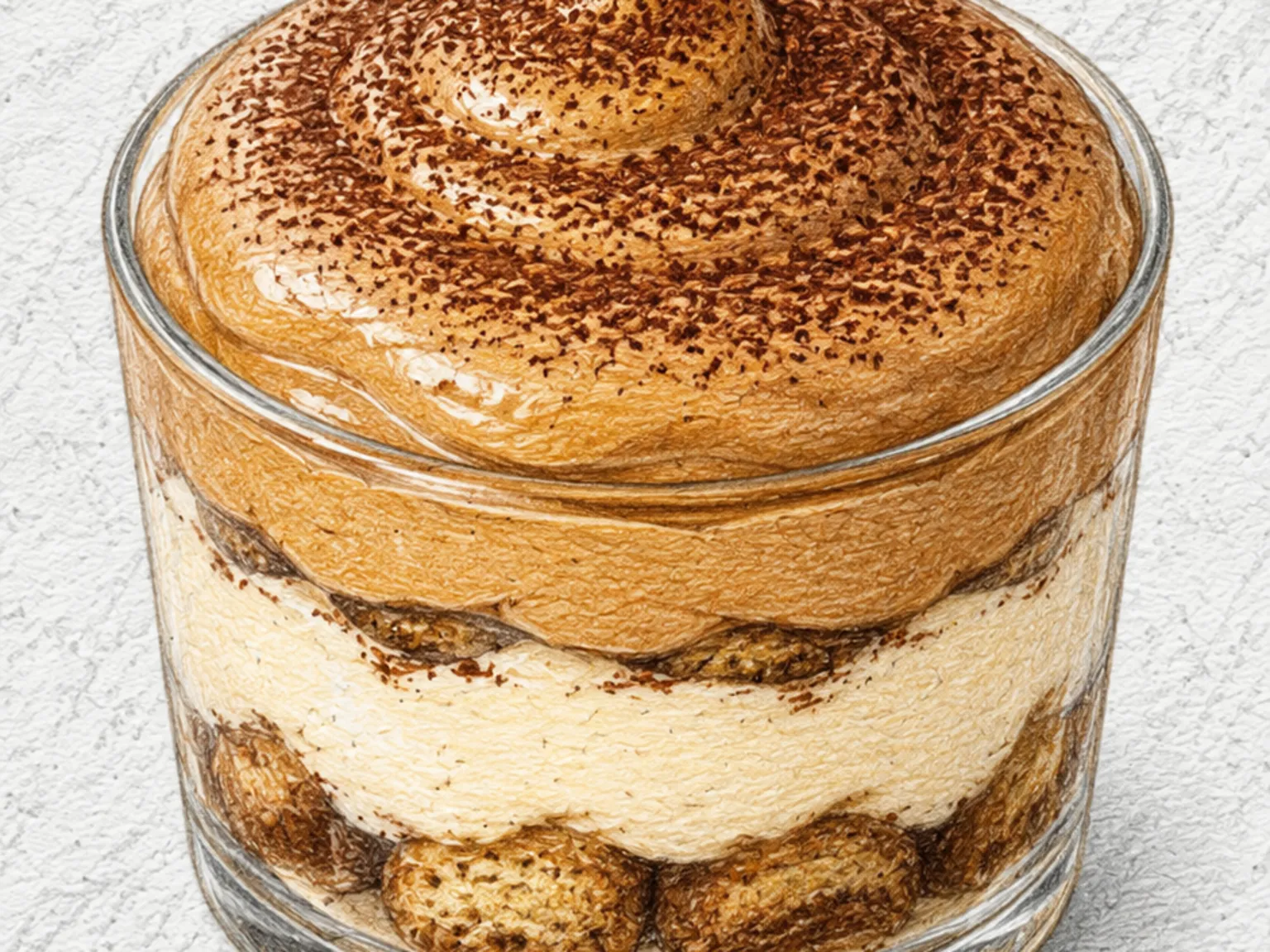
Dalgona Tiramisu (Korean Whipped Coffee Cream Layered Tiramisu)
This Korean variation of tiramisu incorporates the whipped dalgona coffee method that gained international popularity and integrates it into the traditional framework of a classic Italian dessert. To create the characteristic topping, instant coffee is combined with sugar and hot water, then whipped vigorously until the mixture transforms into a dense and aerated foam. This specific preparation method results in a coffee profile that is significantly more concentrated and prominent than the standard espresso soak typically used in such recipes. The dalgona foam is positioned between layers of smooth mascarpone cream and ladyfingers that have been briefly submerged in espresso. This addition provides both a deep intensity of flavor and a texture that resembles a light mousse throughout the dish. The dessert requires a minimum of four hours in the refrigerator to allow the various components to settle and merge properly. Once thoroughly chilled, each serving provides a combination of the softened biscuit, the creamy mascarpone, and the coffee foam in a single bite. A thin layer of cocoa powder is applied across the surface to provide a finished appearance and a subtle bitterness. If a version with less sweetness is preferred, the volume of dalgona syrup can be decreased to allow the natural bitter qualities of the coffee to become more apparent.
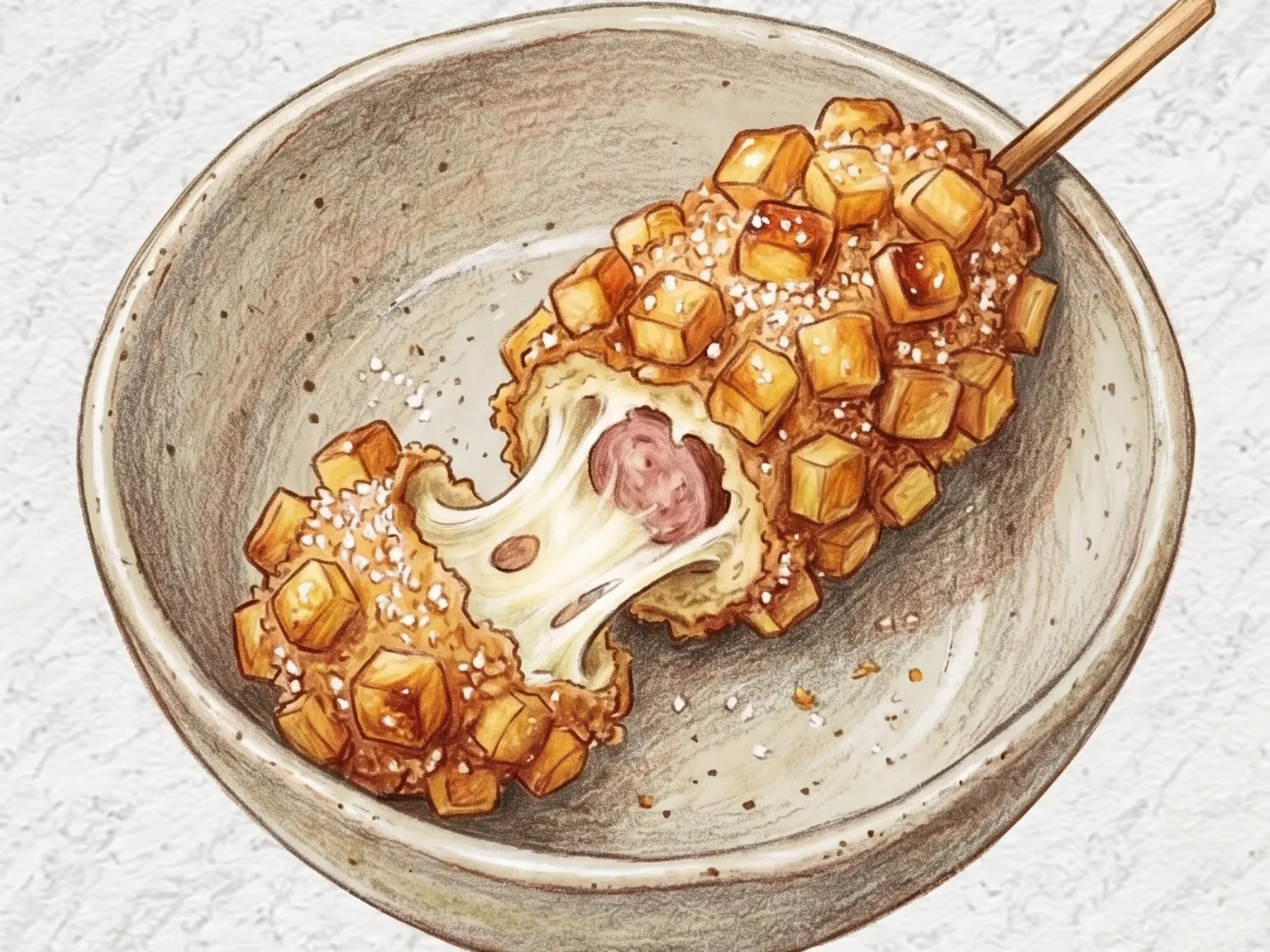
Korean Sweet Potato Mozza Corn Dog
Sweet potato mozza corn dog is a Korean street food made by skewering mozzarella and sausage end to end, coating the skewer in pancake batter, pressing diced sweet potato cubes and breadcrumbs into the surface, and deep-frying at 170 degrees Celsius. Freezing the mozzarella until hard before assembly is not optional: room-temperature cheese melts too quickly during frying and breaks through the batter before the exterior sets, causing the filling to leak. Biting through the sausage-cheese boundary delivers a sharp contrast between the salt of the sausage and the pull of the stretched cheese. The batter needs to hold a moderate thickness so the sweet potato pieces adhere evenly rather than sliding off before hitting the oil. In the fryer, the sweet potato cubes caramelize against the batter, forming a naturally sweet outer layer with slightly crisped edges. Breadcrumbs fill the gaps between the potato pieces and add crunch wherever the potato does not cover. Dusting the finished corn dog with granulated sugar immediately after it exits the fryer lays a thin sweet coating over the already-caramelized surface, amplifying the sweet-salty contrast with the savory interior. The visual of cheese pulling as the corn dog is bitten through became widely associated with Korean street food content on social media.
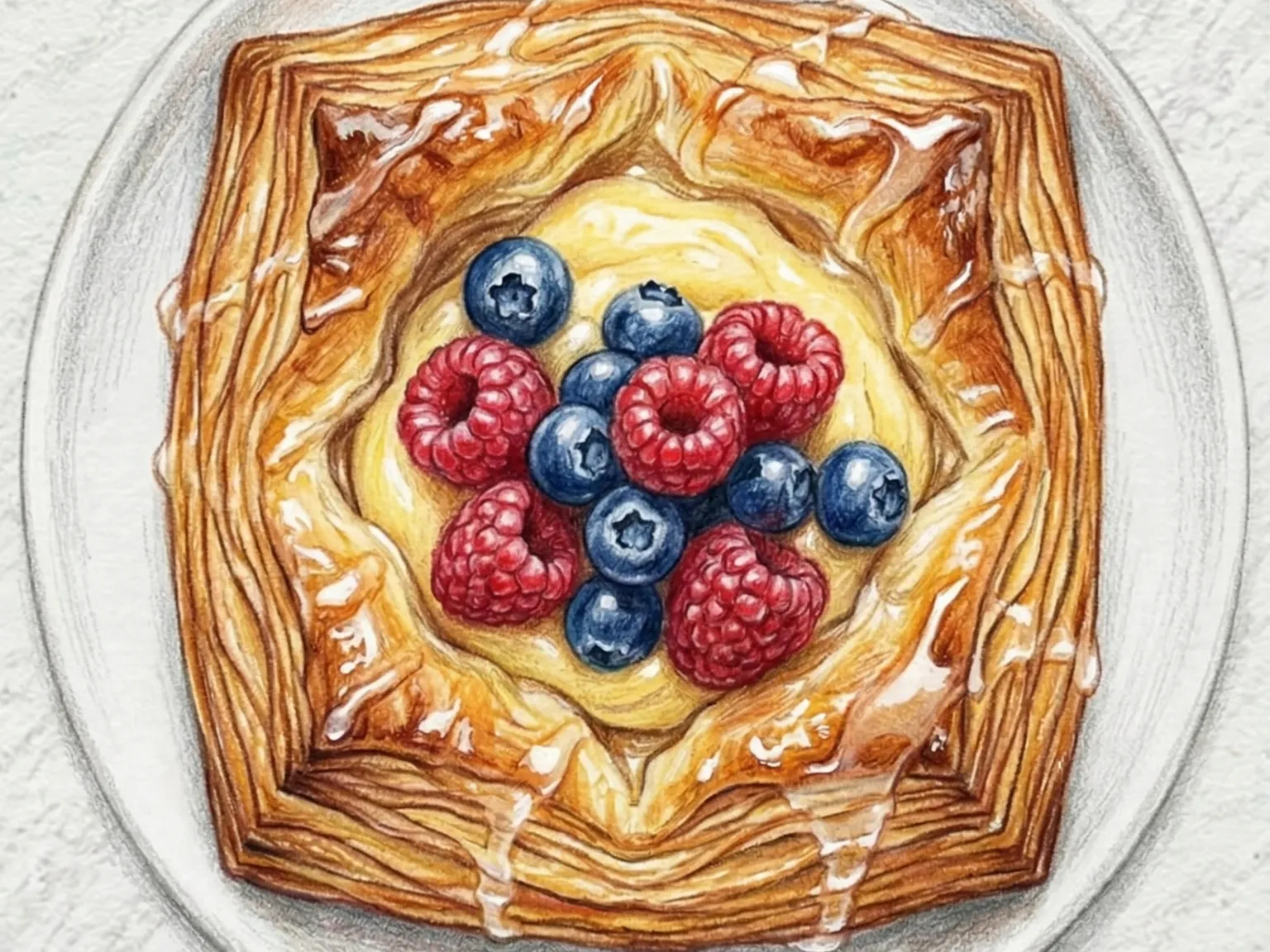
Danish Pastry
Danish pastry is a laminated dough enriched with eggs and butter, folded in successive turns to create flaky layers, then shaped and filled before baking. The process resembles croissant-making, but the dough is softer and sweeter, and the shaping is more varied with diamonds, pinwheels, and envelopes all being common forms. In the oven, the butter between the layers melts and creates steam, pushing apart each fold into crisp, golden leaves. The interior stays pillowy and brioche-like, carrying a pronounced butter flavor throughout. Custard cream or fruit placed in the center bakes alongside the pastry, the custard firming into a smooth, glossy pool. A drizzle of sugar glaze after baking adds a thin, sweet sheen that finishes each piece.

Tanghuru (Chinese-Style Candied Fruit Skewers)
Tanghuru is a candied fruit dessert made by skewering fresh strawberries, grapes, or other fruits and dipping them into sugar syrup heated to 150 degrees Celsius, the hard-crack stage. At this precise temperature, the syrup sets into a thin, glass-like candy shell around each fruit; any lower and it remains sticky without hardening. Biting through the brittle sugar coating releases the fresh juice of the fruit inside, creating a sharp contrast between pure sugar sweetness and the fruit's natural tartness. The fruit must be thoroughly dried before dipping so the candy layer adheres in an even, transparent coat.
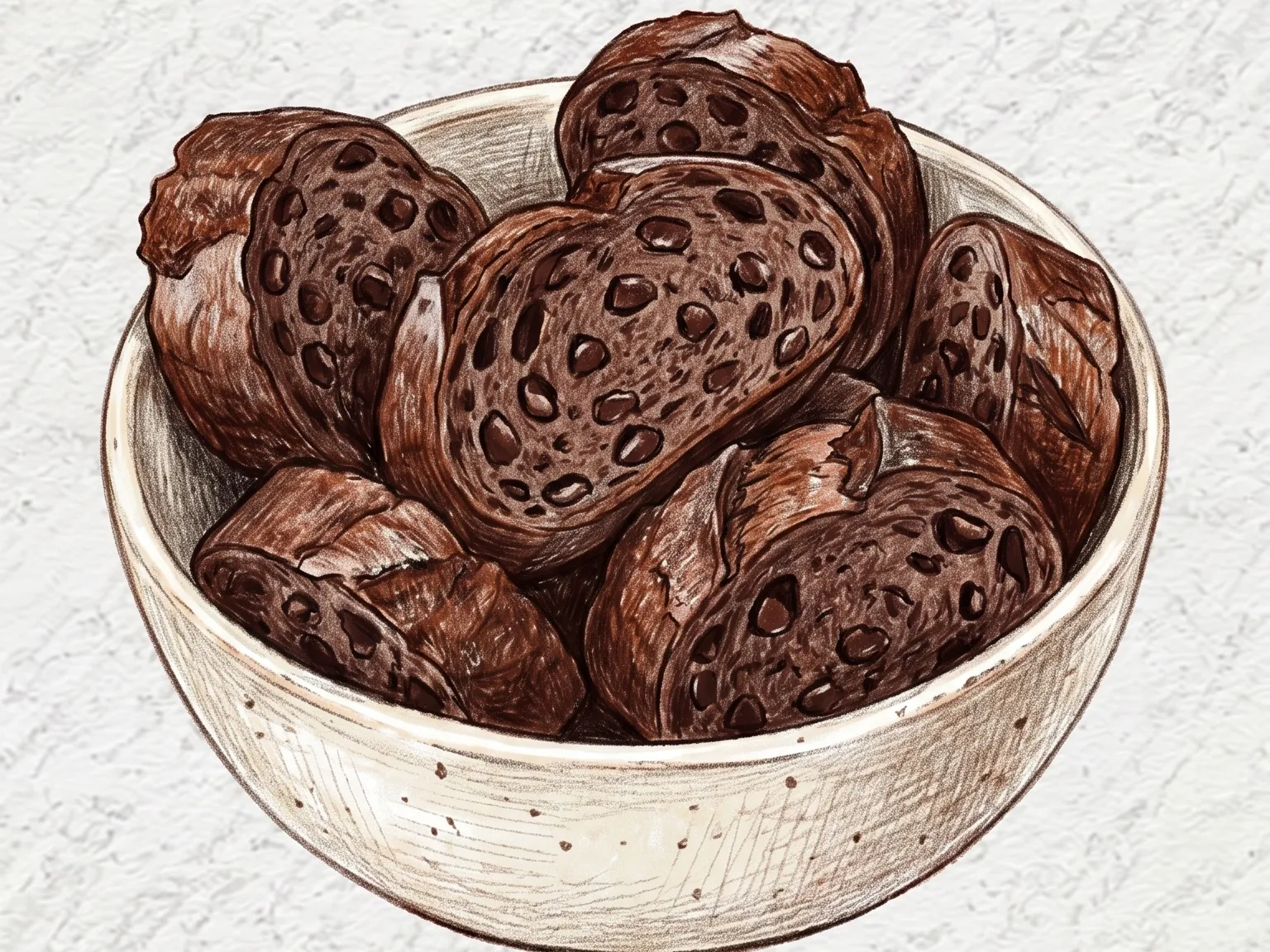
Dark Chocolate Baguette
This rustic chocolate baguette features a crisp crust filled with dark chocolate chips. The dough is prepared by combining bread flour, cocoa powder, dry yeast, salt, sugar, and lukewarm water. Once the dough becomes elastic after kneading, dark chocolate chips are folded in gently. After the first rise, the dough is divided and rested before being shaped into long, tapered ovals. This shaping helps retain moisture in the thicker crumb during baking. The loaves are proofed a second time, scored diagonally, and sprayed generously with water. Baking them at 220 degrees Celsius with oven steam creates a distinct double-layered crispy crust. High-quality cocoa powder and dark chocolate chips ensure a deep cacao flavor throughout the bread, offering a subtle sweetness inside a crusty exterior.
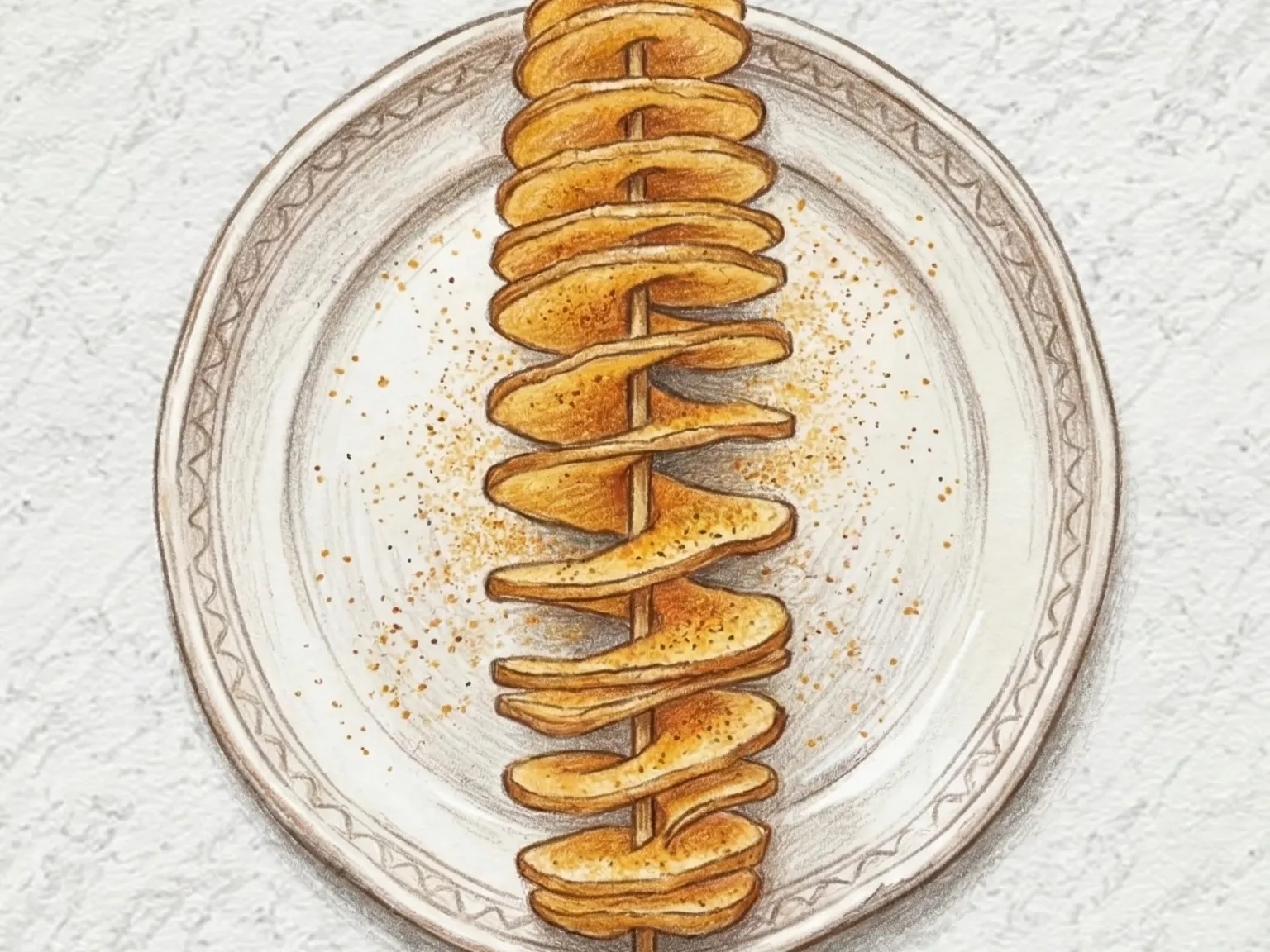
Korean Tornado Potato (Spiral-Cut Deep-Fried Whole Potato Skewer)
Tornado potato is a Korean street snack made by spiral-cutting a whole potato on a skewer, stretching it into a continuous helix, and deep-frying at 170 degrees Celsius until golden. The key to an unbroken spiral is rotating the potato slowly and evenly while cutting so each pass of the knife connects to the last. Soaking the cut potato in salted water for five minutes pulls out surface starch, which results in a noticeably crispier exterior after frying. The thin outer edges of the stretched spiral fry up chip-like and crunchy, while the thicker central section retains a fluffy, starchy interior. This contrast of textures on a single skewer is what makes the format appealing beyond the novelty. Seasoning should be applied immediately after frying while the surface is still hot and slightly oily, since the coating adheres poorly once the potato cools. Cheese powder, paprika, and salt are the standard options, but buldak seasoning or herb blends are popular variations. Keeping the potato firmly secured on the skewer and working flat on a cutting board makes the spiral-cutting step significantly easier for first-timers.
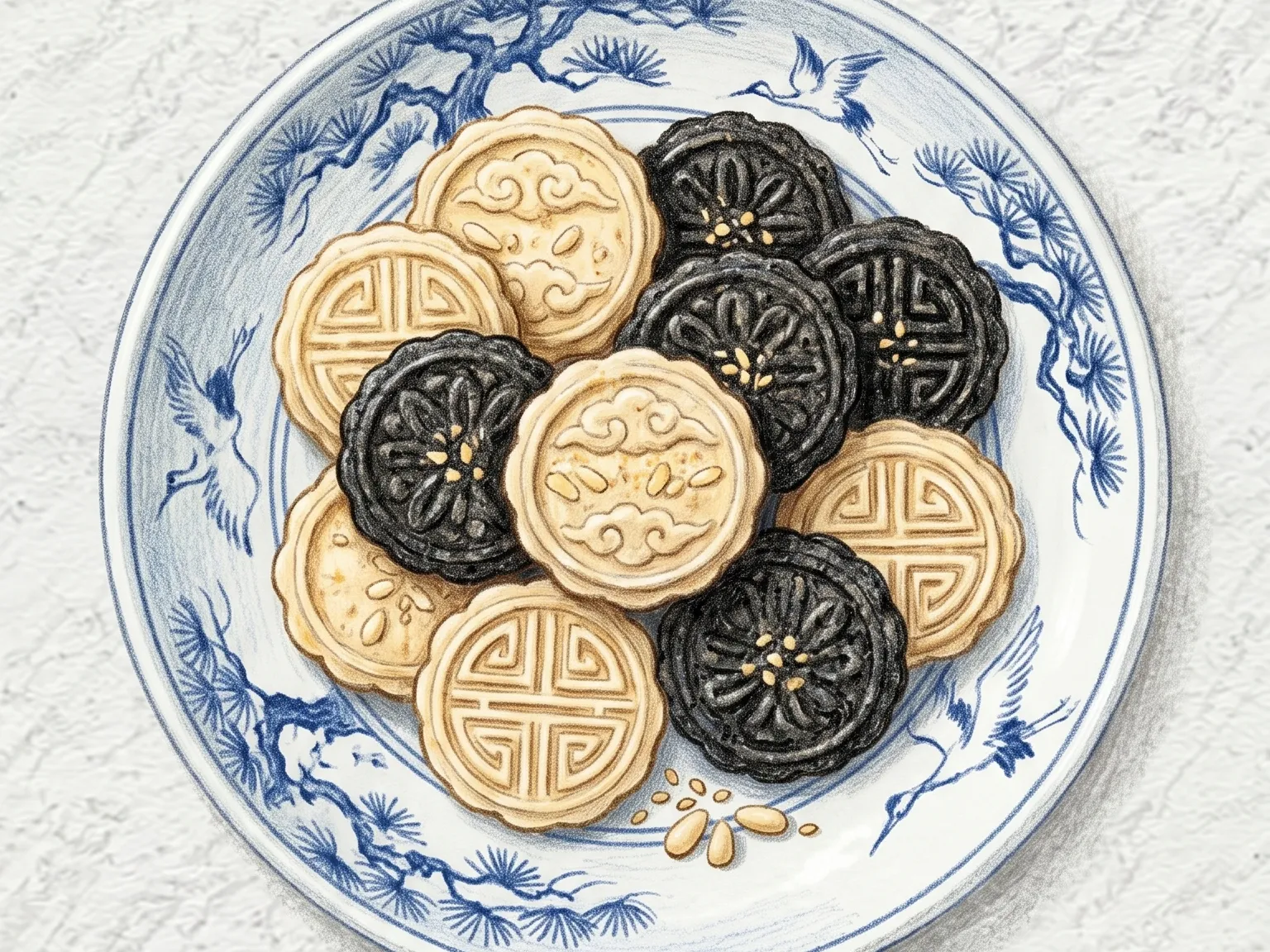
Dasik (Korean Honey-Pressed Roasted Grain Confection)
Dasik is a traditional Korean pressed confection made by kneading roasted grain or nut powders with honey and pressing the mixture into carved wooden molds. Unlike baked goods, dasik holds its shape entirely through the binding power of honey, with no heat applied during preparation. This technique produces a texture that is slightly resistant at first contact, then dissolves gently at body temperature in a way that releases the full aroma of the main ingredient. Roasted soybean powder yields a nutty version, black sesame produces a deeply aromatic one, and additions of pine nut powder or cinnamon develop the flavor in different directions. The wooden molds carve decorative patterns into the surface of each piece, giving dasik a visual refinement that matches its restrained sweetness. For centuries, dasik has been a standard offering at Korean tea gatherings, and its subtle flavor remains a natural match for the gentle bitterness of green tea.
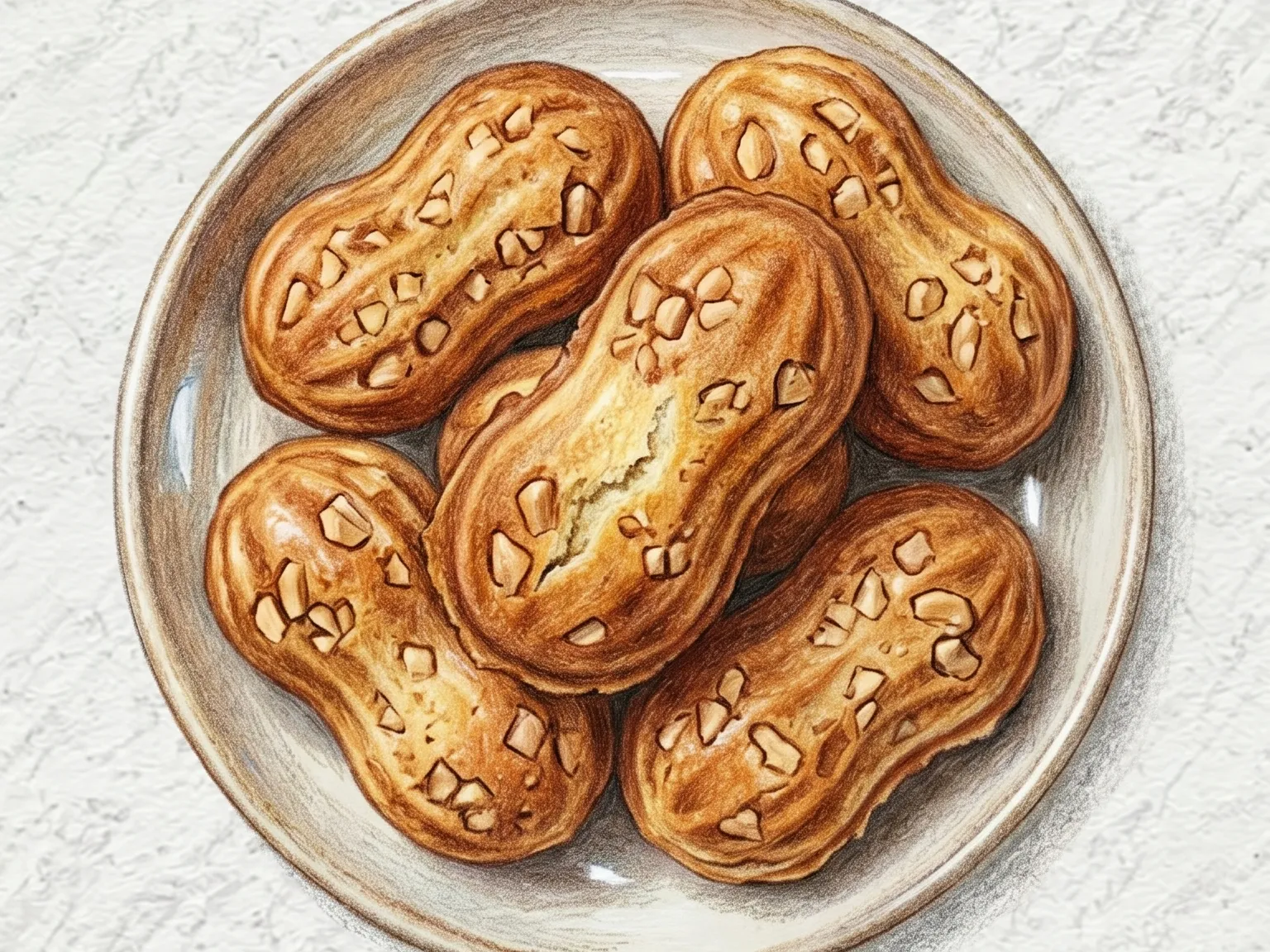
Korean Peanut Bread (Mold-Baked Peanut-Studded Street Snack)
Ttangkong-ppang is Korean peanut bread baked in a shaped mold from a batter of flour, eggs, milk, and melted butter mixed with roughly chopped roasted peanuts. The natural oils in the peanuts infuse the batter with a toasted, nutty richness, and each peanut chunk provides a crunchy interruption in the soft crumb. Cooking on medium-low heat and flipping regularly develops a thin crust on both sides while butter keeps the interior moist. Sugar supplies sweetness and a pinch of salt balances against the nuttiness, resulting in a flavor profile that stays engaging bite after bite.
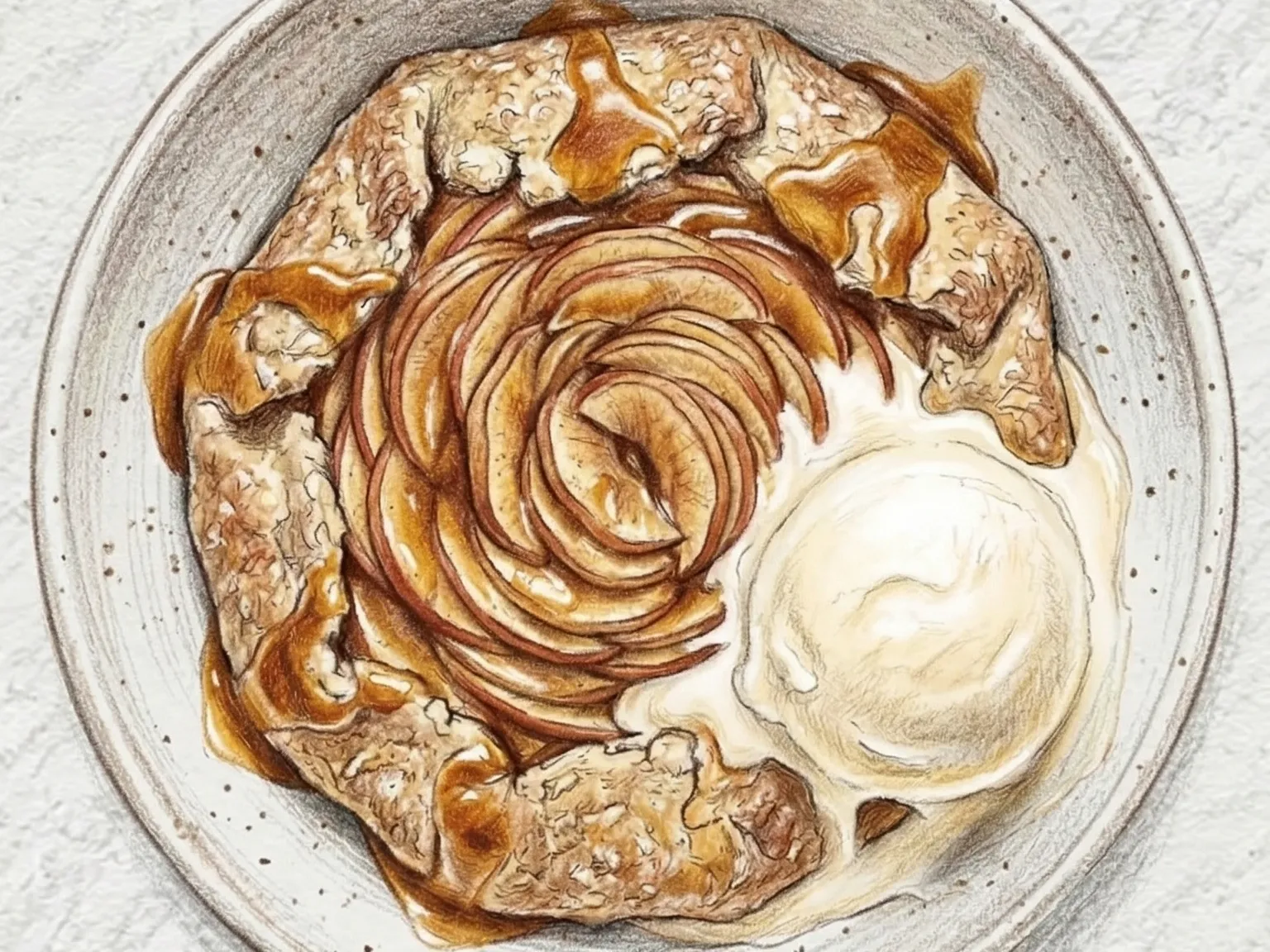
Doenjang Caramel Apple Galette
This galette layers a rustic free-form French pastry with a Korean-inflected twist: a doenjang-laced caramel draped over cinnamon apples filling the center. The crust is made by working cold butter into flour and shaping the dough by hand, folding the rough edges over the fruit in an imperfect, irregular way. Apples tossed with brown sugar and cinnamon fill the center, softening in the oven until tender and yielding. The doenjang caramel is made by whisking a small amount of fermented soybean paste into a brown sugar and cream sauce. Keeping the amount deliberately minimal is the whole point: enough to create an ambiguous saltiness and fermented depth, but not enough to register clearly as soybean paste. It is the murkiness of the flavor that lifts the familiar apple-and-cinnamon combination out of predictability. Served warm with a scoop of ice cream, the contrast between the hot pastry and cold cream adds one more layer to an already textured dessert.
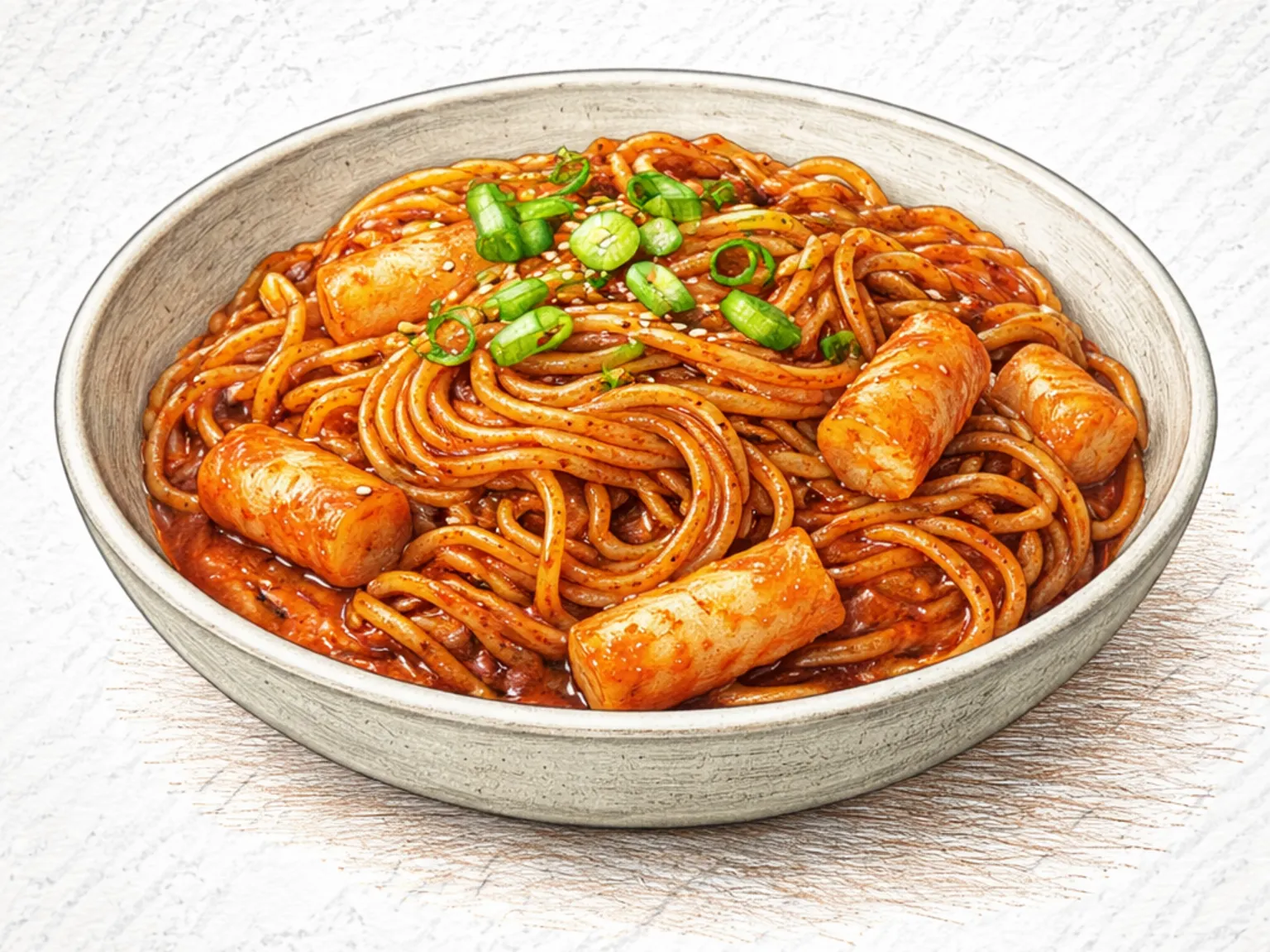
Korean Spicy Rice Cakes (Gochujang Braised Chewy Tteok with Fish Cake)
Simmering cylindrical rice cakes and thin fish cake sheets in a spicy base of gochujang, red chili flakes, sugar, and soy sauce creates a sticky, glossy coating. The starch released from the rice cakes as the liquid reduces acts as a natural thickener, ensuring the sauce clings tightly to each ingredient. While the fish cakes soak up the heat from the surrounding liquid, they release a subtle seafood essence into the pan, and the addition of green onions at the final stage provides a crisp contrast to the underlying sweetness. Preparing a stock from dried anchovies and kelp rather than using plain water establishes a solid savory foundation for the entire dish. It helps to start with only half the seasoning paste, adding the remainder gradually to manage the final intensity and texture as the volume decreases. If the liquid evaporates too quickly, adding small amounts of water prevents the sugars in the sauce from scorching before the rice cakes reach the desired softness. For rice cakes that have been chilled or feel exceptionally firm, a short soak in cool water or a quick blanch in boiling water helps them cook through evenly. Serving the finished dish with boiled eggs, blood sausage, or assorted fried items replicates the setup found at traditional street stalls. This recipe scales easily into different versions by incorporating heavy cream or tomato-based sauces, resulting in the rose and cream variations often found in modern snack shops.
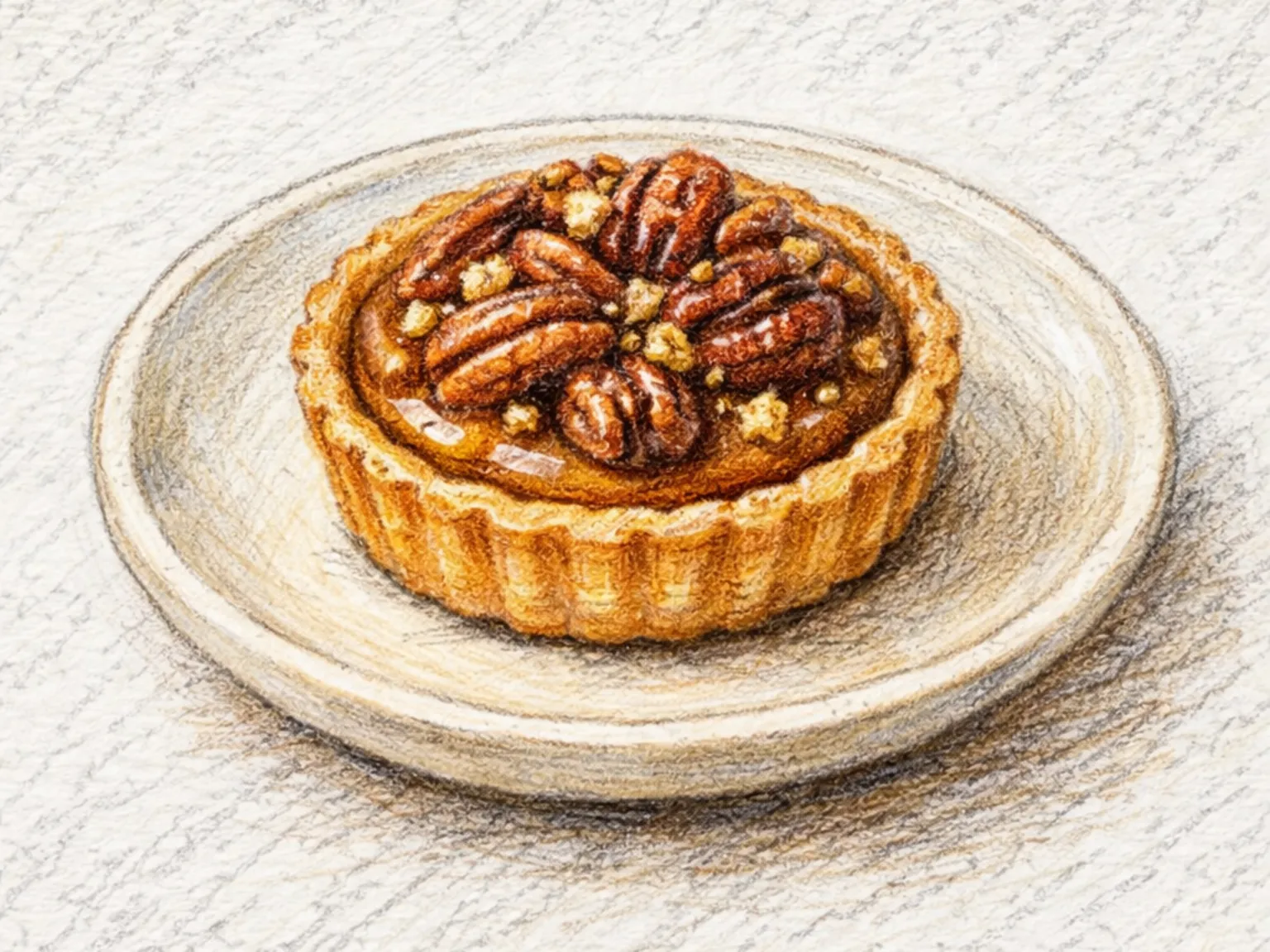
Doenjang Caramel Pecan Tartlets
Doenjang caramel pecan tartlets bring together Korean fermented soybean paste and Western pastry in a dessert that treats doenjang the way salted caramel treats sea salt: as a savory element that sharpens and deepens sweetness. Mini tart shells are filled with toasted pecans and topped with caramel into which a small amount of doenjang has been thoroughly whisked. The fermented paste introduces salty, umami-layered depth beneath the caramel's sweetness, and the result sits noticeably broader and more complex than a standard pecan tart. The caramel must be cooked to a deep amber before the doenjang is added; pulling it too early leaves only sweetness and buries the paste's fermented character. Once poured and cooled, the surface sets into a glassy layer that snaps under a fork, adding a textural payoff before the filling yields. The pecan's buttery, slightly bitter roasted note meets the caramel's bittersweet char and the doenjang's fermented roundness, stacking three distinct kinds of richness into every bite. Well-aged doenjang used in a small quantity concentrates the aroma more than a milder paste, and adding almond flour to the tart shell dough creates a shortbread texture that harmonizes with the pecan.
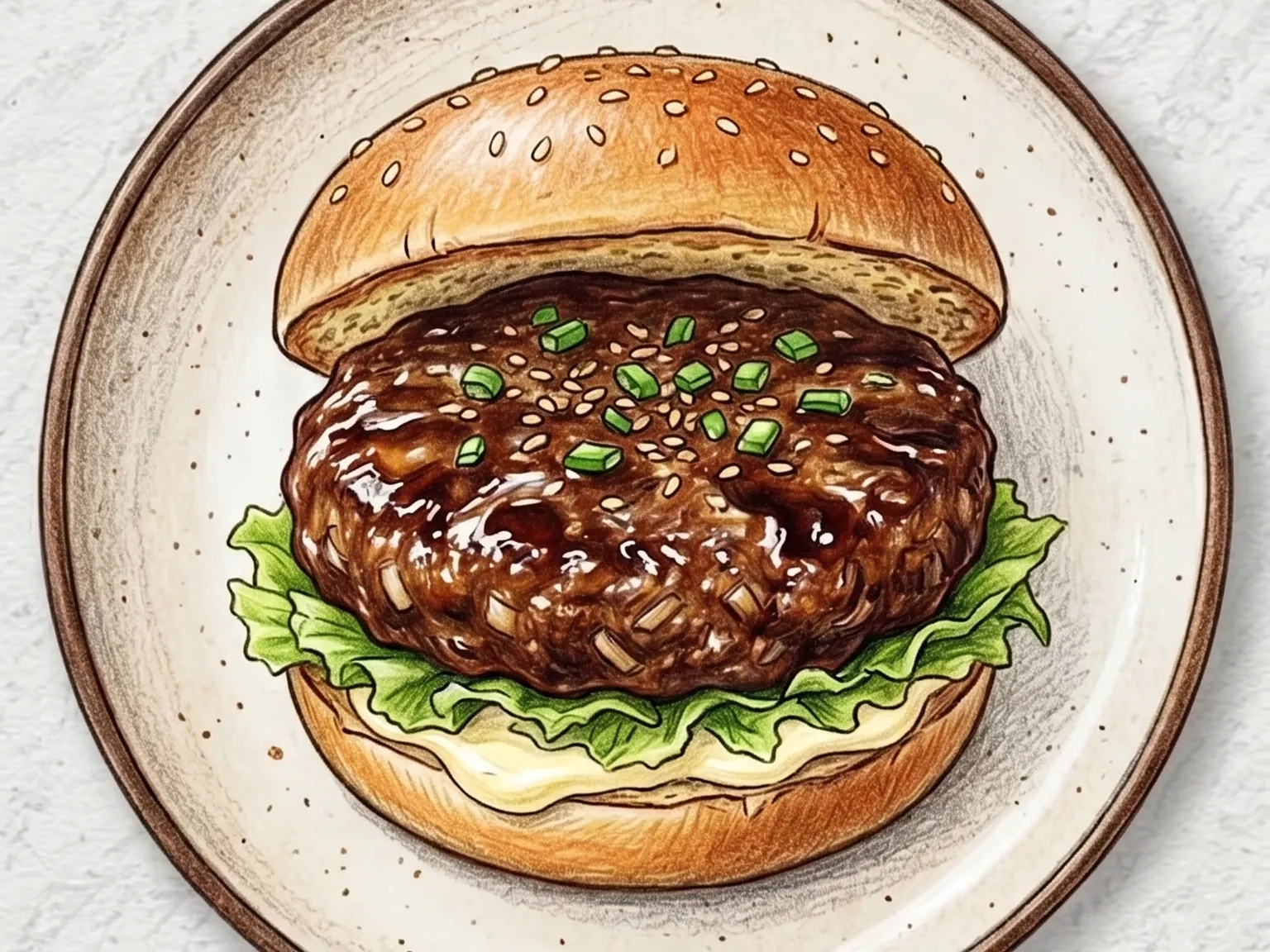
Korean Street Burger (Soy-Garlic Beef Pork Patty in a Bun)
Tteokgalbi burger takes the flavors of traditional Korean grilled short-rib patties and fits them into a handheld bun format. Ground beef and pork are seasoned with soy sauce, sugar, minced garlic, and sesame oil, then shaped into flat patties and pan-seared over medium heat. Finely diced onion worked into the meat traps moisture during cooking, keeping the interior juicy even as the surface builds a caramelized crust from the soy-sugar marinade. That thin, browned exterior replicates the glossy lacquer that distinguishes proper tteokgalbi from a plain beef patty, delivering a sweet-savory depth without additional condiments. A toasted bun spread with mayonnaise and lined with crisp lettuce gives the rich patty a cool, crunchy counterpart. A small drizzle of soy glaze over the top just before serving intensifies the lacquered finish and ties the whole sandwich back to its Korean origins.
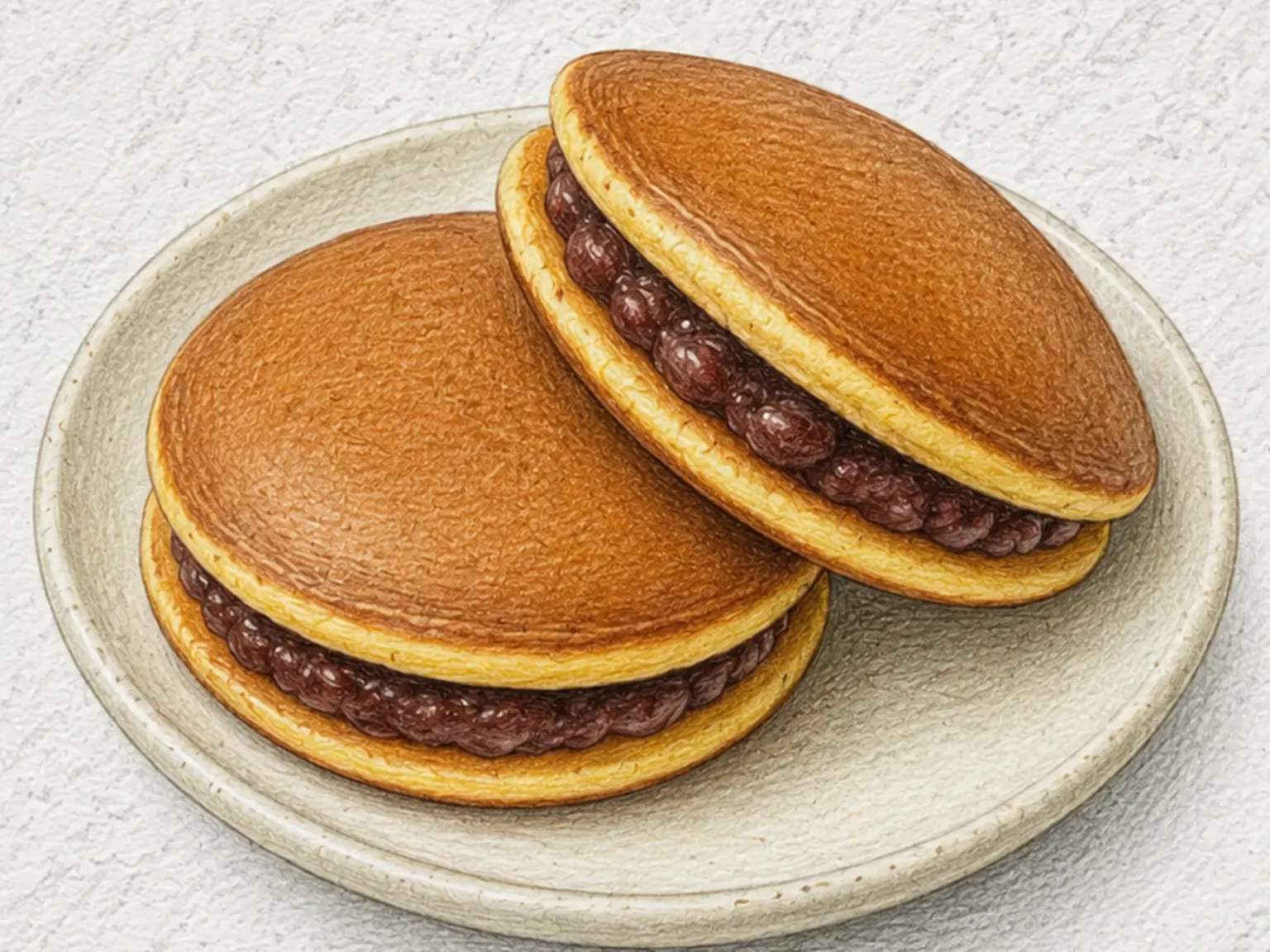
Dorayaki (Sweet Red Bean Pancake Sandwich)
Dorayaki is a Japanese confection consisting of two small, round pancakes sandwiching a filling of sweet red bean paste. The batter brings together eggs, sugar, honey, and flour before being portioned onto a lightly greased griddle over low heat. Each pancake cooks on one side only, producing a smooth, pale top surface and an evenly browned, slightly springy underside. Honey in the batter dramatically improves moisture retention, keeping the pancakes soft and pliable for hours after cooling and lending a subtle floral sweetness that layers naturally with the bean filling. The pancakes' own sweetness is deliberately restrained so the dense, earthy richness of the anko filling takes the lead. Traditional anko uses adzuki beans simmered with sugar until thick and glossy; tsubu-an retains visible bean pieces while koshi-an is strained smooth, and either works depending on preference. The two pancakes are gently pressed together with a generous layer of filling between them, forming a compact round that fits easily in one hand. Beyond classic red bean, the same format welcomes custard cream, matcha paste, or sweetened chestnut filling.
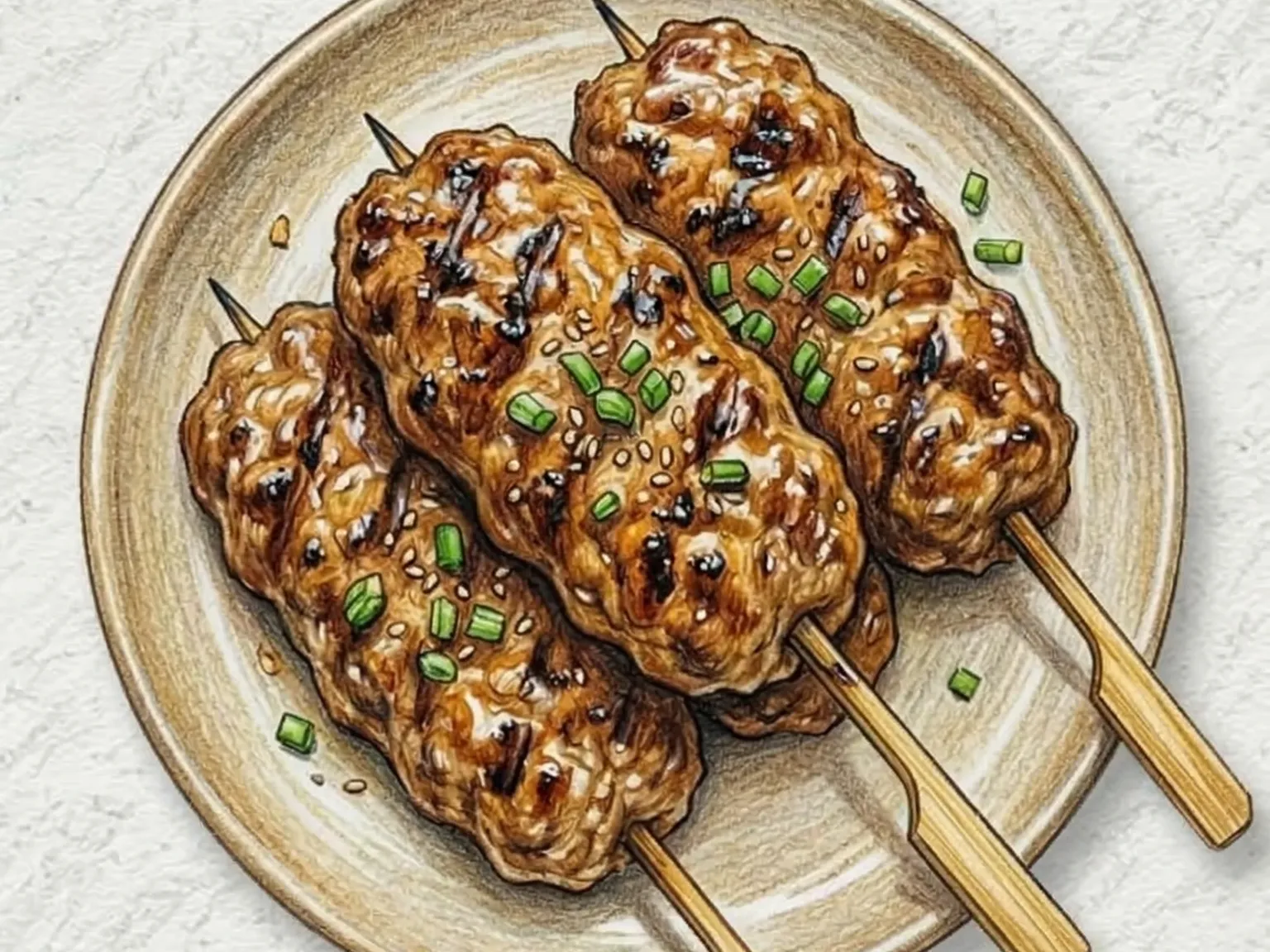
Korean Grilled Patty Skewers
Tteokgalbi-kkochi are skewered patties made from a thoroughly kneaded mixture of ground beef, ground pork, soy sauce, sugar, garlic, and sesame oil, shaped into ovals and threaded onto wooden skewers before grilling. A small amount of starch mixed into the meat and at least three full minutes of kneading are what give the mixture enough tackiness to stay firmly anchored to the skewer throughout cooking; skip either step and the patties slide or crack apart on the grill. Moistening your hands with water while shaping prevents the mixture from sticking and helps produce smooth, even ovals. Grilling over medium heat first develops a golden Maillard crust on both sides, then lowering the heat and continuing to cook allows the interior to reach the center without the outside drying out, concentrating the meaty flavor at the core. A thin brushing of soy-and-corn-syrup glaze applied just before flipping and again right before removing from the heat builds a glossy, sweet-salty lacquer on the exterior. Served alongside tteokbokki sauce or ketchup, the skewers carry the unmistakable energy of Korean street food stalls.
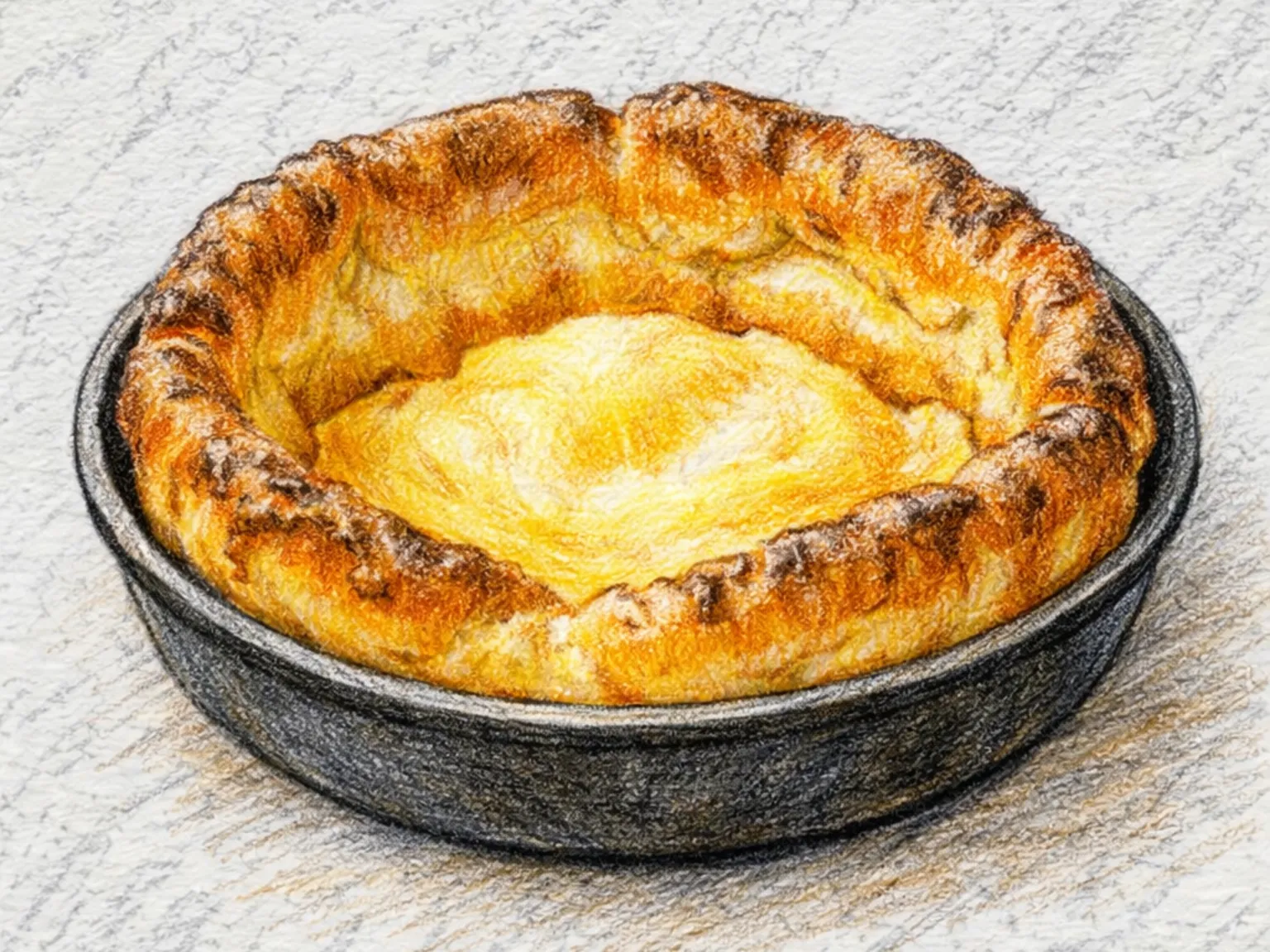
Dutch Baby Pancake
A Dutch baby is a German-American oven-baked pancake made from a thin, loose batter of eggs, flour, milk, and melted butter, poured into a cast iron skillet that has been preheated until it is searing hot. The sudden contact with the hot pan and oven causes the edges to puff dramatically, sometimes rising several inches above the rim and curling inward to form a natural bowl, while the center remains low, custardy, and tender. This contrast between the crisp, golden-brown walls and the soft, eggy base is the whole point of the dish, and the pancake begins deflating the moment it exits the oven, so it needs to go directly to the table while still dramatically puffed. A squeeze of fresh lemon juice over the surface and a heavy dusting of powdered sugar is the classic finishing touch: the bright acidity and the sweetness play directly against the rich, buttery egg base in a way that simple toppings rarely achieve. Fresh berries, sliced stone fruit, or a generous cloud of whipped cream transform it from a simple breakfast into a substantial brunch centerpiece. Getting the skillet genuinely hot -- at least 220 to 230 degrees Celsius before the batter goes in -- is the single most important factor in how high the edges rise. Using eggs at room temperature and letting the mixed batter rest briefly before pouring also contributes to even, dramatic puffing.
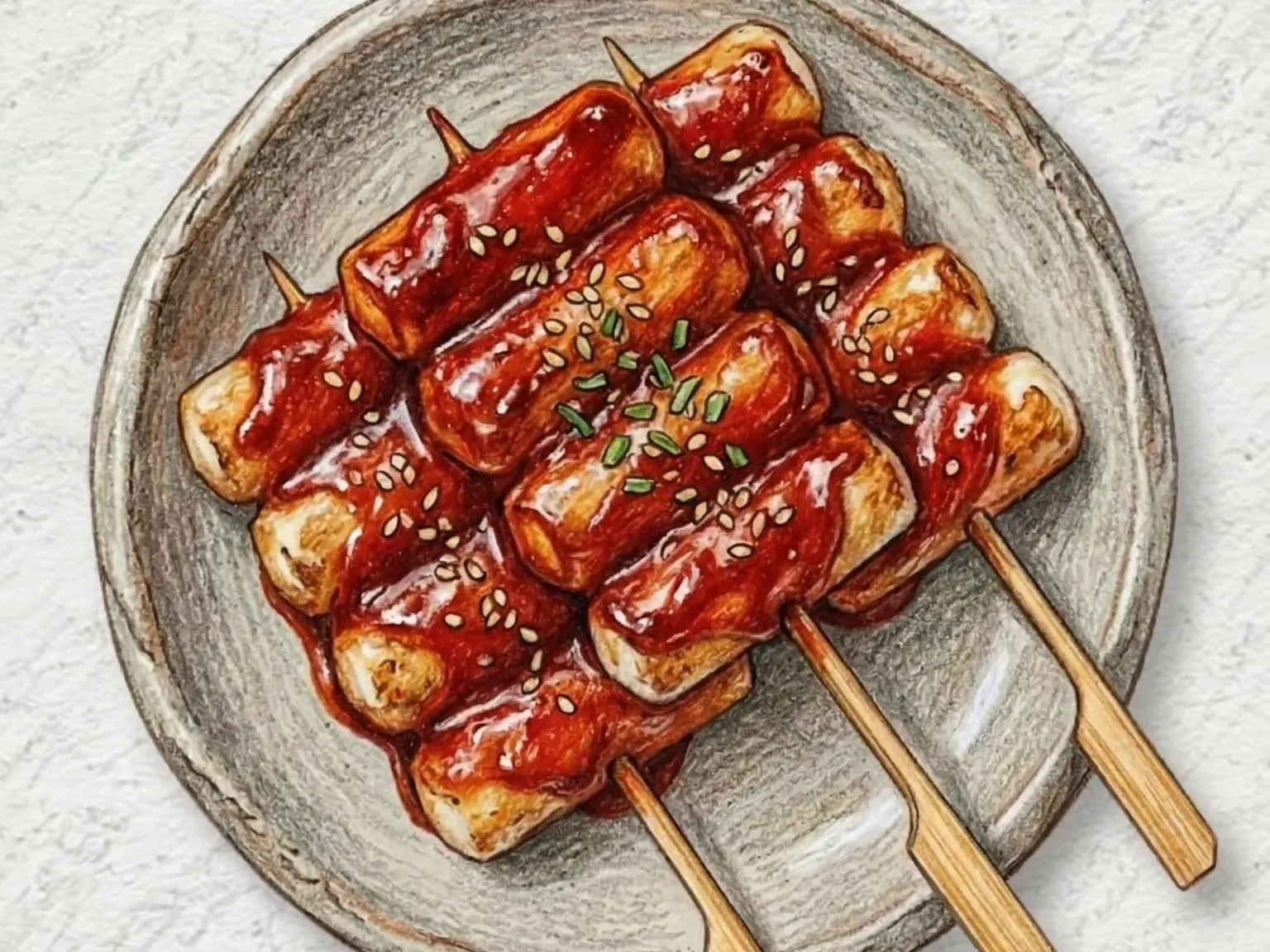
Korean Grilled Rice Cake Skewers
Tteokkochi are pan-seared rice cake skewers glazed in a thick gochujang-based sauce that builds depth through a combination of ketchup, oligosaccharide syrup, soy sauce, and minced garlic simmered down until the sauce reduces and concentrates. The rice cakes are first seared in a thin layer of oil until a lightly crisp shell forms across the surface before any sauce is applied, creating a textural contrast between the outer crust and the soft, chewy interior that defines what a good tteokkochi should feel like. The ketchup introduces a mild tomato acidity that tempers and rounds the raw heat of the gochujang, while the syrup adds sweetness without the grainy texture of sugar. After the sauce is brushed on, rolling the skewers over low heat for another minute fuses the glaze to the rice cake surface so it adheres firmly and does not peel off as the skewers cool. Adjusting the ratio of ketchup to syrup shifts the balance between sweetness and acidity, making it straightforward to tailor the sauce to individual preference. Making the sauce in a larger batch and storing it separately saves time on repeat preparations.
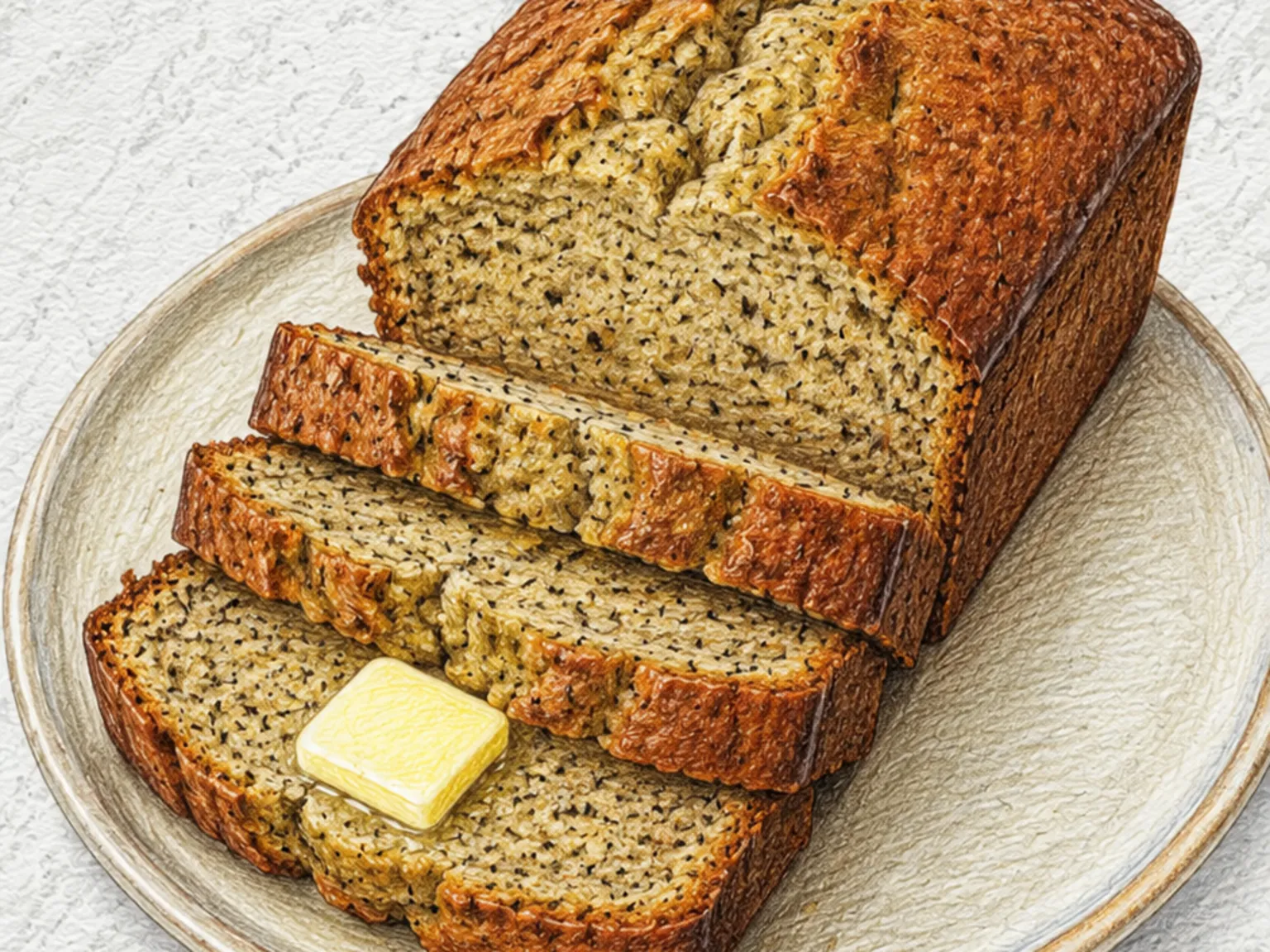
Earl Grey Banana Bread
Overripe bananas and finely ground Earl Grey tea leaves come together in a quick bread that smells of bergamot and caramelized fruit. The tea leaves are ground to a powder and folded directly into the batter, releasing their floral citrus oils throughout the crumb during baking. Ripe bananas provide enough natural sugar to keep the added sweetener modest, while butter and milk ensure the loaf stays moist for days. The top splits open naturally in the oven, revealing the soft interior beneath a lightly crusted surface. Each slice carries a layered aroma where banana warmth meets bergamot brightness, a combination that works because both share citrus-adjacent notes. A pat of butter on a warm slice is all the accompaniment this bread needs.
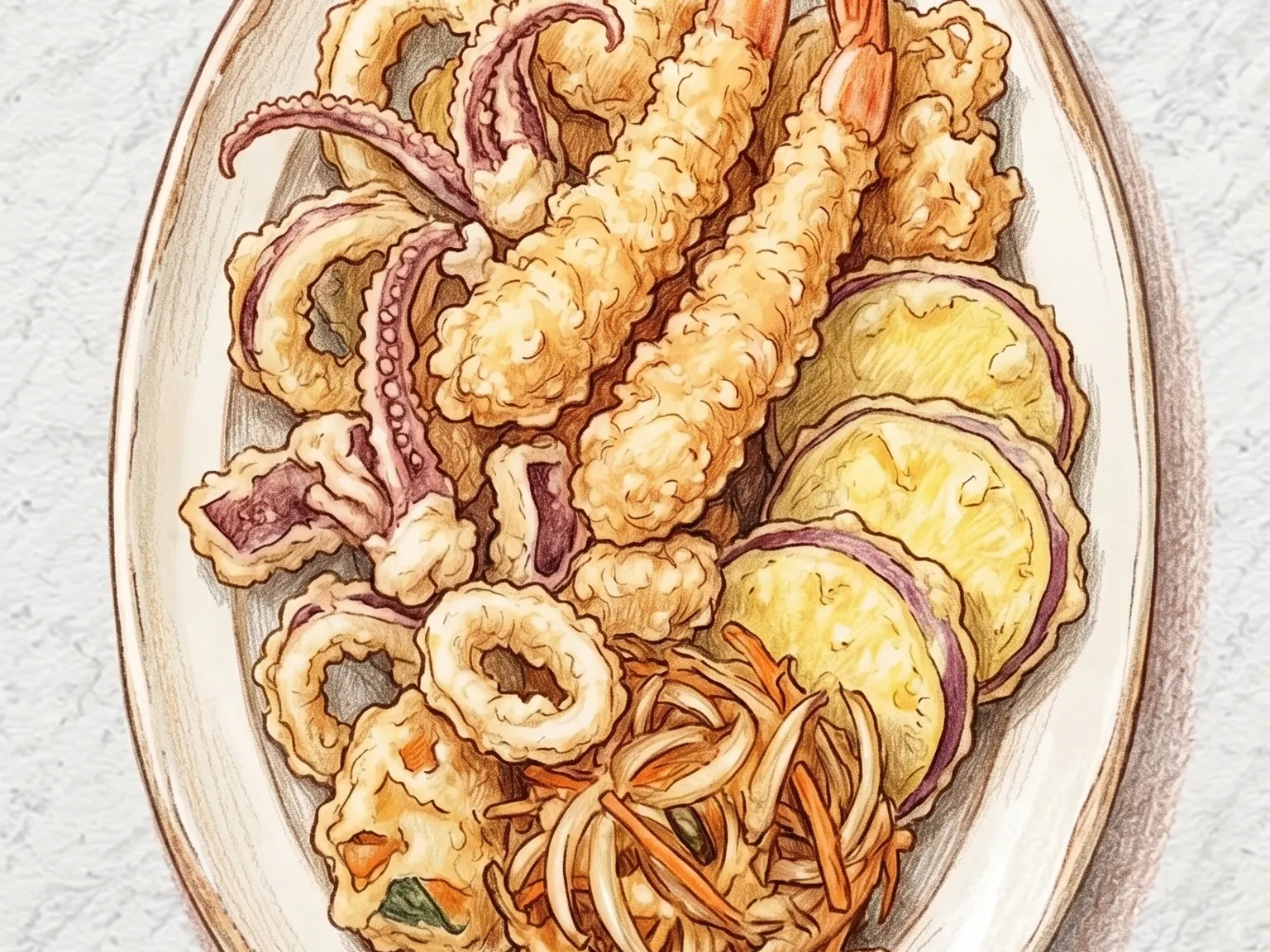
Mixed Korean Tempura
Modeum twigim is an assorted Korean tempura platter featuring sweet potato, squid, shrimp, onion, and carrot dipped in a light batter of frying powder mixed with cold water, then deep-fried at 170 degrees Celsius until crisp. Keeping the water cold and mixing minimally prevents gluten development, yielding a thin, shattering crust rather than a heavy coating. Each ingredient brings its own character: sweet potato offers starchy sweetness, squid and shrimp contribute oceanic umami, and onion and carrot release their natural moisture and fragrance as they fry. Because each ingredient has a different density and water content, maintaining a steady oil temperature is essential so every piece cooks through at the center while staying crisp at the surface. Served with a small bowl of soy sauce, the platter lets the clean frying flavor and the individual taste of each ingredient come through without any additional seasoning.
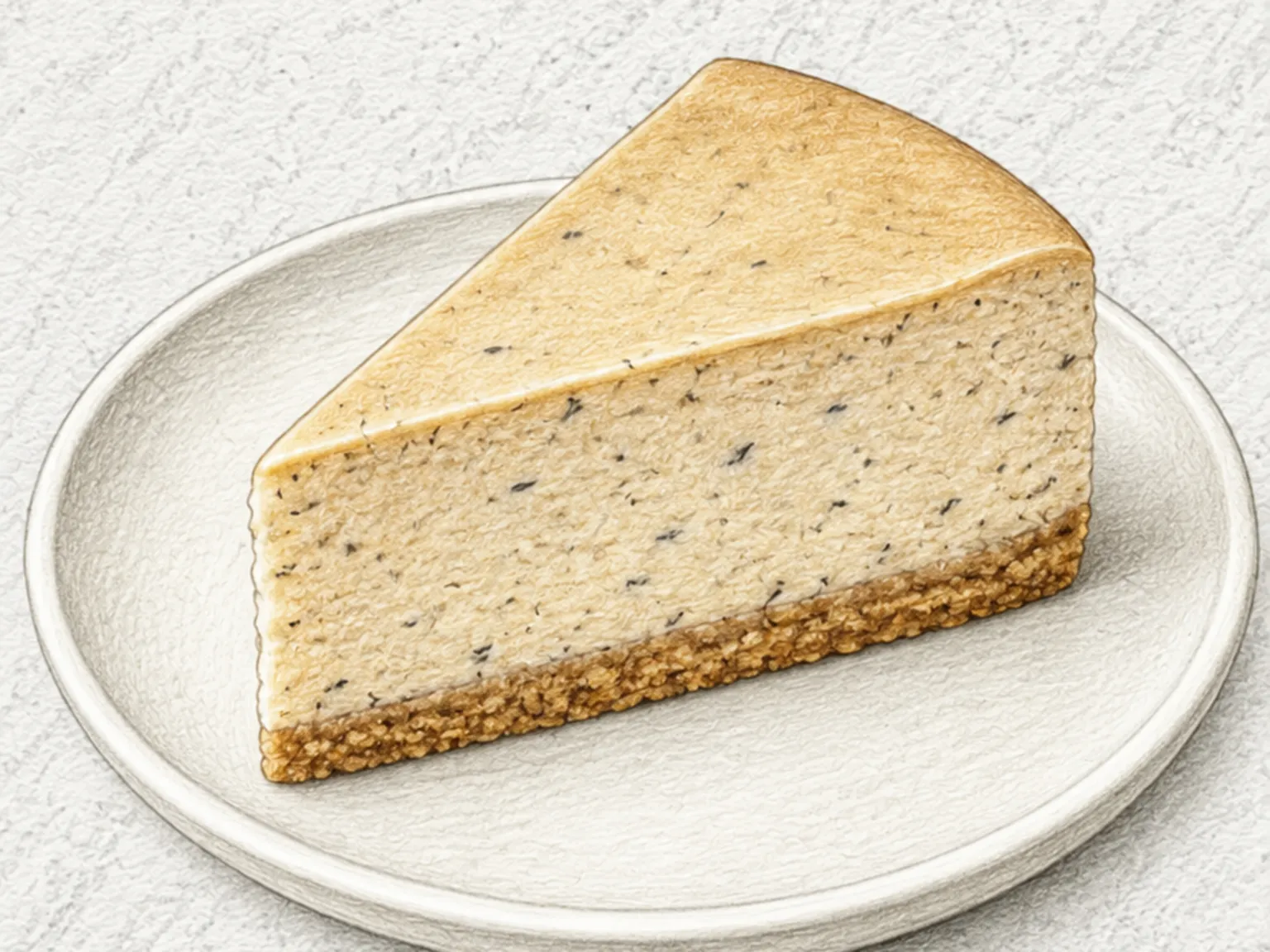
Earl Grey Milk Tea Cheesecake
Earl Grey cheesecake infuses the bergamot-scented fragrance of Earl Grey tea into a classic baked cheesecake. Heavy cream is steeped with tea bags until the bergamot's citrus-floral aroma transfers fully, then mixed into a filling of cream cheese, eggs, and sugar. A crushed digestive biscuit crust provides a sandy, buttery base. The cheesecake bakes slowly at moderate heat until the edges are set but the center still has a gentle wobble, which firms as it cools. The bergamot flavor weaves through the dense cream cheese like a thread of brightness, lifting the richness without overpowering it and creating a milk tea quality that lingers after each bite.