2686 Korean & World Recipes
Charim is a recipe guide that organizes Korean, Western, Asian, and baking recipes in one place. Each recipe features a clear ingredient list and step-by-step instructions, along with nutrition facts and cooking tips.
Browse 2686 recipes across 18 categories. Use the search bar or category filters to find exactly what you are looking for.
All Recipes
Neatly organized recipe collection
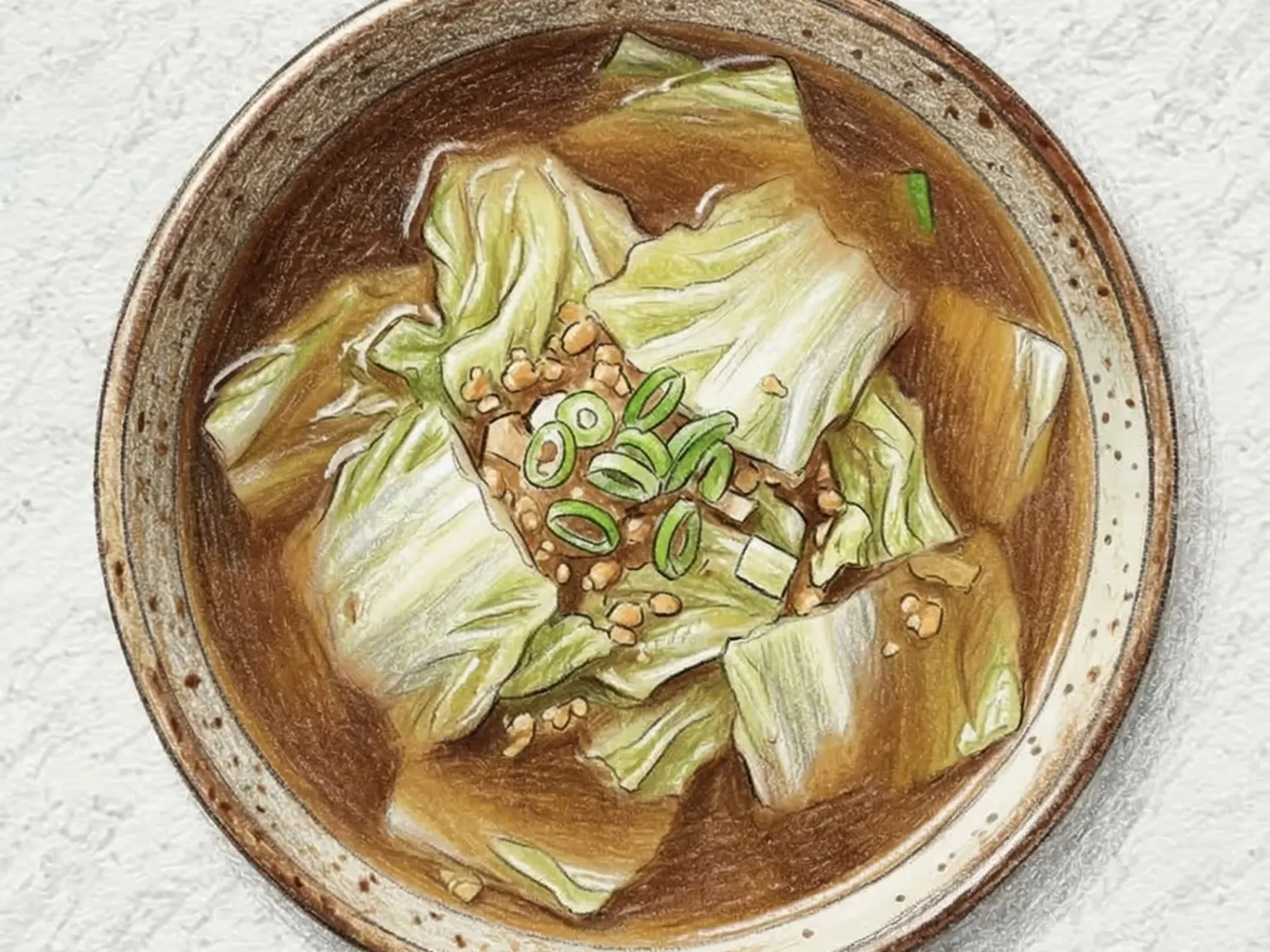
Korean Napa Cabbage Doenjang Soup
Baechu doenjang guk is a foundational Korean soup where napa cabbage simmers in anchovy-kelp stock seasoned with doenjang. Straining the doenjang through a sieve as it dissolves into the broth keeps the liquid clear while extracting its full fermented flavor. The cabbage stems go in first and cook for five minutes to release their sweetness before the leaves and cubed tofu are added. A small spoonful of gochujang introduces a mild heat and a reddish tint that adds visual and flavor complexity. Sliced cheongyang chili and scallion enter in the last two minutes, contributing sharpness without becoming soft. Since doenjang saltiness varies between brands, starting with a conservative amount and adjusting by taste prevents over-seasoning. As the cabbage softens completely, its natural sweetness seeps into the broth and balances the deep, earthy character of the fermented paste.
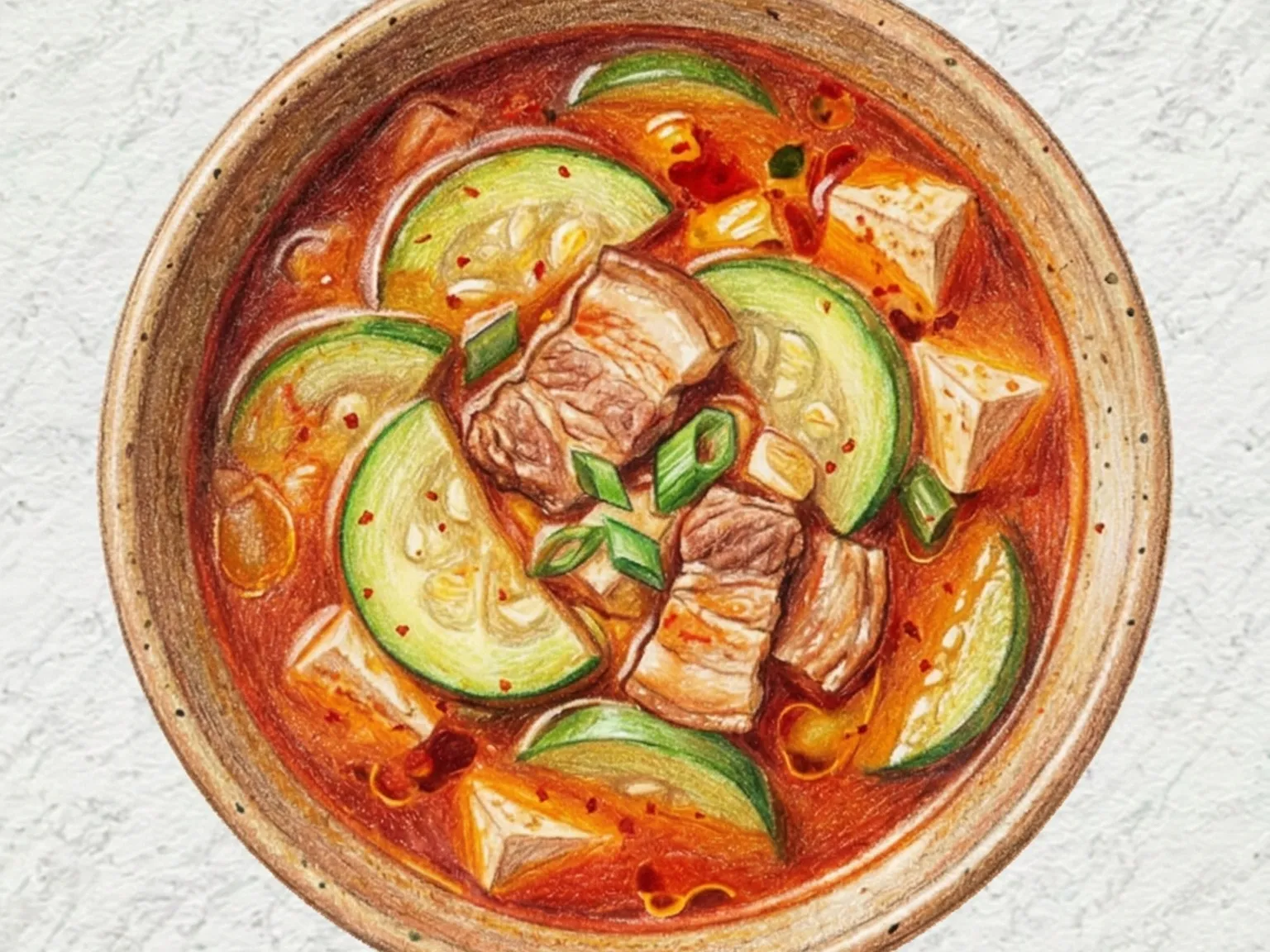
Korean Zucchini Pork Stew
Aehobak-jjigae is a home-style Korean stew that builds bold flavor from modest ingredients - pork, zucchini, and a spoonful each of gochujang and gochugaru. The pork is stir-fried first with garlic to render fat and build a savory fond at the bottom of the pot, then the chili paste is toasted into the fat before anchovy broth goes in. This layering technique gives the broth a depth that plain boiling cannot achieve. The zucchini cooks in the simmering liquid for just six minutes, softening into the stew while keeping enough structure to hold its half-moon shape. The broth finishes spicy and slightly sweet from the pork fat and vegetable sugars, with enough body to soak into a bowl of rice. A reliable weeknight meal that requires no special ingredients beyond a basic Korean pantry.
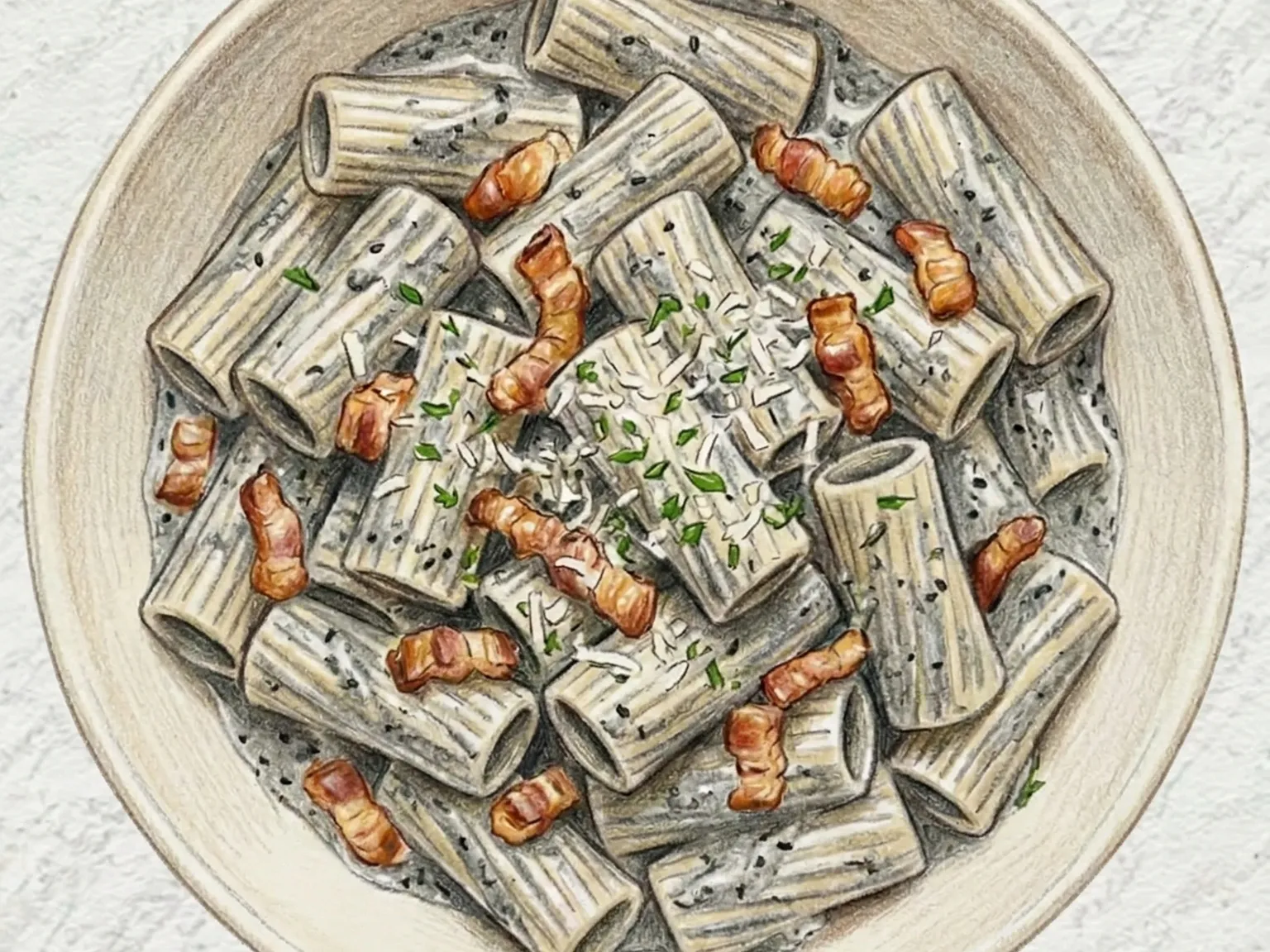
Heukimja Cream Bacon Rigatoni (Black Sesame Cream Pasta)
Heukimja cream bacon rigatoni coats wide tube pasta in a sauce built from finely ground roasted black sesame blended into heavy cream and milk. The black sesame delivers a deep, toasted nuttiness that melds with the cream's fat into something resembling a nut butter sauce, with a distinctive grey-toned color that sets it apart visually from standard cream pastas. Crisp-fried bacon scattered throughout adds salty, smoky bites that punctuate the otherwise uniform creaminess, and the rigatoni's large hollow shape traps sauce both inside and outside each piece. A final dusting of black sesame powder reinforces the nutty aroma and signals the Korean ingredient at the center of this Italian-Korean crossover.
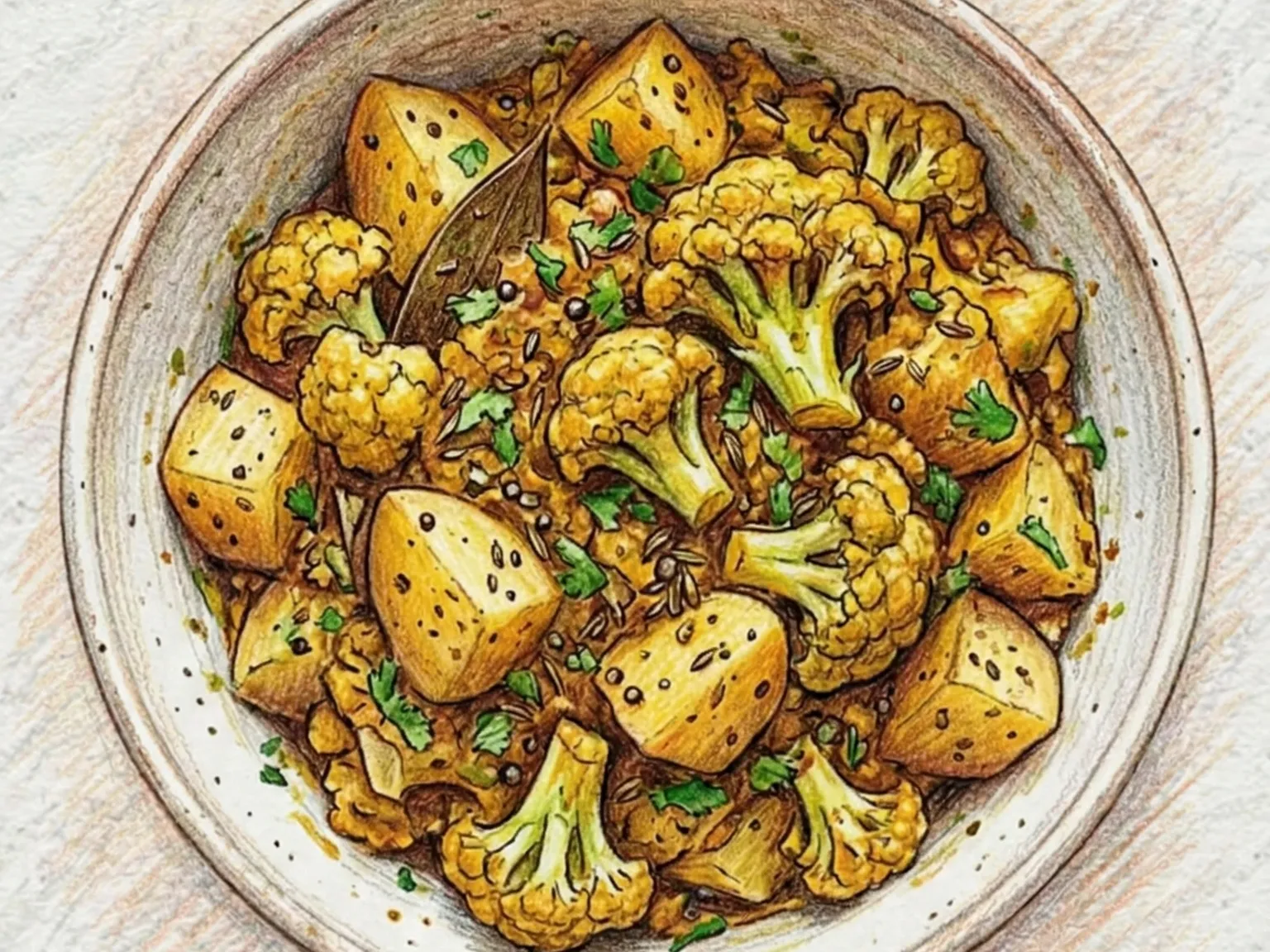
Aloo Gobi (Indian Cauliflower Potato Curry)
Aloo gobi is one of North India's most recognized vegetarian dishes, found on dhabas and home tables across Punjab and Uttar Pradesh. Potatoes and cauliflower florets cook together in a dry preparation - no gravy, just oil, cumin seeds, turmeric, and chili powder forming a thin spice crust on every piece. The technique relies on covering the pan to let trapped steam cook the vegetables through while the base stays dry enough to develop light browning. Cauliflower edges turn nutty and slightly charred, while potato cubes hold their shape with a floury interior. It pairs naturally with roti or plain rice, and tastes equally good at room temperature in a lunchbox the next day.
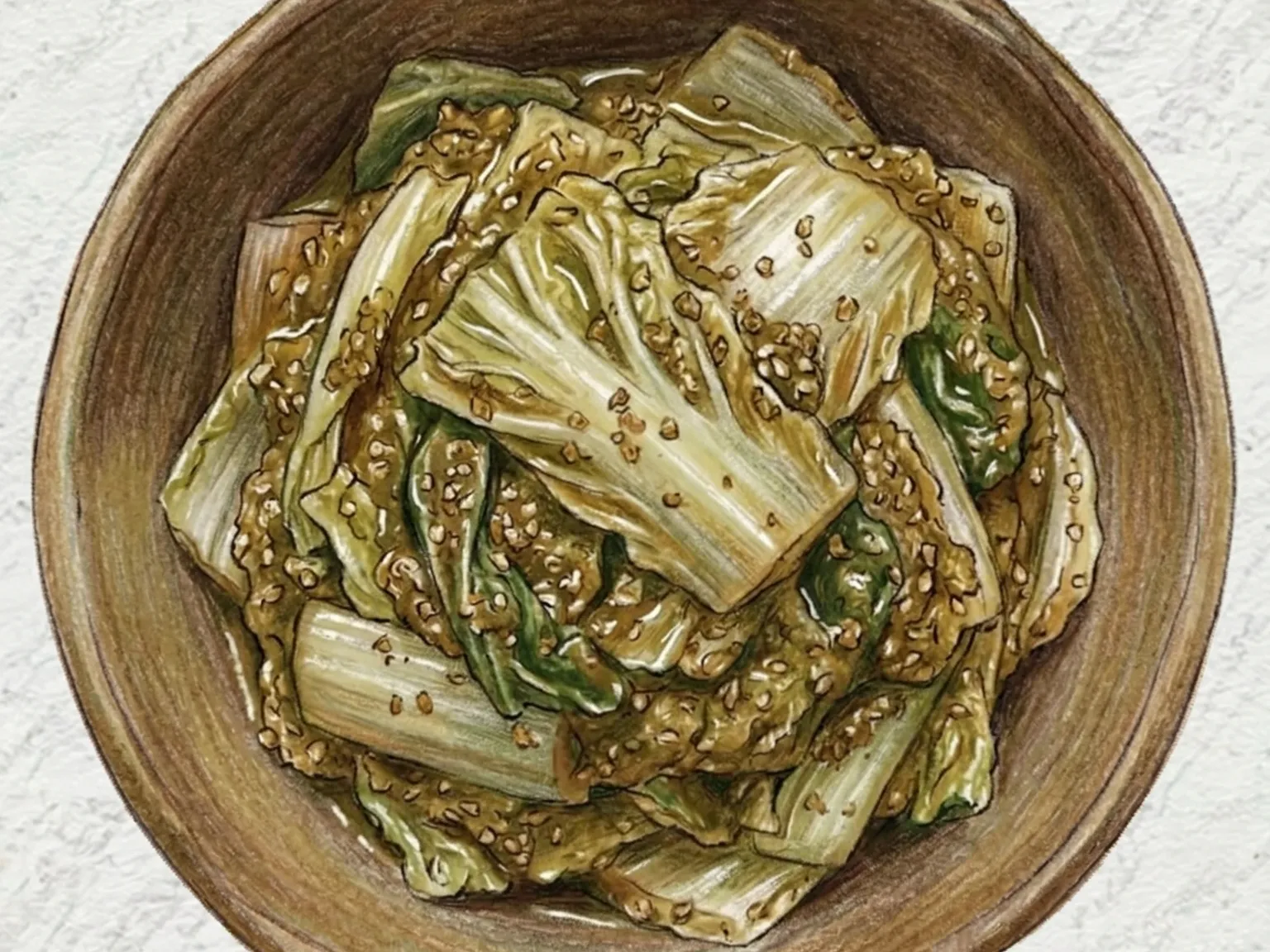
Korean Seasoned Napa Cabbage Namul
Boiled napa cabbage dressed with doenjang and perilla, passed down through generations of Korean home cooks. The cabbage boils two minutes - leaves collapse while white stems stay slightly firm - then is rinsed, squeezed, and cut. Perilla oil gives a distinctly herbal quality, and perilla powder thickens the dressing into a paste clinging to each piece. This quiet, understated banchan pairs well with clear soups and plain rice.
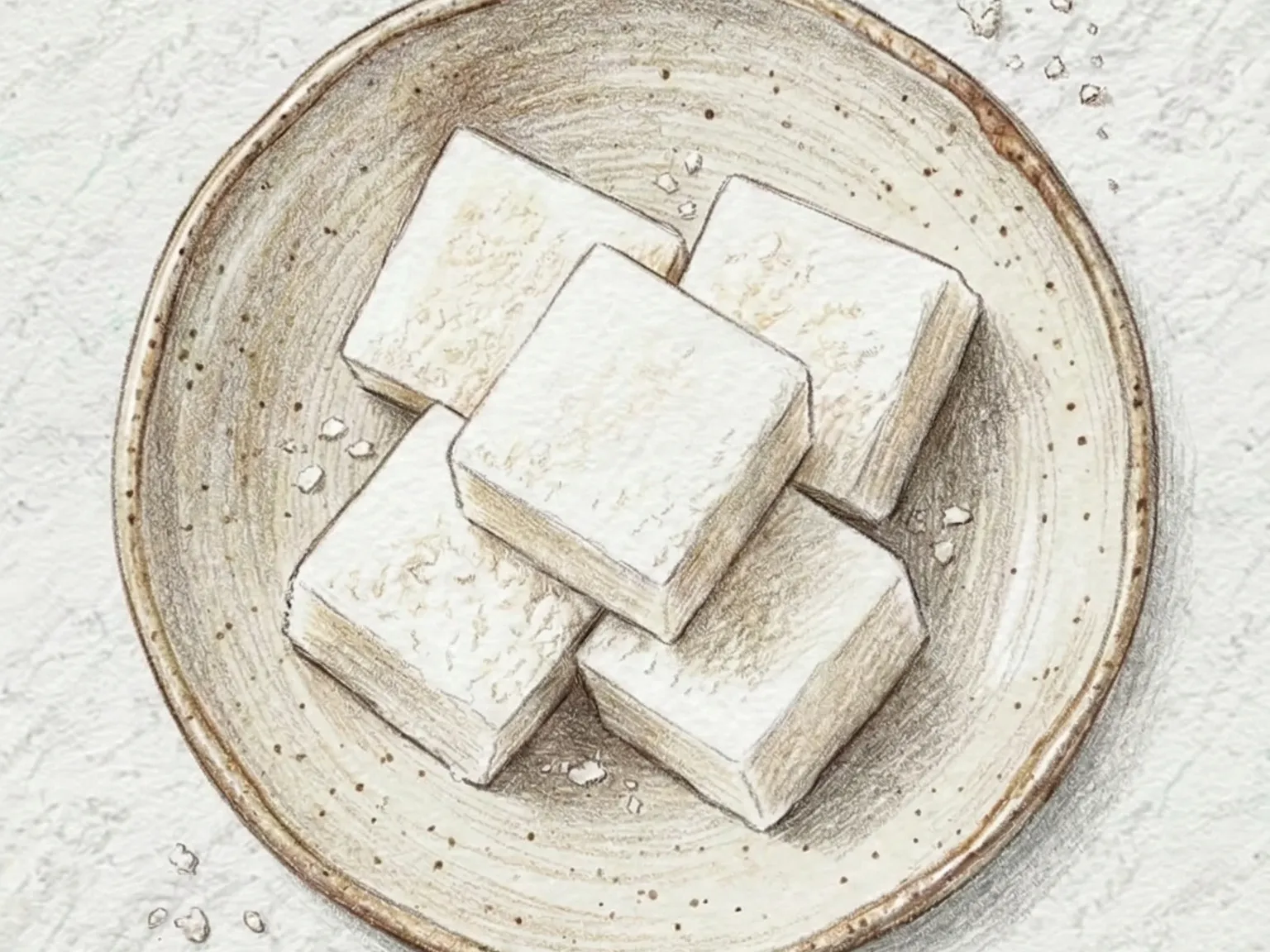
Steamed White Rice Cake (Soft Crumbly Korean Traditional Rice Dessert)
Baekseolgi is a traditional Korean steamed rice cake made from non-glutinous rice flour mixed with sugar and salt, then sifted and steamed. The sifting step, repeated two to three times, determines the final texture: thorough sifting incorporates air into the flour so the cake steams into a soft, crumbly structure that breaks apart in fine layers. Skipping or rushing this step produces a dense, coarse cake that lacks the defining quality of good baekseolgi. Moisture content requires precision as well; the flour should clump when squeezed but crumble when lightly pressed. Steaming over high heat for twenty to twenty-five minutes cooks the cake through, and a cloth under the lid prevents condensation droplets from falling onto the surface and creating wet patches. Dried jujube slices and pumpkin seeds placed on top before steaming add color contrast to the pure white surface. The sugar content is modest, allowing the clean, mild flavor of rice to lead, and the cake is best eaten warm since it firms up as it cools.
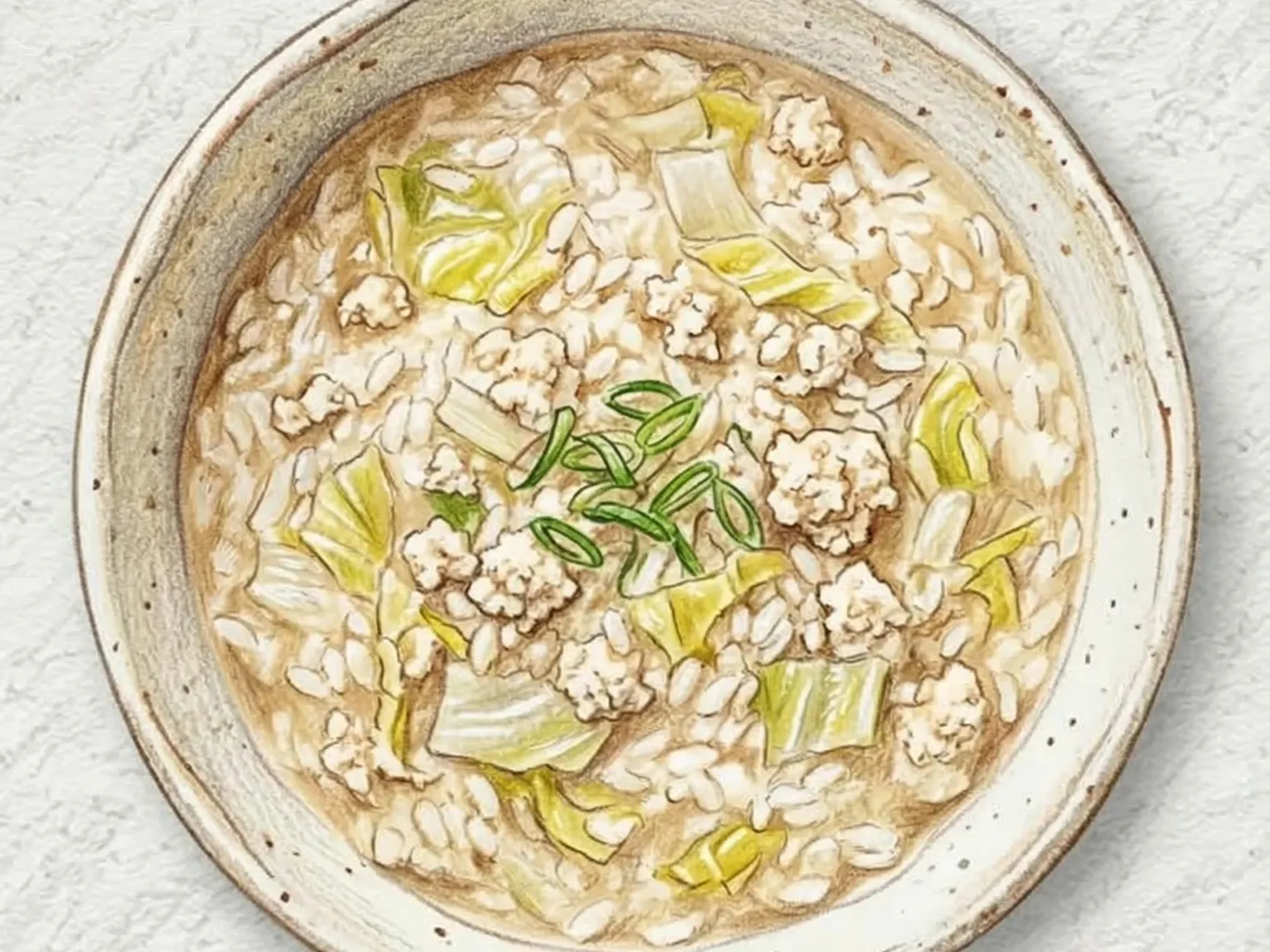
Korean Napa Cabbage Tofu Porridge
A gentle, warming Korean porridge of napa cabbage and soft tofu - light enough for a recovering stomach yet satisfying for any morning. The rice is first sauteed in sesame oil, forming a thin oily coat on each grain that releases a nutty fragrance as the porridge cooks. Vegetable stock and finely chopped cabbage are added, and the pot simmers at medium heat until the rice grains break down completely, during which the cabbage releases its moisture and sweetens the broth naturally. The tofu is crumbled by hand and stirred in during the last five minutes, dispersing evenly to create a smooth protein layer within the porridge. Minced garlic goes in early so its raw edge cooks out fully. Seasoning is kept to a minimum with just guk-ganjang and salt, letting the ingredients speak for themselves. Without heavy oils or strong spices, the porridge draws its flavor entirely from the cabbage sweetness and the quiet richness of tofu.
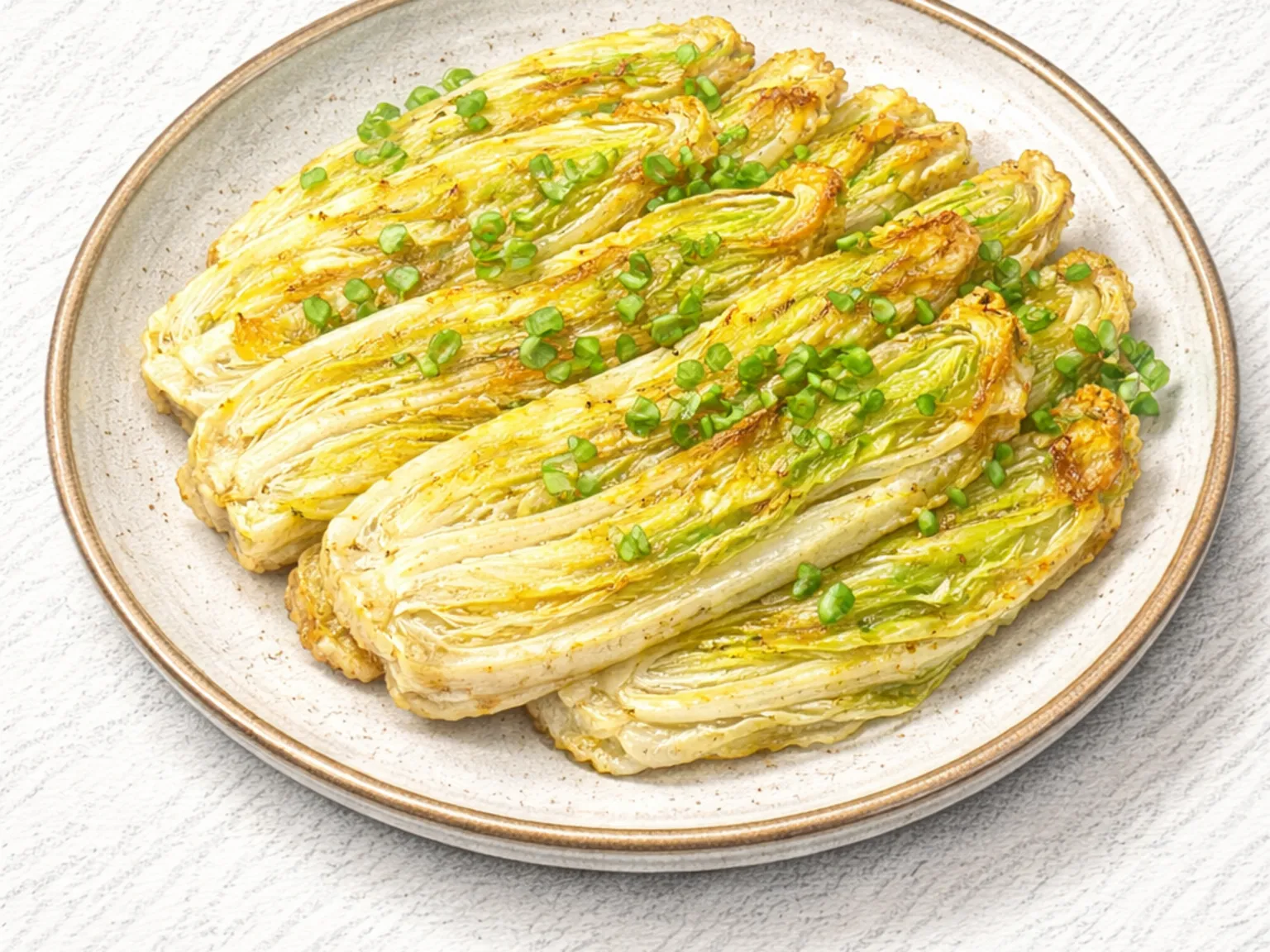
Korean Napa Cabbage Pancake
Baechu jeon is a Korean pancake made by coating napa cabbage leaves in a thin flour batter and pan-frying until golden. Outer leaves of medium size work best; if the stem end is too thick, it is flattened with the back of a knife so the batter adheres evenly and the leaf does not buckle during cooking. The batter is mixed thin, roughly equal parts buchim flour and water, so it forms a light coating rather than a heavy shell that would mask the cabbage flavor. Generous oil in the pan and steady medium heat produce a crisp exterior while the cabbage inside softens and releases its gentle sweetness. Each side must brown fully before flipping to prevent the pancake from breaking apart. A dipping sauce of soy sauce with vinegar and sliced cheongyang chili adds acidity and heat that offset the mild character of the pancake.
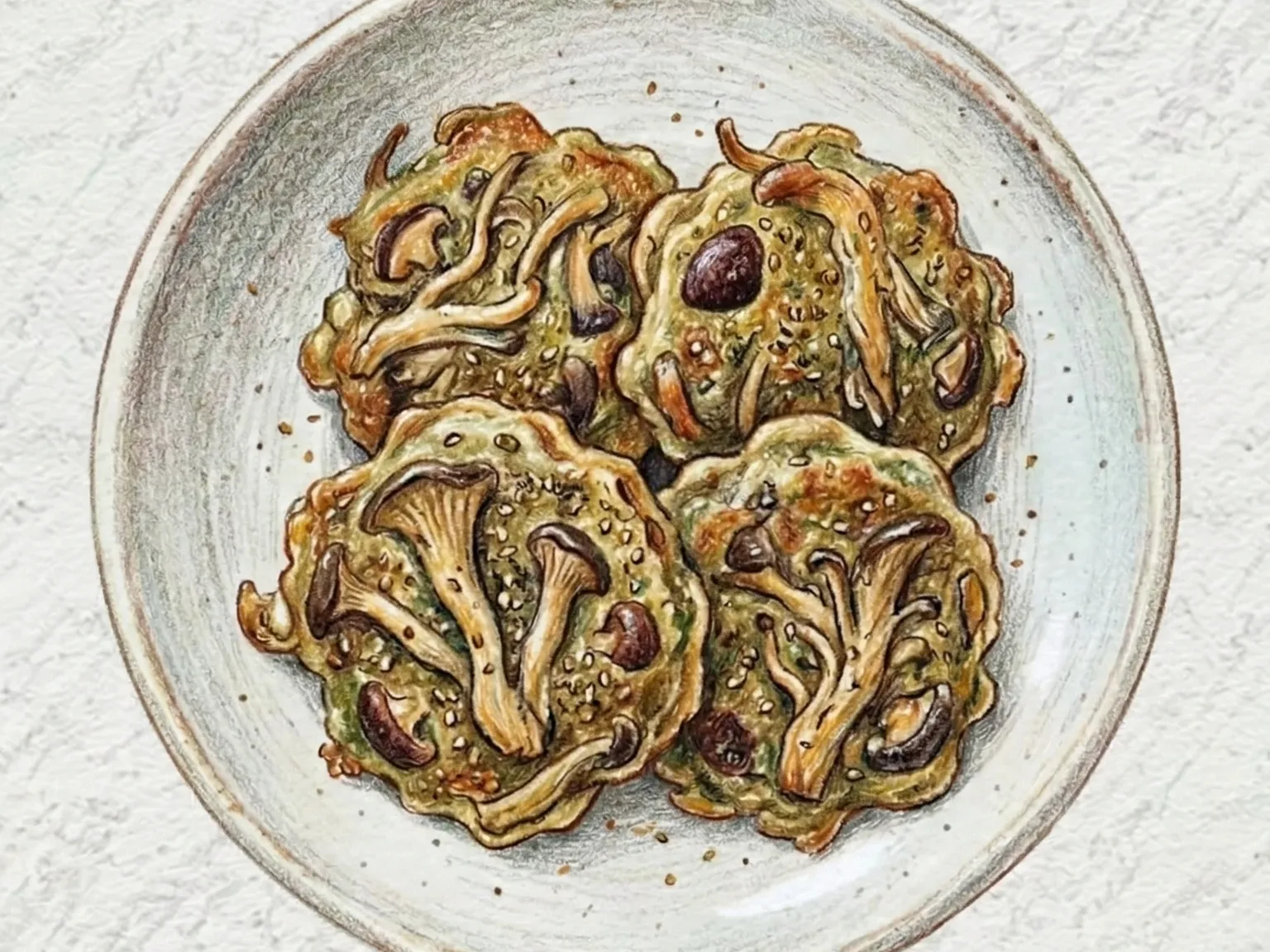
Korean Beoseot Deulkkae Jeon (Mushroom Perilla Pancake)
This Korean pancake combines oyster and shiitake mushrooms with perilla seed powder, creating a distinctively nutty aroma that sets it apart from standard mushroom jeon. The mushrooms are sliced thin and mixed with onion into a batter seasoned with soy sauce for built-in umami depth. Once pan-fried until the edges crisp up, the contrast between the crunchy exterior and the soft, chewy mushroom filling makes each bite satisfying. It pairs well with makgeolli or as a simple side dish.
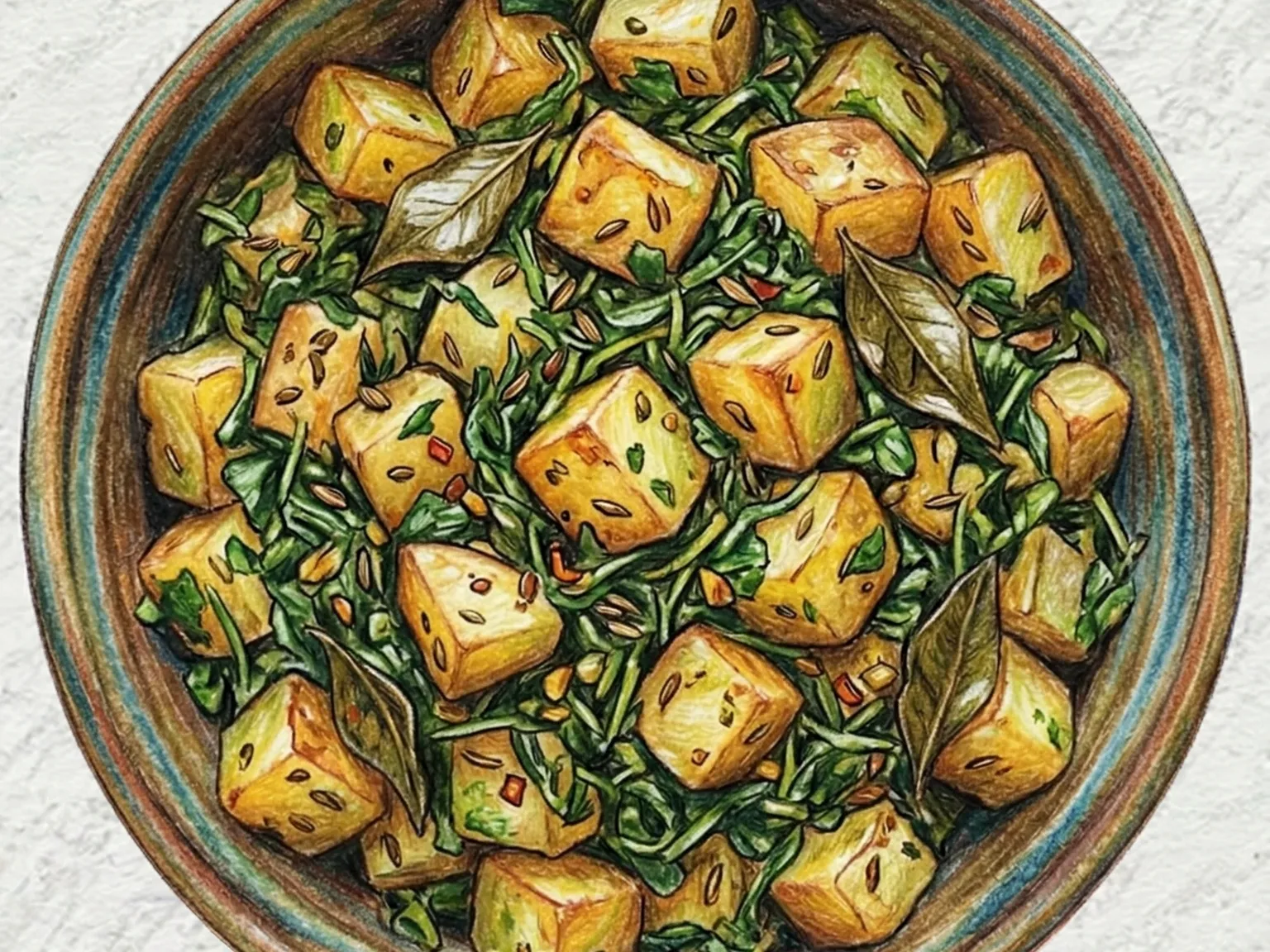
Aloo Methi (Indian Potato Fenugreek Dry Stir-Fry)
Aloo methi is a North Indian home-cooking classic built on the pairing of starchy potatoes and bitter fenugreek leaves - two ingredients that balance each other naturally. Fresh methi leaves have a pronounced earthy bitterness that mellows into a warm, maple-like aroma once they hit the hot pan. The potatoes are diced and cooked covered until fork-soft, absorbing cumin, turmeric, and chili along the way. When methi leaves fold in at the end, their residual moisture evaporates quickly, concentrating that herbaceous flavor into every bite. In Indian households, this dish often appears alongside dal and rice for a weeknight dinner that comes together in under thirty minutes.
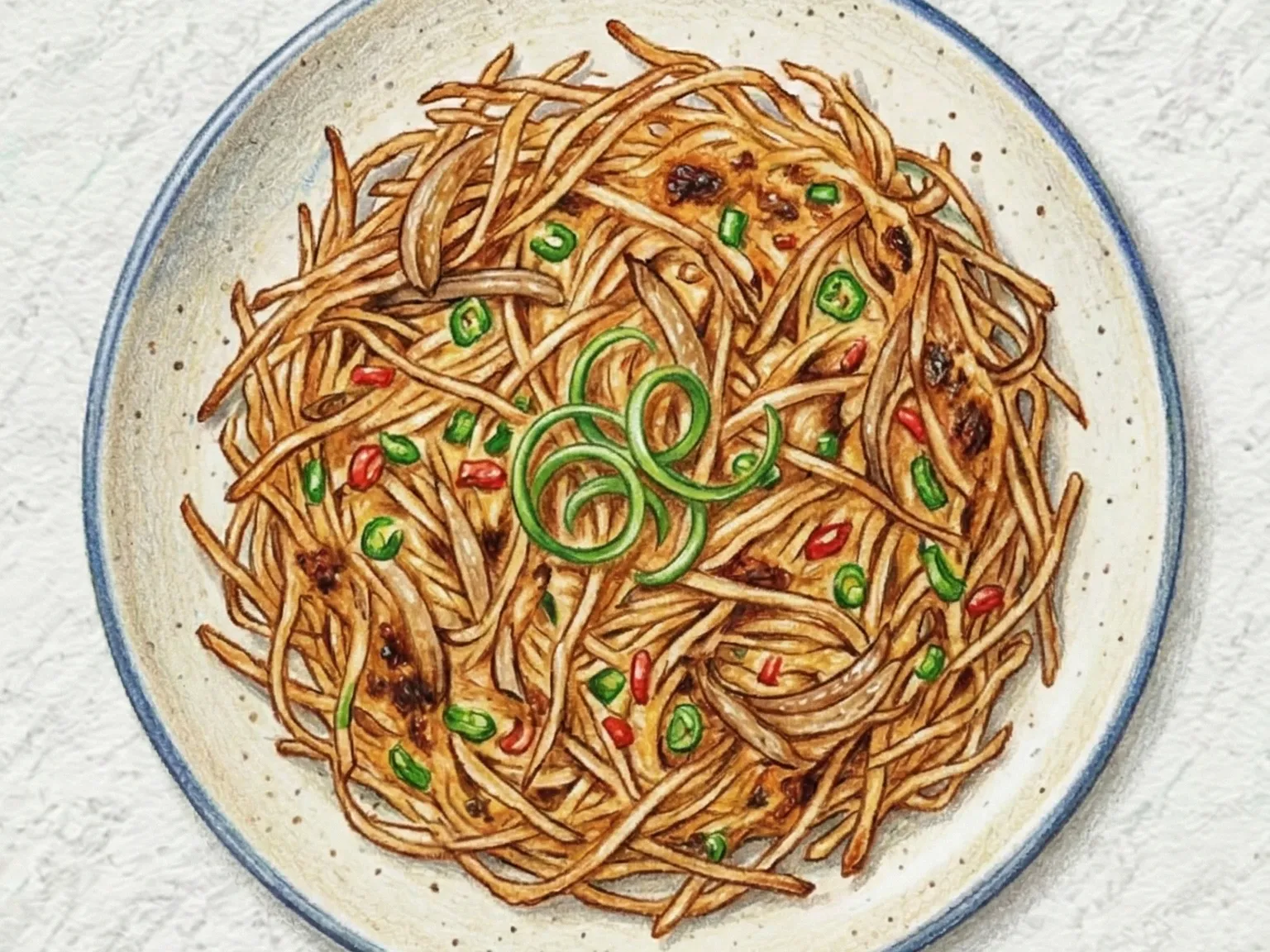
Korean Burdock Matchstick Pancake
Burdock root is julienned into thin matchstick strips and pan-fried with onion and green chili in a light batter. The combination of Korean pancake mix and tempura flour produces an extra-crispy texture that highlights the burdock's natural crunch. Burdock's earthy, slightly sweet flavor comes through clearly, while the green chili adds a subtle kick of heat. Mixed with cold water to keep the batter light, this jeon delivers a clean, vegetable-forward taste.
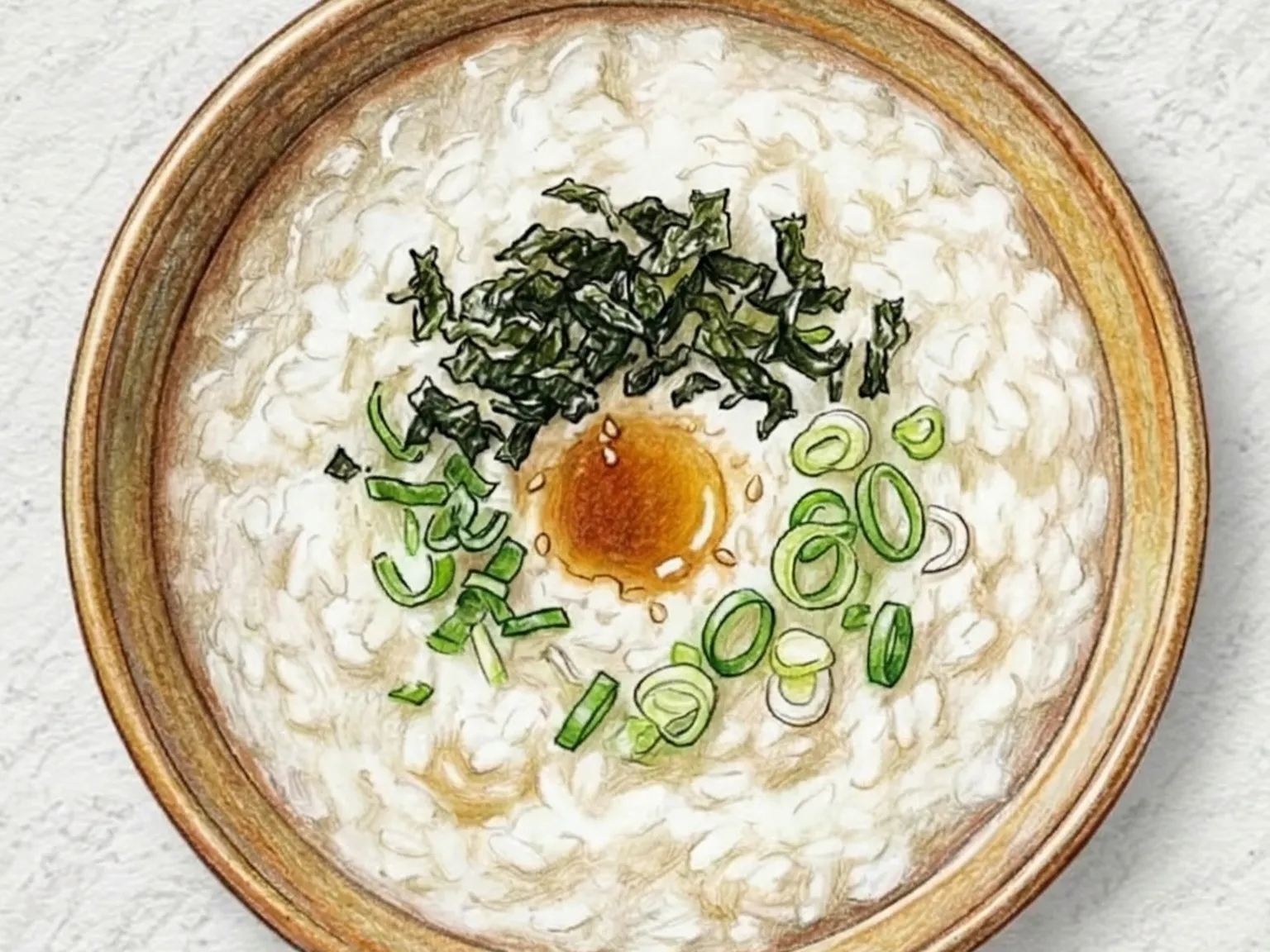
Plain Korean Rice Porridge
Baekjuk is the most fundamental Korean porridge, made with nothing more than soaked rice and water. Toasting the rice in sesame oil before adding liquid coats the grains in a thin layer of fat that moderates starch release, preventing the porridge from becoming overly gluey while building a nutty aroma into the base. Water is added at six to seven times the volume of rice, brought to a boil, then reduced to low heat and stirred for at least thirty minutes until the grains dissolve into a smooth, flowing consistency. Regular stirring with a wooden spatula is essential to prevent the bottom from scorching. Seasoning stays minimal with just salt to highlight the clean taste of rice itself, while shredded seaweed and chives provide small bursts of flavor on top. A final drop of sesame oil adds fragrance. The porridge serves as both a recovery food for unsettled stomachs and a versatile base meal that pairs with almost any Korean side dish.
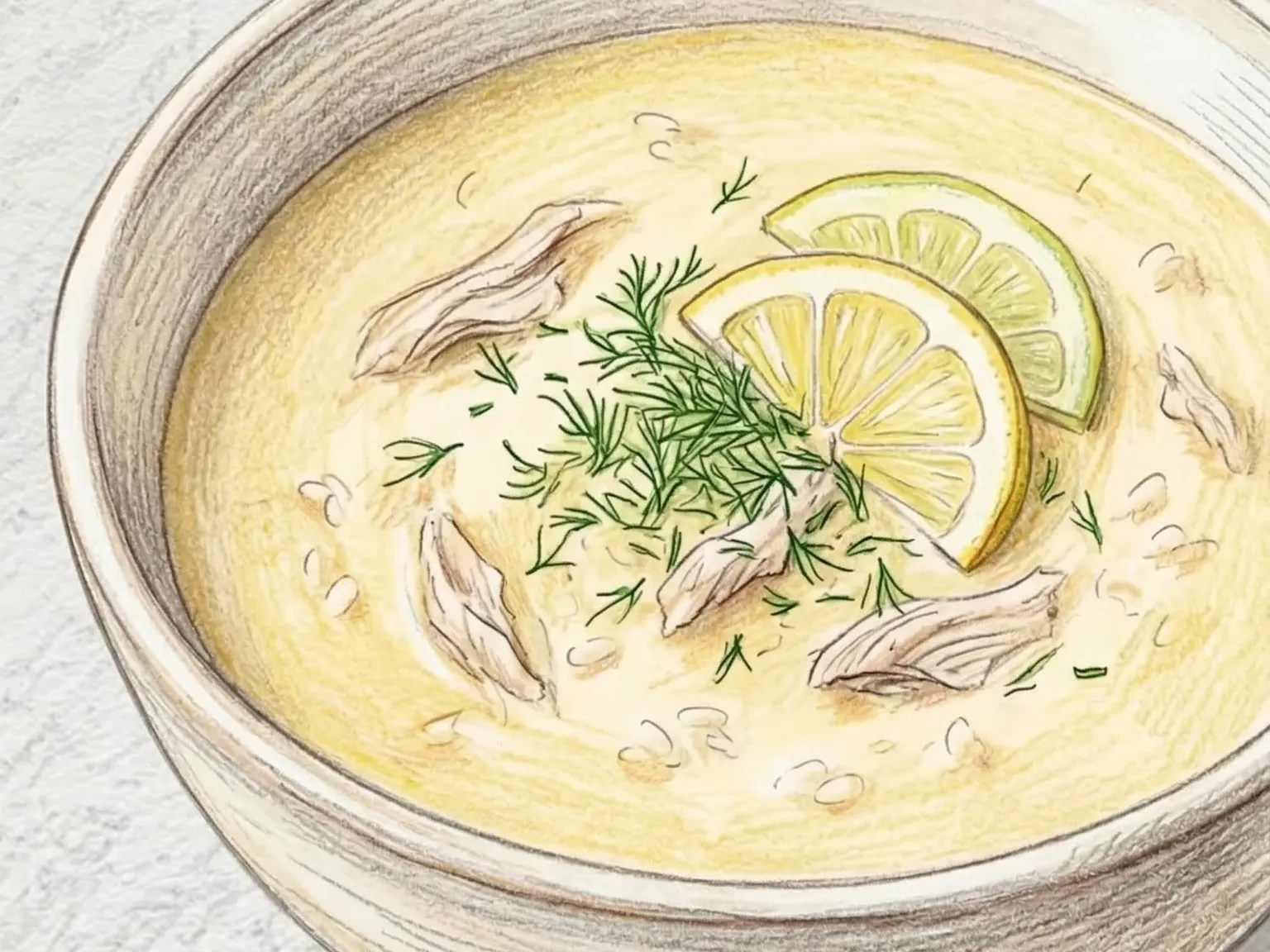
Avgolemono Soup (Greek Egg-Lemon Chicken Rice Soup)
Avgolemono - from the Greek avgo (egg) and lemoni (lemon) - is a soup that has warmed Greek households for centuries, with roots reaching back to the Sephardic Jewish communities of the Byzantine Empire who brought egg-lemon sauces to the eastern Mediterranean. Chicken broth is simmered with short-grain rice until the grains swell and release their starch, thickening the liquid slightly. The defining step is tempering: beaten eggs and fresh lemon juice are whisked together, then a ladle of hot broth is stirred in slowly to raise the temperature without scrambling the eggs. This tempered mixture returns to the pot off heat, transforming the broth into a velvety, pale-yellow cream with a bright acidity that hits the palate before the warmth of the chicken stock settles in. The soup must never boil after the eggs go in - gentle heat is the only way to maintain the silky emulsion. Shredded chicken stirred in at the end makes it a complete meal. Greeks consider avgolemono the definitive comfort food for cold days and recovery from illness.
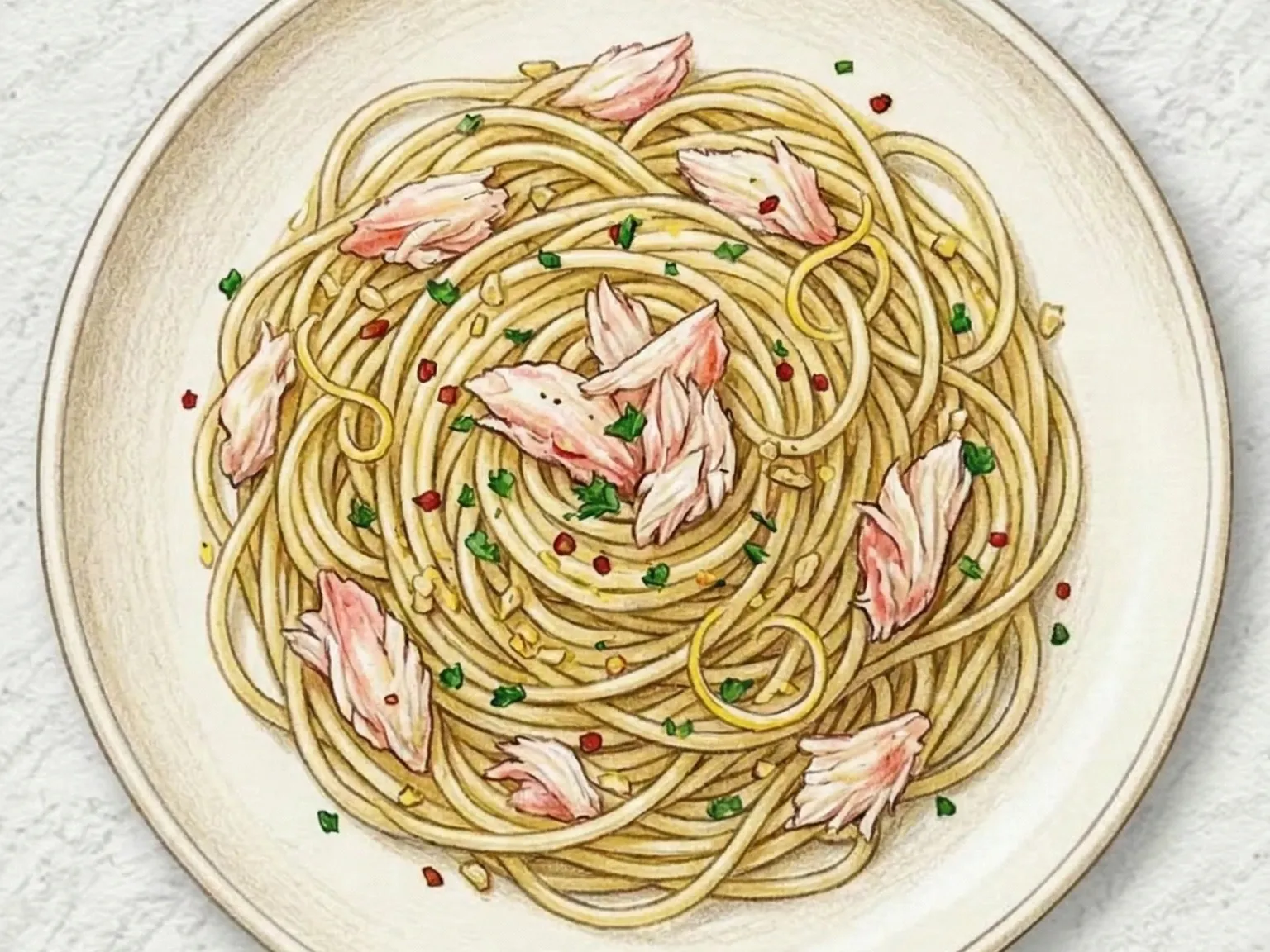
Blue Crab Lemon Garlic Pasta
Blue crab lemon garlic spaghetti starts by slowly warming thinly sliced garlic in olive oil over low heat until fragrant, then tossing in crab meat with a splash of rice wine to cook off any raw ocean smell before stirring in butter. Pasta water emulsifies the oil and butter into a thin, glossy sauce that coats each strand of spaghetti without heaviness, carrying a clean marine flavor throughout. Lemon zest and juice are added only after the heat is turned off, preserving the sharp citrus aroma that would otherwise evaporate. Keeping the garlic just short of golden - pale and softened, not browned - is the key to a nutty depth without bitterness.

Almond Croissant
The almond croissant was born in French bakeries as a way to rescue day-old croissants - stale pastry soaked in almond syrup, filled with frangipane, and rebaked until golden. A simple solution to waste became one of the most requested items in the pastry case. The syrup soak revives the dried layers, and the almond cream - butter, sugar, ground almonds, egg, and a splash of amaretto or almond extract - melts into the interior during the second bake, turning the hollow center into a dense, marzipan-like filling. Sliced almonds pressed onto the surface toast in the oven, adding a brittle snap over the soft interior. The result is richer and more intensely almond-flavored than a plain croissant, with a sticky, caramelized bottom where the syrup has pooled. Many Parisian bakeries now bake them fresh rather than from leftovers, because demand outstrips the supply of day-old stock.
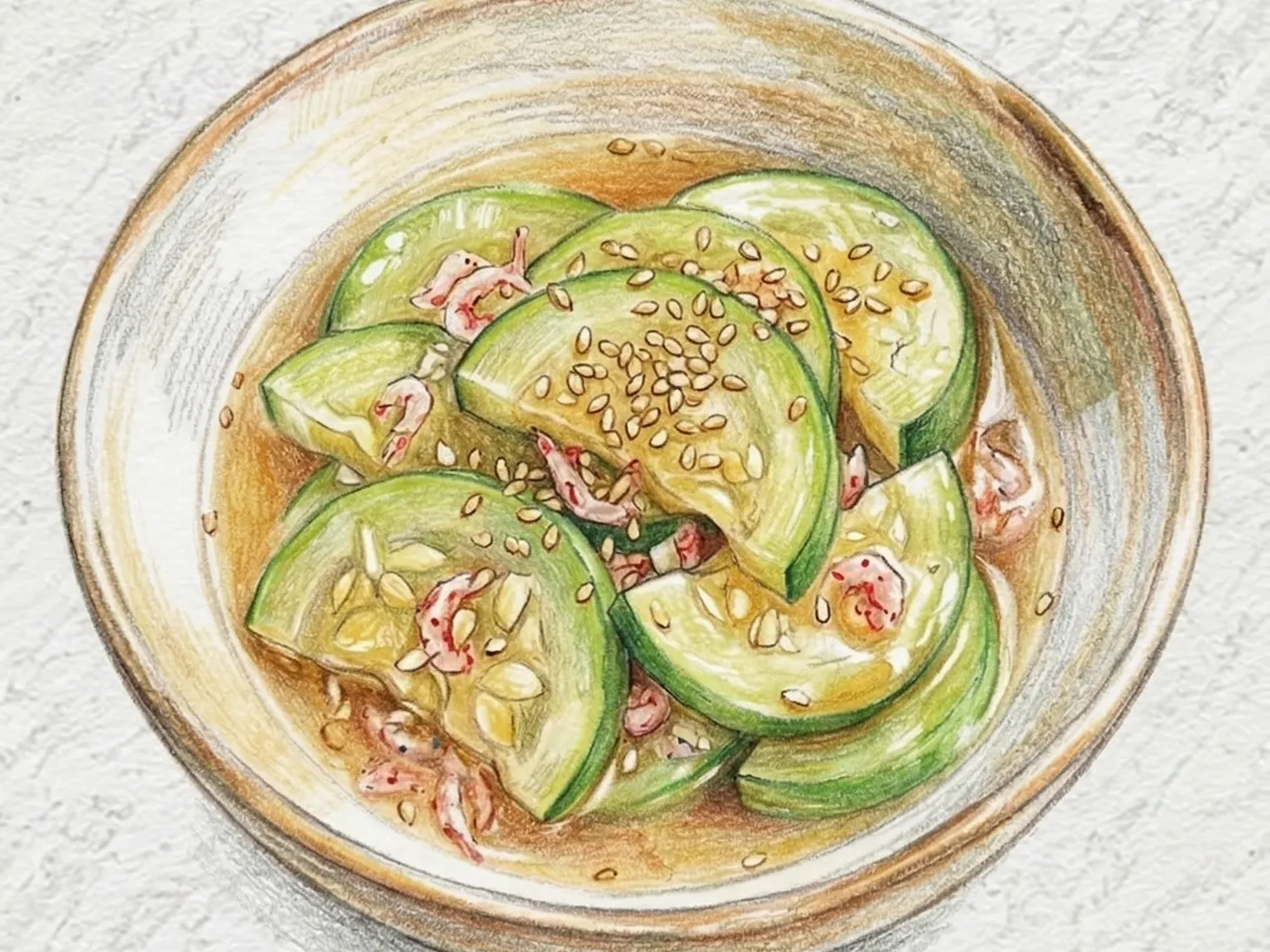
Korean Steamed Zucchini with Salted Shrimp
This gentle braise belongs to a family of Korean jjim dishes where vegetables are steam-cooked in minimal liquid seasoned with fermented ingredients. Salted shrimp - saeujeot - is the sole seasoning base, minced and dissolved into water with garlic to create a light broth. Half-moon slices of zucchini cook covered on medium-low heat, absorbing the shrimp's briny umami as they turn translucent. The technique produces something between steaming and braising: the zucchini stays moist and intact, never waterlogged. A finish of perilla oil and sesame seeds off-heat adds a nutty fragrance. This banchan traces to Korean countryside kitchens where salted shrimp was the primary seasoning before soy sauce became widely available. It pairs naturally with steamed rice and a stronger-flavored main dish.
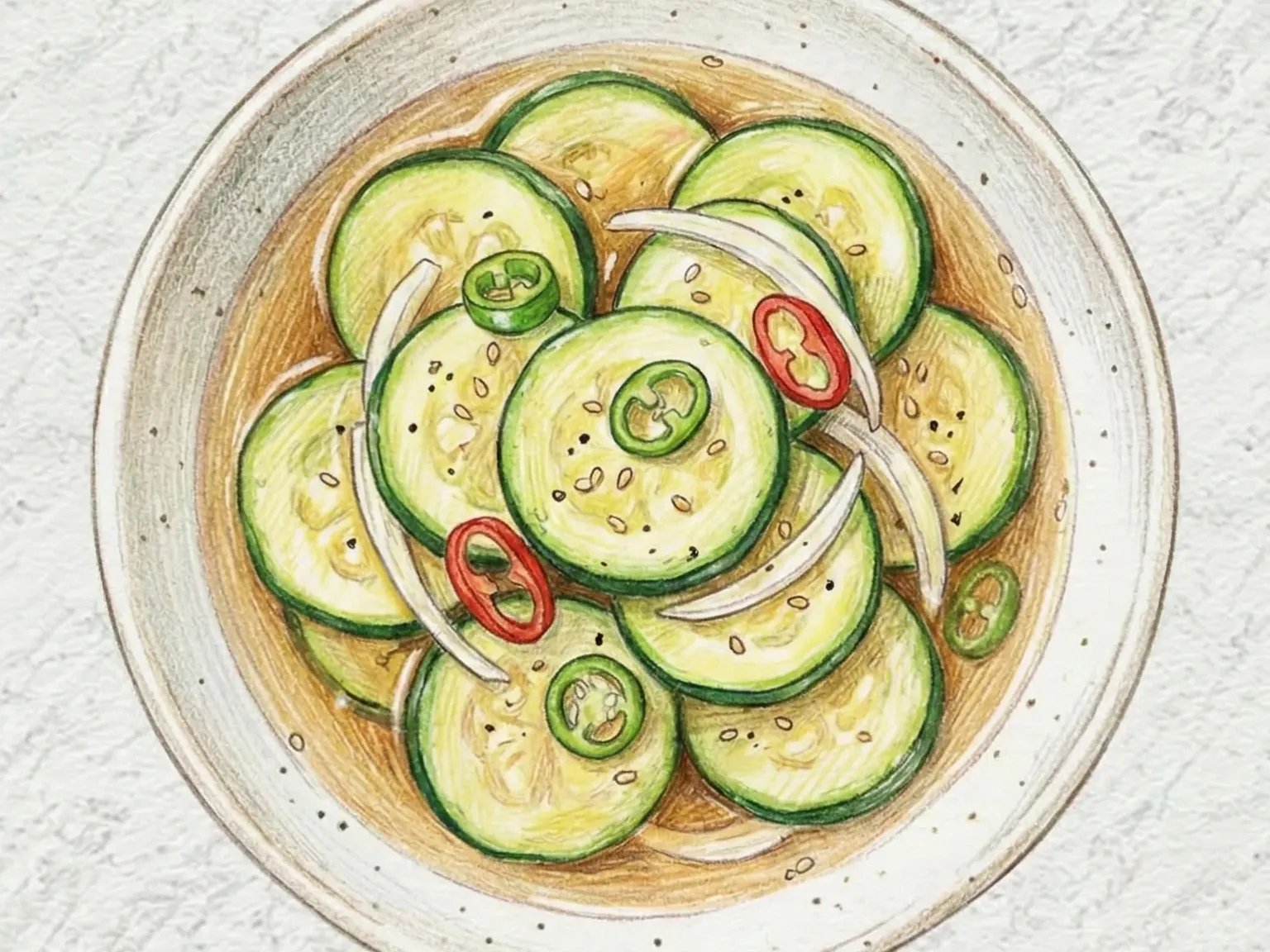
Korean Zucchini Pickles (Soy Vinegar Brine Jangajji)
Jangajji - Korean soy-pickled preserves - date back to a time before refrigeration, when vegetables were preserved in soy brine to last through lean months. This version uses young zucchini, sliced into thick half-moons and layered with onion, cheongyang chili, and whole garlic cloves in a sterilized jar. A boiling-hot brine of soy sauce, vinegar, sugar, and water is poured directly over the vegetables, partially cooking the outer edges while the centers stay crisp. The pickle is ready in 24 hours but deepens in flavor over three days as the sweet-sour-salty brine penetrates fully. Unlike fresh banchan that must be eaten the same day, jangajji keeps for two weeks in the refrigerator, making it a reliable side dish to pull out whenever the meal needs a bright, tangy counterpoint.
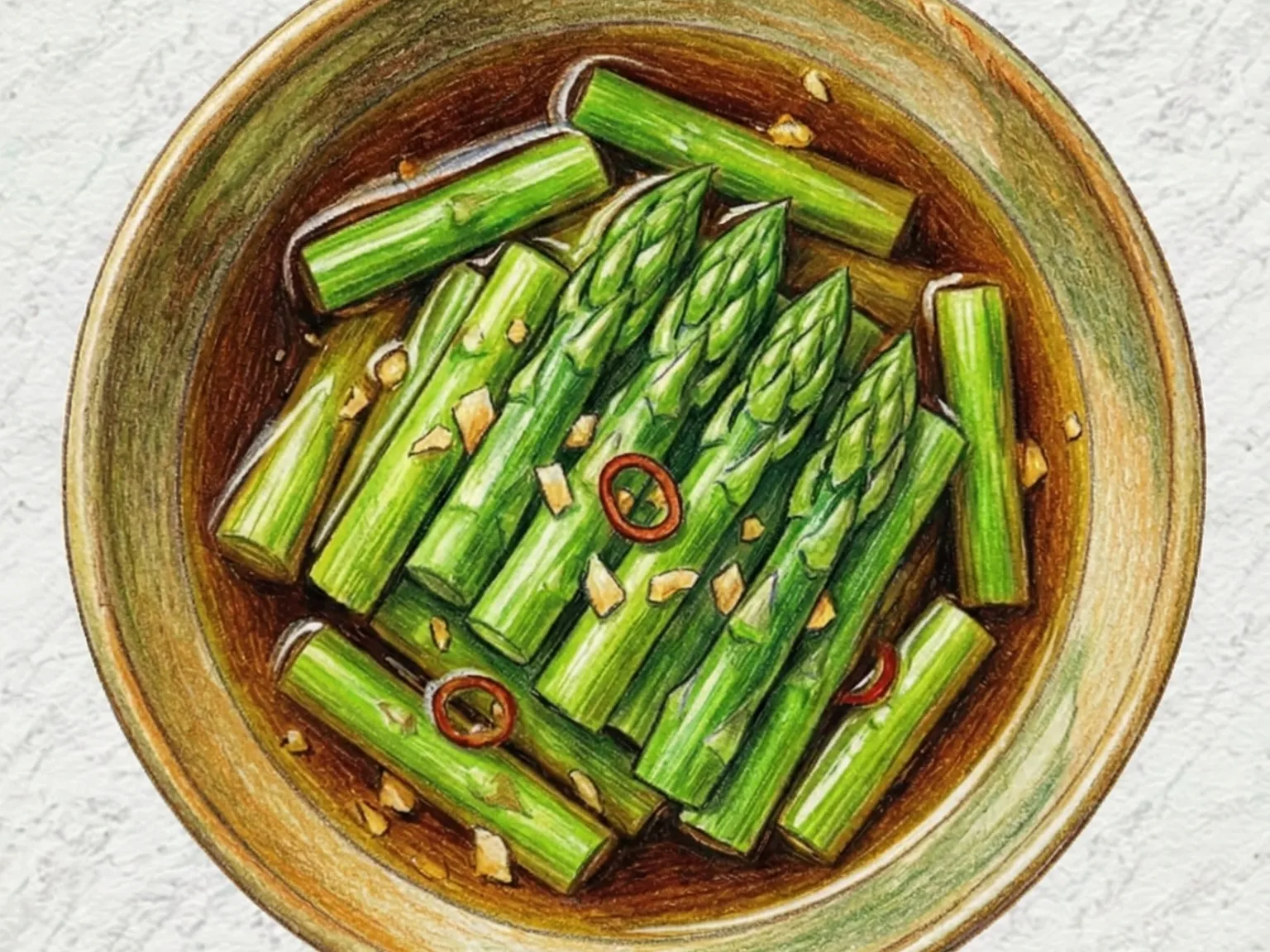
Korean Soy Pickled Asparagus
This pickle applies the Korean jangajji tradition - soy-brine preservation - to asparagus, a vegetable that Koreans adopted relatively recently but now use freely across banchan. The asparagus is blanched for just 20 seconds to set its color and soften the fibrous outer layer, then immediately shocked in ice water to lock in a vivid green and a firm, snapping texture. Packed upright in a sterilized jar, the spears are covered with a boiling brine of soy sauce, rice vinegar, sugar, and water that partially cooks the surface while the core stays crisp. Within 24 hours the brine penetrates enough for the pickle to be edible, but the flavor peaks at three days when the sweet-sour-salty balance has fully developed. Unlike most jangajji that use root vegetables or dense greens, asparagus brings a distinctive grassy, almost herbal note to the preserved format. Keeps refrigerated for two weeks.
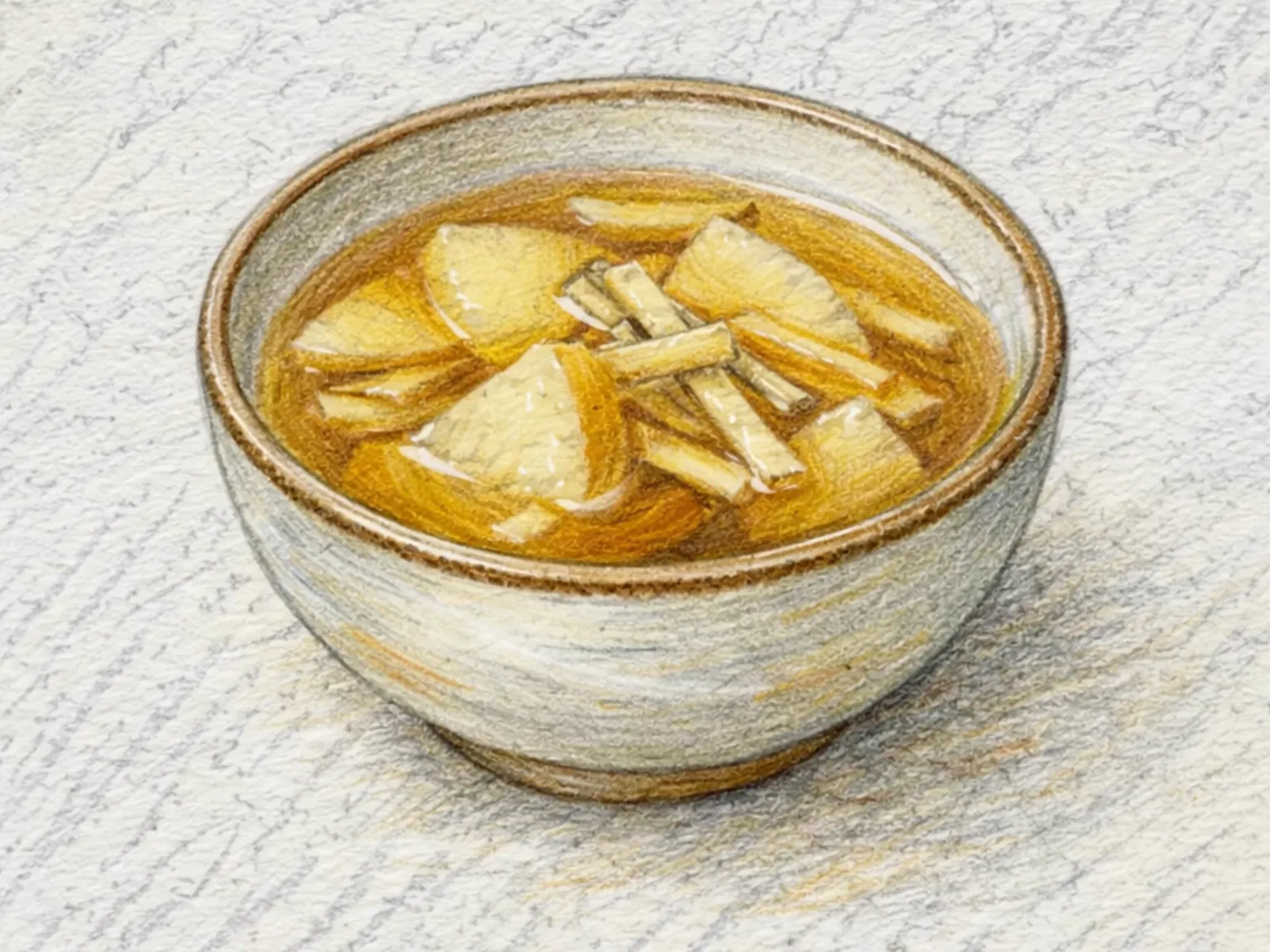
Korean Pear Bellflower Root Tea
Baedoraji cha is a traditional Korean tea made by slowly simmering pear and bellflower root (doraji) together in water. The bellflower root is peeled and kneaded with salt two to three times to draw out its inherent bitterness, a step that cannot be skipped without the tea turning unpleasantly sharp. The pear is cored, cut into large chunks, and added to the pot where its juice gradually dissolves into the liquid, providing a natural sweetness. Ginger and dried jujubes join the pot: ginger contributes a warm, slightly peppery note that complements the herbal quality of the bellflower root, while jujubes add a subtle fruity depth. The mixture simmers on low heat for thirty to forty minutes so the active compounds in each ingredient fully infuse the water. Sweetness is adjusted with jogcheong (grain syrup) rather than refined sugar. The tea is traditionally served warm during dry or cold weather, when the saponins from the bellflower root are valued for soothing the throat.

Korean Cactus Fruit Ade (Prickly Pear Citrus Sparkling Drink)
Baeknyeoncho ade is a Korean fruit drink made from prickly pear cactus fruit syrup blended with lemon juice and grapefruit juice, then topped with sparkling water. The cactus fruit syrup carries a deep magenta color and a flavor reminiscent of berries but with an earthier sweetness and slight viscosity unique to the fruit. Sharp lemon acidity and the bitter edge of grapefruit juice counterbalance the syrup's sweetness, creating a drink that is fruity without being cloying. A pinch of salt acts as a flavor amplifier rather than a source of saltiness, making the fruit acids more pronounced. The sparkling water must be added last and stirred gently after the syrup and ice are already combined, preserving the carbonation. A sprig of apple mint floated on top adds an herbal note that reaches the nose with each sip, reinforcing the cooling sensation. The intense natural pigment of the cactus fruit makes this drink visually striking when served in a clear glass.
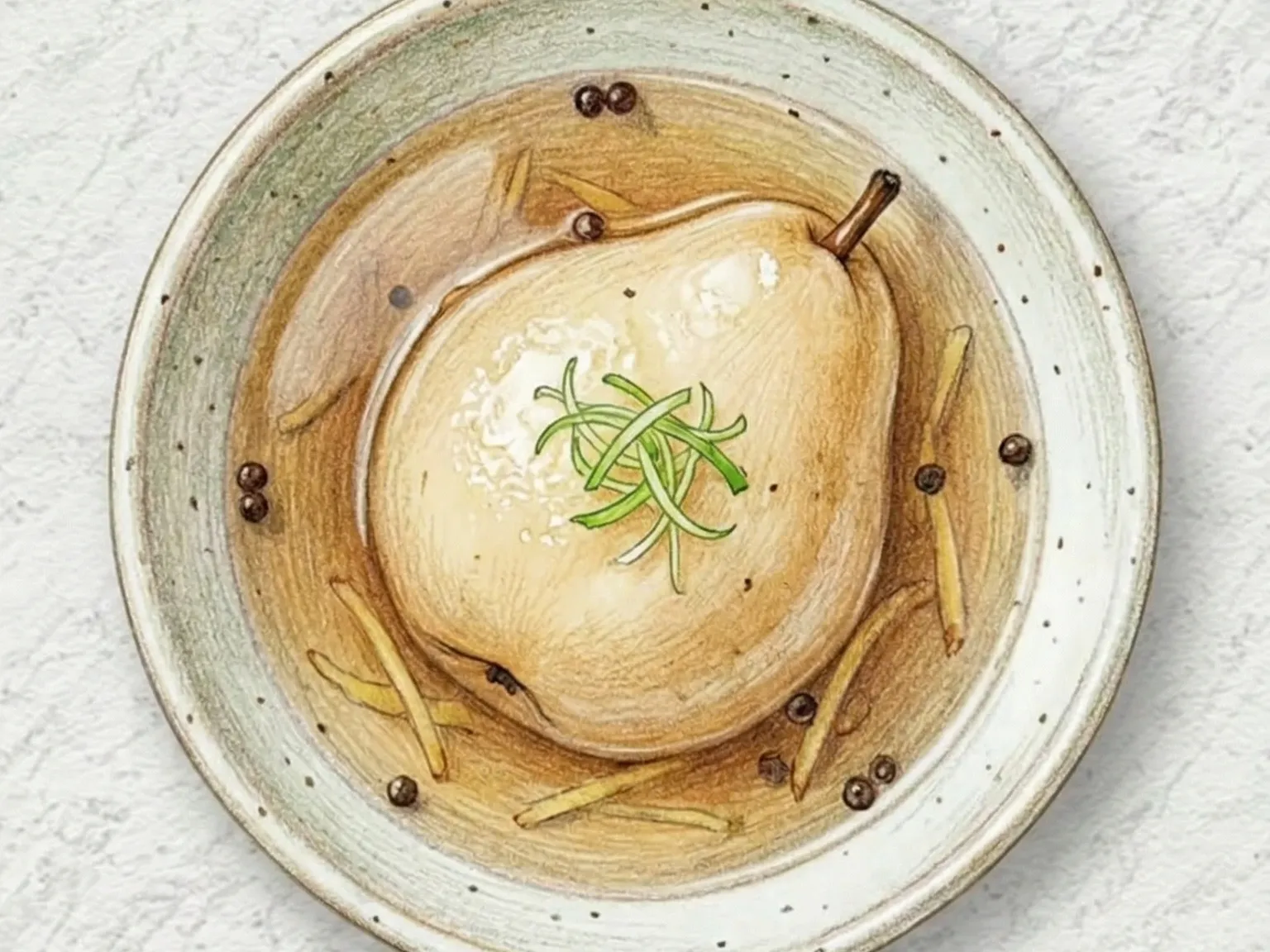
Baesuk (Korean Poached Pear Punch)
Baesuk is a traditional Korean punch made by slowly simmering whole or large-cut Korean pear with ginger, whole black peppercorns, and dried jujubes. As the pear cooks over low heat, its juice gradually dissolves into the liquid, building a natural sweetness that forms the drink's backbone. Ginger contributes a warm, peppery sharpness that interlocks with the pear's sweetness, producing a flavor that is comforting yet clean. Whole peppercorns are used sparingly; they provide a subtle spice aroma in the background rather than actual heat. Jujubes add a faint reddish tint and a mild fruity undertone to the liquid. Honey is stirred in after the heat is turned off and the temperature has dropped slightly, preserving its fragrance; because the pear already contributes significant sweetness, the honey amount should start small and be adjusted by taste. Overnight refrigeration allows the ginger and pear flavors to meld more fully, rounding out the drink. Pine nuts floated on the surface before serving add a subtle oily richness to the finish of each sip.
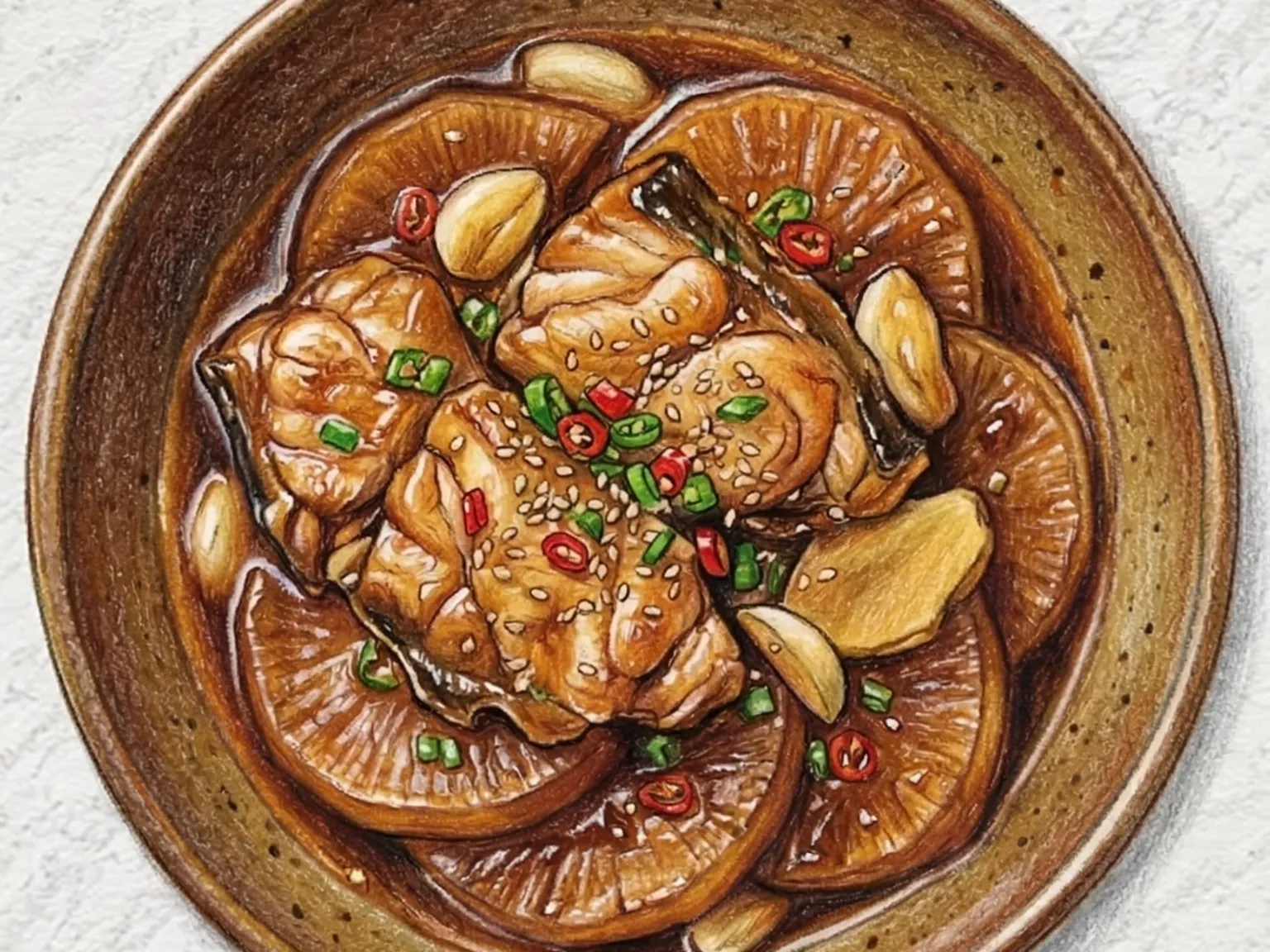
Korean Braised Monkfish in Spicy Soy Sauce
Agwi-jorim - braised monkfish - is a gentler preparation than the fiery agu-jjim, focusing on a soy-based braising sauce rather than a chili-paste coating. Thick slices of Korean radish line the bottom of the pot, cooking first to release their natural sweetness into the liquid. The monkfish goes on top and simmers covered in a mixture of soy sauce, gochugaru, garlic, and water that reduces slowly into a concentrated glaze. The radish acts as both a buffer preventing the delicate fish from sticking and a flavor sponge that becomes the best part of the dish. As the liquid reduces, the sauce thickens and stains both fish and radish a deep amber. The finished dish has a more balanced, less aggressive flavor profile than agu-jjim, with soy saltiness and radish sweetness in equal proportion to the chili heat.
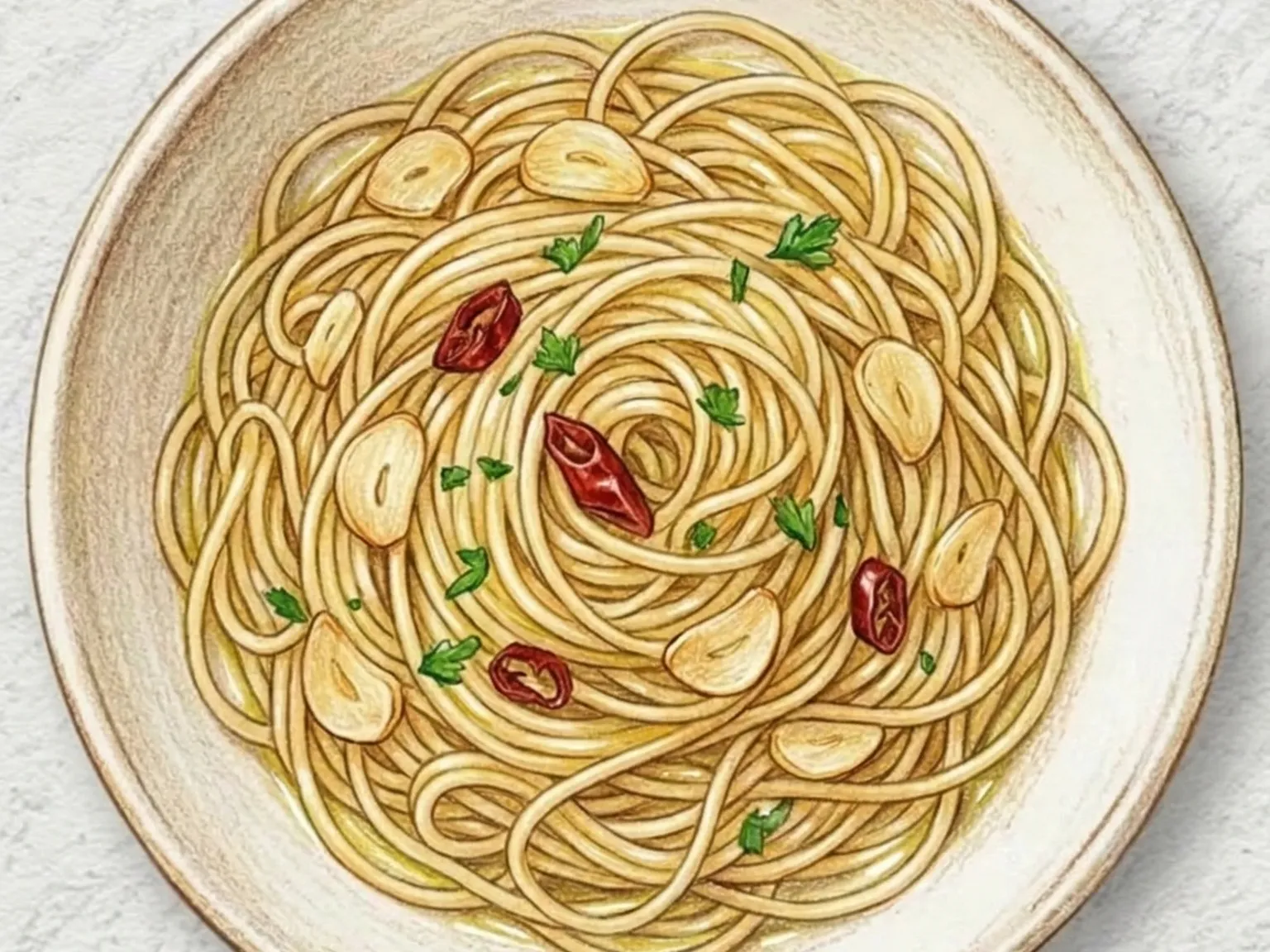
Garlic Olive Oil Pasta
Aglio e olio - garlic and oil - is the pasta Italians make at midnight with nothing in the kitchen but pantry staples. It originated in Naples, where olive oil was abundant and elaborate sauces were a luxury working-class cooks could not afford. The entire dish depends on technique: garlic must be sliced thin and toasted slowly in generous olive oil on low heat until fragrant and barely golden - seconds past that point and it turns acrid. Peperoncino flakes go in briefly to release their capsaicin into the oil. The real transformation happens when starchy pasta water hits the hot oil, emulsifying into a silky, clinging sauce that coats every strand of spaghetti. No cream, no cheese in the traditional version - just the clean triad of garlic, chili, and good olive oil. Parsley scattered on at the end adds a fresh, herbal brightness.
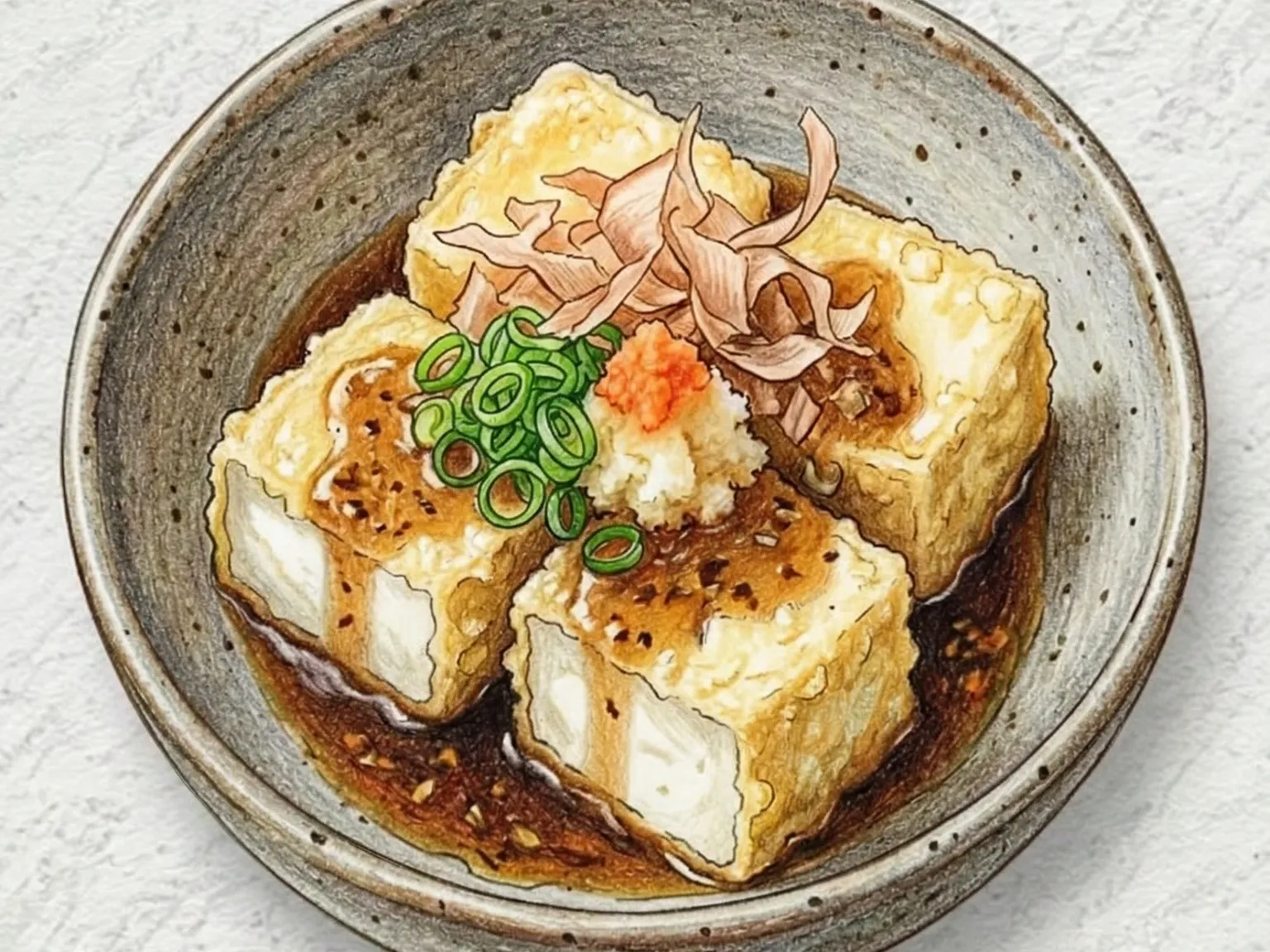
Agedashi Tofu (Japanese Crispy Fried Tofu in Dashi Broth)
Agedashi tofu is a staple of Japanese izakaya menus, dating back to Edo-period cookbooks where it appeared as a way to elevate plain tofu into a drinking snack. Firm tofu is patted dry, dusted in potato starch, and fried until a paper-thin golden shell forms around the still-custard interior. The crust holds up just long enough against a hot dashi-soy-mirin broth ladled over at serving, softening at the edges while the center stays crisp. Grated daikon on top cuts through the oil with a sharp, cooling bite. The dish lives in the tension between textures - eat too slowly and the crust dissolves entirely into the broth.