Side dishes Recipes
624 recipes. Page 17 of 26
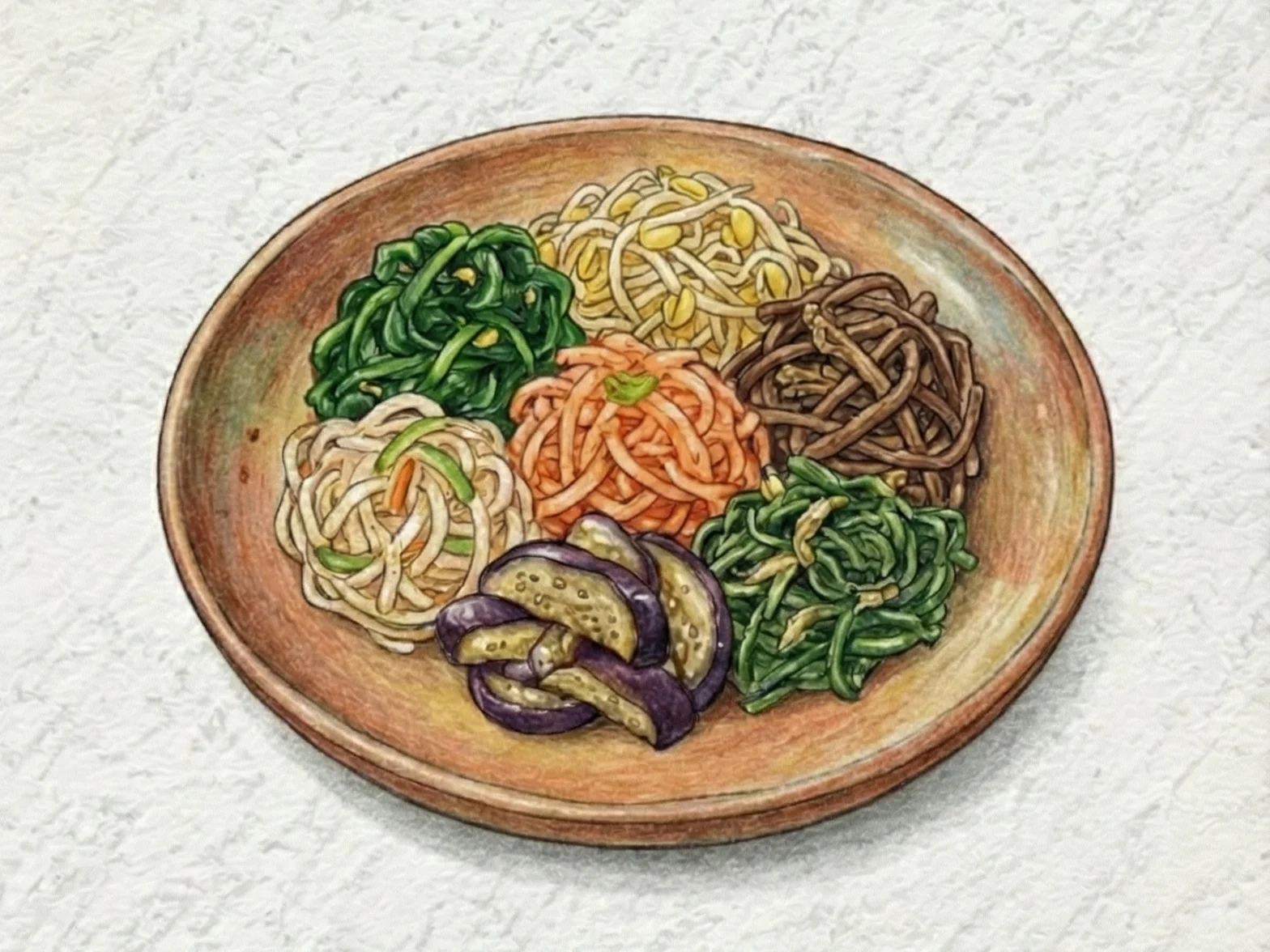
Side dishes (banchan) are the heart of Korean dining culture. A typical meal features multiple small plates - seasoned vegetables (namul), braised dishes (jorim), pickled items, and salted seafood. Classics like spinach namul, bean sprout salad, and stir-fried anchovies can be prepared in advance and enjoyed over several days.
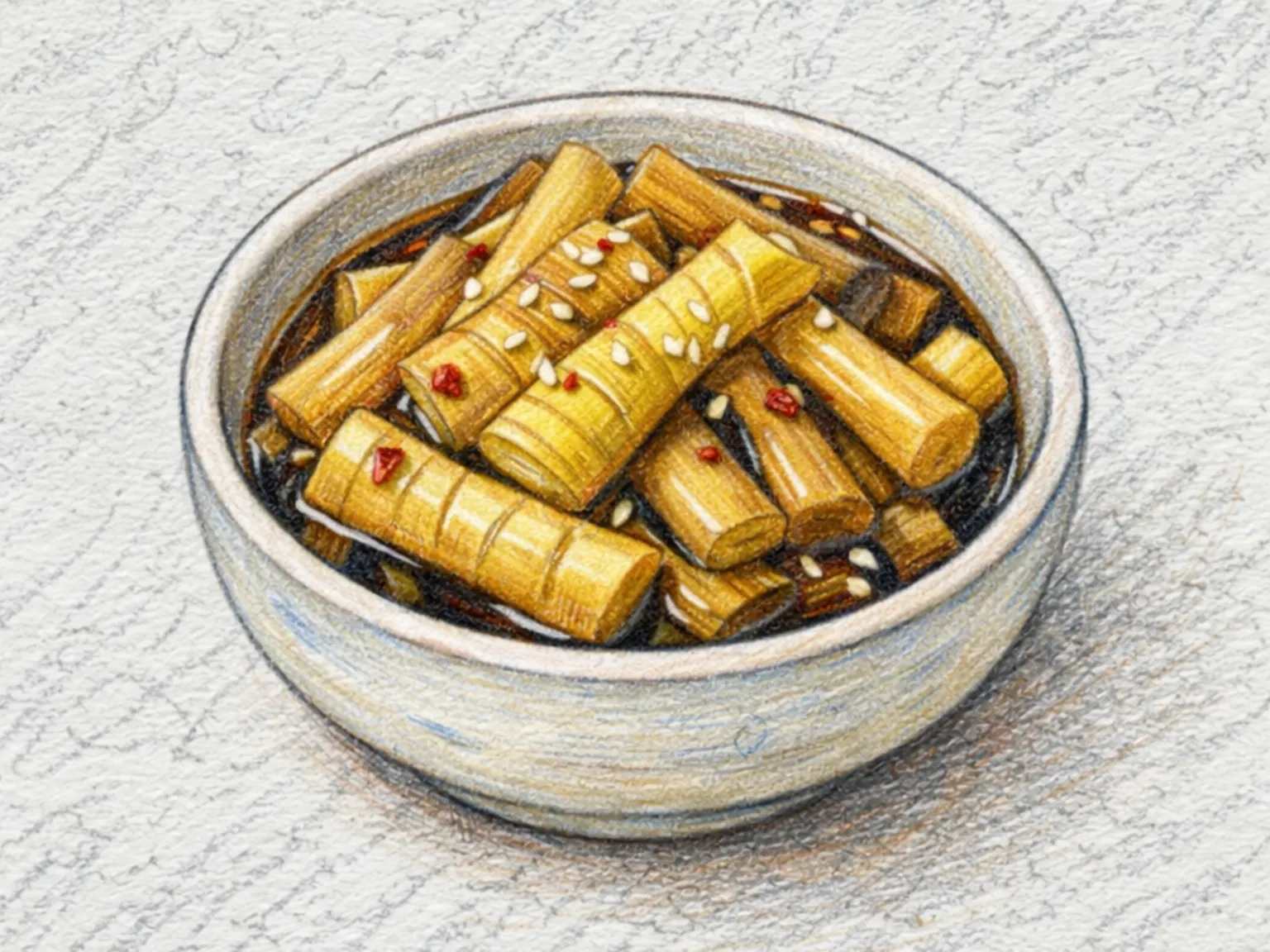
Korean Bamboo Shoot Pickle
Juksun jangajji refers to a Korean side dish consisting of pickled bamboo shoots. The preparation begins by boiling the raw bamboo shoots in water, a necessary preliminary step that removes the naturally occurring astringency and the sharp, harsh qualities found in the fresh plant. Once the shoots are softened and neutralized, they are placed into a container and covered with a hot pickling liquid. This brine is a mixture of soy sauce, vinegar, and sugar, which is brought to a boil together with dried bay leaves and whole black peppercorns to provide a subtle aromatic complexity. Because bamboo possesses a particularly dense and tightly packed cellular structure, it does not absorb the flavors immediately. Instead, the shoots slowly take in the salty, sweet, and acidic properties of the brine over the course of at least twenty-four hours while resting in a refrigerator. This slow penetration allows the bamboo to retain its characteristic firm and crunchy texture even after it has been submerged in the liquid for several days. The inclusion of bay leaf and whole peppercorns introduces a quiet, layered spice profile that differentiates this version from simpler soy and vinegar preparations. It is important to perform the initial blanching, as skipping this step results in a persistent bitterness that the pickling brine is unable to mask. In terms of serving, the sharp acidity of these pickles functions effectively as a palate cleanser when eaten alongside fatty meats such as grilled pork belly or marinated galbi. The textured shoots can also be utilized as a crisp topping for rice bowls or integrated into sandwiches to add a structural element.
Korean Soy-braised Beef (Tender Shredded Brisket in Soy Glaze)
Jangjorim is the soy-braised beef that lives semi-permanently in Korean refrigerators - a make-ahead banchan with a shelf life of roughly two weeks. Beef eye round (hongdukkasal) is the traditional cut because its uniform grain and low fat content allow clean shredding along the fibers, producing the signature stringy texture. The process is unhurried: thirty minutes of soaking to draw out blood, forty minutes of simmering with whole garlic and peppercorns, then shredding and returning to the pot with soy sauce and sugar for another twenty minutes. Hard-boiled eggs and shishito peppers added in the final stage absorb the dark soy broth - the eggs turn mahogany and the peppers contribute a gentle heat to the sauce. Swapping in quail eggs makes each piece lunchbox-sized. Flavor deepens noticeably after a day of refrigeration as the seasoning penetrates fully.
Korean Stir-fried Zucchini
Hobak-bokkeum is one of the quickest and most fundamental banchan in the Korean home-cooking repertoire. Thinly sliced Korean zucchini, known as aehobak, is salted for five minutes to draw out moisture before cooking. Skipping this step floods the pan during stir-frying and produces a steamed rather than properly stir-fried result. Seasoning with saeujeot, fermented salted shrimp paste, instead of plain salt brings a deeper marine umami that cannot be replicated by sodium alone, and the high salinity of the paste means additional salt is rarely needed. High heat and a short cooking time allow the surface of each slice to lightly caramelize, building a toasty, nutty aroma while the interior cooks through without turning watery or soft. Garlic goes into the oil first to bloom its fragrance before the zucchini follows, layering flavor from the base. Green onion added in the final seconds of cooking preserves its aromatic edge rather than wilting away. A drizzle of sesame oil and a scatter of toasted sesame seeds at the end produces a clean, simply flavored side dish with a lasting nutty finish. When aehobak is already in the refrigerator, the whole dish can be on the table within five minutes.
Korean Steamed Perilla Leaves
Kkaennip-jjim is a Korean banchan made by stacking perilla leaves one by one with a soy sauce, gochugaru, and garlic seasoning between each layer, then gently braising them covered over low heat. As the leaves wilt, they absorb the sauce and release their distinctive herbal aroma, which mingles with the soy's umami into a layered flavor. Sesame oil brushed between the leaves adds a nutty fragrance, while the chili flakes provide a slow-building warmth. Wrapping a spoonful of steamed rice in a single seasoned leaf makes for a complete bite, which is why this dish is considered one of Korea's most reliable everyday side dishes.
Korean Fermented Kale Kimchi
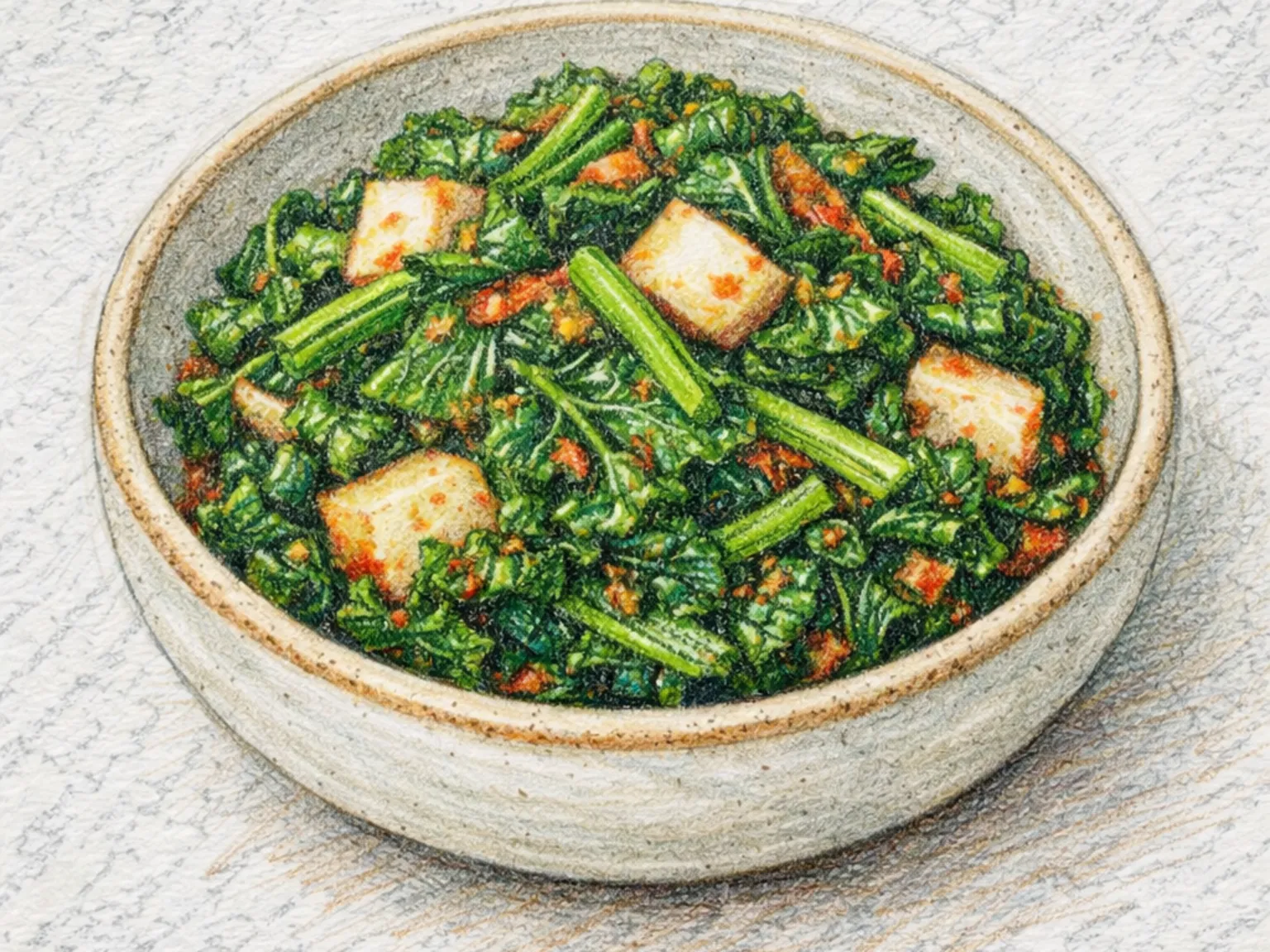
Kale kimchi is made by wilting kale leaves in coarse salt, then tossing them with julienned radish, scallions, gochugaru, soup soy sauce, and pear puree before fermenting. The kale's strong green flavor mellows during fermentation while its sturdy leaf structure maintains a satisfying chew, and the radish strips add a crisp counterpoint to the soft seasoning. Pear puree wraps around the chili heat with fruit sweetness, and soup soy sauce anchors the seasoning with a quiet umami depth. Made using the same technique as napa cabbage kimchi but carrying kale's distinctive slight bitterness, this version adds a layer of complexity and nutritional density to the traditional format. Kale requires less salting time than napa cabbage, and weighting it down evenly during the process ensures consistent wilting throughout the batch.
Jayeom Seasoned Bean Sprouts
Jayeom seasoned bean sprouts is a simple Korean side dish that highlights the clean flavor of bean sprouts using traditional Jayeom salt. The cleaned bean sprouts are placed in a pot with a small amount of water and boiled under a closed lid for three to four minutes to keep them crisp. The sprouts are immediately rinsed in cold water to stop the cooking process and gently squeezed to remove excess water. The seasoning process begins by tossing the sprouts with Jayeom first, which is a mineral-rich traditional salt that provides a deep umami flavor with less saltiness than refined salt. Minced green onion, minced garlic, sesame oil, and ground sesame are then added and mixed gently with the fingertips to preserve the texture. This minimal seasoning allows the natural flavor of the sprouts to stand out.
Korean Zucchini Namul (Sesame-Dressed Bibimbap Topping)
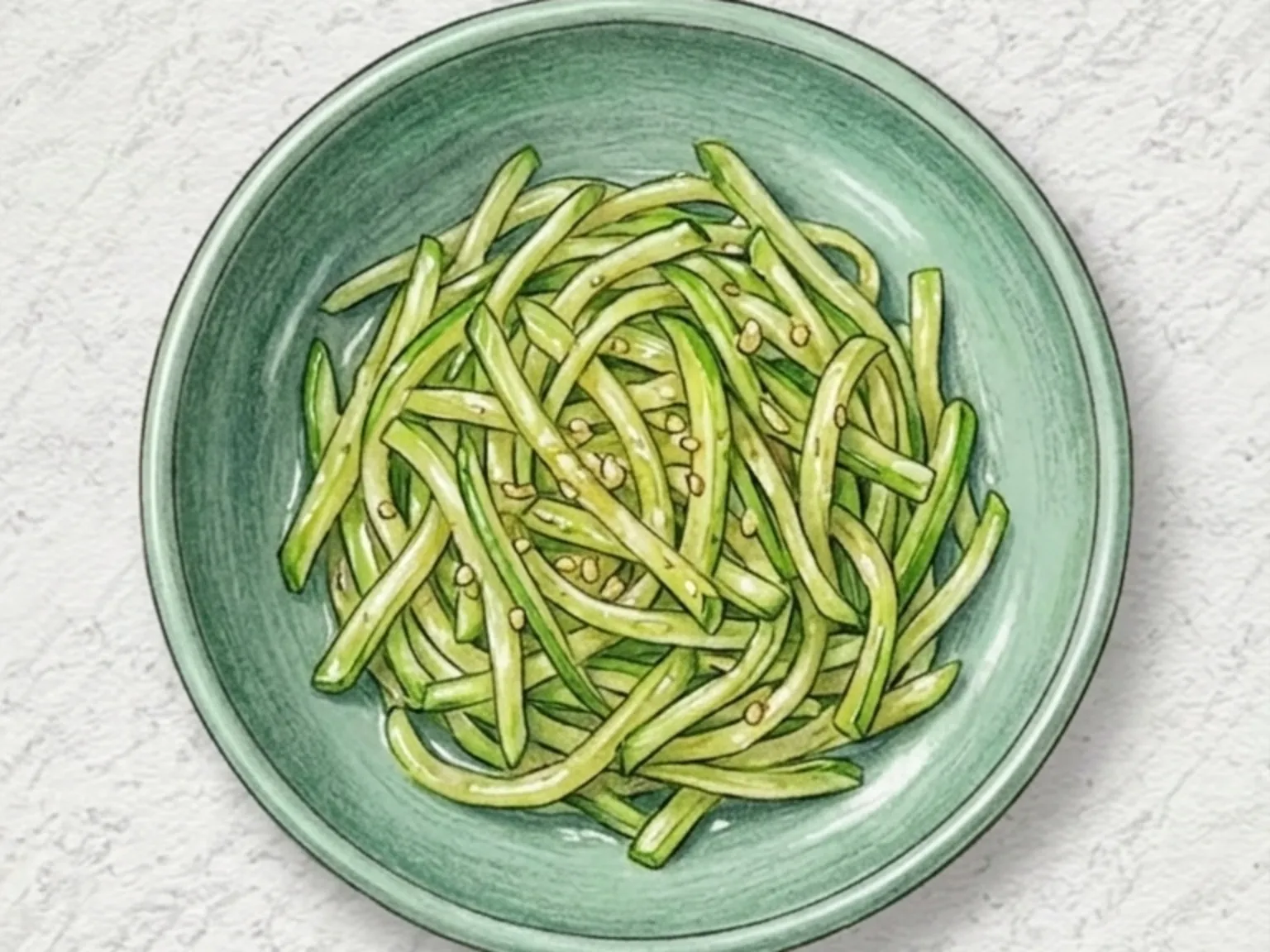
Hobak namul is julienned zucchini stir-fried with sesame oil and garlic, a foundational Korean side dish that appears as one of the five-color toppings essential to bibimbap. Though it resembles hobak-bokkeum at a glance, the difference comes down to how the vegetable is cut: namul requires thin julienne strips rather than half-moons, which allows the strands to nestle between rice grains when the bowl is mixed rather than sitting on top in clumps. Salting the raw zucchini and squeezing out moisture thoroughly is the most important step in the process; any water left behind causes the vegetable to release steam in the pan and turn soggy, and will make the rice in a bibimbap bowl gummy. Seasoning is intentionally minimal, relying on salt and sesame oil alone, with garlic gently cooked first to build an aromatic base without burning. Three minutes over medium heat is all the cooking time needed, and the finished strands hold their shape without releasing additional liquid even after they cool, which makes this namul a reliable choice for packed lunches where texture must survive time away from the stove. Because it is stir-fried rather than dressed raw, it also stays dry at room temperature, making it a common fixture on ceremonial tables set for ancestral rites or holiday meals. The light green color of the cooked zucchini provides visual contrast on a plate.
Korean Steamed Pacific Saury
Kkongchi-jjim braises Pacific saury with Korean radish, onion, and green onion in a gochugaru and soy sauce broth until the liquid reduces to a concentrated, deeply spiced glaze. The saury's naturally oily flesh absorbs the bold seasoning without drying out, while the radish softens in the braising liquid and draws out any fishiness that would otherwise distract from the sauce. Garlic and ginger scrub the broth clean, and the chili's penetrating heat opens the appetite in a way that milder seasonings cannot. The remaining sauce, ladled over rice, is what most people eat last and remember longest - a humble fish dish that punches well above its price.
Traditional Kimjang Cabbage Kimchi
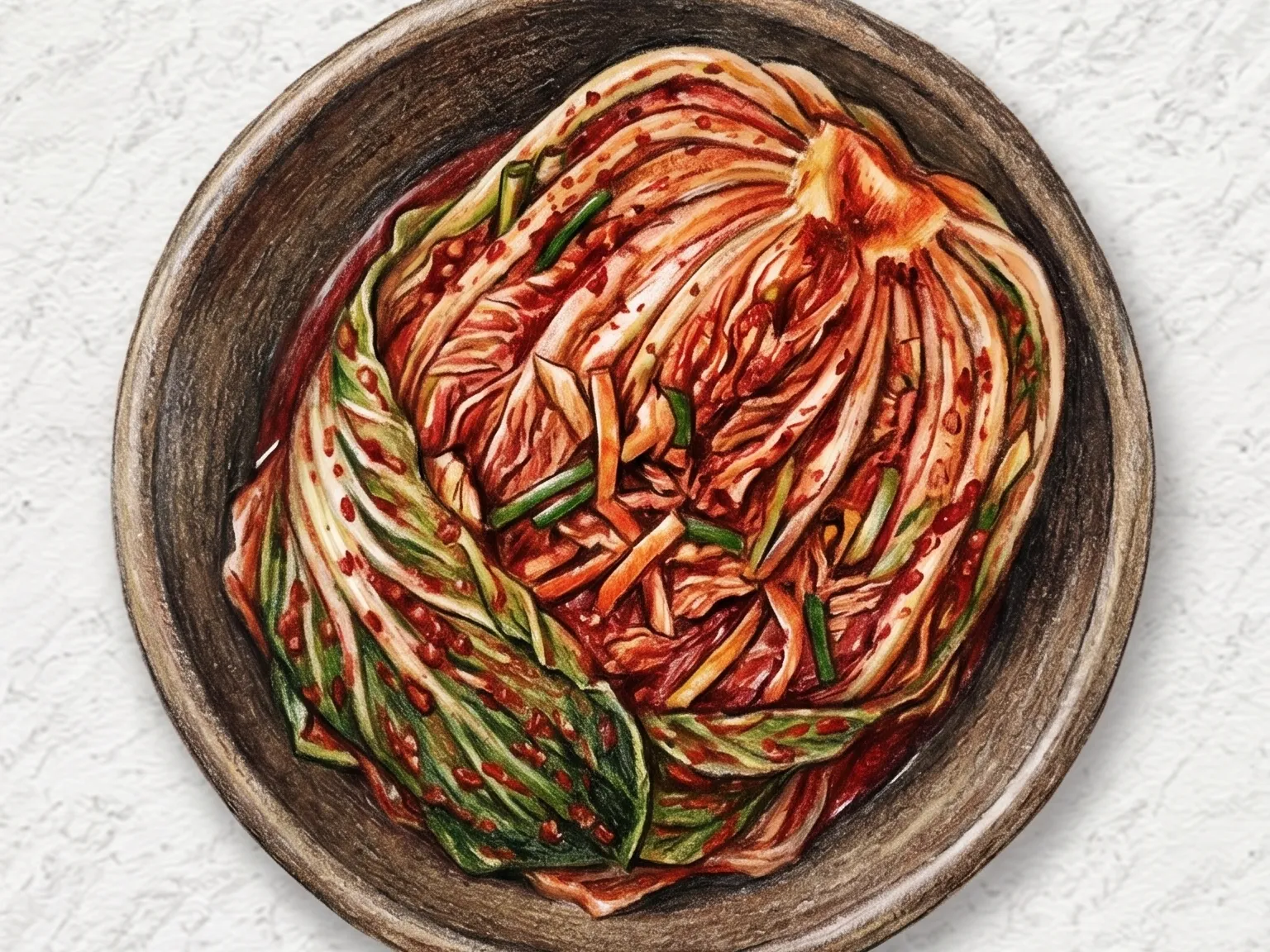
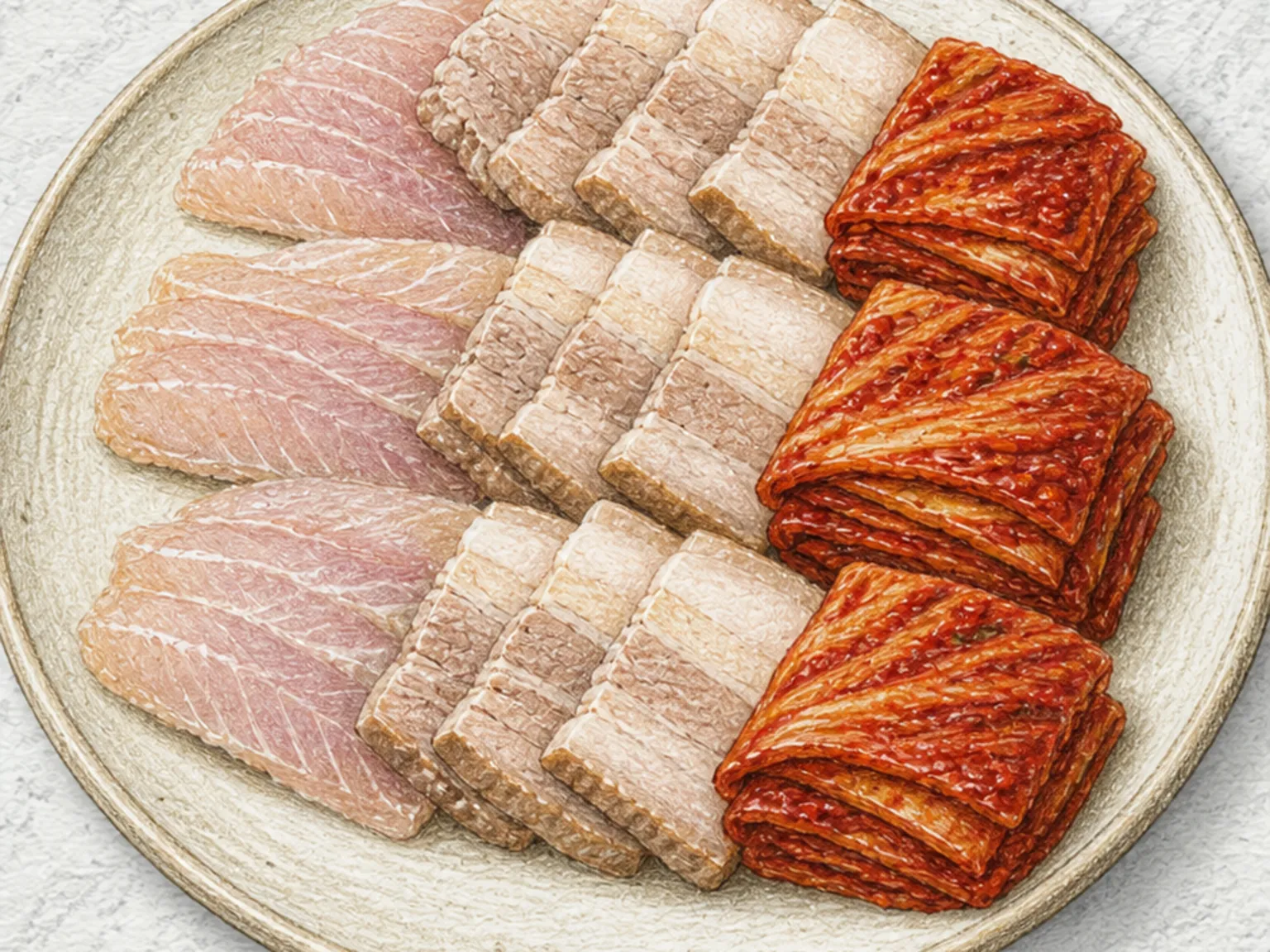
Traditional Kimjang Cabbage Kimchi is a staple winter preparation made by seasoning salted cabbage with various vegetables and spices. The recipe calls for coating julienned radish with chili flakes first to secure a deep red color before mixing in anchovy fish sauce, fermented shrimp, and minced garlic. Fresh mustard greens and water parsley are cut and folded in, adding crisp and slightly bitter herbal notes to the mixture. Rinsed fresh oysters can be optionally folded in at the end to add a refreshing oceanic flavor. Each cabbage leaf is packed with this seasoning mixture and wrapped securely with its outer leaves. The seasoned cabbage is pressed tightly into airtight containers to minimize air contact, fermented at room temperature for one to two days, and then stored in the refrigerator to develop its flavor.
Korean Seasoned Dried Squid Strips
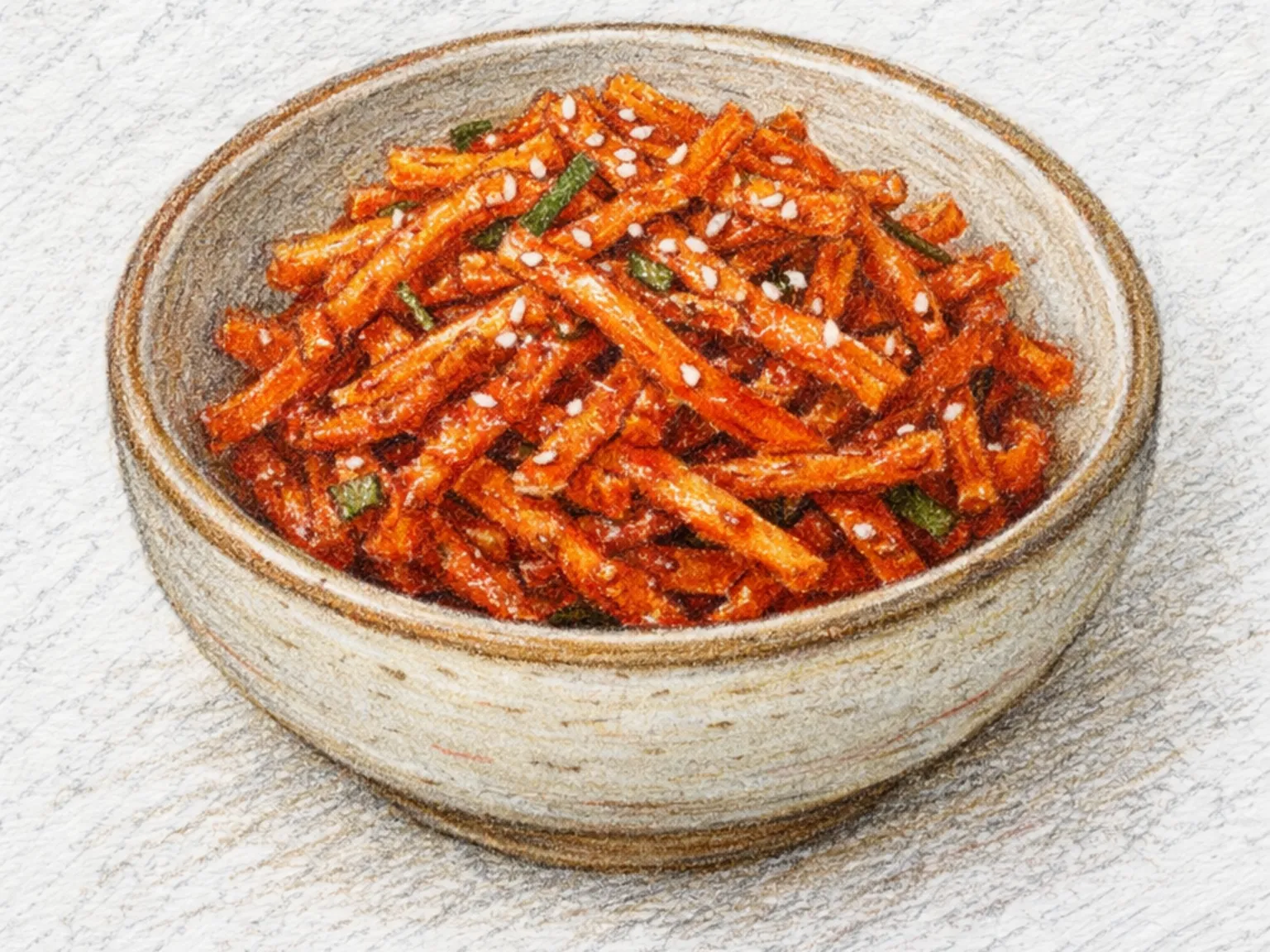
Jinmichae-muchim tosses dried shredded squid directly in a spicy-sweet sauce with no cooking involved. The no-heat approach is what separates it from stir-fried jinmichae: without heat, the strands retain their characteristic jerky-like chew instead of softening. The sauce combines gochujang, gochugaru, and oligosaccharide syrup for the sweet-and-spicy base, with one tablespoon of mayonnaise added as the defining detail. The emulsified fat in the mayo coats each strand, preventing the rough, slightly scratchy texture that plain-dressed dry squid can have on the palate. After mixing, a ten-minute rest is necessary for the squid to absorb the seasoning evenly, so the flavor reaches all the way through each piece rather than sitting only on the surface. Because the finished dish contains virtually no liquid, it holds up well in lunchboxes without bleeding into neighboring banchan, and it keeps for several days refrigerated. Heat level adjusts simply by scaling gochugaru up or down, and the whole process from prep to finished dish takes about fifteen minutes.
Korean Zucchini Shrimp Stir-fry
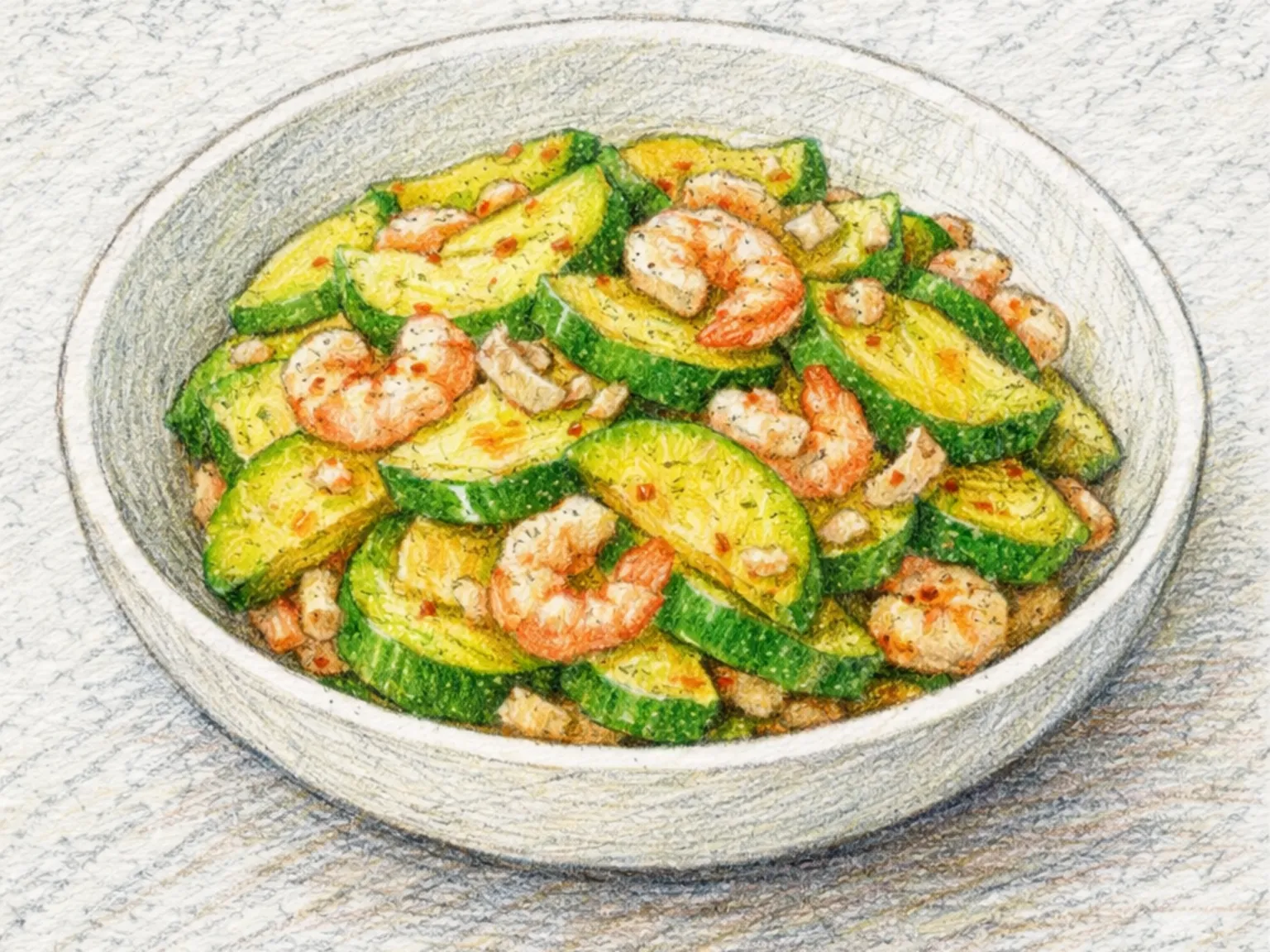
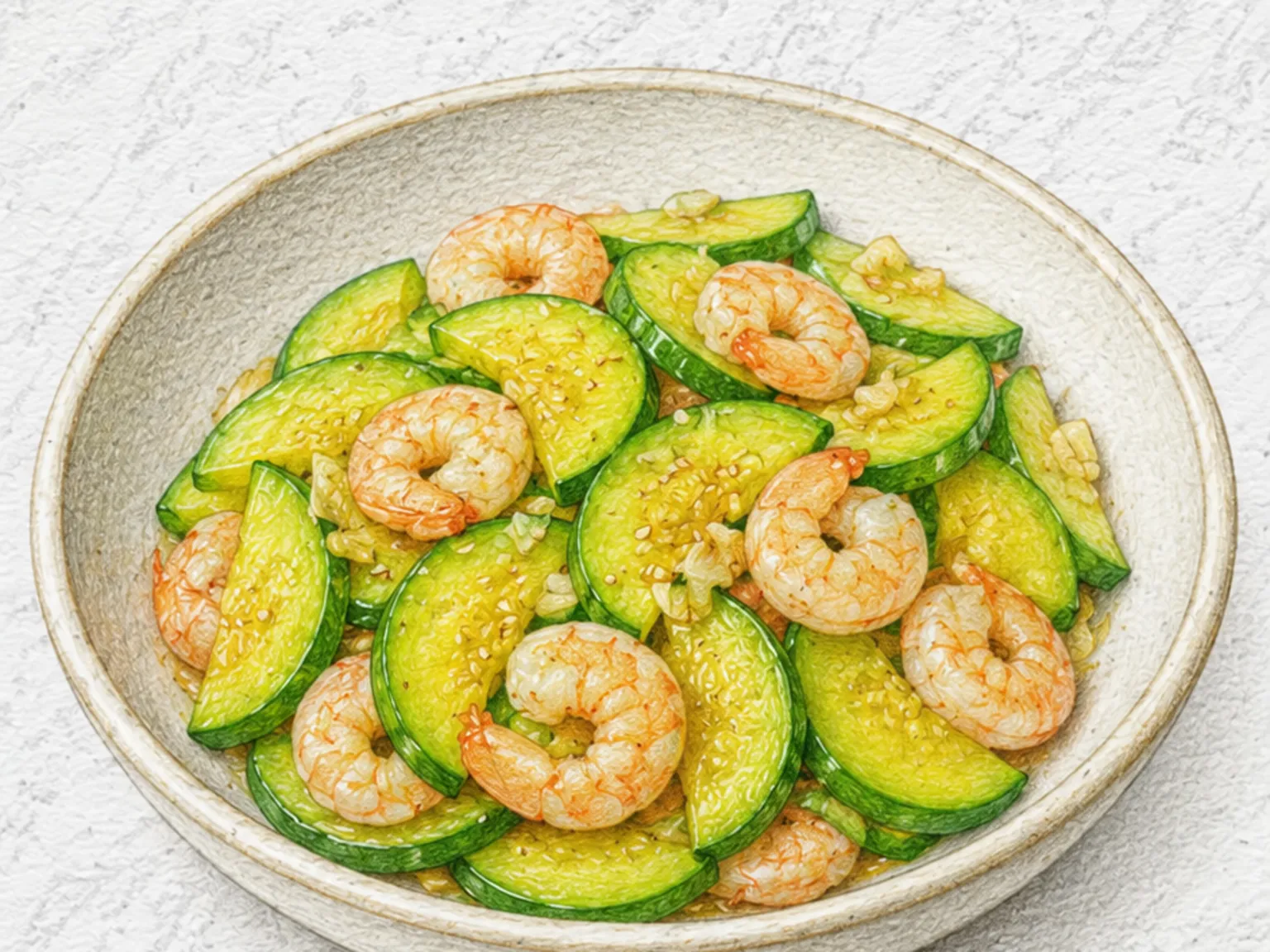
Hobak-saeu-bokkeum is a light Korean stir-fry of thinly sliced zucchini and shrimp seasoned with soy sauce, cooking wine, and garlic. The dish relies on the inherent flavors of its ingredients rather than heavy seasoning, keeping the final result mild, clean, and free of excess grease. Zucchini softens as it cooks and releases its natural sweetness, but the heat must be managed carefully. Overcooking draws out too much moisture and turns the slices limp and watery, eliminating the slight crispness at the center that defines the ideal texture. A well-preheated pan and high heat are needed to sear the surface quickly before the interior softens all the way through. Shrimp are cooked only until they turn pink and curl into a gentle arc. At that moment the proteins have set just enough to give a plump, springy bite; cooking beyond that point tightens the muscle fibers further and makes them rubbery. Using soup soy sauce rather than dark soy sauce keeps the color light and the seasoning clean. A sliced green chili adds a sharp kick without changing the fundamental character of the dish. The entire stir-fry comes together in around ten minutes, making it one of the more practical banchan options when time is limited. It holds its flavor and texture at room temperature without deteriorating, which makes it a reliable choice for a packed lunchbox as well as a fresh dinner side. Lightly salting the shrimp and splashing on a small amount of cooking wine before cooking helps draw out any residual fishiness. Yellow squash or zucchini varieties can substitute freely for the Korean hobak, and adding squid alongside the shrimp introduces an additional layer of oceanic character to the finished dish.
Korean Braised Saury in Spicy Sauce
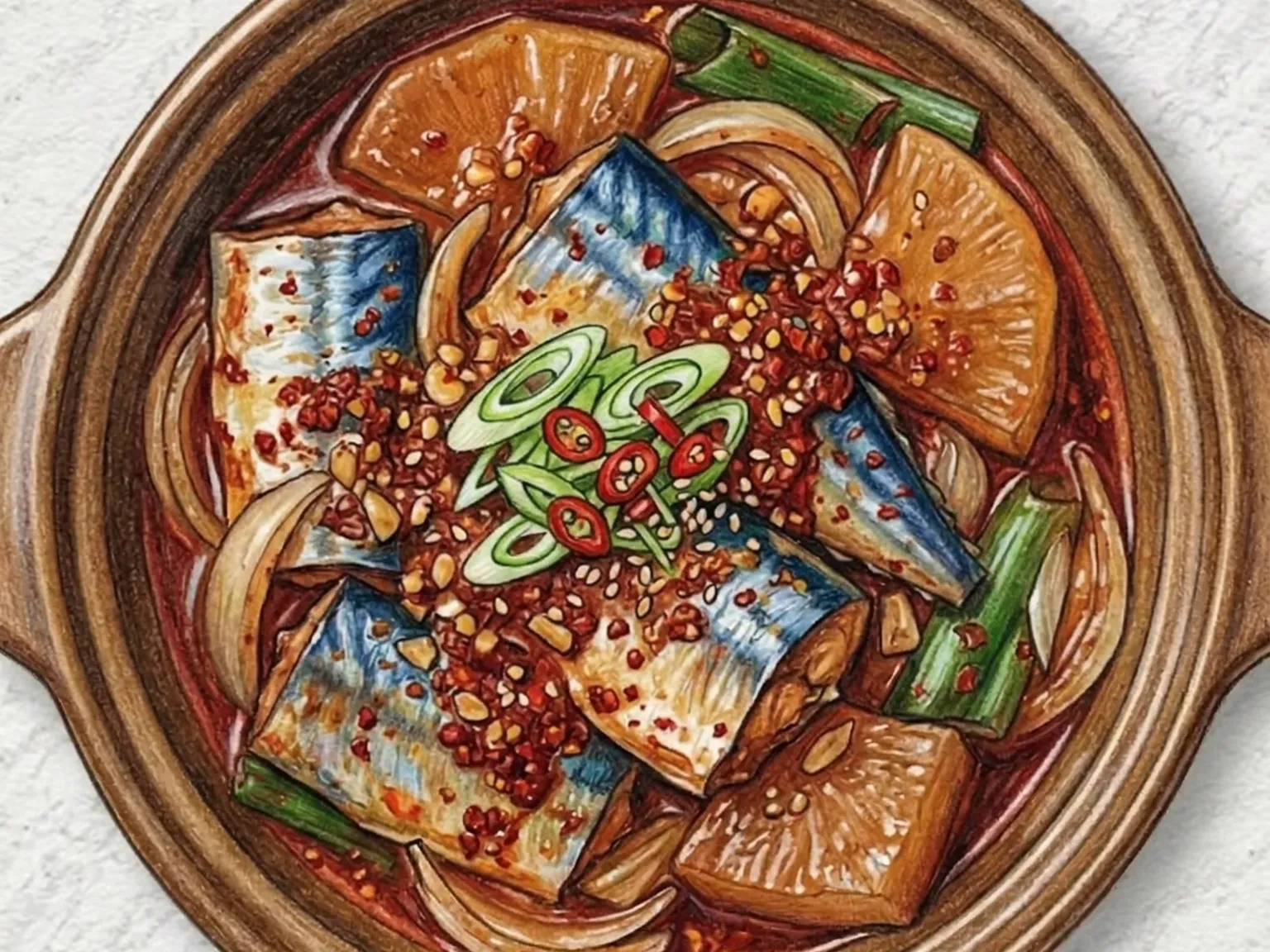
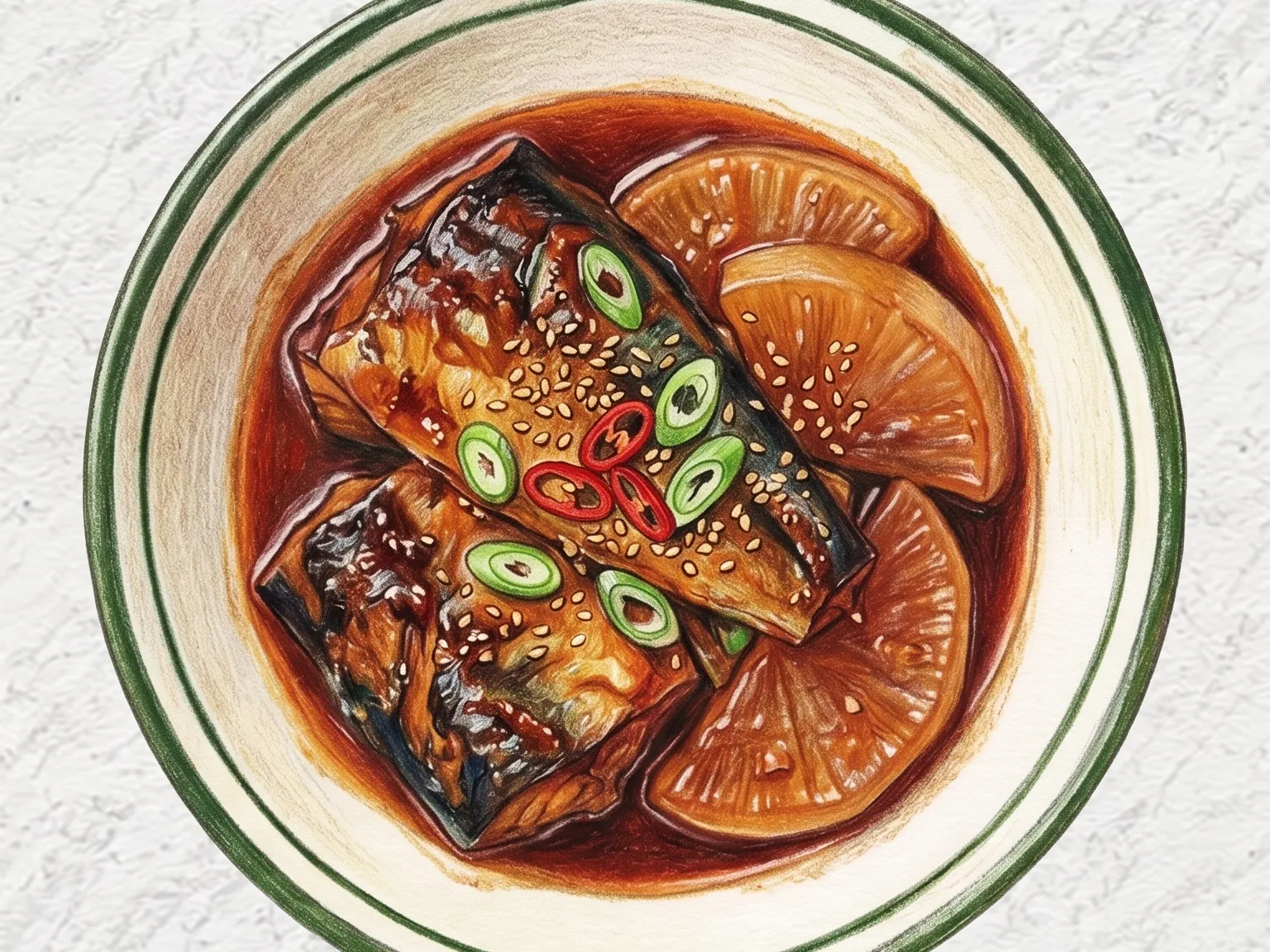
Kkongchi-jorim simmers Pacific saury with daikon radish in a soy-gochujang sauce until the bones soften enough to eat whole - a thrifty Korean fish braise built on one of autumn's most affordable catches. The radish lines the pot bottom, cushioning the fish from direct heat to prevent breakage while absorbing the braising liquid into sweet, flavor-soaked wedges. After bringing the sauce to a boil, twenty-five minutes of medium-low simmering renders the fine bones edible without adding vinegar. Canned saury, with bones already softened during processing, halves the cooking time for weeknight shortcuts. Green onion placed on top in the final two minutes tempers the fish's natural oiliness and adds a visual accent. Like most jorim-style banchan, this dish improves over several days in the refrigerator as the seasoning continues to penetrate.
Korean Soy Pickled Perilla Leaves
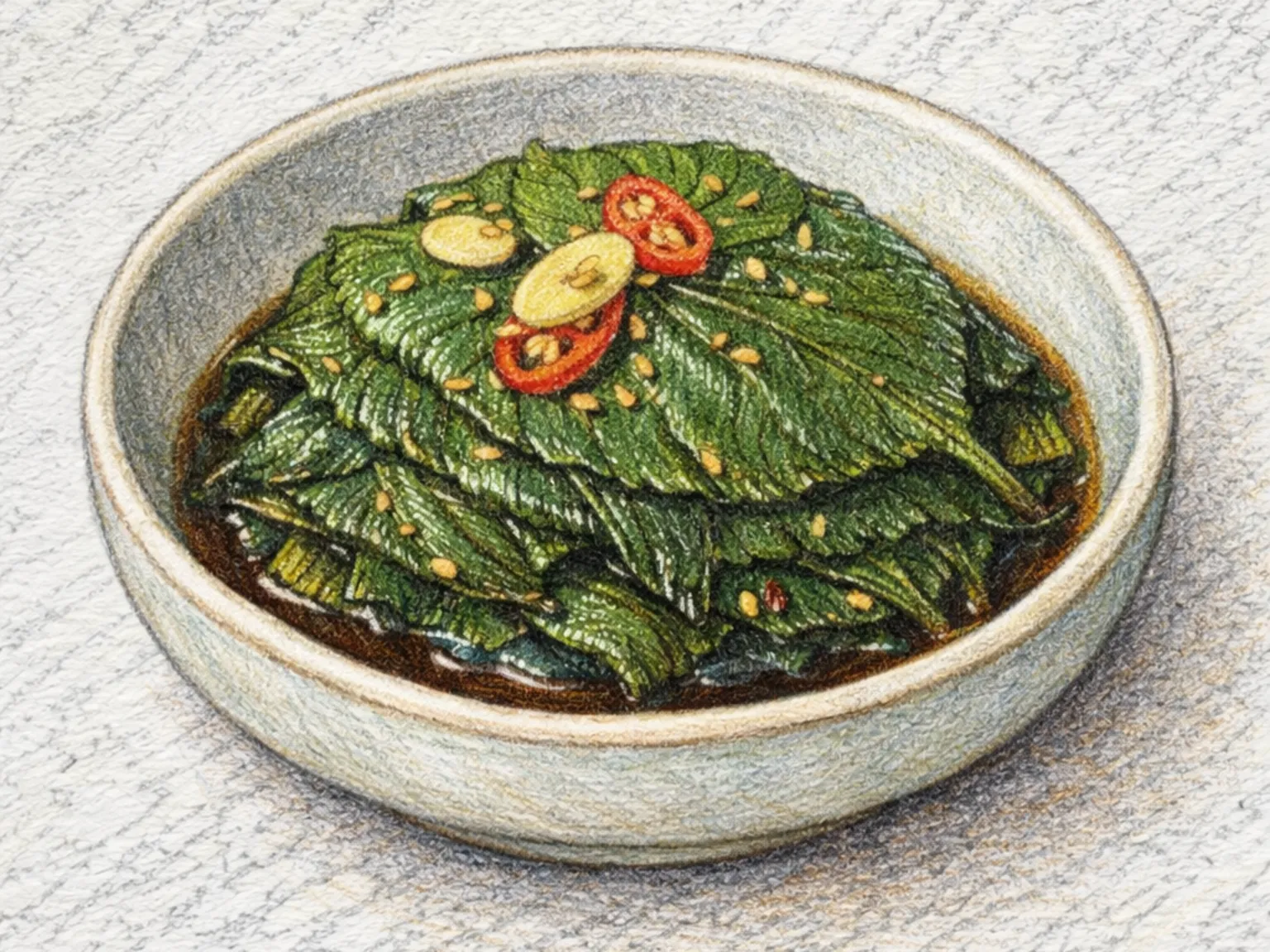
Kkaennip jangajji is a Korean soy-pickled perilla leaf side dish made by layering thoroughly dried leaves in a brine of boiled soy sauce, rice vinegar, and sugar with garlic and cheongyang chili. One of the most important steps is bringing the brine to a full boil and then allowing it to cool completely before pouring it over the leaves. Hot brine wilts the leaves immediately and collapses their structure, while a cooled brine preserves their shape and allows the seasoning to penetrate evenly over the resting period. The perilla's bold herbal fragrance becomes rounder and less sharp when it comes into contact with the salty depth of the soy sauce, and the vinegar prevents the saltiness from becoming overwhelming, keeping the finish clean and bright. Cheongyang chili leaves a quiet but definite heat at the back of each bite, and garlic threads a pungent undercurrent through the entire flavor profile. Wrapped around a spoonful of plain white rice, a single leaf delivers its full herbal, savory character in one mouthful, and the combination is one of the most satisfying pairings in Korean home cooking. Stored in the refrigerator, the pickled leaves keep for well over a month, making this one of the most practical side dishes to prepare in advance.
Jogi Jeotgal
Jogi jeotgal uses 800 grams of yellow croaker that is first cured in sea salt and then coated with garlic, ginger, Korean chili flakes, rice wine, and sugar for a second refrigerated maturation. Remove the gills and internal organs, rinse away the blood, and press paper towels inside the cavity and over the skin until the fish is dry. Spread 45 grams sea salt over the bottom of an airtight container, arrange the croaker without overlap, and cover it with the remaining 45 grams salt. Refrigerate for 2 days, then remove only the damp salt by shaking it off or pressing lightly with paper towels. Mix 1 tablespoon minced garlic, 1 teaspoon minced ginger, 1 tablespoon Korean chili flakes, 2 tablespoons rice wine, and 1 teaspoon sugar. Apply this paste in several thin passes over the skin and inside the cavity, spreading out any clumps. Seal the container again and refrigerate for 5 to 7 days. Remove only the amount needed for serving with rice or adding to kimchi jjigae. Separating the initial salt cure from the seasoned stage makes it possible to check that both coatings reach the fish evenly.
Korean Stir-fried Pumpkin Leaves and Shrimp
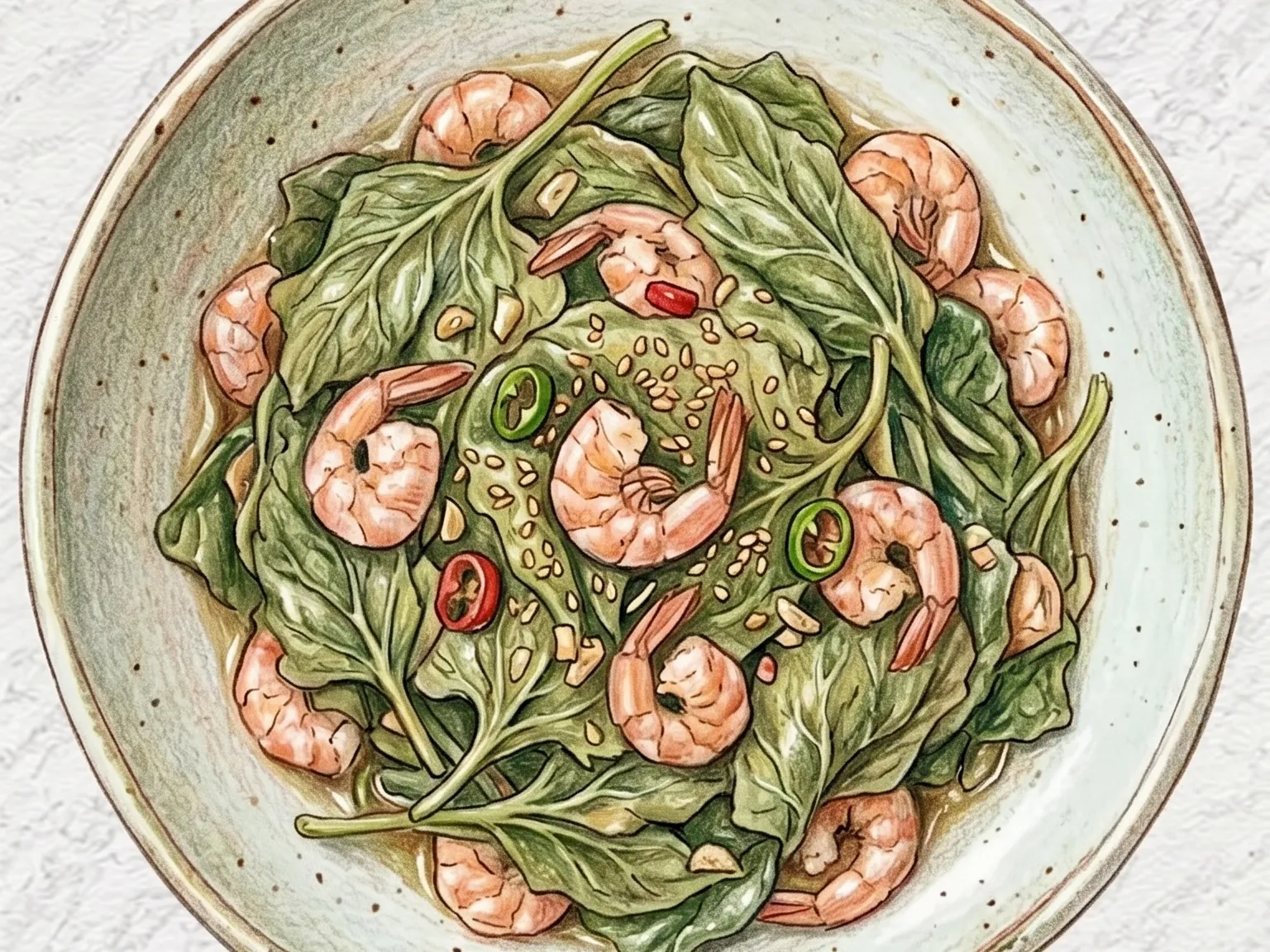
Hobakip-saeu-bokkeum is a Korean summer stir-fry that pairs blanched pumpkin leaves with fresh shrimp in perilla oil, seasoned lightly with soup soy sauce. Blanching the leaves before anything else goes into the pan is not optional. The coarse, fuzzy surface that characterizes raw pumpkin leaves softens through the brief heat exposure, but the leaf itself retains enough structure so that it does not collapse into a slippery, formless mass when it hits the hot pan. The mild, grassy aroma that defines the vegetable comes through intact after the blanching step. Shrimp brings a clean, oceanic savory quality that pairs well with the herbaceous character of the leaves rather than overwhelming it. Perilla oil holds the two together with its distinctively nutty and faintly herbal fragrance, which complements both the sea-forward shrimp and the green quality of the pumpkin leaves in a way that plain vegetable oil would not. A sliced cheongyang chili pepper adds a thread of gentle heat that keeps the dish from tasting flat without pushing the spice level high enough to obscure the delicate flavors of the main ingredients. Clam meat or finely minced pork can substitute for the shrimp, each producing a different but equally satisfying version. This is a seasonal dish that depends on pumpkin leaves at their youngest and most tender, which occurs in summer. Larger, older leaves are tougher and more fibrous, and the flavor is less delicate. After blanching, the leaves need to be squeezed thoroughly to remove excess water before they go into the pan. Skipping this step causes steam to build as they hit the hot oil, which leads to uneven cooking and a watery, diluted finish. Spooning the finished stir-fry over a bowl of hot rice and mixing it in is the most direct way to eat the dish well.
Korean Braised Potatoes with Shishito Peppers
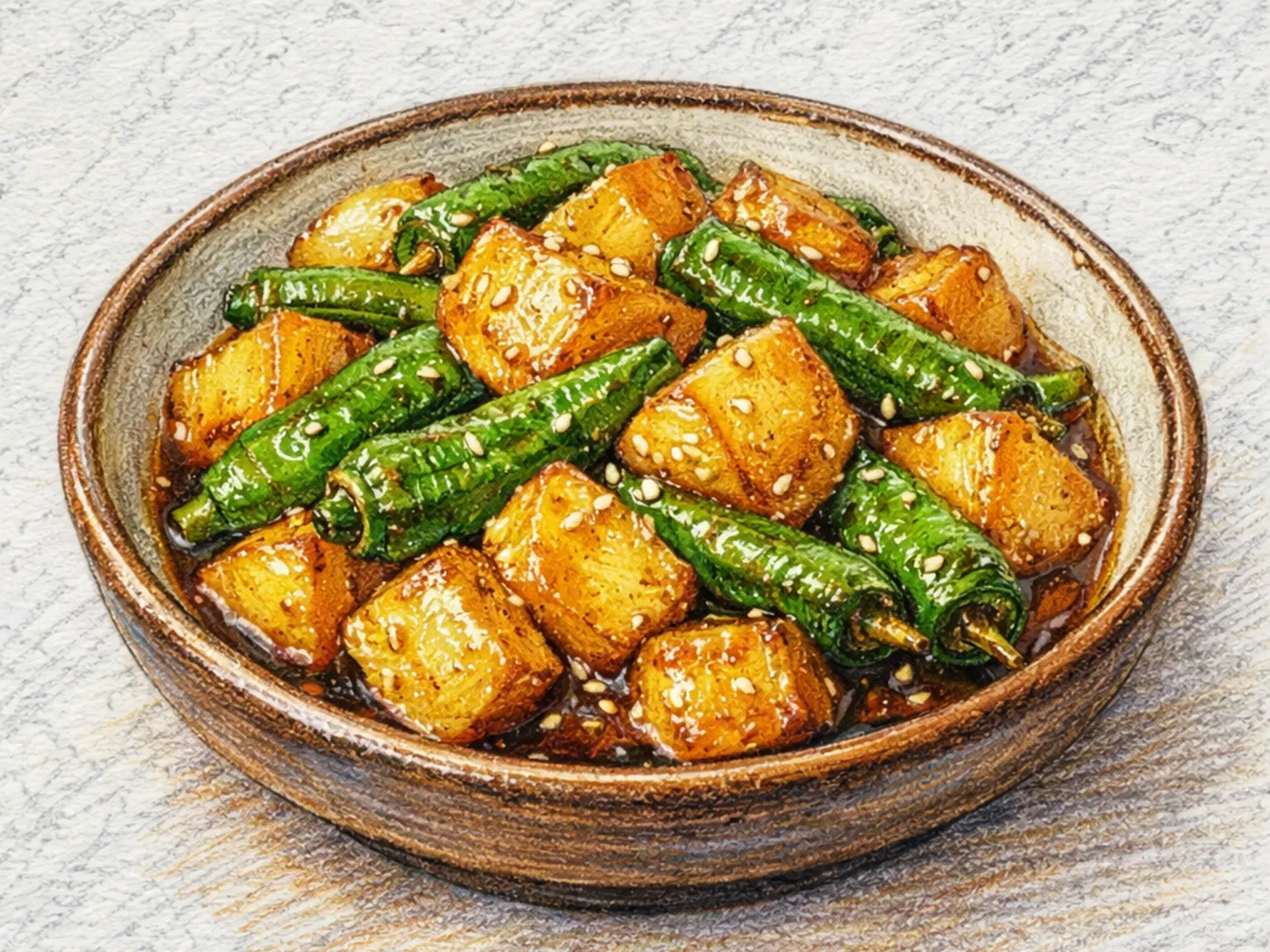
Kkwari-gamja-jorim is a Korean braised side dish of cubed potatoes and shishito peppers cooked down in soy sauce, oligosaccharide syrup, and minced garlic. The potatoes start in a sauce with enough moisture to cook through, and as the liquid reduces, the seasoning thickens into a glossy coating. By the time the pan is nearly dry, the outside of each potato piece has taken on a sweet-salty glaze while the inside stays floury and soft. Shishito peppers, with their wrinkled skins, hold the sauce well and require only brief cooking to stay crisp. A final drizzle of sesame oil and a scatter of sesame seeds add a nutty aroma and a visual finish that signals the dish is done. The heat level stays mild, suitable for children, and the glaze sets firmly enough that the dish travels well in a packed lunch without losing flavor at room temperature.
Korean Perilla Leaf Kimchi
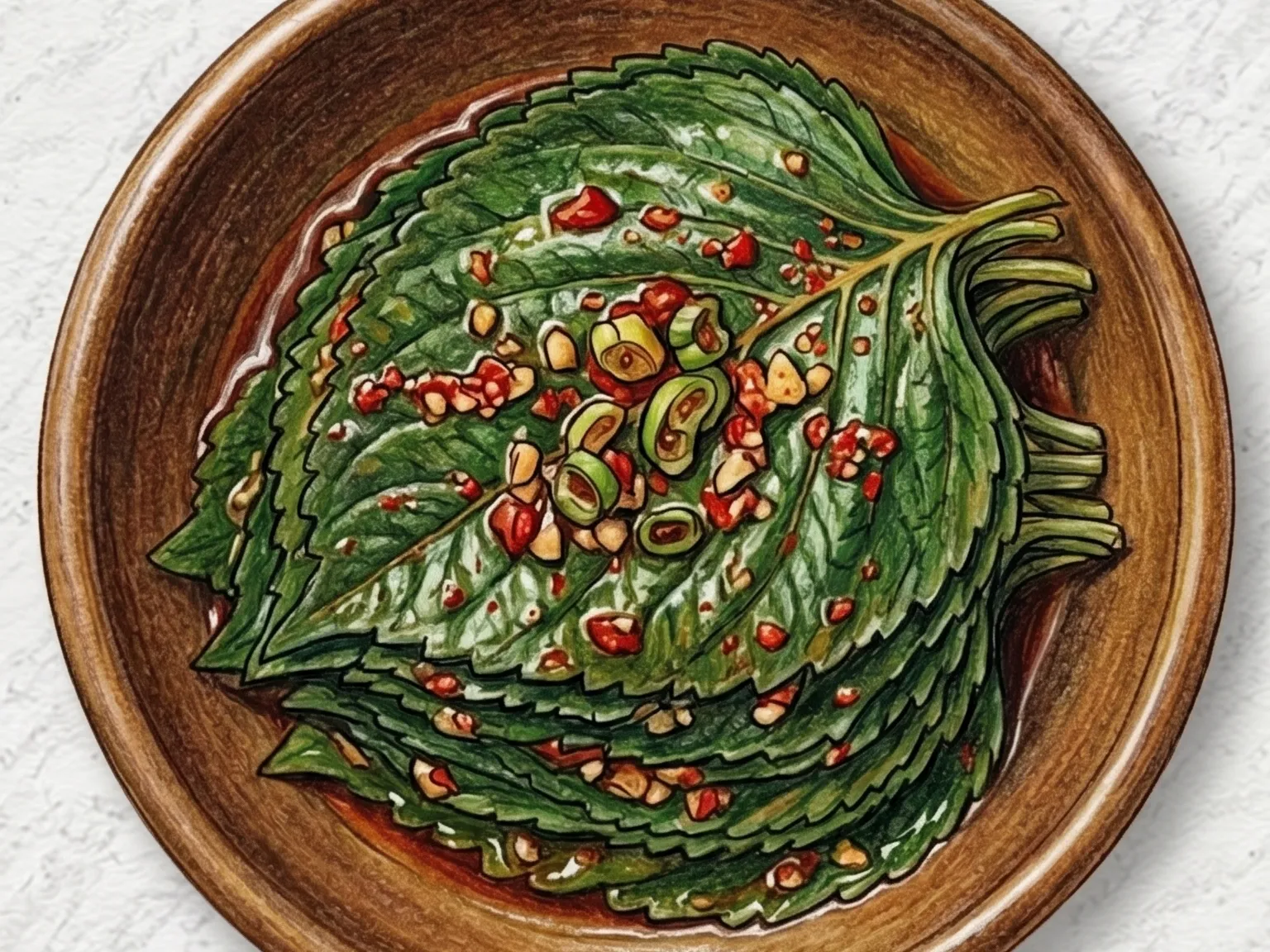
Preparing kkaennip kimchi involves layering a seasoning mixture of soy sauce, Korean red chili flakes, minced garlic, and toasted sesame oil between individual perilla leaves. Unlike traditional cabbage kimchi, this version functions as an instant pickle that requires no fermentation period, making it ready to serve as soon as the assembly is finished. The sharp, herbal aroma of the raw perilla leaf softens when integrated with the toasted richness of sesame oil, while the chili flakes provide a controlled level of heat that complements rather than masks the natural characteristics of the leaves. Soy sauce establishes a savory and salty foundation, which is further elevated by the addition of finely chopped scallions. For a different visual result, using soup soy sauce produces a lighter color that allows the dark green hue of the perilla leaves to remain prominent. Small amounts of anchovy fish sauce can also be added to the marinade to introduce a complex layer of saltiness similar to fermented kimchi. This side dish maintains its quality well in the refrigerator throughout the week. While the seasonings are distinct and bright on the first day, the flavors fully penetrate the leaves after two or three days, resulting in a more integrated profile. The seasoned leaves are commonly draped over warm steamed rice or used as an aromatic alternative to lettuce when wrapping grilled meats. Because it requires few ingredients and minimal preparation time, it is a practical choice for home cooking.
Korean Braised Perilla Leaves
Kkaennip jorim layers fresh perilla leaves with a soy-based sauce and simmers them gently - a banchan built for make-ahead storage. Kkaennip (perilla) is a distinctly Korean herb with an aromatic intensity comparable to basil or mint, yet it is rarely found outside Korean cuisine. The technique stacks five to six leaves at a time, spooning sauce between each layer so every leaf seasons evenly. Simmering on medium-low heat for eight to ten minutes wilts the leaves into soft, pliable sheets that wrap neatly around a mound of rice. The sauce combines soy sauce, gochugaru, sugar, garlic, and sesame oil - the last adding a nutty richness that complements the herb's own perfume. Refrigerated in an airtight container, kkaennip jorim lasts up to two weeks, making it one of the most economical banchan to batch-prepare.
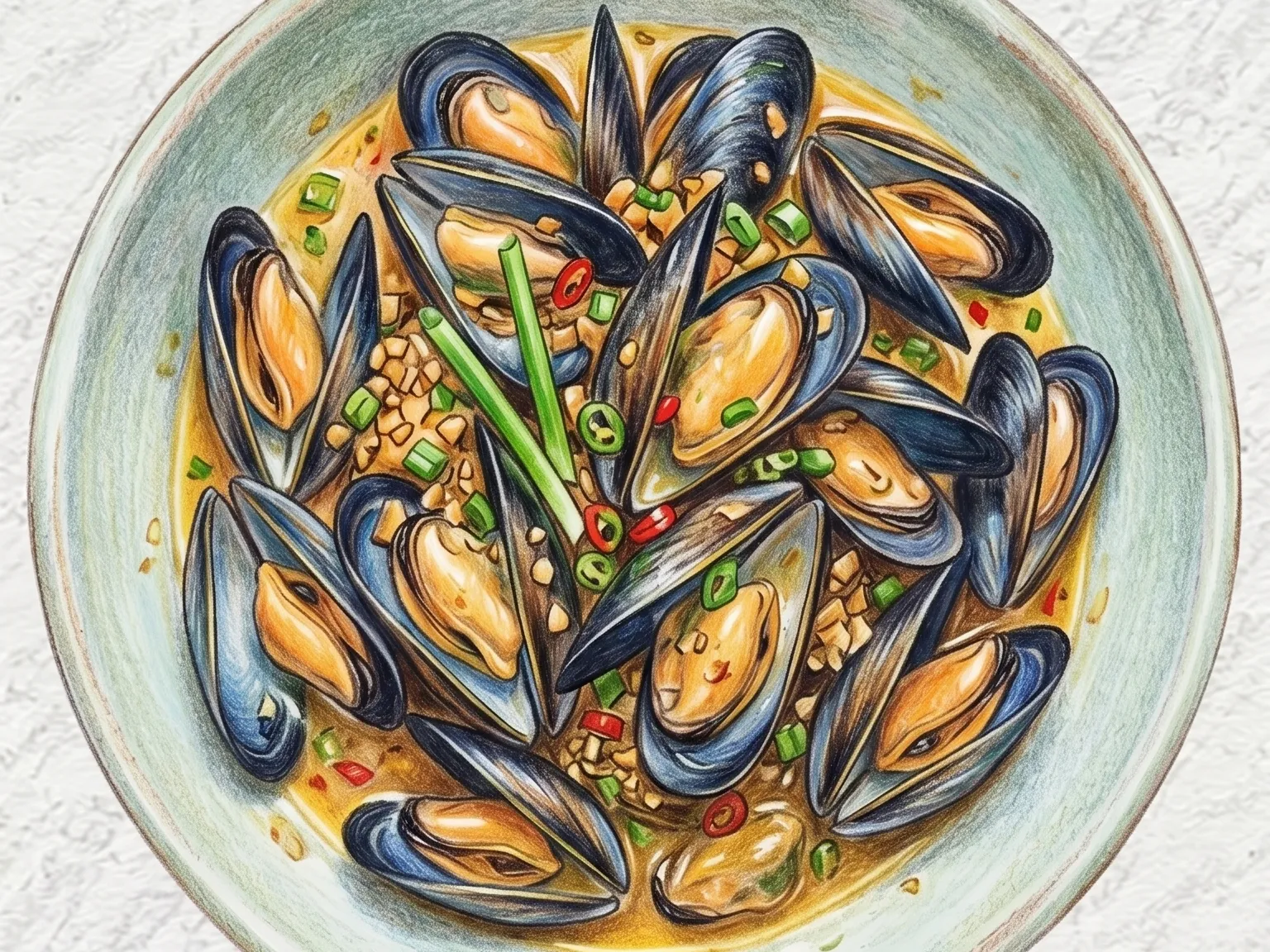
Korean Mussel Stir-Fry (Plump Mussels with Butter, Garlic and Chili)
Honghap-bokkeum is a Korean stir-fried mussel dish cooked in a garlic butter sauce. The recipe begins by cleaning the mussels, removing the beards, and discarding cracked shells. Garlic slices are sautéed in melted butter until fragrant. The mussels are then added with rice wine, covered, and steamed for four minutes. This steaming process creates a savory sauce by combining the butter with the natural juices from the mussels. Unopened shells are discarded. Sliced green onions and cheongyang chilies are stir-fried with the mussels for one minute, adding a sharp heat that balances the buttery richness. Finally, a splash of soy sauce is drizzled around the pan edge to glaze the shells, making the dish ready to serve alongside steamed rice.
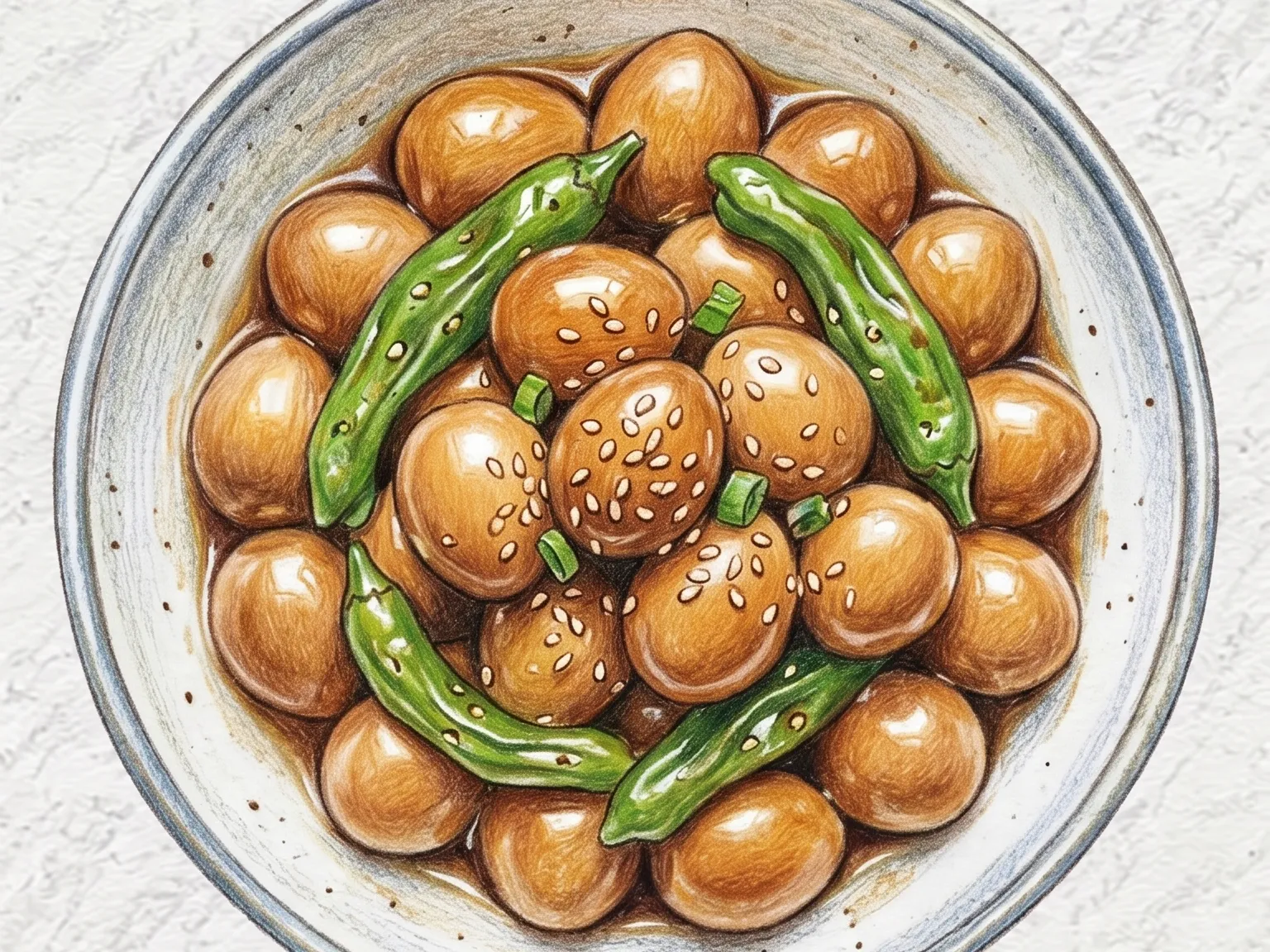
Korean Braised Quail Eggs and Shishito Peppers
Kkwari-mechurial-jorim is a Korean banchan of boiled quail eggs and shishito peppers braised in soy sauce and oligosaccharide syrup until the glaze turns deeply glossy. The quail eggs absorb the soy-based liquid over the heat, gradually browning on the outside while the seasoning penetrates all the way to the yolk, giving every bite a uniform, savory depth. The peppers hold onto their crunch and mild grassy flavor even after cooking, providing a textural and aromatic contrast to the dense richness of the eggs. Oligosaccharide syrup keeps the glaze shiny and adds a gentle, rounded sweetness that does not overwhelm the soy, and sesame oil stirred in at the end along with whole sesame seeds finishes the dish with a clean, nutty aroma. The braising liquid should be cooked down until almost completely reduced -- that is when the glaze adheres firmly to each piece and stays shiny even as the dish cools. Piercing each shishito with a toothpick before cooking lets the seasoning penetrate the interior and prevents the peppers from bursting. Refrigerated, the flavors deepen overnight and the dish stays good for three to four days, which makes it a practical choice for weekly meal prep and packed lunches alike.
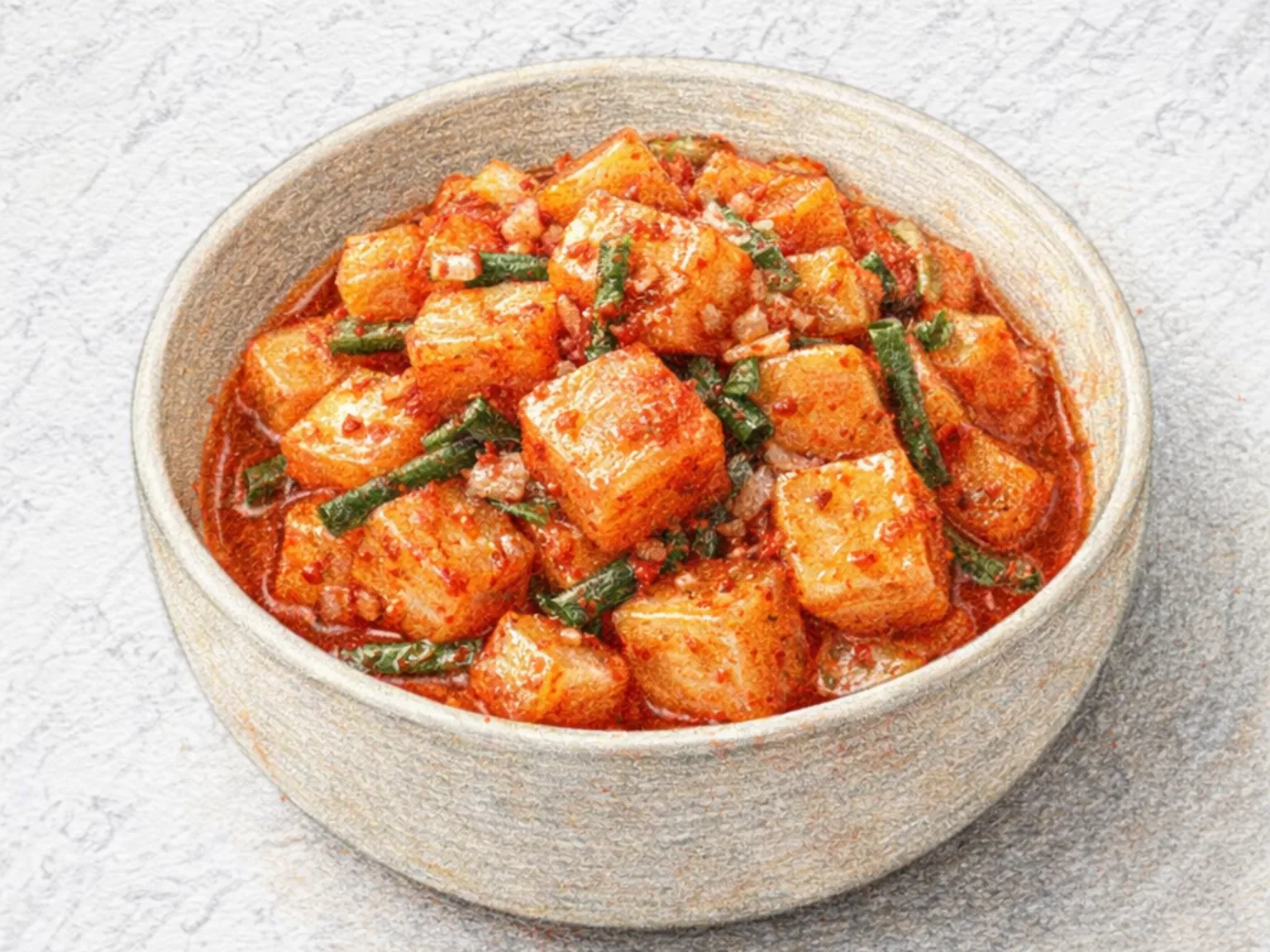
Korean Cubed Radish Kimchi
Kkakdugi is a staple Korean kimchi made from radish cut into 2 cm cubes, brined in coarse salt, then seasoned with gochugaru, salted shrimp, garlic, and ginger before fermentation. Salting draws out moisture from the cubes, creating a contrast between the damp interior and the snappy outer surface. Salted shrimp layers its briny seafood depth beneath the chili heat, and as fermentation progresses, the radish's natural sugars emerge to balance the spice with a clean sweetness. Brining time should be kept to thirty minutes to one hour since over-salting softens the radish and robs it of its characteristic crunch. Adding a small drizzle of perilla oil during the seasoning step deepens the nutty undertone of the finished kimchi, and substituting grated pear or apple for sugar provides a gentler, fruit-derived sweetness that integrates more seamlessly into the overall flavor. The accumulated brine at the bottom of the jar develops a refreshing tang that makes kkakdugi the essential companion to rich, milky soups like seolleongtang and gomtang.
Korean Seasoned Perilla Leaf Banchan
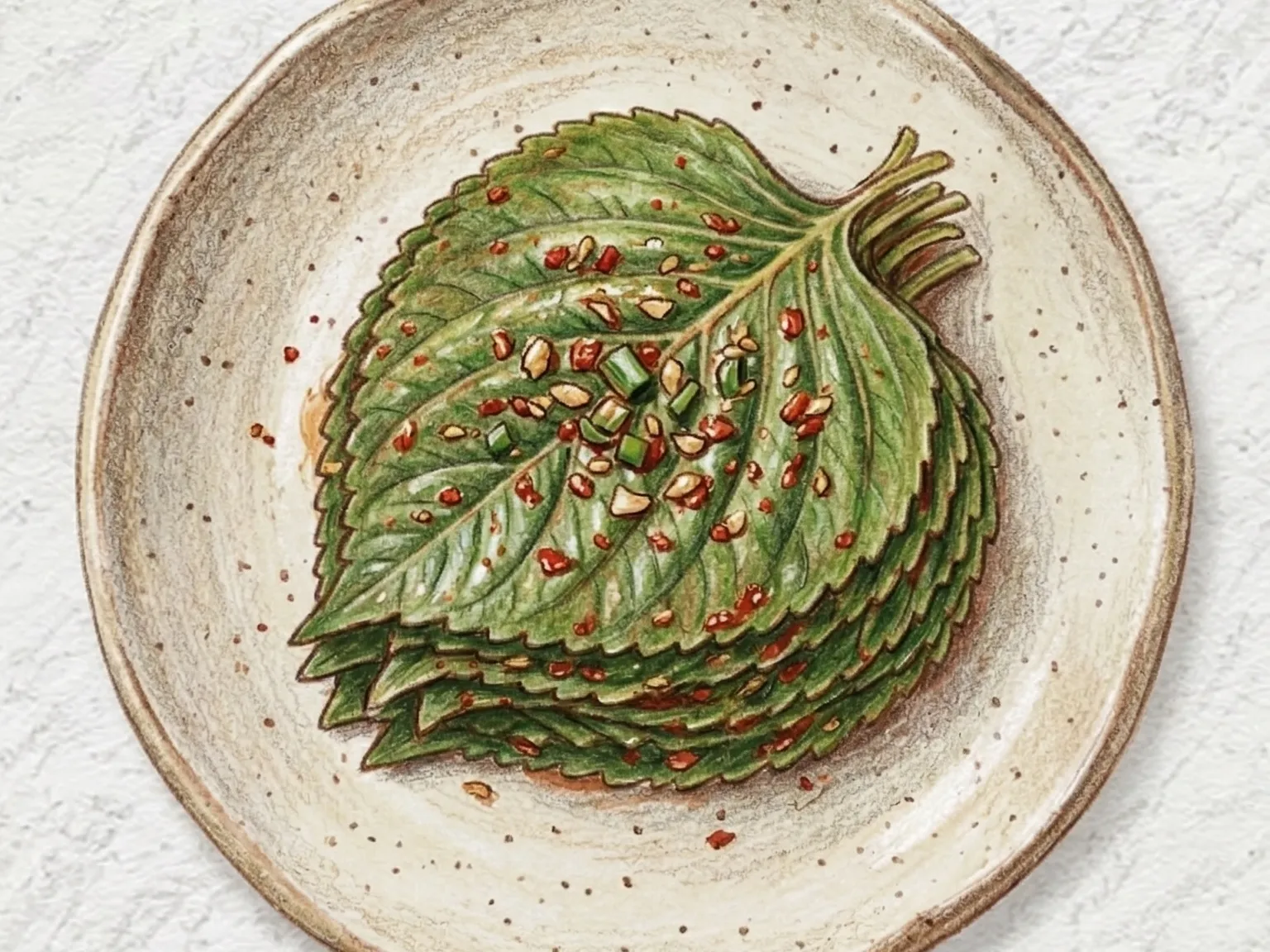
Kkaennip-muchim uses the same core ingredient as kkaennip jorim but skips the heat - raw perilla leaves are dressed directly with a soy-chili seasoning. While the braised version offers soft, fully wilted leaves, this muchim preserves the leaf's rough surface texture and its sharp, almost peppery raw aroma. The dressing - soy sauce, gochugaru, garlic, and chopped scallion - is spread thinly between stacks of five leaves; over-applying makes the dish too salty. A ten-minute rest lets the seasoning absorb into the leaf fibers. Perilla leaves are rich in rosmarinic acid, an antioxidant that has contributed to their reputation as a health food in Korea. Served alongside samgyeopsal or ssambap, the leaves' strong herbal scent cuts through the richness of fatty pork.
Korean Stir-fried Dried Pollock Strips
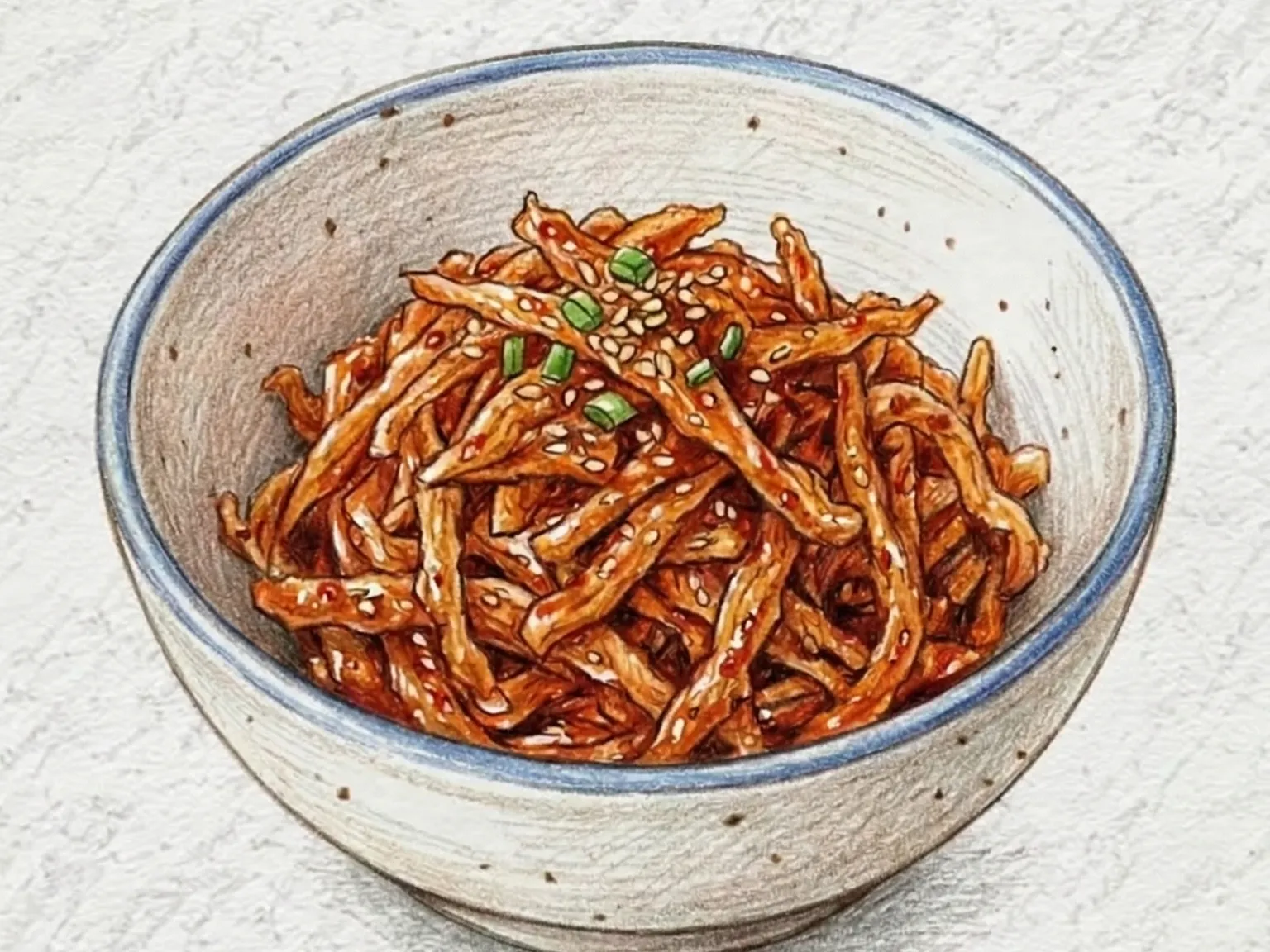
Hwangtae-chae-bokkeum is a Korean side dish of shredded dried pollock strips soaked until fully soft, then stir-fried in a gochujang, oligosaccharide syrup, and soy sauce glaze. Hwangtae is a specific type of dried pollock produced by repeated freeze-thaw cycles in cold mountain air over winter, which gives it a lighter, spongier texture than ordinary dried pollock -- that porosity is what allows it to absorb the seasoning so completely during cooking. Soaking the dried strips in cold water for at least twenty minutes is necessary to rehydrate the flesh fully; squeezing out the excess moisture before adding them to the pan helps the glaze cling evenly rather than diluting in the pan. As the pollock fries, it drinks in the seasoning and turns chewy and moist, with the gochujang's heat and the syrup's sweetness working together to neutralize any residual fishiness. A finishing drizzle of sesame oil and a scatter of sesame seeds rounds out the flavor. The dish keeps well in the refrigerator for four to five days, making it a practical banchan to prepare in advance for lunchboxes or as a casual snack alongside drinks.
Korean Braised Squid with Shishito Peppers
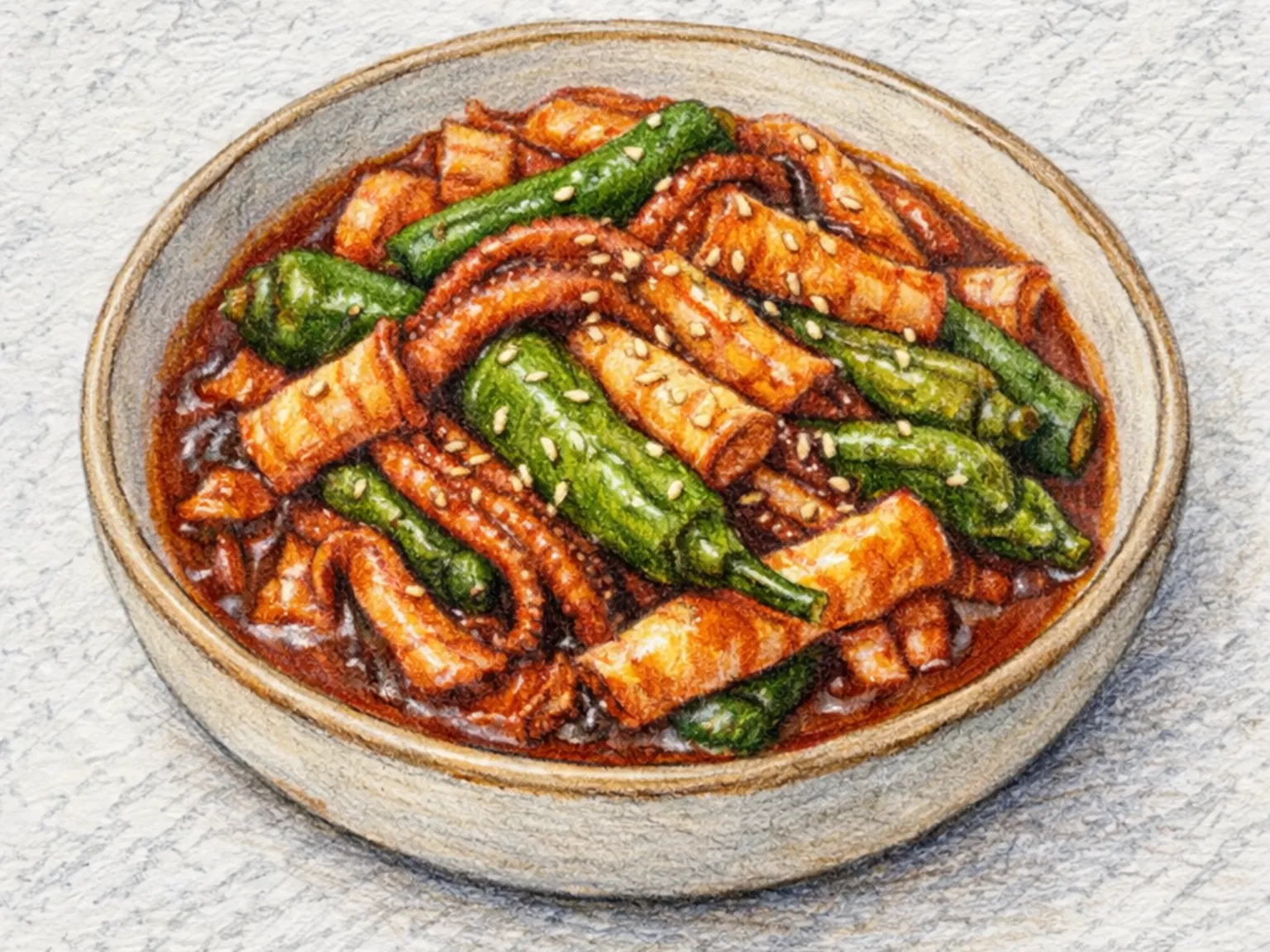
Kkwari-ojingeo-jorim is a Korean braise of squid and shishito peppers simmered in a gochujang and soy sauce seasoning. The squid retains its chewy bounce while soaking in the bold sauce, and the peppers absorb enough flavor to stand on their own while keeping a slight crunch. Gochujang brings a warm spiciness that combines with soy sauce's depth into a multilayered seasoning, and garlic with ginger neutralizes any seafood odor. As the liquid reduces, it coats each piece in a concentrated glaze that makes this banchan work especially well spooned over a bowl of steamed rice.
About Side dishes
Great banchan balances seasoning with the natural flavor of each ingredient. Sesame oil, perilla oil, soy sauce, and fermented pastes work together to pack deep flavor into every small serving.