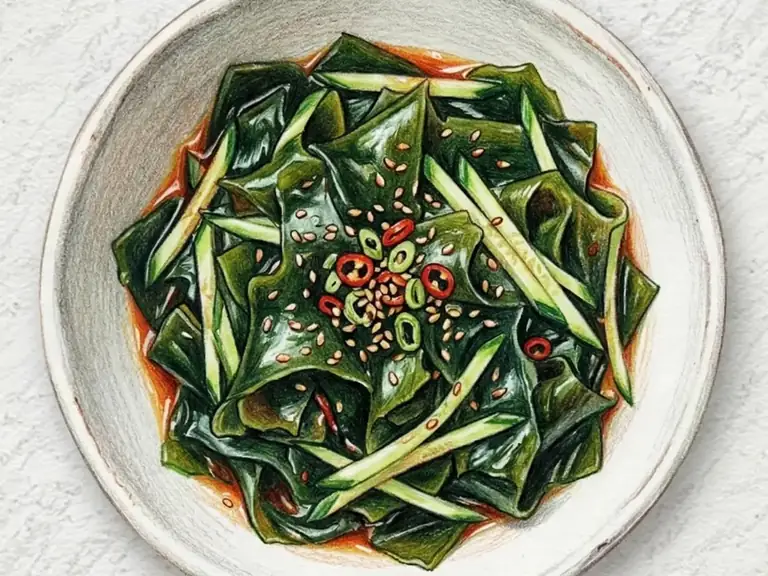
Korean Seaweed Salad (Tangy Chili-Vinegar Dressed Miyeok)
Dried miyeok swells more than eightfold in a 20-minute soak, so adding extra because the dry pile looks small quickly turns one side dish into a big bowlful.
709 recipes. Page 27 of 30
Everyday Korean side dish recipes
Dried miyeok swells more than eightfold in a 20-minute soak, so adding extra because the dry pile looks small quickly turns one side dish into a big bowlful.
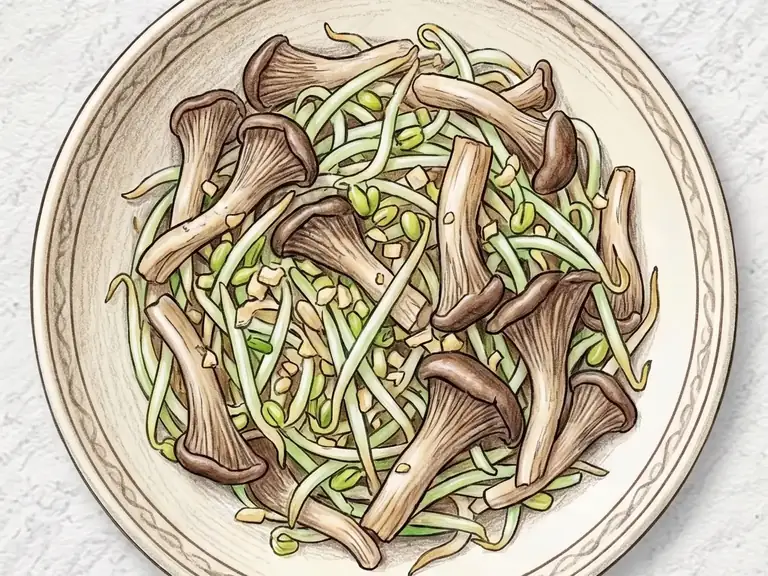
The bean sprouts are cooked until wilted and hot all the way through, which makes this a soft stir-fry rather than a crunchy one. The oyster mushrooms are torn along the grain instead of cut, and the seasoning is soup soy sauce and salt.
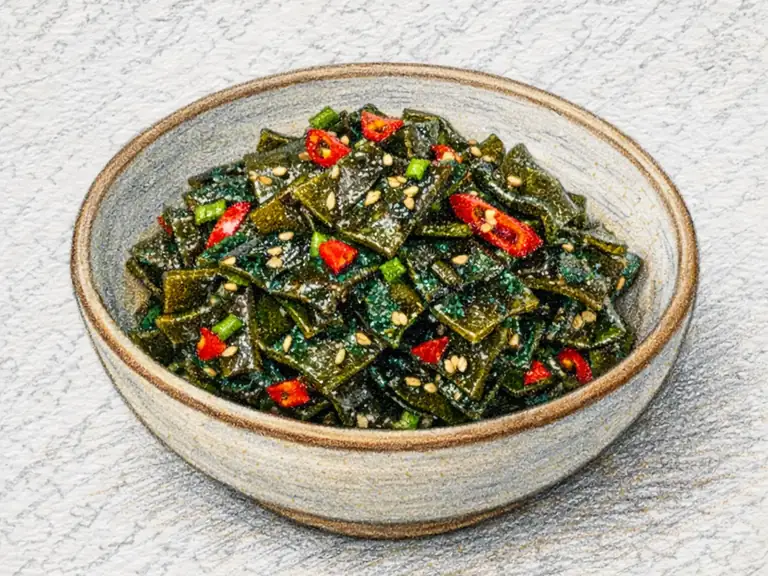
Miyeokgwi, the ruffled base of the sea mustard plant (sold as mekabu in Japan), is thicker and bumpier than the leaves and bounces back when you bite it. It is dressed sweet, sour, and hot with chili flakes, soy, vinegar, and sugar, then chilled for 10 minutes before serving.
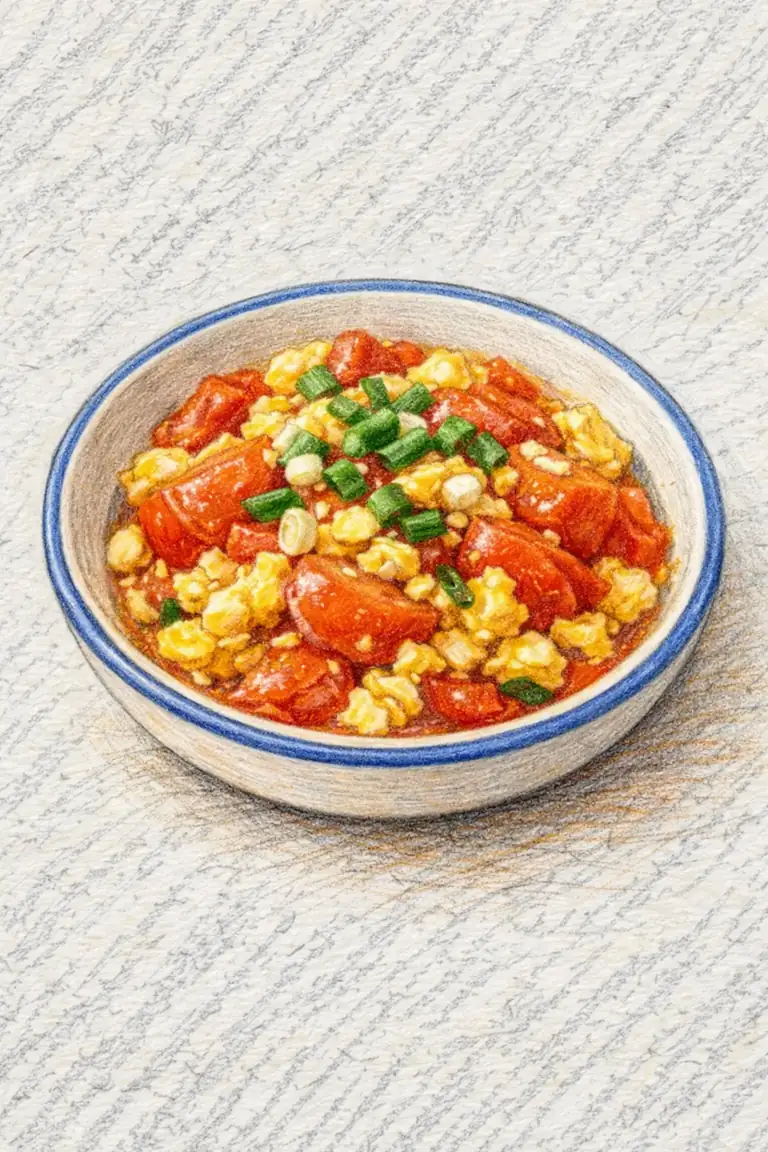
The eggs are cooked only about 70 percent of the way, set aside, and folded back in at the end, which keeps the curds soft. Tomatoes cut a little larger than bite size can release their juice without collapsing right away.
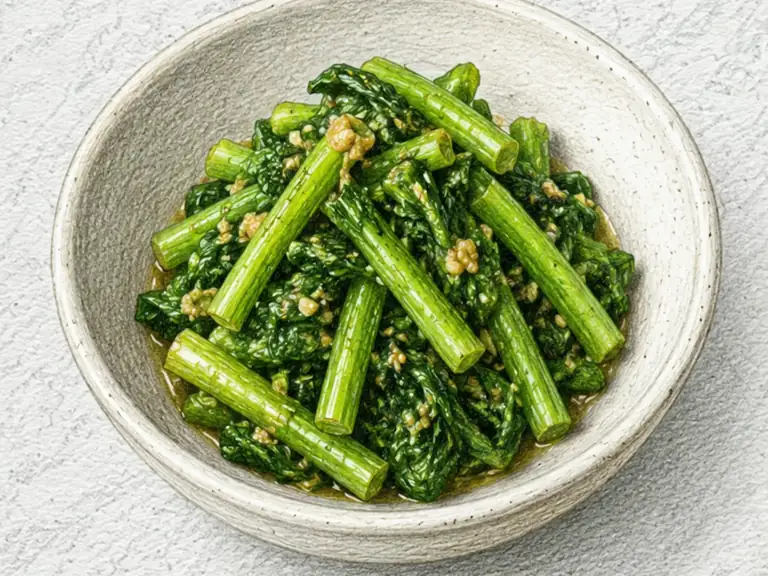
Pulling radishes in autumn, at kimchi-making time, leaves a pile of radish greens. Dried, they become siraegi; boiled and dressed right away, they become this namul. It is seasoned with doenjang and soup soy sauce and finished with ground perilla seeds, which thicken it.
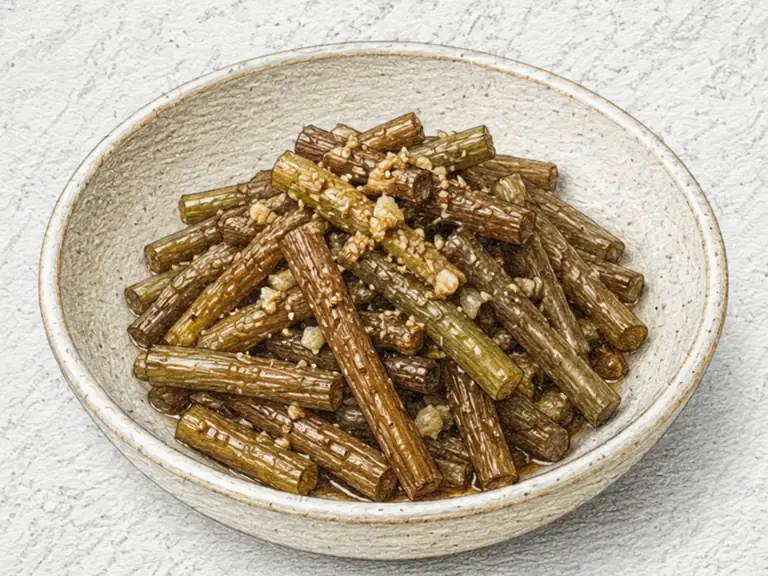
It starts in perilla oil and finishes with ground perilla seed, so that toasty perilla aroma shows up twice. Taro stems are long and stringy by nature; even after soaking up the soy broth and going soft, you can still feel the fibers when you chew.
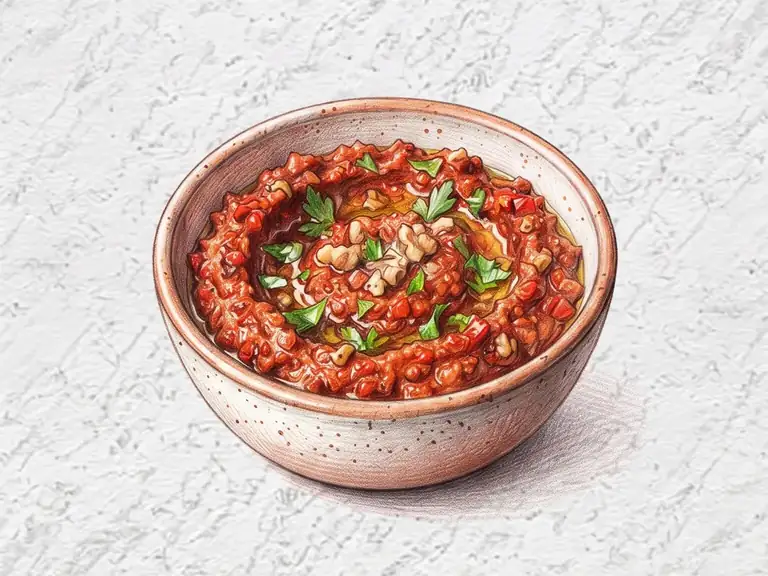
Jarred roasted peppers are used as they are, and the walnuts are toasted in a dry pan for 4 to 5 minutes. The finished dip should be thick and spreadable, not as creamy as hummus.
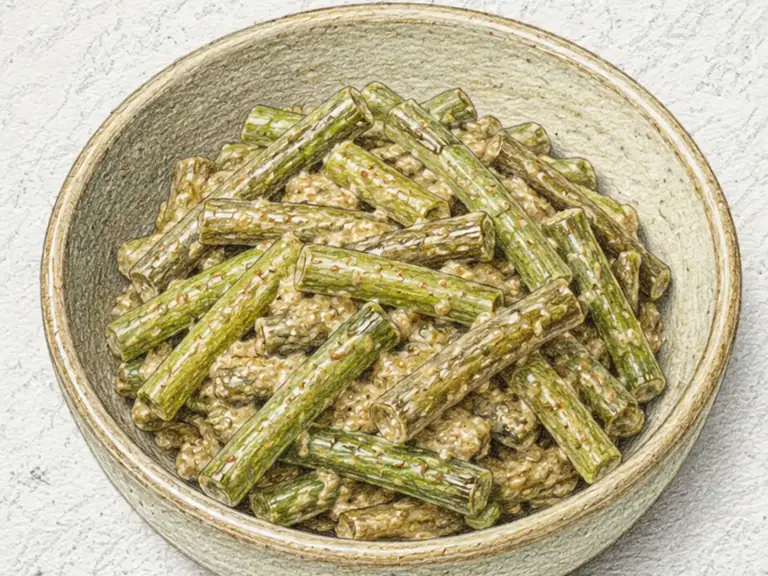
Three full tablespoons of ground perilla seed turn the broth thick and creamy. Even pre-boiled taro stems have a tough outer layer to peel, and the thick ones are split lengthwise; prepared that way they bend softly and keep a little chew.
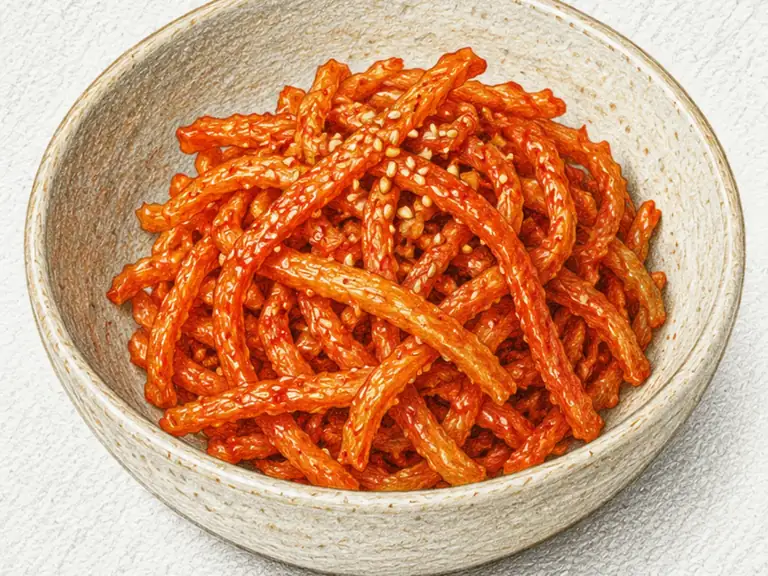
Drying makes radish sweeter and chewy, and that chew is the reason to use it. The strips get only 20 minutes in cold water; any longer and they turn limp like fresh radish. Rice syrup in the gochujang dressing gives it its shine.
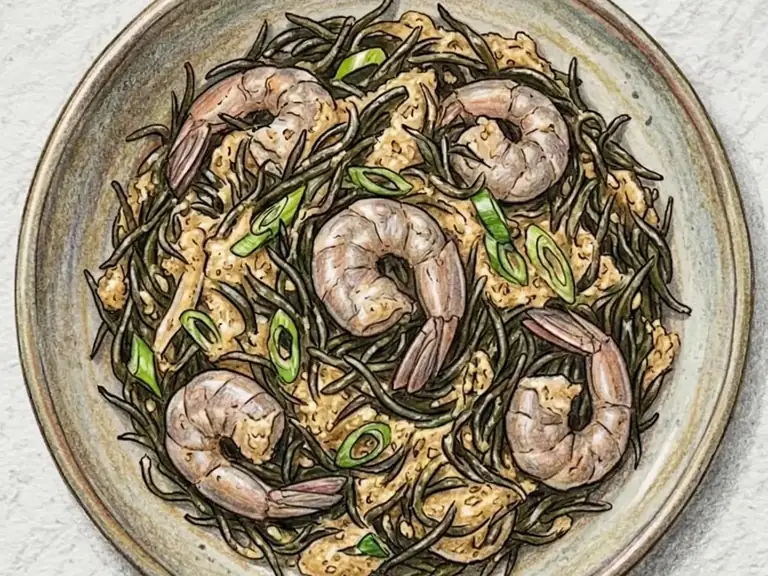
Hijiki toughens with long cooking. The shrimp go in first, and the seaweed joins when they are about 70 percent done and is mixed through within 2 minutes. Perilla powder is scattered over low heat so that it clings to the hijiki instead of clumping.
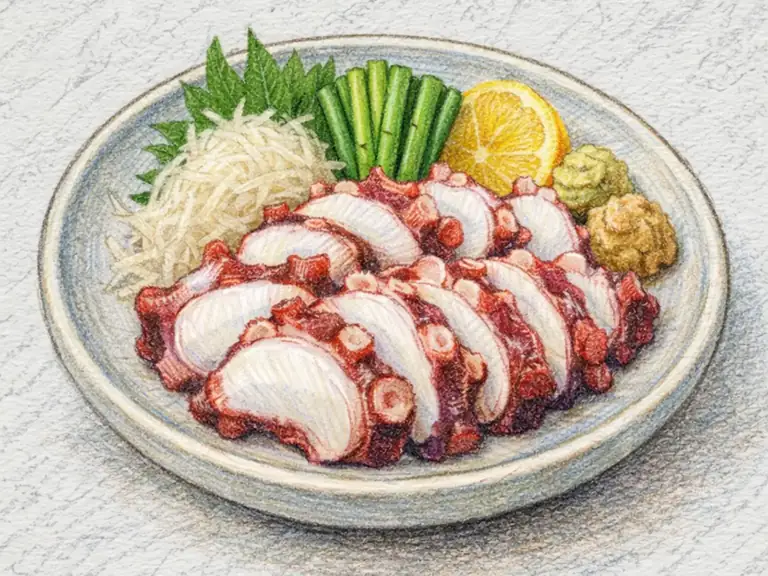
Dip the tentacle tips into the boiling water three or four times and they curl inward; that curl is the shape the octopus keeps on the plate. After that the water stays at a gentle simmer, because a hard boil toughens the flesh. Thick diagonal slices go out with chogochujang, a vinegared chili sauce.
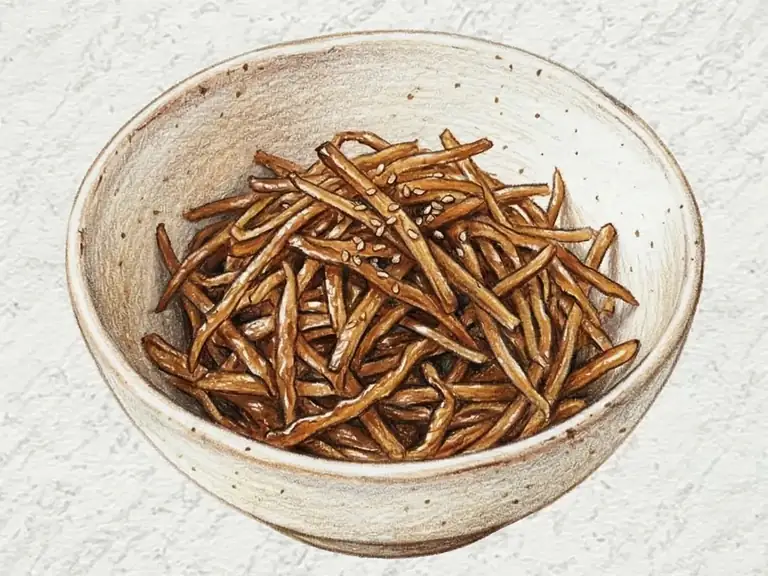
Thin burdock matchsticks cook down in soy sauce and grain syrup until the outside is a glossy brown while the inside keeps some bite. Near the end, when the bubbles get large and the liquid is almost gone, the sugars catch on the pan very quickly, and that is when the bottom needs frequent scraping.
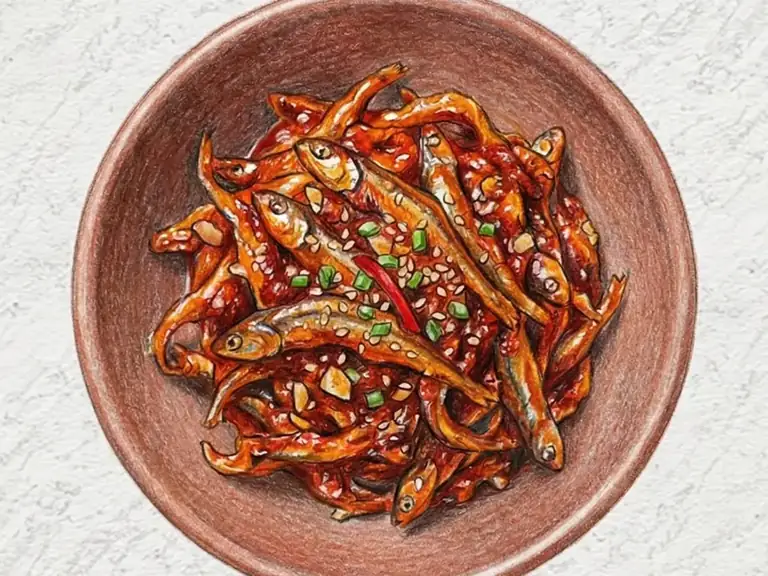
Medium dried anchovies are toasted in a dry pan for a minute before any sauce touches them, which drives off moisture and fishy smell and keeps them crunchy under the glaze. Once the anchovies are in the sauce, the coating takes under 2 minutes, and any longer sets the glaze hard.
Dried ugeoji, the outer leaves of napa cabbage, have thick ribs that stay tough unless they are soaked and then boiled until a finger presses in easily. They are then simmered down in anchovy-kelp stock with doenjang and finished with perilla oil and ground perilla seeds.
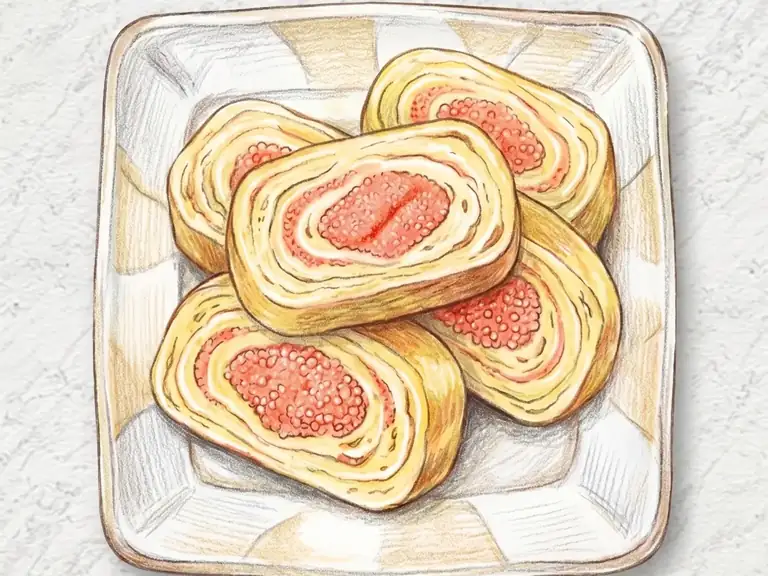
Instead of stirring the pollock roe into the eggs, this version lays it in a single line before rolling, so each slice shows an orange stripe in the middle of the yellow. Bite in and the roe pops with salty little beads against the soft egg. Roe varies in saltiness, so there is no added salt, and low heat keeps the omelette from cracking.
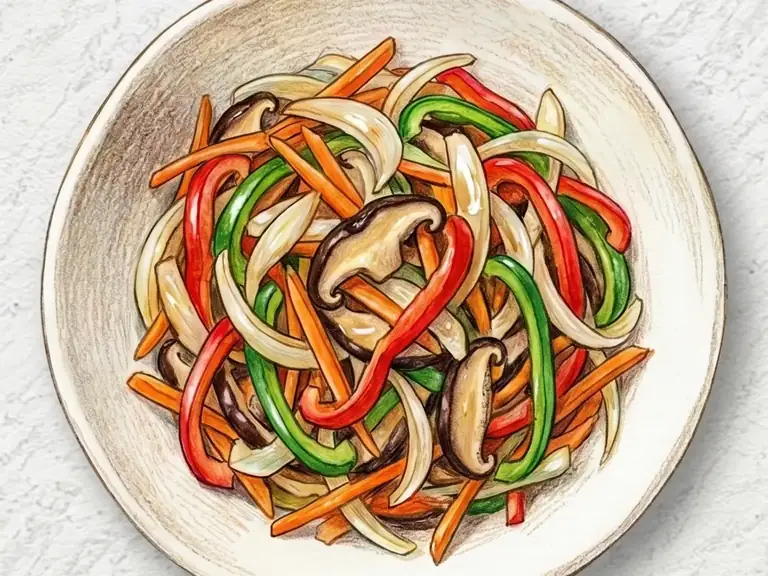
Carrot, onion, bell pepper and shiitake go in one after another, firmest first, and all of them finish crisp, with a single tablespoon of oyster sauce added only in the last 20 seconds for gloss.
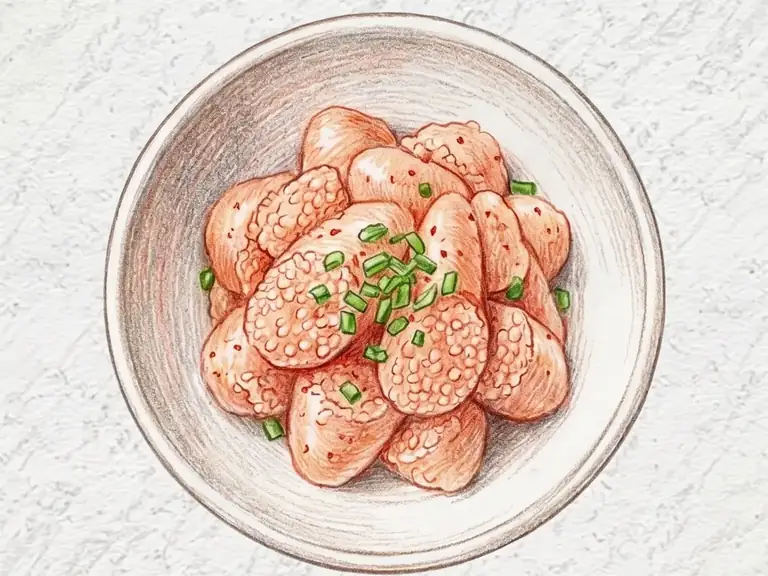
Korean myeongnanjeot is normally plain salted, not chili-cured like Japanese mentaiko, and here the chili flakes stop at a faint orange tint on the surface. Two or three folds with a spoon and the mixing is over. Burst eggs make it mushy and take away the pop.
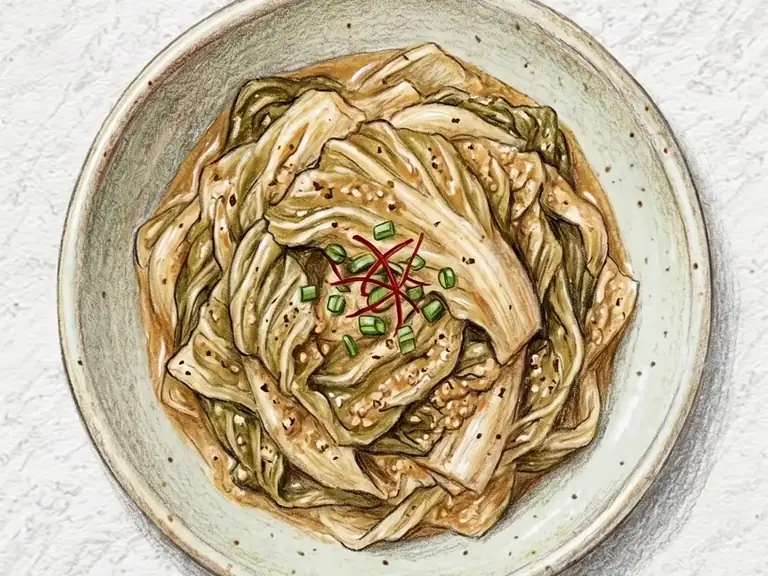
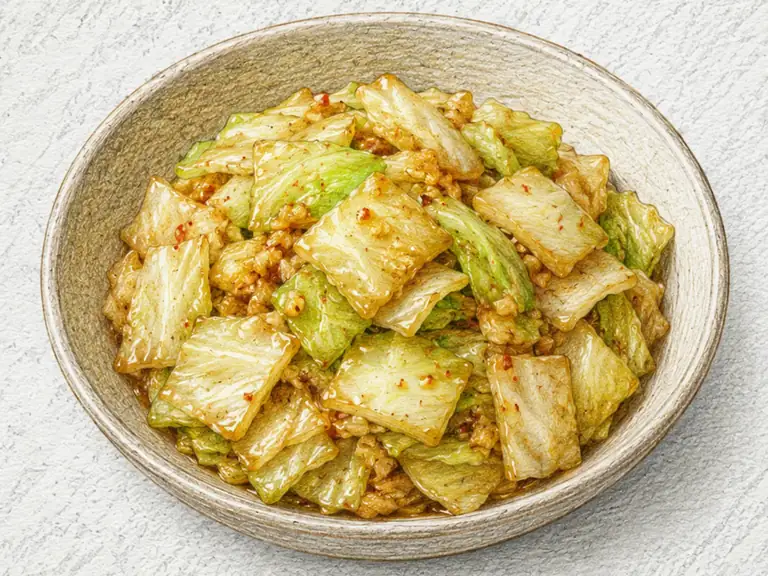
A tablespoon of doenjang and some chili flakes are loosened in 30 ml of water ahead of time and poured around the rim once the cabbage edges turn glossy. Because doenjang varies in saltiness from brand to brand, the amount stays modest at first and the cabbage is tasted just before it is done.
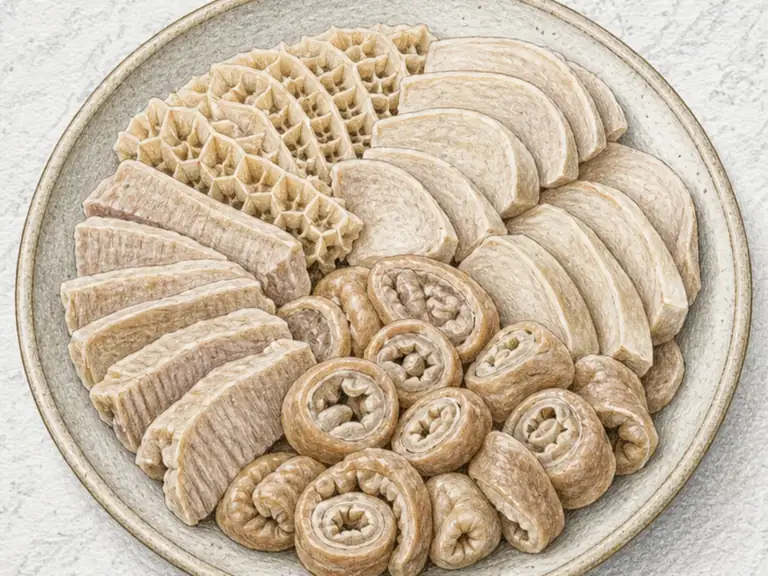
Beef tripe and small intestine share one plate, so you get two quite different chews in alternating bites. Both simmer a long time in water with doenjang (Korean soybean paste) until tender, and the sliced meat goes out hot with a splash of the cooking broth over it.
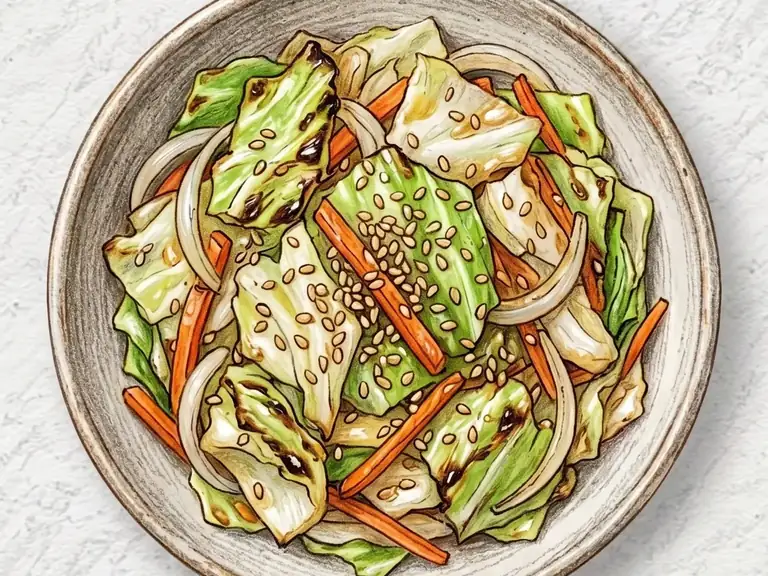
Cabbage cut into 1 cm strips and tossed briefly over high heat wilts at the edges while the center stays crisp and sweet. Sesame oil starts the cooking, and perilla oil plus partly crushed toasted sesame are added after the heat is off, layering two kinds of nuttiness.
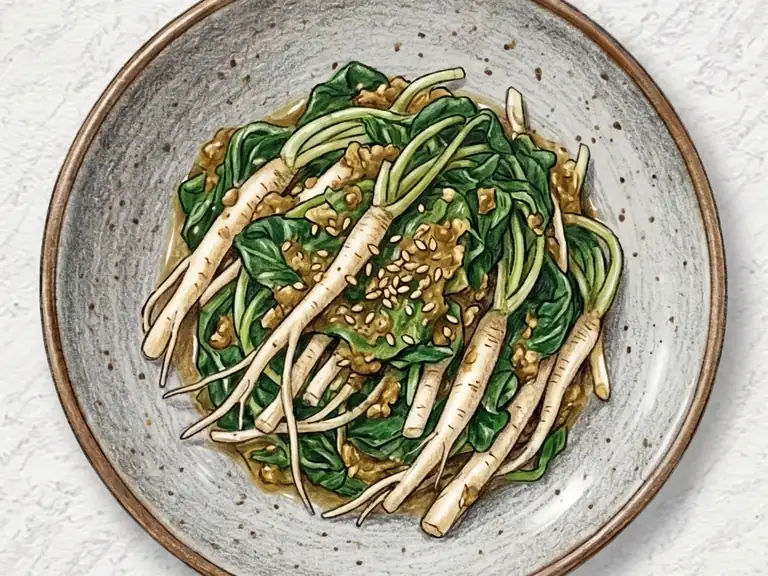
Shepherd's purse is eaten root and all, because the earthy scent lives in the root. That also means scraping dirt off each root with the tip of a knife and washing through several changes of water. Gochujang would bury the scent; the dressing is doenjang instead. The greens are around only briefly in early spring.
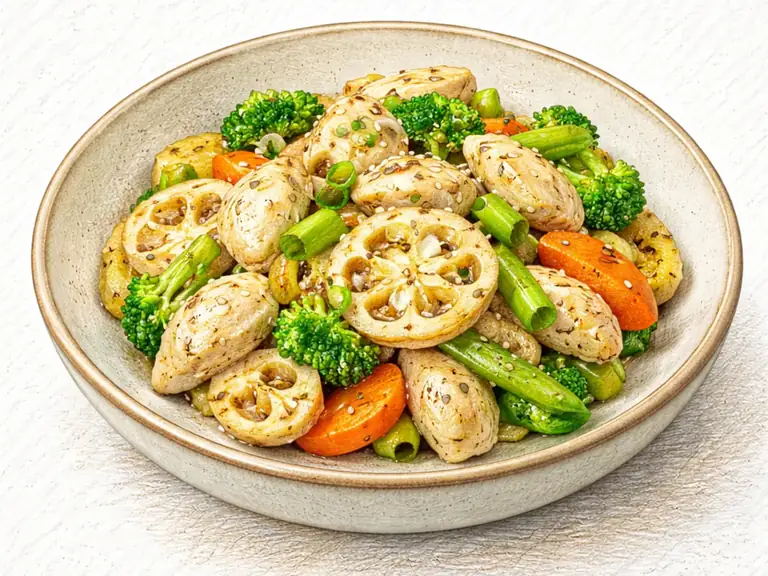
Soy sauce with mirin and a little oligosaccharide syrup gives it a faint sweetness. The chicken breast never cooks through on its own: as soon as the outside turns white the lotus root and onion go in, and that timing is what keeps the chicken from drying out.
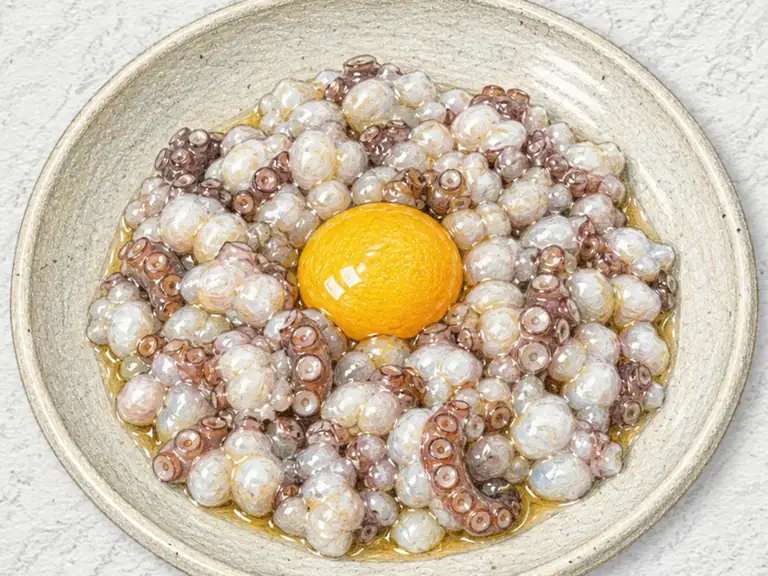
The name echoes the tang-tang of the knife hitting the board as live octopus is chopped into short, chopstick-sized pieces. An egg yolk sits in the middle to be stirred in just before eating, while the sesame oil and salt dip stays on the side so each bite can be seasoned to taste. Any water left on the octopus after cleaning pools on the plate and keeps the oil from clinging, so it is patted completely dry.
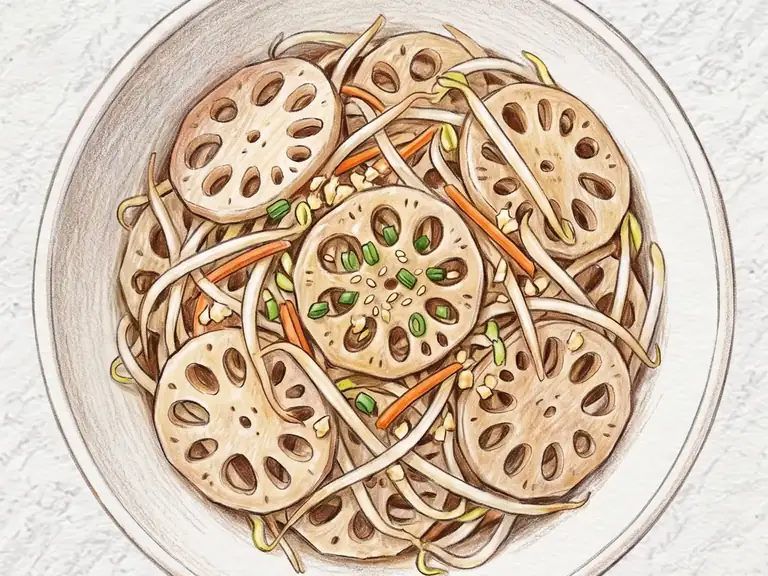
Lotus root is dense and soybean sprouts are delicate, and cooked for the same length of time one of them gives out. The lotus root gets a head start, and the sprouts go in only once the soy glaze is bubbling, for a short final toss.