Side dishes

Side dishes Recipes

624 recipes. Page 16 of 26

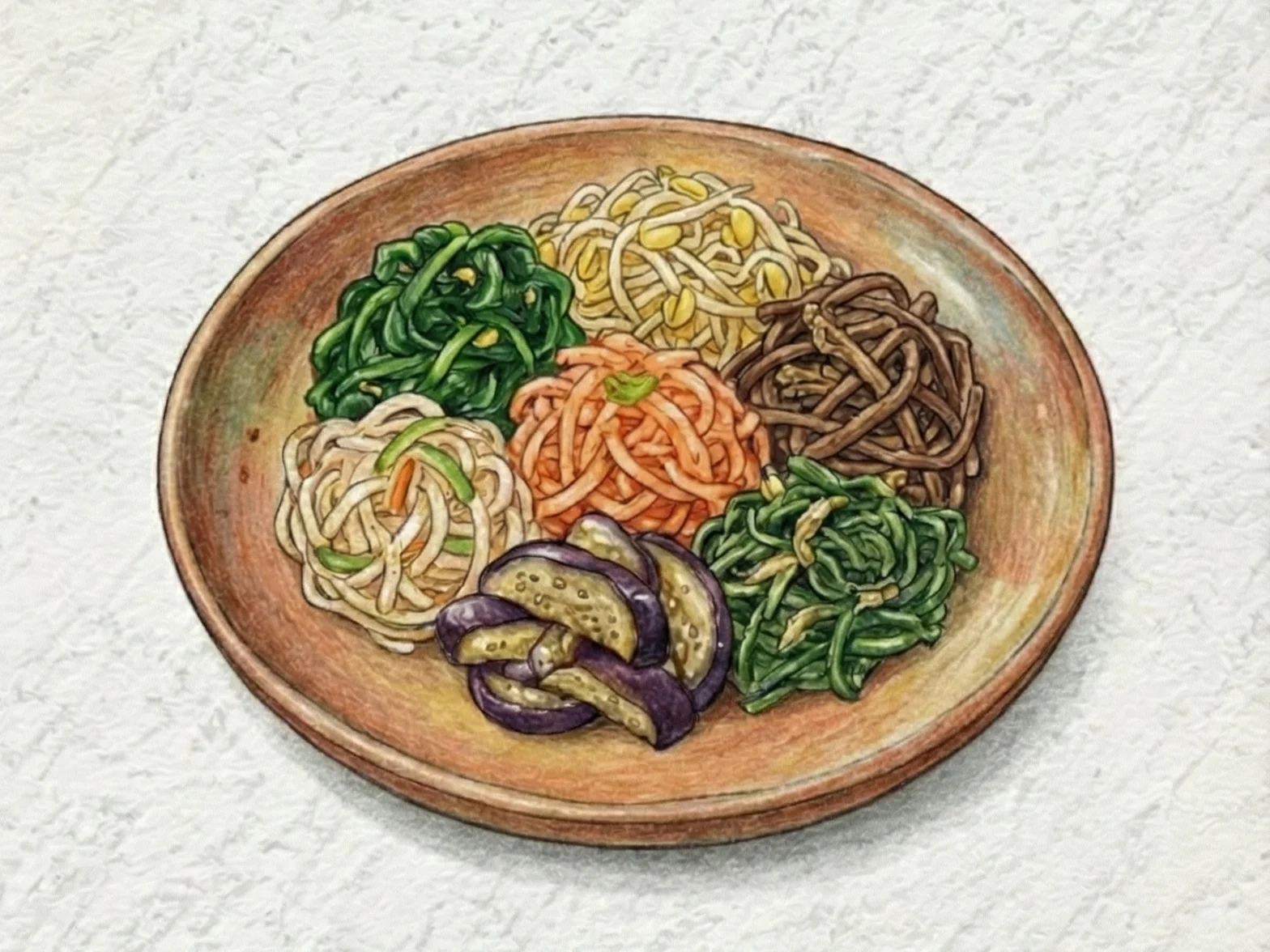
Side dishes (banchan) are the heart of Korean dining culture. A typical meal features multiple small plates - seasoned vegetables (namul), braised dishes (jorim), pickled items, and salted seafood. Classics like spinach namul, bean sprout salad, and stir-fried anchovies can be prepared in advance and enjoyed over several days.

Side dishes
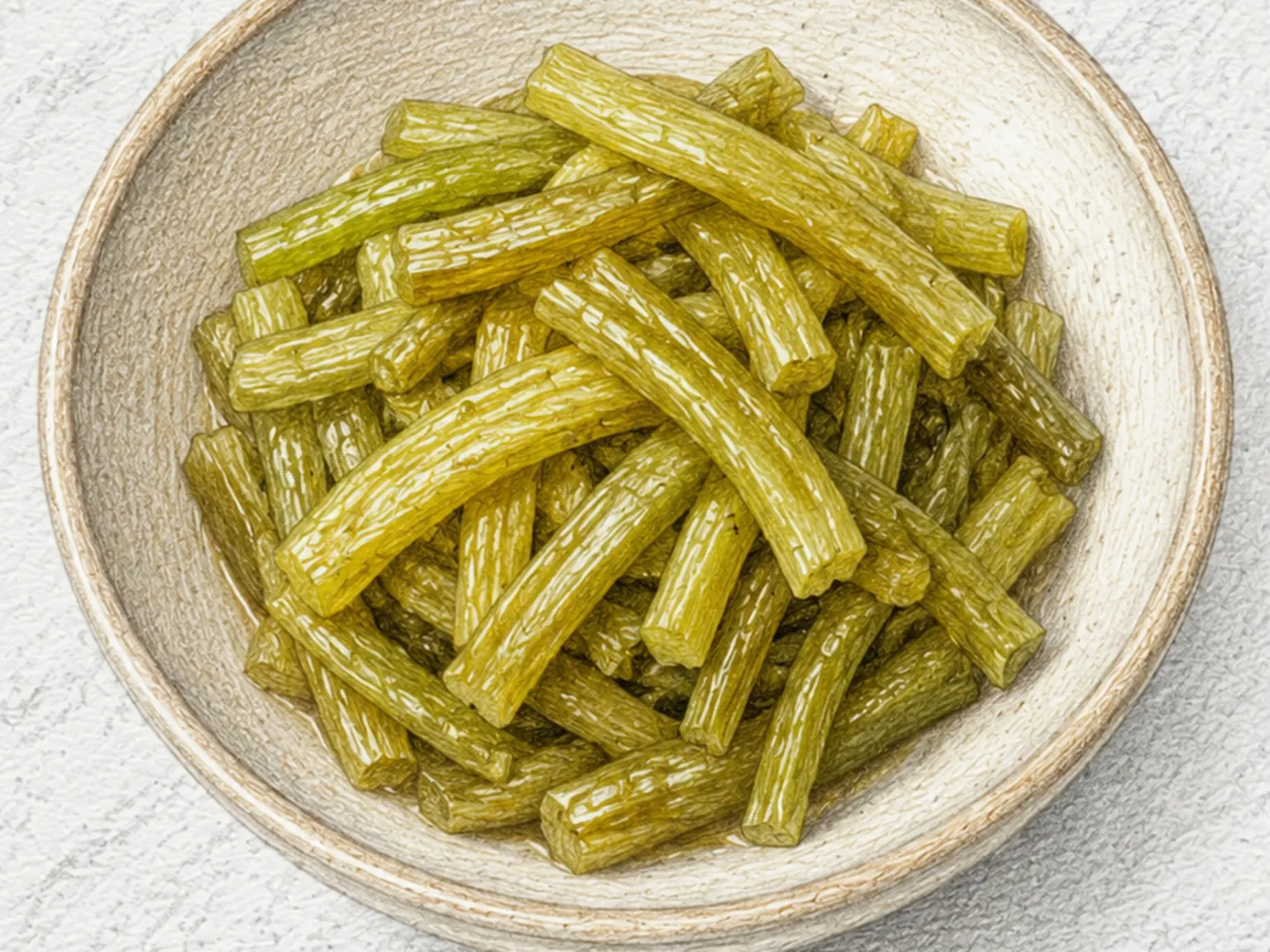
Korean Pickled Celtuce Stems
Kimchi Medium

Korean Pickled Celtuce Stems

Gungchae is the dried stem of celtuce (Lactuca sativa var. asparagina), known in Chinese as wosun, and in Korea it carries the name meaning palace vegetable, reflecting its historical association with royal court cuisine. When rehydrated from its dried state, the stems regain a firm, almost cartilaginous crunch that is the defining quality of the ingredient and the entire reason to use it. Packed into sterilized glass jars, the stems are covered with a boiling brine of soy sauce, vinegar, sugar, and water poured in while still hot, which drives the seasoning into the outer layers while preserving the interior snap. The pickle is edible after a single day, but three days is when the balance of tangy, salty, and sweet flavors reaches its peak. Served alongside grilled meats or rich main dishes, the crisp texture and bright acidity cut through heaviness and refresh the palate between bites, making it a natural companion to oily or heavily seasoned Korean mains.

🏠 Everyday 🍱 Lunchbox
Prep 20min Cook 10min 4 servings
Korean Rolled Omelette (Layered Vegetable Egg Roll)
Side dishes Easy

Korean Rolled Omelette (Layered Vegetable Egg Roll)

Gyeran-mari - Korean rolled omelette - is a staple of Korean lunchboxes and dinner tables, a dish every Korean home cook masters early. Finely diced carrot, onion, and scallion are mixed into beaten eggs and poured in a thin stream across a lightly oiled rectangular pan. When the egg layer is half-set, it is rolled from one side to the other, then more egg mixture is poured beside the roll and the process repeats three to four times, building concentric yellow layers visible when sliced. Air trapped between the thin sheets gives the omelette its characteristic pillowy softness. Temperature control is critical - too hot and the egg browns; too cool and the layers will not bond. After cooking, wrapping the roll in a bamboo mat or kitchen towel for two minutes sets its shape into a clean cylinder. Found in school cafeterias, picnic bento boxes, and family dinners across Korea.

🏠 Everyday 🧒 Kid-Friendly
Prep 10min Cook 8min 2 servings
Korean Spicy Gochujang Dried Squid Stir-Fry
Stir-fry Easy

Korean Spicy Gochujang Dried Squid Stir-Fry

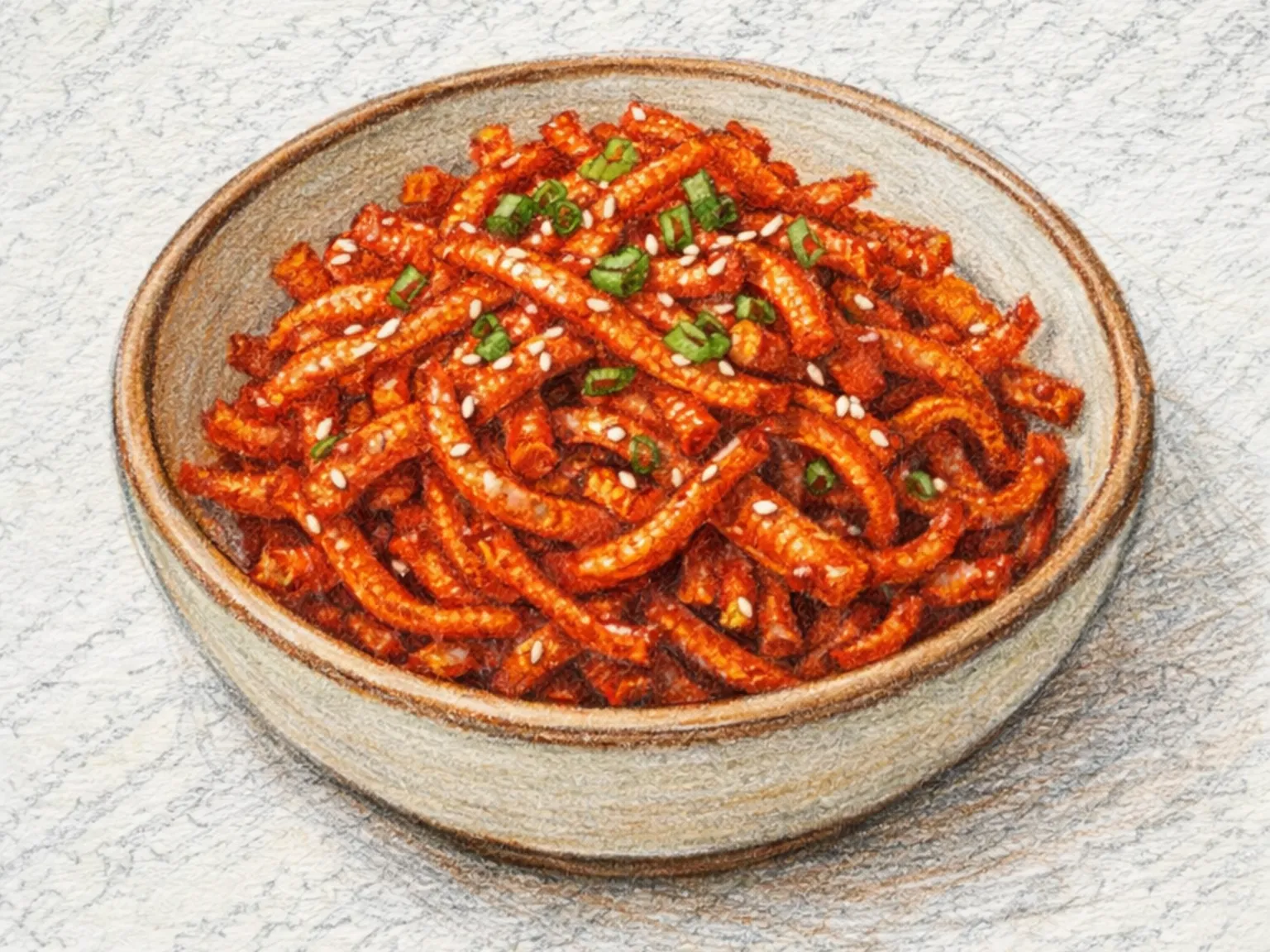
This gochujang jinmichae bokkeum coats 180 g dried shredded squid with a briefly cooked chili sauce, then uses mayonnaise off the heat to keep the strands supple. Loosen any tangled squid and cut long pieces to about 5 cm. Only if the squid feels stiff, sprinkle 2 tablespoons water across it and rest it for 1 minute; the source method does not soak and squeeze the strands. Stir together 1.5 tablespoons gochujang, 1 teaspoon gochugaru, 1 tablespoon soy sauce, 2 tablespoons oligosaccharide syrup, and 1 teaspoon minced garlic until no dense lumps remain. Warm 1 teaspoon cooking oil over low heat and stir the sauce alone for about 30 seconds, just long enough to soften the raw garlic aroma and harsh chili edge. Add the squid, raise the heat to medium-low, and lift the strands repeatedly from the pan bottom for 2 minutes. Turn off the heat as soon as the sauce becomes thick and the squid begins to gather into a sticky mound; further cooking can scorch the gochujang and dry the squid. With the burner off, toss in 1 tablespoon mayonnaise for 30 seconds. Finish with 1 teaspoon sesame seeds when every strand looks evenly coated and moist. The short sauce cook and the off-heat mayonnaise are the two texture controls in this recipe.

🏠 Everyday 🍱 Lunchbox
Prep 8min Cook 7min 4 servings
Braised Live Blue Crab in Soybean Paste
Steamed Medium

Braised Live Blue Crab in Soybean Paste

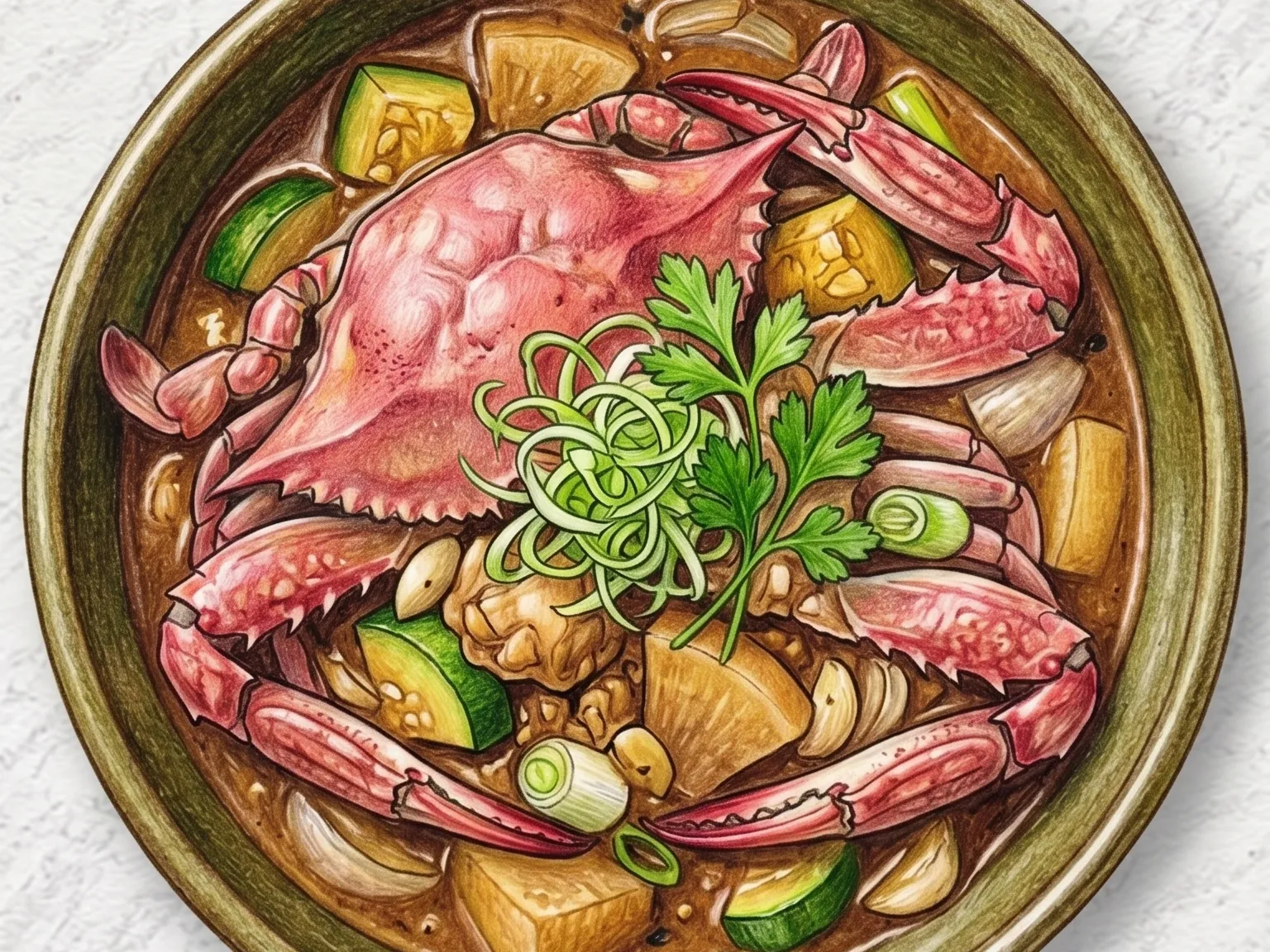
This dish features live blue crab braised in a savory broth seasoned with Korean soybean paste. Preparing the crab immediately before cooking preserves its natural sweetness and fresh qualities. Straining the soybean paste through a sieve allows it to dissolve evenly in the anchovy stock without leaving lumps. Slices of radish are placed at the bottom of the pot to simmer first, creating a sweet foundation for the sauce. The crab pieces are arranged over the radish and simmered with onions, allowing the flavors to penetrate the sweet crab meat. Cheongyang peppers add a sharp, spicy note, while fresh crown daisy is placed on top at the end to lift the rich aroma of the soybean paste with its light herbal fragrance. It is served warm with rice.

🔥 Trending Now 🍱 Lunchbox
Prep 20min Cook 25min 2 servings
Korean Zucchini Kimchi (Summer Fresh Gochugaru Quick)
Kimchi Easy

Korean Zucchini Kimchi (Summer Fresh Gochugaru Quick)

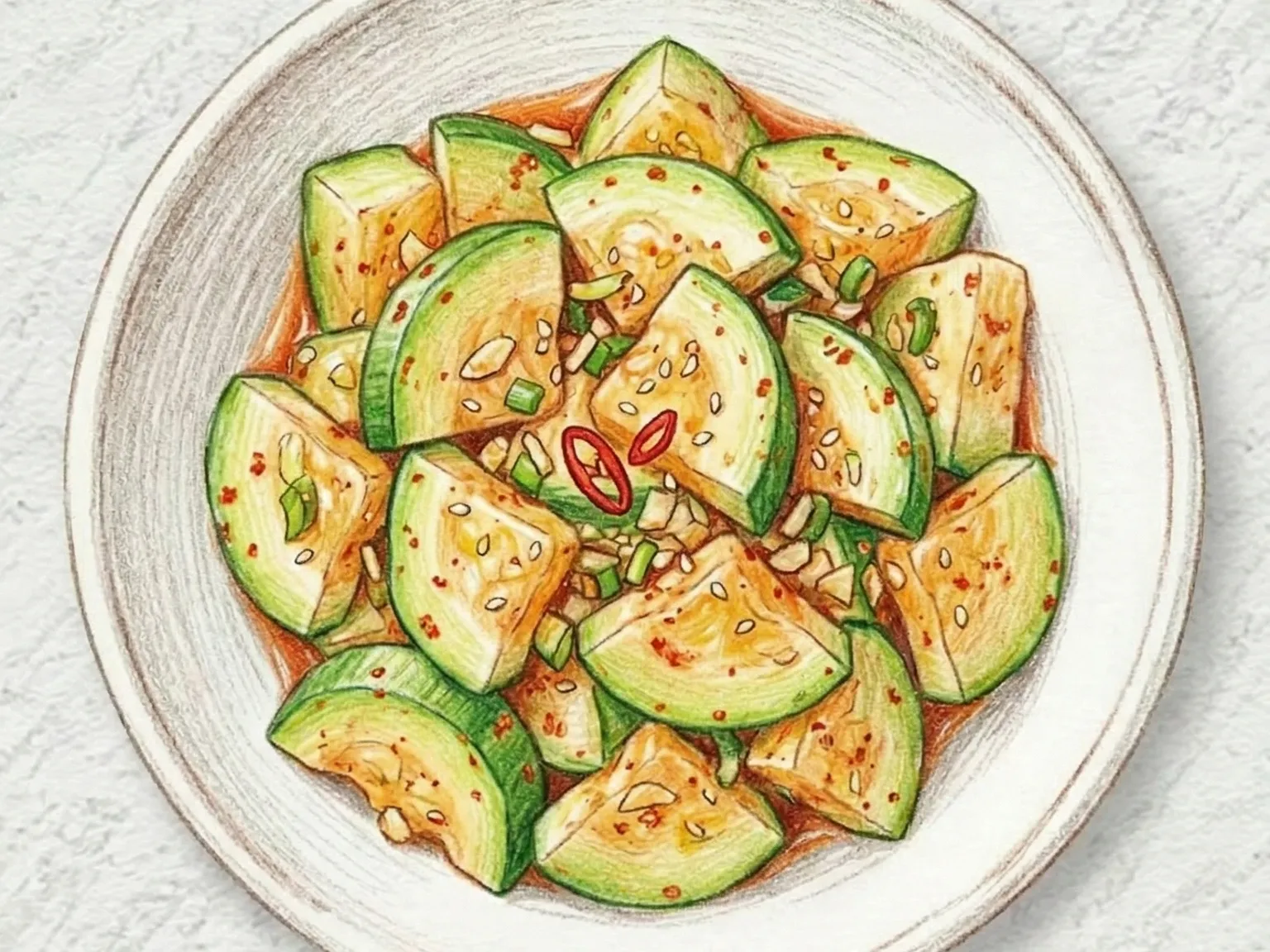
Hobak kimchi represents a seasonal Korean vegetable preparation specifically associated with the summer months. This timing is chosen because domestic aehobak reach their peak levels of natural sweetness and maintain a particularly tender internal structure during this time of year. To prepare the zucchini for seasoning, the vegetable is typically sliced into thin half-moon shapes or uniform rectangular pieces. The salting stage for these slices is kept intentionally brief. This limited salting time serves a specific functional purpose in the recipe by preventing the extraction of excessive moisture from the vegetable cells. If the zucchini remains in salt for an extended period, the individual slices tend to lose their structural integrity and collapse, which eliminates the characteristic crispness that defines the quality of the finished dish. Once the brief salting process is complete, the zucchini pieces are rinsed in cold water and squeezed firmly by hand to remove as much residual liquid as possible. The seasoning phase involves thoroughly tossing the prepared slices with a combination of red chili flakes known as gochugaru, fish sauce, and finely minced garlic. Rather than utilizing refined sugar for seasoning, this recipe relies on the addition of plum extract. The extract provides a balanced and rounded natural sweetness to the profile of the dish without the need for processed additives. Fresh garlic chives are integrated into the mixture to contribute an aromatic and grassy quality that connects the different flavor elements together. Thinly sliced onions are also added to provide a subtle savory depth in the background. This particular variety is a no-fermentation kimchi, meaning it is designed to be consumed on the same day it is made or within two days at the most. Beyond this forty-eight hour window, the texture of the zucchini softens significantly and the initial freshness of the ingredients begins to dissipate. To maintain the best possible quality during this short period, the kimchi should be kept in a tightly sealed container and stored in the refrigerator.

🍱 Lunchbox ⚡ Quick
Prep 22min Cook 5min 2 servings
Korean Mixed Seaweed Salad
Side dishes Easy

Korean Mixed Seaweed Salad

Haecho-muchim gathers several types of ocean seaweed - often including miyeok julgi (seaweed stems), tot (sea mustard), parae (green laver), and kkosiraegi - into one bowl and dresses them in cho-gochujang, a tangy-sweet sauce made by blending gochujang with vinegar and sugar. Each strand and leaf brings a different texture: some chewy, some slippery, some with a gentle pop. The seaweed is blanched for no longer than twenty seconds to preserve that textural variety - longer cooking turns everything uniformly soft. Squeezing out all residual water before dressing is critical, otherwise the sauce dilutes into a watery puddle. Julienned cucumber threaded through the seaweed adds a crisp, garden-fresh counterpoint to the briny marine flavors. Served chilled, this low-calorie banchan is especially welcome in hot weather.

🏠 Everyday 🍱 Lunchbox
Prep 15min Cook 2min 4 servings
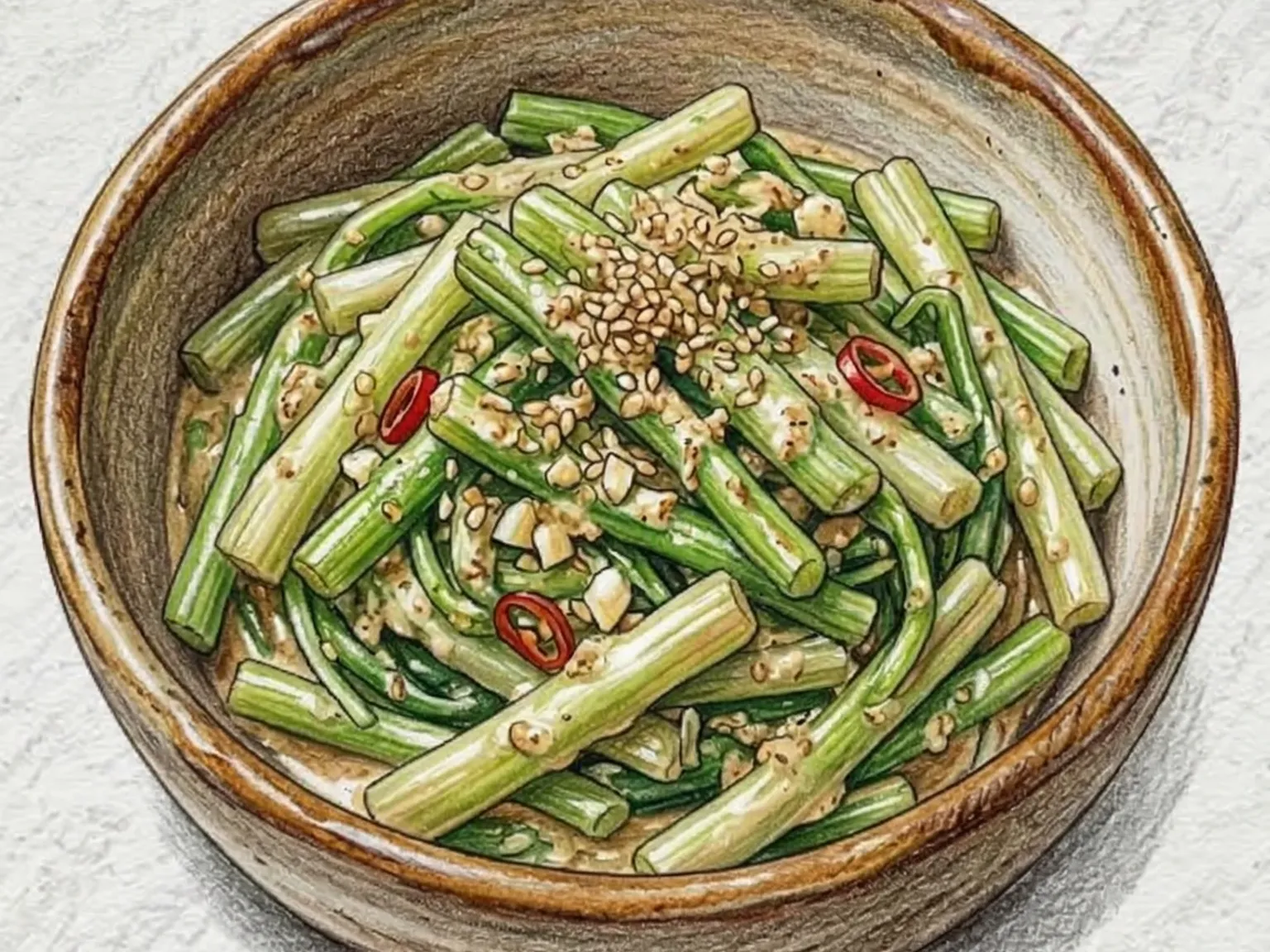
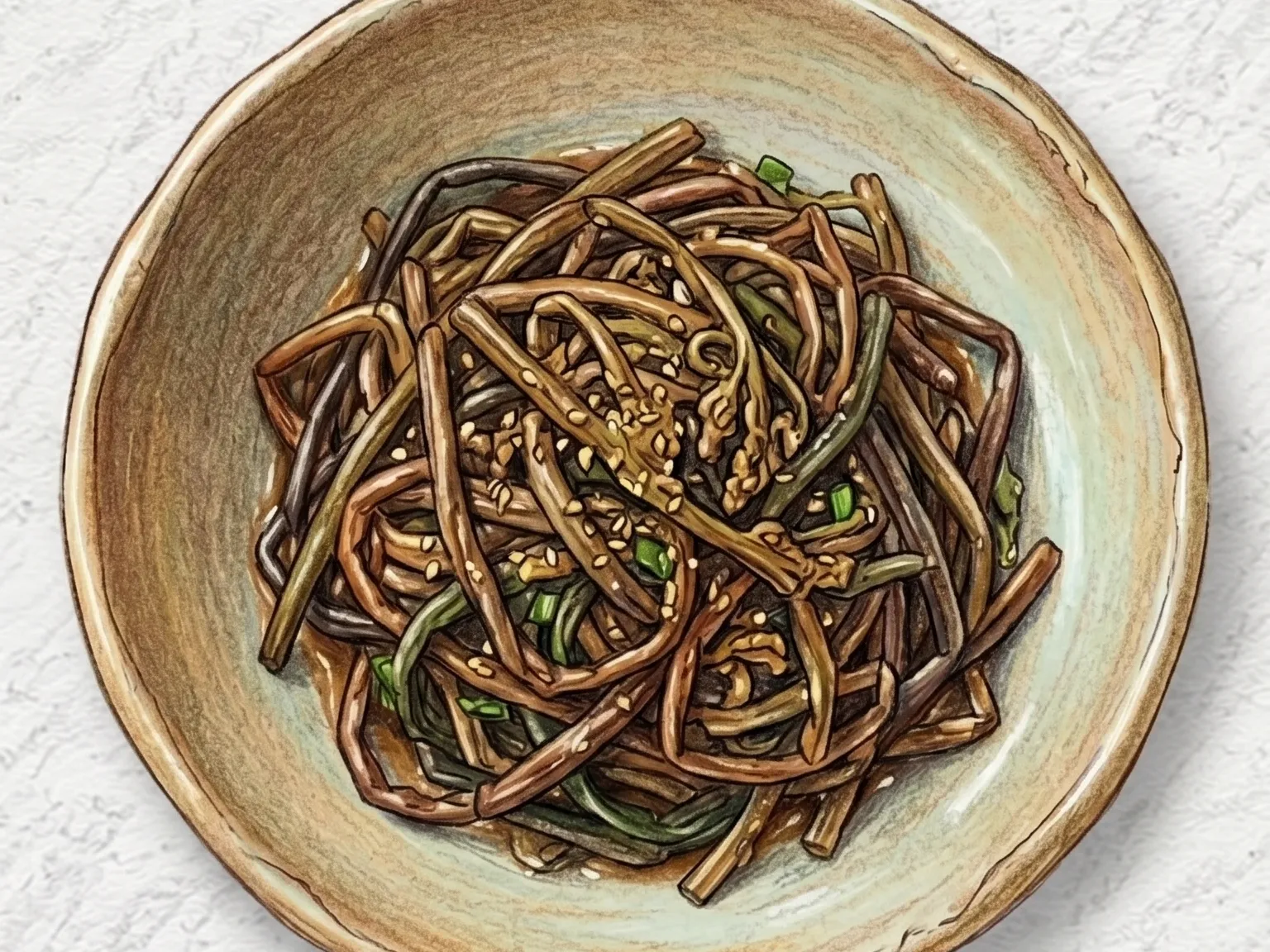
Korean Stir-Fried Sweet Potato Stems
Stir-fry Medium

Korean Stir-Fried Sweet Potato Stems

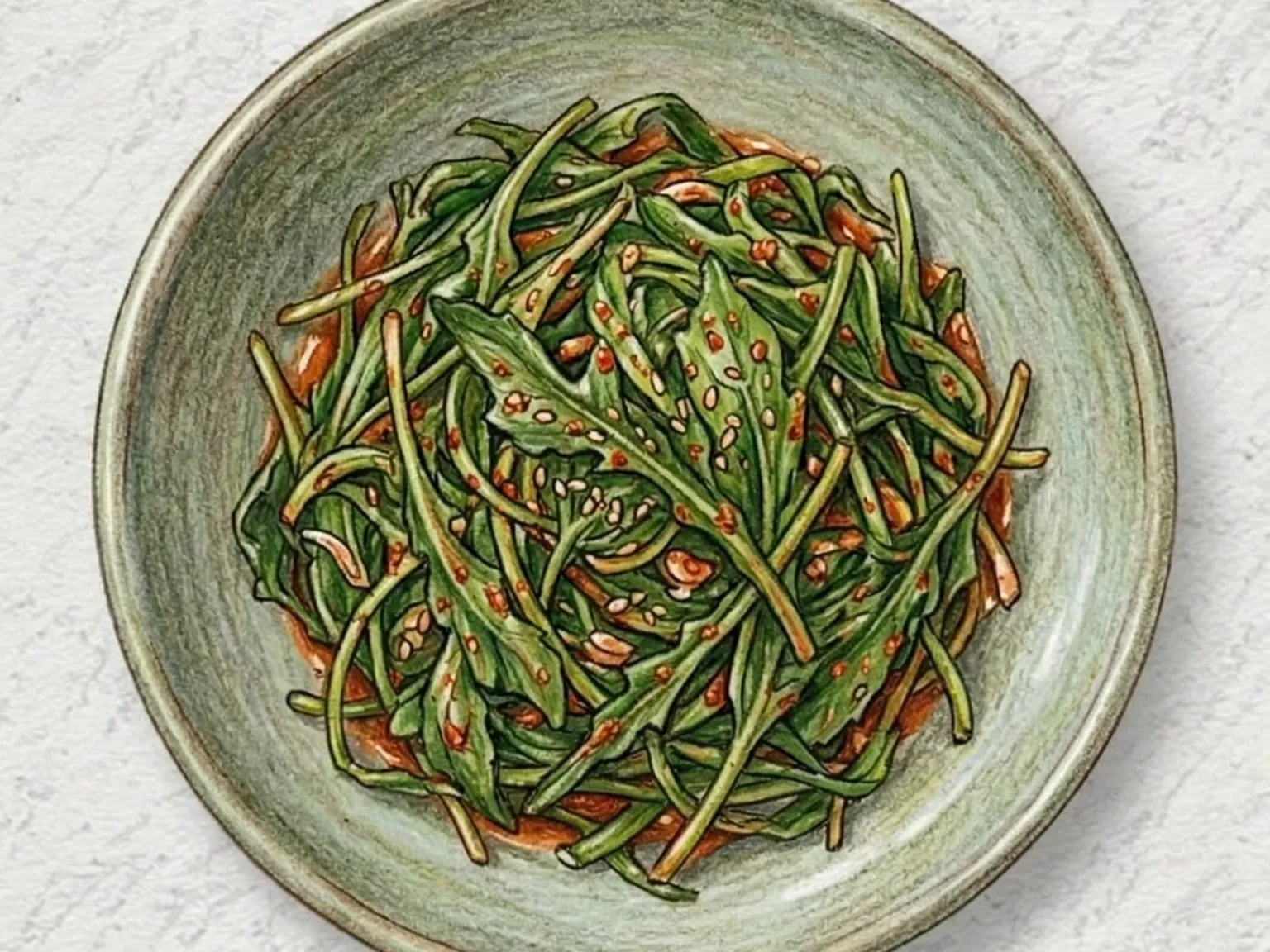
This sweet potato stem namul uses 300 g peeled stems, with a salt-water rest and a short blanch before the perilla seasoning enters the pan. Snap the end of each stem and pull the outer skin downward in a long strip. Run your fingers over the surface again and remove any tough fibers, since they remain stringy after cooking. Cut the peeled stems into 5 cm lengths, cover them with salted water for 30 minutes, and rinse briefly. Blanch in boiling water for 2 minutes, check the color and firmness, and allow only 1 additional minute if the thick pieces still feel rigid. As soon as the stems turn a clear olive color, cool them in cold water and squeeze firmly. Warm 2 tablespoons perilla oil with 1 teaspoon minced garlic over medium heat for 30 seconds. Add the stems, 1 tablespoon soup soy sauce, and 60 ml water, then cook for 5 minutes. By then, the liquid should be reduced by half and the stems should look slightly translucent. Stir in 2 tablespoons perilla seed powder at the end and distribute it in under 1 minute so it thickens the remaining liquid without sticking to the pan. Turn off the heat when the coating clings to the stems and finish with 15 g green onion. Complete fiber removal, a firm squeeze after blanching, and a quick perilla-powder finish determine the final texture.

🏠 Everyday 🍱 Lunchbox
Prep 30min Cook 10min 4 servings
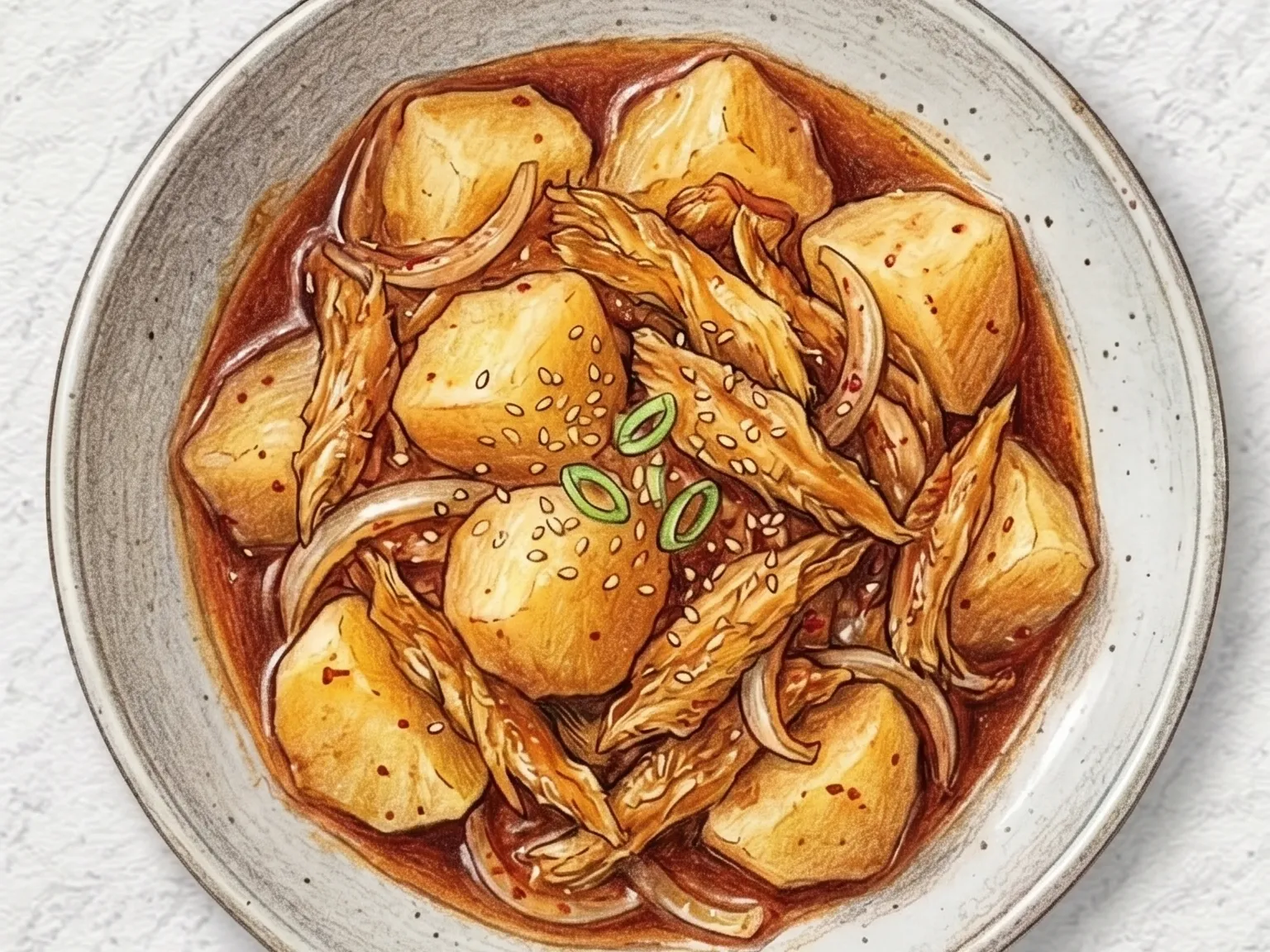
Korean Braised Dried Pollock and Potatoes
Steamed Easy

Korean Braised Dried Pollock and Potatoes

Hwangtae gamja jorim is a Korean braised dish of dried pollock strips and potato in a soy sauce seasoning with gochugaru and oligosaccharide syrup. The potatoes are cooked first until partially tender, then briefly soaked pollock strips and sliced onion are added to braise together in the same pan. The pollock absorbs the seasoned braising liquid and turns pleasantly chewy while the potato softens into a floury, starchy texture. Oligosaccharide syrup rounds out the saltiness of the soy sauce with a gentle sweetness, and sesame oil added off the heat finishes everything with a nutty fragrance. Keeping the pollock soak time short is the single most important step for preserving its characteristic texture, and the dish holds well overnight so it works as a packed lunchbox side.

🍱 Lunchbox 🏠 Everyday
Prep 15min Cook 28min 2 servings
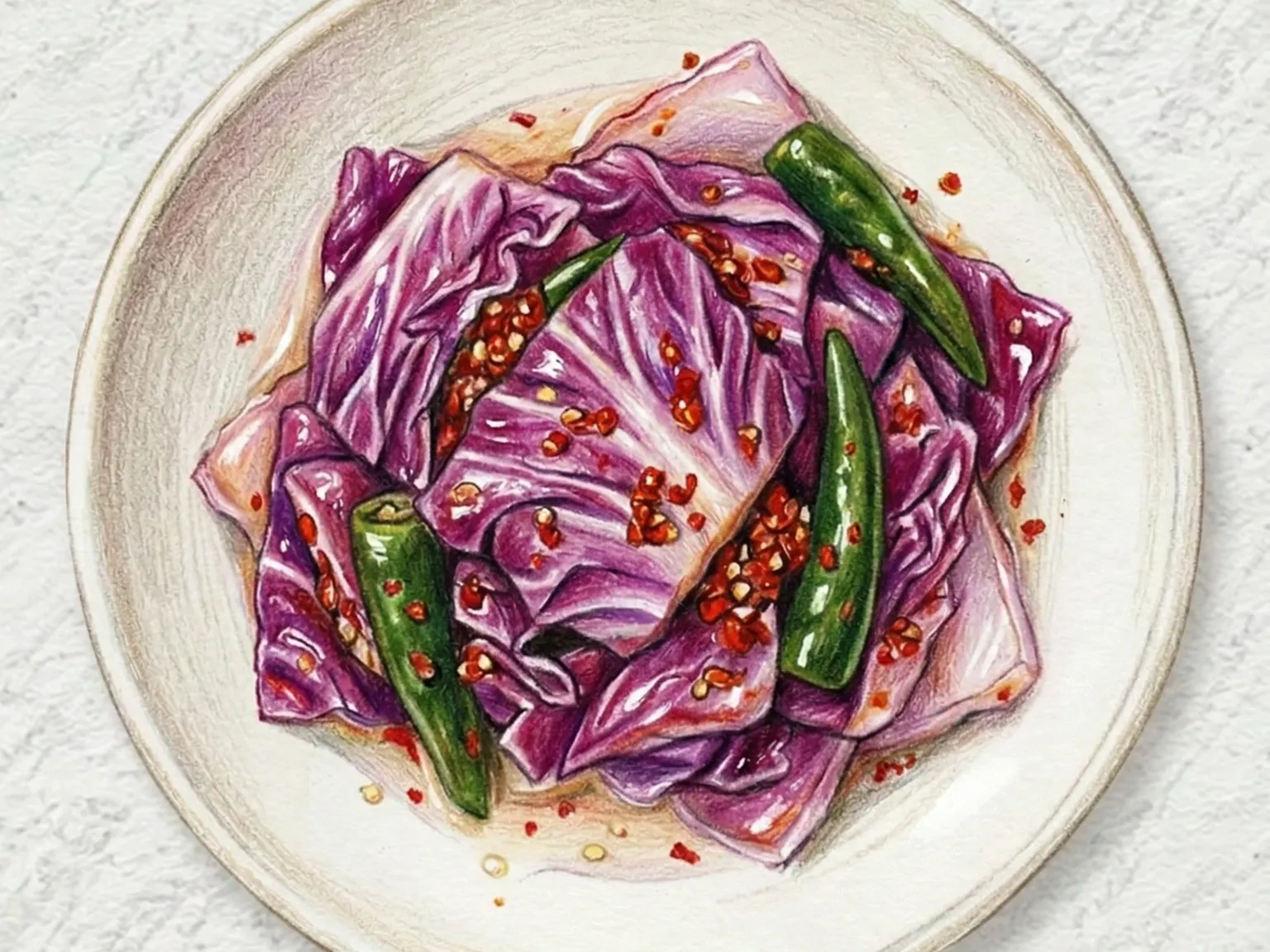
Korean Red Cabbage Kimchi
Kimchi Easy

Korean Red Cabbage Kimchi

Jeokchae kimchi is made by salting red cabbage leaves, then tossing them in a seasoning of gochugaru, sand lance fish sauce, minced garlic, and Korean pear juice before a short fermentation. Red cabbage has thicker, denser leaves than napa cabbage, so it holds its crunch well after brining rather than going soft. The anthocyanin pigment in the red cabbage reacts with the chili seasoning to produce a vivid purple color rather than the typical red associated with kimchi, making it visually striking on the table. Pear juice provides a gentle fruit sweetness underneath the heat and spice, while sand lance fish sauce builds enough savory depth that even a brief fermentation yields full flavor. Scallions add a fresh, aromatic finish that ties the seasoning together. The result is a kimchi that is crunchy, spicy, and umami-rich simultaneously, with a distinctive character that sets it apart from traditional napa kimchi.

🍱 Lunchbox 🏠 Everyday
Prep 30min 2 servings
Haemul Jang (Korean Soy-Marinated Seafood Platter)
Side dishes Hard

Haemul Jang (Korean Soy-Marinated Seafood Platter)

Haemul jang marinates crab, shrimp, and abalone together in a soy mixture that has been cooked and then chilled completely. Soy marination does not cook raw seafood, so use the 2 crabs and 8 shrimp only if they are sold for raw consumption, and maintain 4 C or below from preparation through aging. Scrub the shells of 4 abalones and steam them for 5 minutes, then let them cool. Remove the veins along the backs of the shrimp, scrub the crab shells and joints, and remove excess surface water from all prepared seafood. Combine 600 ml soy sauce, 800 ml water, 50 g whole garlic, 15 g ginger, 10 g kelp, and 50 g sugar in a pot and simmer for 25 minutes. Strain the marinade into a shallow metal container and cool it rapidly over an ice bath. Refrigerate it until the temperature throughout reaches 4 C or below; a cool surface is not enough if the center remains warm. Thinly slice 1 lemon. Arrange the prepared crab, shrimp, and abalone in an airtight container, placing lemon slices between the pieces instead of leaving them all on top. Pour in the fully chilled marinade until every piece of seafood is submerged, cover the container, and refrigerate for two days. After two days, leave the seafood refrigerated while pouring only the marinade into a pot and bringing it to a boil. Transfer the liquid to a shallow metal container again, chill it over an ice bath to 4 C or below throughout, and pour it back over the seafood. Refrigerate for one more day. The short steaming step softens the abalone, while distributing the lemon between layers prevents its aroma from concentrating in only one section of the container.

🎉 Special Occasion
Prep 40min Cook 30min 4 servings
Korean Gondre Dubu Doenjang Bokkeum (Thistle Tofu Doenjang Stir-fry)
Stir-fry Medium

Korean Gondre Dubu Doenjang Bokkeum (Thistle Tofu Doenjang Stir-fry)

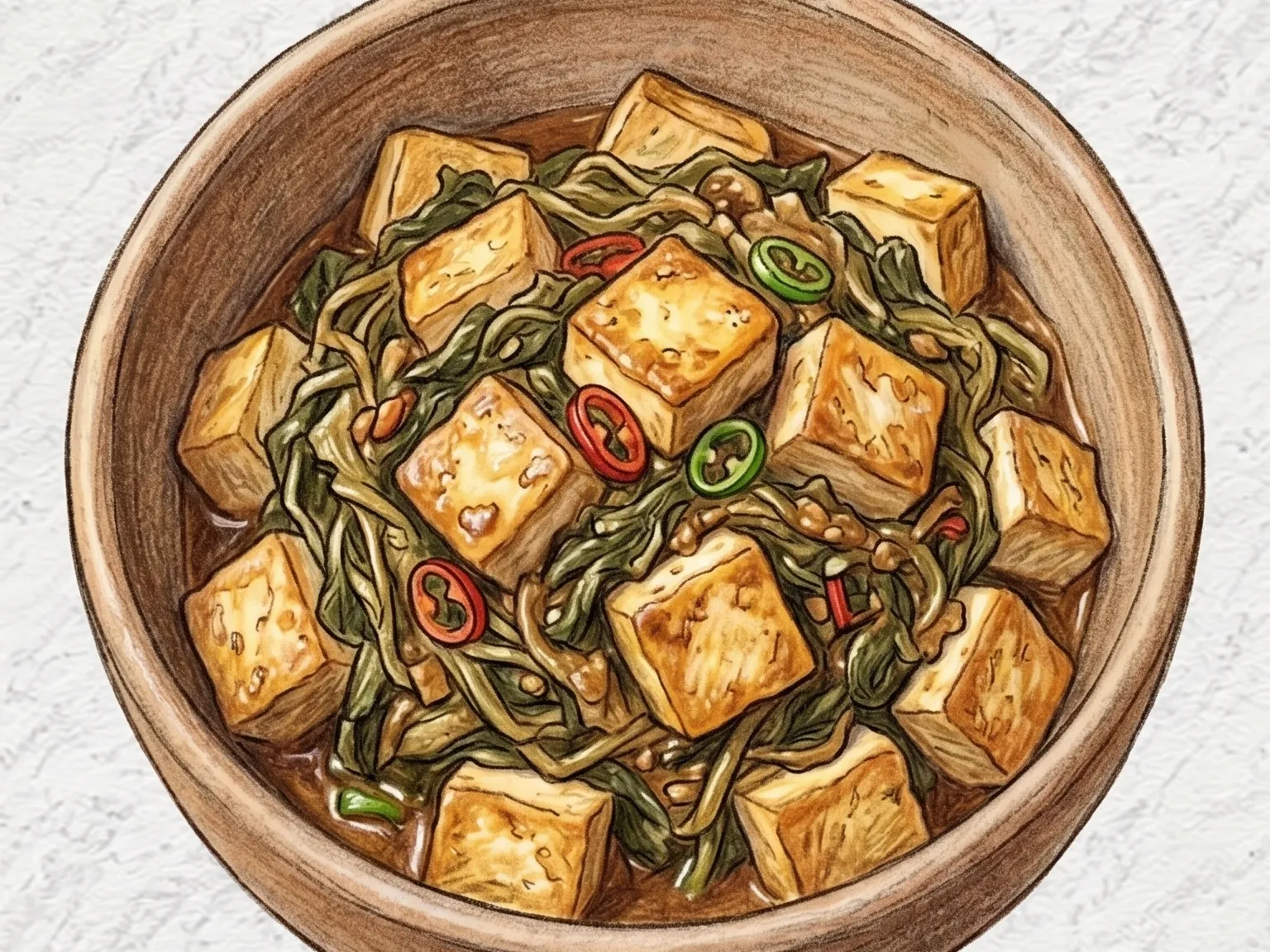
Gondre dubu doenjang bokkeum is a stir-fried side dish that pairs pan-seared firm tofu with blanched gondre thistle greens in a doenjang-based sauce. Searing the tofu separately in perilla oil before combining it with the greens is the step that makes the difference: the firm, lightly crisped surface that forms holds its shape through the subsequent stir-frying and absorbs the seasoning without breaking down into chunks. Doenjang dissolved in a small amount of water is stirred through the gondre so the fermented paste coats every strand evenly, and a small addition of soup soy sauce deepens the savory character without pushing the salt level too high. Sliced cheongyang chili adds a gentle heat that lingers at the finish. Perilla oil, with its nutty, herbal scent, binds the flavors and gives the dish its distinctive aromatic character. Gondre is a thistle variety grown in the Gangwon mountain region and pairs particularly well with doenjang because its earthy, slightly sweet fragrance complements the depth of the fermented paste.

🏠 Everyday 🍱 Lunchbox
Prep 18min Cook 10min 2 servings
Braised Dried Pollock (Hwangtae-po Jorim)
Steamed Easy

Braised Dried Pollock (Hwangtae-po Jorim)

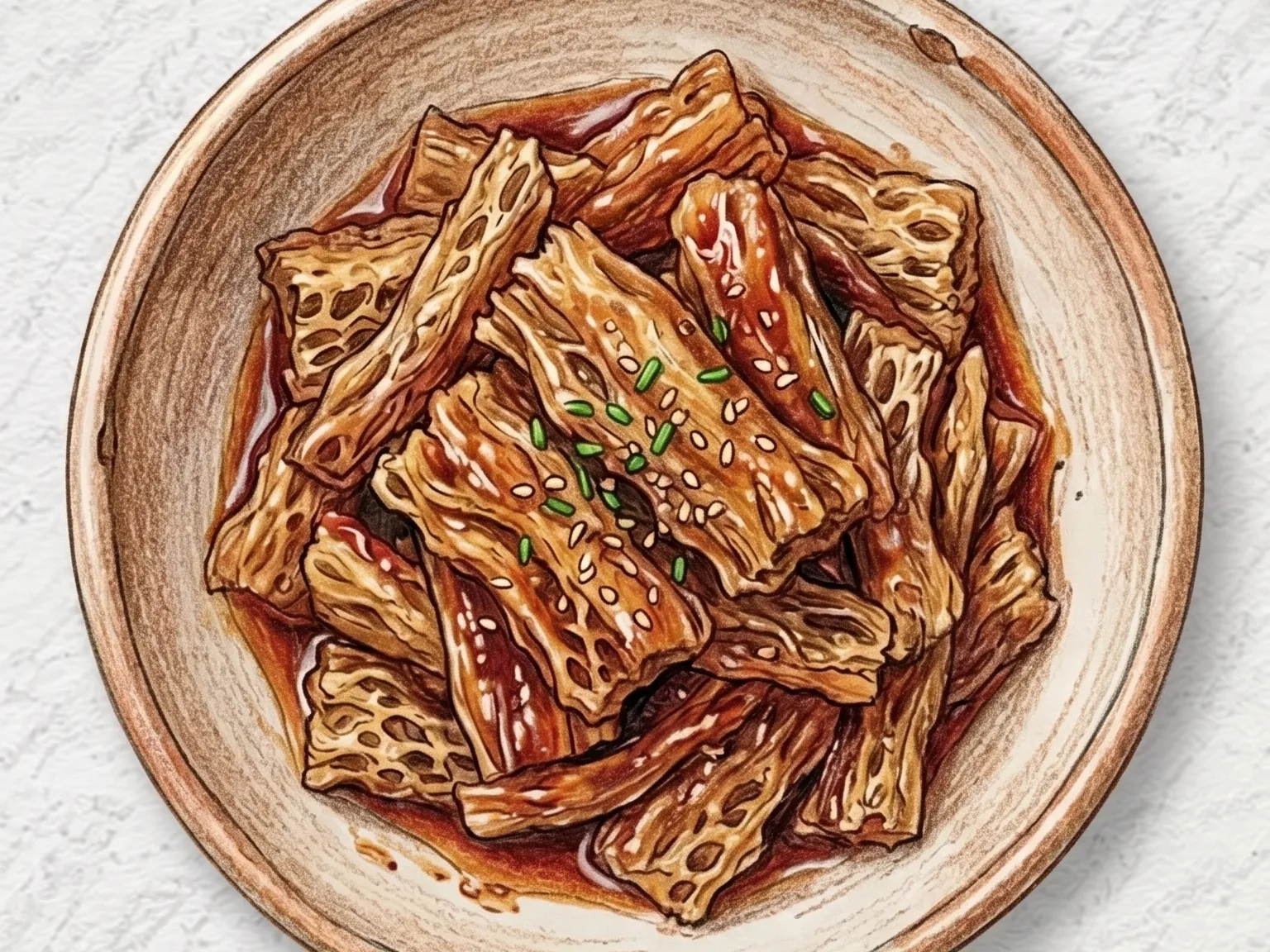
Hwangtae-po jorim is a Korean braised side dish made from hwangtae, the air-dried pollock produced in the Gangwon-do mountains where bitter winter cold freezes and thaws the fish dozens of times across the season. Each freeze-thaw cycle breaks down the protein structure and opens up a sponge-like network of pores throughout the flesh. When braised in a ganjang-gochujang sauce, those pores draw the seasoning deep inside, so every bite carries the savory-sweet glaze all the way through rather than just coating the surface. Rehydrating the dried pollock for no more than three minutes preserves the chewy, springy bite; soaking it longer collapses the structure and leaves it soft and crumbly. Oligosaccharide syrup reduces into a glossy finish that coats each piece, and sesame oil goes in only after the heat is off to keep its fragrance intact. Refrigerated, the dish holds for more than a week, making it a practical addition to meal-prep banchan rotations.

🏠 Everyday 🍱 Lunchbox
Prep 10min Cook 12min 4 servings
Authentic Jeolla-style Kimchi
Kimchi Hard

Authentic Jeolla-style Kimchi

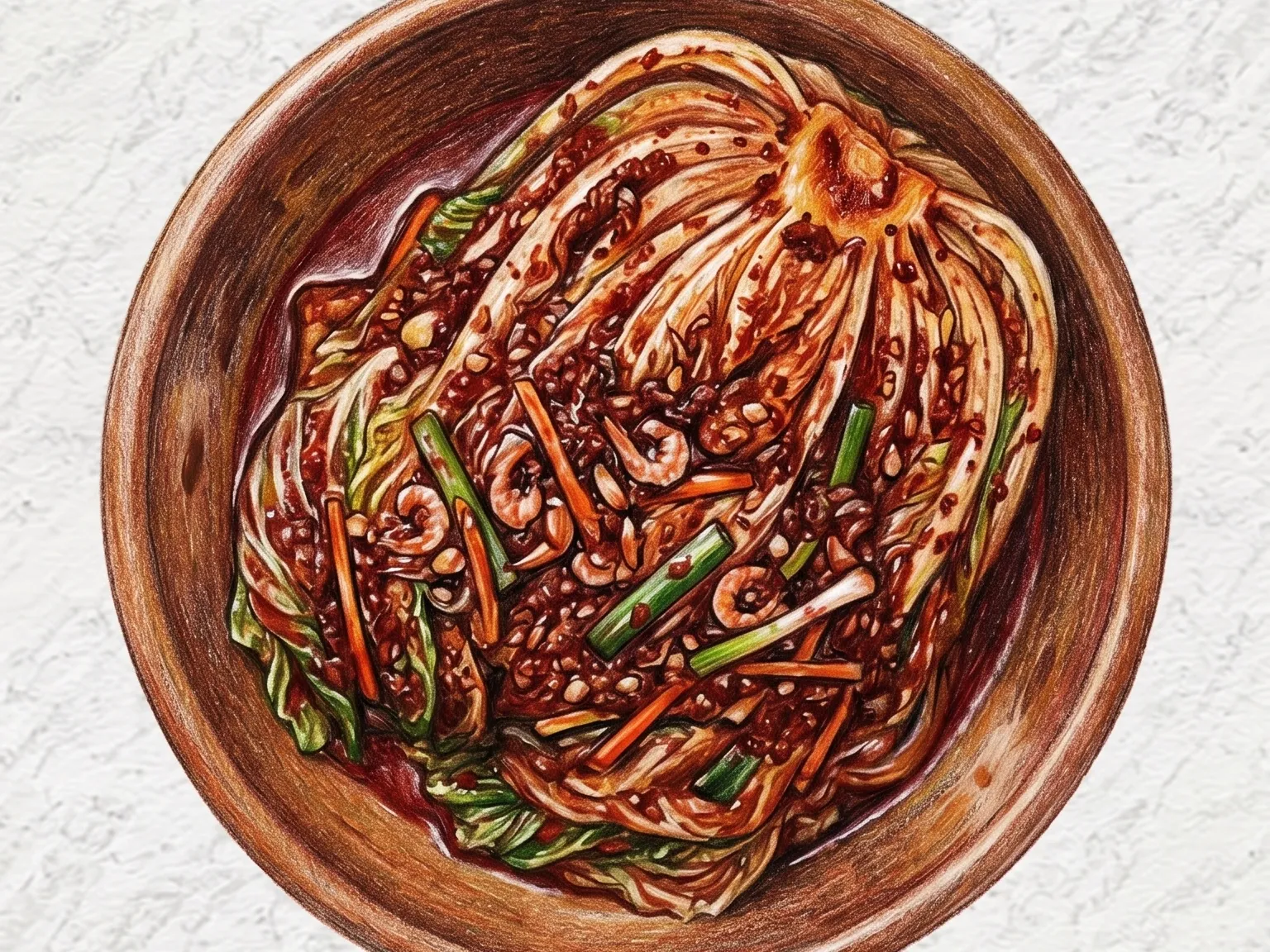
Authentic Jeolla-style Kimchi is a traditional Southern-style cabbage kimchi featuring a rich, deep flavor profile. The sauce is built on a base of glutinous rice paste combined with chili flakes, minced garlic, and chopped sea staghorn, which adds a refreshing oceanic note as it ferments. A distinct savory depth is achieved by combining rich anchovy fish sauce with yellow croaker sauce. Shredded radish and green onions are tossed into this paste before stuffing it generously between each leaf of the salted cabbages. The cabbages are then wrapped with their outer leaves to lock in the seasonings. Packing the kimchi tightly into containers to minimize air exposure during fermentation prevents off-odors and ensures a clean, intense flavor profile typical of Southern Korean cuisine.

🔥 Trending Now 🥗 Light & Healthy
Prep 50min Cook 40min 4 servings
Fermented Skate Samhap
Side dishes Hard

Fermented Skate Samhap

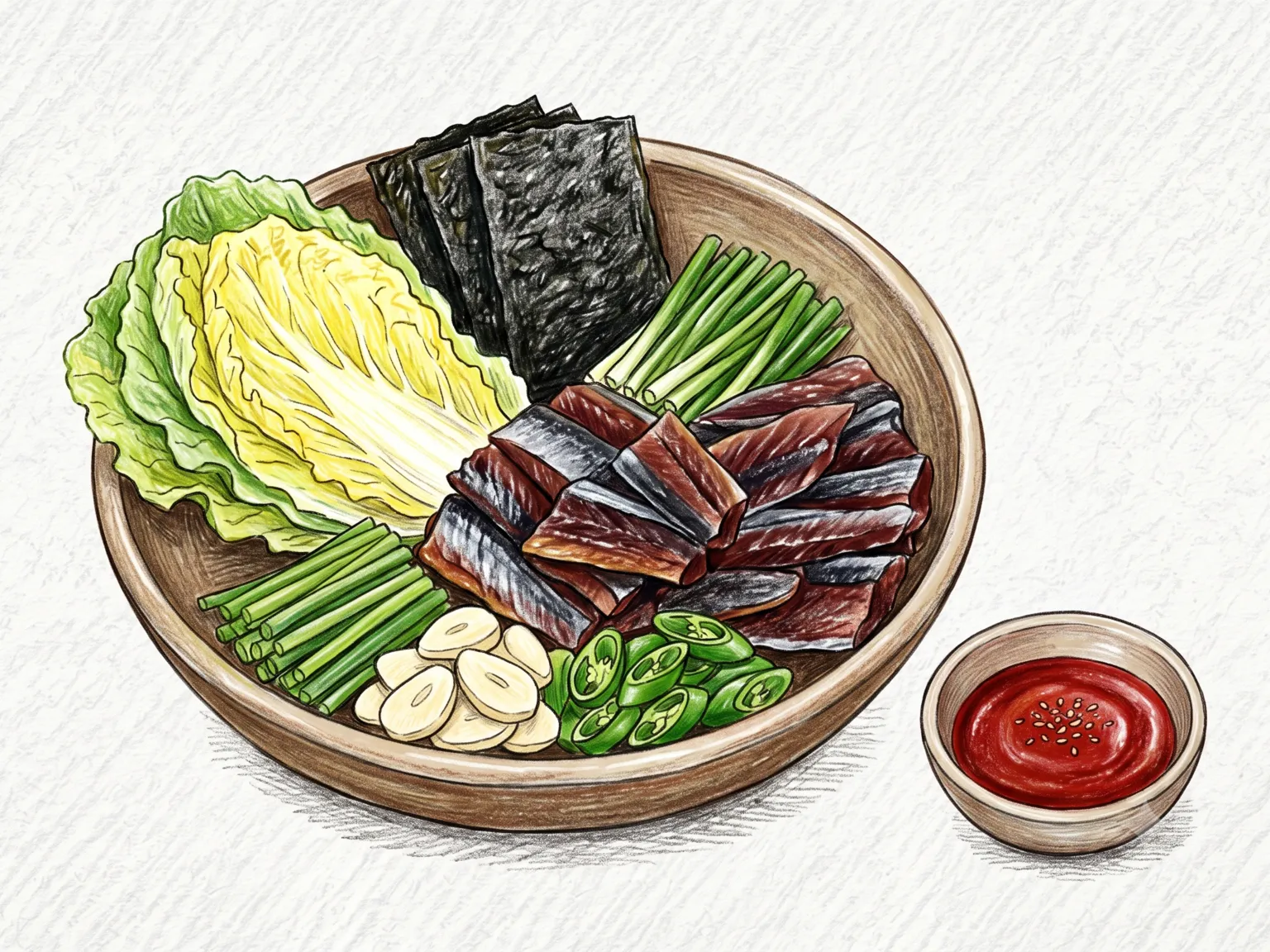
Hongeo samhap is a platter of 200 grams fermented skate slices, 400 grams boiled pork belly, and 200 grams aged kimchi arranged so all three can be combined in one bite. Under refrigeration, leave the pork belly submerged for 30 minutes in cold water, then drain it. Put enough water in a pot to submerge the meat and add 1 scallion, 5 garlic cloves, 10 grams ginger, and 1 tablespoon doenjang. Bring the water to a boil, add the pork, cover, and simmer over medium heat for about 40 minutes. Use a food thermometer at the thickest part and remove the pork only after it reaches at least 63 degrees Celsius, then let it rest for 3 minutes. Cool it briefly and cut it into even 0.5-centimeter slices. Cut the aged kimchi into bite-sized pieces and arrange it beside the pork and fermented skate. Keeping the three components in separate rows makes it easy to take one piece of each. The cooking time is a guide, while the measured internal temperature and rest period determine when the whole cut of pork is ready to slice.

🎉 Special Occasion 🍺 Bar Snacks
Prep 40min Cook 45min 2 servings
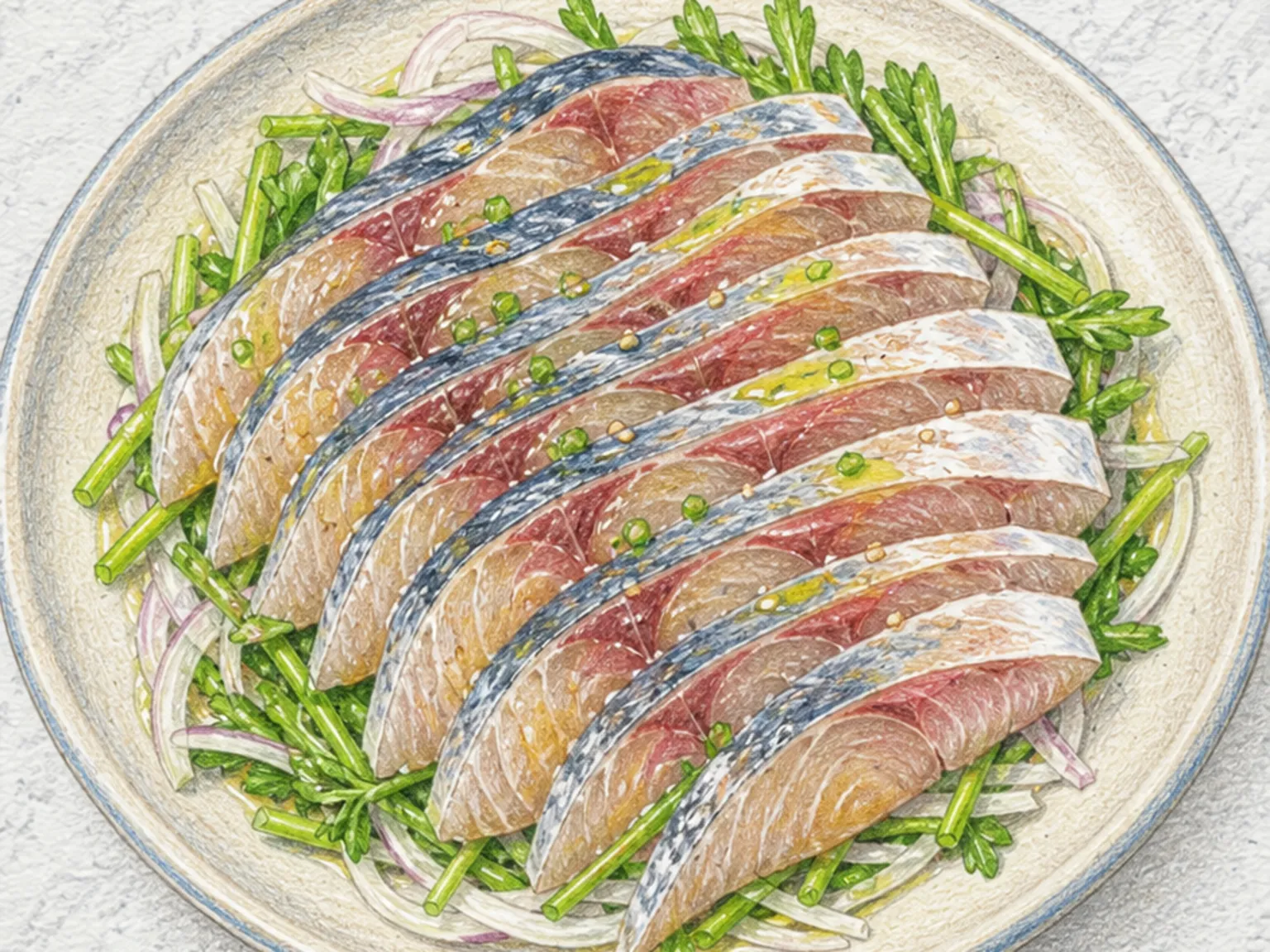
Korean Thistle Greens & Mackerel Stir-fry
Stir-fry Hard

Korean Thistle Greens & Mackerel Stir-fry

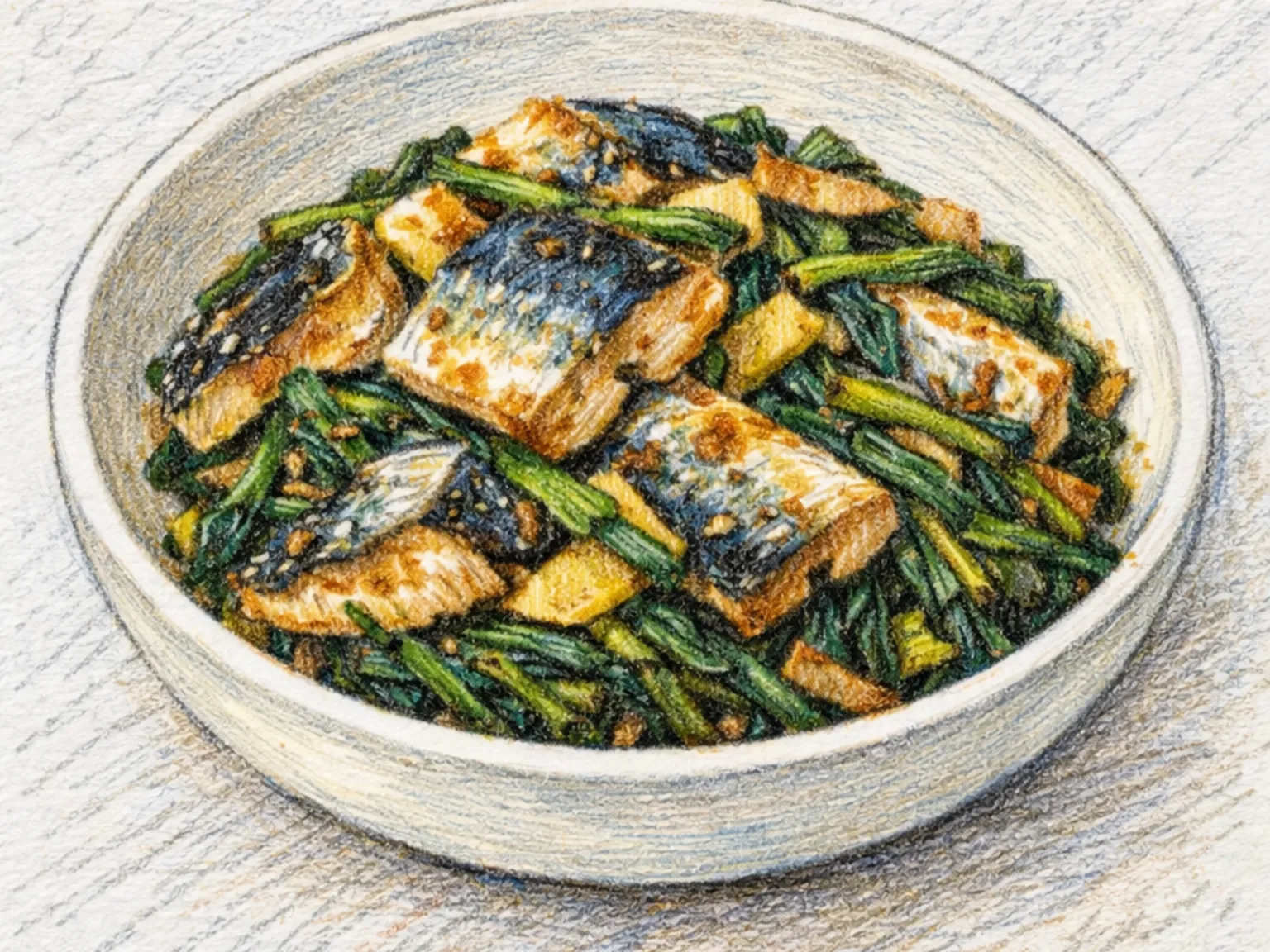
Gondre godeungeo bokkeum pairs pan-seared mackerel with blanched gondre thistle greens in a gochujang-soy stir-fry. The mackerel is first marinated briefly in ginger juice to reduce any sharpness, then seared on both sides until a firm, golden crust forms. That outer layer keeps the fish intact during the final toss with the greens. Gondre is pre-seasoned in perilla oil and garlic to draw out its earthy, herbal fragrance before hitting the pan, and squeezing out the excess moisture is essential so the sauce stays concentrated rather than watery. The gochujang-soy combination brings heat, depth, and a subtle sweetness that bridges the rich umami of the fatty fish and the grassy character of the greens. Gondre from the Gangwon-do highlands has a mild, nutty quality once blanched that holds its own alongside oily blue-backed fish. The dish works equally well as a rice accompaniment or a drinking snack.

🏠 Everyday 🎉 Special Occasion
Prep 20min Cook 14min 4 servings
Korean Braised Gizzard Shad
Steamed Medium

Korean Braised Gizzard Shad

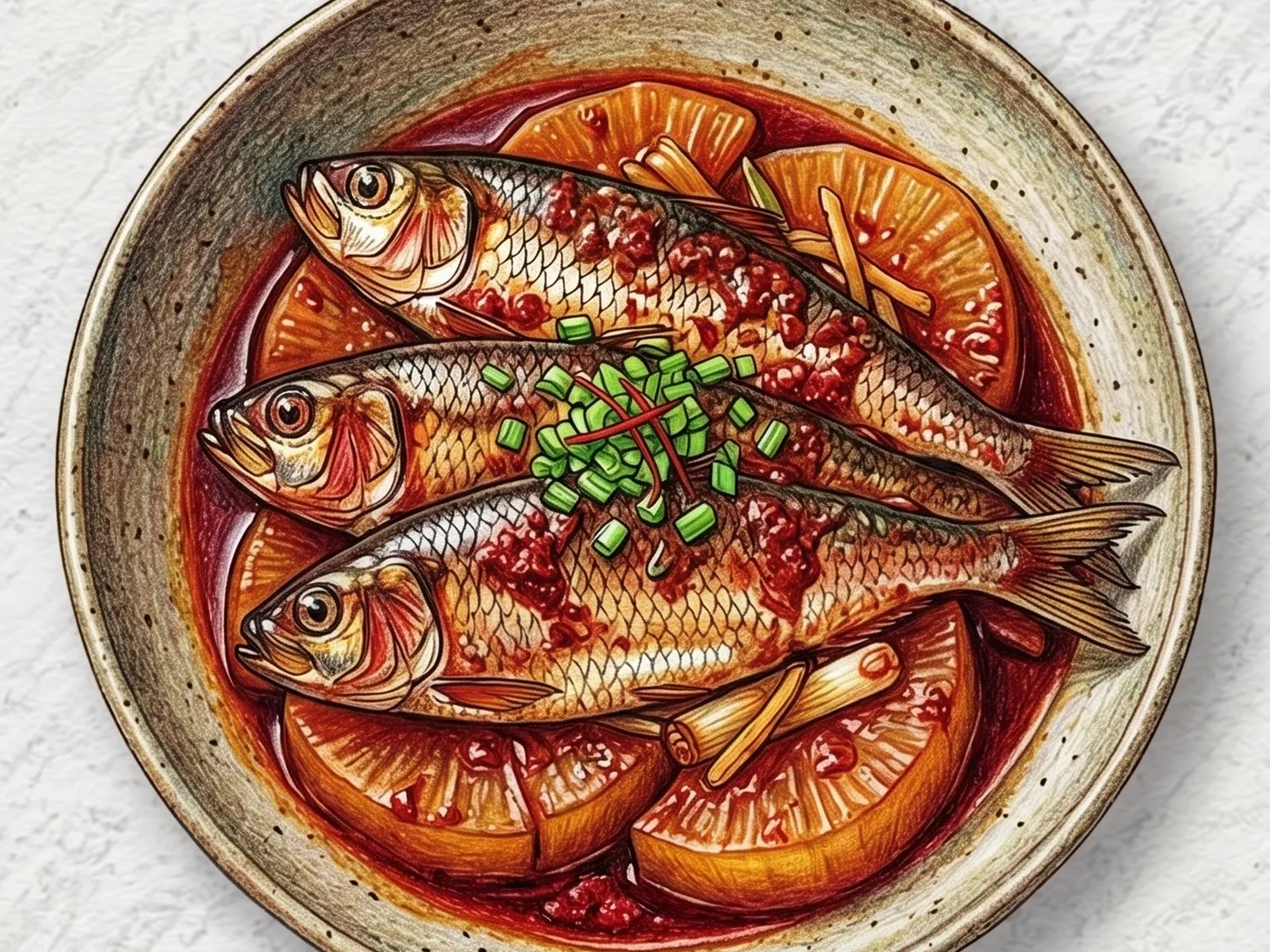
Jeoneo-jjim is a braised gizzard shad dish in which the fish and Korean radish are slowly cooked together in a soy sauce and gochugaru seasoning, making it a dish best suited to autumn when the fish carries its peak fat. Radish slices line the bottom of the pot and serve a dual purpose: they act as a natural buffer that absorbs fishiness rising from the heat, and they soak up the braising liquid as they soften, turning sweet and deeply flavored by the end of cooking. The gizzard shad's characteristic fatty richness pairs well with the bold chili and garlic seasoning, and ginger threads through the entire preparation to neutralize any remaining off-notes and leave the flavor clean. Autumn-caught fish are fattier and remain moist even after extended braising, which makes them far preferable to fish taken at other times of year. Green onion is scattered on top at the finish for fragrance, and the intensified, reduced braising sauce left in the pot is traditionally ladled over steamed rice as a condiment in its own right.

🎉 Special Occasion 🍱 Lunchbox
Prep 20min Cook 25min 4 servings
Jeolla-style Green Onion Kimchi
Kimchi Medium

Jeolla-style Green Onion Kimchi

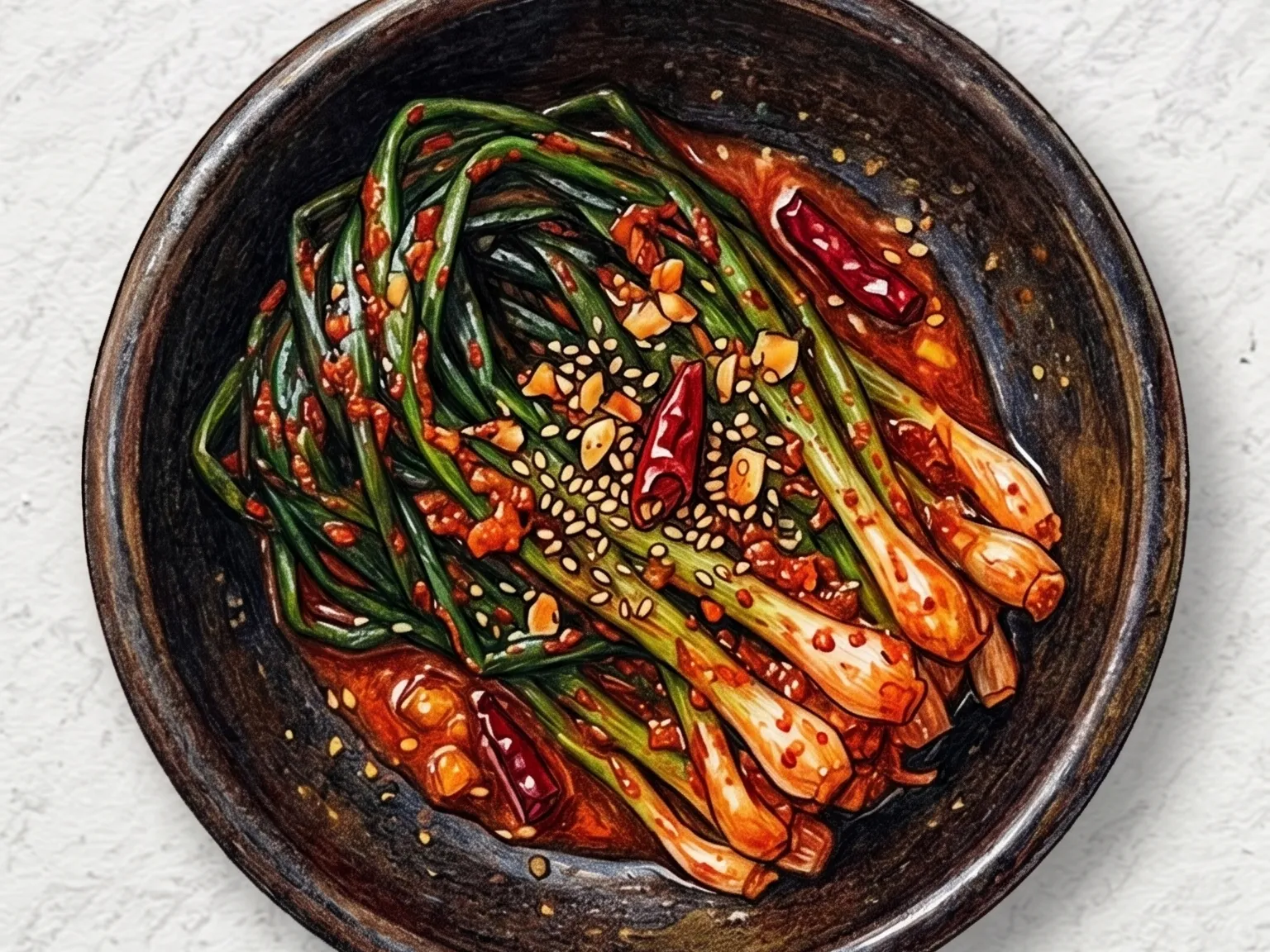
Jeolla-style Green Onion Kimchi is a traditional Korean side dish featuring intense umami and deep seasoning. This recipe combines scallions, chili flakes, fermented shrimp, and glutinous rice paste. Half a cup of strong fermented anchovy sauce pre-brines the white bases of the scallions for twenty minutes. This process seasons the white parts without crushing the plant cells. The seasoning paste is sweetened with pear juice instead of sugar, feeding lactic acid bacteria during fermentation. When applying the thick paste, start from the firm white bases and gently coat the green leaves to prevent a grassy taste. Tightly rolling the green onions into bundles reduces air exposure for even fermentation. After fermenting at room temperature for one day, refrigerate the kimchi and serve from the second day.

🔥 Trending Now 🥗 Light & Healthy
Prep 30min Cook 20min 4 servings
Korean Live Shrimp Sashimi
Side dishes Medium

Korean Live Shrimp Sashimi

Korean live shrimp sashimi uses live sashimi-grade shrimp served immediately after the heads, shells, and fine digestive tracts are removed. The cleaned flesh stays translucent and tastes distinctly sweet, with a firm snap rather than the texture of cooked shrimp. Separate each head, peel the body, then pull out any dark tract visible along the inner or belly side. Pat the flesh dry instead of soaking it, and arrange it on a chilled plate. Chojang is the default dip here; wasabi soy sauce can replace it. Use shrimp sold specifically for raw consumption, keep them cold, and serve them as soon as preparation is complete.

🍺 Bar Snacks 🎉 Special Occasion
Prep 15min 2 servings
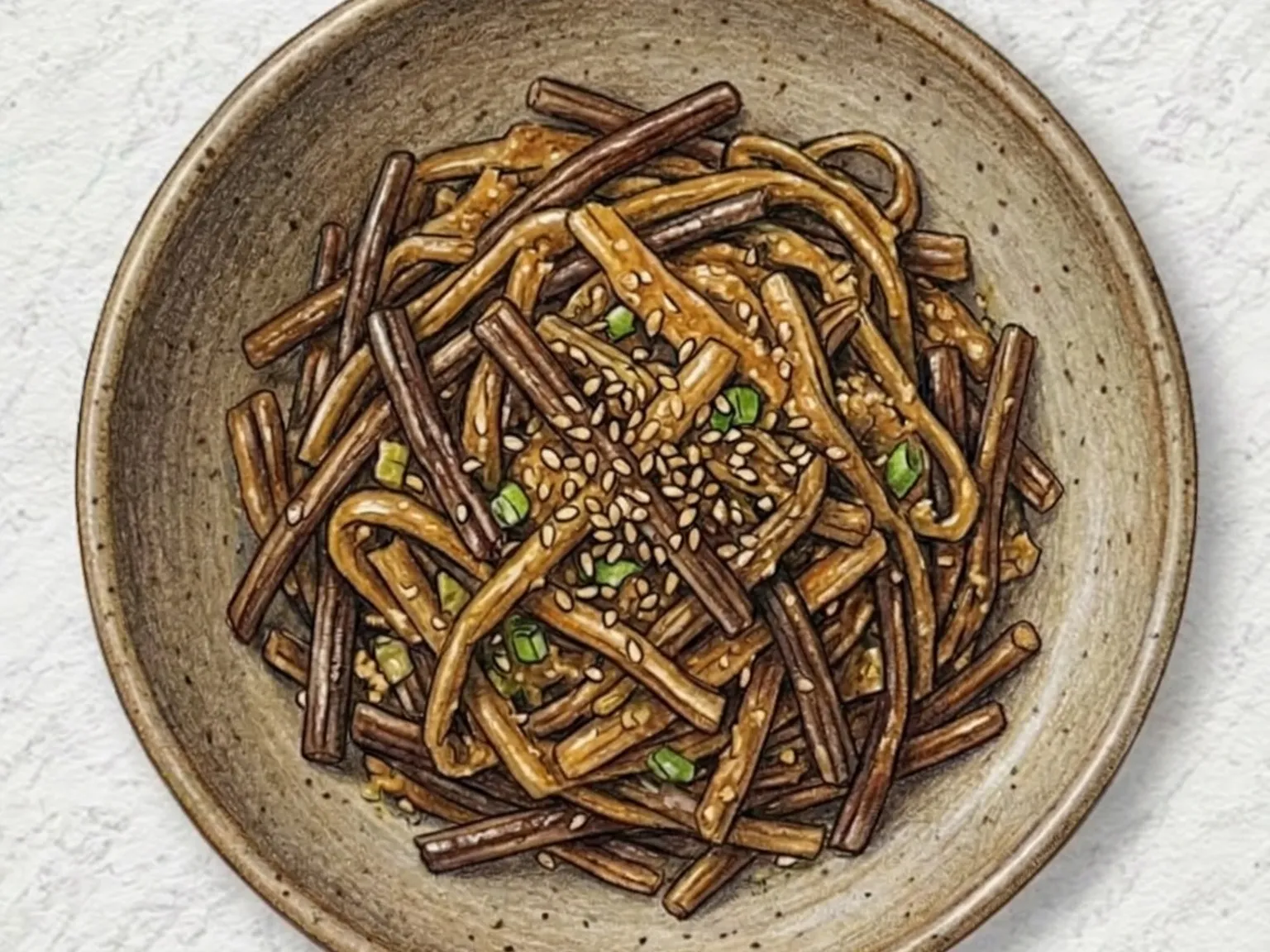
Korean Stir-fried Bracken Fern
Stir-fry Medium

Korean Stir-fried Bracken Fern

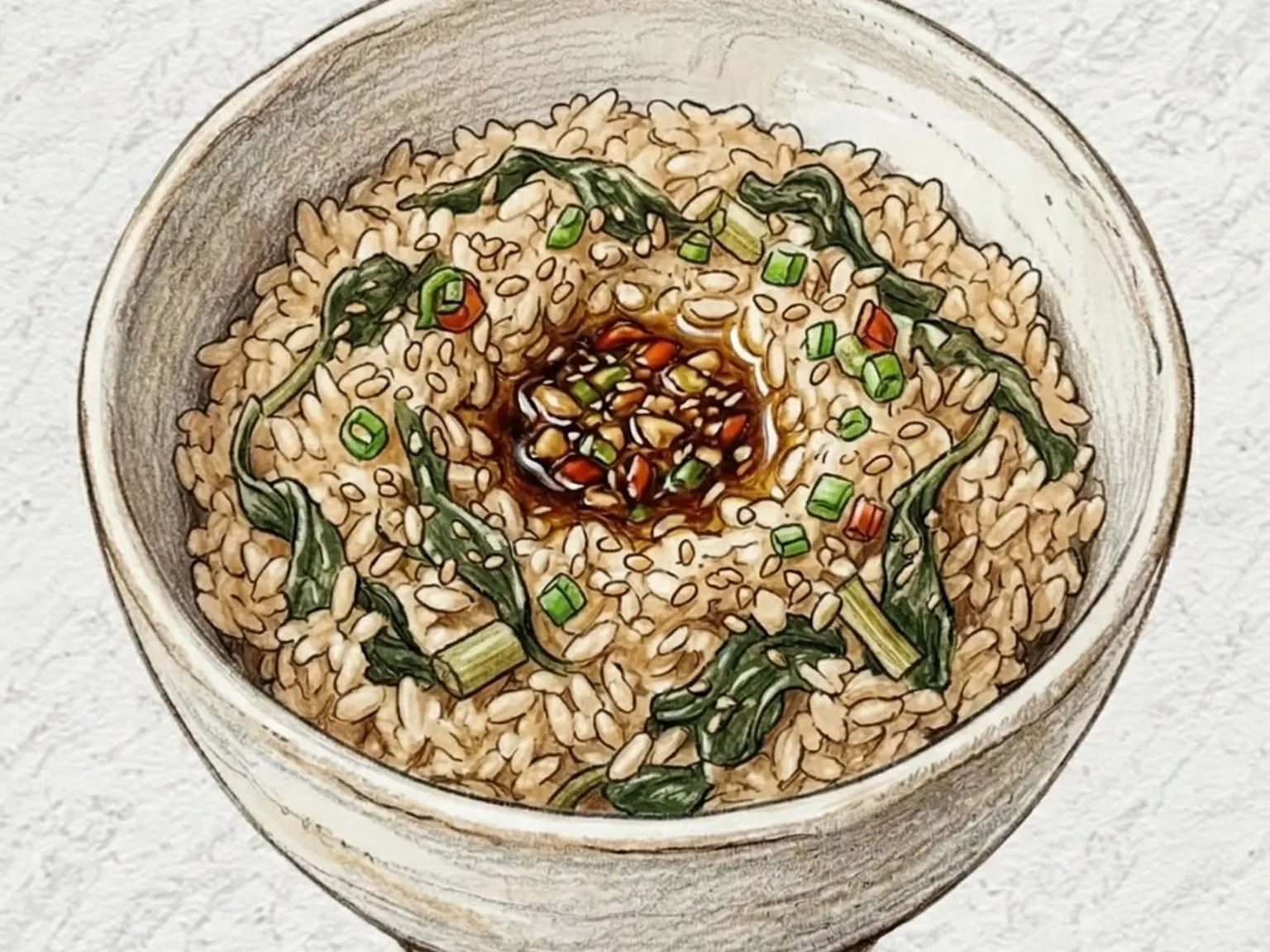
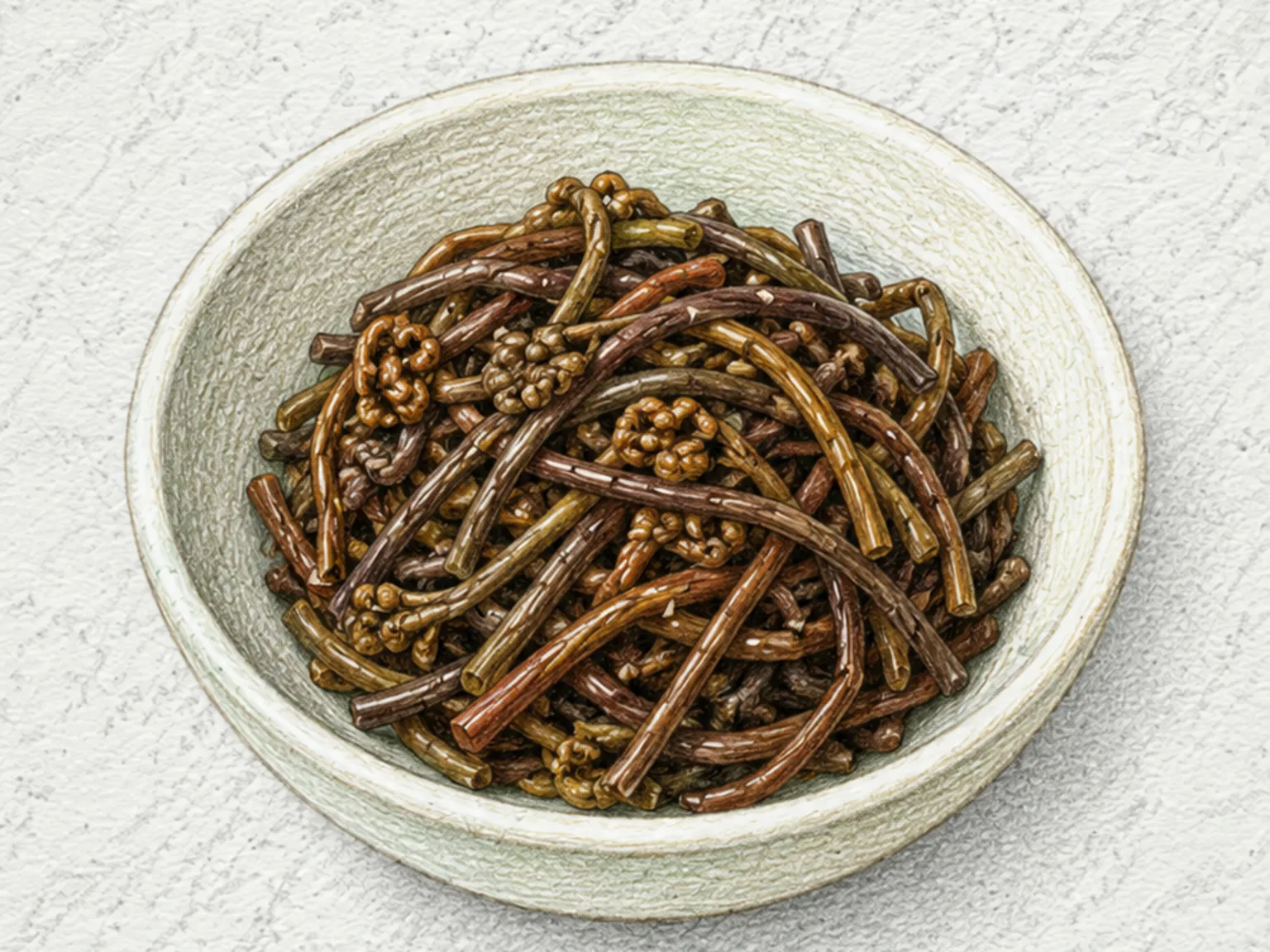
Gosari-bokkeum first coats boiled bracken fern with perilla oil, then braises it briefly with soy sauce and water until the stems soften and only a little liquid remains. Two hundred fifty grams boiled bracken is squeezed lightly and cut into 6 cm lengths. Tough stems are removed, and unusually thick pieces are split by hand so the batch cooks and seasons evenly. Seventy grams onion is sliced thinly, while 30 g green onion is cut diagonally and reserved for the end. One tablespoon perilla oil is warmed over medium, followed by 1 tablespoon minced garlic and the onion. After 1 minute, before the garlic browns, the bracken is added and loosened with tongs for 2 minutes. A uniform glossy coating shows that the oil has reached the separate strands. One and a half tablespoons soy sauce and 80 ml water are then poured in. Four minutes of stirring and gentle reduction over medium gives the thick stems time to soften without letting the pan dry immediately. When a shallow amount of liquid remains on the bottom, the green onion and 1 teaspoon sesame seeds are added for the final minute. The thickest stem is checked before plating, since its tenderness is a better guide than removing the dish by the clock alone. This sequence separates oil coating from moist cooking instead of adding every liquid at the beginning.

🏠 Everyday 🎉 Special Occasion
Prep 12min Cook 10min 2 servings
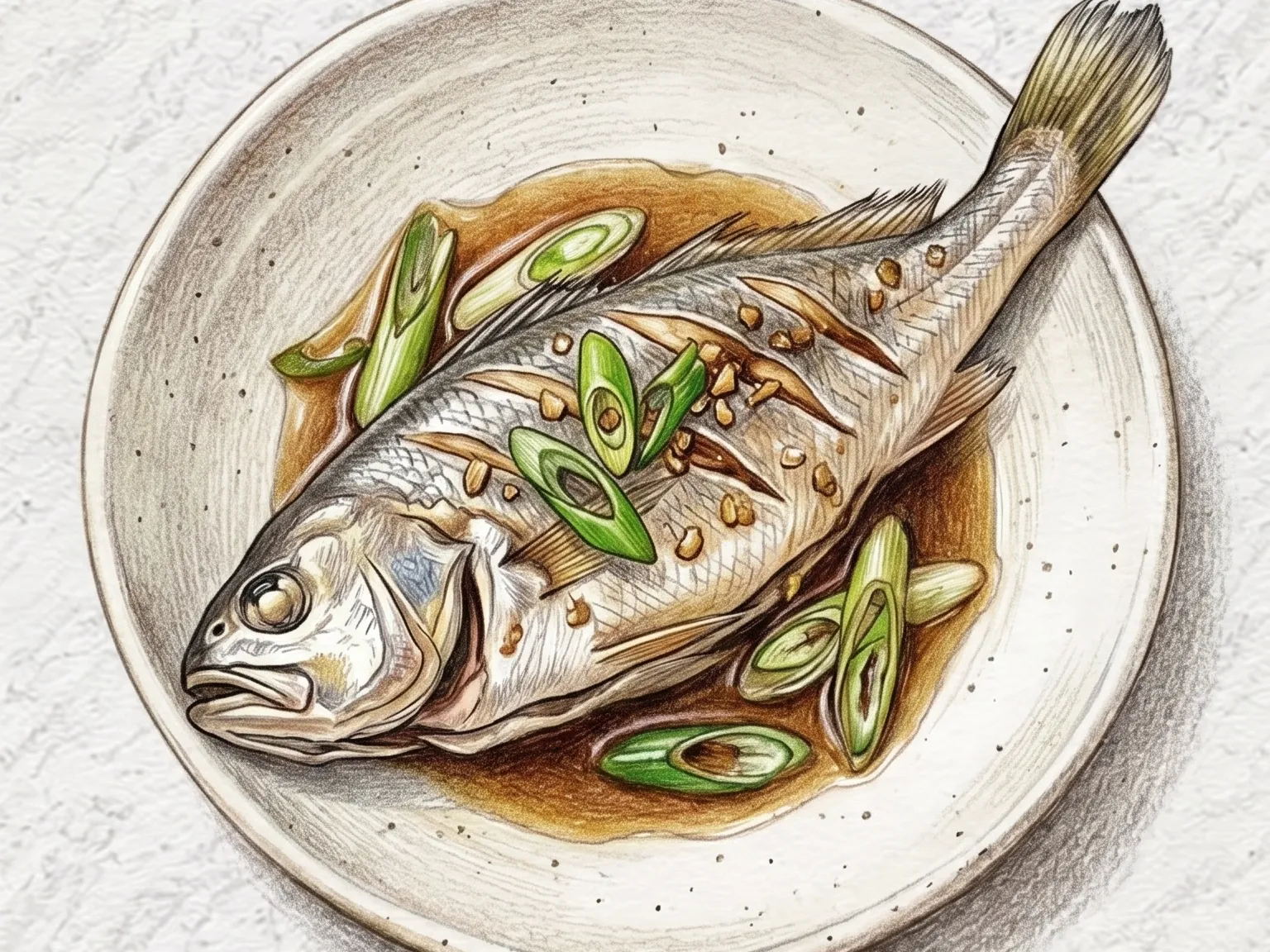
Korean Steamed Yellow Croaker
Steamed Medium

Korean Steamed Yellow Croaker

Jogi-jjim is a steamed Korean yellow croaker banchan built around a two-stage cooking method that drives soy sauce, cooking wine, garlic, and ginger deep into the flesh. Scoring the fish on both sides before cooking is essential: the cuts open channels so the marinade reaches the interior rather than sitting on the surface. Half the sauce goes in first, and the fish steams until nearly done; then the remaining sauce and sliced green onion are added for a second round. Cooking wine and ginger together strip away fishiness, leaving the croaker clean and mild on the palate. The flesh is fine-grained and firm enough to pull apart in neat flakes with chopsticks without falling apart. Any sauce that collects in the pan spooned over rice makes the dish a complete meal without needing a separate soup.

🏠 Everyday 🎉 Special Occasion
Prep 15min Cook 25min 2 servings
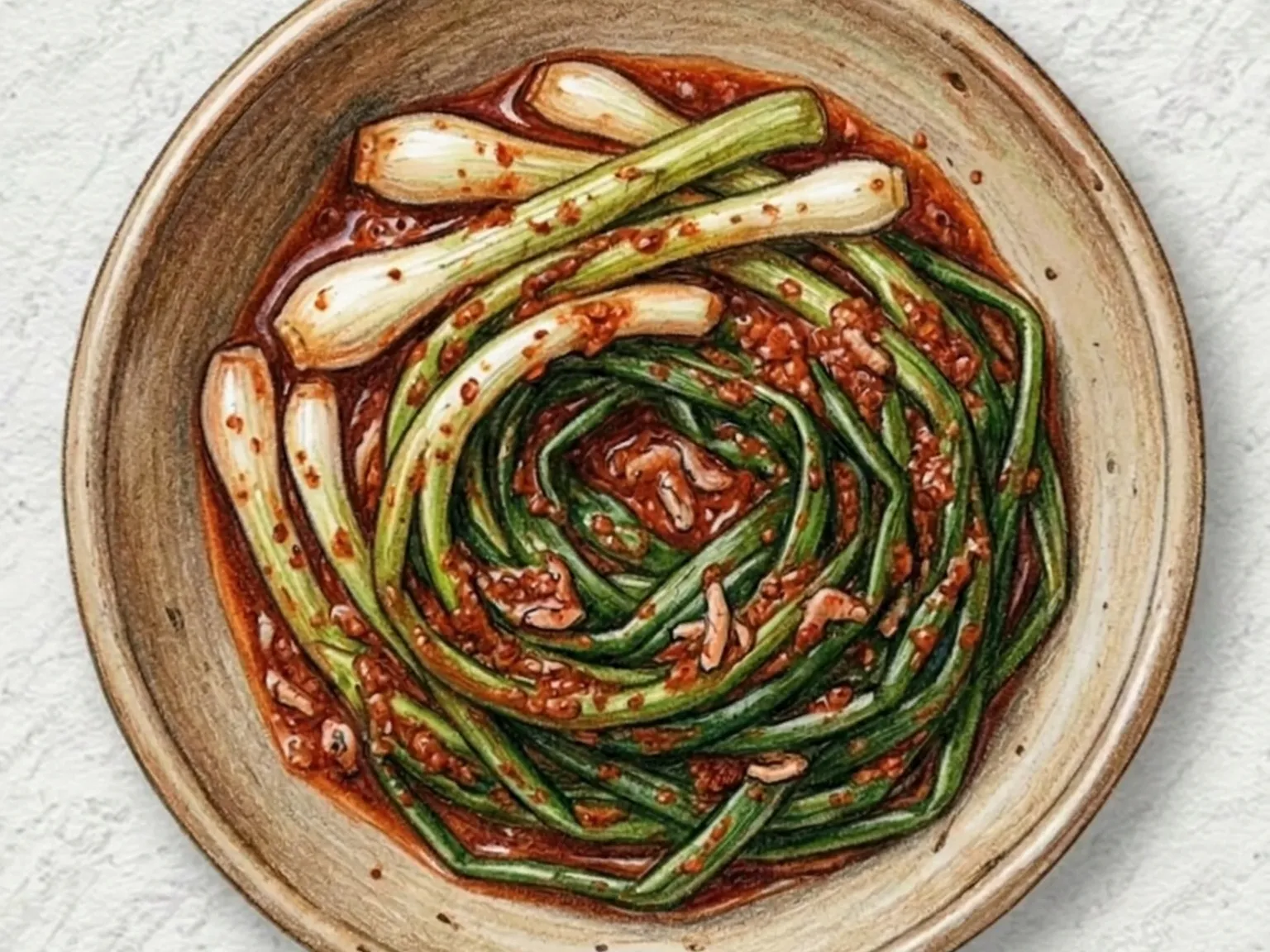
Korean Scallion Kimchi (Whole Stalk Anchovy Shrimp Paste)
Kimchi Medium

Korean Scallion Kimchi (Whole Stalk Anchovy Shrimp Paste)

Jjokpa kimchi is a traditional Korean scallion kimchi made by briefly brining whole scallions in coarse salt, then coating them from root to tip with a seasoning paste of anchovy fish sauce, fermented shrimp, gochugaru, and sweet rice flour paste. Using both anchovy fish sauce and salted shrimp together is intentional: the two condiments each carry a different profile of seafood umami, and combining them produces a more complex, layered depth than either alone could achieve. The sweet rice flour paste acts as a binder, adhering the seasoning evenly to the surface of each scallion and keeping it in place as moisture releases during fermentation. Without this paste, the pickling liquid would dilute the coating and the flavor would fade over time. The white bulb sections of the scallion hold their crunch through the brining and fermentation process while absorbing the spice of the gochugaru, and the green tops wilt to a silky texture that releases the scallion's characteristic sweet, pungent aroma. After six hours at room temperature followed by a day of refrigeration, the seasoning has fully penetrated the scallion and the kimchi is ready to eat alongside grilled pork belly or bossam. After three or more days of fermentation, a gentle lactic acidity develops that makes the kimchi equally useful as an ingredient in stews or stir-fries.

🏠 Everyday 🍱 Lunchbox
Prep 25min 4 servings
Korean Seasoned Dried Pollock Strips
Side dishes Easy

Korean Seasoned Dried Pollock Strips

Hwangtaechae-muchim dresses shredded dried pollock strips in a no-cook gochujang sauce - sharing the same core ingredient as hwangtae-po jorim but taking a completely different approach. While the braised version simmers the strips in liquid for a moist finish, this muchim keeps them closer to their original dry state, preserving a chewy, almost jerky-like bite. If the strips are too stiff, a light mist of water followed by a two-minute rest softens them just enough without losing that chew. The dressing combines gochujang, gochugaru, oligosaccharide syrup, and vinegar into a sweet-sour-spicy trio that earns this dish its bap-doduk (rice thief) reputation. A small addition of mayonnaise coats the surfaces with a thin fat layer, preventing the rough texture that dried fish can have. Start to finish, this banchan takes under fifteen minutes.

🏠 Everyday 🍱 Lunchbox
Prep 10min Cook 3min 4 servings
Korean Oyster Water Parsley Stir-fry
Stir-fry Easy

Korean Oyster Water Parsley Stir-fry

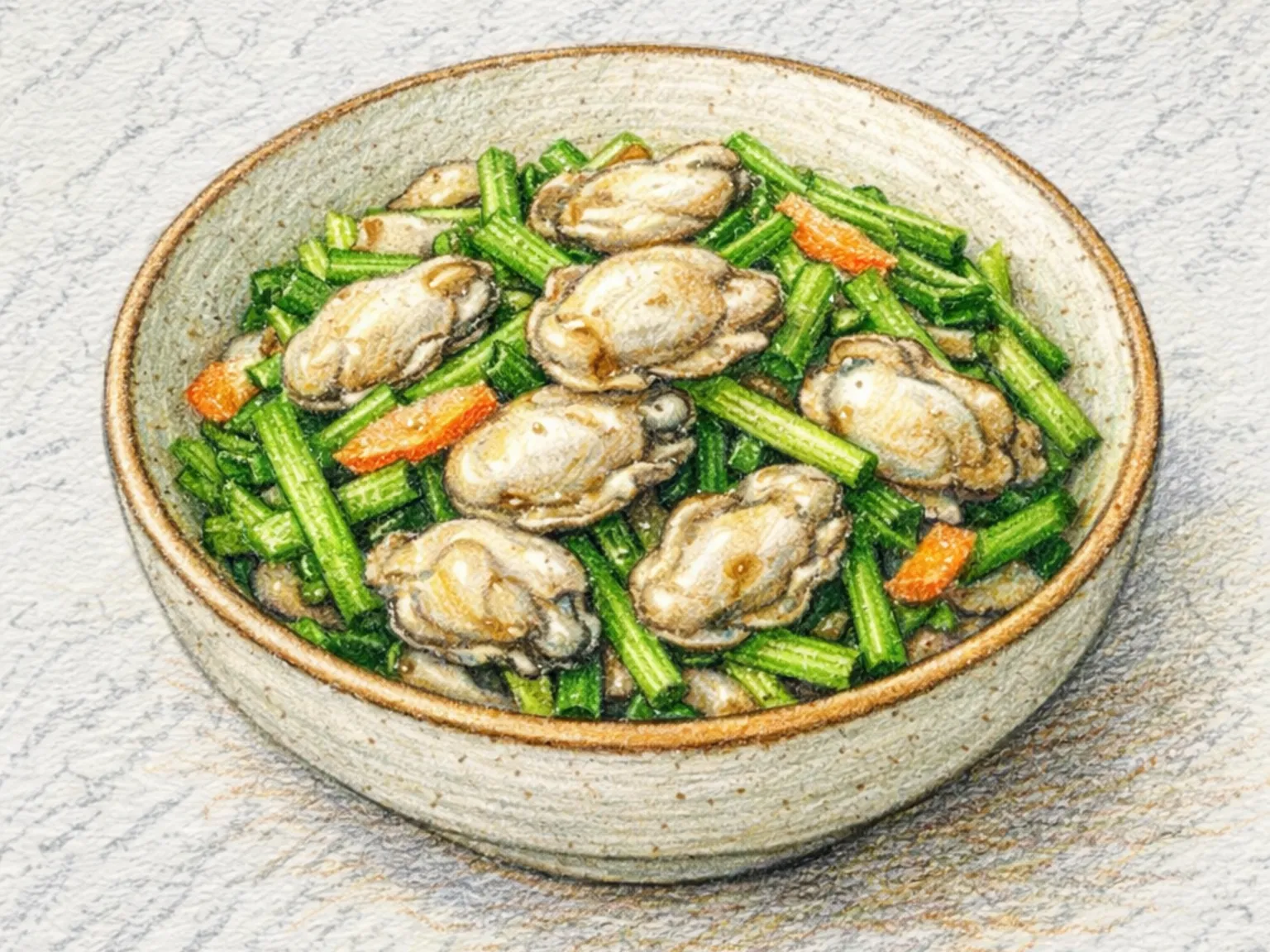
Gul-minari-bokkeum drains shucked oysters before giving them a short high-heat cook, then wilts the water parsley for only the final 40 seconds. Two hundred fifty grams oysters are moved gently through salted water with the fingertips and left in a sieve for about 10 minutes. This removes loose liquid without breaking the soft pieces. One hundred twenty grams water parsley is trimmed and cut into 5 cm lengths. Eighty grams onion is sliced thinly, and 40 g green onion is cut diagonally. One tablespoon cooking oil is heated over medium before 1 tablespoon minced garlic and the green onion cook for 30 seconds. The onion follows for 1 minute, just until its edges begin to turn translucent. The heat is raised to high, and the drained oysters are spread across the pan for 1 minute 30 seconds. One tablespoon each gochugaru and soup soy sauce is tossed through quickly, with the pan bottom kept clear of sticking seasoning. The water parsley is added last and turned for 40 seconds, enough for a slight loss of volume without giving it the full oyster cooking time. The burner is switched off when the oyster edges curl slightly while the centers remain plump. One teaspoon sesame oil is folded through gently so the oysters stay intact. Draining first and separating the oyster and parsley cooking times controls both loose liquid and texture.

🍺 Bar Snacks 🏠 Everyday
Prep 15min Cook 8min 2 servings
Korean Braised Yellow Croaker
Steamed Medium

Korean Braised Yellow Croaker

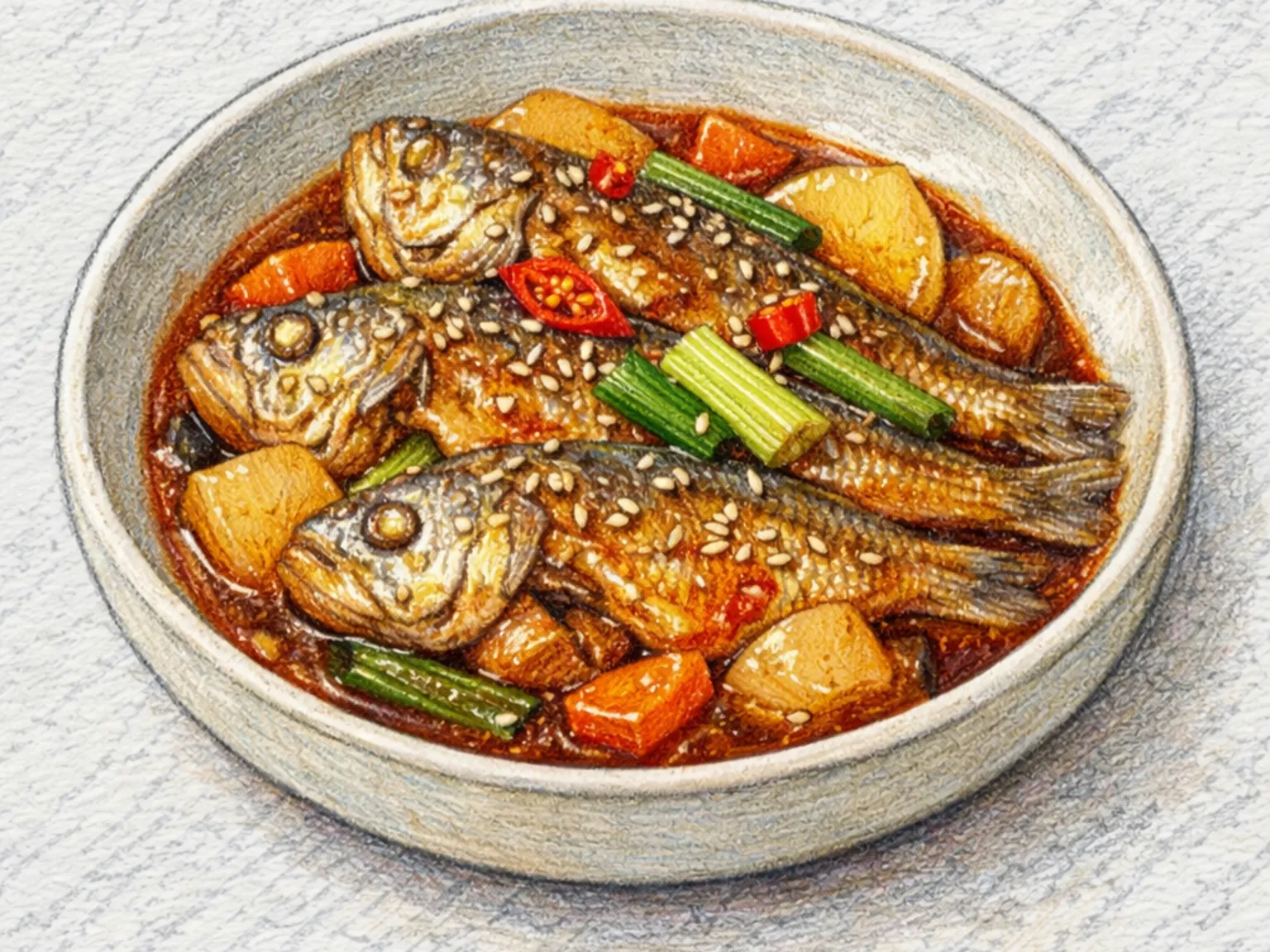
Jogi-jorim is a Korean braised dish of yellow croaker simmered with radish and onion in a seasoning sauce of soy sauce, gochugaru, garlic, and a touch of sugar. Yellow croaker has white, tender flesh and a mild flavor with little fishiness, qualities that make it exceptionally well-suited for braising. The radish goes into the pot first, lining the bottom so the fish sits above the direct heat and does not stick or break apart during cooking. The seasoning sauce is poured over the fish and the pot comes to a boil before the heat is reduced to a steady simmer. Over time the sauce penetrates the flesh and the radish drinks in the braising liquid, turning sweet-savory and soft throughout. One or two Cheongyang chili peppers added to the pot provide a low, sustained heat that builds gradually rather than hitting all at once. The braise is finished when a moderate amount of glossy sauce remains in the pot. That concentrated sauce mixed into a bowl of plain rice is the reason Koreans reach for jogi-jorim as a go-to rice side dish. The dish also appears regularly on ancestral rite tables and holiday spreads, making it one of the more culturally familiar fish preparations in Korean cooking.

🏠 Everyday 🍱 Lunchbox
Prep 15min Cook 22min 2 servings

About Side dishes

Great banchan balances seasoning with the natural flavor of each ingredient. Sesame oil, perilla oil, soy sauce, and fermented pastes work together to pack deep flavor into every small serving.