Side dishes

Side dishes Recipes

624 recipes. Page 19 of 26

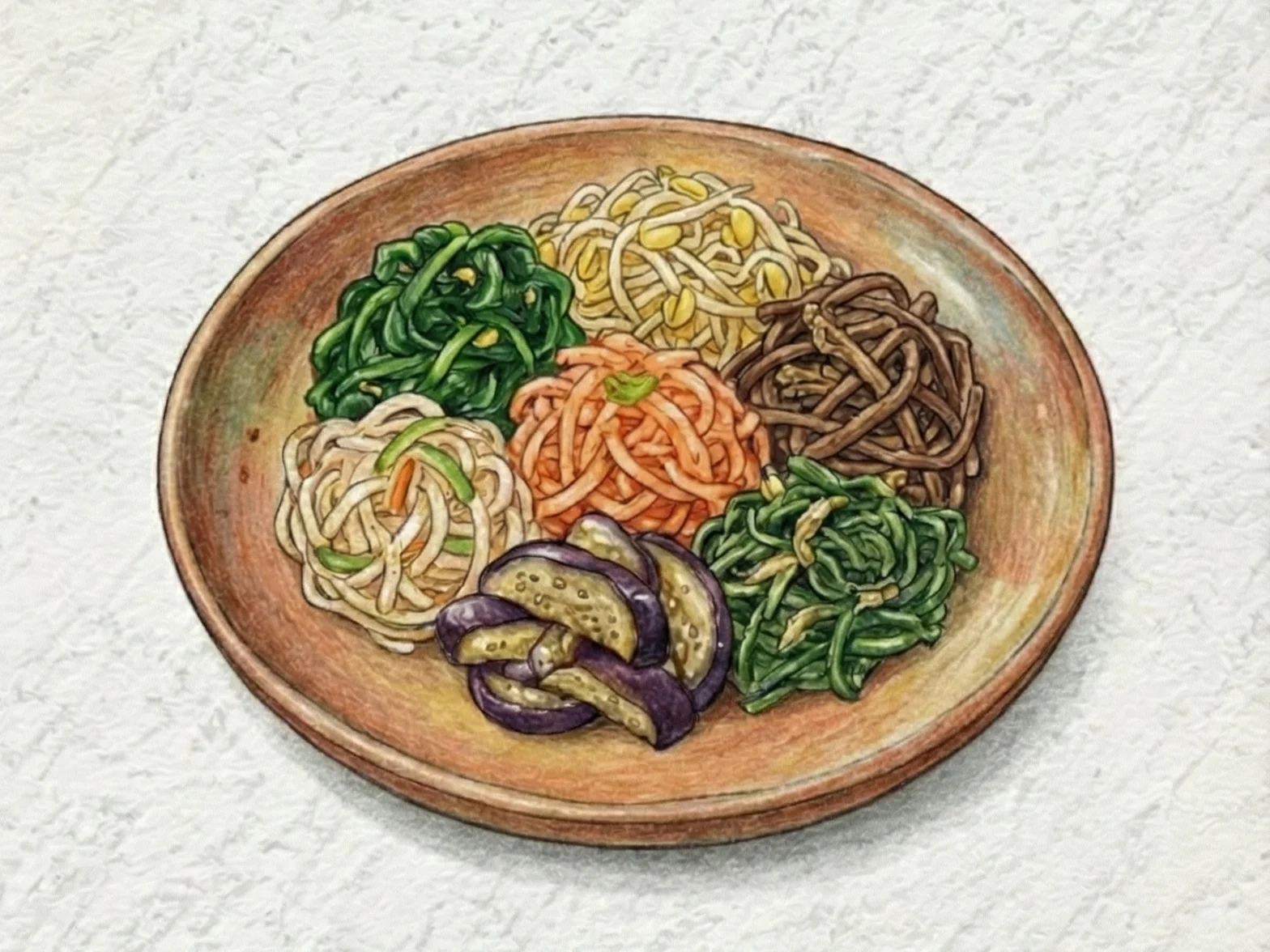
Side dishes (banchan) are the heart of Korean dining culture. A typical meal features multiple small plates - seasoned vegetables (namul), braised dishes (jorim), pickled items, and salted seafood. Classics like spinach namul, bean sprout salad, and stir-fried anchovies can be prepared in advance and enjoyed over several days.

Side dishes
Korean Soy-Marinated Soybean Leaves
Kimchi Medium

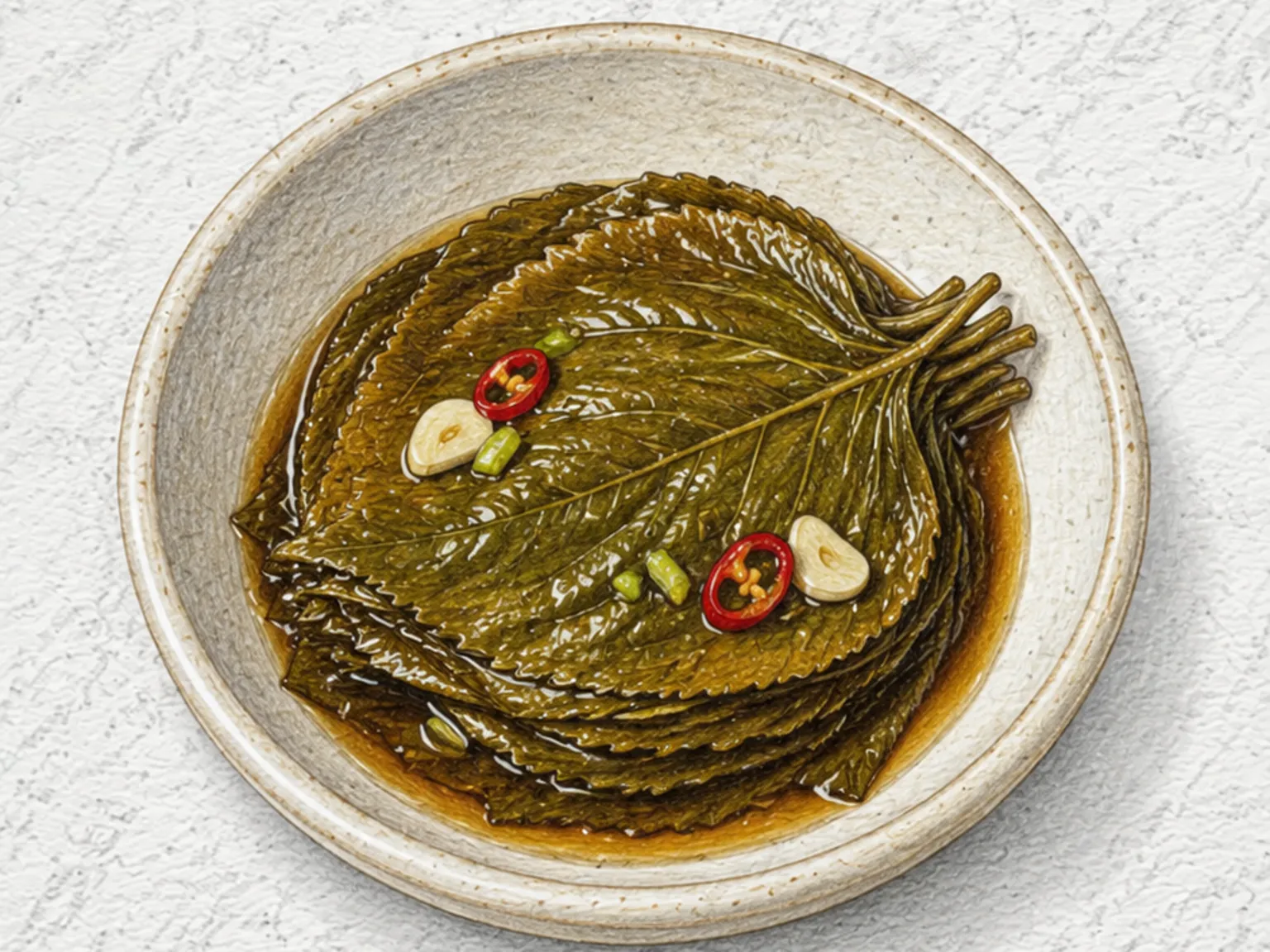
Korean Soy-Marinated Soybean Leaves

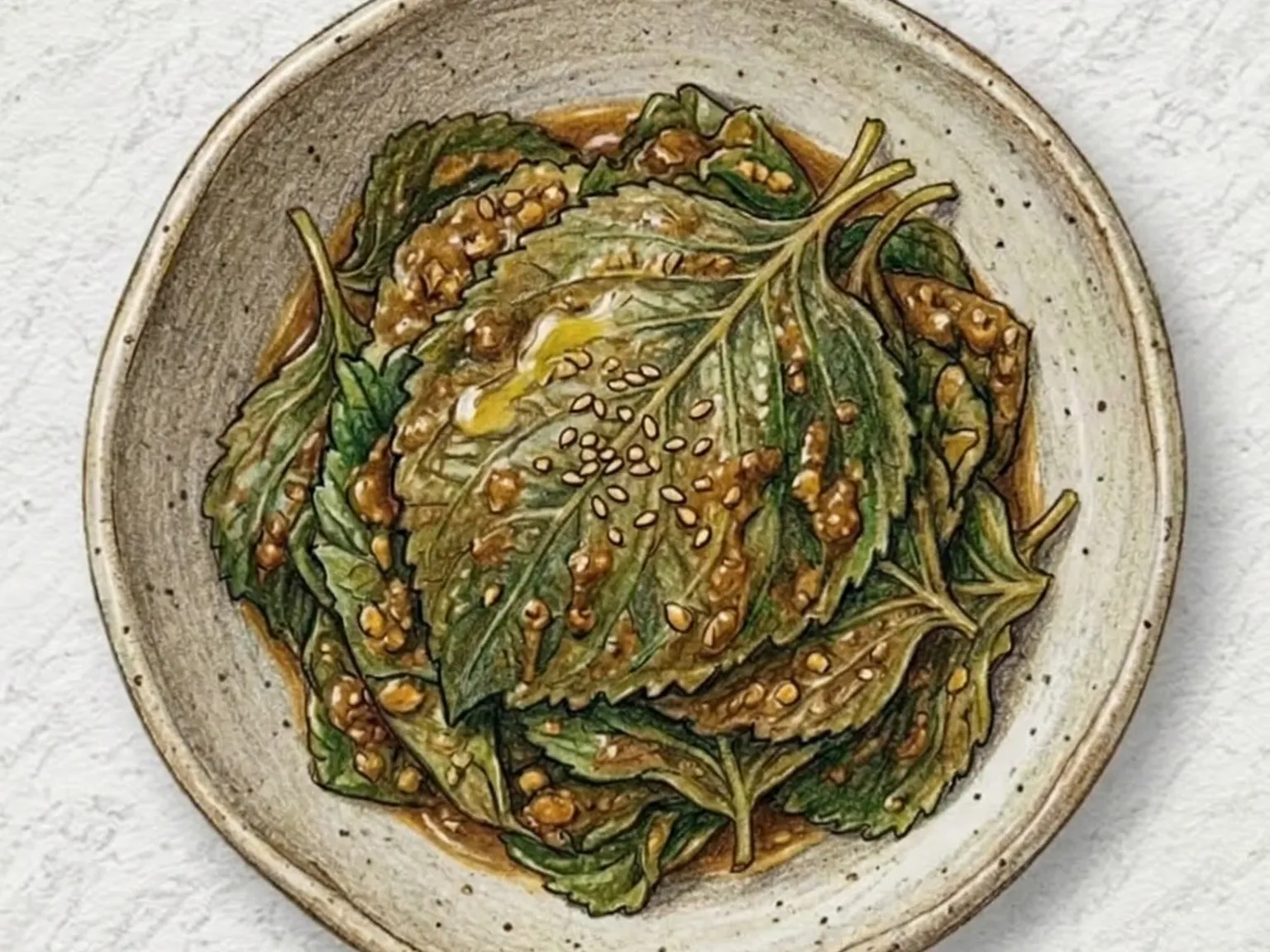
Kongnip-jangajji is soybean leaves preserved in a seasoned soy brine - one of the two major leaf jangajji traditions alongside perilla leaf (kkaennip) jangajji. Soybean leaves are larger and thicker than perilla leaves, taking longer to absorb the pickling liquid but offering a more substantial chew, with each leaf large enough to wrap around a spoonful of rice. The brine - soy sauce, water, vinegar, and sugar boiled together - must cool completely before pouring over the leaves; hot liquid softens them into a limp state, destroying the desired texture. Garlic cloves, cheongyang chili, and onion slices added to the jar infuse the brine with aromatic complexity during the curing process, producing a more layered flavor than plain soy. A minimum of two days of refrigerated aging is needed for the seasoning to reach the leaf interior, and flipping the layers once daily ensures even penetration. The most common way to eat it is draped over hot steamed rice, ssam-style.

🏠 Everyday 🍱 Lunchbox
Prep 15min Cook 10min 4 servings
Korean Seasoned Butterbur Stems
Side dishes Easy

Korean Seasoned Butterbur Stems

Meoui-namul-muchim is a seasonal spring namul made by blanching butterbur stems and dressing them with doenjang and ground perilla seeds. Butterbur grows wild along hillsides and stream banks throughout Korea. The stems are the edible part; the leaves contain pyrrolizidine alkaloids and are generally not consumed. Peeling the tough outer skin from each stem before cooking is a required preparation step, since unpeeled stems leave unchewable fibers in the mouth even after blanching. The blanching process drives off about half of the plant's inherent bitterness, leaving a subtle astringent quality that creates a layered interplay between the earthy savoriness of doenjang and the nutty richness of perilla seed powder. Adding perilla generously softens the bitter edge and makes the dish more approachable. March through April is peak season, when fresh butterbur appears briefly at Korean markets. Dried butterbur rehydrated in water is available year-round as a substitute but cannot replicate the fragrance and texture of the fresh spring harvest. The faint bitterness and herbal aroma typical of spring greens make this namul a classic palate-awakening side dish.

🏠 Everyday 🍱 Lunchbox
Prep 15min Cook 5min 4 servings
Korean Kkaennip Gamja Bokkeum (Perilla Potato Stir-fry)
Stir-fry Easy

Korean Kkaennip Gamja Bokkeum (Perilla Potato Stir-fry)

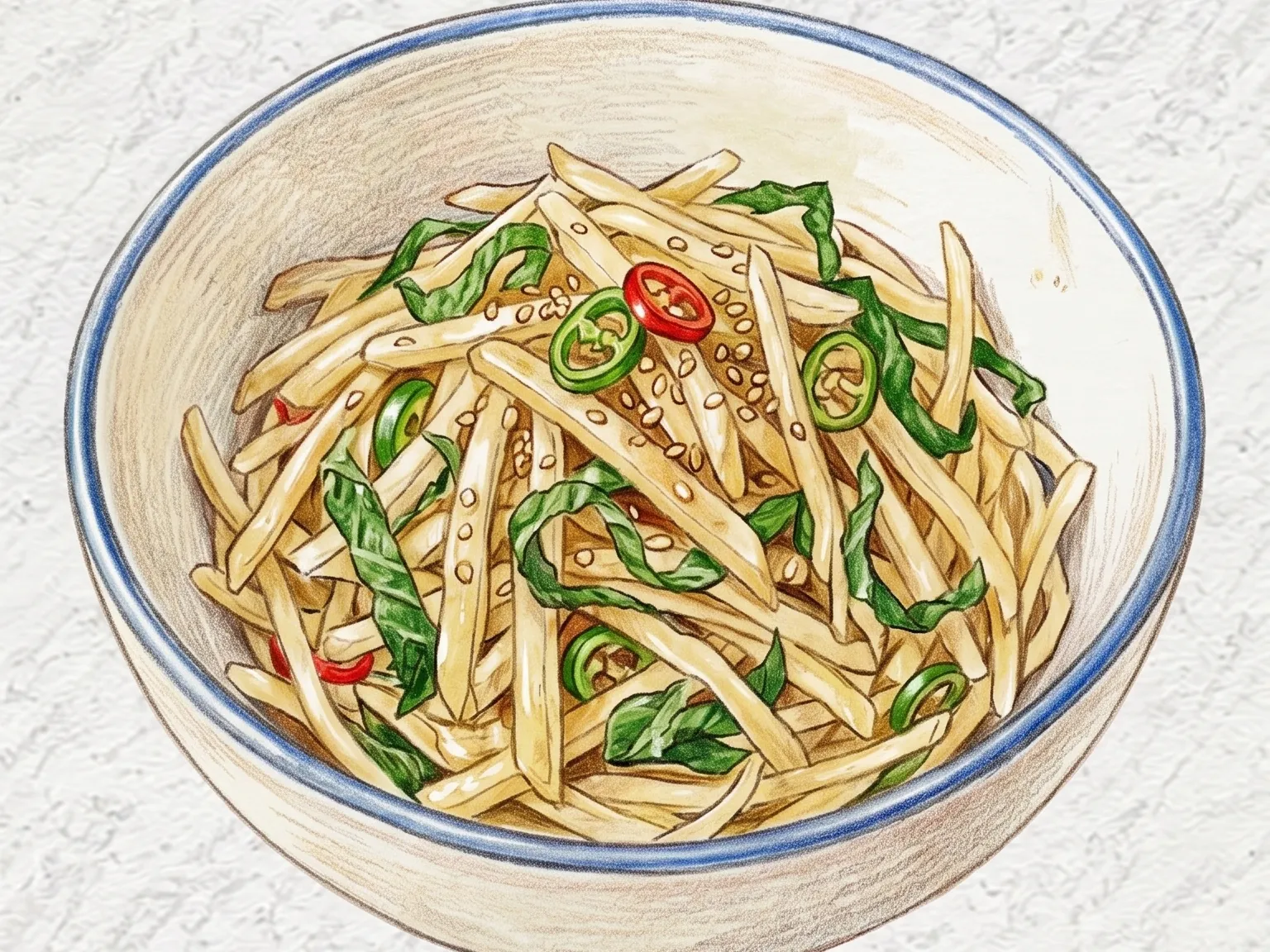
High heat and a well-preheated pan are the keys to achieving the distinct texture of these stir-fried potato matchsticks. Before cooking, soaking the cut potatoes in cold water is a critical step to remove surface starch, ensuring the pieces stay separate and do not stick to the pan. Once thoroughly dried to prevent oil splattering, the potatoes are tossed quickly until the edges become translucent while the centers retain a subtle firmness. Overcooking results in a mushy consistency that lacks the intended character of the dish. Pouring the soy sauce around the perimeter of the pan allows it to caramelize against the hot surface before it is incorporated into the vegetables, adding a layer of savory complexity. Fresh perilla leaves should be tossed in just before the heat is turned off to preserve their bright green color and herbal fragrance. A final drizzle of perilla oil complements the leaves with its toasted scent, and a sprinkle of sesame seeds provides a light crunch. Sliced Cheongyang chilies can be included during the initial sautéing for a gentle heat. This combination pairs the carbohydrates of potatoes with the vitamin K and calcium found in perilla leaves, creating a nutritionally rounded side dish that tastes even better the next day after the flavors have settled.

🏠 Everyday 🍱 Lunchbox
Prep 12min Cook 15min 2 servings
Korean Steamed Soybean Sprouts
Steamed Easy

Korean Steamed Soybean Sprouts

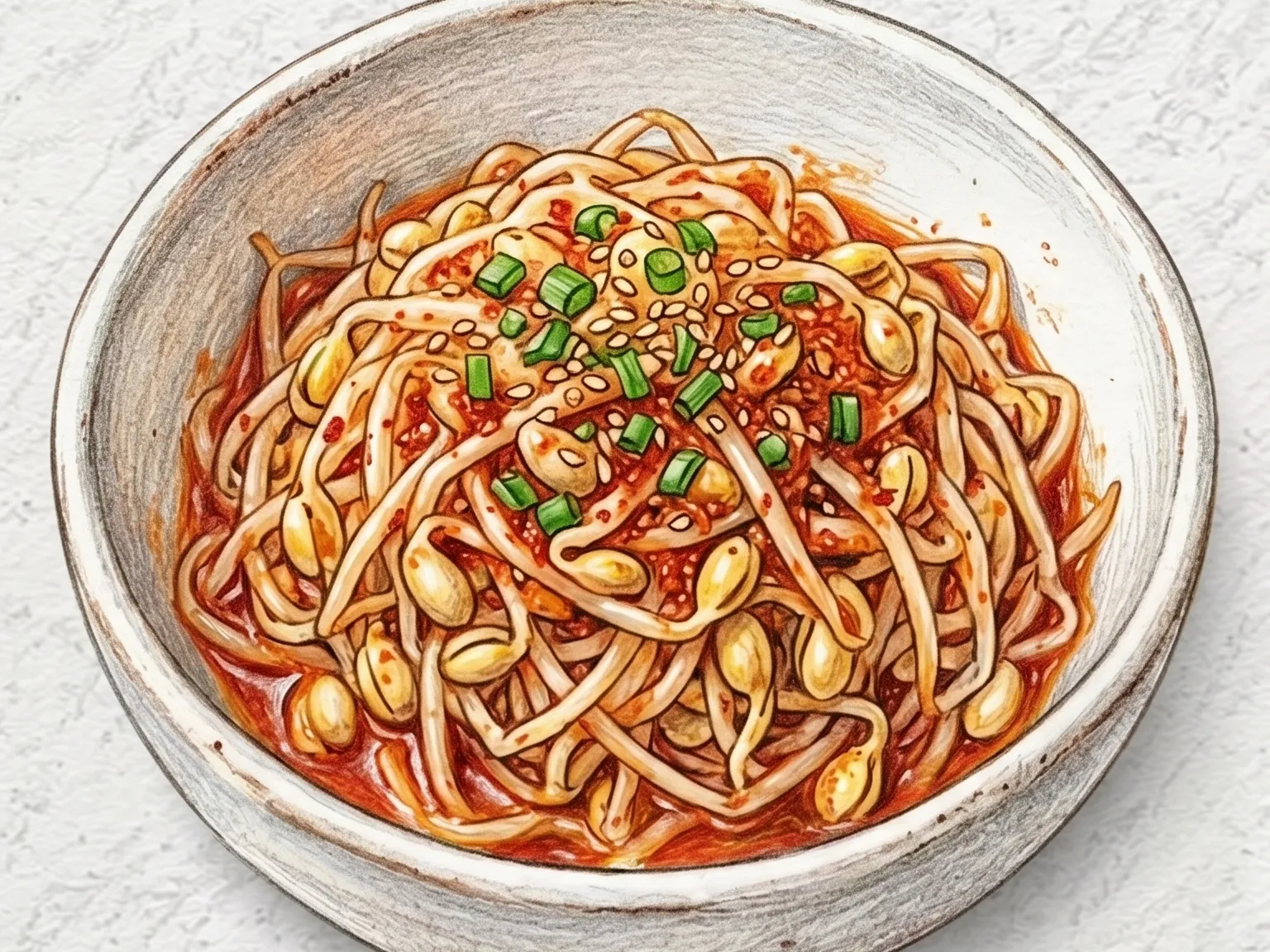
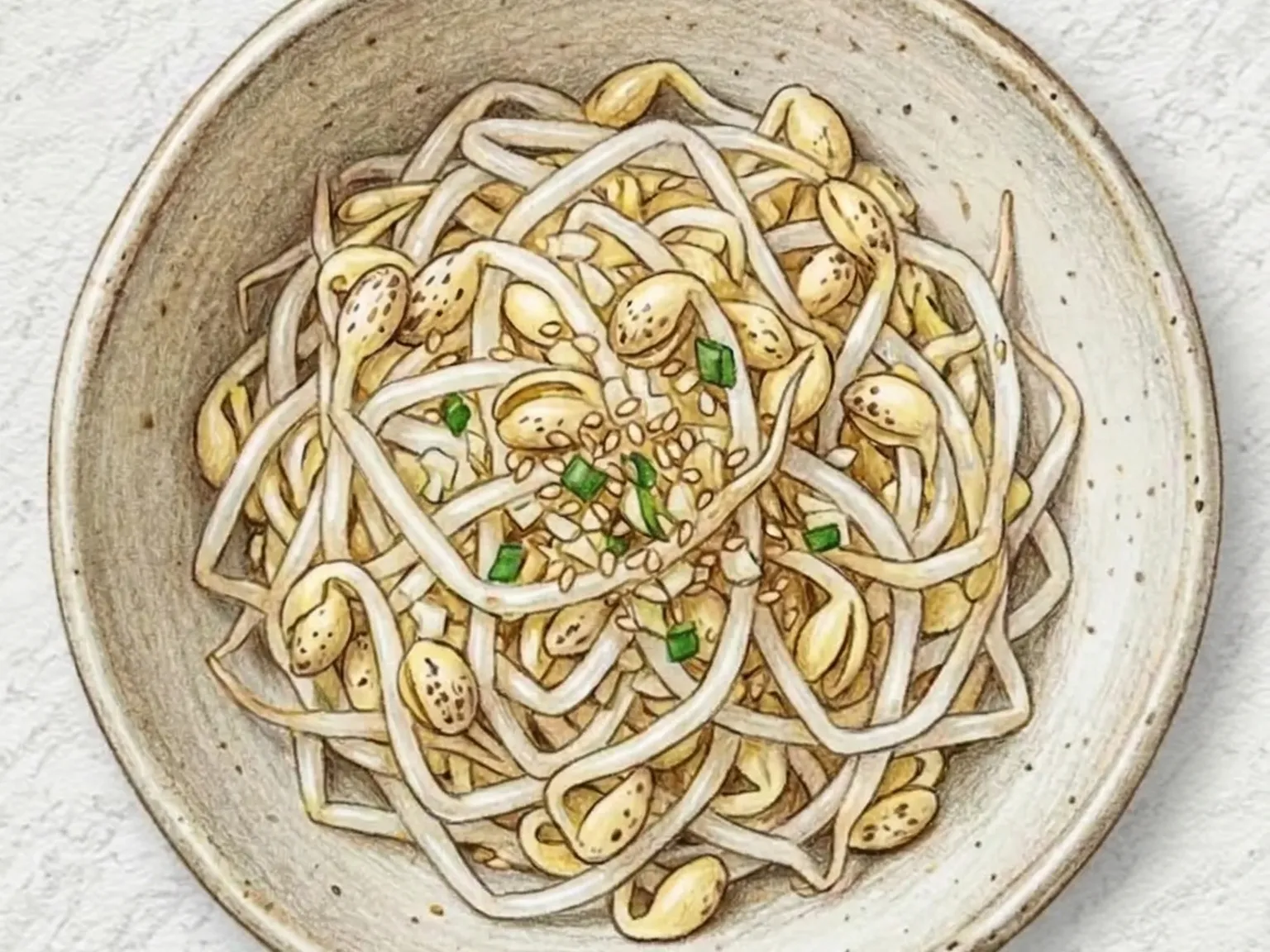
Kongnamul-jjim is a traditional Korean side dish centered on steamed soy bean sprouts. The preparation involves layering fresh bean sprouts with a mixture of red chili flakes, soy sauce, and finely minced garlic before placing them in a pot. A critical aspect of the cooking process is keeping the lid tightly closed from the beginning until the sprouts are fully cooked. This sealed environment creates a build-up of steam that is essential for maintaining the natural crispness of the sprouts while ensuring that the savory and spicy seasoning permeates each individual strand. The resulting flavor profile features a sharp heat from the red pepper that complements the clean and refreshing qualities of the bean sprouts, resulting in a light and clear finish. To finish the dish, a generous drizzle of sesame oil and a handful of sliced scallions are added to provide a fragrant, toasted aroma and a layer of savory depth. Because the primary ingredients are inexpensive and the entire process from preparation to plating takes less than fifteen minutes, this dish serves as a dependable addition to any meal when the table requires an extra side dish on short notice. For a different aromatic profile, perilla oil can be substituted for sesame oil to introduce an earthy and more herbaceous scent. Individuals seeking a more intense level of spice can add sliced Cheongyang chilies during the cooking stage to elevate the heat.

🥗 Light & Healthy 🏠 Everyday
Prep 10min Cook 10min 2 servings
Korean Pickled Garlic (Soy-Vinegar Aged Whole Cloves)
Kimchi Easy

Korean Pickled Garlic (Soy-Vinegar Aged Whole Cloves)

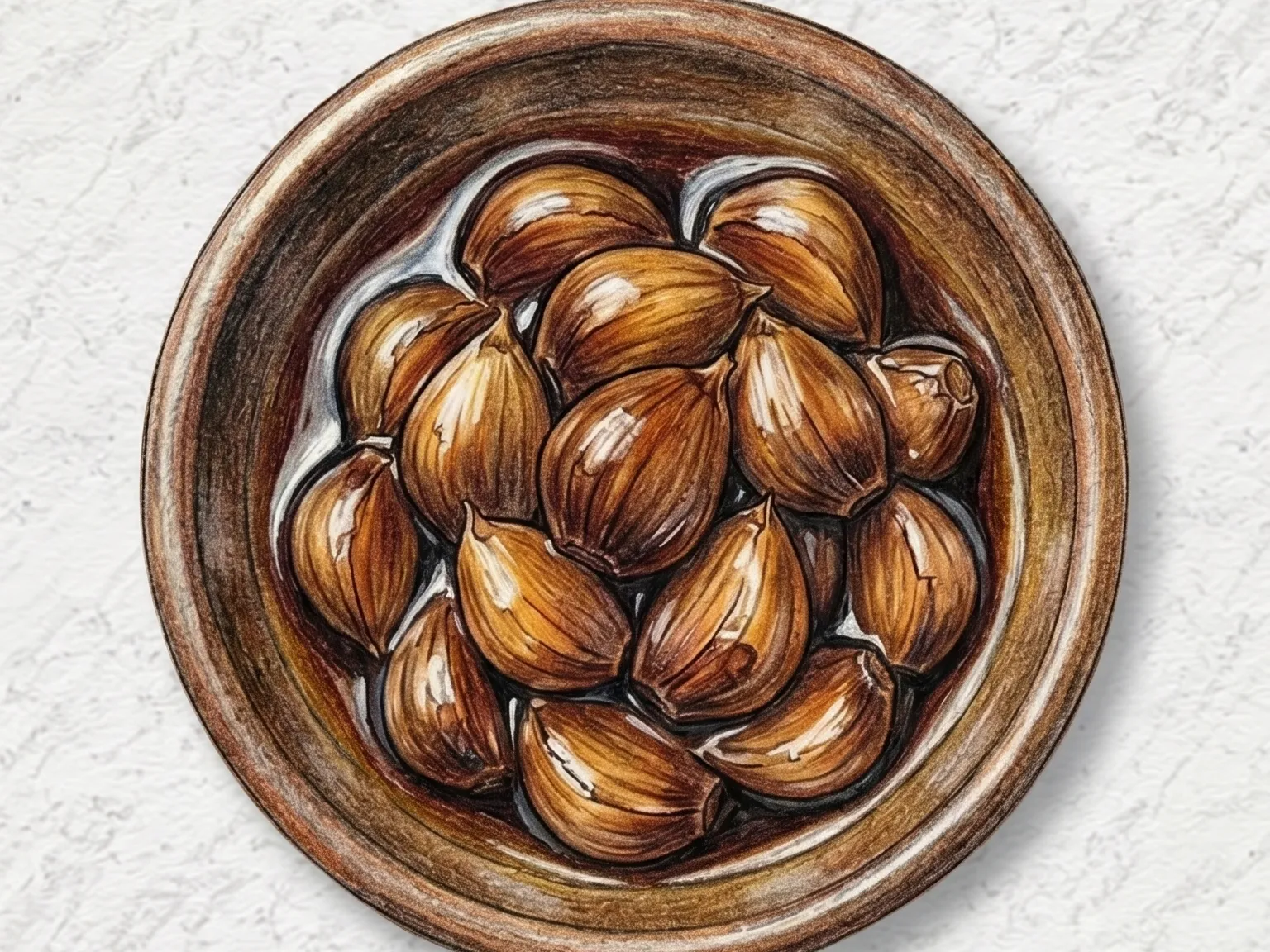
Maneul-jangajji is whole garlic cloves pickled in a soy-vinegar brine, a traditional Korean preserved banchan that sits near-permanently in the kimchi refrigerator alongside kimjang kimchi. The customary practice is to make it during the June fresh garlic harvest and eat it throughout the year, replenishing the supply annually. After three or more months submerged in the brine, every trace of the raw garlic's sharp, pungent bite disappears, leaving behind a clove that has become almost translucent, with a jelly-firm texture and a clean salty-sweet flavor with no heat at all. The baseline ratio for the brine is two parts soy sauce to one part vinegar. Increasing the vinegar beyond that ratio tips the flavor too far toward sourness, making the pickles difficult to eat alongside rice as a general banchan. The brine must be brought to a full boil and cooled completely before it is poured over the garlic - never hot, which would partially cook the cloves. Repeating the cycle of draining the brine, reboiling it, cooling it, and returning it to the jar every three days for three complete cycles significantly extends shelf life and builds a more layered depth of flavor than a single pouring achieves. Skipping this process results in a noticeably flatter pickle. After three days at room temperature to initiate fermentation, the jar moves to the refrigerator, where the lower temperature slows the process and preserves the characteristic crunch for months. The finished pickles are eaten one clove at a time alongside grilled pork belly or short ribs, where their acidity cuts through the fat. Minced finely and stirred into fried rice, they contribute a concentrated umami that is difficult to replicate with raw garlic.

🏠 Everyday 🍱 Lunchbox
Prep 20min Cook 10min 4 servings
Korean Water Parsley Salad
Side dishes Easy

Korean Water Parsley Salad

Minari-muchim is blanched water parsley seasoned with gochugaru, soy sauce, and vinegar, one of the most distinctly seasonal banchan on the Korean table. Minari is a semi-aquatic herb that grows along paddies, wetlands, and clean waterways throughout Korea. Its aroma belongs to a different family from Western parsley or celery: fresher, more herbal, with a green brightness that is difficult to compare to any common Western herb. That aroma is the entire reason to use minari in this dish, which makes the blanching time critical. Beyond twenty seconds in boiling water, the volatile aromatic compounds escape with the steam and what remains is texture without character. Trimming the toughest lower stems and cutting stalks to roughly five centimeters makes each piece easy to eat in a single bite. Transferring the blanched herb immediately to ice water or very cold water fixes the chlorophyll and holds the vivid green color. The vinegar in the dressing does two things simultaneously: it amplifies the herbal brightness of the minari and suppresses the faintly aquatic mustiness that water-grown plants sometimes carry. Gochugaru provides heat, soy sauce adds salted depth, and together they season the herb without masking it. International awareness of minari as an ingredient grew substantially after the 2020 film of the same name. Serving raw minari alongside cho-gochujang as a dipping green is another common spring preparation.

🏠 Everyday 🍱 Lunchbox
Prep 10min Cook 2min 4 servings
Korean Duck and Perilla Leaf Stir-fry
Stir-fry Medium

Korean Duck and Perilla Leaf Stir-fry

Kkaennip ori bokkeum is a stir-fry of smoked duck slices cooked with onion and Cheongyang chili in a sauce made from gochujang, soy sauce, and plum syrup, finished with shredded perilla leaves and perilla oil in the final seconds before serving. When the smoked duck hits the hot pan, its own fat renders out and forms the cooking base, infusing the sauce with a meaty, smoky depth that distinguishes this dish from stir-fries made with leaner proteins. Gochujang contributes heat and a fermented richness, soy sauce provides salty umami, and plum syrup adds a bright, fruity sweetness that keeps the sauce from feeling too heavy. The combination of all three wraps around the smokiness of the duck in a way that amplifies rather than obscures it. Perilla leaves must go in at the very last moment, just before the heat is cut, because prolonged cooking darkens their color and drives off the distinctive herbal fragrance that defines the dish. Perilla oil is added at the same stage, after the burner is off, so its nutty aroma remains intact in the finished plate. The sharp heat of Cheongyang chili interlocks with the smoked duck flavor to produce a more intense, stimulating character, and a pinch of black pepper at the end leaves a clean, lingering finish. The dish works equally well as a rice side and as drinking food alongside soju.

🏠 Everyday 🍱 Lunchbox
Prep 18min Cook 14min 4 servings
Korean Steamed Whole Garlic
Steamed Easy

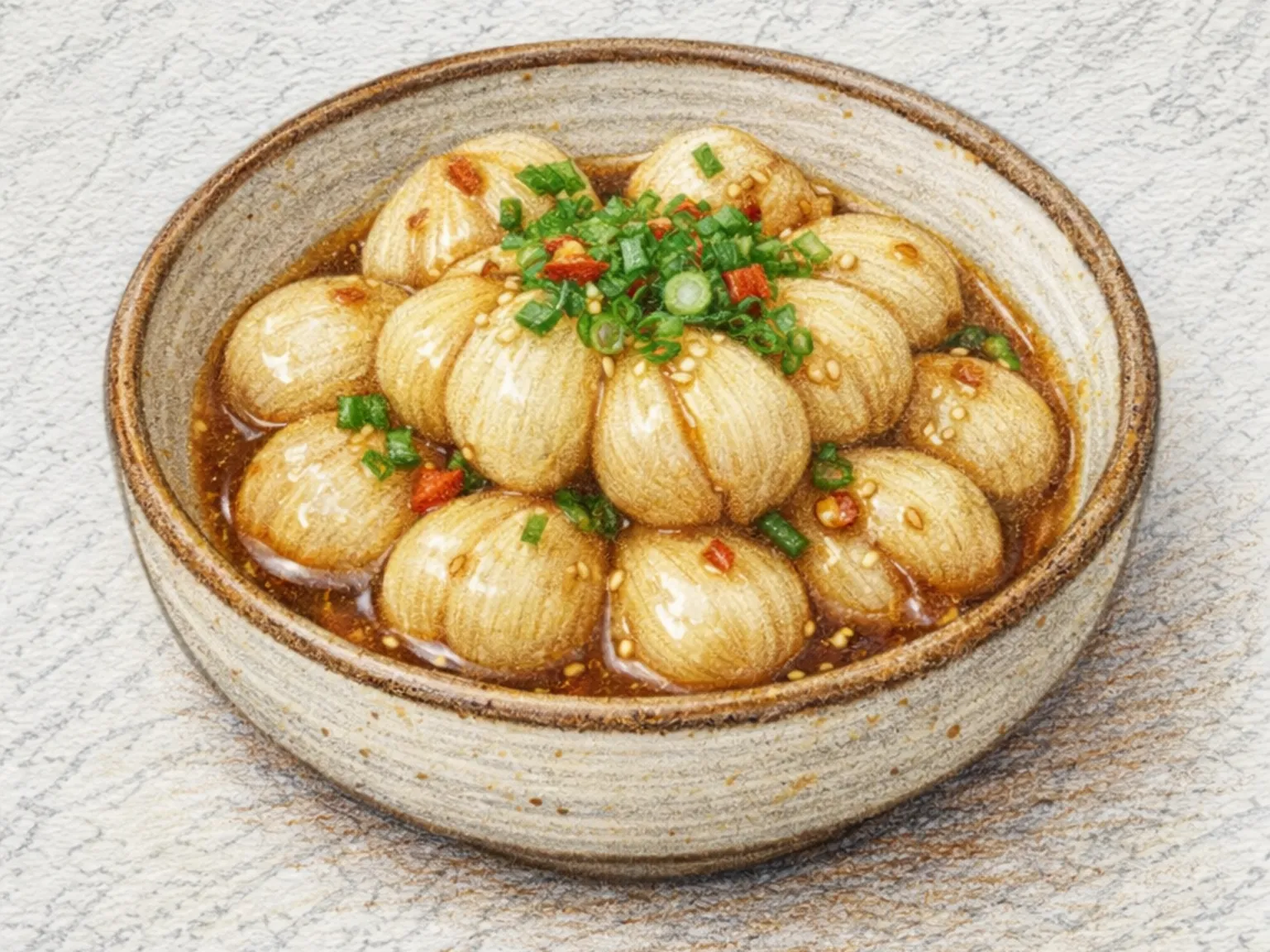
Korean Steamed Whole Garlic

Maneul-jjim is a Korean steamed whole garlic dish where cloves are slowly braised in soy sauce, oligosaccharide syrup, and sesame oil until completely tender. The raw garlic's sharp bite disappears entirely with heat, transforming into a mellow sweetness with a creamy, almost buttery texture. The syrup creates a glossy coating on each clove, and the sesame oil wraps everything in a nutty fragrance. This banchan works as a side to grilled meats or as a drinking snack, offering all of garlic's depth without any of its usual pungency. Placing a softened clove on a spoonful of rice is the simplest and most satisfying way to enjoy it.

🍱 Lunchbox 🏠 Everyday
Prep 10min Cook 20min 2 servings
Korean Garlic Scape Soy Pickles
Kimchi Easy

Korean Garlic Scape Soy Pickles

Maneul jong jangajji is a Korean garlic scape pickle made by cutting fresh scapes into 5 cm lengths, packing them into a sterilized jar along with cheongyang chili peppers, and pouring over a freshly boiled brine of soy sauce, vinegar, sugar, and dried kelp. The scapes' sharp garlic bite melds gradually with the soy's salty, savory depth to produce a flavor that builds with every chew, while the kelp dissolves a subtle seaweed umami into the brine over the course of steeping. The vinegar keeps the salt in check so the overall taste stays clean rather than heavy, and the cheongyang chili adds a slow, lingering warmth at the end of each bite that prevents the pickle from tasting one-dimensional. Reboiling the brine and pouring it back over the scapes after two days is an important step for both preservation and even pickling, and repeating this process once more ensures the scapes absorb flavor uniformly throughout. Handled this way, the finished banchan keeps reliably for over a month in the refrigerator.

🍱 Lunchbox 🏠 Everyday
Prep 20min Cook 10min 4 servings
Korean Seaweed Salad (Tangy Chili-Vinegar Dressed Miyeok)
Side dishes Easy

Korean Seaweed Salad (Tangy Chili-Vinegar Dressed Miyeok)

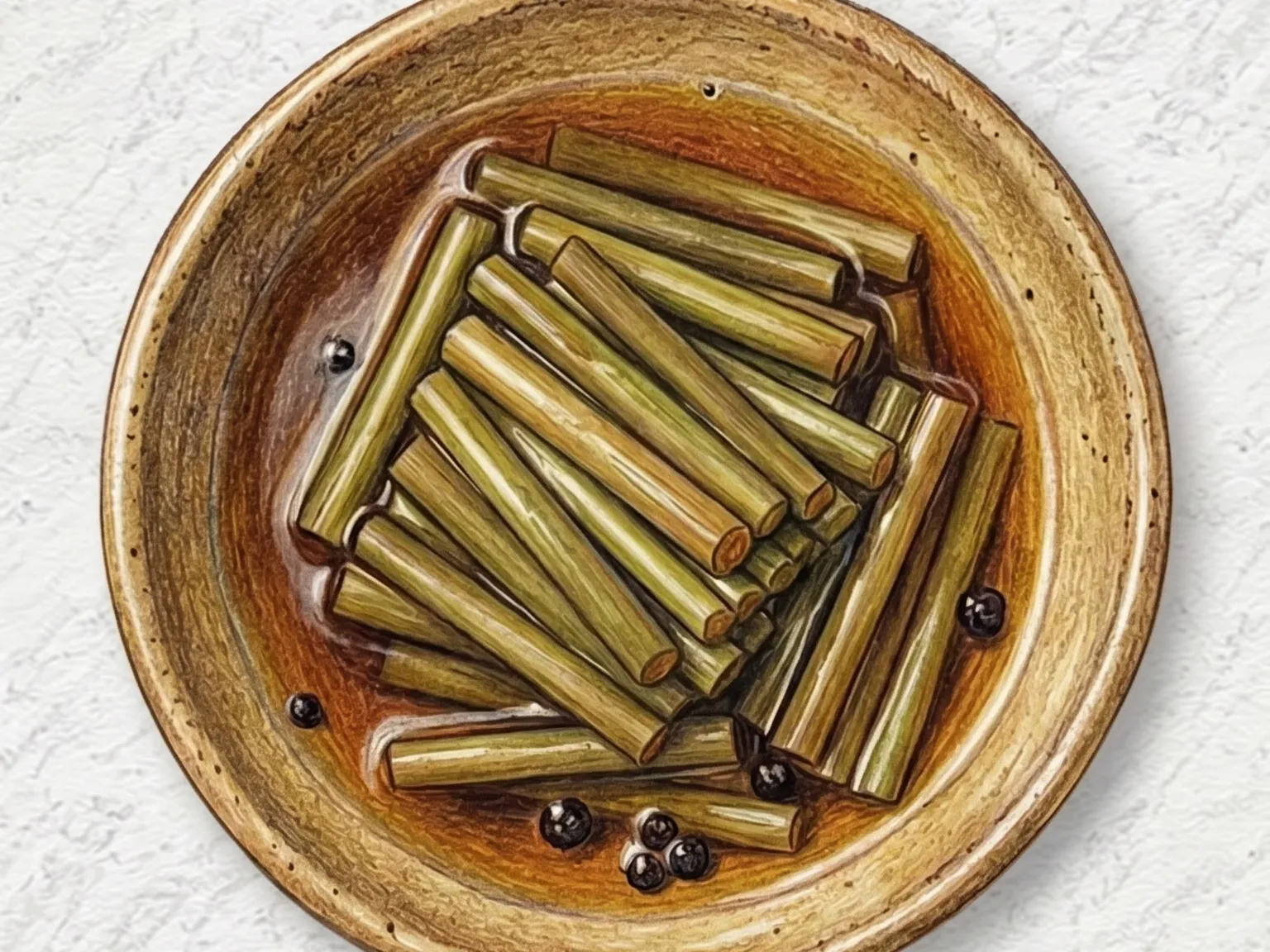
Miyeok-muchim consists of rehydrated seaweed seasoned with either a vinegared chili paste called cho-gochujang or a vinegared soy sauce known as cho-ganjang. In Korean culinary traditions, this preparation represents one of the most frequent methods for consuming seaweed outside of the traditional soup typically served on birthdays. To prepare the foundation of the dish, approximately thirty grams of dried miyeok requires a twenty-minute immersion in water. During this period, the volume of the seaweed expands by eight to ten times its original size, which results in a quantity sufficient for two individual portions. A frequent error made by individuals unfamiliar with this ingredient involves using an excessive amount of the dried seaweed because the dramatic scale of its expansion is often underestimated. Following the soaking stage, the seaweed undergoes a brief blanching process in boiling water. This technique intensifies the color of the miyeok into a vivid green while simultaneously reducing the strong marine odor associated with the raw plant. Immediately after blanching, a thorough rinse in cold water is required to lock in the specific texture of the seaweed, which is characterized as being both slippery and bouncy. For the dressing, the spicy cho-gochujang variation combines fermented chili paste with vinegar and sugar to create a profile that is sweet, sour, and spicy. This combination serves to temper the inherent saltiness found in the seaweed. Many versions of the dish include thinly julienned cucumber to provide a crisp textural contrast to the silkiness of the miyeok. Alternatively, the cho-ganjang dressing offers a more subtle flavor for individuals preferring a clean taste without the heat of chili. From a nutritional standpoint, a single portion contains roughly fifty kilocalories and is recognized as a significant source of dietary fiber and iodine. These attributes make the dish a consistent feature in Korean home cooking focused on health and nutrition. The salad is typically kept in the refrigerator and served chilled, making it particularly refreshing during the summer months when people often experience a decrease in their appetite.

🏠 Everyday 🍱 Lunchbox
Prep 20min 2 servings
Korean Perilla Leaf Beef Stir-Fry
Stir-fry Easy

Korean Perilla Leaf Beef Stir-Fry

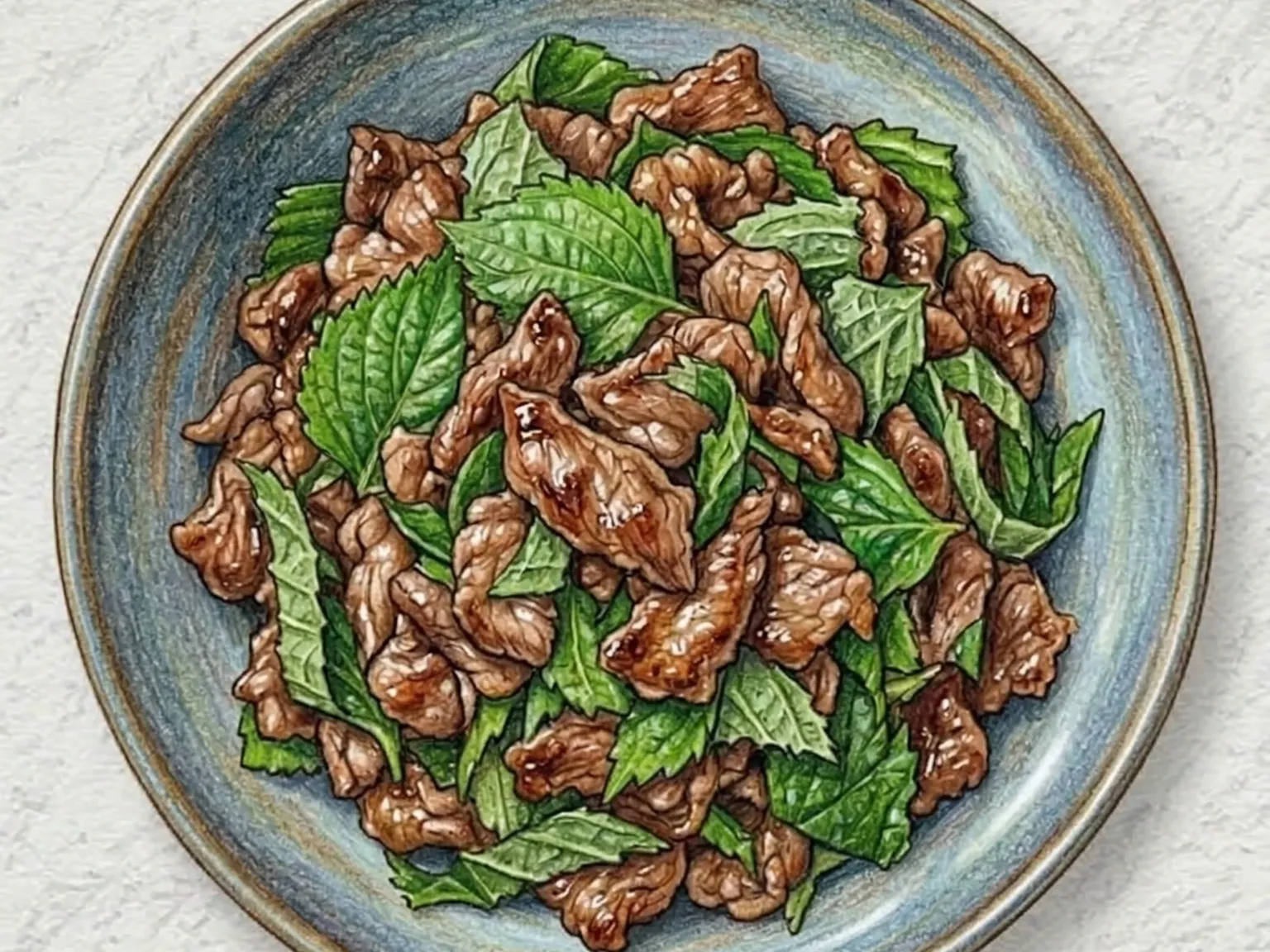
Kkaennip sogogi bokkeum cooks soy-seasoned beef over high heat and waits until the burner is off before wilting the perilla leaves with residual heat. Two hundred grams thinly sliced beef is separated into bite-size pieces and coated with 2 tablespoons soy sauce for about 5 minutes. Any slices stuck together are pulled apart so they can contact the pan instead of cooking as a clump. Twenty perilla leaves are shaken thoroughly dry, trimmed of their tough stem ends, and cut into large pieces. The pan is heated over high for about 1 minute before 2 garlic cloves are stirred only until fragrant, without allowing them to brown. The seasoned beef is spread widely and turned for about 2 minutes, until most visible red color has disappeared. As the soy sauce reduces against the pan bottom, it leaves a glossy coating on the meat. The thickest slice is checked for doneness at this point, and then the burner is switched off. The perilla leaves are added only after the heat is off and tossed for 20 seconds. One teaspoon sesame oil is drizzled over the mixture before a final turn and immediate transfer from the pan. Drying the leaves prevents added water from loosening the reduced soy coating, while using residual heat keeps their cooking time separate from that of the beef.

🏠 Everyday 🌙 Late Night
Prep 10min Cook 10min 2 servings
Korean Braised Pork with Garlic Scapes
Steamed Easy

Korean Braised Pork with Garlic Scapes

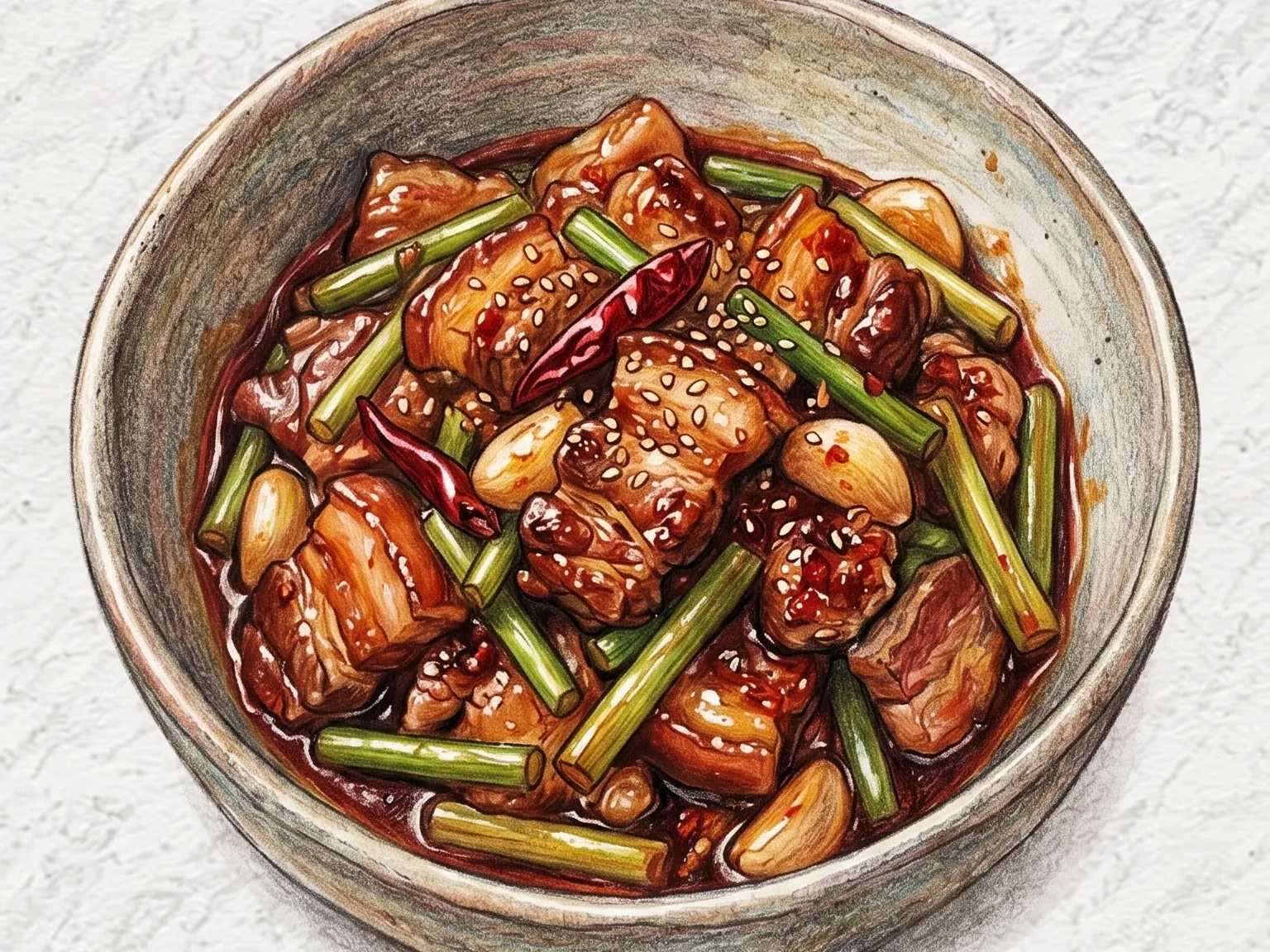
Maneuljjong dwaejigogi-jorim is a Korean braise of pork and garlic scapes in a gochujang, soy sauce, and gochugaru seasoning. The pork releases its juices into the sauce as it cooks, building a concentrated braising liquid that the garlic scapes absorb while retaining their characteristic crunch. Gochujang's deep warmth layers with soy sauce's umami into a compound seasoning, and the garlic scapes' mild pungency cuts through any heaviness from the pork fat. Mixed over rice, the sauce, meat, and vegetables come together into a filling, well-rounded meal.

🍱 Lunchbox 🏠 Everyday
Prep 15min Cook 25min 2 servings
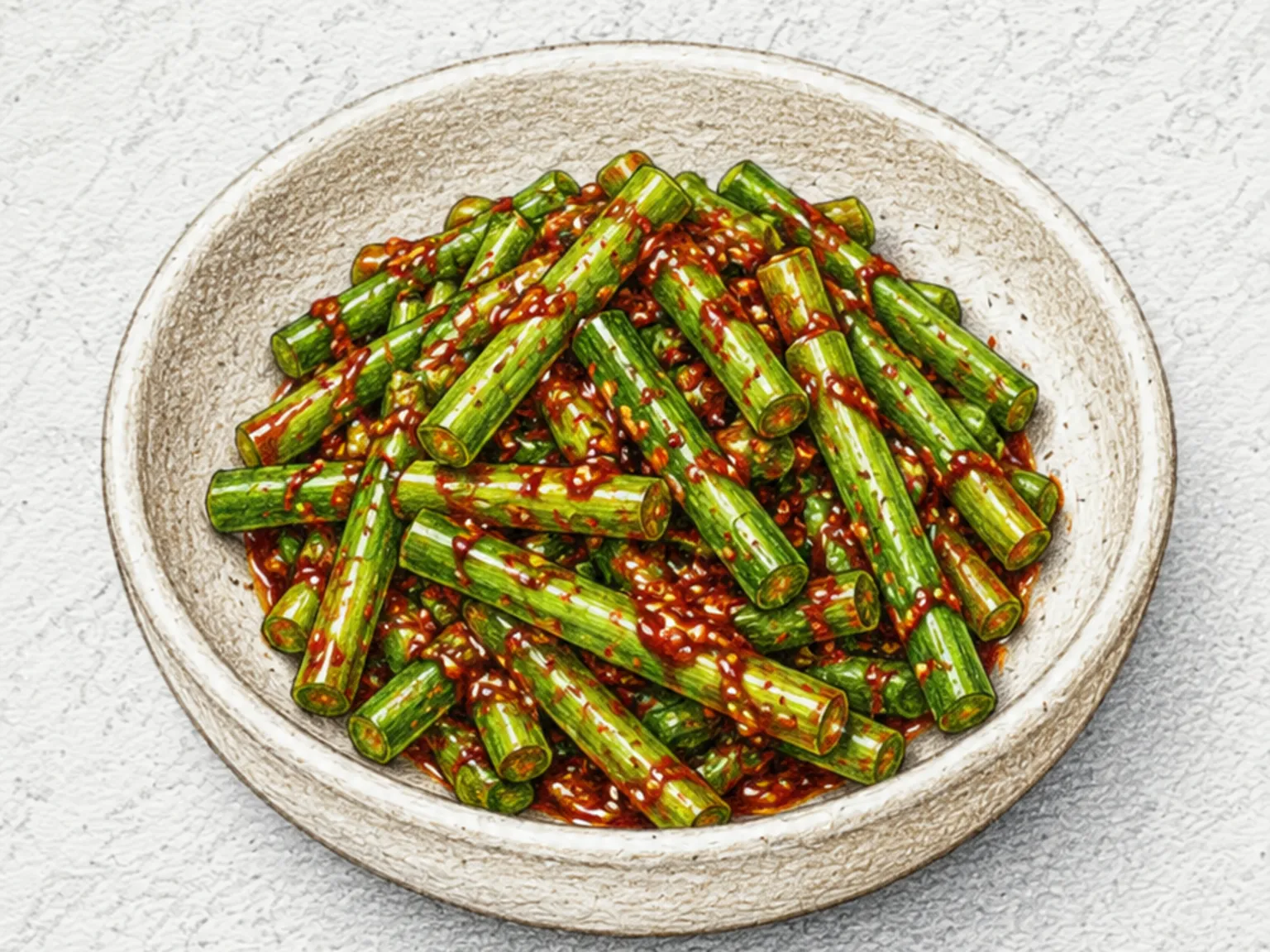
Korean Garlic Scape Kimchi
Kimchi Easy

Korean Garlic Scape Kimchi

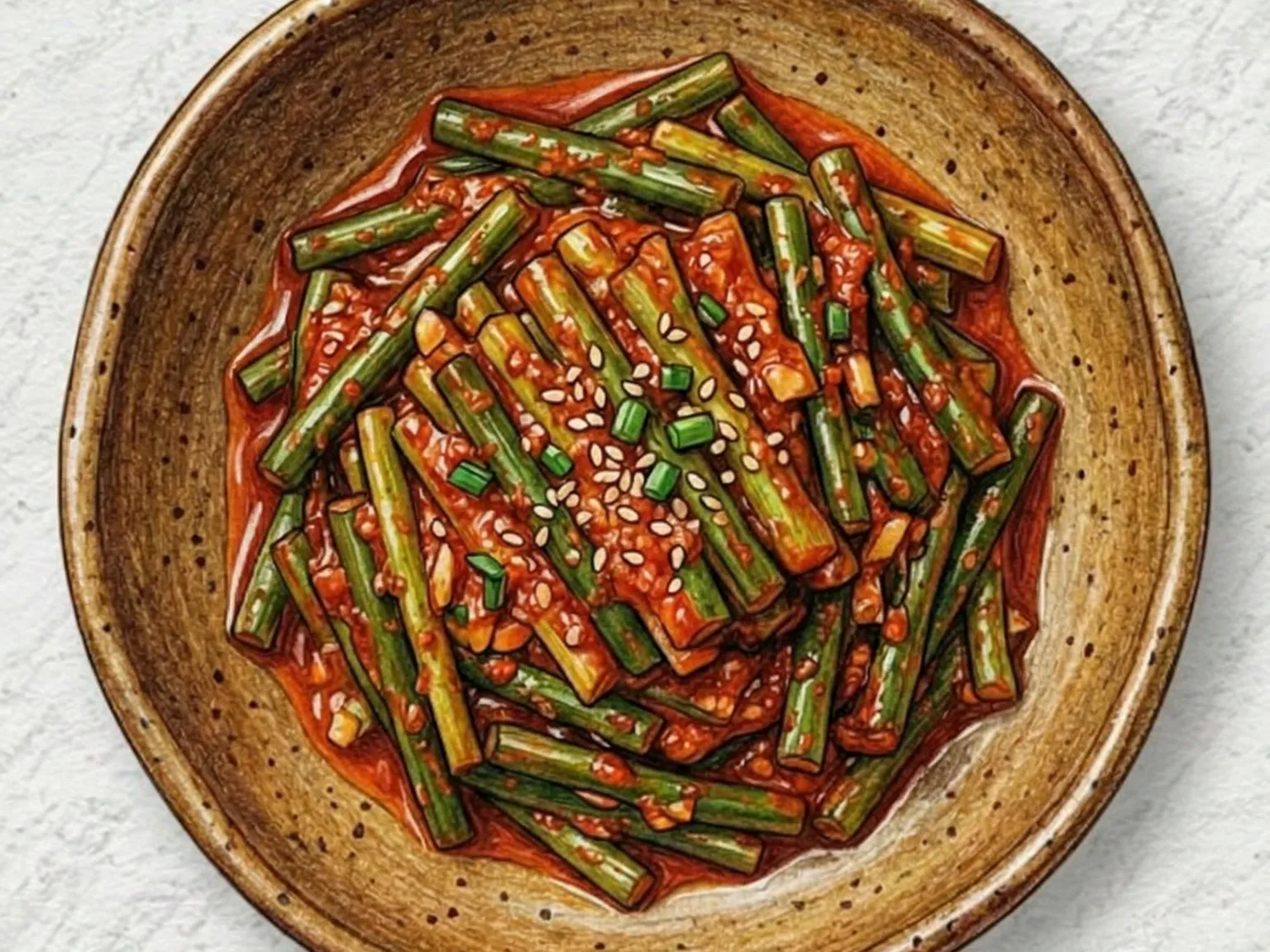
Maneul jong kimchi is a garlic scape kimchi made by lightly brining freshly harvested scapes, then dressing them in a seasoning paste of gochugaru, fish sauce, and plum syrup blended with pureed onion and pear. The scapes' sharp, piercing garlic aroma does not diminish through fermentation - it persists alongside the stems' crisp bite, delivering alternating pulses of heat and umami that build with each chew. Pear works into the base to introduce a fruit sweetness that blunts the chili intensity, while fish sauce provides the fermented backbone that grounds the entire kimchi. Trimming the fibrous bottoms before seasoning produces a more uniform snap throughout. Leaving the jar at room temperature for roughly two days allows the flavors to integrate and mellow into balance before refrigerating. This is a seasonal kimchi made only in spring when garlic scapes appear in the market, and its combination of raw green pungency and assertive garlic heat sets it apart from any other variety in the Korean kimchi repertoire.

🍱 Lunchbox 🏠 Everyday
Prep 30min Cook 5min 4 servings
Korean Seasoned Sea Mustard Sporophyll
Side dishes Easy

Korean Seasoned Sea Mustard Sporophyll

Miyeokgwi-muchim is seasoned sea mustard sporophyll - the ruffled, root-adjacent part of the miyeok plant - blanched and tossed in a sweet-sour-spicy dressing. Though it comes from the same seaweed as regular miyeok-muchim, the sporophyll is a distinctly different eating experience. Its thicker, corrugated surface gives a chewy, almost bouncy texture compared to the silky softness of seaweed leaves. This particular part of the plant contains higher concentrations of alginic acid and fucoidan than the leaf portions, which has drawn attention in Korean health-food circles. After rinsing in cold water, blanching for exactly thirty seconds is ideal - going longer turns the texture rubbery. The gochugaru-soy-vinegar-sugar dressing tames the marine saltiness and builds a bright sweet-sour-spicy flavor profile that stimulates appetite alongside rice. Chilling for ten minutes before serving lets the dressing adhere to the bumpy surfaces and leaves a cool finish. At around fifty-two kilocalories per serving, it is a go-to diet banchan. Pre-trimmed miyeokgwi is widely available at Korean markets and online.

🥗 Light & Healthy 🏠 Everyday
Prep 12min Cook 3min 4 servings
Korean Perilla Sprout & Tofu Soybean Paste Stir-fry
Stir-fry Easy

Korean Perilla Sprout & Tofu Soybean Paste Stir-fry

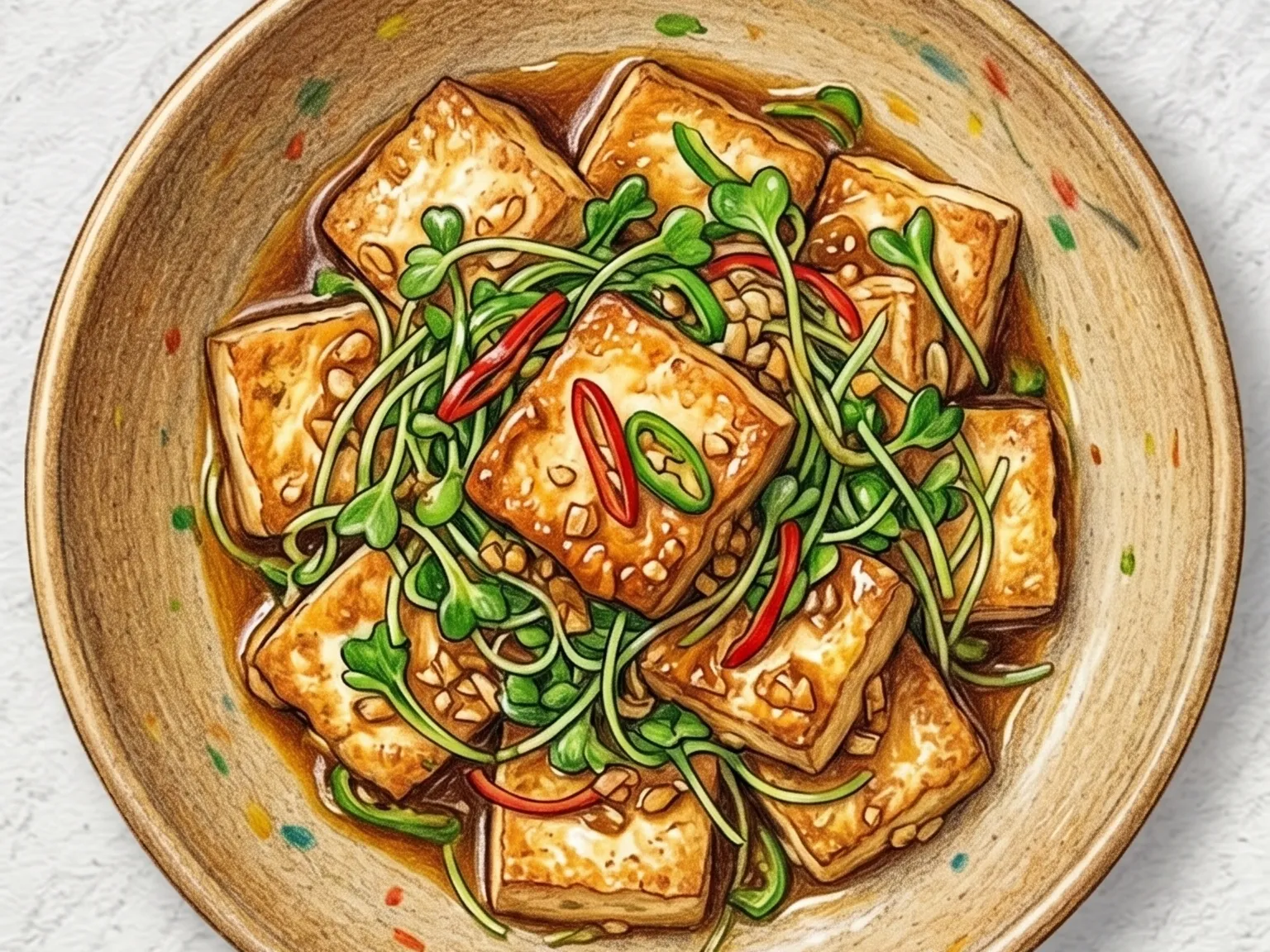
Kkaetsun dubu doenjang bokkeum pairs pan-seared firm tofu with perilla sprouts in a doenjang sauce. The tofu must be pressed dry with paper towels before it goes into the pan; residual moisture causes the oil to spit and prevents the surface from crisping. Dissolving the doenjang in water before adding it to the pan distributes the saltiness evenly and stops the paste from scorching against the hot surface. The doenjang coats the golden tofu pieces with a salty, earthy glaze, while perilla sprouts, far softer than mature perilla leaves, release a delicate perilla-sesame fragrance as they wilt into the sauce. The contrast between the crisp tofu edges and the just-wilted greens gives the dish its defining texture. Cheongyang chili cuts through the fermented weight of the doenjang with a clean, sharp heat that brightens the aftertaste. A final drizzle of perilla oil added off the heat brings the fragrance back to the surface before serving. When perilla sprouts are not available, mature perilla leaves cut into thick strips work as a direct substitute.

🏠 Everyday 🍱 Lunchbox
Prep 14min Cook 8min 2 servings
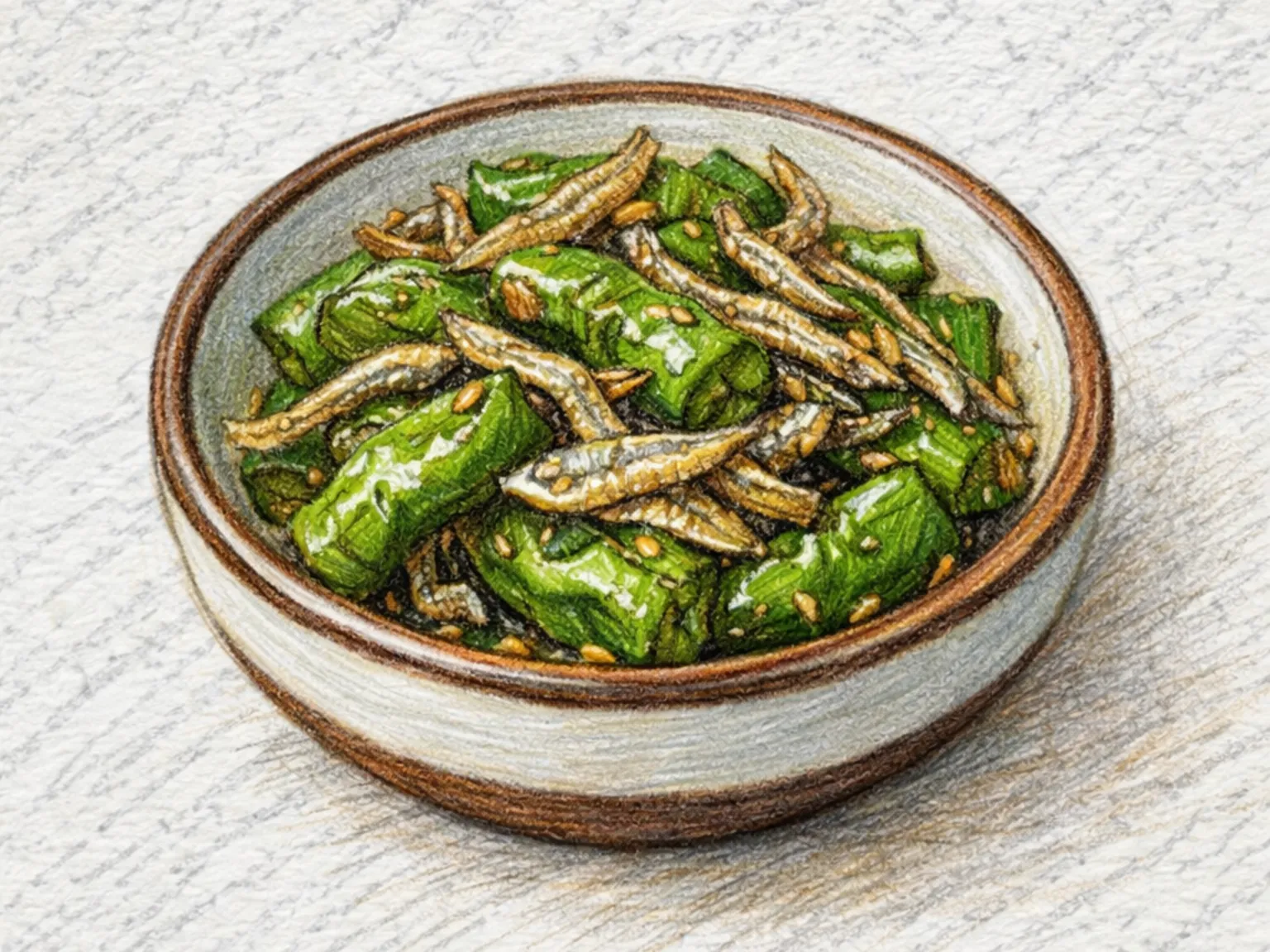
Korean Garlic Scape Anchovy Braise
Steamed Easy

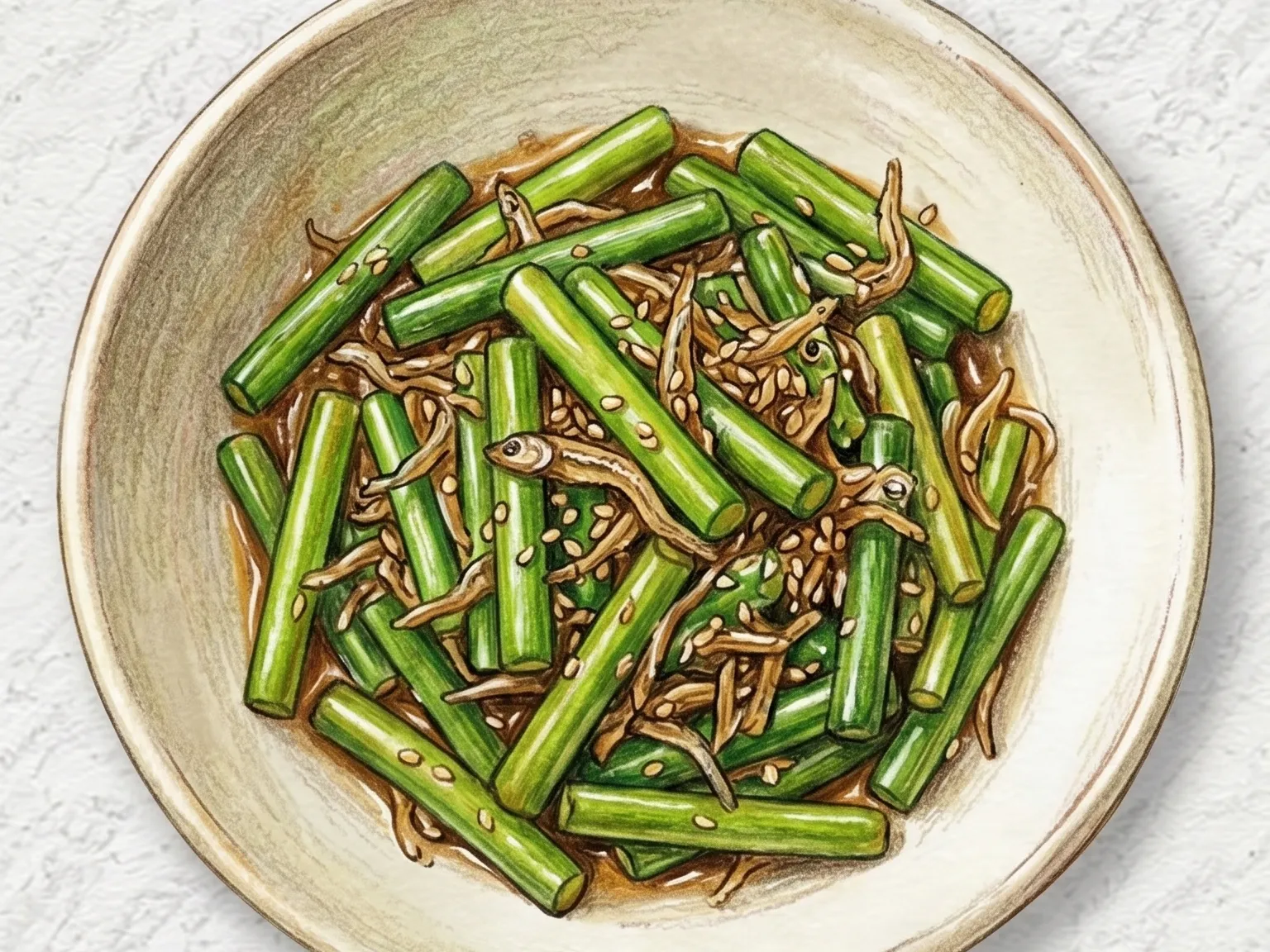
Korean Garlic Scape Anchovy Braise

Maneuljjong-myeolchi-jorim is a Korean pantry side dish of garlic scapes and small dried anchovies glazed in soy sauce, oligosaccharide syrup, and sesame oil. The anchovies are coated evenly as the seasoning heats around them, building a sweet-salty shell that deepens into nuttiness with each bite. Garlic scapes are cut into short pieces and stir-fried directly in the sauce without blanching, which keeps them snappy rather than soft. Oligosaccharide syrup holds its shine and moisture longer than plain sugar, and sesame oil is added only at the very end to preserve its aroma. The finished dish keeps for well over a week under refrigeration, making it a reliable weekly batch cook. It travels well in lunchboxes, and spooned over hot white rice the glaze soaks into the grains and brings the whole bowl together.

🏠 Everyday 🎉 Special Occasion
Prep 15min Cook 18min 4 servings
Korean Pickled Garlic Scapes
Kimchi Easy

Korean Pickled Garlic Scapes

Maneuljjong-jangajji is a preserved side dish of garlic scapes pickled in a boiled soy sauce, vinegar, and sugar brine. The preservation principle is identical to that of whole garlic jangajji, but the scape, meaning the flowering stalk of the garlic plant, is used instead of the bulb, and there is one crucial technique difference. The scapes are cut into 4 cm lengths, packed tightly into glass jars, and covered with the brine immediately while it is still boiling hot. The heat partially cooks the outer layer of each scape, which creates a clean, crisp snap when the scape is bitten, unlike the soft texture that results from the cold-pour method used for whole garlic. Whole black peppercorns included in the jar release their warmth and spicy aroma slowly into the liquid during the aging period, adding a dimension beyond the straightforward salt-and-acid base. The pickles are ready after a single day, but day three is when seasoning has penetrated to the center while the scapes still push back satisfyingly under the teeth. The brine can be drained, reboiled, and poured back over the scapes once during storage, which significantly extends shelf life by suppressing bacterial growth. On the Korean table, these sharp, vinegary pickles serve as a natural counterbalance to fatty meat dishes, cutting through richness and clearing the palate between bites.

🏠 Everyday 🍱 Lunchbox
Prep 15min Cook 8min 4 servings
Korean Seasoned Radish Greens
Side dishes Medium

Korean Seasoned Radish Greens

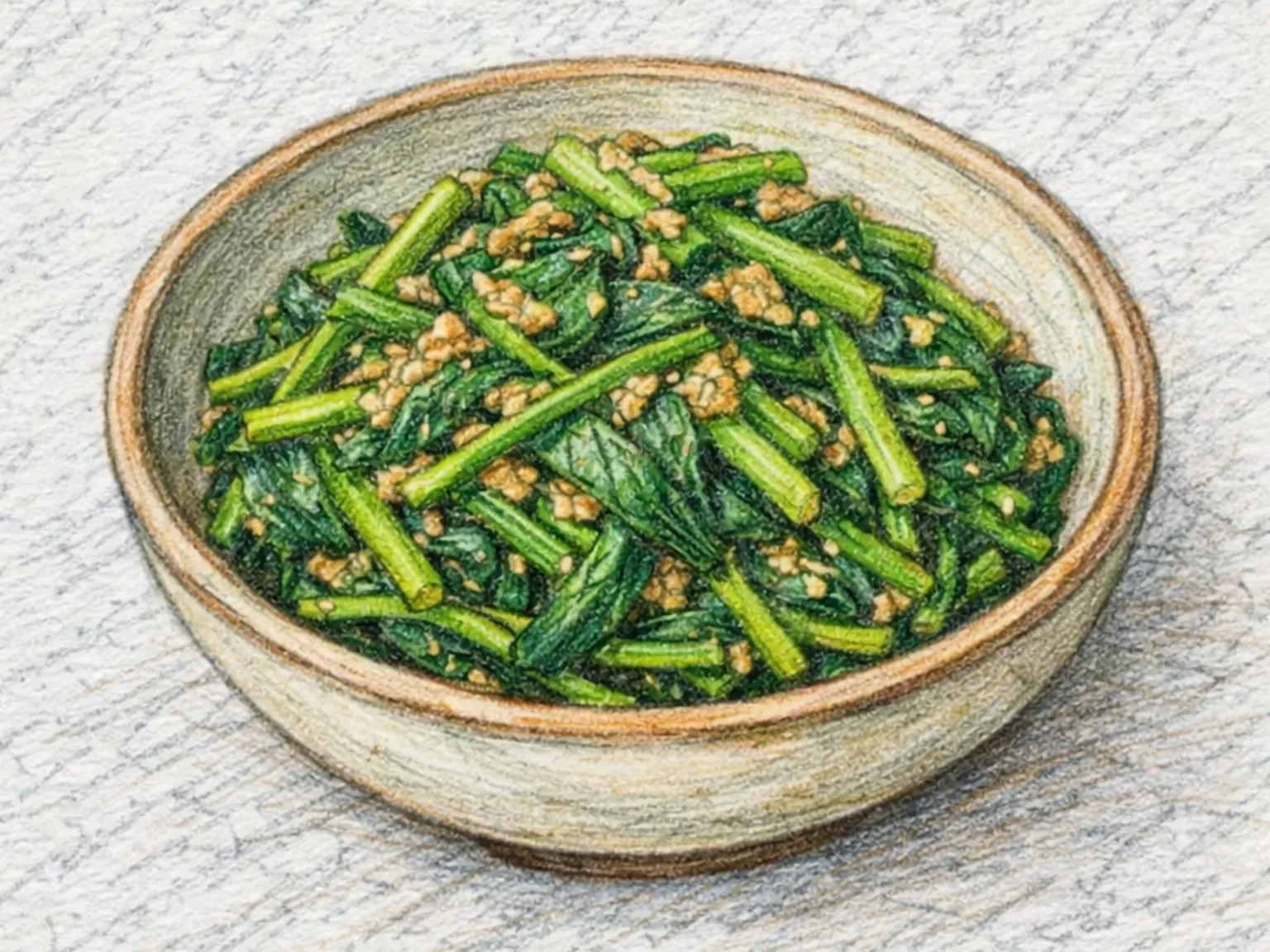
Mucheong-namul is a Korean banchan made from the leafy stems attached to daikon radish, blanched and dressed with doenjang and perilla oil. Unlike fully dried siraegi, fresh or semi-dried mucheong retains a grassy vitality that carries through to the finished dish. Radish greens emerge as a byproduct of the autumn kimjang harvest, when whole radishes are pulled from the ground, and rural Korean kitchens have long turned these tops into namul or hung them to dry for winter. Fresh mucheong requires at least five minutes of boiling to break down its tough stem fibers so they soften properly. A thorough rinse in cold water follows, washing away the bitter, astringent edge that develops during cooking. Seasoning with doenjang and soup soy sauce layers the fermented paste's earthy depth over the greens' faintly bitter, grassy character, creating a contrast that makes each bite more interesting than either ingredient alone. Perilla oil is preferred over sesame because its lighter, quieter fragrance complements the greens' natural flavor rather than overpowering it. Stirring in ground perilla seeds at the end thickens the dressing and wraps each strand of mucheong in a nutty coating, producing a noticeably deeper-flavored version than mucheong-namul made without them. A hearty, clean-tasting winter banchan tied to the rhythm of the radish harvest.

🏠 Everyday 🍱 Lunchbox
Prep 20min Cook 15min 4 servings
Korean Stir-Fried Shishito Peppers and Chicken Tenderloin
Stir-fry Easy

Korean Stir-Fried Shishito Peppers and Chicken Tenderloin

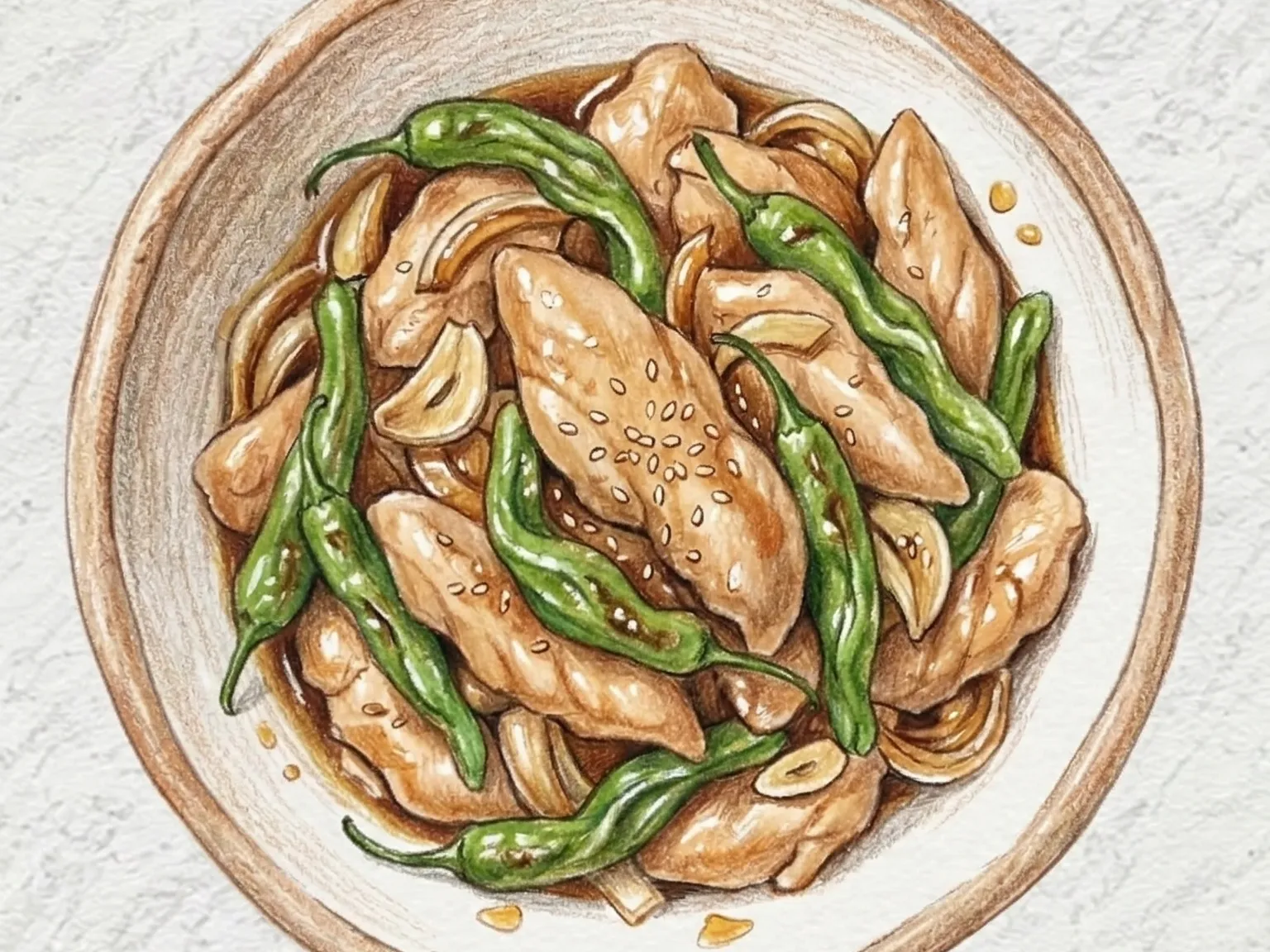
Kkwarigochu dak ansim bokkeum is a stir-fry of chicken tenderloin that has been marinated in soy sauce and cooking wine, cooked through first, then combined with shishito peppers and onion in a finishing sauce of soy sauce and oyster sauce. The tenderloin is prized for its low fat content and mild taste, and oyster sauce compensates by introducing fermented bivalve umami that keeps the seasoning from feeling thin. Scoring the shishito peppers lightly before they go into the pan lets the sauce penetrate the flesh while the skin stays intact, so each pepper holds its shape rather than splitting open. Chicken tenderloin firms up quickly when overcooked, so moving on to the next step the moment the exterior whitens and the center loses its translucency is the key to keeping the meat tender rather than dry. Finished with sesame oil and sesame seeds, the high protein density makes this a practical and satisfying lunchbox side dish.

🏠 Everyday 🍱 Lunchbox
Prep 15min Cook 12min 2 servings
Korean Soy-Braised Quail Eggs
Steamed Easy

Korean Soy-Braised Quail Eggs

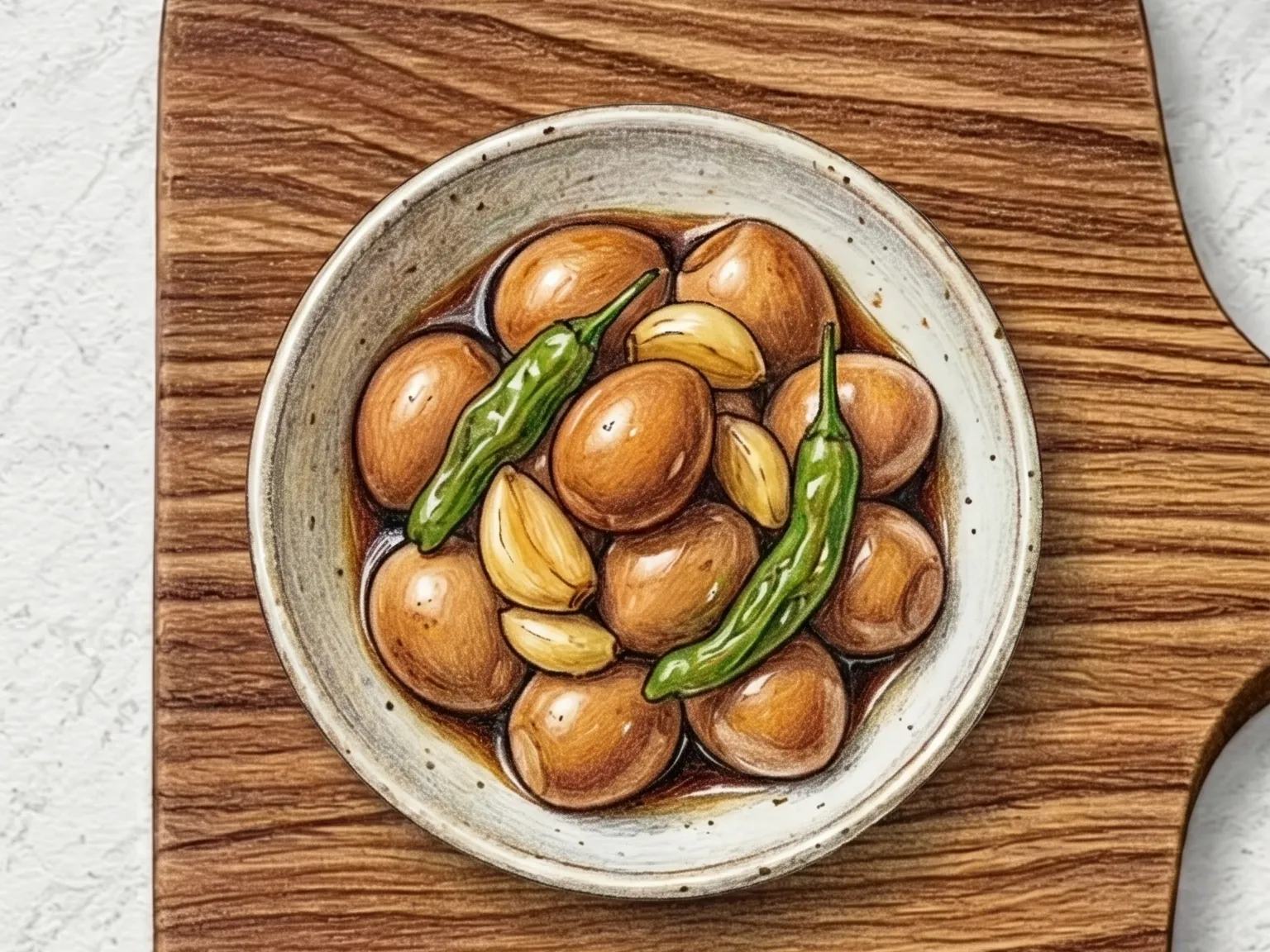
Mechurial-jangjorim is a Korean soy-braised quail egg dish simmered slowly with garlic cloves and shishito peppers in a seasoned soy sauce base. As the eggs steep in the braising liquid, the soy works its way through the egg white and gradually into the yolk, staining the exterior a deep mahogany brown and seasoning the interior evenly throughout. The braising liquid is built from a measured ratio of water, soy sauce, sugar, and cooking wine to keep the saltiness in check and the glaze balanced. Whole garlic cloves soften gently in the liquid and release a mellow, savory depth that enriches the overall flavor without sharpness. Shishito peppers are added partway through rather than at the start so they retain some snap and their mild green aroma, preventing them from going completely soft. The liquid is reduced until just a small amount remains, coating each egg in a glossy, concentrated glaze. Each egg is a single self-contained bite, which makes this banchan a staple in lunchboxes and a popular snack for children, and it remains one of the most recognizable everyday Korean side dishes.

🏠 Everyday 🎉 Special Occasion
Prep 20min Cook 25min 4 servings
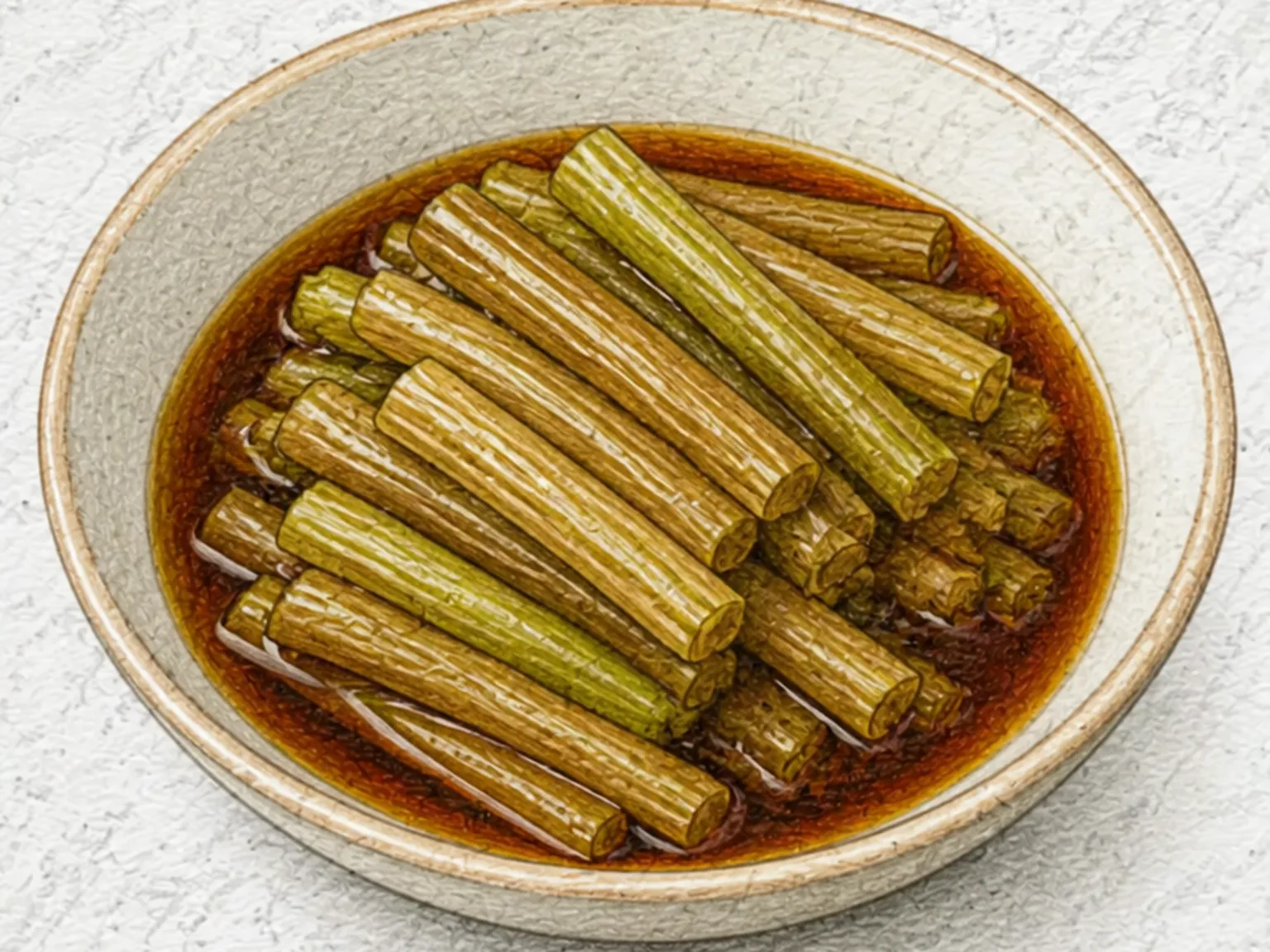
Butterbur Stem Jangajji
Kimchi Medium

Butterbur Stem Jangajji

Butterbur stem jangajji prepares 500 g stems by blanching and soaking them, then covers them with a hot soy, vinegar, and sugar brine for four servings. Pull the tough outer fibers down the length of each stem to remove them thoroughly. Blanch the peeled stems for 5 minutes, soak them in cold water for 1 hour to reduce their acrid taste, drain, and cut them into even 5 cm pieces. Thinly slice 50 g garlic and chop 30 g green chili. For the pickling liquid, combine 400 ml water, 300 ml soy sauce, 200 ml vinegar, 200 g sugar, and 5 g kelp. Boil for 5 minutes, checking that the sugar is fully dissolved. Pack the butterbur, garlic, and chili tightly into a glass jar that has been sanitized with boiling water and dried completely. Pour the brine over the vegetables while it is still hot, making sure the stems are submerged. Let the steam subside, close the lid, keep the jar at room temperature for one day, and then mature it in the refrigerator for two days. Using the brine hot rather than cooling it first is the recipe's method for retaining a firm bite. After maturation, use a clean utensil to remove only the portion needed.

🏠 Everyday
Prep 80min Cook 15min 4 servings
Korean Seasoned Dried Radish Strips
Side dishes Easy

Korean Seasoned Dried Radish Strips

Mumallaengi-muchim dresses rehydrated dried radish strips in a gochujang-based sauce - a Korean preservation banchan rooted in the pre-refrigeration practice of slicing winter radish and air-drying it in cold winds. Dehydration concentrates the radish's natural sugars and transforms its texture from crisp to chewy, creating a ingredient with more depth than the fresh root. Soaking time determines the outcome: twenty minutes in cold water softens the strips enough to be pleasant while retaining the springy chew that is the whole point of using dried radish. Over-soaking produces a limp, waterlogged result indistinguishable from fresh radish. The dressing blends gochujang, gochugaru, vinegar, sugar, garlic, and sesame oil into a sweet-sour-spicy balance, with vinegar playing a particularly important role - it adds brightness to the dried radish's concentrated, earthy flavor. After mixing, a ten-minute rest allows the sauce to permeate the porous fibers evenly. Because the finished banchan contains almost no free moisture, it travels exceptionally well in lunchboxes and keeps refrigerated for over a week.

🏠 Everyday 🍱 Lunchbox
Prep 20min 4 servings
Korean Stir-fried Anchovies with Shishito Peppers
Stir-fry Easy

Korean Stir-fried Anchovies with Shishito Peppers

Kkwarigochu myeolchi bokkeum is a Korean banchan of dried anchovies and shishito-style peppers cooked together and glazed with soy sauce and oligosaccharide syrup. The anchovies are dry-toasted first in an unoiled pan over medium heat until their moisture evaporates and the fishiness reduces, then set aside. Oil goes into the pan next and the kkwarigochu peppers are fried over medium-high heat until blistered and darkened in spots, which develops a slightly bitter, charred edge that adds character to the finished dish. The anchovies return to the pan along with the peppers, soy sauce is added for the base seasoning, and then the heat is reduced before the oligosaccharide syrup goes in. Adding the syrup over reduced heat is the step that most often goes wrong: high heat scorches the syrup almost immediately, preventing the glaze from forming and leaving a bitter residue instead. Over low heat, the syrup coats the anchovies and peppers in a thin, shiny layer as it slowly reduces. Sesame oil and whole sesame seeds are stirred in at the end for fragrance and texture. The finished dish layers the crunchy, salty anchovies against the syrup's gentle sweetness, with the peppers providing mild heat that prevents the flavor from becoming cloying. Stored in a sealed container in the refrigerator, the banchan keeps well for several days.

🏠 Everyday 🍱 Lunchbox
Prep 10min Cook 9min 4 servings
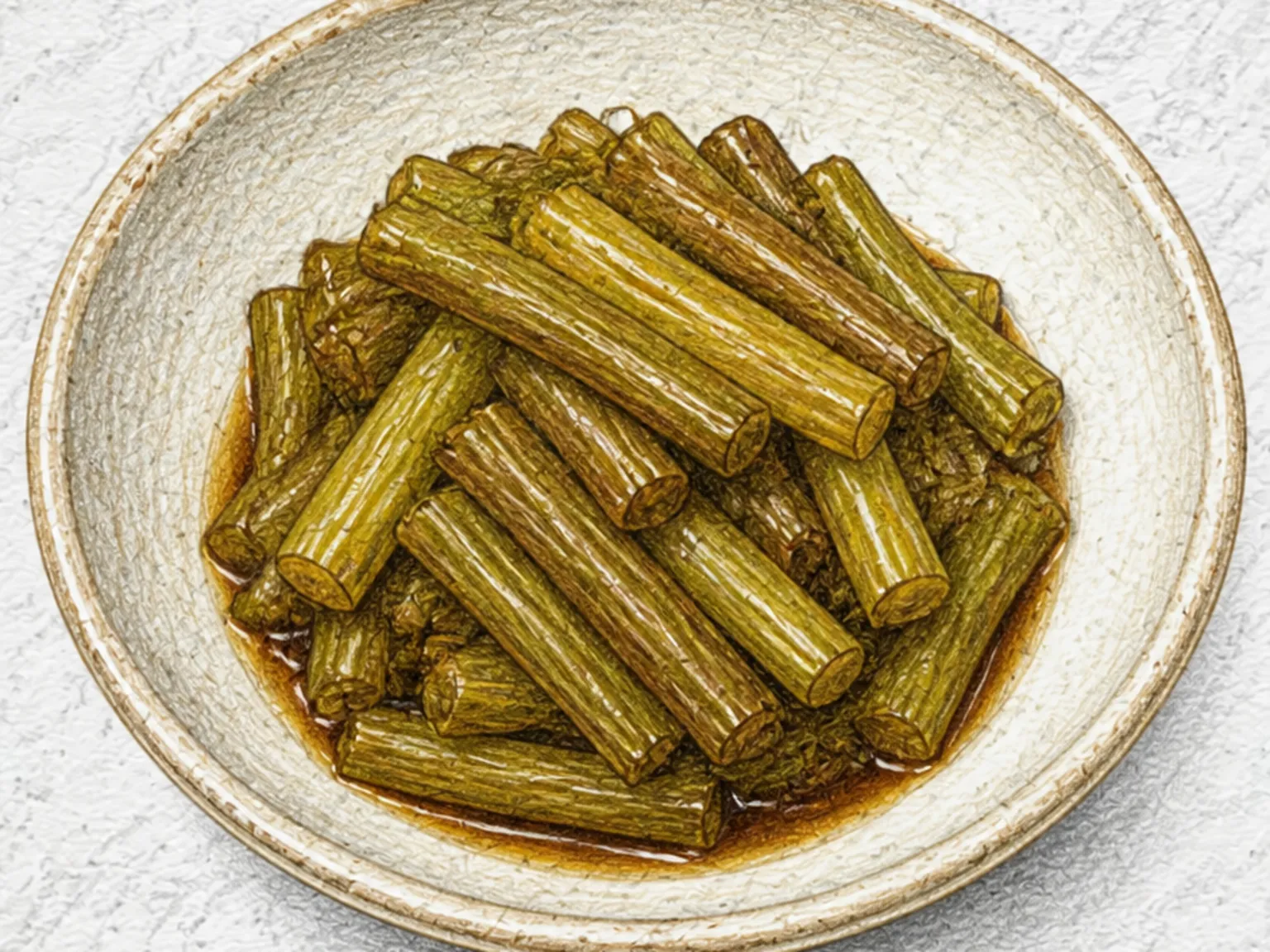
Braised Butterbur Stems
Steamed Easy

Braised Butterbur Stems

Braised butterbur stems prepares 400 g stems by blanching and soaking them, then reduces them in kelp broth with soy sauce, cooking syrup, and garlic for four servings. Remove the tough fibrous skin, blanch the stems for 5 minutes, and soak them in cold water for 1 hour to draw out their acrid taste. Squeeze out the water firmly and cut the stems into 5 cm pieces. Heat 15 ml sesame oil in a pot and add the prepared butterbur. Stir-fry at medium heat for 2 minutes, allowing surface moisture to evaporate. Add 200 ml kelp broth, 45 ml soy sauce, 15 ml cooking syrup, and 10 g minced garlic, stirring to distribute the seasoning. Cover the pot and reduce the liquid slowly over low heat so it can penetrate the stems. Turn the pieces only once or twice during this stage. When just a shallow layer of sauce remains across the bottom, add 10 g sliced red chili and 5 g sesame seeds, mix gently, and stop the heat. Do not continue until the pot is dry; finishing while a little reduced sauce remains leaves the stems coated and glossy instead of scorched. The initial blanch and full cold-water soak are necessary preparation steps, not part of the braising time.

🏠 Everyday
Prep 80min Cook 25min 4 servings

About Side dishes

Great banchan balances seasoning with the natural flavor of each ingredient. Sesame oil, perilla oil, soy sauce, and fermented pastes work together to pack deep flavor into every small serving.