Street food Recipes
137 recipes. Page 6 of 6
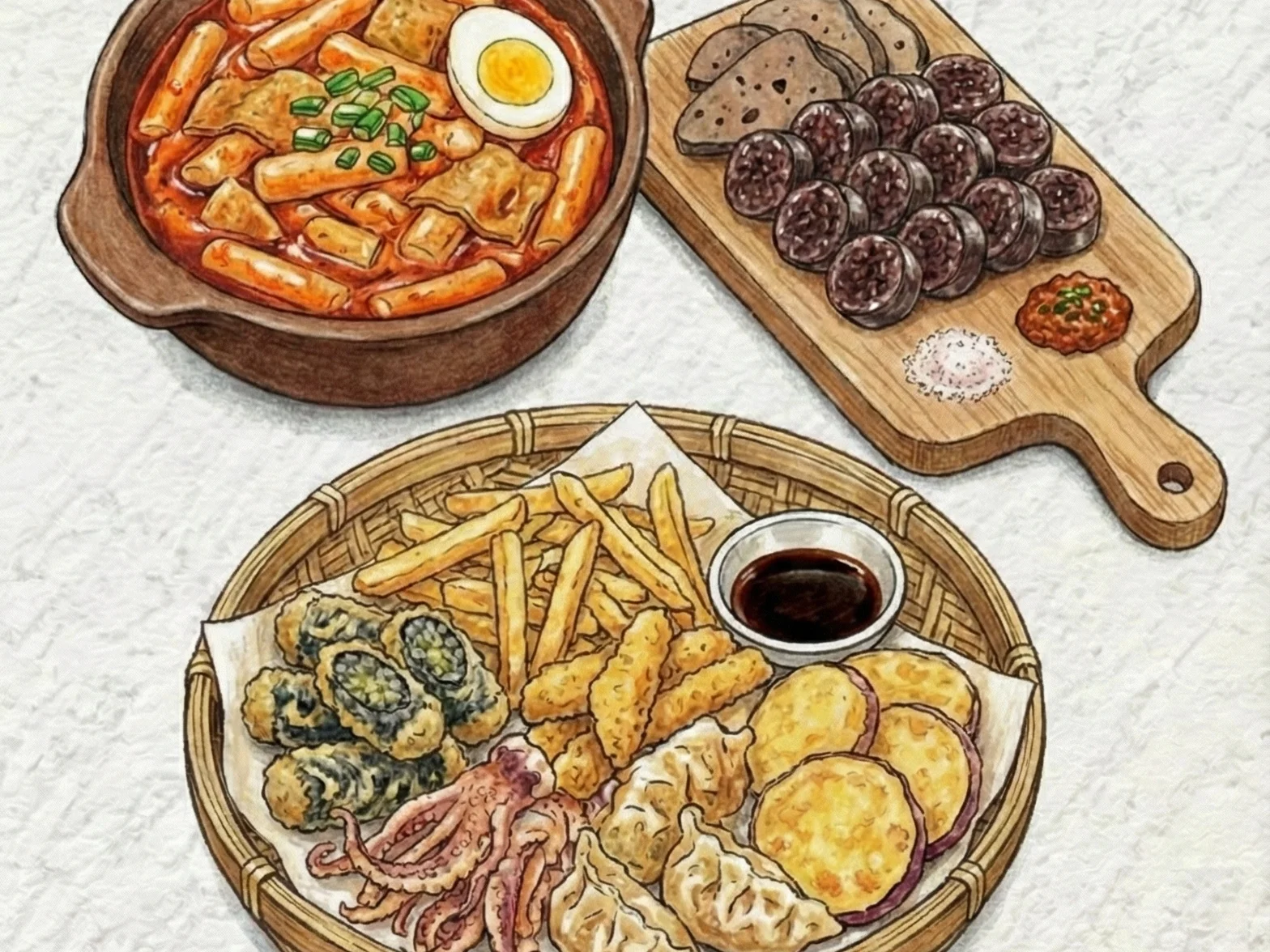
Korean street food (bunsik) covers beloved snacks like tteokbokki (spicy rice cakes), sundae (blood sausage), fish cakes, and fried treats. These are the foods Koreans grew up eating at market stalls and snack shops after school - simple, affordable, and deeply satisfying.
A sweet-spicy gochujang sauce for tteokbokki, crispy gimmari (seaweed rolls), and steaming fish-cake broth - bunsik proves that the best flavors often come from the simplest ingredients. Every recipe here can be made at home with ease.
Korean Tornado Potato (Spiral-Cut Deep-Fried Whole Potato Skewer)
Tornado potato is a Korean street snack made by spiral-cutting a whole potato on a skewer, stretching it into a continuous helix, and deep-frying at 170 degrees Celsius until golden. The key to an unbroken spiral is rotating the potato slowly and evenly while cutting so each pass of the knife connects to the last. Soaking the cut potato in salted water for five minutes pulls out surface starch, which results in a noticeably crispier exterior after frying. The thin outer edges of the stretched spiral fry up chip-like and crunchy, while the thicker central section retains a fluffy, starchy interior. This contrast of textures on a single skewer is what makes the format appealing beyond the novelty. Seasoning should be applied immediately after frying while the surface is still hot and slightly oily, since the coating adheres poorly once the potato cools. Cheese powder, paprika, and salt are the standard options, but buldak seasoning or herb blends are popular variations. Keeping the potato firmly secured on the skewer and working flat on a cutting board makes the spiral-cutting step significantly easier for first-timers.
Korean Tornado Sausage (Spiral-Cut Batter-Fried Sausage Skewer)
Tornado sosiji is a Korean street snack of sausages spiral-cut on a skewer at an angle, spread open, coated in frying batter, and deep-fried at 170 degrees Celsius. The batter fills the gaps between the spiral cuts, so each section fries into its own crispy layer wrapped around the sausage. The salty, smoky flavor of the sausage is amplified by the fried coating, and dipping in ketchup and mustard adds a tangy counterpoint that lightens the oily richness. Cutting the spiral slowly while rotating the sausage is essential to keep the helix intact and achieve the signature fanned-out shape.
Korean Peanut Bread (Mold-Baked Peanut-Studded Street Snack)
Ttangkong-ppang is Korean peanut bread baked in a shaped mold from a batter of flour, eggs, milk, and melted butter mixed with roughly chopped roasted peanuts. The natural oils in the peanuts infuse the batter with a toasted, nutty richness, and each peanut chunk provides a crunchy interruption in the soft crumb. Cooking on medium-low heat and flipping regularly develops a thin crust on both sides while butter keeps the interior moist. Sugar supplies sweetness and a pinch of salt balances against the nuttiness, resulting in a flavor profile that stays engaging bite after bite.
Korean Spicy Rice Cakes (Gochujang Braised Chewy Tteok with Fish Cake)
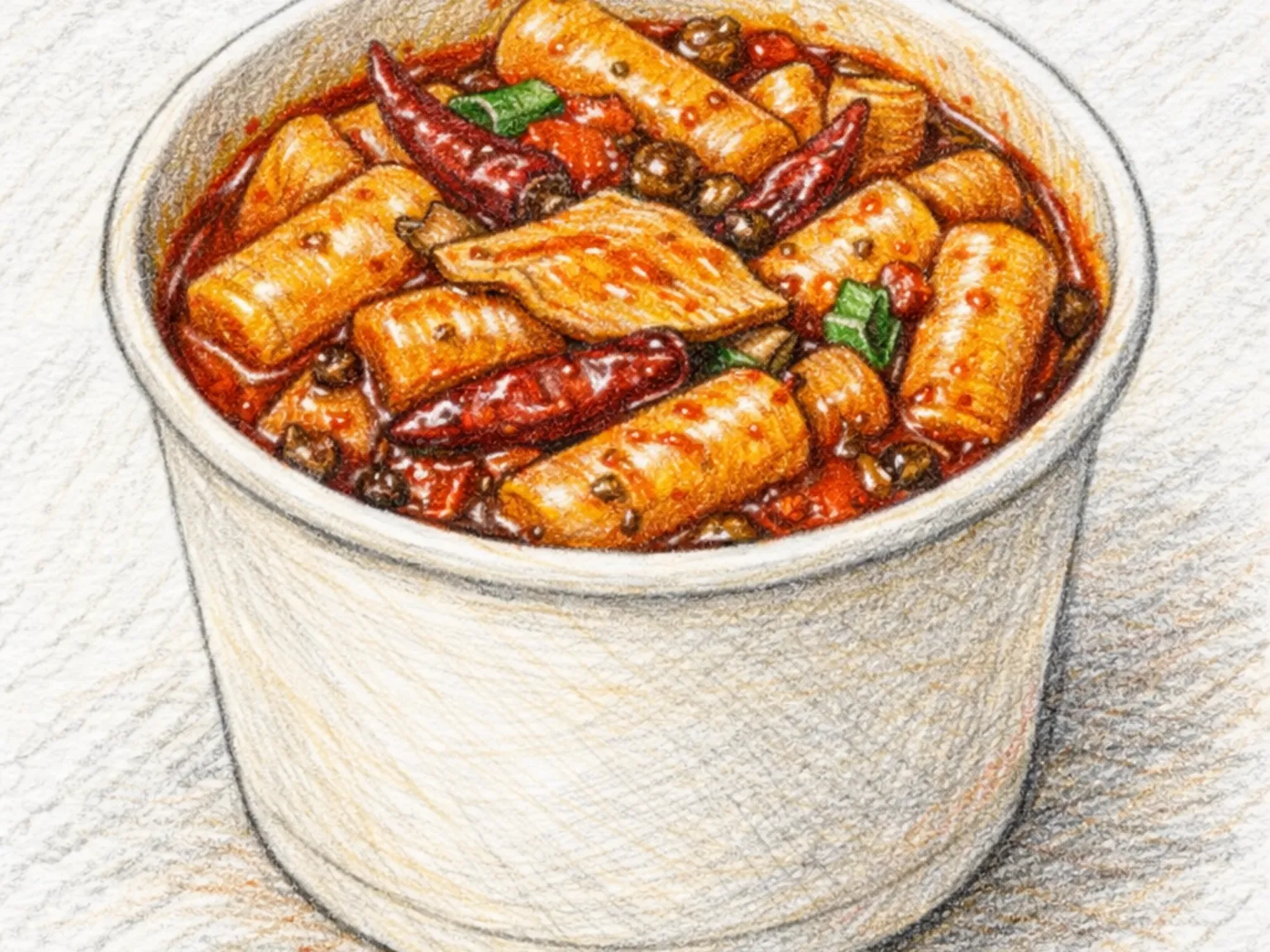
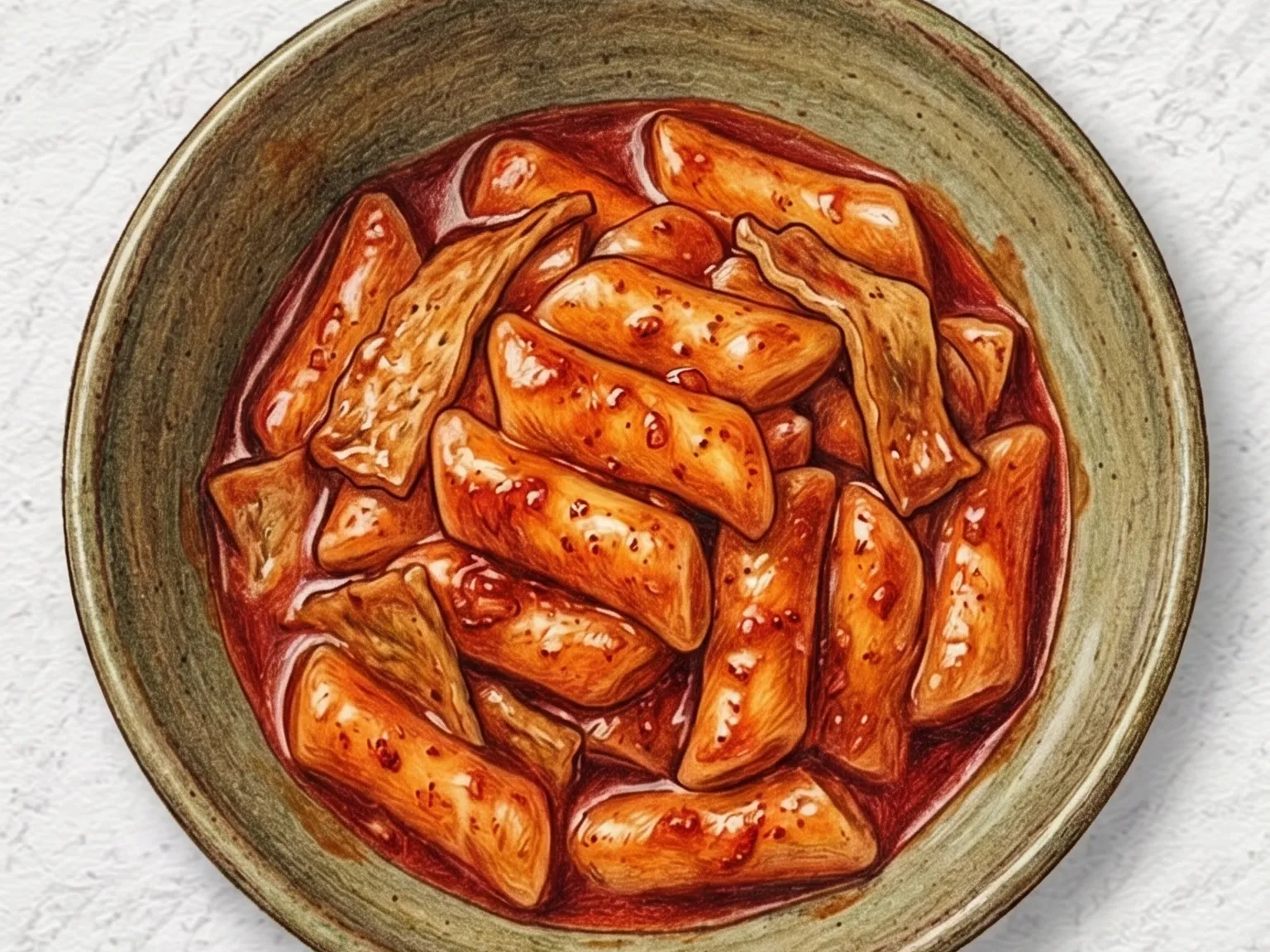
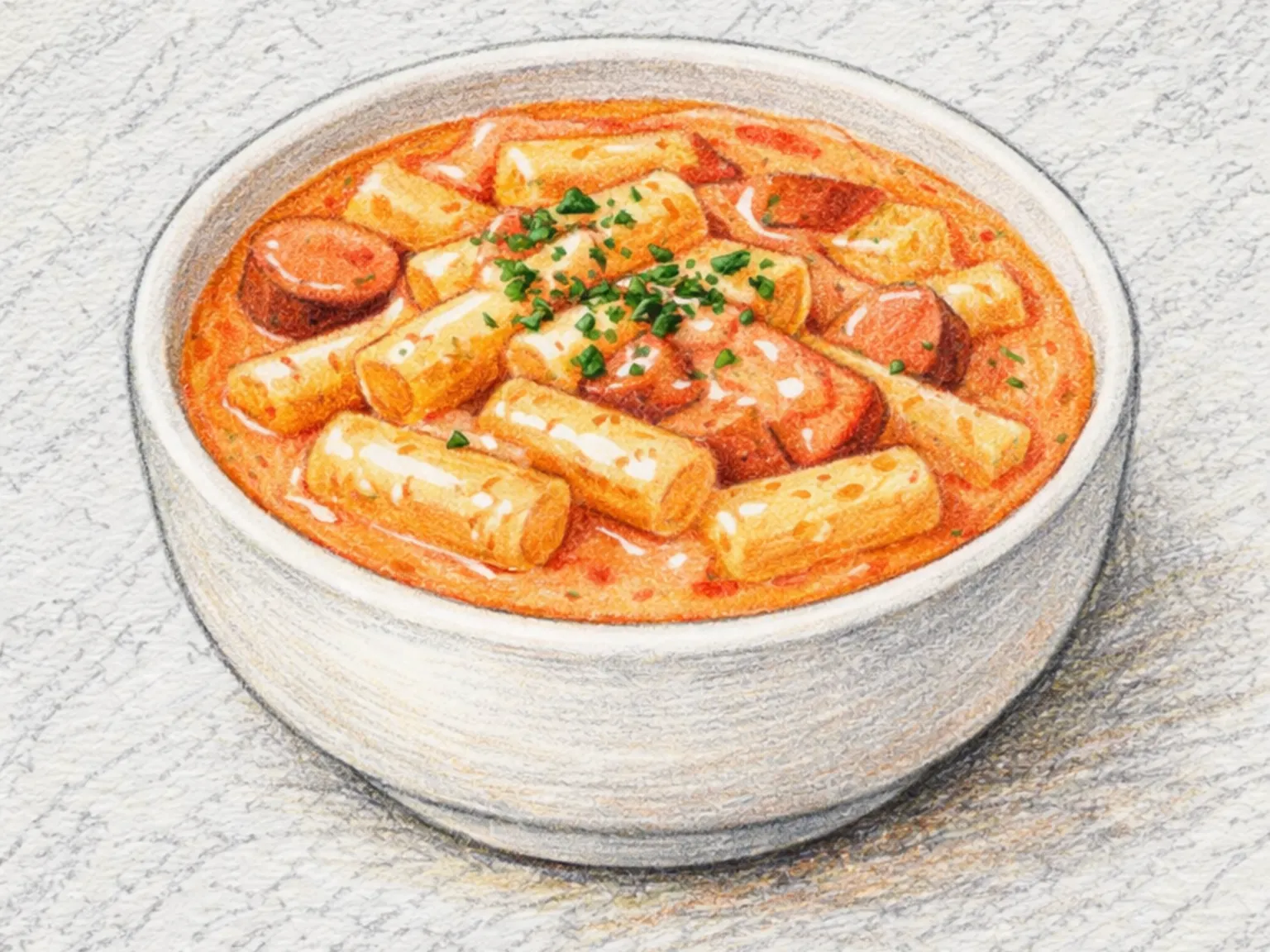
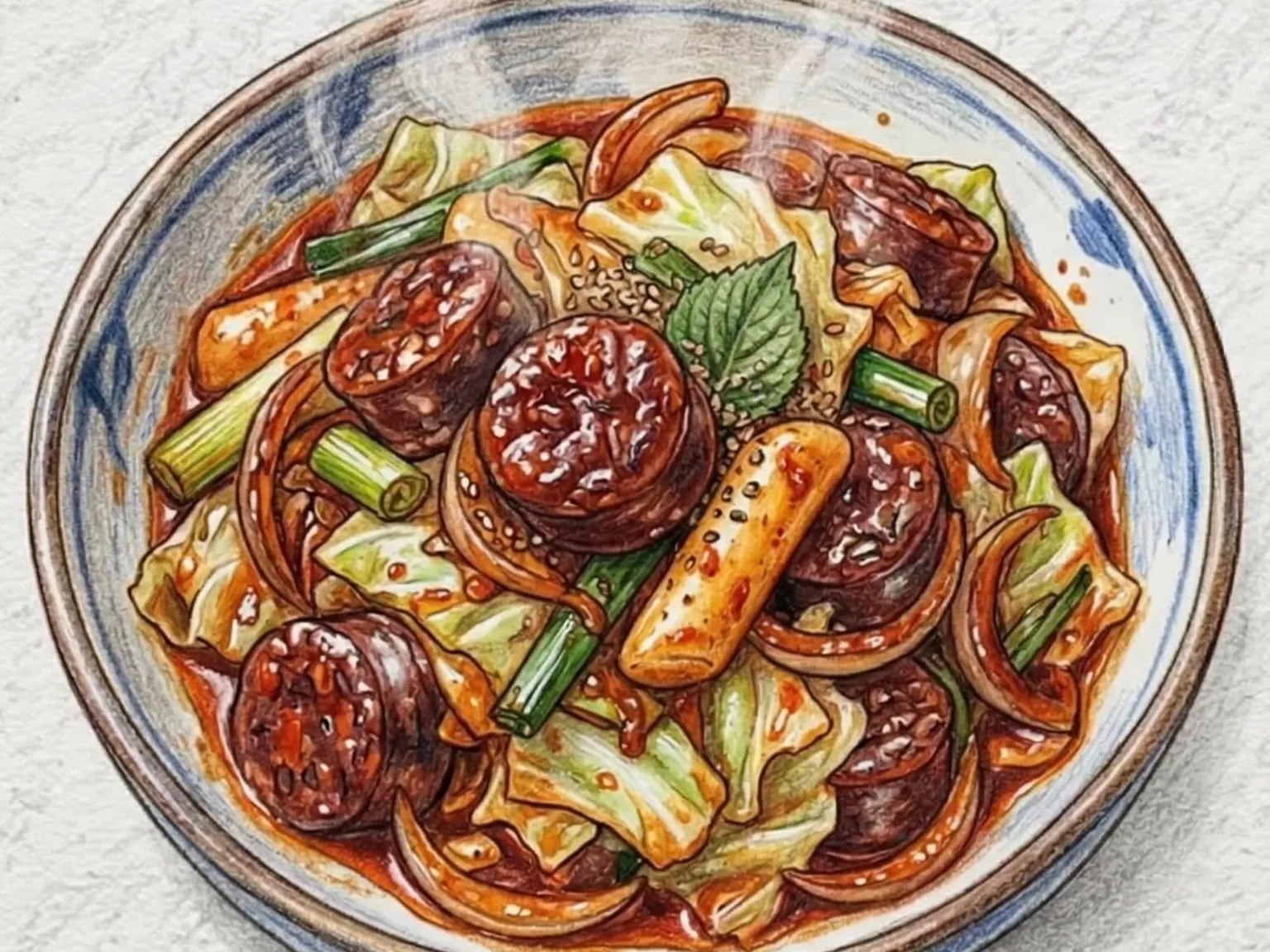
Simmering cylindrical rice cakes and thin fish cake sheets in a spicy base of gochujang, red chili flakes, sugar, and soy sauce creates a sticky, glossy coating. The starch released from the rice cakes as the liquid reduces acts as a natural thickener, ensuring the sauce clings tightly to each ingredient. While the fish cakes soak up the heat from the surrounding liquid, they release a subtle seafood essence into the pan, and the addition of green onions at the final stage provides a crisp contrast to the underlying sweetness. Preparing a stock from dried anchovies and kelp rather than using plain water establishes a solid savory foundation for the entire dish. It helps to start with only half the seasoning paste, adding the remainder gradually to manage the final intensity and texture as the volume decreases. If the liquid evaporates too quickly, adding small amounts of water prevents the sugars in the sauce from scorching before the rice cakes reach the desired softness. For rice cakes that have been chilled or feel exceptionally firm, a short soak in cool water or a quick blanch in boiling water helps them cook through evenly. Serving the finished dish with boiled eggs, blood sausage, or assorted fried items replicates the setup found at traditional street stalls. This recipe scales easily into different versions by incorporating heavy cream or tomato-based sauces, resulting in the rose and cream variations often found in modern snack shops.
Korean Street Burger (Soy-Garlic Beef Pork Patty in a Bun)
Tteokgalbi burger takes the flavors of traditional Korean grilled short-rib patties and fits them into a handheld bun format. Ground beef and pork are seasoned with soy sauce, sugar, minced garlic, and sesame oil, then shaped into flat patties and pan-seared over medium heat. Finely diced onion worked into the meat traps moisture during cooking, keeping the interior juicy even as the surface builds a caramelized crust from the soy-sugar marinade. That thin, browned exterior replicates the glossy lacquer that distinguishes proper tteokgalbi from a plain beef patty, delivering a sweet-savory depth without additional condiments. A toasted bun spread with mayonnaise and lined with crisp lettuce gives the rich patty a cool, crunchy counterpart. A small drizzle of soy glaze over the top just before serving intensifies the lacquered finish and ties the whole sandwich back to its Korean origins.
Korean Grilled Patty Skewers
Tteokgalbi-kkochi are skewered patties made from a thoroughly kneaded mixture of ground beef, ground pork, soy sauce, sugar, garlic, and sesame oil, shaped into ovals and threaded onto wooden skewers before grilling. A small amount of starch mixed into the meat and at least three full minutes of kneading are what give the mixture enough tackiness to stay firmly anchored to the skewer throughout cooking; skip either step and the patties slide or crack apart on the grill. Moistening your hands with water while shaping prevents the mixture from sticking and helps produce smooth, even ovals. Grilling over medium heat first develops a golden Maillard crust on both sides, then lowering the heat and continuing to cook allows the interior to reach the center without the outside drying out, concentrating the meaty flavor at the core. A thin brushing of soy-and-corn-syrup glaze applied just before flipping and again right before removing from the heat builds a glossy, sweet-salty lacquer on the exterior. Served alongside tteokbokki sauce or ketchup, the skewers carry the unmistakable energy of Korean street food stalls.
Korean Grilled Rice Cake Skewers
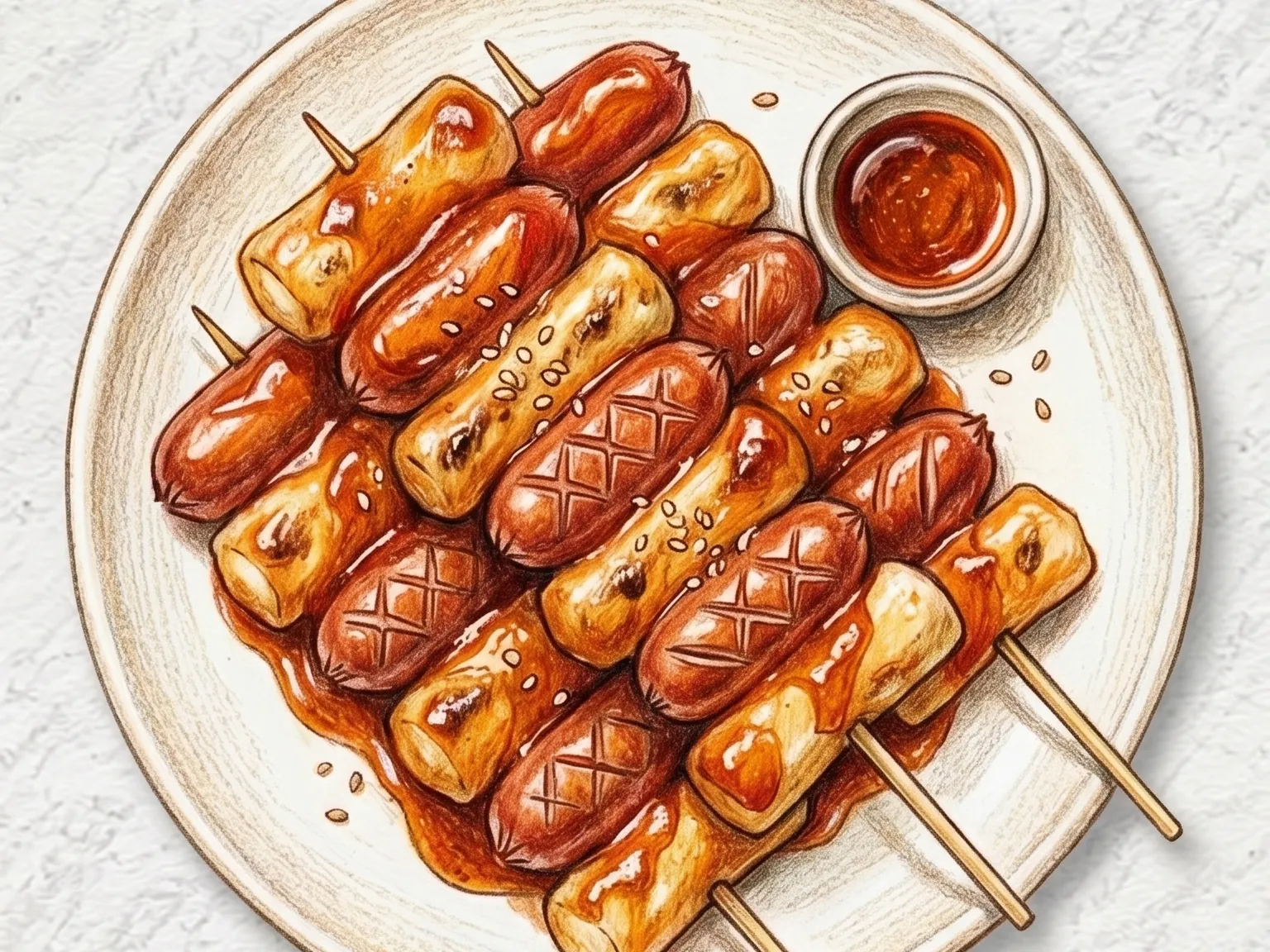
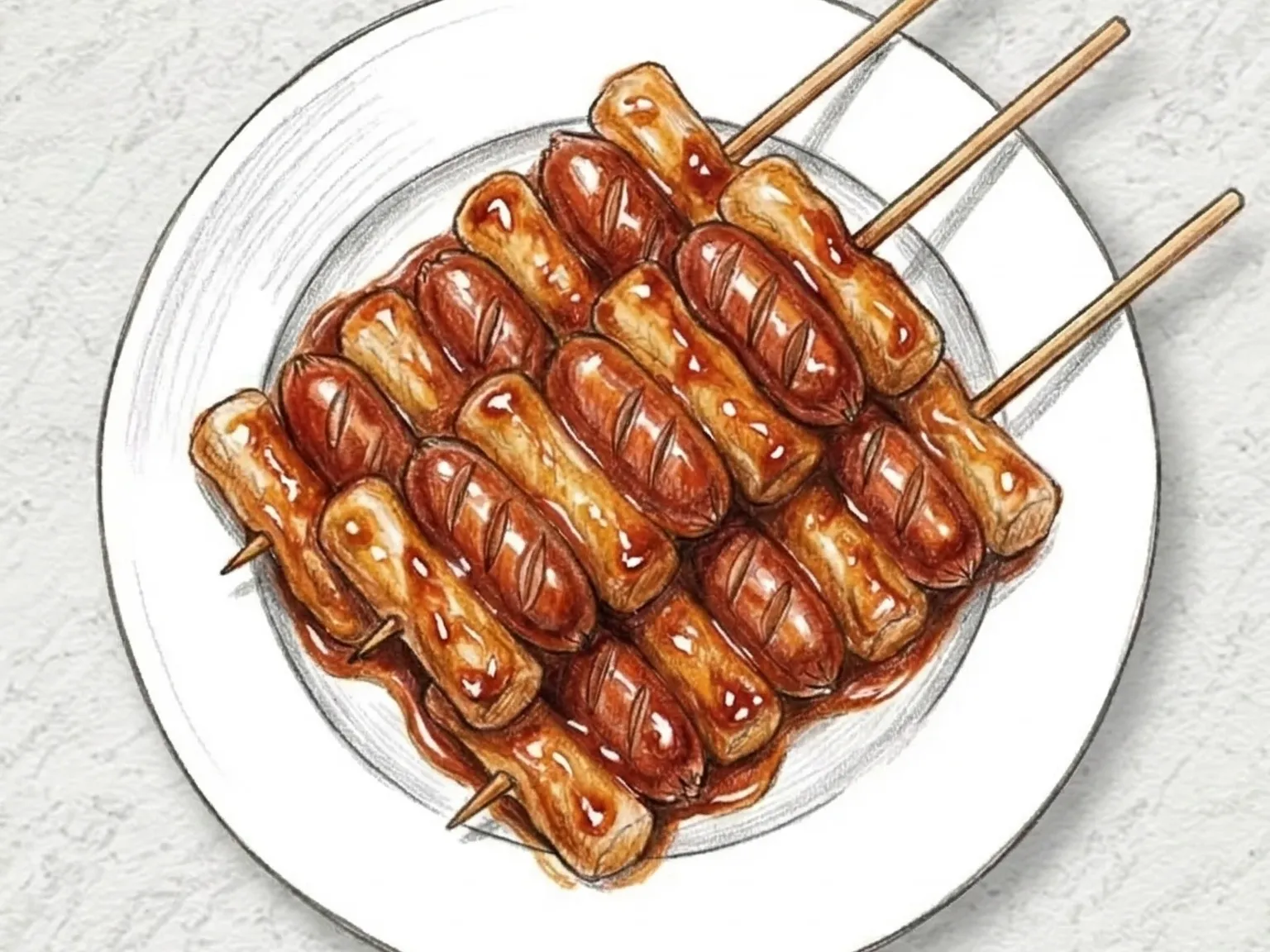
Tteokkochi are pan-seared rice cake skewers glazed in a thick gochujang-based sauce that builds depth through a combination of ketchup, oligosaccharide syrup, soy sauce, and minced garlic simmered down until the sauce reduces and concentrates. The rice cakes are first seared in a thin layer of oil until a lightly crisp shell forms across the surface before any sauce is applied, creating a textural contrast between the outer crust and the soft, chewy interior that defines what a good tteokkochi should feel like. The ketchup introduces a mild tomato acidity that tempers and rounds the raw heat of the gochujang, while the syrup adds sweetness without the grainy texture of sugar. After the sauce is brushed on, rolling the skewers over low heat for another minute fuses the glaze to the rice cake surface so it adheres firmly and does not peel off as the skewers cool. Adjusting the ratio of ketchup to syrup shifts the balance between sweetness and acidity, making it straightforward to tailor the sauce to individual preference. Making the sauce in a larger batch and storing it separately saves time on repeat preparations.
Korean Tuna Kimchi Gimbap
Tuna-kimchi gimbap rolls together drained canned tuna, stir-fried kimchi, and mayonnaise inside seasoned rice and roasted seaweed sheets. Stir-frying the kimchi for two minutes drives off excess liquid and concentrates its fermented tang into a deeper, more savory flavor. Perilla leaves layered directly on the rice add a herbal, slightly minty fragrance that offsets the richness of the tuna-mayo filling. A light brush of sesame oil on the finished roll preserves the seaweed's crispness while adding a final nutty aroma to every slice. Matching tuna and cooked kimchi in a one-to-one ratio keeps the salt and umami in balance, and adding just enough mayonnaise to bind the filling prevents the rice from turning soggy during rolling.
Korean Tuna Mini Gimbap (Addictive Bite-Sized Tuna Mayo Seaweed Rolls)
Tuna mayak gimbap are bite-sized rolls made by cutting seaweed sheets in half, spreading a thin layer of sesame-oil-seasoned rice, and filling with tuna-mayo, pickled radish, sauteed carrot, and blanched spinach. Draining the canned tuna thoroughly before mixing with mayonnaise prevents sogginess while keeping the filling creamy. The pickled radish provides a sharp crunch that cleanses the palate between each piece, and the lightly sauteed carrot brings a touch of natural sweetness. Their miniature size ensures every ingredient registers in a single bite, delivering a compact burst of balanced flavor.
Mixed Korean Tempura
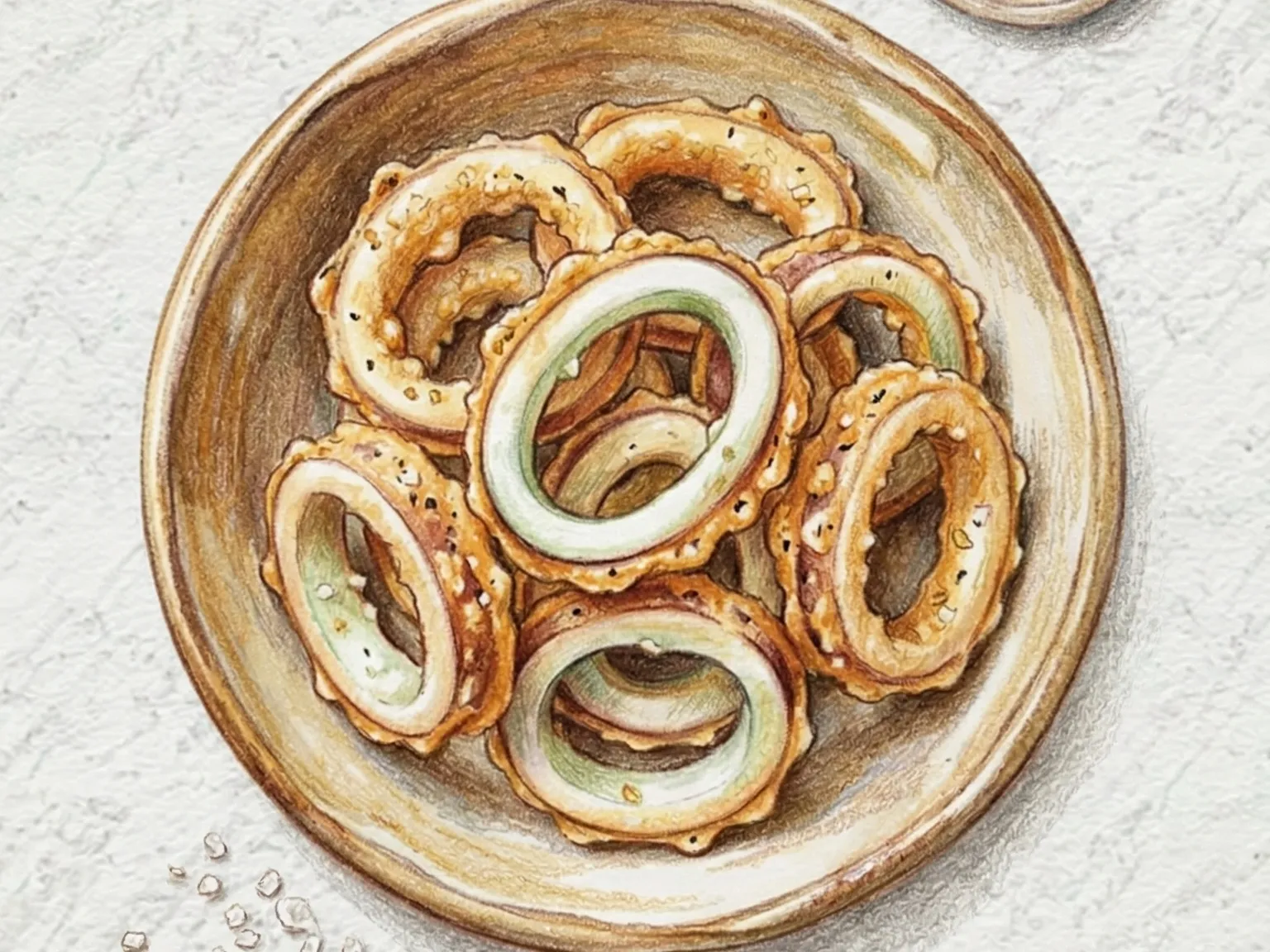
Modeum twigim is an assorted Korean tempura platter featuring sweet potato, squid, shrimp, onion, and carrot dipped in a light batter of frying powder mixed with cold water, then deep-fried at 170 degrees Celsius until crisp. Keeping the water cold and mixing minimally prevents gluten development, yielding a thin, shattering crust rather than a heavy coating. Each ingredient brings its own character: sweet potato offers starchy sweetness, squid and shrimp contribute oceanic umami, and onion and carrot release their natural moisture and fragrance as they fry. Because each ingredient has a different density and water content, maintaining a steady oil temperature is essential so every piece cooks through at the center while staying crisp at the surface. Served with a small bowl of soy sauce, the platter lets the clean frying flavor and the individual taste of each ingredient come through without any additional seasoning.
Korean Vegetable Bibim Mandu
Yachae-bibim-mandu combines pan-fried or air-fried dumplings with raw shredded cabbage, lettuce, and cucumber, all tossed in a tangy-spicy dressing of gochujang, vinegar, sugar, and sesame oil. Soaking the vegetables briefly in cold water and draining them well ensures maximum crispness, and tossing half the sauce with the greens first lets the seasoning penetrate evenly. The hot dumplings are placed on top just before serving so their fried shells stay intact against the moisture underneath. Drizzling the remaining sauce over everything ties the dish together with layers of crunch from the wrapper, snap from the vegetables, and a bright, vinegar-lifted heat from the dressing.
Korean Vegetable Gimbap (Colorful Veggie Seaweed Rice Roll)
Yachae gimbap is a vegetable-focused Korean seaweed rice roll filled with blanched spinach, sauteed carrot, braised burdock root, pickled radish, and egg omelet strips, all wrapped in sesame-oil-seasoned rice. Each vegetable is prepared separately to preserve and highlight its own distinct character: spinach is dressed with sesame oil and salt after blanching, carrot is stir-fried to draw out its natural sweetness, and burdock root is slow-braised in soy sauce and sugar to develop a deep savory-sweet depth that nothing else in the roll can replicate. Pickled radish adds a tart, satisfying crunch that contrasts with the soft egg strips, and the combination of six or more individually seasoned ingredients creates both visual variety in the cross-section and complexity in every bite. Draining every filling thoroughly and cutting them all to a uniform diameter is the practical key to a roll that stays tight, slices cleanly, and keeps the seaweed from turning soggy.
Korean Vegetable Dumplings
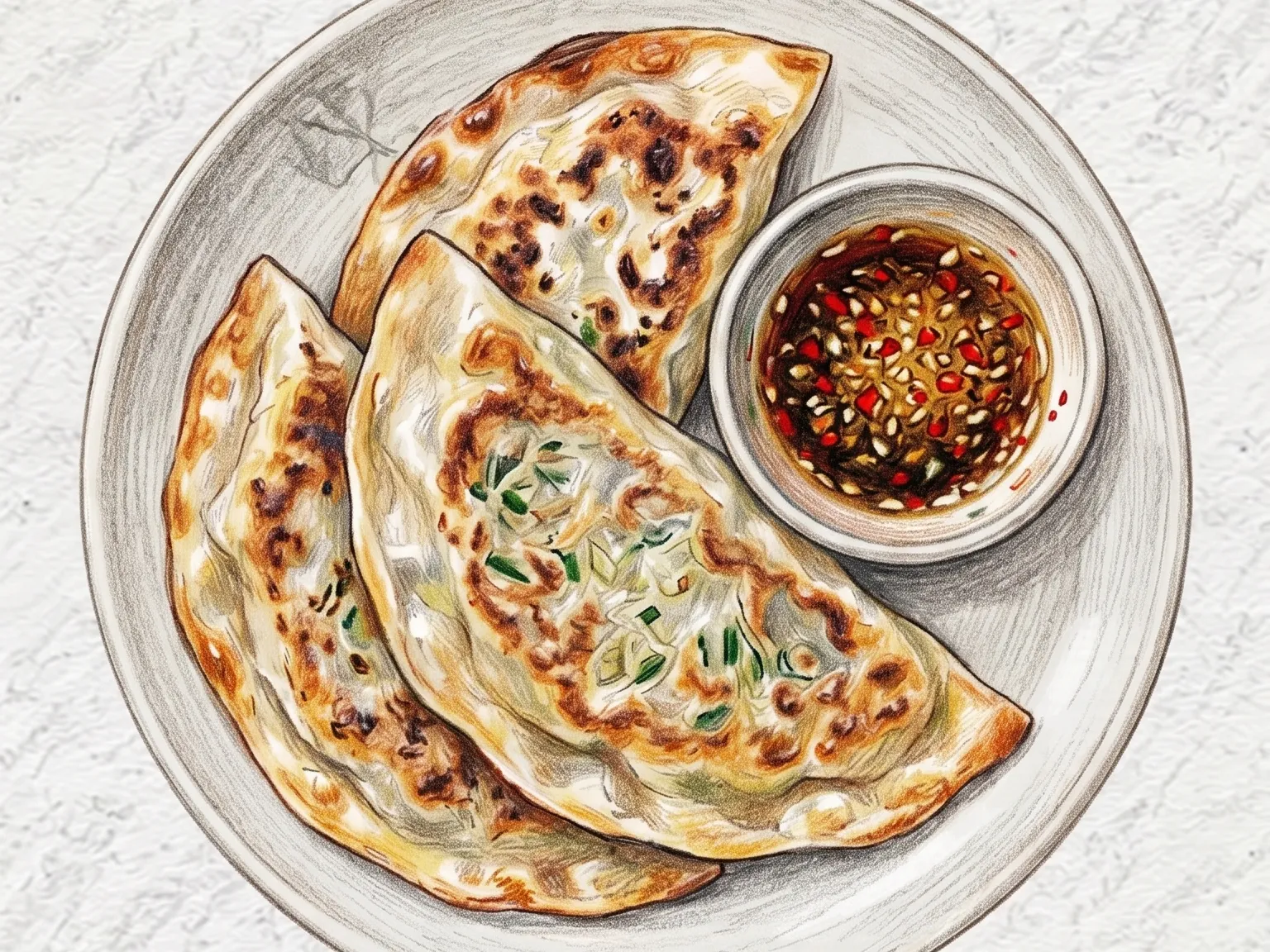
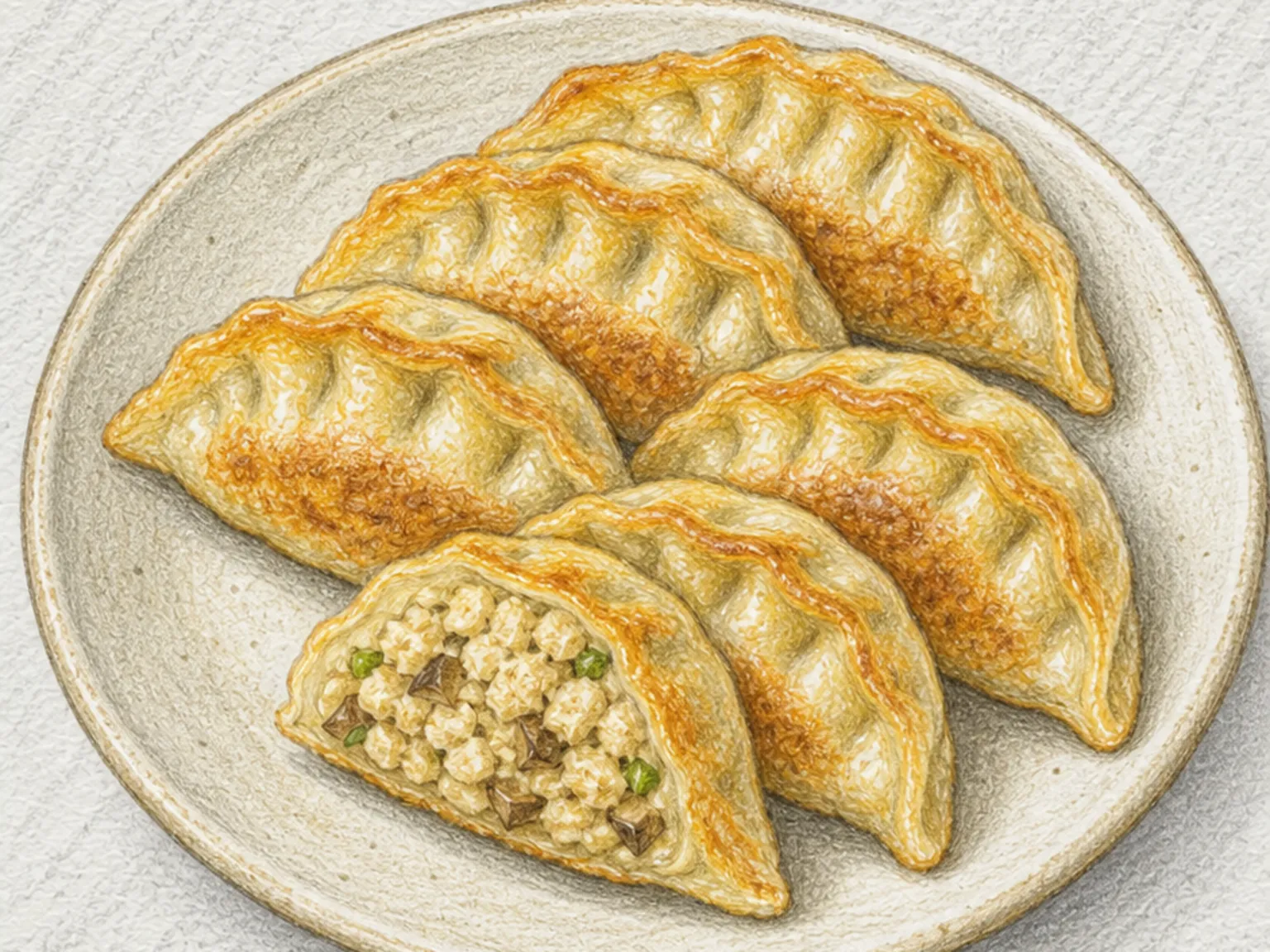
Yachae-mandu are Korean vegetable dumplings filled with finely chopped cabbage, garlic chives, rehydrated glass noodles, and crumbled firm tofu, seasoned with soy sauce, sesame oil, and minced garlic. Squeezing all moisture from the tofu through a clean cloth and salting the cabbage before pressing it dry are both essential steps that prevent the wrappers from bursting during cooking. The glass noodles, cut short before going into the filling, distribute a springy chew throughout each bite rather than clumping in one place. Garlic chives stand in for green onions and bring a pungent, grassy aroma that gives the filling its character without any meat. Pan-frying over medium heat creates a thin, golden crust along the bottom of each dumpling while the upper half stays soft and slightly moist, so every bite delivers a contrast between crisp and tender. Leaving enough border around the filling when sealing the edge prevents blowouts during cooking and keeps the shape intact through to the table.
Korean Rice Puff Gangjeong
Ssal-gangjeong is a traditional Korean confection made by binding puffed rice, roasted peanuts, sunflower seeds, and black sesame in a syrup of rice malt and sugar, then pressing the mixture into a mold to set. Controlling syrup temperature is essential: heating too high makes the bars rock-hard once cooled, so stopping when the syrup forms soft threads keeps the final texture crisp yet breakable. The airy crunch of puffed rice contrasts with the firm bite of whole nuts, while black sesame adds a lingering toasty undertone. Scoring the slab before it fully cools produces clean cuts, and storing in an airtight container preserves the crispness for several days.
Yaki Onigiri (Japanese Soy-Glazed Grilled Rice Balls)
Yaki onigiri are Japanese grilled rice balls prepared using freshly cooked rice that has been lightly seasoned with salt. The rice grains are shaped into triangles or rounds while they remain warm and pliable, as the grains lose their natural binding ability once they cool and lose their moisture. During the shaping process, pressure must be applied with even distribution across the rice to prevent the grains from becoming a dense and compacted mass. This careful handling ensures that the interior of the rice ball maintains a soft texture with each individual grain remaining distinct after the grilling process is complete. The cooking method involves pan-grilling the rice balls using a small amount of sesame oil over a medium-low flame. This specific heat level is necessary to allow the starch on the surface of the rice to caramelize at a slow pace, resulting in a thin and crackling crust while the center of the onigiri remains moist. It is important to let the rice balls sit undisturbed in the pan for three to four minutes on each side before they are turned. This waiting period allows the outer layer to set properly and prevents the rice from tearing or sticking to the pan when it is time to flip them. A glaze made from a combination of soy sauce, mirin, and sugar is applied to the surface in several thin coats. Brushing the glaze on in multiple light passes, rather than applying a large amount of the liquid at the start, prevents the sugar content from burning or charring. This technique creates a deep savory flavor and a lacquered sheen on the exterior of the rice. The finished onigiri have a savory and slightly sweet profile, with edges that become chewy where the glaze has concentrated during the cooking process. A narrow strip of nori seaweed is often wrapped around the base of the rice ball to provide a salty element that balances the glazed exterior. When served with miso soup and pickled radish, these grilled rice balls function as a light meal.
Yakisoba Pan (Noodle Bread)
A staple of Japanese street food culture, Yakisoba-pan combines a toasted, buttered hot dog bun with a filling of stir-fried egg noodles seasoned with yakisoba and soy sauce. Shredded cabbage, onions, and carrots start in the pan over high heat for exactly two minutes before the noodles are added. This timing ensures the vegetables remain crisp and provide a textural contrast to the soft noodles rather than becoming limp during the cooking process. As the yakisoba sauce hits the hot metal, it caramelizes quickly to wrap every noodle strand in a glossy, sweet-savory glaze. The act of spreading butter on the interior of the bun and giving it a quick toast serves a functional purpose beyond flavor. This butter layer acts as a moisture barrier, preventing the sauce from soaking into the bread and keeping the bun from turning soggy as it sits. The subtle richness of the butter bridges the gap between the savory noodle filling and the soft crumb of the bun. Sprinkling dried parsley over the top introduces a mild herbal scent that balances the heavy, concentrated sauce. For a burst of acidity, a small amount of beni shoga pickled ginger is tucked into the noodles to cleanse the palate. Spreading a layer of Japanese mayonnaise inside the bun alongside the butter creates an additional creamy texture. Softening the noodles in hot water before they hit the pan prevents clumping and allows for easier separation during the stir-frying stage.
Korean Sweet Spicy Dakgangjeong
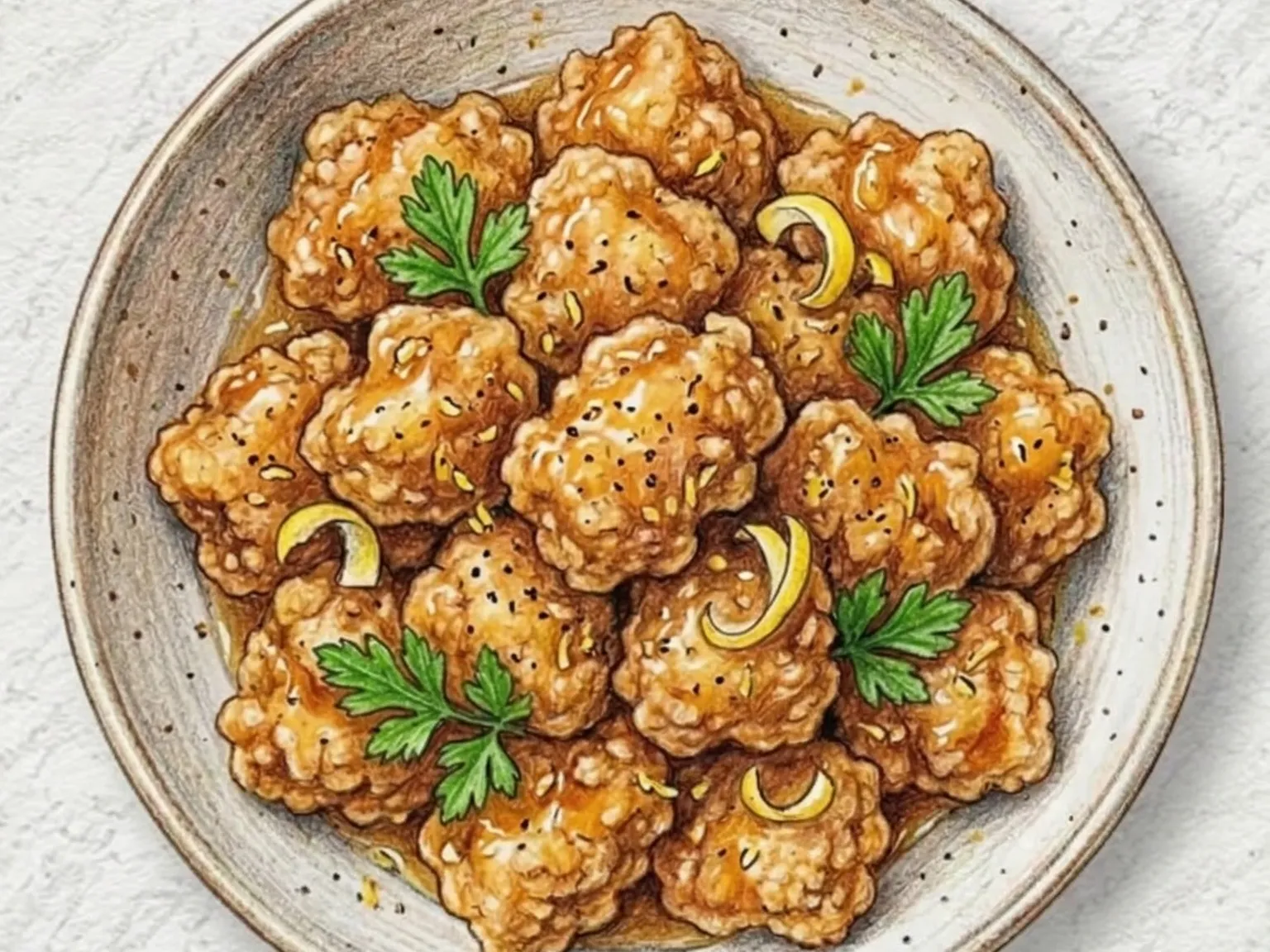
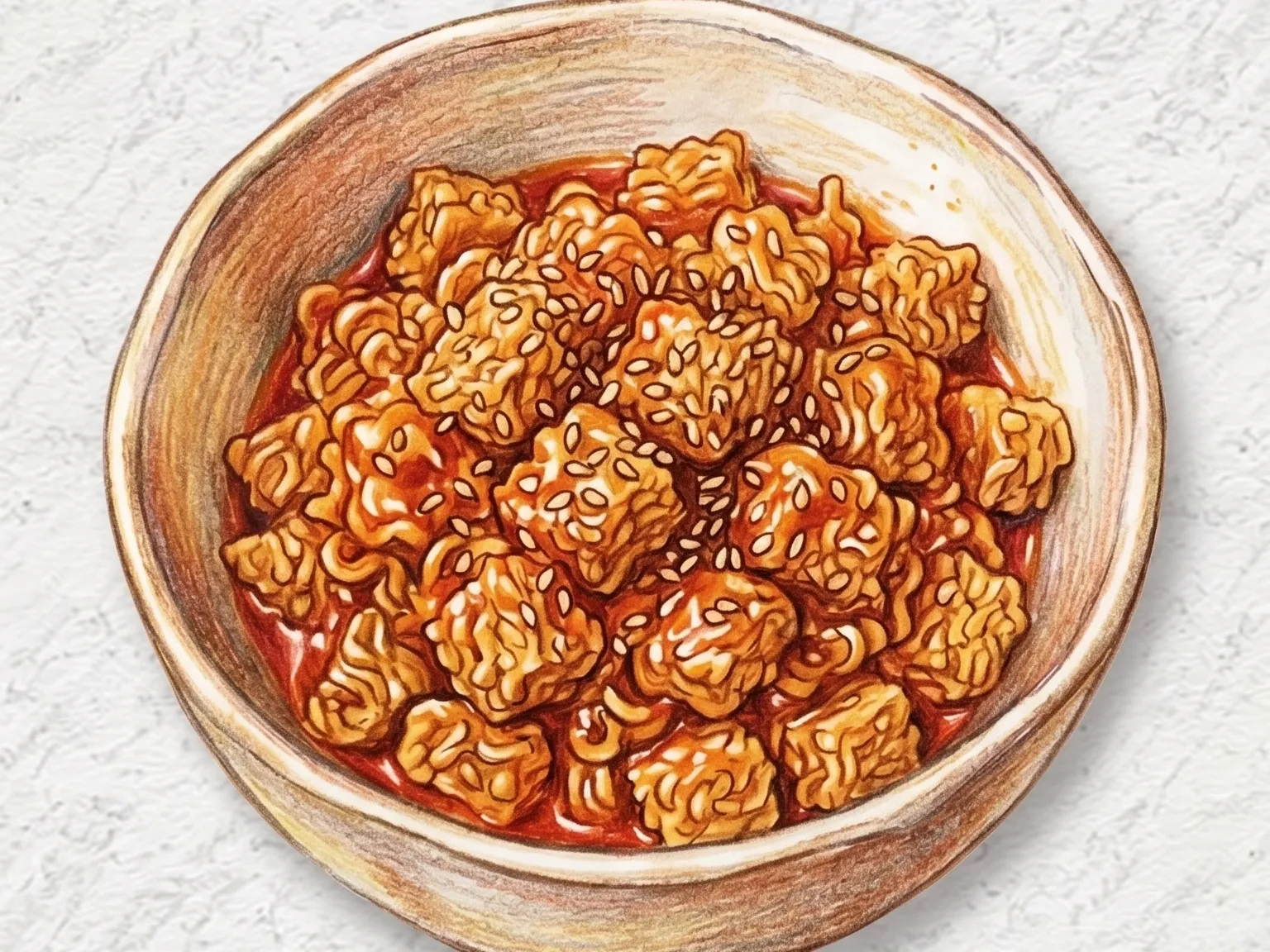
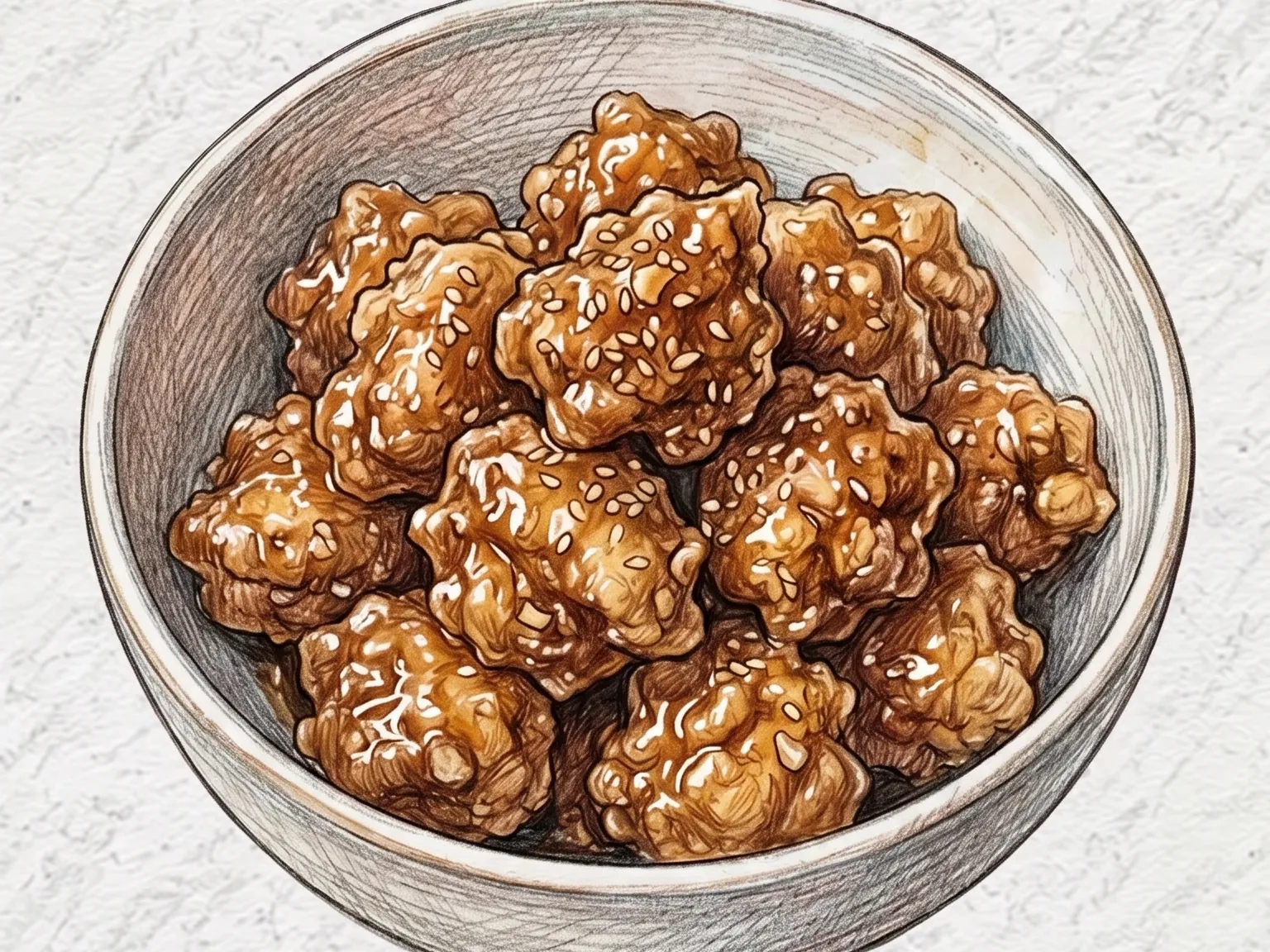
Yangnyeom dakgangjeong is Korean sweet-spicy fried chicken made by cutting boneless thigh meat into bite-size pieces, dredging them in potato starch, and running them through a two-stage fry. The first fry at 170 degrees Celsius cooks the meat through; the second fry at 185 degrees drives off the residual moisture the crust absorbed during the first pass, hardening the exterior into a shell that can withstand sauce tossing without collapsing. The glaze is a reduction of gochujang, gochugaru, corn syrup, and soy sauce, simmered down until the mixture is thick enough to coat a spoon without dripping off. Tossing the finished chicken in the hot glaze must happen off the heat and within twenty seconds, because the steam trapped between sauce and crust will turn the coating soggy if the process drags on. When done correctly, the result is a glossy, sticky exterior that crackles audibly at first bite even after the dish has cooled to room temperature, surrounding thigh meat that stays juicy inside.