Salads Recipes
213 recipes. Page 8 of 9
Salads are light, healthy dishes built around fresh vegetables and fruits. From classic Caesar and Greek salads to Korean-style tofu salads and grain bowls, the range is broad. The dressing makes all the difference - and homemade versions are fresher and free of additives.
Roasted Mushroom Perilla Potato Salad
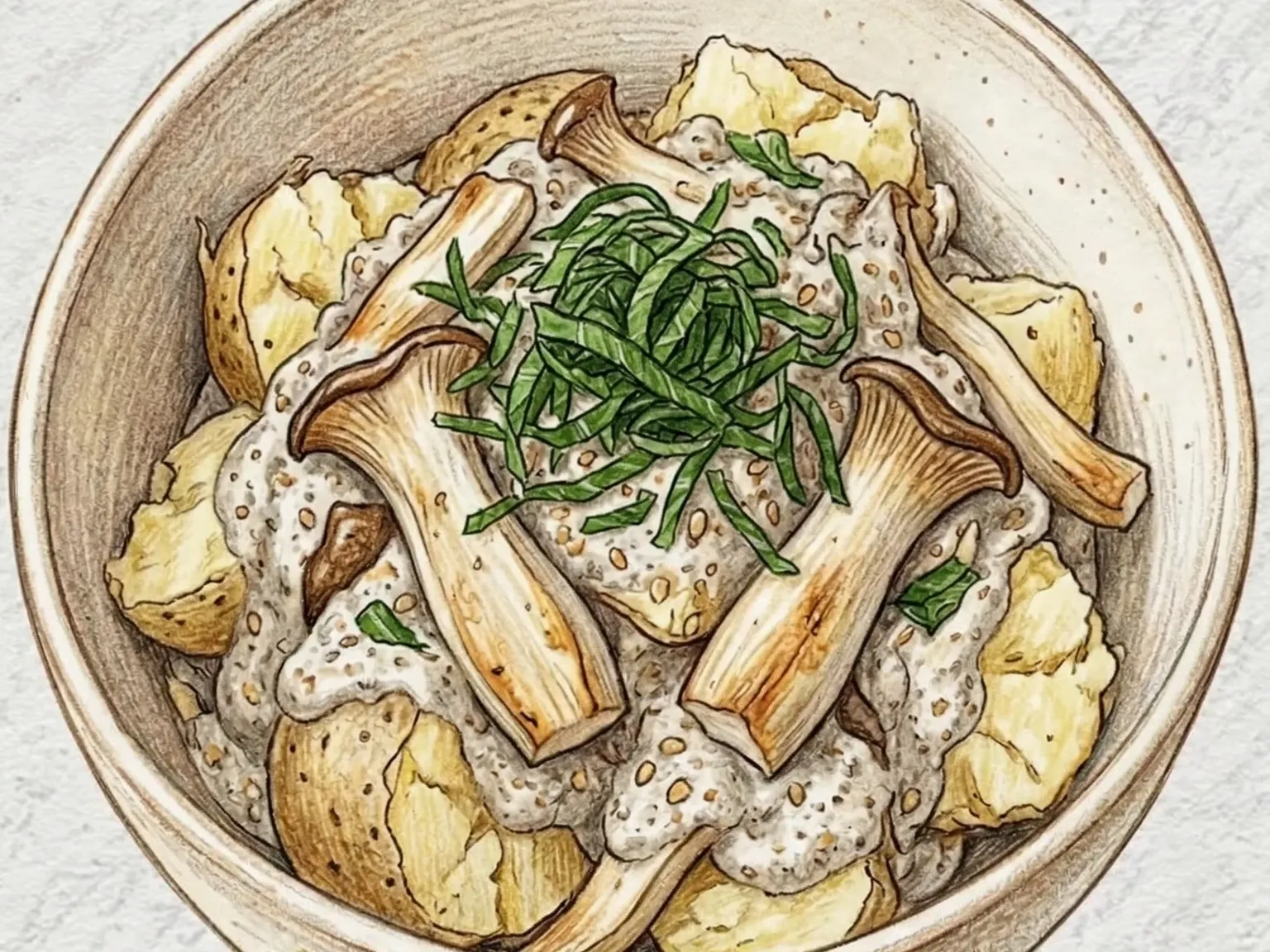
Potatoes are boiled skin-on and roughly mashed with a fork to keep a mix of fluffy interior and chunky structure rather than a smooth puree. King oyster mushrooms are torn lengthwise into thick strips and pan-roasted in olive oil until chewy and deeply savory, developing color on the cut surfaces. Perilla seed powder and Greek yogurt create a nutty, creamy binder that unifies the two main components without masking their individual flavors. Shredded perilla leaves release their bold, anise-like fragrance across the entire plate, while lemon juice and minced garlic cut through the richness and sharpen the overall aroma. Two distinctly Korean aromatics, perilla seed and perilla leaf, give the familiar potato salad format a flavor profile that diverges significantly from its Western counterpart. The salad is best at room temperature, where the potato texture stays fluffy and the mushrooms hold their chew; if refrigerated, pulling it out 30 minutes before serving restores the right consistency.
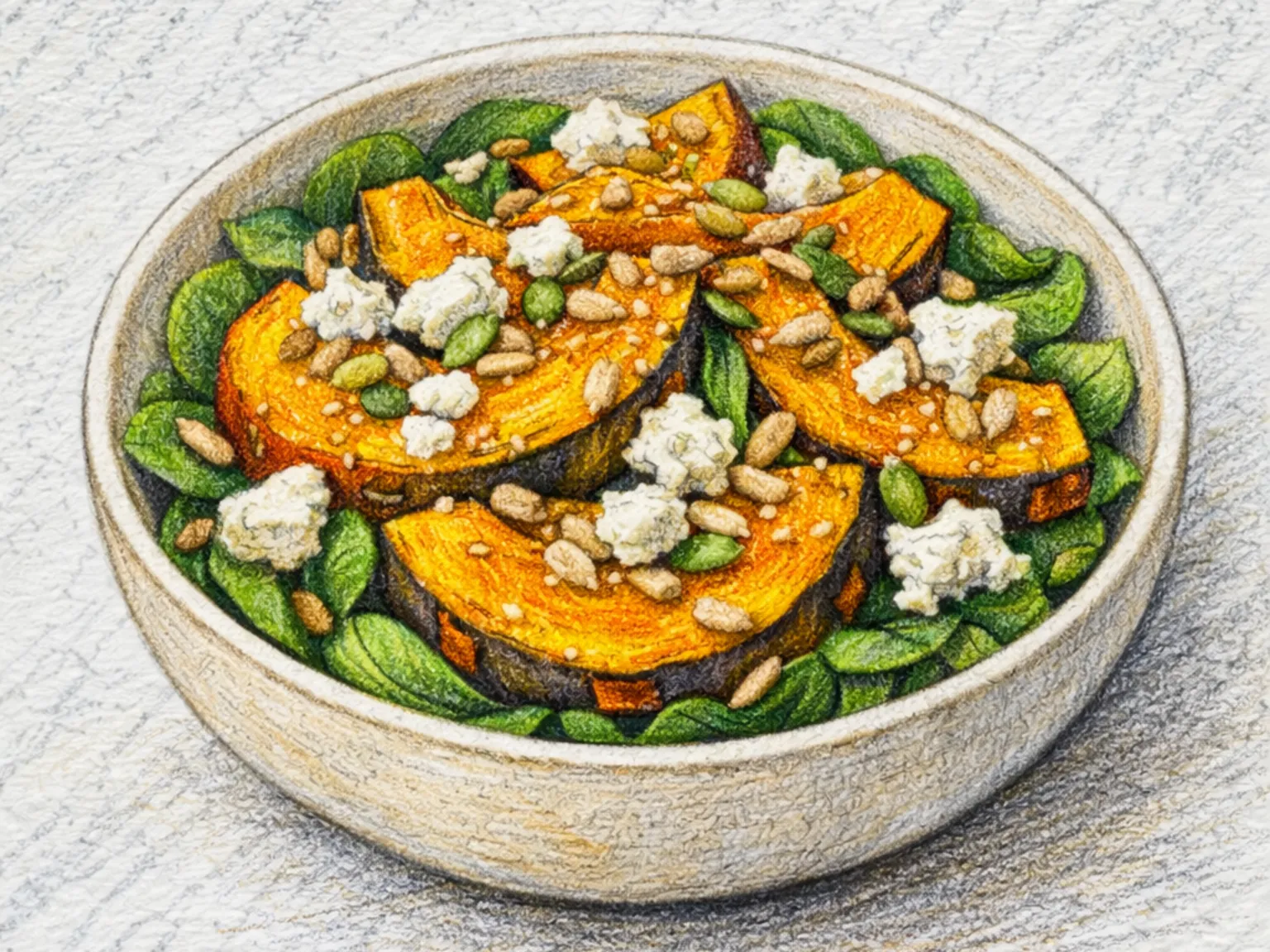
Roasted Pumpkin Feta Salad
Roasted pumpkin feta salad bakes pumpkin wedges at 200 degrees Celsius until the edges caramelize and the flesh turns soft, then layers them over baby spinach with crumbled feta and toasted pumpkin seeds. The pumpkin's starchy, chestnut-like sweetness plays against the salty, tangy bite of feta, and a simple dressing of lemon juice and honey bridges the two with a bright acidity that keeps the whole salad from feeling heavy. Pumpkin seeds add a nutty crunch that contrasts with the soft roasted flesh and tender spinach leaves, making each forkful varied in texture. Cutting the wedges thin, about seven to eight millimeters, ensures even roasting and prevents the interior from staying raw while the surface dries out. Dressing the salad while the pumpkin is still warm causes the spinach to wilt slightly, helping all the components come together rather than sitting separately on the plate.
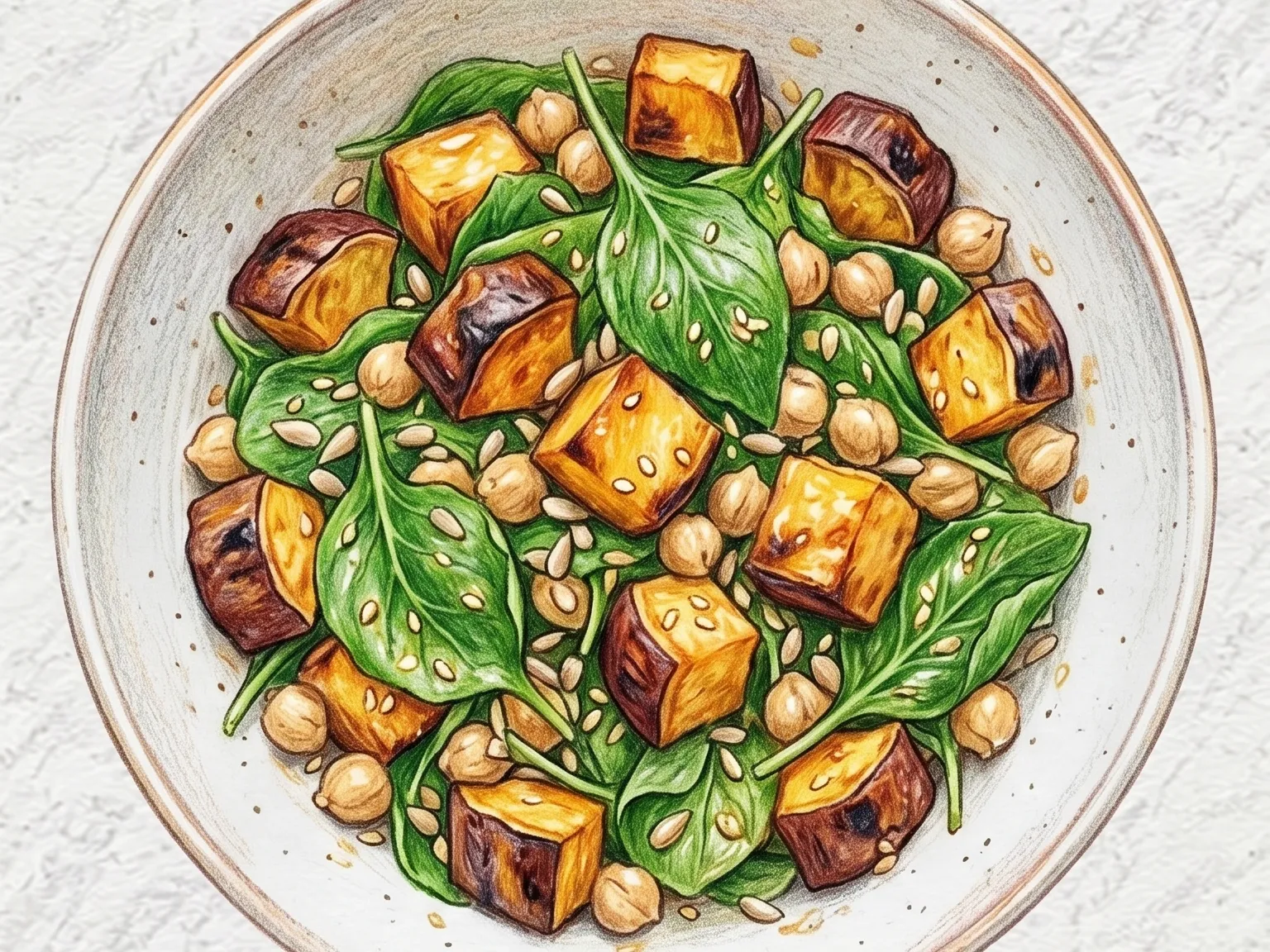
Roasted Sweet Potato Chwinamul Salad
Roasted sweet potato chwinamul salad combines skin-on sweet potato cubes roasted at 200 degrees Celsius for 22 minutes with chwinamul blanched for just 20 seconds to preserve its distinctive herbaceous bitterness. A dressing of perilla oil, soy sauce, rice vinegar, and minced garlic delivers a rich nuttiness underscored by sharp acidity, which frames the sweet potato's natural sugars without masking them. Chickpeas contribute a mild, starchy body that balances the sweetness, while sunflower seeds and sesame seeds add scattered crunch throughout. Tossing the salad while the sweet potato is still warm rather than fully cooled allows the dressing to absorb into the starchy surface rather than sliding off. Blanching chwinamul longer than 20 seconds causes it to lose its characteristic bitter note and turn dull in color, so transferring it immediately to cold water after blanching is necessary to preserve both flavor and appearance.
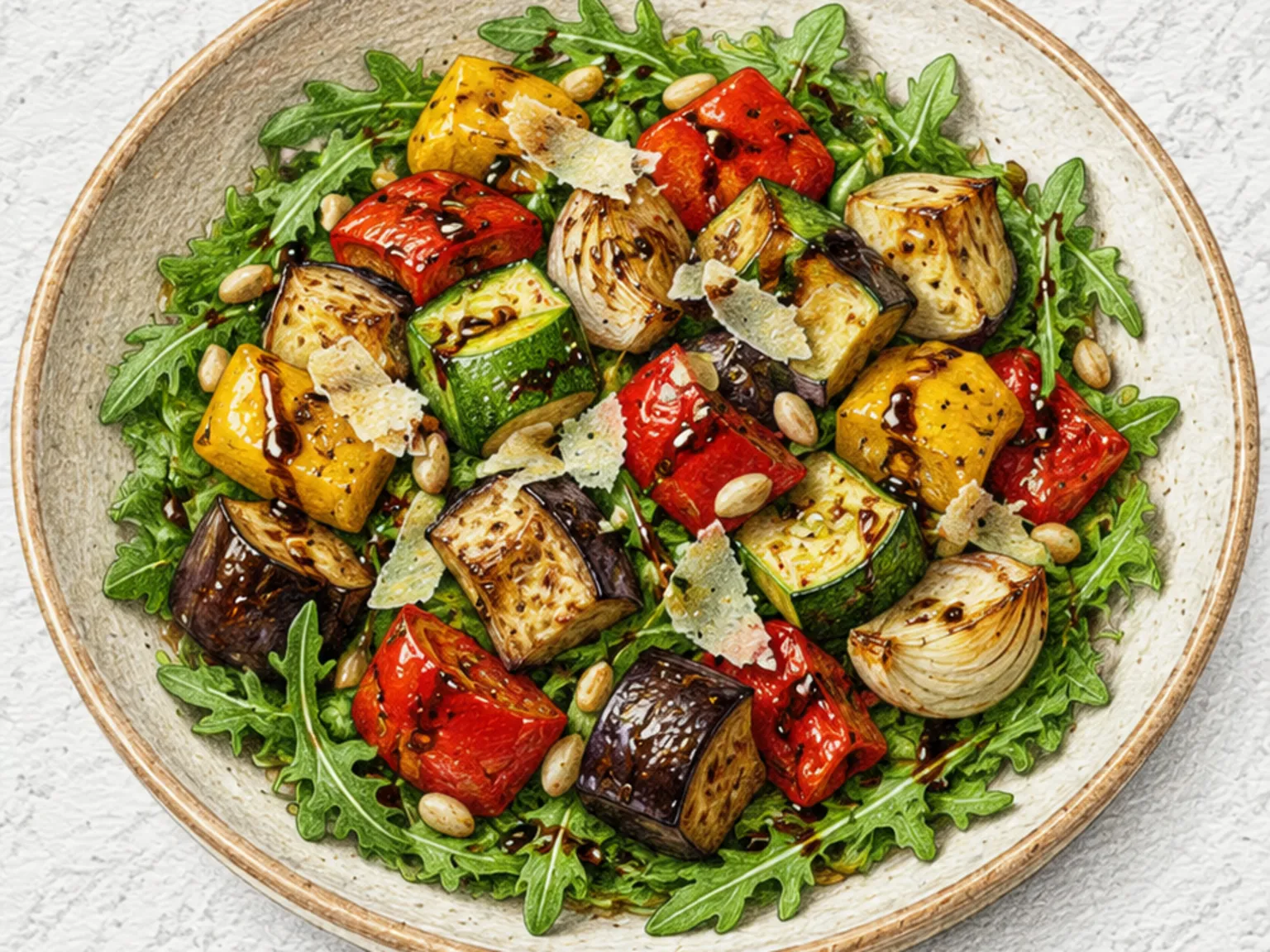
Roasted Vegetable Salad
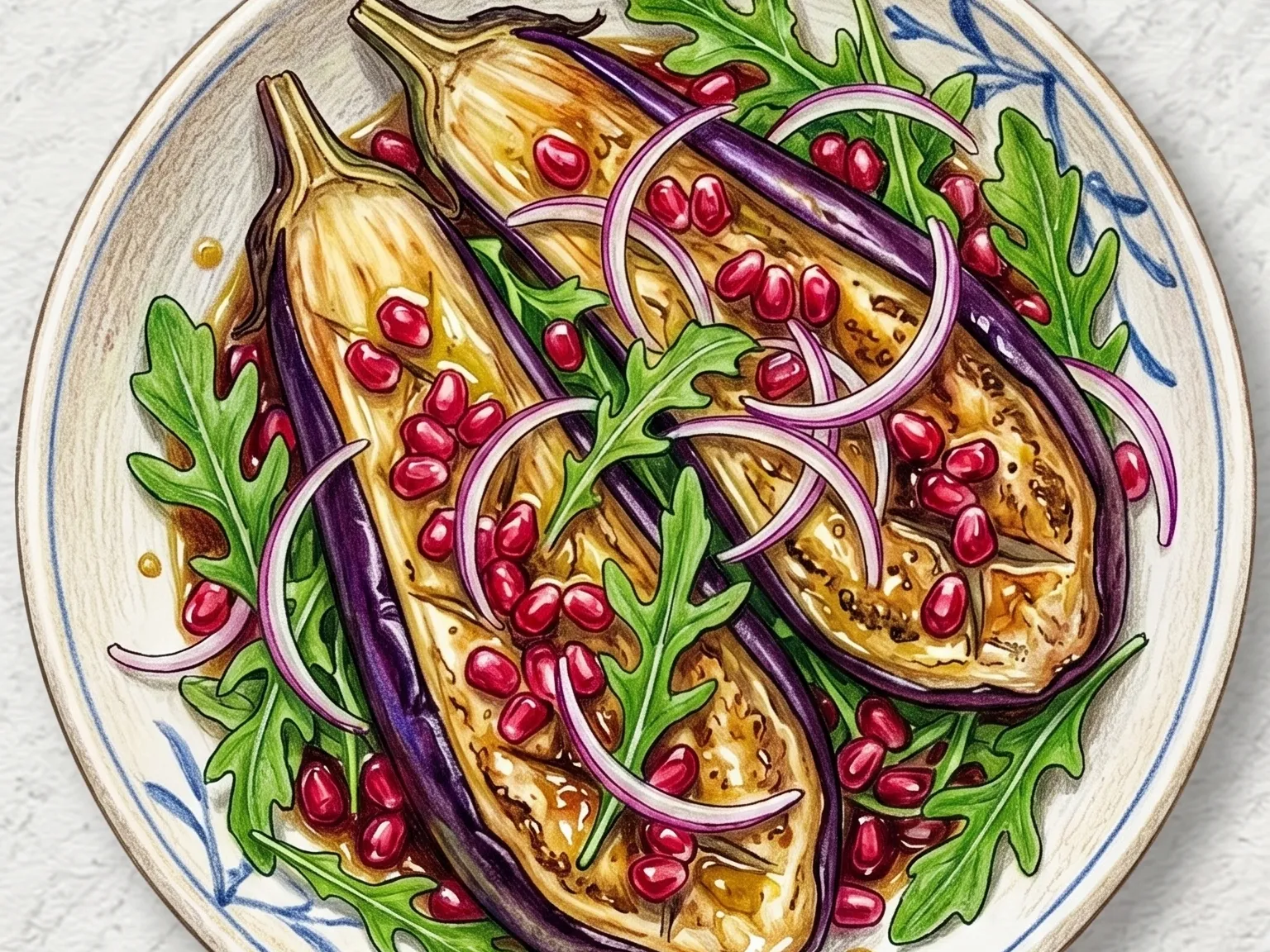
Roasted vegetable salad cuts bell pepper, zucchini, eggplant, and onion into evenly sized pieces, roasts them at 200 degrees Celsius for 20 to 25 minutes, and serves them over peppery arugula with a drizzle of balsamic vinegar. At high oven heat the surface moisture evaporates rapidly, triggering both the Maillard reaction and caramelization simultaneously, so the vegetables develop concentrated natural sweetness alongside scattered charred edges that carry a smoky depth. The bitter, peppercorn-like bite of arugula provides a direct counterpoint to the caramelized sweetness of the roasted vegetables, keeping each forkful from feeling one-dimensional. Balsamic vinegar's thick, concentrated acidity pulls the disparate flavors together into a single coherent whole. Maintaining a thickness of 1.5 to 2 centimeters for each piece is important because thinner cuts dry out completely in the oven's dry heat and turn leathery, losing the interior moisture that makes roasted vegetables satisfying. Shaving Parmigiano-Reggiano over the top or scattering pine nuts adds a savory, nutty layer that makes the salad more substantial.
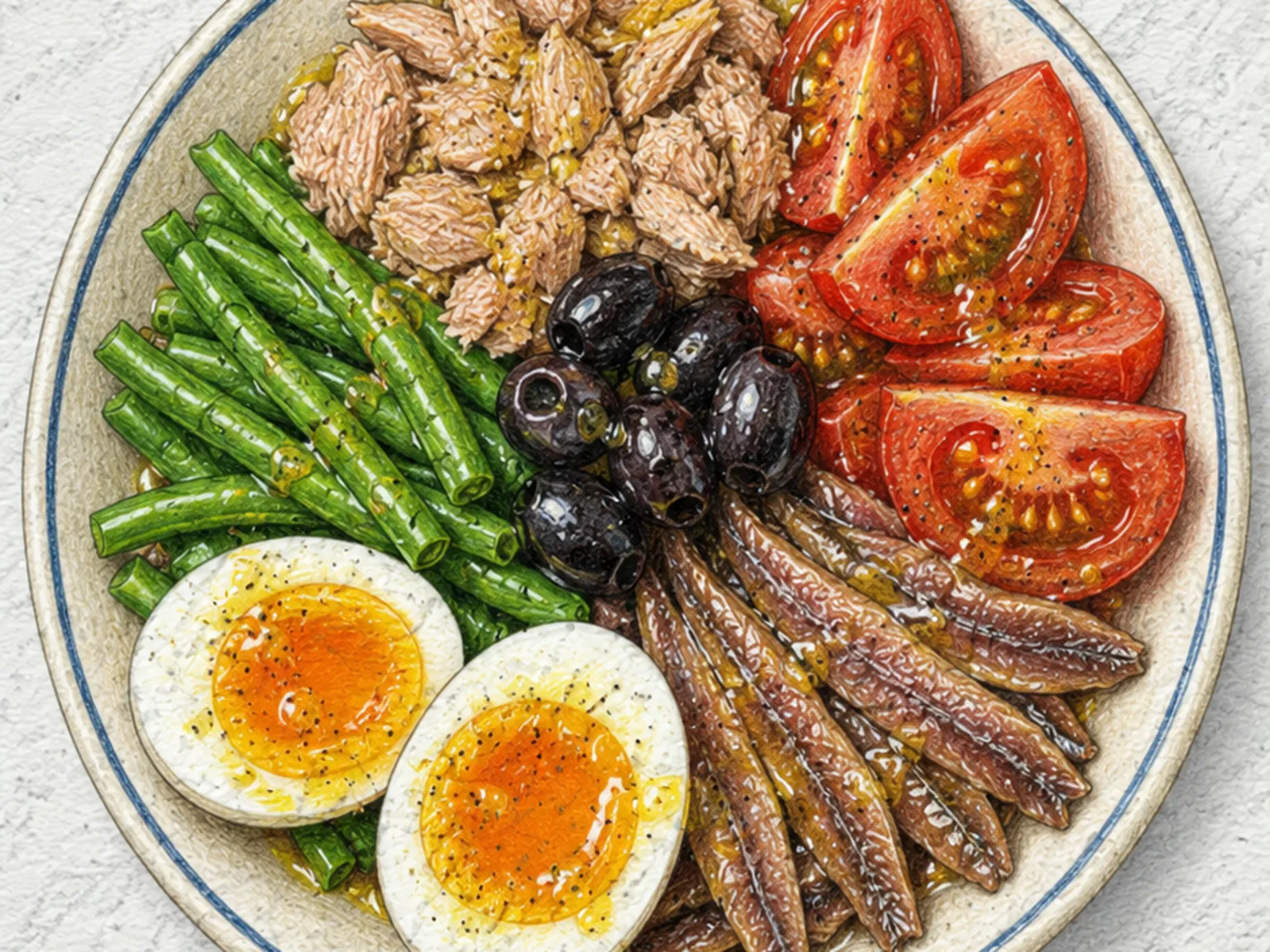
Salade Niçoise
Salade Nicoise is a classic salad from Nice in southern France that arranges tuna, soft-boiled eggs, olives, anchovies, tomatoes, and blanched green beans in separate sections on a plate, finished with a vinaigrette of olive oil, lemon juice, and Dijon mustard. The traditional presentation keeps each ingredient in its own zone rather than tossing everything together. Soft-boiling the eggs for six minutes yields a runny yolk that acts as a natural dressing when broken. The salty depth of anchovies and the oily richness of olives add complexity over the mild tuna, while the mustard vinaigrette brightens and ties the whole plate together with its acidity.
Salmon Avocado Salad
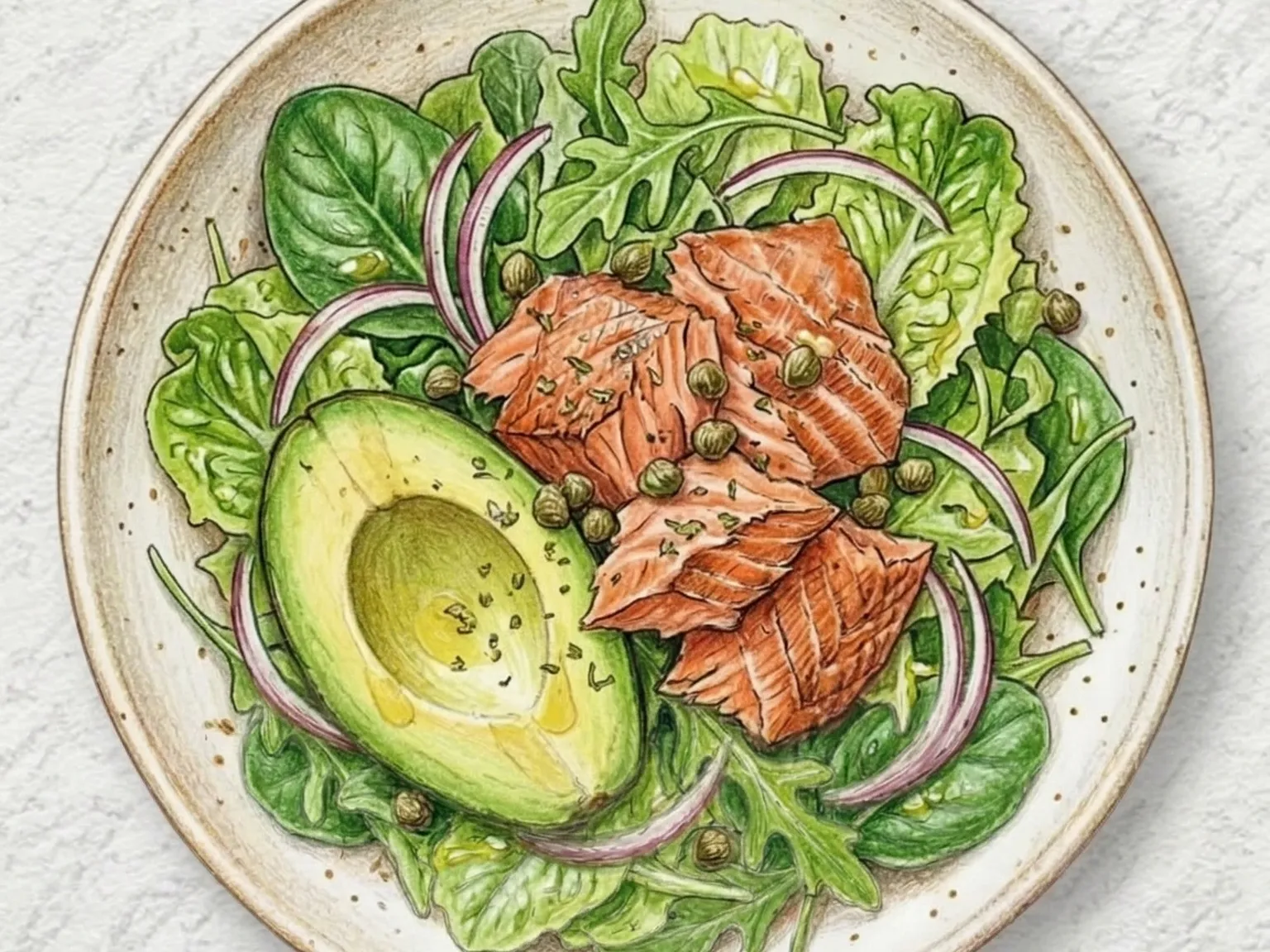
Salmon avocado salad brings smoked salmon and ripe avocado together over chilled mixed greens with a lemon-Dijon vinaigrette that ties everything into focus. The dressing, olive oil whisked with fresh lemon juice and Dijon mustard, turns the smoky depth of the salmon clearer and brighter while the acidity cuts cleanly through the buttery weight of the avocado. Capers scattered throughout burst with briny tang on each bite, introducing a punchy contrast that keeps the richness from becoming monotonous. Paper-thin slices of raw onion contribute sharp fragrance and a clean crunch against the soft textures of salmon and avocado. Adding the dressing just before serving is the one step that matters most for texture, because the greens hold their crispness only if dressed at the last moment.
Mexican Shredded Beef Salad
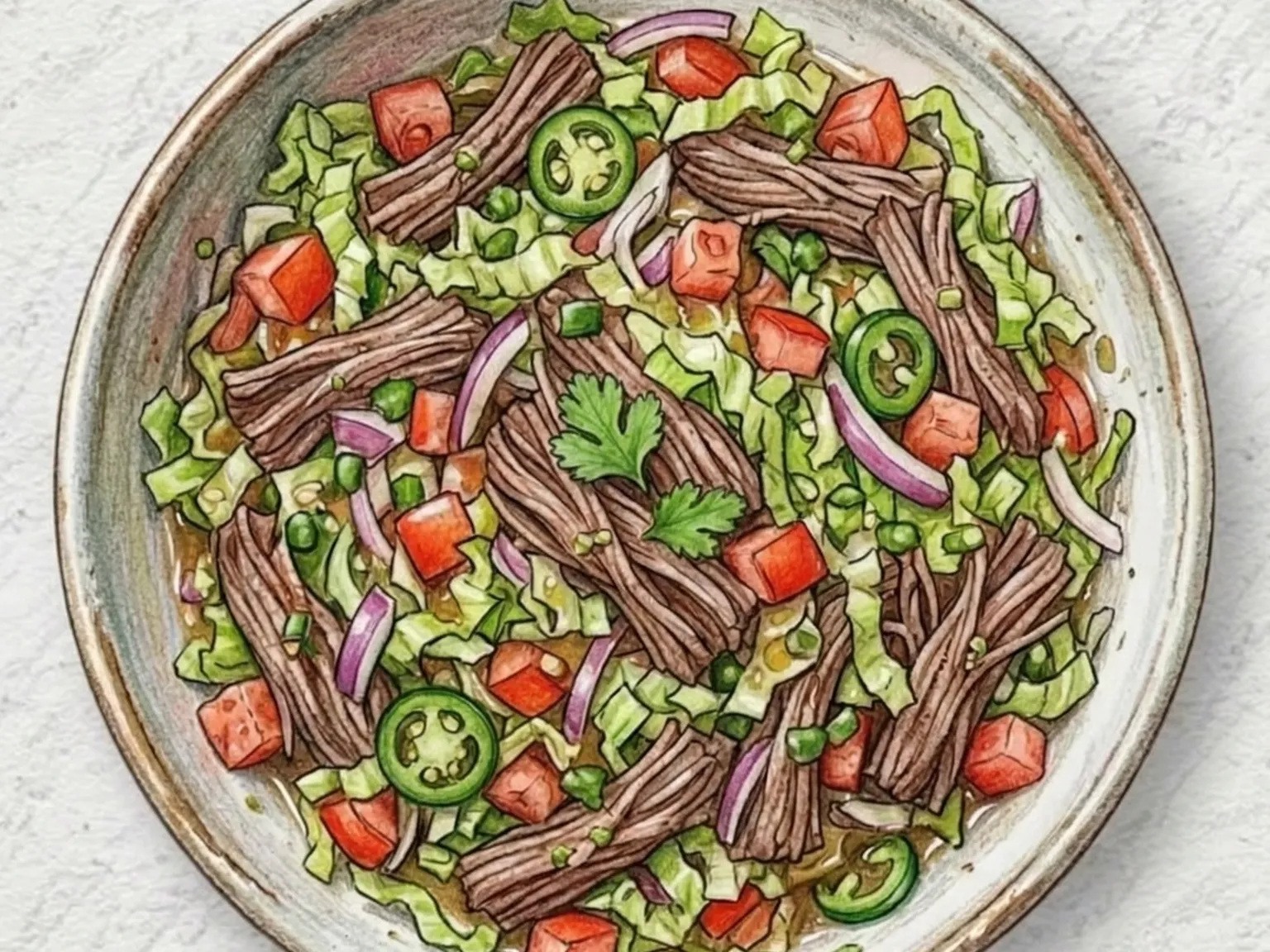
Salpicon de res simmers beef brisket for 50 to 60 minutes until the connective tissue breaks down, then shreds the cooled meat along the grain and tosses it with romaine lettuce, tomato, red onion, and jalapeno in a lime-and-apple-cider-vinegar dressing. The long braise converts collagen into gelatin, which makes the fibers pull apart cleanly and creates a rough surface that traps the dressing in every strand. The double acidity of lime and vinegar cuts through residual fat with precision, and jalapeno delivers a grassy heat that lingers without overwhelming. Shredding the beef only after it has cooled completely produces clean, distinct strands rather than a mushy pile.
Korean Fresh Lettuce Geotjeori
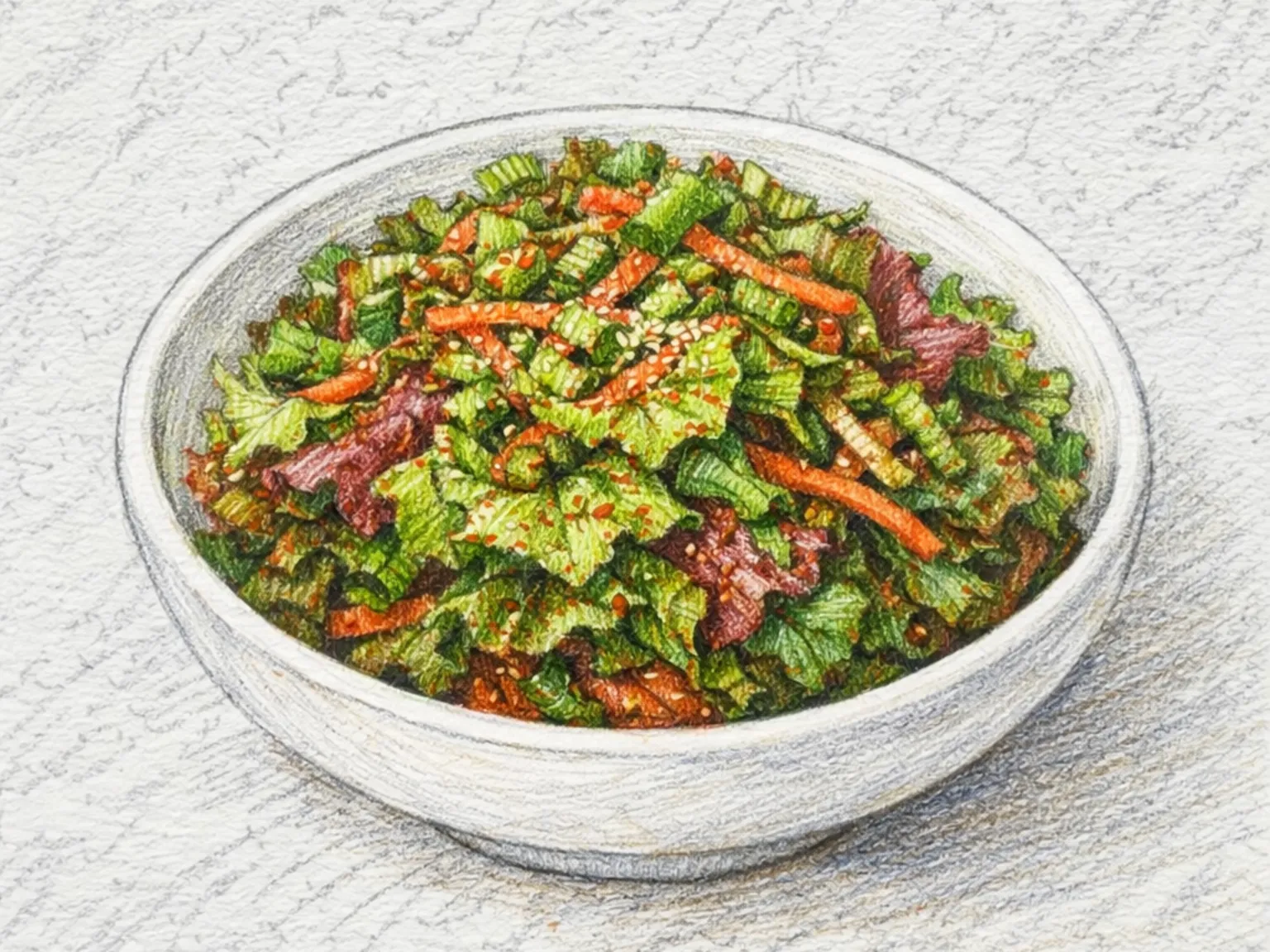
Sangchu-geotjeori is a last-minute lettuce salad where 120 grams of lettuce, torn into bite-size pieces, is tossed for no more than 20 seconds in a dressing of red pepper flakes, soy sauce, vinegar, plum syrup, minced garlic, and sesame oil. The lettuce must be thoroughly dried after washing so the dressing adheres to the leaves rather than pooling at the bottom. Thinly sliced onion adds crunch and a sharp edge that complements the mild bitterness of the lettuce. Plum syrup provides a fruity sweetness that is more subtle than granulated sugar, while the vinegar tempers the chili heat. Serving immediately is critical - within minutes the leaves begin to wilt, losing the crisp texture that defines this dish.
Korean Seasoned Glasswort Salad
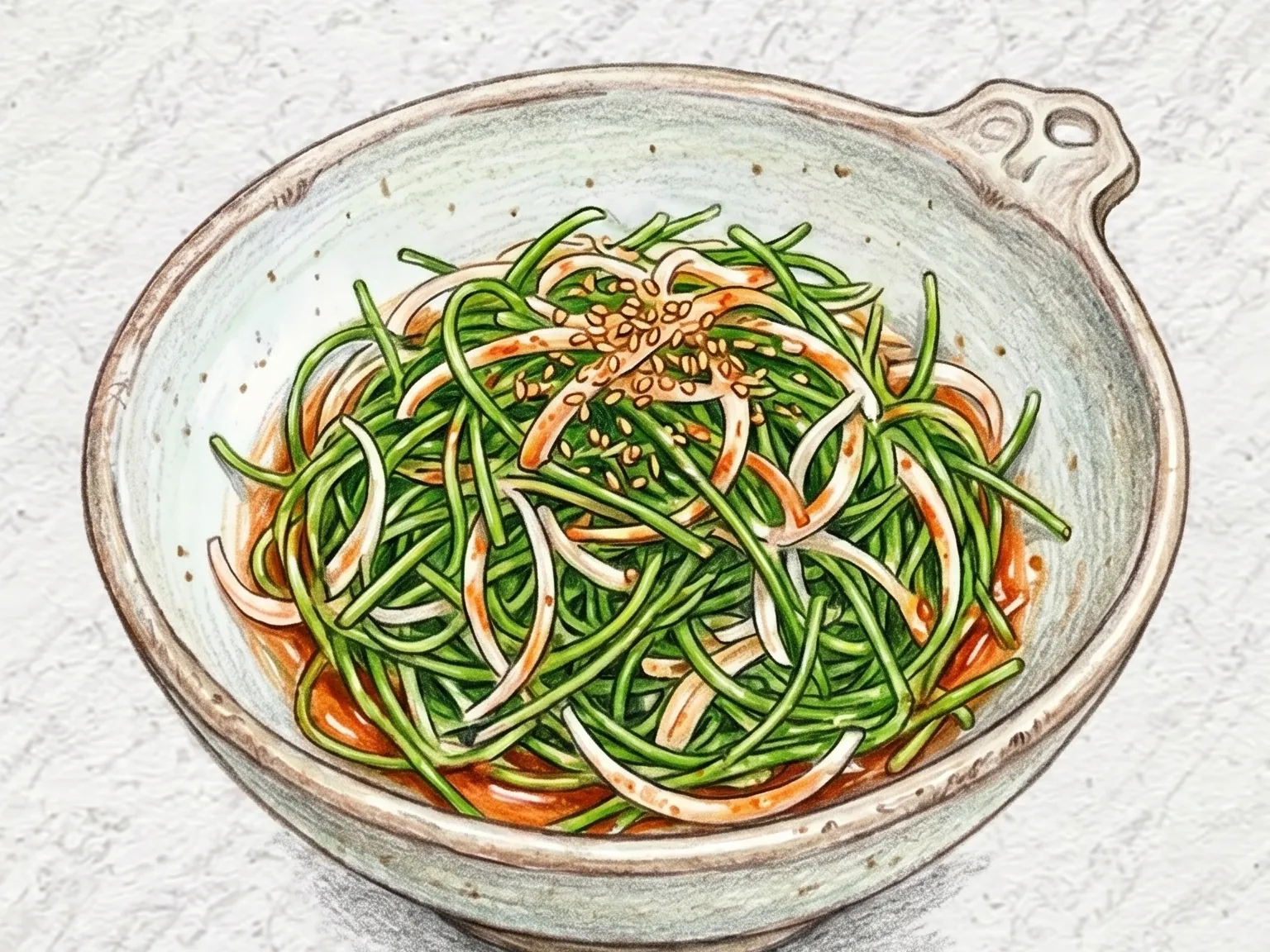
Sebalnamul-muchim features 220 grams of glasswort, a succulent coastal plant that carries a natural salinity from the tidal flats where it grows. A 10-second blanch in boiling water is enough to barely soften the thin stems while preserving their distinctive pop when bitten. The dressing of gochugaru, vinegar, plum extract, and sesame oil coats the tender shoots without masking their inherent briny flavor. Thinly sliced onion adds a sweet crunch, and the plum extract mellows the vinegar's sharpness into a rounded tartness. Because no additional salt is needed, the final seasoning relies entirely on the balance between acid, sweetness, and the glasswort's own minerality.
Korean Acorn Jelly Salad with Sesame Soy Sauce
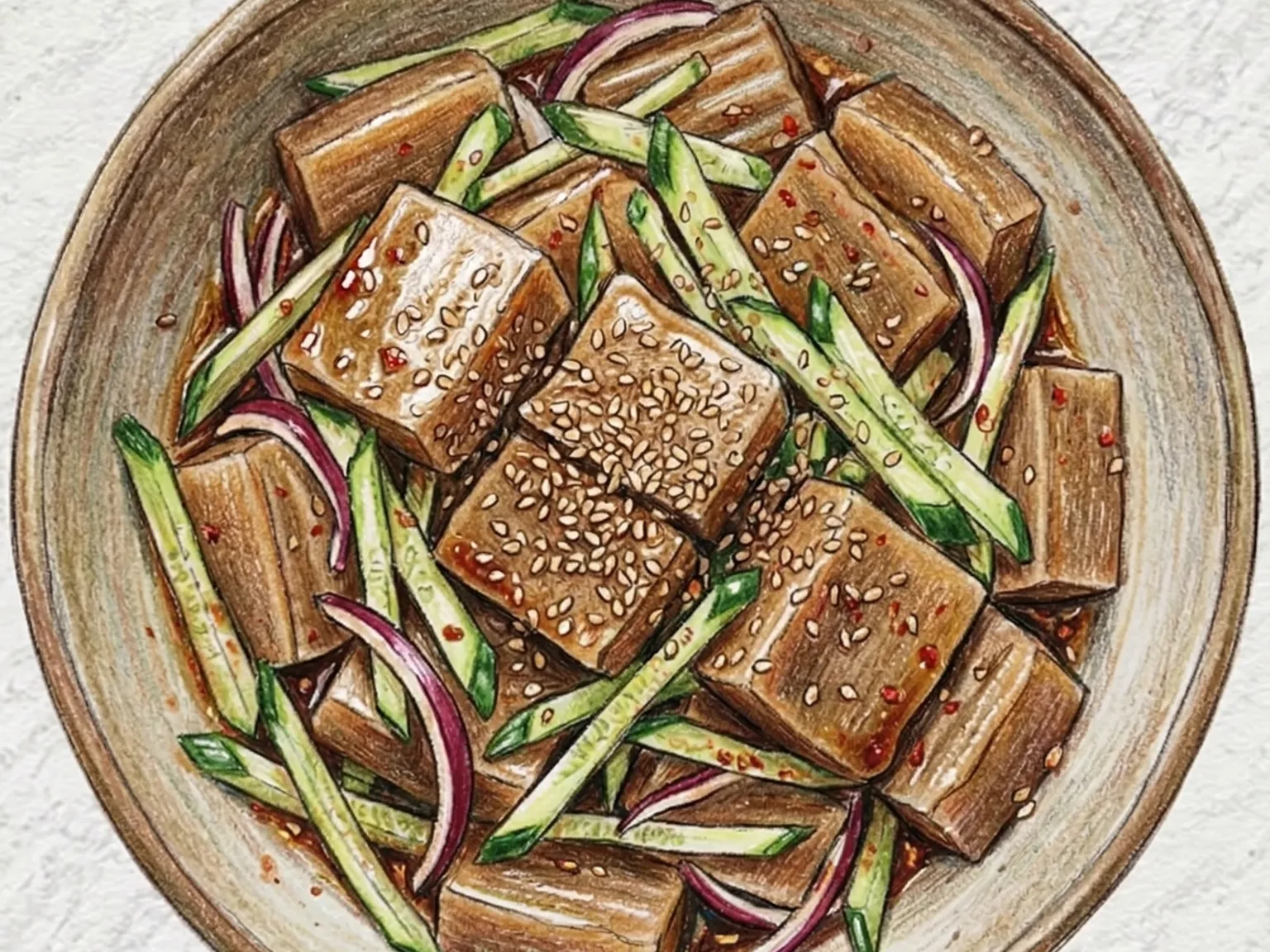
Sesame-dotorimuk-muchim is an acorn jelly salad that begins by slicing 400 grams of dotorimuk into 1-centimeter-thick pieces and blanching them for 20 seconds to firm up the surface and make the jelly more resilient to tossing. Julienned cucumber and thinly sliced onion - soaked briefly in cold water to remove sharpness - join the jelly in a bowl. The dressing of soy sauce, vinegar, red pepper flakes, and sesame oil brings a sharp, tangy bite that contrasts with the neutral mildness of the acorn jelly. Generous sesame seeds are scattered on top, and the dish rests for five minutes before serving so the dressing can seep into the jelly's porous surface. The result is a light, refreshing banchan with a range of textures from springy to crisp.
Seven Layer Salad
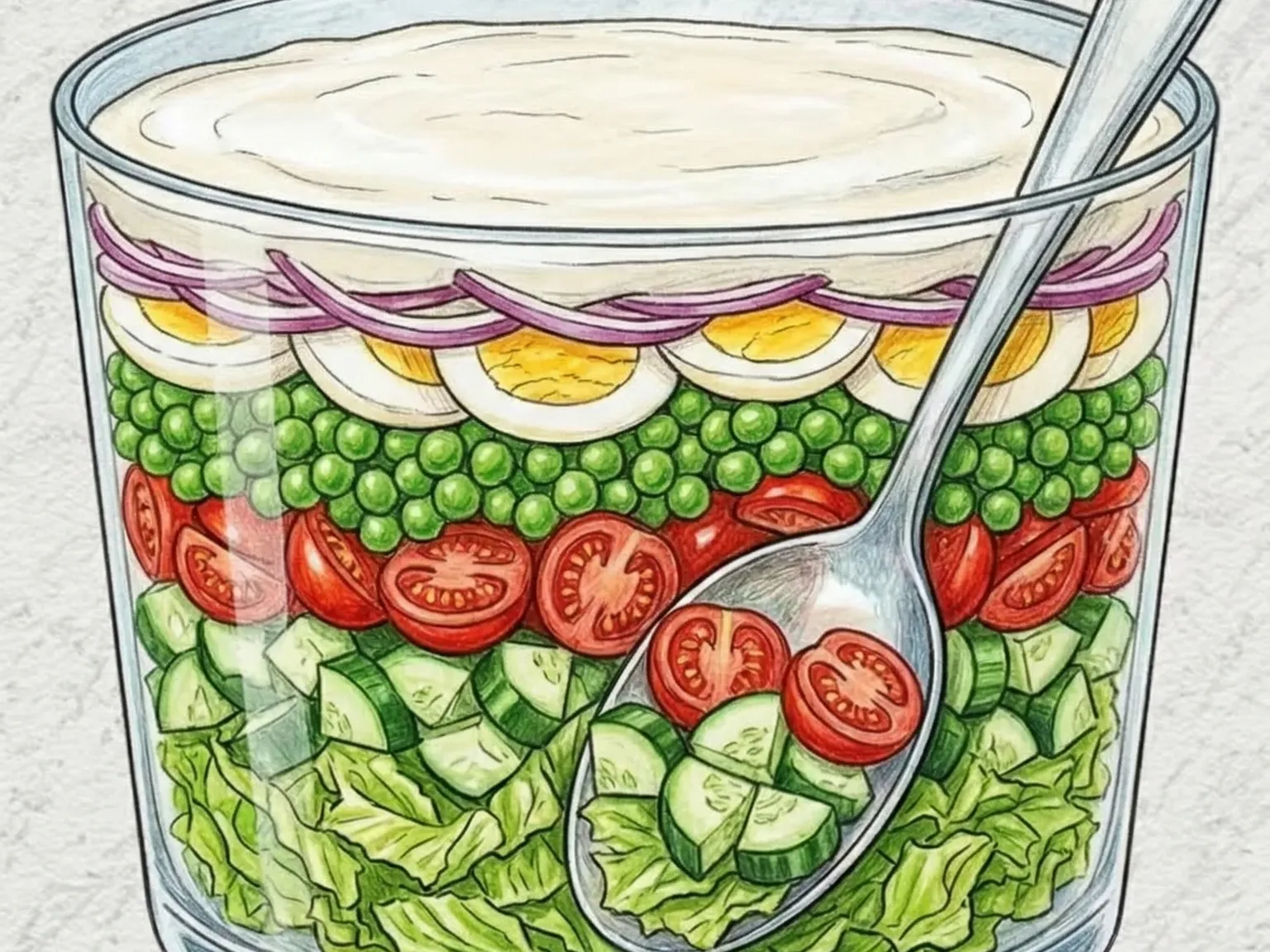
Seven layer salad stacks romaine lettuce, sliced cucumber, halved cherry tomatoes, cooked green peas, chopped boiled egg, and thinly sliced red onion in a clear glass bowl, then seals the top with a smooth layer of Greek yogurt mixed with lemon juice. The yogurt cap acts as a moisture barrier, preventing the lower layers from turning soggy and making the salad suitable for advance preparation. Boiled eggs contribute a mild richness and peas add a starchy sweetness that rounds out the crisp vegetable layers, while red onion's sharp bite creates a contrast against the creamy, tangy dressing. Serving requires scooping deep to the bottom so every portion captures all seven layers at once.
Shiraae Vegetables in Tofu Sesame Dressing
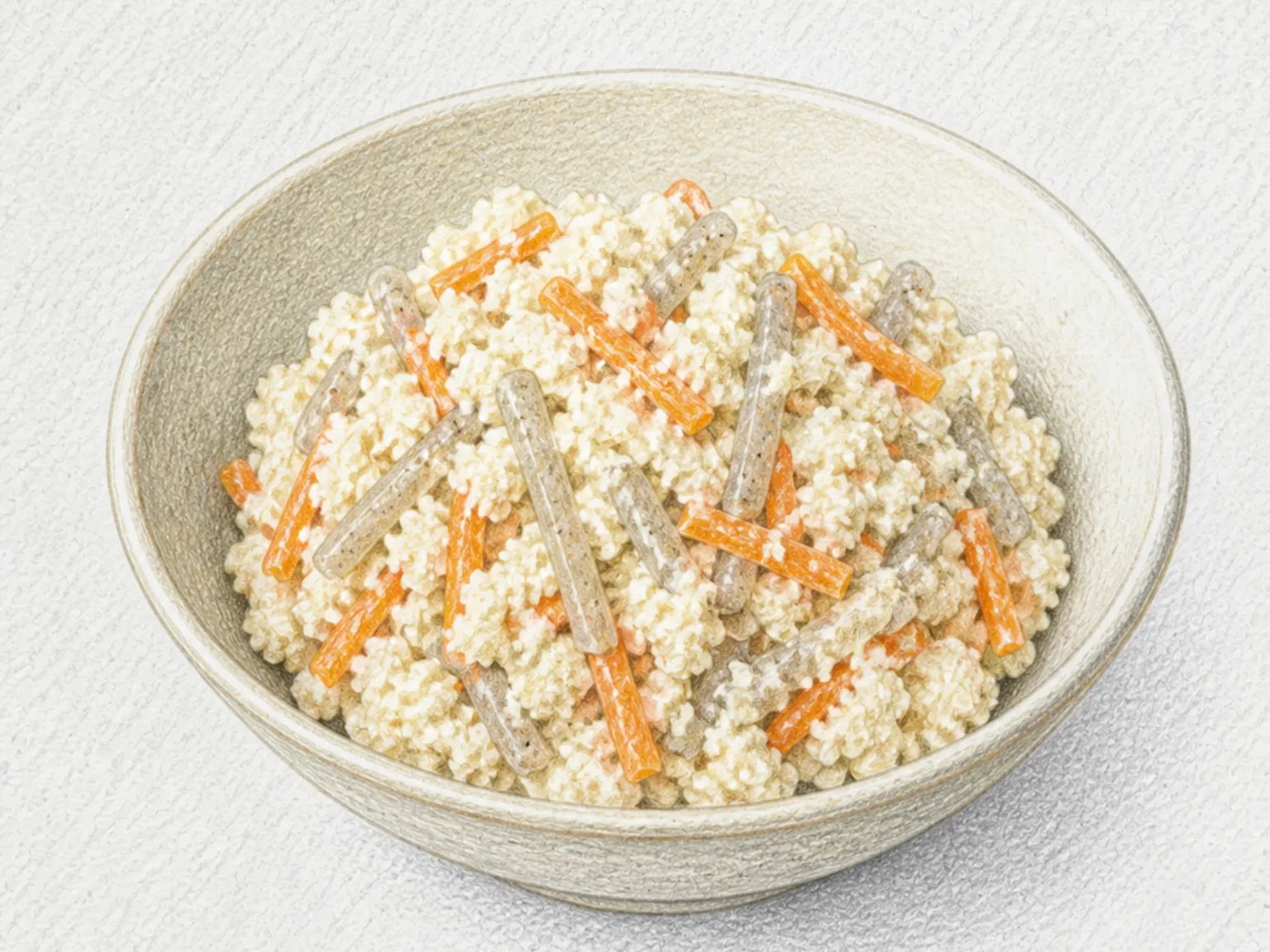
Shiraae is a Tochigi home side dish that turns well-drained firm tofu into a smooth white dressing with sugar, salt, and ground sesame, then folds it around seasoned carrot and konnyaku immediately before serving. In mountain communities where tofu was once scarce, neighbors shared equipment to make it for New Year, weddings, funerals, and shrine festivals. It is now an everyday dish throughout the year. Konnyaku is briefly boiled first to reduce its characteristic odor and cut to match the carrot. Both are simmered in dashi with sugar and salt, absorb the seasoning, and must cool completely so their moisture does not loosen the tofu dressing. The tofu is weighted for thirty minutes and ground until no curds remain visible. Mixing waits until the last moment, and a light folding motion keeps the dressing white while preserving the vegetables' clear shape.
Shopska Salad (Bulgarian Shopska salad)
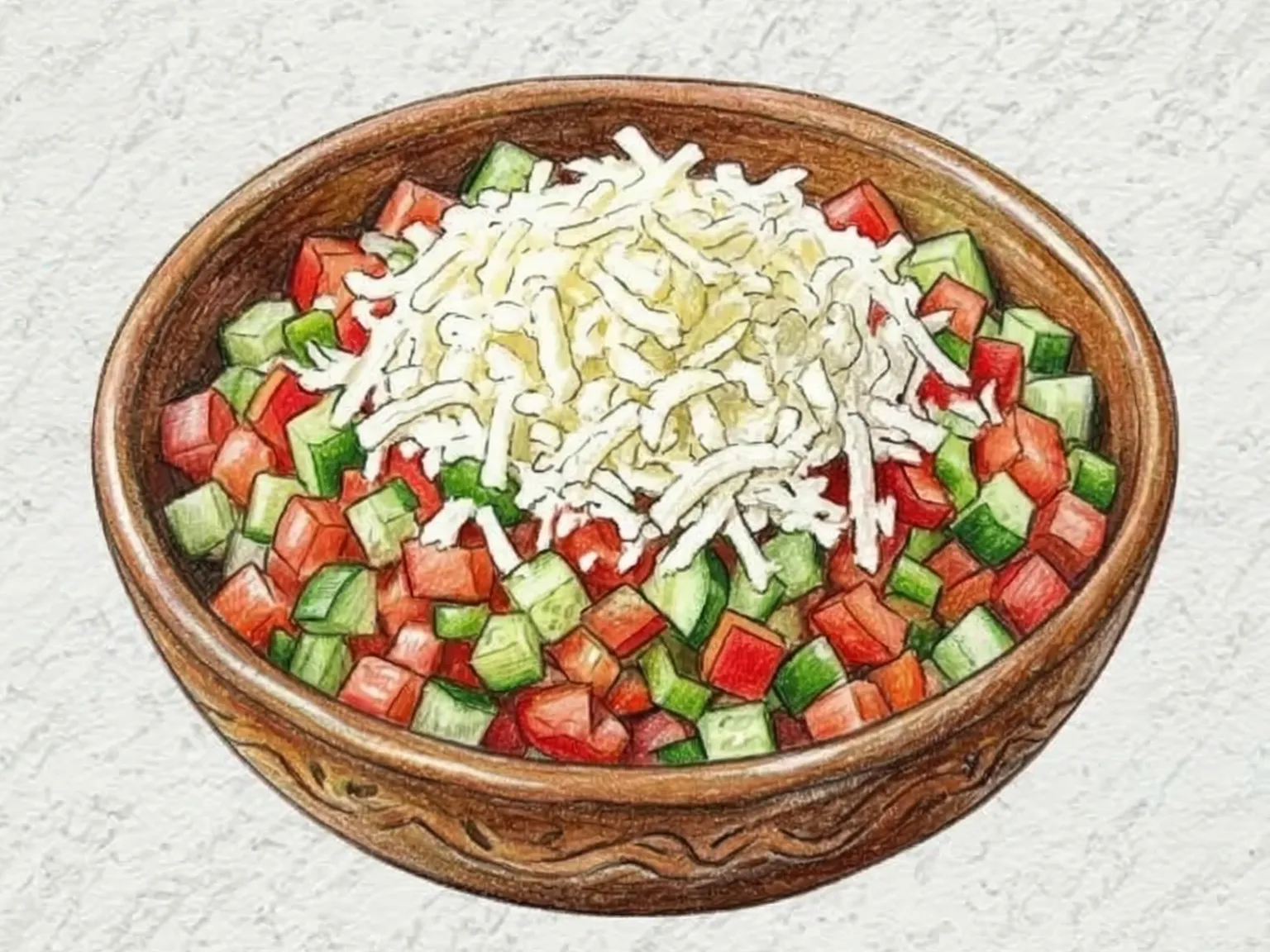
Shopska salad cuts ripe tomatoes, cucumber, green bell pepper, and onion into rough bite-size pieces, dresses them lightly with olive oil and red wine vinegar, and tops the whole thing with a thick mound of finely grated feta cheese. No separate dressing is needed because the juice flowing from ripe tomatoes mingles with the vinegar and oil to coat every piece naturally, forming a light, pool-free dressing at the bottom of the bowl. The salty, tangy fermentation character of feta stands in pointed contrast to the watery freshness of the raw vegetables, and the green bell pepper's mild herbaceous bitterness adds a layer of complexity that pushes the salad past simple freshness. Because feta already contributes considerable salt, seasoning the vegetables lightly at first prevents the finished dish from becoming overly salty. Removing the seed cavity of the cucumber reduces the amount of excess liquid released, keeping the dressing from diluting. The salad should be assembled just before serving so each vegetable retains its texture rather than softening in the accumulated juice.
Shrimp Mango Lime Salad
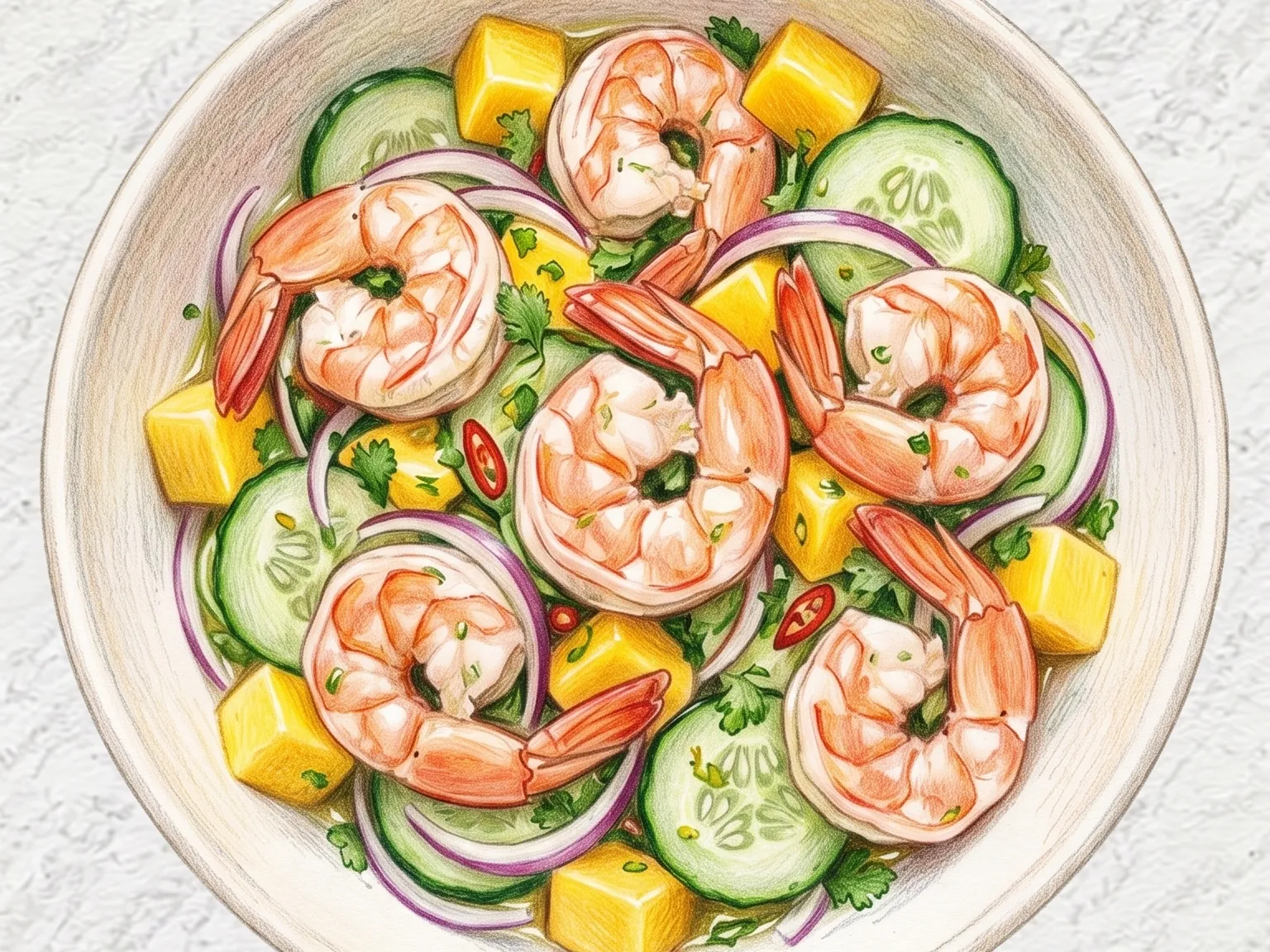
Shrimp mango lime salad is a Thai-style dish that combines briefly poached shrimp with ripe mango, cucumber, red onion, and roughly chopped cilantro, dressed with lime juice, fish sauce, and olive oil. The shrimp go into boiling water for exactly two minutes, which is just long enough to cook them through while keeping their natural snap; any longer causes the proteins to contract and the texture turns from tender to rubbery. Fish sauce contributes a fermented, savory depth that amplifies the shrimp's briny character, while lime's sharp acidity slices through the mango's sweetness and brings the dressing into balance. Thinly sliced red onion adds a raw, peppery heat that creates tension between the sweet fruit and the savory seafood, and cilantro releases a distinctive herbal fragrance with each bite. Cucumber stirred into the mix lightens the overall texture and keeps the salad from feeling too dense. Served cold immediately after dressing, every element stays distinct and the contrast between the yielding fruit, the crisp vegetables, and the firm shrimp comes through clearly.
Smoked Duck Chive Salad (Korean Chive Salad)
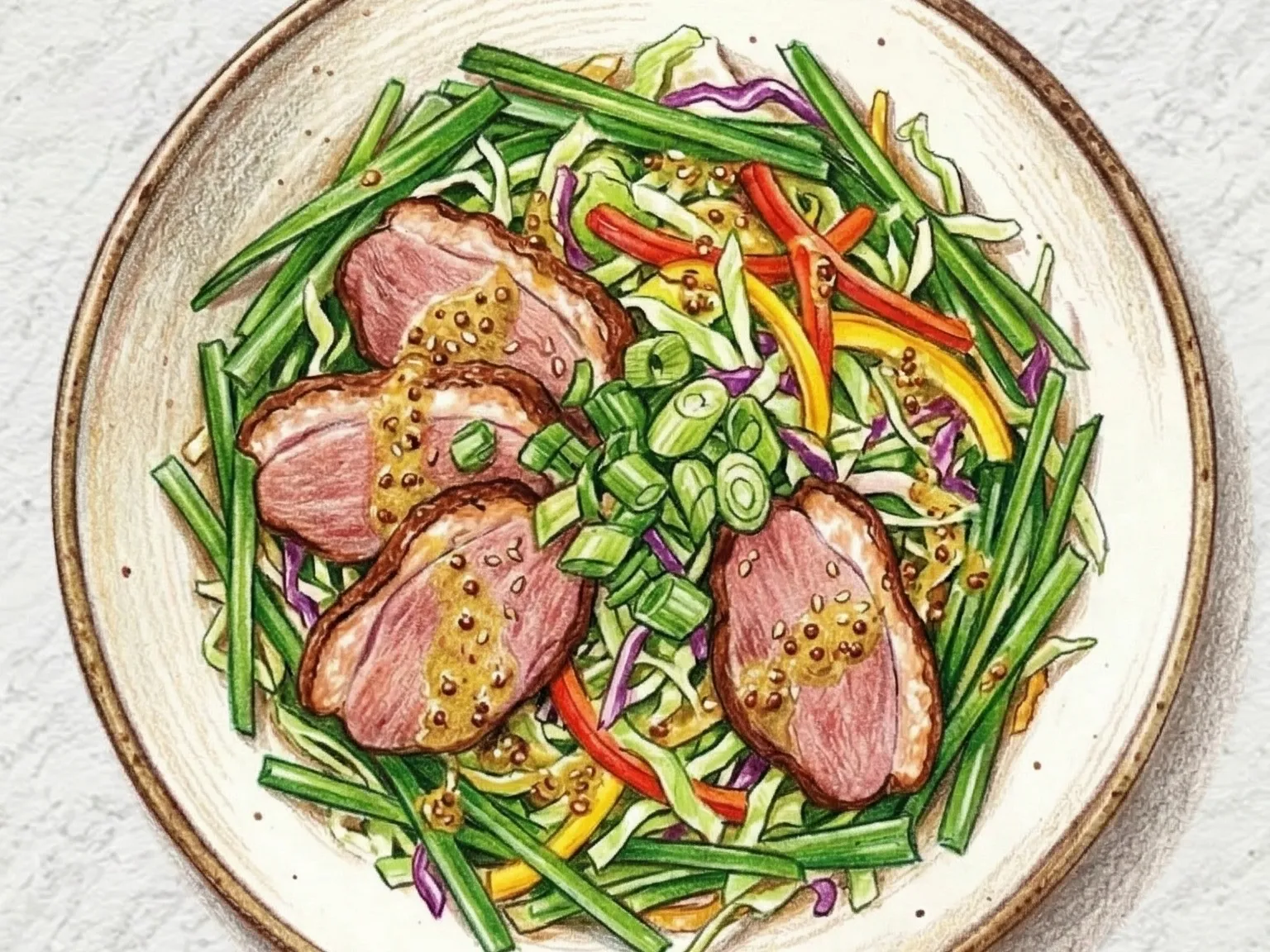
Smoked duck chive salad brings together pan-seared smoked duck and fresh Korean chives in a soy-mustard dressing that cuts through the meat's richness with precision. The duck is seared in a dry or lightly oiled pan for two to three minutes to render off the surface fat before it meets the other ingredients. Korean chives are cut to four-centimeter lengths and combined with shredded cabbage and sliced bell pepper, each element adding its own texture to the finished dish. A dressing of soy sauce, mustard, vinegar, honey, and sesame oil delivers a multi-layered hit of nose-clearing heat, sweet-sour acidity, and roasted depth that cleanses the palate after every fatty bite of duck. The cabbage provides firm, watery crunch against the chewy, smoke-infused meat, while toasted sesame seeds scatter a nutty fragrance across the top. Adding the chives at the very end keeps their herbal aroma vivid rather than grassy, and limiting the searing time prevents the duck from turning tough. The interplay between the dense smokiness of the duck and the sharp freshness of the chives is what gives this salad its character beyond a simple protein-and-greens combination.
Som Tam (Thai Green Papaya Salad with Lime Fish Sauce Dressing)
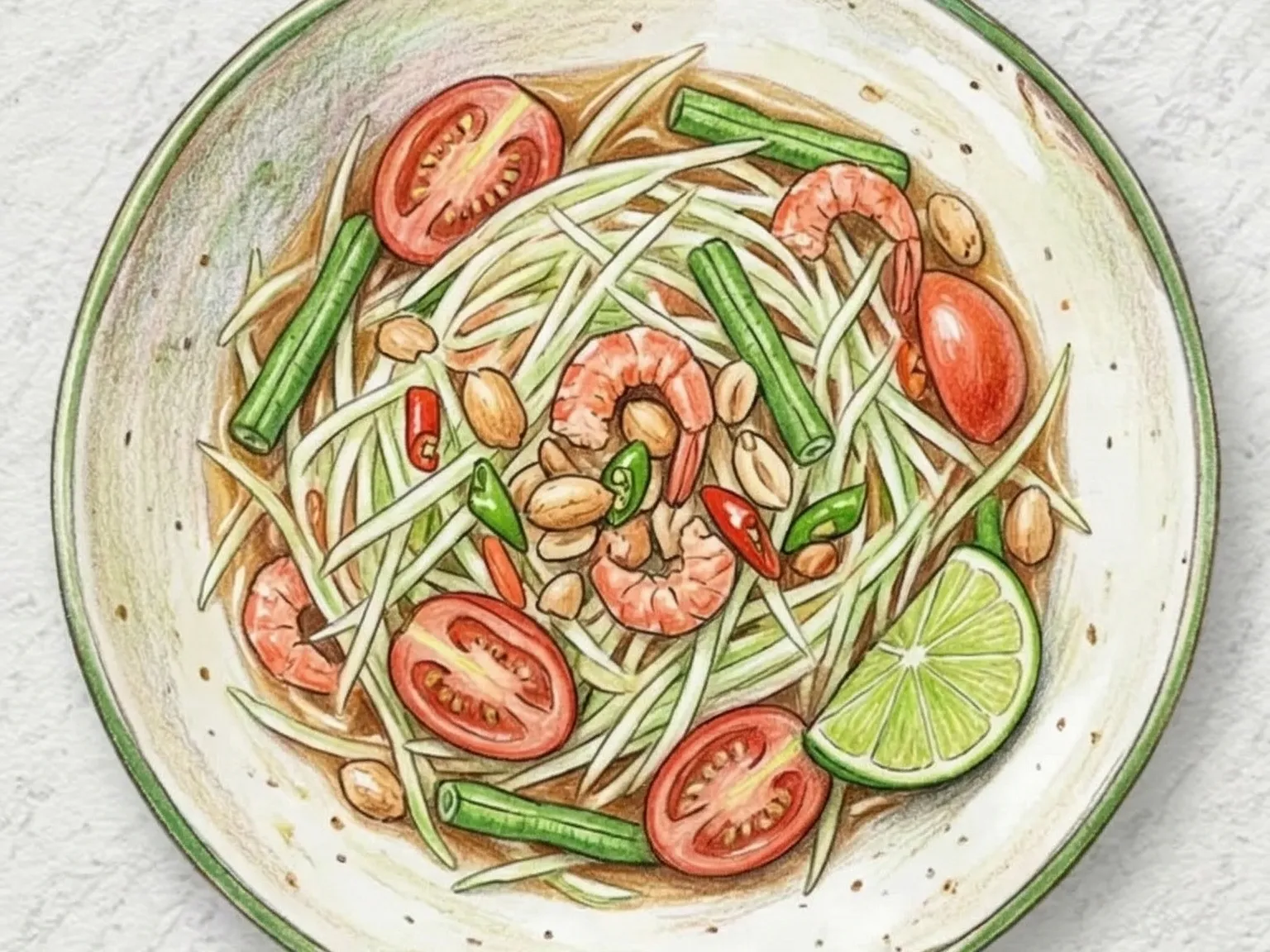
Som tam is a Thai salad made by pounding shredded green papaya with a handful of bold seasonings in a clay mortar. The dressing comes together right in the mortar: bird's eye chilies and palm sugar are crushed first, then lime juice and fish sauce are added to create a sauce that is simultaneously sour, salty, sweet, and spicy. Cherry tomatoes are bruised just enough to release their juices into the mix, and roasted peanuts contribute a nutty crunch that contrasts with the crisp, watery strands of papaya. The pounding is deliberately gentle-too much force turns the papaya limp and loses the texture that defines the dish. Som tam is Thailand's most widely eaten salad, appearing everywhere from pushcart vendors to upscale restaurants, and it is often served alongside sticky rice and grilled chicken as a complete meal.
Som Tam Thai (Thai Green Papaya Salad)
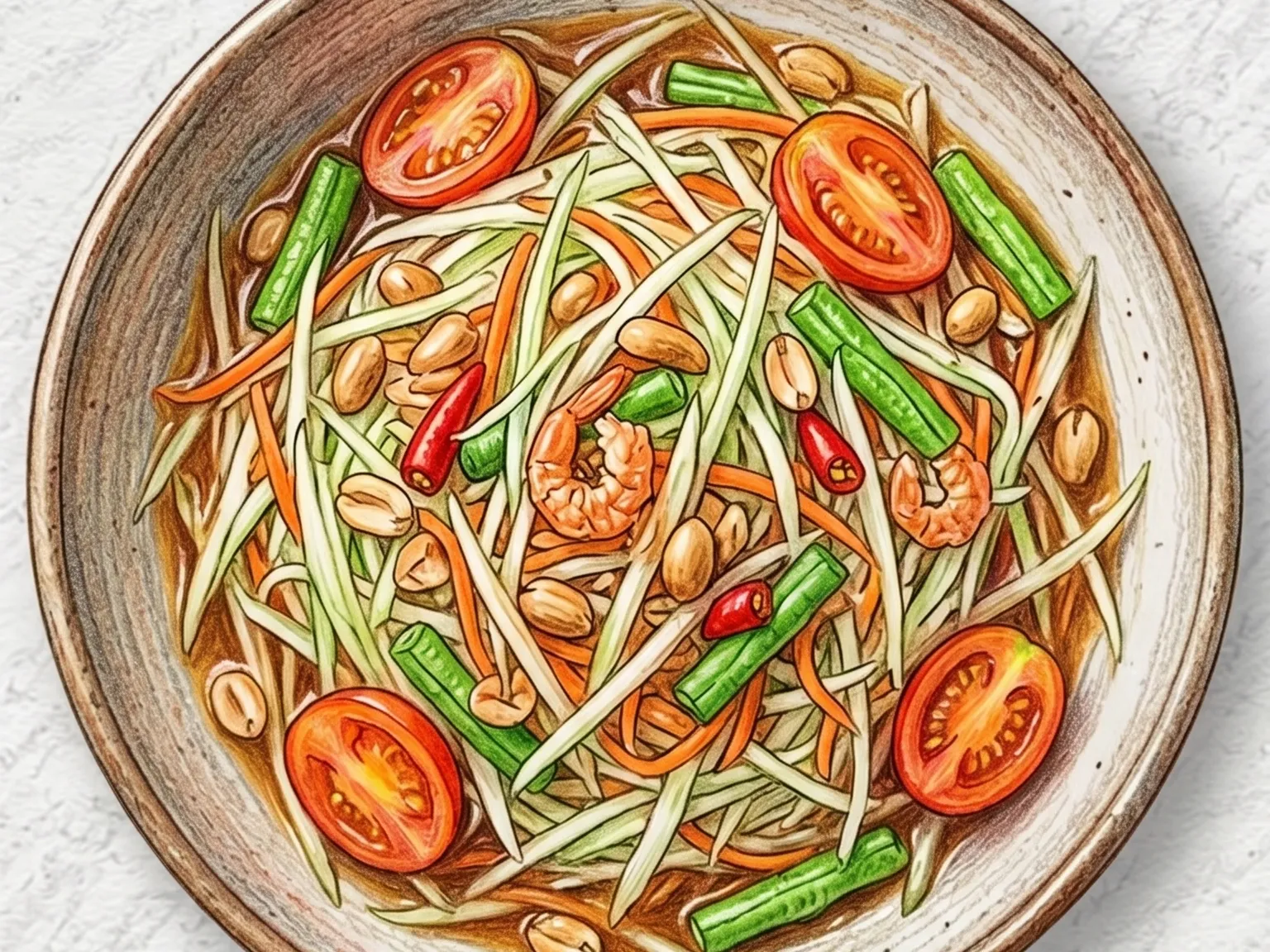
Som tam Thai combines finely shredded green papaya, long beans, and cherry tomatoes with a dressing of Thai chili, palm sugar, lime juice, and fish sauce, using a mortar to bruise the ingredients lightly rather than crush them into a paste. Peel and finely shred 250g green papaya, soak it in cold water for 10 minutes, and drain it thoroughly so the measured dressing does not become diluted. Cut 70g long beans into 3cm pieces and halve 120g cherry tomatoes. Remove the seeds from the 2 Thai chilies when a milder result is preferred. Put the chilies and 1 tablespoon palm sugar in a mortar first and pound with a pressing motion until the sugar softens and becomes moist. Add 2 tablespoons lime juice and 1.5 tablespoons fish sauce, stirring until the palm sugar dissolves fully into the liquid. Add the long beans and tomatoes and pound gently for about 30 seconds. Stop when the tomatoes have released some juice but still hold their shape. Add the drained papaya and toss from bottom to top while pounding very lightly for about 1 minute, coating the strands without crushing them. Mix in 25g roasted peanuts at the end and serve immediately while the papaya remains crisp. If a mortar is unavailable, use a large bowl and a rolling pin with the same restrained pressing motion.
Spinach Strawberry Salad
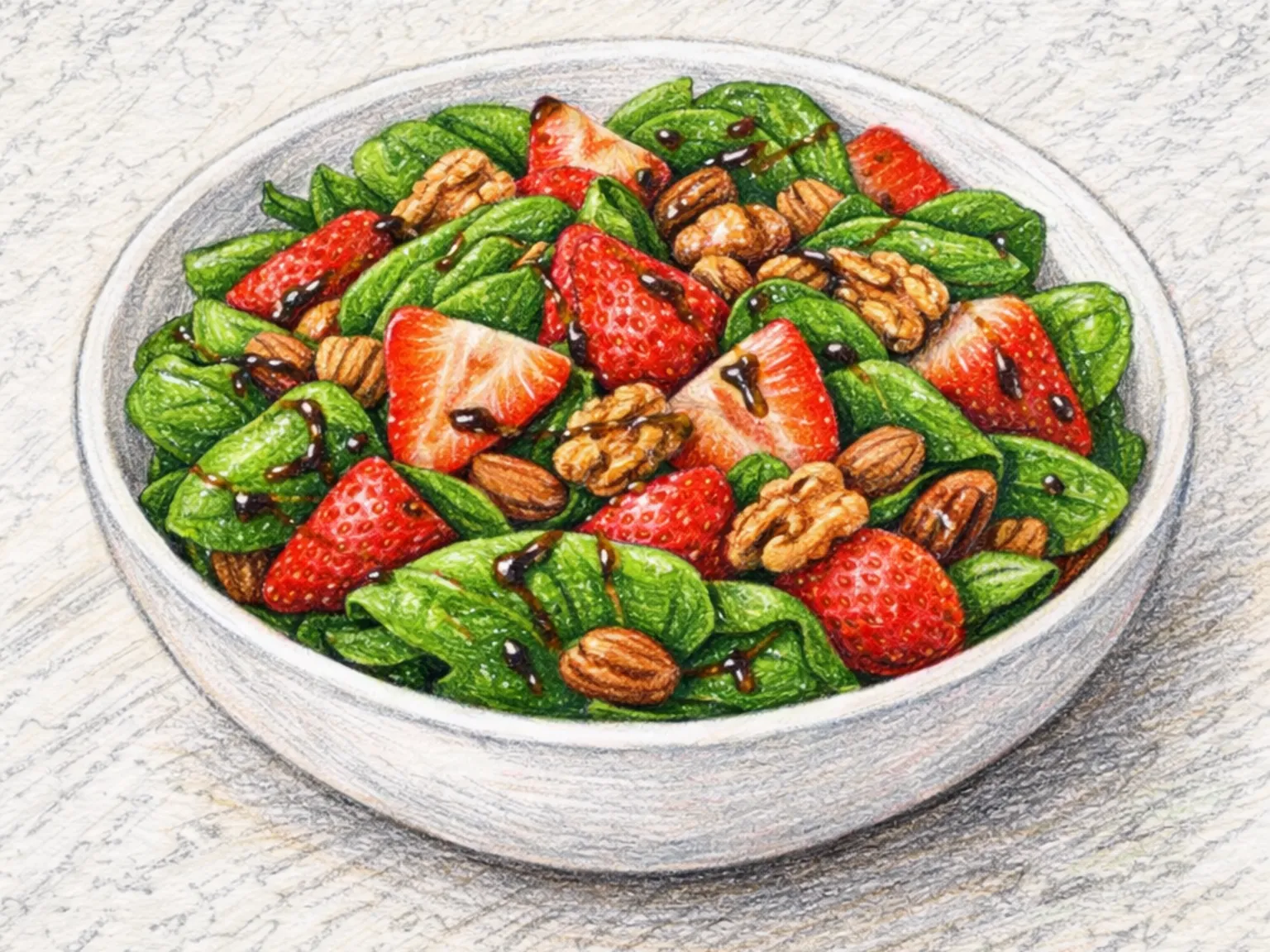
Spinach strawberry salad combines thoroughly dried baby spinach with thinly sliced strawberries, red onion, dry-toasted walnuts, and a balsamic, olive oil, and honey dressing. Rinse 100g baby spinach in cold water, moving the leaves to release any grit. Drain it in a sieve and press gently with a clean towel until no water remains between the leaves or around the stems. Washing and drying need separate attention because leftover water will thin the dressing and collect at the bottom of the serving plate. Hull 160g strawberries and slice them thinly lengthwise. Cut 30g red onion into very thin rings or slivers so it does not gather in one concentrated section. Toast 30g walnuts in a dry skillet over medium-low heat for about 2 minutes, shaking the pan often. Transfer them to a plate as soon as they are fragrant and lightly glossy, and let them cool. For the dressing, whisk 1.5 tablespoons balsamic vinegar, 1.5 tablespoons olive oil, and 1 teaspoon honey until no honey remains on the bottom of the bowl. Place the dry spinach, strawberries, and onion in a wide bowl. Add only half of the dressing first and toss lightly without crushing the leaves. Add the completely cooled walnuts last, then use the remaining dressing only as needed. Serve immediately, before liquid begins to gather under the salad.
Ssamjang Tofu Kale Crunch Salad
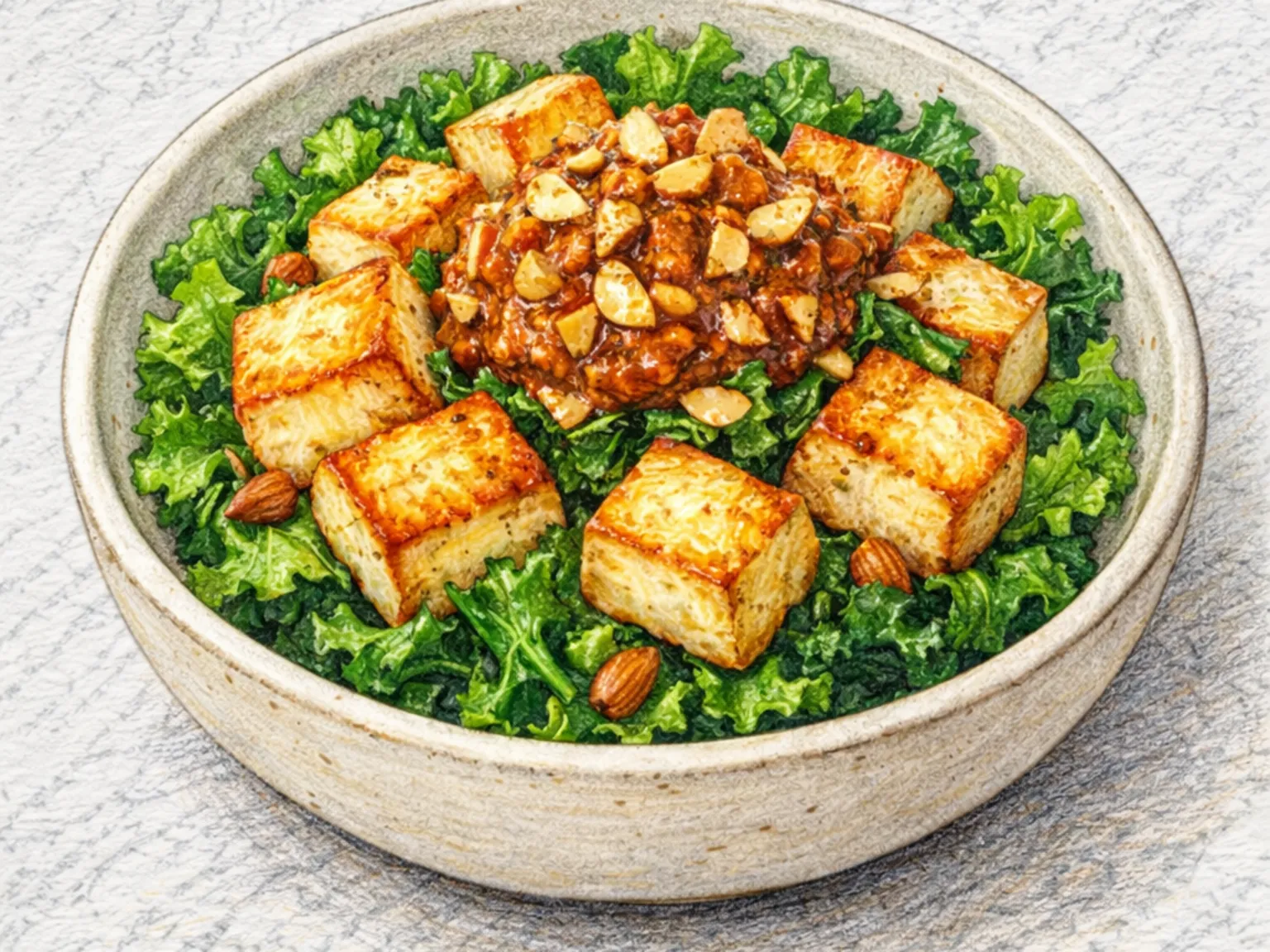
Ssamjang tofu kale crunch salad combines pan-browned firm tofu with salt-massaged kale, thinly sliced red cabbage and cucumber, a ssamjang dressing, and sliced almonds. Wrap 200g firm tofu in paper towels and press until no more water appears on the surface. Cut it into bite-sized pieces, heat 1 tablespoon olive oil in a pan, and arrange the tofu in a single layer without overlap. Cook over medium heat for 6 to 7 minutes, turning occasionally. Transfer it to a plate when the corners feel firm and all sides are golden. Remove the thick stems from 120g kale and tear the leaves into manageable pieces. Add a pinch of salt and massage for about 1 minute, stopping when the leaves darken and bend more easily. Thinly slice 60g red cabbage and 80g cucumber and place them with the kale in a large bowl. Whisk 1.5 tablespoons ssamjang, 1 tablespoon lemon juice, 1 teaspoon honey, and the remaining 1 tablespoon olive oil until no lumps remain. Toss the vegetables with the dressing first so the kale is evenly coated. Add the browned tofu afterward and fold gently to avoid breaking the corners. Scatter 20g sliced almonds over the salad only just before serving so they do not sit in the wet dressing. Thoroughly draining the tofu and keeping the vegetable toss separate from the gentler tofu fold are the main controls for preserving the pieces and their browned surfaces.
Crown Daisy & Tofu Yuzu Salad
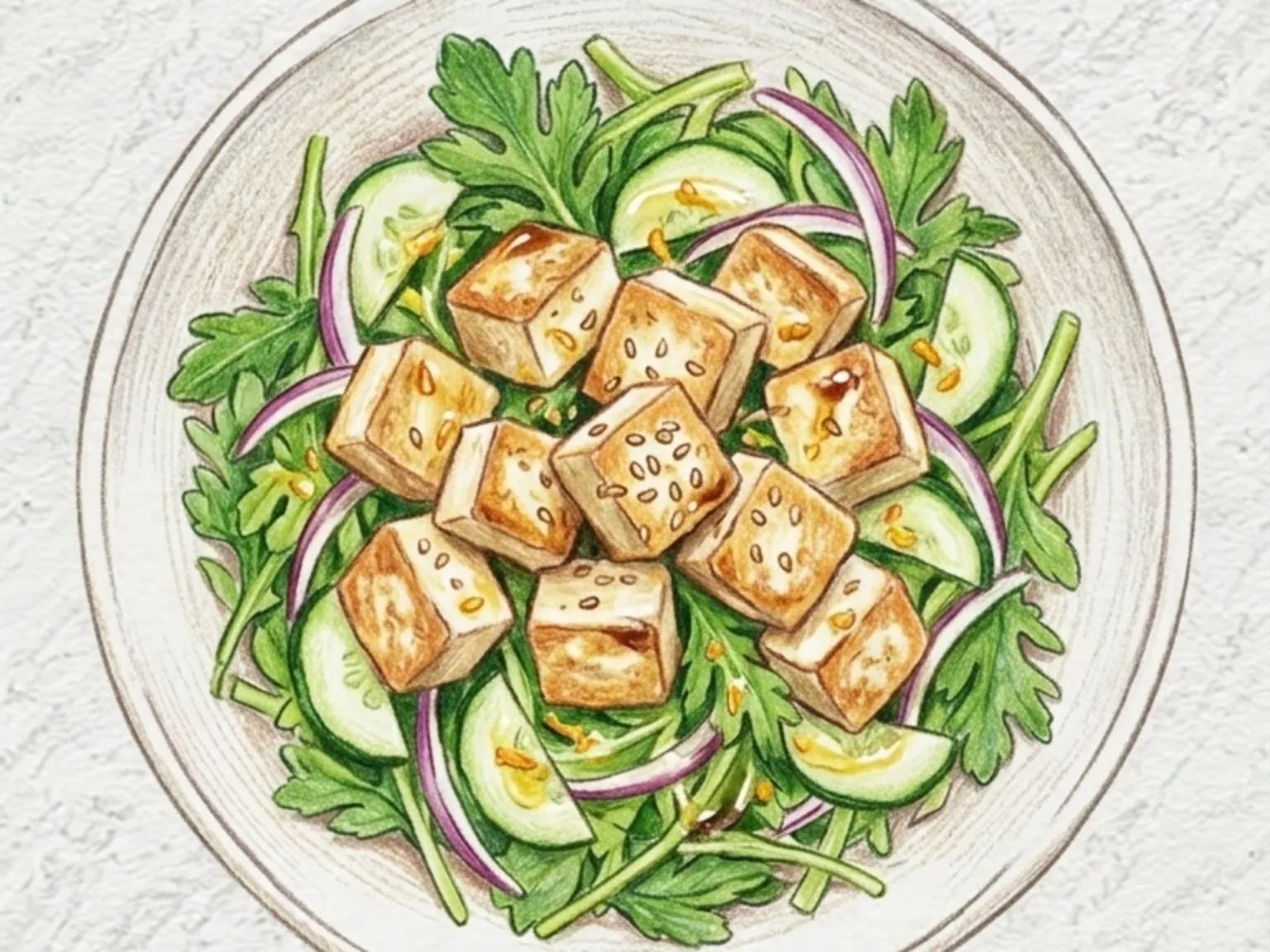
Crown daisy and tofu yuzu salad browns well-drained firm tofu in a pan, lets it cool, and then combines it with crown daisy, cucumber, red onion, and a yuzu marmalade dressing. Press every side of 200g firm tofu with paper towels until the surface is dry, then cut it into 1.5cm cubes. Heat a pan well over medium heat and arrange the tofu in a single layer without overlap. Cook for 6 to 8 minutes without turning it repeatedly. Rotate each piece only after the underside has set and turned golden, continuing until multiple sides are browned. Spread the cooked tofu over a plate and let it cool briefly. If it is tossed with the vegetables while hot, the crown daisy wilts quickly and the browned tofu surfaces become wet. Trim 80g crown daisy and cut it into 5cm lengths. Slice 70g cucumber into thin half-moons. Cut 40g red onion into thin slivers, soak them in cold water for 5 minutes, and drain thoroughly. Mix 1.5 tablespoons yuzu marmalade, 1 tablespoon soy sauce, 1 tablespoon lemon juice, and 1 teaspoon sesame oil until the marmalade has loosened with no large clumps. Put the vegetables and cooled tofu in a large bowl and pour the dressing around the sides. Fold gently from bottom to top so the tofu does not break. Sprinkle with 1 teaspoon toasted sesame seeds and serve before the vegetables release water. Cooling the tofu before assembly is the key sequence for preserving both the greens and the browned surfaces.
Sunomono Cucumber Salad (Japanese Sweet Vinegar Cucumber Slices)
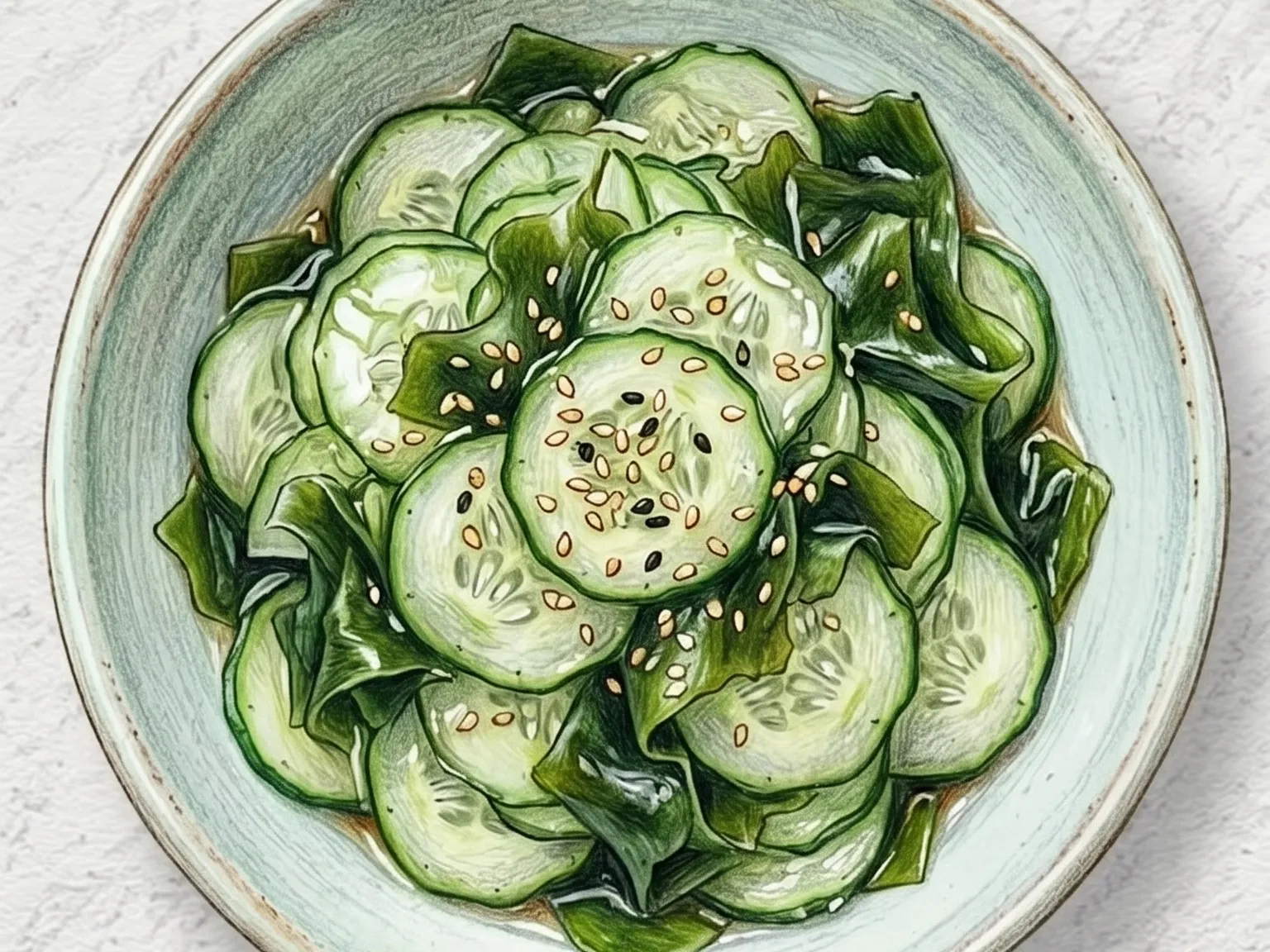
Sunomono cucumber salad salts thin cucumber slices, squeezes out their water, and combines them with blanched wakame in a rice vinegar dressing. Cut 220g cucumber into very thin, evenly sized rounds or half-moons. Sprinkle 0.5 teaspoon salt over the slices, toss gently, and leave them for 5 minutes. When moisture beads on the surface and the cucumber bends slightly without breaking, press it firmly by hand to remove as much liquid as possible. Rehydrate 8g wakame in water and blanch it briefly in boiling water. As soon as the color becomes vivid, transfer it to cold water, drain it thoroughly, and cut it into bite-sized pieces. Check the cucumber and wakame separately for leftover water, since either one can dilute the measured vinegar mixture. In a bowl, stir 2 tablespoons rice vinegar, 1 tablespoon sugar, and 0.5 teaspoon soy sauce until no sugar grains remain. Add the cucumber and wakame and mix gently with chopsticks, loosening any pieces that cling together. Sprinkle with 1 teaspoon sesame seeds, toss once more, and chill for 5 minutes. Serve after checking that no watery pool has formed on the bottom of the bowl. Even slicing, the 5-minute salting period, and thorough draining are the three controls that preserve the intended dressing ratio.
Sweet Potato Kale Salad
Sweet potato kale salad combines roasted sweet potato, dressing-massaged kale, almonds, and dried cranberries. Cut 280 g sweet potato into bite-size cubes, coat them with part of the olive oil, and spread them in one layer so the pieces roast evenly. Bake at 210C for 20 to 25 minutes, until the edges are brown, then let the cubes cool completely before assembling the salad. Remove the thick stems from 120 g kale, tear the leaves into bite-size pieces, and shake off the water thoroughly. Make the dressing with the remaining olive oil, 1 tsp Dijon mustard, 1 tbsp lemon juice, and 1 tsp honey. Pour it over the kale and massage the leaves gently for about 1 minute. Stop when the kale turns darker, loses a little volume, and feels tender. Add the cooled sweet potato with 30 g almonds and 25 g dried cranberries, then lift and fold the mixture gently so the cubes keep their shape. Serve promptly. Drying the kale helps the dressing coat the leaves, while cooling the roasted sweet potato keeps residual heat from softening them too far. These two preparation points also keep the final mixing step controlled rather than watery or mushy.
Sweet Pumpkin Chickpea Salad
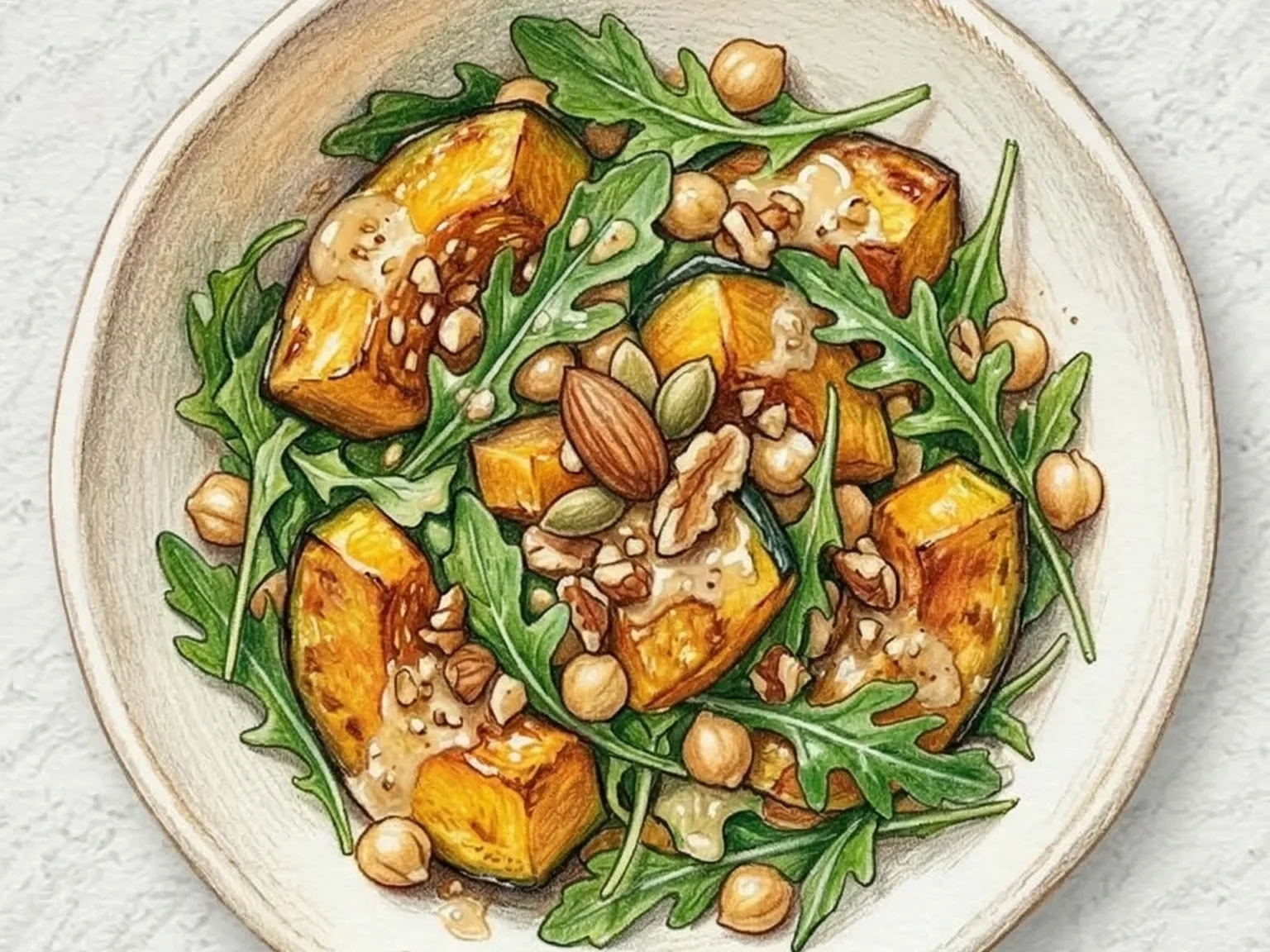
Sweet pumpkin chickpea salad combines roasted kabocha, cooked chickpeas, red cabbage, lettuce, grape tomatoes, and a doenjang yogurt dressing, with sunflower seeds added at the end. Remove the seeds from 400 g kabocha, cut it into 2 cm cubes, and coat the pieces with 1 tbsp olive oil. Spread them in a single layer and roast at 200C for 20 to 22 minutes. Take the squash out when the edges have browned slightly and a chopstick or fork enters without hard resistance, then transfer it to a wide plate and cool it completely. Thinly shred 120 g red cabbage, drain 140 g lettuce well and tear it into bite-size pieces, and cut 120 g grape tomatoes into manageable pieces. Whisk 120 g plain yogurt with 1 tbsp doenjang, 1 tbsp lemon juice, and the remaining 1/2 tbsp olive oil until smooth. Place the vegetables, 240 g cooked chickpeas, and cooled kabocha in a large bowl. Toss only until the dressing coats the ingredients, handling the tender squash gently. Sprinkle 20 g sunflower seeds over the salad immediately before serving. Cooling the roasted kabocha prevents its residual heat from wilting the lettuce and cabbage, and draining the lettuce keeps excess water from thinning the measured dressing. Adding the seeds last preserves their dry texture instead of letting them sit in the yogurt mixture.
Tabbouleh Salad (Middle Eastern herb salad)
Tabbouleh salad combines soaked bulgur with parsley, mint, tomato, and green onion in a lemon and olive oil dressing. Place 80 g bulgur in a roomy bowl, cover it with boiling water, and soak it for 8 to 10 minutes. Drain when the grains look slightly translucent and feel tender with a little chew remaining. Press lightly with a spoon to remove excess water, then spread the bulgur out and cool it until no steam remains. Dry 60 g parsley and 15 g mint thoroughly before chopping them finely, and slice 30 g green onion thinly. Halve 160 g tomato, remove the seeds and watery center, and cut the flesh into small pieces. In a large bowl, whisk 2 tbsp lemon juice with 2 tbsp olive oil and 0.5 tsp salt until the salt disperses. Toss the cooled bulgur in this measured dressing first so the grains are seasoned before the vegetables are added. Add the chopped herbs, green onion, and tomato, then fold gently from the bottom. Refrigerate the finished salad for at least 10 minutes and serve it cold. Thorough draining matters at three points: the cooked bulgur must not carry soaking water, the herbs need to be dry before chopping, and the watery portion of the tomato is removed. Together, those steps keep the dressing from collecting as diluted liquid in the bowl.
About Salads
Seasonal produce provides the best flavor and nutrition. Whether you are looking for a full meal replacement or a vivid side dish, these salad recipes offer balanced, straightforward options.