Western Recipes
662 recipes. Page 18 of 28
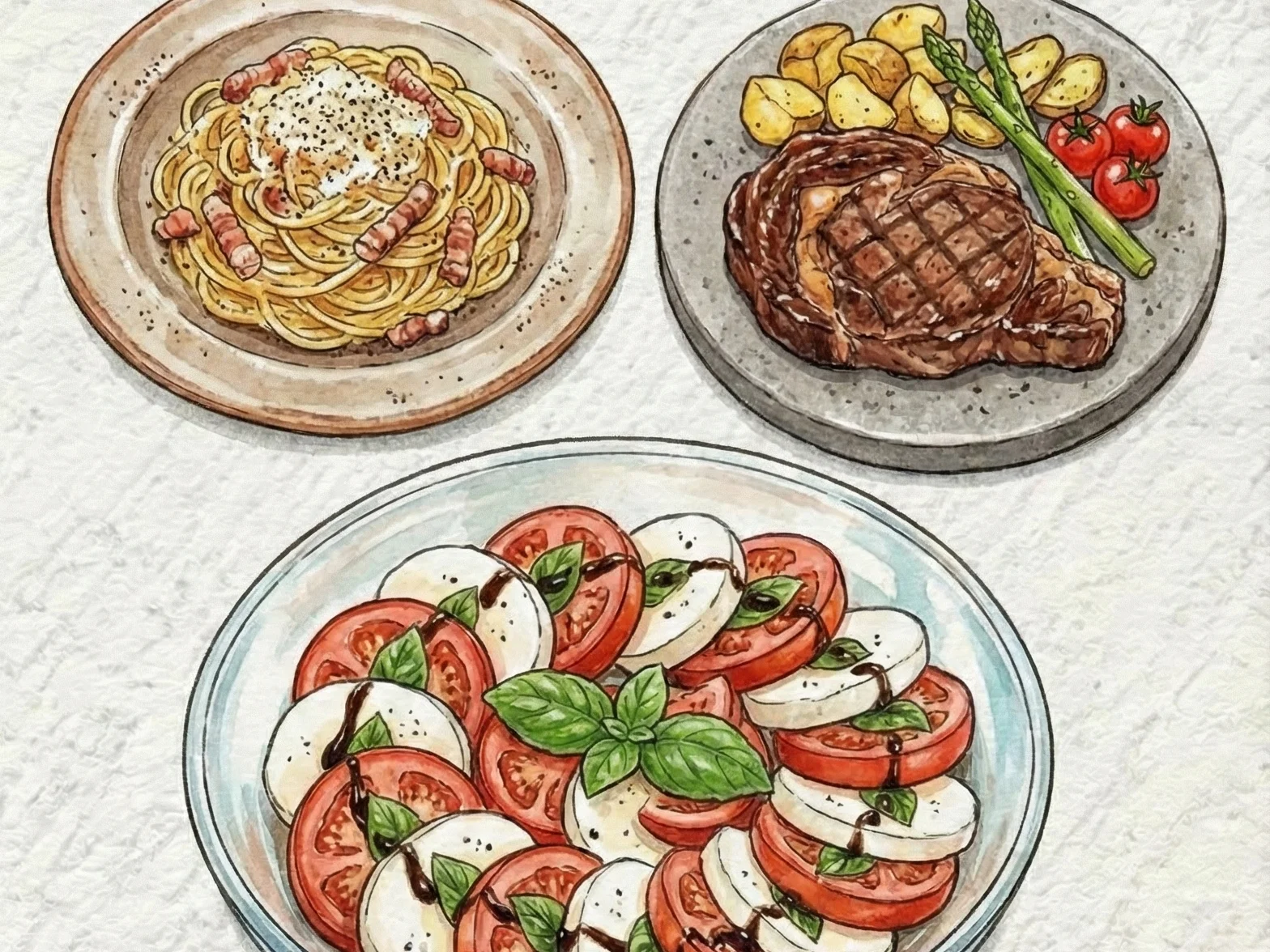
This category brings Western-style dishes - pasta, steak, risotto, gratin, and more - into the home kitchen. In Korea, "Western food" (yangsik) includes not only authentic European recipes but also Korean-adapted classics like donkatsu (pork cutlet) and hambak steak (Hamburg steak).
French Dip Sandwich
The French Dip sandwich originated in Los Angeles during the early twentieth century and, despite what its name implies, does not have any actual roots in France. This sandwich is constructed with multiple layers of roast beef that have been sliced very thin and piled onto a sturdy French roll. It is served with a small bowl of au jus on the side, which consists of the natural juices that are collected and strained from the roasting pan after the meat has finished cooking. To prepare the beef for this dish, the roast is cooked slowly at a low temperature in the oven. This slow roasting process continues until the meat reaches a state where it can be sliced against the natural grain into thin and supple pieces. This specific technique ensures that the meat remains moist even when it is placed against the firm and dry texture of the bread. Including whole onions and garlic in the roasting pan along with the meat adds layers of sweetness and depth to the resulting juices. This practice makes the au jus significantly more complex than what would be produced by using the simple meat drippings alone. Just before the sandwich is assembled, either Provolone or Swiss cheese is melted over the sliced beef. This addition provides a mild and creamy layer that serves to soften the contrast between the lean beef and the crusty exterior of the roll. The choice of bread is a specific requirement, as the French roll requires a firm and crackly crust. This structural integrity is necessary because the roll must be able to maintain its shape even when it is dipped repeatedly into the warm liquid. If a soft roll is used instead, the bread tends to collapse and makes the sandwich difficult to manage during the meal. Dipping the sandwich into the au jus is the primary way this dish is consumed rather than being an incidental or optional step. Each time the bread is submerged, it becomes saturated with a concentrated beef flavor. The resulting texture creates a specific contrast where the edges of the bread become wet and softened while the center of the roll remains firm. The au jus is always presented in a separate vessel alongside the sandwich to facilitate this process. Because the act of dipping is central to the format of the meal, the liquid and the solid components are treated as equal parts of the overall presentation.
Doenjang Caramel Apple Galette
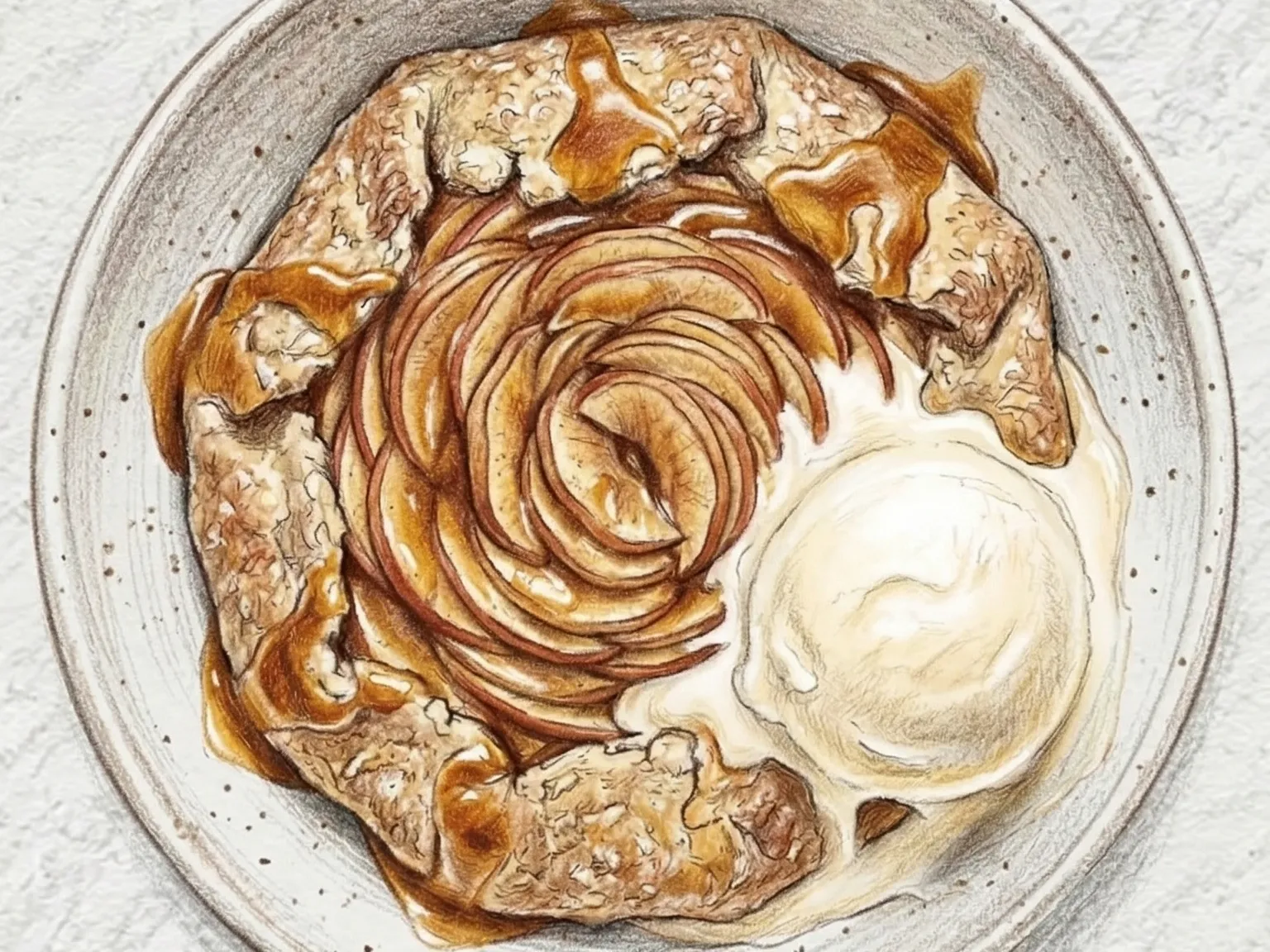
This galette layers a rustic free-form French pastry with a Korean-inflected twist: a doenjang-laced caramel draped over cinnamon apples filling the center. The crust is made by working cold butter into flour and shaping the dough by hand, folding the rough edges over the fruit in an imperfect, irregular way. Apples tossed with brown sugar and cinnamon fill the center, softening in the oven until tender and yielding. The doenjang caramel is made by whisking a small amount of fermented soybean paste into a brown sugar and cream sauce. Keeping the amount deliberately minimal is the whole point: enough to create an ambiguous saltiness and fermented depth, but not enough to register clearly as soybean paste. It is the murkiness of the flavor that lifts the familiar apple-and-cinnamon combination out of predictability. Served warm with a scoop of ice cream, the contrast between the hot pastry and cold cream adds one more layer to an already textured dessert.
Shrimp Alfredo Pasta
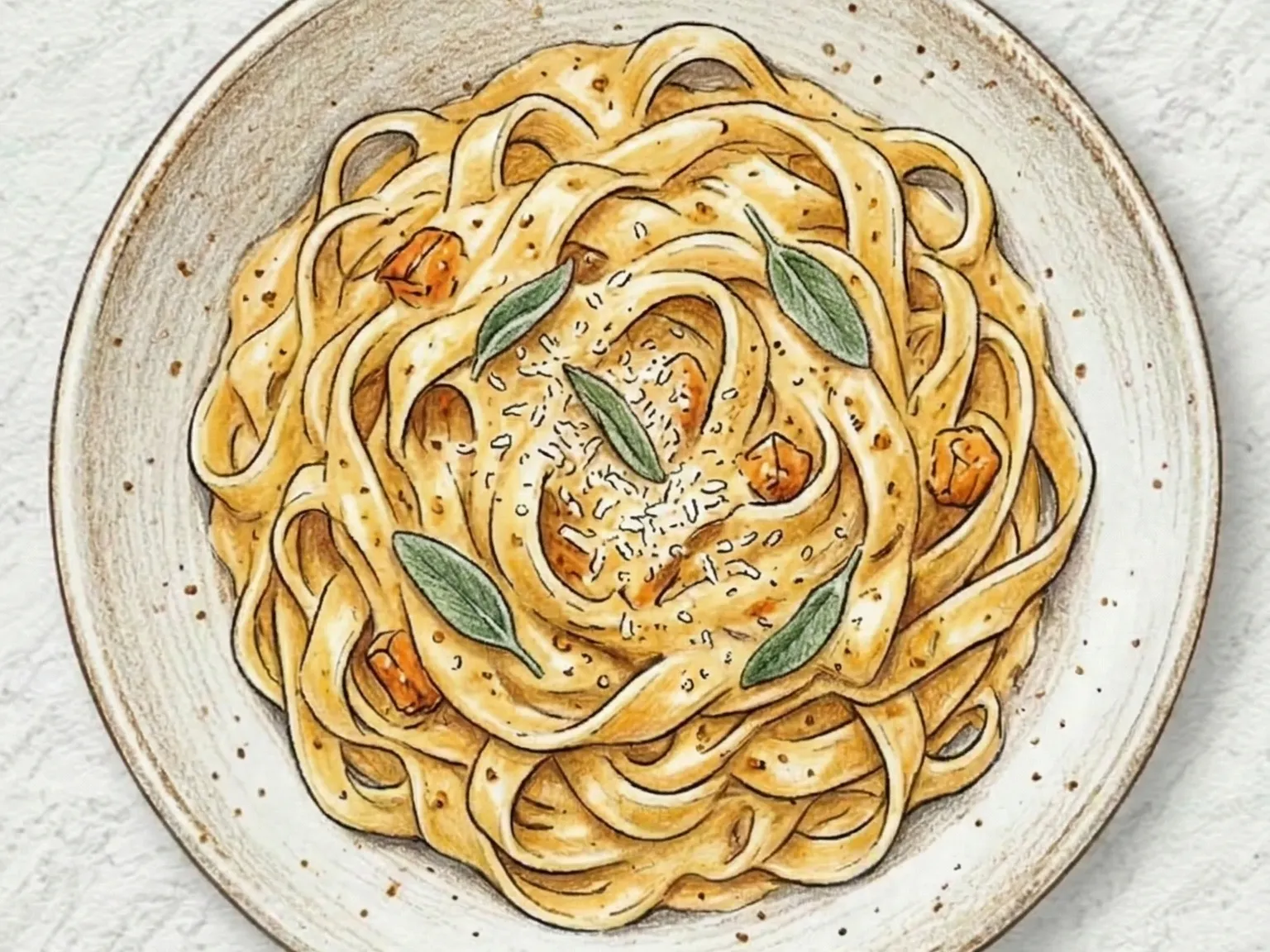
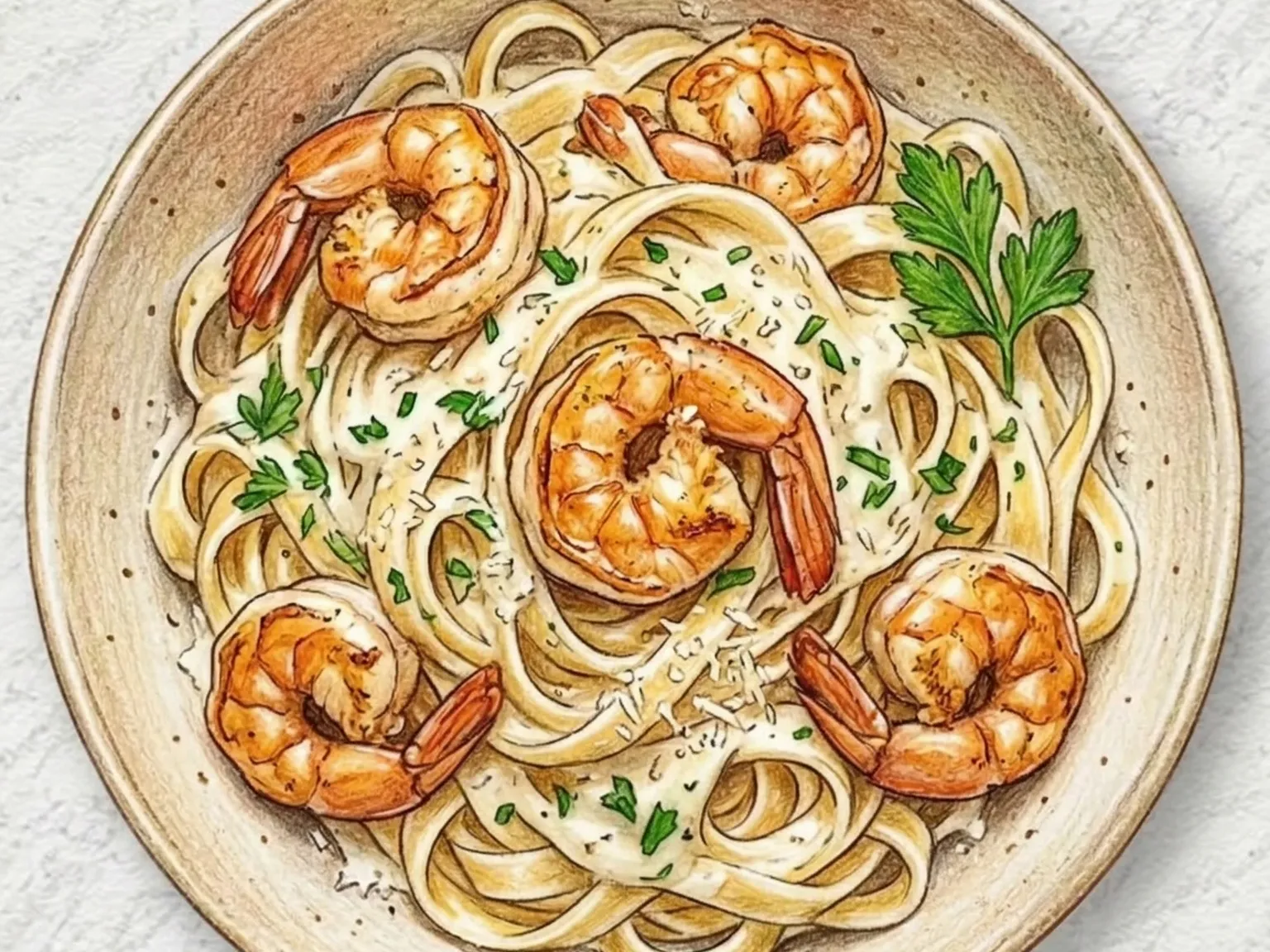
Shrimp Alfredo pasta pairs fettuccine with a cream sauce built from butter, garlic, heavy cream, and grated Parmesan. The shrimp are seared quickly in butter on both sides to develop a light caramelized crust while keeping the interior moist, then set aside and returned to the pan only at the end. Adding the cheese off direct heat is critical - high temperature causes the fat and protein in Parmesan to separate, turning the sauce grainy instead of smooth. Starchy pasta water stirred into the cream acts as an emulsifier, helping the sauce cling to each strand rather than pooling at the bottom of the bowl. The shrimp's natural sweetness provides a clean counterpoint to the dense richness of cream and aged cheese.
French Omelette
A French omelette is defined entirely by technique, which is precisely why it appears in professional kitchens as a benchmark for a cook's fundamental skill. The eggs are beaten just enough to combine the yolks and whites into a uniform liquid without introducing air, then poured into a butter-coated pan over moderate heat. From that point on, constant stirring with a fork or chopsticks, combined with rhythmic shaking of the pan, coaxes the eggs into the tiniest possible curds that bind together into a seamless, pale yellow sheet. No browning of any kind should appear on the exterior surface. The interior, described in French as baveuse, remains slightly underset with a custard-like center that carries the richness of the egg in its purest form. Folding or rolling the omelette into a neat oval shape should happen within ninety seconds from the moment the egg touches the pan; anything beyond that overcooks the inside. Fillings are minimal by design: fine herbs, a small amount of grated Gruyere, or nothing at all, so the egg remains the sole subject. The simplicity of the ingredients removes every excuse and makes even small errors in heat management immediately visible in the finished result. Practice tightens the margins, but each attempt teaches something precise about timing and temperature.
Doenjang Caramel Pecan Tartlets
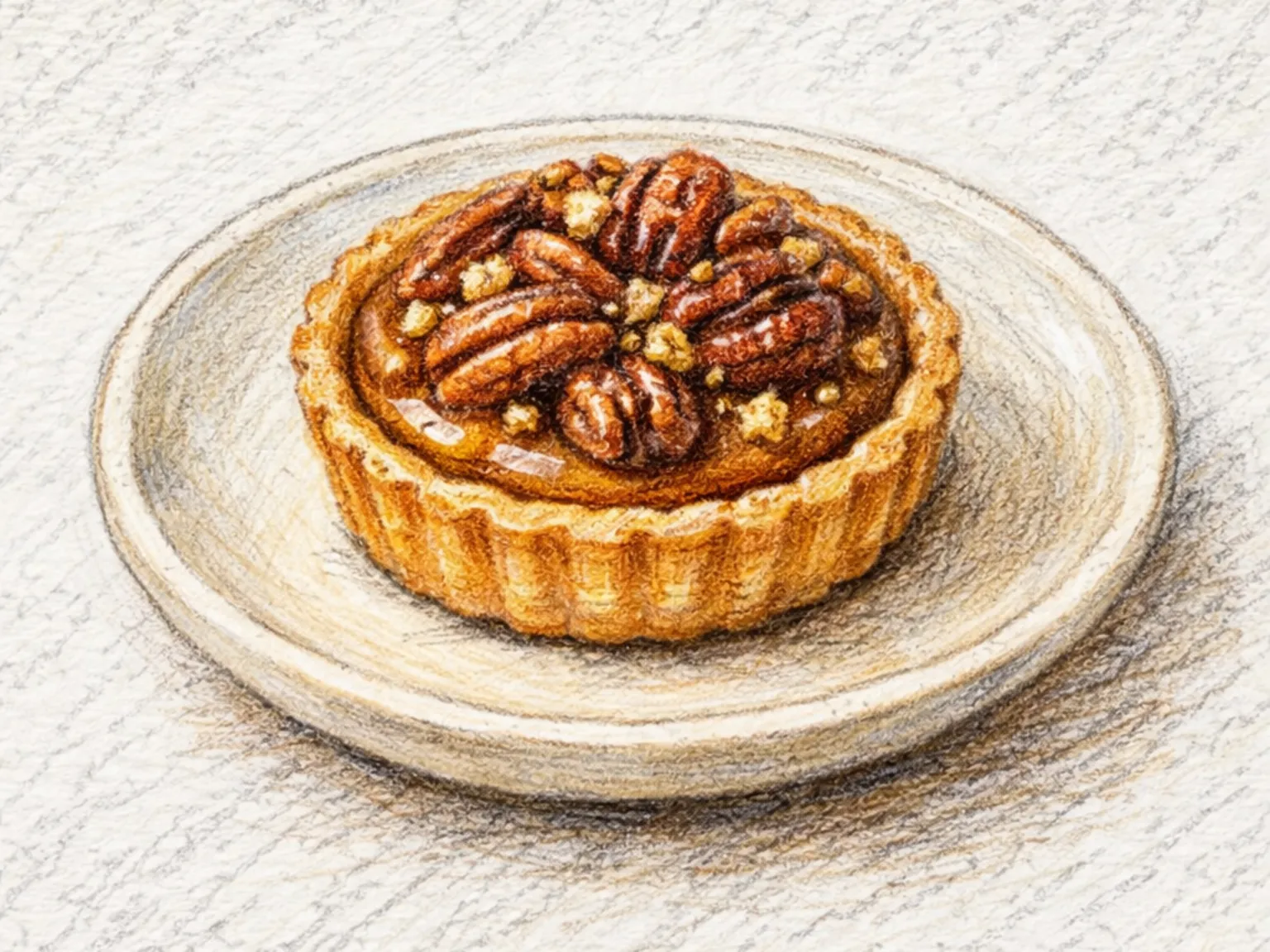
Doenjang caramel pecan tartlets bring together Korean fermented soybean paste and Western pastry in a dessert that treats doenjang the way salted caramel treats sea salt: as a savory element that sharpens and deepens sweetness. Mini tart shells are filled with toasted pecans and topped with caramel into which a small amount of doenjang has been thoroughly whisked. The fermented paste introduces salty, umami-layered depth beneath the caramel's sweetness, and the result sits noticeably broader and more complex than a standard pecan tart. The caramel must be cooked to a deep amber before the doenjang is added; pulling it too early leaves only sweetness and buries the paste's fermented character. Once poured and cooled, the surface sets into a glassy layer that snaps under a fork, adding a textural payoff before the filling yields. The pecan's buttery, slightly bitter roasted note meets the caramel's bittersweet char and the doenjang's fermented roundness, stacking three distinct kinds of richness into every bite. Well-aged doenjang used in a small quantity concentrates the aroma more than a milder paste, and adding almond flour to the tart shell dough creates a shortbread texture that harmonizes with the pecan.
Shrimp Scampi
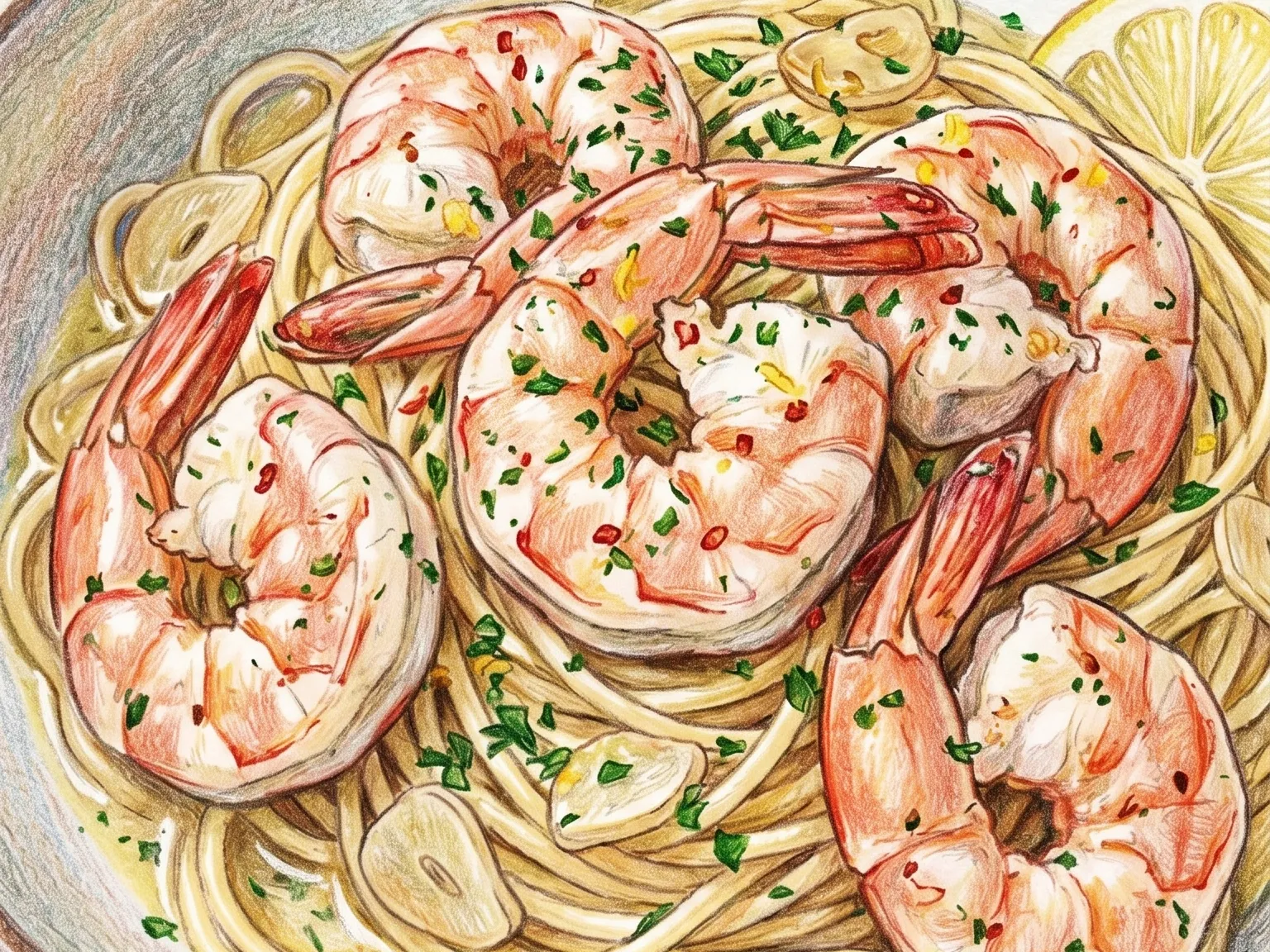
Shrimp scampi sautees large shrimp in butter with sliced garlic until just pink, then deglazes the pan with white wine that reduces and emulsifies with the butter into a light, glossy sauce. Cooking the garlic slowly in butter over moderate heat draws out its sweetness without turning it bitter or brown. The shrimp need roughly ninety seconds per side - enough for the exterior to pick up flavor from the garlic butter while the interior stays tender. White wine provides acidity and aromatic complexity as its alcohol cooks off, and a splash of starchy pasta water added when tossing with spaghetti gives the sauce enough body to coat each strand. Lemon juice squeezed in at the end cuts through the butter's richness, and red pepper flakes leave a gentle lingering heat.
French Toast
French toast stays custardy inside when each side of thick bread receives about 30 seconds to absorb the egg mixture and the soaked slices cook slowly over medium-low heat without being pressed down. For 2 servings, use 4 thick bread slices, 2 eggs, 100 ml milk, 1 tablespoon sugar, 0.5 teaspoon vanilla extract, 0.5 teaspoon cinnamon, 2 tablespoons butter, 2 tablespoons maple syrup, and 1 teaspoon powdered sugar. Beat the eggs in a wide, shallow dish, then whisk in the milk, sugar, vanilla, and cinnamon until the mixture is even and no streaks remain. Dip the bread one slice at a time, soaking each side for about 30 seconds. Lift it gently with tongs or a spatula before the saturated bread begins to tear. Preheat a skillet over medium-low heat and melt 1 tablespoon butter. When the foam settles and the butter smells nutty without becoming dark, place the slices in the pan without overlapping. Cook the first side for about 2 minutes and leave the bread unpressed. Turn each slice when the edges look slightly set and the underside is golden. Melt the remaining tablespoon of butter around the bread and cook the second side for about 2 minutes. Lower the heat if the surface darkens before the center has warmed through. Transfer the toast directly to plates and drizzle with the maple syrup. Add the powdered sugar immediately before serving so it remains light on the surface. Slightly stale bread is especially useful because it absorbs the egg mixture more readily than very fresh bread.
Dutch Baby Pancake
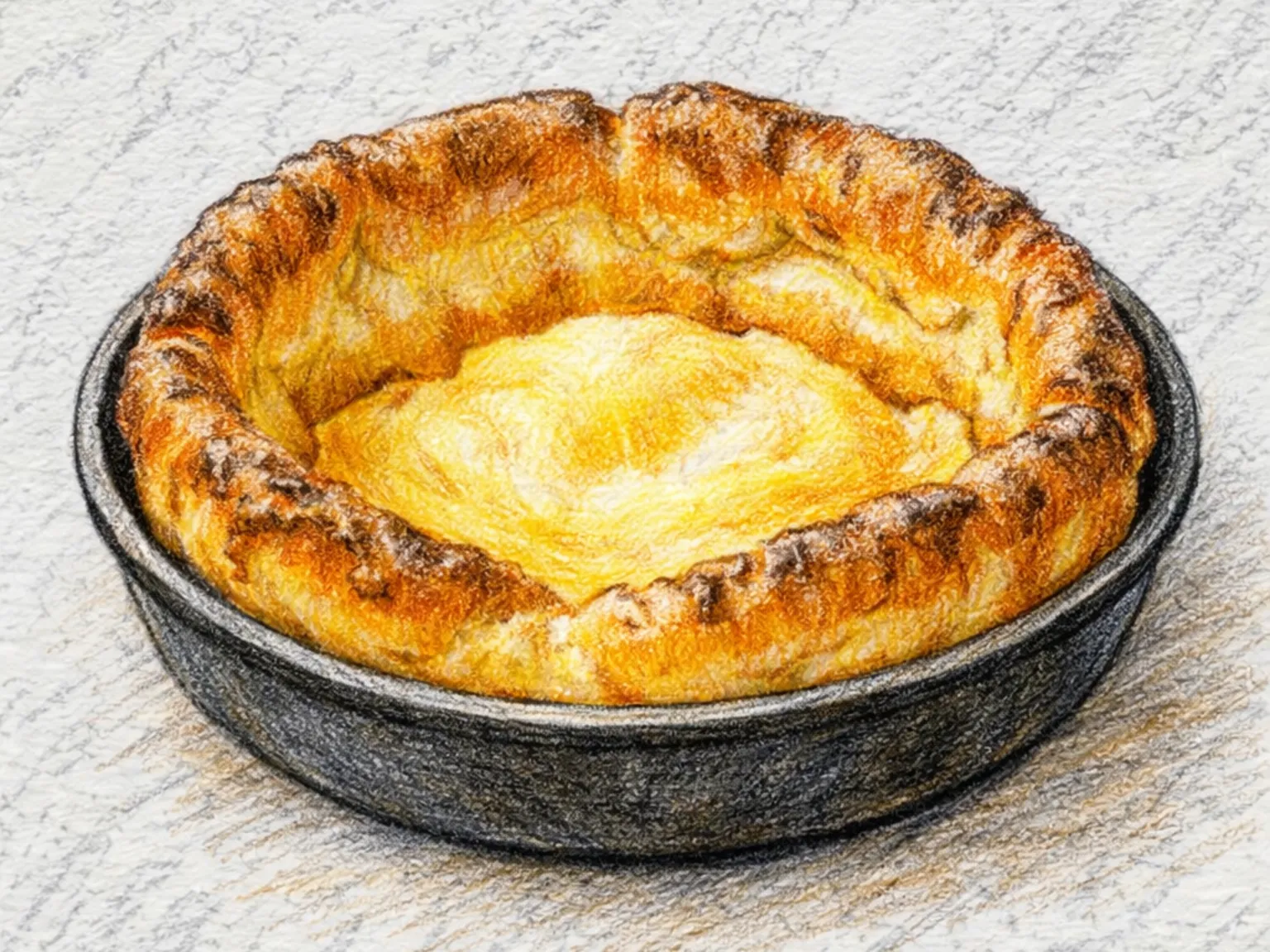
A Dutch baby is a German-American oven-baked pancake made from a thin, loose batter of eggs, flour, milk, and melted butter, poured into a cast iron skillet that has been preheated until it is searing hot. The sudden contact with the hot pan and oven causes the edges to puff dramatically, sometimes rising several inches above the rim and curling inward to form a natural bowl, while the center remains low, custardy, and tender. This contrast between the crisp, golden-brown walls and the soft, eggy base is the whole point of the dish, and the pancake begins deflating the moment it exits the oven, so it needs to go directly to the table while still dramatically puffed. A squeeze of fresh lemon juice over the surface and a heavy dusting of powdered sugar is the classic finishing touch: the bright acidity and the sweetness play directly against the rich, buttery egg base in a way that simple toppings rarely achieve. Fresh berries, sliced stone fruit, or a generous cloud of whipped cream transform it from a simple breakfast into a substantial brunch centerpiece. Getting the skillet genuinely hot -- at least 220 to 230 degrees Celsius before the batter goes in -- is the single most important factor in how high the edges rise. Using eggs at room temperature and letting the mixed batter rest briefly before pouring also contributes to even, dramatic puffing.
Soy-Braised Mushroom Ragu Pappardelle
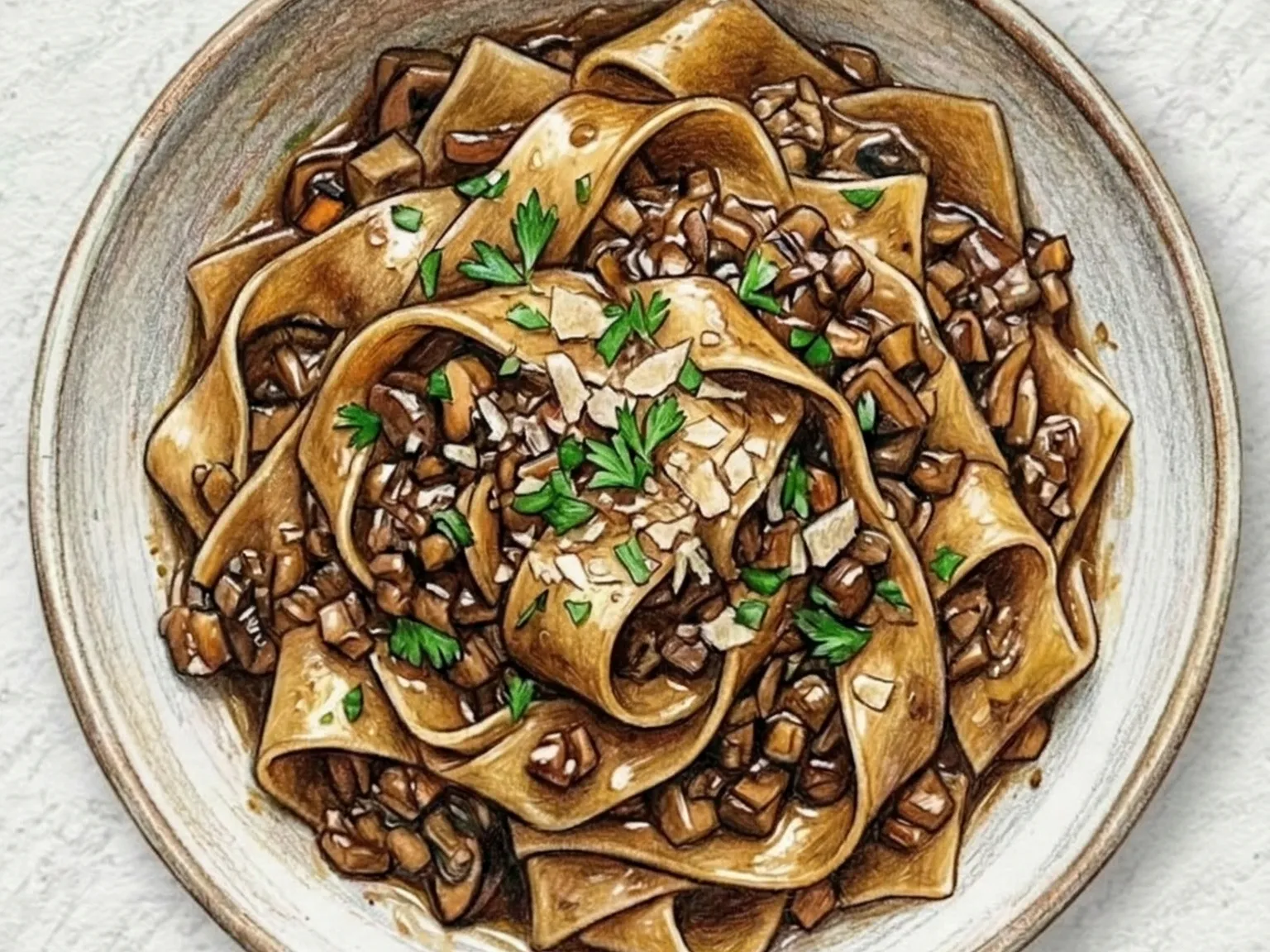
Soy-braised mushroom ragu pappardelle cooks finely chopped shiitake and button mushrooms until their moisture is gone, then reduces them with tomato paste, dry white wine, soy sauce, and thyme. Finely dice 120g shiitake mushrooms, 120g button mushrooms, 100g onion, 50g carrot, and 3 garlic cloves into similarly small pieces. Heat 2 tablespoons olive oil in a deep pan and cook the onion and carrot over low heat for 5 minutes, until softened. Add the garlic and mushrooms, raise the heat to high, and continue until the released mushroom liquid has evaporated completely and the edges begin to brown. Avoid moving the mushrooms constantly so they spend enough time in contact with the pan to take on color. Add 1.5 tablespoons tomato paste and cook it for 1 minute. Pour in 80ml dry white wine and scrape the browned material from the bottom of the pan into the liquid. Add 1 tablespoon soy sauce and 1 teaspoon fresh thyme, lower the heat, and simmer for 12 minutes. The ragu should be concentrated with very little loose liquid remaining. Add 0.5 teaspoon black pepper only after the sauce has reduced, then check the seasoning. Cook 180g pappardelle in salted water until al dente and transfer it to the ragu. Add pasta water in small amounts only until the sauce spreads evenly over the wide ribbons. Fully reducing the mushroom moisture before the wine goes in, then concentrating the wine mixture over low heat, prevents a watery finished sauce.
Frittata
A frittata uses the stovetop to set its edges and the oven to cook the thick center, preventing a scorched bottom and a loose middle. Preheat the oven to 190C and choose a pan that can move safely from the burner to the oven. Stir 8 eggs with 80 ml milk and 0.8 teaspoon salt only until blended. Vigorous whisking adds excess bubbles, which can leave a coarse rather than tender interior. Thinly slice 90 g onion, halve 120 g cherry tomatoes, and shake all excess water from 80 g spinach so it does not thin the eggs. Warm 1 tablespoon olive oil in the pan over medium heat. Cook the onion for about 3 minutes, stopping when it is soft and translucent rather than deeply browned. Add the spinach and tomatoes for only 1 minute. The spinach should barely wilt and the tomatoes should warm without collapsing. Pour the egg mixture evenly over the vegetables and do not stir it hard into the filling. Lower the heat to medium-low and leave the pan undisturbed for about 3 minutes. When the rim has set and begins to pull slightly from the pan, scatter 80 g cheddar over the surface. Transfer the pan to the oven and bake for 10 minutes. Test the center with a light press; it should spring back gently rather than feel liquid underneath. Rest the finished frittata for 2 to 3 minutes before slicing so the egg and vegetables hold together. Leftover wedges can also be chilled and used as a sandwich filling.
Earl Grey Banana Bread
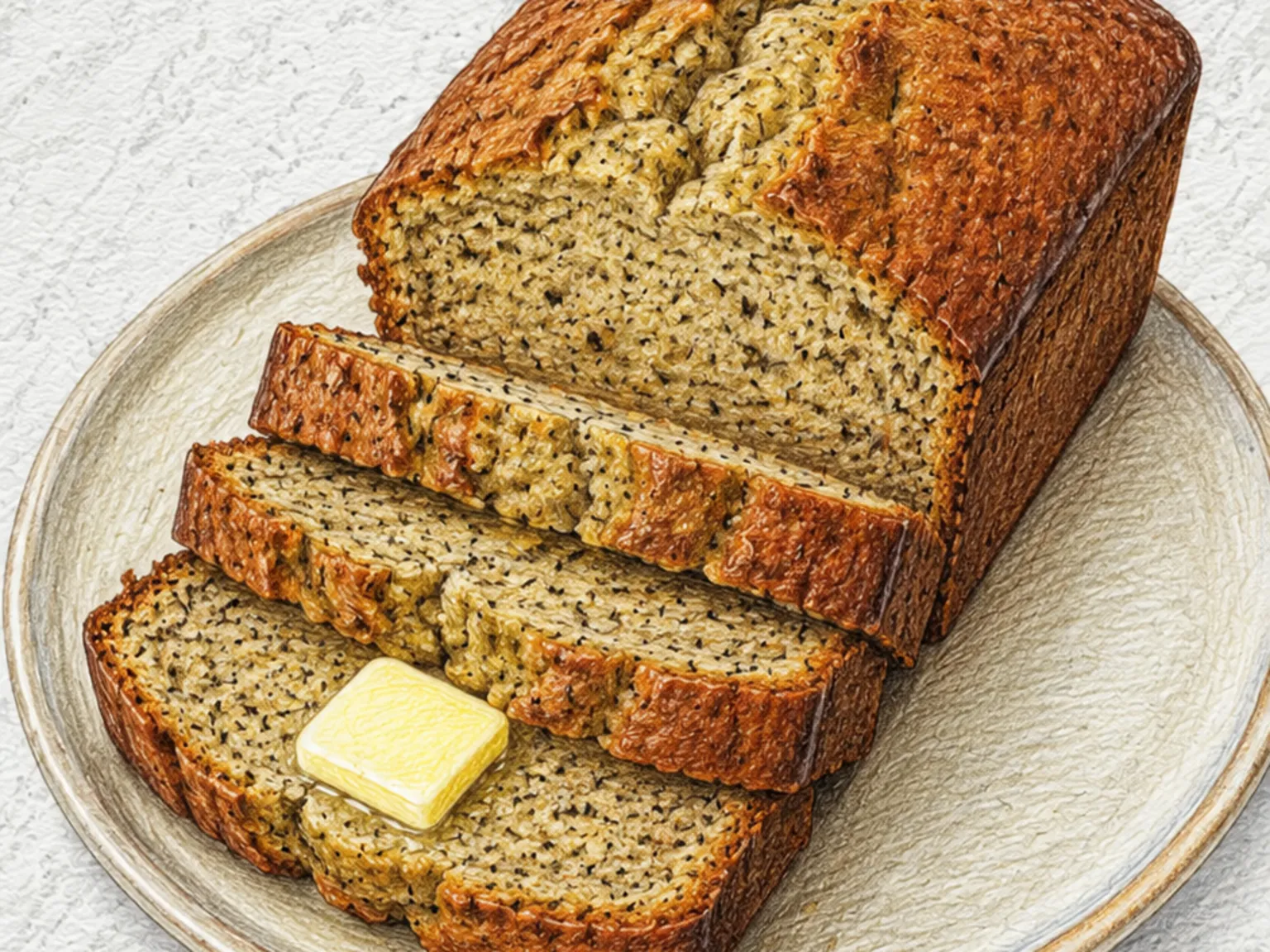
Earl Grey banana bread is a loaf-shaped quick bread made with 3 ripe bananas and finely ground tea leaves. Preheat the oven to 175°C and line the pan before mixing, then grind the measured 4g tea until no coarse pieces remain. Cream the softened unsalted butter with the sugar until the mixture becomes lighter in color. Add the 2 eggs one at a time, mixing after each addition so the base stays smooth and glossy. Mash the bananas with a fork, leaving a few small soft pieces, and fold them into the butter mixture with the milk and ground Earl Grey. Sift in the all-purpose flour, baking soda, and salt. Use a spatula to lift the batter from the bottom and stop as soon as the last dry streak disappears. Transfer the batter to the prepared pan and bake for 45 to 50 minutes. If the surface darkens while the middle still needs time, cover the loaf loosely with foil. A split top and a skewer that comes out without wet batter indicate that the center is done. Let the loaf stand in its pan for 15 minutes, then unmold it and cool it completely before slicing. The finished crumb holds small traces of banana throughout, while the powdered tea is dispersed through the loaf instead of collecting in coarse pockets.
Soy Butter Steak Garlic Spaghetti
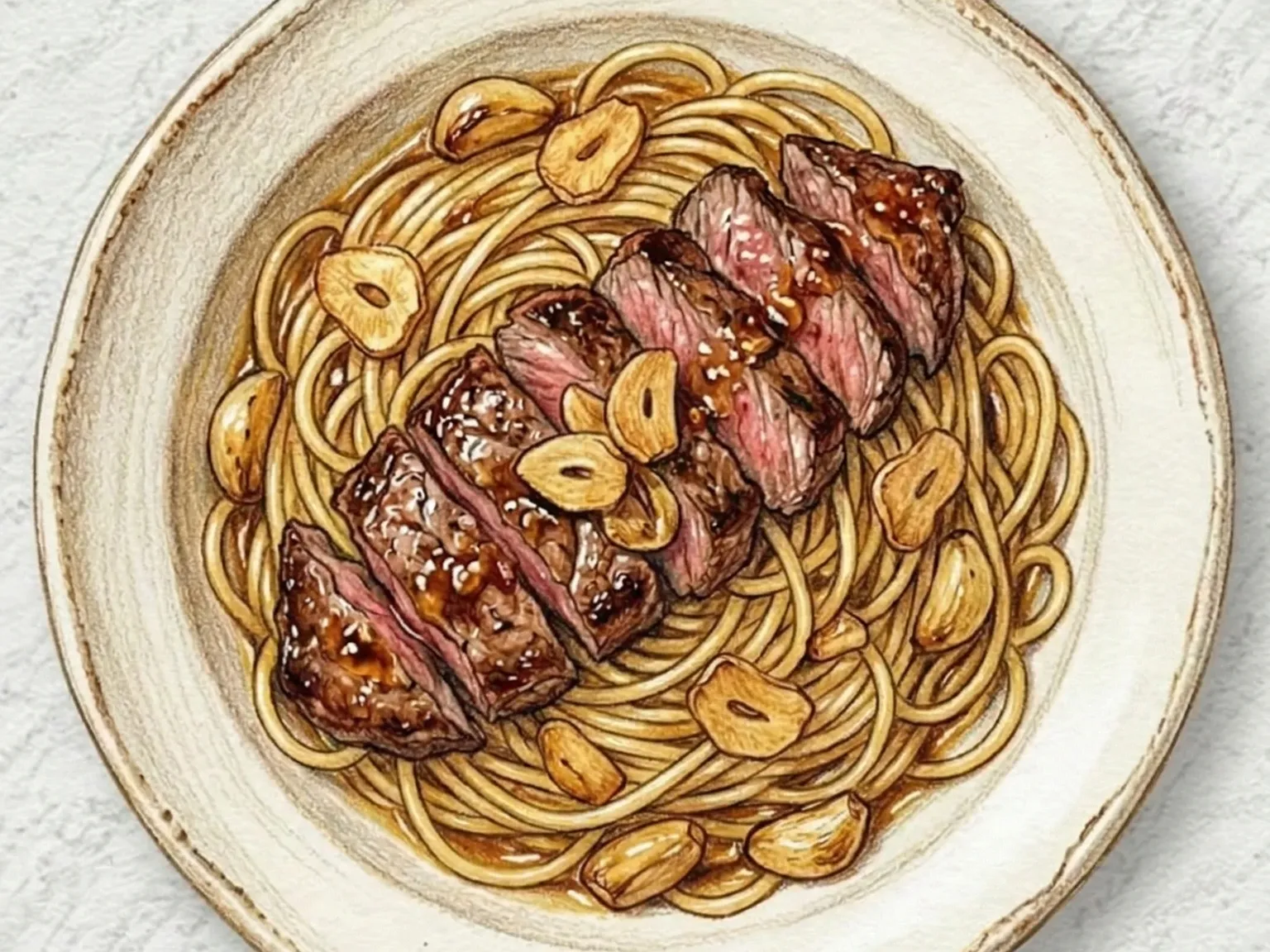
Thick-cut sirloin seared at high heat, then glazed in soy sauce and butter, forms the base of this steak pasta. The fond left in the pan gets deglazed with soy sauce and butter, then emulsified with pasta water into a thin, shiny coating that clings to each strand without turning greasy. Generous garlic browned in olive oil beforehand builds a deep, roasted-garlic base that runs through the entire sauce, and tsuyu -- a Japanese seasoning concentrate made from kombu and bonito -- adds the round umami depth of dashi without any extra steps. The steak is best cooked to medium-rare and sliced against the grain before laying over the pasta; resting the meat first keeps the juices from running out when cut. Black pepper and sliced scallions cut through the richness at the end. The full cook time is about 20 minutes, and pasta water volume controls the final sauce consistency.
Galette Complete (Buckwheat Crêpe with Ham Cheese Egg)
Galette complète frames a soft egg, melted Gruyere, and ham inside four folded edges of a thin, crisp buckwheat crepe. For 2 servings, prepare 120 g buckwheat flour, 250 ml water, 4 eggs, 2 slices ham, 60 g Gruyere, 1 tablespoon butter, and 0.5 teaspoon salt. Whisk the flour with the water, 2 of the eggs, and the salt until no dry lumps remain. Rest the thin batter for 15 minutes so the buckwheat can hydrate and the texture can become smoother. Heat a wide skillet or crepe pan over medium heat and brush it with a very thin coating of butter. Pour in enough batter for one galette and tilt the pan immediately to spread it into a thin, even layer. Cook for 1 to 2 minutes, until the edges look dry and crisp and the center no longer appears wet. Place 1 slice of ham and about 30 g Gruyere in the center, then crack 1 egg over them. Keep the yolk intact and gently spread only the white so it sets quickly while the cheese melts underneath. Fold the four edges inward to create a square and lower the heat to medium-low. Cook for another 2 to 3 minutes. The galette is ready when the white is opaque and the yolk still jiggles softly. Repeat with the remaining batter, ham, cheese, and egg, serving each galette hot while its folded edges remain crisp.
Earl Grey Milk Tea Cheesecake
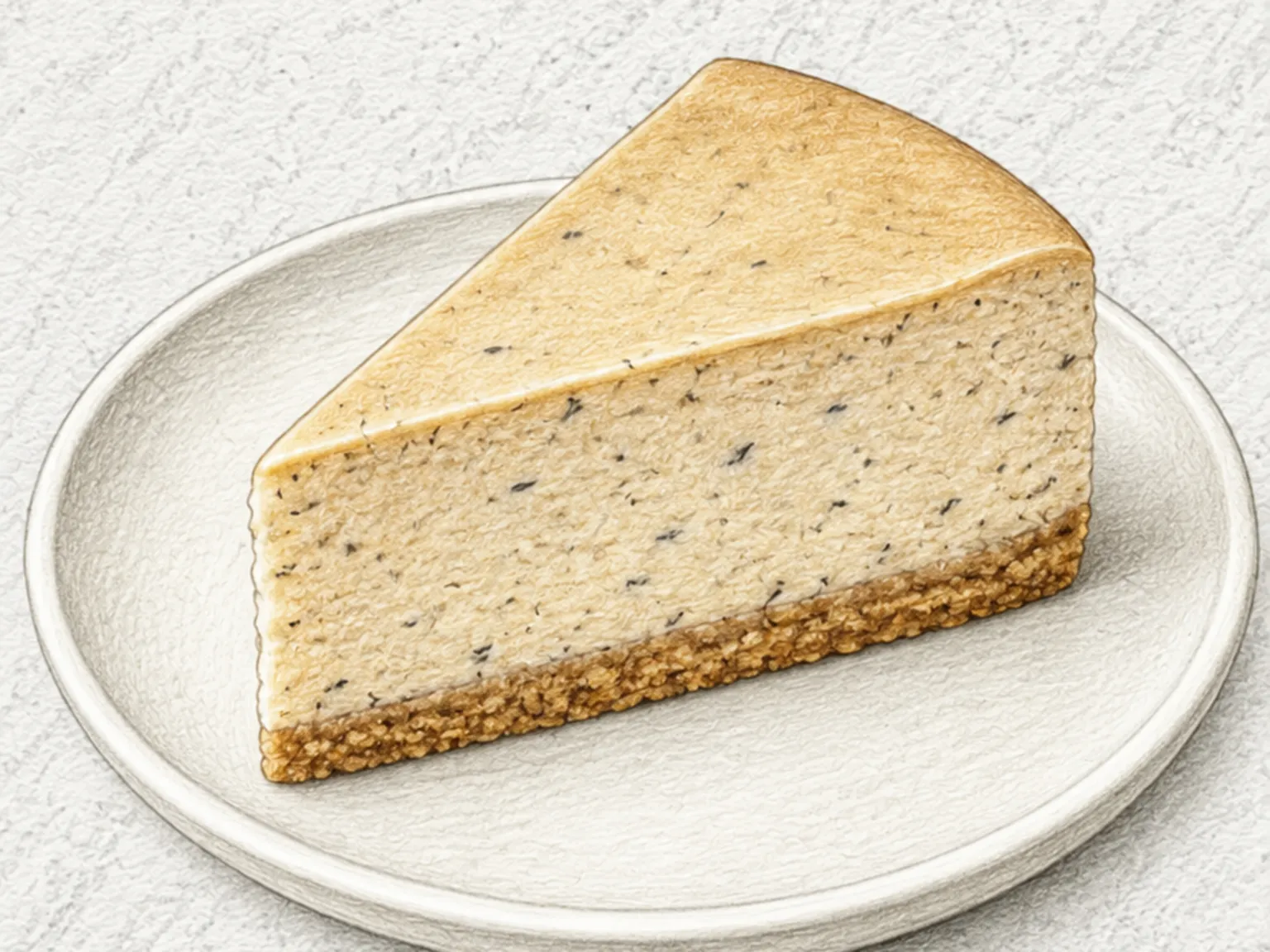
Earl Grey cheesecake infuses the bergamot-scented fragrance of Earl Grey tea into a classic baked cheesecake. The heavy cream is warmed without boiling, steeped with 2 tea bags for 10 minutes, and then mixed into a filling of cream cheese, eggs, sugar, and flour. A crushed digestive biscuit crust provides a sandy, buttery base. The cheesecake bakes slowly in a hot-water bath until the edges are set but the center still has a gentle wobble, which firms as it cools. After cooling completely, the cake is refrigerated for at least 4 hours so the filling can set before slicing. The bergamot fragrance remains distributed through the dense cream cheese and gives the chilled filling its milk tea character.
Soy Galbi Ragu Pappardelle
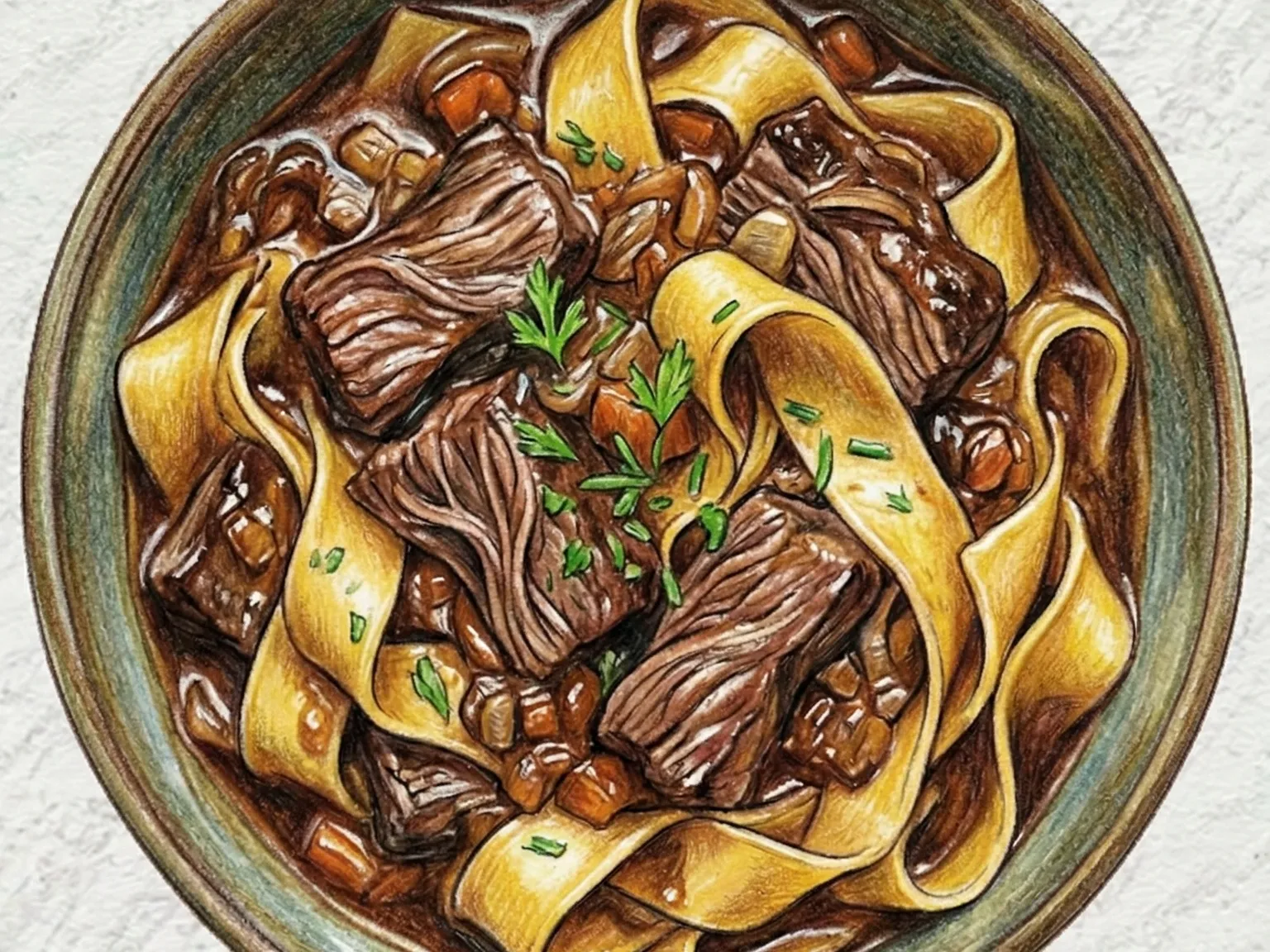
Soy galbi ragu pappardelle starts with short rib seared hard on both sides, then braised low and slow with aromatics, red wine, and soy sauce for ninety minutes until the meat pulls apart into thick shreds. The extended braise renders out the collagen in the short rib, building a sauce with a genuinely silky, gelatinous body that clings to wide pappardelle ribbons. A soffritto of onion, carrot, and celery forms the sweet foundation; canned whole tomatoes and tomato paste add body and acidity. Soy sauce replaces plain salt and contributes fermented depth that sets this apart from standard Bolognese - the difference is noticeable. Red wine adds tannin and fruit complexity. Grated Parmigiano-Reggiano finishes the bowl. Most of the ninety-minute cook time is hands-off braising.
Gambas al Ajillo (Garlic Shrimp)
The garlic oil for gambas al ajillo begins with olive oil, sliced garlic, and dried chili placed together in a cold small pan. Gentle heat then carries their aroma through the oil while keeping the garlic from burning. For 2 servings, use 200 g peeled shrimp, 8 garlic cloves, 100 ml olive oil, and 2 dried red chilies. Pat the shrimp thoroughly dry before it approaches the oil, reducing the water that can cause splattering. Slice the garlic thinly and shake out some chili seeds when the chilies look especially strong. Put the 100 ml olive oil, garlic, and chilies in the pan before turning on the heat. Cook over low heat for 3 to 4 minutes, maintaining small bubbles around the garlic. As soon as the garlic edges turn pale golden, spread the shrimp into the pan in a single layer. Keep the heat low so the garlic does not pass from pale gold to a bitter brown. Cook the shrimp for about 1 minute on the first side, turn them, and continue only until every piece is pink and feels springy. The total shrimp cooking time should stay around 2 to 3 minutes to preserve a plump texture. Add 0.5 teaspoon salt and 0.25 teaspoon black pepper and stir gently through the oil. Taste the oil before increasing the salt because the accompanying bread will absorb its seasoning. Turn off the heat, scatter 1 tablespoon chopped parsley over the shrimp, and bring the pan to the table while hot. Slice half a baguette and dip it into the remaining garlic and chili oil, making the infused oil part of the dish rather than leaving it behind in the pan.
Chocolate Eclairs
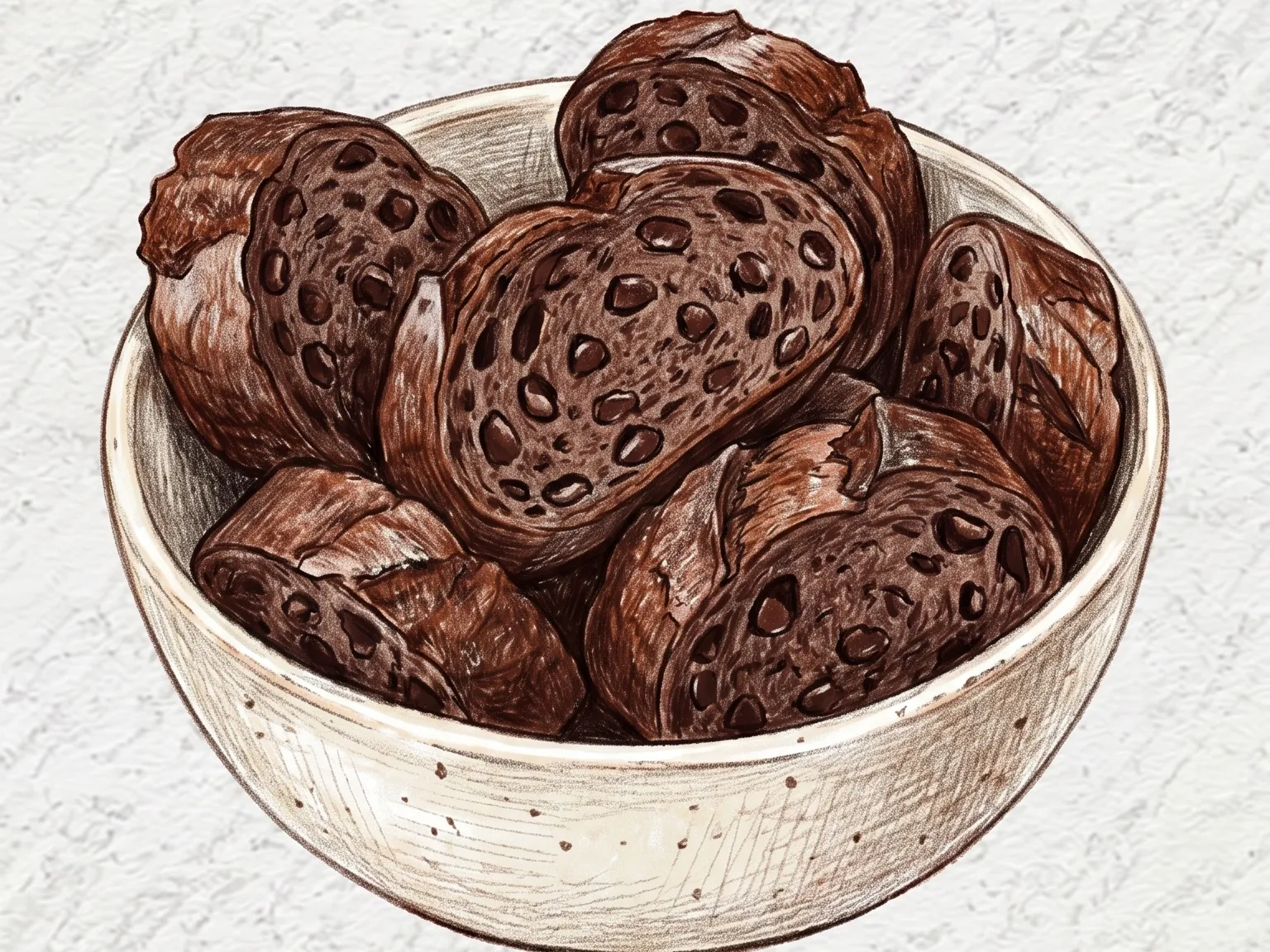
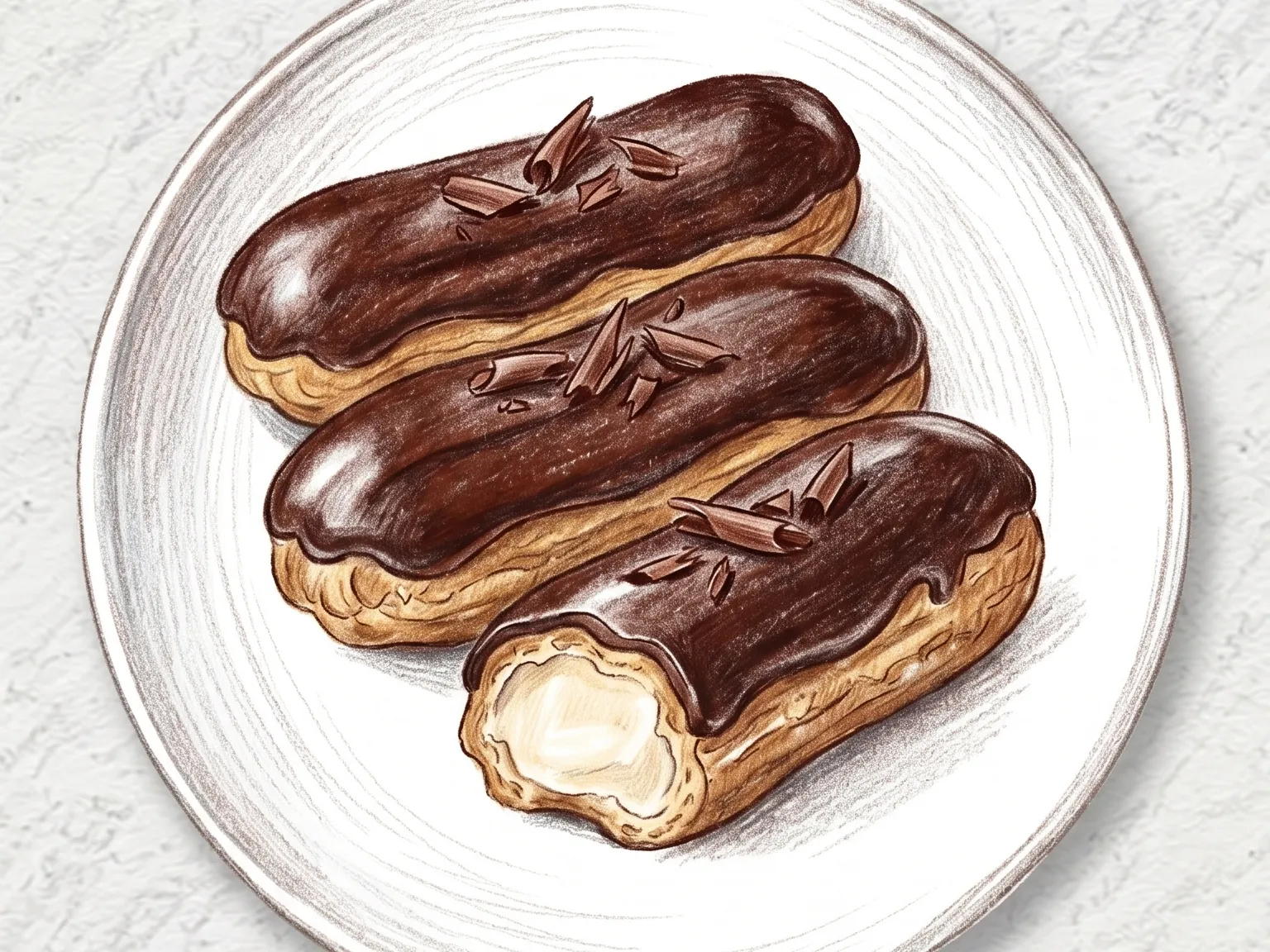
Eclairs are elongated French pastries built from choux dough, a cooked paste of water, butter, and flour into which eggs are incorporated one at a time until the mixture becomes smooth and glossy. When piped into finger-length strips and baked at high heat, the moisture locked in the dough converts to steam and expands, inflating each strip into a hollow shell with a crisp golden exterior. After cooling completely, vanilla custard cream is piped through a small hole in the base to fill the cavity. The top surface is dipped in a dark chocolate glaze that sets into a thin, shiny coating. Biting through delivers a layered experience: the slight bitterness of the chocolate, the crunch of the choux shell, and the cool smoothness of the custard in quick succession. Because the shell begins absorbing moisture from the cream as soon as it is filled, eclairs are best consumed within a few hours of assembly. Leaving them overnight compromises the texture significantly.
Soy-Garlic Chicken Parmesan Spaghetti
Soy garlic chicken Parmesan spaghetti represents a fusion of culinary traditions, integrating a marinade rooted in Korean flavors with the structural framework of a classic Italian pasta dish. For the protein component, chicken thigh pieces undergo a marination process involving a mixture of soy sauce, finely minced garlic, and honey. During the subsequent cooking phase, these ingredients are pan seared at a high temperature. This heat causes the natural sugars found in both the honey and the soy sauce to undergo caramelization, resulting in the formation of a dark and sticky glaze that coats the exterior of the meat. Garlic serves as a recurring element in the preparation, being used first within the initial marinade and then again when it is sauteed directly into the tomato sauce base. This repetition ensures that a consistent aromatic quality is maintained throughout the various layers of the meal from the start of cooking to the final assembly. The acidity inherent in the tomato sauce introduces a bright fruit character to the profile. This sharpness functions to balance the density of the sweet and salty glaze on the chicken, preventing the richness of the marinade from becoming overwhelming. A generous amount of grated Parmesan cheese is applied over the dish to introduce a nutty and salty depth. This cheese layer acts as a bridge between the Korean seasoning applied to the chicken and the Italian pasta that serves as the foundation of the plate. The choice of chicken thigh is intentional because this specific cut retains its internal moisture even during a hard sear. It remains succulent in a way that chicken breast meat often does not when subjected to similar levels of heat. The final preparation is completed with a garnish of thinly sliced scallions, which provides a clean green finish to the presentation.
Garlic Butter Mussels
Garlic butter mussels produce their own broth as white wine, butter, and the liquid released by the shellfish meet in one covered pot. The opening shells provide the clearest signal that the steaming stage is complete. For 2 servings, use 800 g mussels, 4 garlic cloves, 2 tablespoons butter, 180 ml white wine, 70 g onion, 2 tablespoons parsley, 1 tablespoon olive oil, and 0.5 teaspoon black pepper. Pull the fibrous beards from the mussels and scrub the shells under running water. Drain them well while checking for remaining grit or any off smell. Finely chop the onion, mince the garlic, and reserve the parsley for the finish. Set a pot over medium heat and add the olive oil and butter. When the butter foam begins to settle, add the onion and garlic and cook for about 2 minutes. The onion should turn translucent; lower the heat if the garlic starts browning. Pour in the white wine, raise the heat to high, and boil for 1 minute while stirring the bottom of the pot to release the butter and aromatics into the liquid. Once the sharp alcohol smell has softened, add the mussels and cover the pot tightly. Steam for 4 to 5 minutes, stopping when most of the shells have opened. Discard any mussels that remain closed. Add the parsley and black pepper, toss gently so the broth reaches the opened shells, and serve immediately. A baguette is useful for eating the wine and butter broth left in the pot.
English Muffin
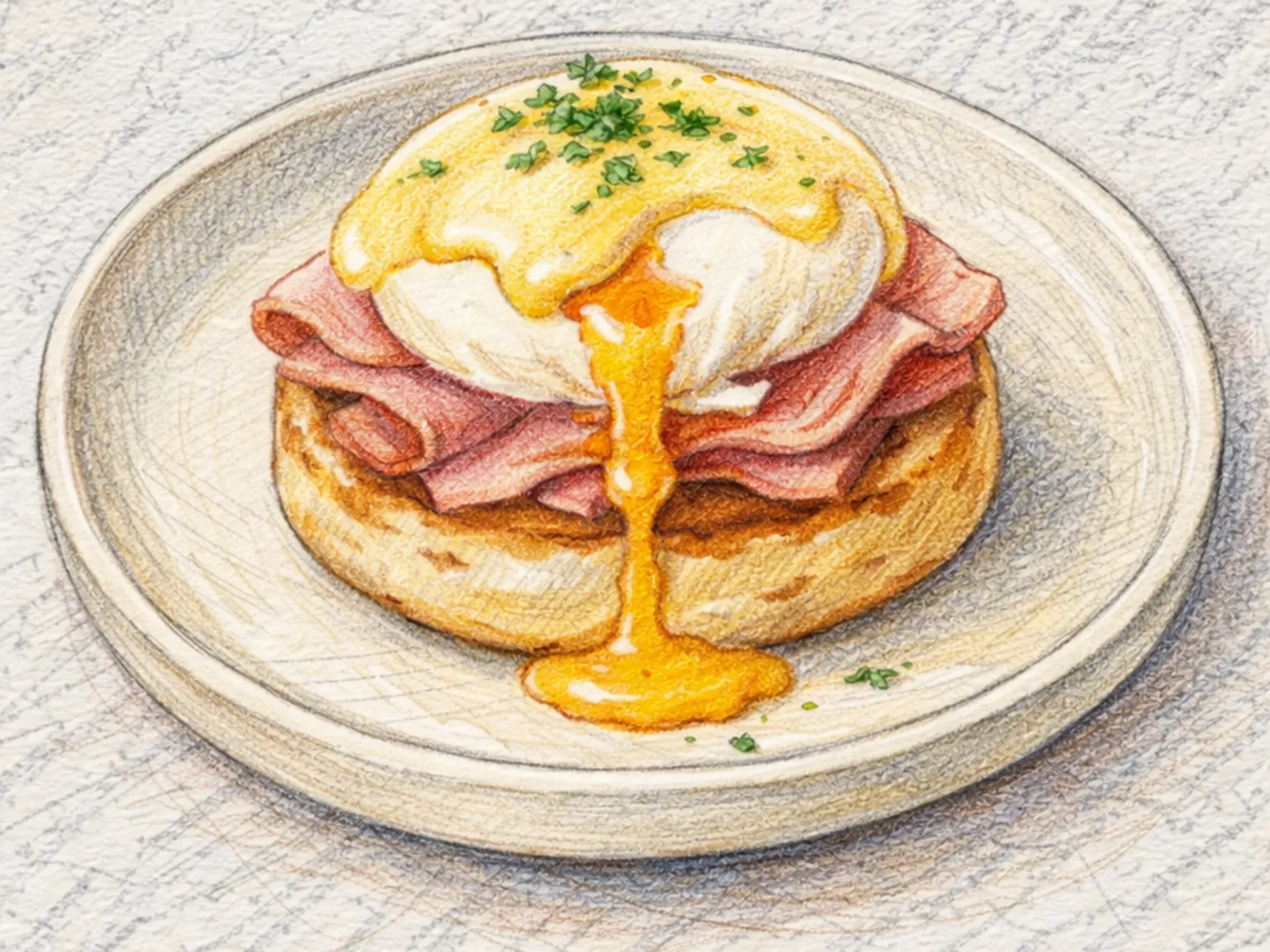
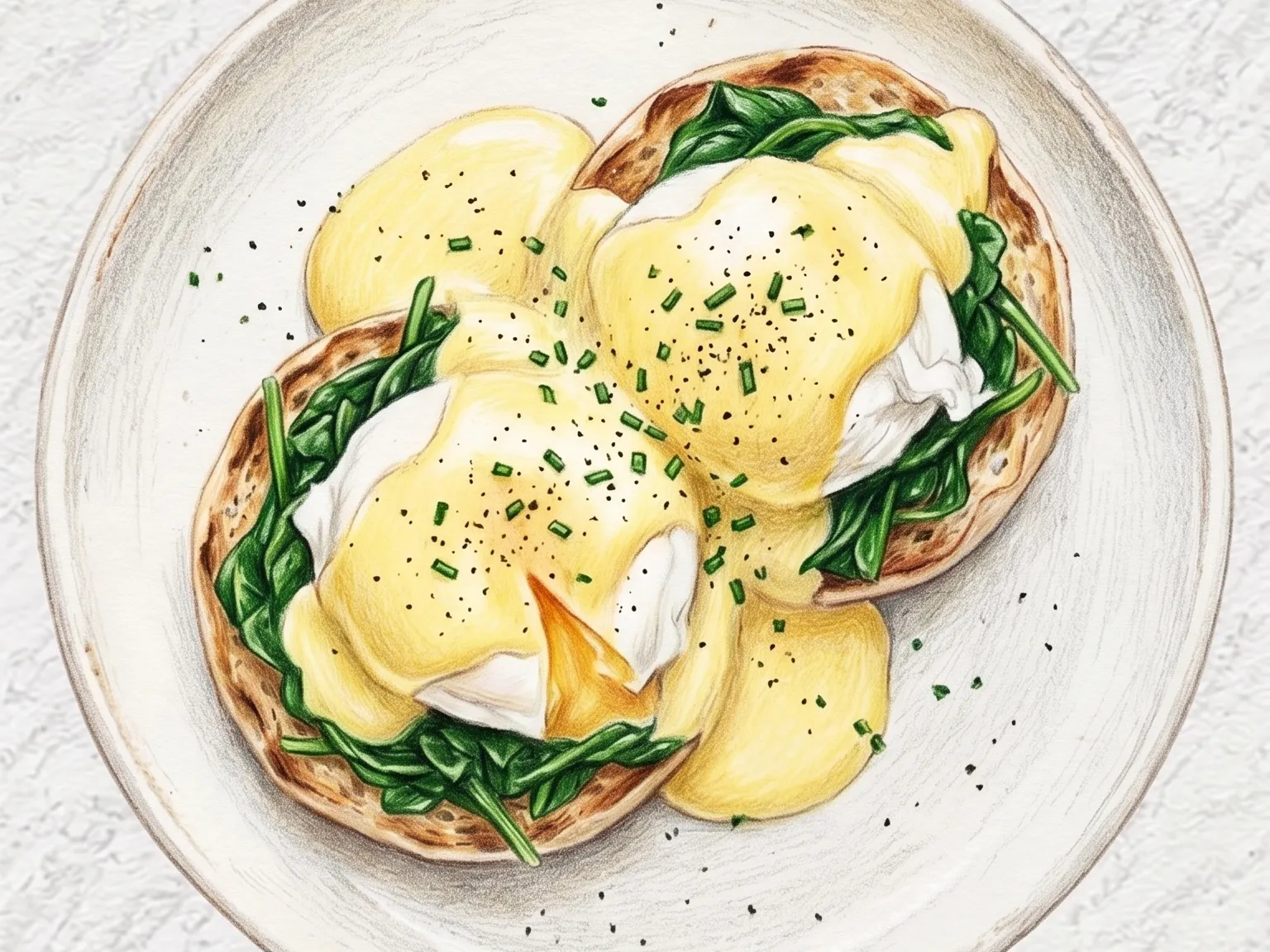
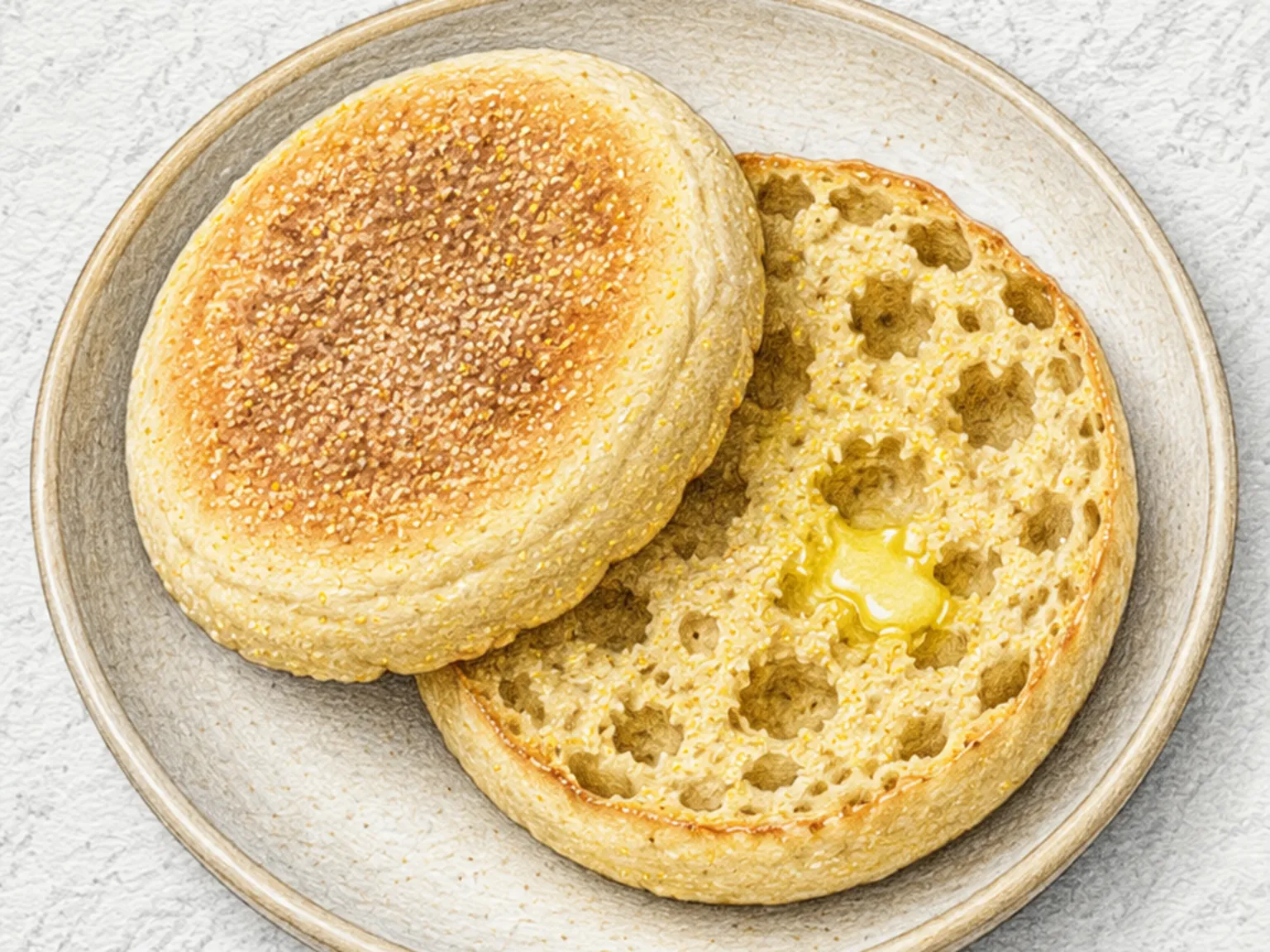
English muffins are round, flat breads made from a yeasted dough that is cooked entirely on a griddle rather than in an oven. This stovetop method creates a firm, cornmeal-dusted exterior that browns directly against the hot surface while generating large, irregular air pockets throughout the interior. These nooks and crannies define the bread: they are produced by the high-hydration dough and preserved intact by splitting with a fork rather than slicing with a knife. Fork-splitting tears the crumb open along its natural fault lines, leaving a rough, cratered surface full of ridges and hollows. When placed in a toaster, the edges of those pockets crisp up quickly and unevenly, creating contrasting textures in every bite. Melted butter, jam, marmalade, or the broken yolk of a poached egg settles deep into every crevice, making each mouthful more saturated with flavor than a smooth cut surface ever would allow. English muffins are the structural foundation of Eggs Benedict and work equally well as a straightforward breakfast toast. Because the dough is wet and sticky, ring molds on the griddle keep the rounds uniform in thickness during cooking.
Spaghetti alla Puttanesca
Spaghetti alla puttanesca melts anchovy fillets into olive oil with sliced garlic over low heat, creating a deeply savory base before any tomato is added. Hand-crushed whole tomatoes, halved black olives, capers, and red pepper flakes go in next and simmer for eight minutes, during which the sauce reduces and the briny, salty, and spicy elements fuse into a bold, cohesive flavor. The anchovies dissolve completely, leaving no trace of fish but contributing an intense umami backbone. Because capers and anchovies are already heavily salted, seasoning is adjusted only at the very end by taste. The spaghetti is pulled one minute short of al dente and finished in the sauce pan with a splash of pasta water, which allows the starch to bind the sauce tightly to each strand.
Hungarian Goulash
Hungarian goulash builds its base by browning onions patiently and releasing paprika into the fat without scorching it. Cut 600 g beef chuck into 4 cm cubes, dry the surfaces, and season with salt and pepper. Prepare the 3 potatoes and 2 onions before heating the pot so the paprika stage does not have to wait. Coat a heavy pot lightly with oil and cook the onions over medium heat, stirring often, until their edges become a deep golden color and their sweetness develops. Lower the heat before adding 3 teaspoons paprika powder and 3 minced garlic cloves. Stir for only about 1 minute, until the oil turns red and aromatic; prolonged heat at this point can make the paprika bitter. Push the onions aside and sear the beef over medium-high heat, working in batches if the pieces would crowd the pot. Several browned sides give the finished broth more body than beef that steams in released moisture. Add 2 teaspoons tomato paste, 600 ml beef broth, and 1 teaspoon caraway seeds, scraping the browned layer from the bottom into the liquid. Bring the pot to a boil, cover it, and maintain a quiet low simmer for about 1 hour. Add the potatoes, replace the lid, and cook for about 30 minutes more. The stew is ready when a fork separates the beef easily and reaches the center of the potatoes without resistance. If the broth is still thinner than desired, remove the lid and simmer briefly rather than thickening it before the meat is tender.
Erbazzone
Erbazzone is an Italian savory pie that encloses Swiss chard, pancetta, garlic, and Parmigiano-Reggiano between two thin sheets of dough. Combine 250 g flour with 30 ml of the 50 ml olive oil, 120 ml warm water, and part of the 5 g salt. Knead until smooth, wrap the dough, and let it rest for 30 minutes so it can be rolled without springing back. Blanch 600 g Swiss chard in boiling water, squeeze it very thoroughly, and chop it finely. Saute 50 g pancetta with 10 g minced garlic until fragrant, add the chard, and cook for 3 minutes. Let this mixture cool before stirring in 80 g grated Parmigiano-Reggiano and the remaining salt. Divide the rested dough into two portions and roll both thinly. Line the pie dish with one sheet, distribute the cooled filling evenly, and cover it with the second sheet. Prick the top with a fork to provide vents, then brush it with the remaining olive oil. Bake in an oven preheated to 200 C for 30 minutes, removing the pie when the surface is evenly golden. Squeezing the blanched chard is essential because water left in the leaves will soak the lower crust. Cooling the filling before assembly also protects the thin dough and makes the covered pie easier to handle before baking.
Spaghetti alle Vongole
Spaghetti alle vongole is an Italian pasta where clams are cooked in olive oil with sliced garlic, chili flakes, and dry white wine until they open and release their briny juices. The spaghetti is boiled one minute short of al dente, then finished in the clam pan with a few tablespoons of starchy pasta water to create an emulsified sauce. Vigorous tossing for about a minute binds the oil and clam liquid into a glossy coating around each strand. Fresh parsley is added at the end for color and herbal freshness.
About Western
Olive oil, butter, cream, and cheese create the rich flavors these dishes are known for. From special-occasion dinners to quick weeknight meals, these recipes make Western cooking approachable.