Western Recipes
662 recipes. Page 8 of 28
This category brings Western-style dishes - pasta, steak, risotto, gratin, and more - into the home kitchen. In Korea, "Western food" (yangsik) includes not only authentic European recipes but also Korean-adapted classics like donkatsu (pork cutlet) and hambak steak (Hamburg steak).
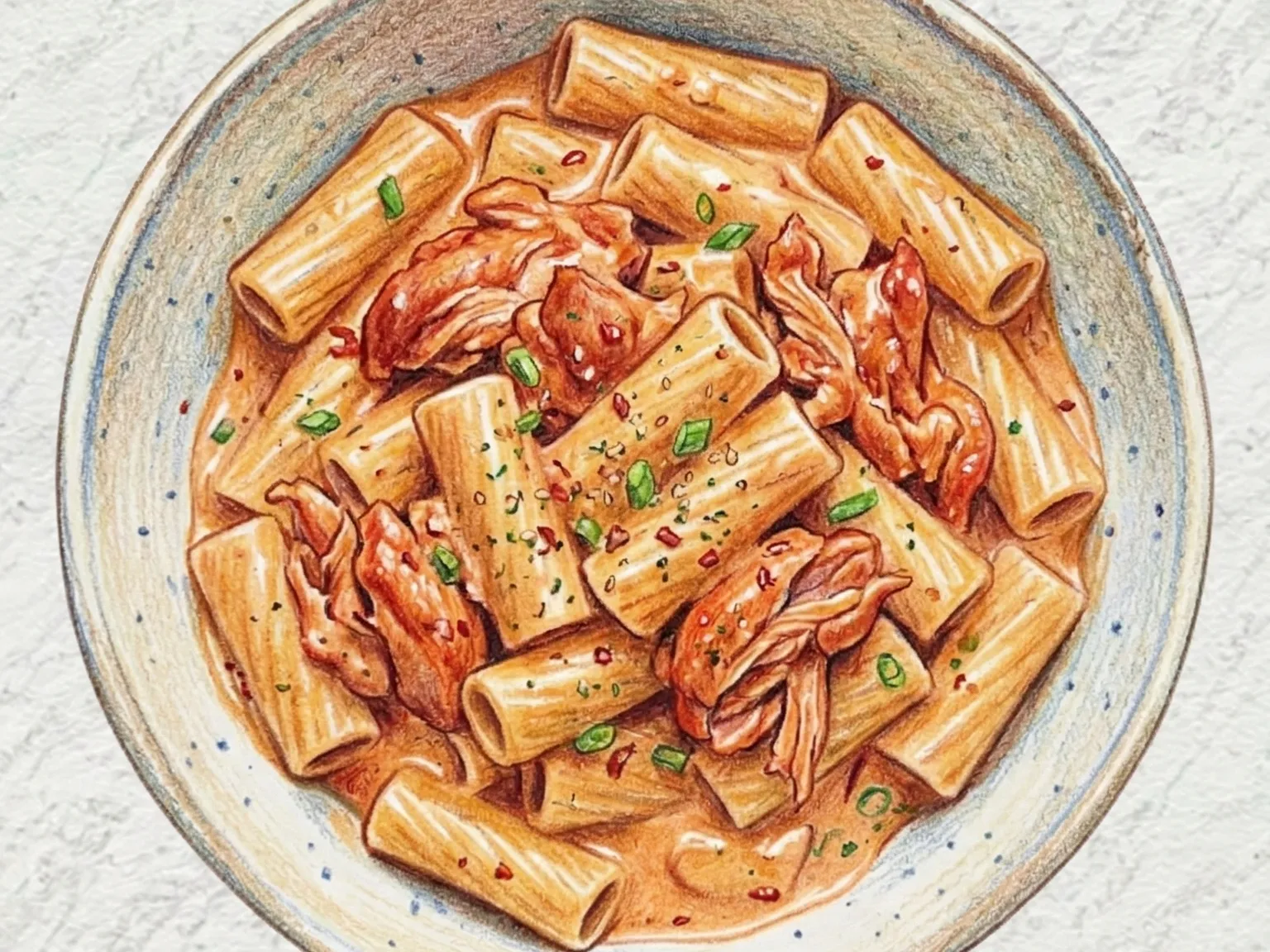
Dakgalbi Cream Rigatoni (Korean Spicy Chicken Gochujang Cream Pasta)
Dakgalbi cream rigatoni is a Korean-Italian fusion pasta that starts by marinating boneless chicken thighs in a sauce of gochujang, soy sauce, gochugaru, and sugar for at least twenty minutes, then stir-frying them at high heat with cabbage and sweet potato to build the bold, sweet-spicy flavor profile of traditional dakgalbi before finishing with heavy cream. The marinating step is not optional: the spiced paste needs time to penetrate the meat rather than staying on the surface, and the longer the chicken soaks, the more intensely savory it becomes when it hits the pan. Cooking over high heat drives the moisture out of the cabbage quickly, concentrating its natural sweetness and keeping the texture from turning watery. Sweet potato should either be pre-cooked or sliced thin enough to cook through during the stir-fry stage without holding the process up. Once the heavy cream is poured over and the heat is reduced to low, the red marinade and cream emulsify together without breaking, producing a thick, blush-pink sauce that coats everything in the pan. Rigatoni's short, wide hollow tubes are the ideal pasta shape for this preparation: the dense cream sauce fills the interior of each tube completely, so every bite delivers both the bold heat of the dakgalbi and the smooth richness of the cream together.
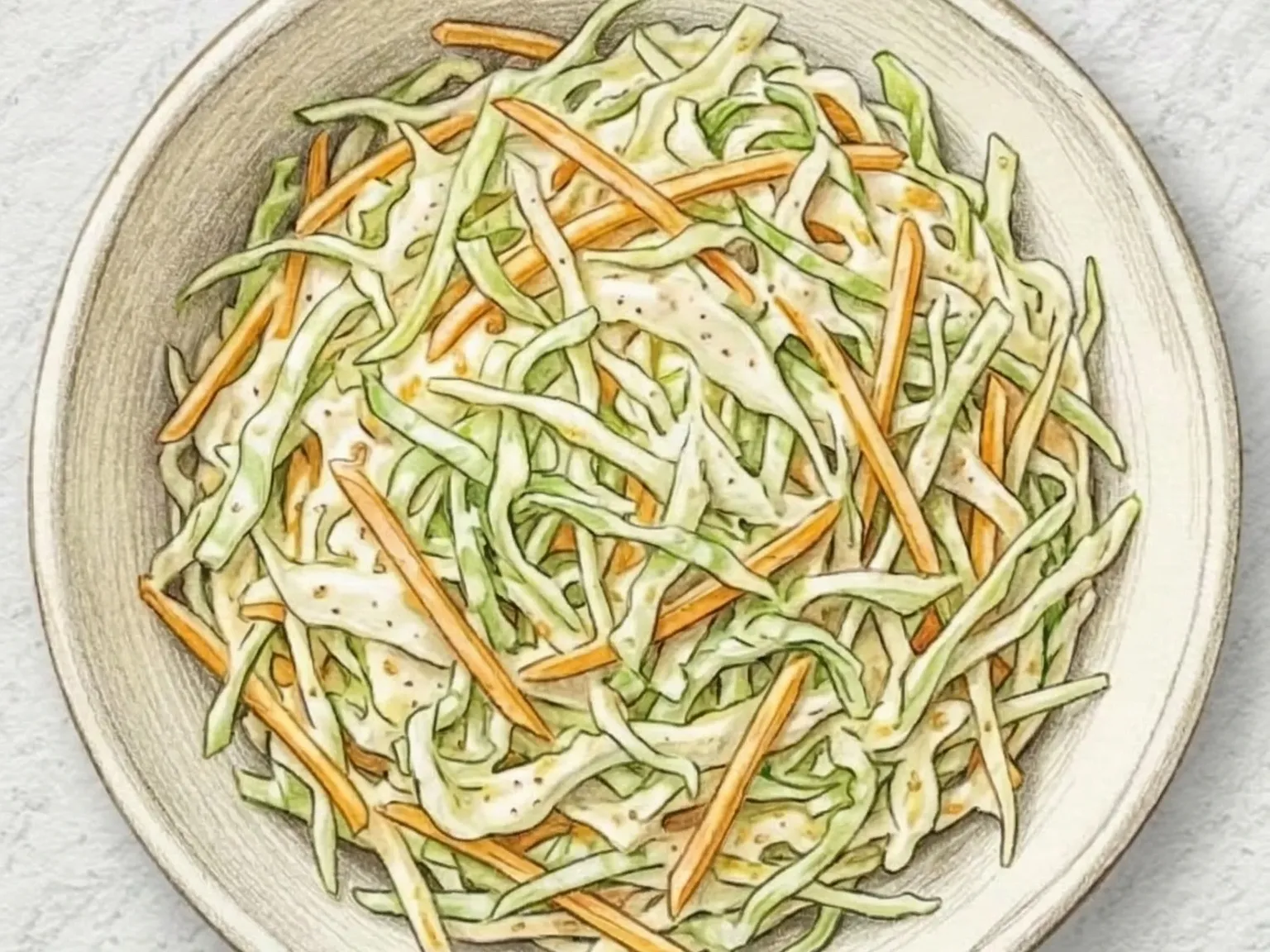
Coleslaw
Coleslaw is built from finely shredded cabbage and carrot tossed in a mayonnaise-based dressing sharpened with apple cider vinegar and Dijon mustard. A small amount of sugar keeps the acidity in check without making the salad noticeably sweet, and the mustard adds a subtle, savory bite that keeps the dressing from tasting flat. Resting the dressed slaw in the refrigerator for at least 30 minutes allows the vegetables to soften slightly and absorb the dressing more evenly, resulting in a more cohesive texture than eating it immediately after mixing. Coleslaw is one of the most common side dishes in American cooking, pairing naturally with barbecue, fried chicken, and pulled pork sandwiches. If the cabbage has high water content, a brief salt cure before dressing draws out excess moisture and prevents the sauce from becoming watery.
Korean Bulgogi Sandwich (Soy-Marinated Beef Toast with Mayo Lettuce)
The preparation of a bulgogi sandwich begins with beef marinated in a mixture of soy sauce, sugar, minced garlic, and sesame oil before meeting a scorching pan. A surface heated to its limit is essential because only extreme heat can evaporate moisture instantly, allowing the sugars in the marinade to caramelize into a savory-sweet exterior. If the temperature is insufficient, the meat stews in its own liquid rather than searing. A generous layer of mayonnaise on the toasted bread acts as a structural barrier, preventing the beef juices from making the sandwich soggy while softening the intensity of the seasoning. Fresh, crisp lettuce provides a textural contrast to the warm meat. Folding ssamjang into the mayonnaise introduces fermented and spicy elements that emphasize the Korean origin of the dish. A slice of cheese adds a smooth layer between the bread and the beef, and increasing the vegetable portion creates a lighter meal. With the meat prepped ahead of time, the entire assembly takes under ten minutes, offering a practical solution for a busy morning or a simple lunch.
Black Rice Walnut Madeleines
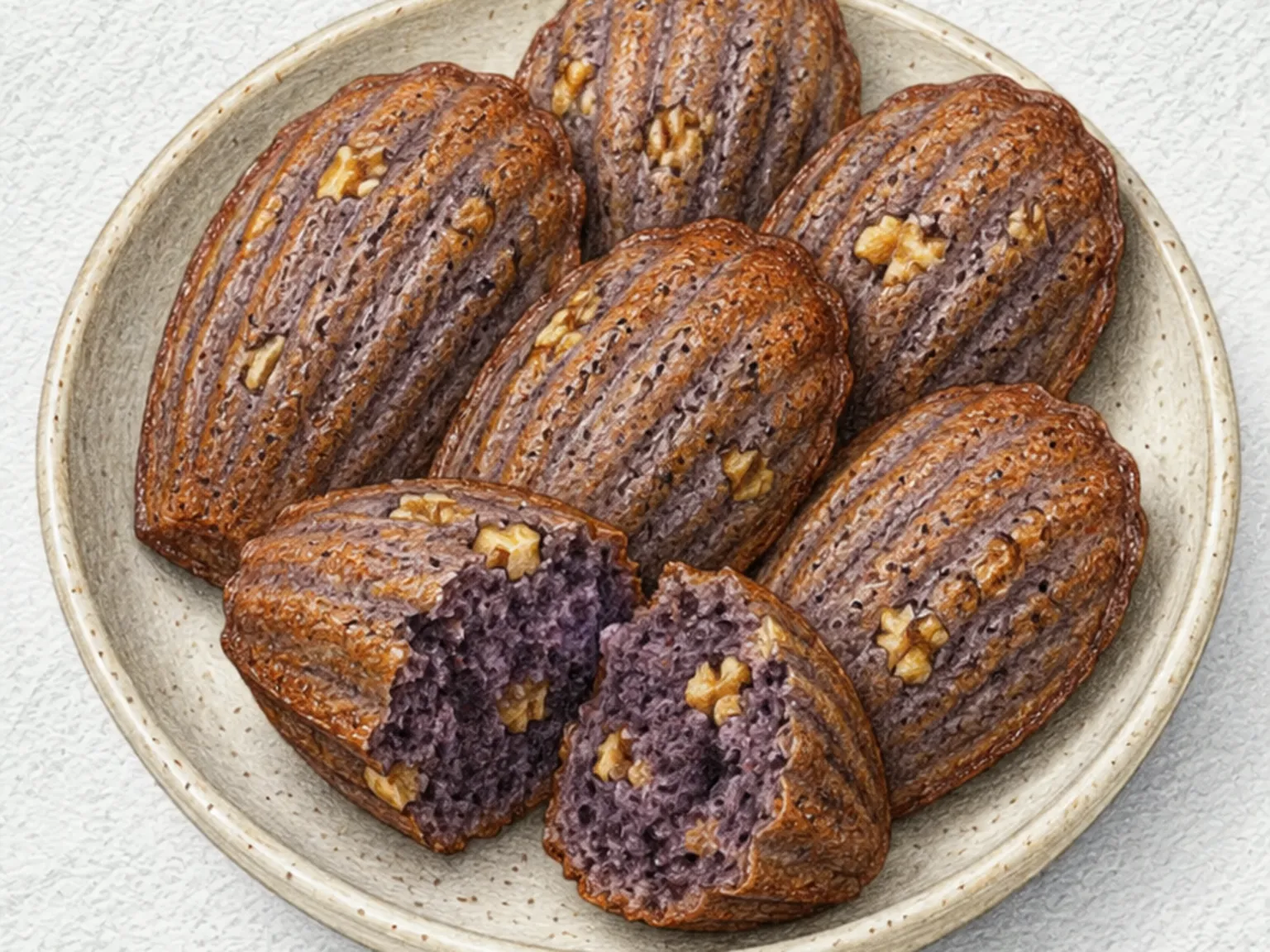
Black rice walnut madeleines blend cake flour with black rice flour for a purple-brown crumb with a toasted grain aroma. Eggs, sugar, and honey are whipped until pale and expanded, then the sifted flours, baking powder, and salt are folded in gently to preserve that air. Cool the melted butter to about 50C before adding it so it blends into the egg foam evenly. Roughly chopped walnuts enter with the butter and spread small crunchy pieces throughout the batter. A 15-minute refrigerator rest thickens and settles the mixture before it meets the 190C oven, helping the center rise into the familiar madeleine hump. Coat the shell-shaped molds lightly with butter and flour, then fill them to 80 percent so the batter has room to expand. Remove the cakes as soon as the edges turn golden brown and the center is clearly domed. The thin baked edge gives way to a moist interior with the grain flavor of black rice, while walnut pieces add a stronger toasted note. Honey rounds out the sweetness and makes the madeleines a natural companion for coffee or warm tea.
Granola Yogurt Bowl
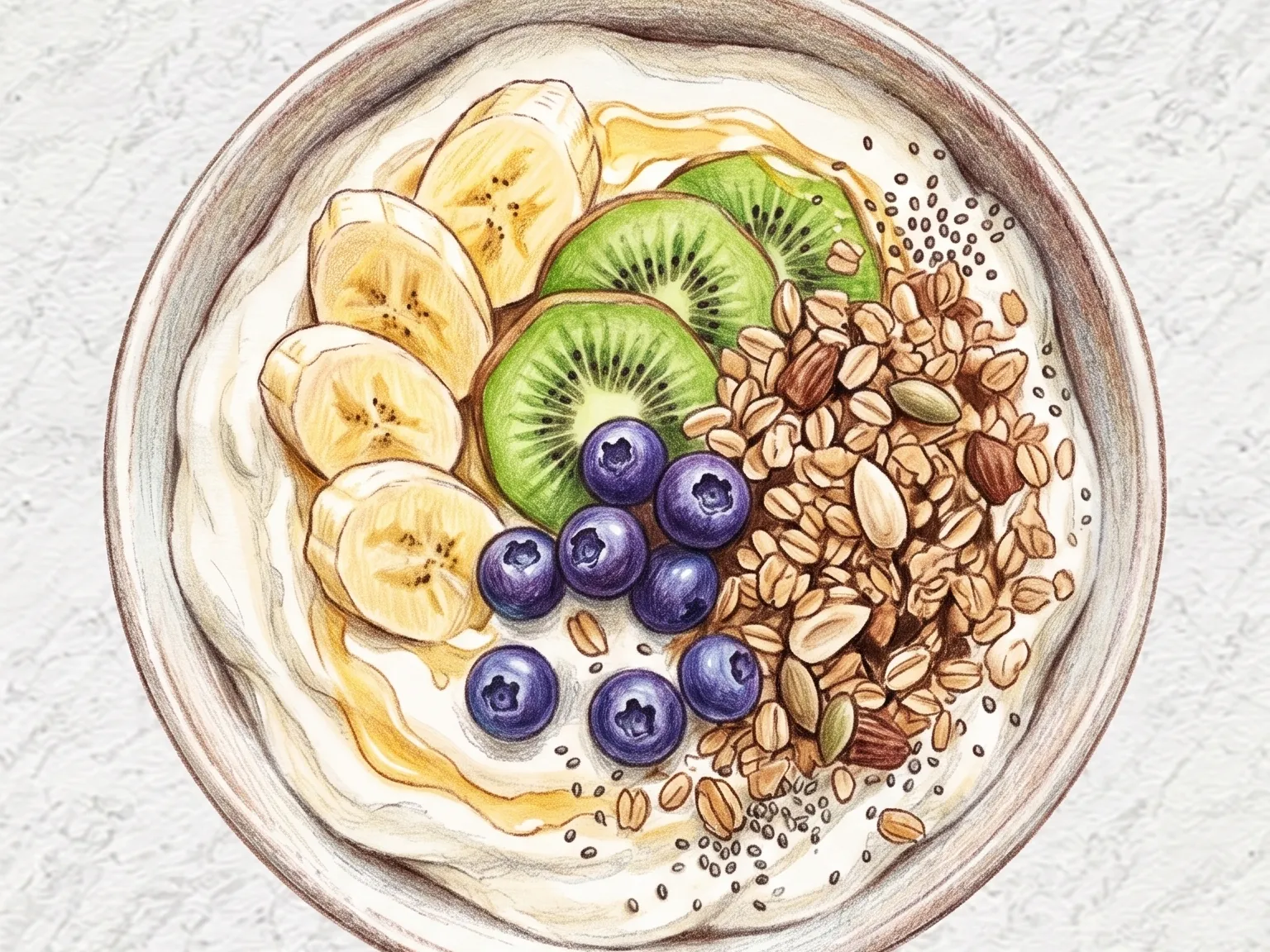
Granola yogurt bowl is a composed breakfast or snack that starts with a thick base of Greek yogurt and builds upward with sliced banana, kiwi, and blueberries, finished with granola, chia seeds, and a drizzle of honey. Greek yogurt differs from regular yogurt in that most of its liquid whey has been strained away, leaving a denser, higher-protein base that holds its shape in the bowl rather than pooling around the fruit. The tang of the yogurt meets the juicy sweetness of the fruit and creates a balanced flavor that needs no additional sauce or dressing. Granola begins absorbing moisture the moment it contacts the yogurt, so adding it immediately before eating is the only way to keep its crunch intact through the meal. Chia seeds undergo a visible transformation within about five minutes of sitting in moisture, their outer layer swelling into a gel that adds a springy, slightly resistant bite unlike anything else in the bowl. Using unsweetened yogurt puts control of sweetness entirely in the hands of the person eating it, since the honey can be measured to taste, and rotating the fruit with whatever is in season gives a different combination each time without changing the structure of the dish.
Tomato Basil Soup
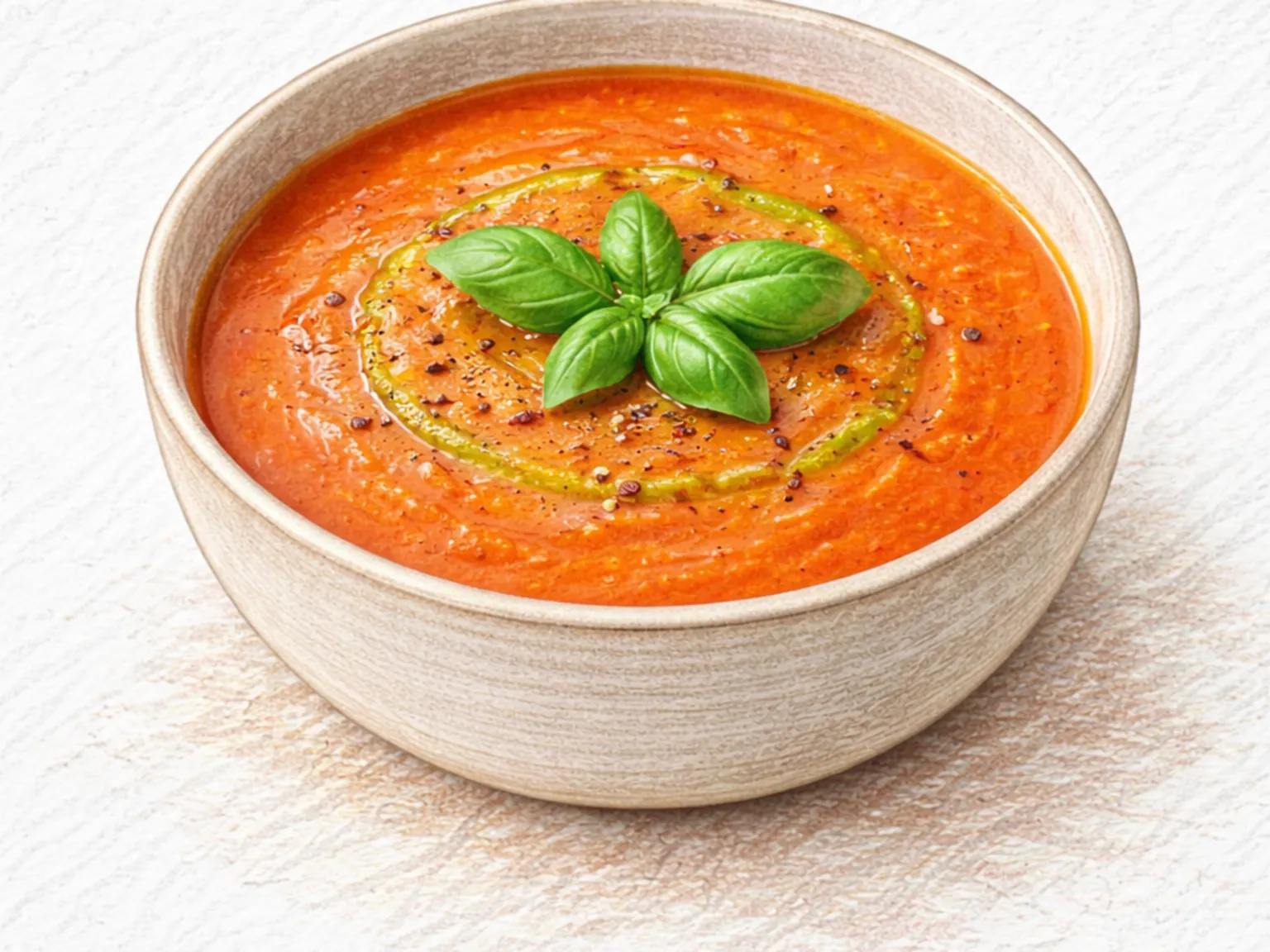
Tomato basil soup sautés onion and garlic in olive oil, adds canned whole tomatoes crushed by hand, simmers with vegetable stock for 15 minutes, then blends until smooth and finishes with cream and fresh basil. Crushing and cooking the tomatoes for the first five minutes before adding stock concentrates their natural sugars and reduces raw acidity, building a sweeter, deeper base. The 15-minute simmer lets the flavors merge without overcooking, and blending produces a velvety texture that cream enhances without masking the tomato. Basil is heat-sensitive - its volatile oils dissipate within minutes of cooking - so it goes in only after the heat is off, releasing its fragrance through residual warmth alone. A tablespoon of tomato paste can be stirred in during the sauté stage for a more intense tomato flavor if desired.
Danza Noodle Soup (Tomato Chickpea Pasta Soup)
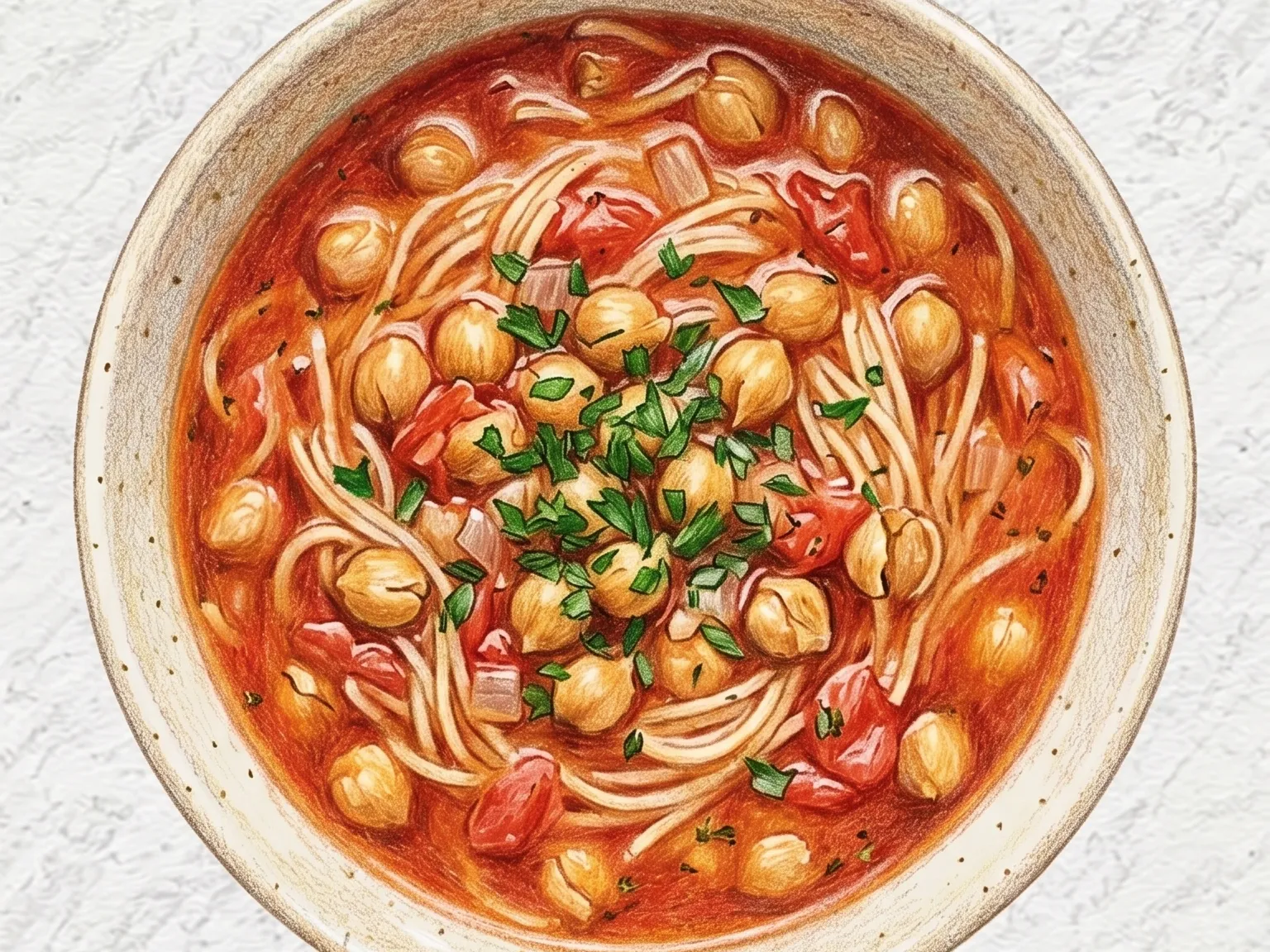
Danza noodle soup is a light Mediterranean-style soup that simmers diced tomatoes and chickpeas together in vegetable broth with dried oregano and thin pasta noodles. Sauteing onion in olive oil until translucent before adding the tomatoes builds a deeper, more aromatic base than starting with raw aromatics. Chickpeas soften gradually as the soup cooks, contributing a nutty richness and satisfying substance without making the broth heavy. Stirring in fresh parsley just before serving lifts the finished soup with a clean herbal brightness against the tomato backdrop. Cooking the pasta separately and adding it at serving keeps the broth clearer and prevents the noodles from absorbing too much liquid.
Couscous Herb Salad
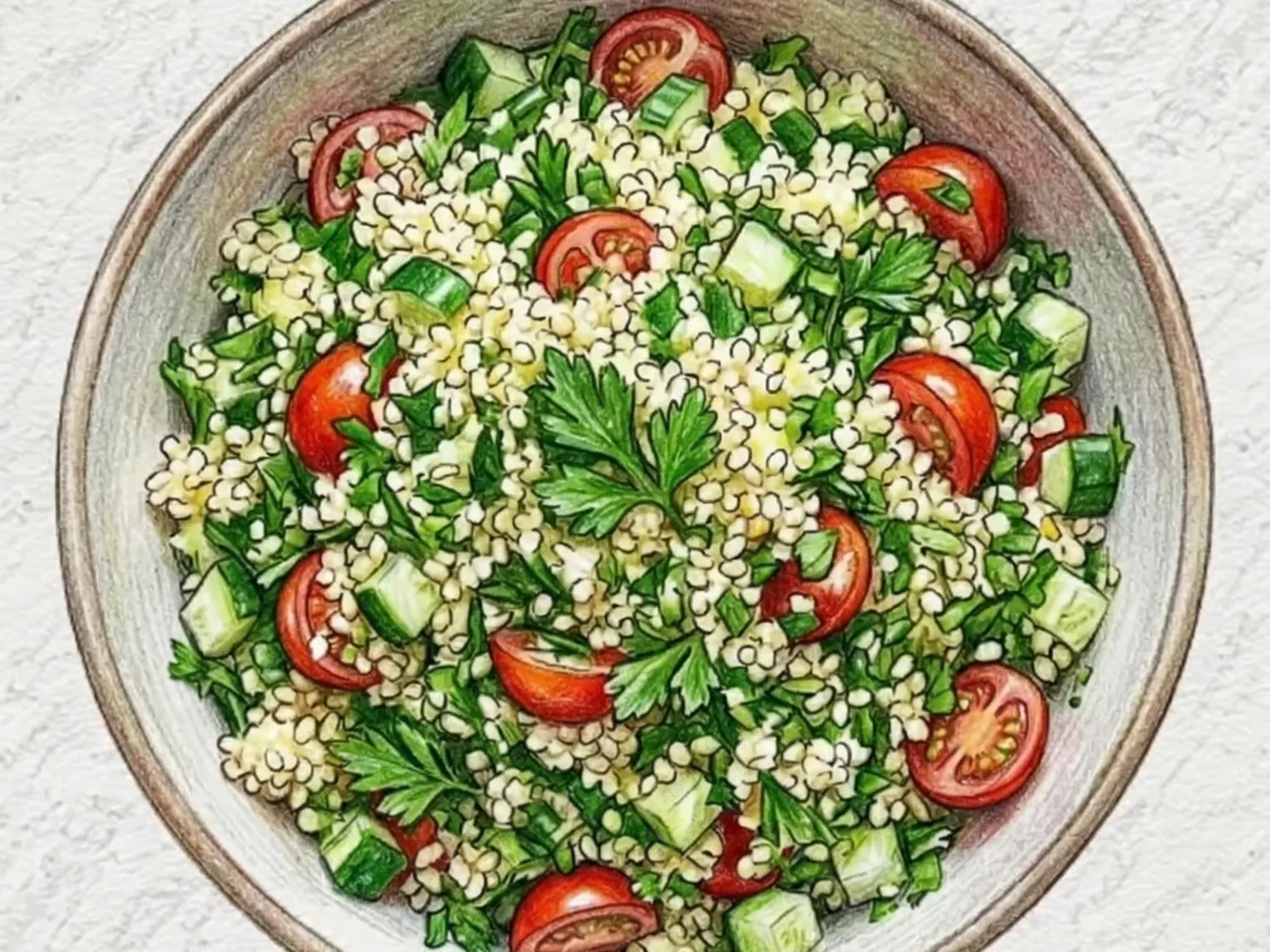
Couscous is hydrated in hot water for five minutes until each grain separates and fluffs up, then mixed with a generous quantity of flat-leaf parsley, diced cucumber, and halved cherry tomatoes. The dressing is intentionally sparse - lemon juice, olive oil, salt, and pepper - letting the grain absorb the citrus brightness without competing flavors getting in the way. Because herbs make up a significant portion of the volume, this reads more like a tabbouleh than a heavy grain salad, with a clean freshness that makes it easy to eat in large portions. Couscous holds its texture at room temperature better than most grains, meaning the salad does not go soggy in a packed lunch container or on a picnic spread. Adding fresh mint, a handful of chopped cilantro, or a pinch of lemon zest shifts the flavor toward something sharper and more aromatic, while crumbled feta adds a salty, creamy contrast that transforms it into a more substantial dish.
Burrito
A burrito layers seasoned ground beef, cooked rice, black beans, shredded cheese, and salsa inside a large flour tortilla that gets folded and rolled into a tight cylinder. Warming the tortilla briefly on a hot pan makes it pliable enough to wrap without tearing. The filling goes down the center in a long line, both ends fold inward first, then the whole thing rolls forward into a sealed package that holds together in the hand. Black beans add starchy substance and protein that make the burrito filling even without the meat at the center, and the tomato acidity in salsa cuts through the melted cheese and beef fat. A line of sour cream inside provides a cool, tangy buffer against the cumin-chili heat. For the cheese, Monterey Jack or cheddar melts evenly without clumping and binds the filling together well. Wrapping the finished burrito tightly in foil keeps the shape and makes it easier to eat on the go.
Black Sesame Fudge Brownies
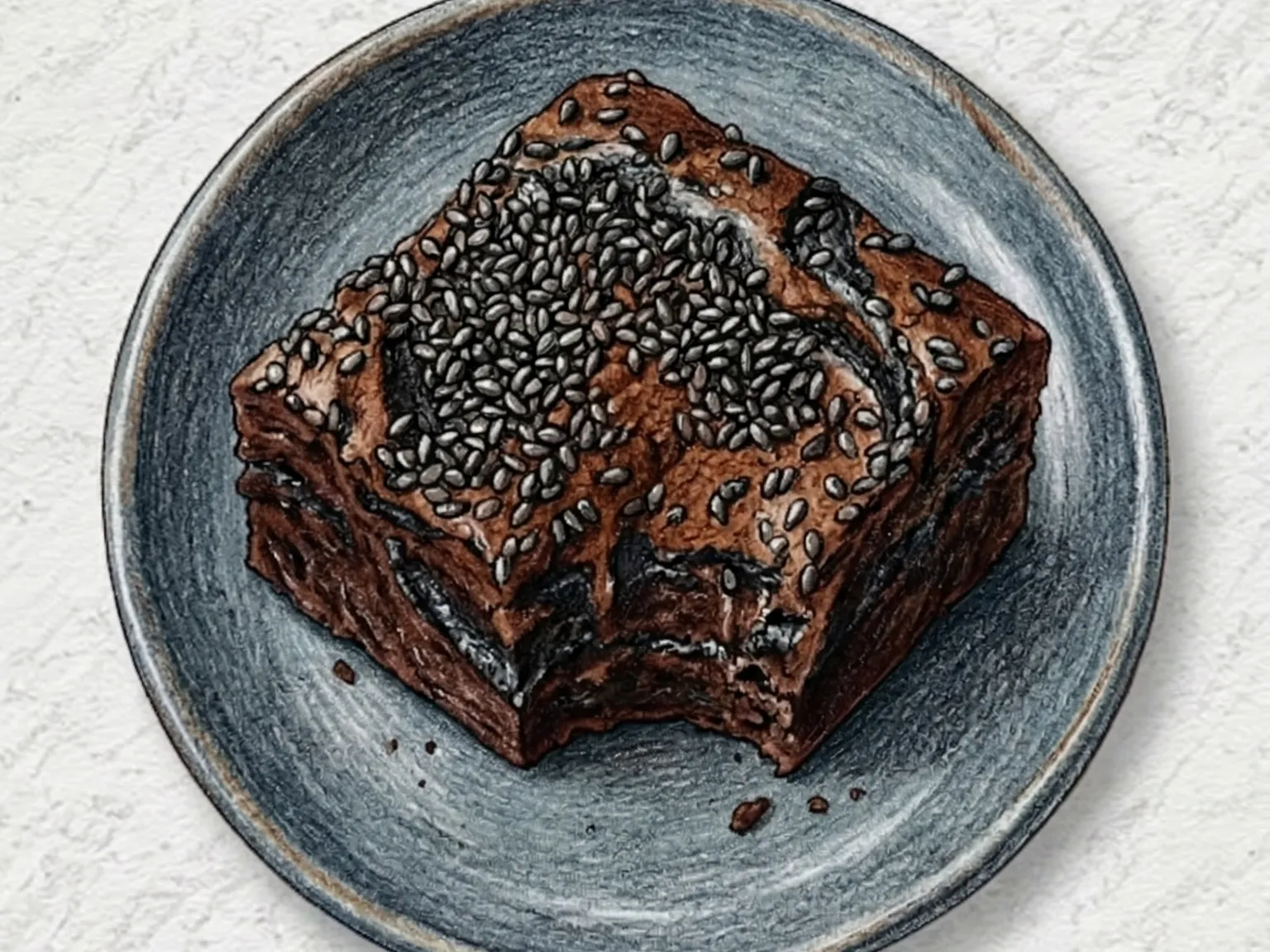
Black sesame fudge brownies combine dark chocolate with black sesame paste in a dense bar whose roasted seed flavor follows the initial cocoa richness. Melt the dark chocolate and unsalted butter gently in a heatproof bowl over simmering water until the base is completely smooth. Stir in the sugar, then add the eggs one at a time so each is fully incorporated and the batter develops an even gloss. Black sesame paste goes in after the eggs and must be spread through the entire chocolate mixture without streaks or clumps. Sift the flour, cocoa powder, and salt together, then fold only until the dry marks disappear. Brief mixing at this stage preserves the close, fudgy crumb. Spread the batter in a parchment-lined square pan and bake at 175C. Remove it after 26 to 28 minutes, when the edges are set and the center still appears slightly moist. Residual heat continues to cook the center as the pan cools. Wait until the brownie is completely cool before slicing so the dense interior can settle and the cut edges stay clean. Chilling it before cutting produces even sharper corners and a firmer bite.
Black Sesame Pudding
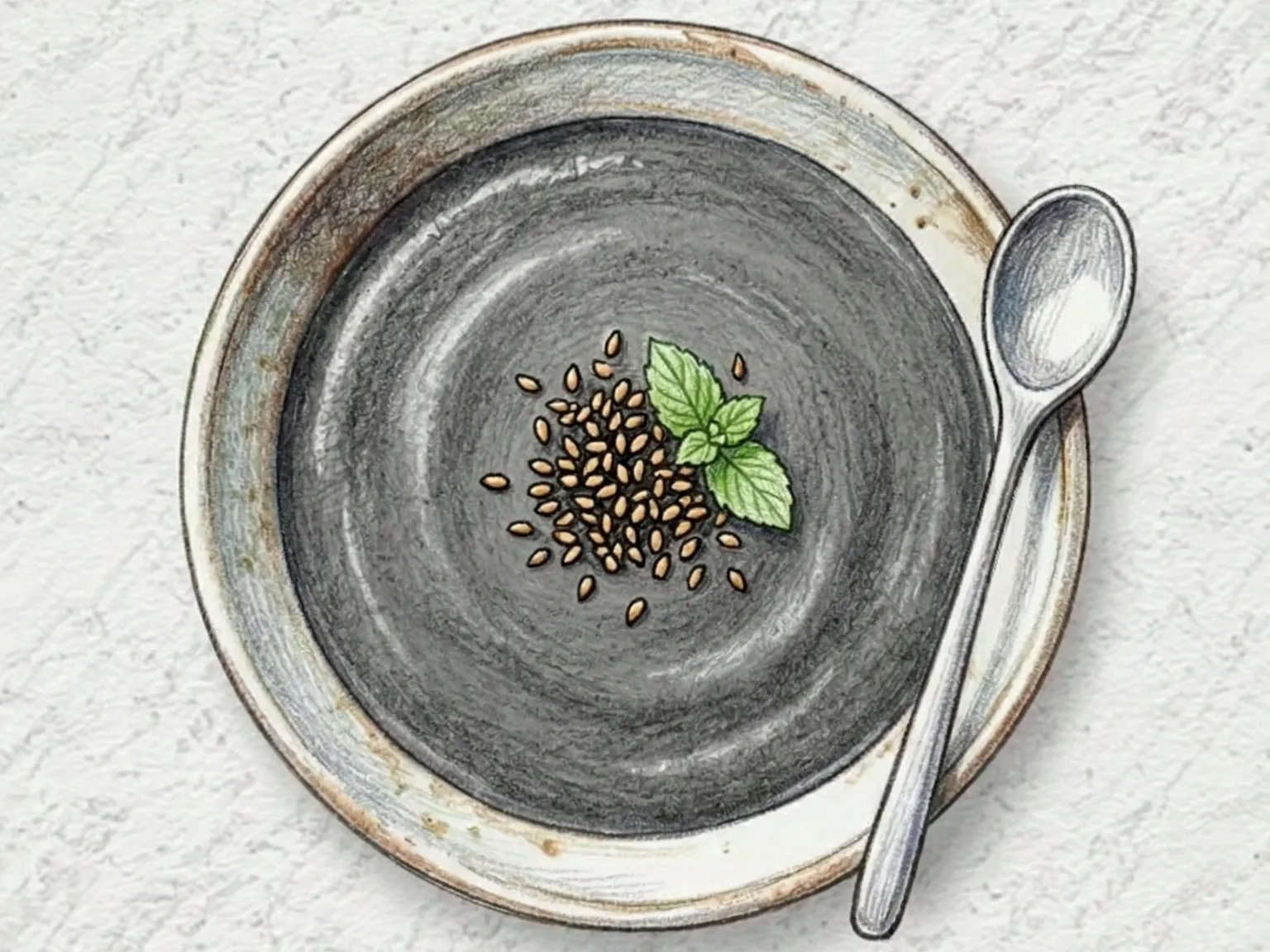
Heukimja pudding is a chilled dessert made by warming milk and heavy cream on low heat with black sesame powder to extract its flavor, then setting the mixture with gelatin. The key to a silky consistency is stopping the heat when tiny bubbles appear at the edge of the pan, well before a full boil, which would cause the fat to separate. After seasoning with sugar and salt and straining once to remove any gritty particles, the liquid is divided into cups and refrigerated for at least two hours until set. A light dusting of black sesame powder on top before serving adds a visual accent and an extra layer of roasted, nutty fragrance. A small pinch of salt is worth adding because it subdues any residual bitterness from the sesame and makes the sweetness come through more cleanly. Gelatin sheets and powdered gelatin both work, but sheets tend to produce a smoother, cleaner result.
Vichyssoise (French and potato soup)
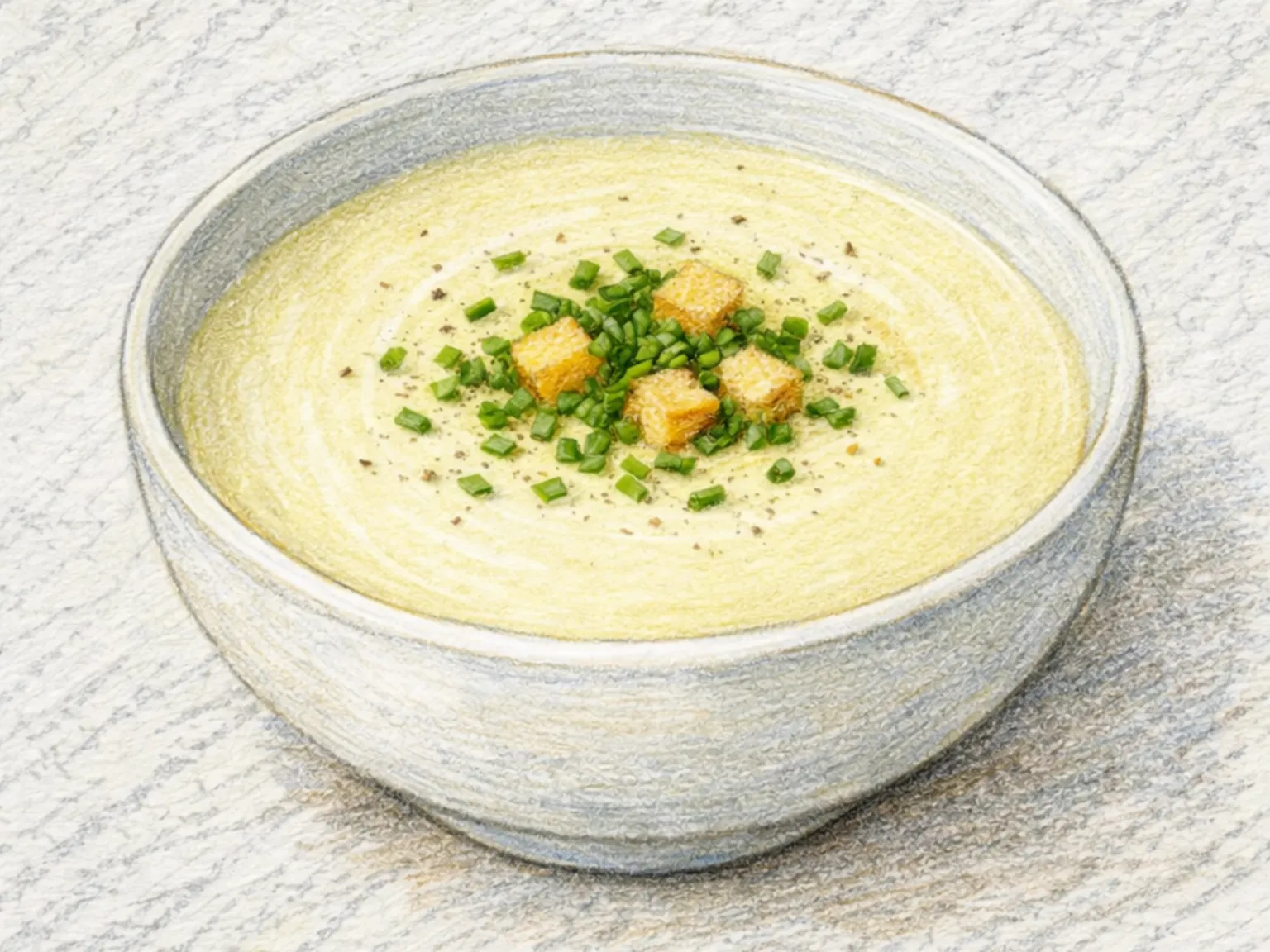
Vichyssoise is a cold French soup made by cooking thinly sliced leeks and cubed potatoes in butter, simmering them in chicken stock, blending the mixture until smooth, and finishing with heavy cream. To maintain the pale cream color and subtle sweetness, only the white parts of the leeks are used and cooked slowly over medium low heat without browning. Straining the blended soup through a fine sieve removes any remaining fibrous pieces from the leeks to create a velvety texture. Since cold serving temperatures dull the tongue's sensitivity to salt, the soup is seasoned with white pepper and salt while still warm to a slightly stronger level than usual. This ensures that the flavor remains balanced after the dish is thoroughly chilled. Serving this soup cold provides a clean, smooth, and gentle start to a multi-course meal.
Deulkkae Mushroom Lasagna Bianca
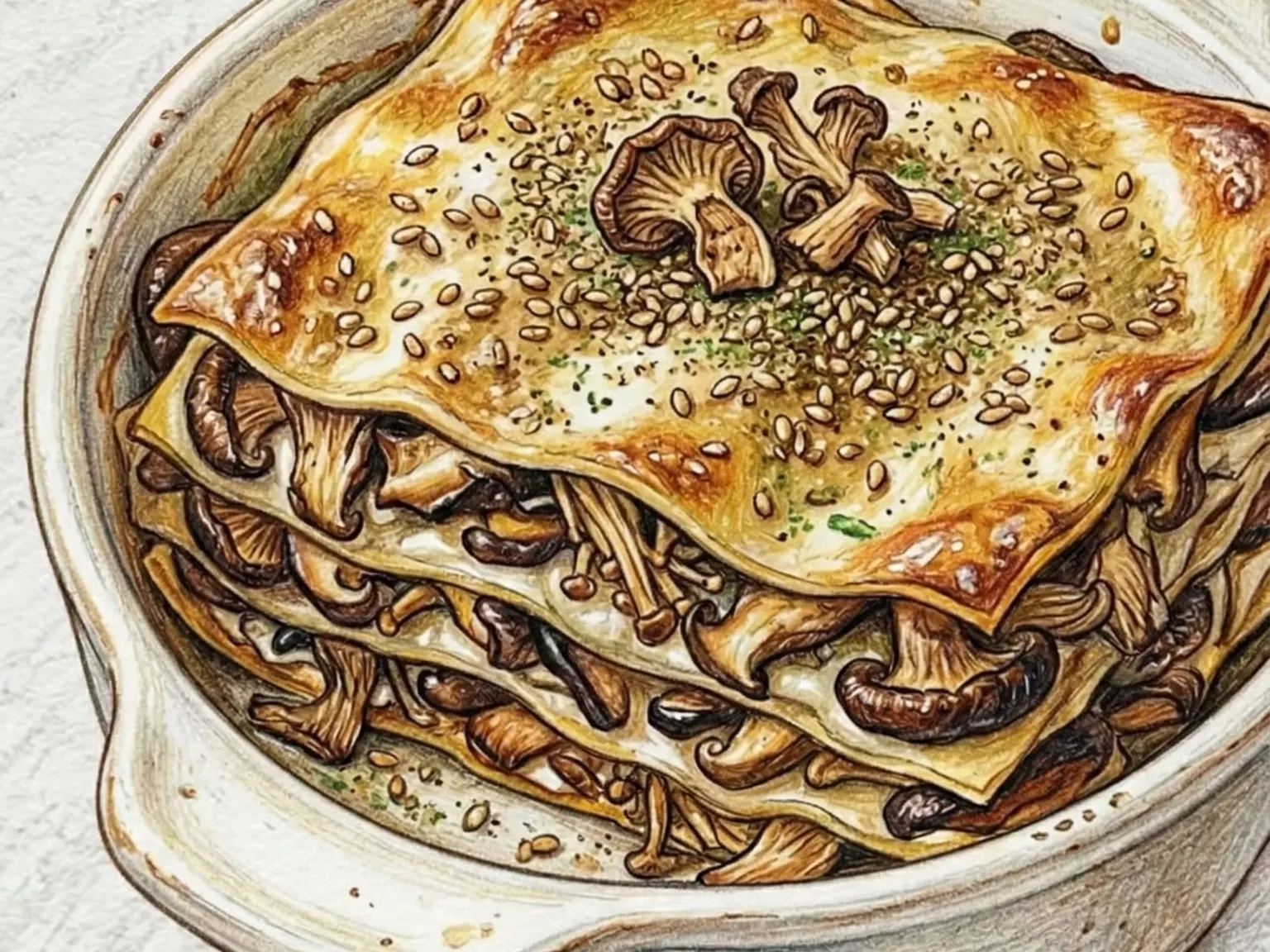
Deulkkae mushroom lasagna bianca layers sauteed button and oyster mushrooms coated in perilla seed powder between lasagna sheets, baking without traditional bechamel into a white lasagna with a distinctly Korean character. The mushrooms must be cooked in small batches over high heat - loading too many at once causes them to steam in their own liquid instead of browning, which loses both color and chew. Ground perilla seeds replace cream as the source of richness: they contribute a dense, nutty weight that fills the layers without dairy fat, and their flavor sits closer to toasted sesame and walnut than to any herb. That nuttiness locks onto the earthy quality of mushrooms in a way that differs noticeably from a standard bechamel-based lasagna. Mozzarella and Parmigiano bind the layers together and develop a golden crust across the top during baking. The lasagna needs to rest for at least ten minutes after it comes out of the oven so the layers compress and each slice cuts cleanly without falling apart.
Chicken Breast Salad (Poached Chicken & Yogurt Dressing)
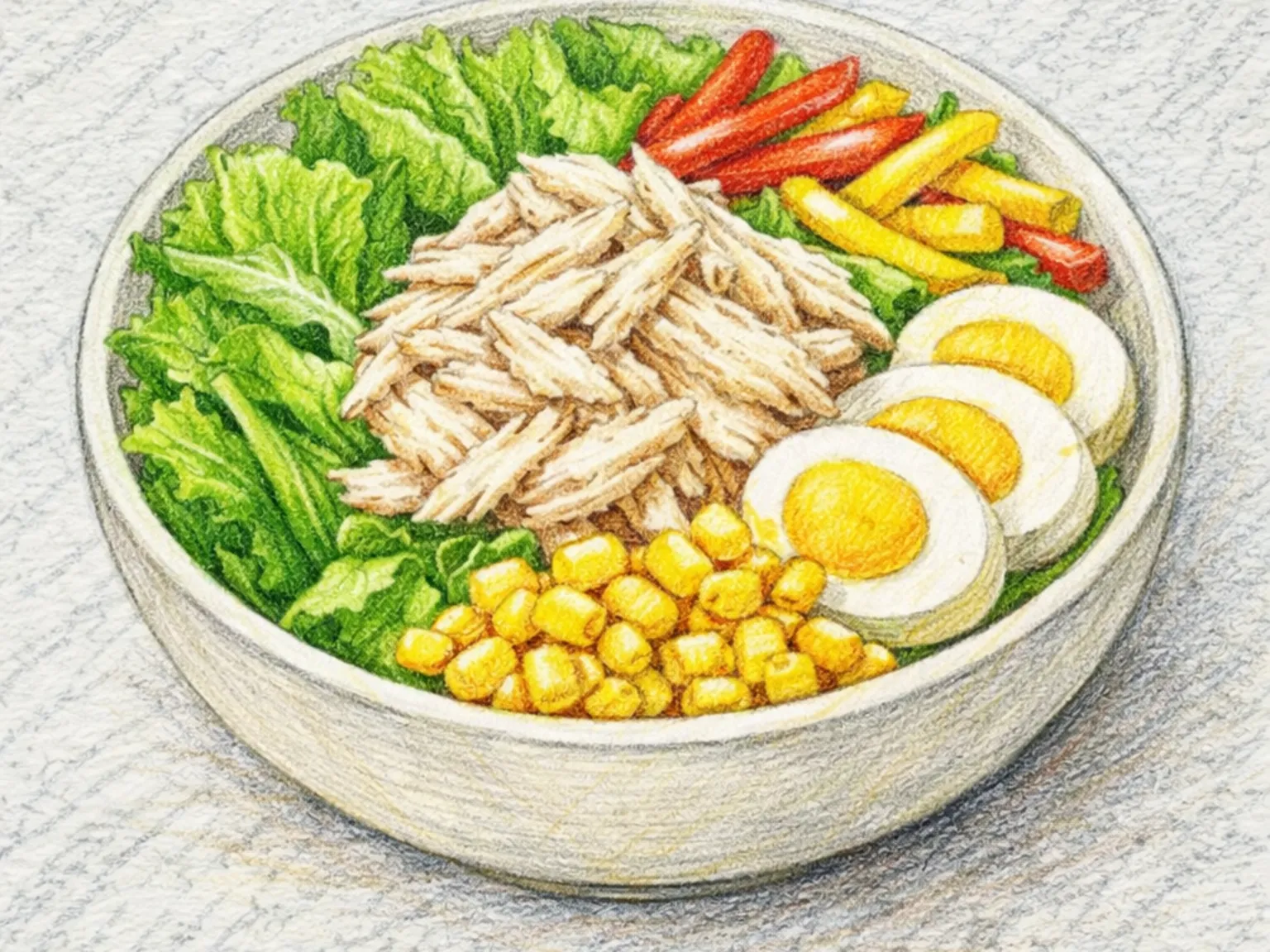
Chicken breast is poached slowly at low temperature until fully tender through the center, then pulled apart along the grain and layered over crisp romaine. Bell pepper brings mild sweetness and hard-boiled egg adds substantial richness to the bowl. The dressing combines plain yogurt, mustard, and honey into a coating that sits lightly on the lean chicken while contributing a steady tartness. Corn kernels scatter throughout, releasing a gentle sweetness with each bite and keeping the overall balance from tipping too sharp or too rich. A high-protein, clean-tasting salad that satisfies without heaviness.
Caponata (Sicilian Sweet and Sour Eggplant Stew)
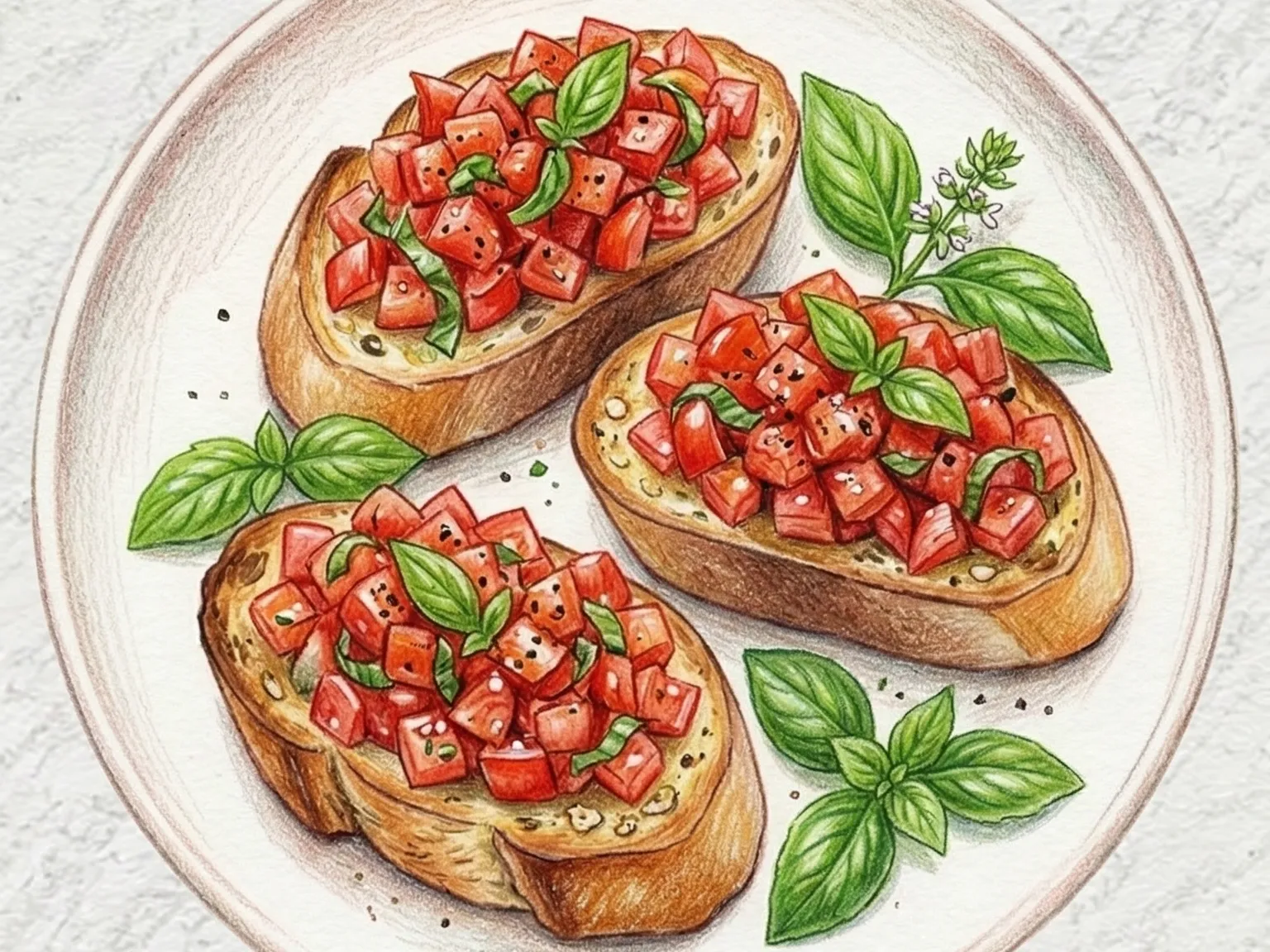
Caponata is a Sicilian sweet-and-sour vegetable dish centered on eggplant, with a flavor profile built around the concept of agrodolce - a deliberate balance of vinegar tartness and sugar sweetness that defines much of southern Italian cooking. Diced eggplant is fried in generous amounts of olive oil until the edges color and the interior becomes silky, having absorbed enough fat to create a soft, yielding texture. Celery, added later and cooked only briefly, stays crisp throughout, providing a textural contrast that keeps the dish from becoming uniformly soft. Tomatoes, capers, and green olives go in together, forming the braising base into which the fried eggplant is returned and simmered until the liquid thickens. Red wine vinegar and sugar are stirred in at the end and adjusted to taste - the vinegar should be assertive but not sharp, the sugar present but not sweet. The briny depth from the olives and capers layers over the tomato acidity, producing a complexity that would seem to require more ingredients than it actually does. Like most braises and marinades, caponata is considerably better after an overnight rest in the refrigerator, when the separate flavors meld into a unified whole. Serve at room temperature on toasted bread as an antipasto, or alongside grilled meat or fish as a condiment.
Black Sesame Cruffins
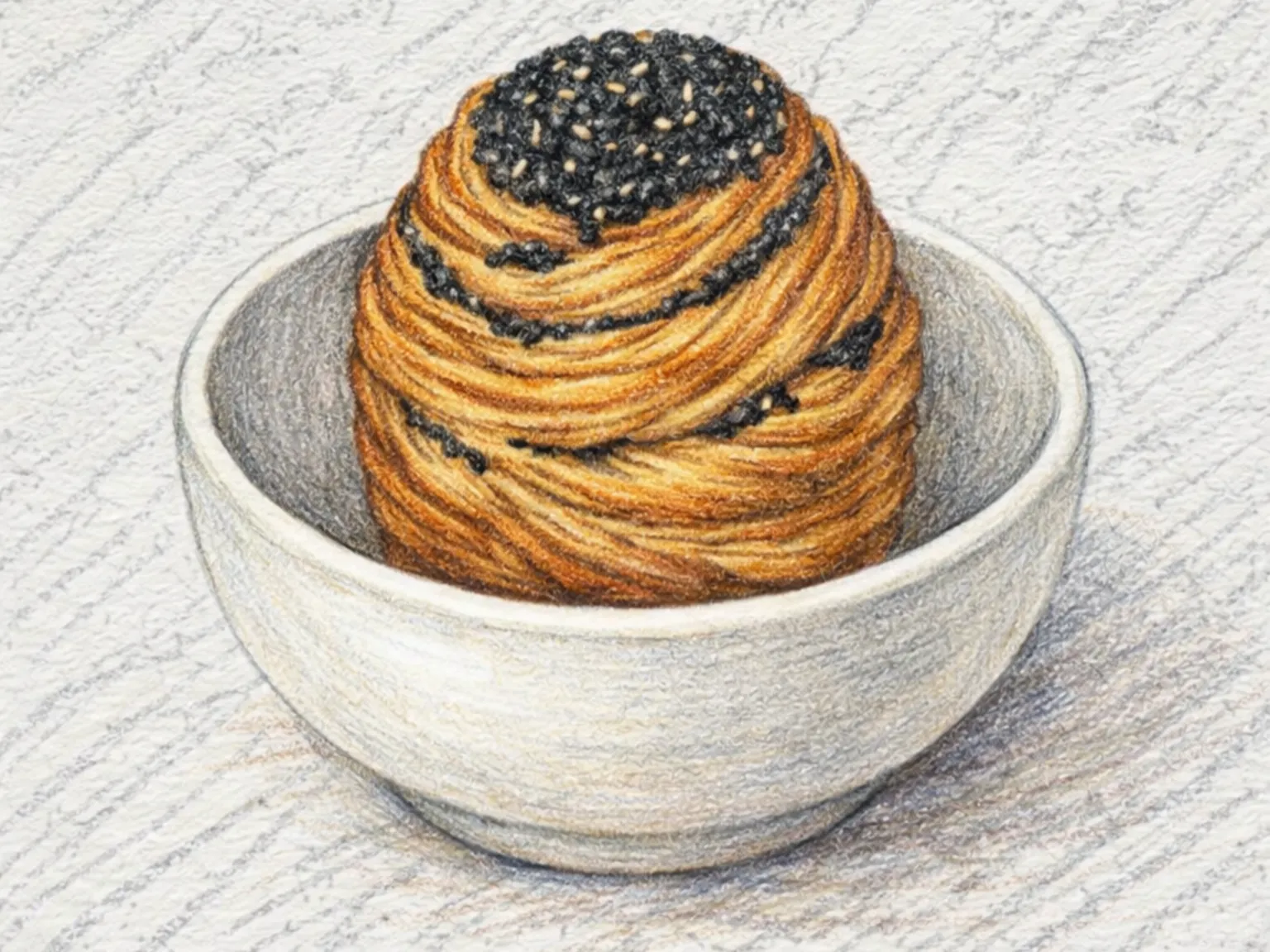
Black sesame cruffins are yeast pastries rolled with butter, black sesame paste, and honey, then baked upright in muffin tins to form a dark spiral. Knead bread flour, sugar, salt, and yeast with warm milk and egg, gradually working in unsalted butter until the dough becomes smooth and elastic. After a 60-minute first proof, roll it into a rectangle 3 mm thick. Spread softened butter in a thin layer, followed by black sesame paste and honey. Keeping that filling even to the edges prevents heavy pockets that can leak while baking. Roll the rectangle tightly from a long side into a log and cut it into 4 to 5 cm pieces. Place each piece upright with the cut spiral facing upward in the muffin tin. A 25-minute second proof gives the shaped dough time to expand before it enters the 190C oven. Bake until the exposed surface is deep golden brown and crisp. The dark sesame line remains visible through the soft, buttery interior, giving every cross-section a clear swirl. Remove the pastries from the pan immediately after baking and move them to a rack. Steam trapped in the muffin wells would soften the base, while open cooling preserves the thin baked exterior.
Ile Flottante (Poached Meringue on Vanilla Custard)
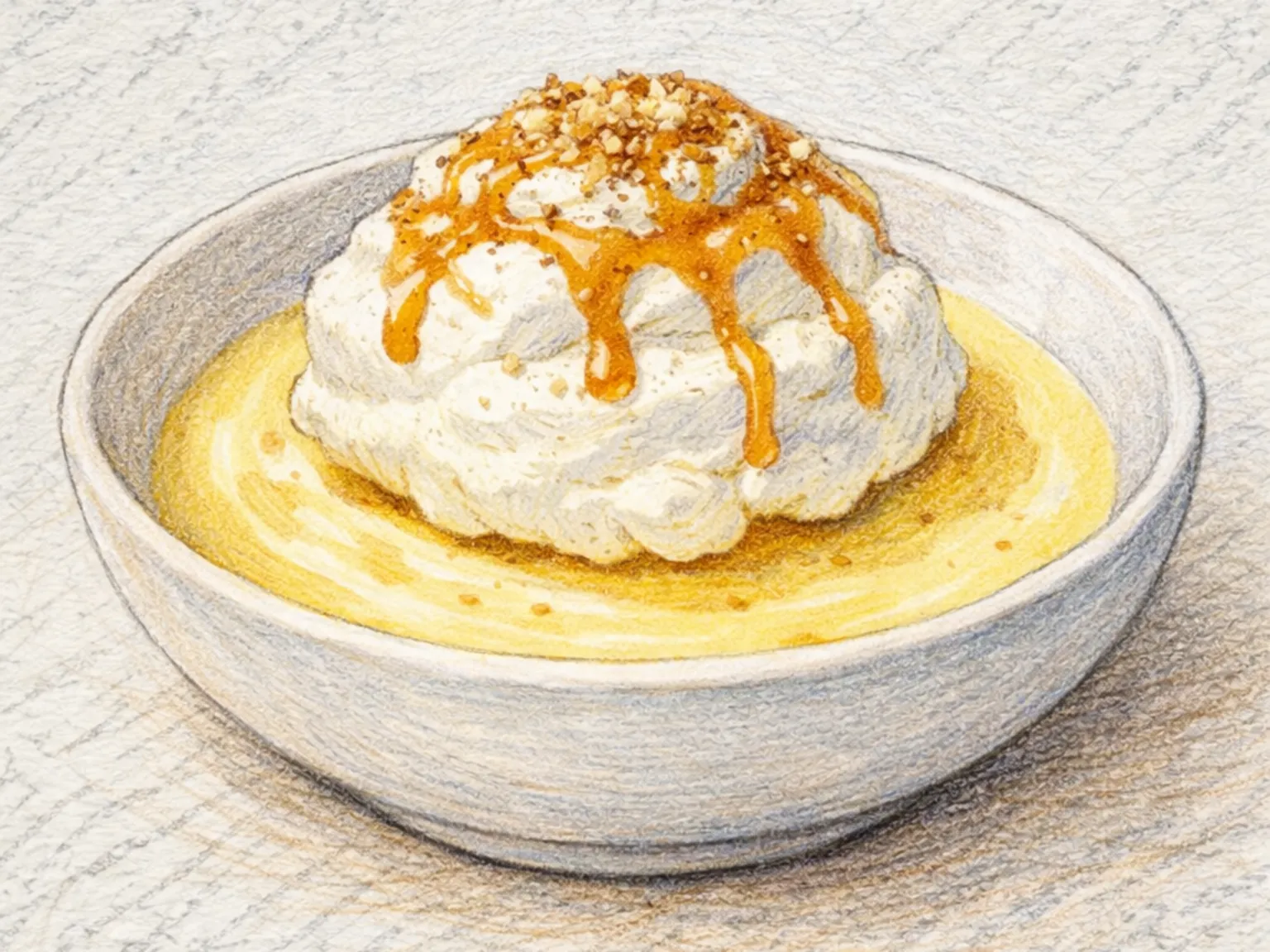
Ile flottante presents a cloud of poached meringue floating on a pool of chilled vanilla custard sauce. Stiffly beaten egg whites are shaped into rounds and gently poached in hot milk, cooking just enough to set the exterior while the center remains airy and marshmallow-soft. The custard beneath is a creme anglaise made from egg yolks, sugar, milk, and vanilla bean, cooked slowly until it coats the back of a spoon with a silky consistency. The contrast between the weightless meringue and the rich, creamy sauce defines the eating experience: each spoonful combines something ethereal with something indulgent. Thin threads of caramel drizzled over the meringue just before serving add a brittle sweetness and a golden visual accent. Despite having only a handful of components, the dessert demands precision at every stage.
Zuppa Toscana (Hearty creamy soup with sausage)
Zuppa Toscana starts by browning Italian sausage, then uses its seasoned fat to cook onion and garlic before potatoes, kale, stock, and cream are added. Slice 350 g potatoes no thinner than 0.5 cm so the pieces retain their shape as the soup simmers. Finely chop 120 g onion, mince 3 garlic cloves, and cut 120 g kale into bite-size pieces after removing any tough stem sections. Heat a pot over medium heat and add 300 g Italian sausage, breaking it into small crumbles with a spatula. Cook for about 5 minutes, until the meat is browned and its fat has collected in the pot, then lift out the sausage while leaving the fat behind. Add the onion and cook for about 2 minutes. Once it is translucent, stir in the garlic for only 30 seconds, stopping before it scorches. Add the potatoes and 900 ml chicken stock and scrape the browned layer from the bottom into the broth. Bring to a boil, lower the heat to medium-low, and simmer for 12 minutes. The potatoes should be just tender while still holding their slices. Return the browned sausage and press the kale down into the broth, then simmer for 3 minutes more, until the leaves soften and darken. Reduce the heat to low before adding 180 ml heavy cream and 0.5 teaspoon black pepper. Warm for 2 minutes with only a gentle movement around the edge of the pot. A hard boil can separate the cream, so adjust the seasoning and serve once the soup is hot and evenly combined.
Doenjang Clam Spinach Orzo
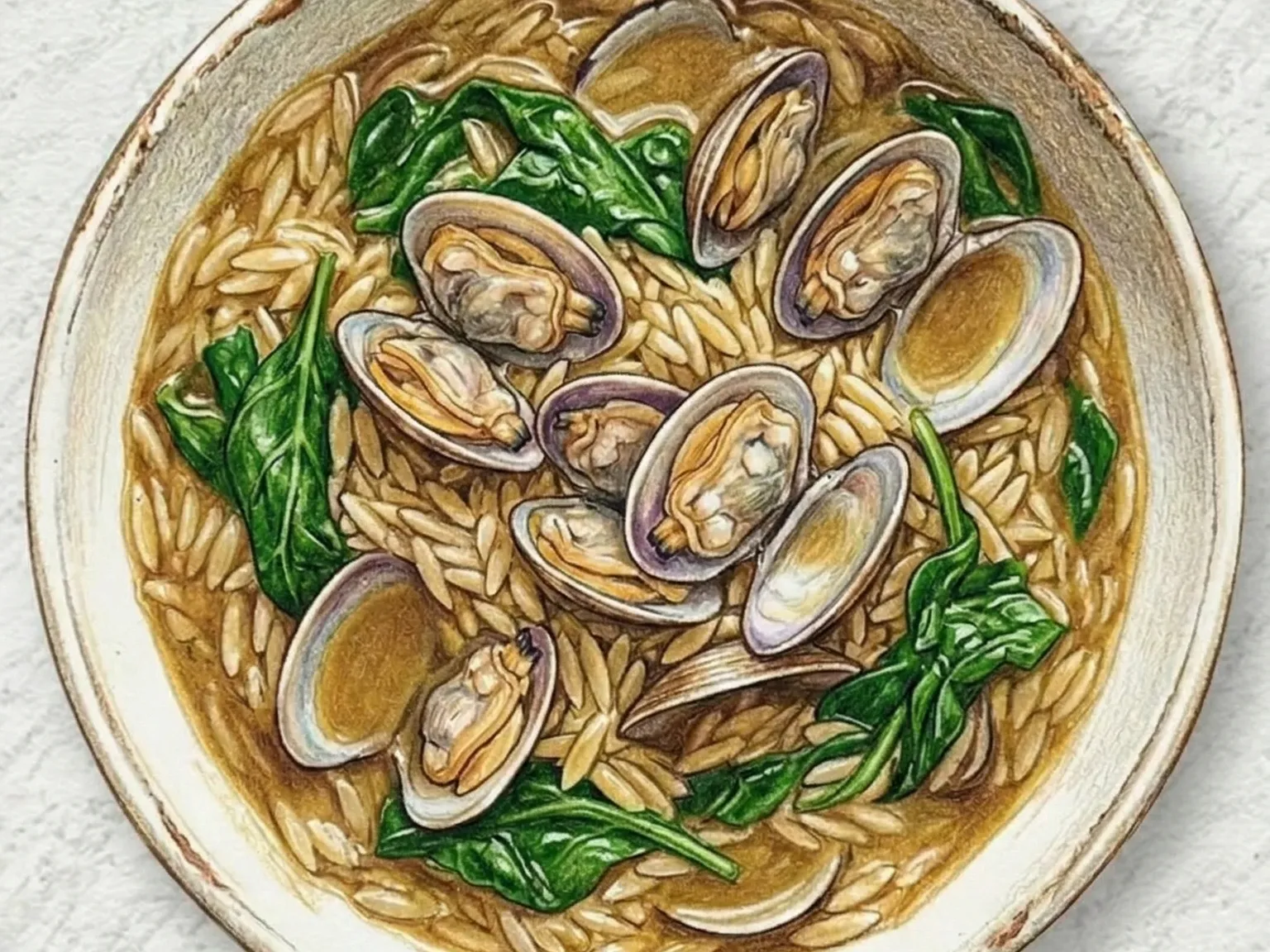
Doenjang clam spinach orzo is a one-bowl pasta built by cooking orzo in doenjang-seasoned vegetable stock alongside clams in a method borrowed directly from risotto technique. The clams are first purged in salt water to remove sand, then steamed open in white wine so they release their briny cooking liquid into the pan. That liquid merges with the already-present fermented depth of doenjang to form a layered savory base that carries the pasta from the very first minute of cooking. Toasting the orzo in butter or oil before adding any liquid coats the starch on each grain, a step that slows its release and produces a consistently creamy sauce by the end rather than a gluey mass or a watery broth. The stock goes in two or three additions rather than all at once, each addition added only once the previous one has been absorbed, and the pasta is stirred throughout so the released starch works into the liquid rather than sinking to the bottom. Spinach added in the final thirty to sixty seconds of cooking wilts just enough to turn tender without losing its bright green color or dissolving into the sauce. A knob of cold butter stirred in off heat as the finishing touch emulsifies into the sauce, adding a glossy sheen and a rounded, buttery richness that ties all the flavors together.
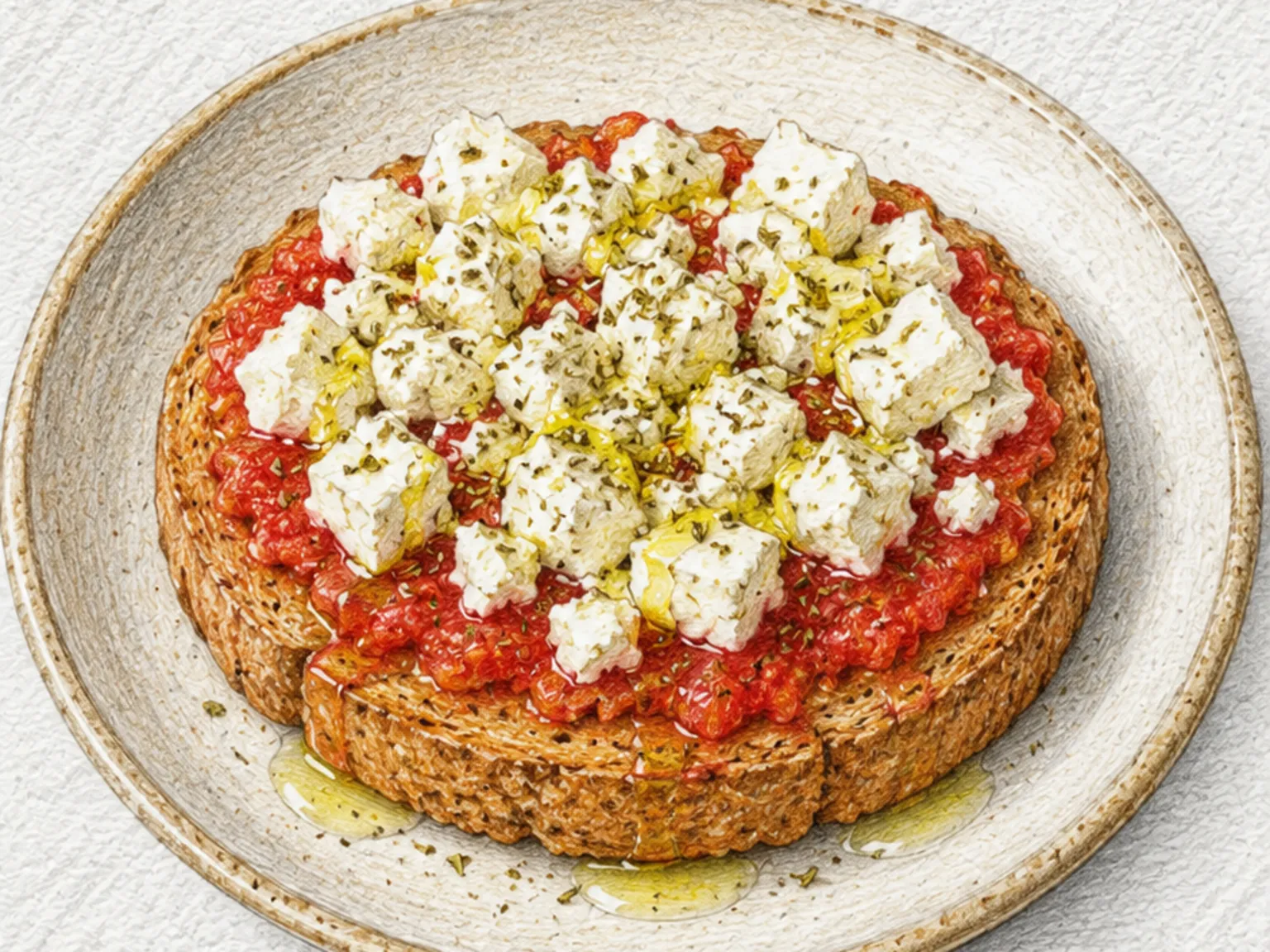
Cretan Dakos Salad (Barley Rusk with Tomato & Feta)
Dakos is a traditional salad from the Greek island of Crete, built on a base of dried barley rusks - thick, twice-baked rounds of bread that have been air-dried to a deep crunch. Ripe tomatoes are grated directly onto the rusk surface rather than sliced, so their juice immediately begins to soften the bread from the inside while the outer rim retains its crunch, creating a textural contrast of crisp edges and a moistened, dense center. Crumbled feta cheese piled on top adds a salty, tangy richness that balances the tomato's acidity, and a generous pour of good olive oil ties the components together. Dried oregano and whole or halved olives complete the dish. Dakos functions simultaneously as a bread course and a salad, and has been part of Cretan summer eating for centuries - a light, satisfying meal that requires no cooking and uses ingredients that thrive in the Mediterranean climate.
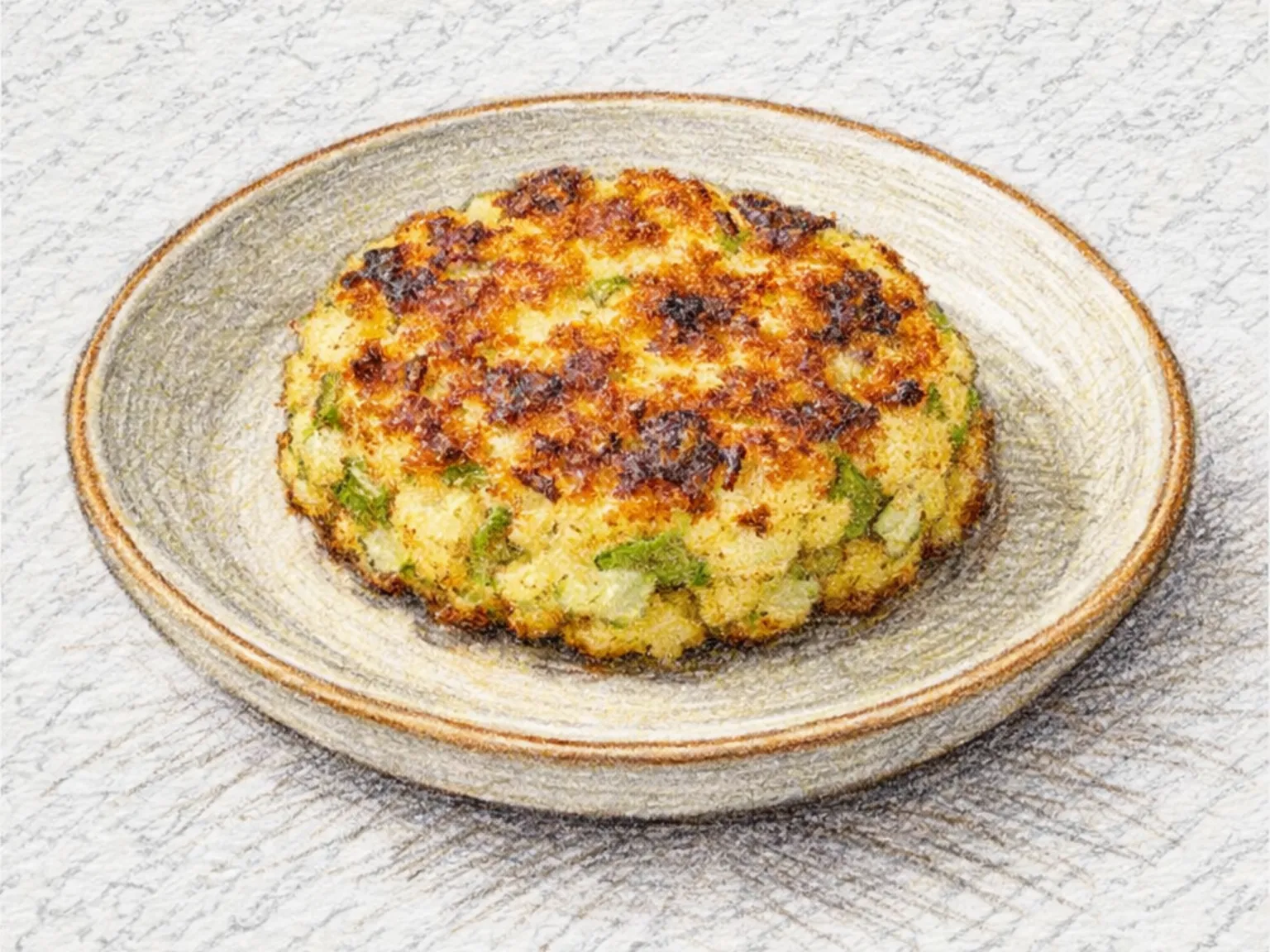
Capuns (Swiss Chard-Wrapped Spätzle Dumplings)
Capuns are Swiss chard rolls filled with a sticky flour, egg, bacon, and parsley dough, then gently cooked in beef broth enriched with milk and cream. This recipe makes two servings with 16 chard leaves. Wash the leaves and trim away the thick, tough sections of stem so the tender portions can fold around the filling. If a leaf still feels too rigid to roll, pass it briefly through boiling water to make it flexible. Finely chop 80 g smoked bacon and 10 g parsley. Combine 150 g flour, 2 eggs, and 50 ml of the milk first, then work in the bacon and parsley to form a cohesive, sticky spätzle-style dough. Spread one leaf flat, place a spoonful of dough near the center, fold both sides inward, and roll it firmly so the filling is enclosed. Bring 250 ml beef broth, the remaining 50 ml milk, and 50 ml heavy cream to a gentle simmer. Let the rolls simmer gently for 15 minutes with the heat set to medium-low. Keep the liquid quiet rather than boiling it hard, since forceful bubbling can unfold or tear the chard wrappers. Lift the cooked capuns onto plates and grate 30 g Gruyere over the tops while they are still warm.
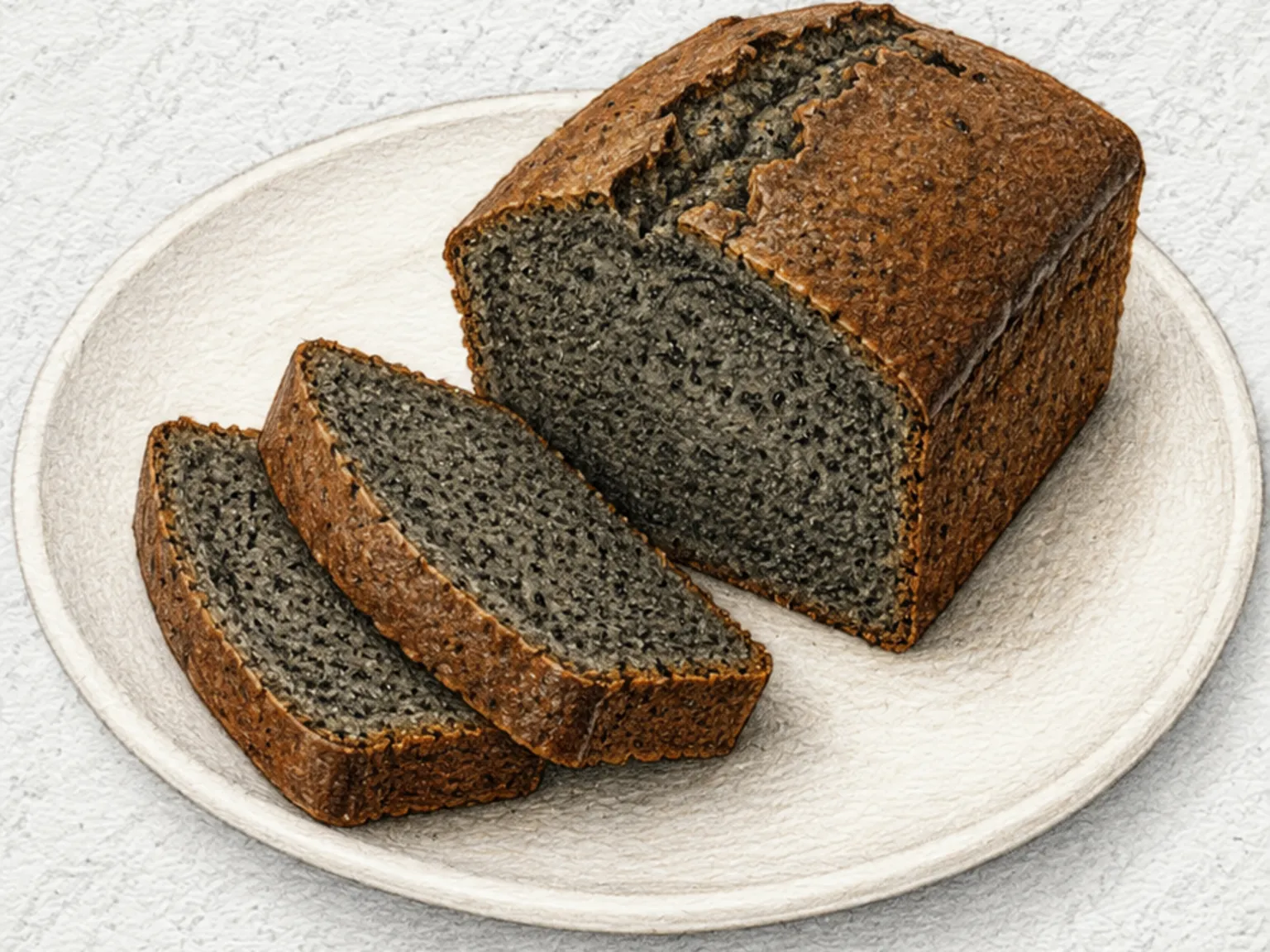
Black Sesame Pound Cake (Dense Roasted Sesame Grey-Crumb Cake)
Black sesame pound cake is built on the classic equal-ratio formula of butter, eggs, sugar, and flour, with a generous addition of black sesame paste worked into the batter. The paste shifts the color to a deep grey-brown and fills the kitchen with a roasted, nutty fragrance as the loaf bakes. Only a small amount of baking powder is used, keeping the rise modest and the crumb tight - the result is a dense loaf that still yields softly when bitten, with a texture that holds together cleanly on the fork rather than crumbling apart. Milk regulates the moisture balance, preventing the dense structure from turning stiff or dry at the edges. When sliced, every cross-section shows finely ground sesame particles distributed evenly throughout, visible as tiny dark flecks against the grey crumb. The loaf pairs best with green tea or black coffee, beverages whose bitterness echoes and sharpens the sesame flavor without overwhelming it. Stored in an airtight container at room temperature, it holds its moisture for two to three days and often tastes better on the second day once the sesame has had time to settle fully into the crumb structure.
Italian Semifreddo (No-Churn Frozen Mousse Dessert)
Semifreddo is an Italian frozen dessert that achieves a creamy, mousse-like texture without an ice cream machine, relying instead on the technique of folding aerated components together before freezing. Egg yolks and sugar are whipped with hot syrup at 118 degrees Celsius into a thick, stable sabayon, the heat of the syrup pasteurizing the eggs while the whipping action floods the mixture with air. Once the sabayon cools completely, stiffly whipped cream is folded in gently in two additions so that the air bubbles distribute evenly throughout, preventing ice crystals from forming during freezing. The mixture goes into a loaf mold lined with plastic wrap and freezes for at least six hours. The result sits in a precise middle ground between ice cream and mousse: cold and sliceable, yet after five minutes at room temperature it softens to a consistency that yields effortlessly to a spoon and melts across the tongue in a smooth, rich wave. Pistachios, toasted almonds, or chocolate chips folded in before freezing add crunch and contrast. A drizzle of berry coulis on the plate provides acidity that cuts through the sweetness, while caramel sauce deepens it. Because all preparation happens in advance and serving is simply a matter of unmolding and slicing, semifreddo is one of the most practical and impressive make-ahead desserts for entertaining.
Doenjang Mushroom Butter Linguine
Doenjang mushroom butter linguine browns button mushrooms in butter and olive oil, then coats the pasta with a sauce made from doenjang and reserved cooking water. Slice 180g of button mushrooms evenly to 5mm and thinly cut half a stalk of green onion. Cook 180g of linguine in salted boiling water for 1 minute less than the package time and reserve 1 cup of pasta water. Melt 25g of butter with 1 tablespoon of olive oil in a wide pan. Add 1 tablespoon of minced garlic and cook over low heat for only 30 seconds. Before the garlic browns, spread the sliced mushrooms across the pan and raise the heat to medium-high. Leave them undisturbed for 5 to 6 minutes, giving their released moisture time to evaporate and their edges time to brown. In a separate small bowl, dissolve 1 tablespoon of doenjang in 3 tablespoons of the reserved pasta water instead of adding the paste directly to the pan. Pour this mixture over the mushrooms and stir until the sauce is uniform. Add the drained linguine and toss for 1 to 2 minutes, using more reserved water in small additions only as needed. When the sauce no longer pools and clings evenly to the noodles, add 0.5 teaspoon of black pepper and the sliced green onion. Plate the pasta and grate 20g of Parmesan over the top. The undisturbed mushroom cooking time and the pre-dissolved doenjang are the two controls for the browned mushrooms and smooth sauce in this recipe.
About Western
Olive oil, butter, cream, and cheese create the rich flavors these dishes are known for. From special-occasion dinners to quick weeknight meals, these recipes make Western cooking approachable.