Water Parsley Shrimp Salad
This Korean salad combines pan-seared shrimp with water parsley (minari) in a doenjang yogurt dressing that brings Korean fermented soybean paste together with plain yogurt in a lighter, creamier form than the paste alone. The shrimp are cooked just until opaque and springy - overcooking at this stage toughens them and diminishes their clean sweetness, which is the primary flavor note in the dish. Thinly sliced cucumber adds cool moisture and a fresh crunch throughout, and red onion soaked in cold water for at least ten minutes loses its raw harshness while keeping a pleasant mild sharpness. The dressing ratio technique matters: coating all the ingredients with two-thirds of the dressing first establishes a baseline seasoning, then tasting and adjusting with the remaining third ensures every component is evenly flavored without oversalting. Doenjang varies in salt intensity by brand and age, so tasting the dressing before assembling and balancing with extra yogurt or lemon juice prevents the final dish from being too salty. Sesame seeds scattered on top contribute a nutty finish that ties the Korean pantry elements together.
Multigrain Salad
Brown rice, barley, and lentils are each boiled separately and cooled before being combined, so that every grain contributes its own distinct size and texture to the finished bowl. The brown rice stays chewy, the barley holds a thick bite, and the lentils offer a soft give that rounds out the contrast. Julienned cucumber and red onion introduce crunch and a mild sharpness that keep the heavier grains from feeling dense. Halved cherry tomatoes release juice as a natural supplement to the dressing, and a mixture of perilla oil and apple cider vinegar ties the bowl together with nuttiness and clean acidity. Adding sliced red chili or diced bell pepper extends the color and sweetness without changing the character of the dish. It holds well at room temperature, which makes it practical for meal prep and packed lunches. The combination of dietary fiber and plant protein means a moderate portion keeps hunger at bay for several hours.
Pollock Roe Potato Crisp Salad
Potato slices are baked or pan-fried until golden and crisp, then topped with briny salted pollock roe for salt and umami in each bite. Greek yogurt mixed with mayonnaise creates a creamy base that softens the roe's intense seasoning. Romaine and cucumber provide fresh crunch contrasting with the crispy potato and popping roe granules. Lemon juice cuts through the richness, and shredded roasted seaweed deepens the seafood aroma - making this as enjoyable as a drinking snack as it is a side dish.
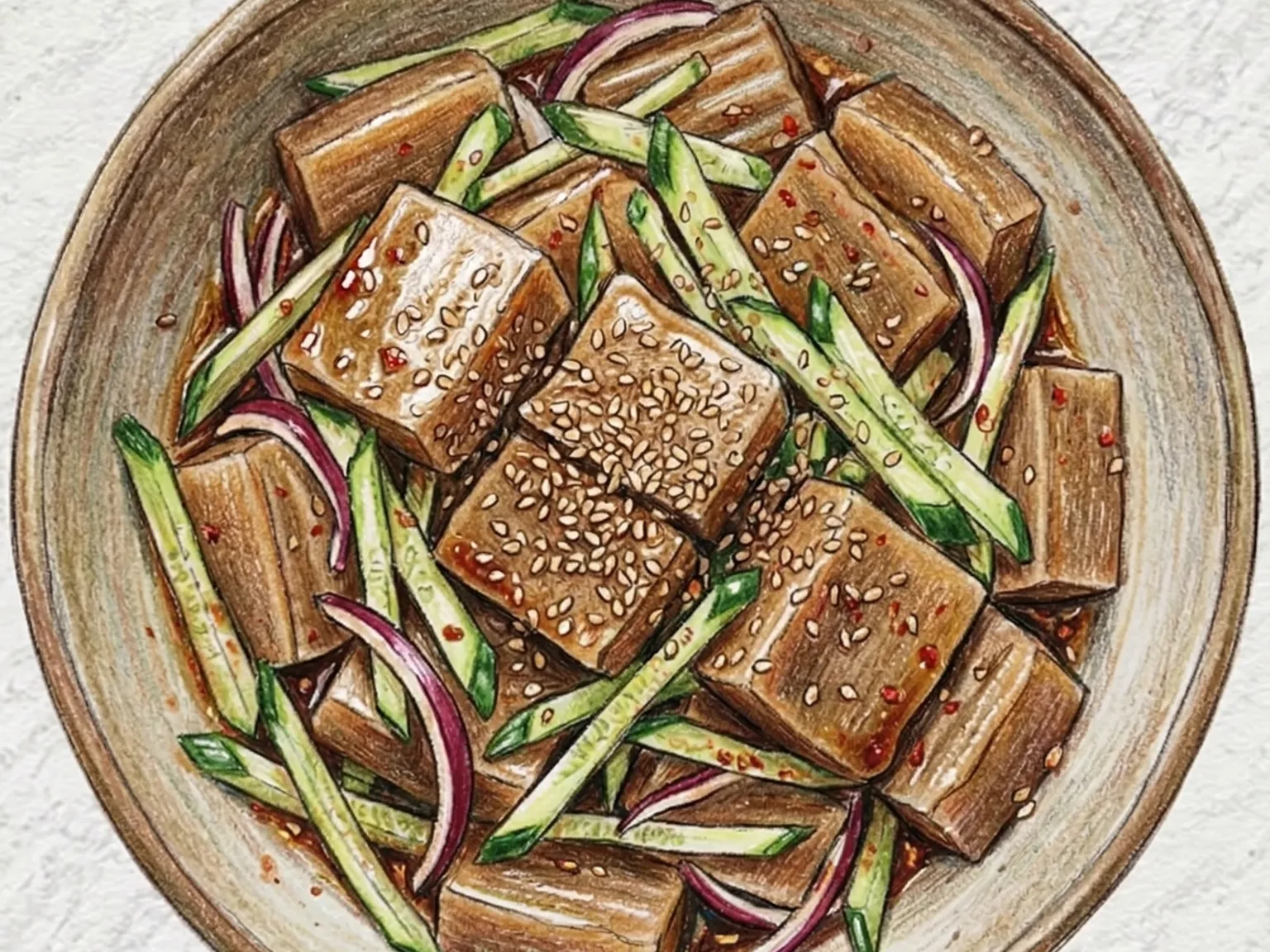
Squid and Cucumber Chojang Salad
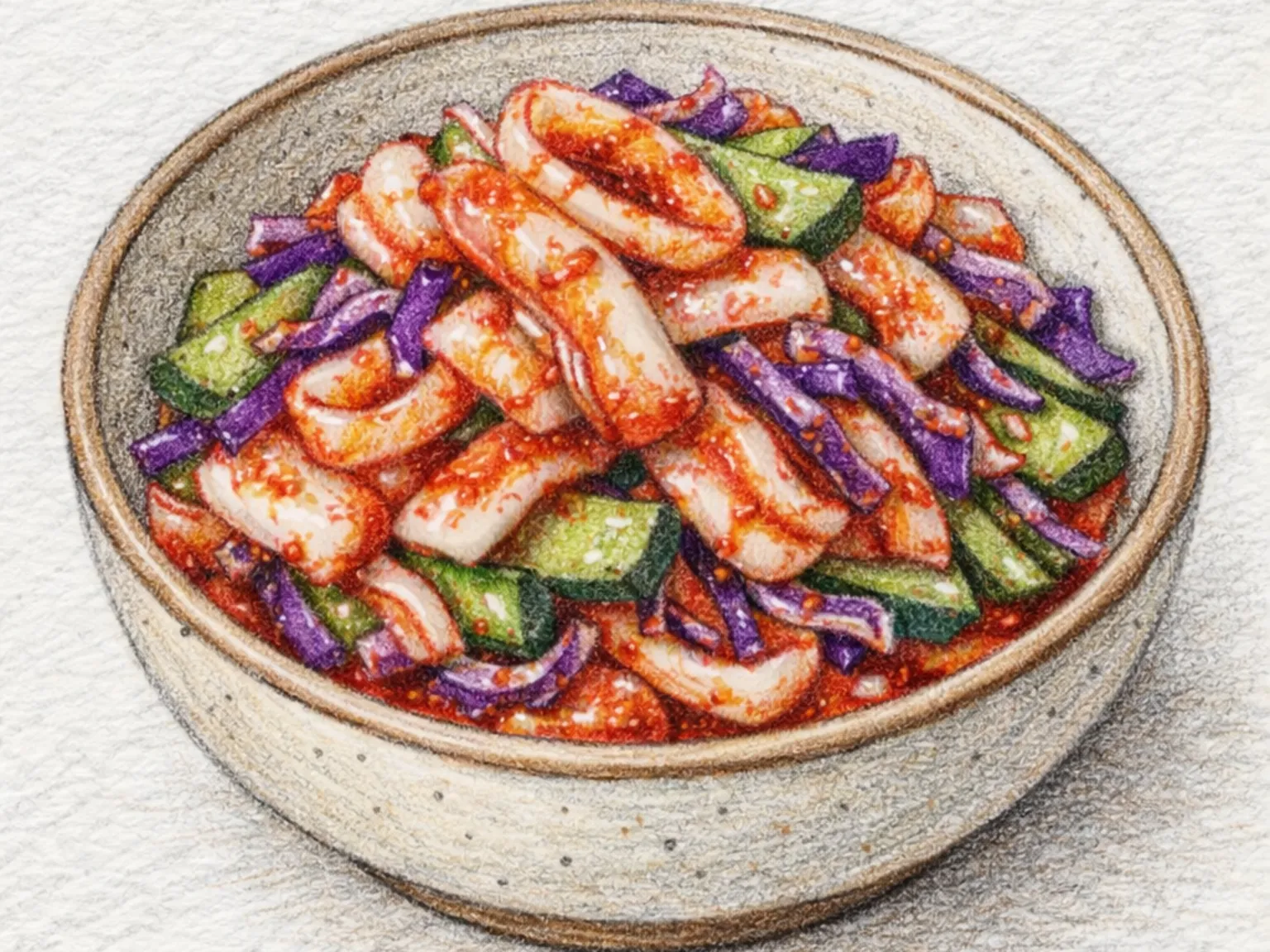
Squid is blanched briefly for a chewy yet tender texture without any fishy taste. Diagonally sliced cucumber adds juicy crunch, while shredded red cabbage brings vivid purple color. Chojang - gochujang, vinegar, and plum extract - delivers a sweet, spicy, and sour punch that accents the mild seafood. Sesame oil, minced garlic, and a sprinkle of sesame seeds complete the classic Korean seafood salad profile, best served chilled in summer as a refreshing standalone meal.
Squid Naengi Chojang Salad
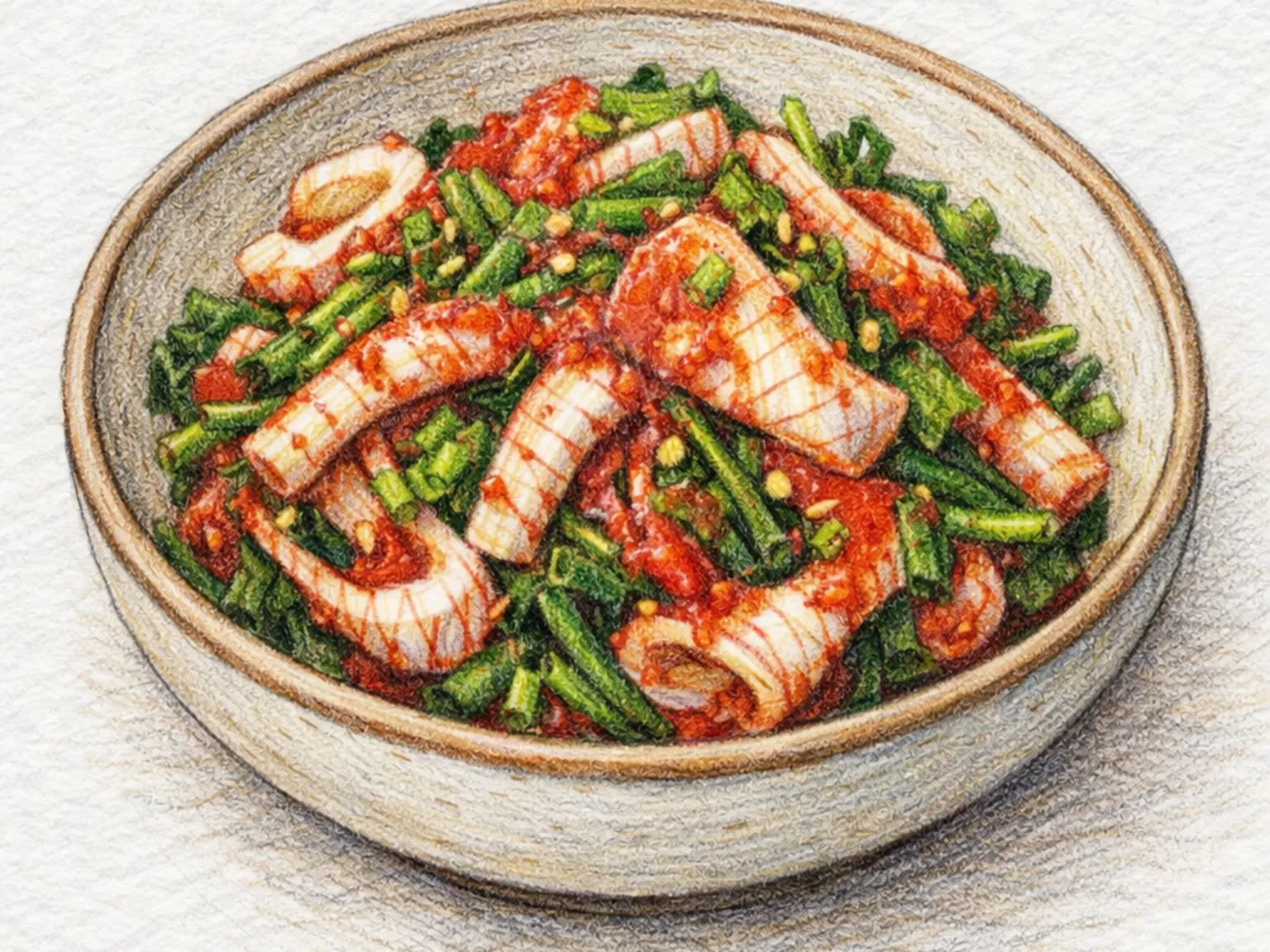
Preparing squid for a seasonal salad involves a quick blanching process in boiling water for less than thirty seconds. This precise timing keeps the seafood tender and prevents it from turning rubbery or tough. Shepherd's purse, or naengi, contributes an earthy aroma characteristic of early spring that complements the oceanic profile of the squid. Crisp lettuce and fresh cucumber provide a crunchy texture that contrasts with the soft seafood pieces. The dressing relies on a combination of gochujang, rice vinegar, and oligosaccharide syrup to create a spicy, tangy, and mildly sweet foundation for the ingredients. To finish the sauce, sesame oil contributes a nutty scent while minced garlic adds a sharp, aromatic quality that integrates the different components. Careful cleaning of the naengi to remove soil and fine roots is necessary before briefly blanching it in salted water to eliminate bitterness and preserve its fragrance. Serving this dish cold during the early spring months highlights the specific seasonal qualities of the ingredients. For variations, scallops or shrimp can replace the squid, as they both pair well with the spicy dressing. Similarly, spring cabbage or wild chives can substitute for the shepherd's purse to maintain the seasonal character of the salad.
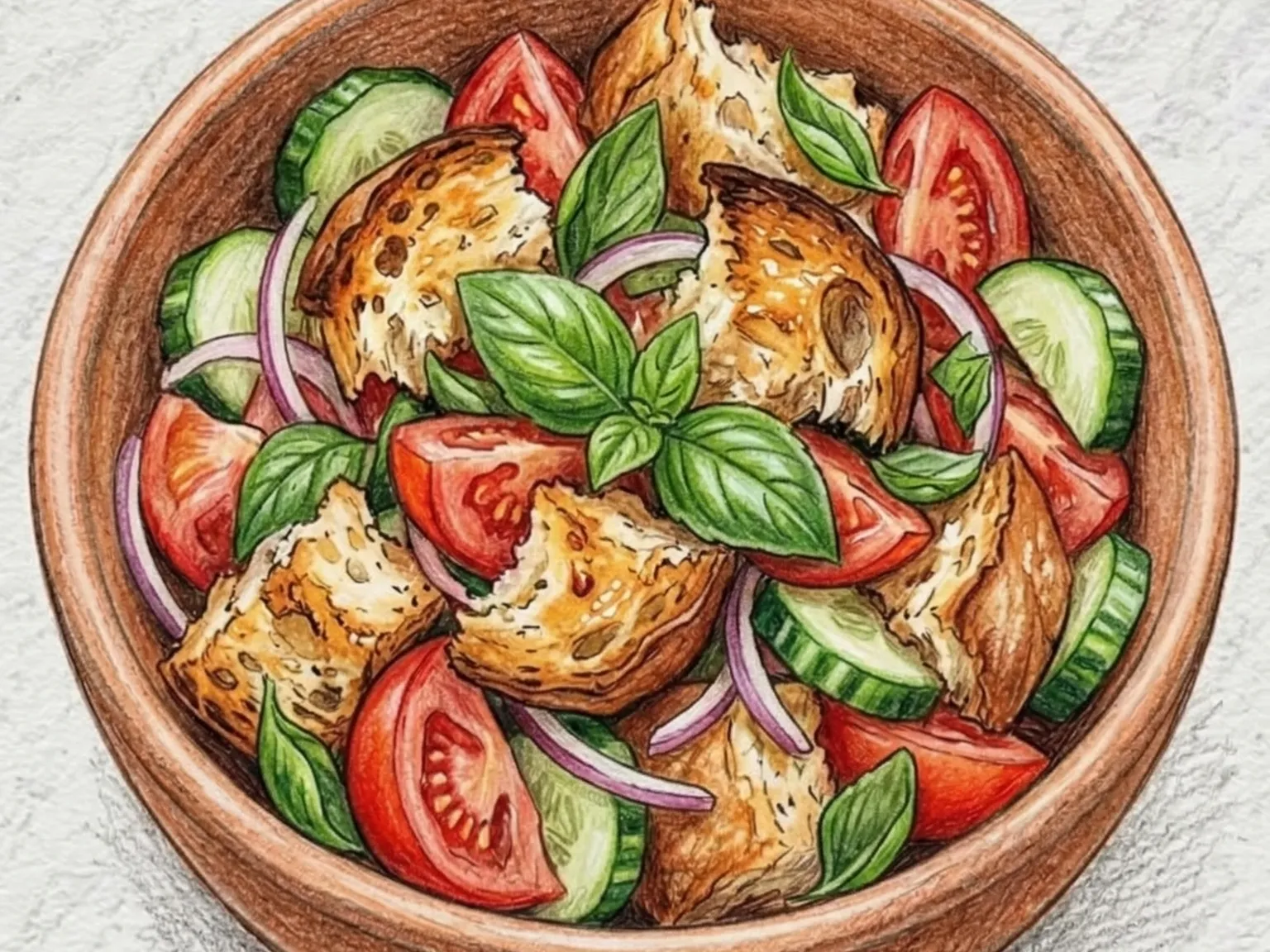
Panzanella Salad (Italian Ciabatta Bread Salad)
Stale ciabatta is torn into rough chunks, drizzled with olive oil, and toasted in the oven until the exterior is crisp while the interior remains slightly chewy. Ripe tomatoes are cut into large pieces and salted briefly to draw out their juice, and that released liquid soaks into the bread and becomes the sweet-tart flavor that defines the dish. Cucumber and red onion add crunch and pungency, while torn basil leaves release their fragrance across the plate. A vinaigrette of red wine vinegar and good olive oil binds everything together. The salad reaches its best point after resting fifteen to twenty minutes, once the bread has absorbed enough dressing and tomato juice to soften slightly without going completely soggy, a balance that is the defining characteristic of a well-made panzanella. Using genuinely stale bread matters here: fresh bread soaks through too quickly and disintegrates, while properly dried ciabatta holds its structure and provides a textural contrast with the juicy tomatoes and crisp vegetables. Panzanella originated as a practical summer dish in Tuscany, where leftover bread was too valuable to discard, and it remains most rewarding when made with ripe summer tomatoes at the peak of the season.
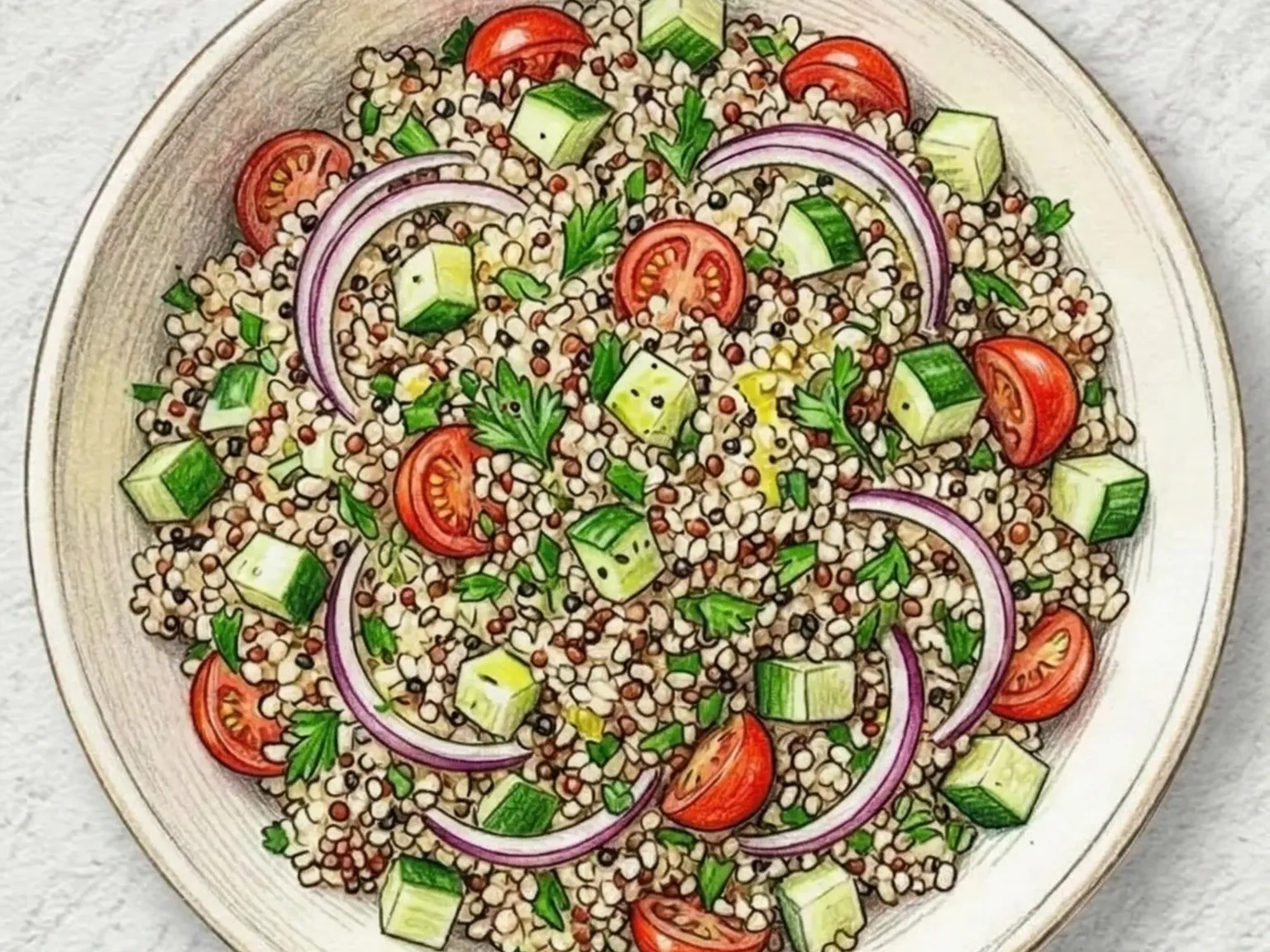
Quinoa Salad
Quinoa is boiled until fluffy and cooled to preserve its distinctive pop-when-bitten texture. Diced cucumber and halved cherry tomatoes mix in juicy crunch that energizes the mild grain base. Thinly sliced red onion adds sharpness, and generous chopped parsley pushes the herbal character forward. The dressing stays minimal - olive oil and lemon juice - letting raw ingredients speak clearly. As a complete protein containing all essential amino acids, quinoa makes this a nutritionally balanced light meal in a single bowl.
Salmon Poke Bowl
Salmon poke bowl dices sashimi-grade salmon into 1.5-centimeter cubes and marinates them briefly in soy sauce and sesame oil for five minutes, then arranges the fish in sections over steamed rice alongside avocado, cucumber, edamame, and sliced green onion. The short soy marinade draws moisture from the salmon's surface just enough to tamp down any fishiness while amplifying umami, and sesame oil adds a glossy sheen with a toasted fragrance. Avocado's creamy fat cushions the firm, springy bite of the raw fish, while edamame contributes a nutty bean flavor and cucumber brings a cool crunch. Using only sashimi-grade salmon is essential for safe raw consumption.
Seven Layer Salad
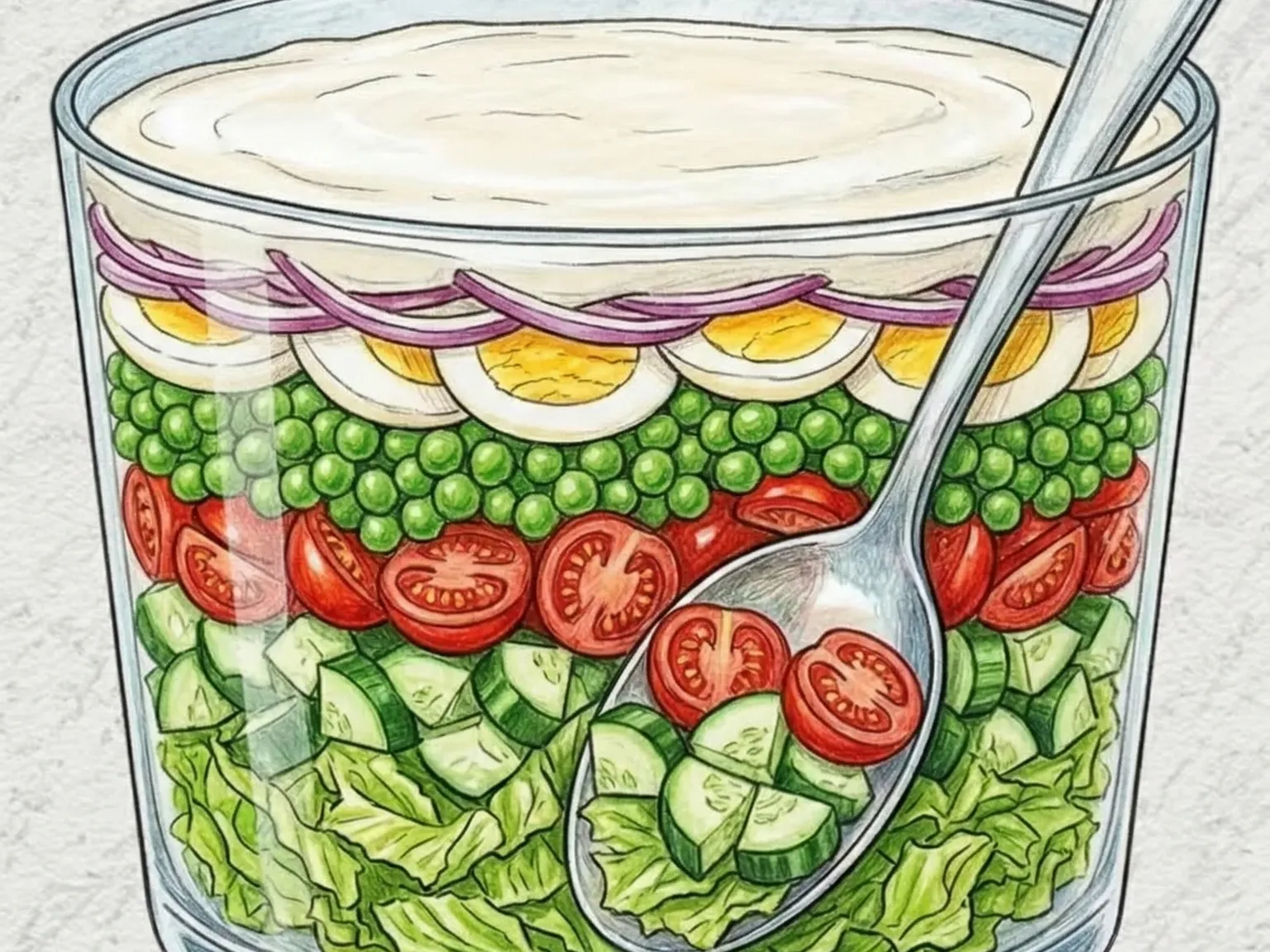
Seven layer salad stacks romaine lettuce, sliced cucumber, halved cherry tomatoes, cooked green peas, chopped boiled egg, and thinly sliced red onion in a clear glass bowl, then seals the top with a smooth layer of Greek yogurt mixed with lemon juice. The yogurt cap acts as a moisture barrier, preventing the lower layers from turning soggy and making the salad suitable for advance preparation. Boiled eggs contribute a mild richness and peas add a starchy sweetness that rounds out the crisp vegetable layers, while red onion's sharp bite creates a contrast against the creamy, tangy dressing. Serving requires scooping deep to the bottom so every portion captures all seven layers at once.
Shopska Salad (Bulgarian Shopska salad)
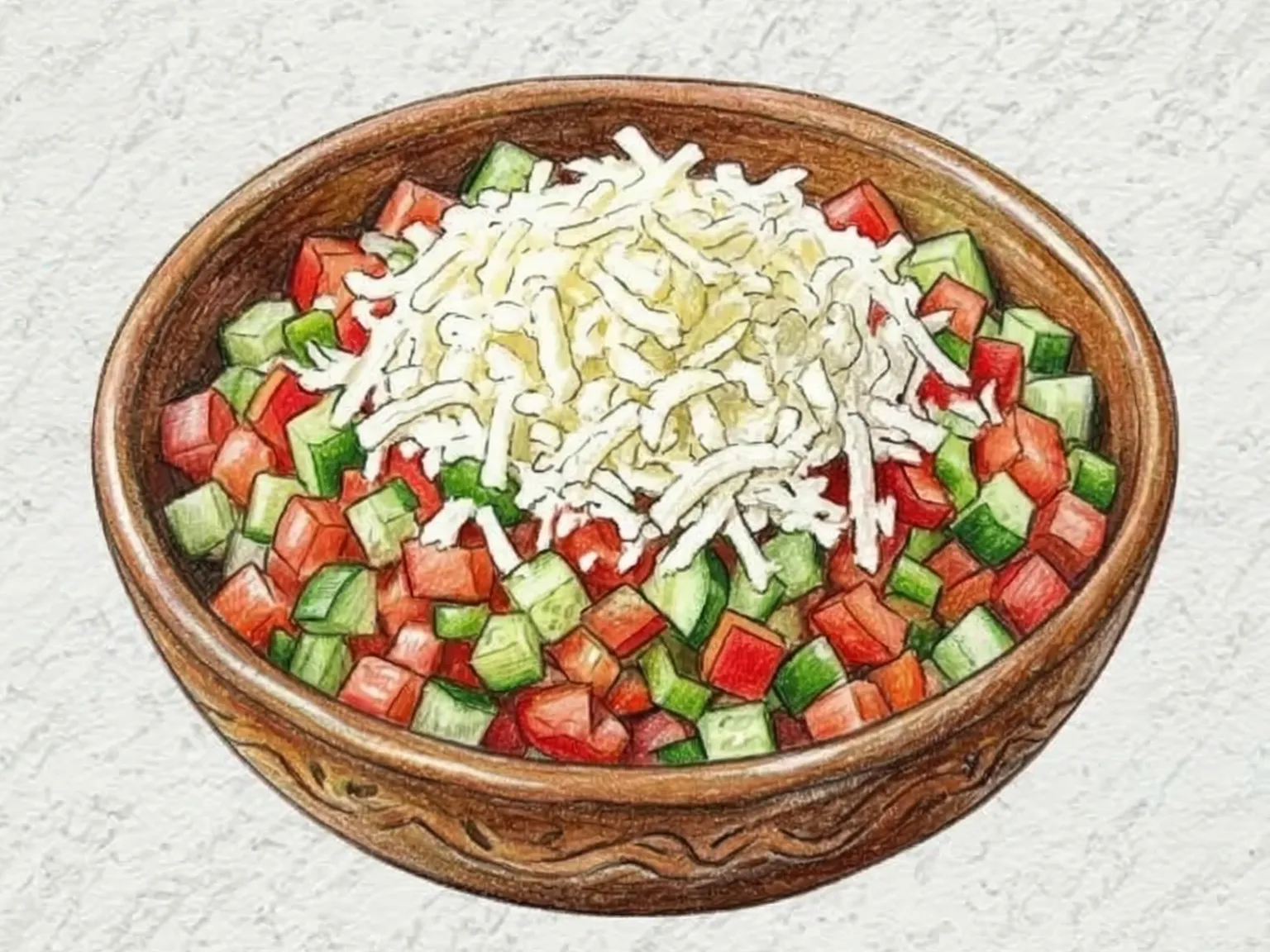
Shopska salad cuts ripe tomatoes, cucumber, green bell pepper, and onion into rough bite-size pieces, dresses them lightly with olive oil and red wine vinegar, and tops the whole thing with a thick mound of finely grated feta cheese. No separate dressing is needed because the juice flowing from ripe tomatoes mingles with the vinegar and oil to coat every piece naturally, forming a light, pool-free dressing at the bottom of the bowl. The salty, tangy fermentation character of feta stands in pointed contrast to the watery freshness of the raw vegetables, and the green bell pepper's mild herbaceous bitterness adds a layer of complexity that pushes the salad past simple freshness. Because feta already contributes considerable salt, seasoning the vegetables lightly at first prevents the finished dish from becoming overly salty. Removing the seed cavity of the cucumber reduces the amount of excess liquid released, keeping the dressing from diluting. The salad should be assembled just before serving so each vegetable retains its texture rather than softening in the accumulated juice.
Shrimp Mango Lime Salad
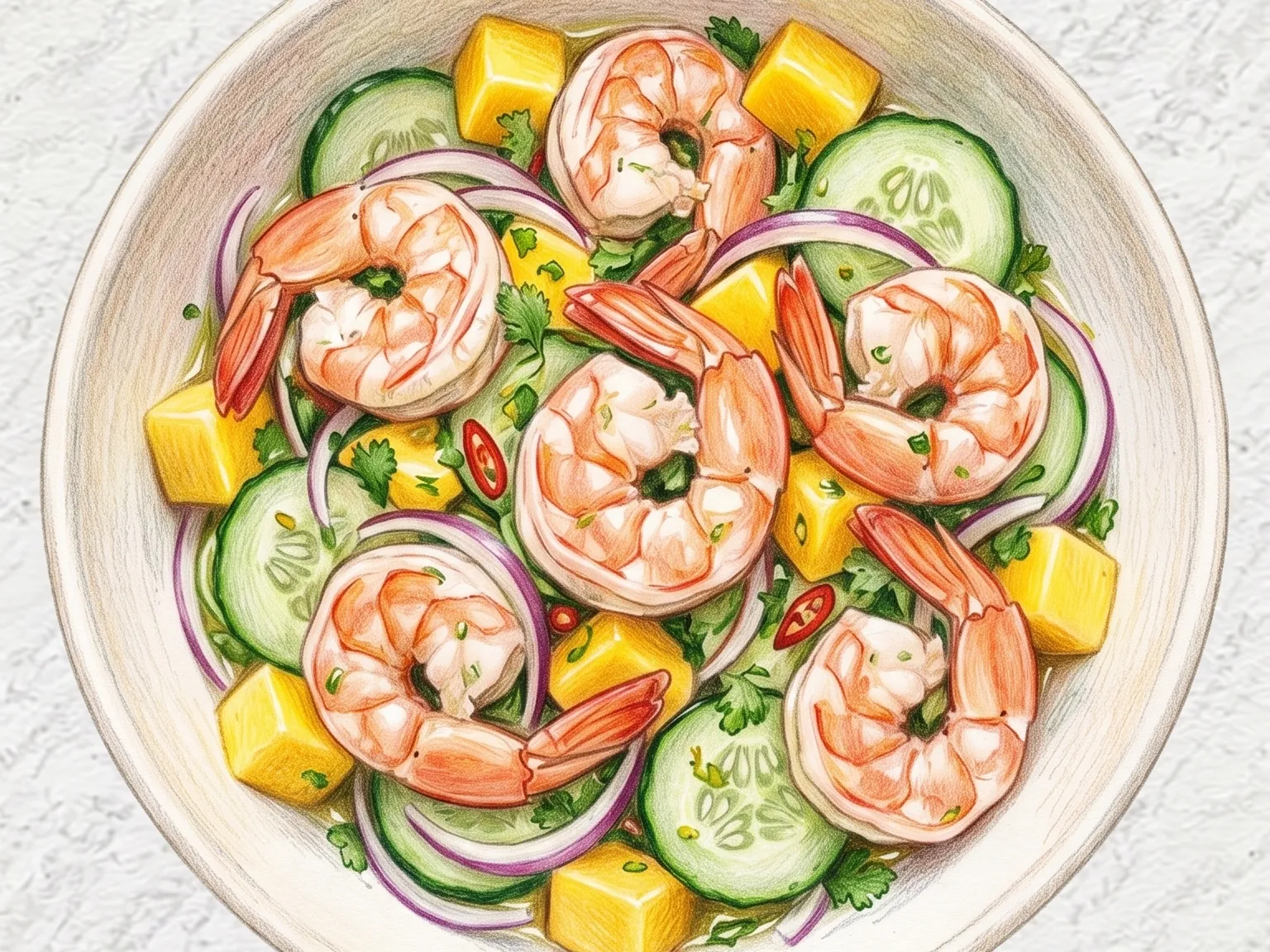
Shrimp mango lime salad is a Thai-style dish that combines briefly poached shrimp with ripe mango, cucumber, red onion, and roughly chopped cilantro, dressed with lime juice, fish sauce, and olive oil. The shrimp go into boiling water for exactly two minutes, which is just long enough to cook them through while keeping their natural snap; any longer causes the proteins to contract and the texture turns from tender to rubbery. Fish sauce contributes a fermented, savory depth that amplifies the shrimp's briny character, while lime's sharp acidity slices through the mango's sweetness and brings the dressing into balance. Thinly sliced red onion adds a raw, peppery heat that creates tension between the sweet fruit and the savory seafood, and cilantro releases a distinctive herbal fragrance with each bite. Cucumber stirred into the mix lightens the overall texture and keeps the salad from feeling too dense. Served cold immediately after dressing, every element stays distinct and the contrast between the yielding fruit, the crisp vegetables, and the firm shrimp comes through clearly.
Soba Sesame Salad (Chilled Buckwheat Noodle Sesame Dressing)
Soba sesame salad is a cold noodle dish in which cooked buckwheat noodles are rinsed repeatedly in cold water to remove surface starch, then tossed with julienned cucumber, carrot, and red cabbage in a dressing of soy sauce, rice vinegar, sesame oil, and sesame seeds. The earthy, nutty character of buckwheat pairs naturally with toasted sesame, and rice vinegar's light acidity keeps the dish from feeling heavy despite the sesame oil. Thorough rinsing in cold water is the technical cornerstone of this recipe: residual starch left on the noodles dilutes the dressing on contact and causes the strands to clump into an uneven mass, disrupting the balance of flavors in every bite.
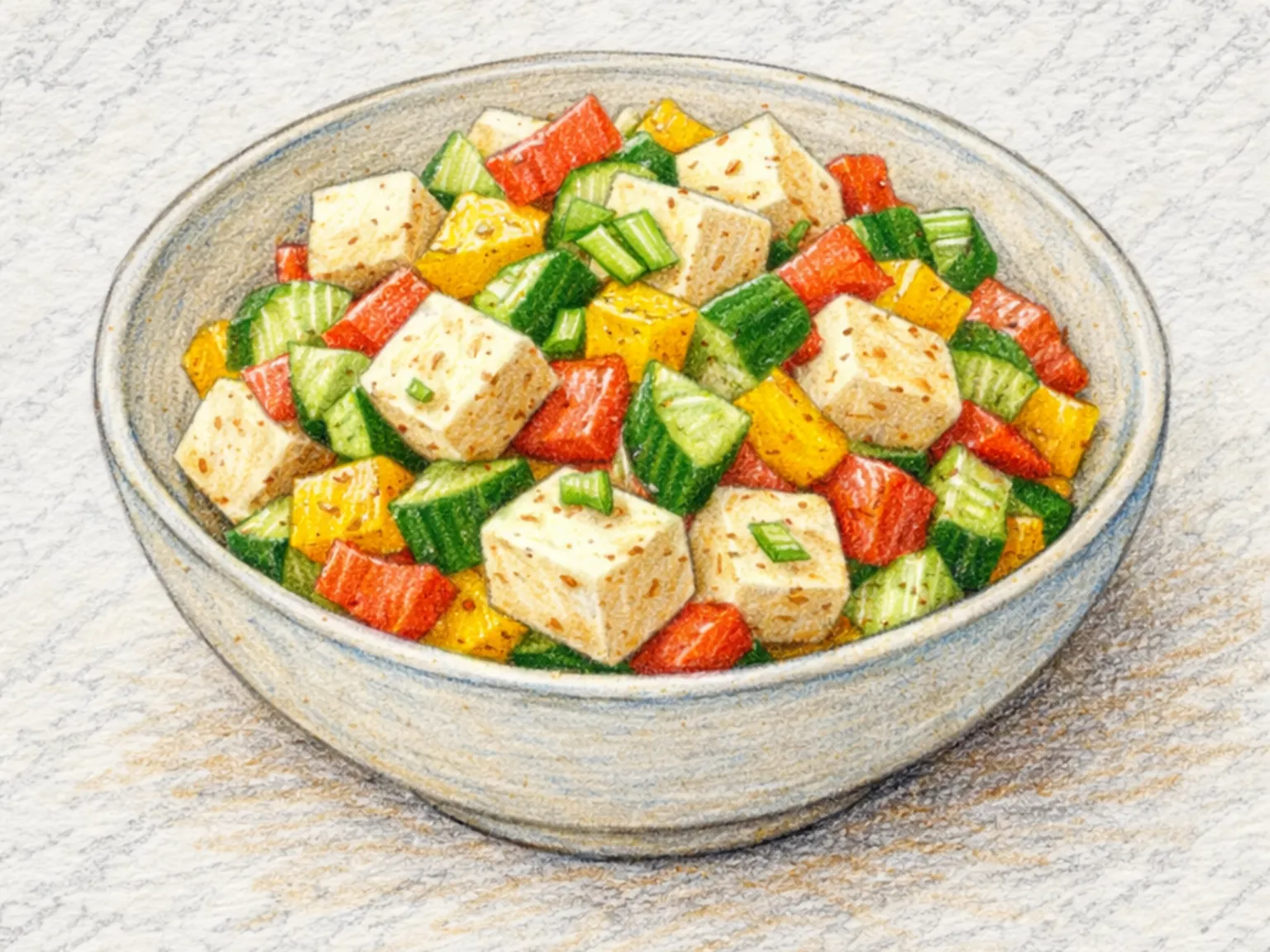
Ssamjang Tofu Kale Crunch Salad
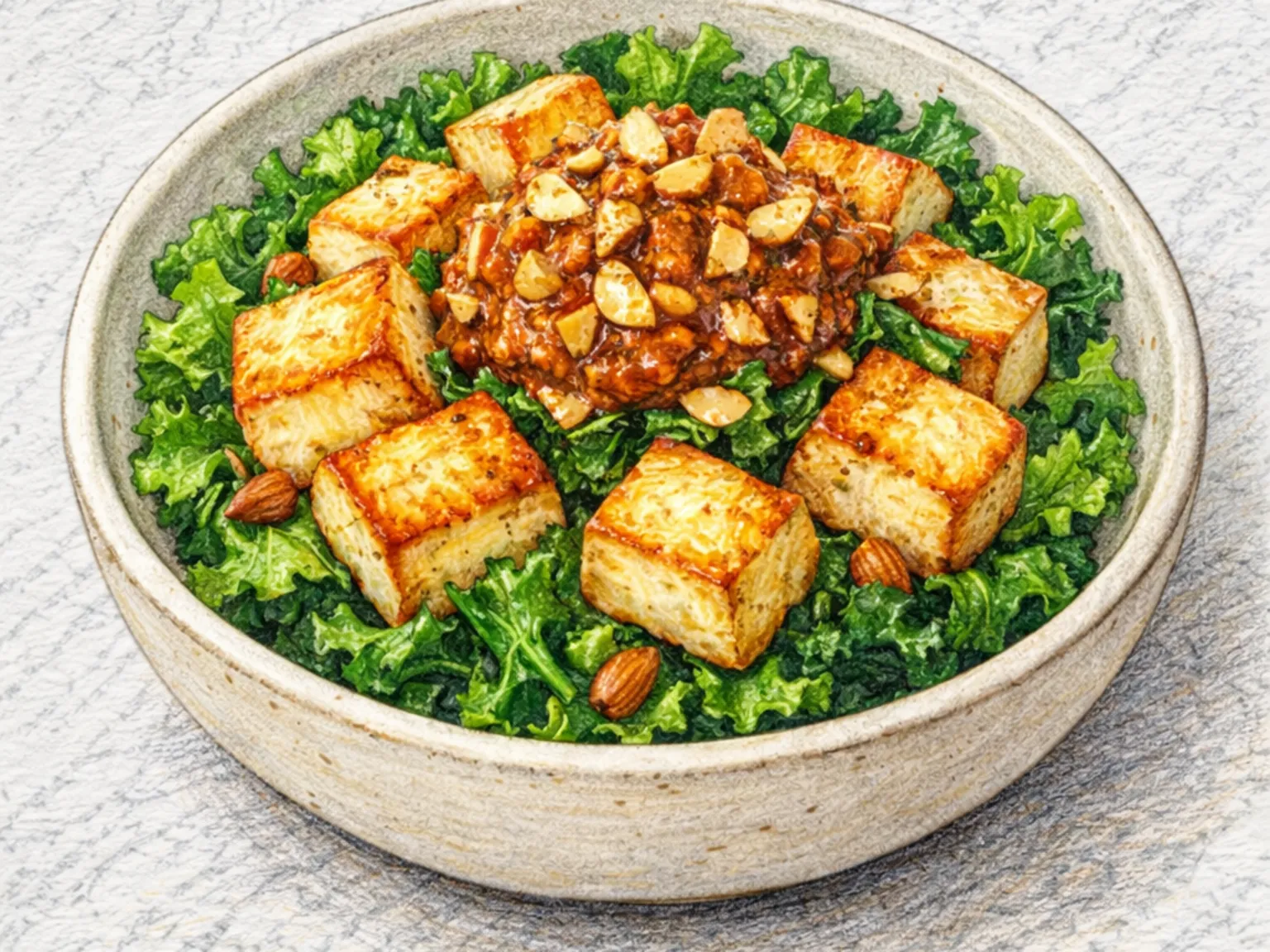
Ssamjang tofu kale crunch salad sears firm tofu in olive oil for six to seven minutes until golden and crisp on the outside while staying tender within, then combines it with kale massaged with salt, shredded red cabbage, cucumber, and sliced almonds, all dressed in a ssamjang-based vinaigrette. The dressing blends ssamjang's fermented depth, a mixture of doenjang and gochujang, with lemon juice, honey, and olive oil, layering umami with citrus acidity and a restrained sweetness that tempers kale's natural bitterness. Massaging the kale with salt before adding the dressing breaks down its tough cell walls, making the leaves pliable and far more absorbent.
Crown Daisy & Mung Bean Noodle Salad
Ssukgat mungbean noodle salad soaks glass noodles in cold water for ten minutes, boils them for five until springy, then tosses them with fragrant crown daisy leaves, julienned cucumber, and thinly sliced red onion in a dressing of soy sauce, vinegar, plum syrup, and sesame oil. Mung bean starch noodles are more translucent and less starchy than wheat-based vermicelli, making them a cleaner canvas for the surrounding vegetables. Crown daisy's assertive, almost medicinal herbal aroma cuts through the neutral noodles and gives the salad a distinctive edge that milder greens cannot replicate.
Crown Daisy & Tofu Yuzu Salad
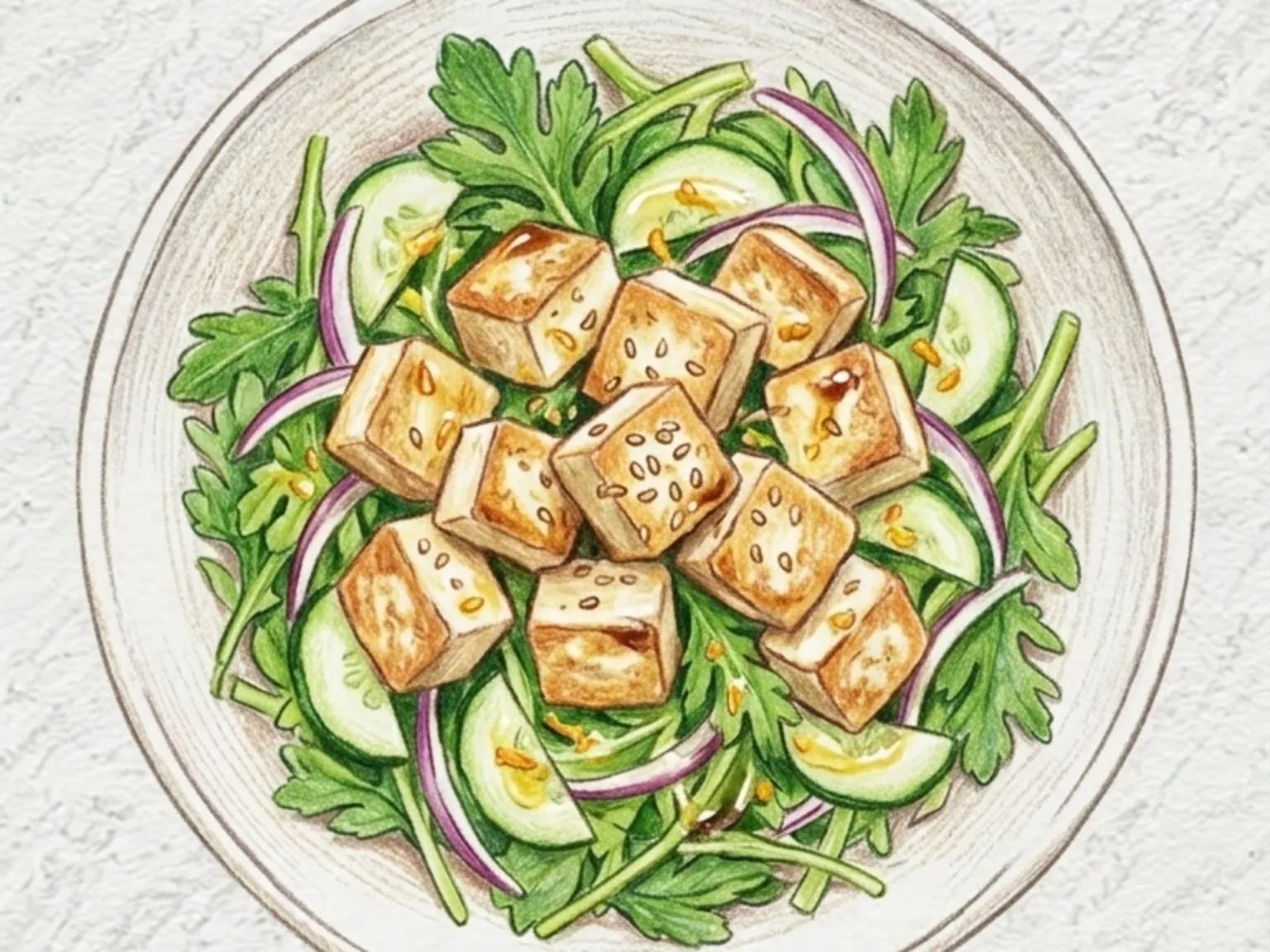
Crown daisy and tofu yuzu salad presses firm tofu dry, sears it in a pan for six to eight minutes until the surface develops a golden crust, and pairs it with crown daisy, half-moon cucumber slices, and thinly sliced red onion in a yuzu marmalade dressing. The yuzu's bright citrus fragrance and subtle bitterness meet crown daisy's bold herbal aroma, and the two botanical notes amplify each other rather than compete. Soy sauce and sesame oil anchor the dressing with fermented depth and nuttiness, preventing the floral top notes from floating untethered.
Sunomono Cucumber Salad (Japanese Sweet Vinegar Cucumber Slices)
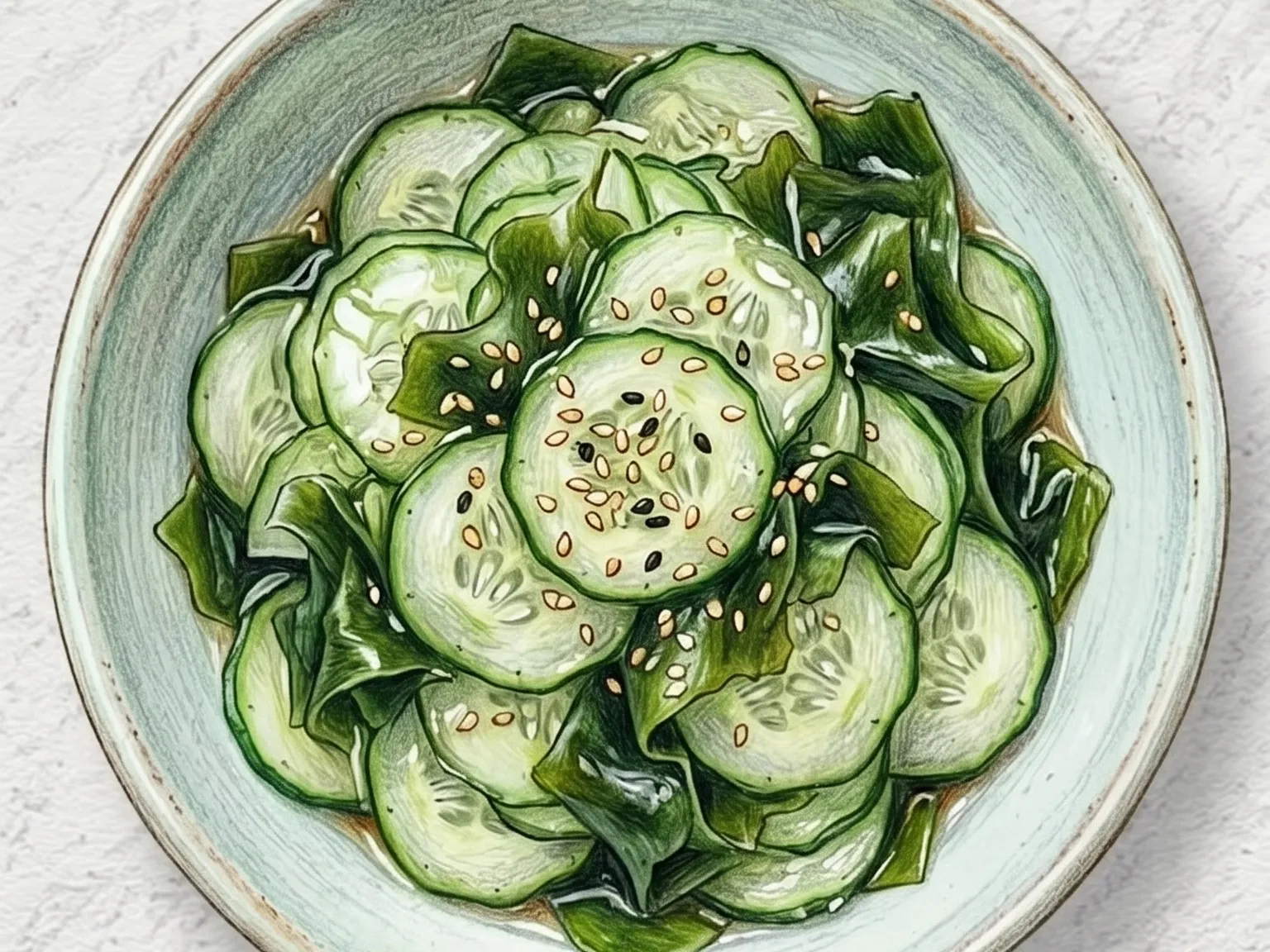
Sunomono cucumber salad slices cucumber paper-thin, salts the slices for five minutes to draw out excess moisture, then squeezes them firmly dry before tossing with rehydrated wakame in a dressing of rice vinegar, sugar, and a touch of soy sauce. Squeezing the cucumber after salting is what keeps the vinegar dressing sharp and concentrated through the whole dish rather than gradually diluting into a watery pool. The crisp, snappy texture of the cucumber and the slippery, silky texture of the wakame sit beside each other in every bite, and toasted sesame seeds scattered over the top add a nutty fragrance that rounds out the clean, acidic finish.
Tofu Satay Salad Bowl
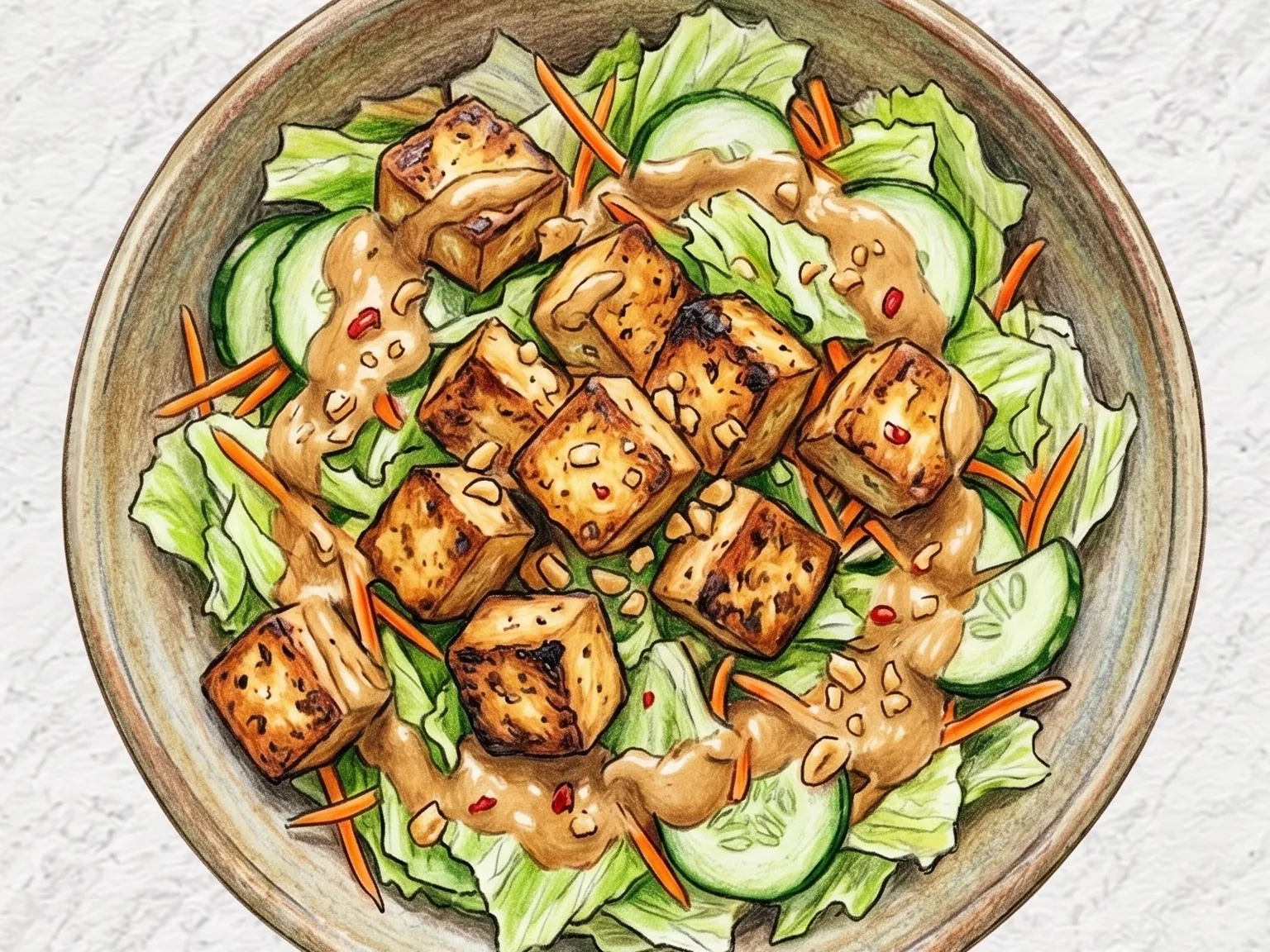
Tofu satay salad bowl combines pan-seared tofu with crisp lettuce, julienned carrot, and cucumber, all coated in a Thai-style peanut satay dressing. The dressing is built from peanut butter, soy sauce, lime juice, and chili sauce - the peanut fat provides body, while the lime and chili cut through it with bright acidity and heat. Pressing the tofu dry before searing ensures the surface browns rather than steams, producing a firm, golden exterior that holds up in the bowl.
Tuna Potato Salad (Japanese Creamy Tuna and Potato Mix)
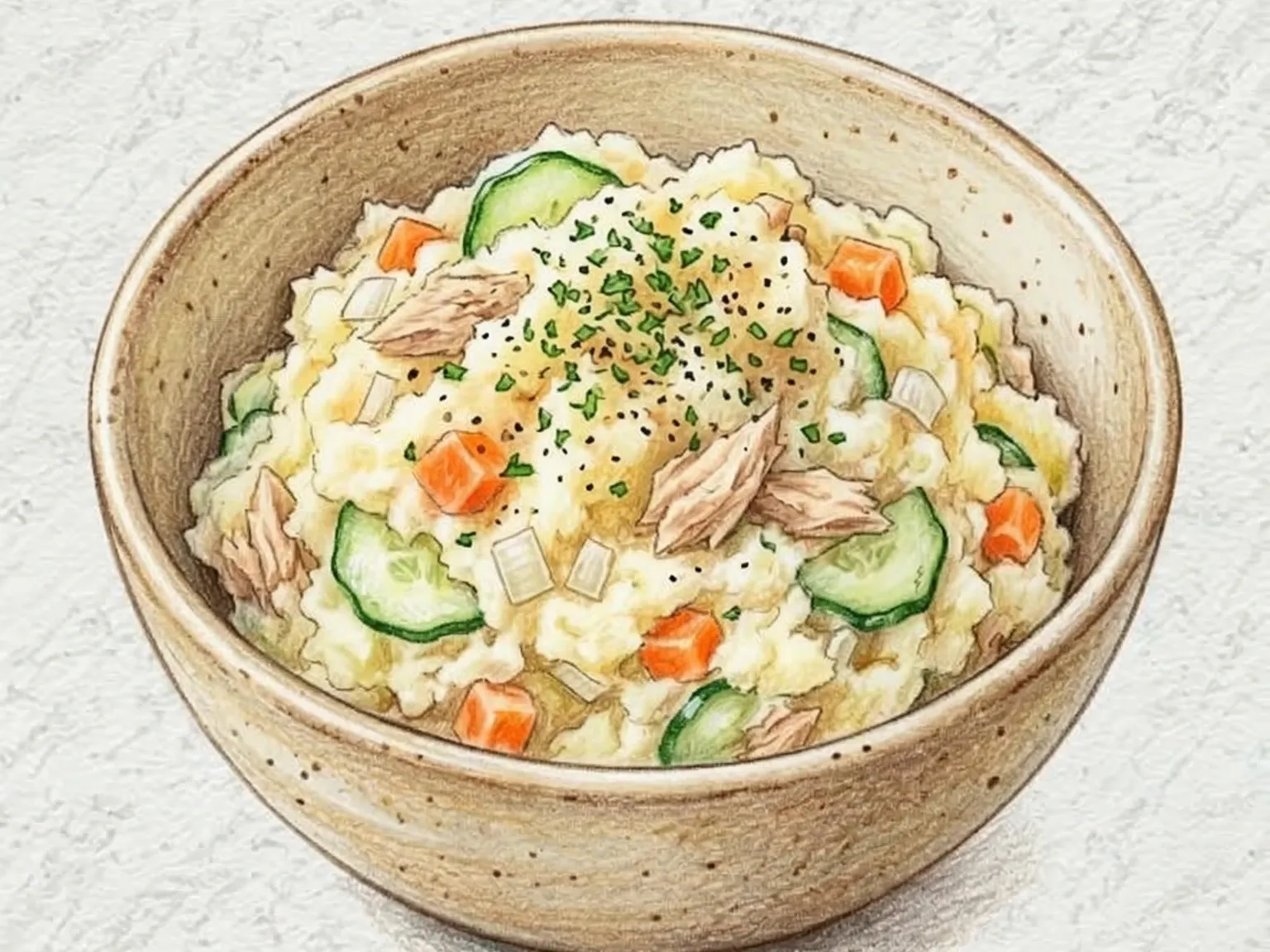
Tuna potato salad mashes boiled potatoes while still hot, then folds in drained canned tuna, salt-pressed cucumber, carrot, and onion with mayonnaise and whole grain mustard. Mashing the potatoes warm keeps the starch active, which bonds more effectively with the mayonnaise for a creamier result - but over-mashing turns the texture gluey, so leaving some chunks is ideal. Salting the chopped vegetables for five minutes and squeezing out the released moisture is essential to prevent a watery salad.
Watermelon Feta Salad
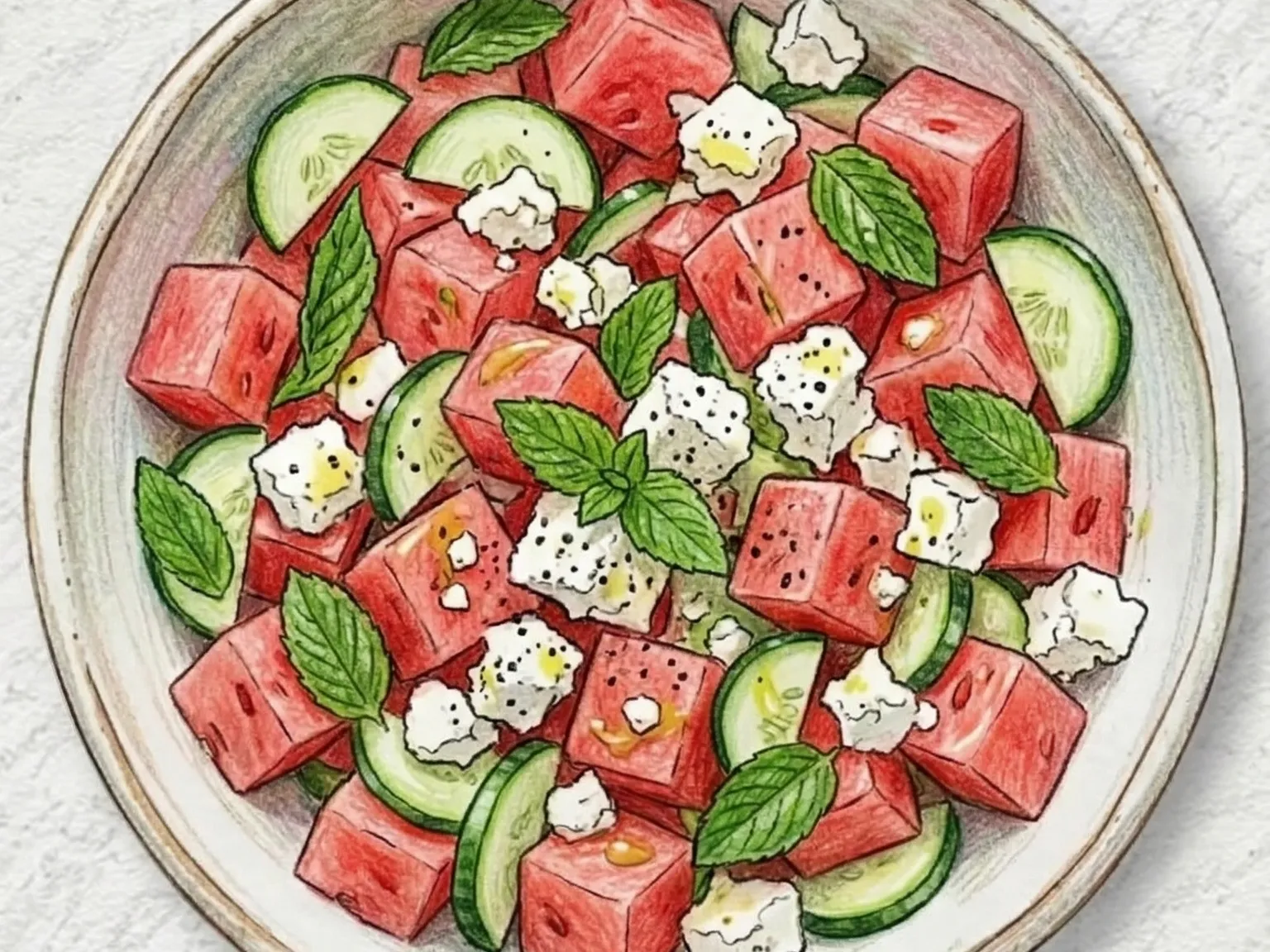
Watermelon feta salad combines chilled watermelon cubes with crumbled salty feta cheese, sliced cucumber, and fresh mint, dressed lightly with olive oil and lime juice. The watermelon's high water content and natural sugar create a sharp sweet-salty contrast against the feta, and the mint adds a cool, aromatic layer on top of that contrast. Thinly sliced cucumber in half-moon shapes introduces a different kind of crunch from the melon, and lime juice sharpens the fruit's sweetness to keep the finish clean rather than cloying.
Thai Beef Salad (Charred Sirloin Tossed in Lime-Fish Sauce)
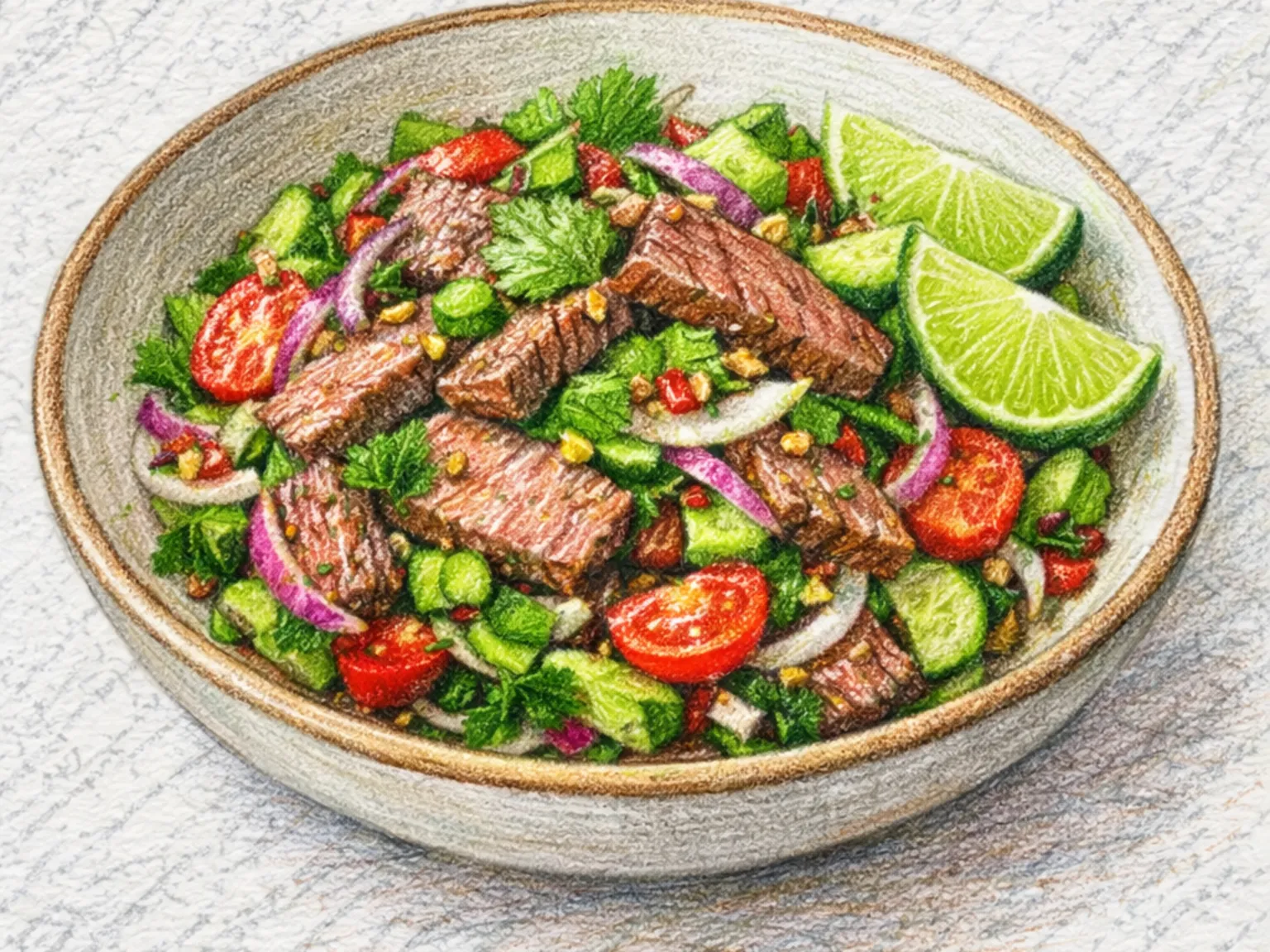
Yam neua is a Thai beef salad where sirloin is seared on high heat until the surface is deeply charred but the interior remains medium, then sliced thin and tossed with cucumber, tomato, red onion, and torn mint in a lime-fish sauce dressing. Cooking each side for only two to three minutes keeps the center pink and tender, and resting the meat for five minutes before slicing prevents the juices from running out onto the cutting board. The dressing layers fish sauce umami under sharp lime acidity and chili flake heat, cutting through the rich beef fat with precision.
Yu Sheng Prosperity Salad
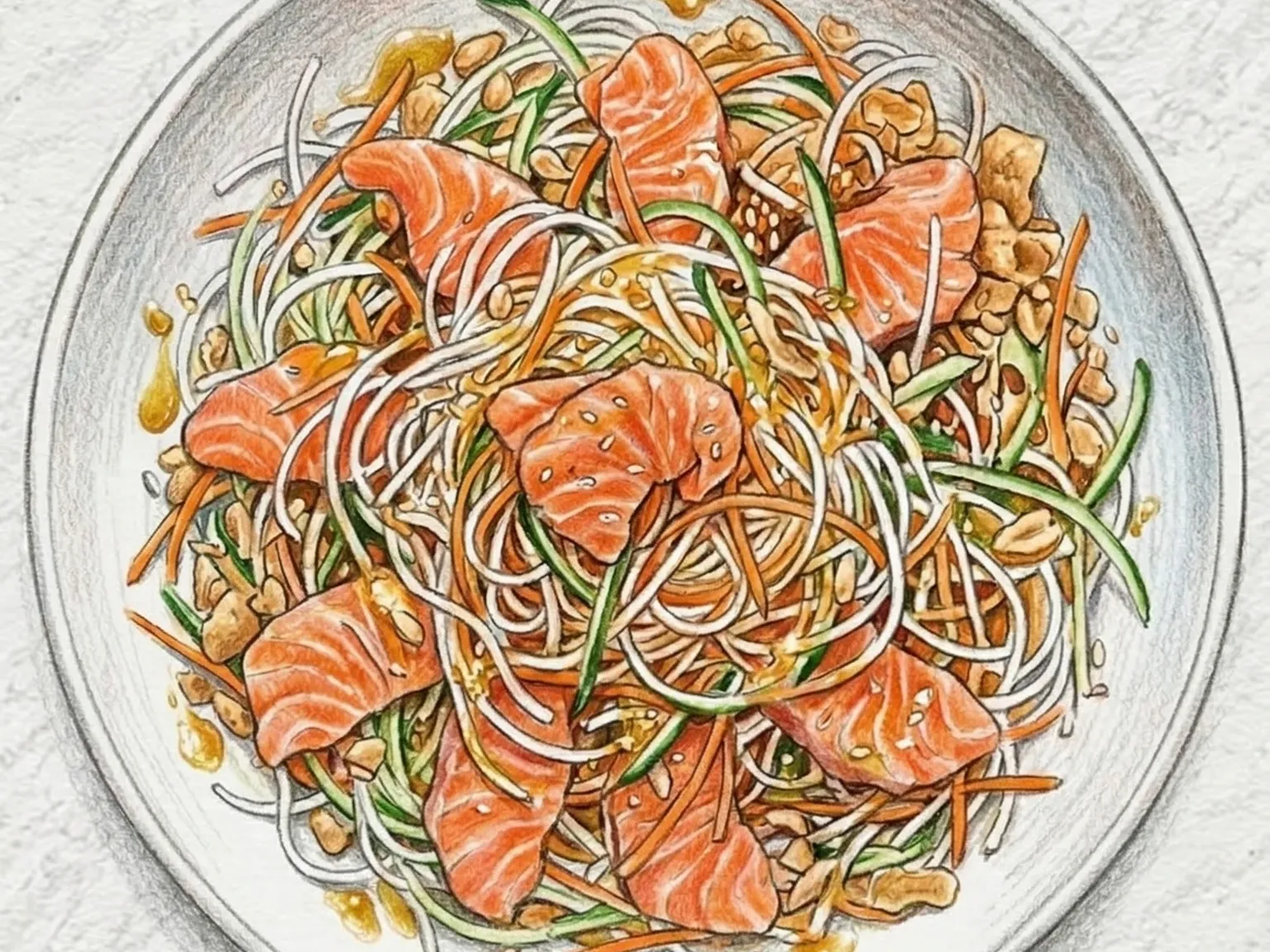
Yu sheng prosperity salad arranges thinly sliced sashimi-grade salmon and finely julienned daikon, carrot, and cucumber in a ring on a large platter, dressed with plum sauce, lemon juice, and sesame oil, then tossed vigorously just before eating. The salmon must be sashimi-grade for food safety, and patting it dry before slicing thin allows the sweet-tart plum sauce to cling more effectively to the fish surface. Cutting all vegetables as finely as possible maximizes the surface area in contact with the dressing, ensuring every chopstick-full carries the full spectrum of flavors.
Yuja Mustard Chicken Naengchae Salad
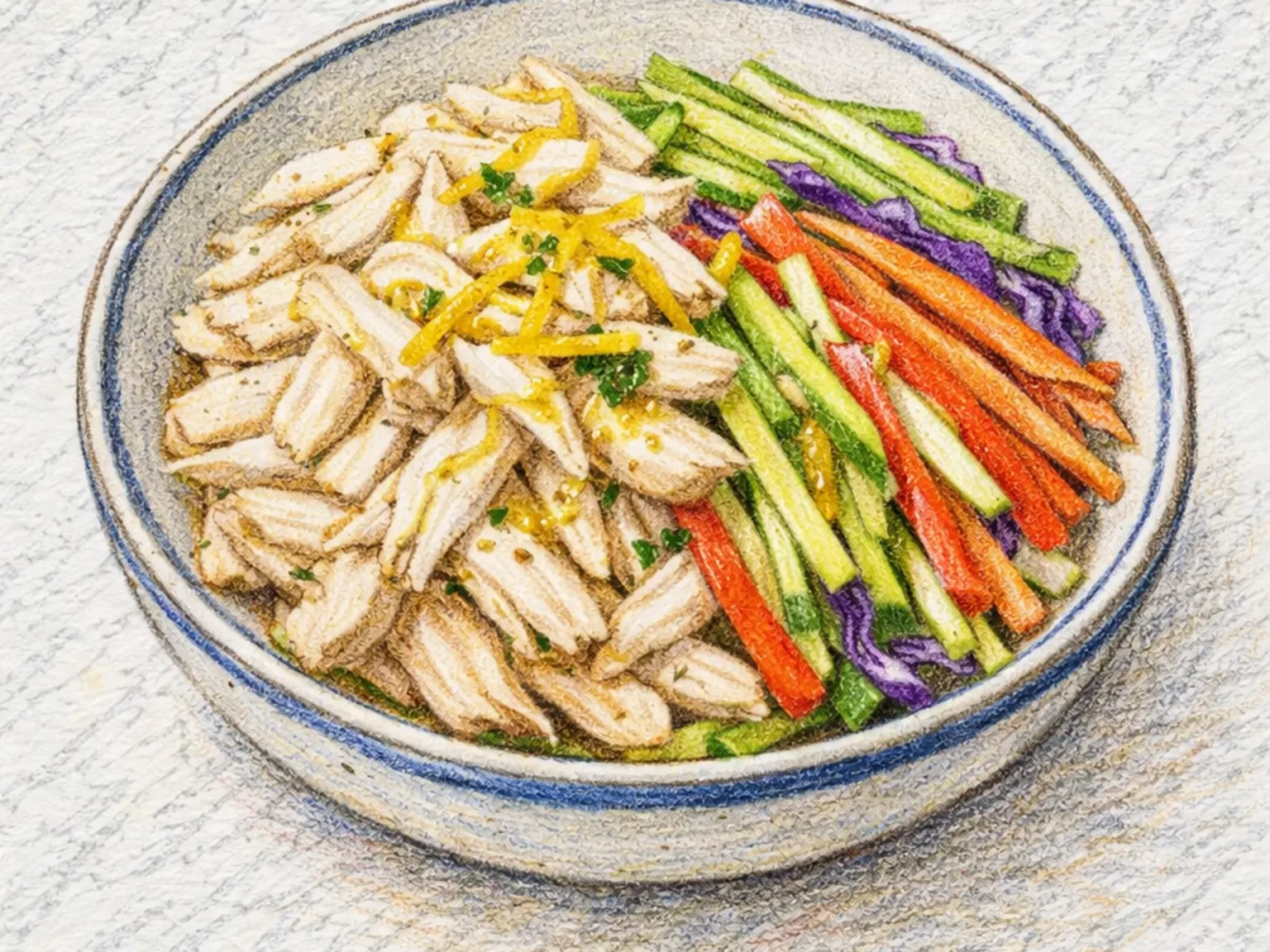
Yuja mustard chicken naengchae salad shreds boiled chicken breast along the grain and tosses it with julienned cucumber, Korean pear, bell pepper, and cabbage in a dressing of yuja marmalade, Korean mustard paste, vinegar, and sesame oil. Soaking the chicken breast in lightly salted water for ten minutes before boiling helps the muscle fibers retain moisture, keeping the shredded meat tender rather than dry. The yuja marmalade brings a bright citrus fragrance, and the Korean mustard delivers a sharp, nasal heat - vinegar binds these two strong personalities into a cohesive dressing.