Charim

2686 Korean & World Recipes

2686+ Korean recipes, clean and organized. Ingredients to instructions, all at a glance.

Recipes with cucumber

24 recipes

Buy cucumber
Korean Spicy Whelk Stir-fry
Stir-fryEasy

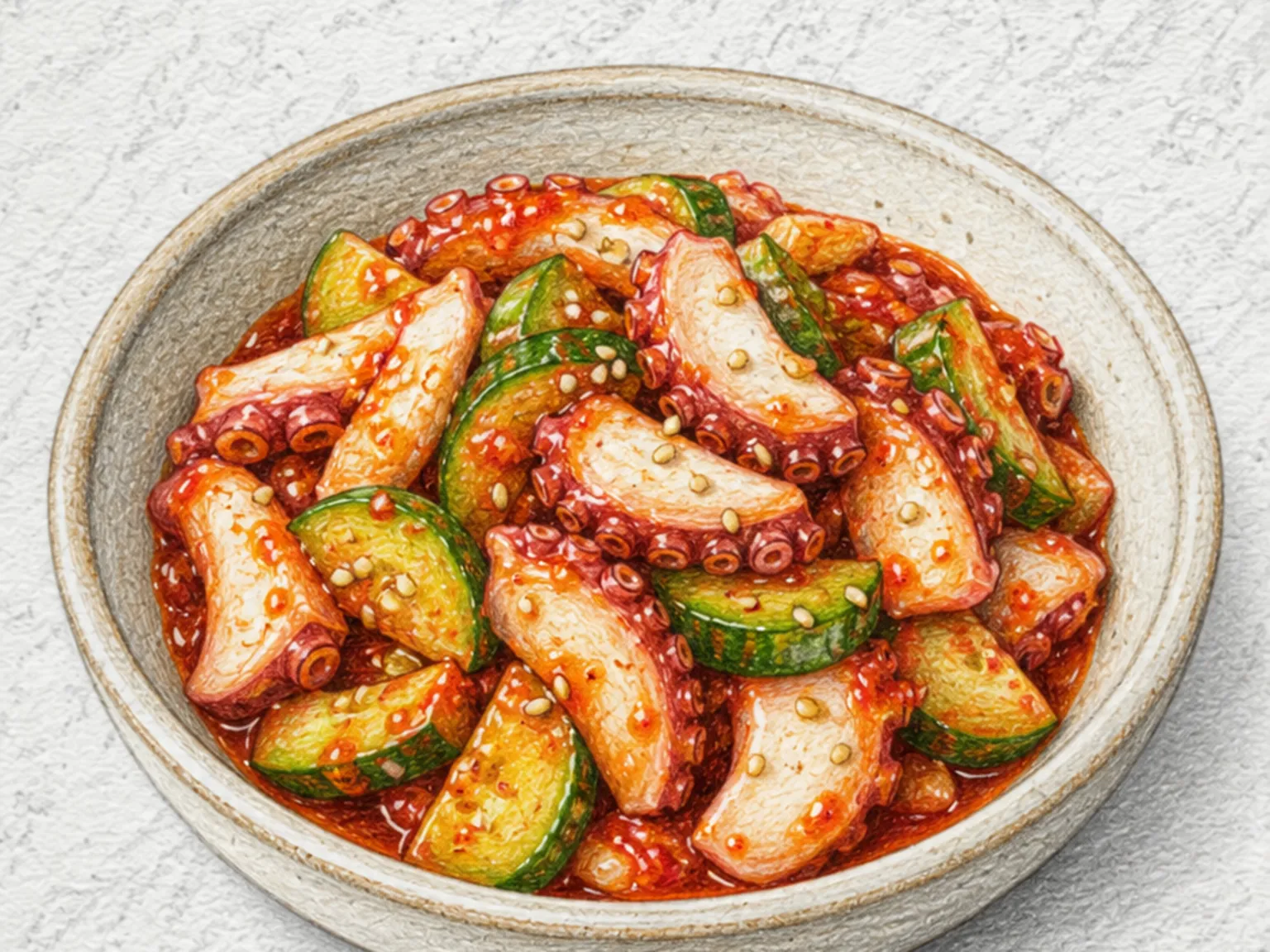
Korean Spicy Whelk Stir-fry

Golbaengi bokkeum is a spicy Korean whelk stir-fry that uses canned whelk with a sauce built from gochujang, gochugaru, vinegar, sugar, and sesame oil. The firm, chewy texture of the whelk is the defining quality of the dish, which means cooking time must stay within two to three minutes to prevent the meat from toughening further. Vinegar adds a tangy brightness that lifts and balances the heat from the chili components. A splash of the canning liquid stirred in during cooking enhances the whelk's natural brininess and keeps the sauce from drying out. Julienned cucumber, sliced onion, and scallion are added off the heat so they stay crisp and retain their raw freshness rather than wilting into the sauce. As a banchan, it pairs directly with rice, but served alongside thin wheat noodles or glass noodles it transforms into one of Korea's most beloved drinking snacks, a staple of old-school pojangmacha stalls where the combination of cold beer and spicy, chewy whelk has been a fixture for decades.

🍺 Bar Snacks🏠 Everyday
Prep 15minCook 8min2 servings
Korean Rice Ball (Sesame Rice Balls with Tuna Mayo Filling)
Street foodEasy

Korean Rice Ball (Sesame Rice Balls with Tuna Mayo Filling)

Jumeokbap are Korean rice balls made by seasoning warm cooked rice with sesame oil, salt, and sesame seeds, packing a tuna-mayonnaise filling with finely diced carrot and cucumber into the center, and shaping everything into compact rounds using plastic wrap. Sesame oil coats each grain and lends a nutty fragrance while helping the rice hold together without falling apart. Inside, the salty tuna and creamy mayonnaise blend together while the carrot and cucumber provide short, crunchy breaks in each bite. Shaping through plastic wrap keeps hands clean, produces a consistent size, and makes it practical to assemble in large batches. No reheating is required, and the rice balls hold well at room temperature, which makes them a natural fit for packed lunches, picnics, and outdoor gatherings.

🍱 Lunchbox🌙 Late Night
Prep 15min2 servings
Korean Deodeok Gochujang Bibimbap
RiceEasy

Korean Deodeok Gochujang Bibimbap

Deodeok gochujang bibimbap is a Korean mixed rice bowl that centers on wild mountain root dressed in a spicy-sweet gochujang sauce. The deodeok is peeled, lightly pounded, and torn into strips along the grain, then briefly stir-fried to mellow its bitter, herbal edge while preserving the fibrous crunch that defines its texture. Julienned cucumber, carrot, and torn lettuce are arranged over rice alongside the glazed root, providing crisp, fresh counterpoints to the savory filling. Plum syrup and vinegar built into the sauce add a tangy brightness that prevents the gochujang from sitting heavily, and the sharp vegetables cut through any richness with each bite. A generous pour of sesame oil before mixing coats every grain of rice and every strand of vegetable evenly. The dish showcases deodeok's distinctive herbal character against the backdrop of Korea's most iconic condiment, and it reaches its peak in spring when the roots carry the most fragrance and remain at their most tender.

🏠 Everyday
Prep 20minCook 15min2 servings
Soba Sesame Salad (Chilled Buckwheat Noodle Sesame Dressing)
SaladsEasy

Soba Sesame Salad (Chilled Buckwheat Noodle Sesame Dressing)

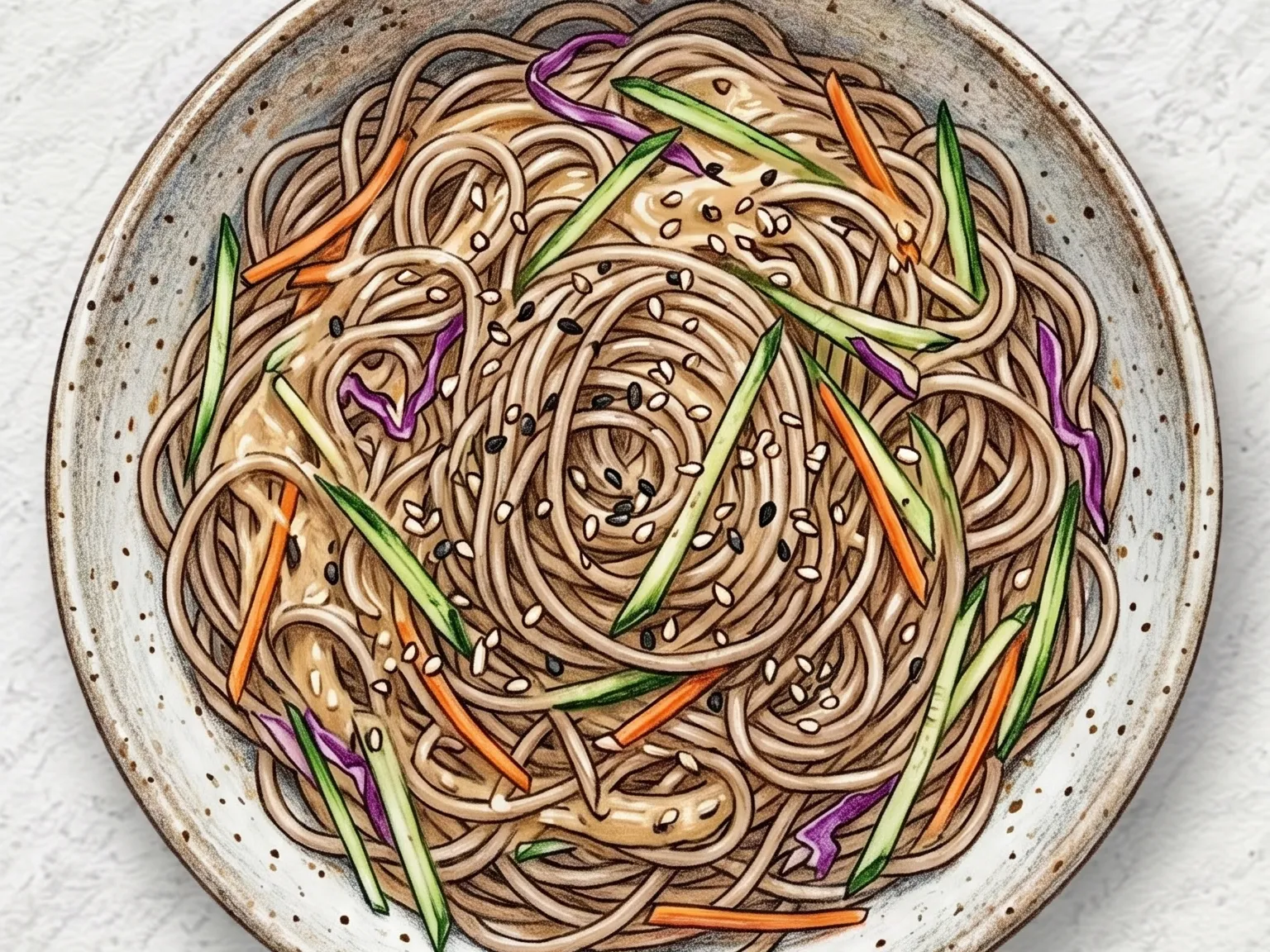
Soba sesame salad is a cold noodle dish in which cooked buckwheat noodles are rinsed repeatedly in cold water to remove surface starch, then tossed with julienned cucumber, carrot, and red cabbage in a dressing of soy sauce, rice vinegar, sesame oil, and sesame seeds. The earthy, nutty character of buckwheat pairs naturally with toasted sesame, and rice vinegar's light acidity keeps the dish from feeling heavy despite the sesame oil. Thorough rinsing in cold water is the technical cornerstone of this recipe: residual starch left on the noodles dilutes the dressing on contact and causes the strands to clump into an uneven mass, disrupting the balance of flavors in every bite. Cucumber and red cabbage introduce a fresh crunch that contrasts the springy noodle texture, and julienned carrot threads a mild sweetness through the bowl that offsets the saltiness and acidity of the dressing. Cutting the vegetables into thin, uniform strips allows them to distribute evenly among the noodles so that each forkful carries a balanced mix. The dressing should be mixed in advance but added to the noodles only just before serving, since soaking too long causes the noodles to absorb the liquid and soften. A light and satisfying single-bowl meal, particularly well suited to warmer months.

🥗 Light & Healthy Quick
Prep 12minCook 8min2 servings
Salmon Poke Bowl
SaladsMedium

Salmon Poke Bowl

Salmon poke bowl dices sashimi-grade salmon into 1.5-centimeter cubes and marinates them briefly in soy sauce and sesame oil for five minutes, then arranges the fish in sections over steamed rice alongside avocado, cucumber, edamame, and sliced green onion. The short soy marinade draws moisture from the salmon's surface just enough to tamp down any fishiness while amplifying umami, and sesame oil adds a glossy sheen with a toasted fragrance. Avocado's creamy fat cushions the firm, springy bite of the raw fish, while edamame contributes a nutty bean flavor and cucumber brings a cool crunch. Using only sashimi-grade salmon is essential for safe raw consumption.

🥗 Light & Healthy
Prep 20minCook 15min2 servings
Korean Dongchimi Cold Naengmyeon
NoodlesMedium

Korean Dongchimi Cold Naengmyeon

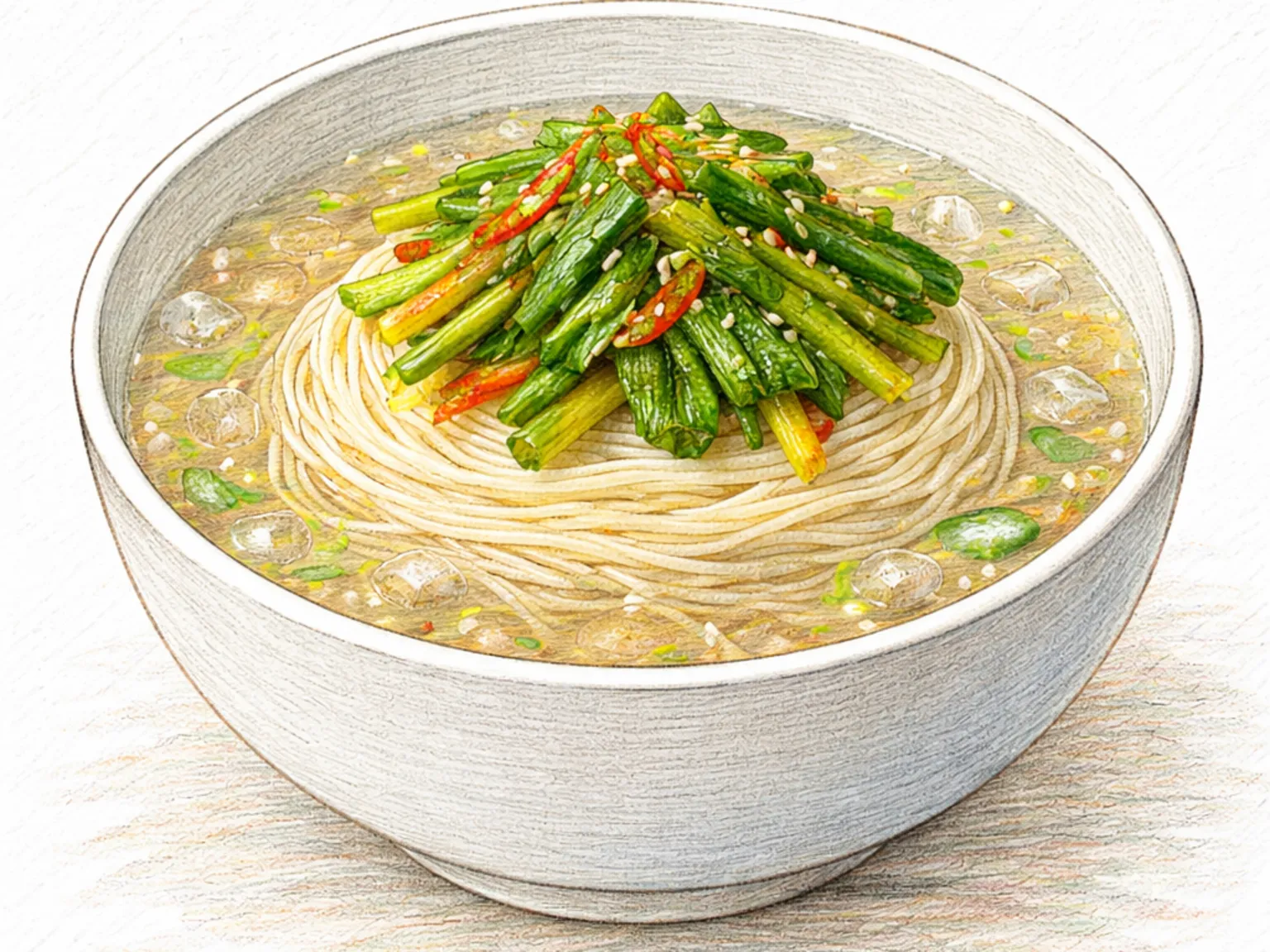
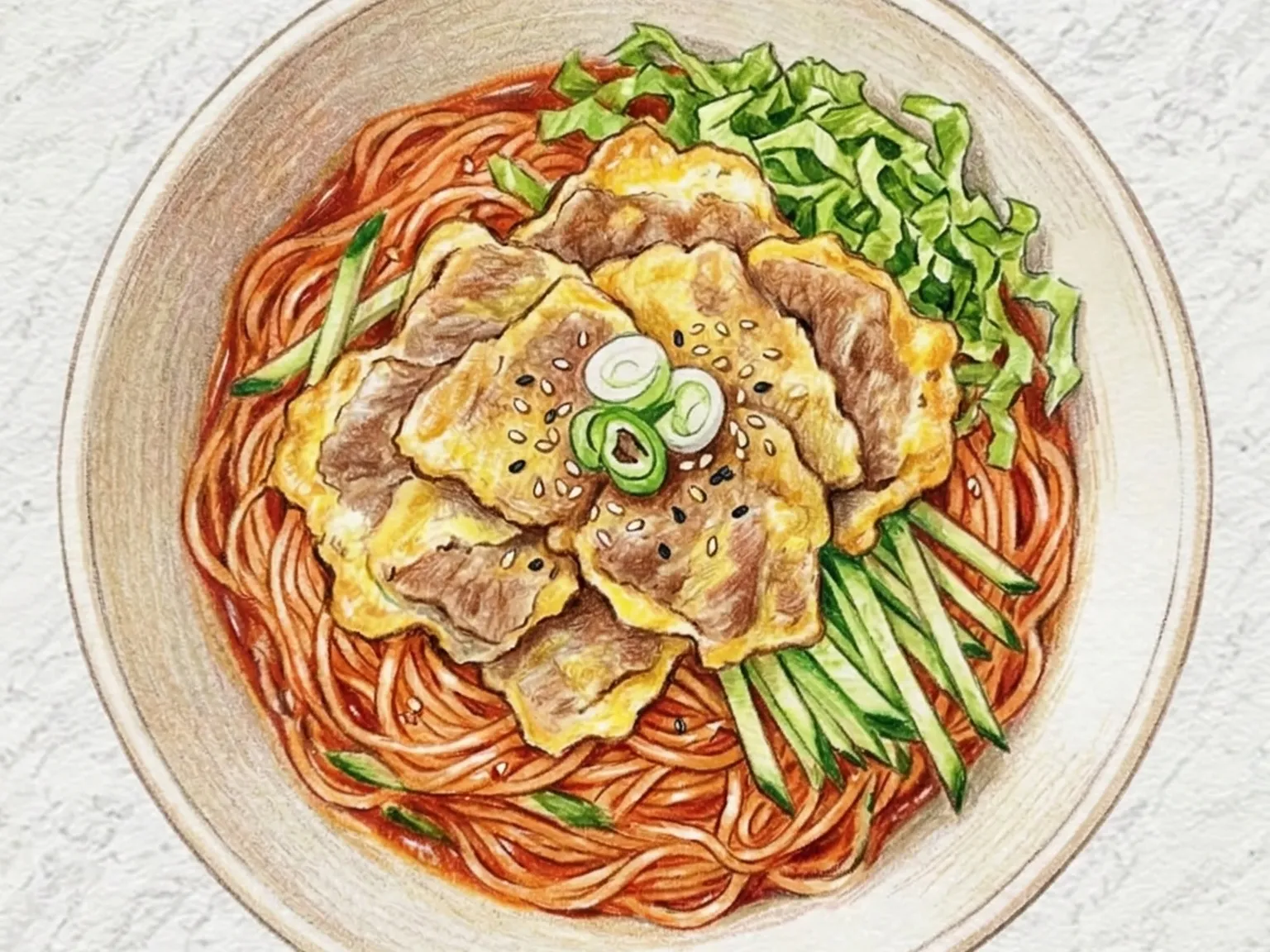
Dongchimi naengmyeon is a cold noodle dish built around the fermented brine of dongchimi, a water-based winter kimchi made with whole radish. The brine is blended with chilled beef or chicken stock, creating a broth that looks deceptively simple but carries a layered complexity from months of fermentation. The lactic acidity of the dongchimi water is not sharp or aggressive - it is long and clean, acquired through slow fermentation rather than vinegar shortcut. At very cold temperatures, just at the point of forming a thin skin of ice on the surface, the radish-derived fragrance in the broth becomes most vivid and refreshing. Thin slices of boiled beef add a lean, meaty backbone that anchors the acidity without competing with it. Julienned Korean pear brings gentle sweetness and crunch, and half a boiled egg rounds out the bowl with richness. Cutting the noodles several times with scissors before placing them in the bowl keeps them from clumping in the cold and allows the broth to reach every strand from the first bite.

🏠 Everyday
Prep 20minCook 10min2 servings
Multigrain Salad
SaladsMedium

Multigrain Salad

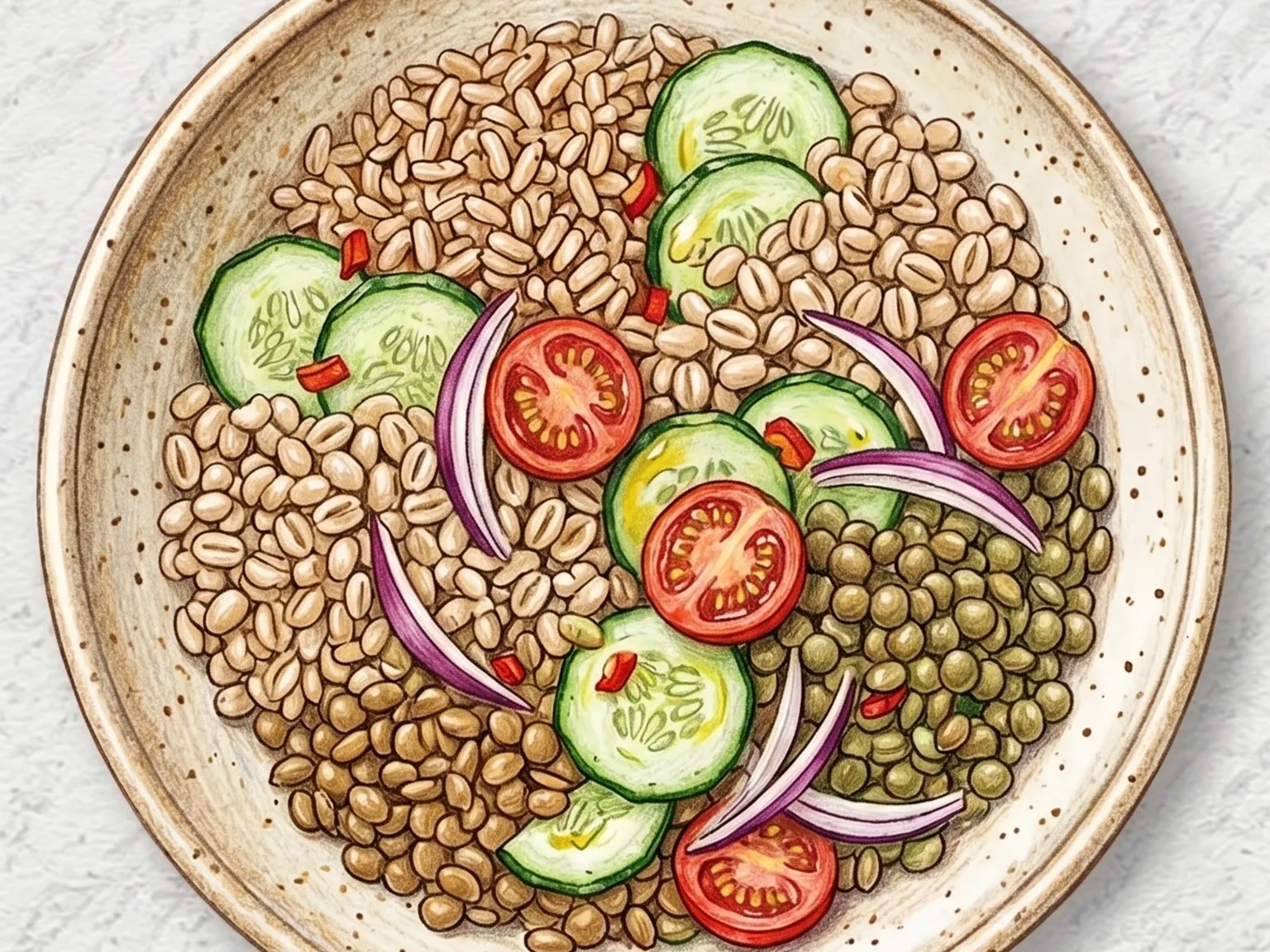
Brown rice, barley, and lentils are each boiled separately and cooled before being combined, so that every grain contributes its own distinct size and texture to the finished bowl. The brown rice stays chewy, the barley holds a thick bite, and the lentils offer a soft give that rounds out the contrast. Julienned cucumber and red onion introduce crunch and a mild sharpness that keep the heavier grains from feeling dense. Halved cherry tomatoes release juice as a natural supplement to the dressing, and a mixture of perilla oil and apple cider vinegar ties the bowl together with nuttiness and clean acidity. Adding sliced red chili or diced bell pepper extends the color and sweetness without changing the character of the dish. It holds well at room temperature, which makes it practical for meal prep and packed lunches. The combination of dietary fiber and plant protein means a moderate portion keeps hunger at bay for several hours.

🥗 Light & Healthy
Prep 18minCook 20min4 servings
Korean Pine Nut Cold Noodles
NoodlesMedium

Korean Pine Nut Cold Noodles

Jat naengmyeon serves cold noodles in a milky-white broth made by blending pine nuts finely with cold water. The fat naturally present in the pine nuts emulsifies with the water to create a creamy, dairy-free liquid that carries a rich, deep nuttiness and a gentle, clean sweetness. Shredded cucumber adds a crisp, refreshing bite that lightens the dense broth, and a slice of Korean pear introduces a fruity sweetness that broadens the flavor without competing with the pine nut base. The seasoning is nothing more than salt, which preserves the delicate character of the pine nuts without masking them. Soaking the pine nuts in cold water for thirty minutes before blending produces a smoother consistency and a brighter, more opaque white color in the finished broth.

🎉 Special Occasion
Prep 20minCook 5min2 servings
Korean Flying Fish Roe Gimbap
Street foodEasy

Korean Flying Fish Roe Gimbap

Nalchial gimbap is made by spreading sesame-oil-and-salt-seasoned rice across a sheet of nori, piping a thin line of mayonnaise down the center, then laying refrigerated flying fish roe and julienned cucumber in parallel before rolling everything tightly. The roe must come straight from the refrigerator at the moment of assembly - as the tiny eggs warm up, their skins soften and lose the signature pop that defines this roll. Biting through releases a simultaneous burst of briny, savory roe juice and creamy mayonnaise, while crisp cucumber strips cut through the richness with their cool crunch. Once sliced, a small spoonful of extra roe placed on each cut piece makes the rolls visually striking and amplifies the popping sensation per bite. Salmon roe or spicy pollack roe can substitute for flying fish roe using the exact same method.

🌙 Late Night Quick
Prep 15minCook 5min2 servings
Korean Black Soybean Noodle Cup
Street foodMedium

Korean Black Soybean Noodle Cup

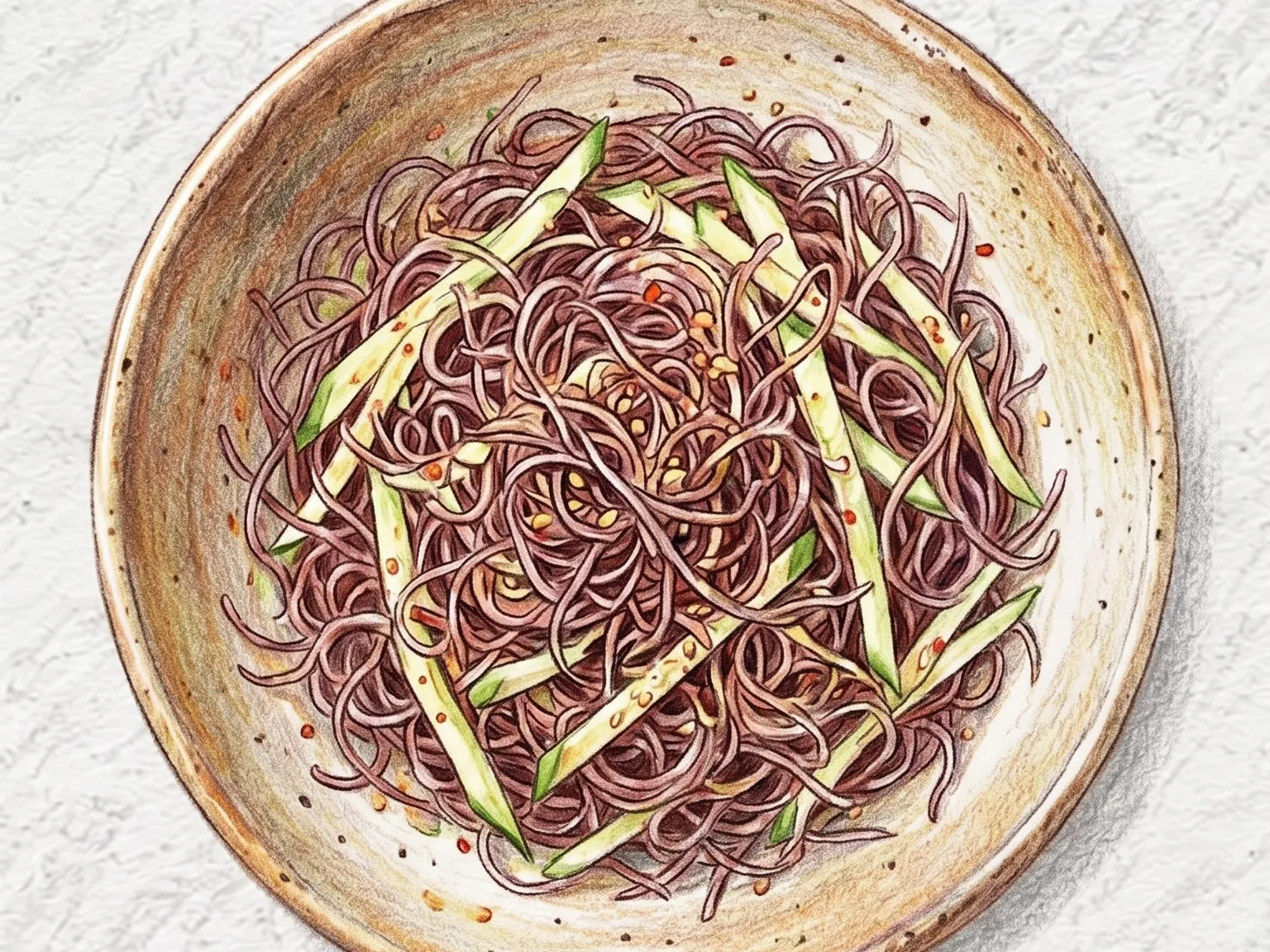
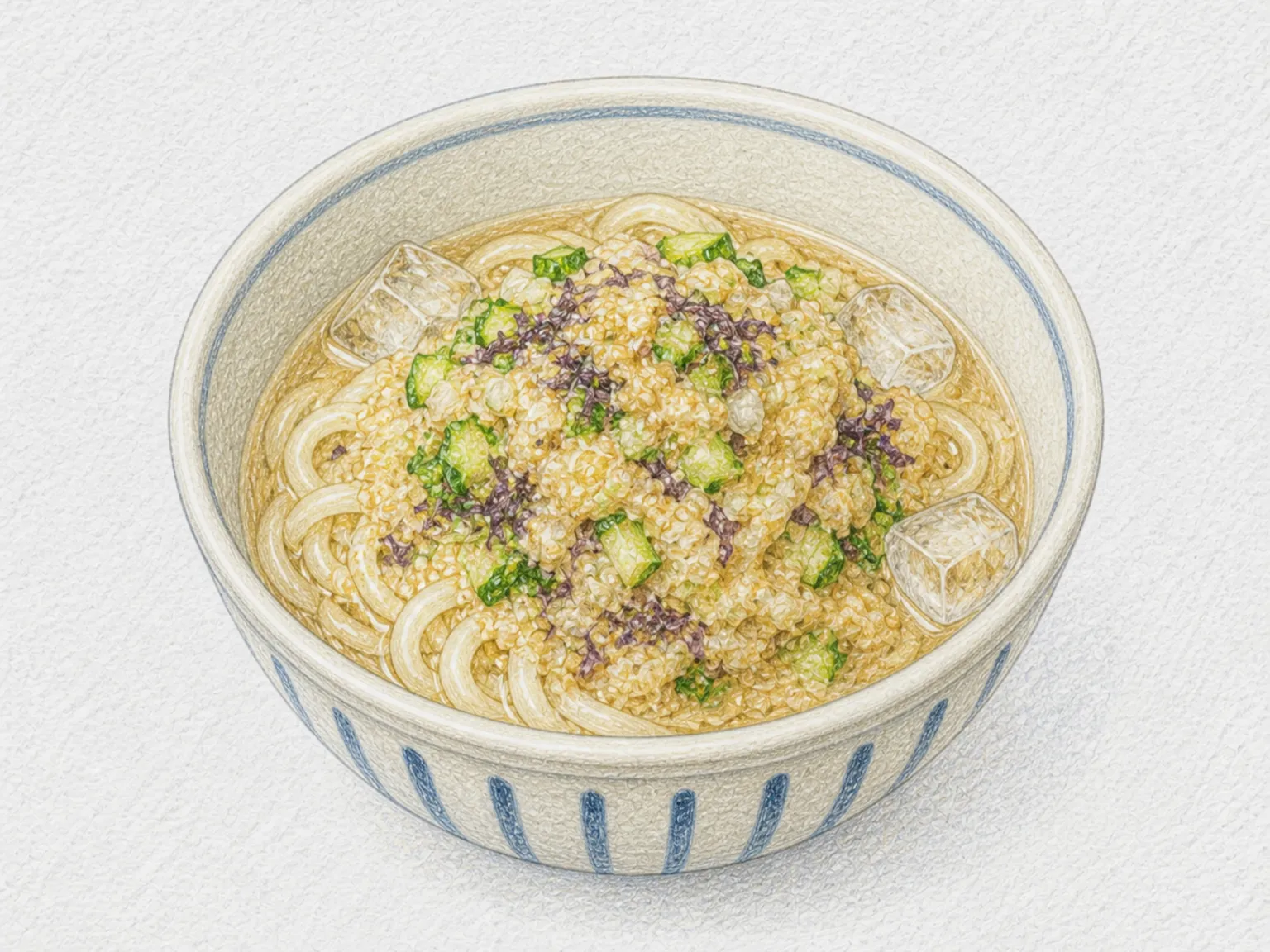
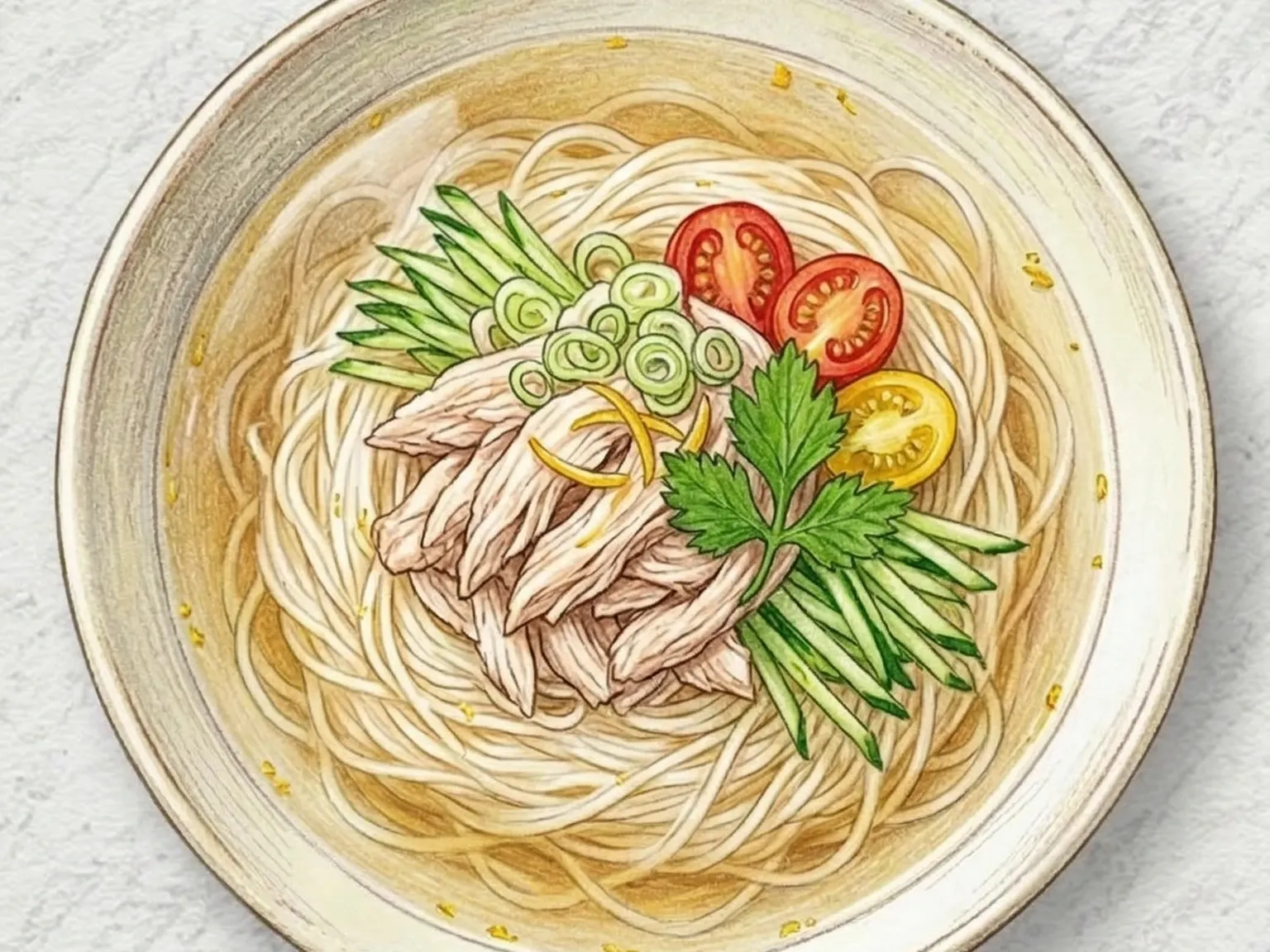
Seori-kongguksu-cup serves chilled black soybean broth over thin somyeon noodles in a cup-sized portion, a cool summer street food built for hot weather. The broth is made by blending boiled black soybeans with milk and cold water, then pressing through a fine strainer for a silky, lump-free consistency. Black soybeans give the broth a grayish hue distinct from the ivory-colored broth made with ordinary yellow soybeans, and the flavor is noticeably richer and more intensely nutty, with a clean finish rather than a heavy aftertaste. Cooking the soybeans fully and letting them cool before blending is important because heat drives off the aromatic compounds that give the broth its characteristic fragrance. Sliced cucumber, cherry tomatoes, and ice cubes go on top, the vegetables adding crunch and color contrast while the ice keeps the broth cold so the soybean flavor stays sharp and defined. Somyeon noodles are boiled and rinsed several times in cold water to strip off surface starch, which would otherwise cloud the broth and make the noodles clump. The result is a simple, satisfying bowl where every element has a clear role.

🥗 Light & Healthy🧒 Kid-Friendly
Prep 25minCook 10min2 servings
Cold Ramen Salad
NoodlesMedium

Cold Ramen Salad

Hiyashi chuka is a Japanese chilled noodle dish where ramen noodles cooked and thoroughly cooled in ice water are topped with colorful shredded garnishes and drizzled with a tangy soy-vinegar dressing. The dressing of soy sauce, rice vinegar, sugar, and sesame oil combines salt, sharpness, and sweetness; because it is poured over rather than used as a broth, the individual character of each topping stays distinct. The noodles must be chilled in ice water after boiling to achieve the firm, springy texture that holds up against the dressing without going limp, and tossing them lightly with sesame oil prevents clumping before plating. Thin strips of egg crepe, ham, cucumber, and tomato arranged by color create a visually striking presentation, and each chopstickful delivers several contrasting textures at once. In Japan this dish is a summer fixture, and at home it is a practical way to use leftover ingredients. A variation whisks mayonnaise into the dressing, which softens the acidity and adds a creamy body to the sauce.

🎉 Special Occasion🌙 Late Night
Prep 20minCook 10min2 servings
Millet Herb Salad
SaladsEasy

Millet Herb Salad

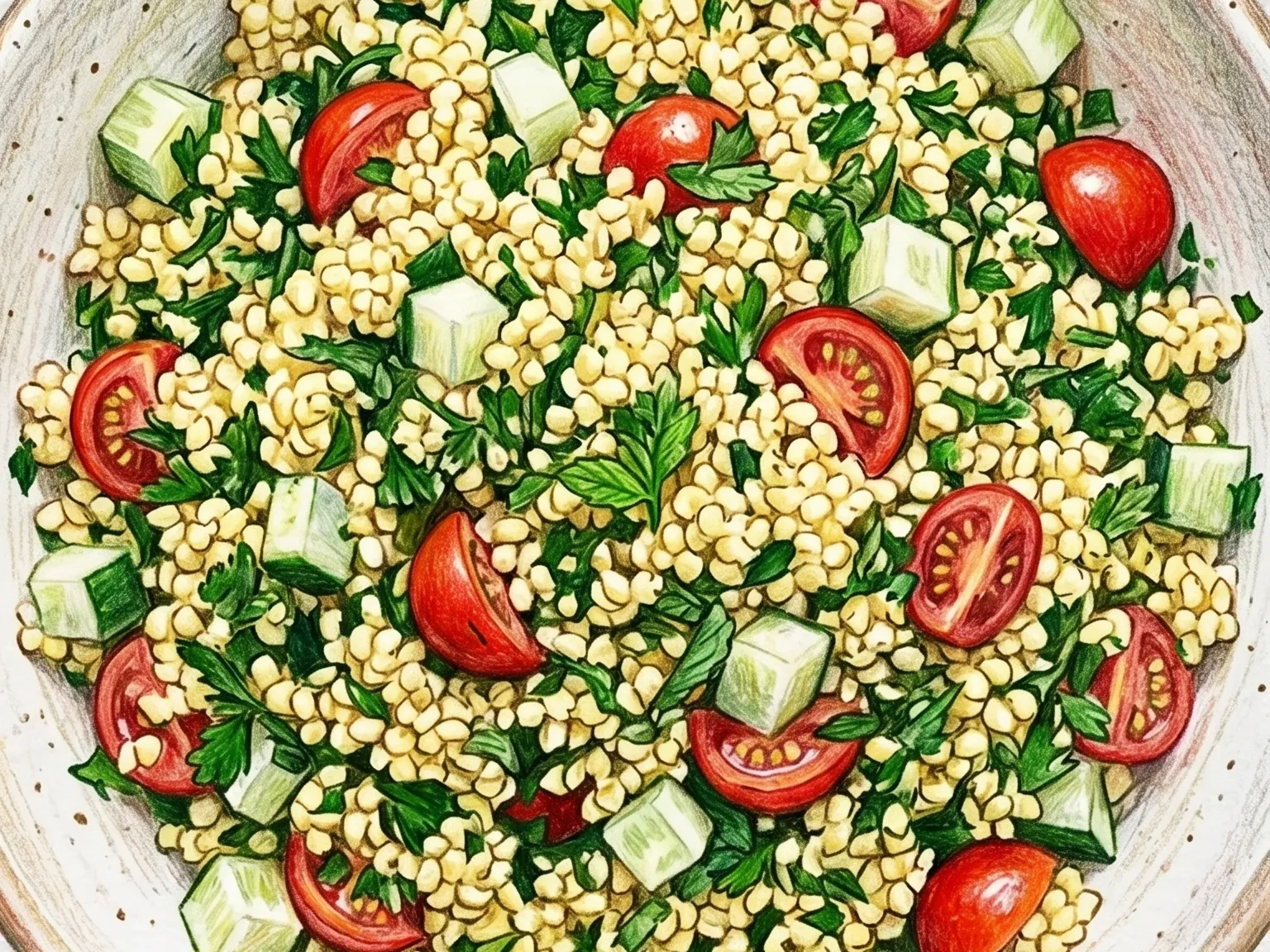
Millet herb salad is a grain salad built around cooked millet tossed generously with finely chopped flat-leaf parsley and fresh mint, dressed simply with lemon juice and olive oil. The millet is simmered until each grain is tender and separate, then spread to cool completely before anything else is added. Mixing warm millet with the herbs wilts them immediately and turns the texture of the finished salad dense and gluey rather than light and distinct. Once cooled, the grains fluff easily with a fork and provide a neutral, faintly earthy base that carries the herb flavor without competing with it. Diced cucumber and halved cherry tomatoes add moisture, color, and a contrasting freshness against the denser grain. The dressing is intentionally minimal, just enough lemon juice to keep the herbs bright and enough olive oil to coat without saturating. Parsley stems should be removed before chopping since the fibrous texture distributes unevenly, and mint should be measured with restraint as it can dominate quickly. Adding the dressing immediately before serving prevents the millet from absorbing too much liquid and clumping. The salad travels and holds well at room temperature, making it a practical choice for packed lunches and outdoor meals. Prepared the day before and refrigerated, the grain absorbs the dressing overnight and the flavors integrate more evenly.

🥗 Light & Healthy
Prep 20minCook 18min2 servings
Korean Kimchi Chilled Noodle Soup
NoodlesEasy

Korean Kimchi Chilled Noodle Soup

Kimchi mari guksu is a cold Korean noodle soup made for hot weather, built on a broth of aged kimchi juice blended with cold water, sugar, and a small amount of vinegar. The broth needs time in the refrigerator to reach a thorough chill before serving - adding ice cubes at the table would dilute the distinctive tangy flavor of the kimchi liquid. Thin somyeon wheat noodles are boiled, then rubbed and rinsed under cold running water to strip off surface starch and stop the cooking. They go into the bowl first, followed by chopped kimchi and julienned cucumber, and the cold broth is poured over everything at the last moment. Because fermentation levels vary between batches of kimchi, the vinegar should be adjusted by small increments until the sour-sweet balance feels right. More aged kimchi produces a richer, more complex broth.

🏠 Everyday🌙 Late Night
Prep 15minCook 8min2 servings
Korean Spicy Bellflower Root Chewy Noodles
NoodlesMedium

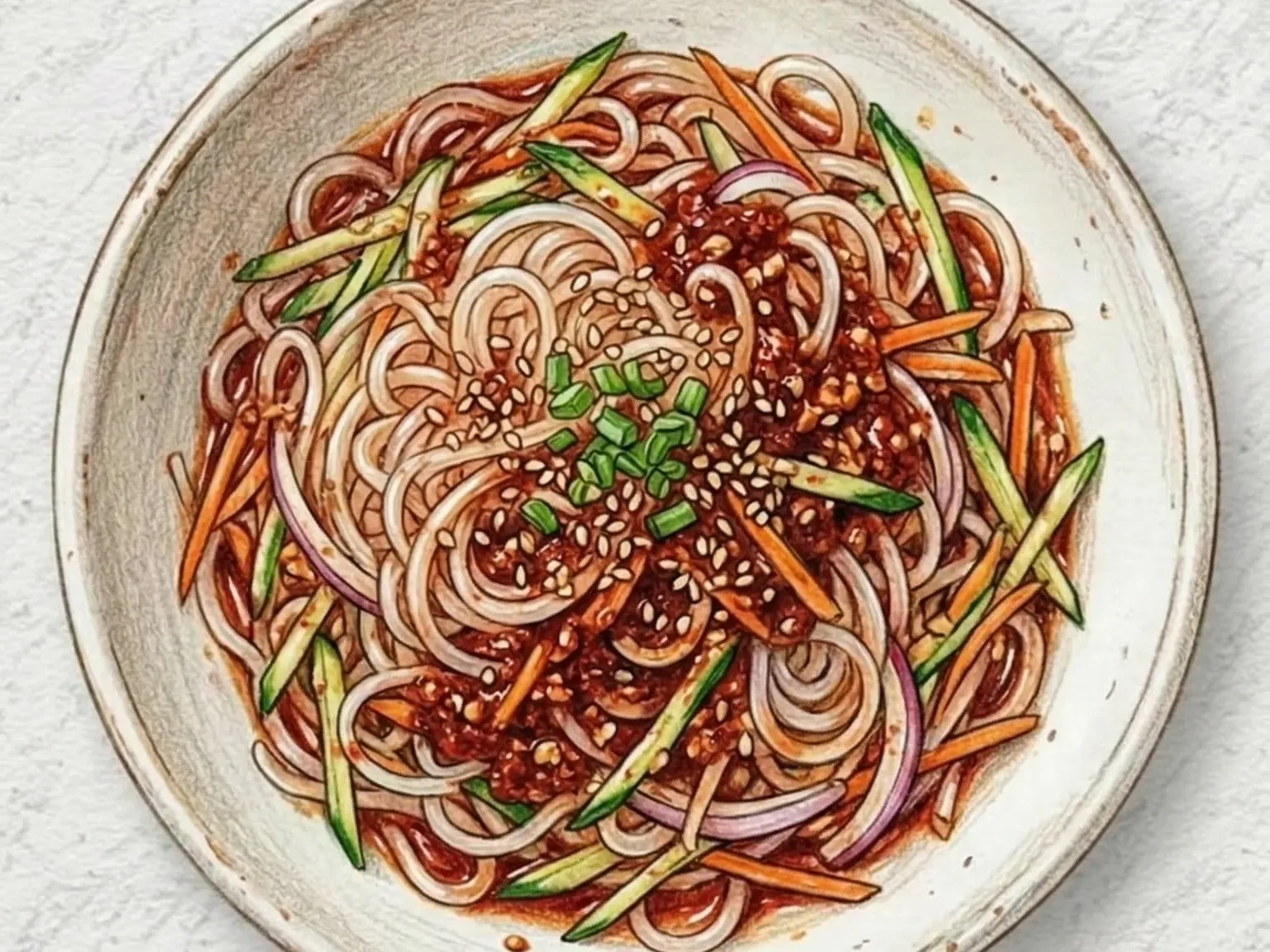
Korean Spicy Bellflower Root Chewy Noodles

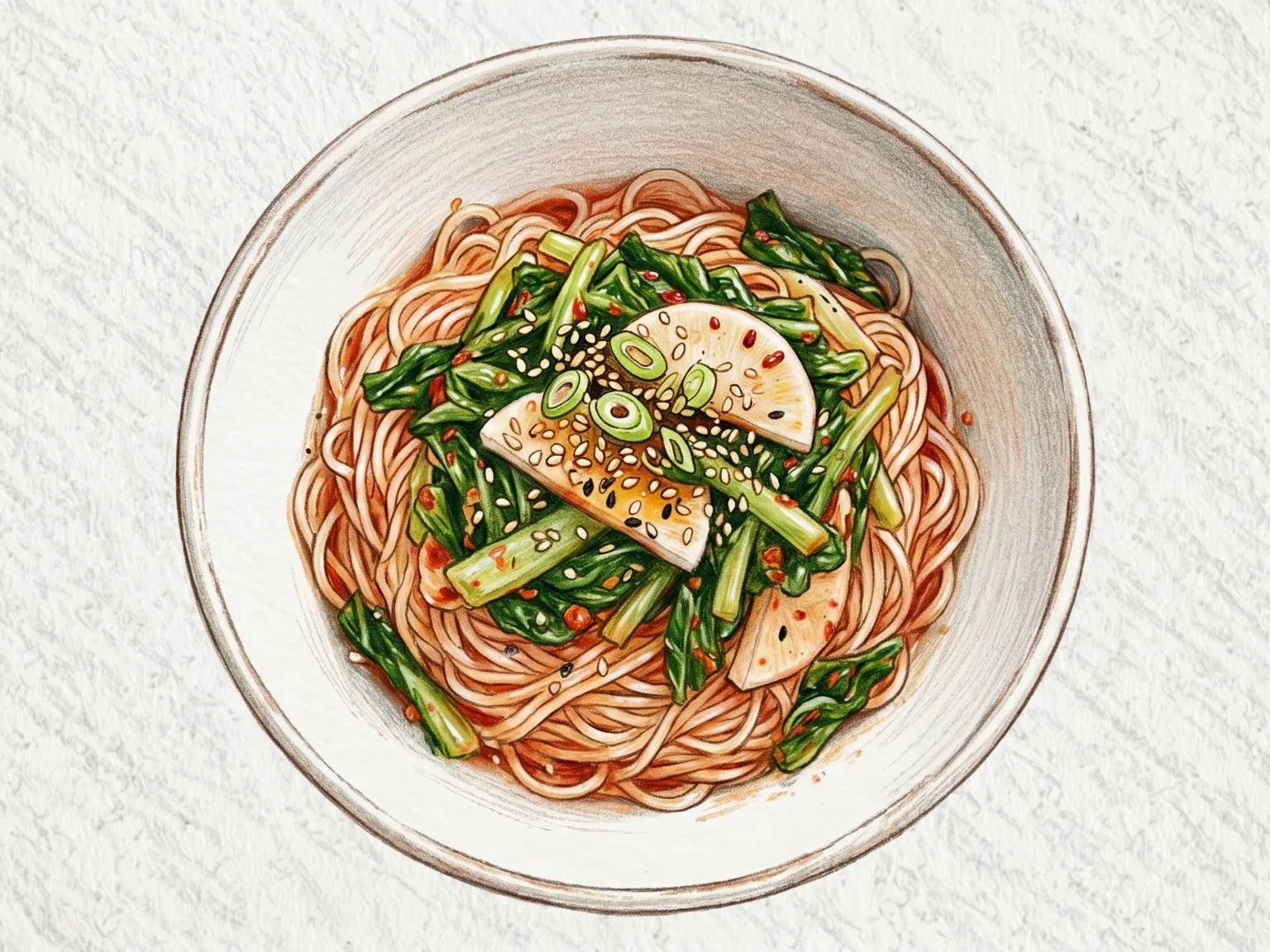
Deodeok gochujang jjolmyeon is a spicy noodle dish that pairs the aromatic bitterness of bellflower root with gochujang-dressed chewy jjolmyeon noodles. Lightly pounding the peeled deodeok against a cutting board loosens its fibrous texture, releasing its distinctive herbal scent and making each piece more receptive to seasoning. A brief salt cure draws out moisture and dials down the bitterness, allowing the sauce to penetrate more effectively into the root. The sauce blends gochujang with vinegar and oligosaccharide syrup, balancing heat with a clean tangy edge and gentle sweetness that complements the root's inherent character without masking it. Julienned cabbage, carrot, and cucumber supply a crisp, refreshing layer between the dense noodles and the fibrous deodeok. All ingredients should be combined just before eating to preserve the crunch of the vegetables.

🥗 Light & Healthy
Prep 18minCook 8min2 servings
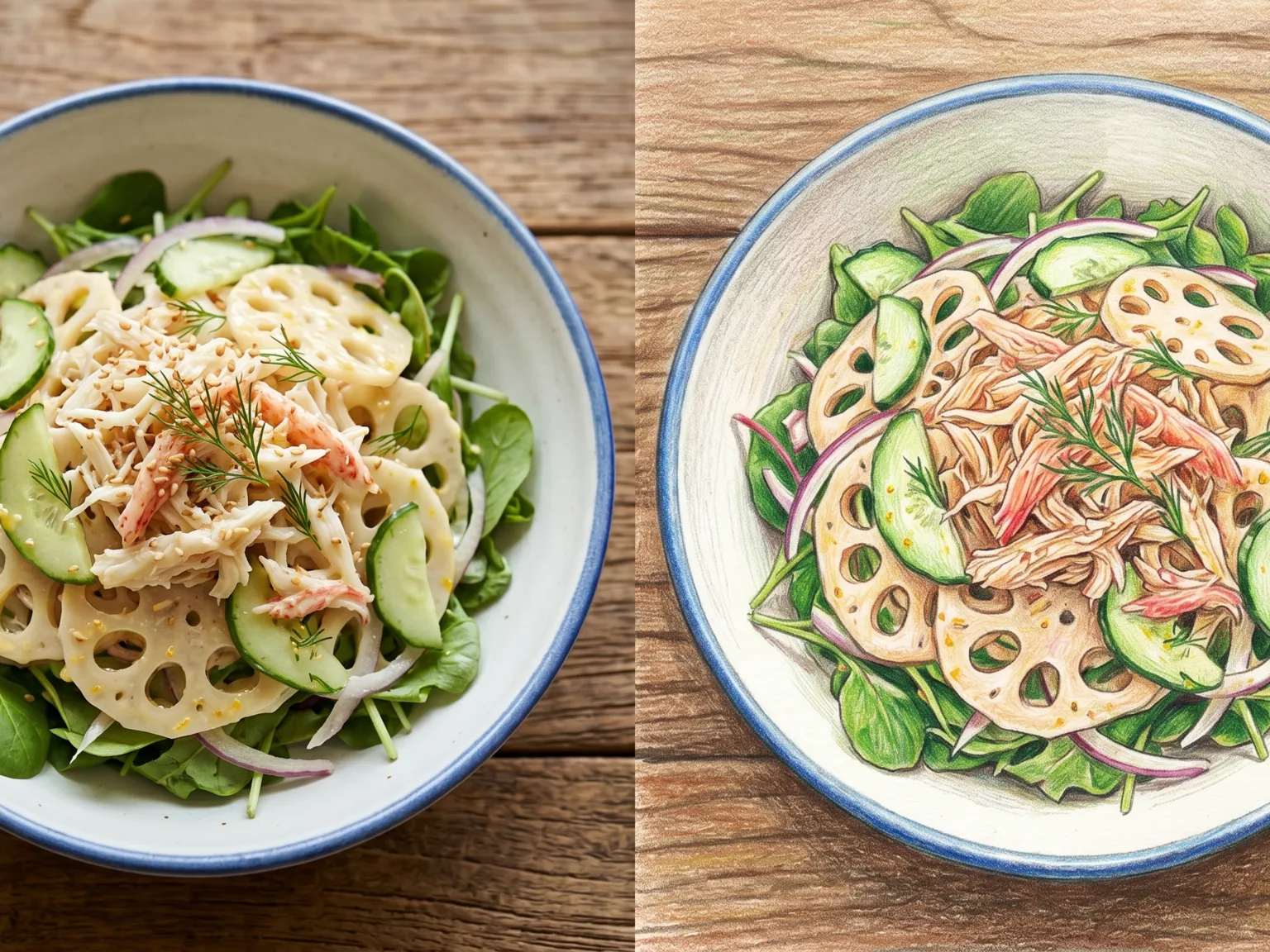
Japanese Kani Salad
SaladsEasy

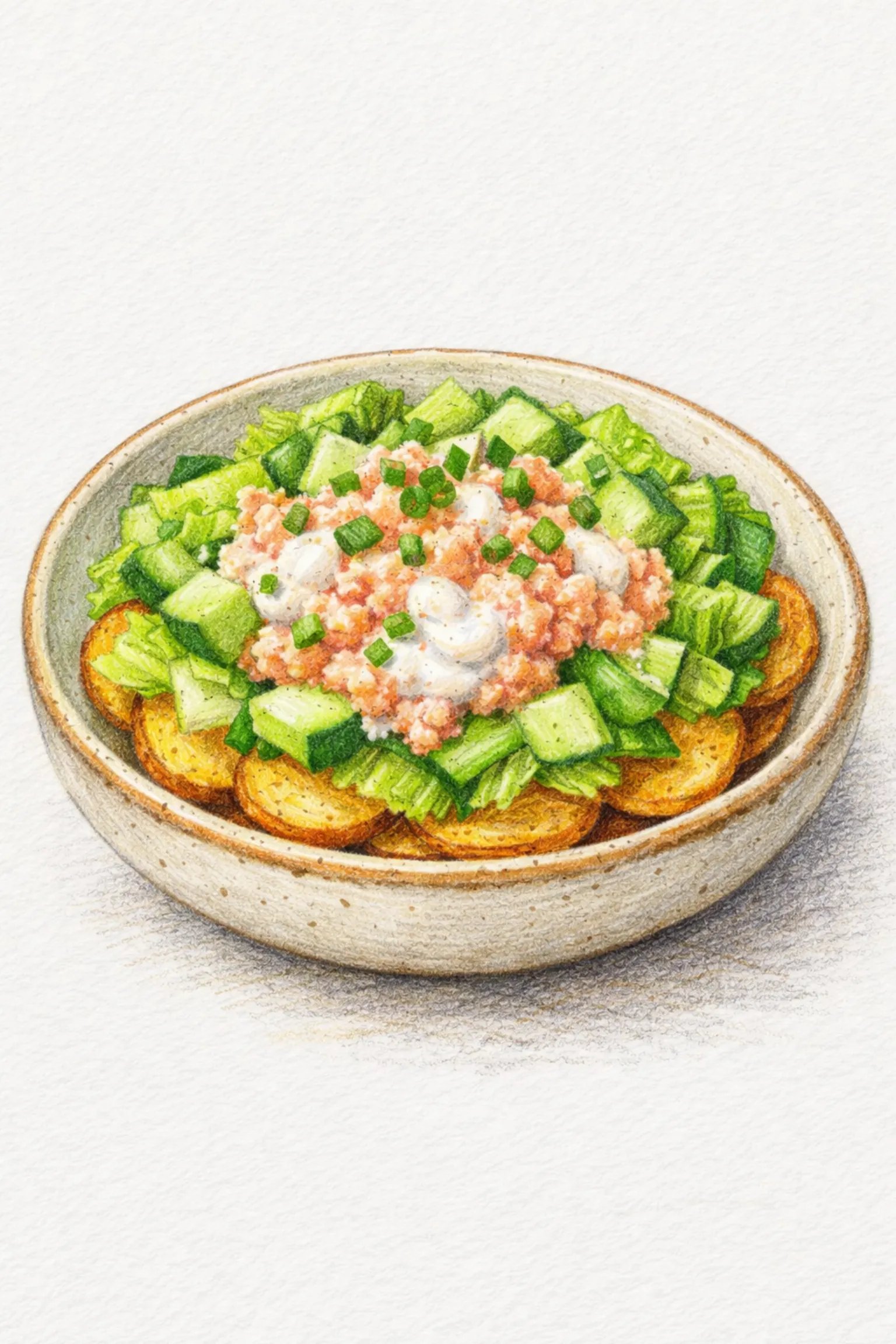
Japanese Kani Salad

Kani salad is a Japanese-inspired dish centered on imitation crab meat that is prepared using a specific shredding technique. Instead of chopping the crab, the sticks are pulled apart along their natural grain to create a soft and fibrous texture. This particular structure allows the crab to absorb the dressing thoroughly while preventing the pieces from becoming saturated with excess liquid. These shreds are combined with cucumbers and carrots that have been julienned into thin strips to add a crisp and refreshing crunch to the overall composition. The dressing for the salad is a mixture of mayonnaise, rice vinegar, and fresh lemon juice. This specific blend results in a creamy coating that provides a smooth mouthfeel without leaving a heavy or oily sensation after eating. Toasted sesame seeds are incorporated into the mixture to provide a warm and nutty element that complements the gentle sweetness of the imitation crab. The most significant requirement for a successful salad is ensuring that the vegetables are patted completely dry before they are tossed with the other ingredients. If there is any moisture left on the cucumber or carrots, it will dilute the mayonnaise base and cause the salad to become thin and watery within a short amount of time. Because the recipe requires no cooking or heat, the entire bowl can be assembled in approximately ten minutes, which provides an efficient solution for a quick and refreshing lunch or dinner side. This salad is versatile in its application, serving as a popular topping for sushi rolls or as a light starter when paired with slices of fresh avocado.

🥗 Light & Healthy Quick
Prep 15min2 servings
Mung Bean Jelly Apple Chojang Salad
SaladsEasy

Mung Bean Jelly Apple Chojang Salad

Cheongpomuk apple chojang salad combines blanched mung bean jelly sticks with crisp apple and cucumber, dressed in a chojang sauce of gochujang, vinegar, and green plum syrup. Blanching the jelly for only twenty seconds in boiling water removes the surface sliminess that fresh mung bean jelly develops while preserving the soft, slippery texture that defines it. Rinsing immediately in cold water and draining well prevents the chojang from becoming watery and losing its spicy-sour punch. The chojang layers spicy gochujang heat with the sweet-tart acidity of vinegar and plum syrup, lifting the otherwise neutral flavor of the jelly into something brighter. Shredded red cabbage adds a vivid color contrast and a slight bitterness that balances the sweetness. Roasted seaweed flakes contribute a briny crunch. Sesame oil and ground sesame seeds finish the bowl with a nutty note, keeping the dish light and oil-free. Any unused blanched cheongpomuk should be stored submerged in cold water to prevent the surface from drying out and becoming tough before serving.

🥗 Light & Healthy Quick
Prep 18minCook 2min4 servings
Korean Black Bean Noodles
NoodlesMedium

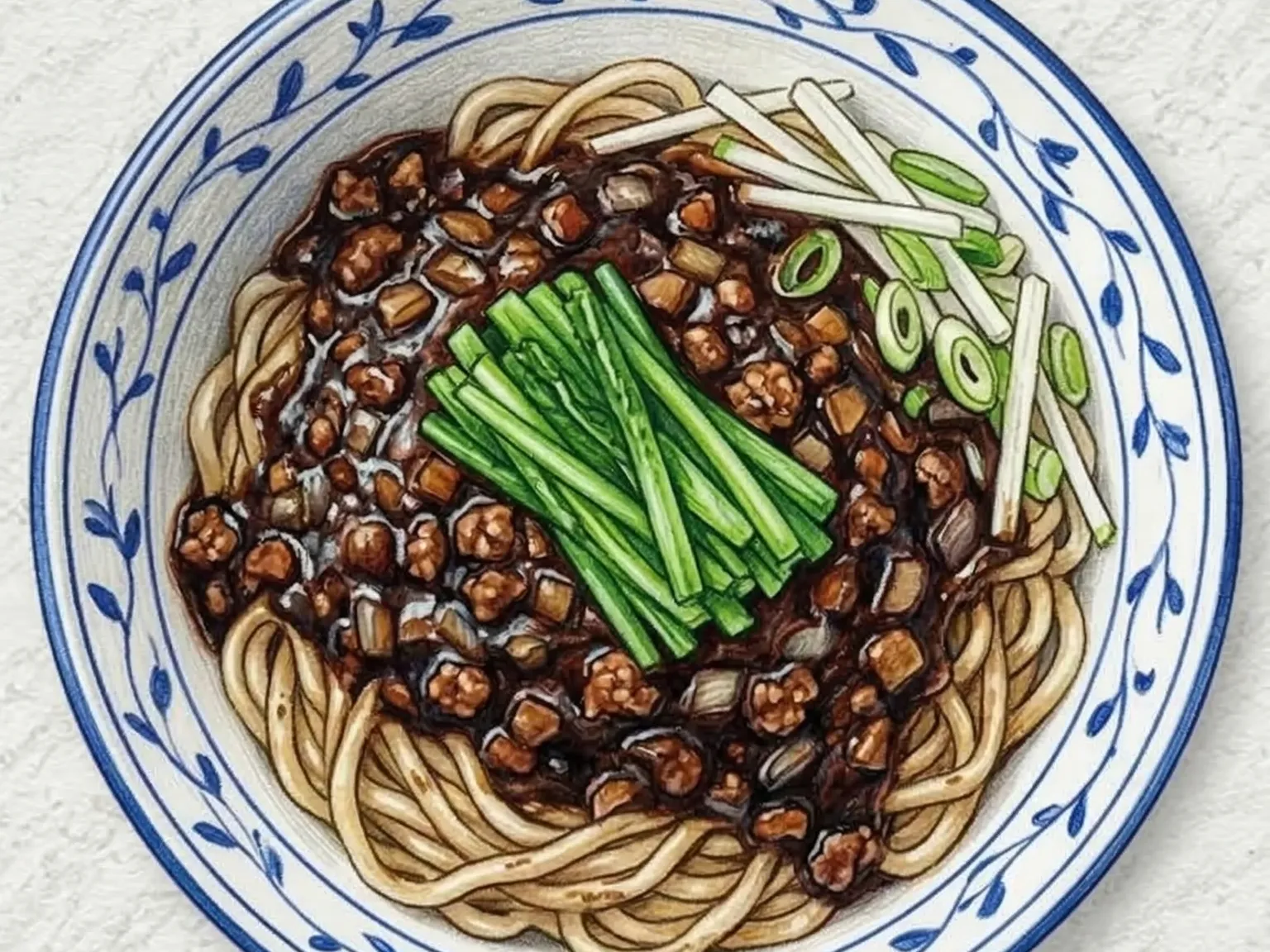
Korean Black Bean Noodles

Jjajangmyeon is Korea's most iconic Chinese-Korean noodle dish, featuring thick, chewy wheat noodles buried under a glossy black sauce built from chunjang, a fermented black bean paste. Frying the paste in a generous amount of oil is the foundational step: the raw, slightly bitter edge of the chunjang burns off and transforms into a mellow, toasty sweetness that forms the soul of the dish. Diced pork belly, onion, potato, and zucchini are stirred into the oil-fried paste and cooked until soft, contributing natural sweetness and body to the sauce. A starch slurry thickens the sauce to a dense, velvety consistency that clings to every strand of noodle without pooling at the bottom of the bowl. Shredded raw cucumber piled on top offers a cool, crisp contrast to the warm, sticky sauce. In Korean daily life, jjajangmyeon carries cultural weight well beyond its ingredients: it is the instinctive order on moving day, graduation day, and military send-off gatherings.

🏠 Everyday🌙 Late Night
Prep 15minCook 15min2 servings
Mediterranean Chickpea Salad
SaladsEasy

Mediterranean Chickpea Salad

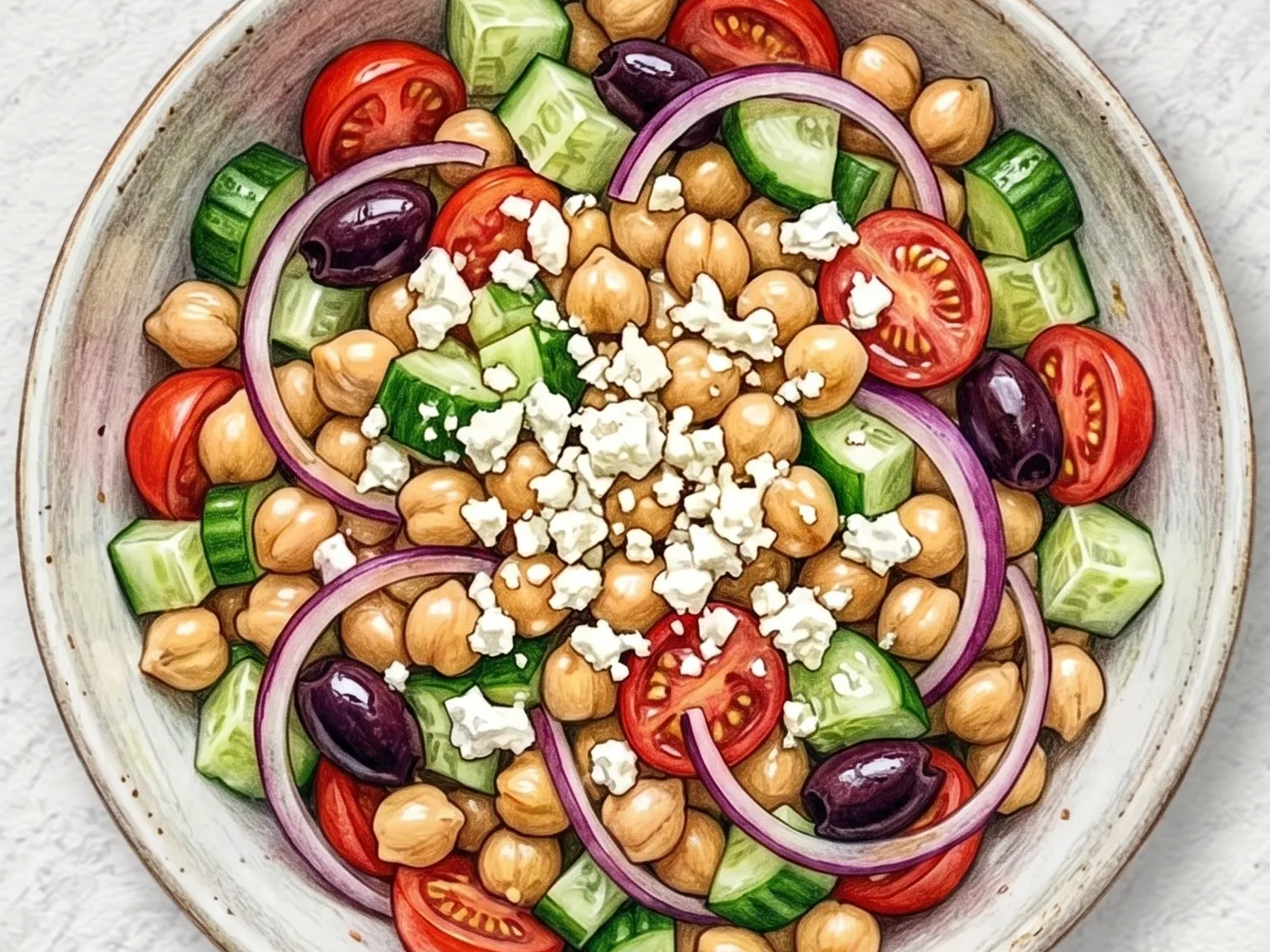
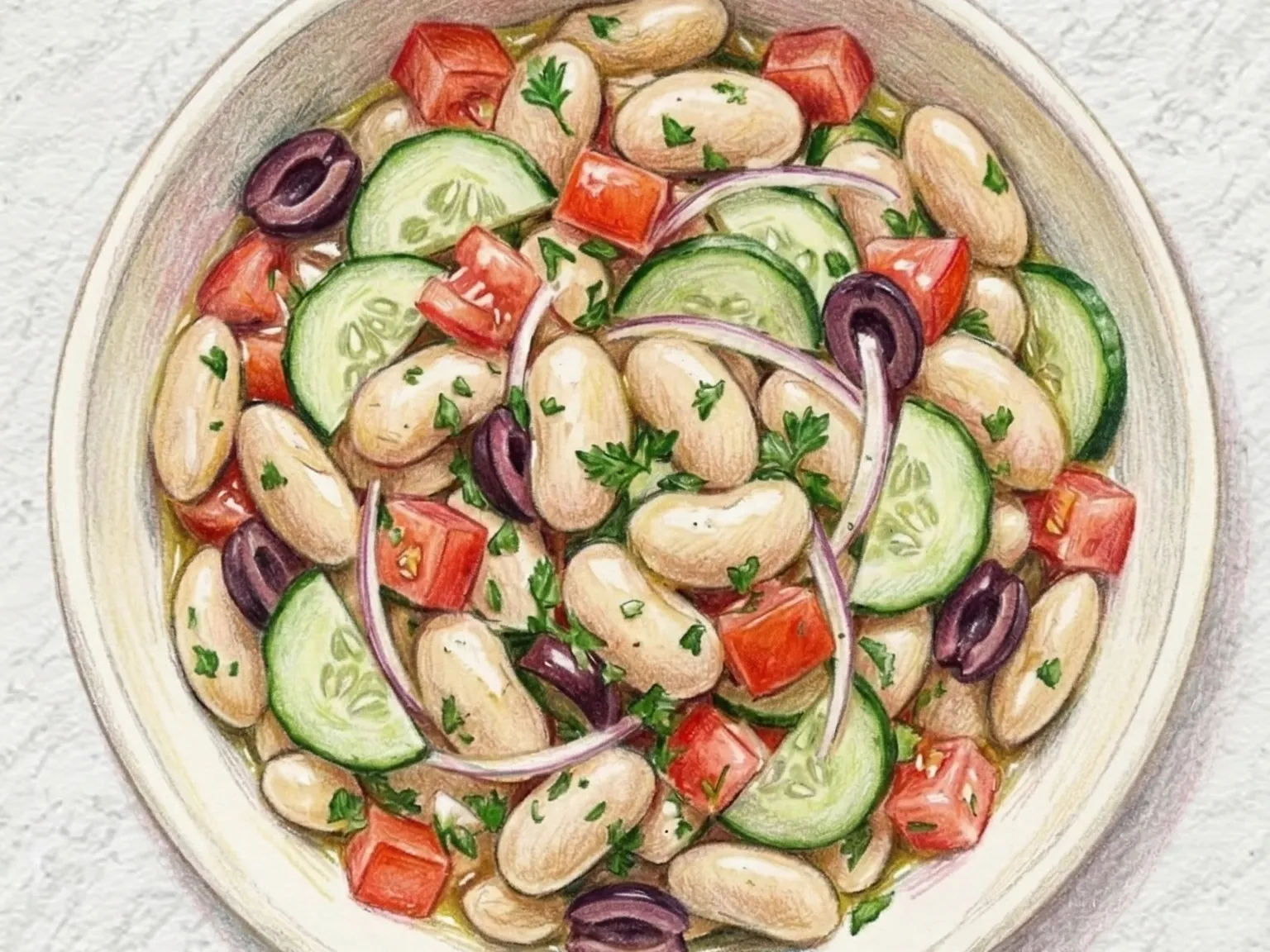
This Mediterranean salad centers on cooked chickpeas for their starchy, satisfying chew, surrounded by diced cucumber, halved cherry tomatoes, black olives, and thinly sliced red onion. A stripped-down vinaigrette of red wine vinegar and olive oil keeps the dressing from overpowering any single ingredient, and crumbled feta added at the end provides a salty, creamy contrast that pulls the whole bowl together. The red onion should soak in cold water for five minutes before going in so its sharpness softens and it blends smoothly with the milder components. No heat is needed anywhere in the preparation, and the whole salad takes about twelve minutes to assemble. A twenty-minute rest in the refrigerator allows the vinaigrette to distribute evenly and deepens the overall flavor. Pita bread for dipping or grilled chicken laid across the top turns this easily into a full meal.

🥗 Light & Healthy Quick
Prep 12min2 servings
Chicken Gyro
WesternEasy

Chicken Gyro

Chicken gyro is a Greek pita wrap in which chicken thigh is marinated in olive oil, lemon juice, salt, pepper, and dried oregano before being grilled or pan-seared until the skin side develops a golden, crisp char. Chicken thigh withstands high-heat cooking far better than breast because its higher fat content keeps the meat moist and tender even when the exterior is well caramelized. Tzatziki is made by squeezing excess water out of grated cucumber and mixing it into plain Greek yogurt with minced garlic, fresh dill, a small pour of olive oil, and a pinch of salt. Its cold, sharp acidity is the necessary counterweight to the richness of the grilled meat, cooling every bite. Thinly sliced red onion adds a pungent crunch while halved cherry tomatoes or diced tomato bring bright juiciness inside the wrap. The pita should be warmed on a dry pan or grill for about thirty seconds per side immediately before assembling so it stays soft and pliable enough to wrap without cracking under the filling. Assembled and eaten immediately, the contrast between the hot, charred chicken and the cold sauce defines the dish.

🏠 Everyday
Prep 20minCook 15min2 servings
Korean Macaroni Salad (Sweet Mayo Pasta from Retro Diners)
Side dishesEasy

Korean Macaroni Salad (Sweet Mayo Pasta from Retro Diners)

Korean macaroni salad is a retro banchan that became a fixture of bunsikjip snack bars and gyeongyangsik Western-style restaurants during the 1970s and 80s, and it has remained a nostalgic staple ever since. The Korean version differs from its Western counterpart in two notable ways: sugar is added to the dressing, making the whole salad distinctly sweeter, and sweet corn kernels replace the mustard or herbs common in American recipes, contributing a pop of juicy sweetness with each bite. The pasta is boiled for eight minutes or longer, well past al dente, because softer noodles tangle more effectively with the mayonnaise and hold the dressing inside rather than letting it slide off. Cucumber must be salted and then squeezed firmly to extract moisture before it goes into the salad; skipping this step causes the dressing to thin and puddle at the bottom over time. Carrot is blanched for exactly one minute to preserve its crunch, and crushed hard-boiled egg stirred into the dressing gives the salad a richer, denser body. The finished salad needs at least twenty minutes in the refrigerator for the mayonnaise to firm up and adhere to the pasta so it holds its shape on the plate. This salad is a standard side at gyeongyangsik restaurants alongside donkatsu and hamburger steak, and it appears regularly as a complimentary banchan at gimbap shops. A dusting of paprika powder or chopped parsley adds color to the otherwise pale presentation.

🏠 Everyday🧒 Kid-Friendly
Prep 15minCook 10min4 servings
Sunomono Cucumber Salad (Japanese Sweet Vinegar Cucumber Slices)
SaladsEasy

Sunomono Cucumber Salad (Japanese Sweet Vinegar Cucumber Slices)

Sunomono cucumber salad slices cucumber paper-thin, salts the slices for five minutes to draw out excess moisture, then squeezes them firmly dry before tossing with rehydrated wakame in a dressing of rice vinegar, sugar, and a touch of soy sauce. Squeezing the cucumber after salting is what keeps the vinegar dressing sharp and concentrated through the whole dish rather than gradually diluting into a watery pool. The crisp, snappy texture of the cucumber and the slippery, silky texture of the wakame sit beside each other in every bite, and toasted sesame seeds scattered over the top add a nutty fragrance that rounds out the clean, acidic finish. Blanching the wakame briefly after soaking removes any residual sea smell and keeps its color vivid green. Cutting the cucumber as thinly as possible, in rounds or half-moons, helps the dressing penetrate quickly and gives the salad an even, delicate texture throughout. The preparation requires no heat at all and takes under fifteen minutes, making it a practical and refreshing side dish for summer meals or as a palate-cleanser alongside grilled meats.

🥗 Light & Healthy🍱 Lunchbox
Prep 10min2 servings
Korean Seasoned Mung Bean Jelly Salad
Side dishesEasy

Korean Seasoned Mung Bean Jelly Salad

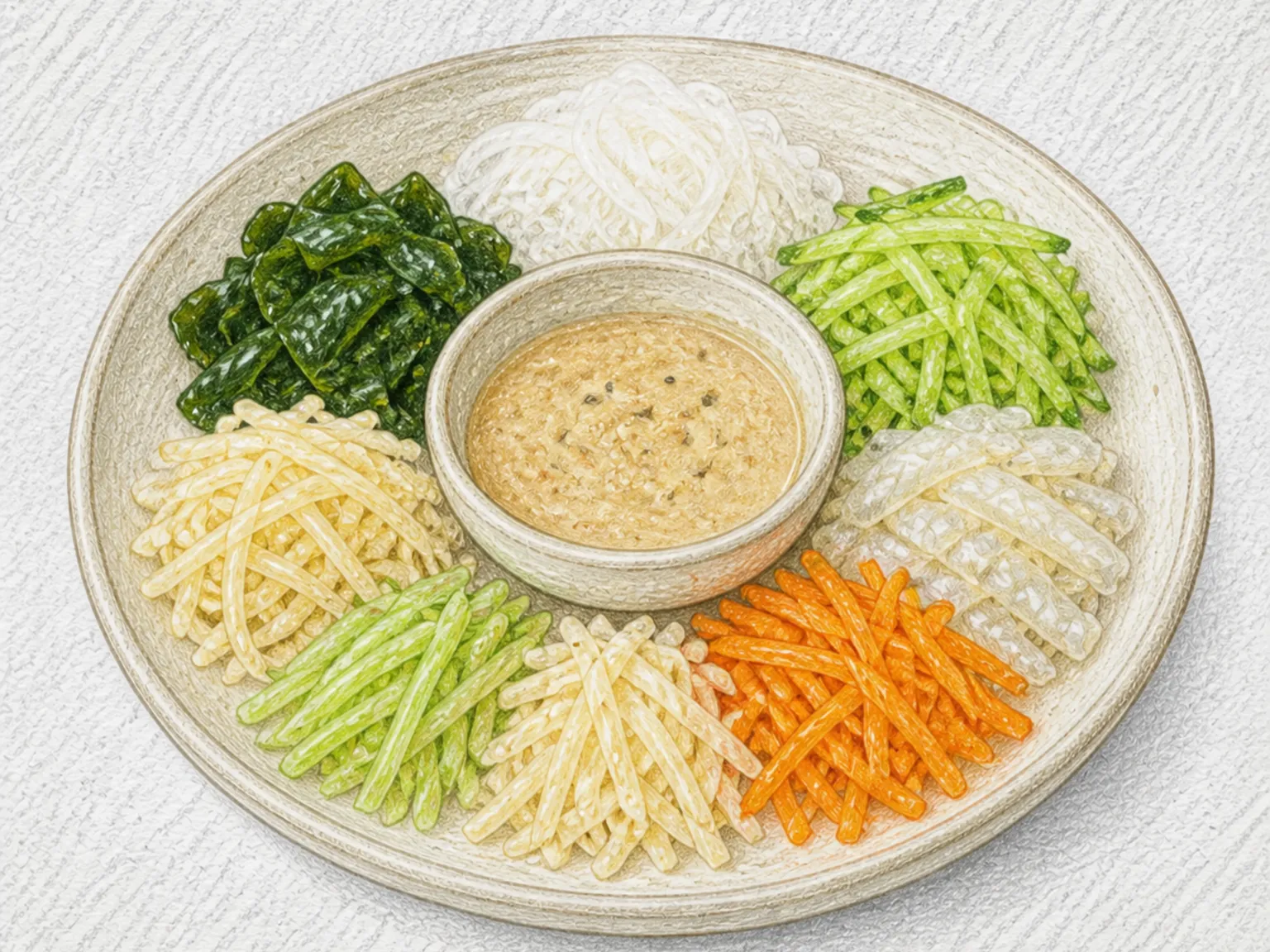
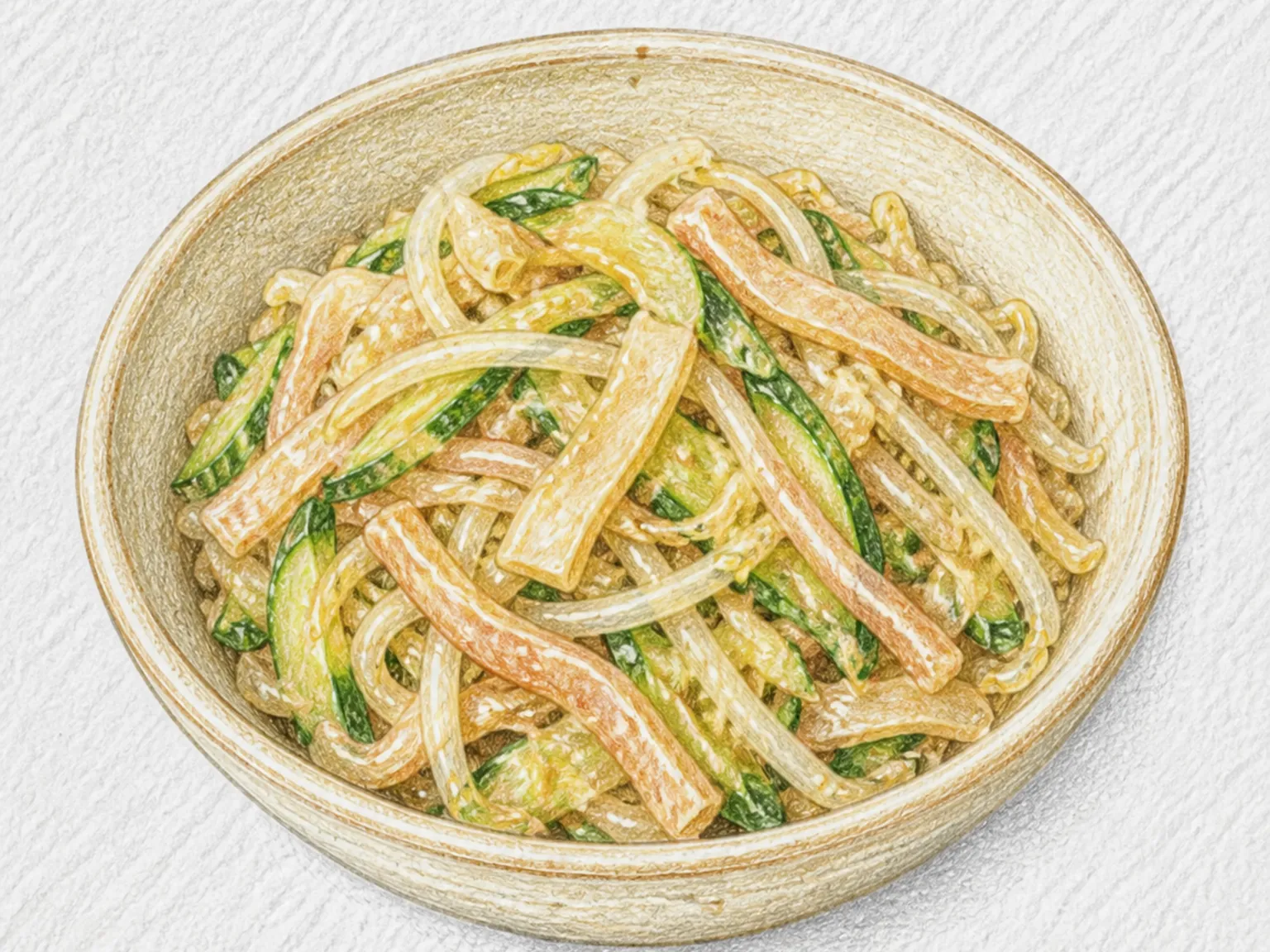
Cheongpo muk - mung bean jelly - is made by dissolving starch in water, boiling it until thick, then leaving it to set into a translucent, firm block. It has appeared in Joseon-era palace banquet records as a traditional food. The jelly is blanched briefly, cut into matchstick strips, and tossed with julienned cucumber and carrot. A dressing of soy sauce, vinegar, and sugar gives a clean, sharp edge. The jelly itself is nearly flavorless, functioning as a cool, slippery carrier for the seasoning. The crunch of the vegetables contrasts with the smooth jelly, and the vinegar keeps the whole dish light. Gentle tossing is essential to avoid breaking the blocks apart. Served well-chilled, this is a classic Korean summer banchan.

🥗 Light & Healthy🏠 Everyday
Prep 15minCook 2min4 servings
Shrimp Mango Lime Salad
SaladsEasy

Shrimp Mango Lime Salad

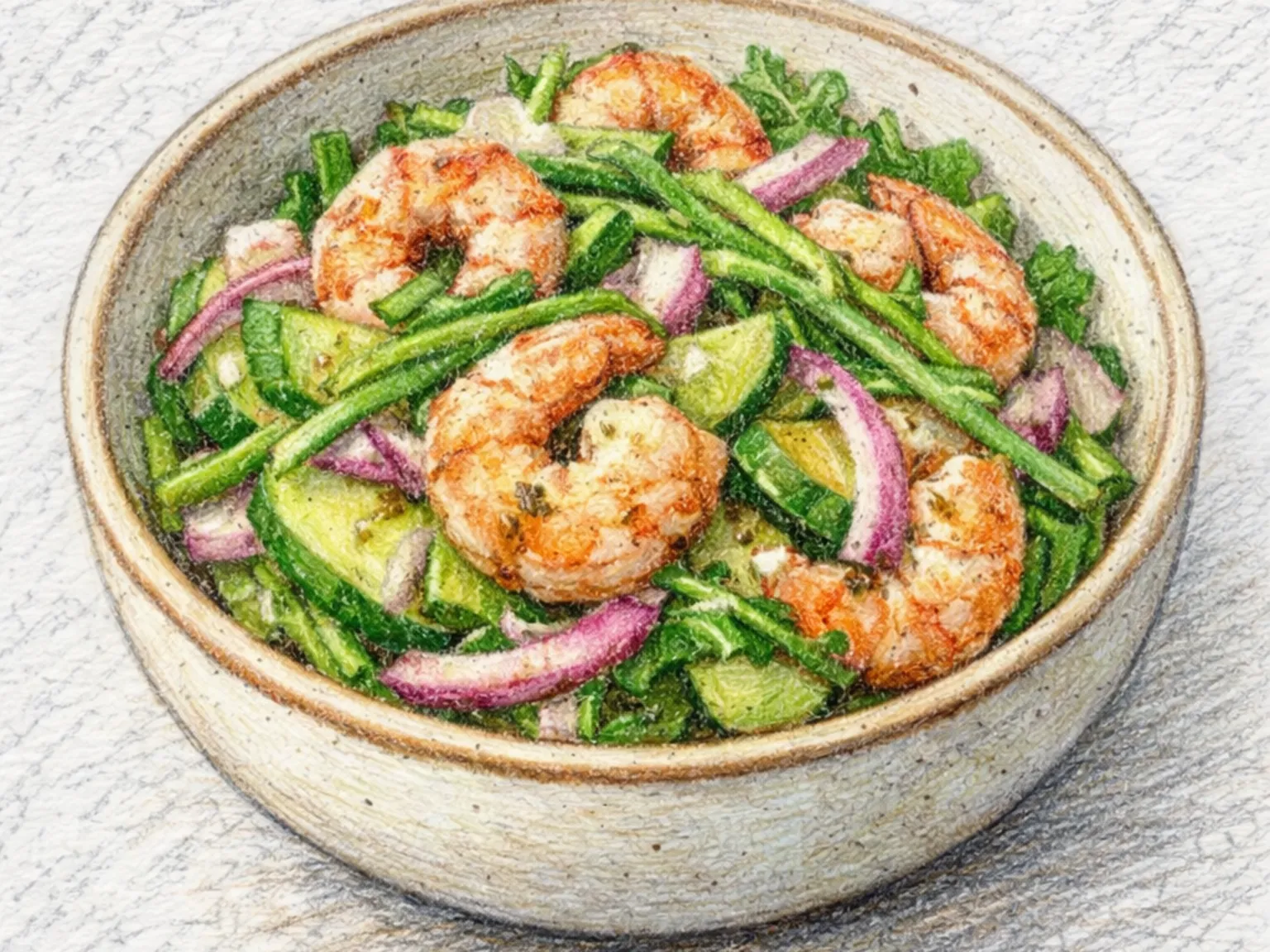
Shrimp mango lime salad is a Thai-style dish that combines briefly poached shrimp with ripe mango, cucumber, red onion, and roughly chopped cilantro, dressed with lime juice, fish sauce, and olive oil. The shrimp go into boiling water for exactly two minutes, which is just long enough to cook them through while keeping their natural snap; any longer causes the proteins to contract and the texture turns from tender to rubbery. Fish sauce contributes a fermented, savory depth that amplifies the shrimp's briny character, while lime's sharp acidity slices through the mango's sweetness and brings the dressing into balance. Thinly sliced red onion adds a raw, peppery heat that creates tension between the sweet fruit and the savory seafood, and cilantro releases a distinctive herbal fragrance with each bite. Cucumber stirred into the mix lightens the overall texture and keeps the salad from feeling too dense. Served cold immediately after dressing, every element stays distinct and the contrast between the yielding fruit, the crisp vegetables, and the firm shrimp comes through clearly.

🥗 Light & Healthy Quick
Prep 15minCook 5min2 servings
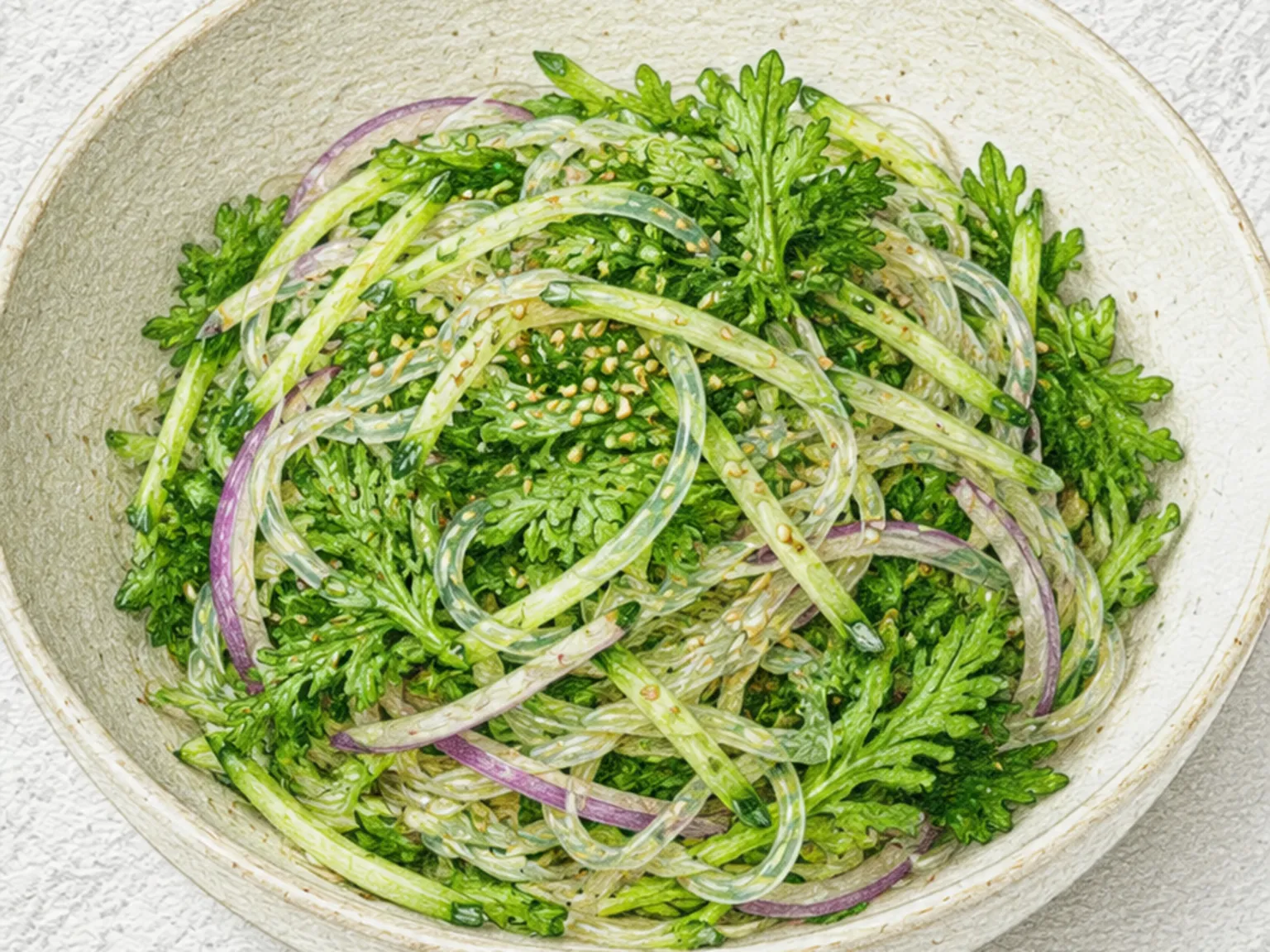
Crown Daisy & Mung Bean Noodle Salad
SaladsEasy

Crown Daisy & Mung Bean Noodle Salad

Ssukgat mungbean noodle salad soaks glass noodles in cold water for ten minutes, boils them for five until springy, then tosses them with fragrant crown daisy leaves, julienned cucumber, and thinly sliced red onion in a dressing of soy sauce, vinegar, plum syrup, and sesame oil. Mung bean starch noodles are more translucent and less starchy than wheat-based vermicelli, making them a cleaner canvas for the surrounding vegetables. Crown daisy's assertive, almost medicinal herbal aroma cuts through the neutral noodles and gives the salad a distinctive edge that milder greens cannot replicate. Plum syrup's gentle fruit sweetness layers over the vinegar's acidity to produce a light, clean finish on the palate rather than a sharp one-note sourness. Cucumber adds a cool crunch and red onion contributes a sharp bite between the slippery noodle strands, while toasted sesame seeds bring a roasted, nutty note at the end of each mouthful. Overcooking the noodles makes them sticky and prone to clumping, so pulling them out while still slightly firm is essential, and the salad is best served immediately after tossing so the crown daisy retains its fresh fragrance.

🥗 Light & Healthy
Prep 18minCook 7min2 servings