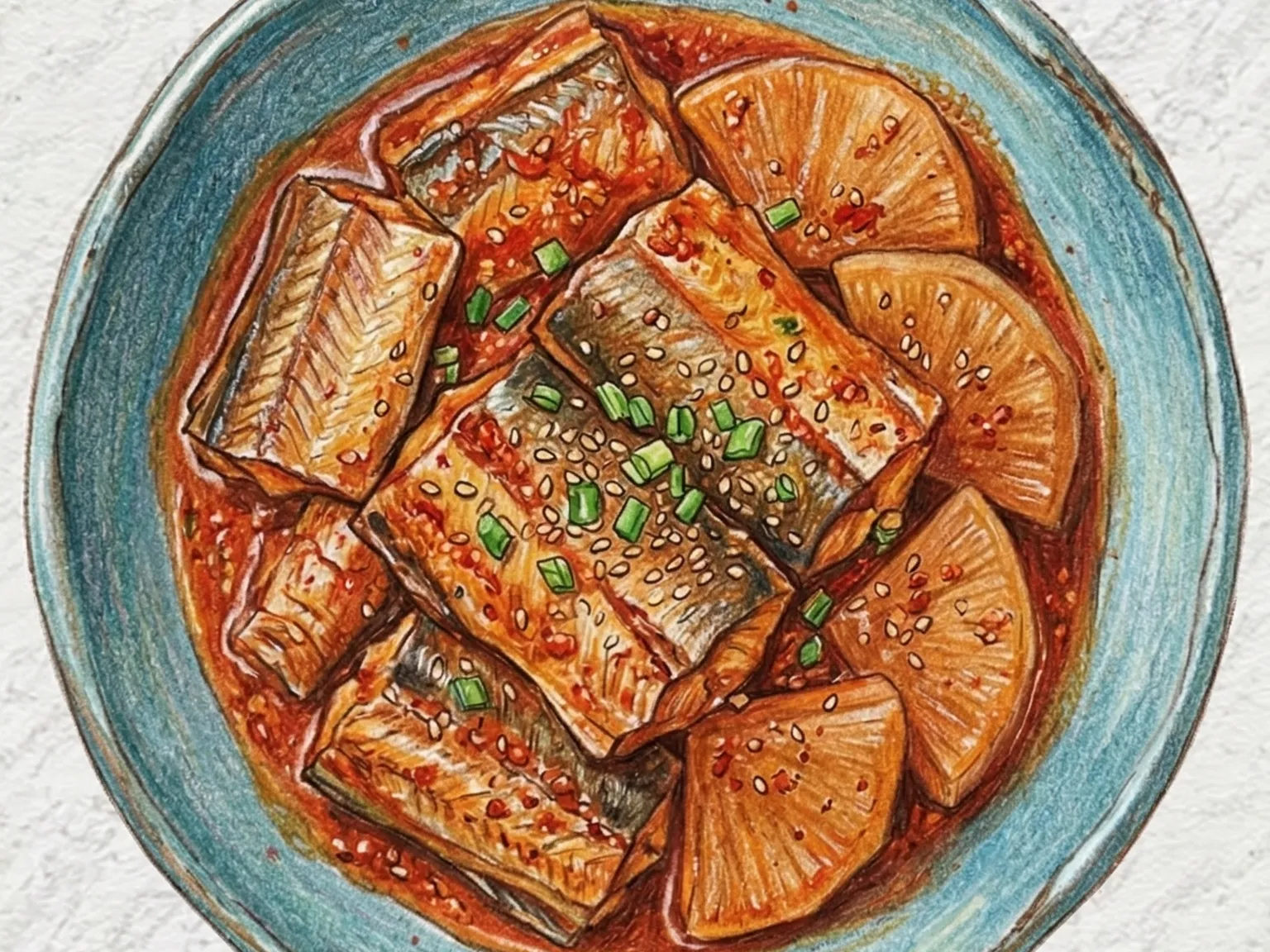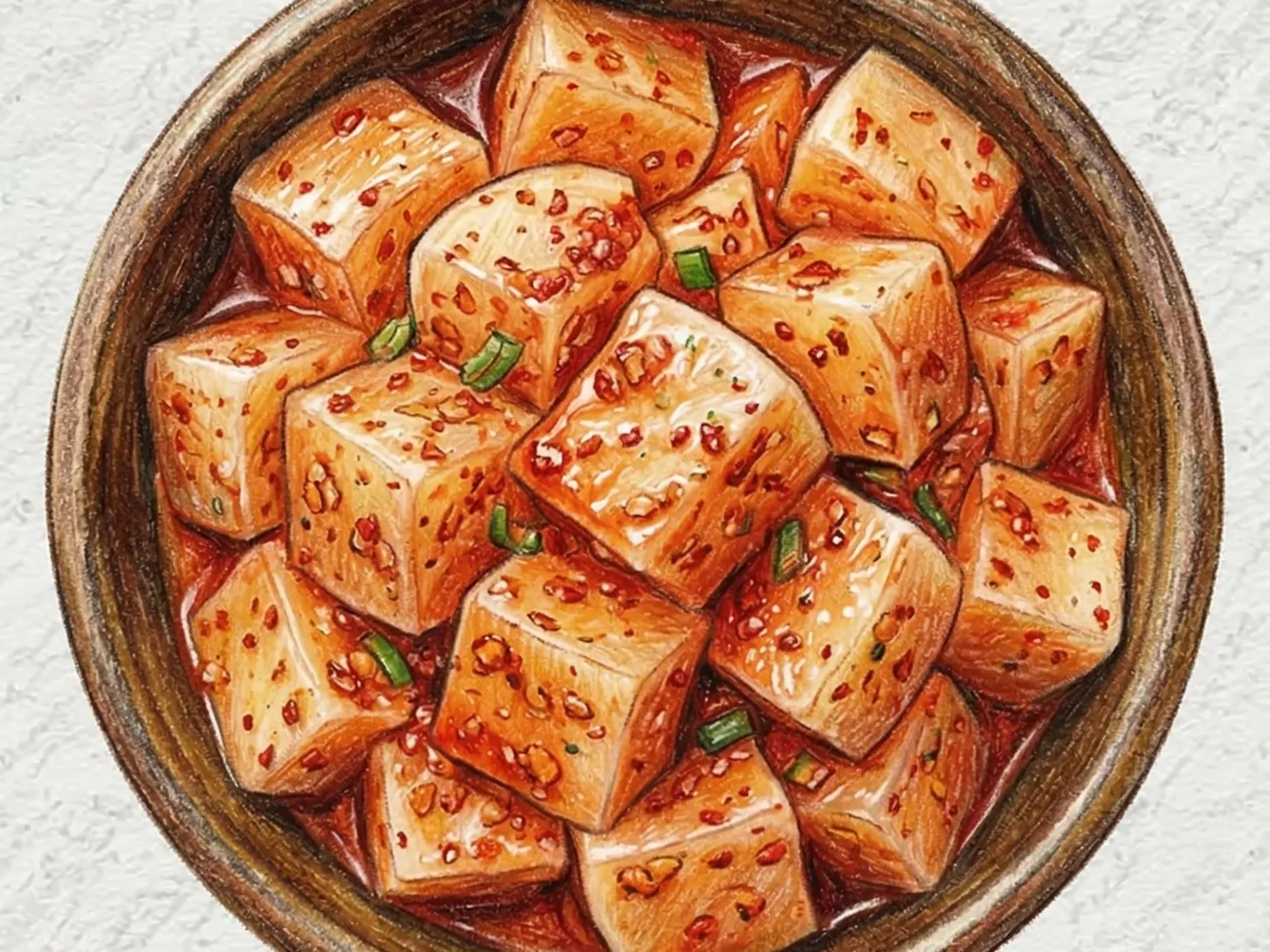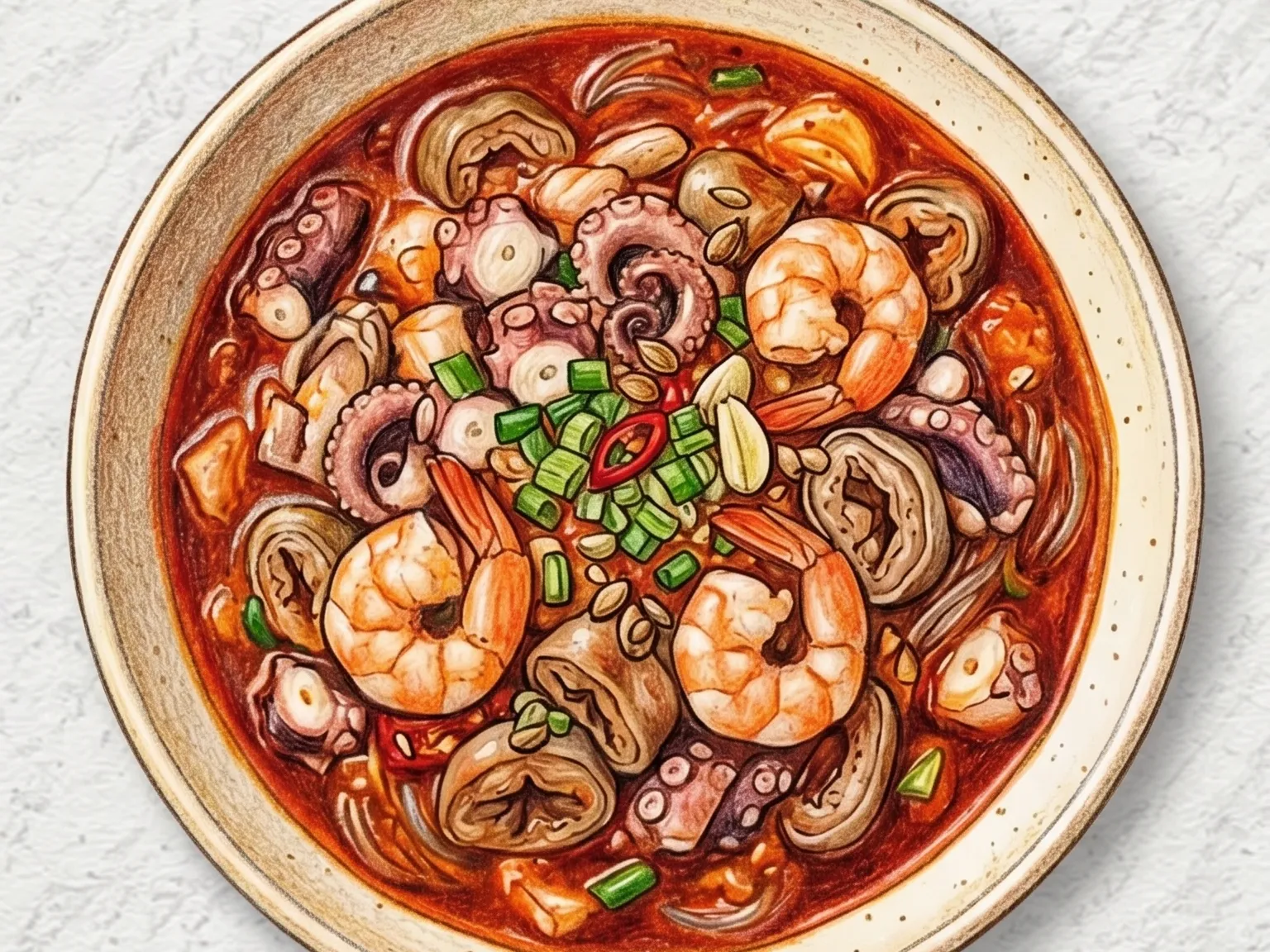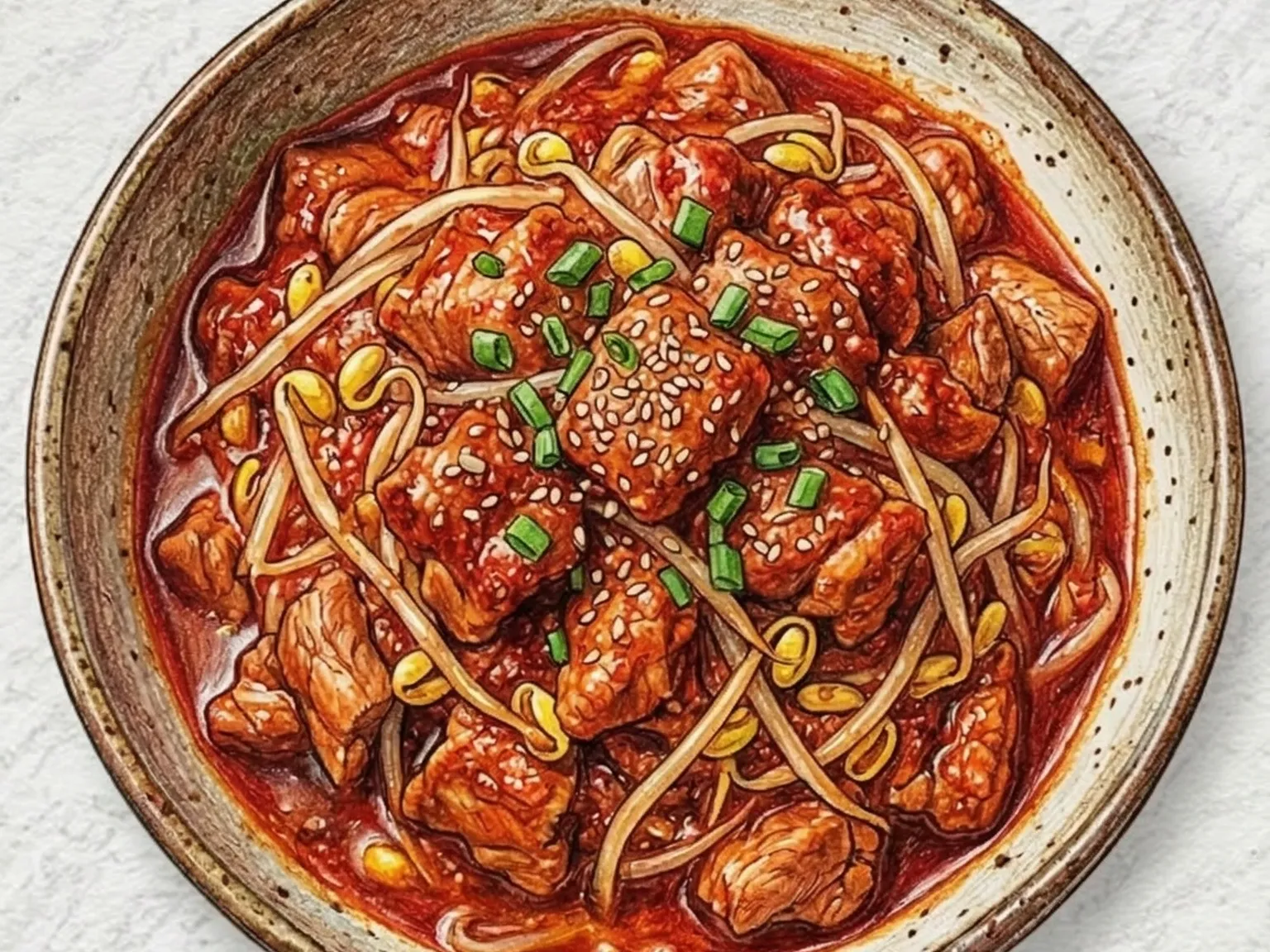
Korean Wild Chive Soybean Paste Soup
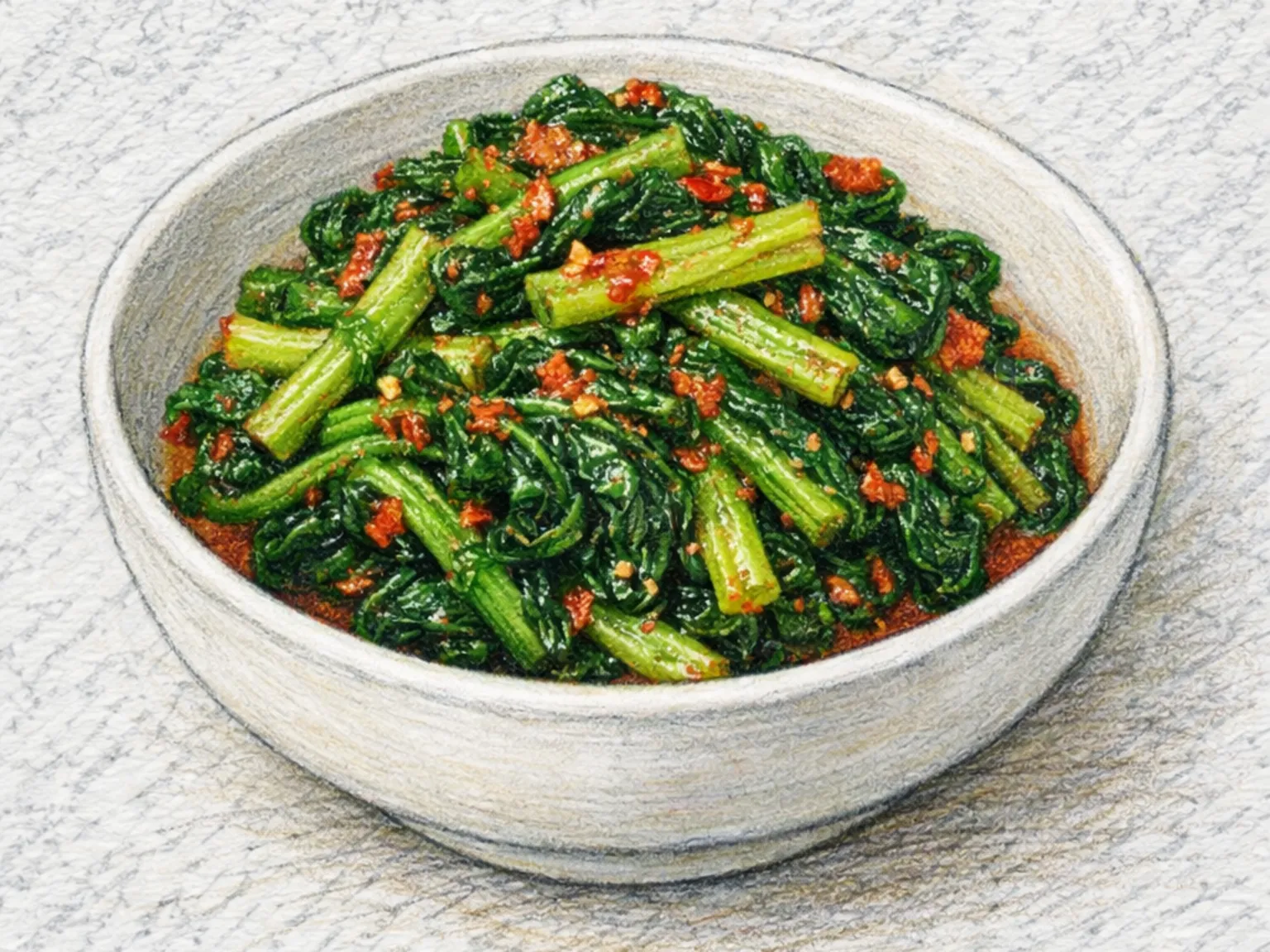
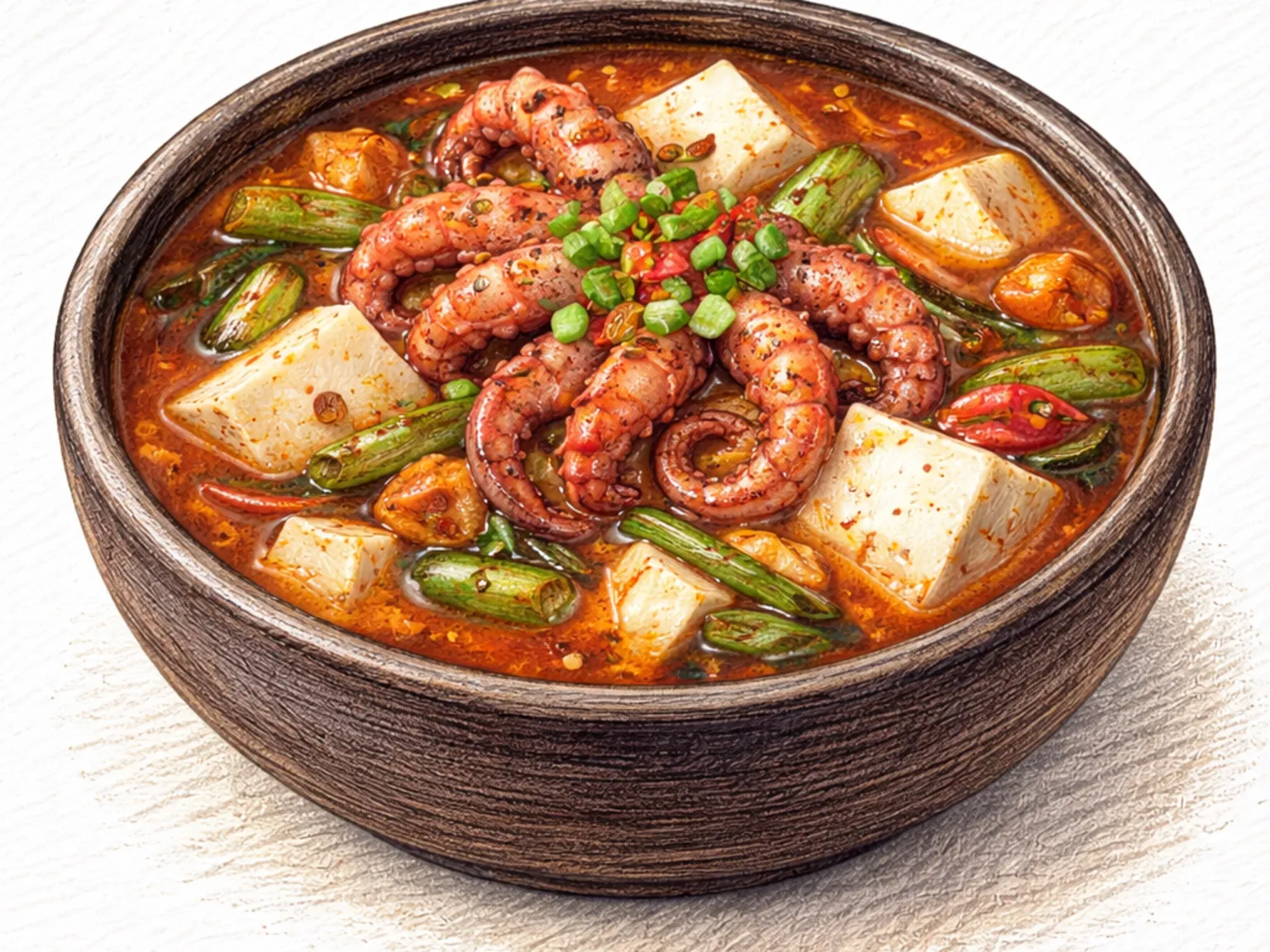
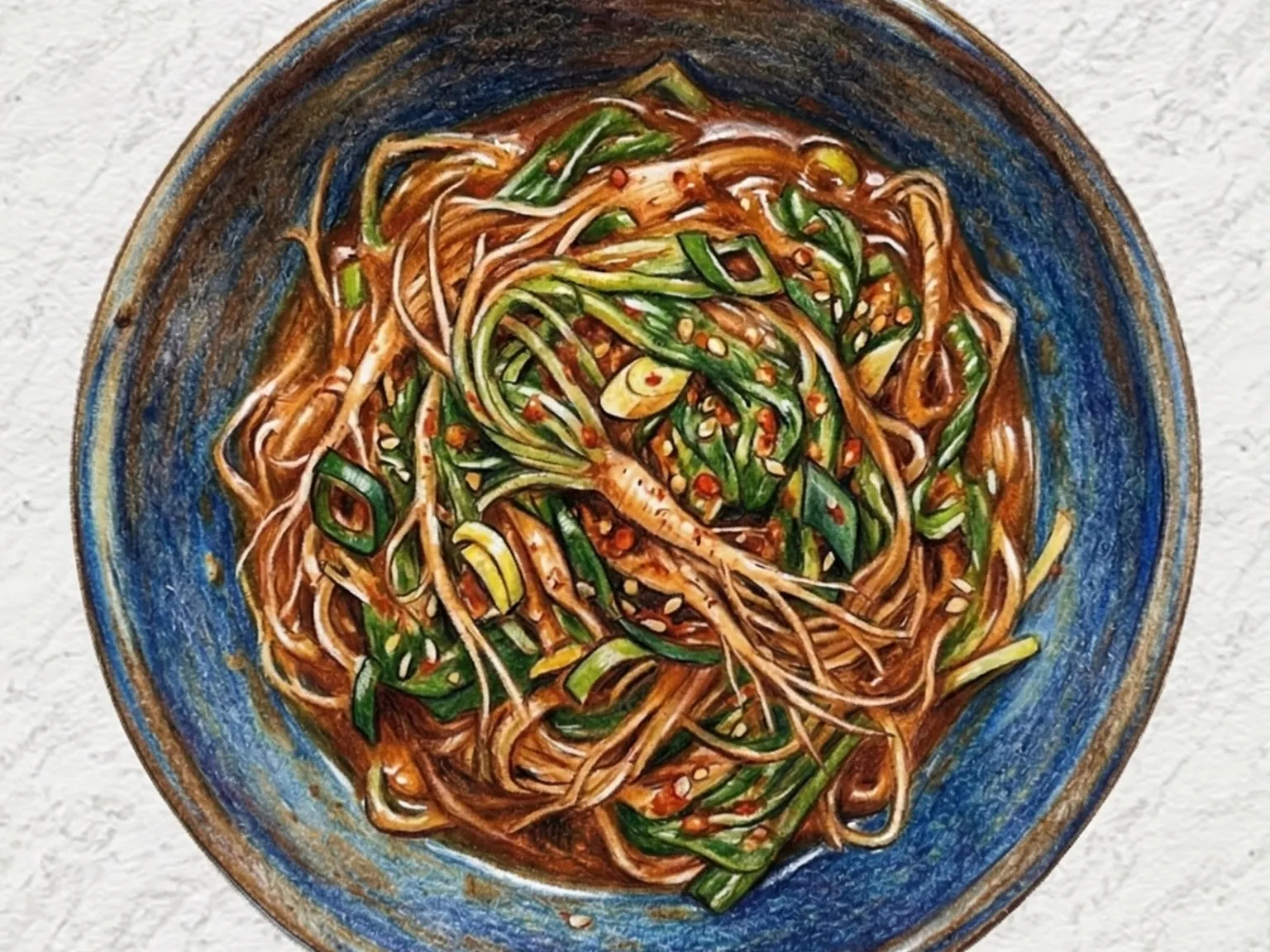
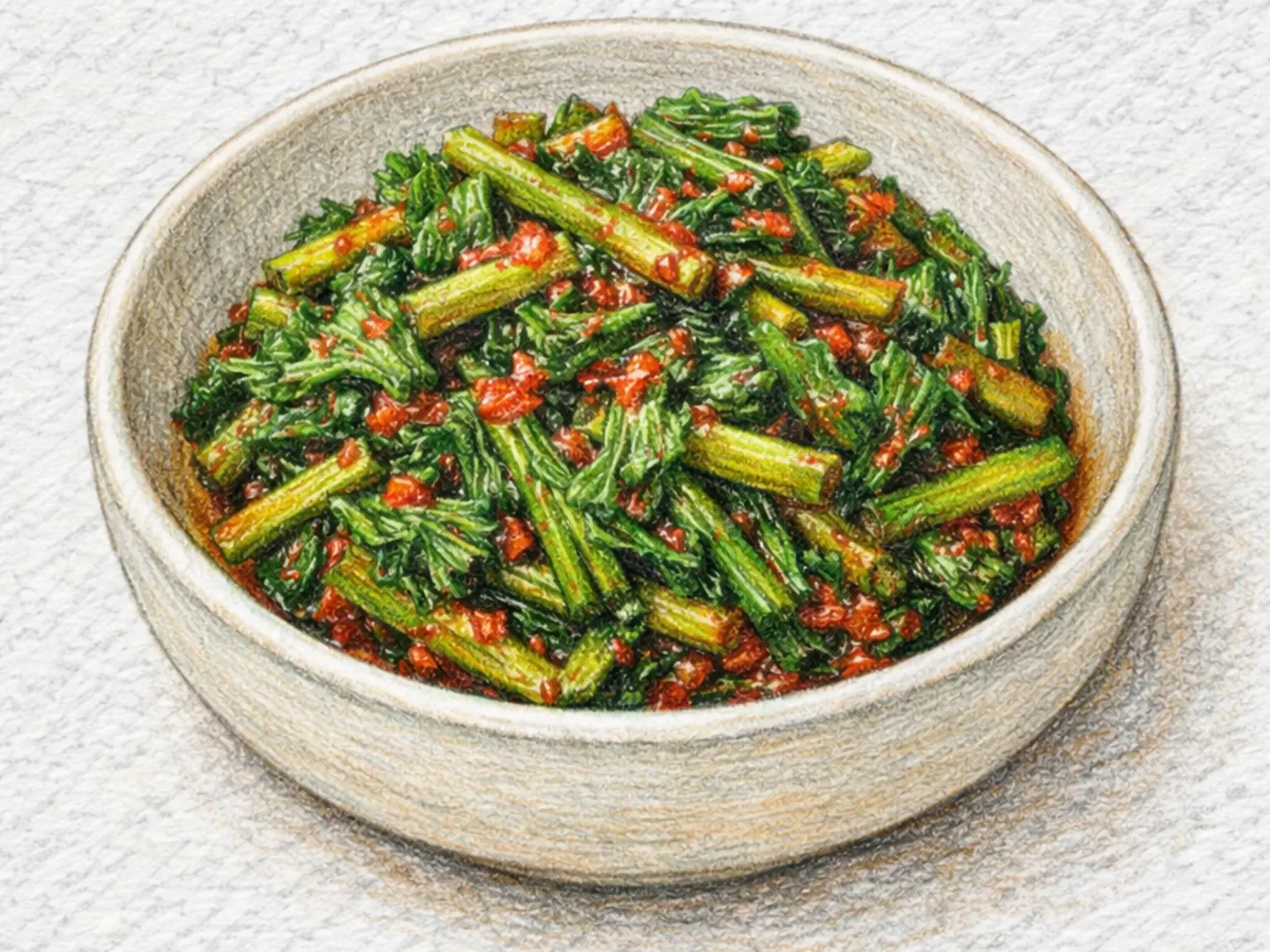
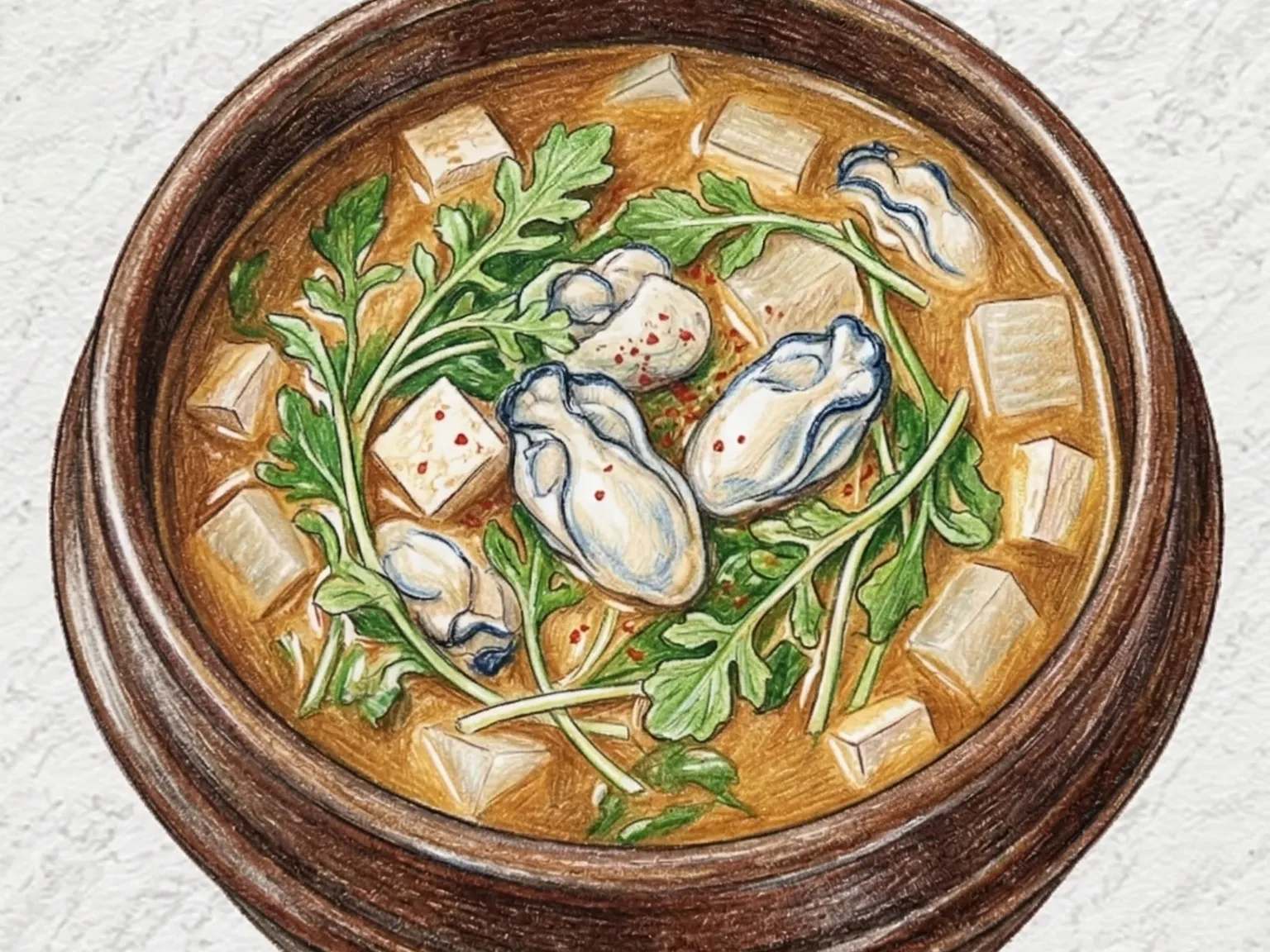
Dallae doenjang-guk is a springtime Korean soybean paste soup that showcases wild chives, a seasonal ingredient valued for its sharp, garlicky bite and short availability window. The anchovy-kelp stock is first simmered with potato and onion to build body and sweetness, then doenjang is dissolved in and tofu added for a soft, tender contrast against the broth. Wild chives go in only during the final minute of cooking, because their pungent aroma dissipates rapidly under sustained heat; cooking them too long makes them indistinguishable from ordinary green onion in both flavor and appearance. The bulb end of each chive stalk carries a stronger bite than the leaves, so mincing the bulbs finely distributes their flavor more evenly through the broth. A half teaspoon of gochugaru tints the soup a faint red that visually matches the chive's natural heat. Because dallae is in season for only a brief window, setting a few raw stalks aside to place at the table as a garnish amplifies the fresh spring character of the dish.

Korean Spicy Baby Octopus Fried Rice
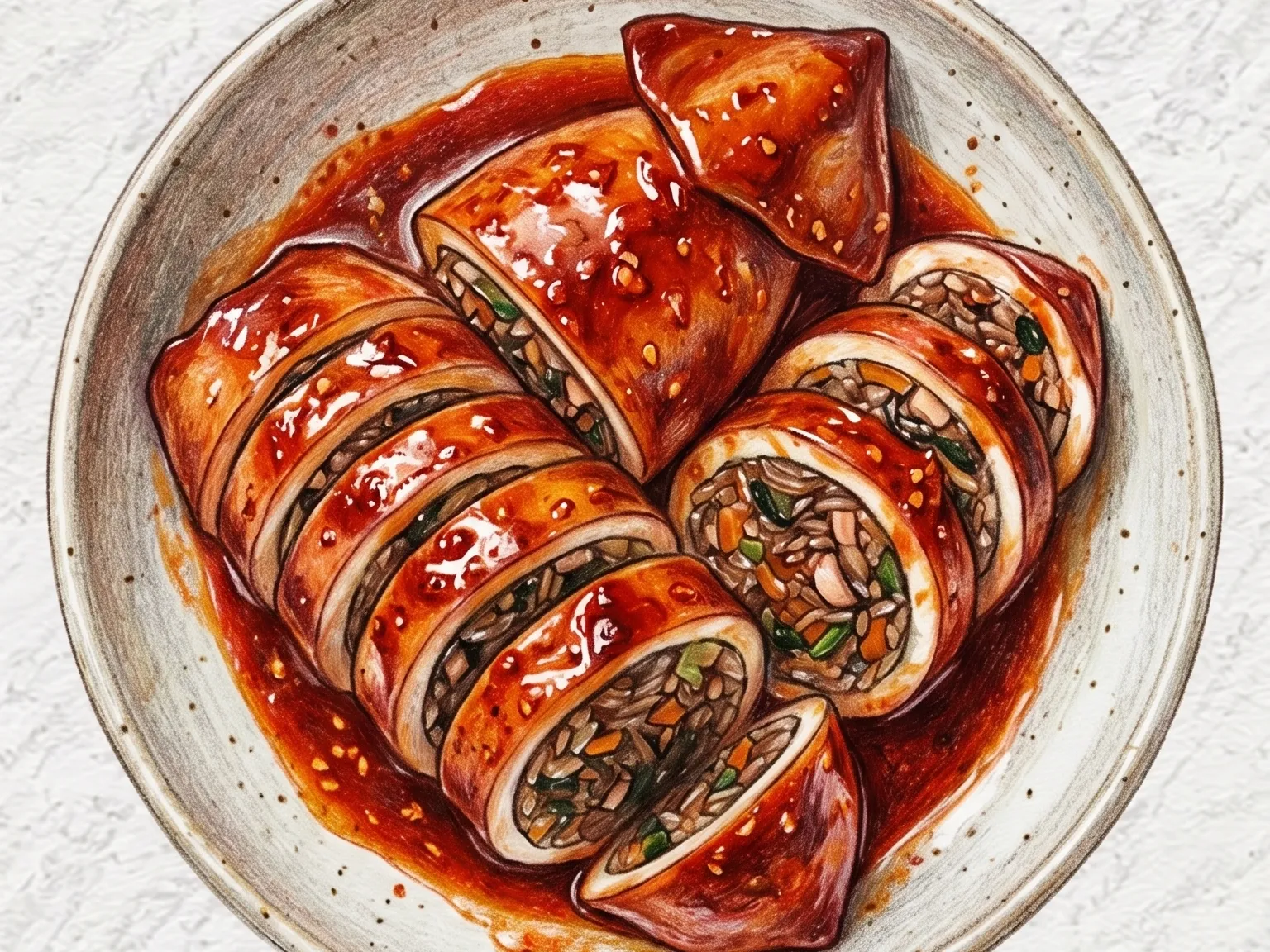
Jjukkumi bokkeumbap is a spicy fried rice built around webfoot octopus, where every element of the technique exists to preserve the squid's signature springy chew. The octopus is first rubbed with salt to strip off the surface slime, then cut to bite-size and seared over high heat for no more than three minutes. The gochujang-based sauce, bolstered with chili flakes, soy sauce, sugar, and garlic, concentrates spice and umami before the rice enters the pan and soaks up the red seasoning grain by grain. A drizzle of sesame oil at the end adds a nutty fragrance that lifts the dish slightly, and melted cheese is a popular addition for softening the heat without dulling the flavor. The oceanic character of the octopus - its brininess and elasticity - gives this fried rice a depth that ground pork or vegetables simply do not replicate. Not overcooking the octopus is the single most important decision in the recipe.

Korean Spicy Braised Monkfish
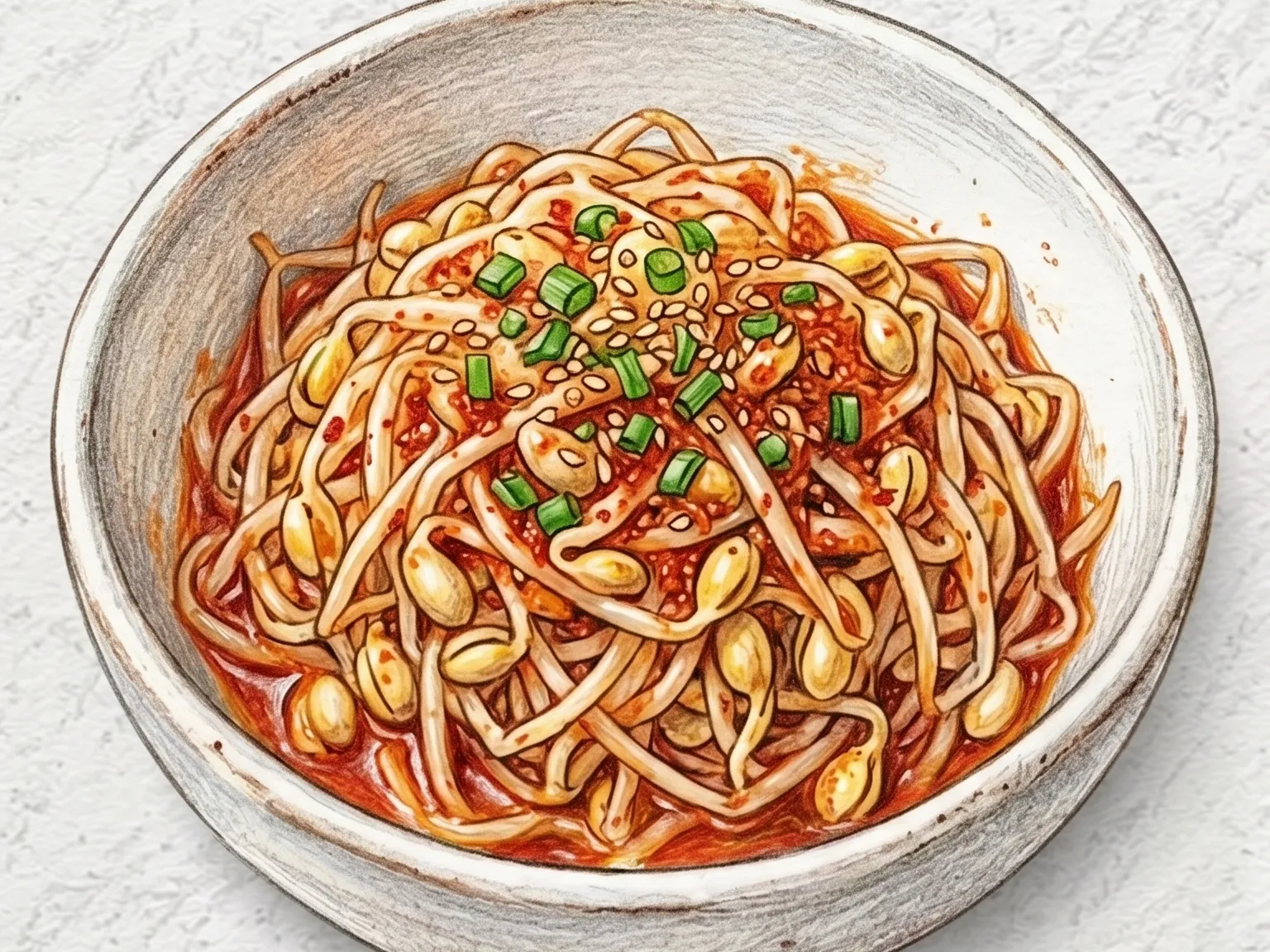
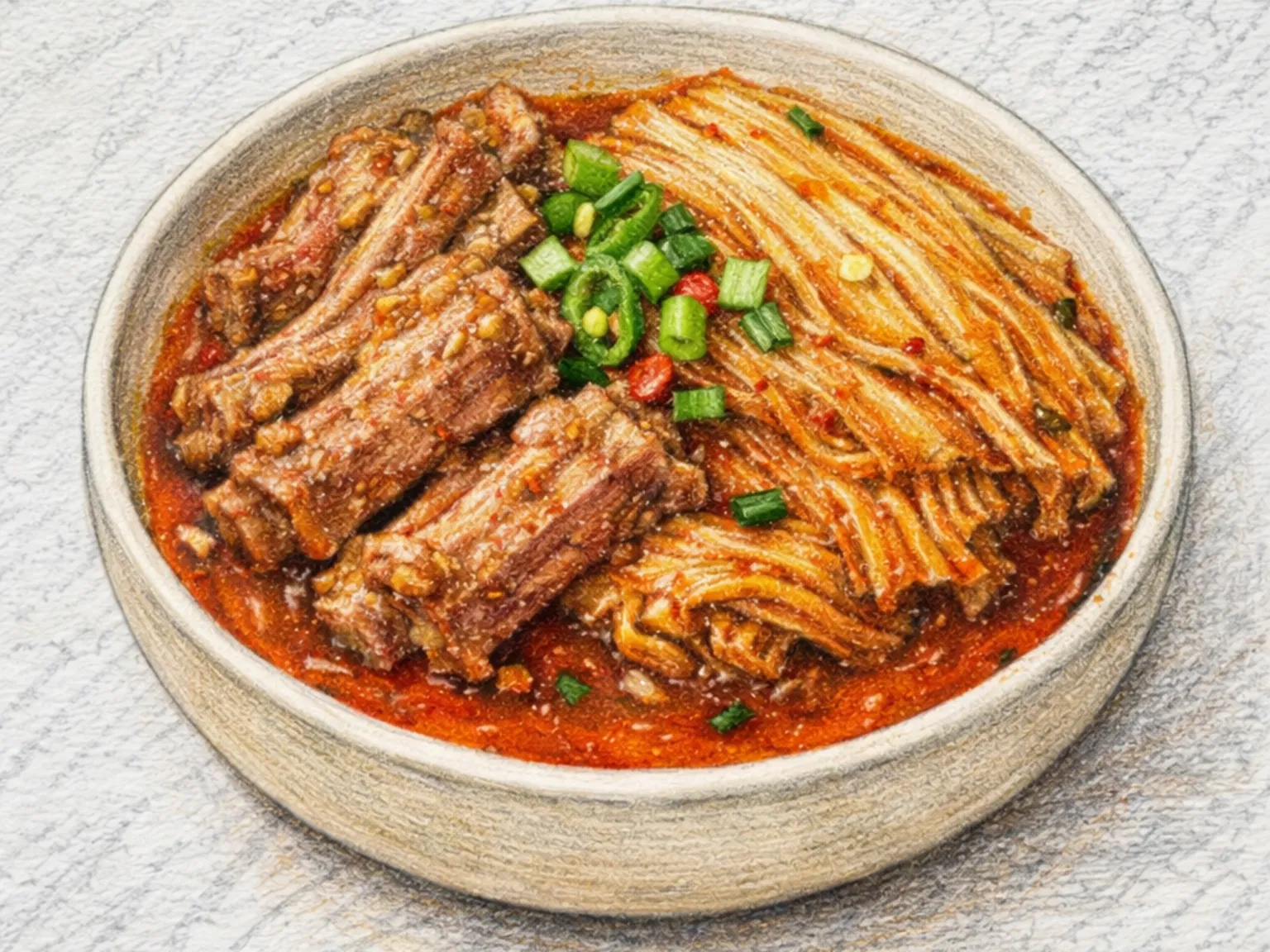
Agu-jjim originated as a specialized seafood preparation from Masan, which is a prominent port city located in the South Gyeongsang province of Korea. During the 1970s, fishmongers working in the harbor district of Odong-dong began a practice of braising unsold monkfish over high heat. They combined the fish with a substantial amount of bean sprouts and a thick chili paste, a combination that eventually led to the dish gaining recognition across the entire nation. The preparation involves coating pieces of monkfish in a heavy seasoning mixture made from gochugaru, gochujang, soy sauce, and garlic. These seasoned pieces are placed on top of a thick layer of bean sprouts and braised in a covered pot using high heat. Monkfish differs from many other types of white-fleshed fish because it possesses a firm and gelatinous texture that is particularly rich in collagen. This structural quality allows the fish to absorb the intense flavors of the seasoning without breaking into small pieces, ensuring the meat remains resilient and chewy throughout the entire cooking process. As the dish braises, the bean sprouts release their own moisture, which creates a natural braising liquid at the bottom of the pot. Water dropwort, known as minari in Korean, is introduced to the pot at the final stage of cooking. This ingredient provides an herbal flavor similar to celery that balances the heavy coating of chili and garlic while adding a certain brightness to the spice. Agu-jjim is typically served in a communal fashion on a large platter. It is considered a fundamental part of Korean social gatherings involving alcohol, where the intense heat of the spices is often paired with chilled beer or soju.

Korean Stir-fried Cabbage with Doenjang
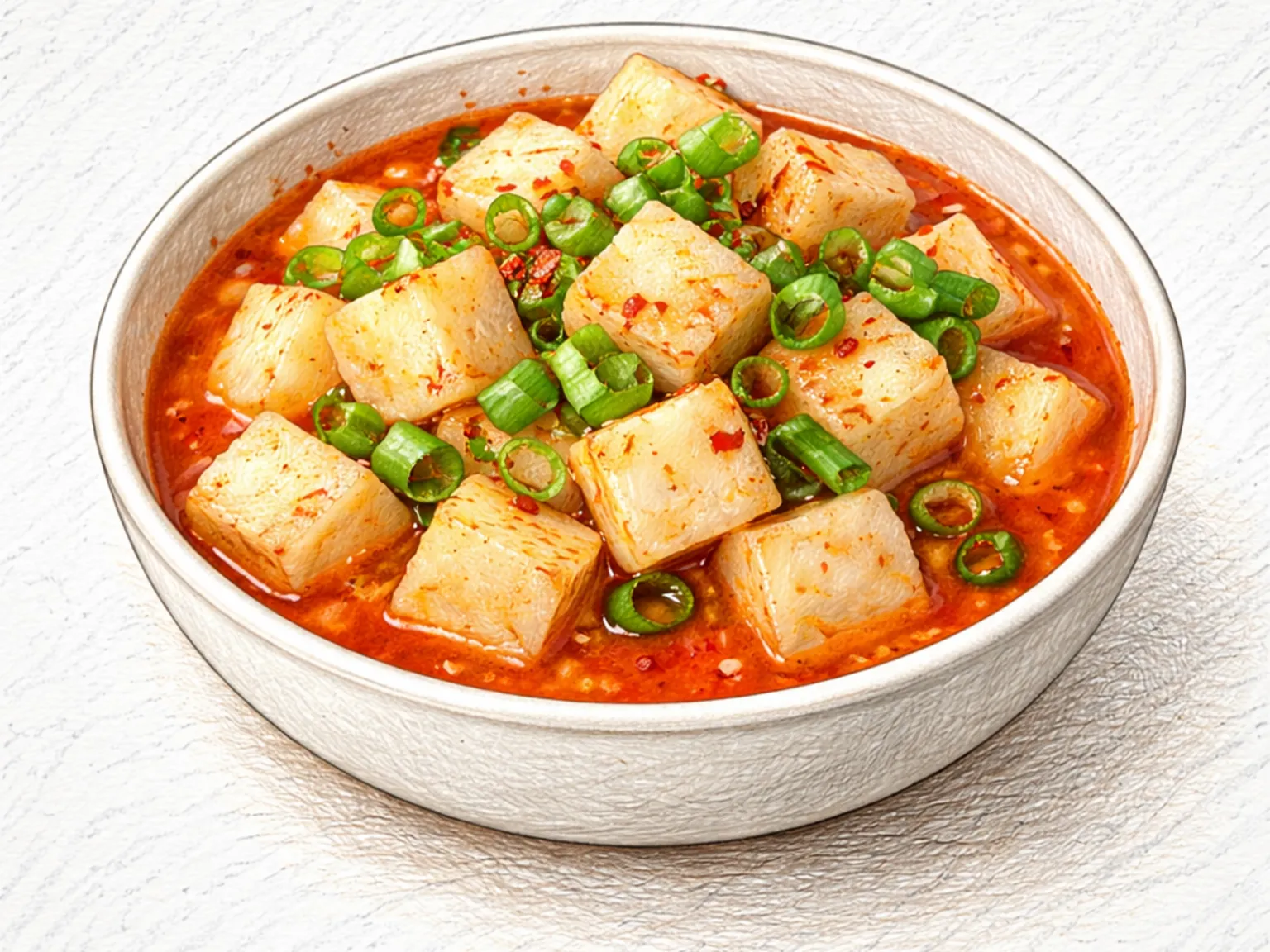
Yangbaechu-doenjang-bokkeum stir-fries bite-size cabbage pieces with doenjang, gochugaru, and garlic over high heat. The doenjang is dissolved in a small amount of water to create an even sauce that coats the cabbage, and the heat is turned off before the cabbage fully wilts to preserve some crunch. The cabbage's natural sweetness intensifies with cooking and contrasts against the salty, fermented depth of the doenjang, while gochugaru adds a faint background heat. The entire dish comes together in under fifteen minutes, relying on doenjang alone to deliver concentrated flavor.

Korean Spicy Blue Crab Soup
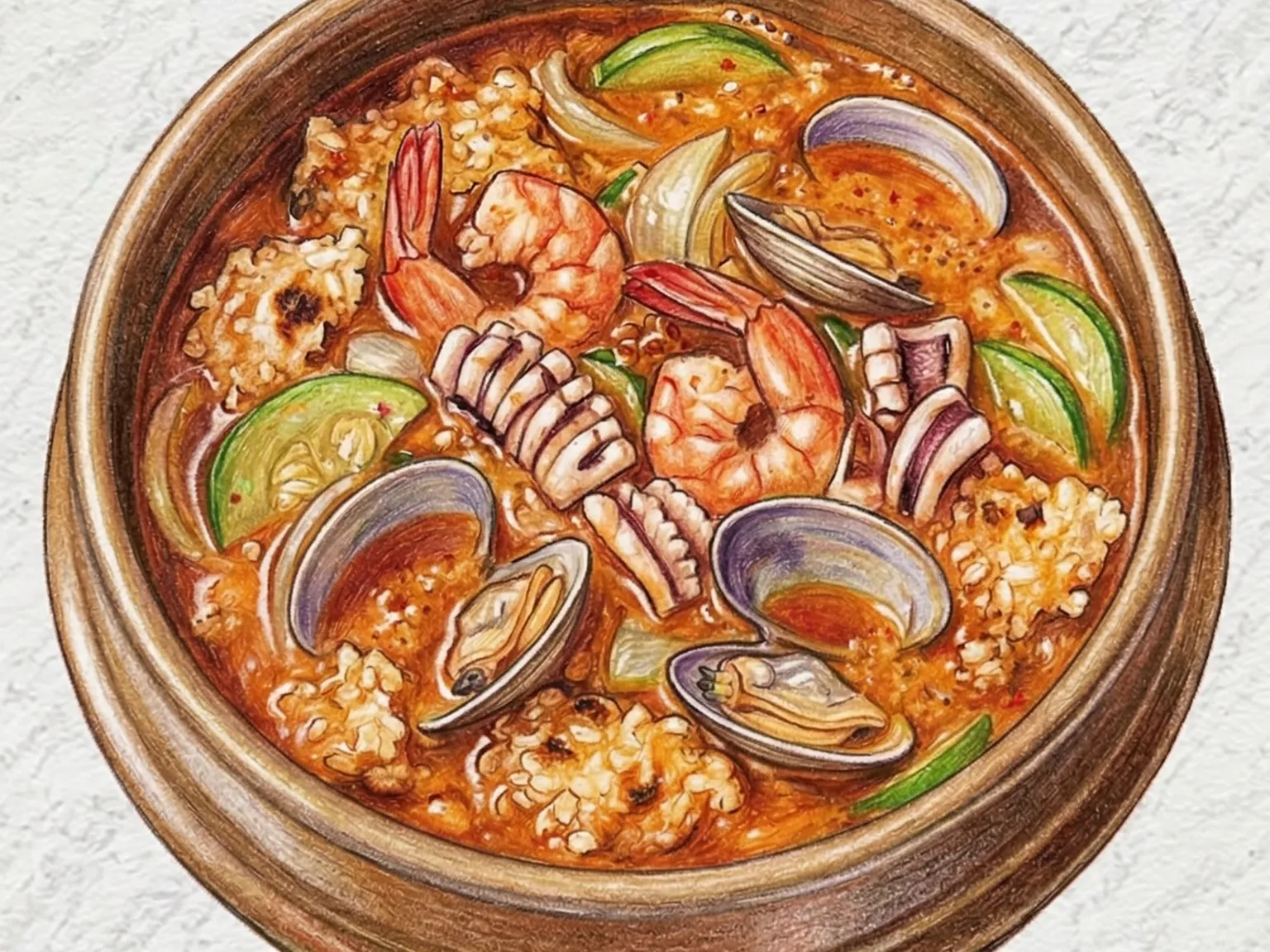
Ggotge-tang is a spicy Korean crab soup built around whole blue crabs that infuse the broth with a concentrated, briny seafood depth. The shells release their marine richness as they crack apart during simmering, forming the structural foundation of the pot. Doenjang dissolved into the broth adds fermented complexity, while gochugaru delivers a persistent heat that compounds with each spoonful. Radish chunks sweeten and clarify the liquid, and zucchini with green onion fill the bowl with color and contrasting texture. Before cooking, the crabs should be scrubbed clean under cold water and cleaned of their sand pouches and gills, which eliminates any off-flavors. Scoring the claws lightly with the back of a knife before the pot goes on the heat makes extracting the claw meat easier at the table. Female crabs in season carry bright orange roe inside the top shell that dissolves into the broth and intensifies its richness. The real reward at the end of the meal is mixing leftover rice directly into the crab's top shell with the residual roe and braising juices, a practice Korean diners regard as the true finish of the meal. Blue crab season peaks in spring and autumn.

Korean Fermented Soybean Soup
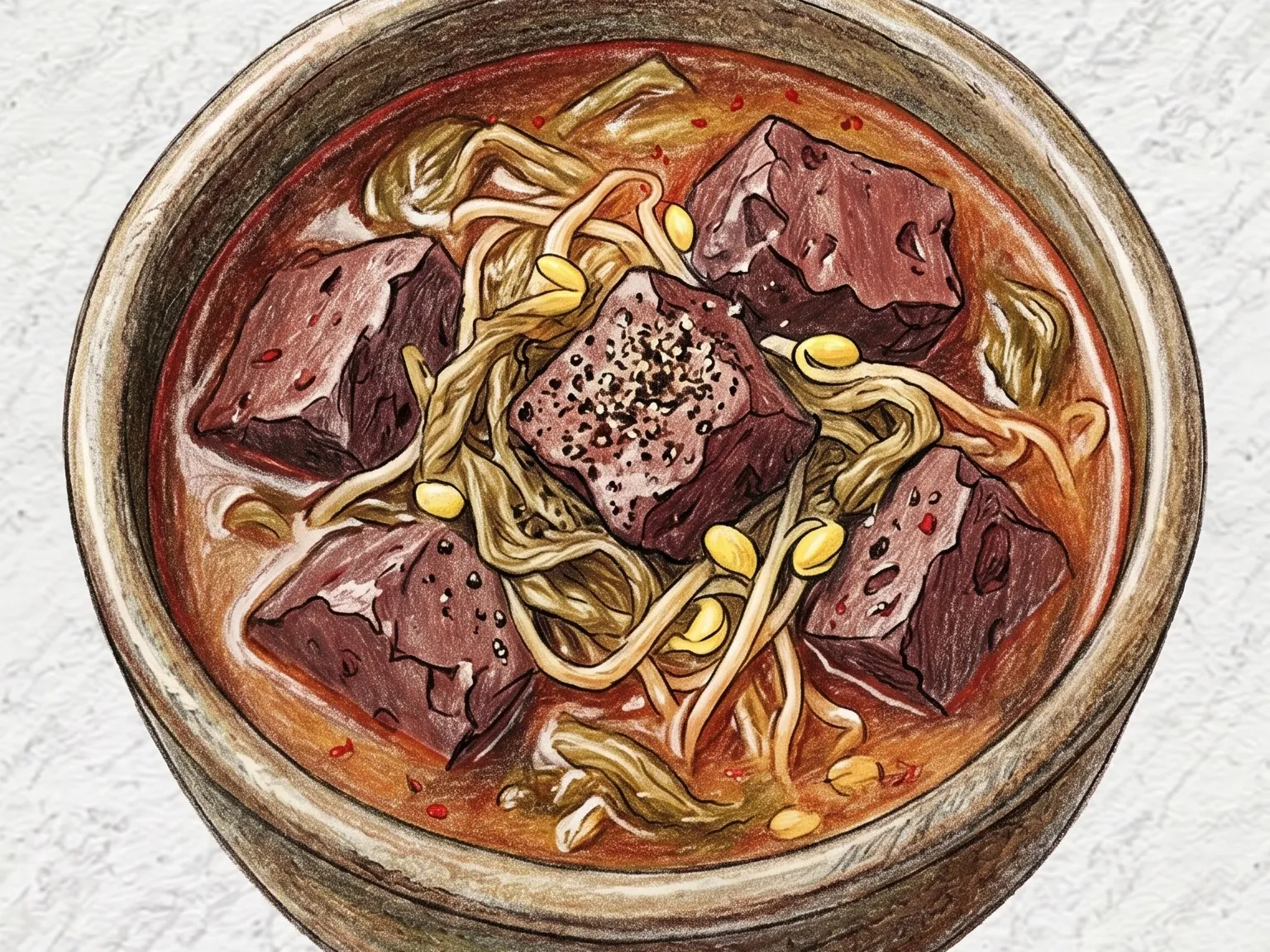
Cheonggukjang-guk is a soup where cheonggukjang -- a short-fermented soybean paste with an assertive, pungent aroma that distinguishes it from the milder doenjang -- is dissolved into anchovy-kelp stock and simmered with zucchini, onion, and tofu. The paste infuses the broth with a deep, earthy fermented quality that forms the core character of the soup. Zucchini and onion contribute natural sweetness that tempers the intensity of the fermented base, keeping the overall flavor approachable rather than overwhelming. Tofu is added partway through to absorb the broth without breaking apart, adding a soft textural contrast. Red chili flakes and sliced green onion go in at the end, lifting the finish with a gentle heat. Because cheonggukjang ferments faster and more aggressively than doenjang, its flavor is noticeably stronger -- starting with a smaller quantity and adjusting to taste is advised for first-time cooks.

Korean Braised Pork Kimchi
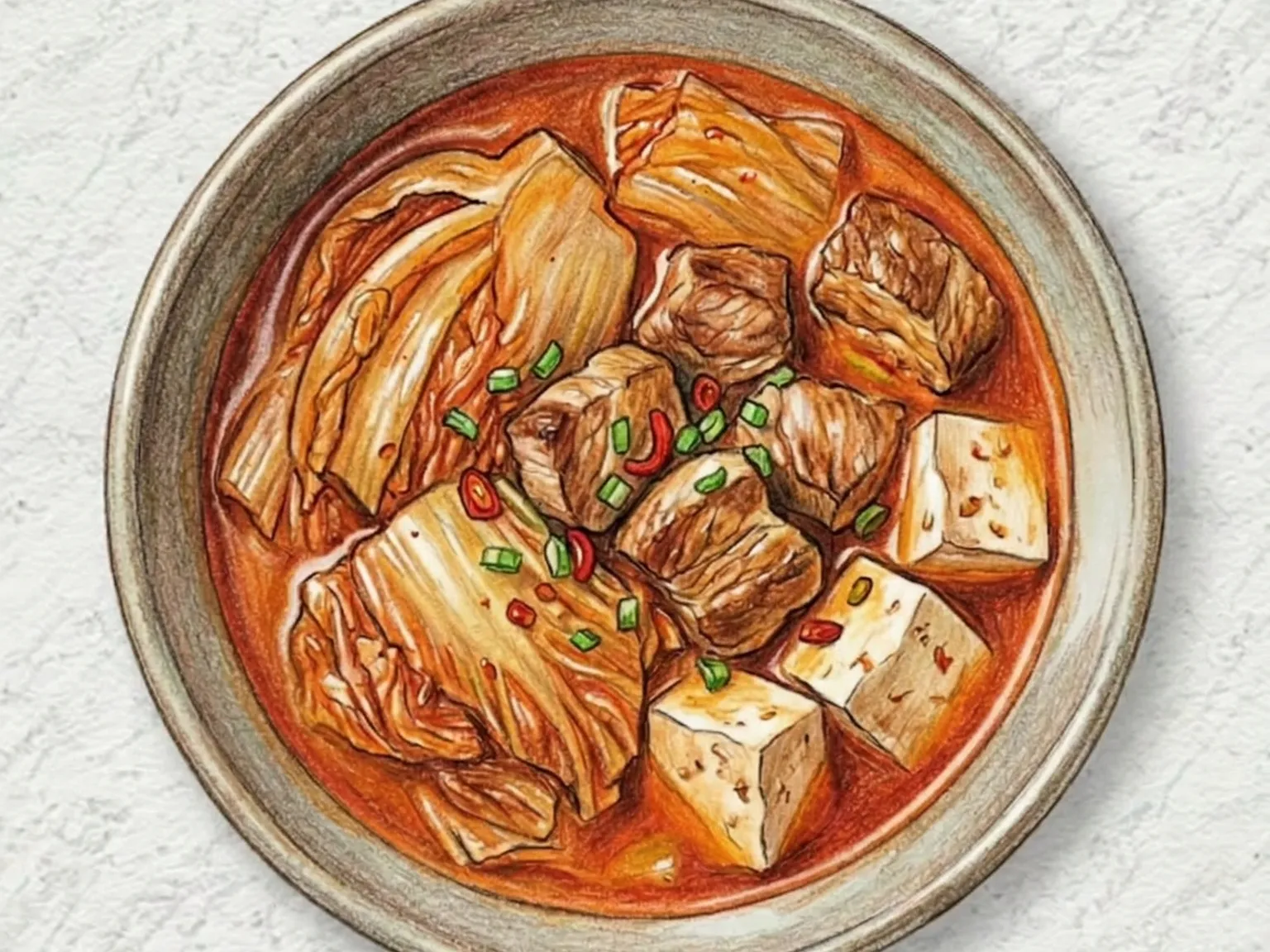
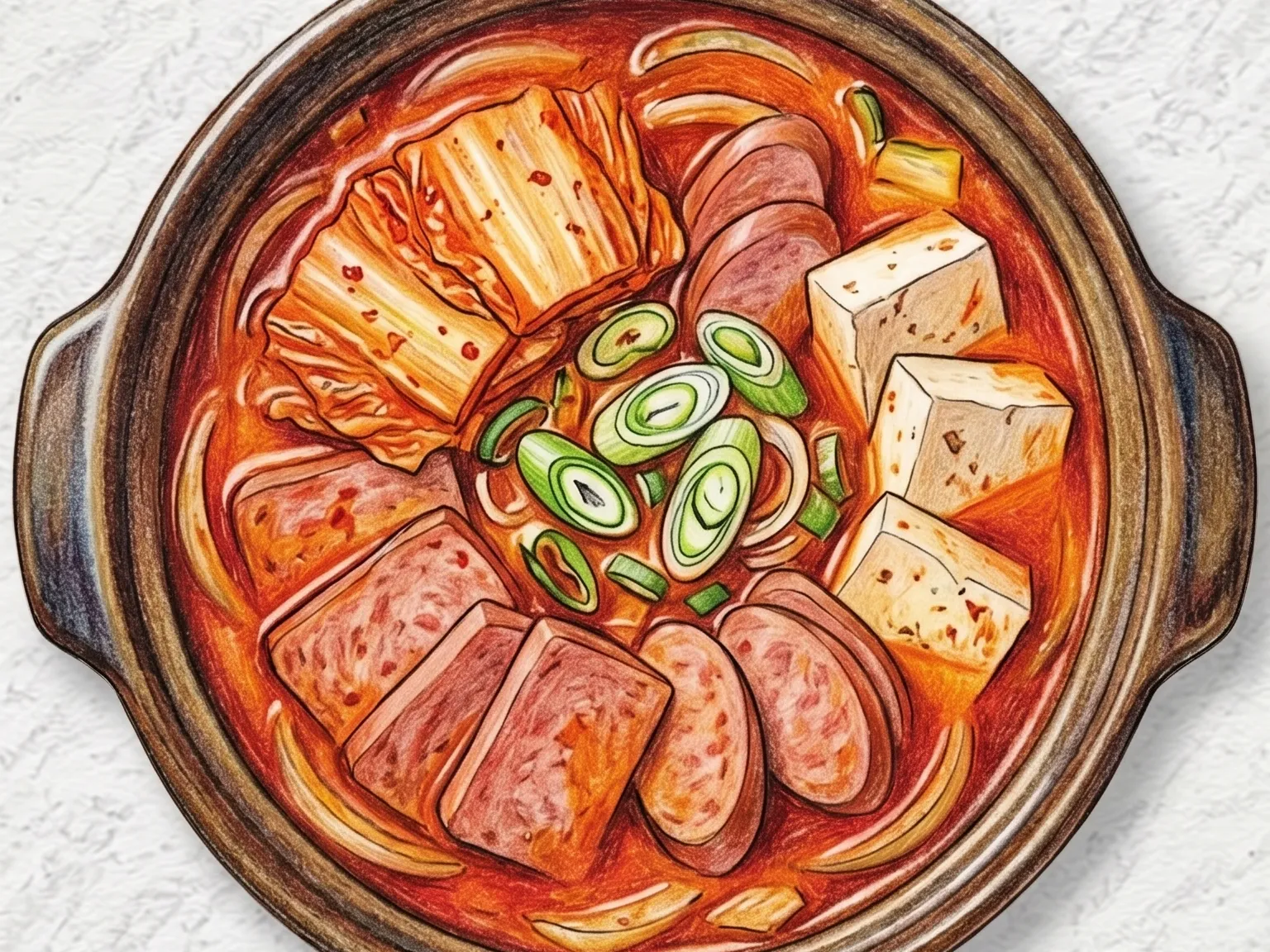
Pork kimchi jjim is a slow Korean braise where pork shoulder and well-aged kimchi are layered alternately in a pot with gochugaru, soup soy sauce, and minced garlic, then cooked at a low simmer for over fifty minutes. The kimchi's sharp, pungent fermented acidity gradually softens over the long cook but does not disappear; instead, it transforms into a complex, deep flavor that saturates the pork rather than overwhelming it. Pork shoulder is the preferred cut because its layered fat and muscle does not dry out over extended cooking and the rendered fat continuously bastes the braising liquid, enriching it throughout the process. Onion and green onion supply a natural sweetness that moderates the acidity and spice and prevents the dish from tipping into one-dimensional sharpness. Reducing the braise until only a small amount of sauce remains is important for flavor concentration, and lifting the lid periodically to turn the ingredients ensures that the top layers absorb the liquid as thoroughly as the bottom. The pork is done when it pulls apart with chopsticks with almost no resistance. Served over steamed rice with the remaining sauce spooned generously over the top, the soy and kimchi juices soak into the grain and make for a deeply satisfying and complete meal. Refrigerated leftovers eaten the following day taste noticeably better: the acidity stabilizes further overnight and the flavors integrate more fully.

Korean Spicy Chicken Skewers
Spicy dak-kkochi threads boneless chicken thigh and green onion segments onto skewers, then grills them while brushing on a gochujang-based glaze in multiple rounds. Chicken thigh meat stays moist throughout cooking due to its higher fat content, and the green onion segments sweeten and caramelize under direct heat, providing a counterbalance to the spicy sauce. The glaze -- gochujang blended with sugar, garlic, and soy sauce -- caramelizes against the hot surface to build a sticky, lacquered coating on each piece. Applying the glaze two or three times during grilling stacks distinct layers of sweet-spicy flavor that gradually penetrate deeper into the meat.

Korean Monkfish Spicy Stew
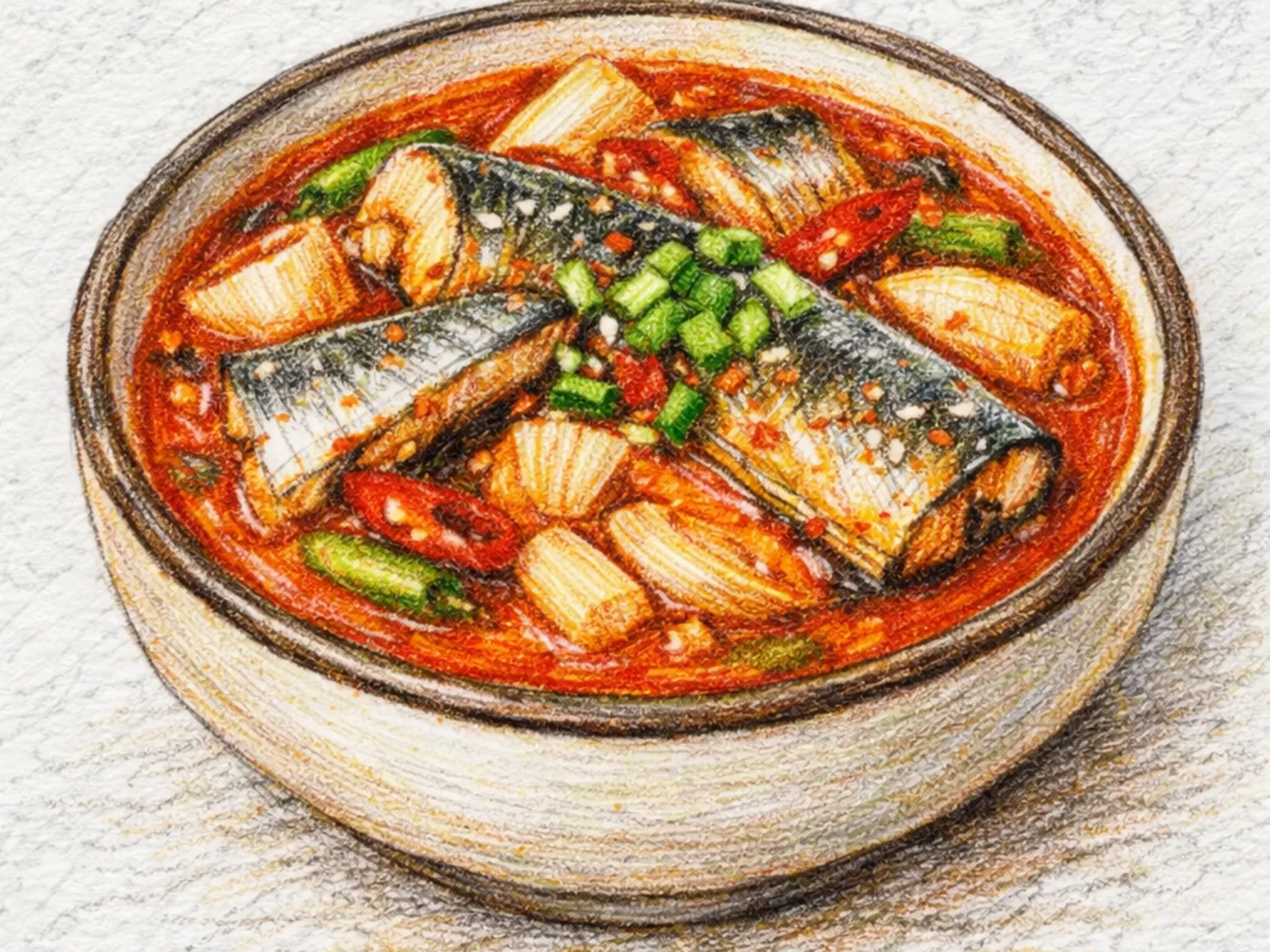
Agwi tang jjigae is a monkfish-based dish that occupies the middle ground between a clear soup and a more concentrated, heavily seasoned stew. It features a broth that is noticeably cloudier and carries a more intense flavor profile than what is typically found in either of those two distinct categories. The cooking process starts by simmering sliced radish in plain water for about ten minutes to establish a sweet and clear liquid base. After this time has passed, Korean red chili flakes and a small amount of fermented soybean paste are mixed into the pot. The soybean paste serves a specific purpose in this recipe, as it helps to neutralize any fishy smells from the monkfish while adding a foundational fermented taste to the overall broth. The monkfish is prepared over medium heat, which allows its gelatinous flesh to stay together in large, firm pieces rather than separating into flakes. To add both texture and bulk, bean sprouts are stirred into the pot to provide a crunch that balances the soft consistency of the fish. Water dropwort, which is called minari in Korean, is the final ingredient to be added. It is left to wilt in the remaining heat of the pot after the heat is reduced so that its unique herbal fragrance is infused into the liquid. Although the monkfish has a somewhat strange appearance, its flesh is thick and very sturdy, meaning it does not disintegrate even when cooked for a long period. Furthermore, the substantial layer of gelatin found under the skin melts into the soup as it simmers, providing a natural thickness to the broth without the use of any starch. When served with a bowl of hot steamed rice on a cold evening, this dish functions as a complete and satisfying meal.

Korean Young Radish Pork Stir-fry
Yeolmu-dwaejigogi-bokkeum is a spicy Korean stir-fry of pork shoulder marinated in gochujang, gochugaru, and soy sauce, cooked together with young radish greens (yeolmu). The pork is seared first over high heat for four minutes, then the greens are added on medium heat for another four minutes - just long enough to wilt without losing their fresh bite. The gochujang heat contrasts with the crisp, slightly grassy stems of the yeolmu, and sesame oil ties the flavors together at the end. It is a seasonal dish best made when young radish greens are in peak supply during summer.

Korean Aehobak Chamchi Bokkeum (Zucchini Tuna Stir-fry)
Canned tuna and Korean zucchini are among the most constant fixtures in a Korean household refrigerator, and this stir-fry is one of the most efficient uses of both. The drained tuna brings protein and a clean saltiness that requires little beyond soup soy sauce to function as seasoning - no complex paste, no long list of aromatics. Zucchini provides mild sweetness and bulk. Garlic sauteed at the start builds a foundational aromatic layer, and cheongyang chili added shortly after threads a slow-building heat through the whole dish. The critical technique is brevity: the zucchini must come off heat while the half-moon slices still hold their shape. Overcooked zucchini releases water and collapses everything into a soft, wet mass. A finish of sesame oil seals the flavors and stabilizes the banchan at room temperature, which is why this dish transfers so well to lunchboxes.

Korean Spicy Whelk Bibim Guksu
Golbaengi bibim-guksu is a cold mixed noodle dish built around chewy canned whelk tossed in a spicy-tangy sauce, widely enjoyed as a drinking snack in Korea. Gochujang and gochugaru set the heat level, while vinegar and sugar counter with a sharp sweetness, and sesame oil rounds everything out with a nutty finish. Julienned cucumber and onion contribute a crisp crunch that contrasts with the springy whelk and the slippery noodles. The somyeon must be rinsed immediately in ice water after boiling to lock in their firm, bouncy texture before mixing with the sauce. Adding a small splash of the whelk canning liquid into the sauce deepens the umami base, and rinsing the whelk itself under cold water controls the salinity.

Korean Seasoned Glasswort Salad
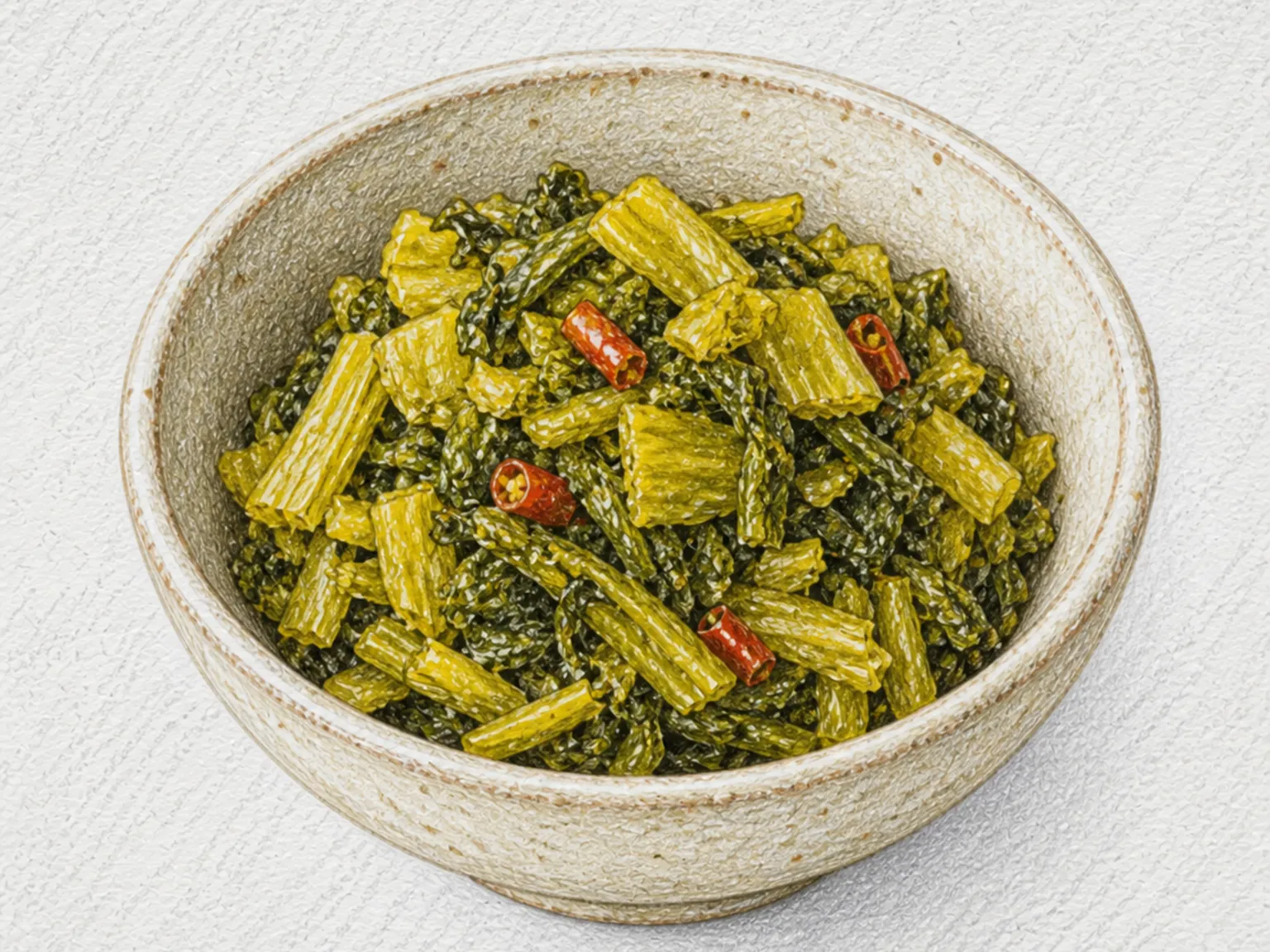
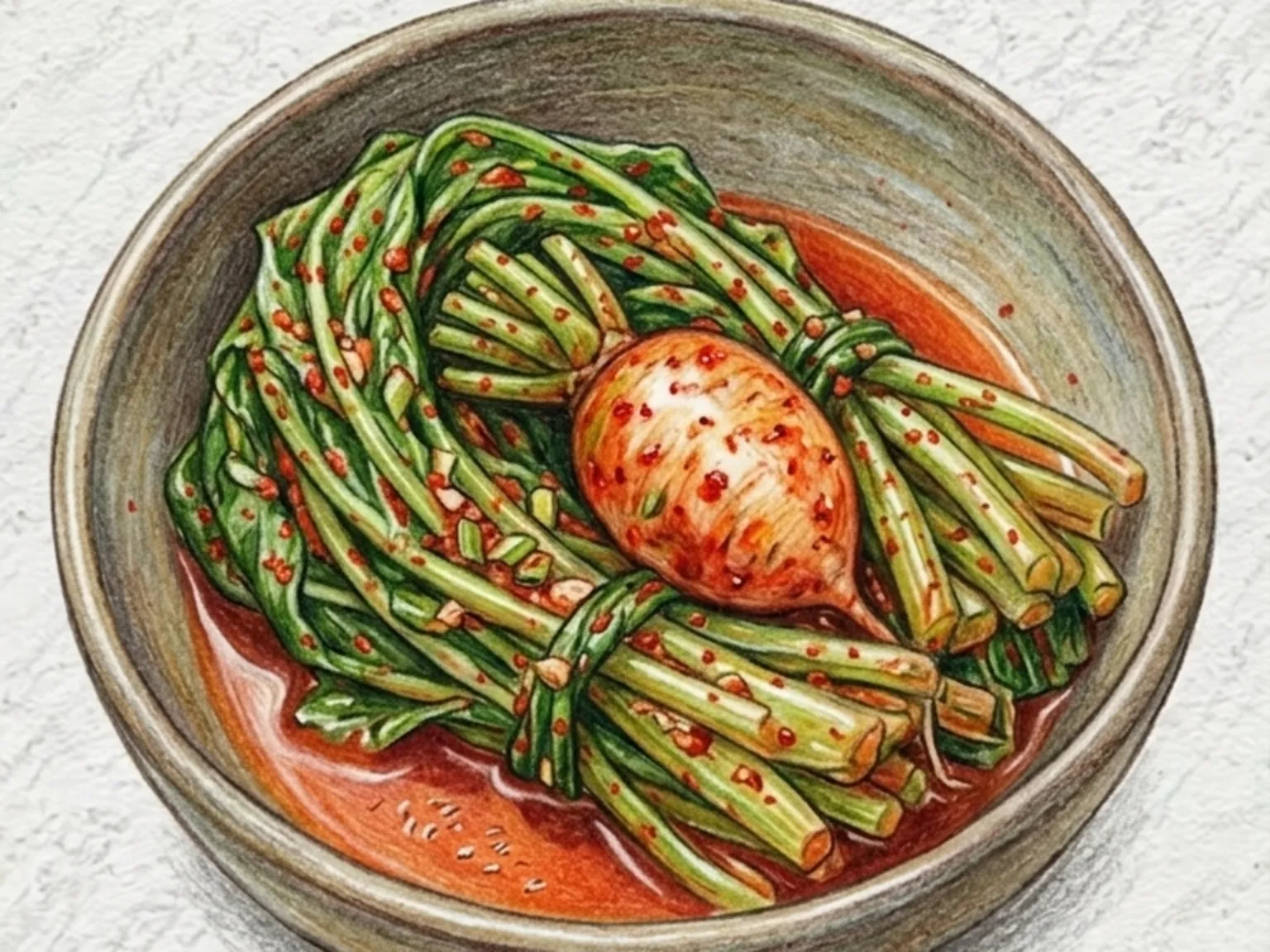
Sebalnamul-muchim features 220 grams of glasswort, a succulent coastal plant that carries a natural salinity from the tidal flats where it grows. A 10-second blanch in boiling water is enough to barely soften the thin stems while preserving their distinctive pop when bitten. The dressing of gochugaru, vinegar, plum extract, and sesame oil coats the tender shoots without masking their inherent briny flavor. Thinly sliced onion adds a sweet crunch, and the plum extract mellows the vinegar's sharpness into a rounded tartness. Because no additional salt is needed, the final seasoning relies entirely on the balance between acid, sweetness, and the glasswort's own minerality.

Korean Braised Squid with Radish
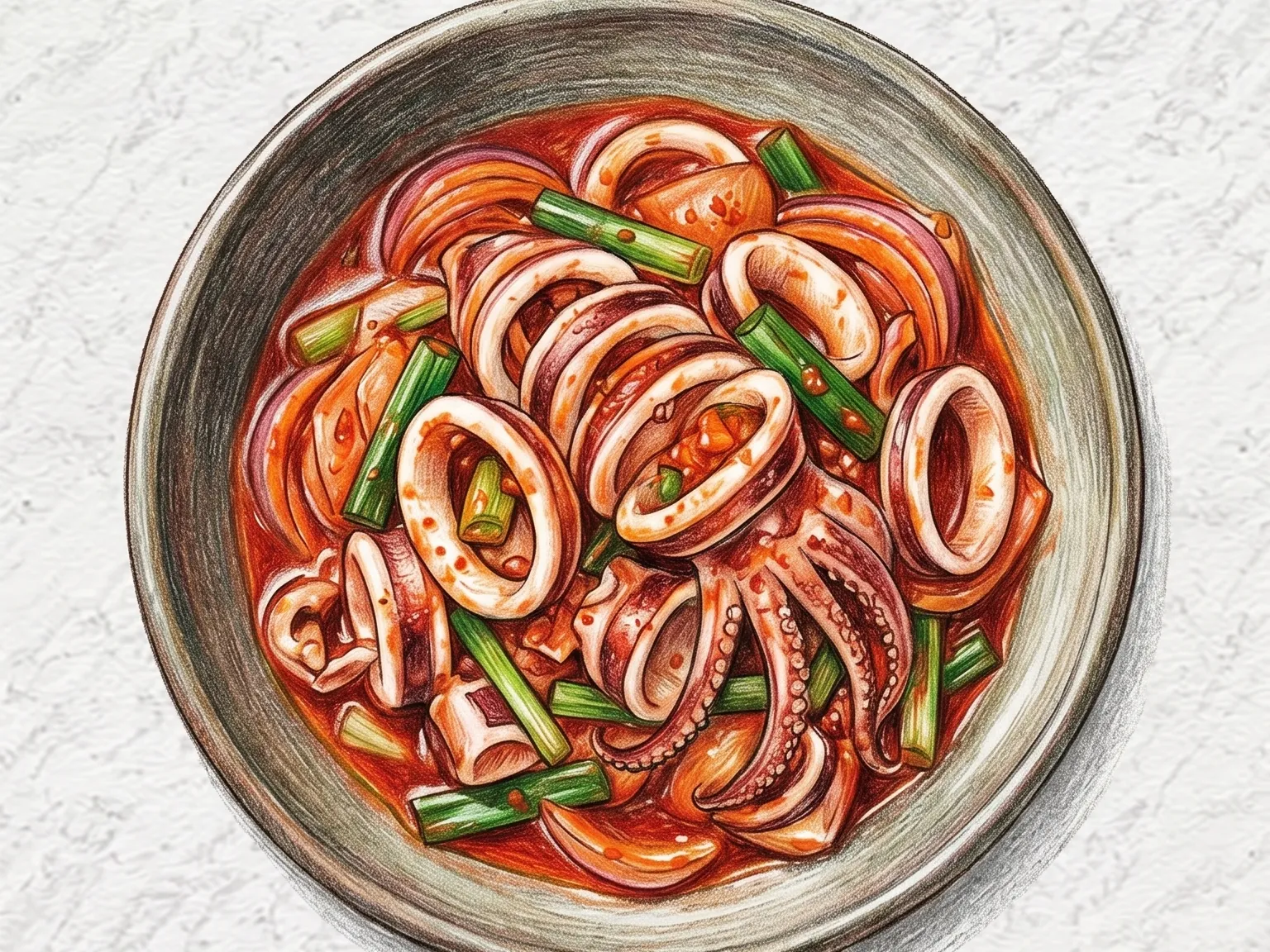
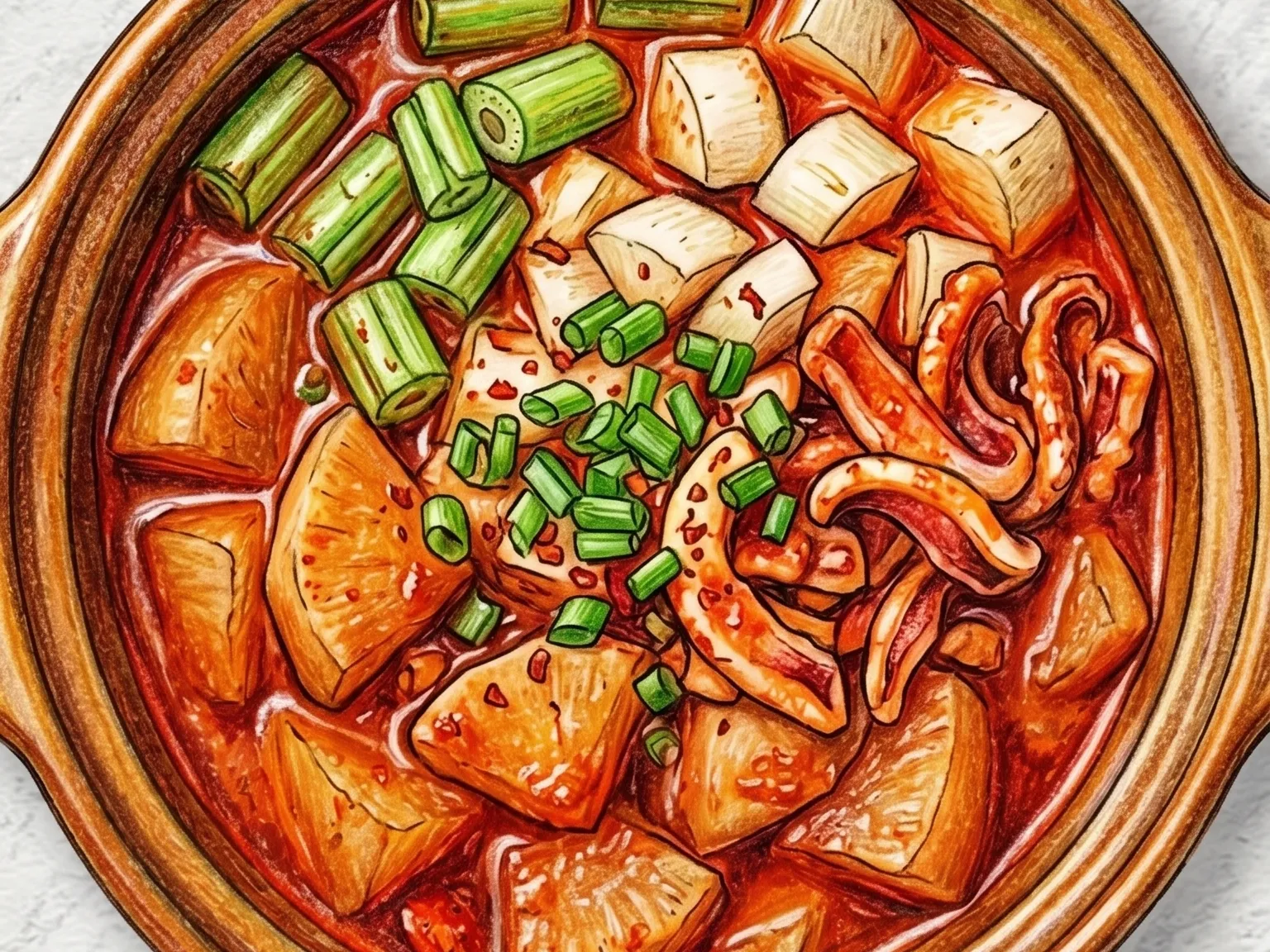
Ojingeo mu jorim is a Korean braised dish where radish is cooked first in a soy-based liquid until fully softened, then squid is added and the whole pot is reduced in a spiced sauce of gochugaru and gochujang. Giving the radish time to cook alone is the structural key to this dish: as it slowly absorbs the liquid and breaks down, it releases its natural sweetness into the broth, which merges with the salt and gentle umami of soy sauce to build the braising liquid into something more complex than its ingredients suggest. When the spice paste goes in, the resulting flavor sits at the intersection of heat and coolness - the particular sensation of Korean chili that stings without overwhelming. The single most important technique in this recipe is the timing of the squid. Squid turns rubbery when overcooked, and the window between tender and tough is narrow, so it is added only in the last five minutes of cooking. That brief time is enough for the squid to absorb the surrounding flavors while holding the springy, snapping bite that makes the dish texturally rewarding. Green onion stirred in at the finish adds a sharp herbal lift. The reduced sauce left in the pan is deliberately left shallow rather than thick, concentrated with the flavors of both the squid and the radish, and it is best used by spooning it over rice and eating everything together.