Korean Rainbow Trout Sashimi
A dish of aquacultured rainbow trout sold for raw consumption, served with shredded vegetables, roasted bean powder, and sweet chili paste sauce.
Korean Seaweed and Shrimp Pot Rice
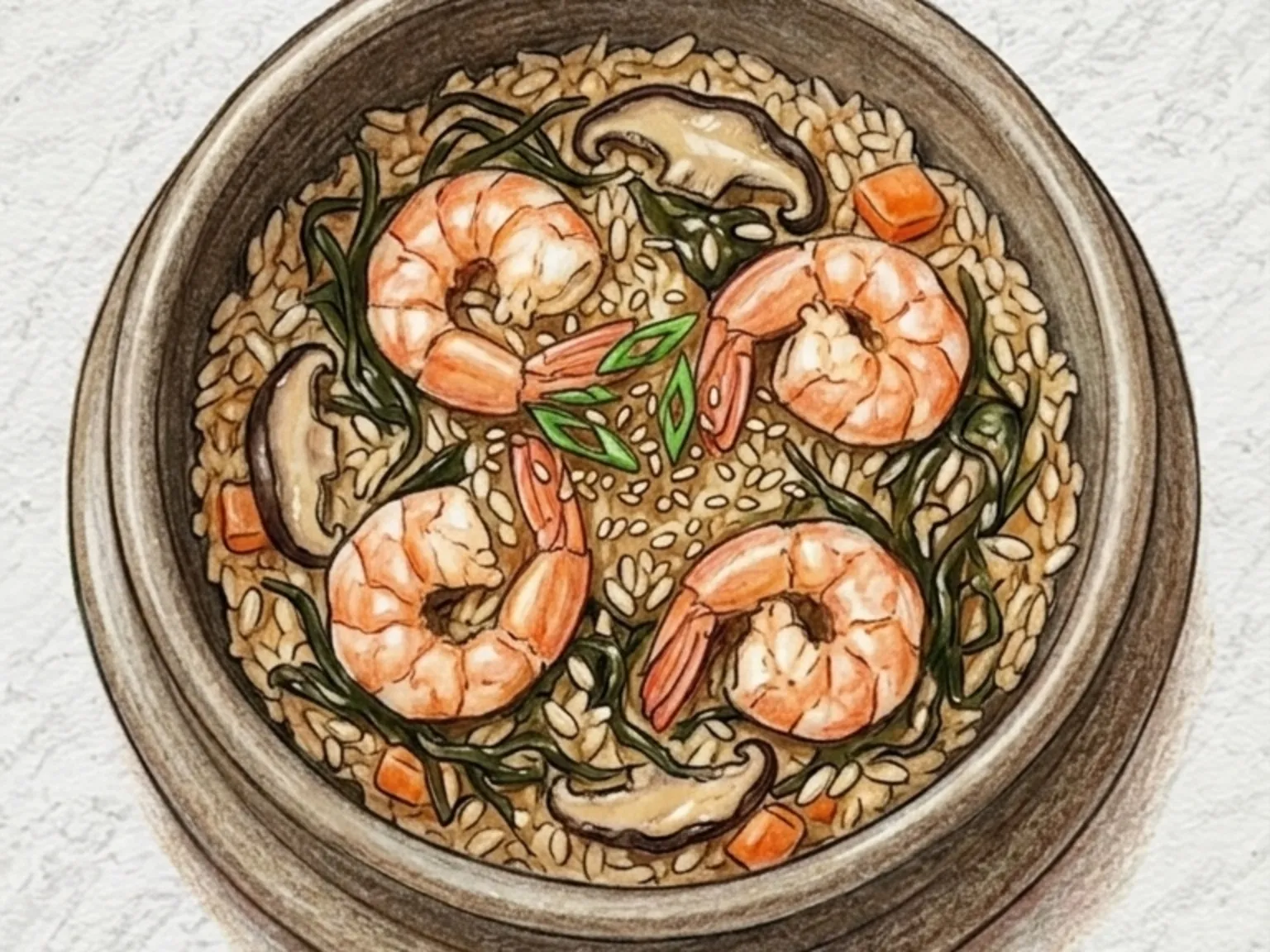
Rehydrated hijiki seaweed and whole shrimp are layered over rice in a heavy pot and cooked together so the briny ocean flavor permeates every grain. Sliced shiitake mushrooms and carrot sit beneath the seafood, lending umami depth and a mild sweetness to the base. When the lid comes off, the concentrated aroma of seaweed and shrimp fills the room. Stirring in a soy-based sauce ties the flavors together, and scraping the crispy rice crust from the bottom adds a toasty finish. Controlling resting time and grain texture helps the ingredients cook evenly while keeping the final seasoning balanced.
Korean Seasoned Bitter Lettuce
Wild sseumbagui, a bitter green foraged in Korean spring fields, is dressed in a gochujang vinaigrette that transforms its sharp bitterness into a layered, complex side dish. The intrinsic bitterness of the leaves works as a palate cleanser, and the gochujang's heat and vinegar's acidity wrap around it to build depth rather than mask it. Sugar smooths the rough edges of the combined flavors, while a drizzle of sesame oil closes each bite with a warm, nutty finish. Soaking the greens in salt water draws out enough bitterness to make them approachable without erasing the vegetal character that defines this namul. Over-soaking strips the personality entirely, leaving a flat, unremarkable green. Garlic folded into the dressing adds a pungent undercurrent, and a gentle tossing motion keeps the fragile leaves intact. The flavor progresses from bitter opening to spicy-sour middle to a sesame-scented close, a sequence that captures the taste of Korean spring.
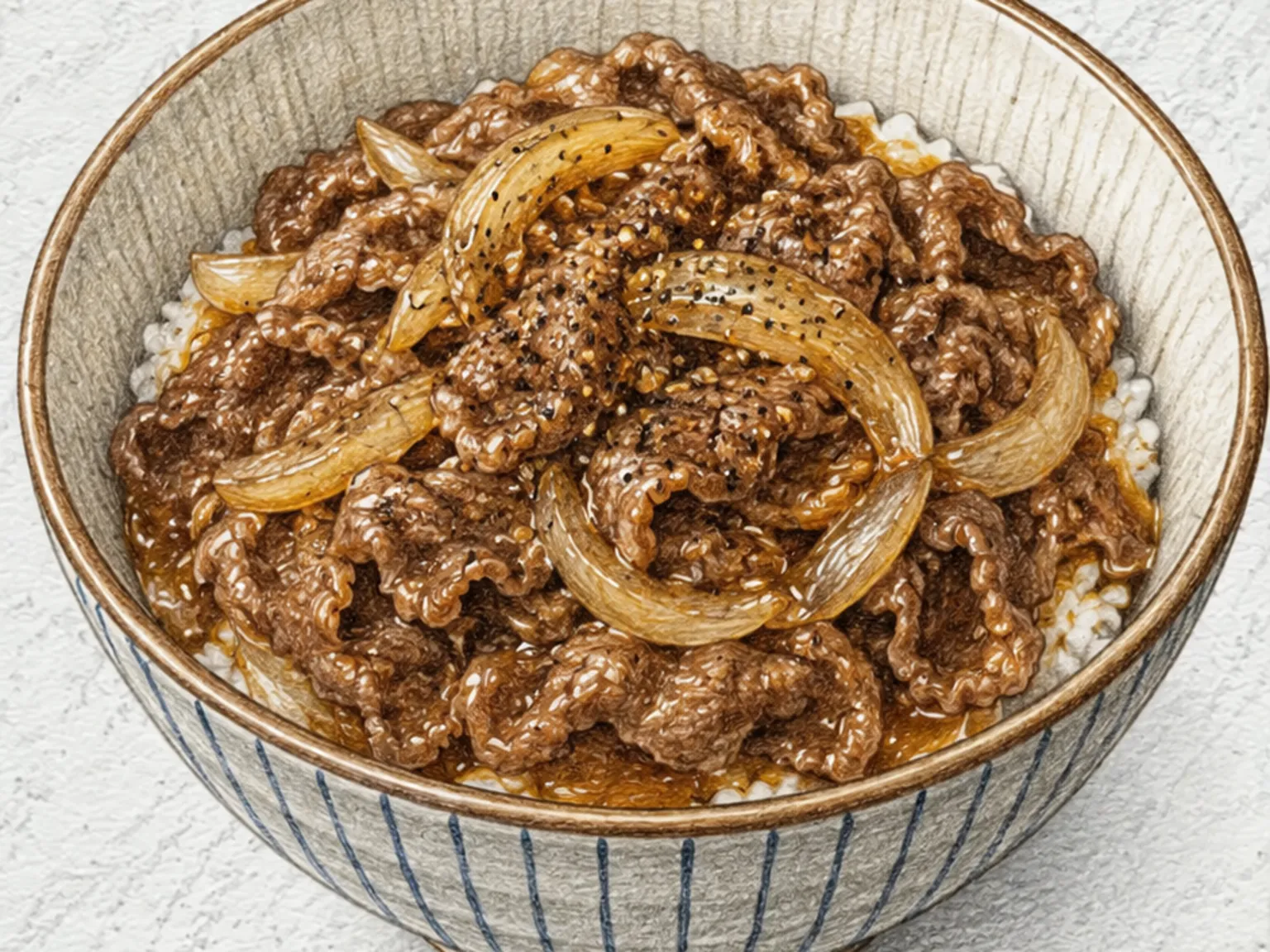
Korean Grilled Short Rib Patty Rice Bowl
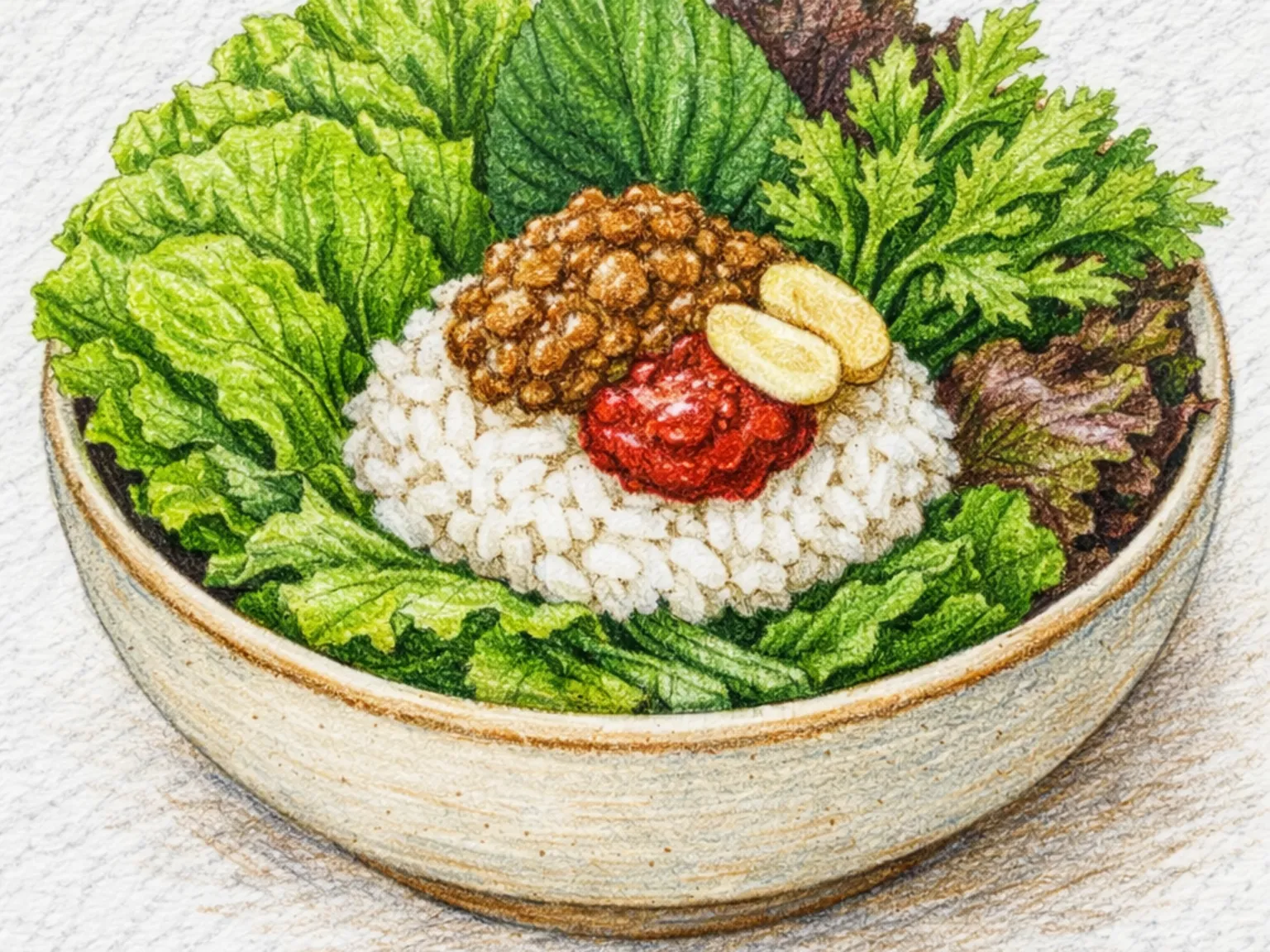
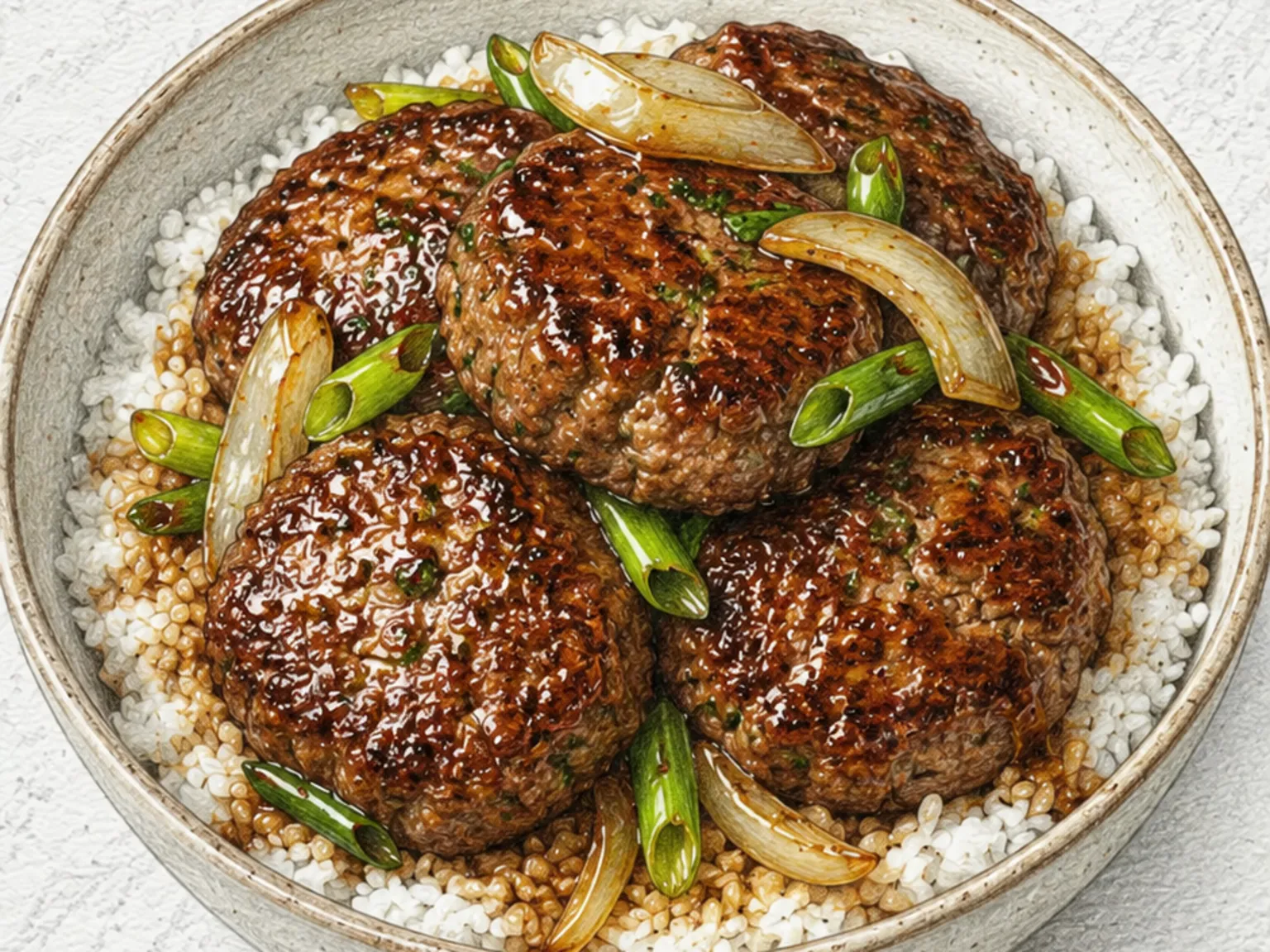
Minced short-rib meat is seasoned with soy sauce, pear juice, and sesame oil, shaped into flat patties, and pan-seared until a caramelized crust forms on both sides. The exterior turns sweet and slightly charred while the interior stays moist and full of juice. Sauteed onion and green onion are added to sharpen the meat's savory depth and bring a fragrant note. Placed over hot rice with a spoonful of the pan sauce, the patty's sweetness melds with the warm grains for a quickly disappearing bowl.
Korean Seasoned Crown Daisy Namul
Crown daisy greens are blanched for no more than ten seconds, just long enough to wilt the stems while preserving the leaves' intense herbal fragrance. This chrysanthemum-family herb carries a distinctive aroma that can overwhelm if overcooked but captivates when handled briefly. The dressing is straightforward: soy sauce provides the salty base, sesame oil contributes richness, and toasted sesame seeds burst with a nutty flavor when bitten. Through this simple seasoning, the crown daisy's slightly bitter, almost medicinal character cuts clearly, making the dish taste more vivid than its ingredient list suggests. Minced garlic and chopped green onion layer additional aromatics without competing with the main ingredient. Shocking the greens in ice water immediately after blanching locks in their bright green color, and squeezing out excess moisture before dressing prevents the sauce from diluting. The result is a namul with a clean, sharp personality that pairs well with milder dishes on a Korean table.
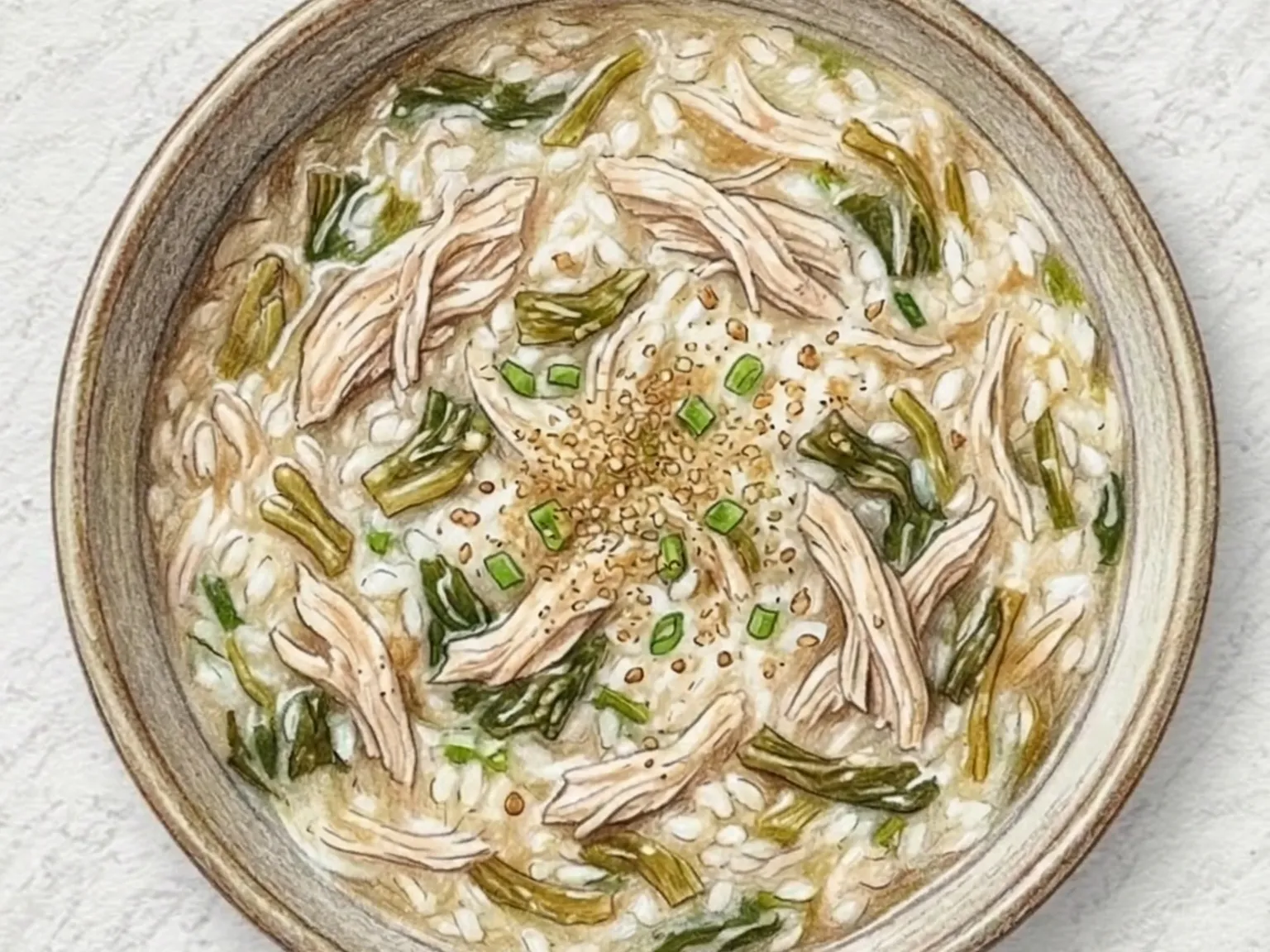
Korean Ueong Dak Juk (Burdock Chicken Porridge)
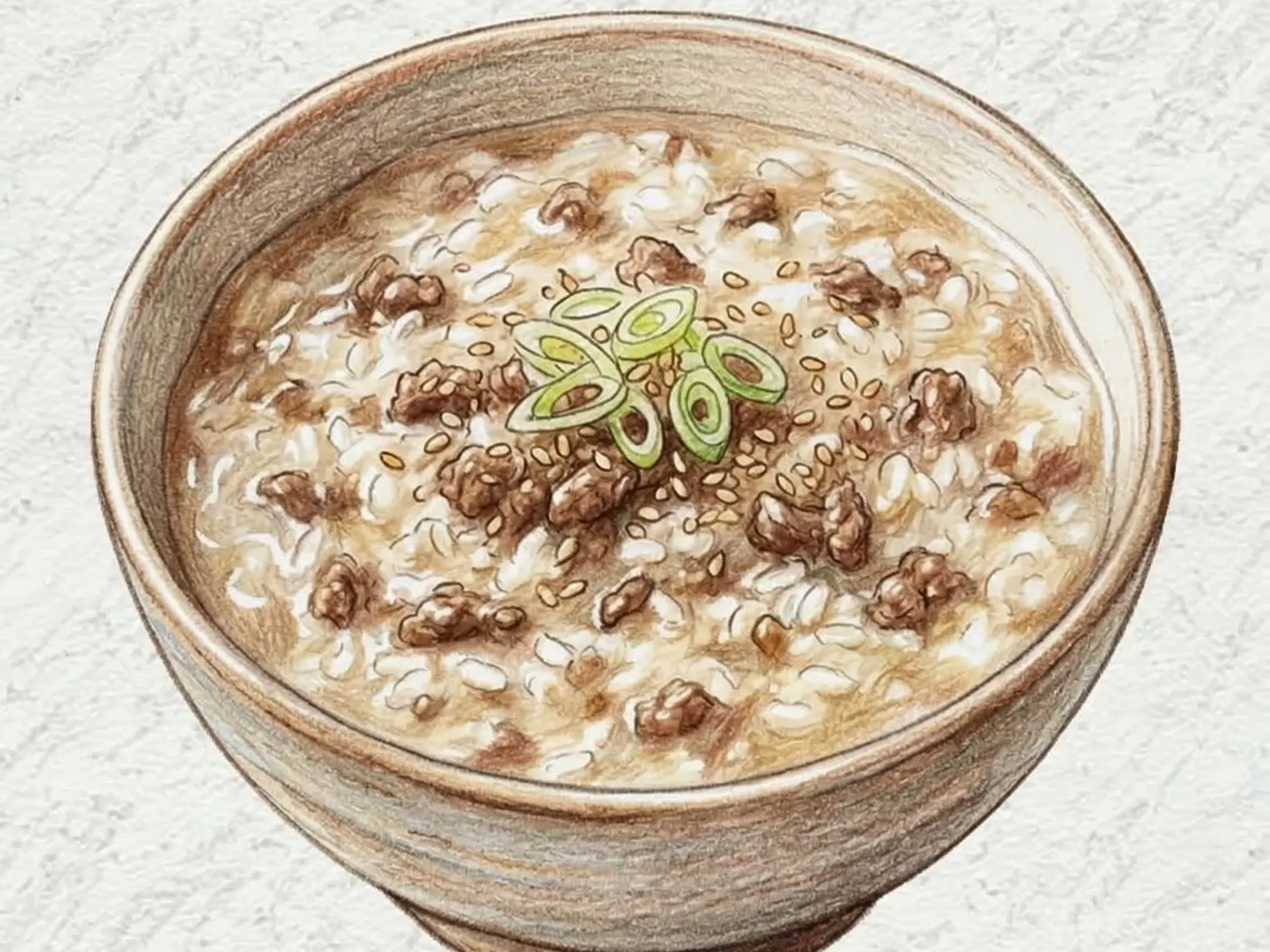
Shredded chicken tenderloin and julienned burdock root are simmered together in a long, slow cook until the porridge turns thick and smooth. The chicken releases a clean, mild broth that forms the base flavor, while the burdock contributes a subtle earthy aroma and slight crunch that adds dimension. Toasting the rice in perilla oil before adding liquid deepens the nuttiness and gives the porridge a silkier body. The result is a gentle, nourishing bowl that sits easy on the stomach. The main ingredients are Short-grain rice, Chicken tenderloin, Burdock root, and Carrot, and the recipe depends on careful handling of rice moisture and the order of toppings.
Korean Stir-Fried Mung Bean Sprouts and Mushrooms
Mung bean sprouts and oyster mushrooms are tossed together in a hot pan for a stir-fry that contrasts the sprouts' crisp snap with the mushrooms' tender chew. Speed is critical: the sprouts lose their crunch within seconds of overcooking, so the entire process finishes in under a minute once the ingredients hit the oil. Tearing the oyster mushrooms along their natural grain rather than chopping them exposes more surface area, allowing the seasoning to penetrate each strand. Soup soy sauce seasons the dish with depth while keeping the color clean and light, and minced garlic and sliced green onion provide an aromatic backbone that fills the kitchen as the pan sizzles. Sesame oil is added just before removing from heat so its fragrance survives intact, and a scattering of toasted sesame seeds supplies a nutty accent. Both ingredients release significant moisture, so either salting them briefly beforehand or ensuring the pan is blazing hot prevents the stir-fry from turning soggy.
Korean Burdock Beef Pot Rice
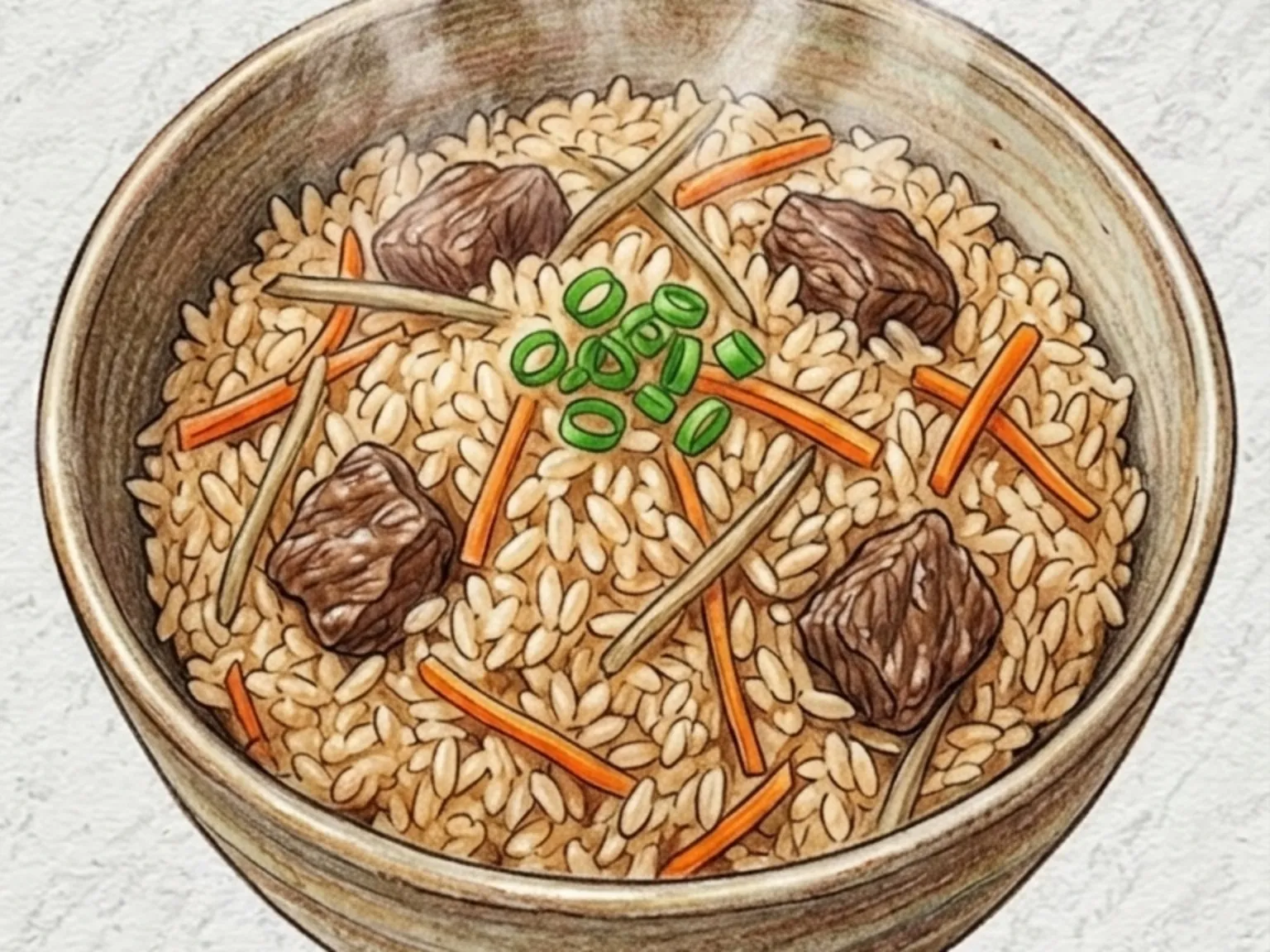
Beef is marinated in soy sauce to build savory depth, then placed on top of rice with crisp-cut burdock root and cooked together in a heavy pot. The marinated beef releases its juices during cooking, and they soak into the rice so each grain carries flavor without any extra sauce. Burdock retains its firm texture even after pot-cooking, releasing an earthy sweetness with every chew. Adding carrot brings a gentle sweetness and color that rounds out the bowl. Adding seasoning in stages makes it easier to adjust saltiness, sweetness, and heat without covering the base ingredients.
Korean Seasoned Mung Bean Sprouts
This classic Korean side dish consists of blanched mung bean sprouts seasoned with salt, sesame oil, and garlic. The sprouts are blanched in boiling water for exactly thirty seconds and immediately cooled in cold water to stop the cooking process, keeping them crisp from head to tail. Squeezing out the moisture thoroughly after cooling is essential to prevent the water from diluting the seasoning. The clean taste of the sprouts is highlighted by using only a small amount of minced garlic, while salt balances the natural sweetness. Tossed gently by hand with sesame oil, sliced green onions, and toasted sesame seeds, the dish offers a delicate nutty flavor and a light texture that pairs well with other Korean dishes.
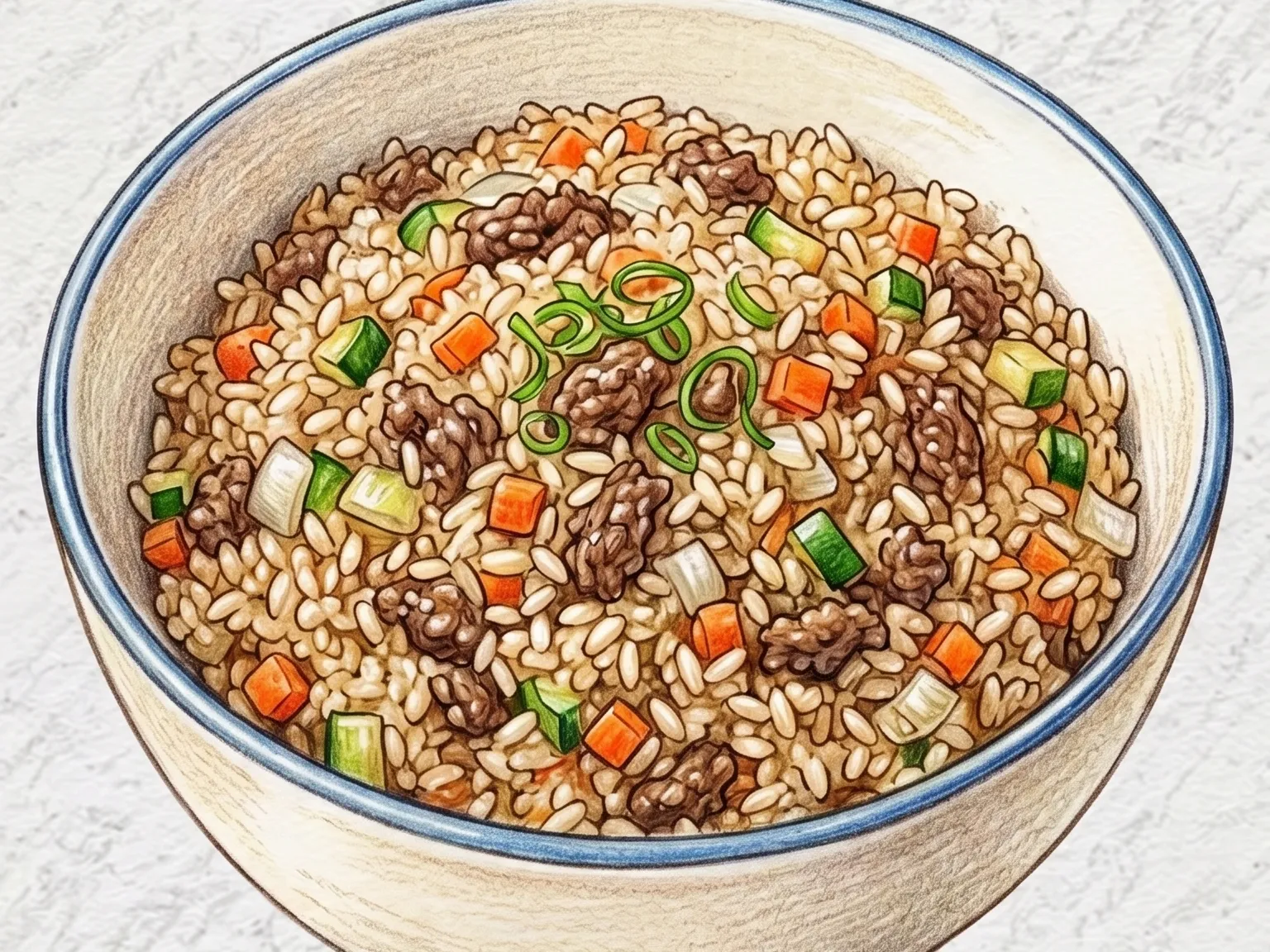
Korean Vegetable Fried Rice
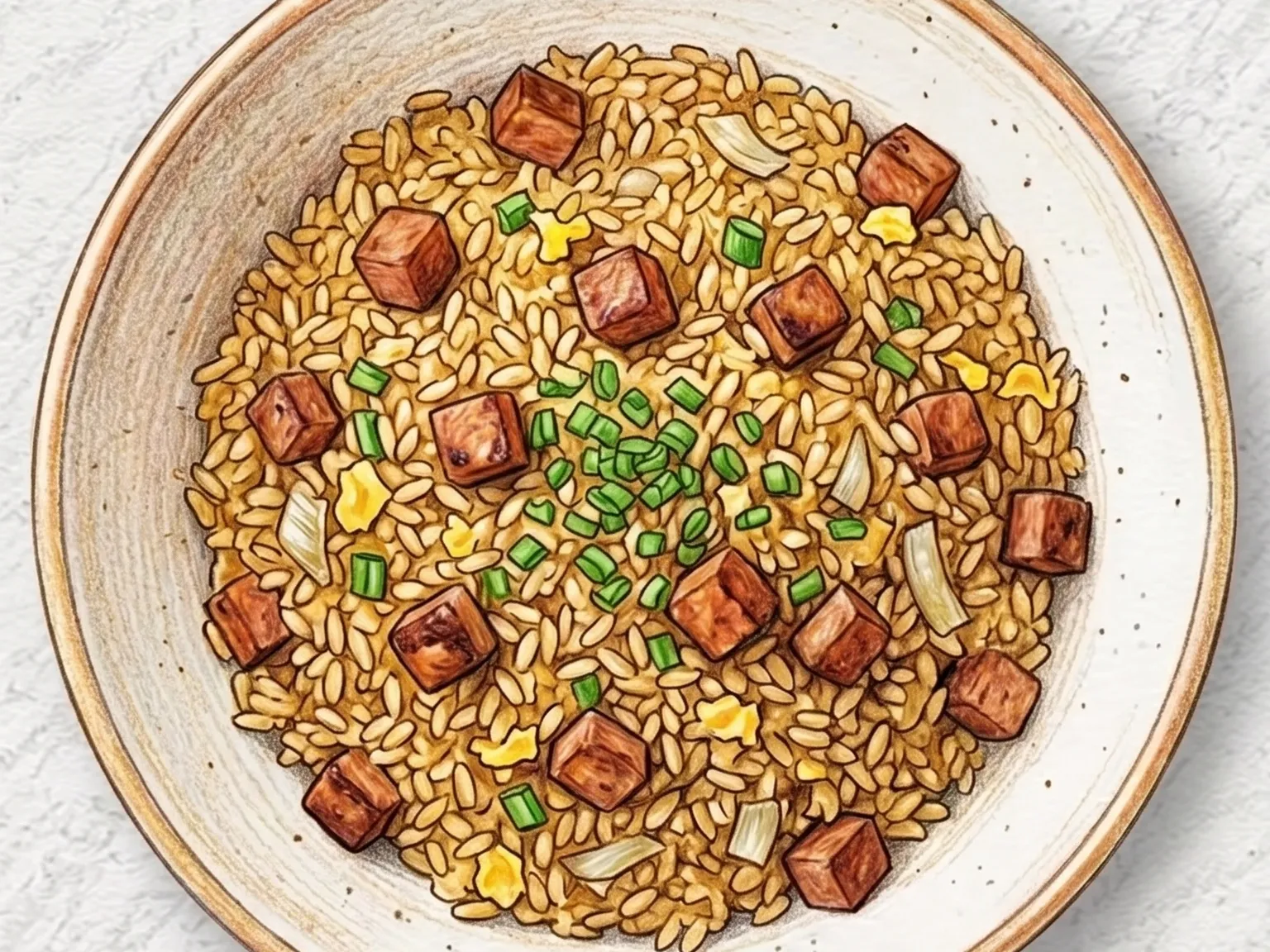
Carrots, onions, zucchini, and bell peppers are finely diced and tossed with rice in a hot wok, moving fast enough that each grain separates and picks up a light char. The vegetables release just enough moisture to keep the rice from drying out while the high heat ensures the grains stay individually distinct. Soy sauce and sesame oil provide a clean, nutty seasoning that lets the vegetable flavors come through. Topping with a fried egg or a shower of crushed nori turns this simple fried rice into a satisfying meal.
Korean Soy-Braised Whole Garlic
Peeled whole garlic cloves are simmered in a mixture of soy sauce and corn syrup until they turn glossy and deeply seasoned throughout. Raw garlic's sharp, pungent bite mellows completely during the slow braising, transforming into a gentle sweetness that merges with the soy sauce's salinity. The corn syrup reduces alongside the soy sauce, forming a lacquer-like glaze that clings to each clove and catches the light. Low heat is essential: cooking too fast browns the exterior while leaving the core hard and under-seasoned. With patience, the garlic softens to a texture resembling a roasted potato, yielding easily when pressed with chopsticks yet holding its shape on the plate. A final drizzle of sesame oil seals the surface with a warm, nutty aroma that completes the balance of salty, sweet, and rich. The finished jorim keeps well under refrigeration for over a week, making it a practical banchan to prepare in advance.
Korean Vegetable Porridge (Yachae Juk)
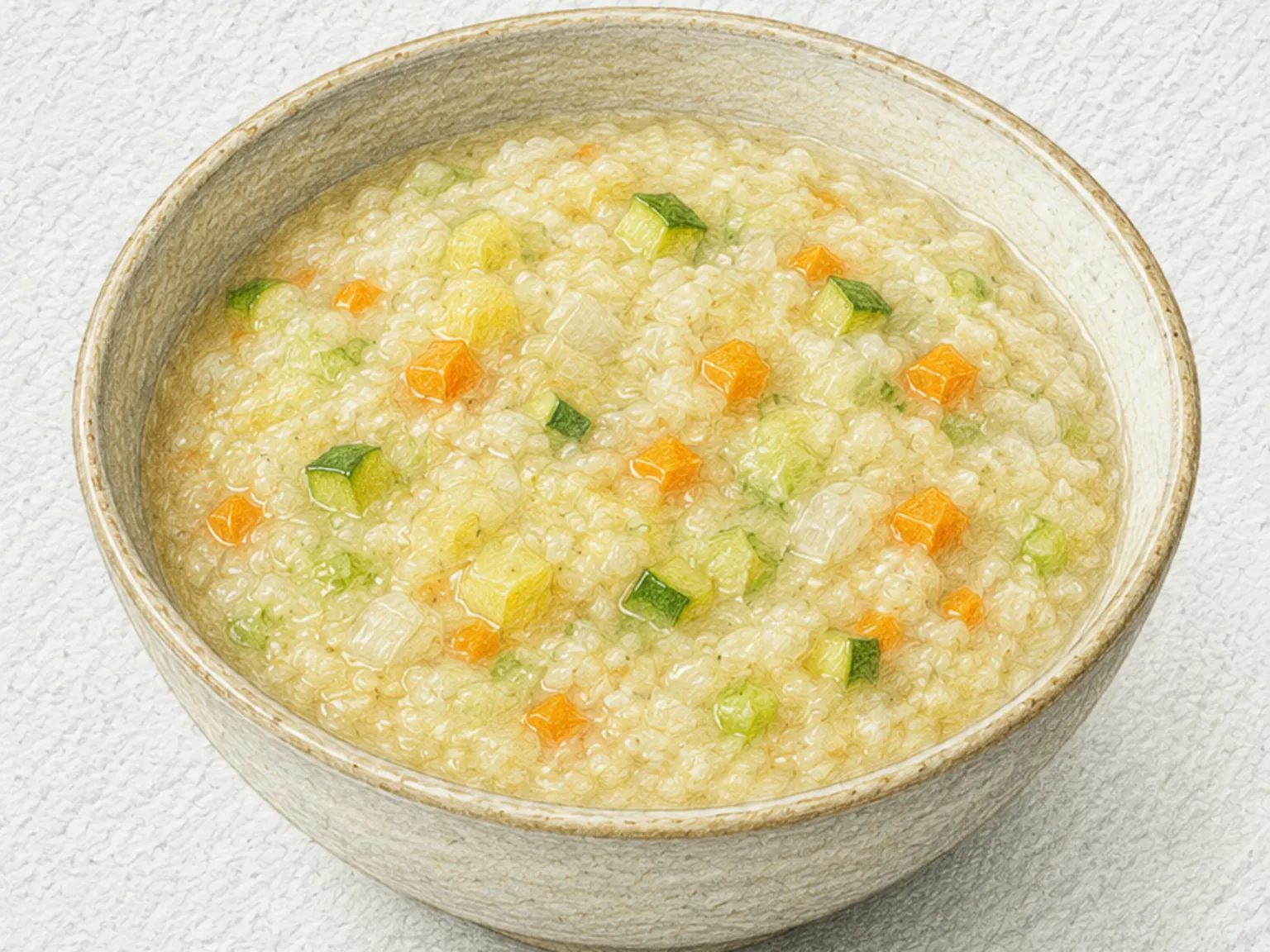
Yachae Juk is a mild, traditional Korean vegetable porridge that is easy on the stomach. The recipe uses finely diced zucchini, carrots, potatoes, and shiitake mushrooms, cooked slowly with pre-soaked rice. Preparing the vegetables in uniform, small pieces ensures they soften at the same rate to create a smooth texture. The cooking process starts by coating the soaked rice in toasted sesame oil in a heavy-bottomed pot before lightly sautéing the vegetables. Water is added, and the porridge is simmered over low heat for about thirty minutes, with regular stirring to prevent the starch from sticking to the bottom. This gentle simmering coaxes out the natural sweetness of the vegetables. A minimal seasoning of salt and soup soy sauce is added at the end to keep the vegetable broth clean and clear. It is a light, digestible dish suited for breakfast or recovery.
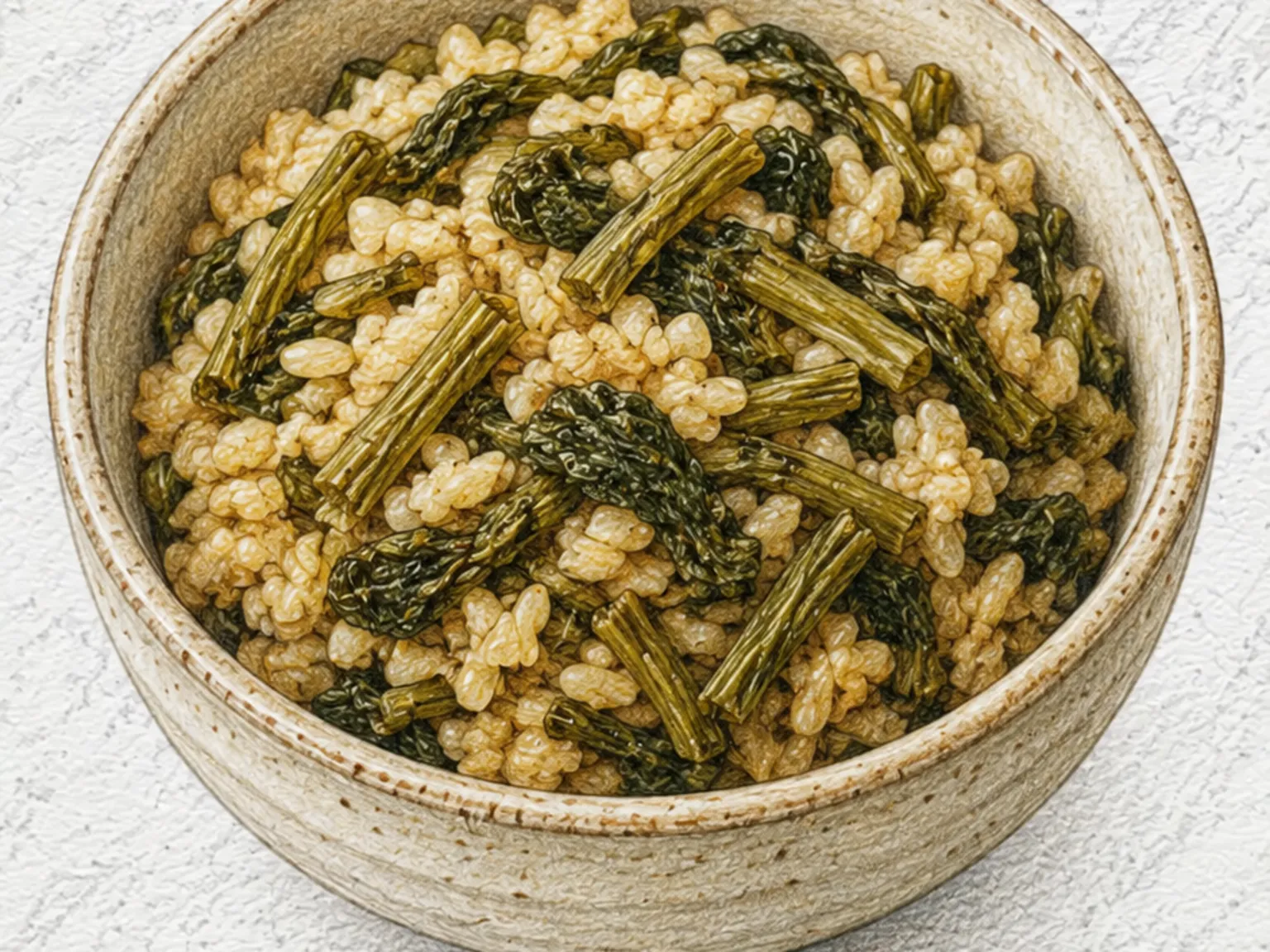
Korean Seasoned Hijiki Seaweed
Fresh hijiki seaweed is blanched and dressed in a chogochujang sauce - gochujang, vinegar, and sugar combined - that highlights the sea vegetable's briny character. Hijiki's slender, dark strands turn deeper black after blanching, and their texture firms into a distinctive pop that crunches lightly between the teeth. The dressing's tangy heat meets the seaweed's subtle ocean salinity, producing a refreshing umami interplay that makes this banchan especially appealing in warmer months. Sugar tempers the vinegar's sharpness, rounding the overall flavor into something balanced rather than aggressive. Thinly sliced raw onion mixed in adds a crisp contrast to the seaweed's softer chew, and minced garlic contributes a pungent depth beneath the sauce's bright surface. Rinsing the hijiki in cold water immediately after blanching and draining it thoroughly prevents the strands from turning tough. The finished dish is rich in iron and calcium, making it as nutritionally substantial as it is flavorful.
Korean Sweet Glutinous Rice
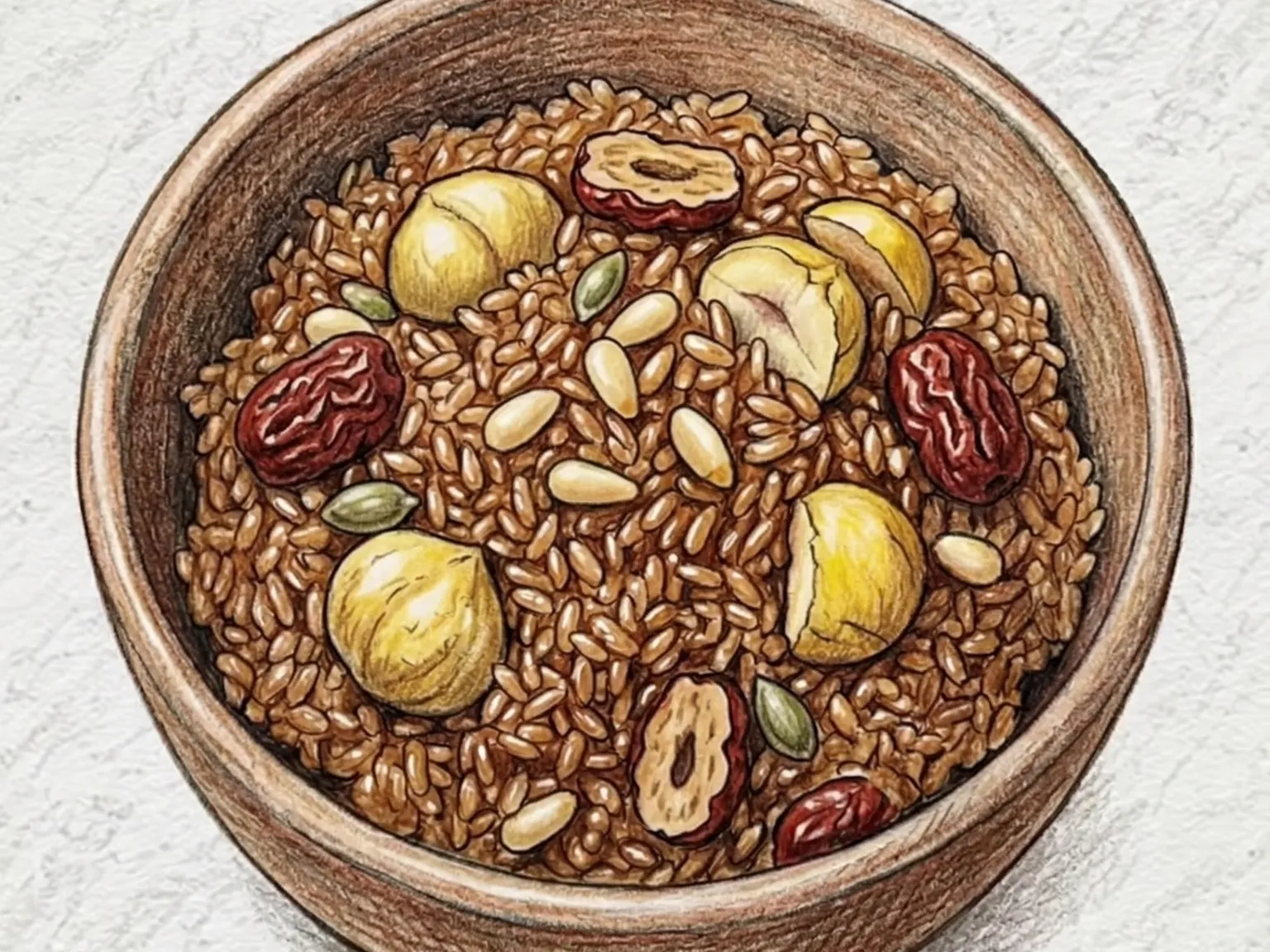
Glutinous rice is soaked, steamed, and dressed with a mixture of soy sauce, sesame oil, and honey, then studded with jujubes, chestnuts, and pine nuts before a second steaming. The double-steaming process gives the rice a dense, chewy stickiness while the soy sauce penetrates each grain and tints it a deep amber. Jujubes lend a natural caramel-like sweetness, chestnuts add a crumbly, starchy contrast, and pine nuts contribute a subtle oiliness that enriches the overall taste. Traditionally prepared for the first full moon festival, yakbap is equally enjoyable as an everyday snack or packed lunch.
Korean Stir-Fried Burdock Root
Burdock root is julienned into thin strips and stir-fried with soy sauce and Korean grain syrup until each piece is coated in a glossy, sweet-salty glaze. Burdock carries an earthy, almost woody flavor unique among root vegetables, and soaking the cut strips in vinegared water before cooking prevents oxidation and keeps the color clean. A quick initial fry in oil seals the surface and drives off moisture, preserving the root's natural crunch. Adding soy sauce and grain syrup transforms the pan into a bubbling reduction that clings to every strand as it thickens. The grain syrup's gentle sweetness softens the soy sauce's salinity into a balanced, caramelized coating, while the heat converts burdock's raw earthiness into a toasted, nutty aroma. Reducing the sauce completely yields a chewy, almost candy-like texture; leaving a trace of moisture produces a crunchier, more succulent result. The finished banchan stores well under refrigeration for a week or more, making it a practical side to prepare in bulk.
Korean Young Radish Barley Bibimbap
Barley-mixed rice has a hearty, popping texture and a nutty flavor that pairs naturally with the crisp, tart bite of freshly made young radish kimchi. The crunchy stems of the kimchi contrast with the chewy barley grains, and stirring in gochujang ties the tangy, spicy, and sweet elements together into a cohesive bowl. A spoonful of sesame oil folded in at the end adds a roasted fragrance that lifts the overall depth of flavor. This bibimbap is especially refreshing in the summer months as a cooling, appetite-stimulating meal.
Korean Braised Burdock Root
Julienned burdock root is simmered in soy sauce, sugar, and corn syrup with enough water to submerge the strips, then reduced slowly until the liquid thickens into a concentrated glaze. Unlike stir-fried burdock, this braised version cooks under a lid at moderate heat, giving the tough fibers time to soften while retaining a pleasantly chewy core. Soy sauce penetrates deep into the root during the extended simmer, establishing a salty foundation that the corn syrup then balances with a mellow sweetness. As the braising liquid reduces, the sugars begin to caramelize, darkening the color and adding a layer of complexity to burdock's naturally earthy, woody flavor. The dish is done when nearly all the liquid has evaporated and each strip glistens with a thick, lacquered coating. Vinegar added at the start prevents the burdock from discoloring and contributes a faint tartness that keeps the sweetness in check. Stored in a sealed container, the jorim remains good in the refrigerator for close to ten days.
Korean Salmon Rice Bowl (Marinated Raw Salmon over Warm Rice)
Preparing a bowl of Yeoneo deopbap begins with slicing sashimi-grade salmon and tossing it in a light dressing of soy sauce, sesame oil, and wasabi. This Korean adaptation of Japanese donburi relies on a delicate balance where the seasoning merely coats the fish rather than overwhelming its natural texture. Placing these seasoned slices over warm steamed rice creates a temperature contrast that slightly firms the bottom of the fish while keeping the center raw and buttery. Topping the bowl with shredded perilla leaves or nori adds an earthy, oceanic scent that balances the natural fats of the salmon. For a sharper profile, the amount of wasabi can be increased, or a few drops of lemon juice can be added to the soy base to provide a bright acidity. High in omega-3 fatty acids and protein, this dish also contains astaxanthin, making it a nutritious choice that demands the highest level of freshness. Including sliced avocado offers a creamy element, while a spoonful of salmon roe adds small pops of saltiness. Because the residual heat from the rice gradually cooks the fish, assembling the bowl right before eating ensures the salmon maintains its intended consistency and stays fresh on the palate.
Korean Yangbaechu Kkae Bokkeum (Sesame Cabbage Stir-fry)
Shredded cabbage, onion, and carrot are stir-fried over high heat with soup soy sauce and finished with sesame oil and a generous handful of toasted sesame seeds. Cabbage benefits from fast, hot cooking: the edges char lightly and caramelize while the interior retains its crisp bite, and the heat unlocks a gentle natural sweetness hidden in the raw leaves. Soup soy sauce seasons the vegetables with depth while keeping the finished dish pale and clean-looking, and minced garlic stirred in early fills the pan with fragrance. Carrot goes into the pan first to draw out its sugar, and as the onion softens, its moisture deglazes the surface and adds another layer of mellow sweetness. Sesame oil drizzled off-heat coats the vegetables in a nutty sheen, and the sesame seeds scattered on top provide a crunchy, aromatic punctuation with every bite. The dish is lean and uncomplicated, relying on the quality of fresh vegetables and precise timing rather than heavy seasoning, making it a banchan suited to daily meals.
Korean Lotus Root Rice (Steamed Rice with Crunchy Lotus Root Slices)
Yeongeun-bap is Korean rice cooked together with sliced lotus root, which keeps a distinctive crunch even after steaming. As the lotus root heats, its starch turns slightly sticky on the surface while the core stays firm, giving each bite a layered texture. A simple seasoning sauce of soy sauce and sesame oil is mixed in at the table. The lotus root's natural mild sweetness permeates the entire pot, making this a satisfying one-bowl meal on its own. The main ingredients are rice, lotus root, and soy sauce, and the recipe depends on careful handling of rice moisture and the order of toppings.
Yangnyeom Gejang (Korean Spicy Marinated Raw Crab)
Yangnyeom gejang coats cleaned raw crab in gochugaru, soy, syrup, garlic, and ginger seasoning and refrigerates it before serving cold.
Korean Lotus Root Chicken Porridge
Yeongeun-dak-juk is a Korean porridge that simmers diced lotus root and shredded chicken breast in a rice base. The finely chopped lotus root introduces small pockets of crunch throughout the otherwise creamy porridge. Green onion and ginger remove any gaminess from the chicken while adding a clean aroma. Since the porridge uses chicken stock as its foundation, it carries depth of flavor without heavy seasoning. The result is a light yet filling bowl suited to mornings or recovery meals. It can be served as a one-bowl meal, with simple accompaniments chosen to match the sauce, broth, or topping.
Korean Seasoned Young Radish Greens
Preparing these young radish greens requires precision during the brief blanching stage to maintain their structural integrity. A quick ten to fifteen second dip in boiling water softens the leaves while keeping the stems firm. An immediate transition to a cold water bath locks in the pale green color and stops the cooking process. After squeezing out the excess moisture, the greens are tossed with soup soy sauce, minced garlic, sesame oil, and toasted sesame seeds. The soup soy sauce provides a subtle saltiness that highlights the natural grassy essence of the vegetable. Minced garlic contributes a sharp element to the mild base, and a light coating of sesame oil ensures a smooth mouthfeel. Each bite releases the toasted scent of sesame seeds. This side dish functions effectively as a palate cleanser when served alongside spicy stews or fatty grilled meats. Its appeal lies in a clean profile that avoids heavy seasonings, allowing the fresh character of the greens to remain central.
Korean Lotus Root Shrimp Pot Rice
This pot rice pairs shrimp with lotus root, creating a contrast between the bouncy shellfish and the crunchy root vegetable. Shiitake mushroom deepens the umami layer, and garlic weaves a steady aroma throughout. Light soy sauce seasons the rice just enough to let the natural flavors of each ingredient come through. A drizzle of sesame oil at the end gives the grains a glossy sheen and nutty finish. When the lid comes off, the red of the shrimp against the white lotus root cross-sections makes for a striking presentation.