Recipes with soy sauce

873 recipes. Page 33 of 37

Buy soy sauce
Korean Seasoned Crown Daisy Namul
Side dishes Easy

Korean Seasoned Crown Daisy Namul

Crown daisy greens are blanched for no more than ten seconds, just long enough to wilt the stems while preserving the leaves' intense herbal fragrance. This chrysanthemum-family herb carries a distinctive aroma that can overwhelm if overcooked but captivates when handled briefly. The dressing is straightforward: soy sauce provides the salty base, sesame oil contributes richness, and toasted sesame seeds burst with a nutty flavor when bitten. Through this simple seasoning, the crown daisy's slightly bitter, almost medicinal character cuts clearly, making the dish taste more vivid than its ingredient list suggests. Minced garlic and chopped green onion layer additional aromatics without competing with the main ingredient. Shocking the greens in ice water immediately after blanching locks in their bright green color, and squeezing out excess moisture before dressing prevents the sauce from diluting. The result is a namul with a clean, sharp personality that pairs well with milder dishes on a Korean table.

🏠 Everyday 🍱 Lunchbox
Prep 8min Cook 2min 4 servings
Korean Garlic Scape Clam Stir-fry
Stir-fry Medium

Korean Garlic Scape Clam Stir-fry

Maneuljjong-jogae-bokkeum is a Korean stir-fry of clam meat and garlic scapes tossed quickly over high heat with soy sauce, oyster sauce, and minced garlic. The clams contribute a briny, oceanic depth that merges with the salty-sweet seasoning, while the garlic scapes, cut into 4 cm pieces and barely cooked, retain their firm, snappy crunch. Diagonally sliced red chili added partway through builds a gentle warmth without overwhelming the seafood flavor. Since clams toughen with prolonged heat, they go in last and cook for no more than 30 to 60 seconds. Finishing with a few drops of sesame oil rounds out the dish with a nutty fragrance, and a scattering of shredded green onion adds freshness to each serving.

🏠 Everyday 🍱 Lunchbox
Prep 14min Cook 9min 2 servings
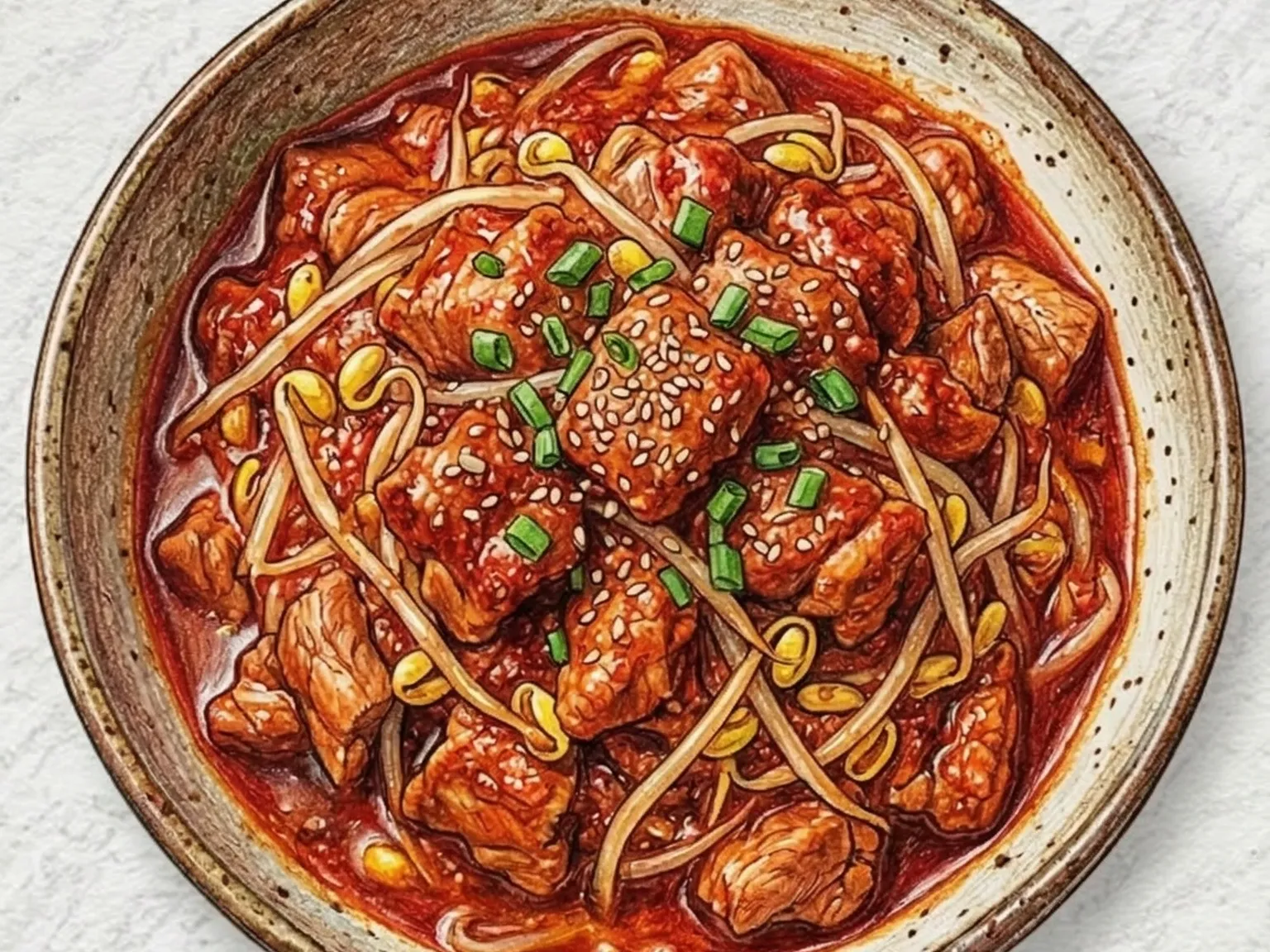
Korean Braised Pork with Garlic Scapes
Steamed Easy

Korean Braised Pork with Garlic Scapes

Maneuljjong dwaejigogi-jorim is a Korean braise of pork and garlic scapes in a gochujang, soy sauce, and gochugaru seasoning. The pork releases its juices into the sauce as it cooks, building a concentrated braising liquid that the garlic scapes absorb while retaining their characteristic crunch. Gochujang's deep warmth layers with soy sauce's umami into a compound seasoning, and the garlic scapes' mild pungency cuts through any heaviness from the pork fat. Mixed over rice, the sauce, meat, and vegetables come together into a filling, well-rounded meal.

🍱 Lunchbox 🏠 Everyday
Prep 15min Cook 25min 2 servings
Sudarefu Gomazu-Ae (Dried Wheat Gluten with Sesame Vinegar)
Side dishes Easy

Sudarefu Gomazu-Ae (Dried Wheat Gluten with Sesame Vinegar)

Sudarefu gomazu-ae is a Yuki City dish made by soaking heavily salted dried sudarefu overnight, rinsing out the salt, cutting it into 1 cm strips, and dressing it with toasted sesame ground halfway smooth, vinegar, sugar, and soy sauce. Pickled red ginger provides a sharp colored garnish. Yuki sudarefu is produced by adding flour back to extracted wheat gluten, kneading and rolling it thin, salting and boiling it, then drying it in sunlight over a bamboo screen. The screen pattern and salted drying method create a firmer bite and longer keeping quality than ordinary fresh fu. It was used in Buddhist vegetarian food around temples and the former castle town and was already valued by the late Edo period. Because production required extensive handwork, families reserved it for weddings, funerals, festivals, Obon, and other gatherings.

🎉 Special Occasion
Prep 15min Cook 5min 4 servings
Korean Water Parsley Beef Stir-Fry
Stir-fry Easy

Korean Water Parsley Beef Stir-Fry

Minari-sogogi-bokkeum pairs thinly sliced beef - briefly marinated in soy sauce - with water parsley, finishing the stir-fry with sesame oil. The beef provides a savory foundation, while minari's distinctive herbal sharpness cuts through the richness, leaving a clean aftertaste. Because water parsley wilts rapidly, it is added in the final moments and tossed for only a few seconds to preserve both its crunch and fragrance. The seasoning is deliberately minimal - just soy sauce, garlic, and sesame oil - letting the contrast between the two main ingredients speak for itself.

🏠 Everyday 🌙 Late Night
Prep 10min Cook 10min 2 servings
Korean Soy-Braised Quail Eggs
Steamed Easy

Korean Soy-Braised Quail Eggs

Mechurial-jangjorim is a Korean soy-braised quail egg dish simmered slowly with garlic cloves and shishito peppers in a seasoned soy sauce base. As the eggs steep in the braising liquid, the soy works its way through the egg white and gradually into the yolk, staining the exterior a deep mahogany brown and seasoning the interior evenly throughout. The braising liquid is built from a measured ratio of water, soy sauce, sugar, and cooking wine to keep the saltiness in check and the glaze balanced. Whole garlic cloves soften gently in the liquid and release a mellow, savory depth that enriches the overall flavor without sharpness. Shishito peppers are added partway through rather than at the start so they retain some snap and their mild green aroma, preventing them from going completely soft. The liquid is reduced until just a small amount remains, coating each egg in a glossy, concentrated glaze. Each egg is a single self-contained bite, which makes this banchan a staple in lunchboxes and a popular snack for children, and it remains one of the most recognizable everyday Korean side dishes.

🏠 Everyday 🎉 Special Occasion
Prep 20min Cook 25min 4 servings
Suizen (Rice and Agar Noodle Jelly)
Side dishes Hard

Suizen (Rice and Agar Noodle Jelly)

Suizen is a ceremonial food from Wajima in Ishikawa made by simmering tengusa agar seaweed with a little vinegar, straining it, combining the extract with soaked rice ground into a fine slurry, and cooking it again before setting it in a mold. The firm jelly is sliced to 4 or 5mm or pressed into slender strips and arranged like a flower. A sweet-savory sauce of black sesame, brown sugar, miso, soy sauce, and kombu dashi accompanies it. Agar firmness and rice-starch softness meet in one bite, traditionally presented in Wajima lacquerware for Buddhist memorials and funerals.

🎉 Special Occasion 🥗 Light & Healthy
Prep 30min Cook 45min 2 servings
Korean Stir-fried Pork with Seaweed Stems
Stir-fry Easy

Korean Stir-fried Pork with Seaweed Stems

Miyeokjulgi-dwaejigogi-bokkeum stir-fries thinly sliced pork shoulder - pre-marinated in soy sauce and cooking wine - together with desalted seaweed stems, onion, and garlic. The pork is seared quickly over high heat to stay soft, then the seaweed stems join with the remaining seasoning for a fast 2-3 minute finish. The core appeal lies in the textural contrast: yielding pork against the crunchy, slightly rubbery stems that absorb the salty-sweet sauce. A final drizzle of sesame oil and a sprinkle of toasted sesame seeds round out the dish.

🥗 Light & Healthy 🏠 Everyday
Prep 18min Cook 10min 2 servings
Braised Pork Belly with Preserved Mustard Greens
Steamed Hard

Braised Pork Belly with Preserved Mustard Greens

Meicai kourou is a Hakka Chinese dish of parboiled pork belly that is seared with soy sauce for color, then layered with preserved mustard greens and steamed for over an hour. The prolonged steaming renders the fat translucent and meltingly soft, while the fermented, salty greens infuse the meat with their concentrated flavor. When inverted onto a plate, the neatly stacked slices glisten under the braising sauce. It is a centerpiece dish meant for sharing, with the sauce spooned over steamed rice to capture every layer of richness.

🎉 Special Occasion
Prep 35min Cook 90min 4 servings
Tamagoyaki (Sweet Edo-Style Rolled Omelet)
Side dishes Medium

Tamagoyaki (Sweet Edo-Style Rolled Omelet)

Tamagoyaki is a Tokyo rolled omelet made by mixing eggs with bonito dashi, sugar, salt, and soy sauce. One quarter of the mixture is spread thinly in a rectangular pan, rolled while still softly set, and the process repeats four times to build a thick layered log. This Edo-style formula is sweeter and more lightly browned than Kansai dashimaki, with clear bonito aroma and resilient layers. Reapply only a thin film of oil before every pour and let fresh egg run underneath the previous roll so the layers join. Shape the hot omelet in a bamboo mat, confirm its center reaches at least 71C, then cool briefly before slicing.

🍱 Lunchbox 🏠 Everyday
Prep 8min Cook 10min 2 servings
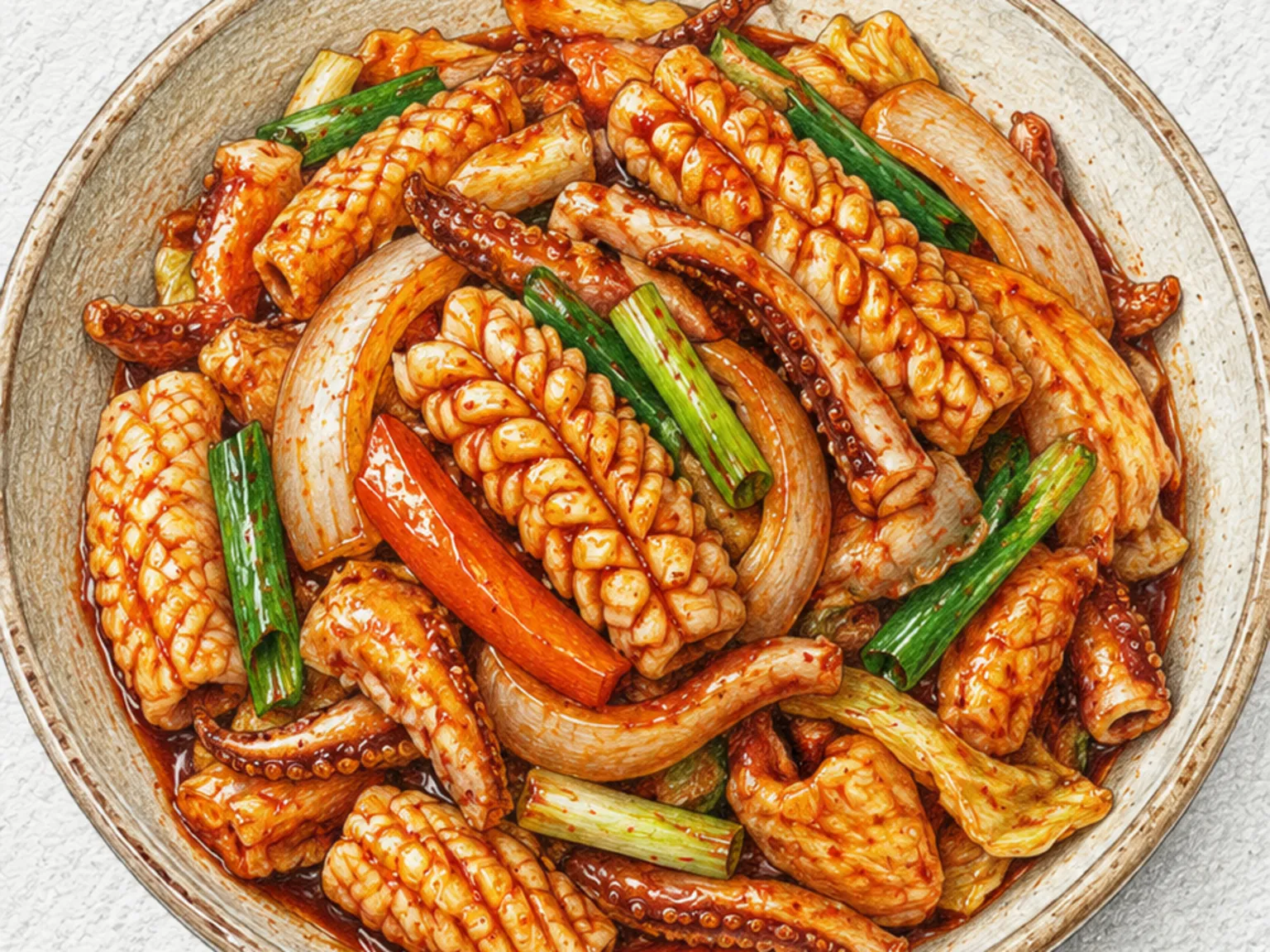
Korean Spicy Octopus Stir-fry
Stir-fry Medium

Korean Spicy Octopus Stir-fry

Muneo-bokkeum is a Korean stir-fry of pre-boiled octopus pieces cooked on high heat with onion, carrot, and scallion in a sauce built from gochujang and soy sauce. Because the octopus arrives already cooked, two to three minutes of high-heat stir-frying is the target window - enough time to heat the pieces through and coat them in the seasoning without pushing the texture past springy into tough. The sauce brings spice from the gochujang and saltiness from the soy sauce, and that combination lifts the naturally clean, mild flavor of the octopus without masking it. Vegetables are pulled from the pan while they still carry some bite, which sets up a textural contrast against the dense, elastic chew of the octopus. Sesame oil goes in at the very end as a finishing drizzle, adding a nutty, aromatic layer that ties the dish together. It works as a rice side dish or as an anju pairing alongside drinks.

🏠 Everyday 🍱 Lunchbox
Prep 20min Cook 10min 2 servings
Braised Butterbur Stems
Steamed Easy

Braised Butterbur Stems

A side dish of crunchy butterbur stems simmered in a soy sauce mixture until the savory flavor penetrates to the core. The bitter vegetable and salty soy sauce pair together subtly.

🏠 Everyday
Prep 80min Cook 25min 4 servings
Tokishirazu no Yakizuke (Soy-Marinated Spring Salmon)
Side dishes Medium

Tokishirazu no Yakizuke (Soy-Marinated Spring Salmon)

Sake no yakizuke is a Hokkaido specialty using tokishirazu salmon caught along the coast from spring into summer. Four salmon portions marinate for half a day in soy sauce and sake, then grill while early coats of marinade build a glossy surface. Tokishirazu differs from ordinary autumn salmon returning to spawn: it is caught young during migration, before fat and nutrients move into roe or milt, so the flesh stays especially rich and soft. A fresh moderately fatty salmon fillet works when tokishirazu is unavailable. Families served the dish with sekihan during the June Hokkaido Shrine Festival, and it remains suitable both for rice and drinks. Marinade that touched raw fish is used only during the early cooking stage, and the final minutes cook without further brushing until the center is safe.

🏠 Everyday 🍺 Bar Snacks
Prep 15min Cook 15min 4 servings
Korean Mushroom and Vegetable Stir-Fry
Stir-fry Easy

Korean Mushroom and Vegetable Stir-Fry

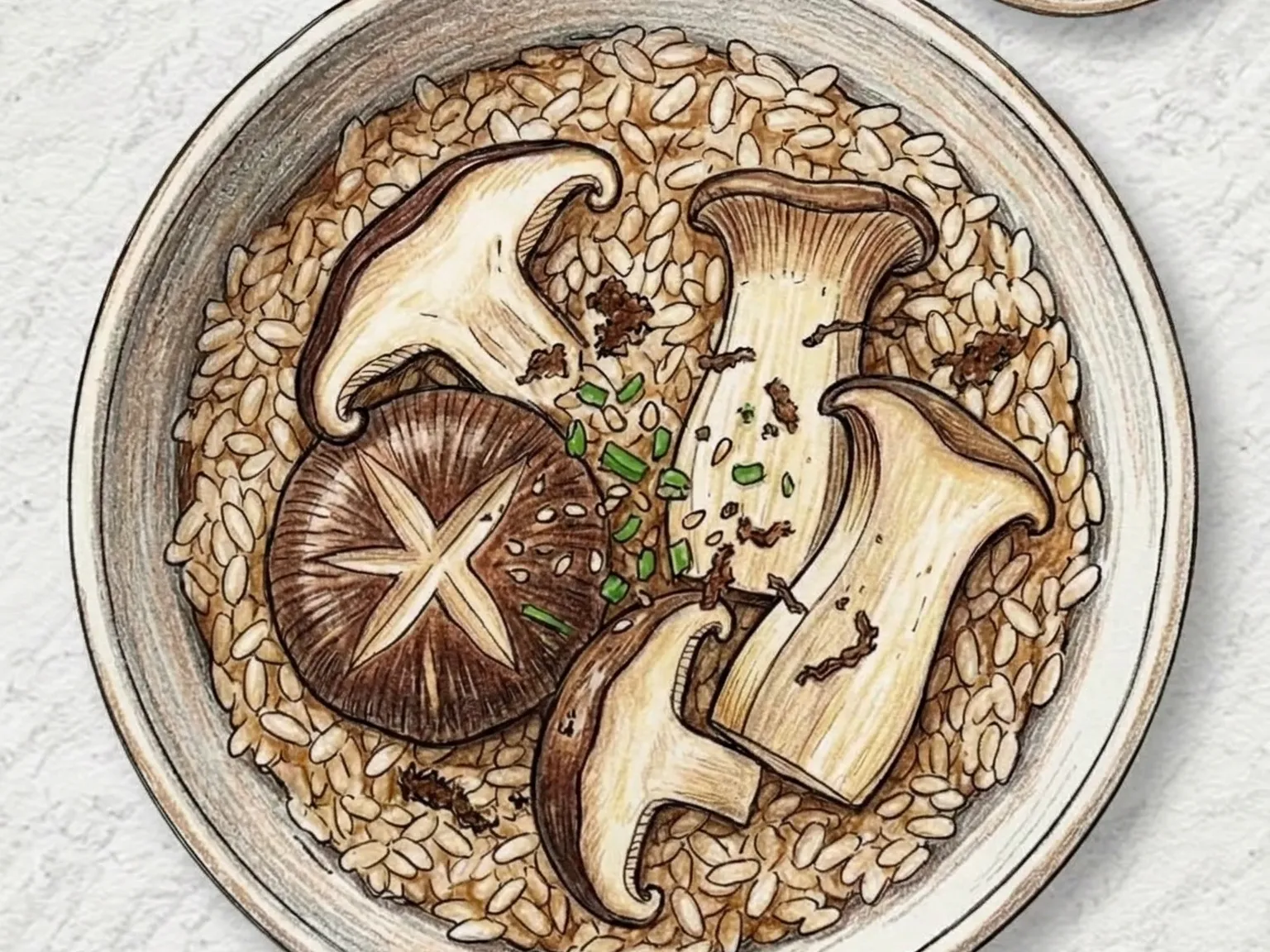
Mushroom-yachae-bokkeum stir-fries king oyster and oyster mushrooms with broccoli and carrot in a light soy-oyster sauce seasoning. Harder vegetables go into the hot pan first to get a head start, then the mushrooms join and pick up the sauce. High heat is essential because mushrooms release water quickly - fast cooking evaporates that moisture and concentrates the umami rather than steaming the ingredients. A finish of sesame oil ties the flavors together in a low-calorie dish that draws its depth entirely from the mushrooms' natural savoriness.

🏠 Everyday 🌙 Late Night
Prep 10min Cook 10min 2 servings
Korean Steamed Croaker (White Fish Radish Soy)
Steamed Medium

Korean Steamed Croaker (White Fish Radish Soy)

Mineo-jjim is a Korean steamed croaker prepared with Korean radish, green onion, ginger, and rice wine. Croaker is prized among white fish for its fine-grained flesh and mild aroma, and steaming preserves its delicate, moist texture without drying it out. Ginger and rice wine work together to eliminate any trace of fishiness, while the radish releases a gentle sweetness into the broth as it cooks. Seasoned with just a touch of soy sauce at the end, this dish lets the natural flavor of the fish take center stage and is well suited for formal meals.

🎉 Special Occasion
Prep 20min Cook 30min 4 servings
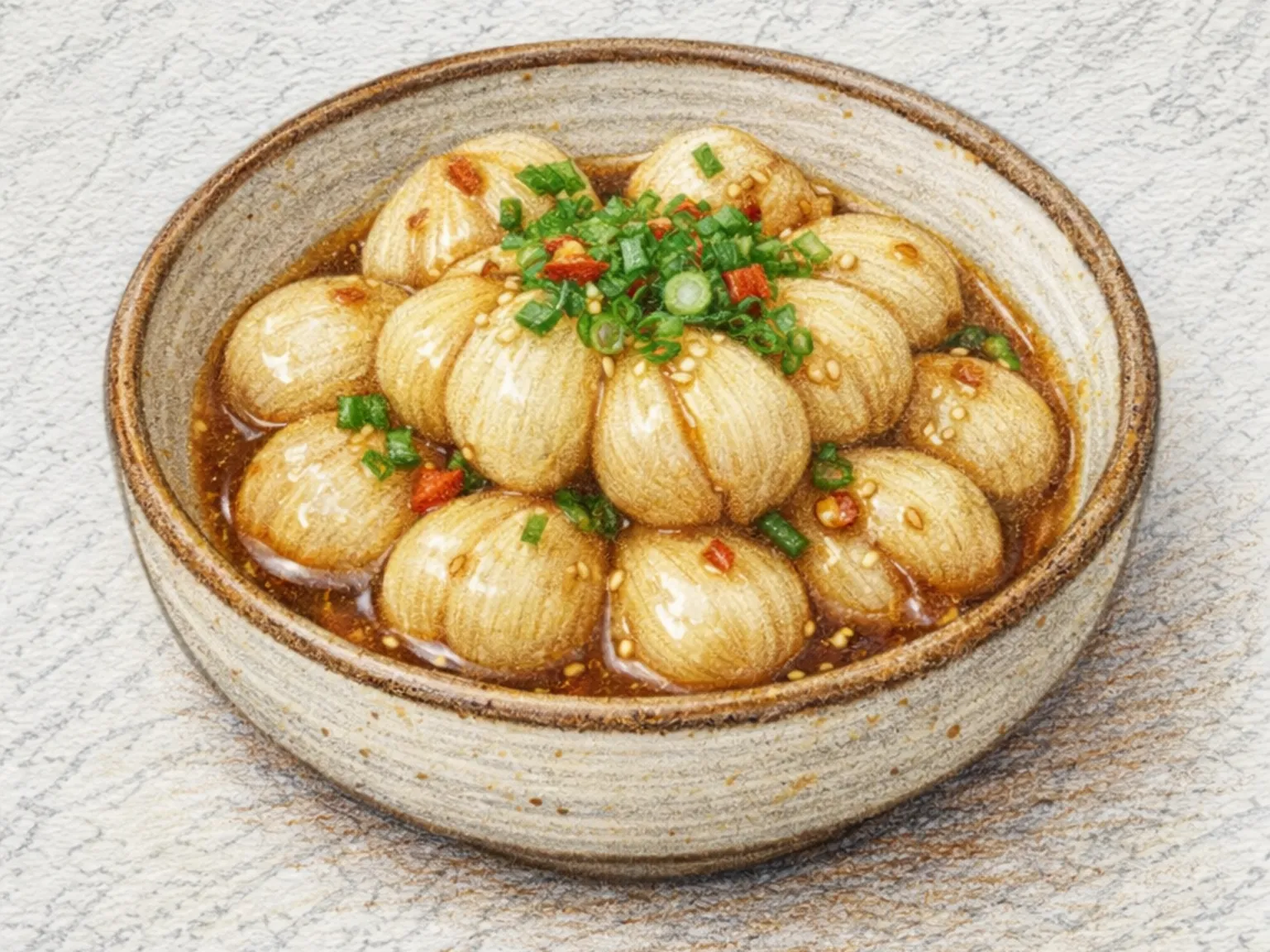
Korean Soy-Braised Whole Garlic
Side dishes Easy

Korean Soy-Braised Whole Garlic

Peeled whole garlic cloves are simmered in a mixture of soy sauce and corn syrup until they turn glossy and deeply seasoned throughout. Raw garlic's sharp, pungent bite mellows completely during the slow braising, transforming into a gentle sweetness that merges with the soy sauce's salinity. The corn syrup reduces alongside the soy sauce, forming a lacquer-like glaze that clings to each clove and catches the light. Low heat is essential: cooking too fast browns the exterior while leaving the core hard and under-seasoned. With patience, the garlic softens to a texture resembling a roasted potato, yielding easily when pressed with chopsticks yet holding its shape on the plate. A final drizzle of sesame oil seals the surface with a warm, nutty aroma that completes the balance of salty, sweet, and rich. The finished jorim keeps well under refrigeration for over a week, making it a practical banchan to prepare in advance.

🏠 Everyday 🍱 Lunchbox
Prep 10min Cook 25min 4 servings
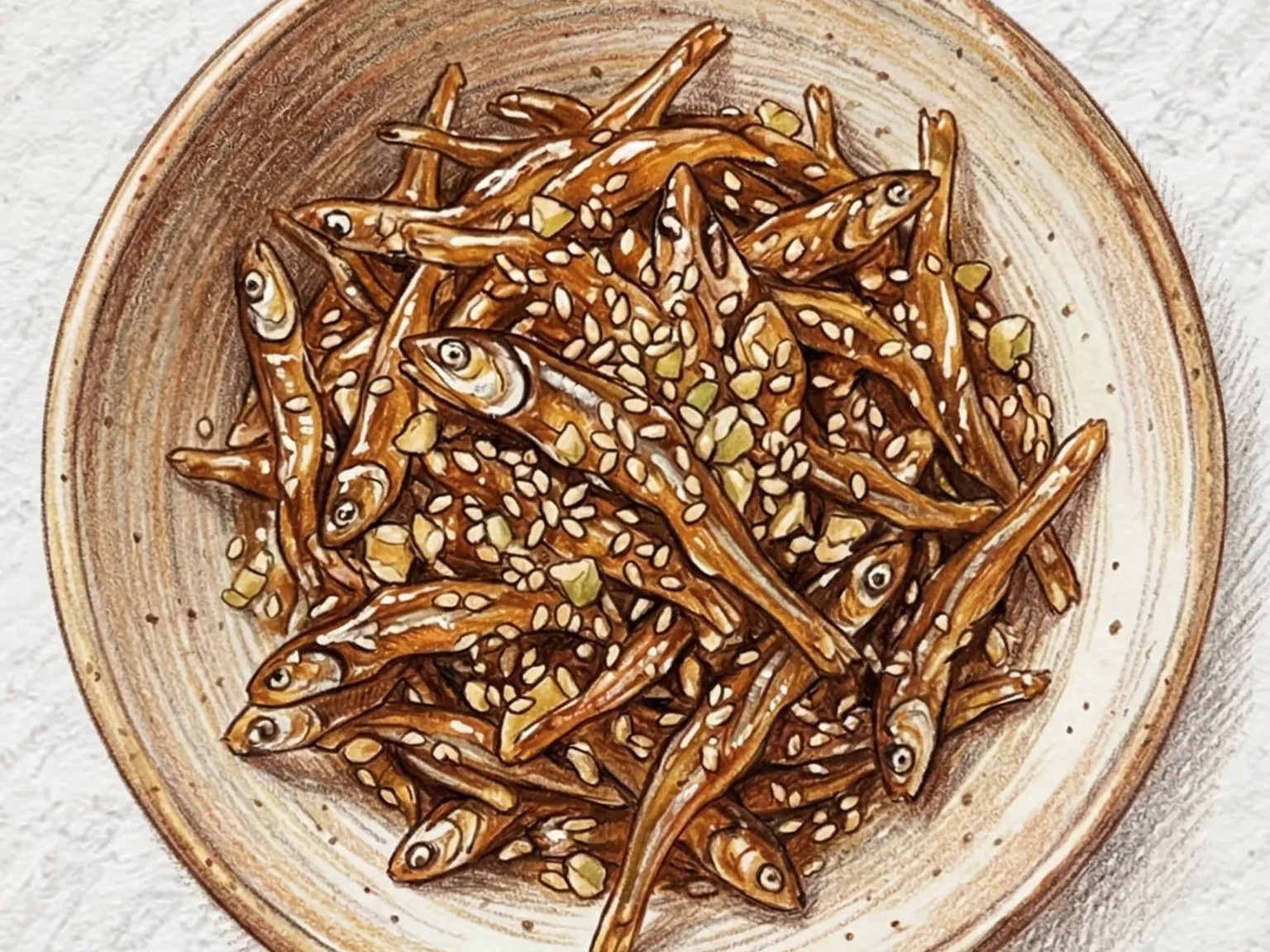
Korean Stir-fried Anchovies
Stir-fry Easy

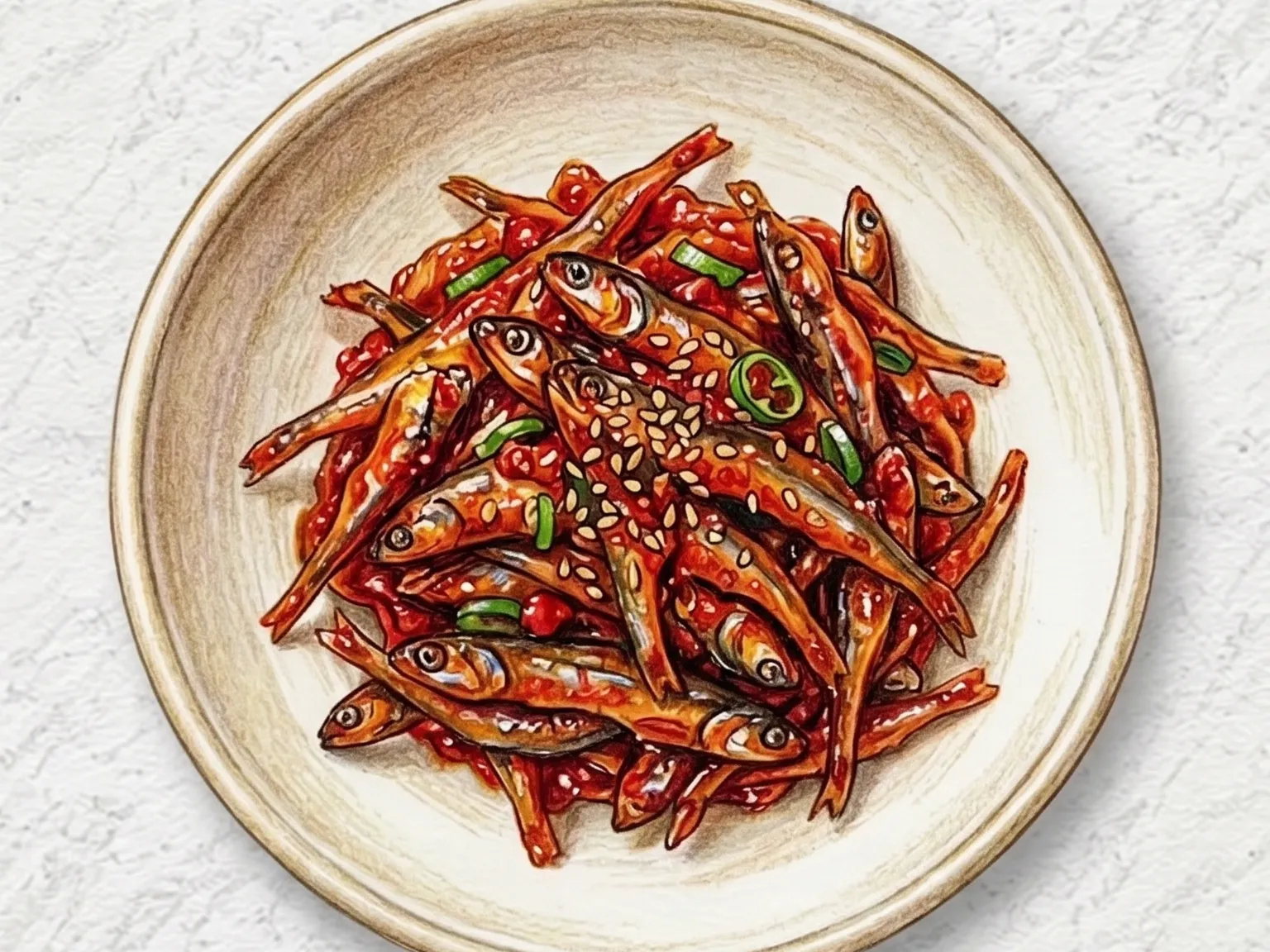
Korean Stir-fried Anchovies

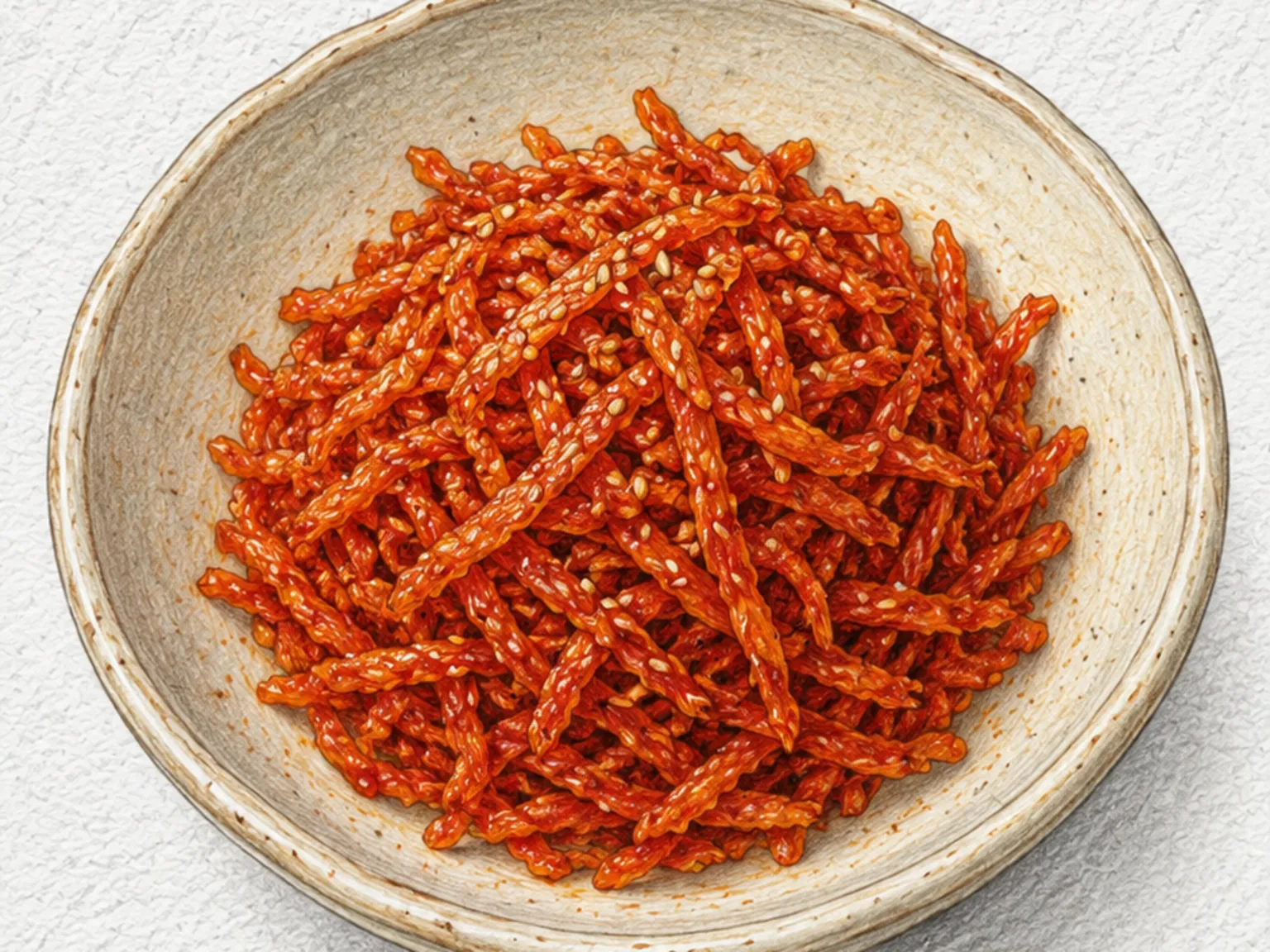
Myeolchi-bokkeum is a foundational Korean banchan of small dried anchovies glazed in a sweet-salty coating of soy sauce and oligosaccharide syrup. The anchovies are first dry-roasted in a clean pan on low heat for three minutes to remove fishiness and build crunch. A sauce of garlic, soy sauce, and syrup is bubbled separately, and the anchovies are tossed back in for a quick, even coating. Sesame oil and toasted sesame seeds finish the dish; once fully cooled, the glaze sets firm, giving the anchovies a snappy texture that keeps well in an airtight container for over a week.

🏠 Everyday 🍱 Lunchbox
Prep 5min Cook 10min 4 servings
Minudaru (Black Sesame Steamed Pork)
Steamed Medium

Minudaru (Black Sesame Steamed Pork)

Minudaru is an Okinawan Ryukyuan court dish of thin pork loin coated in a thick paste of toasted black sesame, soy sauce, mirin, and sugar, then steamed with the dark layer intact. Its name is associated with black clothing, reflected in the glossy near-black surface of the finished pork. Moist steam gently cooks the lean loin while sesame oil coats it with richness and a roasted aroma. Strong steam at the beginning raises the temperature quickly, then moderate heat finishes the meat without washing the sesame paste away.

🎉 Special Occasion 🍺 Bar Snacks
Prep 20min Cook 15min 4 servings
Korean Stir-Fried Taro Stems
Side dishes Medium

Korean Stir-Fried Taro Stems

Boiled taro stems are stir-fried in perilla oil with soy sauce and garlic to create a banchan prized for its uniquely chewy texture. Dried taro stems, once soaked and simmered, lose their rawness but retain a springy, almost rubbery bite along the center of each stalk, setting them apart from softer namul greens. Stir-frying in perilla oil first builds a nutty base note, and soy sauce with minced garlic layers savory depth onto the stems' neutral flavor. A splash of stock added mid-cook allows the seasoning to penetrate the fibrous interior during a brief simmer. Sliced green onion introduces a fresh aromatic accent, and a finishing spoonful of ground perilla seeds dissolves into the residual moisture, creating a creamy coating that clings to each piece. Mixed into a bowl of steamed rice, the chewy stems provide satisfying resistance with every bite, and their mild character lets them complement bolder dishes like doenjang jjigae without competing for attention.

🏠 Everyday 🍱 Lunchbox
Prep 15min Cook 12min 4 servings
Korean Shepherd's Purse Tofu Stir-fry
Stir-fry Easy

Korean Shepherd's Purse Tofu Stir-fry

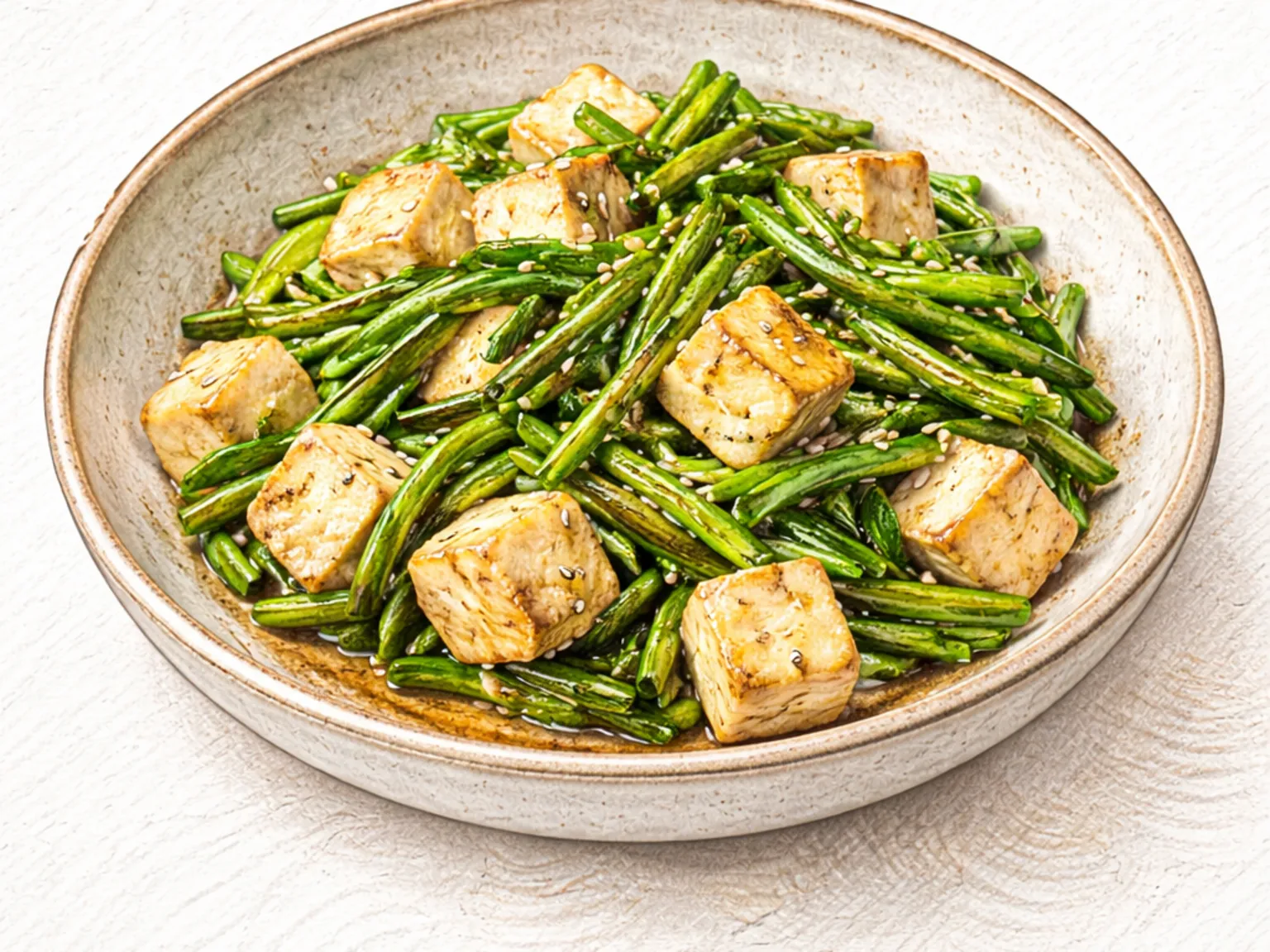
Naengi-dubu-bokkeum is a spring-seasonal Korean stir-fry that pairs shepherd's purse - a wild herb with a distinctive earthy bitterness - with cubed firm tofu in perilla oil and soy sauce. The tofu is pan-seared until golden to build a crust, then set aside while onion and garlic cook in the same pan before soy sauces go in. The tofu returns along with the cleaned, trimmed shepherd's purse, which needs only two minutes of gentle tossing to wilt without losing its herbal bite. A final drizzle of perilla oil and a pinch of toasted sesame seeds layer nuttiness over the herb's green, slightly bitter fragrance.

🏠 Everyday 🍱 Lunchbox
Prep 18min Cook 10min 2 servings
Thai Five-Spice Braised Pork and Eggs
Steamed Medium

Thai Five-Spice Braised Pork and Eggs

Moo palo is a Thai home-cooked braise of pork belly and soft-boiled eggs simmered slowly in a sauce built from soy sauce, palm sugar, and five-spice powder. The palm sugar goes into a dry pot first, caramelized until it turns a deep amber before the pork is added, which gives the meat a rich lacquered surface rather than a pale stew color. Five-spice powder draws together cinnamon, star anise, clove, fennel seed, and Sichuan pepper into a layered fragrance that permeates the braising liquid from the start, setting moo palo apart from simpler soy-based stews. Peeled eggs submerged in the liquid take on a uniform mahogany tint as they cook, absorbing the seasoning all the way to the yolk over the long simmer. Pork belly or shoulder with a good ratio of fat to lean is the right cut here, as the fat melts into the liquid and keeps the meat from drying out during the extended cooking time. Spooned over a bowl of steamed jasmine rice, the braise delivers a warm, sweet-salty depth punctuated by gentle spice heat, the kind of satisfying everyday meal that is central to Thai home cooking.

🎉 Special Occasion
Prep 20min Cook 70min 4 servings
Korean Stir-Fried Burdock Root
Side dishes Medium

Korean Stir-Fried Burdock Root

Burdock root is julienned into thin strips and stir-fried with soy sauce and Korean grain syrup until each piece is coated in a glossy, sweet-salty glaze. Burdock carries an earthy, almost woody flavor unique among root vegetables, and soaking the cut strips in vinegared water before cooking prevents oxidation and keeps the color clean. A quick initial fry in oil seals the surface and drives off moisture, preserving the root's natural crunch. Adding soy sauce and grain syrup transforms the pan into a bubbling reduction that clings to every strand as it thickens. The grain syrup's gentle sweetness softens the soy sauce's salinity into a balanced, caramelized coating, while the heat converts burdock's raw earthiness into a toasted, nutty aroma. Reducing the sauce completely yields a chewy, almost candy-like texture; leaving a trace of moisture produces a crunchier, more succulent result. The finished banchan stores well under refrigeration for a week or more, making it a practical side to prepare in bulk.

🏠 Everyday 🍱 Lunchbox
Prep 15min Cook 12min 4 servings
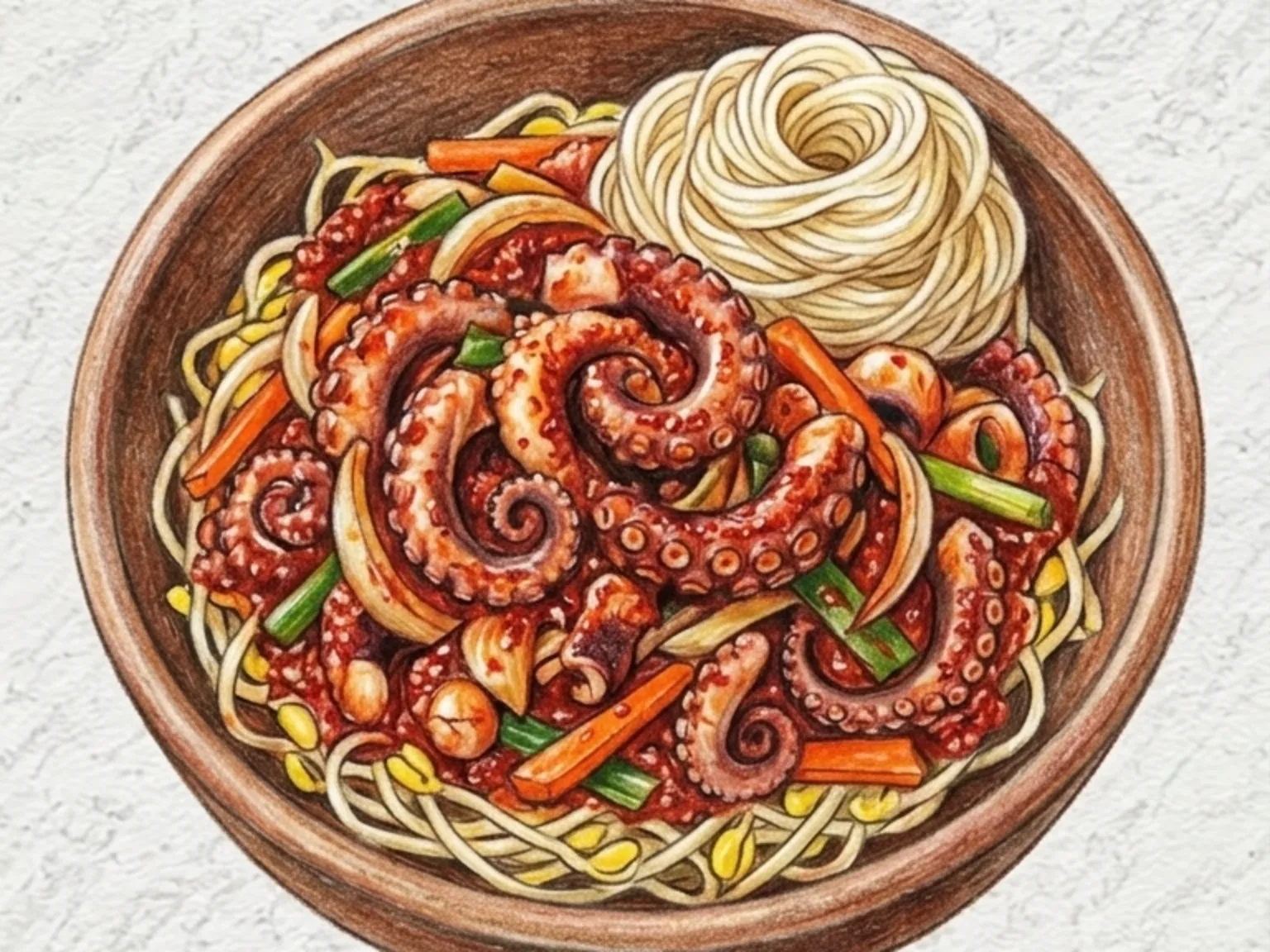
Korean Spicy Stir-fried Octopus
Stir-fry Medium

Korean Spicy Stir-fried Octopus

Nakji-bokkeum is a fiery Korean stir-fry of small octopus (nakji) coated in a sauce of gochujang, gochugaru, soy sauce, sugar, and garlic, tossed with bean sprouts, onion, carrot, and scallion. Bean sprouts line the bottom of the pan, releasing moisture to prevent sticking while adding crunch. The vegetables and half the sauce go on next, then the octopus on top, covered and steamed on medium heat for three minutes before a final high-heat stir-fry sears everything for two minutes. Speed is critical - octopus toughens with prolonged cooking - and the dish is often mixed with boiled thin wheat noodles for a heartier meal.

🍺 Bar Snacks 🏠 Everyday
Prep 15min Cook 10min 2 servings
Braised Korean Radish (Soy Garlic Slow-Cooked Side)
Steamed Easy

Braised Korean Radish (Soy Garlic Slow-Cooked Side)

Mu-jjim is a Korean braised radish dish where thick-cut Korean radish is simmered slowly in a covered pot with soy sauce, sugar, and garlic. The radish absorbs the seasoned liquid as it cooks, turning translucent from edge to center and developing a natural sweetness that balances the saltiness of the soy base. A drizzle of sesame oil at the end adds a nutty fragrance, and a single sliced green chili contributes a mild kick to the finish. Despite the short ingredient list, this banchan pairs naturally with rice at any meal and holds up well as a make-ahead side throughout all seasons. Keeping the heat at medium or below for at least twenty minutes allows the radish to soften fully and take in the seasoning without becoming mushy.

🏠 Everyday 🍱 Lunchbox
Prep 12min Cook 30min 2 servings