🍺 Bar Snacks Recipes
Perfect pairings for beer, soju & wine
705 recipes. Page 2 of 30
In Korean drinking culture, anju (drinking snacks) are just as important as the drink itself. Beer goes with fried chicken, soju pairs with grilled pork belly and dubu-kimchi, and makgeolli calls for pajeon and bindaetteok. This tag gathers recipes designed to accompany a drink.
Great anju complements the beverage without overwhelming it. Salty, savory, and spicy options - prepare a few and you will be ready for any gathering.
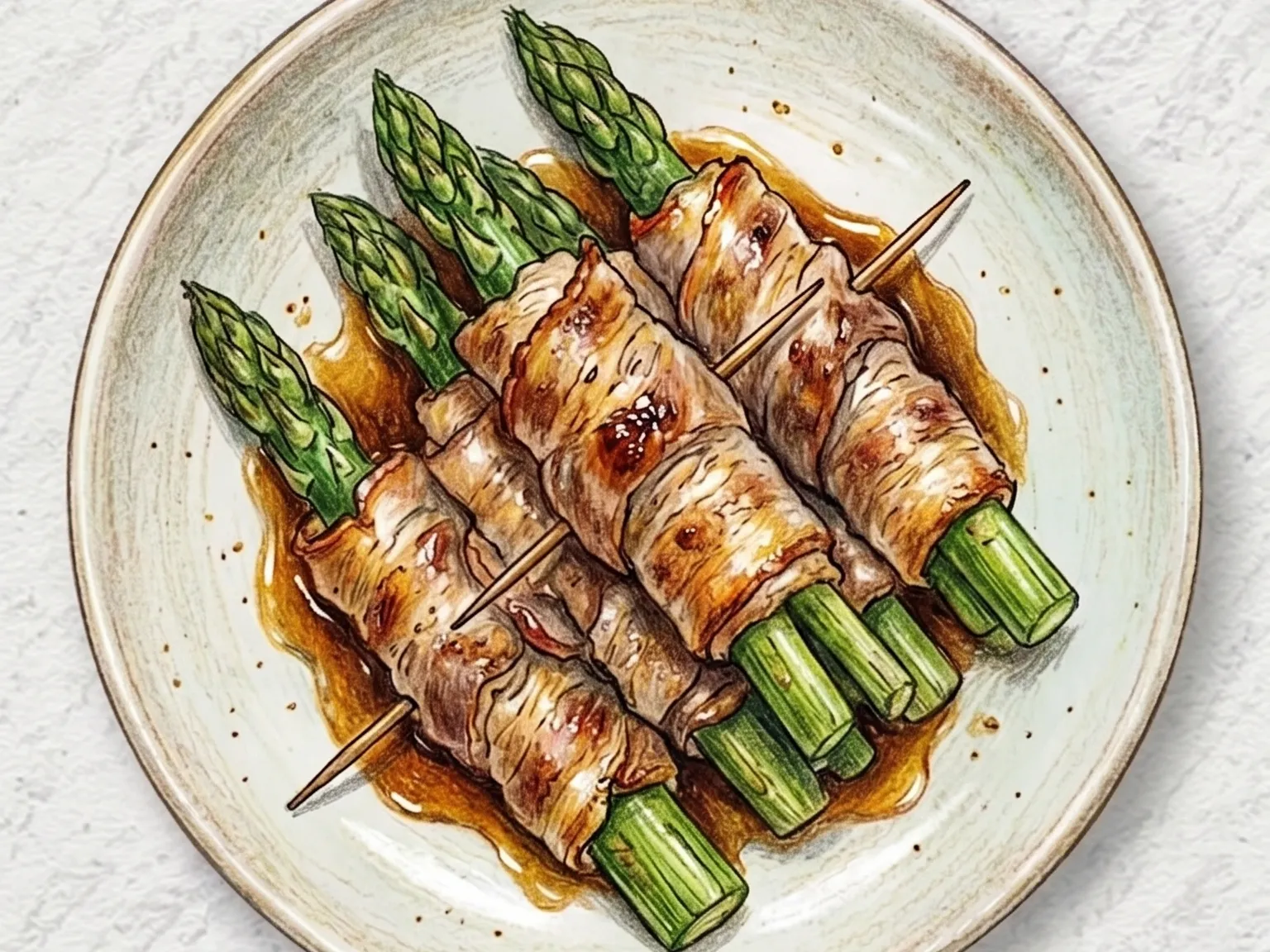
Korean Grilled Pork Belly Asparagus Rolls
A spear of asparagus wrapped tightly in thin-sliced pork belly and grilled over high heat - this is one of the most direct expressions of Korean barbecue technique, which treats almost any vegetable as a candidate for the grill when wrapped in fatty pork. Asparagus earns a particular place in this format because its firm structure resists the heat that would turn softer vegetables to mush inside the roll. The samgyeopsal is laid flat, the asparagus placed at one end, the meat rolled snug and pinned with a toothpick. On a blazing grill or a very hot pan, the fat renders and crisps into a tight, caramelized shell. Inside that shell, the asparagus steams in the trapped heat, its grassy sweetness concentrating rather than dissipating. A brush of soy sauce mixed with garlic and honey goes on during the final minute, the sugars caramelizing into a sticky, lacquered glaze. The contrast between the shattering pork exterior and the just-tender asparagus inside is what makes this worth eating.
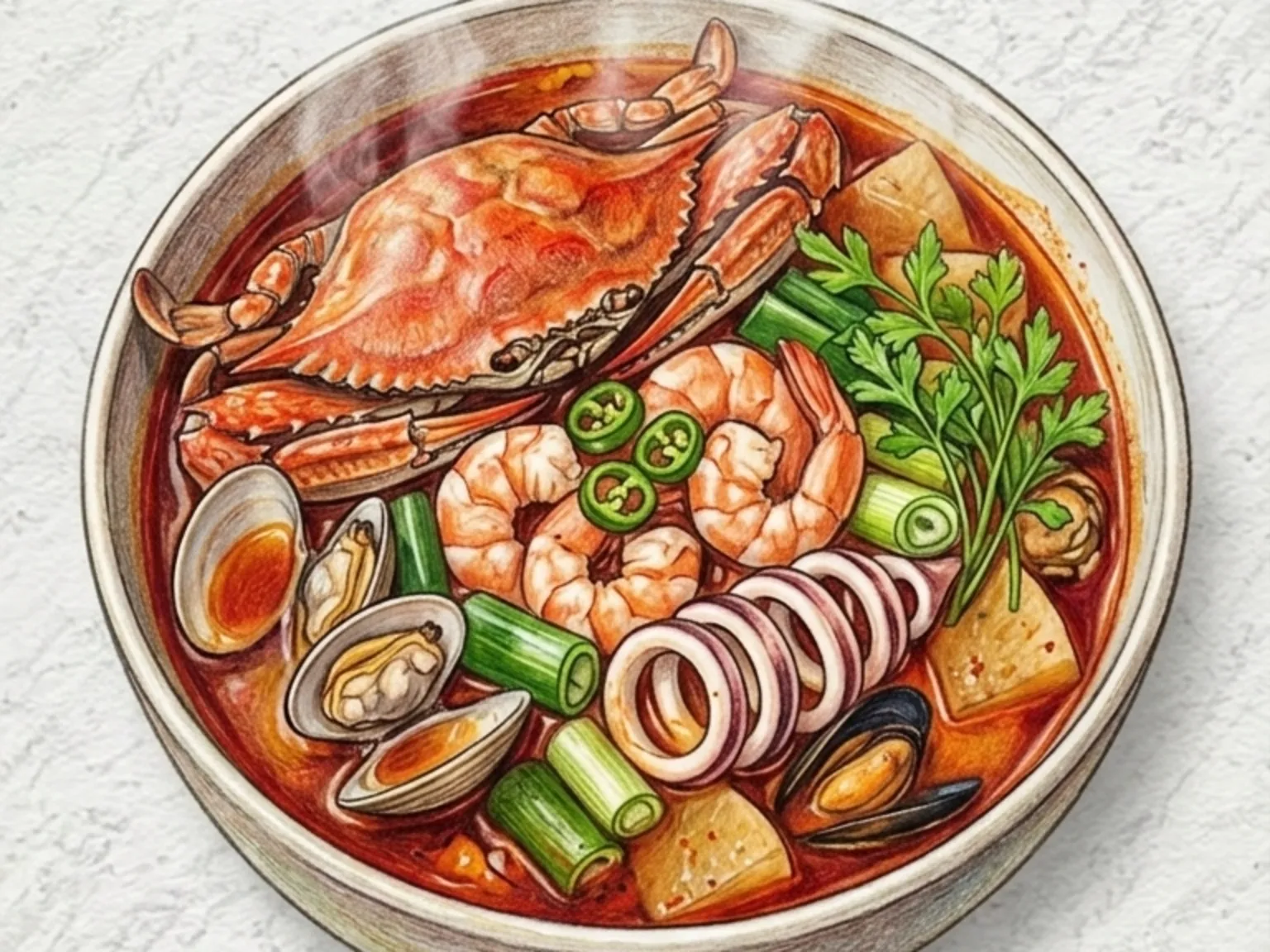
Korean Seafood Hot Pot Soup
Haemul-tang is a Korean seafood hot pot that throws together crab, shrimp, clams, and squid in a fiery, brick-red broth. The liquid starts with gochugaru and plenty of garlic, building a spicy base that the seafood then amplifies with its own briny juices. Radish chunks soften as the pot bubbles, thickening the broth slightly and adding a cool sweetness behind the heat. Green onions and cheongyang peppers go in toward the end for a sharp, vegetal bite. The magic of haemul-tang lies in the convergence of flavors: crab shells release a sweet, crustacean stock; clams open to spill their liquor; shrimp and squid contribute distinct textures from snappy to chewy. The pot is brought to the table still at a rolling boil, and diners pick through the shells and tentacles while the broth continues to concentrate.
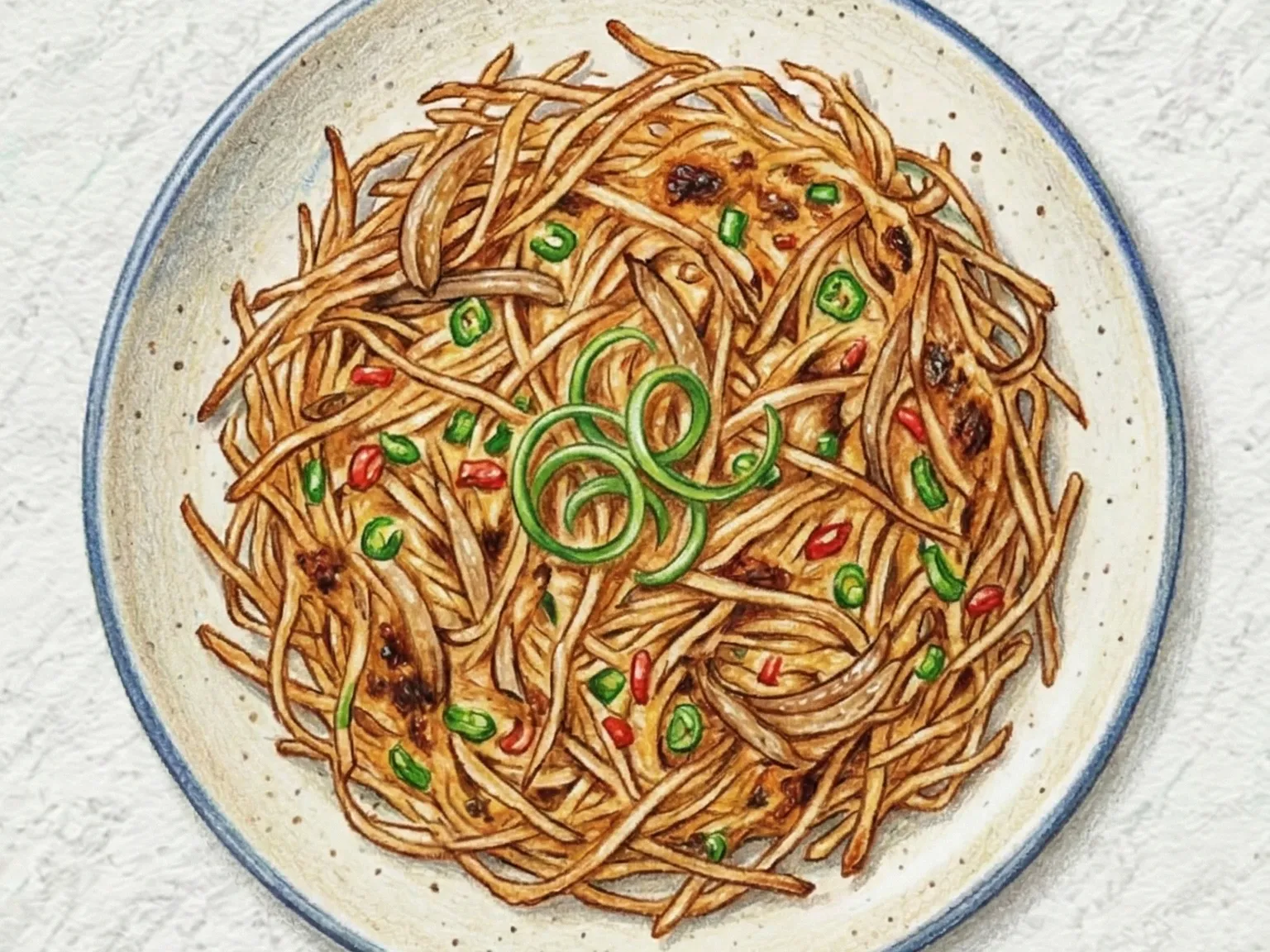
Korean Burdock Matchstick Pancake
Burdock root, julienned into thin matchstick strips and pan-fried with onion and cheongyang chili, is a jeon with texture as its main argument. The combination of Korean pancake mix and tempura flour in the batter produces a result that is crispier than standard jeon, particularly at the edges where the thin strips of burdock protrude from the batter and catch the heat. Burdock has an earthy, faintly bitter flavor that holds up in the pan, and the onion provides sweetness alongside it. Cheongyang chili cuts through with a slow-building, lingering heat. Cold water keeps the batter loose and inhibits gluten development, so the finished jeon stays light rather than dense. Hot from the pan, the edges shatter; cooled, they turn chewy.
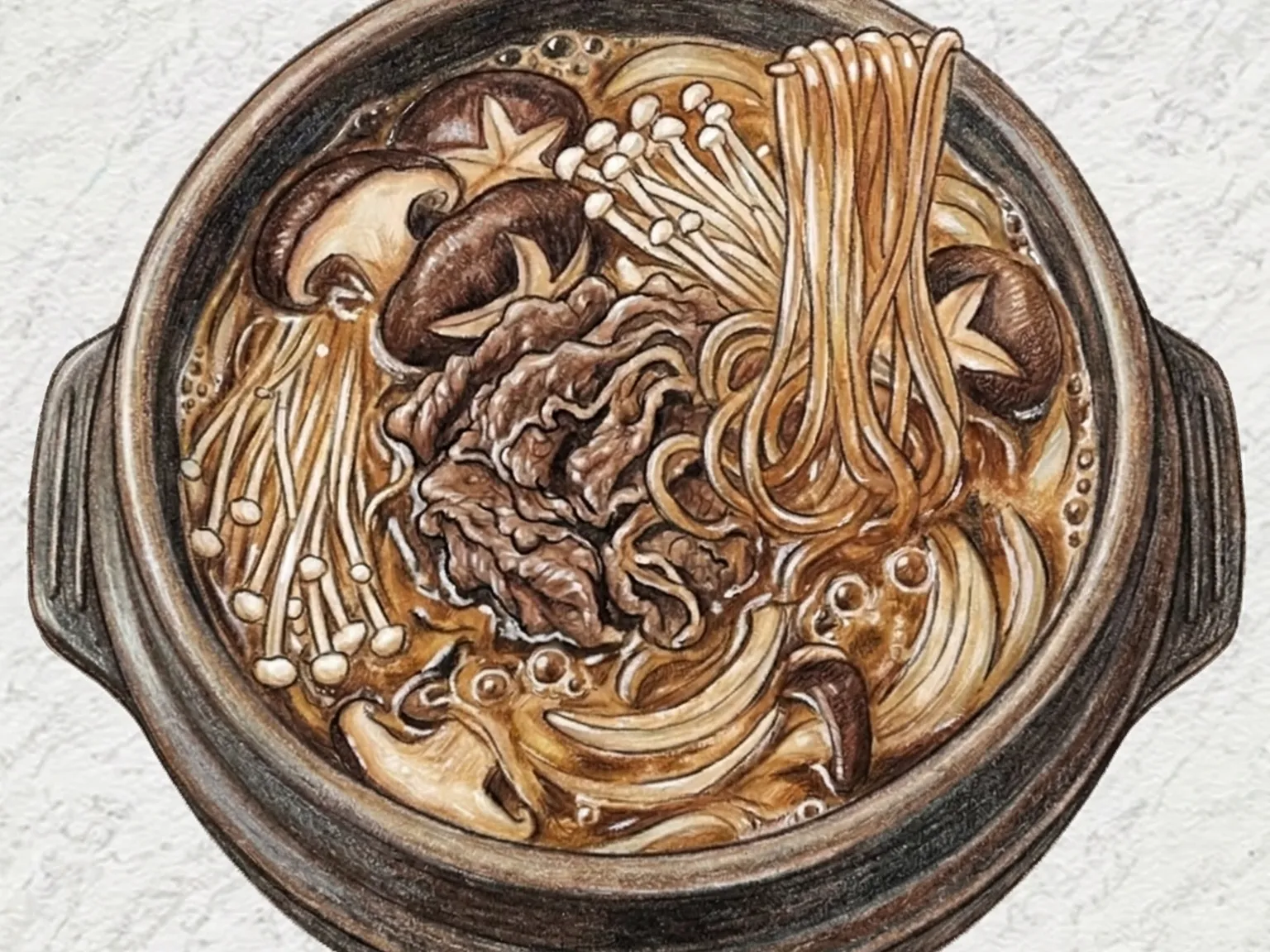
Korean Mushroom Bulgogi Jeongol
Soy sauce-marinated beef and a mix of shiitake and enoki mushrooms simmer together in a generous broth, with the beef's umami and the shiitake's deep, earthy scent building into the stock as the jeongol cooks. Sweet potato noodles absorb that concentrated broth, picking up its full flavor in every chewy strand. Onion's natural sweetness moderates the saltiness of the soy-based stock, and the garlic-infused liquid makes the dish work equally well as a rice accompaniment or a drinking table side. The jeongol is typically left on a portable burner at the table and eaten continuously as it cooks.
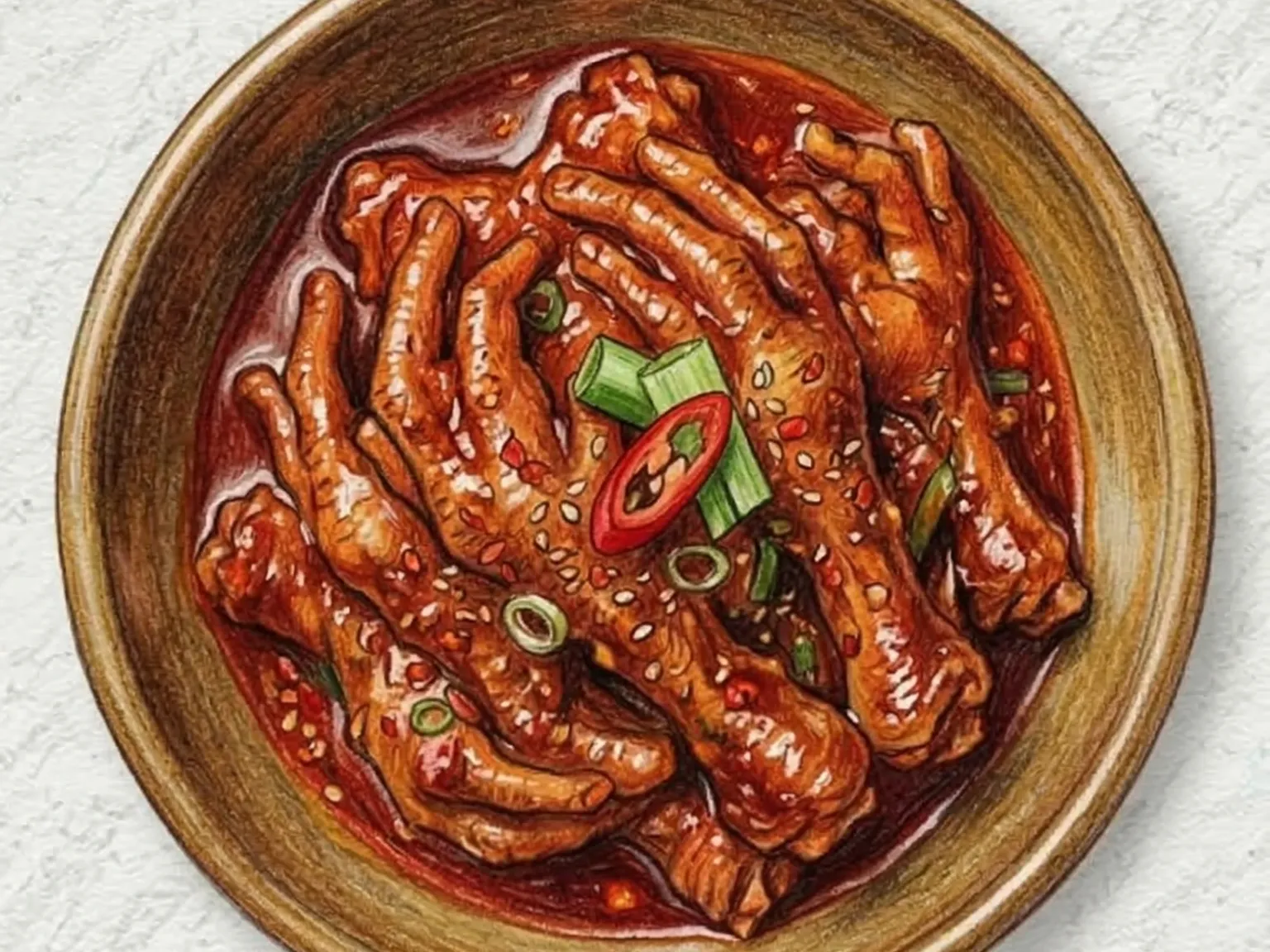
Korean Braised Chicken Feet
Dakbal-jjim braises chicken feet in a sauce built from gochujang, gochugaru, soy sauce, and sugar until the liquid reduces to a thick, glossy coating around each foot. As the skin and cartilage cook down over time, their collagen converts to gelatin and the feet develop a chewy, sticky texture that is the central appeal of the dish. Gochujang and gochugaru each bring heat from a different angle, one deep and fermented and the other bright and direct, while sugar introduces a caramel-like sweetness that balances the heat load. Cooking wine added early removes the gaminess specific to chicken feet. By the time the sauce has fully reduced it clings to every surface in a deep red glaze, and the finished feet carry both intense seasoning and a pronounced chew that makes them a natural pairing with cold beer or a bowl of rice.
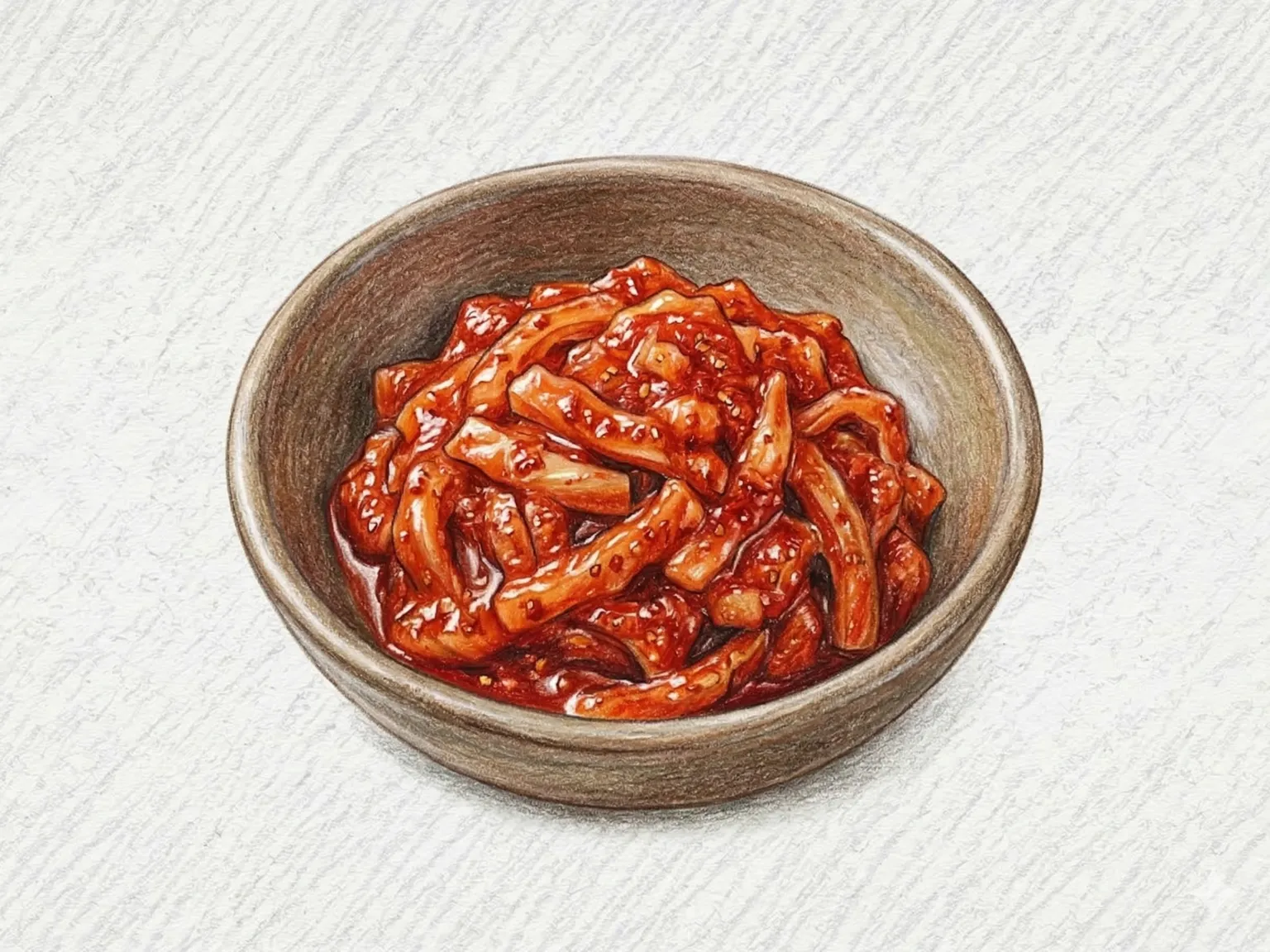
Korean Spicy Fermented Squid Jeotgal
Ojingeo jeotgal is a Korean fermented squid preserve made by salting cleaned, finely chopped squid for one hour to firm the flesh and extract moisture, then dressing it in a paste of gochugaru, minced garlic, ginger, fish sauce, and corn syrup. The salt cure intensifies the squid's natural chewiness, and cutting the pieces small accelerates seasoning absorption during the two-to-three-day cold fermentation. Chili flakes coat every surface in a deep red layer that delivers steady heat, while corn syrup adds gloss and a mild sweetness that prevents the salt from dominating. Spooned over steamed rice, each piece offers a firm, springy chew followed by a wave of fermented umami. Mixing in a touch of sesame oil before serving softens the saltiness and adds a nutty fragrance that rounds out each mouthful.
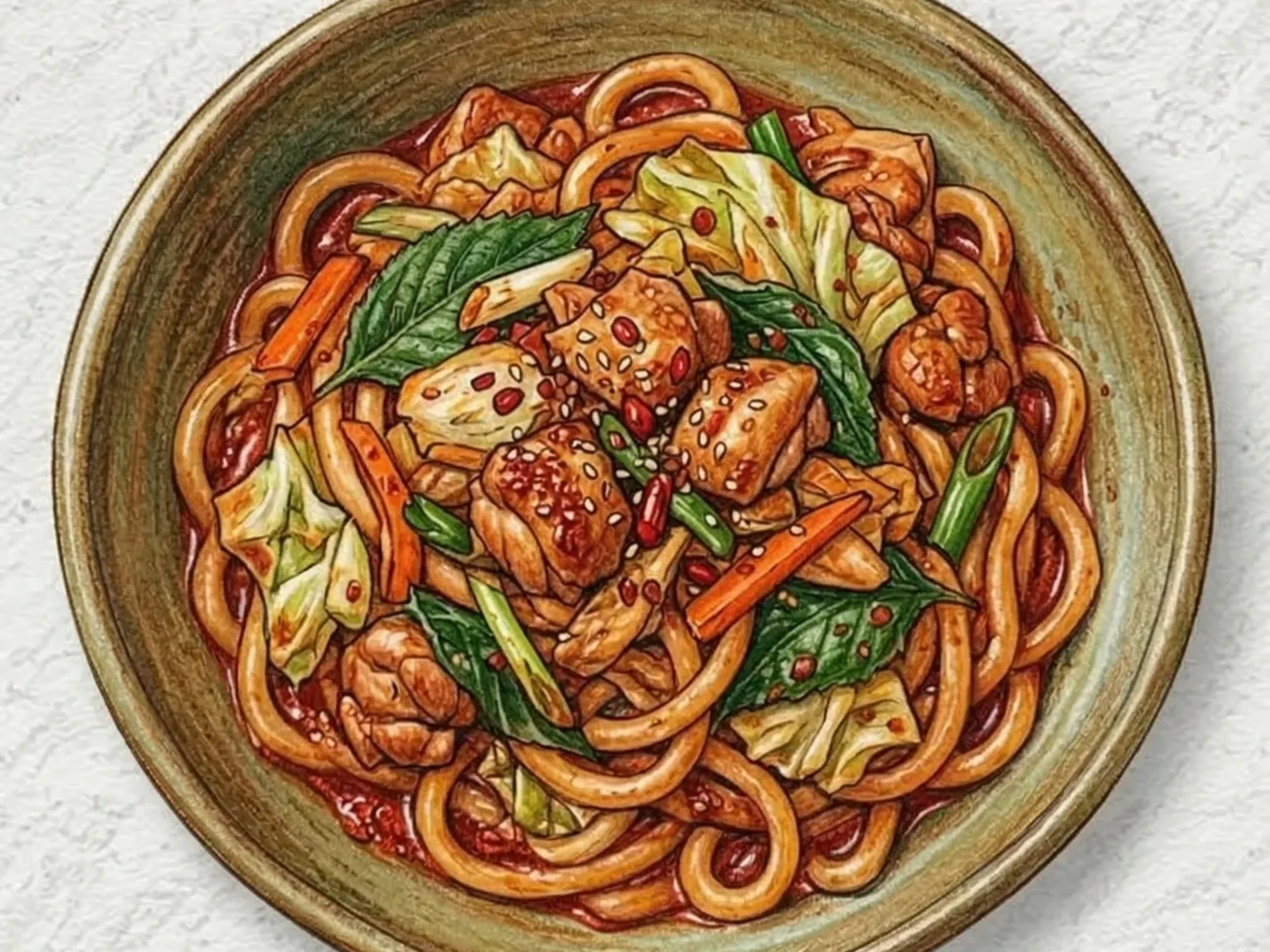
Korean Stir-Fried Udon with Spicy Chicken
Dakgalbi udon bokkeum is a Korean stir-fried noodle dish where gochujang-marinated chicken, cabbage, sweet potato, and rice cakes cook together in a wide pan before thick udon noodles are added and tossed through the spicy-sweet sauce. The dakgalbi seasoning is assertive and clingy, coating every broad surface of the udon so that each bite carries the full weight of the marinade. Cabbage and scallion wilt fast under high heat, releasing sugars that moderate the chili paste and prevent the sauce from tasting sharp or one-dimensional. Sweet potato contributes starch that slightly thickens the sauce while cushioning its spice. Udon, being considerably thicker than ramen or somyeon, holds up under the heavy coating without turning mushy, and delivers a satisfying, bouncy chew throughout the meal. Managing the heat is important: keeping the pan at high temperature drives off excess moisture and produces the lightly charred, smoky edge that separates a good stir-fry from a steamed mess. Melting cheese over the top just before serving adds a creamy, fatty layer that offsets the heat. Sesame seeds and shredded seaweed finish the dish. It is well suited to group cooking on a large griddle or electric pan.
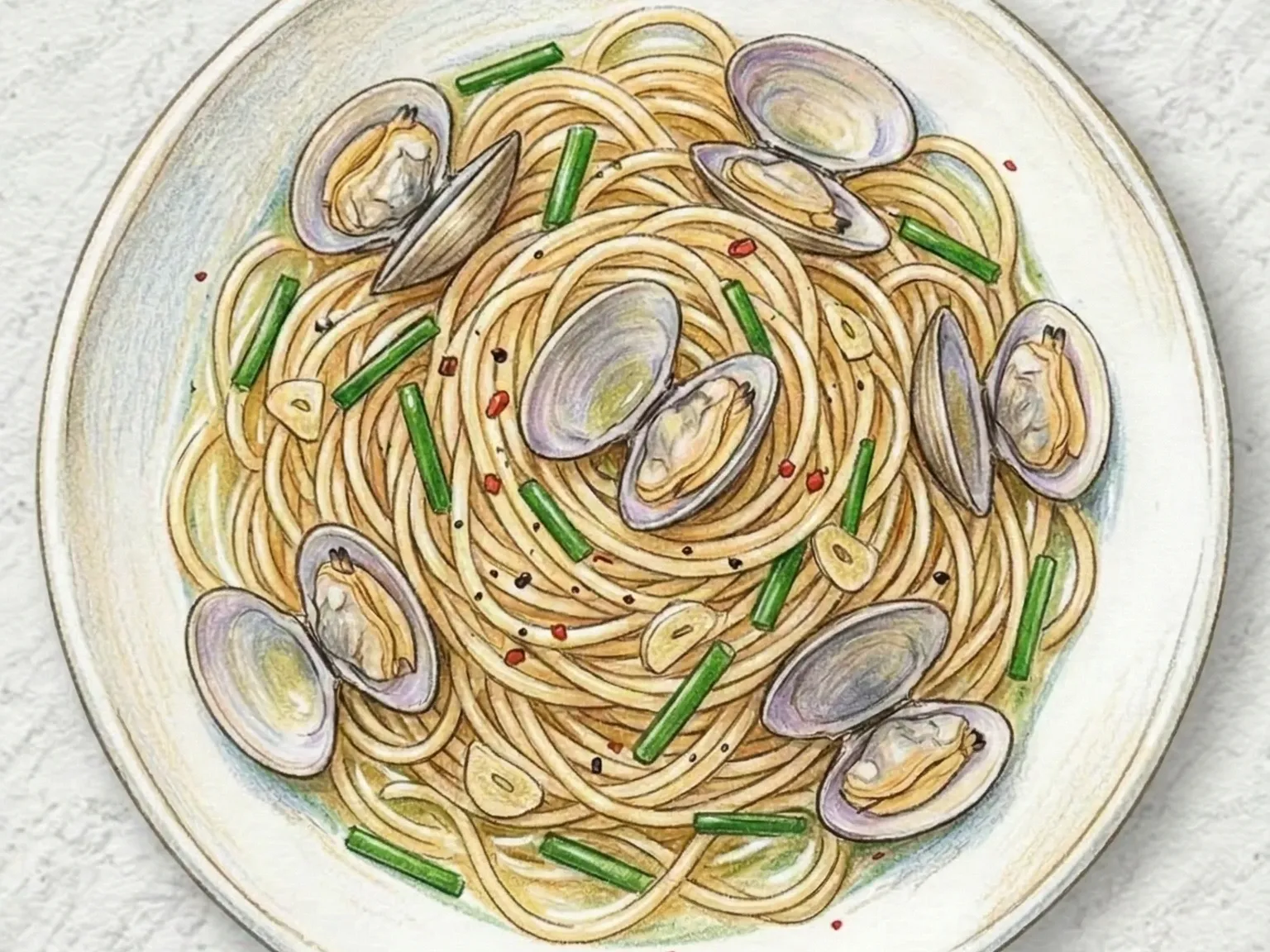
Buchu Vongole Spaghetti (Korean Garlic Chive and Clam Pasta)
Buchu vongole spaghetti takes the Italian vongole format and finishes it with a fistful of Korean garlic chives, combining a briny shellfish sauce with the sharp, vegetal fragrance that buchu brings. Garlic slices and dried chili flakes are first infused in olive oil until fragrant, then white wine goes in and the alcohol burns off quickly, leaving only the wine's fruity character in the base. Manila clams added to the pan steam open in two to three minutes under a lid, releasing their liquor into the oil and wine. That clam broth carries enough salinity and umami to season the entire sauce - no added salt required at any point. A ladleful of pasta water stirred in while shaking the pan hard creates an emulsion that bonds the clam broth with the olive oil and coats every strand. The garlic chives are added off heat so they stay bright green and fragrant rather than going soft and losing their character. A scatter of chopped Italian parsley over the finished bowl adds a last note of herbal freshness.
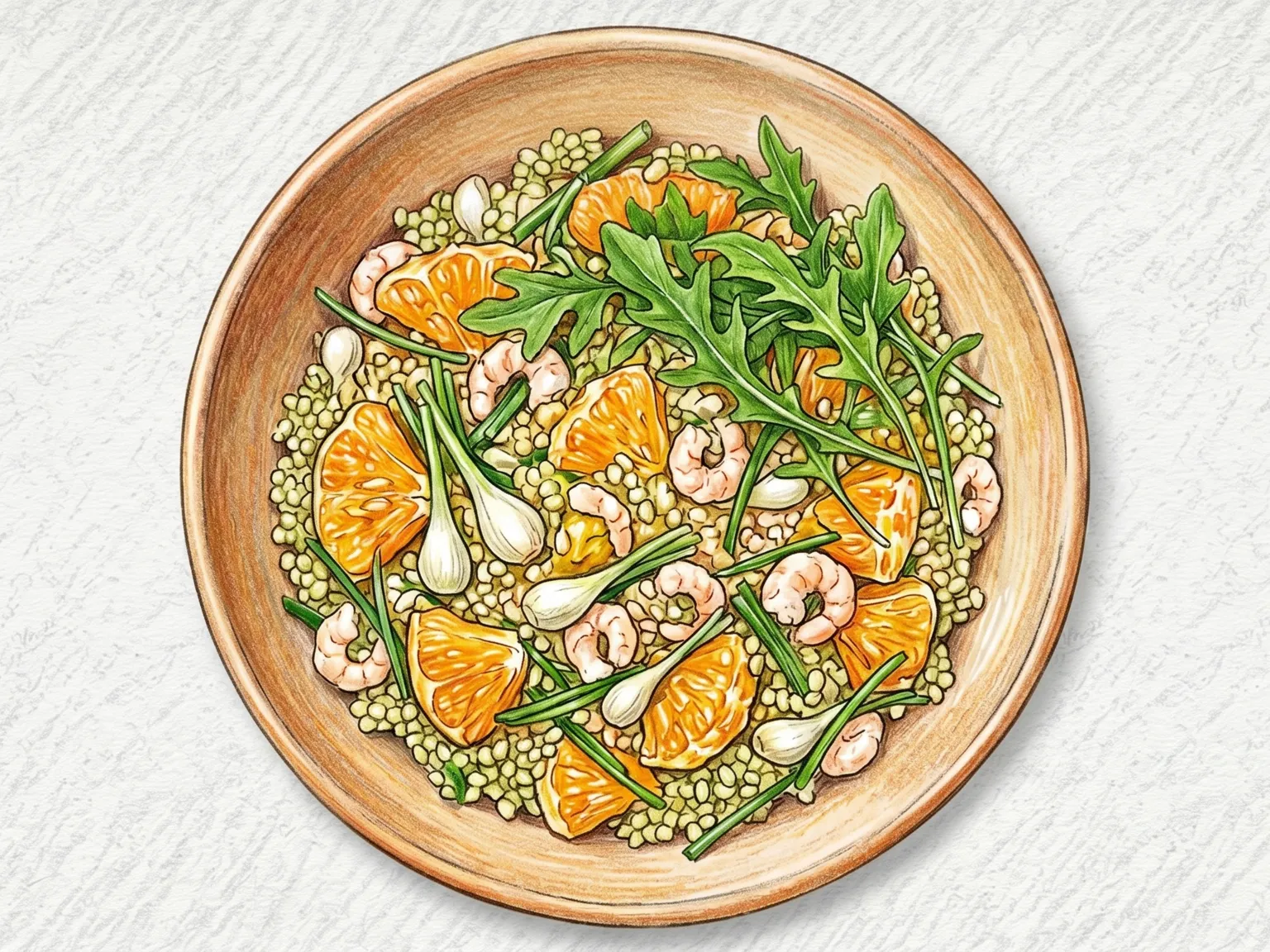
Dallae Shrimp Citrus Millet Salad
Dallae shrimp citrus millet salad builds a Korean-style grain bowl around the sharp, garlic-like bite of wild chive (dallae), tangerine segments, and blanched shrimp, set on a base of cooked millet. Millet grains are smaller than rice and cook quickly; prepared until just fluffy rather than sticky, each grain stays separate, which makes it ideal as a salad base that absorbs dressing without clumping. Dallae should be rinsed and used immediately - prolonged soaking in water dulls its volatile pungency. The dressing combines yuzu syrup and white wine vinegar: the acid from both counteracts any brininess from the shrimp while the citrus notes amplify the wild chive. Arugula added at the end introduces a peppery bitterness that anchors the lighter flavors. Dallae peaks in March through early April, when its aroma is most concentrated. Hallabong or cheonhyehyang can substitute for standard tangerines; torn by hand rather than sliced, the fruit releases juice directly into the dressing.
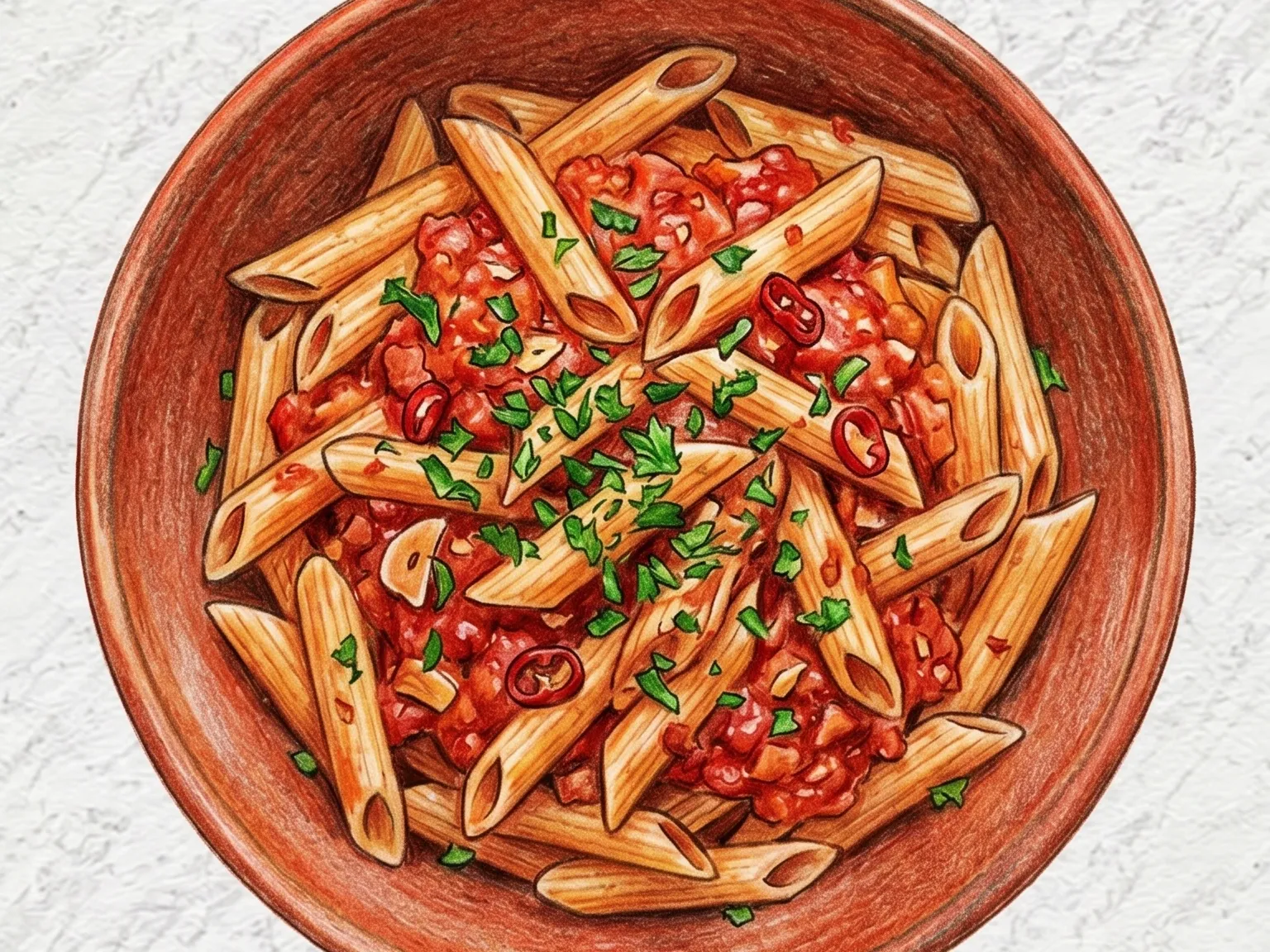
Penne all'Arrabbiata (Spicy Tomato and Garlic Pasta)
Arrabbiata, meaning angry in Italian, is a Roman pasta sauce whose heat comes from dried peperoncino chili flakes used in generous quantity. The sauce descends from the cucina povera tradition of Lazio, where tomatoes, garlic, olive oil, and chili were the four ingredients a working kitchen could reliably afford. Garlic is sliced thin and cooked in olive oil over moderate heat until fragrant and very lightly golden, then the chili flakes bloom in the hot fat for a matter of seconds, infusing the oil with their heat before crushed tomatoes are added. The sauce simmers uncovered for fifteen to twenty minutes, reducing until concentrated enough to coat each tube of penne without sliding off. The heat is slow-building rather than immediate: the first bite registers as mild, but the warmth accumulates with each subsequent forkful and persists at the back of the throat long after eating. Fresh parsley scattered at the end introduces a green, herbal brightness that modulates the lingering chili heat without diminishing it. In the purist version there is no cream and no cheese, only the clean interplay of tomato acidity, garlic depth, and chili fire. The sauce traces its origins to the villages outside Rome in the early twentieth century and reflects Southern Italian cooking's preference for restraint, directness, and heat over the dairy richness characteristic of the north.
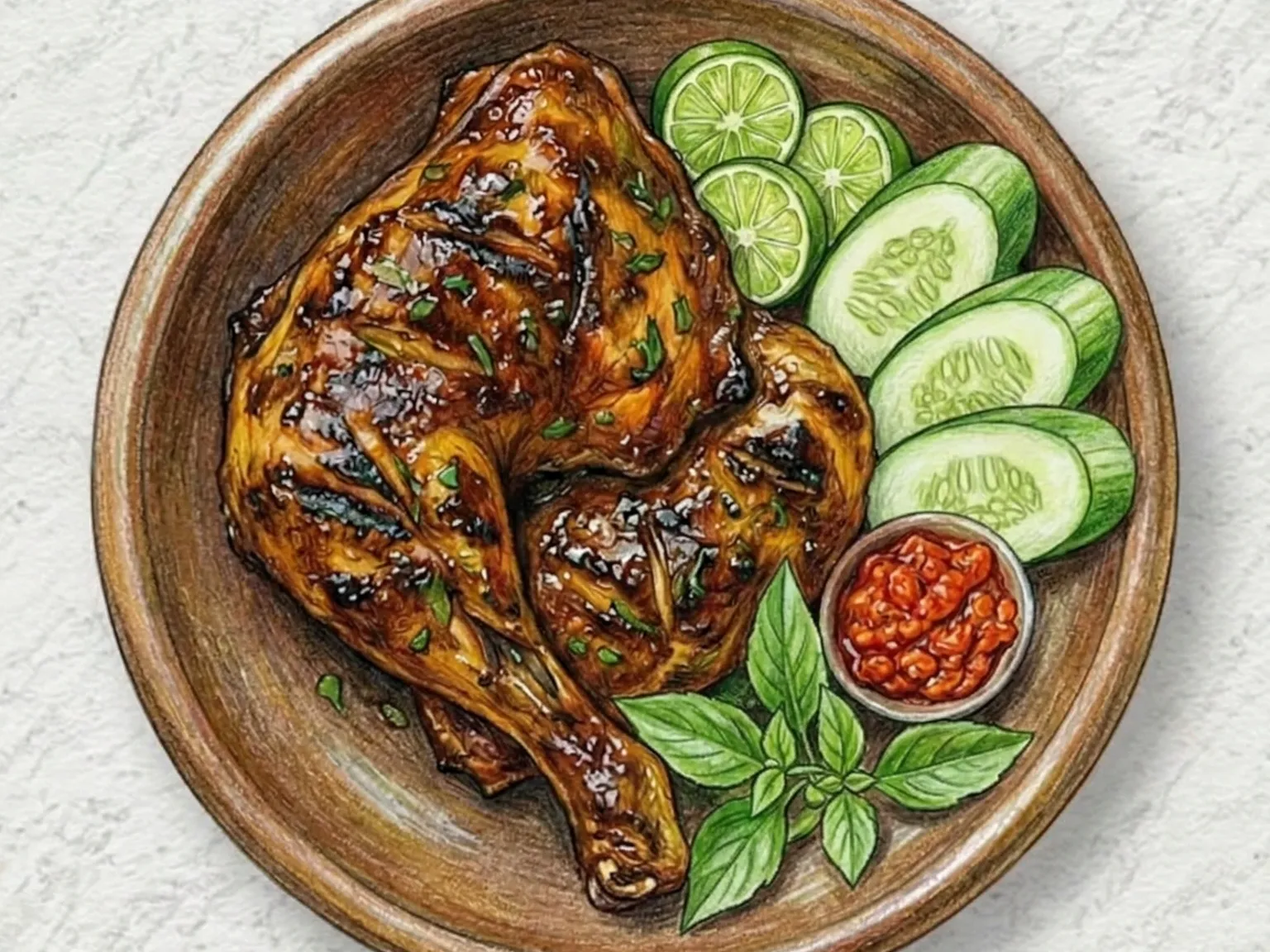
Ayam Bakar (Indonesian Grilled Chicken in Sweet Soy Marinade)
Ayam bakar means 'roasted chicken' in Malay-Indonesian and is a staple street food across Java, Sumatra, and Bali, where roadside warungs grill it over coconut-shell charcoal. The preparation follows a two-stage method: the chicken first simmers in a marinade of kecap manis (sweet soy sauce), garlic, ground coriander, turmeric, and lime juice until partially cooked and deeply colored throughout. The pre-cooked pieces then move to a very hot grill where the sugar-heavy glaze caramelizes rapidly, forming dark, lacquered patches with a faint char at the edges. This two-step approach ensures the meat stays moist under the intense grill heat while the exterior achieves maximum caramelization. The surface is sticky-sweet, with turmeric's earthiness and coriander's citrusy warmth detectable beneath. Served alongside steamed white rice, raw cucumber slices, and sambal, the dish relies on the sharp chili heat of the sauce and the cool cucumber to balance the sweetness of the glaze. The smoke from coconut-shell charcoal is considered part of the flavor, though a gas or charcoal grill at home produces an acceptable result.
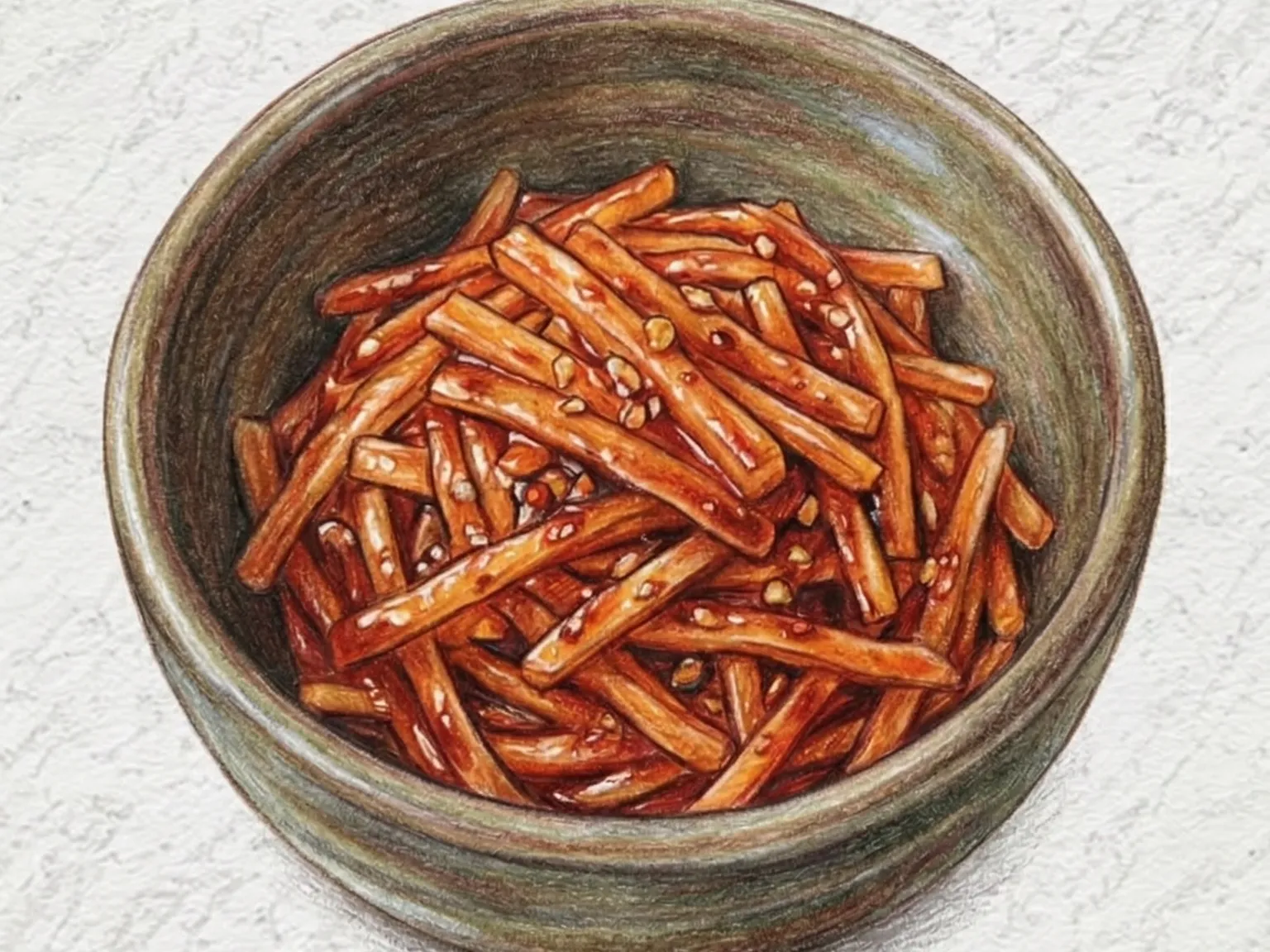
Korean Stir-fried Balloon Flower Root
Doraji -- balloon flower root -- has been cultivated in Korea for centuries, valued in cooking and herbal medicine alike. The raw root carries a pronounced bitterness from saponins, so it must be shredded into thin strips, rubbed vigorously with salt, left for ten minutes, then rinsed twice in cold water. The salt scrub draws out the saponins while preserving the root's firm, snappy bite. A base of green onion goes into the pan first to build a fragrant oil, then the prepared doraji stir-fries for two minutes before gochujang, soy sauce, and oligosaccharide syrup go in for another three minutes. The heat is raised at the end to drive off moisture, so the sauce tightens and clings to each strip rather than pooling in the pan. The result is a glossy, sweet-spicy banchan with a distinctly chewy pull.
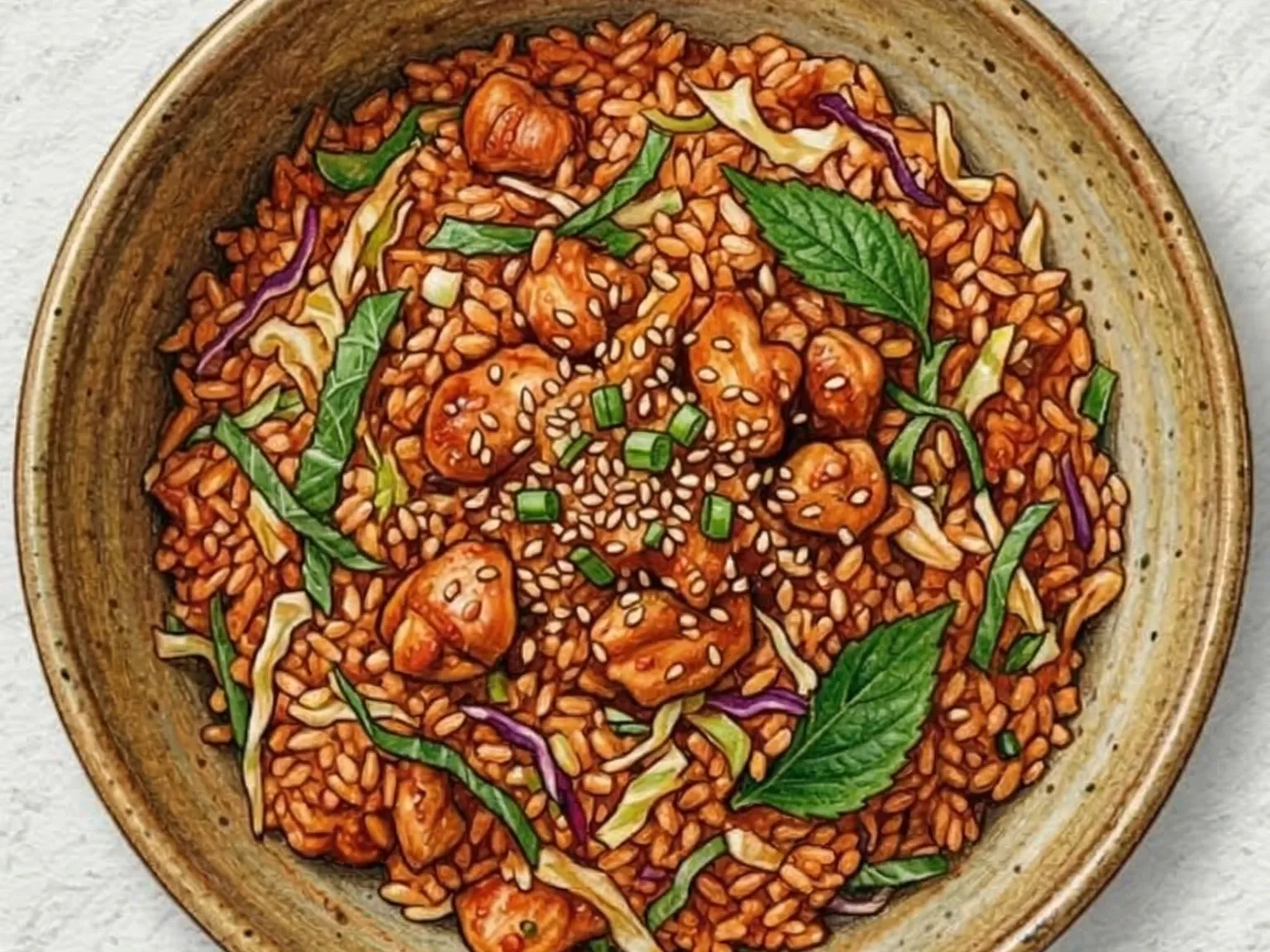
Korean Dakgalbi Fried Rice
Dakgalbi bokkeumbap is a fried rice made by stir-frying gochujang-marinated boneless chicken thigh with cabbage and onion over high heat, then adding day-old rice to the pan and frying until every grain absorbs the sweet-spicy marinade. The dish originated from the Chuncheon tradition of finishing a dakgalbi meal by stir-frying the leftover sauce and scraps with rice, effectively turning what remains in the pan into a second course. Day-old rice is essential: fresh rice holds too much moisture and clumps together, while refrigerated rice separates cleanly on the hot surface and makes sufficient contact with the pan to develop slightly charred bits at the bottom. These caramelized patches add a smoky crunch that contrasts with the sauced grains above and elevate the dish beyond a simple fried rice. Cabbage and perilla leaves added at the very end of cooking retain a faint crunch that cuts through the richness of the gochujang marinade. Plating the rice with a few perilla leaves laid on top and a scatter of sesame seeds over the surface finishes the dish without requiring anything further.
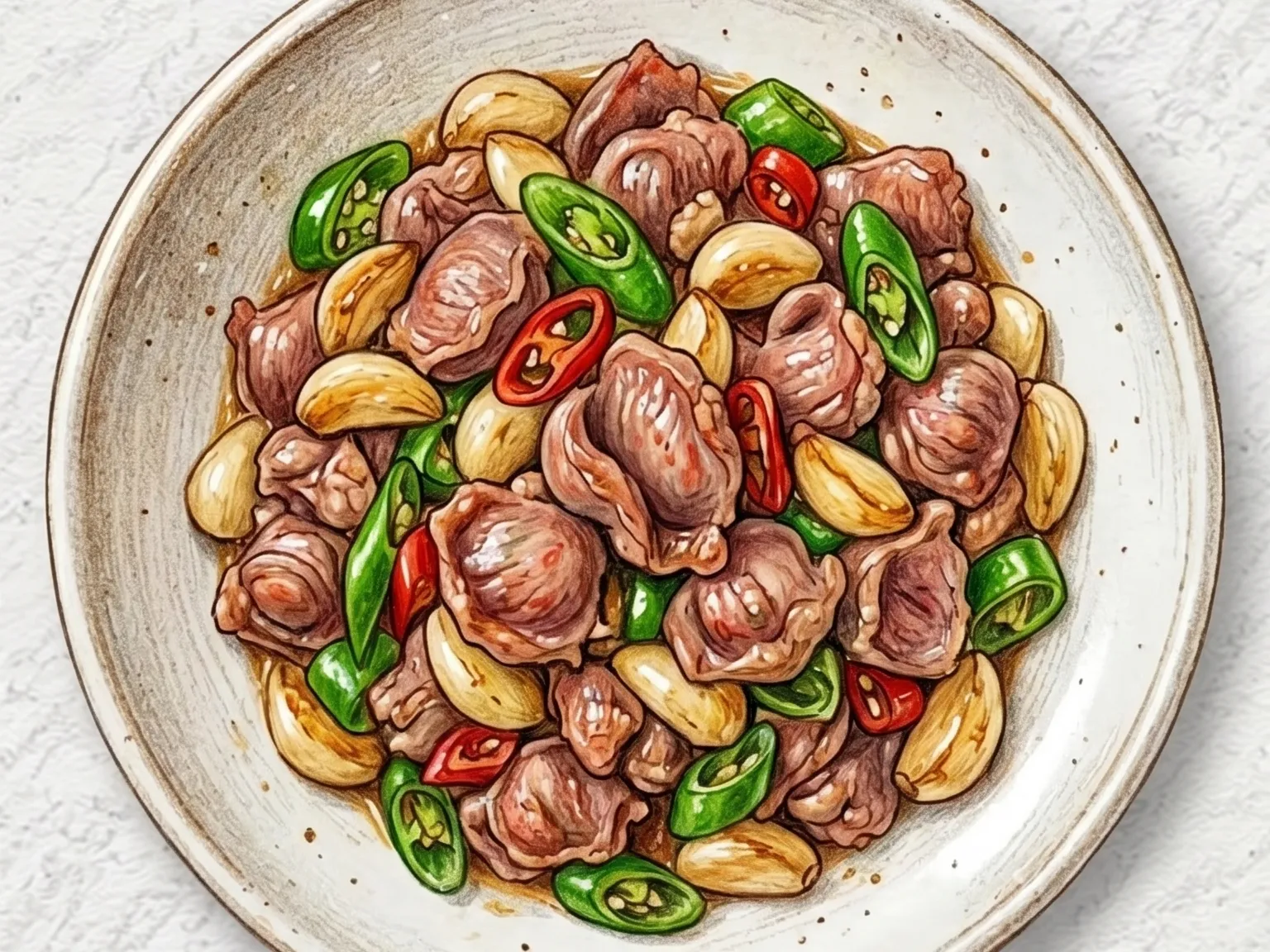
Korean Stir-fried Chicken Gizzards
Dak-ttongjip-bokkeum is a stir-fried dish made from chicken gizzards cooked over high heat with garlic and cheongyang chili pepper. The gizzard, known as the near-wi in Korean, is the thick muscular organ a chicken uses to grind its food. It contains very little fat, is high in protein, and stays firm through cooking in a way that ordinary chicken meat does not. Proper cleaning before cooking is essential. The yellow inner lining and any adjacent odorous tissue must be removed entirely, or the finished dish will carry an off smell that no amount of seasoning can cover. Once cleaned and scored lightly on the surface to help seasoning penetrate, the gizzards go into a very hot pan. The goal is a fast, high-heat cook that sears the outside while leaving the interior tender and springy. Extended cooking over lower heat makes them chewy and tough. The texture is the defining quality of this dish - dense, elastic, and slightly resistant to the bite, with a mild savory nuttiness that deepens the longer you chew. Cheongyang chili cuts through any residual heaviness and adds a clean, quick heat. Garlic provides a deep aromatic foundation that complements the protein. Soy sauce and mirim season the stir-fry with a balance of salt and restrained sweetness. The dish is ordered frequently alongside beer or soju, where its chewy texture and moderate heat make it a satisfying accompaniment to cold drinks. It also works well as a rice side dish.
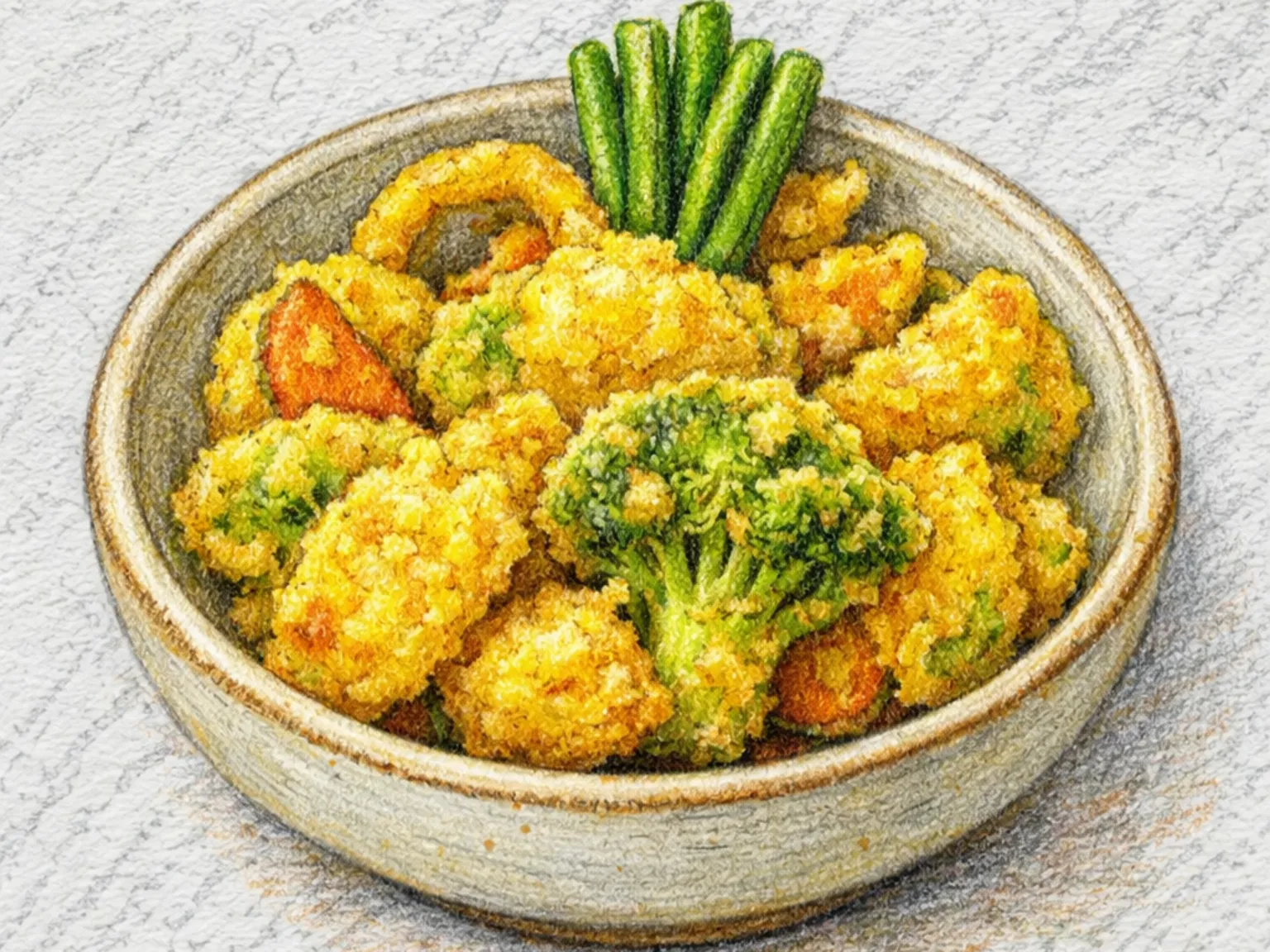
Korean Curry Flavored Tempura
Curry twigim mixes curry powder directly into the frying batter, giving it a vivid golden color and distributing spice throughout the coating before any frying begins. Sweet potato, carrot, and onion slices are dipped in this batter and deep-fried at 170 degrees Celsius. The key technical requirement is ice-cold water in the batter: cold temperature inhibits gluten development, which keeps the coating thin and produces a shattering, light crunch when bitten. Using warm or room-temperature water causes the gluten strands to develop fully, resulting in a thick, chewy crust that absorbs oil rather than repelling it. Because the curry powder is built into the batter itself, every piece carries turmeric, cumin, and coriander flavor in each bite without needing a dipping sauce. Compared to standard Korean vegetable tempura, the curry spices add an aromatic warmth and complexity to the sweet vegetables that distinguishes it clearly. The texture is best immediately out of the oil while the coating is still rigid.
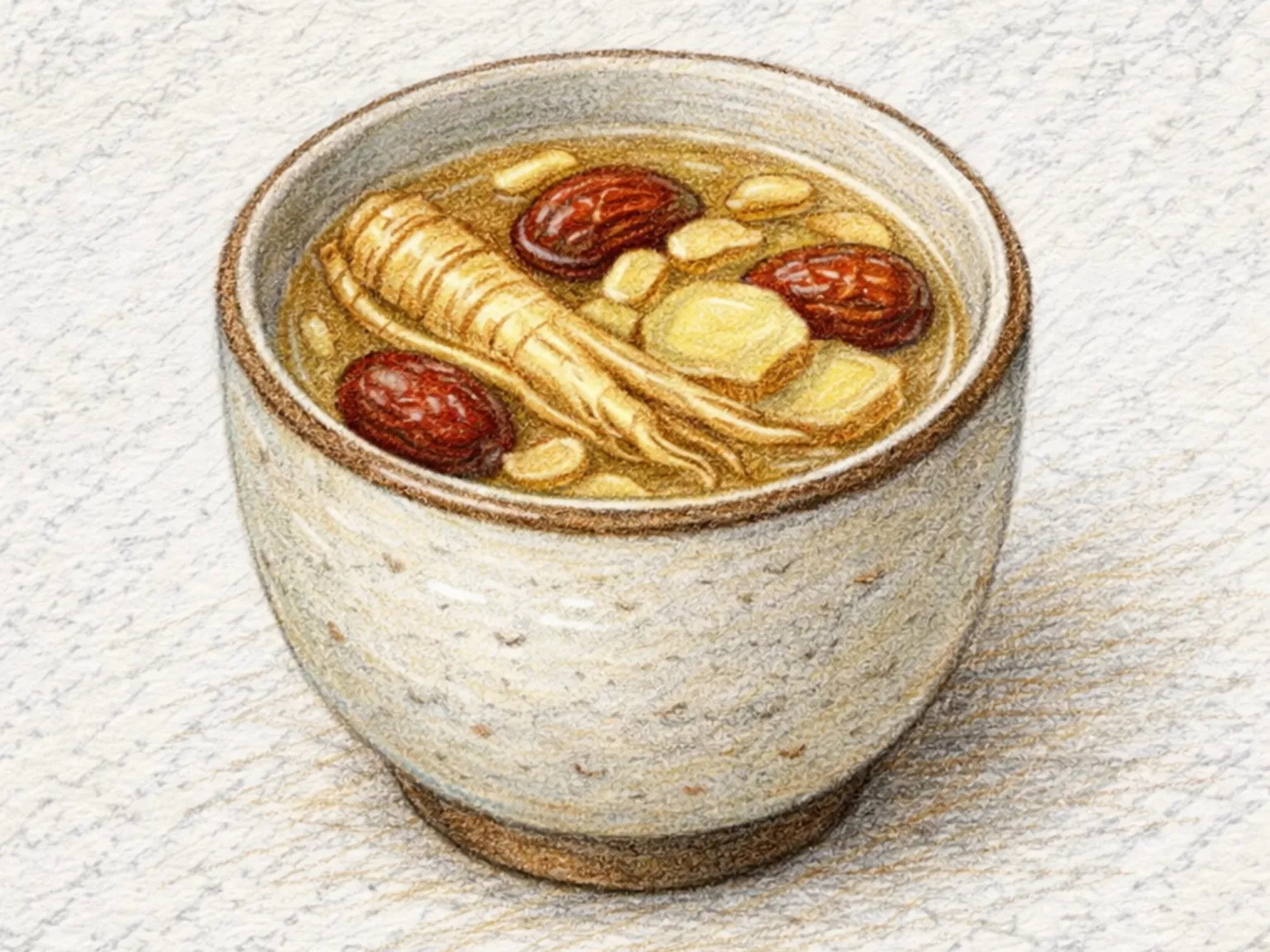
Korean Baekseju Herbal Rice Wine
Baekseju is a traditional Korean herbal rice wine produced by infusing a fermented glutinous rice base with twelve medicinal ingredients including fresh ginseng, jujubes, ginger, wolfberry, and cinnamon, then sweetening the result with honey. The brand was launched by Kooksoondang in 1992 and has since become the dominant commercial representative of the yakju category - herbal Korean rice wine - in mainstream retail. The foundation is glutinous rice fermented with nuruk, a traditional wheat and grain-based starter culture that produces a mildly sweet, relatively low-acid alcohol. Fresh ginseng steeped in that fermenting liquid contributes its characteristic bitterness and earthy depth, which sit on top of the rice sweetness rather than replacing it. Jujubes lend a faint reddish tint and a dried-fruit sweetness that stays in the background, while ginger delivers a slow, peppery warmth that registers at the back of the throat after swallowing. The honey is added after primary fermentation has proceeded far enough that the yeast population is declining; this preserves residual sugar in the finished wine rather than having it fully fermented out. That residual sweetness is central to Baekseju's flavor identity and distinguishes it from drier yakju styles. Alcohol content sits around thirteen percent, comparable to a medium-bodied grape wine. The liquid is filtered clear and appears golden, substantially more transparent than unfiltered makgeolli. Served cold, the herbal complexity recedes and the wine drinks crisp and refreshing; at room temperature, the ginseng bitterness and jujube sweetness become more pronounced with each sip. It pairs well with fatty or strongly flavored Korean dishes - grilled pork belly, braised spicy chicken - where the medicinal herbaceousness cuts through the richness.
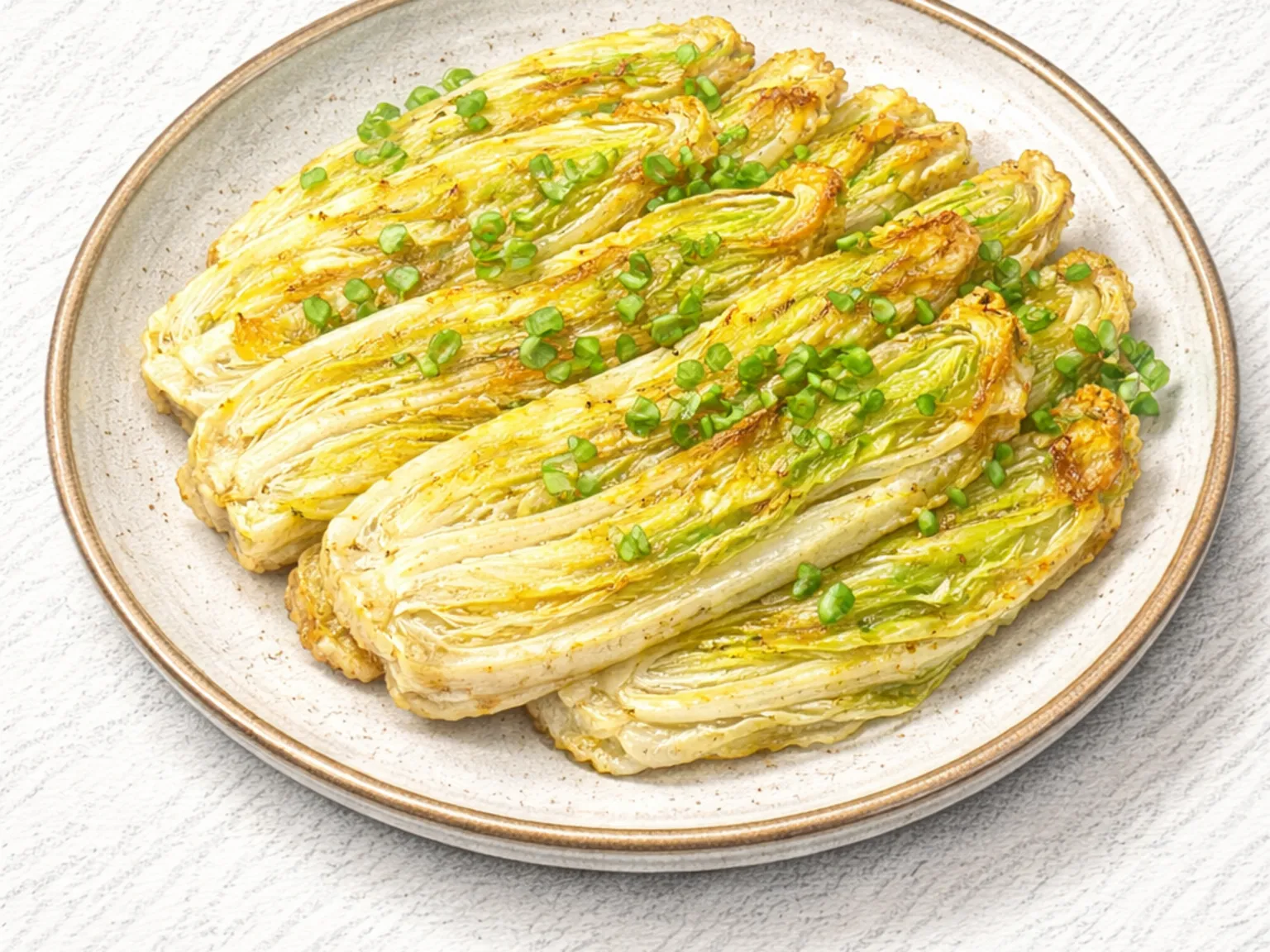
Korean Napa Cabbage Pancake
Baechu jeon is a Korean pan-fried pancake made with napa cabbage leaves coated in a thin flour batter. The simplicity of the recipe makes it a practical use-up dish during kimchi-making season, when salted outer cabbage leaves are on hand and need to be eaten quickly before they deteriorate. Outer leaves of medium size work best; the stem end, if too thick, needs to be flattened with the back of a knife so that the batter adheres uniformly and the leaf lies flat during cooking without curling or buckling. The batter is mixed thin - roughly equal parts buchim flour and water - so it forms a light coating rather than a thick shell. A heavy batter masks the cabbage entirely and produces a texture that is doughy rather than crisp. Generous oil in a well-heated pan and steady medium heat are what produce the characteristic result: a thin, crackling exterior while the cabbage inside softens and its natural sweetness intensifies. Napa cabbage's sweetness becomes more pronounced with heat than in its raw state, which is why this pancake, despite its simplicity, tastes distinctly of the vegetable. Each side must be fully golden before flipping - attempting to turn it early, before the batter sets, breaks the pancake. The standard accompaniment is a dipping sauce of soy sauce sharpened with rice vinegar and sliced cheongyang chili, whose acidity and heat provide contrast to the mild, faintly sweet pancake.
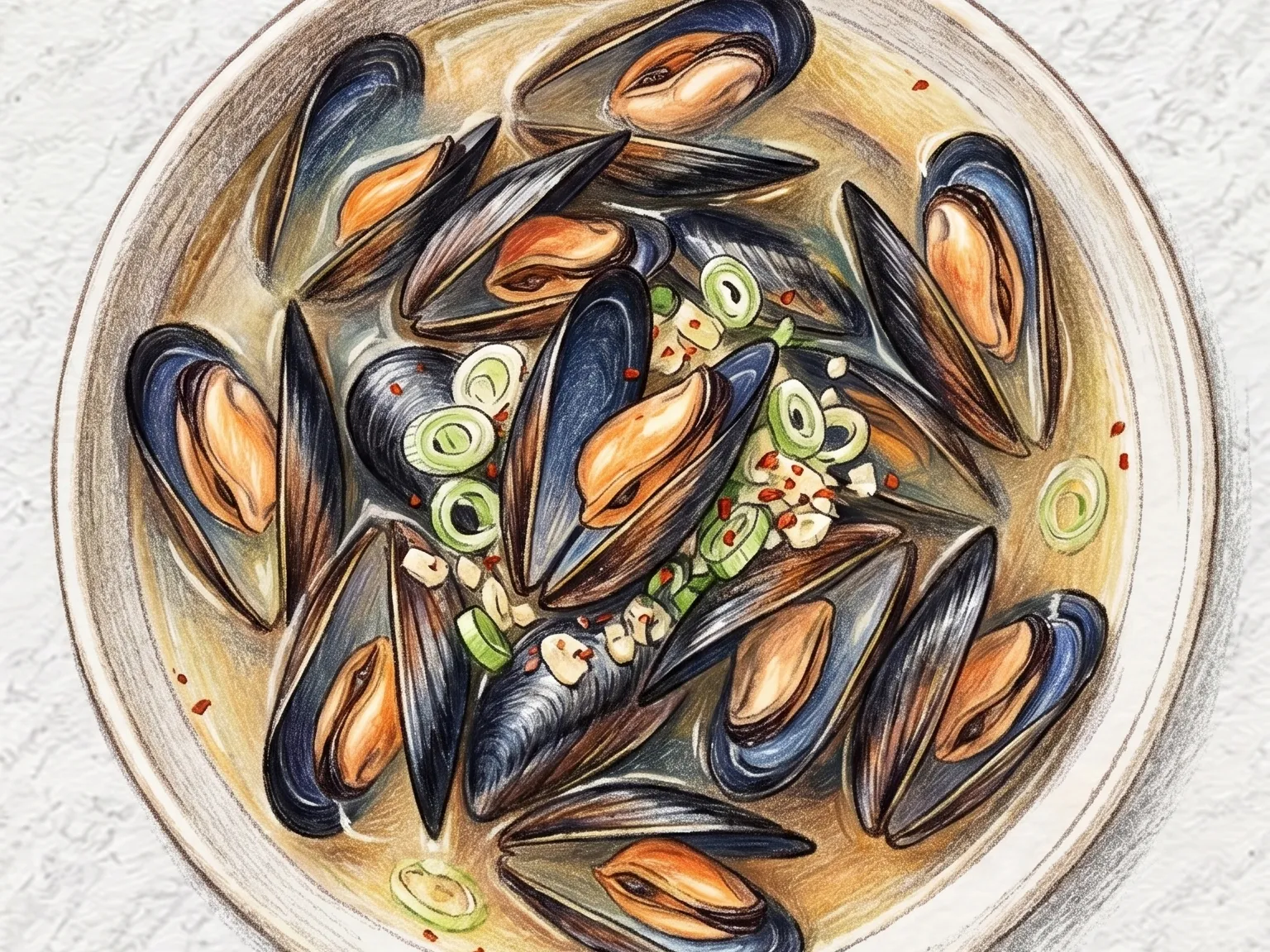
Honghap-tang (Korean Mussel Garlic Broth)
Honghap-tang is a Korean mussel soup that proves how much flavor a single shellfish can deliver with almost no help. Shell-on mussels are placed in water with sliced green onion, garlic, and a light dusting of gochugaru, then brought to a boil. As the shells open, they release a briny, faintly sweet liquor that becomes the broth itself, clear in appearance but surprisingly concentrated in taste. The entire process takes about fifteen minutes. Timing matters here: once the shells have opened and the flesh has puffed, the pot comes off the heat immediately or the meat turns rubbery. In Korea, honghap-tang is a standard drinking companion, sipped between shots of soju while the mussel meat is pulled from the shells and dipped in vinegary chojang sauce. The combination of the bold, oceanic broth and the chilled sauce creates a cycle that is hard to stop. Mussels caught during the colder months, when they are fatter and richer, produce the most intensely flavored broth.
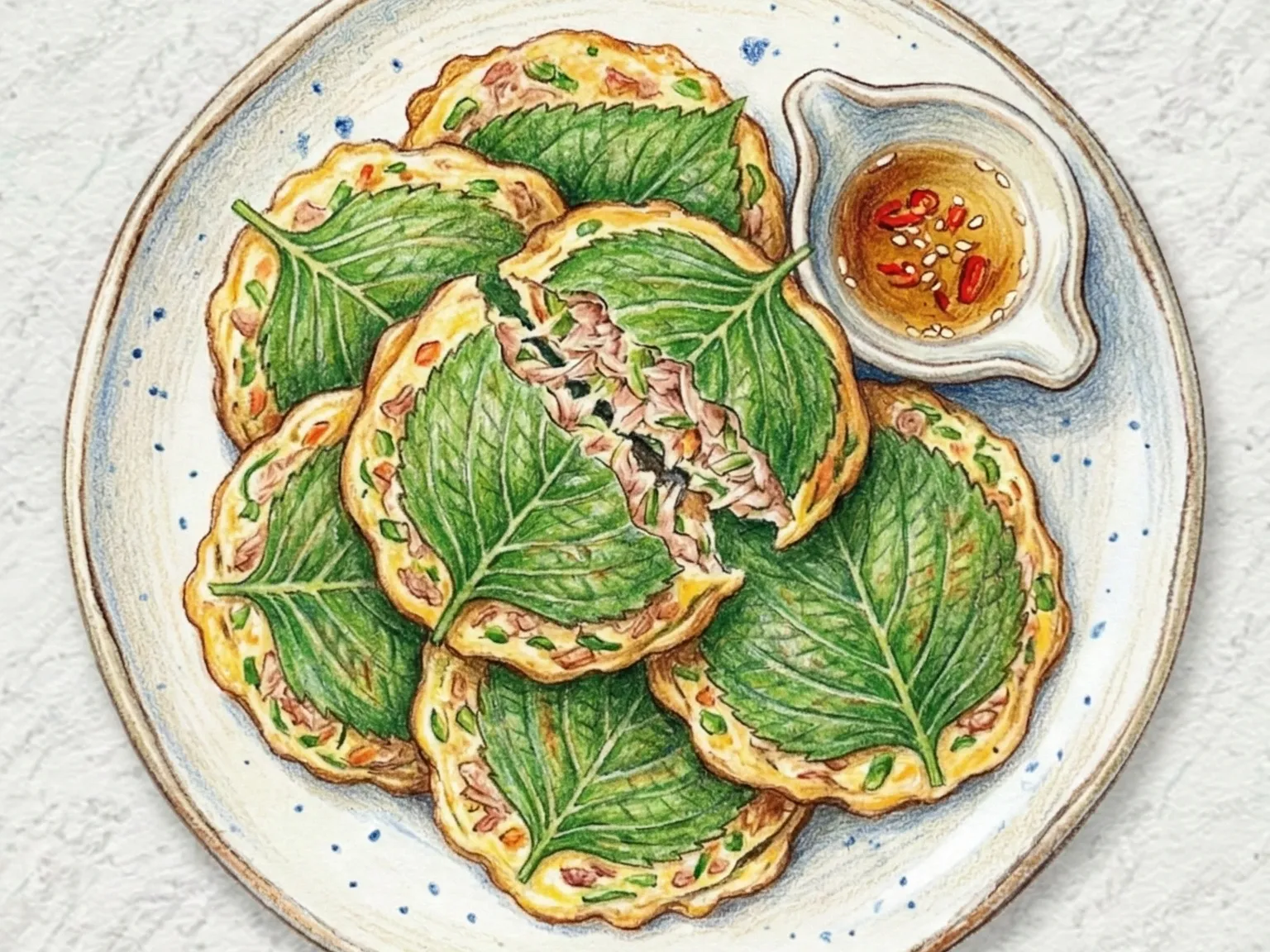
Korean Tuna & Perilla Leaf Fritters
Chamchi-kkaennip-jeon is a Korean pan-fried pancake made with canned tuna and perilla leaves. The oil is drained from the tuna before mixing, which keeps the batter from becoming greasy. Perilla leaves, chopped into the batter, contribute their distinctive herbal fragrance - sharp and slightly anise-like - which cuts through the brininess of the tuna and gives the pancake its character. The combination lands somewhere between a vegetable pancake and a fish cake: more substantial than the former, lighter than the latter. Egg binds the batter and produces a smooth, even surface when cooked. Onion and carrot are finely diced so the pancake spreads thin and cooks through uniformly, rather than leaving thick raw patches at the center. Adequate oil in the pan and medium heat produce a thin, crisp exterior without burning. The pancake holds its texture reasonably well at room temperature, making it a practical lunchbox side dish. A soy-based dipping sauce brings out the perilla fragrance more clearly when eaten alongside.
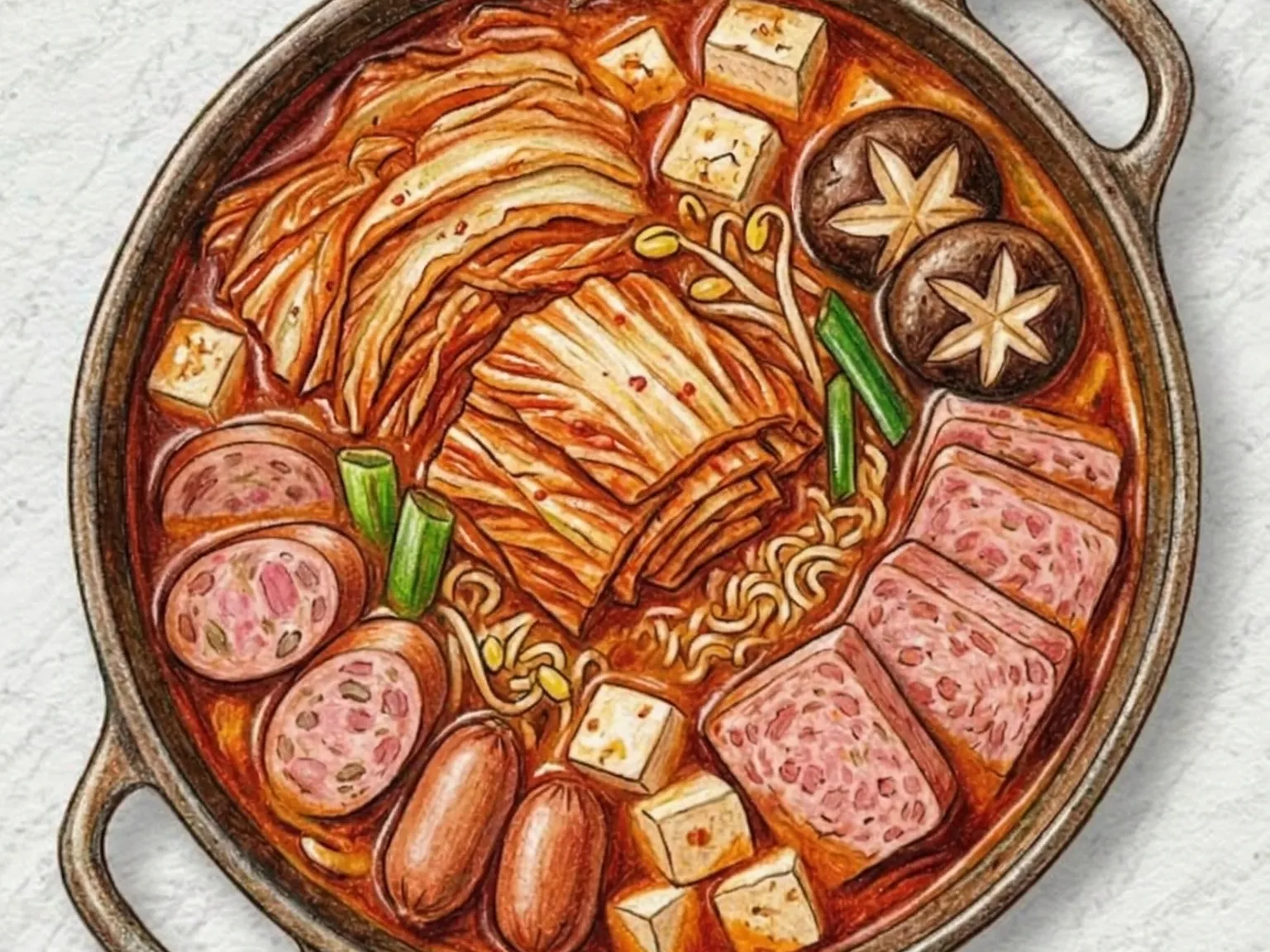
Korean Army Stew (Spam & Ramen Spicy Fusion Pot)
Budae jjigae loads Spam, sausages, instant ramen noodles, rice cakes, tofu, and kimchi into a single pot of gochugaru-and-gochujang broth. It originated near U.S. military bases in Uijeongbu after the Korean War, where American surplus rations met Korean pantry staples in the same pot. Each ingredient behaves differently in the heat - rice cakes stay chewy, ramen noodles turn springy, tofu softens into the broth - while the spicy, deeply seasoned stock ties them together. The noodles soak up the broth as the pot cooks down, keeping each bowl satisfying to the last spoonful.
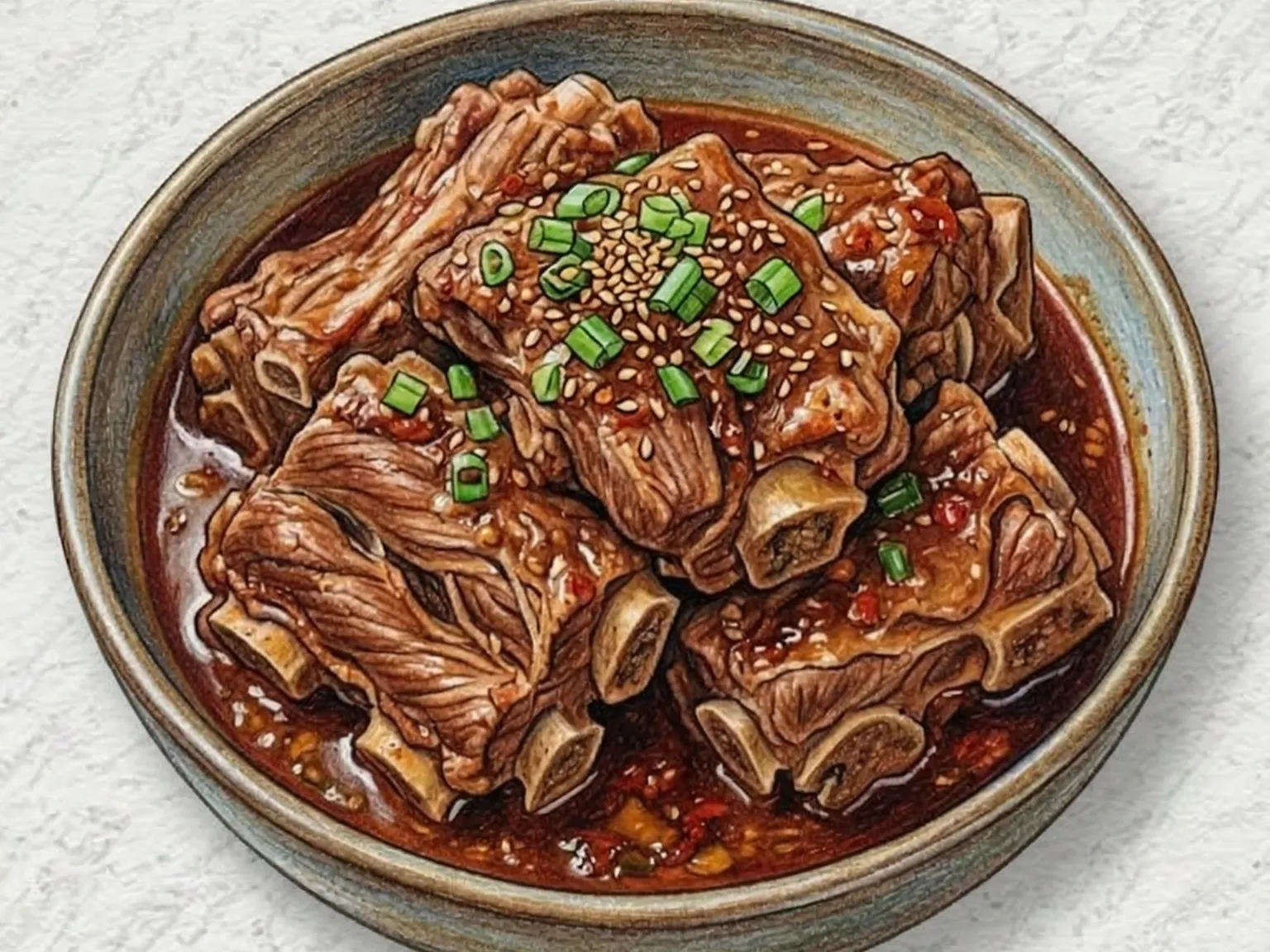
Korean Braised Pork Backbone
Deungppyeo-jjim is pork backbone braised with potato and green onion in a sauce built from doenjang, gochugaru, and soy sauce. After a long, slow simmer the meat tucked between the vertebrae and the cartilage separates from the bone without effort. Doenjang lays a deep, fermented underpinning to the broth while gochugaru brings a sharp, clean heat on top. The potatoes cook until they soften enough to fall apart at the press of a spoon, absorbing the thick, dark cooking liquid around them. Digging out the meat lodged between the bones is part of the pleasure, which is why the dish has long been a favourite pairing with soju. The rich, dense broth also makes it an easy choice for eating over a bowl of steamed rice.
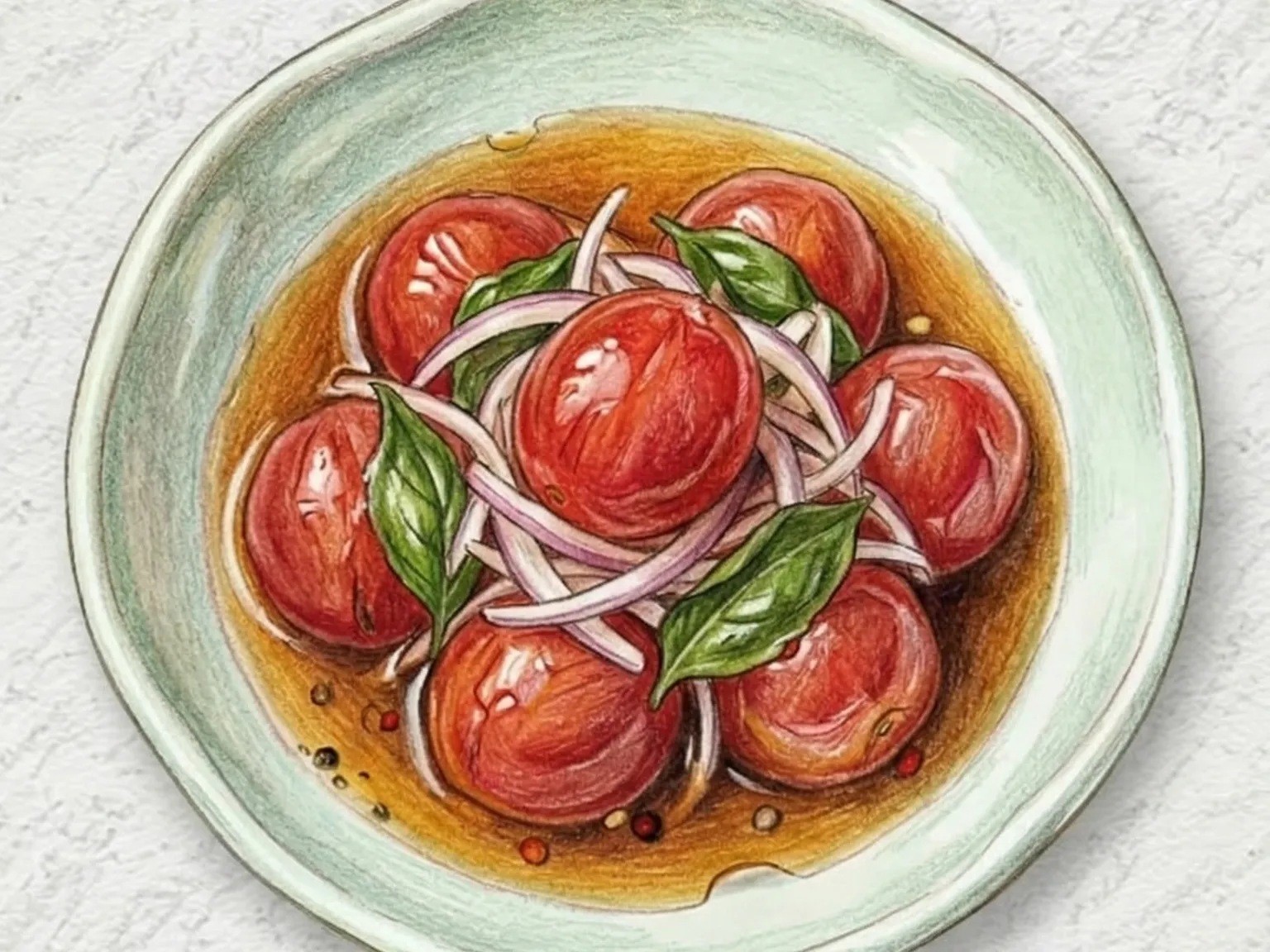
Korean Cherry Tomato Jangajji
Peeling cherry tomatoes by hand serves as the foundation for creating tomato jangajji, a Korean soy-preserved dish. Removing the skins allows the brine of soy sauce, rice vinegar, and sugar to permeate the flesh quickly and consistently. A critical step involves boiling the liquid and then letting it cool to room temperature before combining it with the fruit. This cooling period prevents the tomatoes from softening or becoming soggy, ensuring they remain firm throughout the pickling process. Thinly sliced onions included in the jar absorb the liquid, contributing a savory and tangy character. Fresh basil leaves introduce an herbal scent that distinguishes this preparation from standard soy pickles. One full day of refrigeration helps the acidity of the vinegar settle and highlights the natural sweetness of the tomatoes. This side dish functions effectively alongside rice or grilled meats, where its tartness acts as a cleanser for the palate after eating oily foods. The texture remains intact for about a week when kept cold. For a different profile, small amounts of cinnamon or star anise can be added to the brine to provide a warm spice fragrance. It also pairs well with cheese and crackers as an unconventional snack or finger food.
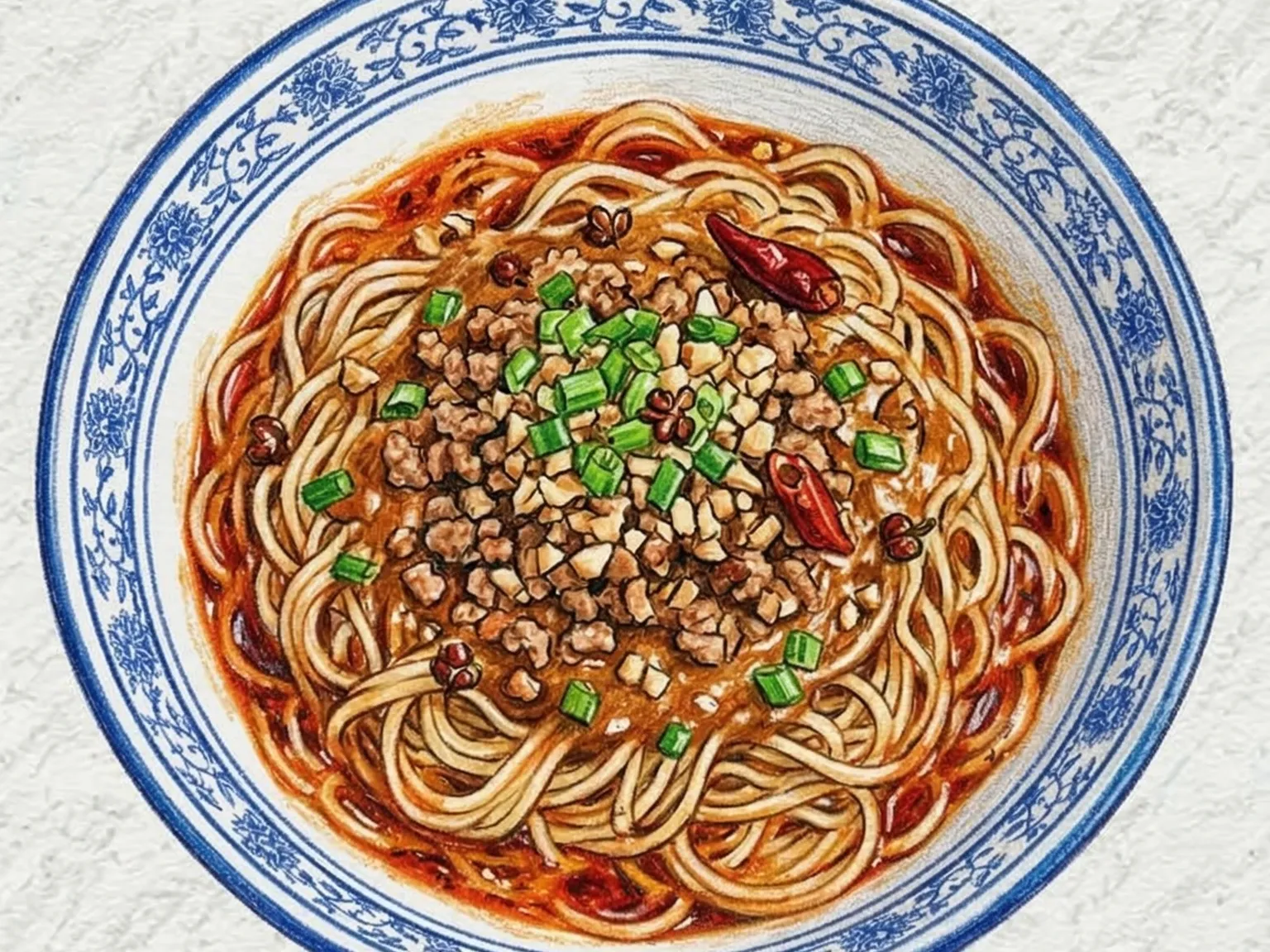
Dan Dan Mian (Sichuan Spicy Noodles)
Dan dan mian is a Sichuan noodle dish built on a thick sauce of sesame paste, soy sauce, chili oil, and vinegar, topped with wheat noodles and browned ground pork. Ground Sichuan peppercorn brings a lip-numbing, almost electric sensation that sits underneath the chili oil's direct heat and the sesame paste's deep richness, creating multiple distinct layers in a single mouthful. Browning the pork thoroughly before adding any liquid is essential -- the caramelized crust develops a roasted meatiness that permeates the entire sauce and prevents the dish from tasting flat. Blanched bok choy provides a fresh counterpoint to the oily intensity and keeps the bowl from feeling too heavy. Sichuan peppercorn's numbing effect accumulates quickly, so starting with a small quantity and tasting as you go gives precise control. Draining the cooked noodles completely is equally important; any residual water will thin the sauce and break the coating on the noodles.
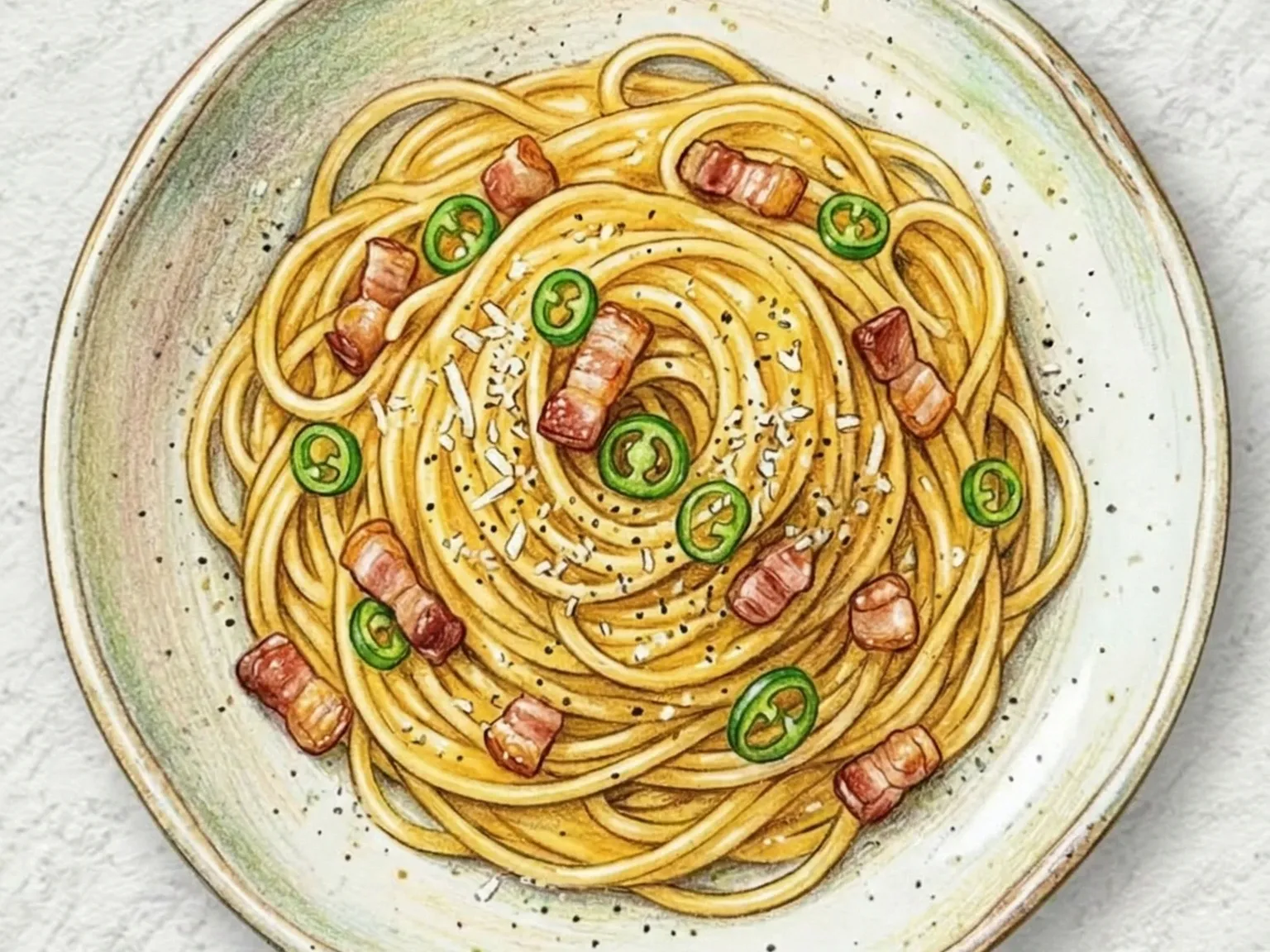
Cheongyang Chili Carbonara Spaghetti
Cheongyang chili carbonara spaghetti takes the classical Roman carbonara - built on egg yolks, Parmigiano-Reggiano, and Pecorino Romano emulsified with rendered pork fat - and introduces the sharp, lingering heat of Korean cheongyang peppers. Pancetta is rendered slowly over medium-low heat until the fat is fully released and the meat turns crisp, and the sliced chili and garlic are added to the rendered fat for just thirty seconds - long enough to infuse the oil with heat and fragrance without scorching the garlic. The cheese-egg base is made by whisking yolks with finely grated cheese until smooth; a useful ratio is two yolks to 20 grams of Parmigiano-Reggiano and 10 grams of Pecorino. This mixture must be folded into the drained pasta off direct heat, using reserved pasta water to loosen and emulsify - the starch and salt in the pasta water are what allow the sauce to coat each strand evenly rather than clump. The cheongyang pepper's capsaicin cuts cleanly through the concentrated richness of the egg and cheese fat, providing a clean finish that the classic Roman version does not have. The chili quantity is easy to adjust upward or downward, and using fresh whole peppers instead of pre-cut pieces produces a sharper heat with more green, vegetal character.