🍺 Bar Snacks Recipes
Perfect pairings for beer, soju & wine
705 recipes. Page 8 of 30
In Korean drinking culture, anju (drinking snacks) are just as important as the drink itself. Beer goes with fried chicken, soju pairs with grilled pork belly and dubu-kimchi, and makgeolli calls for pajeon and bindaetteok. This tag gathers recipes designed to accompany a drink.
Great anju complements the beverage without overwhelming it. Salty, savory, and spicy options - prepare a few and you will be ready for any gathering.
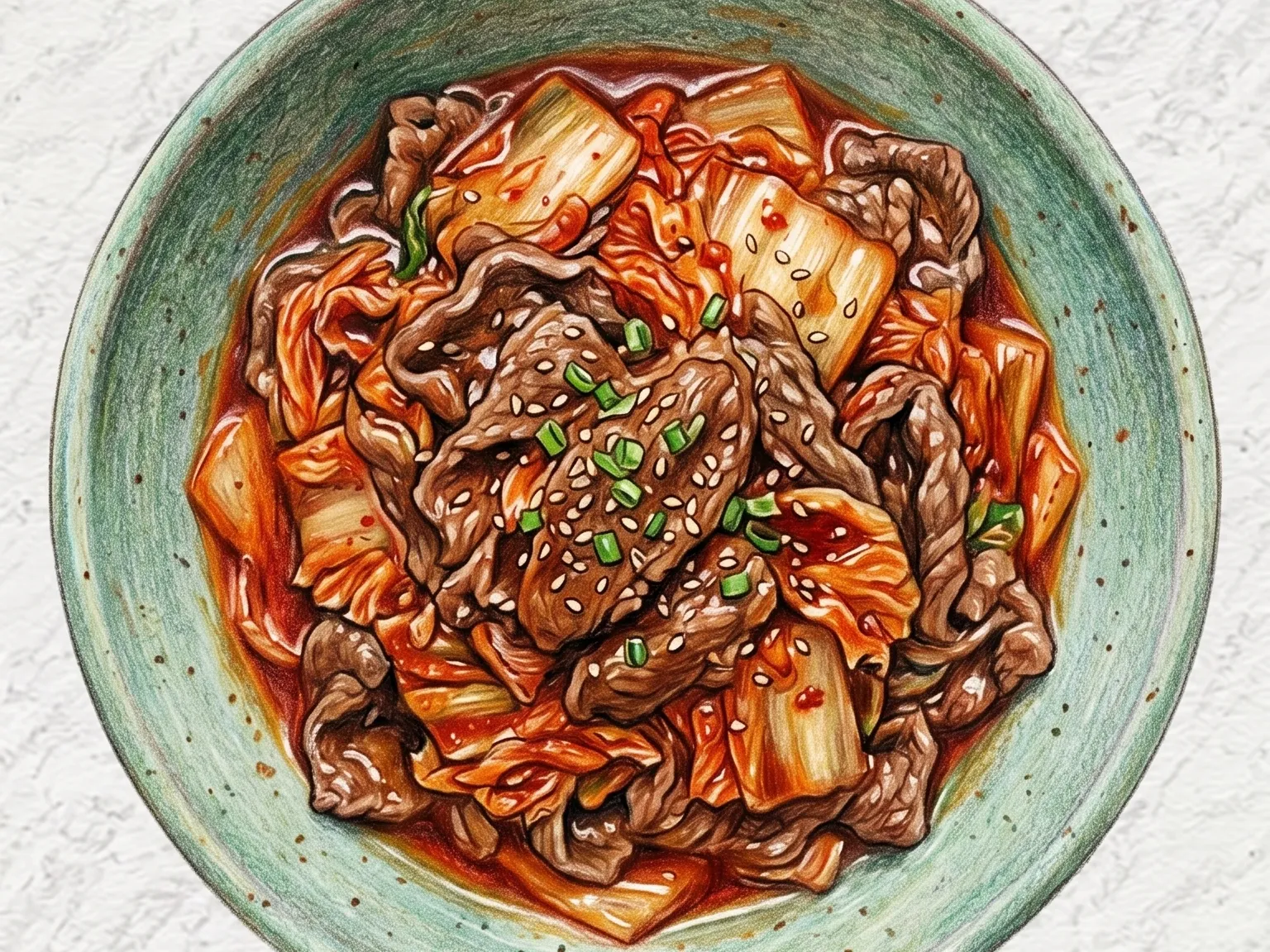
Korean Kimchi Bulgogi (Kimchi Stir-Fried Marinated Beef)
Kimchi bulgogi combines soy-marinated sliced beef with aged napa kimchi, cooked together over high heat in a single pan. The beef is marinated with soy sauce, pear juice, and sugar before it ever touches the pan. Pear juice breaks down the muscle fibers to tenderize the meat while adding a subtle fruity sweetness, which the kimchi's sharp acidity and concentrated salt counter-balance to produce a layered, complex seasoning. As the two cook together at high heat, kimchi liquid seeps into the beef and builds a deeper, more rounded umami than standard bulgogi achieves on its own. The tangy lactic sourness from the fermented cabbage layers into the meaty savoriness and gives the dish a character that no amount of seasoning adjustments can replicate in an unfermented substitute. Heating the pan fully before adding the ingredients is important, because a properly hot surface sears rather than steams, preserving the wok-adjacent char that makes this dish more than a simple stir-fry. A final drizzle of sesame oil rounds out the dish with a warm, nutty note. Served over steamed white rice, the pan juices soak into each grain and the combination disappears from the bowl quickly. Well-aged kimchi, ideally stored for several weeks to months, produces the most pronounced result, though ripe freshly made kimchi works as a substitute when no aged version is available.
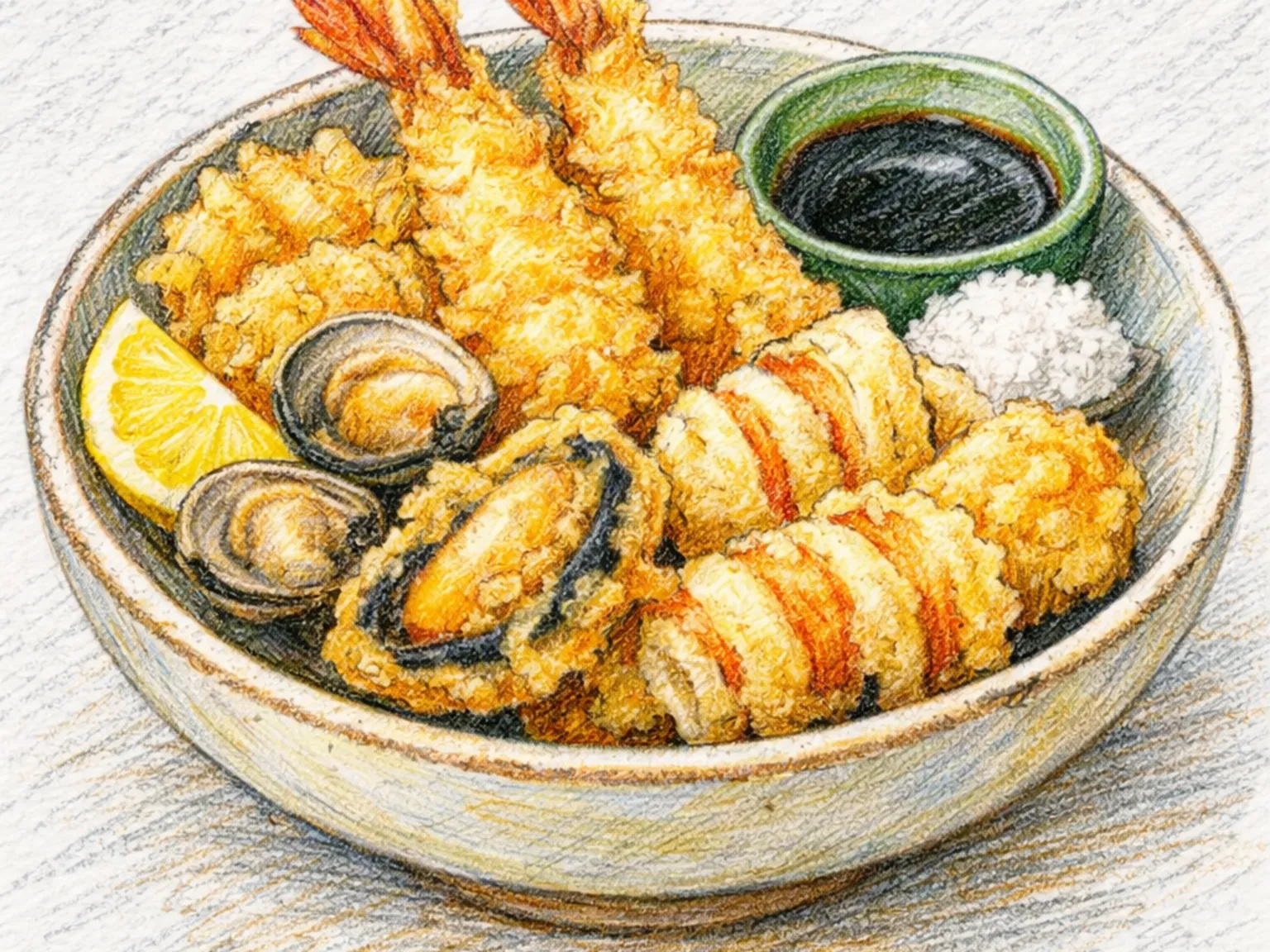
Korean Seafood Tempura (Korean Deep-Fried Seafood)
Haemul-twigim is a Korean assorted seafood platter of shrimp, squid, and clams coated in a light cold-water batter and deep-fried until crisp. Each type of seafood requires different prep: shrimp get their back tendons snipped to prevent curling, and squid are scored to stop them from shrinking in hot oil. The cold-water batter produces a thin, delicate coating that highlights the seafood's own flavors rather than burying them. Frying briefly at 170 degrees keeps the interiors from turning rubbery, and the platter is typically served with soy dipping sauce or salt alongside tteokbokki and fish cake soup as part of a bunsik spread. Substituting beer or sparkling water for plain cold water in the batter creates an even lighter, crispier coating, and draining the pieces thoroughly on a rack immediately after frying is what keeps them from going soggy before they reach the table.

Korean Black Raspberry Ade
Bokbunja ade starts by combining black raspberry concentrate with lime juice and honey to build a tart-sweet base before anything else is assembled. That base is poured over a cup packed with ice and frozen berries, then topped with sparkling water. The deep purple concentrate sinking through the clear carbonation creates a vivid color gradient in the glass that holds until stirred. Lime juice amplifies the berry aroma rather than masking it, and if the concentrate runs particularly strong, extra sparkling water brings it back into balance. Frozen berries function as both cooling agent and slow flavor release - as they thaw, the fruit intensity in the drink gradually deepens.
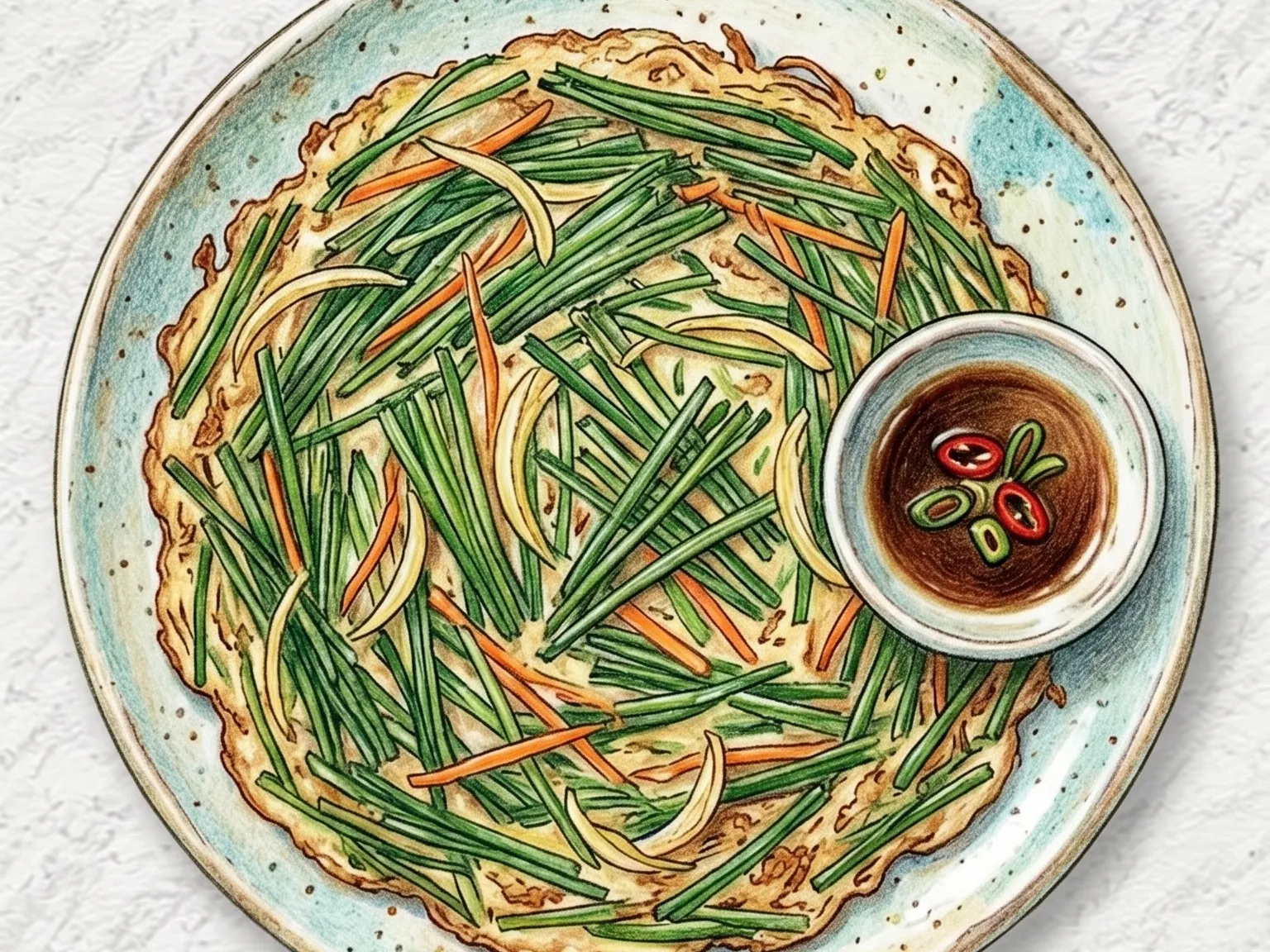
Korean Garlic Chive Pancake
Buchu-jeon is a Korean garlic chive pancake where a generous pile of chives is loosely bound in a thin batter together with julienned carrot and onion, then pan-fried until the edges crisp and turn golden. The chives carry a pungent, mildly spicy aroma that becomes more pronounced with heat, and cutting them to five centimeters prevents the pancake from tearing when flipped. The batter is intentionally thin and runny - a thick batter produces a doughy, steamed interior that smothers the chive flavor rather than framing it. Spreading each portion as flat as possible in the pan is the direct path to the crispy edges that define the dish. Frying multiple small pancakes holds crunch significantly better than attempting a single large one, since each piece spends less time on heat and cools more evenly. Served immediately off the pan with a dipping sauce of soy sauce sharpened with a small pour of vinegar.
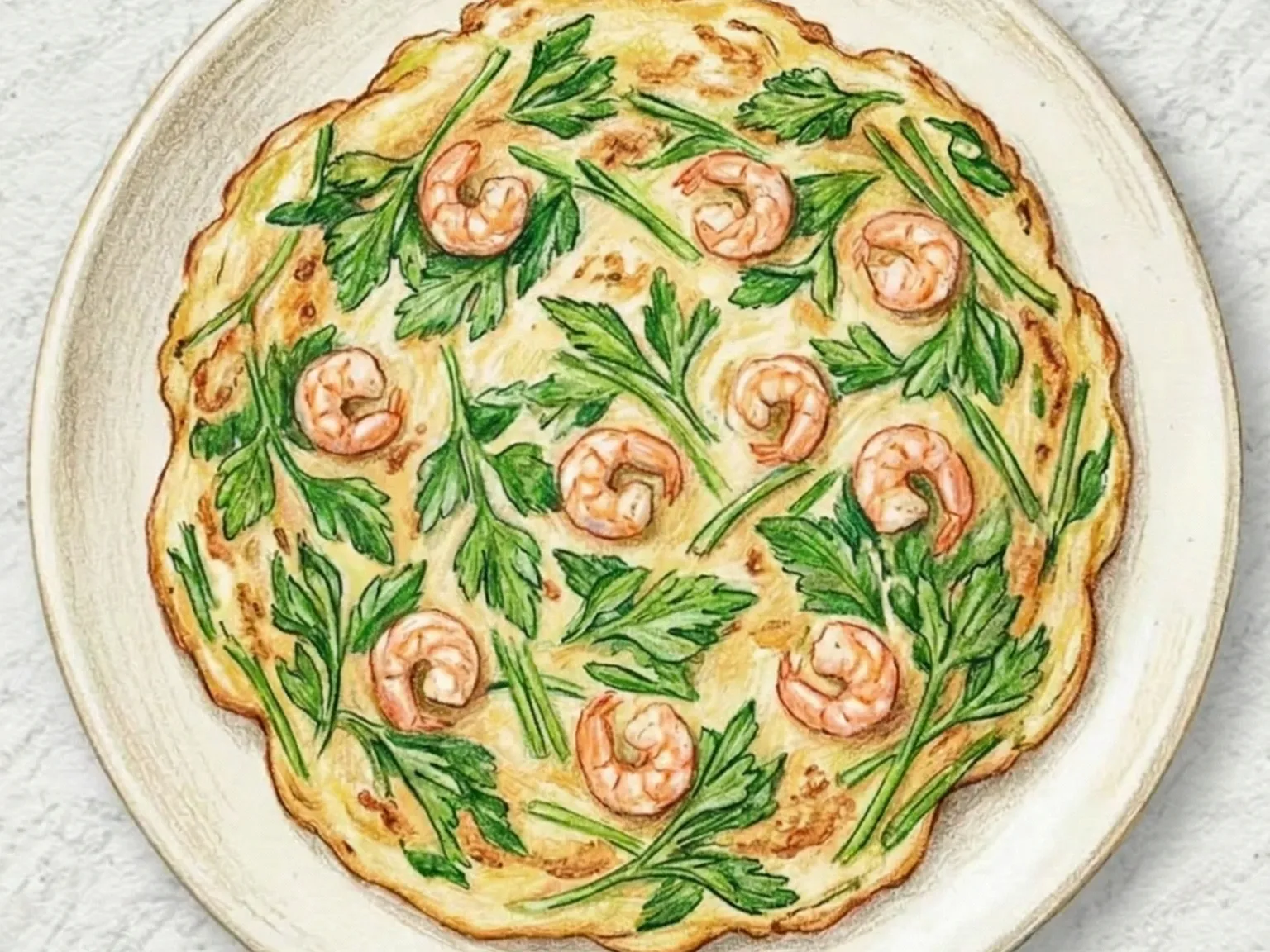
Korean Water Parsley Shrimp Pancake
This Korean pancake combines fresh water parsley and cocktail shrimp in a light, seasoned batter. The preparation starts by cutting cleaned water parsley into five-centimeter pieces, slicing onions thinly, and drying the shrimp to prevent oil splattering. The batter is mixed using pancake flour, cold water, an egg, and a pinch of salt until smooth. The vegetables and shrimp are folded in gently with chopsticks to keep the texture light. Cooking the batter in a well-oiled pan over medium heat for two to three minutes on each side produces a pancake with thin, crispy edges. The water parsley stems retain their crispiness even after frying, contrasting with the tender shrimp. The herbal fragrance of the parsley blends with the clean sweetness of the shrimp. It is typically cut into bite-sized pieces immediately after cooking and served warm with a soy sauce and vinegar dipping sauce.
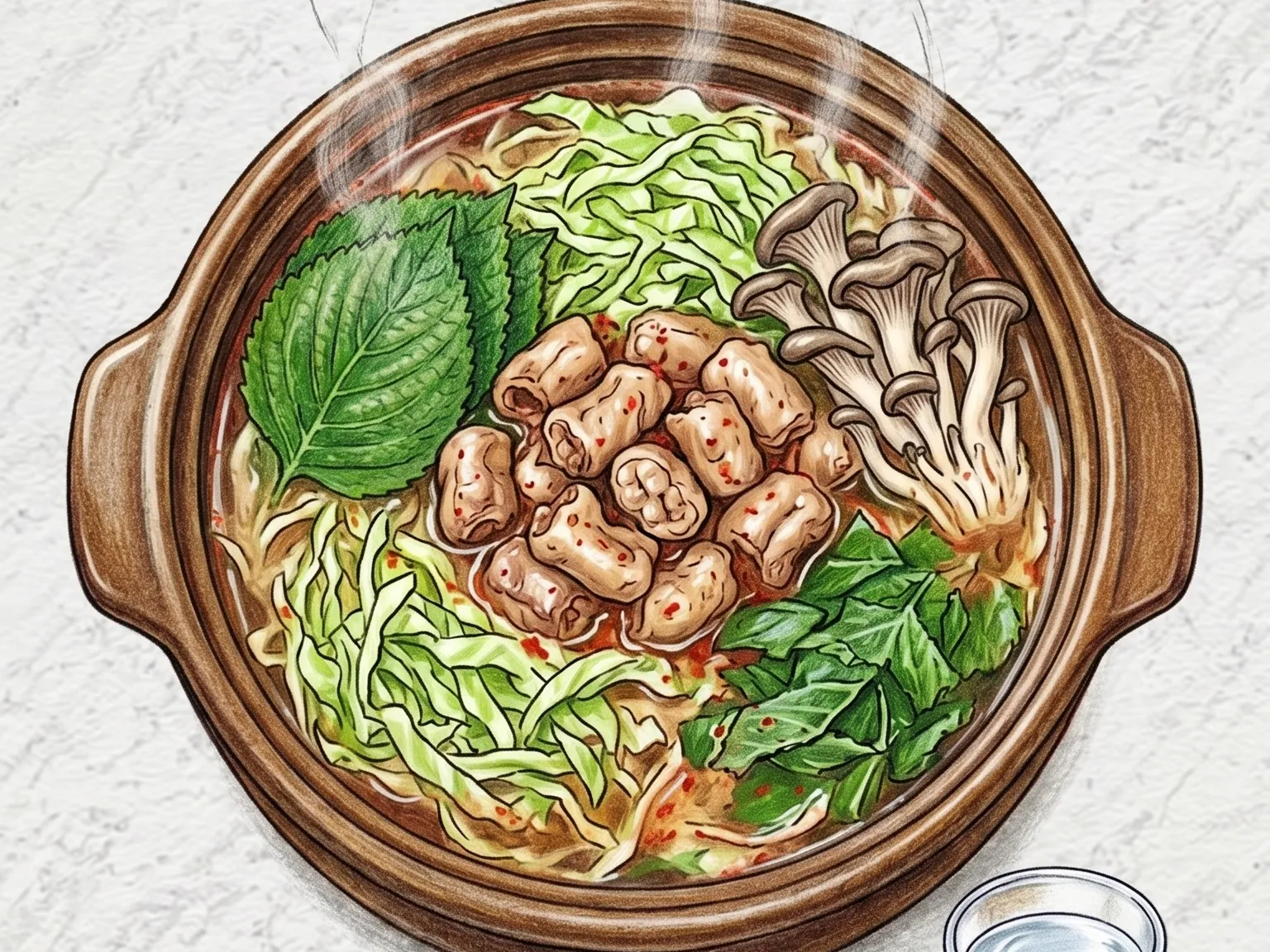
Korean Seoul-style Gopchang Jeongol
Seoul-style gopchang jeongol is a hot pot of beef intestines cooked in beef bone broth, where the key distinction from other regional versions is the use of soup soy sauce rather than gochujang as the primary seasoning. Gochujang-based hot pots run thick and heavy; this Seoul version stays clear and clean-tasting, with the depth coming from the bone broth and the intestines themselves rather than from fermented paste. Six hundred grams of cleaned beef intestines go into the pot along with cabbage, oyster mushrooms, and perilla leaves. The perilla leaves are added toward the end and contribute a distinctive herbal scent that cuts through the richness of the intestines. Gochugaru provides color and a measured level of heat. The intestines need to cook for at least twenty minutes after the broth reaches a boil to eliminate any off-odors and reach the tender, slightly chewy texture that defines the dish. This preparation traces back to the gopchang alley restaurants concentrated around Seoul's Euljiro and Majang-dong districts, where the combination of gopchang and soju has been the standard order for decades.
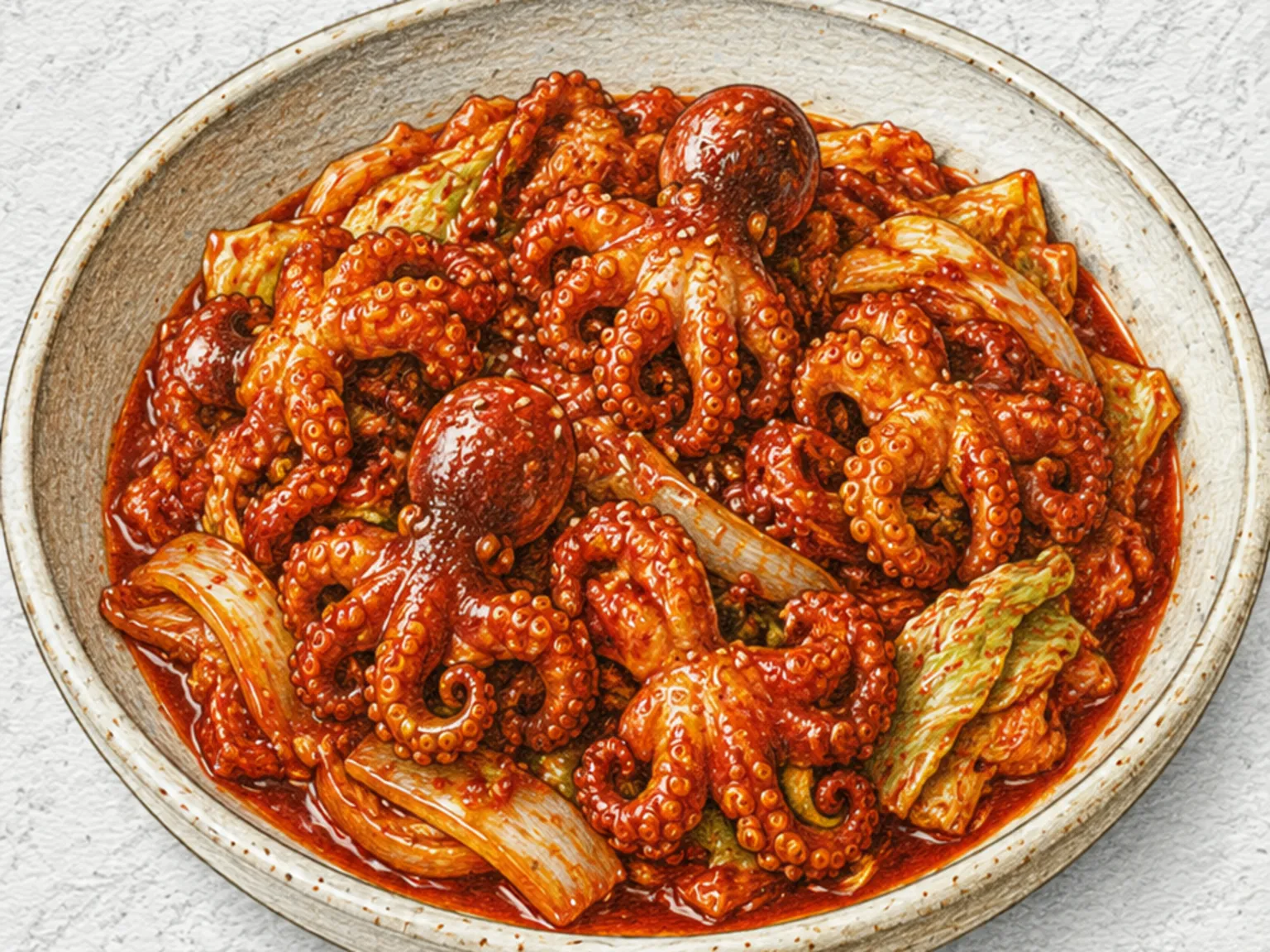
Korean Spicy Steamed Baby Octopus
Jjukkumi-jjim is spicy steamed baby octopus marinated for ten minutes in a sauce of gochugaru, gochujang, soy sauce, and minced garlic, then steamed over a bed of cabbage and sliced onion. Baby octopus turns tough very quickly with excess heat, so steaming for roughly ten minutes is essential to keep the texture springy and bouncy. The cabbage absorbs the concentrated spice and provides a mild, slightly sweet contrast to the bold chili seasoning. A drizzle of sesame oil at the finish contributes a warm, nutty aroma that rounds out the heat. The dish is at its best in spring when baby octopus is in season and the ink sacs dissolve into the marinade, adding an extra layer of savory depth. Starting to steam only after the water has reached a full boil ensures the heat surrounds the ingredients evenly, and keeping the lid closed throughout prevents temperature drops that would extend cooking time.
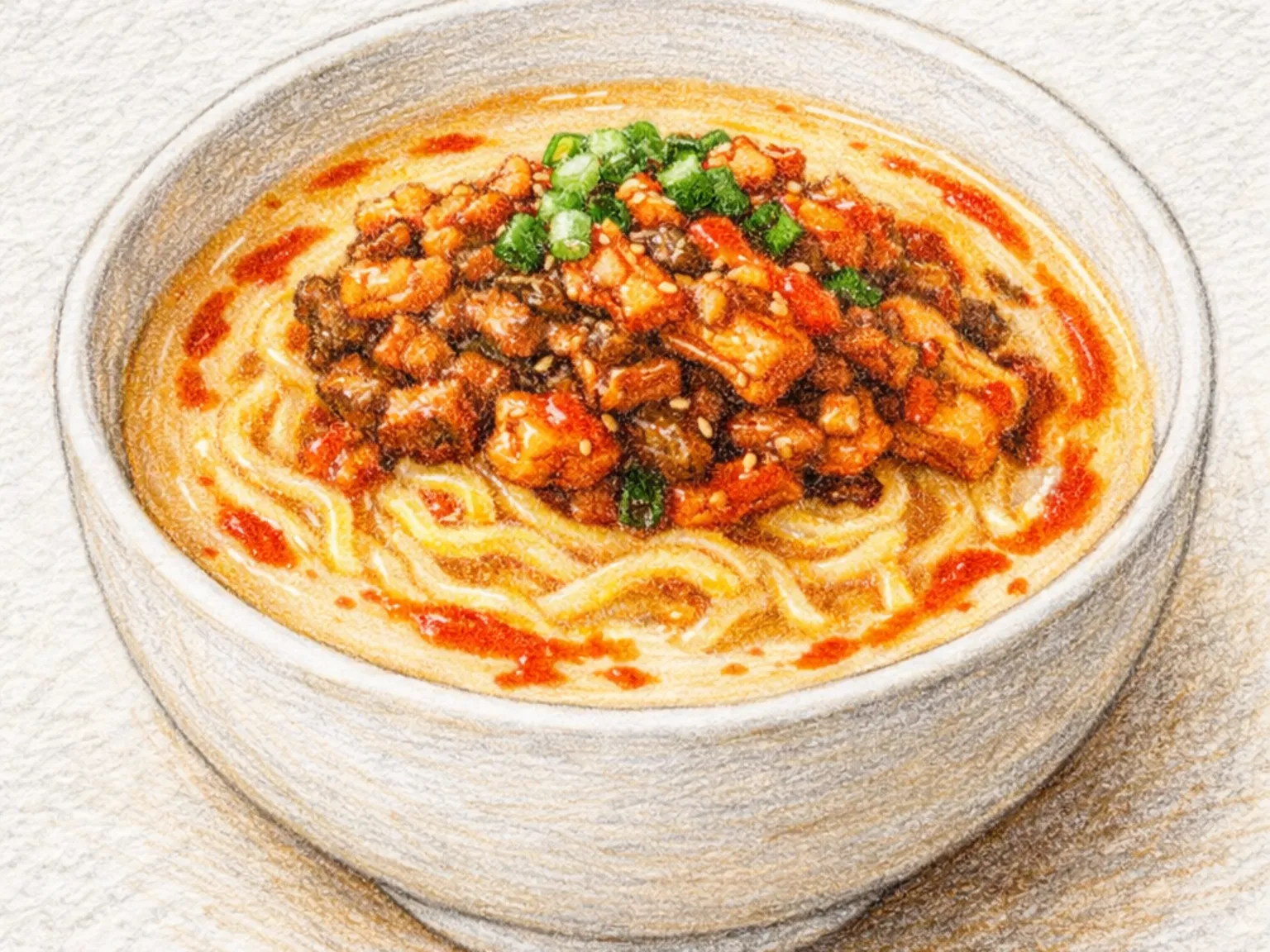
Korean Kimchi Soy Milk Tantan Noodles
Kimchi duyu tantan myeon takes the structural logic of Chinese dandan noodles and rebuilds it around Korean pantry ingredients. Garlic and green onion are stir-fried in chili oil first to infuse the fat with fragrance, then ground pork goes in along with doenjang and soy sauce and stays on the heat until it browns and the fermented paste base deepens. Finely chopped kimchi is added and cooked for two more minutes, which softens the raw acidity of the kimchi and melds it into the meat mixture. Unsweetened soy milk is poured in at that point and heated gently, just below a boil, so it blends into a smooth, lightly creamy broth without breaking. The noodles are boiled separately and placed in the bowl before the broth is ladled over. Ground peanuts sprinkled on top at the end contribute a nutty finish, and the amount can be adjusted to thicken the broth to a preferred consistency.
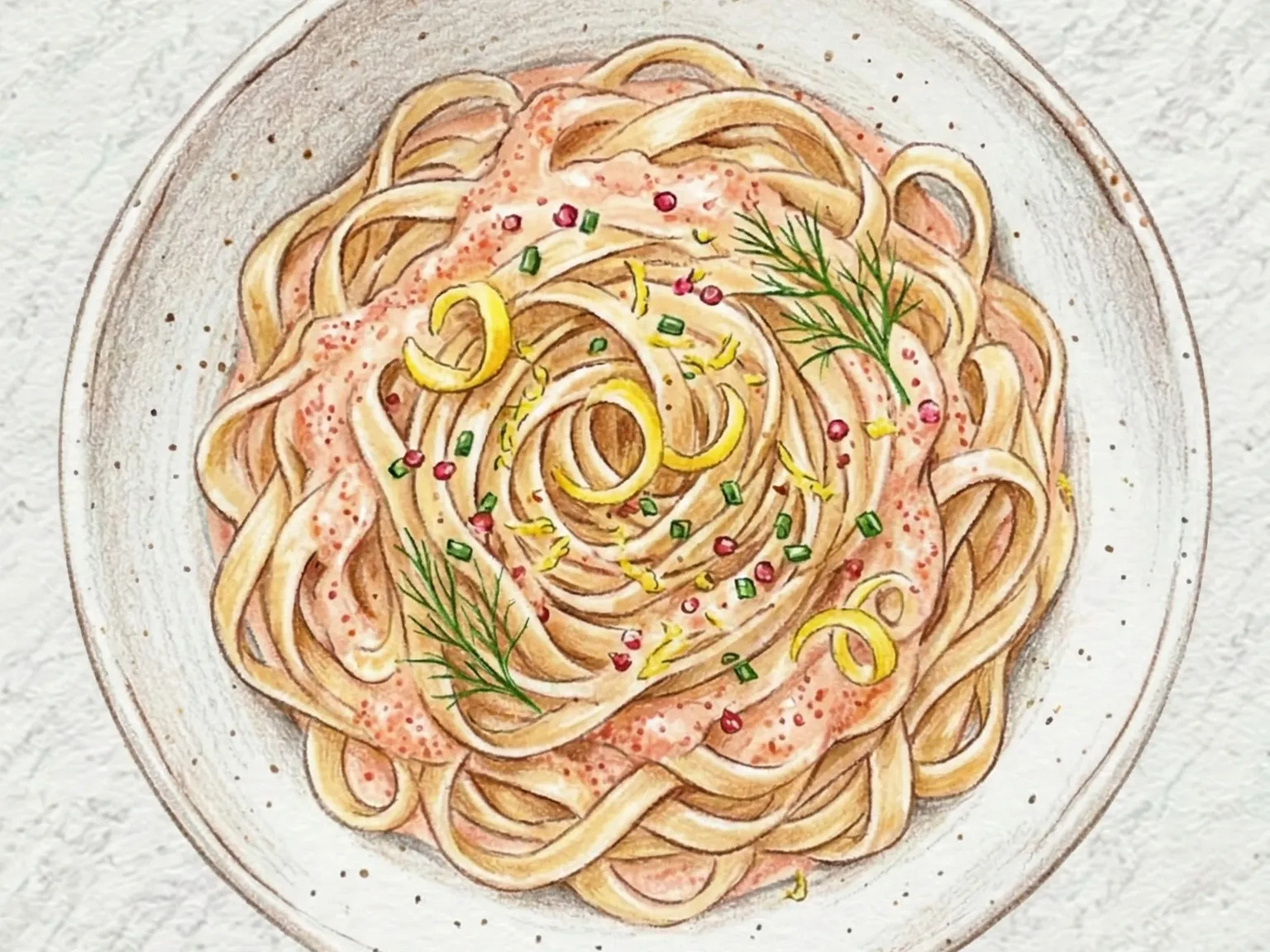
Myeongran Lemon Cream Fettuccine
Myeongran lemon cream fettuccine wraps wide pasta ribbons in a sauce made from salted pollock roe, heavy cream, butter, and lemon zest. The small eggs of the roe are left intact and stirred into the sauce off the heat so they stay soft and burst with briny flavor when bitten rather than turning granular or hard. Garlic bloomed in butter forms the aromatic base, and a mixture of heavy cream with milk tempers the roe's saltiness into a smooth, balanced coating. Using lemon zest rather than juice adds a bright citrus fragrance without diluting the sauce or introducing acidity that would curdle the cream. Parmigiano-Reggiano deepens the savory foundation, and fettuccine's broad, flat surface holds the thick cream more effectively than thinner pasta shapes. The entire dish takes about twenty minutes from start to plate, making it a practical weeknight option that does not sacrifice depth of flavor for speed. The critical technique -- incorporating the roe off the heat -- keeps the texture creamy throughout and prevents the eggs from cooking into tough, unpleasant morsels.
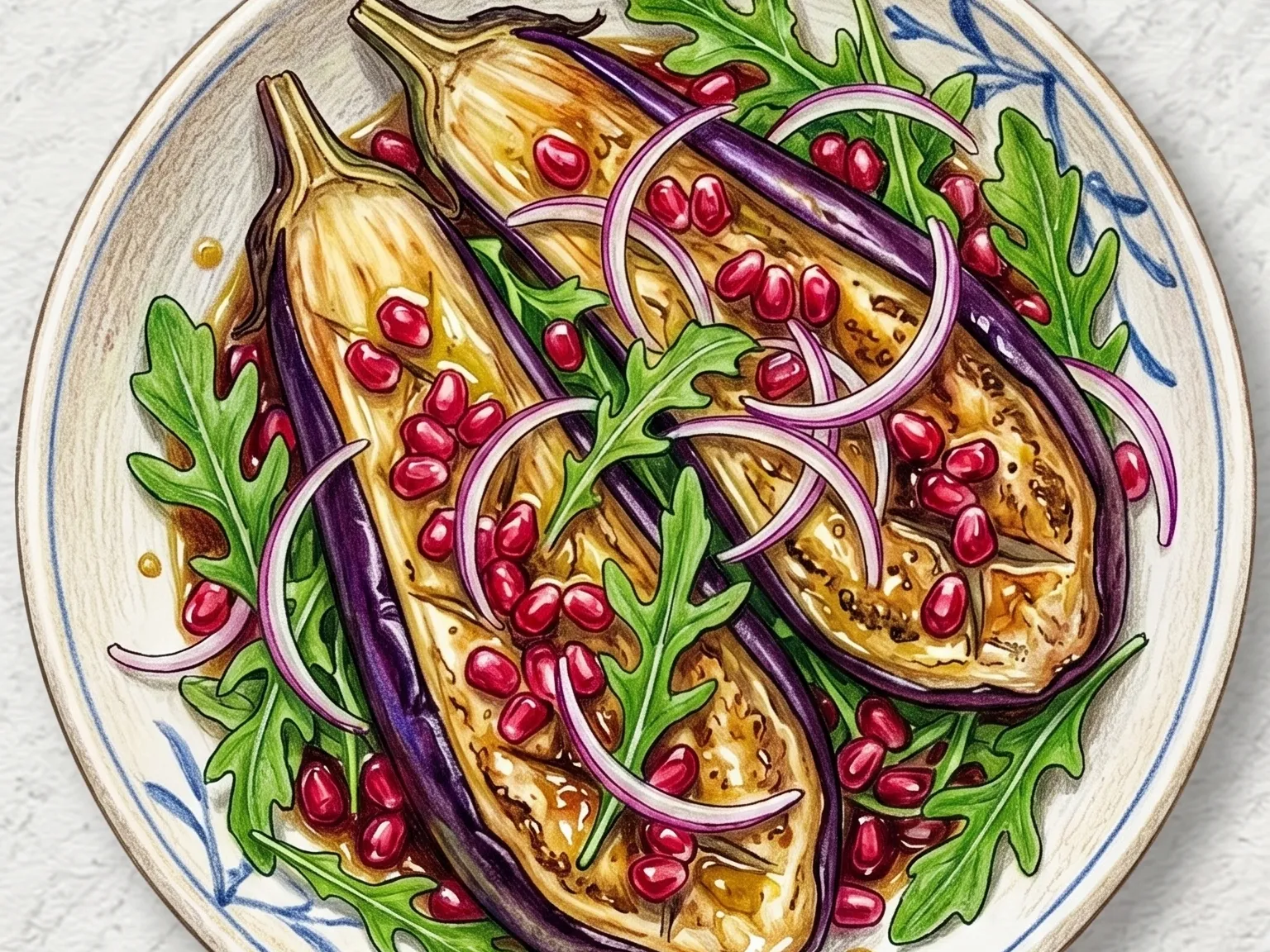
Roasted Eggplant Pomegranate Salad
Eggplant is halved and roasted until the flesh turns silky-sweet and almost cream-like. Pomegranate seeds burst with tart juice that cuts through the eggplant's rich depth. Arugula adds peppery bitterness preventing sweetness from dominating, and red onion contributes a sharp, lingering bite. A vinaigrette of red wine vinegar and honey layers sweet-acid notes across the plate, while the contrast of ruby pomegranate, purple onion, and green arugula makes the dish visually striking. It can be served as a light side dish, with simple accompaniments chosen to match the sauce, broth, or topping.
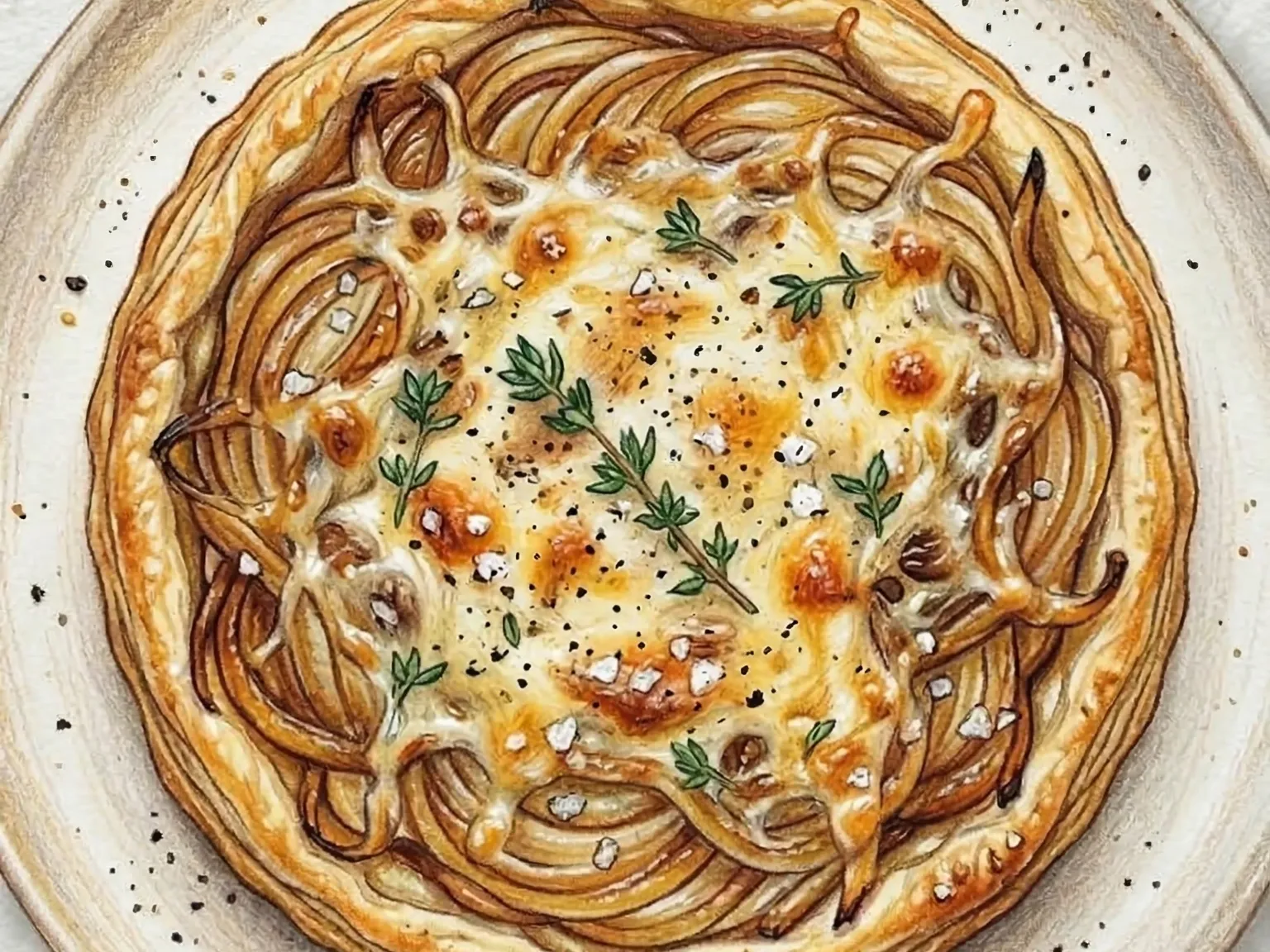
French Onion Tart
The preparation of a French onion tart begins with slicing onions and cooking them in butter using a low heat setting for more than twenty minutes. During this extended cooking duration, the onions collapse into a dark amber mixture, ensuring that their natural sweetness is fully concentrated while the sharp bite associated with raw onions is completely eliminated. Once the onions have reached this state, they are spread in an even layer over a tart shell that has already undergone blind baking to maintain its texture. A custard liquid made from a combination of eggs, heavy cream, and thyme is poured over the onions. Grated Gruyere cheese is then scattered across the top surface before the tart is transferred to an oven preheated to 190 degrees Celsius. The baking process continues until the internal filling has set into a firm consistency and the cheese layer has transformed into a browned, salty crust. The flavor of the caramelized onions is the most prominent characteristic of the dish, providing a sweetness that builds on the palate with each bite. Thyme is used to contribute a distinct herbal note, which functions to offset the richness of the dairy components and prevent the tart from becoming cloying. The addition of Gruyere cheese brings a nutty and salty element that balances the sweet and savory aspects of the tart. This specific dish is known for holding its quality well when served at room temperature, which makes it a versatile choice for inclusion in brunch menus, sequences of wine pairings, or meals eaten outdoors.
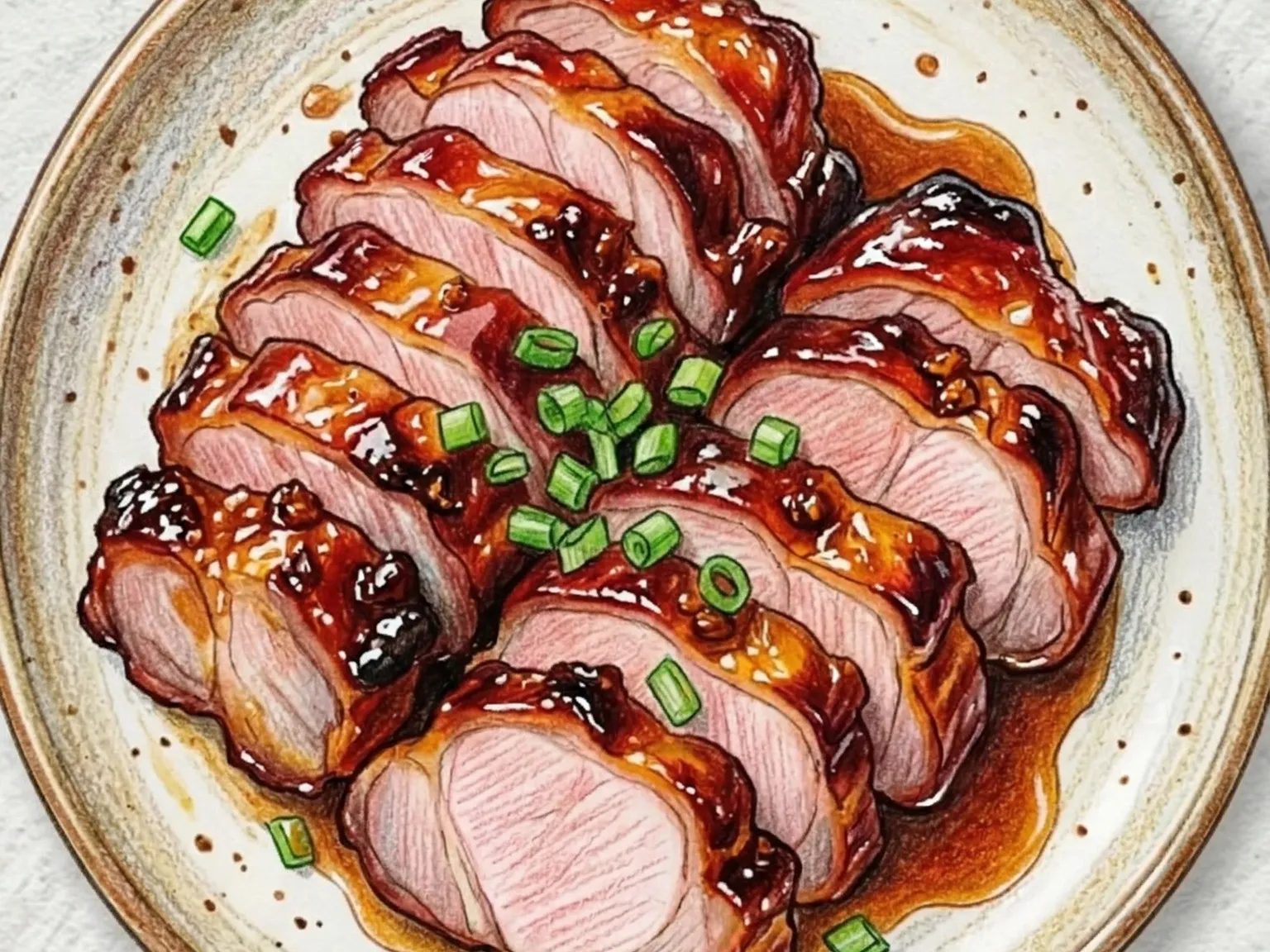
Cantonese Honey Char Siu (Glazed BBQ Pork with Five-Spice Honey)
Char siu is the defining roasted meat of Cantonese cooking, recognizable by the lacquered sheen and reddish-amber color of the cuts hanging in the windows of siu laap shops across Hong Kong and Guangzhou. Pork neck or shoulder is the preferred cut because the fat distribution throughout the muscle fibers keeps the meat moist during the high-temperature roast. The marinade combines soy sauce, hoisin sauce, five-spice powder, Shaoxing rice wine, and honey. Five-spice - star anise, cassia cinnamon, cloves, Sichuan pepper, and fennel seeds ground together - contributes an aromatic complexity that bridges the saltiness of soy and hoisin with the sweetness of honey. After an overnight marinade, the meat roasts at high heat while being basted repeatedly with a honey glaze that lacquers the surface with successive layers of caramel. The traditional method suspends the pork on hooks inside a lychee charcoal oven, exposing every surface to radiant heat and allowing fat to drip away freely. This technique produces a crust that is sweet and concentrated on the outside while the interior stays fatty and juicy. The edges of the cut, where the honey carbonizes against the direct heat, develop a thin, slightly bitter char that is the most prized part of any char siu. Char siu is eaten sliced over rice as a complete one-plate meal, piled over wonton noodles, or served cold with hot English mustard as a simple appetizer.
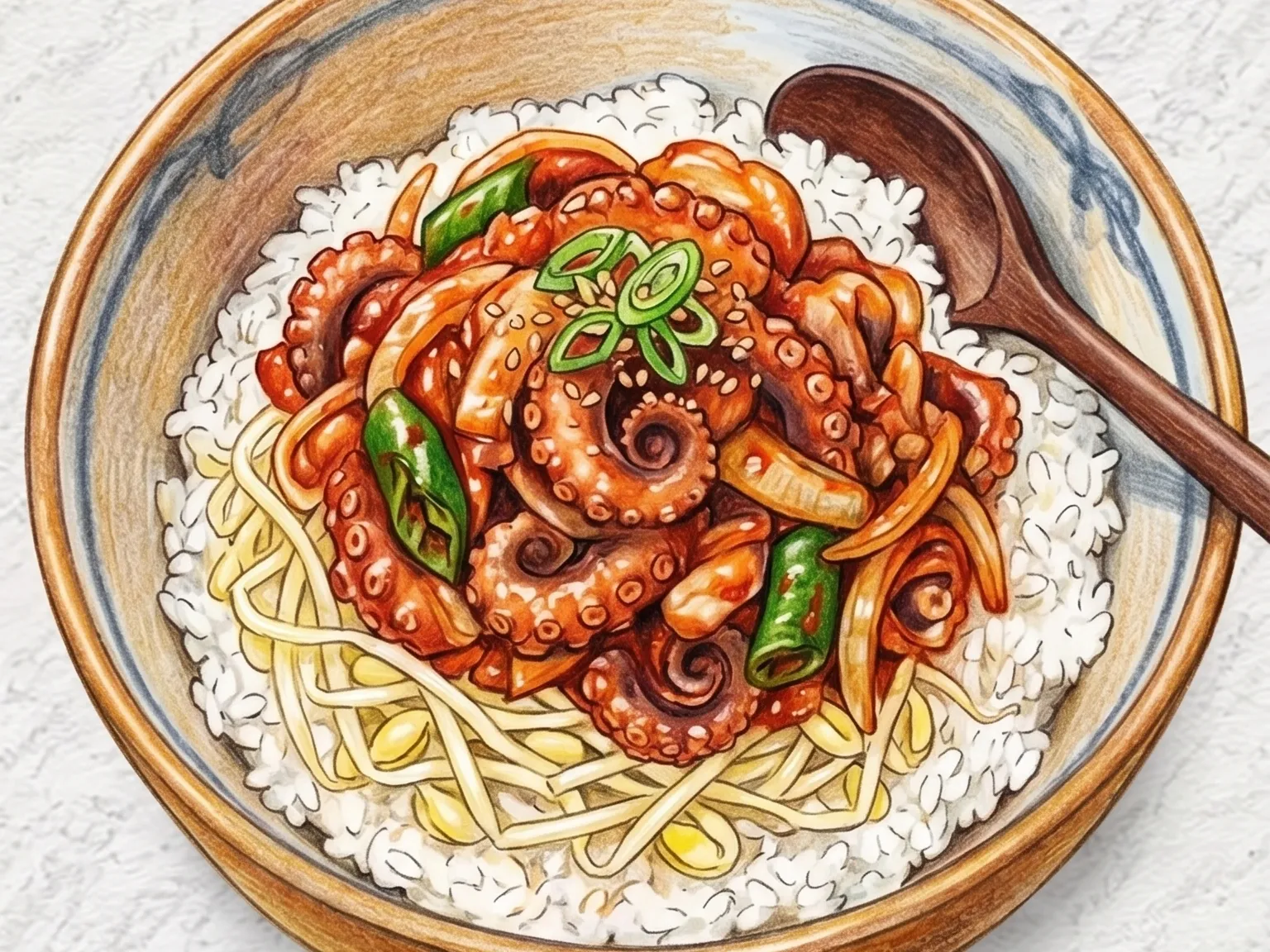
Korean Spicy Stir-Fried Octopus Rice Bowl
Spicy stir-fried baby octopus in a gochujang sauce is served over a bowl of steamed rice. The octopus delivers a satisfying chew, coated alongside onion and cheongyang chili in a well-seasoned glaze that makes each bite of rice deeply flavorful. Stir-frying on high heat for just a few minutes keeps the octopus springy rather than tough, and scrubbing it with flour before rinsing ensures a clean taste free of any sliminess. Adding a layer of bean sprouts under the stir-fry introduces a contrasting crunch.
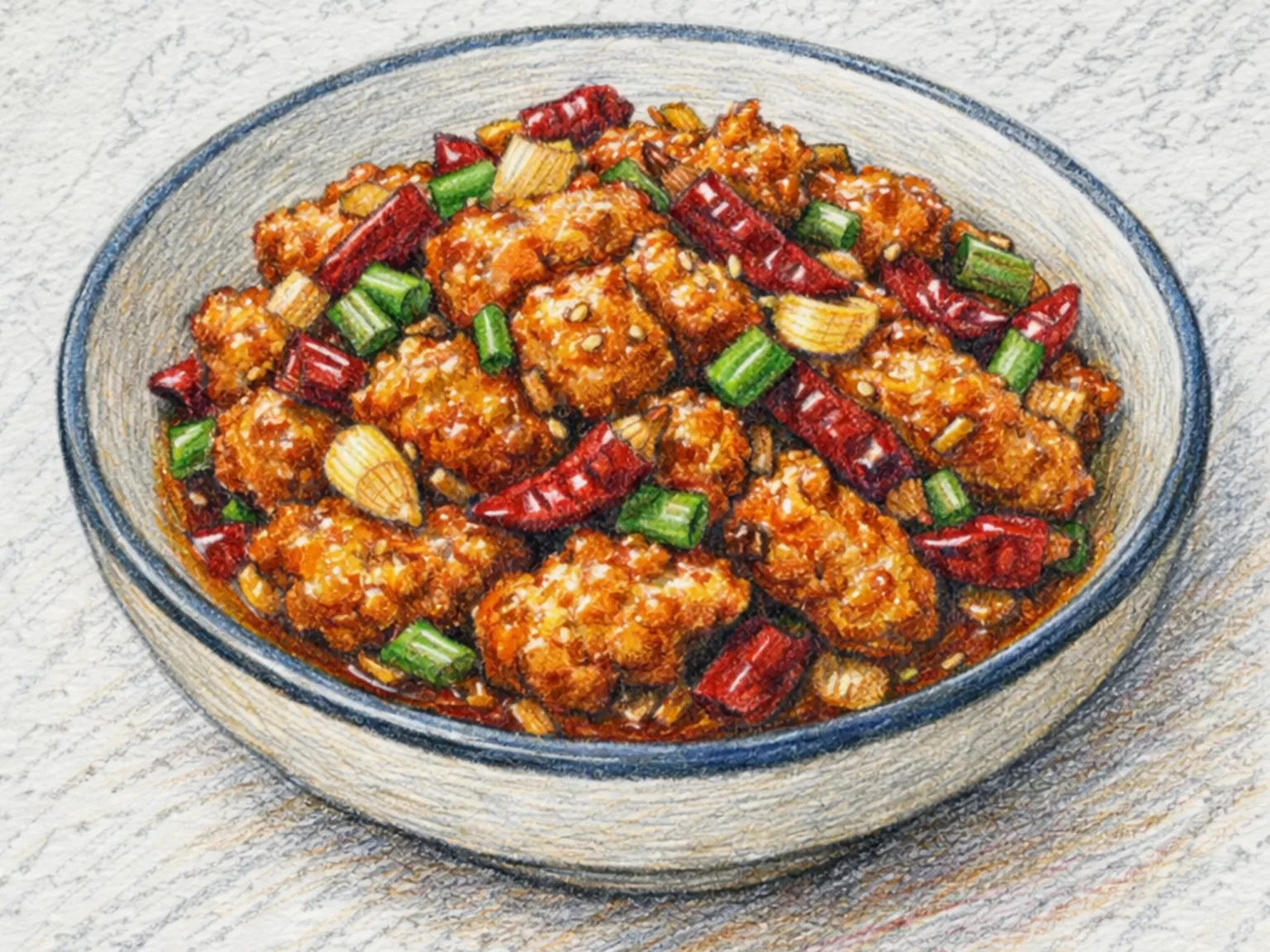
Crispy Chili Garlic Chicken
Kkanpunggi is a Korean-Chinese chicken dish where bone-in or boneless thigh pieces are coated in potato starch and deep-fried until the crust is completely shatter-crisp, then tossed quickly over high heat in a sauce built from garlic, dried red chilies, soy sauce, rice vinegar, and sugar. The sauce must go on while the chicken is still hot from the fryer: the heat helps the thin glaze bond to the surface without softening the coating, while allowing the seasoning to penetrate just enough. Leaving the chicken in the sauce any longer causes the starch shell to absorb moisture and go limp, which destroys the entire point of the dish. The balance of salty, sour, and sweet in the sauce coats each piece evenly, and the assertive garlic aroma combined with the slow heat of dried chilies forms the flavor signature that makes kkanpunggi instantly recognizable. Additional sliced fresh chilies, green or red, can be added at the end to control heat intensity to personal preference. Crisping the skin side of the thigh thoroughly during frying deepens both the textural contrast and the roasted savory aroma. This is one of the most popular anju dishes in Korea, routinely paired with beer or soju, and it must be eaten immediately while the crunch is intact.
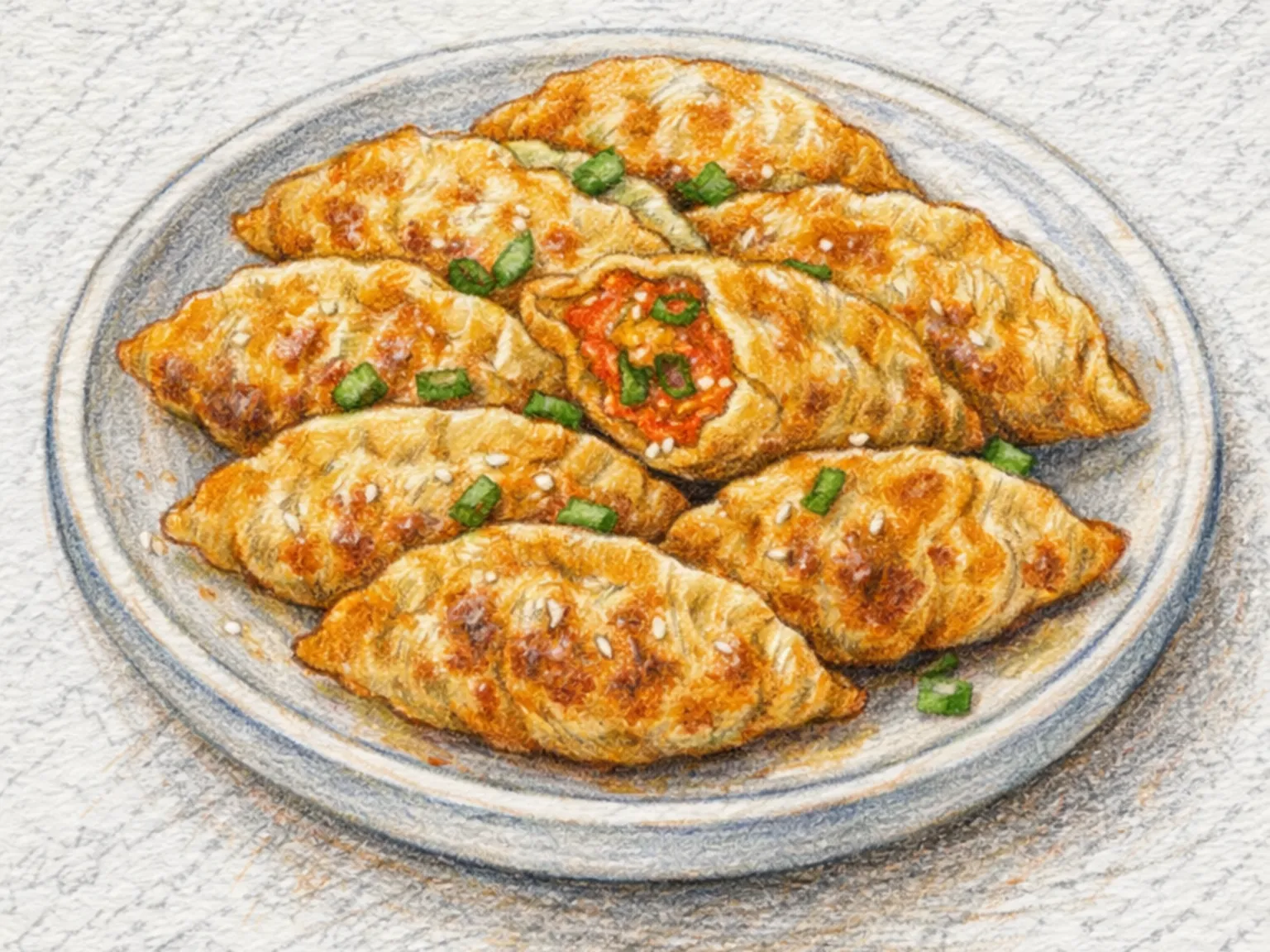
Korean Crispy Kimchi Fried Dumplings
Kimchi gun mandu are pan-fried dumplings filled with finely chopped kimchi, squeezed tofu, ground pork, and green onion seasoned with soy sauce and garlic, shaped into half-moons. The bottoms are first crisped in oil, then water is added and the pan is covered for four minutes to steam the tops, achieving a contrast of crunchy base and moist upper wrapper. The kimchi's acidity and heat permeate the pork fat to create a more assertive umami than plain dumplings, and the tofu smooths out the filling's texture. A splash of vinegar in the soy dipping sauce cuts any greasiness.
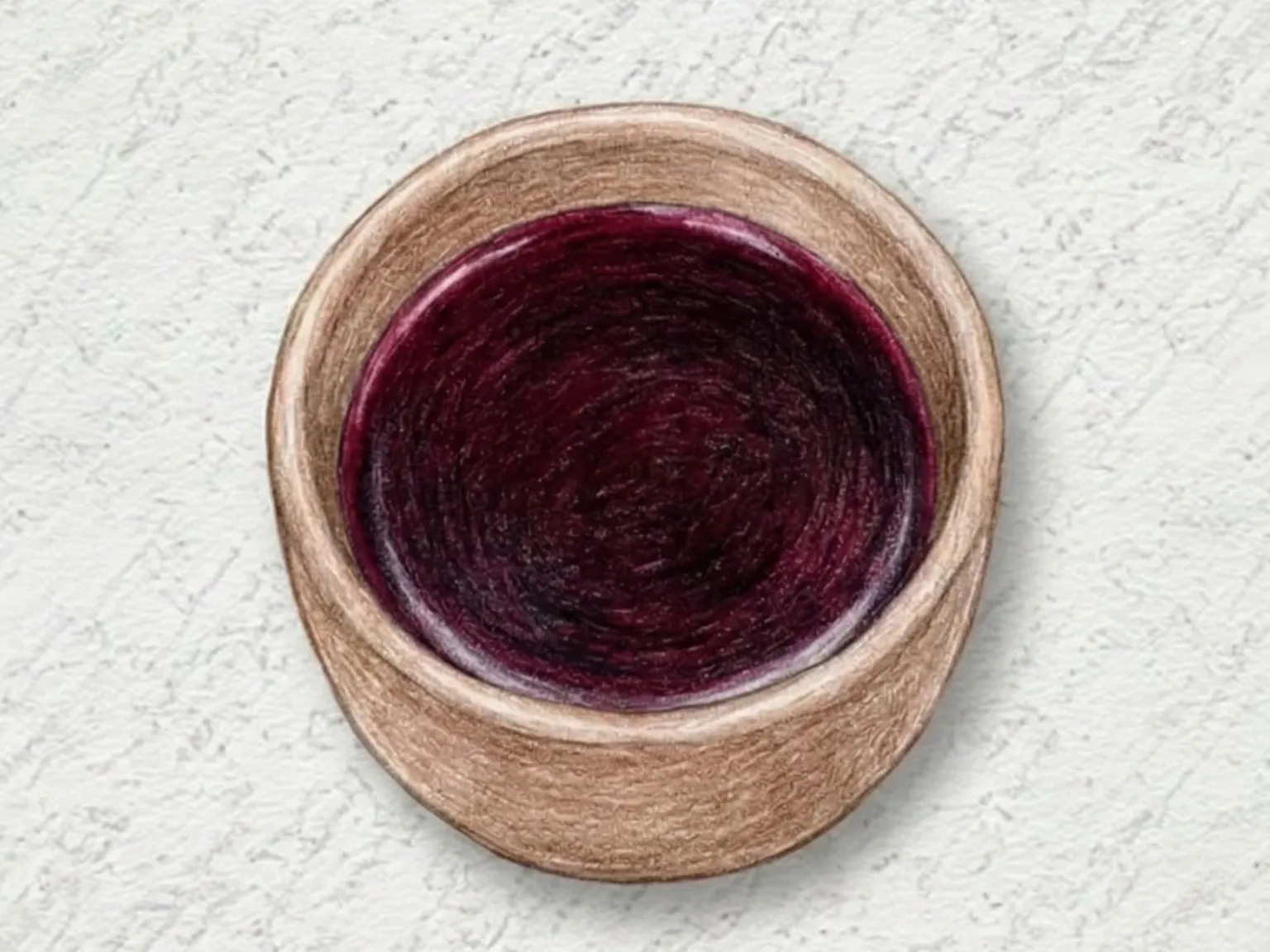
Korean Bokbunja Wine (Black Raspberry Soju-Infused Fruit Wine)
Bokbunja-ju is a deep ruby Korean fruit wine made by layering fresh black raspberries and sugar in a sterilized jar, then covering them with soju along with a strip of lemon peel and a cinnamon stick. At 1.2 kg of fresh fruit per batch, the berry flavor comes through with real concentration. The jar rests in a cool place for at least thirty days and is shaken gently once a week to dissolve the sugar evenly throughout the liquid. After straining through fine cloth, additional bottle aging softens the acidity and rounds out the berry aroma, producing a wine where the warm spice undertones from the cinnamon balance the tartness of the raspberries.
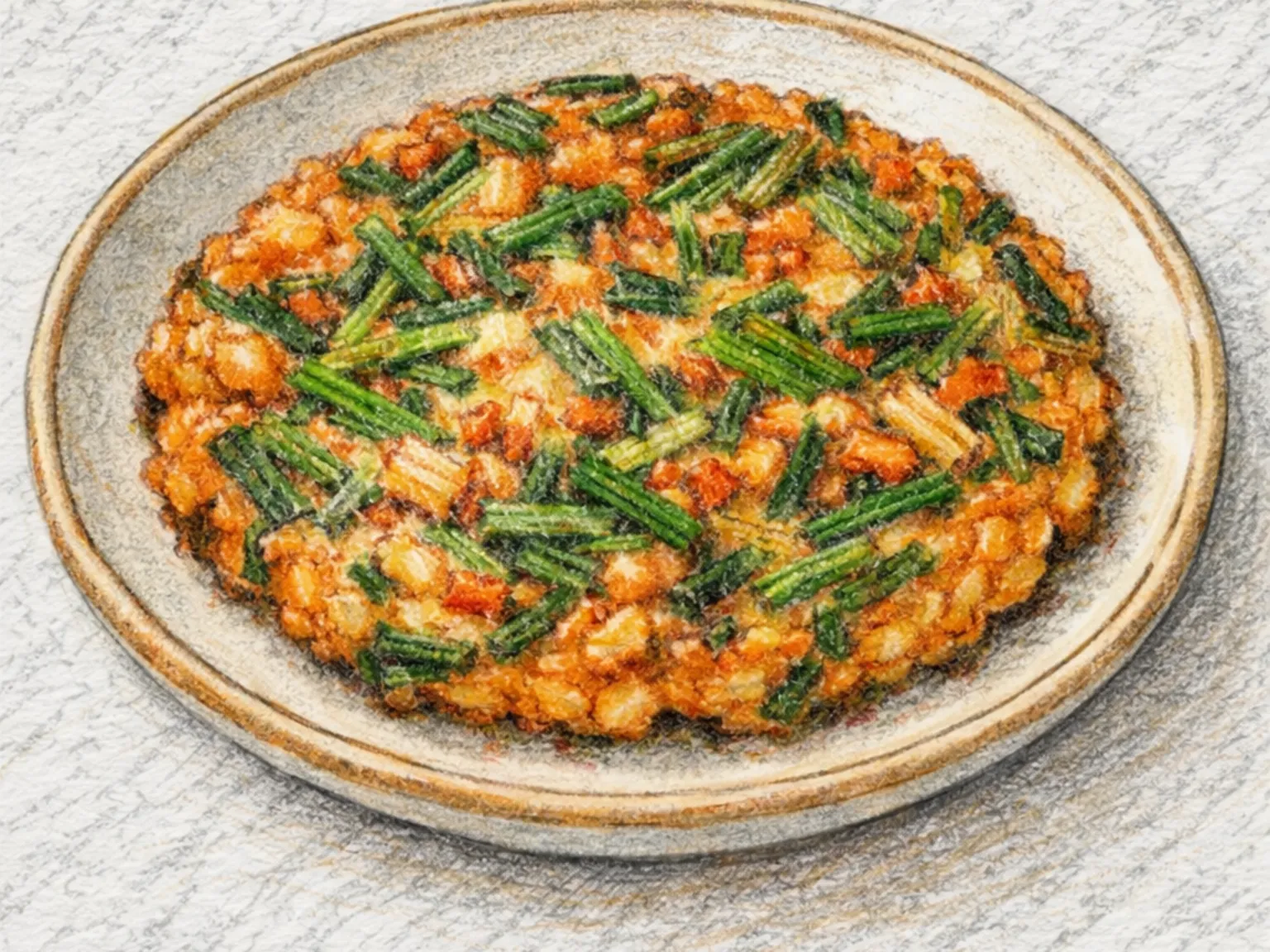
Korean Chive Kimchi Jeon (Spicy Fermented Kimchi Pancake)
Buchu-kimchi-jeon is a Korean pancake built around well-fermented aged kimchi and garlic chives, mixed into a cold-water batter that also includes a pour of kimchi brine. The brine is not optional: it tints the batter a deep red and introduces the concentrated, tangy umami that only long-fermented kimchi produces, which a fresh batch or water substitute cannot provide. Cold water is used because it limits gluten development, giving the finished pancake a shatteringly crisp exterior instead of the chewy, doughy texture that warm water encourages. Thinly sliced fresh hot green chili adds a sharper, more immediate heat on top of the kimchi's fermented sour spiciness, creating a more complex profile than either ingredient achieves alone. The pancake must be spread thinly on a pan preheated over medium-high heat and left alone until the edges turn a deep golden brown; attempting to flip before the perimeter has fully set will cause the center to collapse and lose its structure. The garlic chives soften into the batter but release a persistent fragrance that carries through each bite and lingers after the meal.
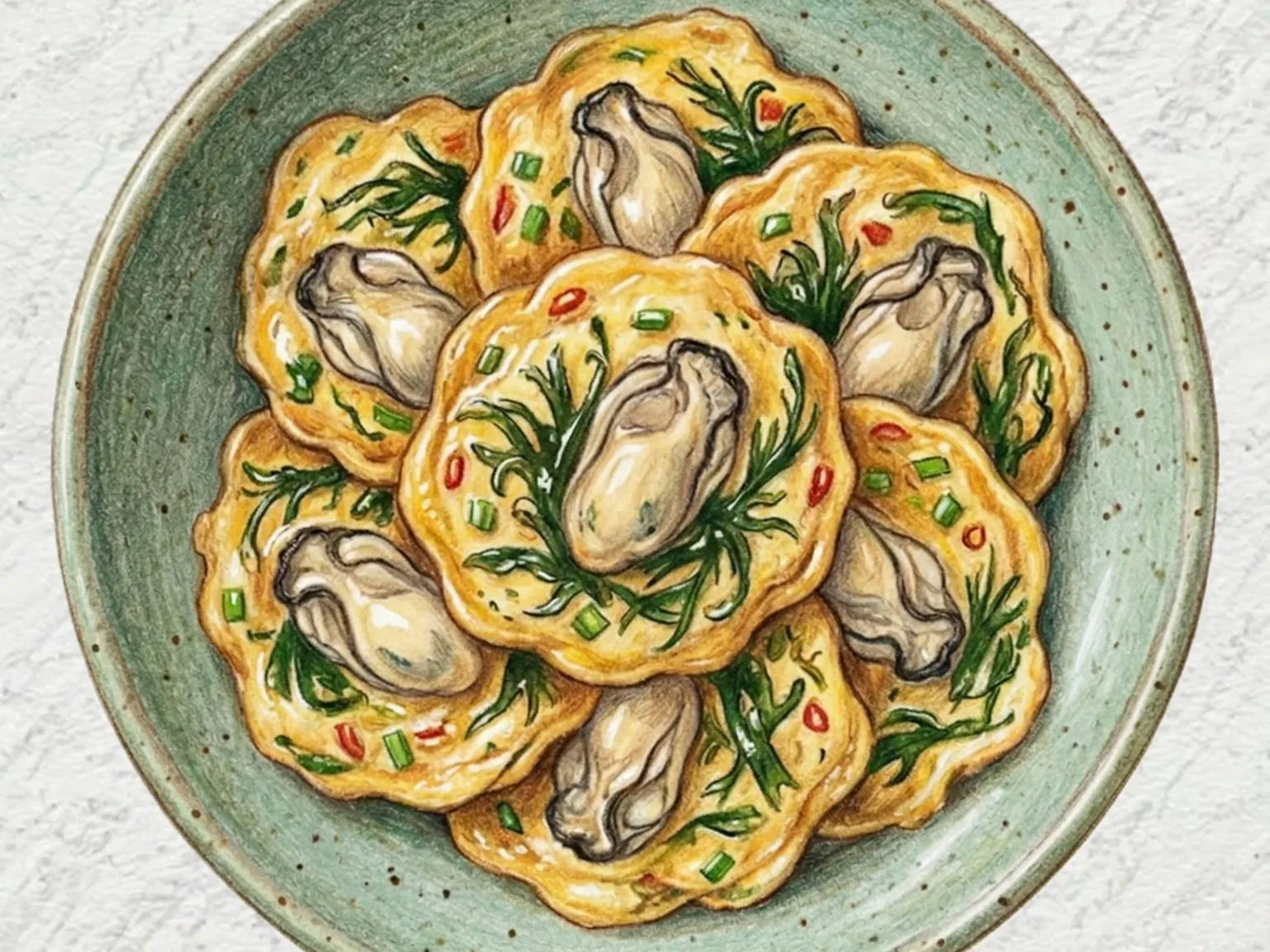
Korean Seaweed Oyster Pancake
Miyeok oyster jeon is a Korean seaweed and oyster pancake that offers a savory taste of the ocean. The cooking begins by rinsing fresh oysters in light salted water and draining them, while soaked seaweed is squeezed firmly to remove moisture before being cut. The pancake batter is prepared by mixing Korean pancake mix, cold water, an egg, minced garlic, and soup soy sauce. The seaweed, oysters, and minced red chili are gently folded into the batter. Ladles of the mixture are pan-fried in oil over medium-low heat for three minutes on each side, ensuring the oysters stay submerged in the batter to cook. The finished pancake features a crisp exterior with a soft, chewy seaweed interior, and juicy oysters that release their briny flavor with every bite.
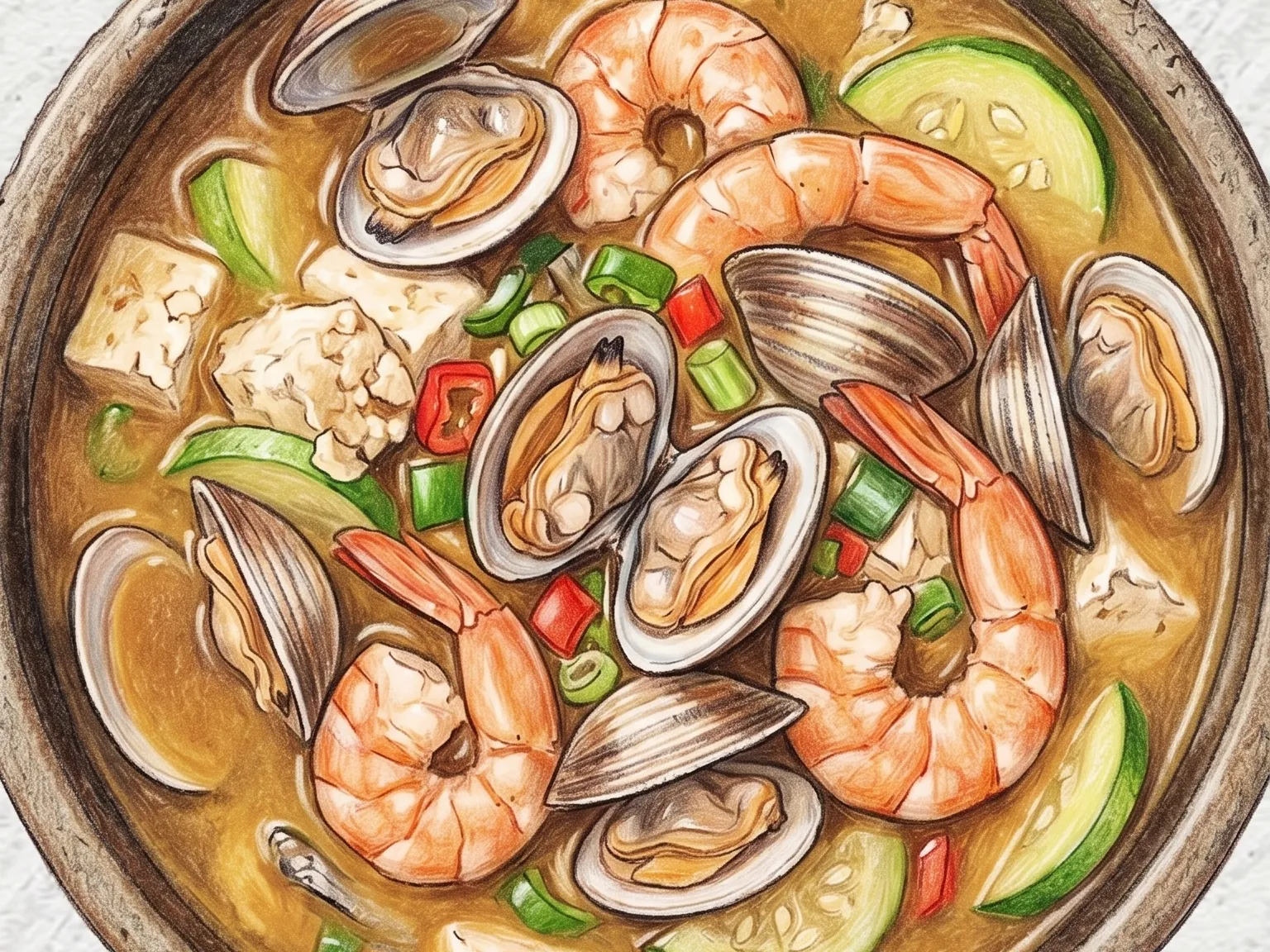
Korean Seafood Doenjang Stew
Haemul doenjang jjigae is a Korean soybean paste stew enriched with clams and shrimp. The broth is built on a kelp and dried anchovy stock into which doenjang is dissolved, then clams are added and the pot is brought to a boil. As the clams open, they release their clear, briny liquor into the doenjang base, adding a layer of ocean flavor that plain vegetable stews cannot replicate. Shrimp go in next and contribute their own distinct seafood sweetness. Tofu and zucchini round out the stew with soft, yielding textures that absorb the enriched broth fully. Clams should be purged in salted water beforehand to eliminate any grit, and doenjang is best added conservatively at the start and adjusted gradually during cooking to avoid over-salting. The seafood transforms the already satisfying doenjang stew into something noticeably more layered and complex, making it equally at home as a rice accompaniment or as food alongside drinks.
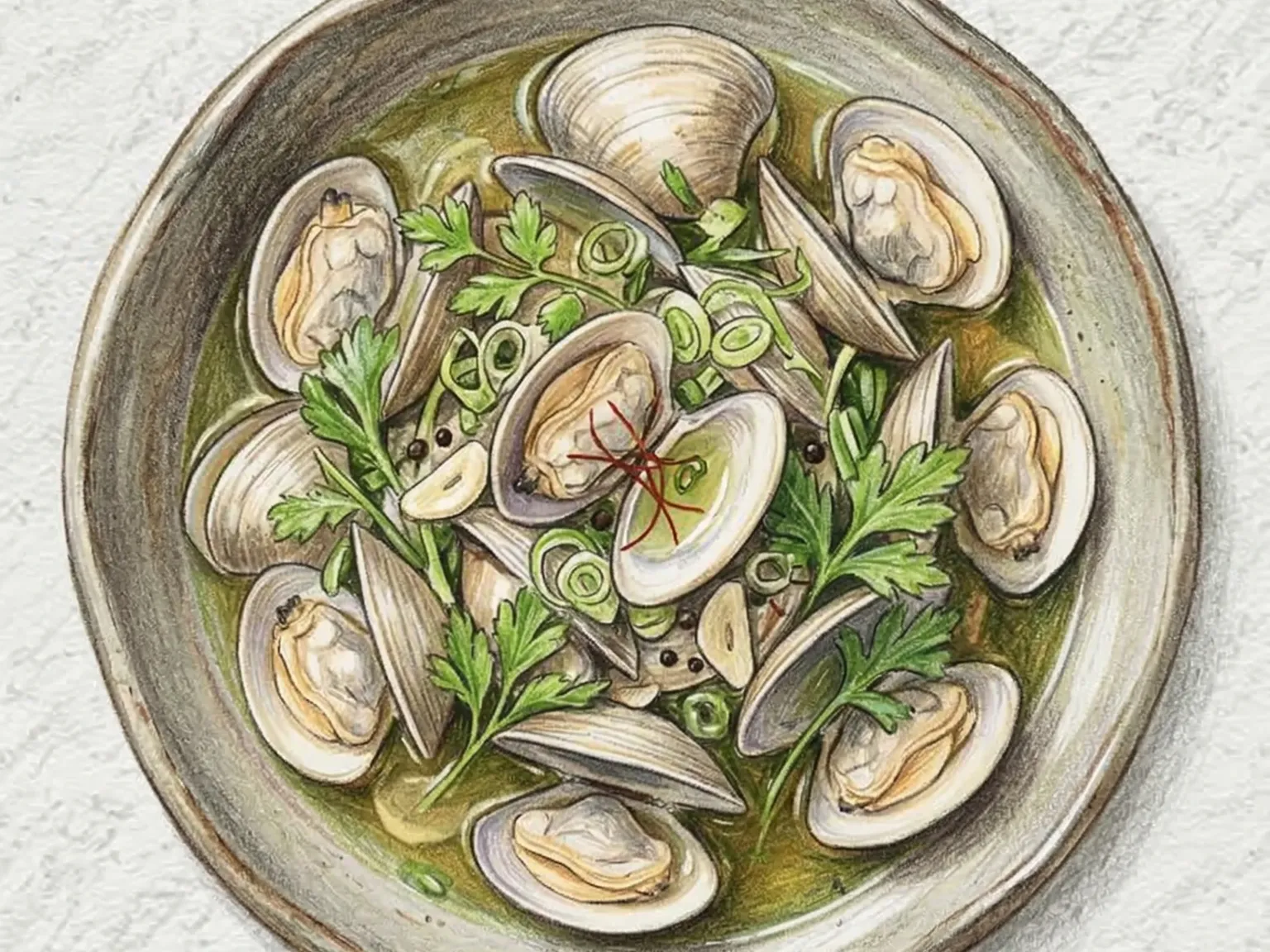
Korean Steamed Clams
Jogae-jjim is Korean steamed clams cooked with rice wine, garlic, green onion, and cheongyang chili over high heat in a covered pot. Properly purged clams open within minutes and release their natural juices into the pot, creating a clean, intensely savory seafood broth without any added stock. The chili adds a background warmth without overpowering the shellfish, and minimal salt lets the clams' natural salinity and sweetness come through unobstructed. Removing the clams from heat as soon as they open keeps the meat plump and tender rather than chewy and shrunken. The remaining broth is flavorful enough to serve as a base for noodles or porridge, so nothing goes to waste.
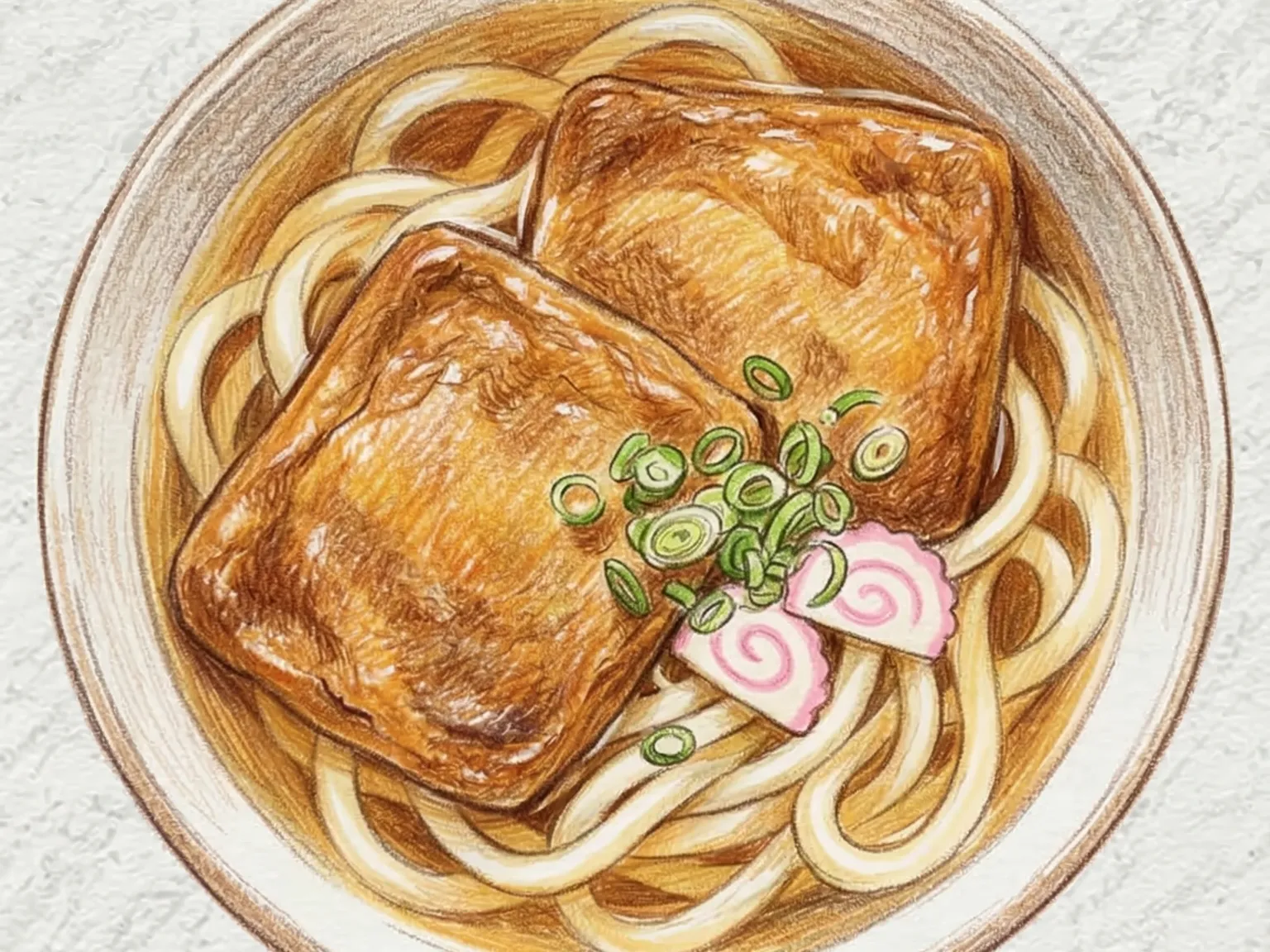
Udon with Seasoned Fried Tofu
Kitsune udon is a Japanese noodle soup defined by its topping of sweet-simmered fried tofu pouches floating on a clear, deeply savory dashi broth. The aburaage is blanched first in boiling water to remove the excess oil that would otherwise cloud the broth and repel the seasoning, then braised in a mixture of water, soy sauce, mirin, and sugar for about six minutes until the liquid has been absorbed and the sweetness has penetrated to the center of each pouch. The broth is built separately from a stock of katsuobushi and kombu, seasoned with soy sauce, mirin, and just enough salt to round out the flavor without making it salty. The quality of this broth is the single most important factor in the finished bowl. Frozen udon noodles are warmed in boiling water for about two minutes, just long enough to loosen and heat through without losing their elastic, springy texture, then transferred to the bowl with the broth ladled over. The simmered tofu pouch sits on top, and as you eat, it releases its sweetened liquid gradually into the surrounding broth, shifting the flavor of the soup with each bite. Sliced scallion and a pinch of shichimi togarashi finish the bowl with fresh aroma and gentle heat. The tofu benefits from being prepared a day in advance, as resting overnight deepens the braising flavor throughout.
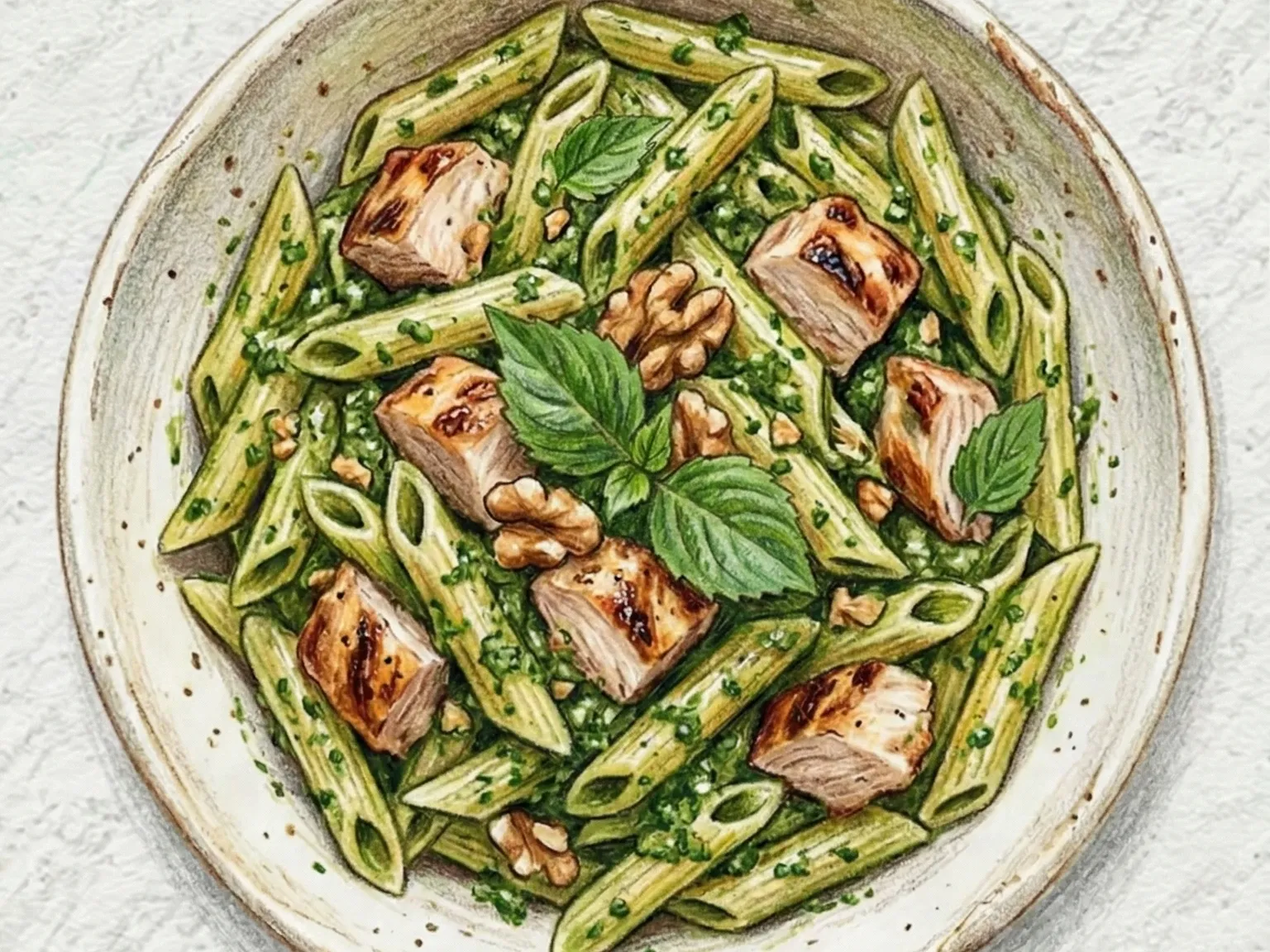
Perilla Pesto Chicken Penne
Perilla pesto chicken penne uses Korean perilla leaves and walnuts blended with olive oil into a thick, aromatic pesto that coats penne and thinly sliced seared chicken breast. Perilla leaves carry a grassy, slightly bitter fragrance with a faint sesame-like undertone that sets them entirely apart from basil - closer in character to shiso, but with a more pronounced herbal edge. Walnuts add a creamy, substantial body to the pesto and leave a lingering nuttiness after each bite. The chicken breast is seared in olive oil until golden on the outside, then sliced thin so it distributes evenly through the pasta rather than sitting in one heavy portion. Parmesan contributes salt and umami to bind the sauce, and fresh lemon juice cuts through the richness of the oil with enough acidity to keep each forkful from feeling heavy. Penne's hollow tube shape catches pesto inside as well as out, so every bite carries full flavor even when sauce coverage on the surface looks minimal.
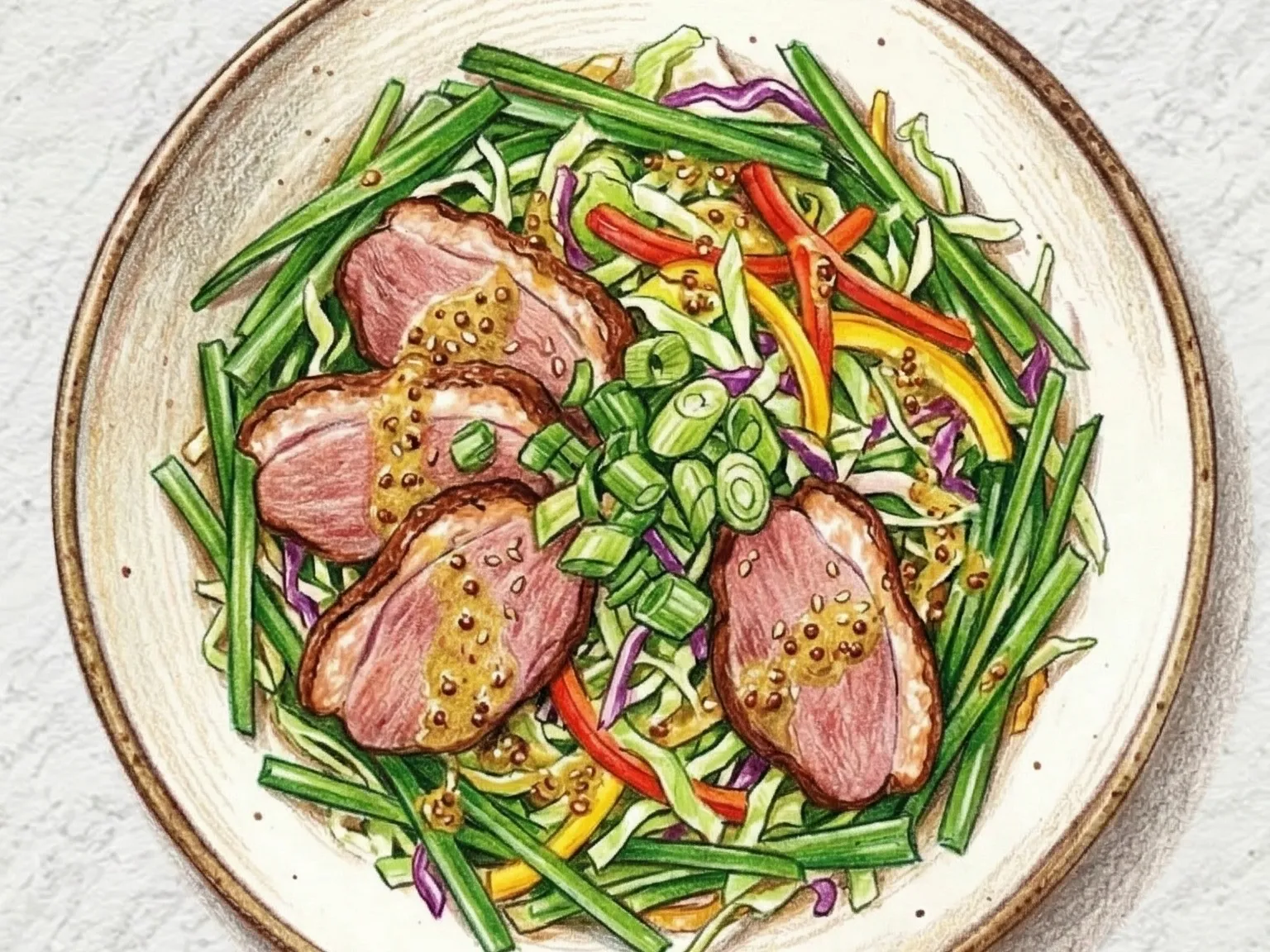
Smoked Duck Chive Salad (Korean Chive Salad)
Smoked duck chive salad brings together pan-seared smoked duck and fresh Korean chives in a soy-mustard dressing that cuts through the meat's richness with precision. The duck is seared in a dry or lightly oiled pan for two to three minutes to render off the surface fat before it meets the other ingredients. Korean chives are cut to four-centimeter lengths and combined with shredded cabbage and sliced bell pepper, each element adding its own texture to the finished dish. A dressing of soy sauce, mustard, vinegar, honey, and sesame oil delivers a multi-layered hit of nose-clearing heat, sweet-sour acidity, and roasted depth that cleanses the palate after every fatty bite of duck. The cabbage provides firm, watery crunch against the chewy, smoke-infused meat, while toasted sesame seeds scatter a nutty fragrance across the top. Adding the chives at the very end keeps their herbal aroma vivid rather than grassy, and limiting the searing time prevents the duck from turning tough. The interplay between the dense smokiness of the duck and the sharp freshness of the chives is what gives this salad its character beyond a simple protein-and-greens combination.
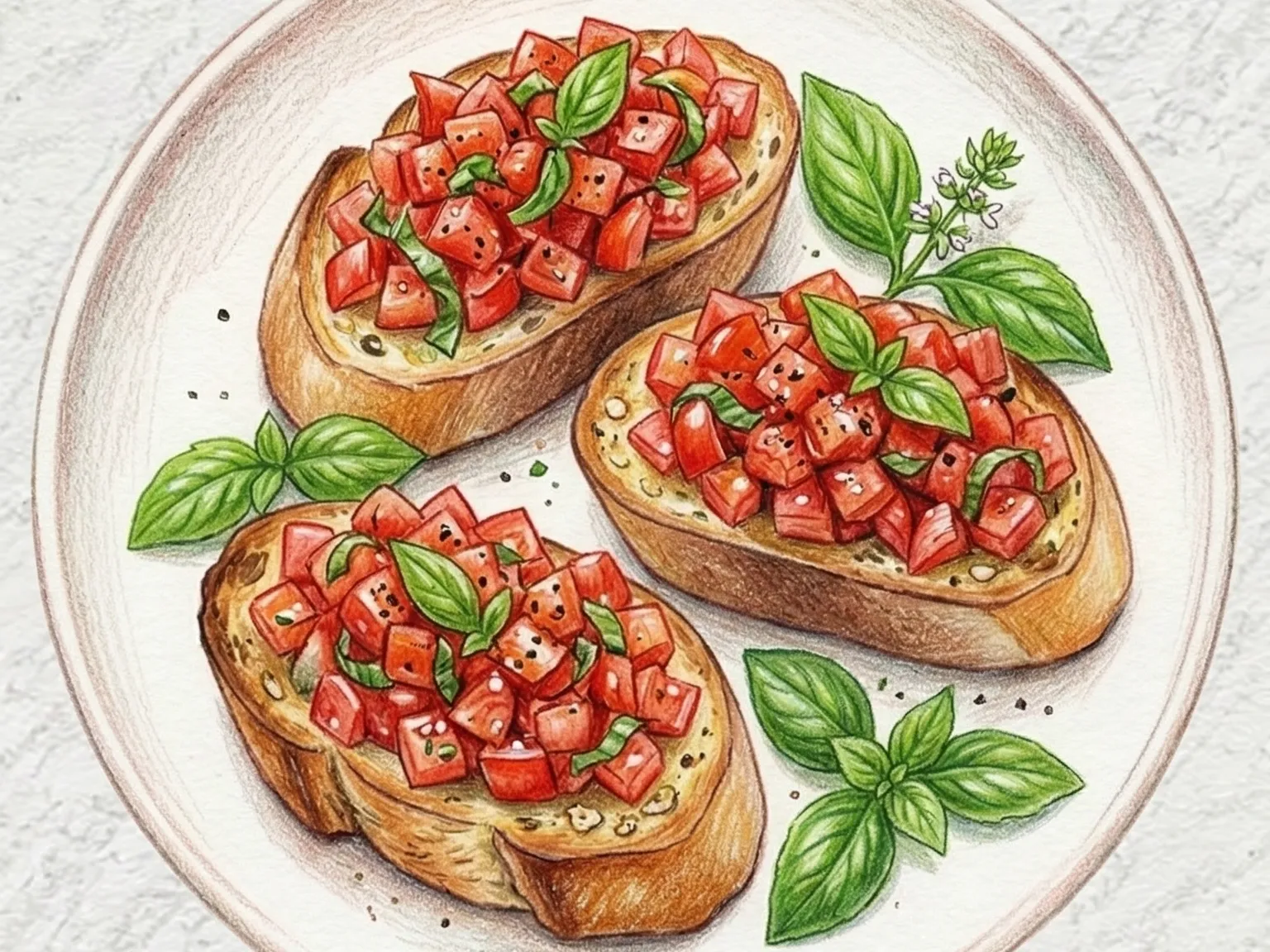
Bruschetta
Bruschetta is an Italian appetizer built on baguette slices cut 1.5 cm thick, brushed with olive oil, and toasted until fully crisp in the oven or over a grill. While the bread is still hot, a cut garlic clove is rubbed across the surface so the steam and heat pull its sharp aroma directly into the bread. The topping starts with ripe tomatoes: seeds removed, diced small, then left to macerate in olive oil, salt, and balsamic vinegar for fifteen minutes. That resting time draws out excess liquid and concentrates the tomato's natural acidity and sweetness. The essential contrast of the dish is temperature and texture - hot, crunchy bread against cool, wet topping - and it only works if the topping goes on immediately before eating. Left assembled even five minutes, the juices soak in and the bread softens past recovery. Torn basil, not chiffonade, releases more fragrance. Ciabatta works as a substitute when baguette is unavailable.