🥗 Light & Healthy Recipes
Light, healthy, low-calorie dishes
712 recipes. Page 12 of 30
These low-calorie recipes prove that healthy eating does not have to be boring. High-protein meals, vegetable-forward dishes, and low-carb options - all designed to support weight management and better eating habits.
Diet-friendly does not mean small portions or bland flavors. Chicken breast, tofu, konjac, and eggs provide lasting satiety, while smart seasoning and cooking methods keep the taste appealing. Build a sustainable, healthy routine with these recipes.
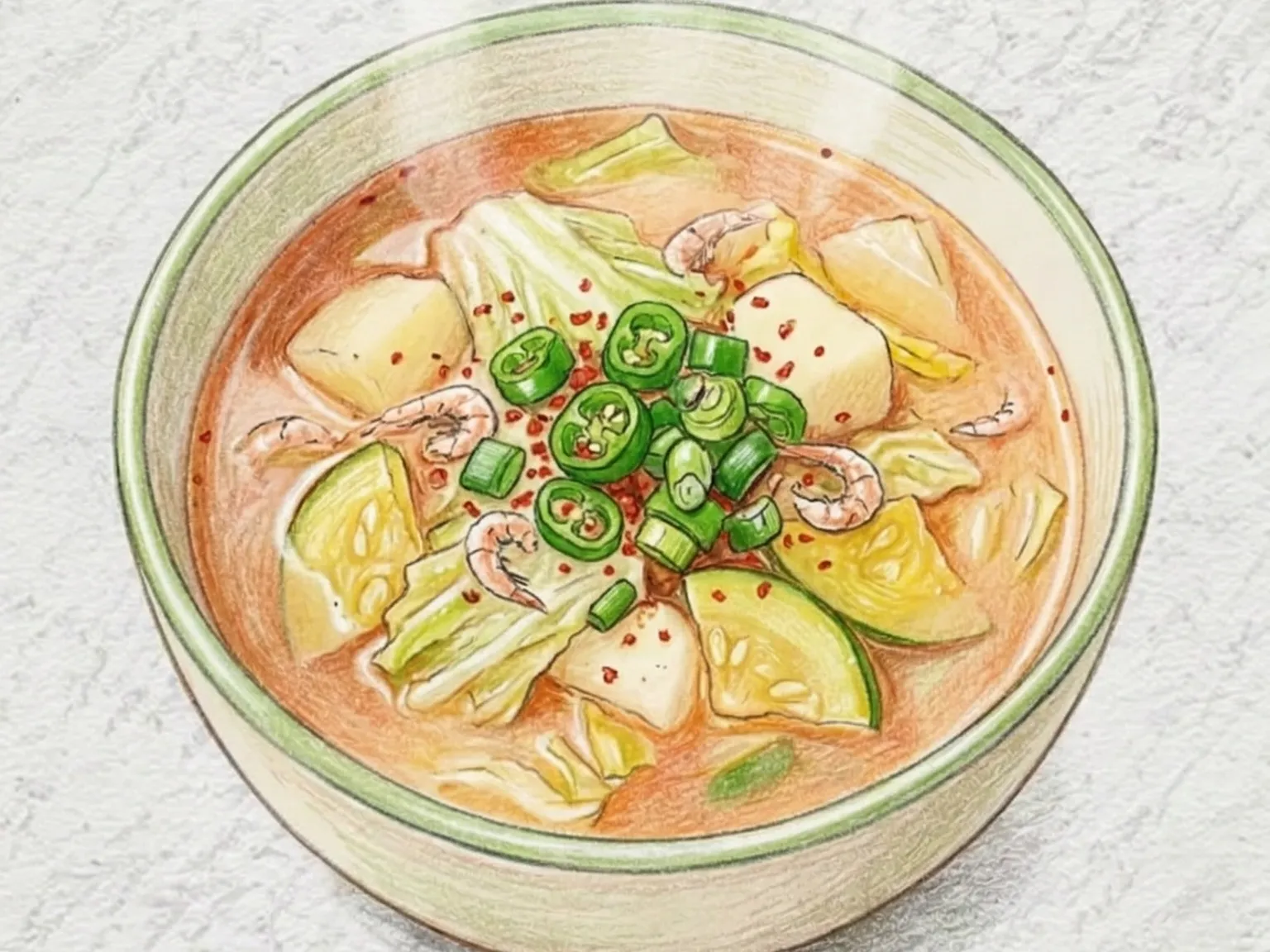
Korean Young Napa Cabbage & Salted Shrimp Stew
Eolgari saeujeot jjigae is a jjigae seasoned with salted fermented shrimp rather than the more common doenjang or gochujang. Young napa cabbage, potato, and zucchini simmer together in rice-rinse water, absorbing the fermented shrimp's concentrated brininess as they cook. Gochugaru adds color and a measured heat, while cheongyang chili and green onion bring additional sharpness to the broth. The timing of the salted shrimp matters: adding it too early causes the salt to concentrate and the delicate umami to dissipate, so it should go in just before the heat is reduced. The result is a broth that is intensely savory and clean-tasting without feeling heavy -- an everyday jjigae that pairs naturally with plain steamed rice.

Korean Cheongyang Gochu Doenjang Jangajji (Doenjang Pickled Cheongyang Peppers)
Cheongyang chili peppers are pricked all over with a fork so the brine can reach the interior of each pod rather than sitting on the surface. Kelp is simmered with soy sauce to establish a concentrated umami base, then the heat is cut and doenjang is dissolved into the hot liquid, which layers the nutty, fermented depth of fermented soybean paste over the saltiness of the soy. Rice syrup softens the sharp, raw heat of the chilies so it does not dominate the other flavors, and vinegar sharpens and clarifies the overall profile. The chilies are pressed fully under the brine and left in the refrigerator to mature. After one day the seasoning begins to penetrate toward the core, and by day three the doenjang flavor has fully saturated each pepper. At that point, a single pepper placed on a mouthful of hot rice delivers a compact burst of salty, funky depth and the lingering heat that makes this pickle a classic Korean table condiment.
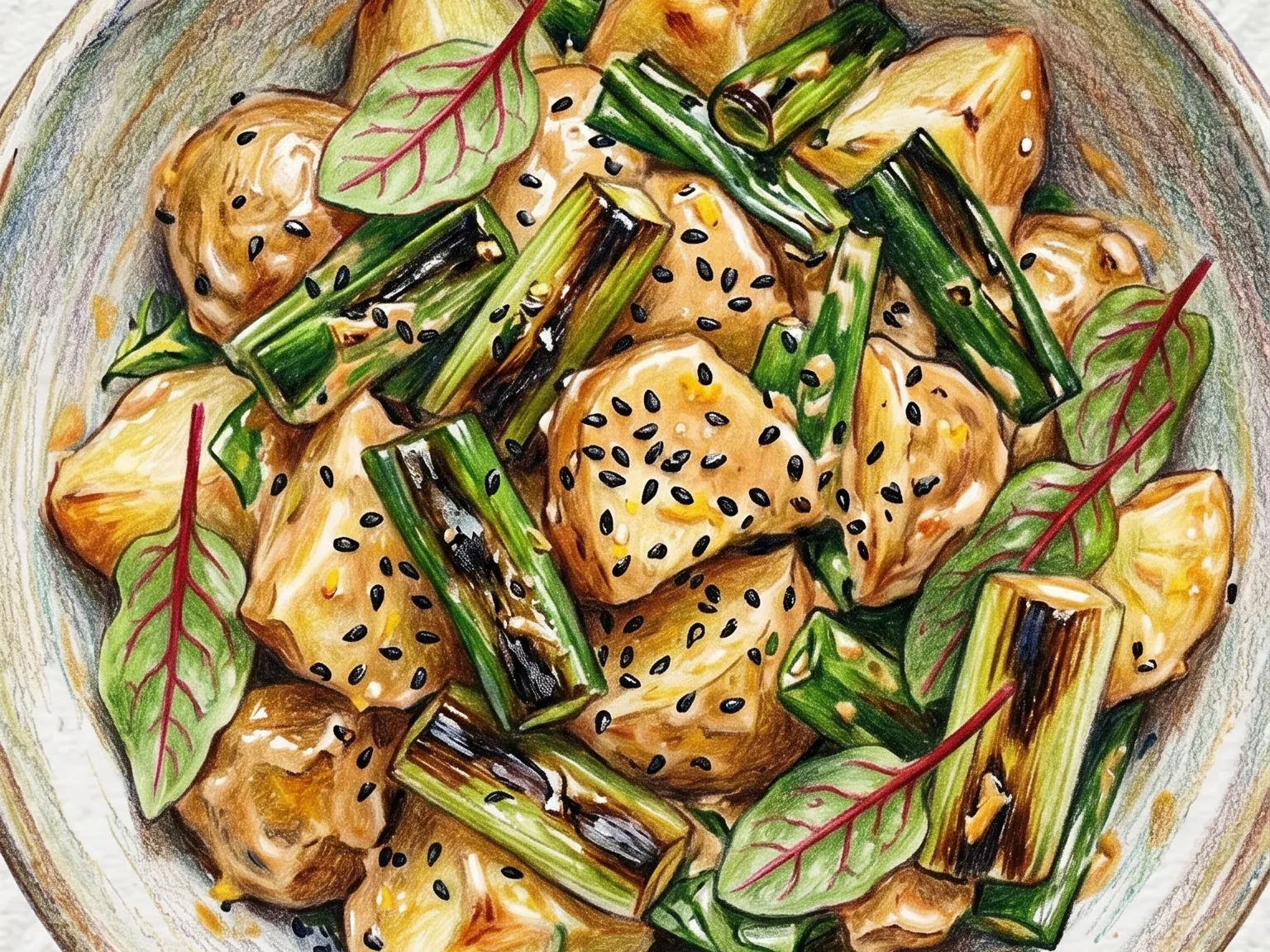
Charred Daepa Gamja Doenjang Salad (Charred Leek Potato Salad)
Charred daepa gamja doenjang salad combines boiled potatoes with large green onion segments that have been seared until deeply caramelized and smoky. The high heat strips away the raw onion bite and replaces it with a concentrated sweetness and char aroma. A dressing made from doenjang, lemon juice, honey, and olive oil layers fermented depth with bright acidity and a touch of sweetness, drawing out the mild flavor of the potato. Tossing the potatoes while still warm allows the dressing to absorb into the starchy flesh rather than sitting on the surface. Red chard adds color and a faint bitterness that gives the bowl a sense of direction, while black sesame seeds contribute a final nutty accent.
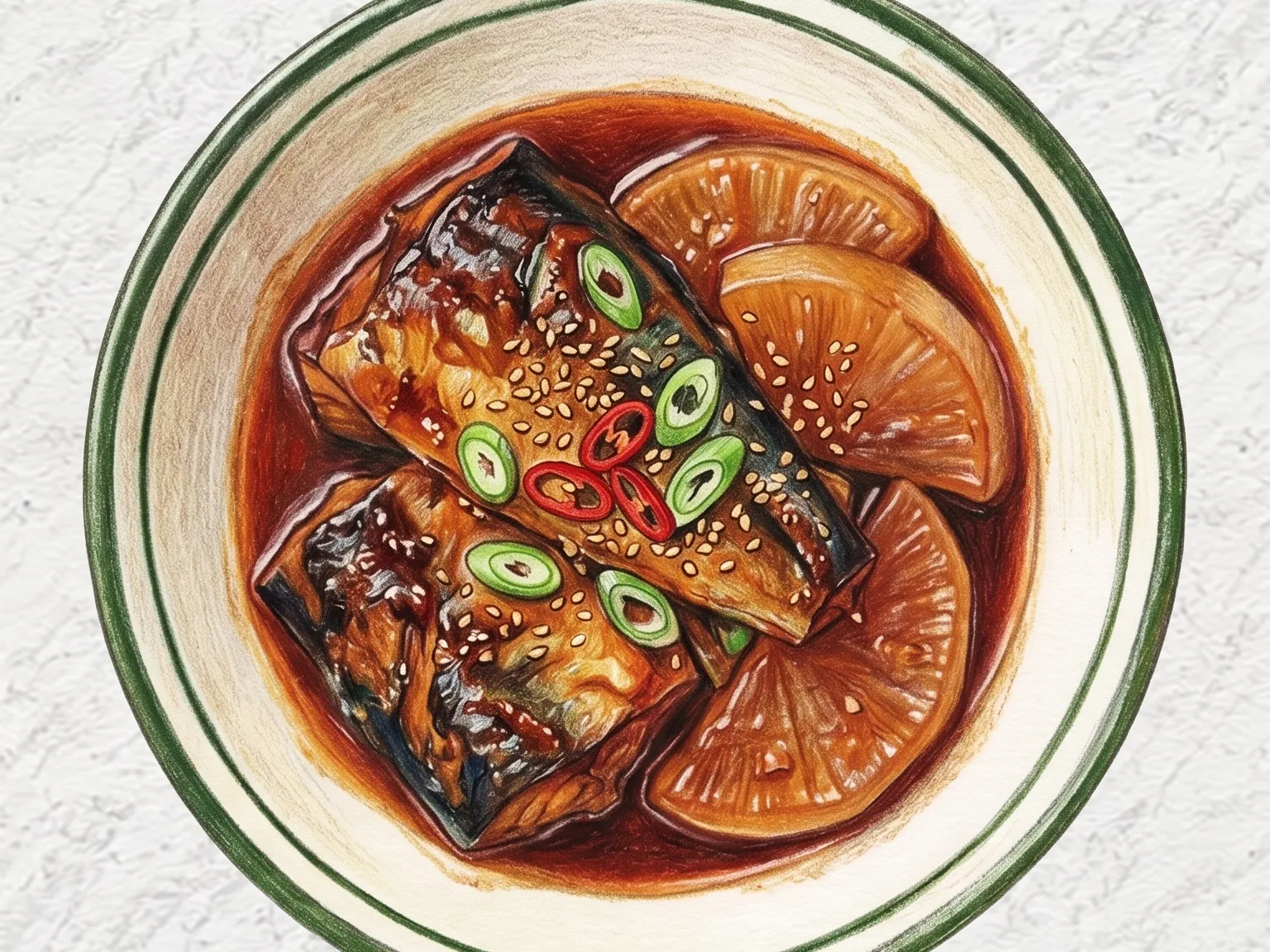
Korean Braised Saury in Spicy Sauce
Kkongchi-jorim simmers Pacific saury with daikon radish in a soy-gochujang sauce until the bones soften enough to eat whole - a thrifty Korean fish braise built on one of autumn's most affordable catches. The radish lines the pot bottom, cushioning the fish from direct heat to prevent breakage while absorbing the braising liquid into sweet, flavor-soaked wedges. After bringing the sauce to a boil, twenty-five minutes of medium-low simmering renders the fine bones edible without adding vinegar. Canned saury, with bones already softened during processing, halves the cooking time for weeknight shortcuts. Green onion placed on top in the final two minutes tempers the fish's natural oiliness and adds a visual accent. Like most jorim-style banchan, this dish improves over several days in the refrigerator as the seasoning continues to penetrate.
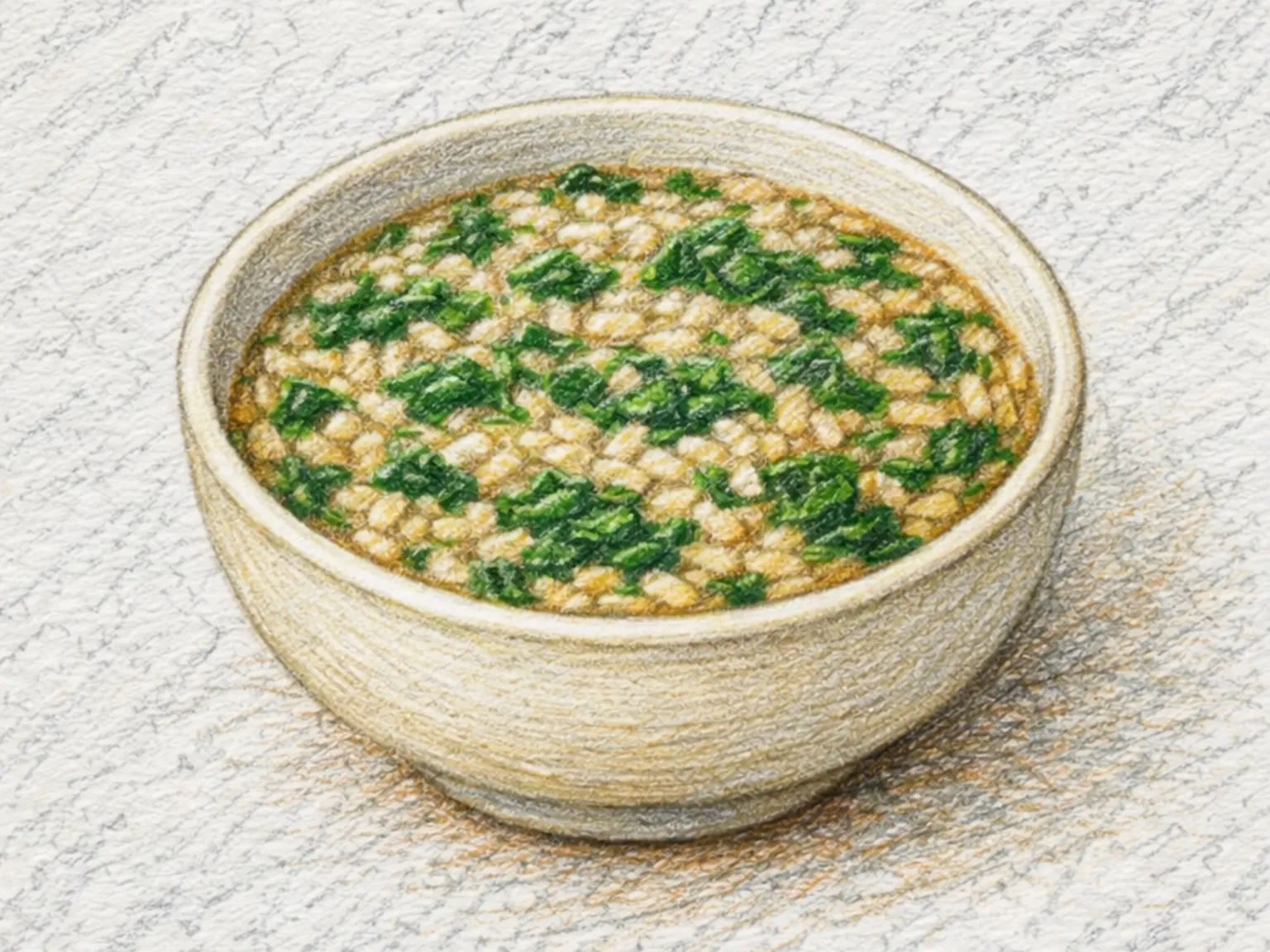
Korean Spinach Soybean Paste Porridge
Sigeumchi doenjang-juk is a Korean porridge built on the deep, fermented savoriness of doenjang and the clean, mild green flavor of finely chopped spinach. Soaked rice is toasted in sesame oil first, which coats each grain with a nutty warmth before anchovy stock is poured in. Doenjang and minced garlic are stirred in early in the cooking process, giving the porridge time to develop a rich, rounded base flavor as the grains slowly break down into a thick, spoonable consistency. Spinach goes in at the very end and stays in the heat for no longer than thirty seconds, which is exactly enough time for the leaves to wilt while keeping their bright color and delicate grassy aroma intact. The fermented paste wraps around the slight bitterness naturally present in raw spinach, smoothing it out so the finished bowl tastes clean rather than sharp. This is a porridge that works as a restorative meal when the body needs something gentle, and it doubles just as well as a light, warming breakfast that does not demand much from the stomach in the morning.
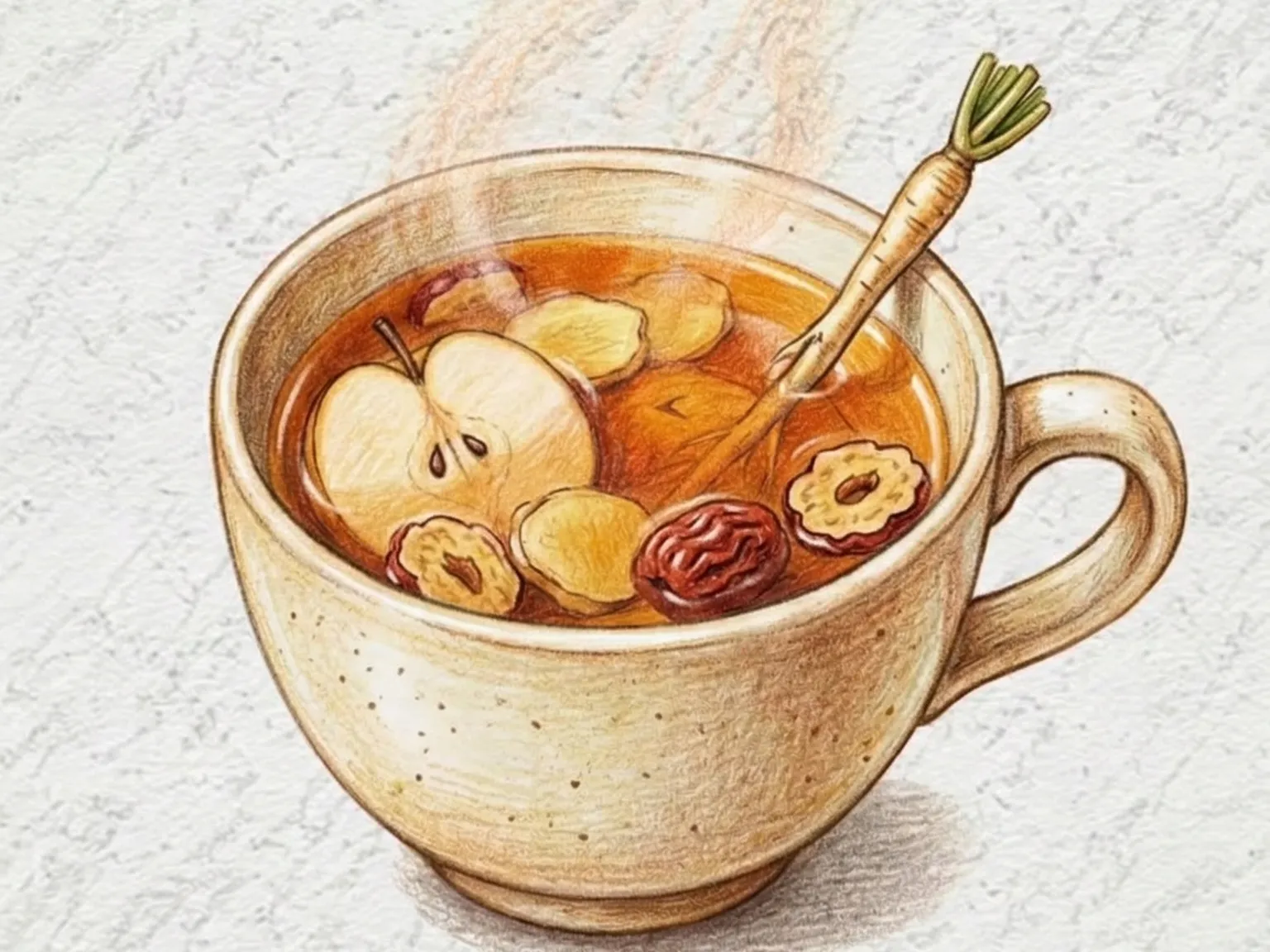
Korean Balloon Flower Ginger Tea
Doraji-saenggang-cha is a Korean herbal infusion that layers the gentle bitterness of balloon flower root, the sharp warmth of ginger, and the natural sweetness of pear and jujube into a single simmered drink. Preparing the balloon flower root correctly is essential before anything else: rubbing it in salted water removes the harsh bitterness that would otherwise dominate the entire cup and make it taste medicinal rather than balanced. Ginger and jujube go into the pot first and simmer for twenty minutes to build the structural base of the broth, developing a warm, slightly spiced backbone. Pear is added for the final five minutes so its juice dissolves into the liquid and lifts the sweetness naturally without added sugar needing to do that work. Honey is stirred in only after the heat is completely off, which preserves its floral fragrance in the finished cup instead of burning it off during cooking. Traditionally drunk when the throat feels irritated or during seasonal transitions when immunity tends to dip, this tea is considered both comforting and restorative in Korean households.
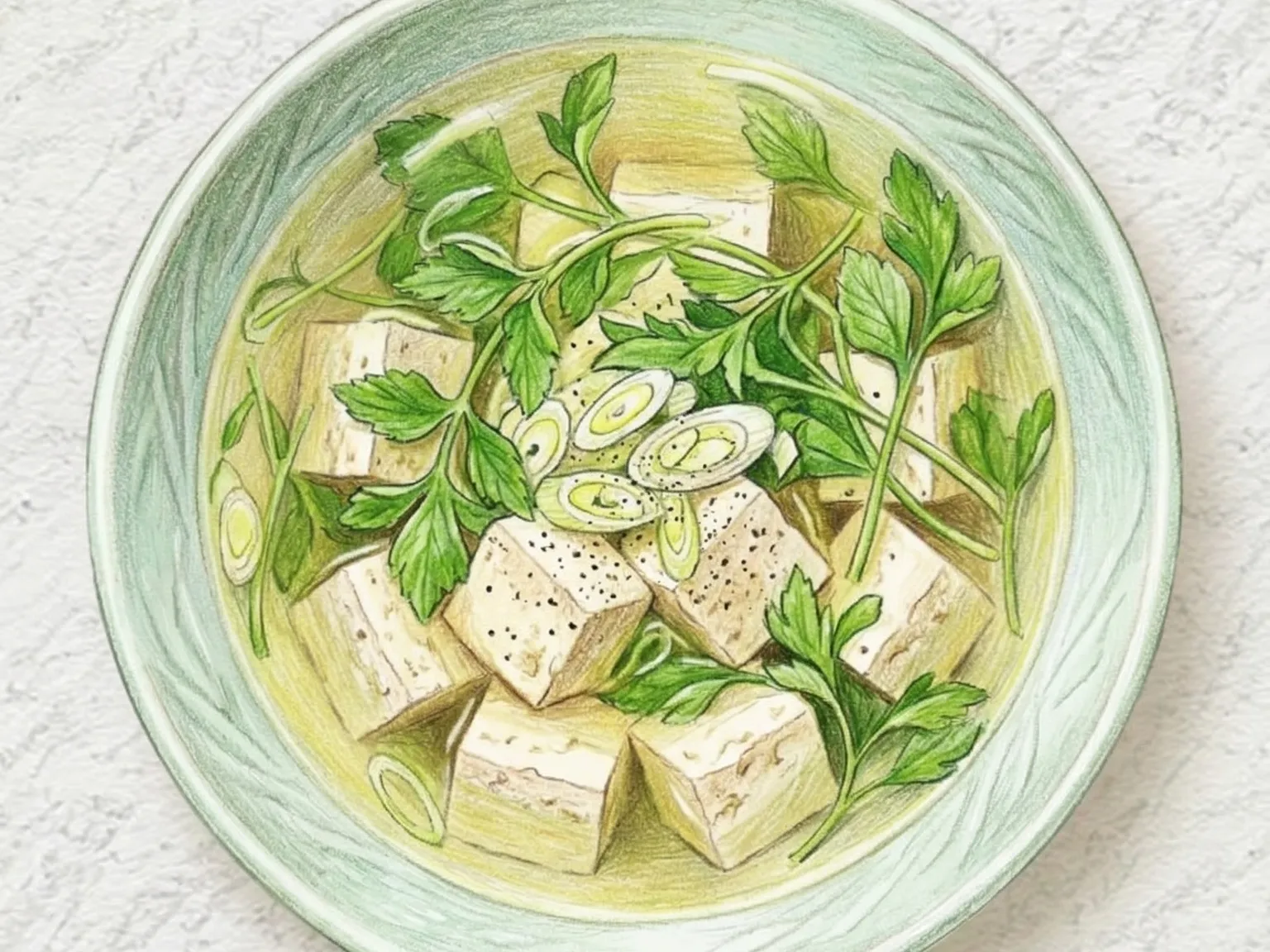
Chamnamul Dubu-guk (Korean Pimpinella Tofu Soup)
Chamnamul dubu-guk is the herb-forward Korean tofu soup in the dubu-guk family, built around chamnamul, or Korean pimpinella greens, in anchovy-kelp stock. Tofu goes in first and simmers for four minutes, absorbing the savory broth before the seasoning of soup soy sauce and salt is added. The chamnamul enters only at the end, kept barely long enough to wilt so its sharp, grassy fragrance stays intact rather than cooking off. The herbal edge of the greens cuts through the mild tofu and gives this clear soup a fresher profile than plain dubu-jangguk.

Korean Young Napa Soft Tofu Stew
Eolgari-sundubu-doenjang-jjigae is a gentle Korean stew that pairs soft tofu with young napa cabbage (eolgari baechu) in a kelp stock base seasoned with doenjang and a small measure of gochujang. The doenjang brings fermented soybean depth to the broth, while the gochujang adds a measured spiciness that stays mild rather than sharp -- the two pastes work together to produce a broth that is simultaneously savory, slightly sweet, and lightly spiced. Potato and onion are added early to contribute their natural sugars, and the potato softens gradually into the liquid, lending slight body to the stock. Soft tofu should be spooned in gently rather than stirred, as it breaks apart easily -- rocking the pot from side to side distributes it without tearing the curds into pieces. Once in the stew, the soft tofu slowly releases some of its moisture and takes on the broth around it, spreading a silky, almost cream-like texture throughout the liquid. Young napa cabbage provides a light crunch that contrasts with the velvet texture of the tofu and the smoothness of the broth. A finishing addition of minced garlic and a drop of perilla oil deepens the savory fragrance just before serving. The stew is mild enough to work as a morning meal and substantial enough to stand as a light dinner.
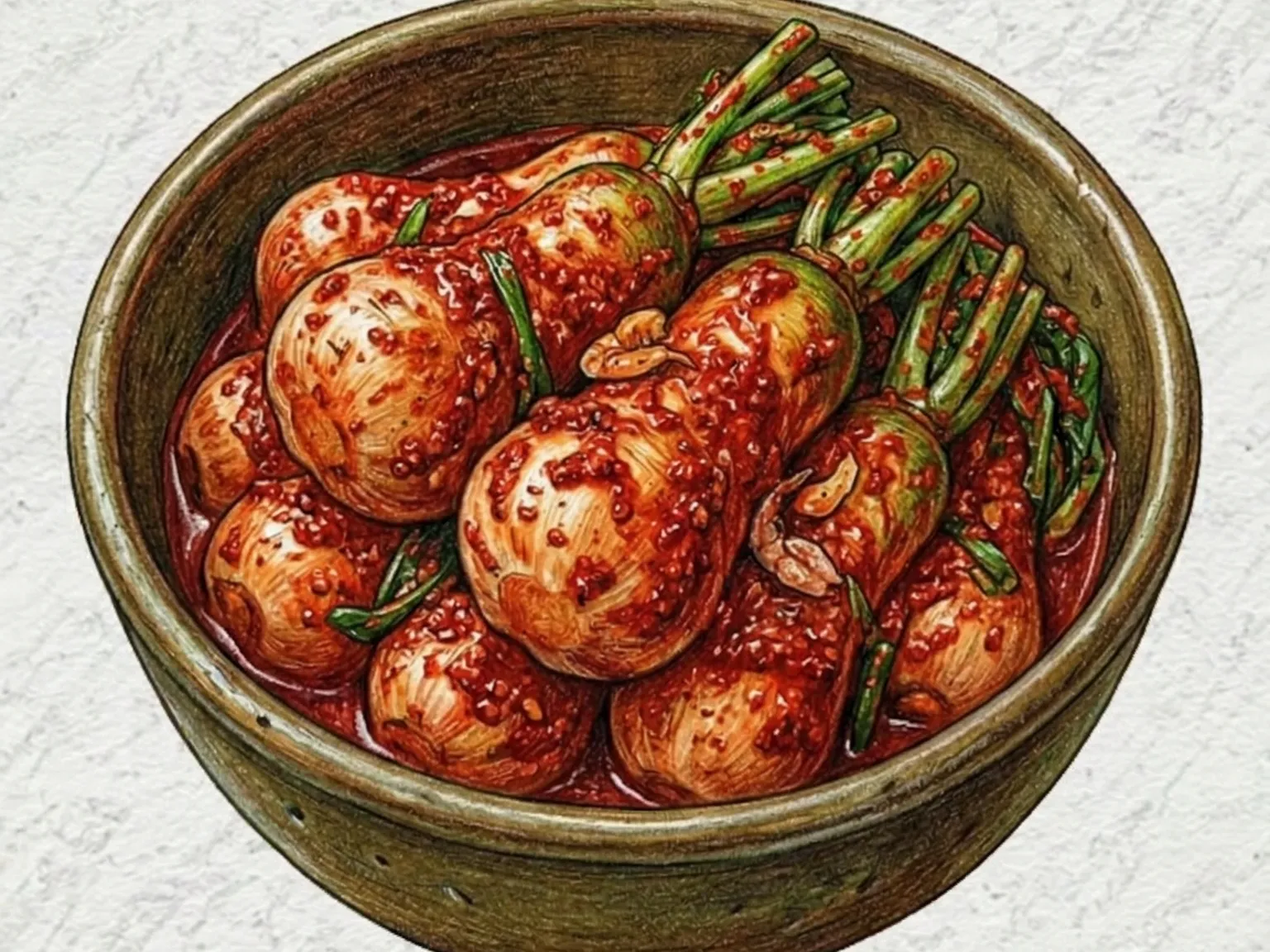
Korean Ponytail Radish Kimchi
Chonggak kimchi is a traditional Korean kimchi made with whole young ponytail radishes salted for two hours, then coated in a paste of gochugaru, anchovy fish sauce, garlic, ginger, and scallions before fermenting. Blooming the chili flakes in fish sauce first softens their texture and intensifies the red color, and garlic and ginger are added afterward to build aromatic depth into the heat. Radish tops that are left too long turn fibrous, so trimming them short before seasoning keeps the kimchi crisp from root to leaf. One day at room temperature produces light carbonation and a cool, refreshing tang that signals the fermentation is alive. Refrigerating after that preserves the radish crunch and spicy umami for weeks. A year-round staple, this kimchi appears at Korean tables across every season.
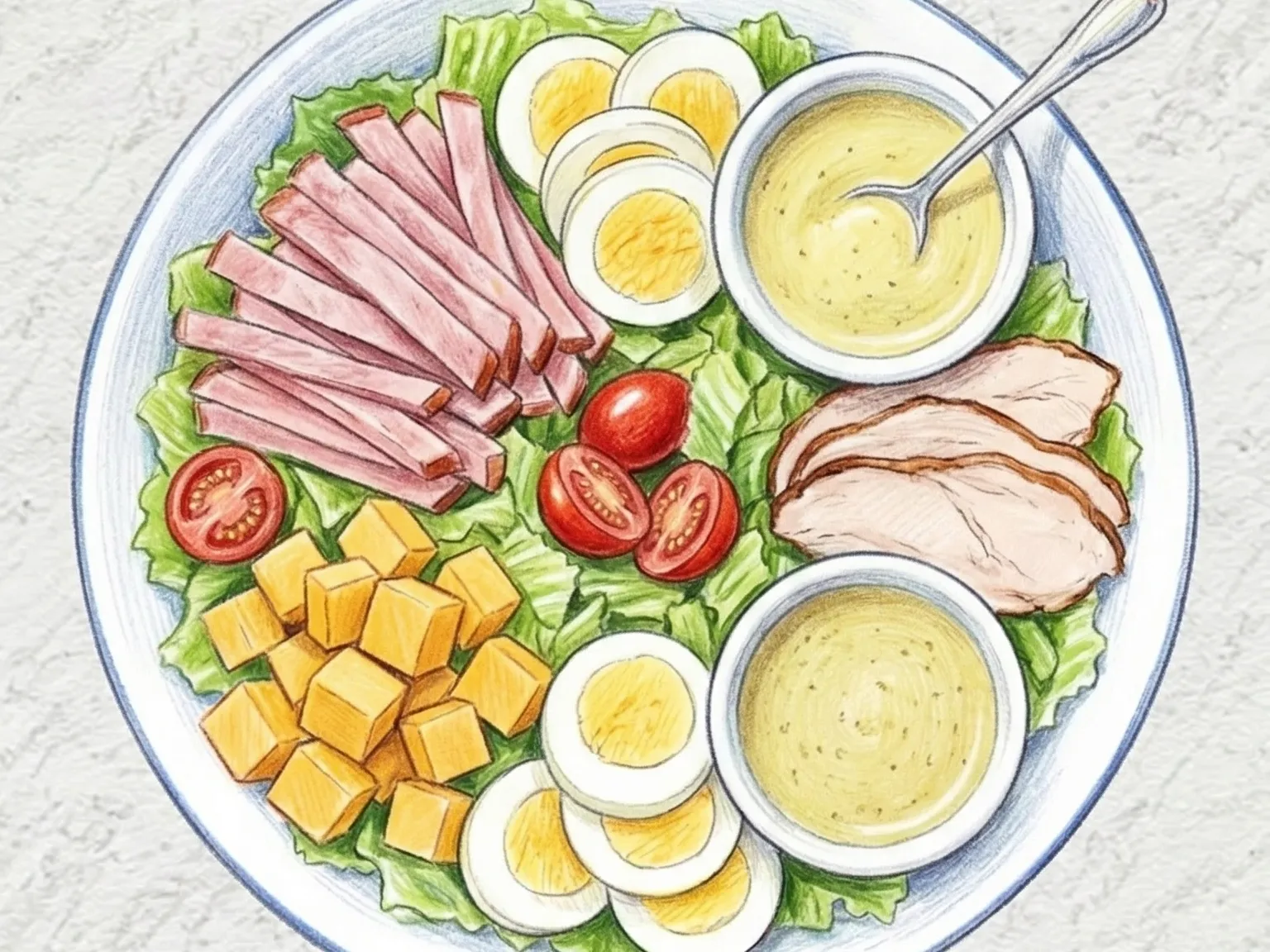
Chef Salad
Chef salad starts with a base of crisp romaine that has been dried thoroughly so the dressing clings rather than sliding off diluted by residual water. Sliced ham, turkey breast, cheddar cheese, halved hard-boiled eggs, and cherry tomatoes are arranged in separate sections over the lettuce without being tossed together, a presentation that keeps the individual components visually distinct and lets each diner control the ratio in every bite. A honey mustard dressing made from mustard, honey, and olive oil delivers sharpness from the mustard alongside the sweetness of honey and the rounded richness of the oil, connecting the salty deli meats and mild greens with a sweet-sharp bridge. Cherry tomatoes burst with bright acidity that cuts through the heavier elements when bitten. Cheddar sliced just before serving retains its full aroma at the cut surface rather than drying out. The finished salad is substantial enough to serve as a complete main course rather than a side.
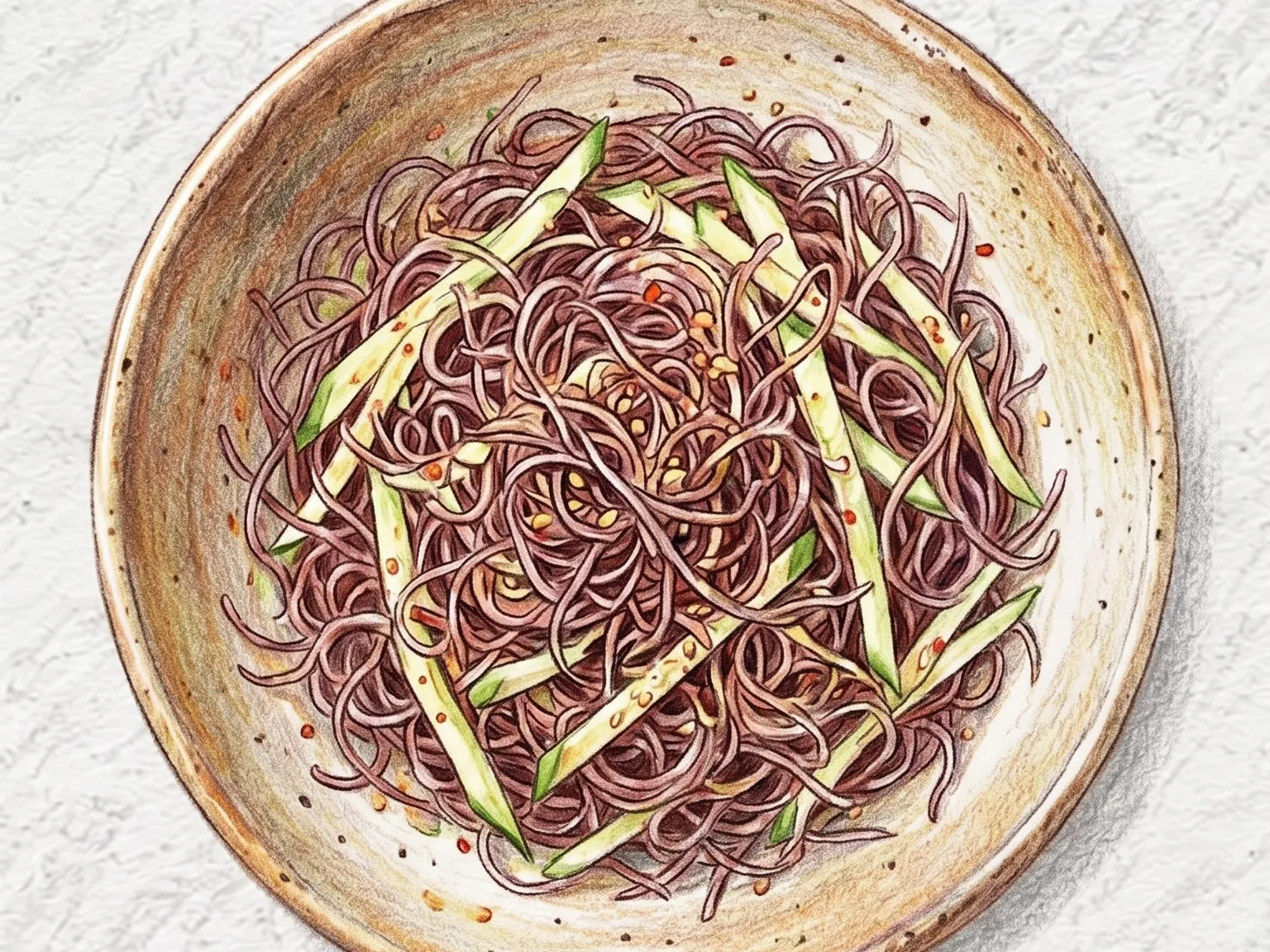
Korean Seasoned Sea Grapes Salad
Kkosiraegi-muchim is a tangy, low-calorie banchan made from kkosiraegi, a red algae seaweed whose thin, noodle-like strands snap with a distinctive crunch that no other seaweed can replicate. Blanching must not exceed twenty seconds, as anything longer collapses the characteristic texture, so a timer is essential. The seaweed goes straight from the boiling water into cold water to stop the heat and lock in elasticity. The dressing brings together gochugaru, soup soy sauce, vinegar, maesil-cheong, garlic, and sesame oil; the green plum extract layering in a fruity acidity that lifts the dish beyond simple sour-spicy flavoring. Julienned cucumber threaded through the seaweed strands provides a crisp, garden counterpoint to the oceanic depth. At roughly 72 kilocalories per serving with high dietary fiber content, this banchan appears frequently in Korean diet meal plans because it satisfies without adding much to the calorie count. Eating it promptly after seasoning prevents the cucumber from releasing water and diluting the dressing. Served cold in summer, it doubles as a refreshing side that pairs well with grilled meat or plain rice.
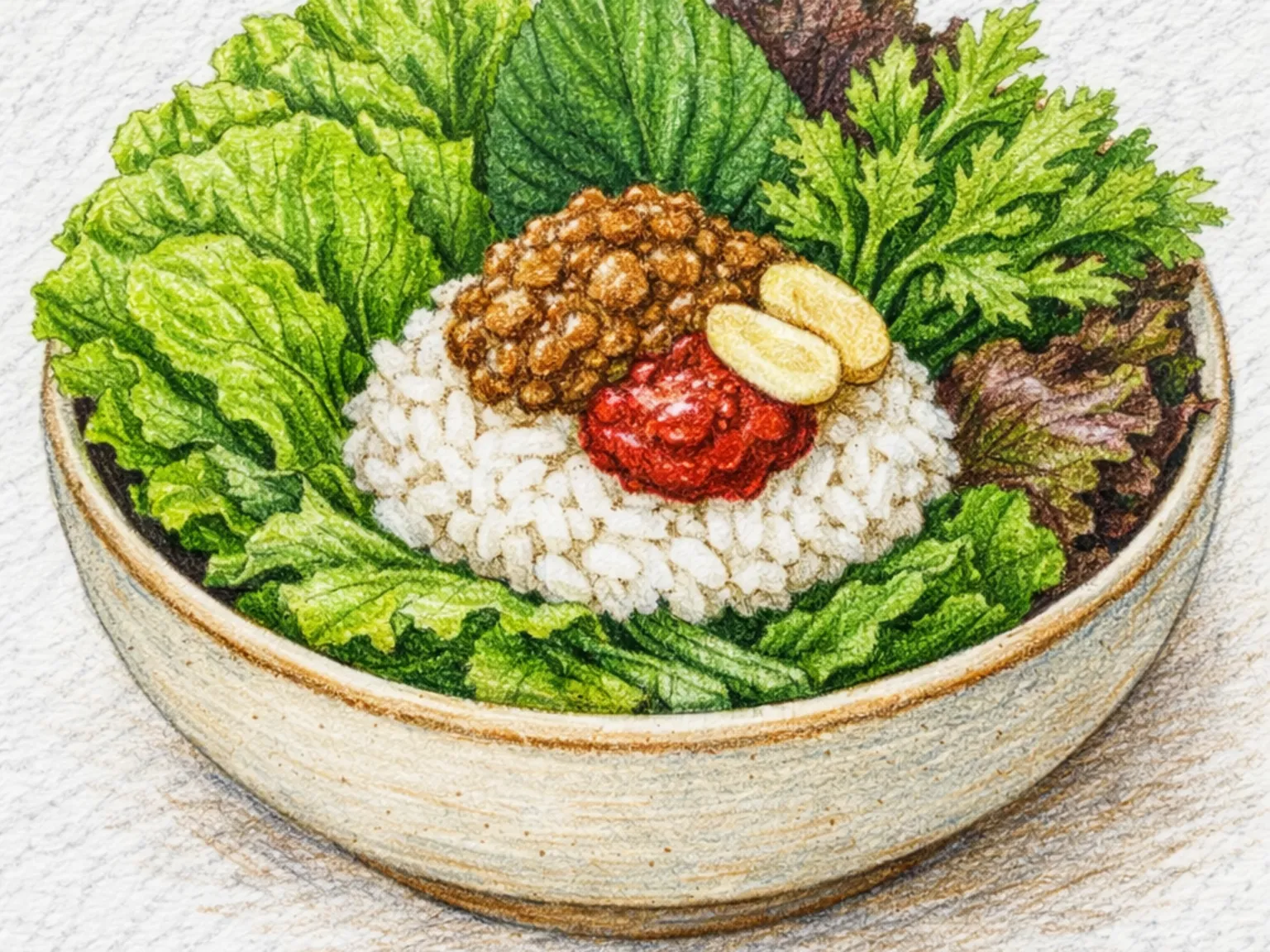
Ssambap (Korean Lettuce Leaf Wraps with Rice and Ssamjang)
Fresh lettuce, perilla leaves, and other leafy greens are spread flat and topped with a small mound of warm rice, a dab of ssamjang, and a slice of raw garlic or chili pepper, then folded into a single bite-sized wrap. The cool crunch of the leaves meets the warm, sticky rice and the salty-sweet depth of fermented soybean paste in every bite. Adding grilled pork belly or bulgogi inside the wrap turns it into a balanced, protein-rich meal. The hands-on ritual of building each wrap at the table is part of what makes ssambap a communal favorite.

Korean Solomon's Seal Tea
Dunggeulle-cha is a Korean caffeine-free tea brewed by simmering dried Solomon's seal root in water to draw out a toasty, mellow sweetness. Adding a small amount of licorice root alongside the root delivers a natural sweetness that rounds and softens the overall flavor without any added sugar. Sliced Korean pear goes into the pot once the water reaches a boil, and as the juice dissolves into the liquid it contributes a light, refreshing fruit layer. The broth is strained clear, finished with a pinch of salt to sharpen the taste, then sweetened with honey and served either warm in winter or chilled over ice in summer.
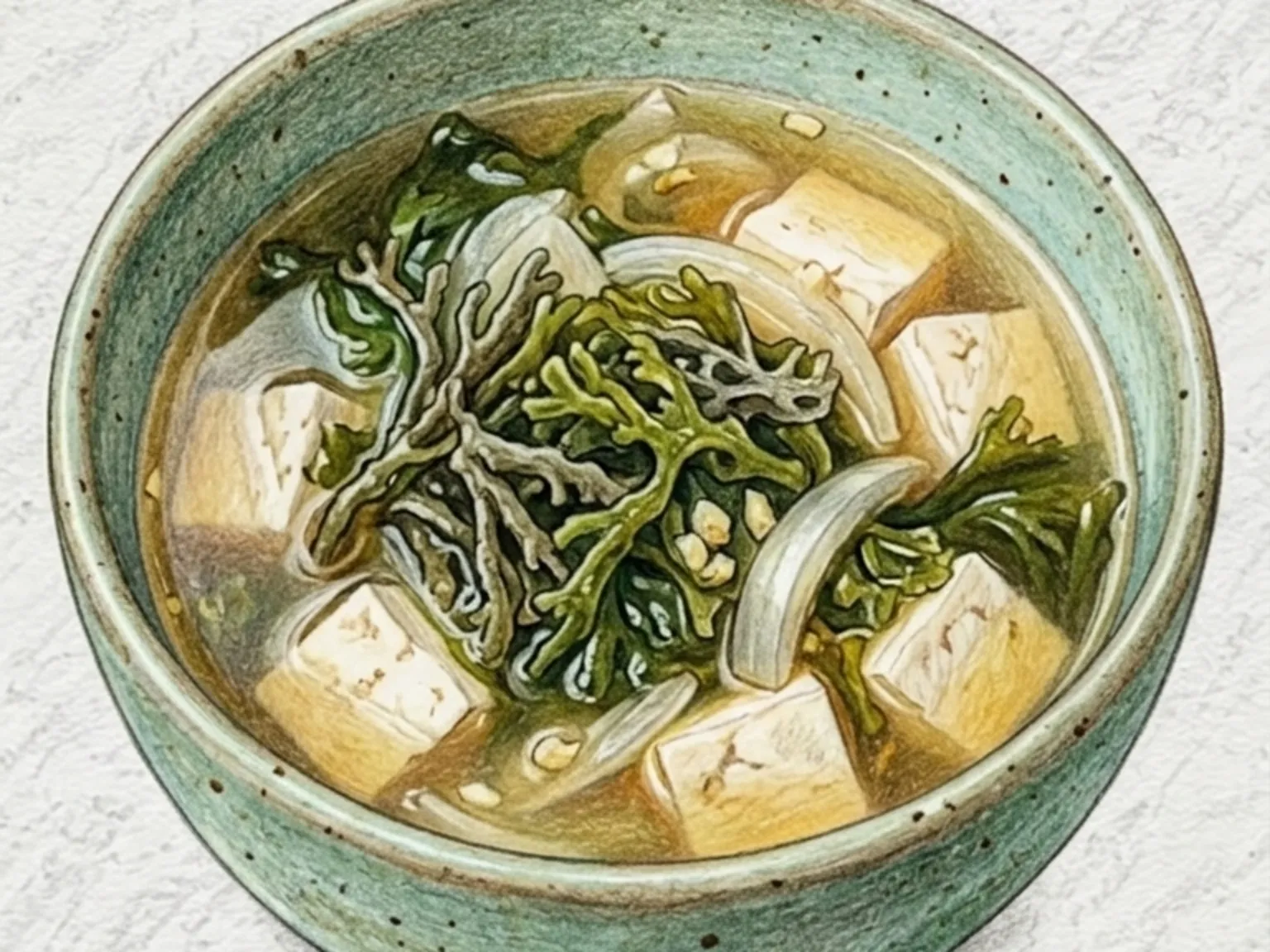
Korean Green Seaweed Tofu Soup
Cheonggak-dubu-guk is a light Korean seaweed soup made by soaking salted cheonggak sea staghorn in cold water to draw out excess salt, then simmering it with tofu and onion in a clean broth. Onion and garlic are sauteed in perilla oil first to build a nutty base, and the broth is seasoned with tuna extract and soup soy sauce, which together bring a deep oceanic savoriness to every spoonful. The cheonggak seaweed contributes a firm, satisfying crunch that contrasts directly with the soft, mild tofu cubes. At 140 calories per bowl, the soup sits at the lighter end of Korean everyday cooking while still delivering genuine depth. The combination of sea vegetable, perilla oil, and fermented soy seasoning makes a broth that tastes cleaner and more mineral than standard vegetable soups.
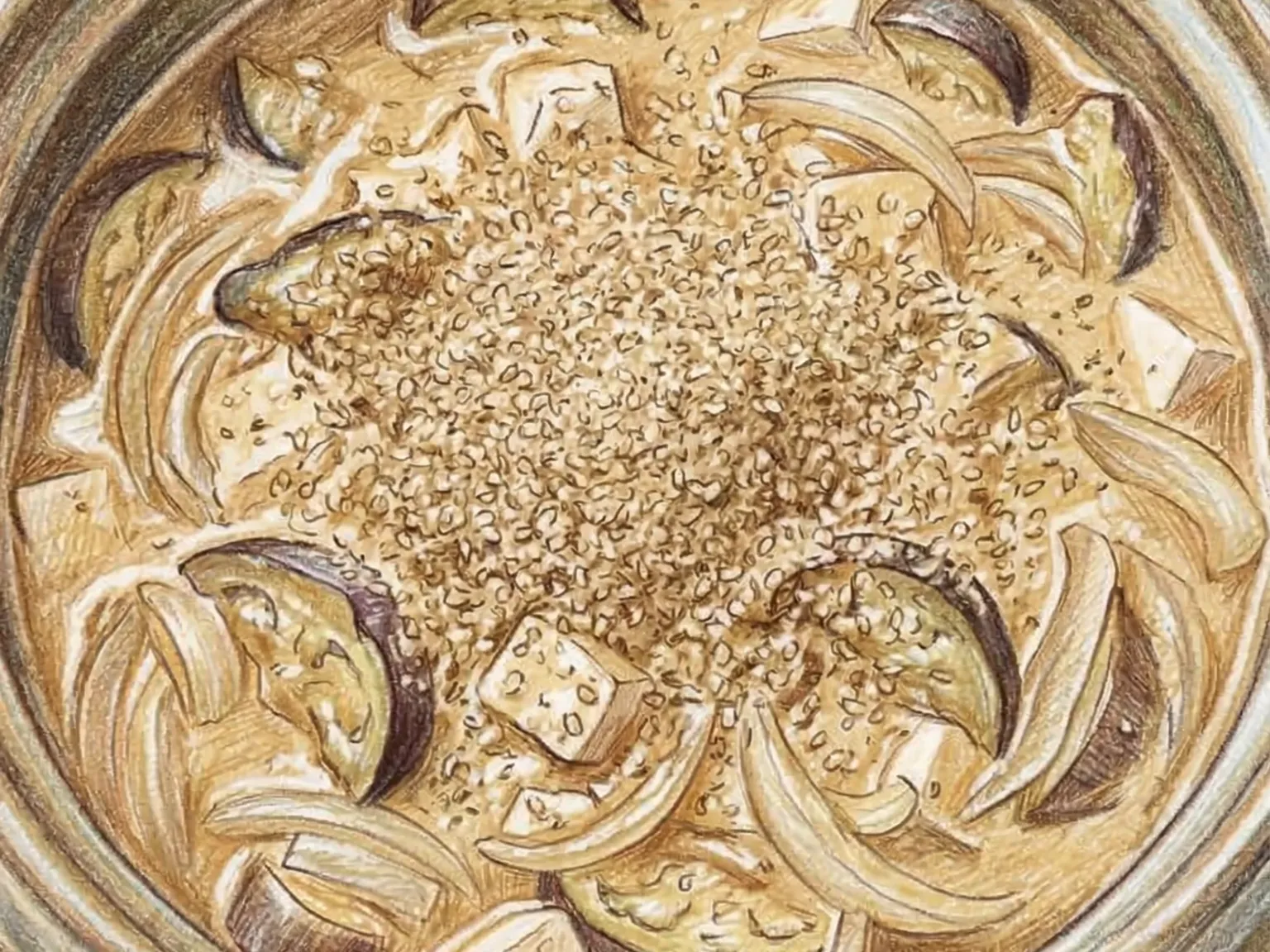
Korean Eggplant, Perilla & Tofu Stew
Gaji deulkkae dubu jjigae is a Korean stew of eggplant and tofu simmered in a broth thickened with ground perilla seeds. Ground perilla stirred into anchovy-kelp stock creates a creamy, nutty liquid as heat activates the oils in the seeds. Eggplant cooks slowly in this broth, breaking down until completely soft and absorbing the surrounding perilla flavor. Dicing the tofu into small cubes increases its surface area and allows the broth to penetrate from more angles. Gochugaru adds a layered warmth to the richness of the perilla, and soup soy sauce provides the salt structure. The textural contrast between the silky, yielding eggplant and the firmer tofu gives the stew a variety that makes each spoonful interesting. Even without meat, the fatty acids in perilla provide enough body and satiety to make this a substantial main-course stew, particularly well suited to vegetarian cooking.
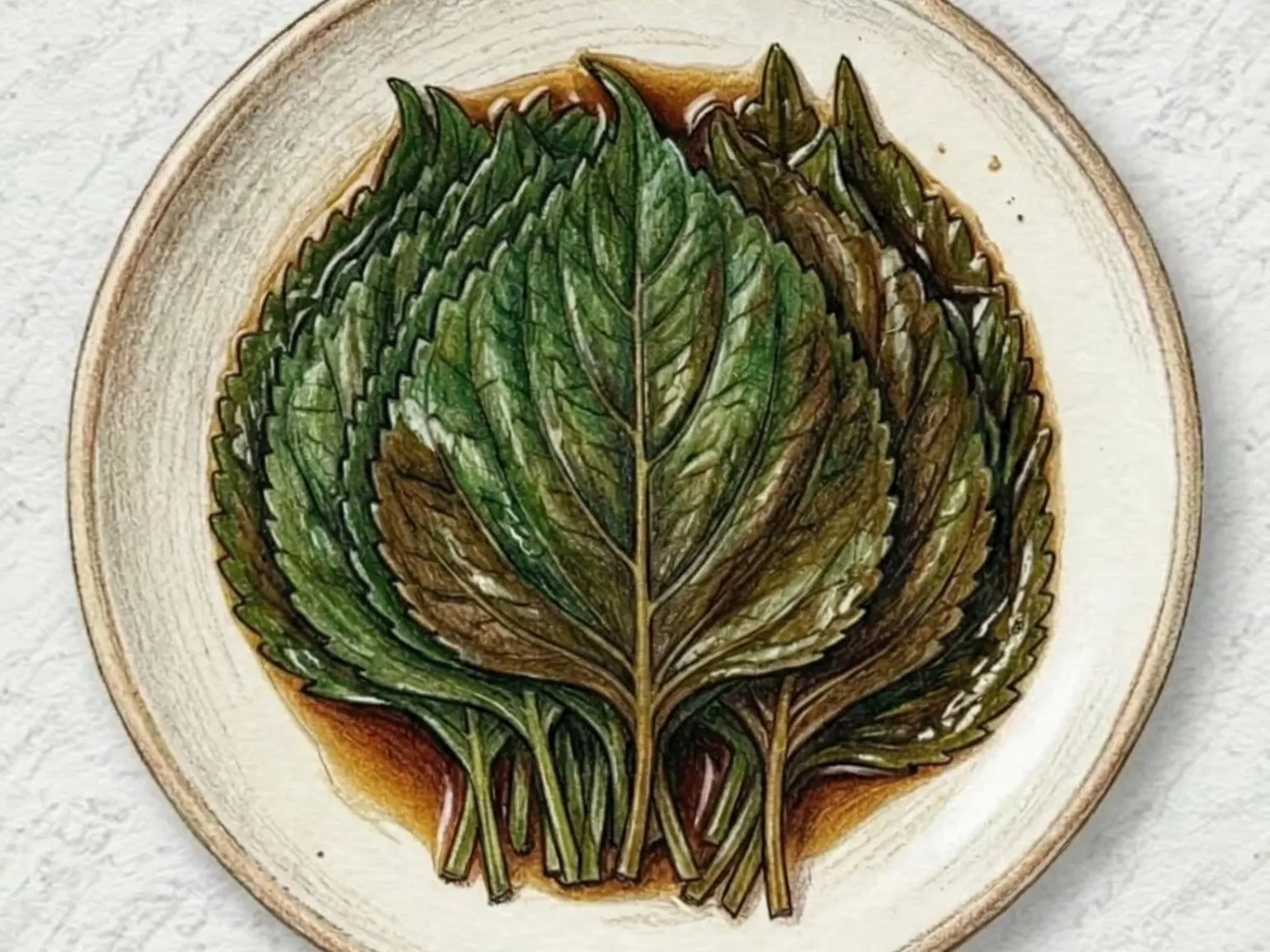
Korean Aster Leaf Soy Pickle
Chwinamul jangajji is a spring soy pickle made from aster greens that are blanched for only ten seconds to soften tough fibers while keeping their mountain-herb fragrance intact. The blanched greens are squeezed thoroughly dry, then packed into a jar with sliced garlic and dried chili before a brine of soy sauce, rice vinegar, and sugar is boiled, cooled to room temperature, and poured over the top. During the two to three days the jar spends refrigerating, the garlic's sharpness and the chili's low heat gradually infuse through every layer of the greens, while the aster's distinctive fresh, faintly bitter aroma meets the soy's umami to produce a finish that is both deep and clean. Once the seasoning distributes evenly, the jangajji can be eaten draped over plain rice or chopped fine and pressed into the center of rice balls as a savory filling.
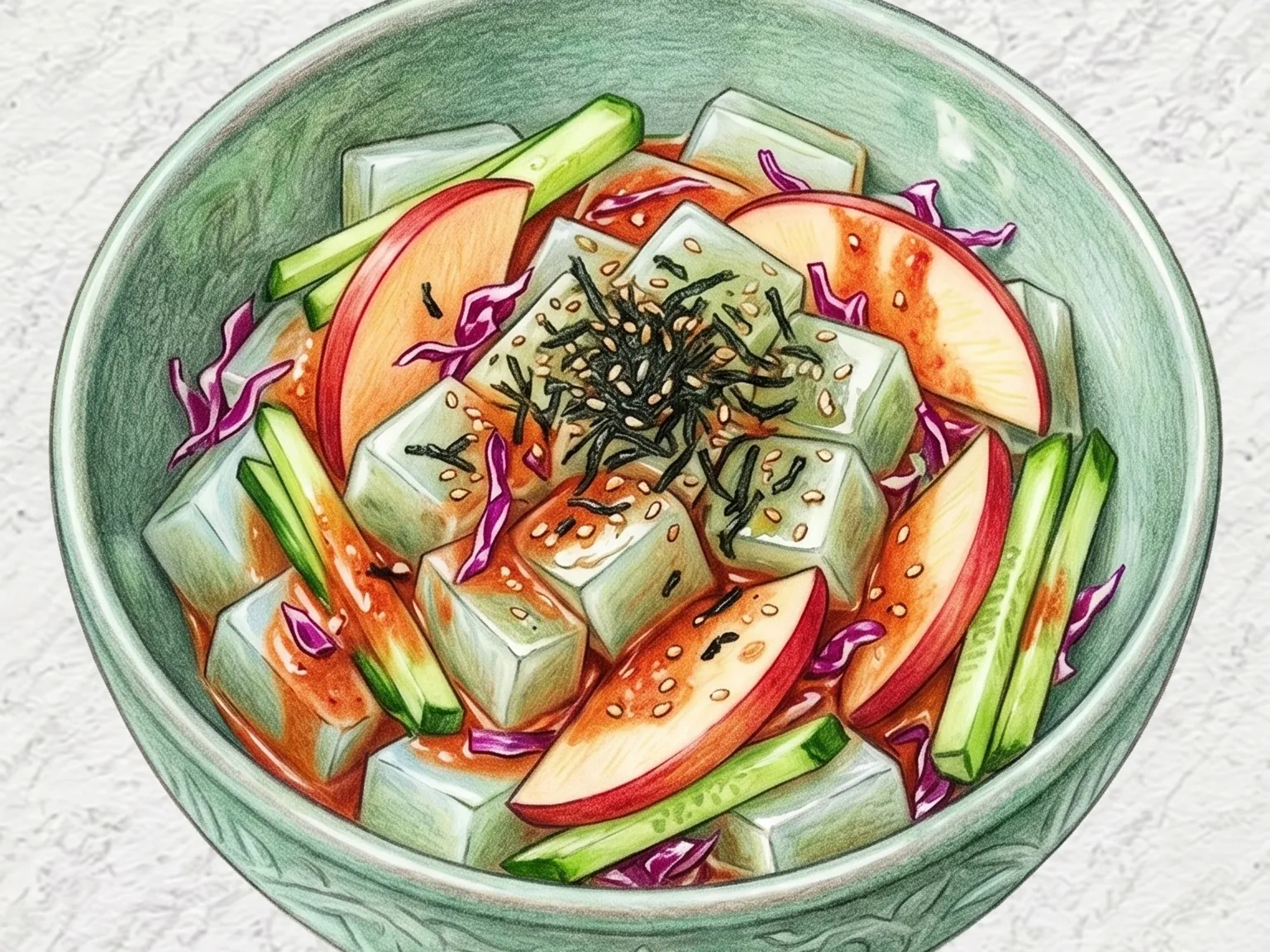
Mung Bean Jelly Apple Chojang Salad
Cheongpomuk apple chojang salad combines blanched mung bean jelly sticks with crisp apple and cucumber, dressed in a chojang sauce of gochujang, vinegar, and green plum syrup. Blanching the jelly for only twenty seconds in boiling water removes the surface sliminess that fresh mung bean jelly develops while preserving the soft, slippery texture that defines it. Rinsing immediately in cold water and draining well prevents the chojang from becoming watery and losing its spicy-sour punch. The chojang layers spicy gochujang heat with the sweet-tart acidity of vinegar and plum syrup, lifting the otherwise neutral flavor of the jelly into something brighter. Shredded red cabbage adds a vivid color contrast and a slight bitterness that balances the sweetness. Roasted seaweed flakes contribute a briny crunch. Sesame oil and ground sesame seeds finish the bowl with a nutty note, keeping the dish light and oil-free. Any unused blanched cheongpomuk should be stored submerged in cold water to prevent the surface from drying out and becoming tough before serving.
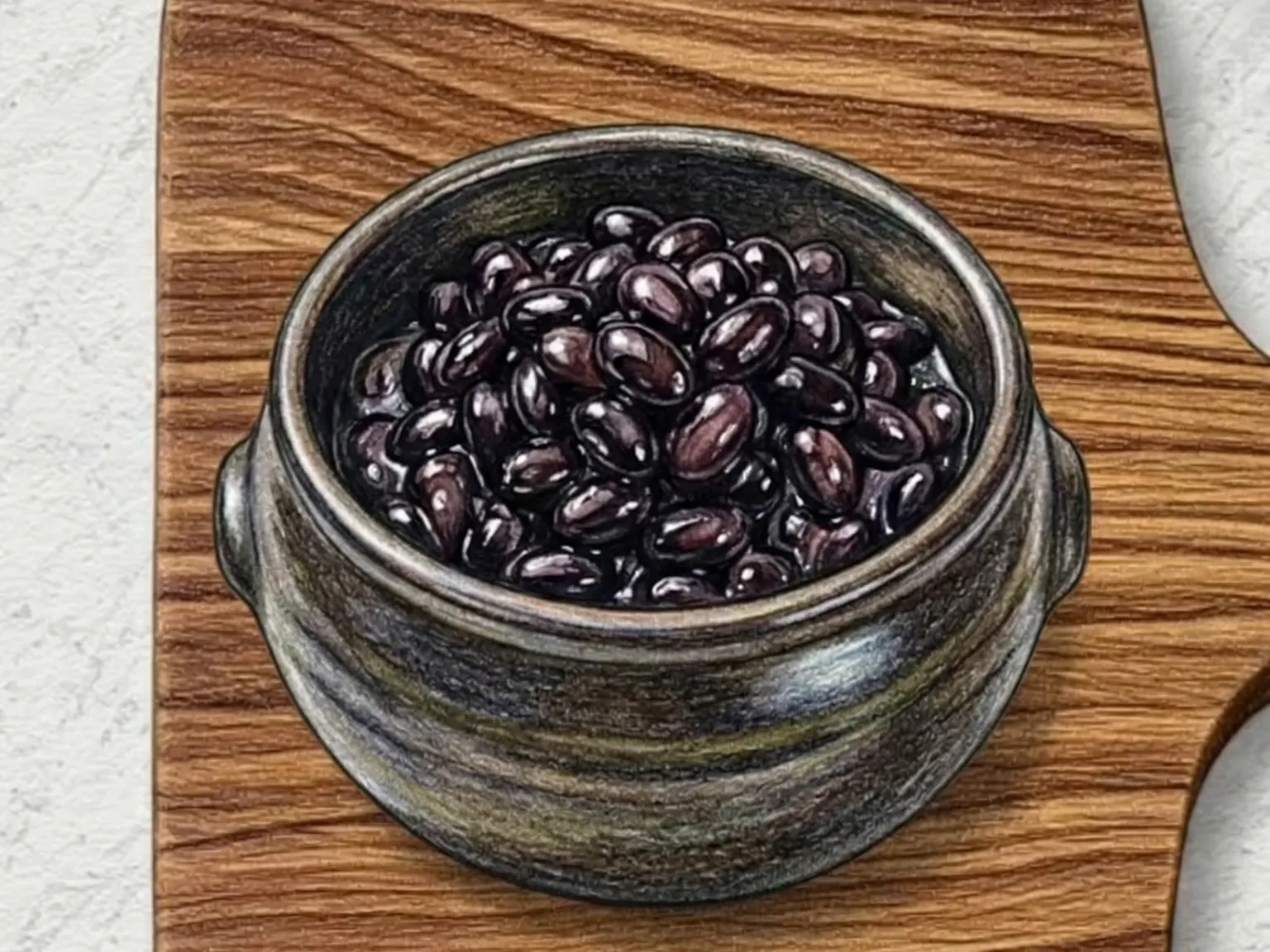
Korean Soy-Braised Soybeans
Kong-jorim, also called kongjaban, is soy-braised soybeans simmered slowly in soy sauce and sugar until each bean turns deeply glossy, a pantry staple rooted in the era when rice and beans were the twin pillars of Korean sustenance. Soaking the beans for a minimum of eight hours is not a step that can be skipped: it shortens cooking time and allows the seasoning to penetrate all the way to the center of each bean. Omitting the soak produces beans that are salty on the exterior and chalky and hard inside. After boiling until fully tender, the beans simmer on low heat for fifteen minutes in the soy and sugar mixture, then corn syrup is stirred in at the end to create a transparent, lacquer-like glaze that gives each bean its characteristic high shine. Using black soybeans, known as soritae, instead of yellow soybeans yields a dramatic deep purple-black luster as the anthocyanin pigments in the skin dissolve slowly into the braising liquid. Stored in a sealed container in the refrigerator, kong-jorim keeps well for more than two weeks, making it one of the most practical weekend meal-prep banchan a home cook can prepare. Its small, individual beans make it easy to portion onto rice or tuck into a corner of a packed lunch.
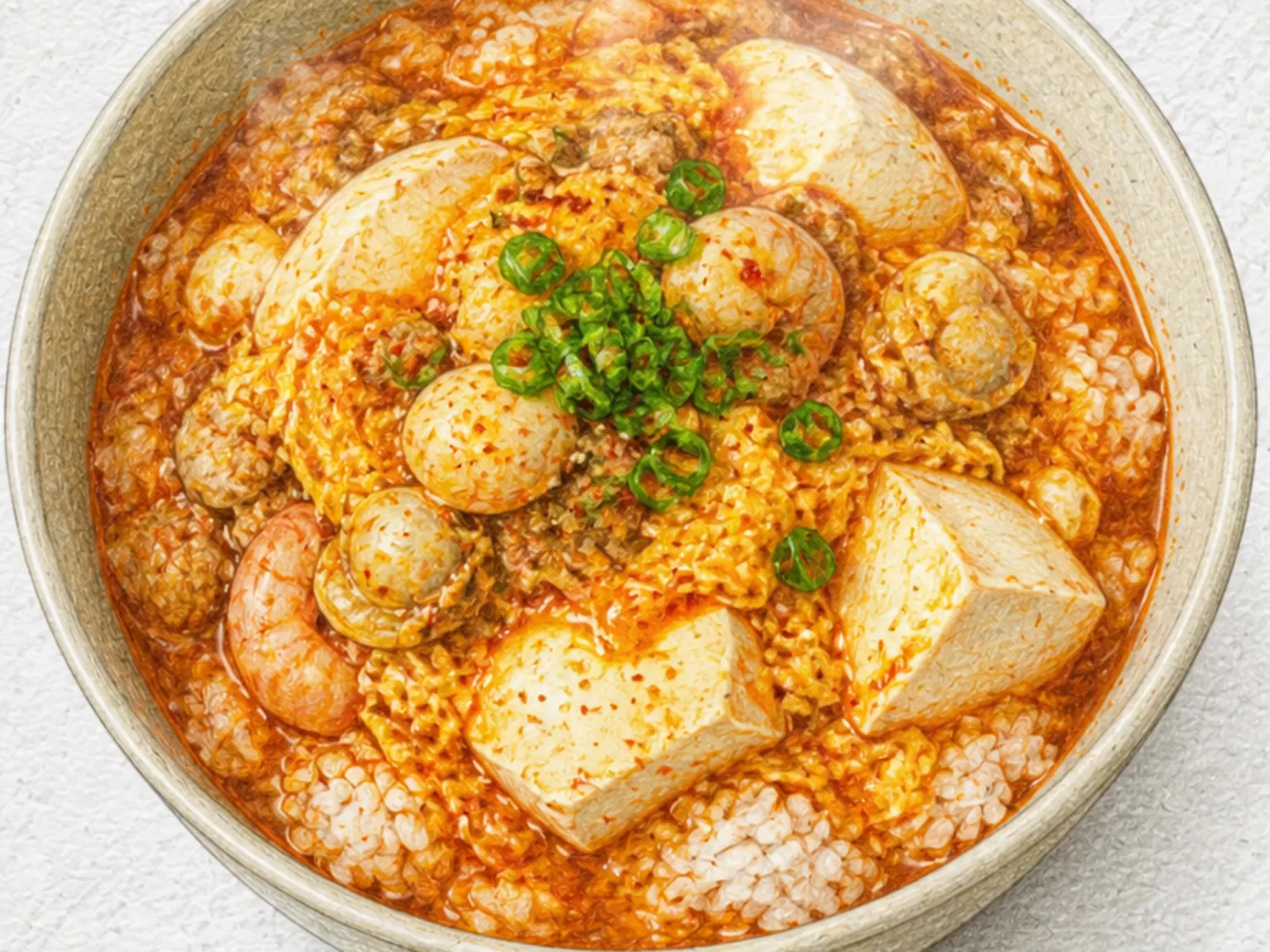
Korean Soft Tofu Stew Rice Bowl
Fiery soft-tofu stew is cooked until bubbling and poured directly over a bowl of rice so the spicy broth seeps into every grain. The silky tofu breaks apart gently, creating pockets of creamy texture within the chili-laced soup. Cracking a raw egg into the simmering pot softens the heat and adds body to the broth. Variations with shrimp, clams, or pork each shift the base flavor in a different direction, making this a versatile single-bowl meal. Serving it soon after cooking keeps the intended texture clearer, while brief resting lets the sauce or broth settle into the dish.
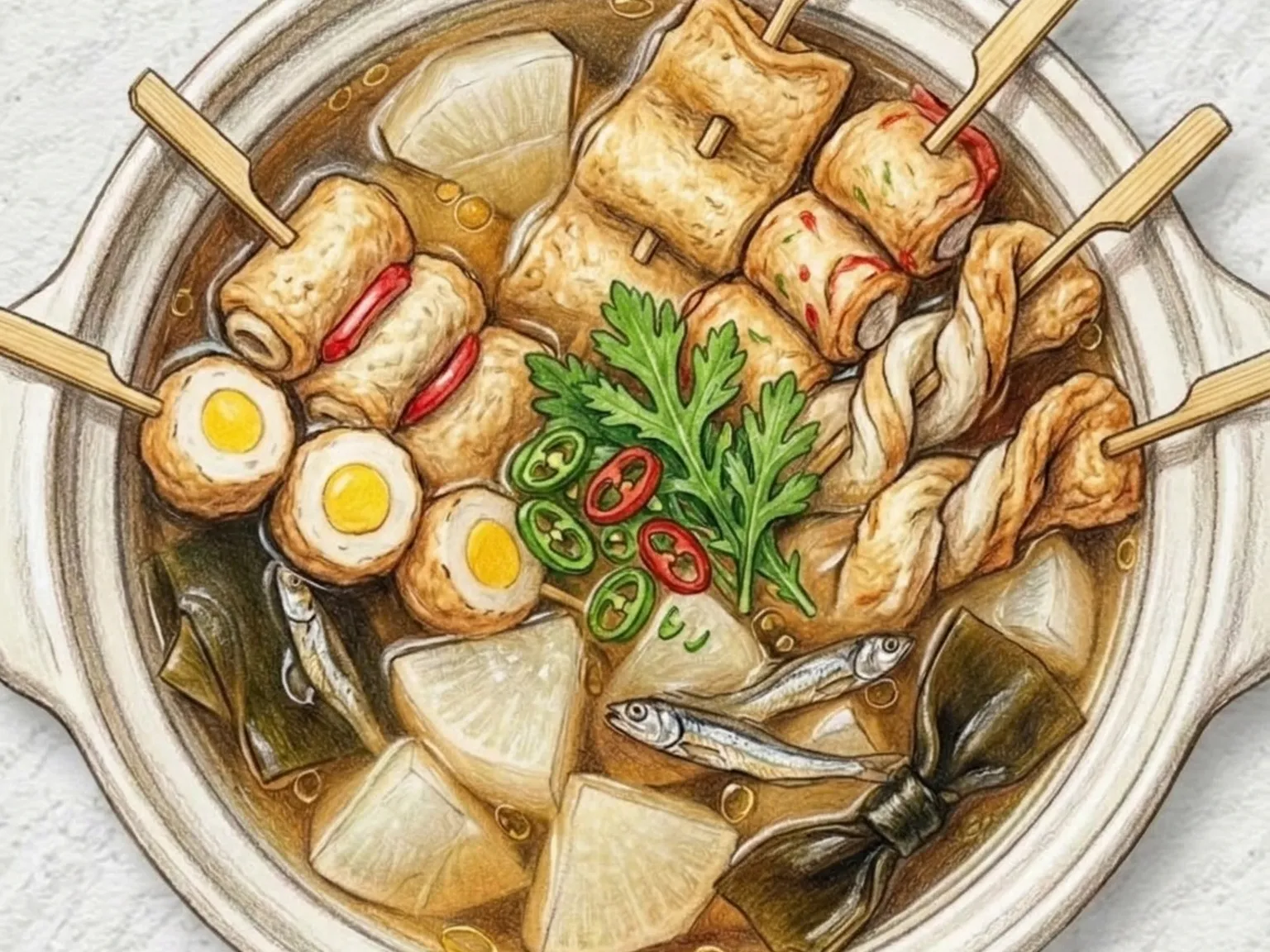
Korean Fish Cake Soup (Clear Anchovy Radish Broth)
Eomuk-tang is a Korean fish cake soup in which skewered fish cakes and thick radish slices simmer in a clear broth built from dried anchovies and kelp. The kelp must be removed the moment the water begins to boil, otherwise it releases a slimy texture that clouds the broth. Cutting the radish thick allows it to slowly release natural sweetness over the long simmer. Rinsing the fish cakes in hot water before adding them washes away surface oil and keeps the broth clear and clean. Soup soy sauce adjusts the seasoning, and green onion and black pepper finish the pot. Adding the radish before the fish cakes ensures it has enough time to fully soften and sweeten the broth, since it takes longer than the eomuk to cook through.
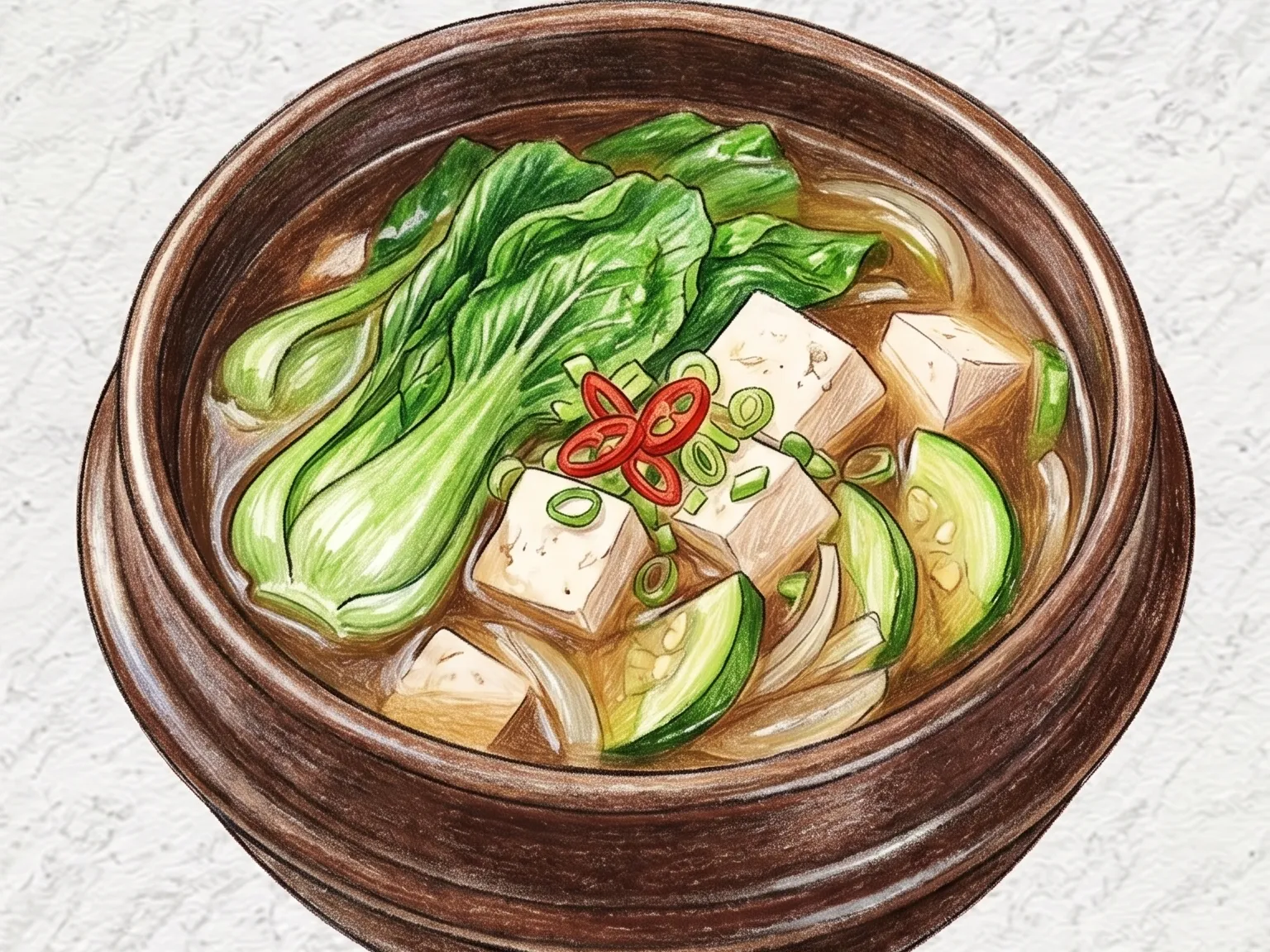
Korean Bok Choy Soybean Paste Soup
Cheonggyeongchae doenjang-guk is a Korean soybean paste soup built on anchovy-kelp stock, featuring bok choy, zucchini, and tofu. Unlike napa cabbage or spinach, bok choy brings a crisp, juicy stem alongside soft leaves, and it adds a mild, clean sweetness to the broth that differs from the earthier notes of Korean brassicas. The stock simmers first with onion and garlic for six minutes to build an aromatic base, and the doenjang is pressed through a sieve so it dissolves evenly without leaving paste clumps in the finished soup. Bok choy and tofu go in during the final three minutes, which is long enough to wilt the leaves while the stems keep their bite and the green color stays bright. Though bok choy is more common in Chinese cooking, it pairs naturally with doenjang and is available year-round in Korean supermarkets, making it a reliable alternative when napa cabbage is not on hand.
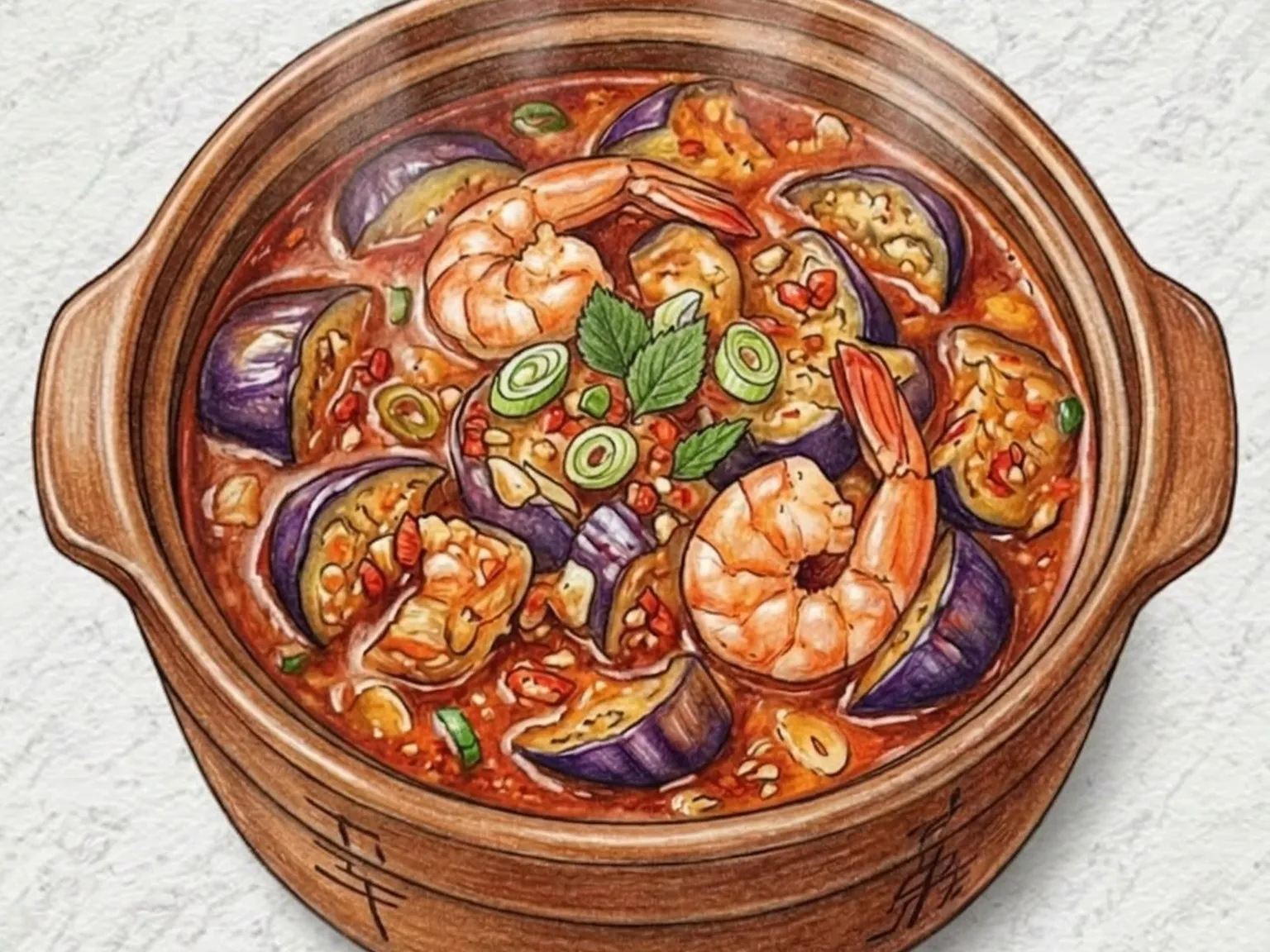
Korean Gaji Saewoo Jjigae (Eggplant Shrimp Stew)
Gaji-saewoo-jjigae is a spicy Korean stew of eggplant and shrimp simmered in a gochujang-based broth seasoned with perilla oil and tuna fish sauce. The vegetables and shrimp are stir-fried in perilla oil first to develop fragrance, then water is added and the whole pot brought to a boil. Eggplant cut in thick lengthwise slices or on the bias presents a large surface area that soaks up the spicy, savory broth, so each bite releases a burst of liquid from inside the softened flesh. The shrimp cook quickly and contribute a sweet, briny flavor that lifts the fermented chili paste. Tuna fish sauce adds depth and umami without any fishy edge, and the perilla oil's distinctive nutty fragrance runs through the entire broth. The soft, yielding eggplant and the firm, springy shrimp create a textural contrast in each bowl, and the characteristic sweetness built into gochujang-based broths makes this a summer dish that stimulates appetite even in the heat.
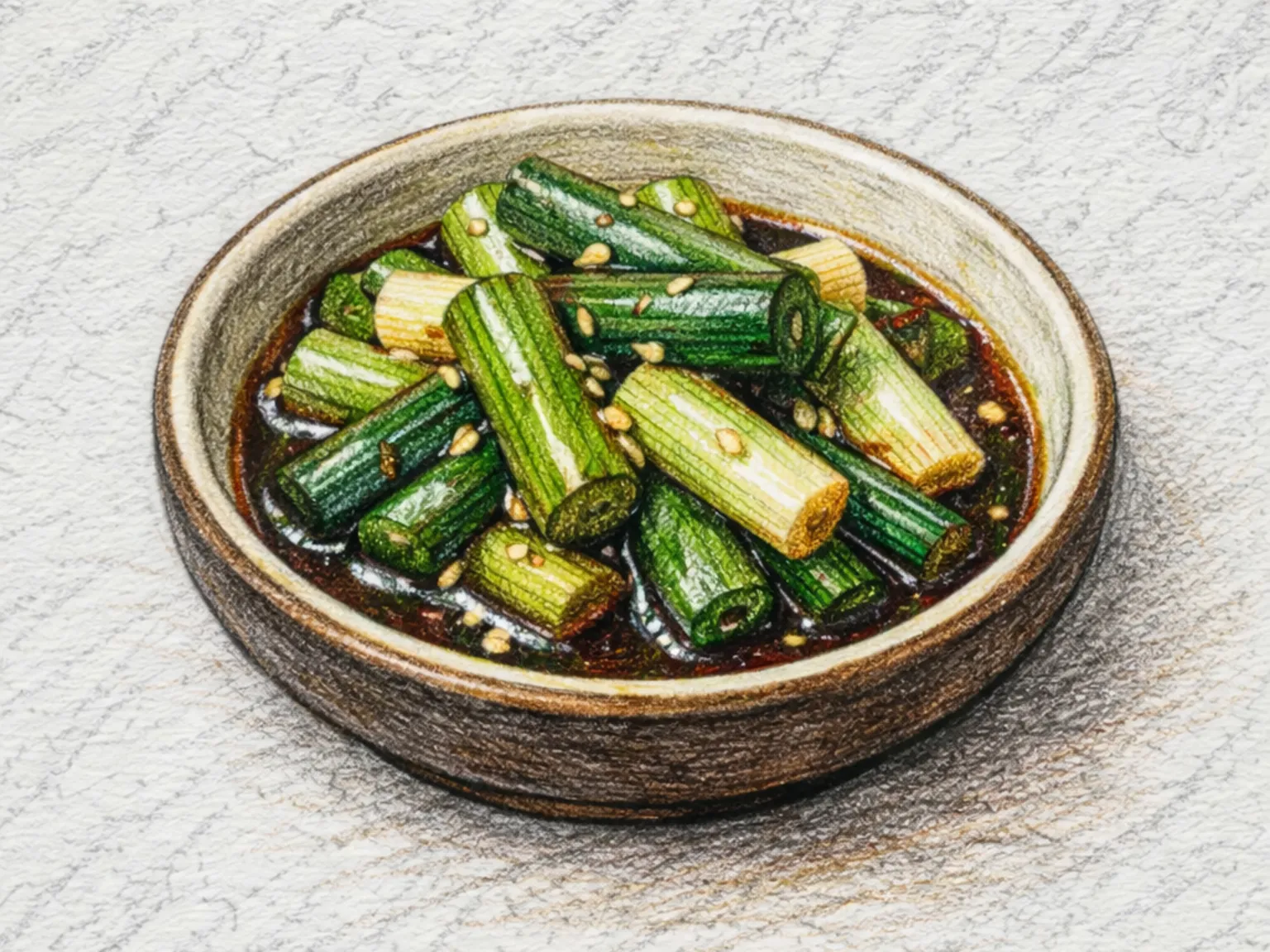
Korean Pickled Green Onion
Daepa jangajji is a quick Korean pickle made by cutting large green onions into five-centimeter lengths and submerging them in a cooled brine of soy sauce, vinegar, and sugar with garlic and dried chili. Using primarily the white portions yields a firmer, crisper result, and the brine must be cooled thoroughly before pouring to prevent the onions from wilting prematurely. The soy and vinegar together pull back the raw sharpness of the green onion while leaving its aromatic depth intact. Two days of refrigeration allow the seasoning to penetrate evenly throughout each piece. The result is a sharp, savory condiment that cuts through the fat of grilled pork belly or other rich meats, and its simple ingredient list makes it one of the most practical quick-pickles to keep on hand.
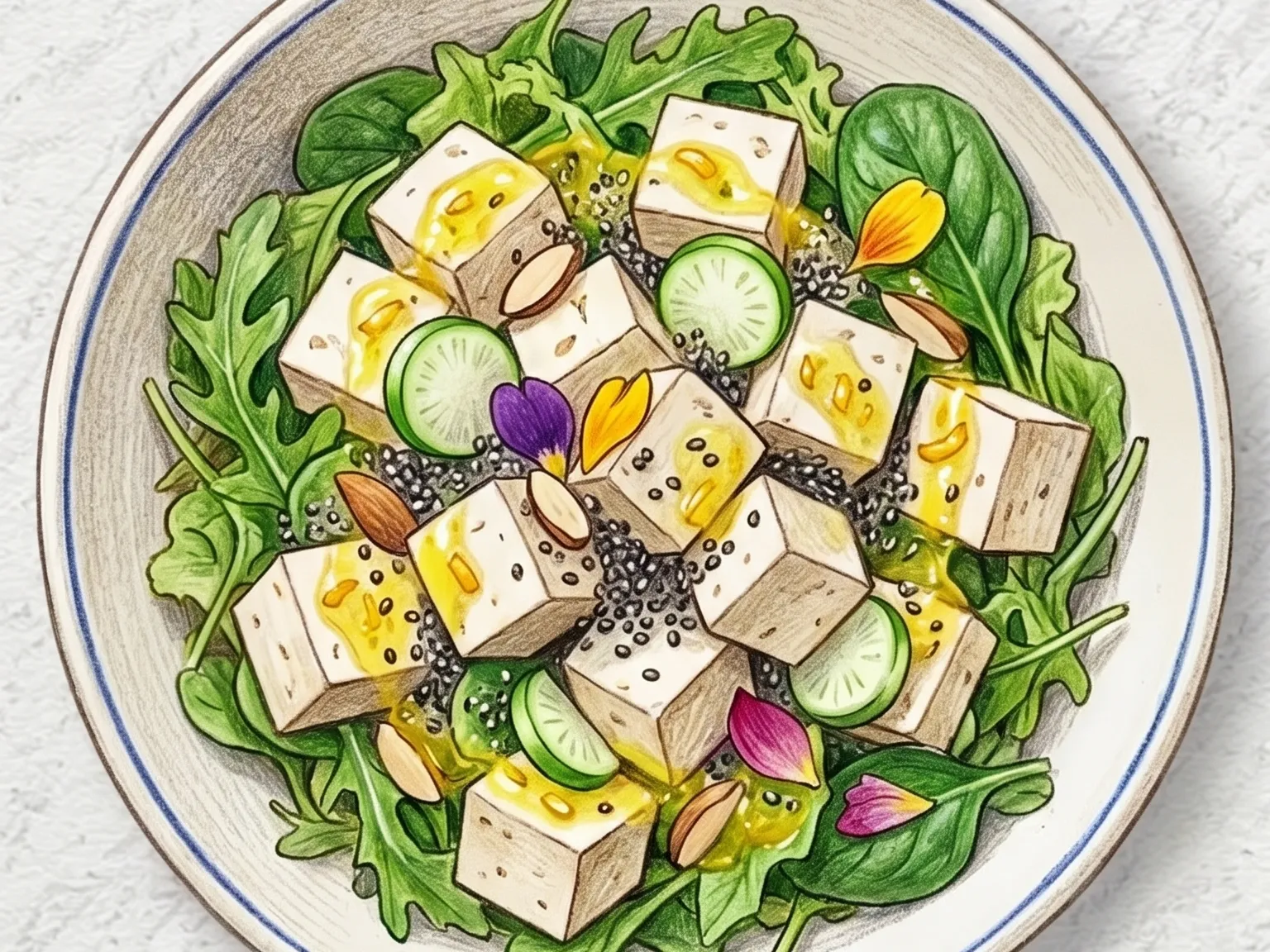
Chia Seed Yuja Dressing Tofu Salad
Chia Seed Yuja Dressing Tofu Salad is a light salad featuring soft silken tofu and baby greens. The dressing is made by soaking chia seeds in lemon juice and water for ten minutes until they swell into gel beads, which are then combined with yuja marmalade, vinegar, olive oil, and soy sauce. The soft tofu is cut into pieces and drained on paper towels to ensure it absorbs the citrus flavors of the dressing. Halved cherry tomatoes and baby greens provide a crisp texture that balances the softness of the tofu. To prevent the greens from softening, the dressing is poured over the salad just before serving. Refrigerating the mixed dressing for thirty minutes enhances the chewiness of the seeds. You can also substitute soft tofu with grilled tofu or chicken breast to modify the protein source.