🏠 Everyday Recipes
Simple home-cooked meals for any day
1705 recipes. Page 4 of 72
These are the meals you can cook day after day without getting tired of them. Doenjang jjigae, rolled omelet, spicy pork stir-fry - the kind of home-cooked dishes that fill an ordinary day with comfort.
The beauty of everyday cooking is that it relies on common ingredients already in your fridge. No exotic items, no complicated techniques - just straightforward recipes for satisfying home meals.
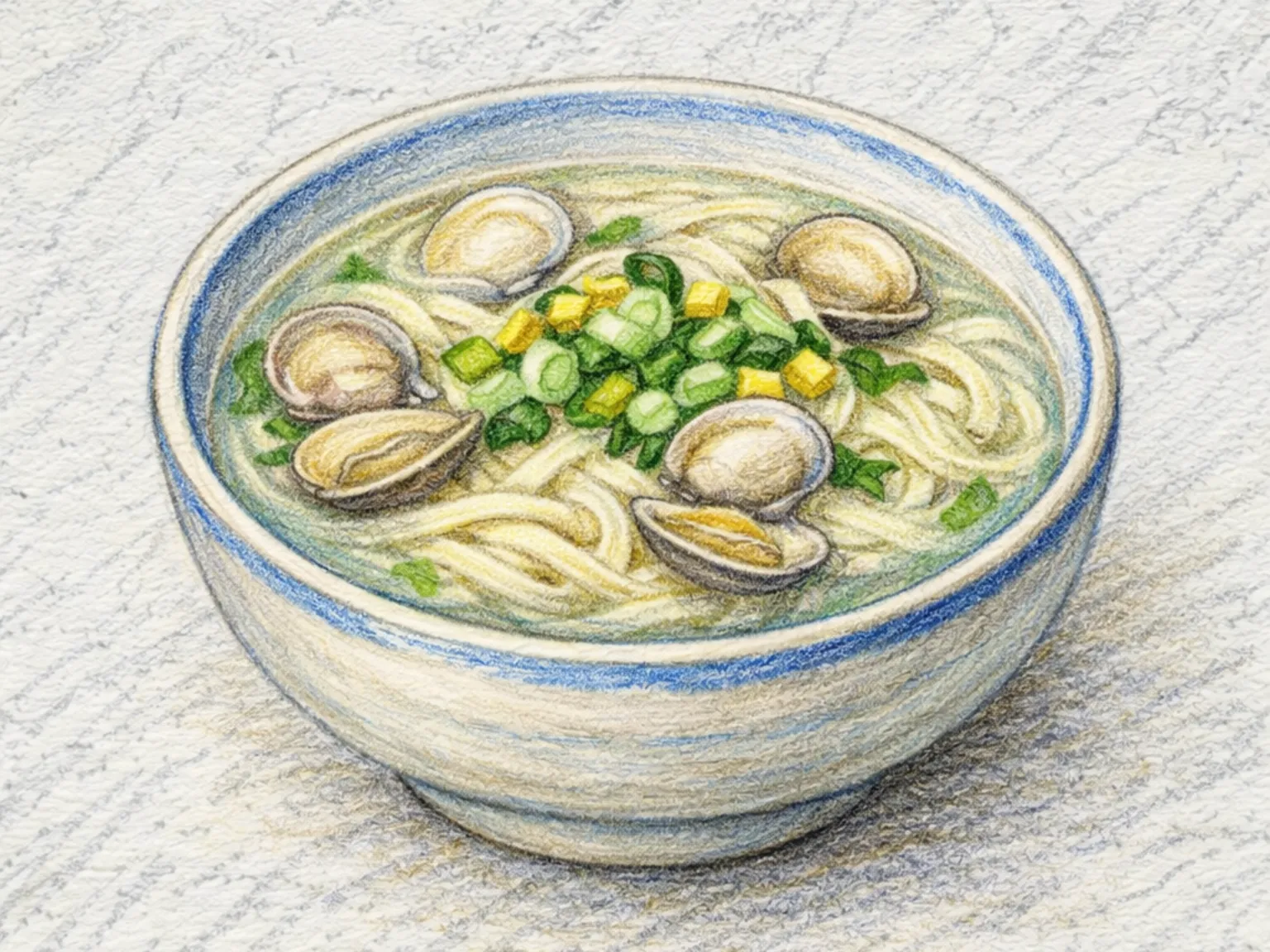
Korean Clam Kalguksu (Hand-Cut Noodles in Clam Broth)
Baekhap kalguksu is a Korean knife-cut noodle soup in which the broth is derived entirely from hard clams rather than the more standard anchovy base. Purged clams are placed in cold water and brought to a boil; once the shells open, the clams are lifted out and the broth is strained through cheesecloth to remove any residual sand or shell fragments. Thinly sliced daikon radish and Korean zucchini cook in the strained broth for five minutes, contributing vegetal sweetness. The hand-cut noodles go in next and are boiled for six to seven minutes until they turn translucent; starch released from the noodles thickens the broth naturally into a lightly viscous, silky consistency without any additional thickener. Once the noodles are cooked, the reserved clam meat returns to the pot, and the soup is seasoned with minced garlic and guk-ganjang. Onion added with the vegetables deepens the broth's sweetness further. Because clam liquor rather than dried anchovy forms the base, the soup carries a distinctly marine, mineral character that permeates every strand of noodle, setting baekhap kalguksu apart from all other regional kalguksu variations. Along the coastal areas of South Chungcheong and Jeolla Provinces, this style of noodle soup has been a local specialty for generations, best in the seasons when clams are most abundant.
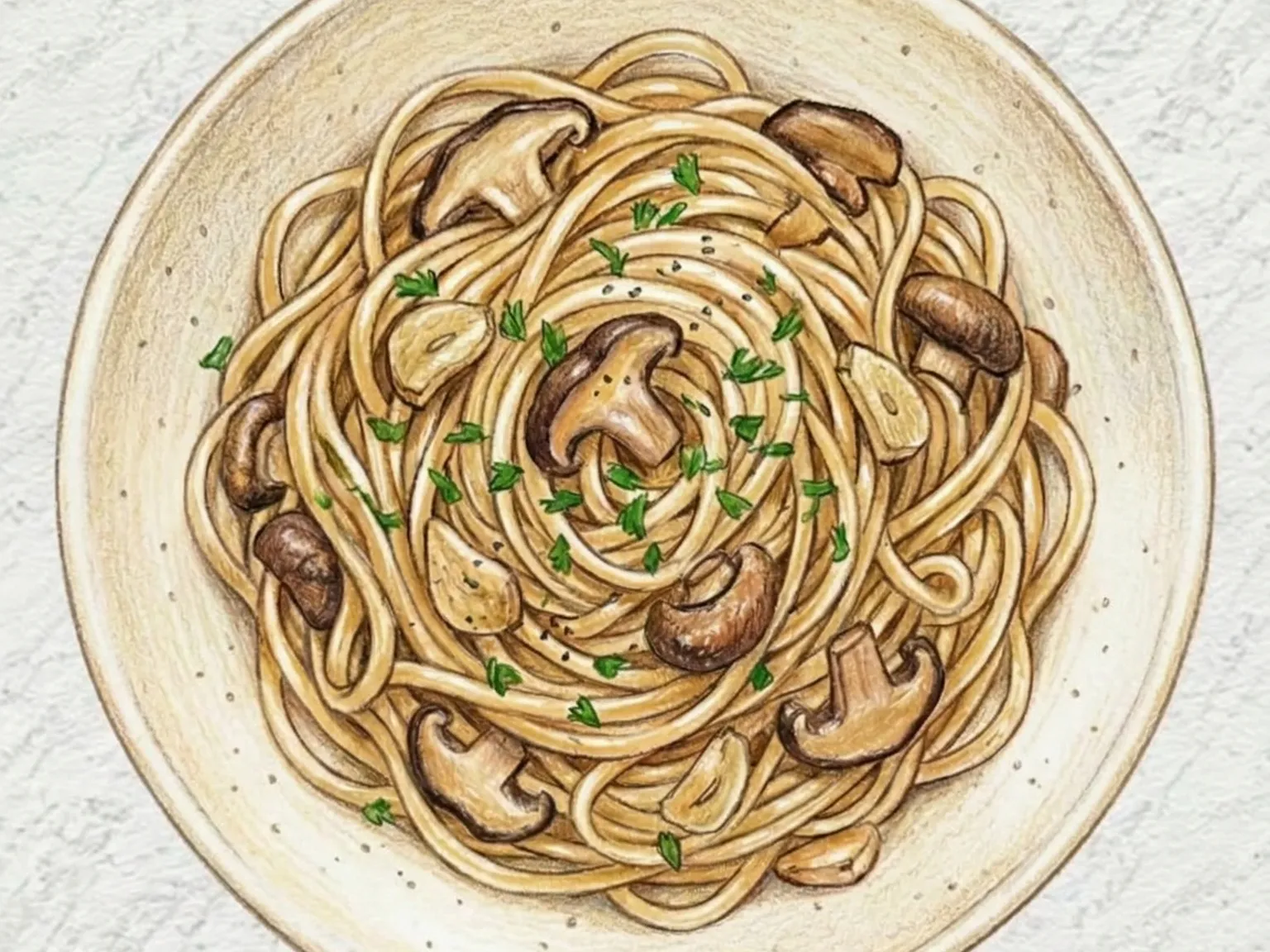
Doenjang Mushroom Butter Linguine
Doenjang mushroom butter linguine starts with garlic sauteed in butter and olive oil, followed by button mushrooms cooked undisturbed on high heat until moisture fully evaporates and the edges brown. Stirring the mushrooms too frequently steams rather than sears them, producing a soft, wet texture instead of the firm, chewy bite that makes this dish work. Doenjang is dissolved in reserved pasta water before being added to the pan, ensuring even distribution of fermented savoriness across every strand without clumping. The butter's fat emulsifies with the starchy pasta water to form a glossy sauce that clings to the noodles rather than pooling at the bottom of the bowl. Sliced green onion added at the finish brings a sharp, grassy note, and grated Parmesan layers additional salt and umami depth into the final dish. One to two minutes of tossing with pasta water adjustment tightens the sauce around each noodle.
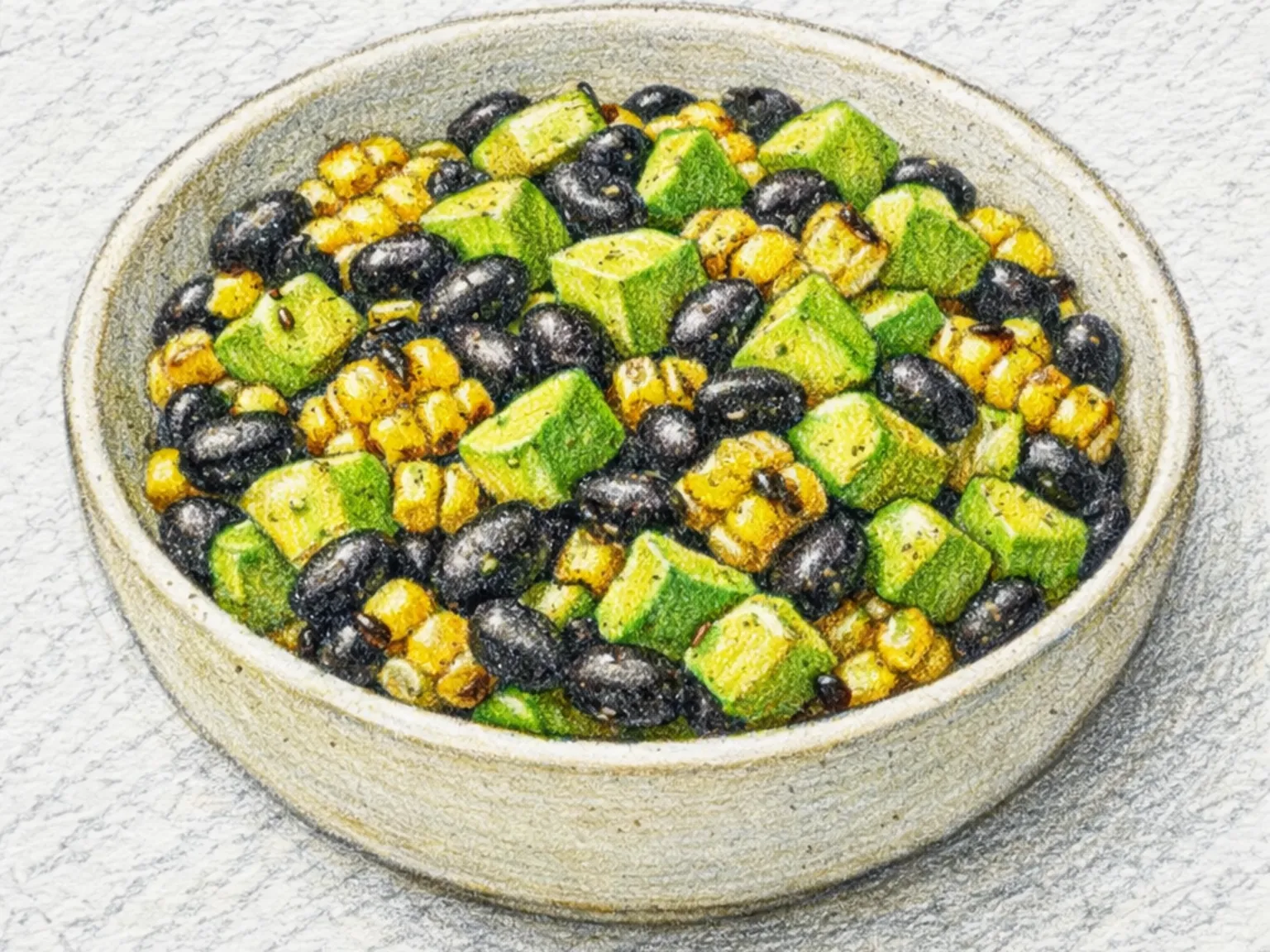
Black Bean Corn Avocado Salad
Black bean corn avocado salad is a Mexican-style bowl that combines cooked black beans, charred sweet corn, and ripe avocado in a lime dressing. Black beans form the starchy, mildly nutty base, while corn charred in a dry pan brings a caramelized sweetness and a burst of texture against the softer ingredients. Ripe avocado contributes a dense creaminess that absorbs the lime's sharp acidity and rounds the dressing's edges. Fresh cilantro scatters a bright herbal note, and ground cumin or chili powder can deepen the spice dimension. The combination delivers plant protein, dietary fiber, and healthy fats in a single bowl substantial enough to serve as a light meal. Tortilla chips on the side turn it into a dip. Because none of the components require hot cooking, the salad can be assembled in minutes from pre-prepared ingredients and keeps well in the refrigerator for a day or two without the avocado browning significantly if dressed just before serving.
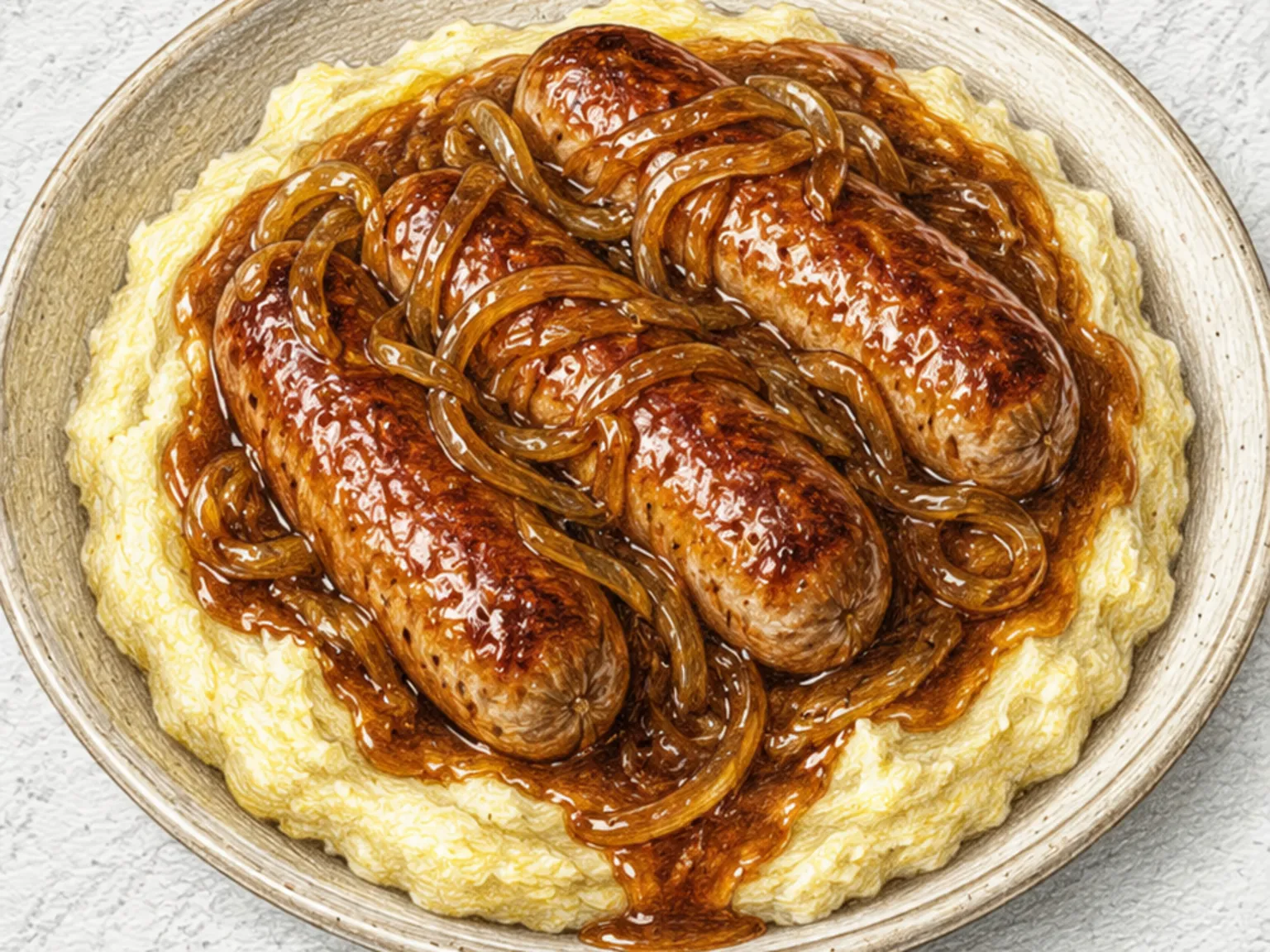
Bangers and Mash
Bangers and mash is a cornerstone of British home cooking, pairing pan-fried pork sausages with creamy butter mashed potatoes under a ladle of slowly built onion gravy. The sausages are cooked until their casings turn a deep brown and develop a slight snap when bitten. Potatoes are boiled until fully tender, then mashed with butter and warm milk to a smooth, uniform consistency. The onion gravy is the element that makes the dish: sliced onions caramelize slowly over low heat until deeply sweet, then beef broth goes in and reduces with a small addition of flour to reach a pourable thickness. That gravy's concentrated savory depth ties together the saltiness of the sausage and the neutral base of the mash in a way that neither component achieves alone. It is one of the most frequently ordered items on British pub menus and straightforward enough to put together in about thirty minutes at home.
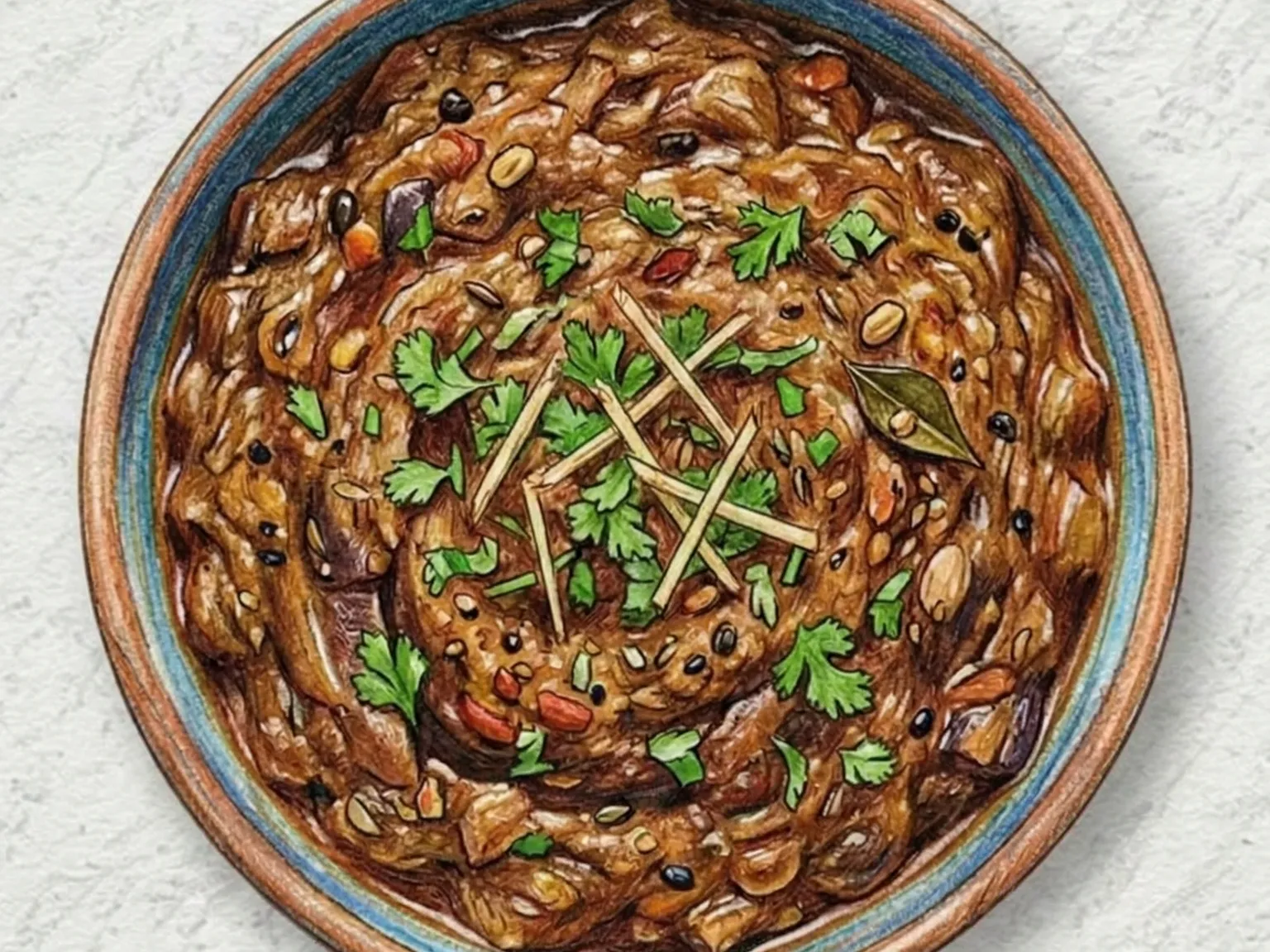
Baingan Bharta (Punjabi Flame-Roasted Smoky Eggplant Mash)
Baingan bharta begins in Punjab, where whole eggplants are held directly over an open flame until the skin chars completely black and the interior collapses into a smoky, yielding pulp. That charring is not incidental but constitutive: the campfire depth it creates cannot be replicated in an oven or air fryer because the contact with live flame drives pyrolysis compounds deep into the flesh. Once the blackened skin is peeled away, the pulp is roughly mashed and then cooked down with onion, tomato, green chili, and ginger over high heat until every trace of moisture has burned off. The aggressive heat softens the sharp edges of the aromatics while pressing them into the eggplant, and the result is layered rather than uniform. Texture is deliberately coarse: the mash should retain visible chunks and pockets of charred skin that punctuate each bite with a pleasantly bitter contrast. This roughness reflects the dish's origin in the farmhouse kitchens of rural Punjab, where eggplants were pulled straight from clay pots over wood fires. The traditional winter pairing with makki ki roti remains the most honest frame for what the dish is.
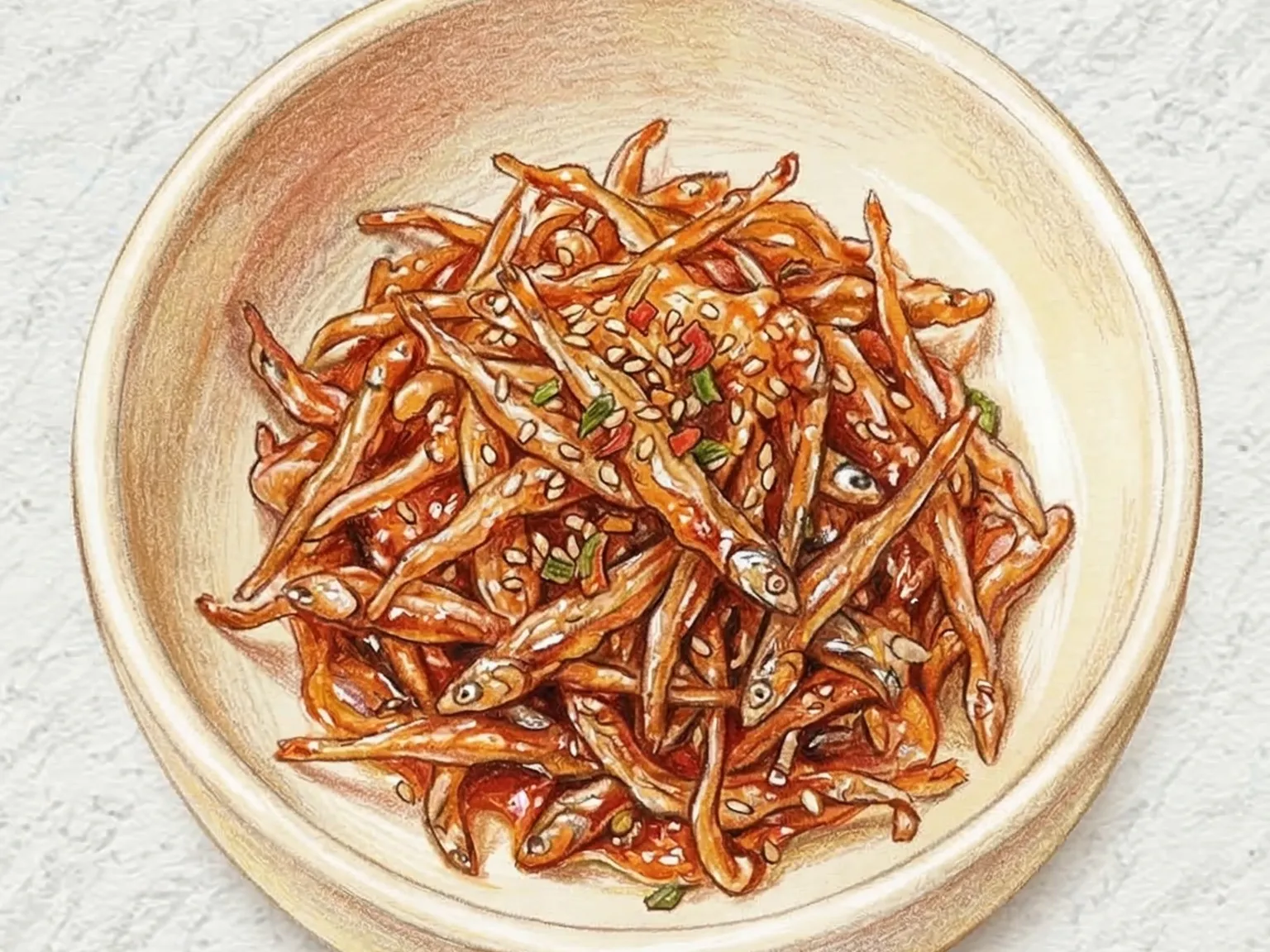
Korean Stir-fried Dried Whitebait Sheet
Dried whitebait sheets - paper-thin, salted, and faintly briny - are a Korean pantry staple for quick, long-lasting banchan. The sheets are torn into pieces and dry-toasted over low heat first to drive off residual moisture completely, a step that determines the final texture. Once the sheets are fully dried and just starting to crisp, a glaze of gochujang, soy sauce, oligosaccharide syrup, and sugar is added to the pan and coats both sides. The heat must be cut immediately after coating so the pieces do not harden beyond a pleasant crunch. Oligosaccharide syrup forms a thin glossy finish on the surface as it heats. The taste is salty-sweet with a fermented chili edge, and the texture firms further as the dish cools - one of the rare banchan that actually improves at room temperature. Refrigerated, it keeps for over a week.
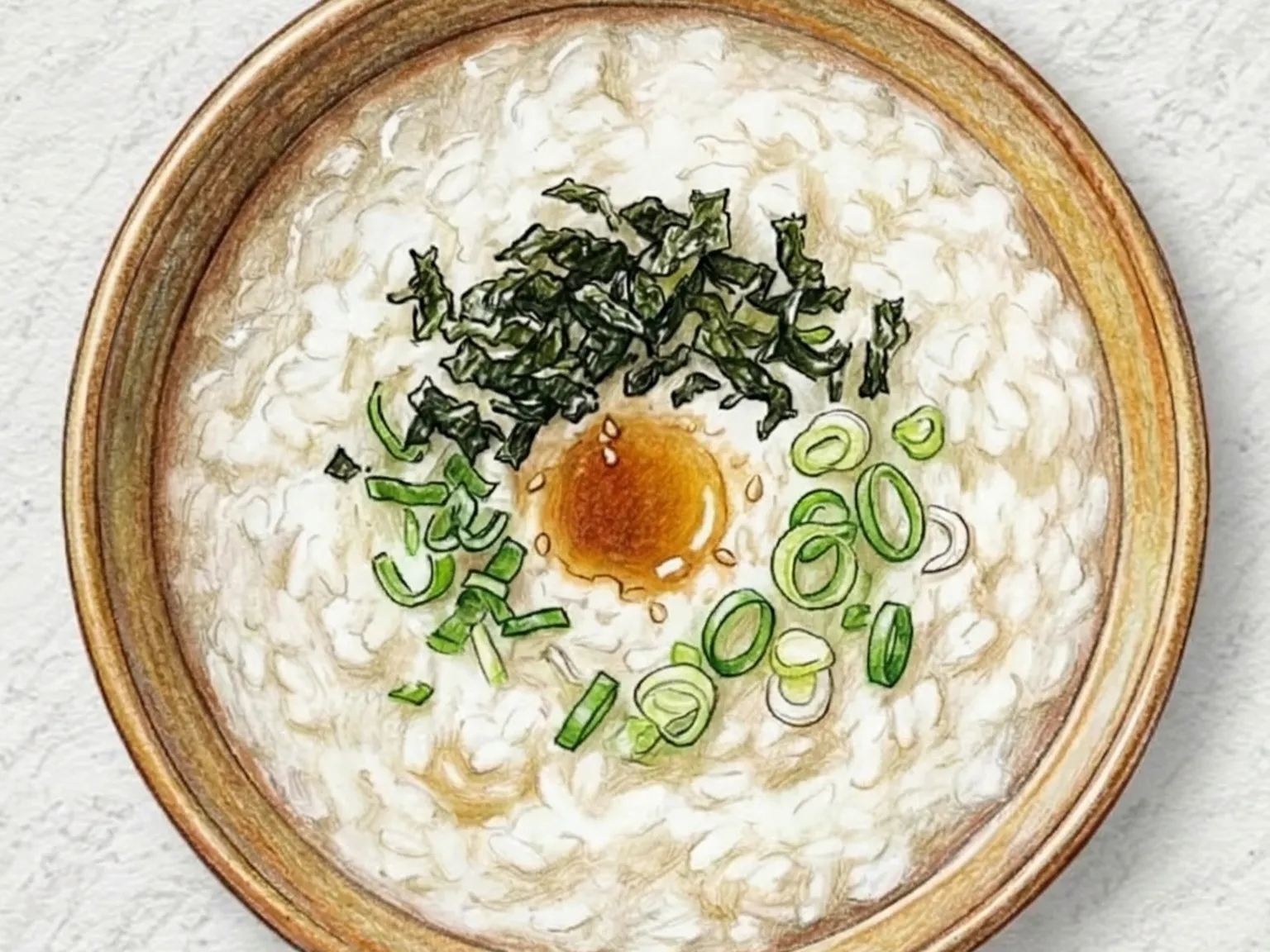
Plain Korean Rice Porridge
Baekjuk is the most fundamental Korean porridge, made with nothing more than soaked rice and water cooked together over a long, slow heat. Toasting the rice in sesame oil before adding liquid coats each grain in a thin fat layer that slows starch release, preventing the porridge from turning excessively glutinous while laying down a nutty, roasted aroma as the foundation of the dish. Water is added at six to seven times the volume of rice, brought to a boil, then reduced to the lowest heat and stirred continuously for at least thirty minutes. Over that time the grains break down entirely into a smooth, pourable consistency. Regular scraping with a wooden spatula is not optional - without it, the bottom scorches and changes both the taste and color of the porridge. Seasoning is held to a minimum of salt alone to let the natural sweetness of the rice come through, with shredded dried seaweed and sliced scallion placed on top for small bursts of contrast. A single drop of sesame oil added just before serving closes the dish with a clean, nutty fragrance. The porridge has long been used as a recovery meal for unsettled stomachs and low appetite, and it pairs easily with nearly any Korean side dish to become a complete meal.
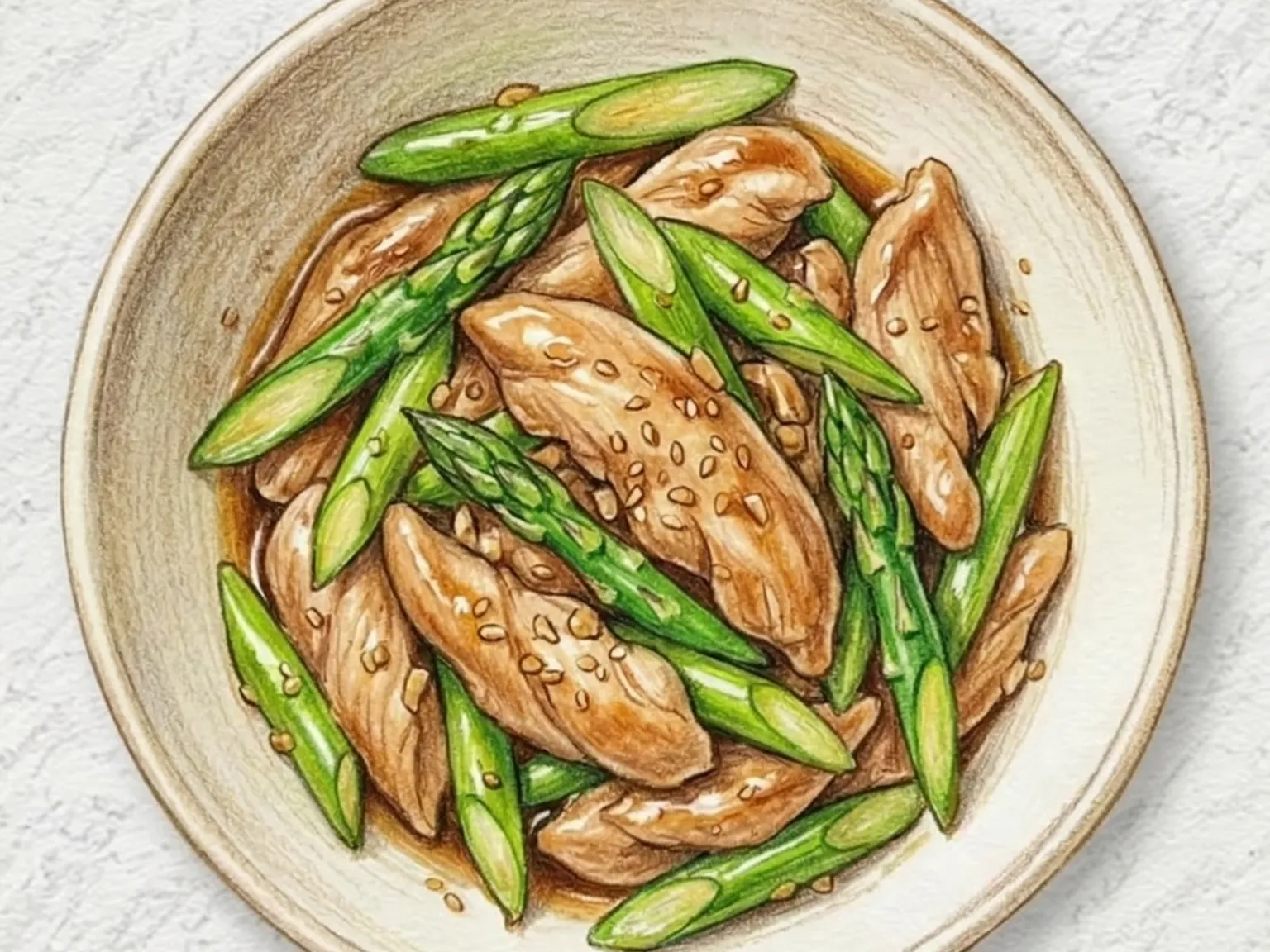
Korean Aseuparageoseu Dak Ganjang Bokkeum (Asparagus Soy Chicken Stir-fry)
This Korean stir-fry brings together chicken tenderloin and asparagus in a soy-based glaze - a modern home-cooking dish from the past few decades, when asparagus began appearing regularly in Korean kitchens. The chicken is sliced thin against the grain and marinated briefly in soy sauce, garlic, and sesame oil so it stays moist through the fast, high-heat stir-fry. Asparagus is cut on a sharp diagonal to maximize surface area for the glaze to adhere to, and the woody ends are snapped off by hand at their natural breaking point rather than cut with a knife. High heat is non-negotiable: the chicken sears quickly without weeping moisture, and the asparagus keeps its vivid green color and firm snap. A finishing glaze of soy sauce, sugar, and oyster sauce caramelizes lightly in the pan, forming a thin, glossy coat over every piece. The dish is deliberately restrained - clean soy saltiness and the grassy freshness of the vegetable take the lead, without the heavy, chili-forward weight of a gochujang-based sauce. It works equally well as a rice side or a light standalone meal.
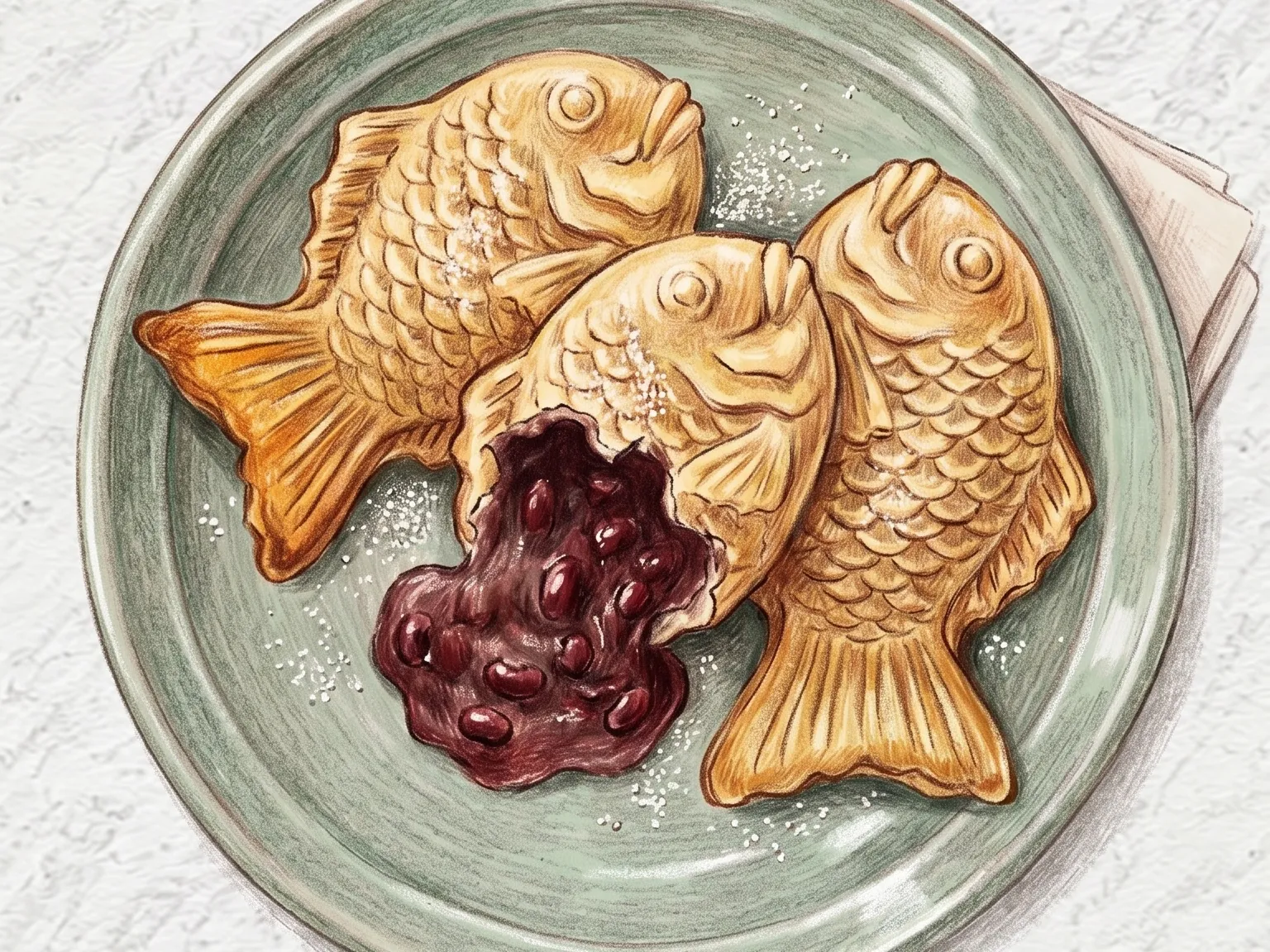
Korean Fish-Shaped Bread (Sweet Red Bean Filled Wheat Waffle)
Bungeoppang is a Korean fish-shaped pastry made by filling a heated iron mold with wheat batter and sweet red bean paste. The preheated mold creates a thin, crisp shell on the outside while the interior bakes into soft, pillowy dough cradling the dense, smooth bean filling. The red bean paste has a thick consistency that flows slowly when bitten into, delivering a concentrated sweetness. The tail section bakes crispiest because the batter layer is thinnest there, while the belly holds the largest pocket of filling - giving each part of the fish a distinct texture. A staple of Korean winter street stalls, it is eaten hot, straight from the mold.
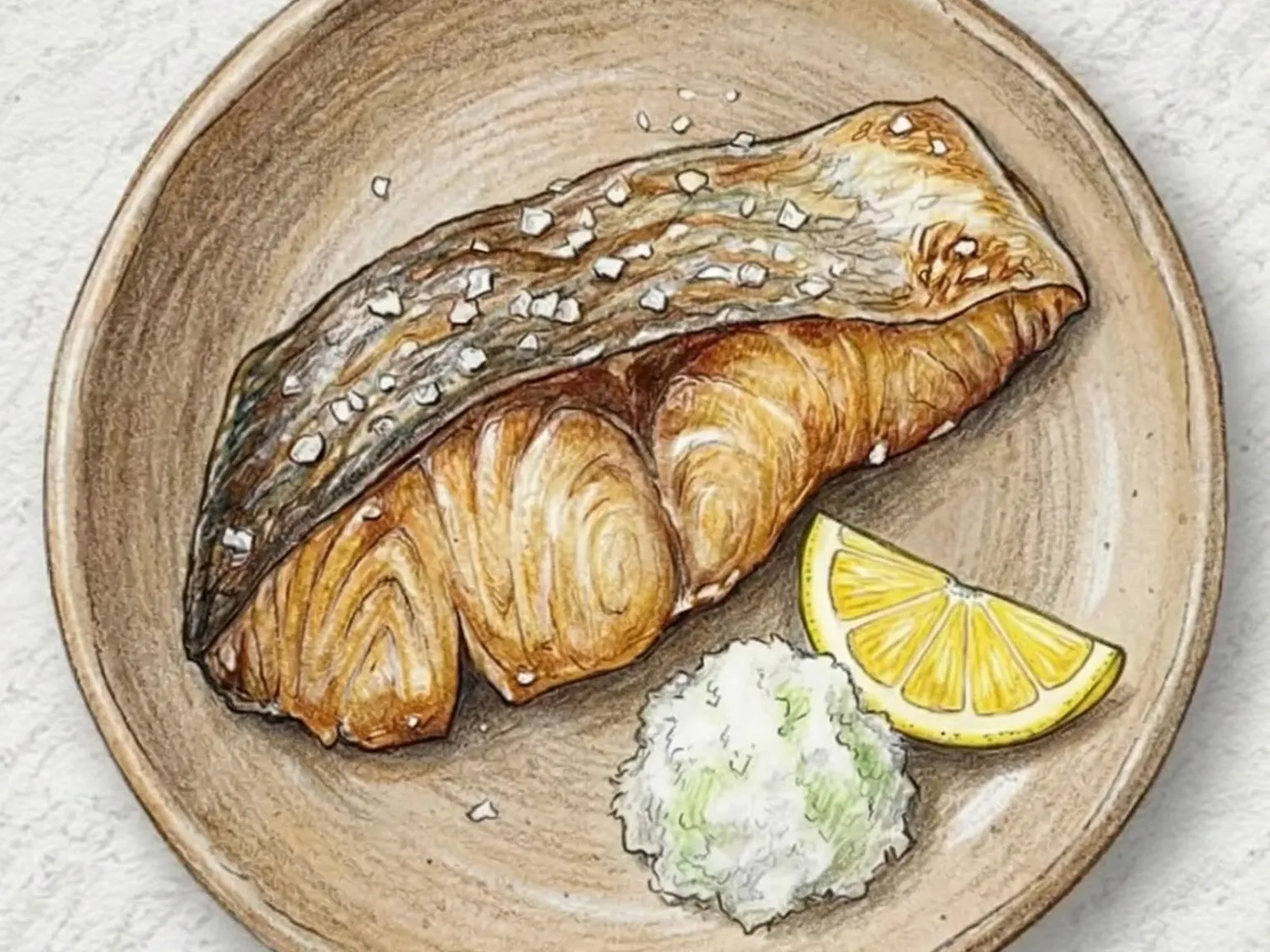
Korean Grilled Yellowtail
Bangeo-gui is a Korean salt-grilled yellowtail that relies on the fish's own winter fat for flavor rather than elaborate seasoning. Yellowtail caught in the cold months develops a thick fat layer under the skin, making coarse salt alone sufficient to bring out the natural richness. Patting the surface completely dry before grilling is essential because any moisture prevents the skin from crisping. The skin side goes down on a medium-heat pan, pressed for six to seven minutes until it turns brittle and golden as the fat renders. Flipping too often breaks the flesh apart, so the rule is to wait until one side is fully done before turning once. Grated fresh daikon and a wedge of lemon served on the side cut through the oiliness with sharp, clean acidity.
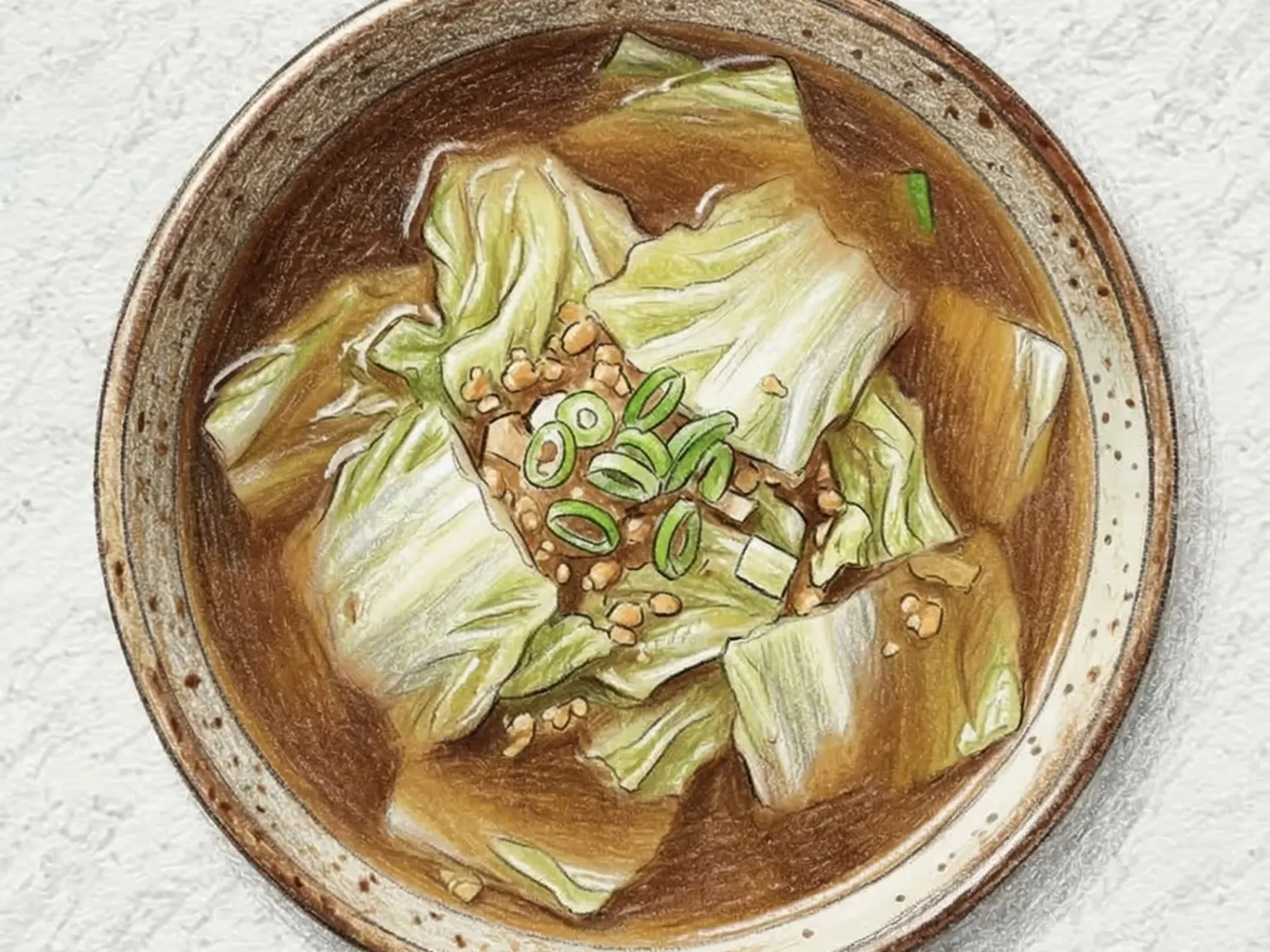
Korean Napa Cabbage Doenjang Soup
Baechu doenjang guk is a foundational Korean soup built on anchovy-kelp stock seasoned with fermented soybean paste and napa cabbage. Straining the doenjang through a fine sieve as it dissolves into the hot stock keeps the broth visually clear while extracting the full depth of its fermented, earthy flavor. The cabbage stalks go into the pot first and simmer for five minutes alone, drawing out their inherent sweetness before the leaf sections and cubed tofu are added. A small spoonful of gochujang introduced at this point gives the broth a gentle heat and a reddish cast that adds both visual contrast and flavor complexity beyond doenjang alone. Sliced cheongyang chili and scallion are stirred in during the final two minutes, contributing sharpness and aroma without turning limp. Doenjang saltiness varies significantly between brands and aged batches, so starting with a conservative amount and adjusting by taste prevents over-salting. As the cabbage softens fully, its natural sweetness seeps gradually into the broth, where it finds a natural balance with the deep fermented character of the paste. It is among the most accessible soups in Korean home cooking, requiring only the most common pantry and refrigerator ingredients.
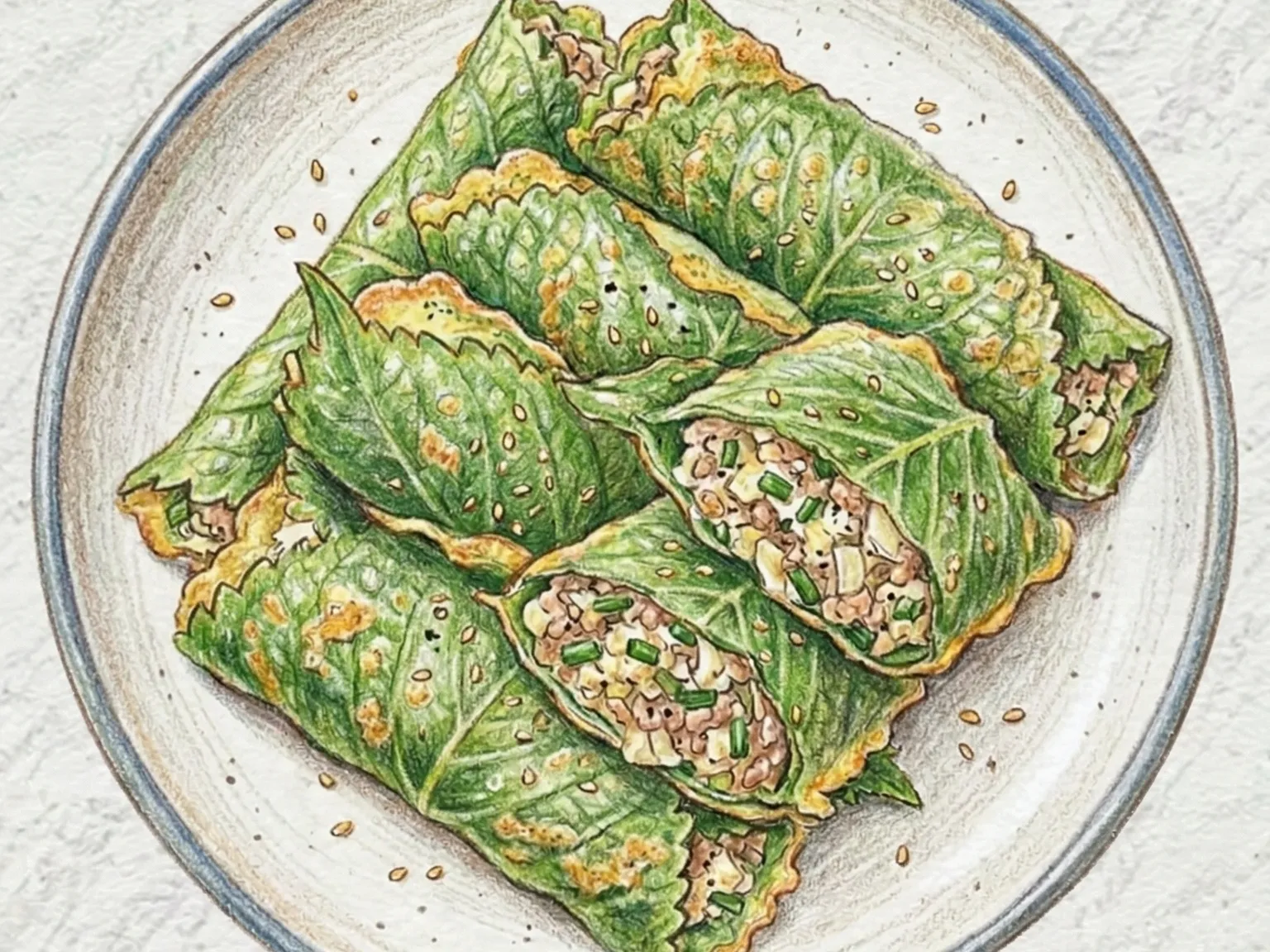
Korean Stuffed Perilla Leaf Pancakes
Kkae-ip-jeon are pan-fried perilla leaf parcels stuffed with a filling of ground pork and firm tofu, coated in flour and egg. The tofu must be squeezed dry in a cloth before mixing; excess moisture causes the filling to spread and stick to the pan. Garlic chives and onion add crunch and fragrance to the mix, and the filling seasoned with soy sauce and black pepper pairs cleanly with the perilla's strong herbal character. Dusting with flour first, then dipping in egg, produces an even coating, and frying covered over medium-low heat for two minutes per side ensures the filling is cooked through to the center. The bite-sized pieces work well as a packed lunch side or as bar food.
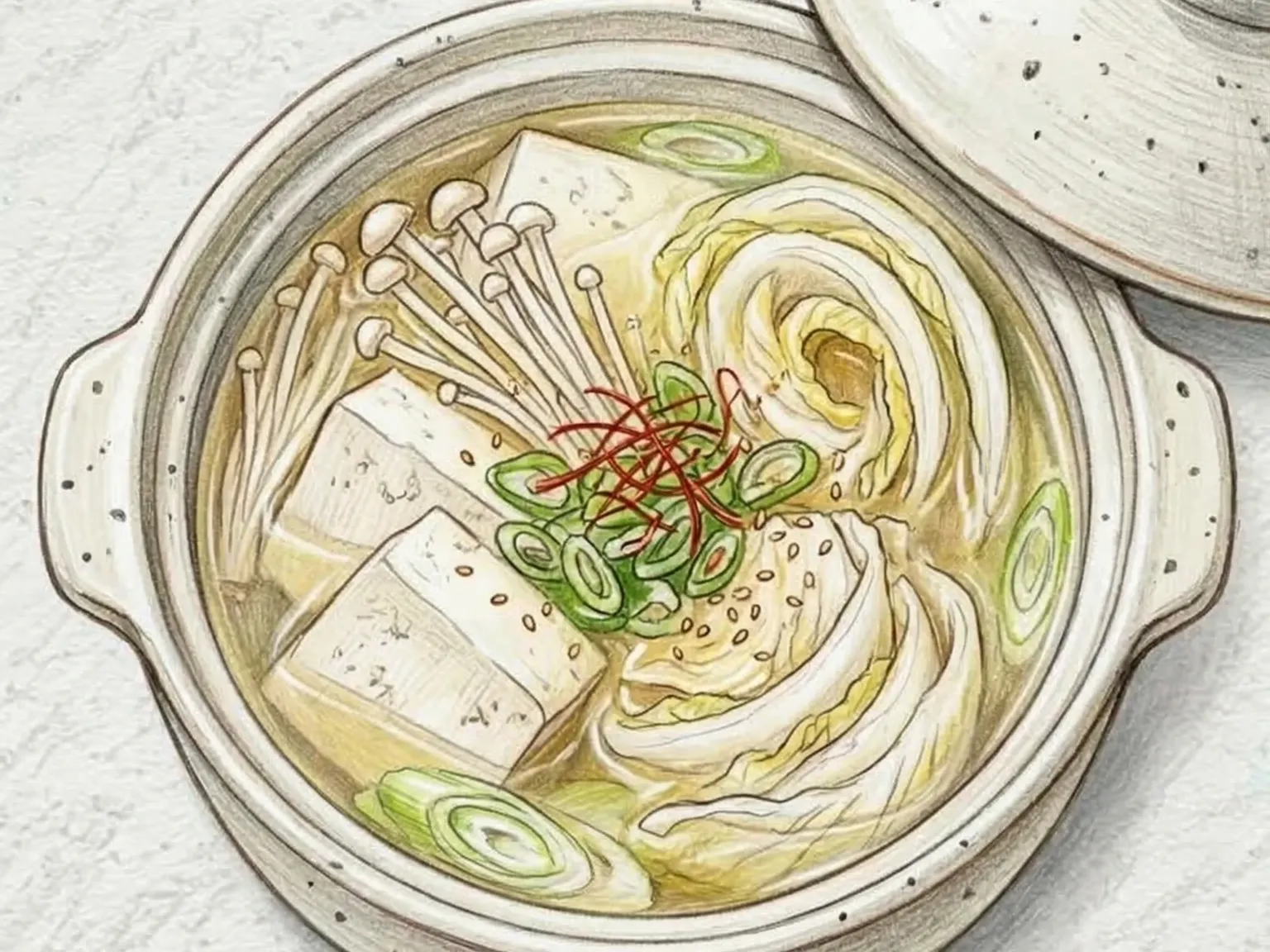
Korean White Kimchi Tofu Stew
Baek kimchi dubu jjigae is a mild Korean stew where the gentle tang of white kimchi takes the place of regular red kimchi as the flavor anchor. Anchovy-kelp stock forms the umami foundation, and finely chopped white kimchi is added so its lactic fermentation acidity gradually dissolves into the broth, creating a refreshingly clean and clear flavor that diverges sharply from the bold heat of standard kimchi jjigae or the earthy weight of doenjang jjigae. Thick tofu slabs are added after the broth comes to a full boil so the blocks hold together rather than crumbling, and enoki mushrooms go in during the final two minutes to preserve their delicate texture. Guk-ganjang adjusts the salinity carefully, since the white kimchi itself already carries a noticeable saltiness from the brining process. Adding a sliced cheongyang chili introduces a measured spicy note into the otherwise gentle broth without overwhelming its clean character. Unlike the intense, opaque red broth of standard kimchi jjigae, this version stays transparent, lightly tart, and nearly fat-free, making it noticeably easy on the stomach. White kimchi is fermented without gochugaru, preserving all the lactic sourness while eliminating the heat and pigment, which makes it particularly well suited as a braising base for delicate ingredients like tofu and enoki.
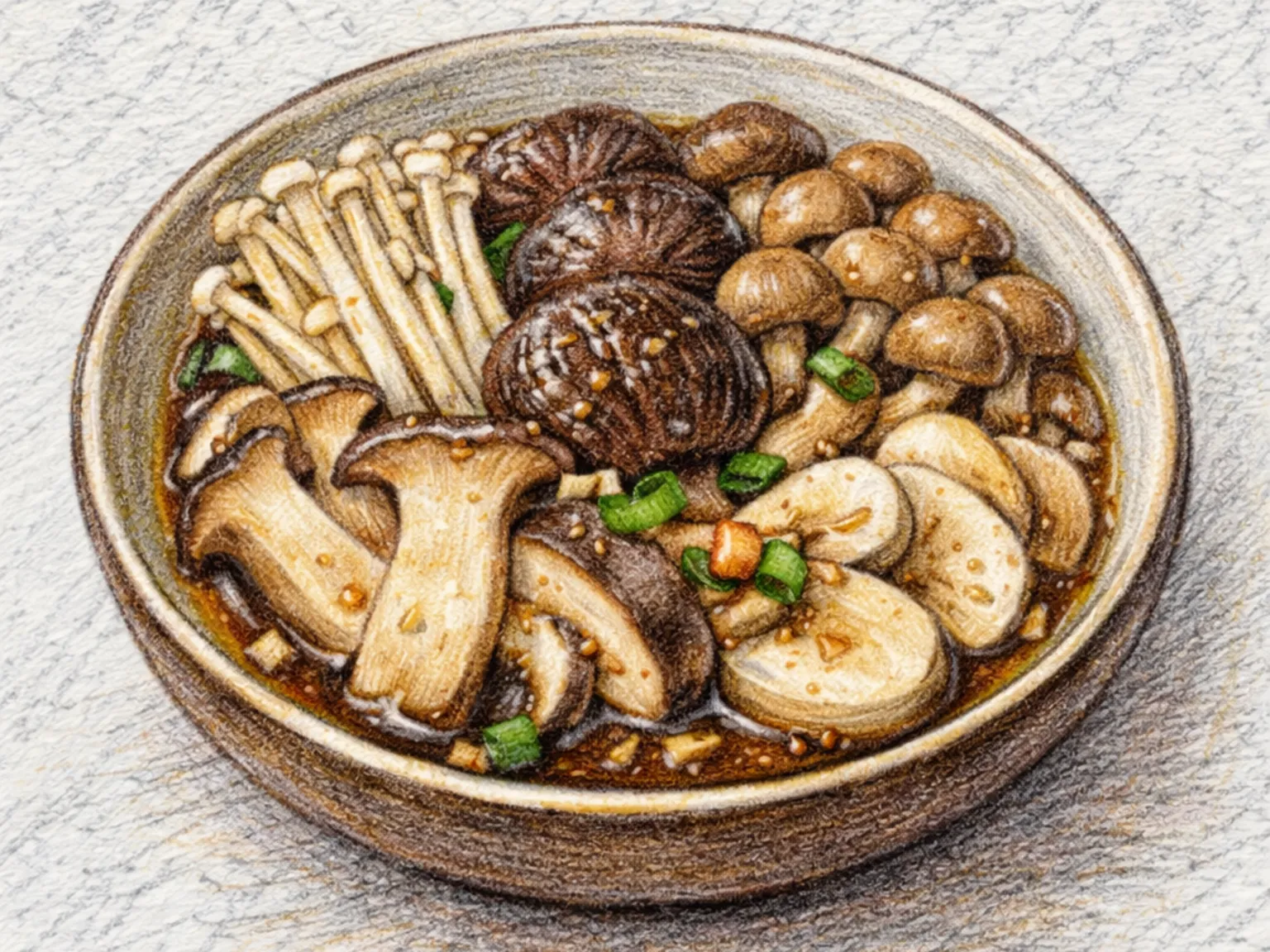
Korean Steamed Mixed Mushrooms
Oyster, shiitake, and enoki mushrooms are steamed in a soy sauce and garlic seasoning. Oyster mushrooms should be torn by hand along the grain so the rough surface absorbs the seasoning, and shiitake caps should be sliced thick after removing the stems to preserve their dense bite even after steaming. Enoki are trimmed at the base and loosened before going in. Sesame oil is added immediately after steaming, before the mushroom moisture evaporates, so the nutty aroma coats the surface properly. Because the three varieties have different densities and thicknesses, steaming time should stay within ten minutes to prevent the enoki from going limp.
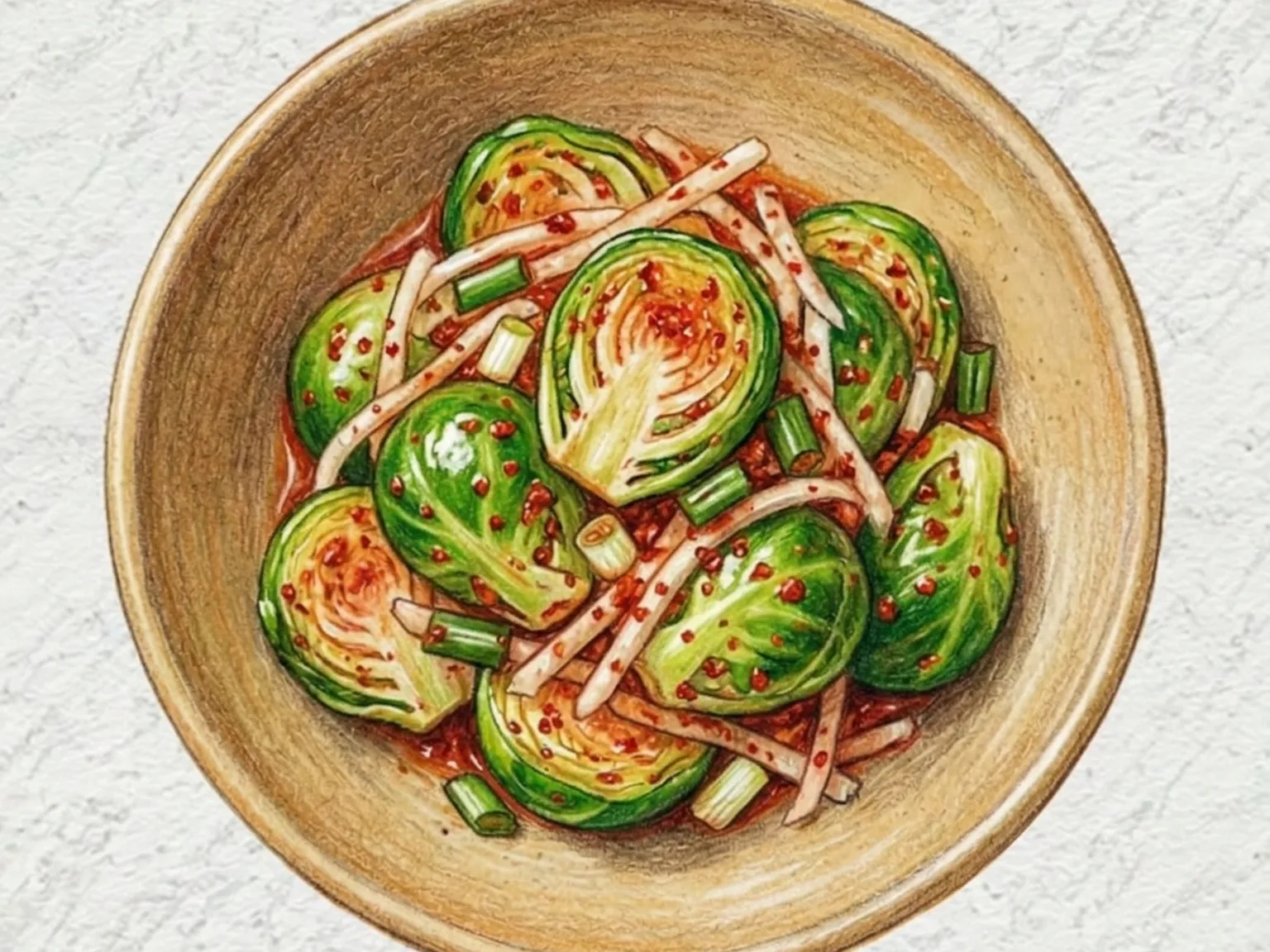
Korean Bangwool Yangbaechu Kimchi (Brussels Sprout Kimchi)
Bangwool yangbaechu kimchi is a creative Korean kimchi made from halved Brussels sprouts, brined in salt and dressed with gochugaru, fish sauce, garlic, and apple. Brussels sprouts are denser than napa cabbage and hold their structure after salting, giving each bite a firm crunch that releases a natural sweetness as you chew. The combination of fish sauce and gochugaru builds a spicy-salty depth, while grated apple introduces a fruit sweetness that softens the chili heat without masking it. Scallions contribute a fresh note throughout. Because the sprouts are compact and less watery than cabbage, the kimchi ferments more slowly and stays crisp longer. It can be eaten right away as a fresh kimchi, or left to ferment for several days as the flavors deepen. In season from autumn through early spring, this kimchi suits both traditional Korean meals and modern brunch spreads.
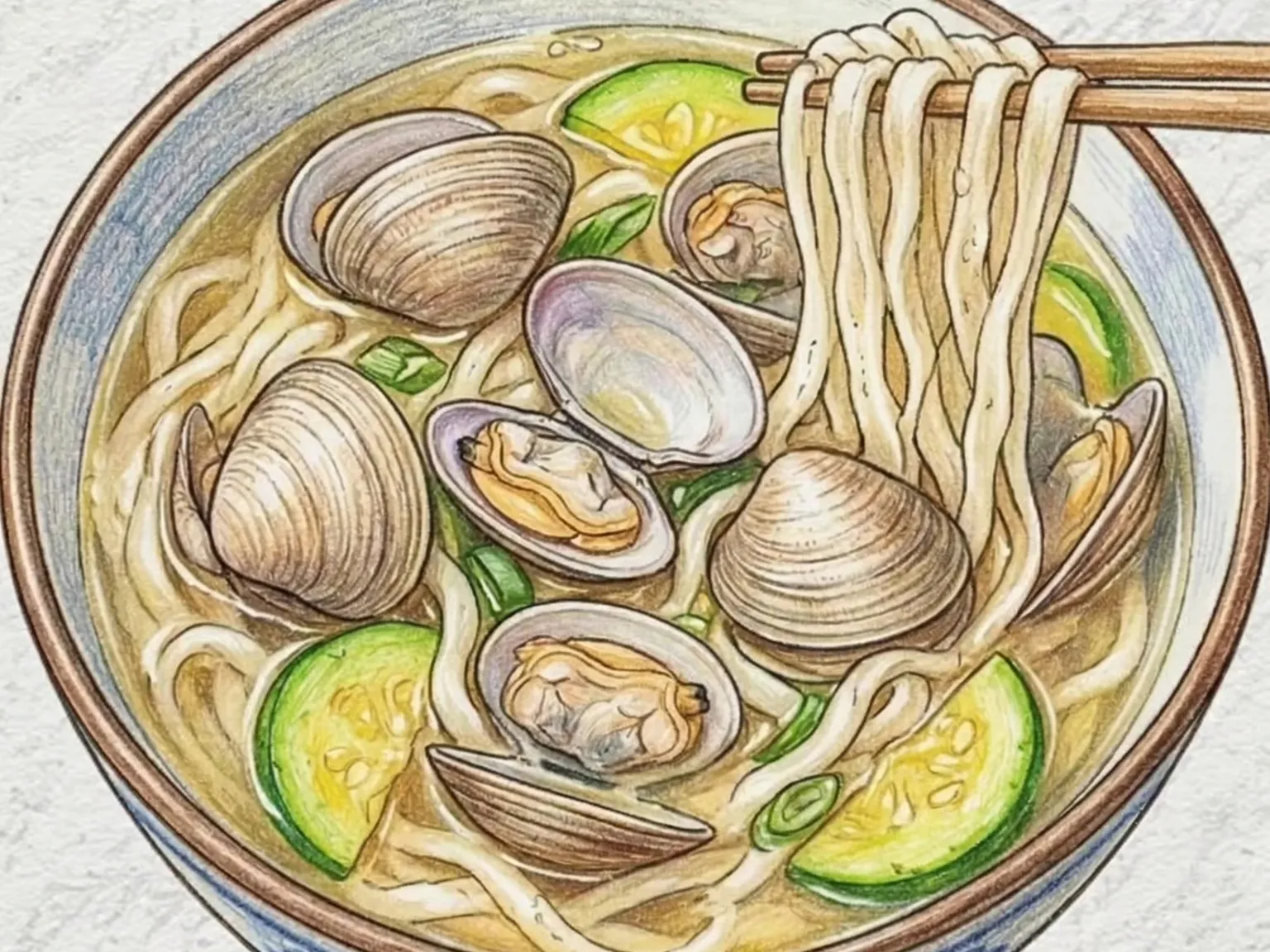
Korean Manila Clam Knife-Cut Noodle Soup
Bajirak kalguksu is a prominent Korean noodle dish that consists of wheat noodles prepared by hand and cooked in a broth made from manila clams. The process begins with the preparation of the clams, which are soaked in cold water for at least one hour. This purging stage is necessary to ensure that the clams expel any internal sand or debris before they are boiled. Once cleaned, the clams are placed in fresh water and boiled until their shells open fully. The shells are then discarded, and the resulting stock is strained through a fine cloth to remove every remaining particle of grit. This meticulous straining produces a clear broth where the natural oceanic flavor of the clams remains the primary focus. The salinity of this base is mineral and clean, which distinguishes it from the flavor profile of dashi made with dried and concentrated anchovies. Sliced Korean zucchini and scallions are added to the strained broth and allowed to simmer for five minutes. These vegetables contribute a mild sweetness that helps to soften the natural saltiness of the clam extract. When the hand-cut noodles are added to the boiling liquid, they release starch as they cook. This starch gradually transforms the consistency of the broth, making it slightly thick and viscous so that it adheres to the individual noodle strands. This specific change in texture is what separates kalguksu from other varieties of Korean noodle soup. The noodles are boiled for six to seven minutes until they become translucent, after which the reserved clam meat is returned to the pot. Seasoning with soup soy sauce is performed with caution because the clam stock already contains a high level of natural salinity. Adding an excessive amount of soy sauce can easily mask the delicate marine qualities that define the dish. The overall concentration of the broth is a direct result of the quantity of clams used and the length of the simmering process. If a more assertive flavor profile is preferred, the number of clams used in the initial stage should be increased rather than adding more external seasoning.
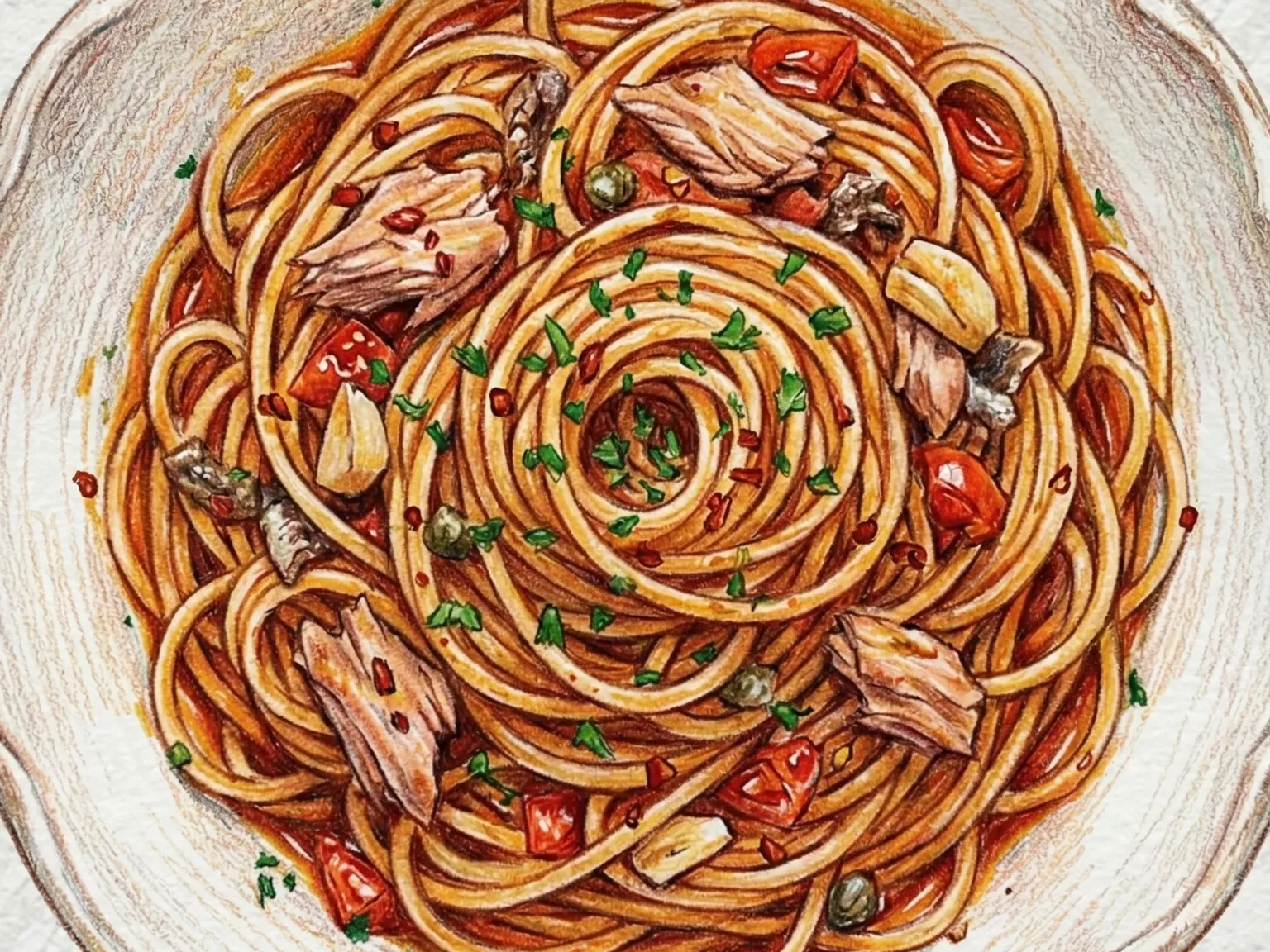
Gochu Oil Tuna Puttanesca Spaghetti
The foundation of this Gochu oil tuna puttanesca spaghetti is established by integrating the olive oil reserved from a can of tuna with a secondary portion of chili oil. This combined oil serves as the medium for sautéing sliced garlic and whole anchovy fillets over a consistently low heat. The process continues until the anchovies have fully dissolved into the warm fat, a step that allows their natural saltiness to permeate the base while eliminating any lingering traces of fishiness. Crushed tomatoes are then introduced to the pan and left to simmer for six minutes over medium heat. This period of simmering reduces the liquid content, which in turn concentrates the flavors and makes the natural acidity of the tomatoes more prominent. After this reduction, capers and black olives are added to provide distinct layers of brine and a characteristic hint of bitterness to the mixture. The solid pieces of tuna are folded in during the final two minutes of cooking. This short duration ensures that the tuna maintains its structure and provides a firm texture instead of disintegrating into the liquid. The cooked spaghetti and a small quantity of starchy pasta water are then combined with the sauce over high heat. This rapid tossing emulsifies the fats and liquids into a glossy coating that adheres uniformly to every surface of the pasta. To finish the dish, a handful of chopped parsley is scattered on top to introduce a fresh herbal quality that lightens the dense and salty profile of the sauce. Red chili flakes can be included at any stage of the process to allow for the precise adjustment of heat levels.
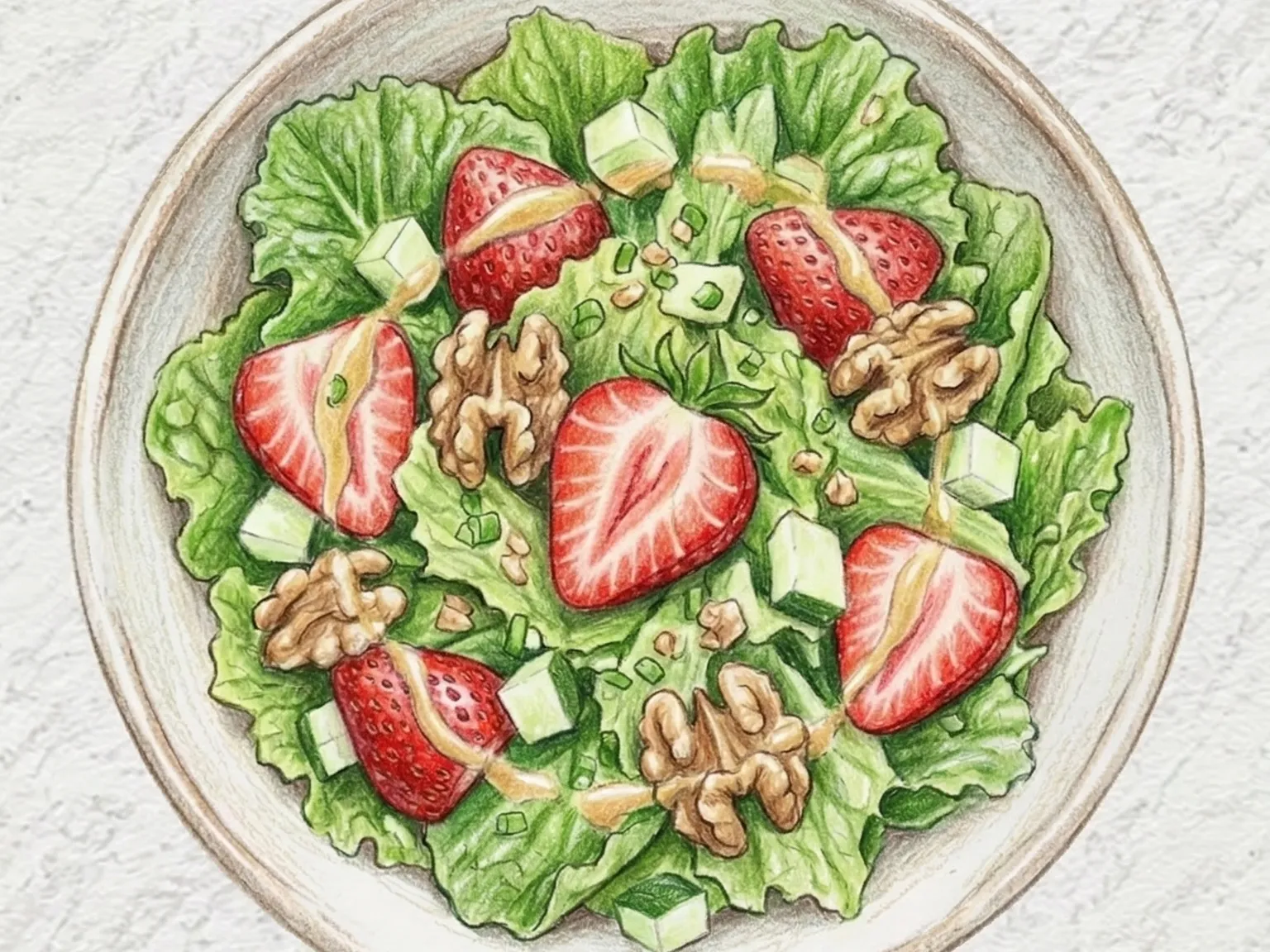
Bomdong Strawberry Doenjang Salad
Bomdong strawberry doenjang salad combines the crisp leaves of early spring bomdong cabbage with the fruity sweetness of strawberries and the fermented depth of Korean soybean paste. The dressing, built by whisking doenjang with olive oil and vinegar, adds savory richness to the mild bomdong leaves, while the natural acidity of the strawberries neutralizes the saltiness of the paste and brings brightness to every bite. Walnuts introduce crunch and nuttiness, creating textural contrast among the softer components, and cucumber adds moisture that keeps the salad refreshing throughout. Dressing the salad too early draws water from the strawberries, so adding the dressing immediately before serving is essential for maintaining the right texture. Tearing the bomdong by hand rather than cutting it preserves its natural shape without bruising the leaves. The saltiness of doenjang varies between brands, so adding the dressing gradually and tasting as you go prevents overseasoning. Swapping strawberries for blueberries or mandarin segments adapts the salad to other seasons while keeping the doenjang dressing intact. Toasted almond slices or sunflower seeds make a good substitute for walnuts when a lighter crunch is preferred.

Classic Beef Burger
A classic beef burger shapes seasoned ground beef into a thick patty and sears it over high heat until a deep brown crust forms on the outside while the interior stays juicy. The Maillard reaction on the hot surface concentrates the beef flavor into that crust, and a slice of cheddar melted on top adds a salty, creamy layer. Crisp lettuce and a thick tomato slice bring moisture and freshness, while pickle slices cut through the richness with vinegar acidity. A brioche bun absorbs the rendered juices and condiments without falling apart, holding the stack together so every bite delivers all the components at once.
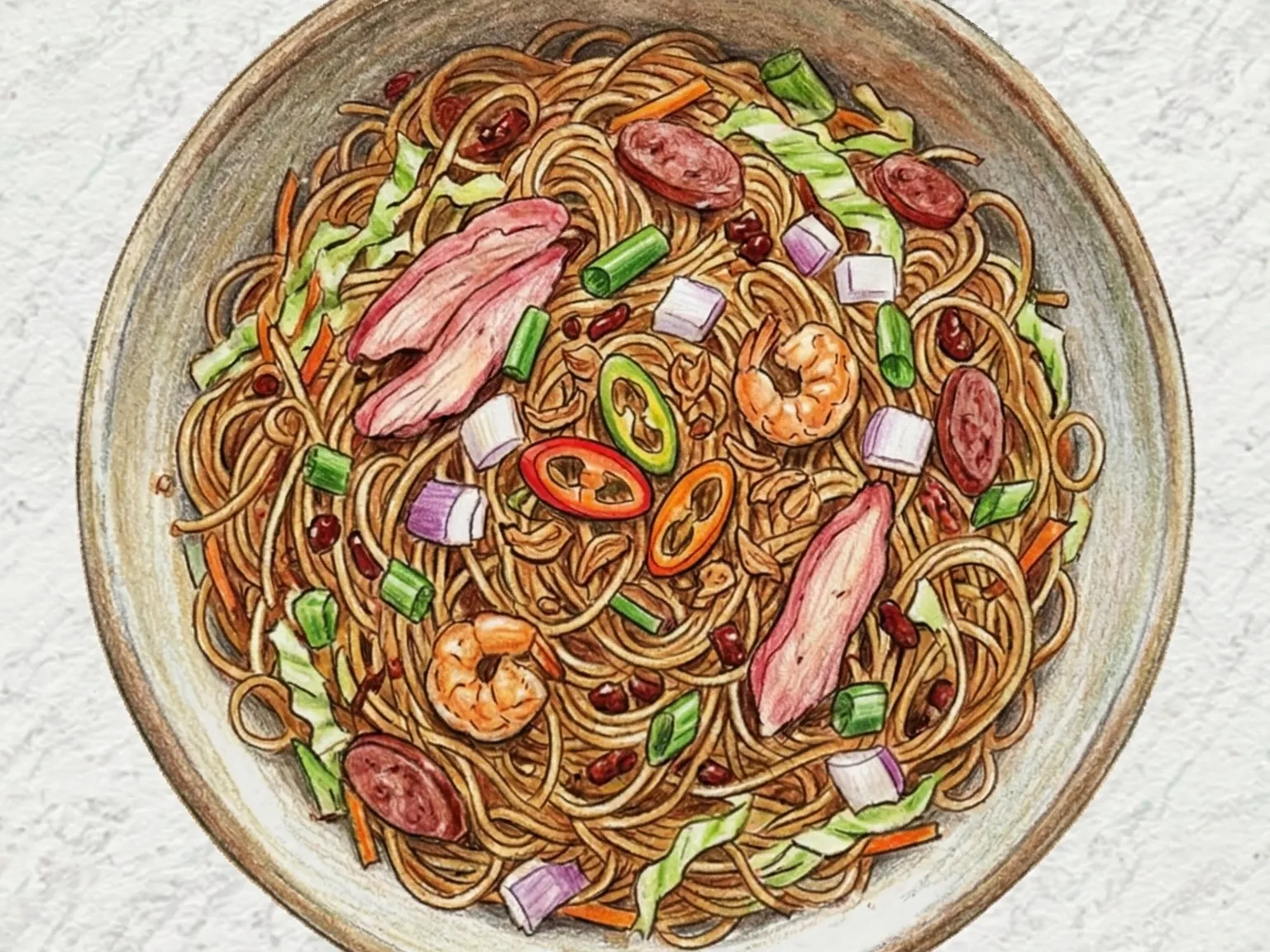
Bihun Goreng (Indonesian Stir-Fried Rice Vermicelli with Sweet Soy)
Bihun goreng is fried rice vermicelli sold at street stalls and warung throughout Indonesia and Malaysia from early morning through midnight. Thin rice noodles soaked just until pliable go into a wok heated until it smokes, alongside garlic, shallots, and a generous spoonful of sambal that sizzles the moment it hits the surface. Kecap manis, the thick Indonesian sweet soy sauce, caramelizes rapidly against the hot metal and wraps each strand in a dark, sticky glaze that is the defining characteristic of the dish. Cabbage, bean sprouts, and sliced carrot are added quickly so they retain their crunch against the softness of the noodles. The technique requires constant lifting and turning to prevent the noodles from breaking or clumping while they absorb the sauce. A fried egg laid on top, its edges lacy from being cooked in very hot oil, is the standard finish. The flavor of bihun goreng rests on four layers stacked one over another: the sweetness of kecap manis, the smokiness from the wok, the heat of the sambal, and the salt of a dash of fish sauce added at the end. The ratio shifts from vendor to vendor but the underlying structure holds across regions.
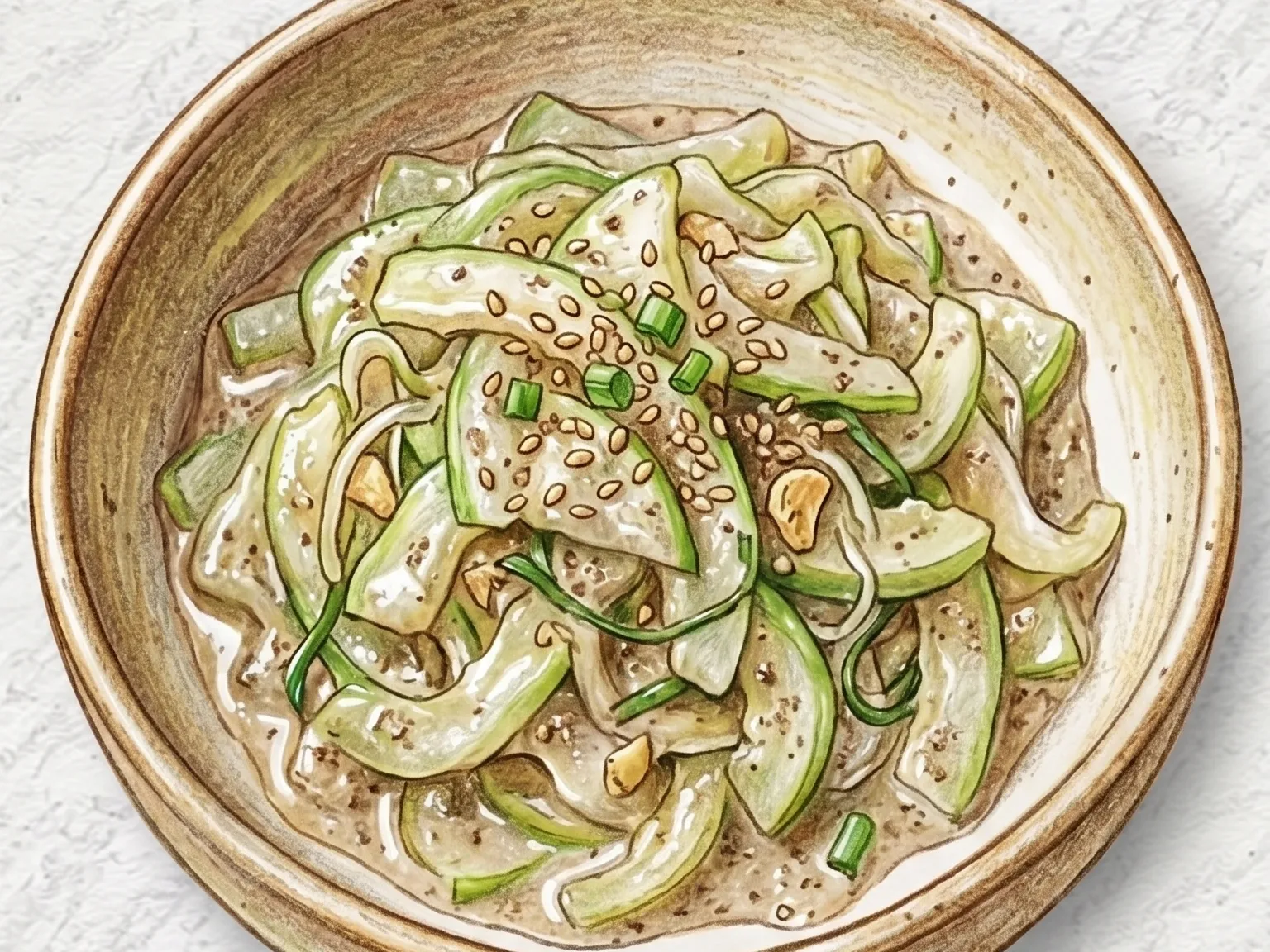
Korean Stir-fried Bottle Gourd Namul
Bottle gourd - bak - is a summer vegetable Koreans have stir-fried as namul for centuries. Peeled, seeded, and sliced thin, it is salted briefly to draw out excess moisture before cooking. Garlic and green onion go into the pan first to build a fragrant base, then the gourd is added and cooked with a small splash of water that steams the slices until they turn nearly translucent, releasing a clean, melon-like sweetness. Ground perilla seed stirred in at the end thickens the remaining liquid into a nutty glaze that clings to each piece. The result is a mild, lightly savory namul that makes plain rice disappear on the hottest summer days.
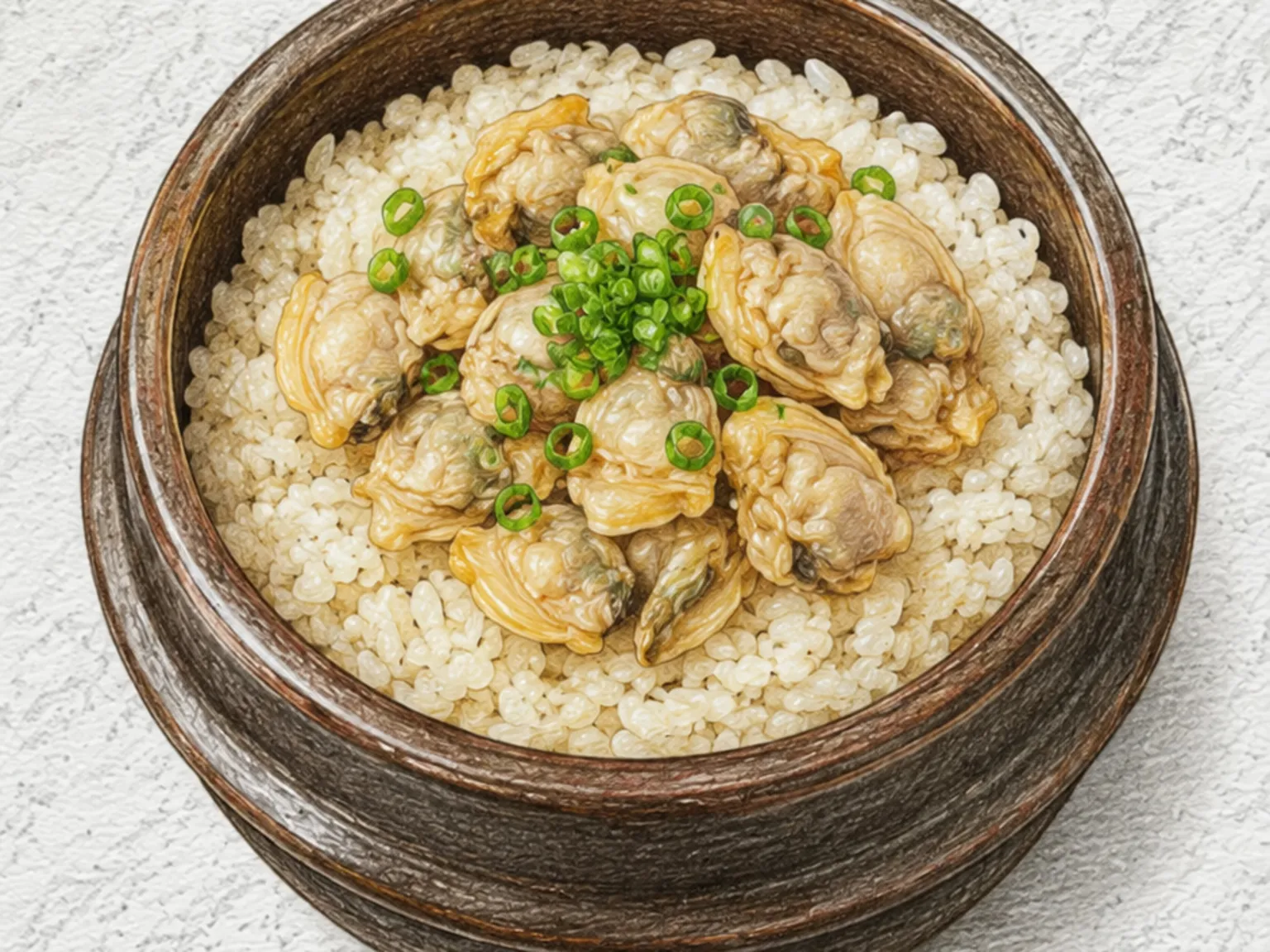
Korean Clam Pot Rice (Savory Clam Broth Cooked Rice Bowl)
Bajirak sotbap is a Korean pot rice where every grain is cooked in clam broth and topped with shucked clam meat just before serving. Purged clams are simmered with a piece of dried kelp until they open, then removed and shucked while the broth is strained through a fine sieve. The kelp contributes glutamic acid that reinforces the clam's natural umami, producing a cooking liquid with a depth that plain water cannot provide. This clam stock infuses every grain of rice as it cooks, embedding a marine character throughout. The rice, soaked for at least thirty minutes to ensure even absorption, goes into the pot with the measured clam broth and cooks over a sequence of high, medium, and low heat. Holding on low heat for an extra five minutes forms a thin nurungji - a lightly caramelized crust at the bottom - whose toasted aroma rises through the lid. During the resting phase, the shucked clam meat is placed on top of the rice so residual heat warms it through without further cooking; since the clams were already cooked once, additional heat would toughen them. A soy sauce and sesame oil dipping sauce is mixed into the rice at the table. The most memorable moment of the dish is lifting the lid, when the concentrated clam fragrance escapes in a sudden rush. After the rice is eaten, adding hot water to the pot dissolves the nurungji layer into a light, smoky scorched-rice tea that serves as a natural closer to the meal.
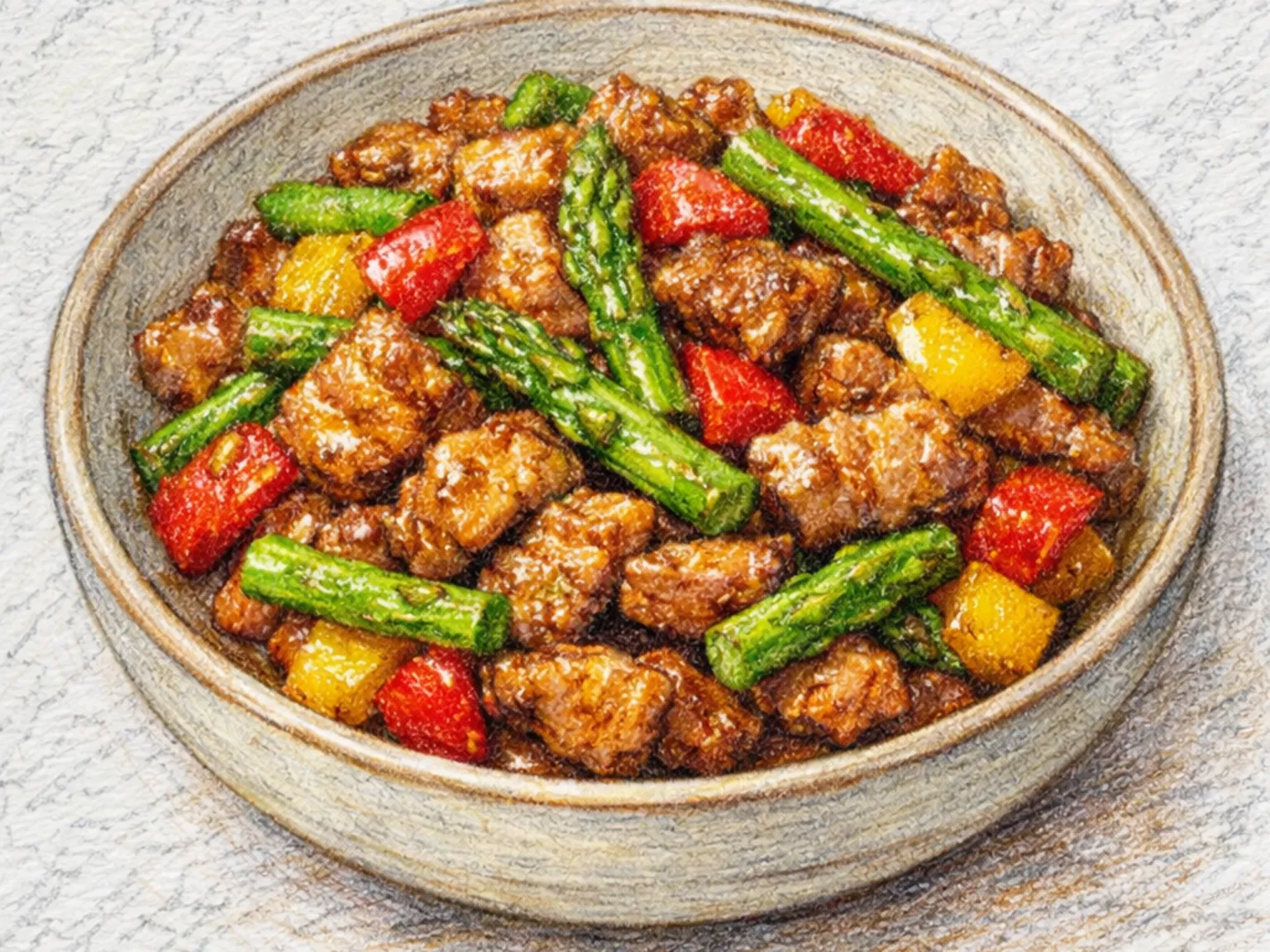
Korean Pork and Asparagus Stir-fry
A Korean weeknight stir-fry pairing pork shoulder or belly with asparagus and red bell pepper in a soy-garlic sauce that comes together in under twelve minutes from a cold pan. The pork is sliced thin and marinated in soy sauce, minced garlic, and a pinch of sugar for ten to fifteen minutes; the sugar draws moisture to the surface and promotes caramelization, creating a glossy, slightly browned crust when the meat hits the hot pan. Cooking the meat first over high heat renders out its fat, which becomes the stir-frying medium for the vegetables that follow - a technique that layers the pork's savory quality into the whole dish rather than keeping it confined to the meat alone. Asparagus goes in for barely a minute: enough time to eliminate the raw, starchy taste while preserving the clean snap of the stalk. The fibrous base of each spear benefits from a quick pass with a vegetable peeler before cooking, which allows the thicker portions to cook at the same rate as the tips. Bell pepper adds natural sweetness and a visual contrast to the green and brown of the other components. The sauce - soy, a touch of oyster sauce, and sesame oil - is deliberately restrained; a single spoonful of oyster sauce adds enough viscosity to help the seasoning cling evenly to every piece without making the dish heavy.

Cabbage Ham Korean Street Toast
Cabbage ham street toast is a Korean griddled sandwich built by stacking a thin shredded cabbage-and-carrot egg omelet and pan-seared ham between slices of bread toasted golden in butter. The bread develops a crisp outer surface while staying soft inside, and the egg layer holds the vegetables in place, giving both structure and textural contrast to every bite. Sprinkling sugar directly onto the bread before assembly is the signature detail that defines Korean street toast, and when combined with ketchup and mayonnaise it produces the sweet-savory balance the dish is known for. The ingredients are simple and the preparation is fast enough for a weekday breakfast or an impromptu snack.