🏠 Everyday Recipes
Simple home-cooked meals for any day
1705 recipes. Page 5 of 72
These are the meals you can cook day after day without getting tired of them. Doenjang jjigae, rolled omelet, spicy pork stir-fry - the kind of home-cooked dishes that fill an ordinary day with comfort.
The beauty of everyday cooking is that it relies on common ingredients already in your fridge. No exotic items, no complicated techniques - just straightforward recipes for satisfying home meals.

Korean Mushroom Pancake (Crispy Shiitake and King Oyster Jeon)
Beoseot-jeon is a Korean mushroom pancake made by slicing king oyster and shiitake mushrooms thin, coating them lightly in a batter of Korean pancake mix, egg, and water, then pan-frying until golden on both sides. King oyster mushrooms deliver a firm, chewy bite from their thick cross-sections, while the natural ridges in shiitake caps catch and hold batter, forming extra-crispy edges as they fry. The coating must be kept thin so the earthy mushroom flavors read clearly through the batter, and sliced mushrooms should be blotted dry before coating since excess surface moisture steams the underside and prevents crisping. Frying on medium-low heat without a lid allows even cooking through the mushroom's density while keeping the surface from steaming. Dipping in cho-ganjang -- soy sauce and vinegar -- brings out the mushrooms' natural umami against the crisp exterior. A small amount of salted fermented shrimp (saeujeot) folded into the batter seasons it thoroughly without needing extra salt.
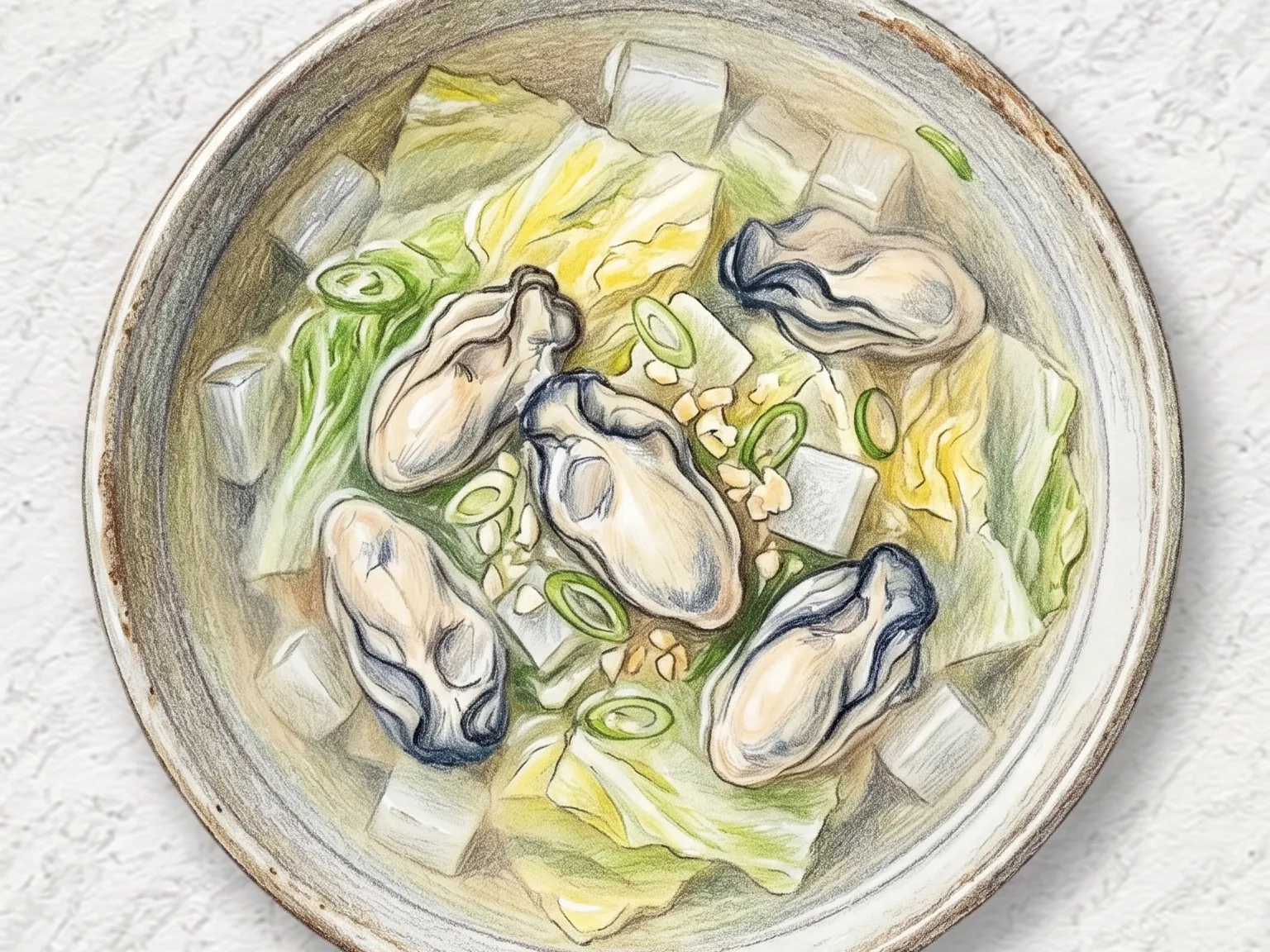
Korean Cabbage Oyster Soup
Baechu gul guk is a Korean winter soup that pairs seasonal napa cabbage with fresh oysters in a clear, unseasoned broth. Oysters are among the quickest-cooking and most easily overcooked shellfish, which makes their timing the single most critical variable. They are gently rinsed in salted water to remove grit and any briny off-flavors, then dropped in only during the final minute of simmering so they stay plump and custard-soft rather than rubbery. Napa cabbage and daikon radish go in from cold water and simmer together until their natural sugars dissolve into the broth, sweetening it without any added seasoning. Winter cabbage that has been exposed to frost accumulates more cellular sugar, which is why mid-winter specimens produce a noticeably sweeter stock. Seasoning is minimal: minced garlic and a measured amount of guk-ganjang, kept restrained because the oysters carry their own pronounced salinity and oceanic depth. Scallion, sliced thin on the diagonal, goes in last and releases a fresh green fragrance with each spoonful. The finished soup is a study in restraint, placing the soft sweetness of cabbage, the cool clarity of radish, and the deep umami of oyster in careful layers within a single bowl.
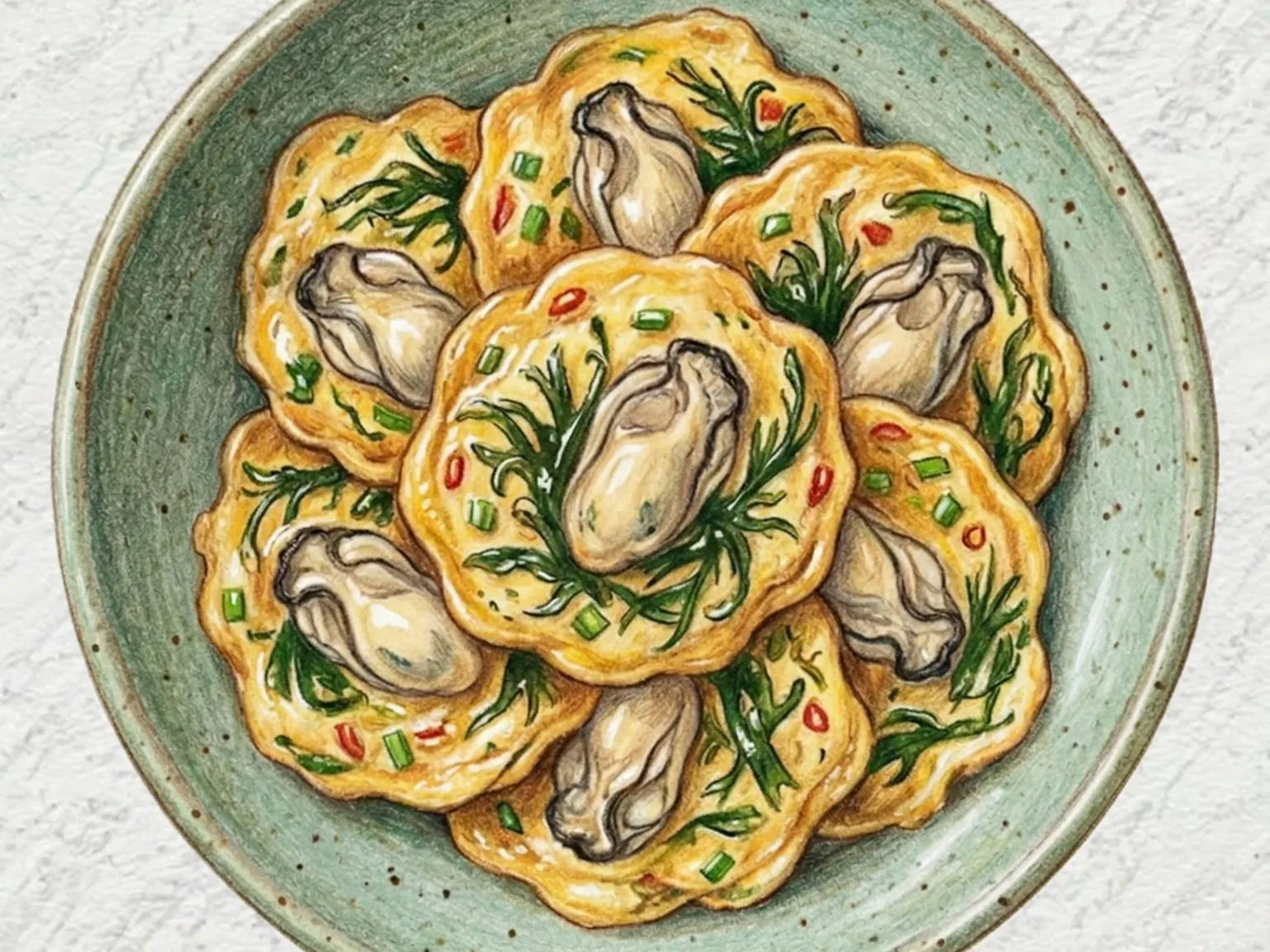
Korean Seaweed Oyster Pancake
Miyeok oyster jeon is a Korean seaweed and oyster pancake that offers a savory taste of the ocean. The cooking begins by rinsing fresh oysters in light salted water and draining them, while soaked seaweed is squeezed firmly to remove moisture before being cut. The pancake batter is prepared by mixing Korean pancake mix, cold water, an egg, minced garlic, and soup soy sauce. The seaweed, oysters, and minced red chili are gently folded into the batter. Ladles of the mixture are pan-fried in oil over medium-low heat for three minutes on each side, ensuring the oysters stay submerged in the batter to cook. The finished pancake features a crisp exterior with a soft, chewy seaweed interior, and juicy oysters that release their briny flavor with every bite.
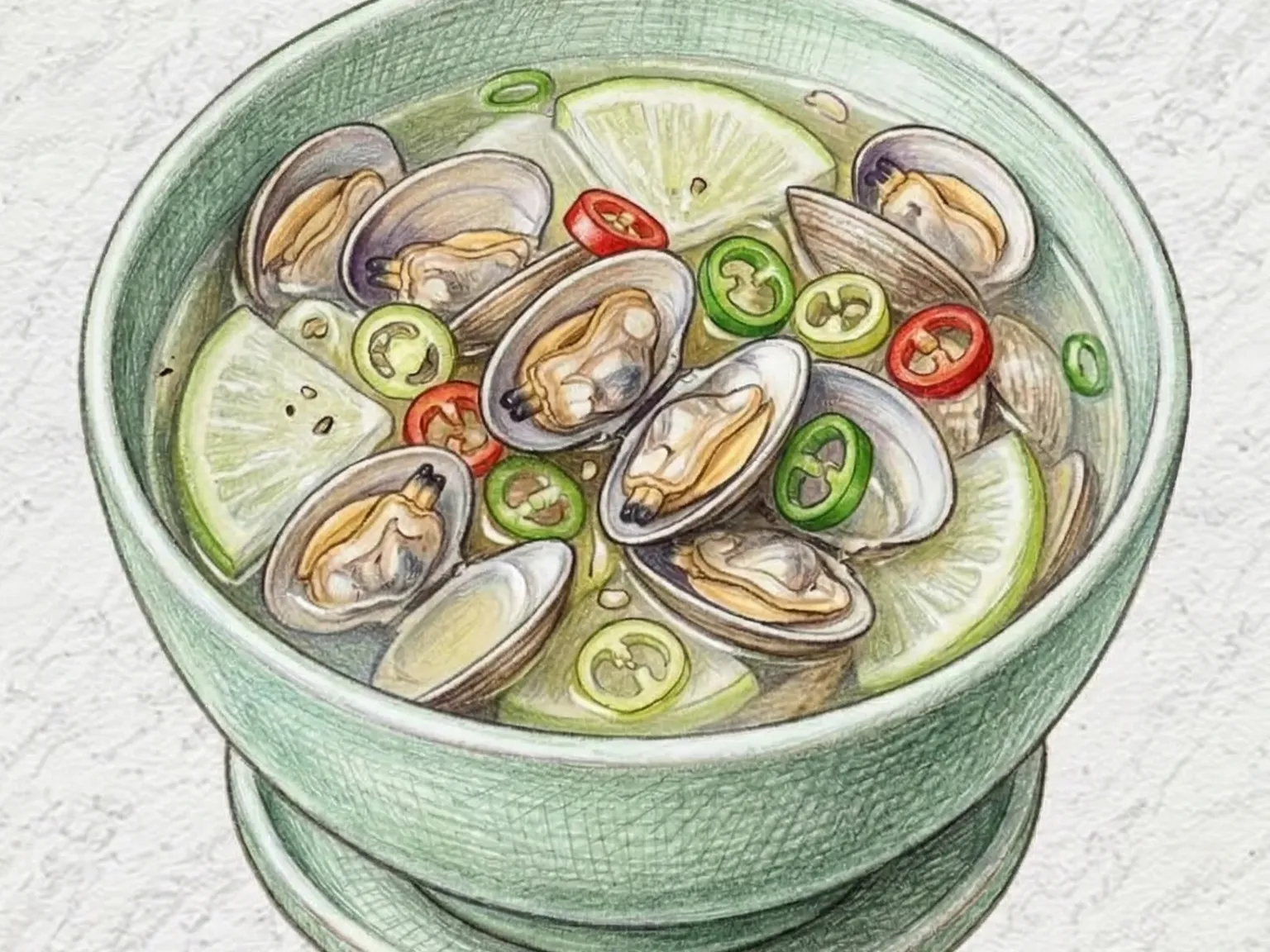
Korean White Chili Clam Stew
Baekgochu bajirak jjigae is a clear Korean clam stew where manila clams and daikon radish supply all the broth depth without any additional stock. Starting from cold water is essential: the gradual temperature rise draws the clams open slowly, pulling their briny, mineral-rich juices into the liquid and producing a more fully flavored broth than a quick boil would allow. The clams are purged first in salted water to remove all traces of sand, then placed in the cold pot together with cut daikon. As the water reaches a boil, the clams open and release their liquor into the surrounding liquid; any that remain closed after full boiling are discarded. Seasoning stays measured with minced garlic and guk-ganjang, while diagonally sliced red chili and cheongyang chili add both visual warmth and layered heat to the otherwise clear broth. Scallion is added only at the final moment to preserve its freshness and fragrance. The daikon contributes a cool, gentle sweetness that balances the clams natural salinity and fuses with the shellfish stock to build a broth of surprising complexity. The stew requires no anchovy, no kelp, and no premade stock: clams and radish alone generate the kind of depth that usually takes considerably more effort to achieve.
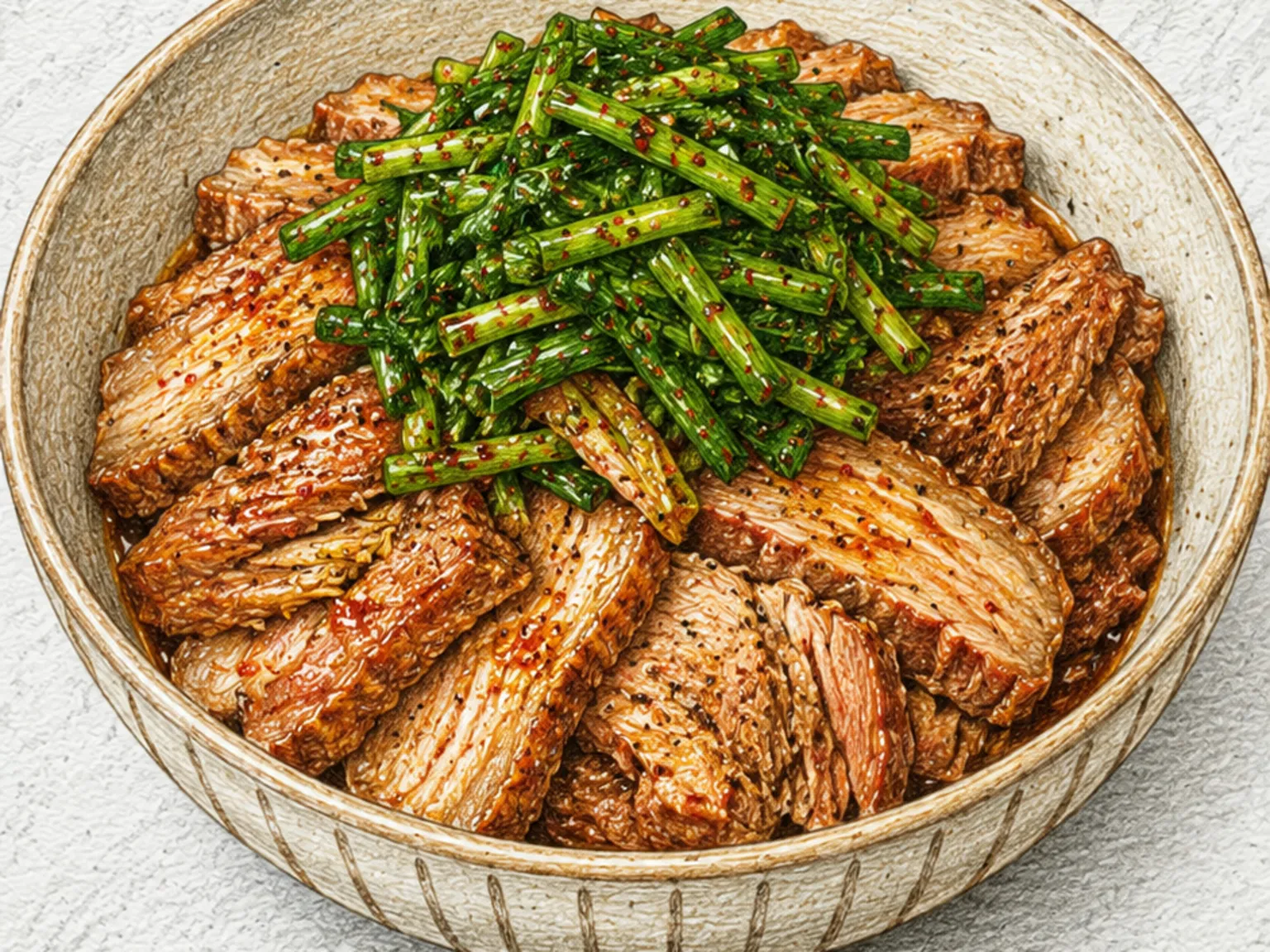
Korean Braised Pork with Garlic Chives
Pork shoulder is steamed with garlic chives in a seasoning of soy sauce, gochugaru, and cooking wine. The shoulder cut has fat distributed evenly through the muscle, so it stays moist during steaming and pulls apart naturally along the grain rather than turning dry or stringy. Garlic chives are piled generously over the pork before the lid goes on; as they steam they release moisture and a sweet, garlicky aroma that seeps down into the meat. Soy sauce penetrates deeply through the slow steam, and gochugaru gives the finished dish its red color and moderate heat. A finish of sesame oil and black pepper adds nuttiness and a sharp edge. The combination of savory depth and mild spice makes it a natural partner for plain steamed rice.
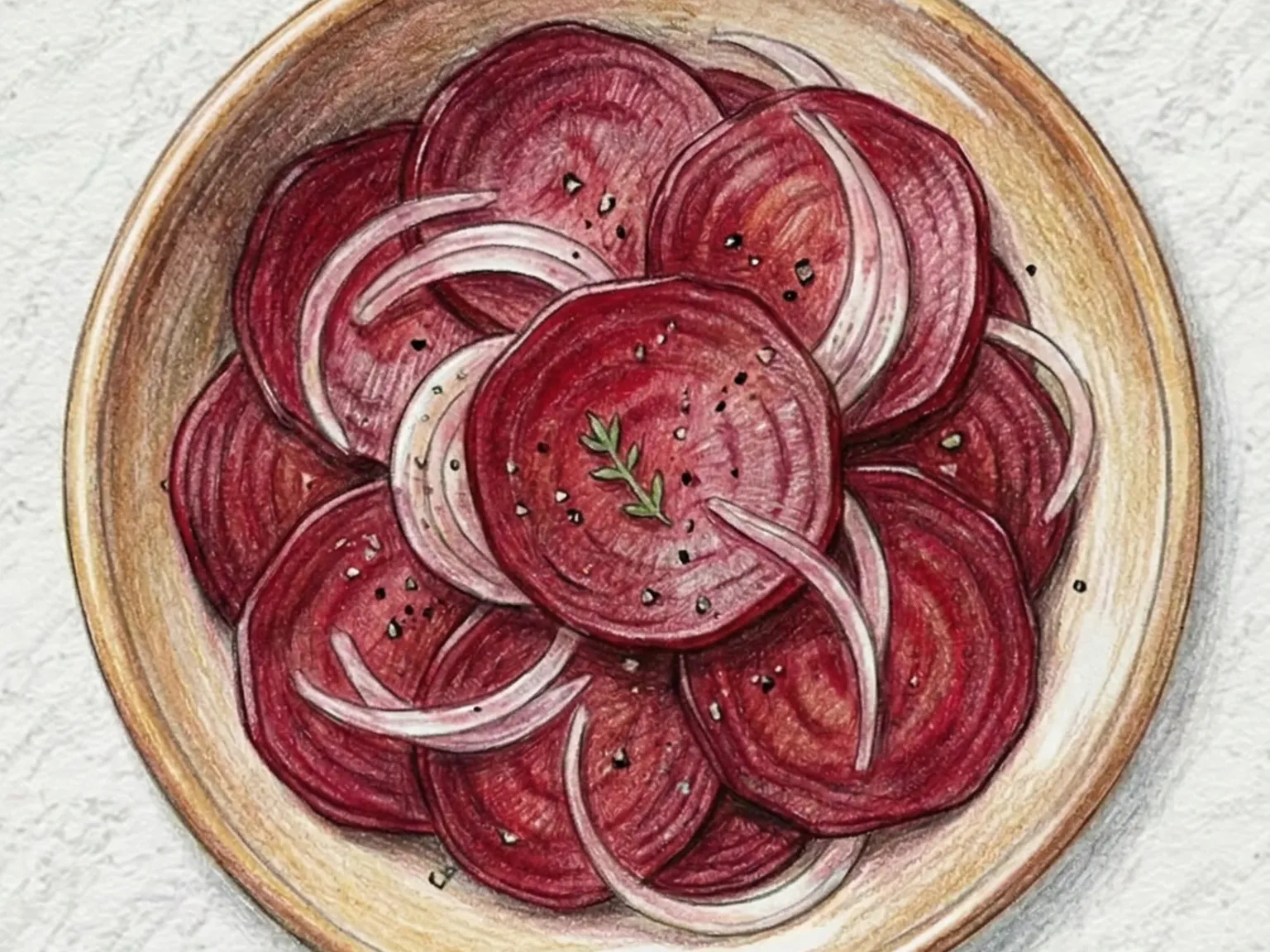
Korean Soy Pickled Beet (Vinegar Soy Brine Jangajji)
Beet jangajji is a Korean soy-pickled beet prepared by slicing beets thin and submerging them in a cooled brine of soy sauce, vinegar, and sugar. The vinegar cuts through the beet's earthy undertone, leaving a clean sweetness sharpened by acidity, and onion adds a mellow depth to the pickling liquid. As the brine cools, the beet's vivid red pigment bleeds into the liquid, creating a visually striking jar that stands out on the table. After at least a day of pickling, the flavor penetrates fully, producing a crisp, refreshing side dish suited to rice or grilled meats. Julienned beets pickle faster and are ready within a day, while thicker slices need two days or more for the brine to reach the center. Stored in the refrigerator, the pickles keep well for over two weeks, making a large batch practical.
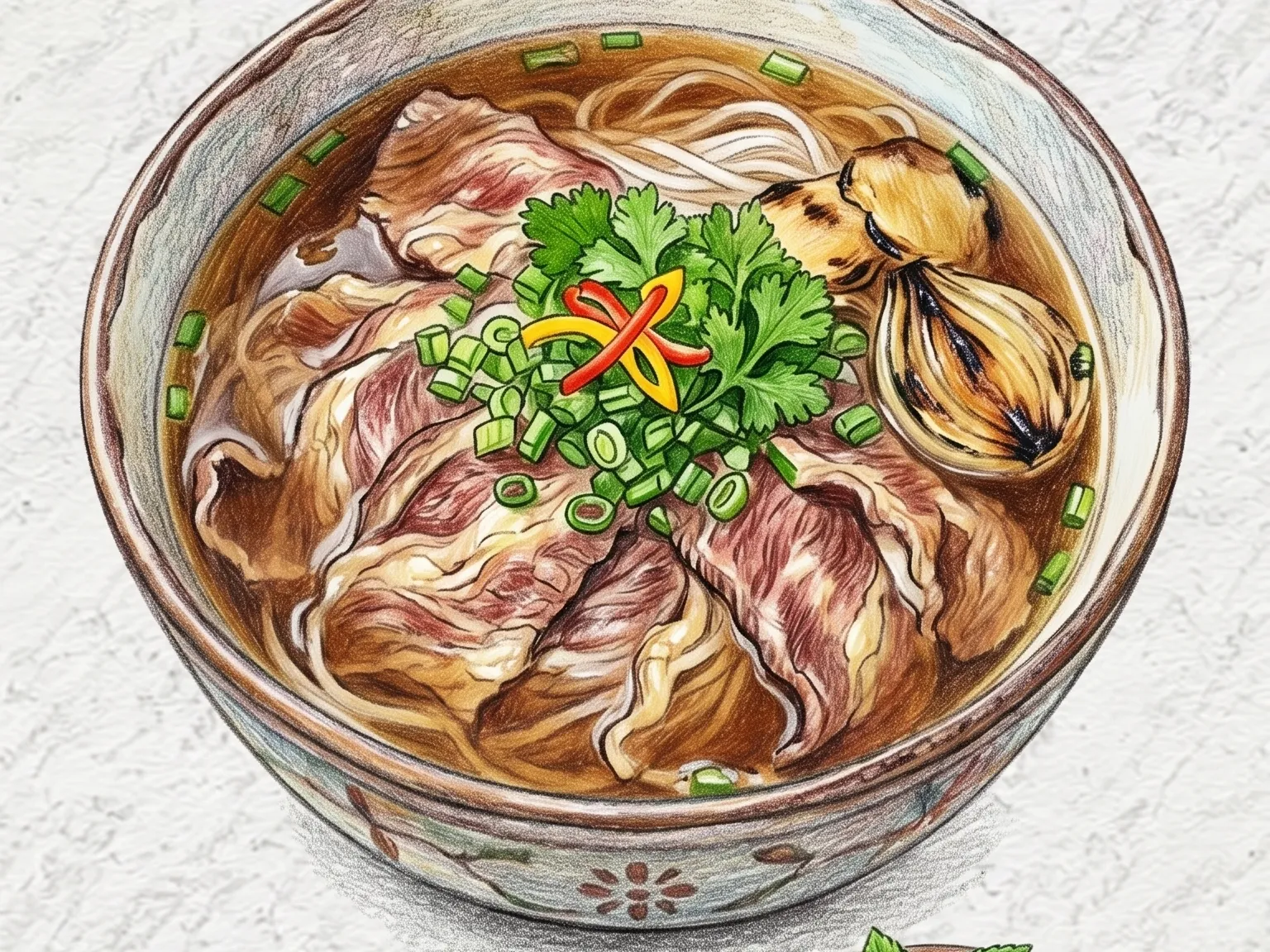
Beef Brisket Pho Guksu (Charred Ginger Beef Rice Noodle Soup)
Beef pho guksu is a Vietnamese-style rice noodle soup that pairs the clean, sweet depth of charred-onion-and-ginger broth with thin slices of Korean chadolbaegi brisket. The broth starts with dry-charring whole onion and ginger directly in a pan until the surfaces blacken. This step burns off the raw pungency and draws out a caramelized sweetness that defines the soup's aroma. Fish sauce and a measured amount of sugar season the strained broth, producing a full-flavored liquid that finishes clean. To cook the brisket, the boiling broth is poured directly over the thinly sliced meat in the bowl, allowing gentle heat to set the beef while leaving it tender and slightly pink. Bean sprouts, cilantro, and lime wedges arrive on the side so each person adjusts freshness and acidity to taste, following Vietnamese table tradition. The marbled fat in Korean brisket adds a richer body to the broth than standard pho, making this a distinct take that sits between Korean gomtang and Vietnamese pho.
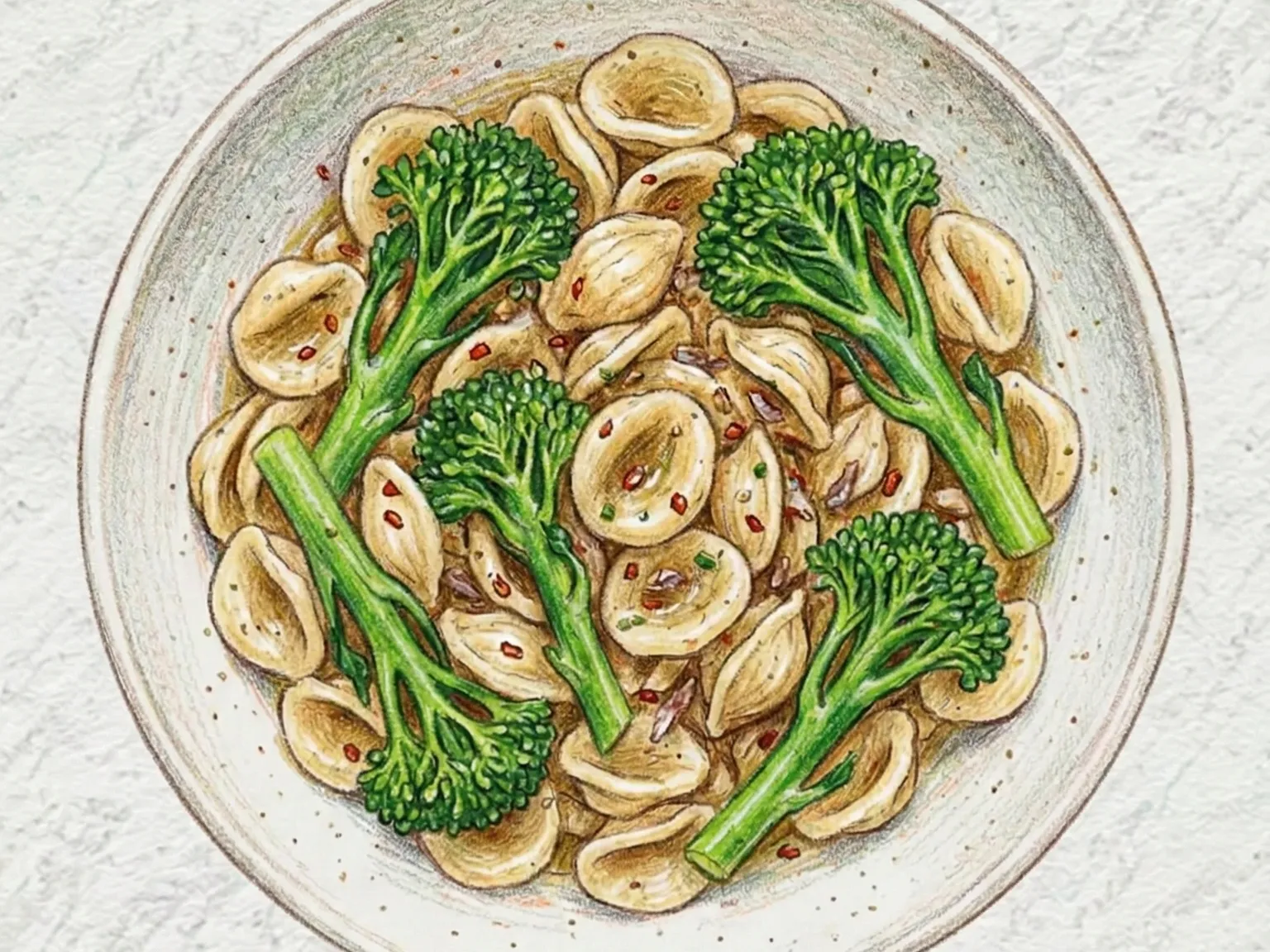
Gochugaru Anchovy Broccolini Orecchiette
Gochugaru anchovy broccolini orecchiette uses anchovy fillets dissolved in olive oil as the flavor foundation. The fillets go into the pan with garlic over low heat and are stirred continuously until they break apart and disappear into the oil, leaving behind deep salinity without any trace of fishiness. Korean red pepper flakes are added next and fried in the anchovy oil for twenty seconds so their aromatic compounds are released into the fat without scorching. The tomato sauce goes in immediately after and simmers for three minutes to cut its raw acidity against the rich oil base. Broccolini is blanched directly in the pasta cooking water during the final two minutes of boiling, which saves a separate pot and keeps the florets just crisp with a slightly bitter edge intact. Breadcrumbs toasted separately in a dry pan until golden are scattered over the plated pasta for crunch, since orecchiette's small ear shape traps sauce inside but offers a soft bite throughout. A squeeze of lemon juice is added off the heat to cut through the oil and brighten the plate. Parmesan shaved over the top adds a final layer of sharp saltiness.
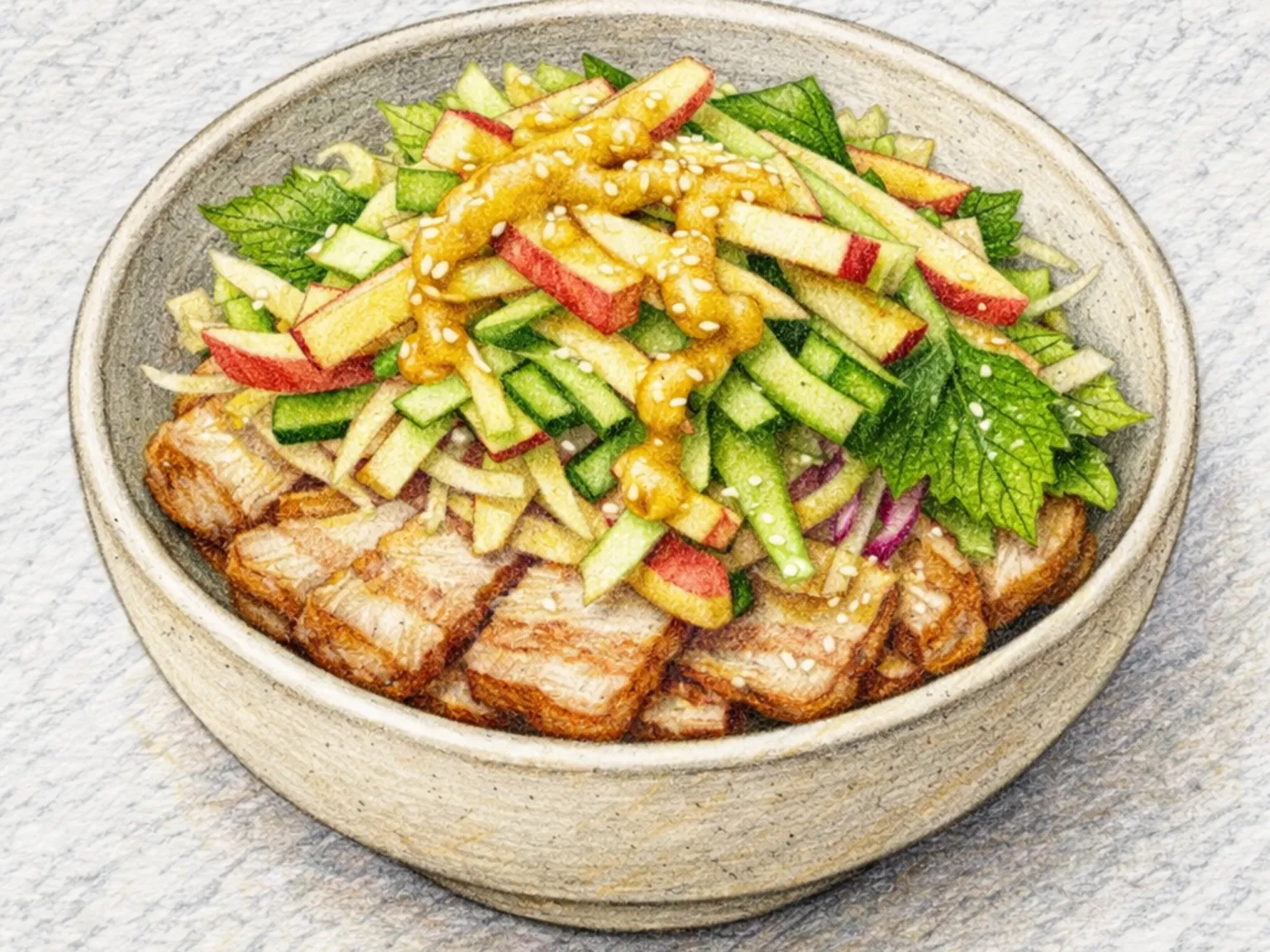
Pork Bossam Apple Mustard Salad
Bossam apple mustard salad uses thinly sliced cold boiled pork belly as its main component, arranged over shredded cabbage, cucumber, and crisp apple slices, then finished with a sharp mustard-soy vinaigrette. Chilling the boiled pork completely before slicing is not optional: warm pork crumbles under the knife, while cold pork yields clean, even cuts that hold their shape on the plate. Cabbage and cucumber provide a firm, crunchy base whose texture directly contrasts with the soft, fatty pork, and the apple slices introduce a cool sweetness along with a welcome burst of moisture. Korean hot mustard, dissolved generously into a soy-vinegar dressing, releases a nasal, sinus-clearing heat with each bite that cuts through the richness of the pork fat without the acidity becoming the dominant note. Perilla leaves placed underneath the pork act as both a flavoring layer and a suppressor of any residual pork odor, their herbal intensity complementing the mustard without competing with it. The salad works equally well as a standalone meal and as a second-day use for leftover bossam from the previous night, which is one reason it appears in Korean home kitchens as often as it does.
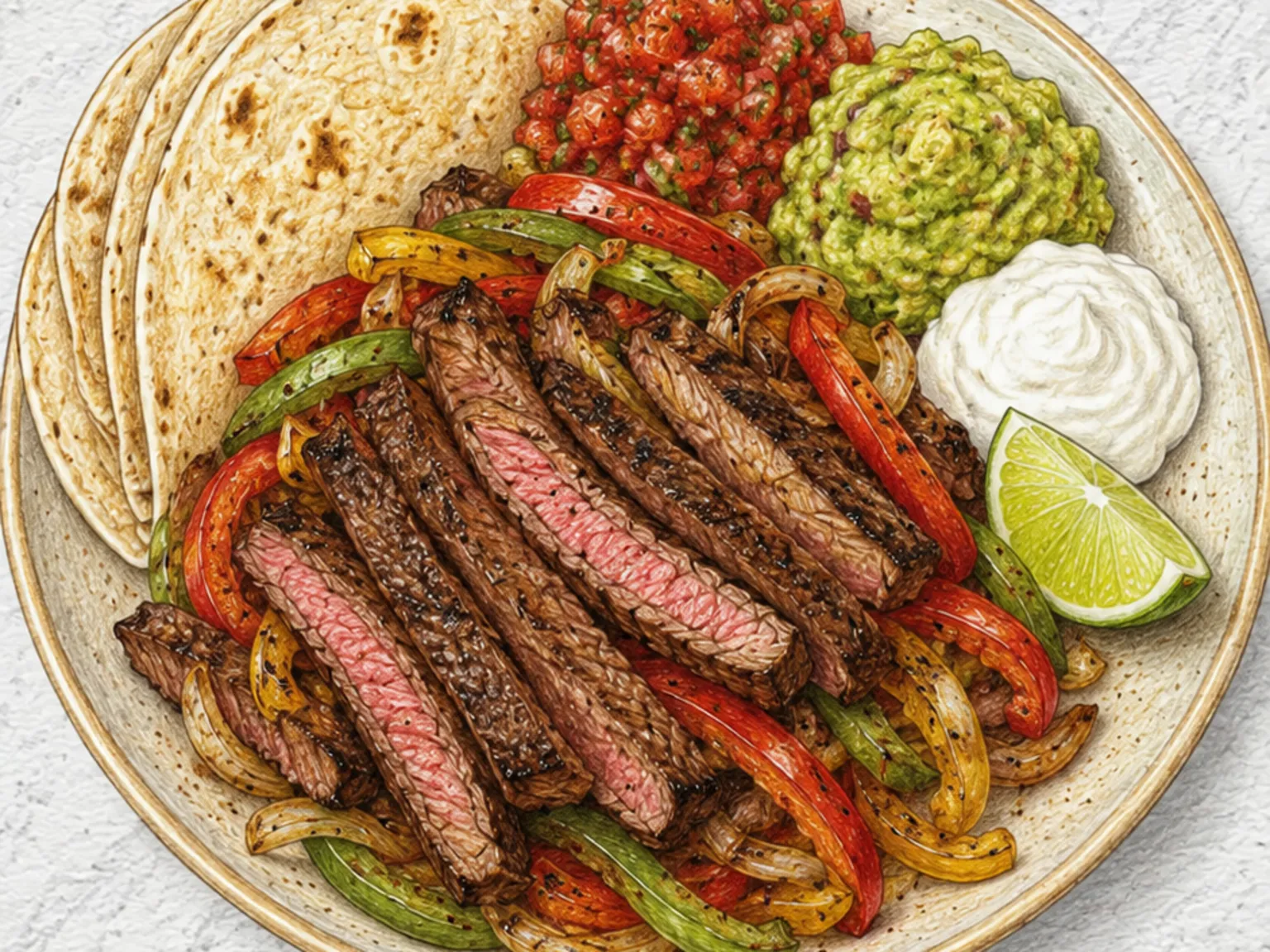
Beef Fajitas Skillet
Skirt steak is marinated in lime juice, cumin, chili powder, and garlic, then placed onto a cast iron pan heated until it is smoking to develop a dark crust on the surface while the interior stays pink and retains its juices. The mass of the pan sustains the high heat even when the cold meat is added, which is what produces the crust rather than a steam. After the steak rests and is sliced, bell peppers and onion go into the same pan and are cooked quickly so they pick up the drippings without going limp. The earthy weight of cumin combines with the sharp citrus of lime to produce the specific, forceful aroma that defines fajitas, and chili powder adds a sustained heat alongside the deep red color. The components are loaded into warm tortillas with salsa, guacamole, and sour cream so each mouthful carries smokiness, acid, heat, and cool creaminess together.
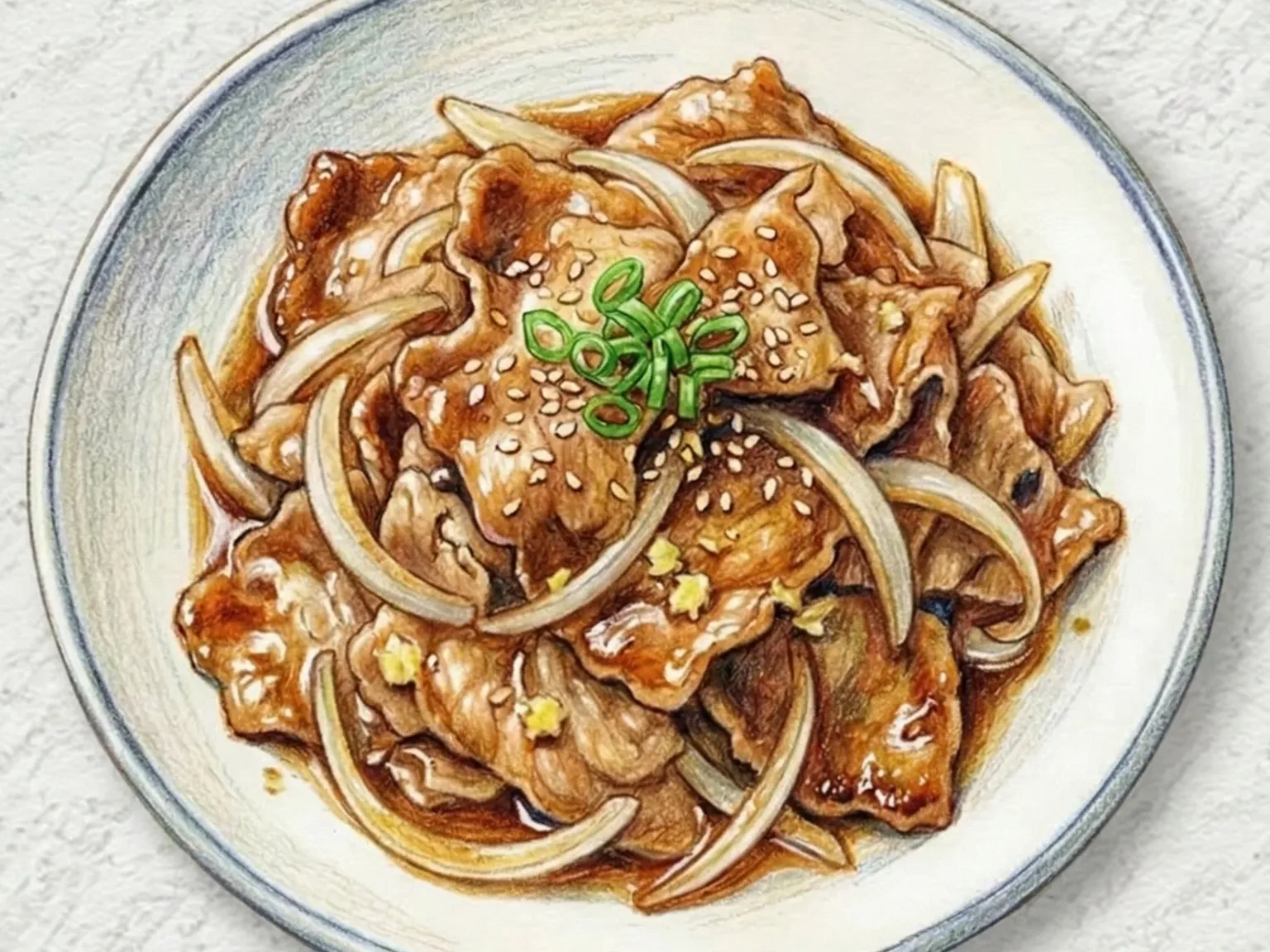
Buta Shogayaki (Japanese Ginger Pork Stir-Fry with Soy Mirin Glaze)
Buta shogayaki is one of the most frequently cooked dishes in Japanese home kitchens, appearing in bento boxes, teishoku set meals, and university cafeterias with equal regularity. The name translates directly as pork ginger stir-fry, and the technique is as precise as it is simple: thinly sliced pork loin or shoulder is marinated briefly in a mixture of soy sauce, mirin, sake, and freshly grated ginger, then seared quickly in a hot pan and finished with a reduction of the marinade. The ginger does more than add flavor -- it contains proteolytic enzymes that break down muscle fibers, measurably tenderizing the meat even in a marinade as short as ten minutes. The slices must not overlap in the pan; piling them causes steam to accumulate and the pork poaches rather than sears, losing the caramelized, slightly charred edges that define the dish. The marinade is added only in the final thirty seconds so it reduces rapidly into a sticky, glossy glaze that adheres to every surface rather than pooling at the bottom of the pan. Placing the finished pork over a mound of shredded raw cabbage is not optional in traditional presentation -- the cold, crunchy vegetable contrasts sharply with the hot, lacquered meat and cuts through the sweetness of the mirin glaze. Shogayaki has been a menu fixture since the mid-20th century, when rising pork production in Japan made it affordable enough for everyday cooking. From pantry to plate in fifteen minutes, it demands nothing more than a hot pan, fresh ginger, and attention to heat control.
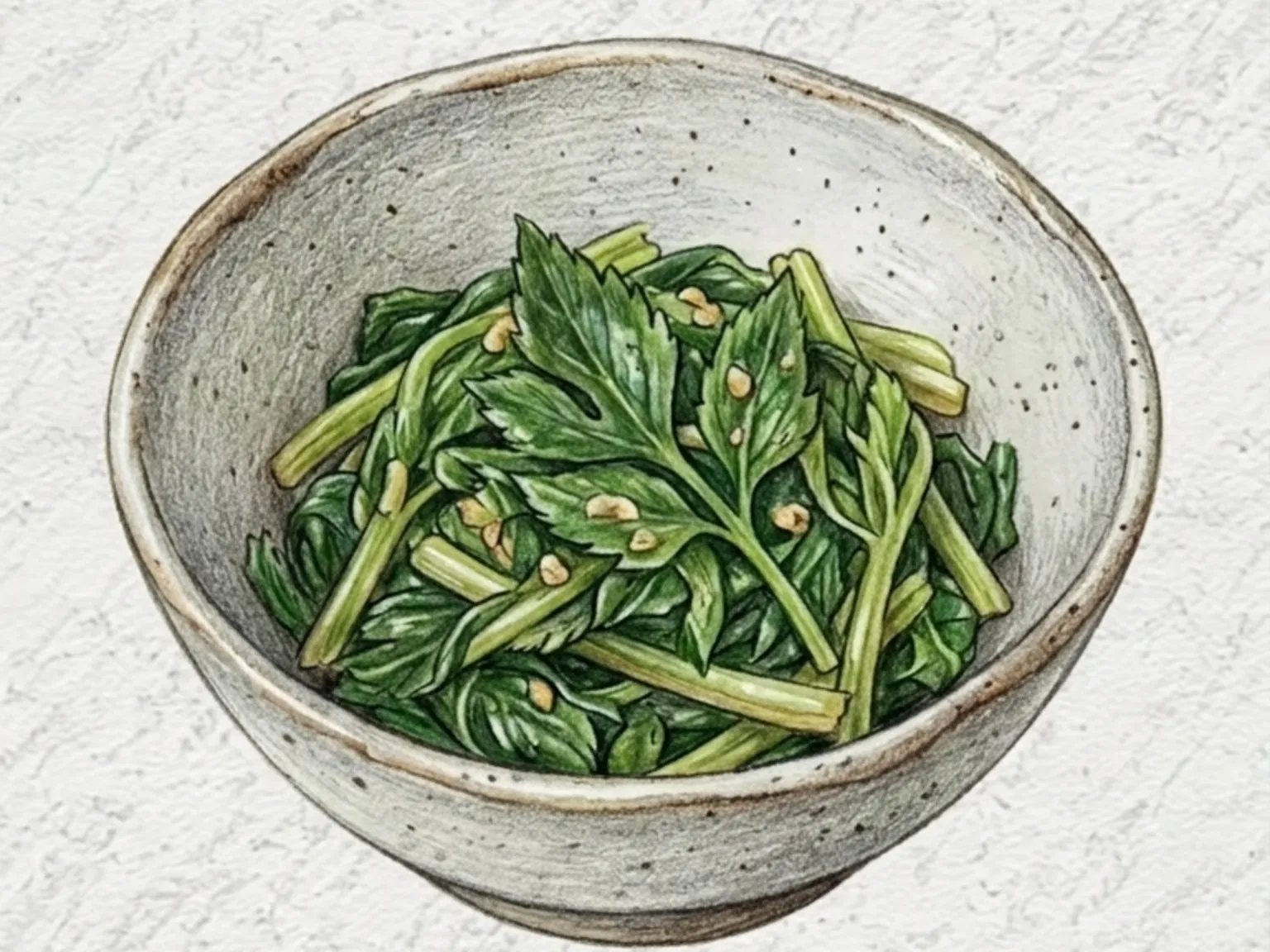
Korean Seasoned Coastal Hogfennel Greens
Bangpung namul muchim is a spring side dish made from coastal hogfennel, a wild herb that grows on seaside cliffs and sandy shores along Korea's coastline. The plant has a pungent, celery-like aroma that defines the dish. Blanching in salted boiling water for exactly one minute tames the raw bitterness while preserving the herbal fragrance - overcooking diminishes both the aroma and the texture. After squeezing out moisture thoroughly, the greens are seasoned simply with doenjang, minced garlic, and sesame oil. Keeping the seasoning minimal is intentional: the dressing supports the herb's character without masking it. The fermented depth of doenjang meets the slightly bitter, woodsy flavor of the greens in a combination that tastes distinctly of early spring. Harvested in coastal regions of Gangwon-do, Gyeonggi coast, and Jeju from March through May, bangpung is a seasonal ingredient with a short window and a reputation as a spring tonic in Korean traditional food culture.
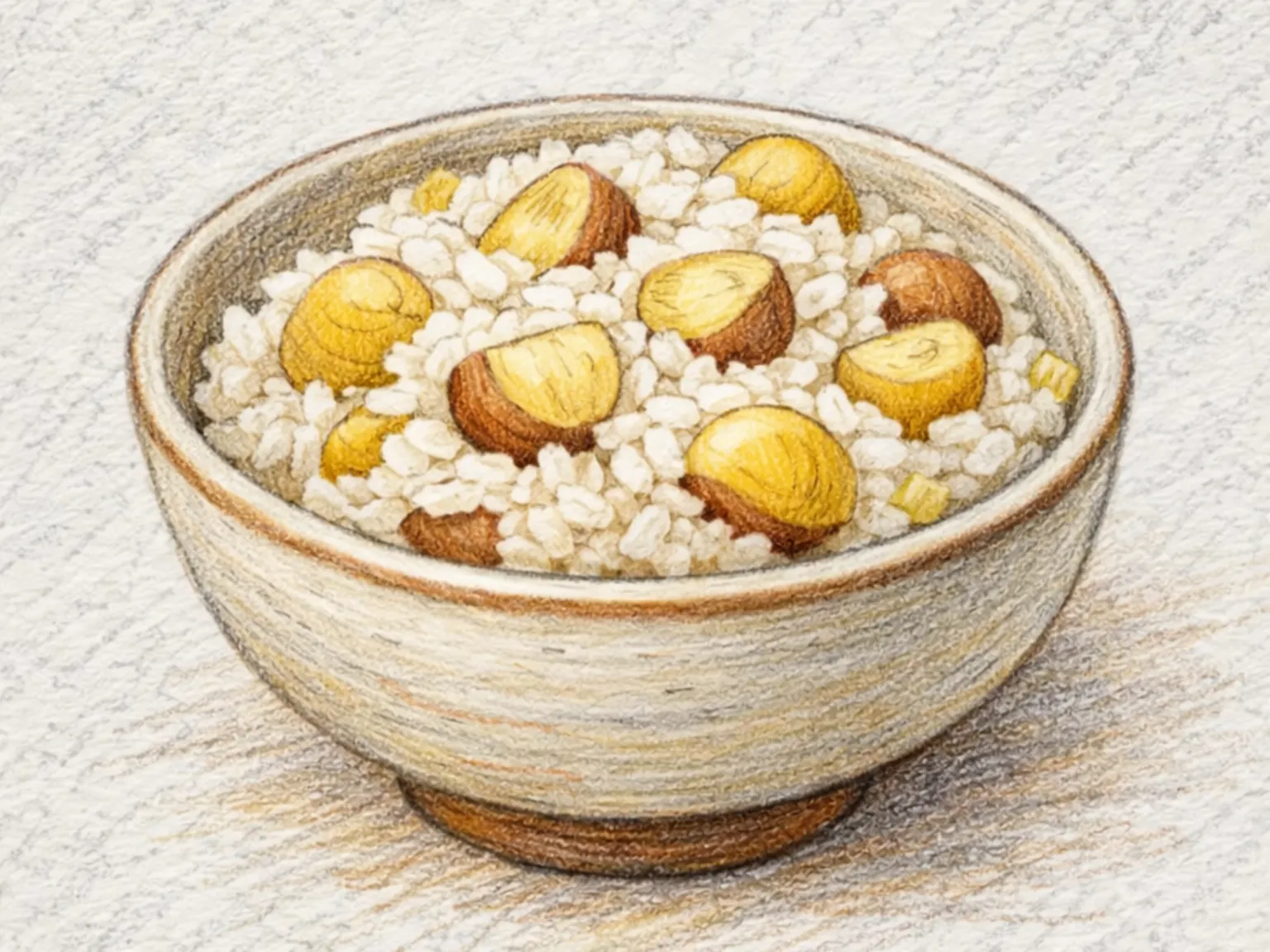
Korean Chestnut Rice (Nutty Sweet Autumn Pot Rice)
Bam bap is a Korean seasonal rice dish cooked with freshly harvested chestnuts, combining the starchy comfort of white rice with the earthy sweetness of autumn chestnuts. Peeled chestnuts are placed on top of soaked rice before cooking, and as the water absorbs into the grains, chestnut starch gradually dissolves into the cooking liquid, infusing each grain with a subtle sweetness and a faintly mealy texture characteristic of the nut. Black sesame seeds sprinkled over the cooked rice add a toasted nuttiness. The dish uses only salt for seasoning, so the flavor of the chestnuts remains the primary element. A small dish of soy-based dipping sauce on the side allows each person to season individual spoonfuls as needed. Cutting the chestnuts into halves or quarters distributes their flavor more evenly throughout the pot than leaving them whole. Soaking the chestnuts in cold water before peeling helps remove astringency from the inner skin, which should be removed completely to avoid bitterness. A pressure cooker shortens the cooking time and helps the chestnut flavor penetrate the rice more thoroughly. The dish is best made with fresh chestnuts in autumn, when their natural sweetness peaks.
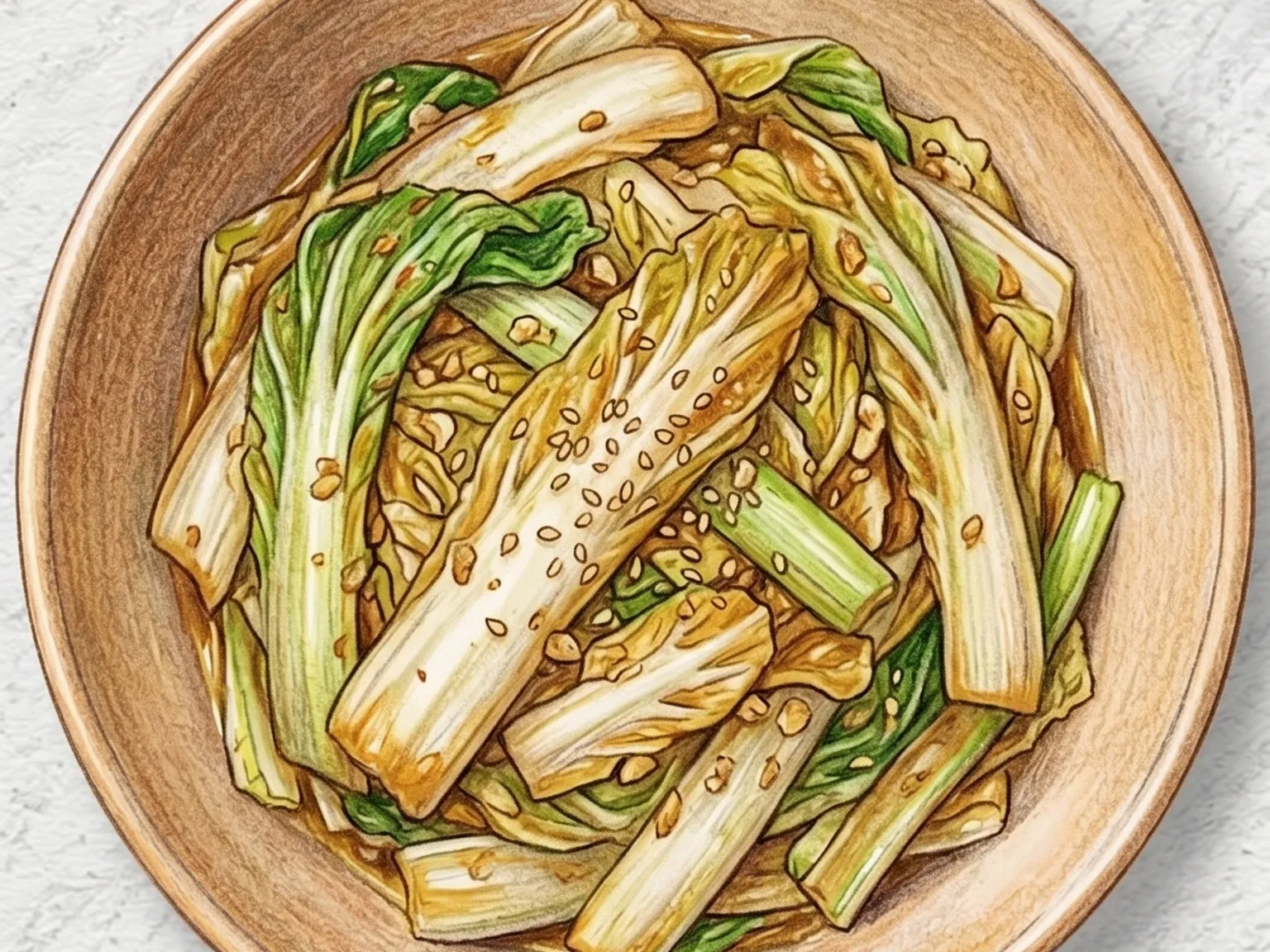
Korean Cabbage Doenjang Stir-Fry
Baechu doenjang bokkeum is a Korean home-style side dish where napa cabbage is stir-fried with doenjang (fermented soybean paste) in perilla oil. The cabbage goes into a hot pan first and is tossed until slightly wilted, then the doenjang is added and the heat lowered so the paste spreads evenly and coats every piece. Minced garlic goes in with the cabbage, its sharpness merging into the fermented depth of the doenjang as both cook together. The thicker stem sections go into the pan before the leaves to preserve their crunch, and the leafy parts follow later so they stay tender rather than limp. A final drizzle of perilla oil just before removing the pan from heat reinforces the nutty aroma, finished with a scatter of toasted sesame seeds. The seasoning is minimal, but the salty intensity of the doenjang and the natural sweetness of napa cabbage strike a balance that makes this side dish a reliable staple with steamed rice. No soup or stew is needed alongside it.

Korean Glutinous Rice Donut
Chapssal donut is a Korean deep-fried snack made from glutinous rice flour kneaded with sugar, salt, and hot water, then fried at 170 degrees Celsius. The sticky rice dough puffs up in the oil, forming a thin, crisp shell on the outside while keeping a dense, chewy interior. Unlike wheat-flour donuts, each bite stretches with a mochi-like pull that is specific to glutinous starch. Rolling the donuts in sugar the moment they come out of the oil lets the crystals stick to the still-hot surface evenly, locking in both crunch and sweetness at once. The ingredient list is short and the dough requires minimal kneading, making this a straightforward snack to prepare at home.
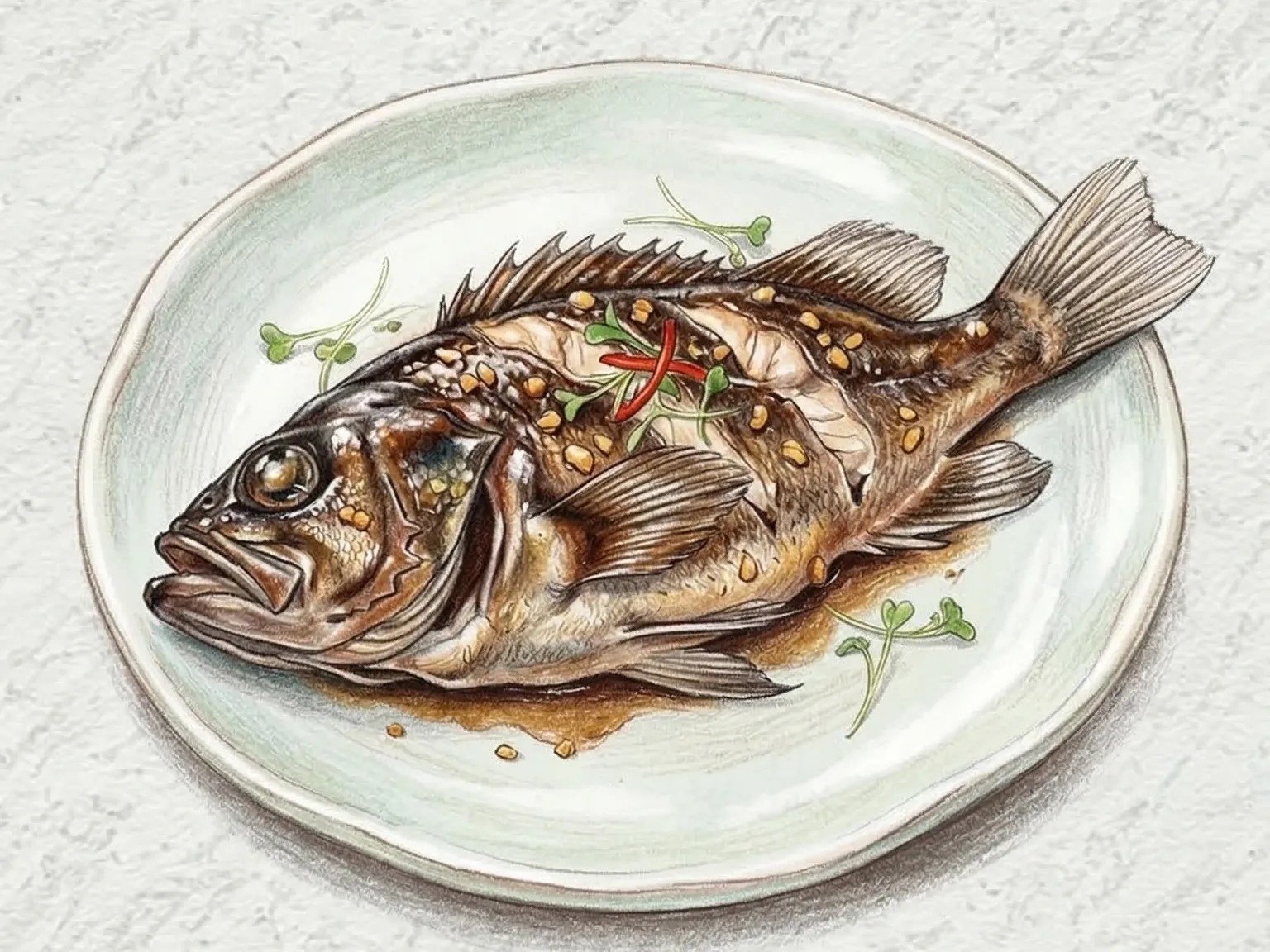
Korean Bollak Ganjang Gui (Soy-Glazed Rockfish Grill)
Bolak-ganjang-gui is a Korean soy-glazed rockfish dish where fillets are brushed with a sauce of soy sauce, cooking wine, minced garlic, ginger juice, and honey, then grilled over medium-high heat. Half the glaze is applied first and left for just ten minutes, long enough for the salt and sweetness to penetrate the surface without pulling out moisture from the lean fish. Starting skin-side down for four minutes builds a crisp base, and brushing on the remaining glaze during the final minutes of cooking lets the honey caramelize into a glossy, dark-brown coating. A finish of sesame oil and sliced green onion adds a nutty, sharp layer on top of the savory-sweet glaze. Rockfish has very little fat, so the total cooking time should stay within eight to nine minutes to prevent the flesh from drying out.
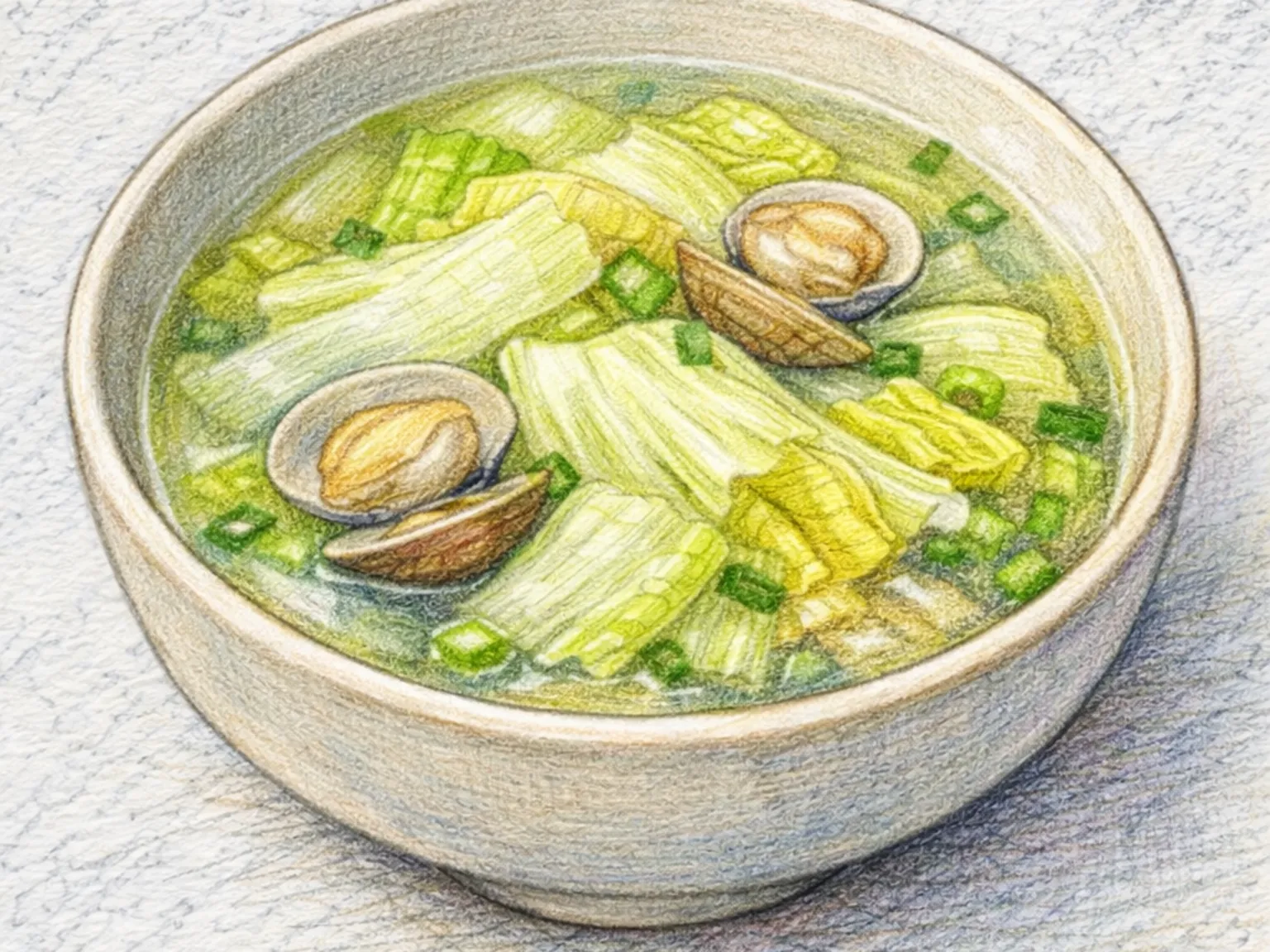
Korean Napa Cabbage Clam Soup
Baechu jogae guk is a clear Korean soup that draws its flavor entirely from clams and napa cabbage without any additional stock ingredients. The clams must be purged in salted water for at least two hours to expel all sand; skipping this step contaminates the broth and ruins the finished dish. Starting from cold water with both the cabbage and clams allows the temperature to rise gradually, coaxing sweetness from the cabbage as it heats alongside the shellfish. Once the clam shells open, the heat is reduced and the broth is seasoned lightly with minced garlic and guk-ganjang. Sliced scallion is added near the end to preserve its fresh, grassy note in the liquid. Since the clam liquor itself carries significant salinity, any additional salt should be added only after tasting, and kept minimal. No anchovy stock or kelp is needed because the marine depth of the clams and the vegetal sweetness of the cabbage together build a clean, layered broth on their own. The soup is mild enough to serve as a restorative meal when appetite is low or digestion is off.
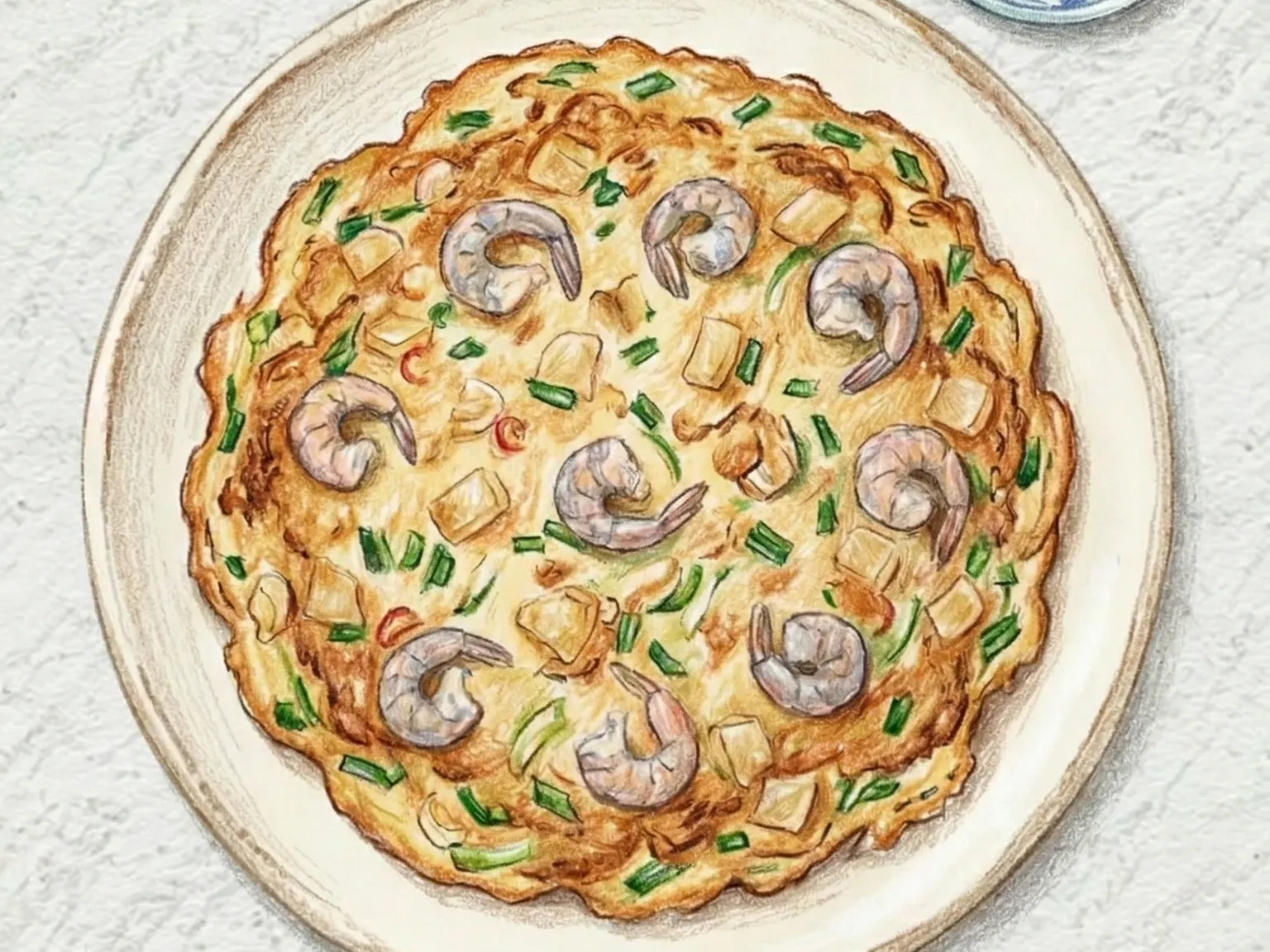
Korean Radish & Shrimp Pancake
Julienned Korean radish and small peeled shrimp are combined in a pancake batter fortified with a measured amount of potato starch for added crispiness. Egg is mixed into the batter to improve binding and keep the pancake intact when flipped. Scallions are distributed throughout for a mild, grassy fragrance. Radish releases notable moisture as it cooks, so frying over high heat is essential to drive off that liquid quickly and achieve a crisp outer surface. The sharp, slightly bitter edge of raw radish disappears with heat and gives way to a gentle natural sweetness that pairs cleanly with the mild, delicate flavor of the shrimp. Pressing the center of the pancake down with a spatula while frying encourages even browning all the way through.
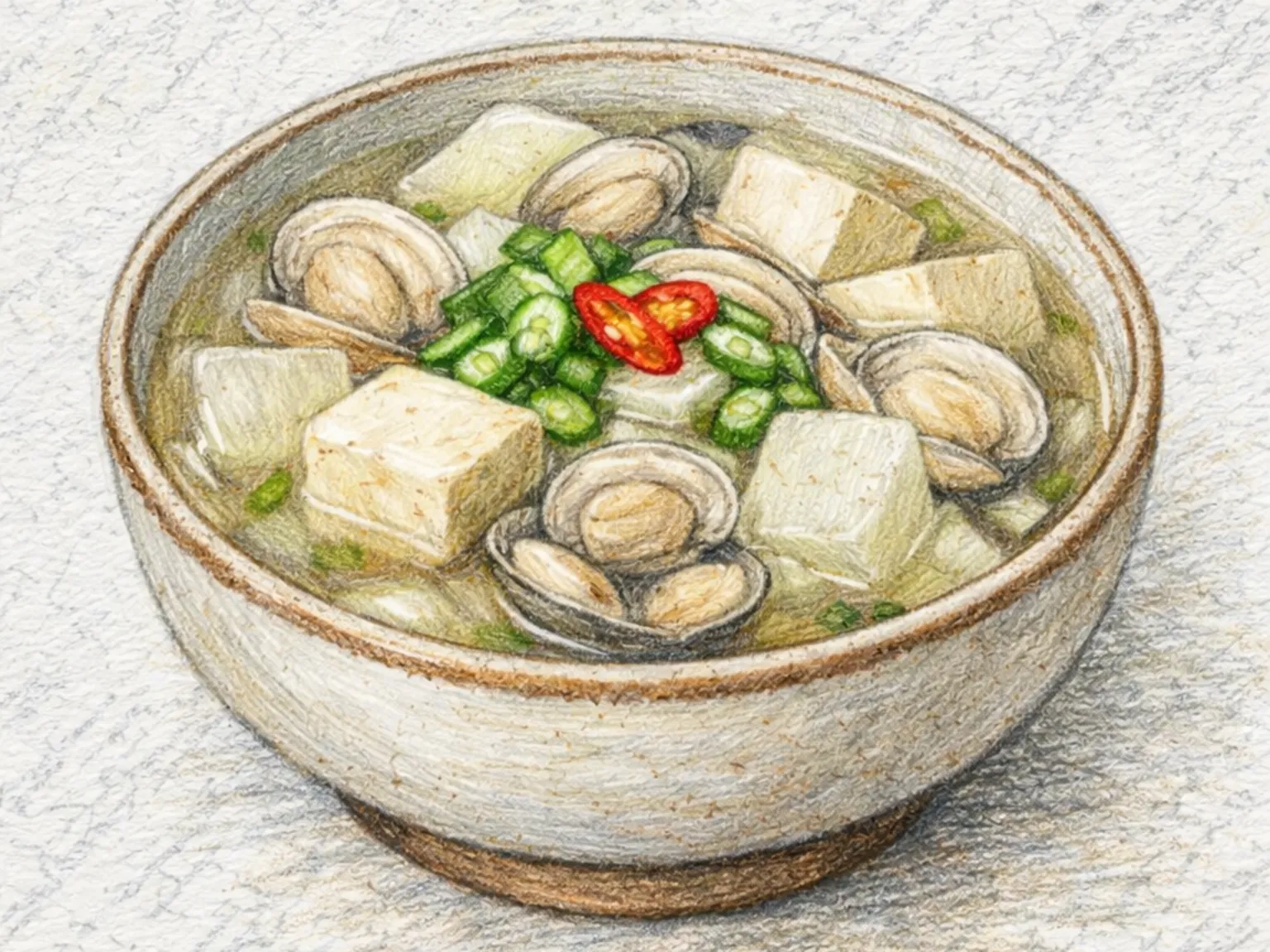
Korean Hard Clam Radish Stew
Sweet radish broth meets briny hard clams in this clean, deeply flavored Korean stew that needs no stock -- just clams, radish, and 35 minutes. The radish goes into the pot first and boils for ten minutes to release its natural sweetness, building the foundation of the broth before the clams are added. Once the clams open, their concentrated marine flavor layers over the radish sweetness, creating a broth that is simultaneously clean and complex. Seasoning is kept minimal with soup soy sauce, and minced garlic is added only after the clams open so it cooks through without remaining sharp and raw. Thick-cut firm tofu absorbs the surrounding broth, acting as a sponge for the clam umami. Diagonally sliced cheongyang and red chilies go in last, contributing a mild heat and visual contrast to the pale liquid. Any clams that fail to open must be removed immediately to keep the broth free of grit. The stew demonstrates how two primary ingredients, clams and radish, can produce a layered, satisfying broth without anchovy or kelp stock. The cool, lingering aftertaste of the clams is a hallmark of this particular combination.
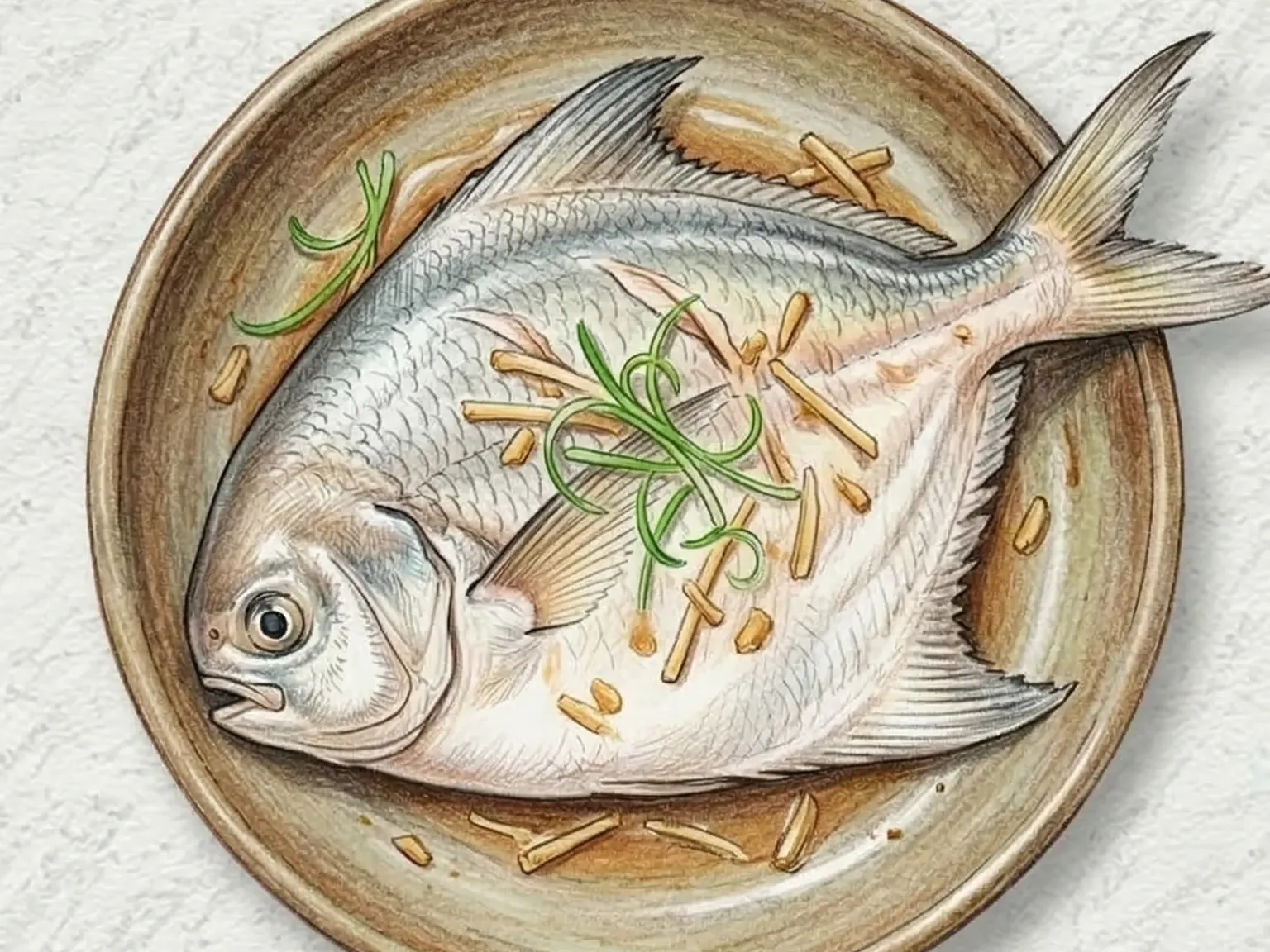
Korean Steamed Pomfret (Whole Fish with Soy Ginger Sauce)
Korean steamed pomfret is a mild fish dish made by steaming a whole scored pomfret with ginger and green onions, then seasoning it with a warm soy sauce mixture. The thin, delicate flesh of the pomfret becomes tender after steaming, allowing the meat to separate easily from the bone. To manage the fish odor and build layers of aroma, sliced ginger and cut green onions are added in two separate stages: first during the main steaming process and again at the end. A heated sauce of soy sauce, rice wine, and water is poured over the cooked fish to ensure the seasoning penetrates evenly. A final touch of sesame oil adds a toasted scent to the non-spicy, low-fat preparation. This clean and mild dish is suitable for various diners.
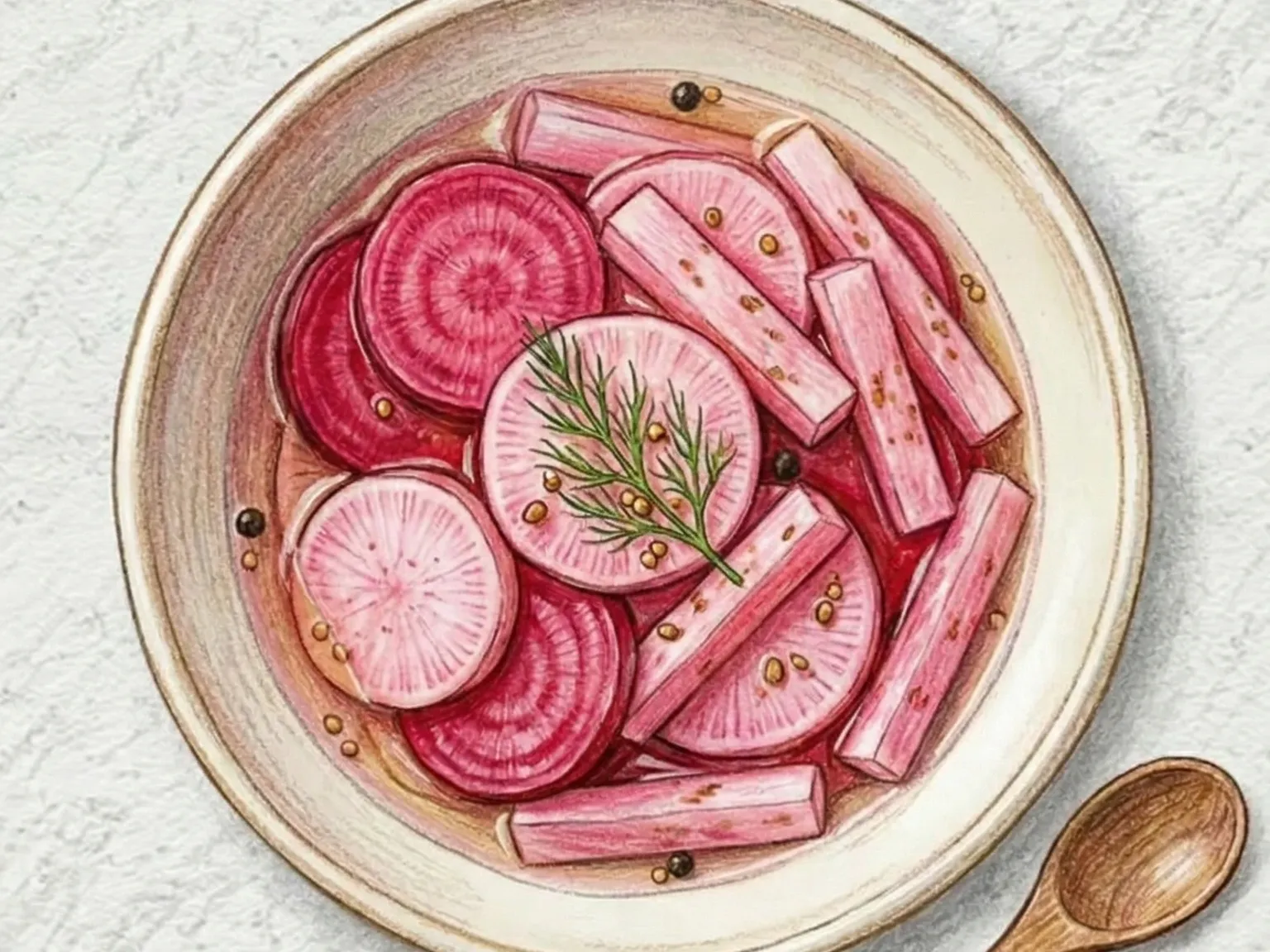
Korean Beet Radish Pickle
Beet mu pickle is a Korean pickle of beet and Korean radish cured together in a vinegar, sugar, and salt brine. The beet's intense red pigment dyes the radish pieces a vivid pink, while the radish contributes its crisp, snapping texture alongside the beet's mellow sweetness. Vinegar keeps the overall flavor bright and refreshing, and sugar smooths out the sharp edge of the acidity. Cutting the beet and radish to the same thickness ensures even curing, and the color distributes fully after at least six hours in the refrigerator. This colorful pickle works as a palate cleanser alongside rich meats or as a crunchy side with Korean street food.
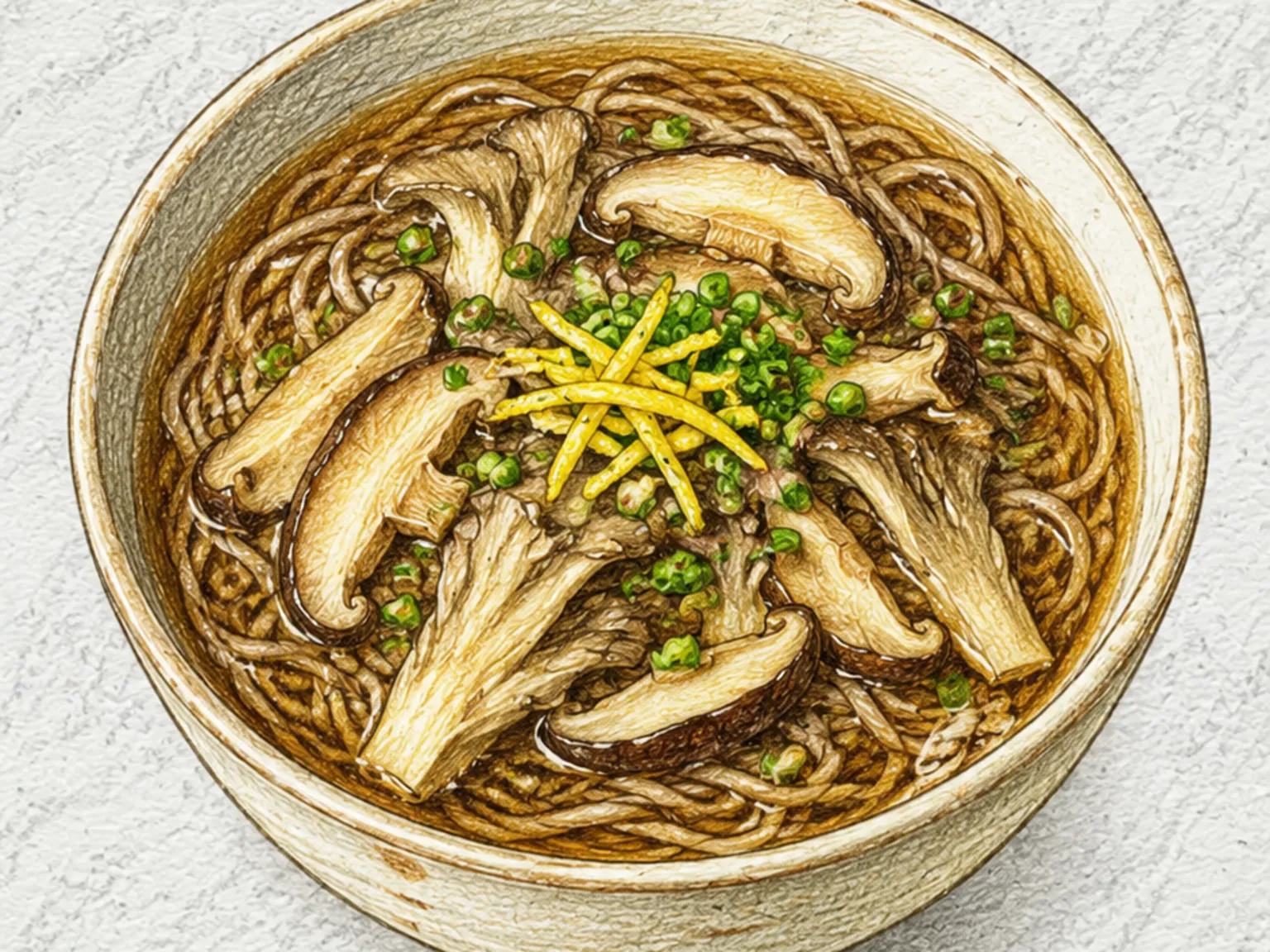
Mushroom Memil Soba (Warm Buckwheat Noodles in Mushroom Dashi)
Beoseot memil soba is a warm buckwheat noodle soup built on dashi stock seasoned with soy sauce and mirin, with shiitake and oyster mushrooms simmered for five minutes so their concentrated woodsy depth moves fully into the broth. Dried shiitake contributes far more umami than fresh, and oyster mushrooms torn along the grain absorb more liquid than sliced. The soba noodles are cooked separately and rinsed in cold water to strip off surface starch, which keeps the broth clear and prevents the noodles from turning soft. A small curl of yuzu zest placed on top just before serving sends a sharp citrus note across the broth's earthy weight, lifting the finish without overpowering it. Green onion scattered on top adds a layer of fresh aroma and color.
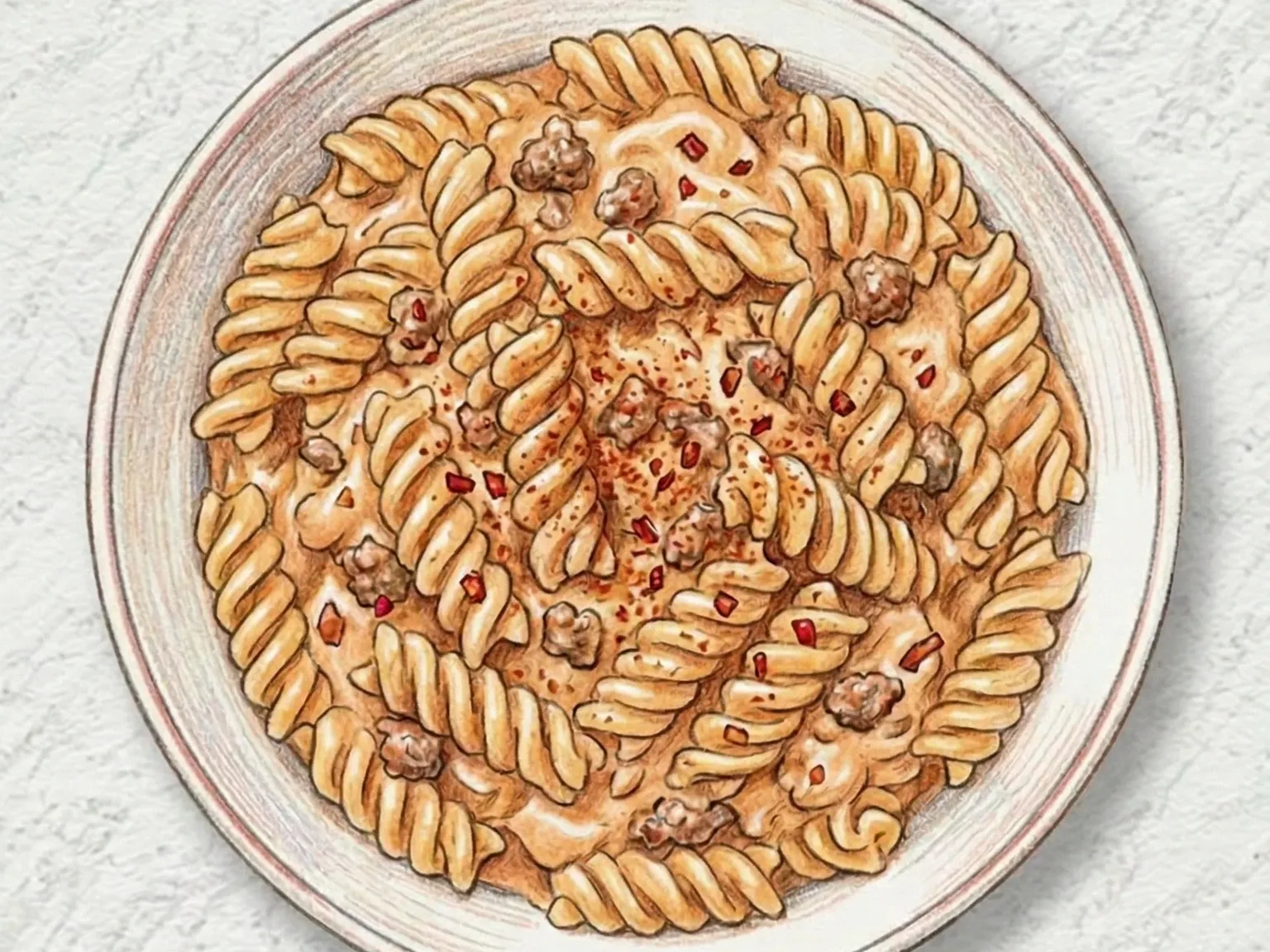
Gochugaru Sausage Rose Fusilli
Gochugaru sausage rose fusilli starts by removing the casing from Italian sausages and breaking the meat into irregular pieces before browning it in a pan over high heat. Irregular pieces create more surface area than a smooth patty, which means more of the meat comes into contact with the hot pan and browns more thoroughly, producing a deeper meaty base for the sauce. Onion and garlic are added to the rendered sausage fat and cooked for three minutes to build sweetness underneath the savory elements. Korean red pepper flakes are stirred into the fat next and fried for just twenty seconds so their aromatic compounds bloom without burning, giving the sauce a warm, rounded heat rather than sharp spiciness. Tomato sauce goes in immediately and simmers for three minutes to concentrate and shed its raw acidity against the fat. Heavy cream and a ladle of pasta cooking water are added together and the sauce is reduced until it turns the characteristic pink of a rose sauce. Fusilli is tossed directly in the pan so the thick sauce can work its way into every spiral groove, ensuring each fork-load is well coated from surface to center. Finishing with grated Parmesan adds saltiness and helps the sauce emulsify slightly, while fresh basil leaves torn over the top provide a clean aromatic note.
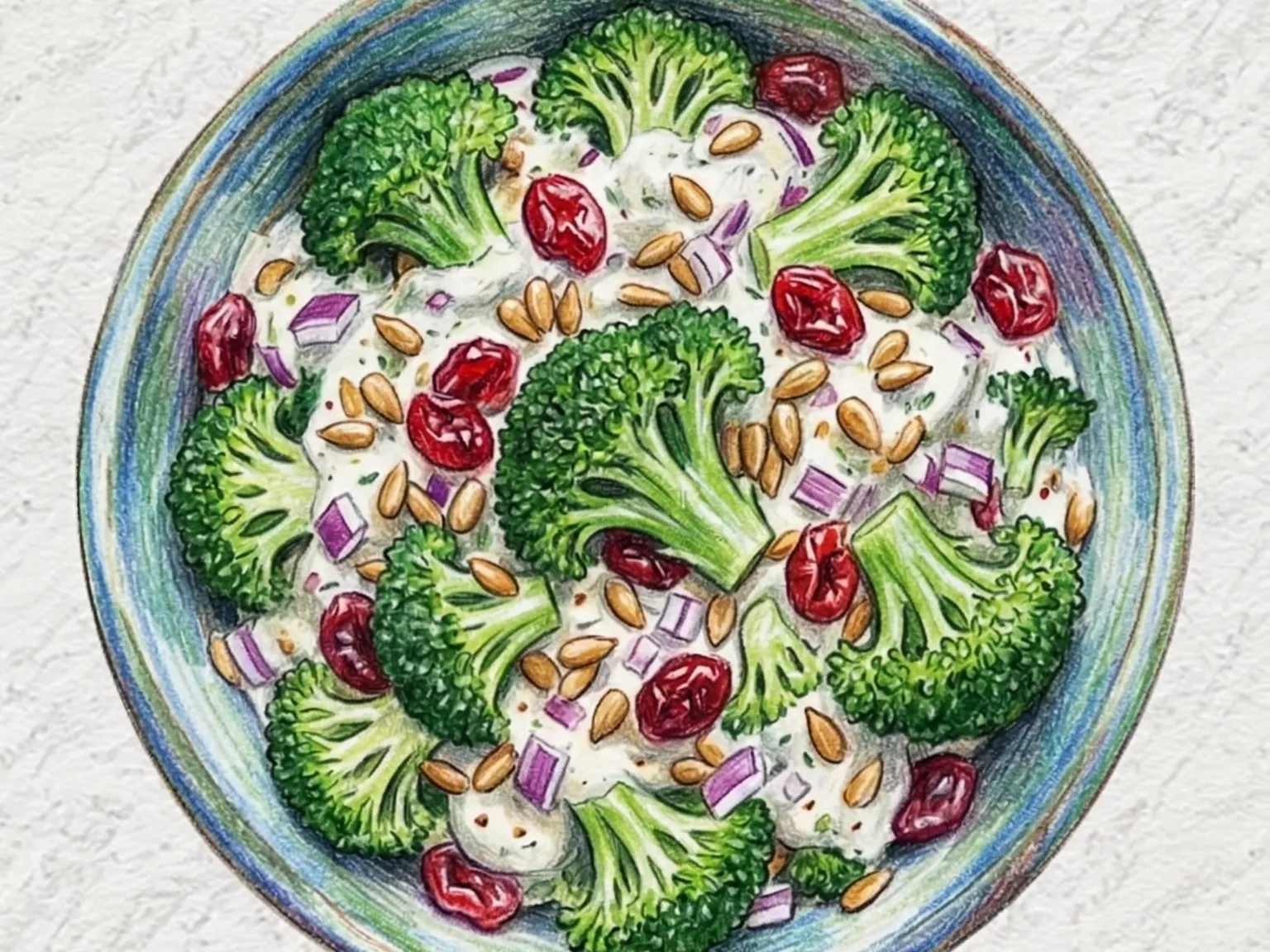
Broccoli Cranberry Salad
Broccoli cranberry salad blanches broccoli for just thirty seconds in boiling water to set its vivid green color and lock in a satisfying crunch, then combines it with dried cranberries for a tart, jammy sweetness and sunflower seeds that add a dry, toasted texture throughout the bowl. A dressing built on Greek yogurt rather than mayonnaise alone delivers genuine creaminess while keeping the overall dish considerably lighter, and a splash of apple cider vinegar gives the finish a clean acidity that cuts through the richness. A small amount of finely diced red onion is enough to add a mild pungency and give the salad direction without making it assertively sharp. This salad rewards preparation in advance because the dressing gradually penetrates the broccoli florets as they sit in the refrigerator, deepening the flavor in a way that freshly dressed salads cannot achieve. After a few hours the textures settle and the flavors meld into something more cohesive than the sum of its parts, making it an unusually practical choice for packed lunches prepared the night before or party spreads assembled hours ahead of time.