🏠 Everyday Recipes
Simple home-cooked meals for any day
1705 recipes. Page 63 of 72
These are the meals you can cook day after day without getting tired of them. Doenjang jjigae, rolled omelet, spicy pork stir-fry - the kind of home-cooked dishes that fill an ordinary day with comfort.
The beauty of everyday cooking is that it relies on common ingredients already in your fridge. No exotic items, no complicated techniques - just straightforward recipes for satisfying home meals.
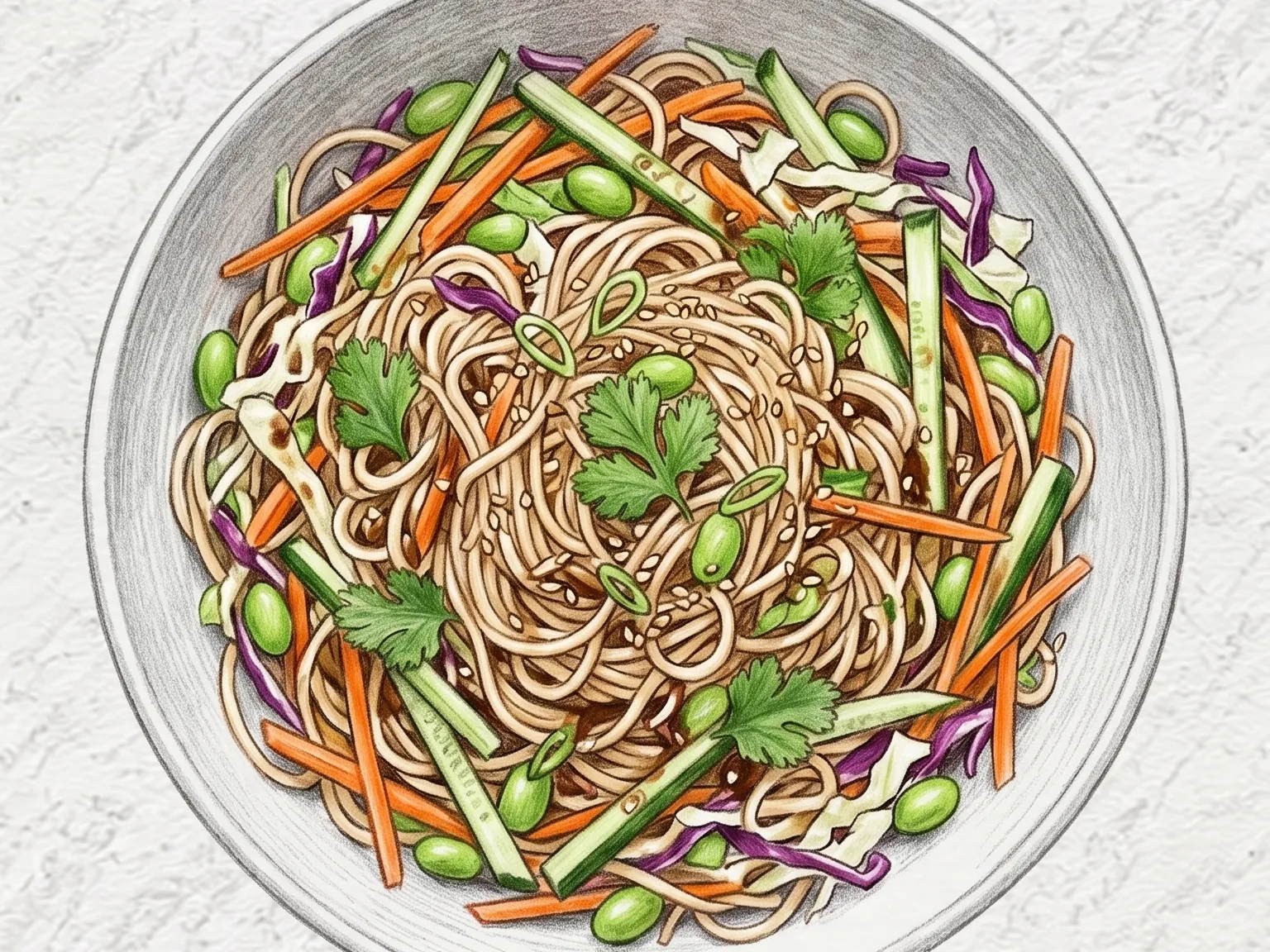
Oriental Soy Protein Noodle Salad
This noodle salad features soy protein noodles served with shredded chicken breast and fresh vegetables in a light soy-based dressing. The noodles require no boiling, only a quick rinse in cold water and thorough draining to preserve their springy texture. Chicken breast is boiled for eight minutes, cooled, and shredded along the grain to maximize dressing absorption. Thinly sliced cucumber, red bell pepper, and baby greens are arranged over the noodles. The dressing is prepared by mixing soy sauce, vinegar, olive oil, garlic, and allulose, which provides a clean sweetness without the weight of sugar. Drizzled right before eating and tossed lightly, this salad tastes best when chilled for ten minutes to enhance the firmness of the noodles.
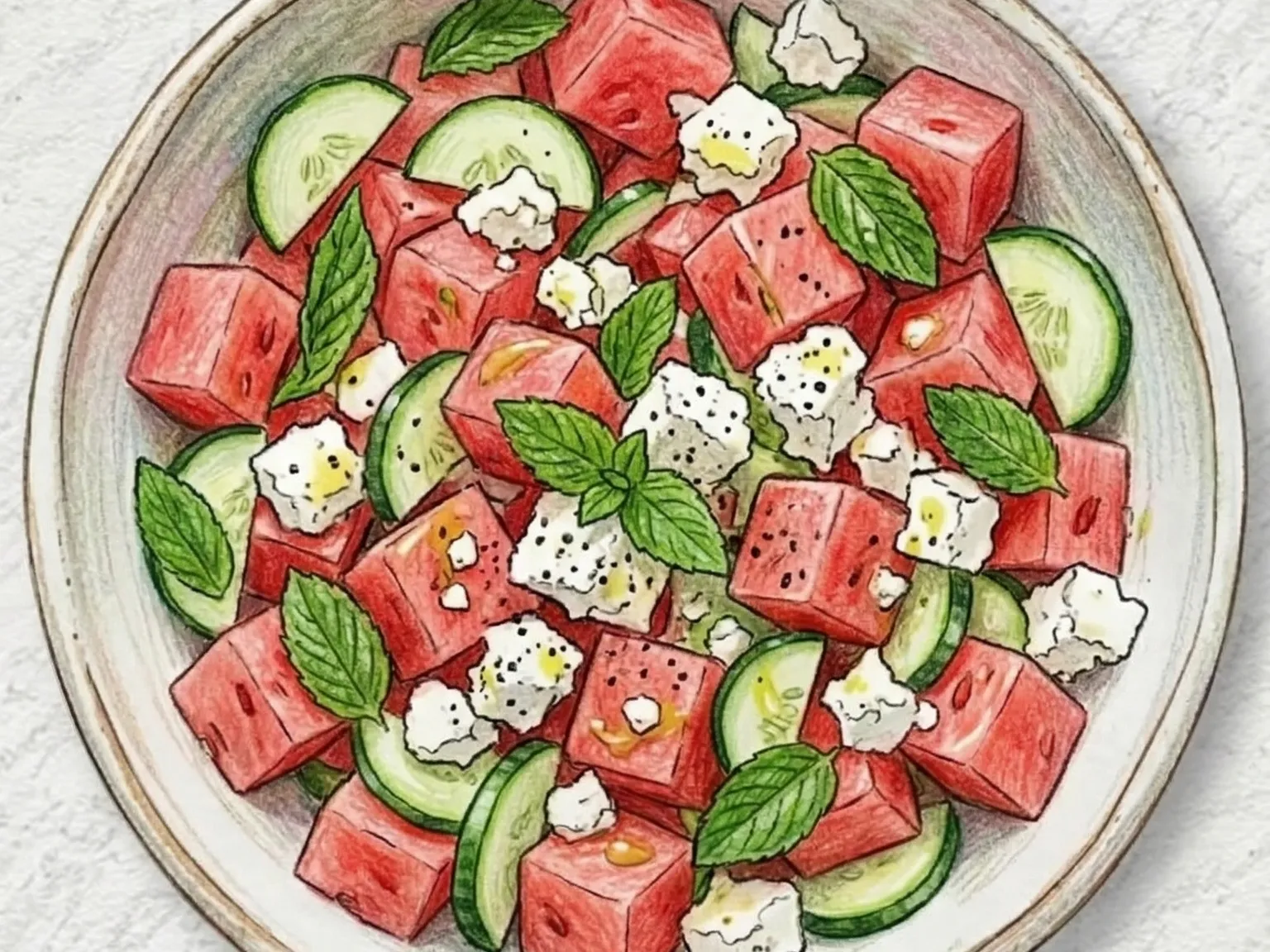
Watermelon Feta Salad
Watermelon feta salad combines chilled watermelon cubes with crumbled salty feta cheese, sliced cucumber, and fresh mint, dressed lightly with olive oil and lime juice. The watermelon's high water content and natural sugar create a sharp sweet-salty contrast against the feta, and the mint adds a cool, aromatic layer on top of that contrast. Thinly sliced cucumber in half-moon shapes introduces a different kind of crunch from the melon, and lime juice sharpens the fruit's sweetness to keep the finish clean rather than cloying. Crumbling the feta by hand rather than cutting it produces irregular surfaces that release more flavor on contact with the tongue. A light dusting of black pepper adds a quiet warmth that gives the salad a sense of direction.
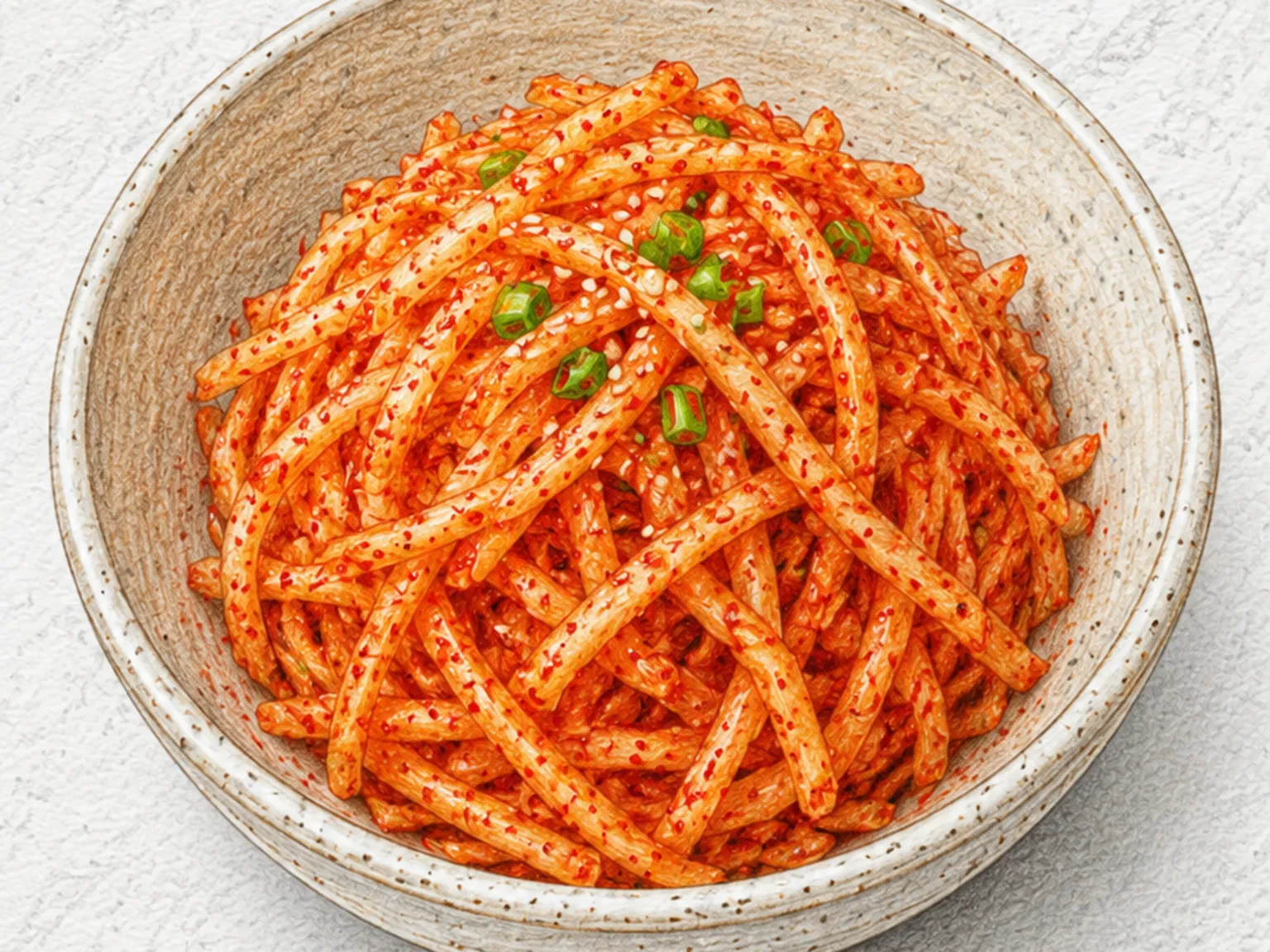
Korean Spicy Radish Salad
Mu-saengchae is a raw Korean radish salad dressed in gochugaru, vinegar, fish sauce, and sugar that sets itself apart from kimchi by skipping fermentation entirely and going straight to the table. The radish is julienned into fine, five-centimeter-long strips because a thinner cut allows the dressing to coat every surface evenly; cutting too thick leaves the raw radish's sharp pungency exposed and untempered. A ten-minute salting with coarse salt is the pivotal step that collapses the cell walls partially, drawing out excess moisture and priming the strips to absorb the dressing rather than dilute it. The finished sauce combines gochugaru, anchovy fish sauce, vinegar, sugar, minced garlic, and sesame oil into a dressing where the fish sauce lays down a concentrated umami backbone over the radish's clean, neutral flavor while the vinegar slows further moisture release to preserve crunchiness across the full serving period. Eaten fresh, the texture is at its maximum snap; left in the refrigerator overnight, the strips soften into a lightly pickled state that is equally good in its own way. Served beside fatty dishes such as samgyeopsal or braised short ribs, mu-saengchae clears and resets the palate between bites of rich meat, and it pairs without friction alongside virtually any protein-centered side.
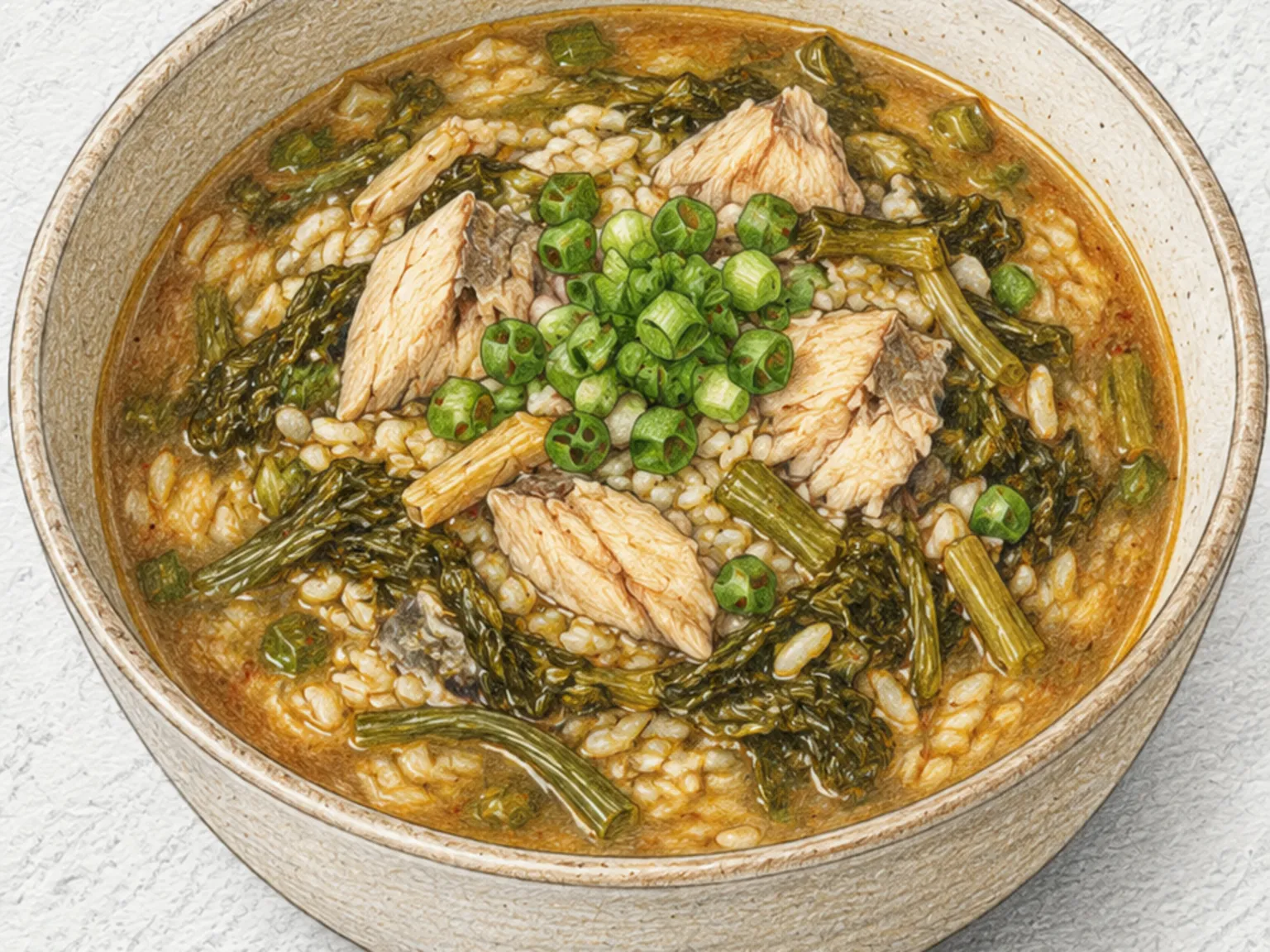
Korean Mackerel and Dried Greens Rice Soup
Siraegi-godeungeo gukbap is a hearty Korean rice soup that simmers mackerel fillet and dried radish greens in a doenjang-based broth, then ladles everything over rice. The mackerel contributes a bold, oily umami while the siraegi adds an earthy vegetal depth - together in the fermented soybean broth, they create a rich, layered flavor. Anchovy stock forms the base, and a spoonful of gochugaru gives the soup a gentle heat that warms from the inside. The dried greens are boiled until completely tender before going into the pot, and the mackerel is deboned for easy eating. Finished with scallion and garlic, the broth soaks into the rice grains, making each spoonful a complete bite of soup, fish, greens, and grain.
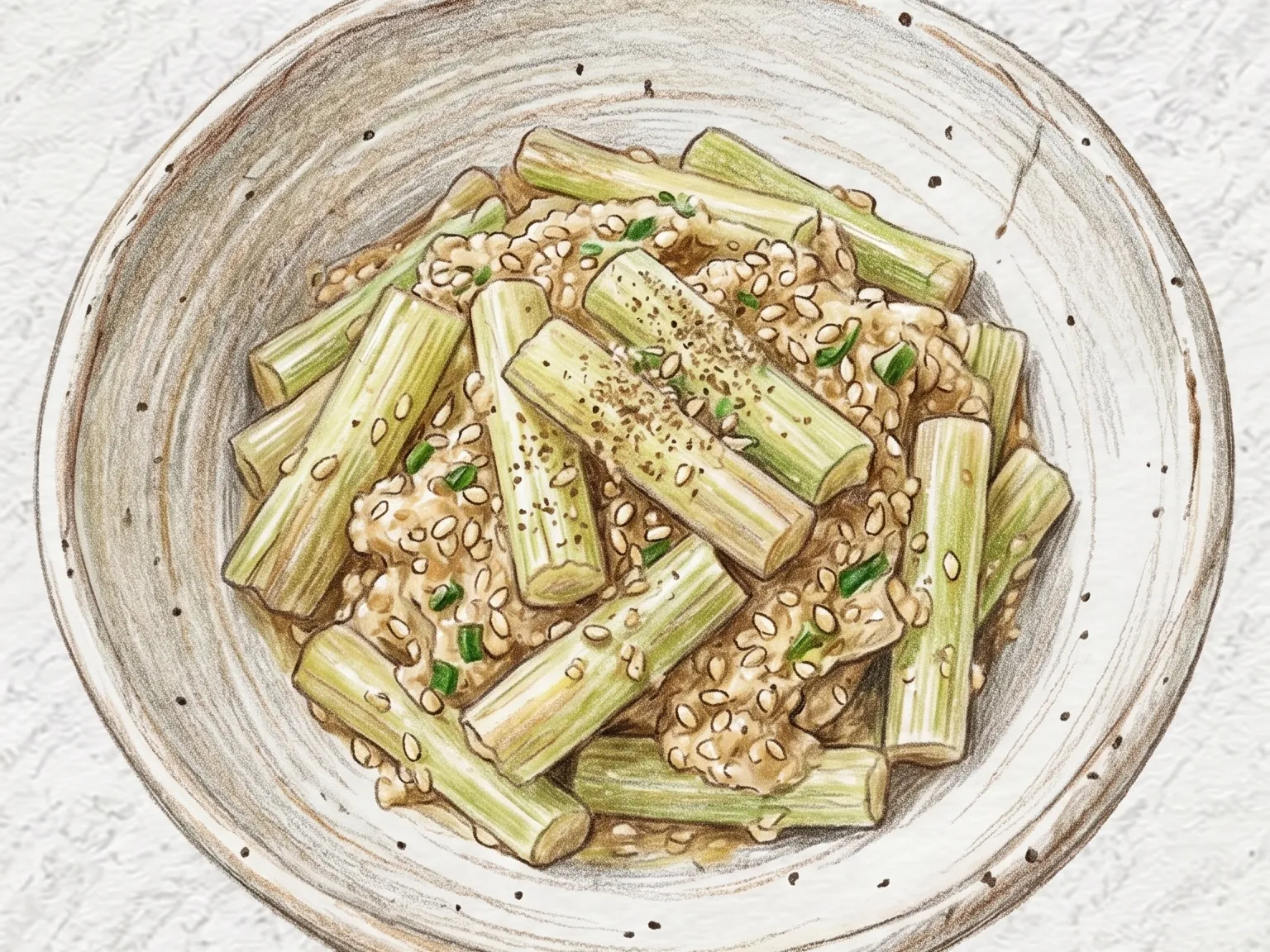
Korean Butterbur Stem Stir-fry with Perilla
Meowi-dae-deulkkae-bokkeum is a seasonal Korean stir-fry of boiled butterbur stems coated in perilla seed powder and perilla oil. The stems are peeled of their tough outer fibers and cut into 5 cm lengths before a brief boil removes their natural bitterness, leaving a soft, slightly slippery texture. Soup soy sauce seasons the base, and perilla powder is folded in at the end to preserve its nutty, toasty fragrance. This dish appears most often in spring, when fresh butterbur is in season across Korean markets.
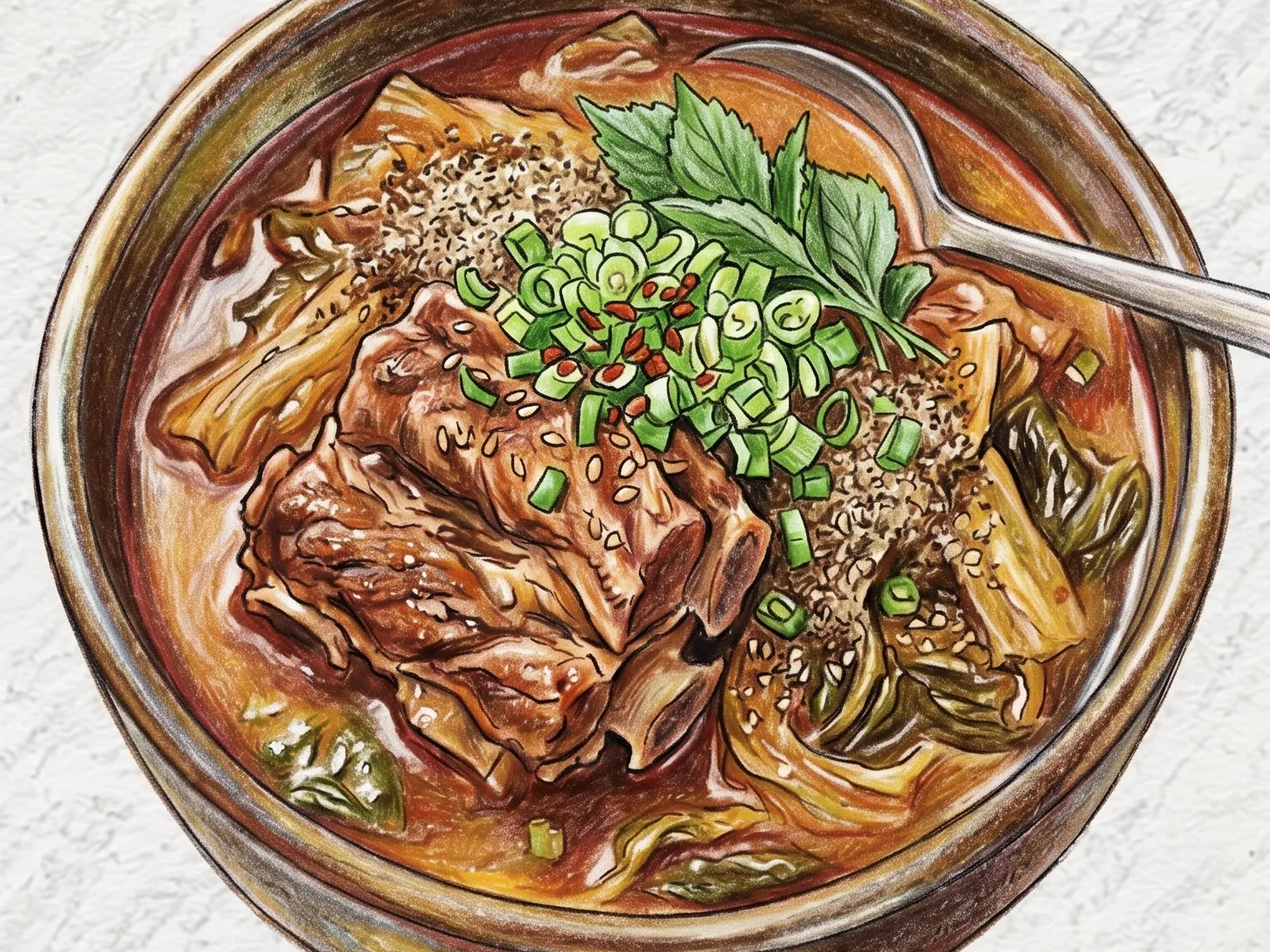
Korean Pork Bone Hangover Soup
Ppyeo-haejang-guk is a Korean hangover soup built on a foundation of pork neck bones simmered for well over an hour until their collagen dissolves into a heavy, full-bodied stock. The bones are soaked and blanched beforehand to eliminate any off-flavors, and the resulting broth is clean despite its richness. Blanched napa cabbage outer leaves are pre-seasoned with doenjang, gochugaru, garlic, and soup soy sauce before being added to the pot, where they absorb the meaty broth and release their own earthy flavors in return. Perilla seed powder is stirred in at the end, thickening the liquid to a creamy consistency and adding a nutty finish. The completed soup is spicy, deeply savory, and thick enough to feel restorative after a long night. In Korea, this style of haejang-guk is a morning-after institution, served steaming in dedicated restaurants that open before dawn.
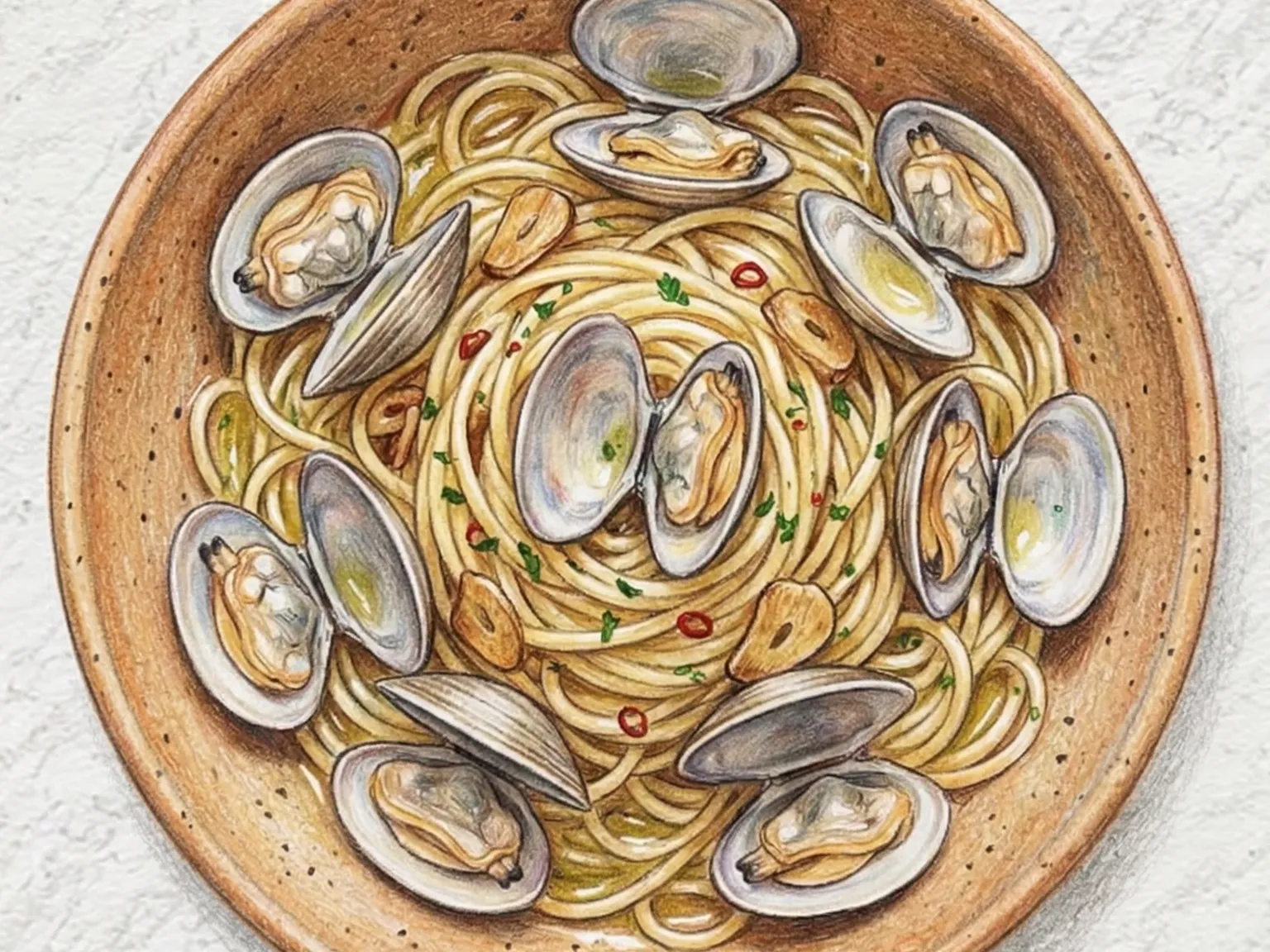
Spaghetti alle Vongole
Spaghetti alle vongole is an Italian pasta where clams are cooked in olive oil with sliced garlic, chili flakes, and dry white wine until they open and release their briny juices. The spaghetti is boiled one minute short of al dente, then finished in the clam pan with a few tablespoons of starchy pasta water to create an emulsified sauce. Vigorous tossing for about a minute binds the oil and clam liquid into a glossy coating around each strand. Fresh parsley is added at the end for color and herbal freshness.
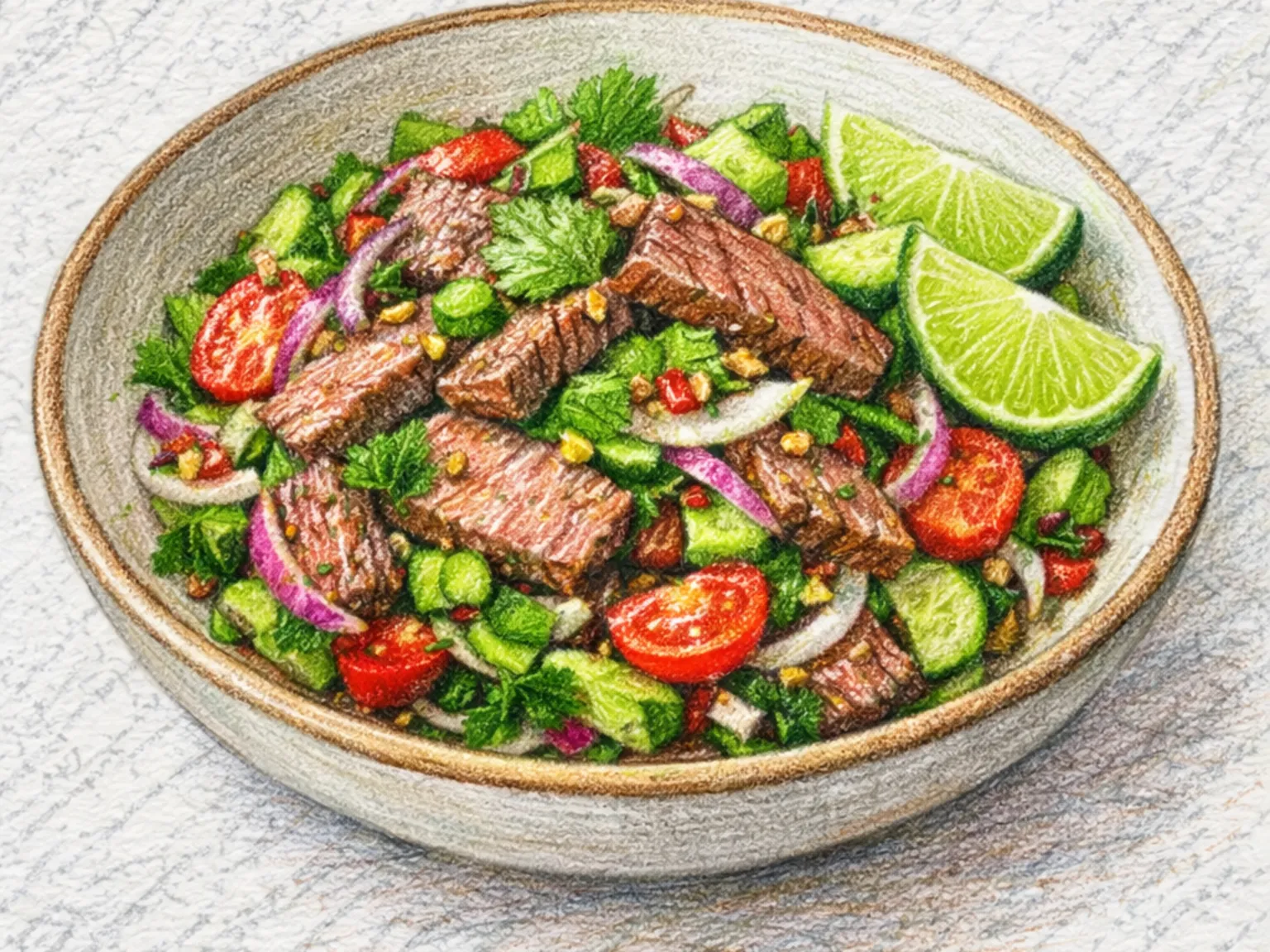
Thai Beef Salad (Charred Sirloin Tossed in Lime-Fish Sauce)
Yam neua is a Thai beef salad where sirloin is seared on high heat until the surface is deeply charred but the interior remains medium, then sliced thin and tossed with cucumber, tomato, red onion, and torn mint in a lime-fish sauce dressing. Cooking each side for only two to three minutes keeps the center pink and tender, and resting the meat for five minutes before slicing prevents the juices from running out onto the cutting board. The dressing layers fish sauce umami under sharp lime acidity and chili flake heat, cutting through the rich beef fat with precision. Torn mint leaves scattered throughout provide a cool, aromatic pause between the spicy, sour bites. If the red onion's raw bite is too strong, soaking it in cold water for five minutes mellows it without losing its crunch.
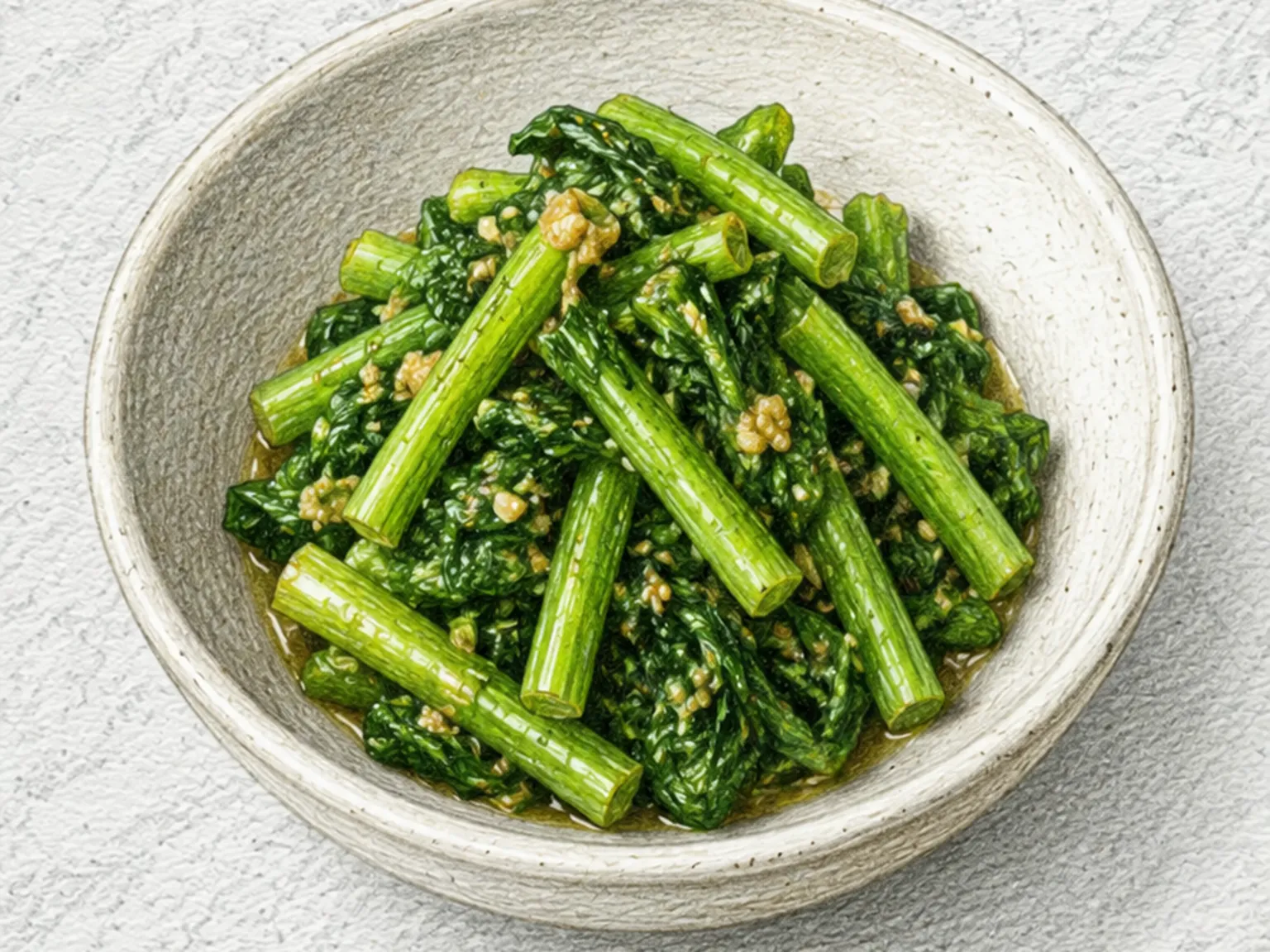
Korean Seasoned Radish Greens
Mucheong-namul is a Korean banchan made from the leafy stems attached to daikon radish, blanched and dressed with doenjang and perilla oil. Unlike fully dried siraegi, fresh or semi-dried mucheong retains a grassy vitality that carries through to the finished dish. Radish greens emerge as a byproduct of the autumn kimjang harvest, when whole radishes are pulled from the ground, and rural Korean kitchens have long turned these tops into namul or hung them to dry for winter. Fresh mucheong requires at least five minutes of boiling to break down its tough stem fibers so they soften properly. A thorough rinse in cold water follows, washing away the bitter, astringent edge that develops during cooking. Seasoning with doenjang and soup soy sauce layers the fermented paste's earthy depth over the greens' faintly bitter, grassy character, creating a contrast that makes each bite more interesting than either ingredient alone. Perilla oil is preferred over sesame because its lighter, quieter fragrance complements the greens' natural flavor rather than overpowering it. Stirring in ground perilla seeds at the end thickens the dressing and wraps each strand of mucheong in a nutty coating, producing a noticeably deeper-flavored version than mucheong-namul made without them. A hearty, clean-tasting winter banchan tied to the rhythm of the radish harvest.
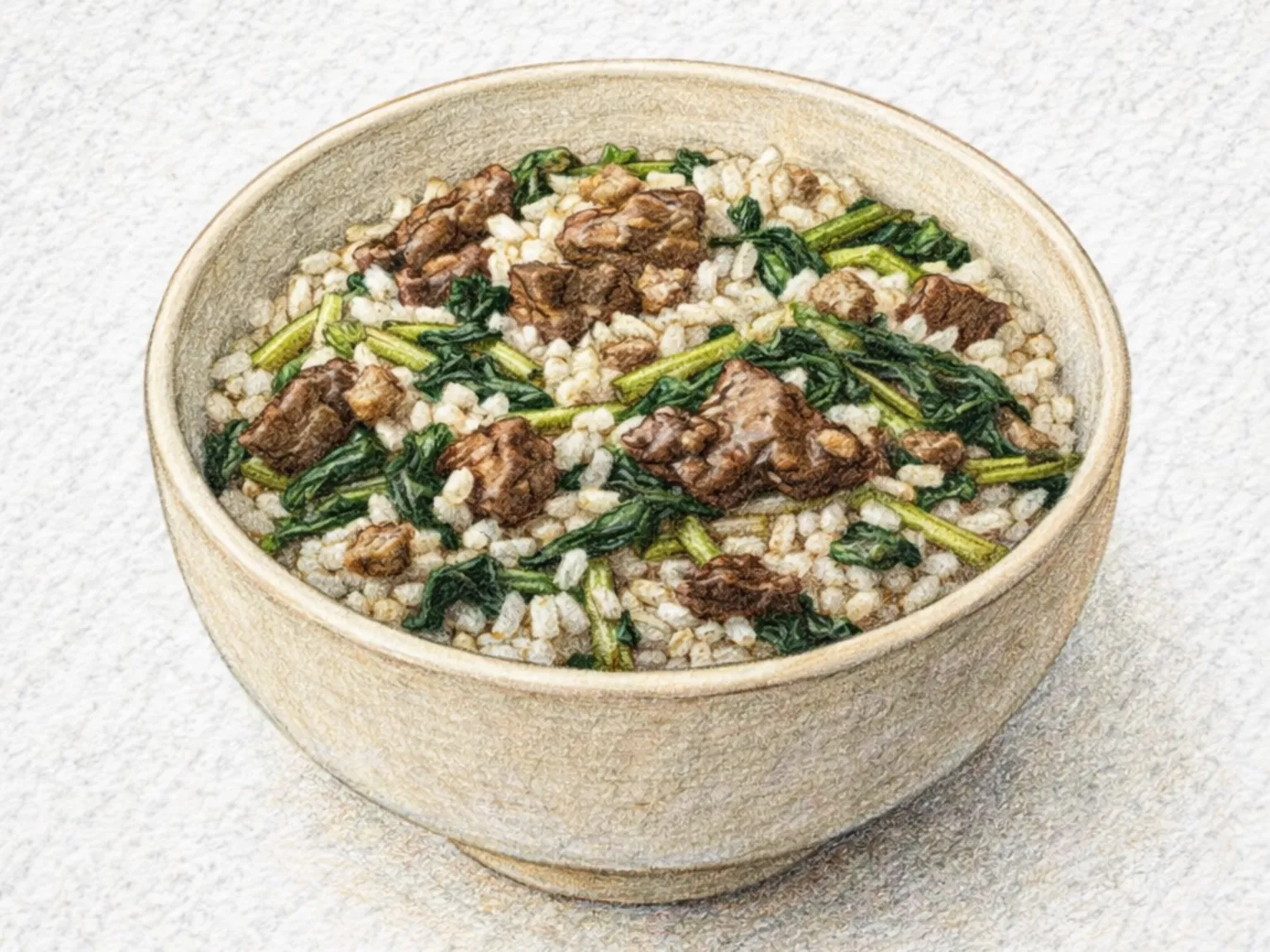
Korean Dried Radish Greens Beef Pot Rice
This pot rice layers soy-garlic marinated beef and softened siraegi over soaked rice, then cooks everything together in a heavy pot so the meat juices and earthy green flavors permeate every grain. Perilla oil is added to the pot, giving the finished rice a glossy sheen and a distinctly nutty aroma. As the rice cooks, the beef releases its savory juices downward while the siraegi steams on top, creating a gradient of flavor from meaty bottom to herbaceous top. A doenjang-based sauce mixed in at the table adds a salty, fermented punch that amplifies both the beef and the greens. The crispy scorched rice - nurungji - that forms at the bottom of the pot provides a crunchy finish to an otherwise soft, deeply flavored meal.
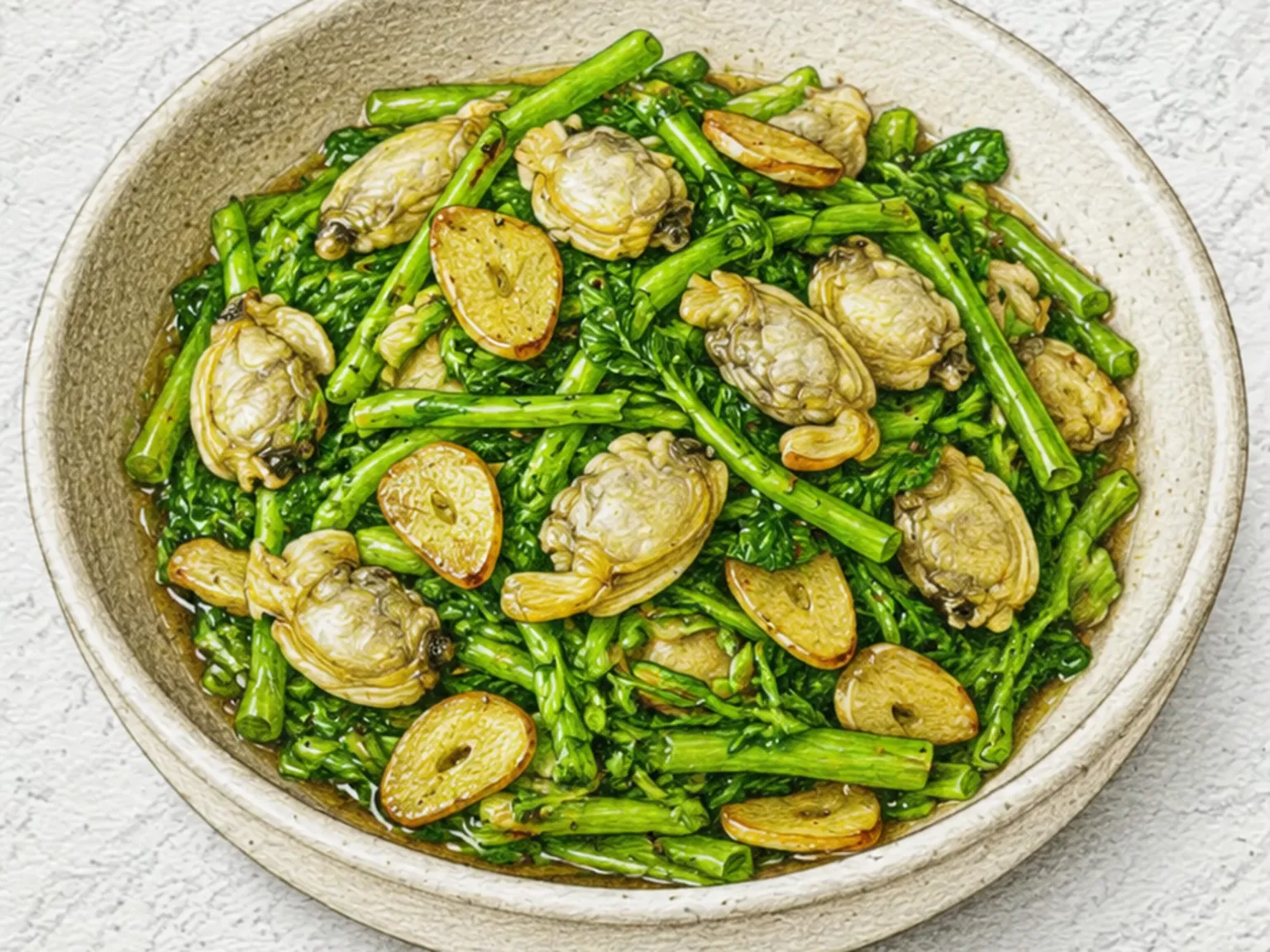
Korean Water Parsley, Clam & Garlic Stir-fry
Minari-bajirak-maneul-bokkeum starts by slowly toasting garlic slices in oil over low heat until they turn golden and mellow, coaxing out a sweet, nutty fragrance that becomes the aromatic backbone of the entire dish. As the garlic cooks gently, its sharp pungency fades and the infused oil absorbs its full flavor. Clam meat goes in next with a splash of rice wine and cooks for just about 90 seconds at higher heat, long enough to eliminate any fishiness while keeping the flesh plump and springy. Water parsley stems are added with a measure of soup soy sauce and, if desired, sliced red chili, and their crunch is preserved by not overcooking. The delicate parsley leaves join only in the final 20 seconds before the heat is turned off so they barely wilt, contributing their distinctive grassy aroma without losing it entirely to the heat. A few drops of sesame oil finish the dish. The result brings together three distinct textures and flavors in a single pan: the sweet depth of the toasted garlic oil, the clean ocean salinity of the clams, and the fresh herbal brightness of the minari.
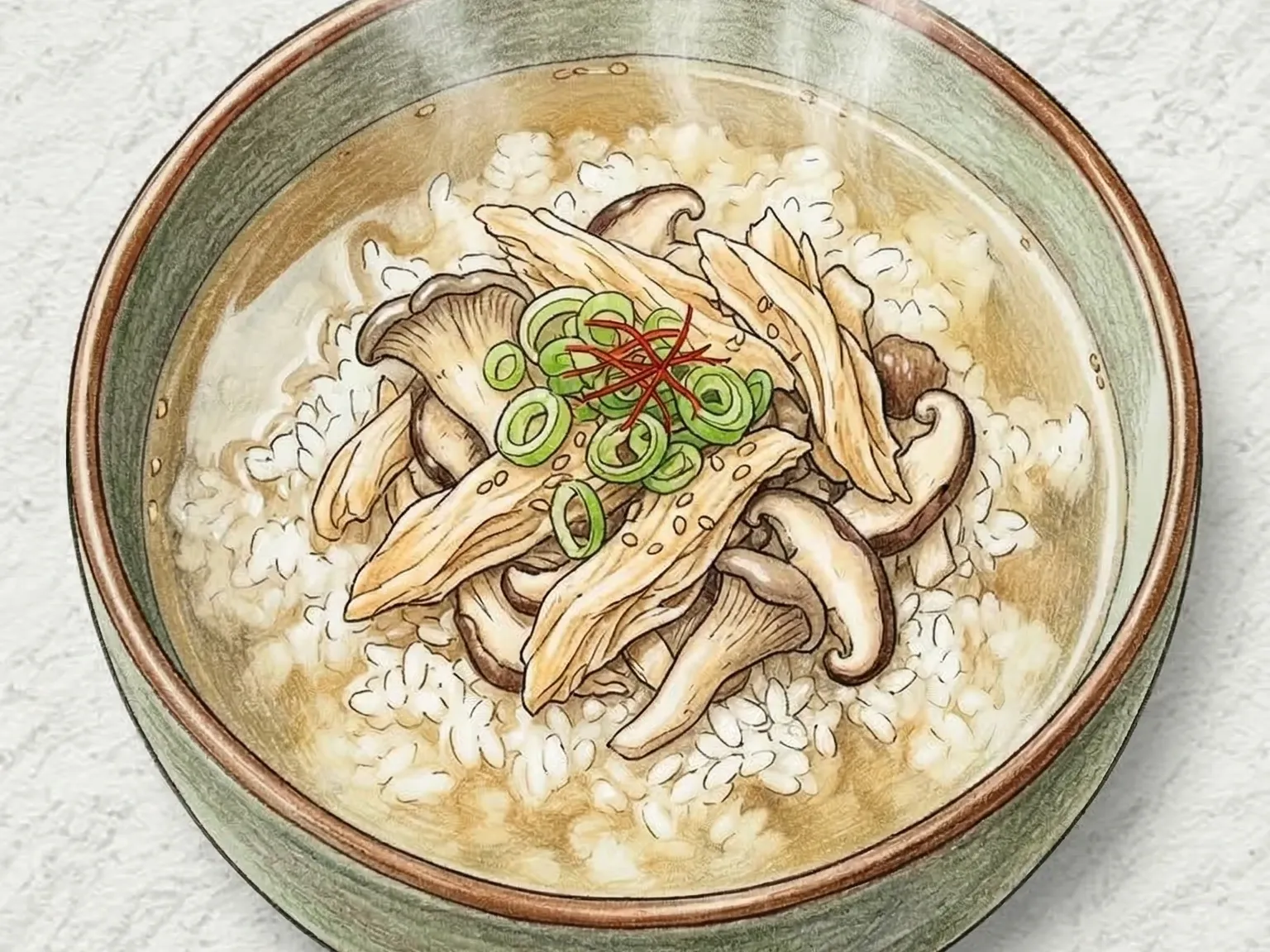
Korean Pyongyang Onban (Rice in Clear Chicken Broth)
Pyeongyang-onban is a North Korean-style warm rice soup in which steamed rice is submerged in clear chicken broth and topped with shredded chicken and sliced shiitake mushrooms. The chicken simmers with garlic and green onion for forty-five minutes, producing a clean, golden stock that is strained for clarity before use. The cooked meat is pulled into strips and set aside, while shiitake slices steep in the broth for five minutes to add an earthy dimension without muddying the liquid. Rice goes into the bowl first, followed by the hot broth and the chicken garnish, with salt as the sole seasoning. No fermented pastes, chili, or bold spices are used, which means the dish stands entirely on the quality of the stock itself. Onban was traditionally served as a breakfast dish in Pyongyang, and the deliberate restraint in seasoning makes it one of the gentler, more stomach-friendly preparations in the Korean rice soup tradition. A long, unhurried simmer is what separates a flat broth from one with real depth.
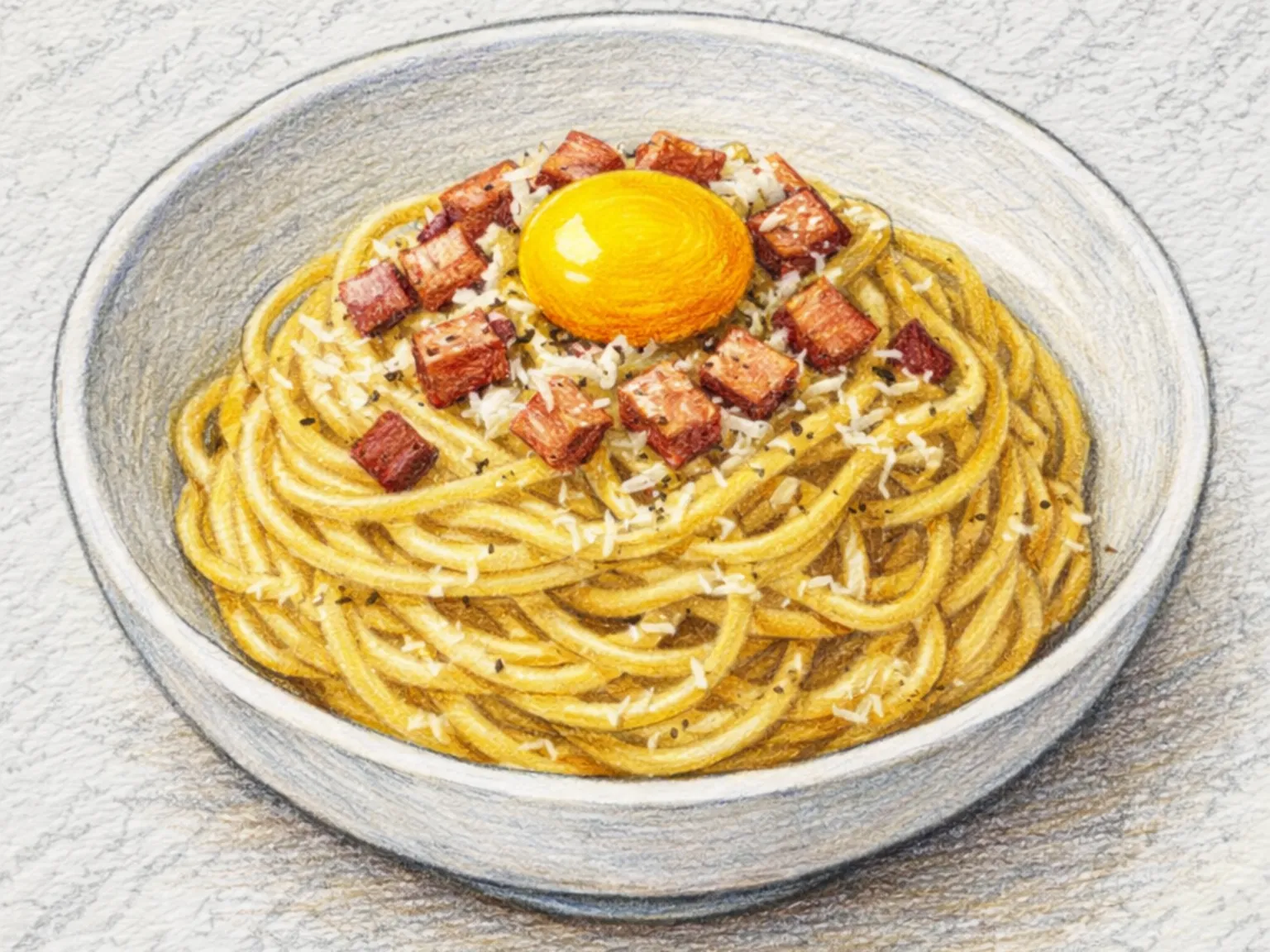
Spaghetti Carbonara
Carbonara is a Roman pasta built on four core ingredients: guanciale, egg yolks, Pecorino Romano, and black pepper. The guanciale is rendered until crisp, and its fat becomes the base of the sauce. Off the heat, a mixture of yolks and grated cheese is tossed with the hot pasta and starchy cooking water to form a glossy emulsion - no cream involved. The dish takes under 25 minutes from start to finish, though temperature control at the sauce stage is critical to avoid scrambling the eggs. The main ingredients are Spaghetti, Guanciale (or pancetta), Egg yolks, and Whole egg, and the recipe depends on careful handling of noodle cooking time and sauce thickness.
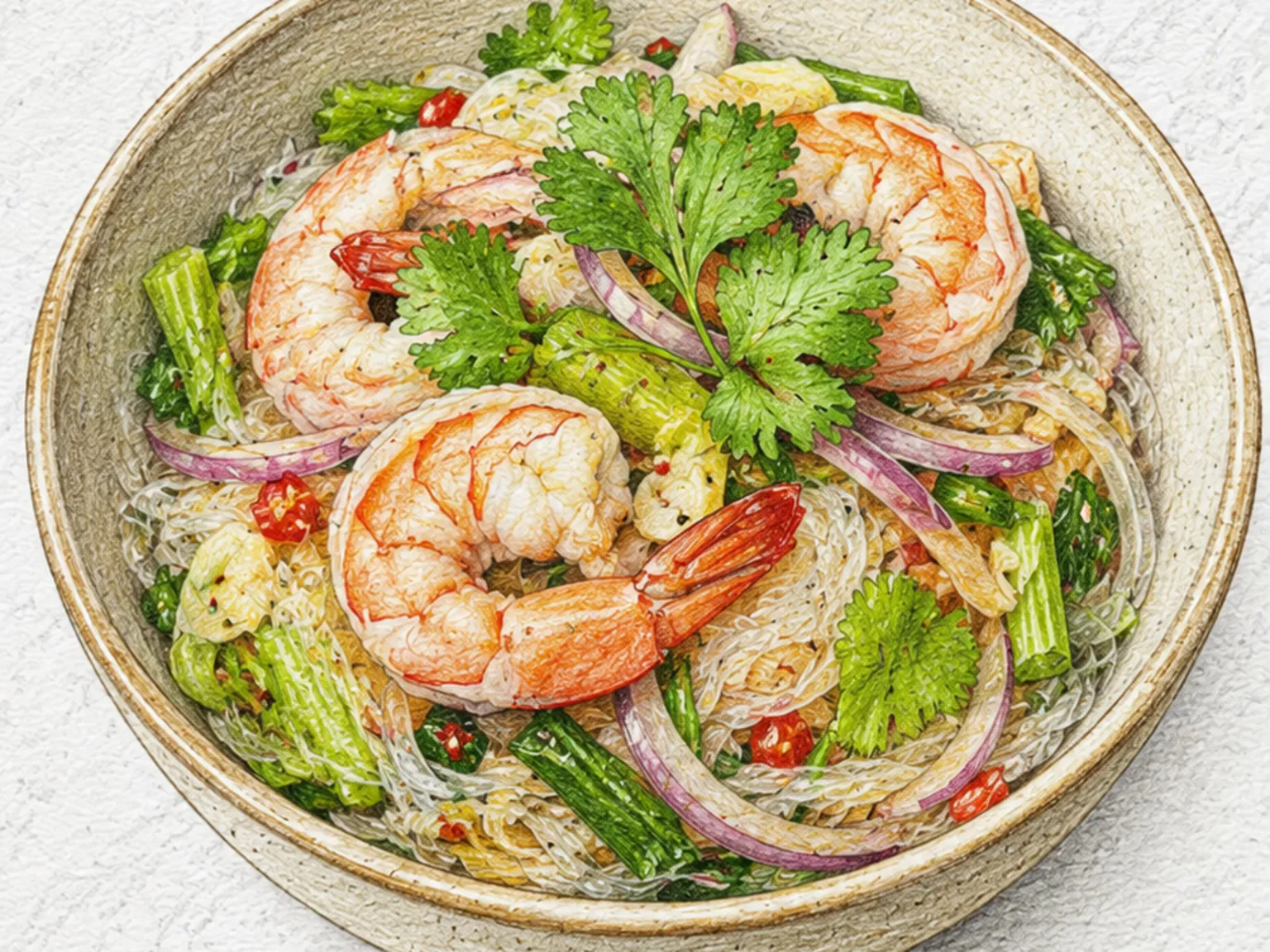
Yam Woon Sen (Thai Glass Noodle Salad with Shrimp)
Yam woon sen is a Thai glass noodle salad where soaked and briefly boiled mung bean noodles are tossed with blanched shrimp, sliced red onion, diagonally cut celery, and chopped cilantro in a dressing of lime juice, fish sauce, and palm sugar. The noodles are soaked in warm water for ten minutes, then boiled for just two minutes to maintain their chewy, springy texture - rinsing in cold water immediately after removes surface starch and prevents clumping. The shrimp need only a two-minute blanch to reach a firm, bouncy doneness; any longer and they turn rubbery. The dressing builds three layers simultaneously - fish sauce for salty depth, lime juice for bright acidity, and palm sugar for a caramel sweetness - creating the complex balance characteristic of Thai cuisine. Cilantro provides a fresh, herbal finish.
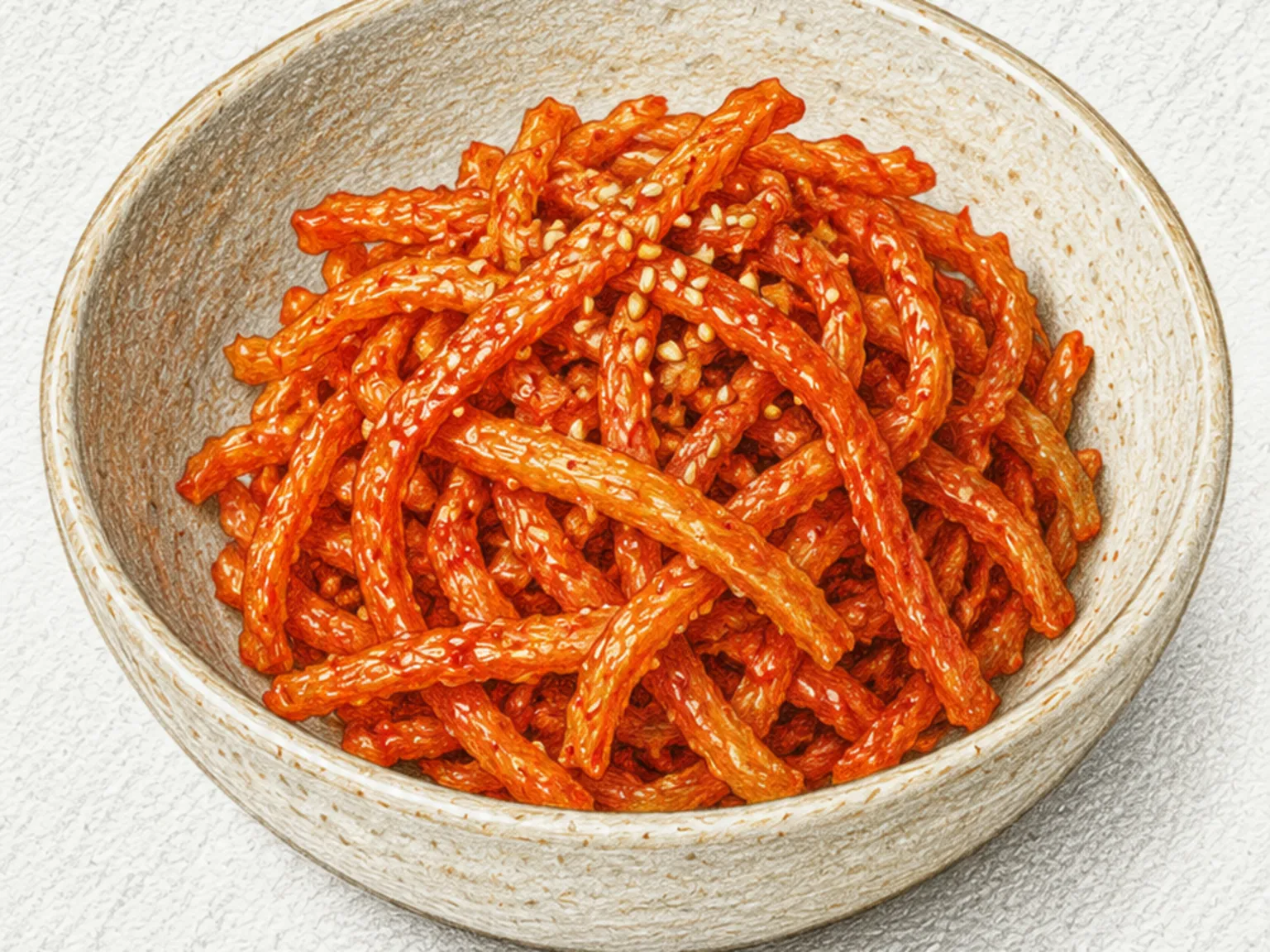
Korean Seasoned Dried Radish Strips
Mumallaengi-muchim dresses rehydrated dried radish strips in a gochujang-based sauce - a Korean preservation banchan rooted in the pre-refrigeration practice of slicing winter radish and air-drying it in cold winds. Dehydration concentrates the radish's natural sugars and transforms its texture from crisp to chewy, creating a ingredient with more depth than the fresh root. Soaking time determines the outcome: twenty minutes in cold water softens the strips enough to be pleasant while retaining the springy chew that is the whole point of using dried radish. Over-soaking produces a limp, waterlogged result indistinguishable from fresh radish. The dressing blends gochujang, gochugaru, vinegar, sugar, garlic, and sesame oil into a sweet-sour-spicy balance, with vinegar playing a particularly important role - it adds brightness to the dried radish's concentrated, earthy flavor. After mixing, a ten-minute rest allows the sauce to permeate the porous fibers evenly. Because the finished banchan contains almost no free moisture, it travels exceptionally well in lunchboxes and keeps refrigerated for over a week.
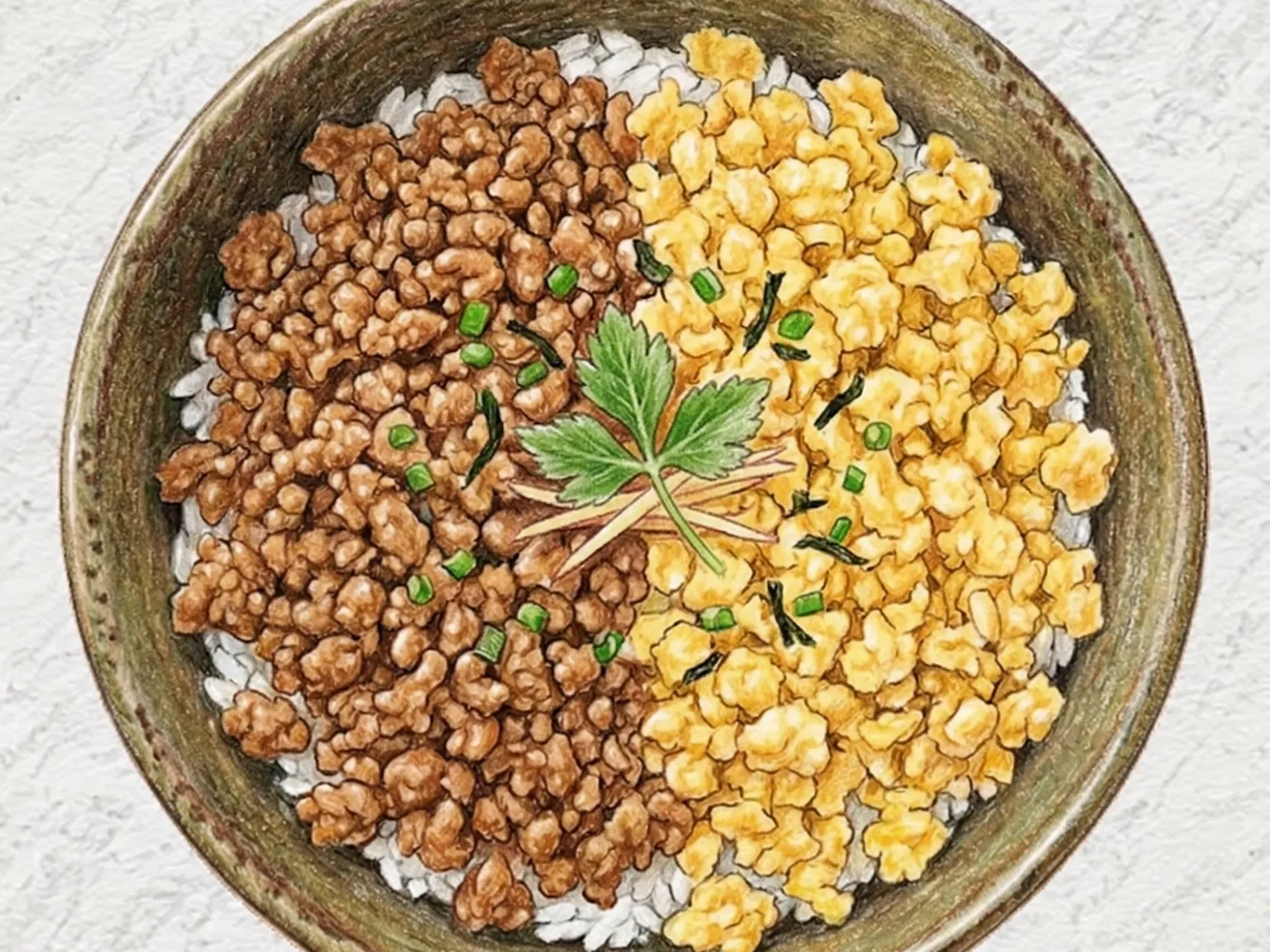
Chicken Soboro Rice Bowl (Ground Chicken and Scrambled Egg over Rice)
Soboro-don is a Japanese-style rice bowl that tops steamed rice with two side-by-side mounds: savory minced chicken and sweet scrambled egg. The chicken is seasoned with soy sauce, sugar, mirin, and ginger juice, then stirred constantly with chopsticks over medium heat until it breaks into fine, crumbly grains that are individually coated in glaze. The egg is treated the same way - beaten, poured into a pan, and stirred into soft, fluffy curds. Arranged half-and-half on the rice, the brown chicken and bright yellow egg create a visual contrast that makes the bowl inviting. Both toppings share a gentle sweetness balanced by soy umami, and their fine, loose texture means every bite blends effortlessly with the rice beneath.
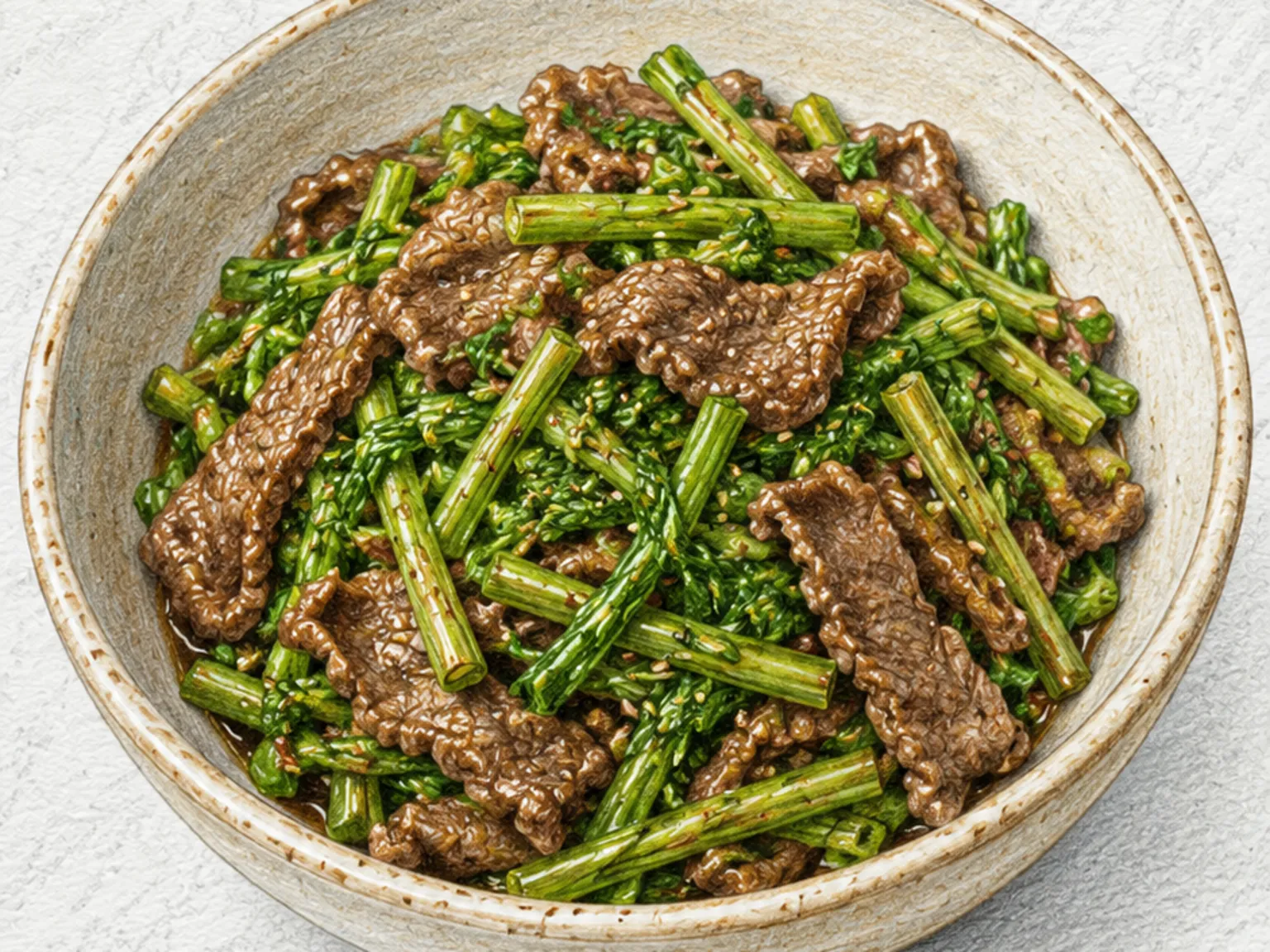
Korean Water Parsley Beef Stir-Fry
Minari-sogogi-bokkeum pairs thinly sliced beef - briefly marinated in soy sauce - with water parsley, finishing the stir-fry with sesame oil. The beef provides a savory foundation, while minari's distinctive herbal sharpness cuts through the richness, leaving a clean aftertaste. Because water parsley wilts rapidly, it is added in the final moments and tossed for only a few seconds to preserve both its crunch and fragrance. The seasoning is deliberately minimal - just soy sauce, garlic, and sesame oil - letting the contrast between the two main ingredients speak for itself.
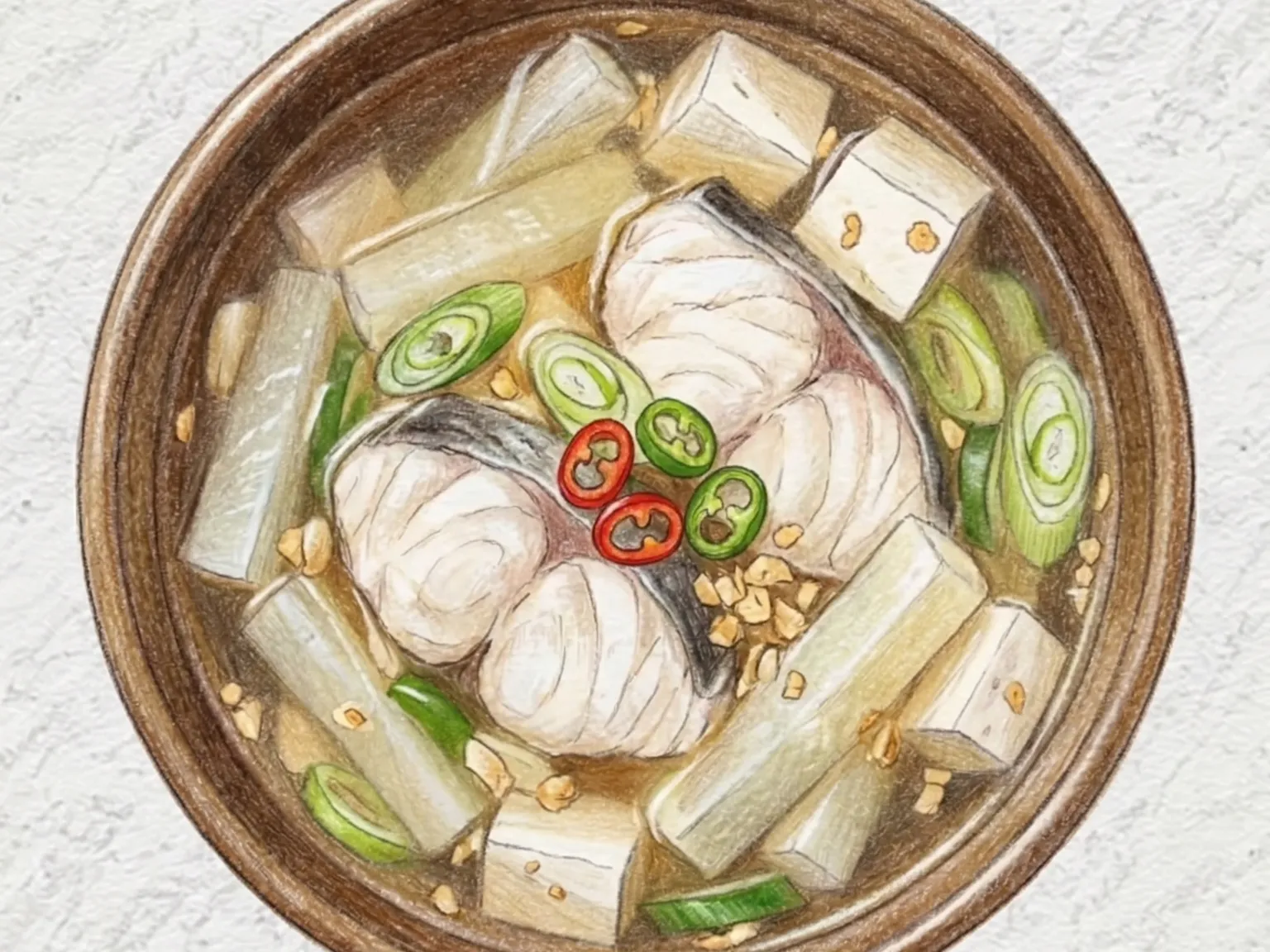
Korean Fish Soup (White Fish and Radish Clear Broth)
Saengseon-guk is a traditional Korean fish soup made with white-fleshed fish and radish in a clear broth. The radish simmers first, building a base of natural sweetness, before garlic and soup soy sauce are added for depth. The fish goes in once the radish is halfway cooked, and timing matters - it should cook only until the flesh turns opaque and begins to flake, as prolonged boiling would break it apart and cloud the broth. Tofu and sliced Korean chili peppers join near the end, adding soft texture and a mild kick. Green onion finishes the bowl with a fresh note. The result is a light, transparent soup where the fish's own clean, marine flavor does most of the work. It is the kind of straightforward home cooking that appears on Korean dinner tables throughout the year, requiring little more than fresh fish and basic pantry staples.
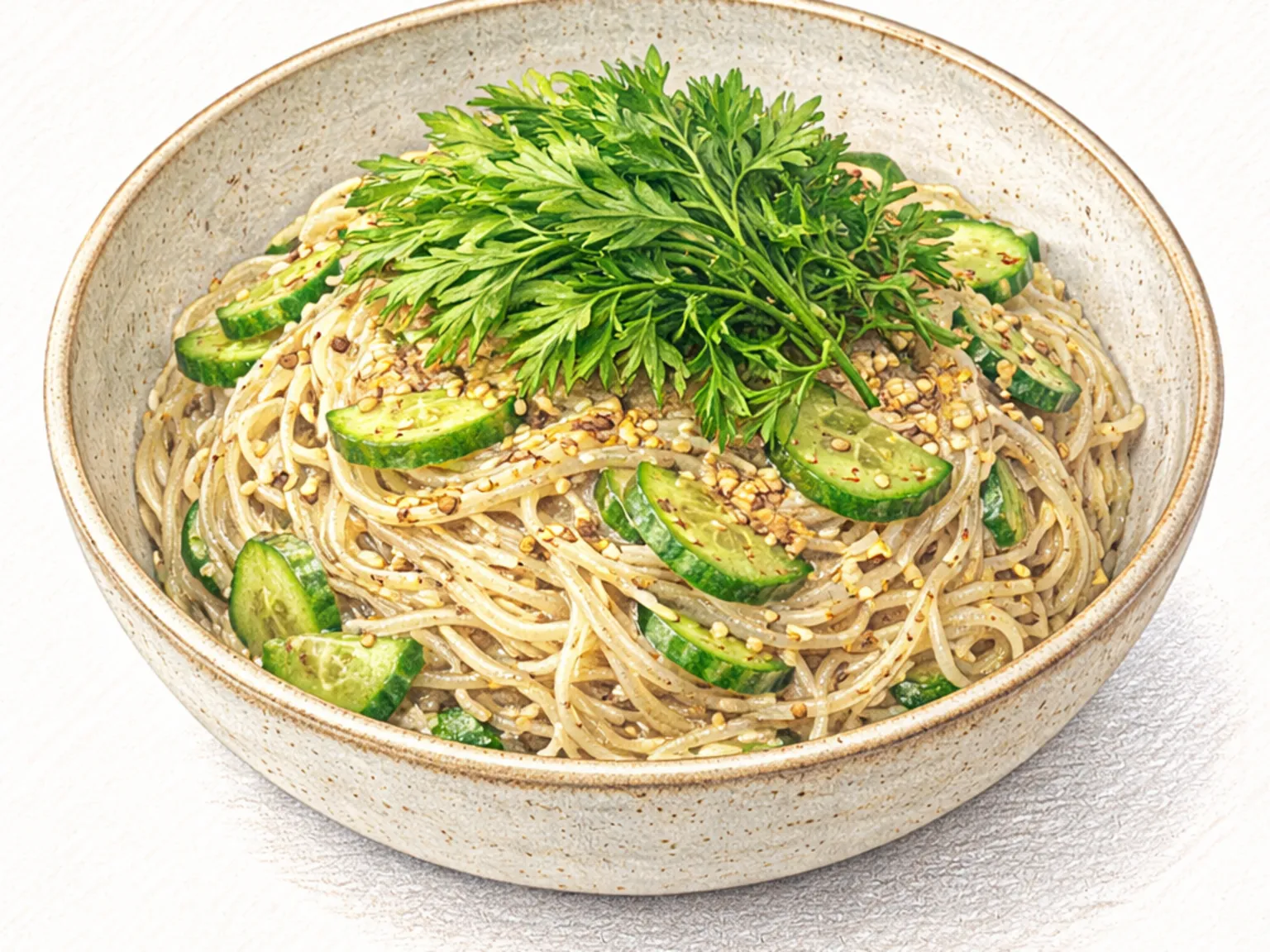
Korean Ssukgat Perilla Bibim Somyeon
Ground perilla seeds create a nutty foundation for this cold noodle dish, while crown daisy leaves contribute a distinctive herbal bitterness. Thin somyeon noodles serve as the base, tossed in a savory dressing made from soy sauce and freshly ground perilla seeds. Julienned cucumber adds a crisp texture and freshness that contrasts with the soft strands. Preparing the noodles involves boiling and rinsing them multiple times in cold water to build elasticity and remove surface starch. Ensuring the noodles are dry prevents the sauce from thinning out during mixing. Using seeds that are toasted and ground just before serving heightens the aromatic quality of the bowl. The entire preparation takes approximately twenty-five minutes, making it an efficient option for warm weather. It lacks the heat typically associated with spicy noodles, making it approachable for newcomers. Adding chili oil provides a spicy kick for variety, or the dressing can be paired with buckwheat noodles instead. Any remaining sauce functions effectively as a topping for tofu or fresh garden salads.
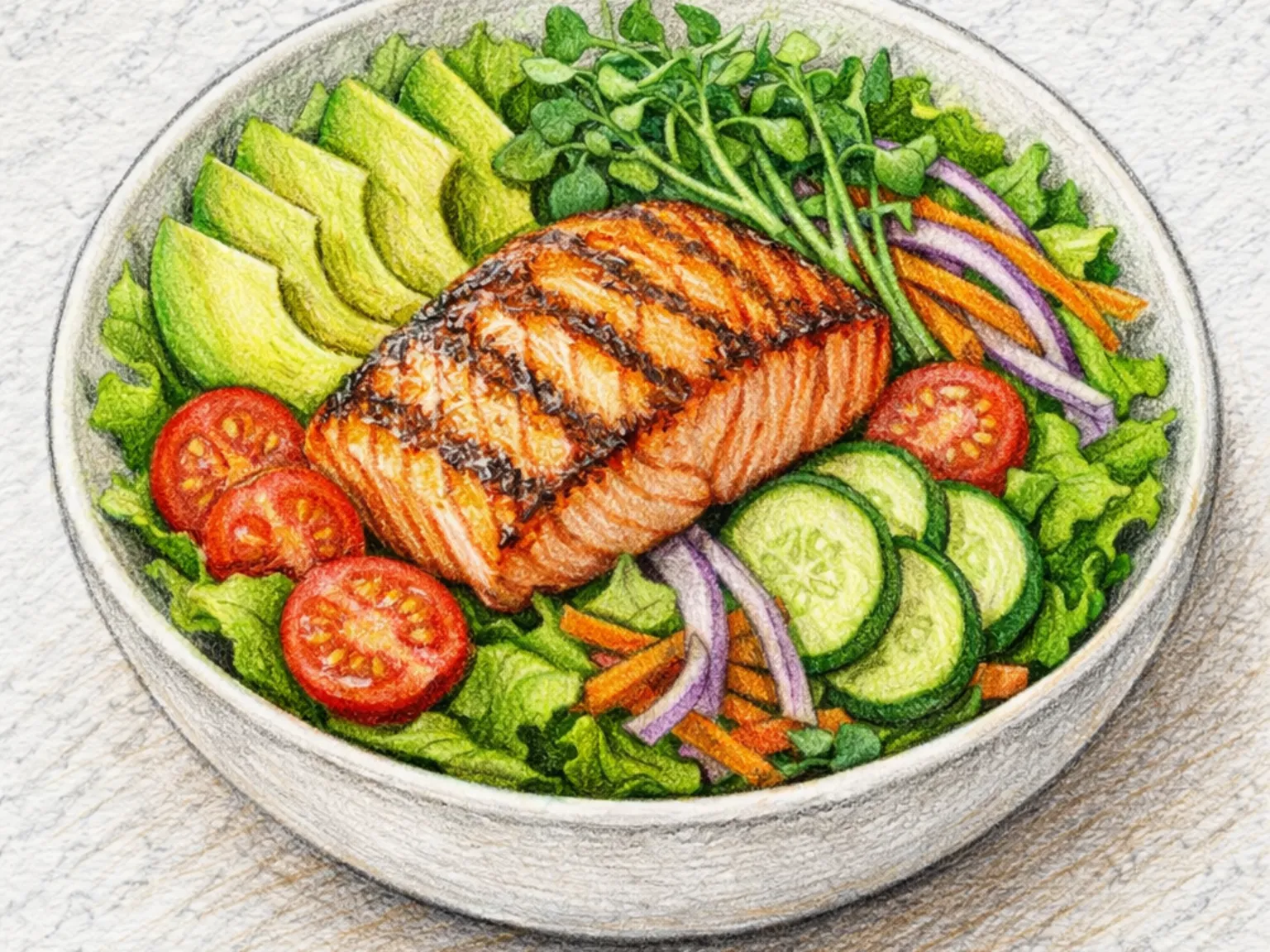
Salmon Salad (Seared Salmon over Greens with Soy Vinaigrette)
Salmon salad sears a salmon fillet skin-side down until the exterior is crisp and the interior stays moist, then places it over lettuce, shredded red cabbage, sliced avocado, and peppery radish sprouts, dressed with soy sauce, vinegar, minced garlic, and olive oil. Patting the salmon completely dry and seasoning with black pepper five minutes before cooking prevents the skin from sticking to the pan and allows it to crisp evenly - four minutes skin-side down and two minutes flipped produces a center that retains a pale pink translucency for maximum moisture. The avocado's creamy fat harmonizes with the salmon's omega-3 richness, while radish sprouts add a sharp, mustard-like bite that energizes the bowl. The dressing's combination of soy sauce, vinegar, and garlic creates a salty-tangy base that cuts cleanly through the oily fish.
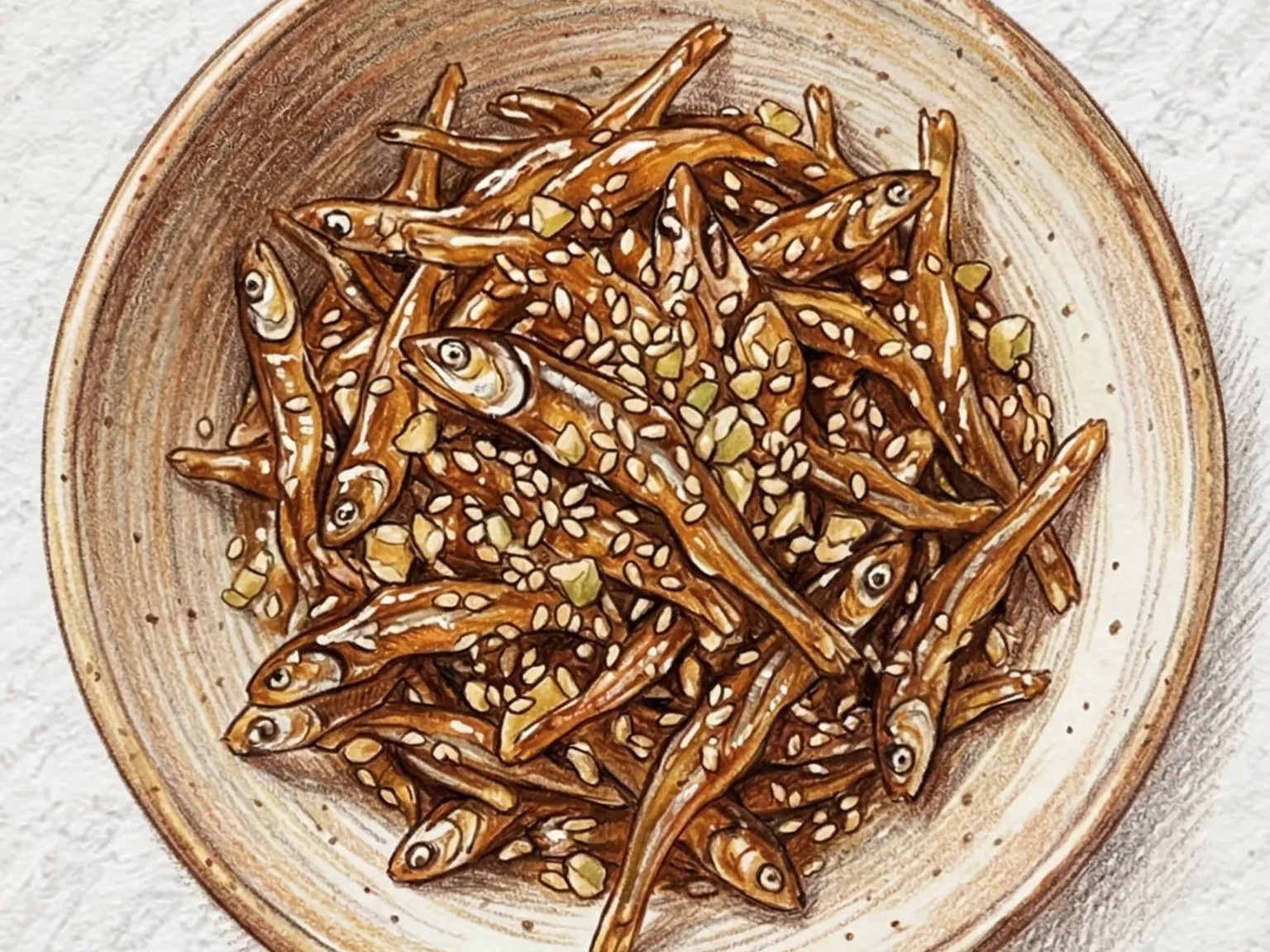
Korean Sweet Stir-Fried Anchovies
Sweet stir-fried anchovies coat tiny dried anchovies in a glossy soy-syrup glaze without any chili heat, making it the classic lunchbox banchan for Korean children who cannot yet tolerate spice. The anchovies must be dry-toasted in an ungreased pan for about two minutes before any seasoning is added: this drives off residual moisture, raises a nutty aroma, and sets up the crispy texture that separates a well-made batch from a soggy, fishy-smelling one. Soy sauce, rice syrup or oligosaccharide, and sugar are then stirred in over low heat, and the single most important moment in the recipe is when the syrup first begins to bubble. The heat must drop immediately at that point, because syrup that overcooks transforms into a brittle, tooth-cracking candy once it cools. Generous sesame seeds tossed in at the end add nuttiness and a visual finish, and once the batch cools completely, the anchovies clump lightly together into loose clusters that are easy to pick up in one or two bites. Although made from the exact same ingredient, this sweet glaze version has a completely different character from the spicy gochujang version of the same dish, and many Korean households keep both prepared simultaneously, rotating between them throughout the week.
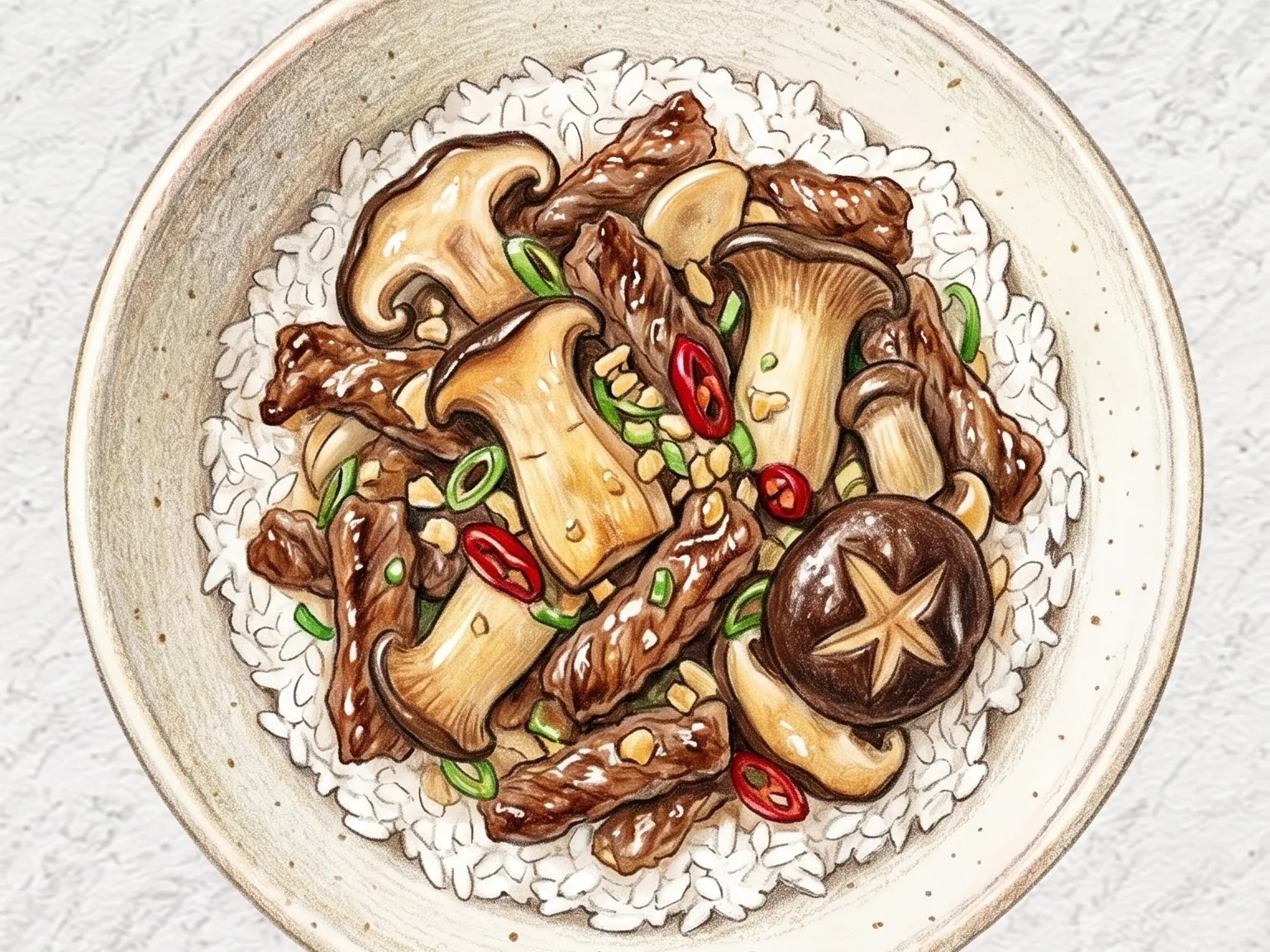
Korean Beef and Mushroom Rice Bowl
Sogogi-beoseot deopbap is a Korean beef and mushroom rice bowl that sautees sliced beef with king oyster and shiitake mushrooms in soy-butter sauce. The beef is seared first over high heat to develop a golden crust, then the thickly cut mushrooms go in and absorb the rendered juices, forming a naturally concentrated sauce in the pan. A knob of butter melted in at the end adds a creamy richness, while soy sauce ties everything together with a salty umami backbone. Minced garlic and sliced scallion layered into the stir-fry build an aromatic base that makes the topping fragrant the moment it hits the rice. The mushrooms hold their springy bite against the tender beef, giving each mouthful a satisfying textural contrast.
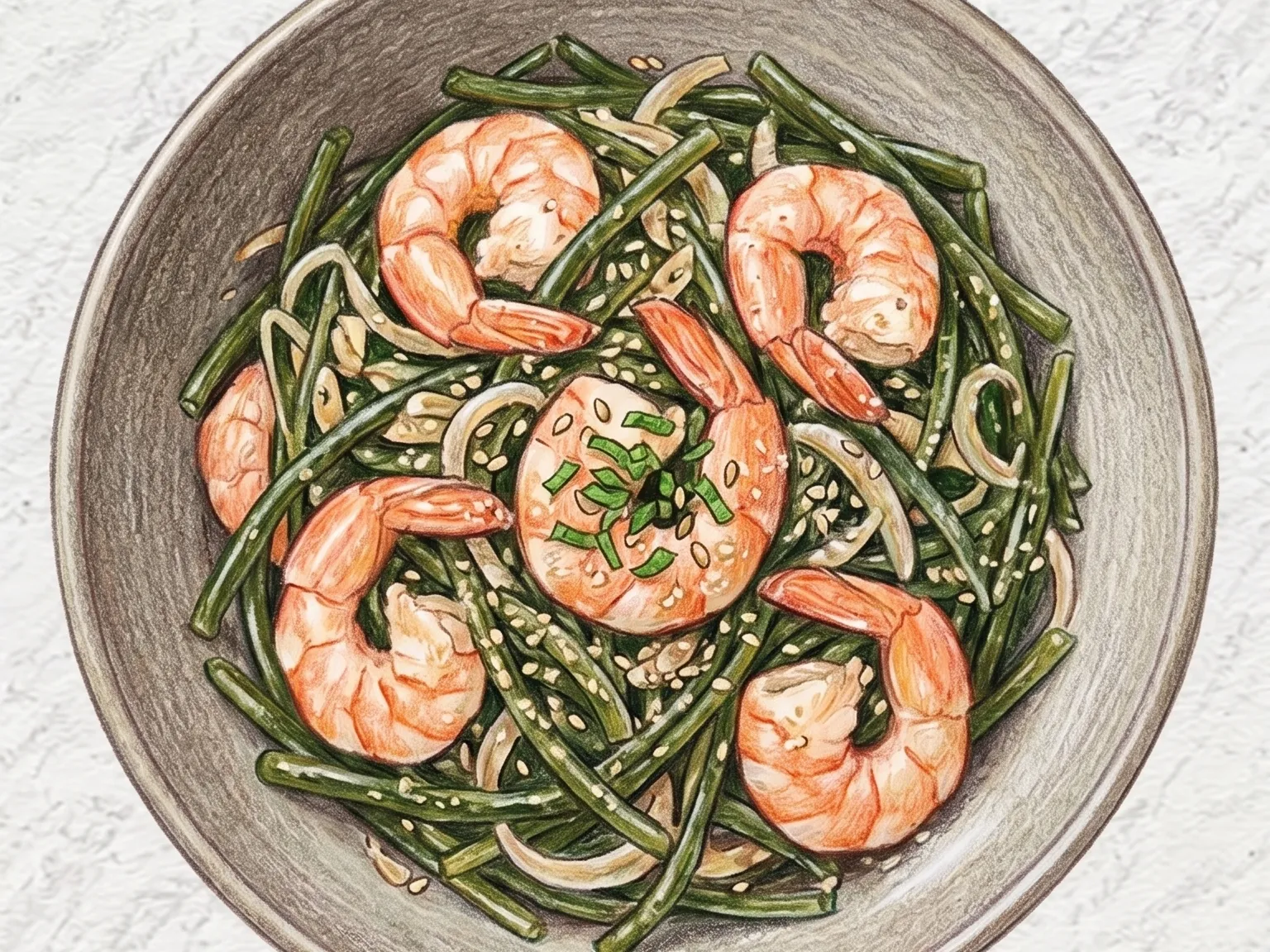
Korean Seaweed Stem & Shrimp Stir-fry
Miyeokjulgi-deulkkae-saeu-bokkeum combines desalted seaweed stems and medium shrimp, stir-fried in perilla oil and finished with a generous coating of perilla seed powder. The seaweed stems are soaked in cold water for ten minutes to draw out excess salt, then cut into five-centimeter pieces that retain a distinctive chewy-crunchy bite throughout cooking - a textural contrast that keeps each forkful interesting against the springy shrimp. Onion and garlic are sauteed first to establish a sweet aromatic base, the shrimp are added until they turn pink, and then the seaweed stems join the pan for a quick toss over high heat. Soup soy sauce provides the only seasoning, keeping the flavor profile clean and allowing the two main ingredients to come forward. Perilla powder goes in immediately after the heat is off so its nutty, slightly grassy aroma stays fully intact through serving. The combination of perilla's earthy nuttiness and the seaweed's oceanic minerality gives this simple banchan a layered depth that reads distinctly Korean.
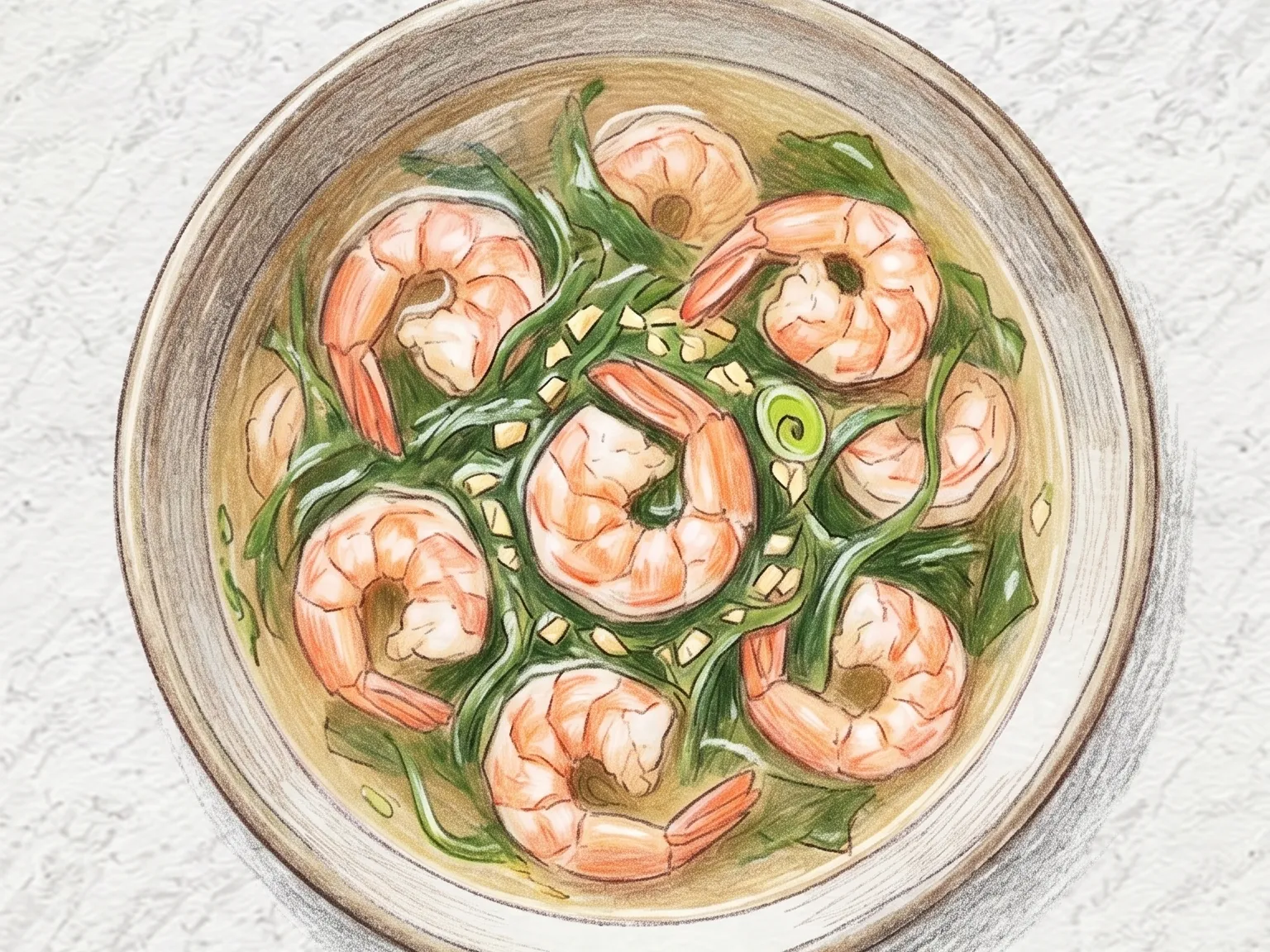
Korean Shrimp Seaweed Soup
Saeu-miyeok-guk is a Korean seaweed soup made with shrimp rather than the more common beef, producing a lighter, ocean-forward bowl that carries a distinct marine clarity. The preparation begins by sauteing rehydrated seaweed and minced garlic together in sesame oil, a step that reduces any raw seaweed smell and builds a warm, nutty base before liquid is added. Shrimp are added to the pan and cooked just until they begin to turn pink, at which point their natural sweetness transfers into the seasoned oil. Water is poured in and the soup simmers on medium-low heat for twelve minutes, long enough for the mineral richness of the seaweed and the delicate shellfish umami to merge into a unified, clean-tasting broth. Soup soy sauce and salt provide the final seasoning without muddying the clarity of the stock. The textural interplay between the slippery, tender seaweed and the firm, bouncy shrimp makes each spoonful more satisfying than either ingredient would be on its own, and the overall lightness of the broth makes it a natural choice as a restorative meal or a birthday soup when a beef-heavy version feels too rich.