🍱 Lunchbox Recipes
Dishes that taste great packed and cold
723 recipes. Page 6 of 31
The best lunchbox dishes hold up well at room temperature. This tag features make-ahead sides and full lunchbox recipes you can pack in the morning without stress - sausage stir-fry, rolled omelet, stir-fried anchovies, and soy-braised beef are all lunchbox staples.
The key to a great packed lunch is choosing dishes with low moisture content and arranging contrasting colors. A sprinkle of sesame seeds or furikake over the rice adds a finishing touch that looks as good as it tastes.
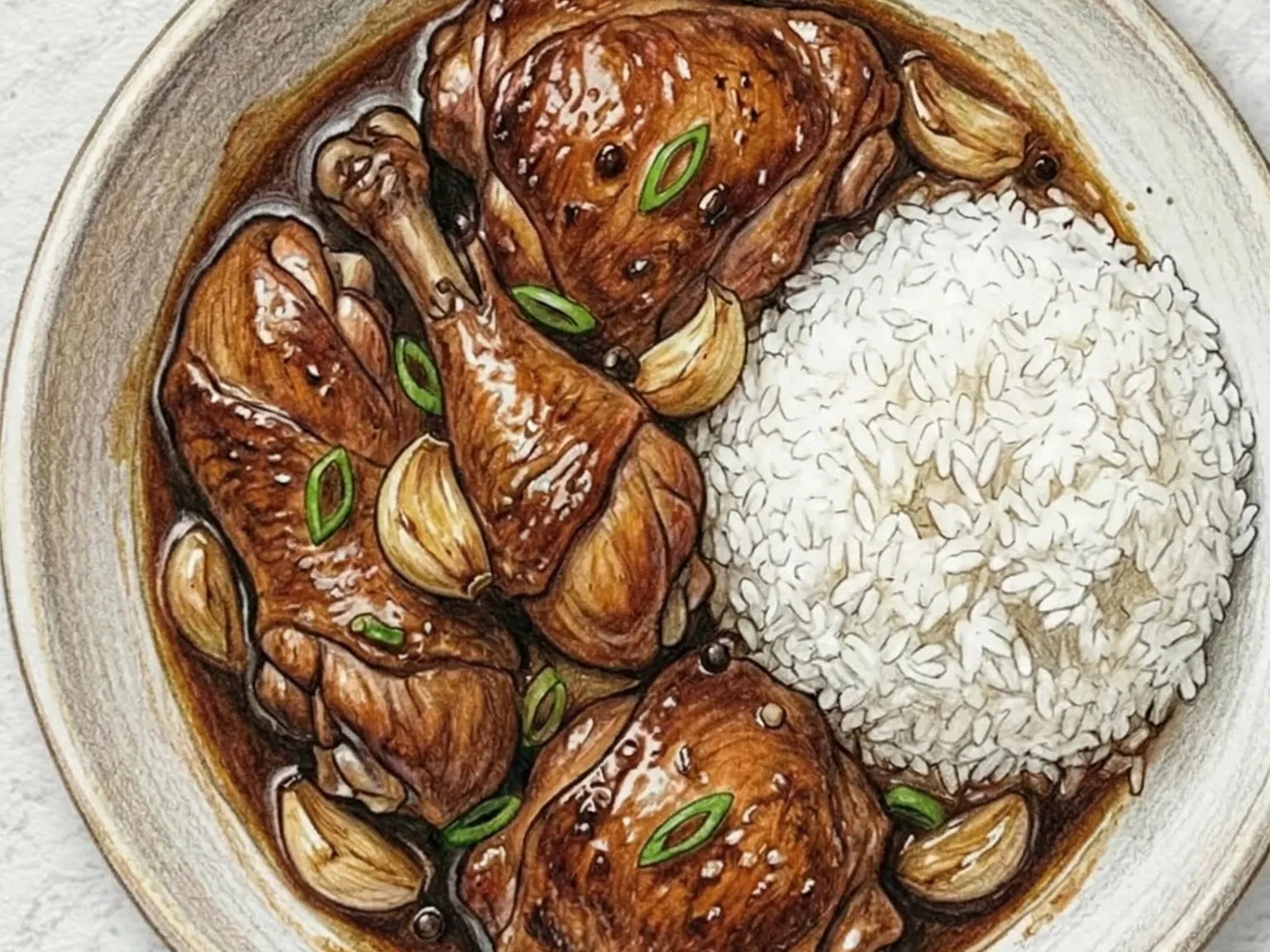
Chicken Adobo (Filipino Vinegar Soy Braised Chicken)
Chicken adobo is the unofficial national dish of the Philippines, rooted in a pre-colonial preservation technique of braising meat in vinegar to extend its shelf life in tropical heat long before refrigeration. Chicken simmers uncovered in soy sauce, cane vinegar, crushed whole garlic cloves, bay leaves, and whole black peppercorns until the sharp acidity of the vinegar mellows into a layered, salty-sour sauce with a caramelized depth that no amount of shortcutting can replicate. Once braised, the chicken pieces are removed from the sauce and pan-fried until the skin turns deep golden and audibly crisp, then returned to the reduced liquid for a final coat. The moment the crackling skin absorbs the thick, glossy sauce is the defining pleasure of a well-made adobo. Every Filipino household holds its own ratio of soy sauce to vinegar as a point of pride, and the unresolvable debate over whose mother makes the best version is practically a national institution. This tolerance for variation is part of why the dish has endured for centuries across a country of more than seven thousand islands. It is always served over steamed white rice with extra sauce ladled over generously, and adobo famously tastes better the next day, after the proteins have had time to reabsorb the deepened, overnight flavors from the refrigerator.
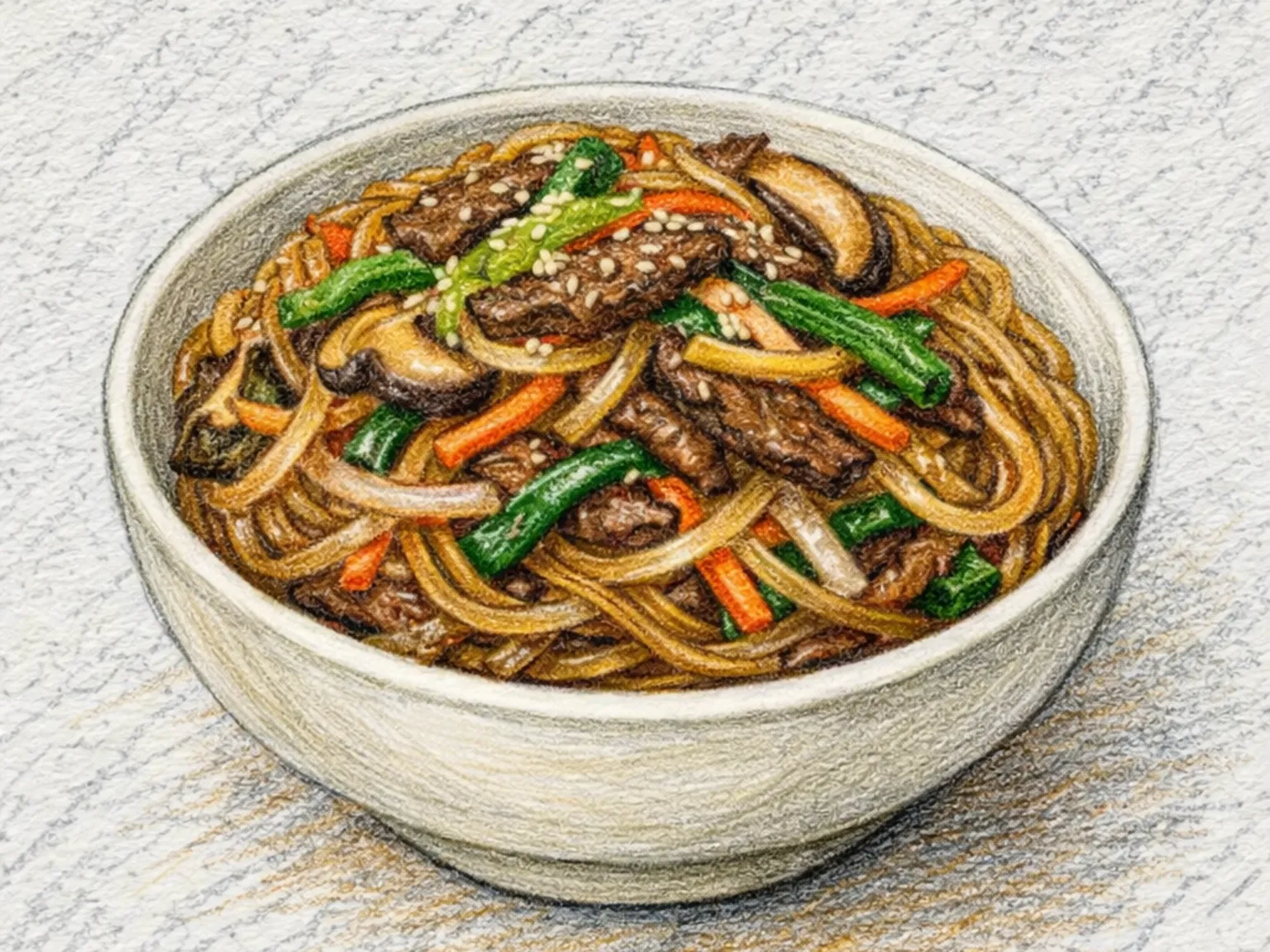
Korean Beef & Shiitake Japchae
Japchae originated as a Joseon royal court dish of stir-fried vegetables before sweet potato glass noodles were added to create the form recognized today. This version pairs glass noodles with soy-marinated beef and sliced shiitake mushrooms. Each component cooks separately: beef and mushrooms stir-fried with garlic, spinach blanched and squeezed dry, carrots and onions sauteed until just tender. A final toss with sesame oil brings everything together. The noodles should be translucent and springy, carrying a sweet-salty soy glaze into each forkful. A standard presence on every Korean holiday table at Chuseok, Seollal, and birthday celebrations alike.
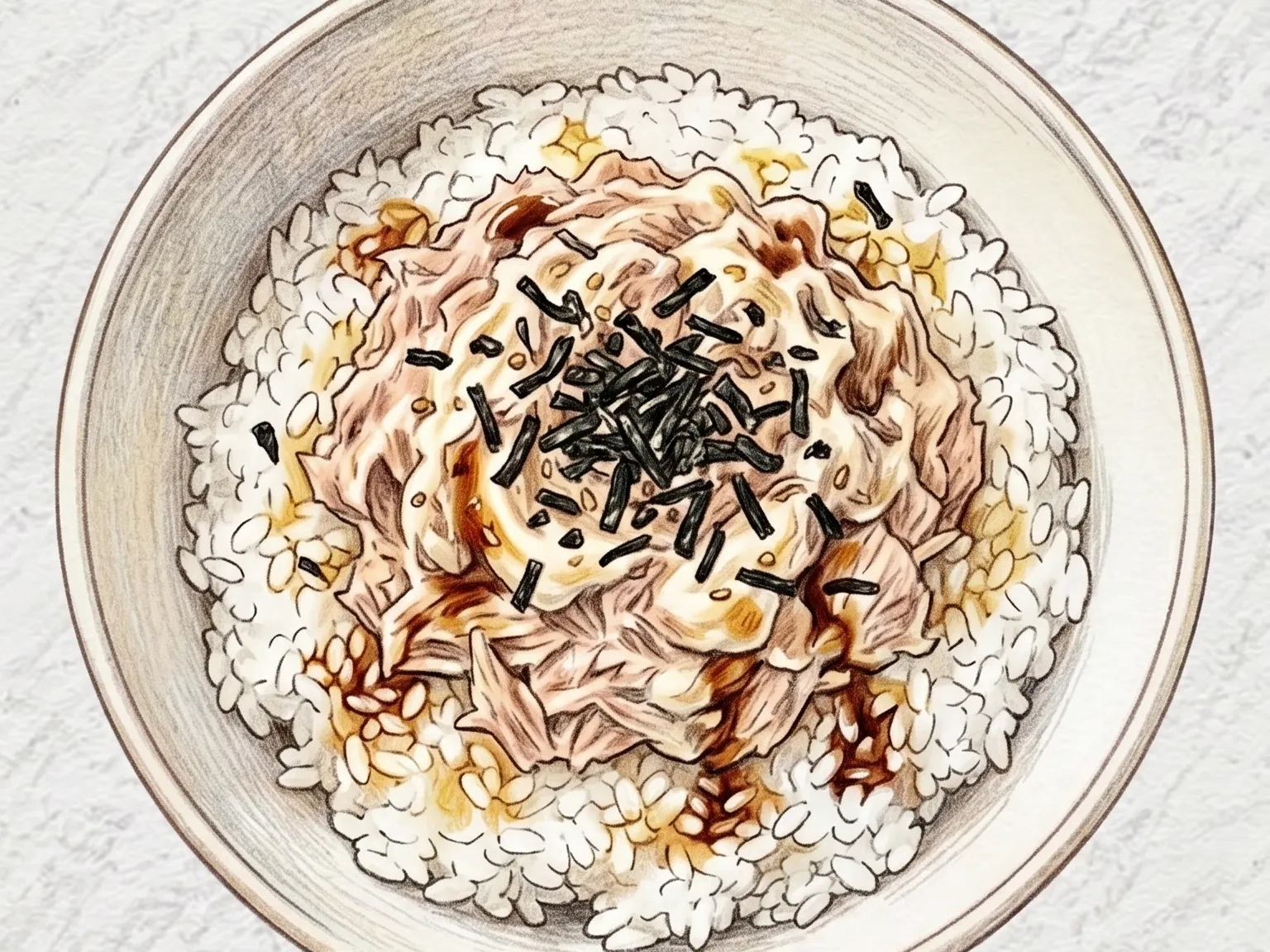
Chamchi Mayo Deopbap (Korean Tuna Mayo Rice Bowl Recipe)
Chamchi mayo deopbap is a no-cook Korean rice bowl where drained canned tuna is tossed with mayonnaise and spooned over warm rice, then finished with soy sauce, sesame oil, and crumbled dried seaweed. The warmth of the rice softens the mayo coat so it clings to every grain rather than pooling at the base. Crumbled seaweed provides a layer of crunch alongside its salt. Nothing needs cooking - just mixing and assembling - which makes this one of the fastest meals to put together, ready in under five minutes on days when standing at the stove feels unappealing. Soy sauce deepens the salt past what the tuna alone provides, and sesame oil keeps the bowl from tasting flat. Canned tuna and mayonnaise are staples in most Korean kitchens, making this a genuinely practical fallback meal.
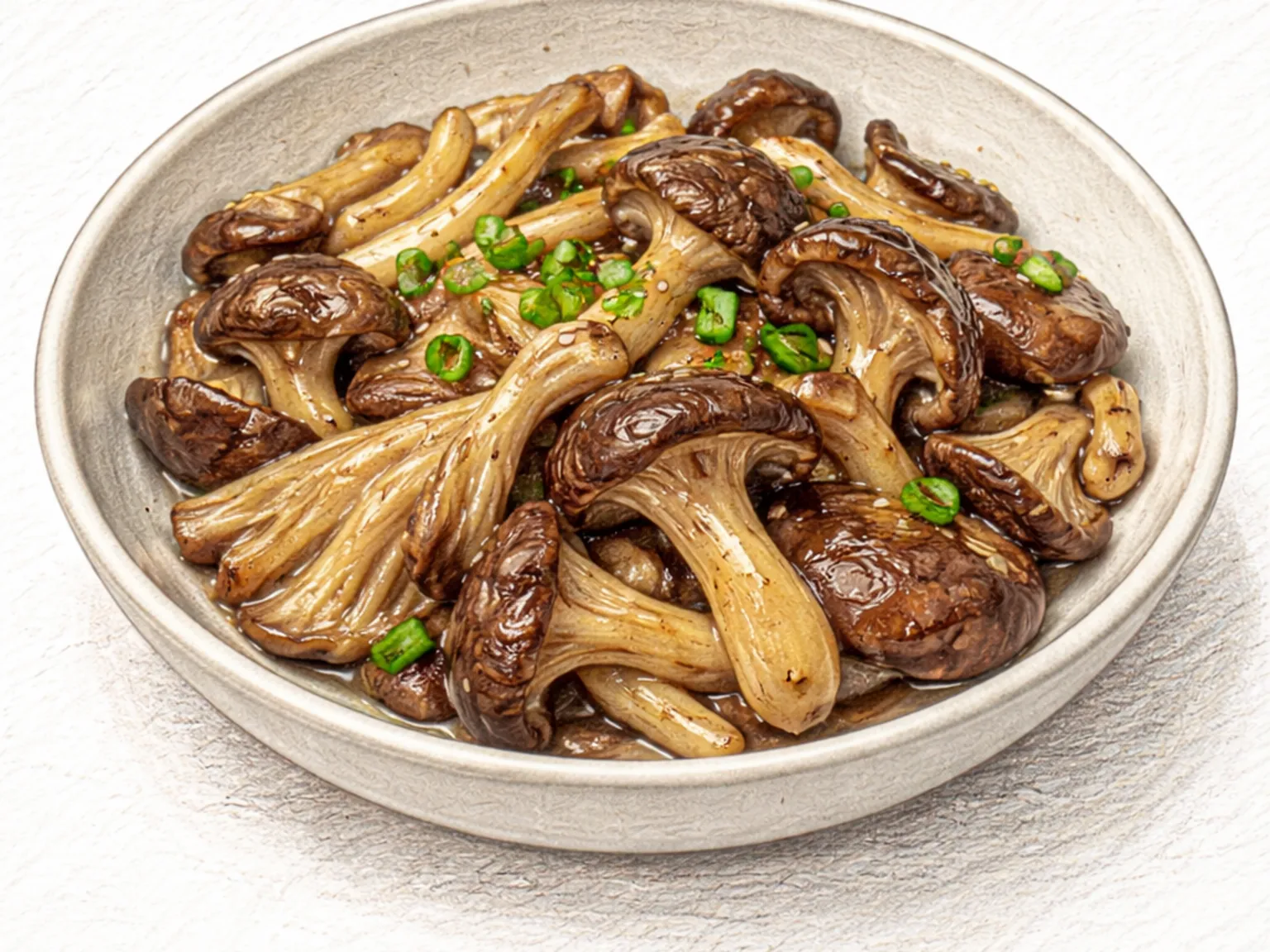
Korean Stir-fried Mushrooms
Oyster mushrooms and shiitake are stir-fried over high heat until their moisture evaporates and their natural umami concentrates into each bite. Wiping the mushrooms with a damp cloth instead of rinsing under water is not a minor detail: washing introduces excess moisture that lowers pan temperature the moment the mushrooms hit the surface, which causes them to steam rather than sear. The pan must stay hot enough that the mushrooms develop light golden edges through the Maillard reaction, and that narrow window is when the deepest nutty flavor emerges. Water-logged mushrooms never reach it. Soy sauce supplies the salinity, and black pepper adds a sharp accent without obscuring the mushrooms' own flavor. Sesame oil is added after the heat is turned off to preserve its volatile fragrance; adding it while the pan is still hot burns off the aromatic compounds before they have a chance to coat the mushrooms. A handful of sliced green onion tossed in at the end brings color and a sharp, fresh bite against the earthy backdrop. At roughly 120 calories per serving, this side dish fits comfortably into any calorie-conscious meal plan while delivering plant-based protein and dietary fiber in a form that actually tastes worth eating.
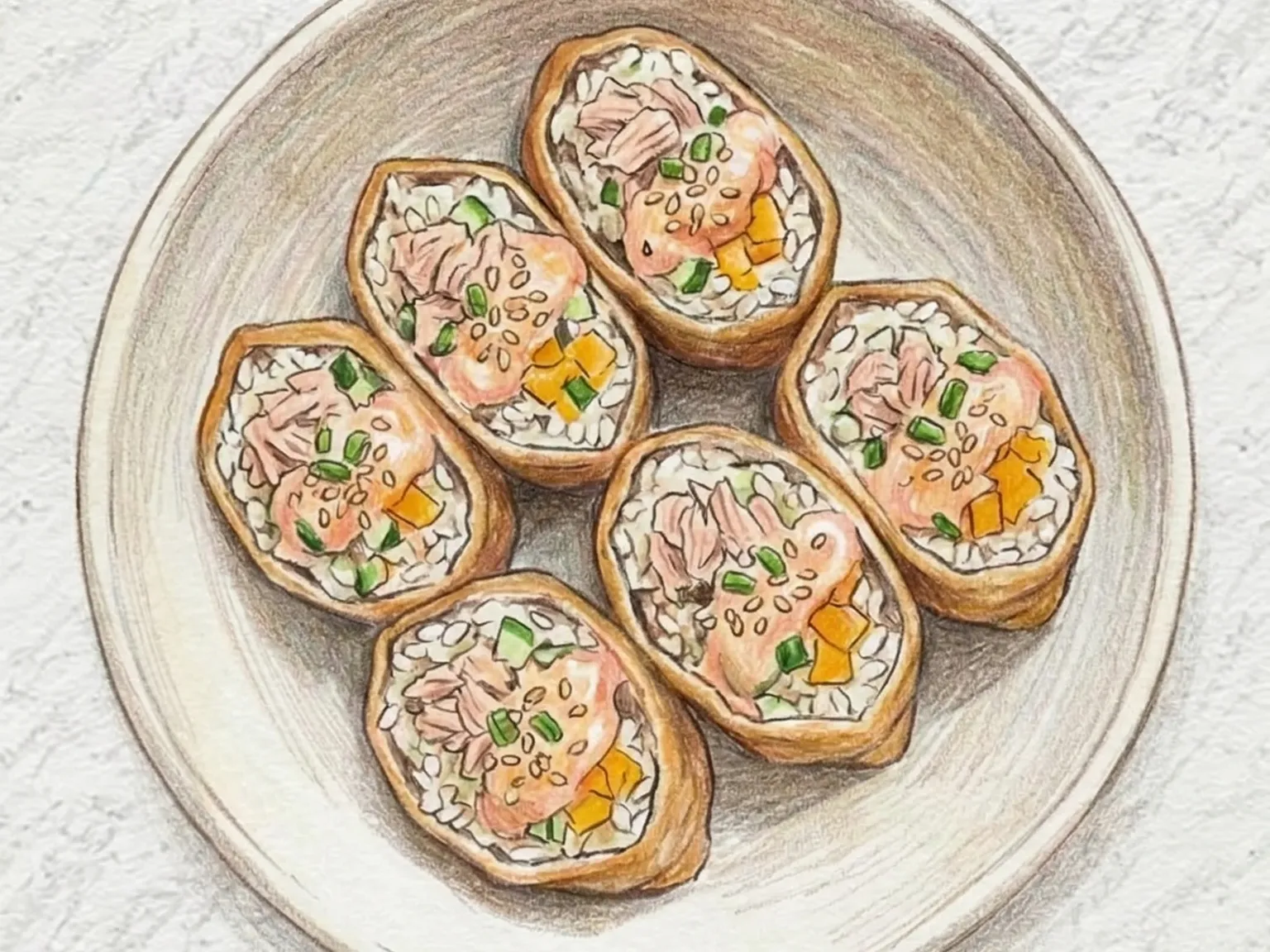
Korean Maekom Mayo Yubu Pocket (Spicy Mayo Tofu Pockets)
Spicy mayo yubu pockets are seasoned tofu pouches stuffed with rice, canned tuna, chopped pickled radish, and cucumber, all bound together with a gochujang-mayonnaise sauce. The tuna must be thoroughly drained before mixing so the mayonnaise coats evenly, and the ratio of gochujang to mayo controls both the heat level and the creamy consistency of the filling. Diced pickled radish and cucumber introduce a satisfying crunch that keeps each bite from feeling heavy. Sesame oil and toasted sesame seeds mixed into the rice build a nutty foundation that balances the spice from the sauce. The sweet and salty braised tofu pouch wraps around everything, delivering multiple layers of flavor in a single bite. These pouches pack well for lunch boxes and hold up in the refrigerator, where the tofu slowly absorbs moisture from the filling and becomes even softer.
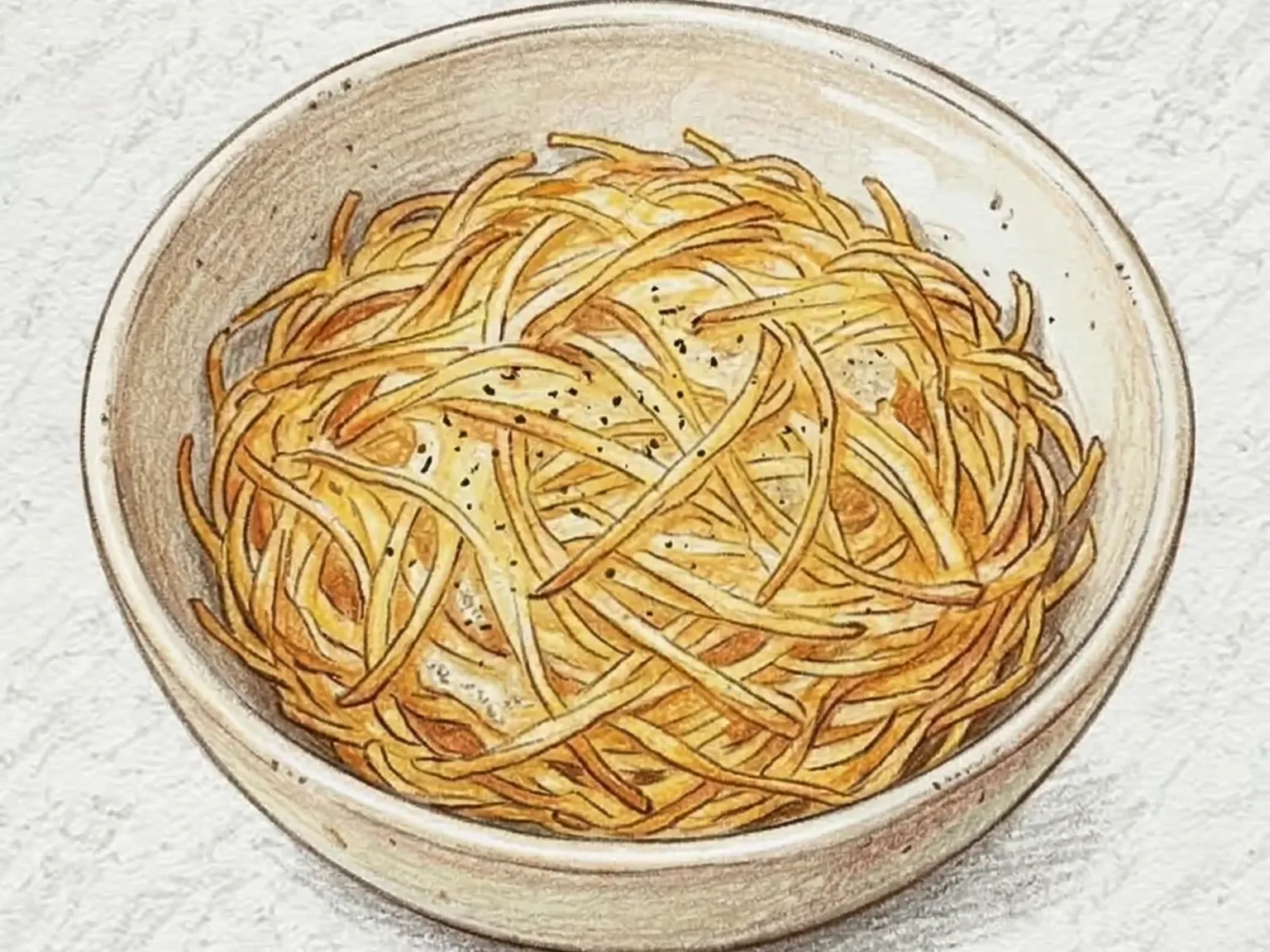
Korean Julienned Potato Pancake
Gamja-chae-jeon is a Korean julienned potato pancake where the potatoes are cut into thin matchsticks rather than grated, producing a texture fundamentally different from the mashed-style gamja-jeon. The intact strands create an open lattice that crisps at every exposed edge while maintaining a firm, slightly resistant bite in the center. Potato starch mixed dry into the julienned potatoes acts as a binder that holds the strands together during frying and flipping without adding moisture that would soften the crust. Adding a small amount of julienned onion contributes sweetness to the flavor, but the onion releases water as it cooks - water that will steam the pancake from underneath instead of letting it fry. Squeezing the onion dry in a kitchen towel before adding it solves this problem. The batter should be no wetter than what the potato's own natural moisture provides after the starch is mixed in, and adding no further liquid keeps the surface from turning soggy. Generous oil in the pan and constant pressing with a spatula over medium heat ensure that the entire underside maintains full contact with the cooking surface, frying the strands to an even, crackling golden crust that holds together cleanly when sliced.
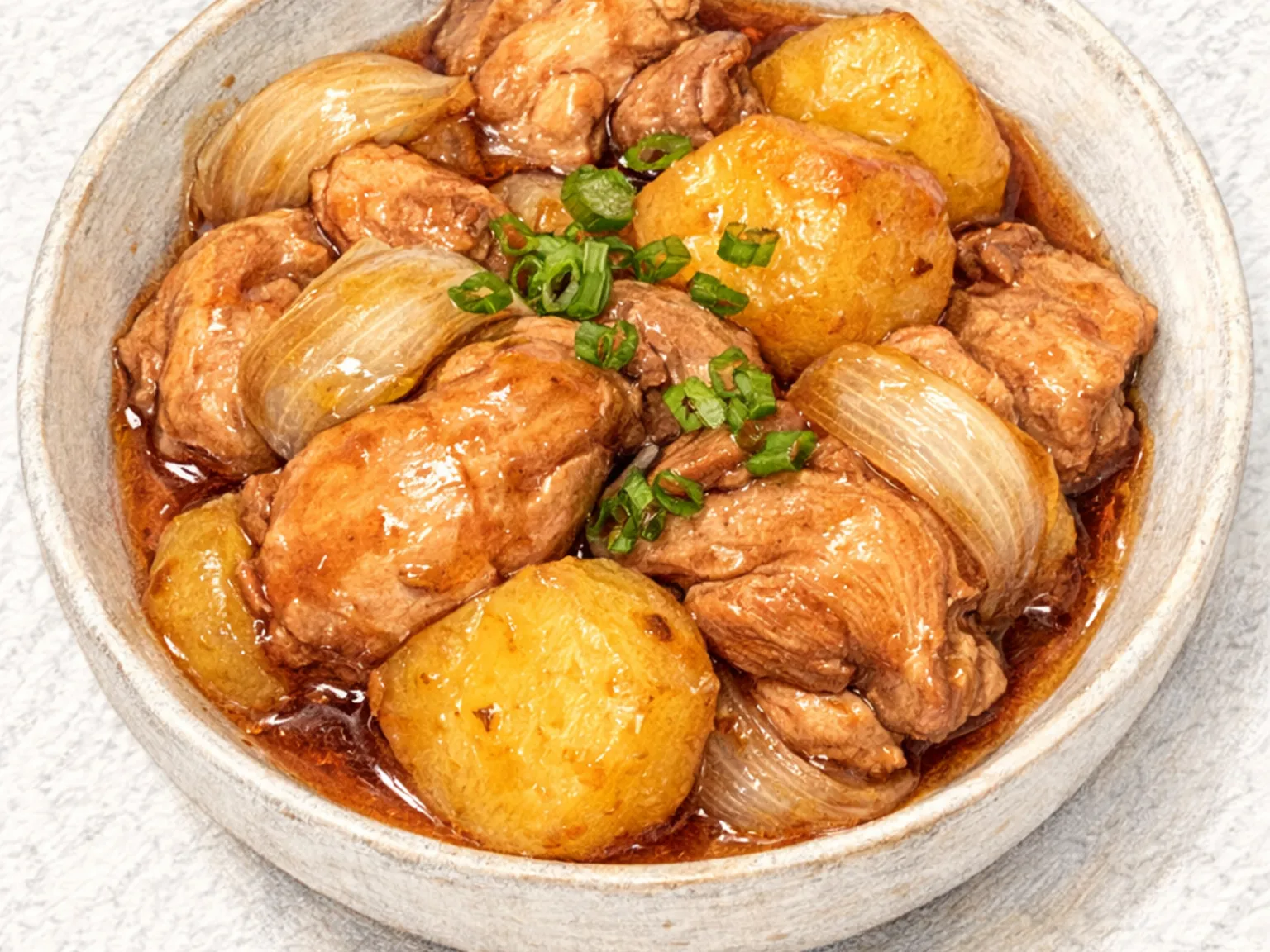
Korean Dak Ganjang Jorim (Soy Braised Chicken)
Dak ganjang-jorim is chicken thigh braised with potato in a soy sauce glaze enriched with oligosaccharide syrup, garlic, and ginger juice. As the thighs simmer, the soy base works its way between the muscle fibers, leaving the meat deeply seasoned with a glossy brown finish. Potato chunks break down slightly at the edges and soak up the braising liquid, turning starchy and satisfying. A single cheongyang chili added to the pot gives a mild, lingering kick that keeps the sweet-salty profile from becoming one-note. Patting the chicken thighs thoroughly dry before searing them in the pan builds a Maillard-browned surface that adds another layer of savory depth, and removing the lid for the final five minutes lets the sauce reduce into a thick, clingy glaze.
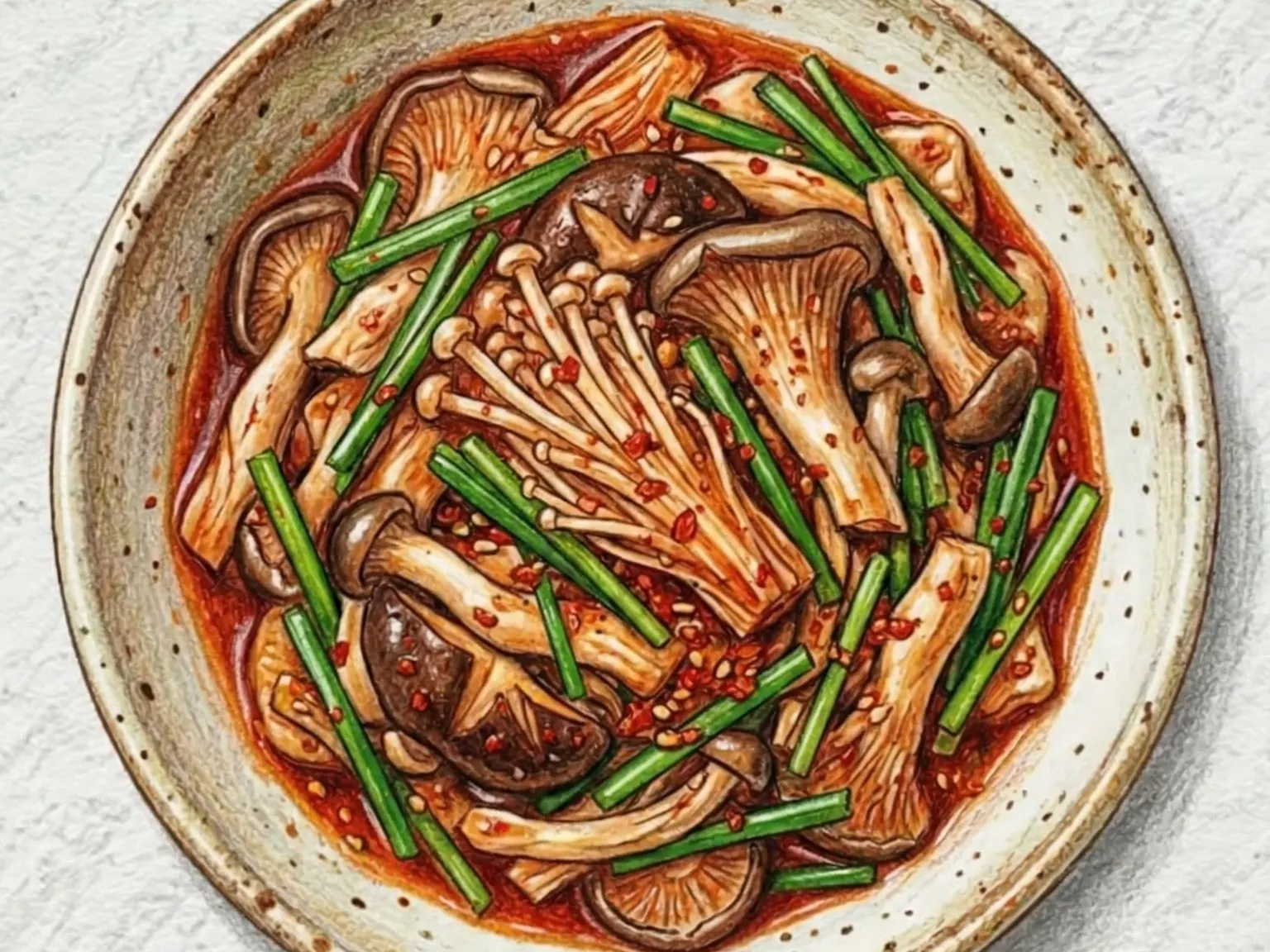
Korean Beoseot Kimchi (Mushroom Kimchi)
Blanching oyster and shiitake mushrooms before mixing them with gochugaru and fish sauce creates a side dish that bypasses the long fermentation usually associated with Korean kimchi. This boiling process removes the sharp raw scent of the mushrooms and softens their structure so the seasoning coats every surface evenly. Tearing the oyster mushrooms by hand along their natural grain allows the spicy and salty sauce to penetrate deeply while maintaining a natural bite. The thick caps of the shiitake mushrooms provide a firm, chewy element that lasts throughout the meal. Using fish sauce introduces a concentrated saltiness and a fermented profile that distinguishes this from basic seasoned vegetables. Fresh garlic chives contribute a clean, grassy aroma that balances the heavier spices. Since it does not require aging, this preparation is ready to eat immediately and reaches its peak flavor on the day it is made. Swapping chives for scallions provides a more delicate scent, and adding king oyster or enoki mushrooms introduces different physical textures. Including finely chopped squid or octopus transforms the dish into a seafood version with flavors from the ocean. Because mushrooms release water and lose their firm texture after a few days in the refrigerator, preparing small batches for immediate consumption ensures the highest quality.
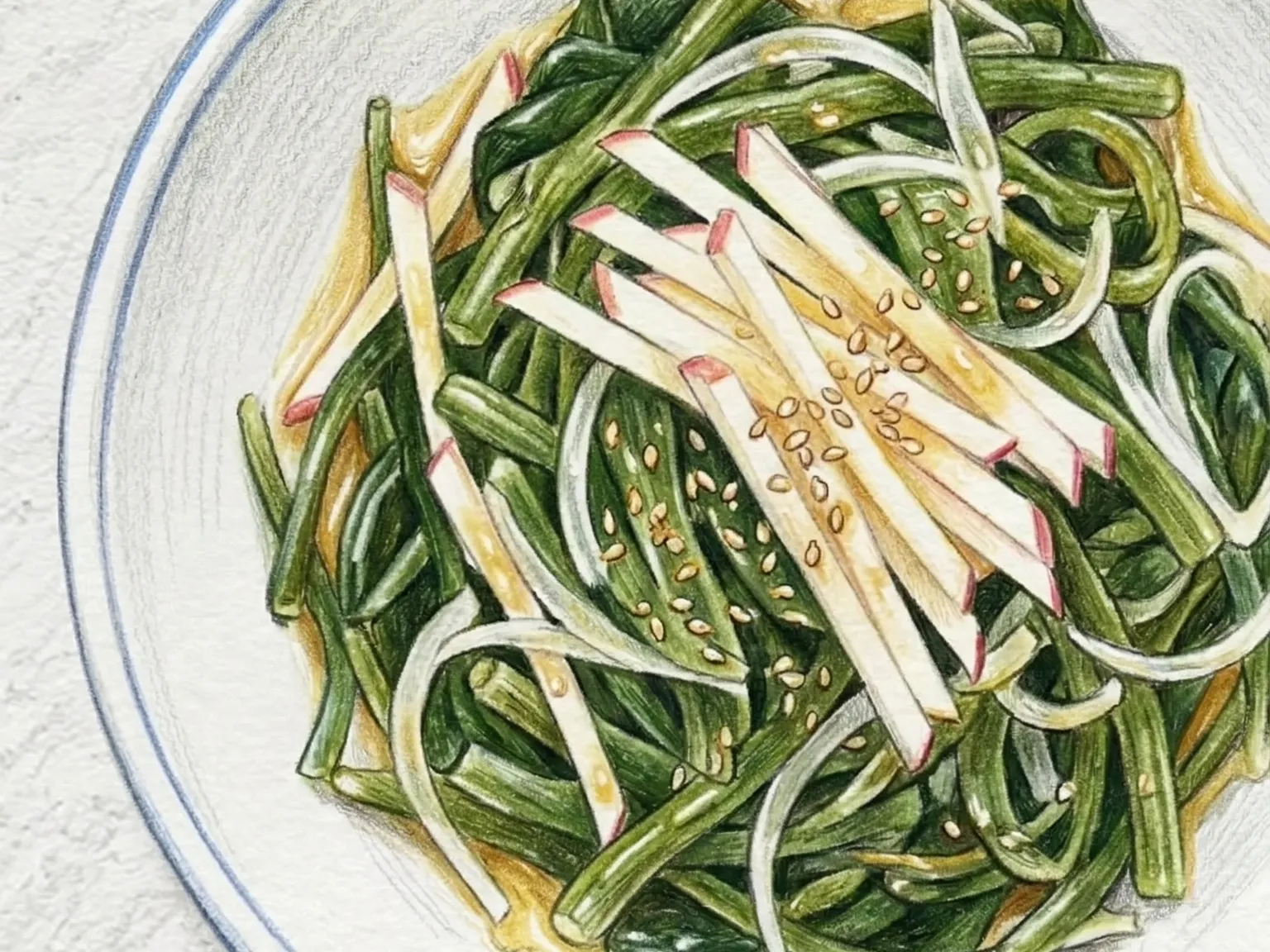
Seaweed Stem and Apple Mustard Salad
Salted seaweed stems are soaked to remove excess brine, then blanched briefly to achieve a firm, slightly chewy bite that defines this Korean salad's texture. Julienned apple adds crisp sweetness that contrasts with the seaweed's oceanic mineral flavor. Thinly sliced onion, soaked to mellow its sting, contributes a subtle sharpness. The dressing mixes Korean mustard paste with vinegar and oligosaccharide syrup - the mustard delivers a sharp nasal heat, while the syrup smooths the vinegar's acidity into something rounder. Tossing the apple with lemon juice first prevents browning, and a three-minute rest after dressing lets the flavors meld without overdressing the delicate stems.

French Dip Sandwich
The French Dip sandwich originated in Los Angeles during the early twentieth century and, despite what its name implies, does not have any actual roots in France. This sandwich is constructed with multiple layers of roast beef that have been sliced very thin and piled onto a sturdy French roll. It is served with a small bowl of au jus on the side, which consists of the natural juices that are collected and strained from the roasting pan after the meat has finished cooking. To prepare the beef for this dish, the roast is cooked slowly at a low temperature in the oven. This slow roasting process continues until the meat reaches a state where it can be sliced against the natural grain into thin and supple pieces. This specific technique ensures that the meat remains moist even when it is placed against the firm and dry texture of the bread. Including whole onions and garlic in the roasting pan along with the meat adds layers of sweetness and depth to the resulting juices. This practice makes the au jus significantly more complex than what would be produced by using the simple meat drippings alone. Just before the sandwich is assembled, either Provolone or Swiss cheese is melted over the sliced beef. This addition provides a mild and creamy layer that serves to soften the contrast between the lean beef and the crusty exterior of the roll. The choice of bread is a specific requirement, as the French roll requires a firm and crackly crust. This structural integrity is necessary because the roll must be able to maintain its shape even when it is dipped repeatedly into the warm liquid. If a soft roll is used instead, the bread tends to collapse and makes the sandwich difficult to manage during the meal. Dipping the sandwich into the au jus is the primary way this dish is consumed rather than being an incidental or optional step. Each time the bread is submerged, it becomes saturated with a concentrated beef flavor. The resulting texture creates a specific contrast where the edges of the bread become wet and softened while the center of the roll remains firm. The au jus is always presented in a separate vessel alongside the sandwich to facilitate this process. Because the act of dipping is central to the format of the meal, the liquid and the solid components are treated as equal parts of the overall presentation.
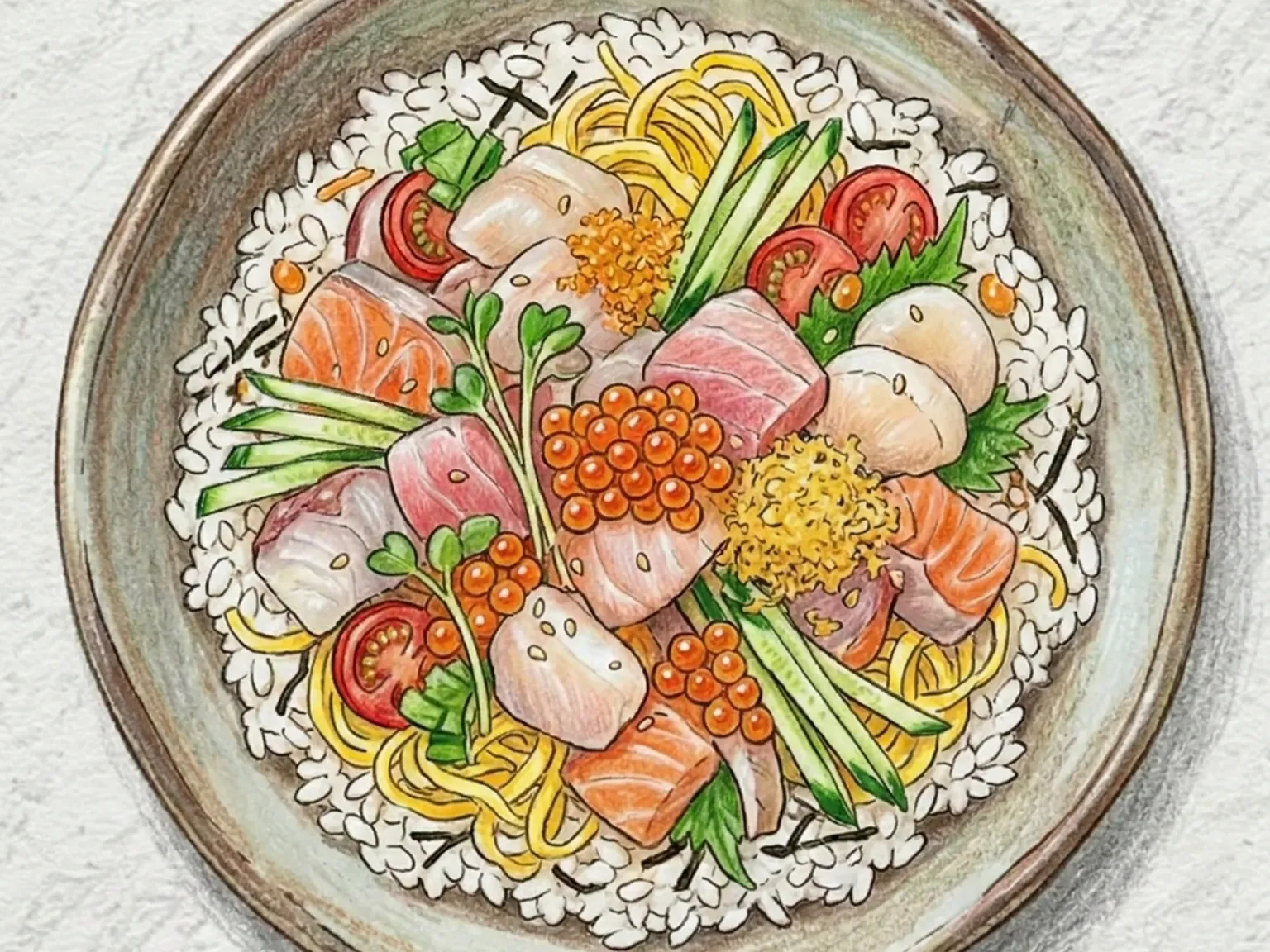
Chirashi Zushi (Scattered Sashimi Rice Bowl)
Chirashi-zushi, scattered sushi, is the celebratory home-cooking sushi of Japan, traditionally prepared for Hinamatsuri on March 3rd and other occasions where the meal itself carries visual significance. A bowl of sushi rice seasoned with vinegar, sugar, and salt forms the base, and over it are arranged sashimi cuts, julienned egg crepe, simmered lotus root, shiitake mushroom, salmon roe, and cherry shrimp. Unlike nigiri, there is no shaping technique involved, which makes chirashi accessible to any home cook, but the creative challenge shifts to composition: how the colors and textures are placed determines whether the bowl reads as festive or ordinary. Seasonal variation is embedded in the tradition - spring bowls feature bright green peas and pink-pickled cherry blossoms, summer compositions lean toward abalone and cucumber, autumn brings ginkgo nuts and matsutake. At high-end sushi counters, Edomae-style chirashi uses only top-grade cuts, chu-toro, uni, kohada, anago, arranged with the same deliberation a painter brings to a canvas. The vinegared rice beneath every version does more than hold the toppings in place: its acidity cuts the fat in the raw fish, refreshing the palate between bites and tying disparate ingredients into a unified dish.
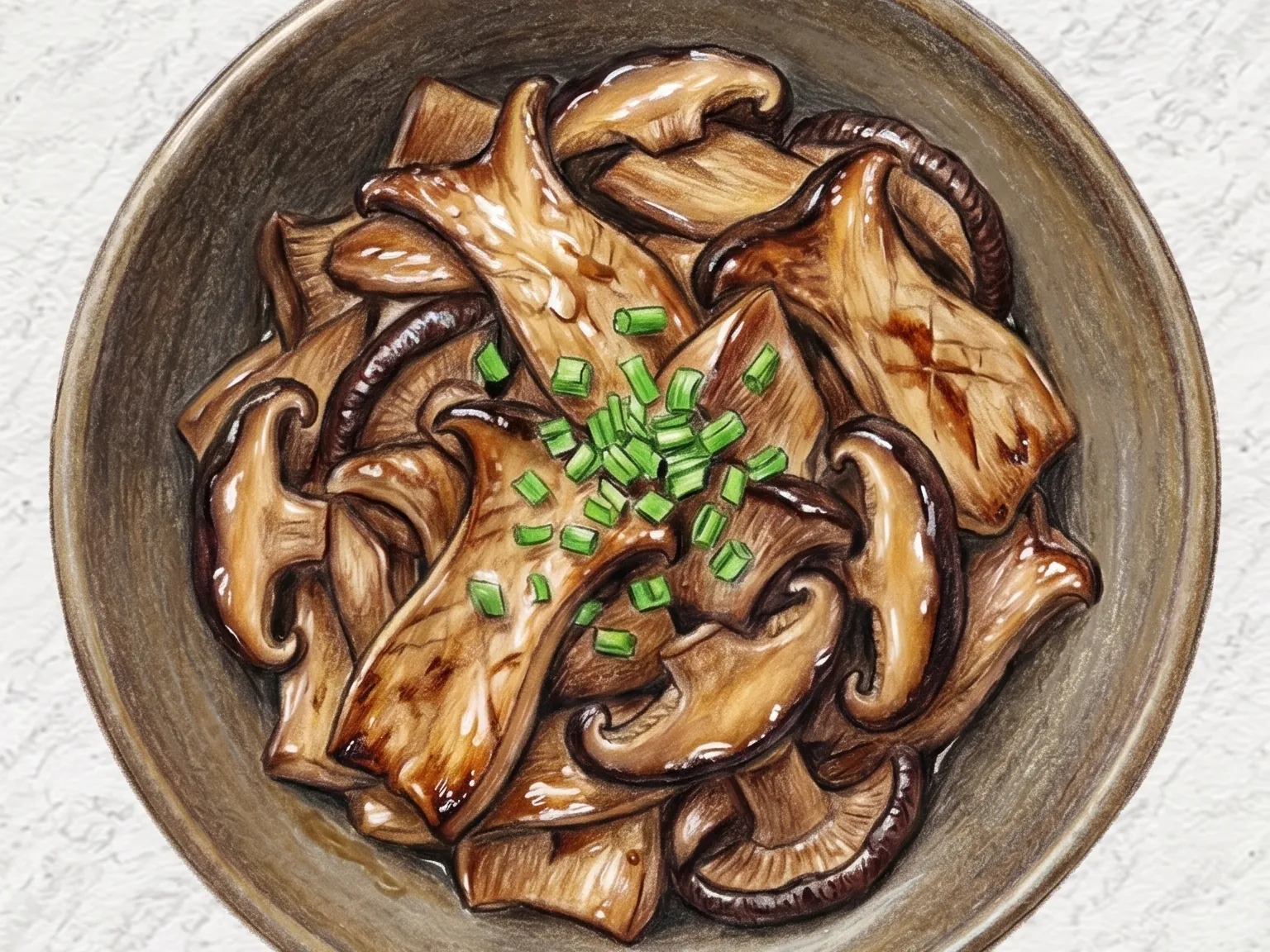
Korean Soy Sauce Stir-Fried Mushrooms
King oyster mushrooms are torn by hand rather than cut, opening up a fibrous surface that absorbs seasoning more readily than a knife-cut edge. Shiitake caps are sliced thin after removing their stems. Both go into a dry, screaming-hot pan first - no oil - to drive off surface moisture until the edges of the king oyster pieces take on light char and a firm, meat-like chew develops. Perilla oil goes in at that point, followed by soy sauce poured along the rim of the pan where the heat is most intense, which caramelizes it instantly and coats every piece in a dark, lacquered glaze. No sugar is added - the soy sauce reduction provides the sweetness. A drizzle of sesame oil off heat and a scatter of scallion finish the dish. Concentrated, deeply savory, and ready in under ten minutes.
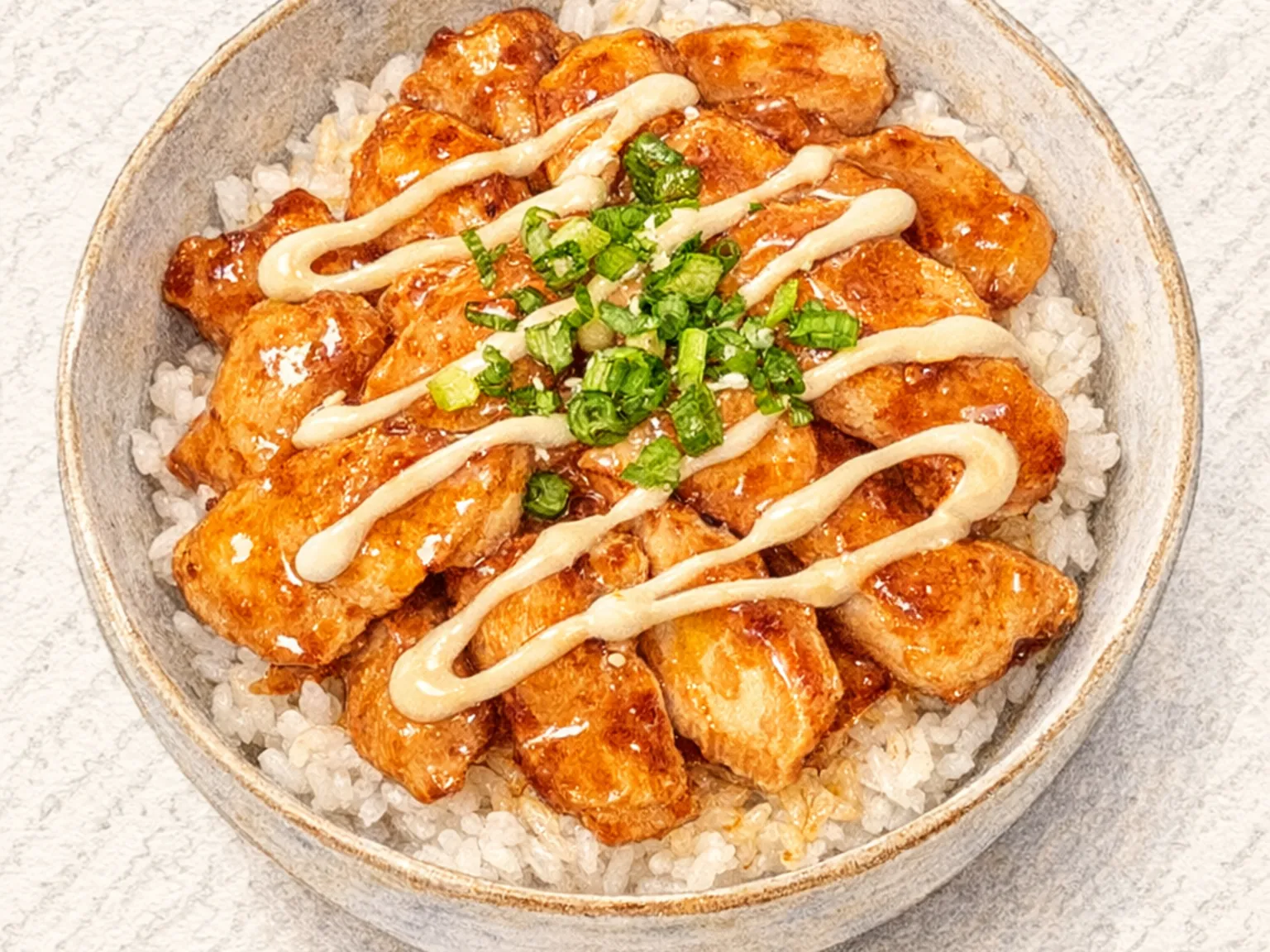
Korean Chicken Mayo Rice Bowl
Chikin mayo deopbap is a Korean rice bowl topped with pan-fried chicken breast glazed in a sweet-salty soy sauce and finished with a generous drizzle of mayonnaise. The chicken is cooked over medium-high heat until the exterior turns golden and slightly crisp while the inside stays moist. A soy sauce and sugar glaze added near the end caramelizes around each piece, creating a sticky coating that clings well. The mayonnaise adds creaminess and a mild tang that balance the saltiness of the glaze; when it hits the warm chicken and rice, it loosens slightly into a sauce that seeps down through the bowl. With only a handful of everyday ingredients and around fifteen minutes of cooking time, it matches the convenience of a packaged lunch box while delivering noticeably better flavor and texture.
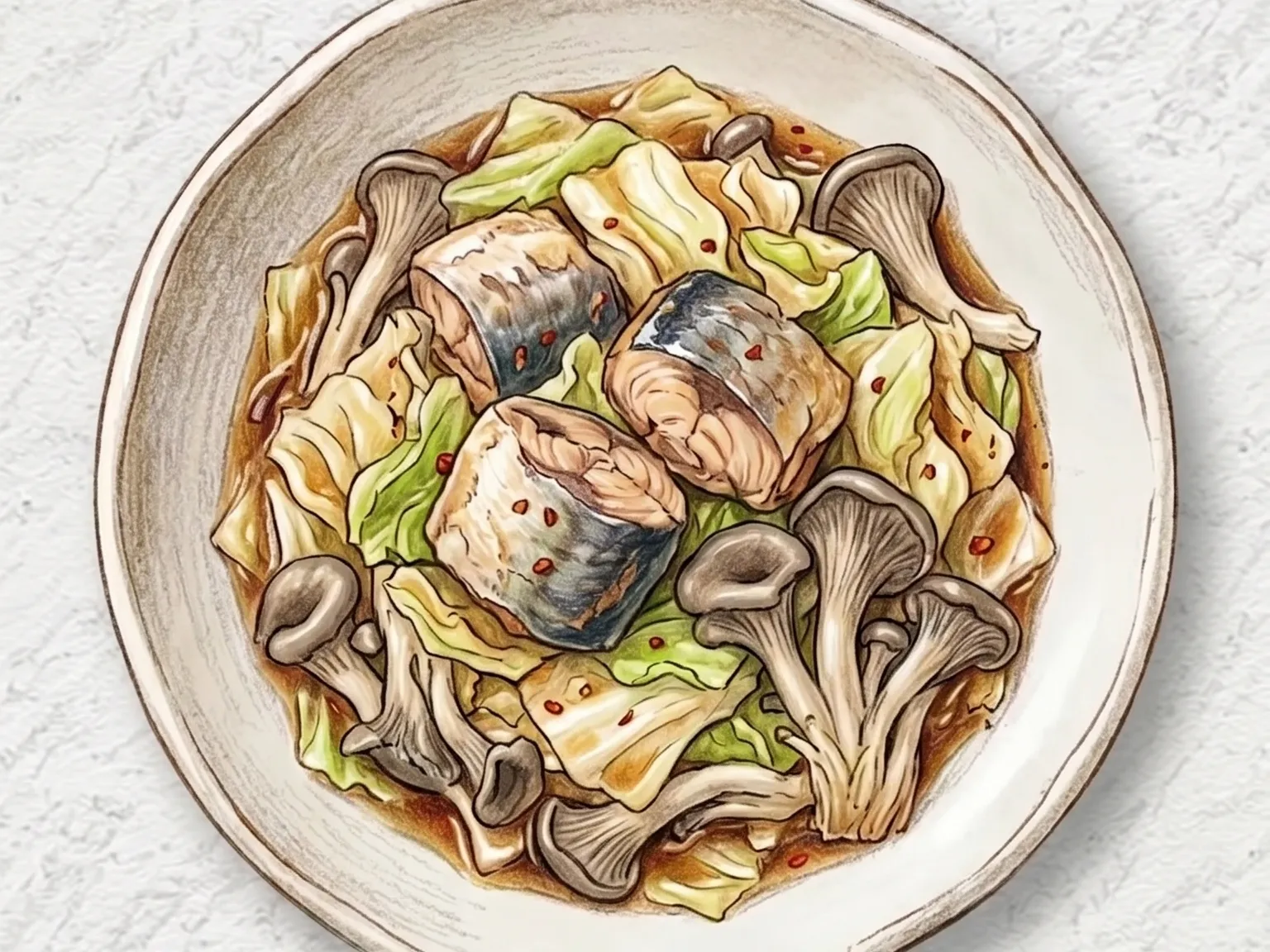
Korean Mushroom and Saury Soy Stir-fry
Beoseot kkongchi ganjang bokkeum is a stir-fry built on drained canned saury, oyster mushrooms, and cabbage seasoned with soy sauce, chili flakes, and sugar. Because the canned fish is already fully cooked and its bones have softened through the canning process, the saury only needs to be added in the final stage and folded in gently; stirring too aggressively breaks the flesh into flakes that lose all textural interest. Moisture released from the oyster mushrooms as they cook combines with the soy sauce base to form a light, natural sauce without any added water. The cabbage contributes a steady sweetness that tempers the concentrated fish umami and prevents the seasoning from reading as too heavy. A small squeeze of lemon juice at the very end of cooking lifts the entire dish, neutralizing any residual fishiness and brightening the overall profile. The whole recipe is built around a single pantry can of canned saury, requires less than fifteen minutes from start to finish, and delivers substantial protein at minimal cost.
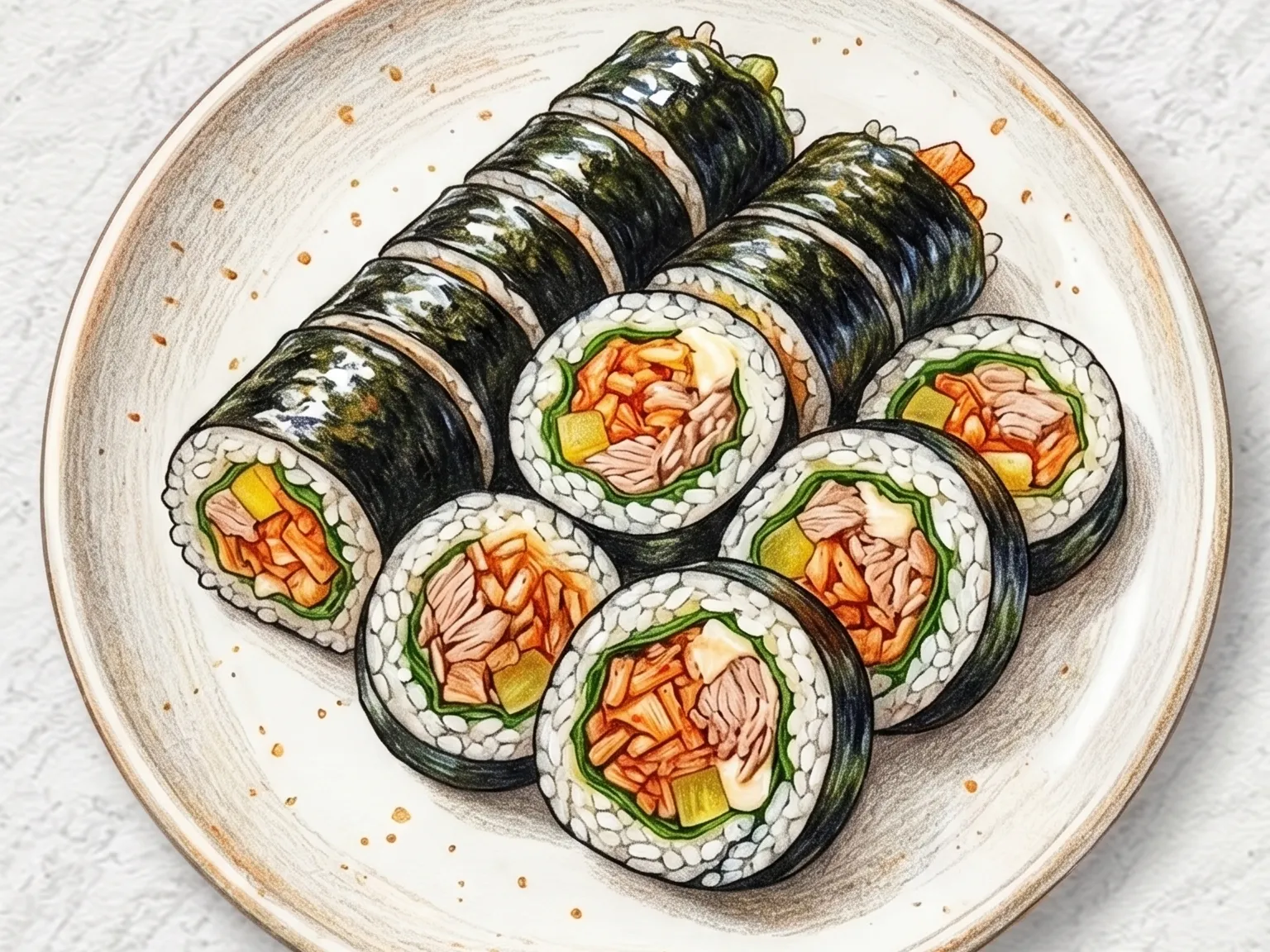
Korean Tuna Kimchi Gimbap
Tuna-kimchi gimbap rolls together drained canned tuna, stir-fried kimchi, and mayonnaise inside seasoned rice and roasted seaweed sheets. Stir-frying the kimchi for two minutes drives off excess liquid and concentrates its fermented tang into a deeper, more savory flavor. Perilla leaves layered directly on the rice add a herbal, slightly minty fragrance that offsets the richness of the tuna-mayo filling. A light brush of sesame oil on the finished roll preserves the seaweed's crispness while adding a final nutty aroma to every slice. Matching tuna and cooked kimchi in a one-to-one ratio keeps the salt and umami in balance, and adding just enough mayonnaise to bind the filling prevents the rice from turning soggy during rolling.
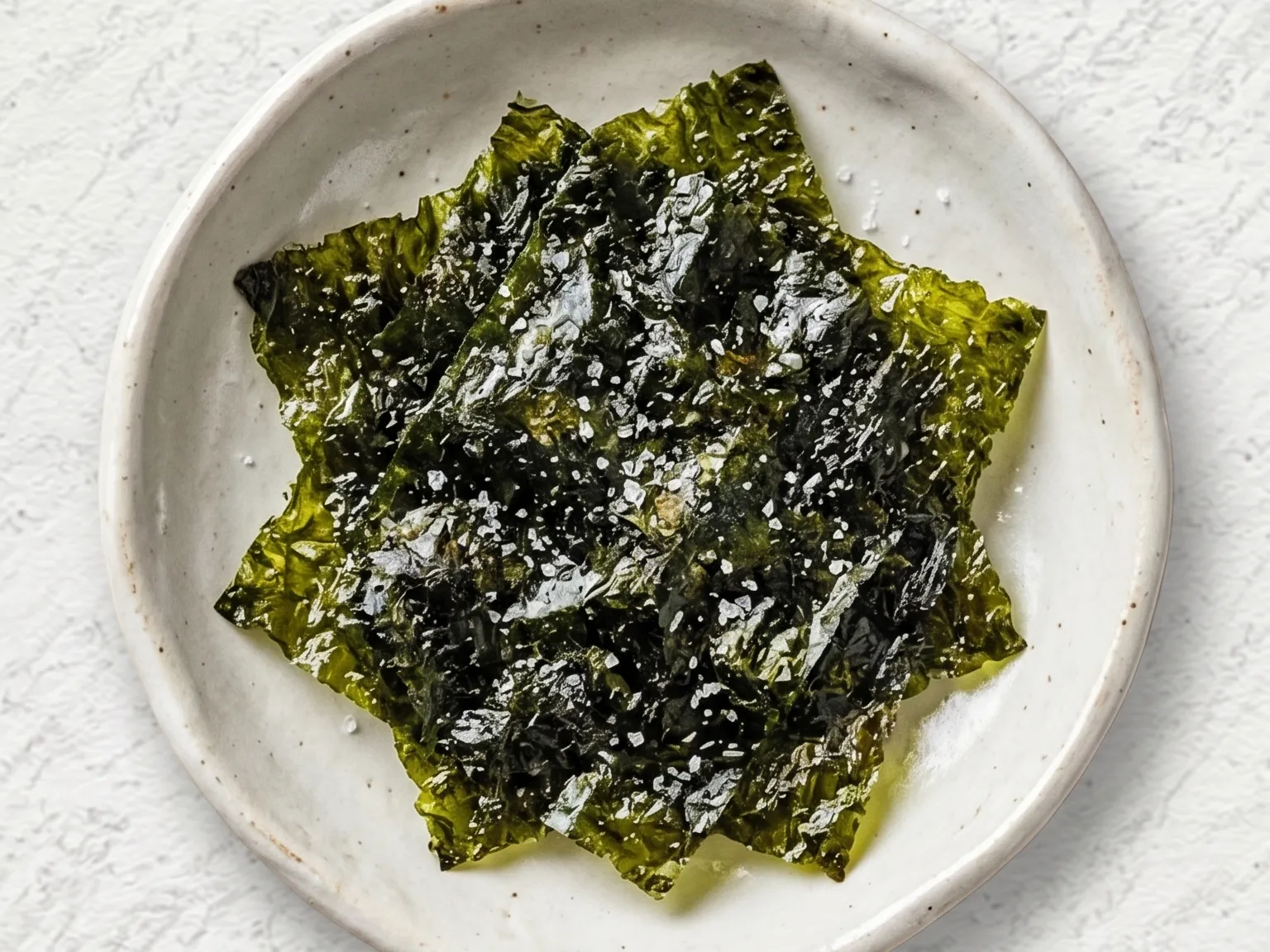
Korean Roasted Seasoned Seaweed
Gim-gui is Korea's roasted seaweed side dish, prepared by brushing thin sheets of dried laver with a light coat of sesame oil, sprinkling fine salt over the surface, and toasting each side for no more than ten to fifteen seconds over low heat. The brief exposure to heat intensifies the sesame oil's nutty aroma while the seaweed's oceanic flavor concentrates into something deeper and more savory, and the result is a paper-thin, shatteringly crisp sheet that crumbles at the slightest pressure. The saltiness makes plain steamed rice deeply satisfying, which is why gim-gui is one of the most reliably consumed items in a Korean banchan spread. Timing is the single most demanding skill: seaweed moves from perfectly roasted to scorched within seconds, so the sheets must come off the heat the moment their color shifts from a deep, dark green to a lighter, almost translucent emerald. Too much oil causes the seaweed to absorb the fat and turn soft, so a minimal coating brushed with a pastry brush rather than poured on is strongly preferred. Roasted in batches and stored in an airtight container, properly made gim-gui retains its crunch for several days and works as a rice companion, lunchbox addition, or plain snack eaten on its own.
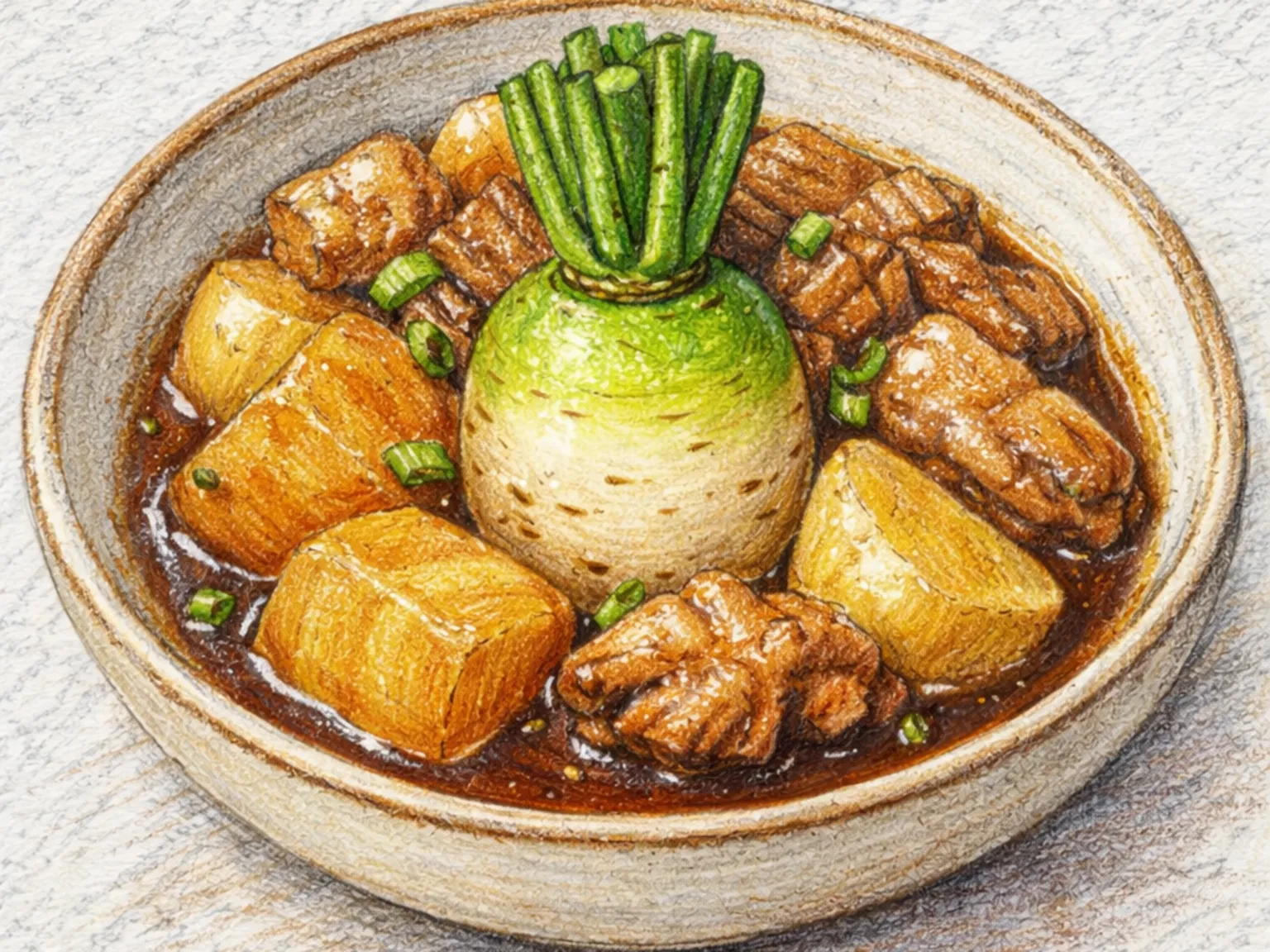
Korean Braised Chicken with Radish
This braise combines bone-in chicken pieces with Korean radish and potato in a soy-and-gochugaru sauce. The radish absorbs both the chicken stock and the spiced seasoning, turning amber on the outside while going translucent within. Potato edges break down during the long simmer, thickening the sauce into a sticky glaze. Gochugaru and black pepper build a layered heat that soy sauce and sugar round off, so the dish is assertively spicy without being harsh. Reducing the liquid until it barely coats the bottom concentrates all the flavors onto the surface of each piece.
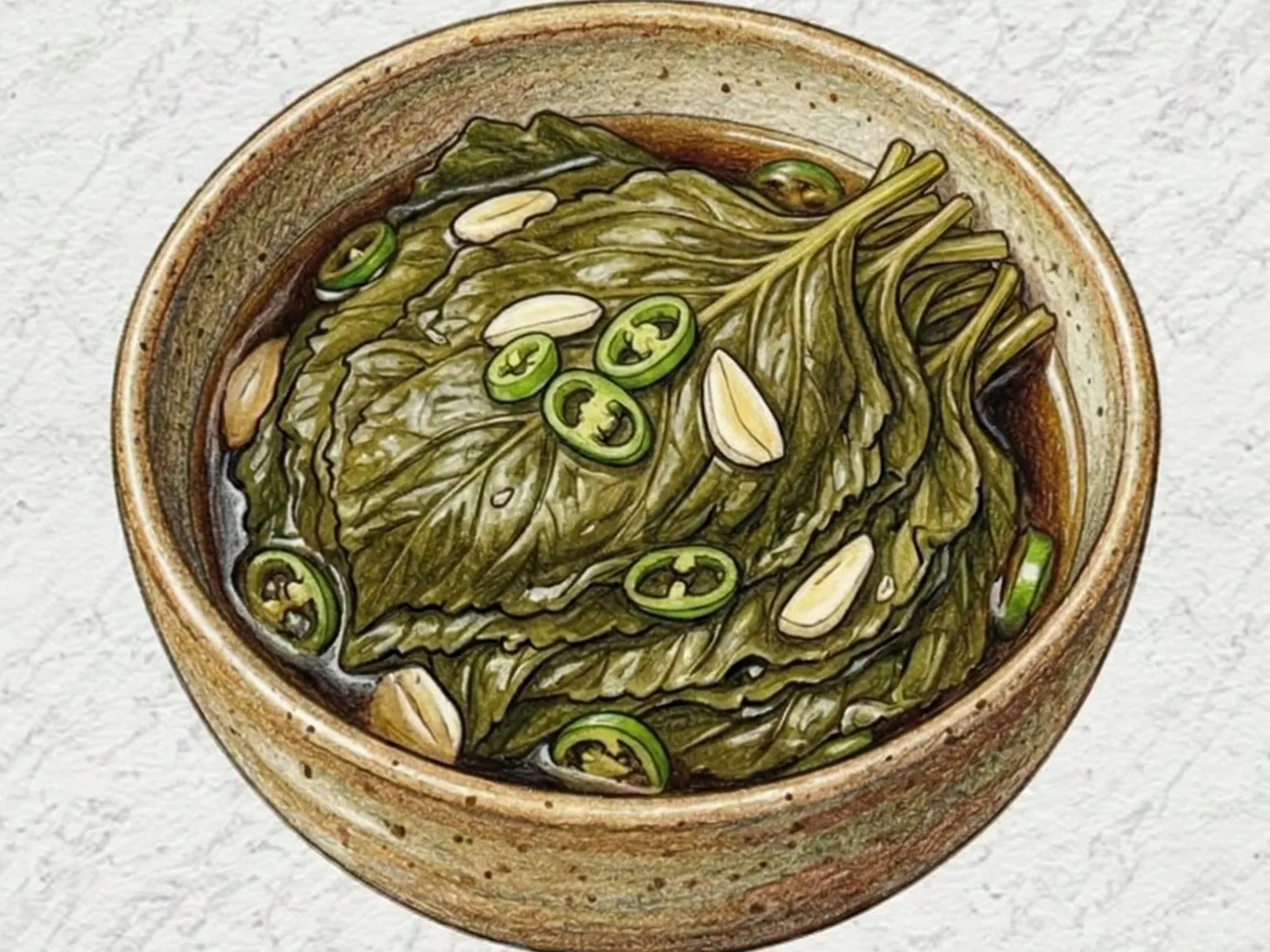
Korean Amaranth Greens Pickles
Bireumnamul jangajji is a soy-vinegar pickle of amaranth greens made by submerging the tender leaves in a boiled brine of soy sauce, vinegar, and sugar with cheongyang chili and garlic. The soft leaves absorb the pickling liquid within a day, taking on a balanced sweet-salty flavor that makes them ready to eat as banchan. Vinegar neutralizes the grassy raw taste of the greens, and the chili and garlic deliver a sharp, spicy finish that builds at the back of the palate. The flavor deepens noticeably from the second day onward, so chilling the jar longer intensifies the pickle. Refrigerated, this keeps well for two to three weeks, making it a practical way to preserve in-season amaranth greens through the summer.
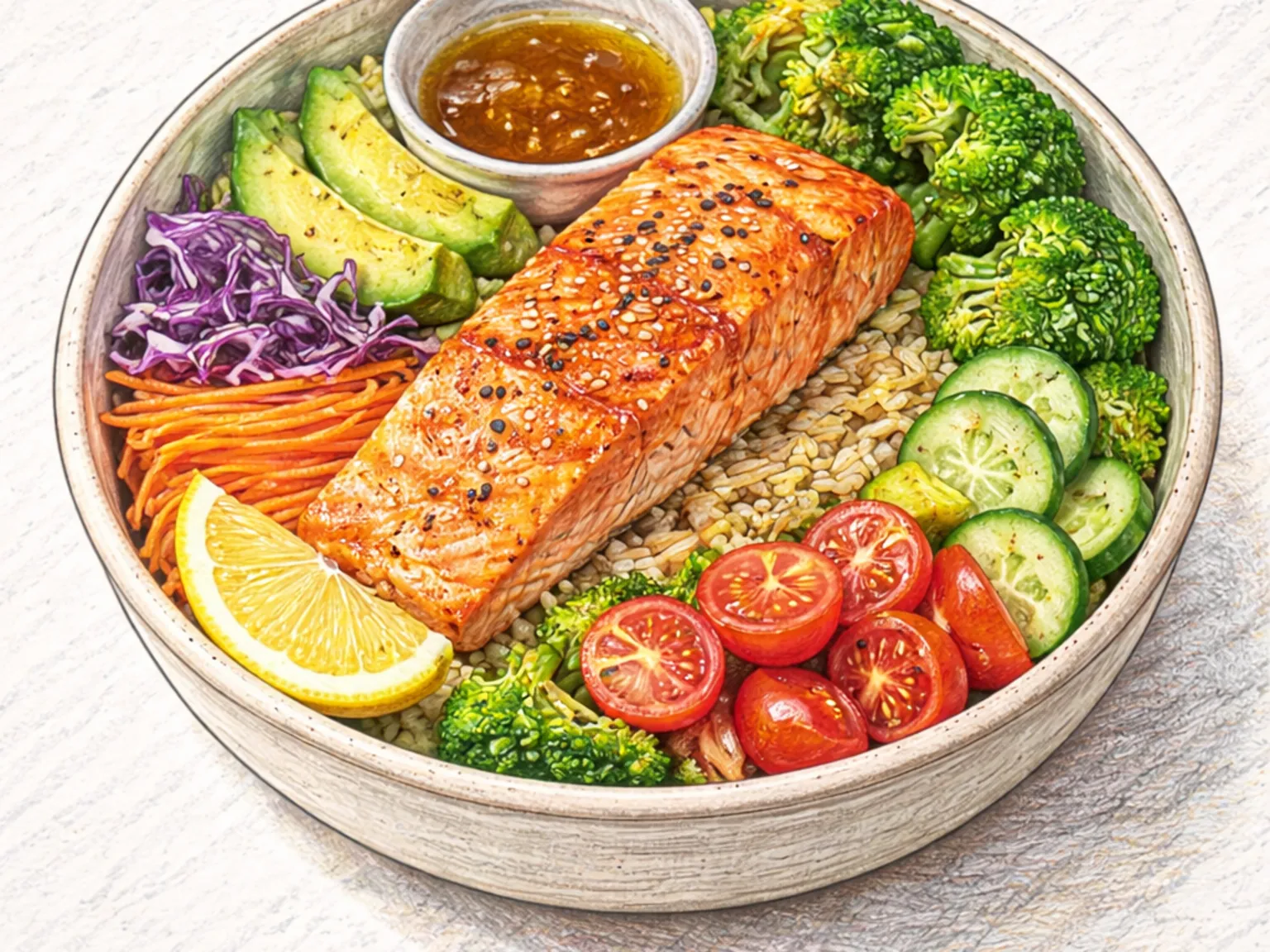
Salmon Brown Rice Power Bowl
Salmon brown rice power bowl sears a salmon fillet four to five minutes per side until the skin crisps and the interior stays moist, then plates it over cooked brown rice with blanched spinach, julienned carrot, and sliced avocado. A sauce of soy sauce, lemon juice, and sesame oil layers umami depth, citrus brightness, and nutty aroma into a single drizzle that ties the mild grain to the rich fish. Brown rice's firm, chewy texture contrasts with the tender salmon flesh, and avocado fills the gap with a smooth, fatty creaminess. Pulling the salmon from heat while the center is still slightly translucent preserves moisture - overcooking causes the proteins to contract and squeeze out the juices.
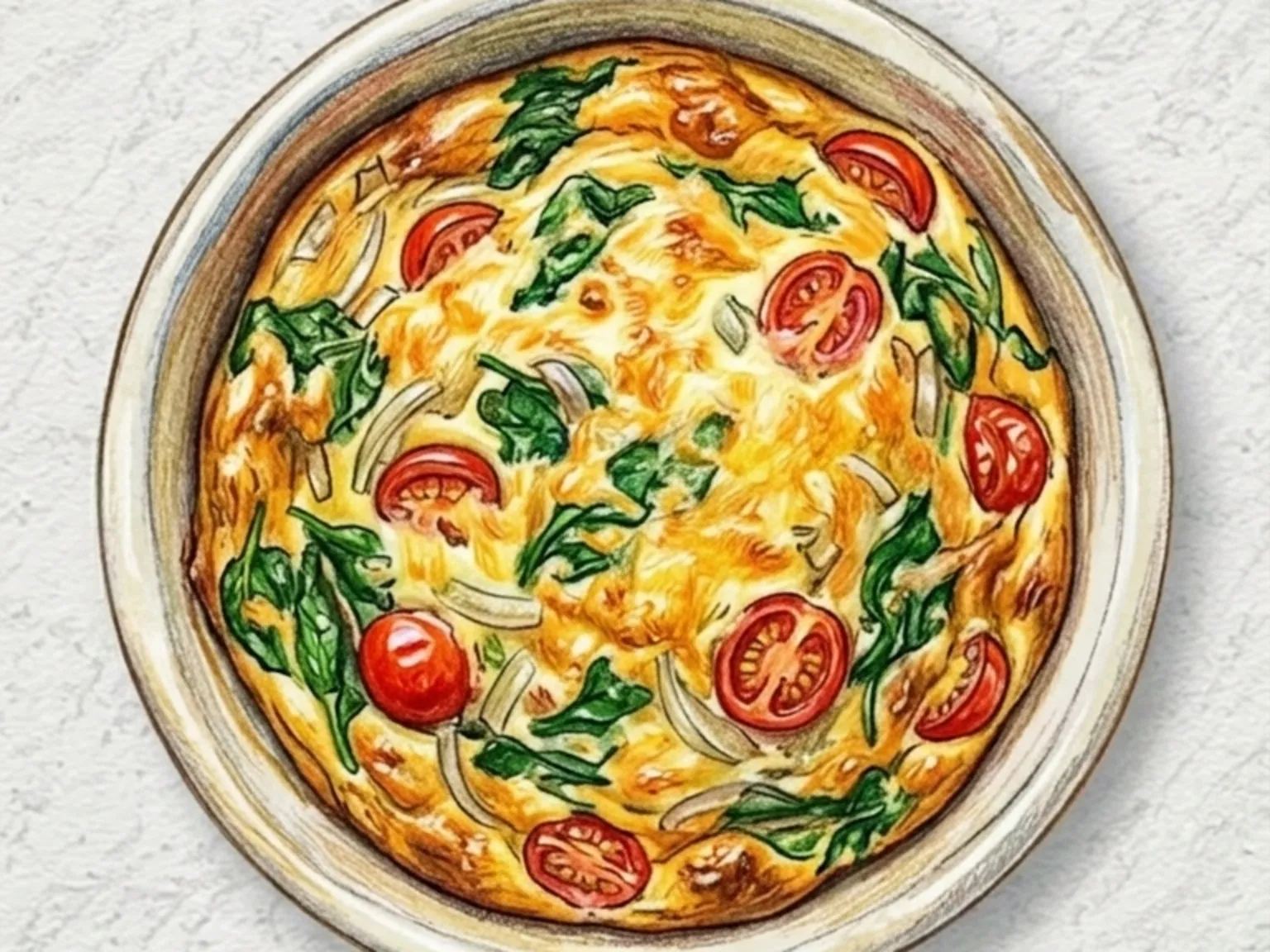
Frittata
Frittata whisks eight eggs with milk and salt, then builds layers of flavor in an oven-safe pan before finishing in the oven. Onion is sautéed in olive oil until soft and translucent, then spinach and halved cherry tomatoes are added and cooked briefly so they release some moisture without turning to mush. The egg mixture is poured over the vegetables and left untouched on medium-low heat until the edges begin to firm and pull away from the sides of the pan. Grated cheddar cheese is scattered across the top before the pan goes into a 190-degree oven for ten minutes, during which the frittata puffs up and cooks through evenly from edge to center. The finished frittata is done when a gentle press at the center springs back with light resistance. Over-whisking the eggs before cooking traps too many air bubbles, which collapse in the oven and leave the surface cratered and uneven, so a slow, deliberate stir produces a better result. Smoked salmon, sliced sausage, or leftover roasted vegetables all work as additions without disrupting the basic structure. Cold leftovers tucked into a sandwich the next morning taste just as good as the freshly made version.
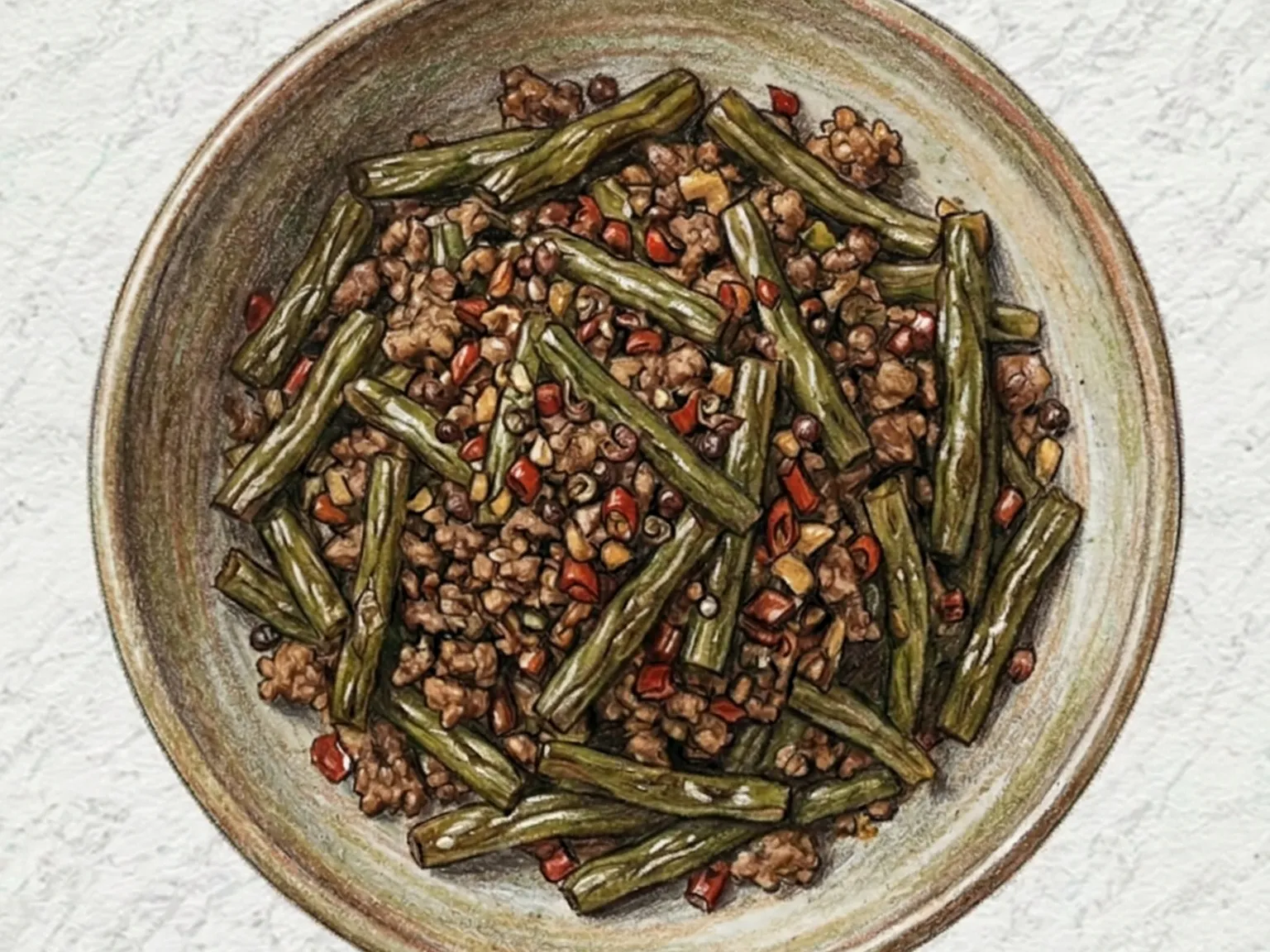
Sichuan Dry-Fried Green Beans
Sichuan dry-fried green beans, gan bian si ji dou, showcase the dry-frying technique at the center of Sichuan home cooking. Beans are blistered in a scorching wok with little or no oil until their skins wrinkle and develop brown spots, a process that drives off moisture and concentrates the natural sweetness locked inside each pod. The exterior collapses from snappy and raw into something chewy and almost leathery, while the interior retains a slight give. Minced pork, ya cai (Sichuan preserved mustard greens), dried red chilies, and Sichuan peppercorns go in during the final minute. The pork adds meaty depth, the ya cai contributes a funky, saline punch, the chilies supply sustained heat, and the peppercorns deliver the characteristic numbing tingle known as ma la that coats every bean surface. If ya cai is unavailable, a spoonful of doubanjiang or finely chopped fermented cabbage provides a comparable layer of fermented salt. The finished dish holds a textural duality that belongs entirely to the gan bian method: tough skin outside, yielding core within. It appears on Chinese restaurant menus as a palate-cleansing vegetable course between heavier meat dishes, and it works just as well as a rice accompaniment or a cold-beer snack.
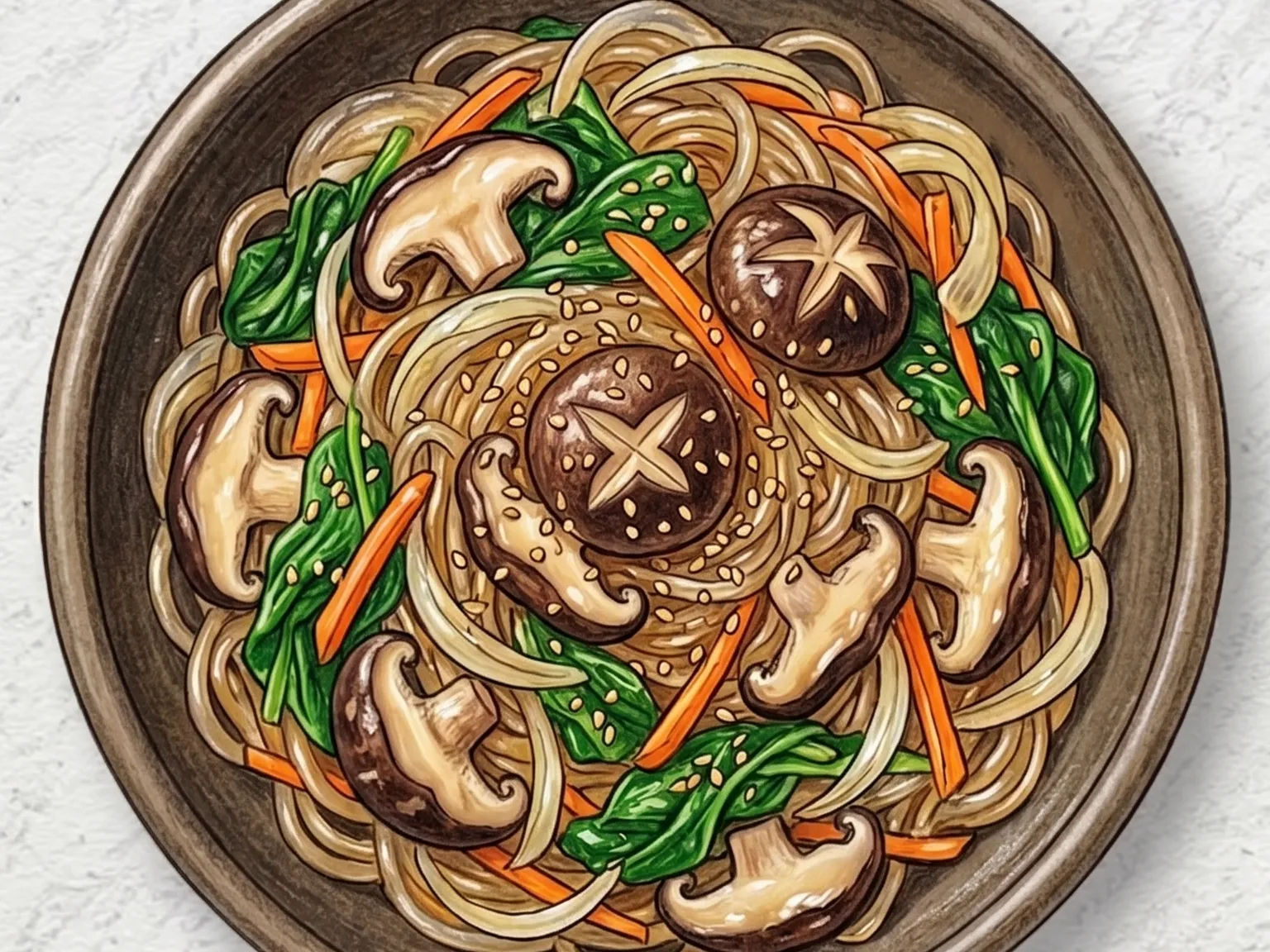
Korean Mushroom Japchae (Shiitake Glass Noodle Stir-Fry)
Beoseot japchae replaces beef with shiitake mushrooms as the primary source of savory depth, making it a staple of Buddhist temple cuisine and vegetarian tables alike. Sweet potato noodles are soaked and boiled, then rinsed in cold water immediately to lock in a firm, springy texture. Shiitake, spinach, carrot, and onion are each cooked separately - their moisture levels and heat tolerances differ enough that combining them prematurely flattens every component. Soy sauce, sugar, minced garlic, and sesame oil bring the noodles and vegetables together, and the finished dish rests for ten minutes so the seasoning penetrates the noodles evenly. The result is a japchae where the mushroom carries genuine umami weight without any meat.
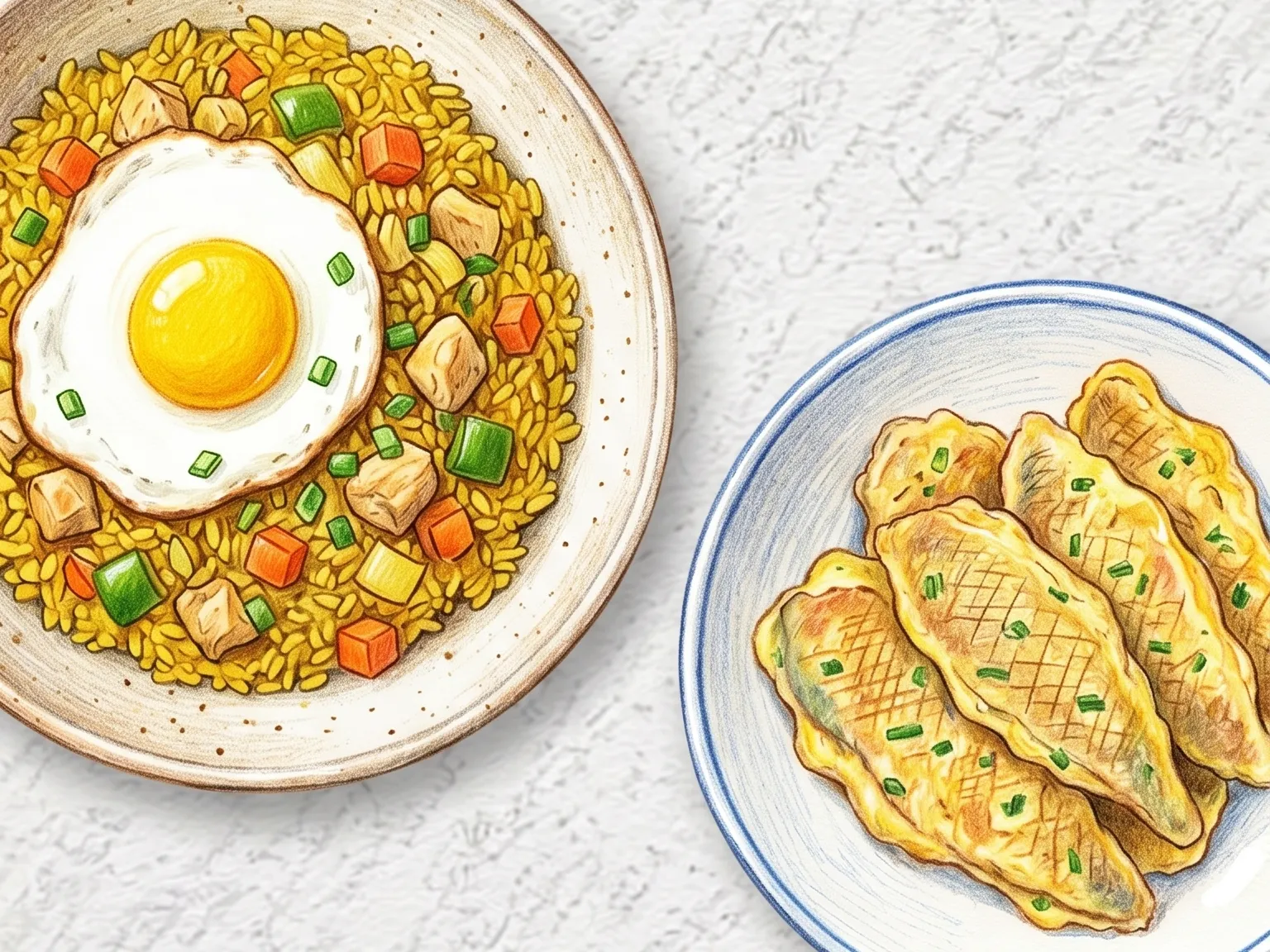
Korean Curry Fried Rice (Golden Spiced Chicken Fried Rice)
Curry bokkeumbap is a Korean fried rice where curry powder coats each grain with warm spice and gives the rice a vivid golden color. Chicken breast, onion, carrot, and bell pepper are stir-fried together before the rice goes in, distributing protein and vegetables evenly through every serving. The curry fragrance develops gradually with each bite - more present than plain fried rice but lighter than a curry sauce, landing at a satisfying middle point between the two. Bell pepper adds sweetness and a visual contrast of color against the golden rice. Topping with a fried egg raises the dish further: when the yolk breaks and mixes into the rice, a layer of creaminess runs through each bite. The recipe works well with day-old rice and requires few ingredients, making it a practical weeknight meal.
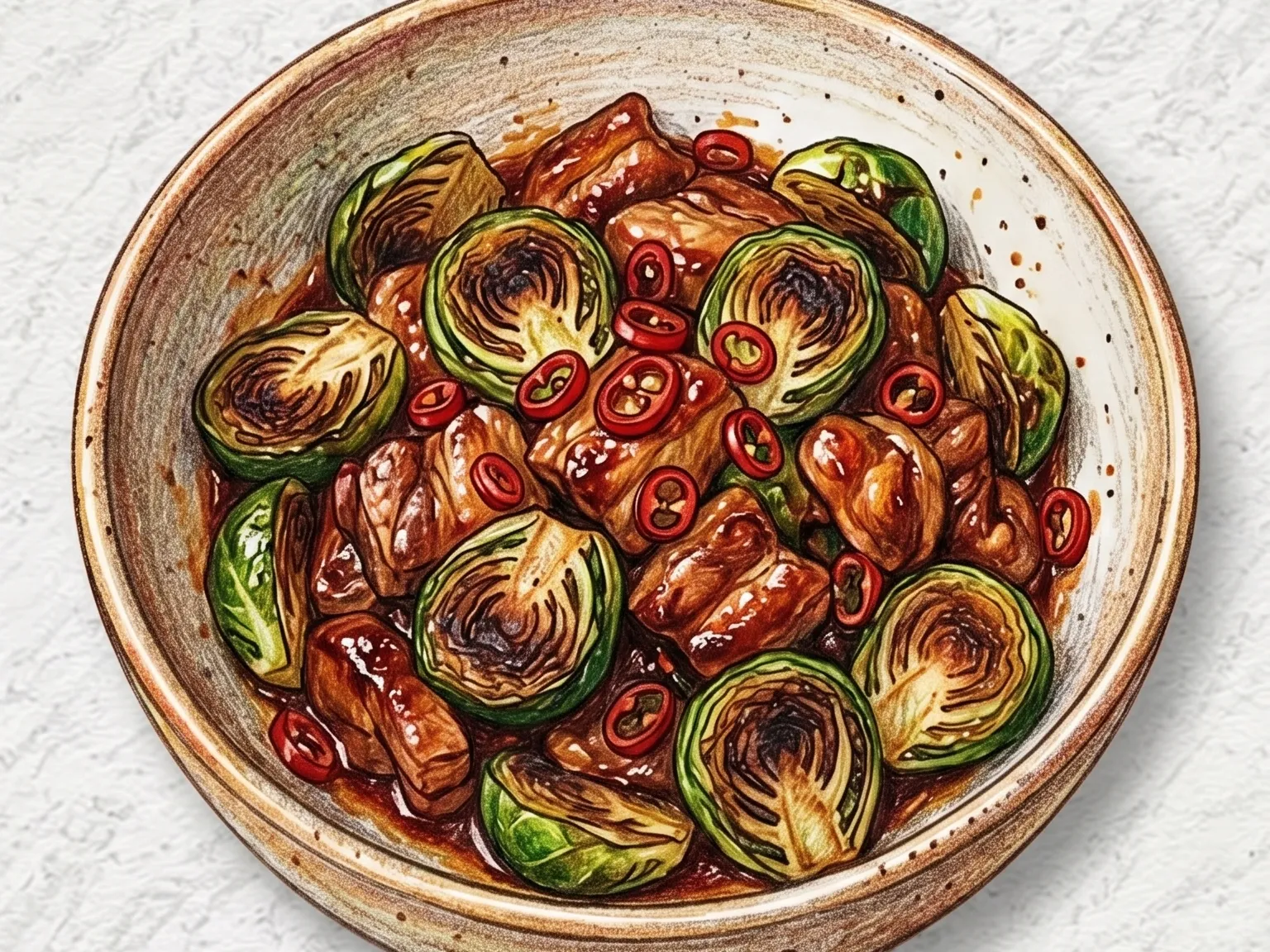
Korean Beuraussel Kong Dwaeji Bokkeum (Brussels Sprout Pork Stir-fry)
Pork shoulder is marinated in gochujang and soy sauce, then stir-fried with halved Brussels sprouts over high heat in this Korean-fusion dish. The gochujang absorbs into the meat during resting, building a spicy-sweet umami base, while oligosaccharide syrup caramelizes into a thin glaze under the heat of the pan. Brussels sprouts must be placed cut-side down and left undisturbed until the flat surface browns; that Maillard reaction converts their raw bitterness into a toasted, near-nutty quality that complements the pork. A splash of vinegar added at the very end cuts through the rendered fat and residual sweetness, sharpening the finish. Scattered sliced red chili provides visual contrast of red against green while delivering an additional layer of fresh heat. The same marinade works equally well with mushrooms or firm tofu added to the pan, making it easy to extend the dish into a more vegetable-forward meal.