Rice Recipes
334 recipes. Page 13 of 14
Rice is the foundation of Korean cuisine, appearing not only as steamed white rice but also as fried rice, bibimbap, clay-pot rice (sotbap), and gimbap rolls. Porridge (juk) - made by slow-cooking rice into a silky consistency - is comfort food for cold days or when you need something gentle on the stomach. Abalone porridge, pumpkin porridge, and chicken porridge are all classics.
Steak Rice Bowl (Seared Beef with Soy-Garlic Glaze over Rice)
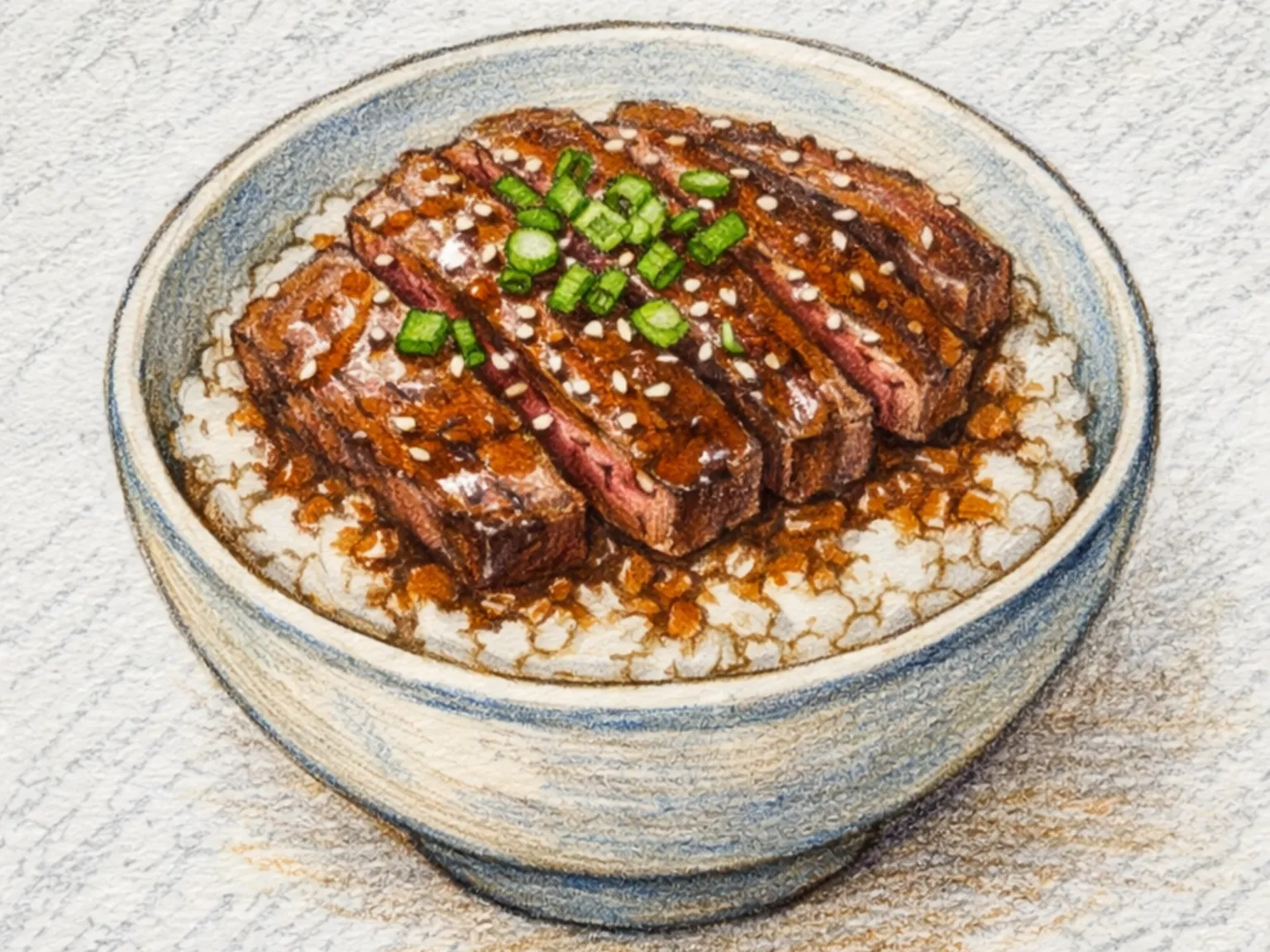
This steak rice bowl sears 300 g beef over high heat, rests and slices it, then serves it over 2 cups of rice with a soy-garlic pan sauce. Pat the beef dry, season it evenly with 1/2 tsp black pepper, and leave it at room temperature for 10 minutes. Mix 2 tbsp soy sauce with 1 tbsp mirin, 1 tsp sugar, and 1 tsp minced garlic until the sugar is no longer visible. Heat the pan thoroughly over high heat, melt 10 g butter, and add the steak when the butter begins to foam. Leave the first surface in contact with the pan until it develops a deep brown crust, then turn it. Stand a thick steak on its sides as needed so the outer edges also cook. Remove the meat slightly before the intended final doneness and rest it on a plate for 3 minutes. Slice thinly across the grain. Wipe away only any blackened fragments from the pan while retaining the brown juices. Pour in the prepared sauce and cook it over medium heat until it looks glossy and slightly thickened. Divide the rice between two bowls, fan the steak slices over the top, and spoon the warm sauce evenly across the meat and rice.
Stuffed Bell Peppers
Stuffed bell peppers are hollowed out, filled with a sautéed mixture of ground beef, onion, garlic, tomato sauce, and cooked rice, then baked until the peppers soften and the filling is heated through. Trimming the tiniest slice from the bottom of each pepper creates a flat base so they stand upright in the baking dish without tipping over, but cutting too deep will open a hole and leak filling. The filling should be seasoned a touch saltier than seems right on its own, because the pepper's natural sweetness will balance it out during baking. After 30 minutes at 190 degrees Celsius, mozzarella goes on top for a final 10-minute bake that melts the cheese into a seal over the filling, keeping it moist. The interplay of the pepper's sweetness, the tomato sauce's acidity, and the beef's savory depth makes this a nutritionally balanced one-dish meal.
Stuffed Cabbage Rolls
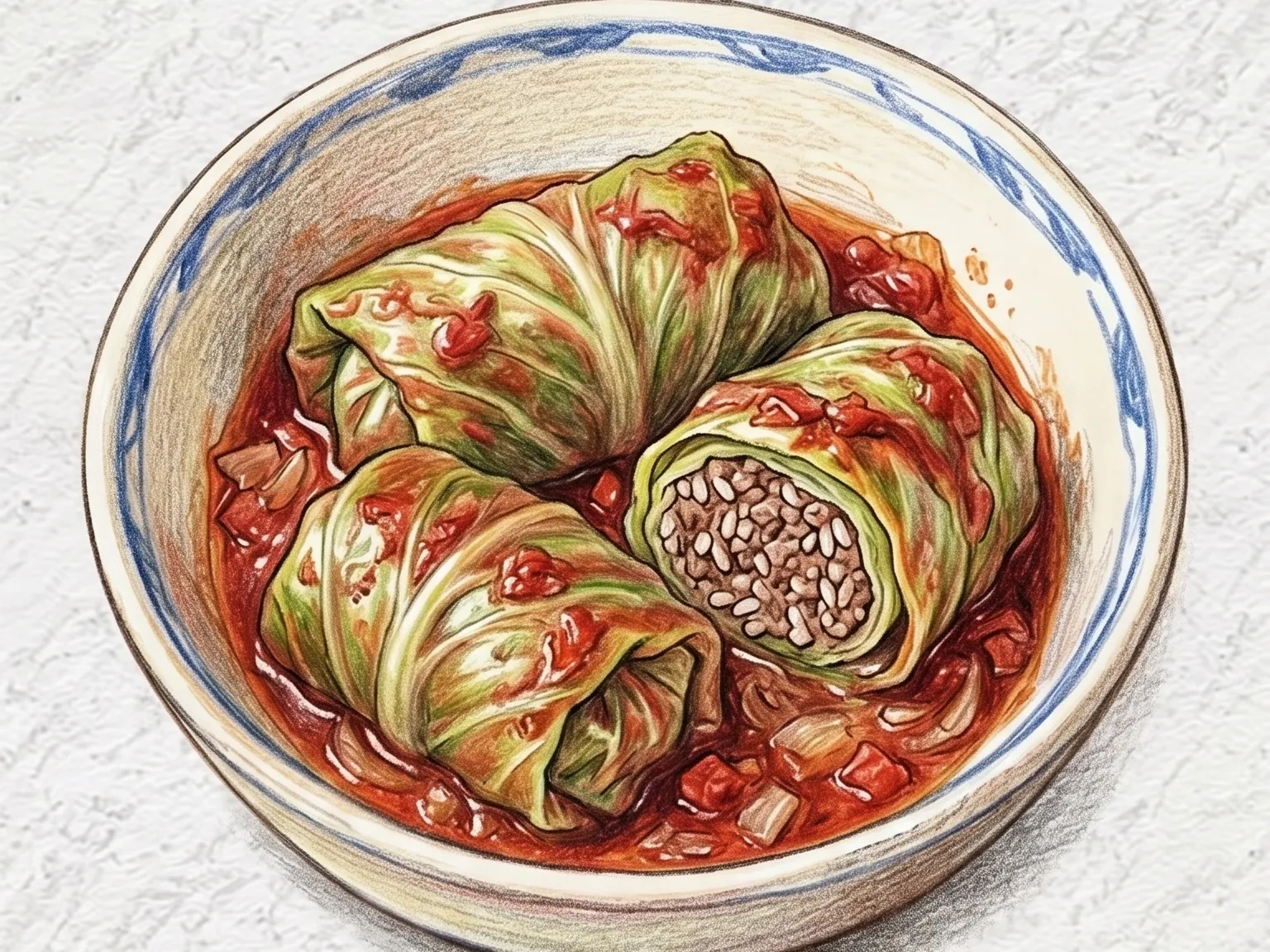
Stuffed cabbage rolls wrap a filling of ground beef, cooked rice, sautéed onion, and garlic inside blanched cabbage leaves, then braise in tomato sauce on low heat for 35 minutes until the leaves turn silky and the filling cooks through. Removing the core first lets the leaves separate cleanly, and rolling a pin over the thick central vein of each leaf thins it enough to fold without cracking. The rolls must be packed tightly in the pot - too much space allows them to shift as the sauce simmers, causing them to unravel. Spreading tomato sauce on the bottom of the pot before arranging the rolls prevents sticking and starts building flavor from underneath. The long, gentle braise draws natural sweetness from the cabbage, which meets the acidity of the tomato sauce to produce a mellow, deeply savory result.
Hasune-mochi (Steamed Lotus Root Stuffed with Rice)
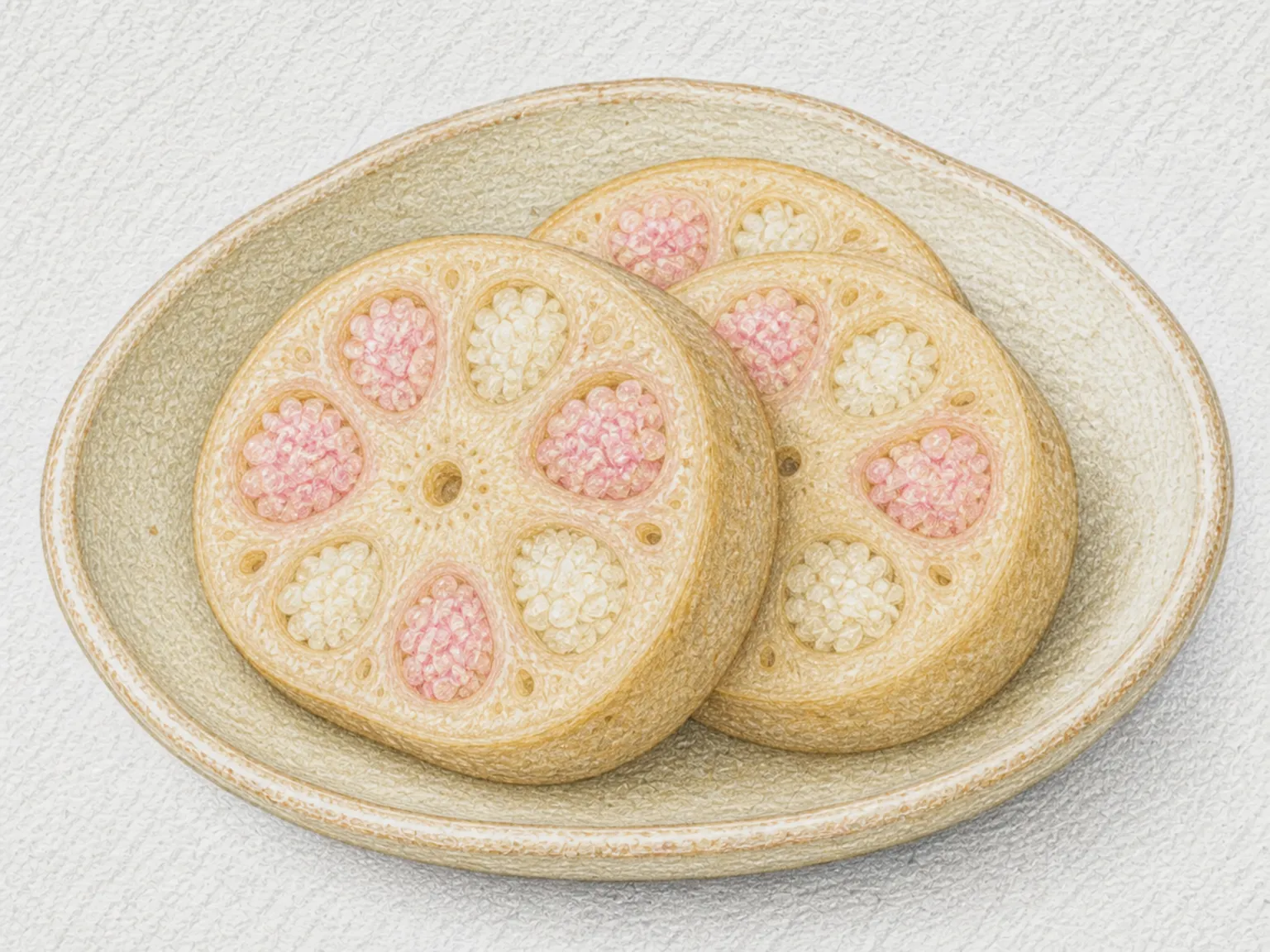
Hasune-mochi is a celebratory dish from Kadoma in Osaka. White glutinous rice and pale pink rice are packed separately into the holes of two thick lotus-root sections, the cut ends are sealed, and the roots steam for about 2 hours before being sliced into red-and-white rounds. Lotus root is considered auspicious because its open channels suggest a clear view of the future, and the two colors suit festive occasions. The clay soil of Kawachi and Kadoma helped make lotus root a local crop from the Edo period onward. Served in 8mm slices with kinako and sweet azuki paste, it combines chewy rice with the sweet, lightly crisp texture of steamed lotus root.
Korean Soft Tofu Stew Rice Bowl
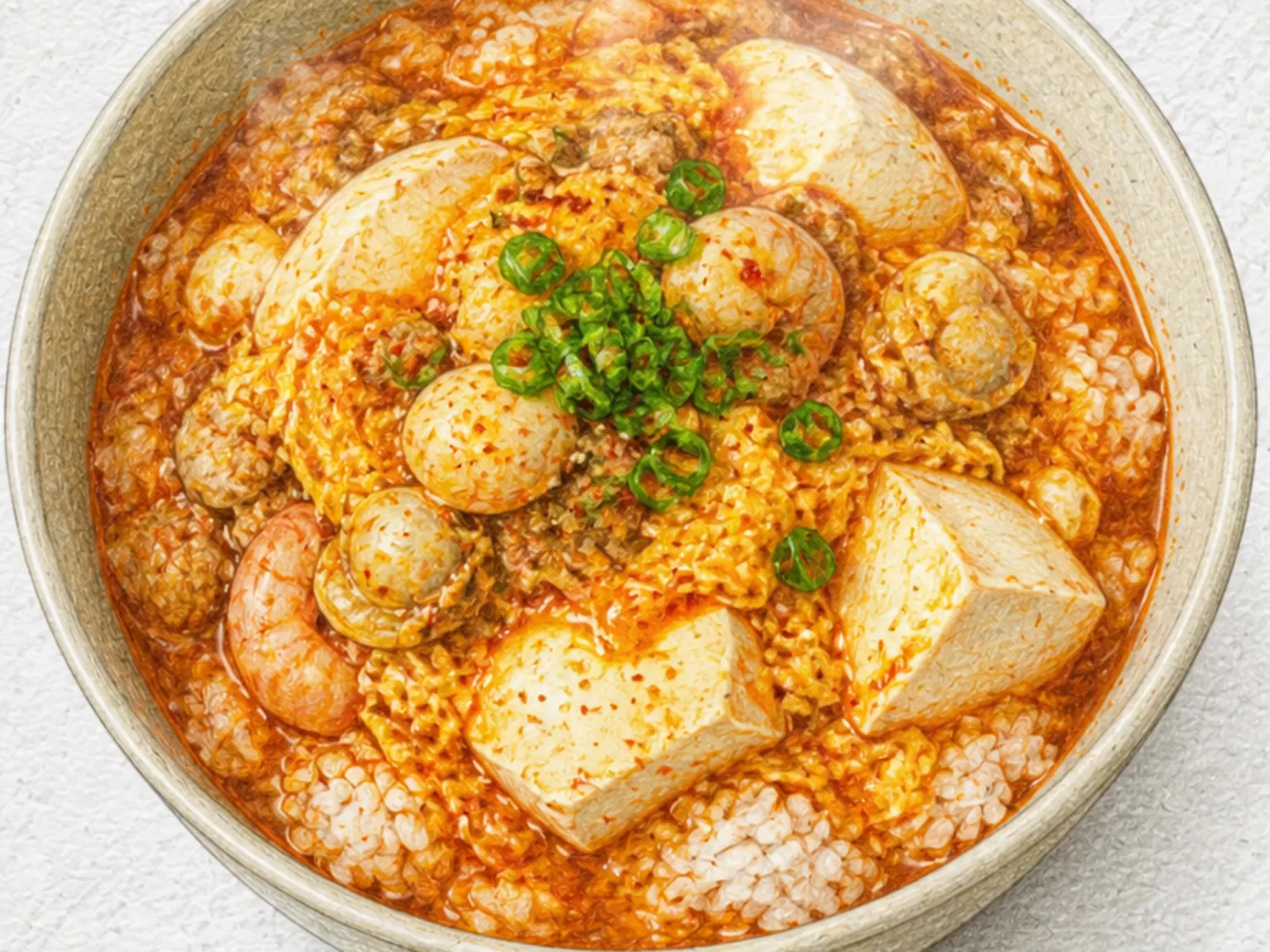
This soft tofu rice bowl cooks pork, red pepper flakes, soft tofu, and an egg in anchovy-kelp stock, then pours the contents of the pot over 1 cup of warm rice. Thinly slice 50 g onion, chop 20 g green onion, and drain only the loose liquid from 200 g soft tofu without forcing it into neat cubes. Heat 1 tsp sesame oil in a small pot over medium heat and cook 60 g pork for 2 minutes, until the exterior no longer looks raw. Lower the heat to medium-low, add 1 tbsp red pepper flakes and 1 tsp minced garlic, and stir for only 30 seconds so the spices release their aroma without scorching. Pour in 1 cup anchovy-kelp stock and add the onion. Once the edges begin to bubble, simmer for 2 minutes. Scoop the tofu into the broth in large pieces and shake the pot gently instead of stirring, which keeps some of the soft curds intact. Maintain a gentle boil for 5 minutes. Crack 1 egg into the center, scatter the green onion over it, and cook for 1 more minute. When the egg white has just begun to set, transfer the tofu, pork, egg, and broth together onto the rice.
Yan-gome (Roasted Rice Cooked with Sweet Azuki)
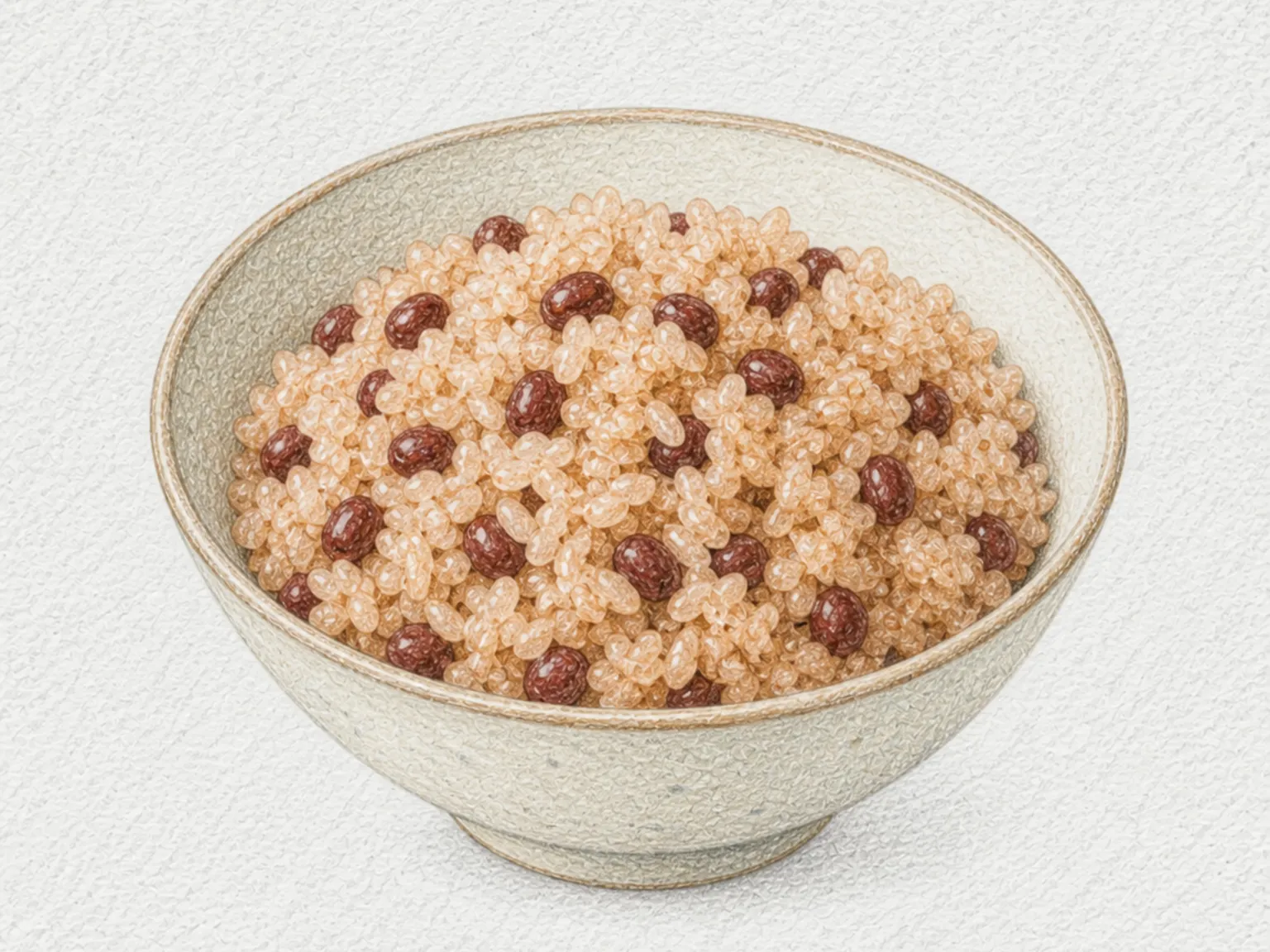
Yan-gome is a Boso Peninsula dish from Chiba. Regular rice is soaked overnight in water initially around 40°C, drained, soaked again in fresh water for 3 to 4 hours, dried thoroughly, roasted in an oiled pan, cooled, and then cooked for about 20 minutes over low heat in sweetened azuki and its abundant broth. It resembles sekihan but is mildly sweet, loose-grained, and fragrant from roasting. Yan-gome is offered at Obon welcoming and farewell fires, harvest prayers, and celebrations after rice planting, and regional names include yaki-gome, ya-gome, and ei-gome. For modern safety, both long soaking stages take place under refrigeration.
Takikomi Gohan (Japanese Mixed Rice Cooked with Vegetables and Dashi)
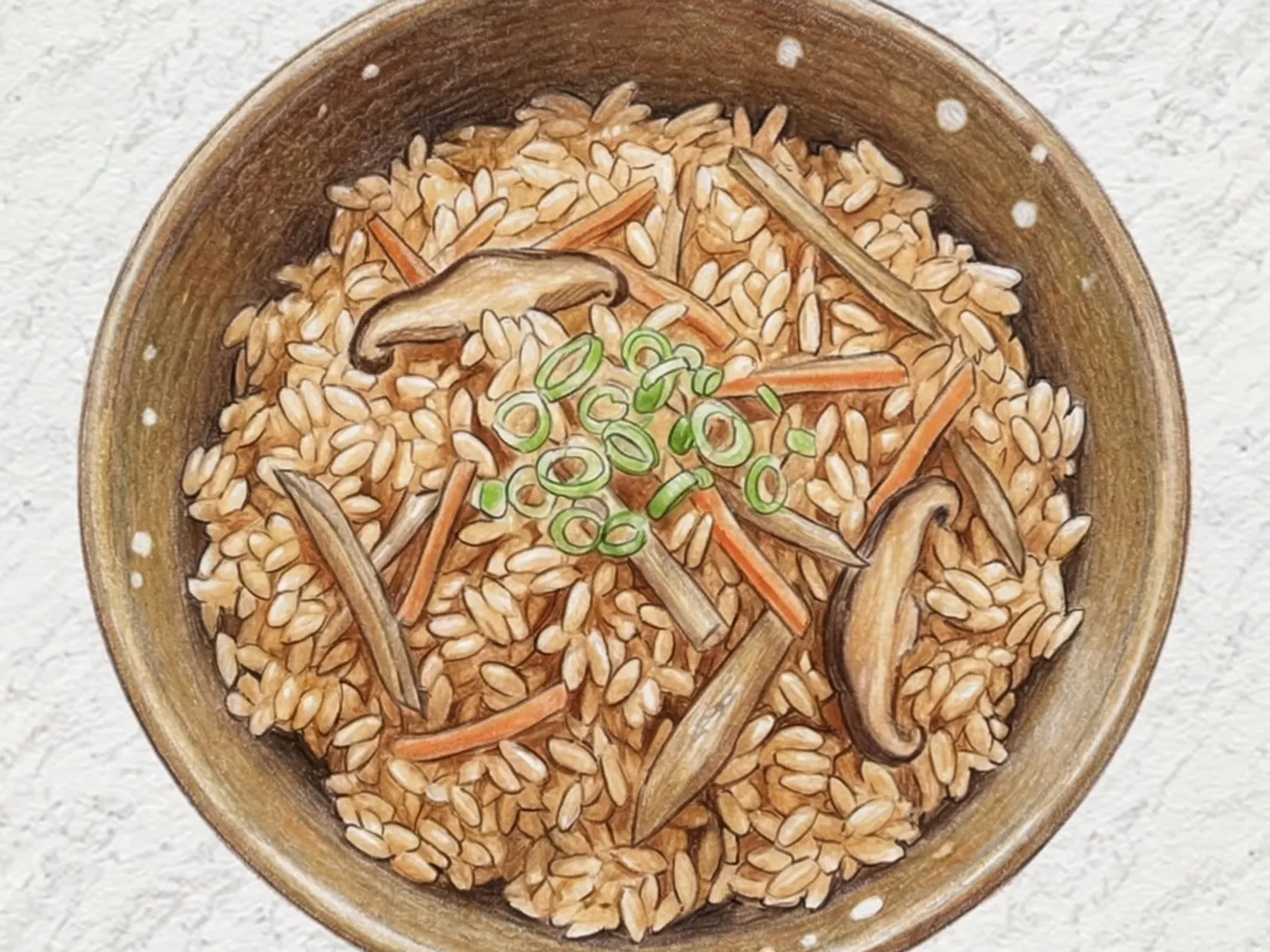
Takikomi gohan cooks short-grain rice with shiitake, carrot, and burdock in a measured mixture of dashi, soy sauce, and mirin. Two cups rice is washed, soaked in water for 20 minutes, and left in a sieve for 10 minutes to drain. One hundred twenty grams shiitake, 80 g carrot, and 60 g burdock are cut into thin strips of similar size so they finish cooking together. The cooking liquid combines 420 ml dashi with 2 tablespoons soy sauce and 1 tablespoon mirin. The drained rice is leveled across the bottom of the rice cooker before the seasoned dashi is poured in. Only the rice is smoothed at this point. The cut vegetables and mushrooms are spread in a layer on top rather than mixed down among the grains. Keeping the toppings above the rice allows the liquid to circulate evenly during the normal rice-cooker cycle. When cooking ends, the lid remains closed for a 10-minute rest. A rice paddle is then taken all the way to the bottom, lifting and turning broad sections so the toppings become evenly distributed without mashing the rice. The initial soak, the separate draining period, and the final covered rest each serve a different purpose: the grains hydrate before cooking, receive a controlled amount of seasoned liquid, and finish absorbing steam before they are folded with the vegetables.
Egg Over Rice (Raw Egg Stirred into Hot Rice with Soy Sauce)
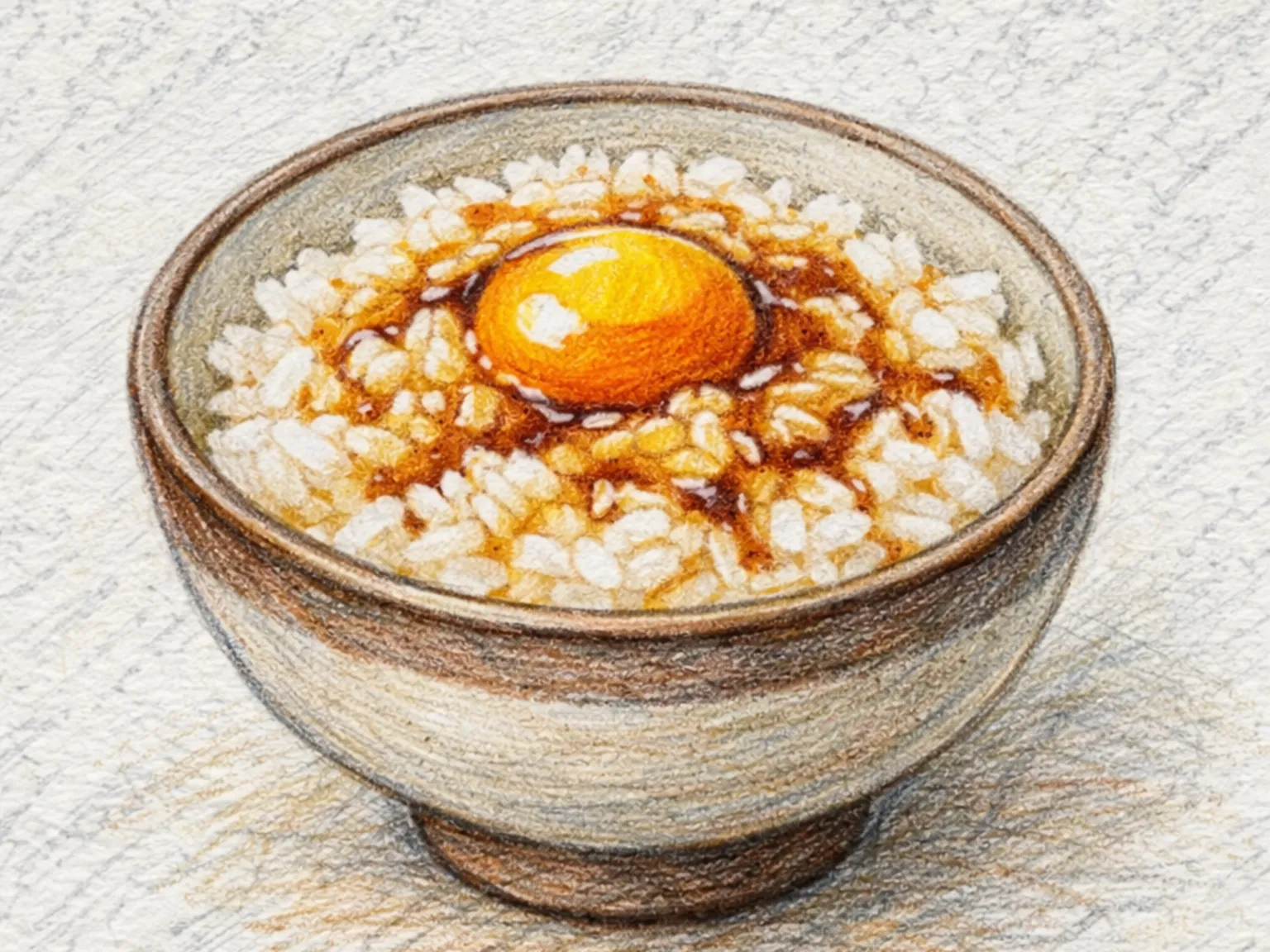
Tamago Kake Gohan is a simple Japanese comfort food consisting of raw egg stirred into freshly cooked hot rice and seasoned with soy sauce. The core of this dish lies in utilizing the steam and residual heat of the rice to warm and partially cook the raw egg. As it is whipped rapidly with chopsticks, the egg transforms into a silky, custard-like coating around every single grain of rice. Melting a small pat of butter in the center before adding the egg introduces an additional layer of rich aroma. Soy sauce is added gradually to balance the richness with its savory umami depth. To complete the dish, seaweed flakes and finely chopped green onions are sprinkled on top. It must be eaten immediately while steaming hot, as letting it sit cools the egg and causes the rice to become soggy.
Korean Milk Rice Porridge
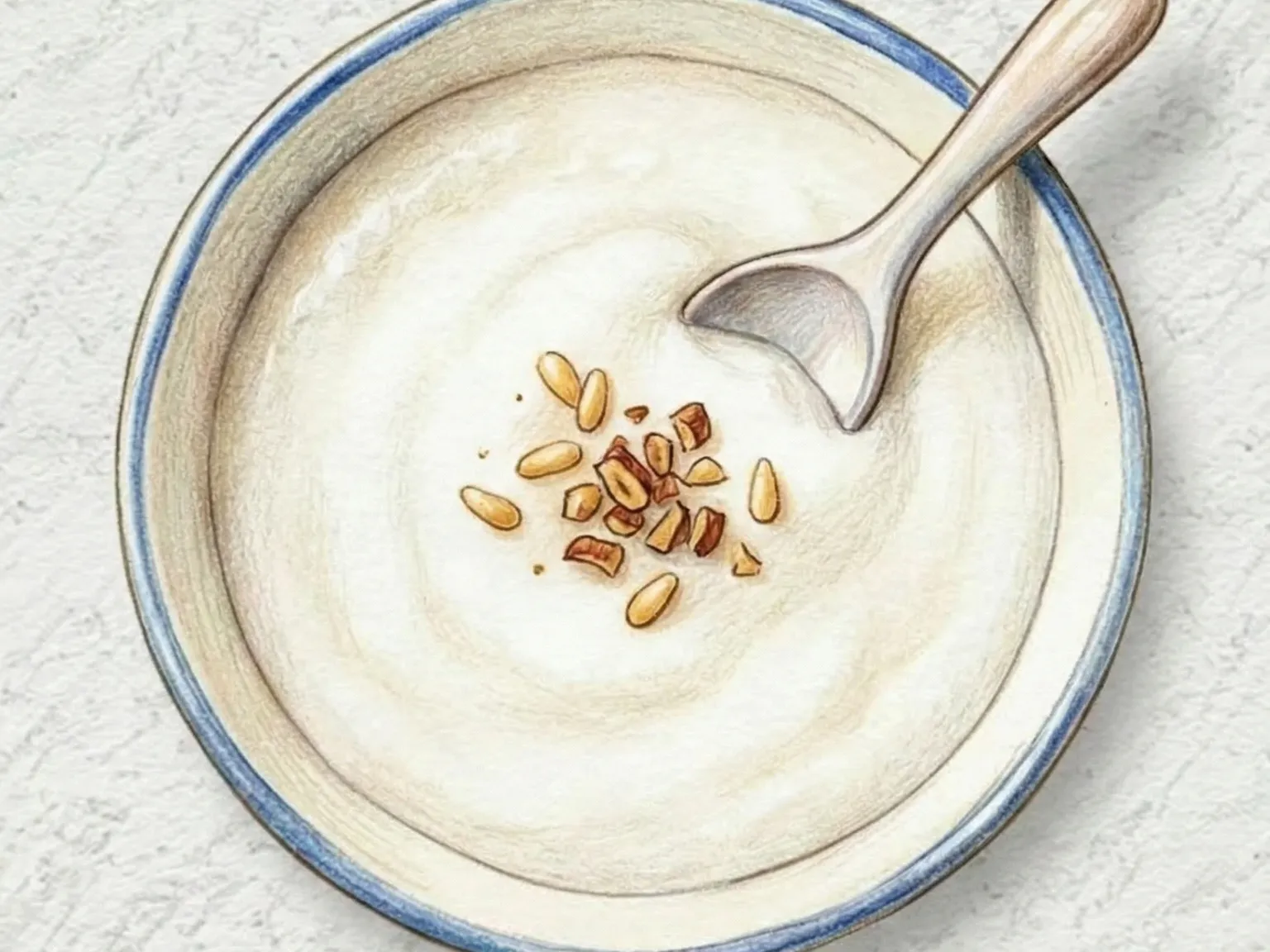
Tarakjuk is a traditional Korean milk rice porridge made by coarsely grinding soaked rice, simmering it in water first to initiate gelatinization, then gradually incorporating milk over sustained stirring. Grinding the rice coarsely rather than to a fine paste preserves some texture in the finished porridge, preventing it from becoming uniformly smooth. Once the rice has been simmered in plain water and the starch begins to thicken the base, milk is added in two or three separate additions over ten minutes of constant stirring. Pouring all the milk in at once risks splitting due to the temperature differential between the cold dairy and the hot starch base. Each addition is stirred in fully before the next portion goes in, allowing the proteins and fats in the milk to incorporate evenly without curdling. A small pinch of salt and a measured amount of sugar are added to tie together the toasty, nutty character of the grain and the mild sweetness of the dairy -- neither should dominate. A final three minutes of simmering brings the porridge to a consistency that flows slowly off the back of a spoon. Pine nuts on top contribute a richly oily nuttiness, and a pinch of ground cinnamon adds a warm, aromatic finish. Historical records from the Joseon period note tarakjuk as a medicinal restorative prepared in the royal court.
Chagayu (Yamaguchi Bancha Rice Porridge)
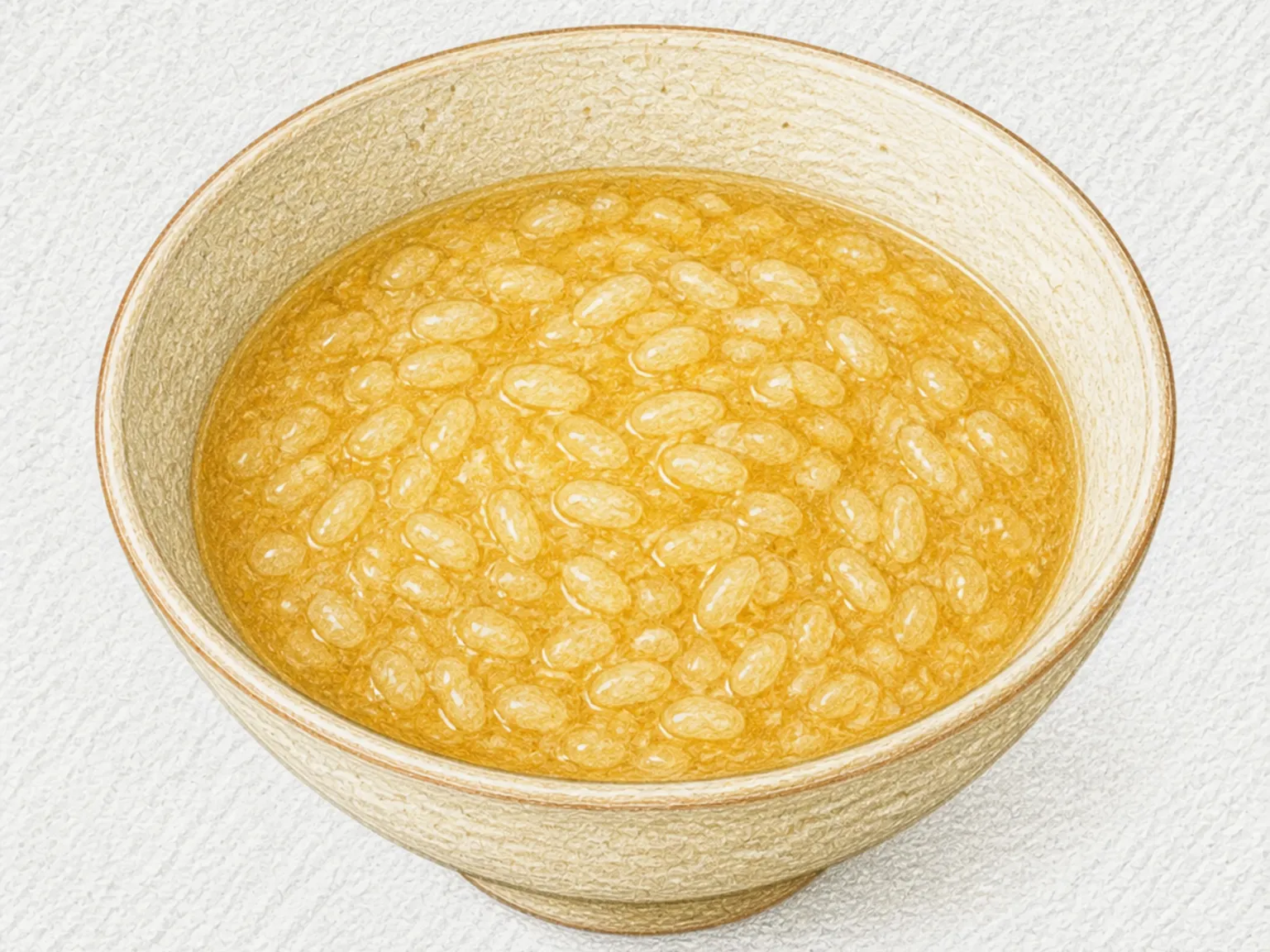
Chagayu is a loose rice porridge from Yamaguchi made by simmering unwashed rice in strongly brewed bancha until the liquid turns amber and the grains lose their hard centers. Tea is first simmered in a cloth or paper bag and removed once sufficiently dark; rice then cooks at the strongest heat that will not make the pot boil over for 17 to 18 minutes. Frequent stirring releases starch and makes the porridge sticky, so it is left largely undisturbed for a light, flowing texture. The dish reportedly spread through Yanai, Suo-Oshima, Iwakuni, and Hagi after the Iwakuni lord encouraged it to conserve rice in the early seventeenth century. It is eaten hot in winter and often chilled in summer.
Edo-Style Tendon (Japanese Tempura Rice Bowl with Sweet Soy Tare)
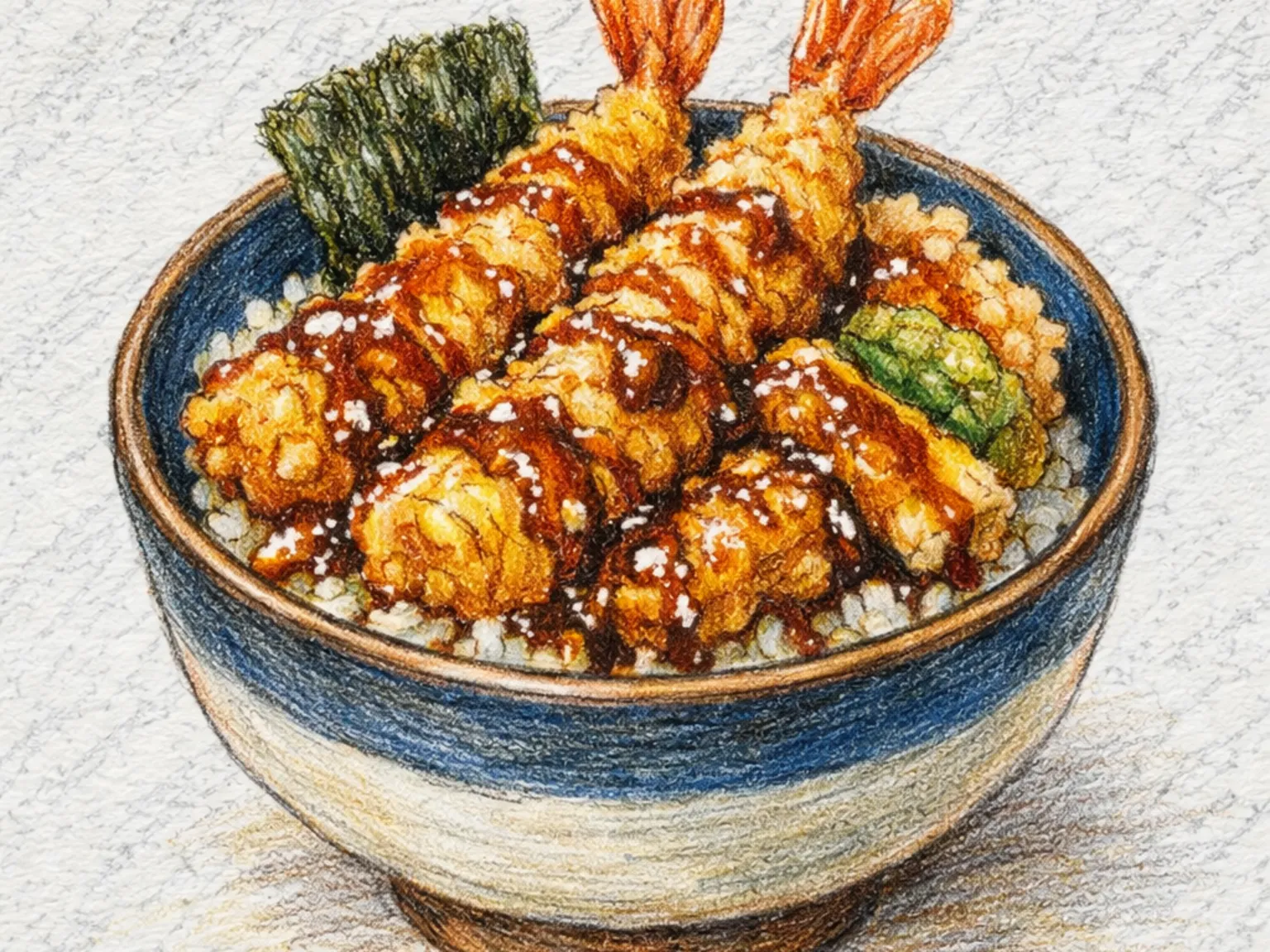
Edo-style tendon places freshly fried shrimp, sweet potato, and eggplant over steamed rice and finishes them with a warm soy-based tare. Six shrimp are cleaned and given several shallow cuts along the belly so they can be pressed straight before frying. One hundred twenty grams sweet potato and 100 g eggplant are sliced 0.7 cm thick, then their surfaces are dried. The batter is made from 100 g tempura flour and 150 ml cold water. It is stirred only briefly with chopsticks and left with a few small lumps, avoiding the dense coating that develops after excessive mixing. For the tare, 3 tablespoons tsuyu, 1 tablespoon soy sauce, and 1 tablespoon sugar go into a saucepan over medium heat. The mixture is ready after simmering for 2 minutes. Four hundred milliliters cooking oil is held at 170 degrees Celsius. The vegetables are fried first in separate small batches so the oil temperature does not fall sharply. Each shrimp receives a thin layer of batter and fries at the same temperature while held in its straightened shape. Three hundred sixty grams warm rice is divided among the bowls, followed immediately by the drained vegetable and shrimp tempura. The tare is spooned over while still warm. Dry ingredient surfaces, cold lightly mixed batter, and uncrowded frying all help the coating remain thin. Adding the sauce only after the tempura reaches the rice lets some tare season the grains while the upper surfaces of the pieces remain freshly fried.
Tomato Egg Rice Bowl (Stir-fried Tomatoes with Soft Scrambled Eggs)
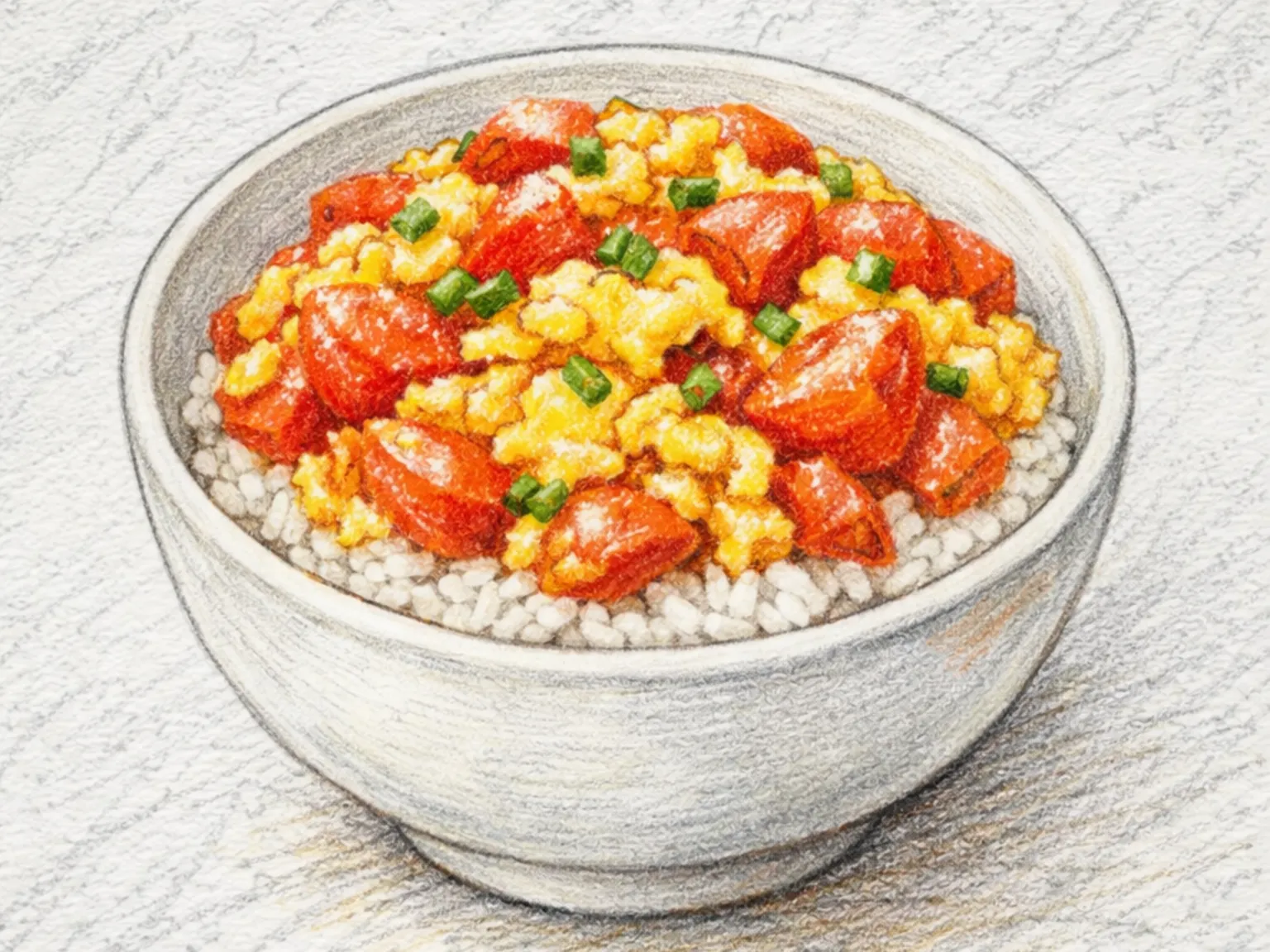
This tomato egg rice bowl cooks the eggs first until softly set, removes them, and then builds a tomato sauce in the same pan before combining everything over 2 cups of rice. Cut 250 g tomato into large wedges so pieces remain after their juice enters the pan, and thinly slice 1 green onion. Beat 3 eggs only until most of the white streaks disappear. Heat half of the measured 1 tbsp vegetable oil over medium heat, pour in the eggs, and fold them in broad strokes as soon as the edges begin to set. Remove the eggs while they are still soft. Add the remaining oil and green onion to the same pan and cook for 30 seconds. Raise the heat to high, add the tomato, and stir-fry for about 1 minute. Once the edges soften and red juice appears, add 1 tbsp soy sauce and 1 tsp sugar. Let the seasoning bubble on the bottom of the pan and cook for 30 more seconds without crushing every tomato wedge. Lower the heat, return the eggs, and fold gently for only 30 seconds. Divide the tomato, egg, and all of the remaining sauce over the warm rice before the eggs continue to firm.
Korean Tomato Egg Fried Rice
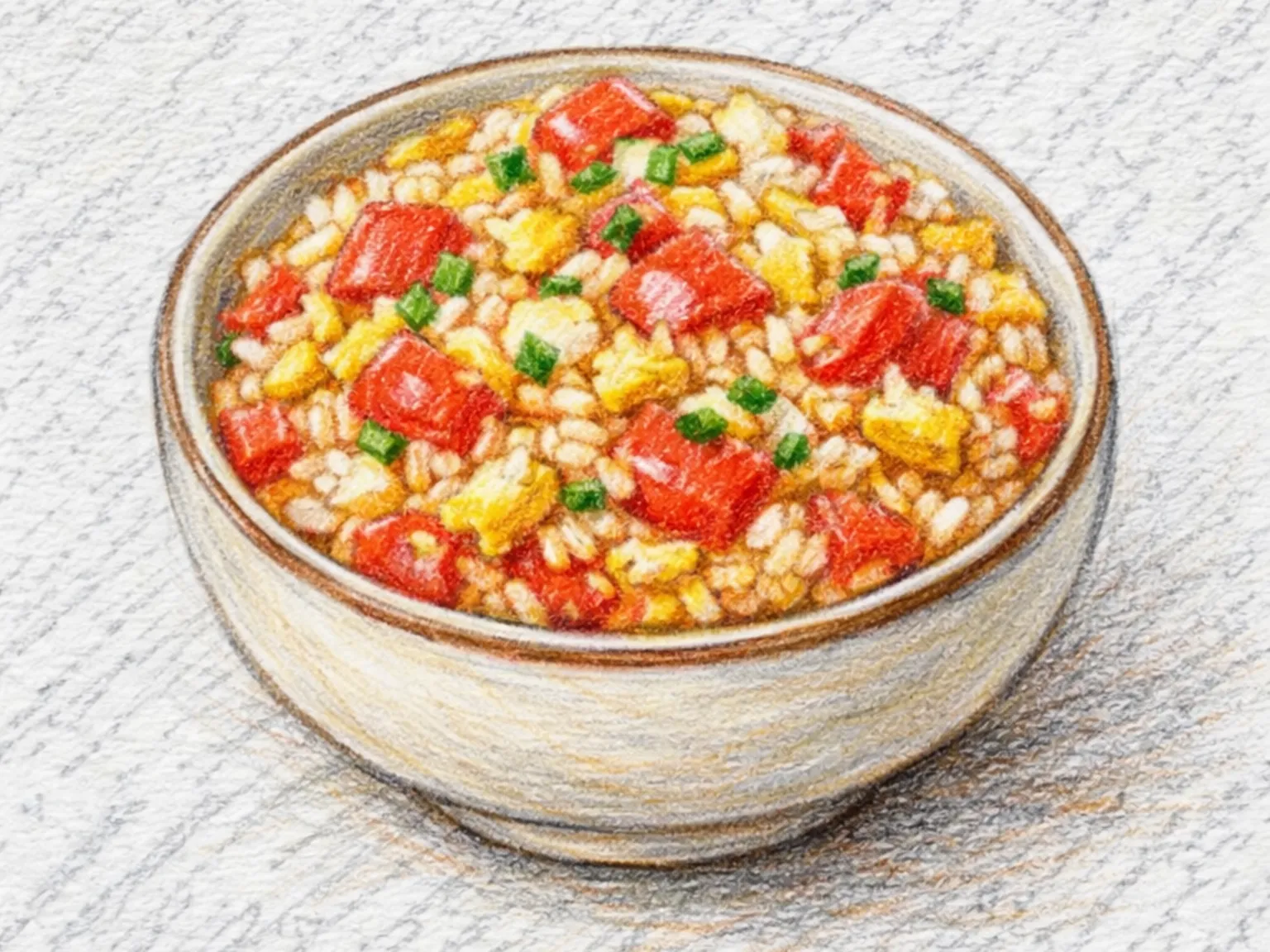
Eggs are scrambled first and set aside, then tomatoes are stir-fried in the same pan until their juices burst and coat the wok. Day-old or freshly cooked rice goes in next, tossed at high heat so the grains absorb the tomato's sweet-tart moisture while staying individually distinct. The scrambled egg is folded back in at the end, distributing soft, fluffy curds throughout the fried rice. Rooted in the Chinese classic of tomato and egg, this version turns those familiar flavors into a satisfying one-bowl fried rice.
Korean Taro Porridge (Perilla Oil-Toasted Rice with Taro Root)
Soaked rice is toasted in perilla oil until fragrant, then simmered with peeled taro in a generous amount of water until the porridge reaches a thick, flowing consistency. Some taro pieces dissolve into the liquid and naturally thicken it, while others hold their shape and offer a starchy, crumbly bite. The gentle nuttiness of perilla oil and the mild earthiness of taro create a soothing combination with no sharp flavors. Seasoning with just salt preserves the delicate taste of the taro without masking it.
Tororo-Jiru (Grated Japanese Yam with Miso Dashi)
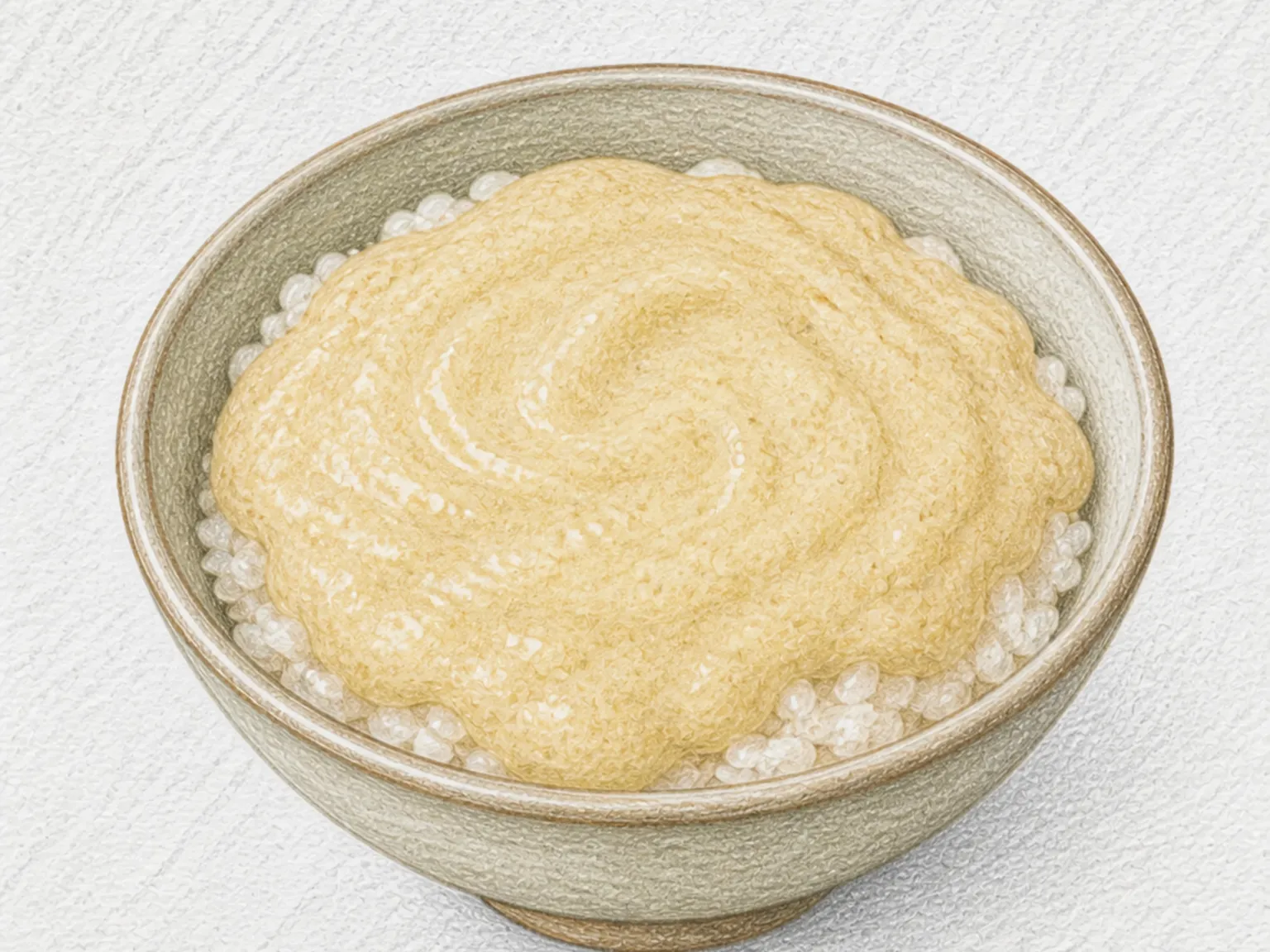
Tororo-jiru is a Mariko specialty from Shizuoka City made by finely grating jinenjo, working the sticky yam thoroughly in a mortar, and gradually loosening it with cooled dashi seasoned with miso and soy sauce. The smooth, flowing mixture is poured over hot rice and finished with green onion and nori. Adding the cool broth in several small portions and fully incorporating each one prevents lumps and preserves the yam's characteristic stretch. Mariko was the twentieth station of the fifty-three Tokaido post towns, and travelers sought its tororo-jiru as sustaining food. Jinenjo is harvested from mid-autumn into winter, and some communities eat the dish on January second while wishing for health through the year.
Tororo Manma (Mountain Yam Rice with Miso Dashi)
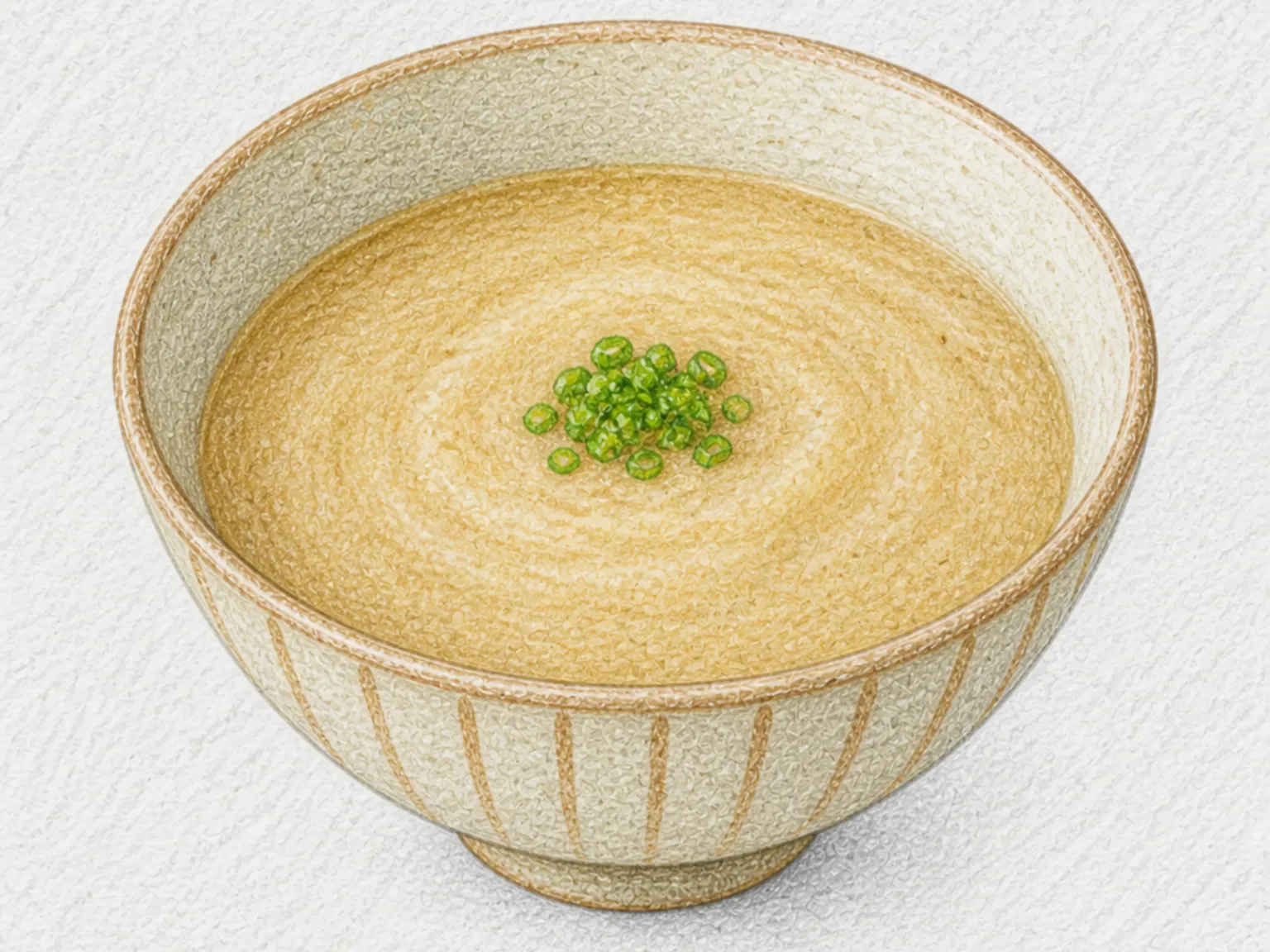
Tororo manma is mountain yam served over rice in northern and southern Akita and in Yurihonjo City, especially during the first three days of the New Year and the day after a celebration. Dried sardines and root kombu soak overnight in 1.8 L water. The stock is brought to a boil, bonito flakes are added for 2 to 3 minutes, and all solids are removed. A large amount of miso is dissolved into the stock to make a deliberately strong miso soup, which is cooled completely. Peeled mountain yam is grated directly in a Japanese mortar. The cold soup is then stirred into the yam little by little, loosening its dense elasticity without making it watery. Akita's customary yam is yama-no-imo, which is lower in moisture and more tenacious than nagaimo. The finished tororo should still cling to a spoon and is poured generously over freshly cooked hot rice.
Korean Seaweed and Shrimp Pot Rice
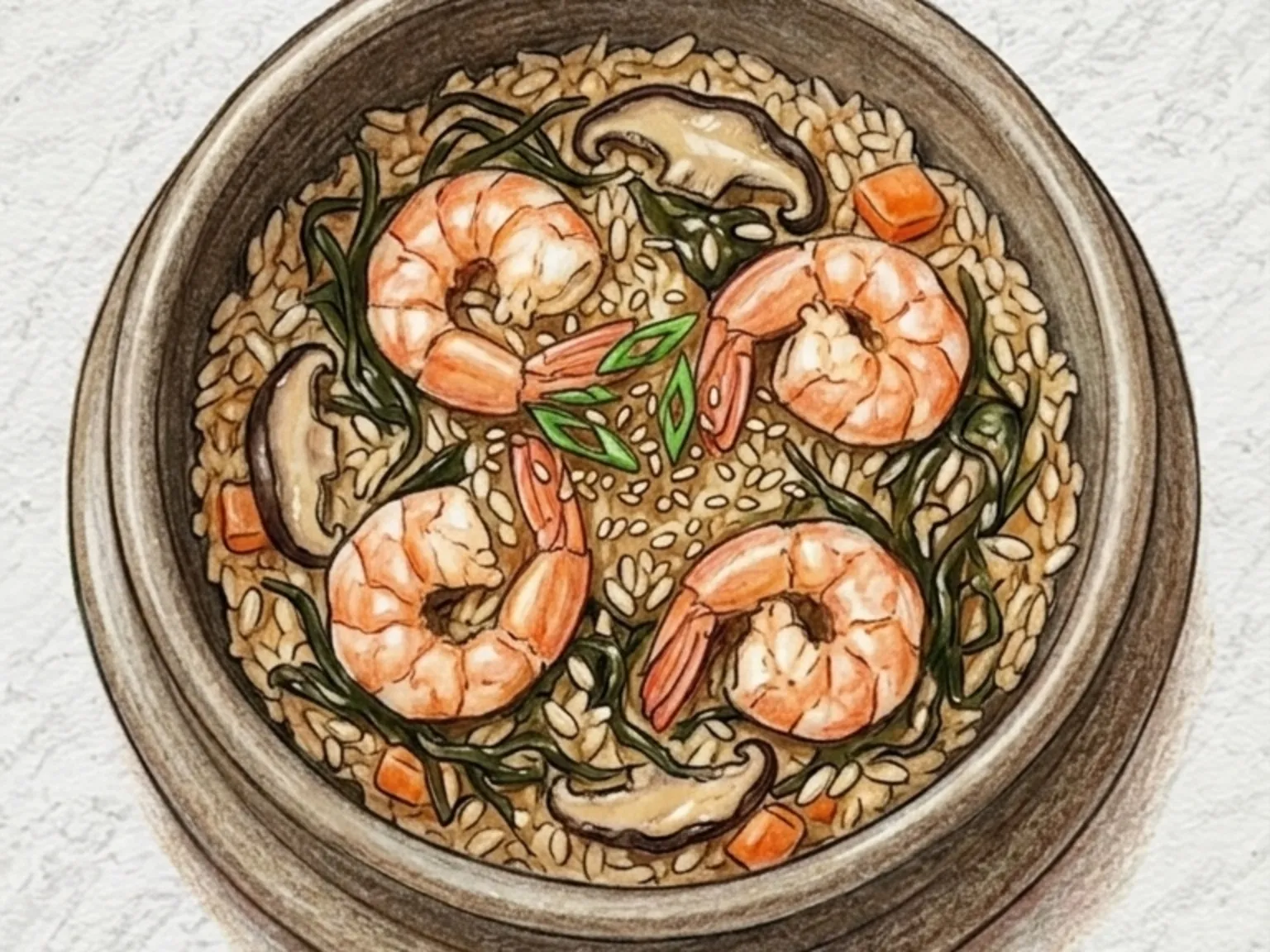
Seaweed and shrimp pot rice starts by stir-frying shiitake, carrot, and rehydrated hijiki before rice and water enter the pot, then cooks soy-marinated shrimp on top. Rinse 1.5 cups rice until the water is mostly clear. After a 30-minute soak, leave the grains in a sieve for 10 minutes. Rinse 80 g hijiki twice in cold water and drain it well. Remove the veins from 150 g shrimp, pat them dry, and season them with 1/2 tbsp soup soy sauce and 1 tsp minced garlic for 10 minutes. Thinly slice 2 shiitake mushrooms and 40 g carrot. Heat 1 tbsp sesame oil in a pot over medium heat and cook the shiitake, carrot, and hijiki for 2 minutes to reduce their surface moisture. Add the rice and stir for 1 minute so the grains receive a thin coating of oil. Pour in 1.7 cups water and the remaining 1 tbsp soup soy sauce, scraping and mixing across the bottom. Once it boils, arrange the shrimp over the rice in a single layer. Cover, lower the heat, and cook for 12 minutes. Turn off the heat, keep the lid closed for 10 minutes, then add 1 chopped scallion and fold the rice gently from the bottom.
Korean Truffle Mushroom Pot Rice
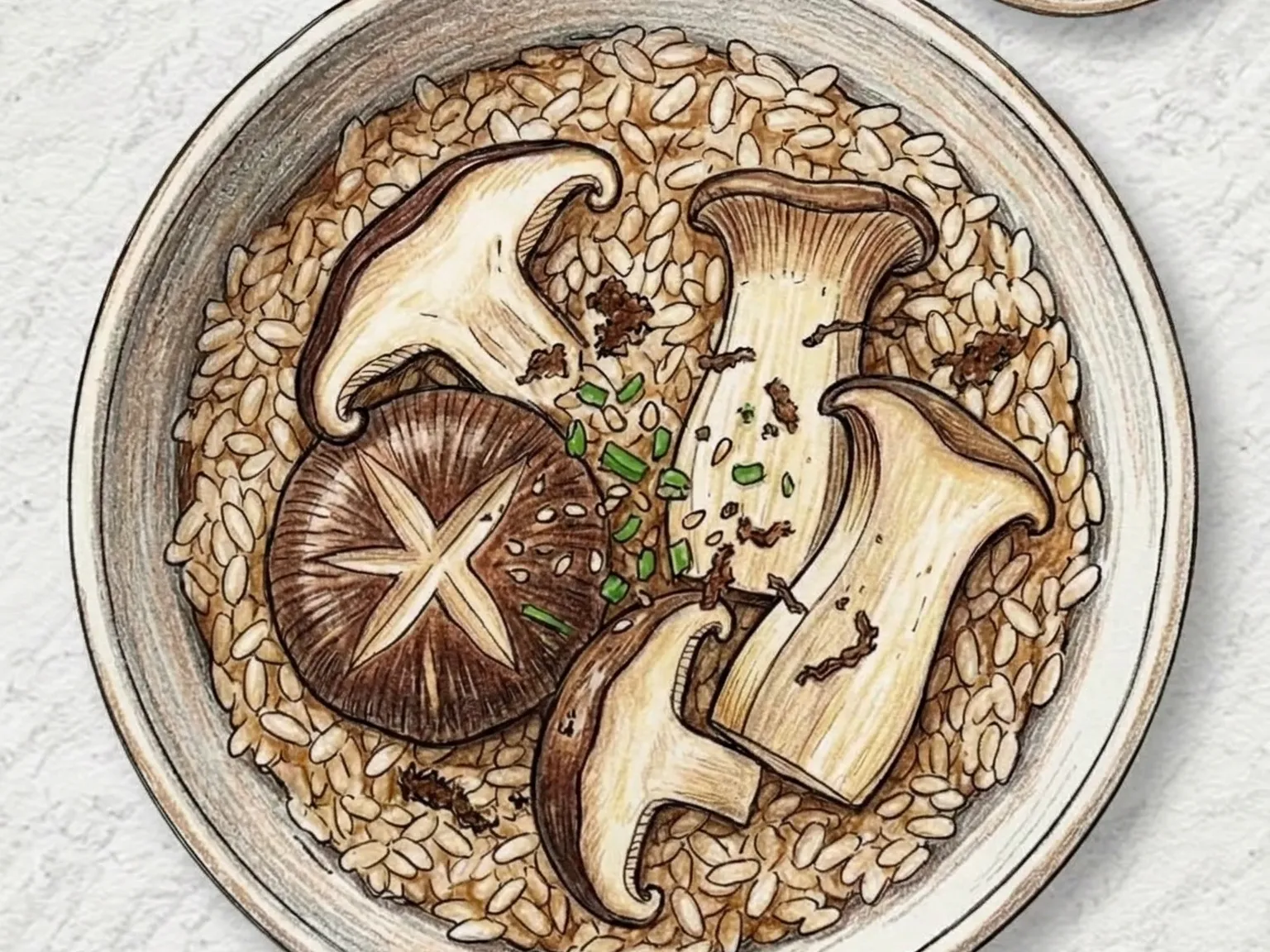
Truffle mushroom pot rice cooks equal amounts of shiitake and king oyster mushrooms in butter, adds soaked rice and vegetable stock, and folds truffle oil into the rice only after the covered rest. Rinse 2 cups rice until the water is mostly clear and let the grains soak for 30 minutes. Transfer them to a sieve and leave them there for about 10 minutes so surface water drains away. Prepare 120 g shiitake and 120 g king oyster mushrooms, cutting the shiitake into substantial slices and the king oyster into thick pieces. Thinly slice half an onion. Melt 15 g butter in a heavy pot over medium heat and cook the onion and both mushrooms for 4 minutes. Once the mushrooms soften and almost no liquid remains on the bottom, add the drained rice and stir for 1 minute. Pour in 2.25 cups vegetable stock and 1 tbsp soy sauce, scraping across the bottom to distribute the seasoning. Bring the edges to a boil over high heat, immediately reduce to low, cover, and cook for 15 minutes. Turn off the heat and leave the lid closed for 10 minutes. Add 1.5 tsp truffle oil and 2 tbsp chopped scallion, then lift and fold from the bottom so the mushrooms stay intact.
Korean Grilled Short Rib Patty Rice Bowl
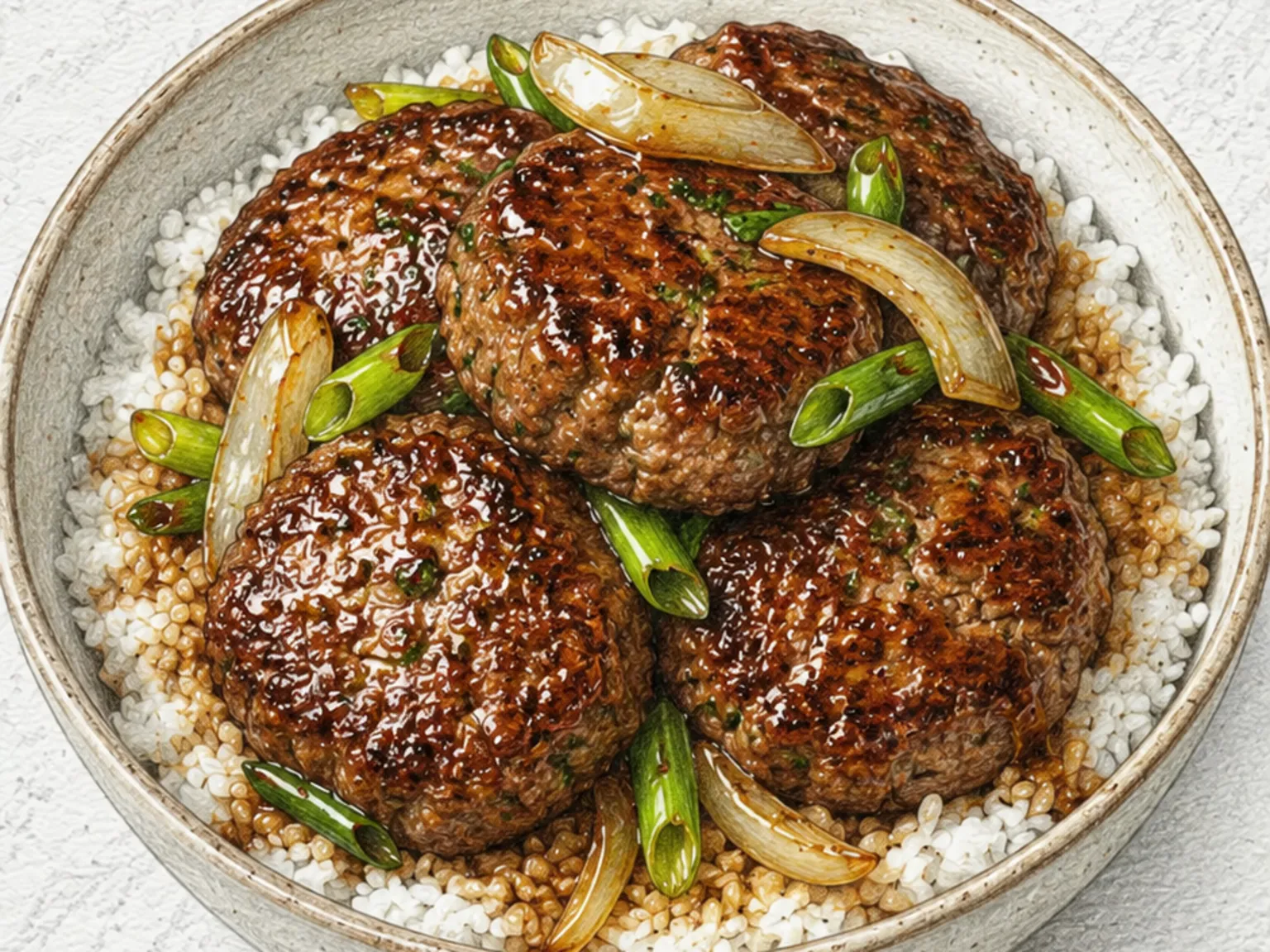
Tteokgalbi rice bowl uses prepared tteokgalbi patties, cuts them into bite-size pieces after a brief sear, and coats them in an onion and soy pan sauce before serving them with soft-yolk eggs. Thinly slice 90 g onion and cut 40 g green onion into small rounds. Keep 2 bowls cooked rice hot and have 2 eggs ready for the final assembly. Heat a pan over high heat and sear 240 g tteokgalbi briefly on both sides, stopping when the surfaces brown and firm. Do not press the patties with the spatula because that releases their juices. Remove them from the pan, let them rest briefly, and cut them into bite-size pieces. Lower the same pan to medium, add the onion and 1 tsp minced garlic, and cook until the onion edges turn translucent. Add 2 tbsp soy sauce and 1 tbsp oligosaccharide syrup. Scrape the browned residue from the pan as the liquid bubbles, and wait until the sauce begins to cling like a light syrup. Return the tteokgalbi pieces and toss over medium-low heat for about 2 minutes. Turn off the heat while the meat looks glossy and a little sauce remains in the pan, before it reduces dry. Fry the eggs sunny-side up with soft yolks. Divide the meat and sauce over the rice, place an egg on each bowl, and finish with the green onion and 1 tsp sesame oil.
Korean Tuna Kimchi Gimbap
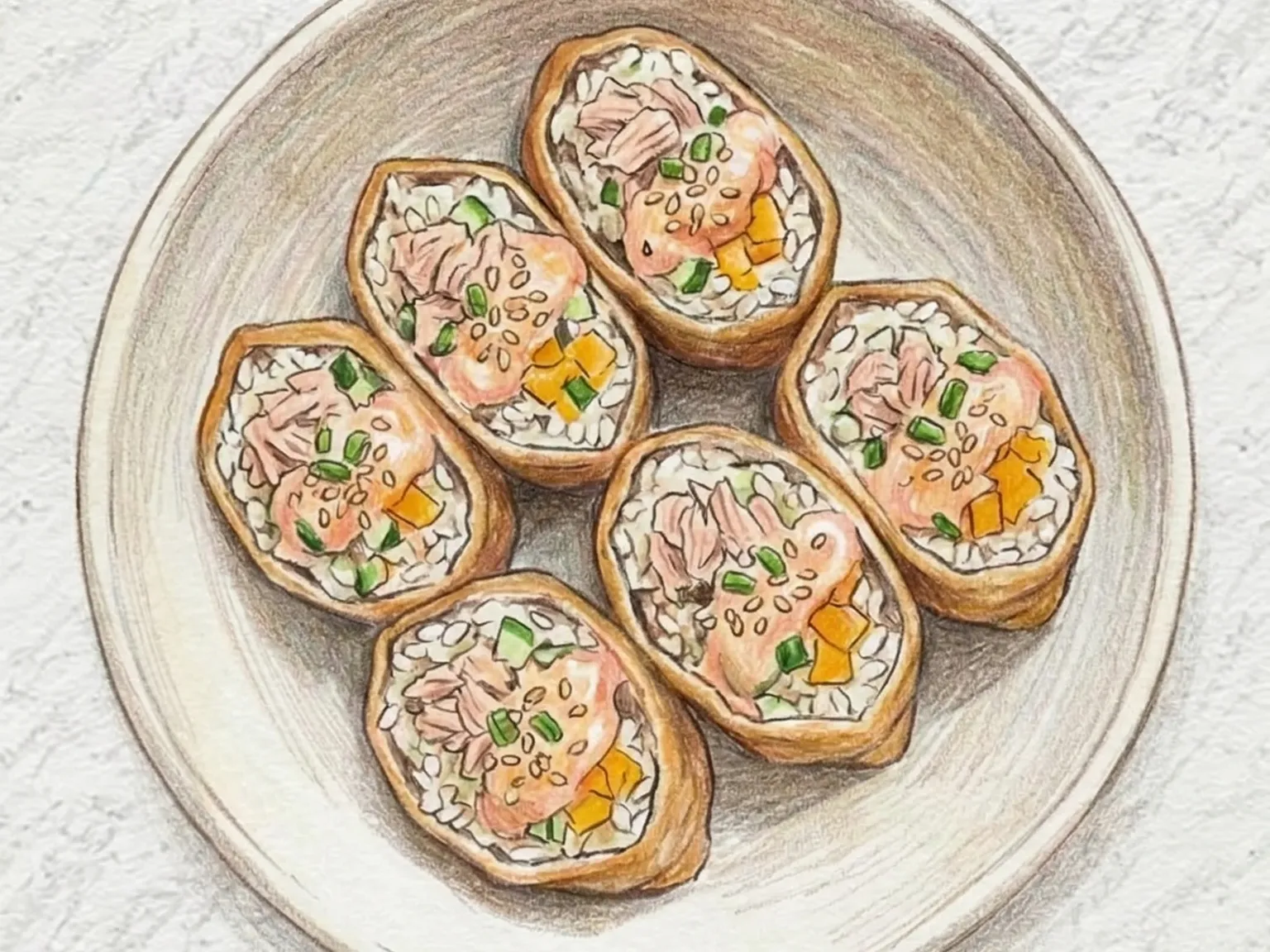
Tuna-kimchi gimbap combines stir-fried kimchi and drained tuna with mayonnaise, then rolls the filling with perilla leaves and pickled radish in seasoned rice and gim. One hundred twenty grams kimchi is squeezed and chopped. It spends 2 minutes in a dry pan set over medium heat, then is spread out to cool when its color has deepened slightly and no loose liquid remains. One hundred fifty grams canned tuna is drained thoroughly in a sieve. The cooled kimchi and tuna are mixed with 2 tablespoons mayonnaise, leaving some tuna pieces intact and stopping before the filling becomes loose. Four hundred grams rice is seasoned with 0.5 teaspoon salt and sesame oil, then allowed to lose its hot steam. The rice is spread in a thin layer over 4 sheets gim. Eight perilla leaves are arranged two per roll, creating a layer between the rice and the moist filling. The tuna-kimchi mixture and 80 g pickled radish are placed in narrow rows before each sheet is rolled tightly from the first turn. The finished rolls receive a light coating of the remaining sesame oil and are cut with a damp knife. Cooking and cooling the kimchi first, draining the tuna, and using the perilla as a separate layer all limit the amount of moisture reaching the rice and seaweed during assembly.
Korean Tuna Mini Gimbap (Addictive Bite-Sized Tuna Mayo Seaweed Rolls)
Tuna mayak gimbap are bite-sized rolls made by cutting seaweed sheets in half, spreading a thin layer of sesame-oil-seasoned rice, and filling with tuna-mayo, pickled radish, sauteed carrot, and blanched spinach. Draining the canned tuna thoroughly before mixing with mayonnaise prevents sogginess while keeping the filling creamy. The pickled radish provides a sharp crunch that cleanses the palate between each piece, and the lightly sauteed carrot brings a touch of natural sweetness. Their miniature size ensures every ingredient registers in a single bite, delivering a compact burst of balanced flavor.
Korean Ueong Dak Juk (Burdock Chicken Porridge)
Burdock chicken porridge stir-fries burdock and onion in sesame oil, adds soaked rice and carrot, and then cooks chicken tenderloin in the thickening rice and chicken stock. Wash 280 g rice and leave it under water for 30 minutes. Move the soaked grains to a sieve and let the water run off. Julienne 140 g burdock, hold it in vinegared water for 5 minutes, and rinse it. Remove the tendons from 260 g chicken tenderloin and either shred it along the grain or slice it thinly. Cut 70 g carrot and 80 g onion into small pieces so they distribute through the porridge. Heat 1.5 tbsp sesame oil in a heavy pot over medium heat and cook 10 g minced garlic, the onion, and burdock for 3 minutes. When the onion turns translucent, add the rice and carrot and stir-fry for 2 more minutes. Pour in 1400 ml chicken stock and bring it to a boil over high heat. Reduce to medium-low and simmer for 20 minutes, scraping the bottom as the rice expands. Add the chicken, 2 tbsp soup soy sauce, and 3 g salt, then cook for 8 more minutes. Stop when the chicken is white through the center and the porridge still flows rather than standing stiffly in the pot.
Korean Burdock Beef Pot Rice
Burdock beef pot rice marinates thinly cut beef in soy sauce and cooking wine, stir-fries it with burdock and carrot, and then cooks the mixture with soaked rice in one pot. Wash 360 g rice, give it a 30-minute soak, and leave it to drain for 10 minutes. Julienne 140 g burdock, hold it in vinegared water for 5 minutes, and rinse it. Season 180 g thinly cut beef round with 1 tbsp soy sauce, 1 tbsp cooking wine, and 1 tsp minced garlic, mixing the slices apart before a 10-minute rest. Heat 1 tbsp sesame oil in a heavy pot over medium heat and cook the beef first. When the exterior changes color, add the burdock and 60 g carrot and stir-fry for 3 minutes. Add the drained rice and cook for 1 minute, coating the grains with the oil and seasoning. Pour in 460 ml water and the remaining 1 tbsp soy sauce, scraping the bottom to dissolve anything attached. Cover and bring the pot to a boil over high heat. Once large bubbles appear around the edge, reduce to low and cook for 15 minutes. Turn off the heat, keep the lid closed for 10 minutes, add 20 g chopped scallion, and fold the rice gently from bottom to top.
Unadon (Japanese Grilled Glazed Eel Rice Bowl)
Unadon is a classic Japanese rice bowl dish featuring grilled freshwater eel brushed with a caramelized soy glaze. The preparation begins by drying the eel fillet and letting it rest at room temperature to ensure even cooking. The eel is first placed skin-side down in the pan to render its natural fat and create a tender texture. A rich tare sauce made by simmering soy sauce, mirin, sake, and sugar is repeatedly brushed onto the fish during the final stages of cooking. This process coats the eel in a glossy, sweet, and savory glaze. The cooked eel is served over a bowl of warm steamed rice drizzled with a spoonful of the sauce. Finely chopped chives and a dusting of ground sansho pepper are added at the end, providing a tingly citrus aroma that balances the richness of the fish.
About Rice
A bowl of freshly steamed rice with a drizzle of sesame oil and a fried egg makes a satisfying meal on its own. Leftover rice transforms into fried rice or crispy nurungji (scorched rice), both beloved staples.