Rice

Rice Recipes

334 recipes. Page 14 of 14

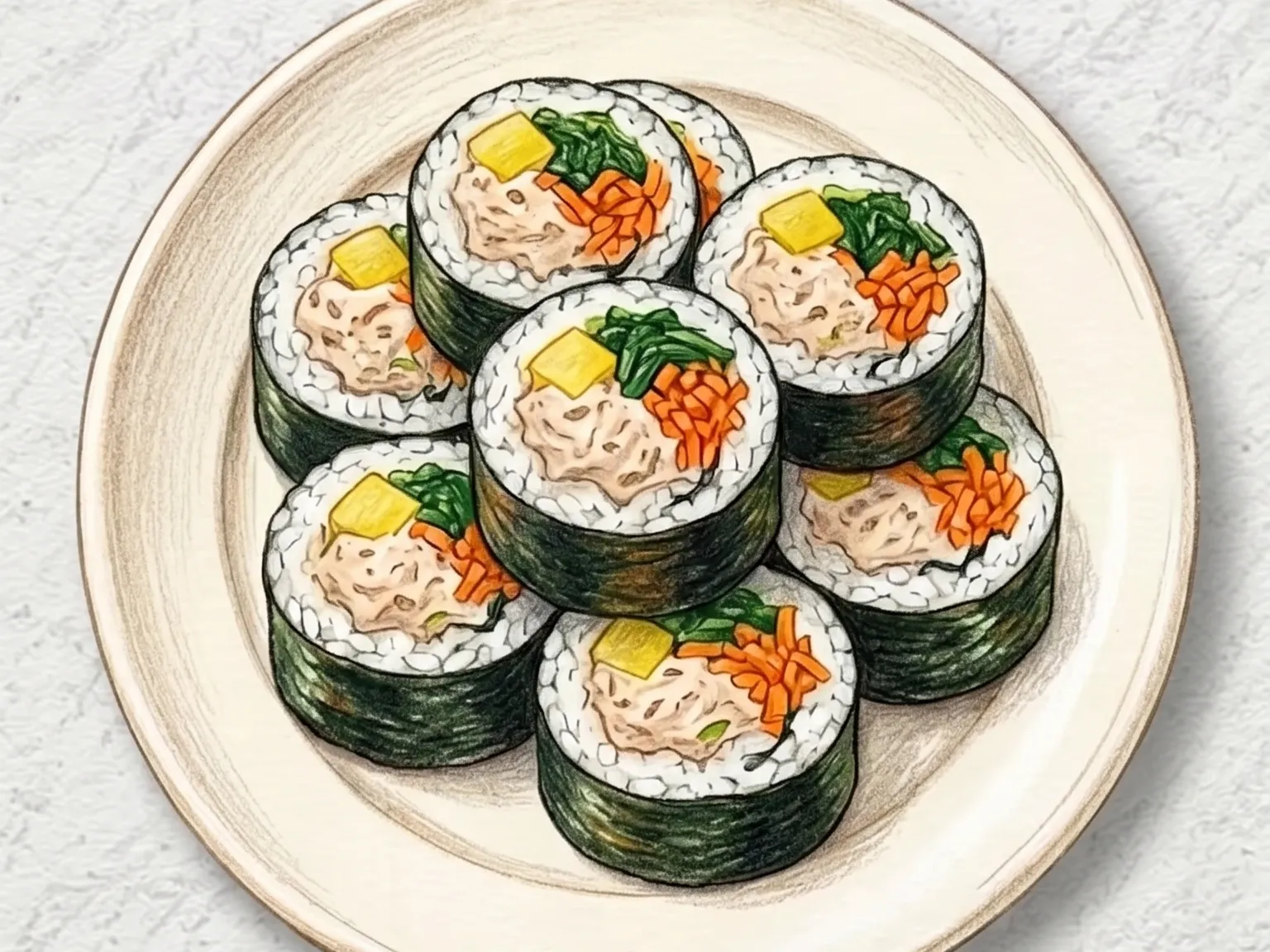
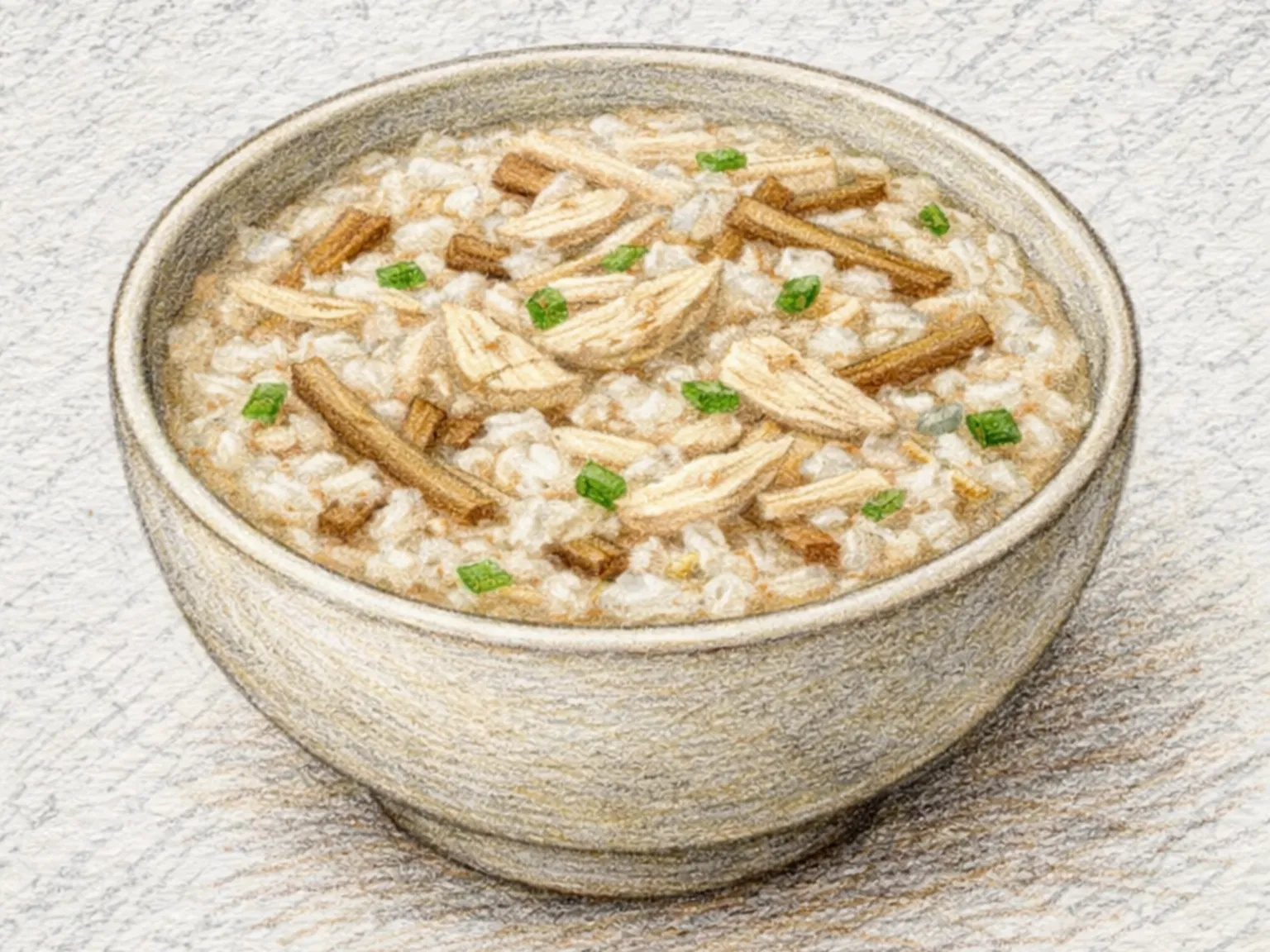
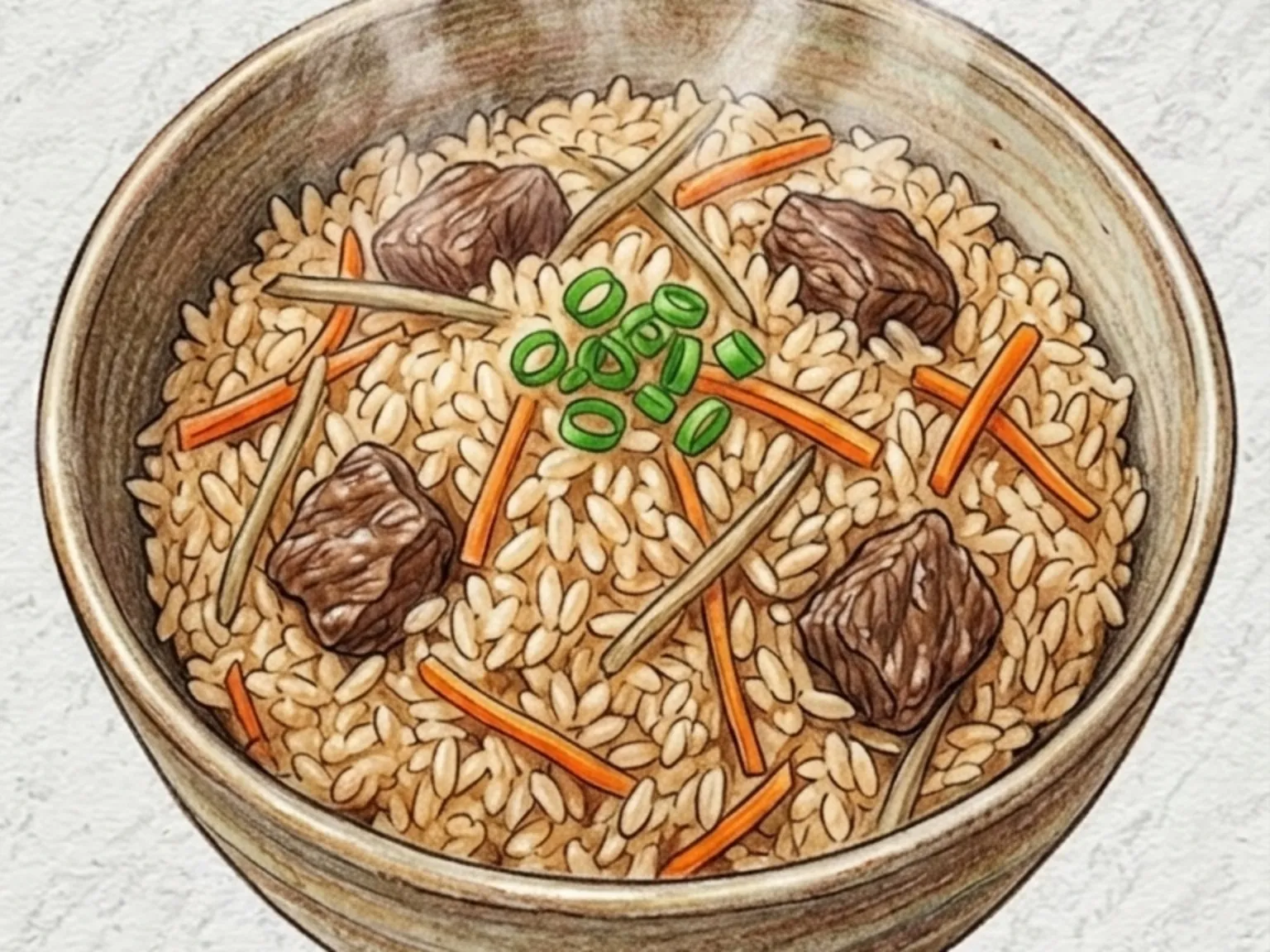
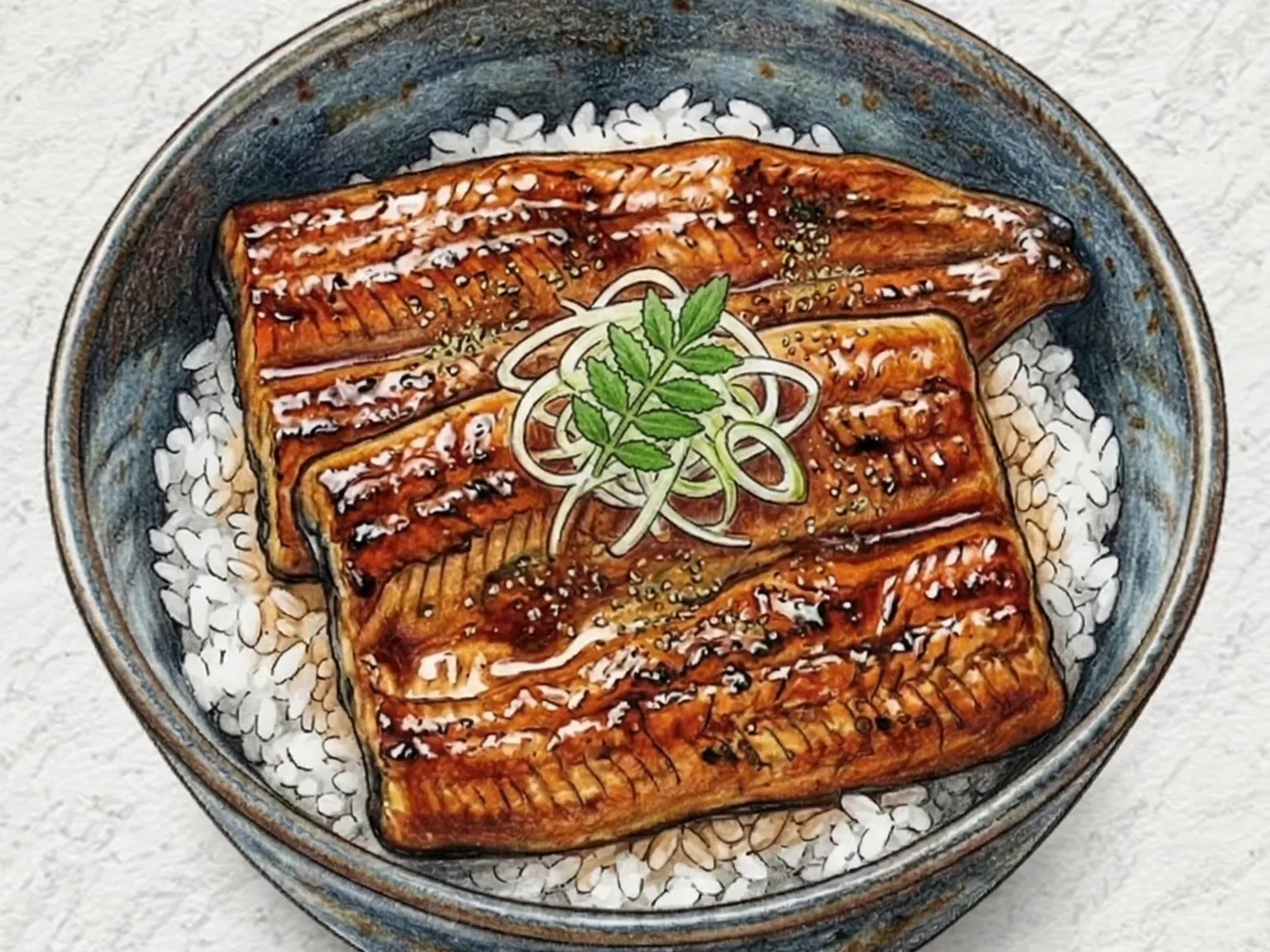
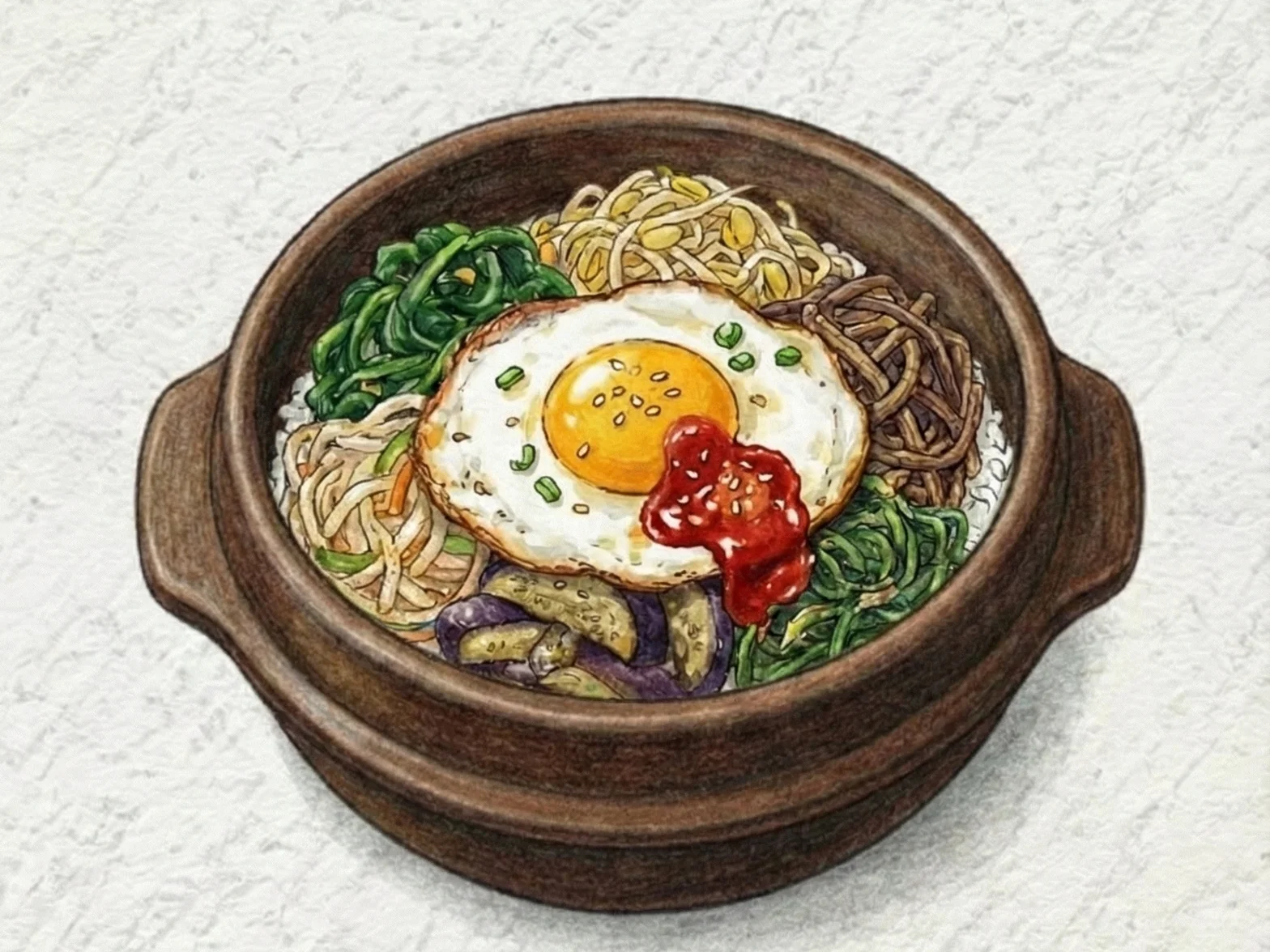
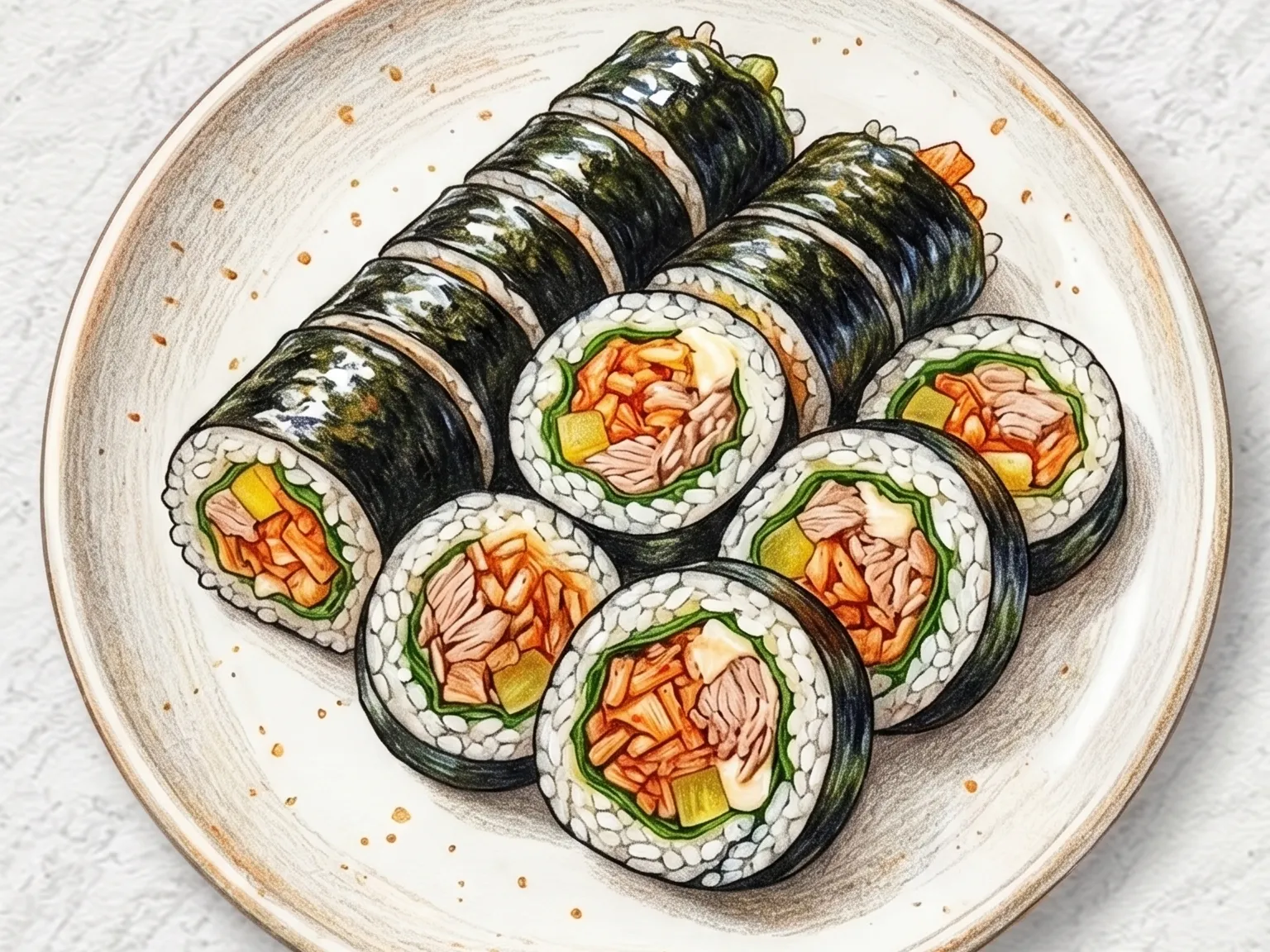
Rice is the foundation of Korean cuisine, appearing not only as steamed white rice but also as fried rice, bibimbap, clay-pot rice (sotbap), and gimbap rolls. Porridge (juk) - made by slow-cooking rice into a silky consistency - is comfort food for cold days or when you need something gentle on the stomach. Abalone porridge, pumpkin porridge, and chicken porridge are all classics.

Rice
Uzumi (Rice Hidden under Tofu and Shiitake Soup)
Rice Easy

Uzumi (Rice Hidden under Tofu and Shiitake Soup)

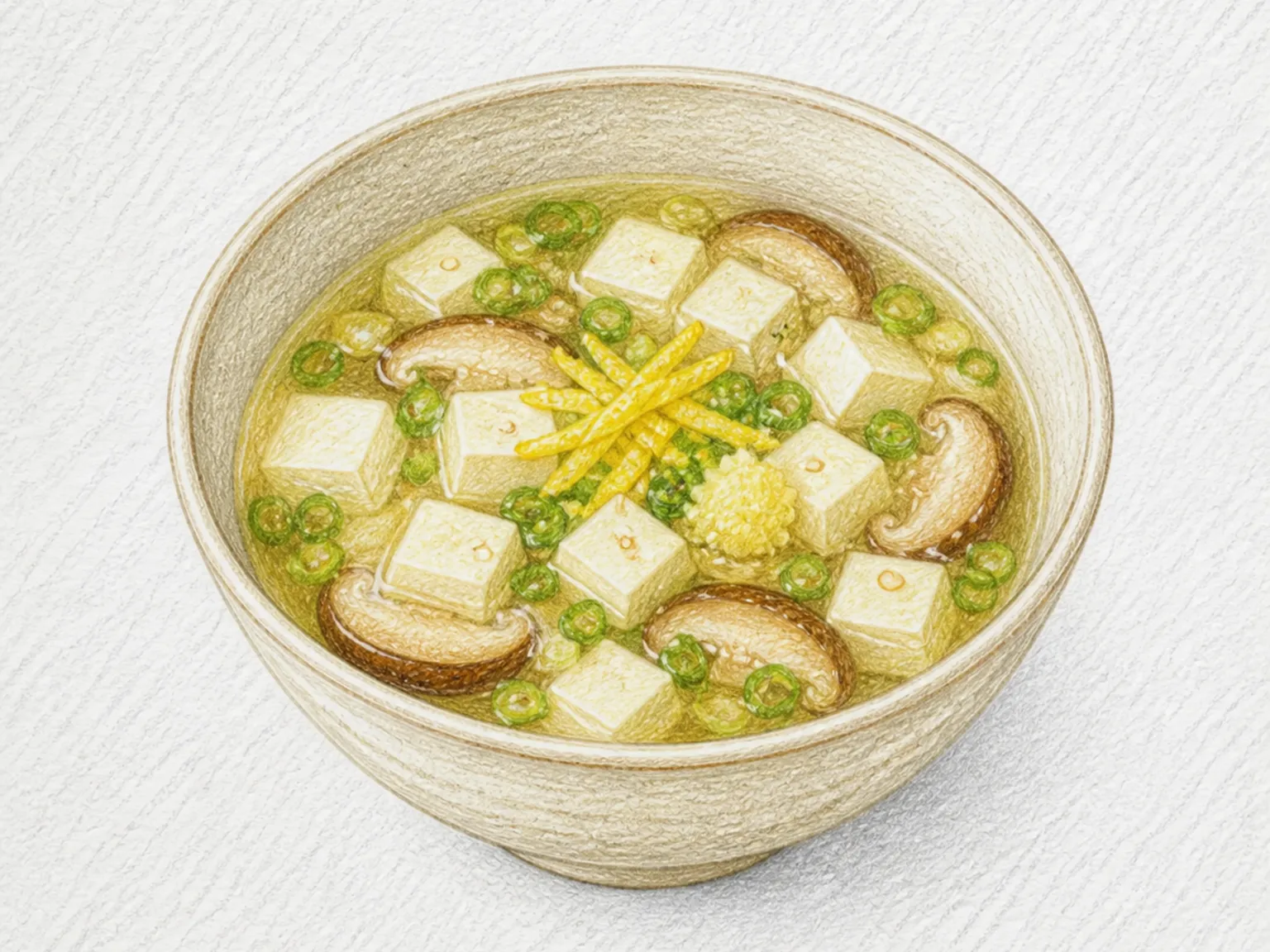
Uzumi hides a small portion of warm rice beneath a clear soup of kombu, fresh shiitake, and firm tofu, then finishes each bowl with scallion, mandarin peel, sesame, and ginger. Wipe the surface of 30 g dried kombu with a damp cloth and soak it in 1600 ml water for 20 minutes. Heat the pot over medium and remove the kombu as soon as the water starts to boil. Taking it out at this point keeps the stock from becoming slimy or harsh. Remove the stems from 300 g fresh shiitake and slice the caps thinly. Add them to the kombu stock and simmer over low heat for 20 minutes, skimming foam from the surface to keep the soup clear. Cut 600 g firm tofu into 1 cm cubes. Season the soup with 6 g salt and 10 ml light soy sauce, add the tofu, and simmer gently for 5 minutes without breaking the cubes. Slice 5 scallions. Remove the white pith from 15 g mandarin peel before mincing it, grate 30 g fresh ginger, and lightly crush 150 g toasted sesame seeds. Divide 500 g warm rice among 10 soup bowls, placing 50 g at the bottom of each. When the tofu floats, ladle the hot soup, shiitake, and tofu over each portion until the rice is completely hidden. Add the four garnishes in the amount each diner prefers and serve while the soup is hot.

🏠 Everyday 🥗 Light & Healthy
Prep 20min Cook 35min 10 servings
Wild Rice Crispy Seaweed Salad
Rice Medium

Wild Rice Crispy Seaweed Salad

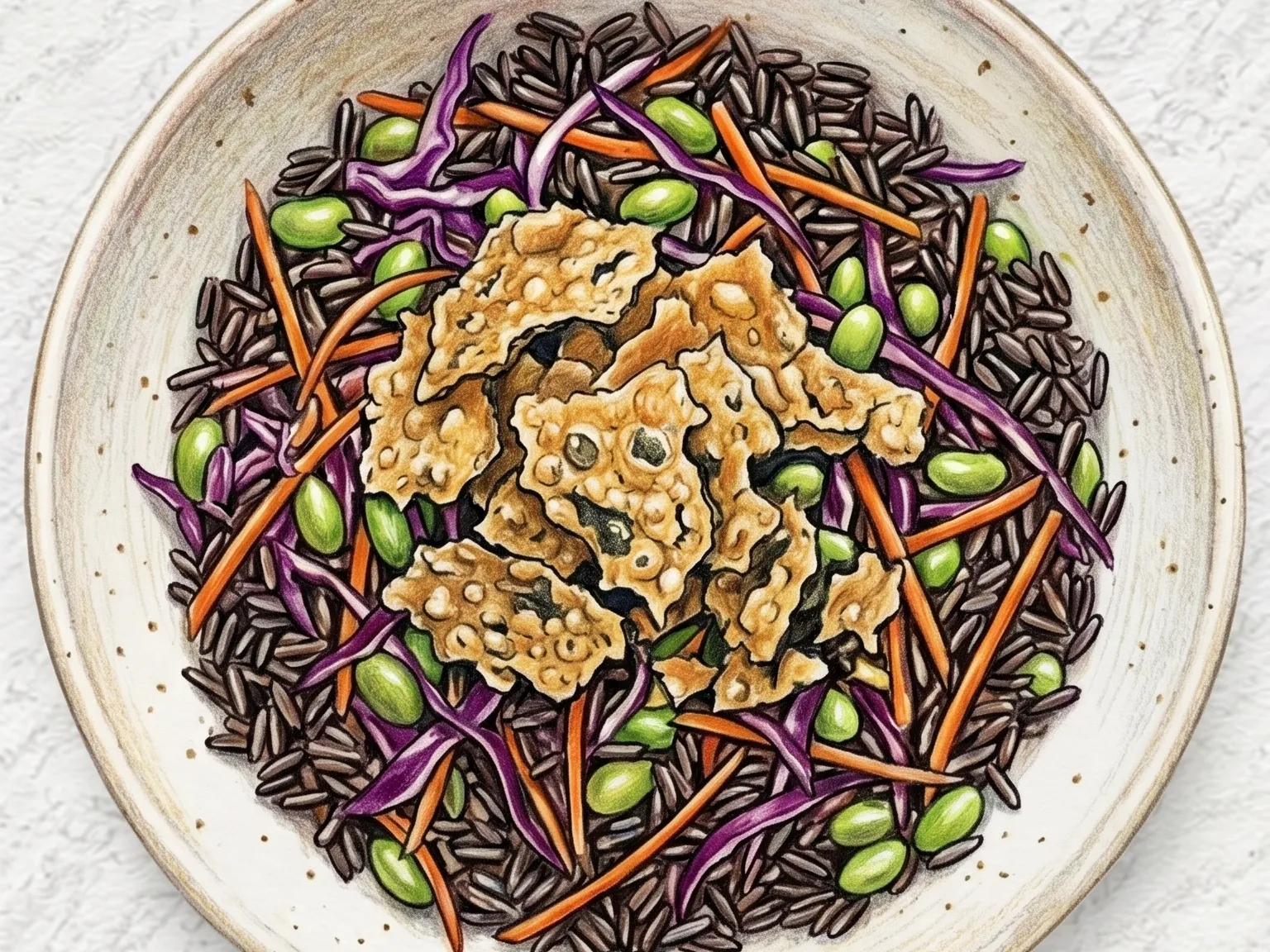
Wild rice crispy seaweed salad combines cooked and cooled wild rice with red cabbage, carrot, and edamame in a soy and brown rice vinegar dressing, then adds seaweed chips at the end. Rinse 180 g wild rice in cold water and cook it according to the package directions. Drain it when many grains have split open and the centers are tender, then spread the cooked grains out and cool them completely. Cut 120 g red cabbage and 80 g carrot into thin strips of similar length. Thaw 100 g edamame and pat away its surface moisture. For the dressing, mix 1.5 tbsp soy sauce with 1 tbsp brown rice vinegar, 1 tbsp sesame oil, and 0.5 tsp minced garlic until the garlic is evenly dispersed. Put the cooled wild rice, cabbage, carrot, and edamame in a large bowl. Pour over the dressing and lift the mixture gently from the bottom so the raw vegetables are not pressed. Let the dressed salad stand for about 5 minutes, transfer it to plates, and sprinkle with 1 tsp sesame seeds. Add 25 g seaweed chips immediately before serving. Thoroughly draining and cooling the wild rice keeps hot liquid from entering the dressing, and drying the thawed edamame controls another source of water. Keep the seaweed chips separate until the last step because contact with the dressing softens them.

🥗 Light & Healthy 🍱 Lunchbox
Prep 20min Cook 30min 4 servings
Korean Vegetable Fried Rice
Rice Easy

Korean Vegetable Fried Rice

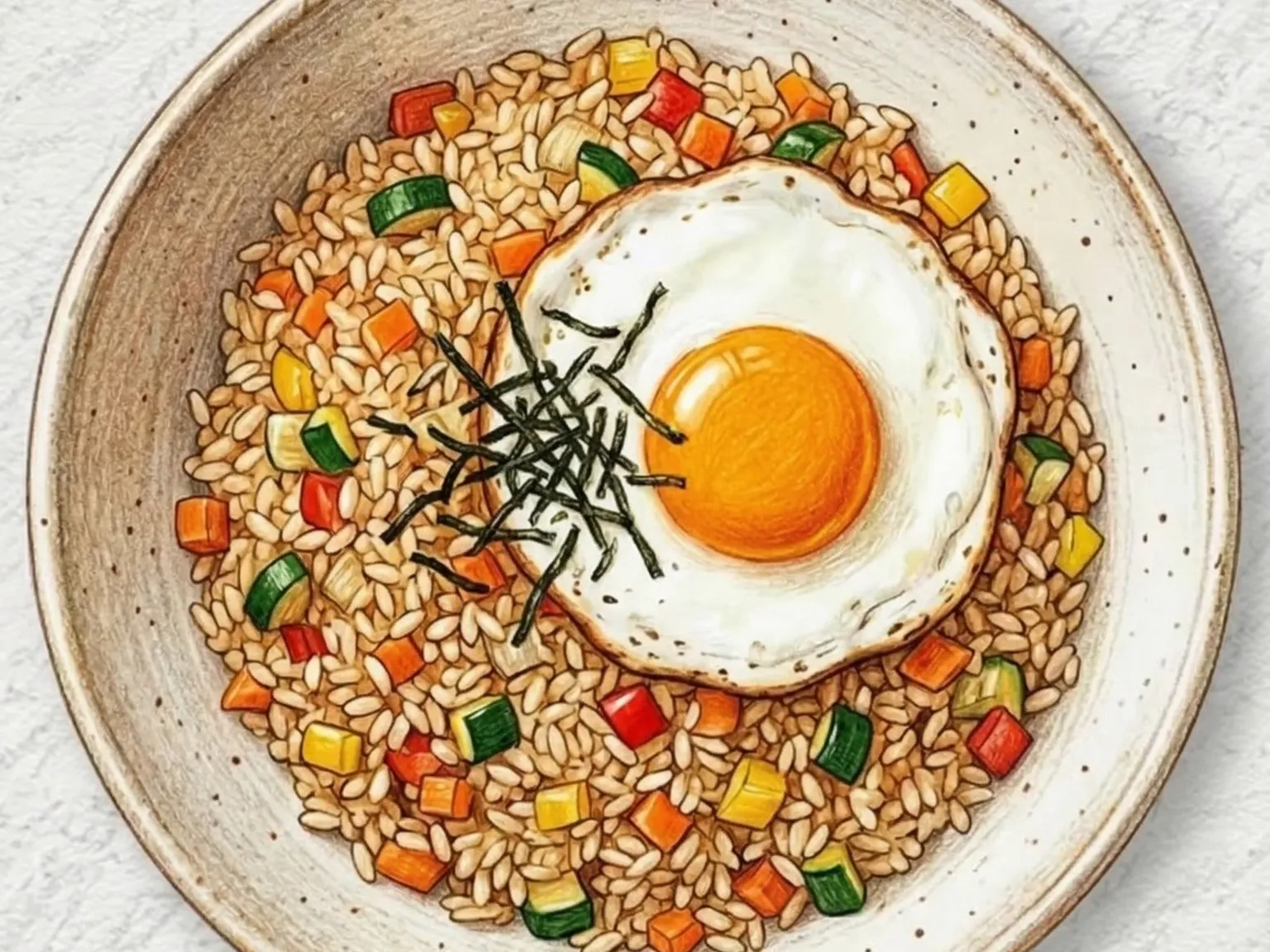
Vegetable fried rice cooks carrot first, adds onion, zucchini, bell pepper, and corn in a second round, and only then fries the rice so the vegetables and grains keep distinct textures. Break up 2 cups cooked rice and let it cool briefly to release surface moisture. Cut 80 g onion, 50 g carrot, 60 g bell pepper, and 60 g zucchini into even 5 mm pieces so they cook at the same rate. Heat a pan over high heat for about 30 seconds and swirl in 1 tbsp cooking oil. Add the carrot alone and stir-fry for 1 minute, just until its color brightens. Add the onion, zucchini, bell pepper, and 50 g corn kernels, spreading them across the pan instead of piling them in the center. Toss for 2 minutes so moisture evaporates and the pieces remain lightly crisp. Once the vegetables look slightly translucent, add the rice and separate any clumps with a spatula. Keep the heat high and stir-fry for 2 minutes, until the grains move independently. Pour 1.5 tbsp soy sauce around the hot edge of the pan and toss for 1 more minute so the sizzling sauce coats the rice without burning. Turn off the heat, mix in 1 tsp sesame oil with the residual heat, and check that the vegetables are distributed evenly before serving warm.

🥗 Light & Healthy ⚡ Quick
Prep 10min Cook 8min 2 servings
Korean Vegetable Gimbap (Colorful Veggie Seaweed Rice Roll)
Rice Easy

Korean Vegetable Gimbap (Colorful Veggie Seaweed Rice Roll)

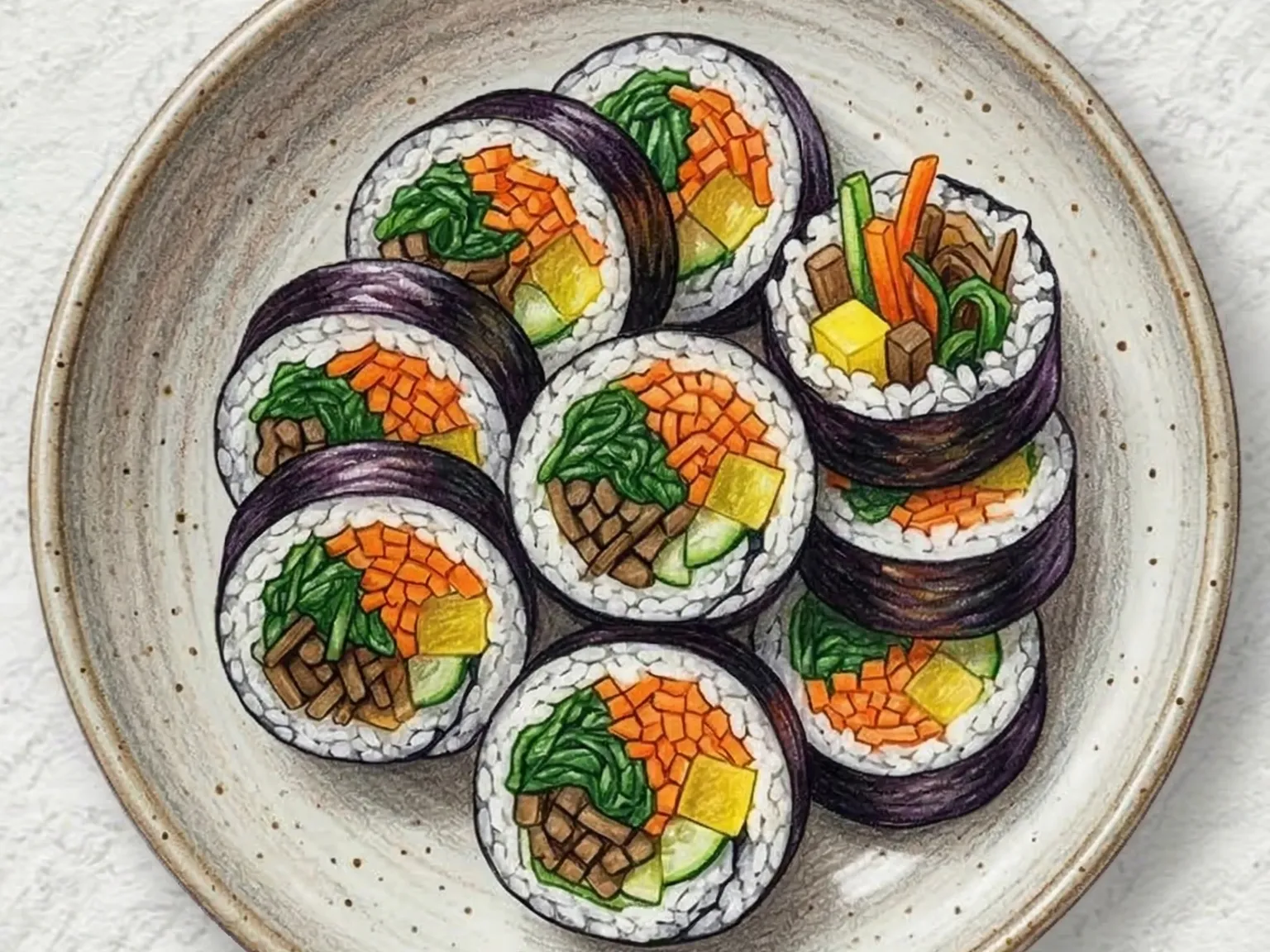
Yachae gimbap is a vegetable-focused Korean seaweed rice roll filled with blanched spinach, sauteed carrot, braised burdock root, pickled radish, and egg omelet strips, all wrapped in sesame-oil-seasoned rice. Each vegetable is prepared separately to preserve and highlight its own distinct character: spinach is dressed with sesame oil and salt after blanching, carrot is stir-fried to draw out its natural sweetness, and burdock root is slow-braised in soy sauce and sugar to develop a deep savory-sweet depth that nothing else in the roll can replicate. Pickled radish adds a tart, satisfying crunch that contrasts with the soft egg strips, and the combination of six or more individually seasoned ingredients creates both visual variety in the cross-section and complexity in every bite. Draining every filling thoroughly and cutting them all to a uniform diameter is the practical key to a roll that stays tight, slices cleanly, and keeps the seaweed from turning soggy.

🧒 Kid-Friendly 🍱 Lunchbox
Prep 25min Cook 10min 2 servings
Korean Vegetable Porridge (Yachae Juk)
Rice Easy

Korean Vegetable Porridge (Yachae Juk)

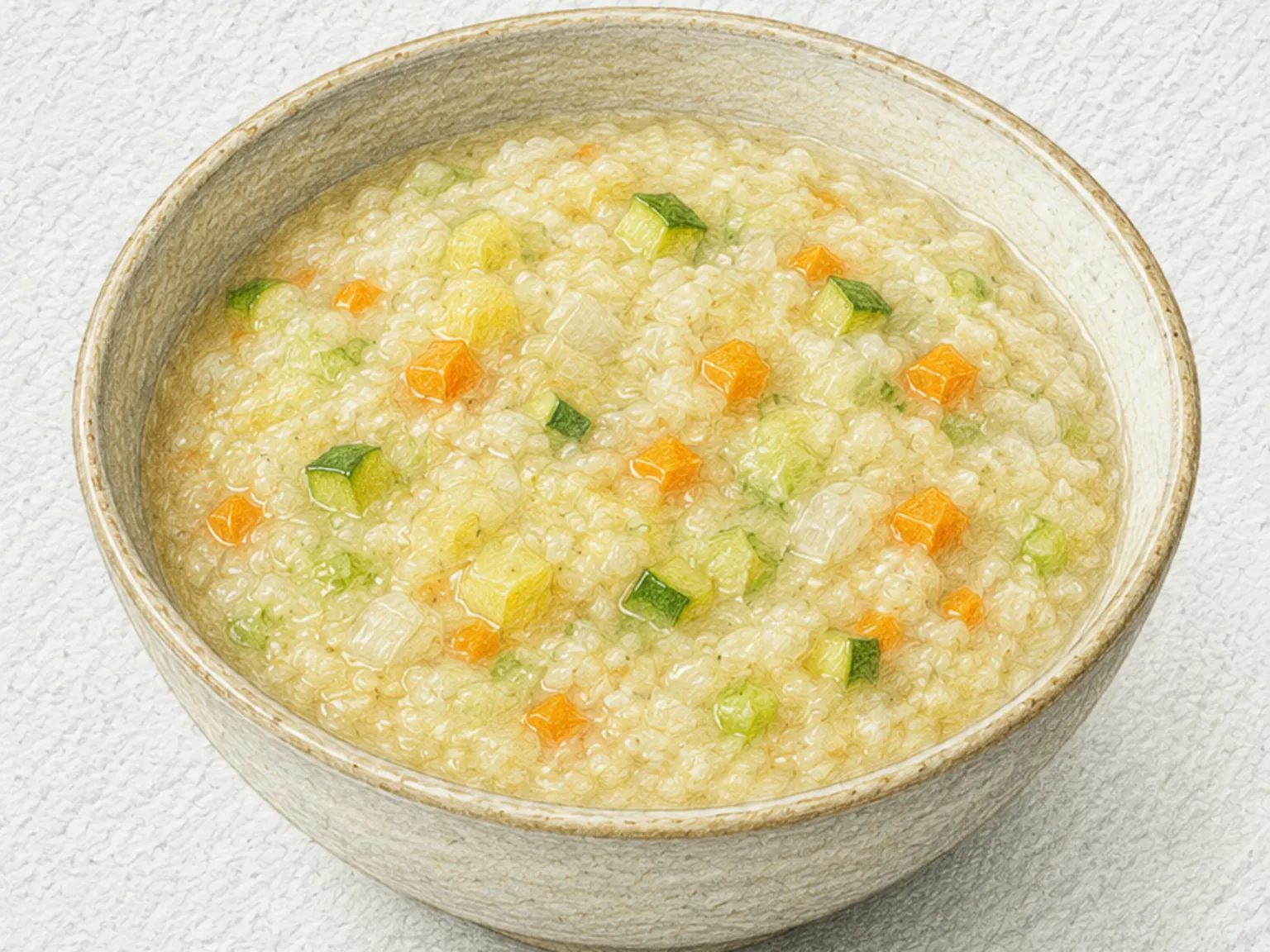
Yachae Juk is a mild, traditional Korean vegetable porridge that is easy on the stomach. The recipe uses finely diced zucchini, carrots, potatoes, and shiitake mushrooms, cooked slowly with pre-soaked rice. Preparing the vegetables in uniform, small pieces ensures they soften at the same rate to create a smooth texture. The cooking process starts by coating the soaked rice in toasted sesame oil in a heavy-bottomed pot before lightly sautéing the vegetables. Water is added, and the porridge is simmered over low heat for about thirty minutes, with regular stirring to prevent the starch from sticking to the bottom. This gentle simmering coaxes out the natural sweetness of the vegetables. A minimal seasoning of salt and soup soy sauce is added at the end to keep the vegetable broth clean and clear. It is a light, digestible dish suited for breakfast or recovery.

🥗 Light & Healthy
Prep 15min Cook 35min 2 servings
Korean Sweet Glutinous Rice
Rice Medium

Korean Sweet Glutinous Rice

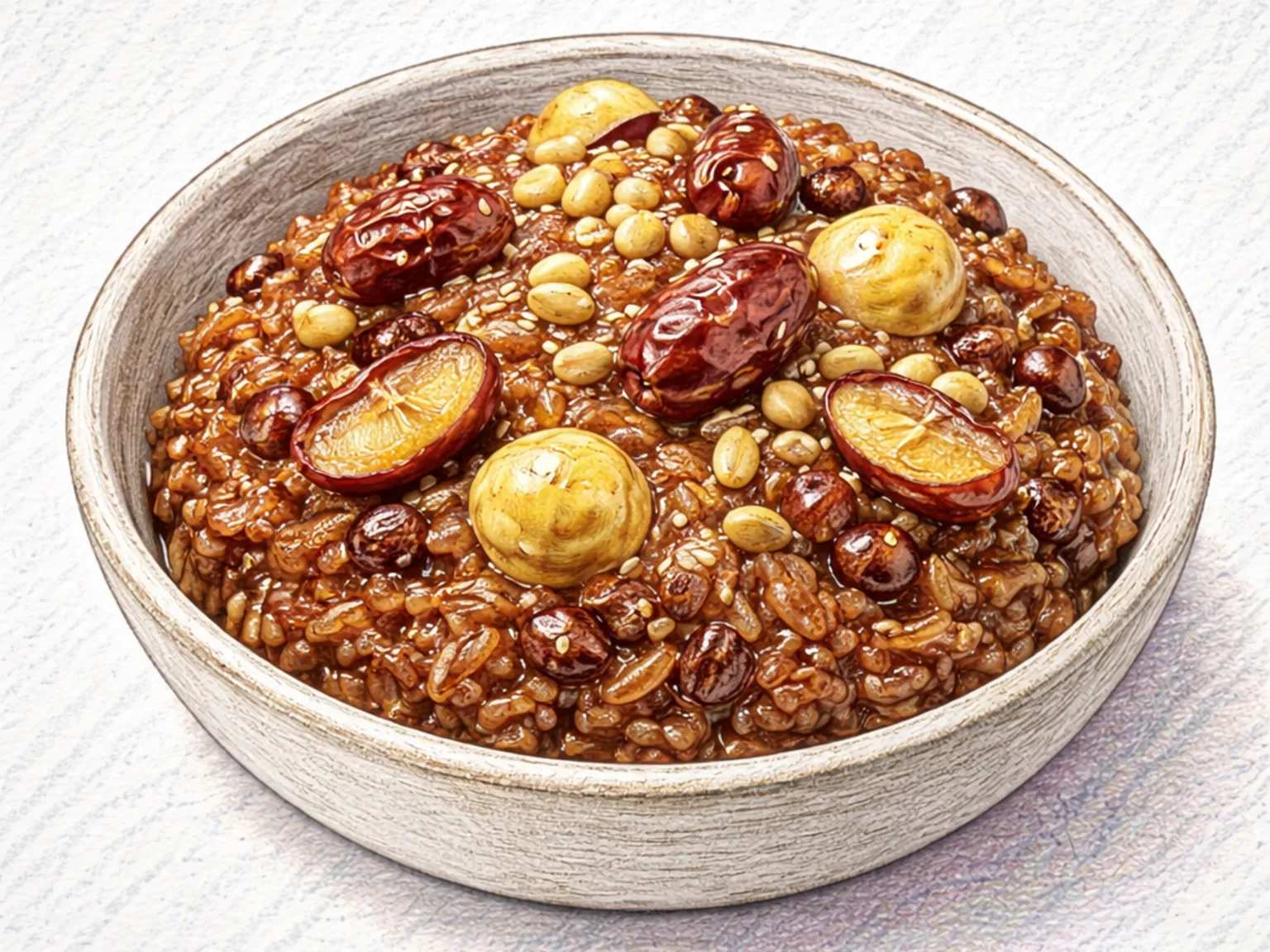
Yakbap is made by steaming soaked glutinous rice, folding a warm soy and honey syrup through the hot grains, adding jujubes, chestnuts, and pine nuts, and steaming the seasoned rice a second time. Rinse 2 cups glutinous rice until the water runs mostly clear, soak it for 2 hours, and drain it well. Wait until the steamer is producing full steam, keep the heat at medium, and steam the rice for 25 minutes. Remove the pits from 8 jujubes and slice the fruit thinly. Cut 100 g chestnuts into bite-size pieces and reserve a small pinch from 2 tbsp pine nuts for the garnish. In a small pot, combine 2 tbsp soy sauce, 3 tbsp honey, 1 tbsp sesame oil, and 1/2 tsp ground cinnamon. Warm the mixture over low heat only until the honey loosens, without bringing it to a hard boil. Pour this syrup over the hot steamed rice before adding the solid ingredients. Fold with a rice paddle in cutting motions until the grains look evenly glossy and amber, then add the jujubes, chestnuts, and remaining pine nuts. Transfer the mixture to a mold or heatproof bowl and level the top with light pressure instead of compacting it. When steam returns, set the heat to medium and give the seasoned rice a 12-minute second steaming. Let the yakbap cool for about 10 minutes to firm, lightly coat the knife with a trace of sesame oil, cut clean portions, and add the reserved pine nuts.

🎉 Special Occasion
Prep 30min Cook 45min 4 servings
Sweet Rice Honey Muffins
Rice Medium

Sweet Rice Honey Muffins

Yakbap muffins bake soaked glutinous rice that has been marinated for 20 minutes in a seasoning of soy sauce, dark brown sugar, honey, and sesame oil, then portioned into muffin cups with sliced jujubes and diced chestnuts before going into a 180-degree oven. The soy sauce provides a savory depth that folds into the brown sugar and honey to produce the dark, caramel-like sweetness that distinguishes traditional yakbap, while sesame oil amplifies the grain aroma throughout. Jujubes are sliced thin so their juices seep between the rice grains during baking, and the chestnut cubes provide a starchy, crumbly resistance against the sticky glutinous rice. Pine nuts placed on top release their oils as they roast, filling the oven with a nutty fragrance that deepens as the muffins brown. A 10-minute rest after removing them from the oven allows the residual heat to distribute evenly, so the glutinous rice firms into a clean shape that separates easily from the mold. The recipe reinterprets traditional yakshik as individual servings suited to a modern table.

🧒 Kid-Friendly 🎉 Special Occasion
Prep 25min Cook 30min 4 servings
Yaki Onigiri (Japanese Soy-Glazed Grilled Rice Balls)
Rice Easy

Yaki Onigiri (Japanese Soy-Glazed Grilled Rice Balls)

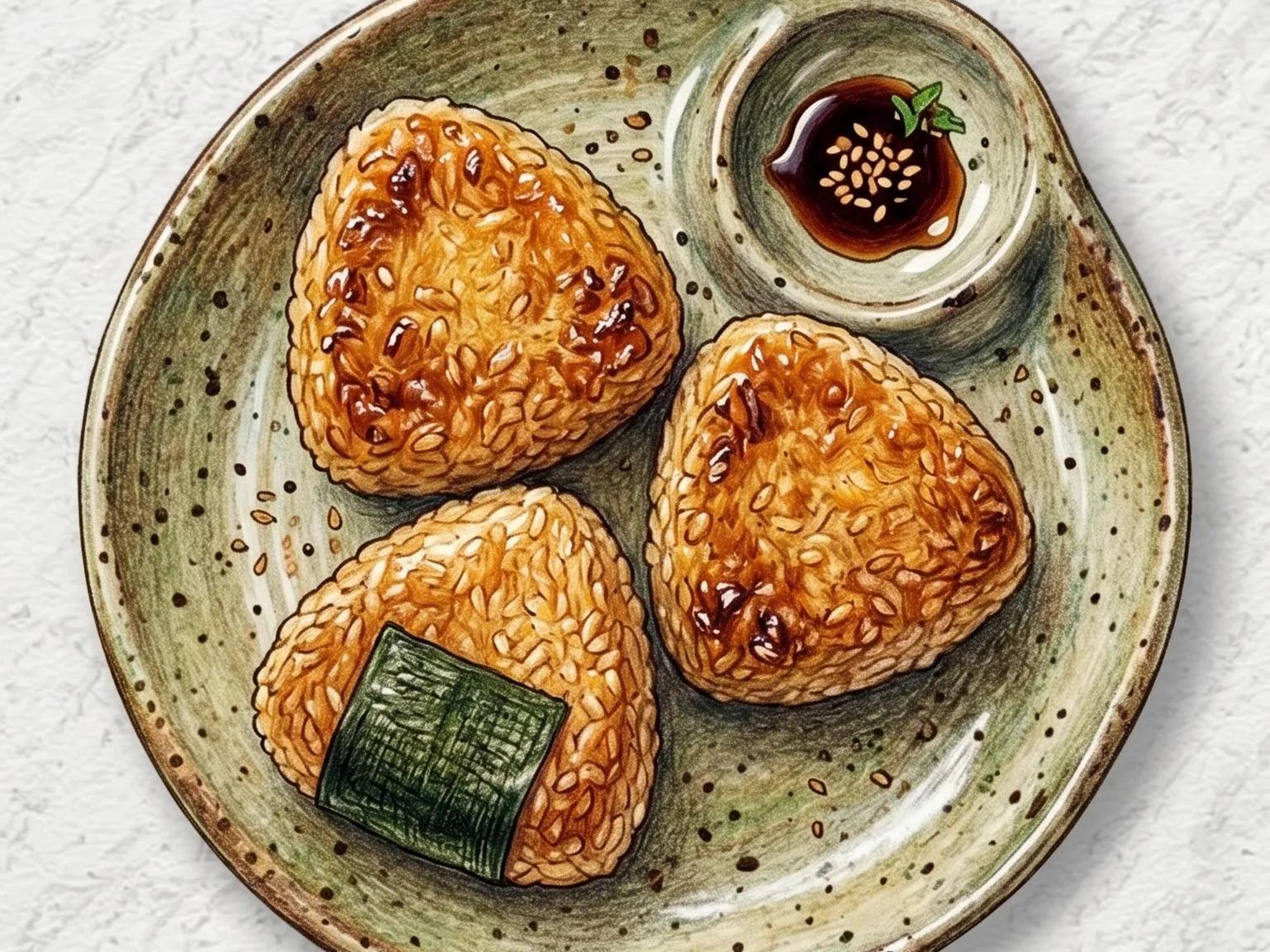
Yaki onigiri are Japanese grilled rice balls prepared using freshly cooked rice that has been lightly seasoned with salt. The rice grains are shaped into triangles or rounds while they remain warm and pliable, as the grains lose their natural binding ability once they cool and lose their moisture. During the shaping process, pressure must be applied with even distribution across the rice to prevent the grains from becoming a dense and compacted mass. This careful handling ensures that the interior of the rice ball maintains a soft texture with each individual grain remaining distinct after the grilling process is complete. The cooking method involves pan-grilling the rice balls using a small amount of sesame oil over a medium-low flame. This specific heat level is necessary to allow the starch on the surface of the rice to caramelize at a slow pace, resulting in a thin and crackling crust while the center of the onigiri remains moist. It is important to let the rice balls sit undisturbed in the pan for three to four minutes on each side before they are turned. This waiting period allows the outer layer to set properly and prevents the rice from tearing or sticking to the pan when it is time to flip them. A glaze made from a combination of soy sauce, mirin, and sugar is applied to the surface in several thin coats. Brushing the glaze on in multiple light passes, rather than applying a large amount of the liquid at the start, prevents the sugar content from burning or charring. This technique creates a deep savory flavor and a lacquered sheen on the exterior of the rice. The finished onigiri have a savory and slightly sweet profile, with edges that become chewy where the glaze has concentrated during the cooking process. A narrow strip of nori seaweed is often wrapped around the base of the rice ball to provide a salty element that balances the glazed exterior. When served with miso soup and pickled radish, these grilled rice balls function as a light meal.

🧒 Kid-Friendly ⚡ Quick
Prep 12min Cook 12min 2 servings
Yakitori Rice Bowl (Soy-Mirin Glazed Grilled Chicken over Rice)
Rice Medium

Yakitori Rice Bowl (Soy-Mirin Glazed Grilled Chicken over Rice)

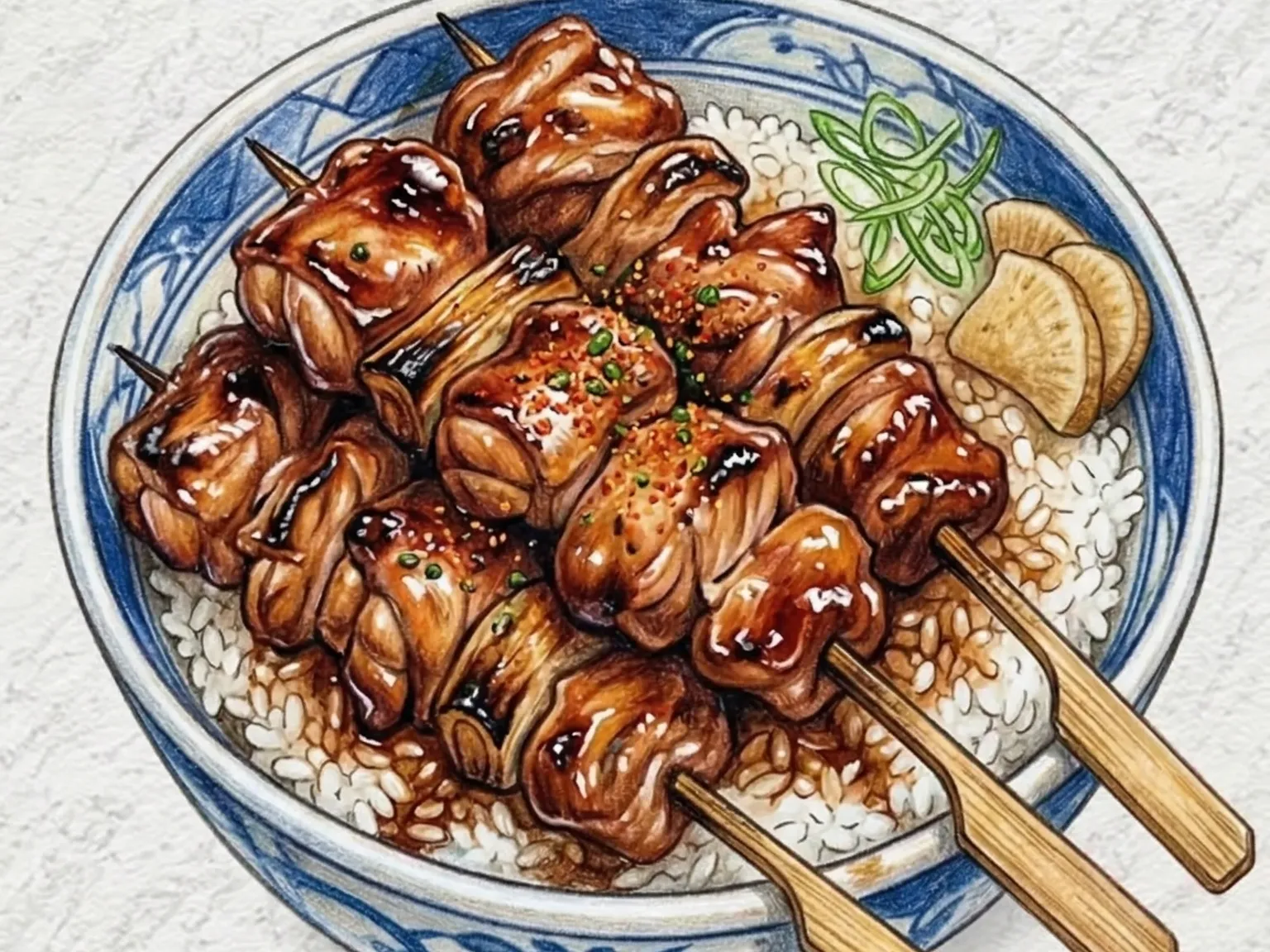
Direct heat and a repetitive glazing process define the preparation of this chicken skewer bowl. Small pieces of chicken thigh are secured onto skewers and grilled over a flame while a mixture of soy sauce, mirin, and sugar is applied in thin, sequential layers. This technique builds a lacquered surface through caramelization, which directs the sweet and salty flavors to the exterior of the meat. Applying the sauce too heavily in a single pass often leads to burning and an uneven crust. Because chicken thigh contains natural fats, the meat remains moist and tender even under high temperatures. When the cooked pieces are removed from the skewers and placed onto the rice, the excess glaze permeates the grains to provide sufficient seasoning. Sprinkling shichimi togarashi or sansho powder introduces a sharp or citrus-like contrast to the sweetness of the chicken. While chicken breast serves as a leaner alternative, it requires a longer marinating period and a shorter time on the grill to prevent the meat from drying out. The tare sauce can be prepared in advance and stored in the refrigerator for several weeks. Adding a halved soft-boiled egg or sliced scallions provides different textures and prevents the meal from feeling repetitive.

🏠 Everyday 🍺 Bar Snacks
Prep 20min Cook 15min 2 servings
Yaksik (Korean Royal Sweet Glutinous Rice with Jujube)
Rice Medium

Yaksik (Korean Royal Sweet Glutinous Rice with Jujube)

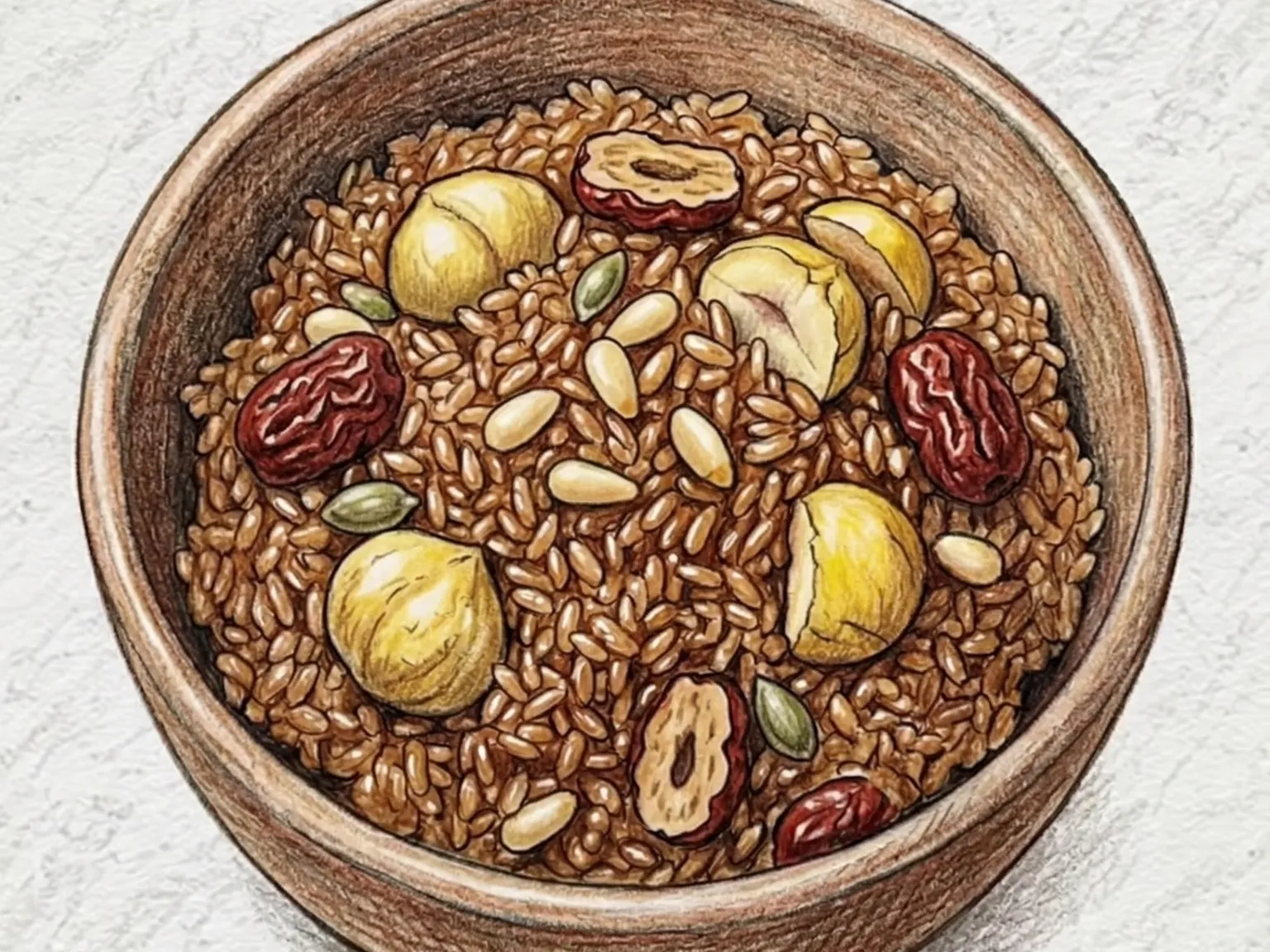
Yaksik is a traditional Korean sweet rice dish with roots in royal court cuisine. Glutinous rice is mixed with soy sauce, honey, and sesame oil, then steamed with jujubes and chestnuts until each grain absorbs a deep caramel-brown color and a sweet-salty seasoning. The soy sauce provides savory depth while the honey glazes the rice with a gentle sheen and lingering sweetness. Jujubes burst with natural fruity sweetness when bitten, and chestnuts contribute a crumbly, starchy contrast to the chewy rice. A pinch of cinnamon adds warm spice that ties the elements together. Yaksik holds its texture well at room temperature, making it equally suited for packed lunches or make-ahead desserts.

🎉 Special Occasion 🧒 Kid-Friendly
Prep 25min Cook 45min 4 servings
Korean Young Radish Barley Bibimbap
Rice Easy

Korean Young Radish Barley Bibimbap

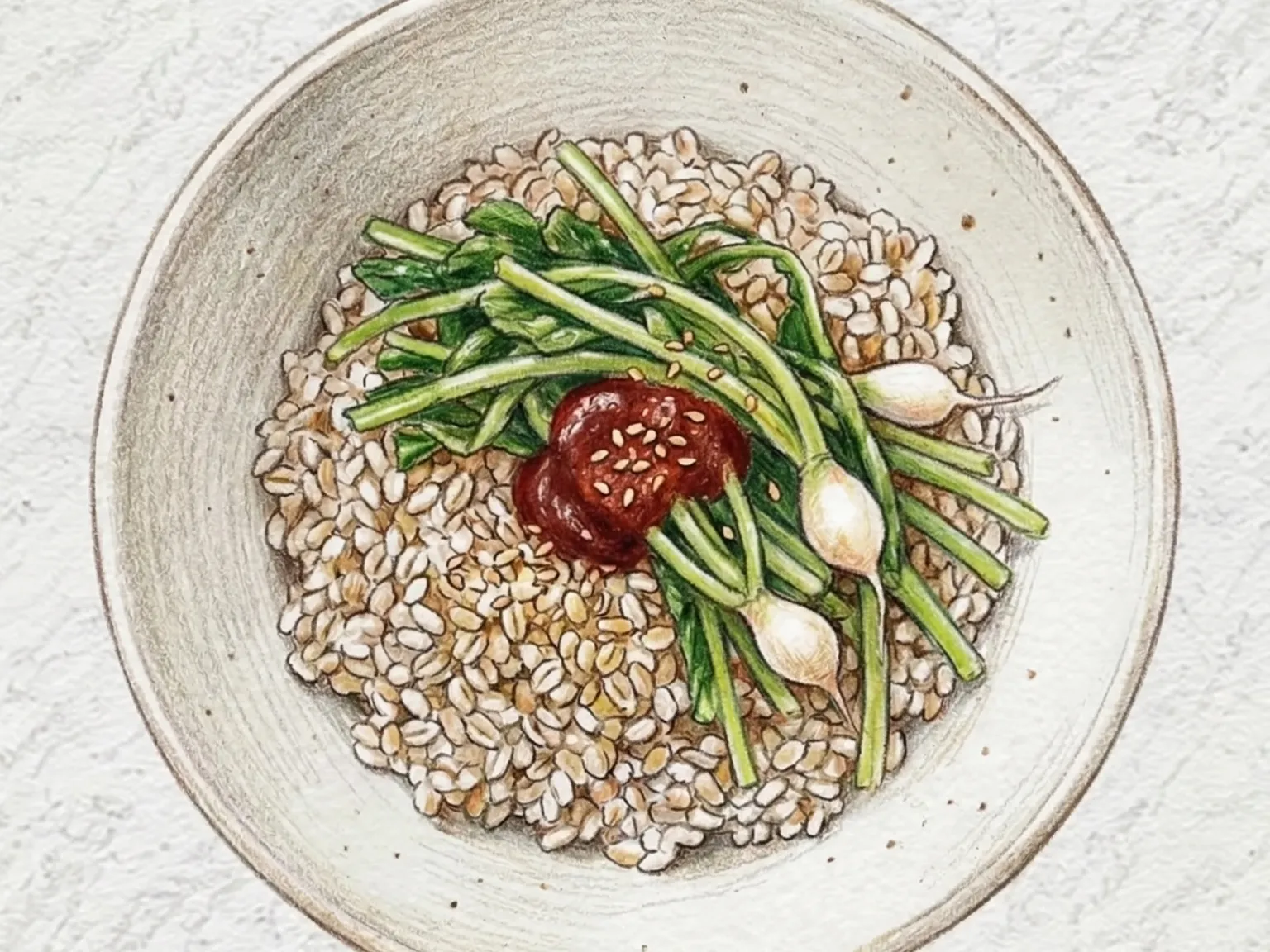
Young radish kimchi barley bibimbap combines warm barley rice with 3 cm pieces of kimchi, drained cucumber and lettuce, boiled egg, and a gochujang sauce loosened with vinegar and plum syrup. Prepare 420 g cooked barley rice while it is warm and break apart the clumps so the sauce can reach the grains. If the rice is cold, heat it in the microwave for about 1 minute before loosening it. Cut 180 g young radish kimchi into 3 cm lengths, shortening any long stems that would tangle during mixing. Julienne 80 g cucumber and tear 60 g lettuce into broad pieces. Soak both vegetables in cold water for about 3 minutes, then drain them thoroughly so retained water does not dilute the seasoning. Stir 1.5 tbsp gochujang with 1 tbsp vinegar and 1 tbsp plum syrup until the paste becomes spoonable. Add 1 tbsp sesame oil last and mix until the sauce looks glossy. Spread the barley rice in serving bowls and arrange the kimchi, cucumber, and lettuce in separate sections. Cut 2 boiled eggs in half and place them over the vegetables. Add the sauce a little at a time immediately before eating, then mix from the bottom upward until the warm rice, cool vegetables, and kimchi are evenly coated. Taste before adding the remaining sauce and serve without letting the dressed vegetables sit.

🏠 Everyday 🍱 Lunchbox
Prep 18min Cook 22min 2 servings
Korean Salmon Rice Bowl (Marinated Raw Salmon over Warm Rice)
Rice Easy

Korean Salmon Rice Bowl (Marinated Raw Salmon over Warm Rice)

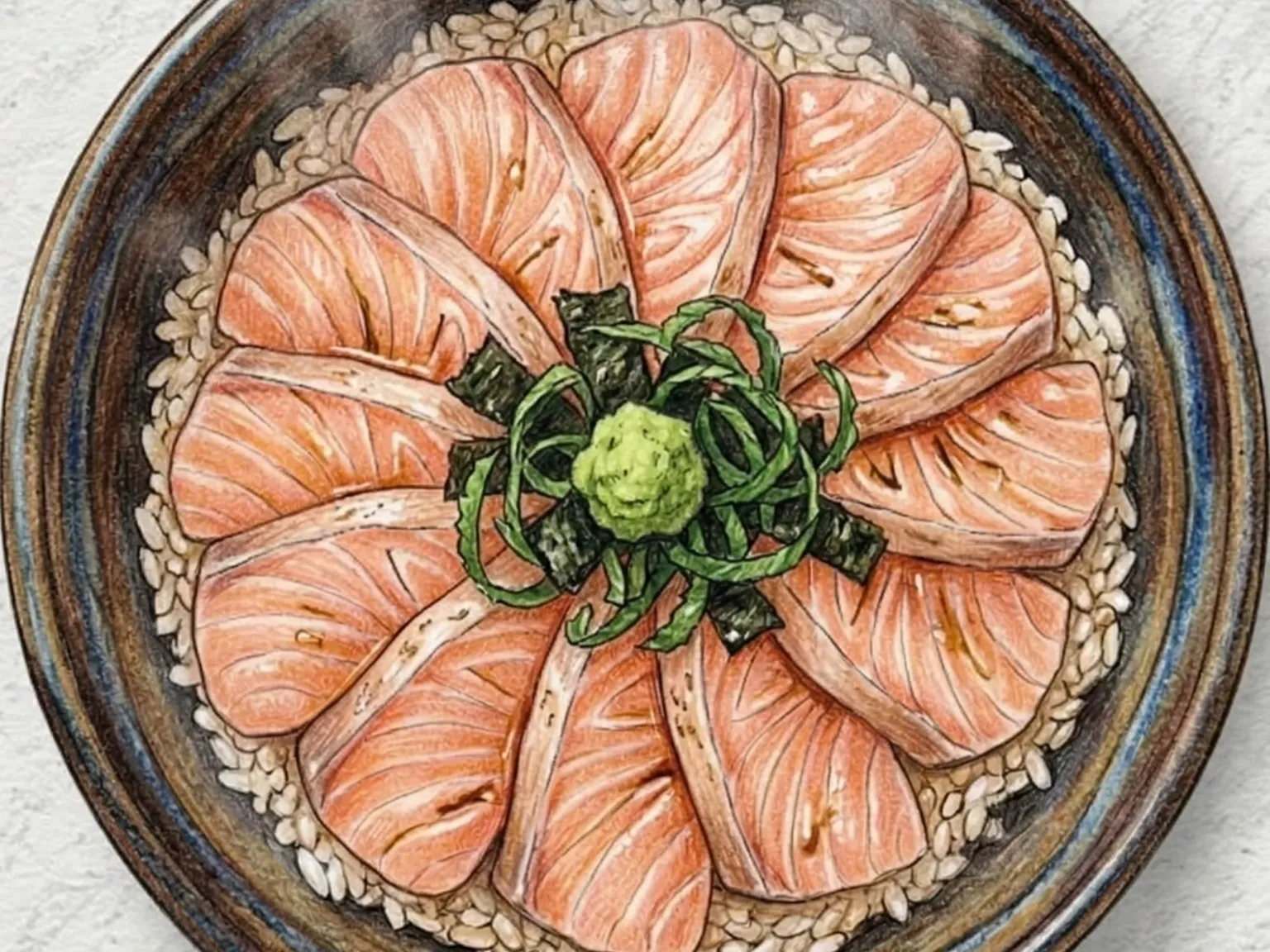
Preparing a bowl of Yeoneo deopbap begins with slicing sashimi-grade salmon and tossing it in a light dressing of soy sauce, sesame oil, and wasabi. This Korean adaptation of Japanese donburi relies on a delicate balance where the seasoning merely coats the fish rather than overwhelming its natural texture. Placing these seasoned slices over warm steamed rice creates a temperature contrast that slightly firms the bottom of the fish while keeping the center raw and buttery. Topping the bowl with shredded perilla leaves or nori adds an earthy, oceanic scent that balances the natural fats of the salmon. For a sharper profile, the amount of wasabi can be increased, or a few drops of lemon juice can be added to the soy base to provide a bright acidity. High in omega-3 fatty acids and protein, this dish also contains astaxanthin, making it a nutritious choice that demands the highest level of freshness. Including sliced avocado offers a creamy element, while a spoonful of salmon roe adds small pops of saltiness. Because the residual heat from the rice gradually cooks the fish, assembling the bowl right before eating ensures the salmon maintains its intended consistency and stays fresh on the palate.

🏠 Everyday ⚡ Quick
Prep 15min Cook 5min 2 servings
Korean Salmon Pot Rice (Salmon Fillet Steamed Directly on Rice)
Rice Medium

Korean Salmon Pot Rice (Salmon Fillet Steamed Directly on Rice)

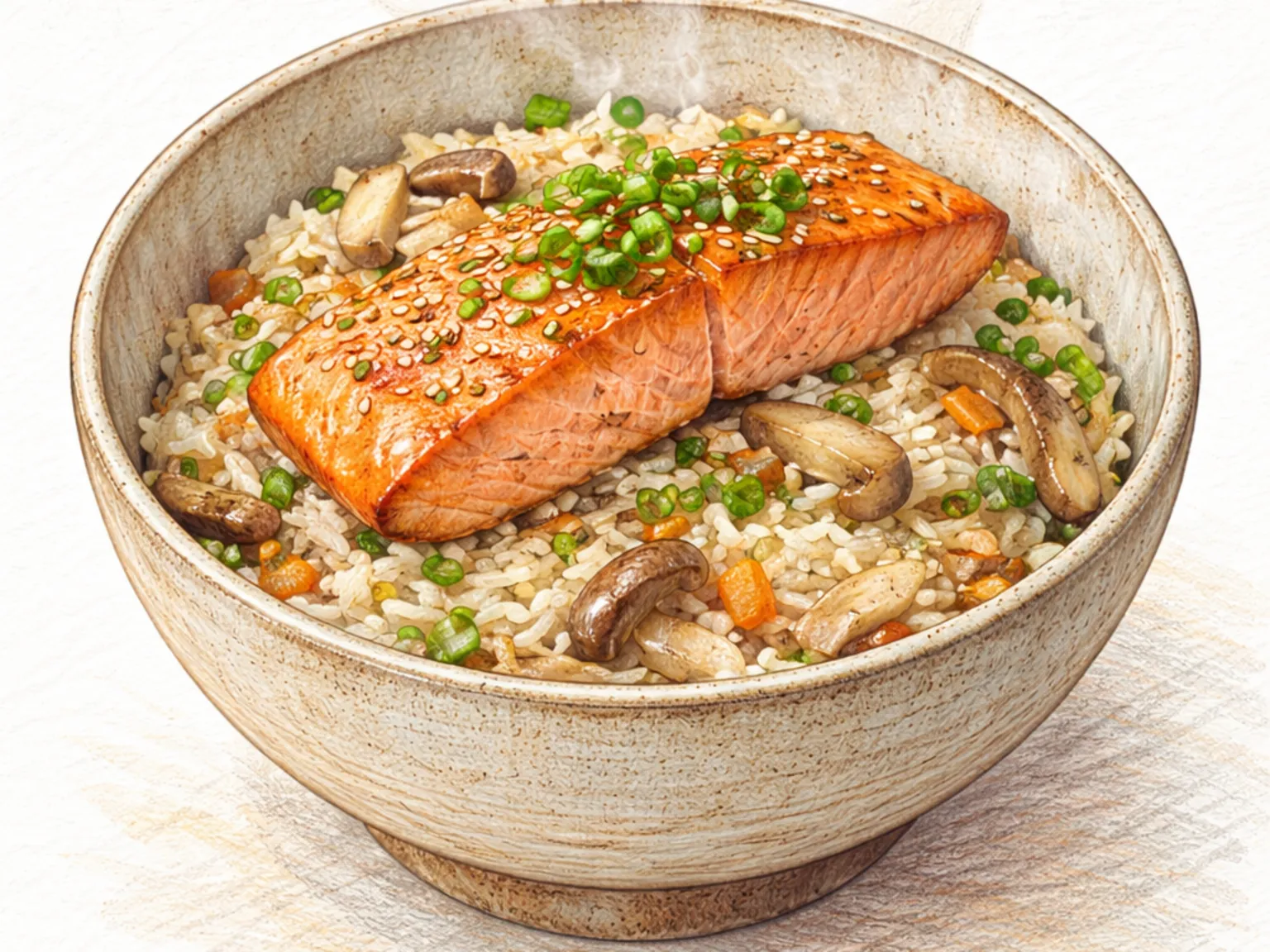
Salmon pot rice cooks a whole fillet on top of soaked rice, rests the covered pot after cooking, and folds the fish through the grains with soy sauce, butter, lemon juice, and green onion. Wash 1.5 cups rice until the water is mostly clear and leave it submerged for 30 minutes. Move the grains to a sieve for a 5-minute drain so the measured cooking water stays accurate. Sprinkle 1 tbsp cooking wine evenly over a 200 g salmon fillet and leave it for 5 minutes. Remove only the surface liquid, and keep the skin side facing down if the fillet has skin. Put the rice and 1.4 cups water in a heavy pot and level the grains. Place the salmon in the center on top of the rice instead of submerging it in the water. Cover the pot and use high heat until strong steam rises, which takes 4 to 5 minutes. Reduce the heat to low and cook for 15 minutes without opening the lid. Turn off the heat and keep the pot covered for 5 minutes. At this point the salmon should separate easily with chopsticks, and the rice should look glossy and translucent rather than chalky. Break the fish into large flakes and fold it through the rice. Add 2 tbsp soy sauce, 10 g butter, and 1 tsp lemon juice while the rice is hot, then finish with 20 g green onion and mix gently from the bottom.

🎉 Special Occasion 🏠 Everyday
Prep 10min Cook 25min 2 servings
Korean Lotus Root Rice (Steamed Rice with Crunchy Lotus Root Slices)
Rice Easy

Korean Lotus Root Rice (Steamed Rice with Crunchy Lotus Root Slices)

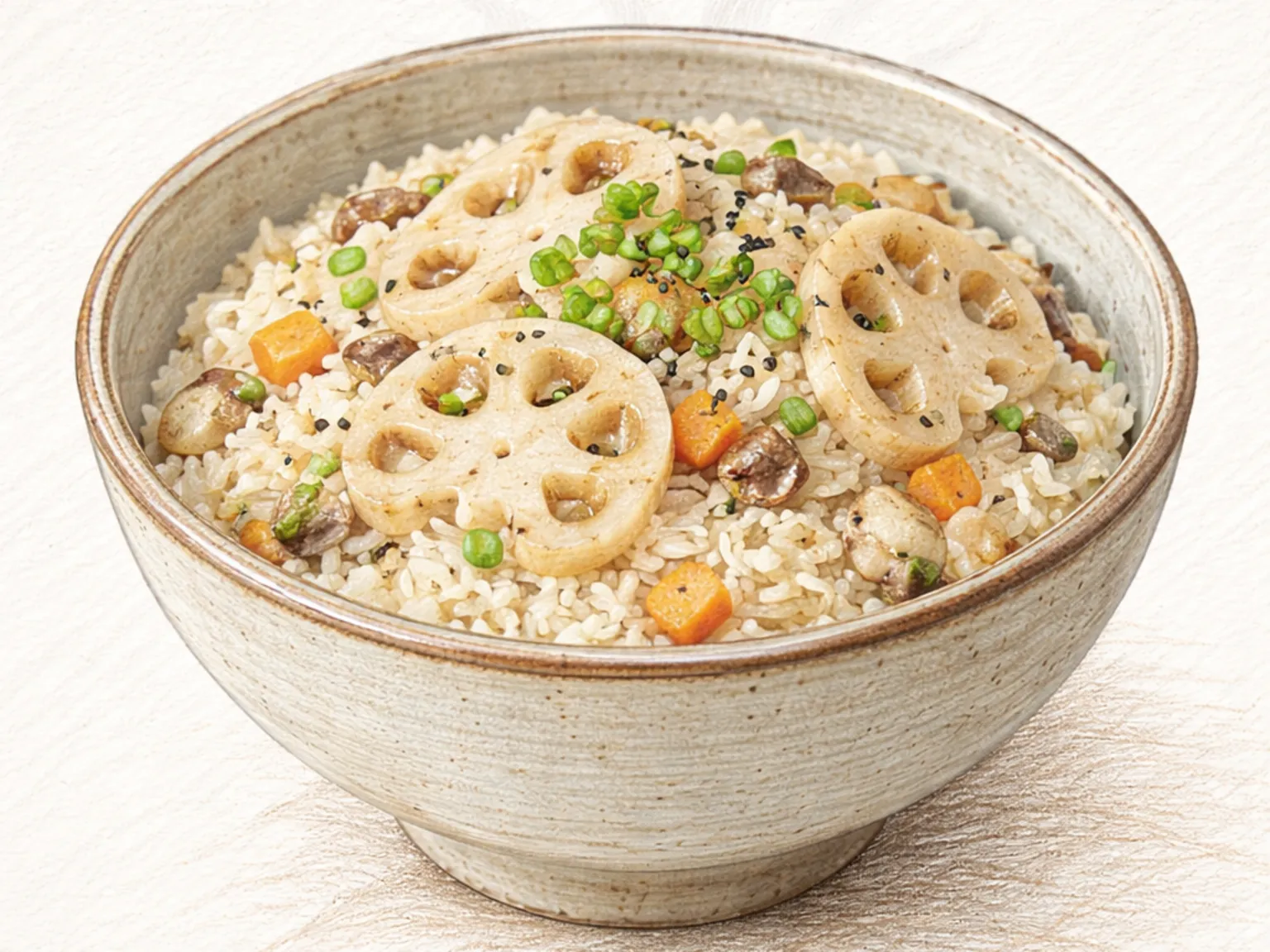
Lotus root rice cooks thin slices of lotus root over rice, keeps the slices in a separate layer during cooking, and adds a soy-sesame seasoning only when the rice is served. Peel 200 g lotus root and slice it thinly. Hold the slices in vinegared water for about 5 minutes to limit browning and remove some surface starch, then rinse and drain them. While the lotus root drains, wash 360 g rice until the water becomes relatively clear and leave it briefly in a sieve. Transfer the rice to a pot or rice cooker and spread the lotus root evenly over the top instead of stirring it through the raw grains. Keeping the layers separate prevents the slices from breaking or gathering in one part of the pot. Cook the rice without repeatedly opening the lid. The lotus root edges should look translucent and the rice grains should be fully cooked before the heat is turned off. Leave the container closed for about 10 minutes so the remaining moisture redistributes. Insert a rice paddle to the bottom and fold gently to spread the lotus root without crushing it. Mix 1 tbsp soy sauce with 1 tsp sesame oil in a separate dish and add small amounts to each serving rather than seasoning the entire pot at once.

🏠 Everyday
Prep 15min Cook 35min 3 servings
Korean Lotus Root Chicken Porridge
Rice Medium

Korean Lotus Root Chicken Porridge

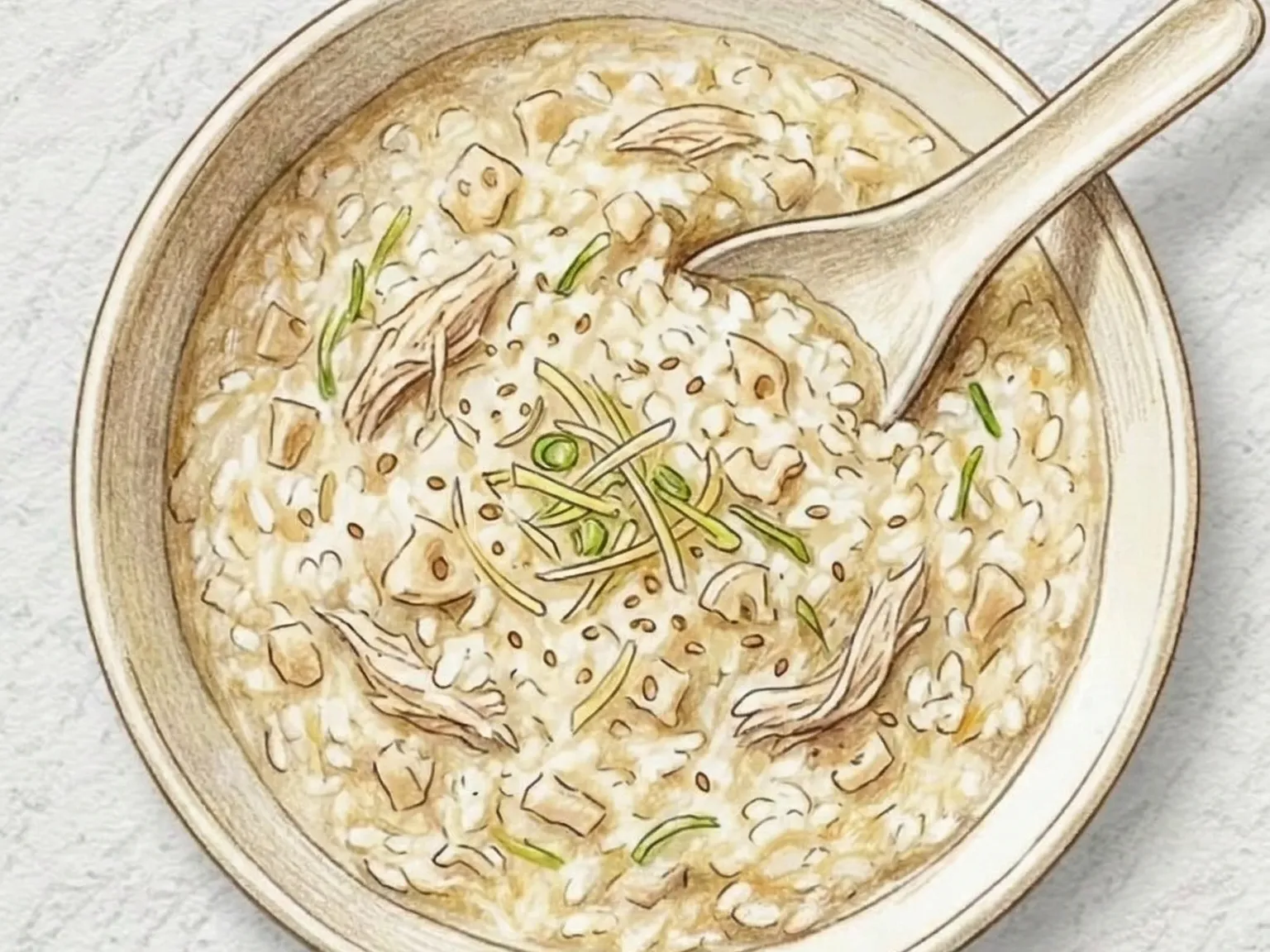
Lotus root chicken porridge poaches chicken breast with green onion and ginger, shreds the cooked meat, and then simmers it in chicken stock with rice and lotus root. Wash 1 cup rice and leave it to soak for 30 minutes before draining it. Peel 180 g lotus root and chop it slightly larger than the rice grains. Place 280 g chicken breast in water with 1 green onion and 1/2 tsp minced ginger. Poach it for 12 minutes on medium heat. Once the chicken is white through the center, remove it and shred it along the grain. Heat 1 tbsp sesame oil in a heavy pot over medium-low heat and cook 1 tsp minced garlic briefly. Add the lotus root and soaked rice and stir for 3 minutes, coating the grains with oil. Pour in 6 cups chicken stock, bring it to a boil, and reduce to low. Simmer for 25 minutes, scraping the bottom frequently as the rice expands. Add the shredded chicken when the porridge thickens and cook for 5 more minutes. Season with 1 tsp salt and the measured black pepper. Turn off the heat and let the porridge stand for 2 minutes so the final consistency settles before serving.

🏠 Everyday
Prep 20min Cook 40min 4 servings
Korean Lotus Root Shiitake Pot Rice
Rice Medium

Korean Lotus Root Shiitake Pot Rice

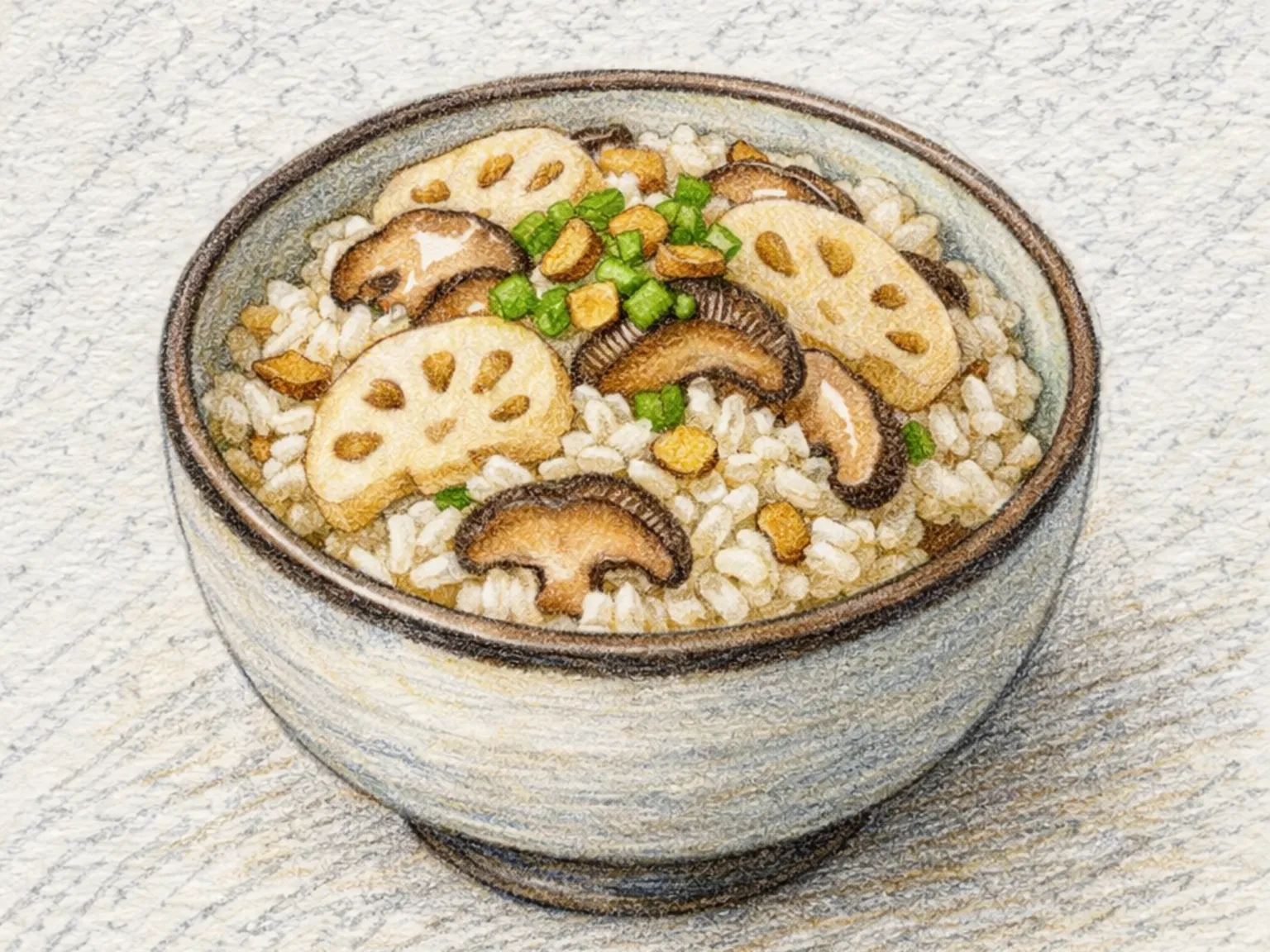
Yeongeun-pyogo-sotbap is a Korean pot rice dish that combines short-grain rice with crisp lotus root and chewy shiitake mushrooms. The process begins by soaking the rice for thirty minutes, then draining it. Minced garlic, diced shiitake, and carrots are sautéed in perilla oil to release moisture. The rice and thinly sliced lotus root are added next, coating the grains in oil to ensure a glossy texture and nutty flavor. Water and soy sauce are poured in, and the pot is simmered on low heat for fourteen minutes. Resting the covered pot off the heat for ten minutes is the key step to settle the aroma and finalize the texture. Before serving, fresh scallions and toasted sesame seeds are scattered over the top and fluffed gently to prevent crushing the rice.

🎉 Special Occasion
Prep 20min Cook 30min 4 servings
Korean Lotus Root Shrimp Pot Rice
Rice Medium

Korean Lotus Root Shrimp Pot Rice

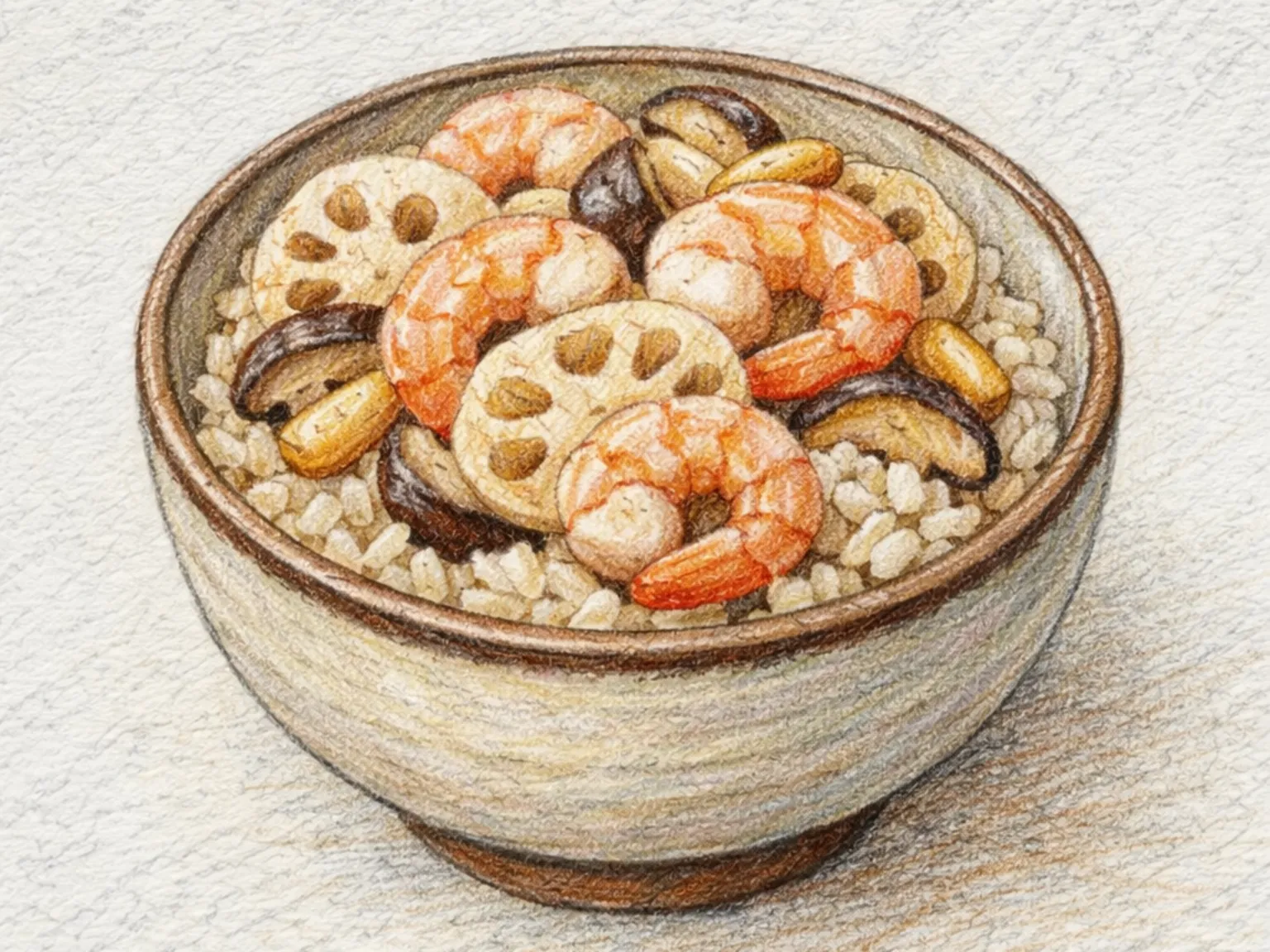
Lotus root and shrimp pot rice starts by stir-frying lotus root and shiitake in sesame oil, coats the rice in the same pot, and cooks garlic-soy marinated shrimp on top. Rinse 1.5 cups short-grain rice until the water runs mostly clear. Give the grains a 30-minute soak, then move them to a sieve to drain. Peel 120 g lotus root and cut it into 3 mm half-moons. Hold the slices in vinegared water for 5 minutes, then rinse and drain them. Pat 180 g peeled shrimp dry and toss them with 1 tbsp minced garlic and 1/2 tbsp soup soy sauce. Let the shrimp stand for 10 minutes while preparing 60 g shiitake mushrooms in bite-size pieces. Set a pot over medium heat and add 1 tbsp sesame oil. Stir-fry the lotus root and shiitake for 2 minutes, stopping when the lotus root edges begin to look translucent. Add the drained rice and stir for 1 minute so the grains receive a light coating of oil. Pour in 1.7 cups water and the remaining 1 tbsp soup soy sauce, then level the rice across the bottom. When large bubbles rise, arrange the shrimp evenly over the rice, cover the pot, and reduce the heat to low. Cook for 12 minutes, turn off the heat, and leave the lid closed for 10 minutes. Lift and fold from the bottom so the shrimp, lotus root, and rice mix without breaking.

🏠 Everyday
Prep 20min Cook 25min 2 servings
Korean Nutritious Mixed Rice
Rice Medium

Korean Nutritious Mixed Rice

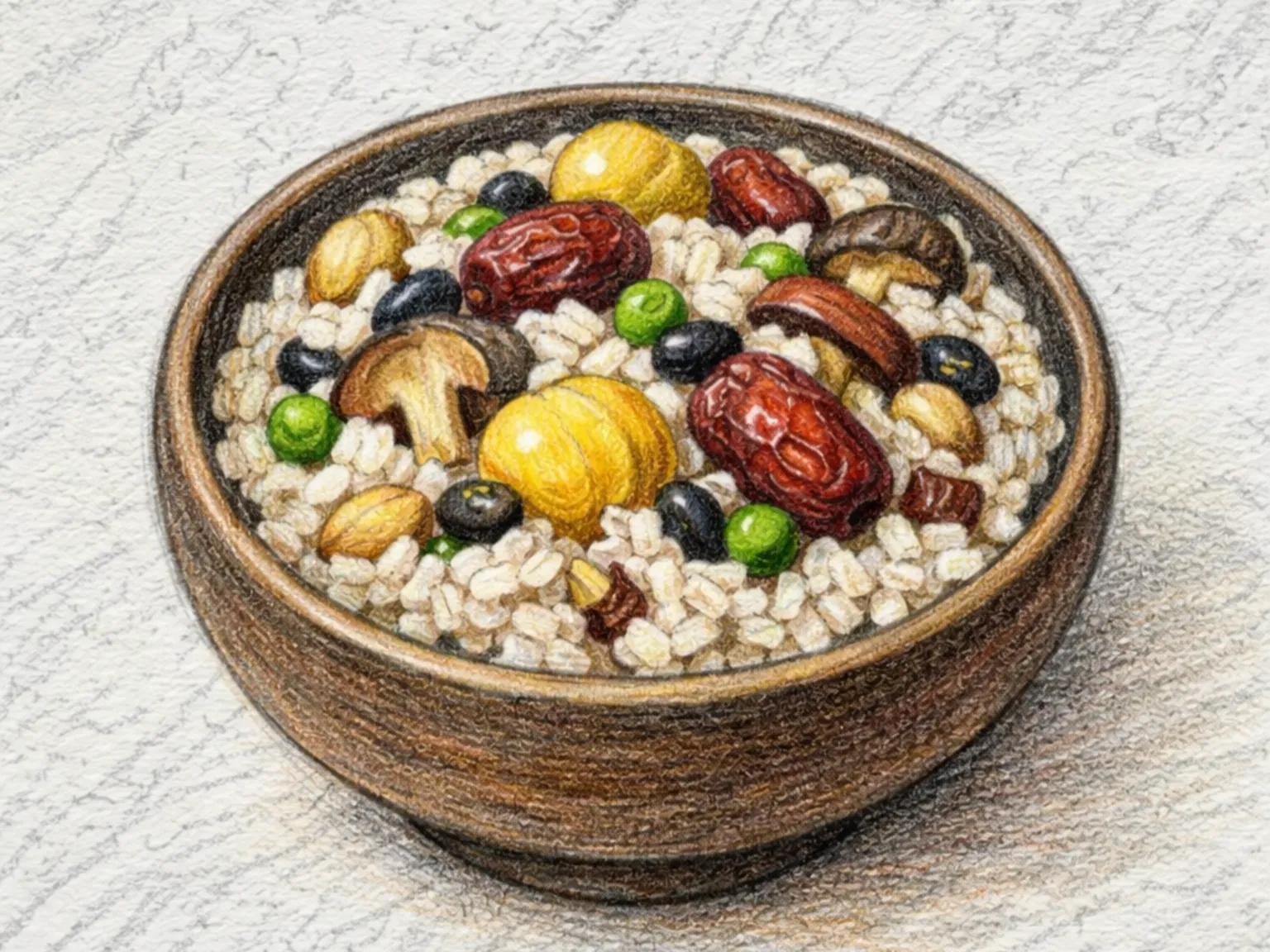
Yeongyangbap combines equal amounts of short-grain and glutinous rice with chestnuts, jujubes, soaked black beans, and shiitake, then cooks them in one covered pot without added seasoning. Rinse 1 cup short-grain rice and 1 cup glutinous rice together until the water runs mostly clear, then soak the grains for 1 hour. Halve 120 g chestnuts so they cook at the same pace as the rice. Remove the pits from 6 jujubes and cut the fruit into strips that are thick enough to retain their shape during cooking. Thinly slice 80 g shiitake mushrooms. Drain 80 g soaked black beans especially well, because retained soaking water would change the measured liquid and could leave the rice too wet. Spread the soaked rice evenly across the pot. Layer the beans, shiitake, chestnuts, and jujubes over it and pour in 650 ml water without pressing the toppings into the grains. Cover and heat on high until steam rises and the bubbling sound becomes steady. Reduce to low and cook for 25 minutes without stirring or lifting the lid, keeping the flame gentle enough that the bottom does not scorch. Turn off the heat and leave the pot covered so the residual steam finishes the beans and chestnuts. Insert a rice paddle to the bottom and fold gently until the ingredients are distributed without crushing the rice.

🎉 Special Occasion
Prep 25min Cook 40min 4 servings
Korean Seasoned Tofu Pouch Sushi (Yubu Chobap)
Rice Easy

Korean Seasoned Tofu Pouch Sushi (Yubu Chobap)

Yubu chobap consists of seasoned tofu pouches filled with sushi rice. The preparation begins by mixing rice vinegar, sugar, and salt into hot rice, using a cutting motion to preserve the grains. Sesame oil and toasted sesame seeds are added for aroma, along with finely diced carrot and cucumber to bring color and a crisp texture. The tofu pouches are lightly pressed and filled to about 80 percent of their capacity, preventing the skin from tearing during shaping. With each bite, the pouch releases a sweet and savory sauce absorbed by the tofu, which goes well with the seasoned rice. Since they are convenient to carry and eat by hand, they are popular for lunchboxes, quick snacks, and picnics.

🍱 Lunchbox 🏠 Everyday
Prep 20min Cook 15min 4 servings
Korean Beef Tartare Bibimbap
Rice Medium

Korean Beef Tartare Bibimbap

Yukhoe bibimbap seasons beef sold for raw consumption with soup soy sauce, garlic, and sesame oil, then places it over cooled rice with lettuce, Korean pear, and pasteurized egg yolk. Keep 200 g beef at or below 4C throughout preparation. Use a cleaned and sanitized board and knife kept separate from the produce, and cut the beef into thin strips against the grain. Mix it gently with 1 tbsp soup soy sauce, 1 tbsp sesame oil, and 1 tbsp minced garlic. Peel and julienne 50 g Korean pear. Wash 30 g lettuce, drain it thoroughly, and slice it thinly using tools that have not contacted the raw beef. Cool 400 g rice promptly until it no longer gives off steam, divide it between two bowls, and arrange the lettuce and pear around the edges. Immediately before eating, place the seasoned beef in the center. Add the 2 pasteurized egg yolks, one to each bowl, and divide the remaining 1 tbsp sesame oil over them. Eat the dish immediately and do not store leftover yukhoe. A raw-use sales label and cold handling reduce some risks but do not make raw beef risk-free. Pregnant people, young children, older adults, and people with weakened immune systems should avoid foods containing raw meat and raw egg. Thoroughly cooking the beef is the safest option.

🏠 Everyday 🍱 Lunchbox
Prep 15min Cook 10min 2 servings
Zongzi (Chinese Bamboo-Wrapped Sticky Rice Dumplings)
Rice Hard

Zongzi (Chinese Bamboo-Wrapped Sticky Rice Dumplings)

Zongzi wraps soaked glutinous rice around seasoned pork belly and shiitake mushrooms in softened bamboo leaves, then simmers each parcel until the rice binds together. Five hundred grams glutinous rice is washed, soaked in water for at least 4 hours, and drained. Sixteen bamboo leaves are kept submerged while they boil for 30 minutes, then rinsed in cold water and wiped clean on both sides. Three hundred grams pork belly is cut into bite-size pieces and marinated for 20 minutes with 3 tablespoons soy sauce, 1 tablespoon oyster sauce, and 1 tablespoon sugar. Six soaked shiitake mushrooms are halved. The pork and mushrooms are stir-fried only briefly, until the outside of the meat is cooked and the seasoning coats the pieces. Two leaves are overlapped and folded into a cone. A layer of rice goes in first, followed by pork and mushroom in the center and another layer of rice on top. The leaves are folded into a tight triangular parcel and secured with kitchen twine, producing 8 zongzi. Every parcel must remain fully submerged in the pot while it simmers gently for at least 2 hours. Hot water is added whenever the level drops. The cooked parcels rest for 10 minutes before the twine and leaves are removed. Boiling the leaves in advance makes them flexible enough to fold, while packing the rice firmly and tying each parcel securely prevents the wrapper from opening during the long simmer.

🎉 Special Occasion
Prep 60min Cook 120min 4 servings
Japanese Rice Soup Porridge
Rice Easy

Japanese Rice Soup Porridge

Zosui is a loose rice porridge that briefly simmers rinsed cooked rice and enoki in dashi, then sets one beaten egg into soft ribbons at the end. Rinse 1.5 cups cooked rice once under cold water and drain it well. This removes loose surface starch that would otherwise cloud the broth. Trim the base from 80 g enoki mushrooms and separate the strands. Pour 700 ml dashi into a pot and warm it over medium heat. When small bubbles form around the edge, keep the heat from rising to a hard boil. Add the enoki and simmer for about 2 minutes, moving on once the strands soften slightly and their aroma reaches the broth. Add the rinsed rice and cook over medium-low heat for 6 minutes. Stir the bottom only occasionally, enough to prevent sticking while the grains absorb broth and soften. Season with 1 tbsp soy sauce and the measured salt, keeping the dashi recognizable. Beat 1 egg and pour it around the pot in a thin circle. Wait 30 seconds before moving it, then stir gently so the egg forms distinct, tender ribbons instead of dispersing and clouding the soup. Add 1 tbsp chopped green onion and transfer the zosui to bowls immediately while the broth and rice are hot.

🥗 Light & Healthy 🏠 Everyday
Prep 10min Cook 15min 2 servings

About Rice

A bowl of freshly steamed rice with a drizzle of sesame oil and a fried egg makes a satisfying meal on its own. Leftover rice transforms into fried rice or crispy nurungji (scorched rice), both beloved staples.