Desserts
Desserts

Desserts Recipes

54 recipes. Page 2 of 3

Desserts are the sweet finish to a meal or a enjoyable snack any time of day. This collection spans Korean traditional sweets - yakgwa (honey cookies), hotteok (sweet pancakes), injeolmi (rice cakes) - as well as puddings, parfaits, and frozen treats.

Sweet treats brighten the day and add a little joy to the routine. From no-oven quick desserts to traditional confections that take patience and care, find the right recipe for any occasion.

Homemade Ginger Honey Candy
Desserts Medium

Homemade Ginger Honey Candy

A healthy homemade candy carefully brewed with spicy ginger and sweet honey.

🔥 Trending Now 🧒 Kid-Friendly
Prep 15min Cook 30min 4 servings
Ssiat Hotteok (Korean Sweet Seed Pancake)
Desserts Medium

Ssiat Hotteok (Korean Sweet Seed Pancake)

Ssiat-hotteok is a Korean street snack made from a yeast-leavened dough stuffed with a mixture of brown sugar, cinnamon, sunflower seeds, and pumpkin seeds, then pressed flat in an oiled pan until the outside crisps and the inside turns molten. The dough must proof until it doubles in size before dividing into eight portions; each portion is filled and the seam pinched shut firmly, because a loose seal allows the melted sugar to escape and burn against the pan. Slow cooking on low heat develops a thin, crisp crust on the exterior while the brown sugar inside dissolves into a sticky syrup that carries the warmth of the cinnamon and the crunch of the seeds. Activating the yeast in warm milk rather than water adds a subtle dairy richness to the dough, producing a softer, more rounded result than versions made with water alone.

🧒 Kid-Friendly 🎉 Special Occasion
Prep 25min Cook 20min 4 servings
Flower Rice Pancakes (Glutinous Rice Cakes with Edible Flowers)
Desserts Medium

Flower Rice Pancakes (Glutinous Rice Cakes with Edible Flowers)

Hwajeon is a traditional Korean rice pancake made by kneading glutinous rice flour with salt and warm water, portioning the dough into 30-gram rounds, and pan-frying on low heat with edible flower petals pressed onto the surface. Low heat is not optional: high heat chars the outside while leaving the center gummy, whereas patient cooking at a gentle temperature produces a uniform chew all the way through. The petals must be dried completely before use to avoid oil splatter, and they are pressed in while the top of the pancake is still slightly underdone so they bond firmly rather than sitting loose on the surface. Different flowers shift the character of each batch: azalea delivers a faintly floral note, chrysanthemum a subtler, more herbal impression, and rose a soft sweetness. Served alongside honey and pine nuts, the honey draws out the mild sweetness of the rice dough, and the pine nuts add a resinous, oily richness that rounds out the last bite.

🧒 Kid-Friendly 🌙 Late Night
Prep 20min Cook 15min 2 servings
Glutinous Rice Cake with Soybean Powder
Desserts Easy

Glutinous Rice Cake with Soybean Powder

Injeolmi is a Korean glutinous rice cake made by kneading rice flour dough with hot water, steaming it for fifteen minutes, then pounding or beating it vigorously for at least five minutes to develop the characteristic elasticity. The pounding step determines the final texture: insufficient working produces a weak dough that cracks apart, while thorough pounding yields the signature stretchy, chewy pull that injeolmi is known for. The finished dough is stretched out, cut into bite-sized pieces, and rolled in a mixture of roasted soybean powder and sugar, which coats each piece in a fragrant, toasted-grain aroma. Applying a thin layer of sesame oil to both hands and knife before cutting prevents the dough from sticking, and the soybean powder coating is best applied immediately before serving to keep the surface dry and powdery rather than absorbing moisture. Injeolmi appears regularly at ancestral rites, first birthday celebrations, and traditional ceremonies across Korea.

🧒 Kid-Friendly 🌙 Late Night
Prep 20min Cook 15min 4 servings
Grilled Sliced Rice Cake (Pan-Fried Rice Cake with Soy Honey Glaze)
Desserts Easy

Grilled Sliced Rice Cake (Pan-Fried Rice Cake with Soy Honey Glaze)

Jeolpyeon-gui is a Korean grilled rice cake snack made by pan-frying flat rice cake slices in sesame oil over medium-low heat until golden on both sides, then glazing them in a sauce of soy sauce, honey, sugar, and water over low heat. Searing the rice cakes in sesame oil before adding the glaze creates a thin, crisped surface layer that performs two functions at once: it keeps the interior from losing its chewy, dense character and creates enough texture for the glaze to cling to rather than slide off. Once the glaze goes in, the heat must drop immediately to low -- the sugar content is high enough to burn in seconds if left on medium heat. The entire coating step takes only two to three minutes of flipping the pieces until the sauce reduces into a lacquered shell. Soy sauce delivers a salty, savory backbone, honey brings a weighted sweetness that granulated sugar alone would flatten, and together they form a glaze that tastes more complex than the ingredient list suggests. Toasted sesame seeds and pine nuts scattered over the finished pieces add a nutty fragrance that plays off the soy-based umami below. Leftovers reheat well in a dry pan and regain most of their crispness.

🧒 Kid-Friendly 🌙 Late Night
Prep 10min Cook 12min 2 servings
Jeungpyeon (Fermented Makgeolli Rice Cake)
Desserts Medium

Jeungpyeon (Fermented Makgeolli Rice Cake)

Jeungpyeon is a traditional Korean fermented rice cake made by mixing rice flour with makgeolli, resting the batter in a warm place for one hour until air pockets form throughout, then steaming for eighteen to twenty minutes. The yeast and lactic acid bacteria in the makgeolli break down the rice starch and generate small bubbles, and a supplementary amount of baking powder ensures the cake rises into a soft, sponge-like crumb. Raisins and pumpkin seeds pressed onto the surface just before steaming absorb heat and steam, the raisins plumping and the seeds releasing their richness directly into the top of the cake. Wrapping the steamer lid in cloth catches condensation before it can drip down and dimple the surface, which is the key to a smooth top. Unlike plain steamed rice cakes, jeungpyeon carries a faint tang and fermentation aroma from the makgeolli that sets it apart. Records place it at Joseon royal banquets, and it remains a particular favorite as a summer dessert when its lightness is most welcome.

🧒 Kid-Friendly 🎉 Special Occasion
Prep 20min Cook 25min 4 servings
Honey-Filled Rice Cakes (Steamed Glutinous Rice with Brown Sugar Syrup)
Desserts Easy

Honey-Filled Rice Cakes (Steamed Glutinous Rice with Brown Sugar Syrup)

Kkultteok are bite-sized Korean rice cakes made by kneading glutinous rice flour with hot water, wrapping each 20-gram round of dough around a filling of dark brown sugar, ground cinnamon, and chopped walnuts, then steaming for eight to ten minutes. After steaming, a light brush of sesame oil gives the surface a sheen and keeps the pieces from sticking together, and a final roll in roasted soybean powder adds a dry, nutty outer coating. Biting through the soft, chewy shell releases a pool of melted brown sugar syrup with cinnamon warmth, while the walnut fragments provide crunch against the sticky interior. The most critical step is pinching the dough seam shut as tightly as possible: if the seal fails during steaming, the molten brown sugar syrup leaks out and the rice cake ends up hollow and dry.

🎉 Special Occasion 🧒 Kid-Friendly
Prep 25min Cook 10min 4 servings
Honey Ginger Ribbon Cookies
Desserts Medium

Honey Ginger Ribbon Cookies

Maejakgwa are traditional Korean ribbon cookies made from a firm dough of wheat flour, sesame oil, and ginger juice, rolled to 2 mm thickness, slit lengthwise through the center, and twisted through the opening into a knot shape before frying. Slow-frying at 160 degrees Celsius turns them light golden and crisp all the way through without darkening the surface unevenly. A warm coating of honey blended with rice syrup is applied while the cookies are still hot, adding a glossy, sweet shell that sets as it cools. The ginger lends a subtle warm bite that sits behind the nuttiness of sesame oil rather than announcing itself upfront, and a final dusting of pine nut powder contributes a soft, buttery fragrance that completes the layering of flavor. Each piece shatters lightly when bitten, yet the syrup-soaked sections at the twisted edges carry a slight chewiness that gives the cookie a layered texture unusual for a fried dough confection. Maejakgwa appear regularly on ritual food tables at memorial ceremonies and are commonly prepared for Lunar New Year and Chuseok.

🎉 Special Occasion 🧒 Kid-Friendly
Prep 30min Cook 25min 4 servings
Misugaru Grain Ice Cream
Desserts Easy

Misugaru Grain Ice Cream

A healthy homemade ice cream combining nutty multi-grain powder and smooth milk.

🔥 Trending Now ⚡ Quick
Prep 15min 4 servings
Green Tea Dasik Cookies (No-Bake Korean Matcha Pressed Cookies)
Desserts Easy

Green Tea Dasik Cookies (No-Bake Korean Matcha Pressed Cookies)

Nokcha dasik are Korean pressed tea cookies formed by binding roasted soybean powder and matcha with honey, rice syrup, and a touch of sesame oil, then stamping the mixture in a traditional wooden mold. No oven or heat is needed; the key is achieving a moisture ratio that lets the dough hold together under pressure without cracking. If the dough is too dry, the surface splits when unmolded; too wet, and the stamped pattern loses definition. Rice syrup quantity is the primary lever for adjusting consistency. On the tongue, the cookie dissolves gently, releasing the toasty depth of roasted soybean first, followed by the grassy bitterness of green tea that cleans the palate. The embossed pattern from the mold gives each piece a refined, ornamental appearance, and a brief air-dry at room temperature firms the surface enough for neat storage. Arranged two or three to a small plate beside a cup of tea, they make a composed and properly presented traditional tea-table spread.

🧒 Kid-Friendly 🌙 Late Night
Prep 25min 4 servings
Five-Grain Crispy Bars (Korean Puffed Rice and Seed Honey Bars)
Desserts Easy

Five-Grain Crispy Bars (Korean Puffed Rice and Seed Honey Bars)

Ogok gangjeong is a traditional Korean grain bar that binds five ingredients - puffed rice, toasted brown rice, sunflower seeds, pumpkin seeds, and black sesame - with a syrup of rice syrup and honey. The syrup simmers over low heat for two to three minutes to build viscosity, then gets poured over the grain mixture and pressed into a lined pan within one minute before it sets. Each bite layers the airy crunch of puffed rice against the denser chew of brown rice, while sunflower and pumpkin seeds contribute a rich oiliness and black sesame delivers a roasted undertone throughout. Cutting with a lightly oiled knife after the bars cool completely produces clean edges, and airtight storage keeps them crisp for several days.

🧒 Kid-Friendly 🌙 Late Night
Prep 20min Cook 15min 4 servings
Omija Bead Ice Cream
Desserts Medium

Omija Bead Ice Cream

A unique dessert of five-flavored Omija frozen into cute bead shapes.

🔥 Trending Now ⚡ Quick
Prep 20min 2 servings
Schisandra Fruit Punch (Korean Cold-Brewed Berry Fruit Bowl)
Desserts Easy

Schisandra Fruit Punch (Korean Cold-Brewed Berry Fruit Bowl)

Omija hwachae is a traditional Korean fruit punch made by cold-infusing dried schisandra berries in water for at least two hours to extract a vivid red liquid, then sweetening with honey. Cold extraction is not optional: hot water pulls excess astringency from the berries and makes the liquid harsh rather than bright. Only a small portion of the infusion is gently warmed to dissolve the honey before the two are combined. Scooped balls of Korean pear and watermelon sit submerged in the chilled omija broth, so each spoonful delivers a crisp, juice-filled bite against the tart-sweet liquid. Pine nuts floated on the surface add a mild fatty richness that tempers the sharpness of the schisandra acid, and serving the hwachae over generous ice keeps every component at its most vivid.

🧒 Kid-Friendly ⚡ Quick
Prep 15min Cook 5min 4 servings
Omija Panna Cotta (Italian Cream Set with Schisandra Berry Sauce)
Desserts Medium

Omija Panna Cotta (Italian Cream Set with Schisandra Berry Sauce)

Omija panna cotta tops a classic Italian gelatin-set cream dessert with a sauce made from Korean schisandra berry syrup. The cream and milk mixture is heated just until small bubbles form at the edges before the bloomed gelatin is stirred in, ensuring a smooth, even set. Three hours of refrigeration produces a custard that wobbles gently when lifted with a spoon. A sauce of omija syrup mixed with lemon juice adds a tart, berry-forward acidity that cuts through the richness of the cream and forms a vivid red layer on the surface. Mixed berries served alongside burst with juice, contrasting the silky body of the panna cotta beneath. Omija berries carry five distinct tastes, sour, sweet, bitter, salty, and pungent, making them a natural counterweight to the cream's sweetness rather than a simple topping.

🧒 Kid-Friendly 🌙 Late Night
Prep 20min Cook 10min 4 servings
Milk Shaved Ice with Red Beans
Desserts Easy

Milk Shaved Ice with Red Beans

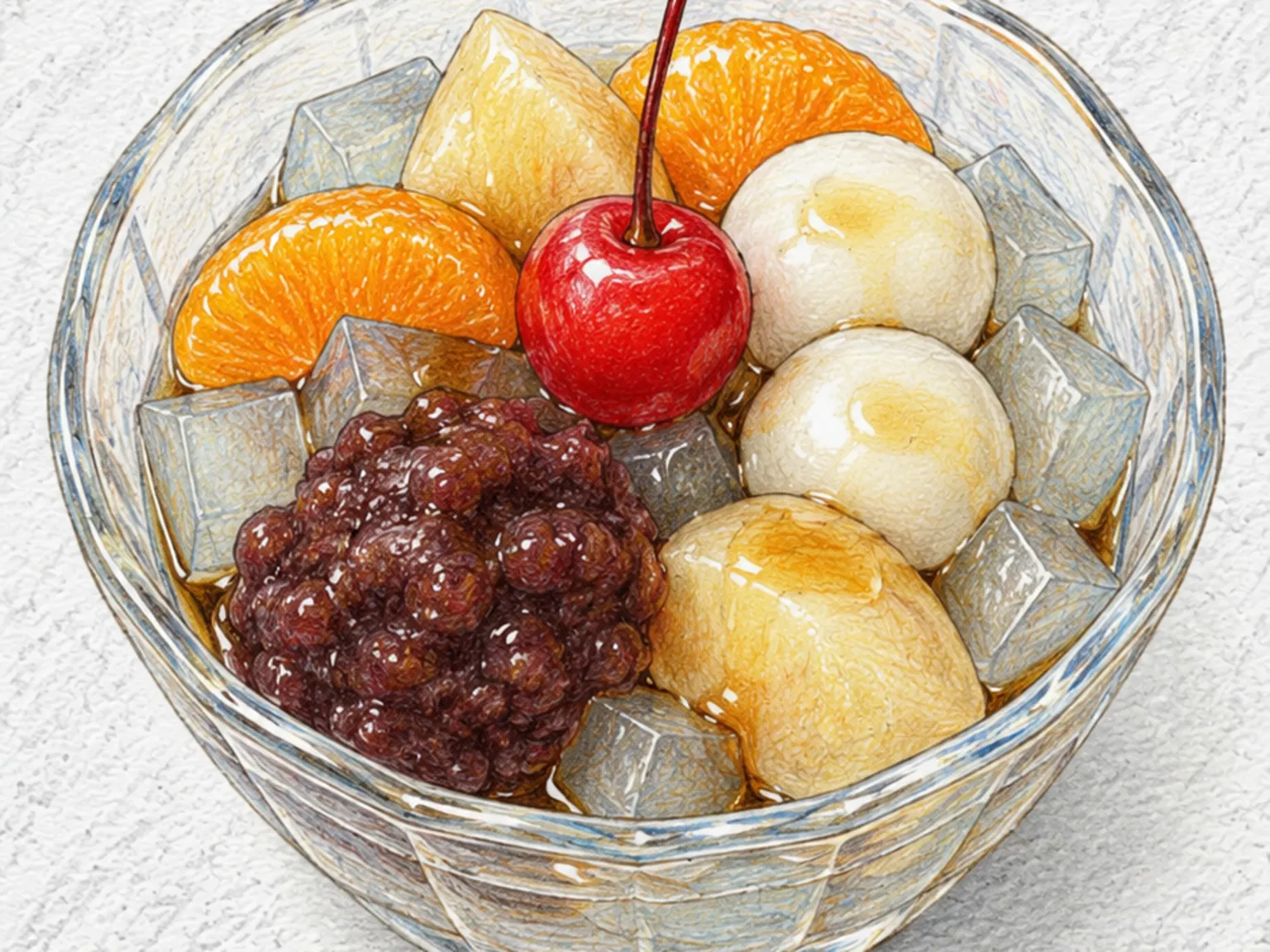
Uyu patbingsu is a traditional Korean cold dessert centered around milk that has been frozen solid and then shaved into a very fine, light texture resembling freshly fallen snow. This specific preparation method differs from versions using plain water ice because the fat and protein content in the milk create a texture that is notably smoother, creamier, and more opaque as it melts. To build the dish, the shaved milk is gathered into a tall mound and layered with several distinct components, primarily a portion of red beans that have been boiled with sugar until they achieve a soft, starchy consistency. Small, bite-sized rice cakes are distributed across the ice to provide a dense and chewy element that contrasts with the temperature of the milk. A fine dusting of multigrain powder and roasted soybean flour adds an earthy, toasty flavor profile to the base, which helps to balance the sweetness of the other toppings. For additional texture and flavor, sliced almonds are included to provide a consistent crunch, while pieces of fresh strawberry are added to introduce a sharp, acidic fruit brightness. The overall richness of the assembly is typically increased by drizzling condensed milk over the surface, allowing the thick liquid to seep down into the porous layers of ice. Historical documentation from the Joseon dynasty indicates that the practice of serving ice with red beans during the summer months was already established by the 19th century, with palace records showing that ice was retrieved from stone-lined underground icehouses for royal consumption. While the combination of milk and sweetened beans remains the traditional standard, contemporary versions of the dessert frequently incorporate a wide variety of other ingredients including mango, matcha, and injeolmi.

🧒 Kid-Friendly ⚡ Quick
Prep 15min Cook 5min 2 servings
Korean Honeycomb Candy (Caramel Sugar Disc with Baking Soda Puff)
Desserts Medium

Korean Honeycomb Candy (Caramel Sugar Disc with Baking Soda Puff)

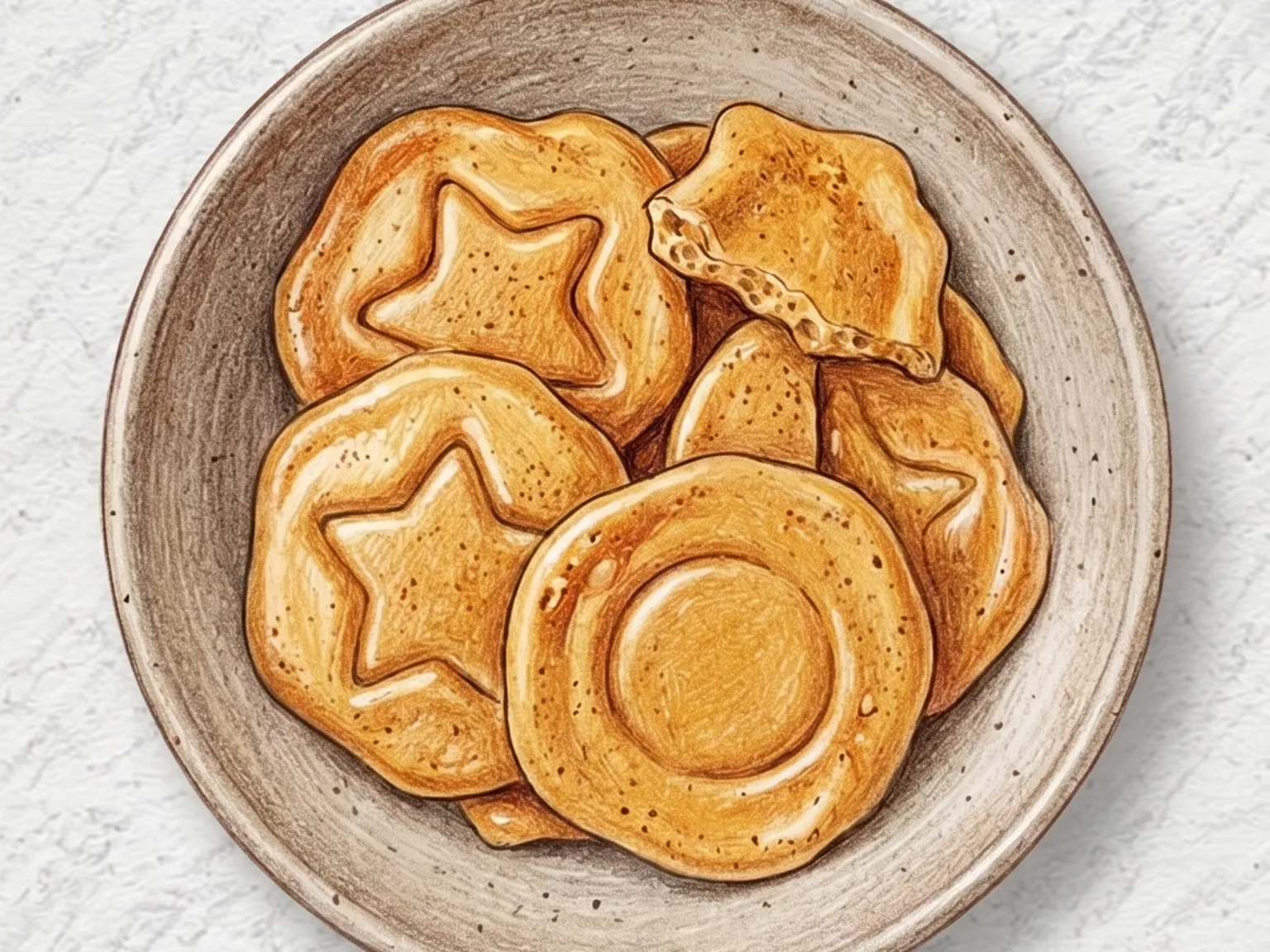
Ppopgi dalgona is a Korean street candy made by melting white sugar in a small ladle over low heat, then stirring in baking soda to trigger a rapid foaming expansion. When the sugar reaches a pale amber stage, the heat is cut and baking soda with a pinch of salt is mixed in quickly: carbon dioxide releases immediately, puffing the molten sugar to two or three times its original volume within seconds. The expanded mixture is poured onto parchment and pressed flat to roughly 5 mm with an oiled plate or press, then stamped with a shape cutter before it sets. Once fully cool and rigid, the candy snaps crisply when tapped - the hallmark texture. The caramel's color at the moment the heat is removed determines the final flavor: pull it too early and the candy stays flat-sweet; let it darken a shade too far and bitterness overtakes the sweetness. The narrow window of pale amber is where the sweet-bitter balance lands correctly.

🧒 Kid-Friendly ⚡ Quick
Prep 5min Cook 10min 2 servings
Real Pineapple Sherbet
Desserts Easy

Real Pineapple Sherbet

A refreshing and cool fruit sherbet dessert made inside a hollowed-out pineapple.

🔥 Trending Now ⚡ Quick
Prep 20min 2 servings
Saenggang Jeonggwa (Candied Ginger)
Desserts Medium

Saenggang Jeonggwa (Candied Ginger)

Saenggang jeonggwa is a traditional Korean candied ginger prepared by slicing fresh ginger thin, blanching it twice to reduce the raw heat, then simmering the pieces slowly in a glaze of sugar and grain syrup. A ten-minute soak in cold water draws out the sharpest bite first, and two rounds of boiling soften the pungency further while leaving the clean, aromatic core intact. The slices are cooked on low heat until the syrup reduces to a thick, glossy coat on the surface, at which point lemon juice is added to introduce an acidity that keeps the sweetness from becoming cloying. Once dried on a rack and rolled in granulated sugar, the finished pieces carry a crisp, crystalline shell on the outside. On the first bite, the sugar crust shatters, and the chewy, syrup-saturated ginger beneath releases a slow, building warmth that lingers well after the piece is finished.

🎉 Special Occasion 🧒 Kid-Friendly
Prep 15min Cook 45min 4 servings
Three-Color Sweet Rice Balls
Desserts Medium

Three-Color Sweet Rice Balls

Samsek gyeongdan are traditional Korean rice cake balls made from glutinous rice flour dough divided into three colors: plain white, green from mugwort powder, and pink from prickly pear powder, then rolled into small spheres and boiled. The dough must be kneaded with hot water to fully activate the starch's sticky quality; water that is too cool makes the dough prone to cracking when shaped. The balls need one extra minute of cooking after they float to ensure the centers turn fully translucent, and pulling them out immediately after floating often leaves a dense, undercooked core. The mugwort batch carries an herbal, grassy note, and the prickly pear version offers a faint fruity tang, so three distinct flavors emerge from the same base recipe. Transferring the cooked balls immediately to cold water stops carryover cooking and preserves the springy, bouncy texture. Rolling them in a mixture of roasted soybean powder or black sesame powder with sugar coats each ball in nuttiness, and a light brush of sesame oil prevents the balls from sticking together while giving the surface a subtle sheen.

🧒 Kid-Friendly
Prep 25min Cook 15min 4 servings
Sweet Rice Punch (Traditional Korean Malted Barley Grain Drink)
Desserts Medium

Sweet Rice Punch (Traditional Korean Malted Barley Grain Drink)

Sikhye is a traditional Korean sweet rice punch made by steeping malted barley powder in lukewarm water, straining the liquid, adding cooked rice, and holding the mixture at around 60 degrees Celsius for one hour until the rice grains float to the surface. The amylase enzymes in the malt break down the rice starch, producing a distinctly malty, clear sweetness with grain depth that no sugar alone can replicate. Only the clear top liquid is used after settling -- discarding the sediment keeps the punch from turning cloudy. Simmering with sugar and sliced ginger for 20 minutes rounds the sweetness and adds a gentle, spiced warmth to the finish. Served well chilled with the reserved floating rice grains and pine nuts on top, the cold temperature sharpens the malty aroma and makes each sip crisp. Temperature control during the steeping stage is critical: if the mixture exceeds 70 degrees Celsius, the amylase denatures and the grains will not float, so keeping a steady 60-degree hold determines whether the preparation succeeds.

🎉 Special Occasion 🧒 Kid-Friendly
Prep 20min Cook 180min 4 servings
Half-moon Rice Cake (Sesame Honey Filled Steamed Rice Cake)
Desserts Medium

Half-moon Rice Cake (Sesame Honey Filled Steamed Rice Cake)

Kkul songpyeon are traditional half-moon rice cakes shaped by hand from rice flour dough and filled with a paste of finely ground toasted sesame seeds, honey, and dark brown sugar, then steamed over a bed of fresh pine needles. Grinding the sesame seeds fine enough to form a cohesive mixture with honey and sugar is important -- the oil-rich nuttiness and dense sweetness bind together into a smooth filling that turns moist and paste-like as steam penetrates the rice dough during cooking. Arranging pine needles at the bottom of the steamer imparts a faint resinous, woody fragrance to the surface of each rice cake after 15 minutes of steaming, layering over the natural grain aroma of the rice flour dough. After steaming, a quick rinse in cold water stops carry-over cooking, and a thin brush of sesame oil gives each songpyeon a glossy sheen while preventing them from sticking together. Shaping songpyeon together as a family at Chuseok is one of the most recognizable autumn traditions in Korea, and the saying that beautifully shaped songpyeon foretells a beautiful daughter remains widely repeated today.

🎉 Special Occasion 🧒 Kid-Friendly
Prep 35min Cook 20min 4 servings
Mugwort Crumble Rice Cake
Desserts Medium

Mugwort Crumble Rice Cake

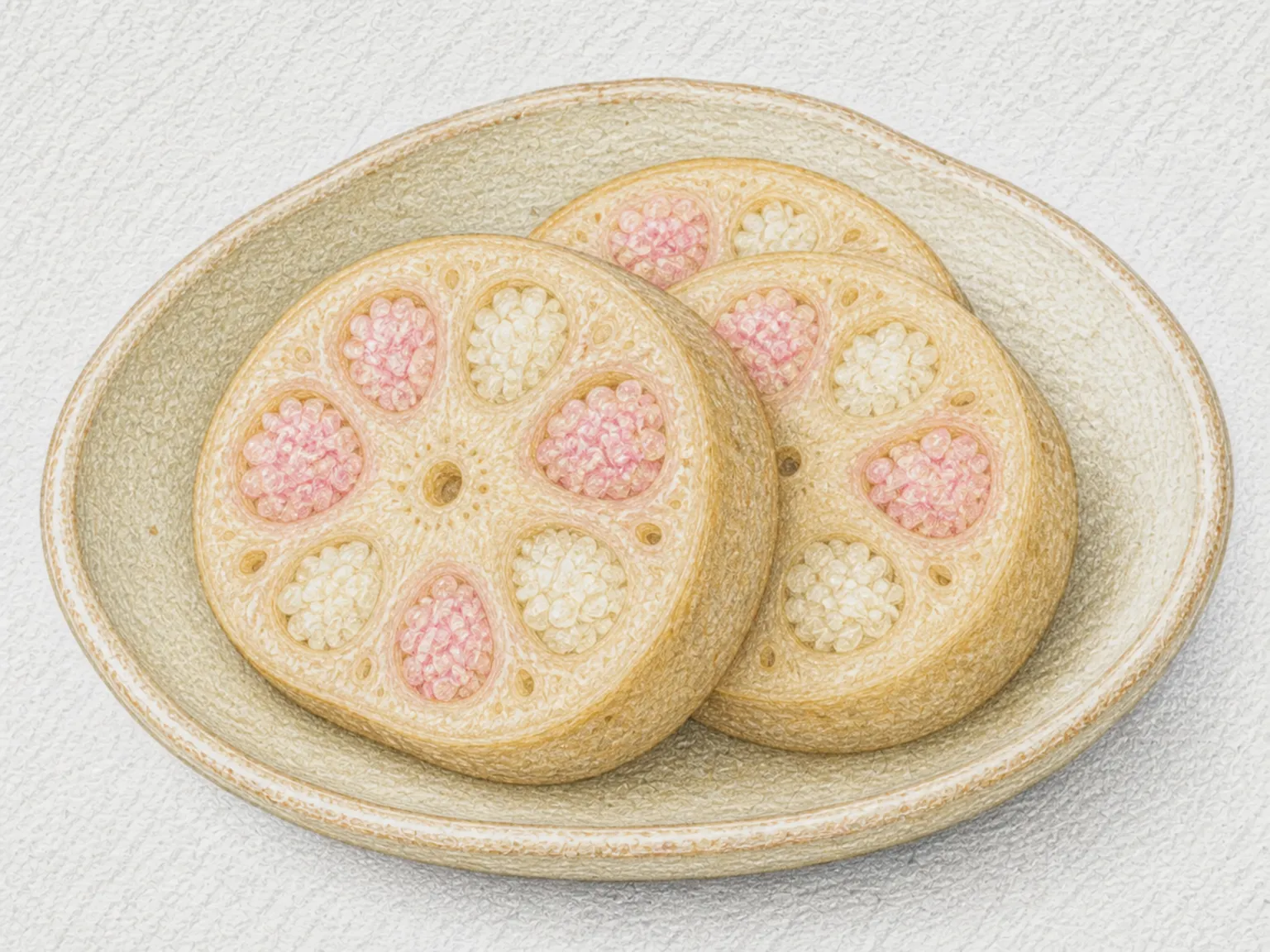
Ssuk beomuri is a traditional Korean spring rice cake made by tossing chopped fresh mugwort into a dry blend of rice flour, glutinous rice flour, and sugar, then steaming the loose mixture in a cloth-lined steamer. Water is worked in gradually by hand rather than poured all at once, a step that produces a texture that crumbles apart lightly while remaining moist inside rather than turning dense or gummy. Glutinous rice flour accounts for about a quarter of the blend and provides enough stickiness to hold the pieces together without making them chewy throughout. Using raw mugwort without blanching preserves the volatile aromatic compounds that would otherwise be lost in hot water, resulting in a deep, grassy fragrance that defines the cake. Steaming at full heat for fifteen minutes followed by a three-minute resting period with the lid on ensures the center cooks through evenly without the surface drying out. A generous topping of sweetened red bean crumble adds a thick, earthy sweetness that complements the clean herbal notes of mugwort. Young spring mugwort harvested between late March and April carries the most concentrated aroma, making that window the ideal season for this cake.

🧒 Kid-Friendly 🎉 Special Occasion
Prep 20min Cook 18min 4 servings
Watermelon Punch
Desserts Easy

Watermelon Punch

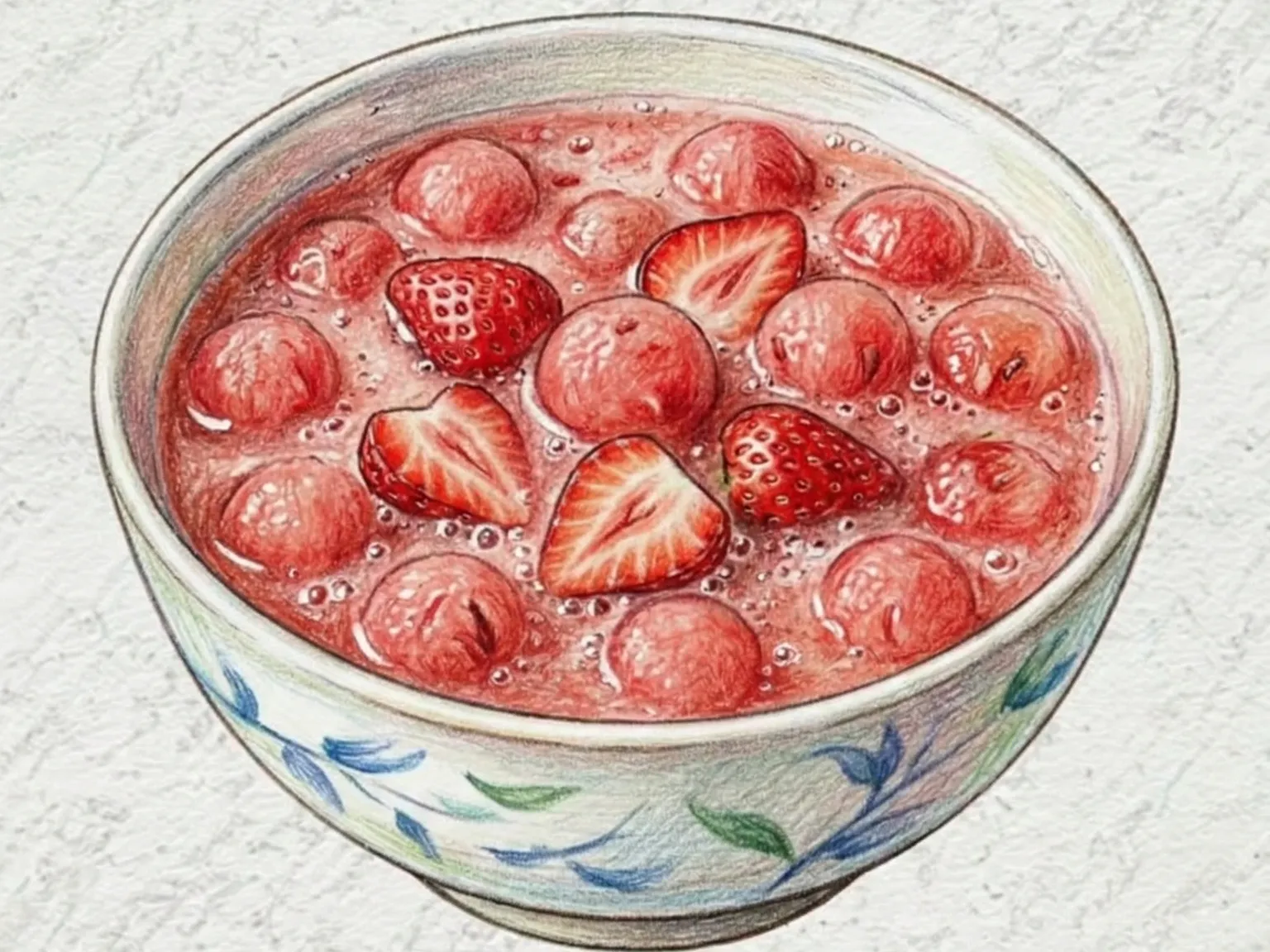
Subak hwachae is a Korean summer punch that uses half its watermelon blended and strained into a smooth juice base, with the other half scooped into balls as garnish. Mixing the watermelon juice with milk creates a pink, creamy foundation, and lemon-lime soda is stirred in just before serving to preserve its fizz. Adding strawberries and blueberries introduces an acidic brightness and color contrast that watermelon alone lacks, and generous ice keeps the drink cold enough for the fruit aromas to stay sharp. Chilling the watermelon juice thoroughly before combining it with milk is essential to prevent the two liquids from separating. The layered colors of red watermelon, deep blueberries, and vivid strawberries in a single bowl make it as visually striking as it is refreshing, turning a straightforward summer drink into something worth presenting at the table.

🧒 Kid-Friendly ⚡ Quick
Prep 15min Cook 5min 4 servings
Cinnamon Persimmon Ice (Korean Spiced Punch Scraped Ice Dessert)
Desserts Easy

Cinnamon Persimmon Ice (Korean Spiced Punch Scraped Ice Dessert)

Sujeonggwa granita converts the traditional Korean cinnamon-ginger punch into a flaky frozen dessert by sweetening the steeped liquid with dark brown sugar and then breaking it into coarse crystals through repeated scraping. Cinnamon sticks and fresh ginger are simmered in water for at least twenty minutes to draw out the full depth of both spices before being strained. The sweetened liquid is poured into a shallow metal tray, which chills more quickly and freezes more evenly than deep containers. Every hour for three to four rounds a fork is dragged through the solidifying surface, breaking up any sheets of ice and encouraging the formation of separate, granular crystals. Scraping more frequently and starting promptly after the first hour produces a finer, more uniform texture, while leaving it too long between sessions allows solid blocks to form that are harder to break up. The spice compounds concentrate into each ice shard as the water freezes around them, so the granita delivers a cold but intensely flavored mouthful at every bite. Thin strips of dried persimmon and pine nuts placed on top before serving add the same garnishes used in traditional sujeonggwa: the persimmon brings a sticky chewiness and concentrated sweetness, while the pine nuts contribute a mild, buttery richness that contrasts with the crunchy, crystalline ice beneath.

🧒 Kid-Friendly
Prep 15min Cook 25min 4 servings