Desserts Recipes
379 recipes. Page 4 of 16
Desserts are the sweet finish to a meal or a enjoyable snack any time of day. This collection spans Korean traditional sweets - yakgwa (honey cookies), hotteok (sweet pancakes), injeolmi (rice cakes) - as well as puddings, parfaits, and frozen treats.
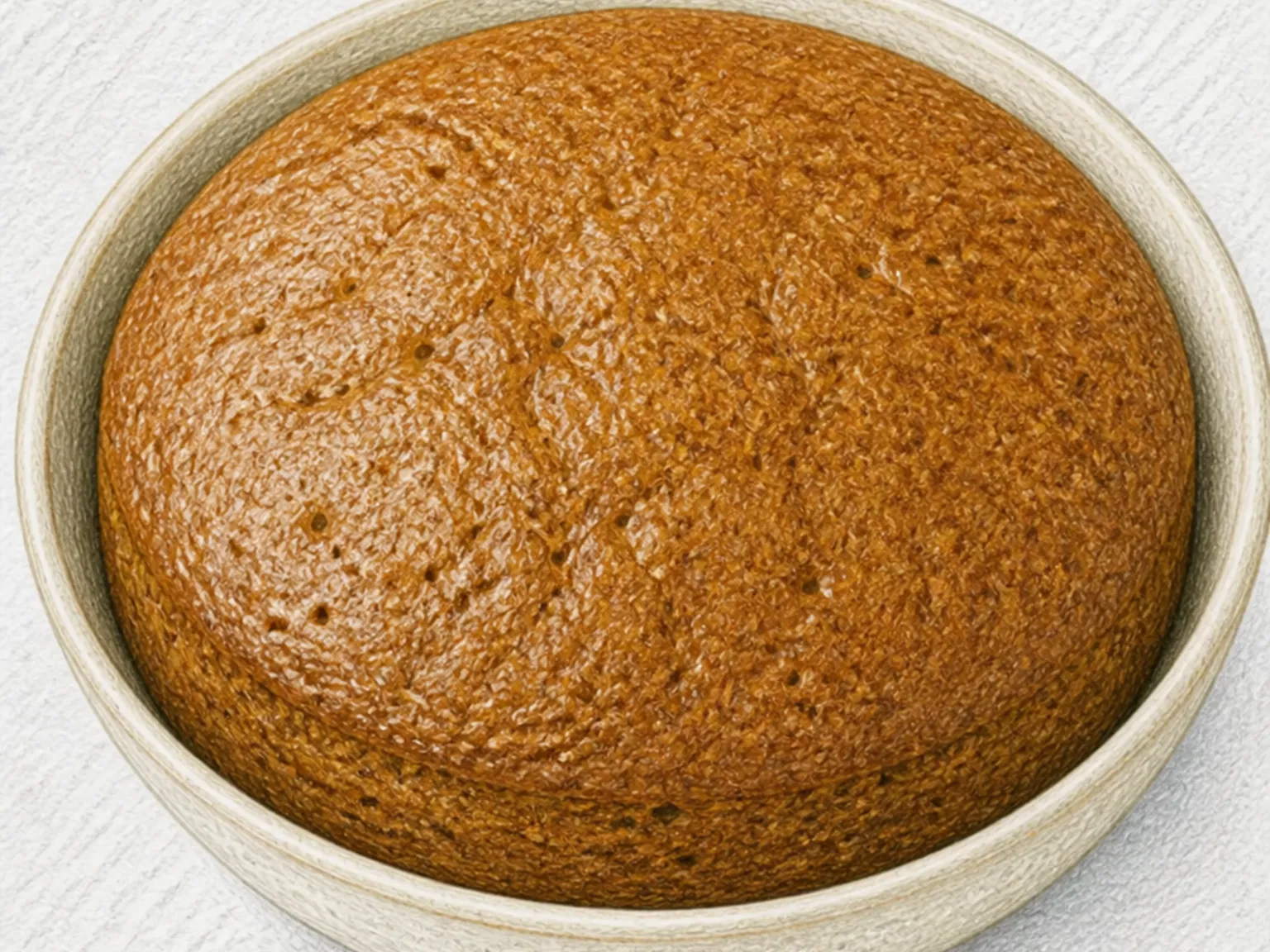
Fukuregashi Brown Sugar Steamed Cake
Fukuregashi is a Kagoshima sweet steamed as a thick slab, rising strongly through the reaction of baking soda and vinegar in a flour and brown-sugar batter. Because soda makes it plump, it is also called soda sweet, fukurakan, or fukurekan. It belongs to the region's brown-sugar food culture, shaped by the difficult history of Satsuma control over sugarcane and sugar production in the Ryukyu and Amami islands. Once served at harvest festivals and with tea during farm work, it is now eaten year-round. The texture is fluffy while warm and chewier after cooling. Wrapping the steamer lid in cloth to stop condensation and steaming for a full forty minutes cooks the thick center evenly without wetting the surface.
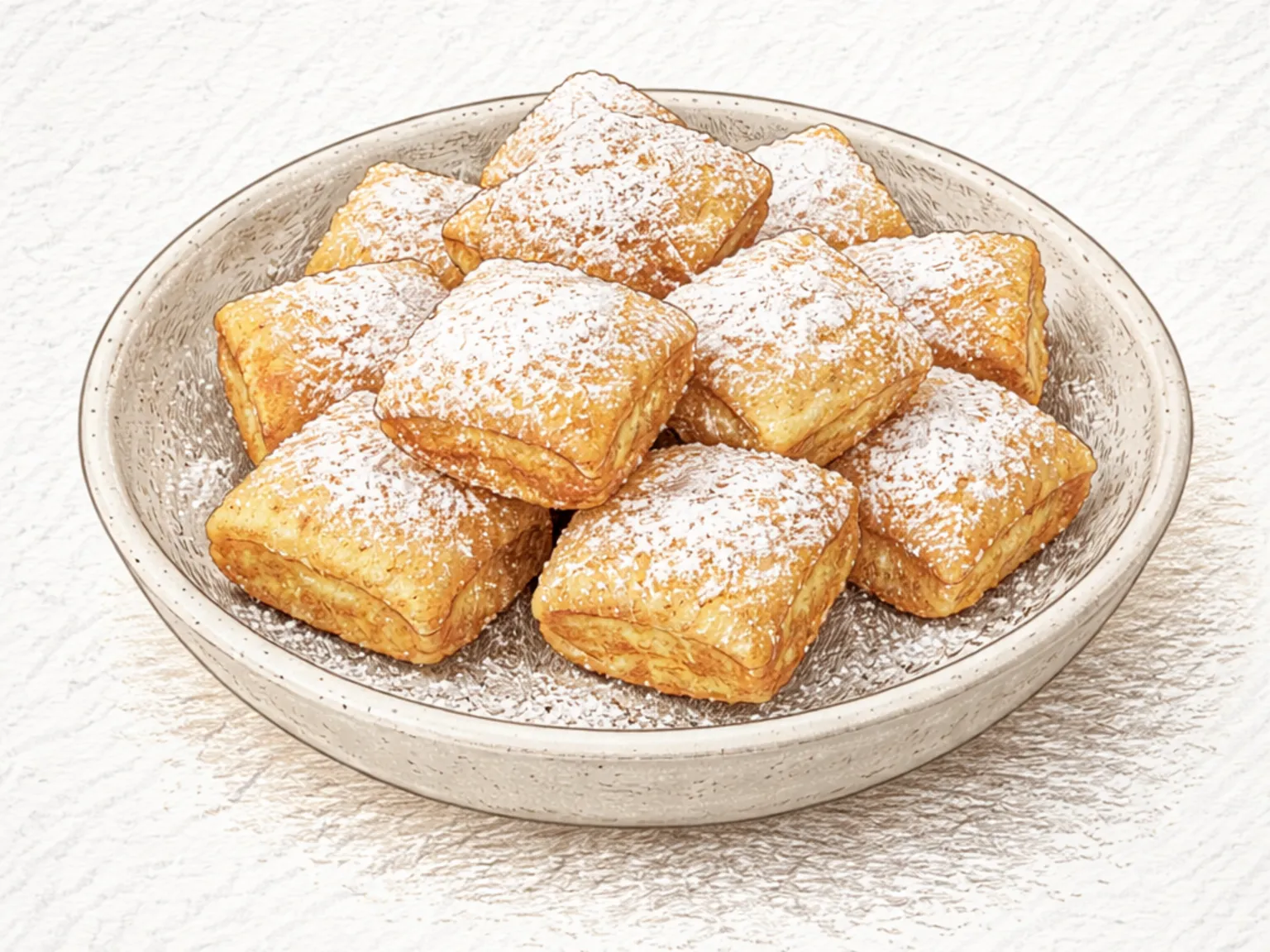
Beignet (New Orleans Square Fried Dough with Powdered Sugar)
Beignets are New Orleans-style square doughnuts made from a yeast dough enriched with milk, egg, and butter, then finished with a generous coating of powdered sugar. Mix the flour, yeast, and sugar evenly before adding milk and egg, then knead in softened butter until the surface becomes smooth and the dough stretches with some resistance. A slight tackiness can remain. Proof it in a warm place until doubled and a fingertip mark returns slowly, which is a more useful cue than relying on the clock alone. Press out excess gas gently, roll the dough to 1 cm thickness, and cut it into 5 cm squares. Give the cut pieces another 15 minutes to puff lightly before frying. At 170C, each square expands quickly and forms an airy center under a thin golden shell. Keep the oil temperature steady by frying in manageable batches, and cook each side for 1 to 2 minutes. Cooler oil encourages the dough to absorb more fat, while overly thin pieces lose the full, soft center associated with a well-risen beignet. Drain the fried squares briefly and dust them while still warm so the powdered sugar catches on the surface and begins to melt. Serve promptly for the clearest contrast between the light crust, fluffy center, and cool sweetness of the sugar.
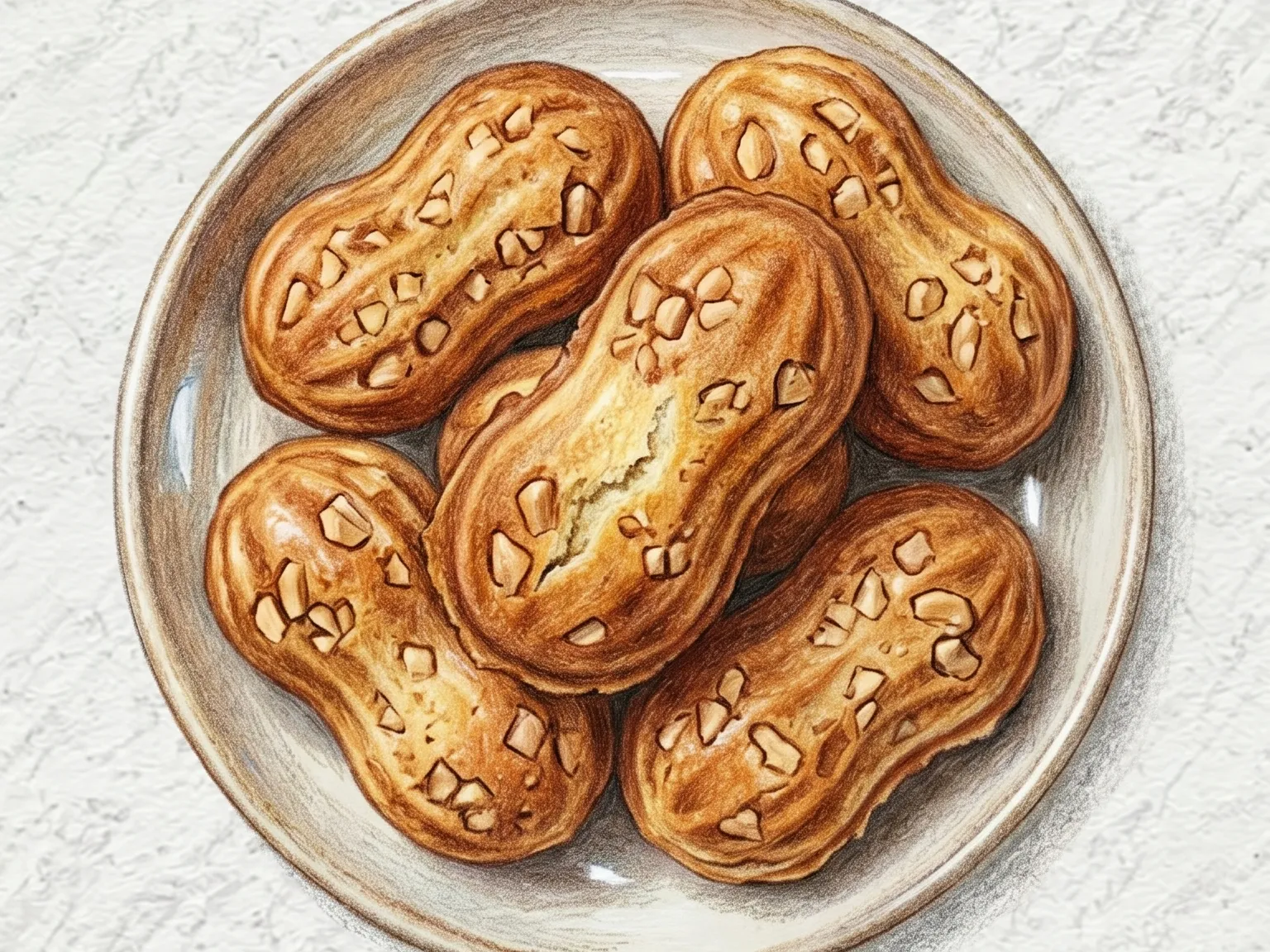
Korean Peanut Bread (Mold-Baked Peanut-Studded Street Snack)
Ttangkong-ppang is Korean peanut bread baked in a shaped mold from a batter of flour, eggs, milk, and melted butter mixed with roughly chopped roasted peanuts. The natural oils in the peanuts infuse the batter with a toasted, nutty richness, and each peanut chunk provides a crunchy interruption in the soft crumb. Cooking on medium-low heat and flipping regularly develops a thin crust on both sides while butter keeps the interior moist. Sugar supplies sweetness and a pinch of salt balances against the nuttiness, resulting in a flavor profile that stays engaging bite after bite.
Pan-Fried Sweet Rice Cake
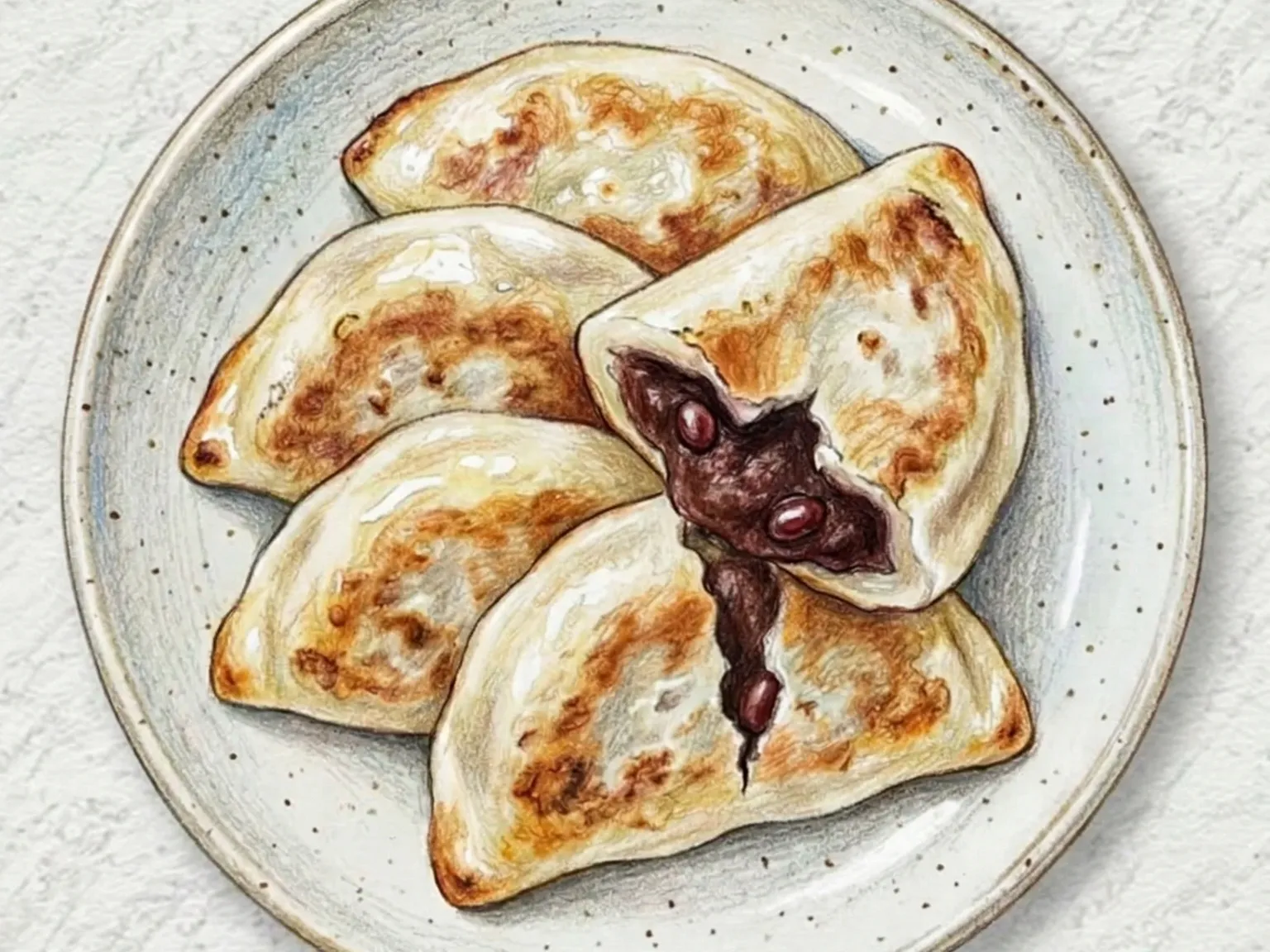
Bukkumi is a traditional Korean pan-fried rice cake made from glutinous rice flour dough filled with sweet red bean paste seasoned with cinnamon and sugar. Using hot water to form the dough partially gelatinizes the starch, creating a pliable skin that stretches without cracking - though the dough must stay covered with a damp cloth throughout assembly to prevent the surface from drying out. Folding the dough into half-moon shapes seals in a cinnamon-laced bean paste filling that lifts the dense sweetness of the red bean with a warm spice note. Pan-frying on low heat builds a golden crust on each side while keeping the filling warm and molten at the center. A light drizzle of honey or a pinch of sugar right after frying adds a final layer of sweetness.
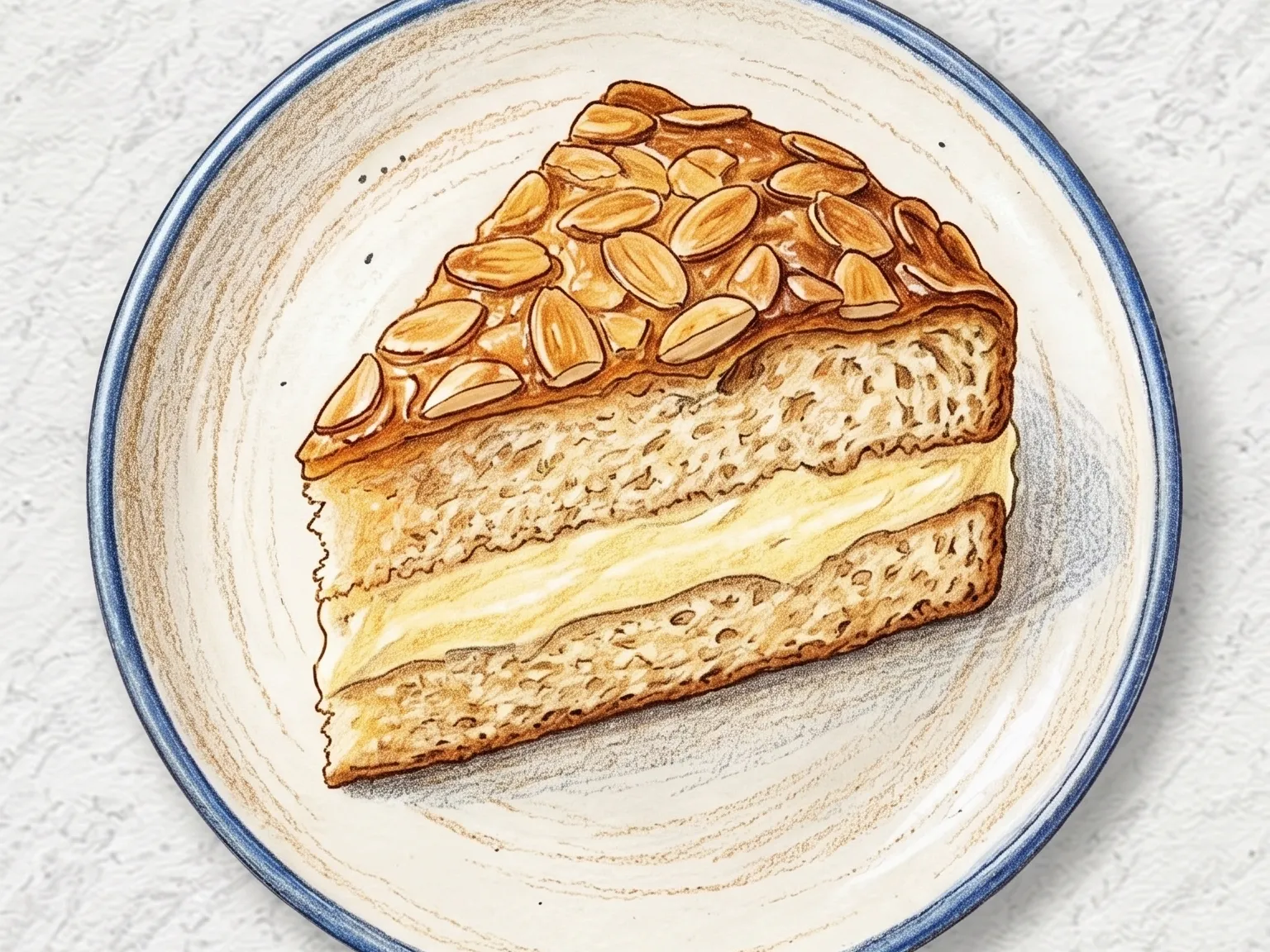
Bienenstich (German Bee Sting Cake) - Caramelized Almond and Custard Recipe
Bienenstich, German for bee sting, is a traditional German bakery cake built on enriched yeasted dough topped with caramelized sliced almonds cooked in butter and sugar before baking. The almond layer sets into a crunchy golden crust in the oven while the dough below stays pillowy and soft. Once the cake has cooled completely, it is split horizontally and filled generously with vanilla custard or whipped cream. A single bite moves through three distinct layers: the shattering almond topping, the tender yeasted bread, and the cool, smooth cream within. Pressing the almond topping firmly onto the dough before baking prevents it from sliding off during the bake. If making custard from scratch, chilling it completely before filling keeps the bread from turning soggy.
Yuzu no Kawa-ni (Glossy Candied Yuzu Peel)
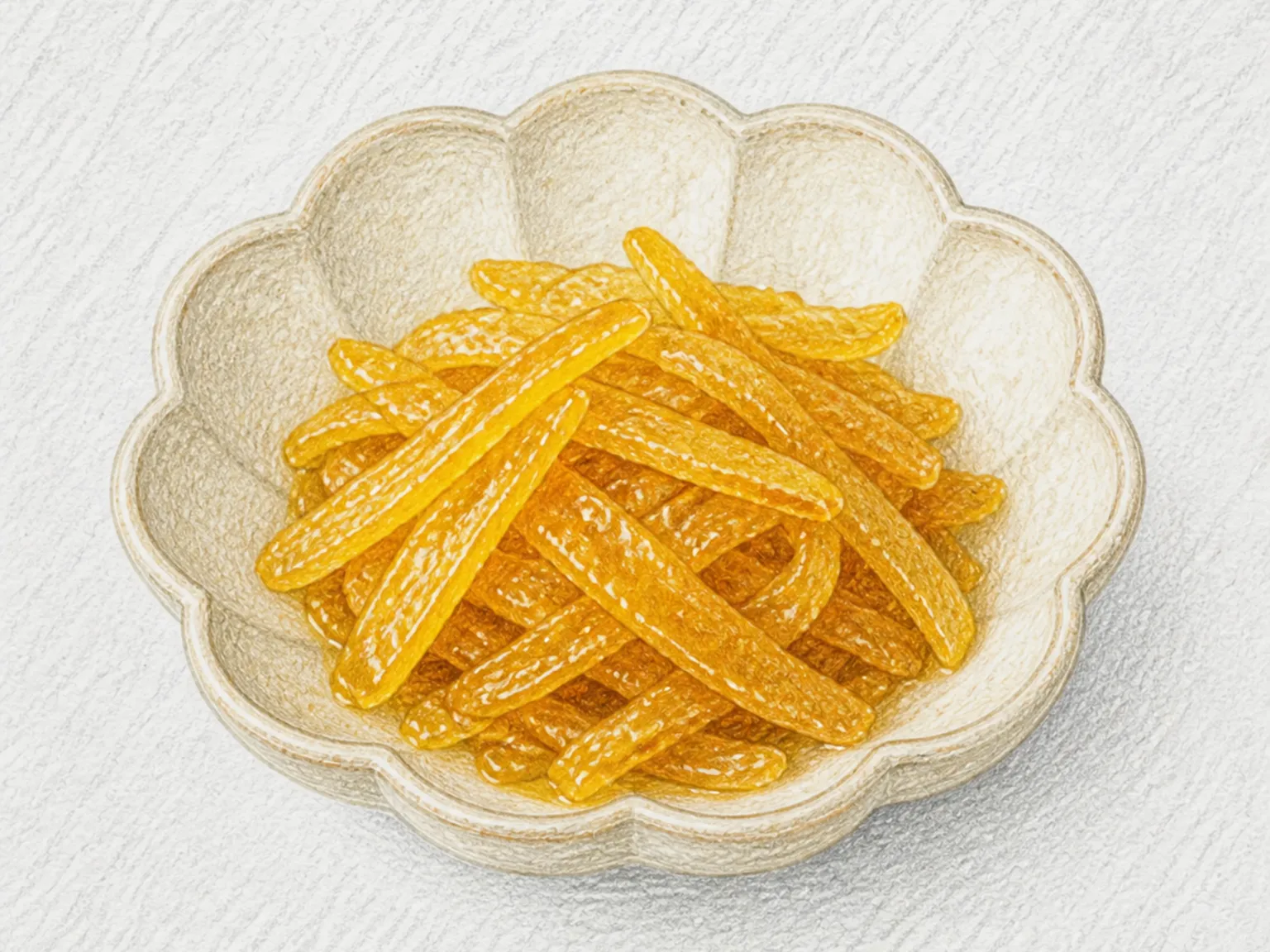
Yuzu no kawa-ni is an Oita preserve made by shaving the rough outer surface of thick yuzu peel very lightly, removing the fruit and seeds, boiling and draining the peel 2 to 3 times to reduce bitterness, then simmering it with sugar equal to 80 percent of the peel's weight until glossy. In the yuzu-growing areas around Hita, Kusu, and Taketa, it is served with tea and included in New Year osechi. Adding the sugar in three portions and reducing moisture slowly over low heat lets the thick peel turn translucent without collapsing. The finished preserve can be eaten in pieces or sliced thin for bread, amazake, and other sweets.
Black Forest Cake
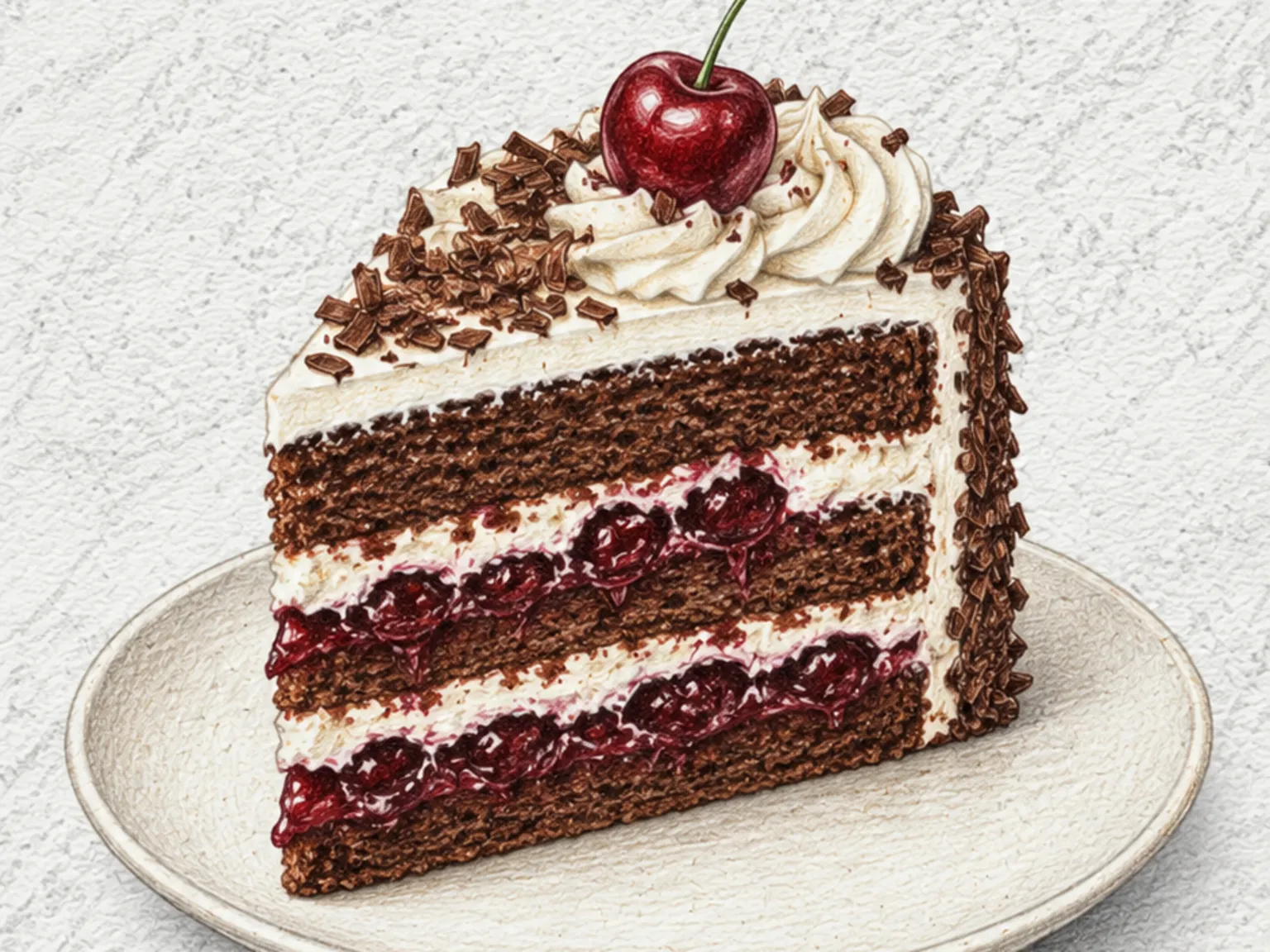
Black Forest cake stacks cocoa sponge with cherry compote and whipped cream, then finishes the assembled layers with dark chocolate shavings. The sponge gets its lift from eggs and sugar whipped until pale, thick, and greatly expanded. Sift the cake flour and cocoa together, then fold them gently from the bottom so the captured air remains in the batter. Milk enters along the edge of the spatula with only a few final folds. Bake at 175C until a skewer comes out clean and the surface springs back lightly. The sponge must cool completely before it is divided into 2 or 3 even layers, since residual warmth would loosen the cream and make the filling slide. Whip cold heavy cream to firm peaks, stopping while the texture is still smooth. If the cherry compote includes syrup, brush a very thin layer onto the sponge for extra moisture. Spread the cream and compote evenly between the layers so dark cocoa, bright cherry acidity, and cool dairy richness return in every forkful. Cover the top and sides with the remaining cream and shave chilled dark chocolate over the surface. Refrigerate the finished cake for at least 1 hour before slicing with a clean knife. This setting time keeps the sponge, cherry, and cream aligned in a clear cross-section.
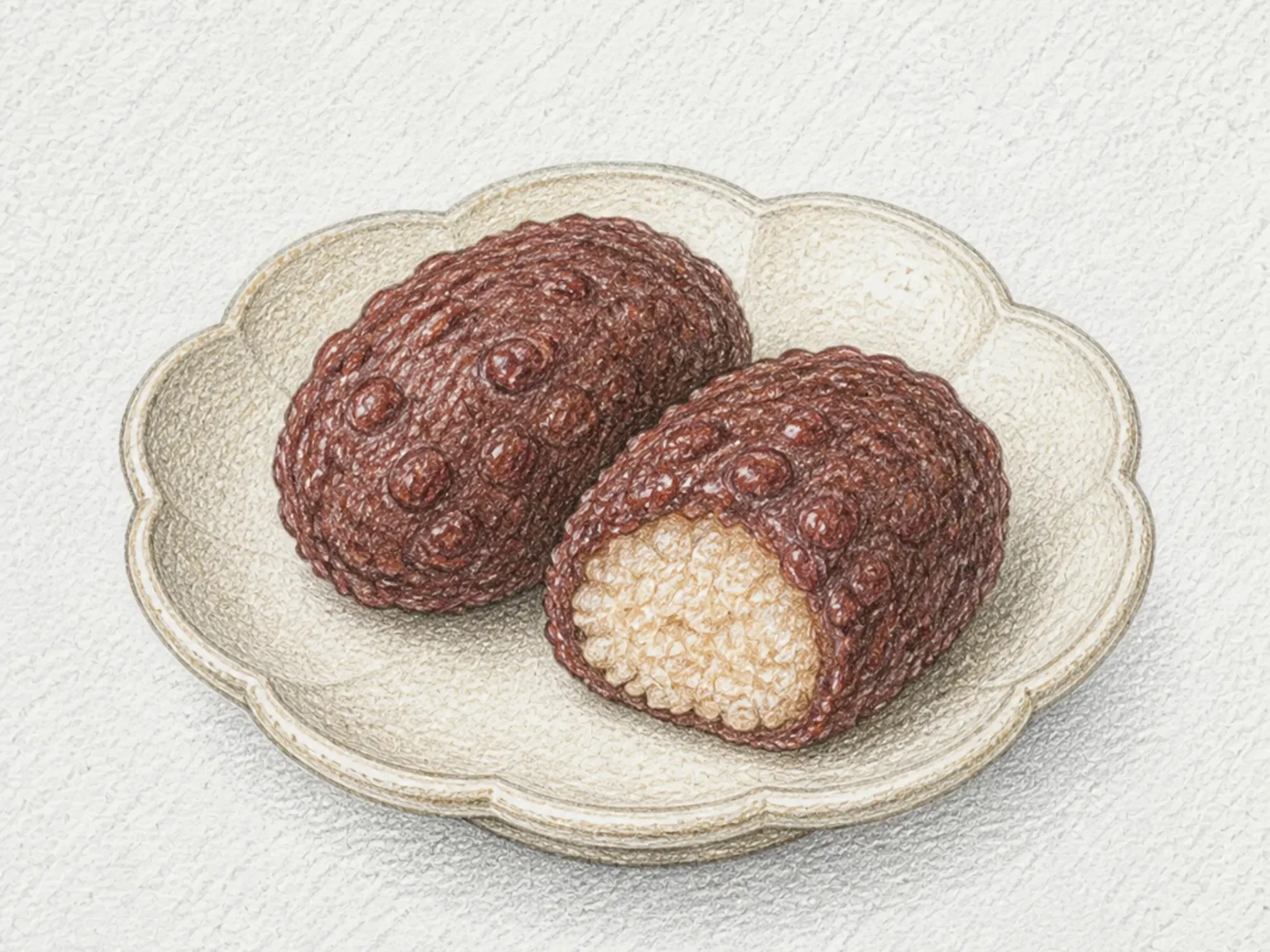
Kuri no Shibukawani Candied Chestnuts in Inner Skin
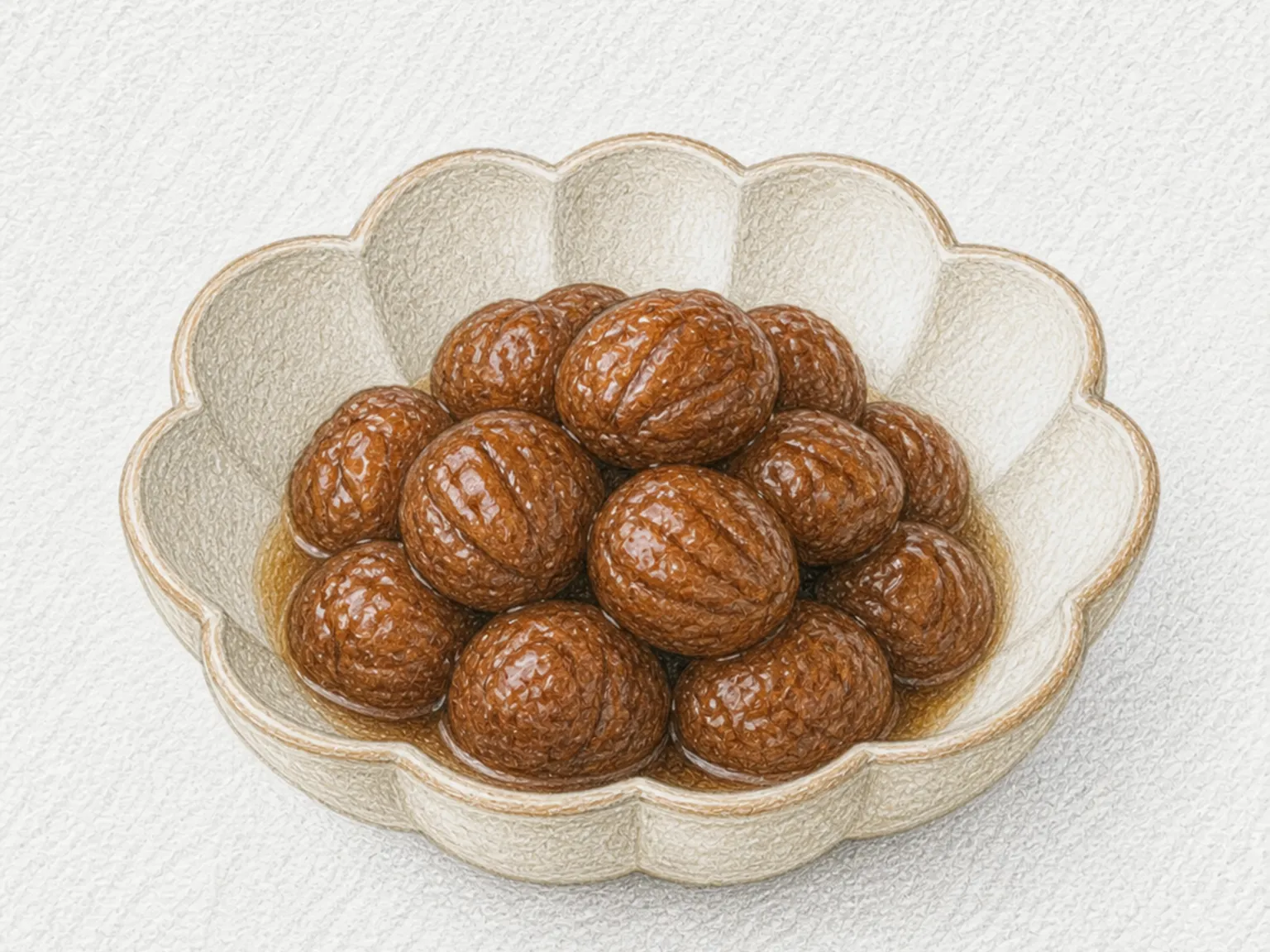
Kuri no shibukawani is an autumn sweet from Saitama that removes only the hard outer chestnut shell, preserves the thin inner skin, repeatedly boils away its astringency, and gently candies the whole nuts in sugar syrup. Large chestnuts from producing areas such as Hidaka were preferred, and when sugar was costly the dish belonged to festivals and celebrations rather than ordinary meals. Any cut through the inner skin can make a nut collapse during the many boiling cycles, so the chestnuts soak for half a day to soften their shells before careful peeling from the base. Baking soda assists the first dark extraction, followed by four or five brief boils in clean water. Once tender, sugar is added in three portions so concentration rises gradually without toughening or breaking the nuts. Salt enters at the end, and cooling undisturbed in syrup gives a glossy intact finish.
Black Rice Coconut Muffins
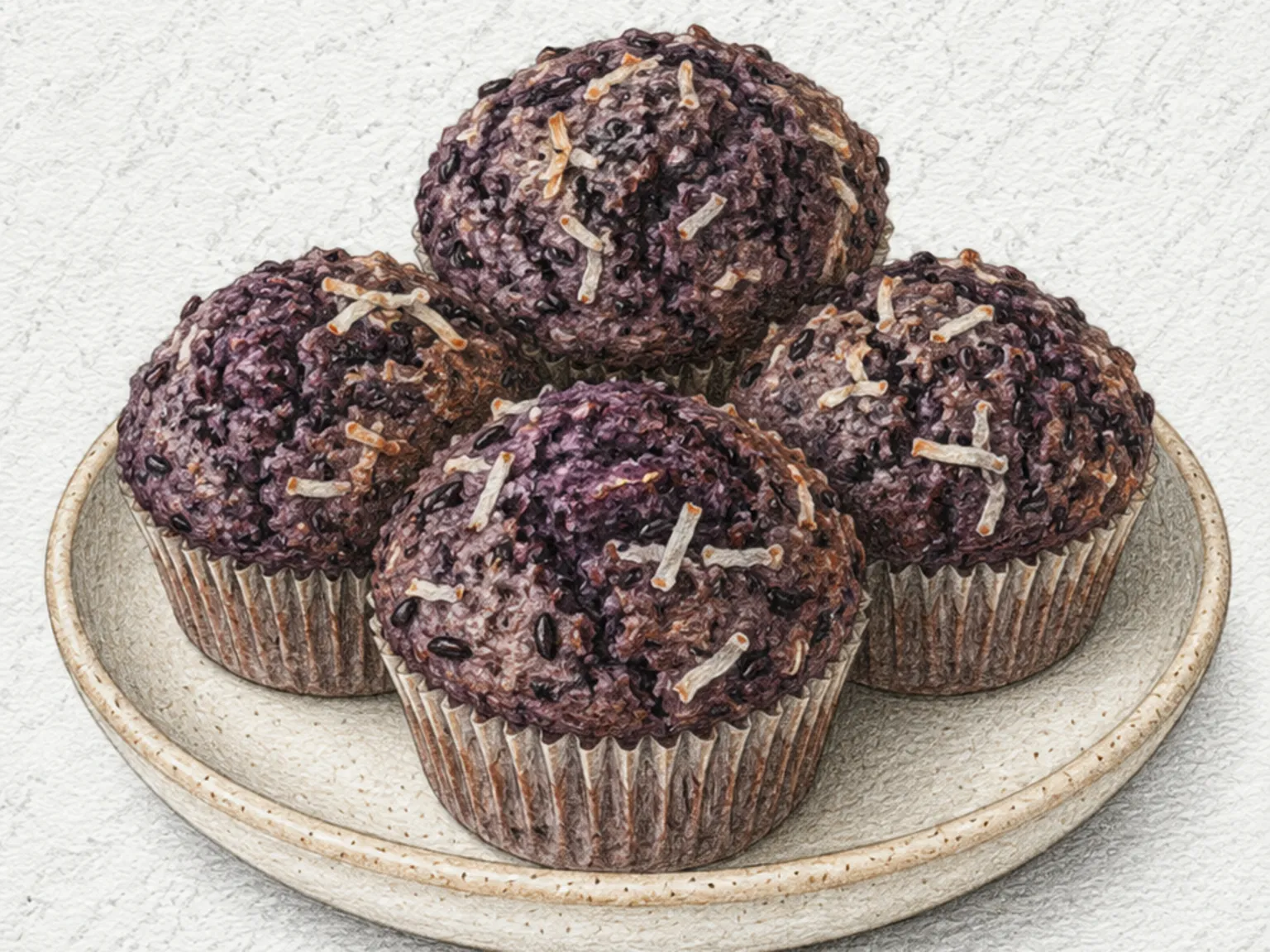
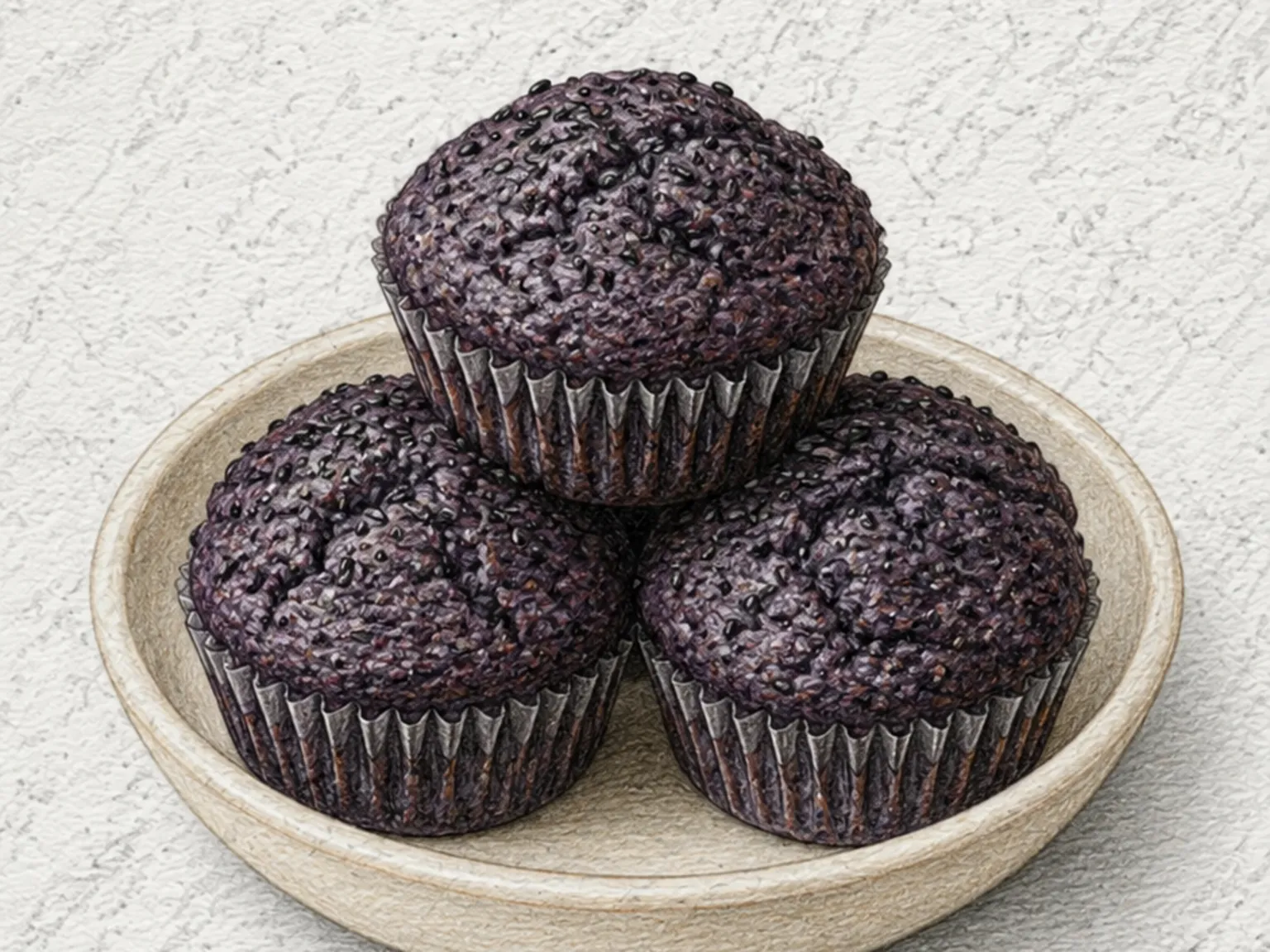
Black rice flour is blended into all-purpose flour until the batter takes on a distinctive purple-gray hue, and the grain brings a toasted, nutty quality that plain flour cannot provide on its own. Coconut milk stands in for regular dairy, producing a crumb that is noticeably more moist and tender than a standard muffin while the tropical scent settles into the batter without the need for any extract or flavoring. Desiccated coconut folded in before baking survives the oven and creates small chewy pockets throughout the finished crumb, varying the texture bite by bite. The anthocyanin pigments in the black rice deepen visibly on the muffin tops during baking, giving them a pronounced purple that signals the presence of the grain before a single bite is taken. Both ingredients reinforce the nutty note from their own direction, one earthy and grainy, the other sweet and tropical, and together they give the muffin more depth than a recipe built on white flour alone.
Cannoli
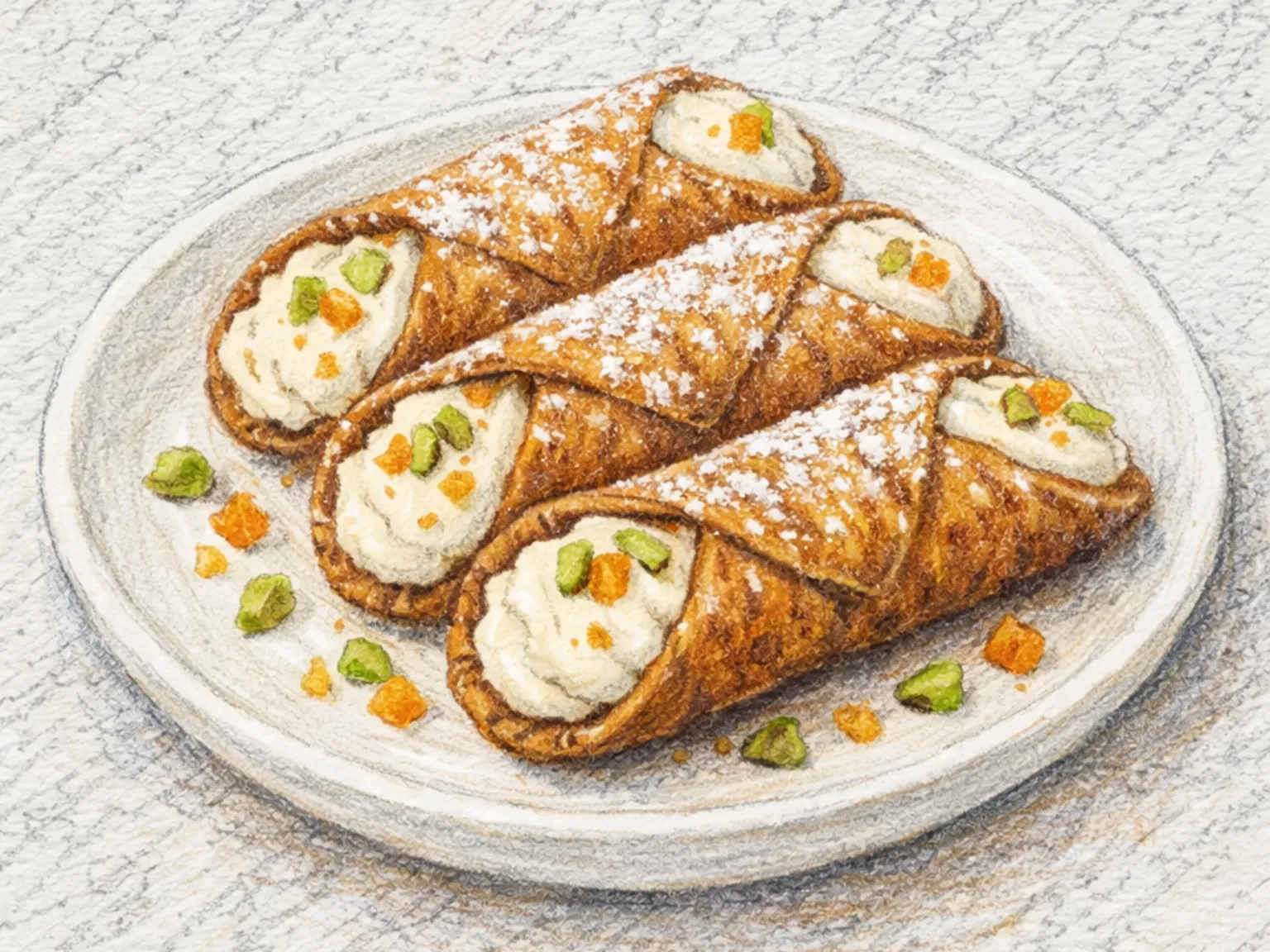
Cannoli are Sicilian pastries built around a crisp, tube-shaped shell and a sweetened ricotta filling. The shell dough is enriched with lard, rolled very thin, and wrapped tightly around narrow metal tubes before being lowered into hot oil, where the fat in the dough creates multiple flaky layers that shatter with a clear snap on first bite. The ricotta filling is sweetened but left slightly grainy rather than smooth, a deliberate texture that gives the pastry a lighter, less dense quality than a conventional cream filling. Chopped pistachios, candied orange peel, or chocolate chips are pressed into the exposed ends to provide color and a contrasting flavor note. Filling the shells more than a few minutes before serving is a mistake, because moisture migrates from the ricotta into the fried dough and turns the crisp shell soft. In Sicily, cannoli were historically associated with Carnival celebrations, though today they appear year-round in pasticcerie across the island and throughout the Sicilian diaspora.
Black Rice Cream Cheese Tart
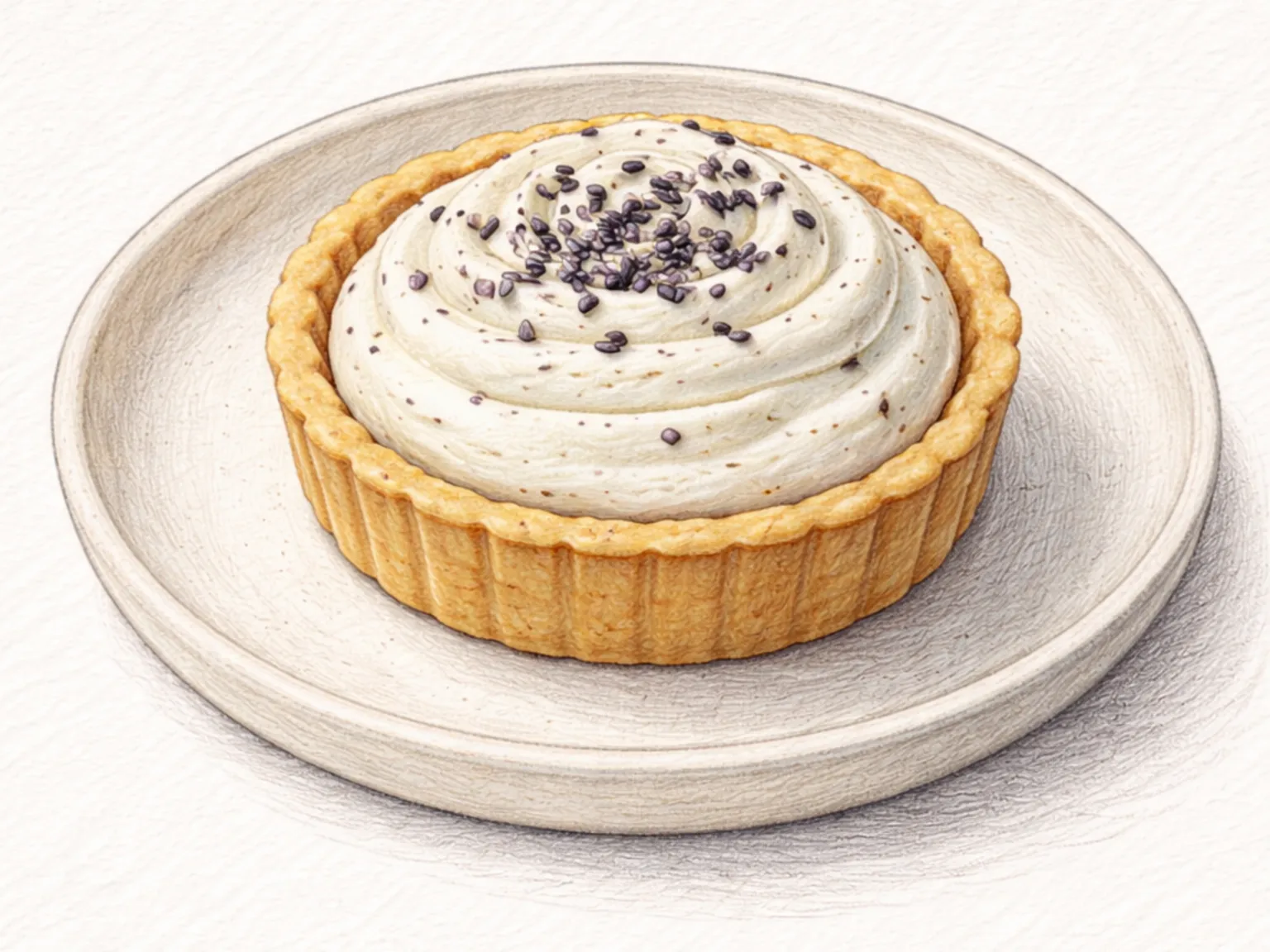
Black rice cream cheese tart combines a crisp pre-baked shell with a cream cheese filling tinted and flavored by black rice flour. The filling is made by blending cream cheese, sugar, egg, and heavy cream until smooth, then folding in black rice powder, which gives the mixture a pale purple color and a subtle roasted grain character. Soften the cream cheese at room temperature for at least 30 minutes and combine it with the sugar and salt before the egg goes in. Sifting the black rice flour and folding it gently prevents small dark lumps from interrupting the smooth filling. Bake the filled shell at 170C until the edges are stable and the center still jiggles slightly. The residual heat continues to set that center after the tart leaves the oven. Cool it completely at room temperature, then refrigerate it for at least 2 hours so the filling becomes firm enough for a clean slice. The pre-baked shell provides a crisp base beneath the soft cheese layer, and vanilla connects the tangy cream cheese with the earthy black rice aroma.
Caramel Flan
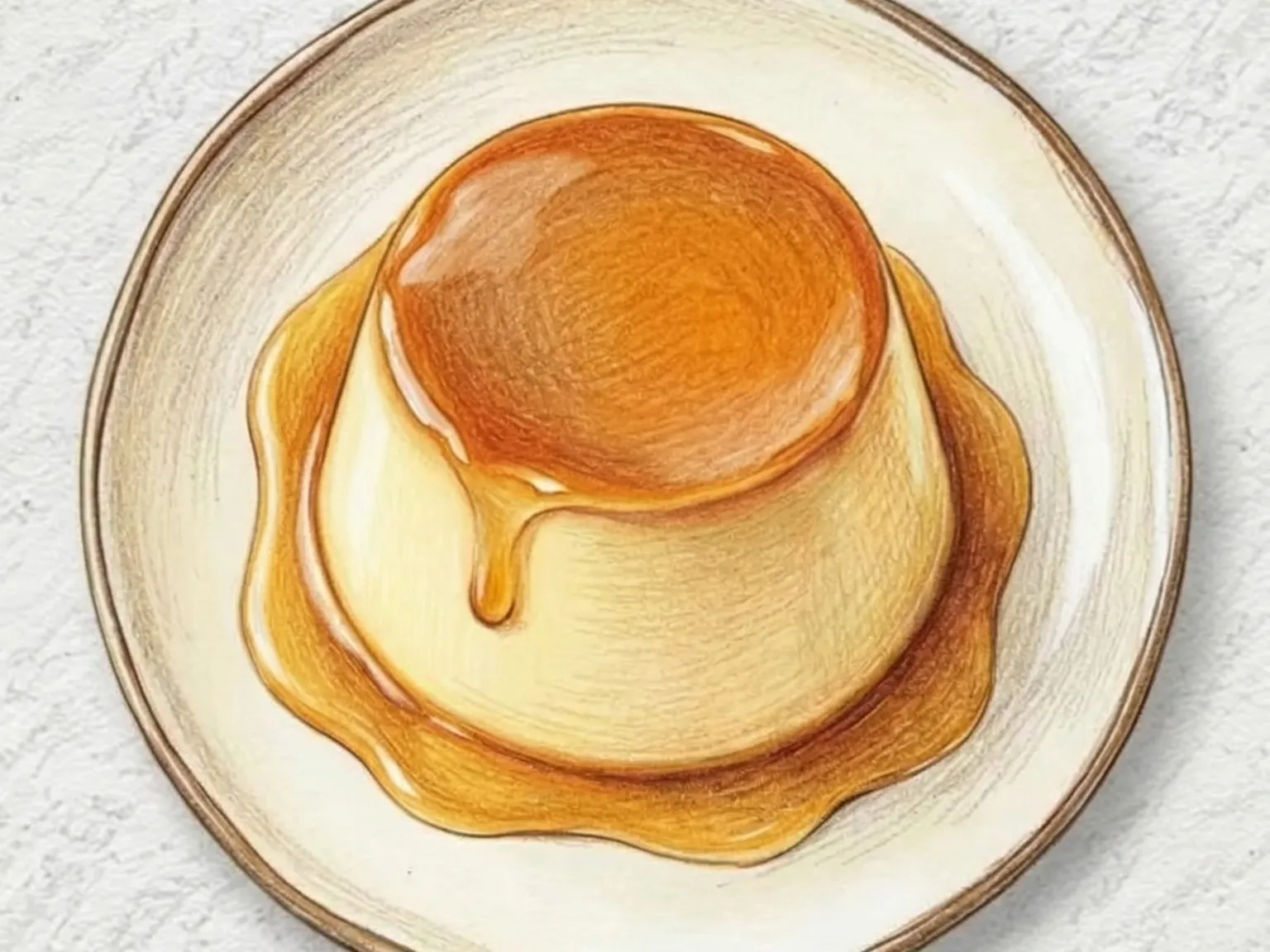
Caramel flan is a Spanish and Latin American custard dessert built entirely on the contrast between two preparations of sugar. The first is a dry caramel cooked in a pan until it reaches a deep amber color, at which point it is poured into the bottom of a mold and left to harden into a glossy layer. The second is a liquid custard of eggs, milk, sugar, and vanilla that is poured on top of the caramel and baked in a water bath. The water bath is critical: it moderates the oven temperature around the mold and prevents the proteins in the egg from contracting too quickly, which would produce a grainy or bubbly texture rather than the smooth, even set that characterizes a well-made flan. Once the custard is baked and fully chilled, the mold is inverted onto a serving plate -- the hardened caramel layer, having been in contact with the custard throughout the baking and cooling time, has liquefied back into a flowing sauce that spills over the pale custard in amber streaks. The flavor follows the visual contrast: the custard is mild, milky, and gently sweet, while the caramel adds a roasted, slightly bitter depth that prevents the dessert from being simply sweet. It is always served cold, and the smooth trembling surface of a properly set flan is considered a mark of careful technique.
Black Rice Black Sesame Muffins
Black rice black sesame muffins combine purple-grey black rice flour with roasted black sesame in a tender, aromatic crumb. Black rice flour and cake flour form the dry base, with sesame seeds folded in to add concentrated nuttiness and tiny bursts of crunch throughout the crumb. Plain yogurt and milk provide moisture and a faint tang that offsets the sweetness, while grapeseed oil keeps the texture soft after cooling. The roasted sesame aroma intensifies as the muffins bake and rise. The finished interior stays moist and tender, and the crust develops a subtle chew. Black rice gives the crumb its deep purple-grey color and a toasted grain flavor, followed by the stronger roasted note of black sesame. The restrained sweetness makes these muffins suitable for coffee or tea as well as eating on their own.
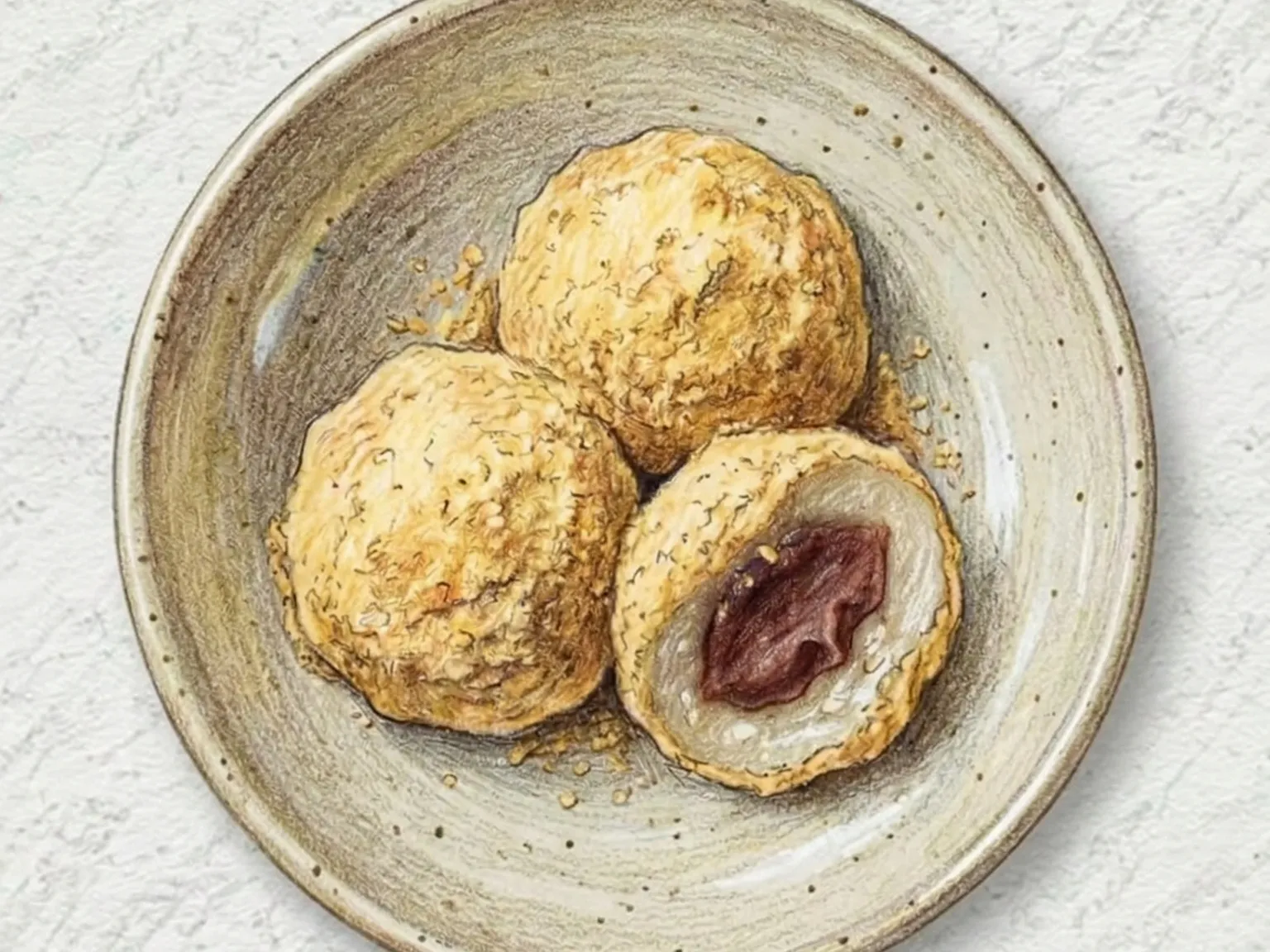
Glutinous Rice Cake Balls
Chapssal-danja are Korean glutinous rice cake balls filled with sweet red bean paste, boiled until they float, and rolled in a mixture of roasted soybean powder and sugar. The dough is flattened, wrapped around the filling, and sealed tightly into a sphere so the paste stays contained during boiling, with an extra minute of cooking after the balls surface to ensure the center is fully cooked through. A very thin brush of honey applied immediately after draining acts as an adhesive for the soybean powder coating and adds a faint floral sweetness to the exterior. Sifting the soybean powder before rolling produces a fine, even layer that gives each ball a powdery, melt-on-the-tongue finish over the chewy rice cake underneath. Kneading the glutinous rice dough thoroughly before portioning builds elasticity, which translates directly into the characteristic chew once the balls are cooked.
Black Rice Walnut Madeleines
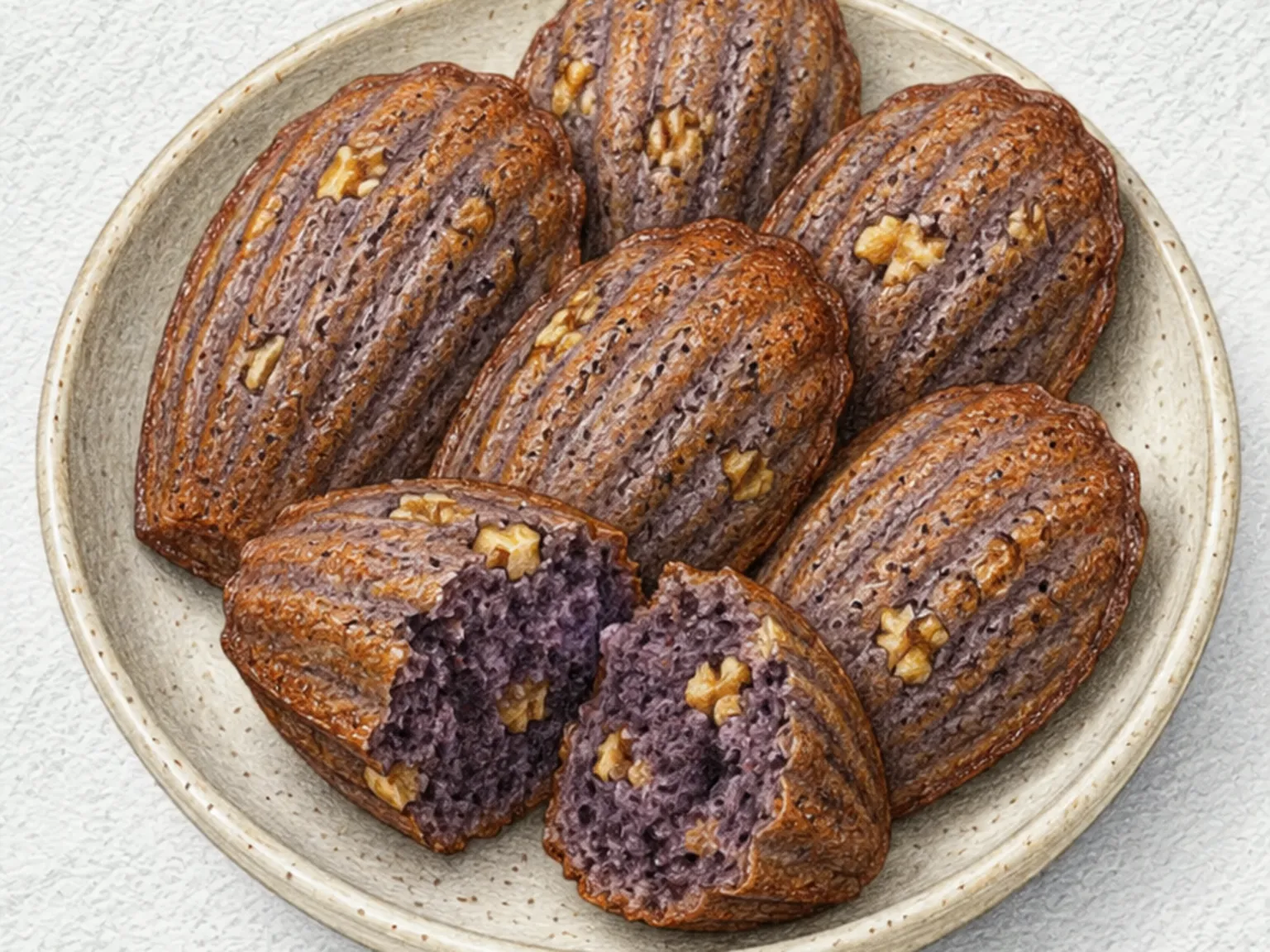
Black rice walnut madeleines blend cake flour with black rice flour for a purple-brown crumb with a toasted grain aroma. Eggs, sugar, and honey are whipped until pale and expanded, then the sifted flours, baking powder, and salt are folded in gently to preserve that air. Cool the melted butter to about 50C before adding it so it blends into the egg foam evenly. Roughly chopped walnuts enter with the butter and spread small crunchy pieces throughout the batter. A 15-minute refrigerator rest thickens and settles the mixture before it meets the 190C oven, helping the center rise into the familiar madeleine hump. Coat the shell-shaped molds lightly with butter and flour, then fill them to 80 percent so the batter has room to expand. Remove the cakes as soon as the edges turn golden brown and the center is clearly domed. The thin baked edge gives way to a moist interior with the grain flavor of black rice, while walnut pieces add a stronger toasted note. Honey rounds out the sweetness and makes the madeleines a natural companion for coffee or warm tea.
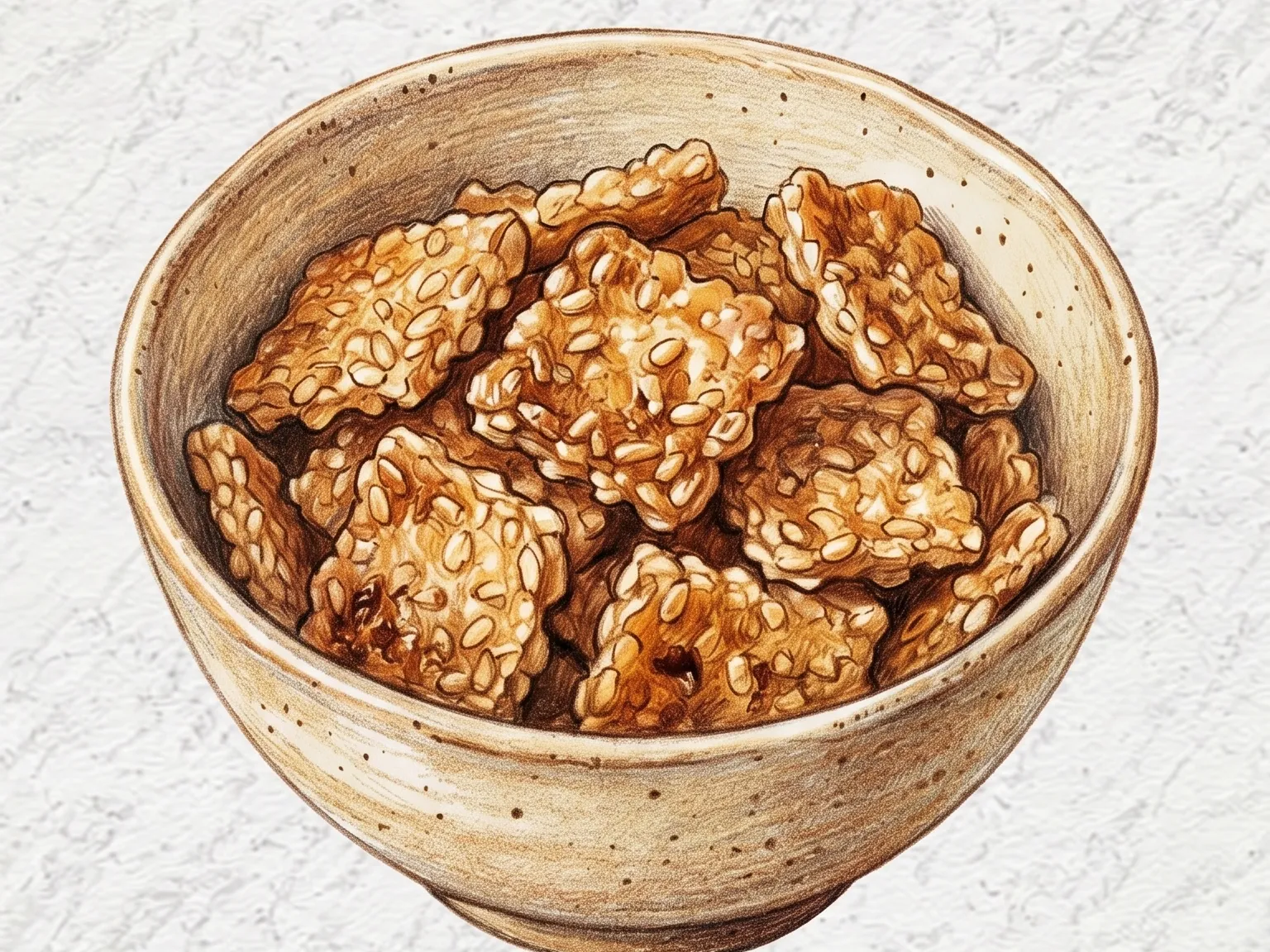
Crispy Glutinous Rice Nurungji Crackers
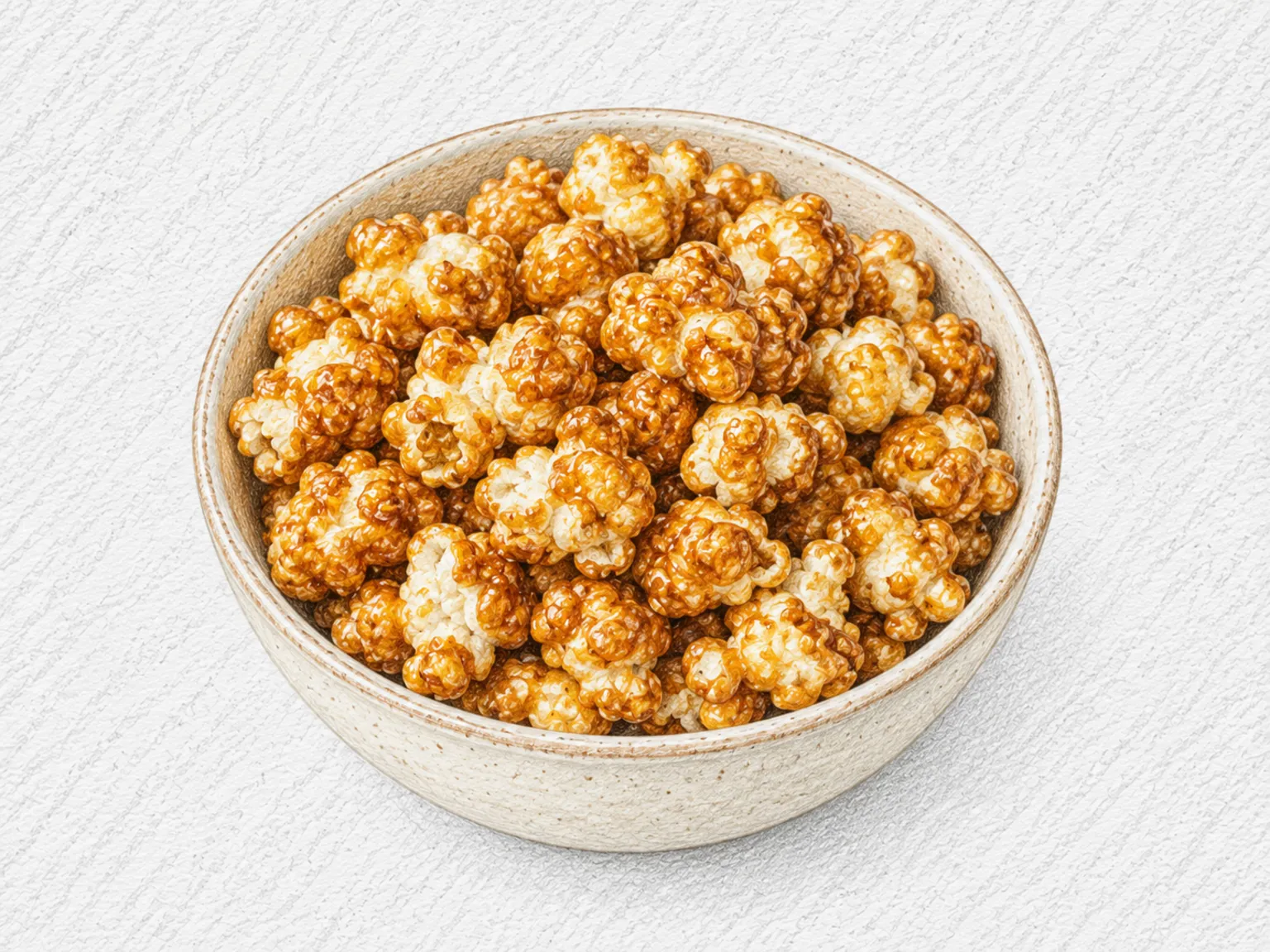
Crispy Glutinous Rice Nurungji Crackers are a traditional-style snack made from cooked glutinous rice mixed with black sesame seeds. The mixture is pressed thin and pan-fried over low heat until golden and crunchy. Chewing the crackers releases the natural nutty sweetness of the rice, while the embedded black sesame adds toasty flavor and visual contrast. The nurungji is broken into bite-sized pieces and tossed in a warm syrup of grain syrup and sugar. This coating cools into a glossy, glass-like shell that locks in the crisp texture. Cinnamon powder is dusted at the end for aroma. The crackers are cooled apart on a tray to prevent sticking. You can also bake them in an air fryer at 180 C for fifteen minutes for a leaner finish, or sprinkle extra sugar before cooling for a traditional market-style taste.
Black Sesame Fudge Brownies
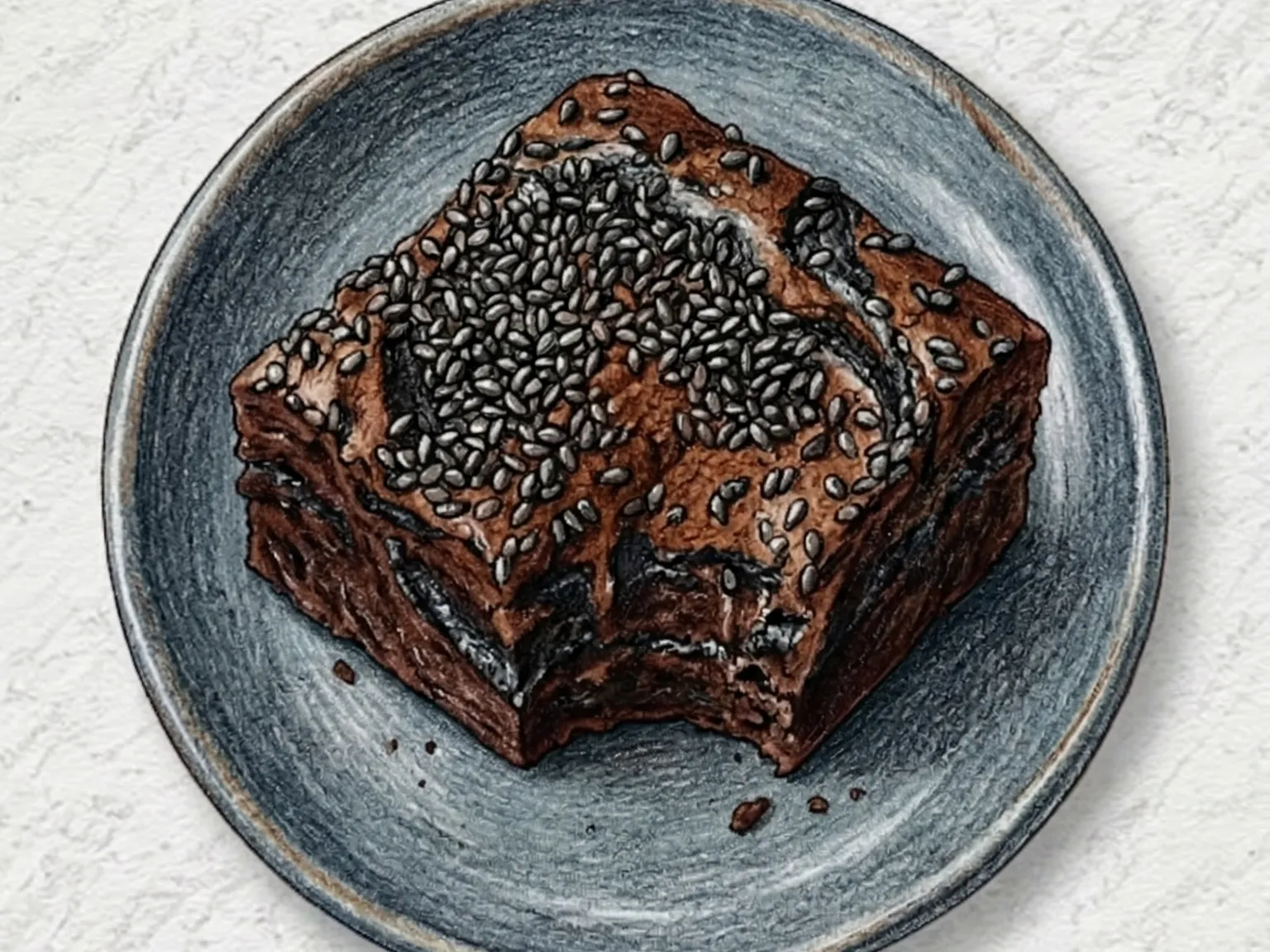
Black sesame fudge brownies combine dark chocolate with black sesame paste in a dense bar whose roasted seed flavor follows the initial cocoa richness. Melt the dark chocolate and unsalted butter gently in a heatproof bowl over simmering water until the base is completely smooth. Stir in the sugar, then add the eggs one at a time so each is fully incorporated and the batter develops an even gloss. Black sesame paste goes in after the eggs and must be spread through the entire chocolate mixture without streaks or clumps. Sift the flour, cocoa powder, and salt together, then fold only until the dry marks disappear. Brief mixing at this stage preserves the close, fudgy crumb. Spread the batter in a parchment-lined square pan and bake at 175C. Remove it after 26 to 28 minutes, when the edges are set and the center still appears slightly moist. Residual heat continues to cook the center as the pan cools. Wait until the brownie is completely cool before slicing so the dense interior can settle and the cut edges stay clean. Chilling it before cutting produces even sharper corners and a firmer bite.
Charlotte Russe (Ladyfinger Bavarian Cream Chilled Dessert)
Charlotte Russe is a chilled French dessert built around a mold lined with ladyfinger biscuits and filled with Bavarian cream. The cream base is a creme anglaise, a cooked custard of egg yolks, milk, and sugar, into which bloomed gelatin is stirred while warm. The mixture is cooled until it begins to thicken at the edges, then folded together with softly whipped cream before it can fully set. This timing matters: too early and the cream deflates the custard, too late and the gelatin seizes before the mousse can be poured. Ladyfingers are arranged vertically around the interior of the mold, their sugar-dusted side facing outward. As the mousse sets over several hours in the refrigerator, the biscuits absorb moisture from the inside and soften while their exterior stays dry. Unmolding reveals a neat cylinder of pale biscuit encasing smooth, ivory mousse. The dessert stands on its own, but a raspberry or strawberry coulis poured alongside adds bright acidity that cuts through the fat and brings the sweetness into balance.
Black Sesame Cruffins
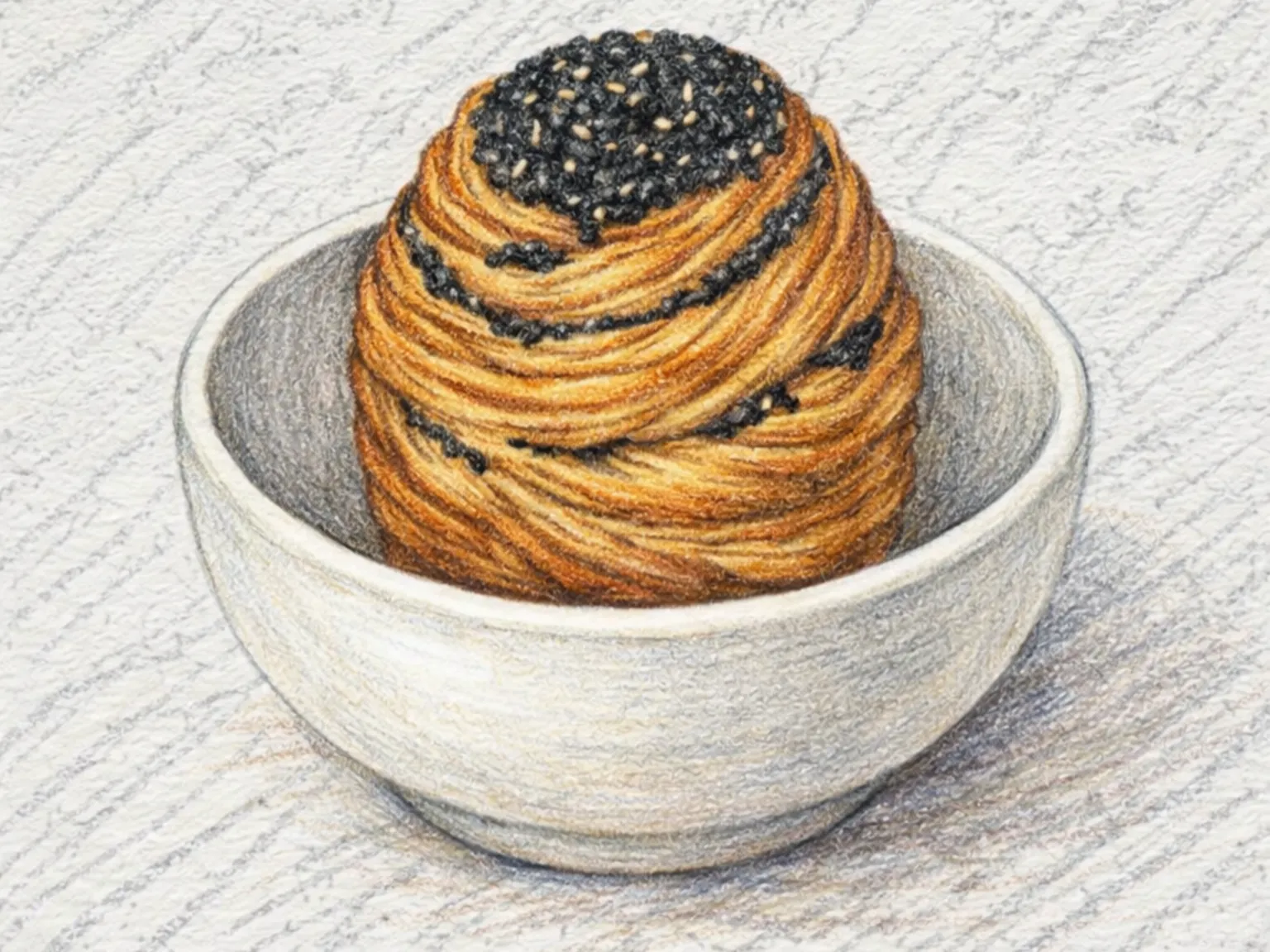
Black sesame cruffins are yeast pastries rolled with butter, black sesame paste, and honey, then baked upright in muffin tins to form a dark spiral. Knead bread flour, sugar, salt, and yeast with warm milk and egg, gradually working in unsalted butter until the dough becomes smooth and elastic. After a 60-minute first proof, roll it into a rectangle 3 mm thick. Spread softened butter in a thin layer, followed by black sesame paste and honey. Keeping that filling even to the edges prevents heavy pockets that can leak while baking. Roll the rectangle tightly from a long side into a log and cut it into 4 to 5 cm pieces. Place each piece upright with the cut spiral facing upward in the muffin tin. A 25-minute second proof gives the shaped dough time to expand before it enters the 190C oven. Bake until the exposed surface is deep golden brown and crisp. The dark sesame line remains visible through the soft, buttery interior, giving every cross-section a clear swirl. Remove the pastries from the pan immediately after baking and move them to a rack. Steam trapped in the muffin wells would soften the base, while open cooling preserves the thin baked exterior.
Chestnut Espresso Tiramisu
Chestnut espresso tiramisu layers a mascarpone cream enriched with chestnut puree over espresso-soaked savoiardi biscuits, bringing an autumnal depth to the Italian classic. Strong espresso spiked with rum or marsala wine saturates the ladyfingers without making them soggy, providing a bitter, caffeinated base for the cream above. The mascarpone is first beaten smooth, then folded together with chestnut puree and a pate a bombe made from egg yolks whipped with hot sugar syrup, giving the cream a stable, mousse-like body that slices cleanly after setting. Chestnut puree contributes a dense, mellow sweetness entirely unlike refined sugar - it rounds the espresso's bitterness rather than masking it, and its earthy, nutty undertones push the cream toward something more complex than the vanilla-forward original. The finished layers are dusted with unsweetened cocoa powder, adding one more note of controlled bitterness, and refrigerated for at least six hours. Overnight chilling is the better choice: the espresso migrates up through the cream layers during that time, the flavors blend into a cohesive whole, and the texture firms from loose cream into the silkable, sliceable consistency that defines a properly rested tiramisu. Served cold, the chestnut and coffee notes become sharp and distinct.
Black Sesame Pound Cake (Dense Roasted Sesame Grey-Crumb Cake)
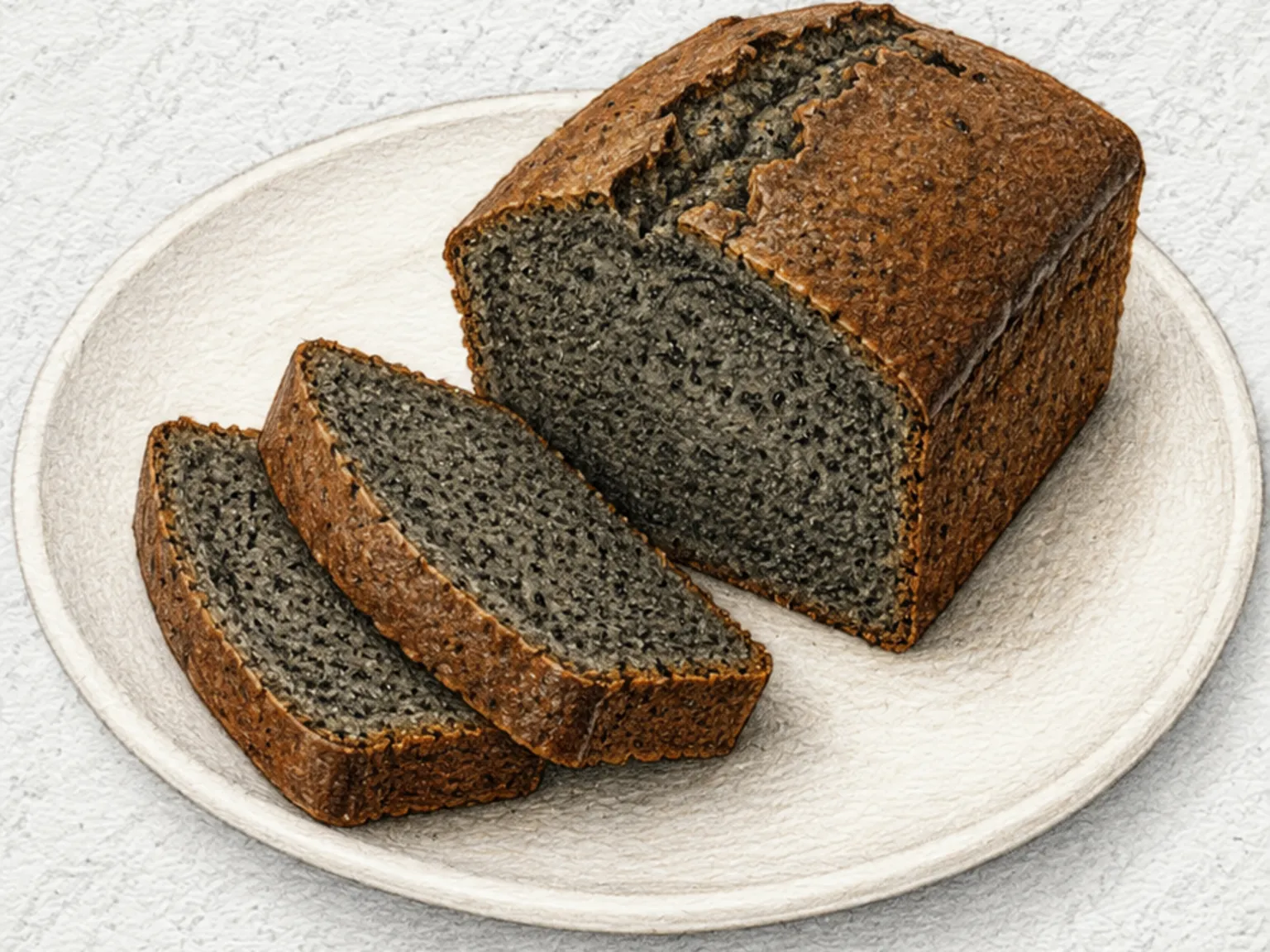
Black sesame pound cake is built on the classic equal-ratio formula of butter, eggs, sugar, and flour, with a generous addition of black sesame paste worked into the batter. The paste shifts the color to a deep grey-brown and fills the kitchen with a roasted, nutty fragrance as the loaf bakes. Only a small amount of baking powder is used, keeping the rise modest and the crumb tight - the result is a dense loaf that still yields softly when bitten, with a texture that holds together cleanly on the fork rather than crumbling apart. Milk regulates the moisture balance, preventing the dense structure from turning stiff or dry at the edges. When sliced, every cross-section shows finely ground sesame particles distributed evenly throughout, visible as tiny dark flecks against the grey crumb. The loaf pairs best with green tea or black coffee, beverages whose bitterness echoes and sharpens the sesame flavor without overwhelming it. Stored in an airtight container at room temperature, it holds its moisture for two to three days and often tastes better on the second day once the sesame has had time to settle fully into the crumb structure.
Chocolate Mousse
Chocolate mousse achieves a fundamental paradox: it tastes intensely of chocolate yet feels almost weightless on the tongue. Dark chocolate is melted gently over a bain-marie and cooled until warm but no longer hot enough to deflate the cream. Whipped cream is then folded in three separate additions: the first loosens the chocolate mass, the second begins to lighten its density, and the third introduces the full airy volume that defines mousse. Some recipes add egg yolks for richness and a custard-like body, while beaten egg whites lift the texture even further. Chilling for at least two hours allows the mousse to set to a consistency that holds its shape on a spoon yet dissolves on contact with the palate. The cacao percentage governs both the bitterness and the intensity of the finished dessert, and chocolate above seventy percent produces a mousse that reads as unmistakably adult in its depth. A small measure of vanilla extract rounds the sharper edges of the cocoa without competing for attention. Mousse can be served directly in individual cups, spread into a tart shell to firm overnight, or piped into layers with cream for a more composed plated dessert. A dusting of unsweetened cocoa through a fine sieve over the top surface is the minimal finishing touch.
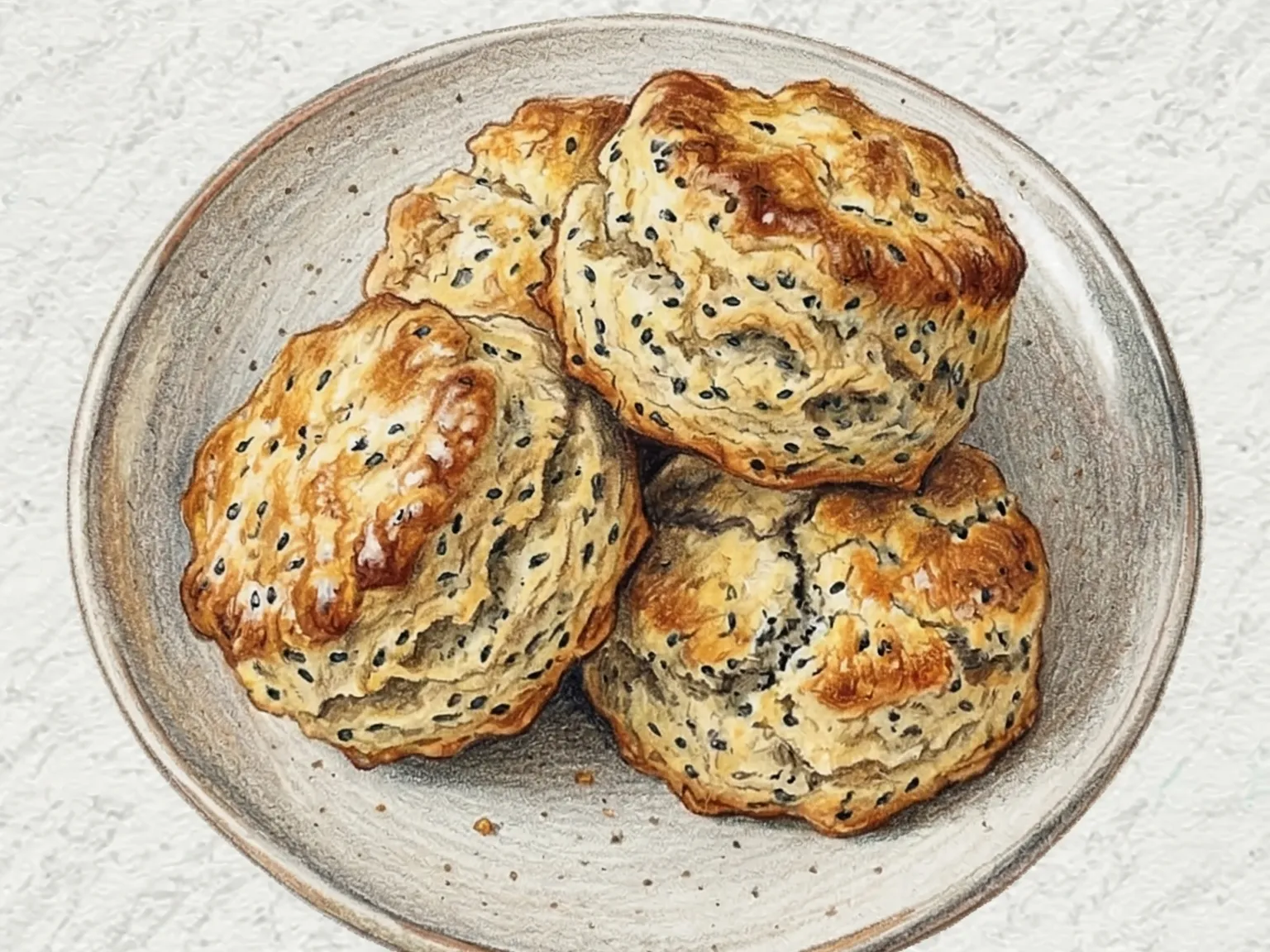
Black Sesame Butter Scones
Black sesame butter scones are made by mixing ground black sesame into cake flour, then bringing the dough together with cold butter, heavy cream, and egg. The sesame gives the crumb a grey tint and a pronounced roasted aroma, while the baked edges turn golden and lightly cracked. Whisk the flour, sesame, sugar, baking powder, and salt first so small dark clumps are broken up and the leavener is evenly distributed. Rub 1 cm cubes of cold butter into the flour quickly, leaving pea-sized pieces. If the mixture starts to look greasy, a short refrigerator pause keeps the butter firm. Pour in the cream and egg and fold until the dough is about 80 percent combined. Press the rough mass together on the work surface without kneading, then shape it into a 2.5 cm-thick round. This light handling preserves the irregular butter pockets and keeps the interior tender. Cut the round into 8 wedges, space them apart on the tray, and bake at 200C. The scones are ready when the tops are golden and small cracks appear around the edges. Move them to a rack and cool for 10 minutes before serving so the crumb can settle while the exterior remains crisp.
Churros
Churros are fried dough sticks made from a simple paste of water, flour, salt, and sometimes a touch of sugar. The dough is piped through a star-shaped tip, which creates ridges along the length. These ridges increase the surface area exposed to hot oil, producing maximum crunch across every inch while the interior stays soft and pillowy. Straight from the fryer, they are rolled in cinnamon sugar, which clings to the warm, oily surface and creates a sweet, spiced crust. The traditional pairing is thick Spanish hot chocolate -- closer to a warm ganache than a drink -- into which the churros are dipped. The bitterness of the chocolate and the sweetness of the cinnamon sugar play off each other, and the contrast between the crisp dough and the dense liquid makes each dip satisfying. Churros wait for no one: they are at their best within ten minutes of frying, after which the crispness fades as residual oil migrates inward.
About Desserts
Sweet treats brighten the day and add a little joy to the routine. From no-oven quick desserts to traditional confections that take patience and care, find the right recipe for any occasion.