Korean Kimchi Pancake
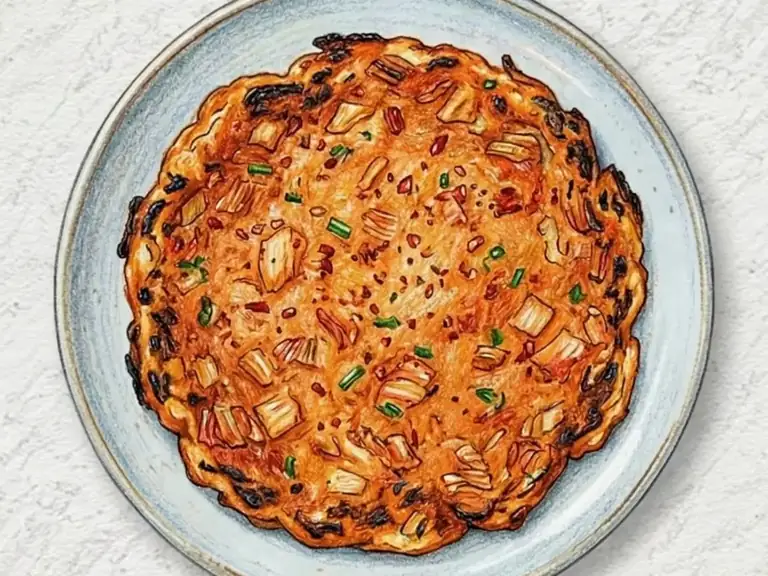
Some of the batter's liquid is kimchi brine, which turns even the plain batter red and gives it a sour tang. Leftovers crisp up again almost completely in a dry pan with no oil.
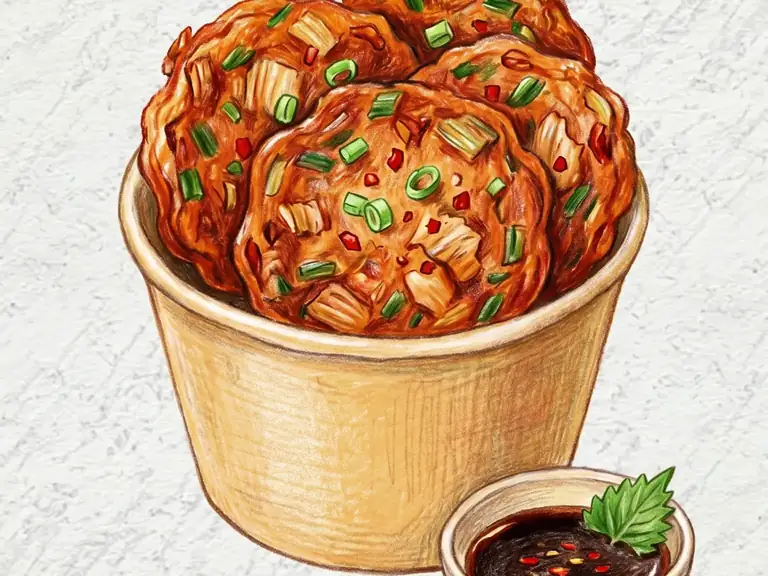
These coaster-sized kimchi pancakes stand two or three to a cup and are eaten out of hand, the way they might be at a pojangmacha, one of Korea's covered street stalls. The batter is kept thicker than for a regular kimchi pancake, which stops the rounds from slumping inside the cup, and some kimchi brine goes into it as well. Soy sauce or vinegared gochujang comes alongside.
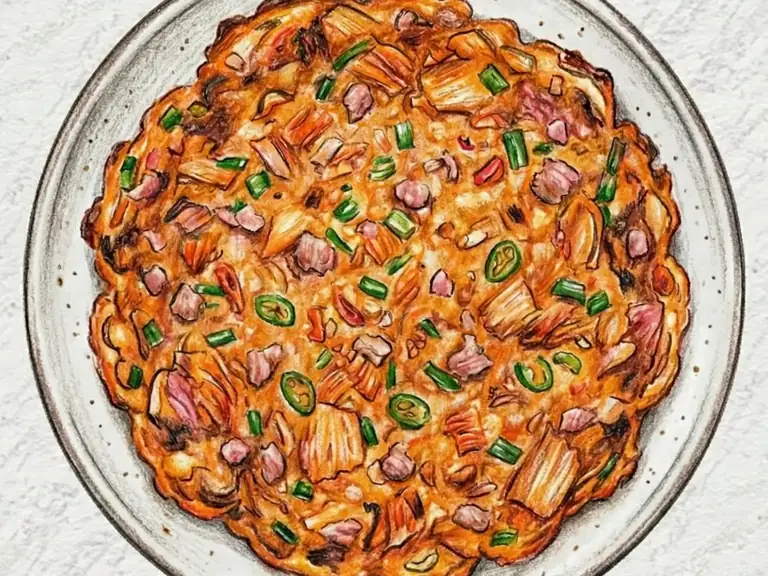
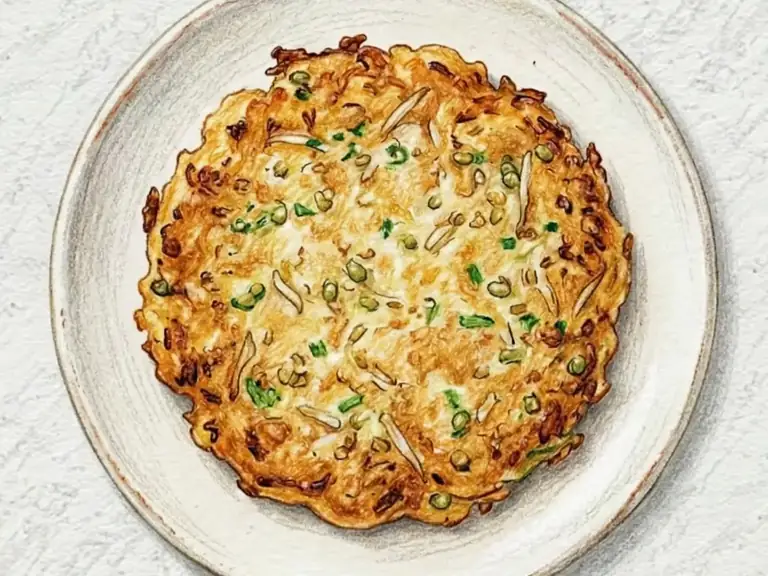
Pork shoulder turns an ordinary kimchi pancake into something more filling. The meat has to be sliced thin and small; larger pieces stay raw in the middle while the outside burns. The kimchi is squeezed only lightly, leaving a little juice behind, and it seasons the pancake well enough that no soy dipping sauce is set out.
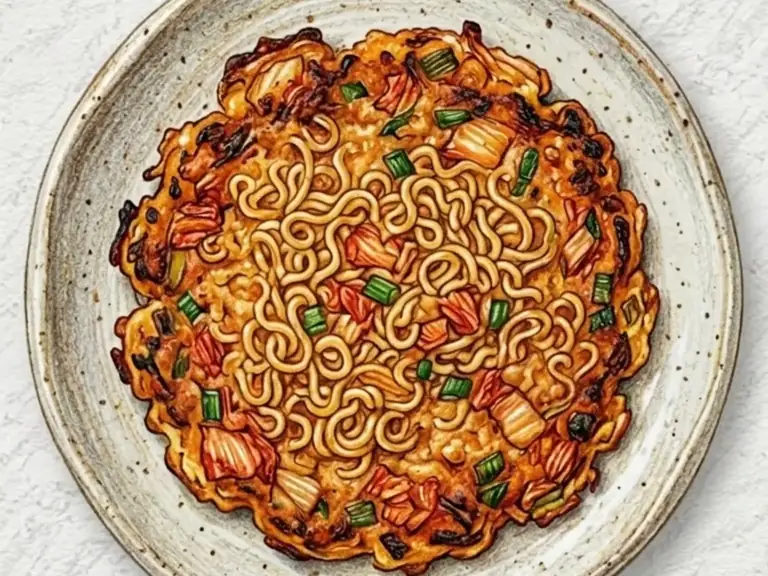
Wavy ramen strands leave ridges and pockets across the surface of this pancake, and those uneven spots fry up especially crunchy. The noodles are boiled for only two minutes so they stay firm; the heat of the pan finishes them and they keep their spring instead of collapsing into the batter.
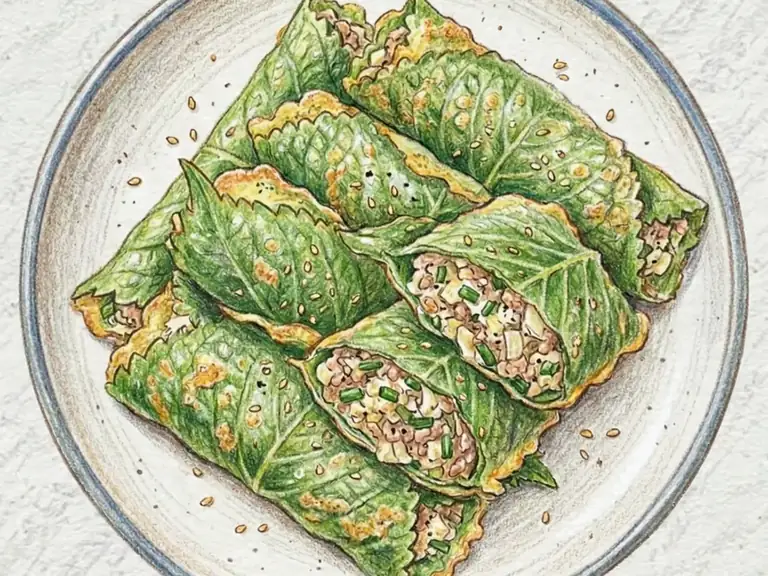
Perilla leaves have a strong scent, so the pork and tofu filling is seasoned simply, with only soy sauce and black pepper. A thin layer goes inside each leaf, which is folded, fried, then cut in half again into single bites.
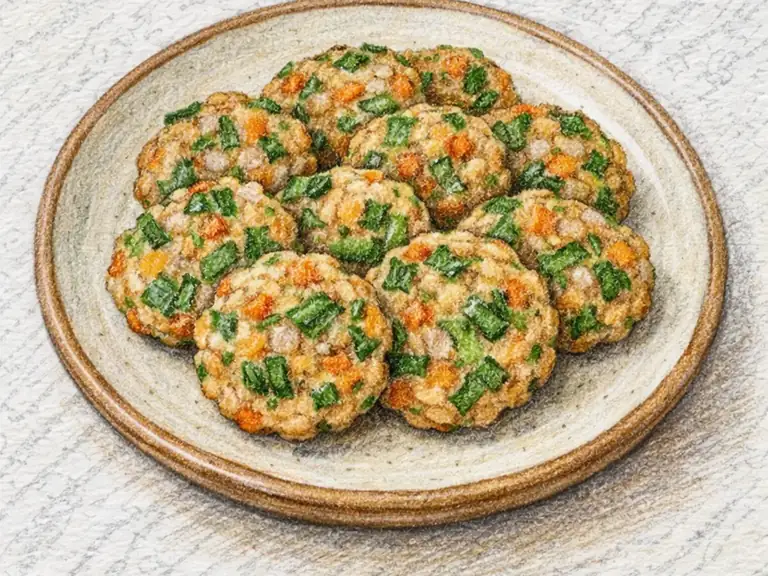
Tuna batter, mixed with chopped onion and carrot, is spread thin on single perilla leaves, and each leaf works as a base plate that keeps the patty in one piece when it is flipped.
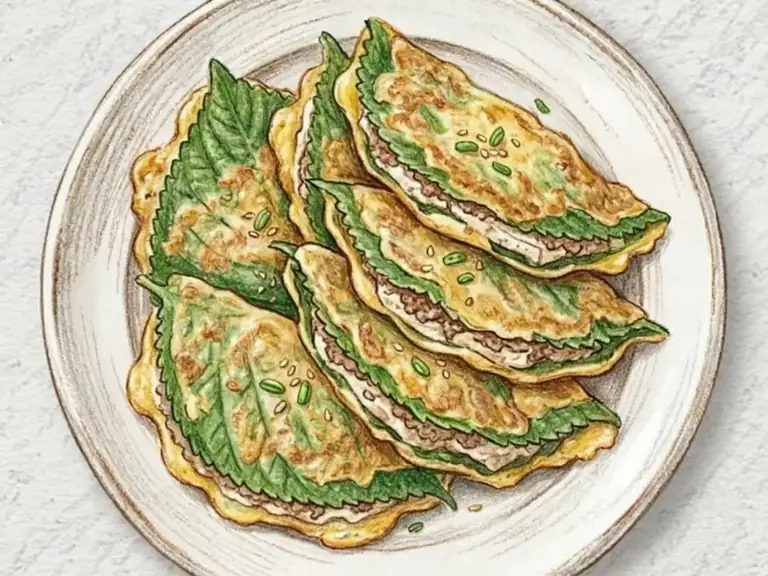
Each perilla leaf is folded around a thin layer of beef and tofu, and a bite goes through the egg coating to the leaf's aroma before it reaches the meat. Packing in more filling would bury that aroma under the beef, which is why it is spread thin, right to the edges of the leaf.
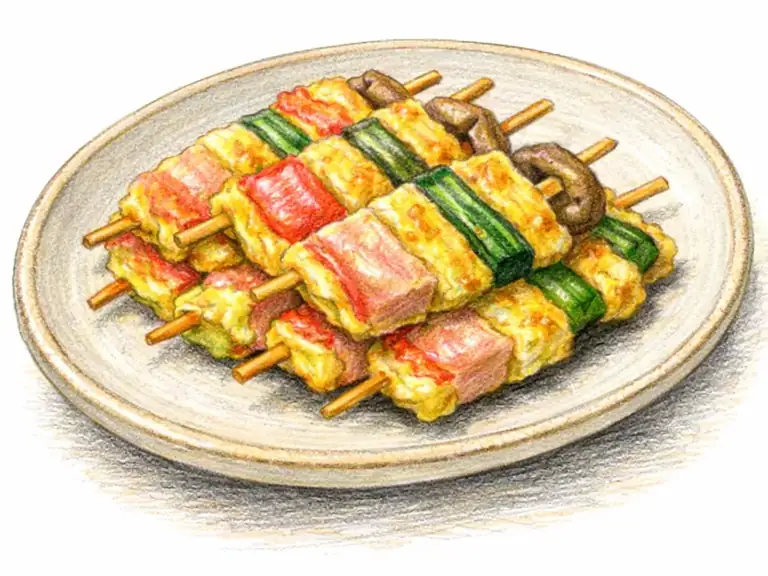
Ham, imitation crab, king oyster mushroom and scallion, all cut to the same length and threaded in turn, make up kkochi-jeon, a regular on ancestral rite and holiday tables. One bite brings the salt of the ham, the spring of the crab stick, the firm grain of the mushroom and the scallion's green smell all at once.
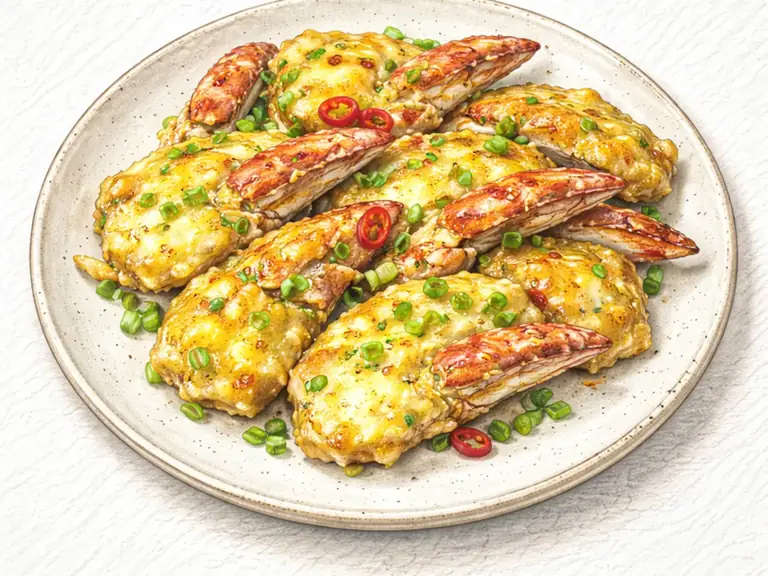
The flower crab is not picked; it is halved shell and all, floured, dipped in egg and fried, and you end up eating it the way you would any crab, holding the shell and pulling the meat out. Before frying, minced ginger is rubbed into the gaps between meat and shell and left for a short while to tame the fishy smell and season the thick meat inside.
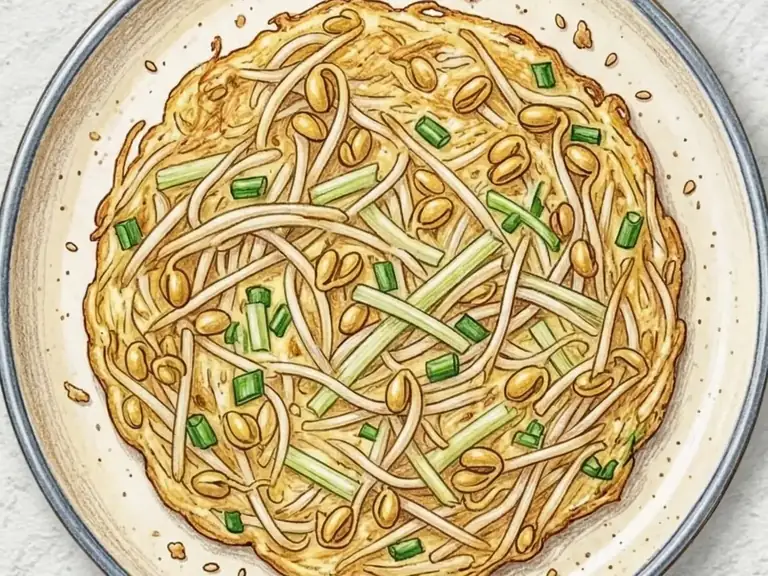
Little more than blanched soybean sprouts held together by a thin film of batter, this pancake comes out with nutty heads and stems that stay crunchy.
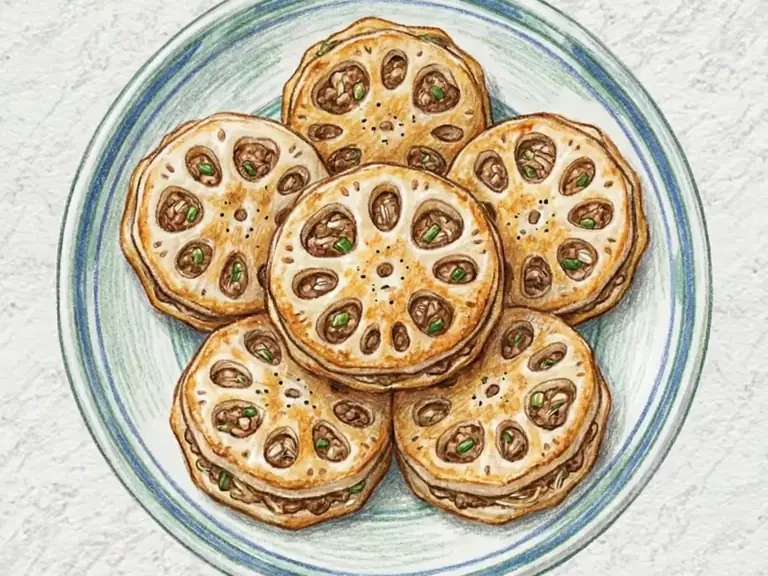
Lotus root stays crisp even when fully cooked, and here a thin layer of seasoned ground beef is pressed onto each slice, giving one bite two very different textures. The slices go into the pan beef side down first, letting the meat set onto the root.
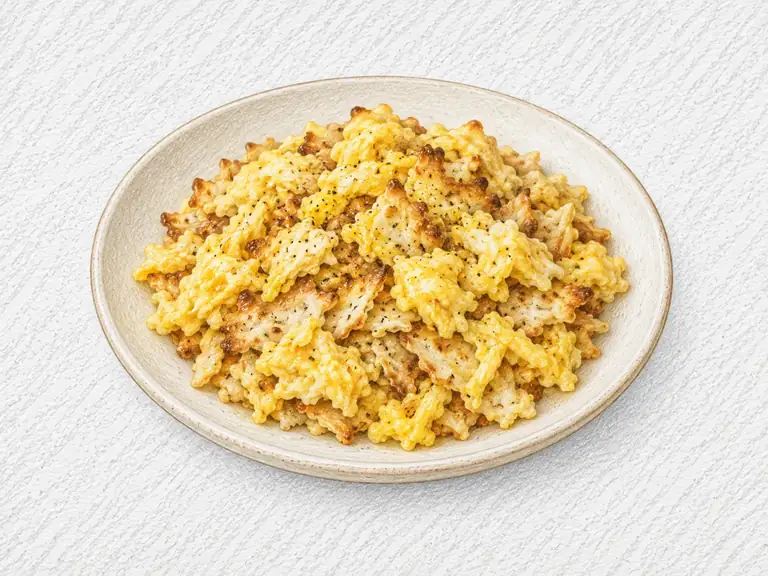
Matzo, the unleavened flatbread, is moistened briefly, broken up and cooked with eggs in a buttered pan. Rather than a thick slice soaked in custard as with French toast, you get small pieces of matzo with soft egg clinging between them, and this version is savory, with no sugar or syrup. It calls for plain matzo, not salted snack crackers, wetted only until it bends enough to snap without falling apart in the water.
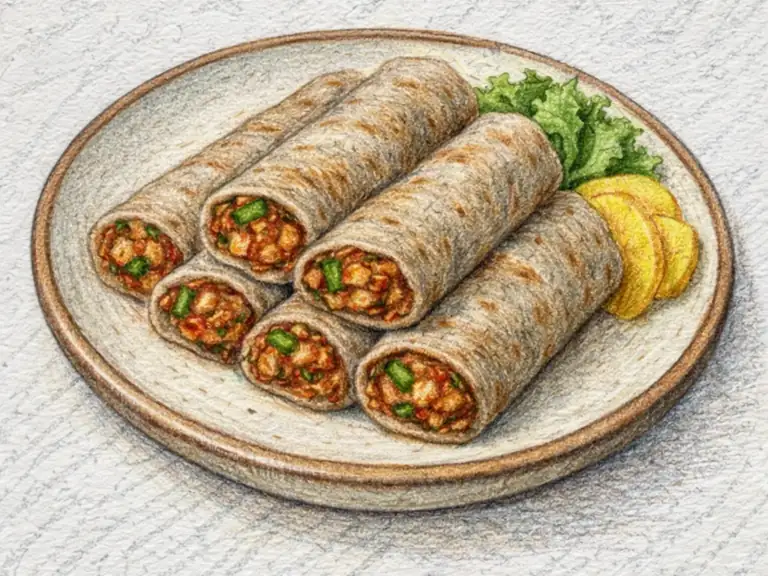
A Gangwon province dish: buckwheat batter is cooked crepe-thin, rolled around a stir-fried filling of aged kimchi, tofu and pork, then crisped in the pan a second time. Buckwheat has no gluten, and the batter needs more than 10 minutes' rest before it can be spread thin without tearing. Unrinsed aged kimchi keeps its fermented sourness in the filling; rinsing it makes the filling milder.
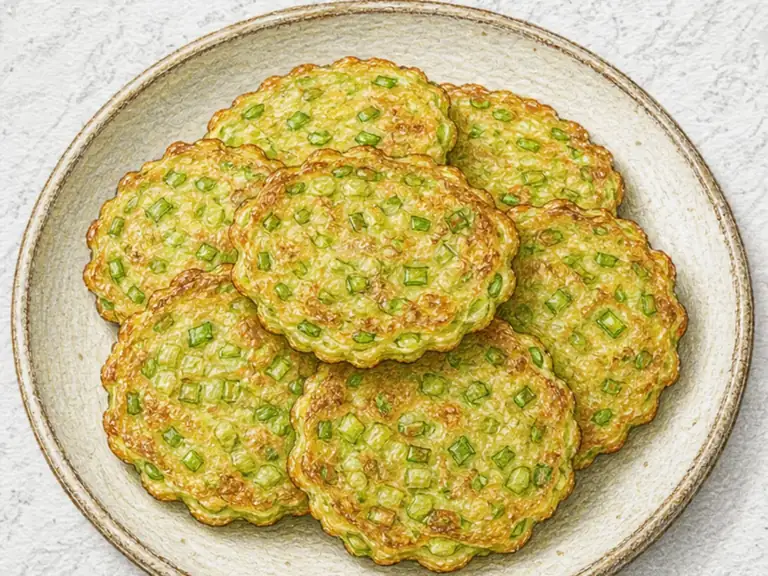
With butterbur stem pancakes, preparing the stems takes far longer than frying them. The fibrous skin is peeled off, the stems are blanched, soaked in cold water for an hour and squeezed hard by hand, and only then chopped small and mixed into the batter. They are fried as bite-size rounds, and a slice of red chili set on top just before flipping sticks to the browned face as a garnish.
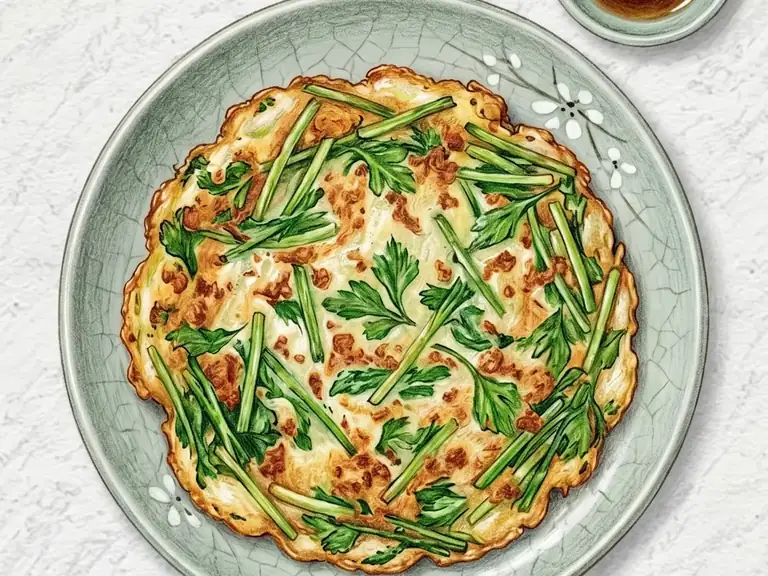
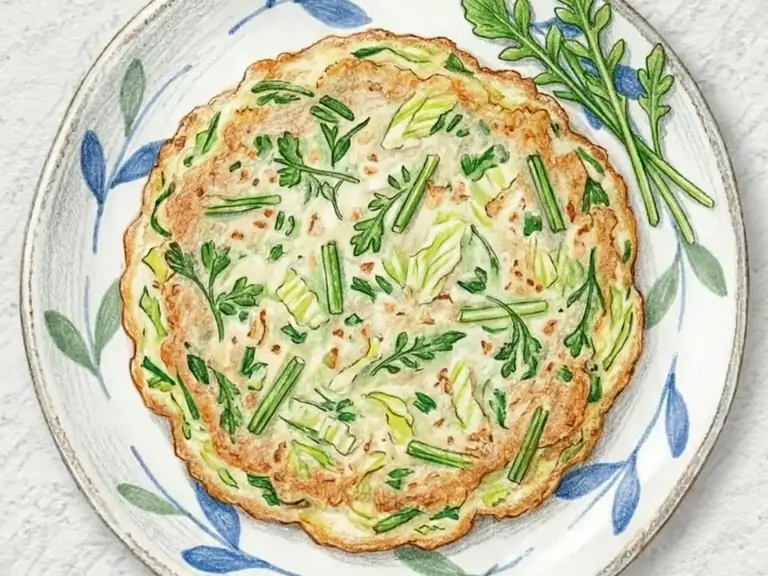
Water parsley, cut into 5 cm lengths, gives this pancake a cool, herbal smell and stems that snap against the soft batter. Heat fades minari's fragrance fast, so the pancake comes off the pan as soon as the edges crisp.
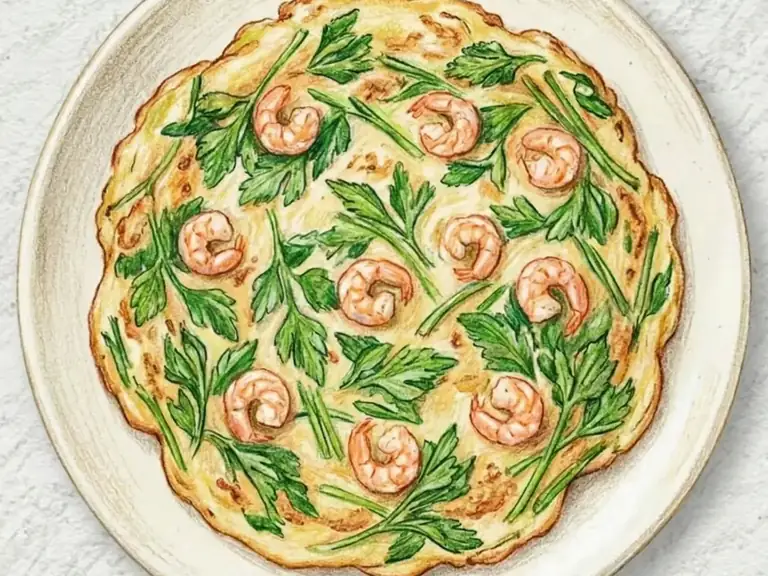
Spring water dropwort (minari) is cut into long pieces, stems and all, and fried with shrimp. The stems still crunch after frying, and it comes with soy sauce sharpened by a few drops of vinegar.
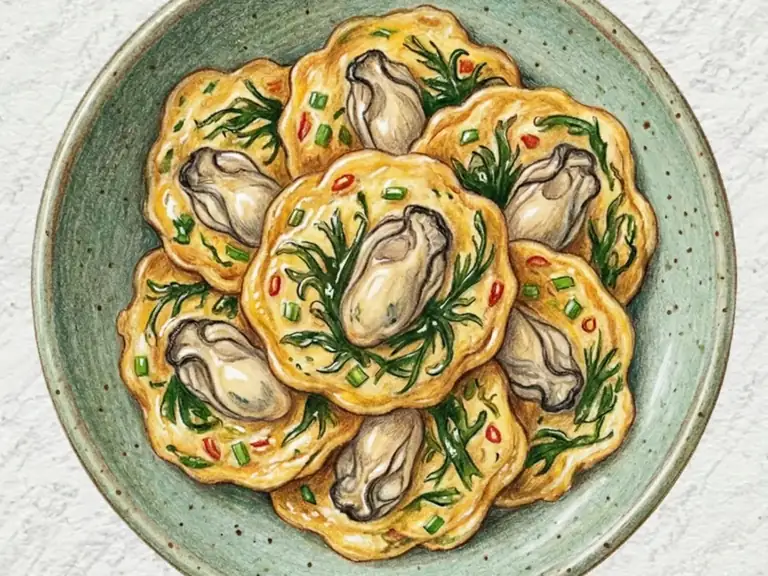
Fresh oysters and soaked miyeok seaweed share one batter, and a single bite brings a crisp outside, slippery seaweed, and an oyster full of briny juice. Plump winter oysters suit it best. Each oyster gets pressed down into the batter with a spoon, since any that pokes above the surface cooks less than the rest.
Monjayaki never sets into a pancake. A very loose flour-and-dashi batter cooks down with finely cut cabbage on a hot griddle, and diners scrape it up a bite at a time from the edge with small spatulas, pressing each bite briefly onto the hot griddle to crisp it. Most closely tied to Tsukishima in Tokyo, it is about eating the crisp, browned base and the soft center together. Dried squid, dried shrimp, and tenkasu add savory crunch to the Worcestershire-seasoned liquid.
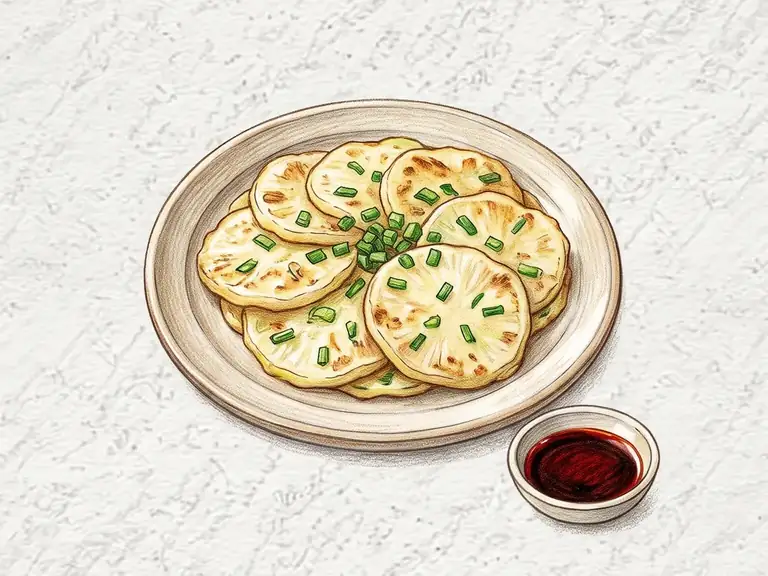
Mu-jeon sits on the Chuseok and Seollal jeon platter next to hobak-jeon and gaji-jeon. The radish has to be sliced an even 3 mm: thicker pieces keep a raw, acrid center, and thinner ones break apart in the pan. A little rice flour goes into the batter with the pancake mix, and a soy-vinegar dip comes alongside.
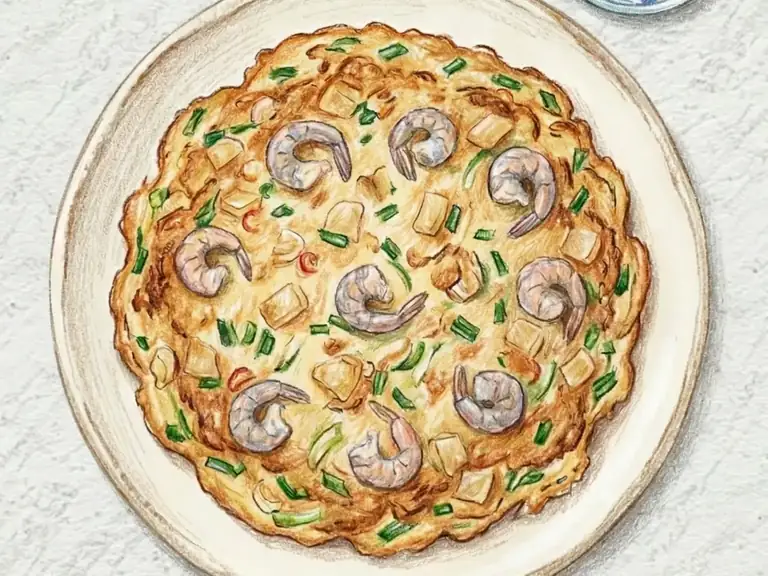
The shrimp are only halved and roughly chopped, which leaves them with some bite among the julienned radish after frying. A little potato starch in the batter makes the pancake slightly chewier.
The batter is nothing but soaked, ground mung beans, no wheat flour, which makes it dense and nutty, and each round goes into the pan a full 1.5 cm thick, so one is a meal. Blanched mung bean sprouts give the thick middle some crunch.
Shepherd's purse, an early-spring wild green, is added roots and all, bringing a faint bitterness that the salted, softened napa cabbage balances with sweetness. The greens need only a thin coat of batter, and heavy mixing crushes the tender leaves before they reach the pan.
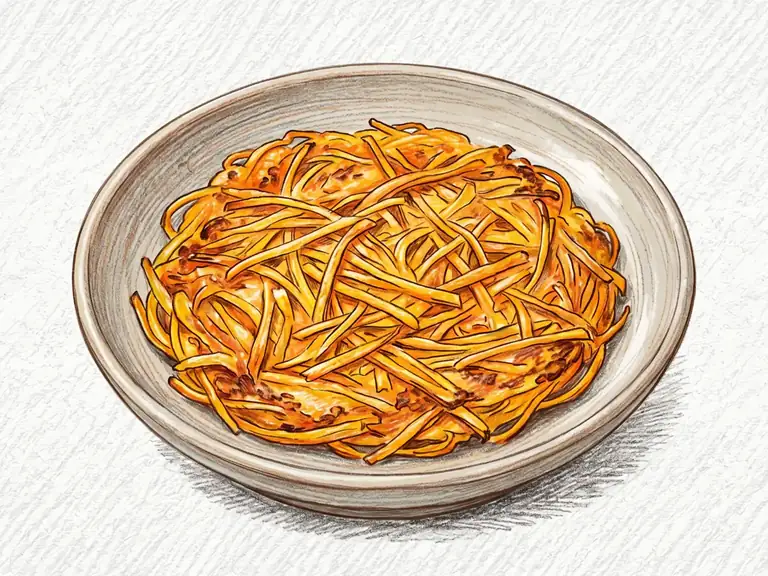
Neulgeun hobak, a large Korean pumpkin harvested fully ripe in autumn, is wetter and less sweet than kabocha. For pancakes, salt the julienned flesh briefly and let the liquid it releases become the batter before reaching for any water. Added water at the start makes the batter run in the pan and leaves the center gummy. Use only enough flour to hold the strands together; more than that and the pancake tastes of flour rather than squash. Strands about 3 mm thick turn translucent inside before the outside burns, and a little glutinous rice flour gives the edges a chewy bite.
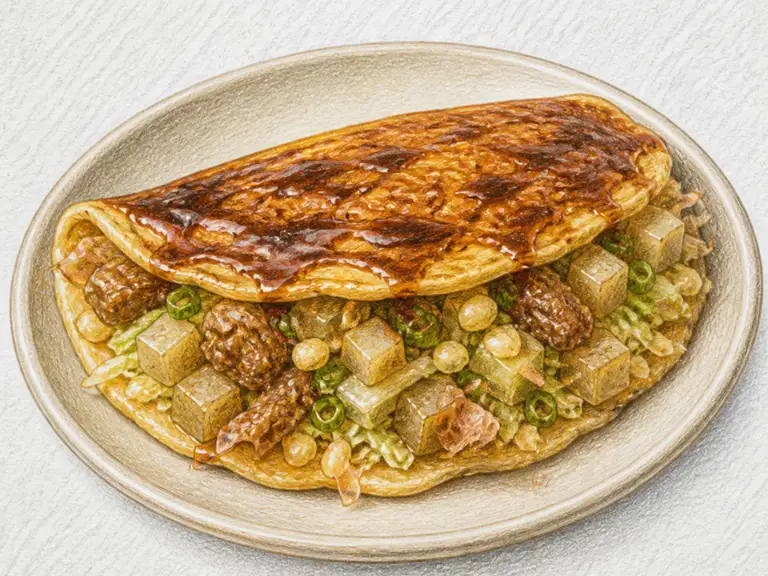
In Takasago, Hyogo, nikuten gets built in layers instead of mixed like okonomiyaki: potato, konjac, cabbage, scallion, beef tendon, and tempura crumbs stack on a thin round of batter, which folds in half after saucing. Because nothing is stirred together, the floury potato, soft tendon, and crisp crumbs each keep their own texture. The potato and konjac simmer with the tendon in soy sauce, sugar, and mirin, so all three share the same sweet-salty seasoning.