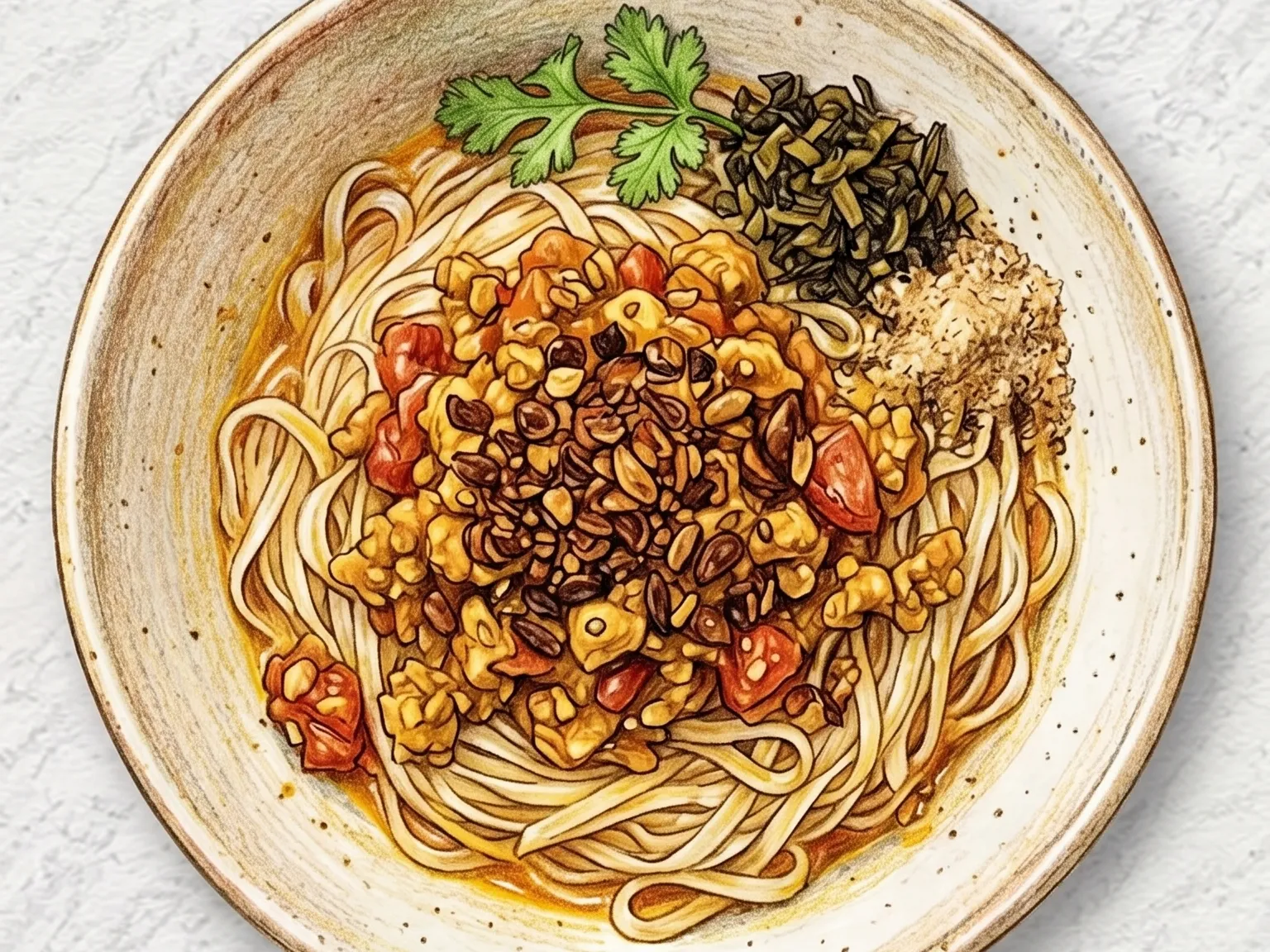
Noodles Recipes
237 recipes. Page 9 of 10
Korean noodle dishes range from chilled naengmyeon in summer to steaming bowls of kalguksu in winter. Thin somyeon, chewy jjolmyeon, and glass noodles (dangmyeon) each bring a different texture to the table. A simple bibim sauce transforms plain noodles into a flavor-packed meal in minutes.
Shoyu Butter Corn Ramen
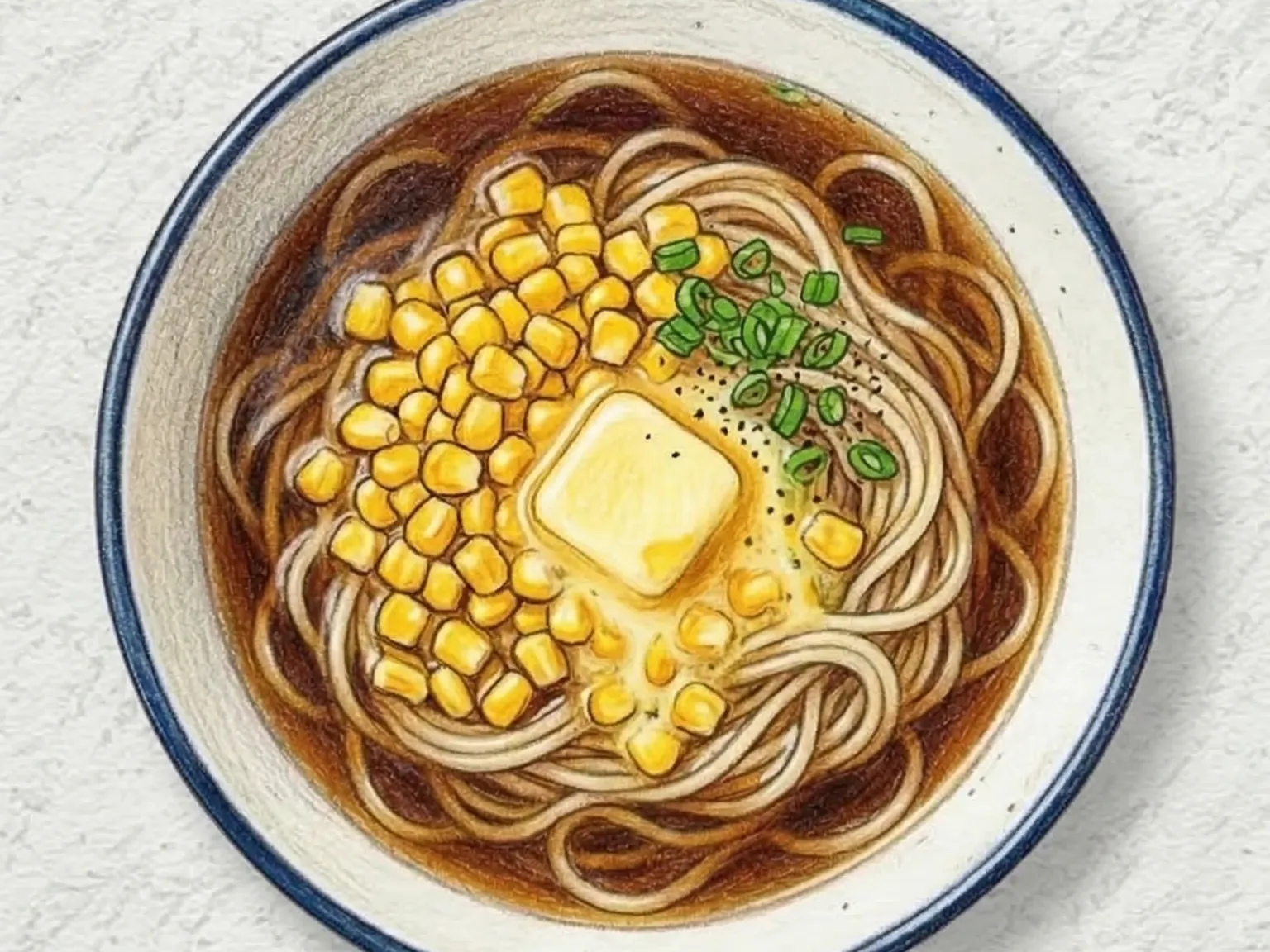
Shoyu butter corn ramen uses 900 ml chicken broth seasoned with 2 tbsp soy sauce and 1 tbsp mirin for two bowls. Prepare the toppings before heating the soup: thinly slice 20 g green onion, cut 2 nori sheets into manageable pieces, rinse and drain 80 g bean sprouts, and have 120 g sweet corn ready. Bring the broth, soy sauce, and mirin to a simmer over medium heat, then lower the heat to medium-low as soon as bubbles appear. Keep it at a gentle simmer for 10 minutes. A hard boil can reduce the liquid too far and make the broth taste overly salty. Meanwhile, boil plenty of water in a separate pot and cook 260 g fresh ramen noodles. Remove them when the strands have separated but still feel springy, then drain thoroughly so excess starch does not cloud the shoyu broth. Add the bean sprouts and corn to the hot broth for only 2 minutes. Turn off the heat when the sprouts look slightly translucent but retain a crisp bite. Divide the noodles between two bowls and ladle in the broth, corn, and sprouts. Top the bowls with 20 g butter, the sliced green onion, and nori. Serve as the butter begins to melt into the hot soup. Cooking the broth, noodles, and sprouts for their own required times before combining them preserves a clear soup, resilient noodles, and crisp sprouts.
Tokyo-Style Shoyu Ramen (Classic Japanese Soy Sauce Chicken Broth Ramen)
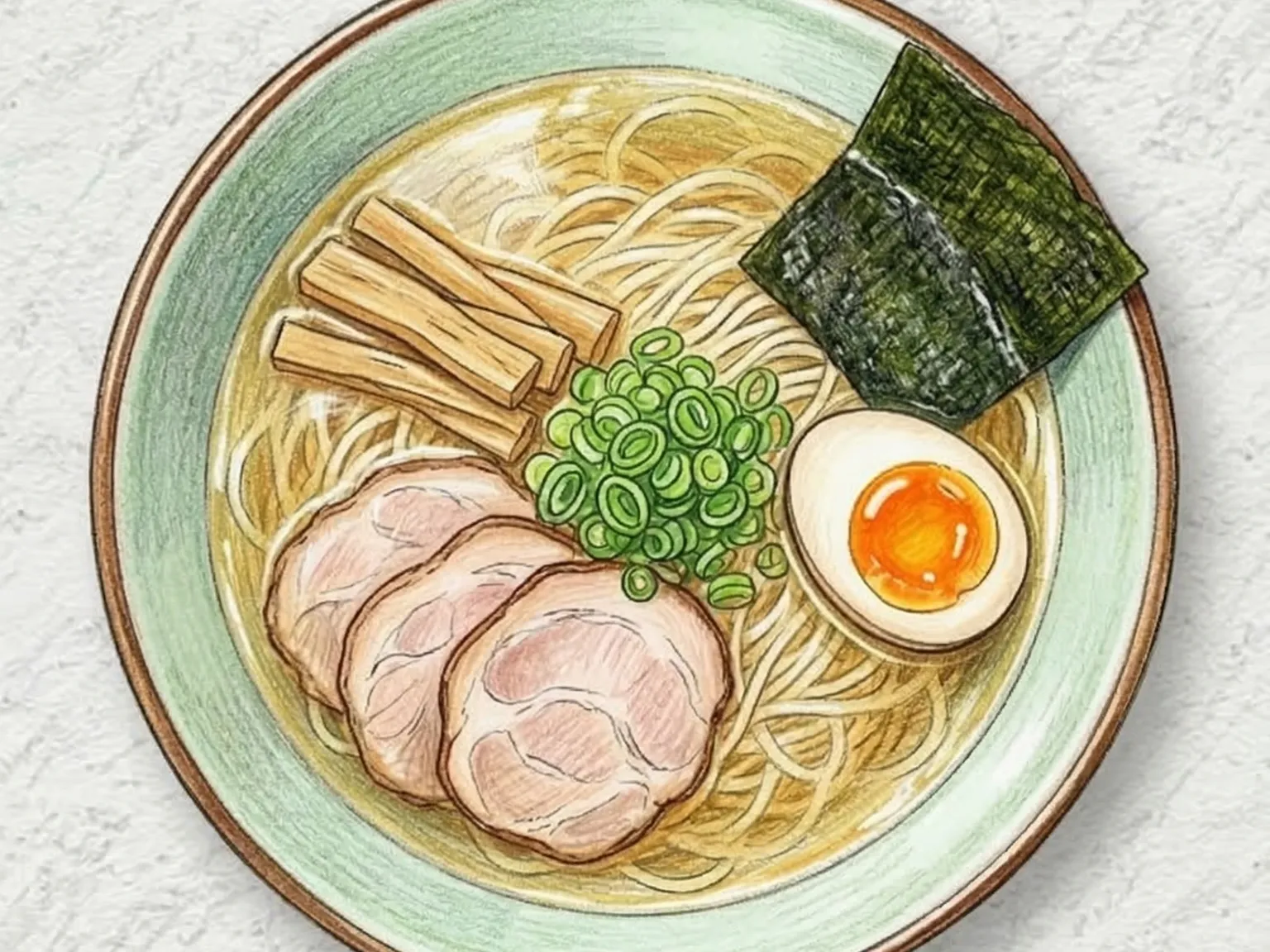
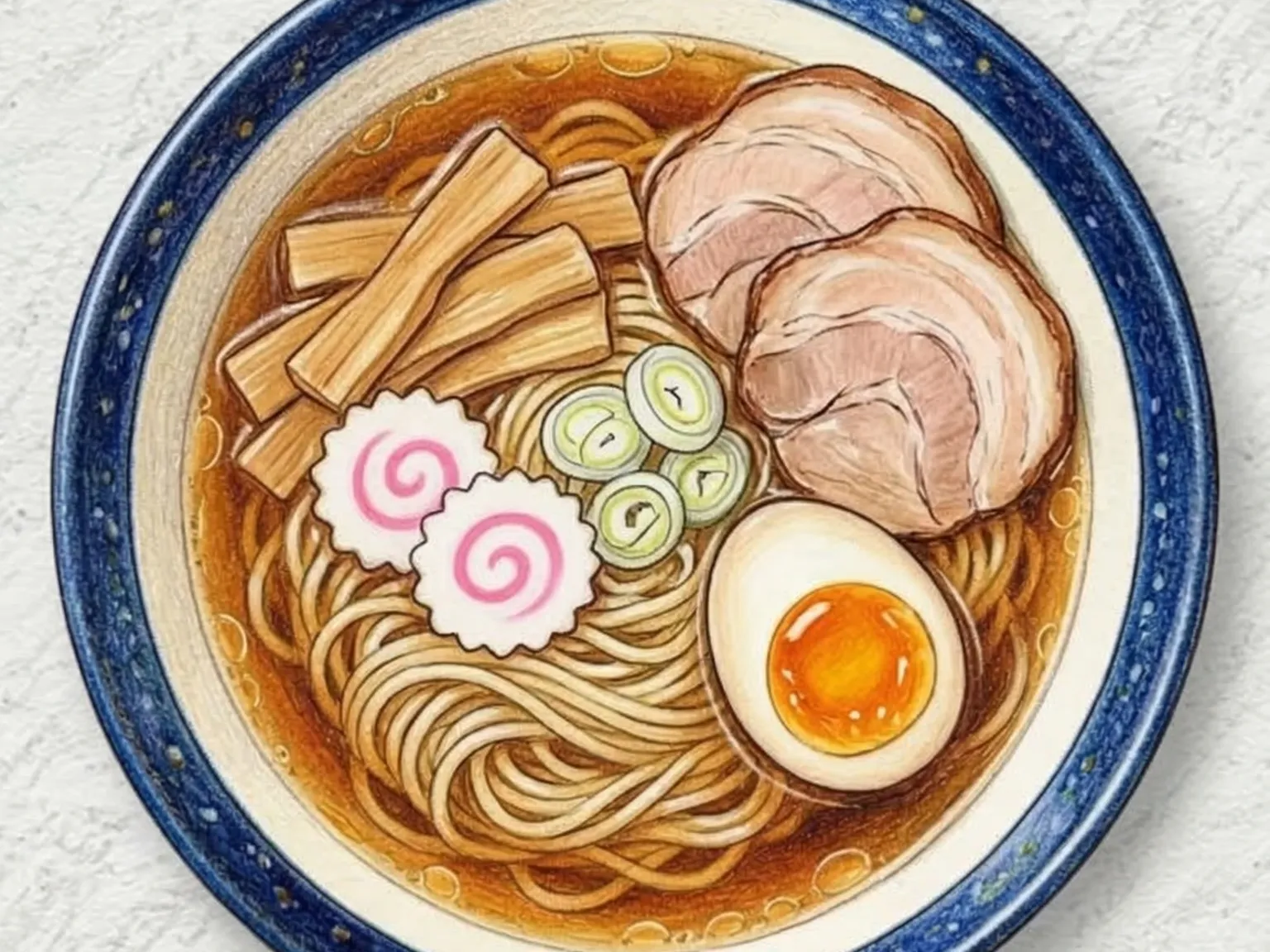
Tokyo-style shoyu ramen is considered the closest descendant of the original ramen that appeared in Japan over a century ago. The broth starts with chicken carcasses simmered until the liquid turns a warm amber, then seasoned with kaeshi - a concentrated blend of soy sauce, mirin, and sugar that has been cooked and rested. A thin film of chicken fat floats on the surface, trapping heat and delivering a gentle richness with each spoonful. The noodles are thin and straight, designed to be slurped quickly before they soften, and their wheat flavor stands distinct against the soy-tinged broth. Classic toppings include narutomaki fish cake with its pink spiral, strips of menma, a halved soft-boiled egg, and a sheet of nori. The bowl is intentionally restrained - no heavy pork fat, no thick miso - letting the clarity of the soy-chicken combination speak for itself.
Korean Konjac Noodle Salad
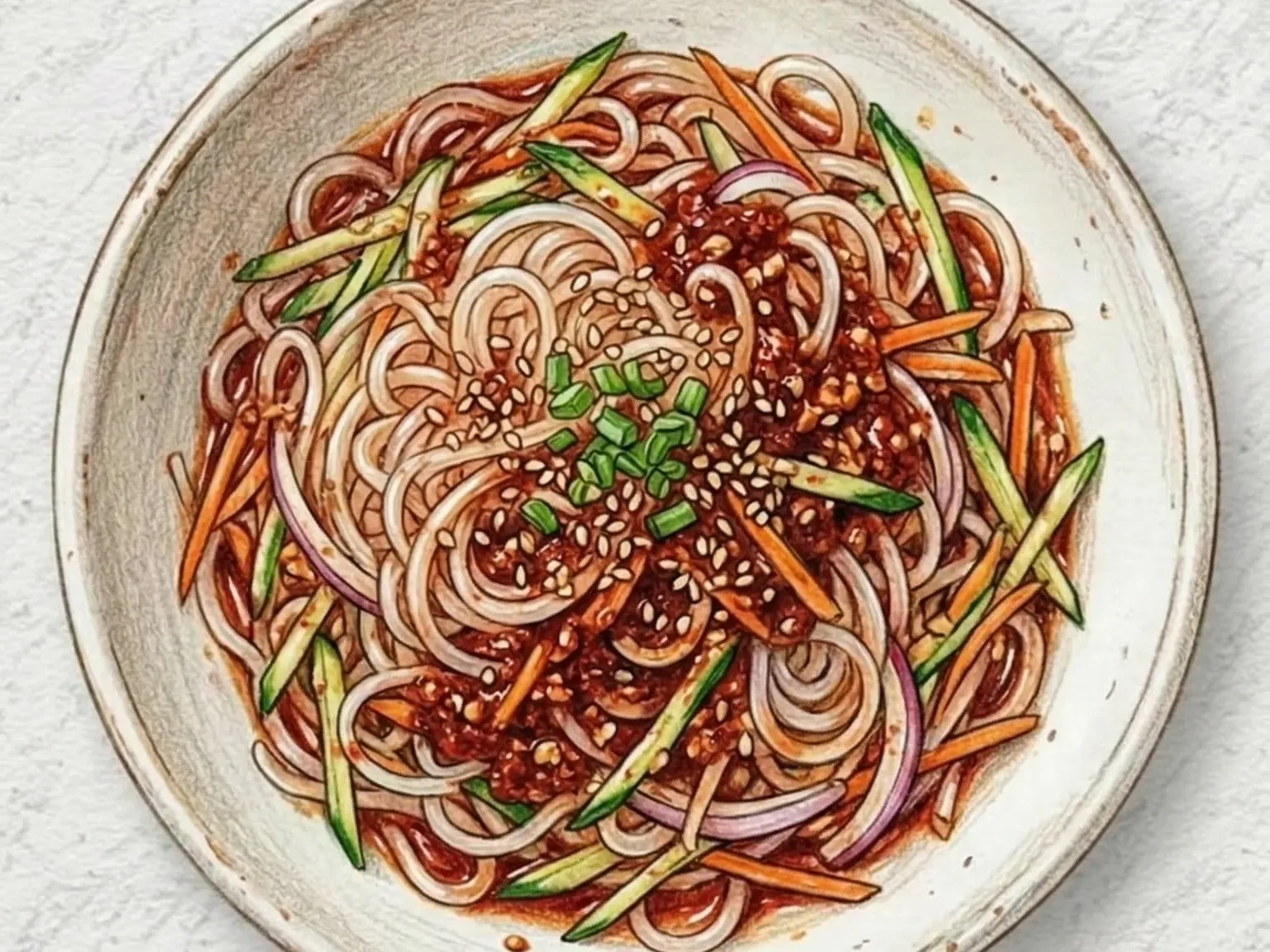
Silgonyak-chae-muchim tosses 250 grams of blanched konjac noodles with julienned cucumber, carrot, and onion in a gochujang-based dressing spiked with vinegar, sugar, soy sauce, and garlic. Blanching the noodles for two minutes removes their faint alkaline smell and softens their rubbery chew to a pleasant springiness. The vegetables provide crisp contrast - cucumber adds a cool snap, carrot a mild sweetness, and onion a sharp bite. The dressing clings to the translucent noodles, turning them a vivid reddish hue. At only 95 calories per serving, this banchan relies on texture and bold seasoning rather than fat for its appeal. Chilling for 10 minutes before serving firms up the noodles and intensifies the tangy-spicy flavor profile.
Singapore Rice Noodles (Curry-Spiced Stir-Fried Vermicelli with Shrimp)
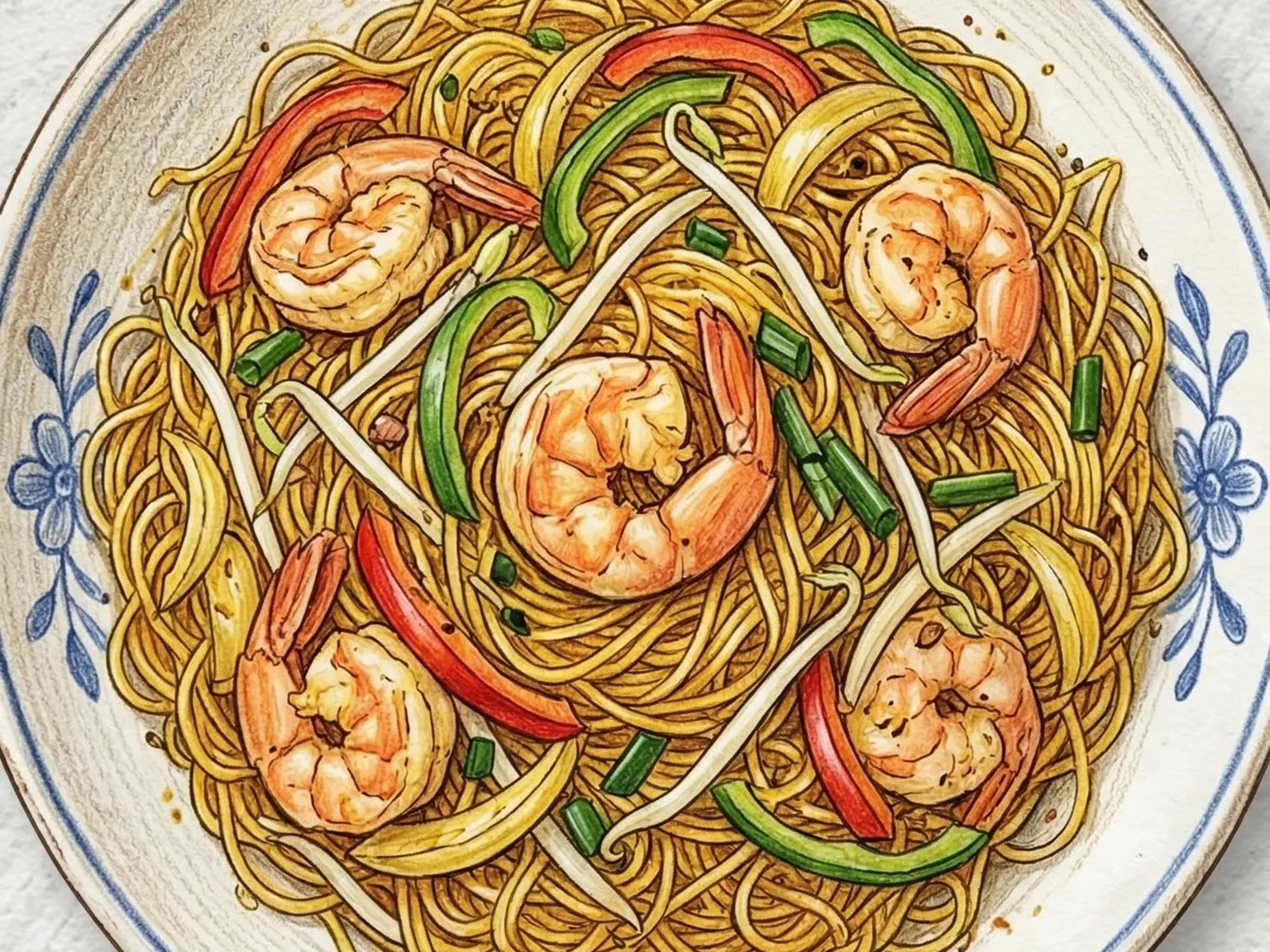
This two-serving stir-fry combines 180 g thin rice vermicelli with shrimp, onion, bell pepper, bean sprouts, and curry powder. Soak the vermicelli in lukewarm water for only 8 minutes, drain it well, and loosen the strands by hand before the pan is heated. A longer soak leaves the noodles fragile enough to break during tossing. Heat the pan over high heat, add the oil, and cook 140 g shrimp only until the outside turns pink so the centers can finish later without becoming firm. Stir-fry the sliced onion and bell pepper for about 1 minute, stopping when the onion edges are slightly translucent. Push the ingredients aside and bloom 2 teaspoons curry powder in the exposed hot oil for about 10 seconds. Add the drained noodles and 1 tablespoon soy sauce, then toss until every strand is evenly yellow. If the vermicelli gathers into a clump, lift and separate it with chopsticks instead of pressing it against the pan. Add 80 g bean sprouts for the final 30 seconds and serve when the shrimp is cooked through, the noodles remain intact, and the sprouts are still crisp.
Korean Dried Radish Greens Doenjang Kalguksu
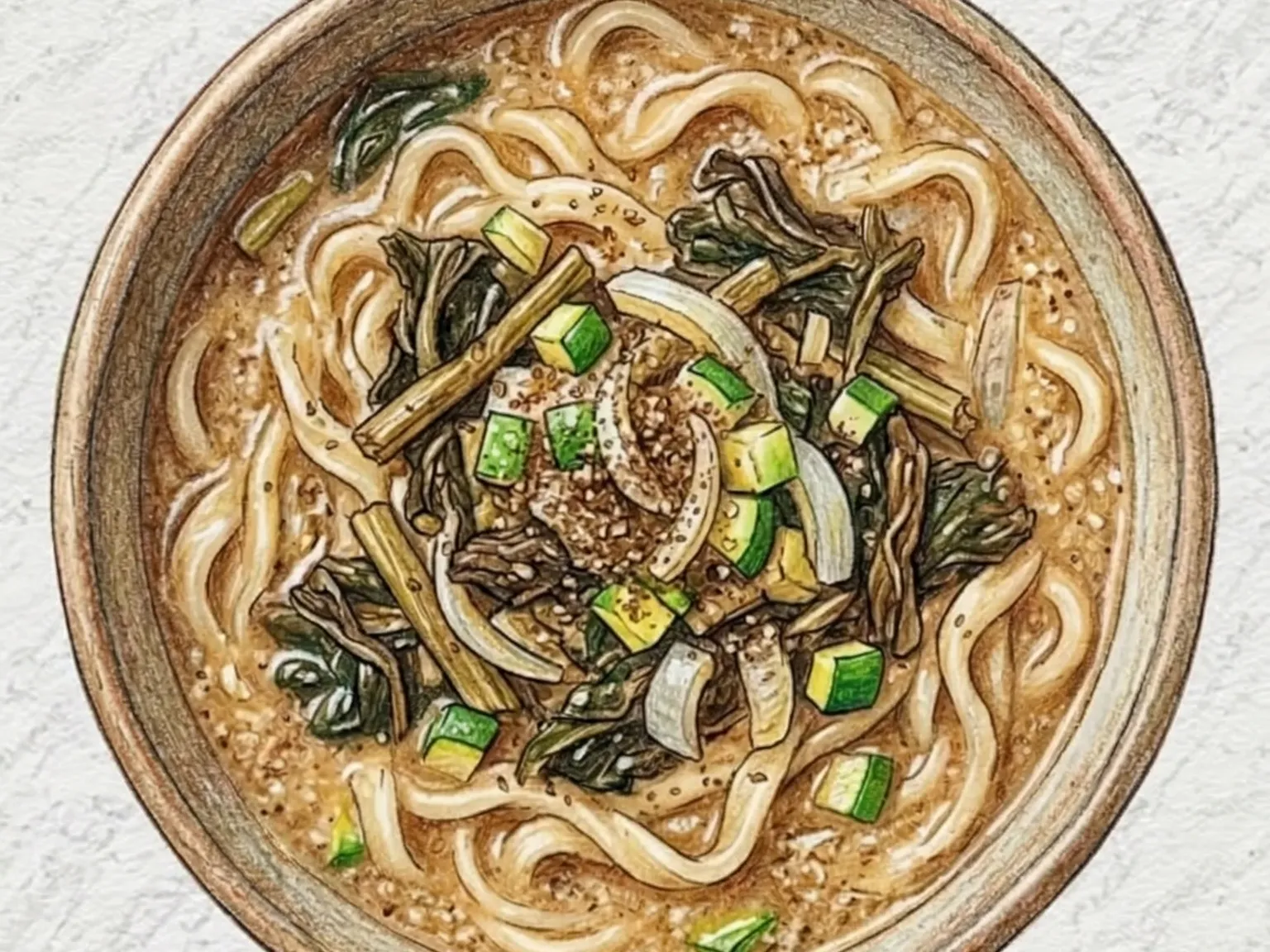
This noodle soup features dried radish greens and soybean paste in a base of anchovy and kelp stock. The fermented soybean paste provides a savory foundation while the radish greens add an earthy bitterness. Adding onion and zucchini during the simmering process introduces a natural sweetness that balances the saltiness of the paste. A spoonful of perilla seed powder at the end gives the broth a toasted, nutty finish. Fresh kalguksu noodles thicken the soup as they cook, taking on a chewy yet soft texture. To ensure a clean taste and better texture, the radish greens are boiled, rinsed in cold water, and squeezed before being added to the pot. Toasting the dried anchovies in the pot before adding water removes any fishy scents from the stock. Since different types of soybean paste vary in saltiness, it helps to add the paste in small increments while tasting. Mixing in a small amount of cheonggukjang provides a stronger fermented character to the finished soup.
Soba Sesame Salad (Chilled Buckwheat Noodle Sesame Dressing)
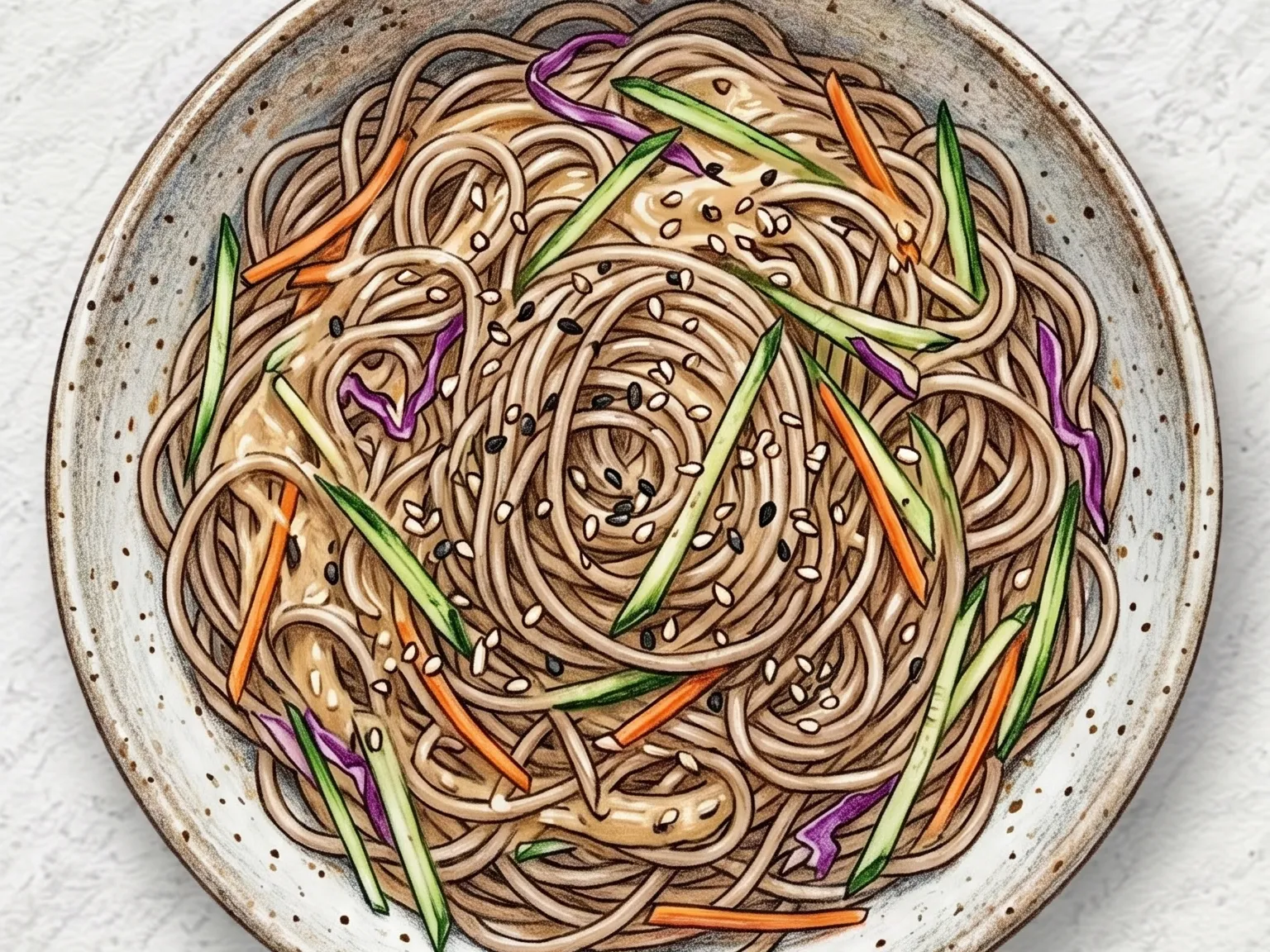
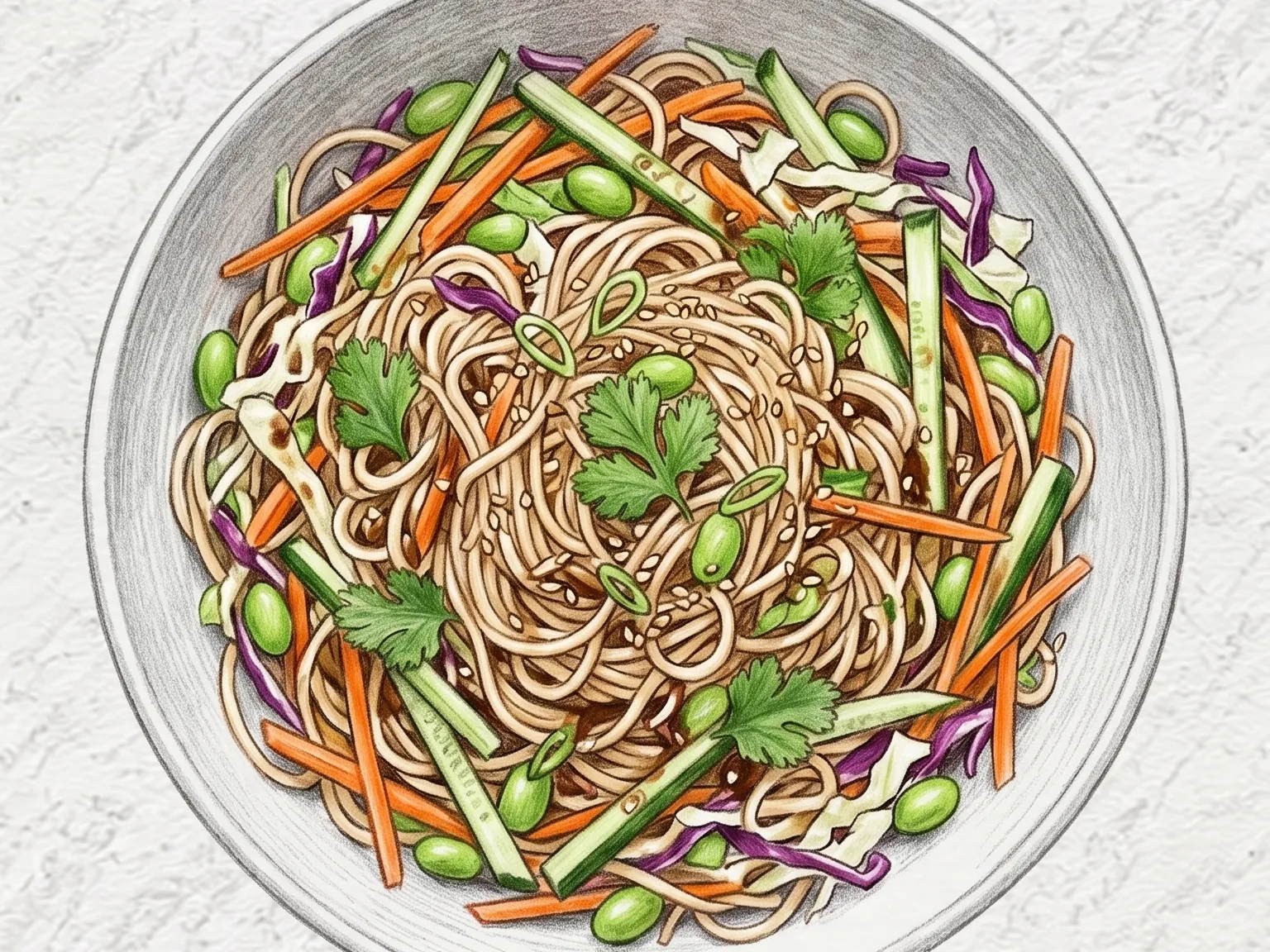
Soba sesame salad tosses thoroughly chilled buckwheat noodles with cucumber, carrot, red cabbage, and a soy and sesame dressing. Cut 100g cucumber, 70g carrot, and 80g red cabbage into thin strips of similar thickness so the vegetables distribute evenly among the noodles. Cook 160g soba in boiling water until tender but still springy. If the foam begins to rise over the pot, lower the heat to medium so the noodles continue cooking without breaking. Immediately rinse the cooked soba in several changes of cold water, rubbing it gently by hand to reduce the slippery surface starch. Drain it in a sieve, shake out water trapped between the strands, and let it cool completely. Rinsing and draining are separate controls: the first cleans and cools the noodles, while the second prevents leftover water from thinning the measured dressing. Mix 1.5 tablespoons soy sauce, 1 tablespoon rice vinegar, 1 teaspoon sesame oil, and 1 tablespoon sesame seeds before combining the salad. Stir until the seeds are distributed throughout the liquid. Just before serving, place the cold noodles and vegetables in a large bowl, pour over the dressing, and toss lightly. Serve as soon as each strand and strip of vegetable is thinly coated rather than leaving the noodles to sit in the liquid. Thorough cold rinsing followed by complete draining is the central sequence for keeping the noodles separate and the dressing at its intended concentration.
Korean Beef Japchae (Soy-Marinated Beef Glass Noodle Stir-Fry)
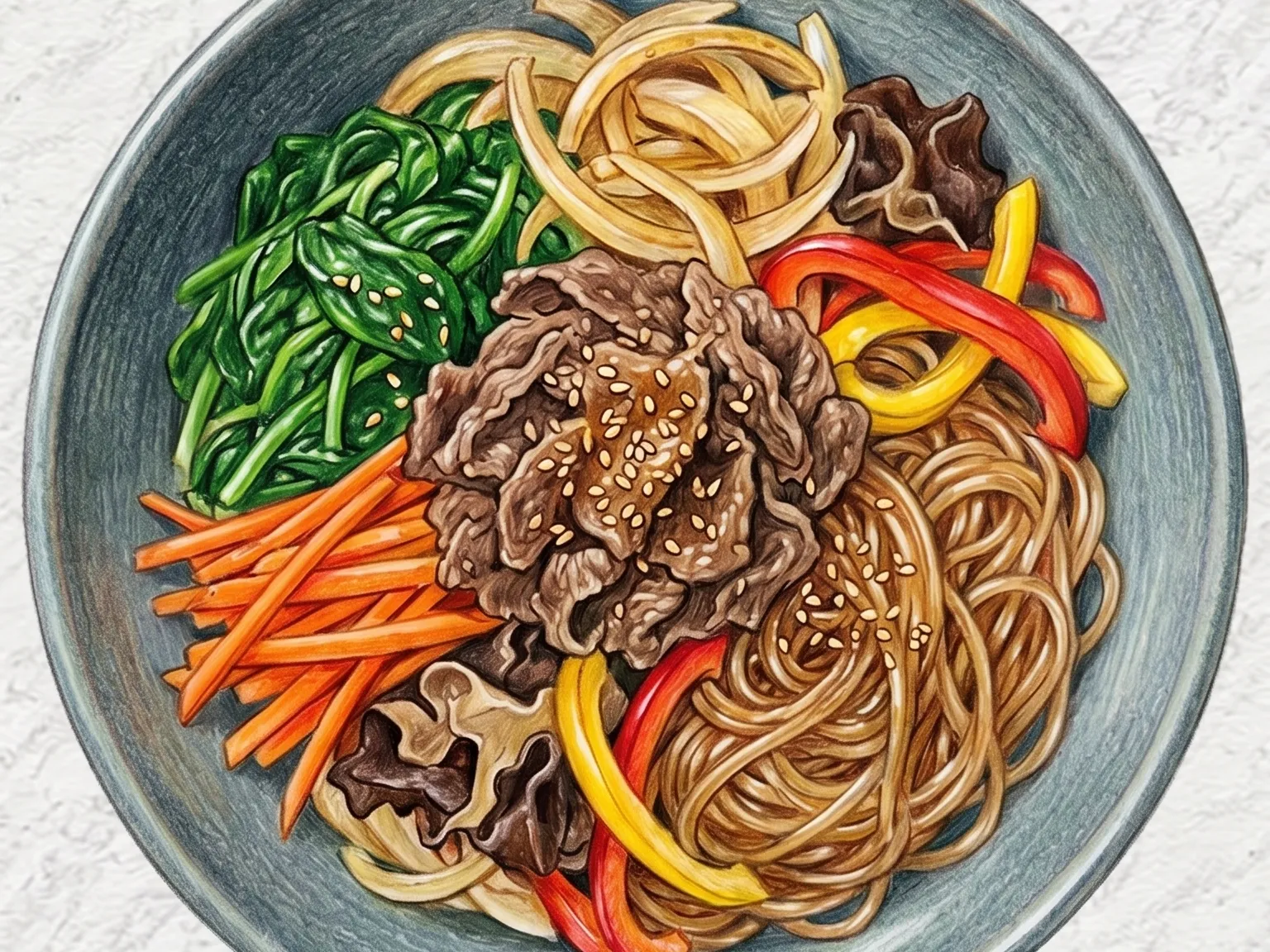
Sogogi japchae is a Korean stir-fried noodle dish made with sweet potato glass noodles, soy-marinated beef strips, and an assortment of individually prepared vegetables. Spinach is blanched, carrots and onions are julienned and stir-fried separately, and each component is combined at the end to preserve its distinct color and texture. The noodles are soaked rather than fully boiled, then finished in the pan so they stay chewy instead of mushy. Soy sauce, sugar, and sesame oil form the seasoning base, giving the dish its characteristic sweet-savory balance.
Soto Ayam (Indonesian Golden Turmeric Chicken Noodle Soup)
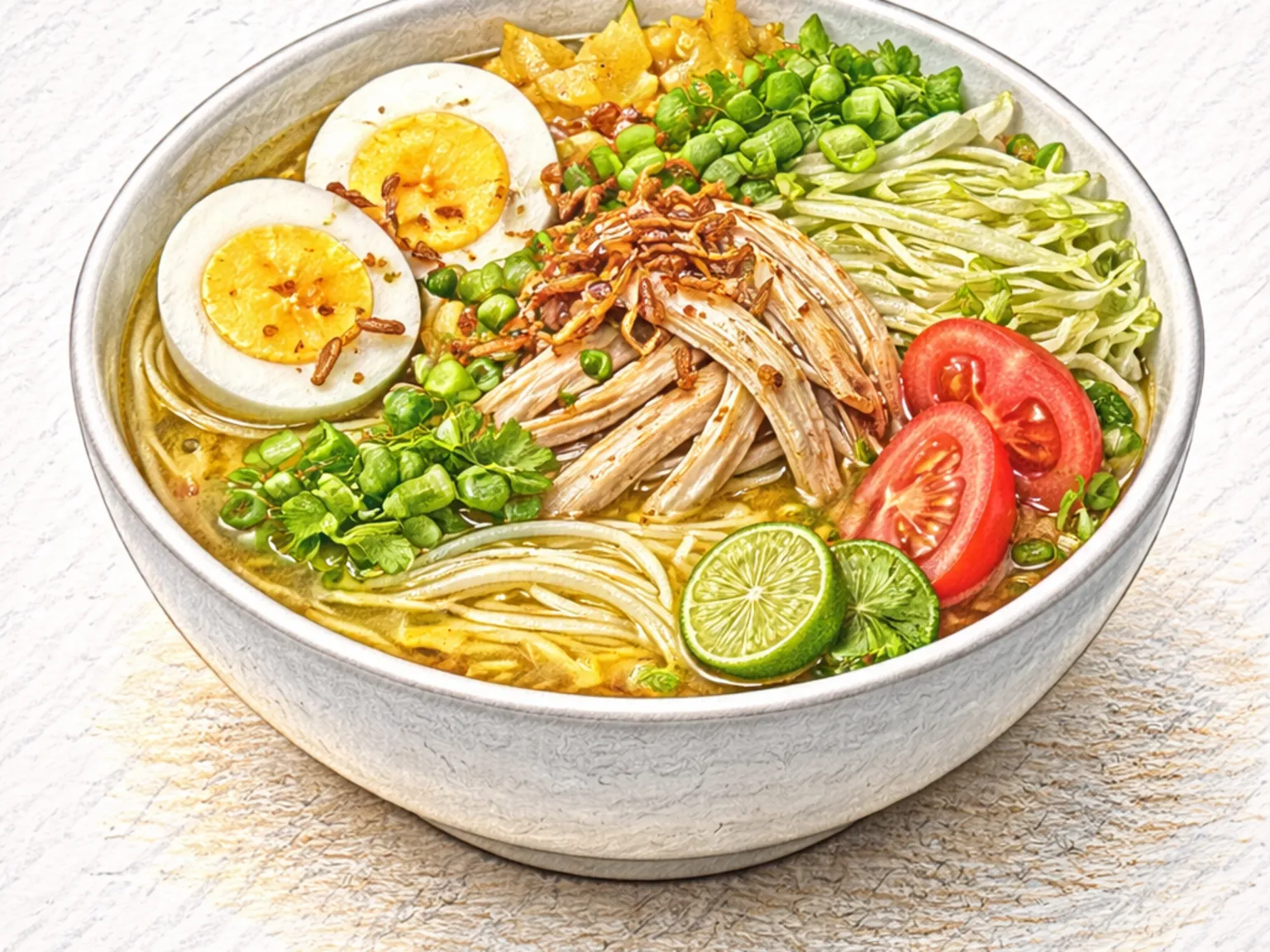
Soto ayam is Indonesia's beloved chicken soup, recognizable by its vivid golden broth colored with turmeric. The flavor base is a paste of garlic, turmeric, and galangal, fried until fragrant and then simmered with chicken pieces and lemongrass stalks for at least thirty minutes to build a deeply aromatic stock. The chicken is removed, shredded by hand, and returned to the bowl along with rice noodles, halved boiled eggs, and a handful of fresh bean sprouts. Each component adds its own texture-the silky noodles, the springy sprouts, the tender chicken-while the broth ties everything together with its warm, earthy spice profile. A squeeze of lime at the table brightens the bowl and lifts the heavier notes of galangal and turmeric. Soto ayam appears at breakfast stalls, family dinners, and celebrations across the Indonesian archipelago.
Oriental Soy Protein Noodle Salad
This noodle salad features soy protein noodles served with shredded chicken breast and fresh vegetables in a light soy-based dressing. The noodles require no boiling, only a quick rinse in cold water and thorough draining to preserve their springy texture. Chicken breast is boiled for eight minutes, cooled, and shredded along the grain to maximize dressing absorption. Thinly sliced cucumber, red bell pepper, and baby greens are arranged over the noodles. The dressing is prepared by mixing soy sauce, vinegar, olive oil, garlic, and allulose, which provides a clean sweetness without the weight of sugar. Drizzled right before eating and tossed lightly, this salad tastes best when chilled for ten minutes to enhance the firmness of the noodles.
Crown Daisy & Mung Bean Noodle Salad
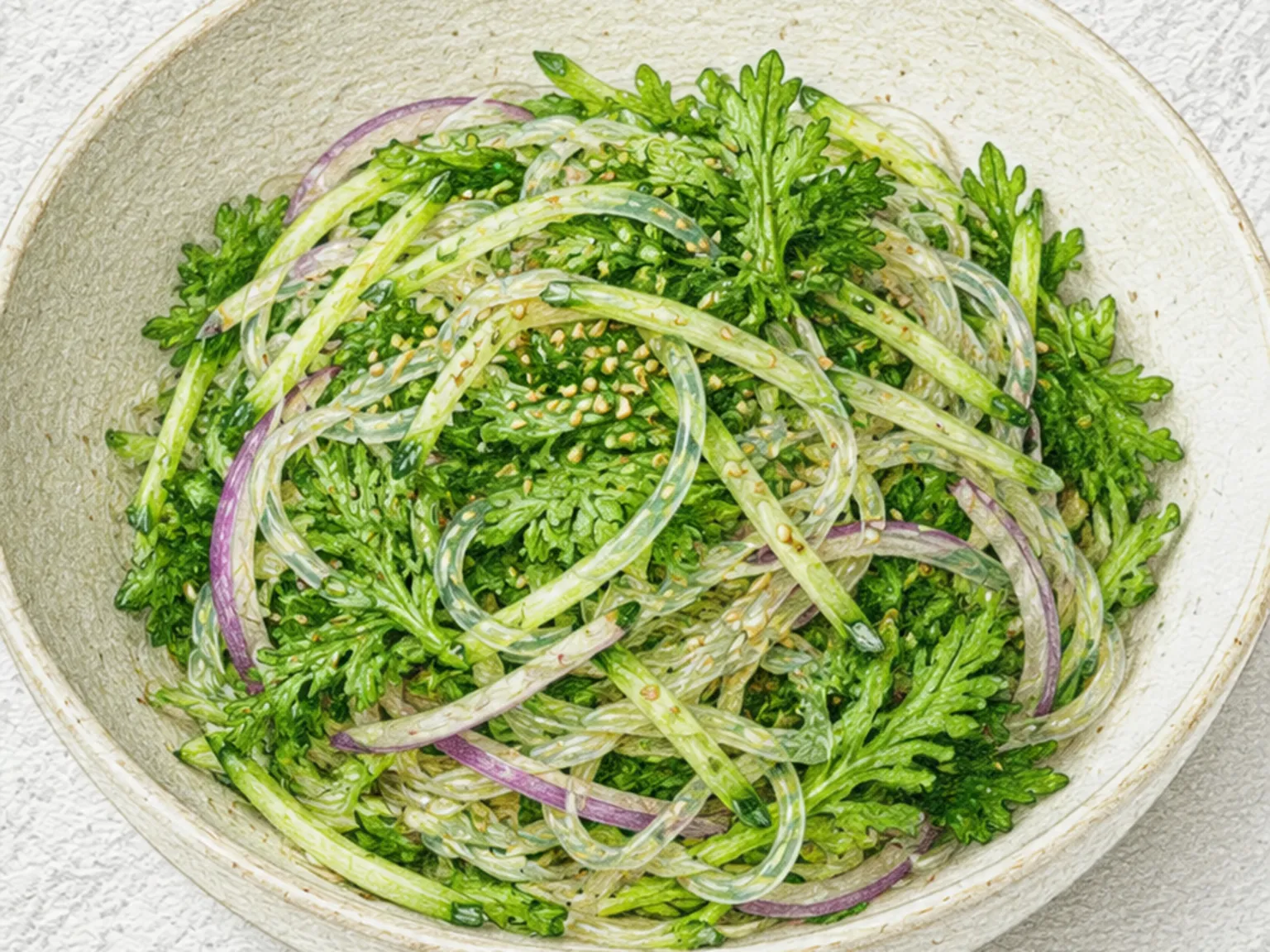
Crown daisy and mung bean noodle salad tosses soaked and boiled glass noodles with crown daisy, cucumber, red onion, and a dressing of soy sauce, vinegar, plum syrup, and sesame oil. Soak 70g mung bean glass noodles in cold water for 10 minutes, until flexible. While they soak, remove wilted leaves and thick sections from 80g crown daisy, rinse it, and cut it into 4cm lengths. Julienne 80g cucumber into thin strips that are easy to lift with the noodles. Slice 40g red onion thinly, soak it in cold water for 5 minutes, and drain it thoroughly. Add the soaked noodles to boiling water and cook over medium heat for about 5 minutes. Lift them out when they are translucent with a little chew remaining, then rinse immediately in cold water to stop the residual cooking. Shake out water trapped between the strands in a sieve. Thorough draining prevents that water from diluting the dressing and reduces rapid clumping. In a large bowl, mix 1.5 tablespoons soy sauce, 1 tablespoon vinegar, 1 tablespoon plum syrup, and 1 teaspoon sesame oil until the syrup is evenly dispersed. Add the drained noodles, crown daisy, cucumber, and onion. Toss gently with chopsticks or tongs so the noodles do not break. Sprinkle 1 tablespoon toasted sesame seeds over the salad at the end and serve before the vegetables begin releasing water. Avoiding overcooked noodles and draining them fully after rinsing are the main controls for the finished consistency.
Korean Ssukgat Perilla Bibim Somyeon
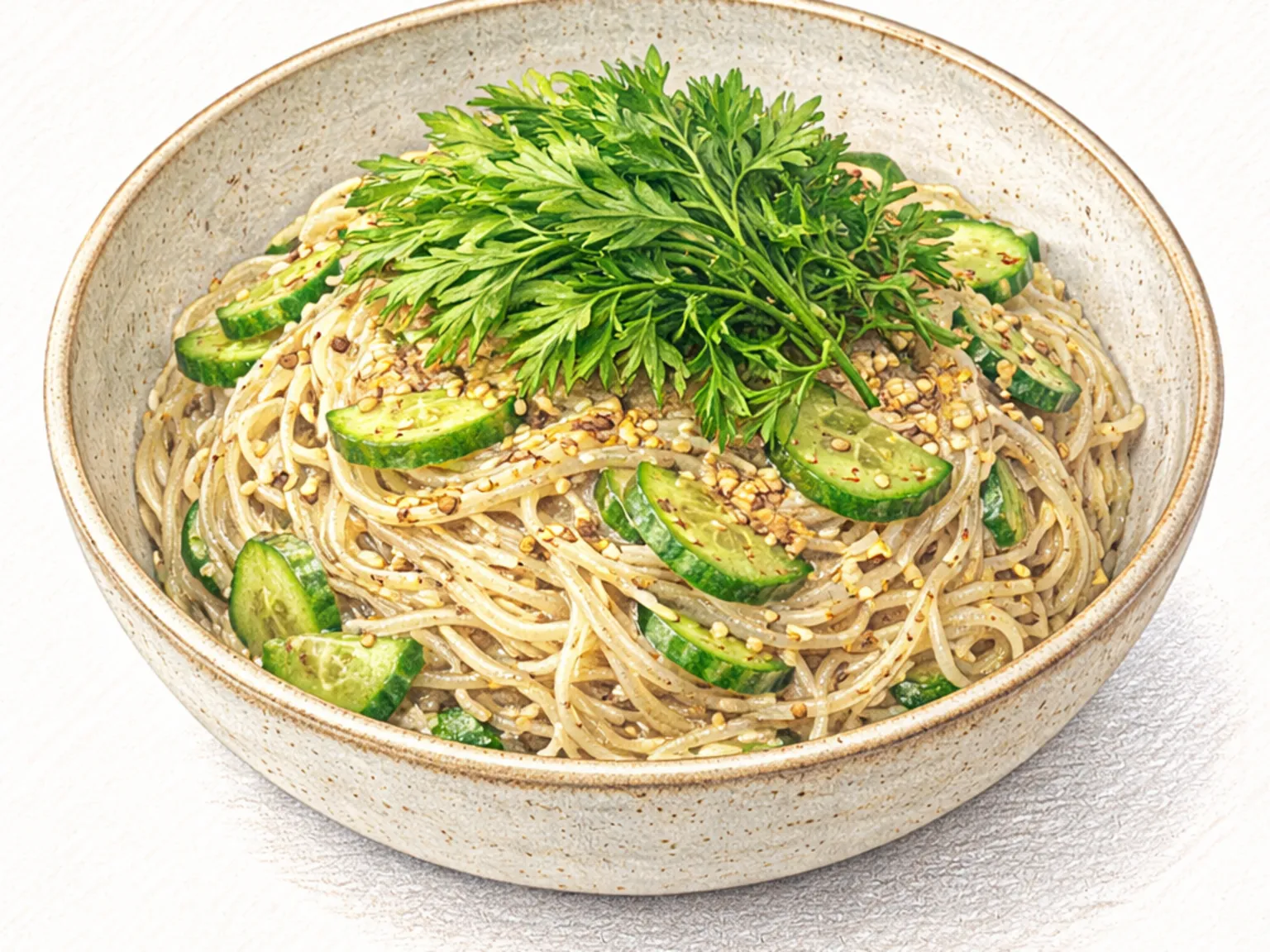
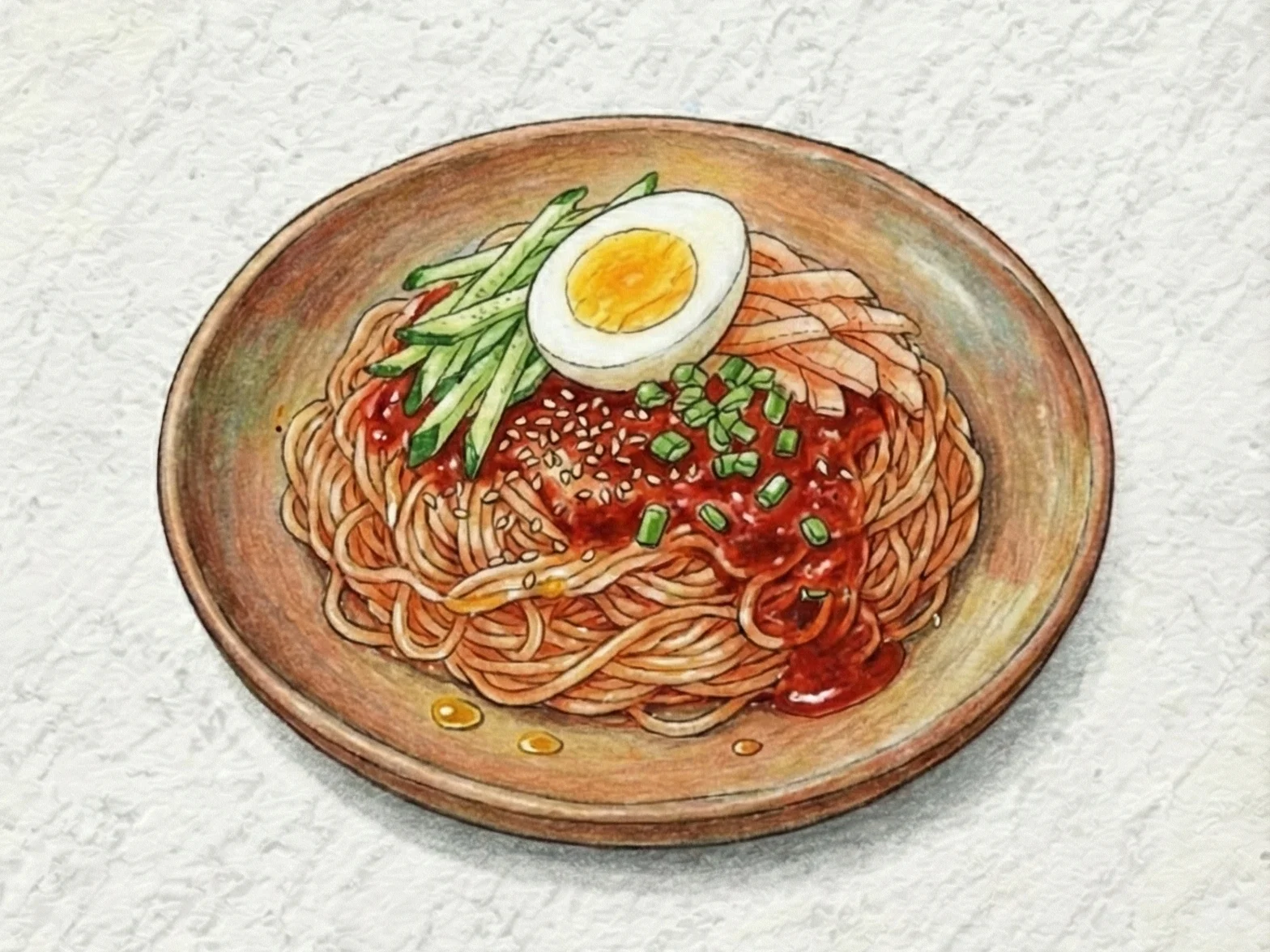
Ground perilla seeds create a nutty foundation for this cold noodle dish, while crown daisy leaves contribute a distinctive herbal bitterness. Thin somyeon noodles serve as the base, tossed in a savory dressing made from soy sauce and freshly ground perilla seeds. Julienned cucumber adds a crisp texture and freshness that contrasts with the soft strands. Preparing the noodles involves boiling and rinsing them multiple times in cold water to build elasticity and remove surface starch. Ensuring the noodles are dry prevents the sauce from thinning out during mixing. Using seeds that are toasted and ground just before serving heightens the aromatic quality of the bowl. The entire preparation takes approximately twenty-five minutes, making it an efficient option for warm weather. It lacks the heat typically associated with spicy noodles, making it approachable for newcomers. Adding chili oil provides a spicy kick for variety, or the dressing can be paired with buckwheat noodles instead. Any remaining sauce functions effectively as a topping for tofu or fresh garden salads.
Tara no Ko Iri (Akita Cod Roe with Shirataki)
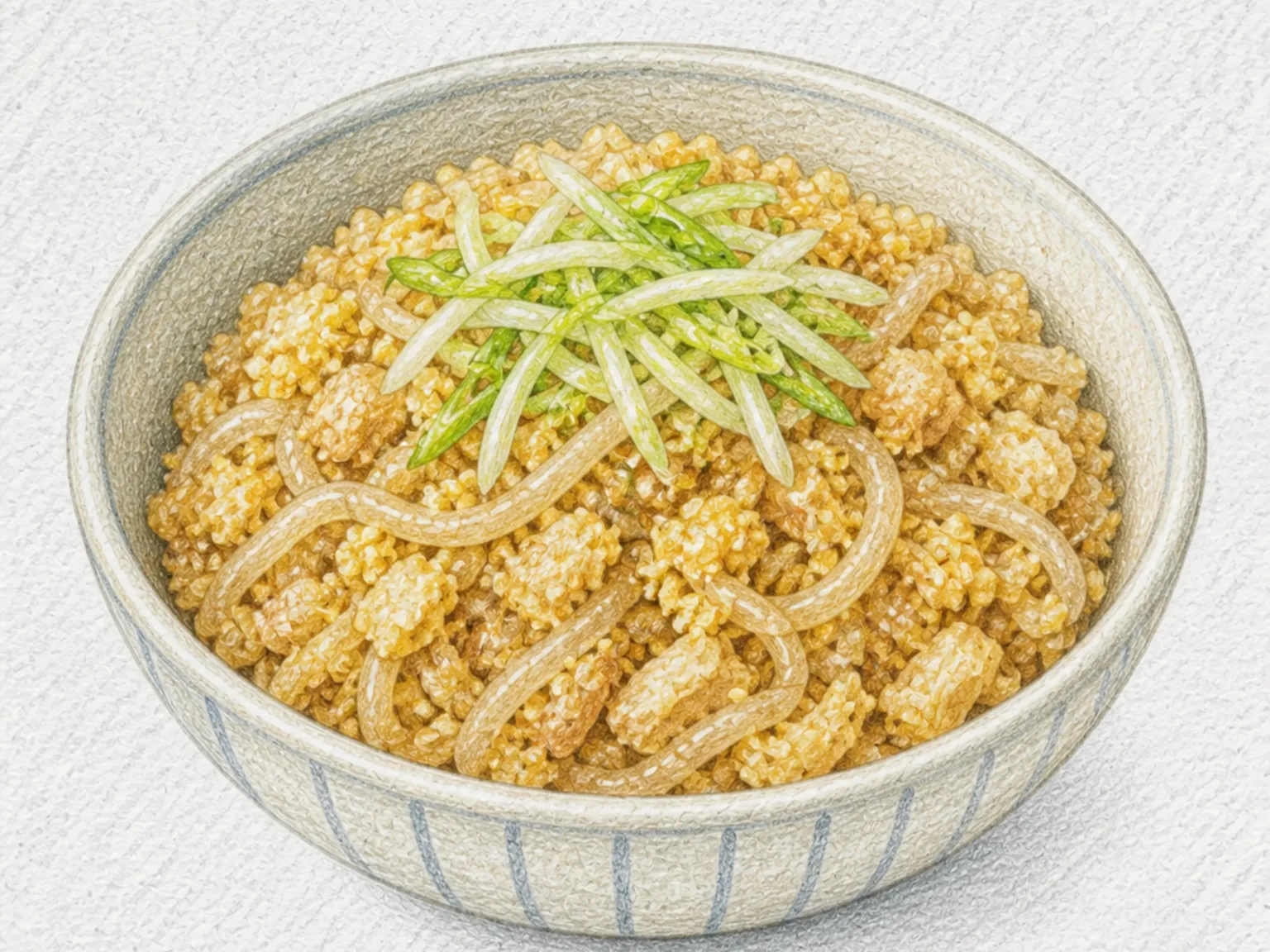
Tara no ko iri is a winter dish from Akita's Sea of Japan coast. Shirataki simmers in water seasoned with soy sauce, sake, mirin, and sugar before raw Pacific cod roe is squeezed from its sac into the bubbling liquid and reduced. The roe separates into coarse grains that cling to the noodles; the sac may also be cut up and included for a firmer accent. Fine white strips of long onion finish the dish. In Akita, tarako in this context means the roe of Pacific cod rather than the pollock roe commonly sold under that name elsewhere. It is served as a winter make-ahead side dish, with rice, or alongside sake, and its many eggs made it an auspicious New Year food associated with hopes for children.
Suanlafen (Sichuan Hot-and-Sour Sweet Potato Noodle Soup)
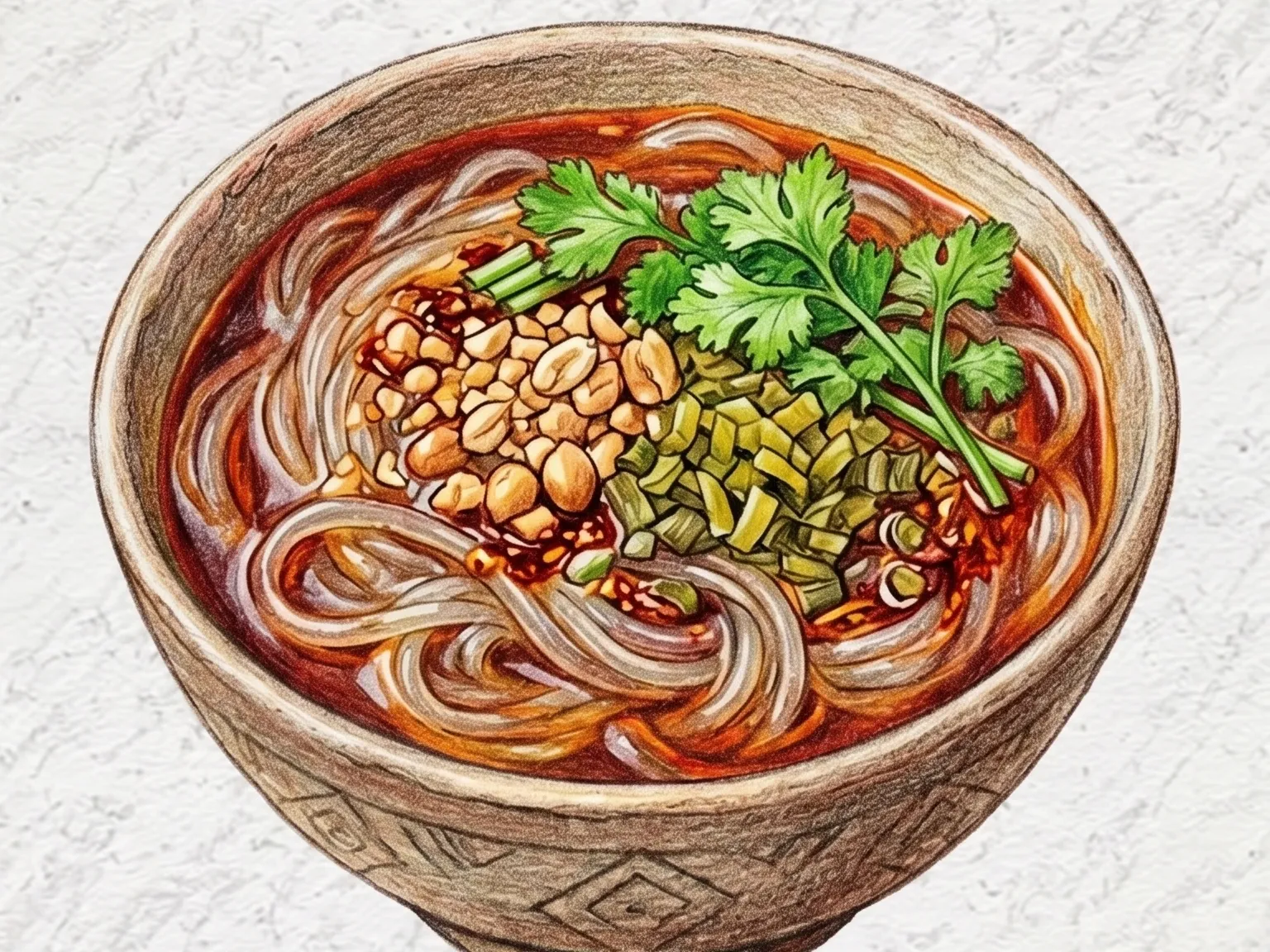
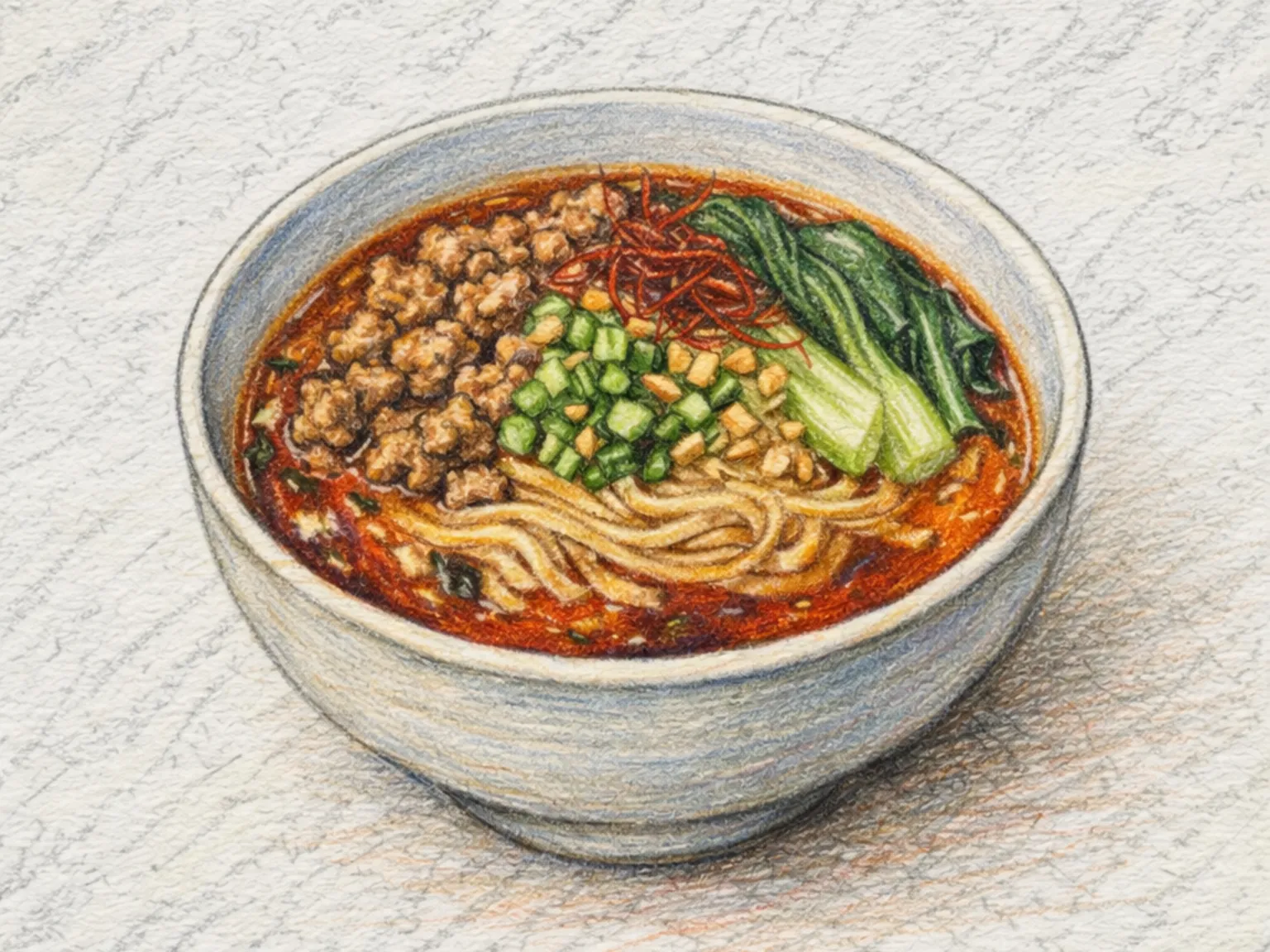
This hot-and-sour noodle soup serves two with 180 g sweet potato noodles, 800 ml chicken stock, black vinegar, chili oil, bok choy, and peanuts. Soak the noodles in lukewarm water for 10 minutes, loosen any stuck strands by hand, and drain them well. Separate 80 g bok choy into manageable leaves and stems, and coarsely crush 30 g peanuts, keeping them aside so they stay crisp. Bring the stock to a boil over medium-high heat, add 1 tablespoon soy sauce and 1 teaspoon minced garlic, and simmer for 2 minutes. Add the drained noodles and cook over medium heat for about 3 minutes, stirring from the bottom to prevent sticking. Once the strands turn translucent, add the bok choy and continue for 1 to 2 minutes, just until the stems soften slightly and the leaves remain bright. Lower the heat as soon as a noodle feels springy without a hard center. Divide the soup between bowls, add 2 tablespoons black vinegar in stages to control the sourness, drizzle with 2 tablespoons chili oil, and finish with the crushed peanuts.
Korean Soft Tofu Noodle Soup
This mild noodle soup serves two with 180 g knife-cut wheat noodles and 200 g silken tofu in 900 ml anchovy stock. Bring the stock to a steady boil and season it with 1.5 tablespoons Korean soup soy sauce, 0.5 tablespoon minced garlic, and 0.5 teaspoon salt. Soften the raw garlic aroma with about 1 minute at medium heat. Add thin half-moons of zucchini and cook them for 2 minutes, moving on while their edges are just translucent and their green color remains clear. Scatter the loosened noodles into the pot rather than dropping them in as one mass. Stir during the first minute so they do not attach to the bottom. Keep the pot at medium-high heat and check the noodle centers after 5 minutes, finishing within 7 minutes as soon as they are tender. Spoon the silken tofu into the soup in large pieces only after the noodles are done and warm it over low heat for 1 minute. Minimal stirring keeps those pieces from breaking into small curds. Add green onion and 0.5 teaspoon sesame oil at the end, and serve as soon as their aroma rises from the broth.
Suttate (Chilled Sesame Miso Udon)
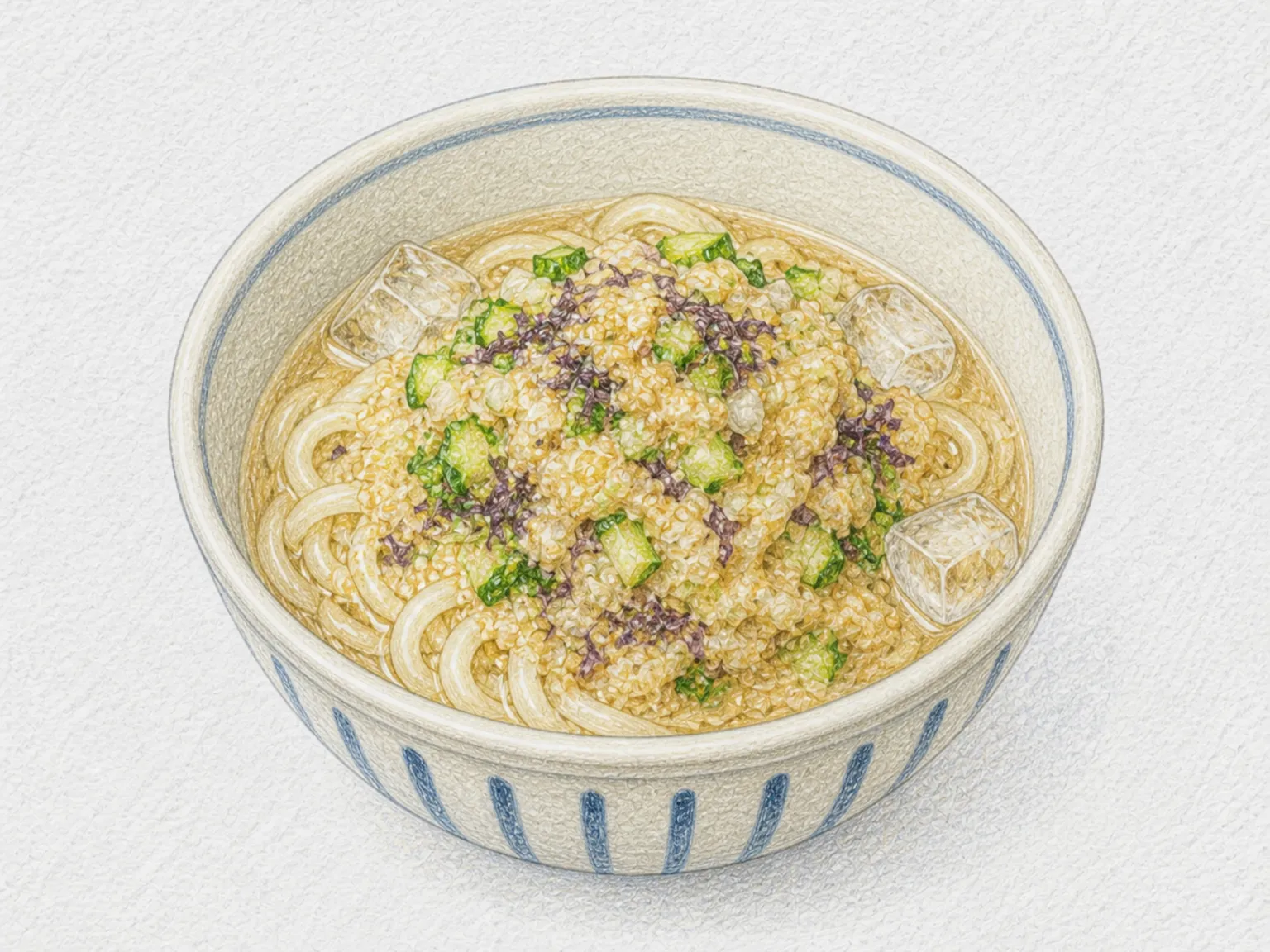
Suttate is a summer udon dish from Kawajima in Saitama. Golden sesame, rice miso, onion, shiso, and cucumber form a chilled dipping broth that is served separately from the noodles. For two portions, put 27g golden sesame seeds in a cold pan and toast them over high heat for about 30 seconds while shaking constantly. Transfer them to a mortar as soon as they begin to pop, then grind until fine and oily. Removing the seeds promptly keeps them from scorching and turning bitter. Work 50g finely chopped onion, five chopped shiso leaves, and 36g rice miso into the ground sesame. Add 50g thinly sliced cucumber and bruise it lightly with the pestle so its juice and aroma enter the paste. Gradually pour in 360ml cold bonito dashi, dissolving the thick miso mixture before refrigerating the broth. Cook 250g udon for the time on its package, rinse it several times in cold water, gently rub away the surface starch, and drain thoroughly. Divide the chilled noodles and broth between two servings. Add 60g ice to each individual broth bowl just before eating and dip the udon into it. Keeping the ice out of the full batch prevents the remaining broth from becoming diluted.
Rokubei (Extruded Sweet Potato Noodles)
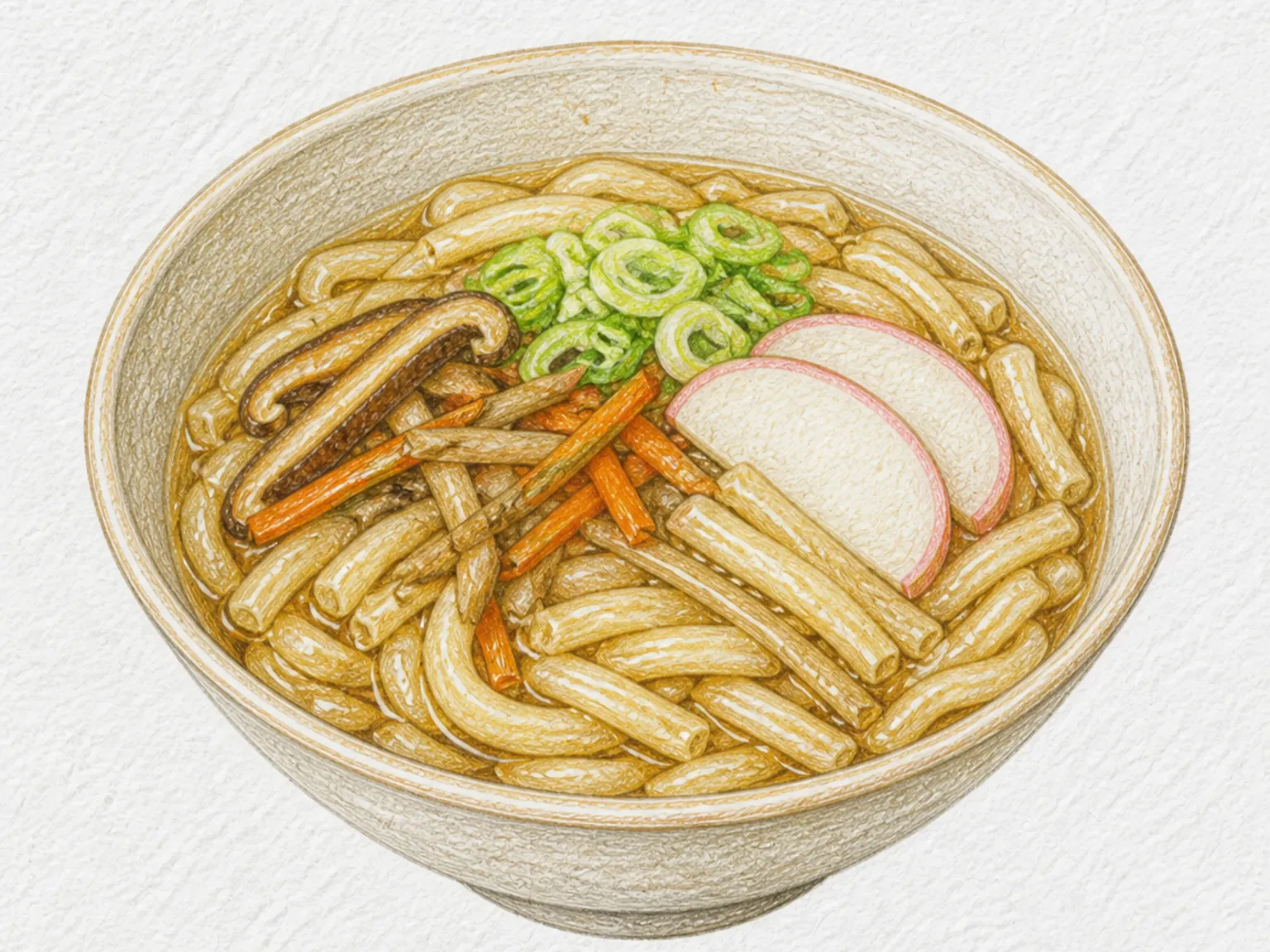
Rokubei is a sweet-potato noodle dish passed down since the Edo period in Shimabara and Tsushima, Nagasaki Prefecture. Sendango, made from the local preserved sweet-potato product called sen, is crumbled and kneaded with warm water. The smooth dough is formed into softball-size balls, briefly boiled, broken apart, and kneaded again. Small portions are pressed through the holes of a rokubei-segi directly into boiling water, producing short, thick strands rather than long wheat noodles. After the pot returns to a boil, the noodles cook for 2 to 3 minutes, then are cooled and rinsed to remove surface harshness. A clear soup is made with burdock, carrot, rehydrated shiitake, dashi, sake, light soy sauce, dark soy sauce, and salt. The drained noodles are served in the soup with sliced kamaboko and green onion, giving a smooth exterior, chewy center, and faint sweet-potato taste.
Kumamoto Tai Somen
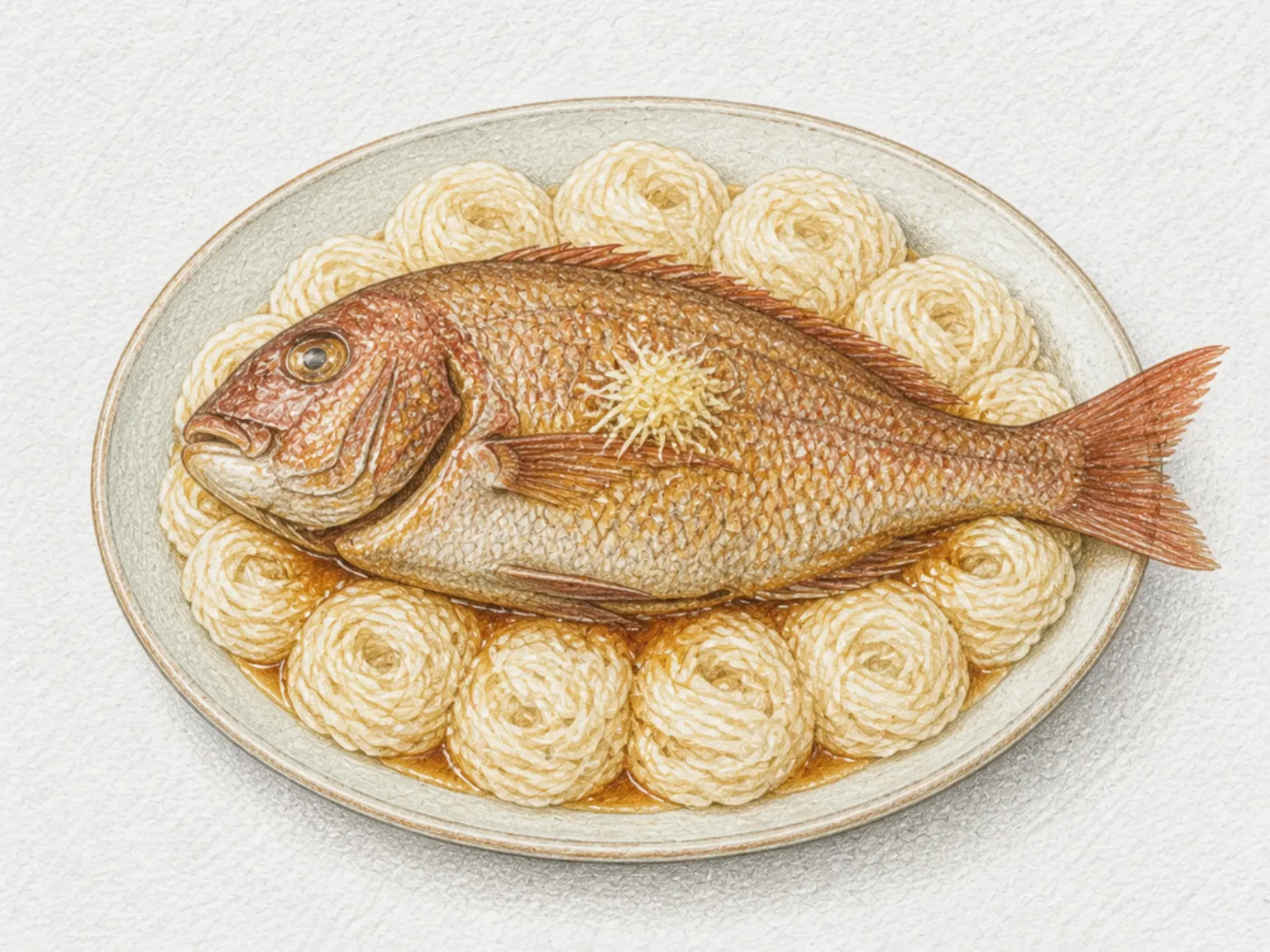
Kumamoto tai somen is a celebration platter with a whole red sea bream simmered intact in light and dark soy sauces, akazake, sake, and aromatics, surrounded by bite-size coils of rinsed somen. Amakusa has a practical form using the head and bones left after sashimi, while Mamihara in Yamato preserves the grand wedding form with a whole fish and noodles arranged like white waves. The paired fish and long noodles expressed hopes for a lasting marriage and ties between two families. Just before serving, ample fish braising liquid is spooned over the noodles so they absorb its savory flavor without sitting long enough to become soft.
Taipiien (Kumamoto Glass Noodle Soup)
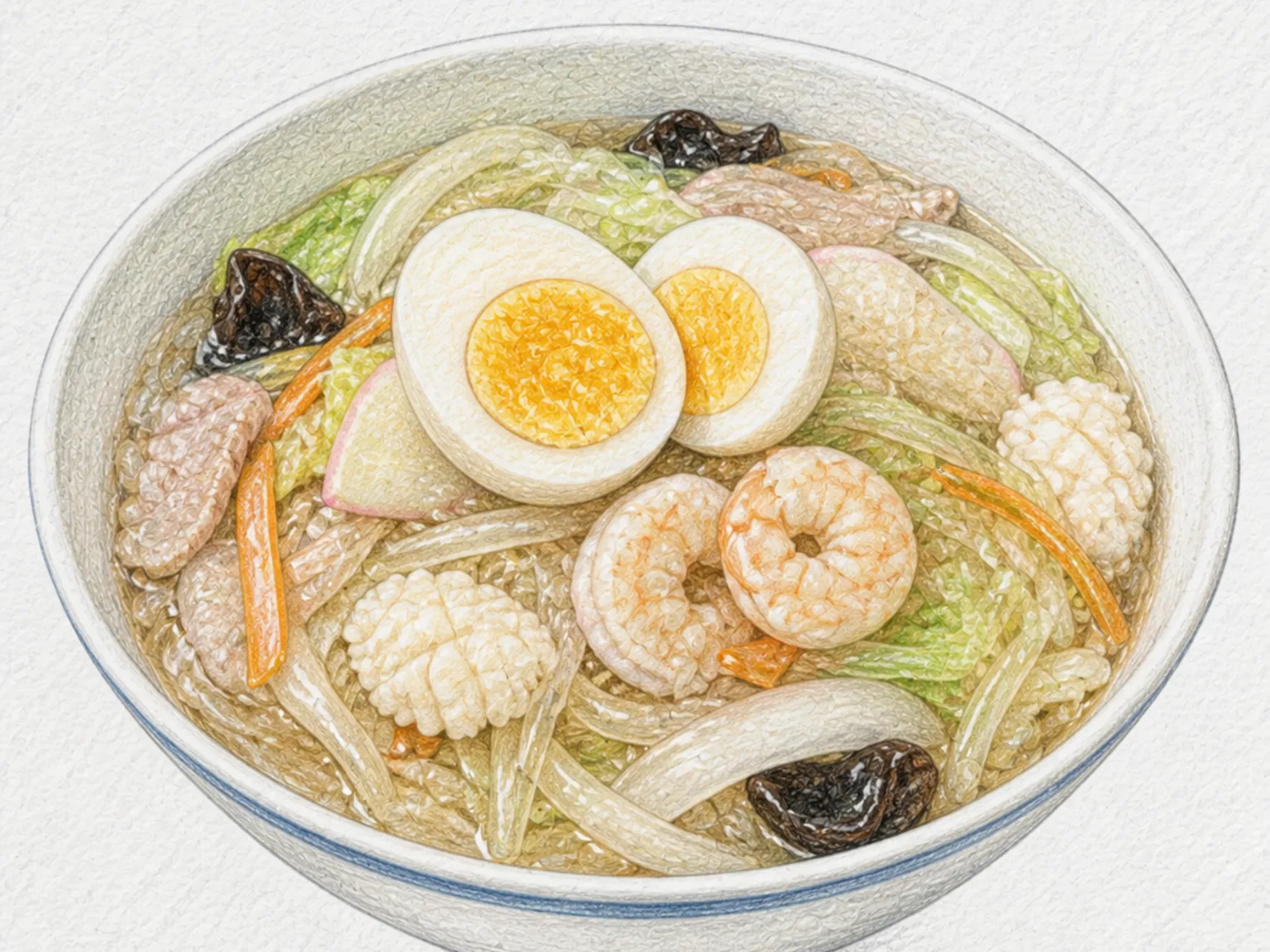
Taipiien is a substantial glass noodle soup served in Chinese restaurants and homes across central Kumamoto. Ginger, pork, onion, carrot, wood ear, and napa cabbage are stir-fried before shrimp, squid, and kamaboko join a clear chicken broth. Separately boiled glass noodles are cut to an easy length and warmed in the soup, which is finished with light soy sauce, green onion, and sesame oil. A firm hard-boiled egg cut in half tops each bowl. The dish traces its roots to celebratory soup from Fuzhou in China's Fujian Province, brought through Nagasaki to Kumamoto in the late Meiji period and adapted with local ingredients.
Taiwanese Beef Noodle Soup
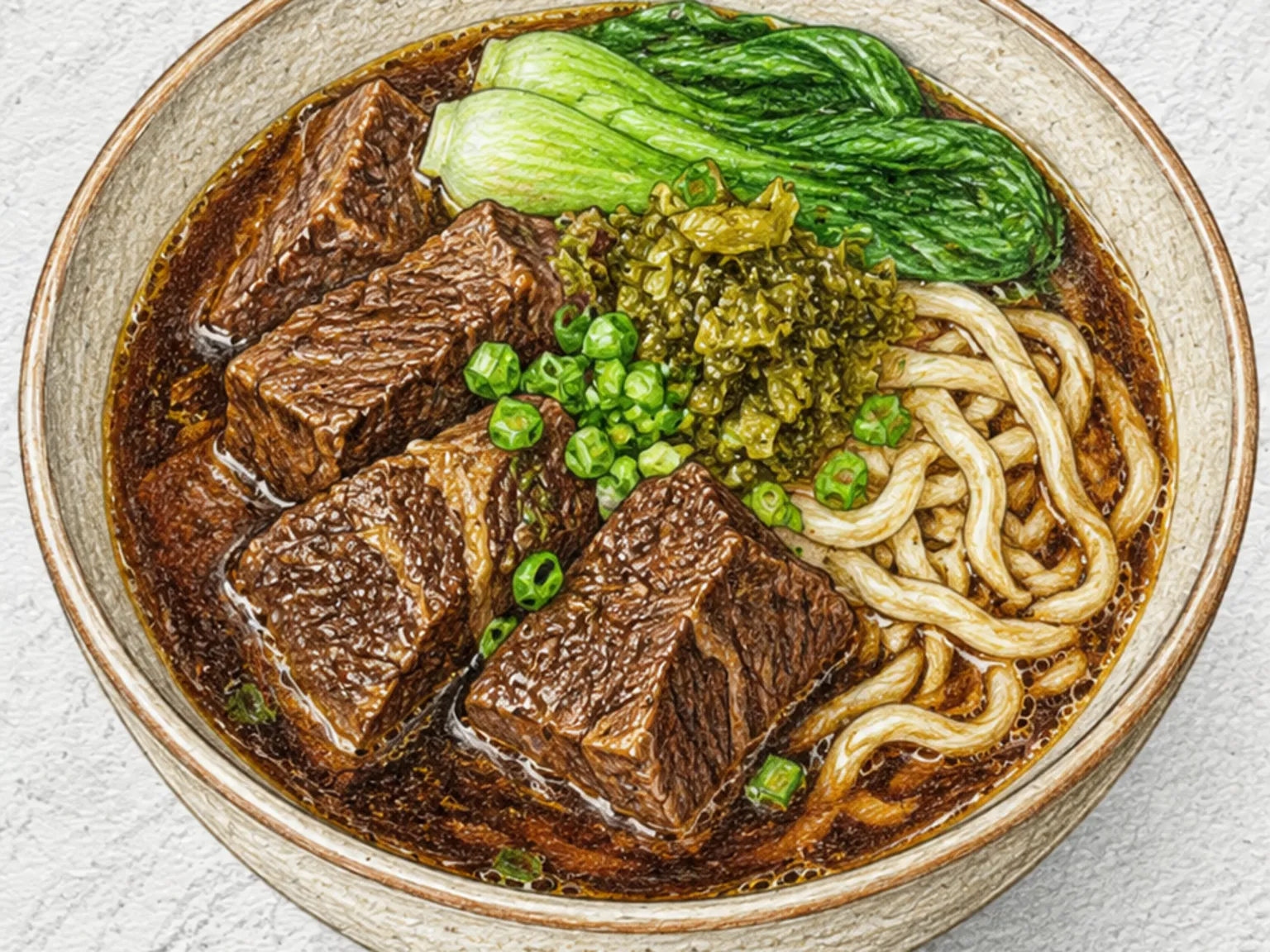
Taiwanese beef noodle soup slow-braises beef brisket in a soy-based broth seasoned with doubanjiang, star anise, cinnamon, and Sichuan peppercorns. The minimum 90-minute simmer renders the meat fork-tender while building a deeply layered broth. Thick wheat noodles are served in the finished broth, soaking up its concentrated flavor. Spice level is adjustable by varying the amount of doubanjiang. Common garnishes include pickled mustard greens and blanched bok choy, adding brightness to the rich bowl.
Japanese Dan Dan Ramen (Sesame Cream Broth with Spicy Pork)
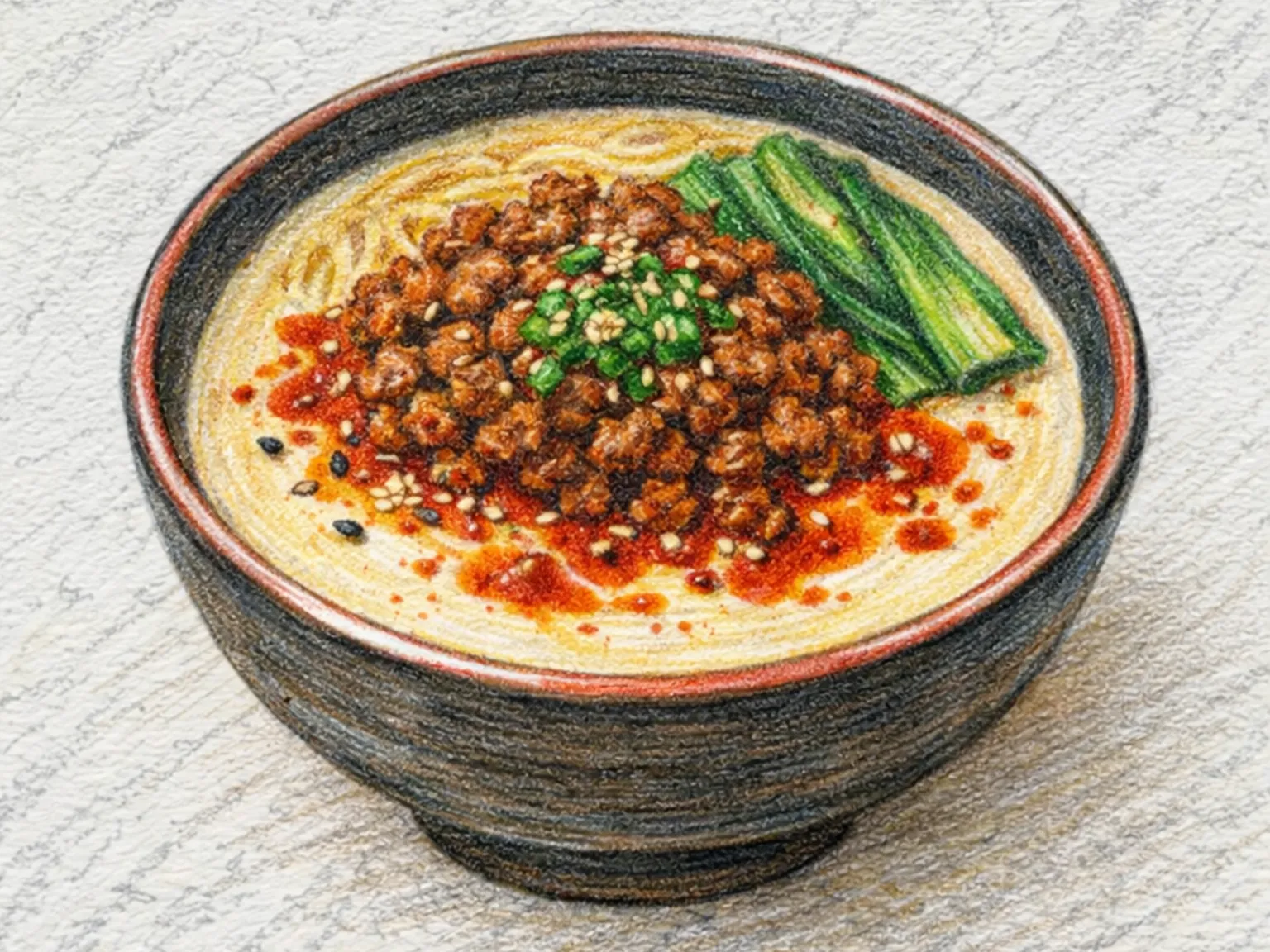
Tantanmen is the Japanese adaptation of Sichuan dan dan noodles, served as a ramen with a thick sesame-cream broth. Ground pork is stir-fried with doubanjiang and spooned over the bowl along with chili oil. The sesame base gives the soup a dense, nutty body, while the chili oil adds a slow-building heat. Standard ramen noodles are used, paired with bok choy or scallions. Preparation takes about 45 minutes, with most of the effort going into building the sesame broth and seasoning the pork topping.
Sesame Spicy Tantanmen (Chinese Creamy Sesame Chili Oil Noodle Soup)
Tantanmen is a noodle soup of Chinese origin that is defined by the combination of a creamy sesame-based broth and the sharp heat of chili oil. This pairing creates a bowl of noodles that features nutty, spicy, and savory characteristics all at once. The preparation of the broth starts with a base of chicken stock. To this base, sesame paste is added and whisked thoroughly until it has fully dissolved into the liquid. The result of this process is a thick, tan-colored soup base that emits a prominent fragrance of roasted nuts. The meat topping for the dish is prepared separately by frying ground pork with minced garlic and fresh ginger. During this cooking process, doubanjiang, which is a paste made from fermented chili beans, is stirred into the pork to add saltiness and depth. The meat is cooked until it is well-browned and has a crumbly consistency, after which it is spooned over the noodles to provide a rich component to the final assembly. To balance the density of the broth, bok choy is blanched and added to the bowl, offering a crisp and vegetal element that provides a contrast to the liquid. Just before serving, a final drizzle of chili oil is applied to the surface of the soup, where it gathers in small pools and releases its aroma with the heat. The noodles are generally cooked until they are just short of being fully done, which allows them to maintain a firm and chewy texture while they remain submerged in the hot liquid. Each individual ingredient, from the sesame and chili to the fermented beans and pork, contributes its own specific layer of flavor. As these different elements gradually merge together in the bowl, the taste of the soup continues to develop and change while the meal is consumed slowly.
Thai Boat Noodles (Intense Thai Canal Beef Noodle Soup)
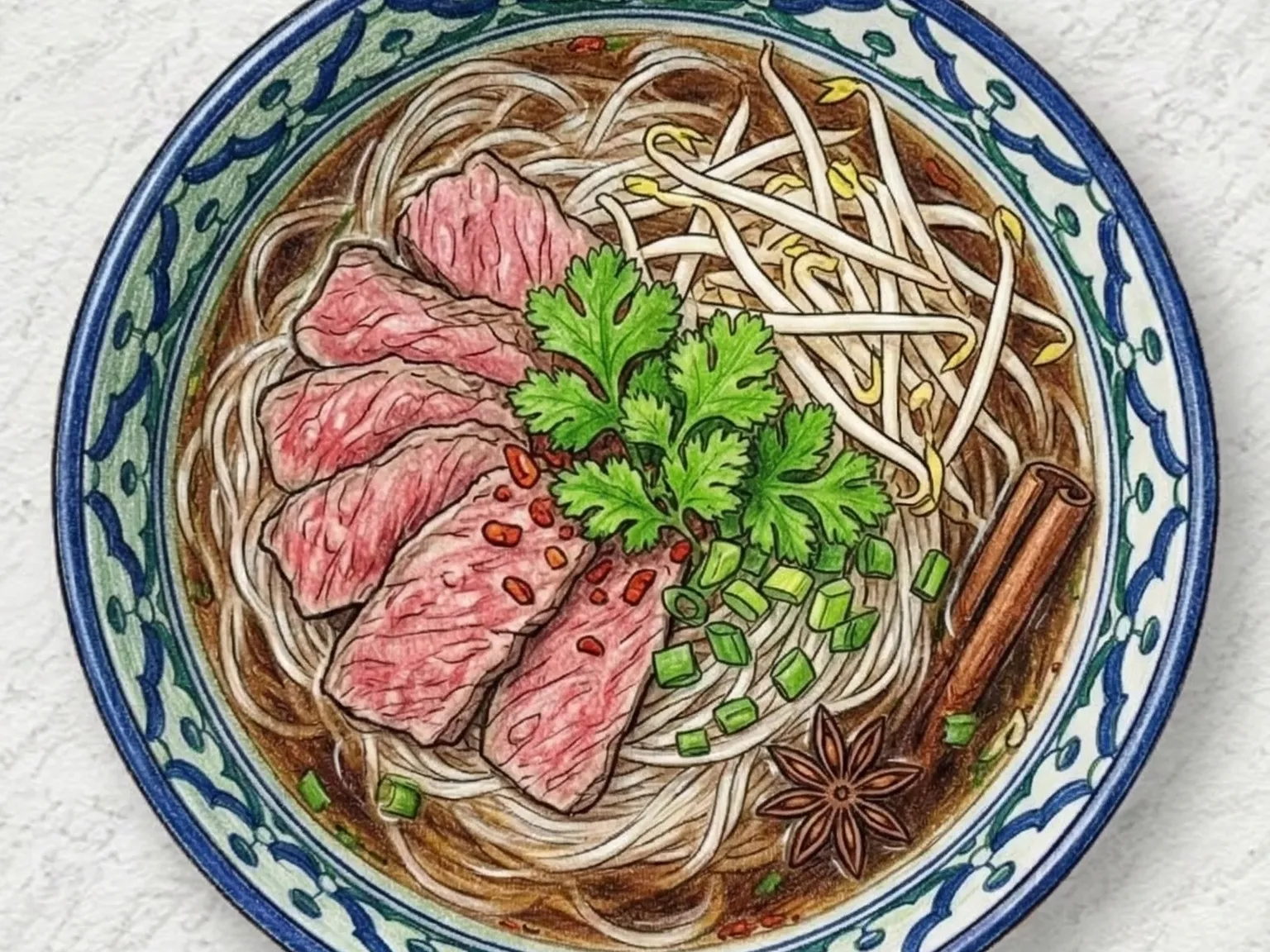
Thai boat noodles are an intensely flavored street noodle soup that originated on the small boats plying Bangkok's canals, where vendors would hand bowls across the water to customers on the banks. The broth is built by simmering beef stock with star anise and a cinnamon stick for fifteen minutes or more, extracting warm, aromatic notes that form the backbone of the dish. Fish sauce, dark soy sauce, and palm sugar are added to season the liquid into a deeply savory, slightly sweet, and mahogany-dark broth. Thinly sliced beef is poached in the simmering liquid for just a minute or two so it stays supple, then ladled over cooked rice noodles in a bowl. Fresh bean sprouts provide crunch and cilantro adds a bright herbaceous lift that counterbalances the concentrated broth. Boat noodle portions are traditionally small-designed to be eaten quickly and in multiples-so every spoonful delivers maximum impact.
Tomato Egg Lamian (Chinese Home-Style Tomato Scrambled Egg Noodle Soup)
This two-serving noodle soup uses 240 g fresh wheat noodles, 300 g tomato, and 3 eggs. Cut the tomatoes into large pieces, finely slice 25 g green onion, and beat the eggs until the whites and yolks are evenly combined. Heat 1 tablespoon neutral oil over medium heat, pour in the eggs, and fold them broadly for about 30 seconds. Remove them while still slightly wet so they remain soft when returned to the broth. Lower the same pot to medium-low heat and cook some of the green onion with 1 teaspoon minced garlic for 40 seconds. Add the tomatoes and press them as they cook for 4 minutes, stopping when they have released plenty of red juice. Pour in 800 ml chicken stock, 1 tablespoon soy sauce, and 1 teaspoon sugar, then simmer for 5 minutes over medium heat. Add the fresh noodles and loosen them with chopsticks, cooking until their centers retain a little firmness. Reduce the heat, return the eggs for only 1 minute, and serve with the remaining green onion while the egg pieces are still soft and distinct.
Classic Tonkotsu Ramen (Pork Bone Milky Broth Noodles)
Classic Tonkotsu Ramen is a Japanese noodle dish defined by its deep, creamy pork bone broth. The foundation of this soup requires boiling pork back bones and pig trotters with garlic and ginger at a continuous, vigorous roll for seven to eight hours. This sustained high heat emulsifies the fat and breaks down the collagen, producing a milky, gelatinous broth that coats the palate. It is served with thin, firm noodles that retain a springy bite without becoming soggy in the heavy soup. Top the bowl with pork belly chashu braised in soy sauce and mirin, soft-boiled eggs marinated in the braising liquid, and sliced green onions. Maintaining a strong boil without reducing the heat is critical to achieving the characteristic white color and rich texture. Prepare the chashu a day in advance and chill it for easier thin slicing.
About Noodles
This collection features traditional Korean noodle recipes alongside Asian-fusion takes, covering both broth-based and tossed preparations.