Noodles

Noodles Recipes

237 recipes. Page 8 of 10

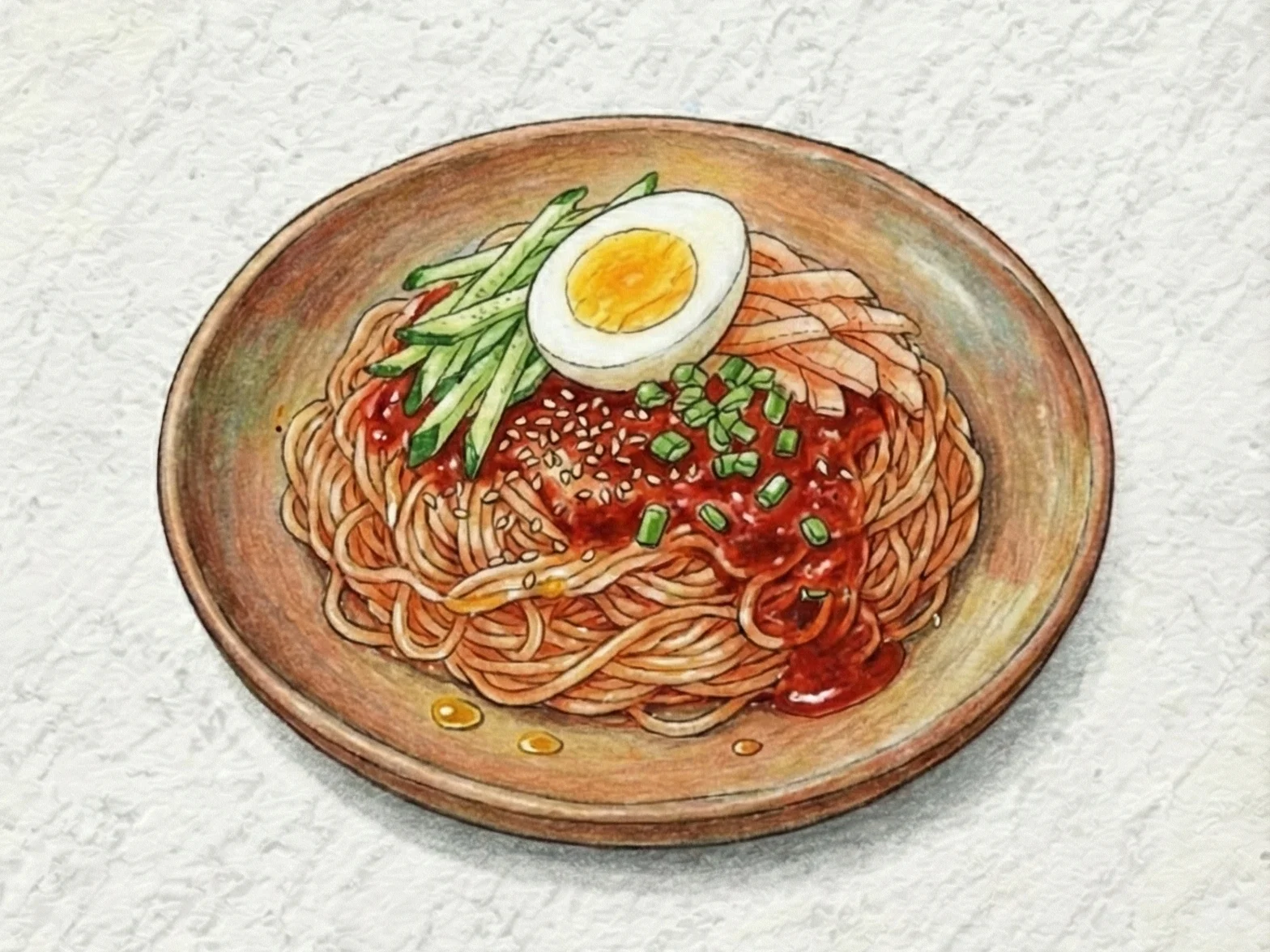
Korean noodle dishes range from chilled naengmyeon in summer to steaming bowls of kalguksu in winter. Thin somyeon, chewy jjolmyeon, and glass noodles (dangmyeon) each bring a different texture to the table. A simple bibim sauce transforms plain noodles into a flavor-packed meal in minutes.

Noodles
Pad Thai
Noodles Medium

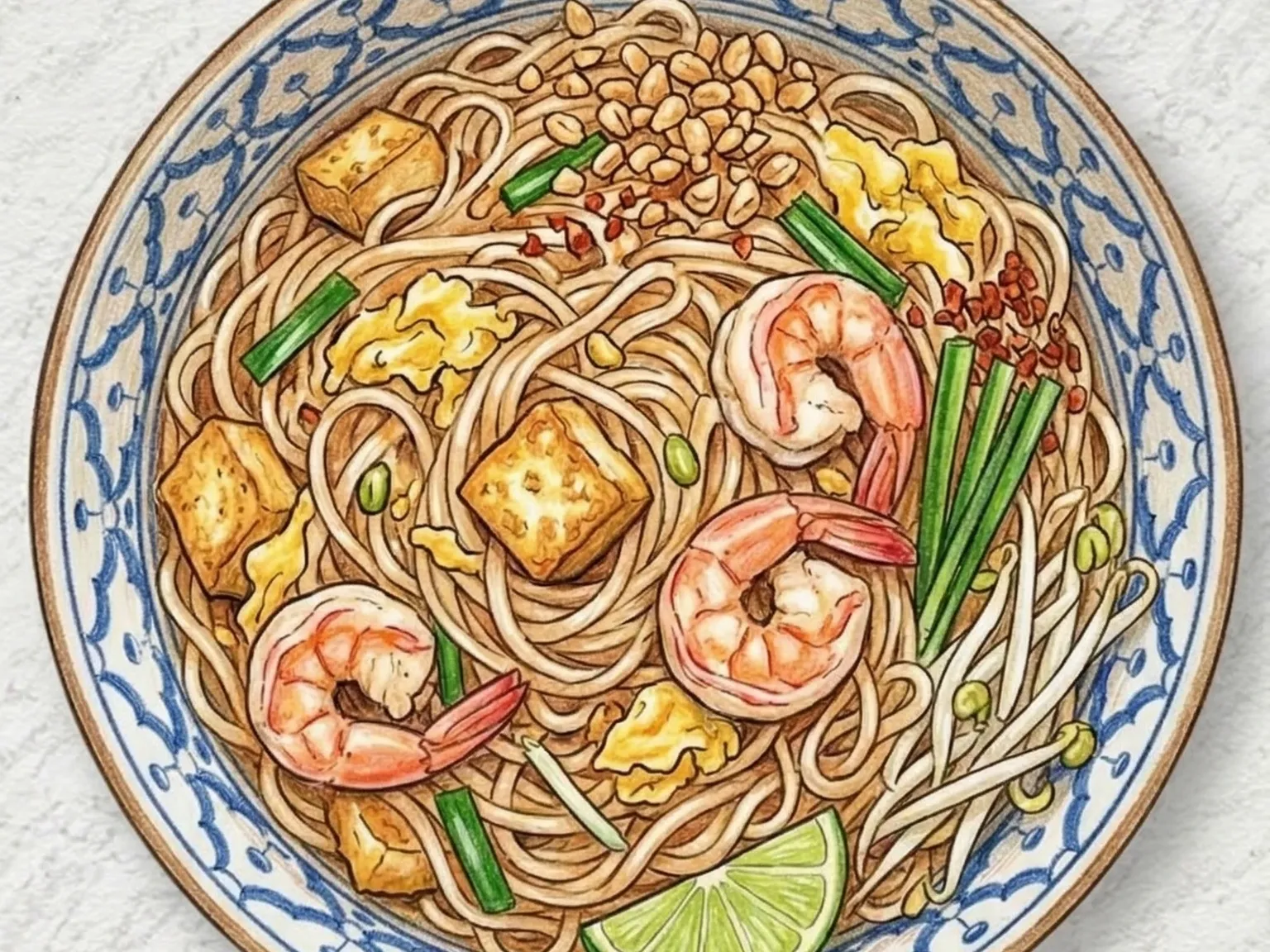
Pad Thai

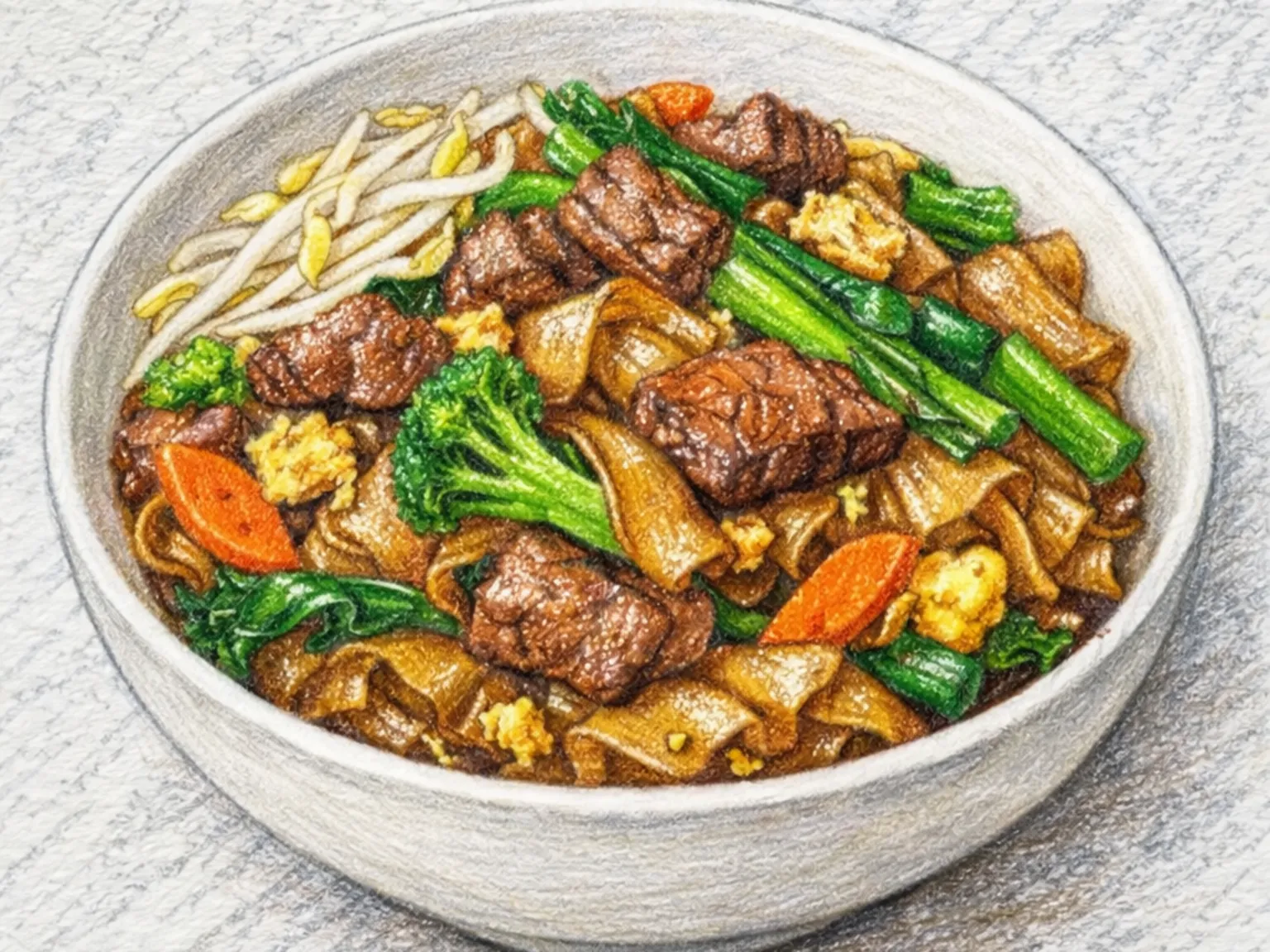
Pad thai is Thailand's most widely recognized stir-fried noodle dish, centered on a sauce made from tamarind paste, fish sauce, and sugar that balances sweet, sour, and salty flavors in every bite. The proportion of these three ingredients is what determines the character of the final dish, and adjusting them even slightly shifts the balance noticeably. Dried rice noodles soak in lukewarm water for twenty minutes until they are pliable but still firm enough to hold up under high heat without becoming mushy. Firm tofu is pan-fried first until golden on all sides, establishing a nutty, textured base, then shrimp are added and pushed to the side as soon as they turn pink. The eggs are scrambled in the cleared center of the pan rather than mixed in with everything else, which allows them to set into thin, irregular sheets that distribute evenly through the noodles when tossed. Adding the soaked noodles and sauce over high heat and tossing quickly causes the noodles to absorb the sauce rapidly, developing a glossy, amber-toned coating. Bean sprouts stirred in at the very end keep their crunch, coarsely ground peanuts provide a roasted, brittle texture, and a squeeze of fresh lime just before eating introduces a bright acidity that sharpens the whole dish.

🎉 Special Occasion 🏠 Everyday
Prep 20min Cook 15min 2 servings
Pad Woon Sen (Thai Stir-Fried Glass Noodles with Shrimp and Egg)
Noodles Easy

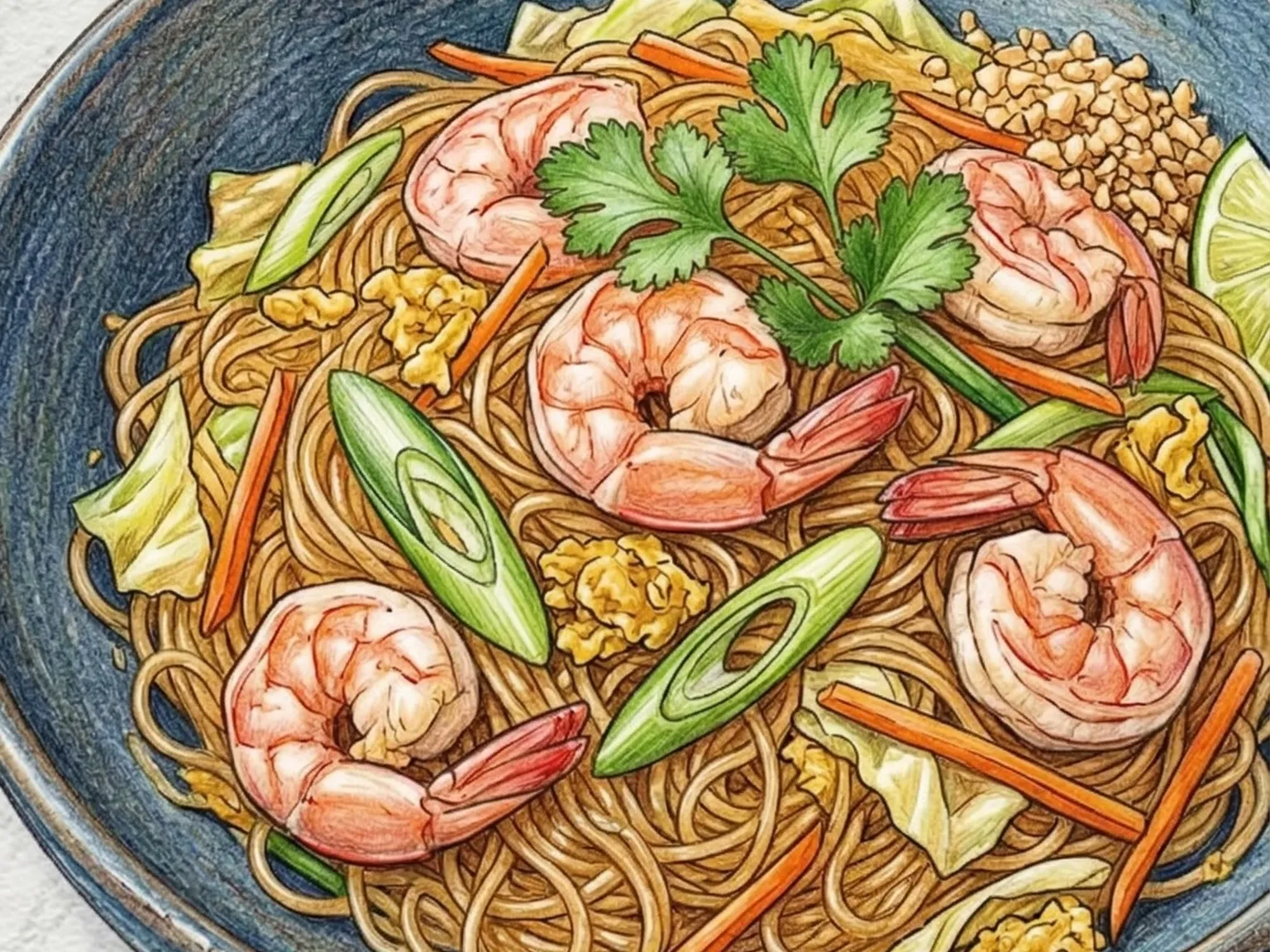
Pad Woon Sen (Thai Stir-Fried Glass Noodles with Shrimp and Egg)

Pad woon sen is a Thai stir-fried glass noodle dish that comes together in minutes. The noodles, made from mung bean starch, turn translucent when soaked and have a springy, slippery texture that absorbs sauce without becoming mushy. Shrimp is cooked first until just pink, then vegetables - typically cabbage and carrot - are tossed in over high heat to keep their crunch. Eggs are scrambled to one side of the wok and folded into the noodles along with soy sauce and oyster sauce. The seasoning is deliberately simple, allowing the natural sweetness of the shrimp and the clean bite of the vegetables to come through.

🏠 Everyday 🌙 Late Night
Prep 15min Cook 12min 2 servings
Korean Soy Udon with Scallion Salad
Noodles Easy

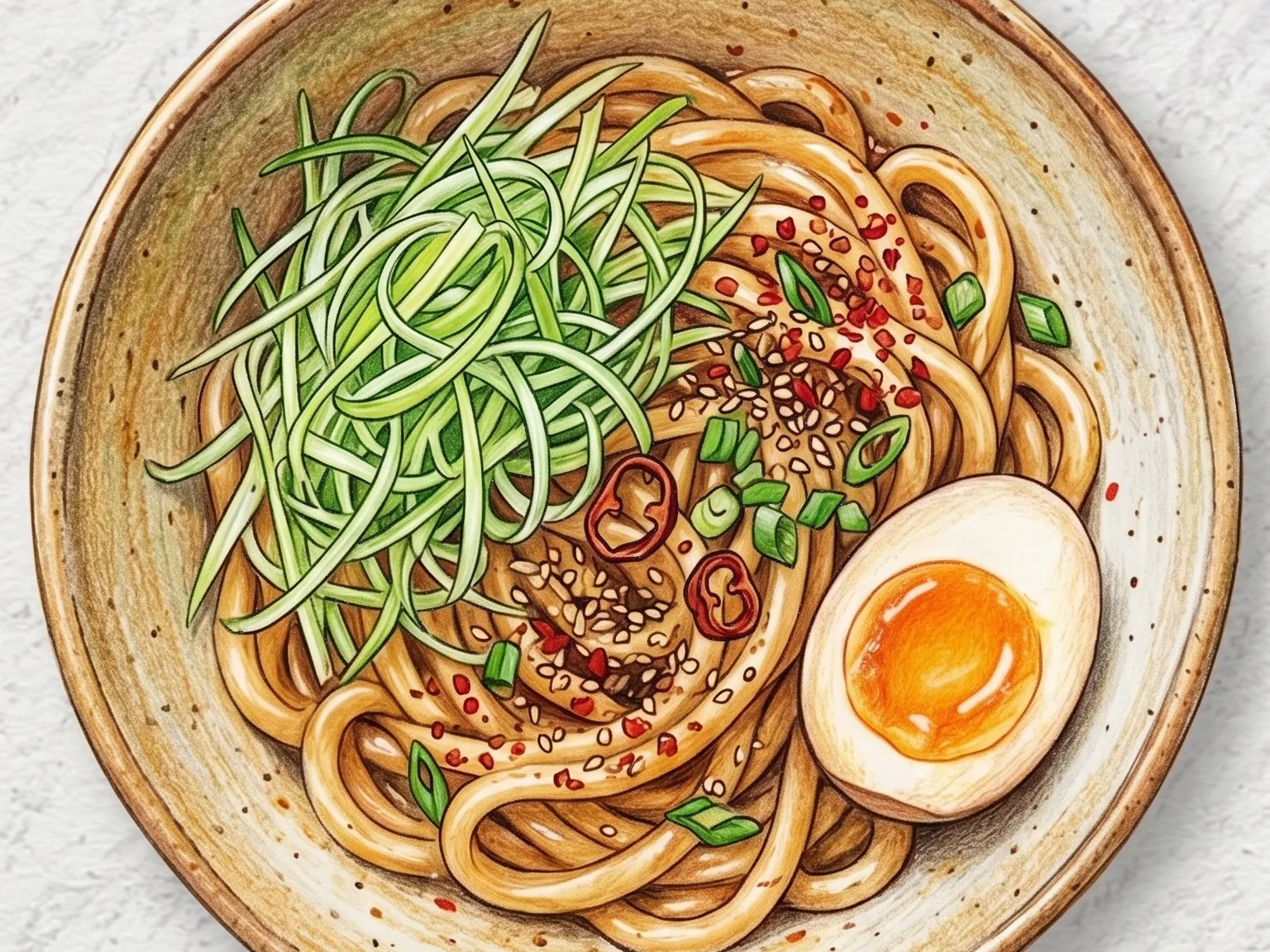
Korean Soy Udon with Scallion Salad

Pajeori ganjang bibim udon is a Korean mixed udon dish centered on crisp shredded scallion that has been soaked in cold water to tame its raw sharpness without sacrificing texture. Soaking for at least five minutes softens the aggressive bite while the strands retain their crunch, releasing a clean, fresh note with every forkful. A dressing of soy sauce, vinegar, sugar, chili flakes, and sesame oil builds a layered base that is simultaneously sweet, salty, tangy, and mildly spicy. The udon noodles are tossed first with half the dressing so every strand carries an even base coating before the drained scallion and remaining sauce are folded in. The pungent freshness of the scallion plays directly against the seasoned noodles, drawing out a depth of flavor that far exceeds what the short ingredient list would suggest. Keeping the noodles slightly underdone ensures a springy, bouncy bite throughout, and a scatter of whole sesame seeds adds a warm, nutty finish. Skipping the cold water soak leaves the raw sharpness of the scallion untempered, throwing the entire balance off, so that step should never be rushed.

🌙 Late Night ⚡ Quick
Prep 12min Cook 8min 2 servings
Pancit Bihon (Filipino Stir-Fried Rice Vermicelli with Chicken)
Noodles Easy

Pancit Bihon (Filipino Stir-Fried Rice Vermicelli with Chicken)

Pancit bihon is the most widely eaten noodle dish in the Philippines, made with thin rice vermicelli stir-fried with meat, vegetables, and a savory soy-fish sauce seasoning. It holds a special place in Filipino culture as a celebration dish - no birthday party is complete without a large platter, symbolizing long life and good fortune. The technique involves boiling chicken to create a broth, then using that broth to cook the noodles in the wok so every strand absorbs savory depth. Shredded cabbage and julienned carrots provide crunch, while a squeeze of calamansi brightens the dish with a tart, floral acidity.

🏠 Everyday 🎉 Special Occasion
Prep 20min Cook 20min 4 servings
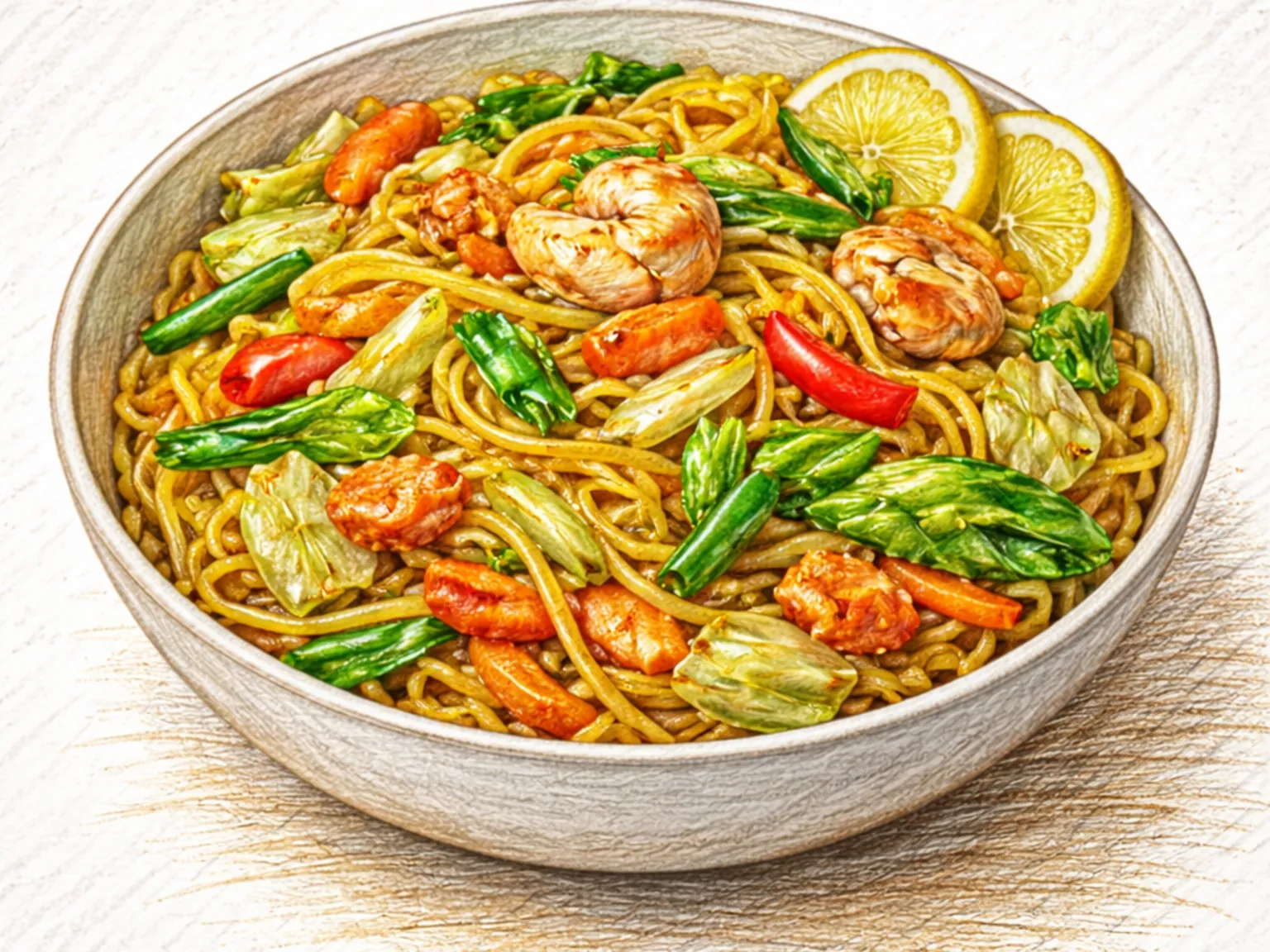
Pancit Canton (Filipino Stir-Fried Egg Noodles with Chicken and Vegetables)
Noodles Easy

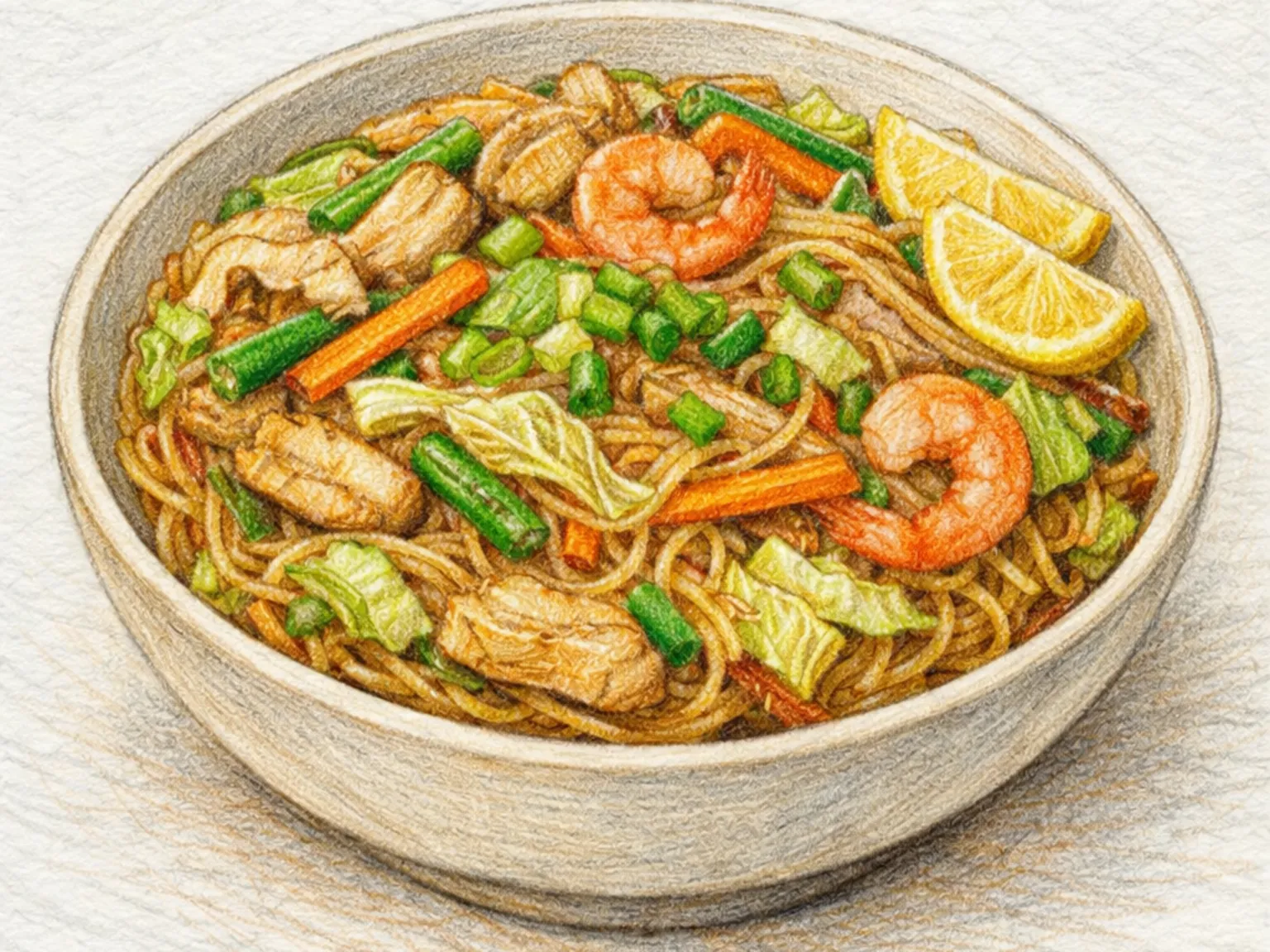
Pancit Canton (Filipino Stir-Fried Egg Noodles with Chicken and Vegetables)

Pancit canton is a Filipino stir-fried egg noodle dish cooked with chicken, carrot, and cabbage in a soy sauce and oyster sauce base. The salty depth of soy sauce and the savory richness of oyster sauce permeate the noodles evenly, and a squeeze of fresh lemon at the end cuts through the oil to leave a clean, bright finish. The noodles are parboiled to roughly seventy percent doneness so they finish cooking in the wok while absorbing the sauce, retaining their springy texture rather than turning soft. Chicken thigh is stir-fried first to render its fat and release its juices into the pan, and that rendered fat then carries the carrot and cabbage through a quick, high-heat toss that preserves their crunch. Small additions of broth or water allow the noodles to absorb the sauce gradually, but too much liquid tips the dish toward soupy rather than stir-fried, so the volume must be controlled carefully. Lemon juice is added only after removing the pan from heat, because its volatile citrus aroma dissipates almost instantly on contact with a hot surface. In the Philippines, long noodles symbolize longevity and a full life, making pancit canton a fixture at birthdays and holiday celebrations.

🎉 Special Occasion 🌙 Late Night
Prep 15min Cook 15min 2 servings
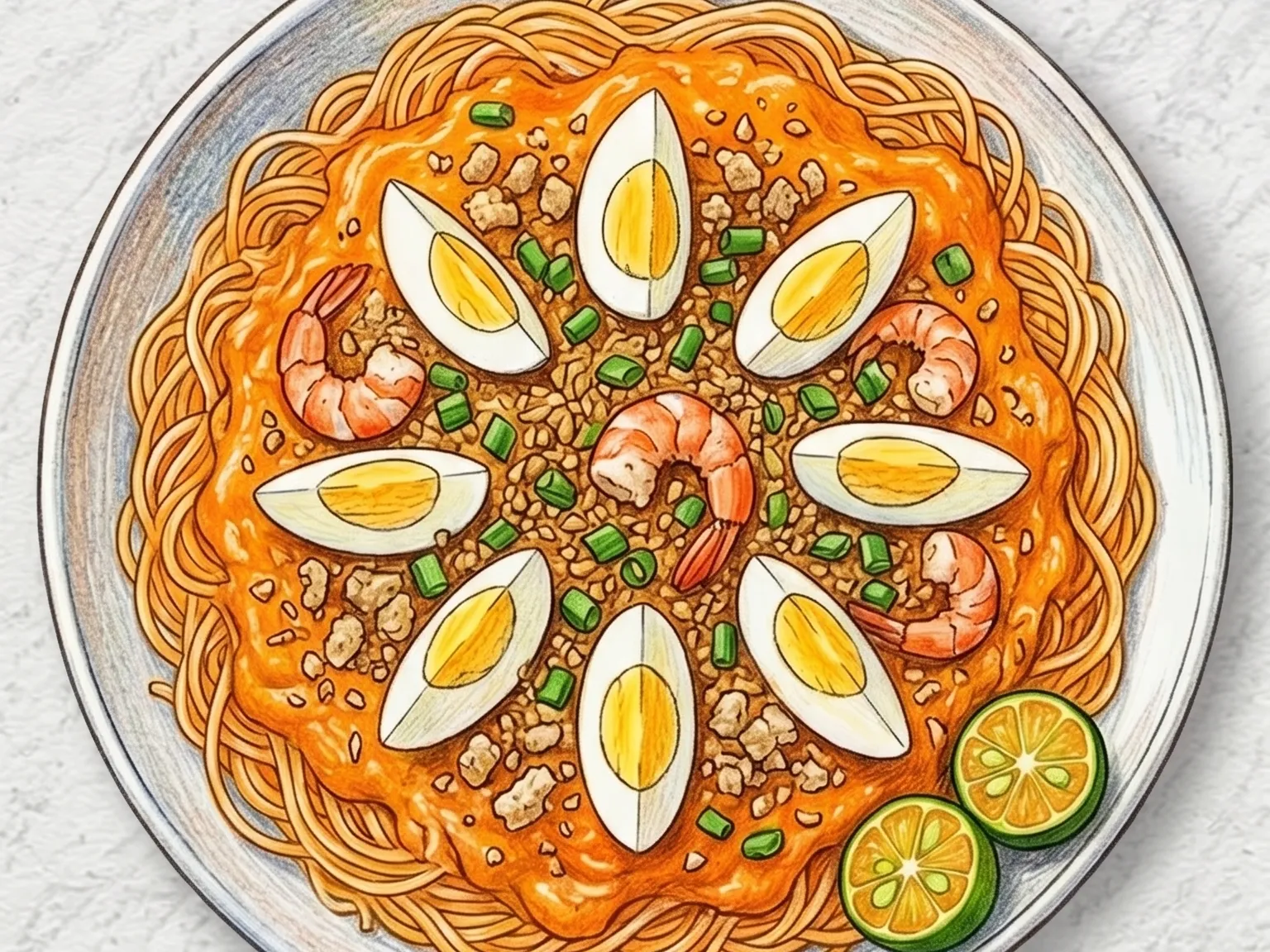
Pancit Palabok (Filipino Rice Noodles with Annatto Shrimp Sauce)
Noodles Medium

Pancit Palabok (Filipino Rice Noodles with Annatto Shrimp Sauce)

Pancit palabok is a Filipino celebratory noodle dish built on thin rice noodles blanketed in an orange-hued shrimp sauce. The sauce draws its color from annatto powder, which also contributes a faint earthy sweetness, and its savory backbone from shrimp-shell stock simmered with fish sauce. Boiled egg halves and a squeeze of lime are the traditional garnish, cutting through the richness with acidity. Fried garlic, sliced scallions, and crushed chicharron scattered on top add texture contrast and bring multiple layers of flavor to a single serving. At Filipino birthday parties and holiday gatherings, palabok is presented on a large platter and shared family-style, making it one of the most recognizable celebration dishes in the cuisine.

🎉 Special Occasion 🏠 Everyday
Prep 20min Cook 25min 2 servings
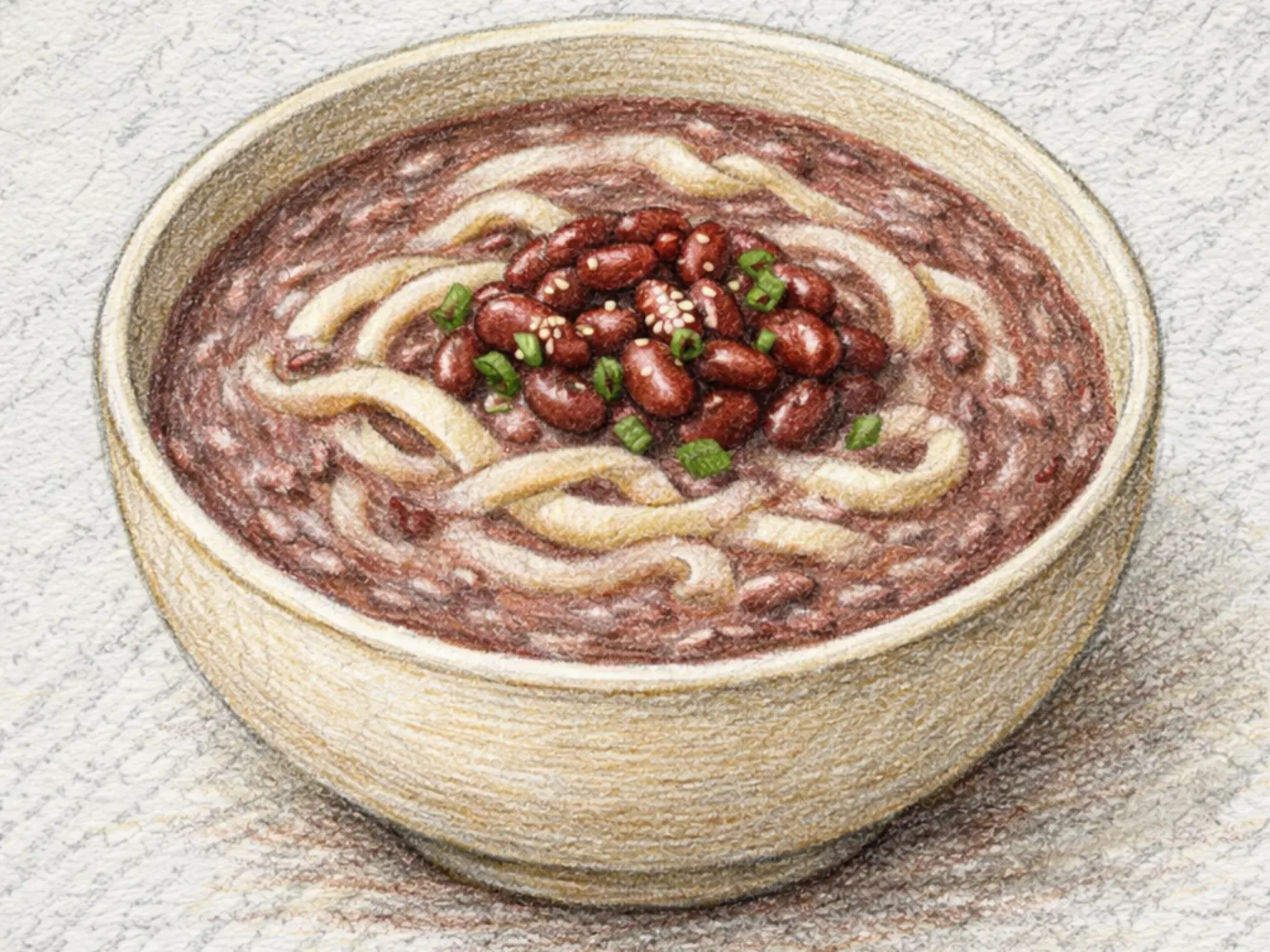
Korean Red Bean Noodle Soup
Noodles Medium

Korean Red Bean Noodle Soup

Pat kalguksu is a traditional Korean noodle dish where hand-cut wheat noodles are served in a thick, velvety broth made from pureed and strained red beans. The beans go through two rounds of boiling - the first batch of water is discarded entirely to strip away the astringent compounds that give red beans their initial edge, and the second boil cooks them until completely soft. After blending and straining, the smooth puree is returned to the pot with glutinous rice flour stirred in to thicken the base to the consistency needed to hold the noodles without turning stodgy. Salt and sugar are adjusted until the broth hits a balance of nuttiness and gentle sweetness that neither overwhelms nor disappears. Cooked chestnuts and pine nuts are scattered on top as garnish, contributing a rich, oily nuttiness that deepens and complements the earthy flavor of the red bean broth. This dish is most closely associated with winter eating in Korea, and unlike sweet red bean porridge, the addition of noodles turns it into a properly filling meal.

🎉 Special Occasion 🌙 Late Night
Prep 25min Cook 40min 4 servings
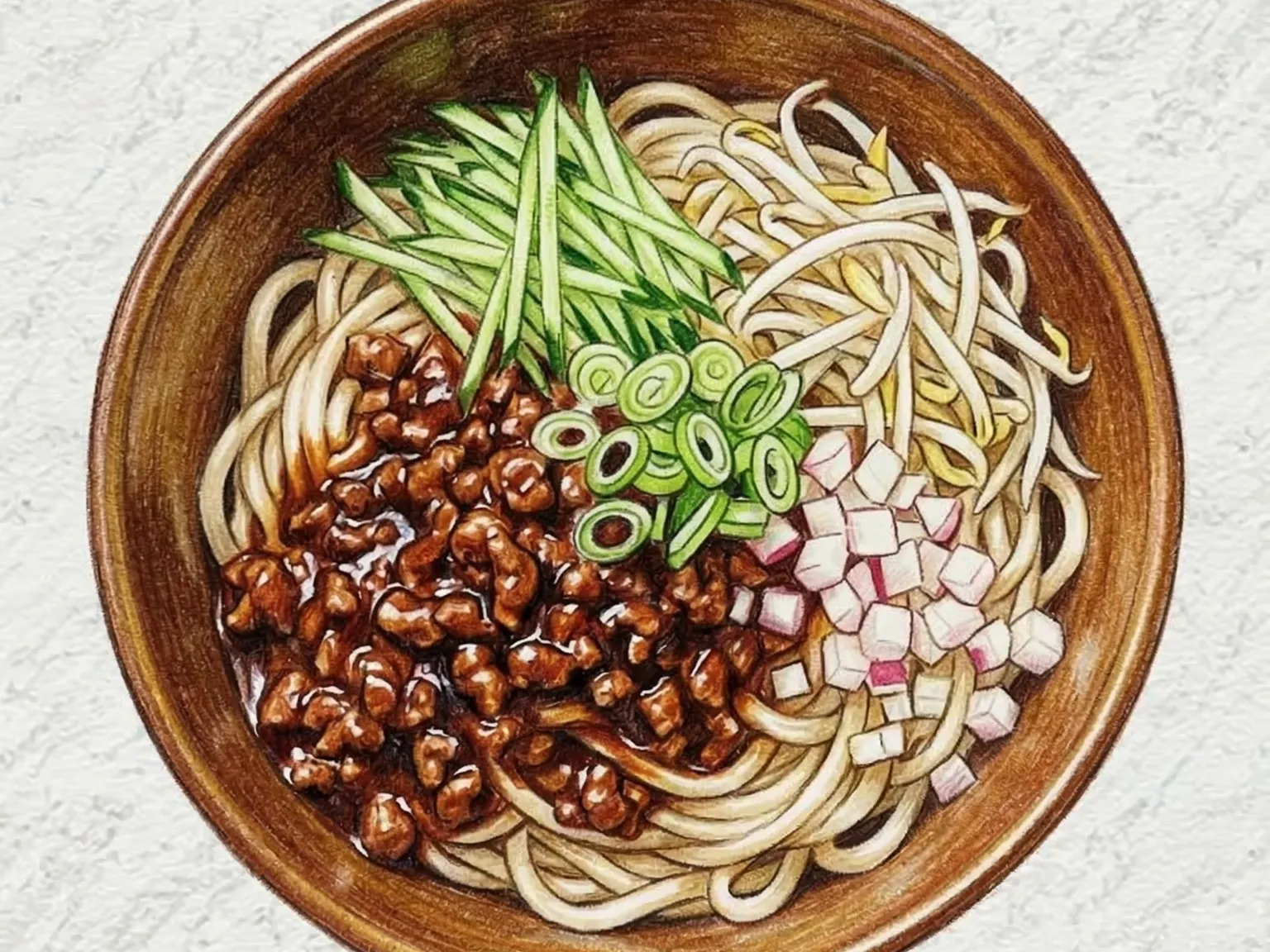
Beijing Zhajiangmian (Northern Chinese Fermented Bean Paste Noodles)
Noodles Medium

Beijing Zhajiangmian (Northern Chinese Fermented Bean Paste Noodles)

Beijing zhajiangmian is the northern Chinese ancestor of Korean jajangmyeon, though the two have diverged significantly in flavor and presentation. The sauce is built from ground pork stir-fried with huangjiang, a fermented soybean paste darker and saltier than miso, until the fat separates and the paste turns glossy. Thick hand-pulled or machine-cut wheat noodles form the base, and an array of raw garnishes - julienned cucumber, radish sprouts, bean sprouts, and shredded scallion - are arranged neatly on top. The dish is meant to be tossed vigorously at the table so the sauce coats every strand. The contrast between the warm, intensely savory paste and the cool, crisp vegetables defines the eating experience. In summer, the noodles are often rinsed in cold water before serving.

🏠 Everyday 🎉 Special Occasion
Prep 20min Cook 25min 4 servings
Korean Perilla Seed Kalguksu
Noodles Easy

Korean Perilla Seed Kalguksu

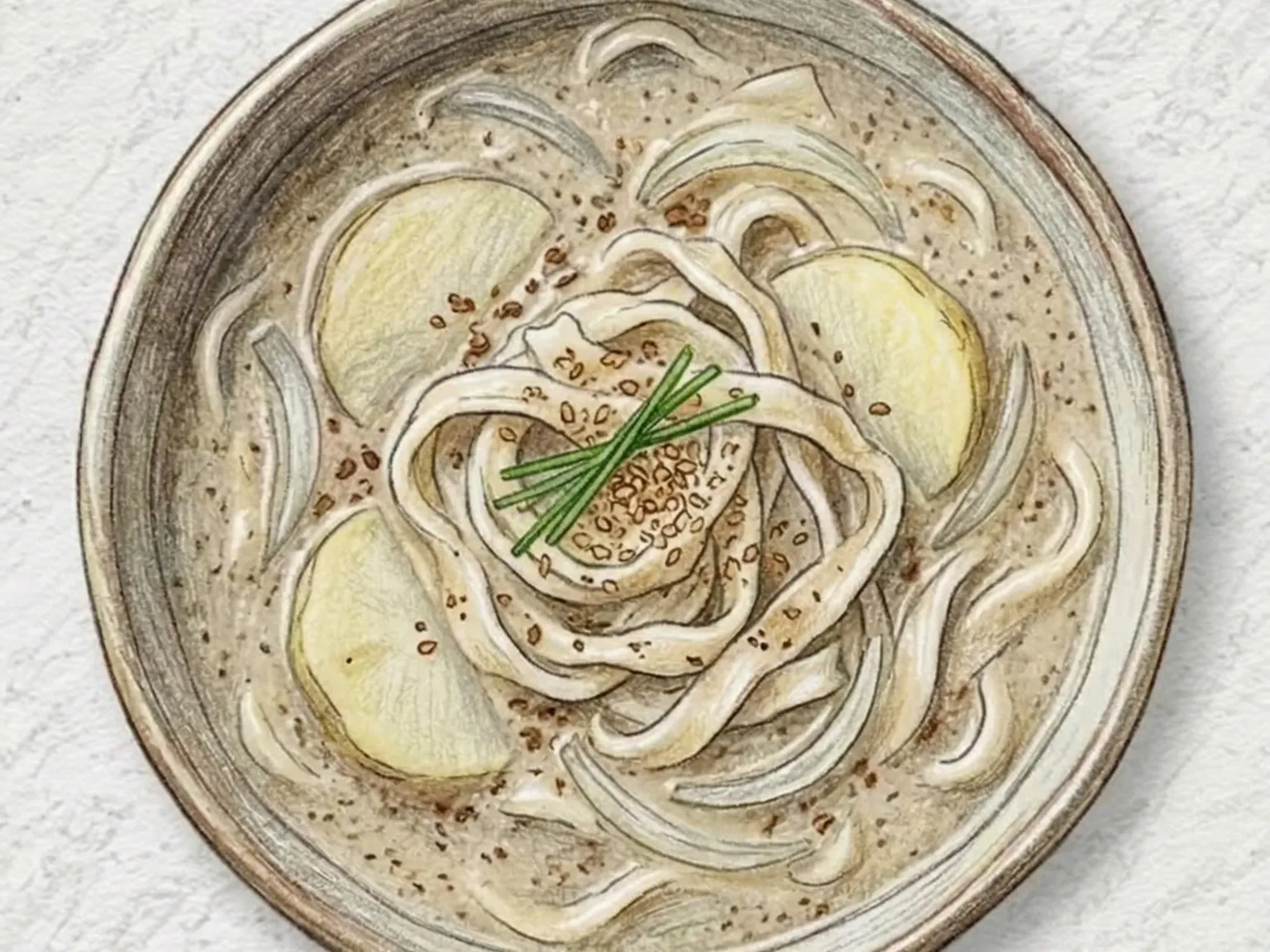
Perilla kalguksu is a Korean noodle soup whose light body comes from potato starch and ground perilla seeds. For two servings, put 120g thinly sliced potato into 900ml water, bring it to a boil over high heat, then reduce to medium and cook for 6 minutes. Once the liquid looks slightly cloudy, add 80g sliced onion, 1 teaspoon minced garlic, and 1 tablespoon soup soy sauce. Cook for another 2 minutes, until the onion becomes translucent. Loosen 300g fresh kalguksu noodles before adding them so they do not enter the pot as a solid bundle. Stir immediately, then cook over medium-high heat for 4 minutes while lifting the strands to keep them from sticking to the bottom. Lower the heat before gradually dissolving 5 tablespoons perilla powder into the broth. Stir along the base of the pot and cook for only 2 more minutes, since prolonged high heat after the perilla goes in can make the soup excessively thick. When the noodles are tender and the broth lightly coats them, adjust the seasoning with 1/2 teaspoon salt and finish with 30g chopped green onion. Simmering the potato first provides the initial starch, while adding the perilla near the end makes the final thickness easier to control.

🥗 Light & Healthy 🏠 Everyday
Prep 10min Cook 18min 2 servings
Vietnamese Beef Pho
Noodles Hard

Vietnamese Beef Pho

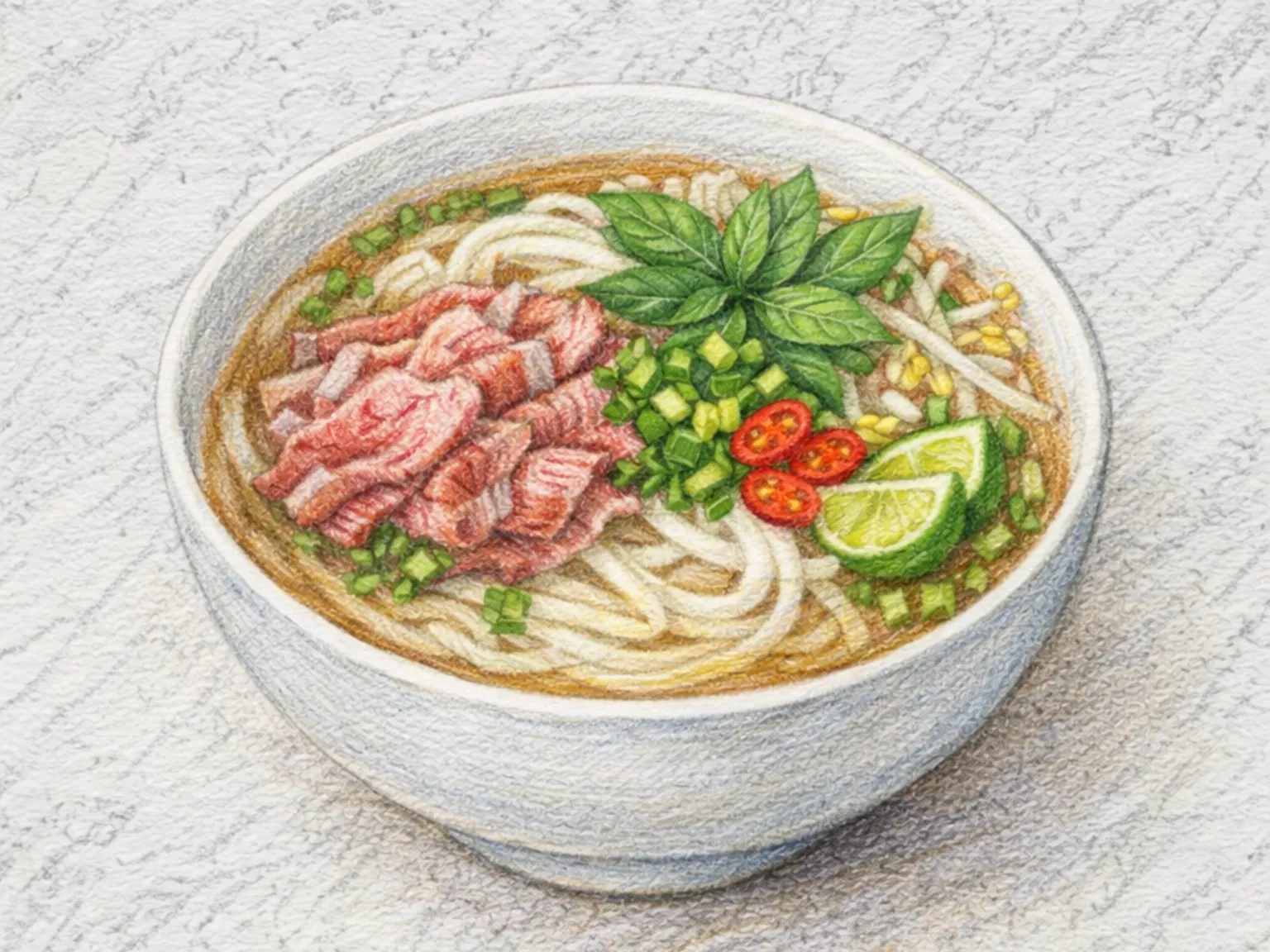
The clear, golden broth in Vietnamese beef pho begins with three separate preparations: cleaned beef bones, dry-toasted spices, and ginger and onion charred over a flame. For 4 servings, prepare 1500 g beef bones, 400 g rice noodles, 300 g thinly sliced beef, 4 star anise, 2 cinnamon sticks, 50 g ginger, 1 onion, 3 tablespoons fish sauce, 100 g bean sprouts, 2 limes, and 20 g basil. Soak the bones in cold water for 1 hour to draw out blood. Blanch them in boiling water, then scrub the surfaces under cold water to remove the residue that would cloud the broth. Toast the star anise and cinnamon in a dry pan for 1 to 2 minutes, stopping when their aroma becomes pronounced. Char the ginger and onion directly over a flame until the outsides darken, then brush away only the loose burnt flakes. Place the cleaned bones, charred aromatics, and toasted spices in a large pot with 3 L water. Keep the pot at a low simmer for 6 to 8 hours and skim foam from the surface as it rises. Strain out the bones and aromatics when the broth is clear and golden. Add the 3 tablespoons fish sauce in portions, tasting between additions so the seasoning does not overwhelm the long-cooked broth. Soak and cook the rice noodles, then divide them among four bowls. Lay the thin beef slices over the noodles and pour the boiling broth directly on top. The heat of the broth cooks the thin meat in the bowl. Serve with the bean sprouts, lime, and basil so each bowl can be adjusted with fresh crunch, acidity, and herbs at the table.

🎉 Special Occasion 🌙 Late Night
Prep 30min Cook 480min 4 servings
Hanoi-Style Pho Bo (Vietnamese Northern Clear Beef Noodle Soup)
Noodles Medium

Hanoi-Style Pho Bo (Vietnamese Northern Clear Beef Noodle Soup)

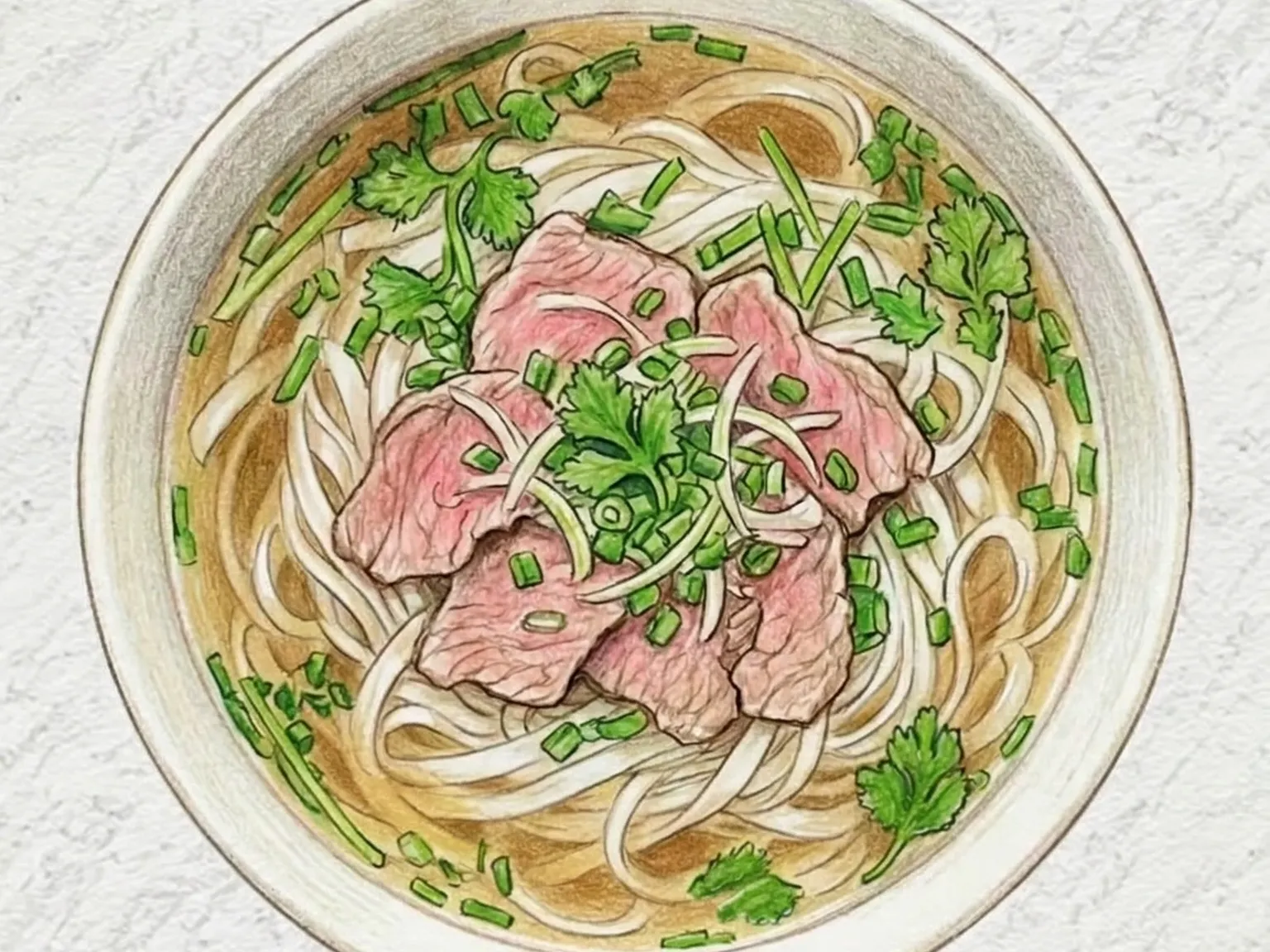
Hanoi-style pho bo is the original northern Vietnamese beef noodle soup, distinguished from its southern counterpart by a leaner, clearer broth and restrained garnishing. Beef bones and brisket simmer for hours with a modest hand of spices - star anise, cinnamon bark, and a few cloves - so the beef flavor leads rather than the aromatics. The broth is repeatedly skimmed until it runs nearly transparent, with no trace of grease on the surface. Paper-thin slices of raw beef placed in the bowl cook to a pale pink the moment the scalding broth is ladled over them. In Hanoi, the bowl arrives with only chopped scallion and cilantro; bean sprouts, hoisin sauce, and sriracha - common in southern and overseas versions - are absent by tradition.

🎉 Special Occasion 🌙 Late Night
Prep 25min Cook 55min 4 servings
Hanoi-Style Chicken Pho (Pho Ga)
Noodles Medium

Hanoi-Style Chicken Pho (Pho Ga)

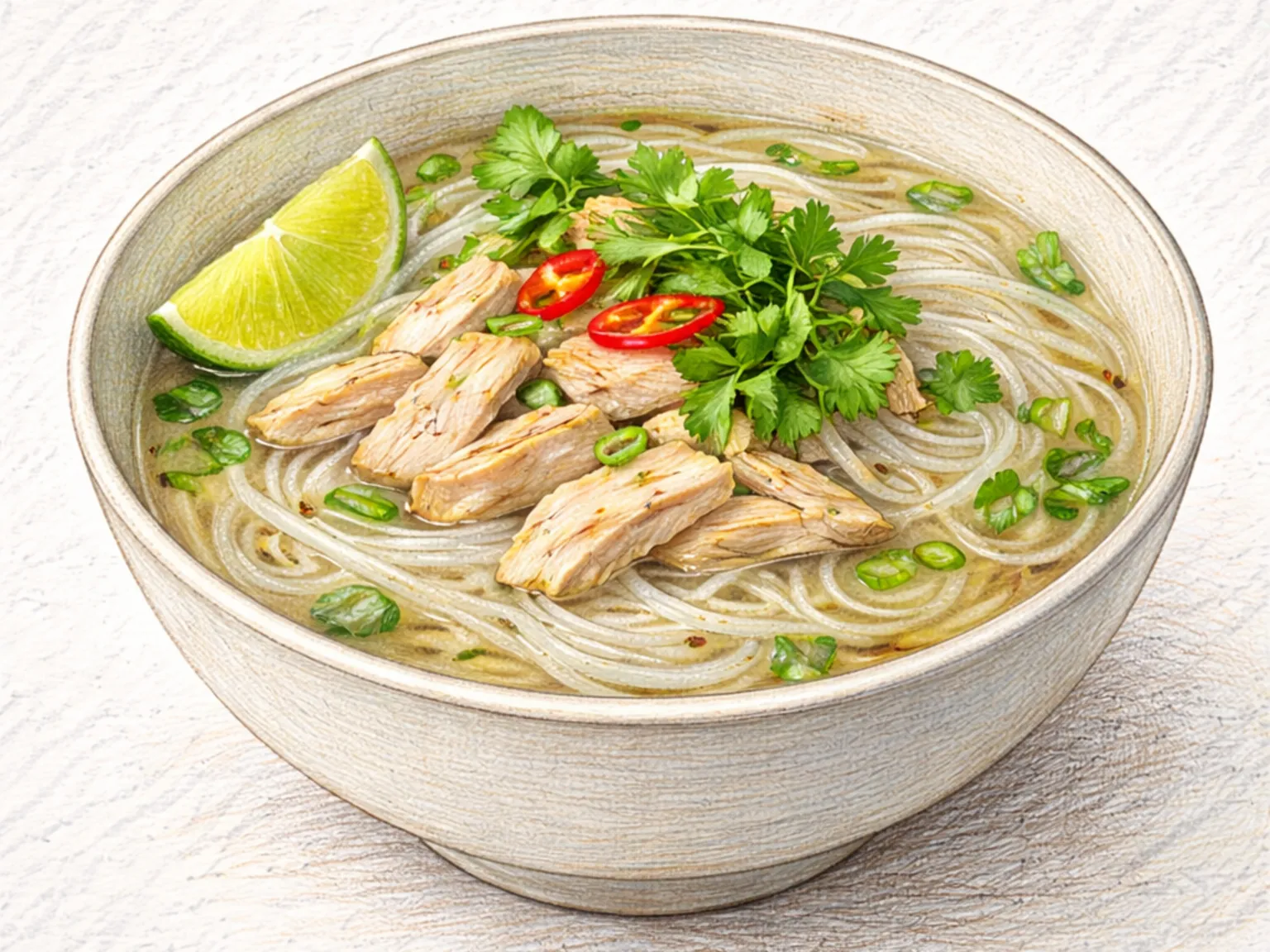
Hanoi-style pho ga is a chicken noodle soup that trades the beefy richness of pho bo for a lighter, cleaner bowl. Chicken bones and thighs simmer together until the broth turns golden and fragrant, then the meat is pulled into long shreds and piled over flat rice noodles. The spice profile is gentle - a knob of charred ginger and a single star anise - keeping the chicken flavor at the forefront. The broth has a silky quality from the natural gelatin in the bones, giving each spoonful a body that belies its clarity. Scallion, cilantro, and a squeeze of lime are the standard accompaniments. Some vendors add a torn fried dough stick for crunch. Pho ga is widely considered the everyday breakfast pho in Hanoi, less ceremonial than its beef counterpart but no less satisfying.

🎉 Special Occasion 🌙 Late Night
Prep 20min Cook 55min 4 servings
Korean Street Stall Udon (Dashi Broth Fish Cake Noodle Soup)
Noodles Medium

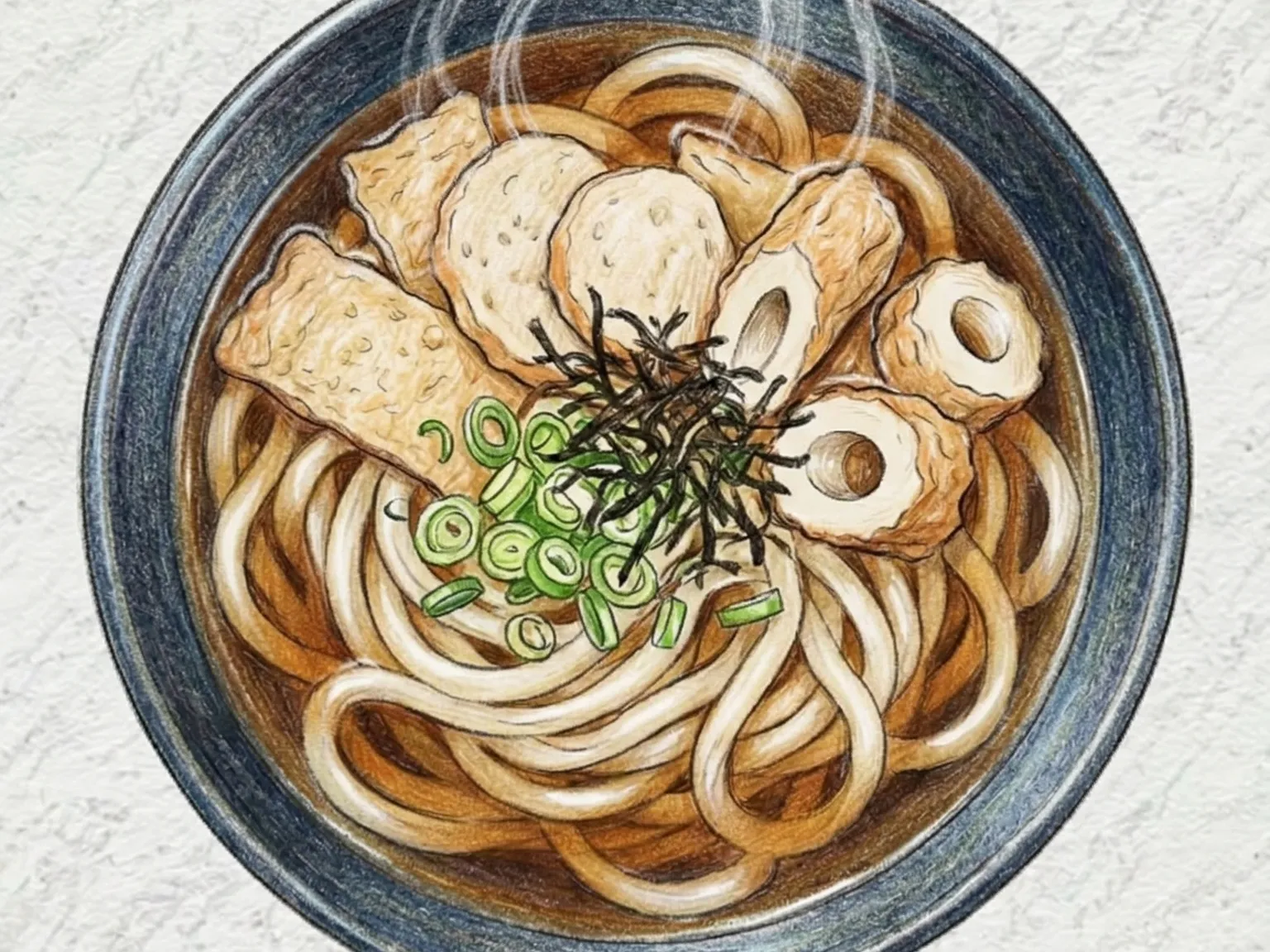
Korean Street Stall Udon (Dashi Broth Fish Cake Noodle Soup)

This street stall-style udon starts with kombu cold-steeped in water that is then brought to a gentle boil and simmered for eight minutes to extract its clean, mineral sweetness. The heat is turned off before bonito flakes are added, left to steep for two minutes until the broth turns golden and faintly smoky, then strained clear. Soup soy sauce and regular soy sauce are used together so the broth achieves both the right color and a balanced savory depth, and a small amount of sugar smooths the sharp edge of the soy without making the broth sweet. Fish cake slices are added directly to the hot broth and simmered for roughly five minutes, releasing their own mild umami into the liquid while absorbing the dashi flavor in return. Cooking them much longer causes the texture to deteriorate. Udon noodles are blanched separately in a second pot to wash off surface starch, then transferred to serving bowls while the broth is brought back to a rolling boil. Pouring the hot broth over the noodles at the last moment rather than simmering the noodles in the broth keeps them springy and prevents the soup from turning cloudy. Sliced scallion and dried seaweed flakes go on top as the final garnish.

🧒 Kid-Friendly 🌙 Late Night
Prep 15min Cook 20min 2 servings
Korean Ramen Tteokbokki (Spicy Rice Cake and Ramen Noodle Stir-Fry)
Noodles Easy

Korean Ramen Tteokbokki (Spicy Rice Cake and Ramen Noodle Stir-Fry)

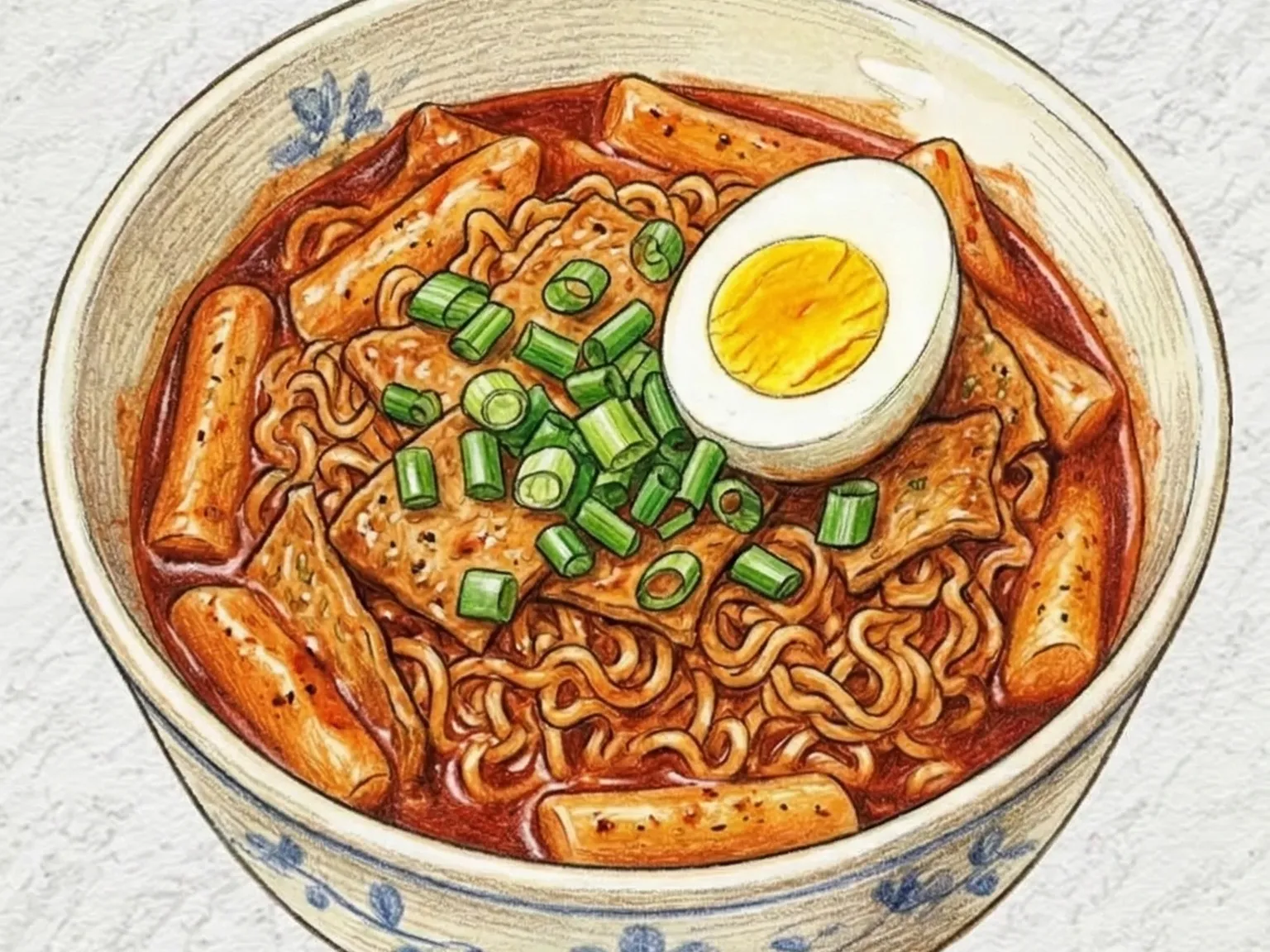
Rabokki is a popular Korean street food that combines chewy rice cakes and ramen noodles in a sweet and spicy sauce. The base sauce is made by dissolving gochujang, gochugaru, soy sauce, and sugar in water, then bringing the mixture to a boil. Rice cakes are added first and cooked for five minutes to absorb the flavors, followed by fish cakes and the ramen noodle block, which simmer for another three minutes. This sequential cooking prevents the noodles from becoming mushy while allowing them to absorb the concentrated, starchy sauce. Adding half a packet of the ramen seasoning powder is an option to increase the umami flavor. Once the broth reduces to a thick glaze, the dish is finished with chopped green onions and boiled eggs, and served hot before the noodles lose their springy texture.

🧒 Kid-Friendly 🌙 Late Night
Prep 5min Cook 15min 2 servings
Korean Instant Ramen (Spicy Chewy Noodles in Five Minutes)
Noodles Easy

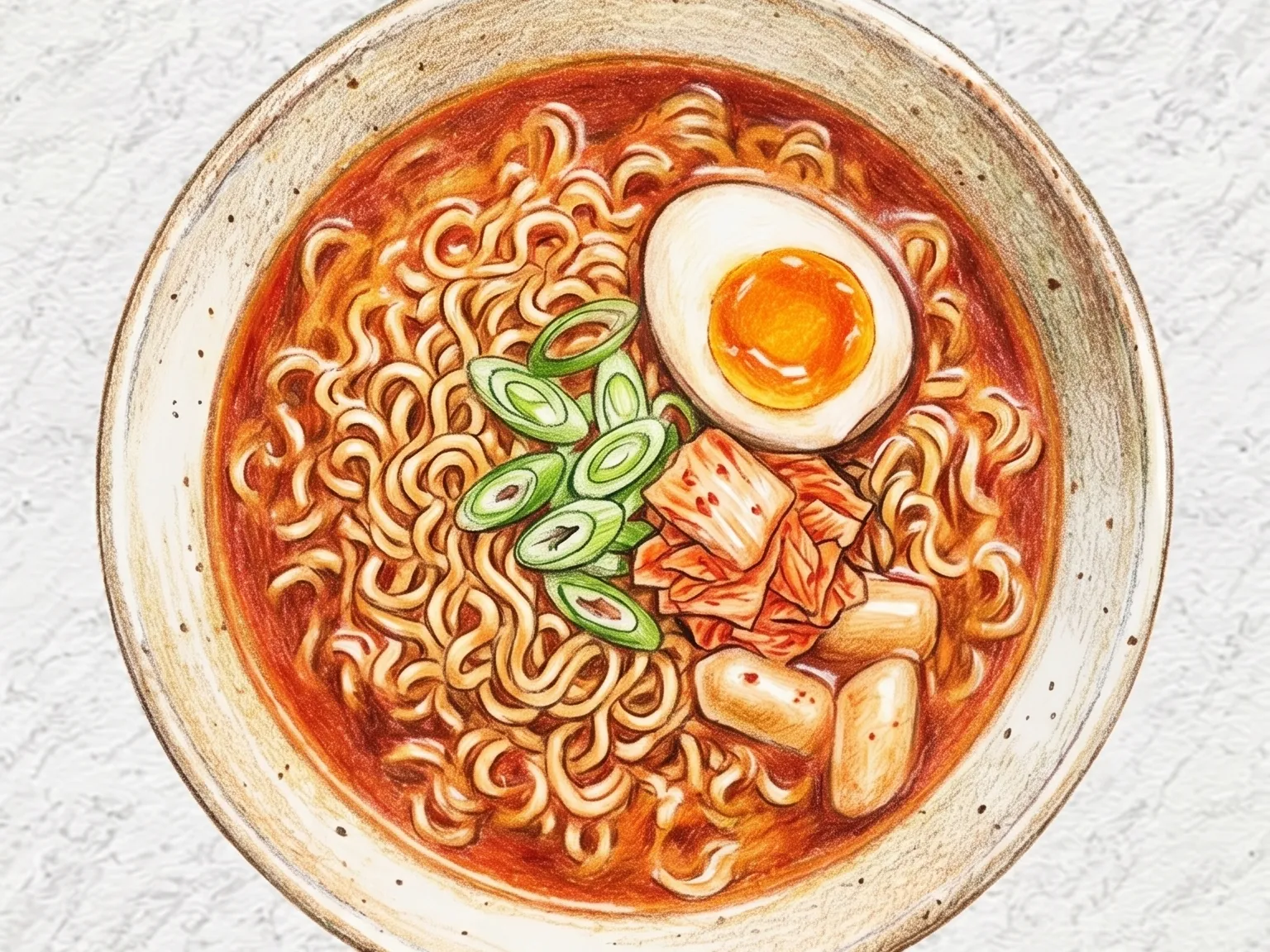
Korean Instant Ramen (Spicy Chewy Noodles in Five Minutes)

This two-serving ramyeon uses two instant noodle blocks with eggs, green onion, kimchi, rice cakes, and a slice of cheese. Bring all 1000 ml of water to a vigorous boil before adding the seasoning packets and 100 g rice cakes. Boiling the rice cakes for 1 minute first gives them time to soften before the noodles are ready. Add the noodle blocks and loosen them gently with chopsticks for 2 minutes, then stir in 100 g kimchi when the curls are about halfway separated. Lower the heat to medium, crack in two unbeaten eggs, and add the sliced green onion after 30 seconds. The cloudy egg whites show that the eggs have begun to set while the yolks remain soft. Turn off the heat about 1 minute before the package time, place the cheese on top, and transfer everything to bowls immediately. Residual heat finishes the noodle centers without leaving them swollen or mushy. The bowl is ready when the rice cakes are tender, the cheese has started to melt into the red broth, and the noodles still resist slightly when bitten.

🌙 Late Night ⚡ Quick
Prep 5min Cook 5min 2 servings
Saba Somen (Simmered Mackerel with Somen)
Noodles Medium

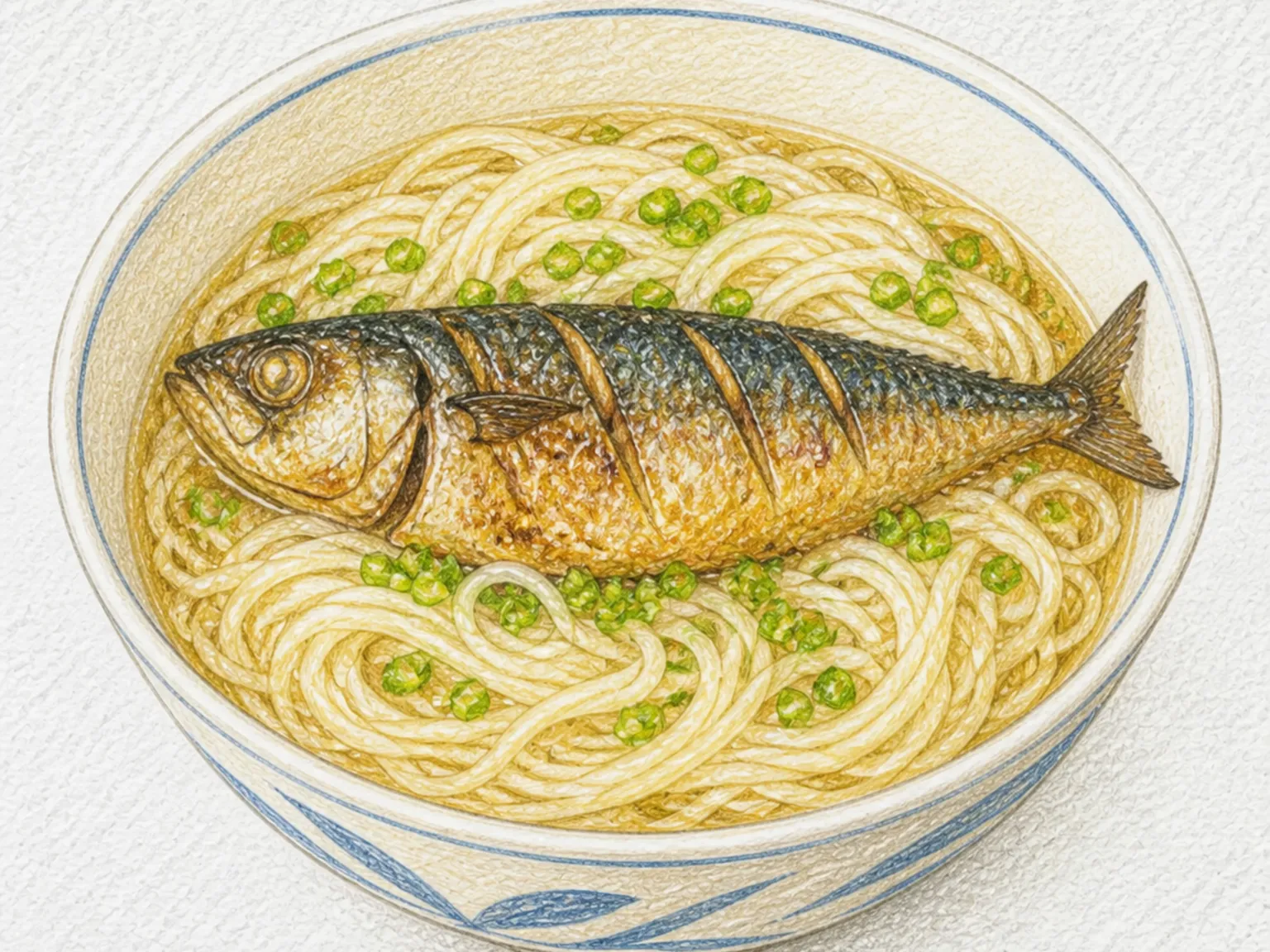
Saba Somen (Simmered Mackerel with Somen)

Saba somen is a regional noodle dish from the Kohoku area of Shiga. A whole grilled mackerel is simmered in sweet soy-seasoned dashi, then firm-cooked somen absorbs the strained cooking liquid before both are plated together. The dish reflects routes that carried mackerel inland from Wakasa and Tsuruga, as well as the spring custom of sending grilled mackerel to married daughters during the busy rice-planting season. It is also served for Nagahama's Hikiyama Festival. Careful basting keeps the fish moist, and straining the broth removes loose bones before it reaches the noodles.

🎉 Special Occasion
Prep 15min Cook 30min 5 servings
Korean Shrimp Head Ramyeon
Noodles Easy

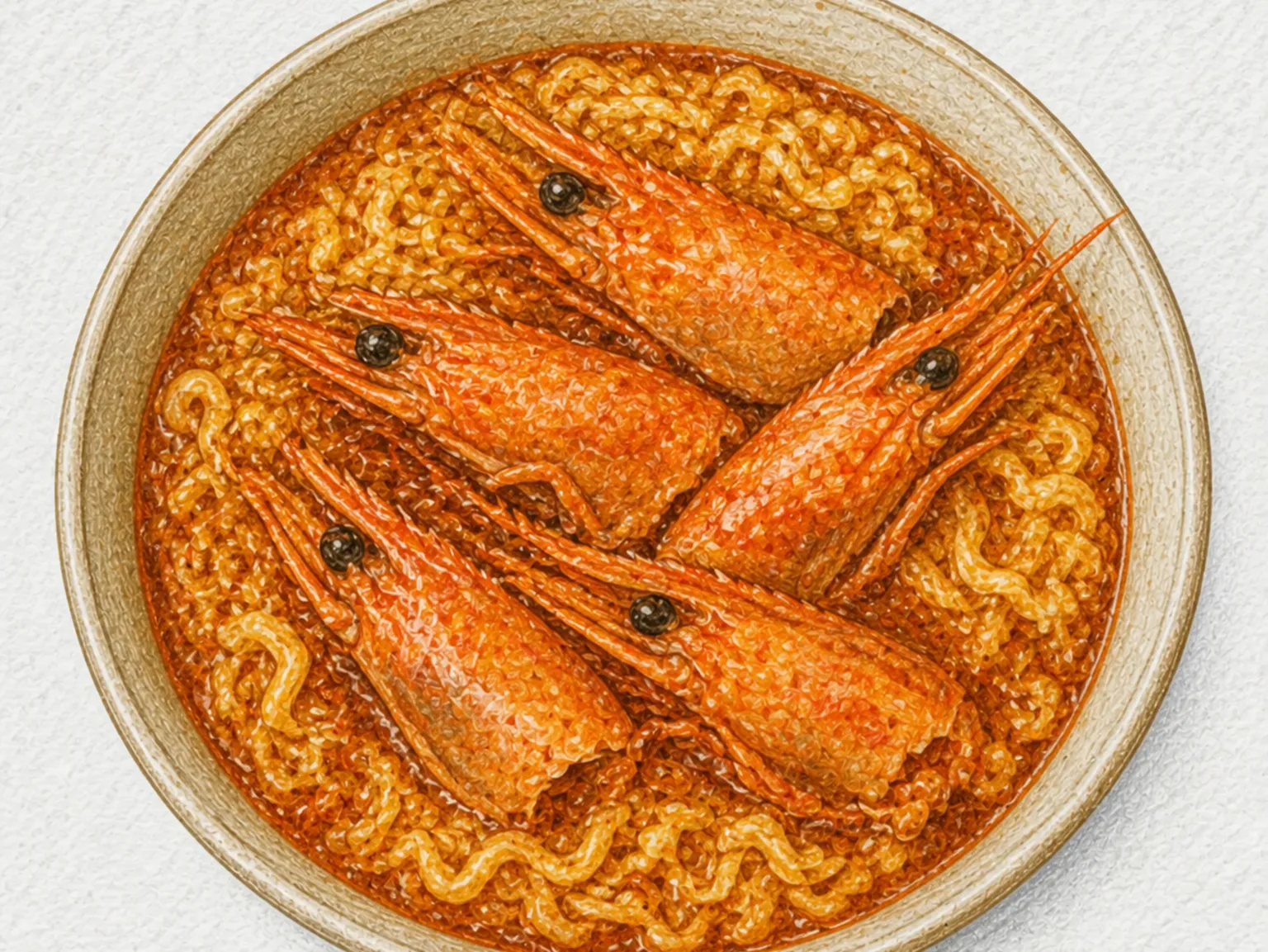
Korean Shrimp Head Ramyeon

Korean shrimp head ramyeon cooks the raw heads saved from live shrimp sashimi in spicy instant noodles. As the shells change from gray to orange, the broth picks up the shrimp's sweetness and roasted shell aroma. Add the heads to boiling water first and cook them thoroughly before adding the powder seasoning and noodles. No egg or garnish is needed; the red broth, springy noodles, and orange shrimp heads remain clearly visible. It is a direct way to use the heads on the same day instead of discarding them after preparing the sashimi.

🍺 Bar Snacks ⚡ Quick
Prep 5min Cook 8min 1 servings
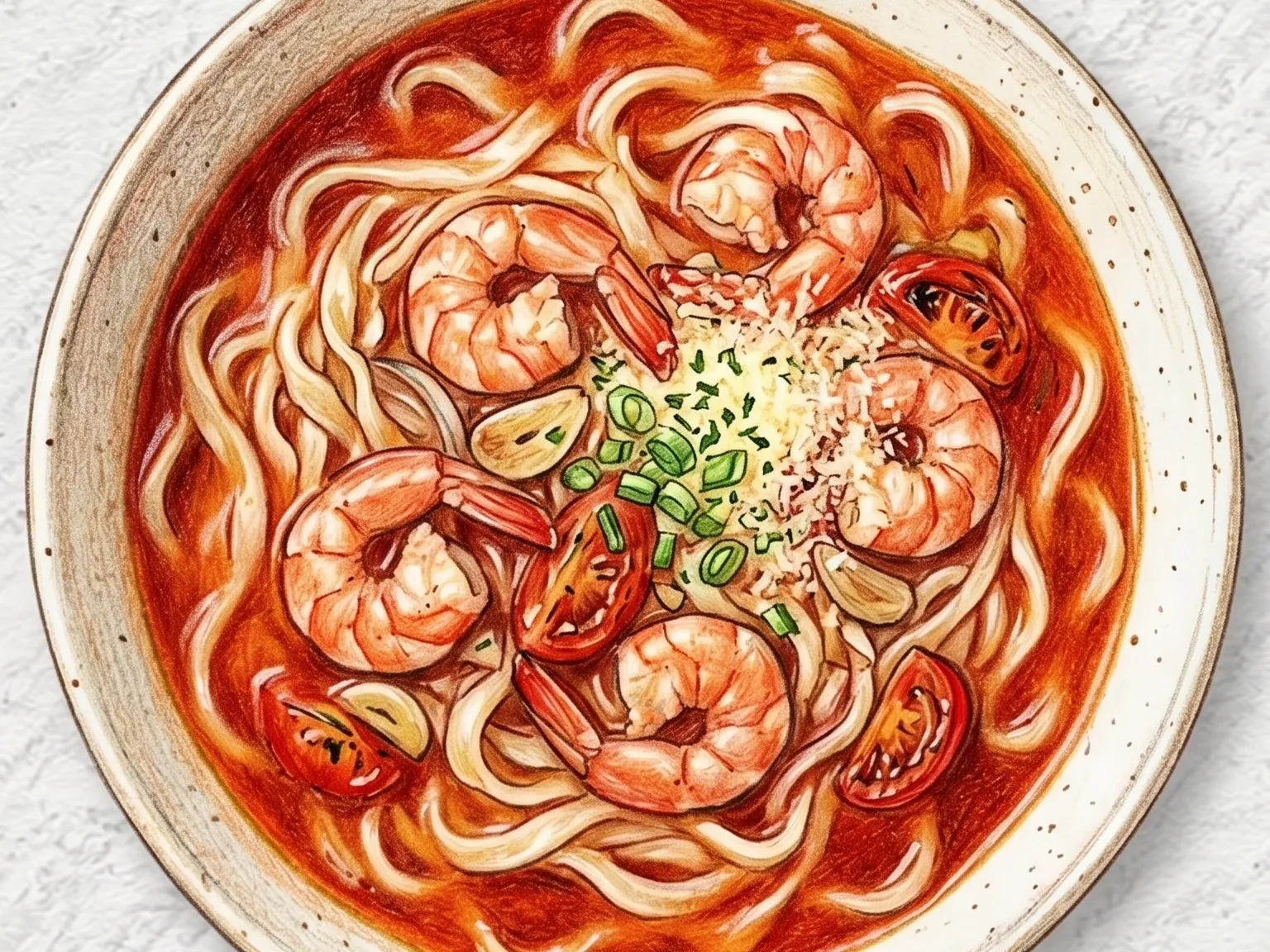
Korean Shrimp Tomato Knife-Cut Noodles
Noodles Medium

Korean Shrimp Tomato Knife-Cut Noodles

Shrimp tomato kalguksu is a two-serving noodle soup made by reducing tomatoes with garlic and onion before cooking fresh knife-cut noodles and shrimp in the same pot. Score 250g tomatoes with a shallow X, blanch them for about 20 seconds, peel them, and cut them into cubes. Devein 180g medium shrimp and season them with only a small pinch of salt. Heat 1 tablespoon olive oil in a pot and cook two minced garlic cloves with 90g onion for about 3 minutes at medium-low heat. Stop when the onion turns translucent and keep the garlic from browning. Add the tomatoes, raise the heat to medium, and stir for about 4 minutes while crushing the pieces lightly. Their juices should reduce and the mixture should become visibly thicker before water is added; this prevents the broth from tasting thin. Pour in 800ml water and scrape the base of the pot to release the tomato layer. Once it boils, add only part of the salt and black pepper. Shake loose flour from 250g fresh kalguksu noodles, add them to the broth, and cook for about 5 minutes at medium heat. Lift and loosen the strands once or twice so they do not form a clump. Add the shrimp only near the end and simmer for about 2 minutes. Turn off the heat as soon as they turn pink and feel springy, then adjust with the remaining salt and pepper. Divide the soup and finish with 15g Parmesan. Reducing the tomato base before adding water and limiting the shrimp to the final minutes keeps the broth concentrated without overcooking the seafood.

🏠 Everyday 🌙 Late Night
Prep 14min Cook 20min 2 servings
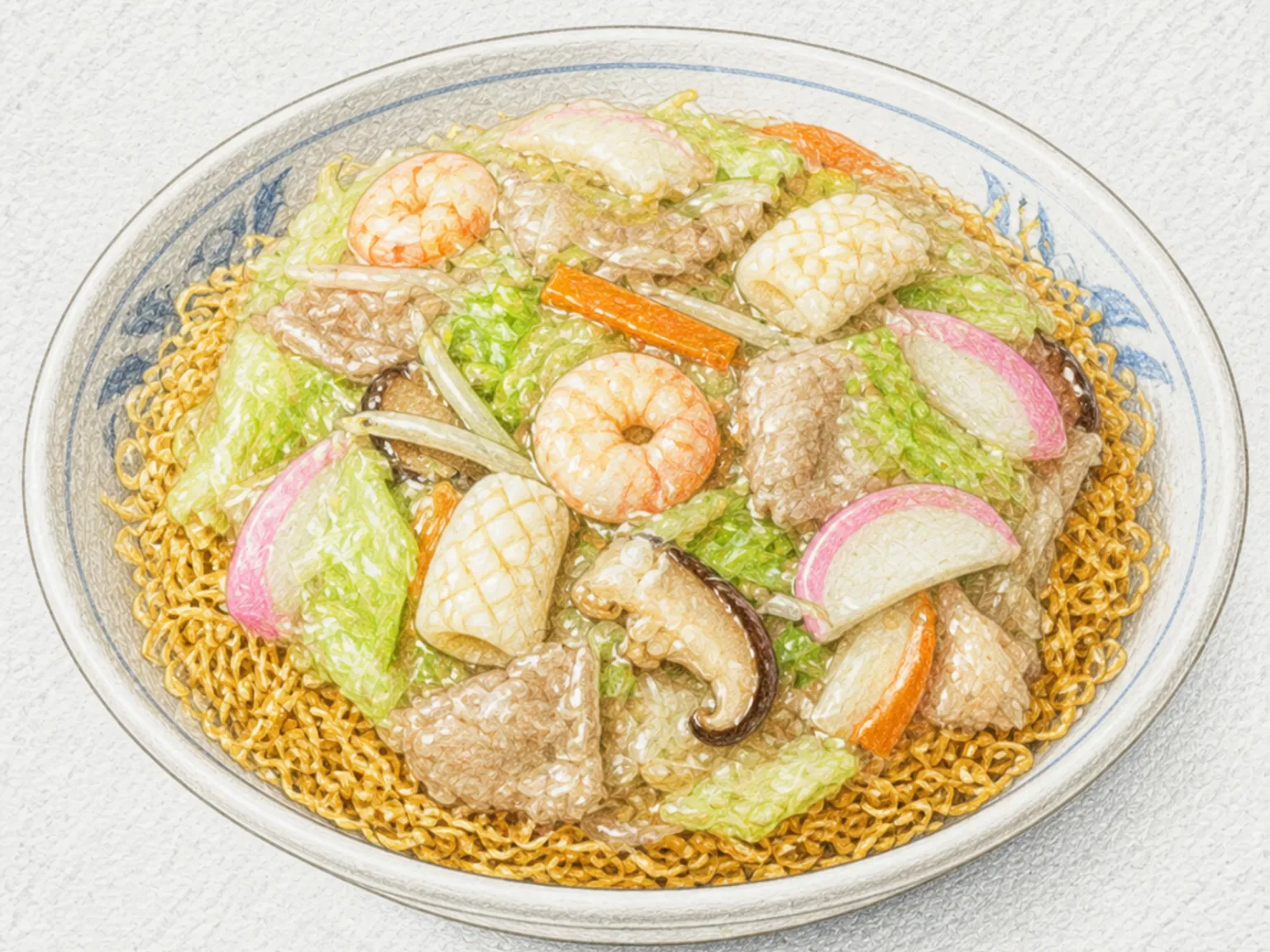
Sara Udon (Crispy Noodles with Seafood Thick Sauce)
Noodles Medium

Sara Udon (Crispy Noodles with Seafood Thick Sauce)

Sara udon is a Nagasaki noodle dish in which a hot, thickened stir-fry of pork, shrimp, squid, and vegetables is poured over fine crispy noodles arranged on a plate. Pork cooks first, followed by carrot, cabbage, shrimp, and squid; kamaboko, bean sprouts, and shiitake are added afterward so their textures remain distinct. Water, soy sauce, chicken stock powder, and potato starch form a glossy sauce that settles between the brittle strands. The dish was created in 1899 by Chin Heijun of the Shikairo restaurant as a brothless version of chanpon. Nagasaki residents distinguish the original thick-noodle style from the more recent fine crispy style. This recipe follows the latter, so the sauce is poured on only at serving time to preserve contrast between crisp noodles and soft topping.

🏠 Everyday 🧒 Kid-Friendly
Prep 25min Cook 15min 2 servings
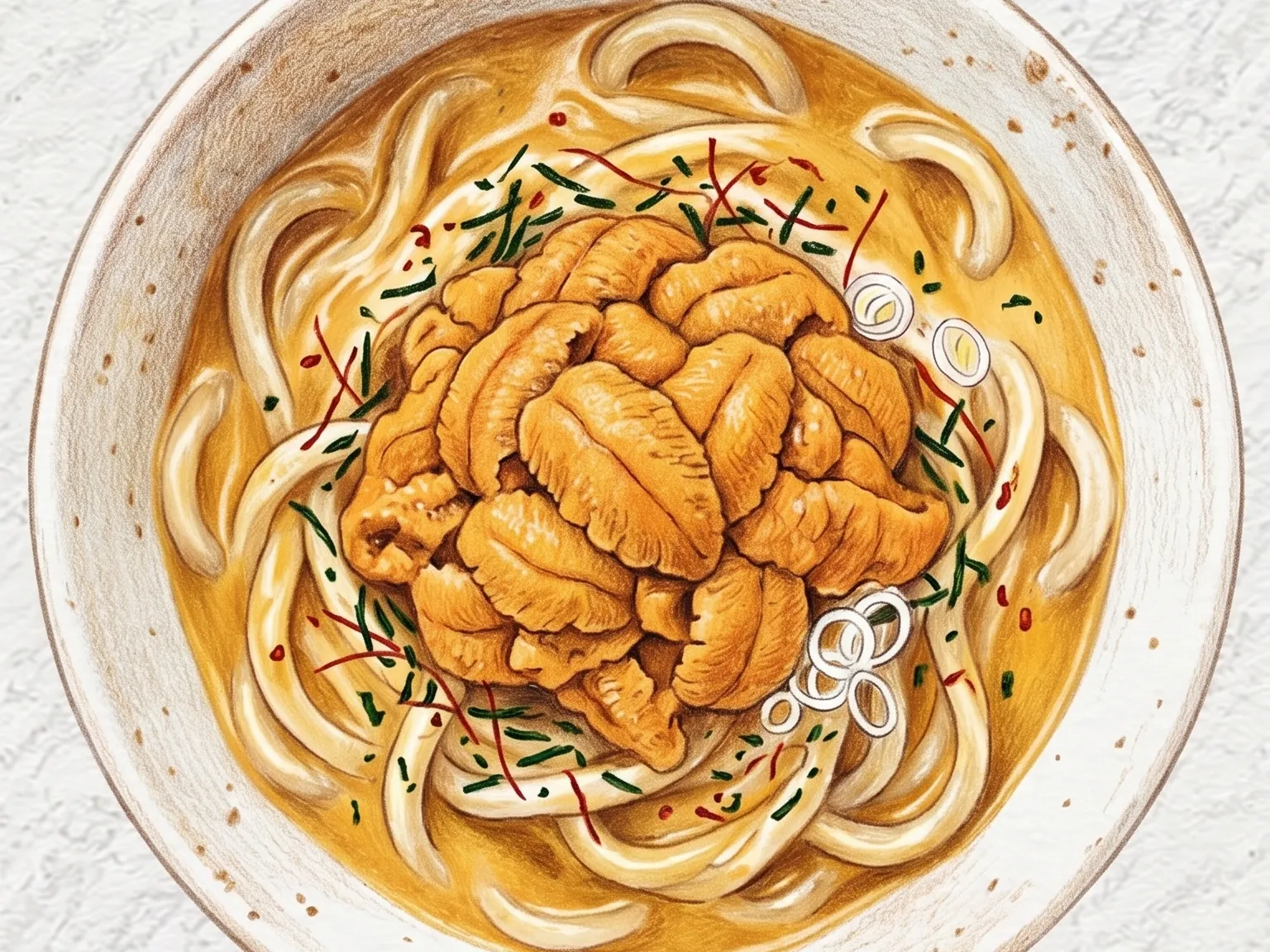
Rich Sea Urchin (Uni) Cream Udon
Noodles Medium

Rich Sea Urchin (Uni) Cream Udon

This noodle dish combines the rich flavor of fresh sea urchin with a smooth, savory cream sauce. Minced garlic and pollock roe are sautéed in oil, then heavy cream and tsuyu are added to create a savory base. Half of the sea urchin is dissolved directly into the warm cream to infuse it with a briny aroma, while the pollock roe replaces salt to provide depth and umami. Boiled udon noodles are tossed in the sauce over low heat, adding reserved noodle water if the mixture gets too thick. The dish is topped with the remaining raw sea urchin, chives, and seaweed strips. Because sea urchin is highly sensitive to heat, the garnish portion is kept raw and served immediately before the residual warmth of the noodles cooks it, preserving its delicate sweet flavor and soft texture.

🔥 Trending Now 🌙 Late Night
Prep 10min Cook 15min 2 servings
Korean Black Soybean Noodle Cup
Noodles Medium

Korean Black Soybean Noodle Cup

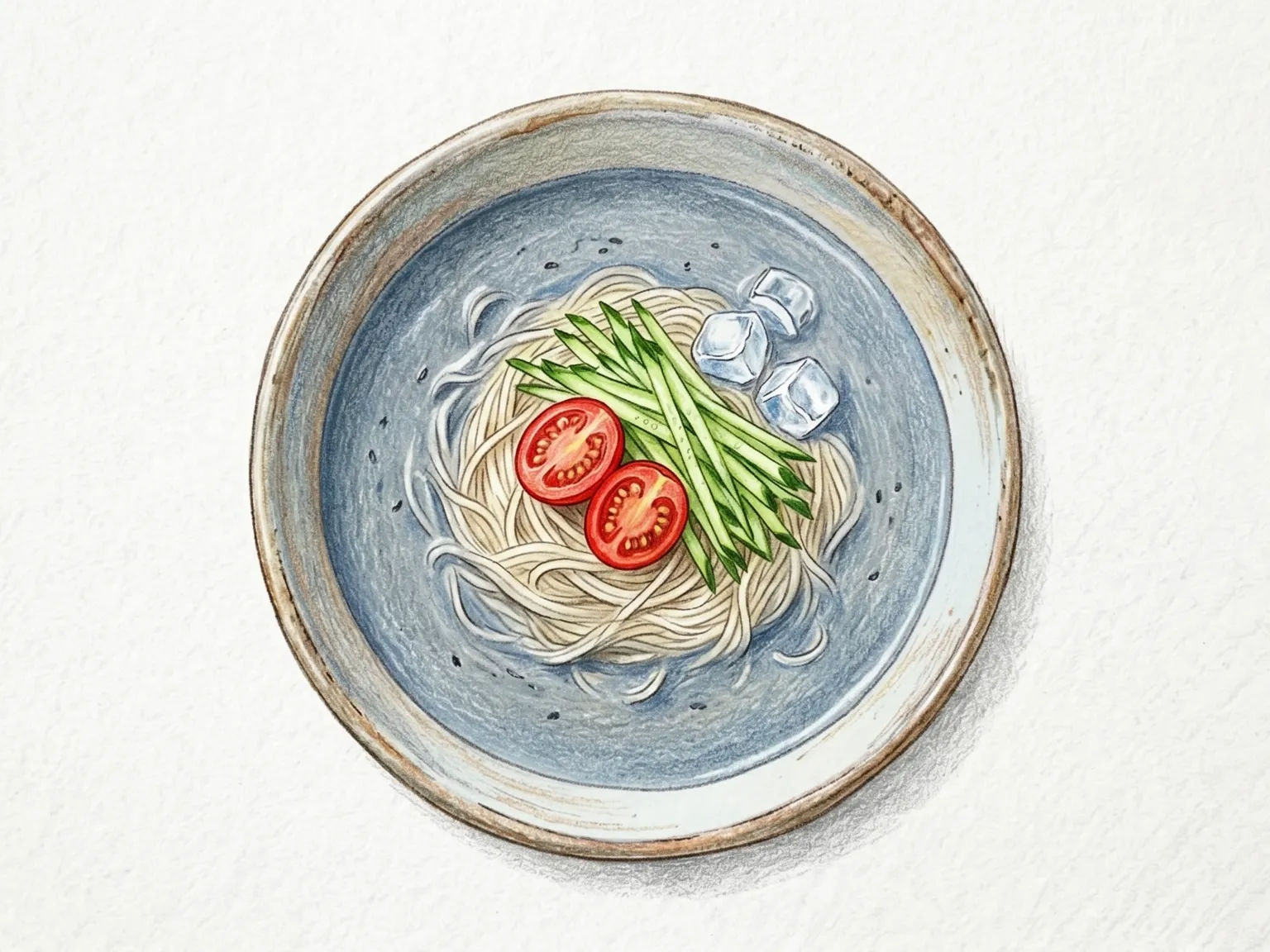
Seori-kongguksu-cup serves chilled black soybean broth over thin somyeon noodles in a cup-sized portion, a cool summer street food built for hot weather. The broth is made by blending boiled black soybeans with milk and cold water, then pressing through a fine strainer for a silky, lump-free consistency. Black soybeans give the broth a grayish hue distinct from the ivory-colored broth made with ordinary yellow soybeans, and the flavor is noticeably richer and more intensely nutty, with a clean finish rather than a heavy aftertaste. Cooking the soybeans fully and letting them cool before blending is important because heat drives off the aromatic compounds that give the broth its characteristic fragrance. Sliced cucumber, cherry tomatoes, and ice cubes go on top, the vegetables adding crunch and color contrast while the ice keeps the broth cold so the soybean flavor stays sharp and defined. Somyeon noodles are boiled and rinsed several times in cold water to strip off surface starch, which would otherwise cloud the broth and make the noodles clump. The result is a simple, satisfying bowl where every element has a clear role.

🥗 Light & Healthy 🧒 Kid-Friendly
Prep 25min Cook 10min 2 servings
Shabu-shabu Kalguksu Hot Pot
Noodles Medium

Shabu-shabu Kalguksu Hot Pot

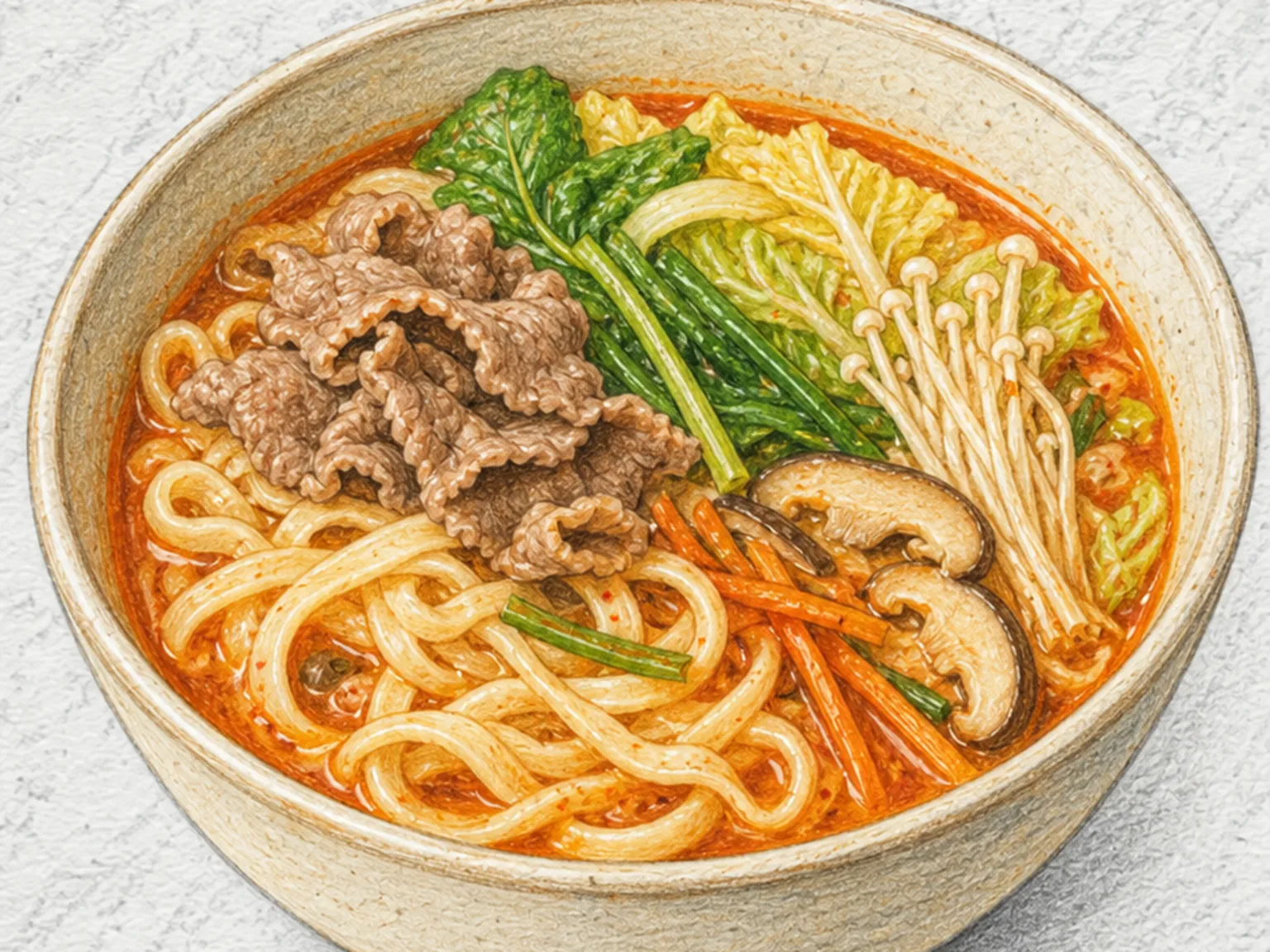
Shabu-shabu kalguksu is a three-stage hot pot for two: thin beef and vegetables first, kalguksu noodles next, and rice cooked against the bottom of the same pot at the end. Cut 100 g water dropwort into 5 cm lengths and separate 100 g oyster mushrooms into strands. Bring 1 L anchovy broth to a boil after fully dissolving 2 tablespoons red chili paste, 1.5 tablespoons chili powder, 1 tablespoon minced garlic, and 1 tablespoon soup soy sauce in it. Add the water dropwort and mushrooms, cooking only until they soften. Slide 200 g thinly sliced beef into the bubbling broth one piece at a time so the slices do not form a clump. Once the broth returns to a boil and no raw red areas remain on the meat, remove it with the vegetables. Shake loose flour from 200 g kalguksu noodles just before they enter the pot, separate them immediately in the boiling liquid, and cook for 6 to 8 minutes according to the package timing. After the noodles are served, remove broth until about 100 ml remains. Add 200 g cooked rice, 5 g seaweed flakes, and 1 tablespoon sesame oil. Stir, spread the rice into a thin layer, and stop cooking when the bottom begins to develop a light crisp crust.

🏠 Everyday 🍱 Lunchbox
Prep 20min Cook 25min 2 servings
Shan Noodles (Burmese Flat Rice Noodles with Turmeric Meat Sauce)
Noodles Medium

Shan Noodles (Burmese Flat Rice Noodles with Turmeric Meat Sauce)

Shan noodles are the everyday noodle of Myanmar's Shan State, found at nearly every market stall and tea shop in the region. Thin, flat rice noodles are topped with a sauce of minced chicken or pork cooked with turmeric, tomato, and a touch of chili. The dish is finished with a generous pour of fried garlic oil - golden-brown garlic chips sizzling in their own rendered fat - which gives the bowl its signature aroma. Pickled mustard greens add a sour crunch on the side, and toasted chickpea flour is sprinkled over for a nutty, grainy texture. The noodles come in two styles: a dry version tossed with the sauce, and a soup version swimming in a light broth. Both are eaten with a spoon and fork rather than chopsticks, in keeping with Burmese custom.

🎉 Special Occasion 🍱 Lunchbox
Prep 20min Cook 20min 2 servings
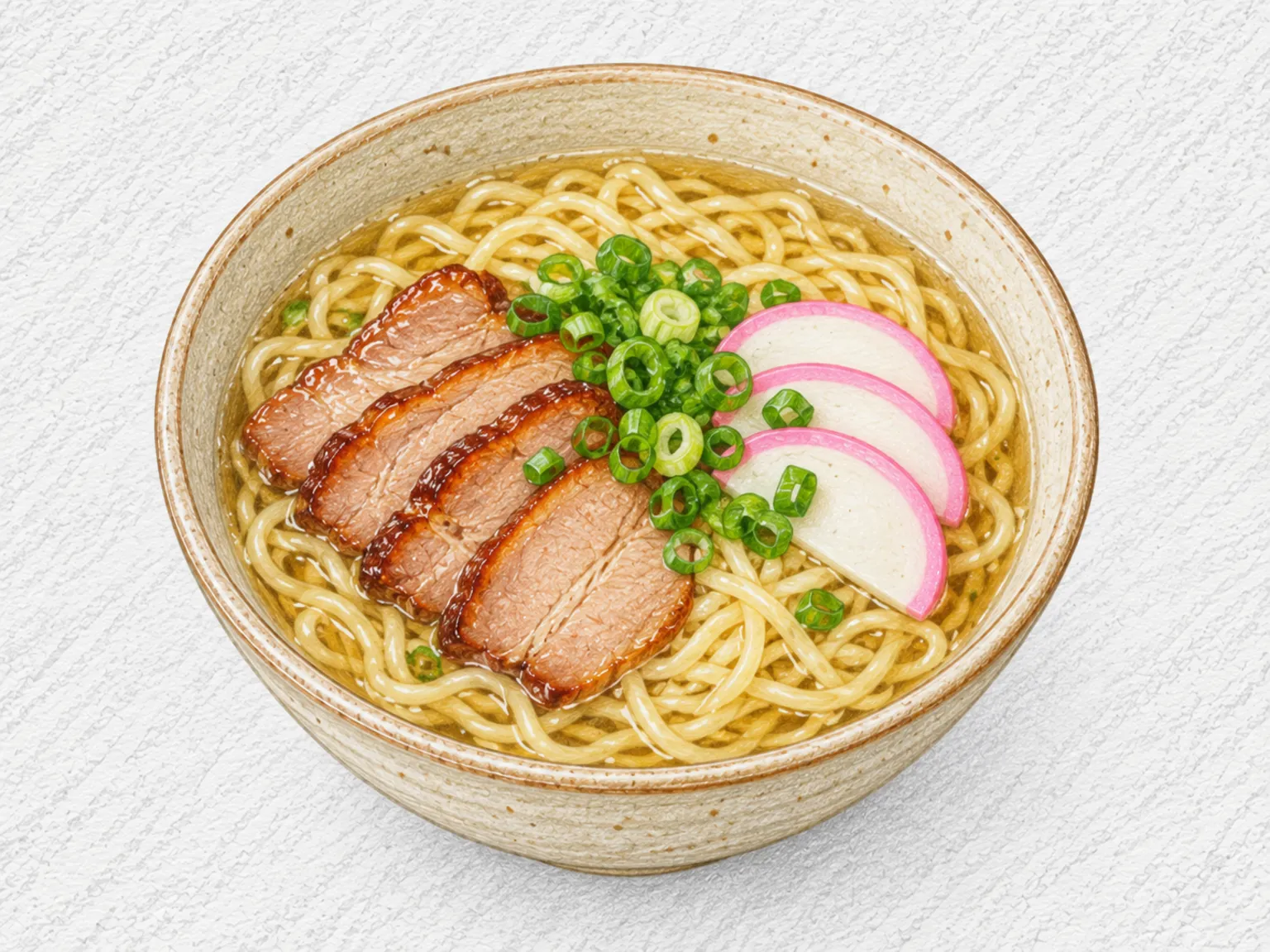
Hakodate Shio Ramen (Hokkaido Clear Salt-Seasoned Chicken Ramen)
Noodles Medium

Hakodate Shio Ramen (Hokkaido Clear Salt-Seasoned Chicken Ramen)

Hakodate shio ramen is the oldest style of ramen in Hokkaido, originating from the port city of Hakodate in the south of the island. The broth is built from chicken and pork bones simmered at a gentle, never rolling, boil so the liquid stays clear and golden rather than turning cloudy. Seasoning comes from salt alone - no miso, no soy sauce - which places the burden of flavor entirely on the quality of the stock. Medium-wavy noodles are the standard choice, their curls catching just enough broth in each bite. Toppings are kept minimal: a slice or two of chashu pork, strips of menma bamboo shoots, and chopped scallion. The appeal of shio ramen lies in its transparency, both visual and gustatory - there is nowhere for imperfections to hide, and every sip delivers a clean, uncluttered umami.

🎉 Special Occasion
Prep 15min Cook 90min 2 servings

About Noodles

This collection features traditional Korean noodle recipes alongside Asian-fusion takes, covering both broth-based and tossed preparations.