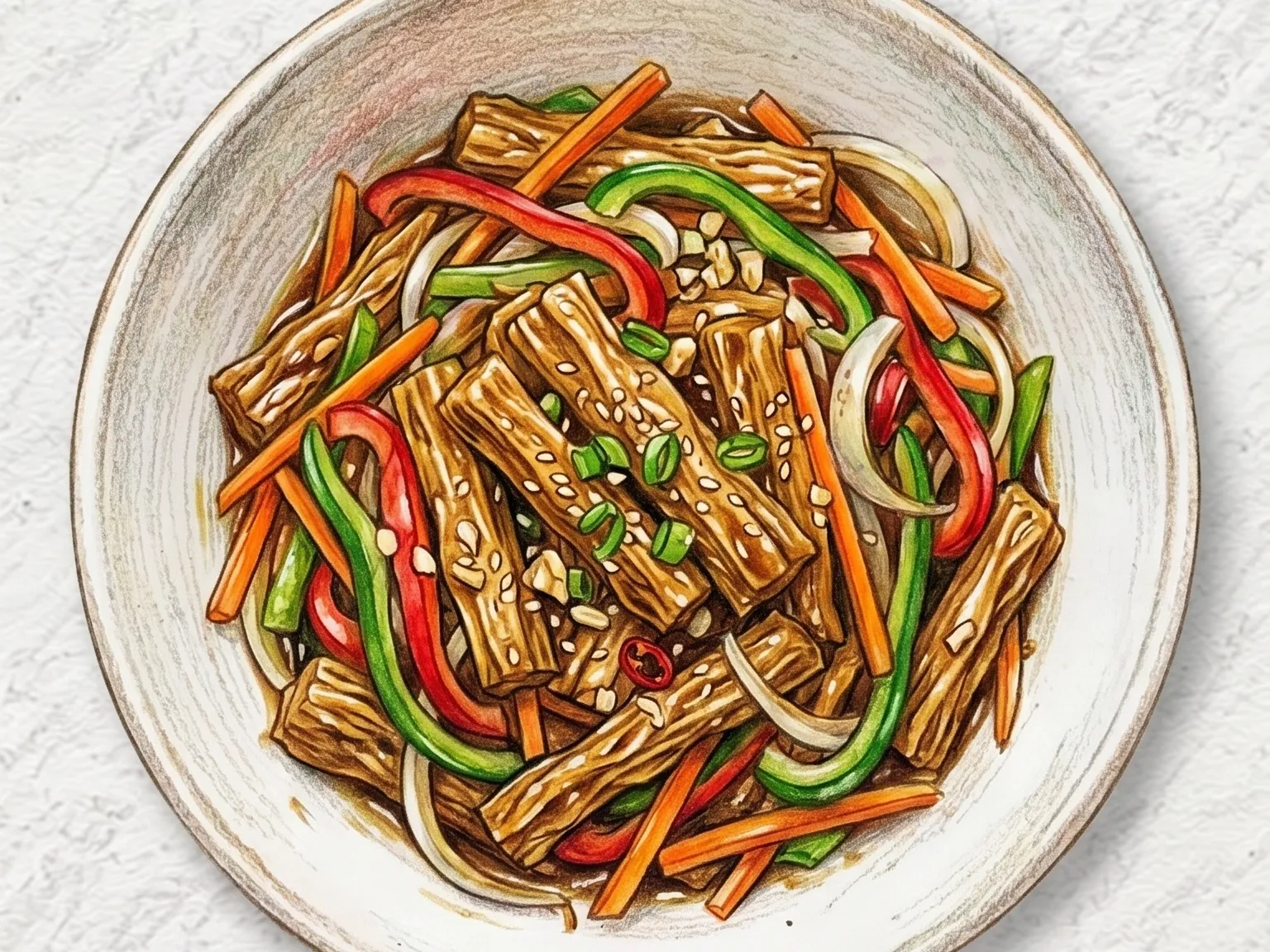
Stir-fried Dried Tofu Strips
Dried tofu cut into thin strips does not break up in the pan; it lifts on the chopsticks in strands, like noodles. Carrot, green pepper and onion cut to the same width make it colorful.
76 Chinese recipes. Page 2 of 4. Compare ingredients and cooking times. Stir-fried Dried Tofu Strips, Chinese Chow Mein.
Dried tofu cut into thin strips does not break up in the pan; it lifts on the chopsticks in strands, like noodles. Carrot, green pepper and onion cut to the same width make it colorful.
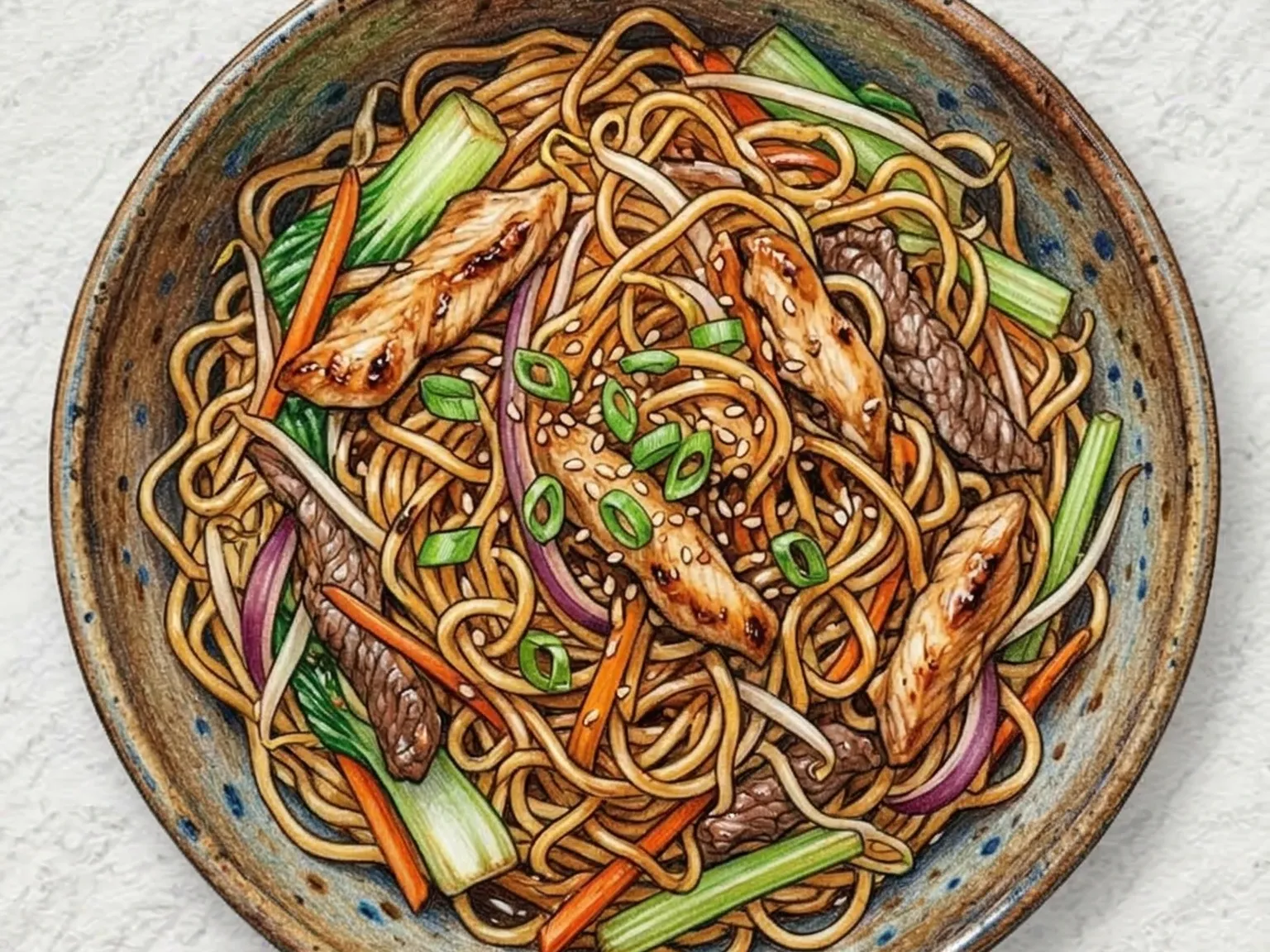
Spread across a very hot pan and left alone for a moment, the noodles pick up crisp, browned patches while the centers stay chewy, and that contrast defines chow mein. It depends on dry ingredients: noodles boiled just short of tender and cooled, bean sprouts shaken free of water, and vegetables pulled before they weep. A thin coat of sesame oil on the drained noodles stops them from fusing into a clump as they cool. High heat from start to finish keeps liquid from pooling in the pan, where it would steam the noodles instead of frying them. Oyster sauce and soy give the strands a glossy, salty coating.
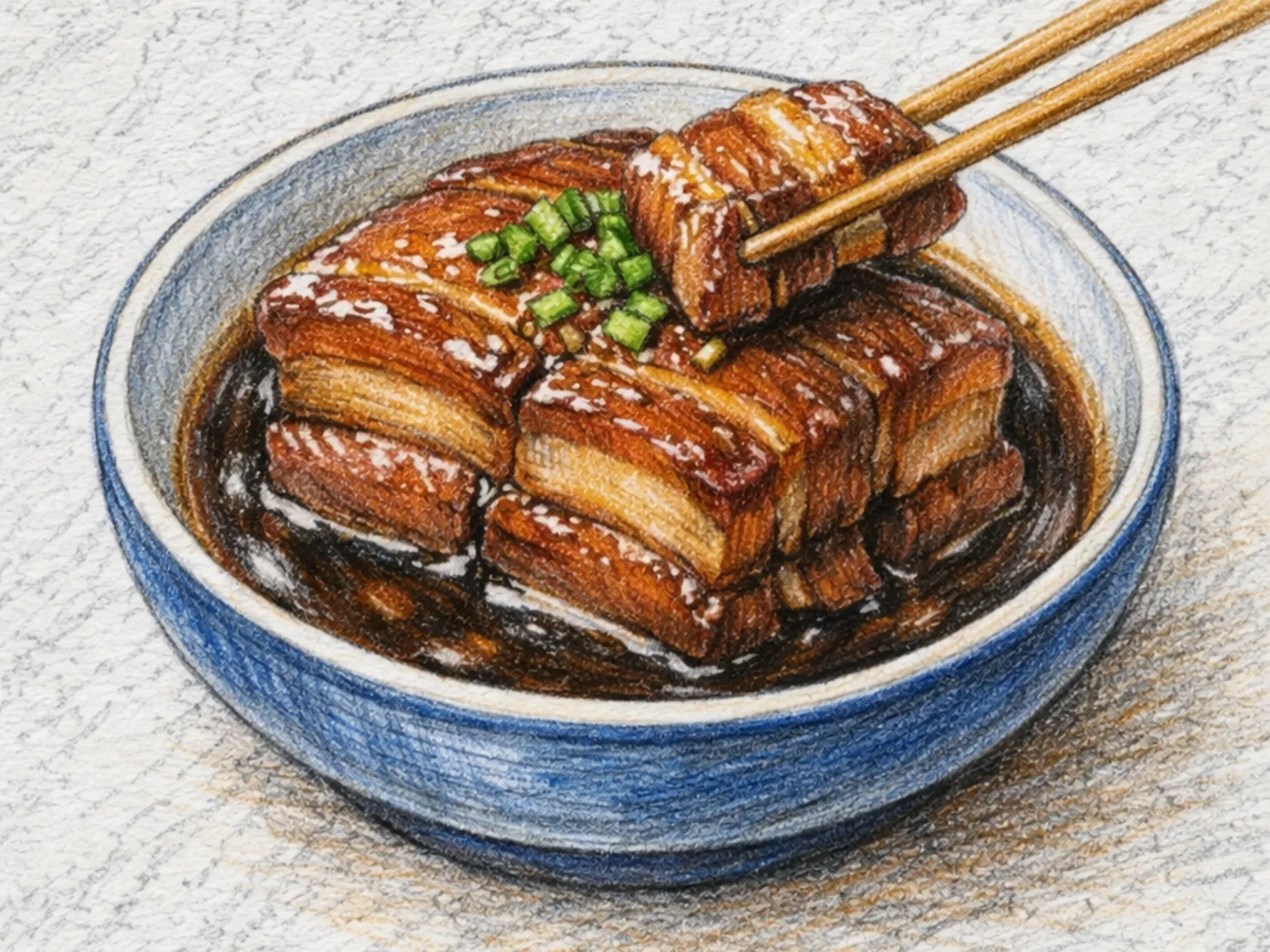
The dish takes its name from the Song dynasty poet Su Dongpo. Thick squares of pork belly are tied with string and braised for a long time in soy sauce, rice wine and sugar until the fat turns translucent, then cut into thick slices and served under a spoonful of the reduced, glossy brown sauce.
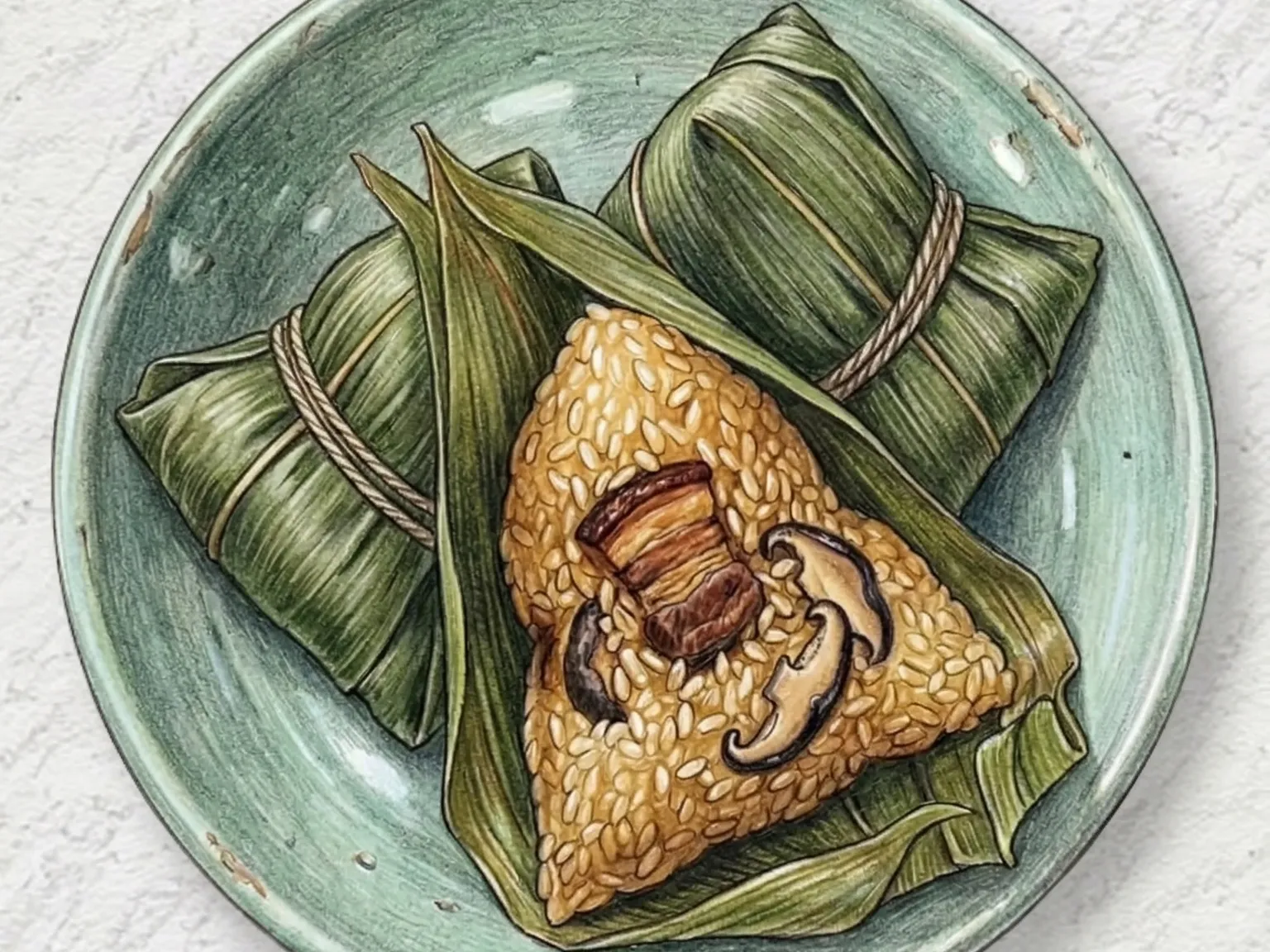
Two bamboo leaves are folded into a cone, filled with glutinous rice, pork belly marinated in soy and oyster sauce, and shiitake, then tied into a triangle and simmered for over two hours. In that time the rice soaks up the pork fat and soy and packs into one dense, sticky mass.
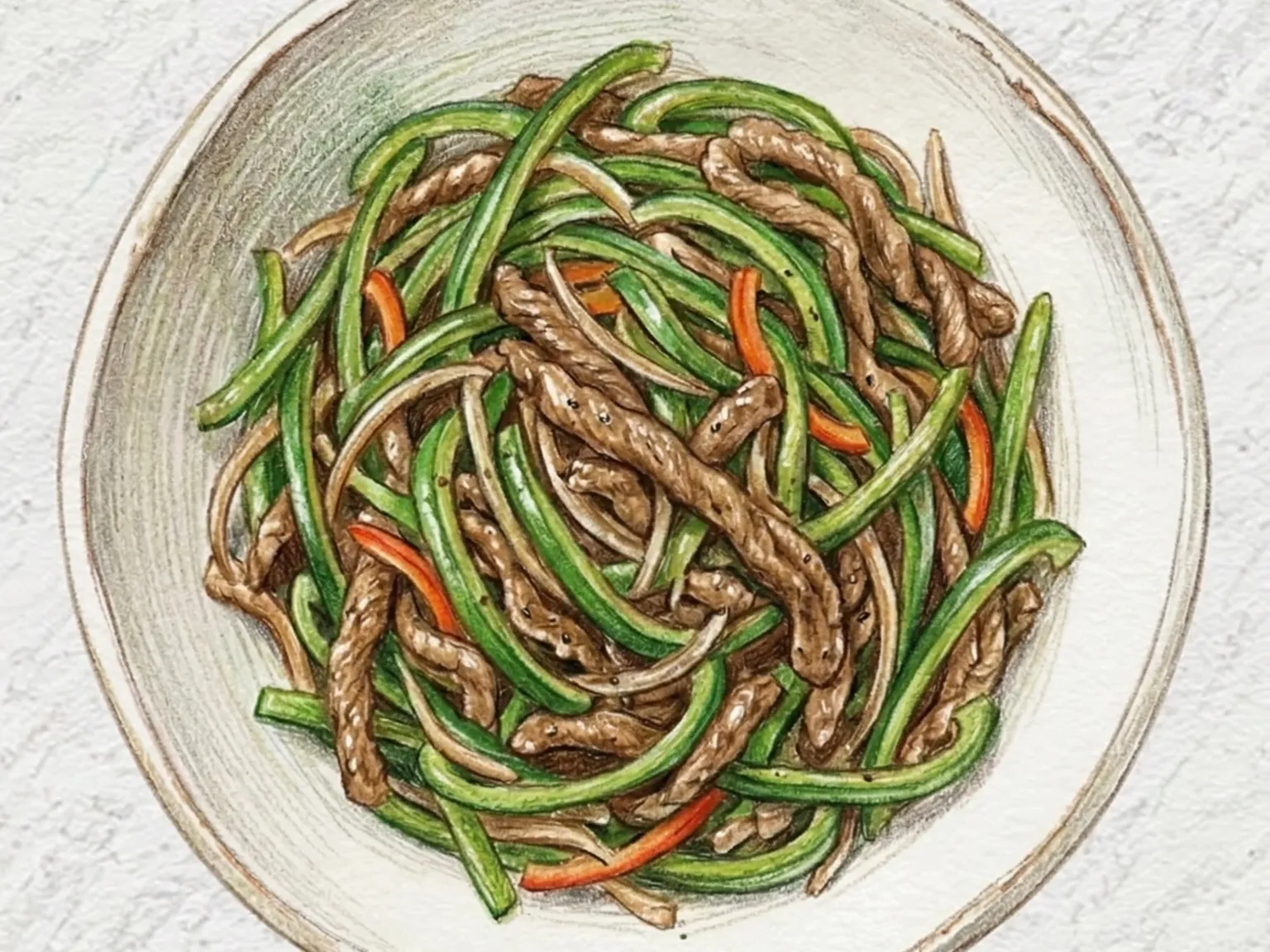
Despite the japchae in its name, there are no glass noodles. Pork tenderloin, green bell pepper and onion are all cut into long strips of the same thickness, the starch-coated pork is seared first over high heat, and oyster sauce finishes it. With everything the same size, meat and pepper come up together in one pinch of the chopsticks.
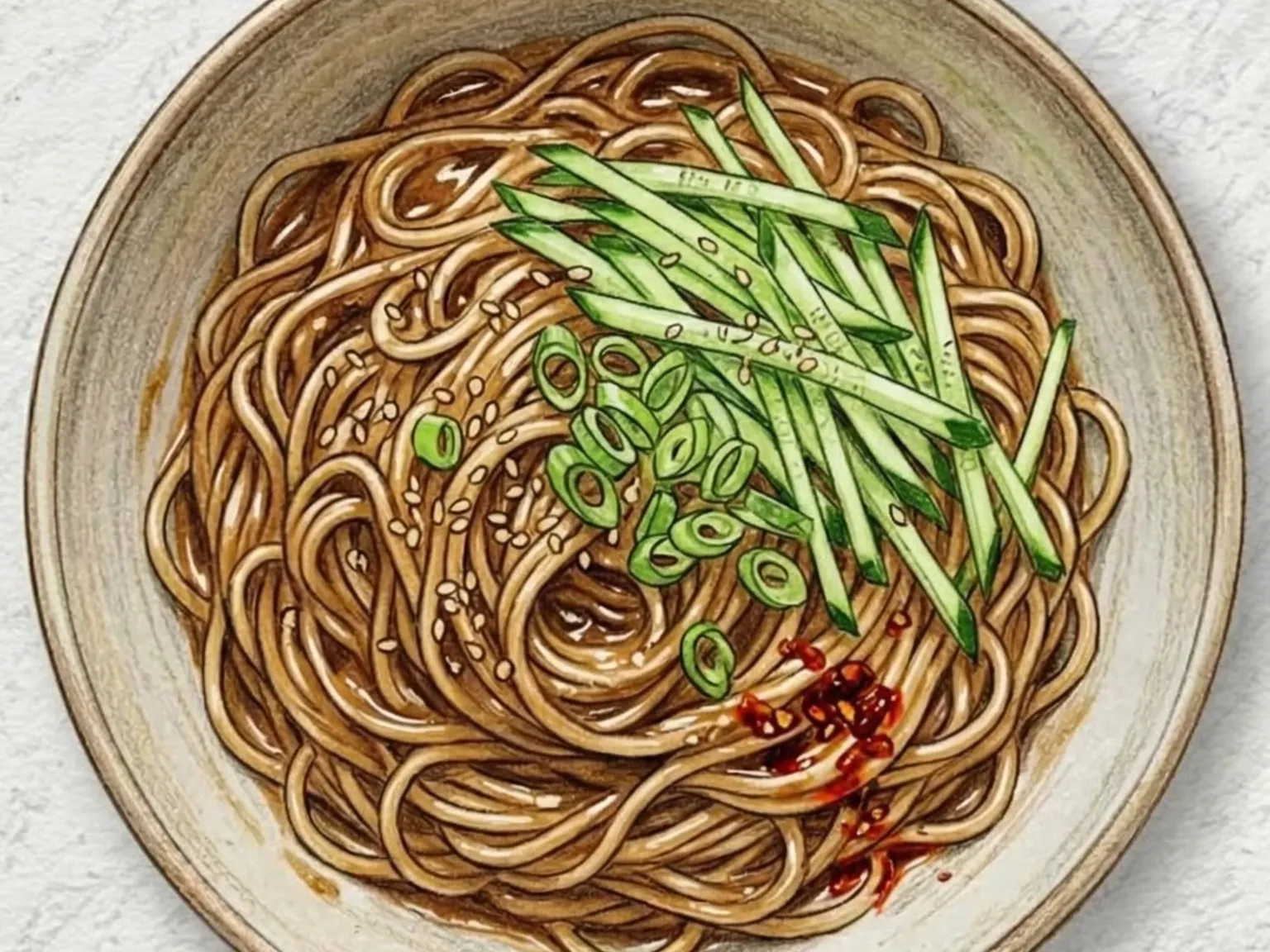
Peanut butter does the heavy lifting in this sauce, with sesame oil supplying the sesame aroma, so the dish comes together without hunting down Chinese sesame paste. Soy, vinegar, sugar, and chili oil turn it sweet, salty, tart, and gently hot all at once. The noodles get a short ice bath that firms them up, and julienned cucumber and scallion cut through the dense coating. A cold, fast bowl for hot weather.
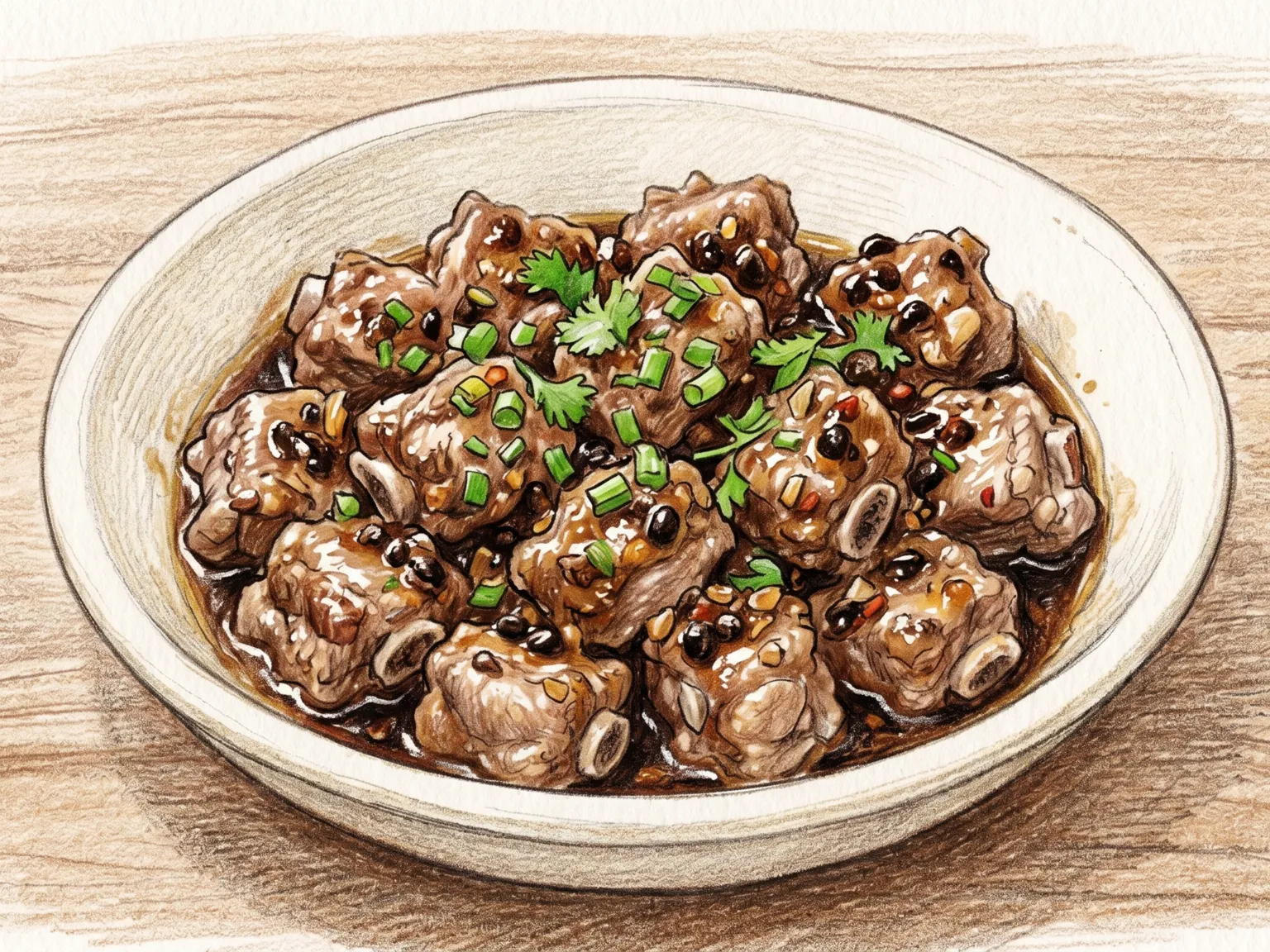
These are the steamed pork ribs that come in little dishes at dim sum. Coarsely chopped douchi, salted fermented black beans, keeps its salty, funky smell through the steaming and ends up in the juicy meat.
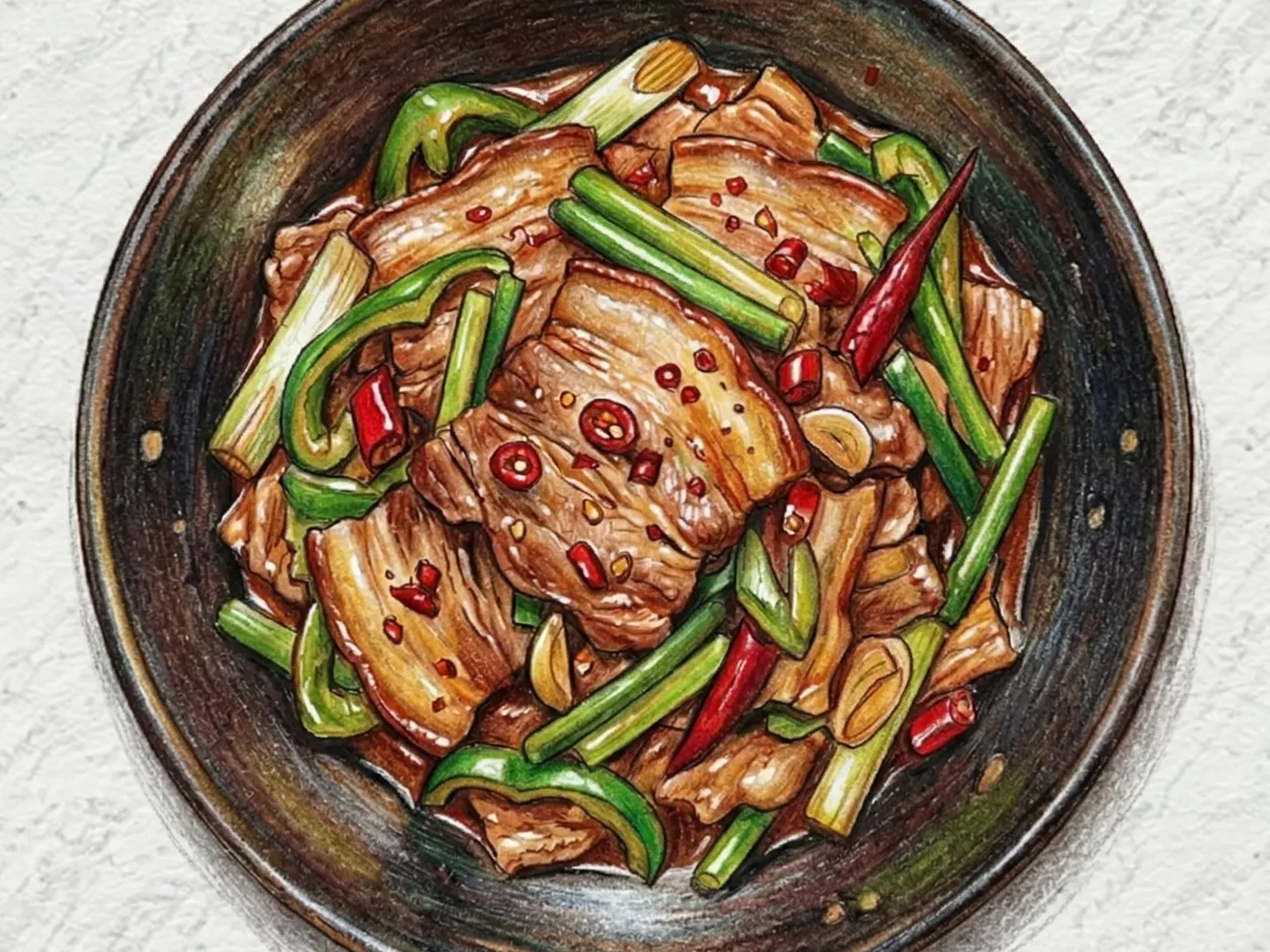
The name means meat returned to the pot: pork belly is simmered whole, cooled, sliced thin, then fried again in the wok. That second round crisps the edges while the fat turns pleasantly chewy, and doubanjiang (chili bean paste) with fermented black beans coats it in a salty, spicy sauce. Leek and green pepper go in at the end and stay crunchy. How much soy sauce to add depends on the doubanjiang, as brands vary a lot in saltiness.
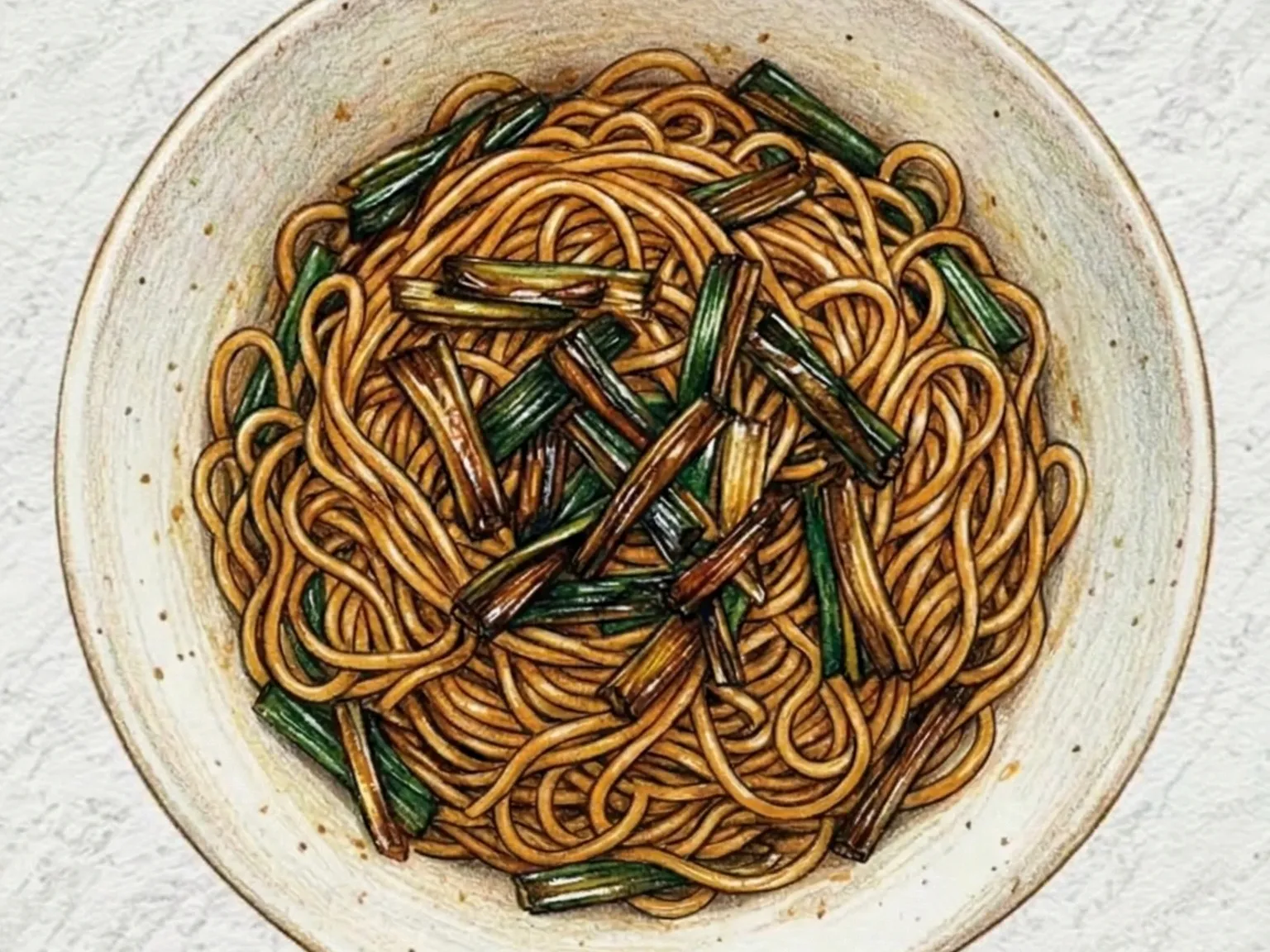
Scallions cooked slowly in oil until they shrink, brown and turn crisp leave behind an amber, fragrant oil that becomes the sauce for these noodles. With only soy sauce, sugar and white pepper added, the result rests almost entirely on patience at the stove. Turning up the heat to hurry the scallions burns them black and leaves the oil bitter. The crisp pieces are lifted out and saved as a crunchy topping.
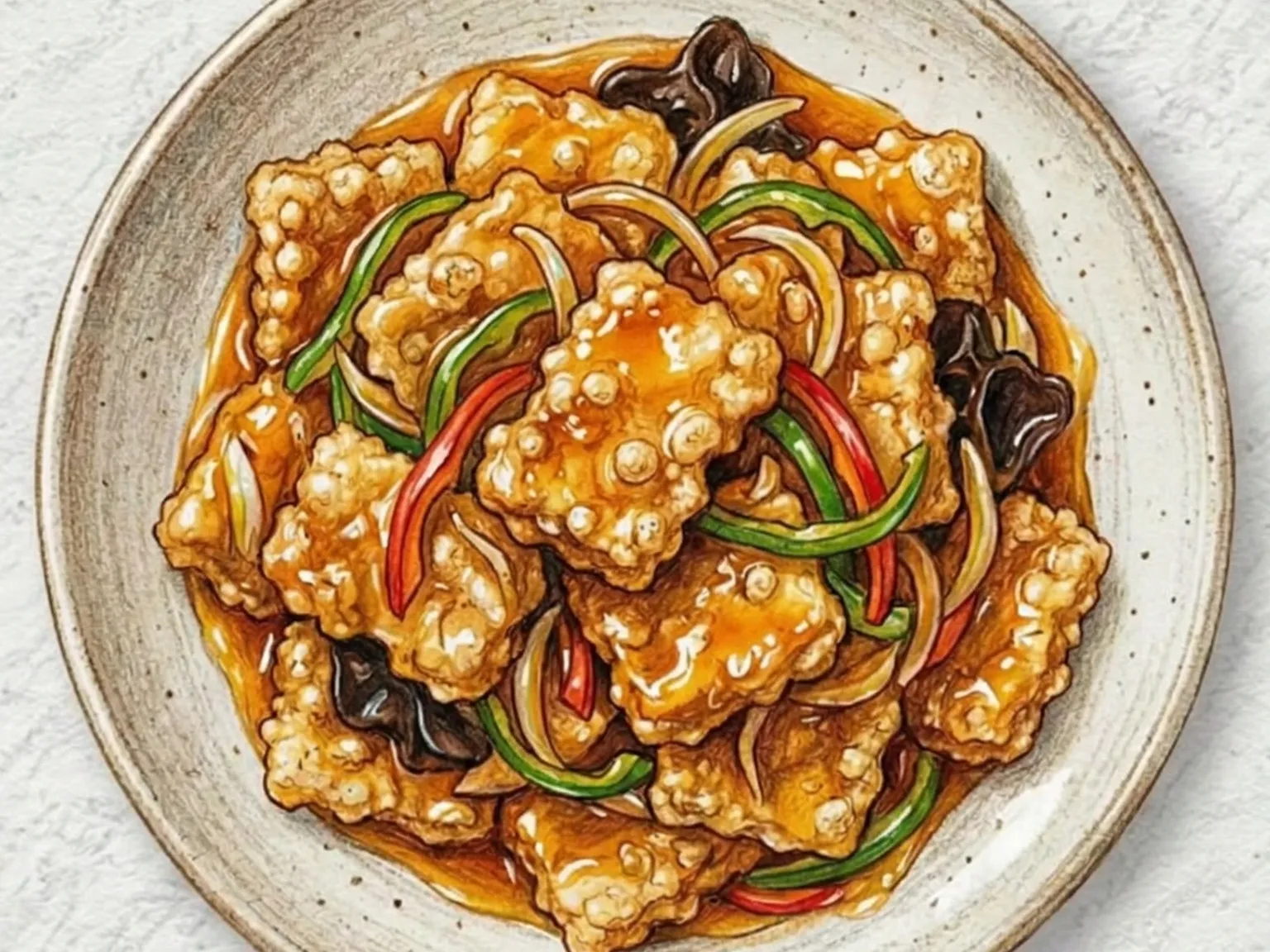
Thin slices of pork loin get a thick potato-starch coat and two rounds of frying, which puff the crust into a hard, glassy shell that cracks when you bite. The sauce is just vinegar, sugar, and soy, so it is paler and sharper than the ketchup-red versions common in Korean Chinese restaurants. That tangier style traces back to late-Qing Harbin, where the dish was created to suit Russian guests.
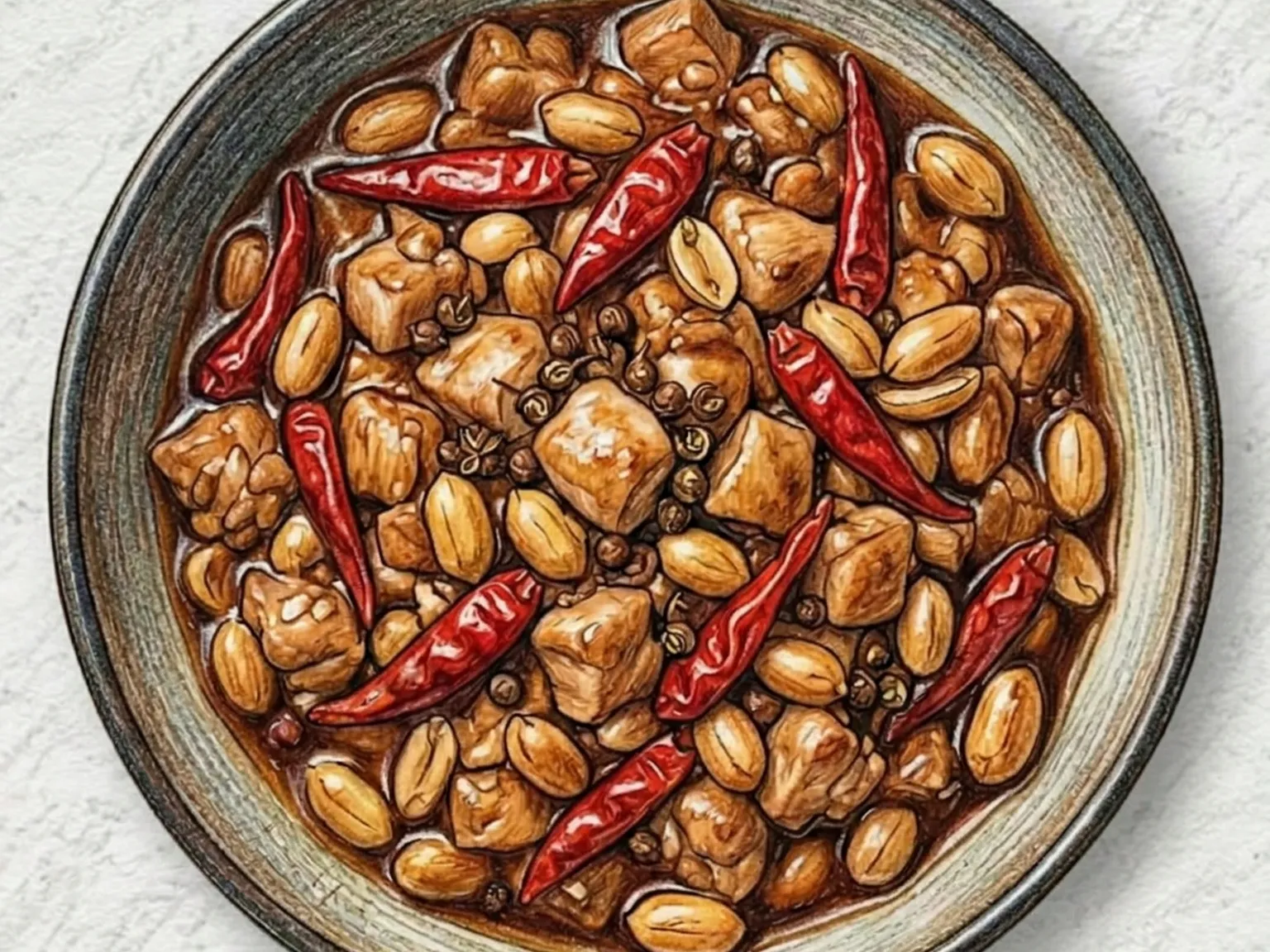
Biting into a Sichuan peppercorn leaves the tongue tingling, and in kung pao chicken that numbness matters as much as the heat. Dried chilies and peppercorns are fried in the oil first so the chicken is coated in that flavored oil, and the roasted peanuts go in at the very end to stay crunchy.
Boiling chicken stock poured into the bowl does the cooking: paper-thin pork slices turn opaque within seconds, then bean sprouts and garlic chives follow. Slicing the pork while it is half-frozen makes those thin slices possible, and the stock has to be at a full, rolling boil, since anything cooler leaves the meat underdone.
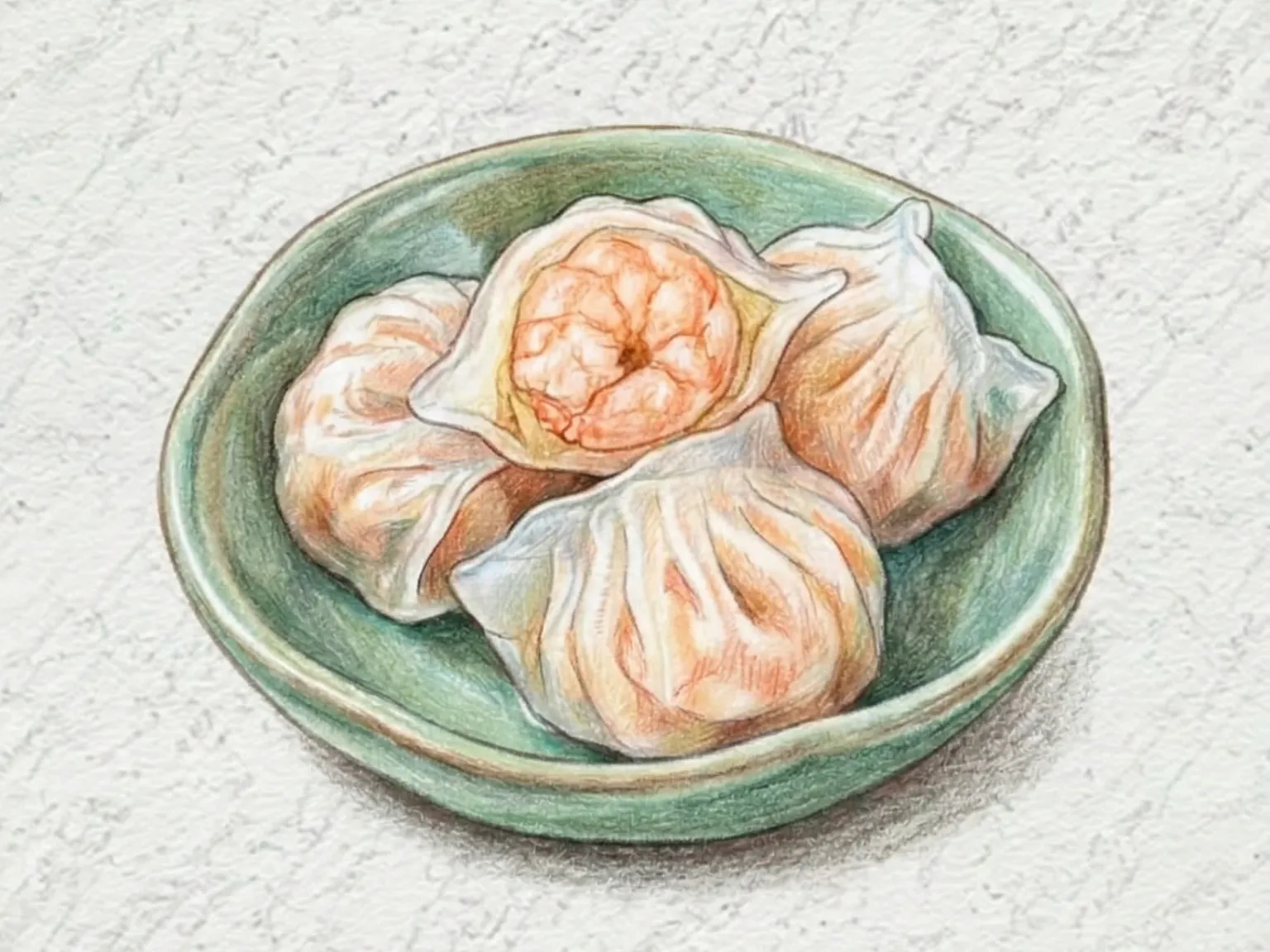
Wheat starch and tapioca starch mixed with boiling water make a wrapper that steams to a pearly translucence, with the pink shrimp showing through. It stretches and chews more than a flour wrapper. The filling is coarsely chopped shrimp with a little diced bamboo shoot, seasoned with nothing beyond salt, white pepper and sesame oil. At a Cantonese yum cha table, har gow is the dumpling the others are measured against.
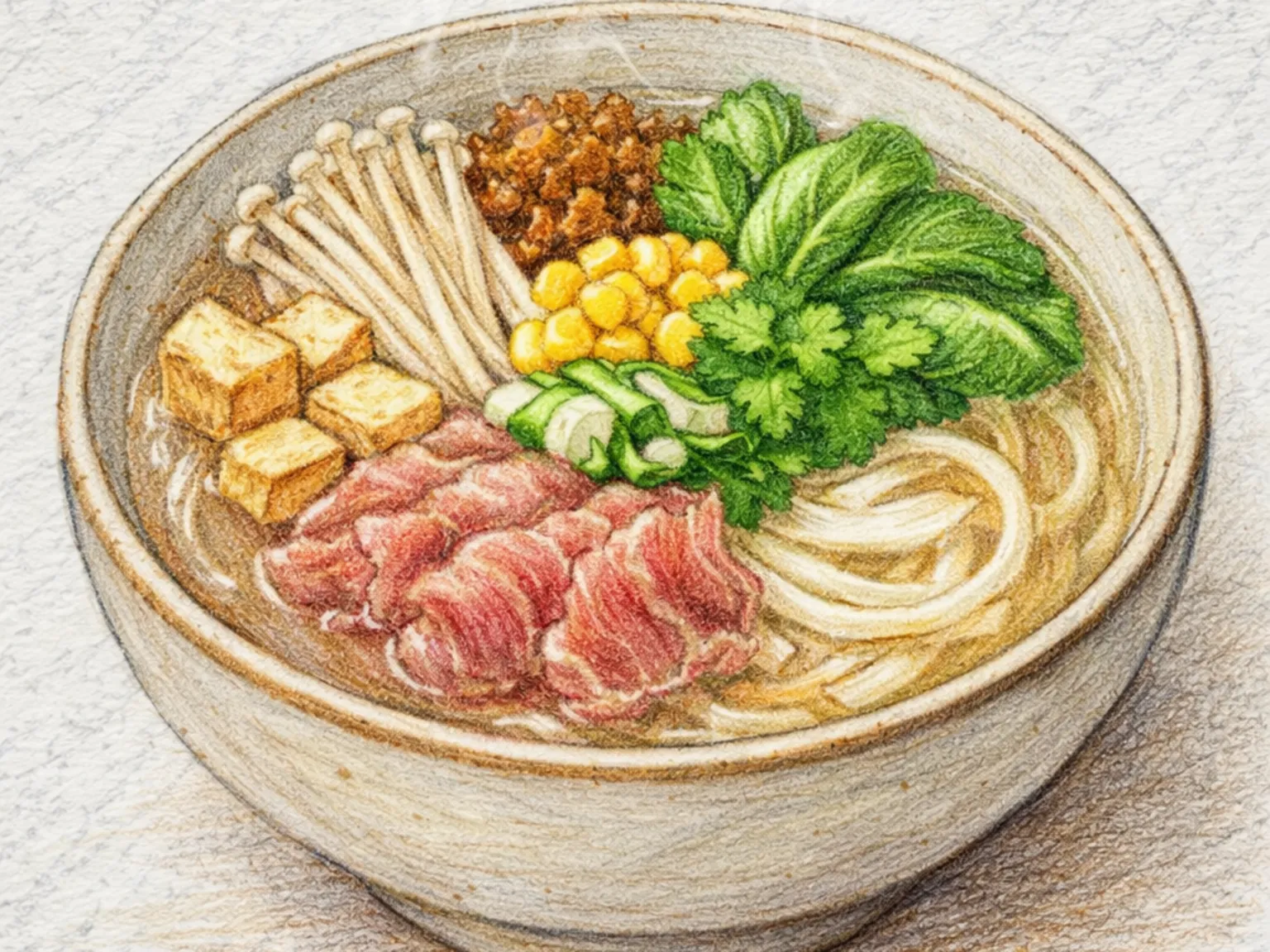
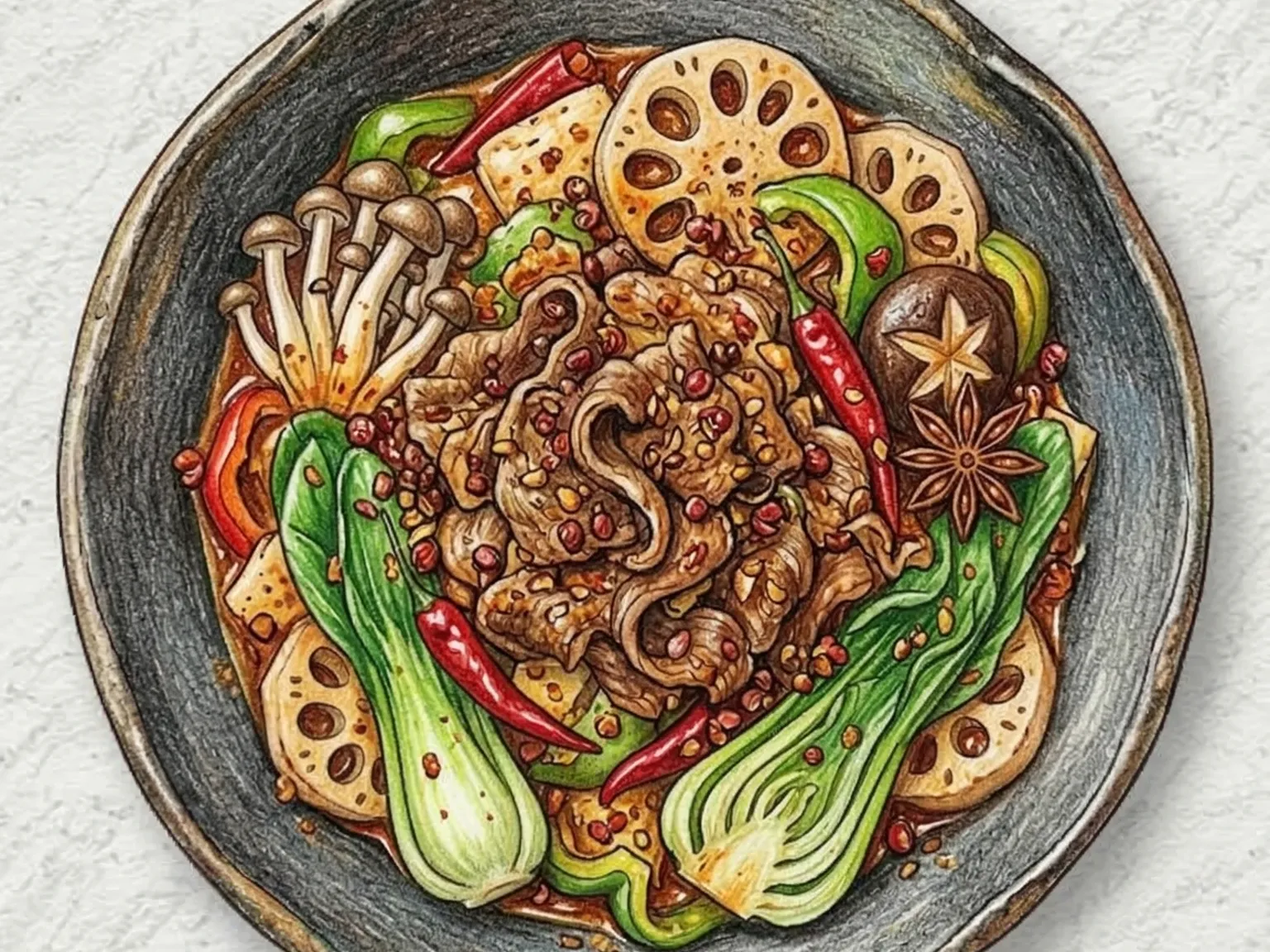
Mala xiangguo takes the numbing, spicy flavors of Sichuan hot pot and puts them into a dry stir-fry: beef, lotus root, shiitake, and bok choy get only a thin coat of mala sauce, with no broth at all. Everything is patted or shaken dry first: with nothing simmering, any water left on the ingredients just pools in the pan.
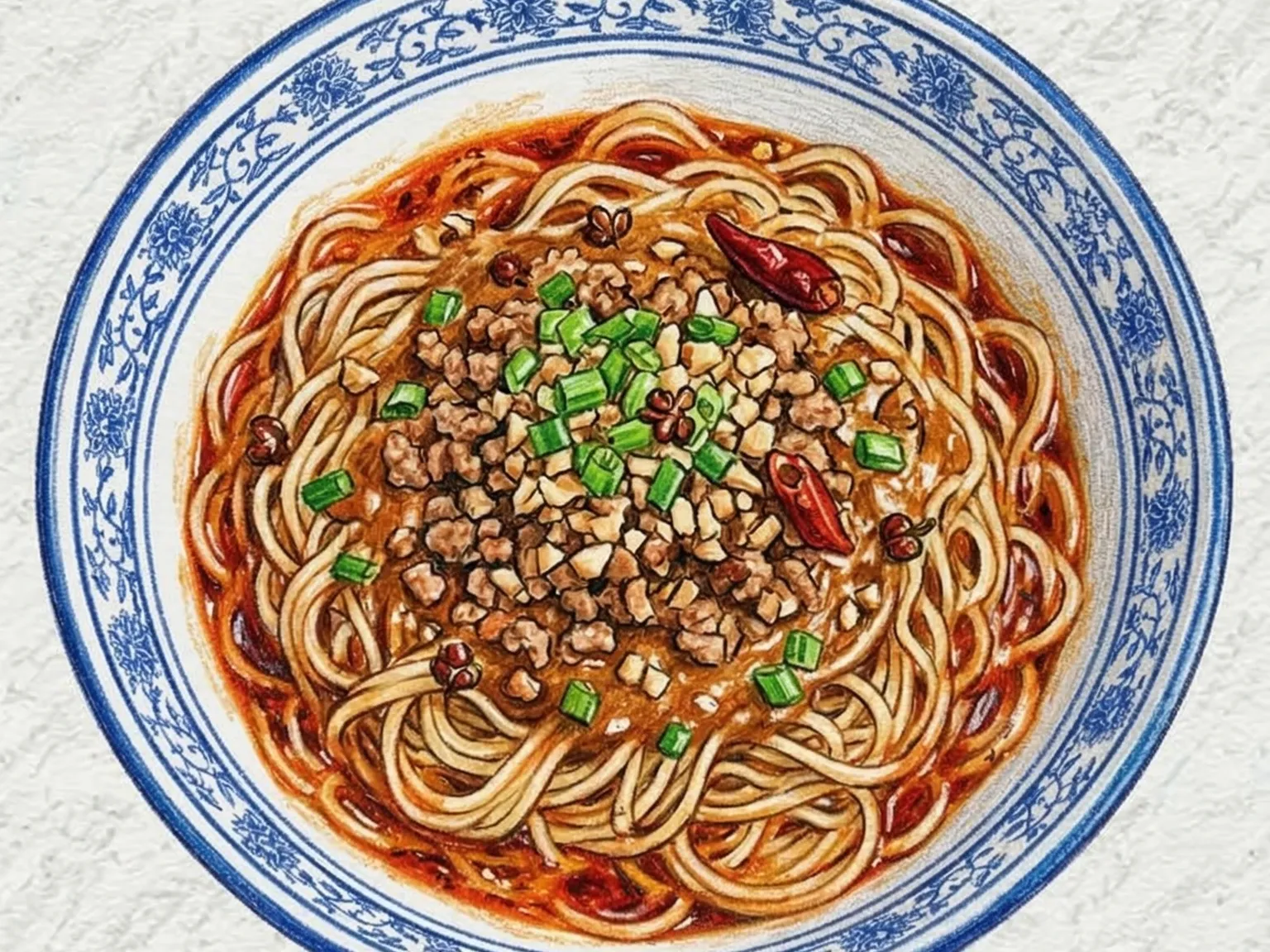
Sesame paste, chili oil, soy, and vinegar sit in the bottom of the bowl, and once hot noodles are tossed through them, richness and direct heat come first while the tingle of Sichuan pepper arrives a beat later. Because that numbness builds fast, only half the ground peppercorn goes into the sauce, with the rest added after tasting. The ground pork is left untouched in the hot pan until it forms a brown crust, and that roasted flavor carries the whole sauce. Noodles that are not drained thoroughly thin the sauce until it no longer clings. Blanched bok choy adds a clean, green break from all the oil.
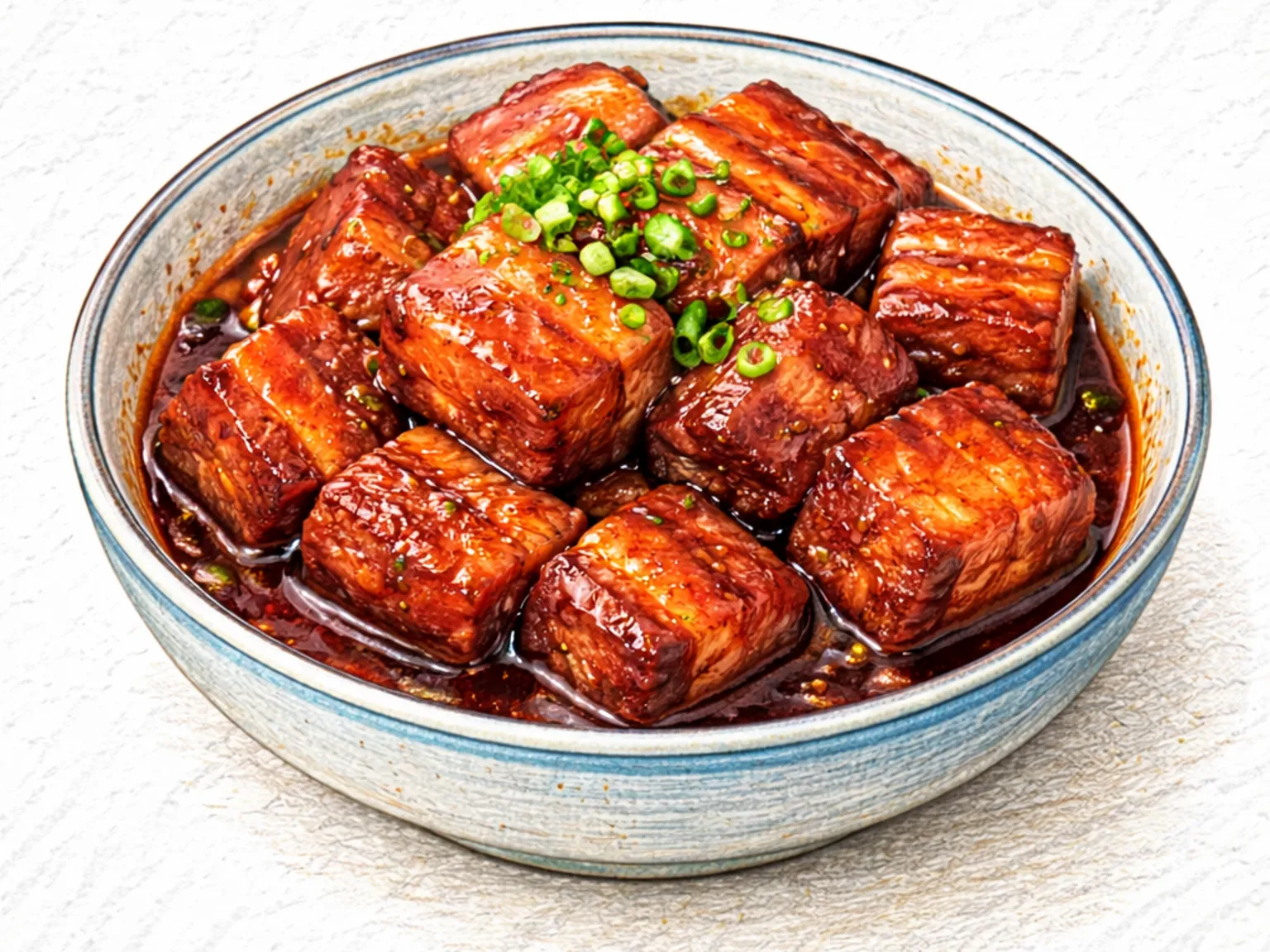
The deep reddish brown of hong shao rou comes from sugar melted to caramel in the pot before any soy sauce goes in. The caramel-coated pork belly braises in soy sauce and rice wine until the sauce clings to it in a thin glaze, and it goes over plain rice, sauce and all.
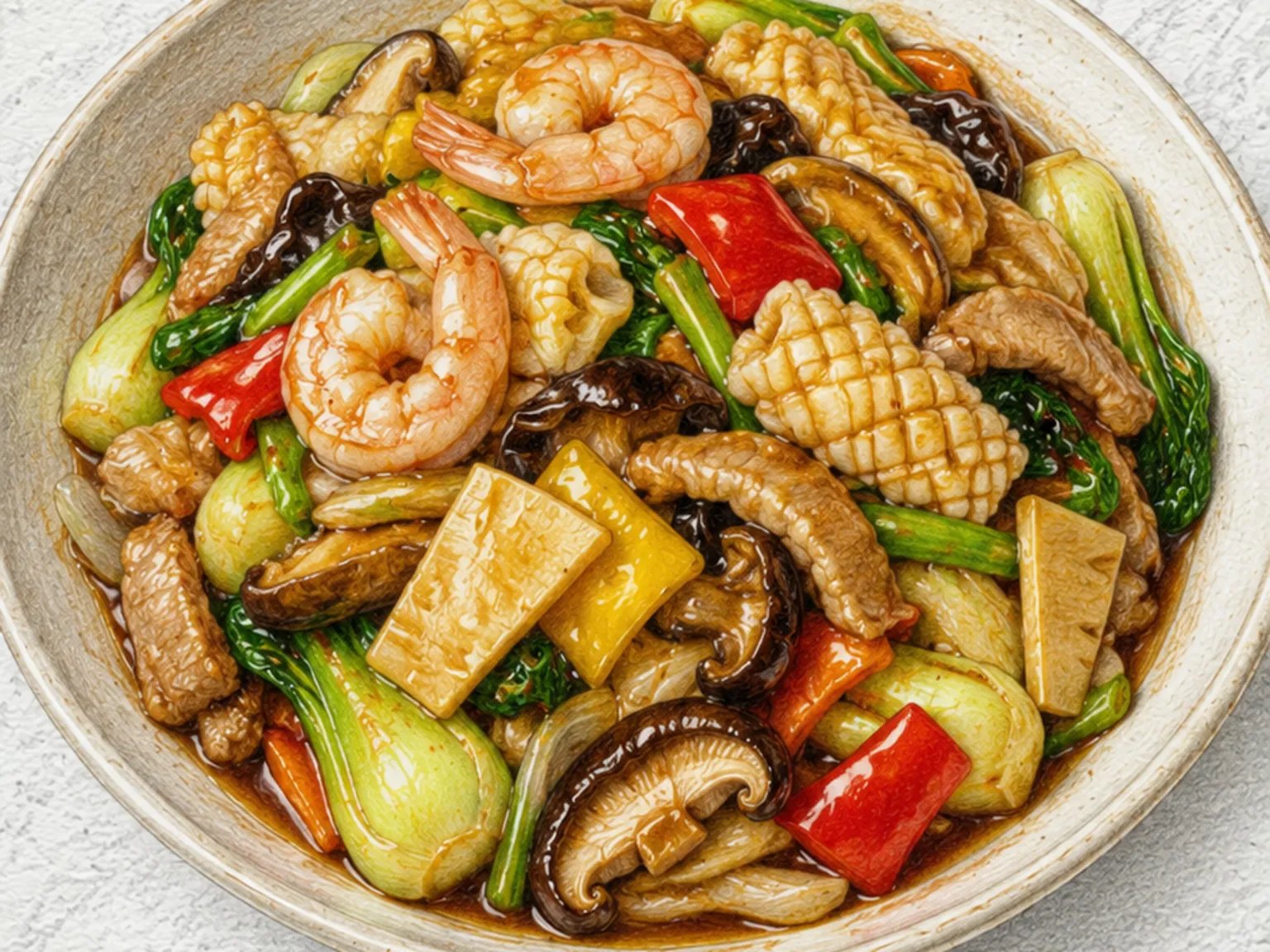
Once the pan is hot, the heat stays high until the end. Pork goes in first, then shrimp and squid, then the vegetables, roughly a minute apart, with no gap for chopping or drying anything, which is why everything is prepped and lined up beside the stove. There is no starch at the finish: oyster sauce and water boil for 2 minutes and leave only a thin coat.
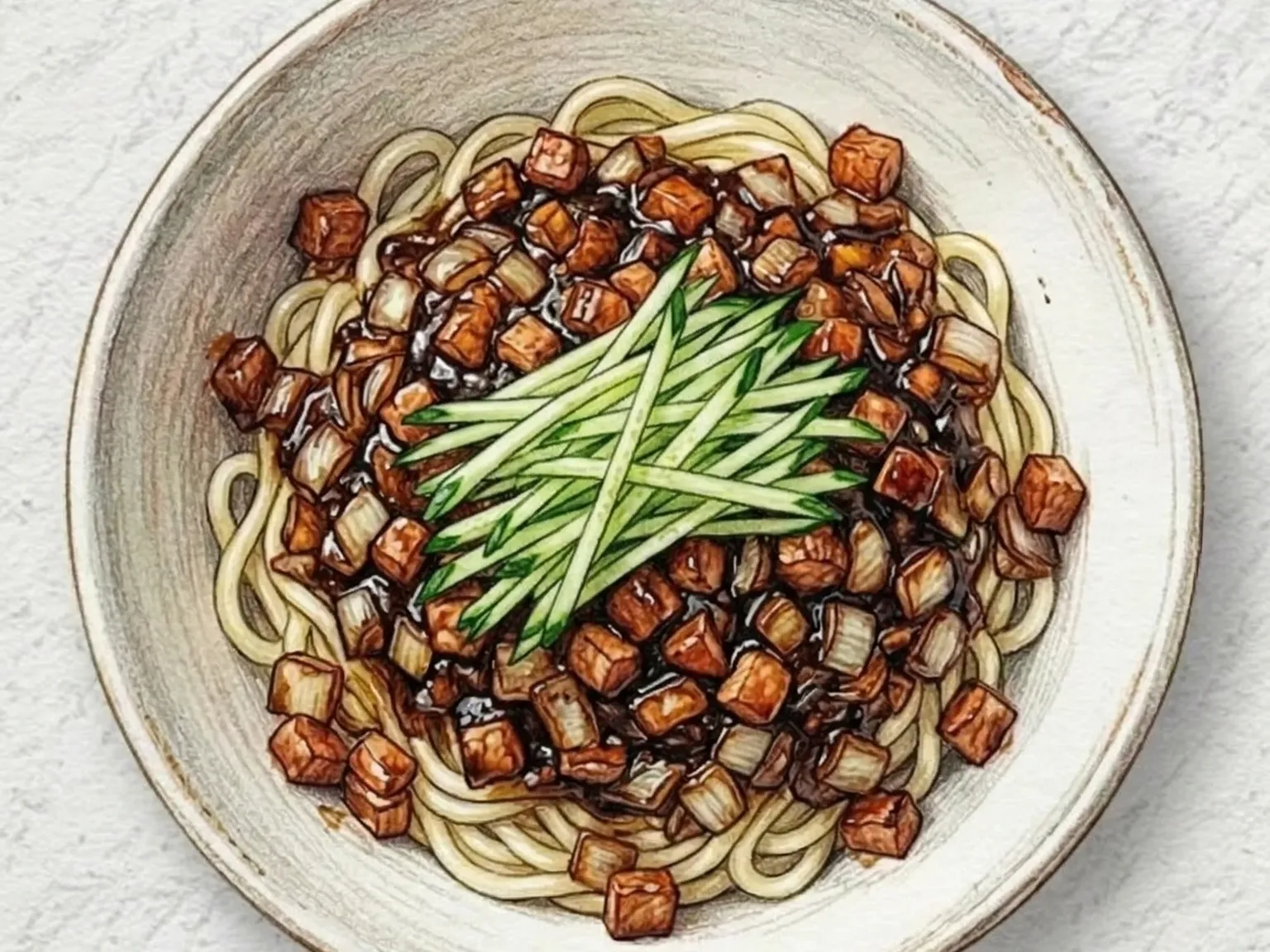
Without a cornstarch slurry, gan jjajang's black bean sauce reaches the noodles as a glossy, oil-carried stir-fry rather than a thick gravy. Frying chunjang, the Korean-Chinese black bean paste, before anything else takes away its raw bitterness, and high heat does the thickening that starch would otherwise do. Onion pulled off while just turning translucent keeps some bite, which matters in a sauce with nothing starchy to hide behind.
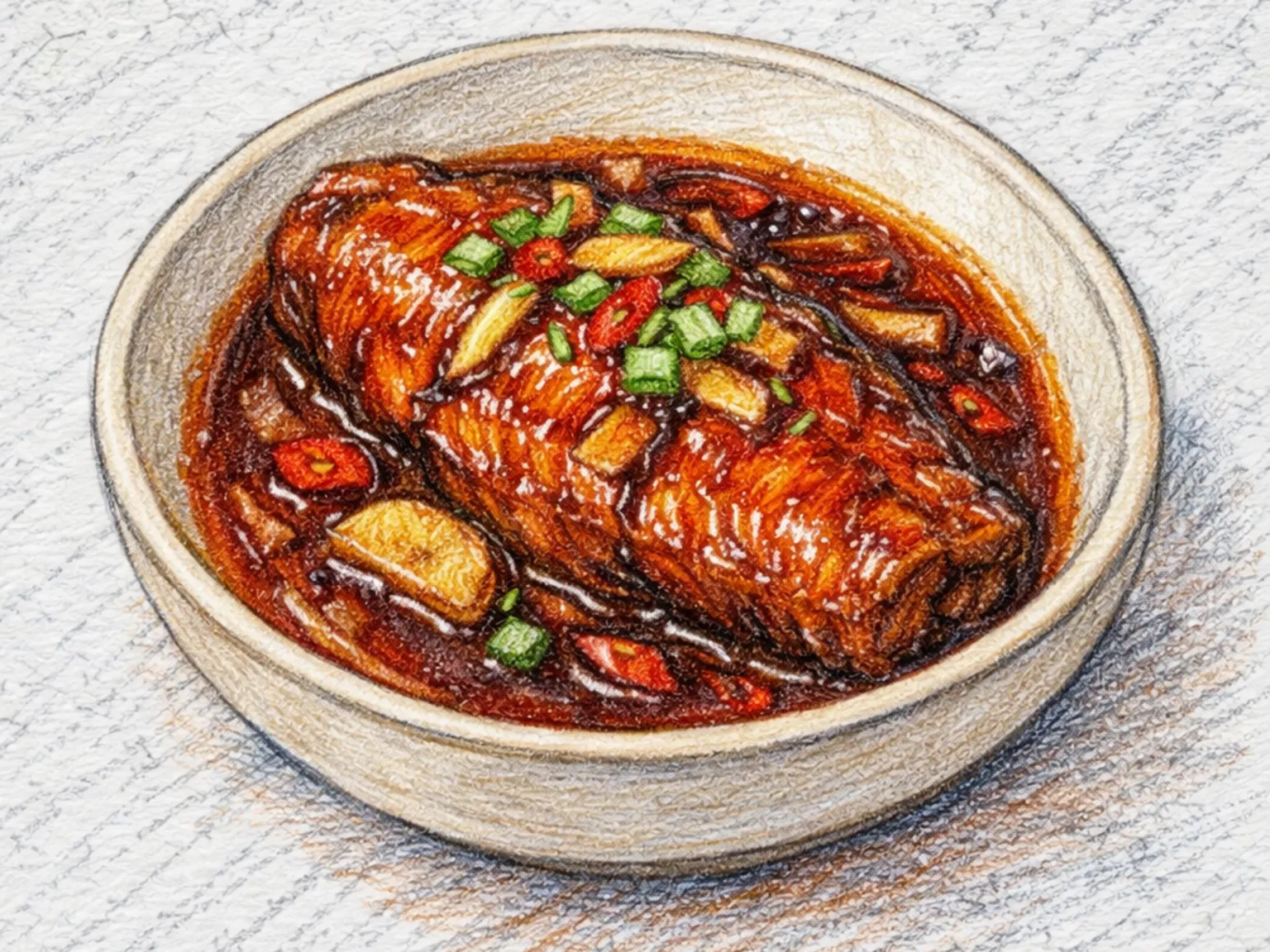
The white fish is pan-fried until golden, then braised in soy sauce, sugar, ginger, green onion, and cooking wine until the sauce turns glossy. The sauce is poured in around the edge of the pan, not over the fish, to keep the seared crust from lifting off.
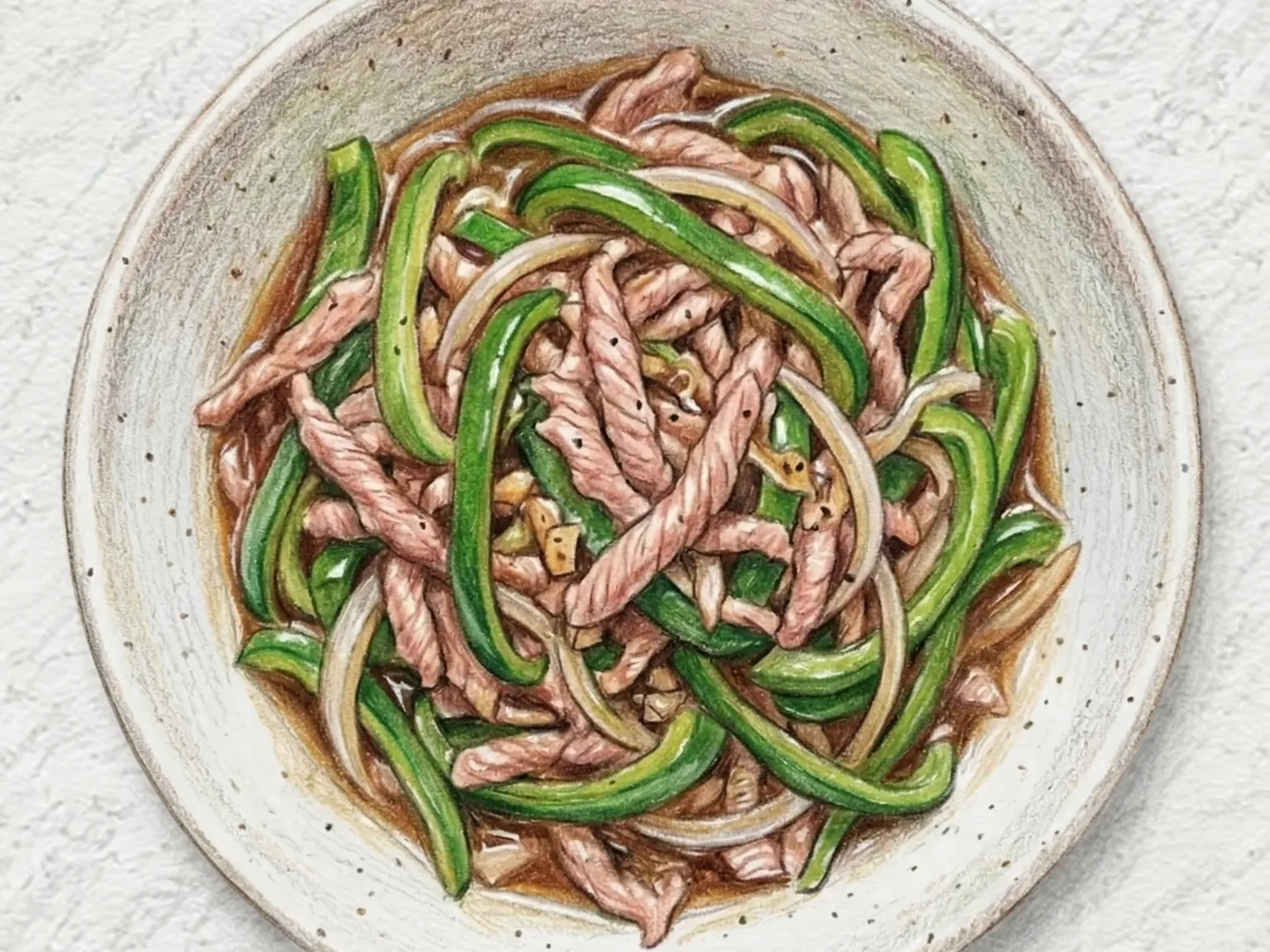
Pork loin and green pepper are cut into matching thin strips so they cook together in a few minutes over high heat. Slicing the loin across the grain means even the long strips bite cleanly instead of turning chewy and stringy.
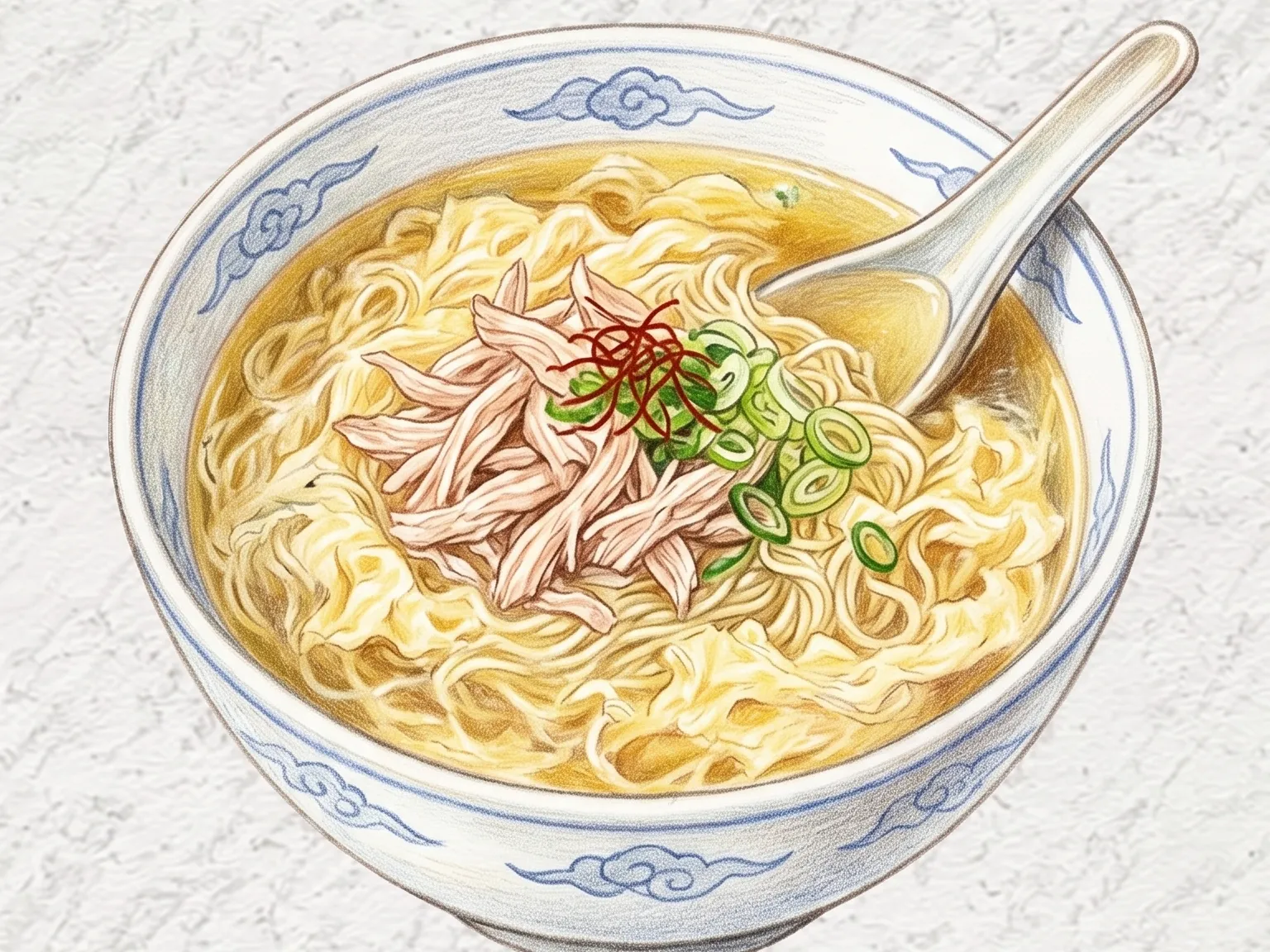
Beaten egg poured in a thin stream turns into silky floating ribbons on a clear chicken broth, the signature look of this Korean-Chinese noodle soup. Tip it in all at once and it sets into large curds instead. Chicken breast pulled into fine threads tangles with the noodles rather than sitting apart in chunks, and seasoning stays light, just soy sauce and pepper with a few drops of sesame oil.
Sugar melted to a deep caramel coats chunks of pork belly before soy sauce, dark soy, Shaoxing wine, ginger, and scallion go in for a slow, quiet braise. At the end the reduced sauce clings to the pieces as a thin reddish-brown glaze rather than leaving them in broth. The caramel is the moment that decides the dish: a few seconds too long and the whole sauce turns bitter.
Fried chicken thighs get only a thin coat of a sour, spicy sauce made from gochujang, ketchup and vinegar, so the crust is still crisp when it reaches the table. Letting the fried chicken cool and then rewarming it in the oil makes it crunchier still.
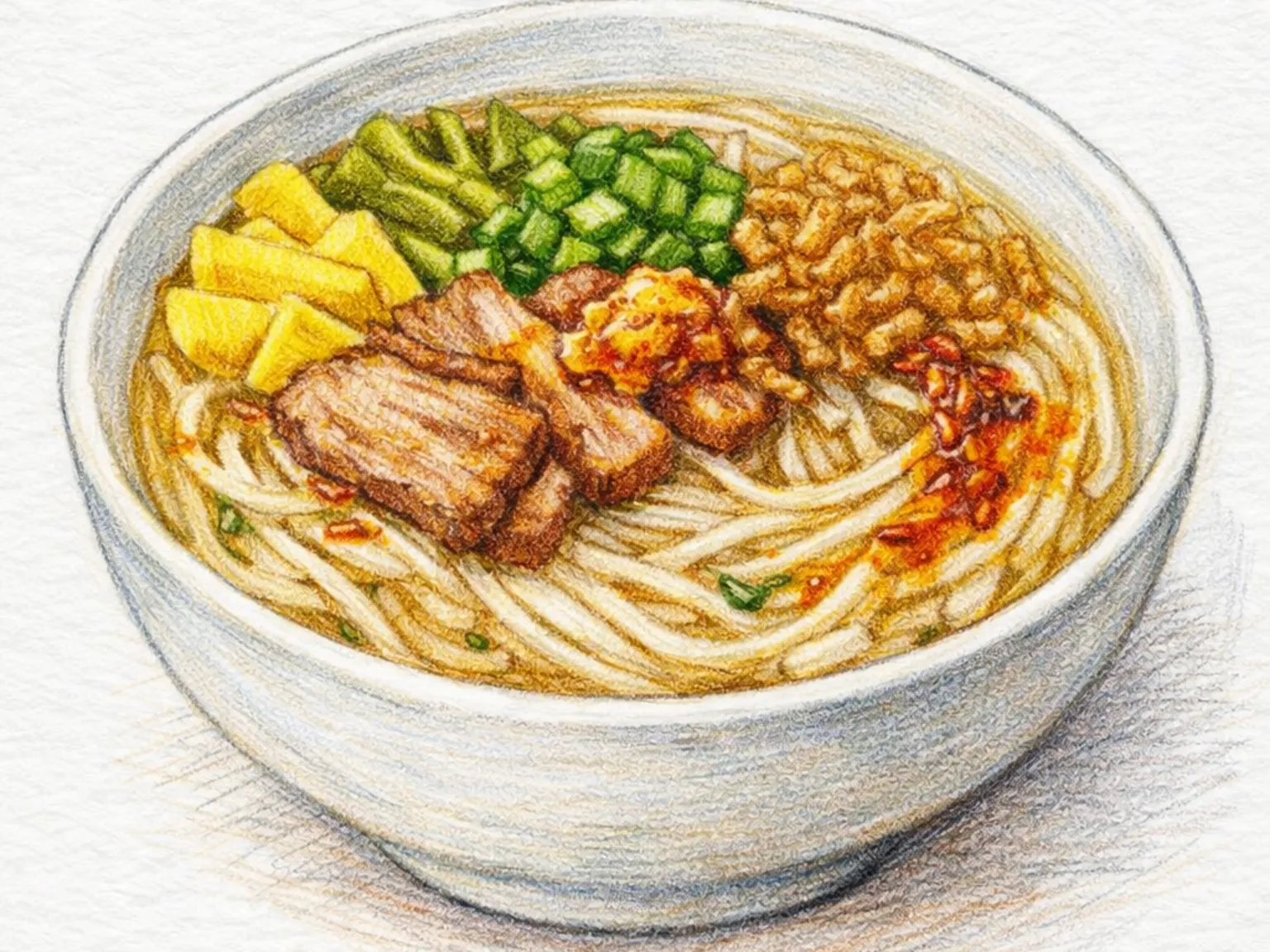
From Guilin in China's Guangxi region come these slender rice noodles, smooth and slightly springy, soaking up a clear beef brisket broth as the bowl sits. Pickled radish adds crisp, vinegary bites that cut the beefiness and reset the palate, and chili oil drizzled at the end spreads a slow warmth through the soup.